TOP NEWS

From breaking news to significant developments in politics, business, technology, entertainment, and more, we deliver the stories that shape our global landscape.

Iran blocks Strait of Hormuz, taking hit at global shipping

Remaining regime forces have blocked the Strait of Hormuz after the United States and Israel launched a war against Iran on Saturday morning. An aerial view, taken with a drone, shows a crowd holding a flag during a march and rallyin support of regime change in the Middle Eastern nation. Photo by Ted Soqui/EPA

March 3 (UPI) — The Strait of Hormuz, a waterway that runs alongside Iran and through which roughly 20 percent of the world’s oil supply, in addition to other essential commodities, runs through, has been blocked.

After the United States and Israel launched a war against Iran, blocking the key trade route has been among the reactions that what is left of the nearly half-century-long regime after the attacks were launched over the weekend.

Iranian state media reported Sunday that Iran’s Revolutionary Guard announced it would fire on any ship looking to pass the route as many shippers were looking to avoid the region amid the burgeoning war, NBC News, Barron’s and The Times of Israel reported.

Ships that look to avoid the Strait of Hormuz would be forced to sail around the Cape of Good Hope, which is the southernmost tip of Africa and will add at least several days to anything taking the alternate shipping route.

“If major carriers restrict bookings and vessels reroute round the Cape of Good Hope, you’re adding weeks to global shipping schedules,” Wasel & Wasel managing partner Mahmoud Abuswasel told NBC. “That effectively removes capacity from the system.”

Cutting off access, however, may not entirely cut off shipping along the Asia-to-Europe shipping route, but according to Barron’s, the freeze on moving through the strait is “unprecedented” and most shipping companies have advised their vessels to avoid the situation and seek safe haven.

Travelling south around Africa adds roughly 10 days and may increase costs for shipping companies by 30 percent.

Abuswasel told NBC that stretching transit times by days to weeks can slow down a range of businesses, starting with raw materials showing up late and the dominoes falling from there.

“Manufacturers feel it first, and consumers feel it soon after in the form of delays, tighter inventories and rising prices,” he said.

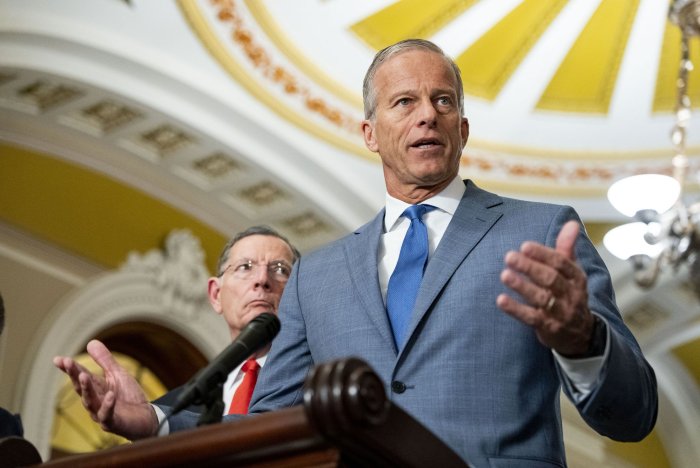
Senate Majority Leader John Thune, R-S.D., speaks during a press conference after the weekly Republican Senate caucus luncheon at the U.S. Capitol on Wednesday. Photo by Bonnie Cash/UPI | License Photo

Source link

S. Korea, Singapore agree to deepen AI partnership

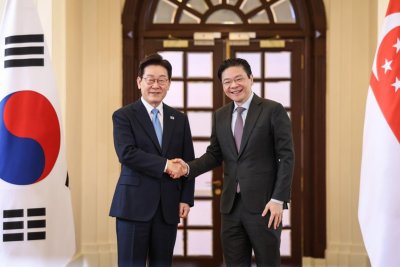
South Korean President Lee Jae Myung (L) shaking hands with Singapore’s Prime Minister Lawrence Wong (R) during their meeting at the Ministry of Foreign Affairs in Singapore, 02 March 2026. Lee is in Singapore on an official visit Photo by Ministry of Digital Development and Information (MDDI) / EPA

March 2 (Asia Today) — Lee Jae-myung and Lawrence Wong agreed Monday to pursue an artificial intelligence cooperation framework and upgrade bilateral trade ties, as the two countries seek to expand collaboration in advanced technology and energy.

During a summit in Singapore, the leaders committed to making AI a central pillar of economic cooperation and to launching negotiations to upgrade the existing free trade agreement.

According to the presidential office, the proposed AI Cooperation Framework would promote joint research, investment and industrial innovation, including the development of so-called physical AI applications and the broader use of AI in everyday life.

The two sides signed five memorandums of understanding covering science and technology cooperation, AI and digital technology in public safety, intellectual property cooperation, joint use of environmental satellites and collaboration on small modular reactors, or SMRs.

They also agreed to begin talks to modernize the free trade agreement, focusing on supply chains, the green economy, trade facilitation and aviation maintenance, repair and overhaul services.

Under the agreements, the countries plan to expand policy coordination and personnel exchanges in areas such as quantum technology, SMRs and space and satellite development. They also pledged to share information on AI policy in public safety and support promising companies in related sectors.

In a joint press statement, Lee said he hoped to “further solidify existing cooperation in trade, investment and infrastructure” while expanding collaboration into “future-oriented sectors such as AI, nuclear energy and advanced science and technology.”

— Reported by Asia Today; translated by UPI

© Asia Today. Unauthorized reproduction or redistribution prohibited.

Original Korean report: https://www.asiatoday.co.kr/kn/view.php?key=20260303010000385

Source link

“Korean Dream” author urges Korean citizens to reclaim a vision for a free and unified Korea amid heightened regional stakes

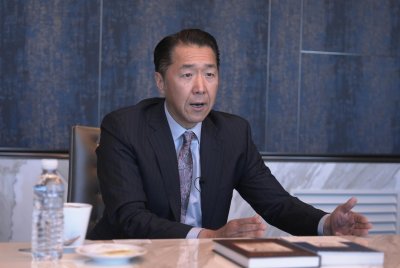
Hyun Jin Preston Moon, chairman of the Global Peace Foundation and author of The Korean Dream, speaks in Seoul on Wednesday, Feb. 25, 2026, saying Korea stands at a “historic turning point” and that the choices Koreans make now will have profound consequences for future generations. He urged a citizen-led effort to reshape public understanding of unification as North Korea hardens its stance toward the South. Photo by Ronald Park / Global Peace Foundation

March 2 (UPI) — In a recent interview with journalists from several Korean media outlets, Dr. Hyun Jin Preston Moon, Chairman of the Global Peace Foundation and author of The Korean Dream, warned that Korea stands at a pivotal crossroads where the decisions made and actions taken will determine the fate of the Korean Peninsula and the future direction of the Korean people for generations to come. With Washington focused on numerous global crises and lacking a clear policy towards North Korea, he said, it is precisely now that the Korean people must assert themselves in support of a free and unified homeland.

The interview took place amid deepening inter-Korean tensions. At the end of 2023, North Korean leader Kim Jong Un formally abandoned the goal of unification which had existed since the formation of North Korea under his grandfather Kim Il Sung’s rule. He designated the two Koreas as “hostile states” and ordered revision of the DPRK constitution to remove reunification as a national objective.

Moon defined North Korea’s formal adoption of the “two hostile states” doctrine as a structural turning point, one that exposes the fragility of the Kim regime. He said the situation demands strategic clarity rather than reliance on past engagement models, and requires that a compelling alternative vision to be placed on the table before this window of opportunity closes.

Conciliatory approaches, he said, carry meaning only when both sides share the goal of unification. When one side formally abandons that goal and redefines the other as an enemy, the entire strategic framework must be fundamentally reconsidered. Clinging to outdated models, he warned, is not diplomacy – it is self-delusion.

At the core of the alternative he is presenting is the Korean Dream – a comprehensive national vision rooted in Korea’s civilizational heritage spanning five millennia and grounded in democratic governance, economic opportunity, and fundamental human rights and freedoms for all its citizens. Rather than reacting to Pyongyang’s provocations, Moon argues, South Korea must define the peninsula’s future on its own terms. He noted that the previous Korean administration had already accepted the Korean Dream framework in principle; during the 2023 Camp David Summit, the U.S. and Japan agreed to support South Korea in its pursuit of a free and unified Korea. Moon also called for a non-governmental advisory committee to replace the current Ministry of Unification to allow for institutional continuity in how South Korea’s administration relates to North Korea, noting that the ideological reversals with each consecutive administration have long undermined inter-Korean policy.

Central to the Korean Dream vision is Hongik Ingan – the founding Korean ethos, roughly translated as “to broadly benefit humanity.” Moon describes this as the spiritual and historical bedrock of Korean identity. He emphasized that it is not an abstract ideal but a living principle that has been passed from generation to generation as part of the Korean people’s heritage and infuses unification with a high-minded purpose. Koreans must rediscover this founding spirit, he said, and see themselves not as passive pawns of geopolitical forces but as active agents with a civilizational mission.

On economic concerns, Moon was direct. Unification is not a burden but an opportunity of historic scale, he said, particularly for Korea’s younger generation. A unified Korea would integrate the more than 25 million North Korean residents into a new domestic market, rebalance its export-dependent economy, and spur large-scale infrastructure development, industrial restructuring, and expanded regional influence.

Moon drew parallels of the potential economic transformation that unification could unleash to China’s wealthy coastal cities that burgeoned with its historic shift from a centrally planned to a market economy. For the Korean Peninsula, he continued, such changes could fuel what he called a second Miracle on the Han River. The generation that seizes this moment, he said, will not merely inherit a problem but will open a new chapter of flourishing for Korean civilization.

The decisive factor shaping the Peninsula’s future, Moon argued, is neither military posture nor diplomatic maneuvering – it is public consciousness. If South Korean youth come to see unification not as a financial burden inherited from their predecessors but as a civilizational mission rooted in Hongik Ingan, that shift in public imagination will become the most powerful engine for change on the Korean Peninsula.

He pointed to North Korea’s growing internal vulnerabilities as evidence that the window for shaping the arc of history is narrowing. Rising defection rates – including among senior officials- and the regime’s deepening economic fragility suggest that the structures sustaining Kim Jong Un’s control are under mounting pressure. Moon said Kim is likely reassessing his long-term strategic options as he observes the dramatic upheaval unfolding in Iran.

“The regime’s current two-state posture is not necessarily permanent,” Moon said. “What matters is whether the right alternative is on the table.” He urged the South Korean administration to adopt the Korean Dream vision and offered to support and advise the U.S. administration as it further develops its strategy and approach to the Koreas.

Source link

Melania Trump chairs UN meeting on children days after Iran school strike | Israel-Iran conflict

NewsFeed

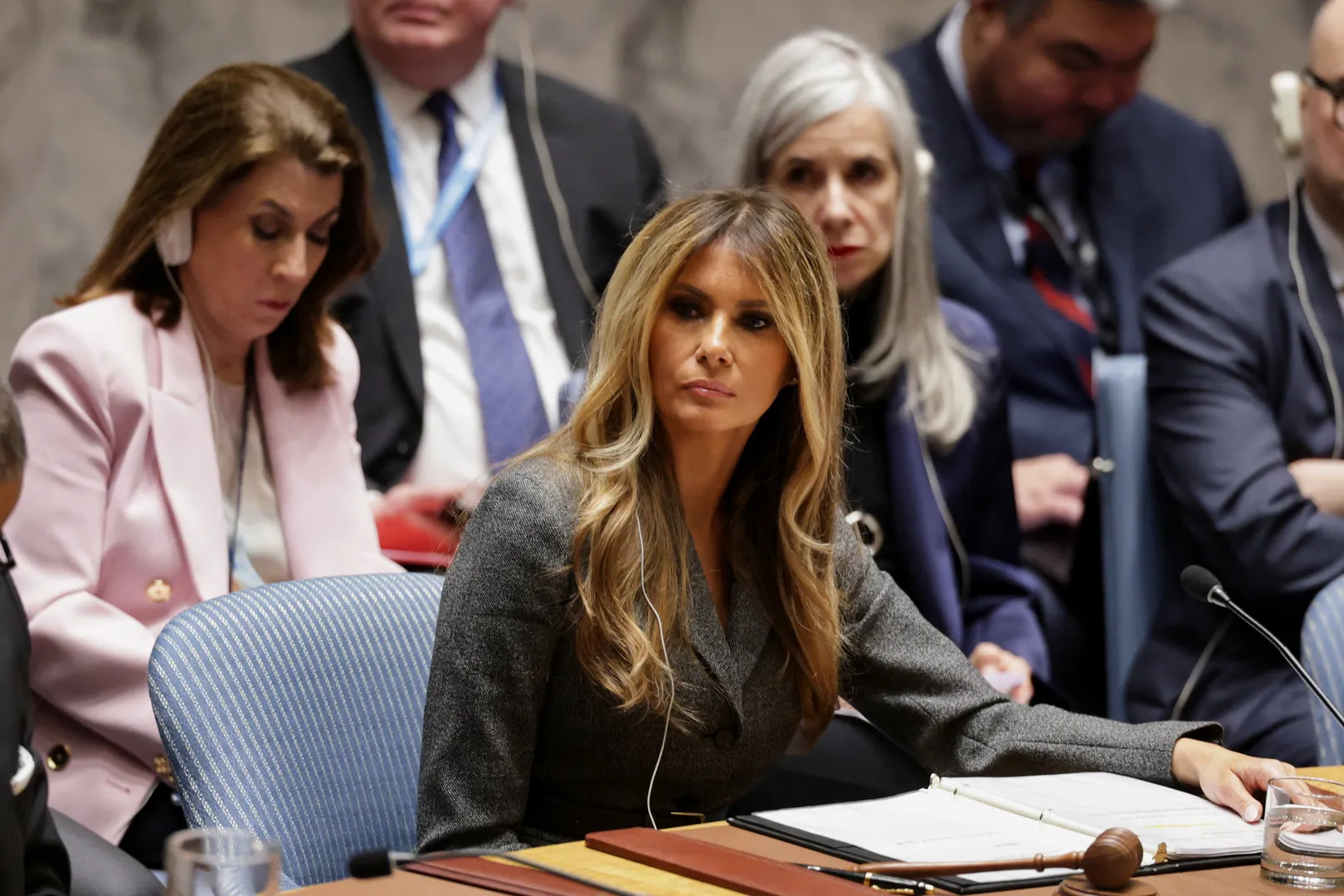
US First Lady Melania Trump has presided over a UN Security Council meeting focusing on children in conflict days after dozens of children at a school in Iran were reportedly killed after Israel and the United States launched attacks.

Source link