From breaking news to significant developments in politics, business, technology, entertainment, and more, we deliver the stories that shape our global landscape.
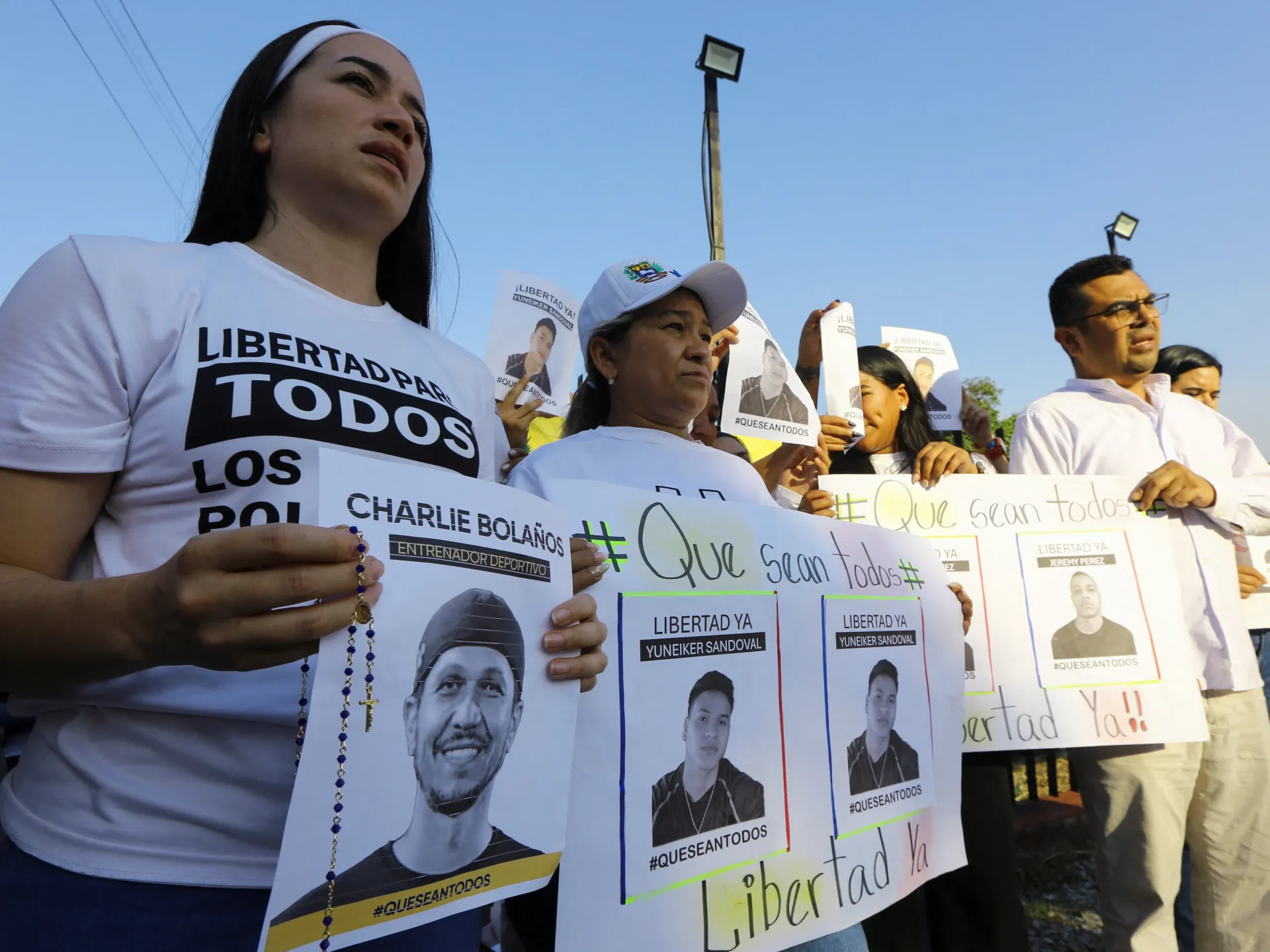
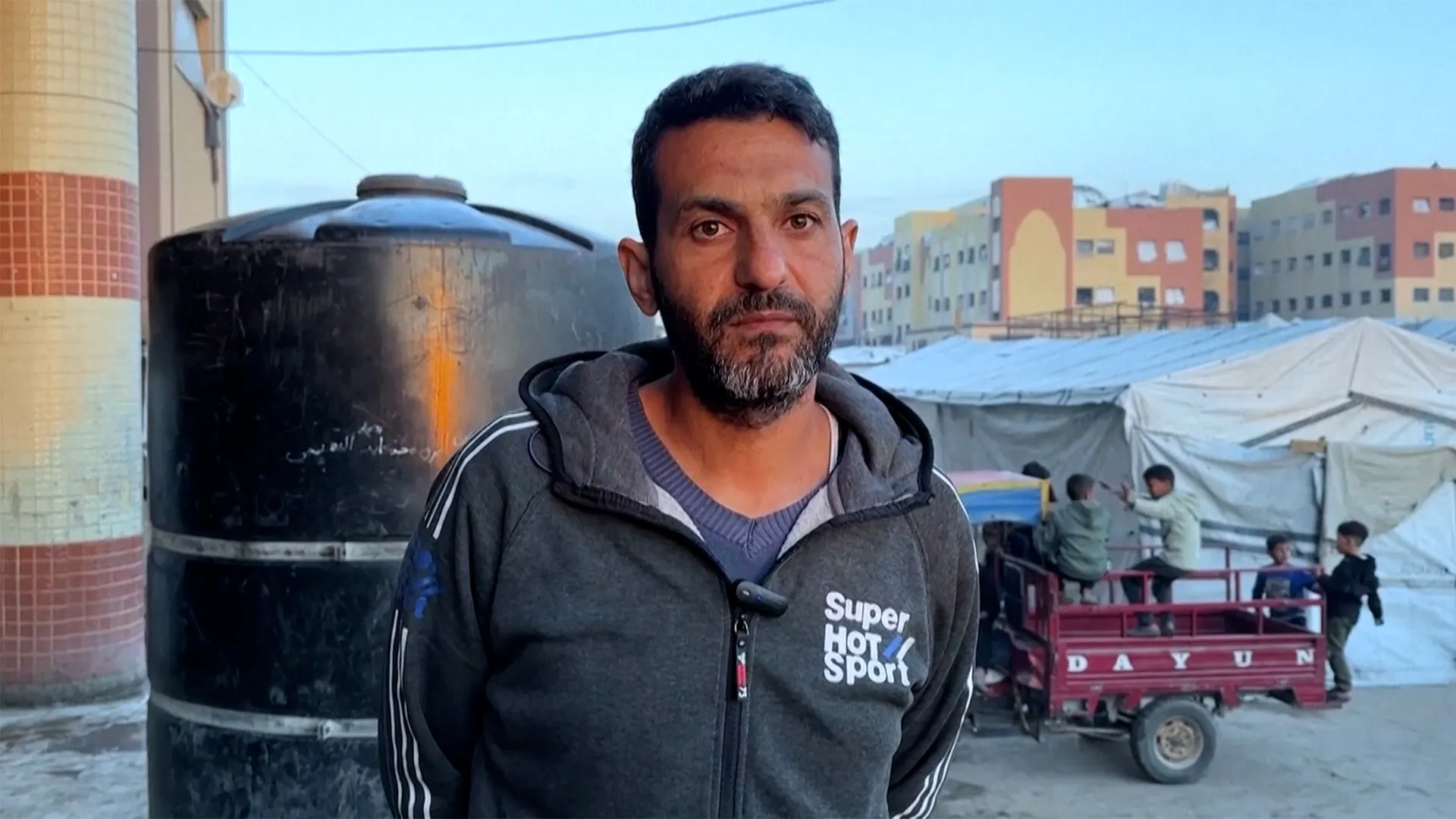
Nisreen Nassar and her family, like many other Palestinians, continue to live in schools and makeshift shelters.
Published On 20 Feb 202620 Feb 2026
Share
Just before sunset on Thursday, Nisreen Nassar crouched over her makeshift oven, burning wood and scraps of plastic to bake bread for her family so they could break their fast.
Four months after the United States-brokered “ceasefire” came into effect in October, and as US President Donald Trump convened the first meeting of his Board of Peace on Thursday, she wasn’t expecting to be sheltering with her family in an abandoned school and cooking on an open fire during the Muslim holy month of Ramadan.
Recommended Stories
list of 3 itemsend of list
“Our preparations and expectations for Ramadan this month were that it would be better than previous ones during the war. Unfortunately, it is worse,” Nassar told Al Jazeera’s Hani Mahmoud, reporting from Gaza City.
Nassar’s family is one of many still living in schools and makeshift shelters throughout northern Gaza, relying on humanitarian aid for their basic needs and barely able to prepare a meal to break their fast, known as Iftar, due to gas shortages.
Nassar, her husband Thaer, and their seven children lived in Beit Hanoon, in the northeast, before Israel’s genocidal war on Gaza began in October 2023, which has killed more than 72,000 people, according to Gaza’s Ministry of Health statistics.
They have since been displaced several times, from Beit Hanoon to Rafah and Khan Younis in the south.
The Nassar family is still waiting for a decision that would allow them to return home – or to what remains of it. This marks the third Ramadan that they have been living in a school, which, apart from the concrete walls, offers little shelter.
The children sleep not in beds, but directly on a classroom floor. The Nassar family’s only possessions comprise a few bags of clothes and some thin blankets.
Thaer said his children are afraid to go outside due to Israeli gunfire, in violation of the “ceasefire” agreement.
“My children live in fear, whether they go out into the street or stay here in the shelter. In the past, in better days, they had better times, playing ball, going to school, and then returning home.”
According to Gaza’s Ministry of Health, more than 600 Palestinians have been killed in Israeli attacks since the “ceasefire” came into effect.
While Palestinians have had little respite this Ramadan, Mahmoud said Palestinians remain steadfast.
“For many of the Palestinians sheltering inside this school, Iftar is a celebration of spiritual resilience, unbroken by Israel’s genocide and a future that is far from certain.”
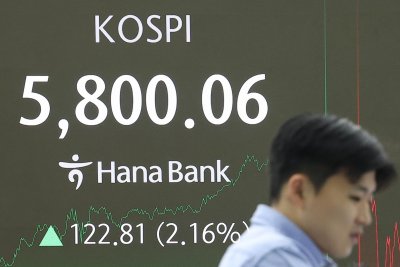
The Korea Composite Stock Price Index (KOSPI), shown on a screen in the trading room at Hana Bank in Seoul, topped a record-high 5,800 on Friday. Photo by Yonhap
South Korean stocks topped the 5,800-point mark for the first time Friday to end at a fresh record high amid expectations that upcoming investor-friendly measures will help lift market valuations. The local currency fell against the U.S. dollar.
The benchmark Korea Composite Stock Price Index (KOSPI) added 131.28 points, or 2.31 percent, to close at an all-time high of 5,803.53.
Trade volume was heavy at 1.73 billion shares worth 32.74 trillion won (US$22.64 billion), with winners outnumbering losers 543 to 340.
Institutions scooped up a net 1.61 trillion won worth of shares, while foreign and retail investors sold a net 745.06 billion won and 986.12 billion won worth of shares, respectively, for profit-taking.
After a three-day Lunar New Year holiday break, the index surged Thursday to top the 5,600 level, with experts saying pent-up demand accumulated during the holiday continued to flow into the stock market.
The KOSPI has been on a bull run recently, surpassing the 5,000 mark for the first time ever on Jan. 27 and the 5,500 level on Feb. 12.
“Geopolitical tensions have heightened after U.S. President Donald Trump signaled the possibility of military action against Iran following a 10-day negotiation deadline, and some analysts suggest the risk of a full-scale conflict is not negligible,” Kim Seok-hwan, an analyst at Mirae Asset Securities, said.
“But investors have maintained expectations for a series of measures by the government and companies to boost shareholder returns and overall market valuations,” he added.
U.S. shares lost ground Thursday (U.S. time) amid concerns about the U.S.-Iran situation and risks linked to massive investments in artificial intelligence (AI), as the U.S. private market and alternative assets manager Blue Owl Capital announced it is going to tighten investor liquidity.
Most large-cap shares finished higher, with chip and defense shares leading the market advance.
Market bellwether Samsung Electronics edged up 0.05 percent to 190,100 won, and chip giant SK hynix surged 6.15 percent to 949,000 won.
Carmakers traded mixed. Top automaker Hyundai Motor went down 0.78 percent to 509,000 won, while its sister affiliate Kia soared 1.06 percent to 171,800 won.
Leading battery maker LG Energy Solution fell 0.5 percent to 401,500 won, but AI investment firm SK Square advanced 2.47 percent to 580,000 won.
Nuclear power plant builder Doosan Enerbility surged 5.18 percent to 103,500 won, and defense giant Hanwha Aerospace spiked 8.09 percent to 1,242,000 won.
Leading shipbuilder HD Hyundai Heavy jumped 4.88 percent to 602,000 won, and its rival Hanwha Ocean shot up 6.61 percent to 149,900 won.
Pharmaceutical giant Samsung Biologics went up 0.93 percent to 1,736,000 won, while Celltrion dipped 1.02 percent to 242,000 won.
Financials gathered ground. KB Financial added 1.38 percent to 168,800 won, and Shinhan Financial grew 1.69 percent to 102,000 won.
Samsung Life Insurance climbed 4.78 percent to 219,000 won, and Mirae Asset Securities rose 0.57 percent to 70,900 won.
The Korean won was quoted at 1,446.65 won against the U.S. dollar at 3:30 p.m., down 1.15 won from the previous session.
Bond prices, which move inversely to yields, closed higher. The yield on three-year Treasurys lost 3.5 basis points to 3.143 percent, and the return on the benchmark five-year government bonds also shed 3.5 basis points to 3.391 percent.
Copyright (c) Yonhap News Agency prohibits its content from being redistributed or reprinted without consent, and forbids the content from being learned and used by artificial intelligence systems.
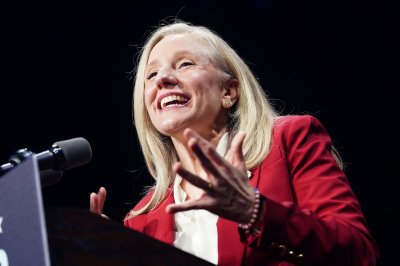
Feb. 20 (UPI) — Virginia Gov. Abigail Spanberger has been tapped to give the Democratic response next week to President Donald Trump‘s State of the Union, the party’s leaders said.
Spanberger was announced as the Democratic speaker Thursday in a joint statement from Senate Minority Leader Chuck Schumer and House Minority Leader Hakeem Jeffries, both from New York.
“Gov. Spanberger has always put service over politics — defending our national security and delivering real results for working families,” Schumer said.
“She knows real results for working families. She knows Americans want lower costs, safer communities and a stronger democracy — not chaos and corruption.”
Spanberger is a rising star in the Democratic Party. A former CIA officer, Spanberger ousted a Republican incumbent to win a U.S. House seat for her state in 2018.
After three terms in the chamber, she was elected in November as the first female governor of Virginia. Democrats are hoping her win flipping the governor’s mansion blue will help cement Virginia’s status as a Democratic-led state come the midterm elections.
Jeffries on Thursday praised the 46-year-old for standing “in stark contract to Donald Trump, who will lie, deflect and blame everyone but himself for his failed presidency on Tuesday evening,” which is when the president is scheduled to speak to a joint session of Congress.
“As our nation marks its 250th anniversary this summer, Gov. Spanberger embodies the best of America as a mother, community leader and dedicated public servant.”
The Democratic leaders also announced Thursday that Sen. Alex Padilla of California would deliver the Democratic response in Spanish.
“Americans don’t need another speech from Donald Trump pretending everything is fine when their bills are too high, paychecks are too low and masked and militarized federal agents are roaming our communities violating constitutional rights on a daily basis,” Padilla said in a statement Thursday on his selection to give the Democratic rebuttal.
“We refuse to accept his failed economic agenda that makes billionaires richer while middle class Americans see their healthcare costs rise. We refuse to accept a federal government that weaponizes enforcement agencies against immigrants and U.S. citizens alike. And we refuse to accept attacks on the right to vote.”
Padilla said “there is a better path” and that’s what his Tuesday speech will be about.
Trump’s address is to be held Tuesday, but at least 12 Democratic members of Congress are planning to boycott the speech and attend a competing rally organized by progressive organizations MoveOn and MeidasTouch.
The United States administration is intensifying its build-up of a vast array of military assets in the Middle East, as President Donald Trump says Iran has “10 to 15 days at most” to agree a deal over its nuclear programme and stock of ballistic missiles.
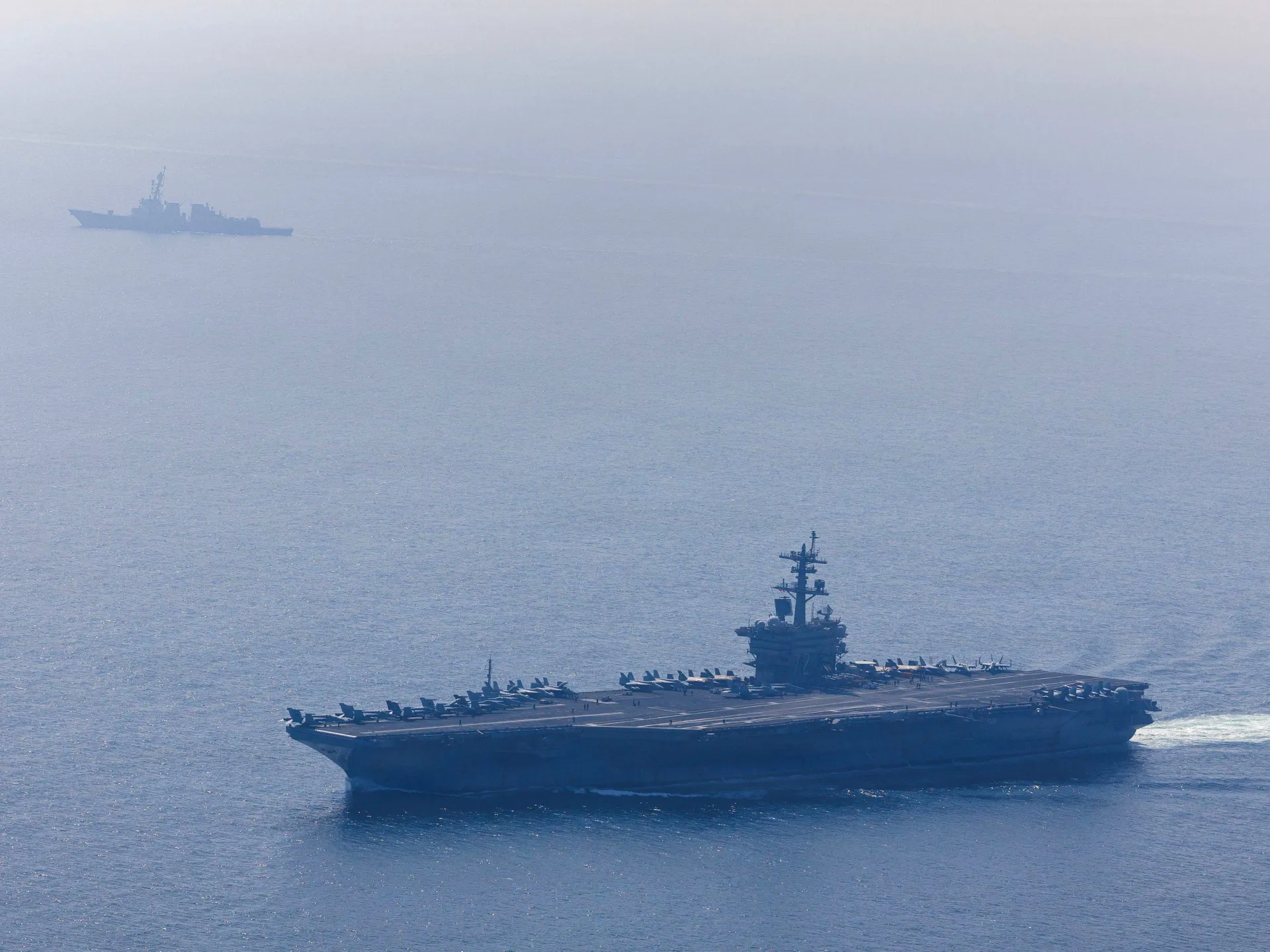
As well as the world’s largest aircraft carrier, the USS Gerald R Ford, which is reportedly joining the Abraham Lincoln carrier strike group in the Arabian Sea, key force multipliers such as E-3 Sentry Airborne Warning and Control System (AWACS) aircraft have been deployed.
Recommended Stories
list of 1 itemend of list
In a letter to the United Nations Security Council, Iran said that while the country does not seek “tension or war and will not initiate a war”, any US aggression will be responded to “decisively and proportionately”.
“The United States would bear full and direct responsibility for any unpredictable and uncontrolled consequences,” it said.
Here is what we know about the recent US deployment of military assets in the Middle East – which has also led to a dispute with the United Kingdom over the use of its joint military base in Diego Garcia.
What air power assets has the US deployed to the Middle East?
According to open-source intelligence analysts and military flight-tracking data, the US appears to have deployed more than 120 aircraft to the region within the past few days – the largest surge in US airpower in the Middle East since the 2003 Iraq war.
The reported deployments include E-3 Sentry Airborne Warning and Control System (AWACS) aircraft, F-35 stealth strike fighters and F-22 air superiority jets, alongside F-15s and F-16s. Flight-tracking data shows many departing bases in the US and Europe, supported by cargo aircraft and aerial refuelling tankers, a sign of sustained operational planning rather than routine rotations.
“Watch any movement by B-2s. That would indicate a possible replay of ‘Midnight Hammer’,” Mark Cancian, a retired Marine Corps colonel and senior adviser with the Washington-based Center for Strategic and International Studies think tank, told Al Jazeera.
This latest wave was preceded several weeks ago by the arrival of Air Force F-15E Strike Eagles. US Central Command said on social media at the time that the fighter jet “enhances combat readiness and promotes regional security and stability”.
What role could Diego Garcia and the UK play?
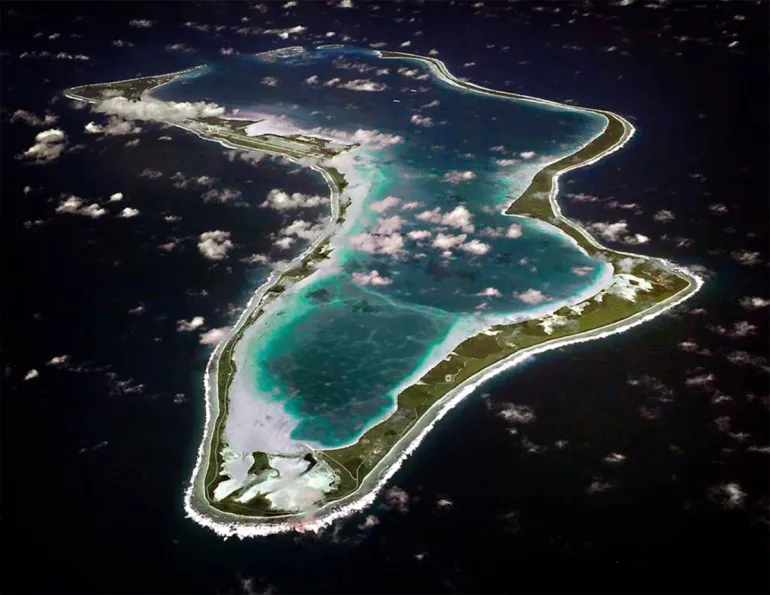
Attention has also focused on Diego Garcia, the joint UK-US military base in the Indian Ocean’s Chagos Islands, which is capable of hosting long-range US strategic bombers, including B-2 aircraft.
The remote base has historically served as a launch point for major US air campaigns in the region.
However, Diego Garcia is a British sovereign territory leased to Washington, meaning London must approve its use for offensive operations. According to reports in UK media, Prime Minister Keir Starmer has indicated to Trump that the US cannot use British airbases – including Diego Garcia and RAF Fairford in the UK, which is home to the US’s heavy bomber fleet in Europe – for strikes on Iran, as this would be in breach of international law.
Trump retaliated by withdrawing US support for the UK’s decision to transfer the Chagos Islands to Mauritius, announced last year.
On Wednesday, the US president said Starmer was “making a big mistake” in the agreement to transfer sovereignty of the archipelago.
“DO NOT GIVE AWAY DIEGO GARCIA!” Trump wrote in a post on Truth Social, saying the base could be called upon in any future military operation to counter a potential attack from Iran.
This image released by the US Navy shows an aerial view of Diego Garcia [File: US Navy/AP]
What do we know about US warships in the Arabian Sea?
The USS Gerald R Ford, the world’s largest aircraft carrier, is currently being redeployed from the Caribbean to the Middle East.
The carrier and its accompanying strike group are expected to arrive in the region in the coming weeks.
On Wednesday, it briefly transmitted its location off the coast of Morocco, suggesting it is transiting the Atlantic towards the Strait of Gibraltar and will then go into the Mediterranean.
This is the same vessel that previously supported US military operations in Venezuela, including missions conducted under Operation Southern Spear.
The USS Gerald R Ford will join the USS Abraham Lincoln carrier strike group, which recent satellite imagery shows is operating in the Arabian Sea off the coast of Oman, positioning US naval power within striking distance of Iran.
The US Navy also has multiple guided-missile destroyers in the region equipped with advanced air defence and ballistic missile interception systems. These multi-role vessels can carry and launch Tomahawk cruise missiles capable of striking land targets deep inside Iran, alongside their anti-submarine and fleet defence missions.
(Al Jazeera)
How is Iran responding?
Iran has publicly warned that it will view any military strike by the US as a serious provocation.
Tehran has also moved ahead with its own planned military activities. It announced and began joint naval exercises with Russia in the Sea of Oman and northern Indian Ocean on Thursday. These are intended to enhance maritime cooperation and signal deterrence amid rising US pressure.
As part of these manoeuvres, Iranian authorities issued a Notice to Airmen (NOTAM) for rocket launches over southern Iran on Thursday from 03:30 to 13:30 GMT and temporarily closed parts of the Strait of Hormuz, a strategically vital shipping route, during live-fire drills.
Meanwhile, Russian Foreign Minister Sergey Lavrov also warned that a US strike on Iran would have serious repercussions, underscoring the risk of escalation if hostilities spread.
Satellite images published by the Reuters news agency on Thursday showed that Iran has recently built a concrete shield over a new facility at a sensitive military site and covered it in soil, experts say, advancing work at a location reportedly bombed by Israel in 2024.
Images also show that Iran has buried tunnel entrances at a nuclear site bombed by the US during Israel’s 12-day war with Iran last year, fortified tunnel entrances near another, and has repaired missile bases struck in the conflict.
A combination picture of satellite images show the Parchin military complex before the Israeli strikes of October, 2024, in Parchin, Iran, in this handout image dated October 20, 2024 (left), and concrete over the site at the Parchin military complex, in Parchin, Iran in this handout image dated January, 24, 2026 [Reuters]
Analytical reports also suggest that Iran has built a multilayered defence centred on mines, missiles, submarines and drones with the intent of slowing down the US forces.
Some analysts say Iran may seek to avoid an immediate full-scale confrontation, but this may be difficult.
“The Iranians have, over the past six months, quietly taken additional steps to move critical assets further underground,” Vali Nasr, a professor of international affairs and Middle East Studies at Johns Hopkins University, said during a roundtable discussion hosted by the CSIS Middle East Program this week
“They are going to be unpredictable,” he said. “But I think they could go big at the beginning, or they might want to drag the United States into a protracted situation.
“You hit a tanker, or you hit an oil facility, or you hit an American ship, and then it’s up to President Trump to decide whether to escalate further. And it can go beyond that.
“We are in a scenario where this might get out of control very quickly,” Nasr added.
Is the US likely to attack Iran?
According to experts, it is a very real possibility.
“The United States is doing all the things that it would do if it were going to conduct some sort of attack,” Cancian told Al Jazeera. “It has moved aircraft into the area, two aircraft carriers, plus enablers like AWACS.”
Barbara Slavi, distinguished fellow at Stimson Center, agreed with this assessment. “It seems that the Trump administration has decided that it is going to attack Iran again, and I presume in conjunction with the Israelis,” she said.
“What the objectives are, we have yet to see. Can it be contained? Will others be drawn in? These are all really important questions, and we don’t have answers.”
Is this a similar situation to what we saw earlier this year in Venezuela?
A build-up of US military assets in the Caribbean, close to Venezuela, which began in September 2025, led to multiple strikes on Venezuelan boats that the US claimed – without proof – were carrying drugs. It culminated in the dramatic January 3 raid on Caracas by US forces and the abduction of then-President Nicolas Maduro, who now faces trial on guns and drugs charges in New York.
“The build-up [in the Arabian Sea] has similarities, but one key difference is the strategic context,” Cancian said.
“Unlike the Venezuela raid, there hasn’t been a large deployment of Special Operations Forces, and Iran’s geography, far inland and heavily defended, makes a quick ground raid unlikely.
“If there are strikes, I would expect long-range missile attacks against security forces such as the Islamic Revolutionary Guard Corps. Strikes against nuclear facilities are also possible, but missiles like Tomahawk can only damage above-ground facilities,” he added.
Secretary of State Marco Rubio is reportedly planning to travel to Israel on February 28 to meet with Israeli Prime Minister Benjamin Netanyahu, a State Department official said.
Last summer, the US carried out air strikes on Iran’s nuclear facilities even as senior American diplomats were scheduled to meet with their Iranian counterparts in ongoing talks.
It is no longer possible to interpret the Yemeni landscape solely through the lens of politics. The developments witnessed in the southern Yemeni governorates under government control in recent months clearly indicate that security and military affairs have become the decisive factor in determining the course of power on the ground. Any governmental or political arrangements will be unsustainable unless the issue of security control and the unification of military command are resolved.
Nor can the escalating Saudi–Emirati rift between two allies who have militarily, politically and economically shaped southern Yemen in recent years be overlooked, given its direct impact on the balance of power and stability.
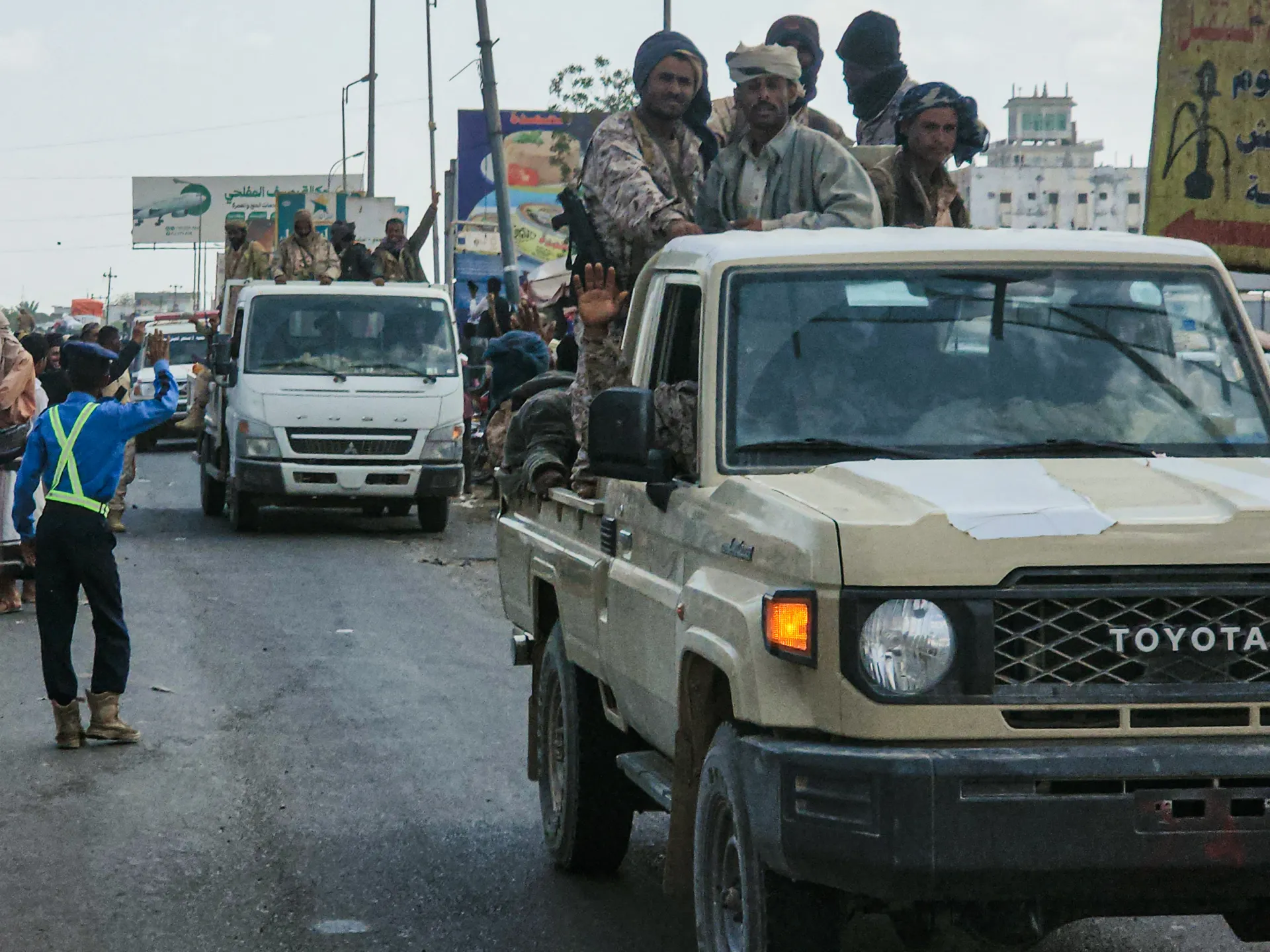
Over the past years, a complex security structure has taken shape across the southern governorates, comprising official units and others that emerged during the war. Some of these units are linked to state institutions, while others were established with Emirati support, such as the Southern Transitional Council’s forces, which number in the tens of thousands, or through local arrangements shaped by the circumstances of the conflict.
Although recent months have seen moves to restructure this landscape following the defeat of the Southern Transitional Council (STC), which declared its dissolution in Hadhramaut and al-Mahra on January 3, 2026, security control remains uneven from one governorate to another. Furthermore, the STC’s security and military formations have not disappeared entirely; some have been redeployed, while the fate of others remains unknown.
In Aden, the temporary capital, security agencies operate within a complex structure. Some units formerly affiliated with the STC have seen their personnel and weapons disappear, while others have been renamed or redeployed. However, longstanding networks of influence remain, and the transfer of leadership or redeployment of camps reflects attempts to rebalance power rather than a definitive resolution of the situation.
The same applies, to varying degrees, to Lahij, Abyan, Dhale, Shabwah and Hadhramaut, where the state’s ability to assert effective authority varies, as does the level of coordination between official security forces and the formations that emerged during the war.
The most sensitive issue at this stage is the integration of military and security formations into the Ministries of Defence and Interior. The state seeks to end parallel security authority, but the process faces complex challenges, including differing sources of funding for some units, varying political loyalties, fears among some commanders of losing local influence, and considerations related to the composition of these forces. As a result, integration appears gradual, relying more on redeployment and restructuring than on decisive measures that could risk triggering confrontation.
The government now based in Aden, southern Yemen, finds itself facing a delicate equation: it must impose its security authority without plunging the country into renewed internal conflict.
The transition from multiple armed groups to a state monopoly on the use of force requires political consensus, regional support and international backing. Any hasty move could reignite internal clashes, particularly given existing political and regional sensitivities, as well as fears that the Saudi–Emirati dispute could once again trigger confrontation on the ground.
For this reason, government efforts are focused first on establishing a stable security environment.
This trajectory cannot be understood without considering the regional dimension. Saudi Arabia views Yemen as a direct strategic depth for its national security and seeks the emergence of a stable state along its southern border.
The dispute between Riyadh and Abu Dhabi, particularly after Yemen requested the withdrawal of Emirati forces from its territory, has become a significant factor shaping the course of the crisis, especially amid Saudi accusations that Abu Dhabi continues to support the STC and consolidate its influence on the ground.
Yemen today is part of a broader regional landscape, intertwined with Red Sea dynamics and maritime routes, competition for influence in the Horn of Africa, and tensions stretching from Sudan to Somalia to the Gulf. For this reason, international actors — particularly the United States — are keen to keep the situation in Yemen under control, fearing that a security collapse could trigger intra-Gulf conflict, threaten international shipping, create space for a new wave of armed groups, or allow the Houthis to exploit the situation.
In the next phase, the government is likely to continue efforts to consolidate security control in Aden and other southern governorates, including Hadhramaut, which borders Saudi Arabia, while gradually integrating military units and maintaining political balances to prevent renewed conflict.
The success of these efforts will determine whether the country is moving towards gradual stability or another round of reshaping power centres. Given this reality, the central question remains: who truly possesses the ability to impose security on the ground, particularly as some actors continue to push the Southern Transitional Council towards escalation that could reignite the conflict?
The views expressed in this article are the author’s own and do not necessarily reflect Al Jazeera’s editorial stance.
More than 600 people may be in custody for political reasons, one Venezuelan rights group estimates.
Published On 20 Feb 202620 Feb 2026
Share
Venezuela’s acting president has signed into law an amnesty bill that could see hundreds of politicians, activists and lawyers released soon, while tacitly acknowledging what the country has denied for years – that it has political detainees in jail.
The law, signed on Thursday, in effect reverses decades of denials in the government’s latest about-face since the United States military’s January 3 attack in the country’s capital, Caracas, and the abduction of President Nicolas Maduro.
Recommended Stories
list of 3 itemsend of list
Opposition members, activists, human rights defenders, journalists and others who were targeted by the governing party over the past 27 years could benefit from the new law.
But families hoping for the release of relatives say acting President Delcy Rodriguez has failed to deliver on earlier promises to release prisoners. Some of them have been gathered outside detention centres for weeks.
Venezuela-based prisoners’ rights group Foro Penal has tallied 448 releases since January 8 and estimates that more than 600 people are still in custody for political reasons.
The new law provides amnesty for involvement in political protests and “violent actions” which took place during a brief coup in 2002 and during demonstrations or elections in certain months going back to 2004.
It does not detail the exact crimes which would be eligible for amnesty, though a previous draft laid out several, including instigation of illegal activity, resistance to authorities, rebellion and treason.
People convicted of “military rebellion” for involvement in events in 2019 are excluded. The law also does not return assets of those detained, revoke public office bans given for political reasons or cancel sanctions against media outlets.
Opposition divided
“It’s not perfect, but it is undoubtedly a great step forward for the reconciliation of Venezuela,” opposition politician Nora Bracho said during a debate on the bill in the legislature on Thursday.
But the law was criticised by other members of the opposition, including Pedro Urruchurtu, international relations director for opposition leader and Nobel Peace Prize laureate Maria Corina Machado.
“A true amnesty doesn’t require laws, but rather will, something that is lacking in this discussion,” he said on X on Thursday. “It is not only an invalid and illegitimate law, but also a trap to buy time and revictimize those persecuted.”
Since Madura’s abduction, US President Donald Trump has praised Rodriguez, Maduro’s former deputy, while downplaying the prospect of supporting the opposition.
For her part, Rodriguez has overseen several concessions to the US, including freezing oil shipments to Cuba and supporting a law to open the state-controlled oil industry to foreign companies.
The US has said it will control the proceeds from Venezuela’s oil sales until a “representative government” is established.
US president’s announcement comes amid a surge of interest following comments on aliens by ex-President Barack Obama.
Published On 20 Feb 202620 Feb 2026
Share
United States President Donald Trump said he is directing federal agencies, including the defence department, to begin “identifying and releasing” government records related to unidentified flying objects (UFOs) and alien life forms.
Trump did not specify whether classified documents would be released to the public, but added that the files should include “any and all other information connected to these highly complex, but extremely interesting and important, matters”.
Recommended Stories
list of 3 itemsend of list
“Based on the tremendous interest shown, I will be directing the Secretary of War, and other relevant Departments and Agencies, to begin the process of identifying and releasing Government files related to alien and extraterrestrial life, unidentified aerial phenomena (UAP), and unidentified flying objects (UFOs),” Trump said late on Thursday in a post on his Truth Social platform.
The move appears to stem from a surge in public attention following recent comments by former US President Barack Obama, who suggested in a podcast interview that aliens are “real”, but that he had not personally seen one, and none were being kept in secret government facilities.
On Sunday, Obama released a statement on Instagram, clarifying what he meant by his comments, which have since gone viral.
“Since it’s gotten attention let me clarify. Statistically, the universe is so vast that the odds are good there’s life out there,” he said.
“But the distances between solar systems are so great that the chances we’ve been visited by aliens is low, and I saw no evidence during my presidency that extraterrestrials have made contact with us. Really!”
Earlier on Thursday, Trump had criticised Obama for his remarks regarding aliens, telling reporters that Obama “was not supposed to be doing that” and implying that the former president’s comments bordered on classified information.
“He made a big mistake,” Trump said of Obama.
No evidence has yet been produced of intelligent life beyond Earth, and the Pentagon in 2024 released a report stating that it had no proof that UFOs were alien technology, most being spy planes, satellites and weather balloons.
Nevertheless, messages of support poured in swiftly on social media and from Capitol Hill following Trump’s announcement to release all documents.
“Thank you POTUS!” wrote Republican Congresswoman Anna Paulina Luna, who chairs a congressional task force on unidentified aerial phenomena.
“As the Chairwoman of the Task Force that investigates these subjects, we are incredibly grateful for you doing this! I look forward to going through all the footage, photos, and reports with the public!” she wrote.
Democratic Senator John Fetterman also voiced support during an appearance on Fox News, calling Trump’s decision “fantastic” and saying that “America and the world deserve this”.
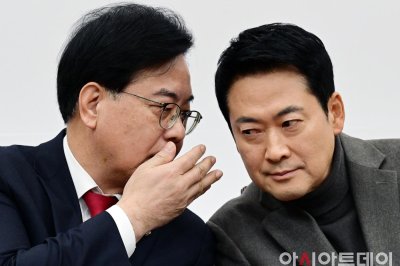
People Power Party leader Jang Dong-hyuk (Right), speaks with floor leader Song Eon-seok (Left) during a Supreme Council meeting at the National Assembly in Seoul on Thursday. Photo by Asia Today
Feb. 19 (Asia Today) — Internal divisions resurfaced within the conservative People Power Party on Thursday after former President Yoon Suk Yeol was sentenced to life in prison in a first-instance ruling on charges of leading an insurrection.
Younger lawmakers within the party called for an apology and a clear break from Yoon, while party leader Jang Dong-hyuk refrained from issuing an immediate statement.
The party said it plans to announce an official position as early as Friday after gathering views from within the leadership and rank-and-file members. Chief spokesperson Choi Bo-yoon said a consolidated statement is likely to be released after further deliberation.
Some party members interpreted Jang’s silence as a strategic move aimed at broadening the party’s appeal to centrist voters. In a television interview the previous day, Jang said “transition is more important than severance,” a remark seen by some as signaling a shift toward focusing on economic and livelihood issues rather than internal factional conflict.
However, several figures urged the leadership to distance the party from what they described as “Yoon Again” supporters.
Seoul Mayor Oh Se-hoon said he felt “devastated” by the court’s ruling as a member of the party that produced the former president and argued that cutting ties with Yoon is an unavoidable step for the conservative movement.
Lawmakers affiliated with the reform-minded group Alternative and Future also called for an official declaration of separation from pro-Yoon factions, warning that continued alignment with far-right elements could harm the party’s future.
The group urged the leadership to demonstrate “new leadership that unites rather than divides,” as the party weighs its response to the unprecedented life sentence handed to a former president.
Kazakhstan and Kosovo have also pledged to participate, while Egypt and Jordan will provide training for police officers.
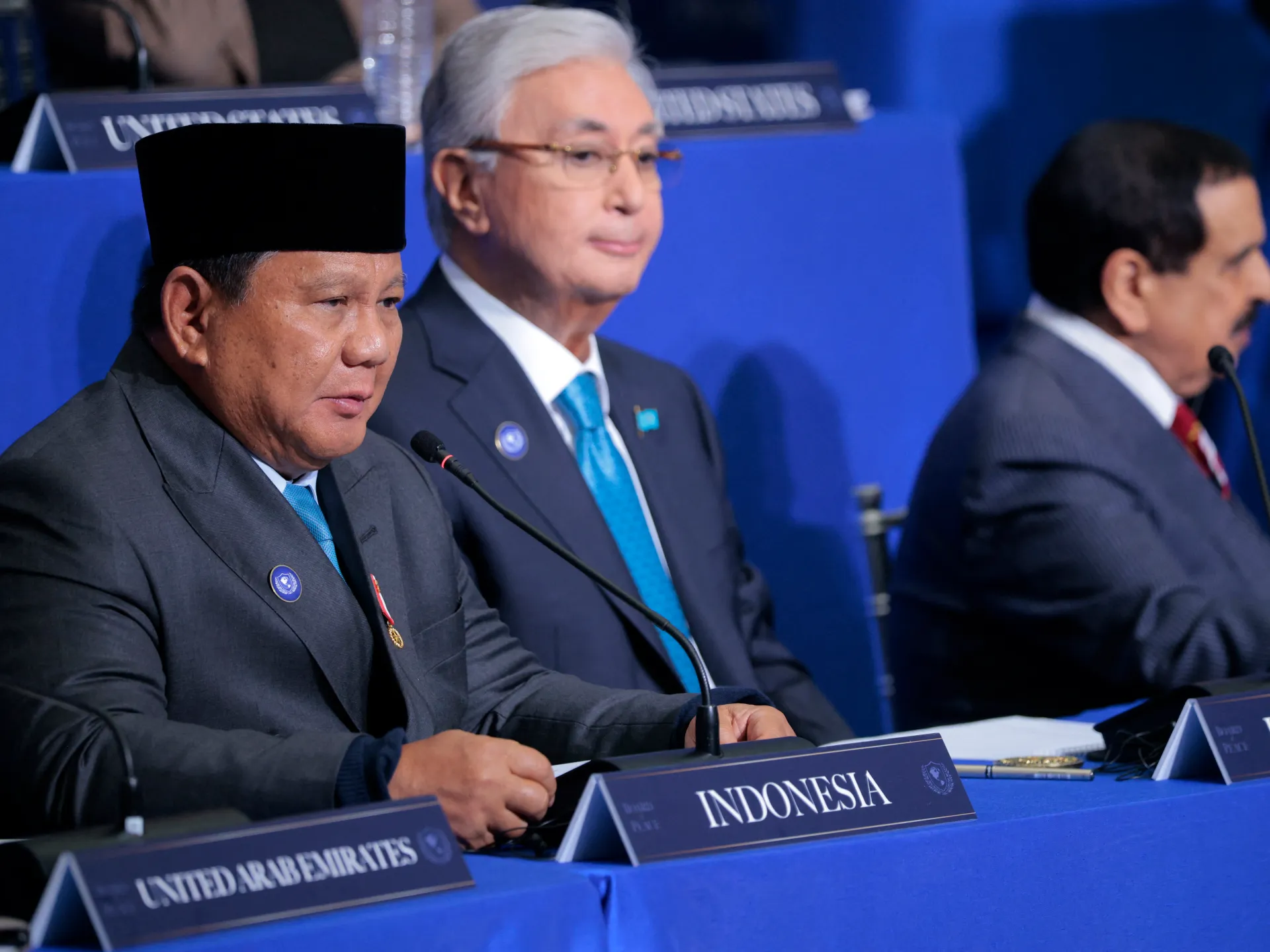
Indonesia, Morocco, Kazakhstan, Kosovo and Albania have pledged to send troops to Gaza, the commander of a newly created International Stabilization Force (ISF) has said during a meeting of United States President Donald Trump’s so-called Board of Peace.
US Army General Jasper Jeffers, who has been appointed as the head of a future Gaza stabilisation force by Trump’s board, said on Thursday that the Indonesian contingent to the mission has “accepted the position of deputy commander”.
Recommended Stories
list of 4 itemsend of list
“With these first steps, we will help bring the security that Gaza needs,” Jeffers said during a meeting of the board in Washington, DC.
Indonesian President Prabowo Subianto, who was among several world leaders participating in the meeting, said his country would contribute up to 8,000 personnel to the planned force “to make this peace work” in the war-torn Palestinian territory, where Israel’s genocide has killed at least 72,000 people.
Kazakhstan’s President Kassym-Jomart Tokayev said his country will also send an unspecified number of troops, including medical units, to Gaza, while Morocco’s Foreign Minister Nasser Bourita said that his country is ready to deploy police officers to Gaza.
Albania, whose prime minister recently made a two-day official visit to Israel, has also said it will contribute troops, while neighbouring countries Egypt and Jordan have said they will participate by training police officers.
Indonesia, which was one of the first countries to commit to sending troops, has sought to reassure potential critics that its participation is intended to ensure international law is upheld in Gaza, amid Israel’s genocidal onslaught.
‘Indonesian troops will not be involved in combat operations’
Indonesia’s foreign minister met with both United Nations chief Antonio Guterres and Palestinian ambassador to the UN Riyad Mansour in New York on Wednesday, in advance of President Subianto’s participation in the Board of Peace meeting.
“Indonesia’s mandate [on troop deployment] is humanitarian in nature with a focus on protecting civilians, humanitarian and health assistance, reconstruction as well as training and strengthening the capacity of the Palestinian Police,” Indonesia’s Ministry of Foreign Affairs said in a recent statement, according to the Jakarta Post newspaper.
“Indonesian troops will not be involved in combat operations or any action leading to direct confrontation with any armed group,” the ministry said, responding to questions raised over its future role in Gaza by Amnesty International.
The head of Amnesty International Indonesia, Usman Hamid, has voiced concerns that Indonesia risked violating international law through its participation in the Board of Peace and the planned stabilisation force for Gaza.
Hamid warned that Indonesia’s deployment of troops to Gaza “means putting Indonesia at risk of participating in a mechanism that will strengthen violations of International Humanitarian Law”.
“The Peace Council does not include members from the most disadvantaged Palestinians, but instead includes members from Israel, which has for nearly eight decades carried out an illegal occupation and apartheid against the Palestinian people, even committing genocide in Gaza,” Hamid wrote last week in an open letter to the speaker of the People’s Representative Council of the Republic of Indonesia.
Palestinians have also voiced concerns that Trump’s Board of Peace will only further entrench Israel’s illegal occupation of the Gaza Strip, as Israeli forces continue to carve out more “buffer zones” and restrict the entry of food and other aid, months into a so-called “ceasefire” with Hamas, during which almost 600 Palestinians have been killed in Israeli attacks.
The Gaza stabilisation force differs from other peacekeeping forces deployed by multilateral organisations such as the UN or the African Union.
Indonesia, along with Italy, is one of the largest contributors of troops to UNIFIL, which has repeatedly come under fire from Israeli forces, despite a fragile ceasefire between Israel and Hezbollah.
These are the key developments from day 1,457 of Russia’s war on Ukraine.
Published On 20 Feb 202620 Feb 2026
Share
Here is where things stand on Friday, February 20:
Fighting
Russian forces launched 448 attacks on 34 settlements in Ukraine’s front-line Zaporizhia region in a single day, injuring a six-year-old child and damaging homes, cars and other infrastructure, regional governor Ivan Fedorov wrote on the Telegram app.
Russian drone, missile and artillery attacks on Ukraine’s Kherson region injured five people and damaged homes, including seven high-rise buildings, the local military administration said on Telegram.
Russian attacks also continued in Ukraine’s Dnipropetrovsk and Sumy regions, but local officials there noted that “fortunately, no people were injured”. According to the Kyiv Independent news outlet, overnight was “unusually quiet” following weeks of “heavy fire” in the two regions.
A man was killed by shrapnel from a Ukrainian drone attack on Sevastopol, in Russian-occupied Crimea, Governor Mikhail Razvozhayev said on Telegram.
A Ukrainian drone attack caused a fire at an oil depot in Velikiye Luki in Russia’s Pskov region, local official Mikhail Vedernikov said, according to Russia’s state TASS news agency.
Russian forces shot down 301 Ukrainian drones, 10 missiles and two guided bombs in a 24-hour period, Russia’s Ministry of Defence said, according to TASS.
Peace process
United States President Donald Trump’s Board of Peace held its first meeting in Washington, DC, without Belarus participating, despite Trump extending an invitation to the Russian ally.
Belarus’s Ministry of Foreign Affairs said in a statement that its delegation to the meeting did not receive the necessary visas to enter the US “despite carrying out all the required procedures”.
The Foreign Ministry questioned, “What kind of peace and what kind of sequence of steps are we talking about if the organisers cannot even complete basic formalities for us to take part?”
France’s Ministry of Foreign Affairs spokesperson Pascal Confavreux expressed surprise to see the European Commission had sent a commissioner to participate in Trump’s meeting, noting that it “does not have a mandate from the [European] Council to go and participate”.
Confavreux also said France would not take part in Trump’s initiative until the Board of Peace returned its focus to Gaza in line with a United Nations Security Council resolution.
Several European Union member states have said they will not participate in the peace board after Trump extended an invitation to Russian President Vladimir Putin, who launched the invasion of Ukraine in 2022 and is subject to an arrest warrant by the International Criminal Court.
Regional Security
Dutch intelligence services AIVD and MIVD said on Thursday that European countries, including the Netherlands, were facing increased hybrid threats from Russia, including cyberattacks, sabotage, influence campaigns and disinformation.
Energy
Ukraine’s Russian-held Zaporizhzhia nuclear power plant is operating on its sole remaining main power line after losing its only backup power line more than a week ago, head of the International Atomic Energy Agency, Rafael Grossi, said in a statement.
Hungary is considering halting power and gas exports to Ukraine and will take such steps unless Ukraine resumes the flow of crude oil shipments via the Druzhba pipeline, Prime Minister Viktor Orban’s chief of staff told a briefing.
The Druzhba pipeline, parts of which run through Ukraine, is crucial for the transfer of Russian crude oil to Hungary and Slovakia. Oil flows have reportedly halted since an attack on the pipeline in January, which Kyiv has blamed on Russia.
France’s Minister of the Economy, Finance and Industry Roland Lescure said his country would provide 71 million euros ($83.5m) in additional funding for Ukraine for services including energy, health and clearing land mines.
Politics and diplomacy
The head of Russia’s FSB security service accused Telegram messaging app founder Pavel Durov of condoning criminal activity on the platform, in an escalation of Moscow’s rhetoric as it moved to restrict the service that is used by many Russians and Ukrainians to communicate about the war.
Dismissing a Russian government allegation that foreign intelligence services are able to see messages sent by Russian soldiers on Telegram, the popular platform said it had not found any breaches of its encryption codes and called Russia’s claims a “deliberate fabrication”, according to the Reuters news agency.
Military aid
Sweden announced a 12.9 billion crown ($1.42bn) military aid package for Ukraine that will include air defences, drones, long-range missiles and ammunition.
Kim focuses on improving economic activity in opening speech at Ninth Congress of the Workers’ Party of Korea.
North Korea has kicked off a rare party congress of the ruling Workers’ Party, held once every five years, that will see the leadership in Pyongyang set major policy goals in defence, diplomacy and the economy, state media reports.
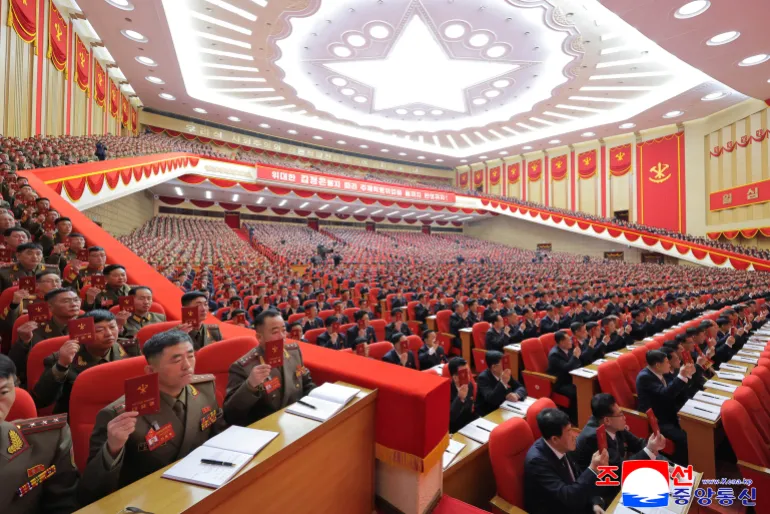
The Korean Central News Agency (KCNA) said on Friday that the Ninth Congress of the Workers’ Party of Korea (WPK) was under way, marking the start of the country’s most consequential political event since 2021.
Recommended Stories
list of 4 itemsend of list
“The Ninth Congress of the WPK opened with splendour in Pyongyang, the capital city of the revolution,” KCNA said, reporting that the high-level meeting started on Thursday and observers say it is expected to run for several days.
South Korea’s official Yonhap News Agency said the gathering will be closely followed for any signs regarding North Korea’s development of nuclear weapons or overtures towards the administrations in Seoul and the United States, which the North considers its chief foes.
Yonhap reports that North Korea’s leader, Kim Jong Un, made no mention of relations with either South Korea or the US in his opening speech to the congress on Thursday and, instead, focused on boosting the country’s economy.
“Ahead of our party are heavy and urgent tasks of advancing economic development and improving people’s livelihoods, and transforming all aspects of social life in the country as quickly as possible,” Kim said, according to KCNA.
While the true state of North Korea’s often struggling economy is hard to gauge, The Associated Press news agency reports that outside experts suggest the country has seen a gradual recovery in economic activity, helped by a post-COVID boost in trade with China and the export of weapons to help Russia in its war against Ukraine.
Several thousand North Korean troops have fought on Moscow’s side against Ukraine, and Pyongyang is believed to have exported large amounts of ammunition to help the Russian invasion of its neighbour.
Delegates attend the Ninth Congress of the Workers’ Party of Korea in Pyongyang, North Korea, on Thursday [KCNA via Reuters]
North Korea’s ‘biggest enemy’
South Korea’s spy agency said last week it was monitoring the congress for any sign that Kim will officially designate his teenage daughter, Kim Ju Ae, as his potential successor, formalising her position as heir apparent in a fourth-generation succession of the Kim family as North Korea’s leaders.
At the previous party congress five years ago, Kim declared that the US was his nation’s “biggest enemy”, the AFP news agency reports, and there is deep interest in whether the North Korean leader will soften his rhetoric – or double down – at this year’s congress, particularly amid the US presidency of Donald Trump.
Trump – who met Kim in 2019 when he briefly stepped foot into North Korea to shake Kim’s hand and pose for photos – said during a tour of Asia late last year that he was “100 percent” open to meeting Kim again.
So far, Kim has demurred on Trump’s overtures to meet again.
Observers of North Korean politics are reported to be scouring satellite imagery for any signs of the vast military parades that have accompanied previous congress meetings in Pyongyang.
Such parades will be closely watched for signs of a shift in North Korea’s weapons capabilities, as the country has used previous processions to show off its newest and most advanced weapons.
Kim held a ceremony on Thursday to unveil the deployment of 50 new launch vehicles for nuclear-capable short-range missiles as the congress kicked off.
According to Yonhap, the congress brings together some 5,000 party representatives from across the country, including 200 senior officials from the WPK’s headquarters. More than 4,700 officials from regional and industrial sectors are also in attendance.
People view 600mm-calibre multiple rocket launchers during a presentation ceremony of the launchers to the Ninth Congress of the Workers’ Party of Korea by the workers of the munitions industry sector in Pyongyang, North Korea, on Wednesday [KCNA via Reuters]
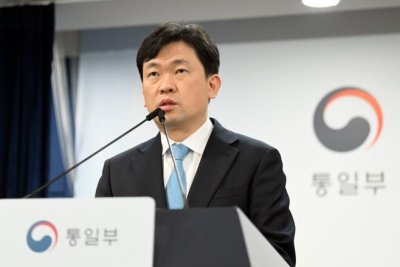
Yoon Min-ho, spokesperson for South Korea’s Unification Ministry, speaks during a briefing at the Government Complex Seoul in Seoul on Feb. 2. Photo by Asia Today
Feb. 19 (Asia Today) — South Korea’s Unification Ministry said Thursday it is taking note of a swift statement by Kim Yo Jong, a senior North Korean ruling party official, after Seoul expressed regret over recent drone incidents and announced steps to prevent a recurrence.
A ministry official told reporters the government “takes note” that North Korea quickly responded to Seoul’s expression of regret and its preventive measures. The official said the steps announced by Unification Minister Chung Dong-young are intended to protect the safety and peace of both Koreas and that the government will “responsibly” implement them.
The remarks came after Kim said earlier Thursday that North Korea “highly appreciates” Chung’s comments acknowledging what Pyongyang called a South Korean drone provocation, expressing regret again and stating an intention to prevent further incidents.
On Wednesday, Chung said Seoul expressed “deep regret” to the North over drone infiltration incidents during the previous Yoon Suk Yeol administration and additional incidents carried out at the civilian level after President Lee Jae-myung took office. Chung also announced measures aimed at preventing a recurrence, including banning drone infiltration into North Korea and strengthening penalties.
Several wildfires in the Texas and Oklahoma panhandles spurred evacuations while firefighters continued battling several on Thursday. Image courtesy of UPI
Feb. 19 (UPI) — Firefighters are battling several conflagrations in the Texas and Oklahoma panhandles, the largest of which burned more than 283,000 acres in Oklahoma’s Beaver County.
The Beaver County fire is located along Ranger Road and was 15% contained late Thursday afternoon, while a nearby Morning Fire started at 10:30 a.m. CST and is situated southeast of Boyd.
Officials for the Booker Volunteer Fire Department said the Morning Fire was under control shortly after noon, but two active fires in Oklahoma’s Texas County were still active.
The Stevens Fire was 50% contained after burning more than 12,000 acres, while the Side Road Fire was 60% contained and had burned 3,680 acres as of Thursday afternoon.
Firefighters in Texas’ Oldham and Potter counties had the 18,423-acre Lavender Fire 20% contained during the afternoon hours, and an evacuation order for Valley De Oro had been lifted.
In Donley County, Texas, the 8 Ball Fire was 50% contained after burning 13,00 acres, while the Canadian Bridge Fire in Hutchinson County was 100% contained after burning 428 acres.
Fire departments in Bartlesville, Ochelata, Oglesby, Oglesby, Tulsa, Barnsdall and Washington County in Oklahoma fought several fires on Thursday, and Ochelata and southern Bartlesville residents were told to evacuate.
Livestock also have been moved out of the fire zones, and many others fled on their own accord as smoke from the fires spread nearby.
No fatalities have been reported, and there are no reports yet regarding structural damage from the many fires.
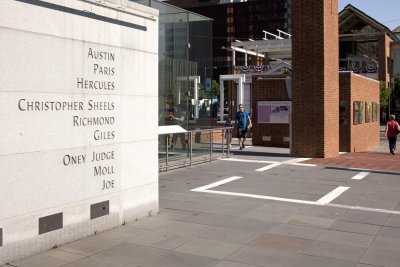
The names of nine former slaves owned by George Washington appear at the President’s House in Philadelphia, where workers continued restoring a slavery exhibit on Thursday. Photo by Joseph E.B. Elliott/National Park Service
Feb. 19 (UPI) — Workers are restoring a slavery exhibit at the site of the nation’s first presidential mansion in Philadelphia ahead of a Friday deadline to do so.
U.S. District Court of Eastern Pennsylvania Judge Cynthia Rufe on Monday ordered the Interior Department to restore the exhibit, which was removed in January amid the Trump administration’s anti-DEI policy.
Rufe likened the slavery exhibit’s removal to author George Orwell‘s novel “1984” and said the exhibit supports “historic truths,” The Hill reported.
The Trump administration on Wednesday filed a motion to stay Rufe’s order to reinstate the exhibit, but workers began reinstalling it on Tuesday.
Philadelphia Mayor Cherelle Parker welcomed the change and vowed to oppose efforts to remove the exhibit.
“Today, we celebrate the return of our history at this important site,” Parker said in a post on X. “We are thankful for all the supporters across the city to get us to this point.”
Parker said the legal challenges have not ended and said they will be handled with “rigor and gravity” as they arise.
The exhibit features panels depicting slavery in the United States from the time of the Revolutionary War through the Civil War and the eventual outlawing of slavery upon the ratification of the 13th Amendment.
The President’s House formerly was the official residence for Presidents George Washington and John Adams when Philadelphia was the nation’s capital and is located at the corner of 6th and Market streets.
Adams did not own slaves, which is why the panels focus on Washington’s ownership and use of slaves while living at the presidential home.
The house was demolished 32 years after the nation’s capital moved to Washington in 1800, but its foundation and footprint remain.
The site been converted into an outdoor exhibit that features the dichotomy of slavery in a nation that was founded on the principles of freedom and equality and is managed by the National Park Service.
The second straight monthly deterioration in the United States’ trade deficit occurred as US firms boosted imports of computer chips and other tech goods.
Published On 19 Feb 202619 Feb 2026
Share
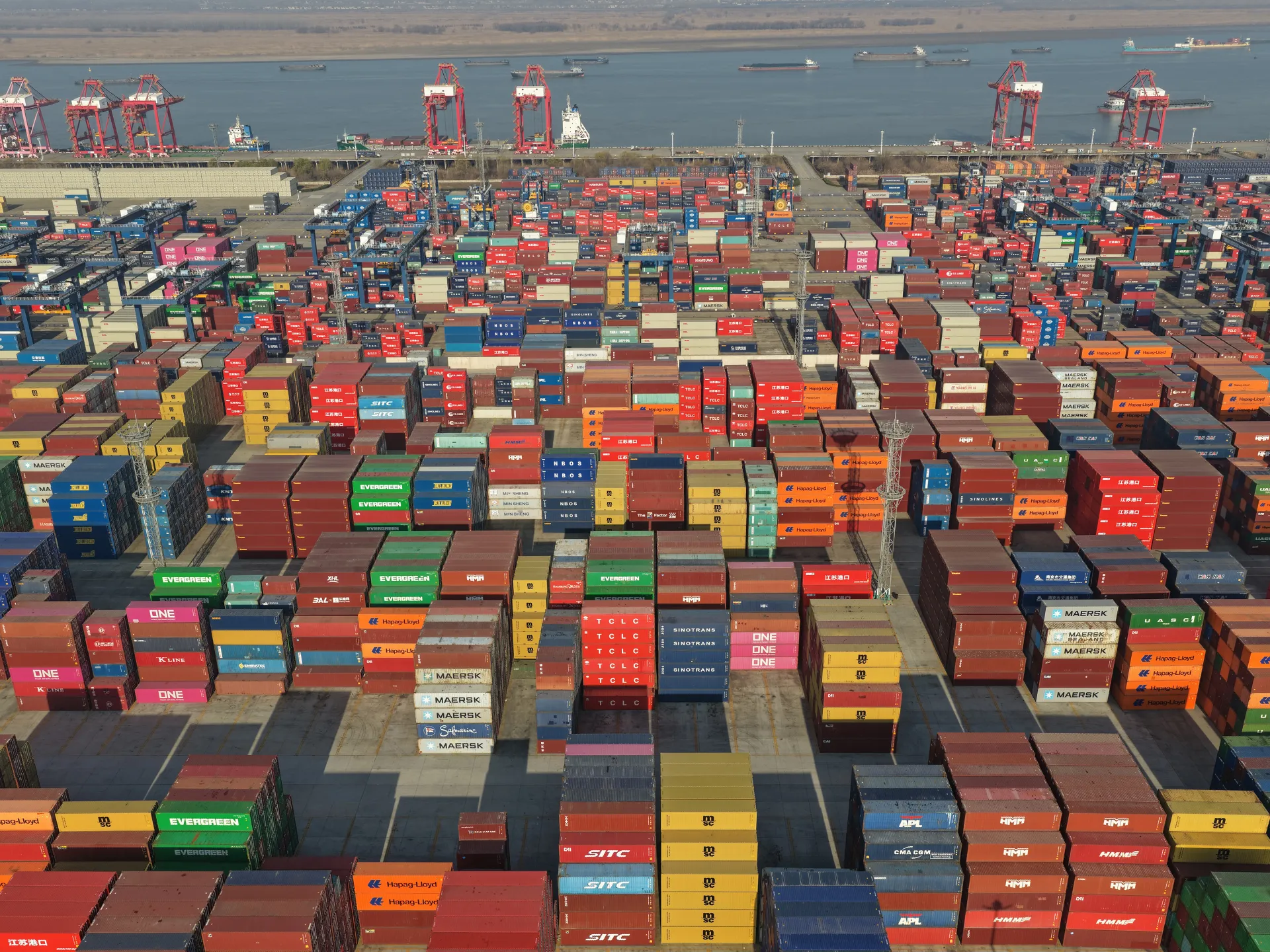
The United States trade deficit has widened sharply in December amid a surge in imports, and the goods shortfall in 2025 was the highest on record despite US President Donald Trump’s tariffs on foreign-manufactured merchandise.
The second straight monthly deterioration in the trade deficit reported by the US Commerce Department on Thursday suggested that trade made little or no contribution to gross domestic product (GDP) in the fourth quarter.
Recommended Stories
list of 4 itemsend of list
Exports rose 6 percent last year, and imports rose nearly 5 percent.
The US deficit in the trade of goods widened 2 percent to a record $1.24 trillion last year as American companies boosted imports of computer chips and other tech goods from Taiwan to support massive investments in artificial intelligence.
Amid continuing tensions with Beijing, the deficit in the goods trade with China plunged nearly 32 percent to $202bn in 2025 on a sharp drop in both exports to and imports from the world’s second-biggest economy. But trade was diverted away from China. The goods gap with Taiwan doubled to $147bn and shot up 44 percent, to $178bn, with Vietnam.
Trump last year unleashed a barrage of tariffs against trading partners with the aim, among other things, of addressing trade imbalances and protecting US industries. But the punitive duties have not yielded a manufacturing renaissance, with factory employment declining by 83,000 jobs from January 2025 through January 2026.
“There just isn’t any evidence out there in the economic research literature to suggest that tariffs have materially impacted trade deficits historically when countries have implemented them,” said Chad Bown, senior fellow at the Peterson Institute for International Economics.
The trade gap ballooned by 32.6 percent to a five-month high of $70.3bn, the Commerce Department’s Bureau of Economic Analysis and the US Census Bureau said. Economists polled by Reuters forecast the trade deficit would contract to $55.5bn.
The report was delayed because of last year’s government shutdown.
Imports increased 3.6 percent to $357.6bn in December. Goods imports surged 3.8 percent to $280.2bn, boosted by a $7bn increase in industrial supplies and materials, mostly non-monetary gold, copper and crude oil. Capital goods imports increased by $5.6bn, lifted by computer accessories and telecommunications equipment. That rise is likely related to the construction of data centres to support artificial intelligence.
But consumer goods imports fell, pulled down by pharmaceutical preparations. There have been large swings in imports of pharmaceutical preparations because of tariffs.
“But strong imports should also imply strength in details like inventories or business investment,” said Veronica Clark, an economist at Citigroup. “Surging computer imports in particular should correspond with stronger business equipment investment and could remain strong due to AI-related demand.”
Exports fell 1.7 percent to $287.3bn in December. But capital goods exports increased, boosted by semiconductors. There were increases in exports of consumer goods, including pharmaceutical preparations.
Family and friends of Charles Waithaka Wangari, 31, light candles during a symbolic funeral service after failing to retrieve his body from Russia for burial at their rural Mukurwe-ini village, in Nyeri, Kenya, on February 5. Photo by Daniel Irungu/EPA
Feb. 19 (UPI) — More than 1,000 Kenyans and other Africans have been deployed by Russia to fight in Ukraine after being recruited by “rogue” agencies that some accuse of human trafficking, a Kenyan intelligence report indicates.
Kenya’s National Intelligence Service on Wednesday reported the number of Kenyans deployed by the Russian military rose from more than 200 in November to more than 1,000 now.
The report indicates at least 89 of those deployed in Russia were serving on the front lines. At least one has died and others have returned to Kenya with injuries or mental trauma.
Kimani Ichung’wah, majority leader of the Kenyan Parliament, blamed a network of corrupt state officials whom he accused of cooperating with human traffickers to provide the Russian military with Kenyans to fight in Ukraine.
Staff at the Russian Embassy in Nairobi and the Kenyan Embassy in Moscow also helped Russia to recruit Kenyans, the Kenyan lawmaker said.
The Russian Embassy denied the allegation and said it never has issued visas to Kenyans to travel to Russia to participate in military operations.
Ichung’wah said many of those fighting for Russia are civilians and former police officers and military personnel ranging in age from their mid-20s to 50 and seeking overseas job opportunities, The Guardian reported.
Russia allegedly is paying them a monthly salary of about $2,700 plus housing and offering bonuses and Russian citizenship for their service.
Kenya is not the only African nation that has citizens allegedly fighting for Russia.
Ukrainian Foreign Minister Andrii Sybiha in November alleged more than 1,400 Africans from 36 countries were deployed by the Russian military to fight in Ukraine.
Many of those soldiers are being held as prisoners of war in Ukraine, Sybiha said.
Russia invaded Ukraine on Feb. 24, 2022, and has resisted peace overtures despite participating in ongoing peace talks.
“Another gateway to the occupation of Palestine.” Many Palestinians in Gaza reacted to the inaugural meeting of Donald Trump’s so-called “Board of Peace” with deep scepticism, seeing it as a way to further Israel’s illegal occupation of the territory.
Feb. 19 (UPI) — The Commission of Fine Arts has unanimously approved plans for President Donald Trump‘s almost 90,000-square-foot White House ballroom plans, the first hurdle in starting the building project.
The commission, whose members were all appointed by Trump, including his executive assistant, Chamberlain Harris, 26. The original architect of the ballroom recused himself from the vote. Trump fired all the previous members in October.
But now, the project must win approval from the National Capital Planning Commission, which could vote on March 5.
“This is a facility that is desperately needed for over 150 years, and it’s beautiful,” The Washington Post reported Commission Chair Rodney Mims Cook Jr. said.
But the CFA’s secretary said comments have been negative.
“In two decades of casework here, I’ve never seen as much public engagement on this. We’ve literally gotten, in the past week or so, more than 2,000 various messages,” said Thomas Luebke, CFA secretary, CBS News reported. “The vast, vast majority is negative, in general.”
Trump initially said the construction would cost $200 million and would be funded by private donations. He later said the project could cost twice that amount, but donors would pay for it. Officials from the National Trust for Historic Preservation challenged the construction in federal court and sought an injunction to stop the build. The judge refused the injunction but ordered the administration to undergo a review process.
The Capital Planning Commission is led by Will Scharf, a White House staff secretary appointed by Trump. Two other White House officials — James Blair and Stuart Levenbach — are also on the commission.
Luebke read a summary of the comments to commissioners, CBS reported. He cited demolition without permits or oversight, a scale that will “dwarf the White House,” lack of transparency in funding and contracts and a “fundamental miscarriage of democratic principles.”
“The ballroom seems to shout power,” one commenter wrote, Luebke said.
Harris responded, “This is sort of like the greatest country in the world. It’s the greatest house in the world and we want it to be the greatest ballroom in the world.”
The public comments, Luebke said, were “overwhelmingly in opposition — over 99%.”
President Donald Trump speaks alongside Administrator of the Environmental Protection Agency Lee Zeldin in the Roosevelt Room of the White House on Thursday. The Trump administration has announced the finalization of rules that revoke the EPA’s ability to regulate climate pollution by ending the endangerment finding that determined six greenhouse gases could be categorized as dangerous to human health. Photo by Will Oliver/UPI | License Photo
Feb. 19 (UPI) — A massive blackout left nearly five million people without electricity in Paraguay amid a heat wave that pushed temperatures above 108 degrees Fahrenheit across large parts of the country and as high as 116 degrees Fahrenheit in some areas, according to local meteorological reports.
The outage affected 90% of customers of the National Electricity Administration, or ANDE, the state-run company that supplies nearly the entire population of 6.4 million people.
The interruption on Wednesday also disrupted drinking water services in urban areas due to reliance on electric pumping systems. Nearly 24 hours after the blackout, service had not been fully restored.
The lack of power also impacted health centers and hospitals in cities across the country’s interior. In those cases, emergency infrastructure and generators failed, and doctors and nurses were forced to perform surgical procedures, including a cesarean section, using the light from their cell phones.
Following the blackout, ANDE attributed the interruption to transmission lines going out of service within the system that connects to the Itaipú hydroelectric plant. The company later denied any malfunction at its facilities and said generation operated normally.
Paraguay is one of the world’s largest producers of hydroelectric power thanks to dams such as Itaipú and Yacyretá, which generate surpluses that are even exported to neighboring countries.
In January, Itaipú covered more than 80% of national electricity demand. However, the transmission and distribution system faces scrutiny over recurring failures and a lack of investment.
Specialists argue that the problem does not lie in energy generation but in the limitations of the transmission and distribution system.
“If we continue growing at the current pace, the system will not withstand it,” engineer Guillermo Krauch of the Paraguayan Institute of Electrical Sector Professionals told UPI.
The blackout comes as President Santiago Peña and Foreign Minister Rubén Ramírez Lezcano are scheduled to hold meetings in the United States with executives from the U.S. International Development Finance Corporation to analyze potential investment projects related to data centers and artificial intelligence developments in Paraguay.
The government of President Santiago Peña approved special electricity tariffs for large consumers, including data centers, cloud computing, artificial intelligence and high-energy industrial projects.
The Ministry of Industry and Commerce seeks to position Paraguay as a regional technology hub supported by its renewable energy, abundant water resources and comparative cost advantages.
However, technical organizations warn that the accelerated expansion of high-consumption industries could worsen service deterioration if transmission infrastructure is not strengthened.
Víctor Giménez, special projects adviser at the Yacyretá dam, said Paraguay lived for decades under a “false sense of energy security.”
“That time is over. Companies now arrive with the intention to invest, but they leave once they understand there is no guarantee of electricity supply for the next five years,” he said.
Peña is currently in Washington to participate in the Board of Peace and hold meetings with business leaders interested in installing data centers in Paraguay.
The heat wave has lasted several days, and Paraguay ranked among the locations with the highest temperatures recorded globally this week.
US president says at inaugural Board of Peace summit that Washington and Tehran should make a ‘meaningful deal’.
Donald Trump has renewed his threats against Iran, suggesting that Tehran has about 10 days to reach a deal with Washington or face further military strikes.
Speaking at the inaugural Board of Peace meeting in Washington, DC, on Thursday, the United States president reiterated his argument that the joint Israeli-US strikes against Iran in June of last year paved the way to the “ceasefire” in Gaza.
Recommended Stories
list of 3 itemsend of list
Trump argued that without the US attack on Iran’s nuclear facilities, the “threat” of Iran would have prevented countries in the region from agreeing to “peace in the Middle East”.
“So now we may have to take it a step further, or we may not,” Trump said. “Maybe we’re going to make a deal. You’re going to be finding out over the next probably 10 days.”
Trump’s comments come days after the US and Iran held a second round of indirect talks.
On Wednesday, Iran’s Minister of Foreign Affairs Abbas Araghchi said the two sides made “good progress in the negotiations” in Geneva and “were able to reach broad agreement on a set of guiding principles” for an agreement.
But the US has continued to amass military assets in the Gulf region, including two aircraft carriers and dozens of fighter jets.
Iran, which denies seeking a nuclear weapon, has said it would agree to curbing its uranium enrichment and placing it under rigorous international inspection.
But the Trump administration has said that it would oppose any Iranian enrichment. Washington has also sought to place limits on Tehran’s missile arsenal, but Iranian officials have ruled out any concessions over the issue, which they say is a non-negotiable defence principle.
On Thursday, Trump said his diplomatic aides Steve Witkoff and Jared Kushner have had “very good meetings” with Iran’s representatives.
“We have to make a meaningful deal. Otherwise, bad things happen,” he said.
Last week, Trump said the US and Iran should come to an agreement “over the next month”, warning Tehran with “very traumatic” consequences.
But Iranian officials have expressed defiance against the US president’s threats.
“The Americans constantly say that they’ve sent a warship toward Iran. Of course, a warship is a dangerous piece of military hardware,” Iranian Supreme Leader Ali Khamenei wrote on X on Thursday.
“However, more dangerous than that warship is the weapon that can send that warship to the bottom of the sea.”
Tensions between the Washington and Tehran have been escalating since late 2025, when Trump – while hosting Israeli prime minister Benjamin Netanyahu in December – vowed to strike Iran again if attempts to rebuild its nuclear or missile programmes.
Days later, antigovernment protests broke out in Iran. Trump encouraged the demonstrators to take over state institutions, promising them that “help is on the way”.
Trump appeared to step back from the brink of attacking Iran last month, saying that the country agreed to halt the execution of dissidents under US pressure.
The two countries later renewed negotiations with the first round of talks since the June war taking place in Oman on February 6.
But threats and hostile rhetoric between Washington and Tehran have persisted despite the ongoing diplomacy.
In 2018, during his first term Trump nixed the multilateral nuclear deal that saw Iran scale back its nuclear programme in exchange for lifting international sanctions against its economy.
Feb. 19 (UPI) — The United States has put military forces in place in the Middle East for a potential strike on Iran but President Donald Trump has not decided whether to attack or continue negotiations on Thursday.
A strike could occur as early as this weekend, with naval and air forces quickly coming into place. National security officials met in the Situation Room on Wednesday to discuss courses of action against Iran.
U.S. armed forces have been assembling in the Middle East in recent weeks as the United States and Iran have negotiated a scaling back of Iran’s nuclear program. The latest conversations took place in Geneva on Tuesday, sans Trump who said he would be involved “indirectly.”
The negotiations between the United States and Iran ended without a resolution on Tuesday. Trump has called for Iran to end its nuclear program.
Iranian officials said they agreed with U.S. negotiators on a “set of guiding principles.” White House press secretary Karoline Leavitt said to expect more details about these negotiations to come forward in the weeks to come. She did not say whether Trump would take action before that happens.
“I’m not going to set deadlines on behalf of the president of the United States,” she said.
In recent weeks, the United States has moved warships to the Indian Ocean while Trump warned Iran over the killings and detainments of thousands of protesters against the Iranian regime.
Israeli Prime Minister Benjamin Netanyahu has an interest in Iran drawing down its missile capabilities as well. Israeli forces have been on alert over the possibility of an open conflict as tensions have continued to heighten.
Secretary of State Marco Rubio is slated to meet with Netanyahu in Israel on Feb. 28, to provide an update on the negotiations with Iran.
The United States launched strikes against Iranian nuclear facilities in June, causing what Iranian officials called “serious and significant damage.”
President Donald Trump speaks alongside Administrator of the Environmental Protection Agency Lee Zeldin in the Roosevelt Room of the White House on Thursday. The Trump administration has announced the finalization of rules that revoke the EPA’s ability to regulate climate pollution by ending the endangerment finding that determined six greenhouse gases could be categorized as dangerous to human health. Photo by Will Oliver/UPI | License Photo