From breaking news to significant developments in politics, business, technology, entertainment, and more, we deliver the stories that shape our global landscape.
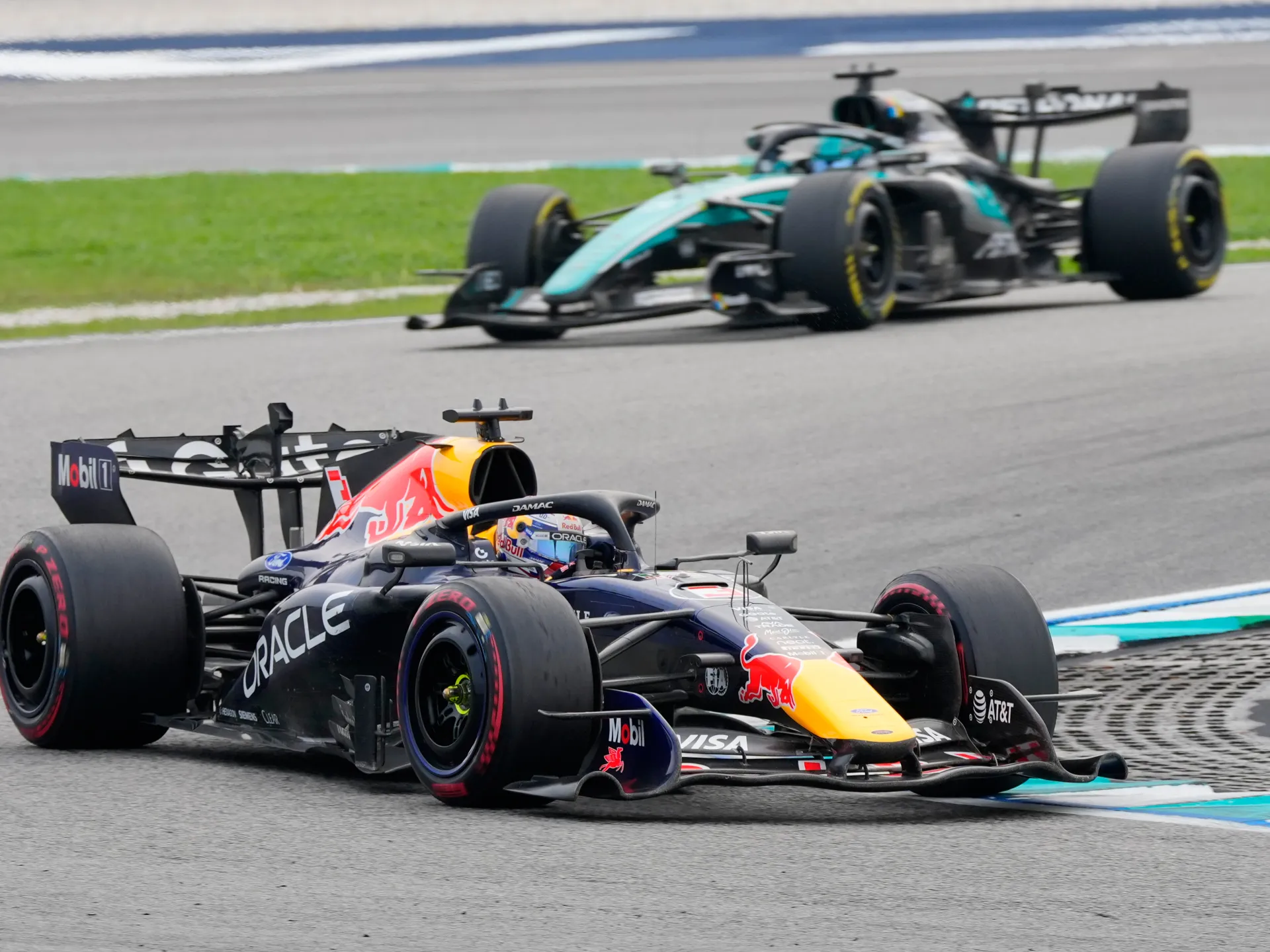
Drivers faced glitches at the race in Malaysia, where Lewis Hamilton had to stop and restart his car on the track.
Published On 5 Oct 20265 Oct 2026
Formula One’s governing body has promised a full investigation into a software bug that caused chaos and forced the start of the Bahrain Grand Prix in Malaysia to be aborted, with drivers feeling like they were in battery-powered cars made of Lego.
Ferrari’s seven-time world champion Lewis Hamilton and Red Bull’s four-time champion and eventual race winner Max Verstappen were among several affected by the glitch on a formation lap after torrential rain and a long delay at Malaysia’s steamy Sepang circuit on Sunday.
Recommended Stories
list of 4 itemsend of list
Verstappen compared the experience to a “Lego race” held at Silverstone before the British Grand Prix while Hamilton, the sport’s most successful driver of all time, had to stop his car on track and restart it in what he said was a career first.
The episode was the latest in a difficult first season for the new era of cars and engines, with drivers at the pinnacle of motorsport unhappy since the opening race with the power units’ increased electrical component and the need for energy management.
FIA said afterwards that “an unprecedented combination of low engine speed, low-grip conditions, wet-weather energy management settings and the Sepang circuit’s sector configuration led to an unintended loss of power for a number of cars”.
“As a result, the FIA technical department removed the energy limit constraint in the affected sectors through an updated software release distributed to all competitors during the race delay caused by heavy rain, enabling teams to make the necessary changes to the power unit before the start of the race.
“This issue had not been detected by the FIA or the teams during testing or during the laps to the grid. The FIA, together with the teams and power unit manufacturers, will undertake a full review of the issue.”
The FIA’s single-seater director Nikolas Tombazis told reporters the lack of preseason testing in wet conditions had played a part in the chaos.
“Some cars went very slowly, almost came to a standstill. There was a bit of a concertina effect between cars, and some cars almost stopped completely,” he said. “That bug prevented the power from being redeployed, and for the cars to start again.
“I think if we had had a bit more testing, we probably would have managed to catch it in time, and not have such a situation.”
Sepang was the first race weekend of the season with wet conditions, although the track dried during the race.
“Sometimes things fall through the net and people learn, and you do a better job next time,” Tombazis said.
Only one point separates Group A1 leaders France and second-placed Belgium before Monday’s clash.
Published On 5 Oct 20265 Oct 2026
Who: France vs Belgium What: UEFA Nations League 2026-2027, Group A1 match Where: Stade de France, Saint-Denis, France When: Monday at 8:45pm (18:45 GMT) How to follow: Al Jazeera Sport will bring you all the build-up and live updates from 15:45 GMT.
Two-time world champions France host Belgium in the last of four Nations League games played over this extended international window.
Recommended Stories
list of 4 itemsend of list
Monday’s clash in Saint-Denis pits the top two teams in A1 against each other with France looking to complete the double in this league phase after their initial victory in Brussels in late September.
France and Belgium both enter this match with their creative stars in red-hot form. Michael Olise scored a goal in back-to-back matches while Kevin De Bruyne’s double steered Belgium to victory last time out.
However, Belgium will have to do without De Bruyne for the Les Bleus test with the midfield sensation suspended alongside their captain, Youri Tielemans.
Here’s all you need to know about France vs Belgium:
What is the UEFA Nations League?
The UEFA Nations League was founded in 2018 to reduce the number of friendlies and give nations competitive matches against equally ranked teams.
In this competition, countries from across Europe participate in a league structure that features promotion and relegation.
How does the UEFA Nations League work?
The teams compete across four divisions, facing every other team in their group twice: once at home and once away. The league phase ends in November.
In the top-most league, League A, the top two teams from each group go through to the quarterfinals, which will take place in March.
The finals will again be contested between four teams. The host and the dates of the finals have not been confirmed yet.
How have France and Belgium played in the Nations League?
France lead Group A1 with seven points from three games.
Zinedine Zidane (France): “We always want to win. We are competitors. The most important thing is to prepare well for matches and to feel comfortable on the pitch. I am very satisfied with the mentality I have seen so far. I have clear convictions. I love the French national team, and I have top-class players, but I know it will take time. I am very happy with what I have seen.”
French head coach Zinedine Zidane has led the team to two wins and a draw in this year’s Nations League [AFP]
Mark van Bommel (Belgium): “France have an exceptional amount of quality. They’re a complete team. In the first match, however, we should have taken at least a point. So it is possible tomorrow. We have to be top in all areas.”
Team news and predicted lineups
France
Matteo Guendouzi and Dayot Upamecano are suspended, and Warren Zaire-Emery is out with a thigh injury.
Probable France XI: Mike Maignan; Pierre Kalulu, Jeremy Jacquet, Maxence Lacroix, Adrien Truffert; Rayan Cherki, Lucas Da Cunha, Eduardo Camavinga; Michael Olise, Ousmane Dembele, Desire Doue
Belgium
De Bruyne and Tielemans are both suspended after picking up two yellow cards in successive matches.
Probable Belgium XI: Senne Lammens; Timothy Castagne, Nathan Ngoy, Brandon Mechele, Maxim De Cuyper; Nicolas Raskin, Romeo Lavia, Hans Vanaken; Dodi Lukebakio, Charles De Ketelaere, Mika Godts
Sixty-nine years ago this day, the Soviet Union launched Sputnik 1, the first satellite to orbit Earth, opening the Space Age and setting off a race with the United States.
Ten years later, on October 10, 1967, the Outer Space Treaty came into force.
Recommended Stories
list of 3 itemsend of list
In 1999, the United Nations started observing World Space Week – from October 4 to 10 – to celebrate the contribution of space technology for the benefit of humanity. Schools, space agencies, museums and astronomy clubs around the world hold stargazing nights, science classes, exhibitions and talks by astronauts and scientists.
Today, more than 80 countries have put satellites into orbit, and people from over 50 of those have travelled to space.
In this visual explainer, Al Jazeera looks at which countries have done so, how many space travellers have been women, and what comes next for human spaceflight.
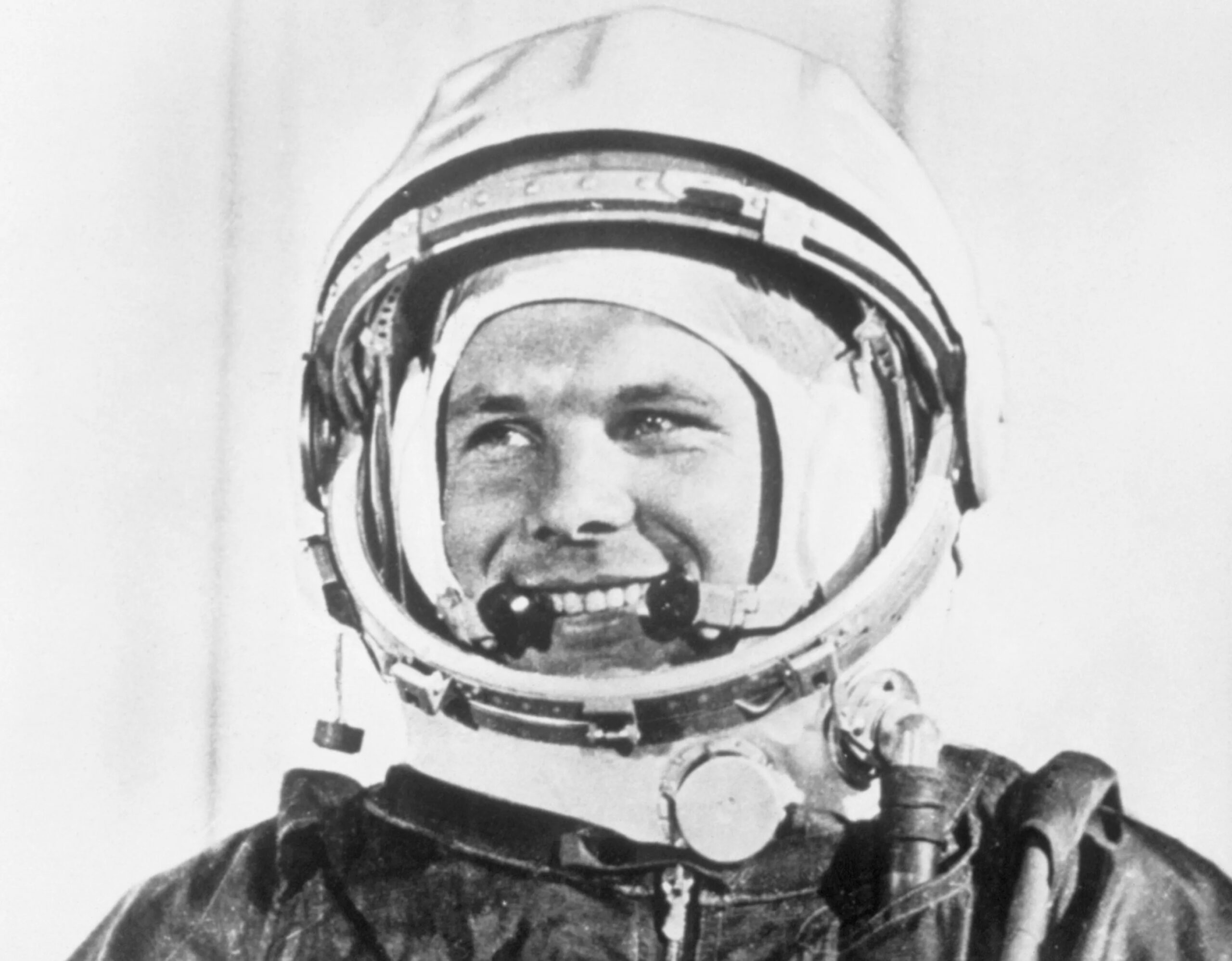
The first man in space – Yuri Gagarin
On April 12, 1961, Soviet astronaut Yuri Gagarin became the first human in space.
On board the Vostok 1 spacecraft, he completed one orbit of Earth at about 27,400km/h (17,025mph) during a 108-minute flight. He later ejected from the spacecraft and landed by parachute.
The mission demonstrated that humans could survive launch, weightlessness and re-entry, giving the Soviet Union a major early victory in the Cold War Space Race.
Yuri Gagarin, the world’s first spaceman [File: Getty Images]
Six years later, on October 10, 1967, the Outer Space Treaty entered into force. Signed by the US, the United Kingdom and the Soviet Union, it established that space should be explored and used peacefully and that no country could claim it as territory.
Less than two years later, NASA’s Apollo 11 mission landed the first humans on the moon. On July 20, 1969, Neil Armstrong became the first person to walk on its surface.
Astronaut Neil Armstrong, in training for the projected Apollo 11 lunar landing mission, is being suited up for the first full dress rehearsal of activities he is to perform during the projected moon landing [File: Getty Images]
Where does space begin?
There is no single agreed boundary for where space begins: most international bodies use the Karman line, 100km (62 miles) above Earth, while the US military, NASA and the Federal Aviation Administration count anyone who flies above 80km (50 miles).
Either way, it is closer than it sounds: if Earth were the size of an apple, space would begin about as far from the surface as the thickness of its skin.
Which countries have sent people to space?
By the Karman line measure, at least 746 people from 52 countries have travelled to space, including professional astronauts and paying tourists.
Some hold dual nationality, and some flew for countries that no longer exist, such as the Soviet Union.
The graphic below breaks down space travellers by country.
Two countries still dominate the list. The US has sent 369 people to space, and the Soviet Union and Russia have sent 138 combined. China, the third country to launch people on its own rockets, has sent 29.
American astronaut Alan Bartlett Shepard Jr, commander of NASA’s Apollo 14 lunar landing mission at the Kennedy Space Center in Florida, on November 14, 1970 [Space Frontiers/Getty Images]
One in seven space travellers is a woman
Space remains a male-dominated frontier. Science fiction may be full of women commanding starships, but of the 746 people who have travelled to space, only 112, or 15 percent, have been women, about one in seven.
Soviet astronaut Valentina Tereshkova became the first woman to travel to space in June 1963. The US did not follow for another 20 years, until Sally Ride flew in June 1983.
The share of women is rising, though, largely because of commercial flights. More than half of the women who have flown since 2020 went up as paying passengers or guests on Blue Origin’s suborbital rocket.
Valentina Tereshkova, who became the first woman in space in 1963, at the Science Museum in London, March 15, 2017 [Leon Neal/Getty Images]
The typical space traveller is 40
Most people who have flown to space were in their 30s or 40s on their first flight, which together account for 85 percent. The median age is 40. Commercial flights have widened that range.
The youngest traveller, Oliver Daemen, was 18 when he flew in 2021. The oldest, Ed Dwight, was 90 years and eight months old when he flew in 2024, about two months older than William Shatner had been on his flight three years earlier.
What comes next for human spaceflight?
In April 2026, the Artemis II crew flew around the moon and reached about 406,771km (252,756 miles) from Earth, breaking the distance record set by Apollo 13 in 1970.
Next is Artemis III in 2027, a rehearsal in Earth orbit to test docking with lunar landers built by SpaceX and Blue Origin. NASA is targeting 2028 for Artemis IV, which aims to land astronauts near the moon’s south pole, the first crewed landing since 1972.
India plans its first crewed Gaganyaan flight in 2027, making it the fourth country to launch people on its own rocket. China aims to land astronauts on the moon around 2030.
Novak Djokovic to face Daniil Medvedev in the semifinals in Beijing after the Russian defeats Francisco Cerundolo.
Published On 5 Oct 20265 Oct 2026
Novak Djokovic has brushed aside ongoing injury-related struggles and produced a trademark comeback to defeat top seed Alexander Zverev 4-6, 6-4, 6-4 for a place in the China Open semifinals, extending his unbeaten record in the tournament.
Playing the ATP 500 event in Beijing for the first time since 2015, the six-time champion was pushed to the limit by reigning French Open and US Open champion Zverev, who delivered 19 aces in the match on Sunday.
Recommended Stories
list of 4 itemsend of list
Meeting for the first time in nearly 16 months, Djokovic struggled to contain the German’s power in the early stages as the 29-year-old Zverev claimed the opening set, but the Serb gradually worked his way into the match and refused to let his opponent pull away.
“I had a terrible start – two double faults at the beginning. It was quite cold, and honestly, I didn’t feel warmed up, but my fault,” Djokovic said.
“I gave him an early break, and then it was hard to come back in the first set.”
The contest was briefly interrupted by a moment of controversy when Zverev argued that the electronic advertising signage had gone dark during a rally and requested a video review after losing the point.
Replays showed a section of the signage had switched off although not as Zverev was missing the forehand. The chair umpire ordered the point to be replayed, prompting a frustrated exchange from Djokovic.
Zverev had a strong start in the match before being outplayed by Djokovic [Pedro Pardo/AFP]
‘Held my nerves’
The turning point came late in the second set when Djokovic broke at 5-4 to level the match, shifting the momentum in his favour after a tightly contested battle.
With little separating the pair in the third, the Serbian struck again at 5-4 on the Zverev serve, securing the decisive break to seal the victory in two hours and 35 minutes.
“I was trying to be aggressive and come to the net and change up the pace, not giving the same pattern,” Djokovic said.
“I am just glad that I held my nerves, played good shots at important moments, 5-4 in the second and third.”
The pair had not met since Roland Garros in 2025, where Djokovic won in four sets, and Sunday’s encounter again highlighted the Serb’s ability to deliver under pressure despite a season disrupted by physical issues.
With the victory, Djokovic moved a step closer to a seventh China Open title and an elusive first trophy of the year while denying Zverev another opportunity to strengthen his bid for the world number one ranking.
Djokovic will face Daniil Medvedev in the semifinals after the Russian defeated Francisco Cerundolo 7-6(4), 6-3 earlier.
Djokovic has been plagued by health issues that he has not disclosed, admitting that ‘this year has been a big, big struggle for me’ [AFP]
Rybakina withdraws from Wuhan after China Open exit
World number one Elena Rybakina withdrew from this month’s Wuhan Open due to a foot injury, tournament organisers said on Sunday, a day after the Kazakh suffered a shock defeat in her opening match at the China Open.
Rybakina, who lost to world number 118 Alina Charaeva in Beijing, said she would take time away from competition to recover.
“I’m very sorry to the fans who were looking forward to seeing me play,” Rybakina said in a story posted on the tournament’s Instagram account.
“I’ll take some time to rest and recover. Thank you for your understanding and continued support.”
The 27-year-old has been managing a lingering lower leg and foot problem that also forced her to retire from her Cincinnati quarterfinal against Iga Swiatek in August.
Despite the setback, Rybakina recovered in time for the US Open, where she claimed her third Grand Slam title, rose to world number one and became the first player to qualify for the season-ending WTA Finals.
Rybakina is next expected to compete this month in the Ningbo Open in China, where she will try to defend her title.
The Wuhan Open is scheduled to take place from October 12 to 18.
IRGC commander says oil flows through US-supervised route in Hormuz are ‘negligible’.
Published On 5 Oct 20265 Oct 2026
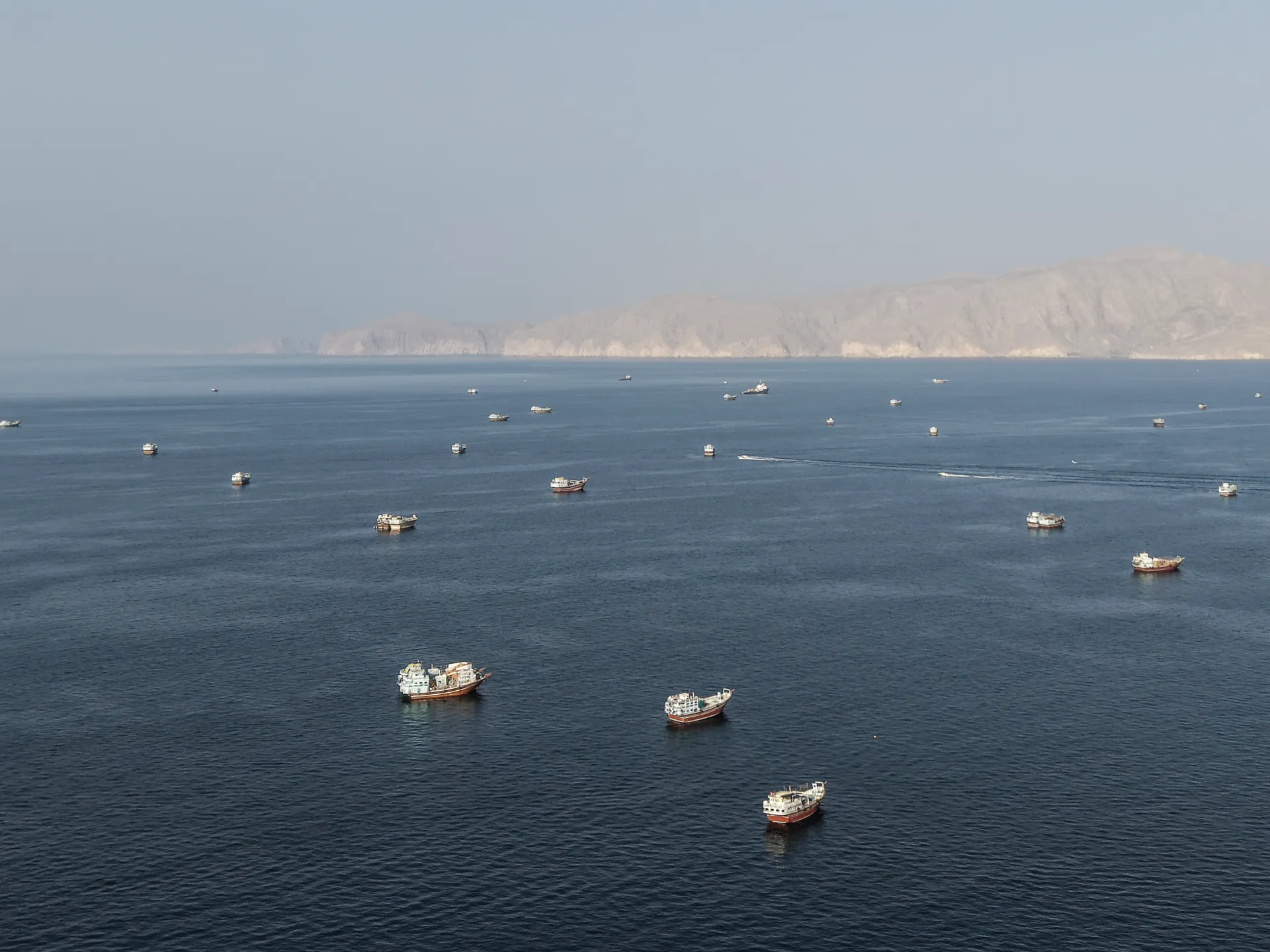
Crude oil exports from the Middle East have risen above pre-war levels on four of the seven days in the last week of September, provisional data from ship-tracking firm Kpler showed.
However, senior Islamic Revolutionary Guard Corps (IRGC) commander Ali Fadavi said in a televised interview on Sunday night that only three to four million barrels of oil per day (bpd) are now moving through the route, dismissing the amount as “negligible” when compared with pre-war traffic.
Recommended Stories
list of 3 itemsend of list
Fadavi said, for the first time, no US vessels were present in the Gulf, the Strait of Hormuz, the Sea of Oman or even the northern Indian Ocean and US warships are “100 percent vulnerable” to IRGC attacks.
Kpler data showed crude exports from the region exceeded pre-war levels on September 24 and between September 27 and 29, rising to 19.5-22.5 million bpd.
Around that time, Iran claimed success in attacking ships – including US Navy vessels – near the Strait of Hormuz, saying the strikes had forced Washington to move its warships further from the Iranian coast.
Before the US-Israel war on Iran began, exports averaged 18 million bpd between March 2025 and February 2026.
According to Kpler data, the overall tally for crude, oil products, chemicals and non-gas liquids averaged 22.4 million bpd in the seven days to September 30.
On October 1, the seven-day moving average for crude exports was at 18.5 million bpd. This includes transits via the Strait of Hormuz, the Red Sea, exports from terminals and ship-to-ship transfers in the Gulf of Oman.
The number of liquefied natural gas cargoes exiting the Strait of Hormuz also rose in September to its highest monthly level since February.
The figures exclude any vessels that might have crossed the strait with their automatic identification system transponders turned off to avoid detection.
The United Kingdom Maritime Trade Operations agency reported at least one attack a day in the Strait of Hormuz or in the Gulf of Aden since October 2.
On Sunday, Iran’s top negotiator and parliament speaker, Mohammad Bagher Ghalibaf, said the Strait of Hormuz would remain closed until the United States accepts Tehran’s seven-day plan to reopen the waterway.
A California woman allegedly sent photos and videos of President Lai’s son and his family to Chinese officials.
Published On 5 Oct 20265 Oct 2026
The FBI has arrested a “Chinese foreign agent” at Los Angeles International Airport accused of spying on the Taiwanese president’s son.
Wanying Zhang, also known as Heather, was arrested on Sunday before her planned departure to China, the first assistant US attorney for the Central District of California, Bill Essayli, said in a post on X.
Recommended Stories
list of 3 itemsend of list
Authorities charged Zhang, 34, of Irvine, California, with acting as an unregistered foreign agent.
Zhang surveilled Taiwanese President William Lai Ching-te’s son, the FBI said. The agency did not directly name Zhang’s alleged target, but later shared a news article identifying him as Lai Ting-yu.
The US Justice Department said Zhang travelled to Seattle in 2025 at the behest of Chinese officials. She sent photos, video and license plate information of the Taiwanese leader’s son and his family to China.
Essayli called Zhang a “Chinese foreign agent” and said she “used tradecraft to avoid detection”.
“She never notified the Attorney General she was acting for a foreign government, a federal offense,” he added.
Essayli said Zhang will appear in a Los Angeles federal court on Monday.
William Lai Ching-te and his Democratic Progressive Party say that Taiwan is already an independent country separate from China. Beijing views the island as Chinese territory.
Washington does not have formal diplomatic ties with Taiwan, but the US is bound by law to provide the island with the means to defend itself.
Earlier this week, the US delivered two F-16V Block 70 fighter jets to Taiwan as the island seeks to build its defence capabilities to deter a feared attack by China.
In January, Chinese President Xi Jinping pledged to achieve the “reunification” of China and Taiwan, calling Beijing’s long-held goal “unstoppable”.
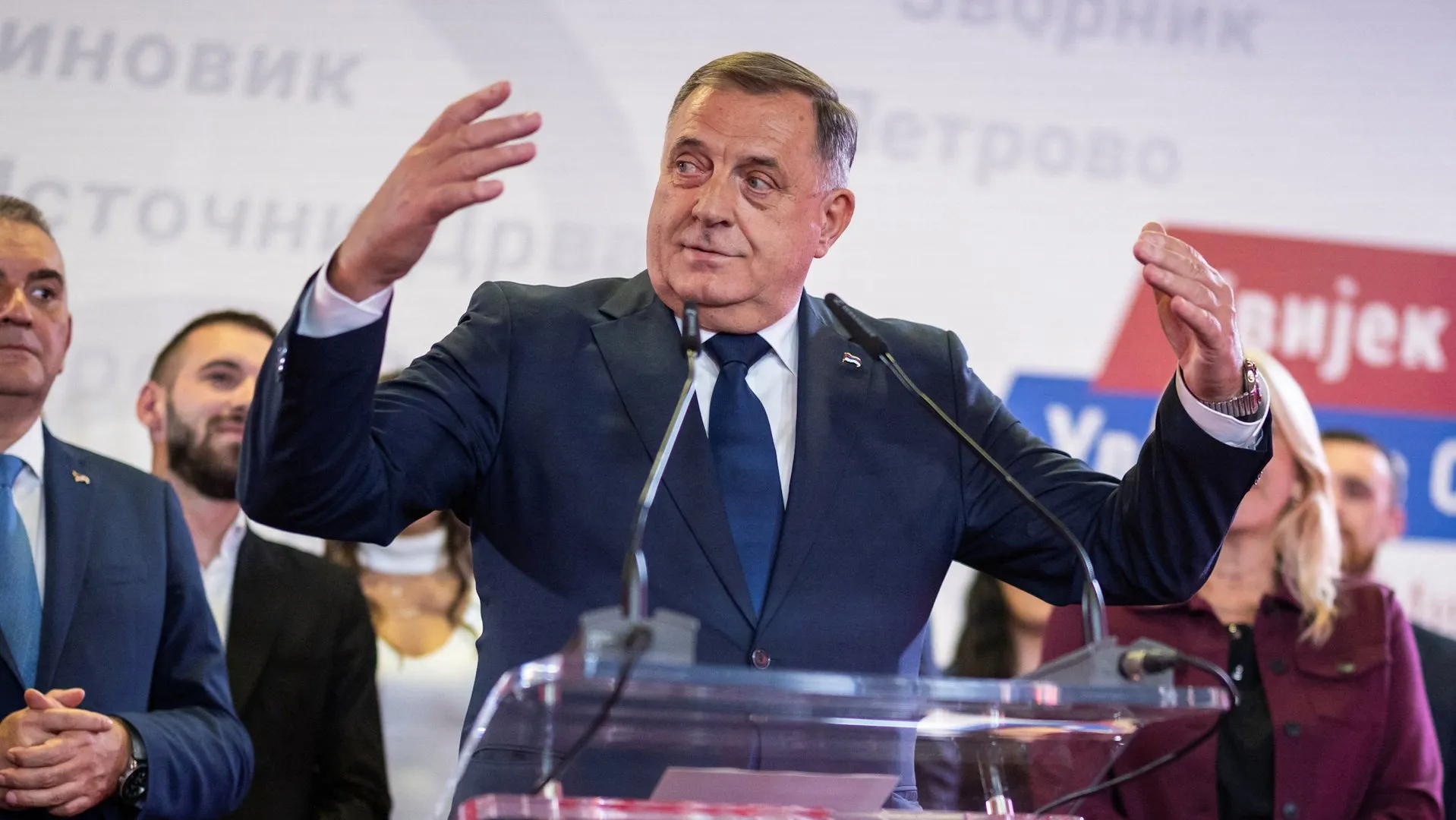
Bosnian Serb nationalist Milorad Dodik claimed victory for his party as Bosnia’s presidential elections reinforced its deep political and ethnic divisions. The presidency is made up of three members who rotate the leadership every eight months.
Ireland and Israel drew 1-1 in a second ill-tempered Nations League match. Irish and Israeli players wore black armbands to commemorate lives lost in Gaza and in the October 7 attacks, before tensions flared at half time over allegations of spitting.
Malaysia continues mass refugee deportations despite warnings from the UN about unsafe conditions in an active war zone.
Published On 5 Oct 20265 Oct 2026
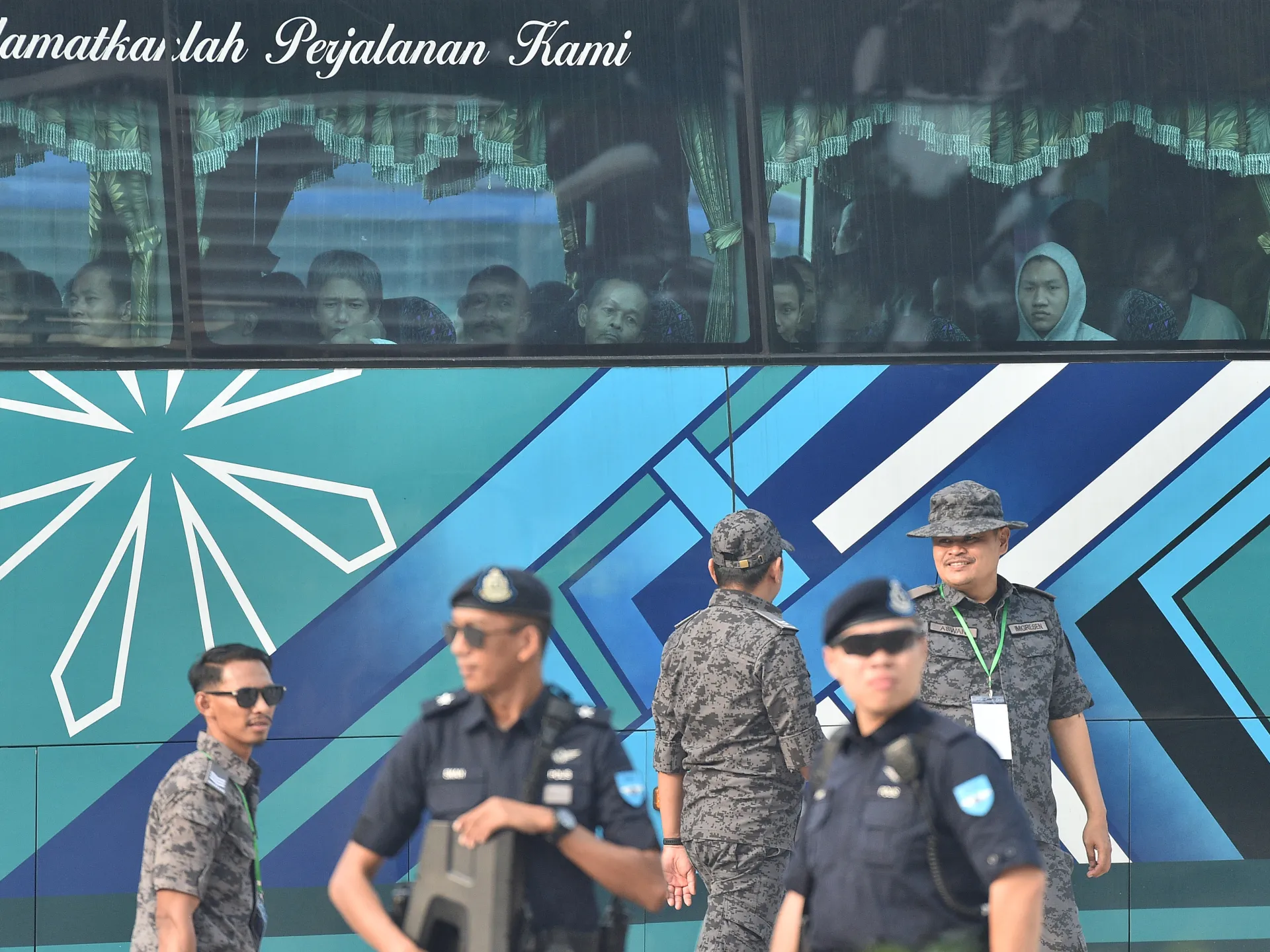
Nearly 1,500 Myanmar refugees and migrants deported from Malaysia have arrived in their war-ravaged country under an opaque repatriation scheme heavily criticised by human rights groups and the United Nations refugee agency.
The 1,479 returnees, transported from Malaysia on board two navy warships and a hospital ship on Tuesday, arrived in southern Yangon early Sunday, Nay Lin Tun, a regional government minister, said.
Recommended Stories
list of 3 itemsend of list
They are among 5,000 Myanmar nationals who will be repatriated in stages from Malaysia, where more than 10,300 others are being held in immigration detention centres, according to the country’s Home Ministry.
Malaysia insists all returnees agreed to voluntary repatriation, but rights monitors have raised concerns that Myanmar refugees had little choice and warned that conditions for return remain unsafe.
The UN refugee agency said this past week that its staff were not allowed to meet the Myanmar nationals to confirm whether their decisions to return “were genuinely free and informed”.
Rohingya make up the majority of Myanmar refugees and asylum seekers in Malaysia, but it remains unclear how many members of the persecuted Rohingya are among the returned group.
The deportation was carried out during escalating raids on refugee communities in Malaysia by immigration officials, which led to the detention of more than 50,000 refugees in 2026.
Malaysian Prime Minister Anwar Ibrahim announced the repatriations in July against a backdrop of rising xenophobia towards refugees, particularly the Rohingya.
Kuala Lumpur is moving ahead with plans to return a second group of more than 3,500 refugees and migrants, saying they have caused financial, social and security burdens.
While Malaysia is not a party to the UN Refugee Convention and treats refugees as undocumented migrants, it is home to about 215,600 refugees and asylum seekers registered with the United Nations High Commissioner for Refugees (UNHCR).
This includes more than 126,000 mainly Muslim Rohingya refugees.
Myanmar pledged last month that returns will be “safe and dignified”.
But Yap Lay Sheng, a senior human rights specialist with Fortify Rights, told the AFP news agency: “There’s no telling how the regime would treat returnees.”
Myanmar has been accused of committing genocide against the Rohingya Muslim minority. Earlier this year, the International Court of Justice (ICJ) opened its first genocide case it has heard in full in more than a decade.
The UNHCR and rights groups said returnees could face persecution and forced military conscription in an active war zone. Myanmar has been embroiled in a civil war since the military seized power from the elected government in 2021.
The war has killed more than 100,000 people since the coup, according to the Armed Conflict Location and Event Data (ACLED) project.
Myanmar’s Min Aung Hlaing, the military coup leader who was installed as civilian president in April, is expected to visit Malaysia soon to discuss the repatriation scheme.
A mysterious object has been filmed flying over Tripoli and parts of western Libya, with witnesses reporting a loud explosion shortly afterward. No official statement has been released regarding the nature of the object.
Last month, a woman identified as Jane Doe filed a lawsuit against Cornell University, the fraternity Chi Phi and the seven fraternity members she accused of gang-raping her on the night of October 19, 2024.
Her allegations have triggered a nationwide reckoning in the United States over the prevalence of sexual assault on college campuses.
Recommended Stories
list of 3 itemsend of list
But the case has also reignited efforts to reform laws in the state of New York.
While the left-leaning state has long presented itself as a leader in women’s rights, advocates say sexual assault survivors still face pervasive legal barriers when they seek justice.
Erica Vladimer, a lawyer and founding director of Harassment-Free New York, a survivor-led nonprofit, told Al Jazeera that much of the legislation currently in the spotlight is the culmination of years, if not decades, of work.
“These are bills that we have been fighting for for years when sexual violence is not in the news,” Vladimer said.
She drew a line between the #MeToo movement, which began in 2017 as an online campaign to denounce sexual misconduct, and the current wave of outrage following Doe’s allegations.
“It speaks to the fact that the #MeToo movement is not dead. It is a movement, not a moment,” Vladimer said.
Already, leaders in Albany, the state capital, have signalled they would take action following the Cornell case.
On Wednesday, the New York Assembly announced it had formed a working group to examine the state’s sexual-assault laws and develop recommendations for the 2027 legislative session.
Still, advocates say more concrete measures are needed to address the crisis.
“I appreciate that this work is happening,” said Lindsey Boylan, a New York City Council candidate. “It doesn’t undo the fact that rape culture is pervasive in the United States and very much so alive and well in New York.”
Boylan was the first woman to publicly accuse former New York Governor Andrew Cuomo of sexual harassment in another high-profile misconduct case, back in 2020. She is among those calling for greater reform.
Here are some of the measures advocates are pushing state lawmakers to adopt or amend:
‘Voluntary intoxication’ statute
The Cornell University case has brought renewed attention to New York’s “voluntary intoxication” statute, a legal loophole that can make it harder to prosecute sexual assault when a person has willingly consumed alcohol or drugs.
New York Governor Kathy Hochul pledged on Friday to work with lawmakers to close the gap.
“It should not matter whether they chose to use drugs or alcohol. Voluntary intoxication is not a license for sexual assault or gang rape. Period,” Hochul said.
Under the current state law, a person who voluntarily drinks or takes drugs is not considered “mentally incapacitated” during an assault, even if they become too intoxicated to consent.
That can make it harder for prosecutors to bring a sex-crime charge. The law primarily recognises incapacitation in the context of sexual assault when a person was involuntarily intoxicated, unconscious or otherwise “physically helpless”.
That distinction has become central to the Cornell case. Doe has acknowledged that she consumed substances before the alleged rape, saying that she was pressured into drinking alcohol and taking the dissociative drug ketamine.
The Tompkins County district attorney initially declined to bring charges, pointing to the law’s stance on “voluntary intoxication”. But the investigation has since been reopened, amid public pressure.
New York is one of 19 states in the US that distinguish between “voluntary” and “involuntary” intoxication when it comes to determining consent in sexual violence cases.
But the Cornell case has spurred a push to remove the distinction from the law books. Critics have argued that sexual assault is no less grievous if a victim is drunk or has chosen to take drugs.
“I mean, to have New York, a supposedly progressive state, penalise people who are sexually abused for drinking is disgusting,” Boylan told Al Jazeera.
Vladimer, for her part, explained that distinguishing between “voluntary” and “involuntary” intoxication as a means for pursuing sexual assault cases shifts the focus onto the actions of victims, rather than perpetrators.
“We essentially have codified victim-blaming by saying if you become voluntarily intoxicated and then are sexually assaulted, you essentially cannot seek justice in our court system,” Vladimer told Al Jazeera.
In June, the New York state Senate unanimously passed a bill to allow sexual assault charges regardless of whether a victim is intoxicated voluntarily or involuntarily.
But the legislation has yet to be taken up in the state Assembly.
Students look on at Cornell University’s campus in Ithaca, New York, on October 1 [Lauren Petracca/Reuters]
The rape-shield gap
New York’s rape-shield protections limit the use of evidence about a complainant’s sexual history and conduct in criminal proceedings. But those protections do not currently extend to civil cases.
This distinction could matter in the Cornell case because Doe filed a civil lawsuit.
Vladimer said questions about a survivor’s behaviour could come up in the discovery process of a civil case, as well as in court.
“There is the potential of her having to face questions about things like her sexual history,” Vladimer said.
Bridie Farrell, the director of victim rights advocacy and legislation at the law firm Weitz and Luxenberg, told Al Jazeera that she has seen major differences in how male and female survivors are questioned in civil cases where this practice is still permitted.
In one case involving a brother and sister who were both sexually assaulted, Farrell said the man was not questioned about his sexual history while the woman was “grilled on it”.
A bill sponsored by State Senator Liz Krueger would extend rape-shield protections to civil proceedings. The measure passed the Senate in June and is currently before the Assembly Judiciary Committee.
A student walks through an archway at Myron Taylor Hall on the Cornell University campus in Ithaca, New York, on October 1 [Lauren Petracca/Reuters]
Retaliatory defamation lawsuits
Advocates are also pushing for legislation to prevent retaliatory defamation lawsuits.
Boylan said she has spent more than $2m defending herself in legal proceedings connected to her accusations against Cuomo, who stepped down as New York governor in 2021.
He has repeatedly denied any allegations of wrongdoing, despite a state attorney general’s report that concluded he “engaged in conduct constituting sexual harassment”.
“Every step of the way, we have a system that penalises people for speaking up about their own harm,” Boylan said.
Boylan and Charlotte Bennett, a former aide who also accused Cuomo of sexual harassment, are proponents of the Speak Your Truth Act, which would provide legal protections for people who publicly report sexual assault, harassment or discrimination.
The bill, sponsored by Assembly member Jessica Gonzalez-Rojas, would make certain communications about sexual assault, harassment or discrimination privileged when they are made without malice.
It would also allow survivors of sexual misconduct who successfully defend themselves against a defamation lawsuit to recover legal fees and costs. The bill remains in an Assembly committee.
Cornell University and local officials in Ithaca, New York, have faced questions about how they handled the Jane Doe case [Lauren Petracca/Reuters]
A recent win, a long way to go
For Bridie Farrell, the victims’ rights advocate, the fight for legal change is personal.
Farrell was a 15-year-old competitive speed skater in 1997 when she said she was sexually abused by her 33-year-old teammate and mentor. She came forward with her story of abuse in 2013.
By then, the statute of limitations in her case had expired. Farrell later became an advocate for changes to New York’s laws, helping to pass the Child Victims Act in 2019 that extended the time available for survivors of childhood sexual abuse to pursue criminal and civil claims.
The law allowed Farrell to file her own case, which she did in 2020. She tells Al Jazeera that a trial has finally been scheduled for June 2027.
“Before we passed the Child Victims Act in 2019, New York was one of the worst in the country,” Farrell said of the situation for sexual assault survivors seeking justice.
Farrell considers the legal impediments to Doe’s case — like the “voluntary intoxication” statute — all too predictable. “I’m not surprised if we haven’t updated a law that is archaic,” she said.
Still, lawmakers have signalled willingness to reform such laws. In announcing the state Assembly’s working group on sexual-assault laws, Speaker Carl Heastie pledged to “thoughtfully” consider how the state can strengthen its laws.
“The allegations being reported out of Cornell University are truly horrifying,” Heastie said on Wednesday. “We want to do everything we can to ensure victims of sexual assault see justice served.”
But survivors and sexual violence advocates say the Cornell case points to problems that go beyond any single law. They hope to see widespread systemic and societal change.
“Changing legislation is incredibly important. But legislation in a lot of cases can only go [as far as] the paper that it’s written on,” Boylan said. “It would be amiss to orient this horrible, tragic, unacceptable, infuriating case in isolation without looking at the broader rape culture of our state and our country.”
Holders Portugal first team to qualify for 2026-27 UEFA Nations League despite Cristiano Ronaldo’s absence.
Published On 4 Oct 20264 Oct 2026
Portugal defeated Norway 2-1 on Sunday, without superstar striker Cristiano Ronaldo, to qualify for the UEFA Nations League quarterfinals.
Goncalo Ramos secured victory for Jorge Jesus’s Portugal in the Group A4 clash after Joao Cancelo’s rocket levelled Kristoffer Ajer’s stunning opener for Norway.
Recommended Stories
list of 4 itemsend of list
Portugal played out the final minutes with 10 men after Francisco Conceicao was dismissed for two yellow cards in the space of a few seconds for dissent following his unsuccesful appeal for a penalty.
Former Real Madrid and Manchester United striker Ronaldo walked out on the squad on Wednesday, ahead of the previous game against Denmark, after Portugal’s all-time top goalscorer learned he would not start.
Portugal are now guaranteed to finish in the top two spots in the group, thus granting them passage to the last eight in March 2027.
Norway took the lead in Porto against the run of play with a stunning effort from Brentford defender Ajer after 36 minutes.
The Norwegian met a bouncing ball on the edge of the box perfectly and bent it into the top corner.
However, two minutes later, Barcelona defender Cancelo scored a similarly superb goal, rifling home from about 20 yards.
Manchester City striker Erling Haaland fired across the face of goal after an hour and was replaced by Jorgen Strand Larsen a few minutes later.
Nations League holders and two-time record champions Portugal nosed in front when AC Milan striker Ramos, starting in place of Ronaldo, tucked home from close range after being teed up by Joao Felix.
Conceicao’s foolish dismissal left Jesus’s team in a tough spot for the final few minutes, but they held on to triumph for the fourth time in four games in the group.
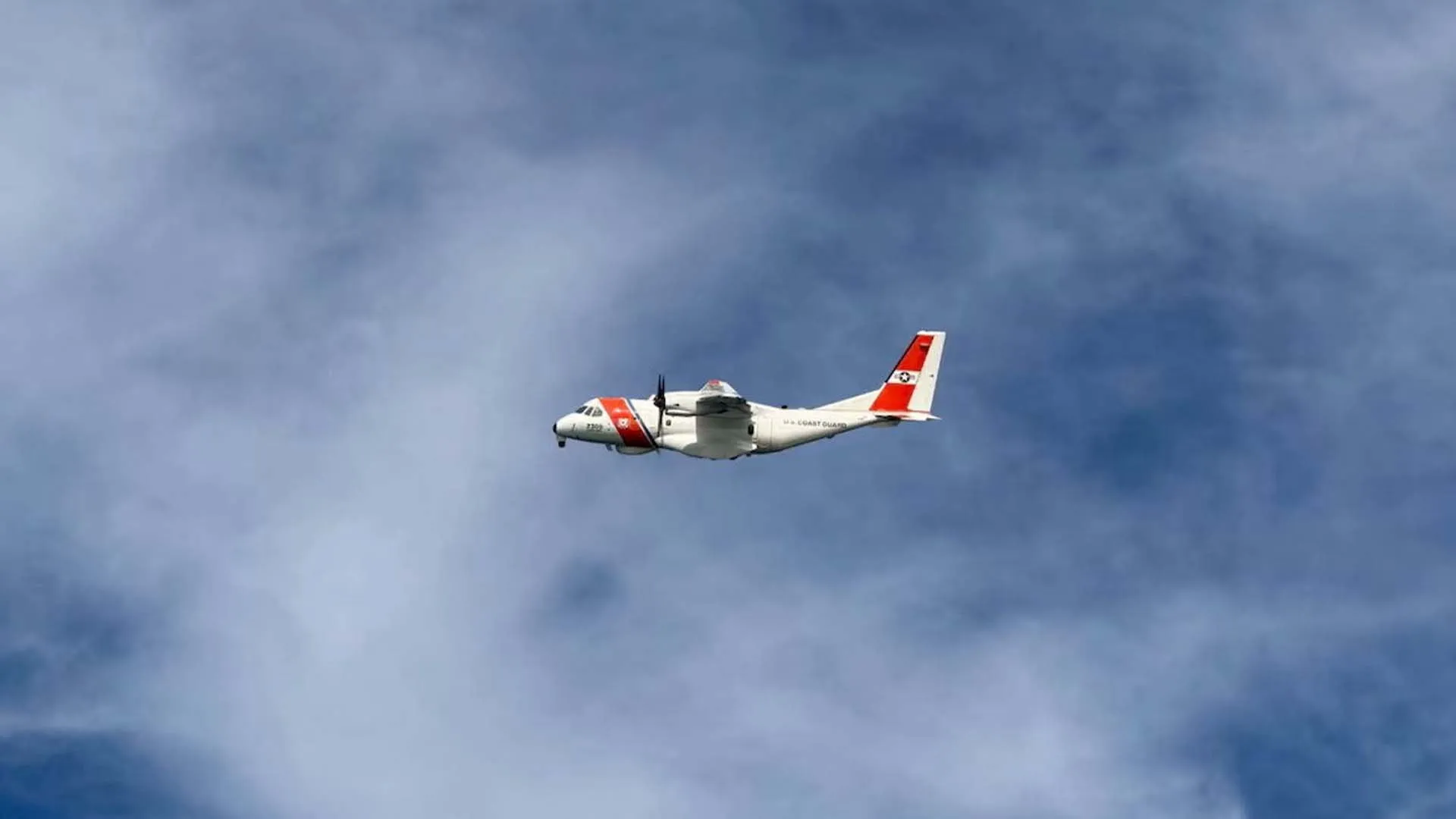
The US Coast Guard says a field of debris found near Nantucket, Massachusetts, is believed to be from an emergency medical plane that went missing over the Atlantic Ocean late Saturday night with six people on board.
Government warns of crackdown as supporters of jailed former prime set off from northwest Pakistan towards Islamabad.
Supporters of jailed former Pakistani Prime Minister Imran Khan have set off on a protest march from the country’s northwest after talks with the government to call off the demonstration failed.
More than 5,000 were reported to have begun the rally on Sunday. The march, planned by Khan’s Pakistan Tehreek-e-Insaf (PTI) party, was originally scheduled for September 27 but was postponed until October 4 to allow talks between the government and the PTI leadership to take place.
Recommended Stories
list of 3 itemsend of list
However, two rounds of talks over the weekend failed to break the deadlock, and the PTI decided to carry out its plan, which is the latest attempt to pressure the government into releasing Khan, the country’s most popular political figure according to polls, who has been behind bars since August 2023 following a series of convictions that his party calls politically motivated.
All but one of the convictions against the former PM have since been suspended or overturned on appeal.
Videos posted on the PTI’s official social media showed supporters joining the march in different areas of Khyber Pakhtunkhwa (KP) province, which is ruled by the party, and setting off in convoys.
Sohail Afridi, the region’s chief minister, had earlier posted on social media that the demonstration in support of Khan would go ahead.
He said the march will make its way to Khairabad, 80 kilometres (50 miles) west of Islamabad, by Thursday, where the plan for the “next phase” will be announced.
Government warns protesters
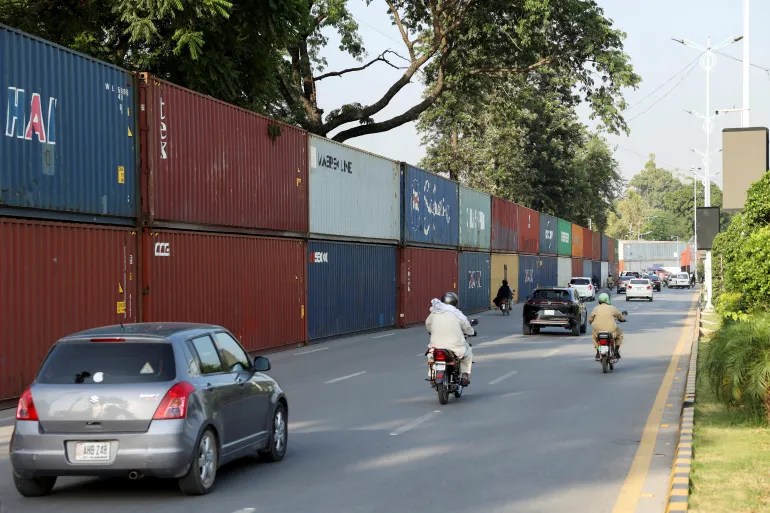
The government has been preparing for weeks for the arrival of PTI demonstrators in Islamabad. It has erected barriers using shipping containers to block main access routes to the capital.
Interior Minister Mohsin Naqvi confirmed earlier on Sunday that the talks between the two sides had failed. He accused Afridi of “sabotaging” the negotiations, and added that the government would not allow the PTI to “create a disturbance”.
He also cited an Islamabad High Court order from September 14, ruling that no political party or its leadership has the “lawful right to occupy public roads, highways, interchanges, toll plazas and buildings in Islamabad”.
“If they violate the orders, whether they are workers or politicians, whether they are protesting within KP or outside KP, we will pursue them one by one. This time, we want to ensure that these repeated episodes of creating disturbance in Islamabad come to an end,” Naqvi said.
Traffic moves past shipping containers used to block a planned march by former Prime Minister Imran Khan’s Pakistan Tehreek-e-Insaf party, in Islamabad [File: Reuters]
Concerns about the 73-year-old Khan’s health, in particular the condition of his right eye that has required months of specialist treatment, have prompted the PTI’s campaign for his release.
The party has also called for the release of Khan’s three sisters, whose arrests last month further heightened tensions.
James Dorsey, a fellow at the National University of Singapore, said Khan was “essentially a populist leader” with “a genuine popular movement that had broad popular support”.
That is behind the “determination by the government to prevent [the protesters] from entering Islamabad,” he told the AFP news agency.
Given Pakistan’s security concerns, particularly following its unresolved February 2026 conflict with Afghanistan, Islamabad wants to avoid escalation in the face of the protests, he added.
“It’s a problem for the government, but I don’t think it’s an existential threat,” he said.
Australian police and intelligence join the list of those probing the incident.
Published On 4 Oct 20264 Oct 2026
Authorities have said they are investigating the links of the co-pilot of the Israel-bound Flydubai flight with Australia.
A multi-agency Australian police and intelligence team – the Victorian Joint Counter Terrorism Team – is carrying out the probe, a spokesperson said on Sunday.
Recommended Stories
list of 3 itemsend of list
Mystery surrounds the co-pilot, who is accused of attacking the captain with an axe and attempting to seize control of Flight FZ1073 from Dubai as it approached Israel, and how he was able to acquire his seat in the plane’s cockpit.
He had been barred from flying in his own country because of concerns that he had adopted “extremist” views, The Associated Press news agency cited sources as saying.
While al-Hammami reportedly spent part of his life in the United Arab Emirates, the Reuters news agency, citing sources briefed on the Australian investigation, reported that he studied at a university in the Australian city of Melbourne.
A third unnamed source told the agency that he studied at RMIT University, a public research university in Melbourne, about a decade ago.
The Financial Times also reported al-Hammami’s links to Australia. Citing two sources familiar with the Australian investigation, the FT said al-Hammami had allegedly visited what it described as “radical mosques and extremist websites” while in the country.
Disaster was averted after passengers and crew subdued the co-pilot and a reserve pilot took over its controls and completed an emergency landing in Saudi Arabia.
However, the case has raised questions about security in Israel, which has some of the world’s strictest aviation security measures.
The prosecutor general of the UAE, Hamad Saif al-Shamsi, has labelled the attack an attempted “terrorist act”.
Israeli Prime Minister Benjamin Netanyahu has said that Israel has longstanding arrangements with foreign airlines aimed at preventing pilots who are nationals of countries without diplomatic relations with Israel from flying there.
Netanyahu said a “loophole” appears to have allowed the Omani pilot to take part in the Flydubai flight, and that Israel would now strengthen its checks.
The UAE has not yet publicly established a motive or announced whether investigators believe al-Hammami acted alone.
UAE presidential adviser Anwar Gargash said on Saturday that the latest “terrorist” attack is a new warning that the region’s fight against “extremism” is not over.
Protesters say the election commission’s voter-roll revision has removed millions of eligible voters to benefit Prime Minister Narendra Modi’s ruling BJP party.
Published On 4 Oct 20264 Oct 2026
Thousands of youth and opposition protesters have rallied for a third day in India demanding the resignation of the country’s election commission chief.
Thousands marched in Mumbai on Sunday, while others gathered for a third day of demonstrations in New Delhi. The protests began on Friday demanding that Election Commission of India (ECI) chief Gyanesh Kumar step down due to reports that he has overseen voter-roll revisions removing millions from electoral lists.
Recommended Stories
list of 3 itemsend of list
Protesters say the disenfranchisement stands to benefit Prime Minister Narendra Modi’s ruling Bharatiya Janata Party (BJP). Both the ECI and the BJP have denied the allegations.
Led by opposition leaders Raj Thackeray and Uddhav Thackeray, thousands marched in Mumbai on Sunday, waving Indian flags and calling for Kumar to step down.
In the capital, New Delhi, protesters started gathering in the early evening. As on previous days, some were detained by police as they arrived, according to the Reuters news agency.
Police in the capital have clamped down in a bid to prevent protesters from assembling over the last two days, detaining dozens and taking them away by bus.
Some of the detainees were released later on Friday and Saturday, but police registered cases against some on charges of violating orders banning mass gatherings in the centre of the capital.
Police and security personnel detain a protester during a demonstration against India’s Chief Election Commissioner Gyanesh Kumar in New Delhi on October 3, 2026, to demand his resignation [Arun Sankar/AFP]
“I just want to tell the ruling party this much … We are angry about how you are wielding that power. It’s the people of this country who should decide who sits in power and who sits in opposition, not the election commission,” Raj Thackeray told the crowd in Mumbai.
The ECI says the voter-roll revision is designed to remove duplicate, deceased or ineligible entries and maintain electoral integrity. On Friday, it directed its officials to register eligible voters inadvertently omitted from electoral rolls.
Kumar has not publicly responded to the demands for his resignation or commented on the protests, which look set to continue over the coming days, with more rallies planned.
An alliance of India’s opposition parties plans to launch protests to “save democracy” with a march to the election commission office on Tuesday. The Gen Z-led Cockroach Janta Party (CJP) has announced plans for a major rally in New Delhi on October 10.
“Mumbai is out on the streets again for free and fair elections!” Abhijeet Dipke, chief of the CJP, said in a social media post on Sunday.
“Solidarity with all the protesters,” he added. “All Indians need to come together. It’s now or never!”
Cacan Sullivan’s goal came after teenager Julian Hall, 18, had given Mauricio Pochettino’s side the lead in Mexico friendly.
Published On 4 Oct 20264 Oct 2026
Cavan Sullivan became the youngest US international goalscorer in history as the United States defeated archrivals Mexico 3-0 in a friendly international in Arizona on Saturday.
Sullivan, who is poised to join English Premier League side Manchester City next year, netted a superbly taken goal in the 62nd minute to double the USA lead at the State Farm Stadium in Glendale.
Recommended Stories
list of 4 itemsend of list
At 17 years and five days, Sullivan beat Mathis Albert’s five-day-old record as the youngest US goalscorer.
Albert, aged 17 and 31 days, scored during Tuesday’s 4-2 defeat of Chile.
“These are the moments you dream of when you’re three, four, five or six-years-old,” Sullivan said.
“I manifested this moment, not just these past couple of hours when I found out I was starting, but my whole life,” he added.
Sullivan’s strike came after another teenager — 18-year-old Julian Hall — had given Mauricio Pochettino’s side the lead in the 28th minute.
Hall’s goal was his third in as many games since being handed his international debut by US coach Pochettino in last week’s defeat of Peru. Hall also scored in the victory over Chile.
The loss puts more pressure on Mexico coach Rafael Marquez, who is still seeking his first win since taking over following the World Cup.
Mexico dominated possession and territory early on but were unable to find a way through a well-organised United States defence.
Instead, it was the hosts who took the lead just before the half-hour mark with a superbly worked goal from Hall.
Gio Reyna surged into the penalty area to collect a pass from Alex Freeman and ghosted past Mexico midfielder Erik Lira to reach the byline.
Reyna’s low cross was parried away by Mexico goalkeeper Raul Rangel, but only as far as Hall, who lashed in from close range to make it 1-0.
Mexico’s best chance came early in the second half when Roberto Alvarado’s rasping shot from the edge of the area was tipped over the bar by US goalkeeper Diego Kochen.
Pochettino’s side doubled their lead on 62 minutes when Sullivan’s persistence in chasing down a long ball was rewarded after Rangel mishit a pass to the American outside his area.
Sullivan coolly took his time and chipped home from long range to make it 2-0.
“I just remember chipping the ball, hoping it didn’t hit the crossbar or go over,” Sullivan said of his strike. “I was getting nervous when it was in the air and then everything was a blur.”
A miserable night for Mexico got worse shortly afterwards when substitute Luis Chavez was shown a red card for shoving a hand into the face of Sebastian Berhalter in the 68th minute.
The United States completed the scoring in the 84th minute when Malik Tillman latched onto a poor Mexico backpass and smashed a shot into the top corner for 3-0.
Aditi Subramanian joined protests after the alleged gang rape of a teenager in New Delhi, calling for women’s safety without more restrictions or surveillance. As she and hundreds of others tried to reach the planned protest site, they were detained. This piece was produced in collaboration with Jigyasa Mishra.
Speaking at the final rally of his right-wing alliance ahead of Bosnia’s October 4 election, Bosnian Serb leader Milorad Dodik delivered a predictably controversial statement.
“Bosnia-Herzegovina is dead. It is an impossible country, it makes no sense,” Dodik told supporters of the Alliance of Independent Social Democrats (SNSD) party in Banja Luka on Friday.
Recommended Stories
list of 3 itemsend of list
“It is now nothing more than an empty shell … for those who are trying to keep it alive, so they can prove themselves right about something,” said the former president of Republika Srpska, who is known for frequent separatist threats and for challenging the country’s constitution.
Dodik’s comments came as Bosnia remains deeply divided over its political future more than three decades since the 1995 Dayton peace agreement. It split the country into two semi-autonomous parts – the Serb-majority Republika Srpska entity and the Federation entity, where most Bosniaks and Croats live.
The agreement ended the 1992–95 Bosnian War and established a political framework for power-sharing among Muslim Bosniaks, Orthodox Serbs and Catholic Croats.
On Sunday, voters across the country cast ballots to elect the three members of Bosnia and Herzegovina’s multiethnic presidency, representatives to the national parliament and leaders of institutions in the country’s two entities.
Dodik himself is not on the ballot after being stripped of his post last year, following his conviction for refusing to carry out decisions issued by Christian Schmidt, the international peace envoy who oversees the implementation of the Dayton peace agreement.
‘No political relevance’
Elvis Fejzic, a professor at the Faculty of Political Science in Sarajevo, said attempts by figures such as Dodik to dismantle Bosnia and Herzegovina amount to “populist rhetoric”.
“Politicians and political parties that act unconstitutionally do not determine the fate of Bosnia and Herzegovina,” Fejzic told Al Jazeera, arguing that Bosnia and Herzegovina’s status as a UN member and internationally recognised state is secure.
“Bosnia and Herzegovina … will outlive all those who, through inflammatory statements, seek to obstruct its path towards integration and development,” he said. “Their statements have no political relevance whatsoever.”
Political analyst Tanja Topic said that while Dodik was not officially a candidate, he remained a central figure in the campaign and sought to present himself as a “senior official in international relations”.
Topic told Al Jazeera that the election result could produce several political scenarios in Bosnia and Herzegovina, from “cohabitation in Republika Srpska”, through the formation of a grand coalition, to a “blockage at the state level and the Council of Ministers continuing to operate in a caretaker capacity”.
Dodik’s rhetoric marks ‘long escalation’
Expert Adnan Cerimagic said Dodik’s rhetoric should be taken “seriously” and viewed as part of a “long escalation” rather than a reflection of the country’s current reality.
“For the past four years, his moves against the Dayton order and against Bosnia’s EU and NATO path have reached a new and dangerous level: in March 2025 the country came close to an armed standoff between Republika Srpska and state police,” Cerimagic, a senior analyst at the European Stability Initiative, told Al Jazeera.
“Casting Bosnia as a front-line in a supposed war between Christianity and Islam, and himself as a defender of Christian Europe, is aimed at the one people in Europe against whom a genocide has been committed since the Second World War and recognised as such by two international courts,” he added.
Cerimagic added that Dodik’s rhetoric may reflect uncertainty over the electoral prospects of his preferred candidate, as well as a belief that the European Union has less leverage over Bosnia than it once did.
Initial results are customarily released by the Central Election Commission late on election night and then refreshed every few hours.
In the days that follow, the commission progressively inputs votes from polling stations that remain outstanding, mobile voting teams, as well as ballots sent by mail and those cast at diplomatic and consular missions.
The final, official results must be published by November 20 at the latest.
An attack by the copilot on the pilot during a Flydubai flight has raised many questions regarding aviation security, and some of the official versions of the incident have come under scrutiny from online commentators and aviation enthusiasts.
About two and a half hours after Flight FZ1073 departed from Dubai International Airport on Wednesday, it went into a sharp descent before eventually making an emergency landing in Saudi Arabia.
Recommended Stories
list of 3 itemsend of list
Media reports said the copilot attacked Captain Smit Machchhar. Passengers were able to overpower the copilot, identified by media as Hamam al-Hammami, after Machchhar managed to open the cockpit door during the attack, which the prosecutor general of the United Arab Emirates said was carried out with the cockpit’s crash axe.
While investigators continue working to establish a motive for the attack, several questions have arisen about the incident more generally across social media.
Here are five questions that are being asked:
Why was al-Hammami allowed to fly despite being flagged over security concerns?
Al-Hammami has been identified as an Omani national, according to media reports.
On Friday, The Wall Street Journal quoted unnamed sources as saying that Omani authorities previously blocked the suspect from flying in the country due to concerns over his ideological views.
On Saturday, CNN reported, quoting a regional diplomatic source, that the copilot had also been removed from flight training over similar concerns and was later reassigned to another position.
It added, quoting two sources familiar with the matter, that the pilot was removed from a job at Oman’s national airline last year over concerns about his views.
It remains unclear how al-Hammami managed to get the Flydubai route despite these security concerns.
The possibility of a plumber stabilising plane before reserve pilots stepped in
Reports have emerged that Machchhar managed to open the cockpit door while covered in blood, allowing passengers to subdue the copilot.
One of those who subdued al-Hammami was Yaniv Hayoun, whom Israeli Prime Minister Benjamin Netanyahu described as a plumber.
In a video with Netanyahu, who met him at the airport, Hayoun, 50, was asked how he knew what to do at the plane’s controls before another pilot took control. He said: “I watch Air Crash Investigation, Mr Prime Minister.”
“I jumped back, grabbed the controls and started pulling back the handles” the way he had seen in the Canadian investigation show, in which experts analyse plane crashes.
People on social media have questioned how a plumber could have handled an aircraft in the air.
No report of mass injuries despite fall of 5,180 metres
According to the flight-tracking website Flightradar24, the Flydubai flight rapidly descended about two and a half hours after takeoff, dropping more than 5,180 metres (17,000ft) in less than two minutes.
While the midair drop caused mass panic among passengers, no one was reportedly harmed, according to the publicly available information about the incident. An Air India flight that dropped 90 metres (300ft) during turbulence in August injured at least 17 passengers.
A flight instructor, who recreated the Flydubai jet’s near-vertical dive in a simulator, said the plane would have exceeded its maximum structural speed and anything unsecured would have flown all over the cabin during the recovery’s negative G-forces.
Why was the copilot allowed to fly despite being an Omani national?
Israel does not have official diplomatic relations with Oman, and Netanyahu has previously said such countries were not generally allowed to operate flights to Israel.
On Friday, Netanyahu said Israel was looking into whether the copilot had acted under anyone’s direction, warning that anyone involved would pay a “heavy price”.
On Saturday, the Israeli newspaper Haaretz reported that government officials had received in advance the list of crew members and passengers who were on the flight, including the Omani copilot.
Security sources told Haaretz that the government bodies responsible for monitoring and checking foreign flight crews landing in Israel are the Ministry of Transport and Road Safety’s Security Department and the security agency Mossad.
Copilot prayed before attack
According to The Times of Israel, Machchhar spoke to Netanyahu on Saturday. He told the prime minister that al-Hammami had asked to pray before the attack. Four or five minutes later, Machchhar was hit with “a big blow” to the back of his head, he said.
The flight departed from the UAE at 7:05am (03:05 GMT). The attack reportedly took place about two and a half hours later (05:35 GMT).
The predawn prayer time in the Emirates on Wednesday was 04:51am (12:51 GMT), which would mean al-Hammami’s prayer did not align with Islamic prayer times.
However, al-Hammami could also have been performing a different personal prayer before the attack.
German chancellor visits Kyiv amid air raid sirens, pledging strong support as Russian strikes disrupt the capital.
Published On 4 Oct 20264 Oct 2026
Russia has struck a key bridge in Kyiv just as German Chancellor Friedrich Merz arrived in the Ukrainian capital to meet President Volodymyr Zelenskyy.
The unannounced visit, marked by the sound of air sirens and explosions, came on Sunday to underscore Germany’s support for the nation at a time when Russian attacks on Ukrainian cities are increasing.
Recommended Stories
list of 3 itemsend of list
In a written statement, Merz said he “travelled to Kyiv today because Ukraine needs all our support in the coming weeks”.
“If Russia is not stopped, its war machine will sooner or later turn against us,” he said.
Ukraine’s President Volodymyr Zelenskyy meets German Chancellor Friedrich Merz at the memorial of fallen Ukrainian soldiers at Independence Square in Kyiv, October 4, 2026 [Dan Bashakov/AP Photo]
Merz and Zelenskyy met at the National Academy of Sciences, which was struck by a Russian drone on September 28.
Zelenskyy told Merz that Kyiv’s citizens are going through “terrible nights and days” due to the ongoing Russian attacks.
Merz was accompanied by his economy minister, as well as executives from several large German companies, such as Siemens Energy and Diehl Defence.
Ukraine and Germany are also expected to finalise a deal to produce drones and other weapons together that can travel more than 600 miles (965.6km) in an effort to strike deeper into Russia.
Germany has been one of Ukraine’s staunchest supporters. In April, the two countries signed a military pact worth more than $4bn. On Sunday, a $1.1bn military aid package is set to be announced, alongside $394m to repair damage to Ukraine’s energy sector.
Merz’s visit comes a day after Russia warned foreign diplomats and nationals to leave the capital to avoid getting hurt.
Russia’s Ministry of Defence promised to intensify strikes on Ukraine after Zelenskyy said in an interview with the Reuters news agency that it is doubling down on targeting Russian oil refineries after several civilians were killed and wounded over the weekend.
The strike that hit the Northern Bridge over the Dnipro River on Sunday also damaged a road and the supply of hot water in the area, according to a social media statement from Kyiv Mayor Vitali Klitschko. It is the second bridge in the capital to be hit this weekend.
Russia’s all-out war on Ukraine is in its fifth year. Both sides have increased the number of drone and missile attacks on infrastructure, logistics and military sites in recent months.


![Yuri Gagarin, the world's first spaceman. [Getty Images]](https://i0.wp.com/occasionaldigest.com/wp-content/uploads/2026/10/GettyImages-514885012-1791125806.jpg?w=640&ssl=1)
![Astronaut Neil A. Armstrong, in training for the projected Apollo 11 lunar landing mission, is being suited up for the first full dress rehearsal of activities he is to perform during the projected moon landing. [Getty Images]](https://i0.wp.com/occasionaldigest.com/wp-content/uploads/2026/10/GettyImages-515287304-1791126174.jpg?w=640&ssl=1)

![American astronaut Alan Bartlett Shepard Jr (1923 - 1998), Commander of NASA's Apollo 14 lunar landing mission at the Kennedy Space Center in Florida, 14th November 1970. [Space Frontiers/Getty Images]](https://i0.wp.com/occasionaldigest.com/wp-content/uploads/2026/10/GettyImages-1141685928-1791125972.jpg?w=640&ssl=1)














![Traffic moves past shipping containers used to block the area, ahead of a planned march by jailed former Prime Minister Imran Khan's Pakistan Tehreek-e-Insaf (PTI) party, in Islamabad, Pakistan, on September 30, 2026 [Reuters]](https://i0.wp.com/occasionaldigest.com/wp-content/uploads/2026/10/2026-10-02T070015Z_265516849_RC2NTNAKEGKJ_RTRMADP_3_PAKISTAN-PROTESTS-CONTAINERS-1791131201.jpg?w=640&ssl=1)
![Police and security personnel detain a protester during a demonstration against India's Chief Election Commissioner Gyanesh Kumar in New Delhi on October 3, 2026, to demand his resignation [Arun SANKAR / AFP]](https://i0.wp.com/occasionaldigest.com/wp-content/uploads/2026/10/AFP__20261003__D24U6XM__v1__HighRes__IndiaPoliticsElectionProtest-1791123918.jpg?w=640&ssl=1)