TOP NEWS

From breaking news to significant developments in politics, business, technology, entertainment, and more, we deliver the stories that shape our global landscape.

Syrians greet extended army-SDF ceasefire with guarded optimism | Syria’s War News

Syrians in the northeast of the country have welcomed an extended ceasefire of 15 more days between the military and the Kurdish-led Syrian Democratic Forces (SDF), a day after its announcement.

Government troops have seized large swaths of northern and eastern territory in recent weeks from the SDF in a rapid turn of events that has consolidated President Ahmed al-Sharaa’s rule, as Syria seeks internal stability and secures the external lifeline of reintegration into the international fold and the economic revival that comes with it. The eruption of fighting has rocked a nation trying to recover from nearly 14 years of ruinous civil war.

Recommended Stories

list of 4 itemsend of list

The truce extension has offered a respite amid mounting tensions as the government’s army closed in on the last SDF strongholds last week. Al-Sharaa abruptly announced the ceasefire on Saturday, giving the SDF until that night to lay down arms and come up with a plan to integrate with the army or to resume fighting.

The extension gives the SDF more time for such a plan.

Al Jazeera’s Zein Basravi, reporting from Raqqa, said the ceasefire extension has been received positively in the region. “The news certainly lifted the mood of the residents here in Raqqa,” he said.

He added that locals said they want long-term stability with schools, which “have not been operational in a meaningful manner in a decade”, reopening in the region.

Basravi said the government aims to use the coming two weeks to “cement a long-term ceasefire and focus on reconstruction efforts”.

Extension after truce expired

An hour before midnight – hours after the four-day truce expired – the Defence Ministry announced that its forces would cease military operations for a further 15 days to support an ongoing US operation to transfer ISIL (ISIS) detainees from Syria to Iraq.

“The extension of the ceasefire comes in support of the American operation to transfer Islamic State detainees from SDF prisons to Iraq,” the statement said.

The SDF confirmed the extension, saying it was reached “through international mediation, while dialogue with Damascus continues”.

“Our forces affirm their commitment to the agreement and their dedication to respecting it, which contributes to de-escalation, the protection of civilians, and the creation of the necessary conditions for stability,” it said in a statement.

Al Jazeera’s Basravi said people have been celebrating not only the extended truce but also the release of minors from al-Aqtan prison, among other people, held imprisoned on unjust charges, according to locals.

“So, the Syrian administration here is going through all of those case logs and looking for anyone who is underage or unjustly accused,” Basravi said. “They are separating dangerous detainees, particularly the ISIL ones, from everyone else.”

The Kurdish authorities, who previously managed al-Aqtan prison, said in a statement on Saturday that a section of it hosted juveniles “who were involved in crimes” as well as “others, who had fallen victim to recruitment and exploitation by ISIS”.

“Due to security circumstances, the Prisons Administration transferred these juveniles approximately three months ago from the juvenile detention centre to al-Aqtan Prison,” it said, adding that they received special treatment in accordance with international standards during their time there.

Fraught Syria government-SDF talks

Al-Sharaa, whose forces toppled longtime ruler Bashar al-Assad in a lightning offensive in late 2024, has promised to bring all of Syria under state control, including SDF-held areas in the northeast.

But Kurdish authorities, who have run autonomous civilian and military institutions there for the last decade, have resisted joining with state and military institutions.

After a yearend deadline for the merger passed with little progress, Syrian troops launched the offensive this month.

They swiftly captured two key Arab-majority provinces from the SDF, bringing key oilfields, hydroelectric dams and some facilities holding ISIL fighters and affiliated civilians under government control.

ISIL swept across Syria and Iraq in 2014, taking over vast swaths of both countries and declaring Raqqa its de facto capital, committing massacres and other heinous atrocities before ultimately being vanquished by the SDF and a United States-led coalition.

There have been concerns of a regional ISIL resurgence, especially in Syria, where the group has carried out deadly attacks on Syrian and US forces.

Source link

Protesters demand immigration agents leave Minneapolis | Protests News

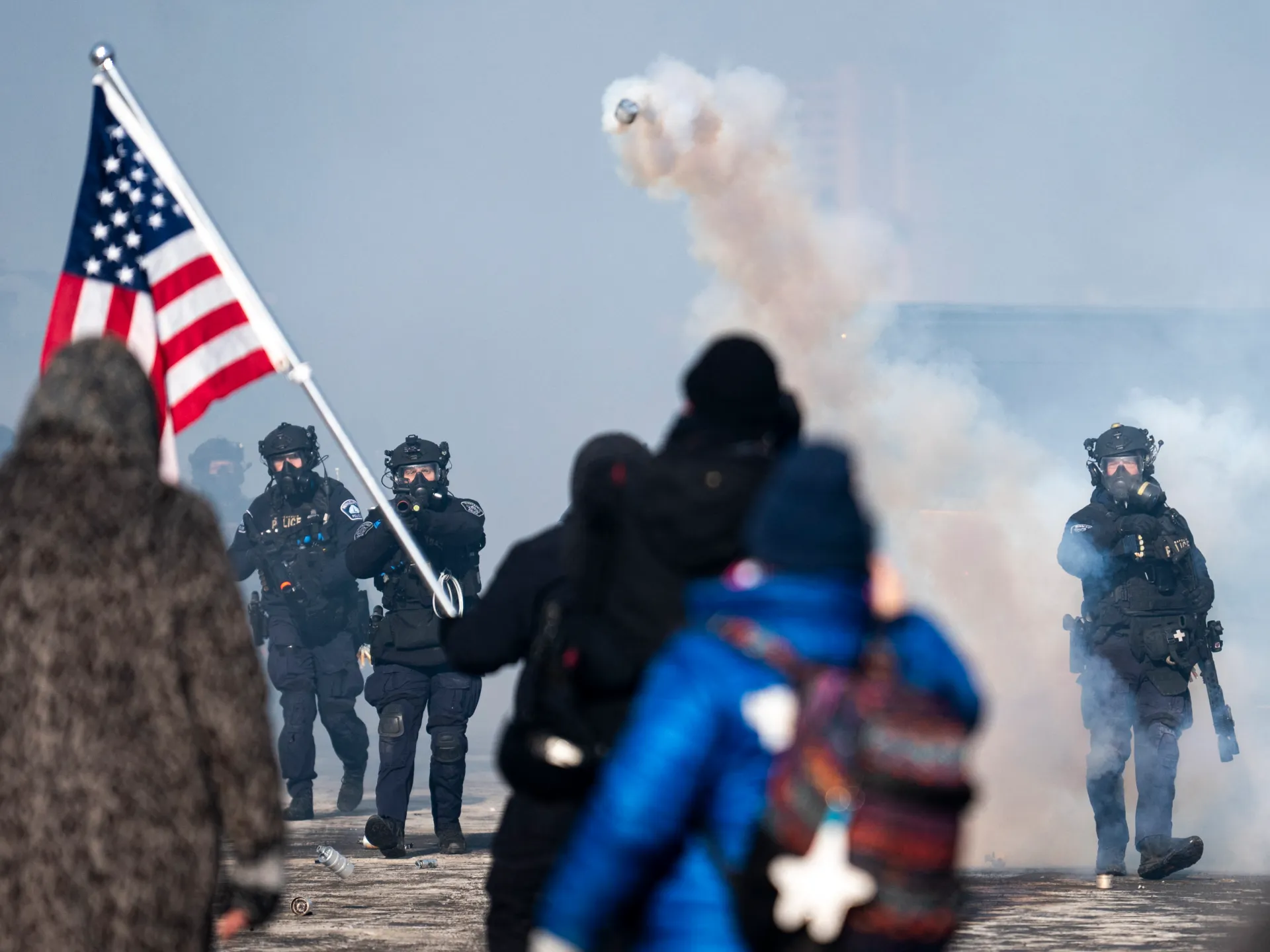
Protesters have taken to the streets in Minneapolis, in the state of Minnesota, after a United States Border Patrol agent killed a US citizen, heightening tensions in a city already shaken by a deadly shooting just weeks earlier of a mother of three.

Minneapolis police chief Brian O’Hara told reporters that a 37-year-old man, a Minneapolis resident, died in hospital on Saturday after being shot multiple times.

Family members identified him as Alex Pretti, an intensive care unit nurse who had previously protested against President Donald Trump’s immigration crackdown in the city.

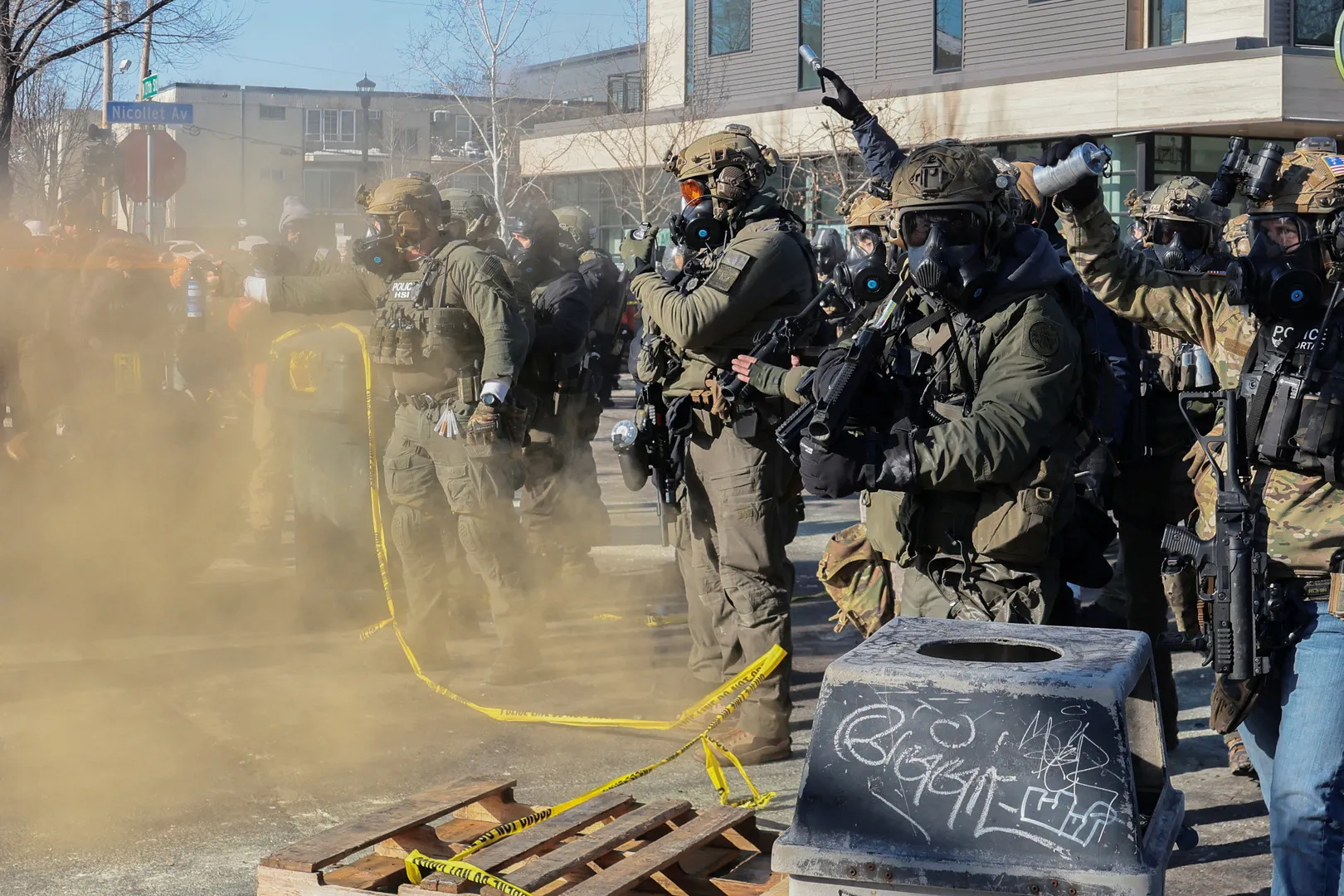
After the shooting, an angry crowd gathered, and protesters clashed with federal officers, who wielded batons and deployed flashbang grenades.

The Minnesota National Guard was assisting local police at the direction of Governor Tim Walz, officials said. Guard troops were sent to the site of the shooting and to a federal building where officers have been facing off with demonstrators on a daily basis.

Department of Homeland Security spokesperson Tricia McLaughlin said in a statement that federal officers had been conducting an operation and fired “defensive shots” after a man with a handgun approached them and “violently resisted” when they tried to disarm him.

In bystander videos of the shooting that emerged soon afterwards, Pretti is seen holding a mobile phone, but none appears to show him with a visible weapon.

Pretti was shot about 1 mile (1.6km) from the spot where an ICE officer killed 37-year-old Renee Good on January 7, which led to widespread protests.

Source link

Gaethje batters Pimblett to win interim lightweight title at UFC 324 | Mixed Martial Arts

Justin Gaethje survived a ‌five-round war with a relentless Paddy Pimblett to claim the interim UFC lightweight ‌ championship by unanimous decision in a bloody and bruising fight in Las Vegas.

The experienced American’s win put an end to Pimblett’s nine-fight winning run at the UFC 324 main event on Saturday, but Gaethje paid tribute to the Liverpool fighter’s durability ⁠and heart.

Recommended Stories

list of 4 itemsend of list

“Now that Scouser does not get knocked down,” he said after judges scored the ‌ fight 48-47, 49-46 and 49-46, which saw MMA’s rising star walk away with his head held high.

“He is very dangerous, got great timing… young ‌ kid, dangerous kid. I had to steal his momentum and his confidence,” Gaethje said.

Pimblett struck first in the opening round but the tide quickly turned when Gaethje cracked him with a heavy left-handed punch. The American followed ‌ him to the ⁠mat with punishing ground strikes before the Briton scrambled back to his feet.

A right hand dropped Pimblett to the canvas again in the second and he was lucky to survive the round as Gaethje pounded away until the horn sounded.

However, despite bleeding from the nose and cuts to his face, Pimblett strung together some clean flurries in the third round that had Gaethje wobbling, with the round ‌ briefly paused after a low blow had the 37-year-old American grimacing.

The ‌fourth round swung back in Gaethje’s favour after he absorbed some early pressure, repeatedly finding his target with heavy right hands.

The roaring crowd were on their feet as the final round began and an early slip ‌from Gaethje opened the door for Pimblett, who unloaded a barrage of punches.

Gaethje answered in trademark fashion with a booming right ‌hand and both fighters pushed hard for the finish, ⁠with Pimblett closing with a strong final burst.

Pimblett showed grace in defeat.

“I know how tough I am, I don’t need to prove it to anyone. I wanted to leave with that belt, but there’s no other man ‌I’d rather lose to than ‘The Highlight’,” Pimblett said.

“Gaethje is someone I’ve loved watching growing up, watching the UFC. It shows why he’s a legend right there. I thought 48-47 was ‌ a fair scorecard.

“You live and you learn. I’m 31. I’ll be back better, it’s as simple as that. You haven’t seen the last of me.”

Gaethje’s win gave ‌ him his second career interim ‌ lightweight championship and sets up an undisputed title fight against Ilia Topuria, who stepped away last November amidst mounting personal issues but is expected to return at some point in 2026.

The loss was Pimblett’s first in UFC since joining from his native England, snapping a nine-fight winning streak and dropping him to 23-4-0 in his career.

Sean O’Malley, one of ‌ UFC’s biggest stars, ⁠ended a two-fight losing skid in the co-main event with a controversial unanimous decision victory over Song Yadong of China.

Meanwhile, Waldo Cortes-Acosta of the Dominican Republic defeated Derrick Lewis by knockout at 3:14 in the second round. ‌

In women’s fights, Natalia Silva of Brazil defeated Rose Namajunas by unanimous decision in a potential flyweight title eliminator, ‌although the controversial outcome was met with unanimous dismay from a Vegas crowd that clearly believed Namajunas did enough to pull off the upset against Silva.

The performance marks Silva’s 14th straight victory and her eighth ‌consecutive in the flyweight division to improve her overall record to 20-5-1. More importantly, it may ⁠line her up for a title shot against Valentina Shevchenko later this year.

The opening fight of the main card saw heavily favoured Brazilian fighter Jean Silva rebound from his loss against Diego Lopes in September, defeating England’s Arnold Allen in a slugfest that was decided in the third round on two of three official scorecards.

Dominick Cruz, a two-time Bantamweight champion and the division’s inaugural belt holder, was announced as the first member of UFC’s 2026 Hall of Fame class at the conclusion of the prelim show. Cruz will be inducted into the “Modern Era Wing”, which honours fighters who debuted after the first sanctioned UFC event under unified rules was held on November 17, 2000.

Source link

Sudan’s women break ‘traditional rules’ to survive | Sudan war News

Displaced mothers are forced into gruelling manual labour to feed families as new data confirm Sudan has surpassed COVID-19 records for school closures.

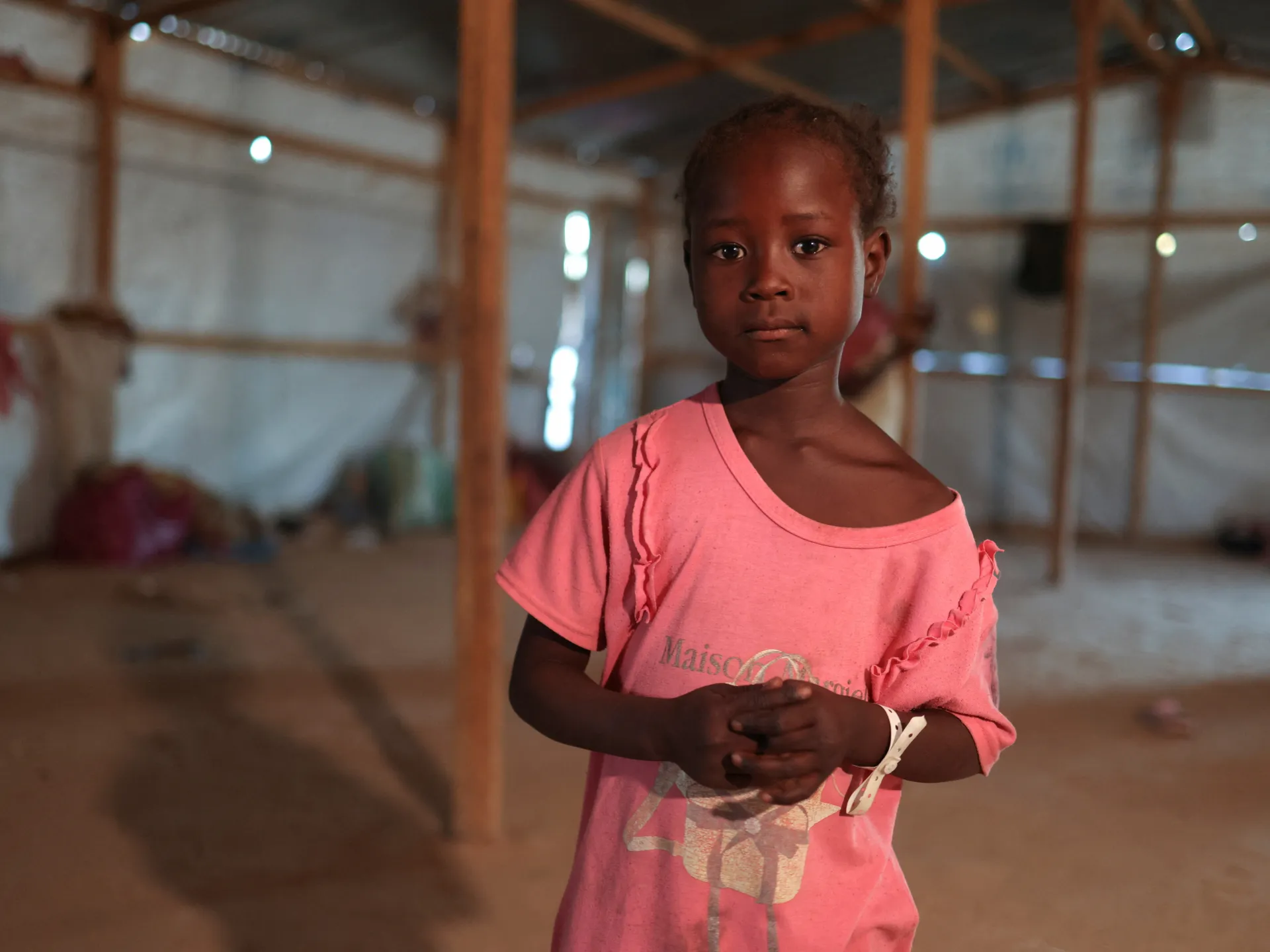
In the displacement camps of Ad-Damazin in southeastern Sudan’s Blue Nile State, the war is reshaping social norms and introducing new realities that are forcing Sudanese women into manual labour to survive.

Rasha is a displaced mother. She has ignored old boundaries and perceptions of what a man’s work is and started working as a woodcutter to feed her children.

“Carpentry is hard, … but the axe has become an extension of my hand,” Rasha told Al Jazeera Arabic. “There are no choices left.”

Her story is not unique. Thousands of Sudanese women have become their families’ sole breadwinners and work under harsh conditions. Rasha’s earnings after a day of back-breaking labour under the sun are often enough to buy only a packet of biscuits.

She spends the money on food and soap. “You want soap. You want to wash,” she said. “As for clothes, we have given up hope on that.”

The nearly three-year war between the Sudanese army and the Rapid Support Forces paramilitary group has had a catastrophic impact on the country and its people.

According to the United Nations Office for the Coordination of Humanitarian Affairs (OCHA), more than 30 million people from a population of 46.8 million are in need of humanitarian assistance.

The population is facing acute food shortages and a nutrition crisis, especially in the Darfur and Kordofan regions in western and central Sudan. At the same time, disease outbreaks are worsening the situation.

Moreover, Sudan is dealing with the world’s largest displacement crisis with an estimated 13.6 million people forced from their homes by the fighting.

Worse than the pandemic

The war has also destroyed many aspects of life in Sudan, and it is now threatening the future of generations to come.

Save the Children released a damning report on Thursday confirming that Sudan is enduring one of the longest school closures in the world, surpassing even the worst shutdowns of the COVID-19 pandemic.

According to the new analysis released before the International Day of Education on Saturday:

  • More than eight million, or nearly half of Sudan’s school-age children, have missed about 484 days of learning since the war began in April 2023.
  • This duration is 10 percent longer than the school closures during the pandemic in the Philippines, which was the last country to resume face-to-face learning.
  • Unlike during the pandemic, remote learning is impossible for most Sudanese children, leaving them vulnerable to recruitment into armed groups and sexual exploitation.

‘Total breakdown’ in conflict zones

The data reveal a system on the brink of collapse, particularly in conflict hotspots.

In North Darfur State, only 3 percent of its more than 1,100 schools remain open. The situation is similarly dire in the states of South Darfur (13 percent operational) and West Kordofan (15 percent).

“Education is not a luxury. … It is a lifeline,” Inger Ashing, CEO of Save the Children, said after a visit to Sudan. “If we fail to invest in education today, we risk condemning an entire generation to a future defined by conflict rather than by opportunity.”

Adding to the crisis, many teachers have gone unpaid for months, forcing them to abandon their posts, while countless schools have been bombed or turned into shelters.

Siege and famine conditions

The collapse of education is mirrored by the collapse of food supplies. As aid funding dries up – a reality confirmed by Blue Nile Humanitarian Aid Commissioner Qisma Abdel Karim – famine is setting in.

OCHA reported this week that:

  • At least 2,000 families are cut off from aid in North Darfur due to intense fighting.
  • “Famine conditions” have been confirmed in the besieged city of Kadugli in South Kordofan.
  • Significant gaps remain in the provision of aid as the UN has appealed for $2.9bn to fund its humanitarian response in Sudan this year.

‘Equal in misery’

Those statistics translate into hard reality on the ground.

“The war does not distinguish between a child, a woman or an elderly man,” Al Jazeera Arabic correspondent Taher Almardi said, reporting from Ad-Damazin. “Everyone is equal in misery.”

For Rasha and mothers like her, the choice is stark: break traditional norms and toil for a pittance or succumb to hunger.

Source link

Greenland hit by power outage, strong winds in wake of US tensions easing | Energy News

The blackout arrives as the government has encouraged citizens to be ready for a ‘disaster’ lasting up to five days.

Greenland’s capital, Nuuk, has faced a widespread power outage after strong winds triggered a transmission problem, the state utility said, as the Arctic island contends with the fallout from the crisis fuelled by United States President Donald Trump’s territorial designs.

At about 10:30pm on Saturday (00:30 GMT, Sunday), social media users began reporting a sudden blackout that occurred at the same time, Greenlandic newspaper Sermitsiaq reported.

Recommended Stories

list of 4 itemsend of list

The utility company posted on Facebook that gusty winds at the main Buksefjord hydroelectric power plant had caused “a line error on our transmission line” and that they were working to restore power with an emergency plant.

Water supplies were also affected in some areas, Sermitsiaq reported, as well as internet connectivity.

Power had been restored to 75 percent of the city’s population of about 20,000 by 3:30am on Sunday (5:30 GMT), the utility said in an update, calling on people to be conservative in their use of electrical devices as the utility continued to reboot.

The outage came on the heels of the government releasing a brochure with details about disaster preparedness that encouraged Greenlanders to store sufficient drinking water, food, medicine, warm clothing and alternative communication devices to last at least five days.

The government emphasised that the guidance was not an expression that a crisis was imminent. But Greenland, a semi-autonomous Danish territory, has been thrust into the geopolitical spotlight for weeks amid United States President Donald Trump’s escalating threats to seize the island.

Trump appeared to partly back off at the World Economic Forum in Davos, Switzerland, claiming he had ruled out taking Greenland by force. He and NATO Secretary-General Mark Rutte had agreed on a “long-term” framework for a future deal involving Greenland and the Arctic region, the president said.

Greenlandic Prime Minister Jens-Frederik Nielsen said much of the supposed deal was murky, including whether Trump would seek control of territory near US military bases, as some reports suggested.

“I don’t know what there is in the agreement, or the deal, about my country,” Nielsen said.

“But sovereignty is a red line,” he added.

Source link

Trump threatens 100% tariffs on Canada if a China trade deal is made

President Donald Trump, right, on Saturday said he will place 100% tariffs on all Canadian goods if Canadian Prime Minister Mark Carney, left, makes a trade deal to import Chinese-made electric vehicles. File Photo by Shawn Thew/UPI | License Photo

Jan. 24 (UPI) — Canadian officials might ink a trade deal with China, and U.S. President Donald Trump said that would trigger a 100% tariff on all Canadian goods sent to the United States.

Trump announced the new tariffs would take effect immediately if Canadian Prime Minister Mark Carney turns Canada into a conduit for Chinese-made goods intended for the United States.

“If [Prime Minister] Carney thinks he is going to make Canada a ‘drop off port’ for China to send goods and products into the United States, he is sorely mistaken,” the president said on Saturday in a social media post.

“China will eat Canada alive, completely devour it, including the destruction of their businesses, social fabric and general way of life,” Trump said.

“If Canada makes a deal with China, it will immediately be hit with a 100% tariff against all Canadian goods and products coming into the U.S.A.”

In a subsequent post, the president said the world does not need China to “take over Canada,” and the proposed trade deal will not “even come close to happening.”

Carney met with Chinese President Xi Jinping in Beijing last week and made a deal to lower some of the tariffs imposed by one another on some of their trade goods.

China will lower its tariffs on Canadian agricultural products, while Canada will lower its tariff on up to 49,000 electric vehicles that are made in China.

The Canadian government in 2024 placed tariffs on Chinese vehicles in 2024 in a coordinated effort with the United States.

During the World Economic Forum in Davos, Switzerland, Carney earlier this week told an audience that the international order led by the United States is done.

He criticized the use of tariffs by leading economic powers, which he said exploits the vulnerabilities of smaller nations and their respective economies.

Many viewed it as a thinly veiled criticism of Trump and his tariff policies.

Trade tensions arose between the United States and Canada over the past year as the president has sought to counteract tariffs on U.S. goods sent to its neighbor to the north.

Trump also has suggested making Canada the United States’ 51st state, which rankled many to the north.

Source link

Ceasefire between Syrian army and Kurdish-led forces extended for 15 days | Syria’s War News

Syrian defence ministry says extension aims to help transfer of ISIL prisoners from facilities previously held by SDF.

A ceasefire agreement between Syria’s military and Kurdish-led forces has been extended for 15 days, the Syrian Ministry of Defence announced.

The ministry said late on Saturday that the extension, which began at 11pm local time (20:00 GMT), aims to support a United States operation to transfer ISIL (ISIS) prisoners from detention facilities previously controlled by the Kurdish-led Syrian Democratic Forces (SDF).

Recommended Stories

list of 3 itemsend of list

The SDF also confirmed that the ceasefire was extended, stressing in a statement that the deal “contributes to de-escalation, the protection of civilians, and the creation of the necessary conditions for stability”.

Reporting from the Syrian capital Damascus, Al Jazeera’s Ayman Oghanna said the announcement has spurred a feeling of relief in the country.

“While this ceasefire is welcome in Syria, there’s still a lot of concern because the central issue that has caused the fighting between the SDF and the government hasn’t been resolved,” he said.

“And that issue is integration: integrating SDF fighters and civil institutions into [Syrian] government institutions.”

Syrian President Ahmed al-Sharaa signed a deal with the SDF in March of last year to integrate the group into state institutions following the fall of longtime leader Bashar al-Assad.

But the plan faltered amid disagreements between the two sides over how best to implement the agreement, spurring a wave of deadly clashes in several parts of the country in recent weeks.

Earlier this week, Damascus announced a four-day truce to halt a wave of fighting that saw Syrian government forces rapidly advance and seize territory previously held by the SDF.

Syrian ​forces were approaching a last cluster of Kurdish-held cities in the northeast when the ‍ceasefire was announced on Tuesday, giving the SDF until Saturday night to come up with a plan to integrate with Syria’s army.

The advance has brought key oil fields, hydroelectric dams and some facilities holding ISIL fighters and affiliated civilians – including al-Aqtan prison in Raqqa province – under government control.

US President Donald Trump’s administration has been calling on both the Syrian government and the SDF to ensure that the ceasefire holds.

On Wednesday, Washington announced it had begun transferring ISIL-linked detainees from Syria to Iraq. The US military has said as many as 7,000 people could be transferred to Iraqi-controlled facilities.

“We are closely coordinating with regional partners, including the Iraqi government, and we sincerely appreciate their role in ensuring the enduring defeat of ISIS,” US Admiral Brad Cooper, the head of US forces in the Middle East, said.

Source link

Zelensky calls trilateral talks with Russia U.S. were ‘constructive’

A Ukrainian rescuer tends the site of a Russian strike on a private building in Kharkiv in northeastern Ukraine amid peace talks that Ukrainian President Volodymyr Zelensky said were “constructive.” Photo by Sergey Kozlov/EPA

Jan. 24 (UPI) — Ukrainian President Volodymyr Zelensky expressed hope for ending the nearly four-year-old war started by Russia after the first trilateral talks concluded on Saturday in Abu Dhabi.

Zelensky was not among his country’s representatives but said six Ukrainian officials negotiated with Russian military intelligence and armed forces representatives, while the United States sent Steve Witkoff, Jared Kushner, Dan Driscoll, Alexus Grynkewich and Josh Gruenbaum to help create a viable framework for ending the war.

He thanked officials from the United Arab Emirates for hosting the talks, which he described as “constructive,” and said Ukraine is ready to move forward on securing an agreement to end the war.

“The central focus of the discussions was the possible parameters for ending the war,” Zelensky said in a post on X.

Such parameters would include participation from U.S. officials to help encourage a peace agreement.

“I highly value the understanding of the need for American monitoring and oversight of the process of ending the war and ensuring genuine security,” Zelensky said, adding that U.S. officials asked which “security conditions” might be required to secure the peace.

He said the Russian military contingent identified several issues to be discussed if another meeting is held, and attendees are to report on the talks with their respective national leaders.

The talks were held for two days and were the first in which Russian and Ukrainian officials met to negotiate an end to the war that started when Russia invaded Ukraine on Feb. 24, 2022.

Zelensky and U.S. President Donald Trump met while in Davos, Switzerland, earlier this week to discuss the talks that were held on Friday and Saturday.

Russian President Vladimir Putin has said Russia is winning the war and is prepared to continue fighting until all military objectives are achieved, no matter how many Russian troops are killed, The New York Times reported.

Russia also launched an aerial attack early Saturday morning that sent more than 350 drones and 15 missiles to strike targets in Kyiv and Kharkiv.

The attack killed one and damaged a hospital and maternity ward, Ukrainian officials said.

The U.S. contingent acted as mediators to help ensure the talks are more productive and stand a better chance of ending with a viable peace deal that ends the fighting.

Source link

Will TikTok deal satisfy security concerns in US? | Social Media

It is a deal that ended years of uncertainty over the future of TikTok in the United States.

More than 200 million people in the US can continue using the Chinese video-sharing platform.

Concerns about national security triggered a debate on banning the app almost six years ago.

To address the concerns, an agreement to create a TikTok-US joint venture was reached between Washington and Beijing.

A number of US investors will now control the newly formed entity.

But why did TikTok become such a big political issue in the US?

Presenter: James Bays

Guests:

Einar Tangen – senior fellow at the Centre for International Governance Innovation

Sarah Kreps – founder and director of the Technology Policy Institute at Cornell University

Anupam Chander – professor of law at the Georgetown University Law Center

Source link

Arsenal vs Manchester United: Premier League – teams, start, lineups | Football News

Who: Arsenal vs Manchester United
What: English Premier League
Where: Emirates Stadium, London, United Kingdom
When: Sunday, January 23, at 4:30pm (16:30 GMT)
How to follow: We’ll have all the buildup on Al Jazeera Sport from 17:00 GMT in advance of our text commentary stream.

Premier League leaders Arsenal are the hot favourites to lift their first English title since 2004, but face an unlikely – and unpredictable – threat from a rejuvenated Manchester United on Sunday.

Recommended Stories

list of 4 itemsend of list

Even before the sacking of Ruben Amorim as manager, the Red Devils were showing signs of life, having lifted themselves from the 15th-place finish they suffered last season to challenging for a Champions League place this term.

The Gunners hold a four-point lead over second-placed Manchester City, following their win against Wolverhampton Wanderers on Saturday, but do hold a game in hand, and they were done a sizeable favour last weekend by United, who beat their cross-city rivals.

That performance, under Michael Carrick’s interim management, has lit a fire under Sunday’s match to evoke memories of clashes when the Gunners and the Red Devils were the two teams to be stopped either side of the turn of the century.

Al Jazeera Sport takes a closer look at the highly anticipated – and likely highly-charged – encounter.

Arsenal must be wary of reinvigorated Manchester United

Ahead of Sunday’s match against United, Arsenal manager Mikel Arteta flagged ‍concerns over their opponents’ renewed intensity under Carrick.

United beat second-placed Manchester City 2-0 in a thrilling derby display, which allowed Arsenal to extend their lead at the top of the table to seven points. Arteta, though, acknowledged that his team will now be heavily tested.

“Yes, with Michael coming in, it’s going to bring new ideas; the intensity rises up – you could see [it] in the Manchester derby with their behaviour and the game that they ‍played,” Arteta said.

“We expect a tough match, but we will adapt to that for sure. We are at home, and we know how important that is going to be for us.”

How do Arsenal shape up for Manchester United’s visit?

Gabriel Jesus and Viktor Gyokeres are competing for a place in the starting lineup after both forwards impressed in Tuesday’s 3-1 Champions League win against Inter Milan. Jesus scored twice, while substitute Gyokeres also found the net.

“We were waiting for that with ​the amount of games that are coming up, and they are all ‌going to have opportunities and minutes, so great to have them back and, especially, to have them in good form,” he said.

Arteta ‌also addressed Arsenal’s decision to send teenage midfielder Ethan Nwaneri on loan to Olympique de Marseille.

“At the end, you have to be thrown to the sharks ‌in an incredible atmosphere and club. It’s going to make so ⁠much good,” Arteta said of the move.

Arsenal ‘far from perfect’ despite topping Premier and Champions leagues

Arteta said his side had room for improvement, despite being unbeaten in their last 12 matches and winning all seven of their Champions League games this season, while Manchester City manager Pep Guardiola called Arsenal the ‌best team in the world.

“I think we’re the team that wants to be constantly better. We are doing a lot of things right, but we are far from perfect, and our only aim is to sustain ‍the level we are doing and try to improve again,” Arteta said.

“You need to dominate all the phases in the game if we want to have the chance to win major trophies.”

Manchester United must not get carried away at Arsenal

United may ‌have lifted the mood around Old Trafford with their derby win over City, ‍but ‍Carrick on Friday urged his squad to balance renewed confidence with caution ahead of their trip to north London.

Carrick’s attack-minded side swept away the gloom hanging over the club with second-half goals from Bryan ​Mbeumo and Patrick Dorgu last weekend, underlining their dominance against a disappointing City whose title ‍hopes suffered a significant setback.

“It has been a good week: a big result, a big performance and a big uplift with the feeling inside the stadium,” Carrick said ahead of Sunday’s clash.

“It is finding a balance ‍between getting the ⁠encouragement and confidence from the game and performance, and keeping level-headed and keeping our feet on the ground.

“We have got another big game coming up. One game does not make you a great team, but it gives us a great foundation to build on.

“[I’m] looking forward to the game; it’s a big challenge. They’re a very ​good team. They have so many strong points to their game. They ‌are where they are for a reason, we’re fully aware of that,” the 44-year-old Englishman added.

Casemiro still integral to United, despite imminent departure

Carrick also addressed the future of Brazilian midfielder Casemiro, who announced on Thursday that he will leave the club at the end of the season, ‌when his contract expires.

Although the 33-year-old has a one-year extension option, a team source said the club has chosen not to ‌activate it.

Casemiro arrived at Old Trafford from Real Madrid in ⁠2022 for about 60 million pounds ($81.11m) and played a key role in United’s 2023 League Cup triumph, scoring in the final, as well as being part of their 2024 FA Cup win.

“The Casemiro announcement was for clarity as much ‌as anything,” Carrick said. “It was decided before I arrived; it wasn’t a knee-jerk decision.

“But the type of personality and character he is, it shows with his performance last week, where he is mentally, ‍and what it means to be here and finish the season strong.

“I’ve had the conversation with him. He’s desperate to do well and finish well.”

Mainoo can be United’s main man for years to come

With Casemiro on the way out, Carrick was eager to turn his attention to Kobbie Mainoo, who he said has the quality and character to become a key player for the club after a frustrating spell during Ruben Amorim’s reign.

Mainoo started for the first time in the Premier League this season in the win against City.

The 20-year-old had, however, shot to prominence in the 2023/24 season under Erik ten Hag, scoring as United beat City in the FA Cup final and playing a starring role in England’s run to the Euro 2024 final.

However, he struggled for game time during Amorim’s ill-fated 14-month spell as the Portuguese coach defied calls to play Mainoo alongside club captain Bruno Fernandes.

“This club needs young players coming through and being the foundation for what it means, not just for the players or the squad, but for the club and for the supporters,” said Carrick at his pre-match news conference ahead of Sunday’s trip to Premier League leaders Arsenal.

“I think that is something that we need to grasp, and we need to keep building on.

“Kobbie is a prime example. To come through so quickly and have the rapid rise, to play in some unbelievably big games and impact those big games at such a young age, shows an awful lot of quality, and in the terms of the character, and to be able to handle it.

“Part of a career is a few ups and downs, and sometimes, it goes in different trajectories. But I think we’ve seen last week what Kobbie can bring.”

What effect did United’s win against City have on Carrick’s team?

Victory over City lifted fifth-placed United to within one point of the Premier League’s top four. With fourth-placed Liverpool’s defeat at Bournemouth on Saturday, the Red Devils can move two points clear in fourth with victory against the Gunners.

The mood around Old Trafford was also transformed by the positive performance. Carrick is hoping it can be the foundation towards a positive end to the season as United aim to qualify for the Champions League for the first time in three years.

“It was a big result, big performance and a big uplift with the feeling inside the stadium,” added Carrick.

“It’s getting that balance between taking the encouragement and the confidence from the game, and keeping level-headed and our feet on the ground.

“One game doesn’t make you a great team, but it gives us a great foundation to build, so there’s a lot of confidence.”

What happened last time Arsenal played United?

Manchester United provided a stern test for Arsenal in the first Premier League meeting of the season, with Amorim’s side the better of the teams but the Gunners seeing off the challenge with a 1-0 win.

Riccardo Calafiori scored the only goal of the game at Old Trafford in the 14th minute.

Head-to-head

This will be the 255th meeting between two of English football’s great rivals, with United winning 99 of the matches. Arsenal have emerged victorious on 90 occasions.

Arsenal team news

Arsenal have this week welcomed the return of ‌Riccardo Calafiori and Piero Hincapie to training following injuries.

Arteta was unsure whether Calafiori, out since last ‍month with a ⁠muscle injury, and Hincapie, who suffered a groin injury earlier this month, will be ready to join Arsenal’s defence this weekend after returning to training on Friday.

The manager added that forward Kai Havertz is nearing full recovery, leaving winger Max Dowman as the sole player sidelined by injury.

Arsenal’s possible predicted lineup (4-3-3)

Raya, Timber, Saliba, Gabriel, Hincapie, Odegaard, Zubimendi, Rice, Saka, Gyokeres, Trossard

Manchester United team news

Dutch defender Matthijs de Ligt remains United’s biggest absentee, remaining sidelined with a back injury.

Joshua Zirkzee has picked up a knock, so he will have to pass a medical. Noussair Mazraoui is expected to be available, having returned from the Africa Cup of Nations, where he was a defeated finalist with Morocco.

Manchester United’s predicted starting lineup (4-2-3-1)

Lammens, Dalot, Maguire, Martinez, Shaw, Mainoo, Casemiro, Diallo, Fernandes, Dorgu, Mbeumo
Source link

5 arrested in shooting of Indiana judge and his wife

Five people have been arrested in connection to the shooting of an Indiana Judge and his wife in their home on Sunday afternoon. File Photo by Justin Lane/EPA-EFE

Jan. 23 (UPI) — Five people have been arrested in connection to the shooting of an Indiana judge and his wife in their home on Sunday.

Lafayette, Ind., police announced the arrests of five people on Thursday in connection with the shooting of Tippecanoe County Judge Steven Meyer and his wife, Kimberly Meyer. The Meyers survived the shooting.

Three of the suspects were arrested on charges of attempted murder in the first degree, conspiracy to commit murder and other related charges.

Those suspects are Raylen Ferguson, 38, from Lexington, Ky., and Thomas Moss, 43, and Blake Smith, 32, from Lafayette, Ind.

Also arrested were 45-year-old Amanda Milsap from Lafayette, Ind., and 61-year-old Zenada Greer from Lexington, Ky. Milsap is charged with bribery and obstruction of justice and Greer is charged with assisting a criminal and obstruction of justice.

The investigation into the shooting spanned multiple states, including agencies in Kentucky, Allentown, Pa., and the U.S. Marshals Service, the Lafayette Police Department said.

“I want the community to know that I have strong faith in our judicial system,” Steven Meyer said in a statement. “This horrific violence will not shake my belief in the importance of peacefully resolving disputes.”

Steven Meyer was shot in his arm and his wife was shot in her hip.

Source link

China’s President Xi Jinping ousts two top generals

Jan. 24 (UPI) — Gen. Zhang Youxia no longer is Chinese President Xi Jinping‘s top military general after being ousted, along with another high-ranking general, amid an investigation into alleged legal and disciplinary violations.

Youxia is the vice chairman of the Chinese Communist Party’s Central Military Commission, a member of the Politburo and second only to Xi as the leader of China’s military, The New York Times reported.

Also facing an ouster is Gen. Liu Zhenli, who is the chief of staff of the Joint Staff of the Central Military Commission and a member of the Central Military Commission.

“This move is unprecedented in the history of the Chinese military and represents a total annihilation of the high command,” former CIA analyst Christopher Johnson told The New York Times.

Johnson is the president of China Strategies Group and suggested the purge shows Xi no longer trusts his longtime commanders and has decided to make room for younger generals to fill the vacancies.

Youxia was a childhood friend of Xi’s, but the Chinese president had undertaken a purge of the country’s top military leaders under the guise of rooting out corruption and disloyalty, Johnson said.

Youxia and Zhenli were removed while Chinese officials investigate each for suspected “serious violations of discipline and law,” according to a translated news release on the matter.

Their removals make them the fourth and fifth high-ranking military leaders to be removed since Nov. 28, 2024.

Only Gen. Zhang Shengmin and Xi remain as controlling members of the Chinese body that oversees its military.

Xi appointed all of the body’s members in 2022 but since has removed all but Shengmin, who has presided over the removal of the other purged generals.

Neither Youxia nor Zhenli has been convicted of wrongdoing, but once accused, virtually all of the purged generals have been found guilty.

Japan’s Prime Minister Sanae Takaichi formally dissolved the House of Representatives at the National Diet in Tokyo, on January 23, 2026. Photo by Keizo Mori/UPI | License Photo

Source link

Thousands of flights canceled as 18 states declare winter emergencies

An American Airlines airplane taxis across the runway at the Dallas-Fort Worth International Airport, which has seen the most flights canceled amid a winter storm on Saturday. Photo by Jerome Myron/EPA

Jan. 24 (UPI) — Thousands of flights have been canceled or delayed from Texas through the Northeast as 18 states declared emergencies amid a massive winter storm on Saturday.

Politico reported nearly 12,000 flights have been canceled through the weekend across the United States, but FlightAware showed 3,876 cancellations and 2,783 delays of flights within, into or out of the country on Saturday.

Dallas is the most affected, by far, among locales with 717 outgoing flights canceled and 91 delayed at the Dallas-Fort Worth International Airport. Those account for 81% and 10% of outgoing flights, respectively, affected at the airport.

The DFW airport also has 683 incoming flights that were affected, 77% of which were canceled while 64, or 7%, were delayed on Saturday.

Nearby Dallas Love Field has 93 outgoing flights canceled and 13 delayed, accounting for 62% and 8% of flights affected, respectively.

Tennessee’s Nashville International Airport has 59% of its outgoing flights, 148, canceled and 11%, 26 delayed, while 72% of its incoming flights, 179, are canceled and only 2% delayed, which affects seven flights.

American Airlines is the most-affected air carrier, with a total of 976 flights canceled and 360 delayed at affected airports across the country.

The winter storm is moving eastward from the Rocky Mountains and into South, Central and Northeast starting Saturday and continuing into Monday. The storm has already triggered countless numbers of school closures on Monday.

The storm system is accompanied by freezing rain in southern states and heavy snowfall amounts in the north and central states.

Little Rock, Ark., reported 8 inches of snowfall on Saturday afternoon, with more coming, and Washington, D.C., is expected to get a combination of snow and freezing rain through Sunday night, according to The Washington Post.

The storm system is expected dissipate by Monday, but frigid temperatures will remain for about a week afterward.

At least 18 states have declared a state of emergency, and more than 180 million people are expected to be affected by the storm system that formed on Friday afternoon and is moving to the east.

Some locales are predicted to see up to 2 inches of snowfall per hour during peak storm activity as the system moves across the Central United States on Saturday and eastern states on Sunday.

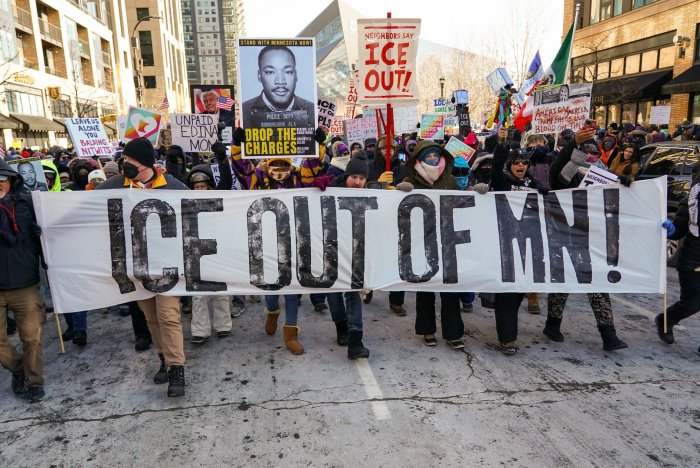
Thousands of protesters march in sub-zero temperatures during “ICE Out” day to protest the federal government’s immigration enforcement surge in Minneapolis, Minnesota on Friday. Photo by Craig Lassig/UPI | License Photo

Source link

Man arrested after driving into Detroit airport terminal, injuring 6

Jan. 24 (UPI) — An unidentified man has been arrested after he drove a vehicle into a Detroit Metro Airport terminal and injured six on Friday night.

The incident happened at the airport’s McNamara Terminal and close to the check-in line for Delta Air Lines at 7:30 p.m. EST., CBS News reported.

The vehicle struck a ticket counter and was fully inside the terminal when the driver was arrested, according to the Wayne County Airport Authority, which oversees the airport’s operations.

Six people were treated for injuries at the scene, but none were hospitalized.

Witnesses reported hearing a loud noise when the vehicle rammed the terminal’s entryway and continued into the Delta Air Lines passenger desk, which was manned, according to WXYZ-TV.

Police and Transportation Security Administration officers responded quickly and arrested the driver.

“The response was so quick, thank god, with the cops and TSA and everybody,” airline passenger Ali Khalifa told WXYZ, adding that it “all happened in seconds.”

A man wearing a Detroit Lions jersey who was driving the Mercedes-Benz when it crashed into the ticket counter was arrested, the Detroit Free Press reported.

Reports do not say if others were in the vehicle at the time of the crash.

The cause of the crash is unknown, and it did not disrupt airport operations.

Cleanup crews were tending to the damage at 10:15 p.m., and an investigation is underway.

The suspect remained in custody on Saturday, but charges were not filed as of Saturday morning, according to the WCAA.

Japan’s Prime Minister Sanae Takaichi formally dissolved the House of Representatives at the National Diet in Tokyo, on January 23, 2026. Photo by Keizo Mori/UPI | License Photo

Source link

US-brokered Russia-Ukraine talks close with no breakthrough | Russia-Ukraine war News

On eve of day two of talks in UAE capital, Russian attacks cut off about 1.2 million from power in sub-zero temperatures.

Ukraine and Russia ended a second day of United States-brokered talks in Abu Dhabi without an agreement, but with the warring sides saying they were open to further dialogue, as Russian attacks on Ukraine’s energy infrastructure continued.

Ukrainian President Volodymyr Zelenskyy said on X on Saturday that bilateral discussions focused on the “parameters for ending the war, as well as the security conditions required to achieve this”, and that further talks could take place as early as next week.

Recommended Stories

list of 3 itemsend of list

The talks were attended by Ukraine’s chief negotiator Rustem Umerov and military intelligence head Kyrylo Budanov, and Russian military intelligence and army representatives, according to Zelenskyy. US envoys Steve Witkoff and Jared Kushner were also present.

A UAE government statement said talks were “constructive and positive”, tackling “outstanding elements” of Washington’s peace framework, with “direct engagement” between Ukraine and Russia, a rare event in the almost four-year-old war triggered by Russia’s full-scale invasion.

The initial US draft drew heavy criticism in Kyiv and Western Europe for hewing too closely to Moscow’s maximalist demands and territorial ambitions, while Russia rejected revised versions over proposals for stationing European peacekeepers in Ukraine.

Before the discussions, Kremlin spokesperson Dmitry Peskov said on Friday that Russia had not dropped its insistence on Ukraine withdrawing from its eastern area of Donbas, the industrial heartland consisting of the regions of Donetsk and Luhansk.

While Russia controls all of Luhansk, Russian President Vladimir Putin wants Ukraine to surrender the remaining 20 percent it still holds in Donetsk.

Reporting from Kyiv, Al Jazeera’s Audrey MacAlpine said: “We … know that they were meant to be discussing what to do about the contested areas in Donbas and also about the possibility of a ceasefire on Ukraine’s energy infrastructure.”

‘Cynical’ attack during talks

On the eve of the second day of talks, Russia targeted Ukraine’s energy infrastructure, cutting off about 1.2 million people from electricity in sub-zero temperatures, according to Ukraine’s Deputy Prime Minister Oleksii Kuleba.

Kyiv City Military Administration head Tymur Tkachenko said drone attacks on Kyiv killed one person and wounded four others.

Kharkiv regional head Oleh Syniehubov said that drone attacks on Ukraine’s second-largest city wounded 27 people.

Ukrainian Foreign Minister Andrii Sybiha, who was not at the talks, accused Putin of acting “cynically”. “His missiles hit not only our people, but also the negotiation table,” he said.

“This barbaric attack once again proves that Putin’s place is not at [US President Donald Trump’s] Board of Peace, but in the dock of the special tribunal,” Sybiha wrote on X.

It emerged on Monday that Trump’s administration had invited Putin to join the board, purportedly aimed at resolving global conflicts, as well as overseeing governance and reconstruction in Gaza.

Kira Rudik, a Ukrainian opposition member of parliament in Kyiv, said on X that the attacks during talks were “not a coincidence”.

“This has been Putin’s strategy many times in the past. This is why a ceasefire was such a crucial prerequisite to any real talks,” she said.

Reporting on the talks, Zelenskyy said on X that he valued “the understanding of the need for American monitoring and oversight of the process of ending the war and ensuring genuine security”.

Source link

European agriculture seen as main obstacle to EU–Mercosur trade deal

The pause of a trade agreement between the European Union and Mercosur exposes deep internal divisions within Europe over agriculture and trade liberalization. Photo by Patrick Seeger/EPA-EFE

BUENOS AIRES, Jan. 23 (UPI) — The trade agreement between the European Union and the Mercosur, hailed as one of the most significant economic accords in decades, entered an unexpected political pause this week, exposing deep internal divisions within Europe over agriculture and trade liberalization.

Just four days after the deal was signed in Asuncion, the European Parliament voted to submit the text to review by the Court of Justice of the European Union, a move that effectively halts the start of the ratification process.

The decision interrupts the path of a treaty designed to create the world’s largest free trade area, encompassing nearly 700 million consumers, after almost 25 years of negotiations. It also highlights tensions inside the European bloc that extend well beyond legal scrutiny or tariff schedules.

At the heart of the delay is not a technical objection but a structural conflict. Broad sectors of European agriculture fear that greater market access for Mercosur, which includes Brazil, Argentina, Paraguay and Uruguay, will erode their competitiveness in an increasingly regulated environment. The concern cuts across products and countries, affecting much of Europe’s farming sector.

The discontent is closely linked to the European Green Deal, which imposes strict environmental, sanitary and traceability standards on EU producers, significantly raising production costs. Farmers argue that South American exporters are not subject to the same requirements.

Economist Maximiliano Ramírez, a former Argentine undersecretary for macroeconomic programming, told UPI that European farmers see the agreement as creating an uneven playing field.

“The core argument is that the deal generates unfair competition. It allows products from Mercosur to enter the EU without bearing the same environmental and sanitary costs,” Ramírez said. “They do not see it as free trade, but as a transfer of market share toward producers operating under looser rules, which threatens the profitability of mid-sized farmers in countries like France or Ireland.”

France has emerged as the main axis of resistance, where agriculture carries not only economic weight but also strong symbolic and political value. Opposition, however, extends beyond Paris. Ireland and Austria have taken firm positions to protect their meat industries, while Italy has hardened its stance under the banner of food sovereignty.

According to Ramírez, the shared fear is that an influx of South American commodities could undermine regional value chains. “That would push down domestic prices to levels that European subsidy systems cannot sustain indefinitely,” he said.

Former Argentine undersecretary for agricultural markets Javier Preciado Patiño agreed that pricing is at the core of the dispute.

“Food products from Mercosur would enter the market at more competitive prices than European goods,” he told UPI.

Beef, poultry, dairy products and corn from South America could gain market share due to lower costs, he said, despite safeguards included in the agreement to limit volumes.

“That is why European producers are protesting. They know they could be pushed out of the market,” he added.

From Uruguay, foreign trade specialist Gonzalo Oleggini said the resistance is fueled by misinformation about the agreement’s real impact.

“No quota will bankrupt European industry,” Oleggini told UPI. “The beef quota of 99,000 tons, for example, equals about 220 grams per European citizen per year. It is hard to argue that this would destroy an entire sector.”

Oleggini linked the opposition to domestic politics, particularly the approach of elections in France.

“The issue is being used internally, amplifying fears that are far removed from what would actually happen once the agreement enters into force,” he said.

Ramírez argued that the deal follows a logic of productive specialization. Clear winners would be Mercosur’s agro-industrial complex and, on the European side, high value-added manufacturing, especially the automotive and capital goods sectors led by Germany.

On the losing end, he said, would be European family farmers and, within Mercosur, small and medium-sized industries that would lose tariff protection against European technology.

“It is a model that reinforces each bloc’s strengths but deepens relative deindustrialization in our region,” he warned.

For Argentina, the delay undermines trade predictability. Ramírez noted that the agreement offered not only tariff reductions, but also an institutional framework to navigate increasingly strict EU regulations, such as the EU Deforestation Regulation.

“Without that umbrella, our exports remain exposed to unilateral decisions from Brussels, which can impose ‘green’ barriers at its discretion,” he said, adding that uncertainty could stall long-term investment projects aimed at the European market and increase reliance on volatile Asian demand.

Preciado Patiño noted that nearly a quarter-century of negotiations reflects deeper issues.

“The obstacles have more to do with geopolitics than with trade itself,” he said, pointing to the EU’s Common Agricultural Policy, which treats farming as a social and moral pillar of the European project.

“It is an almost untouchable sector. Mercosur, as a largely agri-food exporter, is seen as a disruptive force,” he said.

That sensitivity spans major economies such as Germany, France, Italy and Ireland, and extends into Eastern Europe, where countries like Poland retain strong agricultural profiles.

“The lack of true complementarity between the two regions has consistently stalled this agreement,” Preciado Patiño said.

The political paradox became evident when, just days after the signing, the European Parliament voted by a narrow 334-324 margin to seek judicial review, a scenario previously anticipated by French President Emmanuel Macron.

“It is a way of buying time, with the risk that the agreement ultimately collapses,” Preciado Patiño warned.

While Europe delays its decision, Mercosur countries are moving forward with their internal ratification processes. Argentine President Javier Milei has submitted the text to Congress for debate during extraordinary sessions scheduled for February, while Paraguayan President Santiago Peña announced that the agreement will be sent to parliament for consideration next week.

Source link

FBI arrests snowboarder Ryan Wedding in Mexico on drug trafficking, murder charges

An FBI most wanted poster is displayed during a press conference with Attorney General Pam Bondi, FBI Director Kash Patel and other government representatives at the Department of Justice Headquarters in Washington, D.C., on November 19. Patel announced the arrest of Ryan Wedding on murder and drug trafficking charges Friday. File Photo by Bonnie Cash/UPI | License Photo

Jan. 23 (UPI) — The FBI arrested former Canadian Olympian Ryan Wedding on Friday in Mexico, scratching off a suspect from the agency’s Top Ten Most Wanted Fugitive list, FBI Director Kash Patel said.

Patel announced Wedding’s arrest in a post on the social media platform X.

“Ryan James Wedding was taken into custody in Mexico last night,” Patel said. “He is being transported from Mexico to the U.S. … to face justice.”

The United States’ manhunt for Wedding for more than a year. The Justice Department indicted him on cocaine trafficking and murder charges in October 2024 and added him to the FBI’s most wanted list in March. The State Department offered a $10 million reward for information leading to his arrest and conviction.

In November, Attorney General Pam Bondi announced a government-wide intensification in its hunt for Wedding. She accused him of importing 60 metric tons of cocaine into Los Angeles.

“He controls one of the most prolific and violent drug trafficking organizations in the world,” she said at the time.

Patel said U.S. officials believe Wedding had been hiding in Mexico for more than a decade with the protection of the Sinaloa cartel.

“He was allegedly running and participating in a transnational drug trafficking operation that routinely shipped hundreds of kilograms of cocaine from Colombia, through Mexico and Southern California to the United States and Canada — as a member of the Sinaloa Cartel,” Patel said.

Patel said Wedding was the sixth person on the Top Ten Most Wanted Fugitives list captured within the past year.

Wedding was a competitive snowboarder who represented Canada in the 2002 Winter Olympics.

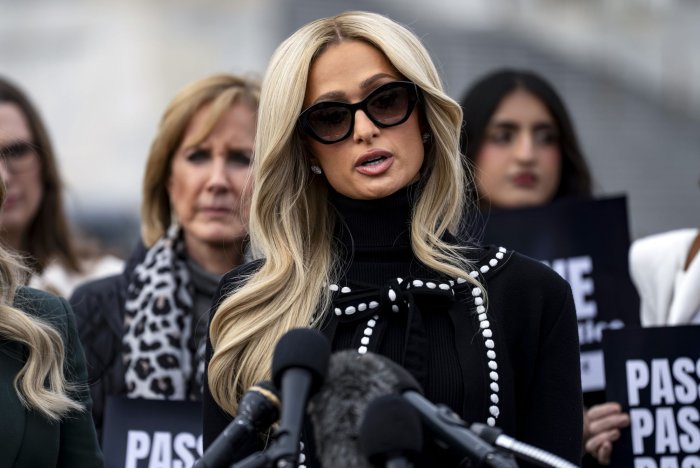
Paris Hilton speaks during a press conference in support of the Defiance Act outside the U.S. Capitol on Thursday. The Defiance Act, which has passed in the Senate, would allow victims the federal civil right to sue individuals responsible for creating AI-generated “deepfake” pornographic images. Photo by Bonnie Cash/UPI | License Photo

Source link

Public debt in Latin America returns to center of fiscal debate

Demonstrators organized by the Free Brazil Movement protest against Banco Master on Thursday in front of the bank’s headquarters in Sao Paulo, Brazil, after recent fraud allegations published in the press. The bank was recently liquidated and the area fenced off. Photo by Isaac Fontana/EPA

SANTIAGO, Chile, Jan. 23 (UPI) — Rising public debt has again become a central concern for Latin American economies, amid low growth, higher financing costs and an uneven fiscal recovery after the pandemic.

The trend reflects broader regional pressures that mirror a more restrictive global financial environment.

Chile illustrates this dynamic. Public debt reached 43.3% of gross domestic product in September, the highest level in more than four decades, according to the latest report from the Budget Office at the Finance Ministry.

The agency said the increase was driven mainly by new debt issuance, exchange rate movements and a reduced impact from inflation.

Budget Director Javiera Martinez said the current administration inherited “a very complex fiscal situation marked by post-pandemic macroeconomic imbalances: high inflation and a historic structural deficit of minus 10.6% of GDP.”

She added that after spending was reoriented and budget adjustments were implemented, “the growth trend was reversed, making this administration the one with the smallest increase in debt since President Michelle Bachelet‘s first term from 2006 to 2010.”

From a regional perspective, analysts say the challenge extends beyond Chile.

Economist Carlos Smith, a researcher and lecturer at the University of Development’s Center for Business and Society Research, said Chile’s figures “do not represent an imminent default risk” but should be viewed cautiously in a low-growth environment.

“The country is growing at around 2% to 2.5%. That is potentially low growth and it creates risks for the economy because interest payments absorb about 9% of fiscal revenues,” Smith said. It’s a pattern he noted is common across several Latin American economies.

Even so, Smith said Chile still holds comparative advantages in the region.

“It is concerning because of the speed of growth and budget rigidity, but compared with other countries, debt remains low. Chile has access to financial markets at reasonable rates and a credit rating that remains in a solid position,” he said.

Chile also operates under a fiscal rule that sets a public debt threshold near 45% of GDP to ensure long-term sustainability. Smith warned that failing to rein in debt growth could carry additional concerns.

“There could be other risks, such as losing the credibility of the fiscal rule, which would limit access to the rates we currently enjoy and that are quite privileged within the region,” he said.

In comparative terms, the International Monetary Fund projects Latin America will have closed 2025 with public debt equal to 73.1% of GDP, reflecting years of fiscal deficits, higher social spending and reduced capacity to absorb external shocks.

The IMF has also warned that global debt is on track to exceed 100% of GDP by 2029, the highest level since 1948.

Within the region, debt levels are highest in Brazil at 91.4%, followed by Argentina at 78.8%, Uruguay at 66.6%, Colombia at 60.0% and Mexico at 58.9%. Chile at 42.7% and Peru at 32.1% remain among the least indebted.

“Chile is among the strongest in a difficult neighborhood. It remains solid by comparison, but that advantage gap has narrowed,” Smith said. “It carries a lighter fiscal burden than Brazil, Mexico, Colombia or Argentina, which provides greater resilience to shocks such as a rate hike by the Fed.”

Smith said Brazil’s high debt stems from the fact that “virtually all state revenue goes to paying pensions and interest,” leaving “very little room for public investment.”

By contrast, Peru maintains low debt levels, but faces structural constraints.

“Low debt alone is not enough if there are no political institutions that allow investment to be projected,” he said.

Other countries face different challenges.

Venezuela, for example, posts debt levels above 150%, alongside hyperinflation, international sanctions and a prolonged economic collapse.

Argentina, with debt above 100% of GDP, faces the task of stabilizing its economy “without triggering a complex social crisis,” Smith said.

Low-debt economies, such as Paraguay, also show vulnerabilities.

“It has low debt, thanks to hydropower and agriculture, but it is very vulnerable to climate conditions,” Smith said, adding that the regional challenge is to invest in infrastructure without undermining fiscal sustainability.

JPMorgan has also flagged risks in Colombia, noting that higher public spending in 2025 aimed at boosting consumption widened the current account deficit. The bank said growth is being driven by resource injections rather than productivity gains.

“The region’s weak performance is rooted in a combination of political instability, fiscal fragility, inequality and insecurity,” said Nur Cristiani, JPMorgan’s head of investment strategy for Latin America.

“Political volatility has led to frequent policy reversals, undermining long-term investment. Fiscal deficits and procyclical spending have left countries vulnerable to external shocks.”

“Ultimately, Chile sits in a group with relatively low debt in the region but faces the challenge of boosting productivity and consolidating its fiscal position,” Smith said, warning that the country risks converging toward the regional average if it fails to protect both institutional strength and fiscal discipline.

Source link

Thousands in Minneapolis brave bitter cold to protest ICE crackdown | Migration News

Protesters march in icy conditions to protest against the Trump administration’s anti-immigration policies, demanding ICE leave the city.

Thousands of demonstrators have braved bitter cold to march through the streets of Minneapolis in the United States and demand an end to President Donald Trump’s immigration crackdown in their city.

Friday’s march started with temperatures as low as minus 29 Celsius (minus 20 Fahrenheit), with organisers saying that as many as 50,000 people took to the streets, a figure that could not be independently verified.

Recommended Stories

list of 4 itemsend of list

Many demonstrators later gathered indoors at the Target Center, a sports arena with a capacity of 20,000.

Organisers and participants said dozens of businesses across Minnesota closed for the day as part of the “ICE OUT!” show of defiance that organisers billed as a general strike.

Workers headed to street protests and marches, which followed weeks of sometimes violent confrontations between US Immigration and Customs Enforcement (ICE) agents and protesters opposed to Trump’s surge.

“It is 23 degrees below zero but the stores are closed and these demonstrators are out braving the coldest day on record since 2019 all to send a simple message to ICE: Get Out,” Al Jazeera’s John Hendren said, reporting from Minneapolis.

Just a day earlier, US Vice President JD Vance visited Minneapolis in a demonstration of support for ICE officers and to ask local leaders and activists to reduce tensions, saying ICE was carrying out an important mission to detain immigration violators.

In one of the more dramatic protests, local police arrested dozens of clergy members who sang hymns and prayed as they knelt on a road at Minneapolis-Saint Paul International Airport, calling for Trump to withdraw the 3,000 federal law enforcement officers sent to the area.

Organisers said their demands included legal accountability for the ICE agent who shot and killed Renee Good, a US citizen, in her car this month as she monitored ICE activities.

They ignored commands to clear the road by officers from local police departments, who arrested and zip-tied dozens of the protesters, without resistance, before putting them onto buses.

Organisers said about 100 clergy members were arrested.

‘Largest strike’

Faith in Minnesota, a nonprofit advocacy group that helped organise the protest, said the clergy were also calling attention to airport and airline workers, who they said had been detained by ICE at work. The group asked that airline companies “stand with Minnesotans in calling for ICE to immediately end its surge in the state”.

Across the state, bars, restaurants and shops were closing for the day, organisers said, in what was intended to be the largest display yet of opposition to the federal government’s surge.

“Make no mistake, we are facing a full federal occupation by the United States government through the arm of ICE on unceded Dakota land,” said Rachel Dionne-Thunder, vice president of the Indigenous Protector Movement.

She was one of a series of Indigenous, religious, labour and community leaders to speak, calling on ICE to withdraw and for a thorough investigation into Good’s shooting.

Trump, a Republican, was elected in 2024 largely on his platform of enforcing immigration laws, with a promise to crack down on violent criminals, saying his predecessor, Democratic President Joe Biden, was too lax in border security.

But Trump’s aggressive deployment of federal law enforcement into Democratic-led cities and states has further spurred political polarisation in the US, especially since the shooting of Good, the detention of a US citizen who was taken from his home in his underwear, and the detention of schoolchildren, including a five-year-old boy.

The numerous Fortune 500 companies that call Minnesota home have refrained from public statements about the immigration raids.

Source link

JD Vance says more progress on abortion is coming

Jan. 23 (UPI) — Vice President JD Vance told March for Life participants that he understands their frustration but assured them that more progress will be made to curb abortions.

Vance addressed the 53rd annual March for Life event on Friday, telling attendees that the proverbial “elephant in the room” is that little progress has been made to rein in abortion at the federal level.

“We are going to continue to make strides over the next three years to come,” Vance said, adding that abortion is an existential matter.

“It is about whether we remain a civilization under God, or whether we will ultimately return to the paganism that has dominated the past,” Vance told march attendees.

“There is still much road ahead to travel together,” he said, as reported by PBS. “Let the record show, you have a vice president who practices what he preaches.”

The annual pro-life event drew many participants who expressed frustration that more has not been done to restrict abortion after the Supreme Court in 2022 overturned Roe v Wade and left such laws up to respective states.

Vance, 41, called that decision the most important made by the Supreme Court during his lifetime.

He also cited the expansion of the federal government’s policy against providing foreign aid to organizations that support providers of abortion services.

“We believe that every country in the world has the duty to protect life,” Vance told March for Life participants.

The annual event drew tens of thousands to the nation’s capital, where they gathered on the National Mall before proceeding to the Supreme Court.

Many were dismayed that the Trump administration has not done more to follow up on the Supreme Court ruling.

“This administration has not moved when it absolutely could move,” Marjorie Dannenfelser, president of Susan B. Anthony Pro-Life America, told media on Thursday.

“This is not the direction that we were hoping for,” she added.

While the Trump administration has focused on other matters during the president’s second term in office, the abortion matter largely has been relegated to individual states.

Source link