From breaking news to significant developments in politics, business, technology, entertainment, and more, we deliver the stories that shape our global landscape.
A 200-year-old cottonwood tree has been cut down to make way for an expansion of a US-Mexico double border wall. Activists staged protests for months and camped at the tree to prevent it from being cut down.
The United States stock market has hit an all-time high as excitement around artificial intelligence continues to fuel a buying frenzy on Wall Street.
The S&P 500, the benchmark stock index, closed 0.58 percent higher on Tuesday, topping the previous peak reached in mid-August.
Recommended Stories
list of 4 itemsend of list
The Nasdaq Composite, which is more heavily weighted towards tech stocks, also hit a record high, finishing up 0.45 percent.
Tech stocks were among the top performers, with each of the “Magnificent Seven” apart from Meta closing higher.
Amazon led the pack with a 1.95 percent gain, followed by Microsoft and Tesla, which rose 0.78 percent and 0.51 percent, respectively.
Apple and Alphabet both rose 0.22 percent, while Nvidia gained 0.14 percent.
Meta, which has risen more than 20 percent since the launch last month of its new AI assistant, Muse, fell 0.41 percent.
Other big movers in tech included Marvell Technology, which rose 5.81 percent, and Cisco, which gained 4.54 percent.
Technology, AI
Keith Lerner, chief investment officer and chief market strategist at Truist Advisory Services in Atlanta, Georgia, said the market rally should be seen as a “technology and AI surge”.
“Every bull market has a dominant theme, and technology and AI remain this market’s dominant theme,” Lerner told Al Jazeera.
“Technology and communication services were the only two S&P 500 sectors to rise last month, while the other nine declined.”
Wall Street has shrugged off a host of challenges facing the US economy amid hyperscalers’ multibillion-dollar investments in AI.
Despite the energy crunch caused by the US-Israeli war on Iran and a sell-off of US government bonds partly driven by ballooning government debt, the market is well on track to record its fourth consecutive year of double-digit returns.
The S&P 500 has risen 14 percent so far in 2026, while the Nasdaq Composite is up 18.78 percent.
Lerner at Truist Advisory said the market rally had the potential to continue through the end of 2026 given historical trends and expectations for strong corporate earnings.
“We do not expect a straight line higher for markets,” Lerner said.
“Still, the fourth quarter of midterm-election years has produced an average gain of 7 percent and has been positive 84 percent of the time since 1950.”
Lerner said that rising interest rates posed the biggest risk to the upward trend.
“Still, on balance, the weight of the evidence suggests this bull market still has more upside potential,” he said.
Asian stock markets fell on Wednesday, with key indexes in Japan, South Korea and Hong Kong slumping in morning trading.
The Nikkei 225 in Tokyo, Kospi in Seoul and Hang Seng Index in Hong Kong were down 0.79 percent, 1.36 percent and 0.71 percent, respectively, as of 02:30 GMT.
Oil prices, which have been elevated since the start of the war on Iran, rose on Wednesday as traders weighed the fallout of fighting between forces aligned with Yemen’s internationally recognised government and the Iran-aligned Houthis.
Brent crude futures for December delivery stood at $101.45 a barrel as of 02:30 GMT, up 0.87 percent.
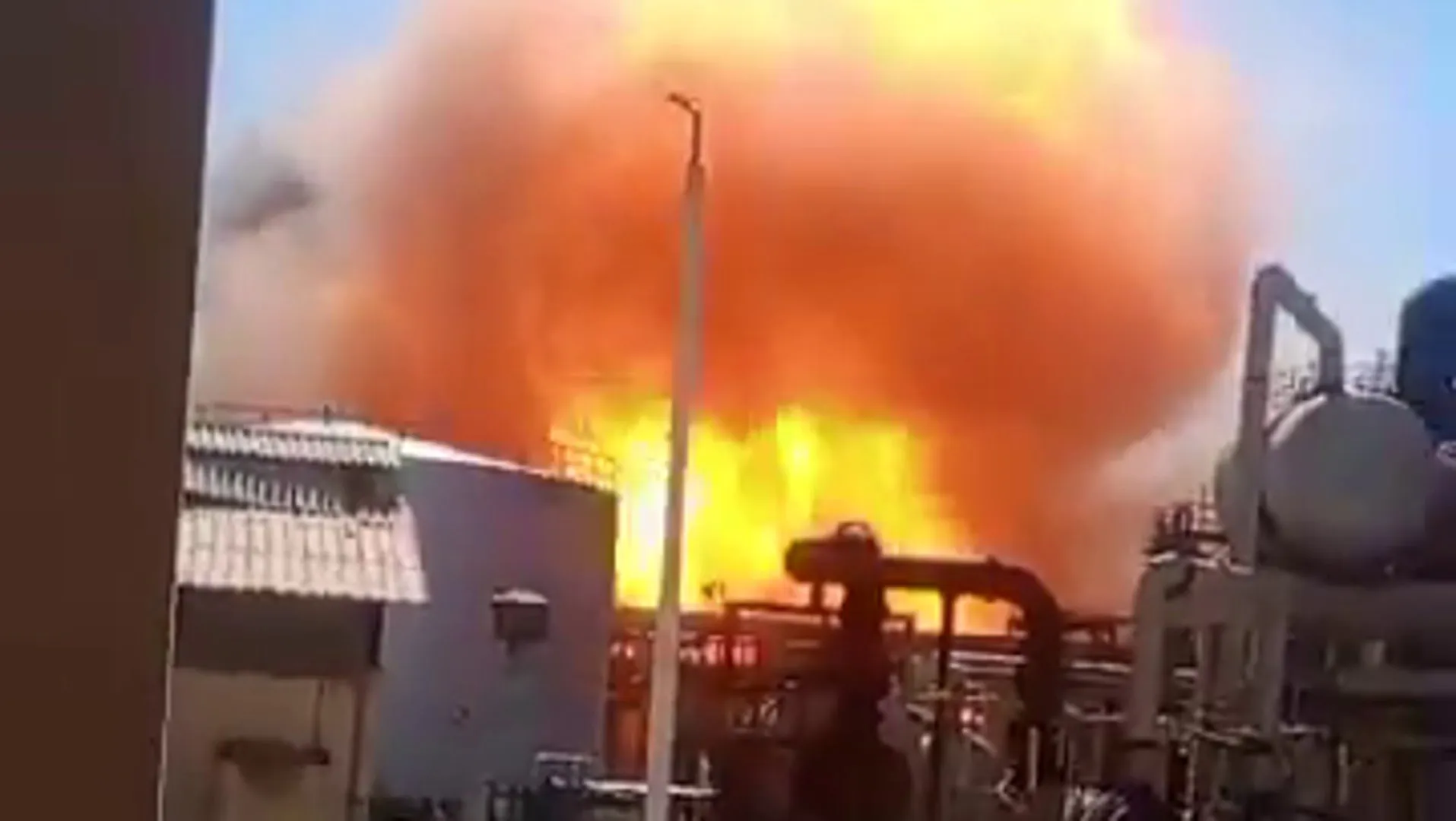
An explosion has ripped through Venezuela’s second-largest oil refinery, causing it to suspend activities. Reuters reports that the fire at the Cardon facility in Punto Fijo, Falcón state, started in a gas line. The facility can process 300,000 barrels of oil per day when operational.
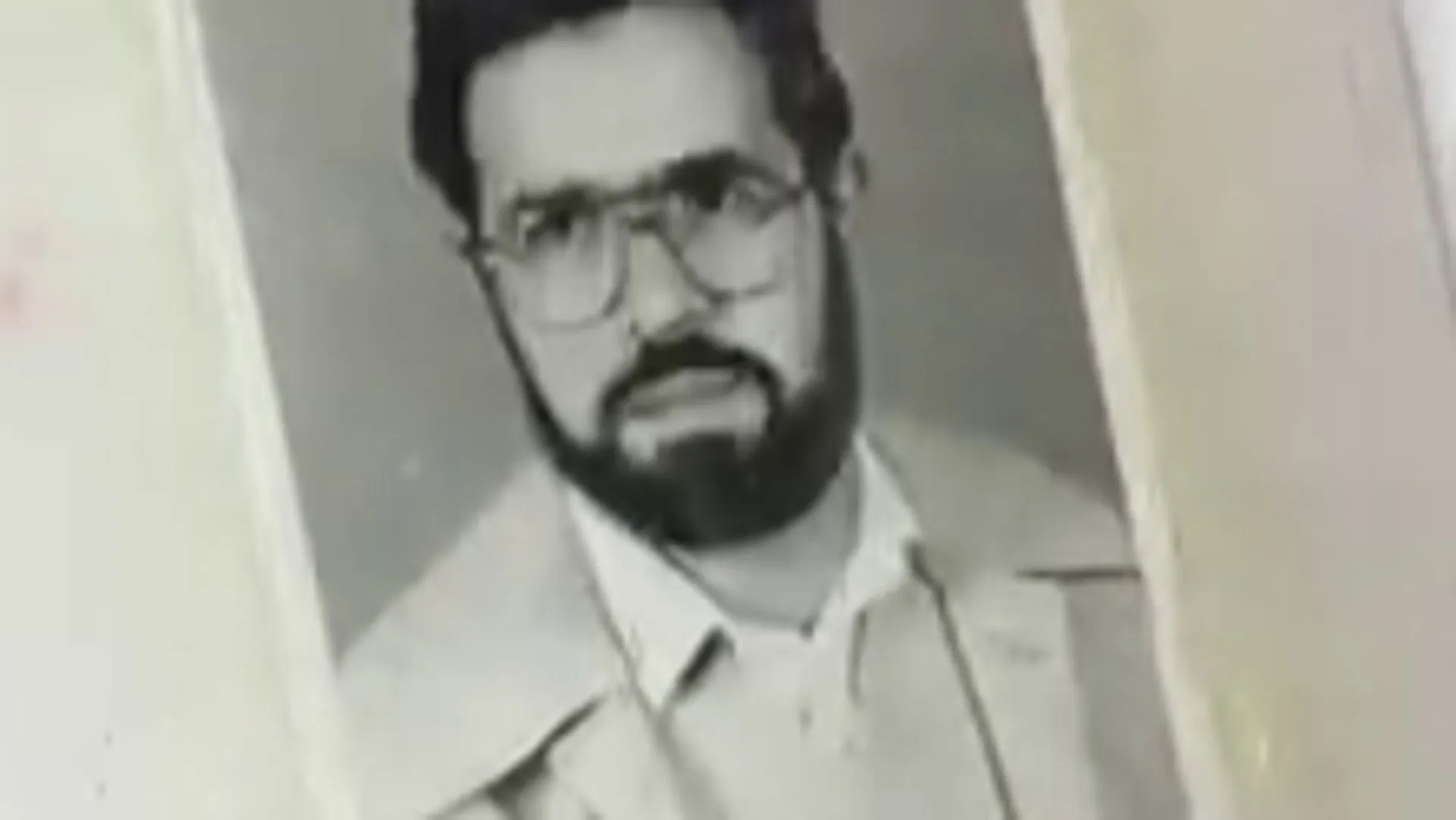
The Syrian embassy in Berlin has returned the passport of a citizen that the former Assad government seized 43 years ago. Adnan Wahoud, a mechanical engineer and inventor residing in Germany, says his passport was confiscated because he refused to cooperate with the former government.
At least 10 civilians were killed in West Kordofan and 5,500 displaced in Blue Nile as clashes widened on Tuesday.
Published On 7 Oct 20267 Oct 2026
Sudan’s military chief, Abdel Fattah al-Burhan, has promised to seize “every inch” of territory under the control of the paramilitary Rapid Support Forces (RSF), rejecting negotiations to end three and a half years of war.
Al-Burhan made the comments on Tuesday while addressing a gathering in Village 5, located in the northern Sudanese locality of Merowe, according to the Sudan News Agency.
Recommended Stories
list of 2 itemsend of list
He said the “military option” would continue until the RSF was removed from Sudan.
The Sudanese army and the RSF have been fighting since April 2023 after leaders of the groups fell out over plans to integrate the paramilitary force into Sudan’s army. The conflict has killed tens of thousands of people and displaced around 13 million, according to UN and international estimates.
Al-Burhan’s pledge to continue fighting came as 10 civilians were killed and several others were wounded in an attack by the RSF in Sudan’s West Kordofan state, according to a local charity group.
Women gather for a meal in al-Rahmaniyah camp for displaced people, near the city of el-Obeid in Sudan’s North Kordofan state, on July 7, 2026 [File: AFP]
In a statement, the Dar Hamar Emergency Committee accused the RSF of multiple violations against civilians in Abu Ajal village in the southeastern countryside of En Nahud.
The RSF has been massing in West Kordofan as Sudan’s army advances towards the cities of En Nahud and Al Khuway after gains in neighbouring North Kordofan.
In Sudan’s Blue Nile state, more than 5,500 people were displaced from villages over three days amid deteriorating security, the International Organization for Migration (IOM) said on Tuesday.
Meanwhile, an envoy of US President Donald Trump said Sudanese parties must take the lead in talks to end the war.
In a post on X on Monday, Massad Boulos, the US senior adviser for Arab and African affairs, said peace could be achieved “through an inclusive Sudanese-owned and Sudanese-led national dialogue, transition toward a civilian-led government”.
The US State Department said last month that neither the Sudanese Armed Forces, the RSF, nor their respective leaders “represent legitimate, constitutional governance for Sudan”.
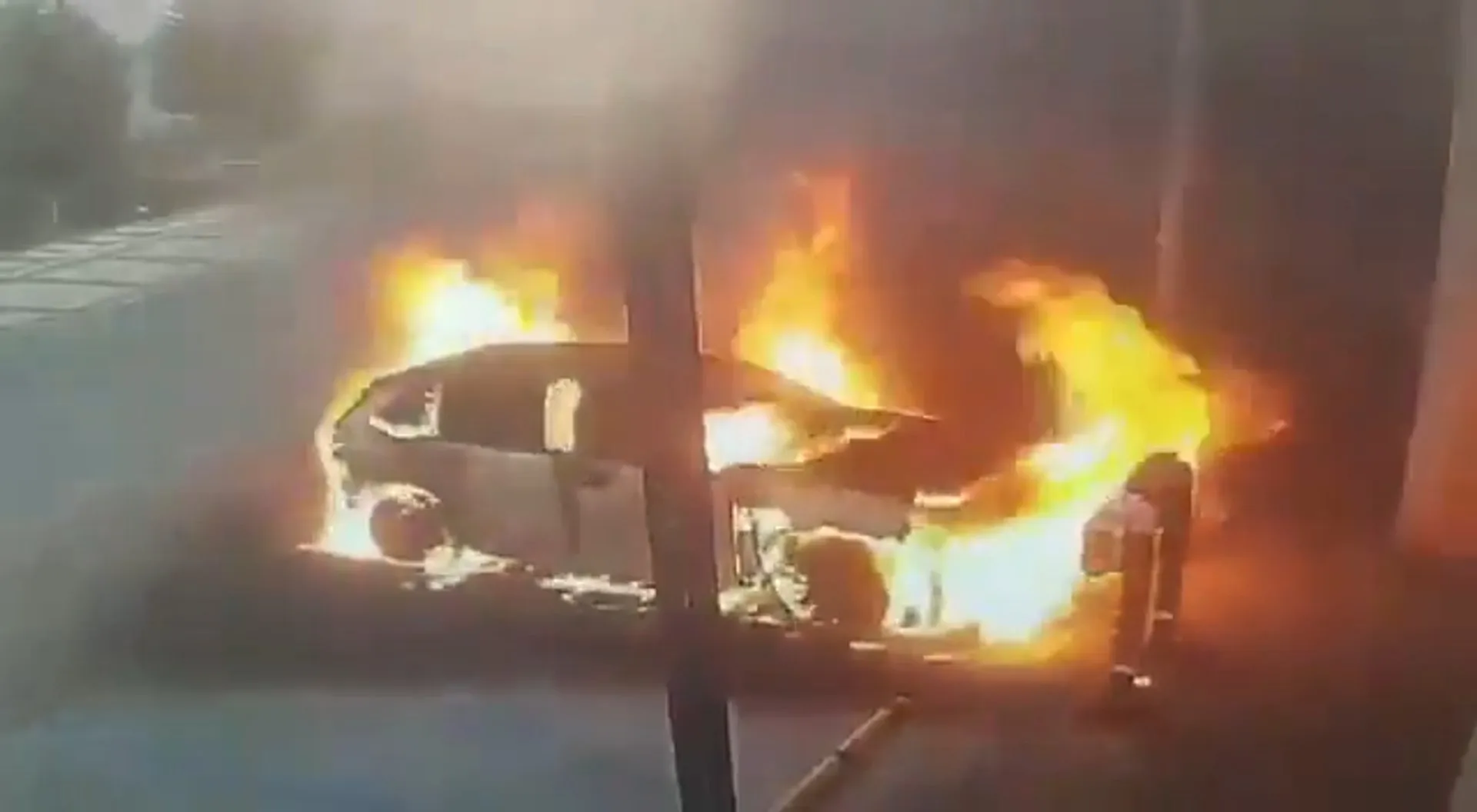
Turkiye’s first domestically produced electric SUV, the Togg T10X burst into flames at a charging station. No one was injured and the operator says the car was not charging when the fire started. EVs reportedly accounted for 52% of new car sales in Turkiye so far this year.
Thousands of Argentina fans poured into Buenos Aires’ Monumental stadium ahead of Lionel Messi’s final international match. The World Cup-winning captain and Argentina’s all-time leading scorer is ending a 21-year international career, saying it’s time for a new generation.
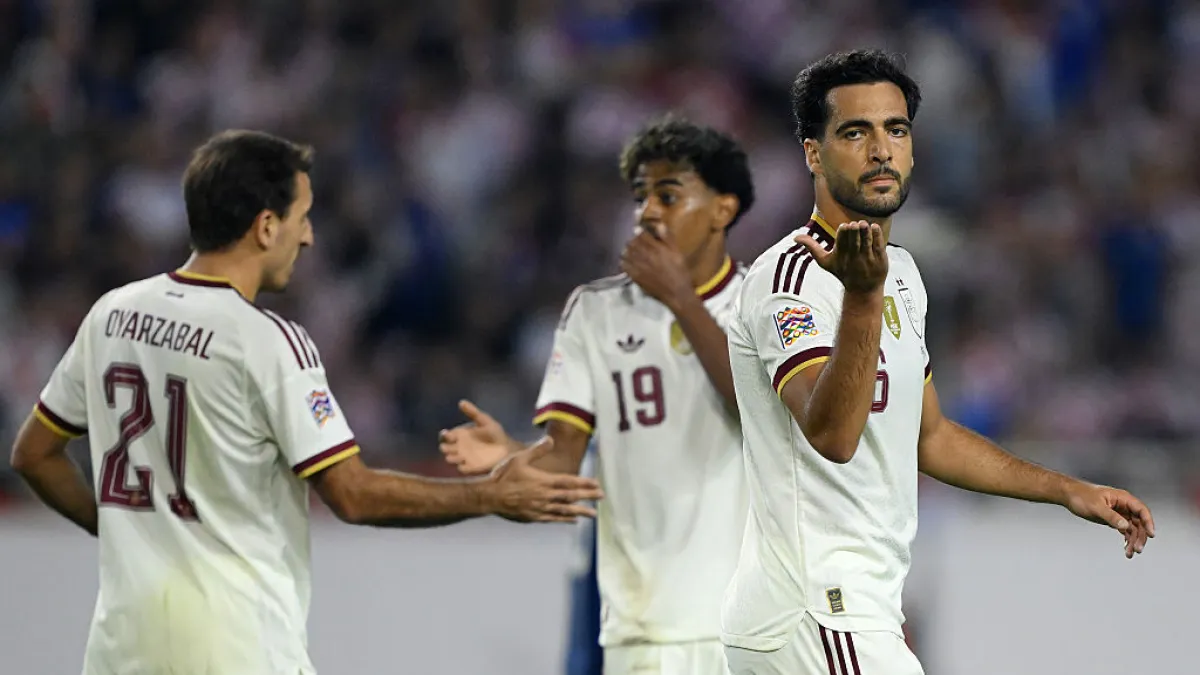
Mikel Merino turns game for Spain in Croatia to maintain their 100 percent group-stage record in UEFA Nations League.
Published On 6 Oct 20266 Oct 2026
Mikel Merino hit a brace to help World Cup winners Spain seal qualification in the Nations League quarter-finals with a 2-1 win against Croatia on Tuesday.
Ivan Perisic put hosts Croatia ahead but substitute Merino equalised for Spain early in the second half.
Recommended Stories
list of 4 itemsend of list
Perisic was sent off with 10 minutes remaining for a second yellow card and Merino helped Spain capitalise with a fine finish to reach the last eight with two matches to spare.
Spain now has 42nd consecutive games without suffering defeat and lead England by three points at the top of Group A3.
Slaven Bilic’s Croatia were crushed 7-0 by England on Saturday, in front of a crowd of children as home fans were banned for racism, and came out determined to make it up to their supporters in Split.
Spain goalkeeper Unai Simon was called into action early on, saving well from Josip Stanisic’s header, as Luka Modric’s team impressed in the first half.
A few minutes later the hosts took the lead in Split with Simon saving from Igor Matanovic’s shot but Perisic reacted quickest to head home the rebound.
Athletic Bilbao goalkeeper Simon put Aymeric Laporte in a tough spot in his own box with a loose pass and Croatia intercepted and almost grabbed a second. However Simon saved from Freiburg striker Matanovic’s effort.
Spain’s teenage star Lamine Yamal raced through on goal early in the second half but he fell after nudging the ball past Barca team-mate and Croatia goalkeeper Dominik Livakovic.
Merino, on at the interval, pulled Spain level in the 61st minute with a low finish after Dani Olmo, who developed in Croatia as a youngster, fed him.
Croatia’s task of holding on in the final stages became harder when Perisic brought down Marc Cucurella and was dismissed.
Merino, so often making key impacts from the bench for Spain coach Luis De la Fuente, including in the World Cup this summer, finished the job with his second of the night.
The former Real Sociedad man, with two minutes remaining, produced a superb turn and finish to blast past Livakovic.
Donald Trump still decides who gets to call themselves MAGA – but what happens when that power has to pass to someone else?
Josh Rushing is joined by Rina Shah, a Republican strategist and one of the original Never Trumpers, and Emma Doyle, former deputy chief of staff in Trump’s first administration, to ask whether MAGA can outgrow its frontman, or whether, as both guests agree, MAGA simply is Donald Trump.
Contributors: Rina Shah – Republican strategist and political commentator Emma Doyle – Former White House deputy chief of staff
Spain’s Constitutional Court ruled an amnesty law for Catalan separatists applied to the politician.
Published On 6 Oct 20266 Oct 2026
Self-exiled Catalan separatist leader Carles Puigdemont could be set to return to Spain after the country’s Constitutional Court ruled that an amnesty law for Catalan separatists applies to embezzlement charges against Puigdemont.
A Supreme Court judge then lifted a warrant for Puigdemont’s arrest on Tuesday, clearing the way for his return without fear of arrest.
Recommended Stories
list of 3 itemsend of list
Puigdemont, then president of Catalonia, fled to Belgium in 2017 after holding an independence referendum for his self-governing region to break away from Spain. Madrid said the vote was illegal.
Catalonia unilaterally declared independence from Spain that year after the referendum, with 90 percent of voters backing independence.
He has since avoided several extradition attempts by Spain to face trial over the vote, while many of his confidants and supporters spent time in prison.
Members of Puigdemont’s political party Junts welcomed his potential return.
“It’s a great victory for President Puigdemont and the two other exiled [leaders in Belgium]”, Jordi Turull, secretary-general of Junts, told reporters.
“They held firm, they resisted, they prevailed in Europe, and today they have prevailed against the Spanish state.”
Junts’ role in Spain’s snap election
Puigdemont appears set to return to Spain just as the country is preparing for a snap election in November, although an official from his Junts party said he is unlikely to take part.
Prime Minister Pedro Sanchez was only able to remain in power in 2023 when Puigdemont’s Junts party, along with another Catalan party, backed his new government in exchange for the amnesties.
A year ago, Junts withdrew its support for the minority central government, and the party was decisive in Spain’s progressive government losing two key votes in parliament this week when it tried to push through emergency housing measures amid street protests.
Sanchez responded by calling a November snap election, hoping anger over housing will mobilise his voters.
The prime minister told reporters on Tuesday he did not regret launching the amnesty and welcomed the court ruling.
“I believe the important message is that of coexistence among Catalans,” he said.
Although separatism has lost ground and Junts is trailing in opinion polls, Puigdemont’s return could prompt renewed political drama.
Spain’s conservative People’s Party is leading in opinion polls ahead of the election and may need to seek the support of Junts and other centre-right parties to govern.
Kosovo faces the risk of turmoil as protests against the convictions of former Kosovo Liberation Army (KLA) leaders coincide with a midnight deadline to elect a president.
Demonstrators have called for changes to the law governing the Hague-based Kosovo Specialist Chambers, including measures affecting prison terms and where convicted people serve their sentences. The protests follow the September 16 convictions of former KLA leaders, including former President Hashim Thaci.
Recommended Stories
list of 4 itemsend of list
The protesters’ demands have become entangled with negotiations over the presidency, raising the prospect of new elections if lawmakers fail to reach an agreement. November 15 has emerged as a likely date for a new vote.
“New elections do not, in themselves, promise anything particularly positive,” political analyst Artan Muhaxhiri told Al Jazeera. “The chances of a radical political change are slim.”
He said that if a president is not elected by midnight, a new vote will take place in a tense political climate.
Anger over the verdicts will become a central campaign issue, he said, “overshadowing fundamental questions of socioeconomic development, and deepening the country’s downward spiral of systemic instability”.
How did Kosovo get here?
In 2015, the Specialist Chambers were established under Kosovo law following international investigations into alleged war crimes committed by KLA members during and after the 1998-99 conflict. Although formally part of Kosovo’s judicial system, the court sits in The Hague. It remains contentious in Kosovo because the KLA is widely revered for having fought against Serbian rule.
In September, protests erupted after the court sentenced Thaci to 25 years in prison.
Later, the opposition Democratic Party of Kosovo (PDK) – formerly led by Thaci – proposed amendments aimed at curbing the tribunal. The plan included capping prison sentences at 15 years, allowing convicts to serve their sentences in Kosovo, enabling appeals before Kosovo’s Supreme Court, granting presidential pardons and narrowing the court’s temporal jurisdiction.
On October 2, 2026, Prime Minister Albi Kurti’s government concluded that there were no legal obstacles to the PDK initiative and forwarded its assessment to the parliament, the Assembly of Kosovo. Days later, Kosovo’s parliament approved the initiative at first reading with 91 votes in favour, although it has not been finally adopted.
Meanwhile, Kosovo has been mired in a political impasse after the expiration of President Vjosa Osmani’s term in April, as the National Assembly has been unable to select a new president.
Now, internal power struggles within the PDK following the September sentencing have left the party fragmented, rendering the largest opposition party incapable of negotiating a cross-party presidential compromise, according to Nexhmedin Spahiu, a Pristina-based professor of political science.
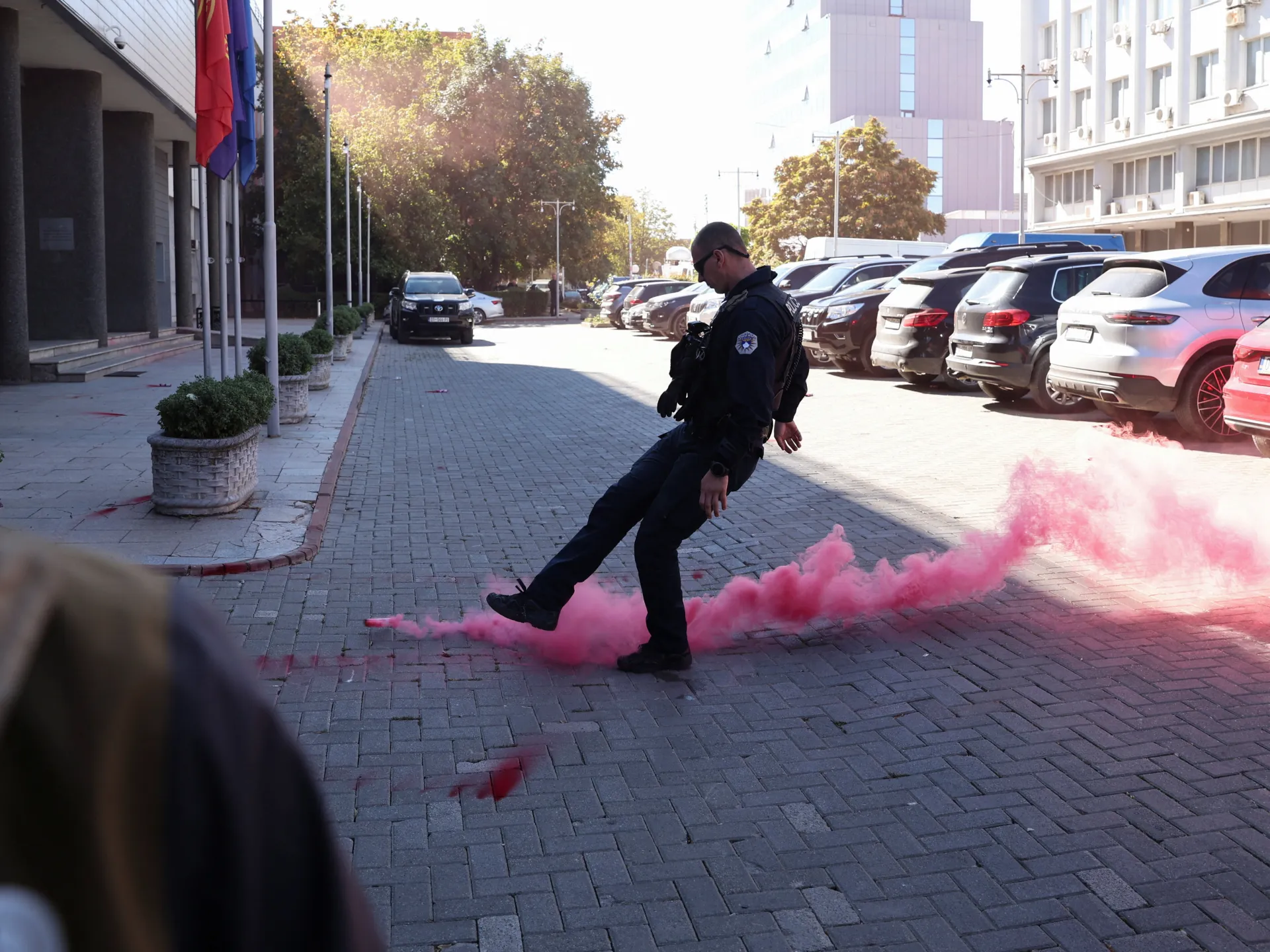
On Monday, as lawmakers failed to secure a quorum to elect a president, police deployed tear gas and water cannon outside the Assembly, following confrontations involving fireworks and bottles. The use of force prompted criticism from observers.
Tensions rise
Pristina-based journalist Gezim Baxhaku believes special police units overstepped their legal authority.
“There was an overuse of force,” Baxhaku told Al Jazeera. He said that while protesters threw firecrackers, police “exceeded their legal powers and acted entirely contrary to the situation on the ground”.
Among the hundreds of protesters were KLA veterans.
Pristina had witnessed nearly three weeks of largely peaceful gatherings before Monday’s escalation.
“Citizens were routinely bringing food, water, and coffee to the officers on duty,” Baxhaku said. “There was absolutely no reason for this to happen. For the first time since the late 2000s, police acted in such an uncalled-for manner – reacting upon orders to escalate a situation.”
Spahiu, the political science professor, said the protests should not be understood as a sign that people in Kosovo broadly reject the verdicts.
“A large majority of citizens in Kosovo are satisfied with the decision of the Specialist Chambers in The Hague,” said Spahiu.
He told Al Jazeera that the court’s rejection of Serbian claims of systematic crimes against humanity by the KLA “validated the liberation struggle”.
“Furthermore, people are relieved that individuals are finally being held accountable for crimes committed against political rivals within the Albanian community itself,” he said.
The political deadlock and Kurti’s ‘transactional’ approach
The Assembly remains deadlocked over the election of a head of state, as the PDK and other opposition parties boycott the voting session, denying the legislature its constitutionally required 80-MP quorum.
Muhaxhiri blamed Kurti for the crisis, criticising his decision to link the presidential vote to the Hague court amendments.
“Tensions escalated further when Kurti presented a plan based on a transactional approach to two fundamentally distinct issues: linking the draft law amending the Law on the Specialist Chambers to the election of the new president,” said Muhaxhiri.
“In effect, this amounted to a quid pro quo. By doing so, he appeared to be placing the historical, national, and identity-related significance of the liberation war on the same political bargaining table as the immediate objective of electing a president who would serve his political interests.”
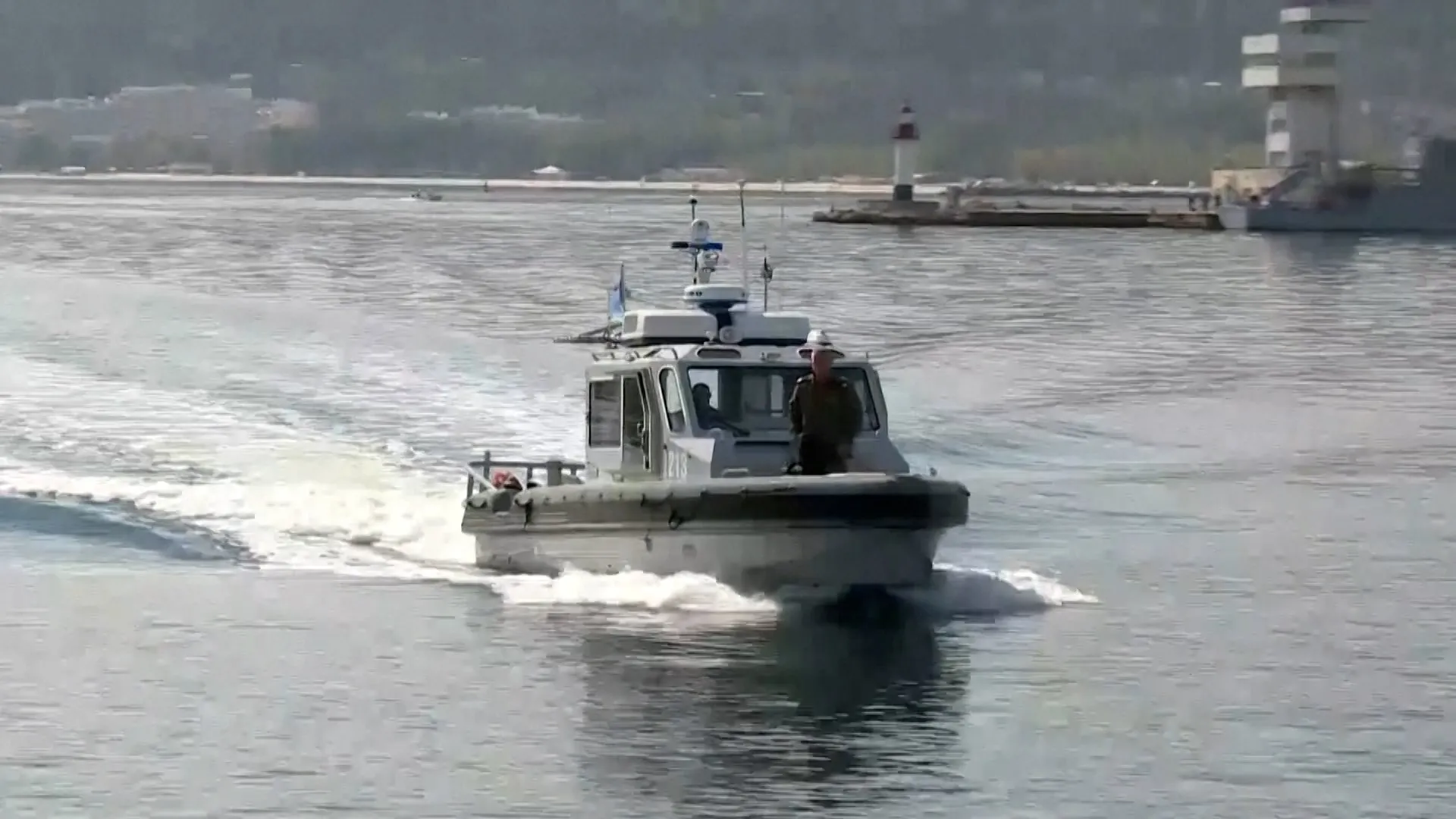
A Togo-flagged merchant ship sank off Bulgaria after a drone attack, with its crew missing. A second ship was also hit and its crew was rescued. Bulgaria’s prime minister called the attacks a ‘flagrant violation’ of international and maritime law.
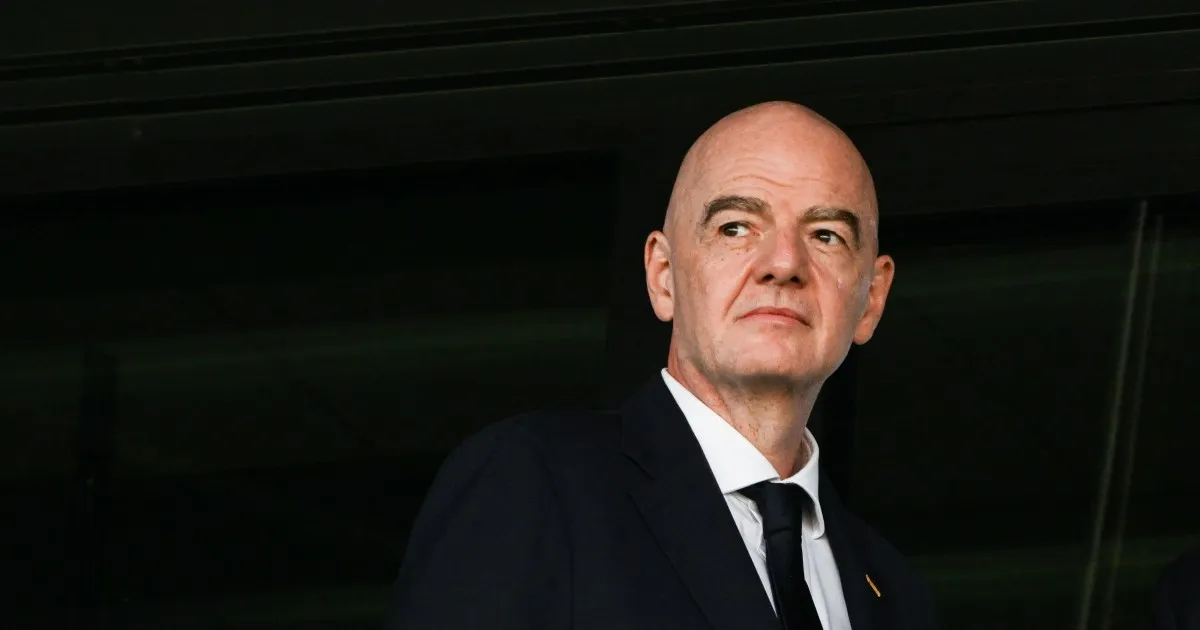
Embattled FIFA President Gianni Infantino has been accused of a potential abuse of power and conflict of interest after the Norwegian Football Federation (NFF) filed formal complaints to two FIFA committees.
Infantino’s aborted plan to open up the World Cup to private investors, the lifting of US forward Folarin Balogun’s suspension at the 2026 World Cup following an intervention by United States President Donald Trump, and FIFA’s awarding of a so-called Peace Prize to Trump form the basis of the filings.
Recommended Stories
list of 4 itemsend of list
The first filing made on Tuesday “asks the Ethics Committee to examine the conduct of FIFA President Gianni Infantino and any other individuals identified through the investigation for potential breaches of FIFA’s Code of Ethics”.
The second filing is aimed at FIFA’s Governance, Audit and Compliance Committee (GACC) and “asks whether FIFA’s governance, financial oversight, internal controls and decision-making processes [have] worked as intended”.
Lise Klaveness, the NFF’s straight-talking president and longtime critic of Infantino, told British media that Trump was the common thread in all three issues.
The venture capital firm of Josh Kushner, the brother of Trump’s son-in-law Jared, was to be the chief investor in the ill-fated FIFA Forward Enterprise (FFE) plan.
Infantino’s plan, launched just after this year’s hugely successful World Cup cohosted by Canada, Mexico and the US in July, would have allowed private investors to acquire stakes in a company created under the FFE initiative.
“FIFA Forward Enterprise is a governance issue, but it’s connected to the two other cases because [of] conflict of interest and abuse of position, potentially,” Klaveness said in her interview with a British newspaper.
“There is a line between all these three cases, and it’s the same political regime.”
Klaveness, a former international footballer, said Infantino had some serious questions to answer over a lack of transparency.
Balogun’s red card in the last-32 win over Bosnia and Herzegovina during the World Cup resulted in an automatic suspension for the match with Belgium.
But FIFA stepped in and suspended his ban, leading to widespread condemnation, especially when it emerged that Trump had intervened by phoning Infantino.
The FIFA Peace Prize award that Infantino presented to Trump in December has also been widely criticised.
“These are three very different factual cases, but they all have something in common that we want examined,” said Klaveness.
“Is it an abuse of power, an abuse of position? Is it a breach of political neutrality?
“Is it in accordance with the rules of governance, as the FIFA Council should be the strategic body, and the president shouldn’t really have any unilateral power?”
‘Misinformation campaign’
Klaveness, 45, had, in August, called upon Infantino to resign and forgo his bid to be elected to a fourth and final term as president.
The 56-year-old Swiss has insisted he will seek re-election in Rabat next March, and as yet no other candidate has declared themself.
Infantino, who was first elected in 2016, must secure a majority of the 211 votes from the organisation’s members in order to be re-elected.
The deadline to declare a candidacy is November 18.
Klaveness has said she will not be a candidate — despite some observers, including Infantino’s predecessor Sepp Blatter, believing she would be a good fit as FIFA chief.
Aleksander Ceferin, president of European football’s governing body UEFA, has said he is not interested.
UEFA have been unsparing in their verbal assaults on Infantino and FIFA, dismissing the FFE plan as “a shady and opaque backroom deal”.
The likeliest rival is thought to be Canadian Victor Montagliani, president of CONCACAF, whose body, along with UEFA and the Asian Football Confederation (AFC), has formed an anti-Infantino alliance.
However, while a swath of UEFA’s members have publicly withdrawn their support for the 56-year-old Swiss, some of the AFC’s associations, such as 2034 World Cup hosts Saudi Arabia and 2022 hosts Qatar, have pledged their loyalty to him.
African football’s governing body CAF and South America’s CONMEBOL are also supportive.
UEFA has also gone to a court in Florida in an attempt to access documents related to Infantino’s failed plan, hoping to gather evidence for a potential criminal complaint in Switzerland, where UEFA and FIFA are based.
The latter responded by accusing UEFA of a “misinformation campaign” and saying it was attempting to “influence” the election.
Tens of thousands have taken to the streets across France as unions and teachers joined high school students who, for days, have been demanding better learning conditions in protests punctuated by violent confrontations.
The French Ministry of the Interior said 86,000 people had already joined demonstrations across the country early on Tuesday, while the General Confederation of Labour (CGT) union put the figure at 260,000.
Students have blocked the entrances to hundreds of high schools since late September, complaining of missing teachers, overloaded timetables, dilapidated classrooms and buildings unable to cope with rising temperatures.
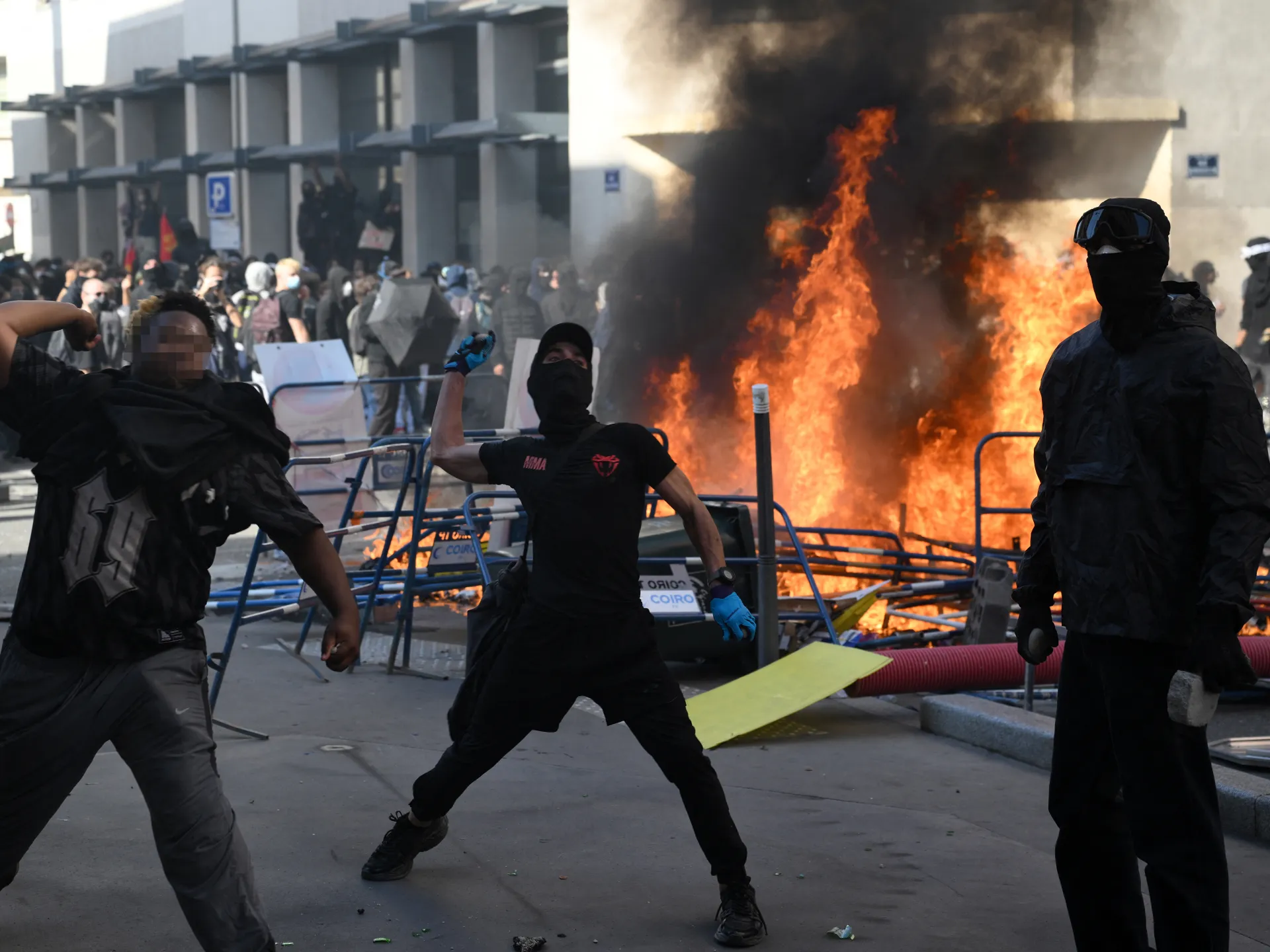
While many protests have been peaceful, some demonstrators have started fires, destroyed bus shelters or clashed with riot police.
Police have responded with batons, tear gas and riot-control rounds.
Injuries, investigations
The government says 215 students and 715 police officers have been injured since the start of the movement.
Unions, rights groups and students have accused the authorities of using disproportionate force.
A 15-year-old lost a hand to a stun grenade fired by riot officers in the northern town of Lens on Monday.
Police have launched 10 internal investigations into allegations of brutality since the protests began, Interior Minister Laurent Nunez said late on Monday.
Since the start of the movement, 24 schools have been burned or ransacked, according to the Ministry of Education.
More than 5,000 people, 87 percent of them minors, have been arrested.
Prime Minister Sebastien Lecornu’s office said 85 members of teaching staff have also been injured.
The government is also pushing legislation to make those responsible for damaging public property pay for repairs themselves, instead of using public funds.
Protests have continued across France for a third week as tens of thousands of school pupils and trade unionists have taken to the streets across many cities.
Students initially began boycotting classes in deprived areas of Paris on September 21 over teacher shortages and poor conditions, but protests have quickly morphed into a nationwide movement, with some of the largest demonstrations taking place on Tuesday.
Recommended Stories
list of 4 itemsend of list
School blockades have turned violent, with protesters accused of hurling items at police and officers allegedly responding forcefully using batons, tear gas and rubber bullets. In one case, a teenager lost his hand in a grenade explosion.
The mass demonstrations, which also coincided with a public sector strike over government budget plans last week, have presented another challenge for President Emmanuel Macron’s cash-strapped government ahead of next year’s elections, amid an ongoing fiscal crisis as government debt has rocketed in recent years.
Here’s what we know:
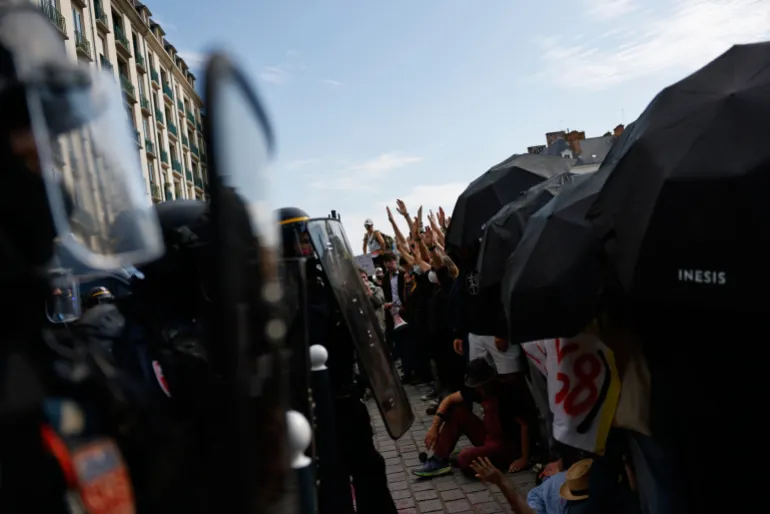
Riot police face students during a protest against under-resourced schools in Rennes, western France, on October 6, 2026 [Jeremias Gonzalez/AP]
What do protesters want?
Students have been protesting over what they say are poor conditions in France’s high schools – or lycees – especially in poorer areas. Protests have been held in Strasbourg, Bordeaux, Nantes, Marseille, Lyon and other towns and cities.
Students say absent teachers are not replaced, dilapidated school buildings are sometimes rodent-infested, there are inadequate tables and chairs, large class sizes and long classroom hours.
The intense heatwave which hit France in the summer exacerbated existing problems in neglected school buildings, which also suffer from a lack of air conditioning, school pupils say.
The protests have coincided with ongoing nationwide public sector strikes over a proposed 2027 cost-cutting budget that aims to achieve 54 billion euros ($61.3bn) in savings as Macron’s government races to bring a large public deficit under control.
Public sector staff and unions object in particular to a government plan to freeze salaries to save about two billion euros ($2.27bn).
Parents are also increasingly present at protests amid widespread anger about the police response to demonstrating minors.
But the protests are happening amid wider discontent over soaring fuel and commodity prices and reduced public spending under Macron.
Government officials have meanwhile accused political opposition groups and unionists of taking advantage of the student movement. Prime Minister Sebastien Lecornu accused political opponents last week of encouraging escalation.
What has happened so far?
At least 6,100 people had been arrested by early Tuesday, many of them under the age of 18, as police tactics come under intense scrutiny.
Serious injuries have also been reported.
A 15-year-old lost a hand in the northern city of Lens on Monday after he reportedly came into contact with a police stun grenade, which then exploded. Public prosecutors say investigations are ongoing into whether the youth actively picked up the grenade or if it landed on him.
Overall, at least 190 high school students have been injured, Education Minister Edouard Geffray said on Monday. On Sunday, he said 78 teaching staff had been injured, and 24 schools had been burned or ransacked.
Some 715 police officers have been injured, according to Interior Minister Laurent Nunez on Tuesday.
Officials said as many as 589 schools have been disrupted this week, down from 735 on Friday last week.
Rights groups, including Amnesty International, have criticised the use of force against minors amid media reports of students being hit with batons and rubber bullets, as well as sprayed with tear gas.
What happened on Tuesday?
Protesters again blockaded schools on Tuesday as thousands demonstrated over their demands.
Placard-waving crowds were reported in southern Marseille, eastern Strasbourg and other major cities.
In Paris’s 20th district, protesters outside the shut Helene Boucher lycee tipped over rubbish bins and bicycles and created a makeshift barricade, The Associated Press news agency reported. Parents, meanwhile, positioned themselves between the demonstrators and police to protect their children.
“They are our children. Teachers, parents, federations, we all share the same goal: the protection of children’s rights, and it is a legitimate right to demonstrate and to make demands,” said Emilia Sichili Suriam, one member of a parents’ association.
Interior Minister Nunez rejected criticism of the police on Tuesday, saying the response has been proportionate in “almost all cases”. He claimed that the protests were transforming into “riots”.
What does this mean for the French government?
These are only the latest in a series of high-profile protests that have marked Macron’s presidency and undermined his government’s reform efforts ahead of elections in April and May.
Macron will not run in next year’s elections, but his image and that of his government have no doubt been tainted by photos of police chasing students in the streets, France expert Jacob Ross, from the German Council on Foreign Relations (DGAP), told Al Jazeera.
“He is not taken seriously any more because many think of him as already out of government,” Ross said of Macron. “But this is still very significant for his government because it has become clear that they don’t have the capacity to calm things down. There’s clearly little fiscal room to manoeuvre.”
Macron’s terms have long been beset by political and financial instability. Successive prime ministers have faced difficulties in pushing through policies in the highly polarised National Assembly where Macron’s centrist Renaissance party and allied blocs lack a majority.
Critics have taken aim at Macron’s deeply unpopular austerity measures, which have seen drastically reduced government spending taking a toll on pensions and healthcare. Officials, however, have defended these policies amid rising debt following COVID-19-era spending.
On Sunday, Lecornu said the government had kickstarted initiatives to address the protesters’ demands and that a report was expected by the end of the month. He, however, added that Paris would not “yield an inch” to violence.
Meanwhile, frontrunner and opposition leader Marine Le Pen of the far-right National Rally party submitted a shadow budget on Tuesday promising 140 billion euros ($157.6bn) in cost savings by 2032 if elected next year.
August Hanning’s former chief of staff was also arrested on suspicion of ‘aiding and abetting attempted treason’.
Published On 6 Oct 20266 Oct 2026
Germany’s former foreign spy chief has been arrested on suspicion of espionage and treason, prosecutors have said.
August Hanning, 80, is under investigation for attempted treason and acting as an agent for a foreign intelligence service, the Office of the Federal Public Prosecutor General confirmed on Tuesday.
Hanning was president of Germany’s Federal Intelligence Service between 1998 and 2005.
He was arrested in Bad Toelz-Wolfratshausen in southern Germany. His former chief of staff, partially identified as Manfred D, was arrested in Steinfurt in western Germany on suspicion of “aiding and abetting attempted treason and treasonous espionage”.
The prosecutor’s office said, “On one occasion, Hanning used classified intelligence provided by Manfred D to draft an analysis for an officer of a foreign intelligence service.”
Prosecutors said Manfred D also served as the chief of staff for Hanning’s successors between 2012 and 2026, and used his role to gain access to confidential information which he then passed on to Hanning “in exchange for remuneration”. Hanning then used the information in his private consulting work, prosecutors added.
“The current findings suggest that, over the years, Manfred D provided Hanning with approximately 2,000 documents, many of which contained classified information to be used exclusively by the federal intelligence service for internal purposes, particularly for executive intelligence briefings,” the statement said.
The statement did not reveal who the two men were suspected of spying for or which country the foreign agent worked for, adding that “it has yet to be determined if the material reached the intended recipient”.
German MP Marc Henrichmann told the AFP news agency that Germany “will not tolerate the betrayal of secrets”.
Henrichmann, who chairs the German parliament’s intelligence oversight committee, said, “Whoever allies themselves with the enemies of our liberal democracy will be found out.”
The premises of Manfred D and Hanning were being searched in several locations, including in the capital, Berlin.
Over the course of Sunday, a dozen B-1B bombers took off from Royal Air Force (RAF) Fairford in western England and flew home to the United States. Their departure abruptly ended the base’s role as a launchpad for US strikes on Iran, which began on February 28.
The base, roughly 160km (100 miles) west of London, is the US Air Force’s only European airfield for heavy bombers and a key forward operating location for deployed bombers.
Over the past two weeks, six people were arrested on suspicion of “terrorism”. They were all released on bail.
US President Donald Trump said on Monday the bombers were moved because “there were some threats”, which he believed were linked to Iran. “So we moved them around a little bit, not very far,” he told reporters at the White House.
Hours earlier, US Secretary of State Marco Rubio played down any link to the alleged plot, saying it was “not unusual to see rotations happen” and that he had confidence in the security of US bases.
What happened at RAF Fairford?
On September 27, police arrested five men on suspicion of plotting to plant explosives near Fairford in the United Kingdom. They were released on bail a day later.
Investigators found petrol but no explosive devices in their vans, though UK officials say the men remain under investigation. On Thursday, police arrested a 25-year-old UK-Iranian dual national in London on suspicion of plotting an attack on the airbase. He was also released on bail on October 3.
UK Prime Minister Andy Burnham suggested that “Iran played a part” in the alleged plot but declined to give details. Iran has denied any such scheme and summoned the UK ambassador in Tehran in protest at the arrests.
What bombers does the US have?
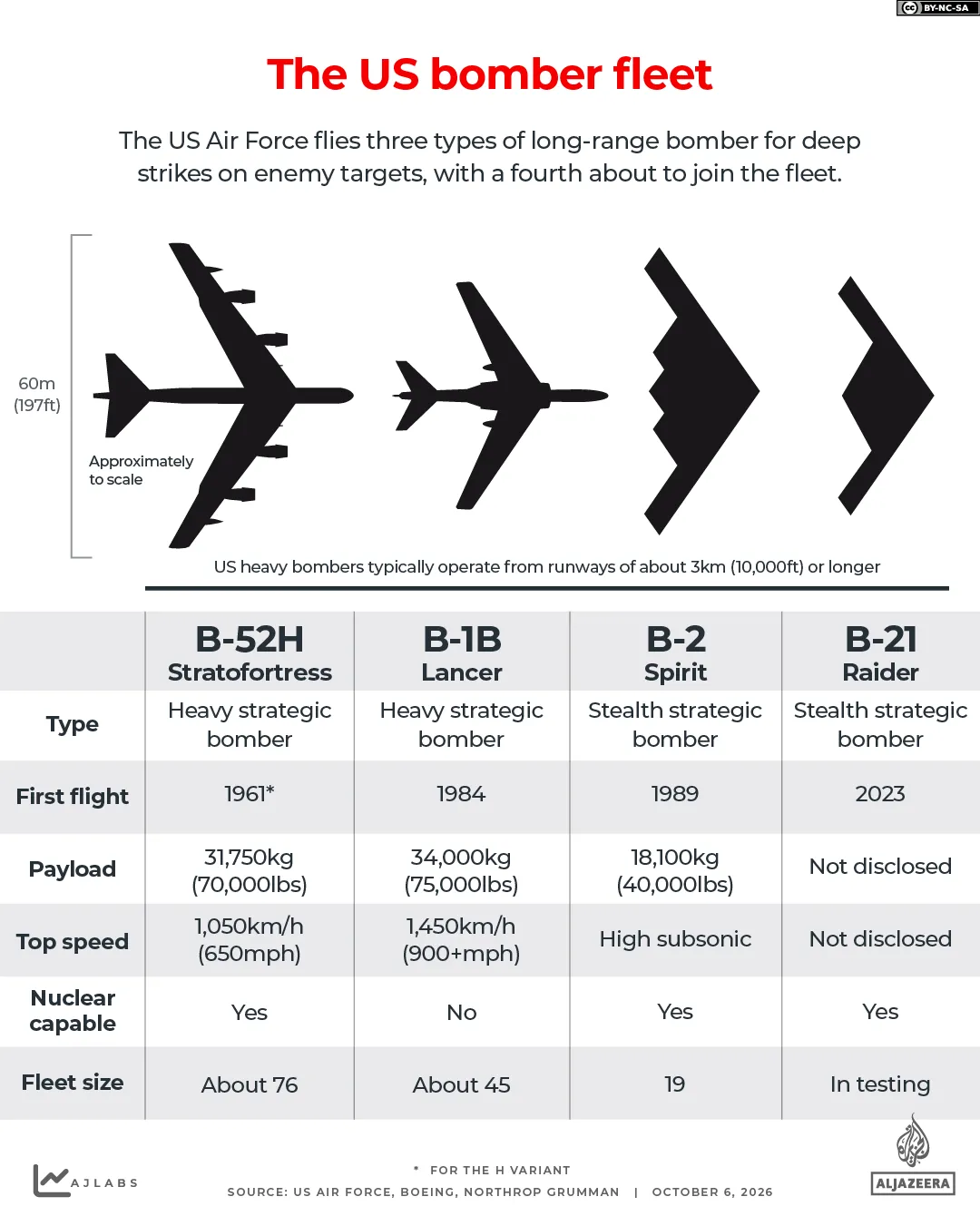
The US Air Force flies three types of bombers, with a fourth on the way.
The B-52 Stratofortress is the oldest. The B-52H model currently in service was built in the early 1960s. With a wingspan of 56 metres (185 feet), it is the largest US bomber and can carry about 31 tonnes of weapons, including nuclear bombs and cruise missiles.
A B-52 Stratofortress takes off from RAF Fairford on March 19, 2026 [Leon Neal/Getty Images]
The B-1B Lancer, which entered service in the mid-1980s, is the fastest of the three. It can reach 1.2 times the speed of sound and has a swing-wing that sweeps back for high-speed flight. It carries the largest conventional payload, about 34 tonnes, but no longer carries nuclear weapons. These were the aircraft that left Fairford.
The B-2 Spirit is a flying-wing stealth bomber designed to slip past air defences. Only 20 were built, of which 19 remain in service. It can carry both nuclear and conventional weapons, including the 13,600kg (30,000lb) “bunker buster” bomb used in US strikes on Iran’s nuclear sites in June 2025.
The B-21 Raider, a smaller stealth bomber, is still in flight testing, and it remains on track for delivery in 2027. Over the next decade and a half, the air force plans to replace the B-1B and B-2, leaving a future fleet of B-21s and upgraded B-52s.
The B-21 Raider, a new high-tech stealth bomber developed for the US Air Force, is seen in an undated photograph in Palmdale, California, US, released on December 2, 2022 [Handout/US Air Force via Reuters]
Where do these bombers fly from?
All US bombers are permanently based in the US, at five main airbases:
B-52H: Barksdale Air Force Base in Louisiana and Minot Air Force Base in North Dakota
B-1B: Dyess Air Force Base in Texas and Ellsworth Air Force Base in South Dakota
B-2: Whiteman Air Force Base in Missouri
B-21: Due to arrive at Ellsworth in South Dakota in 2027
All of these bases have long, wide runways, typically exceeding 10,000 feet (3,048 metres).
That makes bomber runways about as long as those at a big international airport. What limits where bombers can operate is not tarmac but security, weapons storage and support.
For missions abroad, the US rotates bombers through a handful of forward bases. Other important overseas operating locations include Andersen Air Force Base in Guam and Diego Garcia in the Indian Ocean.
Beyond these, the air force sends small groups of bombers to allied airbases for a few weeks at a time, in what it calls Bomber Task Force deployments. Recent rotations have included B-52s at Moron in Spain, B-1Bs at Orland in Norway and Misawa in Japan, and B-52s at Tindal in northern Australia, which arrived in September.
The bombers can also go on a strike mission from the US with the help of aerial refuelling. Bomber missions during the US-Israel war on Iran lasted more than 30 hours there and back. Each group of three bombers needed six to nine tanker aircraft to refuel them along the way.
This image released by the US Navy shows an aerial view of Diego Garcia [File: US Navy via AP]
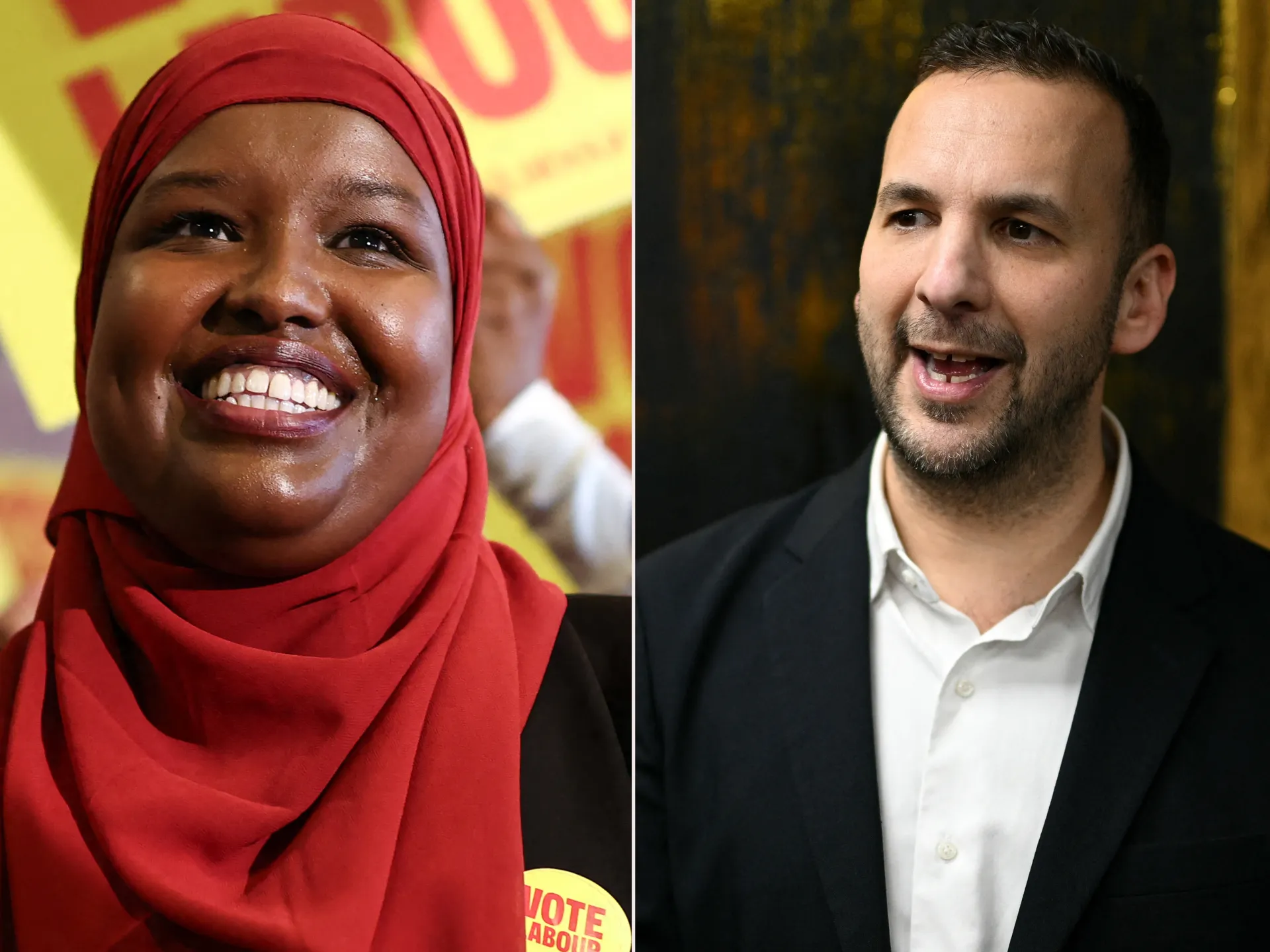
London, United Kingdom– At a meeting organised by a Muslim group in London ahead of a closely watched by-election, candidates from the Green and Liberal Democrat parties made their cases to residents beside empty seats. Their Labour and Conservative peers did not turn up.
Labour candidate Sagal Abdi Wali, a Somali-Muslim woman, told The Guardian she did not attend because she had a prior obligation and the invite had come too late. But the organiser, the Camden Muslim Network, pushed back, saying that she was invited earlier.
Recommended Stories
list of 3 itemsend of list
Fifteen candidates are in the race for former Prime Minister Keir Starmer’s old seat, including Green Party leader, Zack Polanski, who hopes to become a member of parliament.
Since the seat was created in Holborn and St Pancras in 1983, the Labour Party has held it. Starmer was first elected in 2015 and held it until his resignation, which triggered the by-election.
At the meeting, the conversation ranged from local issues such as housing to Israel and Palestine.
Lib Dem candidate Patrick Stillman said his party had long called for Palestinian statehood but would not support a full boycott.
But Polanski had a different opinion.
“I think the Labour government’s position is deeply cynical to apologise over Gaza, to recognise that mistakes have been made but to continue to sell arms to Israel, a country that’s committing a genocide,” he said to applause, adding that his party, which recently voted to describe Zionism as racism, supports a full boycott.
‘Vote Palestine’
In leaflets sent to constituency residents, the Green Party focused on Abdi-Wali’s time as a Labour councillor and, more recently, as leader of Camden council – a role she secured in May.
One reads: “Bring change, Replace Labour, Vote Green”. On its reverse: “Every single Camden Labour councillor refused to sign the Palestine solidarity pledge or support pension fund divestment. Only Greens continue to stand firm on Palestine.”
Last month, Abdi-Wali spoke to the Camden New Journal, a local newspaper, about Gaza and the Green Party’s leaflets.
It was “obviously inaccurate” to say the Labour council did not feel strongly about the issue, she told the paper. “I want to focus on making sure that we’re able to put the message of what [Foreign Secretary] Ed Miliband is now doing with the government and on Palestine and Israel and Gaza and the West Bank.”
In January, Camden Friends of Palestine (CFOP), a local group that formed in response to Israel’s genocidal war on Gaza, presented a petition to the local council with 4,000 signatures calling for the council to divest its pension fund from companies involved in Israel’s actions in the occupied Palestinian territories.
Abdi-Wali, then a Labour councillor, did not support the motion. Rather than committing to divestment, most councillors voted to refer the question to the pension board for review.
“My impression of her and her politics is that she’s just really incredibly silent on everything, if there isn’t a career motive for her, and that’s kind of disappointing,” said 38-year-old Shadin, a resident and CFOP organiser, who plans to vote for Polanski.
“Watching a livestreamed genocide has made a lot of people that I know … disengage from mainstream politics or parliamentary politics”.
Like many London constituencies, a key issue is housing.
According to a “2026 state of the borough” report by Camden council, 8,380 households were on the waiting list for social housing at the end of March 2025, “an increase of 9.5 percent on the year before.”
On Friday, in the constituency’s more affluent area of Primrose Hill, one resident said they would vote for Labour in the upcoming election, while another believed that regardless of who wins, life will not change.
In Camden, another resident told Al Jazeera that while they live in the area, they were not aware of the election, as Labour canvassers buzzed to gain entry into a nearby estate in the background.
As both parties make their final efforts to secure victory, recent polls predict a close race.
In the 2024 general election, Starmer won the seat with 49 percent. Andrew Feinstein, a pro-Palestine independent candidate came second, with 19 percent. The British gambling firm Ladbrokes and Stats for Lefties, which examines polling, both predict Labour will win.
The first imported case of Ebola has been recorded in Kenya. The health minister said a Kenyan citizen who had been living in the Democratic Republic of the Congo, arrived in Nairobi on Saturday and died from the disease.
Seoul has urged the North to remove any other mines planted on the southern side of the military demarcation line.
Published On 6 Oct 20266 Oct 2026
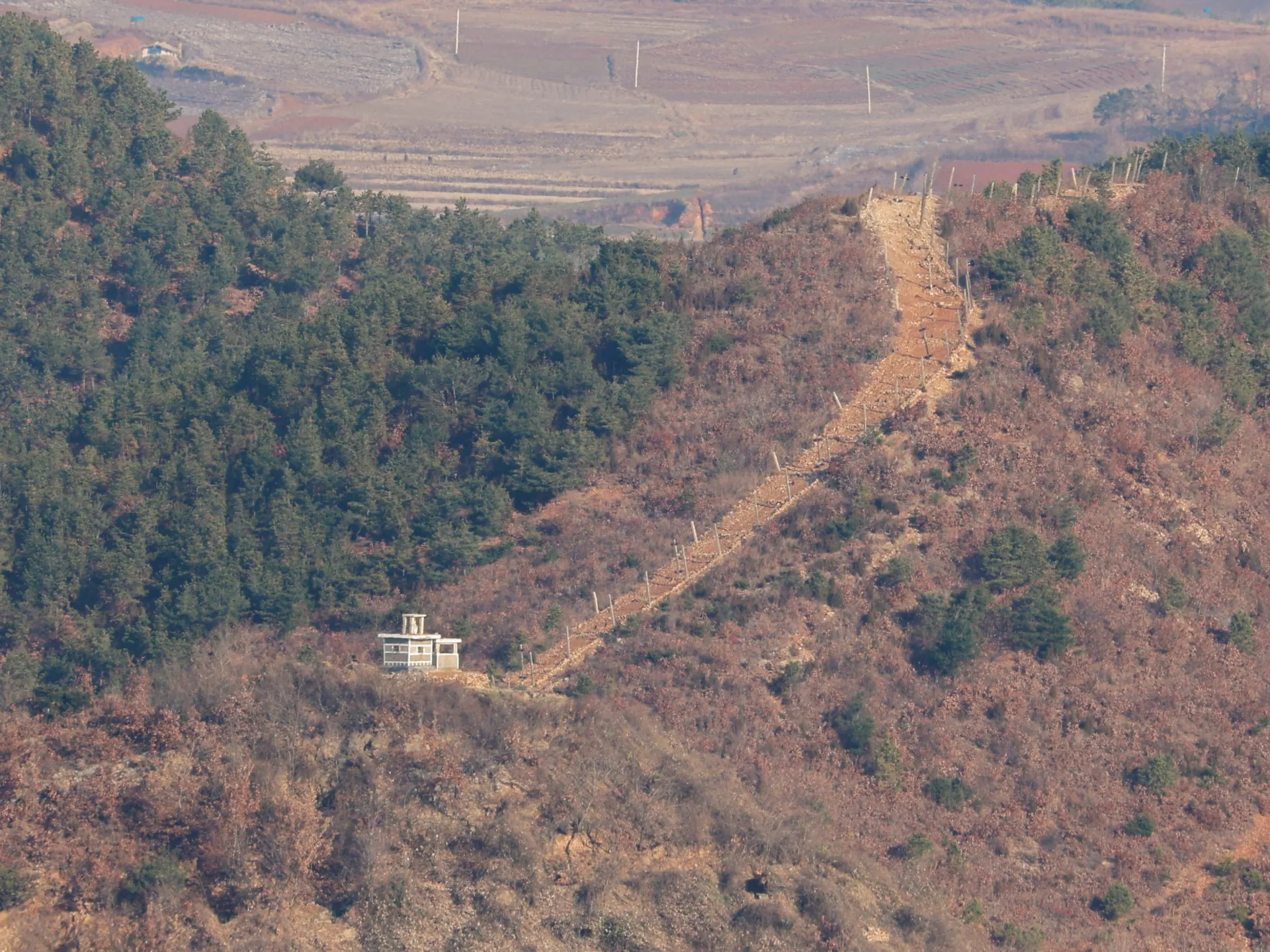
South Korea is weighing measures to force an apology from North Korea over a recent landmine blast that wounded three soldiers in the Demilitarized Zone (DMZ) between the two countries, a Defence Ministry spokesperson has said.
A joint South Korean-United Nations investigation concluded on Monday that two landmines that exploded last month in the DMZ were planted by North Korean forces about a year ago, prompting Seoul to demand an official apology.
Recommended Stories
list of 3 itemsend of list
“We are not ruling out any options or prejudging anything when it comes to additional measures,” Defence Ministry spokeswoman Chung Bin-na told reporters on Tuesday when asked if steps were being planned to force an apology from Pyongyang.
Chung did not offer specifics about what actions might be employed.
Seoul has also called on nuclear-armed North Korea to remove any other mines planted on the southern side of the military demarcation line (MDL) that runs through the DMZ, the heavily fortified frontier that has divided the Korean Peninsula since the 1953 Armistice Agreement.
Pyongyang has denied responsibility for the September 21 blast, with Kim Yo Jong, the powerful sister of North Korea’s leader, slamming the call for an apology as “despicable”.
Chung said Seoul is calling on Pyongyang to come to the table to discuss a misalignment of the MDL. Differing views of the border line are one factor contributing to tension in the area, she said.
The comments come a day after South Korea’s military carried out a mine-clearing operation south of the MDL. It pledged to continue with clearing operations in the area if Pyongyang fails to remove the remaining explosives. The United States-led UN Command (UNC) confirmed the mine placement violated the 1953 agreement.
Defence Minister Kang Shin-chul told the Yonhap news agency on Tuesday that the military’s “decisive” response was “unprecedented in history”.
“All responsibility lies with North Korea,” Kang told reporters, adding that armed forces would “respond decisively” to any actions threatening national security.
The escalation comes as Pyongyang rejected diplomatic overtures from Seoul. Unification Minister Chung Dong-young proposed on October 2 that both sides jointly resurvey the MDL, noting that only about 200 of 1,292 original boundary markers remain intact and that Seoul and the UNC differ on roughly 60 percent of border coordinates.
Kim Yo Jong rejected the proposal as a “wild dream”, declaring Pyongyang would define its sovereign boundary “by the use of force, not by means of negotiation”.
The 37-year-old is the longest-serving cricket captain, among both men and women, to have captained in more than 150 T20I games.
Published On 6 Oct 20266 Oct 2026
India’s long-serving captain of the women’s cricket team, Harmanpreet Kaur, has stepped down from the role across all formats, bringing down the curtain on a successful stint as she led the South Asian team to their first ICC Women’s World Cup title at home in 2025.
Kaur announced her decision in a social media post on Tuesday, two weeks after leading India to a successful defence of their gold medal at the Asian Games.
Recommended Stories
list of 4 itemsend of list
“Today, I step down as captain of the Indian Women’s Cricket Team across all formats,” she wrote in an Instagram post.
“This is not an easy decision. It carries years of memories, emotions, sacrifices, and moments that will stay with me for the rest of my life.”
The 37-year-old was the Twenty20 captain for more than a decade after assuming the role in 2016, followed by ODI and Test captaincy in 2022.
Kaur, who made her T20I and ODI debuts for India in 2009, has had an illustrious career as skipper.
Indian media reports said Kaur’s decision came a day after she met Devajit Saikia, secretary of the Board of Control for Cricket in India (BCCI), to discuss the future of the women’s team.
Opening batter Smriti Mandhana, who has been Kaur’s deputy since 2022, is the favourite to take over the captain’s role.
Most recently, she led India to title defence at the Asian Games, thrashing Sri Lanka, just after lifting the Women’s Asia Cup trophy earlier in September.
The top-order batter helped India reach the semifinals of the 2018 and 2023 Women’s T20 World Cups, as well as finish runners-up in the 2020 edition.
Kaur has captained India in five Tests, 51 ODIs and 155 T20Is, and is also the first cricketer — male or female — to captain her side in international cricket in more than 150 T20I games.
“I leave the captaincy today with a heart full of emotions, but also with peace … because I genuinely believe my team is in a good place,” she said in her Instagram post. “I feel I have done my duty.
“Captaincy may end today, but my love for Indian cricket never will.
“Now, I’m ready to play for the love of the game again. Captaincy ends. The journey continues.”
The drama surrounding Cristiano Ronaldo’s international future took another turn after Portugal head coach Jorge Jesus left the door open for the 41-year-old superstar’s return following his abrupt departure from the national team’s training camp.
The sentiment is shared by the Portuguese Football Federation president Pedro Proenca, who believes the episode is a mere misunderstanding that could be resolved internally.
Recommended Stories
list of 3 itemsend of list
But how did the apparent rift start, and will Ronaldo ever play again for Portugal?
What happened between Ronaldo and Jesus?
Ronaldo left the Portugal squad late on Wednesday, shortly after the head coach’s news conference, where Jesus confirmed that the five-time Ballon d’Or winner would be left out of his starting lineup for the match against Denmark, marking a second consecutive Nations League game absence.
Ronaldo’s decision to walk out came as a shock, as he had been due to train with his teammates at the Parken Stadium in Copenhagen.
Portugal’s leading scorer had already spent the entirety of the 2-1 Nations League win away to Norway on September 27 on the bench, having captained the side in the 1-0 home victory over Wales three days before.
The game in Oslo was the first time since November 2024 that Ronaldo had not featured for Portugal despite not being injured or suspended.
What has Ronaldo said?
Ronaldo appeared to indicate that the reasons behind Jesus’s decision to bench him ran deeper and hinted at a departure from the national team he has graced for more than two decades.
“In due course, I will tell the truth to all the Portuguese people about my reasons for leaving the national team, to which I have always been dedicated,” Ronaldo said in a cryptic Instagram post, announcing his sudden exit from the camp.
Spanish sports daily Marca said Jesus and Proenca followed Ronaldo to Copenhagen airport in an attempt to persuade him to stay with the squad, before the player boarded his private jet.
There were reports that Portuguese Prime Minister Luis Montenegro had even discussed the issue of Ronaldo’s involvement with the coach on Wednesday.
Jesus insisted that there was no rift between them, although the 72-year-old, who was appointed in July, acknowledged that his captain was disappointed to remain on the bench against Norway.
How did Portugal play without Ronaldo?
Despite his absence, Nations League title holders Portugal won, defeating Denmark 4-2 in Copenhagen and Norway 2-1 in Porto. They also became the first team to qualify for the quarterfinals, ensuring a top-two finish in Group A4.
Forward Goncalo Ramos stepped up in Ronaldo’s absence, scoring three goals to be the team’s joint top scorer along with Joao Felix, while the AC Milan player also bagged an assist.
What did Portugal’s coach say about Ronaldo?
On Sunday, coach Jesus said Ronaldo could return to the national team if he chooses to.
“If he wants to, he’ll return to the national team. We can talk before the next call-up, but Cris is the one who’s going to decide,” said Jesus, who also coached Ronaldo at Saudi Arabian club Al-Nassr.
“He’s the one who should decide how he wants to end his time with the national team. In my first call-up, I said, ‘I need you, I need you to be close to me, playing or not playing, I need you’. And now I’m saying the same thing.”
Jesus expects the forward to be available for the next international window if he wants to return.
What have the Portugal players said about Ronaldo?
Midfielder Bruno Fernandes said on Saturday he had spoken to Ronaldo and dismissed suggestions of a rift within Portugal’s squad.
“I had a chat with him and what I said to him is what I’ll repeat here: the most important thing is that, whatever happens, Cristiano Ronaldo will never cease to be the greatest symbol of our national team, of our football and of the country,” Fernandes told a news conference.
“For what he has achieved not only in Portugal, but all over the world. He has a place reserved not only amongst the all-time greats, but also in the hearts of all Portuguese people.”
“The most important thing is that we stop stirring up trouble; there are no divisions within the national team. It is one team and will remain so, despite any noise that may come from outside.”
Fernandes called for unity after a tumultuous few days in which Portugal fans’ opinions have been split over Ronaldo’s decision.
“We are outside of this controversy, but what I ask is that the country does not divide itself, does not make choices, that it respects all sides, but, at the same time, Cris is and will be the biggest icon of our national team. He deserves everyone’s respect, regardless of who likes him more or [who likes him] less,” Fernandes added.
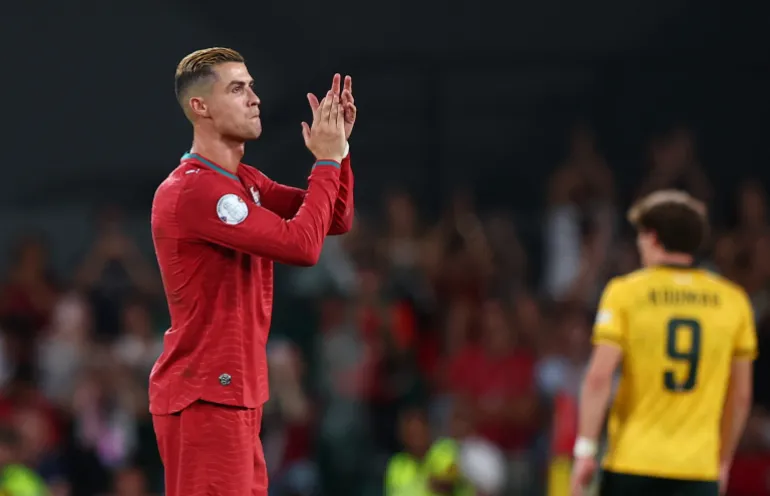
Portugal’s Cristiano Ronaldo applauds fans as he is substituted against Wales [File: Pedro Nunes/Reuters]
When was Ronaldo’s last match for Portugal and how did he perform?
Ronaldo featured just once for Portugal during this year’s Nations League, playing 67 minutes in their 1-0 home win over Wales.
It was a frustrating night for the Al-Nassr forward, who misfired several times. He found the side netting once and shinned an inviting volley high over from close range.
Around the hour mark, Ronaldo slid the ball into the Wales net but, to his evident disbelief, was ruled offside.
He was still shaking his head when Jesus substituted him seven minutes later.
Will he play for Portugal again?
The jury is still out.
Ronaldo, who made his Portugal debut in 2003 at the age of 18, has said this will “probably” be his final year in football. The forward has been a fixture of the national team for more than two decades and has played at six World Cups.
Former Real Madrid and Manchester United attacker Ronaldo is Portugal’s record scorer and most-capped player, with 146 goals in 234 international appearances.
He reached the World Cup semifinals in 2006 and captained his country to glory at Euro 2016. Ronaldo and Portugal were eliminated by eventual winners Spain in the last 16 of this year’s World Cup.
When is Portugal’s next match?
Portugal have completed their quota of four Nations League fixtures in this extended international window.
Their upcoming matches are in the next window: a home game with Norway on November 14 and an away match against Wales three days later.
Those matches will wrap up Portugal’s league phase in the Nations League, which they have won twice.