TOP NEWS

From breaking news to significant developments in politics, business, technology, entertainment, and more, we deliver the stories that shape our global landscape.

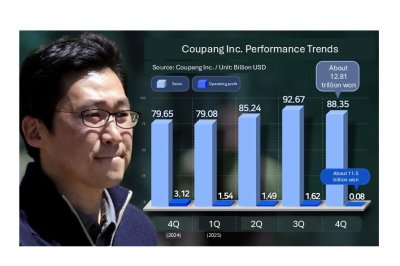
Investigation of Coupang must balance enforcement with efficiency

Members of civic and labor groups shout slogans during a rally in front of the headquarters of e-commerce giant Coupang Inc. in Seoul, South Korea, 29 December 2025, to call for the stern punishment of the company’s founder Kim Bom-suk over a massive personal data breach. The rally came a day after Kim issued his first public apology since the incident, which affected nearly two-thirds of South Korea’s population. File. Photo by YONHAP / EPA

Jan. 27 (Asia Today) — A recent wave of government investigations centered on one company recalls the Korean proverb about burning down a thatched house to kill a flea. The question is whether an aggressive push to solve the problem is fully accounting for the costs and fallout created along the way.

A major personal data breach is not something to dismiss. If there was managerial negligence or a structural failure, regulators should identify it and assign clear responsibility. But the pattern of probes now unfolding around Coupang raises a broader concern about whether the administrative response is proportionate and efficient, beyond the stated goal of accountability.

More than 10 government bodies have moved at the same time, including the Fair Trade Commission, the Ministry of Science and ICT, the Personal Information Protection Commission, police, the Financial Supervisory Service, the National Tax Service and customs authorities. Hundreds of investigators have reportedly been assigned, with weeks of on-site inspections. Even the Fair Trade Commission’s probe is said to be taking longer than expected. In effect, a “mini Sejong City” of regulators has been assembled for a single corporate case.

The problem is not the intensity of enforcement but its cost. Administrative resources are finite. Public officials’ time and expertise, along with the fiscal spending that follows large deployments, are costs borne by society. When hundreds of personnel spend weeks on one case, oversight in other areas inevitably slows. That is not merely a burden for one company but a broader issue of how government resources are allocated.

The burden on the private sector is also significant. When executives and operational staff are tied up for long periods responding to multiple probes, core operations suffer. Reports say headquarters functions have been disrupted and field operations affected. If the ripple effects of correcting corporate wrongdoing spread to jobs, suppliers and small businesses, the cost ultimately lands on society.

The issue also risks escalating beyond a domestic dispute. Some foreign investors have reportedly raised complaints with the U.S. Trade Representative about the Korean government’s response and have mentioned the possibility of an investor-state dispute settlement claim. The government says its actions are non-discriminatory but the risk of dampening investor sentiment in global markets cannot be dismissed.

This is not an argument to halt investigations. It is an argument about whether the scope, intensity and scale of resources committed are appropriate. If the core concerns are a data breach and possible fair-trade violations, a more focused, clearly led investigation by the responsible authorities may have been sufficient. Overlapping probes and inter-agency competition can blur accountability and reduce administrative efficiency.

What is needed is not a high-profile crackdown for its own sake but an investigative system that balances fairness with efficiency.

Catching bedbugs is necessary. But to avoid burning down the whole thatched cottage, officials must first decide where to apply pressure and how much. Corporate wrongdoing should be corrected, but the administrative and economic costs consumed in the process also deserve scrutiny.

— Reported by Asia Today; translated by UPI

© Asia Today. Unauthorized reproduction or redistribution prohibited.

Original Korean report: https://www.asiatoday.co.kr/kn/view.php?key=20260127010012533

Source link

Minnesota Representative Ilhan Omar attacked during town hall meeting | Politics News

BREAKING,

Omar was sprayed with an unknown substance during the attack by a man, who was then tackled to the ground.

Minnesota Representative Ilhan Omar has been attacked by a man while hosting a town hall meeting in Minneapolis.

Omar was sprayed with an unknown substance by the man before he was tackled to the ground on Tuesday.

Recommended Stories

list of 4 itemsend of list

The Reuters news agency said that Omar was not injured in the attack, and authorities have not said what substance was sprayed or whether charges have been filed against the assailant.

The audience cheered as the man was pinned down and his arms were tied behind his back. In a video clip of the incident, someone in the crowd can be heard saying, “Oh my god, he sprayed something on her”, the Associated Press news agency reported.

Omar continued the town hall after the man was ushered out of the room.

Just before the attack, she had called for the abolishment of the US Immigration and Customs Enforcement (ICE) agency and for Department of Homeland Security Secretary Kristi Noem to resign.

“ICE cannot be reformed,” Omar said.

US Representative Ilhan Omar (D-MN) (R) reacts after being sprayed with an unknown substance by a man as she hosted a town hall in Minneapolis, Minnesota, on January 27, 2026. (Photo by Octavio JONES / AFP)
Ilhan Omar, right, reacts after being sprayed with an unknown substance by a man as she hosted a town hall in Minneapolis, Minnesota, on January 27, 2026 [Octavio Jones/AFP]

Minneapolis police did not immediately respond to requests for comment on the incident and whether anyone was arrested.

The White House did not immediately respond to a message from the AP seeking comment.

This is a breaking news story. More to follow soon…

Source link

Benfica’s Jose to kill Real with love, says Madrid boss ‘like his child’ | Football News

Fiery-tempered and fierce-tongued Jose Mourinho softens his tone as former club Real Madrid face crunch game in Benfica.

Benfica coach Jose Mourinho said his Real Madrid counterpart, Alvaro Arbeloa, was like a child to him, in the run-up to their Champions League meeting in the final round of league phase matches.

The veteran Portuguese manager, known for his fiery temper and fierce tongue, coached Arbeloa at Madrid during his time at the helm of Los Blancos between 2010-2013, and had a strong relationship with the former defender in a dressing room that was splintering.

Recommended Stories

list of 4 itemsend of list

After a comment from Mourinho last week about being “surprised” when inexperienced managers lead big European clubs was viewed as a dig at new Madrid coach Arbeloa, he said he would never try to make life hard for his former charge.

Former Inter Milan coach Mourinho said in Italy that his words were also being taken as criticism of the appointment of Cristian Chivu at the Serie A side last year.

“There is one problem – both Chivu and Arbeloa are my children, they are not just ex-players of mine, but they are special,” Mourinho told a news conference on Tuesday.

“Speaking about Alvaro, I would say that he is one of the players – from a human point of view, from a personal point of view, and personal empathy – he is one of my favourites of them all.

“Obviously, he is not the best player who has played for Real Madrid, but he is certainly one of the best men who has played for me at Real Madrid.”

Mourinho said he was surprised when he himself was offered the chance to lead Benfica at the beginning of his coaching career in 2000, so his words could not be taken as an insult.

“The last thing I would do would be to put pressure on him,” explained the 63-year-old. “I want everything to go well for him, and for him to have a fantastic career as a coach.”

Mourinho said he had not spoken to Arbeloa since the 43-year-old replaced Xabi Alonso at the helm, but that there was no need to.

“My telephone number is very complicated, because there’s only the club’s number, and after that, only my family has it, and then my other phone is always changing, changing, changing,” explained Mourinho.

“People lose my contact, and I lose theirs too, and with Alvaro, it’s not necessary to have a call to say ‘good luck’, he knows it.

“In the same way that I [want Real Madrid to win games], Alvaro wants to beat Benfica, but then after that, he hopes Benfica always win, that’s for sure — no call is necessary.”

Mourinho admitted he could not speak for Arbeloa’s quality as a coach yet because he had not watched Madrid’s reserves or youth teams play.

“I cannot analyse him as a coach because I do not know him,” said Mourinho.

“I’ve only seen results, not followed with my own eyes the trajectory of the youngsters at Madrid.

“I have no advice to give him. The only thing that is important for me is that he is happy, that he likes it, because coaching these days is a very difficult mission.”

Madrid will seal their spot in the last 16 with a victory, while Benfica need to win and hope other results go their way to reach the playoff round.

Source link

Rwanda sues UK over scrapped asylum seeker deal | Migration News

Rwanda began the inter-state arbitration proceedings under the asylum partnership agreement in November.

Rwanda has taken legal action against the United Kingdom’s refusal to disburse payments under a now-scrapped, controversial agreement for Kigali to receive deported asylum seekers, according to a Rwandan official and UK media reports.

Rwanda launched arbitral proceedings against the UK through the Hague-based Permanent Court of Arbitration on Tuesday. It is seeking 50 million pounds ($68.8m) in compensation after the UK failed to formally terminate the controversial agreement about two years ago, The Telegraph newspaper reported.

Recommended Stories

list of 3 itemsend of list

“Rwanda regrets that it has been necessary to pursue these claims in arbitration, but faced with the United Kingdom’s intransigence on these issues, it has been left with no other choice,” Michael Butera, chief technical adviser to the minister of justice, told the AFP news agency.

Butera added that Kigali had sought diplomatic engagement before resorting to legal action.

The programme to remove to East Africa some people who had arrived in the UK via small boats was agreed upon in a treaty between London and Kilgali. It was intended as a deterrent for those wanting to come to the UK in the same manner.

However, just four volunteers ultimately arrived in Rwanda.

Prime Minister Keir Starmer scrapped the deal – brokered by former Prime Minister Boris Johnson’s Conservative government in 2022 – when he took office in July 2024, declaring it “dead and buried”.

London had already paid Kigali 240 million pounds ($330.9m) before the agreement was abandoned, with a further 50 million pounds ($68.9m) due in April.

Starmer’s official spokesman told reporters on Tuesday, “We will robustly defend our position to protect British taxpayers.”

Last year, the UK suspended most financial aid to Rwanda for backing the M23 group’s offensive in the Democratic Republic of the Congo.

Kigali labelled the move “punitive”.

The agreement faced a string of legal challenges, culminating in a November 2023 ruling by the UK Supreme Court that it was illegal under international law.

Rwanda began the interstate arbitration proceedings under the asylum partnership agreement in November, according to the Permanent Court of Arbitration’s website, which lists the case status as pending.

Immigration has been an increasingly central political issue since the UK left the European Union in 2020, largely on a promise to “take back control” of the country’s borders.

Some 37,000 asylum seekers, including people fleeing Syria and Afghanistan, crossed the English Channel in 2024, and more than 40,000 in 2025 – the highest number since 2022, when nearly 46,000 people crossed. Dozens have died attempting the journey.

The UK government says it has removed 50,000 undocumented people living in the country.

In September, the UK and France implemented a “one-in-one-out” migrant deal aimed at returning asylum seekers to France while accepting those with UK family ties. However, the policy has faced criticism regarding its effectiveness. NGOs and charity groups have also described the scheme as a “cruel” move designed to restrict asylum rights.

Source link

Trump says US will end support for Iraq if al-Maliki reinstated as PM | Nouri al-Maliki News

Al-Maliki has been nominated by the largest Shia bloc in parliament as its candidate for PM.

President Donald Trump has threatened that the United States will end support for Iraq if Nouri al-Maliki, a former prime minister with ties to the US’s longstanding foe Iran, is reinstated to the post.

Trump, in his latest intervention in another country’s politics, said on Tuesday that Iraq would be making a “very bad choice” with al-Maliki, who just days previously was nominated by the Coordination Framework, the largest Shia bloc in parliament, as its candidate.

Recommended Stories

list of 3 itemsend of list

“Last time Maliki was in power, the Country descended into poverty and total chaos. That should not be allowed to happen again,” Trump wrote on his Truth Social platform.

“Because of his insane policies and ideologies, if elected, the United States of America will no longer help Iraq,” he said.

“If we are not there to help, Iraq has ZERO chance of Success, Prosperity, or Freedom. MAKE IRAQ GREAT AGAIN!”

Trump’s comments are the starkest example yet of the Republican president’s campaign to curb Iran-linked groups’ influence in Iraq, which has long walked a tightrope between its two closest allies, Washington and Tehran.

In a letter, US representatives said that while the selection of the prime minister is an Iraqi decision, “the United States will make its own sovereign decisions regarding the next government in line with American interests”.

As part of Trump’s pressure campaign, Washington has also threatened senior Iraqi politicians with sanctions on the country should armed groups backed by Iran be included in the next government, the Reuters news agency reported last week.

Al-Maliki, 75, is a senior figure in the Shia Islamist Dawa Party. His tenure as prime minister from 2006 to 2014 was a period marked by a power struggle with Sunni and Kurdish rivals and growing tensions with the US.

He stepped down after ISIL (ISIS) seized large parts of the country in 2014, but has remained an influential political player, leading the State of Law coalition and maintaining close ties with Iran-backed factions.

The US wields key leverage over Iraq, as the country’s oil export revenue is largely held at the Federal Reserve Bank in New York in an arrangement reached after the 2003 US invasion that toppled Iraqi leader Saddam Hussein.

Source link

S.C. measles outbreak is the nation’s largest in decades

South Carolina on Tuesday has reported the nation’s largest measles outbreak in decades, which mostly is occurring among unvaccinated children and youth. File Photo by Annie Rice/EPA-EFE

Jan. 27 (UPI) — A rapidly growing measles outbreak in South Carolina is the nation’s worst since measles was declared eradicated in 2000, with 789 reported cases.

The South Carolina Department of Public Health reported 89 new measles cases since Friday, raising the state’s total to 789, the most in one state in decades, WOLO-TV reported.

The state’s Public Health Department reported 756 cases in Spartanburg County in northwestern South Carolina, followed by 28 in Greenville County, which is adjacent to and west of Spartanburg.

Fewer than five cases were reported in Anderson County, which is directly southwest of Greenville County, and Cherokee County, which is directly east of Spartanburg.

The outbreak began in October, and most of the state’s measles cases — 692 — were among those who are not vaccinated against measles, mumps and rubella, and another 63 have an unknown vaccination status, for a total of 755 cases and 96% of those reported.

Another 20 cases occurred among those who are fully vaccinated, and 14 are among those who are partially vaccinated. At least 18 have been hospitalized, and no deaths have been reported.

When broken down by age, young children between ages 5 and 11 accounted for 345 cases, followed by 201 among those ages 0 to 4.

Another 149 cases were reported among youth between ages 12 and 17, followed by 26 among those between ages 18 and 29, and 25 cases among those between ages 30 and 49.

Five cases have been reported among people ages 50 and over, while 28 cases are among those whose ages are unknown.

The U.S. Department of Health and Human Services is allocating $1.4 million in aid to help South Carolina officials counteract the outbreak.

The U.S. Centers for Disease Control and Prevention also is working with state officials to identify transmission trends and helping to coordinate the state’s response.

The 789 cases reported as of Tuesday in South Carolina exceed the 762 reported in Texas a year ago during a measles outbreak that ended in August.

The outbreaks in those states and others might result in the United States being removed from the Pan American Health Organization’s list of nations in which measles has been eliminated.

Source link

Minnesota Gov. Tim Walz meets with border czar Tom Homan

Jan. 27 (UPI) — Minnesota Gov. Tim Walz met with President Donald Trump‘s border czar Tuesday to discuss the situation on the ground as immigration enforcement personnel operate in the state.

“Governor Walz met with Tom Homan this morning and reiterated Minnesota’s priorities: impartial investigations into the Minneapolis shootings involving federal agents, a swift, significant reduction in the number of federal forces in Minnesota, and an end to the campaign of retribution against Minnesota,” the governor’s office said in a statement to the media.

The two agreed to continue talks on the matter.

“The Governor and Homan agreed on the need for an ongoing dialogue and will continue working toward those goals, which the President also agreed to yesterday. The Governor tasked the Minnesota Department of Public Safety as the primary liaison to Homan to ensure these goals are met.”

Homan was sent to the state by Trump after he recalled Immigrations and Customs Enforcement commander Greg Bovino. Trump said that Homan will manage ICE operations in the state and will report directly to him.

“He has not been involved in that area but knows and likes many of the people there,” Trump said of Homan on Monday. “Tom is tough but fair and will report directly to me.”

Since ICE began Operation Metro Surge in Minneapolis in December, two people in the state were killed by federal immigration agents, causing a swell of protests throughout the state. Renee Nicole Good and Alex Pretti were both shot by agents. Good was driving away, and Pretty was filming an agent with his cell phone.

Walz said he had a “productive call” with Trump on Monday.

“The President agreed to look into reducing the number of federal agents in Minnesota and to talk to DHS [Department of Homeland Security] about ensuring the Minnesota Bureau of Criminal Apprehension is able to conduct an independent investigation, as would ordinarily be the case,” Walz posted on X.

Thousands of protesters march in sub-zero temperatures during “ICE Out” day to protest the federal government’s immigration enforcement surge in Minneapolis, Minnesota on Friday. Photo by Craig Lassig/UPI | License Photo

Source link

Will Palestinians ever find their loved ones in Gaza’s rubble? | Israel-Palestine conflict

The last Israeli captive’s body is found in Gaza – where many thousands of Palestinians lie buried under rubble.

Israel – as part of its long-standing policy – has not returned the remains of many hundreds of Palestinians.

Why – and what’s the impact?

Presenter:  James Bays

Guests: 

Amjad Sharwa – Director of the Palestinian Non-Governmental Organizations Network in Gaza

Yara Hawari – Co-Director at Al-Shabaka: the Palestinian Policy Network

Issam Aruri – Commissioner-General of the Independent Commission for Human Rights in Palestine

Source link

Rodríguez: Venezuela ‘does not take orders from any external actor’

“The people of Venezuela do not accept orders from any external actor. The people of Venezuela have a government and that government obeys the people,” interim President Delcy Rodriguez said Monday. Photo by Ronald Pena/EPA

Jan. 27 (UPI) — Venezuela’s interim president, Delcy Rodríguez, has reiterated comments made over the weekend that her country “does not take orders from any external actor,” saying the government answers only to the Venezuelan people.

Her remarks Monday followed recent statements by U.S. officials about Venezuela’s political and economic direction after the Jan. 3 U.S. military operation that captured former president Nicolás Maduro and his wife.

Rodríguez spoke during a public consultation on a partial reform of Venezuela’s Organic Hydrocarbons Law, according to local newspaper Últimas Noticias. She was responding to comments by U.S. Treasury Secretary Scott Bessent, who suggested Washington could influence decisions by the Venezuelan executive branch and the timing of possible elections.

“The U.S. Treasury secretary has made statements that are inappropriate and offensive, and I have to respond to them,” Rodríguez said. “The people of Venezuela do not accept orders from any external actor. The people of Venezuela have a government and that government obeys the people.”

Her comments came shortly after Bessent said leaders of Venezuela’s executive branch would follow orders from President Donald Trump‘s administration.

“We have left members of the [Venezuelan] government in their positions and they will take charge of administering the country,” he said in an interview with the YouTube channel Derecha Diario TV. Bessent also suggested that other leaders could be placed “under custody,” without naming names, “for the benefit of the Venezuelan people.”

Bessent added that “Everyone says, ‘What if Venezuelan leaders return to their old habits?’ I think when they see the videos of the president being expelled from Caracas and in a cell in New York, they will follow U.S. orders.”

On Sunday, Rodriguez delivered a similar message during a meeting with oil workers in the eastern state of Anzoátegui, where she openly criticized foreign interference in Venezuela’s internal affairs.

“Enough of Washington giving orders to politicians in Venezuela. Let Venezuelan politics resolve our differences and internal conflicts,” she said, according to footage broadcast by state television network Venezolana de Televisión.

In her latest remarks, Rodríguez said Venezuela does not rule out relations with the United States as long as they are based on mutual respect.

“We are not afraid of respectful relations with the United States, but they must respect international law, Venezuela’s dignity and its history,” she said.

At an event Monday with business leaders and officials from the energy sector, Rodríguez also outlined the government’s projections for the oil industry — the country’s main source of revenue.

She said the government expects a 55% increase in oil investment by 2026 as part of a strategy to revive crude production, according to financial outlet Ámbito Financiero.

Investment in the sector totaled nearly $900 million last year and is projected to reach $1.4 billion in 2026. The plan is supported by a legal reform that has already passed a first reading in parliament.

The initiative seeks to loosen regulatory conditions and expand participation by domestic and foreign private companies. A central pillar of the reform using productive participation contracts, enabled under the so-called Anti-Blockade Law, which the executive branch describes as a successful model.

Rodríguez said these contracts have helped attract capital and boost production despite international sanctions, adding that 29 such agreements are in place.

“We have to move from being the country with the largest reserves on the planet to being a giant producer,” she said, defending a framework that keeps state ownership of resources while incorporating new management models.

During the hydrocarbons law consultation, Chevron Venezuela President Mariano Vela highlighted the company’s long-standing presence in the country, noting that Chevron has been a key partner in Venezuela’s oil industry for more than 100 years.

He thanked Chevron’s Venezuelan workers, joint venture employees and state oil company PDVSA for their long-term commitment to building “an even brighter future for the Venezuelan people.”

“We are prepared to continue contributing our operational expertise with technological innovation, hard work and the goal of creating a more competitive oil and gas sector,” Vela said.

Source link

Mexico’s president confirms suspension of oil deliveries to Cuba

Mexican President Claudia Sheinbaum said Tuesday that oil shipments to Cuba have been suspended, reflecting a decision made by Petróleos Mexicanos. Photo by Jose Mendez/EPA

Jan. 27 (UPI) — Mexican President Claudia Sheinbaum said Tuesday that oil shipments to Cuba have been suspended, reflecting a decision made by Petróleos Mexicanos within the framework of its contractual relationship with the island.

During her morning news conference at the National Palace, Sheinbaum was asked about press reports indicating that Pemex had canceled a crude shipment bound for Cuba scheduled for January.

The president did not deny the suspension, but stressed that it is up to the state-owned company to decide when and how shipments are carried out.

“It is a sovereign decision, and it is made at the time deemed necessary,” she said when questioned about the published information.

Sheinbaum said decisions related to energy supplies to Cuba are part of Pemex’s operational and contractual assessments. She emphasized that Mexico’s policy toward the island is neither new nor exclusive to her administration.

She noted that previous governments maintained different types of energy ties with Cuba, even amid political disagreements.

“From the first blockade of Cuba, Mexico was the only country that voted against it, and since then it has maintained communication and different types of relations with the island,” she said.

The president also framed the bilateral relationship within a historical tradition of Mexican foreign policy, which has maintained ties with Cuba since the early years of the economic embargo imposed by the United States.

“Beyond positions toward whichever Cuban government is in power, the relationship is with the peoples, and that is a fundamental principle of Mexican foreign policy,” Sheinbaum said.

In that context, Sheinbaum said the economic blockade has generated supply problems on the island and that Mexico has maintained a policy of solidarity with the Cuban people over time.

She added that any future decision on resuming shipments will be communicated in a timely manner by the relevant authorities.

Asked whether Mexico could play an intermediary role between Cuba and the United States in the event of bilateral tensions, the president said such initiatives can only move forward if both parties request them, and reiterated that Mexico will continue to promote dialogue and the peaceful resolution of international differences.

Mexico consolidated its position in 2025 as Cuba’s main oil supplier, covering approximately 44% of the island’s crude imports and displacing Venezuela, with an average of more than 12,000 barrels per day.

With Venezuela’s exit as a key supplier following the capture of President Nicolás Maduro on Jan. 3 by U.S. military forces, Mexico assumed a central role in supplying the island’s energy needs.

As a result, in Cuba the decision by Mexico could have a significant impact on its already fragile energy situation, by reducing one of the external sources that had helped ease the island’s fuel deficit.

The measure could translate into increased blackouts, transportation restrictions and disruptions to key sectors such as industry and services, in a context marked by a shortage of foreign currency and difficulties accessing alternative suppliers on the international market due to the blockade that has affected the island for decades.

Source link

Minnesota judge orders head of ICE to appear in federal court

Jan. 27 (UPI) — Minnesota’s chief federal judge has summoned the acting director of U.S. Immigration and Customs Enforcement to appear in a Minneapolis court on Friday or be held in contempt.

U.S. District Judge Patrick Schiltz said in an order on Monday that the court has run out of patience with ICE head Todd Lyons after ICE has defied the court’s orders for weeks.

“The Court acknowledges that ordering the head of a federal agency to personally appear is an extraordinary step but the extent of ICE’s violation of court orders is likewise extraordinary and lesser measures have been tried and failed,” Schiltz wrote.

Schiltz’s order is in response to the case of a man who challenged his detention by ICE in Minnesota earlier this month. The federal court ordered that the man be given a bond hearing on Jan. 14 or be released within a week of that date.

As of Jan. 23, the man had not received his hearing and was still in detention. Schiltz said in his order that this is one of dozens of orders that ICE has defied.

“The practical consequence of respondents’ failure to comply has almost always been significant hardship to aliens (many of whom have lawfully lived and worked in the United States for years and done absolutely nothing wrong),” Schiltz wrote.

“The Court has been extremely patient with respondents, even though respondents decided to send thousands of agents to Minnesota to detain aliens without making any provision for dealing with the hundreds of habeas petitions and other lawsuits that were sure to result.”

Schiltz was appointed to the bench by President George W. Bush. U.S. District Judge Michael Davis, an appointee of President Bill Clinton, has also accused the Trump administration of defying court orders, “or at least to stretch the legal process to the breaking point in an attempt to deny noncitizens their due process rights.”

Last week, the Trump administration pushed for Schiltz to assist in the arrest of former CNN anchor-turned independent journalist Don Lemon. This was after Lemon visited a Minneapolis-area church to cover a demonstration by anti-ICE protesters.

Schiltz refused the Trump administration’s bid to arrest Lemon.

Source link

Social media companies face trials for alleged addictive design

Jan. 27 (UPI) — Meta, Snap, TikTok and YouTube will face accusers in a series of lawsuits alleging that they intentionally design their platforms to be addictive.

The trials begin in Los Angeles Superior Court Tuesday, filed by a group of parents, teens and school districts. Once teens are addicted to the platforms, plaintiffs allege, they suffer from depression, self-harm, eating disorders and more. There are about 1,600 plaintiffs involving 350 families and 250 school districts.

“The fact that a social media company is going to have to stand trial before a jury … is unprecedented,” Matthew Bergman, founder of the Social Media Victims Law Center and an attorney in the cases, said in a press conference.

The first case involves a 19-year-old identified as KGM and her mother, Karen Glenn. They are suing TikTok, Meta and YouTube because they say the companies created addictive features that damaged her mental health and led to self-harm and suicidal ideation. Snap was also a defendant in the case, but it settled the case last week.

Her case’s outcome could help determine the outcomes of more than 1,000 injury cases against the companies. The case is expected to last several weeks.

The thousands of cases against these tech giants have been lumped together in a judicial council coordination proceeding, which allows California cases to collaborate and streamline pre-trial hearings.

The plaintiffs want financial damages as well as injunctions that would force the companies to change the design of their platforms and create industry-wide safety standards.

Top company executives are expected to testify, including Meta founder Mark Zuckerberg, Snap CEO Evan Spiegel, Instagram’s Adam Mosseri and more. Experts in online harm are also expected to testify.

“For parents whose children have been exploited, groomed, or died because of big tech platforms, the next six weeks are the first step toward accountability after years of being ignored by these companies,” Sarah Gardner, CEO of the Heat Initiative, which advocates for child safety online, told CNN. “These are the tobacco trials of our generation, and for the first time, families across the country will hear directly from big tech CEOs about how they intentionally designed their products to addict our kids.”

KGM alleges in court documents that on Instagram she was bullied and sextorted, which is when someone threatens to share explicit images of the victim unless they send money or more photos.

For two weeks, KGM’s friends and family had to ask other Instagram users to report the people targeting her before Meta would do something about it, court documents said.

“Defendants’ knowing and deliberate product design, marketing, distribution, programming and operational decision and conduct caused serious emotional and mental harms to K.G.M. and her family,” the suit said. “Those harms include, but are not limited to, dangerous dependency on their products, anxiety, depression, self-harm, and body dysmorphia.”

Tech companies and their CEOs reject the allegation that social media harms teens’ mental health. They argue that it offers a connection with friends and entertainment. They also lean on Section 230, a federal law that protects them from liability over content posted by users.

Picketers hold signs outside at the entrance to Mount Sinai Hospital on Monday in New York City. Nearly 15,000 nurses across New York City are now on strike after no agreement was reached ahead of the deadline for contract negotiations. It is the largest nurses’ strike in NYC’s history. The hospital locations impacted by the strike include Mount Sinai Hospital, Mount Sinai Morningside, Mount Sinai West, Montefiore Hospital and New York Presbyterian Hospital. Photo by John Angelillo/UPI | License Photo

Source link

French lawmakers advance ban on social media for children under 15

Jan. 27 (UPI) — Legislators in France took the first step toward becoming the first European country to block children from social media with a ban that would take effect at the beginning of the new school year in September.

National Assembly members voted 116-23 for the ban for children younger than 15, which was introduced by a lawmaker representing France’s Champagne region in President Emmanuel Macron‘s Renaissance party, late Monday.

The MPs amended the bill to empower the country’s media regulator to decide which social media services will be included in the ban and not limited to just those most popular with teens such as TikTok, Snapchat and Instagram.

The law would use an as-yet-undecided method of age-verification to block children from accessing those sites the regulator determines are most harmful to children’s mental and emotional health.

An existing smartphone ban for children in junior and middle schools would also be extended to high schools, under the legislation.

Children younger than 15 would be permitted to continue to use platforms on a second list deemed to pose less risk to them, but only if their parents give their consent.

Hailing the vote as a “major step,” Macron urged the Senate, the upper house, where it must also pass to become law, to follow suit and vowed to make sure it was implemented in time for the start of the fall semester.

“To ensure that this ban is effective from the start of the next academic year, I have asked the government to activate the accelerated procedure,” he posted on X.

“Because our children’s brains are not for sale. Not to American platforms, nor to Chinese networks. Because their dreams cannot be dictated by algorithms. Because we do not want an anxious generation,” Macron added.

Fastracking the law will enable it to leapfrog over a logjam in the assembly which has been unable to pass a budget for this year.

National Assembly Deputy Laure Miller, sponsor of the bill, complained afterward that opponents attempted to run the debate, which went on for almost seven hours, off the clock, knowing they would lose when it came to a vote.

“We explained everything to you, but you didn’t want to listen. Obstruction, off-topic remarks, conspiracy-laden speeches… above all, you tried everything to avoid having to vote on this text. Pathetic,” she wrote online.

Miller headed a committee probe into the psychological impact of social media on children that issued its report earlier this month.

MP Louis Boyard from the populist France Insoumise party said the bill had been rushed through.

By granting blanket verification powers to the government and the European Union to check the ages of all social media users, regardless of age, Macronist deputies were sleepwalking France into a surveillance state,” he said on X.

“The Macronists refused to respond or speak in order to have it voted on as quickly as possible. Under the pretext of banning social networks for those under 15, the Macronists seem to be preparing to have everyone monitored.”

He urged the Senate to send it back to the assembly to allow a “more enlightened” public debate to take place.

“The subject is too important to be rushed,” added Boyard, who represents a different district of the same region as Miller.

The development in France comes amid similar efforts being weighed across Europe, including in Greece, Spain, Denmark, Ireland, and Britain, where the House of Lords voted through a ban for children under 16 on Wednesday.

Lawmakers in the upper chamber of parliament passed the amendment to the Children’s Wellbeing and Schools Bill by 261 votes to 150, however, the government signaled it intended to overturn the effort in the House of Commons, the lower house.

The move came two days after the government launched a consultation on a potential ban for under-16s in the wake of the lead taken by Australia, which last month became the first Western country to implement such a ban.

Picketers hold signs outside at the entrance to Mount Sinai Hospital on Monday in New York City. Nearly 15,000 nurses across New York City are now on strike after no agreement was reached ahead of the deadline for contract negotiations. It is the largest nurses’ strike in NYC’s history. The hospital locations impacted by the strike include Mount Sinai Hospital, Mount Sinai Morningside, Mount Sinai West, Montefiore Hospital and New York Presbyterian Hospital. Photo by John Angelillo/UPI | License Photo

Source link

Hyundai ADM Bio to start trials of arthritis, prostate cancer therapy

Dr. John Isaacs from Newcastle University in the United Kingdom speaks on a next-generation rheumatoid arthritis and cancer therapy, Penetrium, during a symposium in Seoul on Tuesday. Photo courtesy of Hyundai ADM Bio

SEOUL, Jan. 27 (UPI) — South Korea’s Hyundai ADM Bio announced plans to launch global clinical trials of its new drug, Penetrium, for rheumatoid arthritis and prostate cancer during a symposium held in Seoul on Tuesday.

Citing promising preclinical results, the biopharmaceutical company said that it aims to begin the clinical tests in the near future.

“In the field of rheumatoid arthritis, we expect to enter clinical trials simultaneously in South Korea and the United States,” Hyundai ADM Bio CEO Cho Won-dong said. “For prostate cancer, we have already received approval from the Korean authorities.”

Dankook University professor Choy Jin-ho, who played a key role in the development of Penetrium, expressed hope that the new-concept drug could bring about a paradigm shift in the fight against multiple diseases, including other types of tumors in addition to prostate cancers.

“A significant portion of anticancer drug resistance is not caused by genetic mutations in cancer cells themselves, but rather by the formation of stroma around them during treatment, which acts like a fortress wall blocking drug penetration,” he said.
Choy said Penetrium was designed to target the “fortress wall,” or the supportive structure around cancer cells, so that drugs could be delivered more effectively.

The symposium brought together experts at home and abroad. Among them were Dr. John Isaacs, professor clinical rheumatology at Newcastle University in the United Kingdom, and Dr. Frederick Millard, a professor of medicine at UC San Diego Health.

Isaacs is one of the leading experts on rheumatoid arthritis, while Millard is known for his contributions to prostate cancer research.

Noting that conventional rheumatoid arthritis treatments often involved immune suppression and significant side effects, Isaacs praised Hyundai ADM Bio’s approach of controlling only the metabolism of pathological cells without suppressing the immune system.

Millard expressed optimism about the new strategy breaking down the protective barriers that shield cancerous cells, instead of targeting them for direct destruction.

The share price of Hyundai ADM Bio jumped 13.56% on the Seoul bourse on Wednesday. Its parent company, Hyundai Bioscience, surged by the daily limit of 30%.

Source link

North Korea fires short-range ballistic missiles toward East Sea

North Korea launched multiple short-range ballistic missiles toward the East Sea on Tuesday afternoon, Seoul’s military said. In this photo, people watch news of the launch at a train station in Seoul. Photo by Jeon Heon-kyun/EPA

SEOUL, Jan. 27 (UPI) — North Korea launched multiple short-range ballistic missiles toward the sea between the Korean Peninsula and Japan on Tuesday afternoon, Seoul’s military said, marking a fresh provocation ahead of a major ruling party congress.

“Our military detected several short-range ballistic missiles launched from an area north of Pyongyang into the East Sea around 3:50 p.m. today,” South Korea’s Joint Chiefs of Staff said in a text message to reporters.

The missiles flew approximately 217 miles, the JCS said, adding that South Korean and U.S. intelligence authorities are conducting a detailed analysis of their exact specifications.

“Under a robust South Korea-U.S. combined defense posture, the military is closely monitoring North Korea’s various movements and maintaining the capability and readiness to overwhelmingly respond to any provocation,” the JCS said.

Japan’s Defense Ministry said it detected two ballistic missiles, both of which splashed down outside Tokyo’s exclusive economic zone.

The launch marked North Korea’s second missile test of the year, following a Jan. 4 firing of what Pyongyang described as hypersonic weapons.

The test took place ahead of the Ninth Congress of the ruling Workers’ Party of Korea, which is widely expected to be convened by early next month. The congress is seen as a forum for the leadership to review policy performance, announce a new five-year economic plan and signal potential shifts in military and foreign policy priorities.

The missile launch also coincided with a three-day visit to South Korea by U.S. Under Secretary of Defense for Policy Elbridge Colby, who traveled on to Japan Tuesday afternoon. During his meetings in Seoul, Colby discussed issues including the security situation on the Korean Peninsula, the transfer of wartime operational control and South Korea’s pursuit of nuclear-powered submarines.

His trip followed the Pentagon’s release of a new National Defense Strategy calling on South Korea to assume primary responsibility for deterring North Korea.

In a statement sent to reporters, U.S. Forces Korea said it was aware of the launch and was consulting with allies and partners.

“Based on current assessments, this event does not pose an immediate threat to U.S. personnel or territory, or to our allies,” the statement said. “The United States remains committed to the defense of the U.S. homeland and our allies in the region.”

Source link

S. Korea calls China’s removal of steel tower in Yellow Sea ‘meaningful progress’

South Korea on Tuesday called China’s decision to remove a disputed steel structure from overlapping waters in the Yellow Sea “meaningful progress.” The subject came up during President Lee Jae Myung’s (L) summit with Chinese President XI Jinping in Beijing in early January. Photo by Yonhap/EPA

Jan. 27 (UPI) — South Korea on Tuesday called China’s decision to remove one of the disputed steel structures from their overlapping waters in the Yellow Sea “meaningful progress” that would help advance bilateral ties.

The foreign ministry made the comment after Being announced that work was in progress to remove part of the three steel structures built in the sea zone where the two countries’ exclusive economic zones (EEZs) overlap.

China built two semi-submersible buoys in 2018 and 2024 and a fixed steel platform in 2022 in the Provisional Maritime Zone (PMZ). The issue has been a source of tensions in bilateral relations, as Seoul has regarded the installations as Beijing laying the potential groundwork for future territorial claims.

“As we have continued talks with China on the matter based on our consistent position that we oppose the unilateral installations of the structures in the PMZ, we assess the latest move as meaningful progress,” Kang Young-shin, director general for Northeast and Central Asia affairs, told reporters.

“The measure can be seen as a change that would help advance South Korea-China relations,” Kang said.

Another ministry official said China would be moving the management platform out of the PMZ, with the operation expected to begin at 7 p.m. Tuesday (local time) and run through Saturday, citing the notice from China’s maritime authorities.

“We have maintained our constructive dialogue with the Chinese side and will continue to seek further progress going forward,” Kang added.

Chinese foreign ministry spokesperson Guo Jiakun said in a briefing that a Chinese company was carrying out the work to remove the management platform, an autonomous operation in progress led by the company in line with its management and development needs.

Seoul and Beijing have agreed to draw the PMZ line as a tentative measure amid the stalled talks over EEZ demarcation in order to allow fishing vessels to operate safely and jointly manage marine resources in the area, while prohibiting activities beyond navigation and fishing.

South Korea has argued that China’s installations of the steel structures run counter to such efforts.

Following the summit talks in Beijing with Chinese President Xi Jinping earlier this month, President Lee Jae Myung said China was expected to remove one of the three steel platforms from the Yellow Sea.

Beijing’s move came after the two countries reportedly reached an understanding that the management platform should first be pulled out of the PMZ, following concerns raised in Seoul over the possibility that the structure could be diverted for other uses.

The platform that China claims to be a management facility for the fish farm is believed to be a repurposed decommissioned oil rig.

Copyright (c) Yonhap News Agency prohibits its content from being redistributed or reprinted without consent, and forbids the content from being learned and used by artificial intelligence systems.

Source link

ICE agents from US set to help with security at Winter Olympics in Italy | Winter Olympics News

The 2026 Milano Cortino Winter Olympics are set to begin on February 6, with shock at the late news of ICE involvement.

Agents from the United States’ divisive Immigration and Customs Enforcement (ICE) will help support US security operations for the Winter Olympic Games in Italy next month, a spokesperson told the AFP news agency.

“At the Olympics, ICE’s Homeland Security Investigations is supporting the US Department of State’s Diplomatic Security Service and host nation to vet and mitigate risks from transnational criminal organisations,” the agency said in a statement.

Recommended Stories

list of 4 itemsend of list

“All security operations remain under Italian authority.”

It added: “Obviously, ICE does not conduct immigration enforcement operations in foreign countries.”

The potential presence of ICE agents at the February 6-22 Milano-Cortina Games has prompted huge debate in Italy, following the outcry over the deaths of two civilians during an immigration crackdown in Minneapolis.

Italian authorities initially denied the presence of ICE and then sought to downplay its role, suggesting its agents would only help in security for the US delegation.

US Vice President JD Vance and Secretary of State Marco Rubio are attending the opening ceremony in Milan on February 6.

On Monday, the president of the northern Lombardy region, which is hosting several of the Olympic events, said ICE’s involvement would be limited to monitoring Vance and Rubio.

“It will be only in a defensive role, but I am convinced that nothing will happen,” Attilio Fontana told reporters.

However, his office then issued a statement saying he did not have any information on their presence, but was responding to a hypothetical question.

Thousands of ICE agents have been deployed by President Donald Trump in various US cities to carry out a crackdown on undocumented immigration.

Their actions have prompted widespread protests, and the recent killings of US citizens Renee Good and Alex Pretti, both 37, on the streets of Minneapolis, has led to outrage.

The US will host the 2028 Summer Olympics, with the Games being staged in Los Angeles.

Source link

South Korea to send delegation to U.S. after Trump’s tariff hike

SEOUL, Jan. 27 (UPI) — South Korea will dispatch a delegation of senior trade and industry officials to Washington after U.S. President Donald Trump announced a sharp increase in tariffs on Korean goods, the Ministry of Trade, Industry and Resources said Tuesday.

Trade Minister Yeo Han-koo and Industry Minister Kim Jung-kwan will travel to the United States to meet their counterparts for talks on the tariff hike, the ministry said in a press release.

The decision was made at an emergency interagency meeting chaired by presidential chief of staff for policy Kim Yong-beom, convened hours after Trump’s surprise announcement on social media.

Trump said he was raising his so-called “reciprocal” tariffs on South Korea from 15% to 25%, accusing Seoul’s National Assembly of failing to act quickly enough to implement a bilateral trade deal finalized late last year.

“South Korea’s Legislature is not living up to its Deal with the United States,” Trump wrote earlier Tuesday on his Truth Social platform.

He said the higher tariffs would apply to automobiles, lumber, pharmaceuticals and other goods covered by the agreement.

The legislation to implement the deal was submitted to the National Assembly by the ruling Democratic Party in November but has yet to be passed.

Kim, who is currently in Canada, will travel to Washington as soon as his schedule allows to meet with U.S. Commerce Secretary Howard Lutnick, according to the ministry. Yeo will depart from Seoul to hold talks with U.S. Trade Representative Jamieson Greer.

Trump and South Korean President Lee Jae Myung finalized trade negotiations on the sidelines of the Asia-Pacific Economic Cooperation forum in Gyeongju on Oct. 29.

The two sides released a fact sheet in November detailing the terms of the deal, under which Trump’s tariffs on South Korean goods, including automobiles, would be reduced from 25% to 15%.

In exchange for the lower tariffs, South Korea pledged to invest $350 billion in the United States, including $150 billion in the U.S. shipbuilding sector and $200 billion for strategic industries under a memorandum of understanding to be signed by the two governments.

The fact sheet also formalized Washington’s approval of Seoul’s long-sought plan to build nuclear-powered submarines, a capability South Korean officials have framed as part of broader industrial and security cooperation with the United States.

The tariff move comes amid a dispute involving a South Korean regulatory probe into Coupang, a U.S.-listed e-commerce company, following a large-scale data breach.

On Friday, South Korean Prime Minister Kim Min-seok said he addressed the matter directly in talks with U.S. Vice President JD Vance, stressing that American firms had not been unfairly targeted.

“I made it clear that there has been no discriminatory treatment against U.S. companies,” Kim told Korean correspondents in Washington, D.C.

Following Tuesday’s emergency meeting, South Korea’s presidential office said it would react “calmly” to the announced tariff increase.

“Since the tariff increase will only take effect after administrative procedures such as publication in the Federal Register, the Korean government plans to calmly respond while conveying its commitment to implementing the tariff agreement to the U.S. side,” presidential spokeswoman Kang Yu-jung said in a written briefing.

South Korean stocks initially fell on the tariff news, with the benchmark KOSPI dropping by 0.84% in the first 15 minutes of trading before reversing early losses to gain 2.73% and close at an all-time high of 5,084.85.

Source link

PPP leader discharged after hunger strike as Han expulsion timing unclear

People Power Party floor leader Song Eon-seok speaks at a general meeting of lawmakers at the National Assembly in Seoul on Monday. Photo by Asia Today

Jan. 26 (Asia Today) — People Power Party leader Jang Dong-hyuk was discharged from a hospital Monday after four days of treatment following an eight-day hunger strike, but party officials said the timing of major pending decisions, including a motion to expel former party leader Han Dong-hoon, remains uncertain.

The conservative People Power Party said Jang has expressed a strong desire to return to party duties soon, but medical staff advised he needs rest and recovery. The party said Jang will continue examinations and outpatient treatment after leaving the hospital.

Jang was taken from the National Assembly hunger strike site on a stretcher Thursday and hospitalized. He had staged the hunger strike from Jan. 15 to Jan. 22, urging the Democratic Party to accept what the party calls “dual special prosecutors” to investigate allegations tied to the Unification Church and a separate nomination-related bribery case.

At a general meeting of lawmakers Monday, People Power Party floor leader Song Eon-seok called for unity as the party prepares to resume its campaign as the main opposition force. Song said the special prosecutor bills are needed to ensure “black money” does not take root, arguing no one should be exempt from scrutiny.

Even if Jang returns to party work as early as Wednesday, party leaders said it is unclear when the expulsion motion involving Han will be submitted as an agenda item. Chief spokesperson Park Sung-hoon told reporters that the motion was not on Monday’s agenda and said its timing has not been decided.

Park said the period to request a retrial in Han’s disciplinary case has passed and that Han did not submit a defense during that window, leaving the next step dependent on Jang’s decision.

Park added that Jang’s condition appears more serious than initially expected, citing cardiopulmonary symptoms and low oxygen saturation. He said further examinations, including cardiac testing, were scheduled Monday and that the disciplinary motion could be handled as early as Monday.

— Reported by Asia Today; translated by UPI

© Asia Today. Unauthorized reproduction or redistribution prohibited.

Original Korean report: https://www.asiatoday.co.kr/kn/view.php?key=20260127010012299

Source link

Jeju police bust international drug smuggling ring, arresting 12

Police on South Korea’s Jeju Island announce the arrest of 12 people accused of being part of a drug smuggling ring. Photo by Yonhap News Service/UPI

JEJU ISLAND, South Korea, Jan. 27 (UPI) — Authorities on Jeju Island have busted a drug smuggling ring, arresting 12 people accused of trying to import methamphetamine into South Korea through the popular tourist resort island.

The Jeju Provincial Police Agency’s Narcotics Crime Investigation Unit said in a statement Monday that the arrests come after a months-long investigation that began in late October after a non-Korean smuggled about 1.2 kilograms, or 2.5 pounds, of methamphetamine into Jeju in his suitcase.

Police said the alleged courier was a Chinese national in his 30s who departed an airport in Thailand on Oct. 23 for Jeju via Singapore, according to local media.

A police report from late October states that after arriving on Jeju on Oct. 24, the suspect posted an advertisement on social media for a Korean to deliver the package to the mainland.

Jeju Island is visa-free for nationals from all but 23 countries, but those entering visa-free cannot then travel to mainland Korea without proper authorization.

According to police, a Korean man in his 20s replied to the advertisement and received the bag from the suspect on Oct. 27.

Suspecting the bag to contain a bomb, the unidentified Korean citizen contacted the police, resulting in authorities seizing the bag of drugs and the arrest of the suspect at a hotel in Jeju’s northeastern coastal village of Hamdeok.

Through the investigation, Jeju police identified what they described as a “tightly structured distribution network” of drug smuggling, distribution, sale and use.

“Over a three-month period, investigators persistently tracked suspects through stakeouts and investigative trips to Seoul and other regions,” the Jeju Provincial Police Agency said Monday in a statement.

Jeju police said Monday that they have requested an Interpol Red Notice for the operation’s ringleader and smuggling coordinator.

Of the 12 people arrested, seven remain in pretrial detention, according to authorities, who identified two of the arrested as distributors of the alleged drug smuggling organization and five buyers who had received and used methamphetamine.

“Although investigators faced significant difficulties in tracking the organization’s cell-based structure — where accomplices repeatedly recruited couriers through part-time employment under the direction of overseas ringleaders — police ultimately dismantled the domestic-foreign national network through long-term surveillance and extended investigative operations,” Jeju police said.
The development comes as packages of drugs, often ketamine, have repeatedly been discovered washed ashore on Jeju since September.

On Jan. 9, the Jeju Regional Maritime Police Agency announced that the drugs that have washed ashore stem from “a large-scale drug loss incident” in waters off western Taiwan in July. Taiwanese authorities discovered about 140 kilograms, or 308 pounds, of ketamine disguised in green and silver tea bag-style packaging in its waters.

Authorities continue to investigate the criminal group responsible.

A total of 34 kilograms, or 74 pounds, of drugs have washed ashore in Jeju since September, with the last discovery of narcotics in the province occurring Dec. 9 on Udo, a small islet off eastern Jeju.

Source link