Discover the latest happenings and stay in the know with our up-to-date today news coverage. From breaking stories and current events to trending topics and insightful analysis, we bring you the most relevant and captivating news of the day.
After letting another big lead slip with an error-strewn performance at the French Open, top-ranked Aryna Sabalenka felt like getting as far away from the courts as possible.
“Just want to quit tennis right now,” Sabalenka said after wasting a lead of a set and two breaks in a 3-6, 7-5, 6-0 loss to Diana Shnaider in the quarterfinals on Wednesday.
Recommended Stories
list of 4 itemsend of list
“We’ll see in a few days. Hopefully, I’ll get back on track mentally.”
Sabalenka’s wait for a first French Open title continues despite the four-time major winner leading 4-1 in the second set and being two points from victory while serving for the match at 5-4.
What followed was a complete collapse as she lost 12 of the last 13 games against a player appearing in her first Grand Slam quarterfinal, looking increasingly frustrated and forlorn in the windy conditions.
Just like her loss to Coco Gauff in last year’s final, when she won the first set before becoming undone with a slew of unforced errors, this one will take some time to get over.
“You know those rooms where you just go in and you smash everything,” Sabalenka said. “Probably I will spend a whole day over there destroying stuff. Maybe it will help, maybe not.”
Shnaider next faces Maja Chwalinska, who extended her remarkable Roland Garros run by beating 22nd seed Anna Kalinskaya 7-6 (3), 6-3.
Sabalenka’s missed opportunities
The world number one stood still and screamed after losing a point to fall 0-30 down in the sixth game of the decider. Although she saved two match points at 0-40 down, she lost when she sent a shot into the net.
“I just think it’s [a] combination of everything,” Sabalenka lamented. “You overthink, then you make easy mistakes, then you miss opportunities.”
Her struggles were reminiscent of the match against Gauff, when she remonstrated loudly, shouting to herself and glaring at her team box.
“I just have to sit back and openly think about what’s going on in my head in those tough moments,” Sabalenka said, recalling that match. “Because I’m quite an experienced player. I have been through so many things, and I [have] overcome so many things.”
Sabalenka had already looked agitated when serving for the first set, but still looked in control as she served for the match in the second, holding a 30-15 lead.
“Of course I saw some moments of her frustration,” Shnaider said. “I know Aryna that she’s a very emotional person.”
Shnaider, who was already on her best run at a major, broke Sabalenka before taking complete control.
“Well, honestly, I am speechless. Super happy,” she said. “I feel like I was trying to focus point by point. Not thinking about the score. She is the world number one, so I [am] just trying to do my best. I just had to fight for every point.”
Sabalenka looked increasingly frustrated as the third set wore on, and when she missed a volley at the net in the fourth game of the decider, she crouched and rested her head on her racket.
Diana Shnaider shows appreciation to the fans after victory at Roland Garros [Dan Istitene/Getty Images]
Another French Open upset
It was another big upset in a tournament, with defending champion Gauff (third round) and four-time winner Iga Swiatek (fourth round) already out.
Jannik Sinner, last year’s men’s singles runner-up, served for the match in a second-round defeat, and 24-time major winner Novak Djokovic wasted a two-set lead in a third-round loss.
That opened things up for lesser-known players. According to sports analytics company Opta, this year’s French Open is the first major tournament without a former men’s or women’s singles major champion in the semifinals since the 1977 French Open.
The unseeded Chwalinska came through three qualifying rounds to become only the second Polish woman to reach the semifinals at Roland Garros, along with Swiatek.
Chwalinska said British player Emma Raducanu’s run to the 2021 US Open title as an 18-year-old qualifier had inspired her.
“It was such an impressive run, you know,” Chwalinska recalled. “Also, she was so young.”
When Kalinskaya’s big forehand from the back of the court went out, the 24-year-old had her biggest win, having never been beyond the second round at any major before this tournament.
Chwalinska’s total prize money heading into Roland Garros was $864,030, and reaching the last four here earns her 750,000 euros (about $872,000).
The roof was open on Court Philippe-Chatrier, and there was a lot of wind.
“I don’t know why would they keep the roof open when it was crazy windy,” Sabalenka said. “It was very dirty tennis. I don’t know how people could actually just sit there and watch me play.”
Kalinskaya also struggled.
“I feel like I was fighting against the wind,” she said. “It was cold today, so the ball was going slower. I couldn’t use my speed, my power.”
Men’s singles exits
In the men’s quarterfinals, 10th-seeded Flavio Cobolli beat number four Felix Auger-Aliassime 4-6, 6-4, 6-4, 6-4 and will face fellow Italian Matteo Arnaldi for a spot in the final.
Arnaldi advanced when Matteo Berrettini, yet another Italian, retired due to a left hip injury, with Arnaldi leading 7-5, 5-2.
Berrettini had his hip treated during a medical timeout earlier in the second set.
The strong Italian showing comes despite top-ranked Sinner getting stunned in the second round.
Second-seeded Alexander Zverev and number 26 Jakub Mensik will meet in the other semifinal.
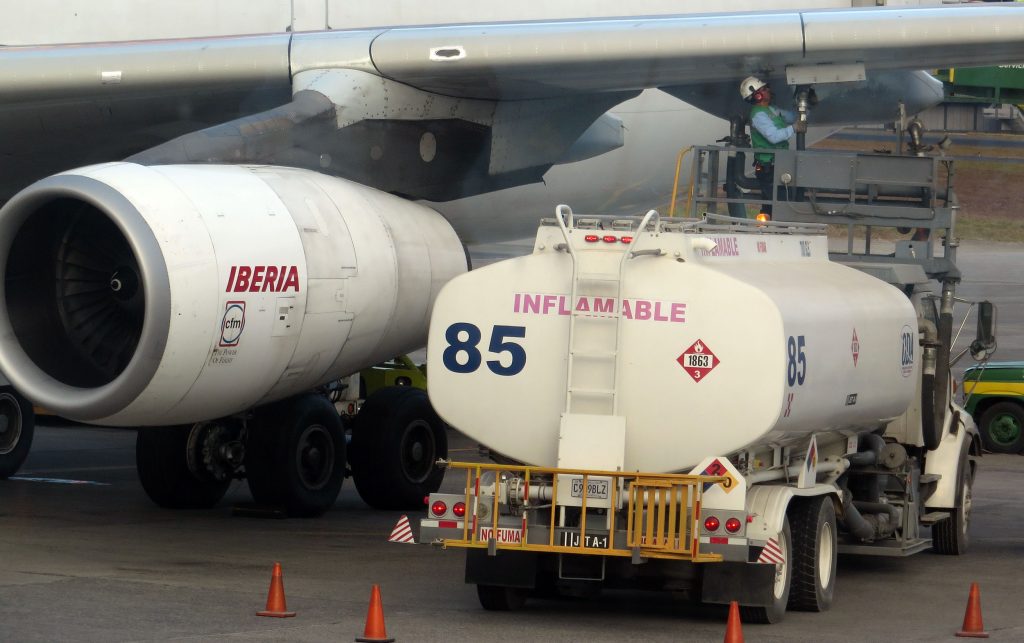
Airlines and shipping companies must send payment receipts to PDVSA to access fuel. (Archive)
Caracas, June 3, 2026 (venezuelanalysis.com) – The Venezuelan government headed by Acting President Delcy Rodríguez has instructed airlines and shipping companies to direct fuel payments to a US Treasury account.
Spanish newspaper El Diario published a May 28 letter from state oil company PDVSA addressed to “aviation and maritime customers” that laid out the “banking coordinates” for foreign currency payments concerning JET A1, MGO, and IFO 380 purchases.
JET A1 is a kerosene-based fuel widely used by commercial airplanes, while Maritime Gas Oil (MGO) and Intermediate Fuel Oil (IFO) 380 are standard for ship engines.
“We urge our customers to take the necessary precautions and forward the payment receipt to PDVSA sales representatives so that the payment is cleared and fuel supply is assured,” the letter read.
An attached US Treasury information sheet contains details for Fedwire payments to a “Venezuela custody account” and requires information about “source of funds, e.g., oil, gold, minerals, etc.”
The leaked letter is the first publicly available document from a Venezuelan state institution directing foreign currency payments to an account run by the US Treasury Department as opposed to the country’s Central Bank (BCV) or some alternative state-run mechanism.
Since the January 3 military strikes and kidnapping of Venezuelan President Nicolás Maduro, the Trump administration has seized control of the country’s export revenues. The White House has likewise extracted concessions in the form of pro-business reforms, preferential access for Western corporations to natural resources, and external audits of the Venezuelan Central Bank.
US Treasury general licenses allowing select Western corporations to engage in oil and gas activities mandate that all Venezuela-owed payments for royalties, taxes, and dividends be deposited in US Treasury accounts. Additional sanctions waivers imposed similar constraints on mining sector services and exports.
Neither US nor Venezuelan authorities have disclosed information about the funds, the timings of their disbursements back to Caracas, and the percentage kept by the Trump administration. The US president stated in a May interview that Washington has “made a fortune” from Venezuelan oil sales.
Both Washington and Caracas have acknowledged the use of Treasury-held Venezuelan revenues for the purchase of medicines and medical equipment from US manufacturers. In January, Secretary of State Marco Rubio said in a Senate hearing in January that Venezuela would need to submit a “budget request” to access its own funds.
According to reports, Washington is mandating that the Venezuelan Central Bank distribute the returned foreign currency to private sector importers via exchange table auctions run by public and private banks. The BCV has reportedly allocated more than US $5 billion thus far in 2026.
The Rodríguez acting government’s diplomatic rapprochement with the Trump White House, coupled with reforms to attract Western investment, has led to a growing number of international airlines reestablishing flights to the Caribbean nation. American Airlines currently runs two daily direct Caracas-Miami flights, while United Airlines will launch a Caracas-Houston connection in August. Jetblue, for its part, is set to initiate its first-ever Venezuela route later in the year.
Venezuelan authorities have likewise recorded increased shipping activity at the country’s ports.
Born in Rosario, Argentina, Bielsa hails from a family of educated minds, with his brother having worked in politics and his sister a renowned architect.
Both of those professions require analytical thinking – a gift Bielsa also possessed from childhood. However, he was drawn to football, not necessarily playing it but absorbing the tactics.
Every day he would send his mother to the local newsagent to buy football magazines and newspapers, spending hours reading up as much as he could about how teams played and how different managers worked.
Bielsa was still a capable but limited footballer. A defender but lacking in pace, he came through the youth system at his boyhood club Newell’s Old Boys before frustrating spells in the lower leagues of Argentinian football meant he decided to call time on his playing career at the age of 25 to focus on coaching.
His post-playing career started with the Buenos Aires university football team and, after two years there, he secured a position back at Newell’s as a coach of the reserve team.
Bielsa’s frustration with his limitations as a player played a significant part in his coaching philosophy, as he focused on ensuring that any player he coached was able to get the maximum out of their ability.
His training sessions were intense, with lots of focus on repetition – if a player did not have the talent to make something happen naturally then he would be sure to drill the processes into their minds.
Bielsa was appointed Newell’s manager in 1990 and his methods brought instant success as they won the Argentinian championship.
A spell in Mexico followed before Bielsa returned to Argentina in 1997 to manage Velez Sarsfield. There he would be labelled ‘loco’ (crazy) as he insisted on fielding two teenage centre-backs. He would have the last laugh, however, as he immediately helped them to win the league title.
Bielsa, who has said his nickname of ‘El Loco’ actually predates his time at Velez Sarsfield, very briefly became manager of Spanish side Espanyol but left them when he was offered his first international post in 1998 – as Argentina boss.
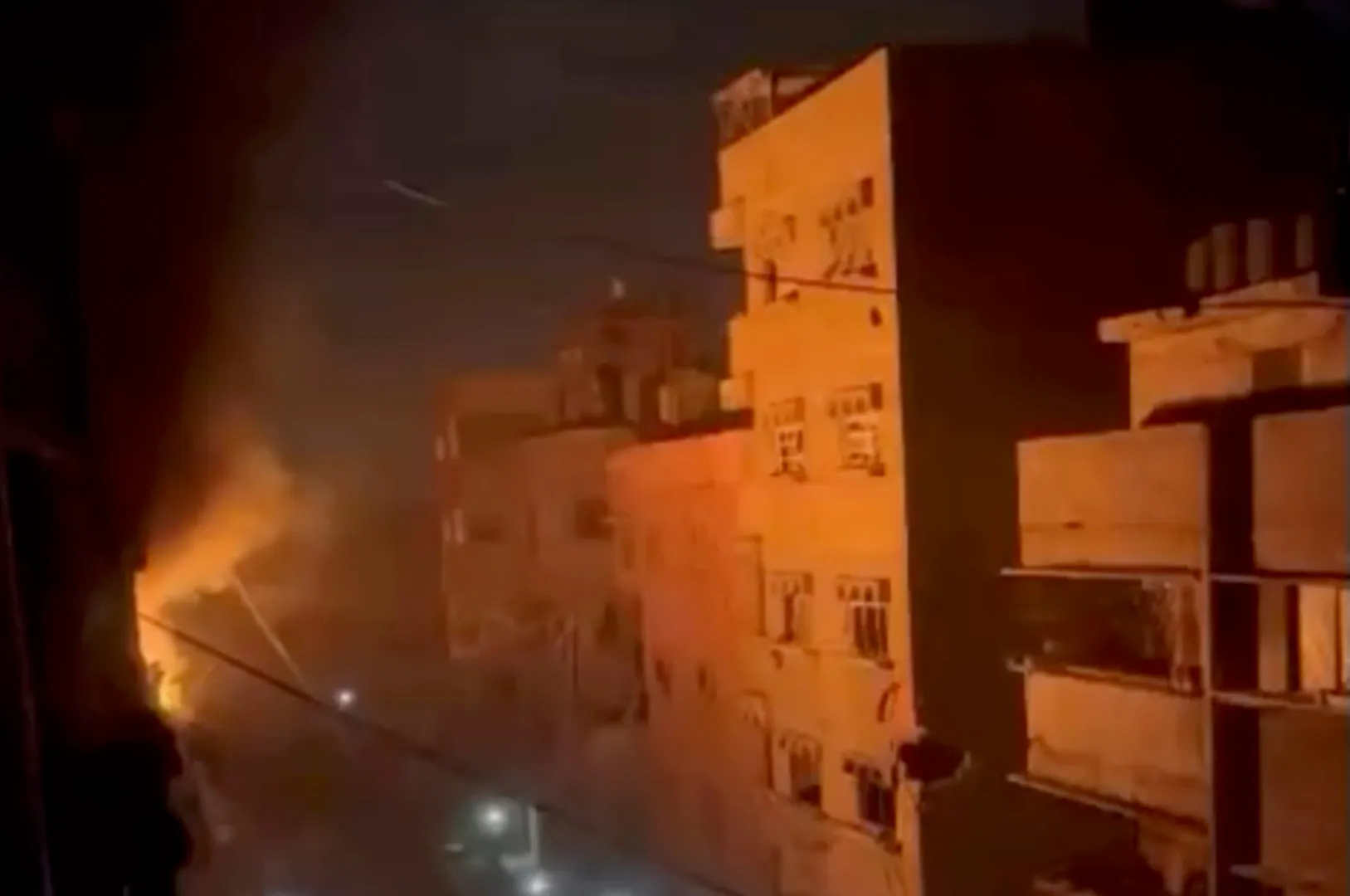
Israeli strikes on residential buildings have killed nine Palestinians, setting homes ablaze and leaving widespread destruction. Footage from the scenes showed rescue efforts amid the flames and ambulances transporting casualties.
Weekly insights and analysis on the latest developments in military technology, strategy, and foreign policy.
Today, the U.S. Marine Corps celebrated the end of more than half a century of Harrier ‘jump jet’ operations with a sundown ceremony at Marine Corps Air Station Cherry Point in North Carolina. For more than 20 percent of the history of the republic, the British-originated jump jet helped to defend America. The story of how the U.S. military first got involved in the program is a little-known but fascinating one. Michael Pryce, who has worked on various aircraft projects, from the Harrier to the Tempest, explains, and, in the process, connects the dots between the AV-8 and its replacement with the Marine Corps, the F-35B Lightning II.
Read our coverage of the Marine Harrier sundown here.
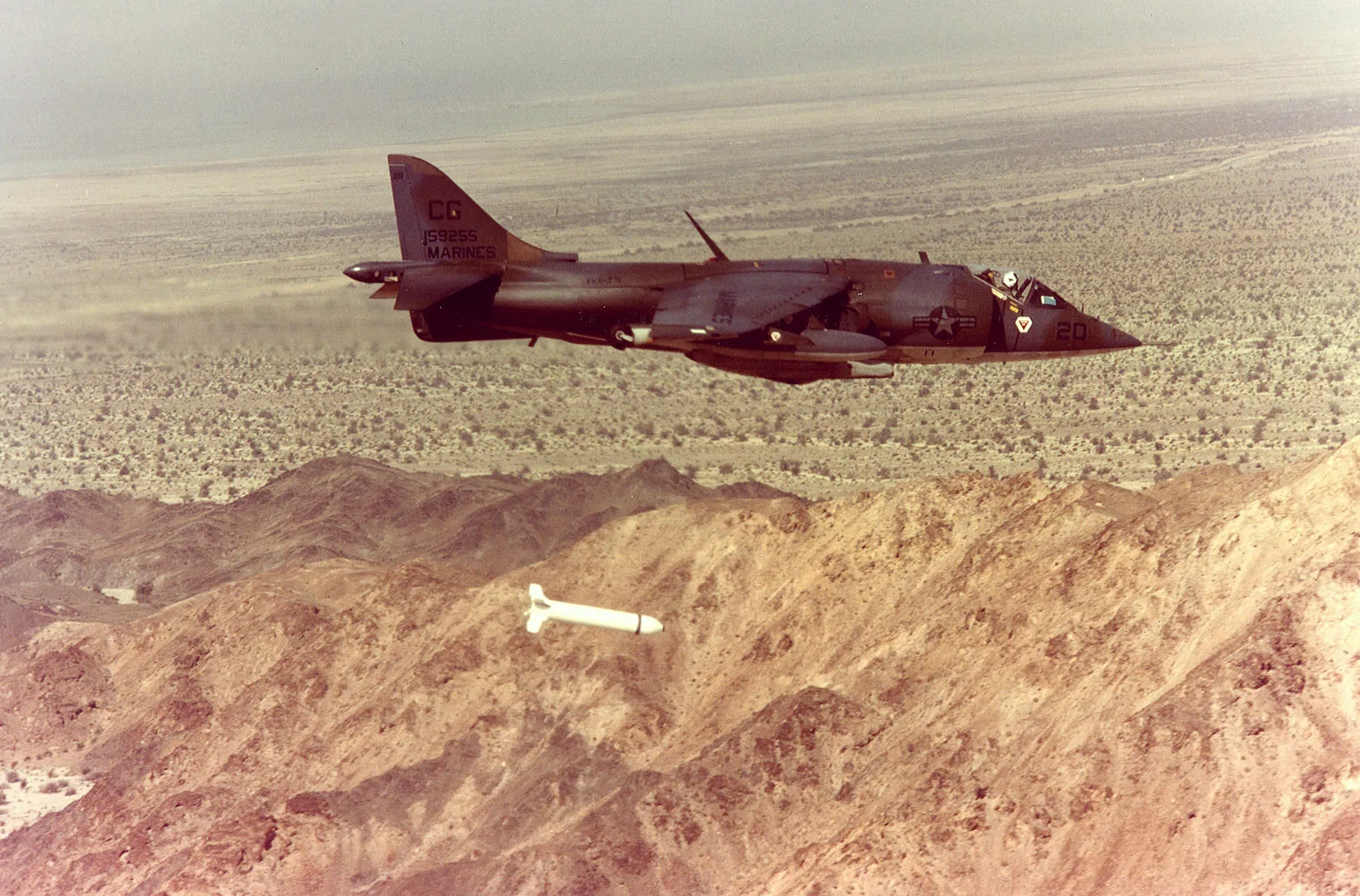
A British-made U.S. Marine Corps AV-8A of Marine Attack Squadron 231 drops a Mk 20 Rockeye cluster bomb during training, in 1979. U.S. Navy
Right from the start, the Harrier had been of immense interest to Britain’s ‘cousins’ across the pond. In the 1950s, the threat of nuclear war led to the creation of jump jets, and NASA, plus the U.S. Air Force, Navy, and Army soon found that developing rockets seemed easy in comparison to this new class of combat aircraft.
Despite valiant efforts, no American jump jet could be made to work.
A video shows the Ryan X-13 Vertijet during tests. It was one of many Cold War-era jump jet projects that ended in failure:
VERTIJET
All three services got involved in trials of the Hawker Siddeley P.1127 Kestrel, the first iteration of what would become the Harrier, initially in a joint British-American-West German trials squadron. Then, six of the Kestrels were taken to America to continue testing there, and they were renamed as XV-6As once on U.S. soil. Unlike other jump jet projects, the P.1127 utilized four adjustable exhaust nozzles beneath the wing, which rotated to provide thrust for vertical, backward, or hovering flight as well as conventional forward movement.
The XV-6A Kestrel demonstrated operations from grass, semi-prepared surfaces, and ship decks, offering great operational flexibility. U.S. Air Force photo
The thing that impressed the Americans was the sheer simplicity of the British jump jet. With just one engine, and ‘not an electron’ needed in its flight controls, the Kestrel soon transformed into the Harrier, and in 1968 the U.S. Marine Corps decided they would acquire them. Despite not having flown any of the Kestrel trials, they knew they wanted to bring the jump jet into the front line as soon as possible.
The British makers of the Harrier, Hawker Siddeley, first found out about the U.S. Marines’ interest when two men in uniform walked into the Hawker Siddeley hospitality chalet at the 1968 Farnborough Airshow and said they wished to fly the jet. Within two weeks, they had. It was the start of the Marines’ love affair with the Harrier, but it was not America’s first encounter with the British jet.
A Royal Air Force Harrier jet involved in a mock bombing run at the Farnborough Airshow in 1968. Photo by PA Images via Getty Images
Over 10 years before, another American had walked into Hawker’s fancy tent at another Farnborough airshow and asked to see their design for what would become the Harrier. Col. Willis “Bill” F. Chapman of the U.S. Air Force was an American in Paris, there to find European weapons that America could fund. Jump jets were all the rage, and the Hawker P.1127 seemed to him to be the most promising.
Six pre-production Hawker Siddeley Harrier GR1s pictured at the manufacturer’s test facility at Dunsfold aerodrome, Surrey, in 1968. The first Royal Air Force squadron to be equipped with the Harrier GR1, No. 1 Squadron, started to convert to the aircraft at RAF Wittering in April 1969. Crown CopyrightCol. Willis F. Chapman was commander of the 340th Bomb Group in 1944. Joseph Heller based the Catch-22 character of Colonel Cathcart on him, stretching artistic licence. Chapman thought Heller was a poor bombardier. Patricia C. Meder
As leader of the 340th Bomb Group in Italy in World War II, Chapman had seen dozens of his B-25 bombers wiped out, first by a volcanic eruption and then by a Luftwaffe attack. He knew nuclear missiles could do much worse. Soon, he had funded the Pegasus engine, the heart of the Harrier, and struck up a strong friendship with the Hawker design team led by Ralph Hooper, driving their design forward, from the drawing board into the sky.
Ralph Hooper, right, after flying in the two-seat Harrier he designed in the 1970s. BAE Systems
In 1968, one of the U.S. Marines who walked in at Farnborough would play an equally vital role in getting the Harrier into Marine service. Col. Tom Miller had flown in Korea and Vietnam, and scored a speed record in a McDonnell F4H Phantom for good measure. Deeply impressed by the Harrier, he went into battle on ‘The Hill’ to secure it for the Corps, then on to lead it into service as the commander of the 2nd Marine Aircraft Wing at Cherry Point — the same unit that retired the Harrier today, 55 years later.
John H. Glenn, Jr., Gen. David M. Shoup, Commandant of the Marine Corps, and then Lt. Col. Thomas H. Miller Jr., at Marine Corps Headquarters in 1960. (Marine Corps Archives)
The rest of the history of the Harrier is well known. From the initial, British-built AV-8A to the jointly-developed, with mostly American technology, second-generation AV-8B Harrier II, the Harrier found more use, and created more jobs, in America than in Britain. The American connection was the making of the British jump jet, and helped cement relations between the two countries’ pilots, engineers and ground crews over decades.
In the 1980s, there were attempts to make a new, supersonic successor, with the speed of the Marines’ F/A-18A Hornet and the vertical flight ability of the Harrier. Once again, the Americans turned to British designers. In 1981, Hooper and a team of engineers from the Harrier factory at Kingston-upon-Thames went to work at McDonnell Douglas in St. Louis, Missouri, to design the ultimate jump jet. Over drawing boards and at tailgate parties after ball games, they evolved a great beast of a jet, the P.1218, with two crew, two engines and the latest tech, to succeed the U.S. Navy’s F-14A Tomcat fleet interceptor and A-6E Intruder all-weather strike aircraft. Despite arriving at a joint design, money was limited, and the work was re-focused on research with NASA — the start of what in time would become the Joint Strike Fighter program.
Images of the British Aerospace P.1218 concept are very hard to come by, but the joint work with McDonnell Douglas fed into the broadly similar Model 279-4 design, seen here. McDonnell Douglas/Boeing
Although the U.S Navy buys jets for the Marines, the big twin-engined design was of less interest to the Corps than another of Hooper’s designs, a smaller, single-engine jet that weighed the same as the Hornet. This supersonic jump jet was seriously studied in the United Kingdom, with tests and design work over many years. The U.S. Marines were involved too, officers visiting the Kingston factory to talk about its prospects. When Britain delayed jump jet plans in favor of what became the Eurofighter Typhoon, it meant Hooper’s single-engined P.1216 design, with its wild-looking twin-boom configuration, seemed to miss its chance with the Marines. The British designer retired too, but he did not let that stop him.
A British Aerospace P.1216 in pseudo-U.S. Navy VFA-14 “Tophatters” markings escorts Soviet Backfire bombers, alongside a British version of the twin-boom supersonic jump jet. BAE Systems
Keen to see a supersonic jump jet in Marine service, he turned to Miller once again. As the accompanying letter in this article shows, in 1992 he gave Miller the technical plans of the new jump jet, and Miller showed it around at Marine HQ at a vital time — just as 10 years of research was turning into the serious acquisition program for the Joint Strike Fighter.
via author
The emerging requirements specified a weight the same as the Hornet — the same, too, as Hooper’s P.1216. Speed, range and weapons load were close too. While avionics and stealth had advanced beyond the British jet’s capabilities, the knowledge that the man who made the Harrier thought a practical jump jet of Hornet size would work helped get the ball rolling on the third generation of jump jets. Miller’s support ensured the Corps got behind it, leading to the Lockheed Martin F-35B now taking over Cherry Point.
An F-35B with Marine Fighter Attack Training Squadron (VMFAT) 501 prepares for takeoff at Marine Corps Air Station Cherry, North Carolina. U.S. Marine Corps photo by Lance Cpl. Christopher Hernandez
Making a fighting jump jet that works is extremely challenging. The Harrier had its problems — without rigid training, accident rates echoed those of its 1950s origins. The F-35B has had to overcome its own hurdles too.
In the early 2000s, Hooper was called in to help fix those. The transatlantic story of the Harrier may have ended today, but the people who found ways to cut bureaucratic corners by trusting each other, and who cracked the technical code of making the Harrier work, continue to support the next generation of F-35Bs.
Hawker Siddeley Aviation Executive Director and Chief Engineer Ralph Hooper talks U.K. Aerospace Minister Michael Heseltine through the features of a mock-up of the HS.1182 cockpit — the future Hawk trainer. Photo by PA Images via Getty Images
The ‘Harrier Mafia’ worked their own way, but always in line with the motto of the Marine Corps. “Semper Fi” was a value shared by British pilots who flew American Harriers in combat operations on exchange as much as by the men and women who made, and supported, 55 years of Harrier operations at Cherry Point.
Jump Jet: The Secret History of the Harrier by Michael Pryce is published on August 27 and is available for pre-order.
The Cameroonian government has urgently called for strong legal action against perpetrators of gender-based violence and child abuse, citing a significant increase in femicide and sexual assault nationwide.
According to official data released by the government on June 1, the sharp rise in domestic and gender-based killings is disturbing. In 2023, 50 women were documented murdered in Cameroon. That figure rose to 67 cases in 2024, and surged to 77 in 2025. Officials noted that data collected in the first half of 2026 suggests the tragic upward trend is continuing unabated.
During a recent joint press conference in Yaoundé, the capital of Cameroon, the Minister of Communication, alongside the Ministers of Women’s Empowerment, Social Affairs, and Public Health, called for immediate collective action to halt the escalating crisis. The officials emphasised that a vast majority of these femicides are not random acts of violence and are perpetrated by individuals close to the victims, including spouses, family members, neighbours, and acquaintances.
The major increase in femicide cases is further aggravated by an alarming increase in violent crimes against minors, including rape, murder, and severe physical abuse. High-profile cases currently under investigation include the tragic incidents involving three-year-old Bissong Omgba Joyce, who suffered sexual abuse; 11-year-old Divine Mbarga, who was raped and murdered; and the Nkolbisson tragedy in which a mother killed her three children before taking her own life. Also, in March 2026, an 11-month-old infant was murdered by a family member in Douala, and another 11-year-old boy, Karl Ethan, was killed in Minkan.
In response to the ongoing issue of gender-based violence, several women’s rights organisations have come together to deliver a strong message. They stressed that no woman should lose her life because of her gender, and no child should be raised in an environment filled with fear, violence, or abuse. The women also expressed grave concerns about the situation in Cameroon, describing it as critical and calling for nationwide mobilisation and warned against the trivialisation of gender-based crimes.
“Behind these statistics are broken lives, bereaved families and profoundly shocked communities. Women, mothers, girls and housewives have lost their lives under circumstances linked to gender-based violence,” said Lizzy Claude, a women’s rights activist.
“This is a reality which is more and more disquieting to the civil society and defenders of human rights, especially within a context marked by a spike in sexual violence and abuses inflicted on children,” Lizzy added.
The Cameroonian government has issued an urgent call for strong legal action against those responsible for the rise in gender-based violence and child abuse, with femicide and sexual assault cases increasing sharply.
Official statistics highlight a disturbing upward trend, with the number of femicide cases rising yearly from 50 in 2023 to 77 in 2025, and continuing into 2026. These crimes are predominantly committed by individuals known to the victims, such as partners, family, and neighbors.
The situation is compounded by a troubling rise in violent crimes against minors, including high-profile cases of rape, murder, and severe abuse. Women’s rights organizations are advocating for immediate attention, condemning the trivialization of these crimes and calling for nationwide efforts to combat them. The crisis is seen as a pervasive threat to the safety and well-being of women and children, demanding urgent and collective action.
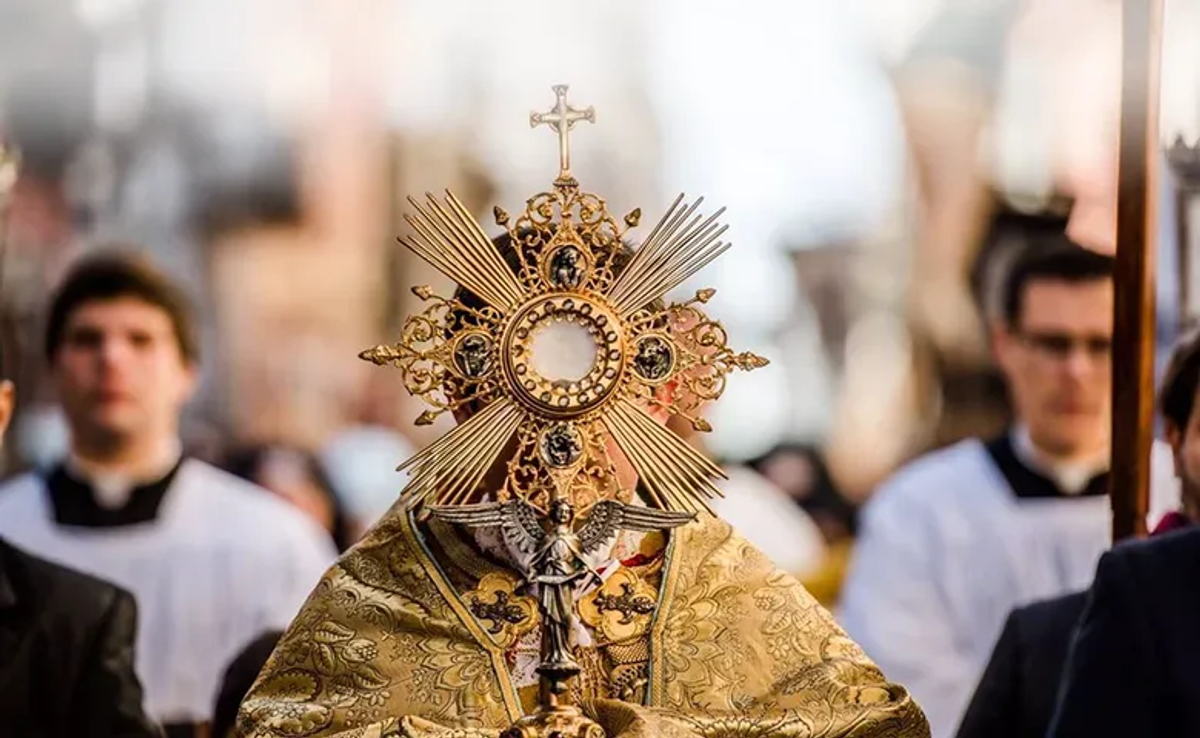
The emergence of Corpus Christi as a Christian feast didn’t happen until the second half of the thirteenth century with the efforts of a nun called Juliana of Liège.
Since childhood, Juliana had been claiming that God had been telling her that there should be a feast day for the Eucharist and eventually she petitioned the Bishop of Liège. In those days bishops could order feasts in their local dioceses. The bishop agreed to the feast and convened a synod in 1246 and ordered that a celebration of Corpus Christi should be held annually.
The Corpus Christi celebration only started to become more widespread after both Juliana and the Bishop had died. In 1264 Pope Urban IV issued the papal bull Transiturus in which Corpus Christi was made a feast throughout the entire Latin Rite. He fixed it for Thursday after the “octave” of Pentecost when only designated celebrations or special feasts were blessed. This feast is celebrated on a Thursday in remembrance of the institution of the Eucharist (the last supper) which takes place on Maundy Thursday, the eve of Jesus’ death on the Cross.
Corpus Christi is primarily a Roman Catholic feast, but it is also acknowledged in the calendar of a few Anglican churches, most notably the Church of England. It is also celebrated by some Western Rite Orthodox Christians. Across many parts of medieval Europe, Corpus Christi was a popular time for the performance of mystery plays.
Along with Lent, Advent, Easter, Pentecost and Christmas, Roman Catholic Bishops have a duty to be present at their cathedrals on Corpus Christi.
Weekly insights and analysis on the latest developments in military technology, strategy, and foreign policy.
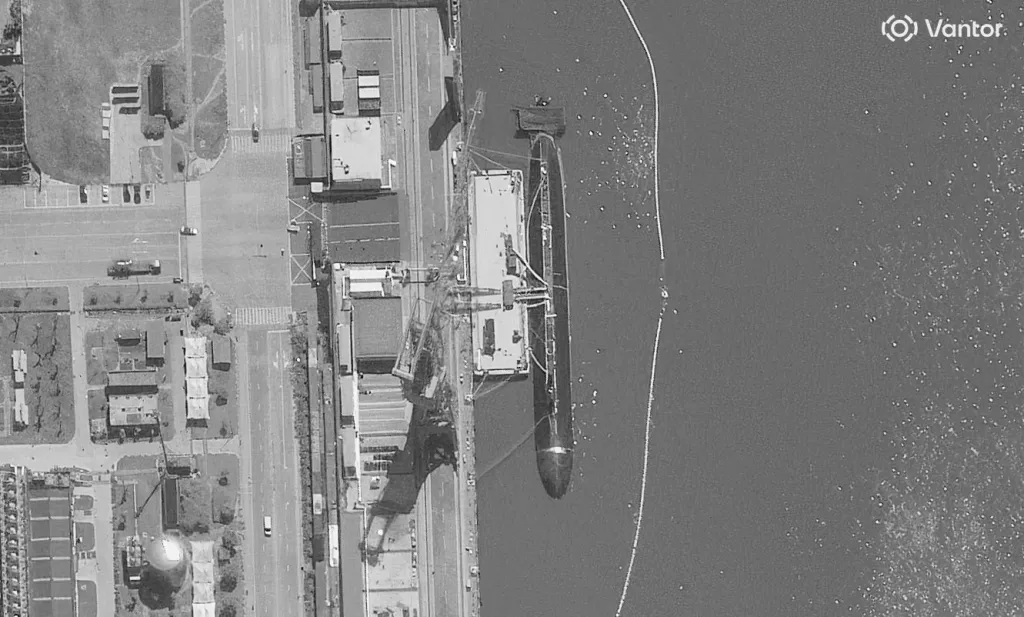
A new type of submarine that appears to lack a traditional sail has emerged in China. The same shipyard launched a smaller ‘sailless’ submarine — a technology demonstrator — eight years ago. More recently, a top Chinese shipbuilding conglomerate put forward a concept for an uncrewed underwater vehicle (UUV) with a broadly comparable hullform. Designs of this kind can offer benefits in terms of speed, maneuverability, and reduced acoustic signature, but also have major drawbacks.
TWZ has obtained imagery of the submarine in question at JN (Jiangnan) Shipyard in Shanghai on June 1, as seen at the top of this story and below, from Vantor (previously Maxar Technologies). The boat, the name and/or designation of which are currently unknown, first appeared there sometime at the end of May, according to Naval News. That outlet was first to report on this development.
From the imagery, the submarine does not have a traditional sail. However, the exact shaping of what is present is also not entirely clear from the view that is currently available. As noted, JN Shipyard is known to have built at least one other ‘sailless’ submarine in the past, which we will come back to later on.
Writing for Naval News, undersea warfare analyst H.I. Sutton has assessed the design to be roughly 394 feet (120 meters) long and to be between 33 and 36 feet (10 and 11 meters) wide. What its intended missions might be are unknown, but this is certainly larger than common diesel-electric submarines (SSK) and even longer than most nuclear fast attack submarines. For comparison, variants of China’s Type 093 nuclear-powered attack submarine (SSN), some of the most modern submarines in People’s Liberation Army Navy (PLAN) service today, are approximately 356 to 360 feet (108 to 110 meters long) and 36 feet wide. The official stated length and width of the U.S. Navy’s Virginia class SSNs, across all existing subvariants, are 377 feet (114.8 meters) and 34 feet (10.36 meters), respectively.
An X-shaped stern is a feature now further associated with a next-generation Chinese attack submarine design commonly, but still unofficially, referred to as the Type 095. Naval News also reported today on the recent launch of what may be another Type 095, which has a traditional sail, at the Bohai Shipyard in Huludao, hundreds of miles to the north of Shanghai. This appears to have caused some confusion online, with some mistaking the boat at Bohai for the ‘sailless’ type.
Just translated via @type36512: CSSC Bohai Shipbuilding: Launch of a New Submarine
Satellite imagery captured on May 29. I believe this image depicts the new 120m-class, sail-less submarine discussed in the accompanying article. However – due to limitations in image resolution – https://t.co/sHF9Y8gkGe
Even if we scale 09V’s hull diameter with this mystery submarine (for illustration purposes), it is a fair bit shorter, meaning it probably isn’t a 09V, but it also doesn’t correspond to what a 10m diameter, 120m length submarine would look like…
The newly emerged submarine at JN Shipyard may also have a shrouded propulsor, which could be a pumpjet type. Pumpjets offer further benefits for quieter operation, especially at higher submerged speeds.
The absence of a traditional sail is still the most notable aspect of the new submarine at JN Shipyard. Omitting a large structure sticking out of the top of the hull helps significantly with streamlining the overall design. Eliminating that drag can allow greater optimization for speed and maneuverability while submerged. It can also help make the submarine quieter and, by extension, harder to detect, even while transiting through an area at higher speeds. This can be especially useful when racing out to threats, even those far away.
Not having a traditional sail could impose certain design constraints. Traditionally, naval submarines have used their sails to mount periscopes and other sensor masts, as well as extendable communication antennas and snorkels to help cycle air without fully resurfacing. That is space that can be used for other purposes, including launchers for countermeasures and general storage.
A generic example of the array of masts that extend up from the sails of modern naval submarines. Hensoldt
Above all else, while running on the surface, the sail is key for general navigation and situational awareness. It can also provide an elevated position for local force protection or supporting vertical replenishment (VERTREP) operations. If sufficiently hardened, it can even break through feet of ice during operations in and around the polar regions.
The sail of the US Navy’s Los Angeles class attack submarine USS Santa Fe seen broken through the ice during an exercise in the Arctic Circle in March 2026. USN/Petty Officer 1st Class Jacob Bergh
The lack of a sail might reflect a focus on seabed operations far from the surface where mast deployment and other considerations might be less pressing. At the same time, the design’s features could just as easily be centered on improving performance, including the ability to make transits as quickly as possible during blue water operations. It could also offer benefits for shallow-water operations, though we have noted that, overall, it is very large compared to SSKs.
As mentioned, a smaller ‘sailless’ submarine had already emerged at JN Shipyard in 2018. H.I. Sutton previously estimated that design to be around 150 feet (45 meters) long and 15 feet (four to four-and-a-half meters) wide. That submarine also had a non-X-shaped rudder arrangement and what appeared to be an unshrouded propeller. The exact reasons for building that boat and how it has been utilized over the years remain unknown, but it would have at least provided a testbed and technology demonstration platform to explore this design concept, and potentially other capabilities. Whether it was designed for crewed or uncrewed operation, or to be optionally crewed, is not clear, either. The same is true of this new submarine, though it seems unlikely it is uncrewed.
A top-down look at the first low-profile submarine to emerge from JN Shipyard. Chinese Internet
At the Zhuhai Airshow in 2024, the state-run China State Shipbuilding Corporation (CSSC) did show a model of an unprecedentedly large, diesel-electric UUV. Its overall design was highly reminiscent, at least in broad strokes, of JN Shipyard’s original ‘sailless’ submarine, as TWZ noted at the time. JN Shipyard is one of many subsidiaries of CSSC.
CSSC said at the time that the drone submarine could be configured to perform a wide array of missions, including launching attacks on enemy vessels, laying mines, supporting special operations forces, and serving as a mothership for smaller uncrewed underwater vehicles (UUV). You can read more about all of this here.
The model of the low-profile UUV design CSSC showed at the Zhuhai Airshow in 2024. Chinese internet
Other shipyards and navies around the world have explored low-profile submarine designs in the past, but designs have generally been consigned to the world of paper concepts and limited experimentation. The U.S. Navy, for instance, previously tested a Large Scale Vehicle Range (LSVR) subscale demonstrator submarine with a novel sail structure. The Navy’s Acoustic Research Detachment (ARD) conducted that work in a lake in Bayview, Idaho.
Large Scale Vehicle Range (LSVR) subscale demonstrator submarine seen sailing in Lake Pend Oreille in Idaho. Public DomainA model of a low-profile ballistic missile submarine concept called Arktur shown in Russia in 2022. @MuxelAero
In 2021, the Navy also notably put out a contracting notice calling for concepts for inflatable sail structures, which could combine the benefits of traditional sails and low-profile designs. What degree of work the service may have conducted since then on this Inflatable Deployable Sail System (IDSS) is unclear, but it underscores how important a sail is for general operations on the surface.
The PLAN’s submarine force otherwise continues to grow in terms of capability and capacity, with an increasing number of more modern types. U.S. officials have openly said in the past that the quality of newer Chinese submarines has been getting closer in parity to American designs. All of this is further underscored by the recent appearance of the other new submarine at Bohai. In addition to new nuclear-power designs, China is also understood to be developing at least one design with a hybrid nuclear/conventional propulsion system, referred to as the Type 041 or Zhou class. The first known example of the Type 041 came to light after it looked to have sunk in a shipyard in 2024.
Greater use of nuclear propulsion promises to extend the reach of Chinese submarines in the Pacific and beyond, and is clearly part of the PLAN’s larger vision for naval power projection going forward.
“The PLA Navy is executing a significant strategic shift from diesel-electric to all-nuclear construction, representing a fundamental departure from historical construction patterns,” U.S. Navy Rear Adm. Mike Brookes, head of the Office of Naval Intelligence, wrote in prepared remarks ahead of a hearing before members of the U.S.-China Economic and Security Review Commission in March.
Brookes also highlighted how the hybrid Type 041, specifically, could offer “greater endurance, potentially filling regional patrol and presence missions more economically than full-size SSNs [attack submarines] and SSGN [guided missile submarines.”
More remains to be learned about the newly emerged submarine at JN Shipyard, but it could point to new low-profile designs without traditional sails, possibly to act as the PLAN’s underwater high-speed interceptor, being part of China’s larger future submarine future.
Hours after residents went to bed on the morning of Wednesday, June 3, sounds of gunshots pierced through the air as terrorists circled an off-campus hostel housing some students of the Federal Polytechnic Kaura Namoda in Zamfara State, northwestern Nigeria. The hostel, located in the Low-cost area, is meters away from a military checkpoint, according to residents.
Students at the polytechnic had increasingly been moving into off-campus housing to avoid being abducted from their school.
As fear of what might happen enveloped people, the terrorists compromised the gate of the hostel and took away eight students of the polytechnic. Even as they fled with the students, they continued to fire shots in the air.
“Two of the students, Favour and Joshua Sunday, escaped while being taken away by the terrorists,” a resident who simply gave his name as Musa told HumAngle. “My house is not far from Oga Bulu’s house, which shares a wall with the house the students live in. I heard the gunshots and heard when they were leaving with the students.”
Since 2015, terrorists have terrorised the sub-region. Their activities have led to the death of thousands of people and the displacement of over a million. Attacks on schools and students have been on the increase since 2020, when terrorists stormed Government Science Secondary, Kankara and abducted 300 pupils.
Zamfara, which is considered the hotbed of the crisis, has recorded several school abductions in Jangebe, where over 300 schoolgirls were abducted, in Federal University, Gusau, where 24 students were abducted, and at the College of Agriculture and Animal Sciences, Bakura, where 15 students were abducted.
Musa, the source, says Joshua Sunday told them six students (three men and three women) have been taken.
HumAngle reports that the Kaura Namoda area and other communities in Maradun and Bungudu fall under areas where the notorious terrorist leader, Bello Dan Sadiya, controls.
An administrative staff member of the Polytechnic, who asked not to be named, told HumAngle over the phone that several staff members of the institution have relocated to Gusau, the state capital, for fear of being attacked. “Even me, I’ve relocated my family to Gusau. We have two staff, all senior lecturers, who are still with the bandits after they were abducted two months ago,” he said.
He said a ransom has been paid for the release of the lecturers, but the terrorists have continued to hold them.
Federal Polytechnic Kaura is located on the road to Shinkafi and Zurmi LGA, two areas in the northern part of Zamfara State that have witnessed repeated terrorist attacks.
The police public relations officer in the state, DSP Yazid Abubakar, confirmed the abduction and promised to release a statement, but has yet to do so.
Local authorities blame informants for the escalation of attacks in the town centre. The Chairman of the area, Mannir Haidara Kaura, told DW Hausa that the state government has taken measures to tackle the terrorists, but informants are sabotaging the efforts.
Terrorists attacked an off-campus hostel at Federal Polytechnic Kaura Namoda, Zamfara State, Nigeria, abducting eight students amid gunfire.
Situated near a military checkpoint, the hostel had become a refuge for students avoiding school abductions, a rising trend since 2020.
Some students managed to escape, but others remain captive, highlighting the ongoing threat posed by armed groups under leaders like Bello Dan Sadiya.
Amidst escalating violence, many polytechnic staff and residents have relocated to safer areas, with efforts to resolve the crisis hampered by informants.
Despite a ransom payment, senior lecturers remain hostage, prompting criticism of local government’s counter-terrorism measures.
Real Madrid president Florentino Perez says he will bring Jose Mourinho back as manager if he wins Sunday’s election.
Published On 3 Jun 20263 Jun 2026
Jose Mourinho will return to manage Real Madrid if Florentino Perez wins the club’s presidential election on Sunday, the sitting president has declared as he campaigns for another term at the helm of the La Liga club.
Perez, facing renewable energy entrepreneur Enrique Riquelme in the club’s first contested election in 20 years, delivered the campaign announcement on his social media channels with a short video featuring Mourinho simply saying “Yes!”
Recommended Stories
list of 4 itemsend of list
The clip followed the slogan “So MOUch history to be made”, a not-so-subtle nod to the Portuguese coach who guided Real to a record La Liga points tally in 2012, but last lifted a league title with Chelsea in 2015.
The move for Mourinho follows a disappointing domestic campaign in which Barcelona secured back-to-back league titles.
Real, 15-time Champions League winners, have also exited Europe’s top club competition at the quarterfinal stage in the last two seasons, with the absence of major silverware prompting Perez to call elections.
Perez’s announcement landed while Riquelme was appearing on Spanish television programme El Hormiguero, in which he said Manchester City midfielder and Spain captain Rodri would be his first signing if elected.
He said he would also target Manchester City striker Erling Haaland, and that former forward and club great Raul would be his sports director.
Since leaving Chelsea, Mourinho’s trophy haul has been more modest. He won the League Cup and Europa League with Manchester United, and later led AS Roma to the third-tier Conference League title.
His managerial road has also taken him to Tottenham Hotspur, Fenerbahce and Benfica, where he was under contract until June 2027 and had said the Portuguese club had proposed a renewal.
While pundits argue that the game has moved beyond Mourinho’s pragmatic style, Perez appears to see him as the manager to restore discipline and edge to a squad featuring Kylian Mbappe, Vinicius Jr and Jude Bellingham.
Mourinho previously stated that no contact had been made with Real, despite heavy reports linking him with a return to the Bernabeu.
Should Perez win the election, Mourinho would return to the club 13 years after his departure in 2013.
Mourinho first joined Real Madrid in 2010, spending three seasons at the club.
During his tenure, he won one La Liga title, a Copa del Rey and a Spanish Super Cup.
Xabi Alonso was sacked by Real in January, in his first season in charge of the Madrid club, while Alvaro Arbeloa carried the team to the end of the season as interim coach.
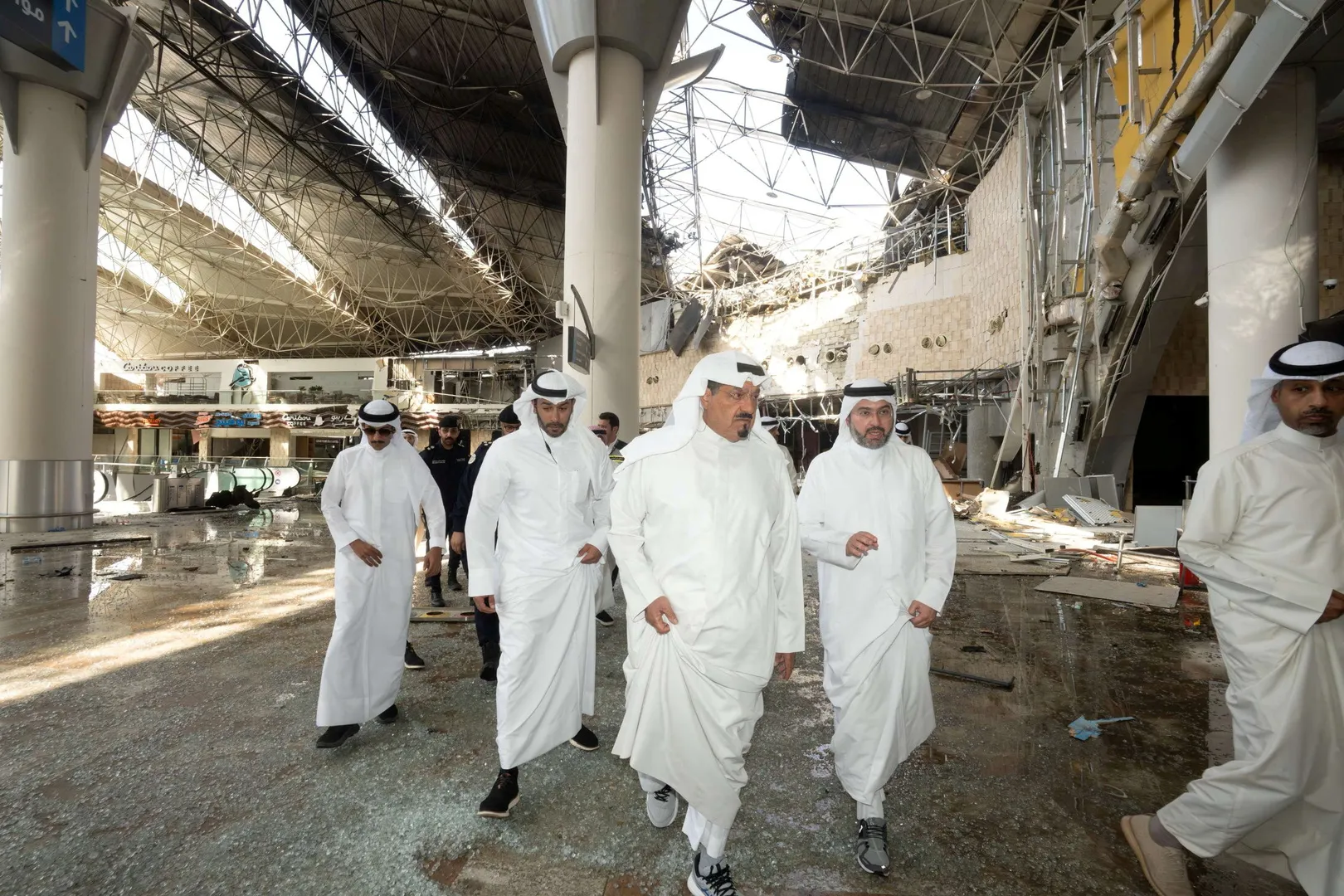
Kuwait’s defence ministry has labelled an attack on the country’s international airport as ‘heinous Iranian aggression’. One person was killed and dozens were injured after Iranian drones struck a terminal on Wednesday, causing ‘significant material damage’.
Global markets are navigating two powerful and competing forces: escalating geopolitical tensions in the Middle East and continued investor enthusiasm for artificial intelligence-related stocks. While concerns over renewed conflict between the United States and Iran have boosted oil prices and supported demand for safe-haven assets, the AI-driven technology rally has continued to push stock markets higher, particularly in Asia.
What Happened
Oil prices rose for a third consecutive session on Wednesday after fresh hostilities emerged in the Gulf region. Brent crude climbed 1% to $94.74 per barrel as hopes for a quick resolution to tensions between Washington and Tehran faded.
The U.S. military reported that Iranian missile attacks targeting Bahrain, Kuwait and other regional locations were either intercepted or failed. The developments came after negotiations aimed at ending the conflict between the United States and Iran stalled despite both sides announcing a tentative agreement last week.
Meanwhile, financial markets showed mixed reactions. U.S. stock futures were largely unchanged, while European futures edged lower. In Asia, however, technology shares continued their strong advance, helping stock indexes in Japan and Taiwan reach record highs.
Why Markets Are Reacting to Middle East Risks
Investors had previously expected the United States and Iran to formalize an agreement that would reduce regional tensions and ease concerns about energy supplies. The lack of progress in negotiations has instead revived fears of a prolonged conflict that could disrupt oil shipments from the Gulf, a critical region for global energy markets.
Higher oil prices typically reflect concerns about potential supply disruptions. The latest military developments prompted traders to unwind some of their earlier bets on a diplomatic breakthrough, contributing to the rise in crude prices.
Currency markets also reflected growing caution. The U.S. dollar strengthened against the Japanese yen, briefly touching the closely watched 160 level before retreating amid concerns that Japanese authorities could intervene to support their currency.
AI Stocks Continue to Defy Market Uncertainty
Despite geopolitical concerns, enthusiasm surrounding artificial intelligence remained a major driver of equity markets. Wall Street indexes posted modest gains on Tuesday, supported by technology shares.
Chipmaker Marvell Technology surged more than 32% after Nvidia chief executive Jensen Huang described the company as a potential trillion-dollar business. Investor optimism surrounding AI also helped propel SoftBank Group above Toyota Motor Corporation as Japan’s most valuable listed company.
The AI boom has continued to attract investment even as broader markets grapple with geopolitical uncertainty and concerns about interest rates.
What Comes Next
Investors are now closely watching upcoming U.S. economic data, including services sector activity, private payroll figures and Friday’s employment report. Strong labor market data could reinforce expectations that the Federal Reserve will keep interest rates higher for longer or even consider further increases.
Bond markets remained relatively stable, while traders adjusted expectations from potential rate cuts earlier in the year to the possibility of additional rate hikes. Markets have also priced in the likelihood of monetary tightening in Europe and Japan.
At the same time, developments in the Middle East remain a key risk factor. Any further escalation between the United States and Iran could push oil prices higher and increase volatility across global financial markets, while continued strength in AI-related stocks may help support broader equity markets despite geopolitical headwinds.
Ex-Somali PM Khaire accuses government forces of attacking him before planned antigovernment protests in Mogadishu.
Published On 3 Jun 20263 Jun 2026
Heavy gunfire has broken out in central Mogadishu as Somalia’s former Prime Minister Hassan Ali Khaire says he has been attacked by government forces before planned protests.
“An attack was launched against us by forces commanded by the president whose term has expired,” Khaire said in a social media post on Wednesday, adding they had been preparing for a “peaceful demonstration” the following day.
Recommended Stories
list of 3 itemsend of list
President Hassan Sheikh Mohamud “bears full responsibility for today’s violent attack on our consultative meeting”, he said.
Somalia has fallen into yet another political crisis after Mohamud announced that his term had been extended for a year after it was due to expire on May 15.
The opposition and regional leaders have rejected the move and demonstrations were due to take place on Thursday.
Khaire relocated from his base in the heavily fortified green zone around the airport to his residence in the city, in order to take part in the protests.
RPGs, gunshots
An AFP news agency journalist filmed images of panicked residents in the Howl Wadaag district near his home, with loud gunshots heard in the background. Witnesses told AFP they saw armed opposition forces clashing with Somali police.
“The shooting lasted for about 15 minutes before it subsided. They even used RPGs [rocket-propelled grenades], and the sound of the explosions could be heard across the surrounding neighbourhoods,” said one witness, Saleban Mahad.
The president has been attempting to move Somalia towards democratic elections, replacing a system based around clan elders.
Mohamud argues he was given an extra year in the presidency when a new constitution was passed by parliament in March that set the framework for polls.
But with the country deeply divided between rival clans, and much of it under the control of al-Shabab, an al-Qaeda-linked armed group, there has been little progress on organising elections beyond a few localised pockets.
Opposition and regional leaders have strongly opposed Mohamud’s plan, seeing it as an attempt to centralise power.
Foreign powers, primarily the United States and the United Kingdom, have attempted to broker talks between the government and opposition to little avail.
Reaction to attack on Khaire
Ex-President Sharif Sheikh Ahmed has also moved into central Mogadishu for Thursday’s protest. He criticised the attack on Khaire, saying the president “seeks to cause further bloodshed despite not having a legitimate official mandate – his time has expired”.
“This attack will not stop the demonstrations by residents of the capital who are protesting against injustice, displacement, and the abuse of government power,” he said on X.
Previous presidents have also stayed in office beyond their mandates.
Former President Mohamed Abdullahi Farmaajo stayed more than a year in office after the official end of his mandate in 2021, triggering violence and condemnation from the international community.
Tehran, Iran – Iran is facing more energy constraints as its summer season begins, with the widespread use of air conditioning and other needs during hotter months contributing to an imbalance between supply and consumption.
For decades, successive Iranian governments have kept utility bills well below supply costs for households and offices through a mix of implicit oil-and-gas subsidies, administered tariffs, state-controlled pricing, and sometimes direct financial support.
The negative impacts of the war with Israel and the United States on the economy mean the government has fewer tools at its disposal to deal with an energy crisis this summer.
Despite having the world’s third-largest proven crude oil reserves, Iran will have to import fuel again as demand outpaces refinery output.
President Masoud Pezeshkian has repeatedly urged households and offices to take practical steps to limit energy consumption. Last week, he removed his jacket during a government meeting to demonstrate how Iranians can avoid turning down their air conditioning thermostats in their offices.
Even though energy costs for households are much lower than in other parts of the world, corruption, mismanagement, sanctions, chronic inflation and currency devaluation have eroded the benefits Iranians usually feel from subsidised energy prices.
In November 2019, the government announced a tiered gasoline price scheme that would see huge increases for some consumers. This sparked nationwide protests, and since then, the government has been wary about similar price hikes.
While inflation has galloped on, continued subsidies have kept fuel artificially low.
The administration’s attempts to tackle the subsidies burden due to a mounting budget crunch have resulted in only limited increases in petrol through a complex three-tiered pricing system.
This is applied via a government-issued fuel card, giving most users of Iranian-made vehicles access to 60 litres (15.85 US gallons) per month of subsidised petrol at 15,000 rials (0.8 cents) and another 100 litres (26.42 gallons) at 1.6 cents.
Iranians going over this amount then must use an “emergency card” issued at petrol stations, permitting them to an additional 30 litres (7.9 gallons) of fuel a day at 50,000 rials (about 2.9 cents) per litre.
After a new cap was imposed during the war to limit fuel consumption, each card allows only 30 litres of fuel a day. Petrol stations are issued their own “emergency card” for uses beyond this limit.
Due to supply constraints, staff at petrol stations have now reportedly been instructed to limit the use of these cards to 10 to 15 litres (up to 4 gallons) or asked not to issue any new cards at all to customers.
The Iranian government is running similar schemes for natural gas, electricity and urban water, with fears of social unrest making them averse to any sudden price hikes.
There appears to be little the government can do to bridge the divide between lower energy production and growing demand for subsidised fuel, illustrated by the perpetual queues at petrol stations since the start of the war.
“Reforming and increasing the price of energy is currently not feasible and logical due to the current economic conditions and social concerns,” Esmail Saghab Esfahani, a vice president of the state-linked Organization for Energy Optimization and Strategic Management, said earlier this week.
There have been some changes to pricing structures, but this is impacting small businesses that are already struggling with the dire economic conditions in Iran.
One 35-year-old owner of a welding workshop near Tehran, who asked to remain anonymous, told Al Jazeera that a surge in his monthly energy bill from 40 million rials ($23) per month in the previous Persian calendar year to three times that today.
“I went to the electricity company, and they only kept saying the tariffs have gone up,” he said.
“I had a similar message from a friend who is paying much more now for roughly the same usage as before, so it looks like we’re to pay for the cost of war.”
Authorities say that any complaints about escalating bills will be reviewed. They also have a system where normal household energy consumption is kept artificially low, but excessive users can be billed as much as 45 times the normal prices.
Despite having the second-largest proven natural gas reserves in the world, Iran still suffers from perpetual supply shortages during its winter and summer, when consumption is at its highest.
The situation has worsened during the war, with strikes on Iranian energy facilities seeing Iran’s gasoline production capacity drop marginally from 115 million litres (30.37 million gallons) per day to 110 million litres (29.06 million gallons). Meanwhile, consumption has jumped from 10 million litres (2.64 million litres) in 2025 to 140 million litres this year (36.98 million litres).
US President Donald Trump’s threats of more strikes on power plants have heightened fears of further blackouts and gas shortages this summer, meaning the energy crisis is likely to continue in the coming months.
The administration of US President Donald Trump has proposed new tariffs of up to 12.5 percent on imports from 60 economies after determining they had failed to curb trade in goods made with forced labour, an assertion that was rejected by US trading partners.
The proposal from the Office of the United States Trade Representative (USTR), issued late on Tuesday, comes from a Section 301 unfair trade practices investigation designed to help rebuild US President Donald Trump’s emergency tariffs, struck down by a US Supreme Court decision in February.
Recommended Stories
list of 4 itemsend of list
Despite laws banning them, the products of forced labour are deeply embedded in supply chains across the world. European lawmakers bristle at the accusation that the region is less effective than the US at curbing the trade in such goods, with one describing the US findings as “utterly absurd”. Business leaders said the US move created more confusion for companies.
The USTR proposed 10 percent additional duties on imports from Canada, Ecuador, the European Union, Indonesia, Mexico, Pakistan, Argentina, Bangladesh, Cambodia, El Salvador, Guatemala, Malaysia, Taiwan and Britain. The USTR said all had plans or partial schemes in place.
The trade agency said it would impose additional duties of 12.5 percent on the remaining 45 countries that it investigated. These include China, India, Nigeria, Japan, South Korea, Vietnam, Australia and New Zealand.
“The failure of our most important trading partners to address the importation of goods made with forced labour is unacceptable,” US Trade Representative Jamieson Greer said in a statement. “This creates a dynamic where American workers are forced to compete globally on an unlevel playing field.”
The USTR said it would accept public comments on the proposed tariffs and other remedies through July 6, with a public hearing scheduled for July 7.
The announcement comes ahead of the July 24 expiration of a 10 percent temporary tariff imposed by the Trump administration on February 20, the day the Supreme Court struck down Trump’s tariffs under the International Emergency Economic Powers Act. It also shows how determined the Trump administration is about building a wall of tariffs around the US economy, the world’s largest, despite repeated setbacks in court.
After the loss in the Supreme Court, Trump turned to another law to impose temporary 10 percent tariffs globally. But those stopgap levies expire July 24. And a specialised trade court ruled last month that they, too, were illegal – though the government can continue collecting them while that case works its way through the courts.
Unjustified tariffs
The European Commission said the tariffs were unjustified and reiterated its commitment to the trade deal sealed with Washington last year.
Bernd Lange, the chair of the European Parliament’s trade committee, which voted on Tuesday to accept that trade deal, said the new tariffs were expected, but said the results of the US investigation were still “utterly absurd” given a 2024 EU law to ban imports of forced labour products.
“The impression is increasingly emerging that a tariff measure is sought first, and only then is a suitable legal justification found,” he said. However, he added that the key question would be whether the additional tariffs would exceed those agreed between both sides last July.
The US’s largest trading partner, the EU, agreed last July to accept tariffs of 15 percent on a broad range of its exports. In its report, the USTR said the EU anti-forced labour measures only came into force in December 2027 and lacked key elements.
It was unclear whether the proposed tariffs – which the US release described as “additional duties” – would come on top of levies agreed in bilateral deals signed with the US.
Britain said it was in regular talks with the US and was taking action to tackle forced labour. It added that the preferential access to US markets that it had negotiated for UK businesses remained in place.
Mexico said that goods that were compliant under the United States-Mexico-Canada Agreement (USMCA) would be exempt from the new tariffs.
Taiwan said it was “hopeful and confident” that the final results would reflect agreements already reached, securing relatively preferential treatment.
Beijing, facing 12.5 percent tariffs, said that it opposed all forms of unilateral tariffs and that there was no forced labour in China. India, confronted with the same rate, said it was engaged with Washington on the Section 301 proceedings, noting the proposed tariffs were not final.
“There will be deep concerns in the international business community that the US [forced labour law could] become a global template,” said Andrew Wilson, deputy secretary general of the International Chamber of Commerce.
“Anyone can make a claim, get a shipment impounded and the company has to prove no forced labour in supply chain.”
Certain exemptions
The USTR said it would exempt from tariffs products including energy, rare earths and some other metals, beef, coffee, certain fruits and vegetables, pharmaceuticals, organic chemicals and aircraft parts.
It also said it was proposing a textile mechanism that would allow for a certain volume of apparel and textile imports to enter the US at a reduced tariff rate, without giving details.
The ICC’s Wilson said the list of exemptions, stretching for more than 76 pages, suggested sensitivities over the potential cost-of-living hit to food and other goods with known forced-labour risks.
“It doesn’t make sense if the object of this is to enhance controls on modern slavery,” he said.
A deadly Ebola outbreak in the DRC is spreading across borders, with no approved vaccine or treatment for this strain.
A fast-growing Ebola outbreak in the Democratic Republic of the Congo has crossed borders, raising alarms far beyond Central Africa. This time, the virus is a strain with no approved vaccine or treatment. As cases rise and governments scramble to respond, can the outbreak be contained before it spreads further?
In this episode:
Catherine Soi (@cate_soi), Al Jazeera Correspondent
Episode credits:
This episode was produced by Marcos Bartolomé and Sarí el-Khalili with Spencer Cline, Tamara Khandaker, Jana Dabliz, and our host, Malika Bilal. It was edited by Tamara Khandaker.
Our sound designer is Alex Roldan. Rick Rush mixed this episode. Our video editors are Hisham Abu Salah and Mohannad al-Melhem. Alexandra Locke is The Take’s executive producer.
The shooting ends a 12-hour standoff in the city of Bakersfield between suspect and law enforcement.
Published On 3 Jun 20263 Jun 2026
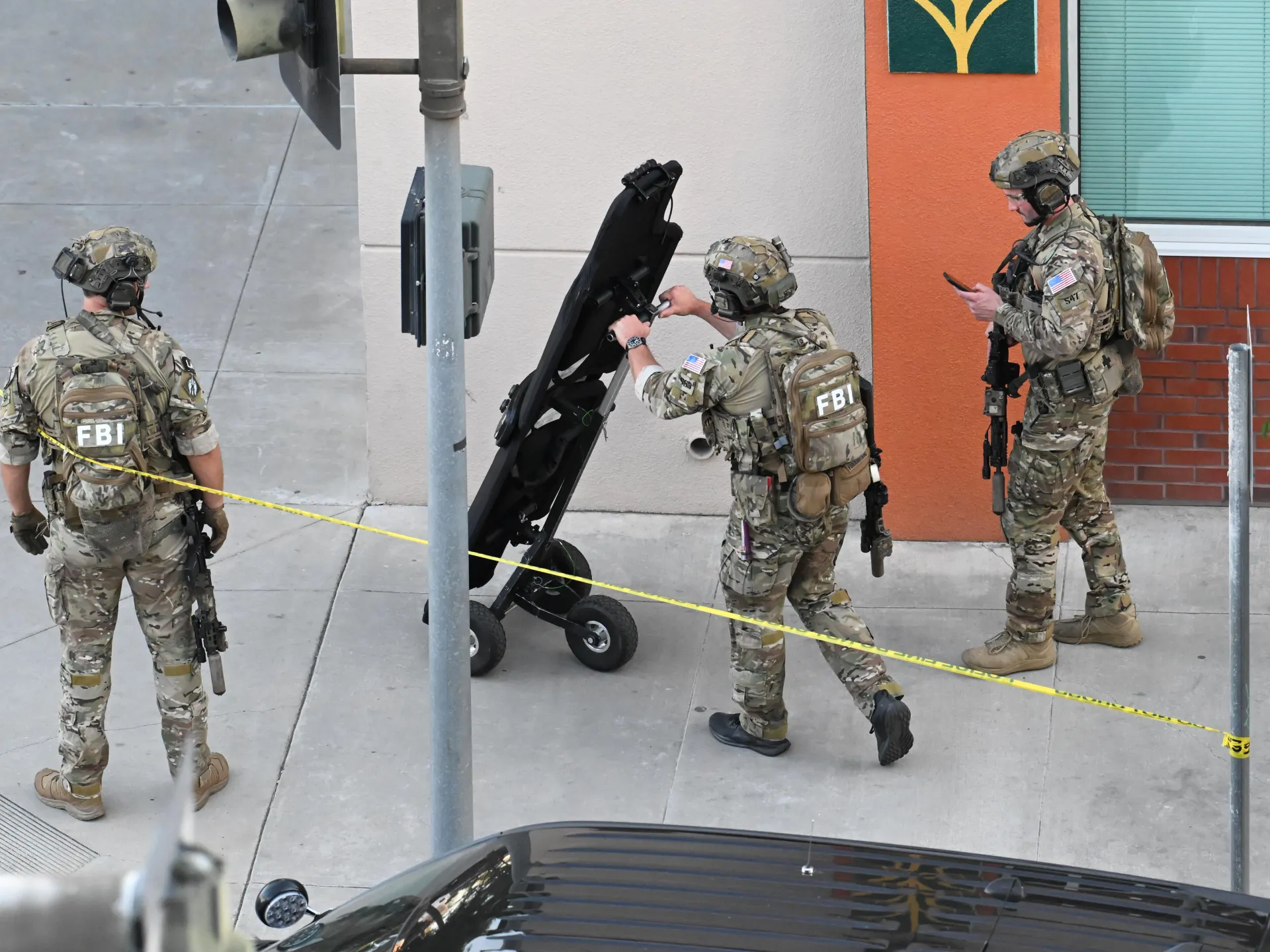
Agents with the Federal Bureau of Investigations (FBI) in the United States have fatally shot a man allegedly holding hostages inside of a building in California.
The shooting ended a 12-hour standoff at an office in Bakersfield that houses a bank branch and school district office.
In a statement, the Bakersfield police said the suspect was killed in “an officer-involved shooting involving Federal Bureau of Investigation personnel”.
It added that “all hostages were located unharmed and received medical evaluation and treatment at the scene”.
Police had originally been called following a bomb threat at the location. Police said the man barricaded himself inside with several people, two of whom were released Tuesday after negotiations with authorities.
Authorities established a wide perimeter around the building, evacuating the nearby City Hall and the police headquarters.
Bakersfield police sergeant Eric Celedon told reporters on Tuesday the department had “every single resource at our disposal out here to bring this to the safest resolution possible”.
Police on Wednesday said the investigation was ongoing and that “significant” law enforcement would remain in the area.
The identity of the suspect was not immediately released and a motive was unclear.
A revealing global journey into declining birth rates, ageing societies, and their far-reaching impact.
The last 100 years have seen a boom in trade, prosperity and wealth across the world, at unprecedented rates in human history. As a species, we are now more wealthy, healthy, and less likely to be killed in conflict than ever before, despite the many horrors we see in the daily news cycle.
This golden age we live in has run in tandem with an ever-expanding population; in the 1920s, there were only two billion people on the planet. A century later, that number has skyrocketed up to eight billion. Yet the increase of prosperity and people has come at a devastating price – global warming, the melting of the ice caps, an epidemic of plastic pollution and the mass destruction of the planet’s biodiversity are all intrinsically connected to population growth. More recently, however, the trend has been bucking. The watchful eyes of demographers have been drawn to data that reveal a world of ageing societies, plummeting birth rates, and dwindling populations. Surely this must be a good thing for the planet and therefore humanity … right? Armed with a file full of “population bomb” headlines – the explosion will happen mid-century, when humans will peak around 8.5 – 9 billion people, followed by drastic falls – we embark on a worldwide exploration with a very unique purpose. What truths and human stories can we discover behind the red flag statistics? What are the population tipping points of fertility, birth and death rates? And how, among the other culprits of climate change, conflict, global health and over consumption, might they make or break the future of our life on earth?
Kuwait and Bahrain have condemned an Iranian missile and drone attack, which Tehran says targeted US military facilities in the Gulf. A strike hit Kuwait’s airport, causing at least one death, dozens of injuries and flight suspensions. Tehran says the strikes are retaliation for US attacks on Iran.
Jess and Anthony, not their real names, have just bought a house outright aged 25. Can you work out the clever way they did it besides trivial money ‘hacks’?
‘Getting on the property ladder is easy if you do one thing: stop your wasteful spending. Because not eating 70p avocados is definitely how you raise the best part of 300 grand.
‘It’s all about making sacrifices, and sadly too many young people today won’t do that. Luckily my parents brought me up to be careful with money. “Cut your coat according to your cloth,” is what my frugal corporate lawyer mum and hedge fund manager dad always told me.
‘And so Josh and I devised a strict money-saving plan. Making meals at home instead of eating out. Buying items on discount and cutting out non-essentials. You’d be surprised how often you don’t need new headphones or a top, much like when I was a child and my parents said I didn’t need two ponies.
‘We stopped wasting money on £4.50 lattes and a £12.99 Netflix subscription we barely watched. We both loved foreign holidays, but we agreed we’d tighten our belts and just stay in Ant’s parents’ villa in Gran Canaria.
‘I’m a terrible clothesaholic, but you can get perfectly good outfits secondhand. “Can I have all those Jigsaw dresses you never wear, and actually those Jimmy Choos?” I asked my mum. A deal was struck, and I agreed to cook dinner that evening.
‘But I think the hack that really helped us buy a house was checking our finances daily. If there was money owed on my credit card, I’d immediately say “Daddy, can you pay my card off for me again?” That way I avoided paying interest completely.
‘And now, after taking control of our spending and some careful budgeting, we own our home, and my parents are delighted. “Pay back the £285,000 any time,” they said.’
There is a field, roughly 22 kilometres southwest of Sokoto, between the Dange Shuni and Bodinga local government areas in North West Nigeria, that carries no particular weight to the eye. Grass grows there. Wind moves through trees at predictable intervals. The surrounding bush is in full silence, neither mourning nor celebrating. Nothing marks what happened here, and that, of course, is precisely the point.
The place is called Satiru. Or was called Satiru. The grammar is slippery, because the British, when they finished with it in the spring of 1906, did not simply defeat it. They made sure to erase it – razing buildings, enslaving survivors, most of whom were women and children, and stripping the site with the cleansing method of an administration that understood that a crushed rebellion, left with a location, becomes a shrine. And shrines become consciousness and arguments. Better to leave nothing. Better to leave nowhere.
And then the Sultan of Sokoto, Muhammad Attahiru II, the Muslim ruler (Sarkin Musulmi) whose fighters helped carry out the slaughter, reportedly pronounced a curse on anyone who would rebuild or farm on the ground. As the British Resident Burdon telegraphed proudly to High Commissioner Frederick Lugard: “All Sokoto went out yesterday to inspect [the] battlefield and raze Satiru to the ground. No wall or tree left standing.” The scholars Paul Lovejoy and J.S. Hogendorn, writing in the Journal of African History, note that “the deserted site of Satiru is on the edge of a forest reserve. It has not been inhabited since its destruction and the official curse.” More than a century later, that is still true.
This is what erasure looks like when it succeeds. For 120 years, the ruins of Satiru have remained untouched, a vanished town erased by British colonial forces after a 1906 uprising led by poor clerics, fugitive slaves, and peasants challenging both imperial taxation and the aristocratic order of the Sokoto Caliphate.
But this story is not only about a massacre buried in colonial archives. It is about how modern Nigeria inherited the use of overwhelming force to suppress communities marked as threats.
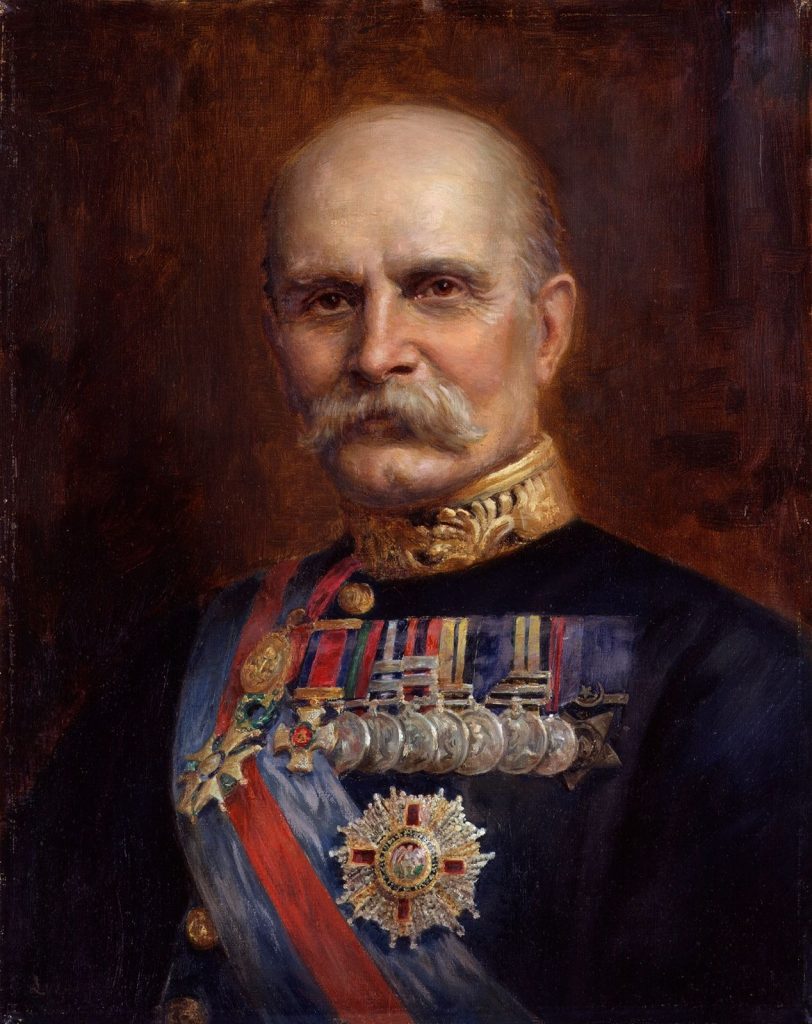
File: Portrait of Frederick Lugard in the National Portrait Gallery, London. Photo: Encyclopedia Britannica.
The thing Satiru was
Before it became a problem requiring artillery, Satiru was an answer to a different problem. To understand it, you need to understand the particular moral atmosphere of the Sokoto Caliphate in its late decline – the spiritual hangover, you might call it, of a revolution that had once been genuine.
Usman Dan Fodio launched his jihad in 1804 with an argument that was partly political and partly theological, but entirely serious: that the Hausa rulers of the time had corrupted Islam, that the ordinary people – the talakawa, the poor commoners – were being ground down by a system that dressed itself in religious language while behaving in wholly irreligious ways. Dan Fodio and his followers built the caliphate on the promise that this would change. That Islamic governance would be just. That scholars who held power would be answerable to something beyond their own appetites.
By the end of the nineteenth century, that promise had curdled into something its founders would not have recognised. The Fulani aristocracy that administered the caliphate had made a comfortable accommodation with power. Tribute collectors arrived in the villages. The talakawa paid. Palace scholars – the senior ulama (religious scholars), with their elaborate networks of family and commerce – found, in the more elastic corners of Islamic jurisprudence, reasons why this was all acceptable. The poor continued to be poor. The aristocracy continued to wear piety as a garment while extracting what they could.
The scholars of Satiru – humble men, as Lovejoy and Hogendorn describe them, “poor Muslim scholars engaged in farming and teaching,” with origins far outside the Fulani elite – found different reasons. Malam Siba, who founded the Satiru settlement in approximately 1894, was of Nupe origin. A second key figure, Maikaho, came from Gobir, the country that Uthman Dan Fodio himself had subjugated. A third, Malam Bawa, was from Zamfara, which had revolted against Sokoto on several occasions across the nineteenth century. What distinguished these men from the mainstream was not their learning – they were, by caliphate standards, minor figures – but their refusal to make the peace that more successful scholars had made with power. As Lovejoy and Hogendorn paraphrase the alleged statement of Malam Siba himself: he “was fed up with the exactions of the ruling class and was not going to obey the instructions of anyone anymore… [but instead] was going to set up a new great regime.”
What grew at Satiru, on the frontier of four fiefdoms – Danchadi, Dange, Shuni, and Bodinga – was something the caliphate’s administration regarded as an irritant and then, gradually, as something worse. The community refused to pay taxes. It refused to provide unpaid labour. It attracted, in growing numbers, fugitive slaves fleeing from the plantations and estates of the aristocracy. This last detail matters enormously. By 1906, British Resident Burdon would report that the adherents of the Satiru cause were “nearly all run away slaves.” Local tradition in Satiru itself held, as recorded by A.S. Mohammad in his foundational social history of the revolt, that “the leaders of Satiru abolished slavery and as a consequence… slaves flocked to them. The freedom of these fugitives was effectively and strenuously guarded.”
This was, in other words, not an uprising of the godless. It was an uprising of the structurally abandoned — poor clerics, dispossessed peasants, and fugitive slaves – against the two interlocking systems that were destroying them simultaneously: the late-caliphate aristocracy that extracted their labour, and the British colonial administration that had, since 1903, added new demands of jizya (poll tax) and jangali (livestock tax) to communities that had never before paid such taxes to Sokoto. As a Sokoto citizen wrote bitterly at the time, and as quoted in Lovejoy and Hogendorn’s account: “We have been conquered. We have been asked to pay poll tax and cattle tax. We have been made to do various things, and now they want us to fight their wars for them.”
The movement Satiru had built was, in the framework laid out by Lovejoy and Hogendorn, a form of revolutionary Mahdism – distinct from all the other currents of Mahdist thought that ran through the caliphate at the time. It drew its support from peasants, fugitive slaves, and subject populations. It had no aristocratic supporters, no wealthy merchants, and no members of the established ulama. It was ethnically diverse in a way that the aristocracy was not: Hausa from various origins, Zamfarawa, Gobirawa, Gimbanawa, Kabawa, and Azbinawa – but, strikingly, no Fulani. The battle lines, as Lovejoy and Hogendorn note, mapped onto class so precisely that “the ethnic dimension… reflected the class division.” On the day of the final battle, “all the faces on the battlefield had Gobir, Kebbi, Zanfara, Katsina and other such tribal marks. Not a single Fulani talaka [commoner] joined them.”
What Satiru wanted, ultimately, was the recovery of the original promise – the caliphate that Dan Fodio had said was coming, and that had not arrived. You can call this politics, or you can call it theology. At Satiru, they did not distinguish between the two.
The spark and the suppression
The movement had been building for years, connected by threads of correspondence and travelling clerics to similar currents of dissatisfaction across both the British and French colonial zones in are now Nigeria and Niger Republic. On the French side of the boundary, a blind Zarma cleric named Saybu Dan Makafo had been the central animating figure – charismatic, mystically inclined, and reportedly possessing gifts of ventriloquism that contributed to his reputation as a waliyyi, a saint.
In December 1905, violence broke out at Kobkitanda, 150 kilometres south of Niamey, in French territory in today’s Niger Republic. Saybu and his followers killed two gardes-cercles (colonial police) from Dosso. The French responded, the Mahdists absorbed losses, and Saybu fled east – eventually arriving at Satiru, where the local community had already been living in a state of armed readiness and messianic expectation.
The revolt was supposed to begin on the Eid El-Kabir (Babbar Sallah), February 5, 1906. It was postponed – there was an internal dispute about the recognition of Isa, the village head of Satiru, as the messianic successor figure who would accompany the Mahdi. The Satirawa (people of Satiru) resolved the question on February 13, when they attacked the neighbouring village of Tsomau. Fourteen people died.
The British response was swift and catastrophically misjudged. Acting Resident H.R. Preston-Hillary moved immediately with a column of about seventy mounted infantry under Major Francis Blackwood, armed with a single Maxim gun. He appears to have been entirely unaware that the rising at Satiru was connected to the weeks of violence that had already convulsed French territory. He rode toward the village with the assumption of a man who believed the gap between his weapons and his opponents’ was so vast that the details of the situation hardly mattered.
He was wrong.
The Mahdists attacked the British column. Hillary and Blackwood were killed, along with three other white officers and 25 African soldiers. The West African Frontier Force (WAFF) suffered such heavy losses that it was “forced to retreat in disarray.” It was, as Lugard would later acknowledge, “the first serious reverse suffered by the West African Frontier Force since it was raised in 1898.”
Get our in-depth, creative coverage of conflict and development delivered to you every weekend.
Subscribe now to our newsletter!
The Satiru Mahdists were also severely wounded — their leader, Malam Isa, was struck during the initial encounter and would die two days later, on the morning he was supposed to unfurl the green flag and declare the jihad formally. He did not live to see what his movement had achieved: a genuine military victory over the empire. For a brief, burning moment, the talakawa had won.
The British did not pause to understand what had happened. They regrouped.
The reckoning
Illustration by Akila Jibrin/HumAngle.
On March 10, 1906, a combined force of the British-run West African Frontier Force (WAFF) troops and Sokoto fighters approached Satiru. The Satirawa had dug trenches. But they did not stay behind them. They charged, repeatedly, in massed formation, against troops equipped with Maxim guns firing destructive volleys. Historian Richard Dusgate would later call what followed “the most bloodthirsty expedition in the history of British military operations in Northern Nigeria.” Margery Perham, in her biography of Lugard, noted that subsequent reports – kept secret at the time – found that the “killing was very free, not to say slaughter,” that the soldiers “killed every living thing before them,” and that “the fields were running with blood.”
At least 2,000 Satirawa were killed. An estimated 3,000 women and children were herded to Sokoto, many distributed among the aristocracy as effective slaves – a thinly disguised reassertion of the master-slave relationship that the very people of Satiru had staked their lives on dismantling.
Saybu Dan Makafo, blind and wounded, survived. He was captured and brought to Sokoto, where he was tried. His boy guide, according to a story collected by H.A.F. Johnston, reportedly shouted at the trial that if Saybu was given water, he would vanish into thin air – an indication of the extraordinary tension surrounding the proceedings. The public executioner decapitated him on March 22. His head was mounted on a stake in the market. Four subordinates suffered the same fate.
The political accounting that followed the massacre revealed what the British understood the suppression to mean and to communicate. The Colonial Office initially received dispatches that accurately attributed the uprising partly to the fugitive slave crisis – Lugard’s own initial cable described the rebels as “outlaw fugitive slaves.” A marginal note in the Colonial Office files, as documented by Lovejoy and Hogendorn, captures the official response with bracing economy: “Better say nothing of slaves.” By May 9, Lugard had incorporated a sanitised version of events into his official reports. The slave dimension was quietly removed from the record. The most dangerous thing about Satiru – that it had articulated a class argument, that it had offered sanctuary to the enslaved, that it had made the connection between colonial taxation and pre-colonial extraction explicit – was the thing the British were most determined to forget.
The Sokoto aristocracy was rewarded for its loyalty. Marafa Muhammadu Maiturare, the Sokoto official who had commanded the local levies and whose authority was partly credited with preventing a general rising, eventually became Sarkin Musulmi in 1915. Hassan, the sarki of Dange, the fief nearest to Satiru, who had greeted Burdon warmly in the hours after the Mahdist victory, would become Sarkin Musulmi in 1931. The collaboration was not forgotten. It was promoted.
What the grammar inherited
Nearly a century and two decades later, an eight-year-old boy named Sa’id watched through a crack in the wall of his grandmother’s hut as the men of his family were dragged outside and shot.
His village, Kajen Shuwa, sat in Marte Local Government Area of Borno State, northeastern Nigeria, a Shuwa Arab community of cattle herders and storytellers, ethnically and linguistically distinct from the dominant groups of the region. Between 2014 and 2015, at the height of the military’s campaign against Boko Haram, soldiers arrived looking for a Boko Haram cell in a village called Kajen Kanuri. The names were similar enough. No interpreter had been brought. No local guide accompanied the unit.
More than 40 men died.
“They had the wrong village,” Imam Abdulkarim, now living with displaced survivors at the Garin Shuwa IDP camp in Bauchi, told HumAngle. “It was later we realised they were sent to Kajen Kanuri.”
One of the survivors told HumAngle in 2026 how the events unfolded as he watched from where he had hidden himself in a tree. He said he was watching when the men were gathered and ordered to produce Boko Haram members. The people apparently did not even understand what was being said to them, so the soldiers simply lined all the men up in a place resembling a ditch and shot every single one of them. Just like that. No trial. No evidence. Nothing. Everyone was killed.
Sa’id is nineteen now. He teaches Quran to children at the displacement camp — children who have their own mornings they cannot stop replaying. He speaks slowly. He flinches at loud sounds. When he told his story to HumAngle, tears came before words, and other residents of the camp stepped in to complete the parts his voice could not carry. They knew the story. They had assembled it over the years, in the way that displaced communities assemble the things they are not allowed to say publicly – from fragments, from the accounts of those who were in different parts of the village when it happened, from the silence of those who were not there to tell anything.
“The families of the killed couldn’t even raise their voices,” Abdulkarim said. “Everyone was afraid that he might be targeted too.”
No soldier was prosecuted. No investigation was publicly announced. No family received notification, compensation, or the minimum of official acknowledgement that their men had been killed by mistake.
What happened to Kajen Shuwa is not exceptional in the region’s chronicle of the last decade. Amnesty International’s 2015 report documented execution-style killings, torture in detention, and mass graves of individuals who had never been charged, tried, or formally arrested — people killed not for what they did, but for who they resembled, where they lived, what language they spoke when soldiers arrived. The Nigerian military’s response to that report was not to open investigations. It was to call Amnesty International a liar.
And then the world moved on, as it always does – to the next atrocity, the next set of statistics that briefly animated international concern before fading into the background noise of a continent the world has learned to observe without fully attending to.
Zaria massacre
If Kajen Shuwa happened in the shadows – a remote village, an Arabic-speaking minority, a story reaching the press years after the fact — then what occurred in Zaria, Kaduna State, in the country’s North West, in December 2015 happened in full view, and still went unanswered.
The Islamic Movement in Nigeria (IMN), led by Sheikh Ibrahim El-Zakzaky, was a Shia organisation with roots deep in Zaria’s social fabric. It ran schools and clinics. It was also an organisation that had long attracted the suspicion of the Nigerian state – not because it was violent, but because it was organised, independent, and loyal to a leadership structure that fell outside the state’s system of control.
On Dec. 12, 2015, an IMN procession blocked a road, delaying a military convoy carrying the then Chief of Army Staff. What followed, as documented in meticulous detail by both Amnesty International and the Kaduna State Government’s own commission of inquiry, was a massacre. Soldiers attacked IMN members across multiple locations. The Hussainiyya Islamic Centre was demolished. El-Zakzaky’s residence was destroyed. Three of his sons were killed. El-Zakzaky himself, elderly and partially blind – the parallel to the blind Saybu Dan Makafo feels almost too pointed – was arrested. He and his wife would remain in detention for years, their release ordered repeatedly by courts and resisted repeatedly by the government.
The Kaduna State commission produced a report of unusual honesty. It confirmed that at least 347 IMN members had been buried in a mass grave at Mando. It found the military’s response disproportionate. It recommended the prosecution of specific officers, and it named the mass grave by location. But not one recommendation was implemented.
The IMN was formally proscribed in 2019, an organisation that had existed for four decades and operated schools and hospitals, banned by the government that had killed hundreds of its members, as though the banning were the logical conclusion of the killing rather than an additional punishment for surviving it.
The grammar of impunity
There is a grammar to this. Lovejoy and Hogendorn identified it in the colonial records of 1906 in three steps: a community marked as dangerous, the deployment of force that is “excessive by design,” and the systematic management of the record.
At Satiru, the British made the decision consciously – the marginal note that said “better say nothing of slaves” was an administrative instruction to suppress an inconvenient truth. The communities targeted after them have had to live inside the silence that administrative instruction created.
But this never worked permanently. What the scholars Godwin Odeh and Williams Efe argue, in their analysis of the Satiru uprising’s historiography, is that the episode was not merely a military or religious event but a demonstration of “the impossibility of subjugating a group permanently without facing a crisis of cultural relevance.” They invoke Amilcar Cabral’s formulation: that culture “is a means by which people assert their opposition to domination… one of the fundamental tools of struggle for emancipation.” The argument is that Satiru never fully ended – that its logic persisted, became available, got taken up again in different forms by different communities facing different versions of the same problem.
The circumstances were different, the enemies differently named, and the legal justifications modernised, but the underlying grammar remained recognisable.
This is not a metaphor. What the British established in 1906 and what successive Nigerian governments have absorbed so completely is a particular relationship between the state and the communities it finds inconvenient. The relationship has a fixed sequence: a community is marked; disproportionate force arrives; the record is managed; and then, reliably, comes the silence. The silence is not passive. It is constructed and maintained by the same institutions that produced the violence – maintained through the denial of accountability, the obstruction of independent investigation, and the prosecution of those who speak too loudly about what they witnessed.
The families of Kajen Shuwa could not grieve publicly because grief, in that context, was dangerous. The IMN, after Zaria, could not even gather to mourn without risk of further confrontation with the same security forces that had killed their members.