Discover the latest happenings and stay in the know with our up-to-date today news coverage. From breaking stories and current events to trending topics and insightful analysis, we bring you the most relevant and captivating news of the day.
Pakistan hosts Iranian President Masoud Pezeshkian after mediating the breakthrough US-Iran negotiations in Switzerland.
Published On 23 Jun 202623 Jun 2026
Islamabad, Pakistan – Iranian President Masoud Pezeshkian has alanded in Pakistan for a state visit – his first overseas trip since the United States and Israel launched strikes on Iran on February 28.
His Pakistani counterpart Asif Ali Zardari, Prime Minister Shehbaz Sharif, and Deputy Prime Minister and Foreign Minister Ishaq Dar received the Iranian leader at a military base near capital Islamabad on Tuesday.
Recommended Stories
list of 4 itemsend of list
During his day-long visit, Pezeshkian, who is accompanied by a high-level delegation that includes ministers and senior officials, will hold talks with Sharif, and is also expected to meet with Zardari.
According to Pakistan’s Ministry of Foreign Affairs, Senate Chairman Yousaf Raza Gilani, National Assembly Speaker Ayaz Sadiq, and Deputy Prime Minister and Foreign Minister Ishaq Dar will also call on the Iranian leader.
“During the visit, the two sides will review the full spectrum of bilateral relations and explore new avenues to further deepen cooperation across diverse sectors, including trade, energy, border security, people-to-people exchanges, and regional connectivity,” the ministry said in a statement on Monday.
Pezeshkian’s visit follows the crucial first round of talks between the United States and Iran, mediated by Pakistan and Qatar, in the Swiss city of Bürgenstock to end the war on Iran.
As part of the agreement, the US will release $12bn in frozen Iranian funds. The US has also announced a temporary easing of international sanctions on Iran, allowing it to sell its oil and petrochemicals until August 21. The talks concluded with a 60-day roadmap towards a final deal.
It is Pezeshkian’s second visit to Pakistan as president. His first, in August 2025, came days after the 12-day Iran-Israel war, and was also his first overseas trip following that conflict.
The visit is widely viewed as an expression of gratitude for Pakistan’s role in brokering the Islamabad Memorandum of Understanding, signed on June 18 by US President Donald Trump and Pezeshkian, with Prime Minister Sharif signing the document as a mediator.
The Islamabad MoU launched the formal diplomatic process now under way in Switzerland.
“The visit will also provide an important opportunity to discuss ongoing diplomatic engagements following the signing of the Islamabad Memorandum of Understanding, as well as regional and international developments of mutual interest,” Pakistan’s Ministry of Foreign Affairs said in its statement.
Weekly insights and analysis on the latest developments in military technology, strategy, and foreign policy.
Turkey’s Baykar and Leonardo of Italy say they have successfully completed the first live trials of their K-SWARM concept, demonstrating collaborative operations between crewed and uncrewed aircraft as part of an effort to develop next-generation autonomous air combat capabilities. The trials, involving Baykar’s Kizilelma uncrewed combat air vehicle (UCAV) and Leonardo’s M-346 light fighter-trainer aircraft, are the latest to explore what is fast becoming a key element in the evolution of air combat.
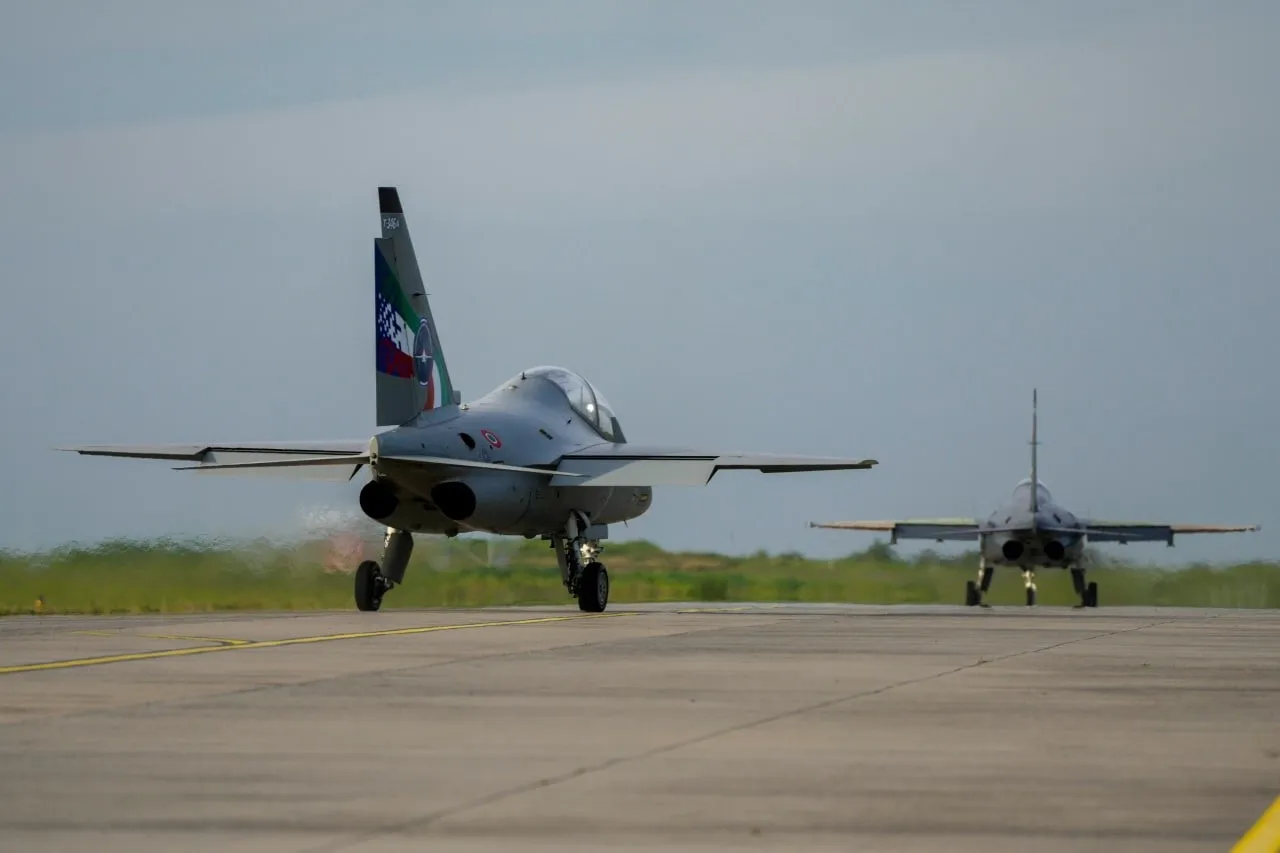
Leonardo and Baykar announced the development today. The trials took place last month at Baykar’s flight and test center in Çorlu, Turkey, and involved a Leonardo-owned M-346 Fighter Attack variant and a Kizilelma UCAV. An Italian Air Force T-346A, the trainer version of the M-346, was on hand as chase aircraft.
T-346A and M-346FA taxi out for a sortie during the K-SWARM trials. Leonardo
During the flight-test campaign, the Kizilelma completed its taxi and takeoff autonomously. It then autonomously joined the M-346 in formation. At this point, the two-person crew in the jet assumed full control of the Kizilelma.
The Kizilelma used so-called Smart Fleet Autonomy algorithms developed by Baykar’s Hardware-in-the-Loop (HIL) Laboratory for the trials.
Once ‘handed over’ to the M-346, the pilots in the jet made use of a newly developed and fully integrated avionics suite to command different formations. Via a crewed/uncrewed computing system, the Kizilelma performed different maneuvers and formations, including position changes, separations and rejoins. These were executed autonomously by the drone, with the M-346 pilots only responsible for providing the initial commands.
The M-346FA as used in the K-SWARM trials. Leonardo
What was described as an advanced radio-frequency data exchange system was used to share all data between the platforms.
The Kizilelma/M-346 trials in Çorlu were the first live phase of Leonardo and Baykar’s K-SWARM program, which focuses on developing interoperability between crewed and uncrewed aircraft. The companies refer to this as crewed/uncrewed teaming (CUC-T), but it’s also referred to by other names, including manned-unmanned teaming (MUM-T), or collaborative combat teaming.
TWZ was provided the opportunity to experience the M-346FA firsthand during a visit and demonstration flight at the Beech Factory Airport in Wichita, Kansas:
We Fly Aboard The M-346 That Could Become The Navy’s Next Jet Trainer
Whatever the term, the ambition is similar: to have future fighter pilots go into battle accompanied by drones under their control, ready to fire weapons, gather intelligence, jam communications, or serve as decoys.
Baykar and Leonardo helped accelerate the start of these crewed/uncrewed teaming trials by first running simulated missions, including using an M-346 full-mission simulator in Venegono, Italy, and the Leonardo product capability and concept laboratory, or PC2LAB, in Turin. This meant that algorithms, as well as tactics and procedures, could be tested in the virtual realm first.
The Kizilelma’s rapid rise to prominence as a fighter-like UCAV has been notable, and there have been some impressive milestones along the way.
A top view of a Kizilelma UCAV. Baykar Baykar
In general, the Kizilelma is one of only a few fighter-type air combat drone projects to have resulted in hardware. The development of the Kizilelma began as long ago as 2013, although the project was only revealed to the public in July 2021, when conceptual studies were presented.
Kizilelma was flown first — very briefly — in December 2022, as you can read about here. That milestone came only weeks after the Kizilelma’s emergence for ground testing.
The UCAV is claimed to be supersonic (at least in later versions), have a degree of reduced-observable characteristics, and be tailored for the kinds of air combat missions typically undertaken by crewed fighter jets. In particular, it is eyed as being a drone companion to Turkey’s next-generation TF Kaan crewed fighter. In its definitive form, the drone is powered by a single Ukrainian-made Ivchenko-Progress AI-322F turbofan delivering close to 10,000 pounds of thrust with afterburner.
A next set of K-SWARM tests is planned for the coming months, with more complexity and additional functions. The companies say these will require greater levels of situational awareness and assets working together ‘as one’ toward mission objectives. Further details, including how enhanced situational awareness will be achieved, were not disclosed, but it should be noted that the Kizilelma has already been tested with a Toygun electro-optical sensor and targeting system, as well as an active electronically scanned array (AESA) radar.
Ultimately, however, the K-SWARM program aims to harness AI technology to enable uncrewed systems to incrementally shift from remote piloting to autonomy, suggesting that, in future trials, the Kizilelma will autonomously conduct more complex missions and maneuvers on the command of the M-346 pilots. At all times, those human pilots will maintain full control and decision-making, the companies say.
A UCAV operating under the control of a crewed tactical jet represents a major milestone for Turkey, placing it among a very small group of countries pursuing this advanced capability. Publicly, such crewed-uncrewed teaming has largely been confined to experimental efforts in the United States and China. We meanwhile know a lot about what the United States has been doing in the “white world” in this regard, and it is now only accelerating its CCA efforts, while it is clear that China has also prioritized it.
A view from the backseat of an L-39 Albatros light jet being used as a drone controller in a Skunk Works test. Note the touch-screen type user interface. Lockheed Martin
Russia has also reportedly flight-tested its S-70 Okhotnik UCAV with a crewed Su-57 Felon fighter, but there is no confirmation about the degree of collaboration achieved. Last year, meanwhile, the U.S. Air Force demonstrated an MQ-20 Avenger drone being controlled by a pilot in an F-22 Raptor, during a mock mission.
Given the current surge in interest in collaborative combat aircraft (CCAs), the joint trials by Baykar and Leonardo also appear especially well-timed.
To take just one European country, Germany currently has a stated requirement for an operational CCA to be fielded before the end of this decade. While the Kizilelma might not necessarily be in the running for that, the AI technology that it is now demonstrating could be of considerable interest to a variety of export customers.
The Kizilelma during earlier taxi trials. Baykar
Meanwhile, the Kizilelma, like other Turkish defense products, comes with the advantage of being free from the restrictions imposed by the U.S. International Traffic in Arms Regulations (ITAR) guidelines. ITAR serves to limit the transfer of defense and military technologies and services — especially the more sensitive ones — to certain countries. Already, Turkey has leveraged its drone developments to secure major arms sales to a variety of countries for which these kinds of capabilities would otherwise be out of reach — in both technological and political terms.
The opportunity for Turkey to offer for export the Kizilelma in concert with the high-end TF Kaan, or the lower-end Hürjet light combat aircraft, would put it in a unique position, at least in Europe. The same platforms could also be supplied with integrated weapons options, providing another significant advantage.
Turkish light fighter trainer made its first flight in 2023. TAI screencap TAI screencap
As for Leonardo, the M-346 has recorded some notable sales, with the combat-optimized Fighter Attack version also gaining increasing traction. Meanwhile, through its stake in Eurofighter, the Italian firm may well be looking forward to offering these ‘drone commander’ capabilities to the multirole fighter. As we have discussed only recently, the collapse of the pan-European Future Combat Air System (FCAS) effort means that CCA capabilities are even more in the spotlight, including efforts to team UCAVs with advanced fourth-generation platforms like the Eurofighter Typhoon.
A rendering from Airbus of manned-unmanned teaming with Typhoon fighters, a type that is also on order for Turkey. Airbus
For Baykar and Leonardo, demonstrating that the Kizilelma can be commanded from an M-346 is an important achievement, but scaling that capability to different aircraft, larger formations, and increasingly autonomous mission execution will ultimately determine whether K-SWARM becomes an operational capability rather than simply a technology demonstrator. It should also be remembered that while the autonomy engine and AI agent are critical parts of an effective fighter-CCA teaming concept, it is unclear how developed these technologies are in the K-SWARM experiments. After all, just controlling the UCAV is one thing, but having the drone do much of the thinking while the pilot gives approvals and basic directions is the key. The companies have also proposed developing these technologies further to achieve ‘swarming,’ which presents an even greater challenge in this context.
However, with demand for affordable force multipliers continuing to grow and air forces looking for ways to increase combat mass without buying ever more expensive crewed fighters, a UCAV that can combine with a crewed combat aircraft further demonstrates the rapid pace of advances in Turkey’s burgeoning drone capabilities.
To get a better sense of how this project came together so quickly, the challenges it faced and the tradeoffs that had to be made, we spoke with Jason Lambert, President of Intelligence, Surveillance and Reconnaissance (ISR) at L3Harris, the company that performed the conversion. During the interview, he gave us some unique insights into this highly visible and often controversial effort.
Jason Lambert (L3Harris)
Some of the questions and answers have been edited for clarity.
Q: Can you give us an overview of L3Harris’s role in this program?
A: It’s an honor to talk about this monumental and generational event. L3Harris worked in conjunction with the Air Force to deliver the first VC-25B — a 747-8I that the U.S. government received as a gift from Qatar. We had the opportunity to work on that aircraft for a 10-month period, with pre-staged employees operating on a 24/7, three-shift structure to convert it into what was unveiled on Friday: the new Air Force One.
The new VC-25B bridge jet. (USAF) USAF
L3Harris, in the ISR [intelligence, surveillance and reconnaissance] business, is uniquely positioned for this type of project. We’re the world’s largest non-OEM [Original Equipment Manufacturer] integrator of aircraft. We don’t make planes from scratch — we’re not a type certificate holder like Boeing, Airbus, or Gulfstream. We take existing planes, whether commercial or military, and missionize and outfit them for specific uses. We operate the world’s largest intelligence, surveillance and reconnaissance fleet — the RC-135 Rivet Joint.
RC-135 Rivet Joint. (USAF/Staff Sgt. William Rosado)
We missionize business jets for electronic attack, ISR, and airborne early warning and control missions, including a series of special mission aircraft, some of which are classified. And then, of course, the head-of-state mission, which we’ve been proud to be part of for many years.
We’re also the prime contractor for the Senior Leader Communication System. Any time the president is on board Air Force One, the communications system he uses to talk to his staff and to world leaders — voice, video, all content going on and off the plane — has to be secure, so state actors cannot intercept it, and it has to have the right bandwidth and latency, which is evolving as new satellite providers come online.
VC-25A. (USAF)
We have the ability to broker and work with multiple providers to ensure that the system is 24/7 ready whenever the president needs it. And when he’s on that plane, he’s not just the commander-in-chief — he’s the head of state, representing the country internationally. The president spoke to that directly when he talked about the livery and how this plane looks. Our team is just very, very excited to have converted this aircraft into what is now the first VC-25B.
In conjunction with the modification work, we were also asked to help build out a training program and a sustainment program — not just for this specific aircraft, but for the VC-25B fleet overall. On the training side, the Presidential Airlift Group had been flying the legacy 747. The 747-8I is a very different aircraft — it’s much larger — so we worked with two companies to address that. We leased an aircraft from Atlas Air for a period of time, and we purchased a plane from Lufthansa out of their commercial fleet to serve as a dedicated flight trainer, so the Presidential Airlift Group could learn how to fly the platform.
You can see video of one of those Lufthansa 747-8is below:
Lufthansa Boeing 747-8i D-ABYG, one of two aircraft slated to be sold to the U.S. Air Force, visited LAX during the Airline Videos Live broadcast from the H Hotel on December 14th, 2025. Lufthansa plans to sell both 747-8i aircraft in 2026. pic.twitter.com/IxsB55Kz8h
We also built a one-to-one scale mockup of the aircraft interior and placed it on the hangar floor at Joint Base Andrews. It was an exact replica of the layout — monuments like bulkheads, walls, doors, tables, and chairs in full-scale configuration, along with the galleys — so the flight crew supporting the president could practice and learn how to operate this aircraft before ever flying it. There were multiple training touchpoints built around that, and then, of course, the sustainment portion: spare parts, engineering support, everything needed to keep that aircraft ready whenever the president needs it. All of that infrastructure was built out in advance — not just for this plane, but to support the entire VC-25B fleet, which will include more aircraft to follow.
US President Donald Trump speaks in front of the new Air Force One, gifted to him by Qatar, in a hangar at Joint Base Andrews in Maryland on June 19, 2026. (Photo by Brendan SMIALOWSKI / AFP) BRENDAN SMIALOWSKI
Q: How did this all come about? Was there a requirement for a bridge Air Force One aircraft prior to the Trump administration’s second round? How did it all come into being and why?
A: In the first administration, a deal was signed with the Air Force and Boeing to build the VC-25B. That program has been delayed significantly by years, and its budget overrun by billions. You have that event taking place. The aircraft weren’t ready for the president’s use coupled with the fact that the VC-25A — the legacy aircraft — are 35 years old. They’re starting to have — there’s not a safety risk, there’s an operational risk in terms of what happens on planes, given their, I’ll just say, their usage. And so the president and the Air Force wanted to have a solution… given that the VC-25Bs are delayed further and the VC-25As are starting to — I’ll say show some age in terms of their availability. Again, there’s only two of those VC-25As and so one is usually in for depot-level maintenance. In fact, at present, I have one of them in my facility.
VC-25A. (USAF/Josh Plueger) USAF/Josh Plueger
The other one came back from the G7 summit recently, the president flew on that. And then of course the second one is in for maintenance. It was at Boeing’s facility at San Antonio for several months, getting upgraded, and then it’s in our facility right now for paint. That leaves the president with one VC-25A asset that, from an operational availability perspective, is not probably what it should be, given the age of the plane. So the Air Force approached us with a solution potential on how we could potentially go find a bridge to create when the VC-25Bs that are under contract with Boeing would be ready, and this was the solution.
A rendering of a future US Air Force VC-25B Air Force One jet. (Boeing) Boeing
Q: Can you provide any insights into what it took to get the work on the VC-25B done in just 10 months? Can you tell the story of how it all came together and why L3Harris was tasked with the job?
A: I’ll start with the L3Harris piece. Our core competency and what our uniqueness is, is taking existing platforms — military or commercial — and modifying them based on whatever the customer’s mission set might be. For example, we take tankers and convert them into the RC-135 Rivet Joint, the country’s premier intelligence, surveillance and reconnaissance platform. We take a legacy G550 business jet and convert it to the EA-37B Compass Call electronic attack plane. We take a Global 6500 from Bombardier and are converting it to ARES X, an airborne early warning and control offering for the Republic of Korea.
An EA-37B Compass Call. (USAF)
We do that because we’ve got an engineering team of 2,600 people on our total workforce of 7,600. Within the ISR business, 5,600 are cleared, so we have the ability at scale and size to do classified things very quickly and detect classified things with a large group of people that can do things in our facilities. So there is a lot of technical talent, but with that we also have around 100 people in our ODA. The ODA is essentially the delegated organization from the FAA, where we in our business can do work on behalf of the FAA for certification work.
So, the way we operate it, we’ll take an existing platform or an existing plane, and rather than have to certify it from scratch, we have to just certify the modifications that we’re doing for it. So you’re always starting with this baseline, and then you’re doing a modification on top of that baseline that enables us to go far quicker than if we were to start with a brand new aircraft from scratch.
So all that aircraft missionization competency is one of the reasons I think of why we were asked. The second reason is we’re the prime contractor for what’s called the Senior Leader Communication System, and so that communication system is used for every aircraft that’s utilized for Air Force One. So, in the 747s that the president flies — when he’s flying on a 757 — those are known as the C-32s — we have the hardware and the software on that aircraft, as well as the services that connect from satellite links, ground links, and be able to manage the communications content that the president and his staff are using in flight anywhere in the world.
A stock picture of a C-32A wearing the blue-over-white livery. (USMC)
Think of it like a help desk always online when the president or his staff are flying to ensure that the connections are live and working. If there’s an issue, we have redundancies within the system that we can ensure that it’s working, and most importantly, in addition to it being resilient, it’s also secure when that phone call gets made, or that video feed gets made from POTUS to a world leader, we’ve got to make sure that adversaries aren’t listening in. And so it’s fully secure, and that’s the core competency of what L3Harris does. So, combining those two pieces together, along with our legacy of supporting the Air Force One fleet, and we’re a logical choice to be asked to go take on this work and we are really uniquely positioned to do that because of the nature of the things that we do.
Q: What is the difference between this aircraft and Boeing’s VC-25Bs that are still in modification?
A: They both started as a 747-8i so from a platform perspective, they are the same. I can’t talk too much about the VC-25B program. What I can say for this one is, while this is an 8i, it had a very nice interior that came in from the Qataris. So we had a place to start from.
One of the first things we have to do on this aircraft, in conjunction with the U.S. government, is ensure it is safe. There was a lot of content and buzz on blogs and whatnot about is the aircraft secure? Is there anything that we wouldn’t want coming in on the aircraft? Somebody could listen in, something like that. And I can assure you that was very effectively managed to the highest degree. Experts from the U.S. government, experts from L3Harris, experts in cyber security, electronic warfare, ensured that every square inch of that plane was clean, not only on the exterior but interior of the plane and all systems within. So I’ll say, there’s just electronic scrubbing, is how I would describe it, to ensure that it was safe and secure. Frankly, that work took place even before we were able to do any real work on the plane.
In this February 15, 2025 photograph, a Qatari Boeing 747 sits on the tarmac of Palm Beach International airport after US President Donald Trump toured the aircraft on February 15, 2025. (Photo by ROBERTO SCHMIDT / AFP) ROBERTO SCHMIDT
Once we started work on the plane, it had an existing interior, much of which we kept and maintained. One of the things that we had to do for the speed of this program – because the goal was to get it done before the country’s Independence Day.
We were excited that we delivered early to that commitment. There are things that would have driven the schedule, so for example, changing the room structure, changing the hard walls, or any of the bulkheads, things like that, that would drive a significant amount of schedule risk associated. So those were some of the big rules that said, ‘okay, we’re not going to change any of what I call monuments,’ but there’s things within those that we did have some flexibility to change.
For example, there’s some things that came in on the interior that, while they look very nice, they weren’t really representative of what would be fitting for the U.S. president, and so we did make some modifications into some of the fit and finish in terms of the leather and wood and other aspects of what the aircraft looks like to really be fitting for the president’s mission.
✈️🇺🇸 The ultra-luxurious Boeing 747-8, which former U.S. President Donald Trump is set to receive as a gift from the Qatari emir’s family, is poised to become the most valuable present ever given to the United States by a foreign government.
— Savchenko Volodymyr (@SavchenkoReview) May 12, 2025
Q: When the original VC-25B contract was put forward, we were told the USAF, the White House and Secret Service carefully picked the exact requirements needed to execute the mission, and they would come at great cost. Some were even dropped to save money, like aerial refueling. Clearly, those standards had to change drastically to make this Bridge aircraft happen. What requirements were relaxed and what features were omitted in order to meet its aggressive budget and timeline requirements?
A: That’s classified, so I won’t be able to take that one, but I’d prefer that you direct that question back to the US Air Force.
Q: The one thing we get asked about the most is if this aircraft is hardened against electromagnetic pulse and has the command and control capabilities of the full-up VC-25B? Can you speak about that?
A: I think that’s one I’ll also have to defer back to the Air Force.
Q: What about survivability? The VC-25As are covered with infrared countermeasures and missile detection systems, and there are clearly capabilities that are less obvious. This aircraft doesn’t appear to have a similar outfit. How was survivability factored into its abbreviated modifications?
A: Survivability of the aircraft was something that was absolutely thought of, but I can’t comment on the specific systems on the aircraft yet. That’s one I’ll have to direct you back to the Air Force.
Common Infrared Countermeasures (CIRCM)
Q: If this aircraft is good enough to carry the commander-in-chief in the Air Force One role, why does the USAF need to spend over $4 billion on the other two aircraft? Why can’t the USAF just procure two aircraft in this configuration?
A: It’s an interesting question. Good question for the Air Force, but that’s an interesting question.
Q: Will this aircraft be able to fly all missions that the current VC-25As can? What about trips overseas to less peaceful regions?
A: I can comment about [the recent speech Trump gave at Andrews Air Force Base]. I know he’s intending to use this aircraft for international travel. I think he mentioned that there’d be an upcoming flight to Turkey coming up in the future. So specific locations, that’s always done through the White House planning group and White House Presidential Airlift Group. But the intent is this aircraft would be used overseas very much. The president talked about it in his speech about how it really is comparative to some of the other head-of-state aircraft.
It’s 18 feet longer for one so it really is a large aircraft. In fact, the hangar at [Joint Base Andrews] JBA that we were in on Friday for the ceremony was actually custom-built for the VC-25B because of the size of these planes.
In addition, of course, when you see the livery up close, it’s just amazing in terms of what it looks like. So I think the intention is for the president to use this overseas. He definitely signaled that directly on Friday.
Trump unveils new Air Force One, a $400 million jet gifted by Qatar | full video
Q: But are there any preclusions about where it can go at all? To a less peaceful region? Is there any place that it can’t go that the other aircraft can?
A: That’s probably a question for the Air Force.
Q: The aircraft belonged to another country’s government. What had to happen in order to make sure a foreign aircraft like this is free from potential nefarious tampering, bugs and other potential threats? Did every single component have to be examined?
A: What I can say is that a team of experts from the U.S. government, in terms of cyber security, did an immense amount of work on this aircraft, in conjunction with the L3Harris team, to ensure that this aircraft was fully safe from that environment, that threat, and that threat has been fully mitigated. I can say that. How they do it is classified.
The new VC-25B Bridge jet practices touch and go landings on June 22, 2026, in Joint Base Andrews, Maryland. (Photo by Andrew Leyden/Getty Images) Andrew Leyden
Q: The interior in this thing cost massive amounts of money when the Qataris outfitted it. It was one of, if not the most incredible VIP aircraft on earth before becoming a VC-25B. What unique elements of its interior and other VIP features were kept and what was changed?
A: The majority of the wall structure was all kept so any movements of monuments was maintained. That aircraft has 10 restrooms, and those were all kept and maintained. The fit and finish, in terms of some of the materials that were selected, those in some cases were upgraded in certain areas of the aircraft, and that’s both in terms of some of the leather and some of the wood grain veneers and things to be able to not only be esthetically pleasing, but fitting for the U.S. president.
You can imagine that the president is on the aircraft and could be doing interviews with the media. The presidential seal was of course incorporated in a few areas.
Inside the new VC-25B Bridge jet. (Dan Scavino via X) President Donald Trump inside the new VC-25B Bridge jet. (Dan Scavino via X)
We had to put in an air stair, which is for when the aircraft is landing in a remote location, it doesn’t have to — like on Friday — there’s the trucks that come up with the stairs to be able to get on and off the plane. This has one that can self deploy, so that was a fairly sizable structural mod to be able to integrate that into the aircraft and go through the certification process with it, but it works flawlessly. It’s actually a phenomenal piece of mechanical engineering. So yes, there were a couple of minor things that had to happen in conjunction with the other systems we had to incorporate.
U.S. President Donald Trump pumps his fist after touring the inside of the newest aircraft in the presidential fleet at Andrews Air Force Base on June 19, 2026 at Joint Base Andrews, Maryland. (Photo by Alex Wong/Getty Images) Alex Wong
Q: Were these requests from the president himself?
A: I’ll say that the president didn’t see the aircraft personally until last Friday, but his staff was directly engaged in the project throughout the entire project. Air Force leadership engaged throughout the entire project. We had senior Air Force visitors, including the Secretary and Chief of Staff of the Air Force, Gen. [Dale R.] White [The Pentagon’s Director of Critical Major Weapon Systems], and representatives from the White House military office visit us on several occasions to check on the progress of the aircraft, and then also to make design decisions.
I think about even one like the paint scheme, and the president had to sign off on the paint scheme, had to sign off on — if you look at the back of the tail — the wavy flag versus the fixed rectangular flag. The president personally had to approve all those items.
And one of the things the Air Force did an amazing job of helping us with is getting those decisions made as early as possible on the program, and then once the decisions were made, keeping the configuration frozen. In any type of aircraft development program, regardless of the customer, being able to make those design decisions and have them… locked in the front end allows the team to actually go do the procurement and engineering and work on the aircraft without having to do a lot of change.
In this example, we had an objective, along with our Air Force customer, to get this plane delivered before the 4th of July, 2026 for the country’s 250th birthday. And the team rallied behind that mission set to do that. And we could never have done it without the level of collaboration we had with the Air Force, working the requirements back with the president.
You can see the VC-25B bridge jet practicing touch-and-goes at Andrews in the following video:
Q: What new features does this aircraft’s interior have that the VC-25As don’t?
A: Well, the upgrades. So the comm suite is all the latest content gear, so that’s an upgrade. The aircraft is larger than the 25A, again about 18 feet larger, and so I’ll just say the size and just the finish of the aircraft.
Also, VC-25As were commissioned under President Reagan, and then first used under President Bush, and so while they are nice planes, they’re 35 years old, and so you can imagine just how those will wear a bit over time.
And yes, they’ve been kept upgraded, but this is a modern, beautiful aircraft, and I can say, when I saw it for the first time, it was the most beautiful aircraft I’ve ever seen. It’s — and if you have the chance someday to walk on the inside — or as things will start being released, you’ll see that on the interior also. It’s just absolutely gorgeous. And we had a great plane, a great point to start from, but again, we did have to do some things to make it fitting for the U.S. president.
Q: The paint job has gotten more press than anything else. What was the process of painting the highest profile aircraft on earth?
A: That’s a great question. So the first was the color selection, and as the president said on Friday, he was asked what color would he like. ‘So I like the American flag,’ and so trying to incorporate the American flag into the color scheme, we did a couple of things.
One, we took a legacy fuselage of a business jet. We do a lot of work on missionized planes to use it as essentially a test to be able to get the white and the red and the blue and the gold. How we apply those, took a lot of practice. We essentially painted a scrap airframe to be able to do the testing. The second thing we did is our team actually painted a C-32 — which is actually the first aircraft that was ever released with this paint scheme — a 757 called C-32A.
So we painted that and released that and actually got to show it live to the senior leaders of the Air Force before it was delivered, and it came out great as well.
One of the U.S. Air Force’s C-32A VIP aircraft wearing the new red, white, and blue paint scheme, spotted in Greenville, Texas (@tt_33_operator) @tt_33_operator
But what we learned from that plane was the sequencing. So the plane’s got essentially the white on top, the red, the gold stripe, and the navy on the bottom. We actually learned through that process of painting the 757 of how to optimize the sequence, and essentially the navy coming last.
That’s navy that’s on the undercarriage of the fuselage, when you see it up close, you can actually see your reflection in it. It’s just so beautiful. But we did learn that because it’s on the lower end of the aircraft, and we’re doing continual maintenance and masking of the aircraft, it was optimal to do that in the last part of the sequence, and so that’s something that we took forward when we painted the 747.
Q: What will happen to the original VC-25As? What about this new aircraft once the full VC-25Bs enter service in a couple of years?
A: Great question. The aircraft are still flying, they’re not decommissioned, per se. You know, there were some announcements made when the aircraft flew a mission coming back from the G7 summit and landed at Andrews last week, but those aircraft are still available for use.
But in terms of the operational availability of what you expect, there’s two aircraft that are again, 35 years old, and so they’re not going to have that same uptime as what you’d expect out of the new planes. But in terms of a plan for usage, that’s probably a good question for the Air Force.
Q: What happens with this aircraft once the full VC-25Bs enter service in a couple years?
A: I think that’s also probably a good question for the Air Force. They’ll have the better purview for that. In terms of L3Harris’s role with this right now, our role is to sustain it and make sure that this aircraft is always ready to fly whenever the president needs it. And then I think what we just demonstrated again with this plane is we have the capability from both a scale with our size of what we have from our workforce, our classified workforce, the speed in which we can operate, and the unique expertise to do very high-demanding aircraft modernization and integration roles. We’re ready to step up whenever the Air Force asks us to.
There’s many things we do for them on a regular basis. This one gets a lot of press. It is actually interesting because it was — up until this past week — essentially an unacknowledged special access program, meaning we couldn’t talk about it. So all this was happening essentially in the dark, and you go home and talk to your family at night, and they ask, ‘why are you stressed out,’ or ‘why do you look so tired,’ and you can’t say. And that’s just the nature of what we do in the classified world.
We’re doing this in several other examples across other customers we work with. This one just finally was able to come into the light, and we’re just thankful to be able to talk about it, but we want to do more.
Q: What lessons can L3Harris and the USAF learn from this program?
A: What we learned from this program is when the U.S. government has an immediate or incredibly urgent need, when the Department of War and industry work together as a partnership and team with leadership alignment all the way to the top, you can do anything. And it totally changes the game in terms of what’s been thought of as — I’ll say a historically slow and sluggish defense acquisition process. We at L3Harris and the Air Force just proved that that entire paradigm can shatter if you put the right leaders together to be able to do an impossible mission, and you do it as one team.
Weekly insights and analysis on the latest developments in military technology, strategy, and foreign policy.
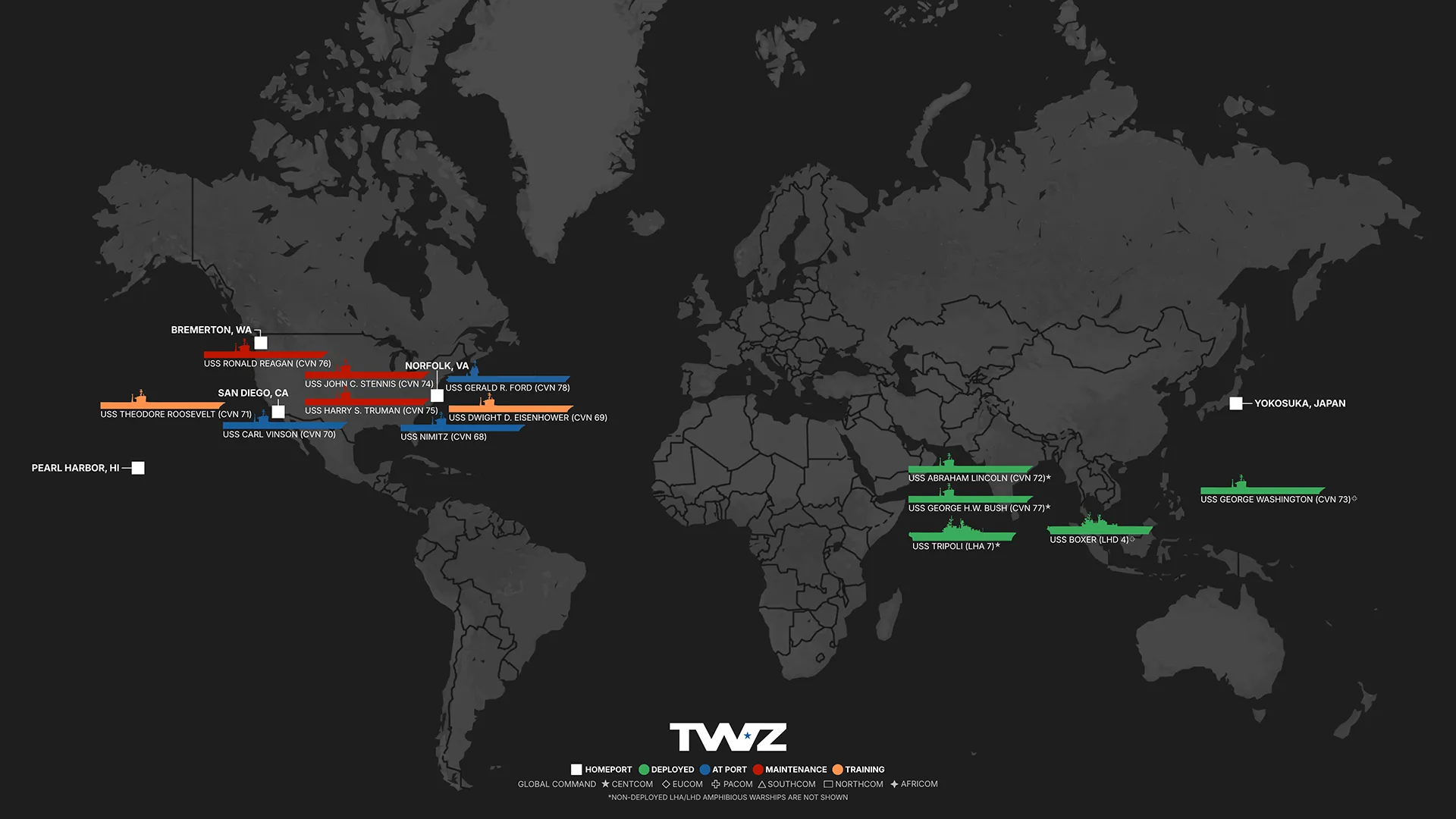
Here’s TWZ’s weekly carrier tracker monitoring America’s flattop fleet, including deployed Carrier Strike Groups (CSG) and Amphibious Ready Groups (ARG), using publicly available open-source information. Check out last week’s report here.
The United States lifted its naval blockade of Iranian ports, U.S. Central Command (CENTCOM) announced on Friday, following the execution of the Islamabad Memorandum of Understanding in Versailles. While the blockade is over, the fate of the blockade forces – and future U.S. force posture in the region – remains unclear. The “plan is to keep the current force posture” during negotiations, a U.S. official said on background, but “the agreement contemplates the reduction in military forces in the region upon the agreement of a final deal.”
Major U.S. naval assets, including two aircraft carriers, continue operating “in the general area to support freedom of navigation,” according to a press release from CENTCOM. “U.S. forces remain present and vigilant to ensure all aspects of the agreement with Iran are adhered to, obeyed, and in full force and effect.” USS Abraham Lincoln, now deployed for more than seven months, was conducting flight ops in the CENTCOM area of responsibility (AOR) as of June 21, and USS George H.W. Bush was last spotted on June 20.
A U.S. Sailor oversees flight operations from the tower aboard USS Abraham Lincoln (CVN 72) as the aircraft carrier continues to operate in the Arabian Sea. pic.twitter.com/upff7YF7Hh
USS Nimitz arrived at Naval Station Mayport in Florida on June 16, marking the completion of her participation in Southern Seas 2026. “This year’s deployment marked the 11th iteration of the Southern Seas exercise since 2007, demonstrating the United States’ enduring commitment to the Western Hemisphere. Southern Seas 2026 highlighted unprecedented diplomatic and military integration, recording the highest number of Latin American leadership visits in the exercise’s history, with approximately 339 distinguished visitors embarking and 3,100 guests hosted during port visits.” Nimitz is on the final leg of a homeport shift to Naval Station Norfolk after the Navy announced a service life extension into 2027.
USS Nimitz (CVN 68) Nimitz-class aircraft carrier coming into Mayport, Florida – June 16, 2026 SRC: FB- Naval Station Mayport pic.twitter.com/DgPsu6R1lG
USS Dwight D. Eisenhower departed Norfolk on June 17 for Fleet Replacement Squadron Carrier Qualifications (FRS-CQ) and is underway in the Virginia Capes Operating Area, according to publicly available AIS data. Eisenhower is not scheduled to deploy this year, and is preparing for a deployment in early 2027, TWZ has learned.
USS Dwight D. Eisenhower (CVN 69) Nimitz-class aircraft carrier leaving Norfolk, Virginia – June 17, 2026 SRC: FB- Sean Tuttle pic.twitter.com/1lYOX670Ot
USS Theodore Roosevelt got underway on June 15 and is conducting exercises off the west coast in the U.S. 3rd Fleet AOR. The drills are meant to “bolster strike group readiness and capability” and the crew was spotted participating in firefighting drills, barricade drills, and crash and salvage training on the flight deck. While the upcoming deployment date is unknown, Roosevelt is the next carrier slated to deploy.
Power for Peace 🔱
USS Theodore Roosevelt (CVN 71) sails through the Pacific Ocean while conducting exercises to enhance strike group capability.
Our visible demonstration of warfighting readiness through operational competence is the high standard we hold ourselves to. pic.twitter.com/B88XO04n1R
— U.S. Pacific Fleet (@USPacificFleet) June 22, 2026
USS Carl Vinson is moored at Berth Lima at Naval Air Station North Island in San Diego. Over the weekend, Vinson was the centerpiece of NASCAR’s “Race the Base” event at Naval Base Coronado. “The event marked a historic collaboration between the U.S. Navy and NASCAR while celebrating the service’s enduring connection to the American people. It provided attendees opportunities to engage directly with Sailors, explore Navy capabilities, and learn about the Navy’s role in defending the nation around the globe.”
USS George Washington moored in Apra Harbor, Guam, from June 16-20, and then participated in a PHOTOEX to kick off exercise Valiant Shield 2026. Washington was pictured alongside cruiser USS Robert Smalls, destroyers USS Shoup and USS Benfold, fast-attack submarine USS Minnesota, and the Japan Maritime Self-Defense Force, including JS Kaga, JS Fuyuzuki, and JS Jingei. “Valiant Shield is a biennial, multilateral field training exercise conducted by the U.S. Armed Forces and partner nations in the Western Pacific focusing on joint, cross-combatant integration operating seamlessly across sea, air, land, and cyberspace.”
Lethal Joint Force. US Navy aircraft with CVW-5 & @USAF F-35As fly over the USS George Washington (CVN 73) Carrier Strike Group and @JMSDF_PAO units during Valiant Shield 2026 in the Philippine Sea, demonstrating multi-domain Combat Readiness. (1/2) pic.twitter.com/wzT5KHWx71
— U.S. Pacific Fleet (@USPacificFleet) June 22, 2026
Note: Positions are general approximations.Non-deployed LHA/LHD amphibious warships are not shown.
Contact the author: ian.ellis-jones@teamrecurrent.io
“Hitting customers with hidden fees is illegal. It’s not fair to draw people in with what looks like a good deal, only for them to find the real price is higher when they get to the checkout due to extra charges that can’t be avoided,” said Emma Cochrane, executive director of consumer protection at the CMA.
Goals from Nadhir Benbouali and Amine Gouiri steered Algeria to a 2-1 win over Jordan in Group J, completing their second-half comeback.
Published On 23 Jun 202623 Jun 2026
Algeria stormed back to beat Jordan 2-1 and eliminate the World Cup debutants with a match to spare on Monday thanks to second-half goals from substitute Nadhir Benbouali and Amine Gouiri.
Benbouali’s header cancelled out Nizar Al-Rashdan’s first-half opener, and Gouiri poked home in a goalmouth scramble eight minutes from time to revive Algeria’s campaign after their opening 3-0 loss to Argentina.
Recommended Stories
list of 3 itemsend of list
The victory put Algeria level with Austria on three points in Group J, while ensuring defending champions Argentina will go through to the round of 32 as group winners following their 2-0 win over the Austrians earlier on Monday.
Algeria fans celebrate in the stands after Amine Gouiri scores their second goal [David Gonzales/ IMAGN IMAGES via Reuters]
Algeria coach Vladimir Petkovic put veteran attacker Riyad Mahrez in his starting 11 after benching him against Argentina, and he proved influential in breaking down a Jordan team that defended in numbers and was quick on the counterattack.
Mahrez blew an early chance when he ran onto a sublime lofted pass from Hicham Boudaoui but lost the ball under his feet. He then latched onto another long ball from Boudaoui to be one-on-one with Yazeed Abu Laila, but the Jordan goalkeeper got a hand to his chipped shot.
Jordan, who lost their opener 3-1 to Austria, went ahead in the 36th minute following clever link-up play and a touch of fortune when Algeria midfielder Ramiz Zerrouki turned the ball over in defence.
Mousa Al-Tamari’s shot went sideways to Al-Rashdan, who drilled home first-time into the bottom right corner.
Jordan’s Nizar Al-Rashdan celebrates scoring their first goal [Carlos Barria/Reuters]
Petkovic brought on Nabil Bentaleb and Benbouali at the break, and Algeria lifted their intensity.
Surrounded by Jordan defenders, Benbouali rose highest to meet a Mahrez corner and sent a glancing header bouncing into the corner of the net in the 69th minute.
Thirteen minutes later, Algeria took the lead from another setpiece.
Substitute Anis Hadj Moussa curled in a corner kick and a deflection off Jordan goalscorer Al-Rashdan allowed a gleeful Gouiri to poke in the winner.
Algeria players celebrate after the match [Carlos Barria/Reuters]
For Algeria, it sets the stage for a grudge match against Austria, 44 years after the “Disgrace of Gijon”.
At the 1982 World Cup, Austria and West Germany were alleged to have colluded in a group match against each other to ensure both would advance at the expense of eliminated Algeria.
West Germany and Austria denied wrongdoing and FIFA cleared them.
Algeria can take a measure of revenge against Austria when they face them in Kansas City on Saturday, while Jordan face Argentina and superstar Lionel Messi, who has scored all five of their goals at the World Cup so far.
A number of the papers pick up on the jibe from a Tory MP who shouted “He’s not the Messiah” as Andy Burnham returned to the Commons. “Messiah without a Mandate” is the Daily Mail’s headline, pointing to the fact that Burnham may become prime minister without being challenged. The Telegraph suggests Burnham’s response, that he was “just a naughty boy”, is one reason why Labour likes him. “Compared with Keir Starmer, he’s the king of bants,” says the paper’s columnist Tim Stanley.
Senegal fought back until stoppage time but couldn’t draw level and must beat Iraq for a chance to progress.
Published On 23 Jun 202623 Jun 2026
Erling Haaland scored his second World Cup brace in a row as Norway beat Senegal 3-2 at New York New Jersey Stadium to secure their place in the last 32.
Norway substitute Marcus Holmgren Pedersen struck late in the first half, before Haaland doubled the lead shortly after the break in the Group I fixture on Monday.
Recommended Stories
list of 4 itemsend of list
Ismaila Sarr cut the deficit for Senegal, only for Haaland to punish more slack defending as Norway progressed to the knockout rounds with a game to spare, despite a late consolation from Sarr.
Manchester City forward Haaland now has four goals in two games at the tournament, hot on the heels of Lionel Messi’s double earlier in the day, which carried him to a record 18 World Cup goals. Not to be outdone, Kylian Mbappe scored another brace, too, as France beat Iraq 3-0.
Norway have lost only once in their last 18 matches and will take on France in a compelling battle for top spot in the group in Boston on Friday.
Senegal must beat Iraq, who are also without a point, in their final game to stand a chance of avoiding an early exit.
Led by the unstoppable Haaland, who increased his astonishing international goals tally to 59 in 52 games, Norway recorded back-to-back wins at the World Cup for the first time.
They added weight to the belief they can do serious damage at these finals with a dominant display against a Senegal side that paid heavily for their errors.
Norway quickly set the tone as Kristoffer Ajer’s header forced Senegal goalkeeper Edouard Mendy into a terrific save with his legs at a corner, but they lost full-back Julian Ryerson to injury early on.
Captain Martin Odegaard skied over an inviting cut-back from the right for Norway, as Nicolas Jackson looked to be Senegal’s most dangerous threat.
Mendy again came to Senegal’s rescue with a superb block to deny Odegaard, after Haaland cushioned down Antonio Nusa’s chipped cross into the box.
But Mendy allowed Pedersen’s low drive to creep under him after a dreadful mistake from skipper Kalidou Koulibaly gave the ball to the replacement right-back on the edge of the box.
Haaland rolled against the post from a tight angle after Mendy got in a tangle, but he made amends three minutes into the second half as Norway sliced Senegal apart on the counterattack.
Odegaard surged upfield and slid a pass through to Haaland, who buried an emphatic finish past Mendy to add to the two goals he scored in Norway’s opening 4-1 victory over Iraq.
Senegal clawed their way back as Sarr showed great composure to poke home after tumbling to the ground following a clever flick into the area by Sadio Mane.
However, Koulibaly was at fault once more, failing to clear as Haaland steered a volley in off the crossbar from Patrick Berg’s cross, delighting Norwegian fans, who provided a colourful backdrop with their viral, rowing chant.
Norway fans perform their traditional rowing celebration in the stands [Dylan Martinez/Reuters]
Mory Diaw came on for the injured Mendy in goal, but only a headed goal-line clearance from Pathe Ciss prevented Oscar Bobb from netting Norway’s fourth.
Sarr’s second of the night set up a tense finish, but Norway held on to join France in the next round and leave Senegal’s hopes hanging by a thread.
Sarr also became the first Senegalese player to score at two different World Cups.
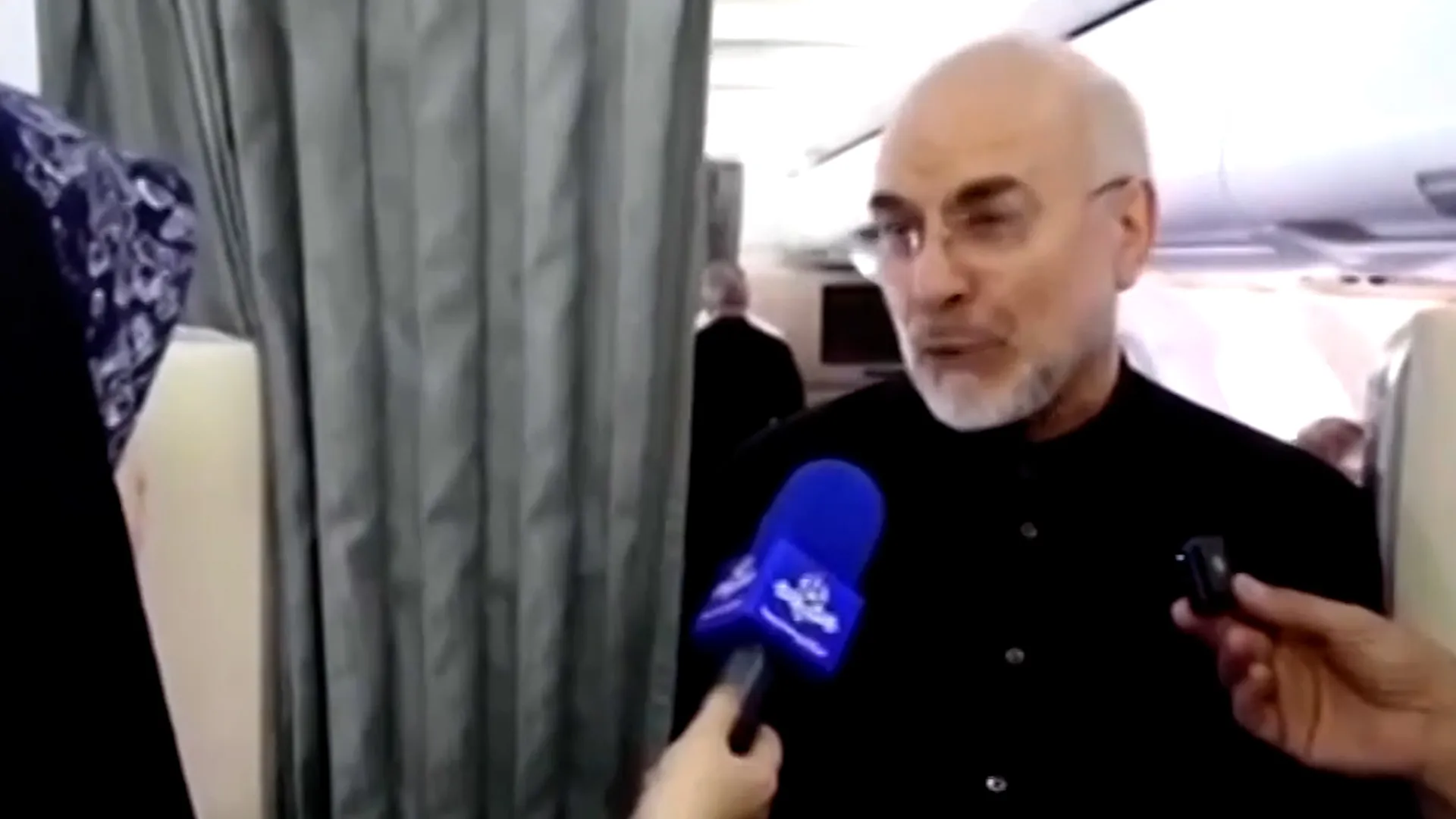
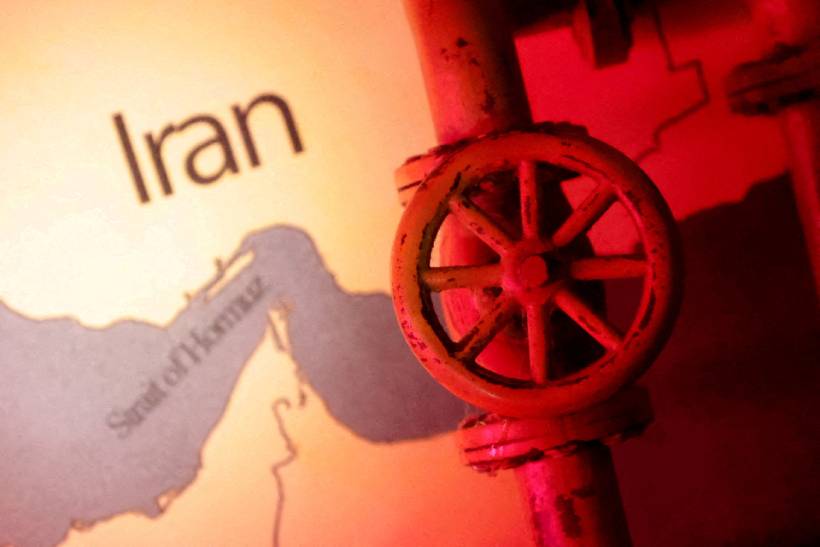
Iran’s chief negotiator said the Strait will never return to the way it was before the war, but also said Iran will fully comply with international law. He spoke while on his way back from first round talks with the US in Switzerland.
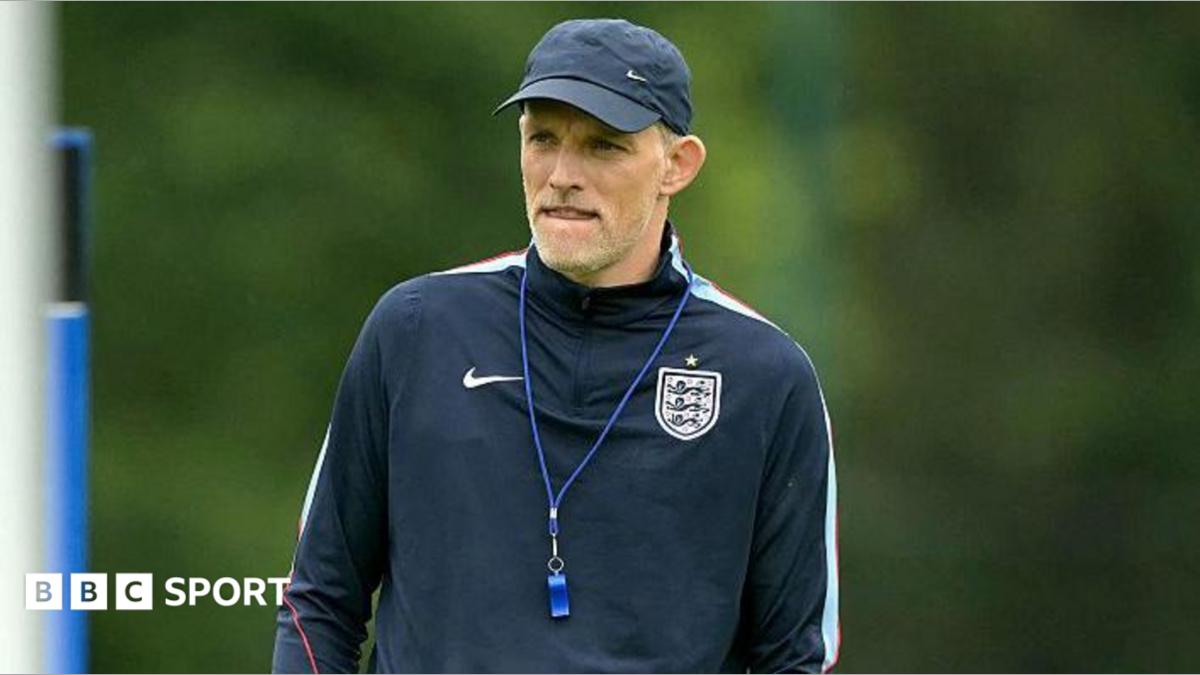
England head coach Thomas Tuchel has admitted he is not a fan of the controversial hydration breaks being used at the World Cup.
Tuchel, 52, was speaking before England’s second Group L game against Ghana in Boston on Wednesday (21:00 BST), where rain and cool temperatures are forecast.
England’s fans started the now customary jeering of the breaks when play was stopped in the first half of their opening game against Croatia in Dallas, despite the match being played under a roof in an air-conditioned arena.
The breaks will continue to be used in Boston irrespective of the weather, but Tuchel expressed his reservations about them and the impact they are having on games.
“I think that it interrupts and changes the identity of a football match much more than I thought. I had hydration breaks before when it was really, really hot and needed, but they were shorter,” Tuchel said.
“They were shorter and they were just in a few matches. In the interests of fairness here, it is now done in every match for every team.
“It breaks the match almost in four quarters. And I think it changes the characteristic of the match more than I thought.”
It was first celebrated in 1934. The date marks the key victory in the 1919 Battle of Võnnu (near Cesis, Latvia) when the Estonians and their allies defeated German forces who were seeking to re-establish Baltic-German control over the region.
The battle was part of the 1918-1920 Estonian War of Independence, a sovereignty struggle resulting as part of the fall out of World War I when the main adversary of the then newly independent Estonia was Russia. The war was won by Estonia, resulting in the Treaty of Tartu.
Today, Victory Day serves as a day of remembrance to commemorate the contributions of all Estonians in their struggle to regain and retain their independence.
Victory Day is followed by the Midsummer Day (St, John’s Day) celebrations on June 24th.
Egypt’s team will return to their training base in Spokane, about 450km east of Seattle, after rejected flight.
Published On 22 Jun 202622 Jun 2026
The Egyptian FIFA World Cup team’s plan to fly directly from Vancouver to Seattle ahead of their final group match against Iran was declined by local security officials, coach Hossam Hassan has said.
“The security authorities refused the team’s request to stay in the city of Seattle as planned after the New Zealand match in the World Cup, and therefore the team’s delegation will return to the city of Spokane,” Hossam said in a statement released by the Egyptian Football Association on Monday.
The Egyptian team had submitted a request to remain in Seattle this week, but will now return to their training base in Spokane, about 450km (280 miles) east of Seattle, according to a report by the Daily Mail.
Egypt posted their first-ever World Cup victory on Sunday over New Zealand in Vancouver. Mohamed Salah scored as Egypt rallied from a goal down to win 3-1.
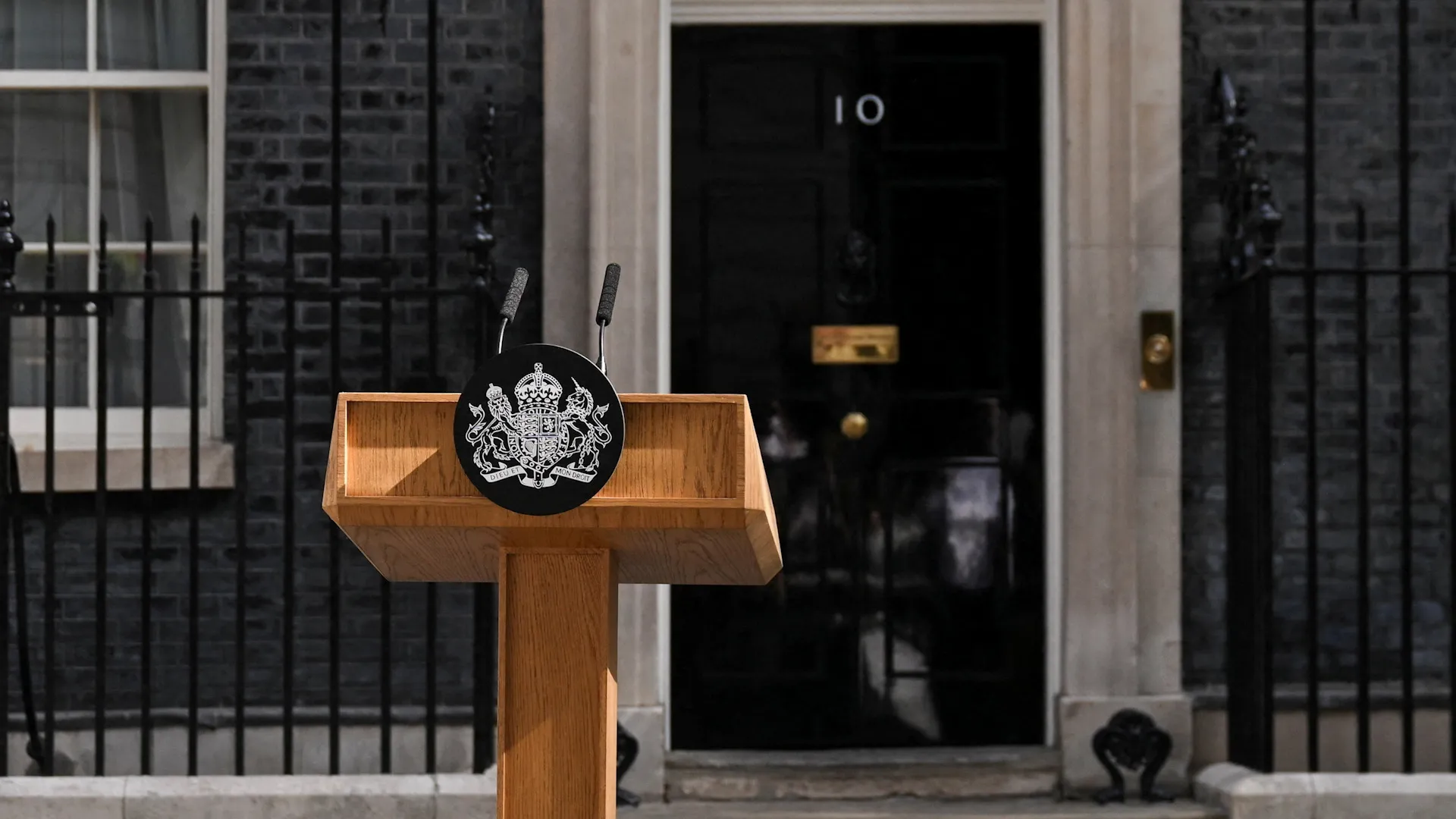
‘Too much change, but nothing really is changing for the better.’ Londoners shared mixed reactions to Keir Starmer’s resignation, voicing frustration over living costs, political turmoil and unfulfilled promises.
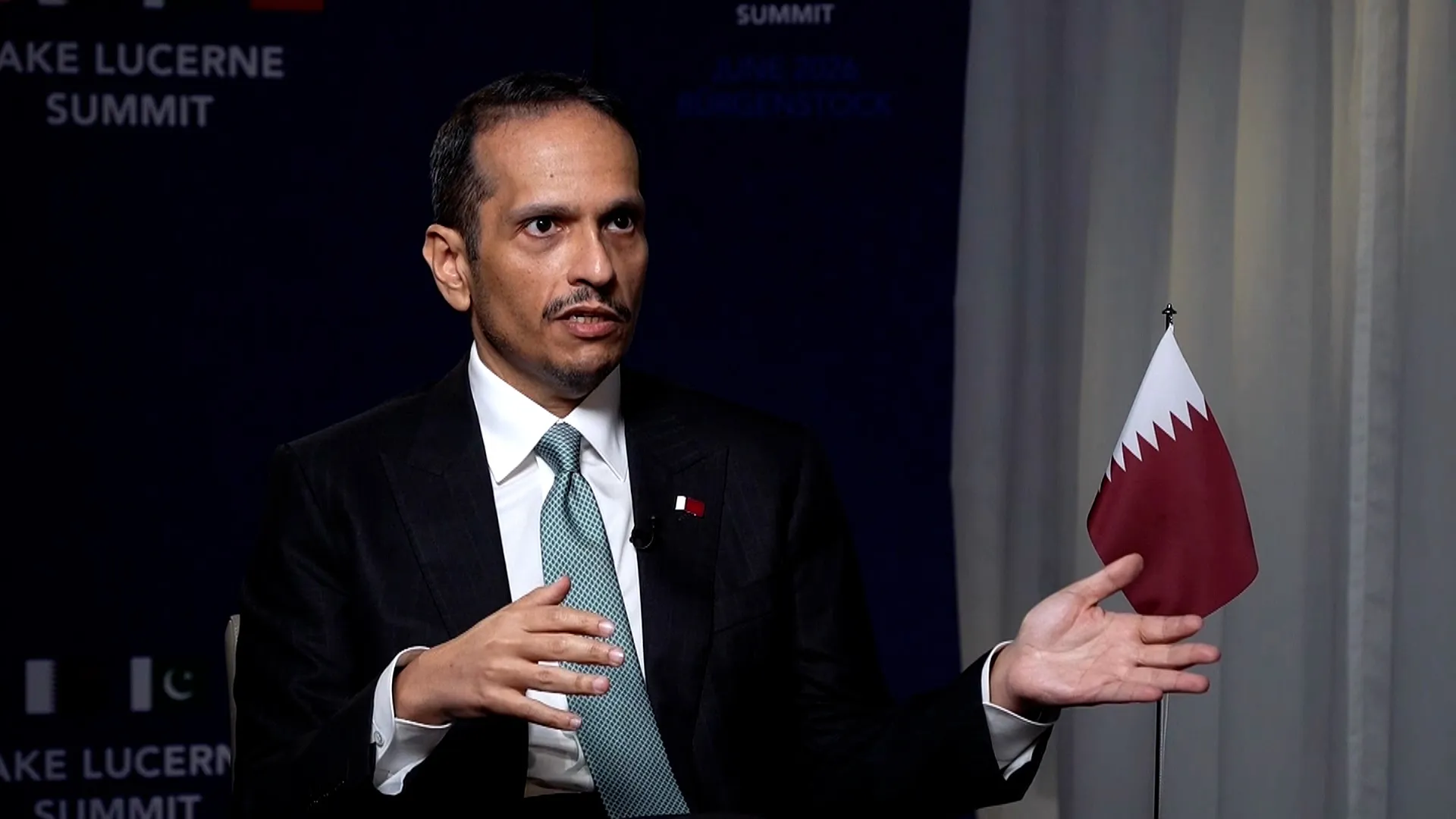
Qatar’s PM Sheikh Mohammed bin Abdulrahman Al Thani told Al Jazeera that safeguards have been put in place to prevent US-Iran negotiations from regional escalation, including tensions in Lebanon and the Strait of Hormuz, stressing diplomacy and respect for agreements.
Messi scores twice to become all-time leading scorer in men’s World Cup history as Argentina reach knockout rounds.
Published On 22 Jun 202622 Jun 2026
Lionel Messi became the leading scorer in World Cup history as the captain struck twice to give Argentina a 2-0 win over Austria and send the champions into the last 32.
The player widely regarded as the greatest of all time pounced late in the first half in Texas on Monday with a trademark left-footed finish after neat build-up play.
Recommended Stories
list of 4 itemsend of list
The predatory goal added to his hat-trick in Argentina’s opening match to make it 17 in total at the World Cup.
The 38-year-old then sealed the match deep in injury time after a scramble in the box, as he outfoxed four defenders who lined up to keep the ball out.
It should have been even better for Messi, who missed a penalty early on, stunning a fiercely pro-Argentina 70,649 crowd at the air-conditioned home of the Dallas Cowboys.
With both sides knowing a win would put them into the knockout rounds with a game to spare, Lautaro Martinez was brought down in the box, sandwiched by two Austrian players.
Referee Amin Mohamed gave a penalty after a VAR intervention, and a wall of noise went up as Messi stepped forward on nine minutes.
But his run-up was slow and his weak effort off target, dragging it wide.
For all his brilliance, Messi – who turns 39 on Wednesday – is surprisingly poor from the penalty spot by his standards.
He also saw his spot-kick saved by Wojciech Szczesny in a 2-0 win over Poland at the 2022 World Cup, where Argentina went on to be champions, and missed at the 2018 tournament.
In the 19th minute Messi had a clear sniff at goal, only for Austria captain David Alaba to steal the ball off his toes at the last moment as he danced through on goal.
Alaba denied Messi again just after the half-hour mark, blocking his goalbound shot with goalkeeper Alexander Schlager stranded.
Ralf Rangnick’s Austria, who beat debutants Jordan 3-1 in their opener, were content to sit back. They did not have a shot on target in the first half.
Messi celebrates scoring Argentina’s first goal [Troy Taormina/Reuters]
Messi makes history
And then the came the big moment, Messi sweeping in on 38 minutes after being set up by Facundo Medina, with Thiago Almada cleverly letting the ball run through his legs to leave Argentina’s talisman all on his own and the goal gaping.
The Argentina fans, who greatly outnumbered their Austrian counterparts, rose to acclaim their hero.
Messi had equalled Miroslav Klose’s all-time mark of 16 World Cup goals when hitting a hat-trick in a 3-0 win over Algeria in the holders’ opening game.
Lionel Scaloni’s side failed to build on their lead, and the second half drifted, neither side creating much.
If anything, Austria threatened slightly more, but Argentina goalkeeper Emiliano Martinez was only once seriously troubled.
And then up popped Messi to have the last word at the death.
Julian Alvarez’s initial attempt was saved by Schlager but the rebound was worked to Messi who, after seeing his first shot blocked, pounced to drive in a low strike from six yards out that confirmed the points.
Protesters urged the Venezuelan government to bring rice imports under control. (Archive)
Caracas, June 22, 2026 (venezuelanalysis.com) – Hundreds of rice producers took to the streets on Sunday in Calabozo, Guárico state, to urge the Venezuelan government to take action against agribusiness imports and price fixing.
The “tractorazo” saw local campesinos block one of the state’s major highways with tractors, trucks, and other heavy machinery carrying Venezuelan flags and signs with some of the main demands. Local sources estimated turnout at over 300.
“We are here on behalf of the producing states in Venezuela with a struggle that is just and urgent,” local spokesman José de la Cueva stated. “We urge the Venezuelan government to review its public policies so that national production is not destroyed.”
De la Cueva and other speakers emphasized the need for authorities to control imports, establish fair prices, and implement subsidies for the production of rice and other crops. Protesters contended that they have no conditions to compete with imports from countries where rice is subsidized, including Brazil and the US.
Rice growers, particularly in agricultural states Barinas, Cojedes, Guárico, and Portuguesa, have warned for months that agroindustry conglomerates have been importing massively since February.
According to agribusiness lobby FEDEAGRO, Venezuela has received more than 300,000 tons of imported rice in recent months. The amount is nearly half the 683,000 reportedly produced in the Caribbean country in 2025.
FEDEAGRO has complained that the exoneration of tariffs and import taxes is benefiting imported rice against national competitors. Imports of other crops such as corn have also skyrocketed, with purchases from the US more than tripling in the first five months of 2026 when compared to the previous year.
Meanwhile, campesinos have repeatedly denounced that local agribusiness corporations outright refuse to receive rice crops or attempt to impose prices as low as US $0.30 per kilo. Venezuela’s Agriculture Ministry established $0.40 per kilo following meetings with agroindustry and campesino representatives. Producers complained that the price did not take into account rising production costs and risked driving them bankrupt.
Alongside the latest street mobilization, rural organizations have likewise called for a boycott of Venezuela’s main agrifood conglomerates, including Polar and Iancarina.
The Small Farmers Movement (MPA), one of the organizations that took part in Sunday’s protest, issued a statement stressing that the defense of Venezuelan production and food sovereignty should become a “national unity cause.”
“This protest is about the survival of thousands of campesino families,” the text read. “It denounces the cruelty of agroindustry bosses whose voracious appetite for profit is fueling imports during harvest seasons to drive prices down.”
The MPA added that the growth of agricultural output in recent years has been based on “the exploitation of the work of thousands of campesinos” and urged social movements not to stay silent when it comes to the reality of small-scale producers in the countryside.
The campesino organization urged the government to adopt a series of measures, including implementing fair prices for rice and corn, reviewing import policies during harvest seasons, and investigating the “cartelization of prices” by agroindustry oligopolies. The MPA also called attention to the lack of credit for small-scale producers, which leaves them vulnerable to predatory lending agreements, including ones where they are offered seeds and inputs in exchange for a significant percentage of the harvest.
In a recent meeting with campesinos in Guárico state, National Assembly President Jorge Rodríguez vowed to investigate the issue of rice imports, claiming he was not previously aware of it. He urged agribusinesses to respect the previously agreed $0.40 price and called on public banks to reactivate credit for rural producers.
In recent years, with the economy heavily constrained by US sanctions, the Nicolás Maduro government moved to liberalize agricultural policies, transferring state competencies to the private sector, including provisioning of seed and fertilizer inputs and access to tractors. Fuel subsidies have also been phased out, with small-scale producers highlighting it as a major factor driving up production costs.
The disruption caused by the Iran war and the temporary closure of the Strait of Hormuz has prompted countries around the world to reconsider their energy security strategies. Governments that suffered economic damage from supply shortages and soaring prices are now looking to build larger strategic oil and gas reserves, potentially creating demand for hundreds of millions of additional barrels over the coming years.
Hormuz Crisis Exposed Energy Vulnerabilities
The near-total closure of the Strait of Hormuz disrupted around one-fifth of global oil and liquefied natural gas supplies for more than three months, sending shockwaves through energy markets.
Brent crude prices surged to nearly $120 a barrel as import-dependent economies faced rising fuel costs, supply uncertainty and growing inflationary pressures.
Emergency Reserves Helped Stabilize Markets
One of the key factors preventing a deeper energy crisis was the release of strategic petroleum reserves.
All 32 members of the International Energy Agency agreed to a record release of 400 million barrels from emergency stockpiles, helping offset supply disruptions and ease pressure on global markets.
The coordinated action highlighted the importance of maintaining large emergency reserves during major geopolitical crises.
China’s Stockpile Strategy Pays Off
China emerged from the crisis in a stronger position than many other major importers due to its massive strategic petroleum reserve.
The country has spent years building what is believed to be the world’s largest emergency oil stockpile, estimated at more than one billion barrels.
During the conflict, China significantly reduced crude imports, allowing it to avoid buying large volumes of oil at elevated prices and limiting the economic impact of the disruption.
Import-Dependent Economies Face Greater Pressure
Countries with limited strategic reserves faced much greater challenges.
Several Asian economies relied on emergency measures such as:
Fuel subsidies
Consumption restrictions
Reduced working hours
Energy-saving programs
The experience exposed vulnerabilities among countries heavily dependent on Middle Eastern energy supplies without substantial emergency stockpiles.
India Eyes Larger Strategic Reserves
India is among the countries most likely to expand its emergency storage capacity.
As the world’s third-largest oil importer and one of the fastest-growing energy consumers, India currently holds reserves covering only a small fraction of its import needs.
Meeting International Energy Agency standards would require hundreds of millions of additional barrels of storage capacity.
Recent plans under consideration suggest New Delhi is moving toward expanding its strategic petroleum reserve network.
Pakistan Also Reviewing Energy Security
Pakistan, which relied heavily on Middle Eastern oil and LNG imports before the conflict, is also examining ways to increase domestic storage capacity.
The Hormuz disruption underscored the risks facing countries that lack sufficient reserves to absorb prolonged supply interruptions.
Australia Moves to Address Reserve Gap
Australia, long criticized for failing to meet International Energy Agency stockpile requirements, has announced plans to significantly increase fuel reserves.
The move reflects a broader recognition that energy security has become a national security issue amid growing geopolitical uncertainty.
Europe Considers Additional Gas Storage
Europe already maintains extensive gas storage infrastructure to manage winter demand.
However, the war has renewed concerns about dependence on imported LNG, particularly as the region increasingly relies on overseas suppliers.
Additional government-controlled gas storage facilities may become part of future energy security planning.
Gulf Producers Seek Overseas Storage
The lessons of the Hormuz disruption are also influencing major energy exporters.
National oil companies in the Gulf are exploring opportunities to expand storage capacity outside the region to maintain export flexibility during future crises.
Additional overseas storage could help producers continue serving customers even if regional shipping routes face disruptions.
Oil Market Impact
The expansion of strategic reserves worldwide could create substantial new demand for crude oil and refined products.
At the same time, emergency reserves that were depleted during the conflict will need to be replenished.
Together, reserve rebuilding and new storage programs could generate demand for roughly one billion barrels over the coming years, providing support for global oil prices even if overall supply growth remains strong.
What It Means for Global Energy Security
The Hormuz crisis has reinforced a lesson many governments learned during previous energy shocks: supply security can be just as important as supply availability.
Countries are increasingly viewing strategic reserves not as emergency assets to be used rarely, but as a core component of economic and national security planning. The crisis has also demonstrated how large stockpiles can provide governments with flexibility to reduce imports during periods of market stress and extreme prices.
Analysis
The most significant consequence of the Iran war may not be the temporary spike in oil prices but the long-term shift in how countries manage energy security. The conflict exposed a clear divide between nations with large strategic reserves and those forced to absorb the full impact of supply disruptions. China emerged as a model for energy resilience, while countries such as India and Pakistan were reminded of their vulnerability to geopolitical shocks.
If governments follow through on plans to expand storage capacity, the global oil market could gain a major new source of structural demand. Reserve construction and replenishment may help absorb future supply surpluses and provide a floor for prices, particularly during periods of weak economic growth.
At the same time, larger strategic stockpiles could make future oil shocks less severe. Countries with substantial reserves are better positioned to reduce imports during crises, dampening demand spikes and limiting extreme price volatility. In the longer term, the world could emerge from the Hormuz crisis with a more resilient energy system, but one in which strategic stockpiles play a much larger role in shaping oil demand, trade flows and government policy.
The move, expected under the MoU, comes as Vice President JD Vance says there’s a ‘good foundation’ for a final deal.
Published On 22 Jun 202622 Jun 2026
The United States has partially lifted sanctions on Iranian oil exports following “encouraging” talks over ending their conflict.
The US Treasury issued a 60-day sanctions waiver on Monday, paving the way for the production, delivery and sale of Iranian oil to the US. The move came amid positive reports from mediators and the US vice president regarding talks in Switzerland between Washington and Tehran aimed at establishing a full peace deal.
Recommended Stories
list of 4 itemsend of list
The waiver is a condition included in the 60-day memorandum of understanding (MoU) signed by Tehran and Washington on June 17.
US Treasury Secretary Scott Bessent said that the US-Iran talks have been “productive” and that several of the MoU’s stipulations are moving ahead.
“Iran has committed to free and open transit in the Strait of Hormuz and to permit International Atomic Energy Agency (IAEA) inspectors into their country,” he wrote on social media. “As part of the framework, Treasury has issued a temporary 60-day general licence authorising the production, delivery and sale of Iranian oil.”
The licence lasts through August 21 and covers crude oil, petrochemical products, or petroleum products of Iranian origin. It permits Iranian oil to be imported into the US but does not authorise transactions involving US-sanctioned North Korea or Cuba, or Russian-occupied Ukraine.
There was no immediate response from Iranian government officials.
Oil prices continued their recent decline upon news of the waiver, with Brent crude dropping over 3.5 percent to $77.7 per barrel.
‘Good foundation’
Bessent’s announcement came as US Vice President JD Vance voiced optimism over the Tehran-Washington discussions in the Swiss resort of Burgenstock.
“We laid a very good foundation for a successful final deal,” he told reporters and shrugged off yesterday’s online tit-for-tat between President Donald Trump and top negotiator Mohammad Bagher Ghalibaf.
“Social media threats that they would walk out” did not come to fruition,” Vance noted. “There was a little bit of threatening, there was a little bit of whining, but at the end of the day the talks continued and we made great progress.”
Mediators at the talks said that Washington and Tehran had made “encouraging progress” at the first round, according to Reuters.
The vice president did not give a firm timeline for when nuclear inspections may start, but said conversations with the IAEA could happen as soon as Monday.
The US has said that the need to prevent Iran from developing a nuclear weapon was a key driver of its attacks, and demands that Tehran reopen its nuclear facilities to international oversight.
Iran has persistently rejected accusations that it seeks to develop a nuclear arsenal, insisting that its nuclear programme is purely for civilian purposes.
A busier waterway
Shortly before the waiver announcement, the Strait of Hormuz was reported to be seeing an increase in oil and gas tanker traffic, just two days after Iran said it would close the waterway again because of Israeli attacks on Lebanon.
Four Qatari-operated LNG tankers headed into the Gulf and through the strait on Monday, while two supertankers – which can carry up to four million barrels of crude oil – entered. One indicated its destination as the Iraqi port of Basra, according to ship tracking data.
Two smaller crude oil tankers, laden with just under two million barrels, sailed out of the waterway and into the Gulf of Oman on Monday, according to MarineTraffic.
“While daily transits remain below the 125 crossings prior to the Iran hostilities, the trend is positive,” said the shipping firm Clarksons.
The US has maintained that the strait was never closed for the second time and tracked 55 merchant ships loaded with more than 17 million barrels of oil on Saturday.
Ukraine says facility a ‘critical component’ in defence production as local Russian authorities confirm attack.
Published On 22 Jun 202622 Jun 2026
Ukraine’s military has said it struck a plant producing electronics for missiles in Russia’s Voronezh region, as well as the Dubna satellite communications centre in the Moscow region.
In a statement on Telegram on Monday, the Ukrainian General Staff said it had used air-launched cruise missiles to hit the plant in Voronezh, which it described as a “critical component” in Russia’s defence production.
Recommended Stories
list of 4 itemsend of list
Alexander Gusev, the Voronezh governor, said a production plant was damaged and three people were injured in the attack, without specifying the nature of the facilities.
Gusev said in a post on Telegram that air defence forces had destroyed several high-speed targets in the skies over Voronezh and warned residents of the danger of missile attacks.
The Ukrainian military also said it struck Russia’s Dubna satellite communications centre in the Moscow region, adding that heavy smoke was observed at the site and the extent of the damage was being assessed.
Eighty-four drones headed for Moscow were downed in the past 24 hours, the city’s Mayor Sergei Sobyanin said on Telegram.
He said emergency services had been dispatched to the areas where drones were downed, but gave no further information.
The airports of Sheremetyevo, Domodedovo and Vnukovo, as well as Zhukovskiy near the Russian capital, had temporarily suspended flights, the aviation watchdog said separately.
In total, Russian defence systems downed 301 drones overnight, local news agencies said, citing the Ministry of Defence. That tally included Russian-occupied areas of Ukraine.
The latest raids follow a drone attack that hit Moscow’s sole oil refinery last week, in one of the biggest air attacks on the city since Russia’s full-scale invasion of Ukraine in 2022.
Teenager killed in Ukraine
In Ukraine, authorities said a Russian drone attack early on Monday in the Sumy region killed a 13-year-old boy, his 36-year-old father, and his 73-year-old grandmother.
Regional governor Oleh Hryhorov said the 73-year-old was the mother of the man’s roommate.
Russian drone attacks in the southeastern Ukrainian city of Zaporizhzhia overnight and early on Monday killed two people and injured a further seven, Ukraine’s emergency services said.
Russia also hit the southern Odesa region with an Iskander ballistic missile on Sunday evening, killing one and injuring three people, regional governor Oleh Kiper said on Telegram. Vehicles and fuel storage tanks caught fire after the strike hit an agricultural facility, he said.
Elsewhere, the city of Sevastopol in Russian-annexed Crimea cancelled all open-air public events on Monday and will keep streetlights switched off, its governor, Mikhail Razvozhayev said, as he called on people to curb electricity usage.
Russian drones hit a Turkish dry cargo vessel, the Victress, which was sailing under the Panamanian flag, Ukraine’s navy said.
Deputy Prime Minister Oleksii Kuleba said a 58-year-old Egyptian cook was killed and eight other crew members, including Turkish and Indian nationals, had to evacuate on a lifeboat.
The leaders of Europe’s top military powers will meet on Wednesday in Berlin to discuss the Ukraine conflict and an upcoming NATO summit.
Chancellor Friedrich Merz plans to host the leaders of France, Britain, Italy and Poland, a spokesman said Monday, adding that the resignation announcement of British Prime Minister Keir Starmer had not changed those plans.
The occupied West Bank has seen sustained and rising violence amid ongoing conflict between Israelis and Palestinians. Israeli forces conduct frequent raids in Palestinian areas, saying they are targeting militants and preventing attacks, while Palestinians and rights groups accuse the military of using excessive force and say settlement expansion is a major driver of instability. Israeli settlements in the territory are widely considered illegal under international law by the United Nations and most countries, though Israel disputes this and views the West Bank as disputed land with historical and security significance. In recent months, tensions have further escalated with increased restrictions on Palestinian movement near settlements, alongside a rise in attacks by both Palestinians against Israelis and by settlers against Palestinians, contributing to a cycle of violence that continues to claim lives on both sides.
Fatal Shooting Near Beit Ummar
The incident took place near the town of Beit Ummar in the southern West Bank.
Palestinian news agency WAFA identified the victims as teenagers aged 15 and 19. A relative confirmed their ages to Reuters.
Israeli Military’s Account
The Israeli military said its forces confronted three individuals who were throwing fire bombs and burning tyres near the settlement of Karmei Tzur.
According to the military, soldiers opened fire, killing two of the individuals and wounding a third.
Reuters could not independently verify the military’s account.
Third Teenager Hospitalized
WAFA reported that the third person involved in the incident was hospitalized in stable condition.
The Palestinian Red Crescent Society said the wounded individual is 15 years old.
Tensions Remain High in the West Bank
Israeli forces regularly conduct raids across the occupied West Bank and have tightened movement restrictions around Palestinian communities located near Israeli settlements in recent months.
The territory has experienced heightened tensions amid ongoing violence involving Israeli security forces, settlers and Palestinians.
Dispute Over Settlements
The international community, including the United Nations and most countries, considers Israeli settlements in the West Bank illegal under international law and a major obstacle to the creation of a Palestinian state.
Israel rejects that position, describing the territory as disputed and citing historical Jewish ties to the area.
Rising Violence
According to United Nations data, at least 57 Palestinians have been killed this year in incidents involving Israeli settlers and security forces.
At the same time, Palestinians have carried out attacks against Israeli soldiers and settlers in the West Bank, including at least one fatal attack in 2026, according to Israel’s Shin Bet domestic security service.
What’s Next
The Israeli military is expected to continue reviewing the circumstances of the shooting, including whether the individuals posed an immediate threat and how the confrontation unfolded near the settlement.
Palestinian officials are likely to pursue diplomatic and legal avenues, as similar incidents in the West Bank are often raised with international bodies, including the United Nations, amid ongoing disputes over the use of force by Israeli troops.
On the ground, the incident is likely to add to already high tensions in the West Bank, where Israeli raids, settlement activity, and Palestinian attacks have contributed to a cycle of violence in recent months.
Further clashes cannot be ruled out, particularly in areas close to settlements where movement restrictions and security operations have intensified.
International attention on West Bank violence is also likely to continue, especially as reported fatalities involving Palestinians and Israelis have remained elevated this year, keeping pressure on both sides amid an already fragile security situation.