TODAY

Discover the latest happenings and stay in the know with our up-to-date today news coverage. From breaking stories and current events to trending topics and insightful analysis, we bring you the most relevant and captivating news of the day.

Major incident declared over giant hole at Shropshire canal

Chloe Hughes,West Midlandsand

Ellen Knight,in Whitchurch

Boats have been left stricken at a canal in Shropshire

A major incident has been declared at a Shropshire canal where a giant hole has emerged, with boats either stricken in the cavity or left teetering on the edge of the drop.

Pictures appear to show that the structural integrity of a stretch of waterway in Whitchurch has given way, raising flooding fears.

Two narrowboats at the scene were said to have sunk into the hole shortly after 04:00 GMT, with one witness estimating it to be 15ft (four metres) deep. Water looks to have drained away completely.

Fifty firefighters were deployed to the scene. There are no reports of casualties, according to police.

The Canal and River Trust has blamed the issue on what it described as an “embankment failure”.

Scott Hurford, area manager at Shropshire Fire and Rescue Service said crews received reports at about 04:20 that a canal bank had collapsed – and that there were large volumes of water in surrounding fields.

People who live on boats near to where the incident unfolded said they were first alerted to a problem by unusual noises, with some in the area fearing an earthquake, according to one report.

The sounds became so bad that people knew to flee their vessels, a witness told the BBC.

West Mercia Police has asked people to avoid the scene, located in an area of Whitchurch called Chemistry.

Shropshire Fire & Rescue Service Aerial photo of canal, with two narrowboats lying in a sunken stretch of the canal. A field to the left is covered in water below what looks like a landslipShropshire Fire & Rescue Service

One boat was left perched on the edge of the canal, above the collapsed section

Mr Hurford told BBC Shropshire: “The information we’ve had back is that the canal bank failed and that’s what put the emergency call in.

“The water from the canal has leaked out of the canal into the surrounding fields… There are up to 15 people who had to be moved out of the way to safety, and there’s a number of canal boats that have been affected, some of those have gone into the field and some are at the bottom of the canal.”

He added: “Our job is the response phase, so we’re there to save life, protect property and the environment, but we will support in the recovery phase.”

Mark Durham, the Canal and River Trust’s principle engineer, said rather than sinkhole – a term used by police earlier – and landslip, a description initially used by the fire service, neither in the circumstances quite reflected what had gone on.

He said “embankment failure” was more apt, adding the embankment in question was a man-made one, and designed to “hold the canal up, which it’s done for over 200 years”.

That changed on Monday, although it was too early, he said, to know how the embankment had failed.

He added that after recovering the stricken boats, the next steps would be examining the area and rebuilding it.

A man with a white hard hat and a yellow hi-vis jacket. he is standing next to a canal and a narrowboat

Mark Durham from the Canal and River Trust said it was an “embankment failure”

Andy Hall, a councillor in Whitchurch, said: “We’ve got two boats at the bottom of the [hole] that have fallen down, and we’ve got two boats that are teetering on the edge that could go in at any time,” he told the BBC.

“Obviously [the fire service is] going to make those safe.”

He added: “[People] thought that there was an earthquake.

“To the right, we’ve got the field which has taken probably about a million gallons of water out of the canal.”

He said that no one was on board “the two boats that went down”, adding that people on the boats “teetering over the edge” had been helped to safety by fire crews.

A woman in a black coat with her hand on a green narrowboat

Lorraine Barlow said she felt “something amiss”

Lorraine Barlow, who lives on a boat called The Singing Kettle and was moored near the site, said: “About 04:20 this morning I could feel that there was something amiss, there seemed to be a current coming from underneath the boat, and bubbling, it sounded really unusual.

“Then I was tilting to the middle of the canal, I could feel the ropes were getting tight.”

She said she left the boat and could see the fire service as well as search and rescue teams.

“There was no water on the canal,” she said.

“I was worried about the ropes and about my canal boat hanging there.

“It’s an awful thing, I was worried about the other people.”

A man with grey hair in a navy fire and rescue shirt

Firefighter Scott Hurford said about 15 people had been taken to safety

Paul Storey, who lives on a boat about 90 yards (82 metres) away from the collapse, estimated that the affected area was between 150 to 180ft (45 to 55 metres) long, with the cavity about 15ft (four metres) deep.

He said: “We were awoken at about 04:20 this morning with a crash on the boat, things were sliding out of the cabinets… We got off the boat, walked about 100 yards in front,” he told BBC Radio 5 Live.

“We could hear the breach, the rush of water was amazing… We saw a boat that had gone over the edge and was in the bottom of the breach.

“We witnessed another boat being washed away.”

He added: “Because of the noise and the crashing of the boats, and the creaking of the ropes, people knew something was going on and got off the boats as quickly as they could.”

Andy Hall Barges at the scene of a sinkhole at a canal. Trees are on both sides of the canal.Andy Hall

Police have asked people to avoid the area

Mr Hall said the fire service had since put in a flood gate to stem the flow of more water from the compromised canal.

“The most important thing is that the canal itself has been secured by fire and rescue,” he said. “Their biggest worry was that the canal was going to burst even more and flood residents in the town.”

He said that contrary to speculation on social media, there had been no bridge collapse.

In addition, the Canal and River Trust’s Mr Durham, responding to social media claims the area was checked by trust inspectors in recent weeks, said: “We have a really robust inspection scheme.

“I’ve spoken to two people that inspected that embankment today and I’m satisfied that there were no causes for any intervention or undue concern at the time, but it is something that we need to look into.”

A spokesperson for the trust said: “We will also seek to return water levels either side of the breach as soon as possible and are providing support to the boaters affected and those in the immediate area either side of the breach.”
Source link

Germany charges ex-Syrian prison guard over Assad-era abuses | Syria’s War News

Prosecutors accuse the official, named as Fahad A, of torturing dozens of prisoners in jail run by Syrian intelligence.

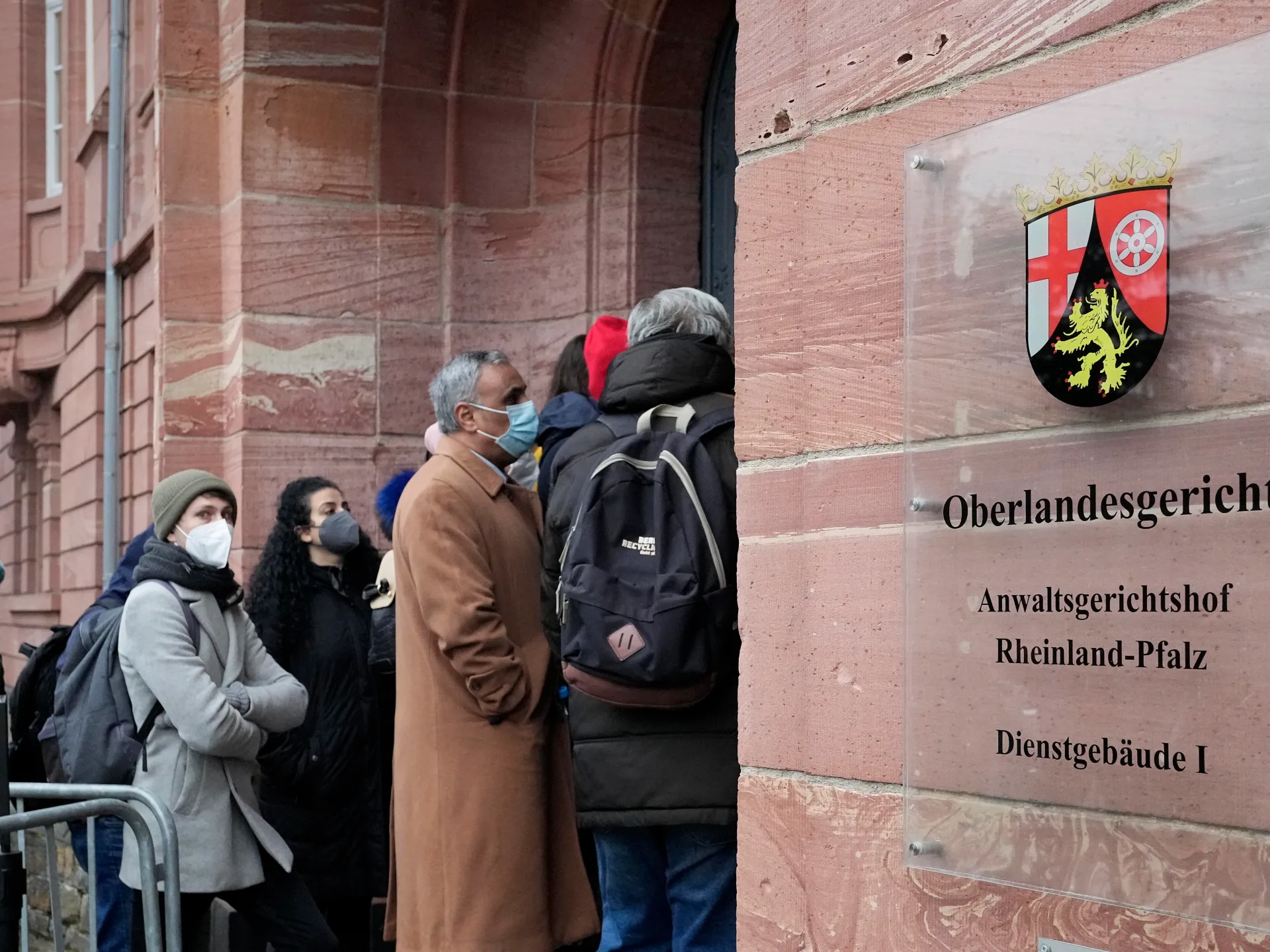
German prosecutors have charged a former Syrian security official with crimes against humanity, accusing him of torturing dozens of prisoners at a Damascus jail while ex-President Bashar al-Assad was in power.

Germany’s Federal Public Prosecutor General’s office announced the indictment on Monday, alleging the ex-prison guard, named only as Fahad A, took part in more than 100 interrogations between 2011 and 2012 in which prisoners were “subjected to severe physical abuse”.

Recommended Stories

list of 3 itemsend of list

The abuse included electric shocks, cable beatings, forced stress positions and suspensions from the ceiling, according to a statement by the prosecutor’s office.

“As ‌a result of such mistreatment and the catastrophic prison conditions, at least ‌70 prisoners died,” said the statement, noting the former guard is also charged with murder.

The official was arrested on May 27 and formally indicted on December 10.

He is being held in pre-trial detention, the German prosecutor’s office added.

Syrians have demanded justice for crimes committed under the decades-long rule of al-Assad, who was removed from power in December 2024 after a rapid rebel offensive.

The Assad regime, which was accused of mass human rights abuses, including the torture of detainees and enforced disappearances, fell after nearly 14 years of civil war.

Universal jurisdiction

In Germany, prosecutors have ⁠used universal jurisdiction laws to seek trials for suspects in crimes against humanity committed anywhere in the world.

Based on ‌these laws, several people suspected of war crimes during the Syrian conflict have been arrested in the last ‍few years in Germany, which is home to about one million Syrians.

In June, a court in Frankfurt handed a life sentence to a Syrian doctor convicted of carrying out acts of torture as part of al-Assad’s crackdown on dissent.

The doctor, Alaa Mousa, was accused of torturing patients at military hospitals in Damascus and Homs, where political prisoners were regularly brought for supposed treatment.

Witnesses described Mousa pouring flammable liquid on a prisoner’s wounds before setting them alight and kicking the man in the face, shattering his teeth. In another incident, the doctor was accused of injecting a detainee with a fatal substance for refusing to be beaten.

One former prisoner described the Damascus hospital where he was held as a “slaughterhouse”.

Presiding judge, Christoph Koller, said the verdict underscored the “brutality of Assad’s dictatorial, unjust regime”.

Source link

Syria’s government curbing once-booming Captagon industry: UN report | Drugs News

Authorities have shuttered drug factories that were cash pipeline for former ruler Bashar al-Assad, UN report.

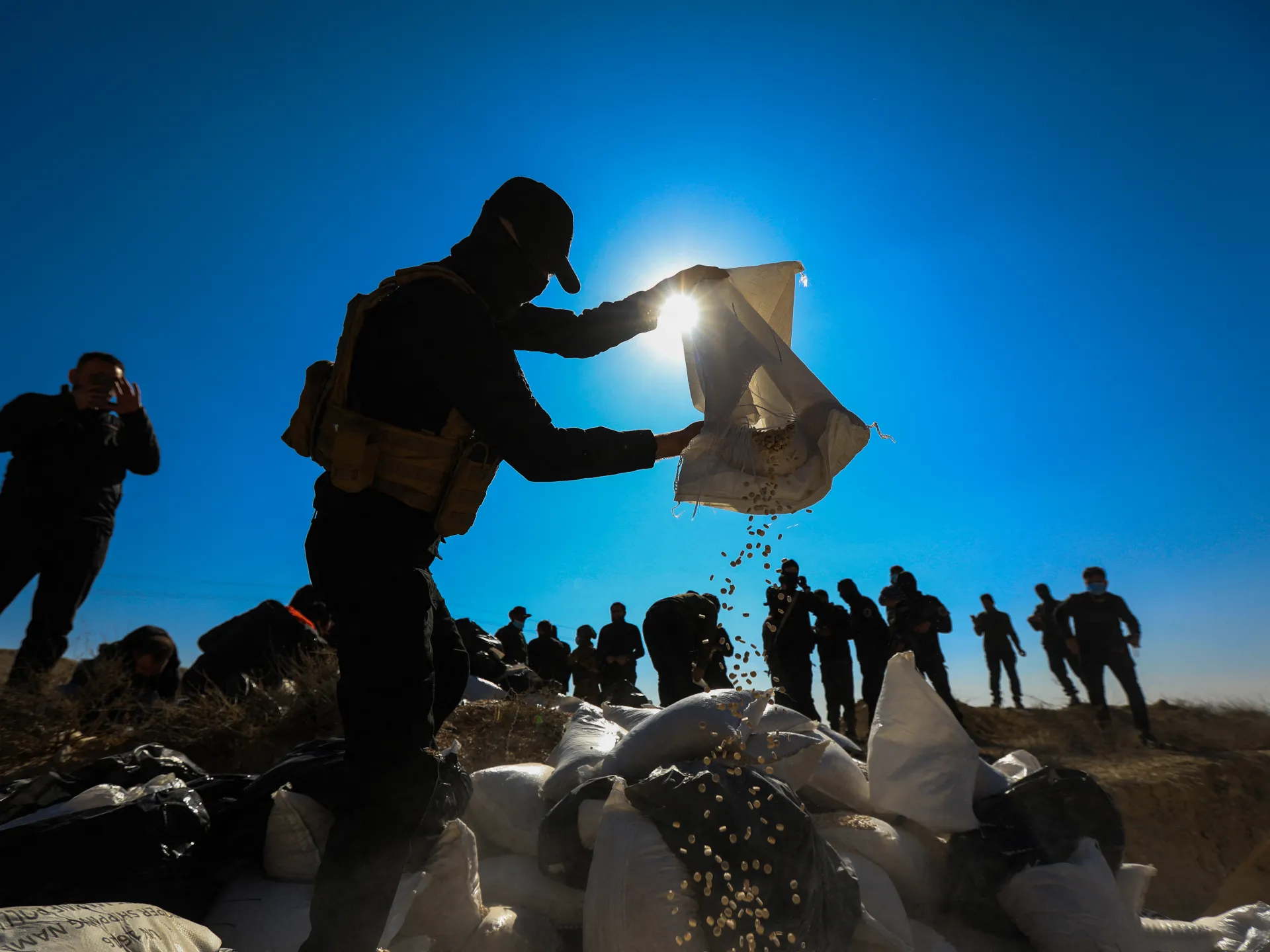
Syria’s government has cracked down on the Captagon industry, which boomed under former longtime leader Bashar al-Assad, according to a United Nations report.

Since al-Assad’s ouster a year ago, Syria’s new authorities have dismantled a network of factories and storage sites, a research brief published on Monday by the UN Office on Drugs and Crime (UNODC) said.

Recommended Stories

list of 3 itemsend of list

For more than a decade, Syria produced most of the world’s Captagon, a highly addictive, amphetamine-like pill, bringing in billions of dollars for al-Assad’s government.

However, interim President Ahmed al-Sharaa has carried out a clampdown as he tries to legitimise his government and strengthen diplomatic ties globally.

Overall, 15 industrial-level laboratories and 13 storage sites have been shuttered, according to the UNODC report. The agency said the action has “drastically changed” the Captagon market across the region.

Syria’s role in the drug trade had previously drawn scrutiny from numerous Gulf states, where the pill is popular, including Saudi Arabia. It also helped to prompt Western sanctions.

‘Political will and international cooperation’

For years, the Captagon trade provided billions of dollars in profit for networks and individuals aligned with the former government “either within the leadership of the regime’s security apparatus, Syria’s commercial sector and business elite, and/or family members of Bashar al-Assad”, according to Caroline Rose, an expert on Syrian drug trafficking at the New Lines Institute think tank.

Maher al-Assad, Bashar’s brother and former commander of the army’s elite Fourth Division, was identified as a key player, profiting from protecting shipments through Latakia, a former al-Assad stronghold.

Despite the current Syrian government’s targeting of the industry, large seizures of the drug across the region suggest that significant stockpiles of the pills originating from Syria remain in circulation, the report noted.

Smaller-scale production is also likely continuing inside Syria and in neighbouring countries, the UNODC added, with Gulf countries still the top buyers of the drug.

The UN agency said the disruption of the Middle East’s Captagon industry shows that with “political will and international cooperation … even highly complex drug markets can be destabilised within a relatively short period of time”.

However, it warned that the shift risks pushing regional consumers towards new synthetic substances, like methamphetamine, which has recently grown in popularity.

“Without addressing the underlying demand for ‘Captagon,’ trafficking and use are likely to shift toward other substances, such as methamphetamine, with new routes and actors emerging to fill the gap,” it said.

Source link

Israeli military storms West Bank towns, carries out demolition | Occupied West Bank News

Palestinian officials condemn the actions as part of a ‘systematic policy of displacement’ in the occupied territory.

Israeli forces have stormed towns in the occupied West Bank and demolished a residential building.

Soldiers fired stun grenades and tear gas on Monday as they carried out the demolition in East Jerusalem. Palestinian officials accused Israel of a campaign of displacement in the city, saying the operation was part of a systematic attempt to ethnically cleanse Palestinians from their land.

Recommended Stories

list of 4 itemsend of list

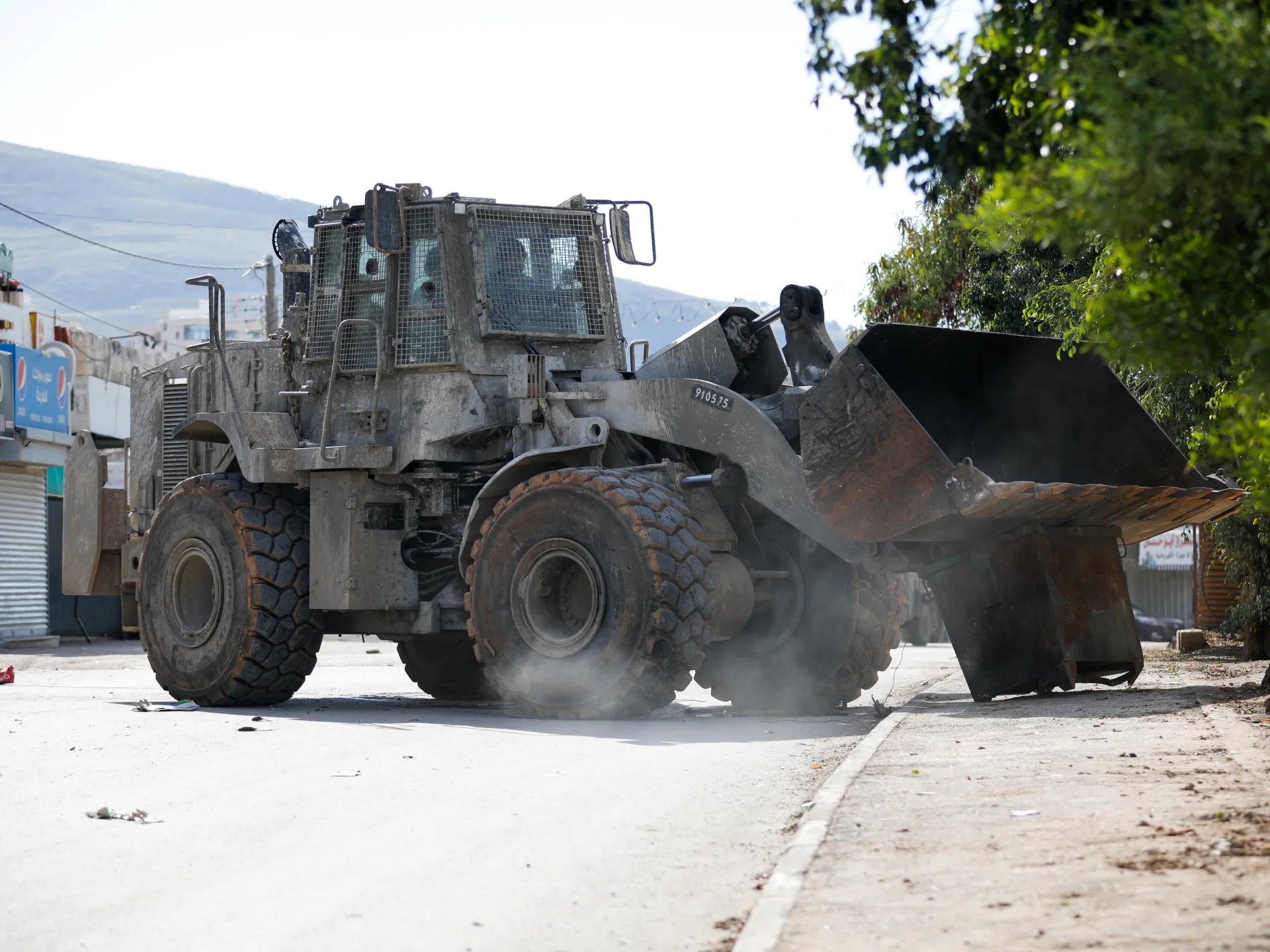
Scores of Palestinians were displaced as Israeli bulldozers tore through a four-storey residential building. Activists called it the largest such demolition in the area this year.

Three bulldozers destroyed the building with 13 apartments in the Wadi Qaddum neighbourhood of the Silwan district, south of Jerusalem’s Old City, Al Jazeera Arabic correspondents reported.

Israeli forces cordoned off surrounding roads, deployed heavily across the area and positioned security personnel on the rooftops of neighbouring houses. During the operation, a young man and a teenage boy were arrested.

Residents were told the demolition order was issued because the building had been constructed without a permit.

Palestinians face severe obstacles in obtaining building permits due to Israel’s restrictive planning policies, activists say, a policy that they assert is part of a systematic attempt to ethnically cleanse Palestinians from their land.

Israel’s security cabinet has recently approved the recognition of 19 new settlements in the West Bank, expanding the total number approved this year to 69 as the government continues its settlement push.

‘Systematic policy of displacement’

The Jerusalem governorate, affiliated with the Palestinian Authority, condemned the demolition.

“The building’s destruction is part of a systematic policy aimed at forcibly displacing Palestinian residents and emptying the city of its original inhabitants,” the governorate said in a statement.

“Any demolition that expels residents from their homes constitutes a clear occupation plan to replace the land’s owners with settlers.”

The Jerusalem municipality, an Israeli authority whose jurisdiction over East Jerusalem is not recognised under international law, said the demolition was based on a 2014 court order.

Israeli human rights groups Ir Amim and Bimkom said the demolition was carried out without warning despite a scheduled meeting on Monday to discuss steps to legalise the building.

“This is part of an ongoing policy. This year alone, around 100 East Jerusalem families have lost their homes,” the groups said, calling Monday’s demolition the largest of 2025.

Escalated attacks

Elsewhere in the West Bank, Israeli forces damaged agricultural land and uprooted trees in the northern town of Silat al-Harithiya.

In the city of Halhul, north of Hebron, Israeli forces stormed several neighbourhoods with large numbers of military vehicles, deployed sniper teams and took up positions across the city.

Al Jazeera Arabic journalists reported that Israeli vehicles entered Halhul through multiple checkpoints, including Nabi Yunis, while closing the Halhul Bridge checkpoint linking the city to Hebron.

Since Israel launched its war on Gaza in October 2023, Israeli forces and settlers have also sharply escalated attacks across the West Bank.

More than 1,102 Palestinians have been killed in the territory, about 11,000 wounded and more than 21,000 arrested, according to Palestinian figures.

Source link

‘I used to dread Christmas Day with my abusive ex’

PA Media ruth Dodsworth wearing a blue dress and a blue hatPA Media

Ruth Dodsworth was made an Officer of the Order of the British Empire (OBE) by King Charles III earlier this year

TV weather presenter Ruth Dodsworth has revealed that she used to “dread” Christmas Day with her abusive ex-husband.

The 50-year-old described the festive season as serving to amplify the problems of people living with domestic violence, especially those whose partner’s behaviour is triggered by alcohol.

Her former husband Jonathan Wignall, 54, was jailed in 2021 after a nine-year campaign of harassment and stalking during their marriage.

Ms Dodsworth added that the highlight of each 25 December would be when Wignall “passed out drunk”, affording her “an hour or two of relief” with her children.

Warning: This story contains distressing content and discussion of domestic abuse

“I never knew who I was going to come home to, Jekyll or Hyde,” said Ms Dodsworth, who met Wignall in 2001, a year after she started her job as a weather presenter for ITV Wales.

“When you live with someone like that, Christmas just makes everything worse on so many levels.

“There’s more pressure on people to have a wonderful time, with more parties and more alcohol.

“And, because drink was a key part of my ex-husband’s behavioural changes, it would just make for an awful time – as it can for too many other people.”

Ms Dodsworth and Wignall married in 2002, while his controlling behaviour began about eight years later when the couple moved from Swansea to Cowbridge in the Vale of Glamorgan.

At that time she had become the family’s main breadwinner, his nightclub business having begun to fail.

“It was a volatile, frightening relationship that several times nearly cost me my life,” she told BBC Radio Wales.

“I never knew when the violence was going to happen or when it would finish.

“And I grew to dread Christmas Day because he’d start drinking in the morning.”

Ms Dodsworth added that her family “would be on eggshells” around Wignall whenever they came over, “because they were frightened of him too”.

South Wales Police A police mugshot of a man with short grey hair and stubble. In the corner is a logo for South Wales Police.South Wales Police

Jonathan Wignall was jailed in 2021 after a nine-year campaign of harassment and stalking

“And, after they’d gone, I would be left with him – so it was a highlight when he’d pass out,” she said.

“It meant an hour or two of relief when I wasn’t frightened and could just be with my kids.”

She described feeling a lot of “mum guilt” that she “didn’t get them out of that situation sooner”.

“But, I didn’t want to admit to the outside world that there was something wrong with my marriage,” said Ms Dodsworth, adding that eventually leaving had been the best decision she ever made.

She added: “My life was saved because I got out – I asked for help and set those wheels in motion.

“It wasn’t easy, but I did it.”

‘Huge spike’ in calls for support

Stephanie Grimshaw, head of public affairs and communications at Welsh Women’s Aid, told BBC Radio Wales Breakfast one in four women experience domestic abuse in England and Wales, adding “it doesn’t change just because it’s Christmas”.

She said: “Christmas Day and the days surrounding are actually our quietest time for our helpline, but then we have a huge spike in January and the days following Christmas when survivors tell us they were not able to reach out.

“That’s really dangerous if they feel they’re not able to reach out for support.

“It’s so important those family and loved ones who are supporting survivors make them a safe space.”

If you are affected by any of the issues raised in this story, support and advice is available via the BBC Action Line.

Source link

#HumAngle2025RoundUp: HumAngle’s Top 10 Atypical Stories in 2025

1. The Making and Unmaking of Abubakar Shekau

Abubakar Shekau, a founding leader of the Boko Haram terror group, killed himself with a suicide vest four years ago at his base in Sambisa, during an attack by ISWAP, an offshoot of his group. Through archived materials and interviews with over ten individuals, including former associates, friends, bodyguards, and captives of Shekau, HumAngle’s Editor-in-Chief, Ahmad Salkida, penned what is arguably the most in-depth exposé into the life of the terror leader. 

Following its publication in November, our website suffered a cyber attack that took us offline for a while, but it didn’t hinder a widespread reception of the story, which sparked a national discourse on the history of the insurgency that has gripped Nigeria for over a decade, and how the terror that Shekau ignited has outlived him. 

2. Maitatsine: The Preacher of Fire (1927 – 1980) 

Maitatsine is a Cameroonian and Kano-based Islamic preacher whose teachings and activities turned violent, birthing several cult-like movements in Nigeria’s North that radicalised and also influenced young people. In December 1980, his ideology culminated in one of the deadliest urban uprisings in Nigerian history. This ideology, the rejection of modernity, would later influence terror leaders like Muhammad Yusuf and Abubakar Shekau. 

The exposé carefully examined the unhealed wound that Maitatsine created. It is yet another archival documentation that seeks to contribute to the understanding of Nigeria’s contemporary security challenges and how they emerged from unassuming places. 

3. The Boys Lured into Boko Haram’s Enclave with Food Rations

When terror groups are referred to in the media, the description is often ‘armed men’, but that’s not always the case, as we’ve reported on women terrorists and this time, young boys. For this investigation, we spent time with Hassan Audu, a 16-year-old who, alongside his brother, was captured by Boko Haram terrorists, who in turn used food to keep him within their ranks. 

The story offers insight into the terror group’s recruitment strategy for child soldiers and what the governance structure is like in their enclaves in North Central Nigeria, including in the group’s logistics department, where Audu worked.

4. A Robbery Incident Killed His Wife and Unravelled His Whole Life 

We spent eight months tracking the effects of one tragedy on the life of one man and then represented the story in an interactive story that blends photos, videos, illustrations, and animations. Modu Bakura, a 30-year-old resident of Bama, northeastern Nigeria, was robbed three years ago. He lost his wife in the attack and also suffered several injuries that took months to recover from. 

We penned a tender narrative of this incident, and the years that have followed, and how he continues to survive amidst debt and emotional hurt. 

5. What Life Could Have Been for Leah Sharibu at 22  

In May, Leah Sharibu turned 22. It was also her seventh year in captivity after Islamic State West Africa Province (ISWAP) abducted her alongside 104 other schoolgirls from their dormitory in Dapchi, northeastern Nigeria. She’s the only one among the girls who remains in captivity, and has since become a global face of schoolchildren abducted in Nigeria during the reign of the insurgency in the country. 

To commemorate her birthday, we sat with her only sibling to understand who she was before captivity and what she imagined her life would be like in seven years. That conversation gave birth to a speculative non-fiction narrative where we constructed what would have been, while also reflecting on her current reality, and how his family has continued to grieve her absence. 

6. The Disappearing ₦aira

Two years ago, we interviewed everyday Nigerians to highlight the cost-of-living crisis that is faced in the country and how it has impacted their lives. This time around, we looked at the root of the crisis, not just the fruits. Through a data-driven interactive storytelling approach, we showed how the smaller denominations of the Nigerian Naira are disappearing

7. From Elephants to Warthogs: The Shadow Wildlife Trade Financing Boko Haram in Nigeria

Terrorism financing is one issue that comes up every time there’s a discussion about insurgency in Nigeria, and even across the world. 

In this investigation, we uncovered how terror groups like Boko Haram are using wildlife to fund their activities in the country. Not only is this causing harm to communities, but animals like Elephants have also vanished in conflict-affected areas in the North East, prompting poachers and terrorists to turn to Warthogs, an overlooked species with tusks just as valuable.

8. Boko Haram is Tracking and Assassinating Defectors in Nigeria’s North East. Here’s How 

Since the Nigerian government started the deradicalisation of terrorist deserters, we have extensively covered the struggle of reintegration that they face. But this report is different, it explores a challenge that is not often spoken about: the assassination of terrorists deserters by the groups they were once loyal to. Boko Haram, for instance, has created a spy network that tracks its defectors and assassinates them or forces them to return to their enclaves. 

Through interviews with some deserters, we revealed how this approach has increased issues of recidivism and its impact on the Operation Safe Corridor programme. 

9. The Intersection Between Healthcare and Loyalty to Terror Groups in Nigeria  

In last year’s Atypical List, we featured the story of Mariam, who we used to represent women as willing participants in terror. We spoke to her again recently, and she is on the brink of recidivism. The recent USAID funding cut is making it difficult for her to access the anti-retroviral medications that were the very reason why she defected.

10. To Those We Miss

When we report on missing persons, we often tell you how they went missing and how their families are faring. So, we thought, how about we give the families of these missing persons the mic and allow them to bare their minds unfiltered? This gave birth to this heartwarming video, where families sent words to their loved ones who have gone missing, some for decades. 

The provided articles delve into various socio-political issues afflicting Nigeria, highlighting key aspects of terrorism, personal tragedies, and socio-economic challenges. One article investigates Abubakar Shekau’s life and the terror he perpetuated through Boko Haram, which persisted even after his death during an ISWAP attack. Another piece explores Maitatsine, a preacher whose violent ideology influenced radical groups, affecting Nigeria’s socio-political landscape.

Further, the role of young boys being recruited into Boko Haram with promises of food, and the impact of terrorism on individuals such as Modu Bakura who lost his wife to robbery, are examined. Leah Sharibu’s continued captivity serves as a poignant reminder of unresolved insurgency impacts. Economic analysis discloses the disappearance of smaller Naira denominations amid a cost-of-living crisis. Additionally, investigations reveal Boko Haram’s reliance on illegal wildlife trade for funding and their spy networks targeting defectors. Healthcare access issues for former terrorists highlight the complex interplay between resources and loyalty. Lastly, a video gives a voice to families of long-missing persons, shedding light on their enduring hopes and struggles.

Source link

Understanding Honduras’ Post-Election Crisis

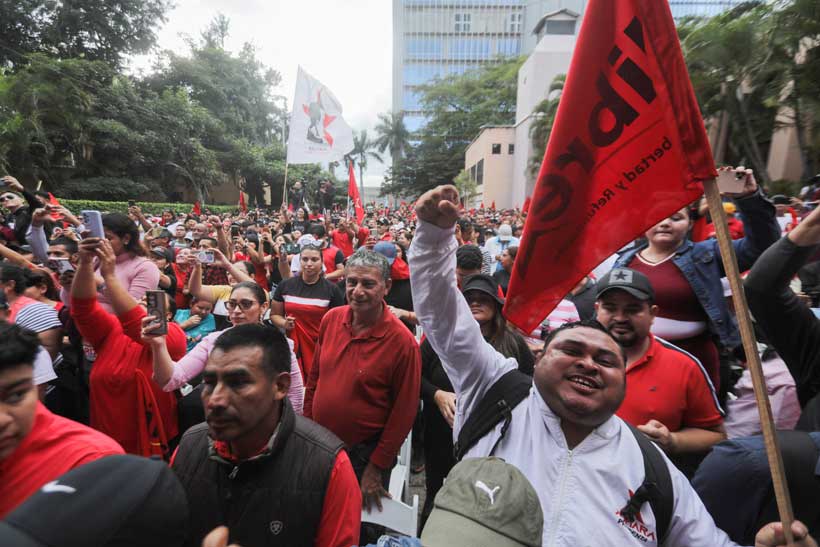
Honduras’ presidential election occurred on November 30, but nearly three weeks later, there is still no clear winner. The elections have faced issues with the vote counting process, allegations of fraud, and U. S. involvement. Conservative candidate Nasry Asfura of the National Party leads center-right candidate Salvador Nasralla of the Liberal Party by about 43,000 […]

The post Understanding Honduras’ Post-Election Crisis appeared first on Modern Diplomacy.

Source link

Sudanese bloc declares Nairobi roadmap, but is it a civilian breakthrough? | Sudan war News

On December 16, Sudanese political parties, armed movements, civil society organisations, and prominent political figures signed a nine-point political roadmap in Nairobi, presenting it as a civilian-led initiative aimed at ending Sudan’s war and restoring a democratic transition.

Framed as an antiwar, pro-peace platform, it seeks to position civilians as a “third pole” against the two military actors in Sudan’s conflict: the Sudanese Armed Forces (SAF) and the paramilitary Rapid Support Forces (RSF).

Its authors say it represents an attempt to reclaim political agency for civilians after months of marginalisation by armed actors and foreign mediators, even though the declaration does not outline any concrete steps towards military reform.

The roadmap reignited longstanding debates within Sudanese political and civic circles about representation, legitimacy, and the persistent dominance of elite-driven civilian politics.

The roadmap

The Nairobi declaration emerged after a statement released by the Quad – Egypt, Saudi Arabia, the United Arab Emirates (UAE), and the United States – in September.

The Quad statement called for an immediate three-month truce to lead to a permanent ceasefire, humanitarian access to help civilians, and the creation of a political process for a civilian transition.

It also emphasised excluding remnants of former President Omar al-Bashir’s regime and reforming Sudan’s security forces under civilian oversight, all points that the Nairobi declaration echoed.

The Nairobi signatories included the National Umma Party, the Sudanese Congress Party, civil society organisations – including the Darfur Lawyers Association and the Coordination of Internally Displaced Persons and Refugees – and the Sudan Liberation Movement (SLM-AW) led by Abdelwahid al-Nur.

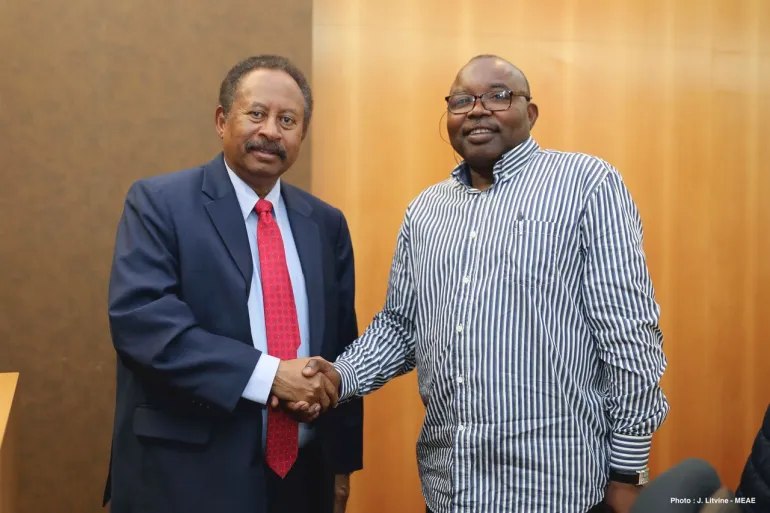
Former Prime Minister Abdalla Hamdok, who led Sudan’s transitional civilian government from al-Bashir’s overthrow in 2019 until the October 2021 military coup by the SAF and the RSF working in concert, also signed the declaration.

It was likewise endorsed by al-Nur, longtime leader of the SLM-AW armed group that controls Jebel Marra in Darfur and has historically rejected what he describes as “elite-driven” political settlements.

Falling short

Sudanese researcher Hamid Khalafallah told Al Jazeera that despite the intent to present a civilian leadership, the declaration falls short of reflecting Sudan’s broader civic movement.

The Nairobi coalition, he argued, mirrors earlier civilian formations that failed to connect with Sudanese citizens, particularly those most affected by the war.

“It’s in many ways a reproduction of former groups that have … struggled to represent the Sudanese people,” he said. “It’s still very much an elite group that does politics in the same way they always have.”

Although resistance committees – neighbourhood groups that emerged from Sudan’s protest movement and helped topple al-Bashir in 2019 – were referenced in the declaration, no committees formally endorsed or signed it.

Abdallah Hamdok on the left in a suit and Abdel Wahid Nur on the right in a striped shirt
Former Prime Minister Abdalla Hamdok, left, and Abdelwahid al-Nur met in 2019 in Khartoum [File: Embassy of France in Sudan/Facebook]

Drafts were reportedly shared with some grassroots groups, but the process advanced without waiting for collective deliberation – reinforcing concerns that civilians on the ground remain politically instrumentalised rather than empowered.

While al-Nur’s participation was hailed by some as a breakthrough, Khalafallah questioned the underlying motivation, arguing that his inclusion was intended to counterbalance rival military-aligned forces rather than transform civilian politics.

Before the Nairobi declaration, there were three main civilian coalitions in Sudan, each aligned with a warring party or accused of such an alliance.

Tasis is the coalition of political parties and armed movements that was founded in February 2025, before forming the RSF’s parallel government in July 2025, while the Democratic Bloc is a grouping of parties and armed groups aligned with the SAF.

Finally comes Hamdok’s Sumoud, comprising political parties and civil society organisations and accused by SAF of supporting the RSF.

Europe’s one-track civilian strategy

European officials have distanced themselves from the Nairobi initiative.

A senior European Union diplomat, speaking on condition of anonymity, told Al Jazeera that Brussels does not see the Nairobi roadmap as the foundation for a unified civilian process.

“We would like to see only one civilian process, that’s why we are helping the African Union [AU],” the source said. “Everything else is a distraction, like this Nairobi one.”

According to the EU official, the priority is not multiplying civilian platforms but consolidating them under a single credible framework, led by the AU and broadly accepted by Sudanese society.

“Our aim is to create a credible third pole – versus RSF and SAF,” the source said. “An inclusive one, supported by most Sudanese citizens.”

The EU plans to build a broad coalition that can take the lead after the Quad’s humanitarian truce and ceasefire proposals are accepted by the SAF and the RSF, including reforms placing security forces under civilian-led oversight.

The EU’s language reflects growing frustration among international actors with Sudan’s fragmented civilian landscape, while insisting that abandoning it would legitimise military rule by default.

“Of course, we are not naive that civilians will take over tomorrow,” the source said. “But we have to stand for our values.”

The EU official was blunt in assessing the conduct of Sudan’s warring parties, rejecting narratives that frame either side as a governing authority.

“I would not call what RSF does in Darfur ‘governing’, SAF is a bit better – but not much,” the source said.

“Look at the oil deal they did,” the official added. “Money is important; people are not.”

They referred to the latest agreement between the SAF and the RSF – under South Sudanese mediation – that both would withdraw from the Heglig oil facility, with South Sudanese troops deployed to secure the refinery following SAF’s pullout and the RSF’s capture of the site.

Warring parties as spoilers?

US-Africa policy expert Cameron Hudson told Al Jazeera that the Nairobi declaration appears to mimic the Quad’s recent statement, effectively presenting to the international community a roadmap that aligns with pre-existing objectives to gain Quad support.

“My sense is that the Nairobi declaration reverse engineers what the Quad has said,” Hudson said, suggesting that the initiative is designed more to attract international endorsement than to build genuine domestic consensus.

Hudson warned that this approach mishandles the sequencing of Sudan’s political transition, “prematurely” linking ceasefire efforts with reforms of the army or other political changes, arguing that these should remain on separate tracks until violence subsides.

“If what the Quad wants is an unconditional ceasefire, then it needs to pursue that, not create opportunities to trade a ceasefire for political assurances during a transition,” he said.

“For that reason, it is premature to be talking about reforming the army or other political reforms. These should remain in separate tracks for now.”

The tension is stark. The Quad and the European Union increasingly state that neither the SAF nor the RSF should have a political future and that remnants of the Bashir regime must be excluded entirely.

Yet both armed forces remain indispensable to any cessation of hostilities, creating an unresolved contradiction at the heart of international strategy.

Source link

Two Palestine Action hunger strikers in UK prisons admitted to hospital | Israel-Palestine conflict News

London, United Kingdom – Two Palestine Action-affiliated remand prisoners on hunger strike have been taken to hospital, according to a family member and a friend, adding to fears that the young Britons refusing food in protest could die at any moment.

Twenty-eight-year-old Kamran Ahmed, who is being held at Pentonville prison in London, was hospitalised on Saturday, his sister, Shahmina Alam, told Al Jazeera.

Recommended Stories

list of 4 itemsend of list

Amu Gib, 30, who has not eaten food for 50 days at HMP Bronzefield in Surrey, was taken to hospital on Friday, said the Prisoners for Palestine group and friend Nida Jafri, who is in regular contact with them. Gib uses the pronoun they.

Ahmed and Gib are among six detainees protesting across five prisons over their alleged involvement in break-ins at the United Kingdom’s subsidiary of the Israeli defence firm Elbit Systems in Bristol and a Royal Air Force base in Oxfordshire.

They deny the charges against them, such as burglary and violent disorder.

“It’s day 42 [of Ahmed’s hunger strike], and at this point, there’s significant risk of organ damage,” said his sister, Alam. “We know that he’s rapidly been losing weight in the last few days, losing up to half a kilogram [1.1lbs] a day.”

Ahmed’s last recorded weight was 60kg (132lbs).

When Al Jazeera first interviewed Alam on December 12, Ahmed, who is 180cm (5′ 11”), weighed 64kg (141lbs), having entered prison at a healthy 74kg (163lbs). On Thursday, Alam told journalists at a news conference in London that he weighed 61.5kg (136lbs).

Ahmed’s speech was slurred in a call with the family on Friday, said Alam. He is said to be suffering from high ketone levels and chest pains.

“Honestly, I don’t know how he’s going to come out of this one,” said Alam.

It is the third time Ahmed has been hospitalised since he joined the hunger strike.

Shahmina Alam with Kamran Ahmed - Palestine Action linked hunger striker [Courtesy of Alam family]
Shahmina Alam with her younger brother, Kamran Ahmed, a Palestine Action-linked hunger striker [Courtesy of the Alam family]

‘Critical stage’

The hunger strikers’ demands include immediate bail, the right to a fair trial and the de-proscription of Palestine Action, which accuses the UK government of complicity in Israel’s war crimes in Gaza. The UK government banned Palestine Action in July, branding it a “terror” group, a label that applies to groups such as ISIL (ISIS).

The protesters have called for an end to their alleged censorship in prison, accusing authorities of withholding mail, calls and books. They are also urging that all Elbit sites be closed.

The six are expected to be held for more than a year until their trial dates, well beyond the UK’s six-month pre-trial detention limit.

Qesser Zuhrah, a 20-year-old who has refused food for 50 days, is also in hospital, having lost 13 percent of her body weight, according to her lawyers. The other protesters are Heba Muraisi, Teuta Hoxha and Lewie Chiaramello, who is diabetic and refuses food every other day.

There was no immediate comment from either Pentonville or HMP Bronzefield.

‘I’m scared’

Gib called their friend, Jafri, on Thursday from prison, telling her they needed a wheelchair to attend a doctor’s appointment where their vital signs would be checked.

Prison staff at first “refused” to provide a wheelchair, and later, after offering one, “refused to push” it, Jafri said. “So they laid there with … no check of their vitals on day 47 of their hunger strike,” Jafri said.

When they are hospitalised, the prisoners are unable to call their loved ones, as they can from jail.

Jafri told Al Jazeera, “I’m scared they’re there alone with no phones and no calls allowed.”

Gib, who has lost more than 10kg (22lbs), is below the normal range for most health indicators, which is “highly concerning” for their immune system, their lawyers have said.

Prison officials have “failed to provide [Gib] with thiamine [a vitamin] consistently, and Amu is feeling the effects on their cognitive function”, the lawyers said.

Gib’s eyes are also “sore with the bright [prison] lights”, Jafri said.

Nida
Amu Gib (left) with their friend, Nida Jafri [Courtesy: Nida Jafri]

The lawyers have demanded a meeting with Secretary of State for Justice David Lammy, hoping his intervention could be life-saving. Thousands of everyday Britons, hundreds of doctors and dozens of MPs have urged Lammy to heed their call. But so far, he has refused, leading critics to accuse the UK government of wilfully ignoring the issue.

The UK media have also been accused of downplaying the protest and its dangers.

The protest is said to be the largest coordinated hunger strike in UK prisons since 1981, when Irish Republican inmates led by Bobby Sands refused food.

“In contrast to the robust media coverage of the Irish hunger strikes in the 1980s, the Palestine Action hunger strikes have been largely met with media silence,” wrote Bart Cammaerts, a professor of politics and communication at the London School of Economics.

“What will it take for the British media to pay attention to the plight of jailed pro-Palestinian activists? The death of an activist? Or the awakening of a moral conscience?”

Source link

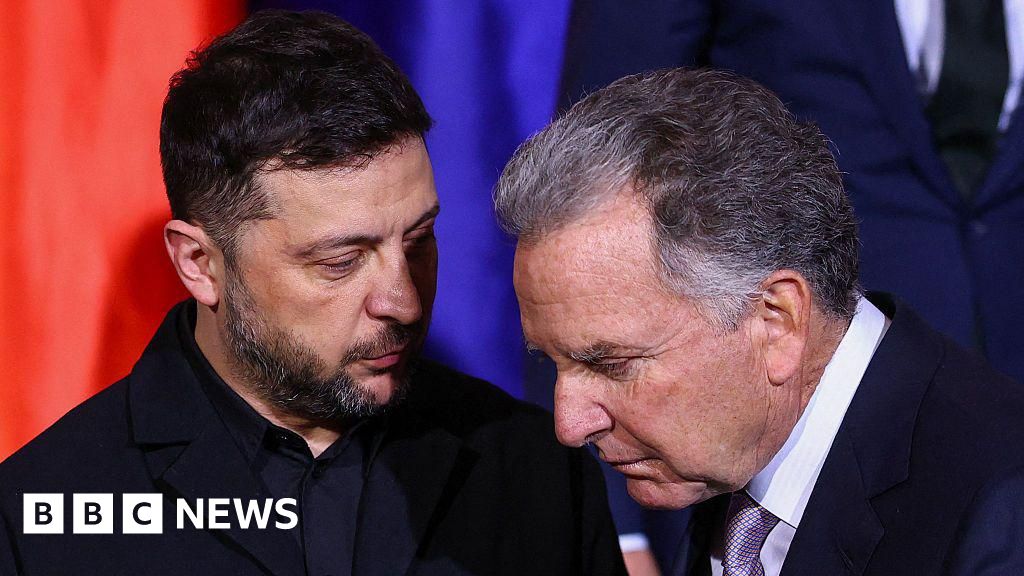
US and Ukraine call Miami talks productive despite no breakthrough

US and Ukrainian envoys say “productive and constructive” talks have taken place in Miami, but there still appears to be no major breakthrough in efforts to end Ukraine’s war with Russia.

Donald Trump’s special envoy, Steve Witkoff, issued a joint statement with the top Ukrainian negotiator, Rustem Umerov, after three days of meetings with European allies.

The pair said the meeting focused on aligning positions on a 20-point plan, a “multilateral security guarantee framework”, a “US Security guarantee framework for Ukraine” and an “economic & prosperity plan”.

Separate talks have been taking place in Miami between the US and the Russian envoy, Kirill Dmitriev.

“Our shared priority is to stop the killing, ensure guaranteed security, and create conditions for Ukraine’s recovery, stability, and long-term prosperity,” Witkoff and Umerov said in a statement.

The meetings are the latest step in weeks of diplomatic activity, sparked by the leaking of a 28-point US peace plan which shocked Ukraine and its European allies for appearing to favour Russia, which launched a full-scale invasion of Ukraine nearly four years ago.

Witkoff said representatives from Russia had met himself and other US officials in southern Florida, including Trump’s son-in-law Jared Kushner.

Witkoff said the meetings with Russian envoy Dmitriev were also “productive and constructive” and that “Russia remains fully committed to achieving peace in Ukraine”.

Trump has been pushing Ukraine and Russia to come to an agreement on ending the war, but so far the two countries have been unable to agree on major issues, including Moscow’s demand to keep land it has already seized.

US intelligence reports continue to warn that Russian President Vladimir Putin still wants to capture all of Ukraine and reclaim parts of Europe that belonged to the former Soviet empire, six sources familiar with US intelligence told the Reuters news agency.

This comes says after Putin told the BBC’s Steve Rosenberg that there will be no more wars after Ukraine, if Russia is treated with respect.

“There won’t be any operations if you treat us with respect, if you respect our interests just as we’ve always tried to respect yours,” he said.

Meanwhile, a Ukrainian drone attack damaged two vessels and two piers in Russia’s southern Krasnodar region, Russian officials said on Monday.

The damage led to a big fire, but Russian authorities say all crew were safely evacuated. Some reports say oil infrastructure was targeted.

Source link

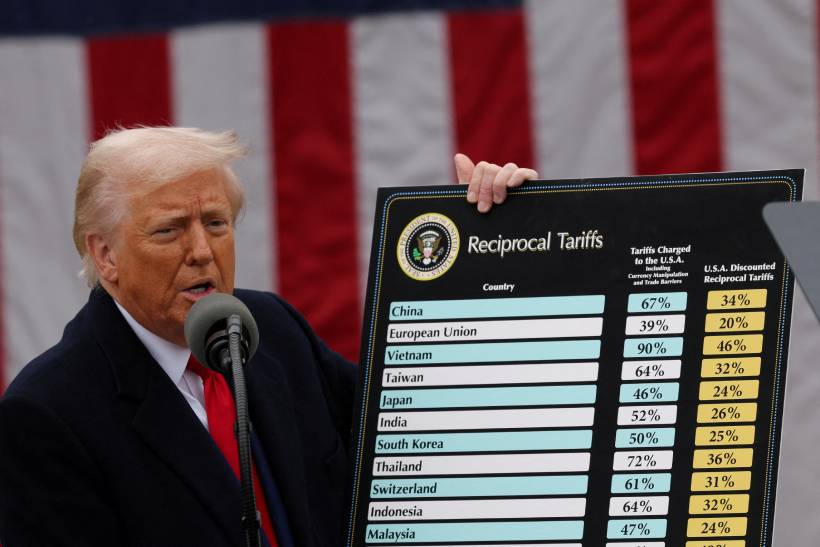
Trump Bets on the Economy in Pivotal Midterm Campaign Push

NEWS BRIEF President Donald Trump launched his midterm election campaign push in North Carolina on Friday, seeking to reframe the economy as a winning issue despite sagging consumer confidence and low approval ratings. In a sprawling speech, he touted stock market gains, cooling inflation, and a recent pharmaceutical pricing deal while deflecting blame for persistent […]

The post Trump Bets on the Economy in Pivotal Midterm Campaign Push appeared first on Modern Diplomacy.

Source link

Russia-Ukraine war: List of key events, day 1,397 | Russia-Ukraine war News

These are the key developments from day 1,397 of Russia’s war on Ukraine.

Here is where things stand on Monday, December 22:

Fighting

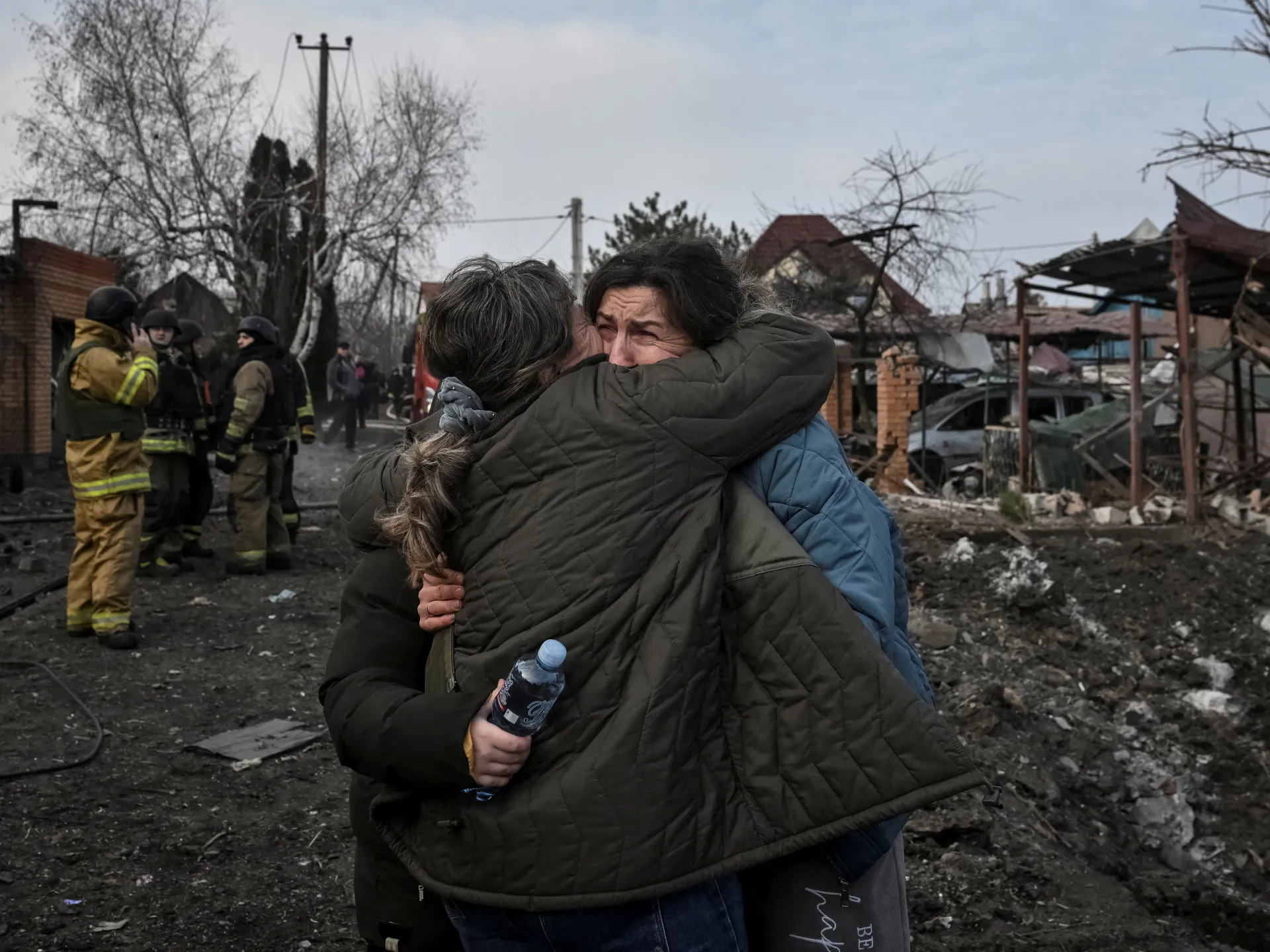
  • A Russian attack on Ukraine’s Kharkiv region killed a 49-year-old man and a 42-year-old woman, according to Governor Oleh Syniehubov. The killings took place in the village of Izyum.
  • Russian attacks also killed one person in Ukraine’s Donetsk region, and one person in the southeastern Zaporizhia region, local officials reported.
  • Russian forces have shelled the Zaporizhia region nearly 5,000 times over the past week, wounding 60 people and damaging hundreds of buildings, according to Governor Ivan Fedorov.
  • Overall, Russian forces have launched about 1,300 drones, nearly 1,200 guided aerial bombs, and nine missiles towards Ukraine over the past week, according to Ukrainian President Volodymyr Zelenskyy.
  • Ukraine’s ombudsman, Dmytro Lubinets, accused Russian forces of “illegally” detaining about 50 residents of the village of Hrabovske in the Sumy region and “forcibly deporting” them to Russian territory.
  • The Kyiv Independent, citing Ukrainian authorities, reported that wreckage from a Ukrainian drone attack on Russia damaged a pipeline in the Krasnodar Krai region.
  • Russia’s Ministry of Defence said its forces shot down 29 Ukrainian drones in the past 24-hour period.
  • The Russian Federal Security Service (FSB) claimed that Russian forces shot down 252 drones over the Russian-occupied Donbas region, using the “Donbas Dome electronic warfare system” over the past week, the TASS news agency reported.

Politics and diplomacy

  • US envoys Steve Witkoff and Jared Kushner met with a Ukrainian delegation, led by senior official Rustem Umerov and European officials, as the US continued to host talks in Miami, Florida, on a prospective peace deal for Russia’s war on Ukraine for a third day on Sunday.
  • Witkoff said in a post on X late on Sunday that the talks with the Ukrainians and Europeans had been “productive and constructive” and focused on a “shared strategic approach between Ukraine, the United States and Europe”.
  • In a second post about two hours later, Witkoff said that the US had also had “productive and constructive meetings” with Russian envoy Kirill Dmitriev over the past two days.
  • “Russia remains fully committed to achieving peace in Ukraine [and] highly values the efforts and support of the United States to resolve the Ukrainian conflict and re-establish global security,” Witkoff said.
  • Earlier, Russian President Vladimir Putin’s top foreign policy aide, Yury Ushakov, said that changes made by European countries and Ukraine to the US’s proposals for an end to Russia’s war did not improve prospects for peace.
  • “I am sure that the proposals that the Europeans and Ukrainians have made or are trying to make definitely do not improve the document and do not improve the possibility of achieving long-term peace,” Ushakov was quoted as saying by Russian news agencies.
  • Kremlin spokesman Dmitry Peskov said the Russian president was ready to talk with his French counterpart, Emmanuel Macron, after the latter said Europe should reach out to Moscow to end the war.
  • Macron’s office welcomed the Russian statement, saying: “It is welcome that the Kremlin has publicly agreed to this approach. We will decide in the coming days on the best way to proceed.”
  • India’s Ministry of External Affairs said that “202 Indian nationals are believed to have been recruited into the Russian armed forces” during Russia’s war on Ukraine. It said Russian authorities had reported that 26 had been killed and seven were missing.
  • Sweden’s customs service said on Sunday that Swedish authorities boarded a Russian freighter that anchored in Swedish waters on Friday after developing engine problems, to inspect the cargo. The owners of the vessel, the Adler, are on the European Union’s sanctions list, Martin Hoglund, spokesman at the customs authority, said.
  • “Shortly after 0100 last night [00:00 GMT] we boarded the ship with support from the Swedish Coast Guard and the police service in order to make a customs inspection,” Hoglund said. “The inspection is still ongoing.”

Source link

Barcelona see off Villarreal with goals from Raphinha and Yamal | Football News

Barca punish 10-man hosts Villarreal to win eighth consecutive La Liga game and move four points clear at the summit.

Barcelona wingers Raphinha and Lamine Yamal guided the Catalan giants four points clear at the top of La Liga with a 2-0 win at 10-man Villarreal.

Brazil international Raphinha won and converted an early penalty on Sunday before Villarreal’s Renato Veiga was sent off before half-time for a late lunge on teenager Yamal.

Recommended Stories

list of 4 itemsend of list

The 18-year-old slotted home Barca’s second midway through the second half, as Hansi Flick’s side restored their advantage on Real Madrid, who are second, and won an eighth consecutive league game.

Villarreal are fourth after Atletico Madrid moved ahead of them with a 3-0 win at Girona earlier on.

Flick launched into an impassioned defence of Raphinha on Saturday after he was not included in FIFA’s ‘The Best’ team of the year earlier in the week, and the winger quickly repaid his coach.

Raphinha produced an all-action display at Villarreal’s Estadio de la Ceramica, where the match was played instead of in Miami, after La Liga’s plans to take this game to the United States were scrapped in October.

Barca were poor defensively and struggled in their build-up play, but the quality of wingers Raphinha and Yamal and their goalkeeper Joan Garcia’s outstanding performance decided an entertaining encounter.

Jules Kounde blocked Villarreal striker Ayoze Perez’s shot before Raphinha drew a foul from Santi Comesana to win a penalty at the other end.

The winger dispatched it confidently and nearly added the second with a superb effort from distance, which crashed back off the bar.

Kounde deflected a cross into his own net as Villarreal fought back, but the goal was disallowed for offside in the build-up.

Barca stopper Joan Garcia saved from Tajon Buchanan after an Alejandro Balde mistake as Villarreal almost levelled.

The visitors’ job was made easier by Veiga’s needless red card for an ugly, late lunge on Yamal before the interval.

The champions got their second goal after a scramble in the box, with Frenkie de Jong teeing up Yamal to fire home after 63 minutes.

Joan Garcia made stunning saves to deny Rafa Marin and Georges Mikautadze to help Barca end 2026 with three points and a third clean sheet in their last three games across all competitions.

Kounde went off hurt before the end, potentially adding to Flick’s problems at the back following Andreas Christensen’s diagnosis with a partially torn knee ligament.

Barca finish the year in better shape than rivals Real Madrid, who beat Sevilla 2-0 on Saturday, but still have plenty of their own concerns to worry about.

Barcelona captain de Jong said his side had achieved their objective of finishing the year on top of the league and will rest before the league resumes in early January.

“Villarreal are very quick on the counter; they’ve got talented players up front. We could’ve managed to be a bit better… We have to organise ourselves a bit better,” he said.

“But I felt out there on the pitch that we were superior. Not necessarily comfortable, but I think we deserved to win.”

Villarreal captain Dani Parejo said he was pleased with how his team performed, apart from conceding the penalty.

“We had loads of really good chances; we could have been more than one goal up at halftime,” he said.

“It feels like everything is going against us at the moment; teams are scoring against us with not much, but we are pleased with the image we have shown, how we played with 10 men against a great team. We showed great attitude.”

Source link

Monday 22 December Sambisa Memorial Day in Borno

The purpose of the day is mourning victims of Boko Haram insurgents, the victory recorded by the Nigerian Military and the remembrance of fallen soldiers and volunteers who have sacrificed their lives fighting Boko Haram since 2009 in different parts of Borno State.

Boko Haram, an ISIS-aligned jihadist group, has killed over 30,000 people and displaced 2.3 million from their homes. At one time it was the world’s deadliest terror group according to the Global Terrorism Index.

In mid-2014, the militants gained control of swathes of territory in their home state of Borno.

In December 2016, Nigeria’s President Muhammadu Buhari announced that the army had seized one of Boko Haram’s last bases in northeastern Borno state, marking a key stage in the offensive against the armed group.

A long campaign in the 1,300sq km forest in Borno led to the “final crushing of Boko Haram terrorists in their last enclave in Sambisa Forest” on Friday, Buhari said in a statement at the time.

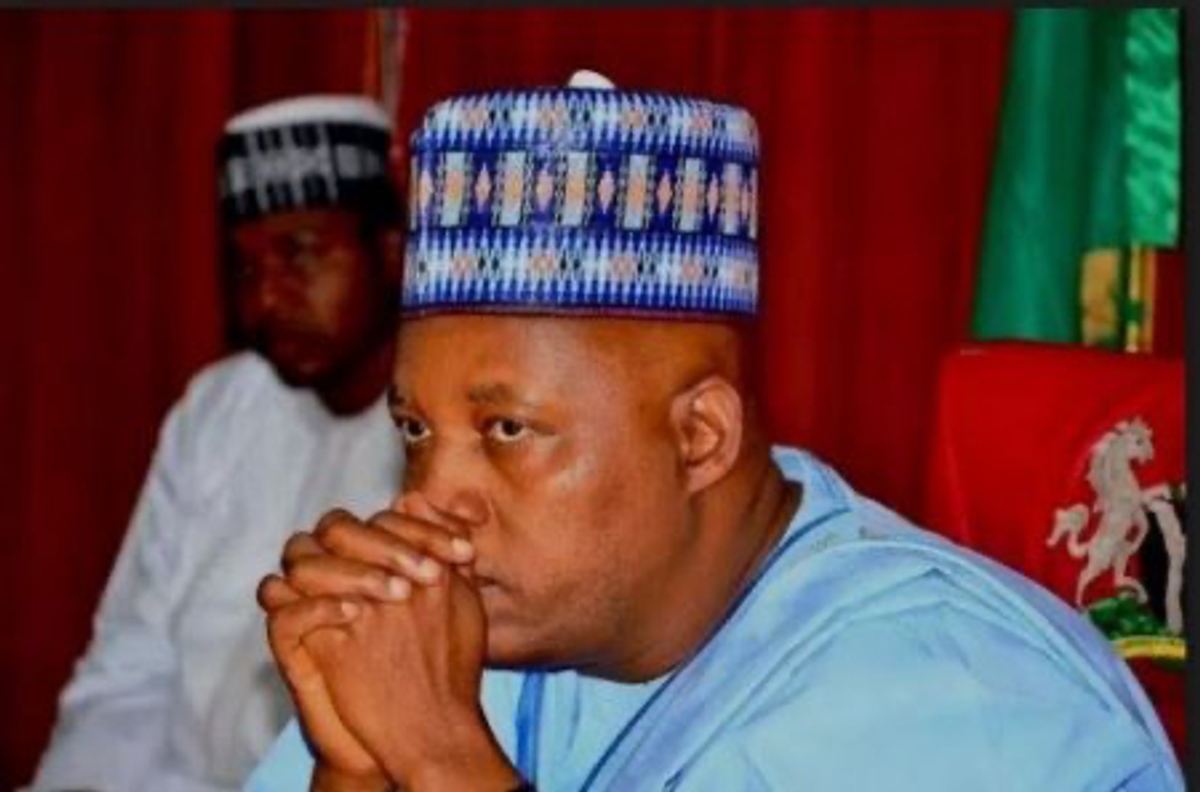
Governor of Borno, Kashim Shettima, said: “Based on Buhari’s announcement, the Sambisa forest became deceased or dead at about 1.35 pm on December 22nd 2016.”

As a result, Shettima announced that: “This day will be marked as Public Holiday in Borno for the purpose of celebrating the strength and the victory of our Armed Forces”.

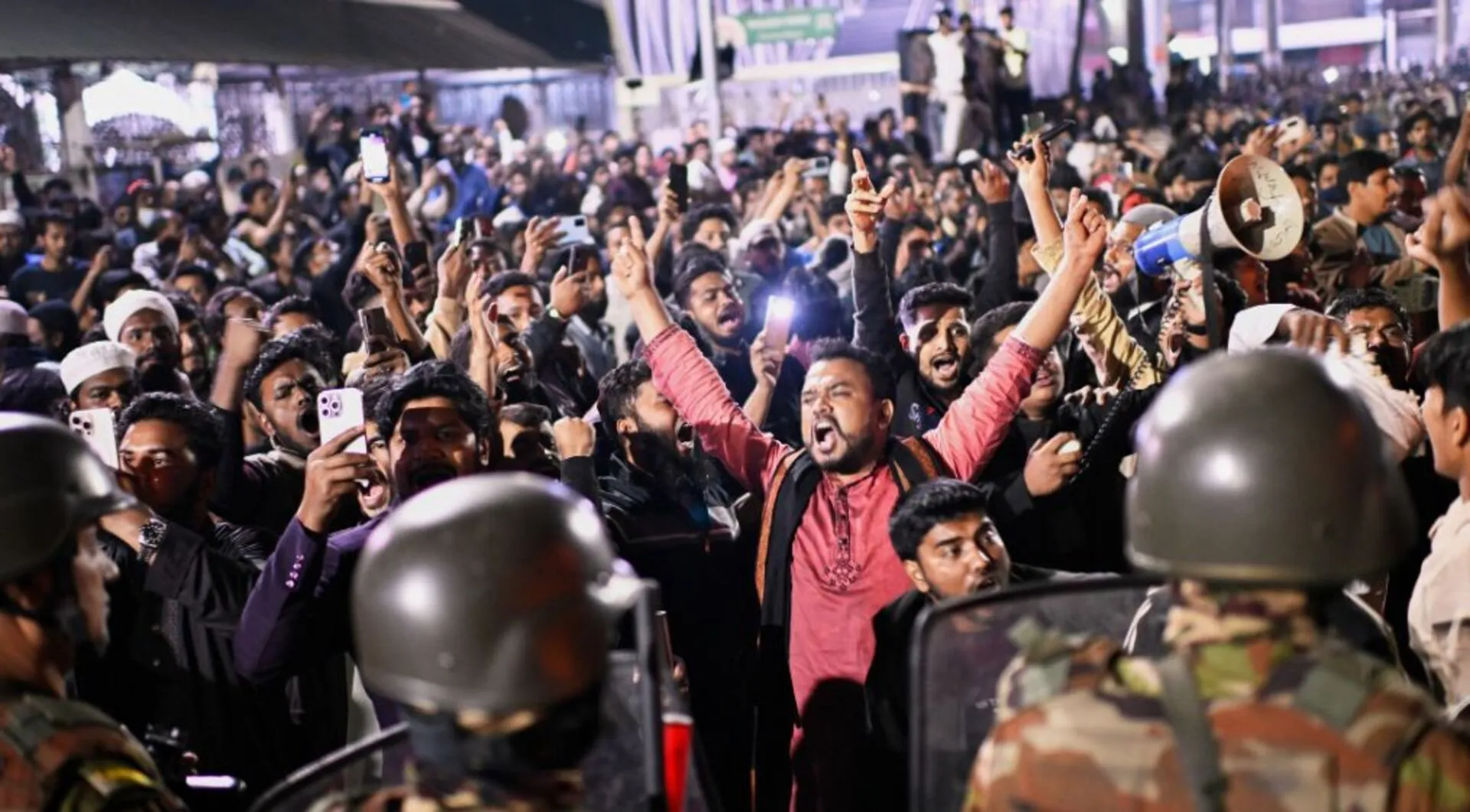
How volatile is the political situation in Bangladesh? | Politics

Tensions are growing after the killing of a student leader in last year’s revolt, which toppled Sheikh Hasina.

Tensions are growing in Bangladesh after the killing of a student leader of last year’s uprising that ousted Prime Minister Sheikh Hasina.

Elections for a new government are due in February.

So, how volatile is the political situation?

Presenter: Dareen Abughaida

Guests:

Taqbir Huda – human rights lawyer and Clarendon Scholar at Oxford University

Asif Shahan – professor of development studies at the University of Dhaka

Fahmida Khatun – executive director at the Centre for Policy Dialogue in Bangladesh

Source link