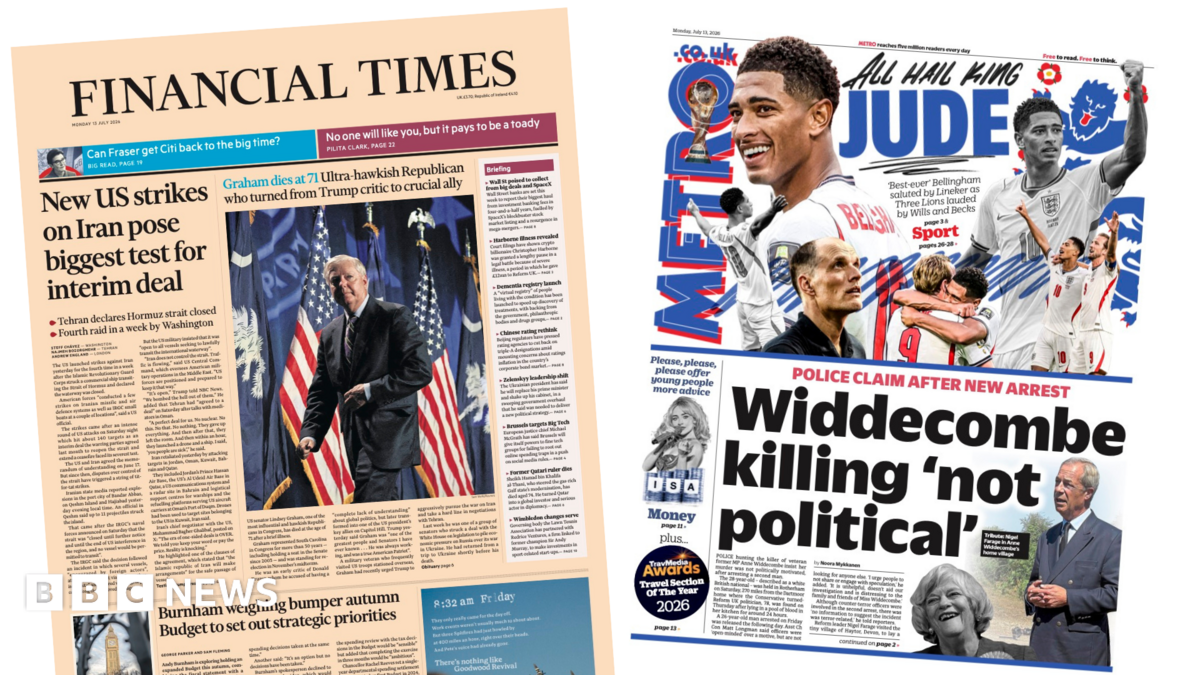
Discover the latest happenings and stay in the know with our up-to-date today news coverage. From breaking stories and current events to trending topics and insightful analysis, we bring you the most relevant and captivating news of the day.
A crowd of more than 100,000, an open-top bus parade and a royal reception welcomed back the Norwegian World Cup squad.
Published On 13 Jul 202613 Jul 2026
More than 100,000 fans flooded the streets of the Norwegian capital, Oslo, to give their football team a heroes’ welcome, turning the heartbreak of their FIFA World Cup exit into a huge national celebration.
A 2-1 extra-time defeat by England on Saturday brought Norway’s historic run to an end in the quarterfinals, shattering the Nordics’ dreams of a semifinal berth. However, it did not stop the country from celebrating its heroes.
Massive crowds under the Norwegian summer sun filled the grounds of the Royal Palace early on Monday afternoon, with an unofficial turnout estimated at more than 100,000 people.
The Norway squad touched down to a traditional water cannon salute before commencing their homecoming parade in the capital.
The line of supporters quickly packed the palace square before stretching far down the main street, Karl Johans gate, as the squad first attended an audience with King Harald.
The team then stepped out to greet the fans, with the Royal Guard standing at attention behind them.
Striker Erling Haaland was noticeably absent from the final stage of the celebrations, having left early.
His departure meant he missed joining his teammates on the palace steps for one last “Viking row” with the tens of thousands of fans gathered below, which was led by Crown Prince Haakon on the drums.
“Erling and Sander [Berge] had to catch their plane as our trip from the US was delayed four hours,” coach Stale Solbakken said, as the squad prepared to continue the celebrations in an open bus parade around Oslo.
Weekly insights and analysis on the latest developments in military technology, strategy, and foreign policy.
France has conducted live-fire tests of laser-guided rockets from its Rafale fighter, adding a low-cost anti-drone capability to the jet. Following the United States and the United Kingdom, this reflects a broader trend in modern air warfare, as air forces increasingly recognize that they need layered, cost-effective intercept options rather than relying exclusively on expensive missiles.
Today, the Directorate General of Armaments (DGA), the French government defense procurement and technology agency, announced the successful integration of the 68mm laser-guided rockets on the Rafale. The tests began in February. The DGA added that the integration work was conducted together with the French Air and Space Force’s Centre d’expertise aérienne militaire (CEAM, the French aerospace research and test center), supported by Dassault Aviation and Thales. The program is known as Lutte antidrone sur avion de combat (LADAC, or anti-drone capability for combat aircraft).
The Defence Procurement Agency has successfully completed integration testing of 68 mm laser-guided rockets on the Rafale fighter jet. The time between the contract being awarded for this new capability and initial operational capability being achieved was less than 8 months. pic.twitter.com/rR2Nij9EzY
— French Aid to Europe 🇨🇵 🇪🇺 (@aidefranceukr) July 13, 2026
While LADAC is initially intended for French Rafales, flown by the air force and navy, it could also be provided to export Rafale customers, and potentially other combat jets.
Last October, the Chief of Staff of the French Air and Space Force, Gen. Jérôme Bellanger, told a parliamentary hearing that there was a need to provide laser-guided rockets for the Rafale and/or the Mirage 2000D RMV, to counter long-range one-way attack drones, such as the Iranian Shahed-136 and the Russian Geran series.
DGA official to me at Paris 2025 – “We absolutely have to start using rockets for the counter-UAS mission, because we cannot keep using our high-value missiles in this role. We don’t want to use our high-value missiles, such as the MICA.” https://t.co/oEWRyOyF3W
“Regarding airborne anti-drone operations, it is not sustainable to use MICA air-to-air missiles costing over a million euros to shoot down a drone worth a few thousand dollars,” Bellanger said. “We must develop our own low-cost firing capabilities or adapt our gun fire-control systems,” he added.
The Chief of Staff of the Air Force suggested that off-the-shelf solutions would most likely be used.
In the event, a primarily French solution has been adopted.
This involves 68mm rockets with laser guidance, loaded in 12-round Thales Telson JF12 rocket pods. These are used in conjunction with the Rafale’s RBE2 radar, which has undergone modifications for the role, as well as the Talios pod, used for target tracking and laser designation.
TELSON : INDUCTION ROCKET SYSTEM
The rocket itself is understood to be the Aculeus-LG, which has a stated range of 3.7 miles.
Head of the DGA, Patrick Pailloux, told the National Assembly yesterday that integrating rockets onto the Rafale for the C-UAS role is now ongoing and will be ready for operational fielding “this summer”. @JanesINTEL story from myself and @JakOSpades to come… https://t.co/V4DTHM2jkd
Development of the LADAC capability was begun last December 31 as a matter of urgency.
By the end of February, French Rafales were protecting the airspace of the United Arab Emirates against Iranian drone attacks during Operation Epic Fury. In the process, they fired several dozen MICA IR/EM missiles in only a few weeks.
French Dassault Rafale fighter jet intercepting an Iranian Shahed/Geran-type long-range strike drone with an air-to-air missile (presumably MICA-EM/IR) over Erbil Governorate in northern Iraq this afternoon. pic.twitter.com/lbM2xJ2TBb
— Status-6 (War & Military News) (@Archer83Able) April 14, 2026
📍 Proche et Moyen-Orient | Retour sur les engagements des moyens 🇫🇷 face aux menaces aériennes
💥 Protection des intérêts français dans la zone et application des accords de défense
🎯 Les armées 🇫🇷 maintiennent une posture défensive active, en coordination étroite avec… pic.twitter.com/jk8OZbLEPm
— Armée française – Opérations militaires (@EtatMajorFR) April 10, 2026
In April, the French parliament was informed that a study was underway to equip the Rafale with rocket pods. The same month, unofficial imagery appeared showing a dedicated test Rafale carrying a pair of JF12 pods while flying from Istres-Le Tubé Air Base, home of the DGA.
As of April, it was suggested that the capability could be ready to be fielded this summer. This target will be achieved, with the LADAC capability rolled out to French Air and Space Force Rafales by the end of the month.
At this point, it’s unclear if the Rafales will also have their onboard 30mm cannons specifically modified for anti-drone work, as Bellanger had previously suggested. This would involve adaptation of the gun fire-control system to mitigate the risk posed by debris from the destroyed drones. As we have discussed many times in the past, firing a fighter’s gun against a small, low, and slow-moving target is inherently dangerous, due to a combination of speed and engagement dynamics, the risk of collision, shrapnel and other debris, plus the increased chances of collateral damage on the ground.
Le canon du #Rafale : le #30M791
The U.S. military took the lead in integrating laser-guided rockets on combat aircraft for anti-drone purposes.
In 2019, TWZwas first to report that the U.S. Air Force had begun to look at using APKWS as an air-to-air weapon against drones and cruise missiles, when it conducted a test of the weapon in that role from an F-16C. The first reports of the capability being used in combat came in 2024, when U.S. Air Force F-16s began using the rockets to shoot down drones launched by Iranian-backed Houthi militants in Iran, as TWZ was again first to report.
F-16C Viper Shoots Down Target Drone With Laser-Guided Rocket
Since then, U.S. Air Force F-15Es and F-16s have repeatedly called upon the rockets to deal with Iranian drone and missile attacks in the Middle East. In particular, the rocket-armed fighters were very actively involved in defending Israel from Iranian drones and missiles. The same encounters saw F-15E crews running out of missiles when faced by large barrages of drones and missiles, a problem that laser-guided rockets can help address.
The Eurofighter Typhoon became the next aircraft to add the air-to-air optimized variant of the laser-guided APKWS rocket to its armament options.
At the Paris Air Show in June 2025, Eurofighter CEO Jorge Tamarit Degenhardt confirmed that the counter-drone mission was of growing importance for Typhoon customers and that he “needs to now have that conversation” with Germany, Italy, Spain, and the United Kingdom — the four Eurofighter partner nations that are responsible for developing, building, and sustaining the aircraft.
The U.K. Royal Air Force announced in May of this year that its Typhoons were now equipped with APKWS, “significantly enhancing their ability to counter emerging threats during operations in the Middle East.”
A U.K. Royal Air Force Typhoon fires an APKWS rocket during trials in the UK in April 2026. Crown Copyright
Laser-guided rockets of all kinds offer some significant benefits for the counter-drone role, compared with traditional air-to-air missiles. Their performance parameters make them especially suitable for bringing down relatively steady flying, non-reactionary, low-performance targets, including drones and subsonic cruise missiles.
They also bring a major increase in ‘magazine depth,’ with each pod carrying several rounds, taking up a weapons pylon that would otherwise normally be loaded with just one air-to-air missile.
Above all, however, the requirement for these weapons has been driven by the huge mismatch in cost between the target and air-to-air missiles that would otherwise be used for the role. In a French context, a single MICA round reportedly costs around $2 million, significantly more than the latest variants of the AIM-120 Advanced Medium-Range Air-to-Air Missile (AMRAAM), which cost around $1 million each.
Meanwhile, a Shahed drone might come with a unit cost of around $50,000, as we have discussed in the past.
A French Rafale fighter is prepared for a training exercise at Al Dhafra, near Abu Dhabi on December 20, 2025. Photo by Ludovic MARIN / AFP
The cost of the Aculeus-LG is unclear, but is likely in the same region as the equivalent APKWS. Here, the laser guidance section costs between $15,000 and $20,000, with only a few thousand dollars more needed to provide the rocket motor and warhead.
It seems all but certain that the French Rafales will not be the only ones to get the new weapon.
There is a large Rafale operating community in the Middle East, with Qatar already flying them and the United Arab Emirates due to receive them soon. Both of these and others could benefit from these capabilities. Since these rockets were also eyed for the Mirage 2000 in the past, Ukrainian Mirages could also be a candidate for integration; the Ukrainian Air Force already uses APKWS on its F-16s.
With future conflicts likely to feature large salvos of one-way attack drones and cruise missiles, this type of capability is likely to become a more regular feature on modern combat aircraft.
North Antrim MP Jim Allister said the deaths had caused great shock in the community.
“Though details remain scant, clearly there are family and friends who have suffered huge loss,” the Traditional Unionist Voice leader said.
Sinn Féin assembly member Philip McGuigan said speculation about what had happened was not helpful.
He said anybody who could help police should come forward.
Ulster Unionist Party leader Jon Burrows said the entire town was devastated and police should be given “patience and time” to complete their investigation.
“The more information the police can get out the better, because there is a community in shock,” he said.
Alliance Party assembly member Sian Mulholland also urged anyone with information to contact the police and said her thoughts were with everyone affected.
London debuts new powers targeting state proxies after accusing Iranian military organisation of engineering anti-Semitic attacks.
Published On 13 Jul 202613 Jul 2026
The British government is pressing to use new powers allowing it to criminalise state proxies in order to designate Iran’s Islamic Revolutionary Guard Corps (IRGC) as a threat to national security.
In a statement issued on Monday, the government announced that it was submitting draft regulations to the UK Parliament that would ban support for the IRGC. The move follows a series of anti-Semitic attacks in the United Kingdom.
Recommended Stories
list of 4 itemsend of list
In the statement, the government said the submission of the legislation was part of an attempt to “crack down on foreign state-backed activity in the UK”, noting this would include “espionage, foreign interference in our democracy, sabotage and physical attacks”.
Following the designation, it will be a criminal offence to invite support for or express support for the military organisation, assist them in carrying out UK-related activities, engage in conduct likely to materially assist them, or accept or retain material benefits provided by or on their behalf, according to the report.
Apart from the IRGC, the UK government also listed the Islamic Movement of Companions of the Right (IMCR), an Iran-backed group that claimed seven attacks on Jewish sites in the UK earlier this year, and Russia’s military intelligence agency, the GRU Volunteer Corps, as “the first bodies designated under landmark new state threats powers”.
British police have investigated attacks on Jewish-linked sites in London, including the torching of four ambulances belonging to a community charity in March, as anti-Semitic hate crimes. Three men were charged with arson in April.
Volunteer ambulances run by a Jewish organisation were set on fire overnight in March in London [File: AFP]
“If approved by Parliament later this week, those conducting acts of sabotage including arson on behalf of these groups could face life imprisonment,” the statement added.
Caretaker Prime Minister Keir Starmer said: “These new powers will make it easier to prosecute and lock up anyone carrying out their dirty work here in Britain.”
The new legislation gives the UK government “proscription-like” powers to designate foreign state proxies deemed a threat to the UK’s national security. It will mean that prosecutors do not need to establish a foreign power connection in cases involving designated groups.
“Iran and Russia are using proxies and thugs to do their dirty work on our shores. I have rapidly designated three groups so those working for them will be tracked down and put behind bars,” Home Secretary Shabana Mahmood said.
Reporting from London, Al Jazeera’s Charlie Angela said the designation could come into force “as early as Friday”.
“What that’s going to mean is it will become a criminal offence to support the groups in any way or to help them operate, and that could carry a maximum sentence of life imprisonment,” Angela said.
“Diplomatically, it is going to mark a further deterioration in the relationship between Iran and the UK. Earlier, Foreign Secretary Yvette Cooper summoned the Iranian ambassador to the Foreign Office and questioned him. And that is likely going to get a strong response from Iran.”
The government said the IRGC has “a long history of using proxies and criminal networks to target people overseas – particularly the Jewish community and Iranian dissidents”.
Tehran, which is still at war with the United States and Israel, has previously denied using proxies.
Regarding the GRU military intelligence service, the government said Russia was using the group “for foreign intelligence collection and hostile covert operations and has a long record of targeting the UK and its allies”.
Walkout over late payments comes as public health officials confirm that the virus has reached two more provinces.
Published On 13 Jul 202613 Jul 2026
Staff at a hospital treating Ebola patients in the Democratic Republic of the Congo (DRC) have gone on strike, alleging they have not been paid for months, bringing the facility to a standstill.
Dozens of employees at Rwampara General Hospital in Ituri province, the epicentre of the outbreak, walked off the job on Monday. The strike action came as authorities revealed that the virus has spread to two further provinces in northern DRC.
Recommended Stories
list of 3 itemsend of list
The striking workers included epidemiologists, case investigators, drivers and gravediggers.
“We don’t know how it is possible to not have been paid for two months,” Bahati Claude, a health worker at the centre, told The Associated Press.
The outbreak, concentrated in northern DRC, is the worst in Africa’s history and has already caused severe economic damage, pushing nearly one million people into poverty, according to the United Nations.
Efforts to hold back the spread of the virus have been complicated by the presence of paramilitary rebels, who control parts of the region in a bid to access its valuable mineral deposits.
The response to the outbreak has also been complicated by misinformation, deeply rooted burial practices and a lack of trust in health officials.
Health workers have been attacked by communities that believe the disease is a form of witchcraft, while bereaved families have ignored safety protocols by holding traditional burial ceremonies.
DRC’s National Public Health Institute confirmed on Sunday that the virus has spread to two new northeastern provinces: Haut-Uele and Tshopo.
The World Health Organization has warned that an accelerated response from local, national and international partners is urgently needed to bring the outbreak under control.
DRC Health Minister Roger Kamba said last week that the government was working to resolve the payroll issues and ensure employees were paid.
“We must ensure that these payments reach the right people,” Kamba said. “We have faced a few challenges, notably changes to the lists, which have led to complaints from people saying they are not being paid even though they are working. We have the means to sort this out.”
According to the latest figures, the number of Ebola cases in the DRC has risen to 1,926, with 702 deaths. The spread of the disease to Haut-Uele and Tshopo means five provinces now have confirmed Ebola cases.
The International Rescue Committee (IRC) has warned that the situation is worsening in areas already affected as transmission accelerates, while the risk of the disease spreading to neighbouring South Sudan is increasing as the outbreak expands into new areas.
Meanwhile, a second United States citizen infected with Ebola was admitted to a special isolation unit at Frankfurt University Hospital in Germany on Monday. Timo Wolf, head of the special isolation unit, said the patient’s condition was “currently stable”.
The man, who is in his 60s, was confirmed to have contracted the disease on Friday while working for a Christian aid group in the DRC.
The $1bn scheme falls critically short of the $71bn reportedly needed for Gaza’s recovery over the next 10 years.
Published On 13 Jul 202613 Jul 2026
The European Commission has announced a billion-dollar aid and reconstruction fund aimed at helping the recovery of Gaza from more than two years of devastating war.
The “Team Gaza Initiative” launched on Monday at a meeting of donors in Brussels. The scheme will support projects such as restoring water and sanitation infrastructure, removing debris and re-establishing health infrastructure, an EU Commission statement said.
Recommended Stories
list of 4 itemsend of list
However, the size of the fund falls critically short of the tens of billions estimated to be needed to rebuild the Palestinian enclave amid Israel’s genocidal war, which continues to kill Palestinians and create dire humanitarian conditions.
Spain, France, Denmark, the UK, Germany, Norway, Finland, Italy, the Netherlands, Japan, Switzerland, Sweden and Belgium, the World Bank and the European Investment Bank are taking part in the initiative, along with the Commission itself, the statement said. Australia and Canada are also expected to join.
“We will present the initial package today of almost 900 million euros or one billion dollars,” Dubravka Suica, EU commissioner for the Mediterranean, said ahead of the donor meeting. “Our objective is clear: to help build hope, resilience and a better future for the Palestinian people.”
The funding is intended to assist in providing the population with basic water and sanitation facilities, clearing and disposing of rubble and rubbish, as well as restoring health, energy, agricultural and food systems.
No breakdown of how much each partner would contribute was provided. Suica said donors “want to start with so-called early recovery, and it is very important to show that we are willing to do it.”
“We now need the conditions on the ground that will allow the support to reach the people in Gaza,” she added.
While Israel and Hamas agreed to a US-brokered “ceasefire” last October, Israel has consistently breached it.
The intensity of the fighting has reduced, but at least 1,100 Palestinians have been killed and more than 3,500 wounded since the “ceasefire” began. In total, the war has killed at least 73,000 Palestinians.
The EU Commissioner for Equality, Preparedness and Crisis Management described the situation in Gaza as “unbearable”. Hadja Lahbib called for humanitarian access to the enclave and greater political engagement from Israeli authorities.
“Nine months after the so-called ceasefire, shelling continues, disease is spreading, people are dying,” Lahbib told reporters ahead of the billion dollar fund announcement.
European Union and United Nations said in April that more than $71bn will be needed over the next 10 years for Gaza’s recovery and reconstruction.
The Gaza Rapid Damage and Needs Assessment (RDNA) report found that $26.3bn will be required in the first 18 months to restore essential services, rebuild critical infrastructure and support Gaza’s economic recovery.
Iraqi Prime Minister Ali al-Zaidi is travelling to the United States for talks with President Donald Trump, in what will be his first foreign trip since taking office in May.
During this week’s meetings, al-Zaidi is expected to sign agreements in energy and trade while also boosting investment with US companies.
Iraqi government spokesman Haider al-Aboudi told reporters on Sunday the visit to Washington, DC, will mark a shift in the countries’ relations “from a framework of crisis management to a strategic economic partnership”.
The focus, he said, would not be about striking a “temporary” agreement but about establishing “a durable, long-term partnership that serves the shared interests of both countries”.
Al-Aboudi said oil would be “a top priority” during the visit as the Iraqi government seeks to increase production and find alternative export hubs to lessen the consequences of any future closure of the Strait of Hormuz.
Iraq was one of the countries badly hit by the shutting down of the critical waterway in recent months due to the US-Israel war on Iran, as about 90 percent of its 3.4 million barrels per day (bpd) of exports passes through it.
Al-Aboudi said Iraq’s proposal to establish an energy and development fund with the US would be on the table to finance any projects that would be agreed upon, especially in the energy sector.
Al-Zaidi had previously said the fund would initially be structured in oil exports of 500,000 bpd with the goal of increasing to as much as two million bpd.
The prime minister has also said Iraq seeks to increase oil production to seven million bpd over the next three years, up from its current output of about 4.5 million bpd.
“Iraq is in need of such kind of cooperation, especially with a partner like the United States to enhance and strengthen its capacity, particularly in the energy, oil, gas, electricity, and petrochemicals sectors,” said Abdulrahman Almashhadani, an Iraqi economic expert and professor.
“However, the critical question remains whether Iraq can provide a safe and stable environment that would encourage US companies to come to Iraq,” he said. “This issue is sensitive and unresolved; it largely depends on the government’s ability to deliver on its commitments to restrict weapons to state control.”
Large delegation
Sources told Al Jazeera the Iraqi delegation to the US comprises more than 70 people, including key ministers, the head of the central bank, the national security adviser, lawmakers and businessmen.
A well-informed source said meetings with US administration officials and the International Monetary Fund (IMF) have also been planned. According to the source, who asked not to be named, Iraq is seeking to secure an IMF loan of up to $8bn.
A separate well-informed source told Al Jazeera that the disarming of pro-Iran Iraqi armed factions and restricting weapons under state authority, as well as Baghdad’s relationship with Tehran, are expected to be among the issues the US side will raise during the visit.
In his first speech in parliament as prime minister, al-Zaidi had promised that the state would have control over weapons in a country where paramilitary groups, including many supported by Iran, have been powerful since the 2003 US-led war on Iraq.
Some armed factions said they would abide by the prime minister’s declaration, but others – particularly the powerful ones that launched missiles and drones at US facilities during the war on Iran – rejected it.
In a statement released hours before al-Zaidi’s trip to Washington, the Islamic Resistance in Iraq, an umbrella group of Iran-backed armed groups in the region, including Iraq, rejected the prime minister’s visit and its outcomes.
“We will not give a blank cheque for all government policies. We warn against replacing military occupation with an economic occupation that is even more dangerous,” the statement said.
“The option of defending Iraq and its legitimate interests will remain on the table,” it added.
Al-Zaidi has said his government is eager to implement a 2024 deal made with the US-led coalition’s military mission in Iraq to end its presence as combat forces by the end of September.
Some of the factions that rejected the prime minister’s disarmament statement said they would wait to see what happens on September 30 and then act accordingly.
Ehsan al-Shammary, a professor of international studies at Baghdad University, said the economic initiatives and the backing that al-Zaidi is seeking from Trump during Monday’s talks would inevitably be overshadowed by the issue of Iran’s influence in Iraq.
Ultimately, he added, it is the issue that will determine the success or failure of a “very important” visit that could “redefine” bilateral relations and “give it a push”.
“Al-Zaidi has little room for manoeuvre. He should choose either to align with the United States or move closer to Iran,” said al-Shammary. “I do not believe Washington is willing to accept a divided sphere of influence in Iraq alongside Tehran. That is why the prime minister’s task appears to be almost impossible.”
European Union foreign ministers met in Brussels on Monday to discuss whether there is enough support for new measures to curb trade with Israeli settlements in the occupied West Bank.
“Everybody agrees that the situation in the West Bank is really intolerable,” EU foreign policy chief Kaja Kallas said at the start of a meeting.
“What is happening in the West Bank is actually making it more and more impossible that the two-state solution ever can come into effect.”
Here is more about the ongoing EU discussions on Israeli settlements.
What options are the EU foreign ministers discussing?
The discussions are based on a confidential paper by the European Commission that floats three different options – an import licensing system, prohibitive tariffs, or a ban – an unnamed senior EU diplomat and a European official said, Reuters reported.
The EU has long struggled to take major decisions on Middle East policy because of deep and long-standing divisions among its 27 member countries, particularly on the Israeli-Palestinian conflict.
Diplomats said the debate at a meeting in Brussels on Monday was not expected to yield any concrete decisions, but would help to sound out if there is enough support to move forward.
Are Israel’s illegal settlements in the West Bank expanding?
Israel has occupied the West Bank since 1967. More than 500,000 Israeli settlers live in the territory, excluding east Jerusalem, among some three million Palestinians.
This month, Israel’s Security Cabinet has approved a plan to establish 13 new settlements in the central occupied West Bank.
The number of new settlements has soared recently, according to new data from the Palestinian Forum for Israeli Studies (MADAR). After averaging approximately eight outposts annually between 2012 and 2022, the number jumped to 32 in 2023, then 62 in 2024, reaching 86 during 2025.
Nasser Khdour, Middle East assistant research manager at the Armed Conflict Location and Event Data Project (ACLED), said that 2026 is the deadliest year for settler violence since ACLED began tracking incidents in Palestine a decade ago.
“Incidents have included attacks on Palestinians, property destruction, damage to farming equipment and facilities, tree uprooting, and grazing on Palestinian agricultural land. Other incidents have involved looting, including the theft of equipment, sheep, and crops,” Khdour was quoted as saying on the ACLED website in May.
What pressure has the EU faced to take measures about this?
Under pressure for the EU as a whole to take measures, the bloc’s executive last week laid out options to curb trade with settlements, including a ban.
“There have been a lot of asks and requests from the member states regarding the ban of the trade with illegal settlements,” Kallas said.
“Let’s see if these options that have been provided now will have a stronger push from member states.”
Belgium’s Foreign Minister Maxime Prevot said the options laid out appeared to be more “a bone to gnaw on than a genuine desire to move forward”.
“We are calling for concrete proposals,” he said.
There is disagreement in Brussels as to whether that move would need backing from all 27 member states or just a weighted majority.
Diplomats say that key players Germany and Italy are still undecided on the move.
What has the EU’s position been so far?
Several EU countries – including Spain, the Netherlands, and the Republic of Ireland – have already imposed their own trade restrictions on Israeli settlements in the occupied Palestinian territories, considered illegal under international law.
In May, the EU imposed sanctions on four entities and three individuals over what it described as serious and systematic human rights abuses against Palestinians in the West Bank.
In a July 2024 advisory opinion, the International Court of Justice said Israel’s occupation of Palestinian territories and settlements in the West Bank are illegal and that states should take steps to prevent trade or investment relations that help maintain the situation.
Israeli Foreign Minister Gideon Saar last year described a push by some European governments to implement the advisory opinion as “shameful”.
Japan is setting up its first centralised intelligence agency since World War II to try to modernise its defence capabilities against spies, foreign interference and other attacks from foreign adversaries.
Legislation to establish the new agency passed the upper house of Japan’s National Diet in May, a month after it cleared the lower house.
After decades of relying on US intelligence support and after a pacifist stance was enshrined in the Japanese Constitution, Prime Minister Sanae Takaichi described this law as “a first step” towards strengthening the country’s espionage capabilities.
What is this new agency?
The legislation creates two bodies: a National Intelligence Council that will act as the government’s command centre for intelligence gathering and analysis and an agency for operations. The reform changes the existing Cabinet Intelligence and Research Office (CIRO) into a centralised National Intelligence Council and National Intelligence Bureau.
Takaichi isn’t exactly building the US Central Intelligence Agency, but The New York Times reported Western allies, including the United States, Germany and Australia, are advising the Japanese government on establishing the new spy agency.
Ken Kotani, professor at Nihon University, said he believes Japan’s new National Intelligence Council and national intelligence agency model will be original to Japan.
Sanshiro Hosaka, a research fellow at the Estonia-based International Centre for Defence and Security, said the reform is aimed at improving the Japanese government’s intelligence abilities “by strengthening coordination, reducing interagency barriers and ensuring that intelligence products better meet policymakers’ requirements”.
Why does Japan want it now?
Tokyo says it is facing threats from a number of nearby countries such as North Korea, Russia and China, and a national intelligence agency is needed to counter their efforts.
Kotani explained that Japan’s foreign and national security policy followed the US during the Cold War period. But he noted that “recently Japan has gradually pursued her own policy, especially in the Trump administration period.”
US President Donald Trump has repeatedly accused Washington’s allies of not spending enough on their own defence and on relying on American help. He has questioned US alliances and has been ambivalent about whether the world’s most powerful military would come to the defence of smaller nations.
That, Kotani said, is why “Japan needs to collect intelligence by herself.”
Japan currently lacks an antiespionage law that would make it relatively easy for foreign intelligence activities to go unpunished.
Hosaka explained that former Russian intelligence officers who operated in Japan, such as Stanislav Levchenko and Konstantin Preobrazhensky, described Japan as a paradise for spies: “During the Cold War, Soviet intelligence targeted Japanese technologies, industrial and commercial information as well as the US bases in Japan,” Hosaka explained. “As a major US ally in Asia and an advanced technological economy, Japan remains an important intelligence target for China, Russia, North Korea and others.”
Hosaka said what Japan needs “is a foreign-influence transparency law to increase the transparency of foreign actors’ lobbying activities as well as to deter illegal foreign interference. And an antiespionage law to conduct undercover operations and investigations using assumed identities.”
Why the current system isn’t working:
A major obstacle within Japan’s current decentralised structure, experts said, is that no one has the authority to force cooperation from other agencies or bodies or prevent intelligence data from being scattered.
Kotani explained that the political power of Japan’s current intelligence agency has been weak: “This was because the CIRO was not given any legal mandates on intelligence when it was established in 1952.”
Another difficulty is that under current Japanese laws, foreign representatives suspected of potential intelligence affiliations or interference are difficult to intercept because legal grounds are weak for Japanese authorities to intercept their communications or prosecute them.
The ambitions of PM Takaichi
Takaichi took office in October and has accelerated the expansion of Japan’s military and security ambitions through a number of measures, including establishing a central intelligence body.
In December, the cabinet approved its largest defence budget ever at $58bn as the Ministry of Defence said it needed to accelerate its “transformation” and would use more than $600m for building a so-called drone and laser shield to protect its southwestern region.
In April, Takaichi’s cabinet moved closer to abolishing a longstanding ban on the export of lethal weapons, such as tanks and warships.
The new direction led to antiwar protests in the streets of Japan in May. However, a Jiji opinion poll in April showed only 19 percent were opposed to the new bill to reform intelligence within the country. About 40 percent were indifferent, and the rest were in favour.
Kotani said he has noticed a lot of the old “taboo has gone” around this subject and it is no longer a topic of concern to many Japanese, He said: “Especially younger generations are not interested in such an old story.”
Why surveillance is controversial in Japan
Japan’s defeat in World War II left its citizens with distrust towards state surveillance as the wartime Special Higher Police, known as the Tokko, monitored, arrested and tortured citizens for their political beliefs.
Article 9 in its constitution, drafted in 1947 shortly after the end of the war, renounced war, and Japan has never had its own foreign intelligence service. Instead, it relied on the US.
The efforts for a new security agency have sparked some domestic criticism, but Hosaka said the latest reforms do not amount to a return to the kind of espionage apparatus that could be used against Japanese civilians.
“The legislation does not itself create significant new intelligence collection or counterintelligence powers,” Hosaka said.
Nigeria’s position on ransom payments rests on a sound principle: Every ransom paid strengthens criminal organisations by financing the purchase of more weapons, and encouraging more kidnappings. Every naira handed to kidnappers today may finance tomorrow’s abduction.
Yet, another reality is far more uncomfortable. It is a reality experienced daily by families whose loved ones have disappeared into forests, insurgent camps, and criminal enclaves across Nigeria. The state asks them not to pay. The same state often cannot prevent the abduction nor guarantee the rescue of the victim.
For years, successive governments have urged Nigerians to reject ransom payments as a matter of national security. The argument is strategically sound. Kidnapping has evolved into one of Nigeria’s most profitable criminal economies, sustaining terrorist groups, insurgent groups, and organised kidnapping networks across several regions. Every successful payment reinforces that economy and makes future attacks more likely.
But public policy cannot exist only in theory. It must also survive contact with human reality.
For many women and girls held captive, every additional day increases the risk of rape, forced marriage, sexual slavery, and repeated abuse. Men and boys frequently endure forced labour, torture, starvation, beatings, and execution. Children lose months or years of their education while entire families descend into financial ruin attempting to negotiate for survival.
For parents, spouses, and siblings, this is not an abstract debate about national security. They know that every phone call may be the last and that every delay may carry irreversible consequences. It is therefore unsurprising that many families choose life over policy.
Critics often ask why families continue paying ransom despite repeated warnings, but the more humane question is whether society has offered them a credible alternative.
Military rescue operations have succeeded in some high-profile cases, and security forces continue to make sacrifices under extremely dangerous conditions. However, they remain the exception rather than the experience of most victims. Across vast areas of Nigeria, rescue is uncertain, negotiations are prolonged, intelligence is limited, and families are frequently left to navigate kidnappers alone. That gap creates an impossible moral burden.
The law tells a father not to pay, but his daughter remains in captivity and the government cannot tell him when, or whether, she will come home. What should he choose?
Many policymakers evaluate ransom through the lens of national security. Families experience it through the lens of survival. Both perspectives are legitimate, but they collide in painful ways.
The contradiction becomes even sharper where governments contemplate criminalising ransom payments. Such laws may satisfy an important strategic objective, but without dramatically improving prevention, intelligence, rapid response, and hostage rescue capability, they risk punishing victims twice. First, by failing to protect them. Second, by denying them the only option they believe remains.
No family should ever have to choose between financing organised crime and abandoning someone they love. The responsibility for breaking this cycle belongs to the state, not to traumatised families.
A credible anti-ransom policy requires far more than a legal prohibition. It demands professional policing, intelligence-driven operations, rapid hostage recovery capabilities, functioning emergency response systems, stronger border control, disruption of kidnapping finances, and sustained prosecution of those who organise and profit from this industry.
Only then can the government reasonably ask citizens to bear the enormous moral cost of refusing to pay ransom. Until that day arrives, Nigeria’s ransom debate will remain trapped between principle and reality. Ending ransom payments begins with ending the conditions that make ransom appear to be the only path home.
Nigeria’s stance against ransom payments is based on the principle that such payments empower criminal organizations by funding their operations, thus encouraging more kidnappings. Despite this, families of the kidnapped face harsh realities, as they often must decide between policy and the immediate safety of their loved ones, with the state frequently unable to guarantee their rescue.
Kidnapping has become a lucrative criminal economy in Nigeria, fueling insurgent and terrorist groups. While national security concerns drive the governmental push against ransom payments, individuals affected by kidnappings experience immense personal stakes. The law against ransoms may punish victims who lack viable alternatives unless comprehensive prevention and rescue strategies are implemented.
The tension between strategic objectives and personal survival highlights the need for a robust anti-ransom policy, encompassing improved law enforcement, intelligence, and rapid response capabilities. No family should be burdened with the choice between aiding organized crime and abandoning loved ones, making it imperative for the state to assume responsibility for breaking the cycle of dependency on ransom payments.
Weekly insights and analysis on the latest developments in military technology, strategy, and foreign policy.
The next NATO airborne early warning and control (AEW&C) platform will be Saab’s GlobalEye, as announced today during the alliance’s summit in Ankara, Turkey. The decision to buy up to 10 GlobalEyes for NATO comes after Sweden, France, and Canada all selected the platform, and amid a flurry of new orders for military equipment as part of a wider alliance defense spending drive.
NATO Secretary General Mark Rutte said today that NATO will begin formal negotiations with Saab regarding the acquisition of the GlobalEye. The system will combine Saab’s Erieye Extended Range radar, other sensors, and a command and control (C2) system on a Canadian-made Bombardier Global 6500 bizjet airframe. At this point, Saab has not signed a contract or received an order.
“We are honored and proud to support NATO in its next-generation AEW&C capability,” said Micael Johansson, president and CEO of Saab. “We are confident that GlobalEye is the right choice for the alliance, delivering proven capability, adaptability and long-term operational advantage. Today’s announcement clearly positions GlobalEye as the world-leading solution for advanced airborne early warning and control. We look forward to the next steps in the negotiations.”
NATO’s decision to choose GlobalEye is significant for the Alliance, for Sweden and for the transatlantic defence industrial base. It recognises Swedish technology and is a concrete Swedish contribution to NATO’s deterrence, defence and future air surveillance. (1/3) pic.twitter.com/uX9QR7Fuoq
The alliance badly needs a replacement for its fleet of 14 Boeing E-3A Sentry Airborne Warning And Control Systems (AWACS) aircraft that are operated by the NATO Airborne Early Warning & Control Force (NAEW&CF), home-stationed at Geilenkirchen Air Base in Germany.
NATO E-3s on the flight line at Geilenkirchen Air Base. Melanie Becker/Luftwaffe
The GlobalEye’s path to success with NATO has been somewhat circuitous.
Back in 2023, NATO had announced its plan to “take steps toward acquiring” six Boeing E-7A Wedgetail AEW&C aircraft, the first part of an effort known as Initial Alliance Future Surveillance and Control (iAFSC).
NATO’s original choice of the E-7 took into account price and availability, as well as previous E-7 acquisition programs, namely in Australia, South Korea, Turkey, the United Kingdom, and the United States.
At that time, NATO determined that the E-7 was “the only known system currently capable of fulfilling the strategic commands’ essential operational requirements and key performance parameters and available for delivery within the timeframe required.”
But last November, the Dutch Ministry of Defense announced that NATO had dropped its plan to buy E-7s, saying that the program had lost its “strategic and financial basis.” The decision was also driven by confusion about the future of the U.S. Air Force’s Wedgetail plans.
At that point, the State Secretary for Defense of the Netherlands, Gijs Tuinman, said that the goal was to have a new AEW&C aircraft operational by 2035, referencing the date that the E-3s will reach the end of their service life.
A Saab Gripen E flies alongside a GlobalEye. Saab
Last year, Saab said that they would be able to get the GlobalEye into operational service with NATO in 2031.
The Netherlands was one of seven partner members in the AWACS replacement program, alongside Belgium, Germany, Luxembourg, Norway, Romania, and the United States. However, the United States later departed the program.
Dropping the E-7 meant the GlobalEye became the only realistic candidate, as the only other in-production jet-powered Western AEW&C aircraft. The turboprop, carrier-capable Northrop Grumman E-2D Hawkeye is also still being built.
Also in its favor is the fact that the GlobalEye has already been ordered by France to replace its E-3F Sentry fleet, and by Sweden, and has been selected by Canada. Saab has pitched the aircraft to Denmark and Finland, with a view to them potentially jointly operating the type. The company has also confirmed that Germany and Poland have both shown “interest” in the GlobalEye.
Saab GlobalEye. Saab
Meanwhile, demand for AEW&C aircraft is growing across Europe as the security environment continues to deteriorate. Russia’s ongoing aggression has reinforced the need for persistent wide-area surveillance and airspace control, while a broader range of operational scenarios is also driving renewed interest in airborne early warning capabilities.
Poland is among the latest countries to invest in the capability, taking delivery of two Saab 340 twin-turboprop AEW&C aircraft fitted with Saab’s earlier Erieye radar. Similar aircraft have also been delivered to Ukraine, reflecting the growing importance of these platforms on NATO’s eastern flank.
Saab presented the first Saab 340 AEW&C aircraft to Poland during a ceremony in Linköping, Sweden, on September 29, 2023, just two months after Poland placed an order for two of these aircraft. Saab
The appearance of Russian drones inside or close to NATO airspace has only added urgency to the requirement. AEW&C aircraft offer a critical look-down capability that makes them well suited to detecting and tracking low-flying threats, including uncrewed aircraft and cruise missiles, that can be difficult for ground-based radars to spot. At the same time, they provide an airborne picture of activity across the battlespace, monitoring Russian military aircraft while also keeping watch over potentially hostile movements on the ground and at sea.
Saab notes that the GlobalEye is particularly capable at identifying low-observable and stealthy threats, as well as drones, ballistic and hypersonic missiles, even in complex environments characterized by heavy clutter and electronic jamming.
GlobalEye walk-around tour with Saab
Unclear at this stage is what will happen with NATO’s previous plans to field a crewed AEW&C aircraft as part of an integrated network of sensors, also including drones, and other aircraft types that can operate in a surveillance-gathering capacity, and space-based systems.
This reflected U.S. Air Force thinking, in which the E-7 has been viewed more as a solution to bridge the gap between the retirement of its own aging E-3s and a future space-based radar capability and other classified systems. Much of this has been driven by concerns about the survivability of traditional AEW&C platforms in more contested airspace.
A rendering depicting a U.S. Air Force E-7 Wedgetail. U.S. Air Force
For NATO nations in Europe, switching from the E-7 to the GlobalEye also reinforces the importance of investing in the continent’s own defense industry. Increasingly, officials in Europe are looking to local manufacturers to meet their defense needs, part of a wider effort to reduce their traditional reliance on the United States, which is seen as a less reliable strategic partner under the Trump administration.
Meanwhile, and in response to the deteriorating security situation facing Europe, the NATO Summit that kicked off today has seen a flurry of big-ticket acquisition programs announced. Here, however, the U.S. defense industry was well represented.
Denmark, Finland, Germany, and Norway today announced they would acquire up to five Northrop Grumman MQ-4C Triton high-altitude, long-endurance (HALE) drones. These will enhance NATO’s Alliance Ground Surveillance (AGS) fleet that operates from Sigonella Air Base in Italy and currently flies five Q-4-series drones under the name RQ-4D Phoenix. As well as operating in the Mediterranean and Black Sea, NATO noted that these drones will also fly in the increasingly strategic Arctic and the High North regions.
A depiction of an MQ-4C Triton in NATO markings. Northrop Grumman
“Our collaboration with NATO and the U.S. Navy strengthens the alliance’s ground and maritime surveillance capabilities, said Jane Bishop, vice president and GM of Northrop Grumman’s Global Surveillance segment. “Like Phoenix, Triton conducts ISR at higher altitude and with longer endurance than medium-altitude systems, and is poised to provide NATO new levels of capability and operational flexibility to monitor and protect maritime interests from the Mediterranean to the High North.”
Unclear is whether the NATO Triton variant will be significantly different from the U.S. Navy’s, which focuses on broad-area maritime surveillance and can also conduct signals intelligence (SIGINT) work.
Other maritime patrol procurement includes an initial two P-8A Poseidon aircraft for Denmark. These will also be of particular value in the Arctic and the High North, as well as in the context of Greenland, which Trump has repeatedly said should be under U.S. control. Denmark joining the P-8 community also offers the potential for close cooperation in anti-submarine warfare with Canada, Germany, Norway, and the United Kingdom, all of which are Poseidon customers.
“With maritime patrol aircraft, Denmark’s ability to enforce sovereignty and monitor the region is significantly strengthened,” Danish Defense Minister Jeppe Bruus said in a statement.
Meanwhile, the NATO Summit today also saw Belgium, Croatia, France, Poland, Spain, Turkey, and the United Kingdom launch a program to establish a Multinational Fleet operating the Airbus A400M airlifter.
Flare jettison by an Airbus A400M. Airbus RAMADIER Sylvain
The multinational air transport initiative builds on the model of the Multinational MRTT Fleet (MMF), which operates a ‘pooling and sharing’ arrangement with Airbus A330 Multirole Tanker Transport (MRTT) aircraft on behalf of NATO.
The new A400M Multinational Fleet will address strategic airlift capability gaps among European allies, many of which lack a transport aircraft in the A400M class.
Alongside the A400M agreement, NATO announced the incorporation of Finland as a new member of the Multinational MRTT Fleet, which already included the Netherlands, Luxembourg, Norway, Germany, Belgium, the Czech Republic, Sweden, and Denmark. Nine A330 MRTTs are now in service from a total order of 12 for the MMF.
An Airbus A330 Multirole Tanker Transport (MRTT) of the Multinational MRTT Fleet (MMF). Airbus Arnoud Schoor
In terms of missiles, Europe still remains heavily reliant upon the United States, but efforts are being made to at least shift more production and sustainment capabilities to the continent.
For the ATACMS, Lockheed Martin has signed a memorandum of understanding covering local production of the munitions in Europe, leveraging Rheinmetall’s manufacturing capabilities.
Meanwhile, Lockheed Martin will work with Germany, the Netherlands, Poland, and Sweden to explore a dedicated PAC-3 missile maintenance facility in Europe. The proposed facility will support NATO allies operating PAC-3 Missile Segment Enhancement (MSE) and PAC-3 Cost Reduction Initiative (CRI) interceptors.
Deputy Prime Minister W. @KosiniakKamysz: We have signed an agreement with the 🇺🇸🇩🇪🇳🇱🇸🇪 regarding the creation of a service centre of PAC-3 missiles for the Patriot system. This will greatly enhance potential and speed up the production and service of these missiles. pic.twitter.com/WwE7BNivE5
While the GlobalEye deal still has to be negotiated and finalized, today’s announcement effectively cements the type as NATO’s next airborne early warning platform. It also marks another major victory for Saab in the increasingly competitive AEW&C market, while underscoring a broader shift toward European-developed defense capabilities as the alliance races to modernize in response to the rapidly evolving security environment.
Weekly insights and analysis on the latest developments in military technology, strategy, and foreign policy.
Satellite imagery shows China has built what looks to be a new pattern of hardened structures with retractable roofs at a key missile test and training base in Inner Mongolia. Since the late 2010s, this base has also played a key role in the Chinese People’s Liberation Army’s (PLA) dramatic expansion of its silo-based intercontinental ballistic missile (ICBM) capabilities. The more recent additions to the facility appear to be too small and shallow for this purpose. A new report posits they could be used to fire smaller ballistic and/or cruise missiles, and might point to plans for a new “conventional quick-strike capability.”
The China Aerospace Studies Institute (CASI), part of the U.S. Air Force’s Air University, first called attention to the two new structures yesterday. Though CASI published the report, it stressed that the “opinions, conclusions, and recommendations expressed or implied within are solely those of the author,” Eli Tirk, and “do not necessarily represent the views of the Air University, the Department of the Air Force, the Department of Defense, or any other U.S. government agency.” Tirk is a member of CASI’s staff.
“The People’s Liberation Army Rocket Force (PLARF) has constructed an unknown type of fixed launch system at the 1st Test and Training District in Jilantai that appears capable of launching multiple missiles,” Tirk writes. “Construction began sometime in late 2022, and, at least externally, appeared to be near completion by late 2023.”
A satellite image of the site in question, taken on December 5, 2022. Vantor via the China Aerospace Studies InstituteA close-up look at one of the new hardened structures with a retractable roof, as seen on January 28, 2026. Vantor via the China Aerospace Studies Institute
The report includes satellite images of the site taken in September and December 2022, as well as January of this year, as seen above and below.
“The excavation for the northern launcher … measures roughly 12.5 meters [40 feet] deep when the image was captured [in September 2022]. While it is possible that this foundation was dug deeper, it is not likely that it would have been significantly deeper, given the potential size of the finished interior of the launch system,” according to Tirk. “The limited imagery available of the finished structure prior to the installation of the launcher closure door restricts more accurate measurement, but this structure appears to be somewhere between 6.4 meters and 11.8 meters [21 to 38 feet] in depth.”
Another satellite image of the site while it was under construction, taken on September 10, 2022. Vantor via the China Aerospace Studies Institute
Additional satellite imagery TWZ has reviewed from PlanetLabs shows the rectangular retractable roofs to be approximately 65.5 feet (20 meters) long and just over 21 feet (6.5 meters) wide. The roofs also look to open by sliding sideways along three large rails.
There is at least one other large structure at the site, which could be used for various support functions. There may be additional infrastructure underground. It is also worth noting here that the area with the new hardened structures is connected by road to an earlier facility immediately to the northeast. The tertiary site has several additional large structures contained within a clearly visible perimeter wall.
The roof design, at least, has some broad similarities to the covers on silos associated with older DF-5-series ICBMs, which are also rectangular in shape. For further comparison, the cover on a known ICBM test silo at Wuzhai, some 350 miles to the East of Jilantai, is nearly 74 feet (22.5 meters) long and around 29.5 feet (9 meters) wide. It also slides open to one side along two large rails. Underneath is a tubular silo that would have to be at least around 131 feet (40 meters) deep based on the dimensions of DF-5.
A satellite image of the test silo in Wuzhai taken in October 2025. Google EarthAnother lower-quality satellite image of the silo in Wuzhai, taken in October 2009, which shows the cover retraced and the tubular silo underneath. Google Earth
Silos constructed at Jilantai and other sites in China since the late 2010s, associated with newer DF-31 and DF-41 ICBMs, have completely different lid designs.
The new structures appear “to have a shorter depth than silos intended for intercontinental ballistic missiles (ICBMs), suggesting that it may support short-range ballistic missiles (SRBMs), medium-range ballistic missiles (MRBMs), and cruise missiles,” per Tirk’s assessment. “Assuming the actual depth of the launch system is closer to the maximum range, these measurements suggest that these structures would likely be able to support up to an MRBM-class missile, assuming the roughly 10-meter length [nearly 33 feet] of a DF-21 or 11-meter length [approximately 36 feet] of a DF-17. It is also highly likely that this launch structure could easily accommodate SRBMs and cruise missiles.”
The DF-21 is a traditional MRBM design, and there is an anti-ship variant with a reentry vehicle capable of a certain degree of maneuvering in the terminal phase of flight. Though MRBM-sized, the DF-17 is topped with a hypersonic boost-glide vehicle and functions in a completely different manner from typical ballistic missiles. In general, hypersonic weapons of this type offer benefits when it comes to penetrating past enemy defenses and for prosecuting time-sensitive targets at long ranges, as you can learn more about here.
“While there may be space within this launch structure to store a small number of missiles horizontally that are erected vertically prior to launch, a more efficient configuration appears to be a vertical launch system,” Tirk adds. “A vertical launch system would enable the massing of fires for effect, reduce signatures, and maintain the flexibility to employ a variety of different munitions from a single launcher simultaneously, enabling these units to conduct rapid strikes against numerous target types.”
How missiles would be loaded into the launch system is unclear and would depend on its exact design. A specialized loading vehicle or at least a crane might be necessary. There is no indication that the structures allow for road-mobile transporter-erector-launchers to simply drive inside and fire through the open roof.
However, Tirk also notes that the base at Jilantai primarily serves the PLARF. This branch of the PLA is not known to have a major missile or air defense role. That responsibility largely falls to the PLA Air Force (PLAAF). There are no signs of radars or other features associated with these missions, either. As TWZ has previously reported on in detail, we have seen different types of hardened and unhardened structures with retractable roofs emerge near the border with India and on islands in the South China Sea that do look to be air defense sites.
A US military graphic detailing ICBM silo construction at three new sites China in recent years. US military
Overall, Tirk posits that the new structures at Jilantai might reflect “an intent to field a conventional quick-strike capability for a counter-intervention mission set, or possibly to conduct strikes against Taiwan, both of which would provide the PLA with additional capabilities to influence U.S. strategic decision-making.”
“A conventional quick strike capability, like that provided by a vertical launch system, could make PLA leadership more confident in their ability to compel Taiwan and U.S. behaviors during a crisis by threatening or conducting rapid preparatory strikes or counterintervention fires in the early stages of a conflict,” he adds. “Building out these launch systems in sufficient quantities could allow the PLA to rapidly escalate from a quarantine or blockade of Taiwan to conducting elements of a massive preparatory fires campaign against targets on Taiwan, U.S. bases in the first island chain, or U.S. Navy task groups if positioned along the coast.”
A graphic included in the Pentagon’s 2025 report on Chinese military developments showing the general ranges of various shorter-range ballistic missiles and surface-to-air missiles in relation to Taiwan. US military
“Fixed launching options, however, are difficult to conceal, protect with active defenses and – depending on their location – potentially of limited utility for continued use after their first launch. Expansive investment in this type of system may provide significant “use or lose” incentives to the PLA leadership in the event of an escalating crisis,” he also notes. “It is currently unclear how many of these systems the PLARF intends to construct, which PLARF Base they will be deployed under, and the specific mission set they are intended to support.”
There is still the possibility that these structures could serve another purpose, even just within the PLARF. In particular, if the foundation was dug deeper, this could fundamentally change the assessment. From the outside, the roofs do still look to be too narrow for there to be a traditional silo underneath for any of China’s known ICBMs. That being said, a deeper foundation could accommodate intermediate ballistic missiles (IRBM) or hypersonic types that use larger ballistic missile-type boosters, but that are still smaller than an ICBM. The DF-26 family of IRBMs, at least some variants of which are understood to be capable of carrying conventional or nuclear warheads, is a particularly key component of the PLARF’s arsenal, and might also benefit from a new fixed launch infrastructure. Like the DF-21, there is also an anti-ship version of the DF-26.
China tests DF-26 missile destroying Mock Aircraft Carrier
The hardened structures with retractable roofs could conceal other assets beyond launchers for any kind of missile. They could have a more specialized testing role, rather than one intended to lead to an operational capability, too. TWZ has previously highlighted other hangar-like structures with retractable roofs, some of which are camouflaged, in an area known as Korla East in the western end of the country. PLAN facilities in this region have been tied to work on missile defense, anti-satellite, directed energy weapon, and electromagnetic pulse technologies, as you can read more about here.
Regardless, the new structures at the base in Jilantai do reflect a broader trend when it comes to hardened military infrastructure in China, as well as elsewhere globally. As we wrote last year, after the emergence of the apparent new pattern of hardened air defense sites near China’s border with India:
“The shelters with retractable roofs at the sites in Gar County and near Pangong Lake also highlight a larger trend when it comes to physical hardening, or at least ‘enclosing,’ that has been observed at Chinese military facilities in recent years. There has been a particularly visible surge in the construction of new hardened aircraft shelters, as well as unhardened, but fully enclosed hangars, at air bases across China, including ones situated on the Tibetan Plateau.”
China has completed the construction of 36 hardened aircraft shelters,new administrative blocks& a new apron at its Lhunze airbase in Tibet. Gives China the option of forward-deploying fighter aircraft & drone systems in its arsenal & reduces the response time needed for the IAF pic.twitter.com/g3kRXpyuRg
PLA Air Force had 370 Hardened Air Shelters (HAS) and 1100 regular ones in 2010. This increased to 800+ and 2300+ respectively in 2024, according to Hudson Institute.
Storage tunnels dug up in mountains and hardened storage sites for missiles and other war supplies are extra. pic.twitter.com/DQeQbXnGN9
“Chinese construction of new hardened and unhardened aircraft shelters, in particular, is reflective of larger global trends, including in Russia, North Korea, and Iran, as well. It has also stood in notable contrast to the lack of such developments in the United States, something that has become a topic of heated debate, which TWZ has been tracking very closely.”
“Growing threats posed by long-range, one-way attack drones, which offer a relatively low-cost way to launch large volume strikes, especially against fixed targets like air bases and air defense sites, have become a particularly significant factor in the hardening debate. Ukraine’s Operation Spiderweb also underscored the threats that smaller, shorter-range drones can pose to aircraft and other assets out in the open, and in areas far away from active combat zones. Drones could also be layered in with the many other methods of attack that would be used against the same array of targets.”
Though questions remain about their exact purpose, and the concepts of operations behind them, the new hardened structures with retractable roofs in Jilantai might be a sign of things to come.
Iran’s Islamic Revolutionary Guard Corps (IRGC) has targeted US military facilities in Bahrain, claimed it has destroyed radar systems in Oman and hit Jordan and Kuwait in its latest round of overnight retaliatory strikes against the United States.
Tehran’s attacks on Monday came as a response to Washington’s escalating strikes as prospects of peace between the two countries recede.
Here is a recap of the latest attacks:
Where were the latest Iran attacks?
Oman: The IRGC said it attacked Oman as part of its latest phase of retaliation. It said it targeted “the FPS long-range aerial radar and the vessel detection radar in Oman”, adding that these radar systems were destroyed.
Bahrain: The IRGC also said it launched missile and drone attacks targeting “installations and infrastructure of the aggressive US army” in Juffair, Bahrain.
Bahrain’s Ministry of Interior said on Monday that sirens had been sounded in the country as it warned people to remain calm and head to the nearest safe place.
The IRGC earlier said it targeted several facilities at the Sheikh Isa Air Base in Bahrain.
Jordan: Jordan’s military said on Monday that it intercepted and downed “four missiles that entered Jordanian airspace” and came from Iranian territory.
Earlier, the IRGC said it targeted Jordan’s Prince Hassan Air Base with missiles and drones and set fire to several fuel depots and ammunition storage facilities.
Kuwait: The IRGC said on Monday that it also targeted a US surface-to-surface missile base in Kuwait, “setting fire to two HIMARS missile launchers and missile-packed warehouses, completely destroying them”.
HIMARS stands for high mobility artillery rocket systems, which are mobile rocket launchers manufactured by the US.
Earlier, the General Staff of Kuwait’s Army said air defence systems were engaging “hostile aerial targets” inside the country’s airspace.
It said any explosions heard were the result of air defence systems intercepting the attacks and urged the public to follow safety and security instructions.
Where was Iran hit?
The US military’s Central Command (CENTCOM) earlier said it hit “dozens of targets at multiple locations with precision munitions to degrade Iran’s ability to continue attacking international shipping flowing through the Strait of Hormuz”.
These targets included “Iranian military air-defense systems, coastal radar sites, missile and drone capabilities, and small boats”, it said.
CENTCOM said it deployed “US fighter aircraft, naval vessels, one-way attack aerial drones, and one-way attack sea drones for the first time”.
Valiollah Hayati, the deputy governor for security and law enforcement in western Iran’s Khuzestan province, told the semiofficial ISNA news agency on Monday that US forces attacked at least eight locations across Khuzestan overnight.
Hayati also said one person was killed and four were injured when a projectile hit an agricultural water-pumping station in Mahshahr, according to the IRNA news agency.
Iran’s Tasnim News Agency reported on Monday that a US-manufactured LUCAS (low-cost uncrewed combat attack system) suicide drone was “accurately hit and shot down” in Bandar Abbas, a city on the Strait of Hormuz.
What has each side said?
The Iranian Ministry of Foreign Affairs released a statement on Monday condemning the US strikes on targets in Iran.
US President Donald Trump insisted that the Strait of Hormuz was open during an appearance on the NBC TV network’s Meet the Press programme on Sunday.
“They’re very, very evil and sick people. We had meetings with them. They agreed to a deal yesterday, a perfect deal for us. No nuclear, no this, no that, no nothing. They gave up everything. And then after that, they left the room. And then within an hour, they launched a drone at a ship,” Trump said.
When did the conflict reignite?
On July 6, the IRGC struck three commercial vessels, including a Qatari liquefied natural gas tanker, off Oman. Iran accused the ships of trying to pass through the Strait of Hormuz without its permission. Tehran’s interpretation of a key clause in the June memorandum of understanding (MoU) with the US gives it the authority to manage traffic through the waterway.
The following day, the US said it carried out strikes on Iranian military targets. Tehran in turn responded with missile and drone attacks on military bases across the Gulf where US forces are deployed.
On Wednesday, Trump told reporters the MoU was over, and on Saturday, the IRGC said the Strait of Hormuz was closed yet again.
How has this impacted the Strait of Hormuz and shipping?
The number of vessels transiting the Strait of Hormuz has fallen to its lowest level in five weeks, according to shipping data.
Six ships sailed through the strait on Sunday, according to data from the trade intelligence firm Kpler, including the Humanity and the Capetan Andreas, transporting 2 million barrels of Iranian oil and 500,000 barrels of Kuwaiti petroleum products, respectively.
Three empty tankers also entered the Gulf to load oil, according to the data.
The UK has experienced two record heatwaves this year, with temperatures in England reaching 35.1C in May and 37.7C in June.
Published On 13 Jul 202613 Jul 2026
More than 2,700 deaths across England and Wales have been linked to unprecedented heatwaves in the United Kingdom in May and June, according to new research.
There were 550 heat-related deaths between May 21 and 29, and nearly 2,200 people died between June 18 and 28, scientists estimated in the study published on Monday.
Recommended Stories
list of 3 itemsend of list
Researchers from Imperial College London, the Met Office and the London School of Hygiene and Tropical Medicine used weather data, climate models and studies on excess deaths during the extreme weather to arrive at their estimate.
The UK Health Security Agency (UKHSA) said it would publish its official estimate of heat-related deaths in the coming weeks, based on death records from recent heatwaves.
Climate change driving heatwaves
The UK and much of Europe have already experienced two record-breaking heatwaves this year, with temperatures in England reaching 35.1C (95.2F) in May and 37.7C (99.9F) in June.
“They were extreme heatwaves for the UK, and for all parts of Western Europe, and they’re particularly exceptional for the timing and how early in the year they occurred,” said Mark McCarthy, the science manager at the Met’s climate attribution team.
Scientists emphasised the role of climate change in making heatwaves more intense and frequent.
They estimated that maximum daytime temperatures were up to 4C (7.2F) higher than they would have been without global warming.
The Climate Change Committee (CCC), the body responsible for advising the British government on climate change, warned last year that the UK was “not ready” to deal with the consequences of climate change.
Lea Berrang Ford at UKHSA’s Centre for Climate and Health Security says the study released on Monday would “help illustrate the scale of risk associated with extreme heat and the growing threat climate change poses to our wellbeing”.
In a report published in May, it estimated that 92 percent of British homes could be too hot by 2050.
It said the government should set maximum temperature limits in the workplace, as well as invest in air conditioning for public buildings such as hospitals and schools in preparation for extreme weather.
The research on heat-related deaths in the UK comes as data showed that more than 10,000 excess deaths were recorded across Europe during the heatwaves across the west of the continent in late June.
EuroMOMO, a network backed by the European Centre for Disease Prevention and Control and the World Health Organization, said most of those deaths were among people aged 65 and above, with 9,000 excess deaths reported in that age range.
Scientists pooled national mortality statistics from 27 European countries in June and concluded that, without other notable factors such as COVID-19 outbreaks, the heatwave is most likely to have contributed to the spike of 10,650 excess deaths between June 22 and 28.
The football teams of forty-eight countries set out with a chance of winning the World Cup on June 11, and the hopes of just four nations remain alive.
The top four teams in the FIFA rankings, with eight previous titles between them, will lock horns on Tuesday and Wednesday to try to secure a place in what is set to be the grandest of showpiece occasions in sport: the World Cup Final at New York New Jersey Stadium on Sunday, July 19.
Recommended Stories
list of 4 itemsend of list
Al Jazeera ranks the contenders for the title:
Argentina’s Lionel Messi takes a break during the quarterfinal [Lee Smith/Reuters]
4. Argentina
What’s this? The defending champions as the outsiders?
Well, Algeria, Austria, Jordan, Cape Verde, Egypt and Switzerland must be one of the kindest ever paths to the business end of a World Cup, and La Albiceleste have not exactly been convincing along it.
They were made to sweat by Cape Verde and Egypt in the knockout stages before finding a way to prevail in dramatic circumstances, and the pattern was repeated against Switzerland in Kansas City on Saturday night, when they went almost 90 minutes without a shot on target following Alexis Mac Allister’s early opening goal.
Their ageing side eventually prevailed after 120 minutes in sweltering conditions. Had Switzerland kept 11 men on the field, things might have been very different, but, once again, in the end, the defending champions found a way to win when they were well below their best.
Surely they cannot get away with another performance like that against England? Well, England fans might well be saying the same about the Three Lions. Both Harry Kane and Lionel Messi fell well short of their best in the last-eight matchups too.
The outpouring of emotion from Messi at full-time in the comeback win over Egypt showed just how close the three-time winners came to being eliminated. In an already emotionally charged matchup with England, expect tempers to rise and tears to flow on either side come full-time.
If Argentina, and – in his first-ever appearance against the Three Lions – Messi, are able to rediscover their swagger and win, ousting their old foes from the tournament in the knockout stages for a third straight time, then the confidence and momentum they would take into the final would be huge.
However, nothing they have shown in the US this summer would suggest that is likely to happen.
And even if it did, whether it would be enough to give them the edge against European champions Spain, or a vengeful France side they vanquished on penalties in the epic final of Qatar 2022, is another matter entirely.
England’s Jude Bellingham and Harry Kane celebrate after beating Norway [Paul Childs/Reuters]
3. England
Have we seen the best of England in this tournament? Probably not. And yet, here they are, in the semifinals for just the fourth time ever.
The win over Norway was neither pretty nor convincing, and manager Thomas Tuchel admitted they were lucky to get through, thanks largely to Jude Bellingham putting the team on his shoulders at a couple of key moments once again. Could a midfielder really win the Golden Boot? He is only two behind Messi and Kylian Mbappe with six goals already.
Much to Tuchel’s frustration, bar a 20-minute purple patch in the second half of the 4-2 opening game win against Croatia, England have yet to dominate a team, and relied on counterattacking bursts to give them a 3-2 lead to defend in the epic round-of-16 victory over Mexico in the cauldron of the Azteca.
What they have shown is character, in abundance, and they will likely need plenty more of that if they are to end 60 years of longing for a second World Cup title.
The game against Argentina will be far more than 11 vs 11; the ghosts of football history will line up alongside both teams, and the hype and pressure are sure to be enormous.
A few possible positives for England will be that they have already made par for this tournament: Ranked fourth in the world, they have reached the last four. Anything else would be a bonus. Nobody really considers them a top-two team in the world, which might help to alleviate some of the burden of expectation.
After a trip to the altitude of Mexico City, and the oppressive heat and humidity of Miami, a return to the 22-Celsius (71.6F) climate-controlled confines of Atlanta, where England overcame DR Congo in the round of 32, will be welcome.
They also have no new suspensions to deal with, with Jarell Quansah left with one game of his two-match ban to serve; and there were minutes for Reece James against Norway. England will meanwhile be hoping Declan Rice recovers fully after a 45-minute cameo in which he was patently not fit following illness.
An ageing Argentina side have struggled against the pace, movement and trickery of Cape Verde, Egypt and Switzerland in the past three rounds, and Bukayo Saka, Anthony Gordon, and even Marcus Rashford will be even better placed to exploit that.
Beyond Messi, Argentina have not posed too many attacking questions themselves, though Julian Alvarez’s stunning strike against Switzerland might just be the start of his own World Cup.
All things considered, expect England to make it through to the final, but France would likely be a step too far, and even Spain would be a big ask, despite the additional motivation of revenge for their Euro 2024 final defeat.
Spain’s Mikel Merino celebrates the victory against Belgium [Jessie Alcheh/Reuters]
2. Spain
They are the third semifinalists yet to find top gear at this tournament, bar a one-sided display against Austria in the round of 32.
La Roja’s stoic defence might have been punctured for the first time this summer by Belgium in the last eight, but the 649 minutes that preceded that goal were the longest streak in World Cup history without conceding, and they have still allowed just seven shots on target in their six matches so far.
Though the goal contribution stats might not reflect it, Lamine Yamal has shown flashes of a return to top form after that season-ending hamstring injury in April, while La Roja’s carousel of tricky attackers has posed problems for defences in all six matches so far, and Mikel Merino has written himself into folklore with last-gasp winners against Portugal and Belgium.
Four-goal leading scorer Mikel Oyarzabal has gone off the boil in the past couple of games, however, and is unlikely to strike too much fear into the French backline.
While teenage defender Pau Cubarsi looks at home on the biggest stage of all, he is yet to face the kind of test that Kylian Mbappe, Michael Olise and Ousmane Dembele will pose.
If they make the final, Spain will be favourites to win it, and they have won the World Cup the only time they previously reached the last four, but despite having beaten France in their past two encounters, a third should be beyond them.
France’s forward line of Kylian Mbappe (bottom), Ousmane Dembele (top), Bradley Barcola (right), and Michael Olise (left) is considered the strongest at the tournament [Mauro Pimentel/AFP]
1. France
Before their last-eight matchup with Morocco, we asserted that France were the class of the field with a fearsome foursome in attack and a defence that, although it had not really been tested yet, had only allowed two goals in five matches.
Well, make that two in six, even if they still have not really been tested, such was the Atlas Lions’ toothless attack on the night in their 2-0 defeat.
Mbappe further enhanced his credentials for the Golden Boot and all-time World Cup scoring record with another quality goal against Morocco, and Olise, Dembele, Desire Doue and Bradley Barcola continue to threaten across the field in a way no other team on earth can.
Spain, and in particular their defence, will pose a different challenge, and the underworked French defence will likely get their own test this time, too, with the likes of Dani Olmo, Alex Baena, Ferran Torres and Fabian Ruiz getting into promising positions around Oyarzabal, and that’s not to mention super-sub Merino.
Whoever beats France will surely lift the World Cup, but none of the remaining teams can match the dynamism of Les Bleus’ forwards. Although Spain will likely be their hardest challenge, it is one you can expect Didier Deschamps’s men to overcome, not least fuelled by the additional motivation of having lost to La Roja in the Euro 2024 and Nations League semifinals over the past two years.
Qatar’s Father Emir Sheikh Hamad Bin Khalifa Al Thani has died at the age of 74.
During his 18-year rule, Sheikh Hamad reshaped the energy-rich country’s domestic and global footprint.
When he assumed power in 1995, Qatar’s economy was limited in size and relied mainly on oil, while the vast gas wealth of the North Field site was still in the early stages of development.
In less than two decades, Qatar became the world’s largest exporter of liquefied natural gas (LNG), the owner of one of the largest sovereign wealth funds and one of the countries with the highest per capita incomes.
This transformation was not just an oil or gas boom fuelled by rising energy prices, but an overhaul of the country’s economic model that was underpinned by a strategy of investing natural resource wealth in building productive assets, financial institutions, infrastructure and human capital.
The economic shift did not begin with Sheikh Hamad’s assumption of power. It was preceded by his appointment in 1989 as chairman of the Supreme Council for Planning, the body then responsible for formulating Qatar’s economic and social policies, which allowed him to oversee the preparation of development programmes before he came to power.
Here, we take a look at Sheikh Hamad’s economic legacy that helped transform Qatar from a small Gulf economy to a major and influential player in global energy and investment markets.
How gas changed Qatar’s economy
The development of the North Field, the world’s largest natural gas field, marked the true starting point of Qatar’s economic transformation.
The decision to accelerate investment and expand gas liquefaction projects during the second half of the 1990s changed the country’s position in the energy market and propelled it towards global leadership.
An overview of Qatar’s massive Ras Laffan industrial complex [File: Maneesh Bakshi/AP Photos]
Qatar went from exporting its first LNG shipment in 1996 to becoming the world’s largest exporter of the commodity in fewer than 15 years.
By 2010, production capacity had risen to 77 million tons per year, according to data from QatarEnergy and the International Energy Agency.
The impact of this boom was not limited to increasing revenues; it also cemented Qatar’s position as a strategic partner in global energy security, especially for the economies of Asia and Europe.
Data from Qatar’s Amiri Diwan reflect the scale of the transformation witnessed by the energy sector, as the added value of the hydrocarbons sector rose from 11 billion Qatari riyals (about $3bn) to 403 billion riyals (about $110.4bn) during Sheikh Hamad’s rule.
Unprecedented economic growth
The gas boom was directly reflected in the performance of Qatar’s economy, which became one of the fastest-growing in the world during the first decade of the millennium.
World Bank data cited by Bloomberg showed Qatar’s economy grew more than twentyfold during Sheikh Hamad’s reign, with gross domestic product (GDP) rising from about $8bn in 1995 to about $199 billion in 2013.
According to the International Monetary Fund (IMF), the economy also recorded the highest growth rates in the world during that period, with real growth reaching 18 percent in 2006 before rising to 26.2 percent in 2011, as LNG production projects came onstream.
From gas boom to capital export
The economic transformation did not stop at increased production or revenues, but it also extended to the way wealth was managed.
As part of building a system to manage financial surpluses, Qatar in 2001 established the Supreme Council for Economic Affairs and Investment under the chairmanship of Sheikh Hamad.
The council was tasked with diversifying domestic and foreign investments “with the aim of developing Qatar’s financial reserves and diversifying sources of income”, according to the Qatari Amiri Diwan.
Four years later, the Qatar Investment Authority (QIA) was established to manage the financial surpluses generated from oil and gas exports.
Sheikh Hamad implemented a policy based on allocating part of the energy revenues to long-term investment, with the aim of building sustainable sources of income beyond natural resources.
QIA quickly became one of the world’s largest sovereign wealth funds, acquiring stakes in companies such as Barclays and Volkswagen, as well as the United Kingdom-based Harrods department store in 2010.
Qatar’s investment policies expanded to cover almost every continent – from investments in football clubs, to global economic institutions, to London’s Shard skyscraper, among others.
The authority’s assets are now estimated at more than $500bn, according to the Sovereign Wealth Fund Institute, making it one of the world’s largest government investors.
Emir Sheikh Hamad addresses the first meeting of his cabinet in Doha on October 30, 1996 [Reuters]
Qatari citizens’ rising living standards
The economic growth was reflected in welfare indicators.
According to the World Bank and the IMF, Qatar during Sheikh Hamad’s reign became one of the countries with the highest GDP per capita in the world.
It exceeded $90,000 in terms of purchasing power parity, as it expanded spending on housing, education and health and recorded a steep decline in unemployment rates to very low levels.
Experts believe the rise in income was not solely the result of higher energy prices, but also stemmed from expanded government investment and the creation of jobs linked to energy and infrastructure projects.
Investment in people
In parallel with energy investments, Qatar also moved towards building a knowledge-based economy.
One of the first development decisions after Sheikh Hamad assumed power was the establishment of the Qatar Foundation for Education, Science and Community Development in August 1995 to serve as the main arm for investment in education, scientific research and innovation.
The country later attracted international universities including Georgetown, Texas A&M and Carnegie Mellon, in a move seen as part of a strategy to prepare for the post-oil and gas phase.
The health sector also saw significant expansion through the development of Hamad Medical Corporation and the establishment of new hospitals and specialised centres as part of efforts to improve the quality of public services and keep pace with population growth.
At the same time, the country’s economic openness, coupled with a policy of strengthening its position as a financial and commercial hub in the region, turned the expanding capital of Doha into an increasingly important centre for international economic and investment conferences.
The World Cup and the economy of the future
Gas revenues during Sheikh Hamad’s rule were not limited to financing Qatar’s budget, but were also used for massive infrastructure investments.
That period saw the launch of projects such as Hamad International Airport, Hamad Port, Lusail City and modern road networks, alongside projects that later formed the foundation of the Doha Metro.
These works helped transform Doha from a small Gulf city into a global urban hub, providing the foundation that enabled Qatar to become the first Arab and Middle Eastern country to host the FIFA World Cup in 2022.
After the country won the right to host the major football tournament, its infrastructure and construction sector witnessed a major boom as the government approved huge spending plans exceeding $200bn in infrastructure, including roads, stadiums, railway lines and the construction of a new airport and port.
Emir Sheikh Hamad and his wife Sheikha Moza bint Nasser with the World Cup trophy after the announcement that Qatar will host the 2022 edition at the FIFA headquarters in Zurich, Switzerland on December 2, 2010 [Philippe Desmazes/AFP]
An ongoing economic legacy
In 2008, the state launched Qatar National Vision 2030, a strategic plan aimed at building a knowledge-based economy with the goal of ensuring continued prosperity for future generations.
This vision, which continues to serve as the governing framework for economic policies, reflects a direction that began under Sheikh Hamad based on transforming natural wealth into a foundation for sustainable development.
And if the development of the gas industry was the starting point for Qatar’s economic transformation, the most prominent legacy of Sheikh Hamad lies in transforming exceptional energy revenues into long-term development tools.
Through the establishment of institutions such as the Supreme Council for Economic Affairs and Investment and QIA, the launch of Qatar National Vision 2030 and investments in education and infrastructure, Qatar moved from an economy dependent on oil exports to a model that combines energy strength with global investment influence.
This blueprint still forms the basis of the state’s economic policies that are being pursued to this day by Sheikh Hamad’s son and successor, Emir Sheikh Tamim bin Hamad Al Thani.
Former Emir Sheikh Hamad with his son, Emir Sheikh Tamim bin Hamad Al Thani [File: Handout/The Amiri Diwan]
The two finalists from Qatar 2022 could well be on course for a rerun as the FIFA World Cup 2026 draws to a close.
Lionel Messi led Argentina to glory four years ago against a France side that were defending the title they won at Russia 2018.
Recommended Stories
list of 4 itemsend of list
Argentina and France overcame Croatia and Morocco, respectively, in the semifinals, both surpassing expectations to reach that stage.
This time, however, both teams will face sides considered serious contenders for the title.
Al Jazeera takes a look at whether we are witnessing the best last-four lineup in World Cup history, and with it, potentially, the beautiful game’s greatest finale.
France forward Kylian Mbappe (left) stands next to Argentina forward Lionel Messi during the 2022 World Cup final [Yukihito Taguchi/Reuters]
The class of 2026 – France, Spain, England, Argentina
The lineup for the 2026 semifinals marks the first time since FIFA rankings began – in 1992 – that the current top four sides in the world have made it to this stage.
France currently hold the number one spot, and are led by one of the most feared strikers in the world, Kylian Mbappe, while also boasting the reigning Ballon d’Or winner, Ousmane Dembele.
Argentina are ranked second and led by a player in Lionel Messi who, after having helped his side become only the third to defend a World Cup, may well be acknowledged as the greatest of all time.
Spain are ranked third and boast La Liga starlet Lamine Yamal of Barcelona. The Spanish have reached the semis with a miserly defence, but the stage may now be set for Yamal to fully shake off the memory of the calf injury that forced him to miss the end of the domestic season and shine much as he did in helping the Spanish to the Euro 2024 title.
England are the lowest-ranked of the remaining teams but considered the second favourites to lift the title behind France. This is mainly based on the incredible talents of not only Harry Kane, but also Jude Bellingham, who some suggest may be regarded as the greatest player to emerge from England, should he continue to drag the side all the way.
There is also a feeling, though, that England’s wide players may now be allowed to come to the fore with the game set to open up against more attack-minded opponents.
France’s Hugo Lloris lifts the trophy as they celebrate winning the 2018 World Cup [Kai Pfaffenbach/Reuters]
Russia 2018 – France, Croatia, Belgium and England
France lifted their second World Cup when they beat final debutants Croatia to seal the crown. Croatia were the heavy underdogs, and they themselves beat an England side seen as surprise semifinalists.
Belgium enjoyed a long run as the number one side in the world through the period, although their star-studded squad failed to fulfil their potential at major tournaments.
Brazil 2014 – Germany, Argentina, Brazil and Netherlands
The Germans claimed their fourth title in South America after stunning the tournament hosts, Brazil, with a 7-1 demolition in their last-four clash.
Lionel Messi was named player of the tournament, but could do little to inspire insipid matches against the Netherlands and Germany. Both matches went to extra time: Argentina sealed a 1-0 win in the semifinal before losing on penalties after a 0-0 draw against the Germans in the final.
Germany’s Manuel Neuer was named the goalkeeper of the tournament, which perhaps said it all about the German efficiency that year, which saw the semifinal mauling regarded as more of a blip than the result of free-flowing football. Much of the headline-grabbing scoreline was down to Brazil’s underwhelming squad.
Referee Horacio Elizondo, right, of Argentina shows France’s Zinedine Zidane a red card during their World Cup 2006 final [Jerry Lampen/Reuters]
Germany 2006 – Italy, France, Netherlands and Portugal
The final was marred by Zinedine Zidane’s head-butt that resulted in the red card that would end his playing career, but overall, it was two sides in decline following golden generations, and ended with Italy claiming their fourth title after penalties.
A young Ronaldo was to be spotted for the first time at the global showpiece, but better days were to come for Portugal, while Germany were heavily reliant on Bastian Schweinsteiger and Miroslav Klose in an otherwise average side.
England’s Paul Gascoigne is tackled during a match against Egypt at the 1990 World Cup [Reuters]
Italy 1990 – West Germany, Argentina, Italy and England
The football was bleak, but the names were legendary. Regarded as one of the poorest World Cups of modern times, the football was conservative, and the day-and-age of lumping anyone with any skill still reigned over the game.
Germany were led and marshalled by Lothar Matthaus, while Jurgen Klinsmann and Rudi Voller were the dead-eye duo in attack that seemed to find a way to the end of every cross and through ball. The pair were enough to see off one of England’s finest generations – with Paul Gascoigne and Gary Lineker the standouts – in the semifinals, and Diego Maradona and the defending champions Argentina in the final.
Italy’s Salvatore Schillaci etched his name into World Cup folklore as an iconic player when he stole the show from some of the bigger and more glamorous players to seal the Golden Boot with six goals.
The football was brutal throughout, and the most romantic part of the tournament was the wonder of the Italian cities and their history, as well as the tournament’s theme tune: Nessun Dorma, sung by Luciano Pavarotti. If only the football had hit the same notes.
Diego Maradona scores for Argentina against England in the 1986 quarterfinals [Juha Tamminen/Reuters]
Mexico 1986 – Argentina, West Germany, France and Belgium
Argentina and, in particular, Diego Maradona lit up the finals. Mainly due to Maradona’s brilliant second goal in his side’s 3-2 win against England in the quarterfinals, which also saw him net the infamous “Hand of God” goal as the diminutive forward challenged English keeper Peter Shilton for a ball in the air.
It was otherwise mostly blood and thunder at the tournament, and neither West Germany, France, nor Belgium particularly illuminated, but it was a worthy mention for Maradona’s emergence. His five goals were only pipped for the Golden Boot by Lineker’s six strikes.
German captain Franz Beckenbauer, third from left; and behind him, Dutch captain Johan Cruyff, the team’s out for the 1974 final [Peter Hillebrecht/AP]
West Germany 1974 – West Germany, Netherlands, Brazil and Poland
The world was introduced to “Total Football” at the 1974 edition, with Johan Cruyff setting the tone for the sharp passing and movement of the Dutch. It was not enough to topple the hosts, however, who claimed their second crown.
Brazil, meanwhile, were beginning their decline, which would last nearly 20 years, following the retirement of Pele at the previous edition.
Brazil’s Pele is hoisted on the shoulders of his teammates after Brazil won the 1970 World Cup final against Italy [AP]
Mexico 1970 – Brazil, Italy, West Germany and Uruguay
The world got its first glimpse at a new way of playing football: the Brazilian way. Pele debuted at the 1958 edition and was the solitary target of the boot boys – the players that spent the whole match kicking opponents as high as they could – until the 1970 edition, when he was joined by the first great international side of superstars.
England had the timeless talent of Bobby Charlton when they won it in 1966, but it was overwhelmingly a tournament of bullies. Indeed, Pele was given the full treatment by England in the quarterfinals, where the Brazilians’ attempt at a third straight title ended.
In 1970, however, it was nearly impossible to get near the pace and play of the Brazilians, as well as the power.
They were well ahead of their time and remain one of the greatest to grace the game. They were also furlongs ahead of any opposition.
The verdict: Is the class of 2026 the best semifinal lineup in World Cup history?
It is very hard to see past the array of talent on display across all four of the sides; so much so that Messi and the defending champions are now seen as the outsiders in this stage.
The answer will truly lie in the football, and the teams that have had to endure not only the rise of the professional and tactical standard across the globe, but also the emergence of so many new nations that will hope to hold their own for years to come.
DR Congo and Cape Verde delighted, and have given the world a taste of things to come, especially with a 64-team tournament mooted for the 2030 edition.
For now, however, all eyes are on four nations, who could produce the global game’s most beautiful moment.
Weekly insights and analysis on the latest developments in military technology, strategy, and foreign policy.
The United Kingdom and the Netherlands will jointly develop a new fleet of amphibious transport ships under a maritime partnership announced by the British government. Each country will operate four vessels, strengthening NATO’s amphibious capabilities and improving the alliance’s ability to respond rapidly to crises.
“Combining the U.K.’s industrial expertise with the Netherlands’ design and seafaring experience to deliver first-rate platforms for our elite amphibious forces, this partnership will strengthen NATO,” U.K. Prime Minister Keir Starmer said in a statement issued while he attended the NATO Summit in Turkey.
Today the UK and Netherlands agreed to build a new generation of amphibious transport ships together, building on our historic 50-year partnership
— First Sea Lord and Chief of Naval Staff (@GenGJenkinsRM) July 7, 2026
The new landing platform docks (LPD) will be based on a Dutch design and will be built in U.K. shipyards “alongside Dutch industry,” as part of a deal worth £2.4 billion ($3.2 billion), covering the four ships for the U.K. Royal Navy and four for the Royal Netherlands Navy. These are expected to enter service from the early 2030s.
What the United Kingdom refers to as the Amphibious Transport Ship Program supersedes the previous Multi-Role Strike Ship (MRSS) program, which was judged “too complex” and not reflective of the future U.K. Commando Forces.
The arrangement has some parallels with the recently announced program to build five Type 26 frigates for Norway, with the warships coming out of British shipyards.
Although the final design has not been confirmed, Dutch shipbuilder Damen is widely expected to provide the design basis, likely drawing from its Enforcer amphibious ship family.
A three-view rendering of one of the Enforcer amphibious ship family. Damen
The U.K. government says the vessels will be 525 feet (160 meters) long and will have a displacement of 15,000 tonnes. Damen offers a total of seven different Enforcer designs, ranging in displacement from 9,000 tonnes to 17,000 tonnes. It is unconfirmed if the vessels will be of the conventional LPD-type layout, as seen at the top of this article, or if they will be of the through-deck type, providing a longer flight deck for helicopter and drone operations.
As well as transporting troops, vehicles, and equipment, the vessels will have flight decks designed to operate current and future long-range drones and autonomous systems. This is in line with the U.K. Royal Navy’s shift to what it describes as a ‘hybrid navy.’
Warfare is changing. It’s why we’re making the largest ever drone investment in our Armed Forces.
🚢 Autonomous submarine hunting frigates ✈️ Drone “wingmen” to fly alongside Apaches 💥 Thousands of low-cost kamikaze strike drones 🛰️ Surveillance drones to replace older systems pic.twitter.com/lQLxPjDLTS
For construction, it appears that the program will rely upon the Harland & Wolff shipyard in Belfast, Northern Ireland. Navantia UK, the owner of Harland & Wolff, shared the following statement:
“Amphibious transport ships will be a vital component of Britain’s sovereign naval defense capability going forward. As outlined in the Defense Investment Plan, they will enable troops to be deployed around the world and are a necessary replacement for the Albion class assault ships.”
HMS Albion is pictured operating with Dutch Royal Marines. Crown Copyright LA(PHOT) Dan Hooper
After the United Kingdom officially decommissioned HMS Ocean in 2018 and sold it to Brazil, the Royal Marines had to rely on the Royal Navy’s two Albion class LPDs. However, in 2024, the U.K. Ministry of Defense announced that both Albion and Bulwark would be withdrawn from service the following year.
HMS Ocean is seen in 2017, before its transfer to Brazil. Crown Copyright LPhot Kyle Heller
Since then, the Royal Marines have made use of the three Bay class landing ship docks. The Royal Fleet Auxiliary (RFA), a civilian mariner service akin to the U.S. Military Sealift Command, operates these ships, which have more limited capabilities than the LPDs.
RFA Lyme Bay sails into the Red Sea for operations in the Gulf and Strait of Hormuz. Crown Copyright LPhot Damien Bye
At one point, the British were planning to procure up to six Multi-Role Strike Ships (MRSS) to replace the two Albion class, three Bay class, and the single RFA Argus. Budget pressures reduced those ambitions. While the Royal Navy will now get four new assault ships, they will form something like a joint force with the same number of Dutch vessels.
We will build up to 6 new warships capable of rapidly landing commandos onto beaches across the world, and we will save HMS Albion & HMS Bulwalk from being scrapped or mothballed.
— Rt Hon Sir Grant Shapps (@grantshapps) May 14, 2024
As for the Royal Netherlands Navy, it currently operates two Rotterdam class LPDs and a single Karel Doorman class multifunction support ship, also outfitted for amphibious operations. The new LPDs are expected to replace the Rotterdam class.
The Royal Netherlands Navy Joint Logistic Support Ship (JSS) Karel Doorman. Crown Copyright PO (Phot) Carl Osmond
Significant is the fact that the eight new LPDs are involved, representing a considerable boost for the amphibious forces of both navies.
These services already operate closely together under the U.K.-Netherlands Amphibious Force, which dates back to the Cold War.
“This partnership is not just about building ships; it is also about delivering long-term security for both the U.K. and the Netherlands, ensuring we are able to stay ahead of the threats of tomorrow,” Prime Minister Starmer said.
U.K. Defense Secretary Dan Jarvis added: “We are building an even stronger amphibious force with the Netherlands, strengthening our defense and deterrence as close NATO allies and JEF [Joint Expeditionary Force] partners.”
The commonality of LPDs will also see the Royal Navy and Royal Netherlands Navy increasingly train, deploy, and operate together, the U.K. government has confirmed.
Operating from RFA Mounts Bay, U.K. personnel from the Commando Force load a Dutch landing craft with U.K. vehicles as part of training to confirm interoperability. Crown Copyright Cpl Katrina Knox
The drone aspect is also important, with the new LPDs being viewed as a way of accelerating industrial and military cooperation on autonomous and uncrewed technology.
While the kinds of drones that will go aboard the vessels have not been disclosed and are probably still a work in progress, it’s clear that the LPDs fit in with the United Kingdom’s vision for future warfare. The recently published Defense Investment Plan provides a budget of more than £5 billion ($6.6 billion) over four years just for drones and related capabilities, as you can read about here.
There is also further scope for cooperation here, with the U.K. government confirming that there are plans for future drone and uncrewed technology to be developed between the two nations.
The partnership also has significant implications for security in the North Atlantic and High North, regions that have become increasingly strategic as NATO bolsters its northern defenses in the face of increasing tensions with Russia.
Wildcat helicopters from 847 Naval Air Squadron conduct load-lift training with the Mobile Air Operations Team (MAOT) and their Dutch equivalents while deployed to northern Norway, for an exercise in the Arctic Circle, Operation Clockwork. CrownCopyright POPhot Lee Blease
Alongside other NATO and JEF allies, the new LPDs will be expected to work together to protect critical undersea infrastructure and strengthen deterrence against emerging threats in these waters.
The new amphibious transport ships represent a major reset of Britain’s amphibious capability after years of uncertainty and force reductions. Operating alongside Dutch vessels, autonomous systems, and NATO partners, they are expected to become central elements of the Royal Navy’s future expeditionary and hybrid warfare model.
Across Africa, the ability to defend borders, monitor territory and protect critical infrastructure remains heavily dependent on foreign suppliers. Turkish drones patrol borders, Chinese surveillance systems monitor cities and Russian fighter jets form the backbone of several air forces.
For decades, African militaries have turned abroad for critical defence technologies, leaving the continent largely positioned as a buyer rather than a producer.
An Abuja-based start-up is attempting to change that equation.
Terra Industries, founded in 2024 by Nathan Nwachuku and Maxwell Maduka, both in their early twenties, designs and manufactures drones, autonomous surveillance towers and unmanned ground vehicles from facilities in Abuja and Accra.
Unlike companies that primarily assemble imported components, Terra says it develops its own software, airframes, propellers and lithium-ion battery packs, with more than 70 percent of its inputs sourced locally.
The company says its systems are currently used to protect infrastructure valued at approximately $11bn, including power plants, lithium and gold mines, oil refineries and other strategic assets across eight African countries and Canada.
Building capability
The shift from importing security technology to producing it locally has become an increasingly important debate across Africa. Governments facing armed groups, porous borders, maritime insecurity and attacks on critical infrastructure are searching for faster and more adaptable solutions.
Terra’s move from private infrastructure security into engagements with Nigeria’s defence institutions reflects that changing environment. The company says its systems are designed to address challenges ranging from maritime surveillance and border monitoring to the protection of energy and mining assets.
The Archer drone, developed by Terra Industries, is part of a new generation of locally manufactured military technology emerging across Africa [File: Terra Industries]
“Coastal states in West Africa are focused on maritime surveillance because of piracy and illegal fishing in the Gulf of Guinea,” chief executive Nathan Nwachuku told Al Jazeera. “States dealing with insurgency and porous borders want persistent aerial surveillance and a rapid-response capability. Others are looking at protection for pipelines, power and energy infrastructure, and mining assets, the same problems we started solving in Nigeria.”
The company is now preparing for a larger regional footprint. Nwachuku confirmed that Terra’s second production facility in Ghana will become Africa’s largest drone manufacturing hub, with an annual production capacity of 50,000 units by 2028.
“Our long-term ambition goes beyond the continent because the threats our systems are designed to address exist across the Global South,” he said. “Governments in South Asia and South America face them too, and they face the same dependency on foreign suppliers. We intend to serve them as we grow.”
Investor confidence
The scale of investment behind Terra reflects growing interest in Africa’s emerging defence technology sector. The company has raised $34m in seed funding, which it describes as one of the largest early-stage funding rounds in African technology.
The investment was led by 8VC, the venture capital firm founded by Palantir Technologies co-founder Joe Lonsdale, alongside Lux Capital and Valor Equity Partners, investors behind companies such as Anduril and SpaceX.
“The round closed in under two weeks, which is rare even by global standards,” Tage Kene-Okafor, Terra Industries’ director of communications, told Al Jazeera. “But what has been more exciting is our cap table, where we have the likes of 8VC, Lux Capital and Valor Equity Partners, investors that have backed companies shaping the future of defence and advanced manufacturing globally.”
Security imperative
The interest in companies like Terra comes as drones become increasingly central to conflicts across Africa. In the Sahel, inexpensive commercial drones have moved from surveillance tools to weapons used on the battlefield, creating new challenges for militaries that often lack effective counter-drone capabilities.
According to the Armed Conflict Location and Event Data (ACLED), Jama’at Nusrat al-Islam wal-Muslimin (JNIM), the al-Qaeda-linked coalition operating in Mali and Burkina Faso, has carried out more than 100 drone attacks since 2023, with 2025 recording the highest number to date.
Terra says its Kama interceptor drone was developed in response to this changing threat environment. The company says the system can reach speeds of up to 300kph and is designed to counter hostile drones in environments where traditional air defence systems may be unavailable or too expensive.
Building defence technology, however, is not the same as achieving defence sovereignty.
Sovereignty question
While a country can build manufacturing capacity through investment, engineering talent and industrial policy, defence sovereignty requires institutions capable of managing procurement, ensuring accountability and sustaining strategic industries over the long term.
Janice Greaver, director at the Pan African Sustainable, Innovation and Development Associates (PASIDA), argues that local production alone cannot answer those questions.
“Seventy percent local sourcing means little until we know who controls the intellectual property, who is employed and who is left out,” she told Al Jazeera. “And when private capital arms the state with no visible civil society oversight, we are simply trading one dependency (on foreign suppliers) for another (on unaccountable domestic capital).”
Terra Industries has demonstrated that sophisticated defence technologies can be designed and manufactured in Africa. Its rapid rise reflects both growing technical capability on the continent and the pressure created by worsening security challenges.
Whether that becomes genuine defence sovereignty will depend on what happens beyond the factory floor: how governments buy, regulate and oversee the technologies they increasingly seek to build themselves.
As Greaver cautions: “Its manufacturing capacity is being built, sovereignty requires the accountability structures that do not yet exist”.
Tokyo, Japan – While walking his toy poodle in the park near his home in Ikeda, Gifu Prefecture, Shin Ohta had an idea.
“My dog often stops walking during our strolls. I would carry him every time, but his weight of nearly 5kg [11lbs] started to become a real burden,” Ohta told Al Jazeera.
Recommended Stories
list of 4 itemsend of list
“I knew there had to be a better way.
Ohta works in sales for Japan’s oldest baby carrier manufacturer, Lucky Industries, which has produced more than 40 million baby carriers since its founding in 1934.
He has spent his career making baby carriers, but after that walk, he wondered if the same expertise could be applied to pets.
After consulting a veterinarian to ensure the design was viable for dogs, Ohta helped Lucky Industries launch its first line of dog hip carriers in 2022: Nu-i.
Earlier this year, the company joined dozens of other brands at Tokyo’s annual Interpets conference, a showcase of Japan’s rapidly growing pet care market.
During the first weekend of April, stalls lined the walls of the Big Sight convention centre, selling everything from walk-in pet dryers to the latest organic cat treats.
Few of the pet owners attending the event had their four-legged friend on a leash, instead ferrying them to and fro in well-decorated pet strollers, or the doggy equivalent of baby slings.
Many pets were decked out in colourful outfits, fur clips, and diapers.
Pets in Japan now outnumber children under 15 by more than 2 million.
Unicharm displays products at the Interpets Conference, held at the Tokyo Big Sight Conference Centre in Tokyo, Japan, on April 3, 2026 [Genevieve Mansfield/Al Jazeera]
According to market intelligence company Euromonitor, the country’s pet care market was worth 880 billion yen ($5.4bn) in 2025, up from 689.6 billion yen ($4.2bn) in 2020.
As Japan’s birthrate continues to fall and the population of children shrinks, companies that once built their businesses on babies, selling nappies, slings, and strollers, are increasingly turning their attention to pets.
Betting on pets at the Interpets conference, Unicharm’s expansive stall was lined with dog and cat nappies from its latest “Mannerware’” line.
The Tokyo-based company has been one of the great cross-market successes of the pet care boom.
After making its name selling feminine hygiene products and disposable diapers, Unicharm expanded into pet diapers in 2001.
Since then, pet care products have become one of the company’s main growth engines.
While the personal care market for people is larger, the pet care sector has higher profit margins.
According to Unicharm’s financial results for 2025, the company’s pet care division had a profit margin of 15.4 percent that year, compared with personal care’s margin of 10.7 percent.
Isshu Uehara, a Unicharm spokesperson, said that as of 2025, the pet care business accounted for 17 percent of the company’s total sales, with plans to increase that share to 20 percent by 2030.
“Japan’s birthrate is declining,” Uehara told Al Jazeera.
“Lifestyle changes, such as remaining single, marrying late, and the growth of childless, dual-income households, have led to a greater number of people seeking emotional connections through pets.
“As a result, we’re seeing the growth of ‘pet humanisation’, or treating pets like family members or children rather than just animals.
“Customers want to buy premium products to extend pets’ lifetimes, and share experiences with them, like dining together or going out to cafes and friends’ houses,” Uehara added.
Two pets pose at the Interpets Conference on April 5, 2026 [Genevieve Mansfield/Al Jazeera]
Unicharm is not alone.
Across Japan, stroller brands like AirBuggy and clothing companies like Sweet Mommy have made similar leaps, applying expertise built around infants to a growing market of pet owners.
Lucky Industries CEO Hiroyuki Higuchi pointed to the company’s origins to explain the shift towards pets.
“When the company started, Japanese families had many children, and mothers needed carriers to be able to work around the house,” Higuchi told Al Jazeera.
But now, Japanese families are shrinking. While there has been a rise in single-person households and childless dual-income households, families with only one child have become more common as well.
A national survey of fertility trends found that between 2002 and 2021, the proportion of households with only one child increased from 10 percent to nearly 20 percent.
“With fewer babies around, it has been harder to come up with new ideas for baby products,” Ohta said.
“Now, my life is centred around my dogs, as are the lives of many of my friends. When we meet up, we talk about our pets.”
“Compared to the baby goods market, the pet sector is doing better,” said Higuchi.
“Companies see it as a reliable sector… In Japan, dogs are seen as babies, as part of the family. Just like many Japanese carry their babies in slings or carriers, so can dog owners,” Higuchi added.
Unicharm displays pet care products at the Interpets Conference on April 3, 2026 [Genevieve Mansfield/Al Jazeera]
Barbara Holthus, a sociologist and director of the German Institute of Japan Studies, said pet humanisation has been a growing trend in recent years.
“Before, a dog or cat might have just been an additional family member, but with fewer other family members and fewer children in the house, the focus becomes very concentrated on this animal,” Holthus told Al Jazeera.
“But it’s more diverse than just replacing children. Animals take on many different roles,” Holthus added. “A pet can also replace a partner. After a divorce, people sometimes get pets.
After someone gets widowed, they get a pet. Sometimes, a pet is seen as a play partner for an only child.”
Holthus sees Japan as a prime example of changing family structures, including the emergence of the “multi-species family”.
Holthus said decreasing birth rates, as well as factors such as loneliness and rising urbanisation, help explain why the trend of humanising pets has been particularly pronounced in Japan.
As for why infant brands are turning to pets, Holthus offered a simple explanation.
“It’s understandable,” she said.
“Of course, companies want to make money, and due to demographic change, their market is getting lost.”
The Daily Mail also recounts the details of the suspect in Widdecombe’s murder, describing him as a “loner” who “left his house with a pole”. The paper’s Bryony Gordon has written about “why so many women like me have fallen for Jude Bellingham”. Meanwhile, Prince George and Princess Charlotte are pictured in the royal box at Wimbledon.
In the 16th century, Montenegro emerged as a semi-autonomous region within the Ottoman Empire. A series of rebellions against Turkish control resulted in Montenegro gaining its independence on July 13th 1878 under the Treaty of Berlin.
Montenegro thus became the 27th independent state in the world, and a principality ruled by Nicholas I. It became a kingdom in 1910, before unifying with Serbia in 1918. It subsequently formed part of Yugoslavia and only regained full independence in 2006.
The date of July 13th has added significance in Montenegro as it was on this day in 1941 that the people of Montenegro began their uprising against the Nazi German occupation during the second world war.
Despite this date marking Montenegro’s first independence, it is not Independence Day, which is instead celebrated on May 21st and marks the result of the 2006 referendum for independence from Serbia.


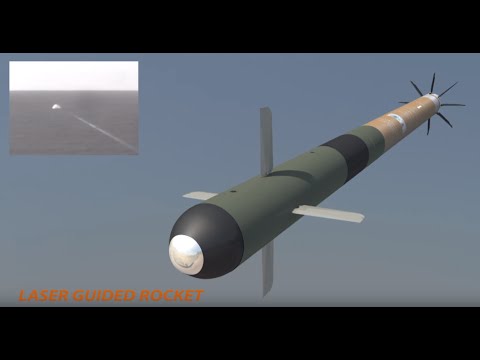


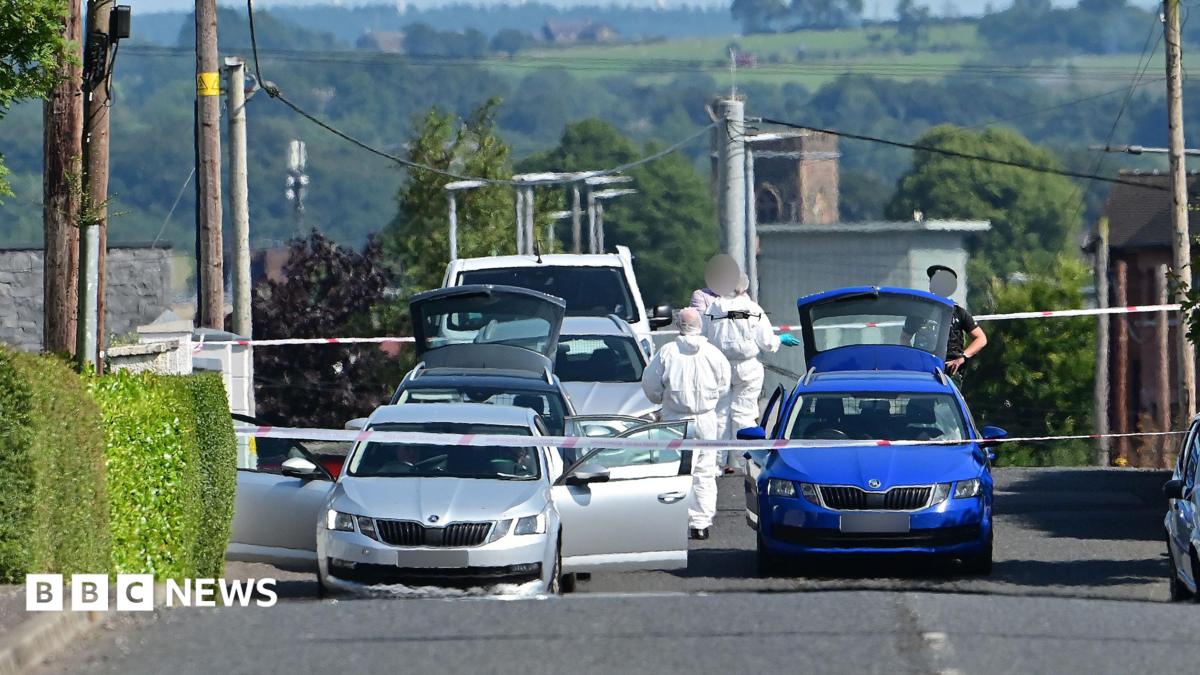



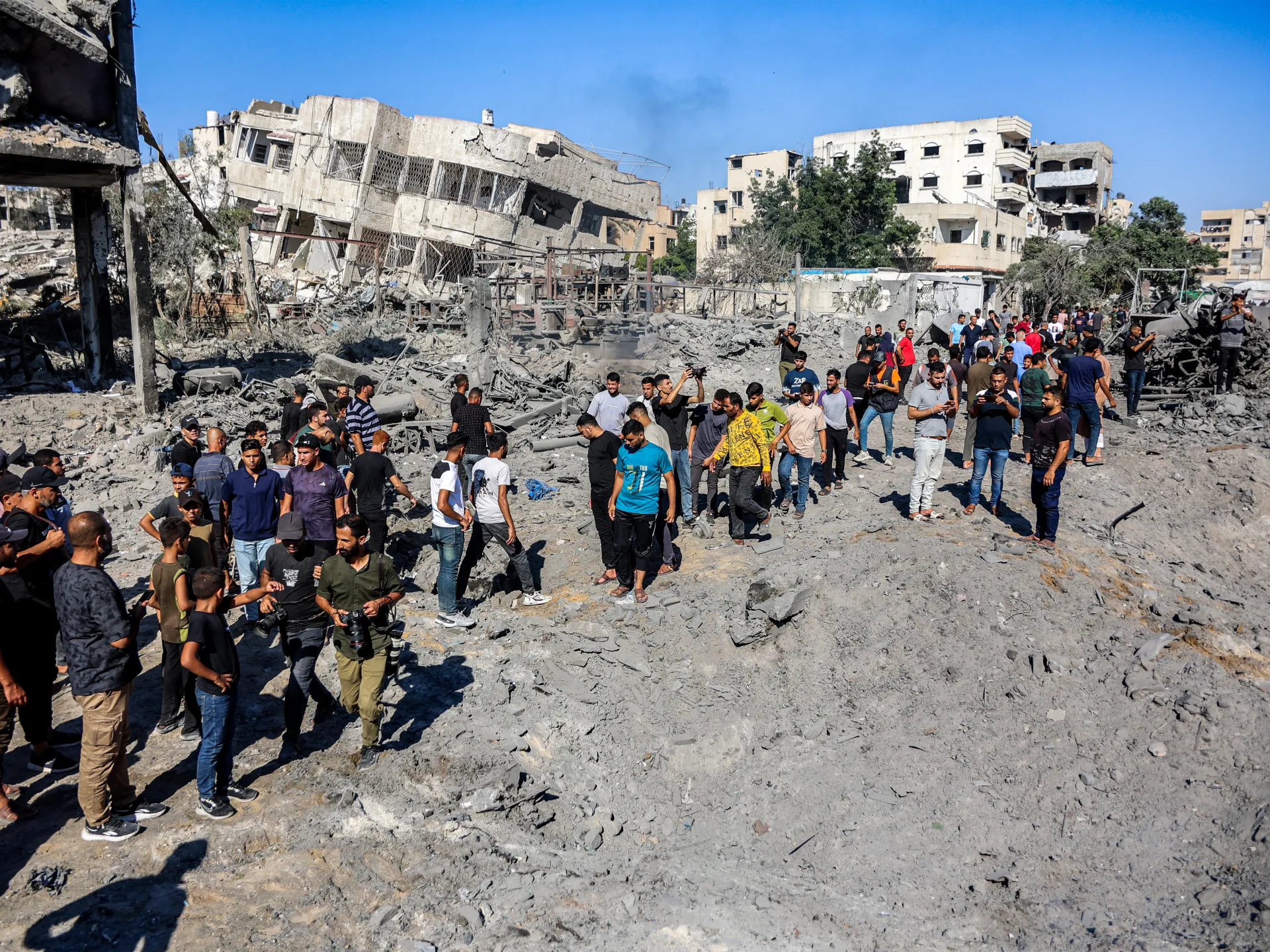
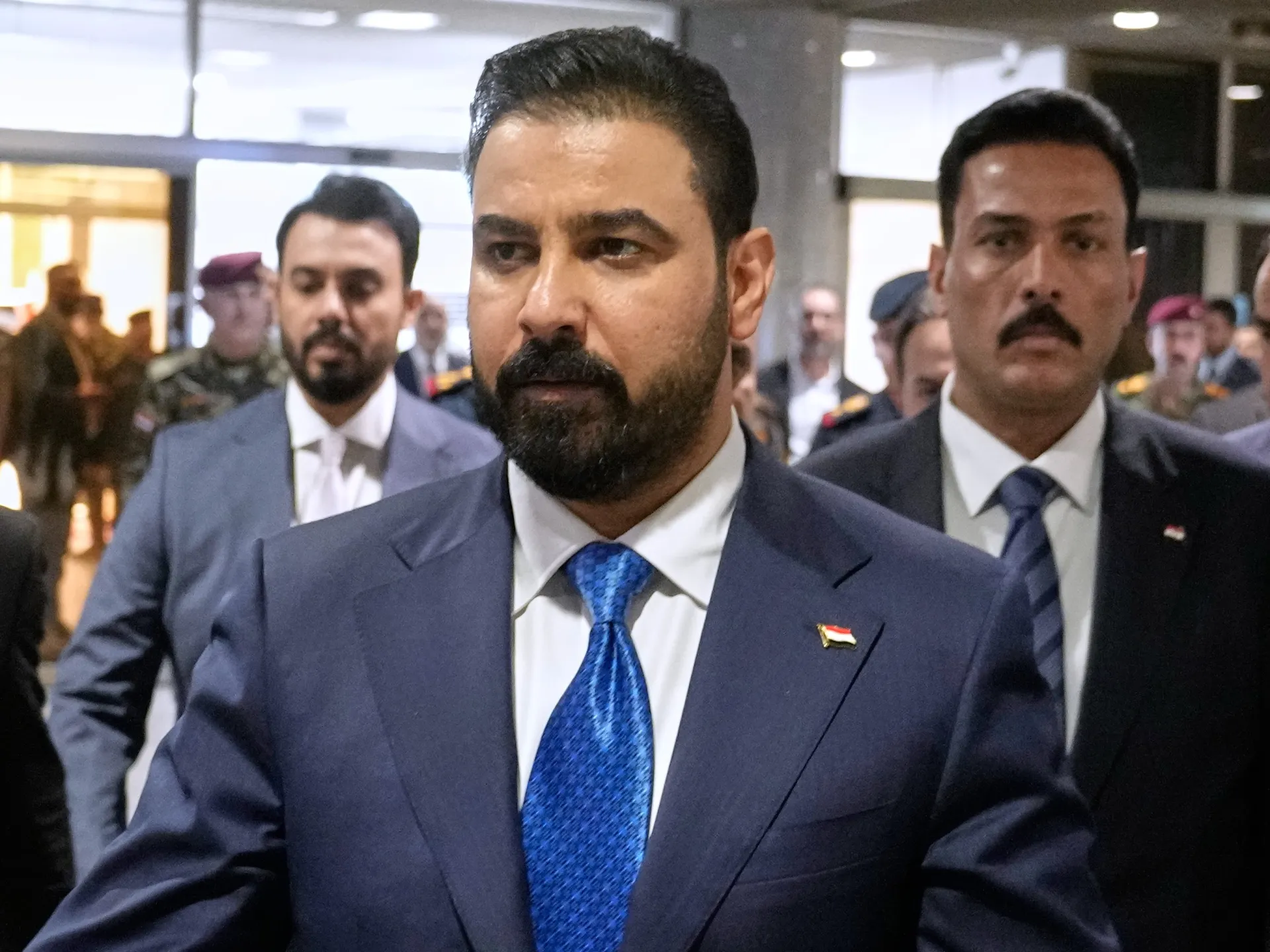
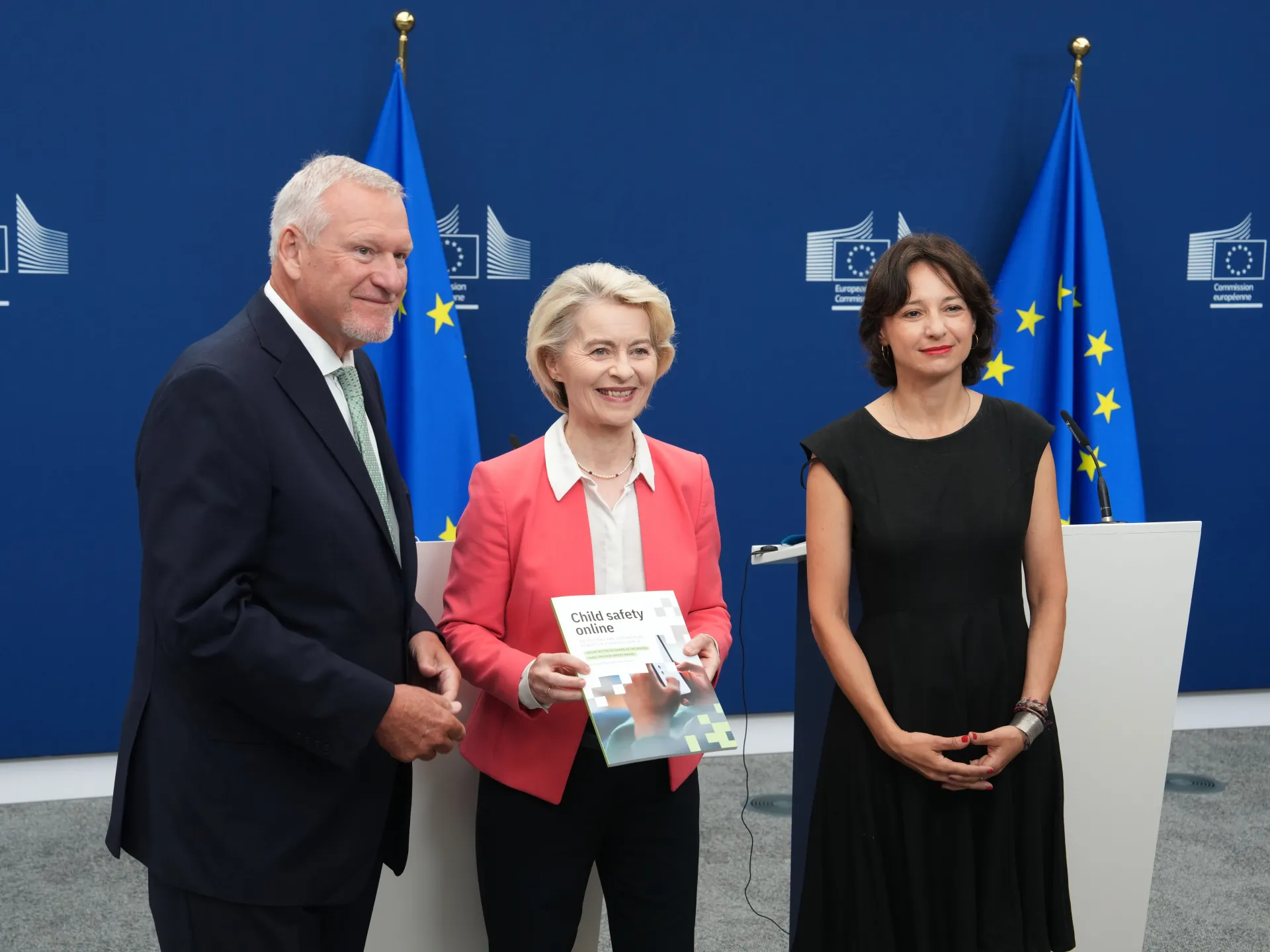



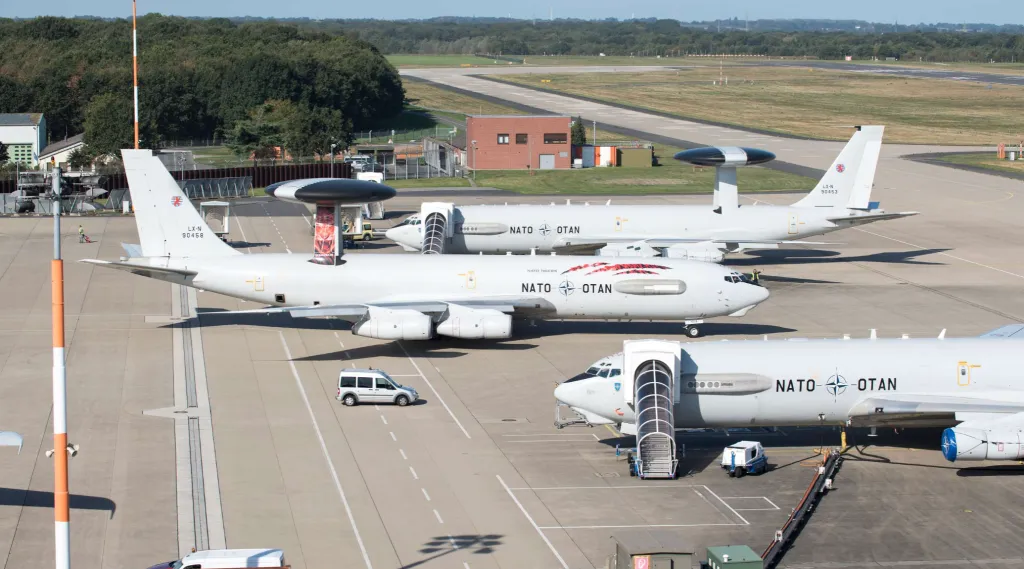


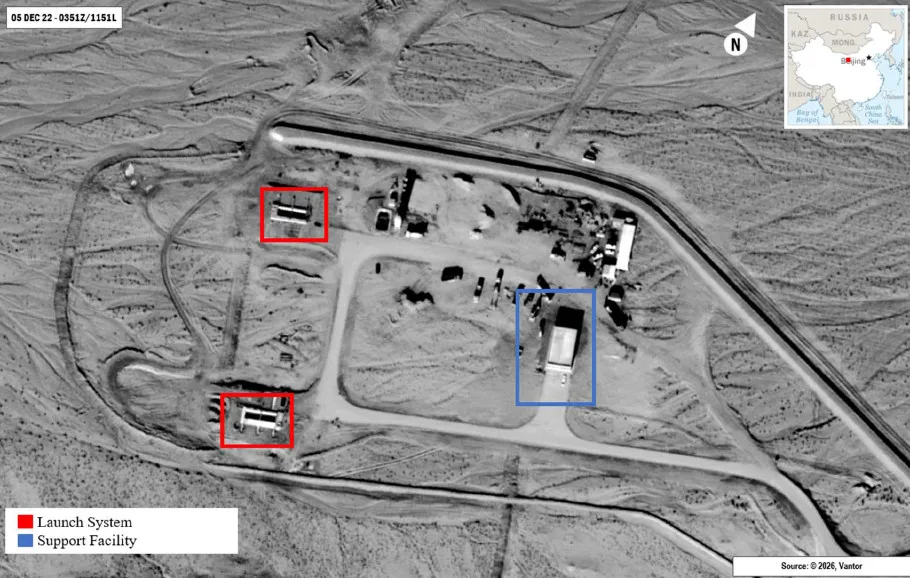


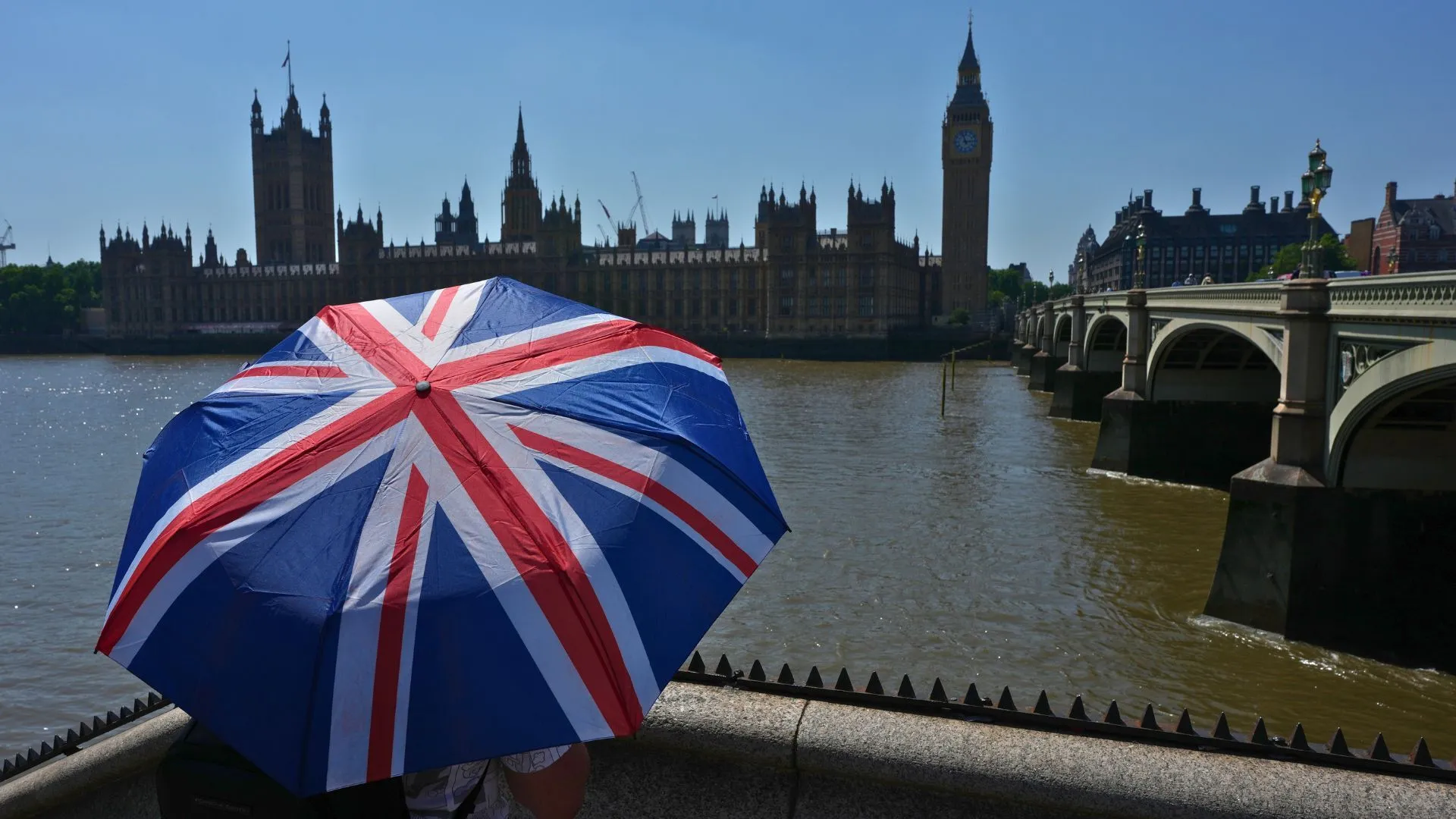
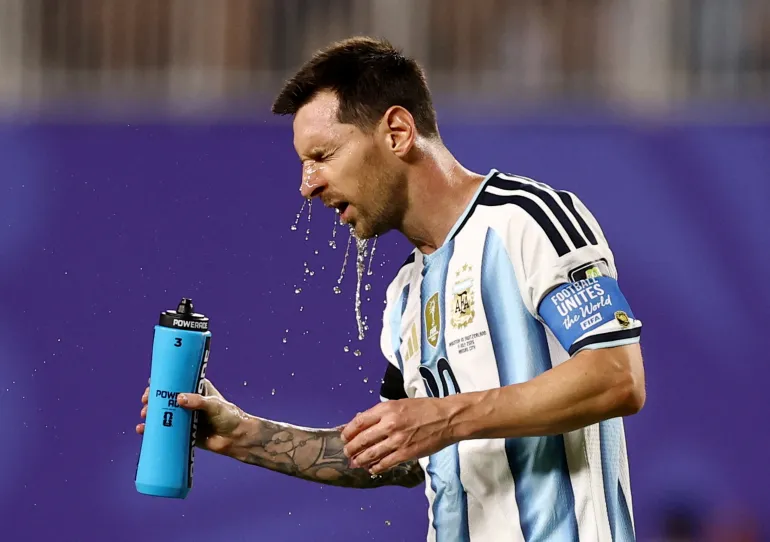


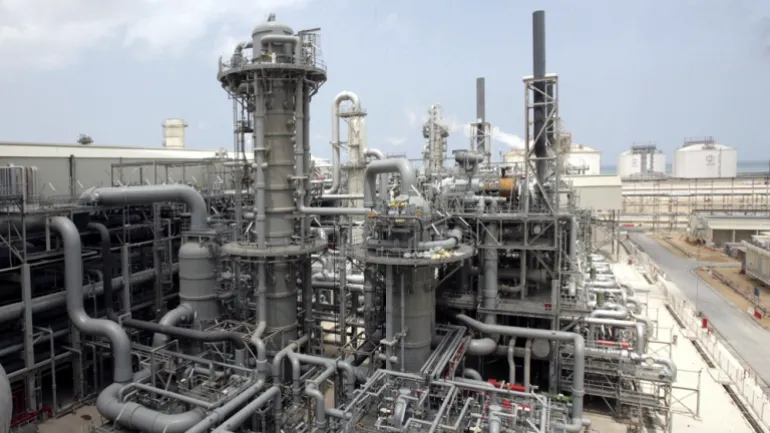


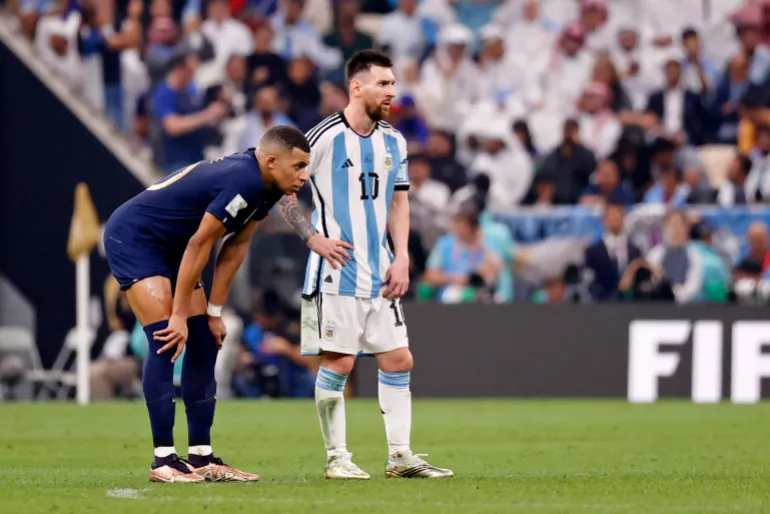


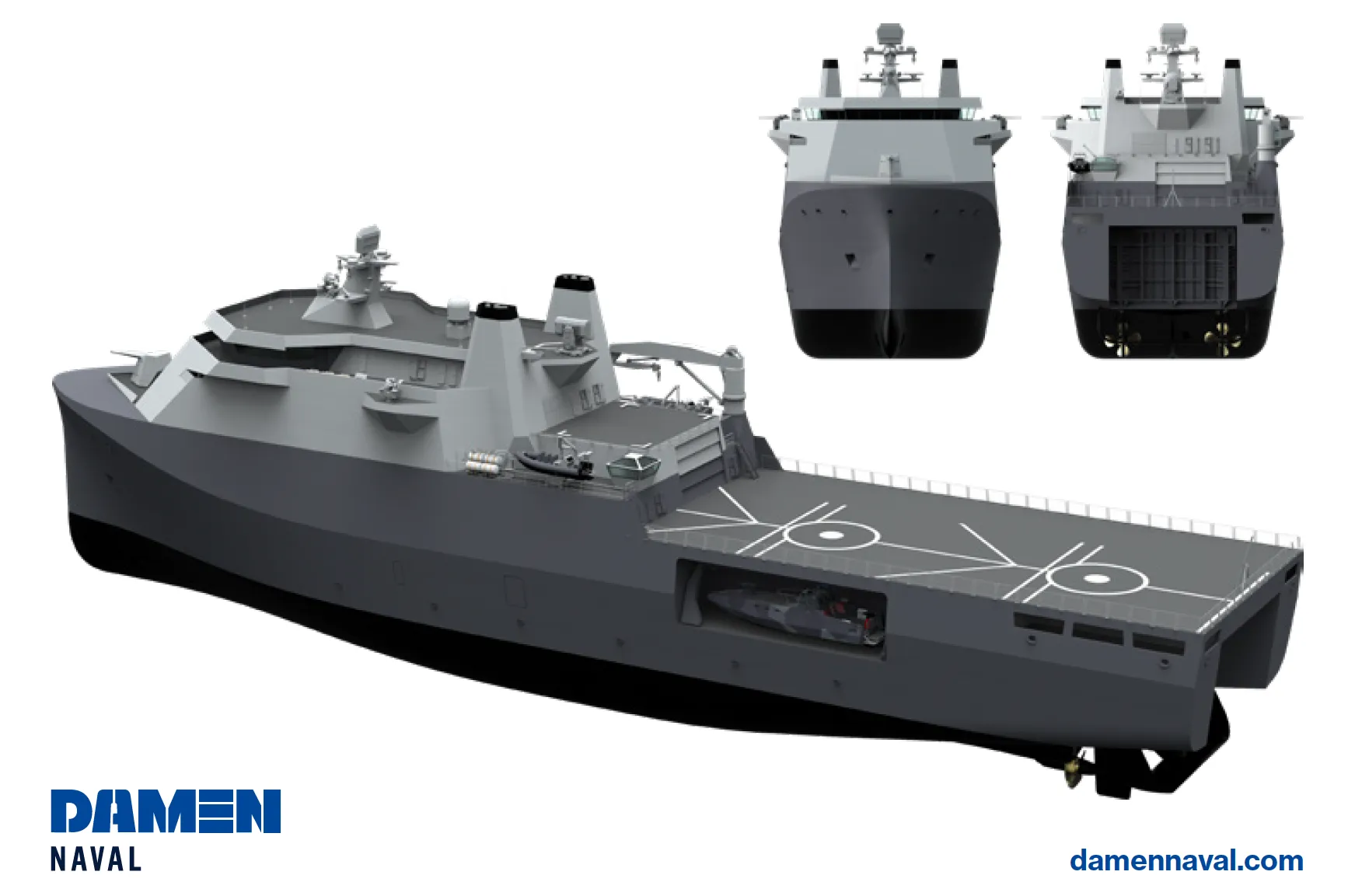


![The Archer drone, developed by Terra Industries, is part of a new generation of locally manufactured military technology emerging across Africa [Terra Industries]](https://i0.wp.com/www.aljazeera.com/wp-content/uploads/2026/07/IMG_4128-1-1783618110.jpeg?w=640&ssl=1)