Discover the latest happenings and stay in the know with our up-to-date today news coverage. From breaking stories and current events to trending topics and insightful analysis, we bring you the most relevant and captivating news of the day.
The UAE says it’s withdrawing all ‘counterterrorism’ units from Yemen after a Saudi-led coalition launched air strikes on a port in southern Yemen. Riyadh has accused the Emiratis of shipping weapons and military vehicles to aid Yemen’s separatist movement, an accusation Abu Dhabi denies.
Somali President Hassan Sheikh Mohamud has accused Israel of violating international law and of ‘illegal aggression’.
Turkish President Recep Tayyip Erdogan has condemned Israel’s decision to recognise Somaliland as a sovereign state, calling the move “illegitimate and unacceptable”.
At a joint news conference with Somali President Hassan Sheikh Mohamud in Ankara on Tuesday, Erdogan warned that Israel’s recognition of the breakaway region of Somalia could destabilise the Horn of Africa.
Recommended Stories
list of 4 itemsend of list
He added that Turkiye and Somalia were deepening energy cooperation after promising signs from joint offshore exploration efforts.
“Preserving the unity and integrity of Somalia in all circumstances holds special importance in our view. Israel’s decision to recognise Somaliland is illegitimate and unacceptable,” Erdogan said.
“The Netanyahu government has the blood of 71,000 of our Palestinian brothers and sisters on its hands. Now it is trying to destabilise the Horn of Africa as well, after its attacks on Gaza, Lebanon, Yemen, Iran, Qatar and Syria,” he added, referring to Israel’s genocidal war on Gaza.
Israel became the first and only country to formally recognise Somaliland last Friday, describing the move as being in the spirit of the Abraham Accords, which normalised ties between Israel and several Arab nations.
Somalis step on an image depicting Israeli Prime Minister Benjamin Netanyahu during a demonstration in Mogadishu [Feisal Omar/Reuters]
‘Illegal aggression’
Somaliland unilaterally declared independence from Somalia in 1991, following the collapse of the central government after a civil war. Despite maintaining its own currency, passport and army, it has failed to gain international recognition.
Standing alongside Ergogan, Mohamud accused Israel of “illegal aggression”, saying the recognition breaches the United Nations charter and African Union agreements.
“Israel is exporting its problems in Gaza and Palestine, and it is trying to divert the attention of the entire world, including the Arab and Islamic world,” he later told Al Jazeera in an interview.
“Israel will resort to forcibly displacing Palestinians in Somalia. It also wants to control strategically important waterways that connect vital seas, both commercially and economically, between the Red Sea, the Gulf, and the Gulf of Aden.”
Destabilising Africa
Mohamud warned that the move would have international consequences and also said it could mark the beginning of instability in the Horn of Africa, particularly in Somalia.
He recalled that Turkiye had previously played a mediating role between Somalia and Somaliland and continues to support efforts to resolve the dispute peacefully.
Abdinor Dahir, an independent researcher, said that Turkiye has invested heavily in Somalia, supporting its security forces and political process, while mediating talks between Somalia and Somaliland.
Israel’s recognition “threatens Turkiye’s economic interests” and presence in the country and “poses a direct challenge to Somalia’s sovereignty”, he told Al Jazeera.
Dahir warned that Somalia, which has endured years of civil war and continues to fight armed groups including al-Shabab and ISIL (ISIS), has made progress on security, which could be undermined by the move.
The recognition risks “destabilising the wider African region, and could transfer the Middle East conflict into the Horn of Africa”, he said.
Israel says it will suspend more than two dozen humanitarian organisations, including Doctors Without Borders, for failing to meet its new rules for aid groups working in the war-ravaged Gaza Strip.
Organisations facing bans starting on Thursday didn’t meet new requirements for sharing information on their staffs, funding and operations, Israeli authorities said.
Recommended Stories
list of 4 itemsend of list
Other major organisations affected include the Norwegian Refugee Council, CARE International, the International Rescue Committee and divisions of major charities such as Oxfam and Caritas.
Israel accused Doctors Without Borders, known by its French acronym MSF, of failing to clarify the roles of some staff members, alleging they cooperated with Hamas.
“The message is clear: Humanitarian assistance is welcome. The exploitation of humanitarian frameworks for terrorism is not,” Diaspora Affairs Minister Amichai Chikli said.
MSF – one of the largest medical groups operating in Gaza, where the health sector has been targeted and largely destroyed – said Israel’s decision will have a catastrophic impact on its work in the enclave, where it supports about 20 percent of the hospital beds and one-third of births. The organisation also denied Israel’s accusations about its staff.
“MSF would never knowingly employ people engaging in military activity,” it said.
International organisations said Israel’s rules are arbitrary. Israel said 37 groups working in Gaza didn’t have their permits renewed.
‘Appalling conditions’
Aid organisations help with a variety of social services, including food distribution, healthcare, mental health and disability services, and education.
Amjad Shawa from the Palestine NGOs Network said the decision by Israel is part of its ongoing effort “to deepen the humanitarian catastrophe” in Gaza.
“The limitations on the humanitarian operations in Gaza are in order to continue their project to push out the Palestinians, deport Gaza. This is one of the things Israel continues doing,” Shawa told Al Jazeera.
Israel’s move comes as at least 10 countries expressed “serious concerns” about a “renewed deterioration of the humanitarian situation” in Gaza, describing it as “catastrophic”.
“As winter draws in civilians in Gaza are facing appalling conditions with heavy rainfall and temperatures dropping,” Britain, Canada, Denmark, Finland, France, Iceland, Japan, Norway, Sweden and Switzerland said in a joint statement.
“1.3 million people still require urgent shelter support. More than half of health facilities are only partially functional and face shortages of essential medical equipment and supplies. The total collapse of sanitation infrastructure has left 740,000 people vulnerable to toxic flooding.”
The countries urged Israel to ensure international NGOs can operate in Gaza in a “sustained and predictable” way and called for the opening of land crossings to boost the flow of humanitarian aid.
Israel’s Ministry of Foreign Affairs called the joint statement “false but unsurprising” and “part of a recurring pattern of detached criticism and one-sided demands on Israel while deliberately ignoring the essential requirement of disarming Hamas”.
‘Needs in Gaza are enormous’
Four months ago, more than 100 aid groups accused Israel of obstructing life-saving aid from entering Gaza and called on it to end its “weaponisation of aid” as it refused to allow aid trucks to enter the battered Gaza Strip.
More than 71,000 Palestinians have been killed since Israel launched its genocidal war on Gaza in October 2023. Hundreds have died from severe malnutrition and thousands more from preventable diseases because of a lack of medical supplies.
Israel claims it’s upholding the aid commitments laid out in the latest ceasefire, which took effect on October 10, but humanitarian groups dispute Israel’s numbers and say a lot more aid is desperately needed in the devastated enclave of more than two million Palestinians.
Israel changed its registration process for aid groups in March, which included a requirement to submit a list of staff, including Palestinians in Gaza.
Some aid groups said they didn’t submit a list of Palestinian staff for fear those employees would be targeted by Israel.
“It comes from a legal and safety perspective. In Gaza, we saw hundreds of aid workers get killed,” said Shaina Low, communications adviser for the Norwegian Refugee Council.
Desperately needed lifelines
The decision not to renew aid groups’ licences means their offices in Israel and occupied East Jerusalem will close and organisations won’t be able to send international staff or aid into Gaza.
“Despite the ceasefire, the needs in Gaza are enormous, and yet we and dozens of other organisations are and will continue to be blocked from bringing in essential lifesaving assistance,” Low said. “Not being able to send staff into Gaza means all of the workload falls on our exhausted local staff.”
Israel’s decision means the aid groups will have their licences revoked on Thursday and, if they are located in Israel, they will need to leave by March 1, according to the ministry.
This isn’t the first time Israel has tried to crack down on international humanitarian organisations. Throughout the war, it accused the United Nations agency for Palestinian refugees, UNRWA, of being infiltrated by Hamas and Hamas of using UNRWA’s facilities and taking its aid. The UN has denied that.
In October, the International Court of Justice issued an advisory opinion saying Israel must support UN relief efforts in Gaza, including those conducted by UNRWA.
The court found Israel’s allegations against UNRWA – including that it was complicit in the Hamas-led October 7, 2023, attacks on Israel – were unsubstantiated.
The court also said Israel, as the occupying power, must ensure the “basic needs” of the Palestinian population of Gaza are met, “including the supplies essential for survival”, such as food, water, shelter, fuel and medicine.
A number of countries halted funding for UNRWA after Israel’s accusations, jeopardising one of Gaza’s most desperately needed lifelines.
The trouble with prosecutorial independence, however, is that it has not been codified in US law.
Instead, it is a norm that has developed over more than a century, stretching back to the earliest days of the Justice Department.
While the role of the attorney general dates back to 1789, the Justice Department itself is a more recent creation. It was established in 1870, during the Reconstruction period following the US Civil War.
That period was marked by an increasing rejection of political patronage: the system of rewarding political allies with favours and jobs.
Reformers argued that, rather than having law enforcement officers scattered across various government agencies, consolidating them in one department would make them less susceptible to political influence.
That premise, however, has been tested over the subsequent decades, most notably in the early 1970s under then-President Richard Nixon.
Nixon courted scandal by appearing to wield the threat of prosecutions against his political rivals — while dropping cases that harmed his allies.
In one instance, he allegedly ordered the Justice Department to drop its antitrust case against the company International Telephone and Telegraph (ITT) in exchange for financial backing at the Republican National Convention.
Key Justice Department officials were also implicated in the Watergate scandal, which involved an attempted break-in at Democratic Party headquarters.
But Sklansky, the Stanford Law professor, noted that Nixon tended to operate through back channels. He avoided any public calls to prosecute his rivals.
“He believed that, if he called for that openly, he would’ve been pilloried not just by Democrats but by Republicans,” Sklansky said. “And that was undoubtedly true at the time.”
But Sklansky believes the second Trump administration has abandoned such discretion in favour of a public display of power over the Justice Department.
“Trump’s openness about the use of the Justice Department to go after his enemies is really something that is quite new,” he said.
Weekly insights and analysis on the latest developments in military technology, strategy, and foreign policy.
Belarus has announced the deployment on its territory of Russia’s still-shadowy Oreshnik intermediate-range ballistic missile. The development comes soon after the appearance of satellite imagery that suggests that Moscow is likely stationing the nuclear-capable missiles in Belarus. However, there remain questions about the status of the Oreshnik, as well as its overall capabilities.
Official video declaring Oreshnik IRBM deployment in Belarus by the Russian Strategic Rocket Forces.
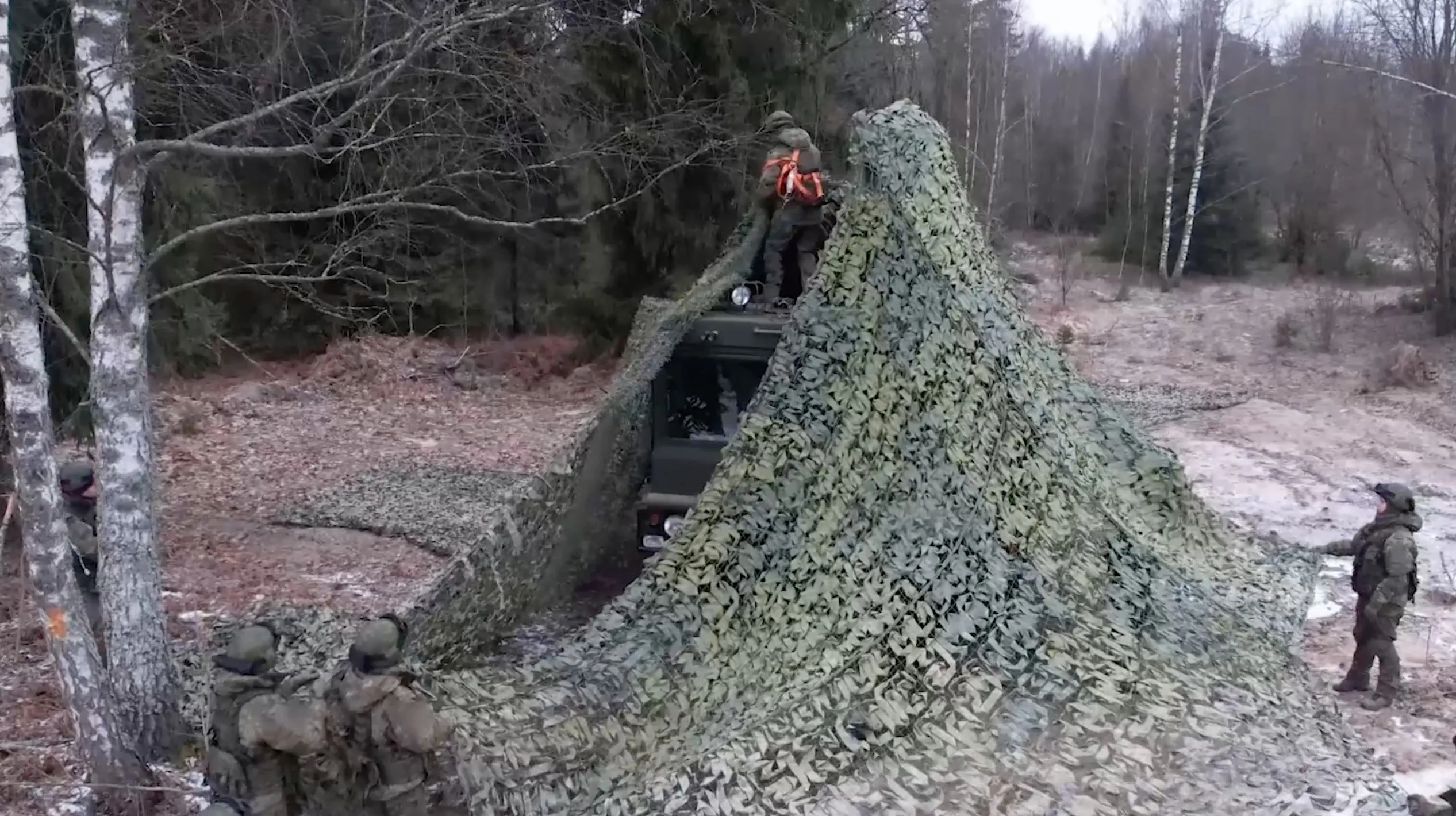
The Belarusian Ministry of Defense today released a video that it says shows the deployment of the Oreshnik system on its territory. The footage shows a flag-raising ceremony involving Russian troops in Belarus as well as a column of vehicles moving out into a firing position in the field, where they are then covered in camouflage netting.
A screen grab from a video shows elements of the Oreshnik missile system being covered by camouflage netting on December 30, 2025, in Belarus. Photo by Russian Defense Ministry/Anadolu via Getty Images
It’s notable that the vehicles shown appear to all be associated with support roles, rather than being transporter-erector launchers (TEL) for the missile itself. It could be the case that the TELs (and missiles) have yet to arrive in Belarus, or that they were deliberately omitted from the footage. It may also be that the missiles themselves are based elsewhere.
A thought about Krichev-6 – it’s possible that it’s not where the missiles (and support vehicles) are based. A secure railhead etc. are signs of a technical base, which may be (and probably is) different from missile bases (as it’s the case with Vypolzovo and other ICBM bases) https://t.co/RpoXcgdDVy
A senior officer is seen telling troops that the systems have officially been placed on combat duty and talks about the missile crews’ regular training and reconnaissance drills.
The location of the missile systems and the date of the video were not disclosed.
The release of the video follows Belarusian President Alexander Lukashenko’s announcement earlier this month that the Oreshnik would be deployed in his country, part of his extensive military support for his staunch ally, Russian President Vladimir Putin.
Russian President Vladimir Putin (right) shakes hands with Belarusian President Alexander Lukashenko during their meeting on the sidelines of the informal summit of Commonwealth of Independent States (CIS) leaders in Saint Petersburg on December 21, 2025. Photo by Alexander KAZAKOV / POOL / AFP
Only last week, evidence emerged pointing to the likely stationing of the Oreshnik at a former airbase near Krichev (also known as Krichev-6) in eastern Belarus, around 190 miles east of the capital of Minsk, and 300 miles southwest of Moscow.
A satellite image of Krichev (also known as Krichev-6) in 2019, when the airbase was still abandoned. Google Earth
After assessing available satellite imagery, researchers Jeffrey Lewis of the Middlebury Institute of International Studies, in California, and Decker Eveleth of the CNA research and analysis organization in Virginia, said they were “90 percent certain” that mobile Oreshnik launchers would be stationed there, if they weren’t already.
Lewis and Eveleth highlighted a hurried construction project that began at the site between August 4-12, which was consistent with a Russian strategic missile base. By November of this year, key evidence included a “military-grade rail transfer point” surrounded by a security fence, from where TELs and other components could be unloaded. There were also signs of a concrete pad being constructed at the end of the former runway, “consistent with a camouflaged launch point.”
According to Lewis and Eveleth, the site near Krichev is large enough to accommodate three launchers. Previously, Lukashenko said up to 10 Oreshniks would be based in Belarus, suggesting that more might yet be fielded at other locations.
The researchers’ assessment “broadly aligns with U.S. intelligence findings,” Reutersreported, citing a person familiar with the matter who spoke to the news agency on the condition of anonymity.
A screen grab from a video shows a vehicle associated with the Oreshnik missile system on December 30, 2025, in Belarus. Photo by Russian Defense Ministry/Anadolu via Getty Images
After a December 2024 meeting with Lukashenko, Putin had made clear his plan to station Oreshnik missiles in Belarus, but the exact location had not previously been reported. The Russian leader had said the deployment would occur in the second half of 2025.
As for the Oreshnik (Russian for hazel tree) system itself, U.S. officials have said this is an intermediate-range design derived from the RS-26 Rubezh intercontinental ballistic missile (ICBM). The new missile first emerged in public after it was used in an unprecedented attack on Ukraine in November 2024. Ukrainian authorities said that the missile that was fired at them carried six warheads, each containing six more sub-payloads, but that these contained no explosives.
Ok, two reasons why I think Russia probably used a variant of the long-gestating RS-26 Rubezh IRBM: (1) Russia hinted that it resumed development of the RS-26 this summer and (2) that’s what the Ukrainians predicated a day ago, down to the launch site. https://t.co/eUIPx7eqVt
Otherwise, details about the Oreshnik remain limited. After its use against Ukraine, Putin described it as a “medium-range missile system” and “a ballistic missile equipped with non-nuclear hypersonic technology” capable of reaching a peak speed of Mach 10. “The kinetic impact is powerful, like a meteorite falling,” the Russian president also said.
Overall, Russian claims of hypersonic performance for the Oreshnik are questionable. There is no evidence of true hypersonic boost-glide vehicles, for example, but larger ballistic missiles, even ones with traditional designs, do reach hypersonic speeds, typically defined as anything above Mach 5, in the terminal stage of their flight.
The Ukrainian Air Force confirmed that Russia struck the Ukrainian city of Dnipro with a conventionally armed ICBM this morning, marking the first combat use of an ICBM in history.
Footage from Dnipro showed glowing reentry vehicles hitting the ground around 5 AM local time. pic.twitter.com/PWTGajH9bT
Western estimates suggest the missile has a range of up to 3,400 miles.
While positioning the Oreshnik marginally farther west does extend its reach further into Europe, the difference is less significant, bearing in mind its already considerable maximum range is enough to hit every NATO capital city in Europe from within Russian territory. With that in mind, stationing these missiles in Belarus does little to practically enhance Moscow’s ability to deliver these kinds of weapons across Europe.
In fact, the missile’s likely minimum range, forward deploying the Oreshnik to Belarus might actually limit the ability to employ it against certain targets, such as those in Ukraine. For example, Ukraine’s capital Kyiv lies less than 60 miles from the border with Belarus.
The approximate location of Krichev (also known as Krichev-6) in relation to the wider region. Google Earth
Another option might be to use a very high lofted trajectory that would allow the missile to hit targets at shorter ranges, but there would still be a limit to what could be achieved in this way. At the same time, we don’t know for sure what kinds of trajectories the Oreshnik can actually be fired on.
Russia really wants West to see they’re doing a tac nuke exercise. After several exercise videos they put the head of the 12 GUMO in front of a Belarusian Su-25 (possibly at Lida air base) loaded with what is said to be “training nuclear ammunition.” https://t.co/h9rHp2qvGvpic.twitter.com/sTzAqSNd9f
— Hans Kristensen (also on Bluesky) (@nukestrat) June 13, 2024
Placing these missiles (and air-dropped nuclear bombs) in Belarus is indicative of the Kremlin’s new nuclear strategy, which includes basing these kinds of weapons outside its territory for the first time since the Cold War.
The apparent deployment also comes only weeks before the expiration of the 2010 New START pact, the last U.S.-Russia treaty that puts limits on the deployments of strategic nuclear weapons by these two powers.
For NATO, it’s very much arguable whether Russia’s placing of the Oreshnik in neighboring Belarus, rather than on Russian territory, will really be seen as a more direct threat.
“The military implications of this missile being in Belarus are not all that different from the missile being in Russia — the technical support site is already very close to the Russian border,” Eveleth wrote on X last week.
A screen grab from a video shows elements of the Oreshnik missile system on December 30, 2025, in Belarus. Photo by Russian Defense Ministry/Anadolu via Getty Images
For Belarus, the situation is different. For a country in the international wilderness, the deployment does underscore Russia’s guarantee of providing Belarus with (nuclear) protection.
Russia’s revised nuclear stance also relies increasingly on these kinds of weapons to deter NATO members from supplying Kyiv with weapons that can strike deep inside Russia, although it’s questionable whether placing the Oreshnik in Belarus will have a significant, if any, effect in this regard.
A U.S. Army briefing slide providing an overview of the components of the Typhon weapon system. U.S. Army
While these U.S. long-range strike systems are all conventionally armed, it’s worth recalling that the Oreshnik, too, can be utilized in a non-nuclear version, as demonstrated in Ukraine. The missile, therefore, presents a longer-range strategic-level threat that can be employed without crossing the nuclear threshold.
Provided that the Oreshnik is indeed now deployed on Belarusian territory, we still don’t know how many missiles might be involved, or what kinds of warheads they might carry. While we may learn more in due course, for now, the missile’s greatest significance is in the political domain.
Washington accuses Tehran and Caracas of ‘reckless proliferation of deadly weapons’ amid spiraling tensions.
Published On 30 Dec 202530 Dec 2025
Share
Washington, DC – The United States has issued sanctions against a Venezuelan company over accusations that it helped acquire Iranian-designed drones as Washington’s tensions with both Tehran and Caracas escalate.
The penalties on Tuesday targeted Empresa Aeronautica Nacional SA (EANSA), a Venezuelan firm that the US Department of the Treasury said “maintains and oversees the assembly of” drones from Iran’s Qods Aviation Industries, which is already under sanctions by Washington.
Recommended Stories
list of 3 itemsend of list
The department also sanctioned the company’s chairman, Jose Jesus Urdaneta Gonzalez, accusing him of coordinating “with members and representatives of the Venezuelan and Iranian armed forces on the production of UAVs [unmanned aerial vehicles] in Venezuela”.
“Treasury is holding Iran and Venezuela accountable for their aggressive and reckless proliferation of deadly weapons around the world,” Treasury official John Hurley said in a statement.
“We will continue to take swift action to deprive those who enable Iran’s military-industrial complex access to the US financial system,” he said. The sanctions freeze any assets of the targeted firms and individuals in the US and make it generally illegal for American citizens to engage in financial transactions with them.
In its statement, the US alleged Tehran and Caracas have coordinated the “provision” of drones to Venezuela since 2006.
Iran’s Ministry of Defence and Armed Forces Logistics (MODAFL) has been under US sanctions since 2020 for what Washington said is its role in both selling and procuring weapons. The US is by far the largest weapons exporter in the world.
On Tuesday, the US Treasury Department also imposed new sanctions against several Iranians it accused of links to Iran’s arms industry.
The actions came a day after President Donald Trump threatened more strikes against Iran if the country rebuilds its missile capabilities or nuclear programme.
The US had joined Israel in its attacks against Iran in June and bombed the country’s three main nuclear sites before a ceasefire ended a 12-day escalation.
“Now I hear that Iran is trying to build up again, and if they are, we’re going to have to knock them down,” Trump said on Monday during a joint news conference with visiting Israeli Prime Minister Benjamin Netanyahu. “We’ll knock them down. We’ll knock the hell out of them. But hopefully, that’s not happening.”
“The response of the Islamic Republic of Iran to any oppressive aggression will be harsh and regrettable,” President Masoud Pezeshkian wrote in a social media post.
The Trump administration has also taken a confrontational approach towards Venezuela.
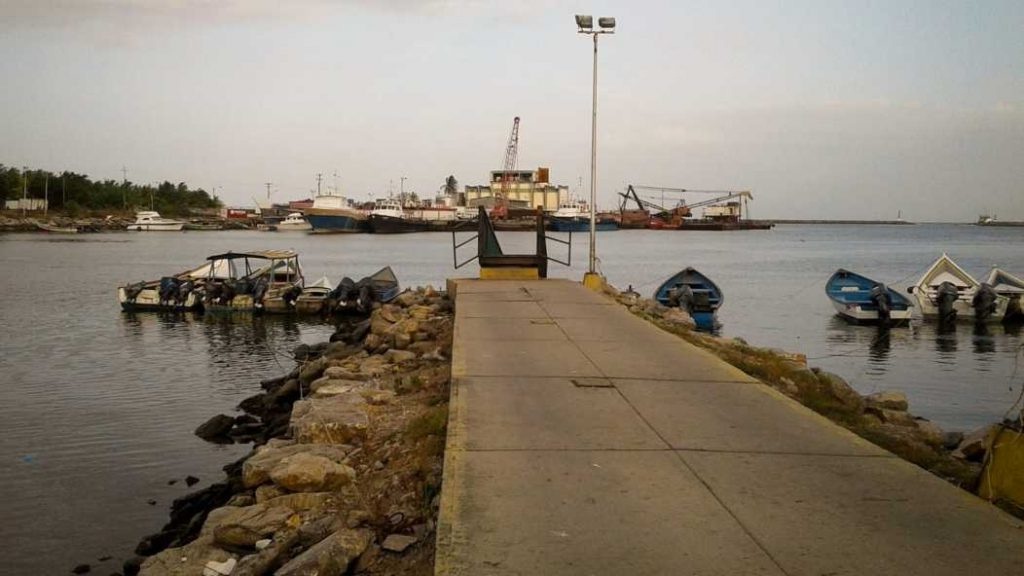
The US president announced this week that the US “hit” a dock in the Latin American country that he said was used to load drug boats. Details of the nature of the strike remain unclear.
Trump and some of his top aides have falsely suggested that Venezuela’s oil belongs to the US. Washington has also accused Venezuelan President Nicolas Maduro, without evidence, of leading a drug trafficking organisation.
The Trump administration has simultaneously been carrying out strikes against what it says are drug-running vessels in the Caribbean Sea and eastern Pacific Ocean, a campaign that many legal experts said violates US and international law and is tantamount to extrajudicial killings.
Over the past month, the US also has seized at least two oil tankers off the coast of Venezuela after Trump announced a naval blockade against the country.
Venezuela has rejected the US moves as “piracy” and accused the Trump administration of seeking to topple Maduro’s government.
Trump is seeking to end protected status for South Sudan, claiming country no longer poses danger to those returning.
Published On 30 Dec 202530 Dec 2025
Share
A federal judge has blocked the administration of President Donald Trump from stripping temporary protections from deportations for South Sudanese citizens living in the United States.
US District Judge Angel Kelley in Boston, Massachusetts, granted an emergency request on Tuesday in a lawsuit filed by several South Sudanese nationals and an immigrant rights group.
Recommended Stories
list of 3 itemsend of list
The order prevents the temporary protected status (TPS) for South Sudanese citizens from expiring on January 5 as the Trump administration has sought.
The lawsuit, led by the African Communities Together, accuses the US Department of Homeland Security of acting unlawfully in its effort to strip South Sudanese citizens of TPS, a US immigration status granted to citizens of countries experiencing natural disasters, conflict or other extraordinary circumstances that could make return to their homelands dangerous.
The status was initially granted for South Sudan in 2011 when the country officially broke away from Sudan. It has been repeatedly renewed amid repeated bouts of fighting, widespread displacement and regional instability.
The status allows eligible individuals to work and receive temporary protection from deportation.
The lawsuit further alleged that the Trump administration exposed South Sudan citizens to being deported to a country facing what is widely considered one of the world’s worst humanitarian crises.
Homeland Security Secretary Kristi Noem, in a notice published on November 5, had argued the country no longer met the conditions for TPS.
“With the renewed peace in South Sudan, their demonstrated commitment to ensuring the safe reintegration of returning nationals, and improved diplomatic relations, now is the right time to conclude what was always intended to be a temporary designation,” she said, appearing to refer to a tenuous 2018 peace agreement.
The statement contradicted the findings of a panel of United Nations experts, who wrote in a report to the UN Security Council in November that “while the contours of the conflict may be altered, the resulting human suffering has remained unchanged.”
“Ongoing conflict and aerial bombardments, coupled with flooding and the influx of returnees and refugees from the Sudan, have led to near-record levels of food insecurity, with pockets of famine reported in some of the communities most affected by renewed fighting,” it added.
The Trump administration has increasingly targeted TPS as part of its crackdown on immigration and its mass deportation drive.
It has moved to similarly end TPS for foreign nationals from countries including Syria, Venezuela, Haiti, Cuba and Nicaragua, prompting several court challenges.
It has also sought to deport individuals to countries in Africa, even if they have no ties there.
Russia has threatened to retaliate against Ukraine after alleging that nearly 100 drones had targeted one of Russian President Vladimir Putin’s residences.
The threat on Monday was made as United States President Donald Trump tries to broker a peace agreement to end the war in Ukraine, which will enter its fifth year in February.
Recommended Stories
list of 4 itemsend of list
What has Russia claimed?
On Monday, Russian Foreign Minister Sergey Lavrov alleged that Ukraine had launched the attack on the Valdai residence, one of Putin’s residences in the Novgorod region in northwestern Russia. The property is 360km (225 miles) north of Moscow.
Lavrov told reporters that Ukraine had launched 91 drones towards the residence. He added that air defence systems shot down the drones and no one was injured.
The Russian Ministry of Defence said 49 of the drones were shot down over the Bryansk region, one was shot down over the Smolensk region and 41 were shot down over the Novgorod region while en route.
“Such reckless actions will not go unanswered,” Lavrov said. “The targets for retaliatory strikes and the timing of their implementation by the Russian armed forces have been determined.”
Russian officials accused Ukraine and its president, Volodymyr Zelenskyy, of carrying out the strike to derail the prospects of a peace agreement.
In an apparent reference to Zelenskyy, Russian Security Council Deputy Chairman Dmitry Medvedev wrote on X: “The stinking Kiev b**tard is trying to derail the settlement of the conflict. He wants war. Well, now at least he’ll have to stay in hiding for the rest of his worthless life.”
Kremlin foreign policy aide Yury Ushakov said the strike took place on Sunday “practically immediately after” talks were held in Florida between Trump and Zelenskyy on ending Russia’s war on Ukraine.
After that meeting, Trump and Zelenskyy had voiced optimism, saying a peace deal between Russia and Ukraine was “close”.
Putin has not publicly commented on the attack yet. It is unclear where Putin was at the time of the attack, but he was holding meetings in the Kremlin on Saturday and Monday.
How has Ukraine responded?
Zelenskyy has strongly denied Russia’s allegation that Ukraine attacked one of Putin’s residences.
“Russia is at it again, using dangerous statements to undermine all achievements of our shared diplomatic efforts with President Trump’s team,” Zelenskyy wrote in an X post on Monday.
“This alleged ‘residence strike’ story is a complete fabrication intended to justify additional attacks against Ukraine, including Kyiv, as well as Russia’s own refusal to take necessary steps to end the war.”
Ukrainian Foreign Minister Andrii Sybiha also condemned Moscow’s claims, saying they were designed to undermine the negotiations.
In a post on X, Sybiha said the claim was intended “to create a pretext and false justification for Russia’s further attacks against Ukraine, as well as to undermine and impede the peace process”.
In another post on Tuesday, Sybiha wrote: “Almost a day passed and Russia still hasn’t provided any plausible evidence to its accusations of Ukraine’s alleged ‘attack on Putin’s residence.’ And they won’t. Because there’s none. No such attack happened.”
How has Trump reacted?
Trump appeared to accept the Russian version of events on Monday when he told reporters: “It’s one thing to be offensive. It’s another thing to attack his house. It’s not the right time to do any of that. And I learned about it from President Putin today. I was very angry about it.”
But when reporters asked Trump if US intelligence agencies had evidence of the alleged attack, Trump said: “We’ll find out.”
Congressman Don Bacon, a member of Trump’s Republican Party, criticised the president for accepting the Russian account of events without assessing the facts.
“President Trump and his team should get the facts first before assuming blame. Putin is a well known boldface liar,” Bacon wrote in an X post.
How have other world leaders reacted?
Like Trump, other leaders appeared to accept the Russian allegations.
In a statement released on Monday, the United Arab Emirates Ministry of Foreign Affairs wrote: “The United Arab Emirates has strongly condemned the attempt to target the residence of His Excellency Vladimir Putin, President of the Russian Federation, and denounced this deplorable attack and the threat it poses to security and stability.”
Indian Prime Minister Narendra Modi wrote in an X post on Tuesday: “Deeply concerned by reports of the targeting of the residence of the President of the Russian Federation.”
Modi added that the ongoing diplomatic engagement being led by the US is the “most viable path” towards achieving peace. “We urge all concerned to remain focused on these efforts and to avoid any actions that could undermine them.”
Pakistani Prime Minister Shehbaz Sharif also condemned the alleged attack.
“Pakistan condemns the reported targeting of the residence of His Excellency Vladimir Putin, President of the Russian Federation. Such a heinous act constitutes a grave threat to peace, security, and stability, particularly at a time when efforts aimed at peace are underway,” Sharif wrote on X.
“Pakistan expresses its solidarity with the President of the Russian Federation, and with the government and people of Russia.”
Have Putin’s residences previously been attacked?
Russia has made previous claims of Ukrainian attacks on Putin’s residences, including on the Kremlin, Putin’s official residence and main workplace.
In May 2023, Moscow alleged that Ukraine had deployed two drones to attack Putin’s residence in the Kremlin citadel but said its forces had disabled the drones. Kyiv denied any involvement.
On December 25, 2024, Russia alleged that it had intercepted and destroyed a Ukrainian drone also targeting the Kremlin. Kyiv again denied responsibility.
Conversely, Ukraine has alleged that Russia has attacked Kyiv and other government buildings in Ukraine.
In September, the Ukrainian military said a Russian drone attack damaged a government building in Kyiv that is home to Ukraine’s cabinet. Plumes of smoke were seen emerging from the building. Russia said it had targeted Ukrainian military infrastructure only.
What has Russia now threatened to do?
While Russia has not outright threatened to end the peace talks, Moscow said it would realign its position in the talks.
“The diplomatic consequence will be to toughen the negotiating position of the Russian Federation,” Kremlin spokesman Dmitry Peskov told reporters on Tuesday.
Russian Ministry of Foreign Affairs spokesperson Maria Zakharova warned that Moscow’s response “would not be diplomatic”. Indeed, it has warned that it plans to hit back militarily but has given no details of how or when it might do this.
Will this derail the US-led peace talks?
Speaking to reporters after his “terrific” meeting with Zelenskyy on Sunday at his Mar-a-Lago residence in Palm Beach, Florida, Trump told reporters that Moscow and Kyiv were “closer than ever” to a peace deal.
But Trump has made this claim several times before. In April, Trump said Russia and Ukraine were “very close to a deal” after Trump’s envoy Steve Witkoff met with Putin in Moscow.
On December 15, Trump also said Russia and Ukraine were “closer than ever” to a deal after talks in Berlin involving Zelenskyy and the leaders of France, Germany, the United Kingdom and NATO.
However, observers and analysts said the issue of territorial concessions remains a major sticking point. Trump’s 28-point peace plan for Ukraine, which he unveiled in November, involved Ukraine ceding large amounts of land that Russia has occupied during nearly four years of war. Zelenskyy has stated on numerous occasions that this is a line Ukraine will not cross.
Most analysts are sceptical that any progress has been made on this point and said the latest accusations against Ukraine will probably have little effect. “I don’t think there is anything to derail at this point,” said Marina Miron, an analyst at King’s College London.
The peace process “is not going well due to disagreements on key issues between Ukraine and Russia”, she told Al Jazeera.
“Trump has repeatedly claimed that a peace deal is close without sustainable agreement,” Keir Giles, a Russian military expert at the London think tank Chatham House, told Al Jazeera this month.
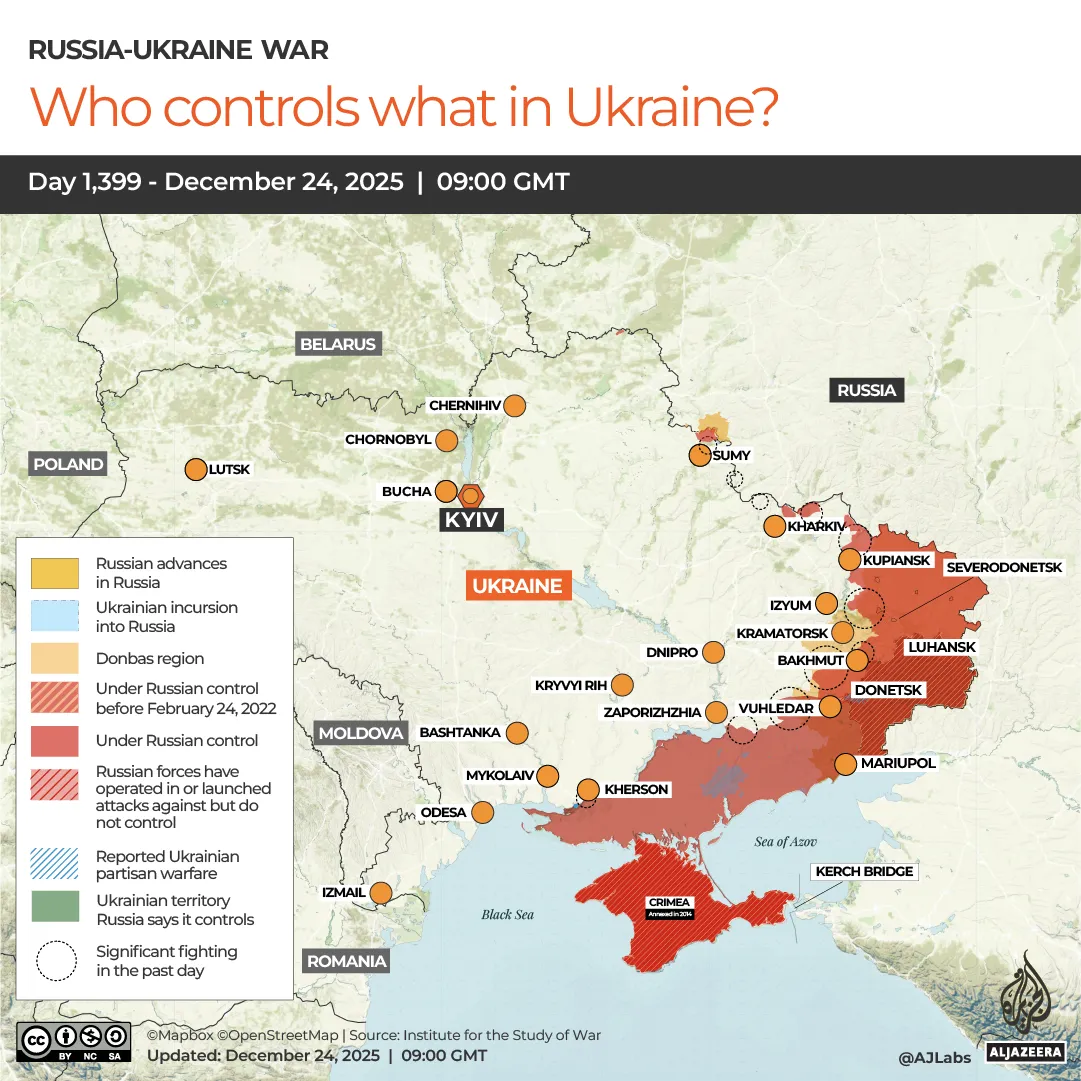
Russia has occupied nearly 20 percent of eastern Ukraine and has been slowly gaining territory as Ukraine’s military has been weakened by desertions, casualties and dwindling military aid. Moscow annexed Ukraine’s Crimean Peninsula in 2014.
(Al Jazeera)
“It’s probably impossible that Ukrainians will voluntarily withdraw from these territories unless we will also see a withdrawal of Russian forces on the other side,” Nathalie Tocci, director at the Rome-based think tank Istituto Affari Internazionali (Institute of International Affairs), told Al Jazeera.
Giles said there are still parallel negotiation tracks, however – one involving the US and Ukraine and another between Ukraine and European nations. He added, however, that there is no clear evidence that these efforts are fully coordinated or aligned in terms of strategy.
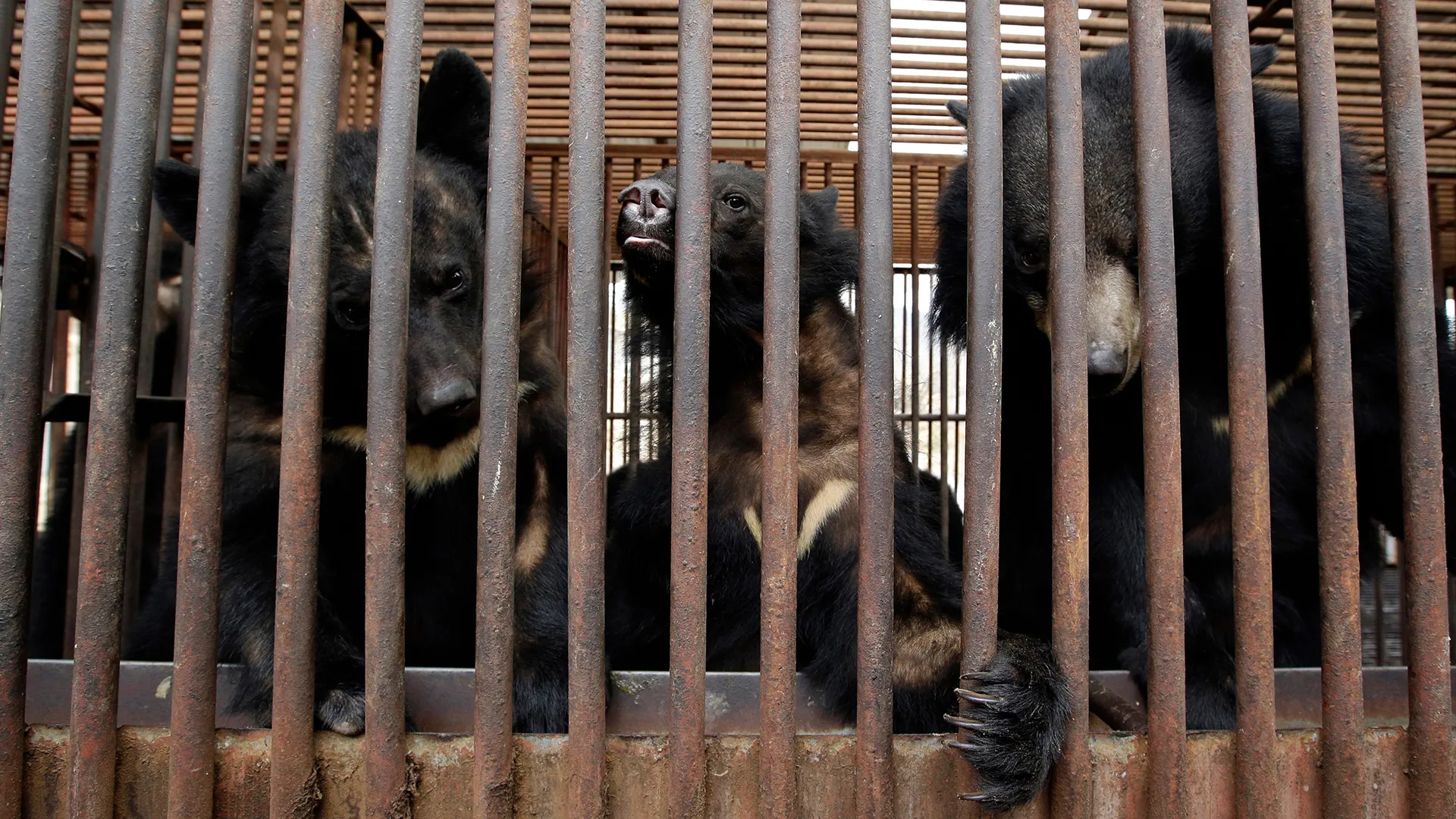
South Korea has announced it’s ending bear bile farming over animal cruelty concerns. The controversial industry was used for traditional medicine, but questions over its effectiveness knocked its popularity in recent years.
Trump has repeatedly threatened to strike purported drug targets inside Venezuelan territory. (Archive)
Caracas, December 30, 2025 (venezuelanalysis.com) – The United States’ Central Intelligence Agency (CIA) has reportedly bombed a target inside Venezuelan territory.
According to CNN, citing “sources familiar with the matter,” the CIA carried out a drone strike against a “remote dock on the Venezuelan.” US officials allegedly believed the facility was being used for drug storage and shipping.
There was reportedly no one present on site during the attack, which is only specified to have taken place “earlier this month.” A New York Times report, likewise relying on anonymous sources, presented similar claims and added that the strike took place last Wednesday.
US President Donald Trump first alluded to a purported strike inside Venezuelan territory during an interview on Friday, claiming that US forces had destroyed a “big facility where ships come from” two days earlier.
Trump elaborated on a Monday press conference, adding that the site was along the Venezuelan shore and that there was a “big explosion in the dock area where they load the boats up with drugs.”
US agencies have not confirmed the attack, with the CIA, the White House and the Pentagon refusing comment. Analysts relying on open source data tracked no signs of an explosion on the Venezuelan coast in recent days.
For its part, Venezuelan authorities have not released any statements on the matter.
If confirmed, the land strikes would mark a significant escalation in the US’ military campaign against Venezuela. Since August, the Trump administration has amassed the largest build-up in decades in the Caribbean and launched dozens of strikes against small boats accused of narcotics trafficking, killing over 100 civilians in the process.
Trump has repeatedly vowed to bomb purported drug targets inside Venezuelan territory while escalating regime change threats against the Nicolás Maduro government. The White House allegedly approved lethal CIA operations in the country in October.
Despite recurrent “narcoterrorism” accusations against Maduro and other high-ranking Venezuelan officials, Washington has not provided court-tested evidence to back the claims. Specialized agencies have consistently shown Venezuela to play a marginal role in global drug trafficking.
In recent weeks, Trump has turned his discourse toward Venezuelan oil, claiming that the Caribbean nation had “stolen” oil rights from US corporations during nationalization processes in the 2000s and 1970s.
The US president ordered a naval blockade against Venezuelan oil exports, with US forces seizing two oil tankers carrying Venezuelan crude in international waters earlier this month. A third vessel reportedly refused to be boarded and headed toward the Atlantic Ocean. According to Reuters, US forces have been ordered to enforce a “quarantine” of Venezuelan oil in the next two months in order to exacerbate the South American country’s economic struggles.
A group of UN experts issued a statement on December 24 condemning the US’ maritime blockade as “violating fundamental rules of international law.”
“The illegal use of force, and threats to use further force at sea and on land, gravely endanger the human right to life and other rights in Venezuela and the region,” the experts affirmed, while urging UN member-states to take measures to stop the blockade and the vessel bombings.
The attempted blockade builds on widespread US economic sanctions, particularly targeting the Venezuelan oil industry, the country’s most important revenue source. US coercive measures have been classified as “collective punishment” and found responsible for tens of thousands of civilian deaths.
For its part, the Maduro government has condemned US “acts of piracy” in capturing oil tankers and blasted the Trump administration’s actions as blatant attempts to seize Venezuela’s natural resources.
Caracas has received diplomatic backing from its main allies, with China and Russia both condemning Washington’s military escalations as violations of international law. However, a recent UN Security Council meeting convened by Venezuela produced no resolutions.
ASKING boyfriends to meet certain basic requirements can ruin a woman’s chances of love. Single man Martin Bishop explains why it’s time to stop being so picky:
Looks aren’t all that
Women are often only interested in a guy’s looks, which is superficial and shallow, like they call you when you look at their tits. What about other, boring stuff like being considerate? Also he might be fantastic in bed, you don’t know, and if he isn’t maybe you just need to help him get up to speed. You know, be the bigger person.
Personal cleanliness is a spectrum
You’re excluding some great guys by insisting on them showering every three days. Men are more relaxed about this stuff. They’ve got Lynx. They haven’t fallen for Big Hygiene’s con that shower gel and shampoo are different, or you need a new toothbrush sometimes. Women can waste their money if they want.
A broader sense of humour means more laughs
Do women want a man with a sense of humour, or do they not have a sense of humour? The debate rages on, certainly at The Albion’s quiz night. Have you considered broadening yours to include farts, bowel conditions, that general area? There’d be a lot more giggles in the bed if you did.
Enjoy your own company
Do you want to end up a sad, lonely, spinster like Emma Watson? It’ll happen if you expect guys to give you constant attention, like texts between dates. I’m sorry but we’ve got our own lives and our own fantasy football teams, so it’s not fair to expect us to listen to every minute detail of what hairstyle you’re planning or one of your parents dying.
Weight is never a deal-breaker
Men like myself – well built in the upper torso, not gay – want to date slender gym bunnies with large breasts rather than fat women. We react, evolutionally, to visual stimuli of Melinda Messenger. Women, free of that burden, can enjoy having sex with any guy so long as he’s got a penis in there somewhere. They have that choice.
Ambition is the enemy of contentment
You’ll never be happy if you’re hunting some fictional alpha male in regular work earning above minimum wage. Many men have personal projects that will pay off handsomely given time, such as being in a band, placing bets or Bitcoin. An idea for a wearable ‘dog freshener’ could make that man a millionaire. And you’d miss out.
Porn is on your side
Do you want him demanding nightly sex? No. So don’t complain when porn’s willing to do the job you won’t. It’s a fantasy, not real life, and means you get evenings off. We’re not expecting you to be into things like threesomes or anal, though we will check regularly if you’ve changed your mind.
The intensity of the current backlash against Alaa Abdelfattah in Britain is striking – not because it reflects a renewed concern for justice, but because it exposes how selectively outrage is deployed.
Alaa, an Egyptian-British writer and activist, spent more than a decade in and out of Egyptian prisons following the 2011 uprising that toppled President Hosni Mubarak. His detention was marked by prolonged hunger strikes, denial of basic rights and treatment that human rights organisations described as cruel and degrading. He was released on September 23 after a years-long campaign by his mother, sister and close friends. A travel ban on him was lifted only this month, and he was able to join his family in the UK on December 26.
Alaa left behind a decade of repression in Cairo only to be welcomed in London with public attacks and a call for the revocation of his British citizenship and his deportation. Public hostility was whipped up by the uncovering of a social media post from 2010 in which Alaa said he considered “killing any colonialists … heroic”, including Zionists.
The tweet has been widely condemned, referred to the counter-terrorism police for review, and seized upon by politicians calling for punitive measures.
The speed and intensity of this reaction stand in stark contrast to the silence surrounding far more consequential statements and actions that the UK not only tolerates but actively enables.
This is what selective outrage looks like.
While Alaa’s words are dissected and framed as a moral emergency, the UK continues to host and collaborate with senior Israeli officials who have been accused of participating in and inciting genocide.
In July, for example, Israel’s air force chief Tomer Bar – the man who has overseen the carpet bombing of Gaza, destruction of hospitals, schools and homes and the extermination of entire families – was granted special legal immunity to visit the UK. Reporting by Declassified UK showed that this immunity shielded him from arrest for war crimes while on British soil.
There has been no comparable outcry over this.
Israeli President Isaac Herzog was also able to pay a visit to the UK in September and hold high-level meetings. This is the same man who, at the start of the genocide, suggested that the “entire [Palestinian] nation” is responsible and that “This rhetoric about civilians not aware, not involved – it’s not true.” This and other statements by Herzog have been collected in a large database that currently supports the genocide case against Israel at the International Court of Justice (ICJ).
Yet, despite being accused of incitement to genocide, the Israeli president entered the UK without a problem and was welcomed by Prime Minister Keir Starmer. Those quarters concerned about Alaa’s tweet displayed no outrage over the visit of a potential war criminal.
They have also been silent about British citizens who have travelled to serve in the Israeli military, including during Israel’s offensives in Gaza and the ongoing genocide. These operations, documented by the United Nations, Amnesty International and Human Rights Watch, have resulted in tens of thousands of civilian deaths, the destruction of hospitals and universities, and the devastation of entire neighbourhoods.
Despite extensive documentation of war crimes and crimes against humanity, and the ICJ’s warning of a serious risk of genocide, there has been no systematic investigation into whether British nationals may have been involved in violations of international law.
Again, there is little sustained outrage.
At the same time, the UK continues to license arms exports to Israel and to engage in political, military and intelligence cooperation. These policies have persisted even as international bodies have warned of grave humanitarian consequences and potential violations of international law. All of this unfolds with relatively little political cost.
And yet it is a decade-old tweet – not mass killing, not siege, not the destruction of civilian life on a vast scale, not incitement to genocide – that triggers political panic in the UK.
This contrast is not incidental. It reveals a hierarchy of outrage in which dissenting voices are policed and punished, and state violence is not, and in which public hostility is directed downward at individuals rather than upward at power. Alaa’s case shows how moral language is deployed selectively – not to restrain impunity, but to manage discomfort.
This asymmetry corrodes the credibility of the principles the UK claims to uphold. When human rights are defended selectively, they become tools of convenience rather than universal norms. When outrage is loud but inconsistent, it becomes performative. And when accountability is withheld from powerful allies, impunity hardens into policy.
Those who defend this approach often invoke “quiet diplomacy”, arguing that restraint is more effective than confrontation. Yet there is little evidence that silence has delivered accountability – either for Alaa or for civilians subjected to mass violence in Gaza. In both cases, discretion has functioned less as a strategy than as permission.
The UK has the tools to act differently: Suspending arms exports, investigating potential crimes by its nationals, conditioning cooperation on respect for international law, restricting visits by officials implicated in serious abuses. That these tools remain largely unused is itself revealing.
Until that changes, outrage will remain selective, accountability conditional, and impunity intact – widening the gap between the values the UK professes and the violence it continues to enable.
The views expressed in this article are the author’s own and do not necessarily reflect Al Jazeera’s editorial stance.
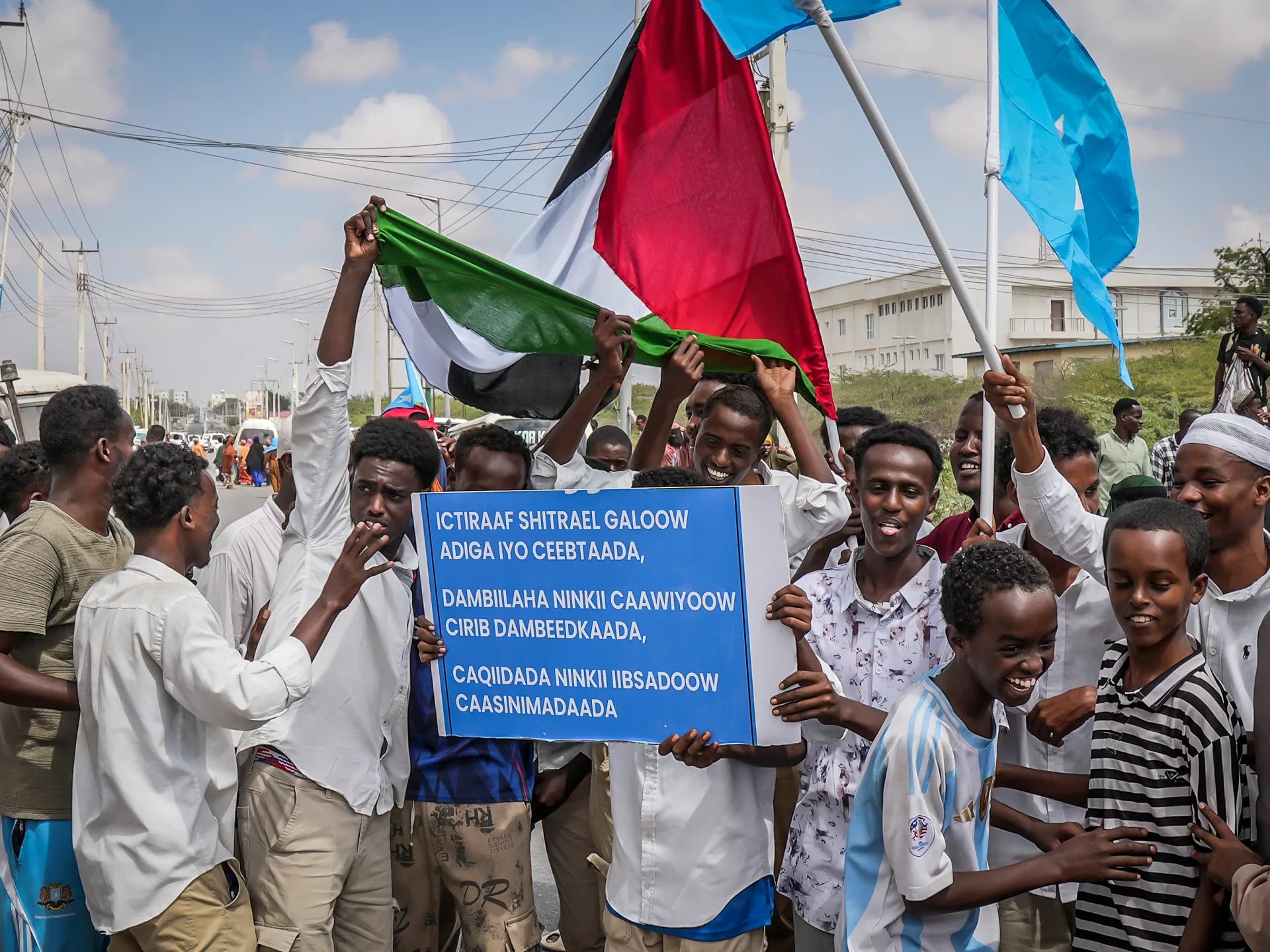
Protests have erupted across Somalia following Israel’s formal world-first recognition of the breakaway region of Somaliland, with demonstrators taking to the streets in multiple cities, including the capital, Mogadishu.
On Tuesday morning, large crowds gathered at locations including Mogadishu’s main football stadium and around the city’s airport, where protesters waved Somali flags and chanted slogans calling for national unity.
Recommended Stories
list of 3 itemsend of list
The demonstrations, which also took place in Baidoa, Dhusamareb, Las Anod, Hobyo and Somalia’s northeastern regions, came as President Hassan Sheikh Mohamud travelled to Istanbul for talks with his Turkish counterpart Recep Tayyip Erdogan following a stop in neighbouring Djibouti.
Somalia and Turkiye have close political and security ties, with Ankara emerging as a regional rival to Israel in recent months.
Small gatherings also took place in Borama, a city in western Somaliland, where the population has appeared more ambivalent about separation from Somalia, to express opposition.
Somaliland unilaterally declared independence in 1991 following a civil war, but has failed to gain international recognition despite maintaining its own currency, passport and army.
Somaliland’s leaders say the state is the successor to the former British protectorate, which voluntarily merged with Italian Somaliland and has now reclaimed its independence. Somalia continues to claim Somaliland as part of its territory and does not recognise its independence.
Israel became the first and only country to formally recognise it as a sovereign state last Friday, describing the move as being in the spirit of the Abraham Accords that normalised ties between Israel and several Arab nations.
President Mohamud urged Somaliland’s leadership over the weekend to reverse the decision, warning that its territory, overlooking the strategic gateway to the Red Sea, must not be used as a base for targeting other nations.
Yemen’s Houthi rebels have said any Israeli presence in Somaliland would be considered “a military target for our armed forces”.
Shortly after Somaliland announced mutual recognition with Israel on Friday, President Abdirahman Mohamed Abdullahi said the move “is not a threat, not an act of hostility” towards any state, and warned that Somalia’s insistence on unified institutions risks “prolonging divisions rather than healing” them.
The widespread public anger in Somalia reflects a rare show of political unity, where leaders across the spectrum have condemned Israel’s decision.
On Monday, the National Consultative Council — chaired by Mohamud and including the prime minister, federal state presidents and regional governors — rejected the recognition as an “illegal step” that threatens regional security stretching from the Red Sea to the Gulf of Aden.
Four federal member states issued coordinated statements over the weekend denouncing the move. However, Puntland and Jubbaland — both of which recently announced their withdrawal from Somalia’s federal system over electoral and constitutional disputes — have remained silent.
Most United Nations Security Council (UNSC) members slammed Israel’s recognition of Somaliland at a meeting convened on Monday in response to the move, which several countries said may also have serious implications for Palestinians in Gaza.
The United States was the only member of the 15-member body not to condemn Israel’s formal recognition at the emergency meeting in New York on Monday, although it said its own position on Somaliland had not changed.
Somalia’s UN ambassador, Abu Bakr Dahir Osman, warned that the recognition “aims to promote the fragmentation of Somalia” and raised concerns it could facilitate the forced relocation of Palestinians from Gaza to northwestern Somalia, a fear echoed by several other nations.
“This utter disdain for law and morality must be stopped now,” he said.
US deputy representative Tammy Bruce told the council that “Israel has the same right to establish diplomatic relations as any other sovereign state”, though she added Washington had made “no announcement” regarding its own recognition of Somaliland.
Israel’s deputy UN ambassador, Jonathan Miller, defended the decision as “not a hostile step toward Somalia” and made the case to the UNSC for other countries to follow its lead.
Somalia’s state minister for foreign affairs, Ali Omar, thanked UNSC members for their “clear and principled” stance on the issue in a post on X.
Octopus Energy is set to spin off its Kraken Technologies arm as a standalone company after a deal to sell a stake in the platform valued it at $8.65bn (£6.4bn).
The energy giant, Britain’s biggest gas and electricity supplier, has sold a $1bn stake in the AI-based division to a group of investors led by New York-based D1 Capital Partners.
The move paves the way for Kraken to be demerged from Octopus, and for a potential stock market flotation for the business in the future.
Octopus founder and chief executive Greg Jackson told the BBC there was “every chance” Kraken would list its shares “in the medium term”, with the location of the flotation “between London and the US”.
Kraken uses AI to automate customer service and billing for energy companies and can manage when customers use energy, rewarding them for reducing consumption at peak times.
It was initially built for use by Octopus but has since picked up a raft of other utilities clients, including EDF, E.On Next, TalkTalk and National Grid US. It now serves 70 million household and business accounts around the world.
The majority of the $1bn investment will go to Octopus to fund its expansion, with Kraken receiving the rest. Mr Jackson said Kraken will be operating completely independently of Octopus “within a few months”.
Other investors in the business included Fidelity International and a unit of Ontario Teachers’ Pension Plan, with Octopus maintaining a 13.7% stake in Kraken.
Kraken chief executive Amir Orad said the spinoff would give it the “focus and freedom” to grow, with the company having previously struggled to do business with Octopus’s rivals.
Mr Jackson said that for a large tech firm such as Kraken, the location for its share listing would be either London or the US.
“One thing about Kraken is we’ve got this global investor base… and so really the stock exchanges have got to kind of show why they are the right one for business.”
A London listing for Kraken’s shares would reverse a trend of firms snubbing the UK in favour of floating in the US.
Mr Jackson said Octopus had created 12,000 jobs in the UK, with 1,500 of these attributed to Kraken.
He said the company would keep its headquarters in the UK, and that “if London can be the right place to list, I would love that”.
“But it’s down to be where you’re going to get the most investor support and the most support from the stock exchange.”
The demerger comes amid the continued growth of Octopus Energy, which overtook British Gas to become the UK’s largest energy supplier earlier this year, serving 7.7 million households.
But it confirmed this year it was one of three retail energy firms that had not yet met regulator Ofgem’s financial resilience targets.
Octopus, which will unveil its annual results on Tuesday, said the cash injection would “almost double Octopus Energy Group’s already strong balance sheet”.
Watch: ‘Trusting time’ – NewJeans discusses court ruling in record label dispute
Chart-topping K-pop band NewJeans is losing one of its members in what is yet another twist in the group’s bitter year-long feud with its record label.
Ador announced on Monday that they had “terminated” their contract with 20-year-old Danielle Marsh and the return of Minji remains uncertain, leaving the band with three members.
On Tuesday, local media reported that Ador is suing Danielle, her family member, and ex-boss Min Hee-jin for $32m in damages. None of them have spoken publicly yet. The BBC has reached out to Hybe, Ador’s parent company, for comment.
Coming less than two months after reports that NewJeans would return to the label as a band of five, this news dashes fans’ hopes of a comeback.
Many took to social media with the slogan: “NewJeans is five or nothing, while others questioned why Danielle was singled out.
“Does this make any sense??? NewJeans without Danielle isn’t NewJeans. Do you think you can just erase a member this easily? Give us back Danielle,” one wrote in an X post.
“It’s not fair at all. Free NewJeans [all 5 members],” another wrote on Instagram. “All they wanted to do was to be [artists] and make their fans happy.”
NewJeans, which became the eighth biggest-selling act in the world a year after their debut in 2022, were seen as a game-changer by critics for their blend of 1990s R&B and sugar-coated pop melodies.
Then came a dramatic fallout with Ador in 2024, sparked by the controversial dismissal of the agency’s former CEO Min Hee-jin, whom NewJeans regarded as a mentor.
The move shook the K-pop world, setting off a battle between hugely successful and very young stars – they are between 17 and 21 years of age – and a South Korean entertainment giant, Hybe, which owns Ador.
NewJeans accused Ador of “mistreatment” and “deliberate miscommunications and manipulation”, then announced they would leave the agency. Ador in turn launched a lawsuit blocking their departure, which it won in October this year. A district court ruled that NewJeans must honour their contract with the label which runs until 2029.
A month later, local media reports indicated that all five members would return to the agency.
Getty Images
NewJeans have delivered remarkable success since they debuted in July 2022
Then in a surprising turn, Ador issued a statement on Monday, saying it would take legal action against a family member of Danielle’s and Min, who founded the label and created NewJeans before her dramatic departure.
Both of them, Ador claims, “bear significant responsibility” for the fallout between the agency and the K-pop group.
Monday’s statement did not mention a lawsuit against Danielle, saying only that Ador had decided it was difficult to continue working with her, and told her they would be ending the contract.
Ador also claimed that NewJeans’ members had been “exposed to persistently distorted and biased information” which led to “significant misunderstandings” about the label.
That statement named two other NewJeans members: Hanni, who it said decided to remain with the label after “extended conversations” which included her family, and Minji, who is still in “ongoing conversations” with the agency.
It’s been a whirlwind for fans, especially since Ador initially announced in November that only two members, Hyein and Haerin, would return to the agency, sparking fears the group would split up.
These fears were allayed when Hanni, Danielle and Minji said in a separate statement hours later that they too would return – but only for a short time, as it turns out.
Getty Images
Ador announced on Monday would terminate its contract with NewJeans member Danielle Marsh
“NewJeans is a very important group that changed the world of female K-pop acts. For the music listeners and fans, it has been the hope to see their return as a full five-member team. That’s no longer possible,” music critic Lim Hee-yun told the BBC, adding that this outcome would not “make anyone happy”.
Mr Lim believes Ador would be pressured to recruit new members into the group, especially if Minji also leaves the label.
It is hard for three-member groups to find success in the K-pop industry, where fans pay close attention to the relationships and chemistry between members.
Danielle’s future as a musician is also uncertain.
“Not only will there be a large part of the public that see her negatively [because of this controversy], but the record labels will too… She might need to pursue being a solo act as an actor, model, or an influencer,” Mr Lim said.
Additional reporting by Leehyun Choi and Hosu Lee in Seoul
Weekly insights and analysis on the latest developments in military technology, strategy, and foreign policy.
China’s latest live-fire drills around Taiwan include a simulated blockade of the island — a strong possibility should Beijing seek to retake what it describes as a breakaway province that must eventually be reunited. As well as potentially reflecting, at least in part, Beijing’s existing planning for a future invasion of Taiwan, the exercises come at a time of notable tensions between China and the United States, as well as Japan.
A screen grab from a video shows Taiwan Coast Guard personnel conducting rapid-response exercises in response to aircraft and naval activity by the PLA on December 29, 2025. Photo by Taiwanese Ministry of Defense/Anadolu via Getty Images
This morning, the People’s Liberation Army’s (PLA) Eastern Theater Command sent elements from its navy, air force, rocket force, and coast guard to surround Taiwan, as part of a surprise exercise called Justice Mission 2025. The maneuvers began less than an hour after they had been officially announced, and assets said to be involved include destroyers, frigates, fighters, bombers, drones, and long-range missiles. The photo at the top of this story, showing a PLA J-16 Flanker multirole fighter, was released today by the Taiwanese Ministry of Defense, reportedly obtained via the targeting pod of a Taiwanese F-16. It may, however, originate from an earlier occasion.
Joint military drills “Justice Mission 2025” around Taiwan, starting Monday morning, can be summarized with 4 keywords: “coverage”, “blockade”, “precision strike” and “decapitation strike” .
— 新‧二七部隊 軍事雜談 (New 27 Brigade)?????? (@new27brigade) December 29, 2025
The PLA Eastern Theater Command released a video on its official Weibo account that purportedly shows a view of the Taipei 101 skyscraper, as seen from a drone.
Most significantly, the live-fire drills involve a simulated blockade of major Taiwanese ports. As we have described in the past, an aerial and maritime blockade of Taiwan could potentially be an attractive option for Beijing to use its hard power, with the aim of choking the island into submission, while holding back from a full-scale invasion.
At the same time, Justice Mission 2025 has involved training for other kinds of contingencies, including attacking different types of maritime targets, and responding to international “interference” — a tacit reference to dealing with the U.S. military and other nations that might be expected to come to Taiwan’s aid in a crisis.
A Taiwanese Mirage 2000 fighter takes off at Hsinchu Air Base in Hsinchu on December 29, 2025. Photo by CHENG Yu-chen / AFP
In the PLA’s words, its forces are conducting their drills “in close proximity” to Taiwan, to test “sea-air coordination and precise target hunting and neutralization,” including attacks on submarines and other maritime targets.
As of Monday afternoon, local time, the Taiwanese Ministry of Defense said it had detected 28 PLA Navy and coast guard ships, including two that entered Taiwan’s contiguous zone.
Very notable that the majority of the PLA vessels marked in this map are inside Taiwan’s contiguous zone and pushing against the boundary of Taiwan’s territorial waters.
Five of the exercise zones and live-fire areas violate the territorial waters. https://t.co/j1S4IIGNjz
At least 89 PLA aircraft were also reported, the largest daily tally for more than a year. In a break from previous exercises, a significant number of PLA aircraft reportedly had their transponders switched on, meaning that they were visible on flight-tracking software, reflecting Beijing’s apparent decision to conduct the drills more in the public eye.
So close, so beautiful, go to Taipei at any time … 《这么近 那么美 随时到台北》 伸手可掬日月潭水,迈步可登阿里山顶
Taiwan also stated that a formation of four amphibious assault ships, with embarked helicopters, was spotted 160 nautical miles west of Taiwan’s southern tip.
Compared to previous large-scale exercises, Justice Mission 2025 appears to be making use of a larger area, according to published maps of air and maritime warning areas. At least some of these zones also overlap with Taiwan’s territorial border, which extends to 12 nautical miles off its coast.
Col. Shi Yi, the spokesperson for the PLA’s Eastern Theater Command, described the exercise as “a stern warning against ‘Taiwan independence’ separatist forces and external interference forces.”
A Chinese ship is seen in waters near Pingtan island, the closest point to Taiwan, in eastern China’s Fujian province on December 29, 2025. Photo by ADEK BERRY / AFP
Beijing has also issued messages intended for U.S. consumption.
In particular, foreign ministry spokesperson Lin Jian claimed that unnamed “external parties” were pushing the region closer to war. “Any sinister schemes to obstruct China’s reunification are doomed to fail,” Lin added.
More pointedly, China’s Ministry of Defense said today that “relevant countries” should “abandon illusions of using Taiwan to contain China.”
For its part, Taiwan has condemned the latest Chinese exercises.
Taipei accused Beijing of escalating tensions and undermining regional peace. In response to the PLA maneuvers, Taiwan said that it dispatched “appropriate forces” to respond and conduct counter-combat-readiness exercises of its own.
In response to today’s #PLA aircraft and naval activity, the #ROCArmedForces conducted Rapid Response Exercises and closely monitored the situation. Joint sea and air operations with all services and the Taiwan Coast Guard remain on high alert. #FullAwarenesspic.twitter.com/urRlOh4cUL
— 國防部 Ministry of National Defense, ROC(Taiwan) ?? (@MoNDefense) December 29, 2025
“Defending democracy and freedom is no provocation, and the existence of the Republic of China [Taiwan’s formal name] is not an excuse for aggressors to disrupt the status quo,” the Taiwanese Ministry of Defense said.
We strongly condemn the PRC’s irrational provocations and oppose the PLA’s actions that undermine regional peace. Rapid Response Exercises are underway, with forces on high alert to defend the Republic of China and protect our people.#ROCArmedForces#PeaceThroughStrengthpic.twitter.com/uPw0Qm9Upn
— 國防部 Ministry of National Defense, ROC(Taiwan) ?? (@MoNDefense) December 29, 2025
The backdrop to Justice Mission 2025, of course, is Beijing’s aspiration to reunify Taiwan with the mainland.
Many have floated 2027 — which also marks the centenary of the founding of the PLA — as the year China could be capable of invading the island, including U.S. officials. While the Chinese leadership has expressed its preference for a unification achieved through peaceful means, the PLA has also been instructed to be prepared to conduct a successful invasion of Taiwan no later than 2027.
Starting from ‘island encirclement’ drills by H-6 bombers from 2016, when Taiwan’s independence-leaning President Tsai Ing-wen took office, China’s gray-zone operations directed against the island have been progressively stepped up to frequent incursions into its southwestern corner of the Air Defense Identification Zone (ADIZ) since 2020.
Another significant turning point was the August 2022 visit to Taiwan by a U.S. congressional delegation led by House Speaker Nancy Pelosi. This provided Beijing with further justification to escalate. Significant numbers of PLA aircraft were sortied over the tacitly agreed median line of the Taiwan Strait while warships sailed into its contiguous zone.
Justice Mission 2025 is now the sixth major PLA military exercise targeting Taiwan since Pelosi’s visit.
On the one hand, large-scale military maneuvers, and especially live-fire exercises, are a critical element of routine readiness training for the PLA.
On the other hand, Beijing has frequently timed these maneuvers, or otherwise promoted them, in response to perceived acts of provocation by Taiwan or the United States.
With that in mind, it’s likely no coincidence that the apparent snap drills come soon after the U.S. government approved a record $11-billion arms package for Taiwan. This includes offensive as well as defensive equipment — including additional examples of the High Mobility Artillery Rocket System (HIMARS) — which has long been a particular issue for China.
There has also been a notable uptick in critical articles in Chinese state media in recent days regarding the U.S. position toward the so-called ‘First Island Chain.’
The First Island Chain is a boundary defined by archipelagos opposite mainland East Asia, extending from the southern end of the Japanese home islands all the way to the South China Sea.
For long, the United States has highlighted the strategic importance of defending the First Island Chain against primarily Chinese aggression.
A Pentagon map showing the geographic boundaries of the First and Second Island Chains. U.S. Department of Defense
Beijing has also voiced displeasure with recent statements from Taiwanese President Lai Ching-te, who has called for increased defense spending to counter what he described as China’s “intensifying” threats.
Japan, too, has been highlighted by Beijing, specifically after Prime Minister Sanae Takaichi said her country would likely become militarily involved if China were to attack Taiwan.
As such, the timing for a high-profile military exercise of this kind is very much right, as far as Beijing is concerned.
The Chinese flag is seen on Pingtan island, the closest point to Taiwan, in eastern China’s Fujian province, on December 29, 2025. Photo by ADEK BERRY / AFP
It is notable, however, that on this occasion the signaling as well as the scenarios being practiced focus not only on dealing with Taiwan, but also deterring international involvement, something that is now being referenced more explicitly by Beijing.
Speaking after a major exercise in April of this year, U.S. Secretary of War Pete Hegseth said that “America is committed to sustaining robust, ready, and credible deterrence in the Indo-Pacific, including across the Taiwan Strait.”
Now, with the PLA’s secondmajor exercise during U.S. President Donald Trump’s second term, Beijing will be keeping a close eye on Washington’s response to the drills.
The Saudi-led coalition carried out a targeted strike at Yemen’s Mukalla port, accusing foreign-backed vessels of delivering weapons to southern separatists.
Published On 30 Dec 202530 Dec 2025
Share
The Saudi-led coalition in Yemen has carried out a “limited military operation” targeting what it described as foreign military support at Mukalla port, days after warning the separatist Southern Transitional Council (STC) group against taking military action in Hadramout province.
Coalition air forces carried out the military operation early on Tuesday, targeting unloaded weapons and vehicles, the official Saudi Press Agency (SPA) reported.
Recommended Stories
list of 4 itemsend of list
Coalition spokesperson Turki al-Malki said two ships entered Mukalla port on Saturday and Sunday without coalition authorisation, disabled their tracking systems, and unloaded large quantities of weapons and combat vehicles “to support” the STC.
The Saudi-backed head of Yemen’s presidential council, Rashad al Alimi, said on Tuesday after the air strike that all forces of the United Arab Emirates must leave Yemen within 24 hours.
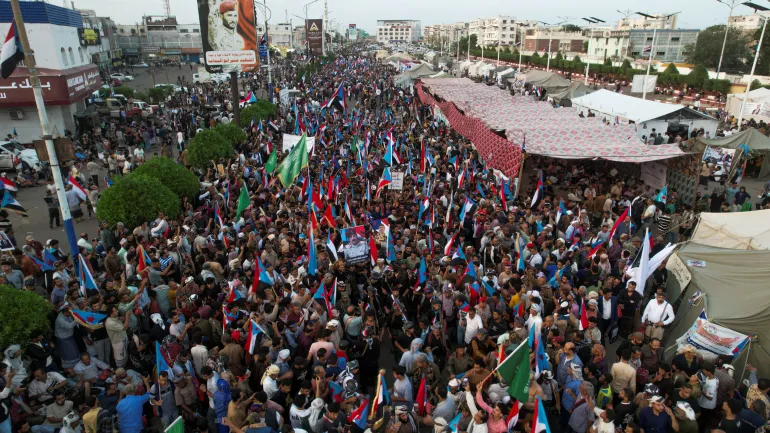
People attend a rally organised by the Southern Transitional Council in Aden, Yemen [File: Fawaz Salman/Reuters]
“Given the danger and escalation posed by these weapons … the coalition air forces carried out a limited military operation this morning targeting weapons and combat vehicles that had been unloaded from the two ships at the port of al-Mukalla,” SPA reported.
Two sources told Reuters news agency that the strike specifically targeted the dock where the cargo had been unloaded. The coalition said there were no casualties or collateral damage and emphasised that the operation was conducted in accordance with international humanitarian law.
The strike comes amid heightened tensions following an offensive earlier this month by the STC against Yemeni government troops backed by the coalition.
Saudi Defence Minister Khalid bin Salman Al Saud posted on X that the STC troops should “peacefully hand over” two regional governorates to the government. Meanwhile, United States Secretary of State Marco Rubio called for “restraint and continued diplomacy, with a view to reaching a lasting solution”.
A divided Yemen
The STC was initially part of the Saudi-led coalition that intervened in Yemen in 2015 against the Houthis, but the group later pursued self-rule in southern Yemen. Since 2022, the STC, which has previously received assistance from the United Arab Emirates, has controlled southern territories outside Houthi areas under a Saudi-backed power-sharing arrangement.
In recent weeks, however, the STC has swept through swaths of the country, expelling other government forces and their allies.
It was almost 6 p.m. on the evening of Wednesday, Dec. 24.
Makinta Bukar had finished attending to a customer when he heard the Islamic call for prayer from a nearby mosque, signalling the closure of business for the day. He performed ablution, picked up the food items he had bought earlier, locked his shop, and headed to the Al-Adum Jummat Mosque in Gamboru Market, Maiduguri, northeastern Nigeria.
It was a routine he had followed for years.
A few shops away, Suleiman Zakariya was also closing up. Alongside a friend known simply as Manager, he walked towards the same mosque.
The three men met outside the mosque and chatted briefly. Makinta and Suleiman went in through the front door and occupied the front row, while Manager followed through the back door and stayed a few rows behind them.
Then prayer began.
Moments later, a sudden loud sound exploded in the middle of the mosque.
“I thought it was an electric spark,” Makinta recalled. “I ran out immediately as I was close to the exit.” After a few steps, he collapsed. “That was when I noticed the blood on my trousers. I tried standing up but felt a sharp pain.”
Suleiman, standing just behind the Imam, could not escape as quickly.
“The blast threw me forward,” he recalled. “I sustained injuries on my legs and waist. The debris pierced through my two legs. There was dust everywhere. You could not see anything. The sound was so loud that it deafened my right ear. I still cannot hear with it.”
Manager, who was praying close to the centre of the mosque where the explosion occurred, did not survive.
“He was blown apart,” Suleiman said. “It was only his right arm that was identified this morning through his wristwatch.”
A familiar violence returns
The explosion triggered panic across the area and people ran in all directions.
As the confusion spread and the sound of the blast quietened, residents rushed towards the scene. Some tried to help the wounded; others searched desperately for friends and relatives. Security operatives and ambulances soon arrived.
“They put me and other victims into their vehicle and drove us to the hospital,” Makinta recalled. Some were taken to the Maiduguri Specialist Hospital, others to the University of Maiduguri Teaching Hospital.
Police authorities later said five people were killed and at least 35 were injured. But survivors dispute that number.
“None of those praying in the middle survived,” Salisu Tahir, another survivor, who prayed in the last row, said. He had prayed regularly at the mosque for nearly two years. “The mosque can take more than 100 people,” he added. “That day, it was full,” Salisu noted that about 15 worshippers could make up a row.
Others who were praying outside, on the verandah and in the open air, were also struck by debris. “The blast reached them, too,” Suleiman noted.
When HumAngle visited the mosque, blood stains still marked the walls. Footwear and caps, left behind in the rush to escape, lay scattered across the floor.
Inside the mosque after the explosion. The force of the blast tore through the ceiling, while bloodstains still mark the walls. Photo: Al’amin Umar/HumAngle.
The explosion reopened old wounds in a city still trying to heal.
At press time, no terrorist organisation operating in the region has claimed responsibility, and authorities say investigations are ongoing. However, the pattern resembles previous attacks attributed to the Jama’atu Ahlis Sunna Lidda’awati wal-Jihad (JAS) faction of the Boko Haram terror group.
For more than a decade, Maiduguri stood at the centre of Boko Haram’s insurgency. What began in 2009 as an uprising against the state evolved into a brutal campaign targeting civilians, markets, schools, and places of worship. Tens of thousands were killed, and millions displaced across Borno State and neighbouring regions.
At the height of the violence, bombings were frequent. In 2015, coordinated suicide attacks tore through parts of Maiduguri, including markets and busy roads. Two years later, explosions struck the University of Maiduguri, claiming several lives and heightening fear among residents.
The violence devastated livelihoods. Farming collapsed in many areas. Trade slowed as roads became unsafe. Markets emptied, and families who once relied on daily commerce slipped deeper into poverty.
Gradually, the attacks receded. Counterterrorism and community-led efforts, particularly the rise of the Civilian Joint Task Force, helped push terror groups out of the city. Checkpoints became less visible. Shops reopened. Life, cautiously, began to return.
Makinta now lies on a hospital bed, his legs wrapped in bandages. A maize flour trader, he earns his living selling goods that belong to his employer. “I make at least ₦7,000 daily,” he said. “I have a wife and two daughters. I provide for them from what I make at the market.”
Now, he worries about survival.
“With this injury, I cannot go out.” Shrapnel tore into both his legs, damaging the bone in his left leg.
Makinta Bukar on his bed at the Maiduguri Specialist Hospital in northeastern Nigeria, his leg wrapped in bandages. Photo: Al’amin Umar/HumAngle.
As he spoke, a relative came to visit. Before leaving, she handed him ₦1,000, which he immediately passed on to his wife.
“I had just finished ablution and was preparing to pray when I heard the news,” said Yagana Bukar, Makinta’s wife. “I had already made stew and put water on the fire. I was waiting for him to return with rice so I could cook.” When she learnt about her husband, she rushed to the hospital, leaving her children with her sister.
Unlike Makinta, Suleiman owns his shop, where he sells provisions supplied on credit. “I collect items from wholesalers at Monday Market, sell them, and then return their money,” he explained. “What remains is my profit. I make about ₦20,000 daily. That is my only source of income.”
He also buys food for his household daily. “This incident will affect me badly,” he said. “I cannot go to the market until I recover. I worry about how my family will survive during this time. I am the sole breadwinner.”
Suleiman Zakariya on his bed at the Maiduguri Specialist Hospital. Photo: Al’amin Umar/HumAngle.
At the entrance of the ward, Abatcha Mohammed waited anxiously. His younger brother was among the injured. “My shop is next to his,” he said. “I also pray in that mosque. But that day, I had gone home early because my son was sick. When the explosion happened, I rushed back. My uncle and some friends were also affected.”
The market falls quiet
At Gamboru Market, HumAngle observed a scene far removed from its usual bustle. Many shops, especially those closest to the mosque, were locked. Stalls stood empty. The area was unusually quiet, with security operatives patrolling the streets.
The street leading to the mosque lay deserted, with shops closed and stalls empty. Photo: Al’amin Umar/HumAngle.
Gamboru Market is one of Maiduguri’s busiest commercial centres, drawing traders and buyers from across Borno State and neighbouring countries, including Chad, Cameroon, and Niger. It hosts a wide range of businesses, from fresh produce and clothing to household goods, and supports countless small-scale traders, tailors, and food vendors. Activity often continues into the night, sometimes until 9 p.m., long after the main market closes.
Now, that routine has been broken.
Other streets within the market have also been deserted. Photo: Al’amin Umar/HumAngle.
Still, the survivors speak with resolve.
“I will be careful going forward,” Makinta said. “Nothing happens without the will of Allah.” Suleiman echoed him. “I will return to the mosque,” he said. “Crowded or not, I will pray again. Allah has already written what will happen. I survived this because it was not my time. Those who died, it was their appointed time.”
Pharmacy worker Yasmine Lindberg admits that she had been struggling with loneliness
Staff at a major Swedish pharmacy chain are being given paid time off to spend with friends, as Sweden’s government calls on businesses to help play a role in tackling loneliness.
Yasmine Lindberg, 45, is one of 11 participants taking part in the pilot “friendcare” scheme for the pharmacy group Apotek Hjärtat.
She works shifts at the company’s outlet at a retail park in Kalmar, a small seaside city in southern Sweden.
“I’m really tired when I go home. I don’t have time or energy to meet my friends,” she explains, before restocking a shelf of paracetamol.
Yasmine spends a lot of her free time with her teenage children who live with her every other week. But she admits feeling “quite lonely” since separating from her partner four years ago, which led to fewer social invitations with couples in their network.
Now, thanks to the Apotek Hjärtat pilot scheme, which started in April, she’s granted 15 minutes a week, or an hour a month during working hours to focus on strengthening her friendships or making new connections.
She can use this allotted friendcare time to chat on the phone, make plans over text, or meet up with someone in person.
“I wanted to make it better for myself… like, kick myself in the back to do stuff,” says Yasmine.
“I feel happier. You can’t live through the internet like most people do these days.”
Like all participants in the pilot project, she has been given 1,000 kronor ($100; £80) by Apotek Hjärtat to help pay for friendship-based activities during the year-long trial.
The volunteers have also received online training in how to recognise and tackle loneliness, which the pharmacy chain has made available for all its 4,000 employees across Sweden.
Monica Magnusson, Apotek Hjärtat’s CEO, says the inspiration for the company’s friendcare project comes partly from a previous collaboration with the mental health charity Mind. She says that helped demonstrate how short meaningful conversations between pharmacists and customers could help the latter group feel less isolated.
The company wanted to test if providing a short amount of ring-fenced friendship time for its employees could also impact their wellbeing.
Volunteers could also sign up if they weren’t lonely, but wanted to spend more time with isolated people in their network.
“We try and see what the effects are from having the opportunity to spend a bit of time every week on safeguarding your relationships,” explains Ms Magnusson.
The project’s title, friendcare or “vänvård” in Swedish is also a wordplay on “friskvård”, a benefit already offered by many Swedish businesses, who give employees a tax-free annual wellness allowance to spend on fitness activities or massages. Some Swedish companies also offer staff a weekly wellness hour called “friskvårdstimme”.
“This is a reflection on that, but targeting loneliness and relationships instead,” explains Ms Magnusson.
Monica Magnusson says it seems the scheme is having a positive impact on participants
Apotek Hjärtat’s project comes as Sweden’s right-wing coalition government is putting the spotlight on loneliness. In July, Sweden’s Public Health Agency released Sweden’s first national strategy aimed at minimising loneliness, commissioned by the government.
A core part of the strategy is increased collaboration between the business community, municipalities, researchers and civil society. Health Minister Jakob Forssmed has described loneliness as major public health concern, citing global research linking the problem to an increased risk of illnesses including coronary heart disease and strokes, and a greater likelihood of early mortality.
Businesses should be worried about it, he suggests, since their employees and customers are at risk, and public finances are impacted by healthcare and sick leave costs linked to loneliness.
“We need to… have a greater awareness about this, that this is something that really affects health, and affects [the] economy as well,” says Forssmed.
A national loneliness epidemic? Research for the EU suggests around 14% of Sweden’s population report feeling lonely some or all of the time, slightly higher than the EU average.
A separate study for the state’s number-crunching agency Statistics Sweden in 2024 found that 8% of adults in Sweden don’t have a single close friend.
Daniel Ek, a Swedish psychologist and co-author of The Power of Friendship, a handbook on how to develop deeper relationships, argues that in Sweden the country’s cold, dark winters can discourage people from socialising, alongside cultural factors.
“The Swedish mentality is like – you shouldn’t disturb others. We value personal space a lot, and we have a hard time breaking the ice,” he says. Sweden’s housing may also play a role, Ek suggests.
More than 40% of homes are occupied by just one person, and a July’s report by Sweden’s Public Health Agency indicated there are higher levels of loneliness amongst this group.
Yasmine Lindberg has been given a bit more time to connect with friends
At Apotek Hjärtat’s headquarters in Stockholm, Ms Magnusson says it is too soon to decide whether the friendcare project is rolled out more widely, but the results of self-assessment surveys so far indicate higher levels of life satisfaction amongst participants on the friendcare scheme, compared to before it started.
Forssmed, the Health Minister, is monitoring the pharmacy chain’s efforts.
“I think this is very interesting and I’m following what they’re doing,” he says. “[But] I’m not going to give you any promises that the government is going to scale this up or give a tax deduction or something like that.”
Apotek Hjärtat is also part of a business network called ‘Together against involuntary loneliness’, initiated by Forssmed in 2023.
It includes around 20 major Nordic brands, such as Ikea, Strawberry, a hospitality chain, and HSB, Sweden’s biggest federation of cooperative housing, who meet to share their experiences and strategies for tackling loneliness.
Ms Magnusson says there has already been “a lot of interest” in the friendcare project from the other businesses in the network. Representatives from the other firms have even participated in the pharmacy chain’s online loneliness training.
“It’s quite a different approach to working together,” says Ms Magnusson, “collaborating as companies in an area where you just let competition go, and instead try and figure out ‘how can we tackle this common obstacle that we have?’.”
AFP via Getty Images
Swedish Health Minister Jakob Forssmed says he is keeping a close eye on the scheme
Earlier this month, a separate project launched in Piteå in northern Sweden, with 20 businesses offering wellness grants for employees to attend group cultural experiences, such as concerts and plays, in an effort to boost wellbeing and improve social inclusion.
Mr Ek, the psychologist, agrees these sorts of initiatives can have a positive impact in helping “lower the threshold” to increased social interaction, which in turn, can pave the way for deeper friendships and reduced levels of loneliness.
But he is calling for more research and reflection on some of the potential structural issues that may also be impacting loneliness in the Nordic nation.
“What is happening in society that makes us have to have those lower thresholds for meeting and connecting? I think that’s an important thing to look at,” he says. Mr Ek points to Sweden’s high unemployment rate (8.7%), rising income inequality, and young Swedes spending more time on digital devices than the average across the 27-member countries of the Organisation for Economic Co-operation and Development.
“Income differences matter. Availability to events and places matter. How we build cities matters,” says Mr Ek. “So those structures are important to look at to work out the plan for the future.”
Bangladesh’s first female prime minister Khaleda Zia has died at the age of 80 after suffering from prolonged illness.
Zia became Bangladesh’s first female head of government in 1991 after leading her party to victory in the country’s first democratic election in 20 years.
Physicians had said on Monday said her condition was “extremely critical”. She was put on life support, but it was not possible to provide multiple treatments at the same time given her age and overall poor health, they said.
Despite her poor health, her party had earlier said that Zia would contest general elections expected in February, the first since a revolution which led to the ousting of Zia’s rival, Sheikh Hasina.
Bangladeshi politics had for decades been defined by the bitter feud between the two women, who alternated between government and opposition.
“Our favourite leader is no longer with us. She left us at 6am this morning,” Zia’s Bangladesh Nationalist Party (BNP) announced on Facebook on Monday.
Crowds gathered outside Evercare Hospital in Dhaka where Zia was warded after news of her death broke. Photographs show police officers trying to stop them from entering the hospital premises.
Zia first came into public attention as the wife of Bangladesh’s former president Ziaur Rahman. Following his assassination in a 1981 military coup, Zia entered politics and later rose to lead the BNP.
After a second term in 1996 that lasted just a few weeks, Zia returned to the post of prime minister in 2001, stepping down in October 2006 ahead of a general election.
Her political career had been marred by corruption allegations and a long-standing political rivalry with Awami League leader Hasina.
Zia was jailed for corruption in 2018, under Hasina’s administration. Zia denied wrongdoing and said the charges were politically motivated.
She was released from last year, shortly after mass anti-government protests in Bangladesh toppled Hasina, forcing her into exile. The BNP had said in November that Zia would campaign in the upcoming general elections.
The BNP is eyeing a return to power, and if that happens, Zia’s son Tarique Rahman is expected to become the country’s new leader.
Zia had been in hospital for the past month, receiving treatment for kidney damage, heart disease and pneumonia, among other conditions.
During her final days, interim leader Muhammad Yunus had called for the country to pray for Zia, calling her a “source of utmost inspiration for the nation”.
Her family members, including Rahman, his wife and his daughter, were by her side in her last moments, BNP said.
“We pray for the forgiveness of her soul and request everyone to offer prayers for her departed soul,” the party said in its statement on Tuesday.
Local newspapers paid tribute to the former leader, with Prothom Alo saying she had “earned the epithet of the ‘uncompromising leader'”
English-language paper The Daily Star called her a “defining figure of Bangladesh’s democratic struggle” and a leader who was “tenacious in political survival and grit”.
Families of victims of the deadly attack on a Jewish celebration at Australia’s Bondi Beach earlier this month have called for a national inquiry into rising anti-Semitism.
In an open letter published on Monday, relatives of 11 of the victims of the attack called on Australian Prime Minister Anthony Albanese to hold a royal commission into what they called the “rapid” and “dangerous” rise of anti-Jewish sentiment following Hamas’s October 7, 2023 attacks on Israel.
Recommended Stories
list of 4 itemsend of list
Fifteen people, most of them Jewish, were killed when two gunmen opened fire on a Hanukkah celebration at Sydney’s iconic Bondi Beach on December 14.
Australian authorities have said the suspected gunmen, Sajid Akram and his son Naveed, were inspired by the ISIL (ISIS) group.
In their letter, the families said they needed to know why “clear warning signs were ignored” and “how antisemitic hatred … [was] allowed to dangerously grow unchecked”.
“As proud Australians and proud Jews, we have endured more than two and a half years of relentless attacks,” the families said.
“Our children feel unsafe at school and university. Our homes, workplaces, sporting fields, and public spaces no longer feel secure.”
The response of Albanese’s Labor government to the attack, including proposals to tighten gun laws and introduce tougher legislation against hate speech, was “not nearly enough,” the families said.
“The dangerous rise of antisemitism and radicalism in Australia is not going away,” they said.
“We need strong action now. We need leadership now.”
The calls for an inquiry into anti-Semitism came as Albanese on Monday announced the terms of an independent review into whether law enforcement and intelligence agencies could have done more to prevent the attack.
Albanese and his government colleagues have resisted calls for a public inquiry into the attack, arguing that such a process would take years and could undermine social cohesion by platforming extremist voices.
Albanese told a news conference that the review, led by former intelligence chief Dennis Richardson, would examine what authorities knew about the suspected gunmen before the attack and information sharing between federal and state agencies, among other issues.
“Just over two weeks ago, anti-Semitic terrorists tried to tear our country apart, but our country is stronger than these cowards,” Albanese said.
“They went to Bondi Beach to unleash mass murder against our Jewish community. We need to respond with unity and urgency rather than division and delay.”
Anti-Jewish sentiment, as well as anti-Islam and anti-immigration sentiment, are rising in Australia. Many Australians have expressed their concerns over a rise in right-wing extremism in the country, where one in two people is either born overseas or has a parent born overseas.
In September, thousands of people held rallies in cities, including Sydney, Perth, Canberra and Brisbane, demanding an end to “mass migration”.
The Australian government has condemned the rallies, which took place under the banner of “March for Australia”, as racist, while Minister for Multicultural Affairs Anne Aly said the gatherings were “organised by Nazis”.
The group behind “March for Australia” said on its website and social media that “mass migration has torn at the bonds that held our communities together” and that its rallies aimed to do “what the mainstream politicians never have the courage to do: demand an end to mass immigration”.
But Australia also experienced a sharp rise in both anti-Semitic and Islamophobic incidents since October 7, 2023.
The Executive Council of Australian Jewry, which supports the International Holocaust Remembrance Alliance’s (IHRA) definition of antisemitism, documented 1,654 anti-Jewish incidents nationwide between October 1, 2024 and September 30, 2025, after more than 2,060 incidents the previous year.
The Islamophobia Register Australia recorded 309 in-person incidents of Islamophobia and 366 online incidents between January 1, 2023 and November 31, 2024.
Numerous rights organisations, including some Jewish groups, have criticised the IHRA definition of anti-Semitism, arguing that it has been used to conflate legitimate criticism of Israel – particularly of its genocidal war on Gaza – with anti-Jewish bigotry.
One of Albanese’s highest-profile critics in the wake of the Bondi Beach attack was Israeli Prime Minister Benjamin Netanyahu – he blamed Albanese’s government for failing to protect Australia’s Jewish community and also linked the shooting to Australia’s recent decision to recognise Palestinian statehood.
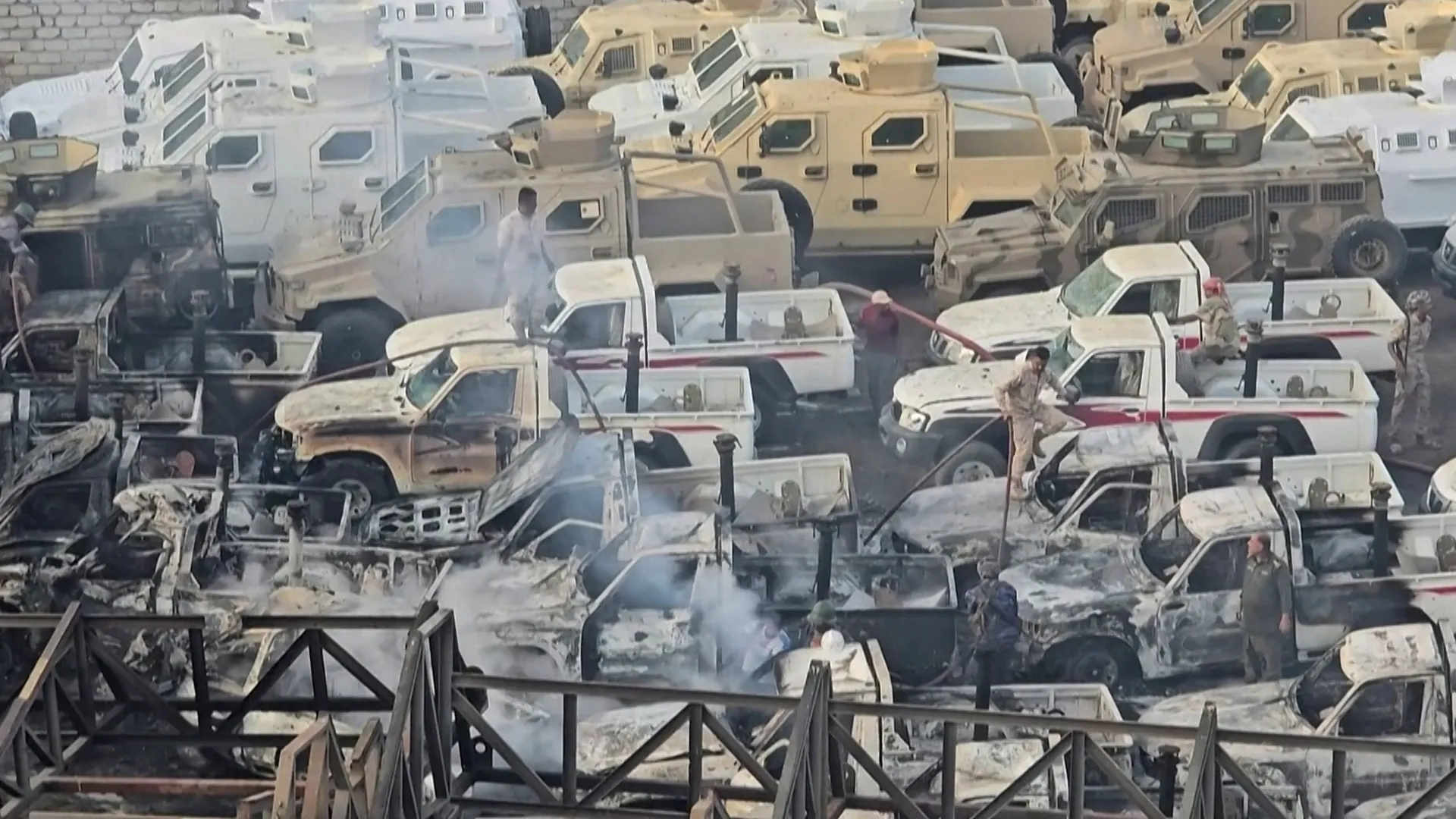
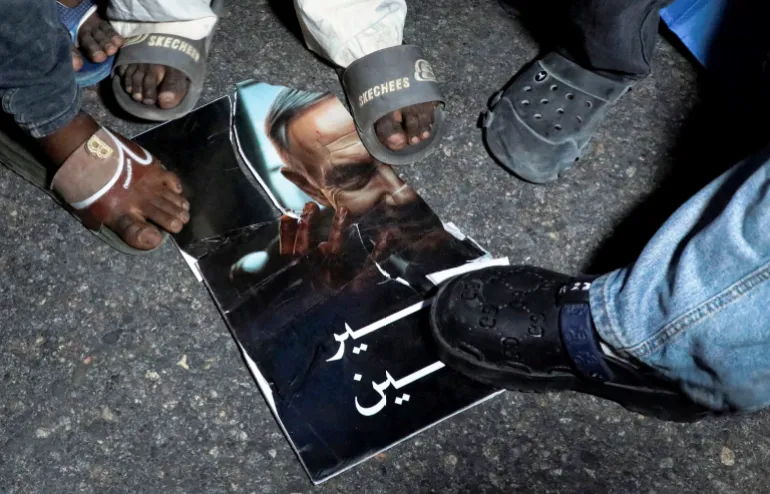

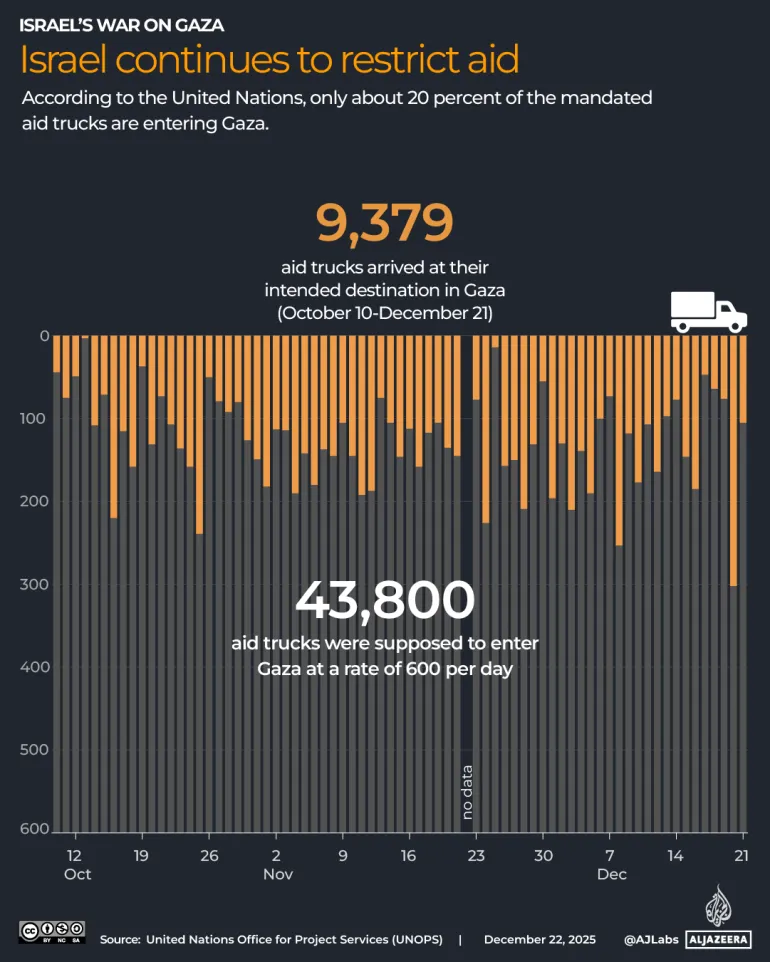

![[Al Jazeera]](https://i0.wp.com/www.aljazeera.com/wp-content/uploads/2025/04/Interactive_Gaza_foodaid_timeline-1742987531-1744365779.webp?w=640&ssl=1)