Discover the latest happenings and stay in the know with our up-to-date today news coverage. From breaking stories and current events to trending topics and insightful analysis, we bring you the most relevant and captivating news of the day.
The Labour Party chair has said Sir Jim Ratcliffe loses “the moral high ground” by making statements about the UK while living in tax exile.
Speaking to Sunday with Laura Kuenssberg, Bridget Phillipson said she would take the billionaire businessman’s comments that the UK was “on the slide” with a “pinch of salt”.
Sir Jim, the founder of petrochemical giant Ineos and Manchester United’s co-owner, told the BBC he has lost confidence in the UK due to a combination of high taxes and high immigration.
He has been a tax resident in Monaco since 2020 and said “things would have to get better” in the UK for him to return.
When questioned over the remarks, Phillipson said Sir Jim loses “the moral high ground” by “making these kinds of pronouncements while choosing to make decisions, that he is within his rights to make, to become a tax exile”.
Pushed on whether it bothers her that people who create jobs and pay a lot of tax were leaving the UK, the minister said she was “optimistic about our country’s prospects”.
Other high profile billionaires have left the UK, including including steel tycoon Lakshmi Mittal and most recently the UK’s third biggest taxpayer, hedge-fund boss Chris Rokos.
But, Philipson argued the country was in a good position ahead of the Budget next month, and Andy Burnham has shown a “sense of hope and optimism whilst recognising that many families are still struggling and there is more to do.”
“Of course, there are challenges, including big international headwinds, but I fundamentally believe that we are in a strong position going into this budget because of the decisions taken over the last two years, and I believe our country’s best days lie ahead of us,” she said.
Philipson declined to speculate over whether there would be tax rises in the Budget on 28 October, and said the government remained committed to being disciplined about its spending rules.
India defeat Bangladesh by 114 runs to book women’s cricket final against Sri Lanka, who beat Pakistan by eight wickets.
Published On 20 Sep 202620 Sep 2026
Smriti Mandhana has become the highest run-scorer in women’s T20 international cricket, guiding India to a crushing win over Bangladesh in an Asian Games semifinal in Japan.
The recently crowned Asian champions defeated Bangladesh by 114 runs on Sunday as Mandhana’s fellow opener Shafali Verma hit her maiden T20 hundred at the Korogi Athletic Park ground in Nagoya.
Mandhana scored 37 off 19 balls with five fours and two sixes in her side’s 195-4 in 20 overs and, in the process, went past New Zealand all-rounder Suzie Bates’s 4,758 runs at the top of the all-time list to stand on 4,788 runs from 171 innings.
Earlier this month, Mandhana reached the top of overall run-scoring charts in women’s international cricket after smashing a record-breaking 124 off 64 balls in the Women’s Asia Cup in Dubai.
Mandhana overtook former India captain Mithali Raj, who had been the top international scorer with 10,868 international runs, during her match-winning innings against Hong Kong on Thursday.
Verma was the star on the day for India in the Asian Games semifinal, scoring 100 not out off 49 balls with three fours and nine sixes. She reached her hundred off the final ball of the 20-over innings and was clearly emotional as she took off her helmet and raised her bat in celebration towards her applauding teammates on the boundary.
India then restricted Bangladesh to 81 in 15.4 overs.
The 50-over world champions will meet Sri Lanka on Tuesday in the gold medal match, which will be a replay of the Asia Cup final from last Sunday, when India won a record-extending eighth title.
Sri Lanka advanced to the final after their captain Chamari Athapaththu led them to an easy eight-wicket win over Pakistan with more than two overs to spare.
The island nation hunted down the 178-run target with 13 balls to spare as Athapaththu led the scoring with 83 not out.
Earlier, Pakistan were asked to bat first and, with half-centuries from Ayesha Zafar and Shawaal Zulfiqar, they posted a total of 177-4 in 20 overs.
Zafar, who hit the joint third-fastest fifty for Pakistan in WT20Is off 27 balls, shared a record stand of 115 with Zulfiqar, which is the second-highest in the format for Pakistan and the highest for the third wicket.
Pakistan were able to score 27 runs off the last three overs as their all-rounder captain Fatima Sana hit two fours and one six in her 12-ball 20.
In reply, Sana broke Sri Lanka’s 36-run opening stand in the fifth over, bowling out Imesha Dulani for 27. Athapaththu, who hit seven fours and six sixes in her 50-ball knock, joined forces with Hasini Perera (42) to form a match-winning 95-run partnership off 56 balls.
Nashra Sundhu provided Pakistan the breakthrough in the 14th over, with Sri Lanka requiring another 47 runs off the last six overs, but Athapaththu’s quickfire stand of 47 off 23 balls with Harshitha Samrawickrama (17 not out) took their team over the line with 13 balls to spare.
Pakistan will play Bangladesh for the bronze medal, also on Tuesday.
Lisandro Brusco is an Argentine political scientist and Palestine solidarity activist with a track record in geopolitical analysis and journalism focused on Global South struggles. He has contributed as a columnist to international media outlets such as Hispan TV, El Salto, Alma Plus TV, and Huellas del Sur, and is a prominent organizer at Masar Badil. In this exclusive interview, Brusco shares his perspective on the genocide in Palestine, analyzes the expansion of Zionism in Latin America, and outlines the challenges facing anti-imperialist internationalism.
Venezuela recently announced the establishment of consular relations and “technical cooperation” with Israel. The rapprochement began with the arrival of a military-humanitarian contingent days after the June 24 earthquake. How can we explain that an army that destroys hospitals and schools and murders people in Gaza would travel to other countries to portray itself as a lifesaver?
What we saw in Venezuela after the double earthquakes, and in Colombia as well, is part of the Israeli colonial regime’s “humanitarian washing” policy. This involves sending humanitarian contingents to aid the civilian population following a natural disaster. The genocidal state of Israel seeks to restore the image it has lost, especially since October 7. On a global scale, its mask has slipped. People began to see, especially in the West, what the State of Israel was doing to the Palestinian people, even before October 7. After October 7, what we call a “televised genocide” became even more evident. Much credit goes to the press and grassroots journalists, many of whom have been killed, especially in the Gaza Strip.
Israel has lost the legitimacy it once enjoyed in global Western opinion as a democratic state, as a state constantly under attack by neighboring nations, by Arab countries. All those myths are crumbling.
“Humanitarian washing” is an attempt to say, “Here are the good guys coming to show solidarity with this population.”
How is it possible that a regime – which has destroyed more than 70% of the infrastructure in the Gaza Strip, which blows up hospitals, schools, and mosques, which has destroyed the agricultural production capacity, the very little the Gaza Strip had, which blocks the entry of humanitarian aid, could turn around and send so-called humanitarian contingents to other regions?
Some of these contingents include soldiers who have even been accused of genocide and are wanted for arrest.
How can this happen? Because governments complicit in this genocide allow these troops to enter their territories. Unfortunately, this is happening in Latin America.
This entire whitewashing mechanism is also applied on social media. In 2025, Israel invested $1 billion in PR firms, influencers, digital diplomacy, artificial intelligence, and so on. The settler-colonial regime needs to control search engines to steer information in its favor and create a permanent stranglehold on social media, so that the public consumes fake news it produces.
Venezuelan Acting President Delcy Rodríguez held multiple meetings with the Israeli military-diplomatic mission. (Presidential Press)
Israel’s influence in Latin America has been linked to the sale of surveillance technology and “combat-tested” weaponry used against the Palestinian people and on other fronts. As Venezuela normalizes its relationship with Israel, what are the main risks you see?
The Zionist lobby in Latin America operates in tandem with imperialist interests in the region. It is very important to highlight this premise in order to analyze the situation correctly and implement sound political strategies.
This is not a recent development: that organic link already existed between the Israeli colonial entity and the ecclesiastical-civil-military dictatorships that were imposed by blood and fire across Latin America in the 1960s and 1970s.
They were not individual Zionist links with each dictatorship, but with the imperial project being imposed on the region: Operation Condor, the US policy toward Latin America and the Caribbean aimed at quelling the revolutionary movements that were taking shape. Israel sold weapons and provided military training to those dictatorships.
The process continued with the so-called democratic transitions of the 1980s and gained new momentum following the US “War on Terror” offensive beginning in 2001. Today we also see this expressed in a clear strengthening of the ties between the Zionist movement, the State of Israel, and US imperialism.
This is not about particular interests, nor is there any intention to create a situation in Latin America similar to that in Palestine. Israel has no plan to build settlements in the region. Here, Zionism continues to support the capitalist imperialist interests of the United States.
We see this in the trade agreements that various governments have signed with Israeli surveillance, arms, and extractive companies.
For example, the Israeli state-owned water company Mekorot advises various provincial governments in Argentina on water management. Similarly, the Israeli company XtraLit is involved in the extraction of lithium, a strategic mineral for contemporary capitalism. Another example is Navitas Petroleum, an oil company that also extracts resources in Argentina.
The focus of these Israeli companies is the same as that of global capitalism: resources. And to ensure the extraction of resources, they need repression; that is why they have military companies, surveillance software, and so on.
Because what Israel has historically sold to the world is repressive technology tested on the ground. Who can better vouch for military tools than the genocidal regime par excellence?
Obviously, there is a political landscape in the region that facilitates all of this: governments like we have in Argentina, Colombia, Chile, and Ecuador. These are governments subservient to imperialist interests, which even create regional and global political structures such as the Isaac Agreements – signed by the Milei administration – that are set to expand to other nations. All of this goes hand in hand with military initiatives such as the Shield of the Americas.
The presence of Zionism in Latin America is a political concern for anti-imperialist activists: there is a hegemonic bloc that is coming for our resources, our territories, to plunder, pollute, and destroy our land. We must fight this bloc.
Having been on the ground in the West Bank, you describe how the machinery of home demolitions, checkpoints, and the violent expansion of settlements operates on a daily basis. How is the settler-colonial project sustained economically and militarily, and what role does the complicity of the international community play?
Israel is sustained, to a great extent, by the United States, international banks, and European powers such as Germany. Without US support, Israel would not have lasted a week in the recent war against Iran. The US Congress, driven by the Zionist lobby, had to approve emergency funds to support Israel’s military defense.
On the other hand, the settlements in the West Bank are sustained economically by state support from the Israeli regime, through subsidies – largely contributions from multinational corporations, ranging from investment funds to Zionist foundations such as the Jewish National Fund.
And the international community, such as the United Nations, has historically legitimized and normalized this occupation, not only through the resolution that allowed for the establishment of the State of Israel, but also by failing to take action against Jewish settlements in the West Bank, despite declaring them illegal.
It is worth noting that when the Oslo Accords were signed in 1993, there were just over 150,000 settlers in the West Bank. Today there are approximately 700,000. There are entire cities that are illegal settlements, with industries, schools, police stations, and so on.
The UN member states are also doing nothing. They could sever trade and diplomatic ties with this genocidal entity, but even the powers that proclaim themselves anti-hegemonic fail to do so.
The only sovereign state that has no ties to the Israeli regime and whose political goal is the destruction of this colonial entity is the Islamic Republic of Iran. It is the only country that has advocated for the destruction of the Israeli occupation of Palestine since 1948.
In short, there is no political initiative by the international community to at least halt the advance of illegal settlements in Palestine. Recently, although the systematic aggression against Gaza continues, the Zionist entity is making much greater inroads in the West Bank through its settlers.
Settler civilians – the vast majority of whom are armed – set fire to Palestinian homes and fields, kill grazing animals, and prevent Palestinian children from going to school. All of this takes place under the protection of the Israeli occupation army. The situation is desperate, and often – with a few honorable exceptions – Palestinians feel that they are on their own.
Brusco has witnessed the brutality of the Israeli occupation first-hand. (Archive)
In the West Bank, you spent time alongside local families. In the face of Israeli violence, how do the Palestinian people sustain their daily lives, their culture, and their resistance in the face of this ongoing occupation?
It is a question as important as it is difficult to answer, because from our perspective it is hard to understand how the Palestinian people sustain their daily lives, their culture, and their resistance in the face of such genocide and ongoing occupation.
As with all anti-colonial struggles, there is a fundamental factor that the colonizers fail to consider as a variable: the Palestinian people’s deep connection with their land. This goes far beyond a purely utilitarian view; it is an ancestral, cultural, social, and historical bond. That is why, despite the brutal attacks of the Zionist occupation, the Palestinian people have no intention of leaving their territory.
Getting them to leave is the primary objective of the Zionist movement: a project of ethnic cleansing that has failed to do so for over 100 years, despite Western support. As time goes on, the Israeli regime faces increasingly severe crises, while the Palestinian population remains steadfast on its land.
We must bear in mind that there is also a deliberate effort to destroy written historical records, civil registries, libraries, and universities. All of this is part of a very clear mission to erase the written history of the Palestinian people. In the face of this, memory is preserved and expressed through oral history – the stories that refugees pass down to new generations.
Therein lies the idea of return and liberation, symbolized by the key. This goes far beyond the material property that families once owned in what is now the State of Israel. The key embodies the history of a people, of a family, their tradition of struggle, their connection to the land, and their origins. It is not conceived in terms of private property, but rather from a social and historical perspective.
That is why, in every refugee camp – whether in the West Bank, Gaza, Lebanon, Jordan, or Syria – each family preserves not only the key but also its customs and identity. If we ask a third- or fourth-generation Palestinian refugee, born in Beirut, where they are from, they will immediately name the Palestinian village razed in 1948 from which their family hails. That identity remains extremely strong even several generations later. That is why there is such brutal repression against the refugee camps, because that is where the revolutionary spirit is preserved.
This tradition is sustained in large part by the daily efforts of families and, in a very special way, by the educational role of women. They are the ones who pass down oral history to children and take charge of their education, especially in contexts where children are prevented from attending school due to Israeli checkpoints or settler attacks.
Alongside this collective memory, Palestinian society draws on solidarity and community resilience. Facing daily policies of apartheid, displacement, torture, home demolitions, and mass incarceration, the community responds collectively. Committees of prisoners’ family members are organized, and when a home is slated for demolition, the community mobilizes to ensure that the family is not left homeless.
In the face of apartheid and ethnic cleansing, resistance is practiced in daily life.
In your writings, you address the essence of the Zionist colonial project and the imposition of permanent control structures in Gaza. What plans does the Israeli government have in store, together with Trump’s Board of Peace, for Gaza?
The Board of Peace is yet another of the many tools of the Israeli colonial regime. In this case, it was proposed by the United States, just as others came from the British Empire, just as the UN hatched a plan to create the State of Israel on Palestinian territory.
These are proposals imposed by the West to ensure the expansion of the State of Israel – as a Zionist project – across all Palestinian territory and beyond.
Thus, the Board of Peace is a strategic policy of the Zionist movement, a tool for administering this occupation, denying the genocide, and imposing a supposed stability built upon the total massacre of the Palestinian people.
We’ve seen this story before, even in Oslo in 1993. At that time, there was talk of building a Palestinian state, of economic growth, of foreign investment, of an economy integrated into the region, and of the creation of a so-called Palestinian Authority.
Far from that, the result was a territory that became even more controlled, more occupied, more fragmented, and more bombed. The Palestinian Authority, it is now undeniable, serves the occupation, collaborating in the repression of those who oppose normalization and the recognition of the State of Israel.
So, I’ll say it again: Trump’s Board of Peace has nothing to do with peace. It serves to uphold the policy of exterminating the Palestinian population and destroying homes, farmland, water supply systems, roads, hospitals, schools, markets, refugee camps, and so on. All the infrastructure that supported daily Palestinian life in the Gaza Strip has now been destroyed.
And this Board of Peace proposes the reconstruction of this territory. Reconstruction for what purpose and for whose benefit? Who will manage this reconstruction? Who will control food supplies and productive land? This Board of Peace goes hand in hand with a plan for the total colonization of the Gaza Strip and total control over its territory, with the possible establishment of a Palestinian governing body in the future.
But in reality, just like the Palestinian Authority in the West Bank, what it will guarantee is the occupying power’s control over that territory, along with a supply of cheap labor.
“Yankees and Zionists out of Venezuela” banner in a recent protest. (Leo Fernandes)
For years, progressive governments in Latin America firmly condemned Israel, and in some cases even severed ties. In the current climate, where realpolitik prevails and the normalization of the Zionist regime is advancing, what challenges do solidarity movements face in sustaining support for the Palestinian cause?
From a communications perspective, the role of grassroots solidarity movements with Palestine is central. We saw this beginning on October 7, 2023, when Palestinian journalists and media workers in Gaza and Lebanon became military targets of the Israeli colonial regime, in response to the threat that was beginning to emerge in the battle of ideas, in the battle for the hearts and minds of the people.
Communication work is strategic when it comes to fostering critical thinking and a revolutionary, solidarity-based practice that breaks with the commodified conception of news to uphold the basic principles of informing the public.
On the other hand, the role of international movements – both in the West and in West Asia, as well as in the countries of the Global South – is fundamental. What the Al-Aqsa Flood operation did was precisely to mobilize and awaken many peoples who were dormant and to show that the enemy is not invincible.
We can launch our own political initiatives, including military ones, to create crises in these genocidal, criminal, and occupation projects that exist today in West Asia and throughout the world.
One key question to address from a solidarity perspective is: How do we bring these national liberation resistance movements together? We must approach this from an internationalist perspective. For example, any victory for the movements organized around the Axis of Resistance that directly confront imperialism – the United States and Israel – is a victory for the peoples of Latin America who face the same enemy. This is the Guevarist conception that any defeat of imperialism anywhere in the world is a victory for the peoples.
It seems to me that this solidarity bond must be organic and strategic when considering the building of international fronts that break the capitalist domination that prevails in much of the world.
If revolutionary governments came to power in Latin America and truly severed ties with the Israeli entity, that would weaken all those fronts involved in the sale of arms, technology, etc,. and set a precedent for other peoples around the world.
And that is the way to support the Palestinian cause, which is the cause of liberation and return. We, too, must instill in public opinion and in our discussions with all organizations the conviction that Palestine will be free from the river to the sea. Today, we cannot reconcile the liberation of the Palestinian people and their return with the existence of the State of Israel.
We need to build political, organic, and genuine solidarity that focuses on projects of national liberation and collective emancipation. And it seems to me that the Al-Aqsa Flood has, in a way, established precisely that: that the best way to change the status quo is by dealing real and tangible blows to colonialism and imperialism.
Brusco interviewing Georges Abdallah, a Lebanese militant who was released in 2025 after more than four decades as a political prisoner in France. (Resumen Latinoamericano)
Far-right AfD defeated German chancellor’s CDU in recent Saxony-Anhalt state election, casting doubt on his future.
Published On 20 Sep 202620 Sep 2026
Voters in the eastern German states of Berlin and Mecklenburg-Western Pomerania are heading to the polls as far-right and far-left gains threaten to affect the political standing of Chancellor Friedrich Merz.
About 2.5 million people are eligible to vote in the city-state of Berlin, Germany’s capital, and nearly 1.3 million in Mecklenburg-Western Pomerania on Sunday. Polling booths in both states – traditionally seen as more left-leaning – opened at 8am local time (06:00 GMT) and will close at 6pm (16:00 GMT).
Recommended Stories
list of 3 itemsend of list
Pressure on Merz has been mounting after the far-right Alternative for Germany (AfD) delivered a major defeat to his Christian Democratic Union party (CDU) party two weeks ago in the key state of Saxony-Anhalt. The AfD fell just short of an absolute majority, which would have allowed it to govern on its own.
And after just 16 months in power, Merz’s approval ratings have plunged to about 14 percent, the latest polls suggest, as he struggles to push through promised economic and social welfare reforms with his centre-left coalition partners, the Social Democratic Party (SPD), raising doubts among fellow party members whether he can continue to lead.
In Mecklenburg-Western Pomerania, Merz’s party is an onlooker to the main battle between the SPD’s popular state premier Manuela Schwesig and the AfD’s lead candidate, former radio presenter Leif-Erik Holm.
While the AfD was polling at 36 percent against the SPD’s 37 percent, Merz’s CDU, at just 6 percent, was dangerously close to the 5 percent hurdle needed to stay in the state parliament, according to public broadcaster ZDF.
Reporting from a polling station in Schwerin, Al Jazeera’s Dominic Kane said there was “very much all to play for” in Mecklenburg-Western Pomerania.
“The race between the AfD here and the Social Democrat government is very close indeed,” he added, pointing out to the recent opinion polls.
In Berlin, the CDU is running a tight race against the far-left Die Linke (The Left), which promises drastic measures to solve a dire housing crisis and is popular with young people.
Regional elections would not usually draw much interest outside Germany, but the AfD’s success in Saxony-Anhalt, which it sees as the first step towards winning federal elections due in 2029, has sent shockwaves through Europe.
“Saxony-Anhalt was certainly a revolution for the German party system,” Florian Hartleb, a professor of international relations at Modul University in Vienna and an expert on far-right movements, told Al Jazeera.
Hartleb said the AFD had been “fundamentally excluded” from the power system, with the other political parties trying “everything” against it in recent years. “But it didn’t work out,” he said, citing voters’ dissatisfaction over migration, the economy and social inequality.
Merz has reportedly scheduled a crisis CDU meeting and cleared his calendar to deal with potential aftershocks from Sunday’s elections.
AfD’s main candidate for the Mecklenburg-Western Pomerania state election, Leif-Erik Holm, attends an election campaign event in Schwerin, Mecklenburg-Western Pomerania, northeastern Germany, on September 19, 2026 [Danny Gohlke/AFP]
Joshua Van earned a unanimous decision (49-46, 49-47, 50-45) win over his Brazilian opponent to cement his reign.
Published On 20 Sep 202620 Sep 2026
Joshua Van put on a striking masterclass to secure a unanimous-decision win over Alexandre Pantoja and retain his flyweight title in UFC 331 in Los Angeles, as the 24-year-old from Myanmar settled the score with the former champion after their first fight ended with a freak injury.
Undisputed flyweight champion Van cemented his reign atop the 125-pound (56.7kg) division, defeating the Brazilian via unanimous decision (49-46, 49-47, 50-45) in the main event on Saturday night.
Pantoja had suffered an accidental elbow dislocation 26 seconds into their first fight in December last year, resulting in Van becoming the UFC flyweight champion without an outright win over the Brazilian, who had reigned over the division for at least two years.
Van, the first UFC champion from Myanmar, defended the belt against Tatsuro Taira in May but was left waiting to seal his status as the best in the division as 36-year-old Pantoja recovered from the injury.
“A lot of people said that was an accidental win … well, doubt me now,” Joshua said after his second title defence, which extended his professional MMA record to 18 wins and two losses.
Pantoja took Van down in the first round before landing heavy punches and knees in a fiery exchange, as Van retaliated with a slicing elbow.
“You’re too good to brawl with this guy,” Van’s coaches told him during the break, suggesting a more tactical approach.
Joshua Van punches Alexandre Pantoja in their flyweight championship bout [Luke Hales/Getty Images via AFP]
Van peppered Pantoja with left-handed jabs in the second round and rocked the Brazilian with a fluid combination of punches in the third. Pantoja controlled the fourth round as he took Van down but was unable to submit him.
In the final round, Van stalked Pantoja and knocked him down with an overhand right, securing the win on the judges’ scorecards.
In the co-main event, Armenian contender Arman Tsarukyan staked his claim for a shot at the lightweight title when he pinned Mauricio Ruffy to the cage, rocked him with a left elbow and knocked him out with a right elbow with four seconds to spare in the first round.
“I knew my time would come, so I was patient,” said Tsarukyan, who extended his win streak to six fights, as he called for a bout with champion Justin Gaethje.
In featherweight action, former four-time, two-division Bellator champion Patricio Pitbull (38-9 MMA) earned his first UFC stoppage win, dismantling South Korea’s Dooho Choi via total knockout (TKO) within three minutes and 28 seconds of the opening round.
Brazil’s Pitbull overwhelmed Choi with sharp volume striking before landing a devastating right hand that forced the referee to step in and stop the contest. Pitbull snapped a three-fight finishing streak for Choi, a promotional mainstay who has competed under the UFC banner since 2014.
In the heavyweight division, Sean Sharaf pulled off one of the year’s most stunning upsets, needing just 12 seconds to shock Gable Steveson with a first-round TKO.
Steveson entered the Octagon as a massive betting favourite, but Sharaf caught him immediately in the opening exchange, unleashing a blistering flurry of strikes that forced a lightning-fast stoppage. The 12-second finish marked the third-fastest knockout in UFC heavyweight history.
A visibly frustrated Steveson refused to remain inside the Octagon as Sharaf had his hand officially raised, while Sharaf celebrated the landmark victory in front of an electric crowd.
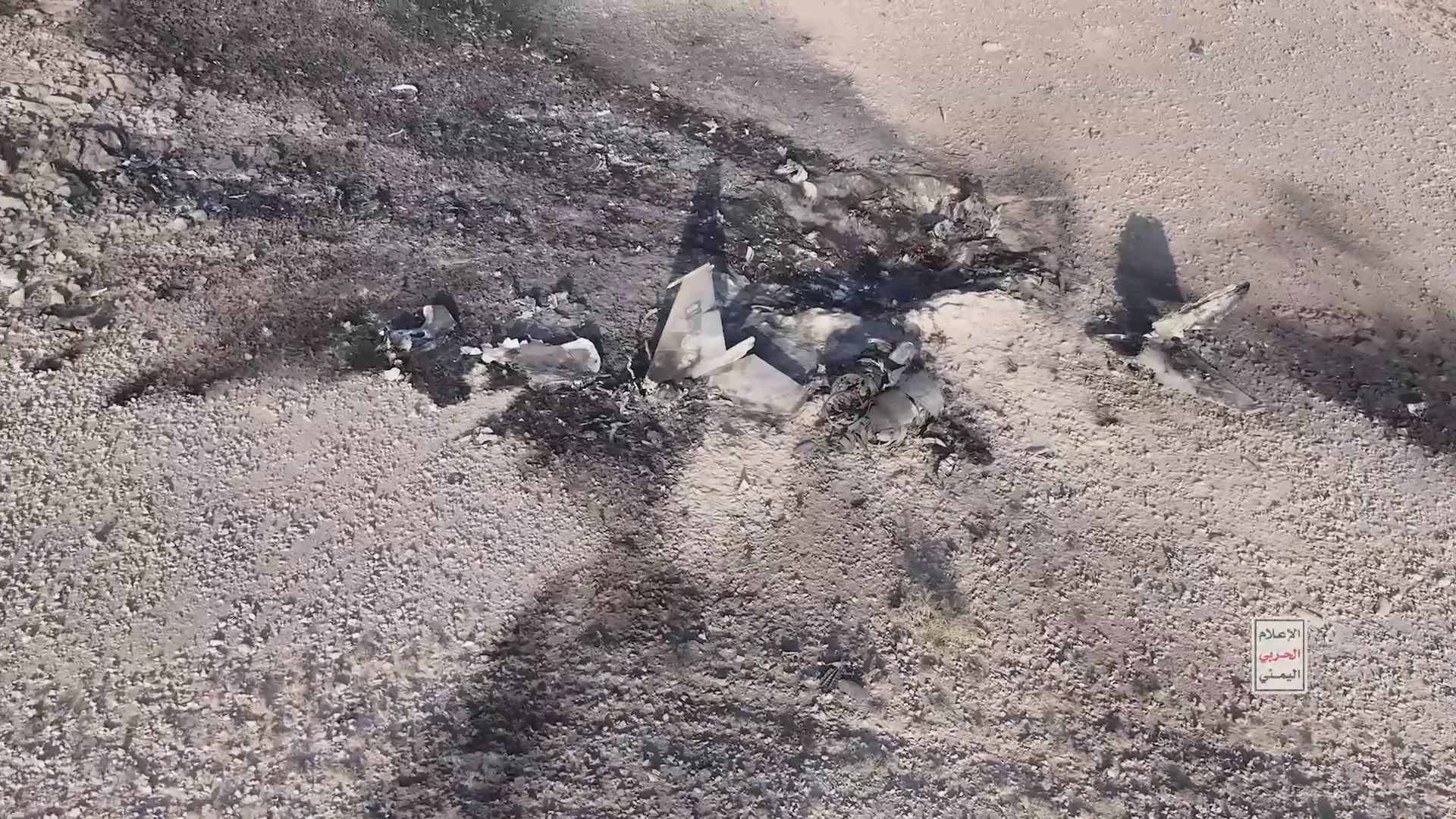
Yemen’s Houthi movement, formally known as Ansar Allah, has released imagery that it says shows the downing of a Royal Saudi Air Force F-15 fighter over Marib governorate. The material includes photos of the wreckage of an F-15 on the ground. At this stage, the fate of the two crew members is unclear. The incident comes amid a major escalation in fighting between Saudi Arabia and the Iran-aligned Houthi movement.
A video of what Ansar Allah says is the successful shootdown of the F-15 shows the typical ground-based forward-looking infrared (FLIR) systems we have seen in use by air defenses in Yemen previously, and, more recently, in Iran.
After a period of relative calm following the 2022 truce, fighting has intensified in recent weeks, with Houthi forces making significant advances against Saudi-backed Yemeni government positions, including around the strategically important coastal areas of Marib and Taiz. The group has also stepped up missile and drone attacks against southern Saudi Arabia, targeting military and energy infrastructure while strangling the kingdom’s ability to move oil through the Red Sea. The Houthis have further declared the Bab el-Mandeb closed to Saudi oil traffic, directly challenging one of Riyadh’s key energy-export routes.
An aerial view of the apparent impact site. Houthi-controlled mediaThe impact site seen from the ground. Houthi-controlled media
Prior to the release of imagery, earlier today the Houthi military spokesman Brig. Gen. Yahya Saree claimed that Houthi forces had shot down a Saudi F-15 while it was conducting operations in support of Saudi-backed forces in Marib. Saree said the aircraft was engaged by a locally manufactured surface-to-air missile, although he did not identify the weapon. Reuters likewise reported that the Houthis had claimed the shootdown but that the claim had not been independently verified.
Saree also claimed that Houthi air defenses subsequently engaged formations of Saudi F-15s and Eurofighter Typhoons that entered the area while attempting to locate the downed aircraft. According to the Houthi account, those aircraft were forced to withdraw. That portion of the claim has likewise not been independently verified.
Saudi Arabia has not, at the time of writing, publicly acknowledged the loss of an F-15. Reutersreported that the Saudi-led campaign had intensified considerably in recent days, with Saudi aircraft striking targets across Yemen while the Houthis have launched missiles and drones toward Saudi territory.
The aircraft appears to be an F-15SA, the most advanced variant of the Eagle operated by the Royal Saudi Air Force. Specifically, it appears to be tail number 5539, assigned to the 55th Squadron based at King Khalid Air Base.
A close-up of one of the tailfins with the apparent tail number 5539. Houthi-controlled mediaAnother view of one of the tailfins. Houthi-controlled media
The Royal Saudi Air Force received 84 of the new-build F-15SA. Meanwhile, the 68-strong fleet of earlier F-15S aircraft has been upgraded locally to a similar standard, also known as F-15SR (for Saudi Retrofit). Aircraft 5539 is understood to be among the latter.
The reported shootdown highlights the continuing threat posed by Houthi air defenses, which have proven considerably more capable and difficult to suppress than their improvised appearance might suggest.
As TWZ has previously detailed, the Houthi air-defense network includes mobile surface-to-air missile systems, repurposed infrared-guided R-73 and R-27 air-to-air missiles, and Iranian-derived systems such as the Saqr/358.
Houthi Thaqib-1 surface-to-air missiles (repurposed R-73s) in front of Thaqib-2s (repurposed R-27). Other Houthi air defense missiles are also seen at the rear. Houthi-controlled media
Of particular concern is the group’s use of passive infrared sensors for detection, tracking, and missile cueing. Unlike conventional fire-control radars, these sensors do not provide an aircraft’s electronic-warfare systems with an early warning that it has been detected or targeted. TWZhas noted that this combination of mobility and passive sensing can create a difficult problem even for highly sophisticated combat aircraft, with the Houthis having previously demonstrated the ability to threaten U.S. crewed and uncrewed aircraft.
That capability does not mean that Houthi air defenses constitute a conventional, integrated air defense network comparable to those operated by major state militaries. However, they can still be effective through a combination of concealment, mobility, passive detection, unconventional employment of missiles, and the difficult operating environment over Yemen.
Previous Saudi aircraft losses attributed to Houthi air defenses during the Yemen war from 2015 to 2022 include several helicopters, fixed-wing aircraft, and drones. Total Saudi losses to all causes in the conflict amount to around a dozen helicopters, five jets, and as many as 30 drones. A Saudi F-15 crashed in the Red Sea at the start of the war in 2015 and Eagles were also reportedly engaged and damaged by Houthi surface-to-air missiles in 2018, although they returned safely.
Video footage that emerged in 2021 shows Saudi troops on the ground watching an F-15 swoop in a relatively low level to knock down a Houthi Qasef-series suicide drone:
Saudi F-15 shooting down a Houthi Qasef-2K
In the past, Houthi forces have come close to engaging U.S. F-35s and have repeatedly demonstrated an ability to bring down MQ-9 Reaper drones. If the Saudi F-15 loss is ultimately confirmed, determining precisely how the aircraft was detected, tracked, engaged, and hit could therefore provide valuable insight into how this unusual air defense architecture is being employed against Saudi and other combat aircraft.
As we discussed at the time, the clear risk posed by Houthi air defenses is likely the main factor behind Saudi employment of a Chinese-made short-range ballistic missile (SRBM) in the current fighting with Yemen.
The timing of the reported shootdown is also notable. It comes amid a sharp escalation in the conflict, with Saudi Arabia conducting air operations against Houthi positions in Yemen and Ansar Allah launching missiles and drones toward targets inside Saudi Arabia. Reutersreported that the Houthis had attacked the Saudi Red Sea port of Yanbu and a southern airbase at Khamis Mushait, while Riyadh has reported intercepting Houthi drones.
The F-15 incident also follows a separate confrontation over an alleged Houthi drone attack near Mecca. Saudi authorities said their air defenses intercepted and destroyed a Houthi drone south of Mecca before it entered the restricted airspace over the city. The Houthis denied targeting the holy city.
Meanwhile, there are reports that U.S. officials met representatives of the Houthis in Oman over the weekend, with the Houthis apparently telling the U.S. officials that they had no intention of attacking American vessels and that they remained committed to the 2025 ceasefire with the United States unless they stepped in on behalf of Saudi Arabia. The Kingdom reportedly requested exactly this in recent weeks but was denied.
For the moment, the most that can be established from the available imagery is that a Saudi F-15 was destroyed, with Ansar Allah claiming responsibility.
This is a developing story and will be updated as additional imagery, official statements, or other independently verifiable information becomes available.
Defence and tech companies have been taking part in annual exercises in Norway aimed at countering the threat against satellite signal jamming, which can affect everything from aircraft and ships to financial markets. Paul Rhys explains from Norway.
Conservative leader Kemi Badenoch has told the Sunday Telegraph that the prime minister is “fiddling while Europe is at risk of burning”, external in the face of Russian President Vladimir Putin’s hybrid warfare. She said the government must stop pretending we live in a “carefree world” and increase defence spending. She accuses Andy Burnham of being a “people pleaser” and adds “difficult choices cannot be avoided through dither and delay”.
The Sunday Times says the head of Britain’s elections watchdog has said that he is considering slashing spending limits, external. Vijay Rangarajan, the chief executive of the Electoral Commission, believes it is essential that the rules are “fit for purpose” and maintain public trust in election financing. The move, if implemented, could affect Reform UK’s ability to spend £72m recently given by two crypto-billionaires.
In an interview with the Mail on Sunday, Princess Diana’s brother, Earl Spencer, accuses the King of “gaslighting”, external him. The earl’s book, serialised in the Daily Mail, has produced a series of allegations about the Royal Family’s response to his sister’s death. He described the King’s response to his claims as “below the belt” and says his late sister would be “cheering from theh rafters” at his book.
The Independent carries polling which, it says, shows that rejoining the EU, external is supported in all but four constituencies in Great Britain. The paper quotes a YouGov poll which suggests it was by far the most popular option, when voters were presented with different options regarding the government’s future relationship with Brussels.
The Sunday Express says the seizure of illegal knives, external by UK Border Force in the first six months of this year almost exceeded the total number of blades taken by the organisation in the whole of 2025. The figure amounts to almost 3000, around 15 a day on average. The Ben Kinsella Trust, an anti-knife crime charity, tells the paper that the numbers illustrate the scale of demand for the banned weapons.
A Peruvian journalist running for political office has been shot dead while out campaigning. Susy Aponte Polo, known as China Polo, was killed just a week after revealing she had received death threats over her investigation into a police chief.
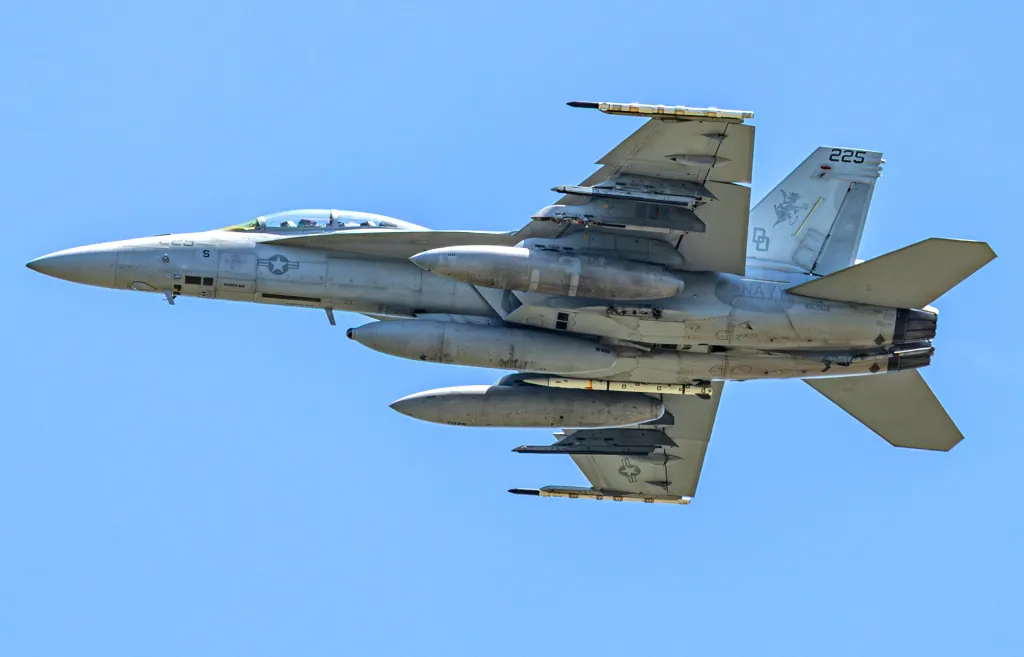
The Pentagon has reached an agreement with Lockheed Martin to lay the groundwork for stepped-up production and delivery of new AIM-260 Joint Advanced Tactical Missiles (JATM) to the U.S. military and allied air arms in the coming years. The AIM-260 is still in development, but the head of the Air Force Test Center also touted efforts to further accelerate that work just earlier this week. From the start, the U.S. military has presented JATM as especially critical for ensuring China, with its own growing array of longer-range air-to-air missiles, does not gain an edge in future air combat.
The new framework agreement announced today “is critical to ensuring long-term demand signals flow to key suppliers, allowing Lockheed Martin and the munitions supply chain to invest in manufacturing capacity, workforce, and production efficiencies,” according to a Pentagon press release. “It establishes a framework for future Multi-Year Procurement (MYP) of JATM, executing congressional authority to secure the nation’s highest-priority missile systems.”
“This agreement forms the foundational agreement for a multiyear procurement contract, pending Congressional approval, that provides long-term demand to strengthen and expand the defense industrial base for the program,” according to a separate release from Lockheed Martin.
A US Navy F/A-18F Super Hornet seen carrying an AIM-260 Joint Advanced Tactical Missile (JATM). Jonathan Tweedy/ @flightline_visuals
In response to questions from TWZ, the Pentagon declined to comment on the projected number of JATMs covered under this agreement, as well as estimated costs and delivery schedules.
A rendering depicting an F-22 Raptor firing an AIM-260 JATM. USAF
The releases today from the Pentagon and Lockheed Martin confirm that the new framework deal also includes planned foreign military sales of AIM-260s. Australia, one of America’s top allies, is the first confirmed international customer for the JATM, and plans to integrate the missiles on its F/A-18Fs, F-35As, and EA-18G Growler electronic warfare jets. The Royal Australian Air Force’s MQ-28 Ghost Bat CCA-type drones, initial versions of which are already capable of firing AIM-120s, might be another AIM-260 launch platform in the future.
Uncrewed MQ-28 Ghost Bat showcases its combat capability
The AIM-260 remains in development, with the Navy and Air Force test communities supporting that work.
“We are accelerating weapons development from high-end air dominance weapons like the JATM to hypersonic strike systems like the Hypersonic Attack Cruise Missile,” Air Force Brig. Gen. Mark Massaro, head of the Air Force Test Center (AFTC) at Edwards Air Force Base in California, told TWZ and other outlets at a media roundtable yesterday. The roundtable took place at the Air & Space Forces Association’s (AFA) 2026 Air, Space & Cyber Conference.
“We’re actively testing JATM, and it’s progressing along its program path. In test, we are working through the development stages there,” Massaro added. “So, we’re testing it in [sic] the ground with models, like I mentioned. We’re testing it in the air on aircraft. So, from a performance standpoint, I’ll hold on to that from an operational security perspective. But we’re happy seeing where it’s going, and we expect that to be a key piece of capability for our warfighters to have.”
“Just from a testing perspective, we’re always looking at making sure that we’ve got the throughput,” he added when asked if he could talk about challenges or other issues AFTC has run up against in work on the AIM-260. “So, from a test perspective only, infrastructure and throughput to make sure that we can get things out … and make the testing happen. But I’m not, from a capabilities perspective, worried about the system.”
Another look at the AIM-260 loaded on the Navy Super Hornet. Jonathan Tweedy/ @flightline_visuals
It is unclear when the first operational AIM-260s may begin entering the U.S. inventory. When the program was first disclosed to the public in 2019, the stated goal was to start fielding the missiles in 2022. There were also reports in late 2025 that funding issues had caused a three-month delay, based on a fact sheet distributed to some members of the U.S. House Committee on Armed Services. The committee later said that the information was incorrect.
Work to date on JATM has been conducted under a heavy veil of secrecy, with the existence of the program only being announced in 2019. The first public glimpse of the missile only emerged in May of this year. Beyond the aforementioned size requirement and that the new missile will offer significantly greater engagement range over the AIM-120, details remain limited. Readers can learn more about what we do know so far here.
The AIM-260 is not the only longer-ranged air-to-air missile known to be in development in the United States, either. In 2024, the Navy revealed it had begun fielding an air-launched version of the surface-launched Standard Missile-6 (SM-6), called the AIM-174B Gunslinger, at least on a limited level. Just in August of this year, the service disclosed the existence of another very long-range air-to-air missile, the AIM-424 Malice, which has already reached the flight testing phase of development.
A US Navy F/A-18F Super Hornet test jet with four AIM-174B missiles under its wings. point_mugu_skiesA US Navy Super Hornet test jet carrying a load of AIM-424 Malice missiles. USN
An Air Force spokesperson told Air & Space Forces Magazine last month that the service was “closely following” the Navy’s work on the AIM-424. In June, the Air Force itself shared details about another potential future air-to-air missile, dubbed the Air Force Long Range Weapon (AFLRW), including a target requirement for a maximum range of at least 1,000 nautical miles.
Based on past experiences with public disclosures about the AIM-260, AIM-174B, and AIM-424 programs, additional work on advanced longer-range air-to-air missiles is certainly ongoing in the classified realm.
Today’s announcement about the new framework agreement, together with Brig. Gen. Massaro’s brief update yesterday, makes clear there is a continued commitment to JATM amid a still-growing field of new, longer-range air-to-air missiles.
50,000 frontline staff to receive a jab for a different Ebola strain, with 20,000 enrolled in a one-year clinical trial.
Published On 20 Sep 202620 Sep 2026
Health workers in parts of the Democratic Republic of the Congo (DRC) have begun to receive a vaccine that many hope will provide a level of protection against the Ebola virus.
The vaccine rollout started on Saturday in Bunia, the capital of Ituri province in the northeastern DRC. Ituri is the epicentre of the fastest-growing outbreak of Ebola in history.
Recommended Stories
list of 3 itemsend of list
The provincial governor, Major-General Gaby Kasongo Mulumba, said health workers there “are particularly exposed and deeply involved in the response”.
The operation, backed by the World Health Organization and Doctors Without Borders, known by its French initials MSF, will also target North Kivu, where cases have been rising sharply, health authorities said.
Some 50,000 health and other frontline workers will be injected with the Ervebo vaccine, which was developed for use against the more common Zaire strain.
Its effectiveness against the current Ebola strain caused by the Bundibugyo virus will be monitored in 20,000 recipients for up to one year.
Clinical trials are ongoing to find a licensed vaccine for the latest outbreak, which has no licensed vaccine or proven treatment.
“We don’t know to what degree it might be effective against the Bundibugyo strain,” Steve Ahuka, a Congolese official who is part of the health task force against the Ebola outbreak, said.
Dr Jeannot Elua said at a health facility in Bunia the vaccine was “beneficial”.
“We healthcare workers don’t really have a choice. We are going to receive it,” he told the Associated Press news agency. “Some people here had already received the previous vaccine. I received it myself, because it was mandatory.”
WHO experts have said that early data on the Ervebo vaccine, notably from animal trials, suggested it could offer some protection in the current outbreak.
The virus has killed at least 3,639 and infected some 7,541 people since May. Some 1,823 people have recovered, according to the latest figures from local authorities.
Workers at the Ceca-20 cemetery in Mongbwalu, Ituri province, Democratic Republic of the Congo, on July 14, 2026, as aid agencies intensify efforts to contain an Ebola outbreak caused by the Bundibugyo virus [File: Gradel Muyisa Mumbere/Reuters]
The WHO said in August that 70,000 doses of Ervebo were approved for use in the DRC.
The vaccine is being used under a compassionate-use programme, which allows a medical product to be used in a serious disease situation even though it has not been specifically approved for that particular use.
While WHO officials have cited “encouraging signs” that transmission may be slowing, MSF warned on Friday that there is no clear evidence the epidemic is coming under control.
On September 20th each year, Rio Grande do Sul, the most southerly state in Brazil bordering Uruguay and Argentina, celebrates the Farroupilha (Ragamuffin) Revolution, a civil uprising that began in 1835 when the state fought for independence from the rest of the nation.
The rebels were led by generals Bento Gonçalves da Silva and Antônio de Sousa Neto. Despite the support of Italian revolutionary Giuseppe Garibaldi, the gaucho-led revolt ended in 1845 with surrender, and Rio Grande do Sul remaining part of Brazil.
Even though the uprising resulted in defeat, the conflict is a source of regional pride, with partying across the whole of the state, although it’s in the capital Porto Alegre where the action really happens. For most of September, thousands of people camp out in the city’s Harmonia Park, recreating traditional gaucho lifestyles at the Farroupilha Camp.
Fidan highlights Turkiye’s readiness to assist Saudi Arabia militarily, as Houthi attacks escalate in Yemen.
Published On 19 Sep 202619 Sep 2026
Turkish Foreign Minister Hakan Fidan has said that Saudi Arabia may have unmet military needs from the attacks by Yemen’s Houthi rebels and that Turkiye would consider how to support the kingdom as part of a trilateral defence pact.
Speaking to Turkish broadcaster NTV on Friday, Fidan said it was unacceptable for Saudi Arabia to be dragged into the US-Iran war, adding that Riyadh had no desire to join the conflict.
Recommended Stories
list of 3 itemsend of list
He added that proposals had been conveyed to all sides in an effort to end the fighting, without further elaborating.
The Iran-backed Houthi rebels and Saudi Arabia continue trading attacks in an escalating war in Yemen, as the Houthis press gains that have brought large stretches of the Red Sea coast, including the strategic Bab al-Mandeb Strait, under their control.
Pakistan has made a similar pledge to defend Saudi Arabia under the defence pact.
Lieutenant-General Ahmed Sharif Chaudhry, a spokesperson for Pakistan’s military, told Arab News on Thursday that Islamabad would defend Saudi Arabia “to any extent”, including “physically”, though he did not say whether Riyadh had asked for more Pakistani troops.
Pakistan’s Foreign Office has said no military response is currently under discussion under the pact, adding that Islamabad would act “when time comes”.
The trilateral agreement, known as the Mecca Joint Defence Agreement, was signed on August 7 in Mecca by Saudi Crown Prince Mohammed bin Salman, Turkish President Recep Tayyip Erdogan and Pakistani Prime Minister Shehbaz Sharif.
The three countries formally named the arrangement the Mecca Defence Alliance on August 31, after officials meeting in Istanbul agreed to set up a secretariat in Riyadh, to be headed initially by a Pakistani secretary-general.
Its founding principle is that an armed attack against any one of the three states will be treated as an attack against all three.
Fidan said at the time the alliance was built on “respecting the sovereignty of other states, territorial integrity and not intervening in internal affairs”, and remained open to other countries joining.
Analysts have questioned how much substance lies behind the pact so far, noting it lacks the integrated command structure and standing forces that underpin NATO.
Its institutional shape, including how the mutual defence clause would actually be triggered, remains unclear.
The trilateral pact was struck as Gulf states grow increasingly concerned about being pulled into the wider US-Iran war, which has continued for more than six months since Washington and Israel first struck Iran in February.
This was the first time an alert was sounded in Riyadh since an escalation between the Houthis in Yemen and the Saudis.
Published On 19 Sep 202619 Sep 2026
Saudi-led coalition forces fighting Yemen’s Houthis have said that the Iran-backed group fired a ballistic missile at Riyadh at dawn before it was intercepted and destroyed.
“The Houthis also attempted to target civilians and civilian infrastructure in Bisha, Taif, Farasan and Yanbu,” coalition forces spokesman Major-General Turki al-Maliki wrote on X on Saturday, adding that the attacks were thwarted by the Gulf monarchy’s air defences.
Recommended Stories
list of 4 itemsend of list
Saudi Arabia warned of a “hostile aerial threat” and issued a string of emergency alerts across the kingdom overnight on Friday.
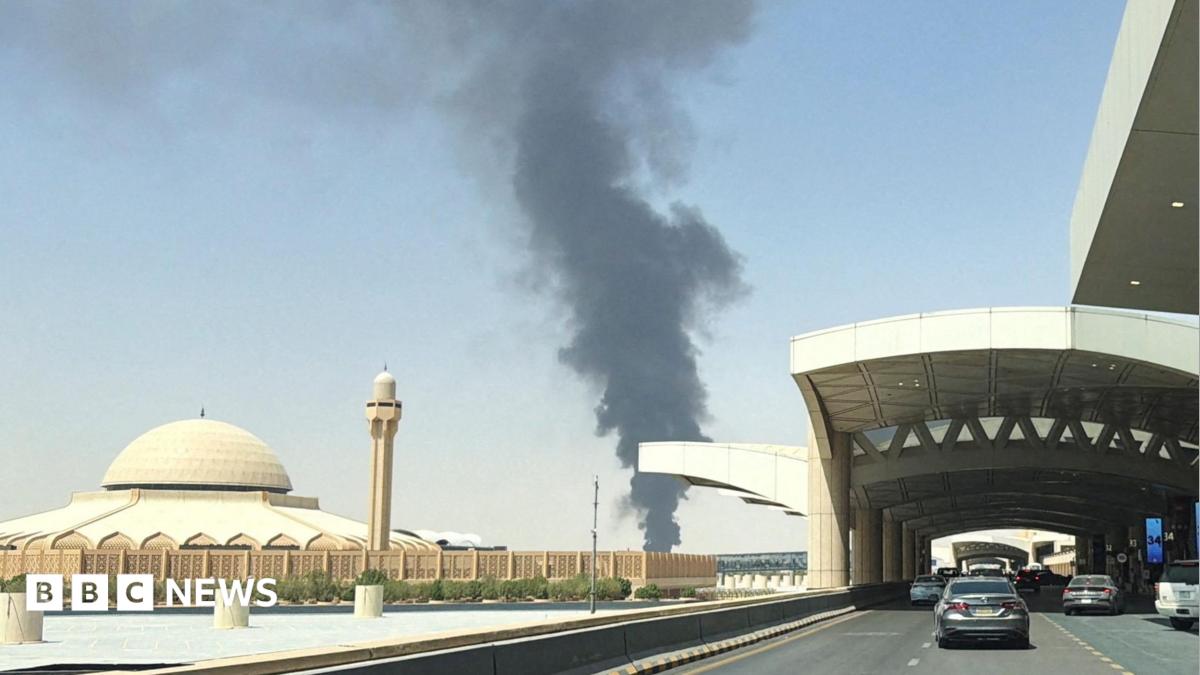
On Saturday, at least one explosion was heard in Riyadh, with residents near the airport saying they saw a large plume of black smoke later in the morning. Saudi authorities reported no casualties or damage.
The Saudi spokesman said that the Houthis are escalating their attempts to target civilians and civilian infrastructure in the capital. He also affirmed the coalition command’s right to take “appropriate” action to deter the Houthis, in accordance with international humanitarian law.
Earlier on Saturday, Houthi fighters in Yemen said they attacked “sensitive” sites in Riyadh as well as an Aramco oil facility in the western coastal city of Yanbu, according to a statement shared by Houthi military spokesman Yahya Saree.
Saree said the Houthis attacked Saudi Arabia with cruise and ballistic missiles as well as drones.
“You could see that the Houthis are determining the timelines and the levels of the escalation,” Yasmeen al-Eryani, executive director for knowledge production at the Sana’a Center think tank, told Al Jazeera. “So, depending on the current situation, it seems that the Houthis are the ones in control,” she added.
Meanwhile, on the ground in Yemen, the armed forces of the Saudi-backed internationally recognised government said their fighters thwarted a Houthi infiltration attempt in the al-Fuliahan sector in southern Marib on Saturday, killing 12 Houthi fighters and injuring others.
The army also said 13 Yemeni soldiers were killed in two days of clashes with Houthi forces in the southwestern provinces of Taiz and Lahj.
Renewed clashes are taking place in Yemen’s Marib, Taiz, Lahj, al-Jawf and al-Bayda as part of a military escalation that began in early July – the most intense since the relative calm following an April 2022 truce.
Al-Eryani told Al Jazeera that military options against the Houthis are currently limited because much of the fighting is taking place in mountainous terrain that is difficult for opposing forces to access and hold.
For now, she said, containing the group may be a more realistic option than defeating it militarily. “Without controlling the peaks that are parallel to the coast, you will not be able to control the coast,” said al-Eryani.
Hair stylist to the stars Chris Appleton and Amy Dowden
Australian singer and actress Delta Goodrem and Kai Widdrington
DJ and social media personality Cach Mercer and Maddie Ingoldsby
TV and radio presenter Will Best and Dianne Buswell
Paralympian Dame Sarah Storey and Julian Caillon
Actress Jaime Winstone and Carlos Gu
TV and stage actress Bethany Antonia and Nancy Xu
Former England footballer Shaun Wright-Phillips and Alexis Warr
Presenter and author Graeme Hall and Lauren Oakley
Actor Lawrence Robb and Jowita Przystał
Skeleton athlete Tabby Stoecker and Mark Karmalita
YouTuber John Nellis and Katya Jones
TV and stage actress Melanie Walters and Aljaž Škorjanec
One pair who won’t need to get to know each other are reality TV star Dani Dyer and Nikita Kuzmin.
Dyer is back to compete for a second time, having withdrawn from last year’s series due to a fractured ankle.
“I’m just over the moon. I’m so, so happy,” she said after the pairing, while Kuzmin added that he had “tears of joy” in his eyes.
Meanwhile, actress Bethany Antonia and professional Nancy Xu became the third two-woman couple to compete in the show.
In a poignant moment, Antonia revealed that watching boxer Nicola Adams and Katya Jones performing together in Strictly’s 2020 series was a “big part of my coming out journey”.
Among the other pairings were EastEnders actress Lacey Turner and Vito Coppola, former Paralympian Dame Sarah Storey and Julian Caillon, and Shaun Wright-Phillips and Alexis Warr.
Also back on the dancefloor for a final spin was reigning Strictly champion, former Lionness Karen Carney.
Clad in the same diamante-encrusted football shirt, Carney recreated the Jive that first marked her out as a contender of her series, alongside dance partner Carlos Gu.
“I absolutely feel like I’m at home,” Carney told Willis after the routine, as she paid tribute to her pro partner.
In 13 weeks time, she’ll have to surrender that glitterball trophy to a new victor.
Awareness of environmentally friendly construction methods is increasing in Austria, which is reflected in the growing interest in sustainable garden sheds. The term “gartenhütte” refers to a garden hut or shed, typically a small structure used for storage, hobbies, relaxation or other activities in the garden. This development comes not only from ecological considerations but also from the desire for more durable, affordable and comfortable structures that complement outdoor spaces. The key lies in choosing the right materials, improving energy efficiency and integrating the structure into natural cycles.
What makes a garden shed sustainable?
A sustainable garden shed incorporates an overall approach in which materials are not the only consideration. It takes into account the entire life cycle of the structure, from the extraction of raw materials through to disposal or reuse. Key criteria include reducing the ecological footprint, maximizing resource efficiency, and ensuring the health and comfort of users.
Material selection: Preference is given to renewable, recycled or locally available raw materials.
Energy efficiency: Optimal insulation and passive solar energy use minimize energy consumption.
Durability: Robust construction and weather-resistant materials ensure a long service life.
Recyclability: Materials should be easily reused or recycled at the end of their life cycle.
Materials for sustainable garden sheds
A garden shed’s sustainability depends on the materials you choose for it. When building a garden shed, it is best to use locally sourced wood, recycled building materials, and natural insulation materials. Such materials can conserve resources, while shorter transport distances can help reduce the environmental impact of material delivery and contribute to a healthy indoor climate.
Native woods: Larch, spruce, and Douglas fir are particularly suitable due to their availability and weather resistance.
Recycled and reused building materials: Used bricks, windows or doors can significantly reduce the consumption of primary raw materials.
Natural insulation materials: Hemp, sheep’s wool, and wood fiber offer good insulating properties and can be environmentally friendly. Cellulose flakes, at approximately €9–17/m², can be a relatively affordable eco-friendly insulation option.
Ecological surface treatments: Non-toxic, water-based oils, varnishes, and paints protect the wood and are harmless to health.
Austrian municipalities and sustainable construction
Green building methods and sustainable garden projects are increasingly being considered by Austrian municipalities as part of broader efforts related to climate protection and local economic development. This can include funding programs for natural garden design and community gardens.
Stay ahead of the geopolitical week.
MD Briefing delivers expert analysis across five global fronts — the Indo-Pacific, energy, geoeconomics, European security, and the Middle East — every Monday morning. Free.
Funding programs: Some Austrian regions and municipalities offer funding or incentives for environmentally friendly garden and landscaping projects.
Local economic development: By prioritizing regional materials and craftspeople, municipalities and garden owners can support local businesses and help keep economic activity in the region.
Climate adaptation: De-sealing and greening projects can contribute to improving the local microclimate and may complement sustainable garden design.
The 3-pillar model of the sustainable garden shed
The implementation of a truly sustainable garden shed in Austria can be guided by a three-pillar model. The framework considers environmental, economic and social perspectives as part of an integrated approach to planning and implementation. Rather than focusing on a single aspect, it considers how different elements of sustainability can work together.
Material chain: Prioritizing regional sourcing. This pillar focuses on minimizing transport distances and supporting local forestry, sawmills and other suppliers. The use of locally sourced timber and other building materials can help reduce the environmental impact associated with transportation and support regional businesses.
Life cycle costs: Considering long-term economic viability. Through intelligent planning, high-quality insulation with materials such as cellulose or wood fiber, and the use of passive solar energy, operating costs can potentially be reduced. Considering both initial costs and long-term operating expenses can help building owners make environmentally and economically responsible choices.
Community benefit: Supporting local craft businesses. This pillar emphasizes the social aspect of sustainability. Collaboration with local carpenters, joiners, and other craftspeople can support regional businesses while fostering traditional craftsmanship and the transmission of expertise. Choosing local suppliers and craftspeople can therefore be part of a broader approach to sustainable development.
Conclusion: Sustainable garden sheds as a future solution
A sustainable garden shed is not just a building but a statement of a future-oriented and environmentally conscious lifestyle in Austria. By consistently applying environmentally friendly construction methods, garden owners can contribute to climate protection and biodiversity.
The trend is clearly toward durable, energy-efficient and resource-saving solutions that make sense both environmentally and economically. Using the right methods and materials, together with any available local incentives, can help make a sustainable garden shed a worthwhile long-term investment.
Iran-backed Houthi militants in Yemen say they carried out drone and ballistic missile attacks on the Saudi capital Riyadh, as well as energy sites on the country’s Red Sea coast.
Saudi authorities said they intercepted and destroyed a ballistic missile fired at Riyadh earlier that day, without confirming any further strikes or causalities.
Earlier, a column of black smoke was seen rising from fuel tanks near the Saudi capital’s international airport, where flights were disrupted temporarily on Saturday.
Air raid alerts had sounded in the capital for the first time since the Iran-backed Houthis increased their attacks on Saudi Arabia in July.
Air defences also stopped “hostile attempts to target civilians” in the cities of Bish, Taif, Farasan and Yanbu, an official spokesperson for the Saudi-led coalition said in a statement.
In a statement posted online, Houthi military spokesman Yahya al-Sarea said a “large number of ballistic and cruise missiles and drones” had been used to attack “sensitive sites” in Riyadh and Aramco state oil and gas company facilities in Yanbu on the coast.
He added that the attacks were “in response to the Saudi enemy’s criminal attempts” to target the Yemeni capital Sanaa.
Earlier, Sarea had accused Saudi Arabia of carrying out 300 strikes across Yemen during the past week.
The Houthis are locked in a civil war with Yemen’s internationally recognised government, which is backed by Saudi Arabia.
They have attacked targets inside Saudi Arabia on several occasions in recent months, and said this week that they were responsible for downing a Saudi fighter jet over Yemen.
According to an unconfirmed report from AFP news agency, quoting military sources on both sides of Yemen’s civil war, fighting between the Houthis and Saudi-backed government forces claimed 48 lives on Saturday.
The Houthis said 31 of their fighters had been killed while government sources said their side had lost 17 soldiers, according to the news agency.
Attending to other matters that are now top priority, I momentarily strayed from the frequency with which I had been writing reflections in the year 2010; however, Hugo Chávez Frías’ proclamation last Thursday the 30th, obliges me to write these lines.
The president of Venezuela is one of the men who has done the most for the health and education of his people; since these are subjects where the Cuban Revolution has accumulated the most experience, we gladly collaborate to the maximum with this sister country in both areas.
It is by no means a matter of that country lacking doctors; quite the opposite. They had an abundance of doctors, among them there were even first-class professionals, just as in other Latin American countries. It is a social matter. The best medical doctors and the most sophisticated equipment could be placed at the service of private medicine, as it is in all capitalist countries. And often not even that, because in underdeveloped capitalism, like the type that used to exist in Venezuela, the wealthy class had sufficient means to go to the best hospitals in the United States or Europe, something that was and is customary and nobody can deny it.
Even worse, the United States and Europe have been noted for seducing the best specialists from any exploited Third World country to abandon their homeland and to emigrate to the consumer societies. Training doctors for that world in the developed countries implies fabulous sums of money that millions of poor Latin American and Caribbean families would never be able to pay. In Cuba, that used to happen until the Revolution took up the challenge, not just of training doctors capable of serving our own country, but also the other peoples of Latin America, the Caribbean or the world.
Never have we stolen the intelligences of other peoples. On the contrary; in Cuba we have trained tens of thousands of doctors and other top-level professionals, for free, in order to send them back to their own countries.
Thanks to the profound Bolivarian and Marti-inspired revolutions, Venezuela and Cuba are countries where health and education have been extraordinarily developed. Every citizen has the real right to receive general education and professional training at no cost, something that the United States has not been able to ensure for all its inhabitants. The reality is that the government of that country invests a billion dollars every year on its military machine and its war adventures. Furthermore, it is the greatest exporter of weapons and the instruments of death and the greatest market for drugs in the world. Because of this traffic, tens of thousands of Latin American lives are lost every year.
It is such a real and well-known fact that more than 50 years ago, a president having military origins bitterly denounced the decisive power accumulated by the military-industrial complex in that country.
These words would be superfluous if it were not for the intervention of the hateful and repugnant campaign unleashed by the massive Venezuelan oligarchy media, at the service of that empire, using the health problems being experienced by the Bolivarian President. We are united to the President with close and indestructible bonds of friendship that came into being from his first visit to our homeland on December 13th, 1994.
Some were surprised by the coincidence of his visit to Cuba with the necessity of seeking medical care. The Venezuelan President visited out country with the same aim that took him to Brazil and Ecuador. He had no intention of receiving medical care in our homeland.
It is well-known that for a few years now, a team of Cuban health specialists are providing their services to the Venezuelan President who, loyal to his Bolivarian principles, never considered them to be undesirable foreigners, but sons and daughters of the Great Latin American Homeland on behalf of which The Liberator fought, right up to his last living breath.
The first contingent of Cuban doctors left for Venezuela when the Vargas Stadium tragedy occurred, taking thousands of this noble country’s lives. This action of solidarity was nothing new; it made up a tradition well-established in our country from the first years of the Revolution, from the time almost half a century ago when Cuban doctors were sent to recently-independent Algeria. That tradition grew stronger while the Cuban Revolution, in the midst of a cruel blockade, was training internationalist doctors. Countries such as Peru, Somoza’s Nicaragua and other countries in our hemisphere and in the Third World were suffering from tragedies as a result of earthquakes or other causes that required Cuba’s solidarity. So, our country became the nation in the world that had the highest rate of doctors and specialized health personnel, with extremely high levels of experience and professional capabilities.
President Chávez put a great emphasis in relating with our health personnel. This way, a bond of confidence and friendship was born between him and the Cuban doctors who were always very sensitive to the treatment of the Venezuelan leader; and he was able to create thousands of health centres and outfit them with the necessary equipment in order to provide free services for all Venezuelans. There was no other government in the world that did so much, in such a short time, for the health of its people.
A large percentage of Cuban health personnel provided services in Venezuela and many of them also acted as teachers in certain subjects that were being taught to train more than 20,000 young Venezuelans who began to graduate as medical doctors. Many of them began their studies in our country. The internationalist doctors, members of Battalion 51, graduates of the Latin American School of Medicine, have earned solid prestige in carrying out complicated and difficult missions. On these bases my relations in this field with President Hugo Chávez were built.
I should add that in the course of more than twelve years, since February 2, 1999, the president and leader of the Venezuelan Revolution has not rested one single day and thus he occupies a unique place in the history of this hemisphere. All of his energy has been dedicated to the Revolution.
One could say that for every extra hour Chávez dedicates to his work, the president of the United States rests for two hours.
It was difficult, almost impossible, that his health would not suffer some sort of breakdown and this is what happened in the last few months.
He is a person used to the rigors of military life and he would stoically put up with the aches and pains that were plaguing him with ever increasing frequency. Given the friendly relations developed and the constant exchanges between Cuba and Venezuela, added to my personal health experience that I underwent since the proclamation of July 30, 2006, it is not unusual that I should have noticed the need for a strict medical check-up for the President. He is far too generous in granting me any special merit in this matter.
Of course, I admit that it was no easy task that I set for myself. It wasn’t difficult for me to notice that he had some health problems. Seven months had gone by since his last visit to Cuba. The medical team devoted to caring for his health had pleaded for me to take up the matter. From the very first moment, the President’s attitude was one of informing the people, with complete clarity, about the state of his health. That was why, at the point by then of returning, via his minister of Foreign Affairs, he informed the people about his health up to that instant and he promised to keep them informed in detail.
Each treatment was accompanied by rigorous cellular and laboratory analyses, of the kind that are done under such circumstances.
One of the tests, several days following the first surgery, showed results that determined more radical surgery and special treatment for the patient.
In his dignified message on June 30th, the noticeably recovered President speaks about the state of his health with absolute clarity.
I admit that it was no easy task for me to inform my friend about the new development. I could see the dignity with which he received the news that –while his mind was dealing with so many important tasks, among them the celebrations commemorating the Bicentennial and the formalization of the agreement on Latin American and Caribbean unity – much more than the physical suffering that radical surgery would imply, signified a test, as he put it, that he compared to the difficult moments he had to face in his lifetime as an unyielding combatant.
Along with him, the team of persons caring for him and who he described as sublime fought a magnificent battle which I have witnessed.
With no hesitation whatsoever, I state that the results are impressive and that the patient fought a decisive battle that shall lead him and Venezuela along with him, to a great victory.
One has to make sure that his declaration is communicated word for word in every language, but especially it should be translated and subtitled into English; this is a language that can be understood on this Tower of Babel into which imperialism has transformed the world.
Now the external and internal enemies of Hugo Chávez are at the mercy of his words and his initiatives. Without a doubt there shall be surprises in store for them. Let us wish him our most steadfast support and trust. The lies of the empire and the treason of the quislings shall be defeated. Today there are millions of militant and aware Venezuelans who shall never be made to submit to the oligarchy and the empire.
The outage marks at least the sixth one this year after a United States-imposed energy blockade went into effect.
Published On 19 Sep 202619 Sep 2026
Cuba has worked to restore power after suffering a significant blackout that left many parts of the country in the dark.
The state-run company in charge of operating the country’s electrical system, Union Electrica (UNE), said nearly half of its customers in the capital of Havana had regained power on Saturday.
Recommended Stories
list of 3 itemsend of list
“The re-establishing is being done gradually, as conditions permit,” UNE posted on social media.
The latest blackout, at least the 12th since late 2024, first affected five of Cuba’s eastern provinces, including Havana, before spreading across the whole island. It is at least the sixth this year alone.
Cuban authorities told the Reuters news agency on Friday the collapse was the result of a failure in high-voltage transmission lines in the central part of the country. UNE said “unstable weather conditions” also played a role.
For years, Cuba’s ageing infrastructure and fuel shortages have led to sporadic blackouts. But power outages have become more frequent after the United States, in a bid to put political and economic pressure on the country’s government, imposed an energy blockade in January.
United Nations human rights experts have condemned the US oil blockade, calling it a violation of international law and warning that Cuba risks becoming a “silent Gaza” as shortages and blackouts grow ever more critical.
Some of the island’s residents said they were already out of power when Friday’s blackout happened.
“Yesterday, I’d gone without power for 24 hours. They turned the lights on for an hour, and then the grid collapsed,” Havana resident Frank Lorenzo, 23, told Reuters.
Others, like Lidia Fernandez, told the news agency AFP that a lack of fuel makes it difficult to power backup generators, which run on imported diesel.
“It’s one thing after another: no water, no gas for cooking, no electricity,” the 36-year-old teacher said.
Fernandez added, “Honestly, I don’t know how we haven’t gone crazy.”
The “Hands Around the Kennedy Center” rally drew thousands after Trump-backed board votes to close the iconic arts venue.
Published On 19 Sep 202619 Sep 2026
Thousands of protesters formed a human chain around the Kennedy Center for the Performing Arts in Washington DC to contest its closure, amid fears that United States President Donald Trump could make good on his threat to demolish the venerated landmark.
The crowd filled streets in the Foggy Bottom neighbourhood of the capital on Friday evening, bringing traffic to a standstill as demonstrators made their way to the “Hands Around the Kennedy Center” protest. Many carried signs and some wore costumes, while boos rang out when Trump was mentioned during the programme.
At one point, some protesters linked hands around the building, whose marble facade remained partly concealed by scaffolding and tarpaulins.
Among the most iconic buildings on Washington’s Potomac waterfront, the Kennedy Center has become a battleground over Trump’s bid to assert control over the institution since he returned to office last year, replacing its board with his own appointees and installing himself as chairman.
Protesters in Washington, DC denounce the Kennedy Center board’s vote to close one of the nation’s premier performing arts venues, September 18, 2026 [Leah Millis/Reuters]
Chris Raleigh, co-founder of Hands Off the Arts, which organised the rally, said in an interview with The Associated Press news agency that he hoped the turnout would show that people were prepared to push back against Trump’s plans for the building.
The demonstration comes just days after the Trump-installed board voted to close the centre for repairs that are expected to last up to two years. That came hours after District Judge Christopher Cooper quashed the board’s latest attempt to restore Trump’s name to the building.
Last December, the new board added Trump’s name to the building’s facade after the Kennedy Center said its Board of Trustees had unanimously voted to rename the institution in his honour.
A federal judge blocked those efforts in May, ruling that the board had exceeded its statutory authority by unilaterally renaming the Kennedy Center and adding Trump’s name to its facade without congressional approval. Congress had designated the centre as a memorial to the late 35th US President John F Kennedy.
In August, the board tried again to inscribe Trump’s name on the building, this time with wording along the lines of “The John F. Kennedy Center for the Performing Arts Restored and Renovated By President Donald J. Trump”.
The federal judge scotched the move in September, ruling that it violated his May injunction.
Protesters outside the John F. Kennedy Memorial Center for the Performing Arts in Washington after its board voted to close the venue. September 18, 2026 [Leah Millis/Reuters]
Trump has since declined to rule out demolishing the building, while a federal judge on Thursday ordered the Kennedy Center to give 30 days’ notice before undertaking any major structural changes, including demolition.
Speaking to reporters in North Carolina on Wednesday, Trump argued that his administration deserved recognition for rescuing the Kennedy Center and that without the repairs, the building risked falling into disrepair and ultimately being forced to shut down.
Raleigh said he, like others, is concerned that Trump could move ahead without first notifying the court.
“Look at the East Wing,” he said. “We got up one morning and there was a giant hole there.”
More than 2,700 Yemenis have fled to Djibouti, many making dangerous sea crossings to escape the conflict. Al Jazeera’s Hasan Razzaq spoke with some of those who have arrived in the northern town of Obock, where they are seeking shelter and assistance.
CNN and MS NOW journalists have been denied access to the White House after US President Donald Trump announced he was banning the outlets.
An MS NOW reporter and a photographer tried entering the White House grounds on Saturday morning, but their badges would not scan and an officer confiscated them, the outlet reported.
CNN also said Saturday morning that one of its reporters was denied access and had her badge seized.
Trump said on Friday he was barring MS NOW, CNN, and Politico – three major US media outlets – from the White House, accusing them of writing “fiction or lies” about his administration. Press freedom advocates called the move “unconstitutional”.
“The officer asked me to hand over my badge. He said that it was disabled,” MS NOW reporter Akayla Gardner said. “I asked why I was not able to get inside. He said it was above him.”
Gardner added that while her and her colleague’s badges were disabled, an MS NOW producer was still able to scan her badge to get in, though she was not given an explanation as to why the producer’s badge still worked.
CNN reporter Betsy Klein said a Secret Service agent told her her badge had been deactivated.
An MS NOW spokesperson said in a statement that the White House “belongs to the American people and the decisions made inside are funded by our tax dollars”.
“MS NOW intends to take any and all steps necessary to defend our First Amendment rights and the essential role of independent journalism in our democracy.”
It was not clear whether Politico reporter were at the White House on Saturday. Following Trump’s ban, all three outlets have spoken out against the decision, accusing Trump of violating their constitutional rights to free speech and freedom of the press.
“We have a right under the US Constitution to do our reporting without hindrance or interference from the government and this ban is an illegal assault on this fundamental right,” CNN said.
In his announcement, Trump did not mention specific stories or reporting from the three outlets that prompted the move, but later said “it’s really just cumulative stories over the last few years”.
Trump added that there “may be others to join them”, but has not given a directive banning additional news outlets. When later asked by a reporter what he meant by others to come, Trump responded: “Others to come in terms of fake news? Well, you know, the New York Times is fake news, the Washington Post is fake news.”
Several groups dedicated to the freedom of the press have called out Trump’s White House ban as illegal and unconstitutional.
A major group that provides legal services to the media – the Reporters Committee for Freedom of the Press – said it expected Trump’s ban to be struck down quickly by the courts because it was “flatly unconstitutional”.
“The First Amendment is clear that once the White House invites in some journalists, it can’t ban others because it doesn’t like their reporting,” said Bruce Brown, president of the Reporters Committee for Freedom of the Press, which provides legal services to the media.
It’s the latest in a series of moves by the administration to target media outlets Trump says are critical of him, including legal action against US and international outlets like The New York Times, The Wall Street Journal, and the BBC.
Some of the lawsuits have resulted in media organisations agreeing to pay multimillion dollar settlements. Trump’s lawsuit against the BBC is ongoing.
Additional reporting from Bernd Debusmann Jr and Max Matza.
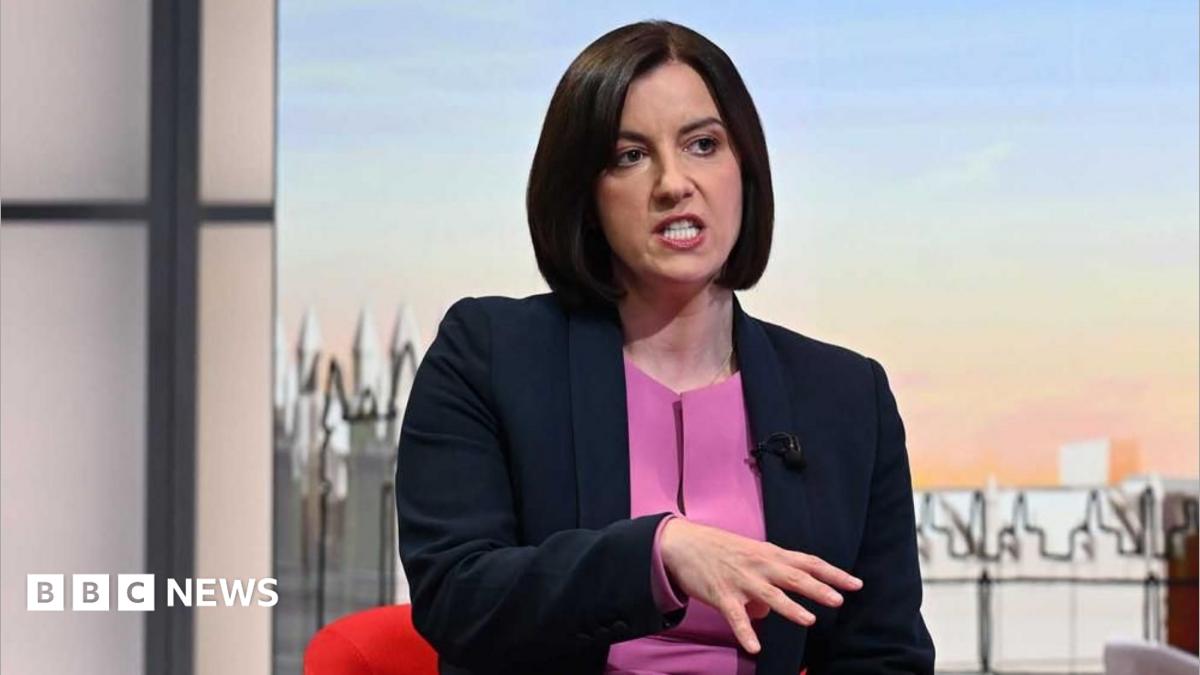




![AfD's main candidate for the Mecklenburg-Western Pomerania state election Leif-Erik Holm attends an election campaign event in Schwerin, Mecklenburg-Western Pomerania, northeastern Germany, on September 19, 2026 [Danny Gohlke/AFP]](https://i0.wp.com/www.aljazeera.com/wp-content/uploads/2026/09/AFP__20260919__C8RV2RX__v1__HighRes__GermanyPoliticsStateVote-1789878295.jpg?w=640&ssl=1)