PODCAST

Selection of discussions about public holidays around the world

Wednesday 25 February National Day in Kuwait


This text traces the evolution of Kuwait from a modest fishing community to a significant regional trade hub under the long-standing Al-Sabah dynasty. While the nation initially sought British protection to avoid Ottoman rule, it eventually achieved full independence in 1961. Although the country officially became sovereign in June, the National Day holiday was rescheduled to February to avoid the intense summer heat. This modern celebration now honors the 1950 inauguration of Sheikh Abdullah Al-Salim Al-Sabah rather than the literal date of the British departure. The source also places this history within a broader global news context, mentioning various international political and financial events from early 20 … 


Source link

Tuesday 24 February Independence Day in Estonia


This article explores the historical significance and modern celebration of Estonian Independence Day, observed annually on February 24th. It chronicles the nation’s journey from its 1918 declaration of sovereigntyto its eventual re-establishment of freedom in 1991 following decades of Soviet occupation. The text highlights how Estonians utilize patriotic rituals, such as flag-hoisting ceremonies, military parades, and the “Singing Revolution,” to honor their cultural resilience. Beyond official state events, the source details how citizens engage in local traditions, including sharing a classic sprat sandwich known as kiluvõileib. By focusing on both the capital of Tallinn and the wider countryside, the narrative illustrates a d … 


Source link

Monday 23 February Defence of the Fatherland Day in Russia


This article outlines the historical evolution and modern observance of Defender of the Fatherland Day in Russia. Originally established in 1922 to commemorate the birth of the Red Army, the holiday has undergone several name changes reflecting the nation’s shifting political landscape. The text tracks its journey from a Soviet military celebration to its current status as a public holiday honoring national protectors. Today, the occasion is marked by official ceremonies at the Tomb of the Unknown Soldier and spectacular firework displays in major cities. Ultimately, the source provides a chronological overview of how a 1918 emergency draft transformed into a significant cultural traditio … 


Source link

Sunday 22 February Day of Fraternity and Cohesion in Algeria


This news article discusses the establishment of February 22 as a significant national holiday in Algeria, officially known as the Day of Fraternity and Cohesion. The date commemorates the anniversary of the Hirak movement, a peaceful uprising that began in 2019 to protest the long-standing rule of former leader Abdelaziz Bouteflika. Following massive public demonstrations, the president was forced to resign after decades in power. Current President Abdelmadjid Tebboune designated this day to honor the “smile revolution” and its role in the country’s political transformation. The source highlights how the movement successfully challenged the status quo and led to a new era of


Source link

Friday 20 February Malaysian Declaration of Independence Day in Melaka


This article chronicles the historical significance of the Malaysian Declaration of Independence Dayspecifically within the region of Melaka. It details how Tunku Abdul Rahman led a successful negotiation in London during early 1956 to secure the end of British colonial rule. Upon his return, he chose Padang Banda Hilir as the symbolic site to officially proclaim that Malaya would become a sovereign nation on August 31, 1957. The text highlights the jubilant public reception and the motorcade that greeted the leaders as they arrived to share this monumental news. Ultimately, the source serves as a commemorative look at the diplomatic milestones and the emotional celebrati … 


Source link

Thursday 19 February Losar in Bhutan


This article explores the cultural and historical significance of Losar, the traditional Tibetan New Year celebrated in Bhutan. Originally rooted in ancient Bon religious winter solstice rituals, the festival was later integrated into the Buddhist lunar calendar. The text details specific customs, such as performing spiritual ceremonies to banish negativity and preparing symbolic noodle dishes containing ingredients that predict a person’s character or fortune. These festivities, which emphasize agricultural prosperity and family offerings, span a fifteen-day period marked by significant communal and religious observations. Overall, the source provides a vibrant look at how modern celebrations pr … 


Source link

Wednesday 18 February Independence Day in Gambia


The provided text highlights the historical journey of The Gambia toward its sovereignty, focusing specifically on its Independence Day celebrated on February 18th. It explains how the nation transitioned from a British protectorate to an independent constitutional monarchy in 1965 under the leadership of David Jawara. The source also notes the country’s unique geographical status as the smallest mainland African nation and clarifies the specific linguistic reasoning behind the inclusion of “The” in its official name. In addition to these historical facts, the document includes snippets of global news from early 2026, ranging from military technology developments to international political announcements


Source link

Tuesday 17 February Chinese New Year around the world


This article from the Occasional Digest examines the cultural significance and traditional customs associated with the Chinese New Year, often referred to as the Spring Festival. Although the holiday occurs during the winter months, it aligns with the ancient solar calendar’s definition of spring’s arrival. The author describes an extensive preparation process that involves purchasing gifts and performing a thorough cleaning of the home to eliminate misfortune. Throughout the festivities, the color red is featured prominently on dwellings to invite positive energy for the coming year. Beyond the cultural focus, the source also highlights current global eventsfrom early 2026, including political negotiations and s … 


Source link

Monday 16 February Family Day in Canada


The provided text is a digital excerpt from the Occasional Digest that focuses on the significance of Family Day, a Canadian provincial holiday observed in February. It explains that this day allows the majority of the Canadian population a break from work to prioritize personal relationships. The source highlights that Alberta pioneered the holiday in 1990 under Premier Don Getty, who reportedly introduced it following a private family crisis. Beyond this local history, the page serves as a broader news aggregator, displaying headlines regarding international politics, religious events like Ramadan, and entertainment updates. Collectively, the document functions as a current events snapshot from … 


Source link

Sunday 15 February Sovereignty Day in Serbia


This article examines the historical significance of Sovereignty Day in Serbia, tracing the nation’s long journey toward independence from Ottoman rule. The narrative highlights how the Slaughter of the Dukes in 1804 served as a violent catalyst for the first Serbian uprising, which eventually led to the formation of a local government. Following a second rebellion, the country established itself as a principality and introduced the Sretenje Constitution on February 15, 1835. This landmark document was revolutionary for the Balkan region, as it created a formal parliament and effectively abolished feudalism. Today, the holiday serves as a dual celebration of this foundational constitution and the … 


Source link

Saturday 14 February St. Valentine’s Day around the world


This article explores the historical roots and cultural evolution of Valentine’s Day, tracing its origins to a blend of ancient Roman rituals and early Christian martyrology. The text highlights various legends surrounding Saint Valentine, a figure who allegedly defied imperial law to perform clandestine weddings or sent the first romantic message from prison. It also explains how the holiday likely absorbed the pagan festival of Lupercalia, which involved fertility traditions and the ritualistic pairing of young couples. Over time, these practices transformed through the Middle Ages, influenced by the belief that mid-February signaled the start of the avian mating season. Ultima … 


Source link

Friday 13 February Bad Friday


Unfortunately, the history of this day has become somewhat obscured over time, so it is not widely known why it came to be considered unlucky.

The “Thirteen Club”: In the late 19th century, a group in New York, led by Civil War Captain William Fowler, formed the “Thirteen Club” to actively defy the superstition. Members held their first meeting on Friday, January 13, 1882, in room 13, sat down to a 13-course meal, and walked under a ladder to prove the superstition wrong.

Airlines and Buildings Skip 13: Many hotels, high-rise buildings, and hospitals do not have a 13th floor or room 13. Some airlines even skip row 13 on their planes.

However, not all Fridays were created equal. Good Friday, in contrast, was believed to bring good luck, especially for sailors who made their maiden voyages on this auspicious day. Similarly, the nu … 


Source link

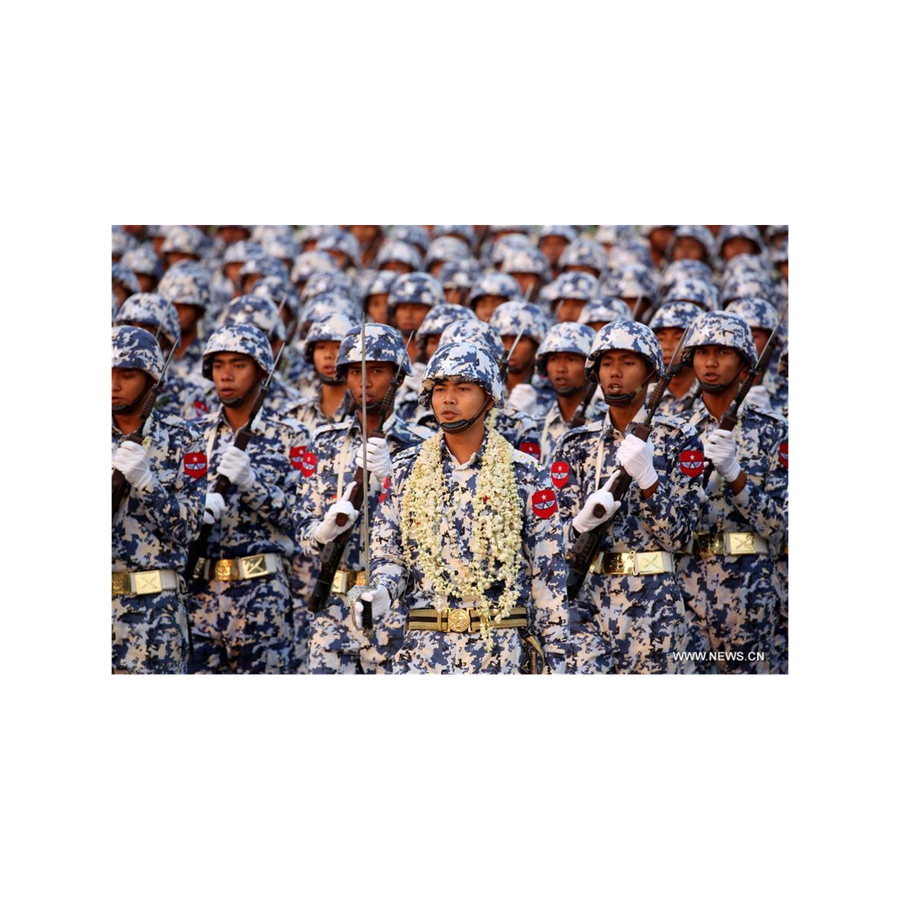
Thursday 12 February Union Day in Myanmar


In 1886, Myanmar (then called Burma) came under British control, but the British made a distinction between how central Burma and the various outlying ethnic groups were ruled.

Following the end of the Second World War, General Aung San, head of the interim Burmese government and representatives from the Shan states, the Kachin hills and the Chin hills met in Panglong to determine the future of Burma.

They reached an agreement which was signed and passed on 12 February 1947. The agreement unified Burma and demanded that the British government restore independence to all of Burma. The Panglong agreement formed the basis for the creation of the Union of Burma. The deal also offered the ethnic leaders the possibility of seceding from the union if they were dissatisfied with the new nation.

The agreement was a key event in the histo … 


Source link

Wednesday 11 February Islamic Revolution Day in Iran


Iran had been an absolute monarchy ruled by the Pahlavi dynasty since 1925. In the 1960s, a series of reforms intended to modernise Iran had failed to improve the economic conditions. Large-scale rioting took place following the arrest of the cleric, Ayatollah Ruhollah Khomeini who had made a speech attacking the Shah. Khomeini was sent into exile in November 1964.

In 1978, resistance against the rule of the Shah intensified, with marches, demonstration, and strikes paralysing the country. Recognising that he had lost control and suffering from ill-health, the Shah left Iran on January 16th 1979.

On February 1st 1979, Khomeini made a triumphal return to Iran and led the campaign to overthrow the remnants of the Shah’s rule.

Ten days later, the Pahlavi royal regime was defeated when Iran’s military declared itself “neutral” after … 


Source link

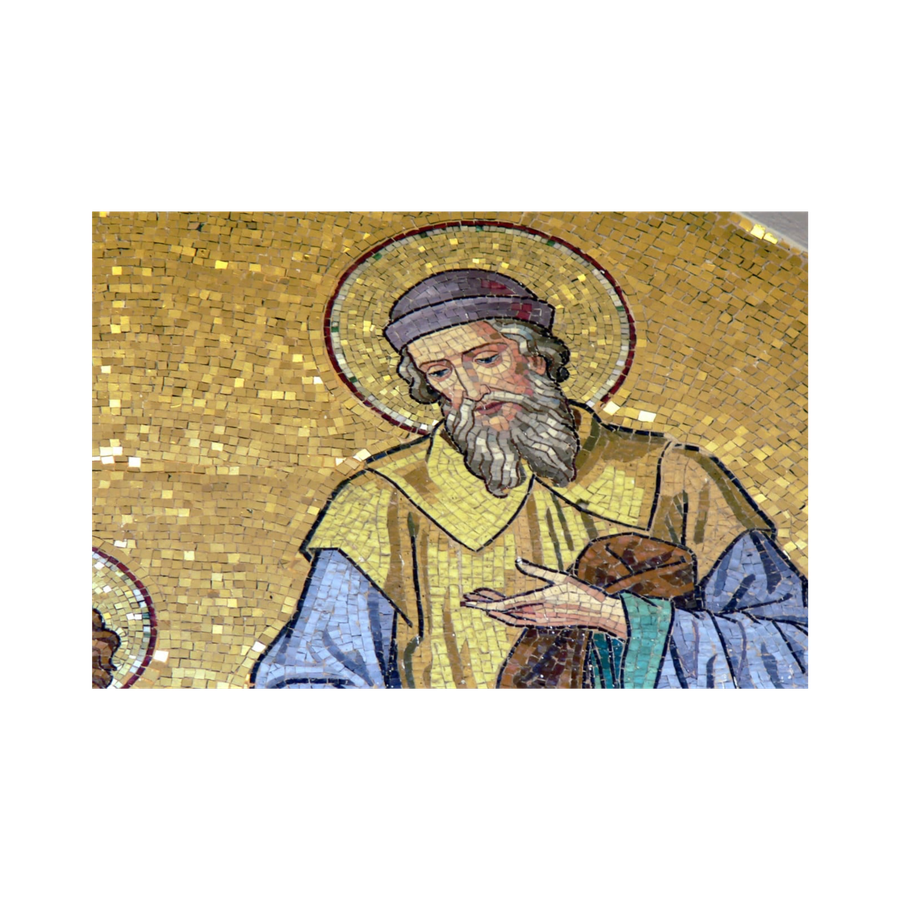
Tuesday 10 February Feast of St. Paul’s shipwreck in Malta


Paul was being transported to Rome as a prisoner on a ship that had sailed from Adramyttium in modern-day Turkey. On the journey, the ship had been damaged by storms and was driven aground in Malta.

Paul was made welcome by the islanders. When making a fire, Paul was bitten by a poisonous snake and the locals were astonished that he suffered no ill-effects.

Paul then healed the father of an island official, after which many islanders would come to Paul to receive healing.

While under guard as a Roman prisoner, Paul stayed on Malta for three months, leaving for Rome on a ship that had sheltered in Malta over the winter.

Paul is the patron saint of Malta…. and snakebite victims.

The day is a time for family gatherings and observed by religious ceremonies and processions, particularly at the Church of St. Paul Shipwreck … 


Source link

Monday 9 February Royal Hobart Regatta in Tasmania


The Royal Hobart Regatta is a series of aquatic competitions and displays held annually in Hobart, Tasmania, Australia and is Tasmania’s oldest sporting event.

The event runs for three days, ending on the second Monday in February, and dominates the whole river for the duration of the event.

The Monday is a public holiday in southern and eastern Tasmania. The areas are South of and including Oatlands and Swansea excluding Bronte Park, Catagunya, Strathgordon, Tarraleah, Wayatinah & West Coast.

On December 1st 1838, the first Hobart Town Anniversary Regatta was held in Hobart, Tasmania to celebrate the Tasmanian Anniversary of the 17th-century European discovery of the island by Dutch explorer Abel Tasman, who made the first reported European sighting of the island on November 24th 1642.


Source link

Sunday 8 February Prešeren Day in Slovenia


This holiday commemorates the death of France Prešeren (1800 – 1849), a Slovene poet who is regarded as the greatest Slovene classical author. The day also serves as a time to reflect on all Slovene cultural achievements.

Prešeren was noted for his sonnets and his poem Zdravljica (A Toast) was adopted as Slovenia’s national anthem.

During World war II, Slovene artists had been repressed and were forbidden from expressing themselves while Slovenia was occupied. This led to the anniversary of Prešeren’s death becoming a focal point for remembering Slovenian culture. After the end of the war, the day was first proclaimed as a cultural holiday in 1945.

It was a public holiday during the era of the Socialist Republic of Slovenia within the SFR Yugoslavia but was declared a work-free holiday only in 1991, the year the country declared … 


Source link

Saturday 7 February Independence Day in Grenada


Before the Europeans arrived in the Americas, Grenada was home to the Indigenous peoples. Christopher Columbus sighted it during his third voyage to the Americas in 1498.

Grenada had been occupied by various European nations since the start colonization of the new world in the sixteenth century. In 1649, France took full control of the island becoming one of the wealthiest colonies due to its sugar production.

Following French defeat in the Seven Years’ war, the Paris of Treaty ceded Grenada to Great Britain in 1763. Having overcome a brief rebellion by pro-French forces, Grenada remained a British colony for over two hundred years.

Movements toward independence had begun in the 1950s and in March 1967, Grenada became an Associated State and was granted full autonomy over its internal affairs.

Independence from the United  … 


Source link

Friday 6 February Waitangi Day in New Zealand


The Treaty made New Zealand a part of the British Empire, guaranteed Māori rights to their land and gave Māori the rights of British citizens.

The treaty was signed in Waitangi, a town in the Bay of Islands, by a group of Maori chiefs and the British Government, as represented by Lieutenant-Governor Hobson.

In February 1840, it was at Te Tii marae where Ngāpuhi (the largest Māori iwi – tribe) hosted around 10,000 Māori to debate the agreement for several days. On February 6th, Te Tiriti o Waitangi was signed by around 40 Māori rangatira (chiefs) and representatives of the British Crown outside British Government Representative James Busby’s house (now known as Treaty House) on the Waitangi grounds.

The treaty (‘te Tiriti’) was subsequently signed by another 500 Māori chiefs in various locations throughout the country.

The  … 


Source link

Thursday 5 February Unity Day in Burundi


Burundi gained full independence from Belgium in 1962. This began a period of instability in the fledgling landlocked nation.

It moved from a constitutional monarchy to a republic and lurched into civil war and ethnic cleansing. In 1987, Major Pierre Buyoya led a military coup d’état to overthrow Col. Bagaza, who himself had come to power in a military coup.

Before returning to a democratically elected government, Buyoya instigated a Charter of National Unity. The charter was intended to abolish ethnic discrimination and give a mandate for the government to write a new constitution.

A referendum on the charter was held in Burundi in February 1991. It was approved by 89.77% of voters with a 96% turnout.

Following the referendum, work began on the drafting of a new constitution which was approved in a referendum and promulg … 


Source link

Wednesday 4 February Liberation Day in Angola


Portuguese colonisation of this west African country began with coastal settlements and trading posts founded in the 16th century., though it wasn’t until the 1920s when Portugal could claim control of the whole region now known as Angola.

By the start of the 1960s, several African nations had gained independence from colonial control, such as Ghana and Angola’s neighbour, Congo. While the movement for African nationalism seemed unstoppable, one European nation instead tightened its grip on its overseas colonies – Portugal.

With the demand for Angolan nationalism increasing, tensions over the forced cultivation of cotton erupted into violence in February 1961.

In Luanda, On the morning of February 4th, black militants ambushed a police patrol-car and stormed the Civil Jail of São Paulo, the Military Detection House and police ba … 


Source link