
Abolishing patient watchdog leaves NHS 'marking own homework', councils warn
The plans are part of a government bill to modernise the NHS in England, which is currently going through parliament.
Source link
Stay informed and up-to-date with the latest news from around the world. Our comprehensive news coverage brings you the most relevant and impactful stories in politics, business, technology, entertainment, and more.
The plans are part of a government bill to modernise the NHS in England, which is currently going through parliament.
Source link

The TWZ Newsletter
Weekly insights and analysis on the latest developments in military technology, strategy, and foreign policy.
Welcome to Bunker Talk. This is a weekend open discussion post for the best commenting crew on the net, in which we can chat about all the stuff that went on this week that we didn’t cover. We can also talk about the stuff we did or whatever else grabs your interest. In other words, it’s an off-topic thread.
This week’s caption reads:
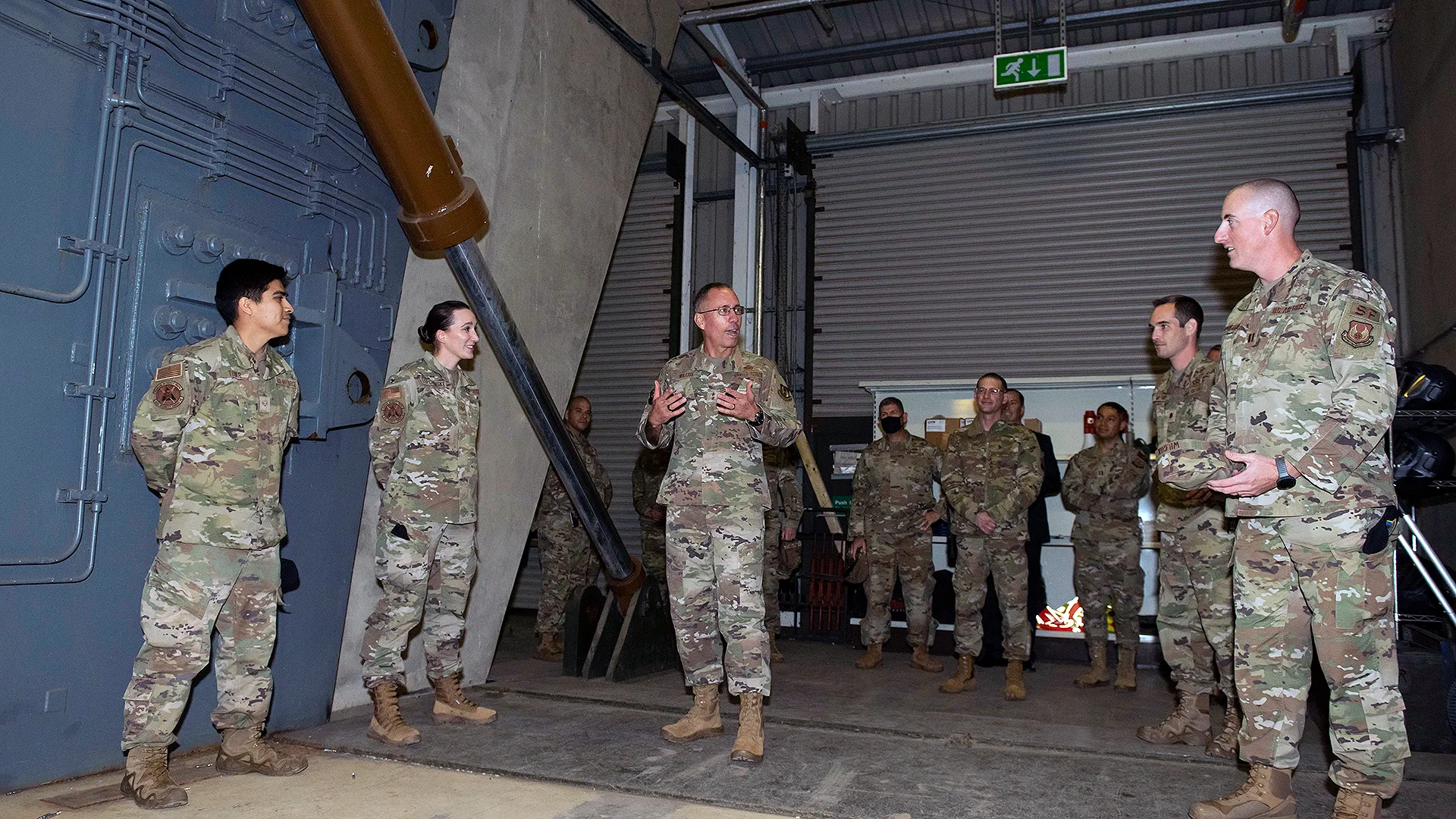
U.S. Air Force Maj. Gen. Tom Wilcox II, center, Air Force Installation and Mission Support Center commander, talks with Airmen at the 423rd Security Forces Squadron bunker shoot house training location at Royal Air Force Molesworth, England, Sept. 29, 2021. The AFIMSC leadership visited the 501st Combat Support Wing and its mission partners at the U.S. European Command Joint Intelligence Operations Center Europe Analytic Center at RAF Molesworth, England. The AFIMSC provides base communications, civil engineering, security forces and logistics support that assist the 501st CSW in fulfilling its mission. (U.S. Air Force photos by Senior Airman Jennifer Zima)
Prime Directives:

The president of Brazil, left-wing leader Luiz Inacio Lula da Silva, has denounced a decision by the United States to designate two of the South American country’s criminal networks as “terrorists”, warning that the label could be a “setback” for local law enforcement efforts.
The condemnation came in a 435-word message posted to Lula’s social media platforms on Friday.
list of 3 itemsend of list
In it, Lula drew a line between criminal activities and international terrorism, which is often understood to use violence for political or social aims.
“The terror inflicted by these organisations upon communities seeks to generate profit through crime — specifically through drug and arms trafficking,” Lula wrote.
Those activities, however violent, “must not be conflated with the ideologically, politically, or religiously motivated actions characteristic of international terrorism”, he added.
Lula’s statements came in response to an announcement a day earlier from the administration of US President Donald Trump.
On Thursday, US Secretary of State Marco Rubio revealed that he had designated Brazil’s two largest criminal groups — the Primeiro Comando da Capital (PCC) and the Comando Vermelho (CV) — “specially designated global terrorists”.
He also outlined plans to add the two groups to the list of “foreign terrorist organisations”, effective June 5.
Rumours had swirled for months that the Trump administration would apply the “terrorist” label to the two groups. But Lula and his ministers had pushed back, calling on Trump to hold off.
“Terrorist” designations freeze all US-based assets connected to the targeted groups, but they can also be used to penalise anyone who offers “material support or resources” to them.
Experts warn that such restrictions could potentially affect financial institutions and even the victims of such groups, including businesses and individuals who might be forced to pay extortion.
Lula has also expressed concern that the “terrorist” label could pave the way for US military intervention, a fear he reiterated in Friday’s statement, though he never named Trump outright.
“We remain fully prepared to develop joint solutions that yield mutual benefits for all nations involved,” Lula wrote.
“However, we will not tolerate the imposition of arbitrary measures from abroad, nor will we accept their use as a pretext to undermine our sovereignty or our economy. Unilateral, non-negotiated measures can undermine the fight against criminals and trigger actions that endanger the lives of people who have absolutely no connection to crime.”
A prominent left-wing leader in Latin America, Lula is in the midst of a heated election season, as he seeks a fourth nonconsecutive term as Brazil’s president.
Previously, he served as president from 2003 to 2011, before being re-elected to a third term in 2022.
In that race, he defeated the right-wing incumbent, Jair Bolsonaro, who would later be convicted of attempting to overturn the results of the race. Bolsonaro is currently serving a 27-year prison sentence.
His eldest son, Senator Flavio Bolsonaro, is thought to have been instrumental in Trump’s decision to issue the “terrorist” designations. The senator is currently running against Lula in the 2026 presidential election, and the two have been locked in a tight race.
This week, as he visited the White House, Senator Bolsonaro confirmed to reporters that he intended to seek “terrorist” designations for both the Primeiro Comando da Capital and the Comando Vermelho.
Trump has close ties to the Bolsonaro family, and he has previously intervened in elections around the world on behalf of right-wing candidates.
In Friday’s post, Lula accused Senator Bolsonaro of leveraging his family connections to “petition foreign authorities” for favour.
“It is deplorable that, once again, members of the Bolsonaro family have travelled to the United States to advocate for foreign intervention in Brazil,” Lula wrote.
He pointed to alleged efforts to stop the criminal prosecution of Jair Bolsonaro. Currently, one of the ex-president’s sons, Eduardo Bolsonaro, is facing obstruction charges related to efforts to lobby Trump to intervene in the case.
Trump ultimately did impose steep sanctions against Brazilian products in August 2025, citing the Bolsonaro trial as a reason.
Under Trump, the US has taken an increasingly expansionist view towards the Western Hemisphere, reviving the 19th-century Monroe Doctrine, which described the Americas as Washington’s sphere of influence.
Trump himself has used crime as justification for taking unilateral military action in the region. Since September, his administration has conducted 59 strikes against alleged drug-trafficking boats in the Caribbean Sea and eastern Pacific Ocean, killing at least 196 people.
And on January 3, he launched an early-morning military operation against Venezuela, culminating in the abduction and imprisonment of then-President Nicolas Maduro on drug-trafficking charges.
While the Bolsonaro family has courted Trump in recent months, Lula has criticised those military-led actions as unjustified.
But security is expected to be a dominant issue in October’s presidential race. This week’s “terrorist” designations are likely to put Lula in an awkward position, forcing him to condemn the label without downplaying the extent of the violence.
Lula has attempted to brush off right-wing criticism that he has been lax on crime, pointing to his government’s recent $11bn investment in the “Brazil Against Organized Crime” programme.
That follows a separate $2bn programme in March to bolster the country’s prisons, improve homicide investigations and disrupt arms trafficking and other financial transactions carried out by criminal groups.
Still, Lula and Bolsonaro remain neck and neck in the lead-up to October’s election.
On May 16, the polling firm Datafolha found that both candidates would receive 45 percent of voter support in a one-on-one race, with 9 percent of voters indicating they would cast a null vote.
Another 1 percent identified as undecided.

Iranian Foreign Ministry Spokesman Esmail Baghaei told state media that a proposed agreement with the US “has not been finalised,” pushing back on US President Donald Trump’s claim that his administration was making a “final determination” on a potential deal with Iran.
Published On 29 May 202629 May 2026
Share
The TWZ Newsletter
Weekly insights and analysis on the latest developments in military technology, strategy, and foreign policy.
President Donald Trump on Friday announced he was lifting the U.S. blockade on Iranian ports enacted last month. The move comes amid media reports and administration messaging that Washington and Tehran appear to be drawing closer to a deal that could lead to ending the conflict. Iranian officials have rejected that notion. TWZ cannot confirm either side’s assertions.
“Ships caught in the Strait due to our amazing and unprecedented Naval Blockade, which will now be lifted, may start the process of ‘heading home!’” Trump proclaimed on Truth Social, referring to the Strait of Hormuz. The strategic chokepoint has been largely closed to most traffic by Iran since not long after the launch of Epic Fury on Feb. 28.
Trump’s comments may reflect a still unsigned Memorandum of Agreement with Iran that paves the way for reopening the Strait and is designed to create negotiating space to deal with the larger issues of Iran’s nuclear ambitions.
“Iran must agree that they will never have a Nuclear Weapon or Bomb,” the U.S. leader added. “The Hormuz Strait must be immediately open, no tolls, for unrestricted shipping traffic, in both directions. All water mines (bombs), if any, will be terminated (we have removed, through detonation, numerous such mines with our great underwater mine sweepers. Iran will complete the immediate removal and/or detonation of any mines that are left, which will not be many!).”
Last month, the head of U.S. Central Command stated that he was deploying uncrewed underwater vehicles (UUVs) to the region for the counter-mine effort. UUVs are a critical part of modern minesweeping operations.
“The Strait of Hormuz is an international sea passage and an essential trade corridor that supports regional and global economic prosperity,” Admiral Brad Cooper said in an April 11 media release. “Additional U.S. forces, including underwater drones, will join the clearance effort in the coming days.”
The Navy has various types of uncrewed undersea vehicles, remotely operated vehicles and an airborne mine neutralization system to perform mine sweeping operations. You can read more about these systems and how they work in our story about minesweepers here.

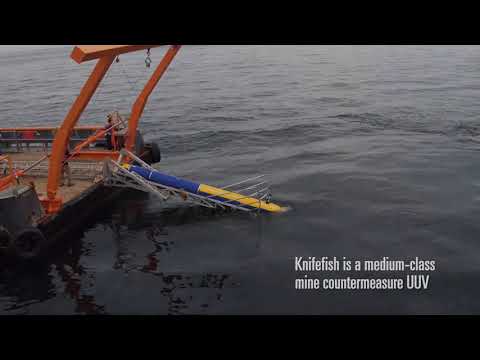
Knifefish Surface Mine Countermeasure (SMCM) Unmanned Undersea Vehicle (UUV)
Trump ordered the blockade on April 13 to create economic pressure on Iran by limiting its ability to export oil or import needed weapons or other materiel.
“As of May 29, 115 commercial vessels have been redirected to ensure no commerce enters or leaves Iranian ports,” CENTCOM said in a post Friday morning about an hour before Trump made his announcement about the blockade.
U.S. forces continue to enforce the blockade against Iran. As of May 29, 115 commercial vessels have been redirected to ensure no commerce enters or leaves Iranian ports. pic.twitter.com/ioKe4A6p7T
— U.S. Central Command (@CENTCOM) May 29, 2026
Trump did not spell out the mechanics for ending the blockade and CENTCOM declined to say what Trump’s announcement means for the assets arrayed around the region to enforce it. The command referred us to the White House, which did not immediately respond to a request for comment.
It is also unclear why Trump would lift the blockade at such a critical time, before any agreement is signed. According to various media reports, such a move would have been in conjunction with Iran easing its restrictions on Strait shipping. However, Iranian officials have insisted that has yet to happen. In essence, the U.S. lifting the blockade on Iran would do nothing for mariners trapped in the Persian Gulf unless Iran also lifts its threats to attack ships transiting the waterway without its permission.
According to Axios, the memorandum between Iran and the U.S. calls for the following:
The U.S. will commit to discuss sanctions relief and the release of frozen Iranian funds as part of the negotiations, the publication added.
In addition to stating that he lifted the blockade, Trump also claimed in his Truth Social post that the U.S. and Iran reached an understanding on Tehran’s supply of highly enriched uranium.
“The enriched material, sometimes referred to as ‘Nuclear Dust,’ which is buried deep underground with virtually collapsed mountains, caused by our powerful B2 Bomber attack 11 months ago, sitting on top of it, will be unearthed by the United States (which, it is agreed, is the only Country, along with China, with the mechanical capability of doing so!), in close coordination and conjunction with the Islamic Republic of Iran, plus the International Atomic Energy Agency, and DESTROYED. No money will be exchanged, until further notice,” Trump asserted. “Other items, of far less importance, have been agreed to.”
Iranian officials have rejected Trump’s claims.
“No final understanding has been reached between Iran and the US so far,” according to the Islamic Revolutionary Guard Corps (IRGC)-connectedTasnim News Agency.
“Trump’s post follows his usual pattern of one-sided, self-aggrandizing statements,” the outlet added. “His claims about lifting the naval blockade should be viewed with skepticism—and even if implemented, it would merely mark the cessation of one ceasefire violation, as the blockade should never have been imposed in the first place.”
“Trump’s nuclear claims are baseless, as no details on that issue have been discussed,” Tasnim posited. “His insistence on not releasing Iran’s blocked funds only deepens Tehran’s doubts about Washington’s seriousness.”
No final understanding has been reached between Iran and the US so far, according to Tasnim News Agency.
According to the report, Trump’s post follows his usual pattern of one-sided, self-aggrandizing statements. pic.twitter.com/bRDZfjGT7K
— Press TV 🔻 (@PressTV) May 29, 2026
In his post, Trump said that he “will be meeting now, in the Situation Room, to make a final determination,” on the agreement with Iran.
This is a developing story.
UPDATE: 2:36 PM EDT –
Trump “left a two-hour meeting on a possible deal with Iran without making a decision,” The New York Times reported, citing a senior administration official.
The administration “believes it is close to an agreement but there are still certain matters being debated including the unfreezing of funds for the Iranians,” the newspaper added.
NYT: “President Trump’s meeting in the Situation Room lasted about two hours, but the president did not reach a decision on any new deal with #Iran, according to a senior administration official who spoke on condition of anonymity to speak about internal deliberations.
“The…
— Jason Brodsky (@JasonMBrodsky) May 29, 2026
In the wake of Trump’s claims and media reports about negotiations with Iran, some positive economic news is emerging
“Stocks rose in afternoon trading on Wall Street Friday, adding to the all-time highs they set a day earlier,” CBS News reported. “The S&P 500 rose 0.2% Friday. The index is coming off six gains in a row and is headed for a ninth straight winning week, which would be the longest such streak since 2023.”
The Dow Jones Industrial Average “rose 382 points, or 0.8%, as of 12:01 p.m. Eastern,” the outlet added. “The Nasdaq composite rose 0.2%. Every major index is on track for records and to close out May with solid gains.”
Of course, all that could change should talks break down and major hostilities resume.
“U.S. stock markets are surging toward new records as of May 29, 2026, driven by breakthrough reports of a potential $300 billion peace and reconstruction framework between the U.S. and Iran”
— Don Keyhoty🇺🇸🇺🇦🇩🇰🇮🇪 (@dkearnsjr) May 29, 2026
UPDATE: 3:24 PM EDT –
The United Arab Emirates “carried out dozens of airstrikes against Iran beginning in the early days of the war and continuing through the day after the April cease-fire was announced,” The Wall Street Journal reported, citing people familiar with the matter. This represents a “deeper involvement than was previously known in the air campaign led by the U.S. and Israel,” the publication added.
The attacks were conducted in coordination with the U.S. and Israel, both of which provided intelligence, the people said. “They included targets on Qeshm and Abu Musa islands in the Strait of Hormuz; Bandar Abbas; the oil refinery on Lavan island in the Persian Gulf; and the Asaluyeh petrochemical complex” the Journal continued.
During the Iran War, the United Arab Emirates (UAE) carried out dozens of airstrikes against Iran in coordination with Israel and the United States, beginning in the early days of the war and continuing through the day after the ongoing ceasefire was announced, targeting both… pic.twitter.com/FvyIYVw2qk
— OSINTdefender (@sentdefender) May 29, 2026
UPDATE: 3:47 PM EDT –
Iranian Parliament Speaker Mohammad Bagher Ghalibaf says “Tehran secures its diplomatic advantages through missiles rather than talks,” according to the official Iranian Press TV news outlet.
Contact the author: howard@twz.com

The Greek national has been charged with assisting a foreign intelligence service believed to be linked to Iran.
Source link
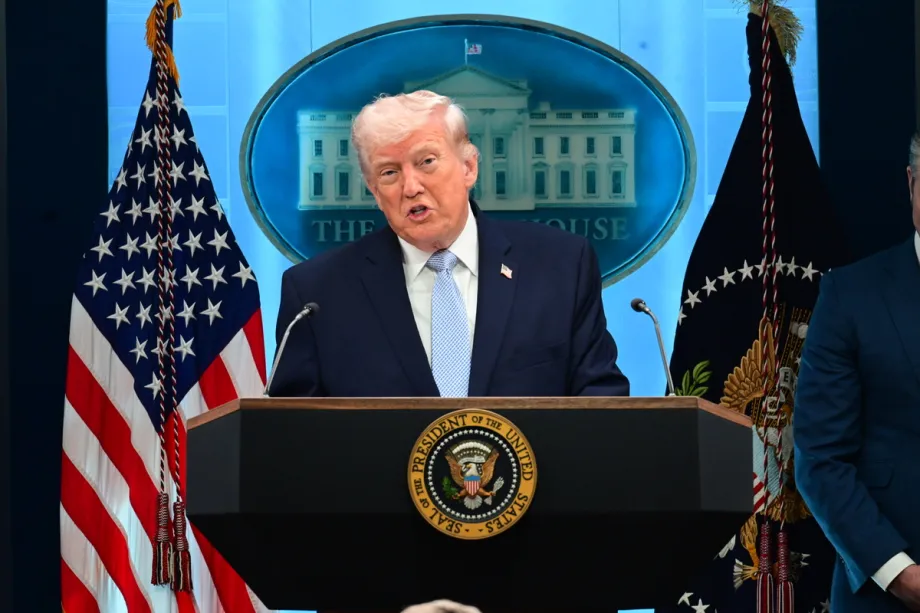
US President Donald Trump said Sunday that negotiations with Iran are “orderly and constructive” and vowed the blockade will remain in place until a final agreement is reached, Anadolu reports.
“The Blockade will remain in full force and effect until an agreement is reached, certified, and signed. Both sides must take their time and get it right. There can be no mistakes!,” Trump said in a post on his social media platform Truth Social.
He also said US-Iran relations are becoming “much more professional and productive,” while warning that Tehran must not develop or acquire a nuclear weapon.
Trump further thanked Middle Eastern countries for their “support and cooperation,” saying engagement would be strengthened through broader participation in the Abraham Accords, and suggested Iran could one day join the framework.
He criticized the 2015 Iran nuclear deal, calling it “one of the worst agreements ever made,” and again blamed former President Barack Obama’s administration for what he described as a flawed agreement that opened a path toward nuclear weapons development.
Trump said the current negotiations with Iran are “far better” and part of a more effective approach, insisting the ongoing process will prevent Tehran from obtaining nuclear arms.
OPINION: Escape or Escalate: Trump’s Tactical Crossroads in the Iran Conflict
Deep mistrust remains between Washington and Tehran as Iran’s top negotiator urges action, not words.

Published On 29 May 202629 May 2026
United States President Donald Trump says he is meeting in the Situation Room to make a “final determination” on a possible deal with Iran that could extend the ceasefire and reopen the Strait of Hormuz.
However, deep mistrust remains between the two sides. Iran’s top negotiator, Mohammad Bagher Ghalibaf, said earlier on Friday that Tehran would judge any agreement by actions rather than promises as talks continue.
list of 3 itemsend of list
In his latest post on the Truth Social platform, Trump on Friday set out numerous conditions for Tehran to accept, including: never having a nuclear weapon or bomb, the Strait of Hormuz being open in both directions and without tolls, the removal of any remaining mines left in the Strait, and the US unearthing and destroying Iran’s enriched uranium that is buried.
“Ships caught in the Strait due to our amazing and unprecedented Naval Blockade, which will now be lifted, may start the process of ‘heading home!’” Trump wrote.
“No money will be exchanged until further notice. Other items, of far less importance, have been agreed to. I will be meeting now, in the Situation Room, to make a final determination,” he added.
Reporting from the White House, Al Jazeera’s Patty Culhane said that in the past, the Trump administration has indicated that a deal has been reached, only to find out it has not.
“If this was in fact a deal, it would be the entire wishlist of what the US was demanding and none of the concessions that Iranian were asking for,” she explained.
Uncertainty about the details of a memorandum of understanding (MOU) has grown over the past week amid ongoing distrust between the two sides as they seek to end the three-month-long war.
On Thursday, White House sources told Al Jazeera that the US and Iran had reached a tentative agreement to extend the ceasefire by 60 days to allow for formal negotiations, but Trump has yet to sign off.
Moreover, earlier on Friday, Iran’s top negotiator Ghalibaf said that Tehran did not trust “guarantees and words, only actions are the criterion”.
“No action will be taken before the other side acts,” he said in a social media post, without elaborating.
“The winner of any agreement is the one who is better prepared for war the day after,” the Iranian official added.
Still, Iranian state news outlet Fars, citing sources, reported on Friday that the agreement with the US was in its final stages of ratification, but no final decision has been made yet.
The sources stressed that there were no provisions about destroying Iran’s nuclear materials in the MOU and added that arrangements for the reopening of the Strait of Hormuz could include the monitoring and inspection of ships.
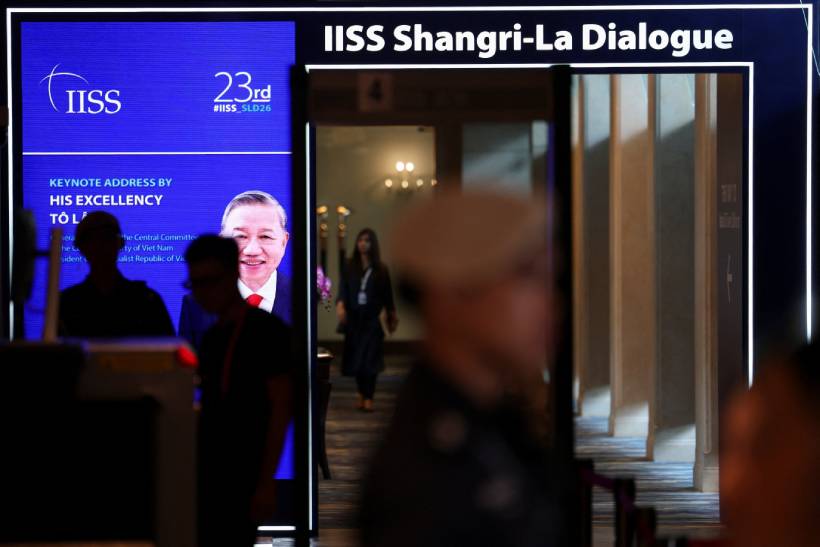
China’s decision to send a largely academic delegation instead of senior defence leadership to the Shangri La Dialogue in Singapore has been described by Australia as a missed opportunity for strategic engagement at a time of rising regional tensions.
Australian Defence Minister Richard Marles said the Asia Pacific region needs greater strategic reassurance from Beijing, particularly given China’s ongoing military expansion and its growing influence across the Indo Pacific.
The Shangri La Dialogue is the region’s most prominent defence and security forum, bringing together senior ministers, military leaders, and policymakers from across the world to discuss security challenges and regional stability.
For the second consecutive year, China’s Defence Minister Dong Jun did not attend the meeting, with Beijing instead sending a delegation made up mainly of academics and military experts.
The absence of senior Chinese defence officials comes at a sensitive moment for regional security dynamics.
Australia and its allies have repeatedly raised concerns about China’s rapid military buildup, which is widely regarded as the largest conventional expansion since the Second World War. Regional governments argue that this military growth has not been matched by sufficient transparency or reassurance about China’s long term intentions.
The lack of direct high level engagement at forums such as the Shangri La Dialogue limits opportunities to reduce misunderstandings, build trust, and manage rising tensions through dialogue.
For countries in the Indo Pacific, especially smaller states, the absence of senior Chinese representation can increase uncertainty about regional security and long term strategic balance.
China’s approach reflects a more controlled engagement strategy in defence diplomacy, relying on lower profile participation while continuing to expand military capabilities and regional influence.
Australia views sustained dialogue as essential for regional stability, while simultaneously strengthening its alliance with the United States and deepening defence cooperation across the Indo Pacific.
The United States remains a central security partner in the region and continues to position itself as a counterbalance to China’s military rise through alliances and defence agreements.
Countries such as Japan, the Philippines, Malaysia, and others attending the forum are closely watching China’s engagement level as they navigate their own security concerns in a shifting regional order.
If China continues limiting senior level participation in regional defence forums, diplomatic channels for managing tensions in the Indo Pacific may become more constrained. This could increase reliance on bilateral alliances and military deterrence rather than multilateral dialogue.
At the same time, ongoing military expansion by China will likely keep regional security concerns elevated, particularly among Southeast Asian and Pacific nations.
However, if future editions of the Shangri La Dialogue see higher level Chinese participation, it could open pathways for improved communication and reduced strategic mistrust.
For now, the gap between China’s military rise and its diplomatic engagement remains a key concern for regional powers seeking stability in an increasingly competitive Indo Pacific environment.
With information from Reuters.
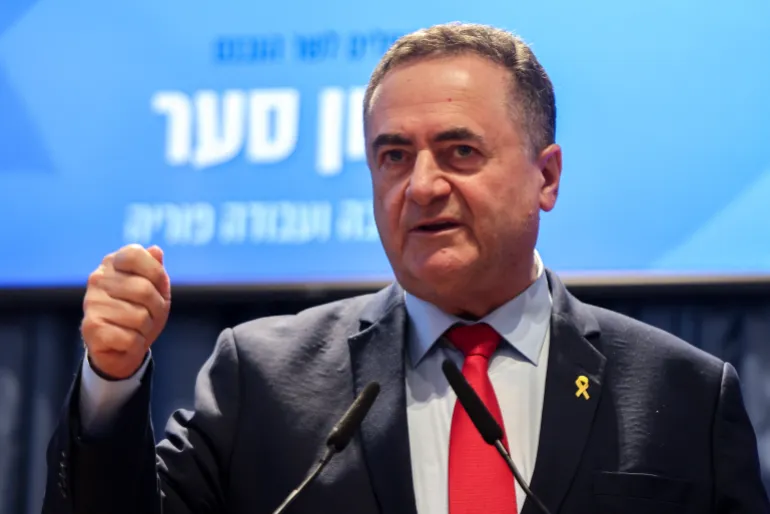
After two years of relentless bombardment and ground invasions, Israel’s future in Gaza had appeared to be settled with the signing of United States President Donald Trump’s 20-point peace plan on October 9, 2025.
Under the terms of that agreement, Israeli forces were meant to withdraw behind what planners called the “Yellow Line”, maintaining control of 58 percent of the territory, with their full withdrawal to be set at a date to be determined.
list of 4 itemsend of list
That withdrawal hasn’t happened. In fact, in the months since, as well as killing at least 922 people in near-daily strikes on the enclave during the “ceasefire”, Israel has expanded its territory by about 11 percent.
According to satellite data gathered in March, it has also established at least 32 military outposts, a ground barrier and infrastructure along what was supposed to be a temporary line.
Since October last year, numerous humanitarian agencies, including Oxfam, have accused Israel of compounding the humanitarian crisis in Gaza by restricting deliveries of aid and other essential goods.
Then, on Thursday, Israeli Prime Minister Benjamin Netanyahu announced that Israel will take over yet more territory in Gaza, telling a conference: “We are currently squeezing Hamas; we now control 60 percent of the territory of the Strip – you know this. We were at 50. My directive is to move to …,” he said, pausing briefly as someone in the crowd yelled, “100!”
“Let’s go step by step,” he responded, “First of all, 70. Let’s start with that. We’re pressing them from all sides, we’ll deal with the remnants.”
Al Jazeera contacted the Israeli prime minister’s office for clarification of this, but received no response by the time of publishing.
“If Israel’s ultimate plan is to exercise permanent effective control over the entirety of the Gaza Strip, we are talking about unlawful annexation,” Michael Becker, a professor of international human rights law at Trinity College in Dublin, told Al Jazeera.
“As the International Court of Justice reaffirmed in a 2024 advisory opinion, annexation constitutes a violation of the bedrock prohibition of the acquisition of territory by force.”
Nevertheless, to date, since the onset of its war on Gaza in October 2023, Israeli forces have killed at least 72,819 men, women and children in Gaza, with many thousands more missing and presumed dead under the rubble.
By 2025, Israel had caused a confirmed famine in the enclave and has now decimated nearly all infrastructure needed to support life. It has done all this without experiencing any meaningful international sanctions and still takes part in numerous international sporting and entertainment competitions – despite protests.
Hopes that the US might enforce its own conditions on Israel also appear ill-founded. Since announcing a ceasefire in the enclave in October last year, the US has failed to react as Israel has expanded and entrenched its presence in Gaza, choking off access to about two-thirds of the enclave for its inhabitants by April 2026.
Al Jazeera also contacted the US State Department for comment about this, but received no response by the time of publishing.
It’s very hard to tell. Several agencies, including the UN’s Office for the Coordination of Humanitarian Affairs (OCHA), have expressed deep concern about how Gaza’s remaining population can continue to subsist in an ever-shrinking space.
Israel’s answer to this is simple. “The plan for voluntary emigration from Gaza will also be implemented, all at the proper time and in the proper manner,” Defence Minister Israel Katz wrote in a statement marking the killing of Hamas leader Mohammed Odeh on Wednesday this week.
“Voluntary emigration” is a term used by a number of Israel’s government ministers, including National Security Minister Itamar Ben-Gvir and Finance Minister Bezalel Smotrich. Observers typically acknowledge that this means the ethnic cleansing of the enclave.
Israel’s Ministry of Defence did not respond to questions about this from Al Jazeera.

No.
“The idea of permanently removing Palestinians from Gaza smacks of forced displacement and would also violate the fundamental right to self-determination of the Palestinian people,” Becker said. The principle of self-determination serves as a “cornerstone” of the UN Charter, he said.
However, Becker said, the spotlight of international attention has now shifted from the crisis in Gaza to the US and Israel’s war on Iran, as well as Israel’s actions in Lebanon, where it has occupied large swaths of the south of the country.
“While the Trump administration may be willing to diverge from Israel’s interests in seeking a resolution to the disastrous and illegal war that the United States started against Iran, the United States seems to have lost interest in Gaza or pushing for restraint on the part of Netanyahu’s government. It is unclear what role the so-called Board of Peace is willing to play in terms of maintaining a future for the Palestinians of Gaza,” he said.
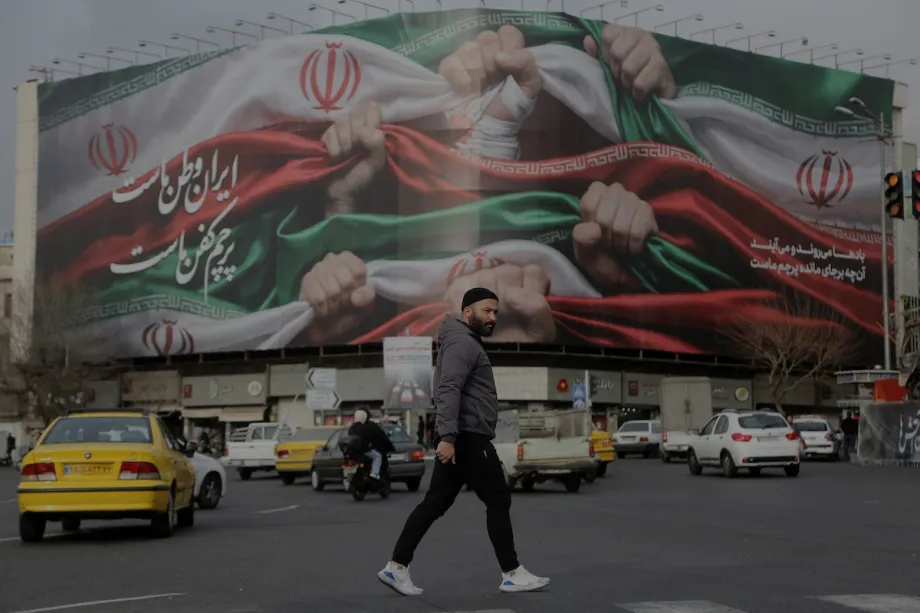
The eruption of the Middle East war in 2026, which began with strikes led by the US and Israel against Iran under Operation Epic Fury, carries devastating consequences for recovery, development and regional stability. The assassination of senior Iranian figures, most notably Supreme Leader Ayatollah Ali Khamenei, Iran’s closure of the Strait of Hormuz, the involvement of Hezbollah and Houthis in support of Iran, alongside Iranian attacks on neighbouring countries, further escalated the crisis. The war transformed from a military confrontation into a broader regional political, diplomatic and economic crisis.
While global attention focused on military escalation, oil markets and the Strait of Hormuz, far less attention was given to the war’s humanitarian consequences, despite the massive and irreversible impacts. The conflict has triggered new waves of displacement across an already fragile region. However, there were no meaningful strategies to protect or to facilitate aid efforts to sustain the lives of displaced people, further exacerbating the life-threatening risks facing affected populations.
The Middle East was already carrying one of the world’s largest displacement burdens before this escalation, mainly due to the Syrian, Palestinian, Afghan and Iraqi refugees and internally displaced populations. The recent war has deepened these vulnerabilities by displacing millions more across Iran and Lebanon. The speed and scale of displacement reflect the severity of the humanitarian crisis unfolding in the region, overwhelming already strained humanitarian response efforts.
In Iran, the war intensified existing economic fragility and internal tensions while placing enormous pressure on state institutions not only to govern but also to effectively respond to the displacement crisis, a critical condition to maintain stability and prevent further chaos.
The displacement of over 3.2 million people has posed a serious challenge for the Iranian authorities. It has affected over 20 provinces, while the damage of 82,000 civilian infrastructure sites, disrupted essential services and attacks on healthcare have severely undermined the living conditions of displaced people.
Although figures fail to precisely capture the devastating realities experienced by displaced populations, they reflect the scale of vulnerability facing civilians forced to flee amid insufficient aid efforts and collapse of health, shelter and education systems.
Lebanon presents an even more fragile case, already affected by protracted conflict, sectarianism, the Beirut Port explosion and economic paralysis. While it was already hosting 1.4 million Syrian refugees and around 250,000 Palestinian refugees, the war has now led to the internal displacement of 1.3 million Lebanese civilians—one in five of the total population— with children accounting for a third of those displaced. The large-scale and ongoing displacement in the country has generated enormous needs, detrimentally affecting various areas of civilian life. While over 3,000 have been killed and more than 9,000 injured, around 130,000 people remain displaced in collective shelters, experiencing extremely difficult conditions. The plight of displaced populations in Lebanon is worsened by ongoing attacks on healthcare, lack of services and the destruction of the housing sector, in addition to limited access to education, where hundreds of schools are either closed or used as collective shelters.
Efforts have been made to address the needs of displaced communities. These include government-led actions in Iran to, for example, address psychosocial and shelter needs and the work of local organisations and international agencies in Lebanon. Yet such efforts remain far from adequate, mainly due to the absence of serious international political will to prioritise civilian protection and displacement prevention.
Instead, regional and international actors continue to prioritise deterrence, strategic alliances, military positioning and regional influence over humanitarian protection. By the end of April, the Pentagon had reportedly spent $25bn on its war on Iran, with other estimates showing greater costs—ranging between $630bn and $1 trillion—amid US President Donald Trump’s request for an additional $1.5 trillion for defence. This is evident in how the US paused a $14bn arms sale to Taiwan to ensure its military readiness to face Iran. Iran’s resilience against these attacks and the use of drones—costing tens of thousands of euros—have pushed the US to dedicate more resources to the war. The use of financial means from both sides solely for war objectives while overlooking the humanitarian responsibilities exposes the extent to which military objectives have been prioritised over humanitarian response.
Even ongoing diplomatic efforts between Washington and Tehran reveal the extent to which humanitarian concerns remain secondary and completely neglected. The peace negotiations have largely focused on issues related to hard politics. These include Iran’s nuclear programme, the reopening of the Strait of Hormuz and Iran’s frozen assets under US sanctions, with all these elements mainly addressing the security, financial and economic implications of the war.
The absence of the displacement crisis from peace agreements and negotiations reveals the deficiencies posed by the international human rights and humanitarian regimes. They underscore a reality where human lives continue to be shaped not by principles of protection, but by the strategic interests of powerful states.
This transformed the plight of affected populations in Iran and Lebanon from a humanitarian concern into a tolerated byproduct of geopolitical strategy.
The humanitarian consequences of this war will not end when the war ends. Long-term displacement carries profound risks for future generations in Iran and Lebanon through collapsing health systems, interrupted education, intensifying social fragmentation and deepening poverty and dependency on international aid. Thus, the failure to protect displaced populations today risks producing future instability across the region. Addressing this requires tailored humanitarian interventions, international responsibility—especially from the US and Iran as the primary conflicting states—towards affected populations and the adoption of prevention strategies in future wars.
The international community, conflicting parties and international organisations must take practical yet realistic—acknowledging the centrality of self-interest during wars between states—steps towards addressing this issue. Without international responsibility sharing and collaborative efforts, the already-fragile international humanitarian system fails to continue functioning as the primary response mechanism, especially amid the growing humanitarian funding cuts due to the occurrence of other “national priorities”. Therefore, the US and Iran, alongside the international community, must dedicate resources to lead a comprehensive emergency response to alleviate the impacts of war on affected communities. This has to begin with protection-centred diplomacy, where the plight of displaced populations is prioritised among other key areas in the peace agreements.
Equally important is the stricter implementation of international legal frameworks to protect civilian populations during armed conflicts through accountability measures for violations against civilians. The role of international organisations and UN agencies is decisive in these matters, given their expertise and international positionality—though shrinking—when it comes to humanitarian missions and peacekeeping. Such efforts must revolve around promoting, integrating and imposing the adoption of humanitarian safeguarding standards for civilians in military and political decision-making. If displacement continues to be treated as collateral damage rather than political responsibility, the Middle East will keep producing generations of displaced people, serving the interests of regional and global powers.
The views expressed in this article belong to the author and do not necessarily reflect the editorial policy of Middle East Monitor.
The TWZ Newsletter
Weekly insights and analysis on the latest developments in military technology, strategy, and foreign policy.
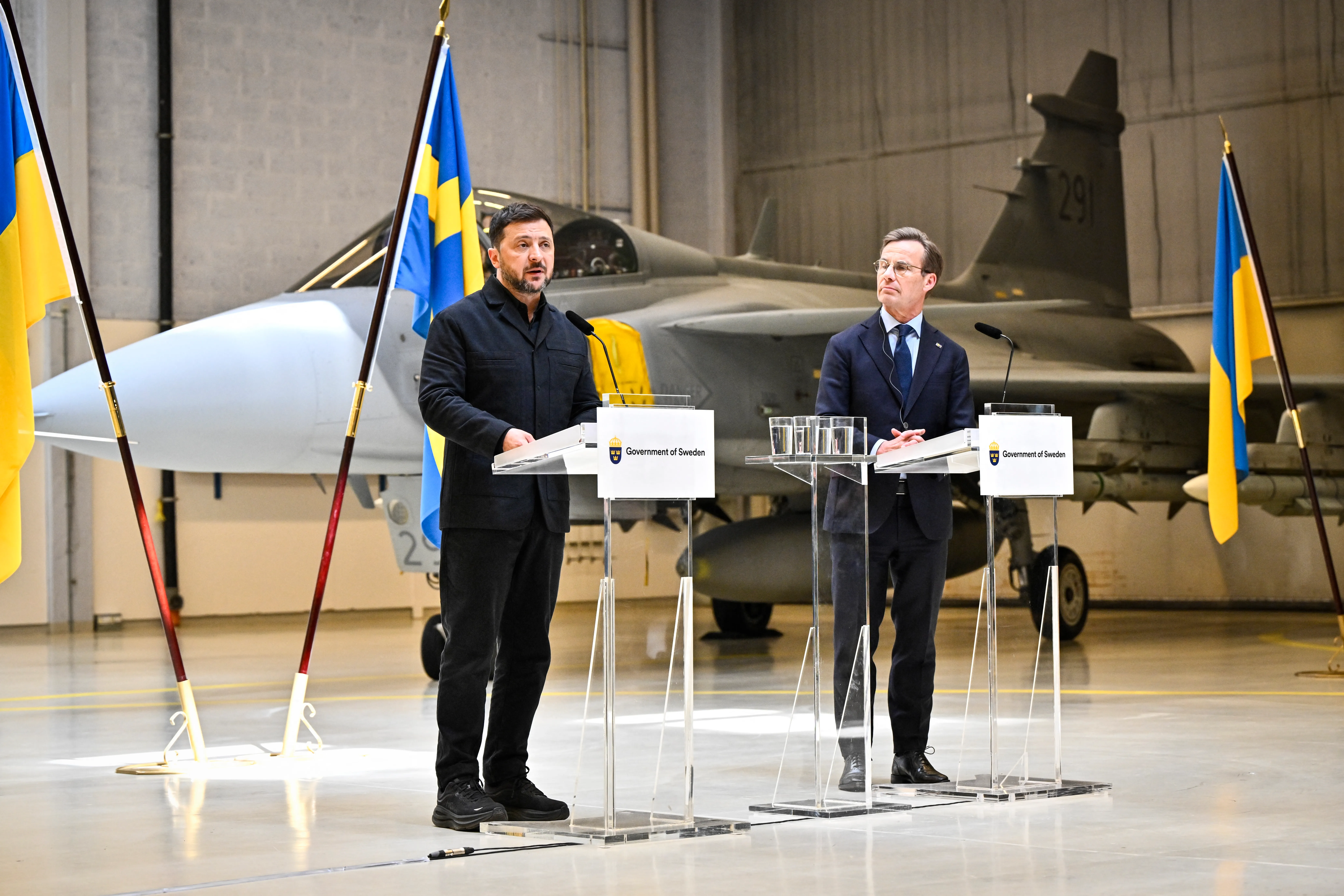
A timeline has been provided for the arrival of Saab Gripen fighters in Ukraine, with the first jets to be delivered early next year. Significantly, as well as getting another modern Western combat jet, Ukraine expects to receive highly capable Meteor beyond-visual-range air-to-air missiles, Ukraine’s President Volodymyr Zelensky has announced.
After meeting Zelensky in the city of Uppsala, Sweden today, Sweden’s Prime Minister Ulf Kristersson announced that his country will donate up to 16 Gripen C/Ds to Ukraine. These will be secondhand jets drawn from Swedish stocks, to expedite delivery. Handover of the jets in Ukraine will take place in early 2027, Kristersson added.

According to Swedish officials, the training of Ukrainian pilots and technicians on the Gripen C/D is already underway and will be expanded this fall.
In the longer term, Kristersson confirmed that Ukraine plans to acquire an initial batch of up to 20 of the more advanced Gripen E/F versions. Writing on X today, Swedish Minister for Defense Pål Jonson said that the Gripen E/F would be financed with a $2.9-billion European Union loan. The long-term ambition remains 100-150 Gripen aircraft, he added.
Ukraine intends to purchase 20 Gripen E/F aircraft. In conjunction with the sale, Sweden will donate up to 16 Gripen C/D, including advanced ammunition. To replace the donated aircraft, new modern Gripen E/F will be procured for the Swedish Air Force. https://t.co/kPHjVDXnSb pic.twitter.com/IxEhsy2yvN
— Försvarsdepartementet (@ForsvarsdepSv) May 28, 2026
Despite it having a similar outward appearance to the Gripen C/D, the Gripen E (and the two-seat Gripen F version) is regarded as a completely new aircraft type — as you can read about here.

“Ukraine has clearly identified the Gripen aircraft as a priority option for its air force in the long term and intends to purchase the newest version, the Gripen E,” Kristersson said. “Negotiations are ongoing, and we will be able to transfer these aircraft by 2030.”
In a press release, Saab reiterated that it has not yet signed any contract nor received an order relating to the Gripen E/F for Ukraine, meaning this transfer only exists as a statement of intent for now.
This is truly a historic day for cooperation between Ukraine and Sweden.
Today, there is a new support package from Sweden, and this support opens up a new level for us in saving the lives of our people – in protecting our cities and communities. This package, worth $2.7… pic.twitter.com/MANYC96byu
— Volodymyr Zelenskyy / Володимир Зеленський (@ZelenskyyUa) May 28, 2026
Tack Sverige! Tack @SwedishPM! Ära åt Ukraina!
🇺🇦🇸🇪
Дякую, Швеціє! Дякую, Ульфе! Слава Україні!
🇺🇦 🇸🇪
Thank you, Sweden! Thank you, Ulf! Glory to Ukraine! pic.twitter.com/zgbBYVyRPM
— Volodymyr Zelenskyy / Володимир Зеленський (@ZelenskyyUa) May 28, 2026
According to Saab, “The next steps for the Ukrainian and Swedish authorities will be to complete the negotiations regarding Ukraine’s acquisition of Gripen E/F, which is expected to take place in batches, and Saab will support this process.”
In the meantime, the Swedish government has also announced that it will replace the donated Gripen C/D aircraft in the Swedish Air Force inventory. “Dialogue regarding Sweden’s replacement of the donated capability will be initiated soon,” Saab said.

Last October, as we reported, Kristersson and Zelensky signed a letter of intent (LOI) including a potential export deal covering “likely between 100 and 150 fighter jets,” according to Kristersson. The LOI was signed at Linköping, the site of Saab’s manufacturing facility for the Gripen.
As for second-hand Gripens, Ukraine has repeatedly been linked with a possible transfer of secondhand Swedish Air Force Gripen C/Ds, and Zelensky previously said he would like to see the first of these delivered from 2026.
While the Gripen C/Ds are now set to arrive later than hoped, it remains a big deal for the Ukrainian Air Force. Although the service has already received Western-supplied F-16s and a smaller number of Mirage 2000s, the Ukrainian Air Force still relies heavily on its Soviet-era fighters. The MiG-29, in particular, has been continually adapted to carry new weaponry, both Western-supplied and locally developed, but these are aging jets and the fleet has been steadily reduced by attrition.
Perhaps the most important part of the Gripen transfer will involve the armament for the fighter.
Zelensky specifically mentioned that he expects the Gripen C/Ds to be armed with the Meteor missile.
Swedish Minister for Defense Pål Jonson said that the Gripen C/D “can be delivered with weapons such as IRIS-T, AMRAAM, and the long-range Meteor missile. This is about aircraft, weapons, skills and sustainment.”
Training of Ukrainian pilots and technicians is already underway and will expand this autumn.
Gripen C/D can be delivered with weapons such as IRIS-T, AMRAAM and the long-range Meteor missile. This is about aircraft, weapons, skills and sustainment. (2/8)
— Pål Jonson (@PlJonson) May 28, 2026
Earlier this year, the Ukrainian Ministry of Defense confirmed that the Meteor was one of the weapons being lined up for the next Swedish security aid package for Ukraine.
As we have discussed in the past, the Meteor would provide Ukraine with a class of air-to-air weapon that it badly needs to redress the balance against Russian fighter jets.
Undoubtedly, the Meteor is among the most capable air-to-air missiles in operational service anywhere in the world. Thanks to its ramjet propulsion, which can be throttled during different phases of flight, the Meteor is generally considered to be effective against certain types of targets out to around 130 miles.

Meteor
The Meteor also features an active radar seeker for the terminal phase and a two-way datalink that feeds it with in-flight updates as it flies out to its target and provides information to the pilot in the launch aircraft.
While the AIM-120 Advanced Medium-Range Air-to-Air Missile (AMRAAM) that arms Ukraine’s F-16 fighters also has an active radar seeker, it lacks the range of the Meteor.
The most capable AMRAAM identified as being used by Ukraine is the AIM-120C-8, which is generally assumed to be able to hit targets at a distance of between 75 and 100 miles.

Of course, in practical applications, the range of both the Meteor and AMRAAM is affected by a whole range of factors, above all, the energy and altitude state of the launching aircraft and the target.
However, the Meteor could bring a significant shift to the airpower balance over Ukraine.
Russia has repeatedly exploited the long range of its R-37M air-to-air missile, known to NATO as AA-13 Axehead, typically launching them from jets flying outside the range of the missiles carried by Ukrainian fighters, as well as from most ground-based air defense systems.

With a reported range of 124 miles against certain types of targets, the R-37M flies to its target on a lofted trajectory, controlled by an inertial navigation system with mid-course radio correction, and uses an active radar seeker for its terminal phase attack.
Mainly used by Su-35S Flanker multirole fighters and MiG-31BM Foxhound interceptors, the R-37M is a missile we have examined in detail in the past. It has long been a thorn in the side of Ukrainian Air Force fighter pilots.
As TWZ had previously pointed out, Meteor is the best candidate for Ukraine to try and redress the balance in the air war when faced by the far-reaching R-37M and would finally put Russian aircraft at risk within their own missile ranges.
At the same time, the Meteor would give Ukraine a weapon that can target Russian jets delivering standoff munitions, again from outside the range of Ukrainian air defenses. Zelensky today said the missile “would stop Russian glide bomb attacks,” something that has been a huge problem for Ukrainian air defenses since this class of weapons was introduced.

As we’ve highlighted in detail as far back as April of 2022, aside from its Meteor capability, the Gripen, even in its earlier C/D versions, would be the best fit for Ukraine.
Designed during the Cold War to meet the Soviet threat, the Gripen was engineered for efficiency, durability, and ease of operation under wartime conditions. It was specifically designed to be serviced and rearmed by small teams — often including conscript personnel — while operating from dispersed locations such as roads and improvised airstrips instead of traditional air bases. The aircraft’s entire concept centers on maintaining combat operations in demanding environments, including prolonged cold-weather conditions.

“Gripen was built for a country that may have to fight outnumbered, under pressure and from dispersed bases,” Swedish Minister for Defense Pål Jonson said. “That makes it highly relevant for Ukraine: high readiness, rapid turnaround, modern weapons and the ability to operate under constant threat,” he added.
Overall, the Gripen is particularly compatible with the decentralized and highly mobile style of warfare Ukraine is currently practicing.
At the same time, it should be noted that even with the F-16, the Ukrainian Air Force has developed tactics and equipment to operate these jets from dispersed locations around the country. Even before the current conflict, Ukrainian fighters were training to make use of highways as alternatives to traditional runways.
A video shows vehicles intended to help with distributed operations of Ukrainian F-16s:

Project 61: an ecosystem for F-16s by Come Back Alive Foundation
The capabilities of the Gripen and Meteor would also be enhanced by working in combination with the two Saab 340 airborne early warning and control (AEW&C) aircraft equipped with Erieye radar that have been donated by Sweden.
Ukraine’s Saab 340 AEW&C can function as an airborne fighter control platform by detecting and tracking Russian targets, prioritizing threats, and directing fighters to intercept them. Through its datalink system, the aircraft can also transmit mid-course guidance updates directly to missiles in flight. As a result, fighter pilots may not even need to activate their own radar when engaging a target. Instead, the missile can be assigned a target before launch, fired, and then continuously guided by updates from the AEW&C aircraft throughout its flight.
The first evidence of the Saab 340 AEW&C being used over Ukraine emerged in March this year, but its activities have remained closely under wraps.
Russians are posting footage they claim shows likely a Swedish Saab 340 AEW&C long-range radar and control aircraft flying over Ukraine. pic.twitter.com/XkFZlok2B3
— WarTranslated (@wartranslated) March 20, 2026
Taken together, the arrival of the Gripen and Meteor missile would represent one of the most significant upgrades yet for the Ukrainian Air Force. Beyond simply adding another Western fighter type, the package would introduce a highly survivable, dispersed-operating combat jet paired with one of the world’s most capable long-range air-to-air missiles and supported by Swedish AEW&C assets.
Even without the Meteor, the Gripen C/D could help Ukraine challenge Russia’s long-standing advantage in beyond-visual-range air combat while fitting naturally into the more decentralized operating model the Ukrainian Air Force has already been forced to adopt throughout the war. At the same time, it will provide valuable experience for crews and serve as a stepping stone for the future Gripen E/F.
Contact the author: thomas@thewarzone.com
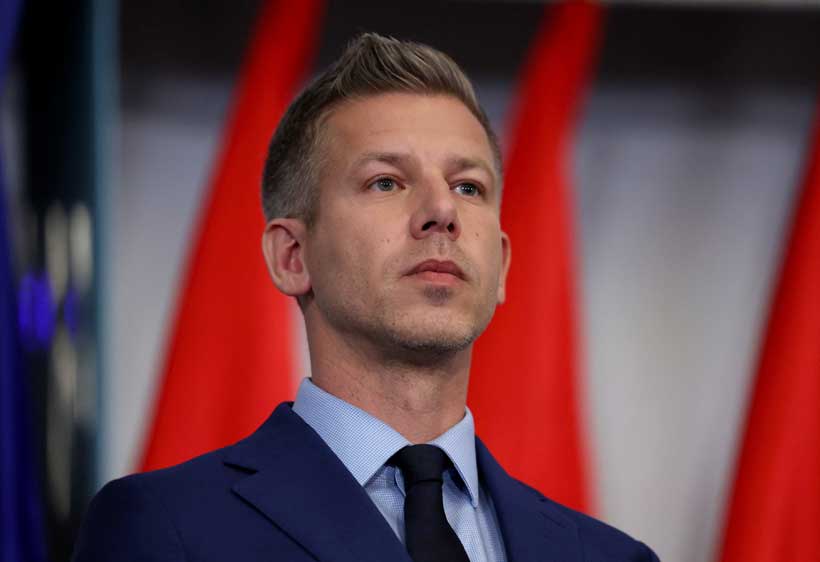
Hungarian Prime Minister Peter Magyar said he expects to finalize a political agreement with Ursula von der Leyen over the release of billions of euros in frozen European Union funds during talks in Brussels.
The negotiations focus on unlocking financial support that had been suspended under the previous government led by former Prime Minister Viktor Orban due to long standing EU concerns regarding corruption, rule of law standards, and judicial independence.
Hungary is seeking access to approximately 6.5 billion euros in EU recovery grants and 3.9 billion euros in low interest loans before a critical August deadline. Additional structural funds worth around 7 billion euros also remain frozen.
The talks come at a crucial moment for Hungary’s economy, which has struggled with weak growth, fiscal pressure, and budgetary strain over the past three years.
The potential agreement carries major economic and political significance for both Hungary and the European Union.
For Hungary, securing the release of EU funds is essential to stabilizing public finances, supporting economic growth, and restoring investor confidence. The country’s economy has experienced prolonged stagnation, while high spending pressures and limited fiscal flexibility have increased urgency around external financing.
For the European Union, the negotiations represent an important test of how Brussels balances financial support with enforcement of democratic and governance standards among member states.
The dispute over frozen funds has become one of the most prominent examples of tensions between the EU and governments accused of weakening judicial independence or failing to address corruption concerns.
A successful agreement could signal improving relations between Brussels and Hungary after years of political friction under Orban’s leadership.
Prime Minister Peter Magyar is under pressure to secure financial relief while also demonstrating willingness to meet EU governance expectations.
The European Commission must balance political compromise with maintaining credibility on rule of law enforcement and anti corruption standards across the bloc.
Businesses, investors, and public institutions in Hungary are closely watching the outcome because EU funding plays a major role in infrastructure, development, and economic stability.
Other EU governments are monitoring the negotiations as they could shape future disputes involving rule of law conditions and access to EU financial support.
The negotiations reflect a broader shift in Hungary’s relationship with the European Union following the political transition away from Viktor Orban’s administration.
Under Orban, disputes with Brussels became increasingly confrontational, particularly over democratic governance, judicial reforms, media freedoms, and corruption allegations. Peter Magyar appears to be pursuing a more pragmatic approach focused on rebuilding trust with EU institutions while securing urgently needed economic support.
However, the remaining disagreements over anti corruption measures suggest Brussels still wants stronger guarantees before fully releasing funds. This highlights the EU’s growing willingness to use financial leverage as a tool for enforcing governance standards within member states.
For Hungary, the pressure is primarily economic. Frozen EU funds have limited the government’s financial flexibility at a time when growth remains weak and fiscal conditions are strained. Unlocking the money would provide both immediate economic relief and an important political victory for Magyar’s government.
At the same time, the negotiations also carry symbolic importance for the EU itself. Brussels will want to demonstrate that compromise does not come at the expense of accountability, especially after years of criticism over democratic backsliding within the bloc.
If a political agreement is finalized, Hungary could begin unlocking critical EU funding in the coming months, easing fiscal pressure and improving economic confidence.
However, implementation will remain important. Brussels is likely to continue closely monitoring Hungary’s anti corruption reforms and governance commitments before fully releasing all frozen funds.
A successful deal may also help normalize Hungary’s relationship with the European Union after years of tension, potentially opening the door for broader cooperation on economic and political issues.
At the same time, the outcome could influence future EU disputes involving rule of law conditions and financial oversight, particularly as Brussels increasingly links access to funding with governance standards.
For Hungary, the immediate priority remains economic stabilization. But politically, the negotiations may also determine whether Peter Magyar can establish a more cooperative and sustainable relationship with Europe while distancing his administration from the confrontational legacy of the Orban era.
With information from Reuters.

Erin Patterson was found guilty of killing three family members as she served them a lunch laced with poisonous fungi.
By Al Jazeera Staff and Reuters
Published On 29 May 202629 May 2026
An Australian court has confirmed that an appeal hearing for Erin Patterson, commonly referred to as the “mushroom murderer,” will be held in August.
The Supreme Court of Victoria announced on Friday that the hearing will take place on August 19 and 20. Patterson’s lawyers formally applied to appeal her life sentence in November, arguing that there had been a “substantial miscarriage of justice” during her trial.
list of 3 itemsend of list
Patterson was sentenced to life in prison in September after being found guilty of murdering three of her estranged husband’s relatives by serving them a lunch laced with poisonous fungi.
During the two-day hearing, the court will also consider an appeal from prosecutors, who argue that her sentence, which allows her to be considered for parole after 33 years, is “manifestly inadequate”.
Prosecutors unsuccessfully argued during the trial that her sentence should have been life imprisonment without parole.

In July, a jury found Patterson guilty of killing her estranged husband’s parents after serving them a lunch of beef Wellington laced with toxic mushrooms.
The case attracted worldwide attention, with more than 250 journalists registering for updates from the court, and the judge deciding to broadcast the sentencing live.
Both Gail Patterson and Donald Patterson died in August 2023. Patterson was also found guilty of murdering Gail’s sister, Heather Wilkinson, who died that same month, and of attempting to kill Wilkinson’s husband, Ian. He spent seven weeks in hospital following the poisoning and received a liver transplant.
Patterson is appealing her conviction on seven grounds, including what her lawyers described as a “fundamental irregularity” relating to the sequestration of the jury, who stayed in the same hotel as key figures in the case, including a police witness and two prosecutors.
Patterson’s lawyers also argue that several pieces of evidence presented during the trial were either irrelevant or unfairly prejudicial, and that the prosecution’s cross-examination of her was “unfair and oppressive”.
Patterson maintains her innocence, arguing that the poisoning was accidental.
The TWZ Newsletter
Weekly insights and analysis on the latest developments in military technology, strategy, and foreign policy.
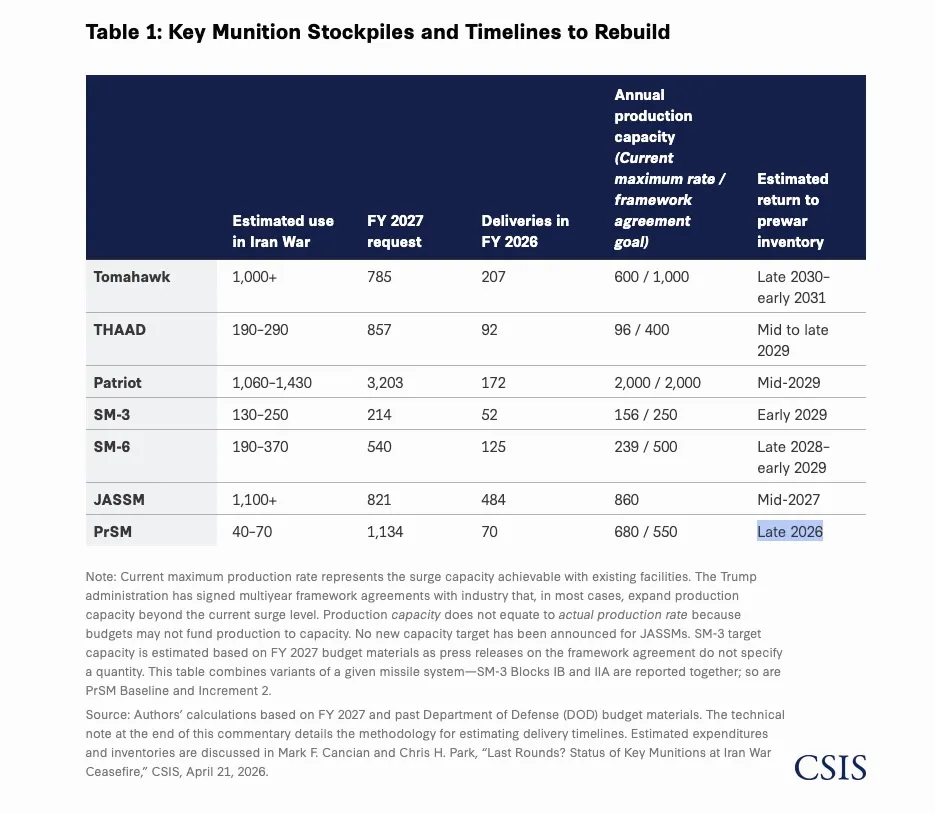
During the 39-day war with Iran, the U.S. used so many key offensive and defensive weapons that it will take three or more years to rebuild some of these stocks to pre-war levels, according to a new report from the Center for Strategic and International Studies (CSIS). The report, compiled by Mark F. Cancian and Chris H. Park, highlights concerns we raised long before and during Operation Epic Fury about the rapid expenditure of critical munitions and how that could affect a potential future fight against China. U.S. military leaders have suggested that the People’s Liberation Army (PLA) could be in a position where it would feel confident in launching an invasion of Taiwan by 2027.
The warning light on America’s magazine depth was blinking red long before Epic Fury. The stockpiles, especially of Standard Missile-3s (SM-3) and Terminal High Altitude Area Defense (THAAD) interceptors, were degraded by more than a year of combat in the Red Sea region with the Iranian-backed Houthi rebels and several efforts to defend Israel. U.S. support for Ukraine, meanwhile, drained off supplies of Patriot air defense interceptors. We will address these issues in more detail later in this story. The weapon expenditure figures in the CSIS report only address Epic Fury, not previous U.S. engagements in the Middle East.
The most drastic setback to U.S. inventories involved the use of Tomahawk Land Attack Cruise Missiles (TLAMs) and THAAD and Patriot interceptors, according to CSIS. The think tank derived its expenditure figures from an internal analysis, which TWZ cannot independently verify.

The exact amount of Tomahawks on hand is secret, however, researchers at CSIS calculated that prior to the Feb. 28 launch of Epic Fury, the U.S. had about 3,100 TLAMs. CSIS said it based its estimates on Fiscal Year 2027 Pentagon budget documents.
CSIS estimated that U.S. forces lobbed more than 1,000 TLAMs at Iran during the conflict, or about a third of the entire inventory as assessed by the think tank.

Making up that supply will take some time. Tomahawk procurement “averaged 86 missiles in the past 10 fiscal years (FY 15–FY 26), with most orders coming from the Navy,” CSIS noted.
While Raytheon, which makes the missiles, has a goal of increasing capacity to produce more than 1,000 Tomahawks per year, “the recent annual production rate is less than 200 because of small past orders,” according to the think tank. “Existing orders will begin replacing the 1,000+ Tomahawks expended during the Iran War, but will not be enough to fully restore inventories to pre-war levels.”
Another factor to consider are foreign military sales, with nearly 800 due to Japan, Australia and the Netherlands.

CSIS estimated that before the war began, the U.S. had about 400 THAAD interceptors and used between 190 and 290 during the war to protect American and allied interests. According to The Washington Post, about 200 were deployed defending Israel in particular.
The Army “has requested 857 THAAD interceptors in FY 2027,” CSIS explained. “Their deliveries, projected to start in mid-2029, will complete the replacement of Iran War usage by the end of calendar year 2029.”

The delivery timelines in the budget documents “imply that THAAD production is at the current surge rate of 96 interceptors a year,” the report states. “With additional facilities and tooling, Lockheed Martin plans to expand production capacity to 400 a year, a needed increase to fulfill large U.S. procurement orders and those of allies.”
The strain on the reservoir of THAAD interceptors is something we brought up last year during the 12-Day-War between Israel and Iran, when reports suggested that the U.S. Army fired off about 150 to protect Israel.

At the start of the war, there were about 2,500 Patriot interceptors in the U.S. inventory, according to CSIS, though its accompanying chart does not specify which variant. During the course of the conflict, between 1,060 and 1,430 Patriots were fired. We don’t know what that tally includes, but we do know that PAC-2 and PAC-3 series interceptors have been employed in the latest conflict with Iran.
Current production PAC-3 MSE “is around the baseline rate of 650 interceptors per year, with half the deliveries going to the United States and the rest to allies and partners,” CSIS postulated.

Under a contract with the Pentagon inked in January, Lockheed is committed to boosting Patriot annual production to 2,000.
“Because U.S. procurement in the last decade has averaged 225 missiles per year, deliveries from prior years will not be enough to fully replace expenditures,” CSIS cautioned. “For that, the United States will need to wait for the 3,203 Patriot missiles requested in the Army’s FY 2027 budget. These are projected to start delivery in May 2029.”
As we have previously noted, between U.S. usage and commitments to Ukraine and nearly 20 other nations, there have long been concerns about the supply of Patriot interceptors. Still, the Pentagon has maintained that it has sufficient supplies.

Before Epic Fury, the U.S. Navy had about 400 SM-3s, capable of intercepting ballistic missiles in space, and used upwards of about 250, according to CSIS. There were about 1,250 Standard Missile-6s (SM-6), which can intercept air-breathing and ballistic missile targets, as well as attack targets on land and at sea, in the arsenal and between 190 and 370 were launched.
These munitions will take about two years to replenish to pre-war levels, CSIS estimated.

“Both missiles have lengthy production lead times,” the think tank explained. “The Missile Defense Agency and the Navy requested large quantities in the FY 2027 budget: 78 SM-3 Block IBs, 136 SM-3 Block IIAs, and 540 SM-6s. These orders will take between 36 and 39 months to begin deliveries once Congress provides appropriations.”
“Because of the small size of past orders, inventories will not return to pre-war levels until early 2029 despite the relatively low usage in the campaign,” CSIS pointed out.
Our prior reporting pointed out that concern over the magazine depth of these missiles, especially the SM-3, became acute after that munition was used for the first time during the massive April 2024 Iranian missile and drone barrage against Israel. The SM-3s proved so successful that the Navy’s top official in May 2024 called for more to be made after production had been curtailed on some variants. At the time, the Pentagon’s Missile Defense Agency (MDA) wanted to end procurement of SM-3 Block IB variants by the end of 2024 and limit its buy of the follow-on Block IIAs to just 12 per year through Fiscal Year 2029.
The fight against the Houthi rebels of Yemen from October 2023 to early 2025 exacerbated these magazine depth issues for both of these Navy missiles. The aforementioned 12-Day War saw another 80 SM-6s used to defend Israel, further depleting supplies.


There were more than an estimated 4,000 stealthy air-launched Joint Air-to-Surface Standoff Missiles (JASSM) in the U.S. arsenal before the war and U.S. aircraft fired off more than 1,100 of them. However, though heavily used, there will be “large deliveries from recent procurements.”
“U.S. forces began this campaign with a sizable JASSM inventory,” according to CSIS. “The Air Force has procured large quantities of these long-range cruise missiles since the 2000s—on average, nearly 500 a year for the past decade. To deliver these orders, current production appears to be already at the surge rate unlike the other munitions discussed in this article. Further, the missile was not used in operations until 2018. Thus, while over 1,100 JASSMs were expended, U.S. inventories will recover fairly quickly as past orders are delivered.”


The ground-launched Precision Strike Missile (PrSM) is the longer-ranged tactical ballistic missile successor to the Army Tactical Missile System (ATACMS). It was used for the first time during Epic Fury.
The inventory of these missiles, however, “is limited as it is a relatively new system with deliveries beginning in 2023,” CSIS highlighted, estimating that there were fewer than 100 prior to the war. During the conflict, between 40 and 70 were used, the think tank posited.
“Lockheed Martin has been scaling up PrSM production, setting an annual target of 400 units last year and announcing further increases under the framework agreement with the Trump administration.

Asked about the CSIS report, the Pentagon did not express concerns.
“America’s military is the most powerful in the world and has everything it needs to execute at the time and place of the president’s choosing,” Pentagon spokesman Sean Parnell said in a statement to TWZ. “We have executed multiple successful operations across combatant commands while ensuring the U.S. military possesses a deep arsenal of capabilities to protect our people and our interests.”
Despite Parnell’s statement, the expenditure of weapons in Epic Fury is having a cascading effect on supplies. Last week, for instance, Acting Navy Secretary Hung Cao testified before the Senate that the U.S. is pausing arms sales to Taiwan because of the war with Iran.
“Right now we’re doing a pause in order to make sure we have the munitions we need for Epic Fury,” Cao told Sen. Mitch McConnell.
America’s reputation as an arms provider had already taken a hit when it cut off supplies of Patriots and other weapons to Ukraine last year over concerns about the U.S. stores. Deferred or slowed deliveries are common among other allied customers as well now.
During the Senate Appropriations Committee’s defense subcommittee hearing earlier today, Acting Navy Secretary Hung Cao told senators that arms shipments to Taiwan have been paused, saying “Right now we’re doing a pause in order to make sure we have the munitions we need for Epic… pic.twitter.com/DIcQCBh5hq
— OSINTdefender (@sentdefender) May 21, 2026
The president’s $1.5 trillion FY 2027 defense budget “reflects these magazine depth concerns,” CSIS suggested. “A war supplemental for additional munitions funds is expected as the DOD seeks to replace what was expended in Operation Epic Fury and then build inventories above the pre-war levels. The administration has also signed a series of framework agreements with industry to expand munitions production capacity, which could expedite future deliveries.”
Tensions around the world bring into question whether even expedited timelines for production of these weapons is adequate to meet near-term future needs. As we mentioned earlier in this story, there are concerns that China could move on Taiwan over the next few years, a conflict that could draw in the U.S. There are other flashpoints in the Pacific that could touch off a China fight.
Beyond that, there are always concerns about threats from North Korea, which continues to build up its military. Russia, meanwhile, is fighting a war in Ukraine that Europe is worried could spill across the continent. Any of these potentials, plus those we don’t even know about yet, would further draw down U.S. supplies should it get into a shooting war.
Meanwhile, there is a non-zero chance that even more of these weapons could be expended should the U.S. and Iran resume hostilities. Just last night, a U.S. official told us that CENTCOM swatted down four Iranian drones and fired on a ground control station in Bandar Abbas about to launch a fifth.
US official: CENTCOM forces shot down 4 Iranian drones posing threat around Strait of Hormuz. U.S. forces also struck Iranian ground control station in Bandar Abbas about to launch a 5th drone. Actions were measured, purely defensive, and intended to maintain the ceasefire.
— Howard Altman (@haltman) May 28, 2026
CENTCOM said Kuwaiti forces intercepted a ballistic missile Iran launched in response.
At 10:17 p.m. ET on May 27, Iran launched a ballistic missile toward Kuwait that was successfully intercepted by Kuwaiti forces. This egregious ceasefire violation by the Iranian regime occurred hours after Iranian forces launched five one-way attack drones that posed a clear…
— U.S. Central Command (@CENTCOM) May 28, 2026
With the shaky ceasefire marred by these intermittent kinetic exchanges and the peace negotiations sputtering on, a new drain on U.S. weapons stockpiles remains a real possibility.
Contact the author: howard@twz.com

New research from the European Central Bank suggests that the economic impact of the Iran war may be affecting euro zone consumers more deeply and rapidly than previous geopolitical crises, raising concerns about inflation, slowing growth, and long term economic uncertainty across Europe.
According to ECB economists, European consumers appear to be reacting more sensitively to rising prices and economic instability because many households are still psychologically affected by the financial stress caused by the Russia Ukraine war and the energy crisis that followed in 2022.
The latest conflict involving Iran, triggered after United States and Israeli airstrikes earlier this year, caused major disruptions to global energy supplies and reignited fears of another inflation shock throughout Europe.
ECB researchers found that consumers quickly became more attentive to price increases even while inflation remained close to the central bank’s 2 percent target. Economists believe this reaction reflects growing public anxiety over repeated geopolitical and economic disruptions.
The findings raise serious concerns for Europe’s economic recovery because consumer confidence plays a critical role in spending, investment, and overall growth.
When households become highly sensitive to inflation and uncertainty, they often reduce spending, delay purchases, and increase savings out of caution. This behavior can weaken economic activity and slow recovery across key sectors including retail, manufacturing, housing, and services.
ECB researchers warned that Europe may now face the risk of a more persistent stagflation environment, where inflation remains elevated while economic growth slows simultaneously.
The Iran war also exposed Europe’s continuing vulnerability to global energy shocks. Despite efforts to reduce dependence on Russian energy after the Ukraine conflict, Europe remains heavily exposed to disruptions in global oil and gas markets.
Although oil prices have recently eased amid hopes for diplomacy, they surged sharply earlier this year during the height of the Iran conflict, intensifying inflationary pressure across the euro zone.
Several major stakeholders are directly affected by the growing economic uncertainty surrounding the Iran war and Europe’s inflation outlook.
The ECB faces increasing pressure to balance inflation control with economic stability. Policymakers are now widely expected to continue raising interest rates in an effort to prevent inflation expectations from becoming entrenched among consumers and businesses.
Households across Europe remain at the center of the crisis. Rising living costs, energy prices, and borrowing expenses continue placing pressure on disposable incomes and consumer confidence.
European businesses, particularly energy intensive industries, face higher operating costs and weaker consumer demand. Continued uncertainty may reduce investment activity and slow hiring across multiple sectors.
Global oil and gas markets remain highly sensitive to developments in the Middle East. Any renewed escalation involving Iran could rapidly push energy prices higher again, directly affecting inflation and economic stability in Europe.
European governments may face growing political pressure if inflation remains persistent while economic growth weakens. Policymakers could be forced to increase public spending or introduce additional support measures for households and industries.
The coming months are likely to become a critical period for the euro zone economy as European policymakers attempt to manage the combined effects of geopolitical instability, inflation concerns, and slowing growth.
Much will depend on whether tensions in the Middle East continue easing or whether new disruptions emerge in global energy markets. A stable diplomatic environment could help reduce inflationary pressure and restore consumer confidence gradually.
However, ECB researchers warn that the psychological impact of repeated crises may continue shaping consumer behavior long after energy prices stabilize. Many Europeans who experienced financial stress during the Ukraine war now appear quicker to react to fears of inflation and economic instability.
The ECB is therefore expected to maintain a cautious but firm monetary stance in the near term, with additional interest rate increases remaining highly likely.
If inflation remains elevated while economic growth weakens, Europe could face a prolonged period of economic stagnation combined with reduced consumer spending and higher borrowing costs.
The situation highlights how modern geopolitical conflicts increasingly influence not only energy and security policy but also consumer psychology, market behavior, and long term economic confidence across global economies.
With information from Reuters.

Romania and its NATO allies have reacted angrily after a Russian drone crashed into an apartment building in eastern Romania, injuring two people.
The foreign ministry in Bucharest on Friday labelled the crash of the drone, part of an overnight attack aimed at Ukraine, a serious violation of international law and called on NATO to accelerate the transfer of anti-drone capabilities. The incident is just the latest incursion along the alliance’s eastern flank, raising concern that the risk of an open confrontation between Russia and NATO states is rising.
Romania said the overnight drone was tracked by radar in its airspace before crashing onto the roof of a residential building in the city of Galati.
Two F-16 fighter jets and a helicopter were scrambled, as authorities issued emergency alerts to residents. Two people suffered minor injuries and several residents were evacuated after a fire was triggered by the crash.
The incident is just the latest of several, as the war in Ukraine has spilled over into neighbouring NATO countries, raising fears of potential escalation.
Estonia, Lithuania and Latvia, as well as Finland have all reported repeated incursions into their airspace in recent months. Drone incursions sparked a government collapse in Latvia earlier this month.
Shortly after the crash, Bucharest called for NATO to speed up the transfer of anti-drone capabilities. Outgoing Prime Minister Ilie Bolojan also said that Romania would, within hours, sign a contract which will give it anti-drone defences under the EU’S SAFE programme.
On Friday morning, Romania summoned the Russia ambassador.
“We will officially communicate the consequences that this lack of responsibility on the part of the Russian Federation will have for the diplomatic relations between our countries, as well as the next steps at the European level regarding sanctions packages,” Foreign Minister Oana Toiu wrote on social media.
President Nicusor Dan stated that Romania will not accept that the war of aggression waged by Russia against Ukraine be transferred to its citizens, and added that he had asked the foreign ministry to present without delay a series of measures regarding the country’s relationship with Russia, “proportionate to this very serious situation”.
NATO allies and others joined the chorus of anger.
French Minister for European Affairs Benjamin Haddad said the incident highlighted the threat Russia poses to European security, noting that French troops are stationed in Romania.
“Regardless of whether it was on purpose or the result of ineptitude, Russia is still dangerous and we must defend ourselves against it,” Polish Foreign Minister Radoslaw Sikorski told the Reuters news agency.
European Commission President Ursula von der Leyen said the incident showed that “Russia’s war of aggression has crossed yet another line”.
A NATO spokesperson also condemned “Russia’s recklessness” on social media.
Ukraine’s Foreign Minister Andrii Sybiha, whose country is pressing the United States to help boost its air defences, pledged “Ukraine stands firmly by Romania” as he branded Russia a threat to the Black Sea region and the wider European continent.
“We are ready to work closely together to strengthen protection from such threats,” he wrote on social media, adding that the bid to strengthen Ukraine’s air defence is a “strategic task” to protect not only Ukraine but also to reduce risks for neighbouring countries.
United Nations Secretary-General Antonio Guterres warned that the escalating attacks risk spiralling “out of control”, with “unknown and unintended consequences”.
He said more civilians had been killed in the first four months of this year than during the same period in the previous three years, and called for diplomacy, immediate de-escalation and “a full and unconditional ceasefire”.
Concern that the war is threatening to spillover is building as Russia escalates hostilities in a bid to ward off rising political and economic pressure at home.
Ukrainian forces reported that they shot down 217 drones overnight on Friday. Russia attacked with 232 drones and one ballistic missile. Hits were recorded in 14 areas, the air force said.
Moscow has said it plans “systematic strikes” on Kyiv and has issued a barrage of threats at Ukraine’s European allies, listing facilities in Europe that it said are involved in manufacturing drones and components for Ukraine.
Moscow’s Foreign Intelligence Service recently warned the Baltic nations that their NATO membership won’t protect them from retaliation should they allow Ukraine to launch attacks from their territory, with analysts warning that the risk of an open confrontation between Russia and NATO states is rising.
That heightens concern regarding NATO’s Article 5 collective defence clause, which President Donald Trump has hinted the United States may not honour in some cases.
However, the alliance’s Secretary General Mark Rutte insisted on Friday that NATO will defend all of its territory.
“Russia’s reckless behaviour is a danger to us all,” he wrote on social media. “Last night showed yet again that the implications of their illegal war of aggression don’t stop at the border.”
“We will continue to strengthen our deterrence and defence at home and continue our support for Ukraine as they defend against Russia’s aggression,” he added.

The TWZ Newsletter
Weekly insights and analysis on the latest developments in military technology, strategy, and foreign policy.
The use of high-altitude balloons is becoming ever-more routine for U.S. Army units in the Pacific. The service is pushing to deploy more of these lighter-than-air platforms as a key component of a new persistent surveillance and reconnaissance ecosystem across the region. The same kinds of balloons could also perform these and other missions, including communications relay, electronic warfare, or even launching kinetic strikes, around the globe. This is all underscored by a recent contracting notice about the potential purchase of commercial-off-the-shelf high-altitude balloons, sensor packages, and datalinks connected to SpaceX’s space-based Starlink network.
“This is a commodity requirement for commercial-off-the-shelf (COTS) or modified-COTS high-altitude balloon systems and associated equipment,” according to the contracting notice from the Army’s 921st Contracting Support Battalion, which was posted online earlier this week. “The required supplies and software licenses will be delivered to locations within the INDOPACOM AOR [U.S. Indo-Pacific Command area of responsibility] (specifically Hawaii).”

The notice stresses that the 921st is currently only conducting “market research” and that a “full and open competition” could follow, but is not guaranteed. The battalion is headquartered in Hawaii, but is the Army’s main contracting arm in the Pacific, and has elements spread across the region.
The “commodity requirement” the 921st outlined in the notice includes a call for 15 high-altitude balloons, five each of three different sizes (12-, 16-, and 24-gore). The term gore here refers to the individual segments making up the balloon’s exterior. A greater number typically translates to a larger inflated volume, and, by extension, to higher altitude capability and/or payload capacity. The contracting notice mentions a desired “burst altitude (90k–120k ft class)” for the 24-gore type, but does not otherwise lay out specific performance or payload requirements for any of the balloons.
The notice also includes a call for several different sensor packages, described as follows:
The Army would also want eight payload buses with Starlink connectivity and MPU5 radios, as well as seven more with Starlink only. This separately speaks to the growing prevalence of Starlink, and its government-focused cousin, Starshield, across the U.S. military, something TWZ just recently highlighted.
There is also a call for helium and other ancillary items to complete the full package. The contracting notice does not say whether or not these balloons and other equipment would be intended for operational use, training, and/or supporting test and evaluation activities. TWZ has reached out to U.S. Army Pacific (USARPAC) for more information.
Use of balloons by the Army and other branches of the U.S. military, as well as other countries globally, both historically and as part of more contemporary activities, is not new. This is something TWZ had been calling attention to for years before a Chinese spy balloon passing over parts of the United States and Canada in 2023 thrust the topic into the public consciousness. China has used balloons and other kinds of lighter-than-air craft for intelligence-gathering and other purposes across the Pacific. The use of high-altitude balloons as launch platforms for swarms of drones and other payloads has also been an active area of development in China. This is something the U.S. military and others have also been experimenting with.

American-made Hornet middle-range strike UAV being tested with balloon-assisted launch system.
Such resolution allows to drastically increase its original range (approx. 100km).
Hornet OWA-UAVs are actively employed by Ukrainian forces for strikes on Russian logistics and other… pic.twitter.com/S1bHqLNhPY
— Status-6 (War & Military News) (@Archer83Able) May 20, 2026
Modern high-altitude balloons can stay aloft for days, weeks, or even months on end. There are designs that can be precisely navigated to areas of interest and then hold their general position in spite of prevailing winds, moderating their altitudes to remain on station persistently for very long periods at a time. As the recent contracting notice makes clear, these balloons also have sufficient payload capacity to act as intelligence, surveillance, and reconnaissance (ISR) platforms, as well as signal relay nodes. They could perform other missions, too.
In 2024, the Army made a particularly public demonstration of the value of high-altitude balloons in modern operations during Exercise Valiant Shield 24. Balloons fitted with “electromagnetic spectrum sensors and radio networking equipment” were part of the kill chain in a live-fire test of Precision Strike Missile (PrSM) short-range ballistic missiles against a moving target ship. Valiant Shield 24 involved forces deployed to various locations across the Pacific.

Also in 2024, the Army’s Communications-Electronics Command (CECOM) put out a contracting notice seeking details about prospective small radars and signals intelligence suites for use on high-altitude balloons. The mention of radars here highlighted how balloons could provide another layer of ground-moving target indicator and synthetic aperture radar imaging (GMTI/SAR) capability.
CECOM’s request for information was specifically tied to an experimentation and demonstration effort called High-Altitude Platform-Deep Sensing (HAP-DS). The Army said at the time that the goal was for HAP-DS to feed into a larger program called the High-Altitude Extended-Range Long-Endurance Intelligence Observation System (HELIOS).

The Army has continued to expand its experimental efforts since then with a clear eye toward future operational capabilities. Last year, the service disclosed plans to launch as many as 100 balloons, and maybe even more, in an upcoming exercise.
“Our primary goal is to demonstrate autonomous swarming capabilities that generate a persistent, cost-effective presence in the stratosphere,” Andrew Evans, Director of Strategy and Transformation with the Office of the Deputy Chief of Staff of the Army, or G-2, told Breaking Defense in an interview in August 2025. “Once operationalized, this type of capability will enable us to conduct a range of military operations including enhanced intelligence, surveillance, and reconnaissance (ISR), the extension of tactical communications, and the rapid reconstitution of on-orbit capabilities when space is denied or degraded.”
At that time, Evans also highlighted how large groups of high-altitude balloons networked together could help provide resiliency against potential losses, including just due to bad weather.
Large numbers of balloons would be needed to provide wide-area persistent coverage for ISR and other missions. They could also be used to create mesh and other kinds of hub-and-spoke-type networks, which could be especially valuable if communications assets in low Earth orbit (LEO) are threatened.
Earlier this year, the Army shared that it had established a new schoolhouse for high-altitude balloon training, including a basic skills course for “High-Altitude Soldiers”, at Joint Base Lewis-McChord in Washington State. As of March, Army Green Berets, as well as Air Force personnel from weather units, and even individuals from unnamed civilian agencies, were said to have gone through the training program.

The Army has said that the training program includes the use of 16-gore high-altitude balloons – one of the types mentioned in the recent contracting notice – made by a company called Urban Sky. This is from a line of what the firm markets as “Microballoons,” which can be deployed by relatively small teams in minutes. Urban Sky says its 16-gore design can soar at altitudes up to 70,000 feet and carry payloads weighing up to 50 pounds. The company also offers a payload called Wallabee that combines “EO/IR imaging, signals intelligence, and communications downlink in a single package,” again fully in line with the “commodity requirement” recently outlined by the 921st Contracting Support Battalion.

Other companies, including Aerostar and the Sierra Nevada Corporation, also offer broadly similar designs that can be configured for ISR, signal relay, and other missions.

Raven Aerostar – Thunderhead Balloon System
SNC’s Lighter-Than-Air High-Altitude Platform Station (LTA-HAPS) solutions provide global, persistent ISR, integrated mission systems, payloads & command/control capabilities to meet the unique needs of the Australian warfighter from the stratosphere. #Avalon2023 #TeamSNC pic.twitter.com/7VK7K9vzTe
— Sierra Nevada Corporation (@SierraNevCorp) March 1, 2023
“Routine events such as the AHABC [Army High-Altitude Basics Course], conducted here at home station, have enabled our unit to both maintain individual proficiency and provide more repetitions to leaders to sharpen their HA skills,” Army Capt. Tyler McWilliam, described as a “High-Altitude Planner,” said in an official release in March. “The plan for the future is to offer more High-Altitude Basic Courses for service members in other units to spread High-Altitude knowledge across the joint force.”
The Army has made no secret about the overarching end-goal of its current high-altitude balloon plans. The service is moving “forward in building a persistent, all-domain sensor architecture for the Indo-Pacific theater,” the March press release stated right up front.
The complete architecture is also set to include other components, including the Army’s new High Accuracy Detection and Exploitation System (HADES) ISR business jets. Glider-like drones also designed to operate in the stratosphere are something else the service has been actively experimenting with in recent years. As noted, like China and others, the U.S. military has also been exploring high-altitude balloons as launch platforms for swarms of drones deep inside hostile territory. This, in turn, has opened the door to the potential for using balloons to launch kamikaze drones and other kinds of munitions. They could carry electronic warfare payloads or seed small sensors on the ground, too.

All this being said, despite the Army’s clear support for high-altitude balloons, and years of experimentation, the service still has yet to put them into more widespread operational use. There is a distinct and continued disparity here compared to China’s extensive use of balloons and other lighter-than-air craft in the Pacific.
The capabilities that high-altitude balloons stand to offer the U.S. military could be very relevant for providing persistent surveillance and supporting other missions elsewhere globally, too. U.S. Central Command has previously highlighted interest in using lighter-than-air platforms to help meet high demand for ISR capacity across the Middle East.
The recent contracting notice, as well as the establishment of the new training programs at Joint Base Lewis-McChord, do show that the Army is pressing ahead with its plans to make high-altitude balloons a more regular aspect of its operations, especially in the Pacific.
Contact the author: joe@twz.com
The TWZ Newsletter
Weekly insights and analysis on the latest developments in military technology, strategy, and foreign policy.
A recent video out of Russia once again highlights the drastic efforts being taken to provide Moscow with additional air defense coverage against the threat of long-range Ukrainian drones. While we have seen examples of the Pantsir short-range air defense system installed on buildings in Moscow before, the footage shows the counter-drone-optimized SMD-E variant being lifted onto the top of a skyscraper by helicopter.
The ruSSians are using a Mi-26 heavy-lift helicopter to deliver a Pantsir-SMD-E air defense system onto the roof of the Nordstar Tower business center in downtown Moscow.
Well thanks, now everyone knows where the next Ukrainian drone is going to hit 🎯 👍 pic.twitter.com/hgeIPJUwSq
— 𝔗𝔥𝔢 𝕯𝔢𝔞𝔡 𝕯𝔦𝔰𝔱𝔯𝔦𝔠𝔱△ 🇬🇪🇺🇦🇺🇲🇬🇷 (@TheDeadDistrict) May 28, 2026
The viral video appeared on social media this week and shows a Russian Aerospace Forces Mi-26 Halo heavy transport helicopter lowering a Pantsir-SMD-E system onto the top of a building in Moscow. The tower has been identified as the 42-story Nordstar Tower, an office building completed in 2009, with a roof height of 563 feet. The building is located in central Moscow, not far from the Kremlin.

For the Mi-26, which can lift a load of more than 44,000 pounds, internally or as a slung load, moving the Pantsir-SMD-E is no problem at all.
As we have explained in the past, the Pantsir-SMD-E, with its self-contained static configuration, is designed to help protect critical static infrastructure from uncrewed aerial threats. For this, it can be loaded with as many as 48 small TKB-1055 anti-drone interceptors.

Alternatively, the SMD-E variant can fire up to 12 of the larger 57E6 short-range command-guided surface-to-air missiles, suitable for more traditional threats. A mix of effectors can also be used.
While the TKB-1055 has a stated maximum range of just over four miles, the 57E6 is claimed to be able to hit targets at nearly 12.5 miles.
The SMD-E’s turret also features two integrated radars, one for detecting and tracking targets and another fire-control type for directing the command-guided missiles.
Unlike earlier Pantsir systems, no cannons are included.
A video showing the previous Pantsir-S1 with combined gun/missile armament:

Pantsir-S1 Air defence missile/gun system
The development of the SMD-E version is hardly surprising given the fact that, for some time now, Ukrainian forces have been launching increasingly longer-range drone attacks on military bases and industrial facilities inside Russia.
On the other hand, it’s worth noting that previous members of the Pantsir family have earned a very mixed reputation since their introduction in the early 2010s. This has been underscored by reportedly poor performance in Syria and Libya, although the Pantsir is still widely fielded by Russia, and has even been adapted as a ‘quick-fix’ maritime air defense system. It has also been widely exported.
The previous versions of the Pantsir have also become popular choices for the counter-drone mission, especially in terms of defending Russia’s critical military, government, and industrial facilities.
In early 2023, Pantsirs began to appear on rooftops in Moscow, and another was deployed close to one of President Vladimir Putin’s official residences just outside the capital. Earlier this month, German media reported that Russia had significantly expanded its air defense network around the capital, deploying more than 40 additional Pantsir systems in 2025 alone.

In Moscow, a Russian Pantsir-S1 anti-aircraft missile system has been placed on the roof of a building of the Central District Department of Education on Teterinsky Lane, for the reasons so far unknown.
55.745352, 37.651179 pic.twitter.com/qMd1NVDYhW
— Status-6 (War & Military News) (@Archer83Able) January 19, 2023
Of course, these are just elements of a much larger array of additional layered air defenses deployed in and around the Russian capital. This extends from S-400 long-range surface-to-air missile batteries to attack helicopters tasked with gunning down drones in midair.
The recent development of the Pantsir-SMD-E means that it very likely incorporates lessons from experience using the earlier versions in the counter-drone role.
Putting the system on a skyscraper provides a safer firing location, although it doesn’t remove the risk of interceptors going astray, or debris from destroyed drones causing damage or injury.
At the same time, this rooftop perch does ensure a clear line of sight for the radar, extended reaction time, and offers a much wider range of firing angles. For this reason, Russia has previously also built elevated towers for Pantsir batteries around the Moscow region.
The emergence of the system underscores just what level of danger Ukraine’s drone attacks have come to pose to Russia. Since Ukraine first began to employ long-range one-way attack drones, their designs have been optimized and their ranges extended, putting highly prized facilities deeper and deeper inside Russia within their crosshairs. The threat to Russia is only set to grow, as Ukraine expands production and capabilities, including adding long-range cruise missiles to its inventory.
A video showing the homegrown Ukrainian FP-5 Flamingo cruise missile in action:

Випробувальний пуск ракети “Фламінго”
It is also worth noting that Russia, while at war, is not alone in these concerns. In the United States, since 9/11, Washington, DC, has quietly evolved into one of the most heavily defended urban airspaces in the world. This includes systems like Stinger missile turrets positioned atop key government buildings. The planned air defense capacity for the new White House Ballroom is a glaring example of this same trend. This is being spurred primarily by major concerns about the growing drone threat.
Speaking earlier in the Oval Office, President Trump called the ballroom being constructed to replace the White House East Wing a “gift,” while adding that it will have bulletproof glass and walls, along with a “drone port” which Trump says was supposed to be Top Secret. pic.twitter.com/1zP9KaFxFc
— OSINTdefender (@sentdefender) May 21, 2026
Depending on the success of the Pantsir-SMD-E in protecting the Russian capital, we may well see more of these systems deployed both in Moscow and elsewhere. As we have discussed before, the system apparently offers the potential to be fitted on vehicles and vessels, as well.
The appearance of the Pantsir-SMD-E on a Moscow skyscraper hammers home the reality of the drone threat, not just in Russia, but also more generally, on the battlefield, as well as against critical infrastructure, military and civilian.
Contact the author: thomas@thewarzone.com

Voters in Colombia will head to the polls on May 31 for a presidential election. Some of the main concerns for Colombians are healthcare, corruption, and security. Al Jazeera’s Teresa Bo reports from Bogota.
Published On 29 May 202629 May 2026
Share

The Day of Venezuelan Afro-Descendance celebrates José Leonardo Chirino’s uprising against the Spanish crown in 1795. (Venezuelanalysis)
“In my humble opinion, you have never known how to make coffee or Negroes. The former you leave too light, the latter too black.”
– Venezuelan poet and politician Andrés Eloy Blanco to US visitors, 1944
Contemporary racist attitudes in Venezuela have deep roots in the colonial period (sixteenth to nineteenth centuries). After independence, Venezuela constructed a national narrative that claimed to have overcome racism through miscegenation. We were (are) a “café con leche” (coffee with milk) nation, a blend in which racial differences had dissolved. But this supposed harmony concealed a persistent idea: whiteness remained the ideal, while African and Indigenous identities were seen as something to be diluted and gradually eliminated.
This whitening process was not only biological, but also cultural and political. Paradoxically, racism in Venezuela became invisible to those who practiced it and even to those who suffered from it, masked under the pretext that “here we are all mestizos.” However, we have seen that when political conflicts intensify, the mask of mestizaje falls away and colonial prejudices resurface.
Although the validity of the term “race” has been questioned – on the grounds that we all belong to the human race and differ only in phenotypic traits – according to Venezuelan historian Luis Felipe Pellicer, “…if racism exists, race exists,” but only as an ideological construct of domination, and by no means as a scientific truth.
Racism emerged in Venezuela as a result of an exploitative and extractive economy that created a need for enslaved labor. Initially, this labor force consisted of Indigenous people and was later supplemented by individuals brought from the Atlantic coast of Africa. Countries such as present-day Ghana, Togo, Benin, Angola, and the Republic of the Congo were particularly affected.
Now, the issue of slavery in Africa has deeper roots that warrant a more comprehensive examination, but in the Americas this system underwent a transformation, and what began as an economic activity ultimately established ideas that created negative associations around those subjected to slavery, thereby inventing the political and social category of “blackness.” By merging the condition of slavery with skin pigmentation into a single concept, the colonial mindset ended up stigmatizing every cultural and vital expression of these groups, considering them inferior, ugly, and despicable.
One of the characteristics of enslavement in the Americas was dehumanization and its racial justification. That is to say, here the idea of enslavement due to war or debt repayment was abandoned. The automatic association was: you are a slave because you are a Black African, and vice versa. This phenomenon created the idea that all Africans and their descendants were predestined for servitude and forced labor.
The recent incident in Madrid that saw supporters of far-right leader María Corina Machado shout slogans against Venezuelan Acting President Delcy Rodríguez reflects a deep social divide. Sectors of the opposition who identify – whether phenotypically or aspirationally – with a Eurocentric worldview and the ideal of “whiteness” believe that the exercise of power by groups they associate with or perceive as people of African descent constitutes a historical affront. For decades before the Bolivarian Revolution, epithets like “monkey,” “mulatto,” “zambo,” “bembón,” and “bad hair,” among others, paraded across TV screens and in the national press with complete normality and often disguised as jokes – another mechanism for propagating Venezuelan racism. Following his government’s post-2001 radicalization of revolutionary reforms, Hugo Chávez was himself notoriously called a “monkey” and prominently caricatured as such by Venezuela’s right-wing opposition.
It is no surprise, then, that the presence of figures such as Venezuela’s current acting president transcends the issue of political ideology to constitute a rupture in “quality,” a term used in eighteenth-century Venezuela. “What is quality or race?” asks Pellicer. “It is an idea of inferiority regarding a human group that is transmitted, corporeally, through sexual reproduction.” It is an affront, then, to the natural order of things, to the pyramid of colonial society that placed peninsular Spaniards at the apex and people of African descent at the base.
With the chant “Fuera la mona” (“Out with the monkey”), the Venezuelan far-right hurled an insult that reveals their undemocratic nature. But more importantly, these insults are not even linked to any incompetence in governance, but rather to what these groups perceive as “racial incompetence.” It is the expression of a wounded “whiteness” that uses racism as a defense mechanism against what they see as a displacement of their traditional privileges. It is, in essence, an attempt to restore a colonial order.
Racism is a power structure. “Colonial thought,” Pellicer observes, “invents the other, whether Indigenous, mestizo, mulatto, or Black, as well as the white self … thereby establishing the ideology of race as the primary marker of inequality, beginning with the invasion of the Americas.” The struggle for honor in the colony was a struggle for differentiation and political recognition. Today, the “animalization” of non-white political leaders is the continuation of that colonial war, which is why the Madrid slur is not a simple rudeness; it is an act of historical violence. It is the voice of the eighteenth century trying to silence the twenty-first. And at this point, one must ask: what is admirable about the idea that, based on skin color, some are more or less fit to govern a country?
The slave owner/racist does not see a person; he sees a tool, a piece of property, and for this to happen, the mind must adopt a psychopathic and callous mindset. The racist needs to strip the oppressed of their status as subjects in order to invoke a visceral fear of otherness that, if acknowledged, threatens their illusion of superiority. Choosing to be part of this ideological operation of domination today should be a source of shame, for it is the most glaring expression of a violence that heralds the end of humanity.
This exclusionary mindset is part of a transatlantic trend toward neocolonial revival that seeks to re-legitimize old hierarchies. A telling example is Spanish right-wing politician Isabel Díaz Ayuso’s recent visit to Mexico, where her proposal to celebrate the figure of Hernán Cortés serves as an ideological parallel to the “Fuera la mona” chants heard in Madrid. By attempting to portray the invasion and genocide in the Americas as a “civilizing” feat, Ayuso revives the logic of the “society of qualities”: a structure where moral and political superiority is an exclusive Hispanic and white inheritance, while Indigenous and Afro-descendant peoples are reduced to a state of barbarism remediable only through paternalistic tutelage.
This narrative is not merely a historical debate, but a contemporary validation of the racial hierarchy and justification for overthrowing processes of popular sovereignty in Latin America. Ayuso’s discourse seeks to reaffirm a “Hispanic identity” that views ethnic otherness as a threat to the values of Western civilization. In this sense, what happened in Madrid is a clear symptom of the reactionary neo-fascist wave sweeping large parts of the Global North and South.
The trauma of Venezuela’s War of Independence (1810–1830) and the Federal War (1859–1863) created the need to invent a narrative in which Venezuelan society was free of conflicts and differences, and thus the persistence of racial and social tensions has been glossed over. However, it resurfaces in comments such as: “Fuera la mona”; “We need to improve the race”; “Black but refined”; “Money whitens.”
In 1948, conservative writer Arturo Uslar Pietri responded to Rómulo Gallegos’s presidential campaign by stating: “Anyone who speaks of blacks or whites, anyone who invokes racial hatred or privileges, denies the essence of Venezuela. In Venezuela, in political and social matters, there are neither whites nor blacks, neither mestizos nor Indigenous people. There are only Venezuelans .” This argument was almost exactly the same as that put forward by María Corina Machado when asked about the event at La Puerta del Sol, stating that it had occurred because of the fissures of hatred that Chavismo introduced into its discourse over 27 years in power.
As part of the commemoration of the Day of Venezuelan Afro-Descendance, established under the Hugo Chávez government in 2005 to be celebrated every May 10 [on the anniversary of the 1795 slave uprising led by José Leonardo Chirino], it is both pertinent and necessary to reflect on and understand that racism in Venezuela is a long-standing phenomenon that surfaces with particular virulence during times of political crisis. The historical association between power and whiteness, inherited from the colonial era and reinforced by twentieth-century positivist thought, remains alive in the minds of sections of society that refuse to accept the nation’s diversity, including among working-class communities through what is known as endoracism.
Understanding the origin of this phenomenon is the first step toward dismantling it. We must move from the false harmony of “café con leche” to true decolonial justice, where a person’s “quality” is not dictated by their “whiteness.” The Madrid incident reminds us that the battle for Venezuela’s mental independence far from over.
Rosanna Álvarez holds an MSc in History of Republican Venezuela from the Central University of Venezuela (UCV). She is a researcher at the Centro de Estudios Simón Bolívar and Fundación Hugo Chávez, as well as a writer at the Libertador 8 Estrellas magazine. She is the author of Venezuela vista e imaginada. Un recorrido visual por nuestra historia and host of the Bolívar Nuestro show on Radio del Sur.
The views expressed in this article are the author’s own and do not necessarily reflect those of the Venezuelanalysis editorial staff.
Proposed $250 bill would mark the first time a living person has appeared on US currency in more than a century.

Published On 29 May 202629 May 2026
US Secretary of the Treasury Scott Bessent says preparations are under way to print a new $250 banknote featuring President Donald Trump’s face, with lawmakers to decide whether the bills will be put into circulation.
US law bars any living person from appearing on US currency, but legislation was introduced last year to create an exception to allow current and former presidents to be featured.
list of 3 itemsend of list
Speaking at the White House on Thursday, Bessent said a design had been prepared in anticipation of a change in the law.
“Right now, there is proposed legislation – front of the House, in front of the Senate – to change the first requirement so that a living person, Donald J Trump, could be on a $250 bill,” Bessent said.
Bessent made his comments after The Washington Post reported that Treasurer Brandon Beach, a Trump appointee, has been pushing the Bureau of Engraving and Printing to expedite the process for a new currency note to mark the 250th anniversary of the Declaration of Independence.
“I don’t think that there’s anything untoward about having the president of the United States, the person who’s president of the United States, on the 250th anniversary bill,” Bessent told reporters.
A design mock-up obtained by The Washington Post showed the words “America 250 anniversary”, a nod to the US declaring its independence on July 4, 1776.
The Treasury Department did not immediately respond to Al Jazeera’s request for comment.
A banknote featuring Trump’s face would be the latest example of the US president expanding his personal brand in his official capacity since returning to the White House in 2025.
Banners featuring Trump’s portrait have been hung on the Department of Justice and other federal buildings.
And his slate of appointees to the Kennedy Center governing board added his name to the national performing arts facility, which Congress originally designated as a memorial to assassinated President John F Kennedy.
Trump’s signature is also set to appear on US currency as part of plans to mark the 250th anniversary, a first for a sitting president.
US banknotes have until now featured the signatures of the Treasury secretary and the treasurer.
In March, the US Commission of Fine Arts, led by Trump appointee Rodney Mims Cook Jr, approved the minting of a commemorative gold coin bearing the Republican president’s image.
The announcement, which relied on a legal loophole for commemorative coins, prompted a backlash from critics, who likened the move to the behaviour of dictators and monarchs.