Stay informed and up-to-date with the latest news from around the world. Our comprehensive news coverage brings you the most relevant and impactful stories in politics, business, technology, entertainment, and more.
Christians in Jerusalem and Gaza marked Holy Week under wartime restrictions, with Israeli police blocking the Latin Patriarch from the Holy Sepulchre for the first time in centuries. In Gaza, a small Christian community continued Palm Sunday rites despite ongoing attacks and severe shortages of basic essentials.
Weekly insights and analysis on the latest developments in military technology, strategy, and foreign policy.
We are getting ever-better views of new stealthy external fuel tanks and underwing infrared sensor pods for the F-22 Raptor. We also now have our best look to date at the U.S. Air Force’s new AGM-181A Long-Range Standoff (LRSO) nuclear-armed cruise missile, spotted under the wing of a B-52H bomber. Both of these developments reflect a larger surge in Air Force flight testing activities as of late, including the sighting of a B-21 doing air-to-air related flight testing for the first time earlier this month. All of this comes as the service pushes ahead with plans to field a host of next-generation capabilities in the coming years.
This past weekend, aviation photographer Jarod Hamilton shared new pictures of the F-22 with the stealthy underwing fuel tanks and sensor pods, as well as the B-52 carrying the LRSOs, taken as they flew over the Mojave Desert. This is an area where flight testing out of Edwards Air Force Base in California commonly occurs.
A B-52H seen carrying a pair of LRSOs, or relevant test articles, under its wing. Jarod Hamilton
The aircraft were seen at separate times linking up with a KC-135 aerial refueling tanker. Hamilton even managed to grab a picture of all three aircraft flying together.
Critical F-22 upgrades
When it comes to the new underwing stores for the F-22, these are capabilities that have been in development for years now. However, the Air Force and prime contractor Lockheed Martin have only recently begun to talk about them openly. The tanks and pods are part of a larger upgrade plan for the Air Force’s F-22 fleet, which Lockheed is also now referring to as “Raptor 2.0.” The complete package also includes a new Infrared Defensive System (IRDS) integrated into the aircraft itself, as well as enhanced radar, electronic warfare, and other capabilities that you can read more about here.
Another picture of the F-22 with the new stealthy external fuel tanks and infrared sensor pod. Jarod Hamilton
The new external fuel tanks and infrared sensor pods are particularly important. As TWZ previously wrote, after a scale model of an F-22 in the Raptor 2.0 configuration was shown at the Air & Space Forces Association’s annual Warfare Symposium earlier this year:
Most obvious on the model are the new stealthy fuel tanks, a critical addition to ensure that the F-22 is able to better cover the vast distances that would be involved in a potential future conflict in the Indo-Pacific. In the past, the Raptor’s notoriously short range has been mitigated by using non-stealthy 600-gallon tanks, but these are not a realistic option when faced by more capable hostile air defenses. They are, however, a regular fit for the Raptors that sit alert in Alaska, which need the wing tanks for their intercept missions that can cover vast distances over long periods.
“So the way that I would describe it is, they are low-drag tanks. So the way you could interpret that is, they wouldn’t necessarily be required to punch [be jettisoned] to be in a combat scenario,” Katie Ciccarino, Vice President of the F-22 Program at Lockheed Martin, also told TWZ directly when asked about this specific detail in an interview on the sidelines of the 2026 Warfare Symposium. “They are [jettisonable] if you needed to be in a scenario where you had to, but the idea would be that you don’t have to, and you can perform any of the same maneuvers that you would on a clean wing with these tanks.”
Furthermore, as we also wrote previously:
While they are also stealthy, adding the IRST pods will nevertheless also have radar signature implications for the F-22. However, the tradeoff is considered acceptable, further evidence of just how critical this feature has become in air combat. In particular, an IRST sensor is useful for detecting stealthy targets, something that is also becoming increasingly relevant in the Pacific region. There is also the option of IRST-equipped Raptors sharing their sensor data with ‘clean’ F-22s, enhancing their situational awareness. You can read more about what the IRST brings to the F-22’s overall capabilities here. At this stage, we don’t know what specific sensor is used in the pods; Lockheed Martin refers to this store as the Advanced Sensor Pod.
The F-22 with the new external stores seen linking up with the KC-135 tanker. Jarod Hamilton
As of 2024, the Air Force hoped to begin deliveries of the stealthy external fuel tanks to F-22 squadrons this month. However, in its annual budget request last year, the service said it was “closing out technical discrepancies under EMD [engineering and manufacturing development phase] contract to integrate [a] fix prior to RAA [required asset available] delivery,” but did not elaborate. At that time, the Air Force said it expected to begin operational testing of the tanks in the fourth quarter of Fiscal Year 2025, which ended on September 30 of last year.
The most recent Air Force budget documents also said that “qualification testing” of the infrared sensor pods was set to run through the third quarter of Fiscal Year 2026, which ends on June 30 of this year.
When either the external fuel tanks or the infrared sensor pods are currently set to enter operational service is unclear.
A new stand-off addition to America’s nuclear arsenal
Flight testing of the AGM-181A Long-Range Standoff (LRSO) cruise missile has also been going on for years, but only limited details about the design have emerged so far. The Air Force only released the first official rendering of the weapon, which is set to replace the existing AGM-86B Air Launched Cruise Missile (ALCM), last June. Four months later, a B-52 was spotted carrying two prototypes or test articles under its wing for the first time. One of them was painted a solid dark gray, while the other also had light gray, black, and orange markings painted on the side. The new pictures from Jarod Hamilton show the same mix of prototypes/test articles, but it is unclear if they are the exact same ones seen during the flight test last year.
Another view of the B-52H with the LRSO prototypes or test articles. Jarod Hamilton
Most notably from this first unclassified render, the LRSO features an inverted tail very similar to the conventionally-armed AGM-158 JASSM stealthy air-launched cruise missile. The AGM-129 featured a similar arrangement, although with a differently shaped vertical tail. The missile looks like it has a trapezoidal fuselage cross-section design with a wedge-like nose. The wing design is also similar to JASSM. We see no air inlet in the concept rendering, which could be for security reasons, considering the inlet design is often a closely guarded feature on stealthy flying machines, or it could be located on the top of the missile. We also can’t say with any certainty how accurate this official rendering is of the actual design, but it is a given that some features will be omitted or even misleading for an initial public release.
The pictures we now have show that the rendering was relatively faithful to the real-world design. We also have a good look now at how the missile’s pop-out main wings look in their stowed configuration before release, as can be seen in the close-up below.
Jarod Hamilton
It is also known that the AGM-181 will carry a W80-4 thermonuclear warhead. These warheads are being created through what is described as a Life Extension Program (LEP) that involves the refurbishment and modernization of older W80-1s. Existing AGM-86Bs are armed with W80-1s, which are so-called dial-a-yield types that reportedly have two settings, either five kilotons or 150 kilotons.
Otherwise, “the W80-4 LEP will… enhance safety, security, and reliability,” the Department of Energy’s National Nuclear Security Administration (NNSA) said in a press release back in 2023. “Key design requirements of the W80-4 include use of the existing insensitive high explosive design, incorporation of modern components and safety features, extensive use of non-nuclear component technology developed for other LEPs, and parallel engineering with the USAF on the warhead-missile interface.”
The B-52 carrying the LRSOs seen linking up with the KC-135 tanker. Jarod Hamilton
The Air Force said previously that it hoped that the AGM-181 would reach initial operational capability in 2030. However, since 2024, the projected timeline for the missile entering service has been categorized as “controlled unclassified information” and withheld from public release. The service has also said that it is looking to start low-rate production of the missiles in Fiscal Year 2027, ahead of a full-rate production decision in Fiscal Year 2029. Currently, the planned launch platforms for the AGM-181 are the B-52H and B-21 Raider bombers.
As noted, the new F-22 and B-52 test flight pictures underscore a larger uptick in such activities as the Air Force moves ahead with several advanced aircraft and other capability development efforts. The service, as a whole, is expecting to receive a host of next-generation platforms and munitions, as well as other systems, in the next 15 to 20 years. This notably includes the B-21, the F-47 sixth-generation fighter, and multiple types of Collaborative Combat Aircraft (CCA) drones. The developments are also being accompanied by new tactics, techniques, and procedures.
We can expect to see more of the F-22 in its “Raptor 2.0” configuration and of the AGM-181, among other things, as flight testing of various new capabilities expands.
Special thanks to Jarod Hamilton for sharing these pictures with us.
Weekly insights and analysis on the latest developments in military technology, strategy, and foreign policy.
President Donald Trump claims that Washington and Tehran have had “very good and productive conversations regarding a complete and total resolution of our hostilities in the Middle East.” On the back of this development, the U.S. leader said today that he would order a five-day pause in all U.S. airstrikes against Iranian power plants and energy infrastructure. Iran has denied any knowledge of these talks, however. Over the weekend, the Trump administration had also given 48 hours for Tehran to lift its blockade of the strategic Strait of Hormuz, or to face the consequences.
Speaking to reporters today, Trump reaffirmed his claim that discussions were taking place with Iran about ending the war and that there were “major points of agreement” between the two parties. He said he expects a deal to be agreed on very soon, adding “I didn’t call, they called — and they wanted to make a deal.”
Trump on Iran:
We have major points of agreement and we both want to make a deal.
On Saturday, Trump had threatened to bomb Iran’s power plants after 48 hours unless Iran agreed to fully reopen the Strait of Hormuz, the strategic oil shipping route that Iran has effectively blocked.
As of today, however, Trump says he has instructed the Pentagon to postpone all airstrikes against Iranian power plants and energy infrastructure for a five-day period, which he said reflected the progress made on a possible deal.
BREAKING: Trump:
I HAVE INSTRUCTED THE DEPARTMENT OF WAR TO POSTPONE ANY AND ALL MILITARY STRIKES AGAINST IRANIAN POWER PLANTS AND ENERGY INFRASTRUCTURE FOR A FIVE DAY PERIOD, SUBJECT TO THE SUCCESS OF THE ONGOING MEETINGS AND DISCUSSIONS. pic.twitter.com/HmCFLFYSa1
LONDON, March 23 – Oil prices fell by over 13% on Monday after U.S. President Donald Trump said he would order the military to postpone any strikes against Iranian power plants and energy infrastructure.
In a post on Truth Social, Trump added that his latest instruction to the Pentagon is subject to the “success” of ongoing “meetings and discussions.”
“We’re doing a five-day period, and we’ll see how that goes. If it goes well, we’re going to end up with settling this,” Trump told reporters, referring to earlier comments about the bombing pause. “Otherwise, we’ll just keep bombing our little hearts out.”
A U.S. Air Force B-1B bomber takes off on a sortie from RAF Fairford, England, on March 14, 2026. Photo by Christopher Furlong/Getty Images Christopher Furlong
Trump has said that the latest talks took place on Sunday and involved his Middle East envoys, Jared Kushner and Steve Witkoff. Trump claims they were talking to a “respected” Iranian leader, but that it was not the new supreme leader, Ayatollah Mojtaba Khamenei.
The status of Mojtaba Khamenei remains unclear, after U.S. War Secretary Pete Hegseth last week said that the new supreme leader was wounded and “likely disfigured,” presumably as the result of an airstrike.
Trump says he has not heard from Iran’s Supreme Leader, but does not want him killed.
For its part, Tehran has denied that it has conducted talks with Washington and instead has said that the U.S. president’s comments show that he has “backed down.”
Iran’s Fars News Agency, which is linked to the Islamic Revolutionary Guard Corps (IRGC), quoted a source as saying there has been “no direct or indirect” contact between Iran and Trump.
March 23 (Reuters) – Iran’s Fars news agency, citing a source, said there are no direct or indirect communications with the United States, despite U.S. President Donald Trump’s recent statement about “productive” talks with Tehran.
Iran continues to warn that it will “irreversibly destroy” essential infrastructure across the Middle East, a message that it began to push in response to U.S. threats to hit Iranian power plants. Iran said it would hit power plants in all areas that supply electricity to American bases, “as well as the economic, industrial, and energy infrastructures in which Americans have shares.”
An IRGC-affiliated news outlet recently listed 29 ‘tech targets’ Iran plans to strike across the Middle East. How should the U.S. help these countries & protect their own data assets?
More from CSIS’s Intelligence, National Security, & Technology Program: https://t.co/lt1dMG1CVu
The U.S. president also said that “we’re gonna get” the “nuclear dust,” referring to the enriched uranium in Iran. Asked how, he said, “We’re going down, and we’re going to take it ourselves.”
Trump has said that ending Iran’s nuclear program is critical for any deal and has now claimed that Iran has agreed to that.
“We are very willing to make a deal. It’s got to be a good deal, and it’s got to be no more wars, no more nuclear weapons. They’re not going to have nuclear weapons anymore. They’re agreeing to that. Any of that stuff, there is no deal,” Trump said when asked about the Iranian nuclear program.
It should be recalled that Iran has always insisted it was not going to pursue the development of nuclear weapons, and that its uranium-enrichment efforts were entirely peaceful.
Iran’s foreign ministry hit back at Trump’s statements, saying they were “part of efforts to reduce energy prices and buy time to implement his military plans,” which could still involve a possible occupation or blockading of Iran’s strategically crucial Kharg Island — a prospect that we have discussed in detail in the past.
Iran’s Foreign Ministry says that they are not talking with the US.
“[Trump’s] statements are part of efforts to reduce energy prices and buy time to implement his military plans.”
“Yes, there are initiatives from regional countries to reduce tensions, and our response to all of them is clear: We are not the party that started this war, and all these requests should be referred to Washington,” the Iranian Foreign Ministry was quoted as saying.
UPDATES:
We have ended today’s rolling coverage.
3:50PM EST—
Iranian officials have repeatedly threatened the United States and Israel with secretive new super-weapons, the details of which are notably thin.
The latest such threat comes from Major General Ali Abdollahi Aliabadi, who heads up the unified combatant command headquarters of the Iranian Armed Forces. “The use of a new, secret weapon will begin soon, and it will bring an end to the enemy’s operations,” he claimed.
Iranian Major General Abdollahi:
“The use of a new, secret weapon will begin soon and it will bring an end to the enemy’s operations.” pic.twitter.com/GCX8PK0r7p
The U.K. Royal Navy’s Type 45 destroyer HMS Dragon has arrived on station in the eastern Mediterranean. The U.K. government faced criticism for the slow pace of response, three weeks after an Iranian-made drone hit the British base of RAF Akrotiri in Cyprus. U.K. Defense Secretary John Healey said that the destroyer will begin “operational integration into Cyprus’s defense” starting on Monday night.
3:45PM EST—
Abigail Hauslohner, Washington-based correspondent for the U.K. Financial Times, reports that Trump today claimed the idea of launching a war against Iran came from the U.S. War Secretary Pete Hegseth.
“Pete, I think you were the first one to speak up, and you said: ‘Let’s do it because you can’t let them have a nuclear weapon’,” Trump is quoted as saying.
Trump suggests it was actually @secwar Pete Hegseth’s idea to launch the war against Iran. “Pete, I think you were the first one to speak up, and you said: ‘Let’s do it because you can’t let them have a nuclear weapon'” – Trump just now in TN
There are signs, too, that Hegseth may be lined up as a negotiating partner with Iran. Abas Aslani, a journalist and senior research fellow at the Center for Middle East Strategic Studies (CMESS), reports that Washington has suggested that Vance take part in talks with Iran’s Parliament Speaker Mohammad Bagher Ghalibaf. Iran has not yet responded to the idea, which apparently derives from Iranian distrust of Steve Witkoff.
3:35PM EST—
Barak Ravid, global affairs reporter with Axios, writes that U.S. Vice President JD Vance spoke today with Israeli Prime Minister Netanyahu, updating him on plans for negotiations between the United States and Iran. Ravid cites an unnamed source who says that Vance and Netanyahu discussed the components of a possible agreement to end the war with Iran. Such a development would seem to suggest that Trump’s talk of an imminent deal with Iran may be premature.
🚨סגן נשיא ארה״ב ג׳יי-די ואנס שוחח בטלפון היום עם ראש הממשלה נתניהו ודן עמו בנסיון לפתוח במו״מ בין ארה״ב לבין איראן, כך לפי מקור שמעורה בפרטים. המקור ציין כי ואנס ונתניהו דנו על המרכיבים של הסכם אפשרי לסיום המלחמה עם איראן https://t.co/ObparWASYR
A video circulating on social media this evening shows apparent Israeli airstrikes targeting what is reported to be an Iranian missile complex in Isfahan. Iran’s largest missile production and assembly facility is in Isfahan, and the plant has manufactured solid and liquid rocket fuels as well as various missile components. Also located close to Isfahan city is the Isfahan Nuclear Research Center, formerly known as the Uranium Conversion Facility.
Open-source intelligence sources have collated more information pointing to the ongoing deployment of U.S. forces from the Continental United States. Based on this, at least 35 C-17 transport flights to the Middle East have been identified since March 12, with 11 more flights on the way. Among the origins of these flights are key CONUS military installations, including Fort Bragg, North Carolina, and Fort Campbell, Kentucky. Fort Bragg is notably the home of the 82nd Airborne Division. Reported destinations of these flights include airbases in Israel and Jordan.
A significant movement is underway from US Army, Navy and Air Force bases in CONUS to the Middle East comprised of at least 35 C-17 flights since March 12th, with 11 more flights on the way.
Origins: 12-Hunter Army Air Field/Fort Stewart, GA 8-Unknown 7-JB Lewis-McChord, WA… pic.twitter.com/iqU9Wq3K3G
Additional details about the talks with Iran, as reported by Barak Ravid, global affairs reporter with Axios:
Turkey, Egypt, and Pakistan are the countries that conveyed messages between the US and Iran in the last two days
Senior officials from the three countries held separate talks with White House envoy Steve Witkoff and Iranian Foreign Minister Abbas Araghchi
“The mediation continues and is progressing. The discussion is about ending the war and resolving all remaining open issues. We hope to receive answers soon,” the source said
🚨טורקיה, מצרים ופקיסטן הן המדינות שהעבירו מסרים בין ארה״ב לאיראן ביומיים האחרונים 🚨בכירים משלוש המדינות קיימו שיחות נפרדות עם שליח הבית הלבן סטיב וויטקוף ועם שר החוץ האיראני עבאס עראקג׳י 🚨“התיווך נמשך ומתקדם. הדיון הוא על סיום המלחמה ופתרון כל הסוגיות שנותרו פתוחות. אנחנו… https://t.co/8HytxRWHYx
This is in line with other reporting, including from the British Financial Times, that suggests that Pakistan is taking an increasingly important role in brokering talks between Tehran and Washington.
Iranian police say they have arrested 68 people for filming areas hit by airstrikes. It also says 67 were basically anti-regime individuals. Regardless, arrests for doing similar activities are also happening in allied Arab countries.
Iranian police said 68 people were arrested for allegedly filming locations hit by Israeli and US missiles and sending the images to what authorities called hostile media.
Police said 67 of those detained were “operational elements” linked to monarchists and one was accused of… pic.twitter.com/XeHPPegzMI
— Iran International English (@IranIntl_En) March 23, 2026
If the war explodes into a focus on targeting basic infrastructure, desalination plants would be among the most troubling targets, as they provide clean water to populations and industry.
MAP: Desalination plants are the lifeline of the Gulf. From Saudi Arabia’s massive Ras Al Khair (~1M m³/day) to the UAE’s Taweelah RO, this map shows the critical infrastructure securing water for the region’s cities and industries. pic.twitter.com/FskrFhn9en
Prime Minister of the U.K. Keir Starmer says it is totally unclear if Diego Garcia was targeted by Iranian ballistic missiles, which has been the prevailing narrative of the strange long-range missile attack by Iran.
UK’s Keir Starmer:
There were no missiles that hit the Chagos Islands (Diego Garcia).
B-52s are now launching from the United Kingdom with full loads of GBU-31 JDAMs equipped with BLU-109 bunker buster warheads. This indicates that the bombers are now making direct attacks on targets in Iran, although these would still be in the lowest threat areas, and especially not deep into the eastern part of the country. Up until now, B-52s, which are the most vulnerable type within the U.S. bomber force, have been burning through stealthy AGM-158 JASSM cruise missiles for standoff strikes in Iran, as air supremacy has not been in place across the country, which you can read all about in our past report here.
בי 52 ממריא מפיירפורד אתמול רק חימושי סטנד אין האמריקנים מרביצים לאיראנים עם הצד המעליב של היד pic.twitter.com/j1VLJgNS6n
Some tankers are trickling through the Strait of Hormuz:
An oil supertanker hauling two-million barrels of Iraq’s crude got through the Strait of Hormuz, the first vessel observed moving Baghdad’s barrels through the the vital waterway https://t.co/ZoSlo8X96c
Iran’s missile technology continues to be quite impressive, with more advanced types still being fired at Israel and eluding air defenses. We have seen multiple occasions where Iranian maneuverable reentry vehicles (MaRVs) have been able to pierce interceptor barrages during the terminal stage.
“The attacks on QatarEnergy’s Ras Laffan complex involved sophisticated missiles that were manoeuvrable and able to evade US-made Patriot air-defence systems, according to an official briefed on the attack.”
The U.S. and Israel continue to strike at Iran’s ability to quickly restart production of standoff weaponry.
The damage done to energy production infrastructure in the Middle East is becoming more clear. AFP states at least 40 energy assets have been destroyed or badly damaged in nine countries. The long-term economic fallout from Iran’s strikes on these targets remains unclear, but economists are warning that the damage done, as well as the Strait remaining closed for a prolonged period, could spark a global recession.
BREAKING The head of the International Energy Agency says at least 40 energy assets have been “severely or very severely damaged across nine countries” in the Middle East due to the war in the region pic.twitter.com/VbUpTUE5Xm
BREAKING The war in the Middle East could see the world face its worst energy crisis in decades, International Energy Agency chief Fatih Birol warns, describing the situation as “very severe” pic.twitter.com/CxLA1PmF5W
Iran has released a new video showing its underground ‘missile cities,’ this time showcasing air defense weapons still stored there. Clearly, this is intended to convey that air supremacy is not achieved and won’t be achieved, although many of these facilities have had their entrances collapsed by strikes, trapping everything inside from being used.
Iran’s Revolutionary Guard Corps (IRGC) has released new footage showing an underground facility housing intact meduim-to-long range air‑defense systems, including the Iranian‑built Khordad‑15 surface‑to‑air missile (SAM) system alongside stockpiles of interceptor canisters. pic.twitter.com/uhjwzPtsU6
South Korea’s military is active in the UAE and has supplied air defense assets to help counter the Iranian barrages, according to The Diplomat.
South Korea maintains special forces on UAE soil, has supplied air defense systems that are actively engaged in combat, and has conducted emergency resupply operations under fire. Seoul has thus accumulated a stake in the Iran War – whether it wanted to or not.… pic.twitter.com/xsNj5v2ueZ
NATO Secretary Rutte says 22 nations are working together to reopen the Strait. Currently, this appears to be a diplomatic endeavor not a military one.
NATO Secretary General Mark Rutte said that 22 countries, including NATO members along with allies such as South Korea and Japan, are coordinating efforts to reopen navigation through the Strait of Hormuz pic.twitter.com/eRi0IBjMxg
Data centers continue to be new high-profile targets in the age of AI and cloud computing.
An IRGC-affiliated news outlet recently listed 29 ‘tech targets’ Iran plans to strike across the Middle East. How should the U.S. help these countries & protect their own data assets?
More from CSIS’s Intelligence, National Security, & Technology Program: https://t.co/lt1dMG1CVu
In a further effort to put pressure on the United States, Iran’s defense council today threatened to lay sea mines to block the entire Gulf if Iran’s coasts or islands are attacked.
The fact that two U.S. Navy Independence class Littoral Combat Ships (LCS) configured for minesweeping duties — representing a substantial portion of the Navy’s mine countermeasures capacity for the Middle East region — were last reported thousands of miles away in a completely different part of the world is something TWZ has already reported on.
Oman, which has emerged as a key player in terms of its efforts to mediate between Tehran and Washington, is also seeking a way to reopen the strait.
The Omanis are “working intensively” to “put in place safe passage arrangements” for the strait, Omani Foreign Minister Badr Albusaidi wrote on X.
“Whatever your view of Iran, this war is not of their making. This is already causing widespread economic problems, and I fear they promise to get much worse if the war continues,” Albusaidi added.
Whatever your view of Iran, this war is not of their making. This is already causing widespread economic problems and I fear they promise to get much worse if the war continues. Oman is working intensively to put in place safe passage arrangements for the Strait of Hormuz.
— Badr Albusaidi – بدر البوسعيدي (@badralbusaidi) March 23, 2026
The U.S. military’s recent use of the new Precision Strike Missile (PrSM) short-range ballistic missiles against Iran was the longest field artillery strike launched by the U.S. Army in its history. This is the claim of Adm. Brad Cooper, commander of U.S. Central Command (CENTCOM), in his latest update on Operation Epic Fury.
The PrSM strike, on March 19, “took out Iranian military infrastructure, demonstrating the U.S. military’s unmatched reach and lethality,” Cooper said. The CENTCOM chief said that Iran “has lost significant combat capability,” with U.S. forces having destroyed “thousands” of Iranian missiles, advanced attack drones, and “all of Iran’s Navy.”
Cooper also said that the U.S. military has struck a total of 130 Iranian vessels, which constitutes “the largest elimination of a navy over a three-week period since World War II,” Cooper said.
“Their navy is not sailing, their tactical fighters are not flying, and they’ve lost the ability to launch missiles and drones at the high rates seen at the beginning of the conflict,” Cooper added. He also claimed that the U.S. military has been able to “maintain air superiority over Iran’s skies” in the course of over 8,000 combat flights. The reality of the air picture over Iran is somewhat different, as we have discussed in the past, and the continued risk to U.S. and Israeli aircraft appears to have been underscored by the emergency landing of a U.S. Air Force F-35A fighter after a mission over Iran last week.
The F-35 in question was apparently hit by ground fire, and, while the incident is still under investigation, the U.S. military has confirmed that the pilot suffered shrapnel wounds.
Iran’s IRGC posted a video on March 19 purporting to show an F-35 being targeted and struck by an Iranian air defense system. The authenticity of the video has not been confirmed.
Still yet to hear any official denial that this F-35 video is exactly what it purports to be, and the disclosure that the pilot suffered shrapnel wounds only seems to back this up. That the pilot was wounded shows the blast was closer than many have said, and again speaks volumes… https://t.co/8T7tC93zFq
There are signs that the storied 82nd Airborne Division of the U.S. Army could be headed to the Middle East. Based on the movement of cargo flights between Fort Bragg in North Carolina and the Middle East, the Pentagon could be moving elements of the elite paratrooper unit into the region.
There had been earlier signs that the 82nd Airborne was at least being prepared for a possible deployment, with the cancellation of a major training exercise in which its headquarters unit would have been involved.
The division includes a brigade combat team of between 4,000 and 5,000 soldiers that are on constant alert for rapid deployment anywhere in the world within hours. They can be assigned various high-priority missions, including seizing critical objectives, reinforcing U.S. embassies, and enabling emergency evacuations.
It is also quite possible that at least part of the deployment was scheduled in advance of the war.
There are indications, based on plane spotters, that elements of the 82nd Airborne Division—likely the alert brigade—have arrived in the Middle East via cargo flights from Fort Bragg and likely Fort Campbell.
The Israel Defense Forces (IDF) today said they have launched another wave of strikes in Tehran. Among the claimed targets were a Quds Force base used as a command post, an IRGC aerial defense headquarters, a Ground Forces headquarters, a Quds Force intelligence headquarters, and a naval cruise missile manufacturing site.
🎯STRUCK: Several Iranian terror regime headquarters in Tehran
Dozens of IAF fighter jets used 100+ munitions in the strikes that targeted:
• A Quds Force base used as a command post for coordinating and overseeing intelligence & operational activity • An IRGC aerial defense… pic.twitter.com/tTur69j2EO
While unconfirmed, it appears that the IDF is on board with the U.S.-announced five-day pause on strikes against Iranian energy infrastructure.
A source told Reuters that Israel was kept informed of U.S.–Iran talks and would likely follow Washington in halting attacks on Iranian energy infrastructure. https://t.co/Lj3g2qu57w
Yesterday, the IDF issued details of its overnight airstrikes, claiming to have struck several Iranian weapon production sites and various headquarters of the regime. The IDF said that Israeli Air Force fighters had hit targets including an Iranian Army training base that included a storage site for anti-aircraft missiles; a weapons production and storage site of the Iranian defense ministry; a weapons production site of the IRGC Air Force; a headquarters of the Iranian intelligence ministry; and a headquarters of Khatam-al Anbiya, the Iranian military emergency command.
During a wave of overnight airstrikes in Tehran, the IDF says it struck several Iranian weapon production sites and various headquarters of the regime.
According to the military, the targets hit by Israeli Air Force fighter jets included: an Iranian army training base that… pic.twitter.com/B1kLaV0NgT
— Emanuel (Mannie) Fabian (@manniefabian) March 22, 2026
Meanwhile, Israel continues to fight on a second front in Lebanon. Among the targets that have been struck repeatedly are bridges across from the Litani River in southern Lebanon. The video below purportedly shows an Israeli Air Force strike on the Qasmiya Bridge yesterday. The IDF says strikes like these are meant to prevent Hezbollah from moving operatives and weapons into southern Lebanon.
The Israeli Air Force struck the Qasmiya Bridge on the Litani River in southern Lebanon a short while ago, hours after warning it would bomb the crossing.
Footage shows the moment the bridge, located on the coastal highway, was struck.
— Emanuel (Mannie) Fabian (@manniefabian) March 22, 2026
The U.S. State Department has issued a “worldwide caution” to all Americans. “The Department of State advises Americans worldwide, and especially in the Middle East, to exercise increased caution. Americans abroad should follow the guidance in security alerts issued by the nearest U.S. embassy or consulate,” the State Department said in a statement.
The U.S. State Department has issued a “worldwide caution” to all Americans.
“Groups supportive of Iran may target other U.S. interests overseas or locations associated with the United States and/or Americans throughout the world.” pic.twitter.com/iiZaBXUkrj
Over the weekend, remarkable footage emerged showing the apparent interception of an Iranian medium-range ballistic missile. The video was reportedly captured in the Deir ez-Zor governorate of eastern Syria. While its authenticity cannot be confirmed, it bears the hallmarks of an exoatmospheric interception, of the kind that could be carried out by a Standard Missile-3 (SM-3) fired by a U.S. Navy Arleigh Burke class destroyer. It is important to remember that Israel’s own Arrow 3 anti-ballistic missile interceptors are also capable of engaging threats outside of the Earth’s atmosphere and use kinetic kill vehicles to destroy their targets.
Exoatmospheric interception of an Iranian medium-range ballistic missile seen earlier tonight over Al-Asharah in the Deir ez-Zor Governorate of Eastern Syria, likely carried out by an SM-3 fired by a U.S. Navy Arleigh Burke-class guided-missile destroyer positioned in the Eastern… pic.twitter.com/CwkMO7W5pi
Iranian missiles continue to threaten the air defense umbrella over Israel, as the video below confirms. In this case, an apparent cluster munition delivered by an Iranian missile, or otherwise debris from an intercepted missile, struck a car in the city of Tel Aviv.
Footage shows the moment a cluster munition struck a car in Tel Aviv during Iran’s ballistic missile attack this morning. pic.twitter.com/1FcN2LowwO
— Emanuel (Mannie) Fabian (@manniefabian) March 22, 2026
Footage has emerged showing the immediate results of apparent airstrikes on Yazd, in central Iran. The site has been struck by the United States and Israel on multiple occasions this month and is considered one of the most significant underground missile-launch facilities in the country. The fact that the base has been targeted repeatedly suggests that it is proving tricky to render inoperational.
Iran’s Yazd missile base was seen suffering a series of major secondary explosions after a series of U.S.-Israeli strikes tonight. pic.twitter.com/t8gAeRieP7
According to a recent CNN investigation, satellite images from 27 Iranian underground bases indicate that the U.S.-Israeli campaign has struck 77 percent of the tunnel entrances that could be imaged. However, construction equipment was seen appearing at bombed sites typically within 48 hours. This would be used for digging out blocked entrances and restoring access to the tunnel systems below, likely making the sites operational again.
More analysis of that abortive attack is now emerging. This airbase has hosted a significant build-up of U.S. military aircraft, although not, so far, long-range bombers. This would be an option, however, since the United Kingdom gave the go-ahead for the United States to use the island for strikes on Iran. The threat posed to Diego Garcia by Iranian long-range attack drones and missiles is something we have discussed in the past.
In his analysis of the attempted attack, missile and drone expert Fabian Hinz outlines the various weapons that Iran could have called upon, as well as their various advantages and disadvantages.
While we have seen similar footage before, it is interesting to note that U.S. Navy F/A-18E/F Super Hornets continue to use their onboard 20mm cannons to strafe targets along the Iranian coast.
A photo from the perimeter fence at RAF Fairford in England confirms that U.S. Air Force bombers — and planespotters — have been busy in recent days.
Weekly insights and analysis on the latest developments in military technology, strategy, and foreign policy.
A slightly shorter and lighter-weight carbine version of the U.S. Army’s new 6.8x51mm M7 service rifle has now gotten its own designation: XM8. This choice of moniker is somewhat interesting, given that the service previously applied this designation to an abortive modular family of firearms designed to ape the looks of the guns in the 1997 movie Starship Troopers. The M7 had faced some significant criticisms of its own previously over its weight, ergonomics, and other aspects of the design, which the Army and manufacturer Sig pushed back strenuously against. At the same time, the design has continued to evolve and has been fielded more widely, as evidenced by the carbine version.
The Army chose what is now designated the M7 as its standard service rifle back in 2022. That year, the service chose Sig as the winner of its Next Generation Squad Weapons (NGSW) competition. The NGSW also includes a new 6.8x51mm light machine gun from Sig, designated the M250, as well as a suite of accompanying ammunition types for both guns. The NGSW ‘system’ also includes computerized XM157 optics, which the Army is procuring separately from Vortex Optics.
What Is the New Army XM-7 Rifle Like? | GOARMY
“The XM8 is just over 32 inches long overall, compared to 37 inches for the M7, with a barrel length dropped from 13 to 11 inches and its suppressor from 7 to 6 inches,” according to Task & Purpose, citing Sig Sauer’s product manager for rifles and suppressors Joshua Shoemaker. “Without the suppressor, the XM8 weighs 7.33 pounds while the M7 weighs 8.36 pounds. The carbine’s suppressor shaves down to 1.31 pounds from the M7’s 1.46 pounds.”
“The carbine also comes with a fixed stock after soldiers said they preferred it to the M7’s folding stock,” Task & Purpose‘s piece adds. “The carbine also has a softer butt pad and a more rigid handguard for optics and other mounted equipment.”
The XM8 builds on what the Army had originally referred to as the product-improved or PIE version of the M7. This is one of two lighter-weight versions of the rifle that Sig had on display at the Association of the U.S. Army’s (AUSA) main annual symposium last September, both of which are seen in the picture at the top of this story.
“There’s basically two combined efforts going on within the M7,” Jason St. John, senior director of strategic products for the Defense Strategies Group at Sig Sauer, told TWZ at that time. “We have a carbine version, and then we have a lightened, improved version of the M7. And so when you look at the standard M7 that’s been issued to the troops, the overall weight of the firearm was 8.3 pounds. Now, the improved M7 is 7.6 pounds, and the carbine version weighs 7.3 pounds. So we’re getting closer and closer to [a] rifle weight system similar to the M4.”
The carbine variation Sig had previously presented then had a 10-inch barrel. Past reports have said that the PIE M7 had a 10.5-inch barrel. The baseline M7 has a 13.5-inch barrel. The 5.56x45mm M4A1 has a 14.5-inch barrel and weighs 8.63 pounds (including a sling and loaded magazine), according to the Army. It should be noted that optics and other accessories add appreciable weight to any firearm. The XM157 is heavier, as well as physically larger, than the types the Army has historically issued with M4A1s.
A US Army soldier fires an M4A1 in training. US Army
In terms of how the PIE M7 was lightened, “there’s the upper receiver, we’ve redesigned and taken some weight out of it. We’ve lessened the barrel profile slightly to get some weight out of it,” Sig’s St. John had also told us. “We’ve done some lightening efforts within the operating system, as well as remove the folding stock hinge. By removing that hinge, we save some weight.”
The XM8’s configuration could well evolve further as early testing by operational Army units gets underway, which Task & Purpose says could happen as soon as October.
Regardless, as noted, this is not the first XM8 ‘carbine’ the Army has tried to adopt. For a time in the early 2000s, the service looked set to replace all of its existing M16 rifles and M4 carbines with a new family of 5.56x45mm rifles and carbines known collectively as the XM8, developed by famed German gunmaker Heckler & Koch.
An infographic showing the proposed XM8 family for the US Army. Heckler & Koch
The previous XM8 had evolved from an earlier and more ambitious Army small arms program that envisioned future soldiers carrying a single weapon that combined a compact 5.56mm gun with a highly computerized 20mm grenade launcher firing programmable ammunition. That gun, called the XM29 Objective Infantry Combat Weapon, was beset by technical and other issues. In 2004, the Army decided to pursue the rifle and grenade launcher components as separate programs. The grenade launcher evolved into a 25mm design designated the XM25 and eventually nicknamed “the Punisher.”
The standalone XM8 family was based on Heckler & Koch’s G36, which the German armed forces had adopted as its standard infantry rifle in the late 1990s. However, U.S. Army officials specifically asked if the gun could be made to look “more Starship Troopers,” in reference to the 1997 film, which is a very loose adaptation of the 1959 Robert Heinlein science fiction novel of the same name, according to firearms researcher Ian McCollum, who runs the website ForgottenWeapons.com. As a result, the XM8 evolved to have a much sleeker and futuristic-looking appearance externally.
STARSHIP TROOPERS [1997]– Official Trailer (HD) | Get the 25th Anniversary 4K Ultra HD SteelBook Now
Testing of the XM8 proceeded relatively well by all accounts. Versions of guns also gained a foothold in popular culture, appearing in several video games in the 2000s. Replicas were also featured in the movies Children of Men and District 13: Ultimatum.
In the end, though, a future Army with soldiers carrying “Starship Troopers” rifles was not to be. The program was cancelled in 2005. Continually evolving requirements and domestic U.S. political factors, together with broad questions about whether the cost, not to mention the time and effort, of adopting a new standard infantry weapon was justified by the reliability and improvements the XM8 was expected to offer over the existing M16/M4 family, were key factors.
A US Army soldier with an XM8 carbine with a 40mm under-barrel grenade launcher, at left, and one with a full-length rifle variant, at bottom. US Army
In the late 2000s, elements of the Malaysian Armed Forces (MAF) and the Royal Malaysia Police (RMP) evaluated the XM8. The Royal Malaysian Navy’s Pasukan Khas Laut naval special warfare unit, or PAKSAL, subsequently adopted multiple variants of the gun, but on a very limited level. The extent to which those guns remain in sevice today is unclear. There are no other known users anywhere else globally. You can read more about the full story of Heckler & Koch’s XM8 here.
Rare Unicorn Gun – H&K XM8 Compact PDW
The Army’s selection and fielding of the M7 have not been entirely smooth, either. As mentioned, the rifle has been the subject of criticism in the past. Army Capt. Braden Trent drew particular attention with a presentation that slammed the rifle at the annual Modern Day Marine conference last year. That assessment was based on the findings of a report written while he was a student at the Expeditionary Warfare School, which is part of the Marine Corps University in Quantico, Virginia. Both the Army and Sig had vehemently disputed his claims, as you can read more about here.
Secretary of the Army Daniel Driscoll fires an M7 rifle. US Army US Army
It still remains to be seen how widespread the adoption of any variation on the M7, including the XM8 carbine, might be across the rest of the U.S. military. In February, the U.S. Marine Corps notably told Task & Purpose that the service had no intention currently of adopting a version of the Army’s new 6.8mm rifle, and would instead stick with its 5.56x45mm M27 Infantry Automatic Rifle (IAR).
“We will continue to monitor development of the M7 [Next Generation Squad Weapon rifle] to inform future requirements,” a Marine Corps spokesperson told that outlet.
In the meantime, at least some Army soldiers now look to be in line to finally carry XM8 carbines, but not the “Starship Trooper” rifles they were once promised.
Since the US and Israel launched a war on Iran, Israel has closed holy sites in Jerusalem, citing safety concerns.
Published On 29 Mar 202629 Mar 2026
Israeli police have prevented Cardinal Pierbattista Pizzaballa, the Latin patriarch of Jerusalem, from entering the Church of the Holy Sepulchre to mark Palm Sunday Mass.
The Catholic Church said on Sunday that Pizzaballa and Francesco lelpo, the official Guardian of the Church of the Holy Sepulchre, were both prevented from entering the church.
Recommended Stories
list of 3 itemsend of list
“As a result, and for the first time in centuries, the Heads of the Church were prevented from celebrating the Palm Sunday Mass at the Church of the Holy Sepulchre,” the statement said.
“This incident is a grave precedent and disregards the sensibilities of billions of people around the world, who, during this week, look to Jerusalem,” it added.
Israeli police said all holy sites in Jerusalem were closed due to safety concerns amid the United States and Israel’s war on Iran. During the Muslim month of Ramadan, which also coincided with the war, Al-Aqsa Mosque was also closed to worshippers.
Issa Kassissieh, a Palestinian Christian who is popular for being the Santa Claus of the city, holds a cross and a palm frond while standing at the doors of the Church of the Holy Sepulchre after finding them locked, following the cancellation of the traditional Palm Sunday procession from the Mount of Olives, amid restrictions on group gatherings and the US-Israeli war on Iran, in Jerusalem’s Old City on March 29, 2026 [Ammar Awad/Reuters]
In a statement to the AFP news agency, Israeli police said Pizzaballa’s request to deliver the Catholic mass to mark Palm Sunday, the beginning of the Christian Holy Week that ends with Easter, could not be approved.
“The Old City and the holy sites constitute a complex area that does not allow access for large emergency and rescue vehicles, which significantly challenges response capabilities and poses a real risk to human life in the event of a mass casualty incident,” the force said.
While the Catholic Church had already announced it had cancelled the traditional Palm Sunday procession, in a statement, it said Israel’s actions to ban Pizzaballa and Ielpo were a “manifestly unreasonable and grossly disproportionate measure”.
“This hasty and fundamentally flawed decision, tainted by improper considerations, represents an extreme departure from basic principles of reasonableness, freedom of worship, and respect for the status quo,” it said.
But the prevention also caused condemnation from other countries.
Italian Prime Minister Giorgia Meloni said the incident was “an offence not only to the faithful, but to any community that respects religious freedom”.
Italian Foreign Minister Antonio Tajani also said in a post on X that he had summoned Israel’s ambassador over the incident.
French President Emmanuel Macron condemned the decision and said worship “for all religions” must be guaranteed in Jerusalem.
Igor Tudor has left Tottenham Hotspur as interim head coach after just 44 days and seven matches in charge.
Spurs said they have “mutually agreed” to part ways with the Croat with “immediate effect”.
The decision comes a week after a damaging 3-0 home defeat by fellow strugglers Nottingham Forest on 22 March – a result that left Spurs 17th in the table and only one point above the relegation places with seven games remaining.
The Israel Defense Forces (IDF) confirmed it had killed Ali Shoeib, who worked for the Hezbollah-affiliated Al Manar TV, describing him as a “terrorist” from Iranian-backed Hezbollah’s elite Radwan Force who had “operated for years under the guise of a journalist”.
Weekly insights and analysis on the latest developments in military technology, strategy, and foreign policy.
Info is slowly dripping out as to the extent of the Iranian attack on Prince Sultan Air Base in Saudi Arabia that occurred on March 27th. Multiple U.S. military aircraft are reported to have been damaged. This is beyond the toll on U.S. service members, which sits at 10 injured, some of critically. While high-resolution commercial satellite imagery of the Middle East from U.S. companies remains delayed for weeks, foreign satellite images purport to show major damage on the base’s main apron. Now, photos from ground level appears to show one of the USAF’s prizedE-3 Airborne Warning and Control System (AWACS) aircraft totally destroyed.
The images were first posted on the Air Force amn/nco/snco Facebook page and has since spread across social media. The photos show E-3 serial #81-0005’s rear fuselage totally burned out and destroyed. There is debris all around the aircraft. It’s worth noting that a direct strike, while certainly possible here, is often not required to destroy an aircraft. The shrapnel from a nearby impact can and especially if a fire is ignited. The attack reportedly included long-range one-way attack drones and ballistic missiles.
It’s important to note that we cannot confirm the authenticity of the images at this time, but they appear, at least after a cursory examination, to look authentic. This assessment could change and we will update this post if it does.
Satellite imagery from prior to when major U.S. commercial providers, specifically Plant Labs, began delaying photos of the Middle East, shows aircraft parked across the main apron and other high-value assets, like the E-3s, parked on isolated taxiways around the airfield. This is clearly an attempt to minimize damage from Iranian long-range weapons by spreading out the aircraft. It’s very possible these aircraft were shuffled around in order to make targeting more challenging.
At least five other tankers were also damaged in a strike on Prince Sultan Air Base earlier in the conflict. The installation, which sits outside of Riyadh, has come under repeated attack. It is a major operating location for American aircraft supporting the war effort.
U.S. Air Force Senior Airman Stephen Baker, an E-3 Sentry crew chief, 380th Expeditionary Aircraft Maintenance Squadron, marshals a U.S. Air Force E-3 Sentry Airborne Warning and Control System (AWACS) aircraft on Al Dhafra Air Base, United Arab Emirates, May 19, 2021. (U.S. Air Force photo by Master Sgt. Wolfram M. Stumpf) Master Sgt. Wolfram Stumpf
The USAF wanted to migrate much of the airborne early warning tracking duties to a new space sensing layer, but that technology is still years away from operational maturity. The E-7 Wedgetail was ordered to provide an interim bridge solution to augment the E-3s and eventually take their place until a space sensing layer can take on at least most of the mission. The USAF then tried to cut the E-7 in its last budget and procure a handful of E-2D Hawkeyes as a less expensive interim solution. This bizarre move, which would have led to massive capability gaps at a time of increasing airborne early warning and control demand, has since been heavily disputed by congress and now the USAF’s E-7 program appears that it could be headed back on track. Still, the loss of one of the E-3s in a dwindling fleet, and now a delay in the already late to the party E-7 program, puts the U.S. in an increasingly concerning predicament.
Iran has been somewhat successful at targeting key radar installations around the region that enable America and its allies’ air defenses. The fact that they would target an E-3 should come as absolutely no surprise. As for how they acquired the targeting data, satellite imagery is still available from China and Russia is likely providing them imagery as well. There are many other ways to obtain time critical info like where aircraft are parked on a base that is from far far lower tech sources, including classic human intelligence.
A Cold War era hardened aircraft shelter (HAS). (USAF)
It also comes at a time when America’s most capable adversaries are dumping large sums of money into protecting their aircraft on the ground. Even in the Pacific, where a major war could break out with a near-peer competitor that is armed to the teeth with long-range weaponry, these improvements have been nearly non-existent. Only now, after Al Udeid Air Base in Qatar, America’s largest in the region, has been repeatedly attacked during the war with Iran, has the Pentagon budged at exploring hardening some of its infrastructure there.
Islamabad, Pakistan – The US-Israel war on Iran has not paused. The strikes have not stopped from either side. However, diplomacy is now moving at a pace not seen since the conflict that affected Iran’s neighbours and rattled the world economy for a month.
Two-day consultations of foreign ministers of Turkiye, Saudi Arabia, Egypt and Pakistan started in Islamabad on Sunday as the capital turned into the centre of a rapidly forming diplomatic track in what officials describe as the most coordinated regional effort yet to push the United States and Iran towards direct talks.
Recommended Stories
list of 3 itemsend of list
Hours before the meeting, Pakistan’s Prime Minister Shehbaz Sharif held a 90-minute phone call with Iranian President Masoud Pezeshkian – his second conversation with the Iranian leader in five days.
According to officials, the call focused on de-escalation and what Tehran calls the missing ingredient in all previous negotiations: trust.
Pezeshkian told Sharif that Iran had twice been attacked during earlier nuclear talks with the US and said the contradiction – talks on one hand, strikes on the other – had deepened Iranian scepticism about Washington’s intentions.
He stressed that confidence-building measures would be required before Tehran could consider direct dialogue.
The quad
The Islamabad meeting is not improvised. It is the evolution of a mechanism first discussed during a broader gathering of Muslim and Arab states in Riyadh earlier this month.
That mechanism has now hardened into a four-country diplomatic track, with Pakistan acting as the central interlocutor between Iran and the US.
Originally planned to take place in the Turkish capital, Ankara, the meeting was moved to Islamabad because of Pakistan’s deepening involvement in relaying messages between Washington and Tehran.
At the same time, China has conveyed support to Tehran for Pakistan’s mediation efforts and encouraged Iran to engage with the diplomatic process – a sign that global powers are beginning to line up behind the regional initiative.
Can they make Iran and the US talk to each other?
Diplomats say the four-nation meeting is not designed to produce a ceasefire itself. Its purpose is to align regional positions and prepare the ground for a possible direct US-Iran engagement.
Diplomacy over the war on Iran is no longer theoretical. A document exists. And now, the world is waiting.
Officials suggest that if current contacts hold, talks between US Secretary of State Marco Rubio and Iran’s Foreign Minister Abbas Araghchi could take place within days, potentially in Pakistan.
US Vice President JD Vance has also been named as someone who could talk to the Iranians. However, timelines remain conditional.
One diplomat told Al Jazeera that any such meeting would likely require Washington to announce at least a temporary pause in strikes to meet Tehran’s demand for confidence-building measures.
A senior Pakistani source confirmed to Al Jazeera that Washington and Iran’s demands have been presented by Islamabad, and that is where Pakistan’s role ends.
“We can take the horse to the water; whether the horse drinks or not is entirely up to them.”
What does Tehran want?
The four-country meeting is expected to review Iran’s response and coordinate messaging back to Washington. Iran has already transmitted its reply to the US proposal via Islamabad, according to officials familiar with the process.
Tehran’s demands include an end to hostilities, reparations for damages, guarantees against future attacks and recognition of its strategic leverage in the Strait of Hormuz.
The meeting agenda
During his call with Sharif, President Pezeshkian warned that Israel was attempting to expand the conflict to other countries in the region and expressed concern over the use of foreign territory for attacks on Iran.
Islamabad’s view is that any dialogue must take place in an atmosphere of mutual respect and an end to the killing of Iranian officials and civilians.
Pakistan has condemned Israeli attacks and stood in solidarity with the Gulf countries regarding Iranian attacks on their infrastructure.
These statements underline a growing divide between regional powers and Washington’s military approach – even as those same powers work to prevent the conflict from spiralling further.
Limits to the Islamabad meeting
The talks in Islamabad do not include US or Iranian officials. It is not a negotiation. It is preparation.
Its goals are to consolidate regional backing for de-escalation. That requires harmonising positions on ceasefire sequencing and reducing the risk that competing mediation efforts undercut each other.
If successful, it could provide the political cover both Washington and Tehran need to enter talks without appearing to concede.
Officials say the next 48 to 72 hours will determine whether this diplomatic push produces a meeting. Pakistan has now spoken to Iran, hosted regional powers and transmitted proposals in both directions.
What happens next will depend on decisions taken not in Islamabad, but in Washington and Tehran.
For now, though, one fact is clear: the centre of gravity in the diplomatic effort to end this war has shifted to Pakistan’s capital. If this collapses under the weight of mistrust and continued fighting, a regional war risks becoming something far larger.
South African sprinter Caster Semenya, a two-time Olympic 800-metres champion, says the International Olympic Committee’s (IOC’s) reinstatement of gender verification tests for the 2028 Los Angeles Games is “a disrespect for women”.
The hyperandrogenic athlete on Sunday also expressed her disappointment that the measure was taken under new IOC President Kirsty Coventry of Zimbabwe.
Recommended Stories
list of 3 itemsend of list
“For me personally, for her being a woman coming from Africa, knowing how African women or women in the Global South are affected by that, of course it causes harm,” Semenya said in Cape Town on the sidelines of a sporting competition.
The IOC said on Thursday that only “biological females” will be allowed to compete in women’s events, preventing transgender women from competing.
The IOC had previously used chromosomal sex testing from 1968 to the 1996 Atlanta Olympics before abandoning it in 1999 under pressure from the scientific community, which questioned its effectiveness, and from its own athletes commission.
“It came as a failure, and that’s why it was dropped,” Semenya said.
“It’s like now we need to prove that we are worthy as women to take part in sports. That’s a disrespect for women.”
Semenya has become the symbol of the struggle of hyperandrogenic athletes, a battle on the athletics tracks and then in courtrooms, to assert her rights, which she has waged since her first world title in the 800m in 2009.
In 2025, she won a partial victory at the European Court of Human Rights in her seven-year legal fight against track and field’s sex eligibility rules.
The court’s highest chamber said in a 15-2 ruling that Semenya had some of her rights to a fair hearing violated before Switzerland’s Supreme Court, where she had appealed against a decision by the Court of Arbitration for Sport. It had ruled in favour of track’s international governing body, World Athletics.
The original case between Semenya and Monaco-based World Athletics was about whether female athletes who have specific medical conditions, a typically male chromosome pattern and naturally high testosterone levels, should be allowed to compete freely in women’s sports.
The European court’s ruling did not overturn the World Athletics rules that in effect ended Semenya’s career running the 800m after she had won two Olympic gold medals and three world titles since emerging on the global stage as a teenager in 2009.
IOC’s policy shift removes conflict with Trump
In a major shift of policy, the IOC is abandoning rules it brought in in 2021 that allowed individual federations to decide their own policy and is instead implementing a policy across all Olympic sports.
“Eligibility for any female category event at the Olympic Games or any other IOC event, including individual and team sports, is now limited to biological females, determined on the basis of a one-time SRY gene screening,” the IOC said in a statement.
They will be carried out through a saliva sample, cheek swab or blood sample. It will be done once in an athlete’s lifetime.
“The policy we have announced is based on science and has been led by medical experts,” Coventry said.
“At the Olympic Games, even the smallest margins can be the difference between victory and defeat, so it is absolutely clear that it would not be fair for biological males to compete in the female category. In addition, in some sports it would simply not be safe.”
The new policy removes a potential source of conflict between the IOC and United States President Donald Trump as the 2028 Los Angeles Olympics comes onto the horizon.
Trump issued an executive order banning transgender athletes from women’s sport soon after he returned to office in January 2025.
The US leader took credit for the IOC’s new policy in a post on his Truth Social network on Thursday.
“Congratulations to the International Olympic Committee on their decision to ban Men from Women’s Sports,” Trump wrote. “This is only happening because of my powerful Executive Order, standing up for Women and Girls!”
2024 Olympic gender row
While sports such as swimming, athletics, cycling and rowing have brought in bans, many others have permitted transgender women to compete in the female category if they lowered their testosterone levels, normally through taking a course of drugs.
The IOC is bringing in the new policy after the women’s boxing competition at the 2024 Paris Olympics was rocked by a gender row involving Algerian fighter Imane Khelif and Lin Yu-ting of Taiwan.
Khelif and Lin were excluded from the International Boxing Association’s 2023 world championships after the IBA said they had failed eligibility tests.
However, the IOC allowed them both to compete at the Paris Games, saying they had been victims of “a sudden and arbitrary decision by the IBA”.
Both boxers went on to win gold medals.
Lin has since been cleared to compete in the female category at events run by World Boxing, the body that will oversee the sport at the Los Angeles Summer Games.
Police in Tel Aviv dispersed hundreds of protesters on Saturday opposing Israel’s operation with the US against Iran, now in its second month. Up to 18 people have been arrested so far, according to local media, as wartime restrictions on gatherings remain in place.
Deir el-Balah, Gaza Strip – Every morning, Abdel Karim Salman begins his routine by heading out carrying his own phone and his wife’s phone, both completely drained of charge. He walks to a nearby charging point to plug them in and recharge them again.
Throughout the night, Abdel Karim relies entirely on the torches from the phones to light the inside of the tent he lives in with his family in central Gaza’s Deir el-Balah.
Recommended Stories
list of 3 itemsend of list
Abdel Karim, 28, a former civil engineer at the Beit Lahiya municipality in northern Gaza, was displaced to Deir el-Balah a year and a half ago with his wife and two children, along with about 30 members of his extended family.
His family home was completely destroyed on October 9, 2023, in the first few days of Israel’s genocidal war on Gaza.
Abdel Karim and his family have been on a difficult journey of displacement since then, with little in the way of normality, and in particular, a regular source of electricity for a bulb in his tent.
So he looks for alternatives to light up the structure, namely the phones, despite the rapid battery drain caused by keeping the torch function on.
“I charge my phone and my wife’s phone, and we use them for lighting at night, especially since my children are under five years old and they get scared if they wake up in the dark,” he says.
Abdel Karim says that the suffering caused by electricity shortages in Gaza is one of the largest “silent” forms of suffering that receives little attention.
For Abdel Karim, the charging process itself has turned into a daily, exhausting burden.
He walks between 150 and 200 metres every day to reach a charging point, paying between two and four shekels ($0.65 to $1.30) per charging session, twice a day.
“That means about eight to 10 shekels ($2.55 to $3.20) per day just for charging phones,” Abdel Karim explains, equivalent to approximately 270 to 300 shekels ($86 to $95) per month, a large amount given the lack of income among displaced families in Gaza amid the territory’s war-driven economic crisis.
“Many days and nights we sleep in darkness inside our tent. When we can’t charge the phones, they turn off, and we are unable to recharge them.”
Abdel Karim Salman heads daily to the charging station to charge his phone and his wife’s phone, which they use as a source of light in their tent throughout the night [Abdelhakim Abu Riash/Al Jazeera]
Few options
With municipality-supplied electricity absent for two years in Gaza, several temporary alternatives have emerged, such as solar-powered lamps, but they remain unaffordable for most residents, having increased tenfold to about 300 shekels ($95) during the war.
As for solar energy systems, they are even more expensive, reaching $420 per panel, and with the additional cost of a battery – about $1,200 – and an inverter. All these items are also scarce due to severe Israeli restrictions on their entry into the Gaza Strip since the beginning of the war.
For Abdel Karim, who lost his job soon after the war began, those sums are out of his reach.
Among the alternative solutions introduced during the war are private generator-based electricity systems operating on diesel fuel.
However, those are also unaffordable for many, and their services have fluctuated due to irregular fuel supplies through the crossings.
And so, with most options simply too expensive, that leaves many in Gaza in the same boat as Abdel Karim.
The impact of the power cuts is not limited to lighting or charging, but extends to every detail of daily life, especially for families with children.
“There is no refrigerator, no washing machine … even baby milk cannot be stored for more than two or three hours,” Abdel Karim explains, as he remembers his previous life, when his home was filled with electrical appliances and reliable power.
“The phone charging socket used to be right beside my bed. I could plug it in whenever I wanted. Today, that has become a dream inside this tent,” Abdel Karim adds.
He also says his children have been psychologically affected, especially his eldest son, due to the lack of any means of electronic entertainment or distraction from his grim surroundings.
“There is no TV or screen. He keeps asking for the phone all the time just to calm down, but that also needs charging. Everything is dependent on electricity.”
According to Abdel Karim, his suffering is not an exception. He believes almost all of the people in Gaza are living the same reality, noting that even families in nearby camps who tried to pool resources to buy energy systems have been unable to afford them.
“We hope God brings relief … because we are truly left without any solutions, as if we were abandoned in the desert.”
Abdel Karim Salman lives with his wife and two children in a tent [Abdelhakim Abu Riash/Al Jazeera]
Longstanding problem
On October 7, 2023, Hamas launched an attack on southern Israel, and Israel then began its war on Gaza.
More than two years on, Gaza has been decimated by Israeli attacks – on top of the more than 75,000 Palestinians killed.
But even before the war, Gaza faced daily rolling blackouts due to limited power imports from Israel and fuel shortages.
Israel, despite withdrawing its illegal settlements from Gaza in 2005, continued to control access into and out of the Palestinian enclave, and repeatedly attacked it.
And so, even in normal conditions, most households only received a few hours of electricity per day, relying on a fragile mix of imported supply and Gaza’s one power plant.
The situation escalated sharply after October 7, when Israel declared a “complete siege” on Gaza, cutting electricity supply and blocking fuel imports.
Within days, Gaza’s power plant shut down due to fuel depletion, and by October 11, 2023, the territory entered a full electricity blackout, according to United Nations agencies.
With no fuel entering and transmission lines cut, homes, hospitals, water systems and communication networks lost reliable access to power, shifting to limited and increasingly unsustainable generator use.
Since then, Gaza’s electricity infrastructure has continued to deteriorate due to both fuel shortages and widespread physical destruction of the grid. Generators remain the primary alternative but are severely constrained by fuel scarcity, affecting essential services such as healthcare, water production and telecommunications.
During the time between 2025 and 2026, Gaza’s power system is widely described as effectively non-functional, with electricity access fragmented, inconsistent and largely dependent on emergency solutions rather than a stable grid.
An opportunity
The severe electricity crisis has created an indirect source of income for Jamal Musbah, 50, who runs a mobile phone charging station powered by solar energy and a generator line.
Before the war, Jamal worked as a farmer and owned two agricultural plots on the eastern borders of Deir el-Balah. Today, they have been bulldozed and fall under Israeli control.
His charging station has instead become his main source of income, supporting his eight children.
“I had an energy system consisting of six panels, batteries, and a device, which I used for pumping water and irrigating the remaining land around my house before the war,” Jamal says to Al Jazeera.
As an alternative income source after the war and the electricity blackout in Gaza, Jamal repurposed his solar system to provide basic phone charging services to residents, though this came with major challenges.
“The demand for charging was extremely high, and my batteries were exhausted within the first months, as electricity became very scarce at home,” he adds.
However, things worsened when a neighbouring house was targeted, destroying four of his six solar panels, significantly reducing his capacity and income.
At the beginning of the service, Jamal also offered food refrigeration services alongside phone and battery charging, but after the damage and battery depletion, he had to stop those services.
“We used to charge about 100 to 200 phones daily. Now we only manage 50 to 60 at most due to reduced efficiency of the solar panels,” Jamal says, attributing this also to weather conditions, clouds and the winter season, when solar efficiency drops significantly.
“In winter, you look for alternatives to solar panels and turn to generators that barely work … the electricity crisis makes you feel like you are running in a never-ending cycle of suffering.”
His charging station now operates with a small system of two panels and one battery.
People from nearby areas, including university students and displaced families, rely on it due to a lack of alternatives and the inability to afford generator-based electricity subscriptions.
“My sons are university graduates and earn their living from this station. We charge 1 to 2 shekels per phone.”
Even though Jamal is able to make some money out of the crisis, he ultimately faces the same hardships as others in Gaza do.
“Economic hardship has affected all of us … even basic services like phone charging have become a heavy burden. There are no local solutions to this crisis.”
“The only real and lasting solution is the official restoration of electricity to the Gaza Strip.”
The 19-year-old Mercedes driver’s historic championship accomplishment came after he won his second F1 race in a row.
Published On 29 Mar 202629 Mar 2026
Kimi Antonelli of Mercedes won the Japanese Grand Prix on Sunday for his second straight victory as the 19-year-old Italian became the youngest driver in Formula One history to lead the world championship standings.
Antonelli took advantage of a mid-race safety car to leapfrog into the lead after a dreadful start from pole position at Suzuka and eventually led home McLaren’s Oscar Piastri and Ferrari’s Charles Leclerc.
Recommended Stories
list of 4 itemsend of list
He whooped with delight as he crossed the line, telling his team, “The pace was unbelievable today.”
He leads the championship after three races, building on the first Grand Prix win of his career two weeks ago in China.
George Russell of Mercedes, who started the day on top of the championship standings, finished fourth.
Russell battled Piastri for the lead over the first half of the race but pitted just before the safety car to drop back out of contention for the win.
McLaren’s world champion Lando Norris was fifth ahead of Ferrari’s Lewis Hamilton and Alpine’s Pierre Gasly.
Red Bull’s four-time world champion Max Verstappen, who had won in Japan for the past four years, was eighth after starting from 11th on the grid.
Antonelli leads during the Japanese Grand Prix [Andrew Caballero-Reynolds/AFP]
Antonelli recovers from poor start
Antonelli was in pole position for the second straight race, having become the youngest pole-sitter in F1 history in China.
But the Italian had a shocking start, sinking to sixth by the first corner.
Piastri took the early lead ahead of Leclerc, with Norris, Russell and Hamilton all overtaking Antonelli.
Russell moved up the field to sit on Piastri’s tail as the game of cat and mouse began.
Antonelli also made up lost ground, but a crash from Haas driver Ollie Bearman brought out the safety car midway through the race.
Bearman was limping badly as race marshals helped him off the track, and his team later said he had “a right knee contusion”.
Antonelli dived into the pits moments after the safety car was deployed, a stroke of good luck that won him the race as he emerged at the head of the pack.
Russell slid out of contention, first being overtaken by Hamilton before watching Leclerc go past.
Antonelli increased his lead while Russell recovered, but Piastri held on to deny Mercedes a third successive one-two Grand Prix finish.
Haas said initial X-rays showed Bearman had no fractures after his crash, which saw him hit the barrier at high speed.
The 20-year-old had moved up the field after starting from 18th on the grid.
Formula One now takes an extended break until the Miami Grand Prix on May 3.
The Bahrain and Saudi Arabia races scheduled for April have been cancelled because of the war in the Middle East. The 19-year-old Mercedes driver’s historic championship accomplishment came after he won his second F1 race in a row.
Antonelli crosses the finish line to win the Formula One Japanese Grand Prix [Andrew Caballero-Reynolds/AFP]
Former two-time champion loses his fourth straight bout after being stopped by Pyfer in the second round.
Published On 29 Mar 202629 Mar 2026
Joe Pyfer sent former Ultimate Fighting Championship middleweight champion Israel Adesanya back to the drawing board in Saturday’s UFC Fight Night headliner in Seattle, stopping Adesanya at 4:18 of the second round to cap the night.
Before the technical knockout (TKO) finish, both fighters exchanged their best punches in a stand-up battle until a Pyfer (16-3 MMA) takedown signalled the beginning of the end.
Recommended Stories
list of 3 itemsend of list
“I just have this mentality where I don’t care; I’m going to search and destroy,” Pyfer said, following the stoppage, securing the finish in top control.
Adesanya (24-6 MMA), fighting out of New Zealand, has not won a bout since regaining middleweight gold in April 2023 at UFC 287, and confirmed he has no plans to retire.
“I’m just going to keep going and going and going,” Adesanya said.
Pyfer, left, delivers a right-hand punch to Adesanya [Steven Bisig/Imagn Images via Reuters]
Grasso dominates Barber in rematch
A rematch five years in the making commenced at flyweight as former champion Alexa Grasso made short work of Maycee Barber with a TKO stoppage at 2:42 of the opening round. The Mexican used a left hook to down Barber before jumping on top of her immediately as the referee stepped in.
The two first met in February 2021, with Grasso earning a decision. Grasso (17-5-1 MMA) snapped a two-fight losing skid, whereas Barber (15-3 MMA) had not lost since the first meeting with Grasso, having won her previous seven fights.
In his final MMA fight, welterweight Michael Chiesa (20-7 MMA) had a hometown send-off as he submitted Niko Price (16-11 MMA) with a first-round rear-naked choke. Chiesa needed just 63 seconds to put a bow on his UFC career, one that spanned a decade-plus and included winning the 15th season of The Ultimate Fighter in June 2012.
Chiesa ended his UFC career at 15-7, while Price, who has been in the promotion for over a decade himself, now sits at 8-11, with two no contests in the Octagon and has dropped four straight fights.
The finishes were a theme on the night, as featherweight Lerryan Douglas (14-5 MMA) of Brazil needed 3:33 of the opening round to deliver a devastating TKO against Julian Erosa (31-13 MMA). Douglas has now won his last six in a row while Erosa continues to struggle at 9-9 in the UFC.
At middleweight, Yousri Belgaroui of the Netherlands scored a third-round TKO stoppage against Mansur Abdul-Malik by landing a perfectly timed knee to end the fight in a back-and-forth battle. Belgaroui (10-3 MMA) has won five straight and remains undefeated in the UFC. Conversely, it was Abdul-Malik’s (9-1-1 MMA) first professional loss, as he had won seven of his 11 outings by KO/TKO.
The main card got under way in emphatic fashion in the opener, with lightweight Terrance McKinney needing just 24 seconds to dispatch Canadian Kyle Nelson with a series of punches following a head kick. McKinney (18-8 MMA) has won three of his last four, while Nelson (17-7-1 MMA) has lost two of his last three.
However, as the sport continues to grow and reach new audiences, we are seeing differing takes on what it is to be fan.
There are many who support a top-tier side and also a local team further down the footballing pyramid.
Many fans also keep a close eye on a chosen team from another major European league. Then there are those who prefer certain players to clubs and so might switch who they support based on a transfer. This could be compared to those who might follow a Formula 1 driver and so would focus on whichever team they were currently driving for.
Yet for those who consider themselves football purists there can only ever be space in their heart for one team.
But ironically for Manchester United fan Steve it is a full heart that is central to why he turned his back on the club he had supported for decades – Manchester United.
“My first game was in 1978, at home against Spurs. Most of my family are [Manchester] City fans but all my friends supported United, so I had to choose between being popular at home or at school,” he says.
“In the end I choose school because I didn’t want to be bullied.”
Steve eventually became a season ticket holder and says he did not miss a match for 47 years. All that changed on 24 May 2017 when Manchester United beat Ajax 2-0 in Stockholm.
“We were so lucky as United fans going through the [Sir Alex] Ferguson era, chasing titles and then building on that and trying to get to the next level of winning European trophies,” Steve says.
“I’d seen them win every single trophy, FA Cups in the 70s and 80s, the Cup Winners Cup in ’91, Premier League titles and, of course, the Champions League in 1999.
“I always said that if United won the Europa League – the only trophy I’d never seen them win – I’d pack it in. So when they did that night in Sweden, it felt like the last piece of the jigsaw had been completed.
“When you finish a jigsaw you can either look at it and enjoy, or you can smash it up and start again. I didn’t want to start again.”
Weekly insights and analysis on the latest developments in military technology, strategy, and foreign policy.
With fielding of the Army’s highly anticipated MV-75 Future Long Range Assault tiltrotor aircraft not set to begin until next year under an incredibly aggressive schedule, the service is already building plans for the aircraft into training for mid-grade officers and putting soldiers through recently installed full-size simulators, officials said Tuesday.
Speaking to reporters at the Association of the United States Army’s Global Force Symposium in Huntsville, Alabama, Gen. David Hodne, head of U.S. Army Transformation and Training Command, said that while some soldiers with special operations backgrounds had already experienced V-22 Osprey operations through work with other services, the Army Aviation Center of Excellence (AVCOE) was working to further socialize what the service is promoting as a radically different capability.
“[AVCOE Commander Maj. Gen. Claire Gill is] already introducing MV-75 planning factors into the Captains Career Course,” Hodne said, referring to a 21-week professional training program designed for officers with between four and seven years of service and split between general leadership principles and technical proficiency. “[You have] twice the range, twice the speed. So getting officers talking about that capability is the start.”
A rendering of an MV-75 launching drones. (Bell)
Army officials took delivery of two MV-75 FLRAA “virtual prototypes (VPs)” in June and July of last year at Redstone Arsenal and Fort Rucker, Alabama. Based on digital twins of the aircraft, the simulators highlight “the transformational power of digital engineering,” Brig. Gen. David Phillips, Program Executive Officer for Army Aviation, said last year.
“The VP replicates the cockpit design, mission software, and flight dynamics models of the MV-75; it allows RTC XPs to continue developing tiltrotor experience to prepare for future flight test activities,” Army officials said in a February release. “Additionally, the RTC team actively uses the VP to expose aviators to tiltrotor unique considerations, whether in the context of training and tactics development, Special User Evaluations (SUEs) or VIP demonstrations.”
With Gill at the helm for MV-75 integration, Mohan said the simulators will be a valuable familiarization tool.
“In terms of developing the right instructor base that can integrate this capability, he already has the capability to start that, with one of the simulators that’s already at Fort Rucker,” Mohan said.
Brent Ingraham, assistant secretary of the Army, described these early-delivery digital prototypes as critical to the service’s modernized fielding approach.
“That allows soldiers to get in, start the training, do a lot of the stuff up front, figure out all of the procedures and how they will execute the mission, right?” he said. “A lot of the stuff is being done now ahead of the first flight even occurring.”
Soldiers gaining hands-on experience with the future of Army aviation, learning to operate the MV-75 through an immersive Virtual Prototype at Redstone Arsenal. (US Army) Matthew Ryan
Additional training on advanced composites is also beginning, according to Lt. Gen. Chris Mohan, head of U.S. Army Materiel Command, so soldiers can become proficient at skin and structural repair, “as well as all the digital engineering that goes into the integration end of a truly digitally engineered platform.”
During the roundtable, Army Under Secretary Mike Obadal pushed back on a reporter’s question about the service having to contend with the reputation of tiltrotor aircraft for “catching fire and falling out of the sky” as it sought to make its new tiltrotor a keystone for future Army aviation operations. The question referred to the V-22 Osprey, which entered service in 2007 and has sustained multiple deadly mishaps unique to its design, such as the ability of the prop-rotors to churn up brownout conditions during landing; “vortex ring state,” a condition in which the Osprey faces rapid descent into its own downwash; and most recently, a gearbox issue linked to a fatal 2022 crash that led to widespread flight restrictions.
An Osprey landing on an Amphibious Assault Ship. (USN)
But the Army has maintained that MV-75 is entirely a different aircraft and that the “1980s technology” that bedeviled the Osprey is nowhere to be found in the new Valor.
“I think we have to be very careful about making sweeping statements about tiltrotor technology, and especially when you look at what [manufacturers] Bell-Textron and the Army are doing, because it is the most advanced manufacturing and digital backbone that exists,” Obadal said. “So General Electric creates the digital backbone for all of the intercontinental airliners that Boeing makes, the 777 [and] 787, and they’re applying that experience and technology to our MV-75.”
The MV-75 design has the rotors rotate between forward and vertical flight modes independent of the engine nacelles, rather than the entire nacelles rotating, which occurs on the V-22, “dramatically reduces the technical complexity” of the plane, he said, while the digital systems and controls give it cutting-edge reliability.
“From a technical perspective, it’s far more advanced than anything that exists in the military inventory, because of its fly-by-wire systems and its digital backbone,” Obadal said.
Pictured is the Bell V-280 Valor developed for the Army’s Joint Multi-Role Technical Demonstrator program as a pre-cursor to the Future Long Range Assault Aircraft. On 5 December 2022, Bell was chosen to develop the MV-75 FLRAA (Photos courtesy of Bell) Matthew Ryan
Regarding cultural comfort-building with a tiltrotor aircraft given the V-22’s mixed reputation, Obadal said it was a nonissue.
“When I talk to [soldiers] about it, they say they want to fly it, and so do I,” he said.
In January, the Army confirmed to The War Zone that it planned to accelerate its timeline for the MV-75 by multiple years, fielding the first planes in 2027 versus 2031. The impetus came from Army Chief of Staff Gen. Randy George, who emphasized that the service needed the MV-75’s speed and range “very quickly,” especially due to the operational demands of the vast Pacific, and couldn’t wait until the next decade to integrate it.
The Sunday Telegraph reports on the arrival of “thousands” of marines in the Middle East as the US-Israel war against Iran enters its second month – and the entrance of Yemen’s Iran-backed Houthis into the conflict. In other news, the prime minister’s former chief of staff, Morgan McSweeney, has been “told to hand over” private texts relating to ex-US ambassador Lord Mandelson, according to the paper. The government has pledged to release relevant communications regarding Lord Mandelson’s appointment. McSweeney’s government phone was stolen last year.
Yemen’s Houthis have attacked Israel for the first time, a month after US and Israeli forces began striking Iran, opening up a new front in a rapidly escalating conflict that has killed thousands of people, displaced millions and rattled the global economy.
The Houthis, who control much of northern Yemen, entered the fray on Saturday with two missile and drone attacks on Israel in the space of fewer than 24 hours. The Israeli army said the attacks were intercepted, but the Iran-aligned group pledged to continue fighting in support of “resistance fronts in Palestine, Lebanon, Iraq, and Iran”.
Recommended Stories
list of 3 itemsend of list
The Houthis had sat out of the hostilities until now, in contrast with their stance during Israel’s genocidal war on Gaza, when their attacks on shipping vessels in the Red Sea upended commercial traffic worth about $1 trillion a year.
Their widely anticipated involvement in the latest conflict comes just as Iran has throttled traffic through the Strait of Hormuz, a vital chokepoint for about a fifth of the world’s oil, raising fears that the Yemeni group will again disrupt Red Sea traffic by blocking the Bab al-Mandeb Strait.
Reporting from Yemen’s capital, Sanaa, Al Jazeera’s Yousef Mawry described Bab al-Mandeb as the group’s “ace”.
“They want to make Israel pay economically. They want to disrupt their trade routes. They want to disrupt the imports and exports in and out of Israel,” he said.
‘Civilians bearing brunt of war’
The Houthi attacks came after US Secretary of State Marco Rubio said that Washington expected to conclude its military operations against Iran within weeks, even as a new deployment of US Marines has begun to arrive in the region, so US President Donald Trump would have “maximum” flexibility to adjust the strategy as needed.
With no immediate diplomatic breakthrough in sight as both the US and Iran harden their positions, many fear that the US-Israel war on Iran, which started on February 28 and has since engulfed the region, will spiral out of control.
The US and Israel continued their bombardment over the past 24 hours, with the Israeli military claiming it had struck an Iranian research facility for naval weapons, while a series of loud explosions rattled Tehran as night fell on Saturday.
Iranian media said at least five people were killed in a US-Israeli attack on a residential unit in the northwestern city of Zanjan. In Tehran, authorities said the University of Science and Technology was the latest educational facility to be struck, prompting Iran’s Revolutionary Guard Corps (IRGC) to issue a threat against Israeli and US universities in the region.
Separately, Iran’s Fars news agency said a water reservoir in the city of Haftgel, located in western Khuzestan province, had also been attacked.
The Iranian Ministry of Health announced that 1,937 people have been killed since the start of the conflict, including 230 children. Iran’s Red Crescent Society said US-Israeli strikes had damaged more than 93,000 civilian properties.
“Civilians are bearing the brunt of this war,” Al Jazeera’s Mohamed Vall, reporting from Tehran, said.
Devastation in Lebanon
Meanwhile, Israel’s devastation of Lebanon continued apace, as the Lebanese Ministry of Health reported that 1,189 people had been killed in Israeli attacks since March 2.
The death toll has been mounting as Israeli troops have pushed further into the south, advancing towards the Litani River in their stated bid to wipe out Hezbollah and carve out a buffer zone along the lines of the “Gaza model”.
Among Saturday’s killings, an Israeli strike killed three journalists in southern Lebanon. In parallel, the Health Ministry announced that Israel had also killed nine paramedics, bringing the death toll among healthcare workers in the latest war to 51.
Lebanon’s Public Health Emergency Operations Centre said an Israeli attack on the town of al-Haniyah, in the Tyre district of southern Lebanon, killed at least seven people, including one child.
An Israeli air raid on the southern Lebanese town of Deir al-Zahrani killed a Lebanese soldier, Lebanon’s National News Agency reported.
Hezbollah, which attacked Israel amid a ceasefire that Israel kept violating in retaliation for the assassination of Iranian Supreme Leader Ali Khamenei, claimed dozens of operations against Israeli forces in the past 24 hours.
Mixed messages
Trump has threatened to hit Iranian power stations and other energy infrastructure if Tehran does not fully open the Strait of Hormuz. But he has extended the deadline he had imposed for this week, giving Iran another 10 days to respond.
With the US midterm elections coming up in November, the increasingly unpopular war is weighing heavily on the president’s Republican Party.
Trump’s envoy, Steve Witkoff, said on Friday that he believed Tehran would hold talks with Washington in the coming days. “We have a 15-point plan on the table. We expect the Iranians to respond. It could solve it all,” Witkoff said.
Pakistan, which has been a go-between between US and Iranian officials, will host foreign ministers from regional powers Saudi Arabia, Turkiye and Egypt in Islamabad for talks on the crisis.
Pakistan’s Minister of Foreign Affairs Ishaq Dar spoke with his Iranian counterpart, Abbas Araghchi, late on Saturday, urging “an end to all attacks and hostilities” in the region.
In a statement, the Ministry of Foreign Affairs said Dar had told Araghchi that Pakistan remains committed to supporting efforts aimed at restoring regional peace and stability.
Dar also announced that Iran had agreed to allow 20 Pakistani-flagged vessels to transit the Strait of Hormuz, calling it a meaningful step towards easing one of the worst energy crises in modern history.
Antiwar protesters rally in Tel Aviv and US cities, as attacks kill a family of four in Iran’s Bushehr province and damage a water facility in Khuzestan.

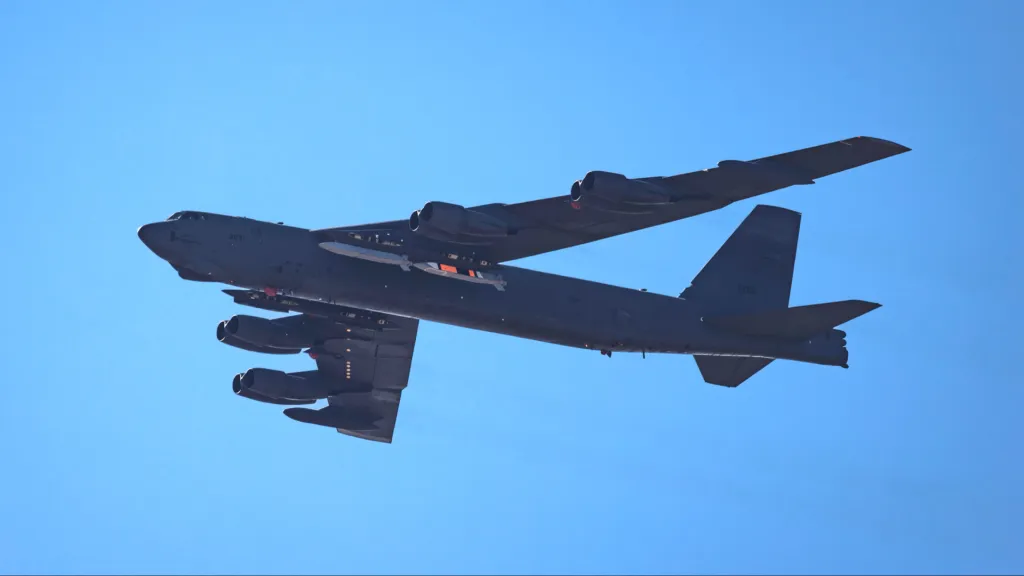


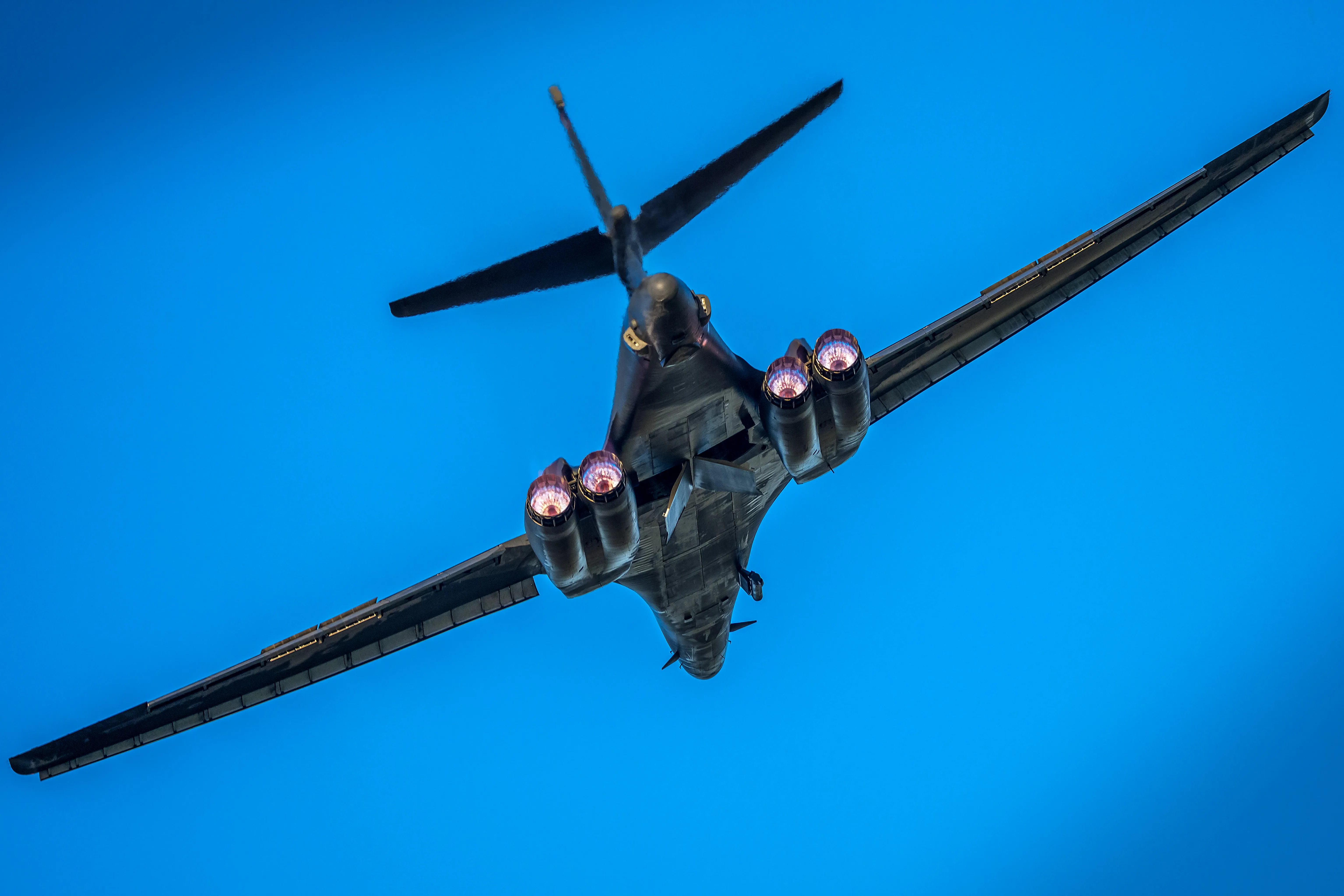





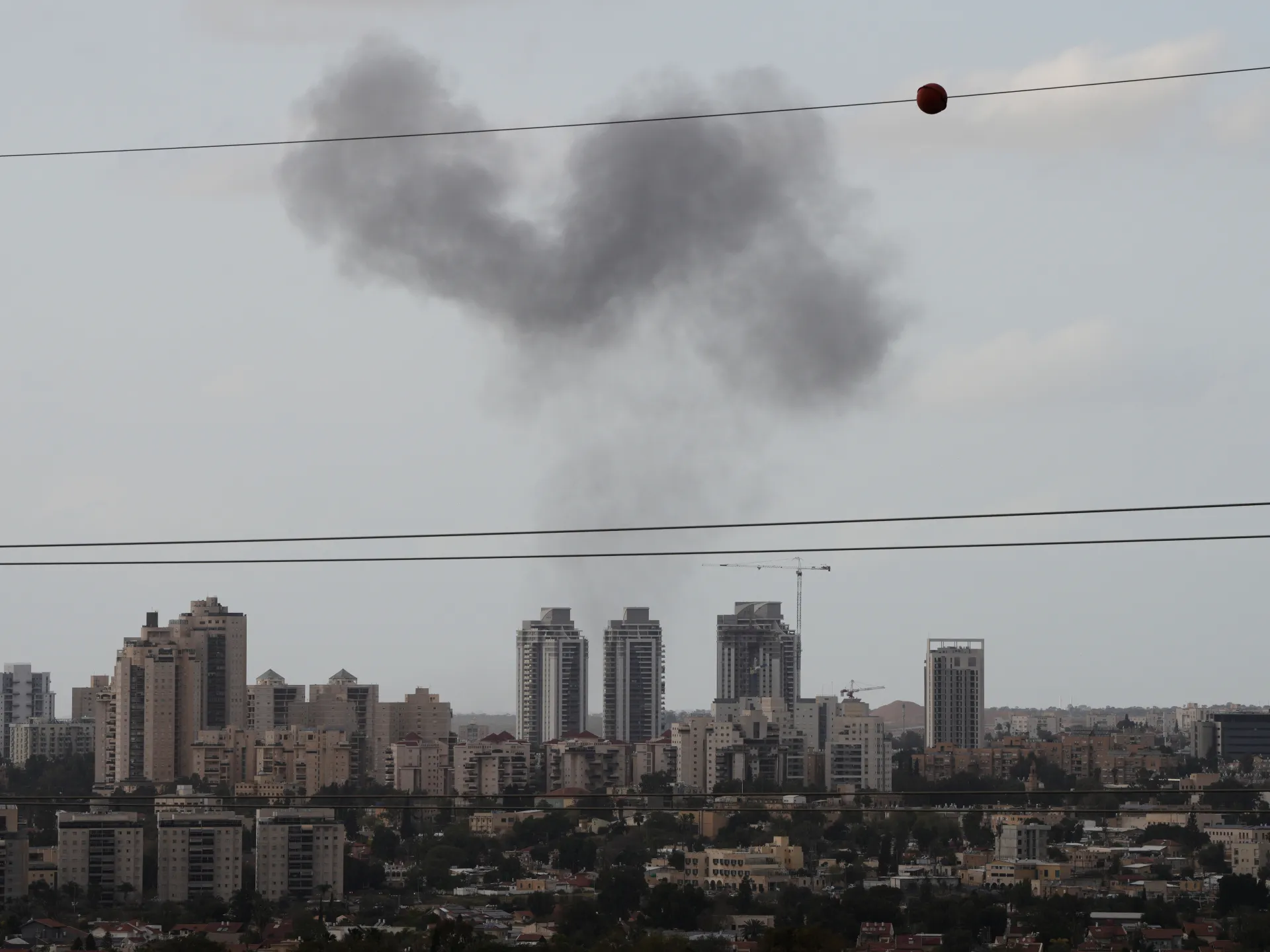



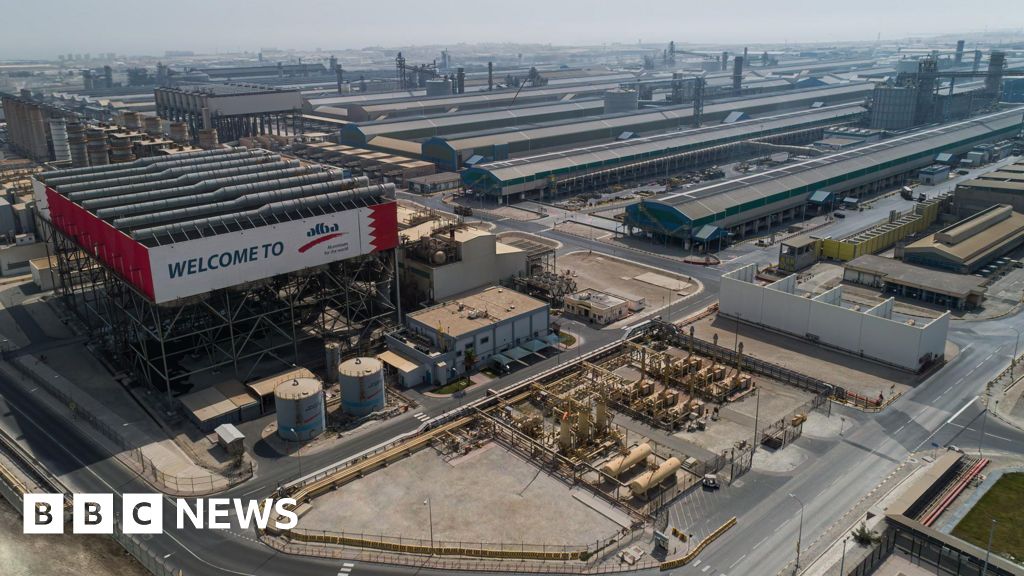
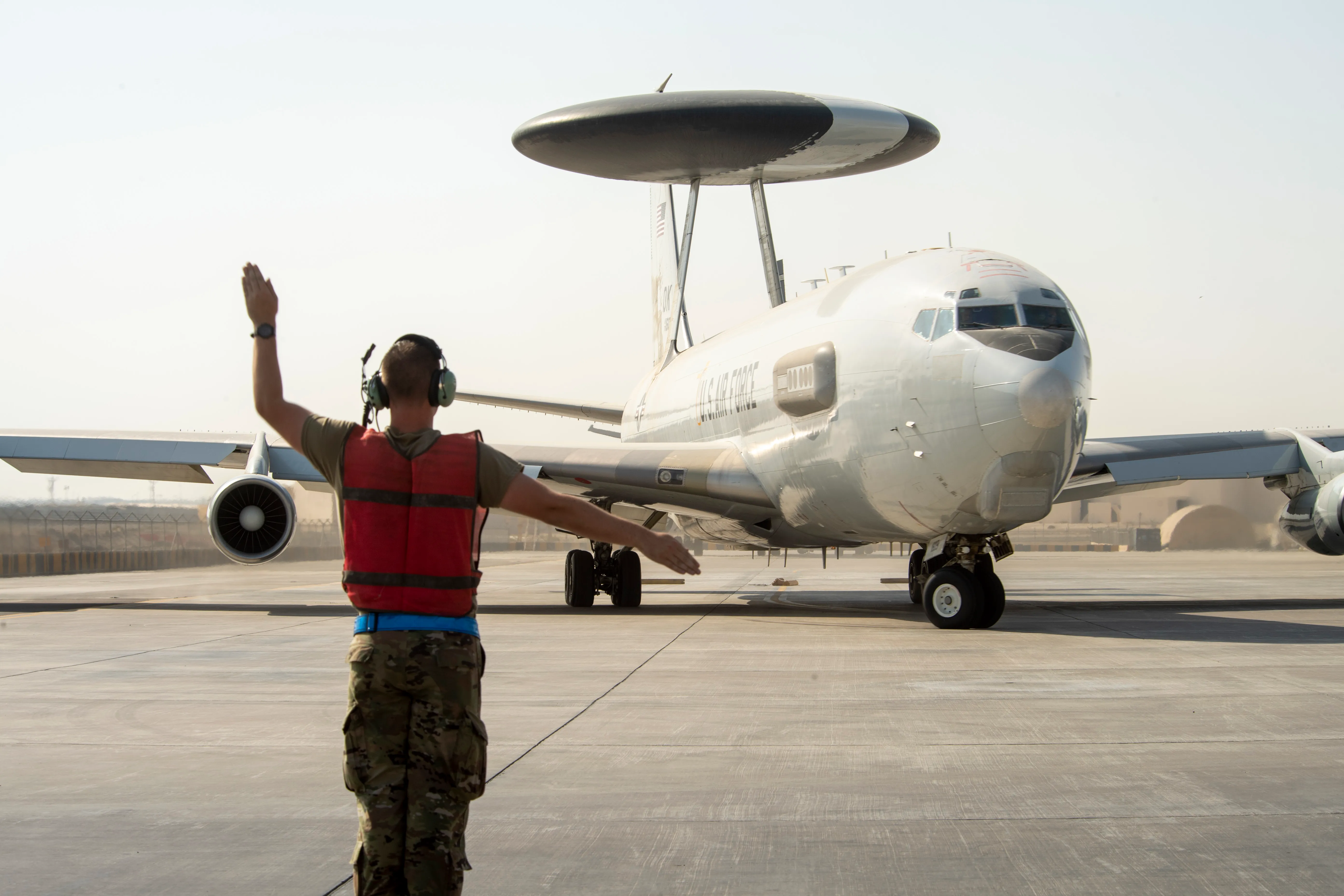






![Abdel Karim Salman heads daily to the charging station to charge his phone and his wife’s phone, which they use as a source of light in their tent throughout the night [Abdelhakim Abu Riash/ Al Jazeera]](https://i0.wp.com/www.aljazeera.com/wp-content/uploads/2026/03/873A6907-copy-1774666645.jpeg?w=640&ssl=1)