Stay informed and up-to-date with the latest news from around the world. Our comprehensive news coverage brings you the most relevant and impactful stories in politics, business, technology, entertainment, and more.
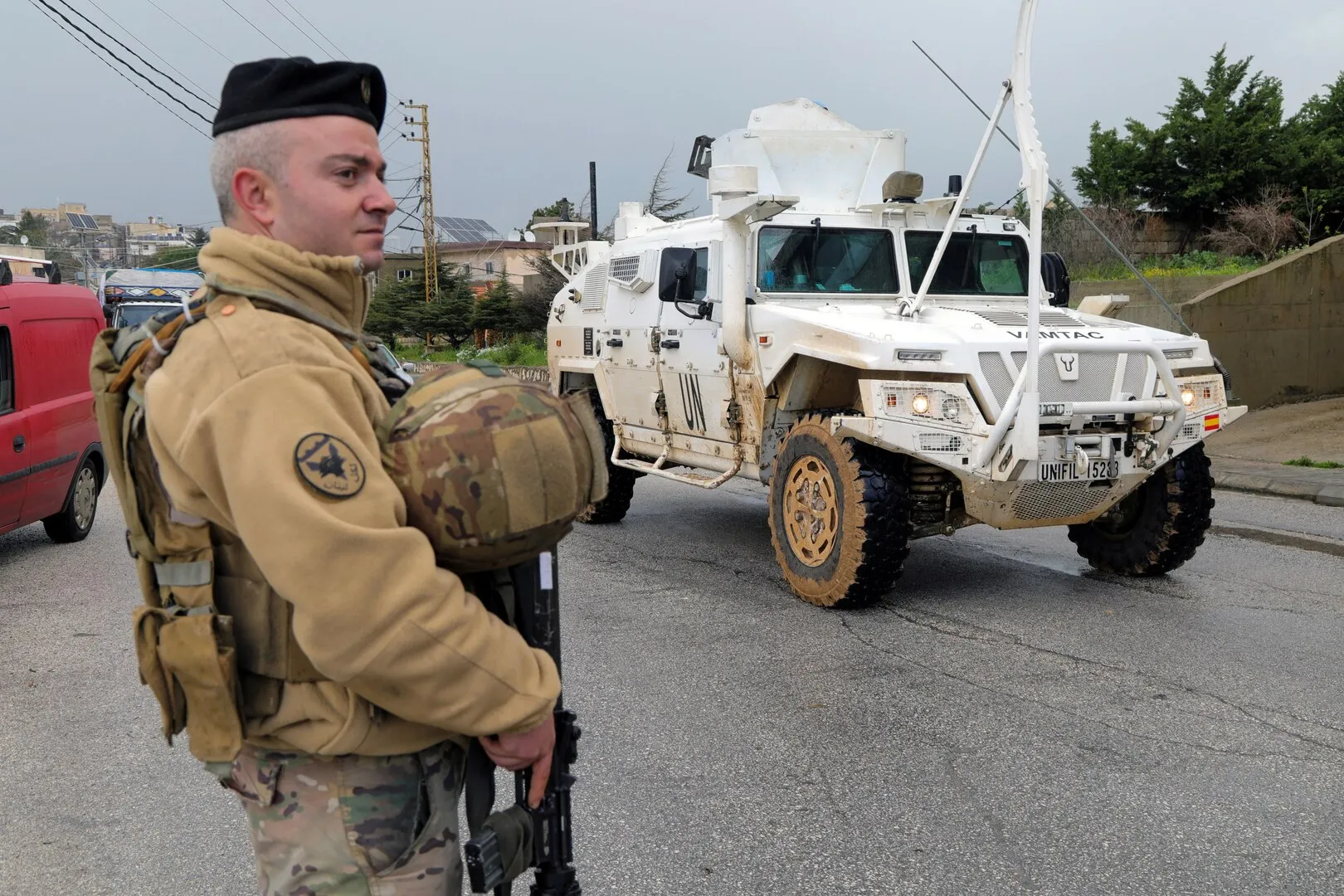
The UN has condemned the deaths of three Indonesian peacekeepers in southern Lebanon, who were killed in two separate incidents, including a vehicle explosion. They are the latest UN casualties since Israel expanded its ground invasion.
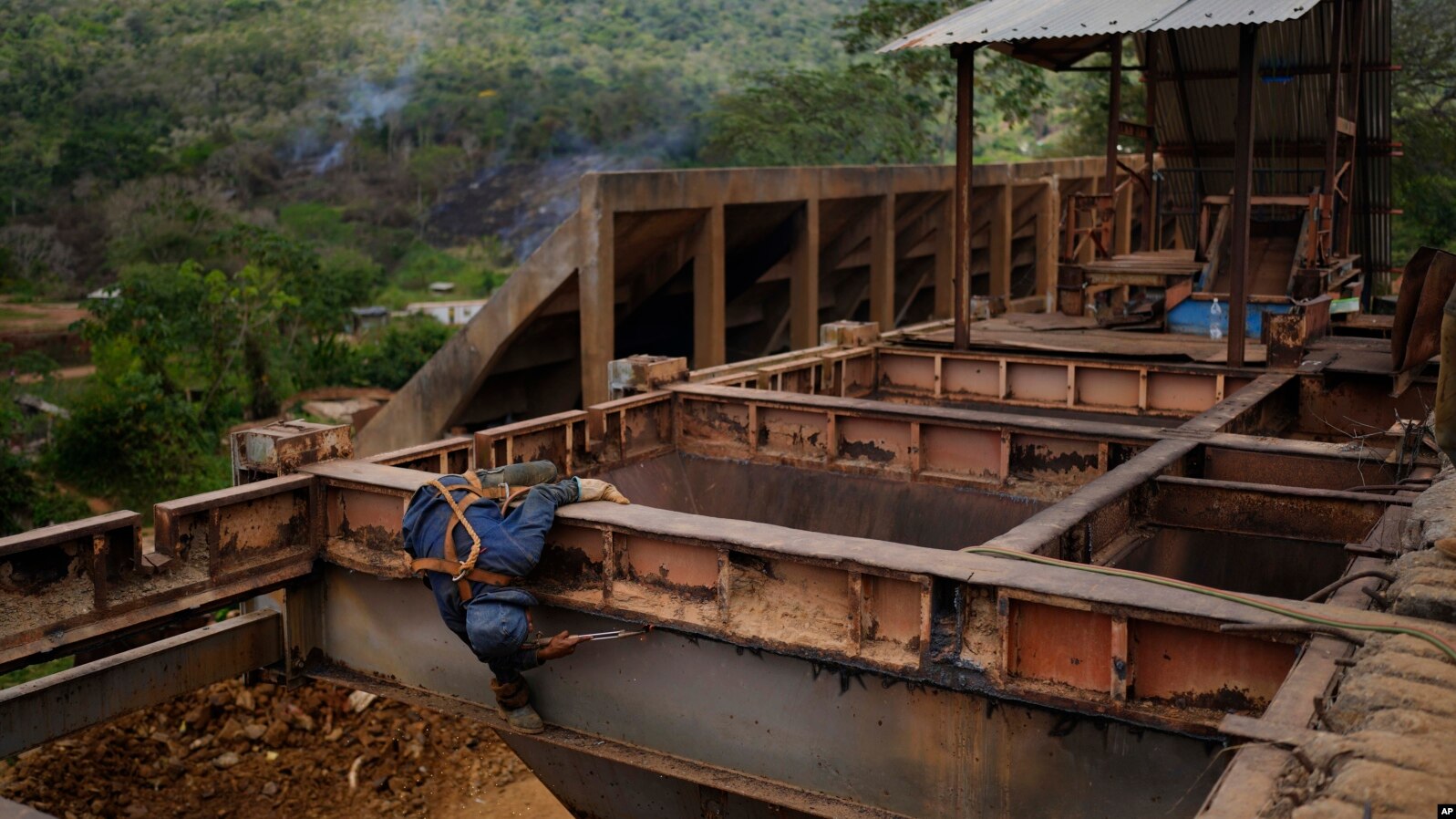
Venezuela contains extensive gold reserves in the east of the country. (AP)
Caracas, March 30, 2026 (venezuelanalysis.com) – The US Treasury Department has published three sanctions waivers related to the Venezuelan mining sector.
On Friday, the Treasury’s Office of Foreign Assets Control issued general licenses 51A (GL51A), 54 (GL54) and 55 (GL55) to authorize Western conglomerates’ dealings with Venezuelan minerals.
GL51A allows US entities to engage in operations to purchase, transport, and sell “Venezuelan-origin minerals, including gold.” However, it does not permit extraction or refining activities. The waiver replaced General License 51, which established conditions only for gold-related operations.
GL54 allows US entities to provide “goods, technology, software, or services” connected to mining activities in Venezuela. Finally, GL55 grants corporations permission to engage with Venezuelan state entities to negotiate contracts, but requires them to apply for a specific license before the contracts are enacted.
The latest US Treasury sanctions exemptions mirror recent licenses related to the Venezuelan energy industry, blocking transactions with entities from Cuba, China, Iran, North Korea, and Russia. They likewise mandate that all Venezuela-bound payments be made to a US Treasury-run account. Since January, the Trump administration has imposed control over Venezuelan oil exports, collecting revenues before disbursing a portion at its discretion to Caracas.
On Friday, Canadian conglomerate Roland Mineral Enterprises announced plans to “aggressively seek out and acquire interests in Venezuelan mineral properties.”
“Recent material events in Venezuela, including the new Draft Mining Law, make Venezuelan gold, silver and copper deposits and resources especially attractive for pioneering, transformative and rapidly adaptable resource companies like Roland Mineral Enterprises,” a press statement read.
Roland went on to disclose deals to access information on Venezuelan natural resource deposits and declare interest in gold projects such as Las Cristinas, estimated to contain over 14 million ounces of gold.
Western interest in Venezuelan minerals was boosted by a recent visit from US Interior Secretary Doug Burgum, who holds the natural resource portfolio. Burgum, accompanied by over 20 US and Canadian mining executives, held a meeting with Venezuelan Acting President Delcy Rodríguez and trumpeted the lucrative opportunities in the sector.
Burgum’s visit also saw US $100 million worth of gold bars shipped to the US in a deal involving Trafigura.
The negotiation of mining contracts remains contingent on an ongoing process to introduce new legislation. On March 9, the Venezuelan National Assembly preliminarily approved a new Organic Mining Law establishing favorable conditions and incentives for foreign capital.
Legislators have advanced in debating a second and updated version of the law, approving the first 55 of its 130 articles on Thursday. A final session is expected in early April. According to a draft of the latest version of the law seen by Venezuelanalysis, the bill establishes a new regulatory framework for mining at different scales, while also allowing private companies to take disputes to international arbitration.
The law expands conditions for private mining concessions, which can last up to twenty years and be renewed for two additional ten-year periods, and do not require National Assembly approval. Additionally, the executive can lower fiscal responsibilities for mining firms at its discretion. The law establishes 13 and 6 percent caps for royalties and a mining tax.
The law’s approval will repeal the current mining law, approved by the Hugo Chávez government in 1999, as well as a 2015 decree imposing state control over mining activities. Since 2015, the Nicolás Maduro administration looked to mining as a potential revenue source, particularly in the 112,000 square-kilometer Orinoco Mining Arc. Nevertheless, the sector was targeted by US sanctions, while the proliferation of irregular mining groups has generated environmental and human rights concerns.
Venezuela possesses vast proven reserves of gold, iron, and bauxite, as well as lesser quantities of copper and nickel. Analysts have also drawn attention to Venezuela’s significant reserves of coltan.
Venezuela’s mining reform follows a pro-business overhaul of the country’s Hydrocarbon Law. In recent weeks, Western energy giants Chevron, Eni, Repsol, and Shell have signed agreements for oil and gas exploration under the improved conditions of the new law. Acting President Rodríguez has touted the country’s reforms in lobbying foreign investors.
In parallel to oil and mining, Venezuelan authorities are also preparing to open the state-run electric sector to private capital. Acting President Rodríguez announced legislative reform plans, while a spokesman for the FEDECÁMARAS business lobby reported that Siemens and General Electric recently sent delegations to evaluate Venezuela’s electrical infrastructure.
Panic came last for Mubarak Hassan* on the evening of March 28, 2022.
It’s been four years since the terrorist attack on the Abuja-Kaduna train, but the memories still echo. After one of his clients was arrested by the Nigeria Customs Service (NCS) for alleged forgery, Mubarak travelled to the Abuja Headquarters to process his administrative bail. He was supposed to return on the same day he finished the process, but decided to spend one more night.
“My client’s family friend, who also happened to be a lawyer, insisted that we catch up with the evening train,” he recalled. Tired and exhausted, Mubarak was sleeping on board when the sound of a blast reached him.
“The next thing I heard was a voice saying that we were under attack and we should turn off our phones and lie down, which we all did. At first, I did not panic. I was asking myself if it was real or maybe the train just shifted its position, and it was misinterpreted to be an attack,” he said.
His worst fears were confirmed five minutes later, after the first gunshot tore through the wind, hitting the body of the train. Everything was happening so fast that he was struggling to process it.
The attack on the train carrying 970 passengers happened at approximately 7:45 p.m. in Katari, Kaduna State, northwestern Nigeria. The terrorists used explosives to halt the train before firing and kidnapping passengers. This incident, which resulted in ten deaths, multiple injuries and kidnappings, later caused the Nigerian Railway Corporation (NRC) to pause its services.
“We started to hear the screams of passengers from other coaches and the footsteps of people heading towards our coach for safety, because the gunfire started from their side. Other people in our coach started to scream as well, but a man who identified as a Colonel with the Nigerian army said that our screams would draw the attention of the terrorists to us, so we tried to keep calm,” Mubarak told HumAngle.
Mubarak, like many others in the coach, started praying. Panic heightened as the terrorists reached the coach before them. Their voices echoed through the train as they asked people to keep quiet and lie down.
“We heard a gunshot, and one of them asked the other terrorist who shot someone why he did that in Hausa, and he said it was because the man was showing he wanted to survive more than anyone else by raising his head, but the other terrorist said no one should shoot again, they should just take people and leave.”
A few minutes passed before they started to hear other gunshots, and the man who said he was a colonel said some soldiers came to rescue them. When the soldiers arrived, they told them not to panic and asked them to check the other coaches for their relatives.
“Our coach was one of the safest, except for a medical doctor who was killed as a result of a stray bullet; no one else was shot. The first thing I saw when I stepped outside was the dead body of a man. Some other people were bleeding due to some injuries they sustained. We started helping the soldiers evacuate the passengers. The younger ones, like us, helped carry the children and elderly ones on their backs, after which the wounded ones were also moved,” he added.
They had to climb up a sloppy hill because of the train’s position. They rested for about 20 minutes before they trekked to the main road. The army later transported them to the 44 Hospital in Kaduna around 5:30 a.m. They were checked, and people like Mubarak, who sustained no injuries, were discharged by 6 a.m.
That was the last time Mubarak used the train.
But this attack is only one of many issues that eroded passengers’ trust and raised concerns over the years. Train stops in the middle of nowhere, derailments, ticket racketeering, and other issues continue to affect passengers. Despite these pending issues, the NRC increased the number of trips per day earlier this month in “response to growing passenger demand.”
This increase was what encouraged Sada Malumfashi, a journalist and researcher, to take the train again on March 12, something he had avoided recently due to the stress of trying to get a ticket for the single train ride per day. He didn’t expect to end up in an accident that day.
According to the NRC, the accident occurred when a rear locomotive made contact with a passenger coach due to a coupling issue, and no casualties were reported. The train arrived 38 minutes behind schedule due to the accident.
“We left on time around 7:15 a.m. It was a smooth ride at first. When we reached Jere, they made an announcement, but we couldn’t hear it from our coach. I drifted off to sleep but woke up to a banging noise. I fell off my seat, but I didn’t hit anything,” Sada said. “Due to the previous history of attacks, people were terrified, many were shouting, praying loudly, and panicking.
Sada assumed the train was going to derail, and he tried to hold onto whatever he could. “My second thought was that maybe it was a terrorist attack, I crouched waiting for gunshots just in case because I did some reporting on the last train attack that happened in 2022 and talking to people who were directly on that train gave me a front row seat to that experience and what they described was very similar to what was happening at the moment,” he said.
When he didn’t hear any gunshots, he got up and began checking his surroundings. The place was in disarray: luggage was on the floor, and things spilt from the cafe section at the end of their coach.
“I saw one of the workers lying on the floor, and his leg was bleeding. There was also a pregnant lady crying as she hit her stomach. Someone couldn’t stand up because he hit his back, and another person behind me was bleeding through his mouth,” he explained.
Get our in-depth, creative coverage of conflict and development delivered to you every weekend.
Subscribe now to our newsletter!
The incident happened about two to three minutes from Asham station on the Abuja-Kaduna corridor, so he walked to the station. Some military personnel arrived to check the accident, which gave passengers some comfort. After a while, a Hilux car, assumed to be from the NRC, came to check the accident.
“They didn’t communicate anything, but they took a look around. At that point, many passengers were out of the train and were hanging around outside. They turned on the engine, and we started moving again. It was a sombre trip back to Kubwa,” he said.
A long history of train glitches
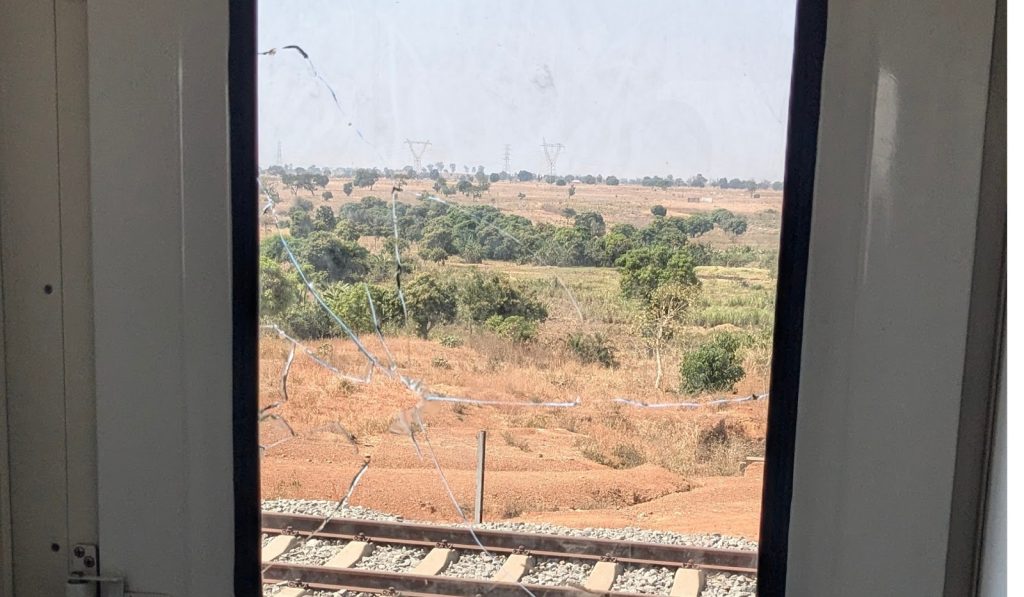
A broken window on the train after a stone was thrown from a nearby community. Photo: Hauwa Saleh Abubakar/HumAngle.
It was one such stop that made Chidera Egbo’s first visit to northern Nigeria in December 2021 a journey wrapped in terror. After he was posted to Kaduna for his National Youth Service, he tried to get a direct car from Enugu, southeastern Nigeria, where he was based, but unfortunately, he could only get one to Abuja, where he was advised to take a train. He was excited as it was his first time on a train.
Things went well at first, and he started a conversation with the girl sitting next to him. “While we were chatting, we heard an explosive sound and the train started to slow down. People started to talk, but I couldn’t understand anything as they were mostly speaking their native tongue,” he said. He panicked along with them. The incident happened about 10 to 15 minutes away from the Kaduna station.
He noted that there were some armed security personnel on board that day. He remembered seeing some people lying on the floor, and he followed suit.
When the train stopped, he started to regret getting on it, and his fear worsened when someone said it was a terrorist attack. The lack of official clarification about what was happening also increased his panic. Even an hour after their supposed arrival time, no help was sent from the station. When the lights went out, a man in their coach suggested they lie down and shut off their phone lights because everyone assumed they were under attack. During that period, some passengers panicked, thinking they saw lights they believed were people approaching. They turned out to be distant static lights.
“There was zero reception, and I had no way of contacting people to let them know what was happening. After a while, they told us that help was coming from Abuja.” The lack of phone reception rattled many of the passengers, who were worried about their families back home and had no idea what was happening to them. Some passengers demanded information. Eventually, people started to lighten up when an NRC staff member announced that help would be arriving in about 30 to 40 minutes.
After a while, some people started demanding to be let out of the train due to the heat. It took hours for the help to arrive, and the train kept stopping as it was being pushed towards the Kaduna station. He didn’t make it to his destination till after 2 p.m.
The experience left him rattled. He now feels anxious every time he has to travel. “I don’t travel often, but when I do, I am always on edge and feel like I am going to be attacked,” he said.
Despite the impact of this incident, it was mostly not covered by the mainstream media.
For some people, like Rashida Idris*, stories like this make them sceptical about using the service. “ I always hear people say it gets faulty midway, and I prefer to use the car due to how inconvenient the train is. But then, on the 2nd of August 2025, my mum, older brother, and I decided to use the train to travel down to Abuja, and it turned out to be the worst decision we made that day,” she said. It started with a slight burning smell that worsened as the train moved on, then slowed and later stopped completely.
The train, which was supposed to leave at 7:00 a.m., didn’t arrive until 2:30 p.m, and they ended up missing the event for which they were travelling. Drinking water ran out on board, and the air conditioners stopped working, leaving people anxious and dehydrated in the heat.
“It was very chaotic, and we were very hungry and tired. The train just stopped mid-way, no explanation from them whatsoever,” she told HumAngle.
She hasn’t used the train again since that day.
Sometimes, these stops harm passengers, as in August 2025, when they caused a derailment en route to Kaduna. Khadija Zahradden, who was on that train, said a loud noise woke her up from a nap.
“The train started shaking, and there was a loud sound before it fell. Some parts of the train, like the coach I was in, were slanted, but it didn’t fall down completely. I remembered it was raining,” she said.
The passengers got off the train and began trekking to a nearby military camp. A lot of security personnel came over, including fire service and road safety officials. She recalled that a military aircraft was patrolling and left with some of the people.
“The military personnel also carried passengers to the closest bus stop, where we got cars to complete our trip,” she said.
Inside the Kaduna- Abuja Train. Photo: Hauwa Saleh Abubakar/ HumAngle.
Dysfunction, ticket racketeering
Bukar Hassan* was on the first-ever train ride on that route, and for the past few years, he has used it to shuttle between the two states. But now, the journey lacks enthusiasm, and his experience keeps worsening, with tickets becoming harder to obtain by the day.
“First, you have to know someone reliable whom you probably have to keep on your payroll in anticipation of a future occurrence. Usually, an NRC or TPS staff member guarantees an offline ticket,” Bukar said. “Where they are unable to secure one themselves, they look to a syndicate that has created jobs for itself through this channel. You pay double the price, and most times, the ticket is issued in another person’s name, and you probably have to do with what is available, not your preferred class of travel.” This causes the 62-year-old man major concern.
Apart from the barriers to getting tickets, technical breakdowns occasionally occur, and the experience is usually alarming, especially if the train stops in the middle of nowhere. The security concern is also a major issue for him, as are the stops, which affect his commitments, causing delays in scheduled meeting times and travel schedules.
This is also worsened by insufficient communication, leaving passengers to fill in the blanks when something happens.
“Passengers hardly know what the issues are and rely mostly on hearsay. In some cases, apologies are not even tendered,” he lamented, noting that the recent creation of a passenger’s forum has provided passengers with an avenue to lodge complaints.
HumAngle investigations reveal that when complaints are made, organisation staff respond promptly via the WhatsApp forum, but this has not reduced the number of issues plaguing travellers, and many people are unaware of this channel. A disabled passenger who spoke to HumAngle, but preferred not to be named, said the organisation is making efforts to make rides more accommodating for disabled passengers, with customer service representatives approaching them to discuss their needs. However, Bukar showed concern that the uncontrollable number of bag carriers on and off the train poses a security risk.
“Security personnel handling weapons on board in the midst of plenty, even though comforting, can easily be manhandled. Sometimes, desperate passengers board without tickets. This is a major concern as you are not sure who is a genuine traveller,” he said.
“There are too many ad hoc staff on board doing nothing but jumping up and down and making noise. Some are only waiting for the arrival to carry passengers’ bags. Thirdly, a single channel of buying tickets only is grossly inadequate. A more reliable, functional app should be available for passengers to buy tickets in advance. I personally do not see the rationale for restricting ticket purchases to only 48 hours. It does not make any business sense. These will actually be more efficient, and also reduce the offline business,” he added.
Bukar also noticed that, during trips, stones are sometimes thrown aboard by nearby communities. He thought the incident had eased over the years, but HumAngle investigations show that this problem still persists: on December 24 2025, a stone was thrown aboard, shattering a window, which almost hit a passenger with her baby.
Bukar continues to use that service, as the train is still the most convenient means of transportation for him at the moment.
Broken glass on the train floor, after a stone was thrown from a nearby community. Photo: Hauwa Saleh Abubakar/ HumAngle.
Like Bukar, Hassan Yunus*, who travels twice or three times a month, depending on his schedule, faces a similar problem. His family lives in Kaduna, while he works in Abuja. He frequently uses the train, which he considers the easiest and fastest way to travel between the two cities.
“As a frequent passenger, I experience long stops quite a number of times, sometimes 30 minutes, sometimes an hour, depending on the cause, but the management and the operation team will work to resolve the situation. To me, the management is trying, just that they need to improve as a revenue-generating corporation,” he said.
He believes the biggest barrier travellers face is ticketing issues with the transport payment solutions. He thinks the issue is fueled by poor customer service and system downtime. This also affects passengers’ quality of life, as many would have to stay awake to buy a ticket in the middle of the night. In a few instances, he was wrongfully debited after booking a ticket, and the process to get a refund for the missing ticket is usually stressful.
Another passenger, Balarabe Bello*, says getting tickets from Abuja to Kaduna is often a struggle. “I often notice that sometimes they hold the servers, and you will struggle to get a ticket, especially the business class tickets. Even if you are on the app by 12:00 a.m. when tickets are supposed to be released, it just keeps loading, and you can’t buy them,” Balarabe said.
In such cases, most people will attempt to buy directly from the train station workers, and a business class ticket, which usually goes for ₦6500, can sell for ₦8500, and he had heard of people being sold tickets as high as ₦15,000.
“My mum travels often as she works in Kaduna, and she is always complaining of one issue or another, such as uncomfortable seats and other technical issues. One time when I was on it, the train stopped in the middle of nowhere for like 10 to 15 minutes as a result of a burning smell coming from under the train,” he said.
To confirm claims of ticket racketeering by passengers, a HumAngle reporter followed the process of purchasing tickets outside the official channel. We interacted with NRC officials selling tickets through the back door to desperate passengers, short-changing the government. We also found that some individuals who are not working in the ticketing office also profit from the existing dysfunction by charging passengers far above official rates. The back-door procedure is simple: you provide your full name, phone number, and National Identity Number (NIN), then pay extra for the tickets. Although there’s a website to purchase tickets, many passengers are unaware of it, leaving them with no option but to patronise the racketeers.
Art on the body of the train. Photo: Hauwa Saleh Abubakar/ HumAngle.
Halimat Akande* knew that getting tickets for the Kaduna-Abuja train could be a hassle, so she tried to buy tickets earlier for a Monday trip. She wanted to purchase two for herself and her mother at 5:00 a.m. on Saturday, but there weren’t any seats available.
“My mom contacted someone who claims to work there. He said we should pay ₦5,000 for each ticket,” she said, a claim HumAngle confirms to be true. The price for economy or standard tickets on the website ranges from ₦3,600 to ₦ 3,800, depending on the seating arrangement. This option is the most affordable means of transportation from Kaduna to Abuja, as even car rides cost ₦9,000.
The NRC official, whom Halimat contacted, had mistakenly bought Abuja-Kaduna train tickets instead of Kaduna-Abuja. He reassured her they would receive their proper tickets before their trip, asking them to arrive early on the travel date, as a worker from the Abuja station would hand them the tickets at the train station.
They arrived an hour before their trip. “We stayed outside as we couldn’t check in since we didn’t have a ticket. A man approached us and told us we were not supposed to be standing there, and if we didn’t have a ticket, we should get out of the station.” Halimat and her mother both felt embarrassed and left the station to prevent further discomfort.
When the man arrived, he asked them to wait a little longer, claiming he had their tickets ready. However, when he brought the tickets, both were registered under different names. She also noticed that one ticket was for the previous date, but he assured them it wouldn’t be a problem. After he spoke to some people, they were allowed to board with the one valid ticket.
The man said he would get her a valid ticket before the journey started, but he never did. “After we boarded, my mum sat down in the assigned seat, and I sat down in the then-empty seat beside her, but the original owner came, and I had to stand up. I kept moving to about four or five random seats, but the rightful owners came up to claim those seats,” she told HumAngle.
She met her colleague, who was in the same predicament when he came to claim her mother’s seat as his own; the details on his ticket matched hers exactly.
“He told me that he was even going to take the road, but someone called him to tell him they had gotten him a ticket, only to give him the same exact ticket my mother had, which further complicated the situation. I think he ended up standing for a while,” Halimat said. Eventually, her mother offered her a seat and tried to find an empty one on the train, but it took a while before they got one for Halimat.
She was nervous and anxious, even after she got a seat, especially during the ticket verification round that happens during the trip. When the man reached her, she switched off her phone and claimed the battery had died. Fortunately, he bought her story, and she was able to escape for a moment. But her anxiety remained as the man told her to charge her phone before he returned, which he never did.
“Even though I knew they couldn’t drop me while the train was in motion, I was worried they might report or arrest me because I had broken a rule.” The whole experience was terrible, and she started advising people not to buy tickets offline from station workers.
For Nabila Shehu*, her trip to Abuja on July 25 2025, took a turn for the worse when she arrived at the train station and discovered that the number of passengers exceeded the original arrangement.
“It seemed their server had issues that day, and some people were debited but didn’t get a ticket. Due to the high number of people that were affected, they just opened the train and asked us all to get in,” Nabila said.
She couldn’t get a ticket earlier and called someone at the train station, who promised to get her one, but due to the pending issue, he couldn’t process any tickets for her and her four children.
“We couldn’t get seats, but one of the staff members on board gave me his stool and also helped me get another. I couldn’t sit, and the children took turns,” she complained, noting that the trip was difficult and exhausting, as they arrived late. The air conditioner was barely working, she added, and the train was moving too slowly due to an overload. “It was a terrible experience, and I avoided the train when I was returning.”
However, when she used the train again in November, she encountered no issues.
HumAngle sent an email to the NRC seeking clarification on issues raised by passengers regarding dysfunction and ticket racketeering in the Abuja-Kaduna train operations. We have yet to receive a response. Meanwhile, the risks of travelling the 198km between Abuja and Kaduna remain high, as passengers are forced to choose between the road, which has been under construction for the past six years, and the train, despite ongoing problems.
Weekly insights and analysis on the latest developments in military technology, strategy, and foreign policy.
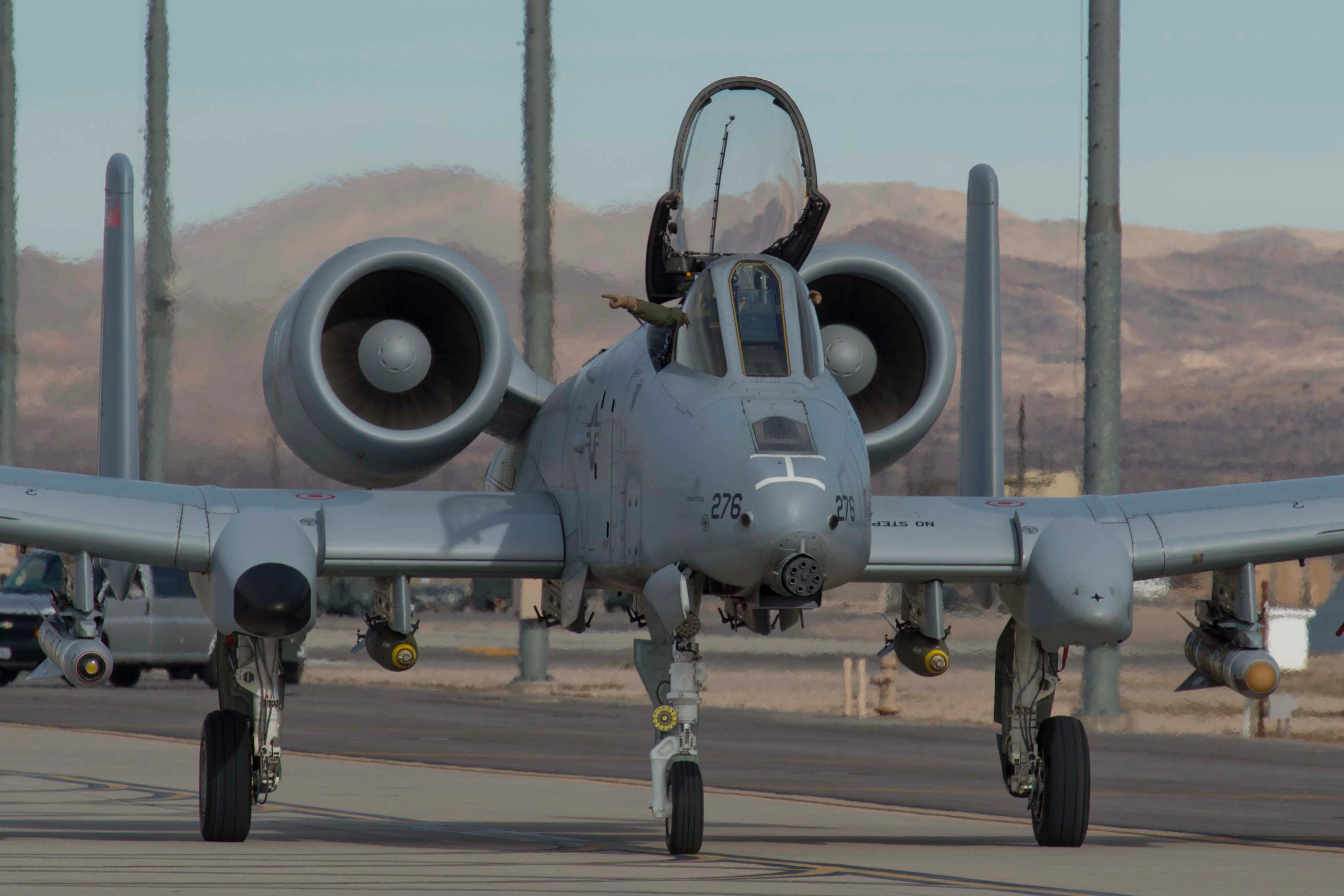
With the iconic attack jet now in the twilight of its career, there are signs that the A-10C Warthog is set to deploy to the Middle East region for Operation Epic Fury. Such a deployment might well provide the combat swansong for the A-10, which the U.S. Air Force plans to retire for good by the end of the decade, if not sooner. The development comes as U.S. President Donald Trump ramps up his threats against Iran, including threatening to eliminate its civilian infrastructure and oil-producing capability.
Publicly available flight-tracking data today suggested that the Air Force was preparing to send a flight of A-10s across the Atlantic, with three KC-135 Stratotankers already airborne from RAF Mildenhall in England, apparently to meet TABOR 71, a flight of eight Warthogs headed in the opposite direction. Two of those jets were spares, according to unverified reports based on radio traffic.
Meanwhile, there are indications that as many as 20 A-10Cs have gathered at Portsmouth International Airport at Pease, New Hampshire, which is a standard jump-off point for a flight across to RAF Lakenheath in England, which has seen a major influx of U.S. combat jets in recent weeks.
Unconfirmed reports suggest these Warthogs are drawn from the 124th Fighter Wing of the Idaho Air National Guard at Gowen Field, and from the Michigan Air National Guard’s 127th Wing at Selfridge Air National Guard Base.
A-10Cs from the 190th Fighter Squadron at Gowen Field, Idaho, prepare for takeoff at Nellis Air Force Base, Nevada, taking part in a Green Flag exercise, designed to better train pilots in their role to support ground forces. U.S. Air National Guard Photo by Tech. Sgt. Sarah Pokorney/released Master Sgt. Sarah Pokorney
As we have discussed, A-10s are already helping dismantle Iran’s Navy, operating in the region in their long-standing, if often overlooked, maritime role. This is part of broader efforts by the U.S. military to find ways to reopen the critical waterway to normal maritime commerce, which has ground to a virtual halt in the face of Iranian attacks on shipping and its declaration that the strait is closed.
Having more A-10s in theater would provide additional capability, were the U.S. military to occupy or blockade Iran’s strategically vital Kharg Island, a prospect that we have discussed in detail in the past. A-10s could also provide valuable close air support for commando raids deeper into Iran.
A U.S. Air Force A-10C prepares to refuel from a KC-135 Stratotanker aircraft over the U.S. Central Command area of responsibility during Operation Epic Fury, March 9, 2026. U.S. Air Force photo U.S. Central Command Public Affa
UPDATES:
A U.S. move against Kharg Island, as well as a potential commando raid to seize Iranian uranium, are two options apparently now on the table.
In his latest threat against Iran, President Donald Trump declared that the U.S. military will “obliterate” Iran’s Kharg Island if a deal is not reached shortly.
In a post on Truth Social, Trump today claimed the United States is in “serious discussions” with a “new and more reasonable regime” to end the war, but made direct threats against Kharg Island, as well as Iranian civilian infrastructure and oil-producing capability:
Great progress has been made but, if for any reason a deal is not shortly reached, which it probably will be, and if the Hormuz Strait is not immediately “Open for Business,” we will conclude our lovely “stay” in Iran by blowing up and completely obliterating all of their Electric Generating Plants, Oil Wells and Kharg Island (and possibly all desalinization plants!), which we have purposefully not yet “touched.”
President Donald Trump said Monday that the U.S. will “completely” obliterate Iran’s electric generating plants, oil wells and Kharg Island if the strategically vital Strait of Hormuz is not “immediately” reopened and a peace deal is not reached “shortly.”
In the same Truth Social post, Trump also raised the possibility of the United States declaring victory in the conflict without Iran reopening the Strait. This could come along with destroying much of Iran’s civilian infrastructure, including the Iranian people’s access to electricity and possibly clean drinking water.
In this message Trump:
– Signals the U.S. could end Iran mission without reopening Strait
– Threatens war crimes under international law
– Expects deal with Iran shortly despite mere days of intermediary-led message passing
Over the weekend, Trump said his “preference would be to take the oil” in Iran and that U.S. forces could seize the regime’s export hub on Kharg Island. Trump told the Financial Times that “my favourite thing is to take the oil in Iran, but some stupid people back in the US say: ‘why are you doing that?’” He also said: “Maybe we take Kharg Island, maybe we don’t. We have a lot of options.”
Trump to FT:
Maybe we take Kharg Island, maybe we don’t. We have a lot of options.
Over the weekend, the New York Timesreported that around a hundred U.S. special operations forces have arrived in the Middle East, joining thousands of Marines and Army paratroopers already in the region.
“The commandos, including Army Rangers and Navy SEALs, have not yet been assigned specific missions,” the report stated, citing unnamed U.S. officials, although a mission to try to seize Kharg Island is certainly a possibility.
Several hundred U.S. Special Operations forces, including Army Rangers and Navy SEALs, sent to Mideast to join thousands of Marines and paratroopers as Trump weighs ground operations against Iran w/@helenecooperhttps://t.co/Lcw9GnYHJY
Trump confirmed to Caitlin Doornbos of the New York Post that U.S. officials are negotiating with Iranian parliamentary speaker Mohammad Bagher Ghalibaf. The U.S. leader added that he expected to “find out in about a week” whether he is someone America can truly work with.
President Trump confirmed to me today that the US is negotiating with Iranian parliamentary speaker Mohammad Bagher Ghalibaf, saying we’ll “find out in about a week” whether he is someone America can truly work with.
On the nuclear issue, the Wall Street Journal is reporting that Trump is weighing up a military operation to extract nearly 1,000 pounds of uranium from Iran, citing unnamed U.S. officials.
TWZ had previously explored the possibility of U.S. and/or Israeli authorities launching a special operations ground raid to extract or otherwise neutralize Iran’s stockpile of enriched uranium. Given that this nuclear material is understood to be stored in deep underground bunkers, it is far from easy to achieve this objective from the air alone. Israel has demonstrated its ability and willingness to carry out complex raids on subterranean facilities, but any such operation would still face immense risks and uncertainties.
NEW; President Trump is weighing a military operation to extract nearly 1,000 pounds of uranium from Iran, according to U.S. officials, a complex and risky mission that would likely put American forces inside the country for days or longer. https://t.co/R87wGm2ukF
In related news, satellite imagery dating from last June was published over the weekend, suggesting that Iran might have moved at least some of its highly enriched uranium to a secure base to protect it from airstrikes.
Over the weekend, @lemondefr and @francoisdm published a VERY interesting image of what appears to be some of Iran’s highly enriched uranium enroute to a secure base in Isfahan last June. Amidst all this talk of seizing Iran’s uranium, it’s worth discussing…🧵 pic.twitter.com/hvmWNEsjq6
Using Pakistan as a mediator, the United States provided Iran with a 15-point ceasefire proposal last week, including reopening the Strait of Hormuz — which carries around 20 percent of the world’s oil supply — and curbs on Iran’s nuclear programs. So far, Tehran has rejected the proposals. U.S. Secretary of State Marco Rubio also toldAl Jazeera that another condition is that Iran must stop producing drones and missiles of the kinds used in combat in recent weeks.
For its part, Tehran wants an end to Israeli attacks on Iranian allies in the region as part of any negotiated deal. There are also suggestions that Iran is pushing for reparations for war damage and even the removal of U.S. military bases from the Middle East.
Speaking to journalists, Esmaeil Bagaei, an Iranian diplomat who is the current spokesperson for the Ministry of Foreign Affairs, said Iran had received messages via intermediaries indicating U.S. willingness to negotiate, but said that the American proposals were “unrealistic, illogical, and excessive.”
“Our position is clear. We are under military aggression. Therefore, all our efforts and strength are focused on defending ourselves,” Baghaei added.
Iranian Foreign Ministry spokesman Esmail Baghaei told reporters that the demands in the U.S. 15-point proposal were “excessive, unrealistic and unreasonable.” His comments directly contradicted Mr. Trump, who said last week that Iran had agreed to most of the points.…
Trump claims Iran will allow 20 oil tankers to pass through the Strait of Hormuz starting Monday morning and continuing over the next few days as a “present.”
“They gave us 10 [ships through the strait],” he said, in reference to earlier claims. “Now they’re giving 20…”
Trump added that Mohammad Bagher Ghalibaf, Iran’s parliamentary speaker, had authorised the additional tankers.
“He’s the one who authorised the ships to me,” Trump told the Financial Times. “Remember I said they’re giving me a present? And everyone said: ‘What’s the present? Bullshit.’ When they heard about that they kept their mouth shut and the negotiations are going very well.”
U.S. President Donald J. Trump tells reporters aboard Air Force One that Iran has given the United States a “tribute” of 20 oil tankers that are expected to begin crossing Monday morning through the Strait of Hormuz. pic.twitter.com/IBOt9OkumU
Scott Bessent, the U.S. Secretary of the Treasury, told Fox News today that “We are seeing more ships pass daily… but over time, the U.S. is going to retake control of the straits, and there will be freedom of navigation, whether through U.S. escorts or a multinational escort.”
Sec Scott Bessent on the Strait of Hormuz:
“We are seeing more ships pass daily… but over time, the U.S. is going to retake control of the straits, and there will be freedom of navigation, whether through U.S. escorts or a multinational escort.” pic.twitter.com/XwdHKRhwzT
The Economistreports that Iran, whose tankers continue to operate through the strait, is now earning nearly twice as much from oil sales each day as it did before the conflict began.
Absolutely remarkable. “Iran is now earning nearly twice as much from oil sales each day as it did before American and Israeli bombs started falling on February 28th. It may be pummelled on the battlefield, but the regime is winning the energy war.” https://t.co/Nnky62LjAW
PHOTO OF THE DAY: Tehran was loading five (5!!!) oil tankers simultaneously yesterday at Kharg Island, as the US-Israel-Iran war enters into its fifth week.
Based on information provided by U.S. government officials and Wall Street analysts, Bloombergpredicts that oil prices could continue to surge, up to unprecedeted $200 per barrel.
Elsewhere in the oil war, Iranian parliamentary speaker Mohammad Bagher Ghalibaf took to X to argue that pre-market statements from the White House or messages on the Truth channel are “often just a setup for profit-taking,” something that appeared to come true hours later.
The conflict expanded further over the weekend, bringing with it the prospect of additional disruption to commercial shipping, with the entry into the war of the Houthis in Yemen.
Houthi forces, close allies of Iran, said on Saturday they had fired a salvo of ballistic missiles at “sensitive Israeli military sites” and that they would continue military operations until the “aggression” came to an end on all fronts. Israel said today that it had intercepted two drones originating in Yemen.
There is now the risk that the Houthis could attempt to close the narrow Bab al-Mandab strait to maritime traffic. This would effectively close off the Red Sea to shipping, just as Iran has in effect shut the Strait of Hormuz.
The port in the northern Israeli city of Haifa was struck today, apparently by debris from an intercepted missile. Videos posted to social media showed part of the Bazan oil refinery there on fire. Israel’s fire and rescue service confirmed the incident, but there were no immediate reports of any casualties or damage to production facilities.
The Wall Street Journal is among those reporting that the oil refinery was hit by an Iranian missile.
The United Arab Emirates says its air defenses have intercepted 11 ballistic missiles and 27 drones launched from Iran today.
Overall, the defense ministry of the UAE says it has engaged 1,941 drones and 440 missiles since the war began.
“The Ministry of Defense affirmed that it remains fully prepared and ready to deal with any threats and will firmly confront anything that aims to undermine the security of the country, in a manner that ensures the protection of its sovereignty, security, and stability and safeguards its interests and national capabilities,” it said in a statement shared on social media.
UAE air defences engaged 11 ballistic missiles and 27 UAV’s.
The UAE air defences on 30th March 2026 engaged 11 ballistic missiles and 27 UAV’s launched from Iran.
Since the start of the blatant Iranian attacks, UAE air defences have engaged 425 ballistic missiles, 15 cruise… pic.twitter.com/l7vQknja23
Meanwhile, the Bahrain Defense Force (BDF) has also provided a tally of its air defense operations since the conflict began on February 28. The BDF says its air defense units have now intercepted and destroyed 398 drones and 182 missiles launched by Iran.
Oman’s port of Salalah was hit by a drone over the weekend, leaving one worker injured and causing minor damage to the facility. The Danish shipping firm Maersk announced today that operations at the port would restart from Tuesday.
Maersk said the damage was “limited” and that the port’s management would take “necessary measures” to progressively build up to full capacity.
Two kamikaze drones struck Salalah Port in Oman today, causing damage to a single container gantry crane.
So far, Oman’s keeping quiet and Iran hasn’t stepped up to claim the hit either. pic.twitter.com/E66GQNI02E
Another ballistic missile launched from Iran has been shot down after it entered Turkish airspace. Turkey’s defense ministry confirmed that the missile had been brought down by undisclosed NATO air and missile defenses deployed in the eastern Mediterranean.
This is the fourth such incident since the start of the Iran war, following three earlier interceptions by NATO air defense systems earlier this month.
BREAKING: Turkish MoD:
A ballistic munition, determined to have been launched from Iran and to have entered into Turkish airspace, has been neutralized by NATO air and missile defence assets deployed in the Eastern Mediterranean. pic.twitter.com/FnMfGJrKdA
Footage has emerged showing a British Army air defense team shooting down an Iranian attack drone over the Middle East with a Martlet Lightweight Multirole Missile (LMM). At least four RAF Regiment gunners have received ace status, shooting down five or more drones, the U.K. Ministry of Defense has said. Traditionally, an aerial ace applies to a pilot who has shot down five or more crewed aircraft in air-to-air combat.
Footage of a British air defense team shooting down an Iranian attack drone over the Middle East with an LMM Martlet SAM.
At least four RAF Regiment gunners have received ace status, shooting down 5 or more drones, while UK forces have shot down dozens of drones in the region. pic.twitter.com/HLKeHmQlc9
The Israeli Defense Forces (IDF) claims it has struck a university in Tehran run by Iran’s Revolutionary Guards Corps (IRGC), saying that the institution was used for advanced weapons research.
“In recent days, one of the IRGC’s central military infrastructure sites was struck, located within the compound of Imam Hossein University — the IRGC’s primary military academic institution, which also serves as an emergency asset for the regime’s military bodies,” an Israeli military statement said.
Israel’s military says that it had struck a university in Tehran run by Iran’s Islamic Revolutionary Guard Corps (IRGC), claiming the institution was used for advanced weapons research.https://t.co/NsNfly8fUh
Iran’s Ministry of Energy also claims that attacks were made on electricity infrastructure in the Tehran province, parts of the city of Tehran, and Alborz province, leaving them without electricity.
Iran’s Ministry of Energy has said following “attacks on electricity infrastructure in Tehran province, parts of the city of Tehran and Alborz Province”, electricity has been cut off in those areas and efforts are ongoing to resolve this matter, according to Iranian outlets. https://t.co/mcX4SVBVEG
— Ghoncheh Habibiazad | غنچه (@GhonchehAzad) March 29, 2026
On its second front, Israel has launched a new wave of strikes targeting Beirut’s southern suburbs — the first since Friday in the area, which is now largely deserted. Israel issued a warning for people in the Hezbollah stronghold to leave ahead of the latest strikes.
The Israeli military is also hitting targets in Lebanon’s south, one of which targeted an army checkpoint and killed a Lebanese soldier.
Lebanon was dragged into the conflict when the Iran-backed armed Hezbollah group began firing rockets at Israel on March 2, in revenge for the killing of Iran’s supreme leader at the start of the war.
Israel is conducting large-scale air strikes across Lebanon as well as a ground offensive in the south.
Spain has said it will not allow U.S. military aircraft involved in attacks on Iran to use its airspace.
“We don’t authorise either the use of military bases or the use of airspace for actions related to the war in Iran,” the country’s defense minister, Margarita Robles, told reporters in Madrid this morning.
Spanish newspaper El Paísreported the airspace closure, which forces U.S. military aircraft to bypass Spain other than in emergency situations, in which case the aircraft will be permitted to transit or land.
“We have denied the United States the use of the Rota and Morón bases for this illegal war. All flight plans involving operations in Iran have been rejected. All of them, including those for refuelling aircraft,” Spanish Prime Minister Pedro Sánchez said last week.
Morón Air Base near Seville serves as a key refueling and logistics hub for European and Middle Eastern operations by the U.S. Air Force. Naval Station Rota is another joint facility used by the U.S. Navy and also falls under Spanish sovereignty.
Israel apparently plans to invite the United States to relocate some of its bases in the region to Israel — and to establish new bases in the country — after the current conflict ends, Channel 12reports, citing unnamed security sources.
The security establishment sees an opportunity to “reshape the map” of U.S. military positioning in the Middle East, the report says, given that US forces are already present here now and in light of evolving security challenges.
Israel, for the first time, is planning to propose to the Trump Administration the development of U.S. military bases on its soil, including the construction of new bases and the relocation of existing military bases in countries across the Middle East, senior officials tell… pic.twitter.com/nZVM65cGON
Iran’s Revolutionary Guards Corps (IRGC) has now confirmed the death of Alireza Tangsiri, the IRGC naval commander who was killed in an Israeli airstrike last Thursday, according to a statement by the guards being carried in Iranian media.
According to the United States, Tangsiri oversaw the IRGC Navy’s testing of cruise missiles and sat on the board of a company that developed armed drones. Tangsiri had reportedly been leading Iran’s successful effort to effectively close the Strait of Hormuz.
The Islamic Revolution Guards Corps (IRGC) in a statement announced the martyrdom of the Commander of IRGC Navy Brigadier General Alireza Tangsiri and emphasized that the path of resistance will continue with strength. pic.twitter.com/RBJSJ8AqWQ
An Iraqi Air Force An-32 Cline turboprop transport was the victim of an apparent drone strike launched by Iran-backed militia. Last week, we reported on the apparent use of short-range kamikaze drones operated by militia to successfully target a U.S. military Black Hawk helicopter and a critical air defense radar at an American base in Iraq.
Iranian-backed militia drones managed to severely damage an Iraqi Air Force An-32B transport aircraft at Baghdad International Airport tonight pic.twitter.com/osdaqLoKdG
In a nod to Iranian attacks on high-end U.S. military hardware in the conflict, the nose of this Shahed-136 long-range one-way attack drone is marked with symbols denoting a U.S. Air Force E-3G Sentry radar plane — an incident you can read all about here, an AN/TPY-2 radar primarily associated with the Terminal High Altitude Area Defense (THAAD) anti-ballistic missile system, and an AN/MPQ-65 radar from a Patriot air defense system.
At least 28 people are killed in Afghanistan and 17 in Pakistan after heavy rainfall causes severe flooding.
Published On 30 Mar 202630 Mar 2026
Heavy rain that has caused severe flooding and landslides has killed at least 45 people in Afghanistan and Pakistan over the past five days, authorities say.
Afghanistan’s National Disaster Management Authority (ANDMA) said on Monday that 28 people have been killed in the floods and 49 injured with more than 100 homes destroyed.
Recommended Stories
list of 3 itemsend of list
Most of the deaths in Afghanistan were reported in central and eastern provinces, including Parwan, Maidan Wardak, Daikundi and Logar, according to ANDMA.
The authority added in a statement that weather conditions remained “unstable” in parts of the country and there is a continued risk of more rain and flooding in some areas.
“In total, 1,140 families have been affected,” ANDMA said.
Police spokesperson Sediqullah Seddiqi told the AFP news agency a 14-year-old boy died after being struck by lightning in the northwestern province of Badghis.
He added that in the same province, three people had drowned while trying to gather driftwood to be used for heating.
At the same time in Pakistan’s Khyber Pakhtunkhwa province, which shares a border with Afghanistan, 17 people were killed and 56 wounded, the Provincial Disaster Management Authority said.
A man clears the rubble of his house, which collapsed after heavy rains in Bannu, Khyber Pakhtunkhwa province, in Pakistan [Ehsan Khattak/Reuters]
Extreme weather
Heavy rainfall has continued to sweep across Afghanistan since Thursday, causing floods and landslides in multiple provinces.
The weather prompted the closure of several highways, according to officials in central and eastern Afghanistan. Further rains and storms are forecast for Tuesday.
Afghanistan’s National Disaster Management Authority has warned citizens to refrain from using “rivers and flooded streams, and follow the weather forecast seriously”.
In the central province of Daikundi, the local disaster management department said a five-year-old was killed when a roof collapsed. A woman was also killed in the same circumstances in the eastern province of Nangarhar, police spokesperson Sayed Tayeb Hamad said.
Afghanistan is vulnerable to extreme weather, particularly heavy rainfall and monsoon seasons, which trigger floods and landslides in remote areas with fragile infrastructure.
In January, flash floods and snowfall caused the deaths of at least 17 people and killed livestock.
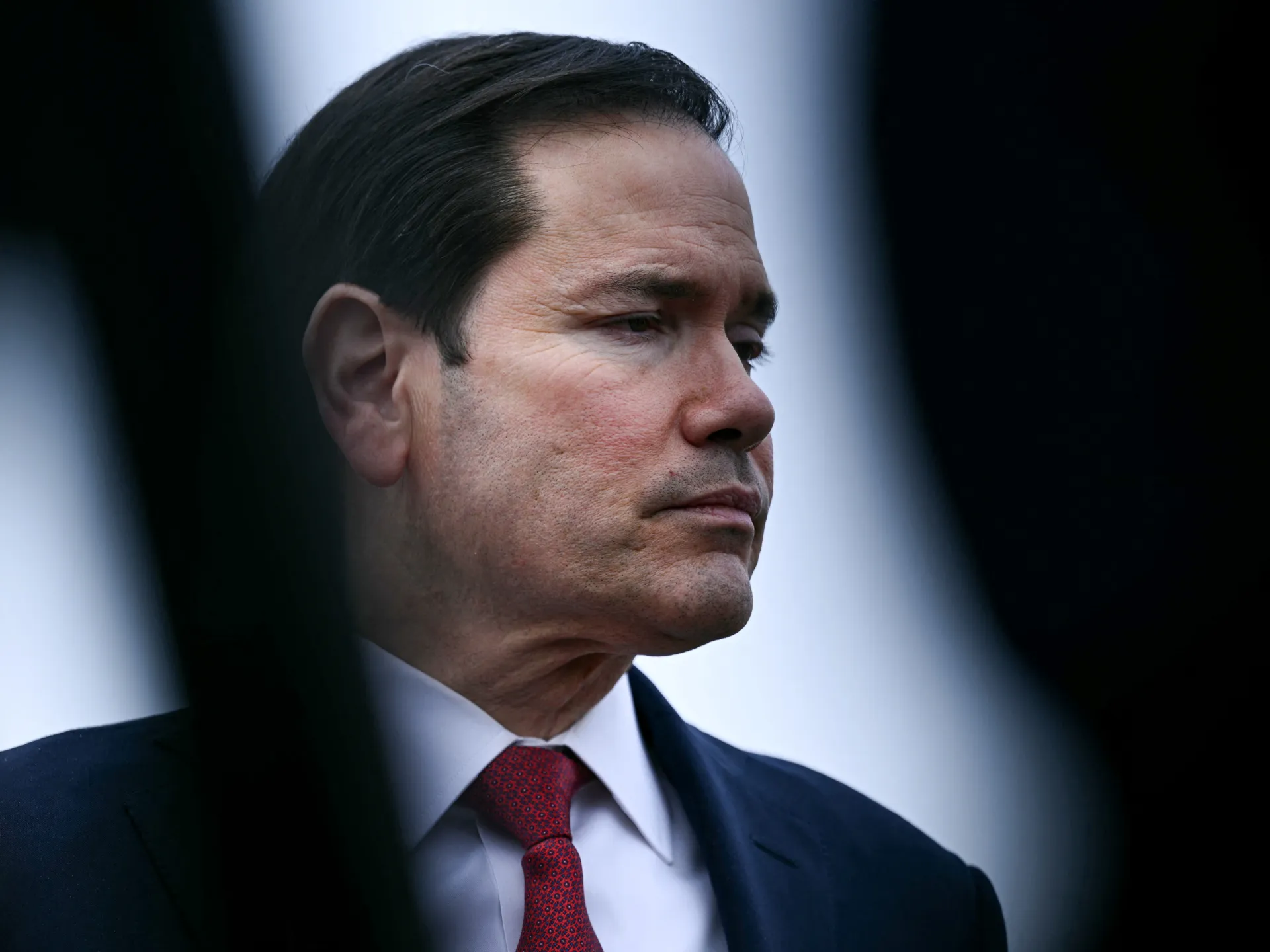
United States Secretary of State Marco Rubio has told Al Jazeera that the Strait of Hormuz will “reopen one way or another” in the wake of the eventual end of the US-Israeli war with Iran.
The exclusive interview on Monday came as speculation has grown over a possible US troop deployment in Iran and as the effective closure of strait continues to roil global oil markets.
US boots on the ground would represent a new phase in the grinding conflict, which began on February 28 with US-Israeli strikes, even as US President Donald Trump has repeatedly said that the US was pursuing diplomacy with Iran.
Rubio again maintained there were “ongoing direct talks between parties in Iran and the United States, primarily conducted through intermediaries”.
Iran has repeatedly denied that talks were ongoing. Pakistan on Sunday said it would host direct talks “in the coming days for a comprehensive and lasting settlement of the ongoing conflict”.
Rubio added that Trump “has always preferred diplomacy and seeks to reach a resolution – something that could have been achieved earlier”.
The Trump administration had previously pursued indirect talks with Iran to curtail its nuclear programme. One round of talks was derailed last year with Israel’s 12-day war against Iran, which ended with US strikes on Iran’s nuclear facility.
A second round of diplomacy was underway when the US and Israel began the latest war.
Rubio again indicated the administration’s preference for regime change in Iran, which the US and Israel have so far been unable to achieve despite several high-profile assassinations, including the killing of Supreme Leader Ayatollah Ali Khamenei.
“We would welcome a scenario in which Iran is led by individuals with a different vision for the future, and if such an opportunity arises, we will seize it,” he said.
Nuclear and ballistic weapons
Speaking to Al Jazeera, Rubio further called on Iran to take “concrete steps” to end its nuclear programme and stop “manufacturing drones and missiles”.
He accused Iran of seeking nuclear weapons to “threaten and blackmail the world”, a claim Tehran has for years denied, maintaining its nuclear programme was only for civilian purposes.
On Monday, the Wall Street Journal reported Trump was considering a special forces operation to seize enriched uranium stored in Iran. Military experts have warned throughout the war that US and Israeli airstrikes alone would not be able to destroy Iran’s capabilities.
In a statement to Al Jazeera, White House press secretary Karoline Leavitt did not deny the report, but said: “It’s the job of the Pentagon to make preparations in order to give the Commander-in-Chief maximum optionality. It does not mean the President has made a decision.”
Rubio said Iran “must also cease sponsoring terrorism and halt the production of weapons that threaten its neighbours,” he said. “The short-range missiles launched by Iran serve only one purpose: to attack Saudi Arabia, the UAE, Qatar, Kuwait, and Bahrain.”
Turning to the Strait of Hormuz, which Iran has effectively closed to open traffic, Rubio voiced optimism it would be reopened when the conflict ends.
“The Strait of Hormuz will reopen one way or another once our military operation in Iran is over,” Rubio said. “The strait will reopen either with Iran’s consent or through an international coalition including the US.”
He threatened “severe consequences” if Iran closes the strait after the fighting ends.
The US has previously sought to raise a coalition to protect ships in the Strait of Hormuz, but has faced wariness from many traditional allies concerned over tacit entry into the conflict.
‘Our objectives in Iran are clear’
Rubio’s statements on Monday broadly reflected a list of demands put forth by Washington to end the war.
Iran has rejected the proposal, with Iranian President Masoud Pezeshkian releasing its own list of demands, including “recognising Iran’s legitimate rights, payment of reparations, and firm int’l guarantees against future aggression”.
For his part, Trump told the Financial Times in an interview published on Sunday that he hopes to “take the oil in Iran” including by possibly seizing the key export hub of Kharg Island.
“Maybe we take Kharg Island, maybe we don’t. We have a lot of options,” he added. “It would also mean we had to be there [on Kharg Island] for a while.”
The Trump administration has presented a carousel of objectives in the war, including degrading Iran’s military capability, preventing it from ever developing a nuclear weapon, and helping to foment regime change.
However, its endgame has remained unclear, with its final goals possibly diverging from Israel, which has pushed for more comprehensive regime change.
To date, at least 1,937 people have been killed in Iran since the war began, with at least 20 killed in Israel, 26 killed across the Gulf states and 13 US soldiers killed.
Rubio told Al Jazeera that the administration did not expect the war to drag on indefinitely.
“Our objectives in Iran are clear, and we will achieve them within weeks, not months,” he said.
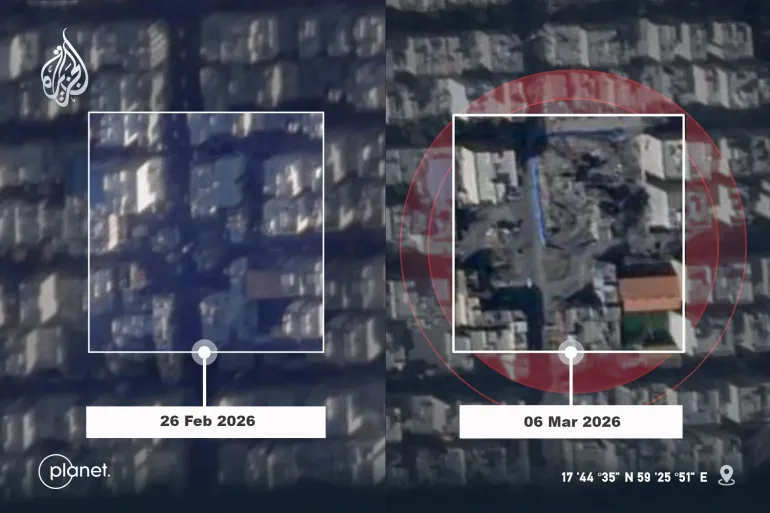
In the densely populated neighbourhoods of southern Tehran, the 11th Criminal Investigation Base once stood as a mundane symbol of local law enforcement. Its detectives investigated economic crimes, fraud and petty thefts.
The building housed no ballistic missiles, no uranium centrifuges and no military command centres. Today, it is a crater. In the opening wave of the United States-Israel war on Iran, warplanes wiped the local police station off the map.
Satellite imagery provided by Planet Labs shows the destruction of the 11th Criminal Investigation Base in southern Tehran on February 26 and March 6, 2026. [Al Jazeera/Planet]
It was not an isolated incident. An investigation by Al Jazeera’s Digital Investigations unit has verified that at least 75 internal security sites were destroyed or damaged in bombardments by Israel and the US from February 28 to March 10. The targeted facilities included local police stations, criminal investigation headquarters, public security offices and checkpoints operated by the Basij paramilitary force.
Al Jazeera mapped the strikes using open-source data, cross-referencing field reports with satellite imagery to confirm the destruction. However, conducting independent verification has grown increasingly difficult. On March 6, commercial satellite providers Planet Labs and Vantor restricted imagery over the Middle East, later expanding the blackout to impose a 14-day delay on all images of Iran.
While the companies said the blackout prevents hostile actors from endangering civilians, independent journalist Ken Klippenstein recently revealed a leaked US Space Force directive dictating how commercial satellite firms describe damage. The leak exposed a deliberate US effort to control the flow of information and obscure the reality of the battlefield.
Targeting population centres
The spatial distribution of the 75 verified strikes revealed a clear and deliberate strategy. Warplanes bypassed isolated military installations to hit the infrastructure Tehran uses to police its citizens.
An Al Jazeera map details the geographic distribution of the 75 internal security sites targeted by US-Israeli strikes, showing a heavy concentration in Tehran and western provinces. [Al Jazeera]
The capital alone absorbed 31 strikes, more than 40 percent of the total targets. Sanandaj, the capital of Kurdistan province, suffered eight strikes. The remaining targets were clustered tightly in major western and central cities, including Isfahan, Kermanshah and Hamedan. Meanwhile, Iran’s sprawling eastern and southeastern provinces remained largely untouched by this campaign.
By overlaying the strike coordinates with demographic maps, the investigation shows a near-perfect alignment with urban density. More than 70 percent of Iran’s population lives in these targeted western urban areas.
A population density map of Iran demonstrates how the strike locations closely align with the country’s most heavily populated urban centres. [Al Jazeera]
The strikes systematically targeted the Law Enforcement Command, known as FARAJA, and the Basij network. FARAJA, elevated in 2021 by late Supreme Leader Ali Khamenei to operate alongside the military, is currently led by Ahmad-Reza Radan. It manages daily urban law enforcement and riot control. The Basij, an immense volunteer paramilitary force deeply embedded in Iranian neighbourhoods, acts as the state’s ultimate tool for social control.
Engineering state collapse
The pattern of the US-Israeli air strikes points to an objective far removed from dismantling nuclear facilities or degrading military infrastructure. It reveals a calculated attempt to engineer the collapse of the Iranian state.
On February 28, US President Donald Trump launched the war and in a video address urged Iranians to take over their government once the bombs stopped falling. Israeli Prime Minister Benjamin Netanyahu echoed this sentiment in Farsi, calling on millions of Iranians to take to the streets and describing the military strategy as breaking the Iranian government’s bones.
The military planning, however, preceded events on the ground that Trump and Netanyahu pointed to for justification for their war. Israeli Defence Minister Israel Katz revealed in early March that Israel had been planning to strike Iran in mid-2026, long before January’s deadly government crackdown across Iran against economic protests.
Satellite imagery captures extensive damage to the Beheshti Basij headquarters in Tehran’s District 8 after the initial wave of strikes. [Al Jazeera/Planet]
This approach aligns with a broader Israeli doctrine. Daniel Levy, a former Israeli government adviser, previously told Al Jazeera that Israel has no interest in a smooth political transition in Tehran. What Israel wants is the collapse of the government and the state, Levy said, adding that if the repercussions spread to Iraq, the Gulf and the entire region, that is better from Israel’s point of view.
A failing strategy
Still, a month into the war, the US-Israeli strategy to spark an internal revolution through the systematic destruction of Iran’s internal security apparatus appears to be failing.
Iranians are living under daily bombardments. As missiles destroy civilian infrastructure and oil refineries burn, daily survival has eclipsed any coordinated political uprising. The United Nations special rapporteur on human rights in Iran has warned that civilians are facing a simultaneous military and human rights crisis.
Rather than collapsing, Iran’s internal security apparatus has adapted. During Ramadan, FARAJA deployed 24-hour patrols across Tehran, and riot police shut down public gatherings before the Persian New Year holiday. After the March 17 assassination of Basij commander Gholamreza Soleimani, Israeli forces released footage of strikes on mobile Basij checkpoints, indicating that Iranian security forces are still controlling the streets.
The US attempt to dismantle state security from the air mirrors its disastrous 2003 de-Baathification policy in neighbouring Iraq, which barred members of the former ruling Baath Party from holding government jobs, dismantled local policing and birthed a devastating sectarian war. Unlike in Iraq, Washington today has no troops on the ground in Iran to fill a security void it is trying to create.
Beneath the rubble of the 11th Criminal Investigation Base and dozens of stations like it, the US and Israel are aiming to bury the Iranian state and spark a popular revolt. Instead, they have trapped millions of civilians in a burning country.
Syrian president Ahmed al-Sharaa met with top German officials in a visit to Berlin to discuss Syria’s stability, refugees in Germany and German support for reconstruction.
President Ahmed al-Sharaa is on his first trip to Germany since ousting Syria’s longtime leader Bashar al-Assad in late 2024.
Published On 30 Mar 202630 Mar 2026
Interim Syrian President Ahmed al-Sharaa has been received by German President Frank-Walter Steinmeier in Berlin before talks with Chancellor Friedrich Merz on rebuilding his country and the return of refugees.
“Our interest is in seeing Syria rebuilt as a stable and prosperous nation, including with the help of the many, many Syrians who came here to Germany and Europe during the civil war and found refuge here,” government spokesman Stefan Kornelius said before Monday’s talks.
Recommended Stories
list of 2 itemsend of list
Speaking at a Federal Foreign Office forum in Berlin on Monday, al-Sharaa said: “We want to put this difficult time behind us and now catch up with the rest of the world.”
He pointed to investment opportunities in Syria’s energy, transport and tourism sectors, describing his homeland as diverse and with “a great wealth of people”.
“We stand with Syria,” German Foreign Minister Johann Wadephul said, pledging to support reconstruction efforts. “The Syrians deserve a chance, and we want to help ensure that this opportunity is well utilised.”
Al-Sharaa also suggested that he would like to see some of the Syrians who fled to Germany return to help with its reconstruction.
“These are Syrians who have studied at German universities, acquired German expertise and are now working in German companies,” he said. “Through investments in Syria, they can then bring this expertise back to Syria.”
Al-Sharaa, third from left, makes his first visit to Germany since leading opposition fighters to oust Syrian President Bashar al-Assad in December 2024 [Nadja Wohlleben/Reuters]
Al-Sharaa was initially planning to visit Germany in January, but the trip was postponed as he sought to end fighting between Syrian government forces and the Kurdish-led Syrian Democratic Forces in the country’s north.
Refugee issue
A demonstration against the plan to send refugees back to Syria has been registered in Berlin on Monday under the slogan “No deportation deals with human rights abusers”.
About one million Syrians fled their war-torn country for Germany in recent years, many of them arriving at the peak of the influx in 2015-2016 to escape the war.
The conservative Merz, who took power in May, has stepped up a drive to limit irregular immigration as he seeks to counter the rise of the far-right Alternative for Germany party.
Merz said last year that with Syria’s war over, Syrians now have “no grounds for asylum in Germany”.
The government in December resumed deportations to Syria although only a handful of cases have gone ahead so far.
Merz also said he assumed many Syrians would return home voluntarily, drawing criticism from campaign groups who cited continued instability and rights abuses in Syria.
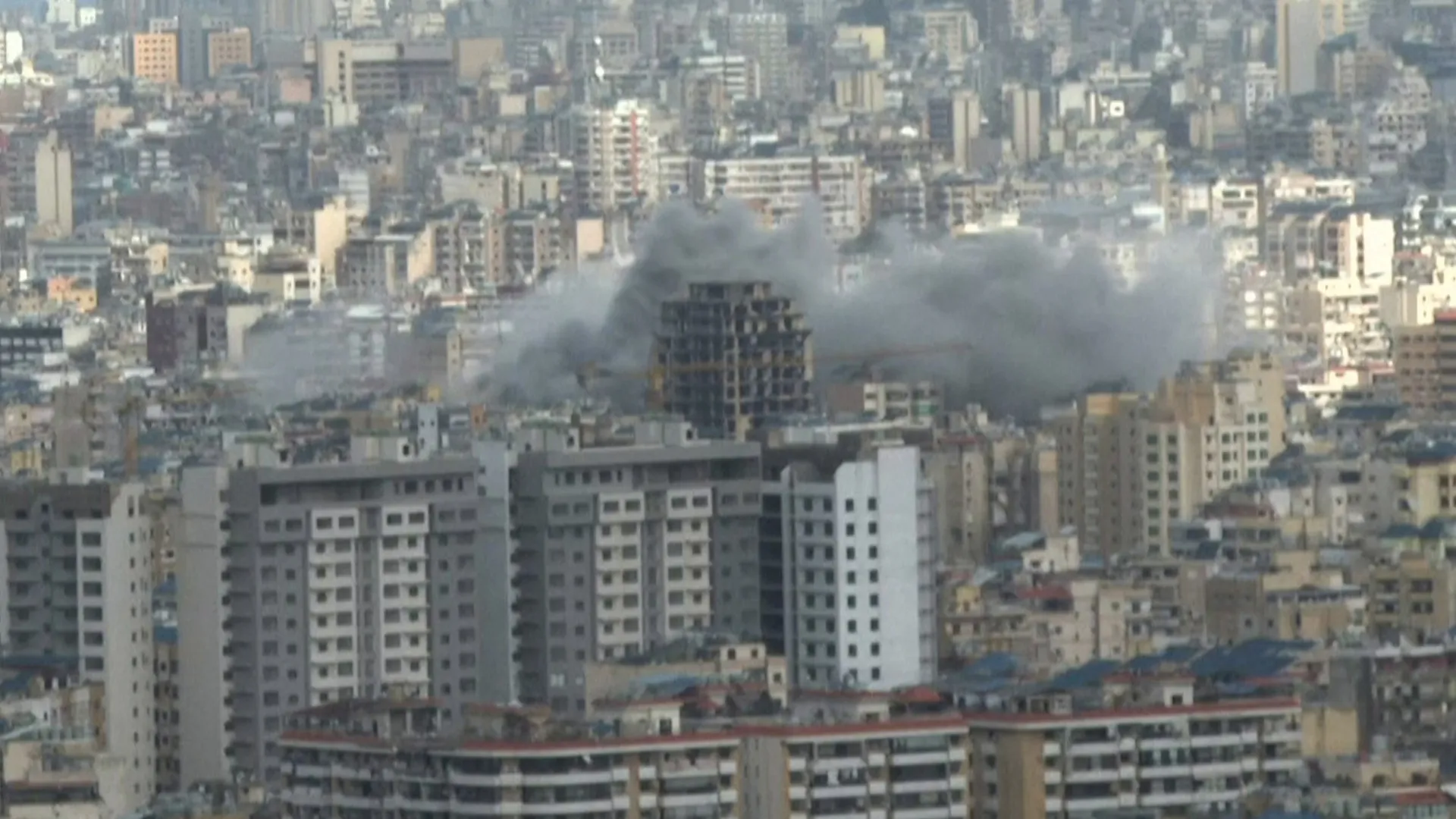
Smoke billows above buildings in Beirut’s southern suburbs after a strike that followed Israeli warnings targeting the area. The neighbourhood has been largely emptied after residents were forcibly displaced by repeated Israeli attacks since the war with Hezbollah began on March 2.
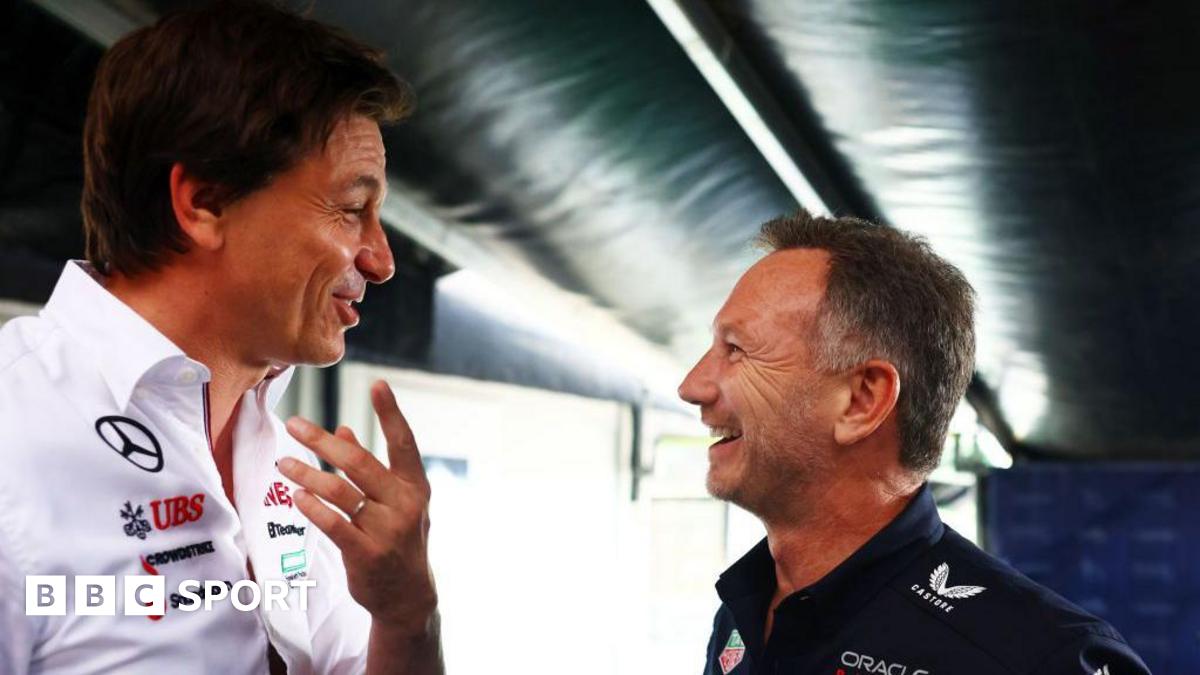
Wolff and Mercedes are also looking at buying private investment firm Otro Capital’s 24% shares in Alpine.
Wolff said there is “no connection” with Horner in regards that investment and it would be “quite sad” if that was a consideration.
“I am in two minds about it [Horner returning to F1]. The sport is missing personalities. And his personality was clearly very controversial and that is good for the sport,” Wolff said.
“I said to [Ferrari team principal] Fred Vasseur that it needs the good, the bad, and the ugly. And it is now only the good and the ugly left. The bad is gone.
“Would I consider that he could ever be an ally or someone that shares objectives? I don’t think so.
“But even when I had the biggest frustration, and anger with him, you need to remind yourself that even your worst enemy has a best friend, so there must be some goodness.
“If there wasn’t that competitive rivalry over so many years, and if there was more water down the river, I am sure I could have had hung with him over dinner and a had a laugh.”
Red Bull’s Max Verstappen won four consecutive drivers’ titles from 2021 to 2024, ending Mercedes’ dominance with Lewis Hamilton, who was controversially denied five straight titles.
Horner, who has said he has “unfinished business” in F1, was last year overlooked to take over at Aston Martin.
“Over those years it was just too intense, too fierce, and things happened which even today I cannot comprehend why he has done them,” Wolff said.
“I don’t know if he is finding his way back, and in which function. I certainly don’t wish him bad. And we need to give each other credit. There are not many team principals who have done what he has done.”
Egyptian official says Liverpool star will fade away if he opts for the MLS as San Diego FC owner welcomes compatriot.
Published On 30 Mar 202630 Mar 2026
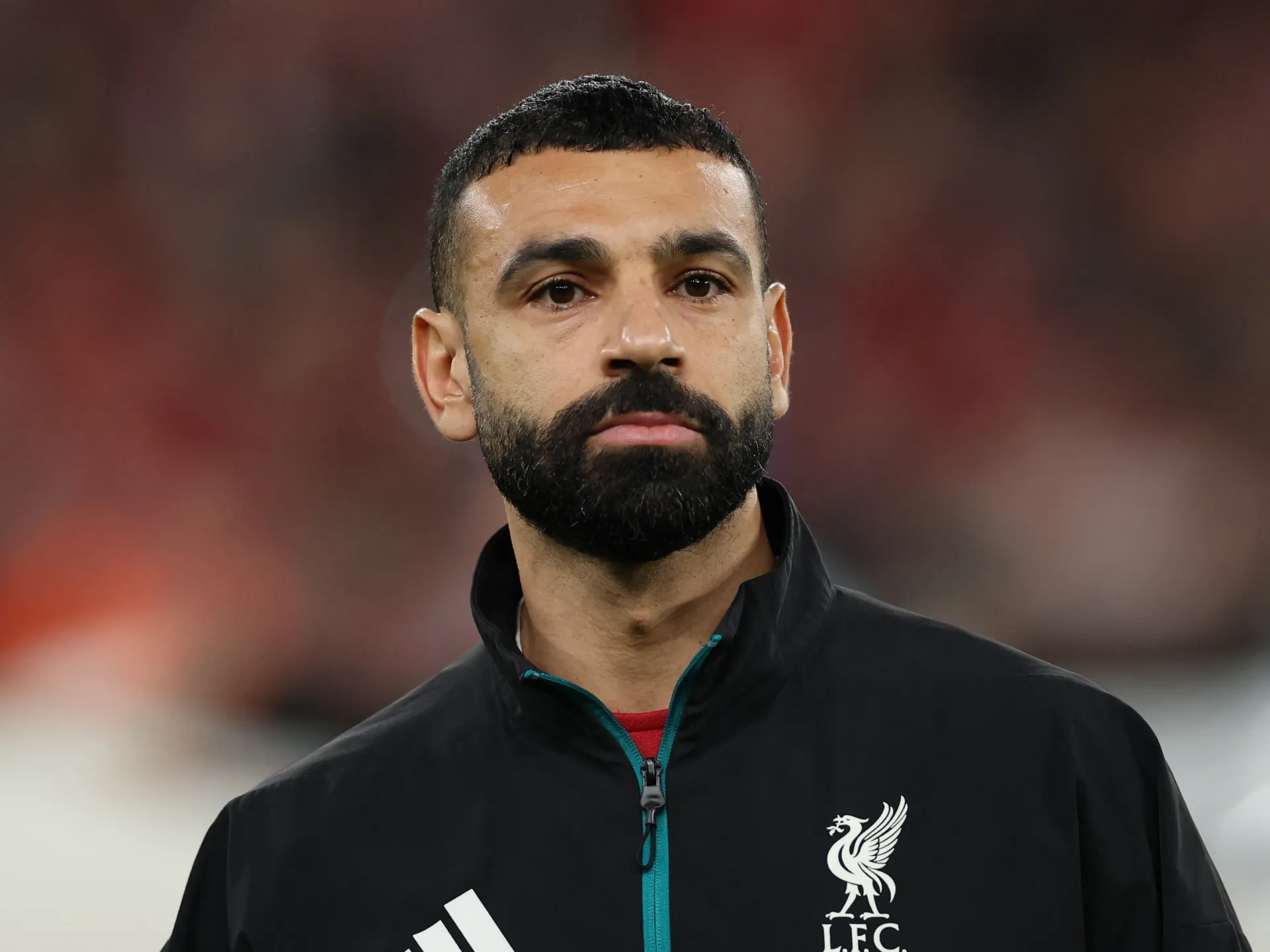
Egypt’s national team director Ibrahim Hassan has cautioned Mohamed Salah against moving to Major League Soccer (MLS) after he leaves Liverpool at the end of the season, as it would see the forward fade into obscurity.
Salah, 33, has yet to decide his next move after he ends a hugely successful nine-year spell at Liverpool, where he won two Premier League titles and the Champions League.
Recommended Stories
list of 4 itemsend of list
MLS Commissioner Don Garber has said he would love to see Salah in the league, though it is unclear whether any league teams will attempt to sign him.
“Personally, I would prefer him to stay in Europe,” Hassan told On Sports. “I have heard about offers from Paris Saint-Germain (PSG), Bayern Munich and clubs in the Italian league.
“A move to the Major League? He would be far too out of the spotlight. You won’t remember Salah any more than I remember [Lionel] Messi now, I don’t even try to watch him.”
After trophy-laden stints with Barcelona and PSG, Argentina captain Messi joined Inter Miami in 2023, months after lifting the World Cup, and became the club’s all-time top scorer.
Hassan said the Saudi Pro League would be a suitable option if Salah chose not to stay in Europe.
“If he does not receive offers from Europe, then a move to the Saudi league would be a good option, especially with big names such as Cristiano [Ronaldo],” Hassan, twin brother of Egypt coach Hossam Hassan, added.
However, San Diego FC’s billionaire owner Mohamed Mansour believes his Egyptian compatriot would be an “asset” as speculation builds over the Liverpool forward’s next club.
If he does move to the United States, recent MLS expansion club San Diego FC, who reached the playoff semifinals in their debut season last year, have been heavily linked with Salah, not least due to their British-Egyptian owner, Mansour.
“He’s probably one of the great players today. And any team that will get him, or any country that will get him, he will definitely be an asset,” Mansour told the AFP news agency at a summit in Atlanta on Thursday.
Mansour declined to answer whether he is actively trying to recruit Salah or has previously sounded out a move for the striker.
But he added: “Of course, Mo Salah is somebody that, as an Egyptian, my origin, I’m very proud of. He is somebody that reached the world stage as one of the great players.”
“And I think he will, if he does decide … wherever he will go, he will add a lot to that league and to that country and to that team for sure. So he’s somebody I’m very proud of.”
Mansour said the entire Egypt comes to a halt whenever Salah plays and named the forward as his favourite footballer of all time.
While effusive in his praise for Salah, Mansour insisted that footballing recruitment decisions are left to San Diego FC’s sports director and coach.
“I let the people in charge” decide, he said.
Salah is currently sidelined by injury and will miss Egypt’s ongoing training camp as they prepare for the World Cup in North America.
Egypt face Spain in a friendly in Barcelona on Tuesday after a 4-0 win over Saudi Arabia in Jeddah on Friday.
The seven-time African champions are in Group G with Belgium, New Zealand and Iran at the World Cup, which runs from June 11 to July 19.
It was a devastating experience for Abdul Rahman Azzam, 65, to recently cut down the olive trees he had planted decades ago on his land south of Jenin in the occupied West Bank, following an Israeli decision to confiscate it for the construction of a road for an illegal Israeli settlement.
The land slated for confiscation last December spans more than 513 dunams (51.3 hectares), 450 of which belong to the village of al-Fandaqumiya alone, with the remainder belonging to neighbouring towns such as Silat ad-Dhahr and al-Attarra.
Recommended Stories
list of 4 itemsend of list
As Palestinians commemorate the 50th anniversary of Land Day this year, the challenges of illegal Israeli settlement expansions, land confiscations, and restrictions on access to their land, particularly in Area C, persist.
Meanwhile, Israeli government leaders continue to declare that the annexation plan is a fait accompli.
Land Day commemorates the events of March 30, 1976, when Israeli authorities announced the confiscation of vast tracts of Palestinian land in the Galilee region.
In response, widespread strikes and demonstrations were organised in several towns and villages, which were met with force, resulting in the deaths of six Palestinians and the injury and arrest of hundreds.
Since then, this day has become a national symbol, embodying the connection of the Palestinians to their land and the rejection of its confiscation.
Twice taken
Since childhood, Azzam had worked alongside his father, grandfather, and uncles, planting and ploughing the land with olive trees.
He developed a deep connection to it, which he continued to work on until 2002, when the illegal Israeli settlement of Tarsala and the Sanur military base were established on it, and he and his family were barred from accessing it.
Following the 2005 disengagement plan, the Israeli army withdrew from the camp and the settlement of Tarsala. Azzam and other landowners returned to their land, and their joy was indescribable.
However, after the recent Israeli decision, the Palestinian landowners were denied access to their land, which is now entirely under Israeli military control.
Palestinian land being bulldozed in the occupied West Bank town of Ein Yabrud [Mohammed Turkman/Al Jazeera]
“Suddenly, we found the land number in the official newspaper along with a confiscation order for the construction of a road connecting the settlements of Homesh and Tarsala, to which the settlers had returned after the 2005 withdrawal. We saw the Israeli army had already begun bulldozing the land,” Azzam told Al Jazeera.
To prevent the Israeli army from cutting down his olive trees during the bulldozing, Azzam went to his land and cut them down himself. He wept as he did so. He then noticed that all the other landowners had done the same, fearing for their trees.
“It’s easier for us to cut them down ourselves than for the army or settlers to do it. This is our land, and our trees are like our children; we cherish them and treat them with kindness because we toiled to cultivate and care for them,” he added.
Confiscation in several ways
The Oslo Accords, signed between Israel and the Palestine Liberation Organization in 1993, divided the West Bank into three categories: Area A, under full Palestinian control, comprising approximately 18 percent of the West Bank; Area B, under joint Palestinian and Israeli control, comprising 22 percent; and Area C, under full Israeli control, comprising 60 percent.
Since October 2023, Israel has been issuing confiscation orders for Palestinian lands in Area C at an accelerated pace in the West Bank, in preparation for implementing its annexation plan, which Palestinians believe is already being carried out on the ground without a formal declaration.
According to data from the Palestinian Authority’s Commission Against the Wall and Settlements, Israel seized 5,572 dunams of Palestinian land in 2025 through 94 confiscation orders for military purposes, in addition to three expropriation orders and four declarations of state land.
These orders were not isolated or circumstantial, but rather geographically distributed to serve the expansion of settlements, secure their borders, and construct settlement roads that further fragment Palestinian land and sever its natural contiguity, as it said.
Concurrently, Israel allocated 16,733 dunams of previously confiscated land for settler grazing, a move that reveals a dangerous escalation in the tools of control, according to the commission’s annual report.
In another report, the commission stated that between October 2023 and October 2025, Israel confiscated 55,000 dunams of land, including 20,000 dunams under the pretext of modifying the boundaries of nature reserves, and 26,000 dunams through 14 declarations of “state land” in the cities of Jerusalem, Nablus, Ramallah, Bethlehem and Qalqilya.
A total of 1,756 dunams were confiscated through 108 orders for military purposes, aimed at establishing military towers, security roads, and buffer zones around settlements.
However, it has become increasingly apparent that many land seizures are carried out without official military orders. Soldiers or settlers prevent Palestinian landowners from accessing their land, leaving them surprised to find it seized without any prior notification.
Mohammed Fouad’s land was cleared without warning in the town of Ein Yabrud to make way for a road to an illegal Israeli settlement [Mohammed Turkman/Al Jazeera]
Mohammed Fouad, 56, was surprised on Wednesday to find an Israeli army bulldozer razing his land in the town of Ein Yabrud, east of Ramallah.
He went to the nearest point to the land and watched as the bulldozer removed trees, seemingly clearing a road for settlers.
“My land is 15 dunams … and is only 1km from the Beit El settlement, which is built on land north of Ramallah. I fear this bulldozing is a prelude to its annexation to the settlement, especially since it’s classified as Area C,” Fouad told Al Jazeera.
He was not notified of any decision regarding the confiscation of his land. A farmer who was nearby informed him of it. When he tried to inquire with the armed men accompanying the bulldozer, they told him they were from the Israeli army and intelligence services and expelled him from his land.
“I’ve always cared for this land, and now I’m watching it being bulldozed right before my eyes, unable to reach it. It’s as if they’re forcing me to leave. But I’ll try to reach it every day,” Fouad said bitterly.
Land confiscation procedures have been facilitated by several Israeli policies over the past two years to complete the annexation plan.
Raed Muqadi, a researcher at the Land Research Centre, told Al Jazeera that settlers have resorted to fencing off Palestinian lands to seize them, especially in the Jordan Valley.
This has affected thousands of dunams in the occupied West Bank that were used as pastures or agricultural land. Because of the fencing, Palestinians are prevented from entering or using it.
“The Israeli Knesset also recently approved what is called lifting the ban on data concerning landowners in the West Bank, which makes it easier for settlers to seize land and allows them to purchase it, even in Area A, with the help of settlement associations,” he explained.
Actual expulsion
The tragedy is not limited to land confiscation and seizure in the West Bank, but extends to the expulsion of entire Palestinian communities from their homes under the weight of attacks.
Qusay Abu Naim, 23, a resident of the Bedouin community of al-Khalail in the village of al-Mughayyir, east of Ramallah, told us that he and all other residents were forced to leave in February due to the intensity of settler attacks on the residents, some of whom were injured.
On February 21, Israeli settlers attacked the community intermittently, assaulting men, women, and children, resulting in injuries to an entire family of four, including two children. The Israeli army then joined the attack after the settlers filed a complaint that the Palestinians had resisted them. The soldiers opened fire, wounding the children, aged 12 and 13, further.
“This incident was the last straw. We decided to leave because the attacks were almost constant. When we returned from the hospital to dismantle our homes, we were shocked to find that the settlers had destroyed them and vandalised their contents,” Abu Naim explained.
The attacks against this community began in December 2024, intending to seize the lands of al-Mughayyir. The settlers deliberately targeted women, beating them and stealing sheep to force the residents to leave.
“Because of the numerous attacks, we sought help from international solidarity activists, but that didn’t stop the settlers. The activists were attacked several times in 2024 and 2025. Among the attacks, settlers broke my brother’s arm so severely that he needed a metal plate to repair the fracture. While he was receiving treatment, the Israeli army arrested him, even though he was the victim. He is currently being held in administrative detention without charge,” Abu Naim added.
In addition to the attacks, the homes of this community were repeatedly robbed by armed settlers. They would break into the houses and steal food from refrigerators, terrorising women and children.
The residents of the community were forced to leave for neighbouring villages, including Deir Jarir and areas within al-Mughayyir itself, but they still remember the years when they lived there in their communities, amid a beautiful Bedouin life, the images of which remain with them to this day, and they lament leaving it.
“Of course, it is now forbidden for any Palestinian to access the al-Khalail community area, which is under the control of settlers and the Israeli army. We left it, but the land will return to its original owners,” he concluded.
According to the Office for the Coordination of Humanitarian Affairs (OCHA), at least 4,765 Palestinians were displaced from 97 locations between January 2023 and mid-February 2026 due to settler violence.
Most of those displaced were from Bedouin and herding communities in Area C. At the beginning of this year alone, 600 people were forced to leave a single Bedouin village, Ras Ein al-Auja, in the Jordan Valley.
According to the United Nations Development Programme (UNDP), the number of Palestinian Bedouins in the West Bank is approximately 40,000. Most Bedouins are originally from the Naqab Desert, from which they were forcibly displaced or fled during the 1948 Arab-Israeli War, following further displacement after 1967, and then throughout the 1980s, they have continued to face waves of expulsion to this day.
The Italian wins his fifth straight Grand Prix to take control of the world championship standings after three rounds.
Published On 30 Mar 202630 Mar 2026
Aprilia’s Marco Bezzecchi extended his perfect start to the year by winning the United States Grand Prix in Austin on Sunday for his third consecutive win of the year and fifth straight dating back to last season.
Bezzecchi led all 20 laps at the Circuit of the Americas, where he crossed the line 2.036 seconds ahead of teammate Jorge Martin. Pedro Acosta, who finished third in Saturday’s sprint before a penalty dropped him to eighth, rounded out the podium.
Recommended Stories
list of 4 itemsend of list
Bezzecchi, racing a day after he failed to finish a sprint for the second time this season after a crash, also reclaimed the lead in the MotoGP standings with 81 points, four points clear of Martin, who won Saturday’s sprint race.
With the win, Bezzecchi became the third Italian rider to win five in a row after Hall of Famers Valentino Rossi and Giacomo Agostini. He is also the first rider to win the first three grands prix of the season since Marc Marquez in 2014.
“This is amazing. I mean, I wasn’t expecting a day like this after yesterday, because it wasn’t easy, and I made a mistake, and it was important to bounce back,” said Bezzecchi.
“Luckily, my team, my squad, was very close to me, and they gave me the motivation to try to bounce back.
“But anyway, I wasn’t expecting a race like this, and I’m so happy – I really can’t describe my emotion right now. Very, very happy and proud.”
Polesitter Fabio Di Giannantonio of VR46 Racing finished fourth, while defending Austin champion Francesco Bagnaia of the Ducati Lenovo Team was 10th.
Bezzecchi took the lead after an opening lap clash with Pedro Acosta, right, in Sunday’s USA MotoGP [Jerome Miron/Imagn Images via Reuters]
The UN’s nuclear watchdog says Iran’s Khondab heavy water production plant is no longer operational after suffering severe damage in an Israeli strike on March 27. The reactor, which contains no declared nuclear material, was hit along with other key infrastructure sites.
A post-doctoral fellow in Tehran has told Al Jazeera there was no warning before US-Israeli strikes hit the Iran University of Science and Technology on March 28. Helyeh Doutaghi says the attack reflects a wider pattern and raises questions about what defines ‘legitimate retaliation’.