Stay informed and up-to-date with the latest news from around the world. Our comprehensive news coverage brings you the most relevant and impactful stories in politics, business, technology, entertainment, and more.
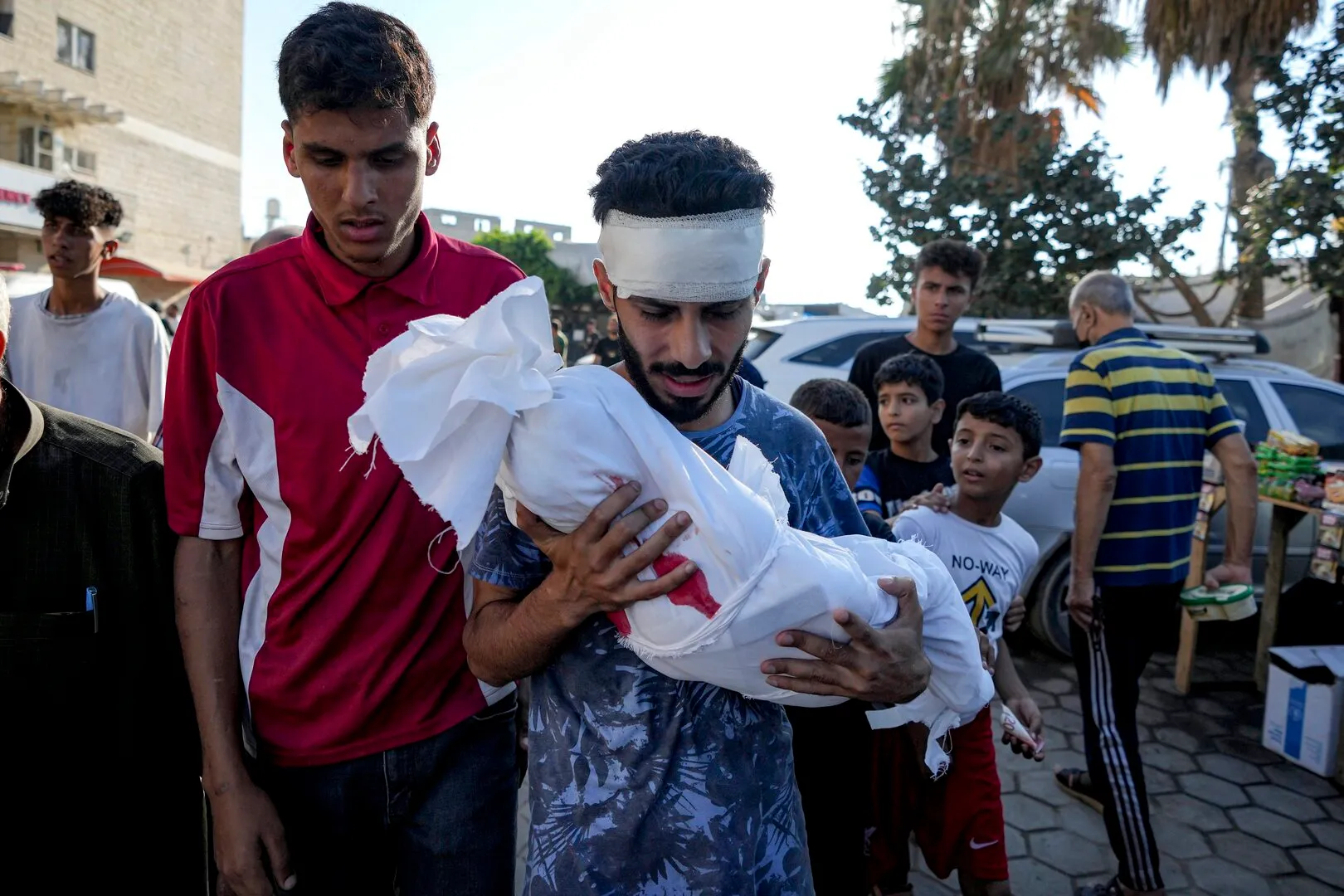
Israel deliberately targeted Palestinian children in Gaza, resulting in genocide, crimes against humanity and war crimes, according to a new UN inquiry. The report says more than 20,000 children were killed between October 2023 and October 2025. Israel rejected the findings.
Following the start of the US-Israel war on Iran on February 28, Tehran had effectively closed off the strait, leaving vessels stuck.
Published On 23 Jun 202623 Jun 2026
The United Nations’ International Maritime Organization (IMO) has begun evacuating more than 11,000 sailors stranded in the Strait of Hormuz following the memorandum of understanding signed by the United States and Iran to end the US-Israel war on Iran.
IMO Secretary-General Arsenio Dominguez said in a statement on Tuesday that the operation would be carried out in “close cooperation with Iran, Oman, all other coastal states in the region, the United States and the maritime industry”.
Recommended Stories
list of 3 itemsend of list
“We have secured the necessary safety guarantees and have thoroughly verified the conditions for safe navigation to support these operations,” he said.
Following the start of the US-Israel war on Iran on February 28, Tehran had effectively closed off the strait, leaving vessels stuck on the waterway.
But shipping traffic has increased since the signing of the agreement last week, with the Kpler shipping intelligence agency reporting that at least 36 commercial vessels passed through the strait on Monday, a record level of traffic since the war began.
According to Oman’s Defence Ministry, the evacuation process under the IMO plan, which has been under discussion for months, will be phased.
“Given the elevated risk of collision in the current environment, a gradual and controlled evacuation of vessel traffic is required,” it said.
Denmark announced on Tuesday that it will join an international maritime mission set up by France and Britain to help reopen the crucial waterway.
Reporting from the Strait of Hormuz, Al Jazeera’s Tohid Asadi explained that talks between the US and Iran on a peace deal have gotten “a little bit better”.
“Today, we’ve got a joint statement by the Omani and Iranian sides saying they are talking about mechanisms to reopen trade through the Strait of Hormuz. This is a positive indication,” he said.
“However, it remains to be seen how long it’s going to take for the strait to reopen, and until then, we see hundreds of ships stranded on both sides of Hormuz.”
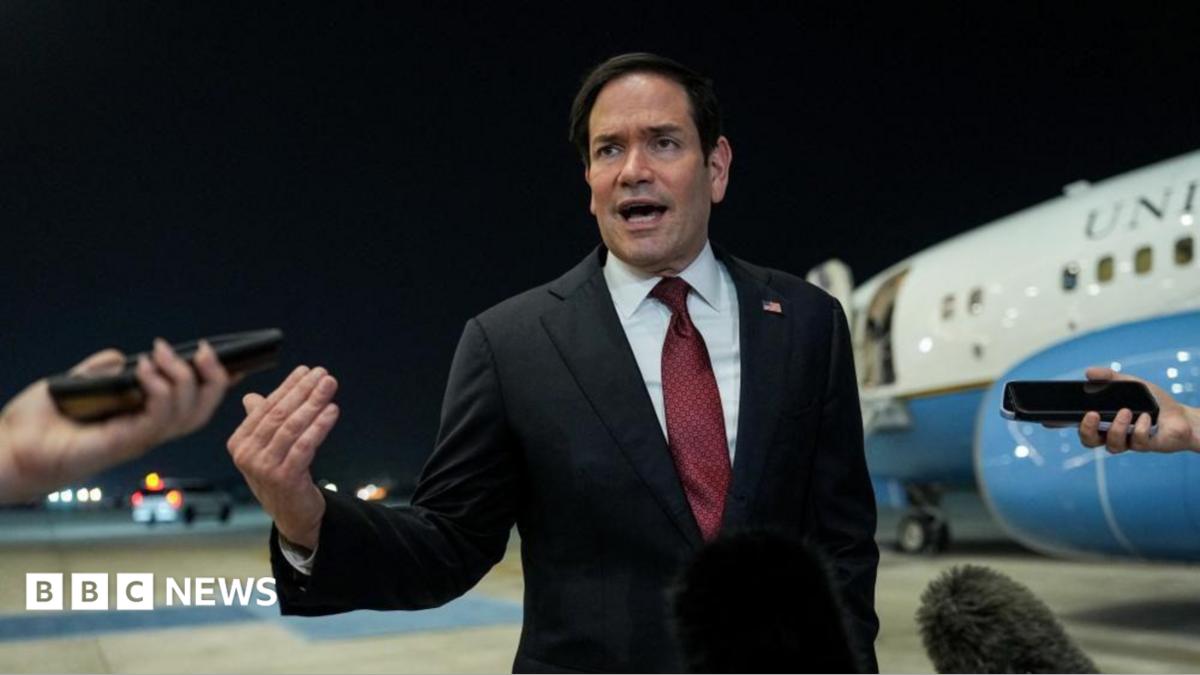
Meanwhile, US Secretary of State Marco Rubio arrived in the United Arab Emirates on Tuesday and reiterated that Iran would not be allowed to charge tolls in the strait under any final deal with the US.
“It’s an international waterway. No country is allowed to charge tolls or fees on an international waterway,” he said, adding that he believed “all the countries in this region would agree”.
Tehran’s top negotiator, Mohammad Bagher Ghalibaf, had earlier insisted the Strait of Hormuz “will never return” to the pre-war status quo, despite the foes agreeing to set up communication lines to keep it open.
The UN’s International Maritime Organization (IMO) is set to evacuate more than 11,000 sailors who have been stranded in the Gulf because of the US-Israel war against Iran.
IMO secretary-general Arsenio Dominguez said the “large-scale operation” would be carried out in cooperation with Iran, Oman, the US, other coastal states in the region and the maritime industry.
“We have secured the necessary safety guarantees and have thoroughly verified the conditions for safe navigation to support these operations,” he added.
An interim deal was signed last week to end the conflict, but both the US and Iran continue to clash on details of the Memorandum of Understanding (MoU).
The US has said the MoU includes guarantees that Iran’s nuclear weapons programme will come under inspections by the International Atomic Energy Agency (IAEA).
US President Donald Trump posted on social media on Tuesday: “Iran has fully and completely agreed to highest level Nuclear inspections long into the future (Infinity!!!). This will insure ‘Nuclear Honesty.'”
Shortly before Trump’s post, Iran said the UN watchdog would not be able to inspect nuclear sites bombed by the US and Israel last year.
In response, a US official said: “the Iranians have agreed to robust IAEA inspections of the remains of their nuclear weapons programme. The Iranian regime will say what they have to say for their domestic audience.”
Iran’s President Masoud Pezeshkian said during a visit to Pakistan on Tuesday that Iran “will never negotiate with anyone, under any circumstances, ever, about our defensive capabilities”.
US Secretary of State Marco Rubio began a tour of the Gulf on Tuesday in the United Arab Emirates (UAE), and will also visit Kuwait and Bahrain – which both host US military bases – to discuss the deal with Tehran.
The secretary of state warned on Tuesday that no country is allowed to impose tolls on the Strait of Hormuz, where Iran has been pushing to charge ships passing through.
“It’s an international waterway. No country is allowed to charge tolls or fees on an international waterway. That’s existing international law,” he said as he arrived in the UAE.
“I don’t think we have anybody to convince around here in that regard. I think all the countries in this region would agree with us.”
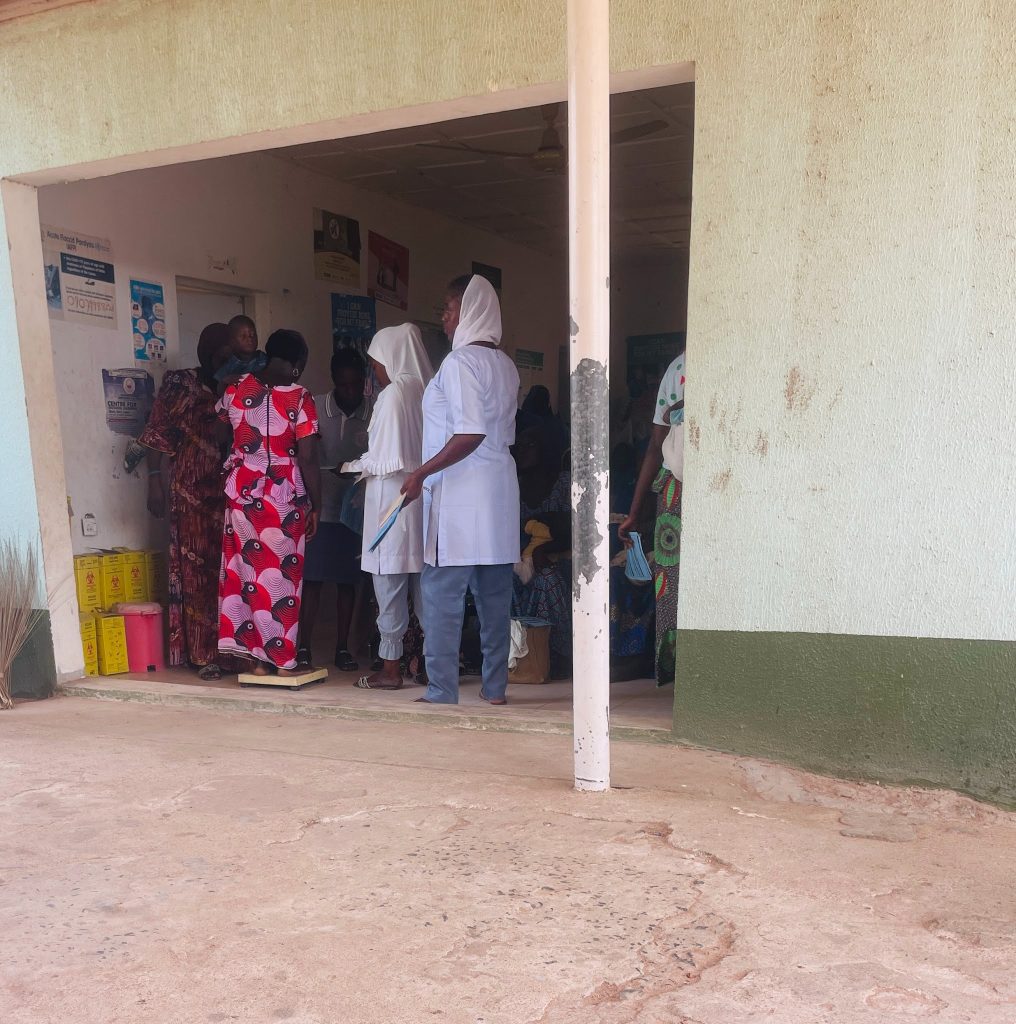
Every Thursday, 35-year-old Fatima Sani joins hundreds of other women from neighbouring communities across Demsa, a local government area in Adamawa State, northeastern Nigeria, to obtain Ready-to-Use Therapeutic Food (RUTF) for her one-year-old malnourished daughter at the Demsa Primary Healthcare Centre. The mother of nine has made several trips to the centre to ensure her daughter recovers from malnutrition. Her treatment includes RUTF, a paste made from powdered milk, peanuts, butter, vegetable oil, sugar, and a mix of vitamins and minerals. A sachet contains 500 calories and essential micronutrients.
“My youngest children are twins, and both of them were diagnosed with malnutrition,” Fatima told HumAngle. “One of them has been declared healthy and discharged by the centre, so I no longer bring him here, but I come to obtain RUTF for his twin, and hopefully, she recovers and gets discharged too.”
She noted that the twins were the only children in her household ever to be diagnosed with malnutrition in her household. When asked what the cause might be, Fatima replied: “Hunger.”
She sells fresh vegetables at the local market in Demsa, and her husband, whom she referred to as Sani, is a rice farmer. She explained that most of his harvest is kept for household consumption, while the rest is sold to meet other needs. Then, a disaster repeatedly washed away his produce.
“For three years in a row now, floods have been destroying my husband’s farm,” she said, adding that the destruction in 2025 left him devastated. “The rice had reached maturity, but on the expected day of harvest, the flood came and washed everything away.”
‘Food is scarce’
UNICEF, in its 2025 report, highlighted that flooding is worsening the nutrition crisis in Adamawa, as the destruction of farmlands, disruption of livelihoods, displacement of households, and damage to health and nutrition facilities have all contributed to reduced access to food and essential nutrition services in the state. This has led to a surge in malnutrition levels, doubling the previous year’s estimates and placing children, pregnant women, and lactating women at increased risk.
After the flood ravaged her husband’s farm, Fatima said, feeding her family became extremely difficult. “We now eat once or twice a day. Some days, there is nothing at all,” she said. She added that her husband, Sani, left Demsa about two months ago in search of greener pastures due to feeding difficulties in their household.
Helen Daniel, another woman who collects RUTF for her malnourished granddaughter at the healthcare centre in Demsa, told HumAngle that the 20-month-old child was almost dying when she first saw her. “I had gone to the village to check on my daughter when I noticed that my granddaughter’s ribs were visible. At close to two years, she could barely stand, and she was struggling to keep her head firm,” Helen said.
Her daughter and son-in-law are full-time farmers in Wuro-Laka, a nearby village in Demsa, so when floods ravaged rural communities around their area, including their farmland, they lost their only means of livelihood.
“Food is scarce, and they only eat what they can get,” Helen said.
Since she had seen women trooping into the Demsa Primary Healthcare Centre with their children who exhibited the same symptoms as her granddaughter, Helen returned to Demsa town with the child after her visit and headed there too. There, the child was diagnosed with malnutrition in March.
“This is my sixth trip to the centre, and I can boldly say there has been a significant improvement in my granddaughter’s health since I started feeding her the RUTF. She has gained weight, and I can’t wait for her to start walking,” Helen said.
Dr Innocent Agaba, Senior Registrar at the Department of Paediatrics, Modibbo Adama University Teaching Hospital, Yola, explained that malnourished children who are left untreated do not attain their full intellectual potential and may eventually die. “They will be duller than their peers, and they are literally going to be shorter and smaller than their peers,” he said.
His observation is consistent with global research. Studies by the World Food Programme, World Health Organisation, and UNICEF have found that childhood malnutrition and stunting are linked to poorer cognitive development, reduced educational outcomes and delayed physical growth, with long-term consequences that can persist into adulthood.
The paediatrician also noted that malnourished children are prone to health complications and organ failures.
At the primary healthcare centre in Demsa, a group of healthcare staff are attending to mothers of malnourished children. Photo: Saduwo Banyawa/HumAngle
Across flood-prone areas
According to the Integrated Food Security Phase Classification, armed conflict, inflation, and extreme weather are the main drivers of acute malnutrition in Northern Nigeria, which is affecting about 6.4 million children aged 0 to 59 months, as well as 786,000 pregnant and breastfeeding women.
The 2025 analysis shows that, of the 21 local governments analysed in Adamawa State, the malnutrition rate was reported to be in the Alert Phase (Phase 2), indicating a deteriorating nutrition situation requiring close monitoring and targeted interventions. Meanwhile, some LGAs in Borno were in the Critical Phase (Phase 4), meaning malnutrition levels had reached an emergency threshold, with a high risk of illness and death among affected children and urgent action was needed to prevent further deterioration.
Members of the International Rescue Committee distributing RUTF supplements to malnourished children at the Imburu primary healthcare centre. Photo: Saduwo Banyawa/HumAngle
The effects of repeated flooding on child nutrition are not limited to Demsa. Across Adamawa State, other flood-prone communities are facing similar challenges. In Imburu, a community in Numan Local Government Area of Adamawa State, families are also grappling with rising cases of malnutrition linked to the loss of farmland and livelihoods.
Twenty-one-year-old Shaawalatu Yakubu is one of the RUTF recipients at the primary healthcare facility in Imburu. She told HumAngle that her family is yet to recover from the devastating impact of last year’s flooding. The family relied on produce from their maize farm. Before the damage, she explained, her family’s needs were fully met, and her daughter was on a different meal plan that included soya beans and custard pap with milk, but now, the child is fed whatever is available.
“The flood washed away our maize farmland that reached maturity, including other farmlands and households in the area,” she said.
Get our in-depth, creative coverage of conflict and development delivered to you every weekend.
Subscribe now to our newsletter!
Shaawalatu, who resides in Ngbalang, a neighbouring community around Imburu, receives RUTF for her malnourished daughter every Wednesday. “The RUTF is free, and I have seen changes in my daughter since I started feeding her with the supplement,” she said.
Aisha Musa, whose son is being treated at Imburu Primary Healthcare Centre, said that the prices of foodstuffs in the area had gone up because most farmers are trying to make up for losses incurred in the previous flood. “One mudu of maize was ₦550 Naira, but now, it’s ₦750,” she said. To help her son tackle the crisis, she feeds him soya beans and guinea corn pap alongside the RUTF supplement.
An assessment conducted by the National Emergency Management Agency (NEMA) and the Adamawa State Emergency Management Agency (ADSEMA) in June 2025 found that over 9,000 hectares of farmland were destroyed by floods across Adamawa State, while over 23,000 people were displaced. Communities in Numan, including Imburu, Ngbalang, Lure, and Zangun, were severely flooded. Farmlands were submerged, and residents were forced to seek shelter in makeshift homes.
A cross-section of makeshift homes erected on the street of Imburu by residents in 2025. Photo: Saduwo Banyawa/HumAngle.
Still, there’s a challenge
Every registered woman receives 14 packs of RUTF per child each week across the state’s nutrition centres. Two sachets are to be administered daily. However, there are times when supply is inconsistent, and the children don’t meet the feeding standard.
Norah Noel, a healthcare provider at a nutrition centre in Fufore, another flood-prone local government area in Adamawa, said that RUTF shortages affect recovery rates among malnourished children in the region and that, despite assistance from the Adamawa State government and humanitarian agencies, these shortages persist.
“Since last October, we haven’t had RUTF on the ground. The rate of malnutrition is increasing because we have plenty of cases that are coming,” she told HumAngle.
Norah stressed that children aged six to 10 months are among the most affected in the region, adding that more cases are recorded during the rainy season because repeated flooding in the area causes food scarcity.
The healthcare provider also explained that the Fufore facility, located in the town centre, is always overwhelmed with cases from neighbouring villages. Since there is a shortage of RUTF, Norah stated that the centre is seeking alternative measures to provide care for those affected, while critical cases are referred to larger healthcare facilities.
She explained that some people spend an average of ₦6,000 to ₦10,000 on transport to reach the centre, only to be disappointed by RUTF shortages.
“What we do is show them how to make Tom Brown,” Norah said. Tom Brown is a locally produced flour mixed with grains to prevent relapse in malnourished children.
While the healthcare centre carries out outreach in some of the rural communities in order to reach the malnourished children, Norah believes some children might never make it to the facility, especially those in inaccessible areas.
In June 2025, UNICEF revealed that over 400,000 children in Nigeria’s northeastern and northwestern regions would be at risk of imminent nutrition stockouts. This means a shortage of RUTF and Supplementary Food, with data indicating a reduction in overall partner and financial volume.
According to the paediatrician, it is important for malnourished children to complete their full course of RUTF, which can last several weeks or even months. Recovery is considered complete only when a child reaches the recommended weight-for-height Z-score or when their Mid-Upper Arm Circumference (MUAC) returns to a normal range.
Stopping treatment too early can undo any progress that has been made. “If a person begins to enjoy some benefits from some recovery and then stops, he just reverses back to his initial stage and returns to a pre-morbid state,” he said.
Yet for many families in rural Adamawa, completing treatment is often easier said than done. During the rainy season, flooding frequently cuts off access to healthcare facilities, making it difficult for caregivers to obtain RUTF or attend follow-up appointments.
Smith Jocthan, the Facility Manager at Demsa Primary Healthcare Centre, told HumAngle that residents from communities like Kodomun, who rely on the facility for RUTF, do not usually show up during the rainy season. Other residents in Fufore raised a similar concern.
“Their culverts have a problem. When it is flooding season, it’s not easy for them to come to the facility,” he said.
For health workers on the frontlines, these access challenges underscore a broader problem. Both Jocthan and Norah identified flooding as a major driver of the malnutrition crisis in Adamawa. In Demsa, Jocthan said, repeated flooding is affecting children’s well-being.
Jocthan Smith, sitting in his office at the Primary healthcare facility in Demsa. Photo: Saduwo Banyawa/HumAngle.
Beyond the physical barriers created by flooding, health workers say social and cultural factors also hinder efforts to tackle malnutrition. Jocthan noted that certain misconceptions also contribute to the slow recovery rate in the region, which leads to low rates of discharge among the malnourished children in Demsa. “One such tradition among some people is that a child under five years should not eat eggs. Because if they do, they will become thieves. We know eggs are a source of protein, but most children are denied the opportunity of getting that protein,” he said.
Despite the setbacks, he said the facility is making progress. “This is because many are educated on how to prepare local foods. Before, there was no knowledge of that,” Jocthan said.
In May, Médecins Sans Frontières (MSF), an international humanitarian organisation, warned that malnutrition is no longer a seasonal emergency but a permanent feature of Nigeria’s humanitarian landscape, especially in the northern region, where cases are extremely critical.
Dr Agaba stated that RUTF supplementation alone is far from enough. “One of the biggest challenges to dealing with malnourished children, especially in impoverished settings, is that people assume RUTF is enough,” he said. The paediatrician stressed the importance of other aspects, such as a healthy, well-fed mother, understanding of a balanced diet, and exclusive breastfeeding.
What to do with the floods?
A study on the causes and effects of floods in Adamawa State has identified the opening of dams, excessive rainfall, rising water levels, and poor drainage as major factors.
When floods pushed families out of their homes in the Benue River Valley in 2025, Agoso Bamaiyi, an environmental scientist, noted that the overflowing of the Benue River through its tributary, the Gongola, is the main driver of flooding in the region. Even though the expert acknowledged climate change and global warming as contributing factors to the rising frequency and intensity of floods, he argues that the Benue’s overflooding remains the central cause in Adamawa. He says dredging the Benue River and constructing a reservoir dam will address the flooding situation.
In May, the National Emergency Management Agency (NEMA) met with the Adamawa State Governor, Ahmadu Fintiri, as part of its response to rising climate-related threats. Zubaida Umar, NEMA’s Director-General, disclosed that no fewer than 33 states are at risk of flooding this year, with Adamawa listed among the most vulnerable according to projections.
Governor Fintiri has said that his administration is preparing ahead of the disaster. While measures such as monthly sanitation and drainage clearing are already in place, he emphasised the need for continuous sensitisation of residents in high-risk areas and revealed the government’s plan to establish temporary shelters to accommodate displaced persons in the event of flooding.
Fintiri also advocated for stronger federal support so as to ease the impact of the flood on affected communities.
HumAngle reached out to the National Emergency Management Agency (NEMA) and the Adamawa State Management Agency (ADSEMA) for comments on their efforts to address the root causes of the flooding, but has not yet received a response.
With little clarity on what is being done to prevent future flooding, families continue to grapple with its consequences on their own. Helen is determined to nurse her granddaughter to full health. “I will make sure she eats well and is taken care of, and once she recovers, I won’t send her back to the village but will live with her instead. I’m not sure she can survive another cycle of hunger,” she said. Fatima shares a similar hope for her child. She wants her daughter to fully recover and eventually get cleared of malnutrition, just like her twin brother.
Meta has paused a new company-wide program of tracking its employees’ computer usage which has been plagued by internal frustration.
The program was started only two months ago as part of an effort by Meta to gather data on how people used computers, including mouse clicks and keystrokes, that could be used to train artificial intelligence (AI) models.
It was met immediately with upset from employees who were to have their every online action at work tracked and recorded, but also concerned about where the data was going and how it would be protected.
Meta halted the program on Monday after realising some of the collected data had been left potentially accessible to anyone inside the company.
A Meta spokesman confirmed to the BBC that the program, named internally the Model Capability Initiative (MCI), was “on pause for now” as the company investigates the issue.
“We have no indication at this time that any data was improperly accessed by Meta employees,” the spokesman added.
The pause follows weeks of blow-back from workers at the company, led by billionaire Mark Zuckerberg, to being tracked at work.
In an initial response to worker frustration – which was displayed in part through a petition signed by nearly 2,000 Meta workers demanding that the MCI program be cancelled – Meta said it would allow workers to not be tracked for up to 30 minutes at a time.
“That was just an attempt at damage control,” one current employee told the BBC. The person asked not to be identified.
Another Meta employee, who also asked not to be identified, said that while a lot of technical workers inside the company are open to the idea of improving its AI models and being more competitive in a field dominated by Anthropic and OpenAI, the fact that tracking “was forced on us, there was no consent” left people angry.
“I’ve never seen morale here so bad,” the employee said.
In addition to the tracking program, frustration inside Meta has grown as it has done extensive layoffs, and reorganised many employees and their work around AI initiatives, on which the company is spending up to $145bn (£109bn) this year alone.
While Meta has long had a reputation in the technology industry as a company that frequently reorganises internal teams around new projects, the changes and spending in an effort to catch up on AI feels like “chasing your tail”, a person who recently left Meta after several years said.
“The direction this company is going in is depressing”, the former employee said. “Exhausting and depressing.”
Several Russian regions are facing fuel shortages because of Ukrainian attacks.
Published On 23 Jun 202623 Jun 2026
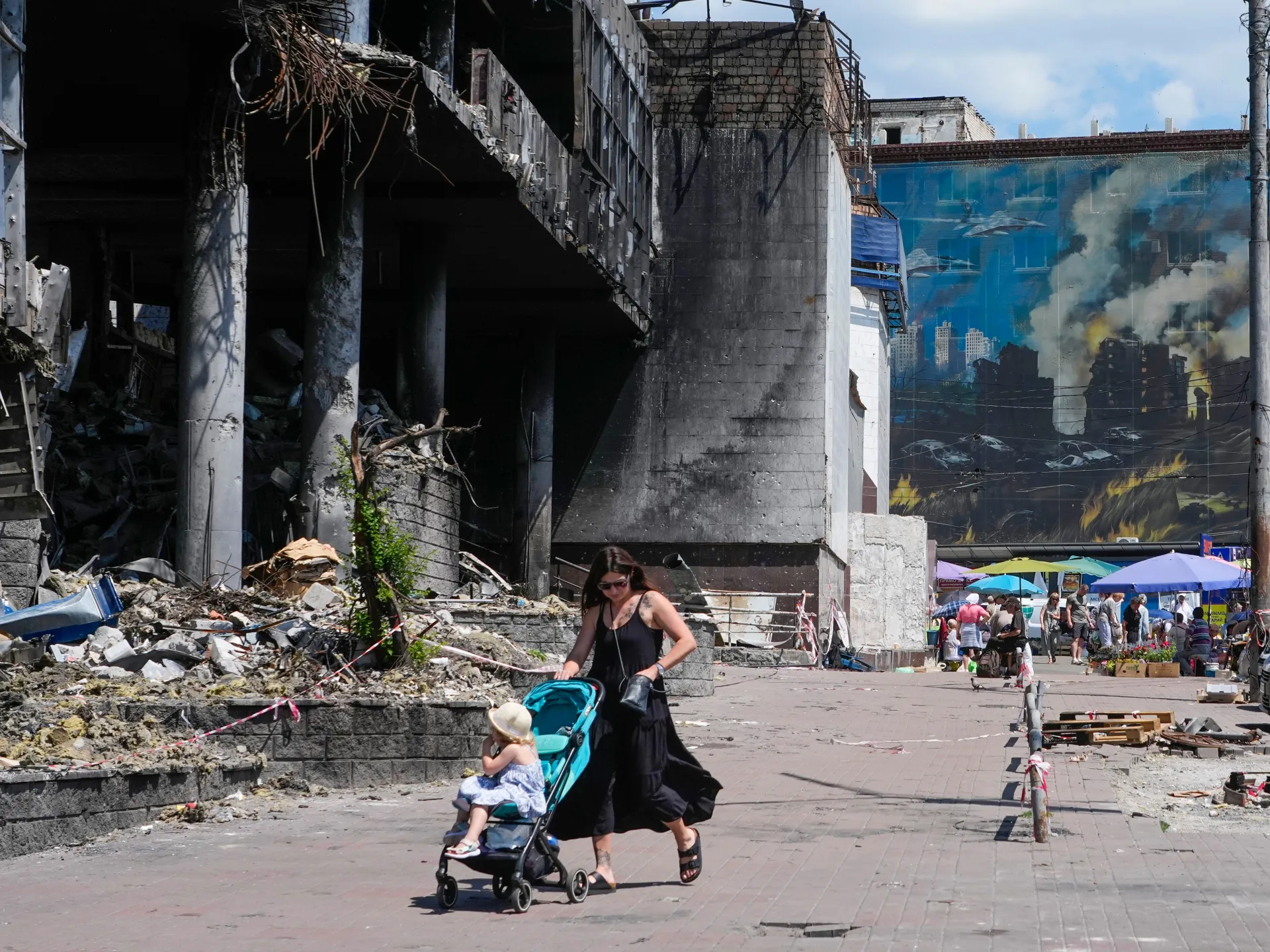
A Russian missile attack on the central Ukrainian city of Kryvyi Rih has killed at least three people, as Moscow struggles with the economic strain of the four-and-a-half-year Russia-Ukraine war.
Oleksandr Vilkul, the head of the Kryvyi Rih defence council, said in a post on Telegram on Tuesday that 25 people had been wounded in the attack, which he said used a cluster munition warhead.
Recommended Stories
list of 3 itemsend of list
“People died within 200 metres [660 feet] of each other because of this barbaric weapon,” Vilkul said, adding that a day of mourning would be marked on Wednesday.
Kyiv has previously accused Moscow of using cluster munitions, which scatter into smaller explosives when dropped.
Reacting to the attack, Ukraine’s President Volodymyr Zelenskyy called for more international pressure on Moscow to end the war and for quicker supplies of air defence systems.
“Every delay in implementing air defence agreements, every delay in supplies to protect Ukraine and Ukrainians is in effect a loss of life,” he wrote on Telegram.
Ukraine announced on Tuesday that its forces had targeted a railway bridge, a power plant and other key infrastructure in Russian-occupied Crimea.
Weakened rouble
Over the past few months, Russia and Ukraine have significantly ramped up attacks. As Moscow launches barrages of strikes on Ukraine, Kyiv in turn has targeted Russian refineries and infrastructure with its own drones.
Ukraine’s drone attacks have led to fuel shortages in Russia. Many regions across the country have reported restrictions on fuel sales and rising prices for oil products, creating concerns about the stability of Russia’s economy.
On Monday, the Moscow Exchange stock index fell by five percent before it rebounded slightly. It is still around its lowest level since March 2023, while the rouble weakened past the 75-mark against the US dollar for the first time since May 6.
The Kremlin dismissed concerns about the rouble’s weakness.
“The stability of the Russian economy, macroeconomic stability, is absolutely ensured,” government spokesperson Dmitry Peskov said on Tuesday.
Meanwhile, efforts to end the war have remained effectively frozen as United States President Donald Trump has shifted his focus to Iran.
Russian Foreign Minister Sergey Lavrov told foreign envoys in Moscow on Tuesday that the Americans seemed to be “abandoning any claim to the role of an objective mediator and are instead pursuing a course of escalating sanctions pressure on Russia”.
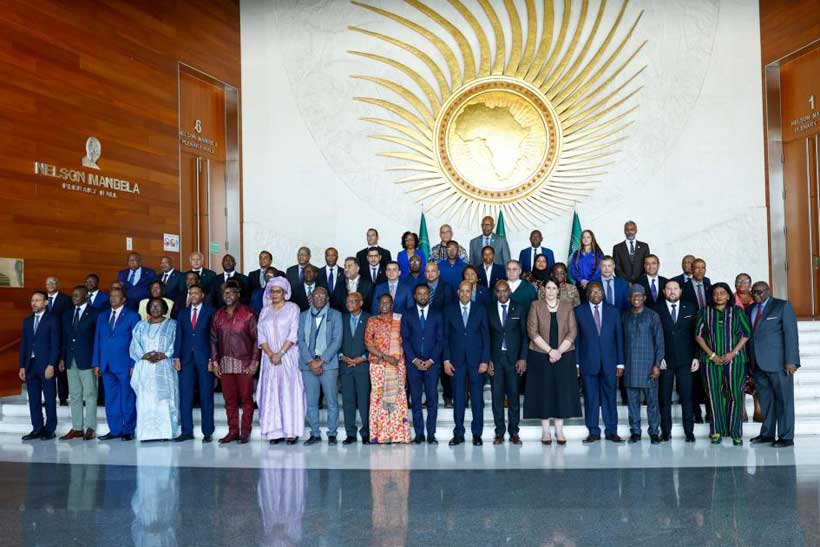
As Africa navigates the challenges posed by the U.S.-Iran crisis, creating worldwide economic instability, the 52nd Ordinary Session of the Permanent Representatives’ Committee (PRC) called for consistent commitment to the peaceful resolution of disputes through dialogue and diplomacy. The 49th Ordinary Session of the Executive Council and the 8th Mid-Year Coordination Meeting (MYCM) between the AU, Regional Economic Communities (RECs), and Regional Mechanisms (RMs), scheduled to take place on 27 June 2026 in El Alamein, Egypt.
Chairperson of the AU Commission, Mahmoud Ali Youssouf, has acknowledged that the multifaceted challenges currently facing the continent, including geopolitical tensions affecting global supply chains, macroeconomic instability, delays in fertilizer imports, ongoing conflicts, and health emergencies such as the recent Ebola outbreak. He noted that external factors, including the closure of the Strait of Hormuz, continue to disrupt continental plans.
Despite these difficulties, the AUC chairperson affirmed the commission’s commitment to redoubling its efforts, implementing contingency plans, and reinforcing fiscal discipline. He stated that the 2027 budget would be an austerity budget, while underscoring the imperative to continue the post-SACA (Skills Assessment and Competence Audit) trajectory. He revealed that the AU currently operates with only 30% of its required staffing levels and approximately 25% of its global budget, including programs funded by statutory contributions.
That, however, Youssouf appealed to Member States for enhanced solidarity and material support, emphasizing that achieving the objectives of Agenda 2063 demands greater involvement and commitment. He reassured the Permanent Representatives’ Committee that the Commission is developing scenarios to address human and financial resource gaps and remains ready to work collaboratively with Member States to identify appropriate solutions.
He concluded by reaffirming the Commission’s dedication to strict budgetary discipline and its unwavering support to Member States. “The African Union should have the necessary human and financial resources to attain the objectives of Agenda 2063. I am aware of the difficulties that our member states are facing. The Commission is ready to find, together with you, the appropriate solutions to take up these challenges together,” said Mahmoud Ali Youssouf.
Ambassador Willy Nyamitwe, Chairperson of the PRC and Ambassador of the Republic of Burundi to Ethiopia, delivered a compelling address calling for unity, self-reflection, and action. He expressed gratitude to Member States for entrusting Burundi with steering the continental organization this year. Ambassador Nyamitwe highlighted the profound technological transformations reshaping economies and the rising expectations of African citizens.
Ambassador Nyamitwe cautioned against national positions that may unintentionally undermine continental unity, urging ambassadors to ensure that their decisions tangibly improve the lives of ordinary Africans. He stated that unity is not merely a virtue but a weapon and that history will judge not speeches but the courage to acknowledge mistakes and strengthen collective institutions. He called on the PRC to choose solidarity over division and vision over hesitation. “History will remember whether we strengthened the institutions entrusted to us. It will remember whether we chose solidarity over division and vision over hesitation. I have every confidence that this committee, the PRC, possesses the wisdom, the experience, and the determination required to meet these expectations. Together, let us continue building an African Union that is stronger, more effective, and more responsive to the aspirations of our peoples,” concluded Ambassador Willy Nyamitwe.
The official meeting was attended by Selma Malika Haddadi, Deputy Chairperson of the AU Commission, along with AU Commissioners, representatives of AU organs, and senior officials. The PRC will deliberate on reports from its Sub-Committees, the AU Commission, and other AU organs and specialized agencies. The Committee will subsequently adopt its report and the draft decisions for the 49th Ordinary Session of the Executive Council, scheduled for 24-25 June 2026 in El Alamein, Egypt.
Those trapped in the compounds include Chinese, Philippine, Taiwanese, Malaysian and Brazilian nationals.
Published On 23 Jun 202623 Jun 2026
More than 5,300 people remain trapped in online scam centres in Myanmar near the Thai border, despite a multinational crackdown in the region last year, a human rights group says.
The Thai-based Civil Society Network for Human Trafficking Victim Assistance (CSNHTV) sent a letter to Thai police urging them to take action. It said many of those trapped were foreign nationals held at four locations inside areas controlled by the Myanmar Democratic Karen Buddhist Army militia.
Recommended Stories
list of 3 itemsend of list
According to the CSNHTV, an estimated 1,600 people trapped are Chinese nationals, and about 200 are people of Myanmar, along with people from the Philippines, Taiwan, Malaysia, Brazil, Russia, Kenya, Uganda, Rwanda, and Zimbabwe.
“Many of these compounds have yet to be dismantled or subjected to rescue operations to free all remaining victims,” it said.
“As a result, these syndicates continue to engage in online fraud and human trafficking, causing harm to victims around the world, particularly in the United States and Europe.”
Scam centres in Southeast Asia, including those in Myanmar and Cambodia, run illegal online schemes that are designed to defraud people worldwide.
“Litany of abuse”
The centres grew significantly during the COVID-19 pandemic in the region, and were initially tied to poorly run casinos and online gambling. They have now become a multibillion-dollar industry, according to the United Nations.
A UN report in February said the facilities are mostly staffed by foreign nationals who have been trafficked by criminal gangs and subjected to abuse.
It found instances of “torture and other ill-treatment, sexual abuse and exploitation, forced abortions, food deprivation, solitary confinement, among other grave human rights abuses”.
“The litany of abuse is staggering and at the same time heart-breaking,” UN Human Rights chief Volker Turk said.
“Yet, rather than receiving protection, care and rehabilitation as well as the pathways to justice and redress to which they are entitled, victims too often face disbelief, stigmatisation and even further punishment.”
Weekly insights and analysis on the latest developments in military technology, strategy, and foreign policy.
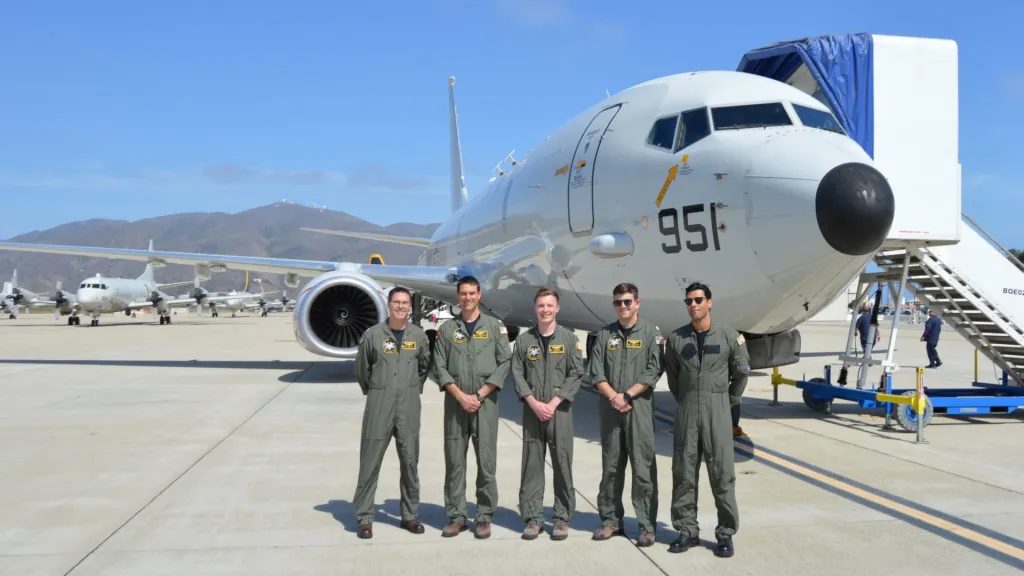
The very first P-8A Poseidon aircraft is now assigned to Air Test and Evaluation Squadron 30 (VX-30), the “Bloodhounds.” TWZ was first to report last year that VX-30 was in line to get two P-8As to support long-range missile and other testing efforts. The aircraft will help the squadron address the increasing difficulties it is facing with its aging P-3 Orion aircraft. Only a handful of P-3s remain in service anywhere in the Navy, and are becoming increasingly challenging to operate and maintain.
VX-30 shared pictures of the P-8A arriving at its home base in Point Mugu, California, on its Facebook page last week. Naval Air Station Point Mugu, part of Naval Base Ventura County, sits right on the southern California coast with direct access to the expansive Point Mugu Sea Range. The Navy and other branches of the U.S. military, as well as defense contractors, regularly use the offshore ranges for missile and other tests, which the Bloodhounds support. Aircraft from VX-30 also often deploy to other locations around the world to support test and evaluation activities, including in other U.S. military range complexes in the Pacific Ocean around Hawaii and in the Atlantic Ocean off the coast of Florida.
Members of VX-30 pose in front of the squadron’s ‘new’ P-8A. USN
As noted, the P-8A now assigned to VX-30 is actually the very first Poseidon ever built and is also known as T-1. The aircraft, which made its maiden flight in 2009, was used for years to support the Poseidon program. The Bloodhounds are also in line to get the second test P-8A, which is also still referred to as T-2. We will come back to this in a moment.
VX-30 already operates a variety of planes specially configured to support test missions, including the aforementioned P-3s. The unit also has KC-130T Hercules tanker/transports, as well as its one-of-a-kind NC-20G and NC-37B jets. The NC-37B was specifically acquired to replace one of the squadron’s NP-3D Orions, a variant nicknamed the “Billboard” because of its heavily modified tail. The NC-20G and the NC-37B reflect a larger push to revamp the Bloodhounds’ fleets in recent years.
Collectively, VX-30’s aircraft are equipped with a mix of radars, cameras, and other equipment to collect imagery, telemetry, and other data during tests. They have communications and data-sharing suites to be able to pass information along to test facilities on land to aid with live monitoring and for deeper analysis.
Some of VX-30’s existing aircraft (from left to right: the NC-37B, a P-3C, and a KC-130T). Katie Archibald/USN
Aircraft assigned to VX-30 are also used for what is called range surveillance and clearance missions to keep unwanted visitors and errant bystanders out of the way in the air and down below during tests. This is where the P-8As will come in, at least initially.
“Both aircraft will perform the Range Surveillance & Clearance mission as well as dedicated testing for Naval Air Systems Command programs supported by P-3 today,” a NAVAIR spokesperson told TWZ last year. “T-1, the airworthiness P-8 aircraft, will have a radar modification to integrate an APY-10 in the airframe, as one does not currently exist. This will provide T-1 with a supportable radar configuration and capability that mirrors the baseline P-8 fleet. T-2 will be unmodified.”
Raytheon’s AN/APY-10 is the standard maritime search radar used on the P-8A, and is primarily designed to spot and track vessels on the surface, as well as masts belonging to submerged submarines protruding above the waves. It also has a synthetic aperture radar (SAR) mode that allows it to capture still images, even through cloud cover, smoke, and dust, and at night. The SAR mode is one of several capabilities of the P-8As that allows it to be used for surveillance in coastal environments and over land, as well as while flying over open bodies of water.
Standard Poseidon aircraft also have a sensor turret with electro-optical and infrared full-motion video cameras, as well as signals intelligence capabilities, as you can read more about here.
A typical US Navy P-8A Poseidon. USN
The P-8A’s core capabilities are well suited to the range surveillance and clearance mission. In an unmodified form, the Poseidon’s other sensors might be capable of gathering additional visual and other data during testing, as well.
NAVAIR has also left the door open to potentially modify VX-30’s ‘new’ P-8As in the future to take on an expanded role with the squadron. The Poseidon is based on the Boeing 737 airliner, and offers swap space that could accommodate additional systems down the line. The Navy already operates several more deeply modified P-8s with additional intelligence-gathering capabilities. Those aircraft are notably capable of carrying the AN/APS-154 Advanced Airborne Sensor (AAS), a large podded active electronically scanned array (AESA) radar, under their fuselages, as you can learn more about here. Boeing has developed other add-on sensor packages for the P-8A over the years, as well.
A US Navy P-8A carrying the AN/APS-154 Advanced Airborne Sensor. USN
Unlike the P-3, the P-8A also has the ability to refuel in mid-air via boom-equipped tankers. That is another capability VX-30 might be able to leverage to enable longer-duration flights, whether in support of range surveillance and clearance or other missions.
Overall, the “P-8 will go a long way to enabling range support operations and will provide new opportunities for future developmental programs,” the NAVAIR spokesperson told us last year.
On top of the P-8A’s inherent capabilities, even the older test jets are just younger and more modern, in general, than the P-3s that make up the core of VX-30’s fleet today. The Navy took delivery of its last new-production P-3C variant in 1990, and Lockheed (now Lockheed Martin) shuttered the line afterward. This means the very youngest Orion is 36 years old now. As noted, the Navy has been steadily withdrawing Orions from service in recent years.
One of VX-30’s P-3 Orions. USN
Several Navy test squadrons do continue to operate P-3s, but that’s becoming an increasingly more complex proposition. This is not just because of the maintenance demands of aging aircraft that are no longer in widespread U.S. service, but also the availability of trained aircrews. As part of the transition of active and reserve Navy maritime patrol squadrons from the P-3 to the P-8, the service no longer has a Fleet Replacement Squadron (FRS) for the Orion. FRSs are the Navy’s ‘school houses’ that provide training specific to particular aircraft types to aviators and ground personnel before they are sent to operational units. VX-30 now has to do that training in-house.
“The two P-8s will reduce sustainment costs and increase availability over the four P-3 aircraft VX-30 currently flies. P-8s also help alleviate P-3 manning challenges now that the FRS and operational squadrons have all transitioned to P-8 or decommissioned,” the NAVAIR spokesperson told us last year. “P-3 aircraft require a Flight Engineer crew position, and as the P-3 model manager, the return on time invested to train incoming pilots or qualify Flight Engineers in the P-3 is rapidly diminishing for VX-30’s primary missions.”
It remains to be seen whether the configurations of T-1 and T-2 might evolve in the coming years to expand their ability to support testing over the Point Muge Sea Range or elsewhere globally.
In the meantime, T-1’s arrival already marks a new chapter for VX-30 and the Navy’s oldest P-8A Poseidon.
A United Nations commission of inquiry has accused Israel of systematically targeting Palestinian children in the occupied Palestinian territory, saying Israeli actions amount to genocide, war crimes and crimes against humanity in Gaza and war crimes in the occupied West Bank.
In a report released on Tuesday, the commission said about 30 percent of those killed in Gaza since Israel’s war began in October 2023 were children, and that attacks on maternity and neonatal units, along with an aid blockade, have devastated children’s chances of survival.
The commission says Israeli forces have destroyed orphanages and schools, and Palestinian children have been arbitrarily arrested, tortured and subjected to sexual abuse in detention. It warns that killings and serious injuries have continued even after the October 2025 “ceasefire”, in defiance of international law.
UNICEF estimates more than 50,000 children have been killed or wounded since the war began, with at least one Palestinian child killed on average every day in the eight months since the October “ceasefire” took effect.
These images document the lives and losses of Palestinian children in Gaza and the West Bank as they struggle to survive bombardment, displacement and imprisonment – and to hold on to a future that is being systematically stripped away.
Pakistan hosts Iranian President Masoud Pezeshkian after mediating the breakthrough US-Iran negotiations in Switzerland.
Published On 23 Jun 202623 Jun 2026
Islamabad, Pakistan – Iranian President Masoud Pezeshkian has alanded in Pakistan for a state visit – his first overseas trip since the United States and Israel launched strikes on Iran on February 28.
His Pakistani counterpart Asif Ali Zardari, Prime Minister Shehbaz Sharif, and Deputy Prime Minister and Foreign Minister Ishaq Dar received the Iranian leader at a military base near capital Islamabad on Tuesday.
Recommended Stories
list of 4 itemsend of list
During his day-long visit, Pezeshkian, who is accompanied by a high-level delegation that includes ministers and senior officials, will hold talks with Sharif, and is also expected to meet with Zardari.
According to Pakistan’s Ministry of Foreign Affairs, Senate Chairman Yousaf Raza Gilani, National Assembly Speaker Ayaz Sadiq, and Deputy Prime Minister and Foreign Minister Ishaq Dar will also call on the Iranian leader.
“During the visit, the two sides will review the full spectrum of bilateral relations and explore new avenues to further deepen cooperation across diverse sectors, including trade, energy, border security, people-to-people exchanges, and regional connectivity,” the ministry said in a statement on Monday.
Pezeshkian’s visit follows the crucial first round of talks between the United States and Iran, mediated by Pakistan and Qatar, in the Swiss city of Bürgenstock to end the war on Iran.
As part of the agreement, the US will release $12bn in frozen Iranian funds. The US has also announced a temporary easing of international sanctions on Iran, allowing it to sell its oil and petrochemicals until August 21. The talks concluded with a 60-day roadmap towards a final deal.
It is Pezeshkian’s second visit to Pakistan as president. His first, in August 2025, came days after the 12-day Iran-Israel war, and was also his first overseas trip following that conflict.
The visit is widely viewed as an expression of gratitude for Pakistan’s role in brokering the Islamabad Memorandum of Understanding, signed on June 18 by US President Donald Trump and Pezeshkian, with Prime Minister Sharif signing the document as a mediator.
The Islamabad MoU launched the formal diplomatic process now under way in Switzerland.
“The visit will also provide an important opportunity to discuss ongoing diplomatic engagements following the signing of the Islamabad Memorandum of Understanding, as well as regional and international developments of mutual interest,” Pakistan’s Ministry of Foreign Affairs said in its statement.
Weekly insights and analysis on the latest developments in military technology, strategy, and foreign policy.
Turkey’s Baykar and Leonardo of Italy say they have successfully completed the first live trials of their K-SWARM concept, demonstrating collaborative operations between crewed and uncrewed aircraft as part of an effort to develop next-generation autonomous air combat capabilities. The trials, involving Baykar’s Kizilelma uncrewed combat air vehicle (UCAV) and Leonardo’s M-346 light fighter-trainer aircraft, are the latest to explore what is fast becoming a key element in the evolution of air combat.
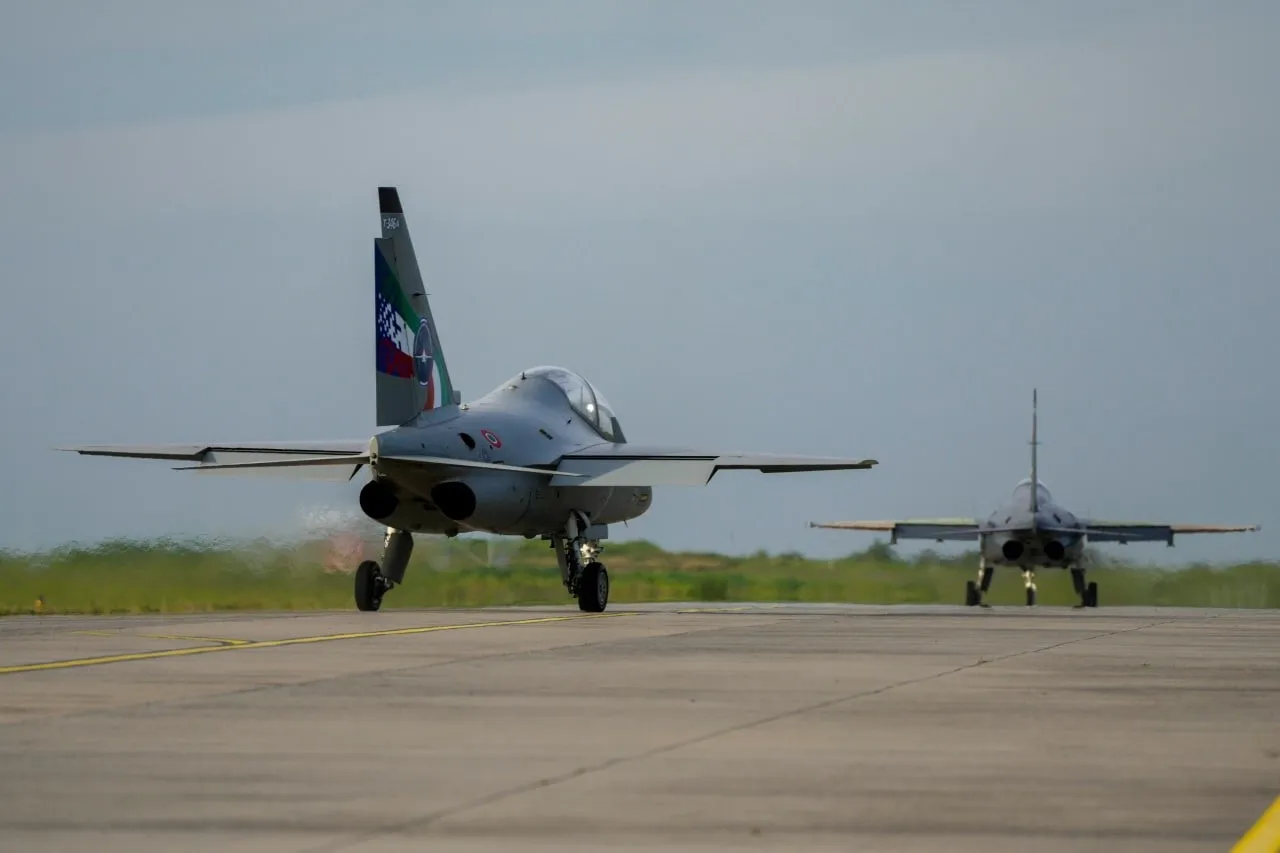
Leonardo and Baykar announced the development today. The trials took place last month at Baykar’s flight and test center in Çorlu, Turkey, and involved a Leonardo-owned M-346 Fighter Attack variant and a Kizilelma UCAV. An Italian Air Force T-346A, the trainer version of the M-346, was on hand as chase aircraft.
T-346A and M-346FA taxi out for a sortie during the K-SWARM trials. Leonardo
During the flight-test campaign, the Kizilelma completed its taxi and takeoff autonomously. It then autonomously joined the M-346 in formation. At this point, the two-person crew in the jet assumed full control of the Kizilelma.
The Kizilelma used so-called Smart Fleet Autonomy algorithms developed by Baykar’s Hardware-in-the-Loop (HIL) Laboratory for the trials.
Once ‘handed over’ to the M-346, the pilots in the jet made use of a newly developed and fully integrated avionics suite to command different formations. Via a crewed/uncrewed computing system, the Kizilelma performed different maneuvers and formations, including position changes, separations and rejoins. These were executed autonomously by the drone, with the M-346 pilots only responsible for providing the initial commands.
The M-346FA as used in the K-SWARM trials. Leonardo
What was described as an advanced radio-frequency data exchange system was used to share all data between the platforms.
The Kizilelma/M-346 trials in Çorlu were the first live phase of Leonardo and Baykar’s K-SWARM program, which focuses on developing interoperability between crewed and uncrewed aircraft. The companies refer to this as crewed/uncrewed teaming (CUC-T), but it’s also referred to by other names, including manned-unmanned teaming (MUM-T), or collaborative combat teaming.
TWZ was provided the opportunity to experience the M-346FA firsthand during a visit and demonstration flight at the Beech Factory Airport in Wichita, Kansas:
We Fly Aboard The M-346 That Could Become The Navy’s Next Jet Trainer
Whatever the term, the ambition is similar: to have future fighter pilots go into battle accompanied by drones under their control, ready to fire weapons, gather intelligence, jam communications, or serve as decoys.
Baykar and Leonardo helped accelerate the start of these crewed/uncrewed teaming trials by first running simulated missions, including using an M-346 full-mission simulator in Venegono, Italy, and the Leonardo product capability and concept laboratory, or PC2LAB, in Turin. This meant that algorithms, as well as tactics and procedures, could be tested in the virtual realm first.
The Kizilelma’s rapid rise to prominence as a fighter-like UCAV has been notable, and there have been some impressive milestones along the way.
A top view of a Kizilelma UCAV. Baykar Baykar
In general, the Kizilelma is one of only a few fighter-type air combat drone projects to have resulted in hardware. The development of the Kizilelma began as long ago as 2013, although the project was only revealed to the public in July 2021, when conceptual studies were presented.
Kizilelma was flown first — very briefly — in December 2022, as you can read about here. That milestone came only weeks after the Kizilelma’s emergence for ground testing.
The UCAV is claimed to be supersonic (at least in later versions), have a degree of reduced-observable characteristics, and be tailored for the kinds of air combat missions typically undertaken by crewed fighter jets. In particular, it is eyed as being a drone companion to Turkey’s next-generation TF Kaan crewed fighter. In its definitive form, the drone is powered by a single Ukrainian-made Ivchenko-Progress AI-322F turbofan delivering close to 10,000 pounds of thrust with afterburner.
A next set of K-SWARM tests is planned for the coming months, with more complexity and additional functions. The companies say these will require greater levels of situational awareness and assets working together ‘as one’ toward mission objectives. Further details, including how enhanced situational awareness will be achieved, were not disclosed, but it should be noted that the Kizilelma has already been tested with a Toygun electro-optical sensor and targeting system, as well as an active electronically scanned array (AESA) radar.
Ultimately, however, the K-SWARM program aims to harness AI technology to enable uncrewed systems to incrementally shift from remote piloting to autonomy, suggesting that, in future trials, the Kizilelma will autonomously conduct more complex missions and maneuvers on the command of the M-346 pilots. At all times, those human pilots will maintain full control and decision-making, the companies say.
A UCAV operating under the control of a crewed tactical jet represents a major milestone for Turkey, placing it among a very small group of countries pursuing this advanced capability. Publicly, such crewed-uncrewed teaming has largely been confined to experimental efforts in the United States and China. We meanwhile know a lot about what the United States has been doing in the “white world” in this regard, and it is now only accelerating its CCA efforts, while it is clear that China has also prioritized it.
A view from the backseat of an L-39 Albatros light jet being used as a drone controller in a Skunk Works test. Note the touch-screen type user interface. Lockheed Martin
Russia has also reportedly flight-tested its S-70 Okhotnik UCAV with a crewed Su-57 Felon fighter, but there is no confirmation about the degree of collaboration achieved. Last year, meanwhile, the U.S. Air Force demonstrated an MQ-20 Avenger drone being controlled by a pilot in an F-22 Raptor, during a mock mission.
Given the current surge in interest in collaborative combat aircraft (CCAs), the joint trials by Baykar and Leonardo also appear especially well-timed.
To take just one European country, Germany currently has a stated requirement for an operational CCA to be fielded before the end of this decade. While the Kizilelma might not necessarily be in the running for that, the AI technology that it is now demonstrating could be of considerable interest to a variety of export customers.
The Kizilelma during earlier taxi trials. Baykar
Meanwhile, the Kizilelma, like other Turkish defense products, comes with the advantage of being free from the restrictions imposed by the U.S. International Traffic in Arms Regulations (ITAR) guidelines. ITAR serves to limit the transfer of defense and military technologies and services — especially the more sensitive ones — to certain countries. Already, Turkey has leveraged its drone developments to secure major arms sales to a variety of countries for which these kinds of capabilities would otherwise be out of reach — in both technological and political terms.
The opportunity for Turkey to offer for export the Kizilelma in concert with the high-end TF Kaan, or the lower-end Hürjet light combat aircraft, would put it in a unique position, at least in Europe. The same platforms could also be supplied with integrated weapons options, providing another significant advantage.
Turkish light fighter trainer made its first flight in 2023. TAI screencap TAI screencap
As for Leonardo, the M-346 has recorded some notable sales, with the combat-optimized Fighter Attack version also gaining increasing traction. Meanwhile, through its stake in Eurofighter, the Italian firm may well be looking forward to offering these ‘drone commander’ capabilities to the multirole fighter. As we have discussed only recently, the collapse of the pan-European Future Combat Air System (FCAS) effort means that CCA capabilities are even more in the spotlight, including efforts to team UCAVs with advanced fourth-generation platforms like the Eurofighter Typhoon.
A rendering from Airbus of manned-unmanned teaming with Typhoon fighters, a type that is also on order for Turkey. Airbus
For Baykar and Leonardo, demonstrating that the Kizilelma can be commanded from an M-346 is an important achievement, but scaling that capability to different aircraft, larger formations, and increasingly autonomous mission execution will ultimately determine whether K-SWARM becomes an operational capability rather than simply a technology demonstrator. It should also be remembered that while the autonomy engine and AI agent are critical parts of an effective fighter-CCA teaming concept, it is unclear how developed these technologies are in the K-SWARM experiments. After all, just controlling the UCAV is one thing, but having the drone do much of the thinking while the pilot gives approvals and basic directions is the key. The companies have also proposed developing these technologies further to achieve ‘swarming,’ which presents an even greater challenge in this context.
However, with demand for affordable force multipliers continuing to grow and air forces looking for ways to increase combat mass without buying ever more expensive crewed fighters, a UCAV that can combine with a crewed combat aircraft further demonstrates the rapid pace of advances in Turkey’s burgeoning drone capabilities.
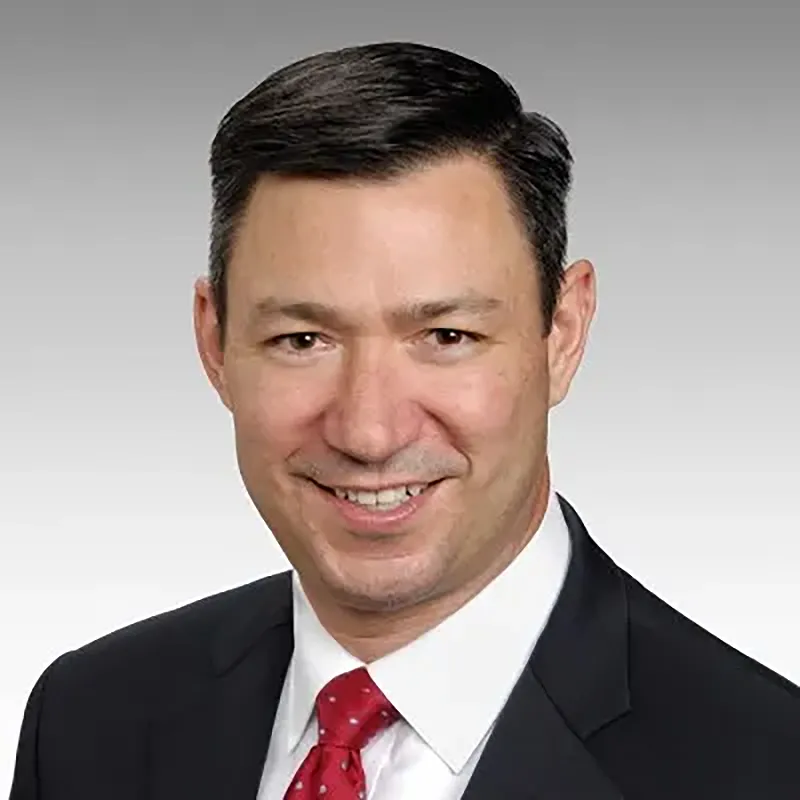
To get a better sense of how this project came together so quickly, the challenges it faced and the tradeoffs that had to be made, we spoke with Jason Lambert, President of Intelligence, Surveillance and Reconnaissance (ISR) at L3Harris, the company that performed the conversion. During the interview, he gave us some unique insights into this highly visible and often controversial effort.
Jason Lambert (L3Harris)
Some of the questions and answers have been edited for clarity.
Q: Can you give us an overview of L3Harris’s role in this program?
A: It’s an honor to talk about this monumental and generational event. L3Harris worked in conjunction with the Air Force to deliver the first VC-25B — a 747-8I that the U.S. government received as a gift from Qatar. We had the opportunity to work on that aircraft for a 10-month period, with pre-staged employees operating on a 24/7, three-shift structure to convert it into what was unveiled on Friday: the new Air Force One.
The new VC-25B bridge jet. (USAF) USAF
L3Harris, in the ISR [intelligence, surveillance and reconnaissance] business, is uniquely positioned for this type of project. We’re the world’s largest non-OEM [Original Equipment Manufacturer] integrator of aircraft. We don’t make planes from scratch — we’re not a type certificate holder like Boeing, Airbus, or Gulfstream. We take existing planes, whether commercial or military, and missionize and outfit them for specific uses. We operate the world’s largest intelligence, surveillance and reconnaissance fleet — the RC-135 Rivet Joint.
RC-135 Rivet Joint. (USAF/Staff Sgt. William Rosado)
We missionize business jets for electronic attack, ISR, and airborne early warning and control missions, including a series of special mission aircraft, some of which are classified. And then, of course, the head-of-state mission, which we’ve been proud to be part of for many years.
We’re also the prime contractor for the Senior Leader Communication System. Any time the president is on board Air Force One, the communications system he uses to talk to his staff and to world leaders — voice, video, all content going on and off the plane — has to be secure, so state actors cannot intercept it, and it has to have the right bandwidth and latency, which is evolving as new satellite providers come online.
VC-25A. (USAF)
We have the ability to broker and work with multiple providers to ensure that the system is 24/7 ready whenever the president needs it. And when he’s on that plane, he’s not just the commander-in-chief — he’s the head of state, representing the country internationally. The president spoke to that directly when he talked about the livery and how this plane looks. Our team is just very, very excited to have converted this aircraft into what is now the first VC-25B.
In conjunction with the modification work, we were also asked to help build out a training program and a sustainment program — not just for this specific aircraft, but for the VC-25B fleet overall. On the training side, the Presidential Airlift Group had been flying the legacy 747. The 747-8I is a very different aircraft — it’s much larger — so we worked with two companies to address that. We leased an aircraft from Atlas Air for a period of time, and we purchased a plane from Lufthansa out of their commercial fleet to serve as a dedicated flight trainer, so the Presidential Airlift Group could learn how to fly the platform.
You can see video of one of those Lufthansa 747-8is below:
Lufthansa Boeing 747-8i D-ABYG, one of two aircraft slated to be sold to the U.S. Air Force, visited LAX during the Airline Videos Live broadcast from the H Hotel on December 14th, 2025. Lufthansa plans to sell both 747-8i aircraft in 2026. pic.twitter.com/IxsB55Kz8h
We also built a one-to-one scale mockup of the aircraft interior and placed it on the hangar floor at Joint Base Andrews. It was an exact replica of the layout — monuments like bulkheads, walls, doors, tables, and chairs in full-scale configuration, along with the galleys — so the flight crew supporting the president could practice and learn how to operate this aircraft before ever flying it. There were multiple training touchpoints built around that, and then, of course, the sustainment portion: spare parts, engineering support, everything needed to keep that aircraft ready whenever the president needs it. All of that infrastructure was built out in advance — not just for this plane, but to support the entire VC-25B fleet, which will include more aircraft to follow.
US President Donald Trump speaks in front of the new Air Force One, gifted to him by Qatar, in a hangar at Joint Base Andrews in Maryland on June 19, 2026. (Photo by Brendan SMIALOWSKI / AFP) BRENDAN SMIALOWSKI
Q: How did this all come about? Was there a requirement for a bridge Air Force One aircraft prior to the Trump administration’s second round? How did it all come into being and why?
A: In the first administration, a deal was signed with the Air Force and Boeing to build the VC-25B. That program has been delayed significantly by years, and its budget overrun by billions. You have that event taking place. The aircraft weren’t ready for the president’s use coupled with the fact that the VC-25A — the legacy aircraft — are 35 years old. They’re starting to have — there’s not a safety risk, there’s an operational risk in terms of what happens on planes, given their, I’ll just say, their usage. And so the president and the Air Force wanted to have a solution… given that the VC-25Bs are delayed further and the VC-25As are starting to — I’ll say show some age in terms of their availability. Again, there’s only two of those VC-25As and so one is usually in for depot-level maintenance. In fact, at present, I have one of them in my facility.
VC-25A. (USAF/Josh Plueger) USAF/Josh Plueger
The other one came back from the G7 summit recently, the president flew on that. And then of course the second one is in for maintenance. It was at Boeing’s facility at San Antonio for several months, getting upgraded, and then it’s in our facility right now for paint. That leaves the president with one VC-25A asset that, from an operational availability perspective, is not probably what it should be, given the age of the plane. So the Air Force approached us with a solution potential on how we could potentially go find a bridge to create when the VC-25Bs that are under contract with Boeing would be ready, and this was the solution.
A rendering of a future US Air Force VC-25B Air Force One jet. (Boeing) Boeing
Q: Can you provide any insights into what it took to get the work on the VC-25B done in just 10 months? Can you tell the story of how it all came together and why L3Harris was tasked with the job?
A: I’ll start with the L3Harris piece. Our core competency and what our uniqueness is, is taking existing platforms — military or commercial — and modifying them based on whatever the customer’s mission set might be. For example, we take tankers and convert them into the RC-135 Rivet Joint, the country’s premier intelligence, surveillance and reconnaissance platform. We take a legacy G550 business jet and convert it to the EA-37B Compass Call electronic attack plane. We take a Global 6500 from Bombardier and are converting it to ARES X, an airborne early warning and control offering for the Republic of Korea.
An EA-37B Compass Call. (USAF)
We do that because we’ve got an engineering team of 2,600 people on our total workforce of 7,600. Within the ISR business, 5,600 are cleared, so we have the ability at scale and size to do classified things very quickly and detect classified things with a large group of people that can do things in our facilities. So there is a lot of technical talent, but with that we also have around 100 people in our ODA. The ODA is essentially the delegated organization from the FAA, where we in our business can do work on behalf of the FAA for certification work.
So, the way we operate it, we’ll take an existing platform or an existing plane, and rather than have to certify it from scratch, we have to just certify the modifications that we’re doing for it. So you’re always starting with this baseline, and then you’re doing a modification on top of that baseline that enables us to go far quicker than if we were to start with a brand new aircraft from scratch.
So all that aircraft missionization competency is one of the reasons I think of why we were asked. The second reason is we’re the prime contractor for what’s called the Senior Leader Communication System, and so that communication system is used for every aircraft that’s utilized for Air Force One. So, in the 747s that the president flies — when he’s flying on a 757 — those are known as the C-32s — we have the hardware and the software on that aircraft, as well as the services that connect from satellite links, ground links, and be able to manage the communications content that the president and his staff are using in flight anywhere in the world.
A stock picture of a C-32A wearing the blue-over-white livery. (USMC)
Think of it like a help desk always online when the president or his staff are flying to ensure that the connections are live and working. If there’s an issue, we have redundancies within the system that we can ensure that it’s working, and most importantly, in addition to it being resilient, it’s also secure when that phone call gets made, or that video feed gets made from POTUS to a world leader, we’ve got to make sure that adversaries aren’t listening in. And so it’s fully secure, and that’s the core competency of what L3Harris does. So, combining those two pieces together, along with our legacy of supporting the Air Force One fleet, and we’re a logical choice to be asked to go take on this work and we are really uniquely positioned to do that because of the nature of the things that we do.
Q: What is the difference between this aircraft and Boeing’s VC-25Bs that are still in modification?
A: They both started as a 747-8i so from a platform perspective, they are the same. I can’t talk too much about the VC-25B program. What I can say for this one is, while this is an 8i, it had a very nice interior that came in from the Qataris. So we had a place to start from.
One of the first things we have to do on this aircraft, in conjunction with the U.S. government, is ensure it is safe. There was a lot of content and buzz on blogs and whatnot about is the aircraft secure? Is there anything that we wouldn’t want coming in on the aircraft? Somebody could listen in, something like that. And I can assure you that was very effectively managed to the highest degree. Experts from the U.S. government, experts from L3Harris, experts in cyber security, electronic warfare, ensured that every square inch of that plane was clean, not only on the exterior but interior of the plane and all systems within. So I’ll say, there’s just electronic scrubbing, is how I would describe it, to ensure that it was safe and secure. Frankly, that work took place even before we were able to do any real work on the plane.
In this February 15, 2025 photograph, a Qatari Boeing 747 sits on the tarmac of Palm Beach International airport after US President Donald Trump toured the aircraft on February 15, 2025. (Photo by ROBERTO SCHMIDT / AFP) ROBERTO SCHMIDT
Once we started work on the plane, it had an existing interior, much of which we kept and maintained. One of the things that we had to do for the speed of this program – because the goal was to get it done before the country’s Independence Day.
We were excited that we delivered early to that commitment. There are things that would have driven the schedule, so for example, changing the room structure, changing the hard walls, or any of the bulkheads, things like that, that would drive a significant amount of schedule risk associated. So those were some of the big rules that said, ‘okay, we’re not going to change any of what I call monuments,’ but there’s things within those that we did have some flexibility to change.
For example, there’s some things that came in on the interior that, while they look very nice, they weren’t really representative of what would be fitting for the U.S. president, and so we did make some modifications into some of the fit and finish in terms of the leather and wood and other aspects of what the aircraft looks like to really be fitting for the president’s mission.
✈️🇺🇸 The ultra-luxurious Boeing 747-8, which former U.S. President Donald Trump is set to receive as a gift from the Qatari emir’s family, is poised to become the most valuable present ever given to the United States by a foreign government.
— Savchenko Volodymyr (@SavchenkoReview) May 12, 2025
Q: When the original VC-25B contract was put forward, we were told the USAF, the White House and Secret Service carefully picked the exact requirements needed to execute the mission, and they would come at great cost. Some were even dropped to save money, like aerial refueling. Clearly, those standards had to change drastically to make this Bridge aircraft happen. What requirements were relaxed and what features were omitted in order to meet its aggressive budget and timeline requirements?
A: That’s classified, so I won’t be able to take that one, but I’d prefer that you direct that question back to the US Air Force.
Q: The one thing we get asked about the most is if this aircraft is hardened against electromagnetic pulse and has the command and control capabilities of the full-up VC-25B? Can you speak about that?
A: I think that’s one I’ll also have to defer back to the Air Force.
Q: What about survivability? The VC-25As are covered with infrared countermeasures and missile detection systems, and there are clearly capabilities that are less obvious. This aircraft doesn’t appear to have a similar outfit. How was survivability factored into its abbreviated modifications?
A: Survivability of the aircraft was something that was absolutely thought of, but I can’t comment on the specific systems on the aircraft yet. That’s one I’ll have to direct you back to the Air Force.
Common Infrared Countermeasures (CIRCM)
Q: If this aircraft is good enough to carry the commander-in-chief in the Air Force One role, why does the USAF need to spend over $4 billion on the other two aircraft? Why can’t the USAF just procure two aircraft in this configuration?
A: It’s an interesting question. Good question for the Air Force, but that’s an interesting question.
Q: Will this aircraft be able to fly all missions that the current VC-25As can? What about trips overseas to less peaceful regions?
A: I can comment about [the recent speech Trump gave at Andrews Air Force Base]. I know he’s intending to use this aircraft for international travel. I think he mentioned that there’d be an upcoming flight to Turkey coming up in the future. So specific locations, that’s always done through the White House planning group and White House Presidential Airlift Group. But the intent is this aircraft would be used overseas very much. The president talked about it in his speech about how it really is comparative to some of the other head-of-state aircraft.
It’s 18 feet longer for one so it really is a large aircraft. In fact, the hangar at [Joint Base Andrews] JBA that we were in on Friday for the ceremony was actually custom-built for the VC-25B because of the size of these planes.
In addition, of course, when you see the livery up close, it’s just amazing in terms of what it looks like. So I think the intention is for the president to use this overseas. He definitely signaled that directly on Friday.
Trump unveils new Air Force One, a $400 million jet gifted by Qatar | full video
Q: But are there any preclusions about where it can go at all? To a less peaceful region? Is there any place that it can’t go that the other aircraft can?
A: That’s probably a question for the Air Force.
Q: The aircraft belonged to another country’s government. What had to happen in order to make sure a foreign aircraft like this is free from potential nefarious tampering, bugs and other potential threats? Did every single component have to be examined?
A: What I can say is that a team of experts from the U.S. government, in terms of cyber security, did an immense amount of work on this aircraft, in conjunction with the L3Harris team, to ensure that this aircraft was fully safe from that environment, that threat, and that threat has been fully mitigated. I can say that. How they do it is classified.
The new VC-25B Bridge jet practices touch and go landings on June 22, 2026, in Joint Base Andrews, Maryland. (Photo by Andrew Leyden/Getty Images) Andrew Leyden
Q: The interior in this thing cost massive amounts of money when the Qataris outfitted it. It was one of, if not the most incredible VIP aircraft on earth before becoming a VC-25B. What unique elements of its interior and other VIP features were kept and what was changed?
A: The majority of the wall structure was all kept so any movements of monuments was maintained. That aircraft has 10 restrooms, and those were all kept and maintained. The fit and finish, in terms of some of the materials that were selected, those in some cases were upgraded in certain areas of the aircraft, and that’s both in terms of some of the leather and some of the wood grain veneers and things to be able to not only be esthetically pleasing, but fitting for the U.S. president.
You can imagine that the president is on the aircraft and could be doing interviews with the media. The presidential seal was of course incorporated in a few areas.
Inside the new VC-25B Bridge jet. (Dan Scavino via X) President Donald Trump inside the new VC-25B Bridge jet. (Dan Scavino via X)
We had to put in an air stair, which is for when the aircraft is landing in a remote location, it doesn’t have to — like on Friday — there’s the trucks that come up with the stairs to be able to get on and off the plane. This has one that can self deploy, so that was a fairly sizable structural mod to be able to integrate that into the aircraft and go through the certification process with it, but it works flawlessly. It’s actually a phenomenal piece of mechanical engineering. So yes, there were a couple of minor things that had to happen in conjunction with the other systems we had to incorporate.
U.S. President Donald Trump pumps his fist after touring the inside of the newest aircraft in the presidential fleet at Andrews Air Force Base on June 19, 2026 at Joint Base Andrews, Maryland. (Photo by Alex Wong/Getty Images) Alex Wong
Q: Were these requests from the president himself?
A: I’ll say that the president didn’t see the aircraft personally until last Friday, but his staff was directly engaged in the project throughout the entire project. Air Force leadership engaged throughout the entire project. We had senior Air Force visitors, including the Secretary and Chief of Staff of the Air Force, Gen. [Dale R.] White [The Pentagon’s Director of Critical Major Weapon Systems], and representatives from the White House military office visit us on several occasions to check on the progress of the aircraft, and then also to make design decisions.
I think about even one like the paint scheme, and the president had to sign off on the paint scheme, had to sign off on — if you look at the back of the tail — the wavy flag versus the fixed rectangular flag. The president personally had to approve all those items.
And one of the things the Air Force did an amazing job of helping us with is getting those decisions made as early as possible on the program, and then once the decisions were made, keeping the configuration frozen. In any type of aircraft development program, regardless of the customer, being able to make those design decisions and have them… locked in the front end allows the team to actually go do the procurement and engineering and work on the aircraft without having to do a lot of change.
In this example, we had an objective, along with our Air Force customer, to get this plane delivered before the 4th of July, 2026 for the country’s 250th birthday. And the team rallied behind that mission set to do that. And we could never have done it without the level of collaboration we had with the Air Force, working the requirements back with the president.
You can see the VC-25B bridge jet practicing touch-and-goes at Andrews in the following video:
Q: What new features does this aircraft’s interior have that the VC-25As don’t?
A: Well, the upgrades. So the comm suite is all the latest content gear, so that’s an upgrade. The aircraft is larger than the 25A, again about 18 feet larger, and so I’ll just say the size and just the finish of the aircraft.
Also, VC-25As were commissioned under President Reagan, and then first used under President Bush, and so while they are nice planes, they’re 35 years old, and so you can imagine just how those will wear a bit over time.
And yes, they’ve been kept upgraded, but this is a modern, beautiful aircraft, and I can say, when I saw it for the first time, it was the most beautiful aircraft I’ve ever seen. It’s — and if you have the chance someday to walk on the inside — or as things will start being released, you’ll see that on the interior also. It’s just absolutely gorgeous. And we had a great plane, a great point to start from, but again, we did have to do some things to make it fitting for the U.S. president.
Q: The paint job has gotten more press than anything else. What was the process of painting the highest profile aircraft on earth?
A: That’s a great question. So the first was the color selection, and as the president said on Friday, he was asked what color would he like. ‘So I like the American flag,’ and so trying to incorporate the American flag into the color scheme, we did a couple of things.
One, we took a legacy fuselage of a business jet. We do a lot of work on missionized planes to use it as essentially a test to be able to get the white and the red and the blue and the gold. How we apply those, took a lot of practice. We essentially painted a scrap airframe to be able to do the testing. The second thing we did is our team actually painted a C-32 — which is actually the first aircraft that was ever released with this paint scheme — a 757 called C-32A.
So we painted that and released that and actually got to show it live to the senior leaders of the Air Force before it was delivered, and it came out great as well.
One of the U.S. Air Force’s C-32A VIP aircraft wearing the new red, white, and blue paint scheme, spotted in Greenville, Texas (@tt_33_operator) @tt_33_operator
But what we learned from that plane was the sequencing. So the plane’s got essentially the white on top, the red, the gold stripe, and the navy on the bottom. We actually learned through that process of painting the 757 of how to optimize the sequence, and essentially the navy coming last.
That’s navy that’s on the undercarriage of the fuselage, when you see it up close, you can actually see your reflection in it. It’s just so beautiful. But we did learn that because it’s on the lower end of the aircraft, and we’re doing continual maintenance and masking of the aircraft, it was optimal to do that in the last part of the sequence, and so that’s something that we took forward when we painted the 747.
Q: What will happen to the original VC-25As? What about this new aircraft once the full VC-25Bs enter service in a couple of years?
A: Great question. The aircraft are still flying, they’re not decommissioned, per se. You know, there were some announcements made when the aircraft flew a mission coming back from the G7 summit and landed at Andrews last week, but those aircraft are still available for use.
But in terms of the operational availability of what you expect, there’s two aircraft that are again, 35 years old, and so they’re not going to have that same uptime as what you’d expect out of the new planes. But in terms of a plan for usage, that’s probably a good question for the Air Force.
Q: What happens with this aircraft once the full VC-25Bs enter service in a couple years?
A: I think that’s also probably a good question for the Air Force. They’ll have the better purview for that. In terms of L3Harris’s role with this right now, our role is to sustain it and make sure that this aircraft is always ready to fly whenever the president needs it. And then I think what we just demonstrated again with this plane is we have the capability from both a scale with our size of what we have from our workforce, our classified workforce, the speed in which we can operate, and the unique expertise to do very high-demanding aircraft modernization and integration roles. We’re ready to step up whenever the Air Force asks us to.
There’s many things we do for them on a regular basis. This one gets a lot of press. It is actually interesting because it was — up until this past week — essentially an unacknowledged special access program, meaning we couldn’t talk about it. So all this was happening essentially in the dark, and you go home and talk to your family at night, and they ask, ‘why are you stressed out,’ or ‘why do you look so tired,’ and you can’t say. And that’s just the nature of what we do in the classified world.
We’re doing this in several other examples across other customers we work with. This one just finally was able to come into the light, and we’re just thankful to be able to talk about it, but we want to do more.
Q: What lessons can L3Harris and the USAF learn from this program?
A: What we learned from this program is when the U.S. government has an immediate or incredibly urgent need, when the Department of War and industry work together as a partnership and team with leadership alignment all the way to the top, you can do anything. And it totally changes the game in terms of what’s been thought of as — I’ll say a historically slow and sluggish defense acquisition process. We at L3Harris and the Air Force just proved that that entire paradigm can shatter if you put the right leaders together to be able to do an impossible mission, and you do it as one team.
Weekly insights and analysis on the latest developments in military technology, strategy, and foreign policy.
Here’s TWZ’s weekly carrier tracker monitoring America’s flattop fleet, including deployed Carrier Strike Groups (CSG) and Amphibious Ready Groups (ARG), using publicly available open-source information. Check out last week’s report here.
The United States lifted its naval blockade of Iranian ports, U.S. Central Command (CENTCOM) announced on Friday, following the execution of the Islamabad Memorandum of Understanding in Versailles. While the blockade is over, the fate of the blockade forces – and future U.S. force posture in the region – remains unclear. The “plan is to keep the current force posture” during negotiations, a U.S. official said on background, but “the agreement contemplates the reduction in military forces in the region upon the agreement of a final deal.”
Major U.S. naval assets, including two aircraft carriers, continue operating “in the general area to support freedom of navigation,” according to a press release from CENTCOM. “U.S. forces remain present and vigilant to ensure all aspects of the agreement with Iran are adhered to, obeyed, and in full force and effect.” USS Abraham Lincoln, now deployed for more than seven months, was conducting flight ops in the CENTCOM area of responsibility (AOR) as of June 21, and USS George H.W. Bush was last spotted on June 20.
A U.S. Sailor oversees flight operations from the tower aboard USS Abraham Lincoln (CVN 72) as the aircraft carrier continues to operate in the Arabian Sea. pic.twitter.com/upff7YF7Hh
USS Nimitz arrived at Naval Station Mayport in Florida on June 16, marking the completion of her participation in Southern Seas 2026. “This year’s deployment marked the 11th iteration of the Southern Seas exercise since 2007, demonstrating the United States’ enduring commitment to the Western Hemisphere. Southern Seas 2026 highlighted unprecedented diplomatic and military integration, recording the highest number of Latin American leadership visits in the exercise’s history, with approximately 339 distinguished visitors embarking and 3,100 guests hosted during port visits.” Nimitz is on the final leg of a homeport shift to Naval Station Norfolk after the Navy announced a service life extension into 2027.
USS Nimitz (CVN 68) Nimitz-class aircraft carrier coming into Mayport, Florida – June 16, 2026 SRC: FB- Naval Station Mayport pic.twitter.com/DgPsu6R1lG
USS Dwight D. Eisenhower departed Norfolk on June 17 for Fleet Replacement Squadron Carrier Qualifications (FRS-CQ) and is underway in the Virginia Capes Operating Area, according to publicly available AIS data. Eisenhower is not scheduled to deploy this year, and is preparing for a deployment in early 2027, TWZ has learned.
USS Dwight D. Eisenhower (CVN 69) Nimitz-class aircraft carrier leaving Norfolk, Virginia – June 17, 2026 SRC: FB- Sean Tuttle pic.twitter.com/1lYOX670Ot
USS Theodore Roosevelt got underway on June 15 and is conducting exercises off the west coast in the U.S. 3rd Fleet AOR. The drills are meant to “bolster strike group readiness and capability” and the crew was spotted participating in firefighting drills, barricade drills, and crash and salvage training on the flight deck. While the upcoming deployment date is unknown, Roosevelt is the next carrier slated to deploy.
Power for Peace 🔱
USS Theodore Roosevelt (CVN 71) sails through the Pacific Ocean while conducting exercises to enhance strike group capability.
Our visible demonstration of warfighting readiness through operational competence is the high standard we hold ourselves to. pic.twitter.com/B88XO04n1R
— U.S. Pacific Fleet (@USPacificFleet) June 22, 2026
USS Carl Vinson is moored at Berth Lima at Naval Air Station North Island in San Diego. Over the weekend, Vinson was the centerpiece of NASCAR’s “Race the Base” event at Naval Base Coronado. “The event marked a historic collaboration between the U.S. Navy and NASCAR while celebrating the service’s enduring connection to the American people. It provided attendees opportunities to engage directly with Sailors, explore Navy capabilities, and learn about the Navy’s role in defending the nation around the globe.”
USS George Washington moored in Apra Harbor, Guam, from June 16-20, and then participated in a PHOTOEX to kick off exercise Valiant Shield 2026. Washington was pictured alongside cruiser USS Robert Smalls, destroyers USS Shoup and USS Benfold, fast-attack submarine USS Minnesota, and the Japan Maritime Self-Defense Force, including JS Kaga, JS Fuyuzuki, and JS Jingei. “Valiant Shield is a biennial, multilateral field training exercise conducted by the U.S. Armed Forces and partner nations in the Western Pacific focusing on joint, cross-combatant integration operating seamlessly across sea, air, land, and cyberspace.”
Lethal Joint Force. US Navy aircraft with CVW-5 & @USAF F-35As fly over the USS George Washington (CVN 73) Carrier Strike Group and @JMSDF_PAO units during Valiant Shield 2026 in the Philippine Sea, demonstrating multi-domain Combat Readiness. (1/2) pic.twitter.com/wzT5KHWx71
— U.S. Pacific Fleet (@USPacificFleet) June 22, 2026
Note: Positions are general approximations.Non-deployed LHA/LHD amphibious warships are not shown.
Contact the author: ian.ellis-jones@teamrecurrent.io
“Hitting customers with hidden fees is illegal. It’s not fair to draw people in with what looks like a good deal, only for them to find the real price is higher when they get to the checkout due to extra charges that can’t be avoided,” said Emma Cochrane, executive director of consumer protection at the CMA.
Goals from Nadhir Benbouali and Amine Gouiri steered Algeria to a 2-1 win over Jordan in Group J, completing their second-half comeback.
Published On 23 Jun 202623 Jun 2026
Algeria stormed back to beat Jordan 2-1 and eliminate the World Cup debutants with a match to spare on Monday thanks to second-half goals from substitute Nadhir Benbouali and Amine Gouiri.
Benbouali’s header cancelled out Nizar Al-Rashdan’s first-half opener, and Gouiri poked home in a goalmouth scramble eight minutes from time to revive Algeria’s campaign after their opening 3-0 loss to Argentina.
Recommended Stories
list of 3 itemsend of list
The victory put Algeria level with Austria on three points in Group J, while ensuring defending champions Argentina will go through to the round of 32 as group winners following their 2-0 win over the Austrians earlier on Monday.
Algeria fans celebrate in the stands after Amine Gouiri scores their second goal [David Gonzales/ IMAGN IMAGES via Reuters]
Algeria coach Vladimir Petkovic put veteran attacker Riyad Mahrez in his starting 11 after benching him against Argentina, and he proved influential in breaking down a Jordan team that defended in numbers and was quick on the counterattack.
Mahrez blew an early chance when he ran onto a sublime lofted pass from Hicham Boudaoui but lost the ball under his feet. He then latched onto another long ball from Boudaoui to be one-on-one with Yazeed Abu Laila, but the Jordan goalkeeper got a hand to his chipped shot.
Jordan, who lost their opener 3-1 to Austria, went ahead in the 36th minute following clever link-up play and a touch of fortune when Algeria midfielder Ramiz Zerrouki turned the ball over in defence.
Mousa Al-Tamari’s shot went sideways to Al-Rashdan, who drilled home first-time into the bottom right corner.
Jordan’s Nizar Al-Rashdan celebrates scoring their first goal [Carlos Barria/Reuters]
Petkovic brought on Nabil Bentaleb and Benbouali at the break, and Algeria lifted their intensity.
Surrounded by Jordan defenders, Benbouali rose highest to meet a Mahrez corner and sent a glancing header bouncing into the corner of the net in the 69th minute.
Thirteen minutes later, Algeria took the lead from another setpiece.
Substitute Anis Hadj Moussa curled in a corner kick and a deflection off Jordan goalscorer Al-Rashdan allowed a gleeful Gouiri to poke in the winner.
Algeria players celebrate after the match [Carlos Barria/Reuters]
For Algeria, it sets the stage for a grudge match against Austria, 44 years after the “Disgrace of Gijon”.
At the 1982 World Cup, Austria and West Germany were alleged to have colluded in a group match against each other to ensure both would advance at the expense of eliminated Algeria.
West Germany and Austria denied wrongdoing and FIFA cleared them.
Algeria can take a measure of revenge against Austria when they face them in Kansas City on Saturday, while Jordan face Argentina and superstar Lionel Messi, who has scored all five of their goals at the World Cup so far.
A number of the papers pick up on the jibe from a Tory MP who shouted “He’s not the Messiah” as Andy Burnham returned to the Commons. “Messiah without a Mandate” is the Daily Mail’s headline, pointing to the fact that Burnham may become prime minister without being challenged. The Telegraph suggests Burnham’s response, that he was “just a naughty boy”, is one reason why Labour likes him. “Compared with Keir Starmer, he’s the king of bants,” says the paper’s columnist Tim Stanley.
Senegal fought back until stoppage time but couldn’t draw level and must beat Iraq for a chance to progress.
Published On 23 Jun 202623 Jun 2026
Erling Haaland scored his second World Cup brace in a row as Norway beat Senegal 3-2 at New York New Jersey Stadium to secure their place in the last 32.
Norway substitute Marcus Holmgren Pedersen struck late in the first half, before Haaland doubled the lead shortly after the break in the Group I fixture on Monday.
Recommended Stories
list of 4 itemsend of list
Ismaila Sarr cut the deficit for Senegal, only for Haaland to punish more slack defending as Norway progressed to the knockout rounds with a game to spare, despite a late consolation from Sarr.
Manchester City forward Haaland now has four goals in two games at the tournament, hot on the heels of Lionel Messi’s double earlier in the day, which carried him to a record 18 World Cup goals. Not to be outdone, Kylian Mbappe scored another brace, too, as France beat Iraq 3-0.
Norway have lost only once in their last 18 matches and will take on France in a compelling battle for top spot in the group in Boston on Friday.
Senegal must beat Iraq, who are also without a point, in their final game to stand a chance of avoiding an early exit.
Led by the unstoppable Haaland, who increased his astonishing international goals tally to 59 in 52 games, Norway recorded back-to-back wins at the World Cup for the first time.
They added weight to the belief they can do serious damage at these finals with a dominant display against a Senegal side that paid heavily for their errors.
Norway quickly set the tone as Kristoffer Ajer’s header forced Senegal goalkeeper Edouard Mendy into a terrific save with his legs at a corner, but they lost full-back Julian Ryerson to injury early on.
Captain Martin Odegaard skied over an inviting cut-back from the right for Norway, as Nicolas Jackson looked to be Senegal’s most dangerous threat.
Mendy again came to Senegal’s rescue with a superb block to deny Odegaard, after Haaland cushioned down Antonio Nusa’s chipped cross into the box.
But Mendy allowed Pedersen’s low drive to creep under him after a dreadful mistake from skipper Kalidou Koulibaly gave the ball to the replacement right-back on the edge of the box.
Haaland rolled against the post from a tight angle after Mendy got in a tangle, but he made amends three minutes into the second half as Norway sliced Senegal apart on the counterattack.
Odegaard surged upfield and slid a pass through to Haaland, who buried an emphatic finish past Mendy to add to the two goals he scored in Norway’s opening 4-1 victory over Iraq.
Senegal clawed their way back as Sarr showed great composure to poke home after tumbling to the ground following a clever flick into the area by Sadio Mane.
However, Koulibaly was at fault once more, failing to clear as Haaland steered a volley in off the crossbar from Patrick Berg’s cross, delighting Norwegian fans, who provided a colourful backdrop with their viral, rowing chant.
Norway fans perform their traditional rowing celebration in the stands [Dylan Martinez/Reuters]
Mory Diaw came on for the injured Mendy in goal, but only a headed goal-line clearance from Pathe Ciss prevented Oscar Bobb from netting Norway’s fourth.
Sarr’s second of the night set up a tense finish, but Norway held on to join France in the next round and leave Senegal’s hopes hanging by a thread.
Sarr also became the first Senegalese player to score at two different World Cups.
Iran’s chief negotiator said the Strait will never return to the way it was before the war, but also said Iran will fully comply with international law. He spoke while on his way back from first round talks with the US in Switzerland.
England head coach Thomas Tuchel has admitted he is not a fan of the controversial hydration breaks being used at the World Cup.
Tuchel, 52, was speaking before England’s second Group L game against Ghana in Boston on Wednesday (21:00 BST), where rain and cool temperatures are forecast.
England’s fans started the now customary jeering of the breaks when play was stopped in the first half of their opening game against Croatia in Dallas, despite the match being played under a roof in an air-conditioned arena.
The breaks will continue to be used in Boston irrespective of the weather, but Tuchel expressed his reservations about them and the impact they are having on games.
“I think that it interrupts and changes the identity of a football match much more than I thought. I had hydration breaks before when it was really, really hot and needed, but they were shorter,” Tuchel said.
“They were shorter and they were just in a few matches. In the interests of fairness here, it is now done in every match for every team.
“It breaks the match almost in four quarters. And I think it changes the characteristic of the match more than I thought.”