NEWS

Stay informed and up-to-date with the latest news from around the world. Our comprehensive news coverage brings you the most relevant and impactful stories in politics, business, technology, entertainment, and more.

EU to suspend approval of US tariffs deal

Jonathan Josephs,Business reporterand

Nick Edser,Business reporter

Bloomberg via Getty Images Cranes hover over a container ship with lights at dusk at the HHLA Container Terminal Tollerort (CTT) at the Port of Hamburg in Hamburg, Germany, on Monday, Feb. 3, 2025. Bloomberg via Getty Images

The European Parliament is planning to suspend approval of the US tariffs deal agreed in July, according to sources close to its international trade committee.

The suspension is set to be announced in Strasbourg, France on Wednesday.

The move would mark another escalation in tensions between the US and Europe, as Donald Trump ratchets up his efforts to acquire Greenland, threatening new tariffs over the issue on the weekend.

The stand-off has rattled financial markets, reviving talk of a trade war and the possibility of retaliation against the US for its trade measures.

Shares on both sides of the Atlantic were lower on Tuesday, with European stock markets seeing a second day of losses. In the US, the Dow Jones was down 1.3% in midday trading, while the S&P 500 dropped 1.5% and the Nasdaq was 1.7% lower.

On the currency markets, the US dollar also fell sharply. The euro climbed 0.7% against the dollar to $1.1731 while the pound rose by 0.2% to $1.346.

Borrowing costs also rippled higher around the world, as the biggest sell-off of long-term government debt in months drove up yields on 30-year bonds in markets including the US, UK and Germany.

Trade tensions between the US and Europe had eased since the two sides struck a deal at Trump’s Turnberry golf course in Scotland in July.

That agreement set US levies on European goods at 15%, down from the 30% Trump had initially threatened as part of his “Liberation Day” wave of tariffs in April. In exchange, Europe had agreed to invest in the US and make changes at on the continent expected to boost US exports.

The deal still needs approval from the European Parliament to become official.

But on Saturday, within hours of Trump’s threat of US tariffs over Greenland, Manfred Weber, an influential German member of European Parliament, said “approval is not possible at this stage”.

The EU had put on hold plans to retaliate against the US tariffs with its own package targeting €93bn ($109bn, £81bn) worth of American goods while the two sides finalised the details.

But that reprieve ends on 6 February, meaning EU levies will come into force on 7 February unless the bloc moves for an extension or approves the new deal.

French Prime Minister Emmanuel Macron was among those urging the EU to consider its retaliatory options, including the anti-coercion instrument, nicknamed a “trade bazooka”.

Washington’s “endless accumulation” of new tariffs is “fundamentally unacceptable, even more so when they are used as leverage against territorial sovereignty,” he said in a speech at the World Economic Forum in Davos.

American response

Also speaking in Davos, US Treasury Secretary Scott Bessent reiterated his warning to European leaders against retaliation, urging them to “have an open mind”.

“I tell everyone, sit back. Take a deep breath. Do not retaliate. The president will be here tomorrow, and he will get his message across,” he said.

Commerce Secretary Howard Lutnick and US Trade Representative Jamieson Greer warned that the US would not let retaliation go without response.

“What I’ve found is that when countries follow my advice, they tend to do okay. When they don’t, crazy things happen,” Greer said, in remarks reported by the Agence France-Presse.

The US has previously expressed impatience with European progress toward approval of the deal amid ongoing disagreements over tech and metals tariffs.

The US and the 27-nation European Union are each others’ single biggest trade partners, with more than €1.6tn ($1.9tn, £1.4tn) in goods and services exchanged in 2024, according to European figures. That represents nearly a third of all global trade.

When Trump started announcing tariffs last year, it prompted threats of retaliation from many political leaders, including in Europe.

In the end, however, many, opted to negotiate instead.

Only China and Canada stuck by their threats to hit American goods with tariffs, with Canada quietly withdrawing those measures in September, concerned they were damaging their own economy.

In a speech in Davos on Tuesday, Canadian Prime Minister Mark Carney urged “middle powers” to unite to push back against the might-makes-right world of great power rivalry that he warned was emerging.

“When we only negotiate bilaterally with a hegemon, we negotiate from weakness. We accept what is offered. We compete with each other to be the most accommodating,” he warned. “This is not sovereignty. It is the performance of sovereignty while accepting subordination.”

Looming in the background of the trade tensions is a pending Supreme Court decision over whether many of the tariffs Trump announced last year are legal.

Source link

AI That Works: How Leaders Turn Potential into Profit

The World Economic Forum has released a report showcasing successful applications of artificial intelligence (AI) that are yielding measurable benefits and demonstrating how organizations are advancing beyond initial trials to achieve significant results. As investments rise and expectations grow, the report emphasizes a widening gap between companies that effectively scale AI and those encountering challenges in its deployment. The report offers strategies to close this gap by drawing on real-world examples.

The report titled “Proof over Promise: Insights on Real-World AI Adoption from 2025 MINDS Organizations,” was created in partnership with Accenture. It compiles insights from the MINDS program, which highlights impactful AI applications worldwide, analyzing numerous cases from over 30 countries and spanning 20 industries such as healthcare and energy. An independent council of experts identified key trends in successful AI use, including integrating AI into decision-making, enhancing human-AI collaboration, improving data management, modernizing technology, and ensuring governance.

According to Stephan Mergenthaler from the World Economic Forum, many organizations are unsure how to harness AI’s potential. The showcased cases illustrate the transformation possible when ambition meets operational change, and the report serves as a practical guide for others to follow similar paths. Manish Sharma from Accenture added that leveraging AI effectively requires organized data and processes along with human creativity to maximize investment returns. He encourages organizations to develop clear plans focused on responsible innovation for AI implementation and scaling.

The Forum also announced the second cohort of MINDS, comprising 20 organizations pioneering high-impact AI solutions in areas like disease detection and energy optimization. Applications for the third MINDS cohort are now open, inviting public and private organizations to apply by demonstrating the impact and novelty of their AI projects. Selections will be made by an independent council following a shortlisting process by the Forum.

The report lists exemplary organizations from both the first and second cohorts of MINDS, classified by various sectors. In the information technology sector, companies like AMD and Synopsys improved chip-design productivity through AI, while KPMG and SAP accelerated enterprise migrations using an AI copilot. In energy management, firms like Horizon Power developed an AI for weather forecasting that significantly enhanced energy market predictions.

Improvements in battery manufacturing were noted as CATL automated designs and significantly cut research cycles. For global health, Ant Group created a multimodal health platform achieving high diagnostic accuracy. Robotics innovations included Hyundai’s developments in autonomous robots that optimize performance and efficiency.

In financial services, the Industrial and Commercial Bank of China improved decision-making and profits through a large-scale financial model. Retail advancements included PepsiCo’s implementation of smart factory technology, reducing waste and saving costs, while Wumart streamlined operations with real-time AI.

In chemical and scientific discoveries, companies like Deep Principle automated materials simulations efficiently, and UCSF accelerated Parkinson’s drug research significantly. Engineering case studies highlighted Hitachi Rail’s AI analytics for transportation efficiency and Fujitsu’s AI agents reducing supply chain costs substantially.

In advanced manufacturing, firms like Foxconn automated workflows efficiently and Siemens implemented visual inspection systems to save operational costs. Socially, Tech Mahindra’s multilingual AI systems enhanced digital services across diverse regions, benefiting millions of users.

Source link

Russell Brand appears in court via videolink charged with further sex offences

Actor and comedian Russell Brand has been granted bail after being accused of two further sex offences, including rape.

The 50-year-old appeared via video link from the US for the six-minute hearing at Westminster Magistrates’ Court on Monday afternoon. Wearing a partially unbuttoned denim shirt, he spoke only to confirm his name and date of birth.

Brand previously denied two counts of rape, one count of indecent assault and two counts of sexual assault in relation to alleged offences between 1999 and 2005, involving four women.

The two latest offences are one for rape and one for sexual assault, with are both alleged to have taken place in London in 2009, according to court documents.

Brand will appear at Southwark Crown Court on 17 February.

In relation to the five original charges, a trial is scheduled to begin at Southwark Crown Court later this year.

Detectives began investigating allegations into Brand which came to light following reporting from the Sunday Times, the Times and Channel 4’s Dispatches in September 2023.

Brand, who was born in Essex, rose to fame as a stand-up comedian and became a household name as host of TV shows such as Big Brother’s Big Mouth, and with his own radio programmes on stations including BBC Radio 2 and 6 Music.

He went on to establish a Hollywood career, starring in films including Forgetting Sarah Marshall and Get Him To The Greek.

Source link

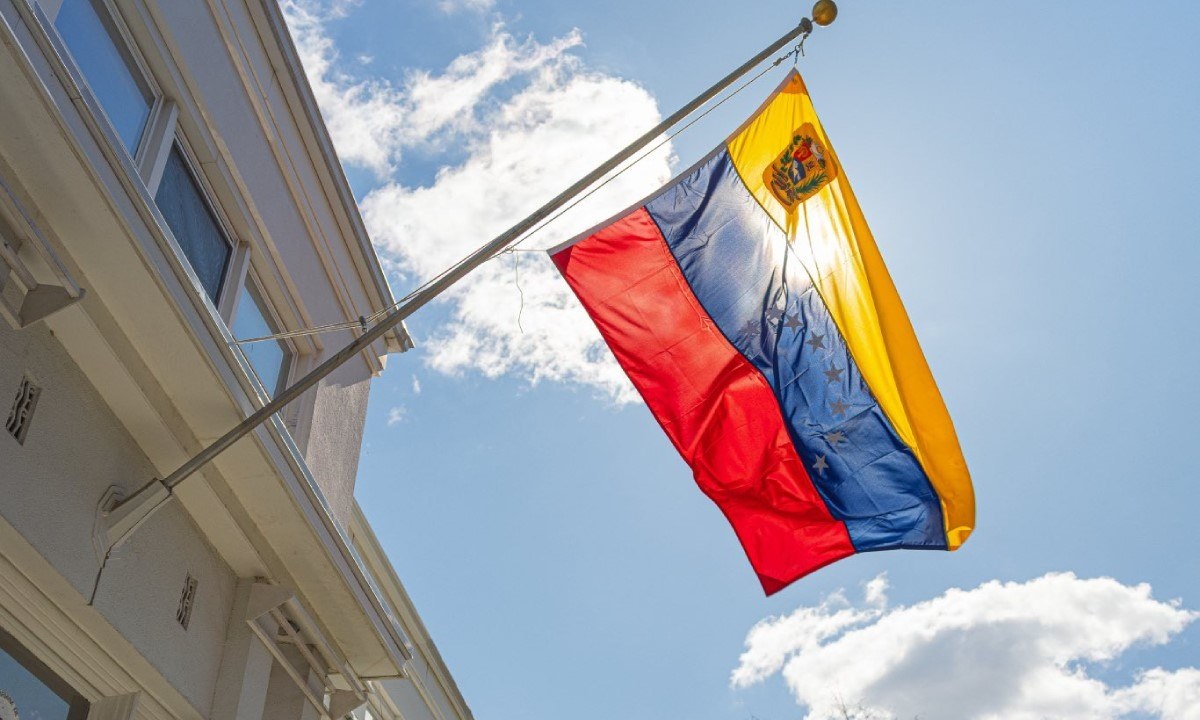
Venezuelan Gov’t Deploys Social Programs, Cultural Events in Areas Affected by US Strikes

Venezuelan officials emphasized the importance of helping children deal with the impact of the US attack. (Culture Ministry)

Mérida, January 21, 2026 (venezuelanalysis.com) – The Venezuelan government launched a series of initiatives over the weekend to support communities affected by the January 3 bombings carried out by the United States.

On Friday, January 16, folk artists performed at the Rómulo Gallegos Urbanization in La Guaira state, where US forces struck the local port. The attack destroyed a medical supplies warehouse and a residential building, killing an elderly civilian woman.

During the event, Venezuelan singer-songwriter Benjamín Zambrano said that music helps restore collective spirit and identity. “Through song we invoke our roots, our conscience, our way of life, and our right to live in peace,” he stated.

Cultural events continued Saturday at the Ezequiel Zamora Urban Complex in Ciudad Tiuna, Caracas, organized by the Venezuelan Housing Mission and the Ministry of Culture. The large-scale housing complex is adjacent to Fuerte Tiuna, the capital’s main military headquarters where most of the US strikes took place.

During the recreational activity, Culture Minister Ernesto Villegas said the government has a responsibility to help more than 10,000 families recover from the impact of the January 3 attacks. The US operation likewise included the kidnapping of President Nicolás Maduro and First Lady Cilia Flores.

Multiple Venezuelan artists performed in Ciudad Tiuna on Saturday and Sunday as well.

On Saturday, Acting President Delcy Rodríguez also visited Ciudad Tiuna, where 463 apartments were reported damaged.

She called for swift efforts to restore the affected homes and emphasized the importance of supporting children. “We wanted to hold special events for our children, including psychological support sessions,” the acting president told press.

“The Venezuelan people should know that there is hope and a future for our children,” Rodríguez added, noting that recreational activities will continue over the coming weekends. The visit additionally provided a food market as well as healthcare and psychological services.

Rodríguez expands on upcoming economic reforms

The Ciudad Tiuna visit likewise saw Rodríguez comment on announced economic reforms, including two “sovereign wealth funds” to manage oil revenues. The acting president announced the initiative during her 2026 annual address before the National Assembly. 

“The first fund will focus on social protection to improve workers’ incomes,” she affirmed. “This will ensure that foreign currency goes directly to hospitals, schools, food programs, and housing.” 

The second fund will focus on “water, electricity, and road infrastructure.”

Over the weekend, Rodríguez also led a meeting of the National Productive Economy Council with representatives from private sector associations. She presented the 2025 economic growth forecast and the strategic roadmap for the current year. 

Alongside the sovereign wealth funds, she outlined a package of legislative initiatives scheduled for the coming months. The government’s plans include a reform of the Hydrocarbon Law designed to “integrate the advances made under the anti-blockade law” in order to improve conditions for foreign investors.

According to Rodríguez, when the current law was enacted in 2001, Venezuela had “mature and developed oil fields to attract investment,” but now seeks to bring capital to “virgin or green fields.”

Former President Hugo Chávez implemented key changes to oil regulations in 2001 and 2006 to increase the Venezuelan state’s role in the sector while also raising tax and royalty payments to sustain social programs.

Acting President Rodríguez went on to present legislative projects to defend socioeconomic rights and streamline bureaucratic procedures. 

In addition, she proposed creating “a national committee to defend Venezuela’s economic rights worldwide,” with representation from the national executive branch and sectors including oil, agriculture, industry, commerce, banking, non-oil exports, and community organizations.

“This committee,” Rodríguez argued, “will defend Venezuela’s economic rights in multilateral organizations and international forums, traveling the world to promote and uphold those rights.”

Edited by Ricardo Vaz in Caracas.

Source link

Birmingham doctor in court accused of sex assaults on patients

A doctor has appeared in court accused of more than 40 counts of sexual assault against hospital patients including children.

The charges faced by Nathaniel Spencer on Tuesday relate to 38 patients at Royal Stoke University Hospital and Russells Hall Hospital, Dudley, between 2017 and 2021.

The 38-year-old of Great Hampden Street, Birmingham, appeared at North Staffordshire Justice Centre where he was released on conditional bail until his next appearance set for Stoke-on-Trent Crown Court on 20 February.

Some of the patients over whom he is accused were under 13 at the time of the alleged offences.

Wearing a grey suit and white shirt, Spencer spoke only to confirm his address and date of birth during a short hearing in front of District Judge Joseph O’Connor.

Spencer was a former resident doctor, previously known as a junior doctor, at the University Hospitals of North Midlands (UHNM) NHS Trust between August 2017 and August 2020.

He later worked as a resident doctor on a placement at The Dudley Group NHS Foundation Trust from August 2020 to April 2021.

He is charged with 15 counts of sexual assault, 17 of assault by penetration, nine of sexual assault of a child under 13, three of assaulting a child under 13 by penetration, and one of attempted assault by penetration.

Source link

UAE deployed radar to Somalia’s Puntland to defend from Houthi attacks, supply Sudan’s RSF – Middle East Monitor

The United Arab Emirates (UAE) has deployed a military radar in the Somali region of Puntland as part of a secret deal, amid Abu Dhabi’s ongoing entrenchment of its influence over the region’s security affairs.

According to the London-based news outlet Middle East Eye, sources familiar with the matter told it that the UAE had installed a military radar near Bosaso airport in Somalia’s semi-autonomous Puntland region earlier this year, with one unnamed source saying that the “radar’s purpose is to detect and provide early warning against drone or missile threats, particularly those potentially launched by the Houthis, targeting Bosaso from outside”.

The radar’s presence was reportedly confirmed by satellite imagery from early March, which found that an Israeli-made ELM-2084 3D Active Electronically Scanned Array Multi-Mission Radar had indeed been installed near Bosaso airport.

READ: UAE: The scramble for the Horn of Africa

Not only does the radar have the purpose of defending Puntland and its airport from attacks by Yemen’s Houthi rebels, but air traffic data reportedly indicates it also serves to facilitate the transport of weapons, ammunition, and supplies to Sudan’s paramilitary Rapid Support Forces (RSF), further fuelling the ongoing civil war in Sudan.

“The UAE installed the radar shortly after the RSF lost control of most of Khartoum in early March”, one source said. Another source was cited as claiming that the radar was deployed at the airport late last year and that Abu Dhabi has used it on a daily basis to supply the RSF, particularly through large cargo planes that frequently carry weapons and ammunition, and which sometimes amount to up to five major shipments at a time.

According to two other Somali sources cited by the report, Puntland’s president Said Abdullahi Deni did not seek approval from Somalia’s federal government nor even the Puntland parliament for the installation of the radar, with one of those sources stressing that it was “a secret deal, and even the highest levels of Puntland’s government, including the cabinet, are unaware of it”.

READ: UAE under scrutiny over alleged arms shipments to Sudan

Source link

Israel bulldozes UNRWA buildings in occupied East Jerusalem | Israel-Palestine conflict News

The destruction comes as Israel clamps down on NGOs providing humanitarian aid to Palestinians in Gaza.

Israel has begun bulldozing the headquarters of the United Nations agency for Palestinian refugees (UNRWA) in occupied East Jerusalem as the far-right government clamps down heavily on humanitarian groups that provide desperately needed aid to Palestinians in Gaza.

UNRWA said on X on Tuesday that Israeli forces had confiscated staff devices and forced them out of their headquarters in the Sheikh Jarrah neighbourhood.

Recommended Stories

list of 3 itemsend of list

“This is an unprecedented attack not only against UNRWA and its premises. It constitutes a serious violation of international law and the privileges and immunities of the United Nations,” it said.

Local sources reported that an Israeli army group, accompanied by bulldozers, stormed the agency’s compound after sealing off the surrounding streets and intensifying its military presence in the area, and proceeded to demolish structures inside the compound, according to the Palestinian news agency Wafa.

Israel has repeatedly attacked UNRWA for what it terms pro-Palestinian leanings and accused the body of ties to Hamas, without providing evidence, which the UN agency has vehemently denied.

Israel’s Ministry of Foreign Affairs said the demolition was following through on a new law that banned the organisation.

National Security Minister Itamar Ben-Gvir said in a statement that he had accompanied crews to the headquarters and called it a “historic day”.

Israel has faced global condemnation after a ban on dozens of international aid organisations working to provide life-saving assistance to Palestinians in the war-ravaged Gaza Strip came into effect weeks ago.

Israel has revoked the operating licences of 37 aid groups, including Doctors Without Borders, known by its French initials MSF, and the Norwegian Refugee Council, for failing to comply with new government regulations.

The new rules require international NGOs working in Gaza and the occupied West Bank to provide detailed information on staff members, as well as their funding and operations.

Last week, UN Secretary-General Antonio Guterres warned Israeli Prime Minister Benjamin Netanyahu that he could take his country to the International Court of Justice if it does not repeal laws targeting UNRWA and return its seized assets and property.

In a January 8 letter to Netanyahu, Guterres said the UN cannot remain indifferent to “actions taken by Israel, which are in direct contravention of the obligations of Israel under international law. They must be reversed without delay.”

Israel’s parliament passed a law in October 2024 banning UNRWA from operating in Israel and prohibiting Israeli officials from having contact with the agency. It amended the law last month to ban electricity or water supply to UNRWA facilities.

Israeli authorities also seized UNRWA’s occupied East Jerusalem offices last month. The UN considers East Jerusalem occupied by Israel, while Israel considers all of Jerusalem part of the country.

Source link

UAE deployed radar to Somalia’s Puntland to defend from Houthi attacks, supply Sudan’s RSF – Middle East Monitor

The United Arab Emirates (UAE) has deployed a military radar in the Somali region of Puntland as part of a secret deal, amid Abu Dhabi’s ongoing entrenchment of its influence over the region’s security affairs.

According to the London-based news outlet Middle East Eye, sources familiar with the matter told it that the UAE had installed a military radar near Bosaso airport in Somalia’s semi-autonomous Puntland region earlier this year, with one unnamed source saying that the “radar’s purpose is to detect and provide early warning against drone or missile threats, particularly those potentially launched by the Houthis, targeting Bosaso from outside”.

The radar’s presence was reportedly confirmed by satellite imagery from early March, which found that an Israeli-made ELM-2084 3D Active Electronically Scanned Array Multi-Mission Radar had indeed been installed near Bosaso airport.

READ: UAE: The scramble for the Horn of Africa

Not only does the radar have the purpose of defending Puntland and its airport from attacks by Yemen’s Houthi rebels, but air traffic data reportedly indicates it also serves to facilitate the transport of weapons, ammunition, and supplies to Sudan’s paramilitary Rapid Support Forces (RSF), further fuelling the ongoing civil war in Sudan.

“The UAE installed the radar shortly after the RSF lost control of most of Khartoum in early March”, one source said. Another source was cited as claiming that the radar was deployed at the airport late last year and that Abu Dhabi has used it on a daily basis to supply the RSF, particularly through large cargo planes that frequently carry weapons and ammunition, and which sometimes amount to up to five major shipments at a time.

According to two other Somali sources cited by the report, Puntland’s president Said Abdullahi Deni did not seek approval from Somalia’s federal government nor even the Puntland parliament for the installation of the radar, with one of those sources stressing that it was “a secret deal, and even the highest levels of Puntland’s government, including the cabinet, are unaware of it”.

READ: UAE under scrutiny over alleged arms shipments to Sudan

Source link

Denmark Retires F-16 After More Than Four Decades Of Service

With much of the world’s attention on the growing rift between the United States, Denmark, and its allies over Greenland, the Royal Danish Air Force (RDAF) became the latest NATO operator to retire the iconic F-16 fighter. While the F-35A is already on duty to defend Denmark, the Danish F-16s will continue to serve with Argentina as well as Ukraine, the latter of which have already seen combat.

Yesterday, at just before 2:00 p.m. local time, at Skrydstrup Air Base, an F-16 touched down for the very last time while officially in RDAF service. Around two hours before that, three other RDAF F-16s had taken off for a final formation flight, departing from Skrydstrup in full afterburner to mark their retirement.

This was part of an official F-16 retirement ceremony at Skrydstrup, in southern Jutland, after more than four decades of service. The RDAF’s final Viper operator at the base was 727 Squadron.

F-16s on their last farewell flight over Denmark. Danish Armed Forces

“We never talk about the age of the F-16 because it has been maintained by probably the world’s best aircraft technicians and is flown by some of the world’s best pilots,” Gen. Christian Hvidt, the former Danish Chief of Defense, told attendees in Skrydstrup’s Hangar 3. “Congratulations to 727. What exciting and enormous challenges lie ahead,” he added.

Hvidt, with the callsign “VIT,” had touched down in the first Danish F-16 at Skrydstrup 46 years ago, in January 1980. He later became the commander of 727 Squadron, which was tasked with bringing the aircraft into operational service.

VIT opened the farewell event by paying tribute to the many efforts that have been part of the F-16. His original helmet was placed in the cockpit for the occasion. Casper Brock / Danish Armed Forces Casper Brock

In what became known as the ‘Sale of the Century,’ Denmark acquired the F-16 — at that time still a General Dynamics product — as part of a European collaboration with Belgium, the Netherlands, and Norway in the late 1970s. In service with the RDAF, the F-16 replaced the F-100 Super Sabre, F-104G Starfighter, and Saab Draken.

Denmark acquired 77 F-16A/B Block 1/15 aircraft in two main batches, plus additional attrition replacement orders.

Multiple RDAF F-16s ‘thumping’ an airfield in a simulated multi-vector attack profile:

Specific features of the Danish F-16 included a floodlight, fitted in the port forward fuselage side, in front of the canopy, for night interceptions, something that was also found on Norwegian jets. Two underwing stations were adapted to accommodate the Terma Pylon Integrated Dispenser Stations (PIDS). These pylons have built-in approach warning sensors and can be fitted with electronic warfare jammers, as well as dispensers for decoy flares and chaff. The pylons are tied to the jet’s internal self-protection suite to provide synergistic effects.

Reconnaissance pods used by Danish F-16s included the Per Udsen (now Terma) Modular Reconnaissance Pod (MRP), which replaced the earlier Red Baron pod.

The firing range at Rømø was one of the only places in Denmark where F-16 pilots were allowed to fly low over land with practice bombs. Danish Armed Forces

As a European Participating Air Forces (EPAF) member, Denmark took part in the Mid-Life Update (MLU) program and provided these modifications to 61 F-16s, with work completed locally, in Aalborg. This brought the jets to F-16AM/BM standard, broadly similar to the later F-16C/D Block 50/52, albeit without the more advanced radar.

Ultimately, F-16s were operated by four RDAF squadrons, 723 and 726 at Aalborg Air Base, in northern Jutland, and 727 and 730 at Skrydstrup.

An RDAF F-16 demonstration over Aalborg Air Base in 2012:

Danish Air Force F-16 DEMO-FLIGHT HD


International operations in which Danish F-16s were involved included Allied Force over the former Yugoslavia in 1999, Enduring Freedom over Afghanistan in 2002–03, Unified Protector over Libya in 2011, and Operation Enduring Freedom in the Middle East on two separate occasions in 2014–15 and 2016. Closer to home, RDAF F-16s participated in Baltic Air Policing and Iceland Air Policing and Surveillance, with a first deployment to Iceland in 2009.

In April 2023, the RDAF received its first F-35A at Luke Air Force Base, Arizona, at which point the service still operated around 43 F-16AM/BMs, but the writing was by now on the wall for the Viper.

An RDAF F-35A escorts a Russian Il-20 Coot intelligence-gathering aircraft over the Baltic Sea on March 27, 2025. Danish Armed Forces

Denmark has now increased its F-35 orders from 27 to 43 aircraft. All aircraft are expected to be fully operational by next year, allowing the retirement of the F-16 at this point.

Explaining about the decision to replace the F-16 with the F-35, Steen Hartov, senior advisor in the Air Force Command’s Combat Aircraft Division, told guests at Skrydstrup yesterday: “In the future, we will see a completely different type of warfare. We will see significantly less fragmented battles, and instead we will see wars where battles on land, in the air, at sea, in space, and not least digitally will take place at the same time and directly influence each other.”

An RDAF F-16 over Greenland, as part of regular sovereignty enforcement on the island last year. Danish Armed Forces

The RDAF itself stresses the F-35’s “revolutionary ability to scan large areas, gather information, and send it directly back to its own forces [providing] a clear overview and insight into the battlefield all on its own,” as its key advantage over fourth-generation types.

As for the RDAF’s F-16s, retirement in Denmark doesn’t mean the end of their operational careers.

“Despite the aircraft’s many missions and countless flights, they are still in such good condition that there is no need to retire them,” the RDAF says.

Danish F-16s participating in the Iceland Air Policing and Surveillance mission in 2022. Danish Armed Forces

Some of the aircraft have been sold to Argentina, while others have been donated to Ukraine.

After months of discussion about whether to give Ukraine the F-16s, it became a reality in August 2023 when Denmark and the Netherlands officially pledged dozens of Vipers to Ukraine. You can read more about that here.

Ukrainian President Volodymyr Zelensky (L) and Danish Prime Minister Mette Frederiksen (R) react as they sit in a F-16 fighter jet in the hangar of the Skrydstrup Airbase in Vojens, northern Denmark, on August 20, 2023. Washington has told Denmark and the Netherlands that they will be permitted to hand over their F-16 fighter jets to Ukraine when the country's pilots are trained to operate them, the US State Department said on August 18, 2023. Both Denmark and the Netherlands are leading the program to train Ukraine's pilots on the F-16. (Photo by Mads Claus Rasmussen / Ritzau Scanpix / AFP) / Denmark OUT (Photo by MADS CLAUS RASMUSSEN/Ritzau Scanpix/AFP via Getty Images)
Ukrainian President Volodymyr Zelensky (left) and Danish Prime Minister Mette Frederiksen (right) in an F-16BM at Skrydstrup Air Base on August 20, 2023. Photo by MADS CLAUS RASMUSSEN/Ritzau Scanpix/AFP via Getty Images MADS CLAUS RASMUSSEN

To date, Kyiv has been promised 87 F-16s from four different European nations. These comprise 24 from the Netherlands, 30 from Belgium, 19 from Denmark, and 14 from Norway. Since its introduction to service, Ukraine has lost four F-16s in different incidents.

In Ukrainian service, the former RDAF jets retain the distinctive Terma self-protection pylons.

A Ukrainian F-16 with two Sidewinders and a Terma pylon. Ukrainian Air Force screencap

After an incredibly protracted selection process, Argentina secured a deal for 24 former RDAF F-16s in 2024. This came after many years of false starts, during which numerous different fighter options were pitched to Argentina as a replacement for its veteran A-4 Fightinghawks. In December of 2025, the first six Danish F-16s were handed over to Argentina and flown from Skrydstrup to their new base with the support of U.S. tanker aircraft.

An Argentinian pilot after their first back-seat flight in an F-16. Danish Armed Forces Rune Dyrholm

While the F-16 has now bowed out of Danish service, these aircraft are set to see out many more years of service and, in Ukrainian hands, are already being exposed to an intensity of combat operations that they never experienced with their original operator.

Contact the author: thomas@thewarzone.com

Thomas is a defense writer and editor with over 20 years of experience covering military aerospace topics and conflicts. He’s written a number of books, edited many more, and has contributed to many of the world’s leading aviation publications. Before joining The War Zone in 2020, he was the editor of AirForces Monthly.


Source link

China Tightens the Screws on Rare Earths as Japan Ties Strain

Chinese exports of rare earth magnets to Japan fell 8% in December from November, following a diplomatic spat that rattled markets and raised fears about supply security. The drop came just weeks before Beijing imposed a January ban on exports of dual-use items to Japan materials that can have both civilian and military applications. Although December shipments of 280 metric tons were still 31.4% higher than a year earlier, the monthly decline signaled growing political risk in a sector where China dominates global supply.

Why it matters:
Rare earth magnets are critical inputs for electric vehicles, wind turbines, electronics, and defense technologies. Any disruption in supply has immediate implications for Japan’s advanced manufacturing sector and longer-term consequences for global clean energy and high-tech industries. The episode highlights how trade in strategic materials is increasingly shaped by geopolitics rather than pure market forces.

Drivers behind the decline:
The immediate trigger was worsening political relations after Prime Minister Sanae Takaichi stated Japan would respond militarily if China attacked Taiwan—a comment that angered Beijing. The subsequent ban on dual-use exports deepened uncertainty. At the same time, the strong year-on-year rise in December shipments suggests Japanese firms were stockpiling magnets in anticipation of tougher restrictions, temporarily inflating demand before a likely January drop.

Stakeholders:
Japan’s automakers, electronics manufacturers, and defense planners are directly exposed to supply risks. Chinese producers face the challenge of balancing geopolitical directives with commercial interests, particularly as exports to key markets soften. The United States is another major stakeholder: December shipments to the U.S. fell 3% month-on-month, and total 2025 exports dropped over 20%, underlining how Washington is also affected by China’s export controls.

Global context:
While exports to the U.S. partially recovered after President Xi Jinping and President Donald Trump agreed to pause some controls, overall Chinese rare earth magnet exports declined 1.3% in 2025. This points to a broader trend of fragmentation in strategic supply chains, with China using its dominance in rare earths as leverage amid rising great-power competition.

What’s next:
Shipments to Japan are expected to fall further in January as the ban takes full effect. Japanese firms are likely to accelerate diversification efforts, including sourcing from alternative suppliers and investing in recycling and substitution technologies. In the medium term, continued tensions over Taiwan could make rare earth trade an even more politicized tool of statecraft.

Analysis:
This episode illustrates how economic interdependence no longer guarantees stability in East Asia. China’s control over rare earths gives it a powerful instrument of coercion, but repeated use risks pushing countries like Japan and the U.S. to reduce dependence over time. In the short run, Japan bears the adjustment costs through higher uncertainty and potential production bottlenecks. In the long run, however, China may weaken its own leverage as strategic competitors invest heavily in alternative supply chains. The rare earth market, once a niche industrial sector, has become a frontline of geopolitics.

With information from Reuters.

Source link

Gaza’s ‘phase two’ from a distance: Why hope still feels out of reach | Israel-Palestine conflict News

Gaza – When Steve Witkoff announced “phase two” of the ceasefire, it sounded like the update everyone has been desperate for here in Gaza. Something in the way he said it – phase two – really made it sound like things might finally be turning the corner.

In less than 24 hours, another announcement followed. The White House named the members of a new “Board of Peace”, tasked with overseeing a technocratic committee that would manage the day-to-day governance of post-war Gaza. The committee will be led by Dr Ali Shaath, a former Palestinian official, who is presented as part of a forward-looking plan for reconstruction and stability.

On paper, it appears to be a movement. Like structure. Like planning for a future beyond war.

But on the ground in Gaza, there isn’t a sense of confidence. There is doubt – and a lot of it.

Many Palestinians here struggle to understand how a board meant to rebuild Gaza can include people who have openly supported Israel, especially when the destruction is still everywhere you look, and no one has been held accountable.

Buildings are still in ruins. Families are still grieving. Entire neighbourhoods are gone. Against that backdrop, talk of governance and reconstruction feels disconnected from reality.

For families who have lost their homes, their loved ones, and their sense of safety, the contradiction is hard to ignore. It’s difficult to be asked to trust a future designed by people who seem untouched by the present pain and untouched by responsibility for it.

For those whose daily life is characterised by the constant buzz of drones and sudden Israeli air attacks, nothing’s really shifted.

Parents still think hard about where their kids will sleep tonight. Aid workers still map their routes, not by where help is most needed, but by which roads might actually get them through alive. Families still hush up at night, straining to hear if the quiet will hold or if the fighting will break out again.

All these official statements? They feel miles away from what’s actually happening. Phase two might exist in some news release, but for most people, life still feels stuck right where it started.

You don’t feel a ceasefire in speeches or headlines. You feel it in what’s missing, the sudden silence, the easing in your chest, the nights that don’t end with a jolt. That’s what people are waiting for. Not the label, not the milestone. Just the change itself.

After months of loss and exhaustion, it’s normal to want to believe things really are getting better. Diplomats cling to the idea of progress. Governments need to say momentum’s building. But the people actually living this? They just want something steady. They want to know tomorrow won’t be worse than today, that they can wake up and not flinch.

But right now, that feeling isn’t there. Promises are uneven, timelines keep slipping, and too many commitments just fade into the background. For people living through it, this doesn’t feel like peace on the move; it feels like everything’s hanging by a thread, ready to snap at any minute. Just calling it “phase two” doesn’t make it feel any safer.

And then there’s that quieter hurt that comes from hope getting stretched too thin. When official words don’t match real life, people learn to lower their expectations. Hope turns into something fragile – something you hold close but don’t trust too much, because getting let down again just stings. Announcing progress before anyone can feel it doesn’t build trust. It erodes it.

This isn’t about throwing out diplomacy. It’s just about honesty. If “phase two” is going to mean anything, people need to feel it in their daily lives: Fewer funerals, hospitals that actually work, roads that don’t feel like traps, days where fear isn’t always there.

Real peace grows in those small, ordinary moments, walking down the street without bracing yourself, sleeping through the night without planning how to run if things go wrong.

Until those moments show up, “phase two” is mostly just a symbol. And symbols, no matter how hopeful, can’t keep anyone safe. Only real change does that.

For people living day to day, peace isn’t about the next announcement. It starts when they can get through a night and believe the ceasefire will still hold in the morning.

Source link

Japan’s New Anti-Ship Cruise Missile Barrel Rolls To Evade Defenses

A new long-range anti-ship cruise missile in development in Japan can be seen executing a series of barrel rolls in an official video clip. The spiraling trajectory is intended to make the weapon, currently referred to as the “island defense missile” or simply the “New SSM,” harder to intercept in the terminal phase of flight. Work on the New SSM has been proceeding since 2023 amid growing concerns about regional threats, especially from China. The missile could be the first of a modular family of advanced cruise missiles.

Footage of a New SSM performing the rolling manoeuvres during a test is included in a video montage recently released online by the Japanese Ministry of Defense’s Acquisition Technology & Logistics Agency (ATLA). The footage was first shown publicly to attendees at ATLA’s annual Defense Technology Symposium last year, but it has not been widely available until now. Kawasaki Heavy Industries (KHI) is the prime contractor.

The demonstration of the New SSM’s barrel roll capability can be seen in the video starting at around 0:49 in the runtime.

P-31-1_島嶼防衛用新対艦誘導弾の要素技術の研究


A screen capture from the video above offering a general look at a New SSM prototype. ATLA capture

In its current form, the subsonic New SSM is powered by a single XKJ301-1 turbofan engine based on KHI’s KJ300 design, which was developed for use on cruise missiles, as well as uncrewed aerial vehicles. The KJ300 is a two-spool type designed to offer significant fuel economy and, by extension, greater range. To date, Japanese authorities do not appear to have confirmed the maximum range they are targeting for this weapon, but have said it will exceed that of the Type 12 anti-ship cruise missile.

An ATLA graphic from 2024 discussing the XKJ301-1 for the New SSM. ATLA

The baseline Type 12 has a maximum range of around 124 miles (200 kilometers), while an improved version was reportedly subsequently developed with roughly twice the reach. A further upgraded Type 12 that can hit targets between 560 and 620 miles (900 and 1,000 kilometers) away is also now in development. The assumption then is that the New SSM will have an even longer maximum range.

A Type 12 anti-ship cruise missile being fired from a ground launcher. Japan Ground Self Defense Forces

The New SSM has pop-out main wings, each made up of three separate sections that lock into place after deploying. It also has two vertical stabilizers and a pair of horizontal stabilizers, all fixed in place at the tail end of the missile. The missile is intended to be fired from launchers on the ground and on ships, and to be air-launched from tactical jets like the F-2 and larger types like the P-1 maritime patrol plane. A rocket booster provides initial thrust before falling away, after which the XKJ301-1 turbofan kicks in.

Screen captures from the ATLA video showing the rocket booster falling away, at left, and various stages of the main wings deploying, after launch. ATLA capture

The weapon has a number of stealthy features, including a pronounced chine line that extends along either side behind the beak-like nose, as well as panels with serrated and otherwise heavily angled edges. The intake for the XKJ301-1 has an S-shaped design, as well, another common feature on stealth missiles and aircraft.

A close-up look at some of the stealthy features visible at the nose end of a prototype of the New SSM. ATLA capture

XKJ301はインテークの位置や仕様にこだわらずに性能を発揮できることも売りにしているそうで、他の誘導弾への展開などを強く意識しているそう pic.twitter.com/QXs0hLIOzS

— Citrus (@MeYkikka) November 11, 2025

The shaping of the nose also has to do with the missile’s expected guidance package. From what Japanese authorities have explained so far, the New SSM will use a GPS-assisted inertial guidance system (INS) navigation to get to a designated target. A dual-mode seeker, with imaging infrared (IIR) and radio frequency (RF) homing modes, then takes over for the terminal phase of flight. Pairing these two seeker capabilities together offers significant benefits for increasing the probability of a hit while also reducing vulnerability to jamming and other countermeasures. It would also help make the weapon more effective in the complex littoral environments where they are likely to be employed. This guidance combination is also just one of a number of potential modular nose sections that could be fitted to the missile, which we will come back to later on.

A previously released cutaway graphic of the New SSM design, highlighting the seeker system, in green, and warhead, in red. Japanese Ministry of Defense

ATLA in Japan has previously said that the New SSM will be capable of some degree of maneuvering on route to target to reduce the chance of interception at extended ranges and otherwise create complications for defenders. Then there is the aforementioned terminal phase barrel rolling, which is primarily said to be focused on evading fire from gun-based shipboard close-in defense systems like China’s 30mm Gatling cannon-equipped Type 730. Official Japanese government graphics have depicted the New SSM spiraling past what looks intended to represent a Type 730, as seen in the social media post below.

An improved version of the Type 730, the Type 1130, with 11 barrels instead of seven, is also now in service in China, and that country has at least experimented with even larger designs in the same vein. Similar close-in weapon systems are found on warships in service with many other naval arms globally, including Russia, the United States, and Japan itself, to name just a few.

It is unclear whether there is any hard data yet on the effectiveness of the New SSM’s particular maneuvering capability. The idea of giving an anti-ship cruise missile a very high degree of terminal maneuverability to improve its survivability is not new. As a comparative example, the Naval Strike Missile (NSM), developed by Norway’s Kongsberg and increasingly popular globally, is also designed to perform high-G evasive maneuvers in the terminal phase of an engagement. However, it flies in a more U-shaped pattern rather than a full spiral, at least based on publicly available information.

Kongsberg previously released this graphic showing what it says is how the NSM maneuvers in the terminal stage of flight, as seen from the perspective of the target. Kongsberg

The final configuration of the New SSM might also incorporate electronic support measures systems or other self-protection capabilities.

ATLA has also openly talked about using the New SSM as the basis for a variety of other capabilities leveraging modular nose sections. This could include land-attack variants capable of engaging fixed or mobile targets, as well as ones intended to perform non-kinetic tasks. As seen in the slide below, variations on the design could act as dedicated decoys or loitering surveillance assets with the added ability to immediately prosecute strikes on targets they find. This modularity would also make it easier to add new warheads, seeker systems, and other functionality to the design down the line. In many ways, the New SSM blurs the line between a traditional cruise missile and a drone, indicative of broader trends globally that TWZ regularly highlights.

A graphic ATLA released in 2024 showing possible future configurations of the New SSM using modular nose sections. ATLA
Another ATLA graphic from 2024 showing different variations of the New SSM ‘platform’ performing different missions. ATLA

A ‘platform’ like this with a range well in excess of 620 miles, and that can be launched from the ground, sea, or land, would open the door to a host of operational possibilities for Japan. That range could also translate to significant loitering endurance, as well. Ships, aircraft, and launchers on the ground could be positioned closer to a target area before launch, extending the system’s functional reach or ability to loiter in a particular part of the battlespace.

Just in its anti-ship form, the New SSM could give Japan a valuable new way to strike ships from multiple vectors simultaneously and do so with increased survivability. As the term “island defense missile” underscores, the weapon’s development also comes at a time when Japanese authorities see increasing maritime (and other) threats to both the country’s home island and outlying territories from long-time regional adversary North Korea, as well as Russia and China. The New SSM is one of several long-range strike capabilities, also including new hypersonic missiles, that Japan has been developing in response to this evolving security environment. In line with this, Japan’s forthcoming cruiser-sized Aegis System Equipped Vessels (ASEV) have been steadily evolving beyond floating ballistic missile defense platforms to more multi-purpose maritime strike and land-attack-capable assets.

With all this in mind, the current government in Japan has taken a particularly open and hard-line stance on responding to any potential future Chinese intervention against Taiwan. This, in turn, has prompted significant shows of force from China’s People’s Liberation Army (PLA) that have clearly been meant to send signals to Tokyo, as well as Taipei. The Japanese island of Yonaguni, which lies just 70 miles or so from the northern shores of Taiwan, has become a central point of discussion. Even just with a range of 620 miles, New SSMs based there would be able to reach targets in certain parts of mainland China, as well as out in the waters surrounding Taiwan and beyond. The Japan Self-Defense Forces have already been moving to bolster air defenses on Yonaguni.

A map showing the general location of the island of Yonaguni in relation to Taiwan to the west. The highly strategic Japanese island of Okinawa, which hosts a significant U.S. military presence and is itself some 400 miles southwest of Japan’s home islands, is seen at top right. Google Earth

When it comes to the New SSM, specifically, Japanese authorities have previously pointed to 2027 as the target timeframe to begin mass production and deployment of the missiles. As the video montage from ATLA shows, flight-testing of the barrel-rolling weapons is very much underway.

Contact the author: joe@twz.com

Joseph has been a member of The War Zone team since early 2017. Prior to that, he was an Associate Editor at War Is Boring, and his byline has appeared in other publications, including Small Arms Review, Small Arms Defense Journal, Reuters, We Are the Mighty, and Task & Purpose.


Source link

Surfer injured in fourth shark attack in Australian state in 48 hours

A surfer has been bitten by a shark, the fourth attack along Australia’s New South Wales (NSW) coastline in under 48 hours.

The 39-year-old man suffered minor cuts after a shark bit through his board near Crescent Head on Tuesday morning. He is currently in hospital in stable condition, say reports.

It follows three other attacks in Sydney over the past two days. All beaches in Sydney’s northern area will remain closed until further police, said police.

The attacks follow days of heavy rains, which NSW Superintendent Joseph McNulty had earlier said may have created a “perform storm environment” for shark attacks. Rain flushes nutrients into the water, which can draw sharks closer to shore.

The attack on Tuesday took place near the Point Plomer campground, about 450km (279mi) north of Sydney.

Steve Pearce, the chief executive of Surf Life Saving NSW, said the surfer was “very fortunate to not have sustained any serious injuries”, ABC reported.

“We really strongly advocate that nobody swim or surf near river mouths because it’s obviously an area where sharks congregate,” Pearce said. “If it’s dirty water I’d think twice about going in there.”

A young surfer had a similarly lucky escape at Dee Why Beach in Sydney on Monday, but a shark attack at nearby Manly hours later left a 27-year-old with “life-changing” injuries. On Sunday, a 12-year-old boy was also critically injured when bitten at a popular Sydney Harbour beach.

Authorities believe bull sharks were involved in several of the recent attacks.

Bull sharks, which can be found in both fresh water and salt water, are “one of the few sharks that are potentially dangerous to people”, the Australian Museum says. They are the third deadliest shark species, according to the International Shark Attack File.

Last November, a woman was killed and a man was seriously injured after being attacked by a bull shark on a remote beach in New South Wales.

Though Australia is a global shark attack hotspot, the chances of being attacked are still minute.

Police on Monday advised the public to avoid waterways in NSW due to recent weather, which has decreased water quality and visibility.

“I would recommend not swimming in the harbour or our other river systems across NSW at this time,” Superintendent Joseph McNulty told reporters.

Source link

U.S.-NATO Rift Over Greenland Keeps Getting Worse

The rift between the U.S. and NATO allies continues to grow over President Donald Trump’s repeated insistence on subsuming Greenland. Denmark is sending more troops and the head of its army to the strategically important, mineral-rich island, over concerns about Trump’s rhetoric. Meanwhile, Europe debates economic responses to Trump’s rhetoric and the U.S. military appears to be making some moves of its own, although the exact reasons behind them remain murky.

The strain on the alliance was exacerbated by Trump’s Sunday message to Norway’s prime minister, in which he linked his interest in Greenland to his not receiving the Nobel Peace Prize.

Amid the growing tensions, the North American Aerospace Defense Command (NORAD) announced on X that it was sending troops and aircraft to Greenland to “support various long-planned NORAD activities.” When asked if the deployment was related to current events, a NORAD spokesperson emphasized that it had been in the works “for a while” and is “routine.” Regardless of how long ago these movements were planned, the optics can’t be denied.

North American Aerospace Defense Command (NORAD) aircraft will soon arrive at Pituffik Space Base, Greenland.  Along with aircraft operating from bases in the continental United States and Canada, they will support various long-planned NORAD activities, building on the enduring…

— North American Aerospace Defense Command (@NORADCommand) January 19, 2026

At issue is Trump’s assertion that Greenland needs to be under U.S. control to protect the homeland from China and Russia. Greenland and Denmark — of which the island is an autonomous territory — have both repeatedly said the island is not for sale and have expressed alarm about threats of the potential use of U.S. military force to acquire Greenland.

“NATO has been telling Denmark, for 20 years, that “you have to get the Russian threat away from Greenland.” Unfortunately, Denmark has been unable to do anything about it. Now it is time, and it will be done!!!” – President Donald J. Trump pic.twitter.com/ZyFh9OsNsn

— The White House (@WhiteHouse) January 19, 2026

In a short interview with NBC News on Monday, Trump was guarded when asked about his intentions to take military action against Greenland. He also confirmed that he will impose tariffs on Denmark and seven other nations until they agree to turn over the island.

“Asked if he would use force to seize Greenland, the president said, ‘No comment,’” the network reported.

Last week, we noted that some European nations were sending a small, relatively symbolic force of about two dozen troops to Greenland. The deployment of troops for an exercise known as Arctic Endurance was being held outside of NATO’s auspices. In addition to Denmark, France, Germany, Sweden, Norway, Finland, the Netherlands, and the U.K. were taking part. Germany and the Netherlands ended their participation after just a few days.

On Monday, the Danish TV 2 news outlet reported that Copenhagen is substantially boosting its military presence there.

“A large number of Danish combat soldiers, described as ‘a substantial contribution,’ are expected to arrive in Kangerlussuaq, Greenland on Monday evening,” the television station reported. “Army Chief Peter Boysen is arriving with the group.”

The new deployment “will contribute to the troop buildup of Danish soldiers that is currently taking place,” TV 2 added. 

They will join 200 Danish troops previously deployed to Greenland, divided equally between Nuuk and Kangerlussuaq for Arctic Endurance, “which has been accelerated and intensified as a result of the latest statements from U.S. President Donald Trump,” the station noted.

Meanwhile, Copenhagen on Monday asked for a NATO mission to Greenland, Danish Defense Minister Troels Lund Poulsen said, after a meeting with alliance chief Mark Rutte at NATO headquarters in Brussels.

“We have proposed that, and NATO’s secretary-general has also noted that,” he told reporters.

Danish soldiers disembark at the port in Nuuk, Greenland, on January 18, 2026. The Danish Defense will continue the increased presence with exercise activities together with a number of NATO allies in and around Greenland in 2026. This is done in cooperation with the Greenlandic authorities and the Greenlandic government, Naalakkersuisut, as stated by the Danish Defense. (Photo by Mads Claus Rasmussen / Ritzau Scanpix / AFP via Getty Images) / Denmark OUT
Danish soldiers disembark at the port in Nuuk, Greenland, on January 18, 2026. The Danish Defense will continue its increased presence with exercise activities together with several NATO allies in and around Greenland in 2026. This is done in cooperation with the Greenlandic authorities and the Greenlandic government, Naalakkersuisut, as stated by the Danish Defense. (Photo by Mads Claus Rasmussen / Ritzau Scanpix / AFP) / Denmark OUT MADS CLAUS RASMUSSEN

Trump’s message to Norway’s prime minister Jonas Gahr Støre fueled growing concerns about Trump’s designs on Greenland.

“Considering your Country decided not to give me the Nobel Peace Prize for having stopped 8 Wars PLUS, I no longer feel an obligation to think purely of Peace, although it will always be predominant, but can now think about what is good and proper for the United States of America,” Trump said in the message.

“The World is not secure unless we have Complete and Total Control of Greenland,” Trump added. 

NEW: @potus letter to @jonasgahrstore links @NobelPrize to Greenland, reiterates threats, and is forwarded by the NSC staff to multiple European ambassadors in Washington. I obtained the text from multiple officials:

Dear Ambassador:
 
President Trump has asked that the…

— Nick Schifrin (@nickschifrin) January 19, 2026

Store on Monday confirmed the message and said it was in response to Norwegian and Finnish concerns over Trump’s announcement that he would impose a new 10% tariff on Denmark and seven other European countries until “a Deal is reached for the Complete and Total purchase of Greenland.”

The other countries affected would be Norway, Sweden, France, Germany, the United Kingdom, the Netherlands and Finland.

Trump said the duties would increase to 25% if a deal is not reached by June 1.

“’I can confirm that this is a text message that I received yesterday afternoon from President Trump,” Store announced. “It came in response to a short text message from me to President Trump sent earlier on the same day, on behalf of myself and the President of Finland, Alexander Stubb. In our message to Trump, we conveyed our opposition to his announced tariff increases against Norway, Finland, and select other countries. We pointed to the need to de-escalate and proposed a telephone conversation between Trump, Stubb and myself on the same day.”

“Norway’s position on Greenland is clear,” Store added. “Greenland is a part of the Kingdom of Denmark, and Norway fully supports the Kingdom of Denmark on this matter. We also support that NATO, in a responsible way, is taking steps to strengthen security and stability in the Arctic. As regards the Nobel Peace Prize, I have clearly explained, including to President Trump, what is well known, the prize is awarded by an independent Nobel Committee and not the Norwegian Government.”

Trump’s stance on tariffs has European nations considering economic countermeasures. It “triggered an emergency meeting of European countries’ representatives Sunday,” CNN reported. French President Emmanuel Macron reportedly asked the European Union “to activate its so-called anti-coercion instrument, colloquially known as a ‘trade bazooka,’” the network added. “The trade bazooka could block some of America’s access to EU markets or impose export controls, among a broader list of potential countermeasures.”

European Commission Vice President Kaja Kallas said Europe will stand its ground.

“Arctic security is a shared transatlantic interest, and one we can discuss with our US allies,” she stated on X. “But tariff threats are not the way to go about this. Sovereignty is not for trade. We have no interest to pick a fight, but we will hold our ground. Europe has a slate of tools to protect its interests.”

Denmark and Greenland are not alone.
Good to see my colleagues @troelslundp and Vivian Motzfeldt.

Arctic security is a shared transatlantic interest, and one we can discuss with our US allies.
But tariff threats are not the way to go about this. Sovereignty is not for… pic.twitter.com/AbIhQ2ZI13

— Kaja Kallas (@kajakallas) January 19, 2026

The growing tension has reportedly spurred Danish intelligence to issue a warning against using Bluetooth devices.

“It has been known among cyber experts for many years that there are vulnerabilities in the Bluetooth technology that many Danes use for headphones and all kinds of electronics,” the Danish Ingeniøren tech news outlet reported. “But in the midst of the highly tense situation with US President Donald Trump’s claim to Greenland, the Danish Defense Intelligence Agency (DE) specifically warns authorities, agencies and the country’s police forces against using Bluetooth headphones and AirPods in the service.”

Though U.S. relations with Europe are at a lowpoint over Greenland, Trump’s interest in the island is hardly new. Back in 2019, TWZ reported on Trump’s claim that his administration was considering attempting to purchase Greenland from Denmark, the U.S. leader noting at the time that the idea was “strategically interesting.”

Still, the U.S. maintains just a small presence of about 200 in Greenland as of now, according to Danish Foreign Minister Lars Lokke Rasmussen.

However, the U.S. operates one of its most strategic military outposts in Greenland. This is spearheaded by Pituffik Space Base, the U.S. military’s northernmost installation, a critical node in the U.S. ballistic missile early warning system, and also the world’s northernmost deep-water seaport. The installation also features a sprawling airbase. You can read in more detail about the U.S. military presence on the island here.

Our colleagues at Task & Purpose reported that the Pentagon “wants to spend as much as $25 million in major infrastructure improvements to Pituffik Space Base’s runways in Greenland. The overhaul of its airfield is part of other work planned for the installation.” 

A satellite view of Pituffik Space Force Base in Greenland. (Google Earth)

The Pentagon has ordered about 1,500 active-duty soldiers to prepare for a possible deployment to Minnesota, defense officials told The Washington Post late Saturday, after Trump threatened to invoke the Insurrection Act in response to unrest there.

The soldiers are assigned to two infantry battalions with the Army’s 11th Airborne Division, which is based in Alaska and specializes in cold-weather operations. Spinning up troops from the 11th has some on social media speculating that the order is really in preparation for sending troops to Greenland, though there is no indication of that being the case.

#Greenland ALERT: Multiple news sources in DC and Alaska are reporting the 11th Airborne Brigade has alerted two battalions, 1,500 troops, to be ready to move to “Minnesota.” This is a really bad attempt at Strategic Deception.

I warned several times this year that alerting… pic.twitter.com/A0utVBAcqh

— Malcolm Nance (@MalcolmNance) January 19, 2026

Amid the festering controversy over Greenland, Russia is relishing how it is playing out at a time when it stands to benefit from a splintering of the NATO alliance and any reduction in support to Ukraine by the U.S. and its allies.

“The Kremlin said Trump would go down in history if he took control of Greenland,” Reuters noted. “President Vladimir Putin’s special envoy Kirill Dmitriev hailed the ‘collapse of the transatlantic union.’ Former President Dmitry Medvedev joked about Europe getting poorer.”

The media in Russia is also gleeful, with one publication calling the situation “a pleasure to watch.”

Today’s Russian papers on Greenland: “Europe’s at a total loss. It’s a pleasure to watch.” Government paper: “Europe doesn’t need the American greatness Trump is promoting…the Old World’s keen to keep Greenland for itself, even at the risk of Nato’s collapse.” #ReadingRussia pic.twitter.com/9VJmRRewev

— Steve Rosenberg (@BBCSteveR) January 19, 2026

The situation is accelerating and it has the potential to fracture NATO in such a way that the alliance has never had to confront before.

We will keep you updated as all this unfolds.

Contact the author: howard@thewarzone.com

Howard is a Senior Staff Writer for The War Zone, and a former Senior Managing Editor for Military Times. Prior to this, he covered military affairs for the Tampa Bay Times as a Senior Writer. Howard’s work has appeared in various publications including Yahoo News, RealClearDefense, and Air Force Times.


Source link

Russia-Ukraine war: List of key events, day 1,426 | Russia-Ukraine war News

These are the key developments from day 1,426 of Russia’s war on Ukraine.

Here is where things stand on Tuesday, January 20:

Fighting

  • Explosions have been reported in the Ukrainian capital, Kyiv, amid warnings from the country’s air force that Russia had launched ballistic missiles early on Tuesday morning.
  • Russia launched a barrage of drone attacks on Ukraine’s energy infrastructure, cutting off power in five regions across the country amid freezing temperatures, Ukrainian officials said.

  • The Ukrainian Air Force said that Russia’s military had launched 145 drones at targets in Ukraine and that 126 were successfully intercepted.

  • In an attack on the southern Odesa region, energy and gas infrastructure were damaged, the regional governor said, adding that one person was hurt.

  • DTEK, Ukraine’s largest private energy company, said its facility in Odesa was “substantially” damaged, knocking out power to 30,800 households.

  • Russia also hit Ukraine’s second-largest city of Kharkiv with missiles on Monday, significantly damaging a critical infrastructure facility, the city’s mayor, Ihor Terekhov, said on the Telegram messaging app. Terekhov did not provide details about the type of facility that was struck.

  • Russian forces have taken control of the settlements of Pavlivka, in Ukraine’s Zaporizhia region, and Novopavlivka, in the Donetsk region, Russia’s Ministry of Defence said. The ministry’s claims could not be independently verified.

  • Ukraine’s armed forces are introducing a new approach to air defence, involving small groups of interceptor drones, Ukrainian President Volodymyr Zelenskyy said in his nightly video address.
  • The Kyiv Independent media outlet reported that Ukraine’s SBU secret service captured a Russian soldier suspected of executing nine Ukrainian prisoners of war in 2024.

Military aid

  • The Czech Republic will not sell or donate to Ukraine light combat planes that could shoot down incoming Russian drones, the country’s prime minister, Andrej Babis, said, rejecting a plan outlined by President Petr Pavel. Pavel earlier said that Ukraine had offered to buy some of the country’s subsonic L-159 jets.

Peace talks

  • Ukraine’s top military commander, Oleksandr Syrskii, said Moscow is showing no signs of interest in talks leading to a peace deal with Kyiv. It is instead boosting arms production, including a target of 1,000 drones per day, he added.
  • Kyiv has held “substantive” talks on security and economic issues with US President Donald Trump’s son-in-law, Jared Kushner, and envoy Steve Witkoff, with more discussions expected at the World Economic Forum (WEF) in Davos this week, Ukraine’s security chief and top negotiator, Rustem Umerov, said.
  • Zelenskyy said he hopes to sign documents with the US on post-war security guarantees for Ukraine at Davos this week, adding that his team of negotiators had held several rounds of talks in the US.
  • Russian President Vladimir Putin’s special envoy, Kirill Dmitriev, will travel to Davos this week and hold meetings with members of the US delegation on the sidelines of the World Economic Forum, the Reuters news agency reported, citing two sources with knowledge of the visit.


Politics

  • Ukraine will face enormous challenges to organise its first elections since Russia’s 2022 full-scale invasion, with its infrastructure shattered and millions of people displaced by war, the country’s election chief, Oleh Didenko, said, responding to Trump’s demand for Ukraine to hold the vote.

  • Russia jailed an American man for five years for illegally transporting weapons, a court announced, saying that a rifle was found on his yacht after it docked in the port city of Sochi last June. It identified the man as Charles Wayne Zimmerman, and said he “admitted his guilt in full”. It did not mention when exactly the man was sentenced, but said an appeal against the conviction had been rejected.

Energy

  • The International Atomic Energy Agency (IAEA) announced that the 330-kilovolt (kV) Ferosplavna-1 power line has been reconnected to Ukraine’s Zaporizhzhia nuclear power plant. The power line is one of two high-voltage lines supplying electricity that powers the Russian-controlled nuclear power plant in Ukraine, and was disconnected earlier this month.

  • Ukrainian Energy Minister Denys Shmyhal announced on Telegram that he had informed the head of the IAEA about Russian preparations for more strikes on Ukrainian energy facilities, including those that ensure the operations of nuclear plants.

  • Russia’s federal budget proceeds from taxes on oil and gas are expected to drop by 46 percent in January from the same month in 2025 due to weaker oil prices and a stronger rouble, according to an analysis by Reuters. Oil and gas revenue are key to funding Russia’s war on Ukraine.

  • Polish pipeline operator Gaz-System will increase gas transmission capacity to Ukraine between February and April, the company said in a statement, as Russia continues to attack Ukraine’s energy sector.

Local residents gather around a bonfire during an outdoor party to keep warm as many apartments remain without heating in Kyiv on January 18, 2026, amid the Russian invasion of Ukraine. Russian attacks have left Ukraine's energy grid teetering on the brink of collapse and have disrupted power and water supplies to millions over recent weeks
Residents of Kyiv gather around a bonfire to keep warm as many apartments remain without heating following Russian attacks on the Ukrainian capital [Sergei Gapon/AFP]

Source link

Bulgaria’s President Rumen Radev says he will resign ahead of snap election | Elections News

Radev is widely expected to form his own political party prior to the upcoming snap vote.

Bulgarian President Rumen Radev has said that he will resign, stoking speculation that he will form his own political party ahead of snap elections expected to take place in the months ahead.

Radev said on Monday that he would submit his resignation to the country’s Constitutional Court the following day. He will be replaced by Vice President Iliana Iotova if the court grants approval.

Recommended Stories

list of 3 itemsend of list

“Today, I am addressing you for the last time as president of Bulgaria,” the 62-year-old Radev said during a televised speech, adding that he was eager to participate in the “battle for the future” of the country.

His resignation, the first by a head of state in Bulgaria’s post-communist history, comes as the country – which is a member of the European Union and NATO – struggles to overcome a prolonged political crisis.

Bulgaria’s last government was swept out of power in December amid widespread anticorruption protests, of which the left-leaning Radev was an outspoken supporter. The upcoming snap election will mark Bulgaria’s eighth round of voting in five years.

Large anticorruption protests last month forced the resignation of the governing coalition, led by the centre-right GERB party. Attempts to form a new government within the current parliament have subsequently failed, and the country is headed towards its eighth parliamentary election since 2021.

Radev, whose second mandate ends in 2026, has repeatedly indicated that he may take part in new elections. The former Air Force general has been a vocal opponent of the leader of the GERB party, Boyko Borissov.

Radev has also opposed politician and oligarch Delyan Peevski – under sanctions from the United States and United Kingdom over alleged bribery, corruption and media manipulation – whose MRF New Beginning party has repeatedly backed the outgoing GERB-led coalition.

The former president has expressed doubt about Bulgaria’s decision to join the eurozone and is opposed to sending military aid to Ukraine, chastising European leaders for not doing enough to support the efforts of US President Donald Trump to facilitate a negotiated peace.

Radev did not mention on Monday what his plans are. Asked recently about forming a new party, he said there was a need for a party that “unites all democrats – left and right – regardless of where they belong or whether they are politically active at all, because we all need fair elections and democratic, free development”.

A recent Market Links poll found that Radev has an approval rating of 44 percent.

“His goal is to be close to the majority so that he doesn’t have to negotiate,” Parvan Simeonov from the Myara polling agency told the news agency AFP, adding that a solid result for Radev could be “a way out” of the country’s political crisis.

Source link

A Year of Anarchy and the South and Central Asia

No sooner had 2026 begun than dramatic events in world politics followed one after another. The problem is not even the speed of these events but the difficulty of systematizing them. Forecasting is a thankless task. And the issue is not only the high probability of error. The conditions of the current transitional international system and the turbulent world make forecasting a process far from scientific. We lack the necessary tools, theory, and sufficient input information. It is very difficult to predict which events will be of central importance, which regions will be at the center of world attention, and where conflicts will begin and end.

Despite the enormous attention focused on the conflict in Ukraine and the events surrounding Iran, Palestine, and Venezuela, it can be assumed that the center of Eurasia will be one of the key regions in terms of conflict potential and world politics. Important political processes and, possibly, various actions should be expected due to the high conflict potential between India and Pakistan and the increased tensions between the United States and Taliban-controlled Afghanistan.

Anarchical Year? The brilliant Oxford University professor Hedley Bull published his book “The Anarchical Society” in 1977, arguing that “international society is a society without government, and in this respect it resembles primitive or archaic societies.”

One can expect an obvious archaization of international life. Classical realists, theorists of international relations, have led us to believe that the world is in a state of eternal and unchanging anarchy. Unlike domestic relations, there is no policeman in the world of global politics. The monopoly on force belongs to the state, but only within the borders of that state. This restrains members of society from using force for their own interests. In relations between countries, there is no such policeman. Liberal theorists believed that anarchy is a negative thing and should be combated through collective methods, especially through the use of various international organizations. They believed it was possible to create an international system in which a global policeman could emerge.

But what is to be done when a potential contender for the role of world policeman does not want such a fate, and the others do not possess sufficient resources and capabilities? What is to be done when the world has become so complex and the number of ambitious, influential powers has become so high that there is no single powerful force capable of restraining everyone? And what if the great military powers themselves have concluded that expanding the field of anarchy is beneficial to them?

Symbolically, in the prestigious Anglosphere journal International Organization, Alexander Wendt suggested that the level of anarchy will be determined by the great powers themselves. That is, he refuted the liberal view that anarchy is something that has a beginning and an end: “Anarchy is what the great powers make of it.”

It can be assumed that 2026 will be a year of expanding anarchy. Trumpist America will be the leading political actor whose actions will expand the field of anarchy and, in parallel, break down what remains (and much remains) of the current international system. Powers will be self-serving. The very concept of alliances will be rethought. Militarization processes will be widespread. Everyone who can afford it will arm themselves. The increase in the sphere of anarchy will lead to an expansion of conflict potential. There will be many conflicts. Military potential will determine the balance of power in international life. The technological race will reach a new level, blurring the line between the military and civilian spheres. Apparently, diplomatic agreements will remain overshadowed by military capabilities. It can be assumed that 2026 will break records for spending on armaments.

South and Central Asia

As I have already said, the Central and South Asian region will remain in the focus of world media attention. The conflict potential between the leading players in the political and economic life of the region is too high.

The US National Security Strategy, published at the end of 2025, pays extremely limited attention to the South and Central Asian regions. The document, developed during Donald Trump’s second presidential term, represents, in many ways, an atypical and, to a certain extent, innovative approach to strategic planning. It is noteworthy that Afghanistan is not mentioned at all in Trump’s strategy, and Pakistan is mentioned only once, exclusively in the context of the Indo-Pakistani settlement. Nevertheless, this arrangement of priorities is difficult to interpret as evidence of Washington’s withdrawal from an active role in the region.

Donald Trump, in turn, quite clearly and unambiguously outlined the priority interest of the United States—the Bagram airbase. In September 2025, Trump stated that if Afghanistan refused to return the Bagram airbase, the United States, which built it, would face “bad consequences.” A legitimate question arises: why does this facility remain so important to the US? Bagram has exceptional strategic and symbolic significance. According to Afghan legends, it was founded by Alexander the Great and is located near the Afghan-Chinese border, essentially in the geographical center of Eurasia. Trump himself emphasized that one of the key reasons for interest in the base is its proximity to facilities connected with China.

Another potential conflict is linked to the “eternal” military, political, and economic confrontation between two hostile countries—India and Pakistan. In May 2025, a real war broke out between Delhi and Islamabad, lasting several days. Indian artillery and air force struck military targets in Pakistan on May 7. The operation, codenamed “Sindhur,” was allegedly aimed at the “terrorist infrastructure” of pro-Pakistani terrorist groups that have certain ties to some military circles. Pakistan, in turn, denied all these accusations and launched a military operation in response to India’s actions.

The reason for the conflict was a horrific terrorist attack in the Indian part of the disputed territory of Kashmir on April 22. Islamists from a Pakistani terrorist organization opened fire on tourists in Pahalgam, killing several dozen people. Indian authorities claimed Pakistan’s involvement in the attack. Donald Trump stated that he was the one who managed to stop the conflict between the two warring countries. Furthermore, many observers and analysts believe that a significant recalibration of U.S. strategy in South Asia is signaling a deliberate warming of relations with Pakistan after years of prioritizing ties with India.

Thus, 2026 is unlikely to be a year of universal peace, cooperation, and prosperity. Unfortunately, we may face a very tense year with a number of complex conflicts.

Source link

US Fed Chair Powell to attend Supreme Court session on Cook case: Report | Donald Trump News

It is a much more public show of support than Powell has previously displayed, but comes as Trump threatened Fed chair with criminal indictment.

United States Federal Reserve Chair Jerome Powell will attend the Supreme Court’s oral argument in a case involving the attempted firing of Fed governor Lisa Cook, an unusual show of support by the central bank chair.

The high court is considering whether US President Donald Trump can fire Cook, as he said he would do in late August, in an unprecedented attempt to remove one of the seven members of the Fed’s governing board. Powell plans to attend the high court’s Wednesday session, according to a person familiar with the matter, who spoke on condition of anonymity.

It is a much more public show of support than the Fed chair has previously shown Cook. But it follows Powell’s announcement last week that the Trump administration has sent subpoenas to the Fed, threatening an unprecedented criminal indictment of the Fed chair. Powell — appointed to the position by Trump in 2018 — appears to be casting off last year’s more subdued response to Trump’s repeated attacks on the central bank in favour of a more public confrontation.

Powell issued a video statement on January 11 condemning the subpoenas as “pretexts” for Trump’s efforts to force him to sharply cut the Fed’s key interest rate. Powell oversaw three rate cuts late last year, lowering the rate to about 3.6 percent, but Trump has argued it should be as low as 1 percent, a position few economists support.

The Trump administration has accused Cook of mortgage fraud, an allegation that Cook has denied. No charges have been made against Cook. She sued to keep her job, and the Supreme Court on October 1 issued a brief order allowing her to stay on the board while they consider her case.

If Trump succeeds in removing Cook, he could appoint another person to fill her slot, which would give his appointees a majority on the Fed’s board and greater influence over the central bank’s decisions on interest rates and bank regulation.

Source link

Deadly Explosion at Chinese Steel Factory Claims Six Lives

NEWS BRIEF An explosion at a steel plate factory in China’s Inner Mongolia region killed six people on Sunday, with four still missing and 84 injured, according to state media reports. The blast at Inner Mongolia Baotou Steel Union’s subsidiary occurred when a saturated water and steam tank exploded, damaging factory buildings and equipment while […]

The post Deadly Explosion at Chinese Steel Factory Claims Six Lives appeared first on Modern Diplomacy.

Source link

Why Russia Is Cheering—and Fearing—Trump’s Greenland Gambit

NEWS BRIEF Russia is publicly reveling in the transatlantic rift caused by President Trump’s campaign to acquire Greenland, with senior officials hailing a “collapse” of Western unity and joking about a weakened Europe. Behind the glee, however, lies strategic concern in Moscow that Trump’s unpredictable expansionism could ultimately threaten Russia’s own ambitions in the resource-rich […]

The post Why Russia Is Cheering—and Fearing—Trump’s Greenland Gambit appeared first on Modern Diplomacy.

Source link

I do not want to reconcile with my family, says Brooklyn Beckham

“I do not want to reconcile with my family,” Brooklyn Beckham has said in a statement addressing his strained relationship with his parents.

Brooklyn, the oldest child of the Sir David Beckham and his wife Victoria, accused his parents of trying to “endlessly ruin” his relationship before and after his wedding to Nicola Peltz-Beckham.

“My wife has been consistently disrespected by my family, no matter how hard we’ve tried to come together as one,” he said on Instagram on Monday.

Speculation has been circulating in the press for months about the state of Brooklyn’s relationship with his parents. The BBC has reached out to Sir David’s and Lady Beckham’s representatives for comment.

Source link