Stay informed and up-to-date with the latest news from around the world. Our comprehensive news coverage brings you the most relevant and impactful stories in politics, business, technology, entertainment, and more.
For several days, media outlets have watched every move outside the arena. They spotted trucks with cryptic labels like “GP” and “garden party” on it and crews unloading tons of equipment and things like large white staircase prop and large mirror ball. Earlier in the week, workers were seen rolling out a red carpet, which was hastily withdrawn.
New York City Mayor Zohran Mamdani, an astute student of both politics and pop culture, has coyly alluded to the wedding chatter during press conferences.
City officials confirmed to the BBC that somebody applied for street closure permits in the area, but did not reveal whom.
But the city was not likely to have shut down Manhattan’s busiest corridor on a holiday weekend for just anybody. And not just a holiday weekend, July 4th weekend. And Not only July 4th weekend, but America’s 250th birthday weekend – while the city also hosts the World Cup.
The speculation heightened.
Then the celebrities started to emerge.
Paparazzi captured images of Antonoff, Swift’s longtime producer, sporting a tux and a toothpick dangling out of his mouth, reportedly heading to Thursday’s event at the Garden.
His sister Rachel Antonoff, a designer, followed closely behind in a bubblegum-pink dress.
US tabloid Page Six reported Bradley Cooper and Gigi Hadid, a longtime member of Swift’s friend circle, had also arrived at the venue.
Pop star and actress Selena Gomez posted images of herself on Instagram wearing a black gown with gem earrings and heading to an unspecified event.
People Magazine published video Dunham, who created the series Girls, being chauffeured through Manhattan in a black SUV.
The administration of United States President Donald Trump has announced felony charges against a former Olympic athlete for allegedly harming the Lincoln Memorial Reflecting Pool in Washington, DC.
At a news conference on Thursday, US Attorney Jeanine Pirro accused professional canoeist David Hearn, 67, of deliberately vandalising the pool.
Recommended Stories
list of 3 itemsend of list
“Today, a grand jury has returned a felony indictment against a defendant, David Hearn, for felony destruction of property, for which he faces 10 years in prison,” Pirro, a Trump appointee, said.
She proceeded to call the destruction of national monuments “one of the most offensive images” she has ever seen.
“This unchecked vandalism and civil disorder turns into criminal behaviour, and that’s why we’re here today,” Pirro said. “They are an affront to the dignity of our shared history.”
But in media interviews, Hearn has denied any vandalism, saying that, like many Americans, he was simply curious about the Reflecting Pool when he visited on June 19.
US Attorney Jeanine Pirro discusses charges related to vandalism of the Lincoln Memorial Reflecting Pool on July 2 [Cheney Orr/Reuters]
The Reflecting Pool had been the subject of a renovation effort Trump began in April, as part of a wider initiative to reshape Washington, DC, through controversial construction and maintenance projects.
Trump awarded a no-bid contract to a firm to seal and resurface the granite pool in a colour he dubbed “American flag blue”. But observers noted that, as soon as the pool reopened in early June, it suffered an algae bloom, and blue paint began to peel from its bottom.
Faced with criticism about the $13.1m renovation contract, Trump countered that vandals had sabotaged the Reflecting Pool.
At least seven people, including Hearn, have been arrested on allegations they may have harmed the pool’s blue-painted bottom.
Hearn has maintained his innocence. He says he was cycling by the Reflecting Pool when he stopped to look at the peeling paint, and he reached in the water to feel it. He denies removing any part of the pool.
Pirro, however, described a different scene. She said National Park Service employees observed Hearn “forcefully and violently pulling up and removing the bottom liner with both hands”, damaging roughly 2 square feet — or around 0.18 square meters — of pool sealant.
“A parks employee actually told Hearn to stop his behaviour and stop what he was doing. Hearn reacted by shouting at that parks employee,” Pirro alleged.
Reporters confronted Pirro with questions about whether charging Hearn with a felony was disproportionately punitive, since similar cases have been considered misdemeanour offences.
One journalist asked Pirro if her decision to seek a felony indictment was influenced by Trump, who wrote on Truth Social that a 10-year prison sentence should “be fully enforced” for any attempted damage to the Reflecting Pool.
“I didn’t charge anything harshly. I charge according to the evidence,” Pirro replied. She argued that Hearn caused damage exceeding $1,000, thereby necessitating a felony charge.
She also dismissed comparisons with the millions of dollars in damage caused by Trump supporters during the attack on the US Capitol on January 6, 2021. Nearly all of those defendants were pardoned on the first day of Trump’s second term.
“Are you really talking about January 6th? I’m not,” Pirro told one reporter. A hearing in Hearn’s case is scheduled for July 9.
The Reflecting Pool has been fenced off amid ongoing work to kill the algae bloom and fix the peeling paint [Holden Lombardo/Al Jazeera]
On Thursday, preparations for the July 4 fireworks show began at the Reflecting Pool, with large nets spread across the entire structure.
According to a police officer on the site, the nets are intended to catch the debris that could fall into the pool during the show. The site remains fenced off to visitors.
Still, many have come to look at the pool and see the controversial renovations firsthand.
Brian Williams, a 31-year-old from Roscoe, Georgia, praised Trump for his efforts to beautify the city. He said that algae was normal for a pool full of still water in the heat of summertime.
“I don’t think people have any business vandalising anything,” Williams added. “If you have something that you dislike about the president, don’t take it out on the people’s pool.”
But others were more sceptical of Trump’s claims. Jon Delgado, a 40-year-old Navy veteran from Collierville, Tennessee, expressed frustration at seeing the Reflecting Pool in its current state.
“I came here with my wife and my family to show them the beauty of America, the spirit of what we fought for,” he said. “To see it trashed like this, it just makes me angry.”
Delgado called Trump’s accusations about vandalism at the site “really crazy”.
“We have just got to ask ourselves: Is this where we’re at, in the state of America, that we’re believing something like this? You can look for yourself: This thing has pond scum all in it, and it stinks. There’s no vandalism,” he said.
Norton was photographed with his husband Jono McLeod at JFK Airport. Swift previously noted while appearing on his show that she planned to invite him to the big day. Asked by the host when the wedding would be, she said: “Oh, you’ll know. I was going to invite you to it.”
Waller-Bridge was also spotted in the city. She and Swift have been known to socialise together., external Waller-Bridge was among the attendees at Swift’s Eras Tour in London in 2024, and hosted US sketch show Saturday Night Live in 2019 when Swift was the musical guest.
Donna Kelce was also spotted disembarking a flight into JFK airport by tabloid reporters but didn’t answer questions about the rumoured wedding festivities or how her son is feeling.
Jack Antonoff, a close friend and frequent creative collaborator of Taylor’s, was also seen out Thursday evening, donning a suit. As was her close friend singer Selena Gomez, who posted to social media a video of herself in a black gown and diamond earrings in the back of a vehicle.
Singers Dua Lipa, Camila Cabello and close pal Sabrina Carpenter were also spotted recently, along with actress Anya Taylor-Joy.
Longtime friend Ed Sheeran and Swift collaborator Aaron Dessner were spotted together in upstate New York sharing a meal at a restaurant.
NFL San Francisco 49ers player George Kittle, singer Benson Boone and English actress Suki Waterhouse are among other celebrities reportedly attending the wedding.
Swift’s childhood friend Abigail Anderson Berard, who has been in multiple Swift music videos, is also expected to be there. It is unknown if actress Blake Lively, who drew Swift into a bitter legal battle with Lively’s It Ends With Us co-star Justin Baldoni, will be invited. The case was settled in May.
Props including a grand piano, carpets and a box of mirror balls have been seen being taken into the arena, while “no parking” signs have been placed around the vicinity.
A forklift truck operator has also been spotted wearing a Swift t-shirt while working at the venue.
Neither Swift nor Kelce has confirmed details of the wedding. The BBC has contacted their representatives.
However, the couple announced on Thursday that they had donated $26 million (£19.5 million) to charities in the US, including food banks, children’s hospitals and Dolly Parton’s Imagination Library.
Mikel Oyarzabal’s brace allows the European champions to dominate Austria and move on to the round of 16.
Published On 2 Jul 20262 Jul 2026
Spain coasted past Austria and into the FIFA World Cup last 16 on Thursday, thoroughly outclassing their opponents in a 3-0 knockout win, with a brace from Mikel Oyarzabal and a Pedro Porro header.
The European champions controlled possession and sliced through the Austrian defence in a typically dominant performance in Los Angeles, as Hollywood stars Penelope Cruz and Javier Bardem and singer Rosalia cheered on.
Recommended Stories
list of 4 itemsend of list
The win, which could have been by a greater margin – with a disallowed goal and a free kick off the woodwork – sets up a tantalising round-of-16 clash with either Portugal or Croatia.
“I’m happy to help the team and get through to the next round. Now we need to rest,” said Oyarzabal directly after full-time.
“They were a physical side and difficult to play against, but we played a good match. We’re happy to qualify,” he added.
As to whether he would prefer Portugal or Croatia in Monday’s last-16 match-up, Oyarzabal remarked: “It doesn’t matter who we face in the next round; I have friends in both teams.”
Oyarzabal sets the tone
Los Angeles Stadium was a sea of red and excitement over the first visit by a bona fide World Cup favourite to the US’s second city.
Spain ratcheted up the pressure gradually through the first half, creating a string of chances after the first hydration break.
Marc Cucurella thought he had scored from a Lamine Yamal corner, but Pau Cubarsi was judged to have encroached on Austria’s goalkeeper.
Alexander Schlager then made a superb diving save, pushing Oyarzabal’s low shot around the post.
Austria’s defence finally buckled in the 36th minute. Pedri pinged a ball wide, left to Cucurella, whose cross to Oyarzabal was calmly side-footed past the goalkeeper.
Spain’s dominance grew further, with Yamal tormenting the Austrians, mainly from the right flank.
An Alex Baena free kick hit the crossbar, and Yamal’s close-range follow-up shot was well saved.
Austria spurned a rare chance at the other end. Romano Schmid played in a late-arriving and unmarked Stefan Posch, but a terrible first touch meant he lost the ball before even attempting a shot.
Oyarzabal scores his second goal against Austria in the 89th minute [Kiyoshi Mio/Imagn Images via Reuters]
‘Ole’
After the break, Spain continued knocking on the door without quite putting the game to rest.
Austria sent on two giant strikers, Sasa Kalajdzic and Marko Arnautovic, and immediately went long, with Kalajdzic putting a header over the bar.
But in the 66th minute, Spain struck again. Baena lifted a cross onto the head of Pedro Porro, who nodded in his first goal for Spain.
Some dogged defending kept the scoreline respectable, including a goal-line clearance by David Alaba from Yamal, who was substituted off to rest moments later.
Spain sprayed passes around the pitch as the final minutes ticked down, eliciting “Oles” from the crowd, as attention turned to a sterner test on Monday in Dallas.
In the 89th minute, a pinpoint Cucurella cross found a completely unmarked Oyarzabal in the penalty area, who slotted the ball home to seal the victory in style.
England roared into Sunday’s T20 World Cup final against Australia with a superb 40-run victory against South Africa at The Oval.
On a brilliant night under the lights in front of a jubilant and expectant crowd, England overcame their recent struggles in pressure matches in the biggest sign of improvement under coach Charlotte Edwards to date.
They wobbled early on, faltering at 23-3 in the fourth over, but captain Nat Sciver-Brunt hit an immaculate 75 from 47 on her return from a calf injury which threatened to rule her out of the tournament.
She shared a partnership of 133 from 90 balls with England’s other wise head, Heather Knight, lifting England all of the way to 169-5. Knight, equally as impressive as Sciver-Brunt, made 58 from 47.
And while those two provided almost all of the runs, England’s excellence in the field was an all-round effort.
Their fielding – for so long a glaring weakness – was outstanding.
Sophie Ecclestone took a leaping catch to see off Proteas captain Laura Wolvaardt and break an opening stand of 43, and took a second tough chance later to dismiss Sune Luus. Danni Wyatt-Hodge also ran out Sinalo Jafta with a direct hit.
As for the bowlers, Lauren Bell and Charlie Dean took two wickets apiece, Ecclestone, Linsey Smith and Freya Kemp one each, as South Africa’s hopes were snuffed out.
Their wait for a World Cup win goes on but England, though second favourites against their oldest rivals at Lord’s, have a real shot at a first trophy since 2017.
An estimated 10 million mourners attended Iran’s first Supreme Leader’s funeral in 1989, making it one of the world’s largest gatherings. As Iran prepares for the funeral of Khamenei, it’s expecting even bigger numbers.
A man has been rescued from a collapsed building eight days after twin earthquakes devastated Venezuela.
The rescue on Thursday came as attention has begun to shift from finding survivors under the rubble to addressing the humanitarian needs of the thousands of residents displaced.
Recommended Stories
list of 3 itemsend of list
An estimated 60,000 buildings were damaged or destroyed in last week’s earthquakes, which hit magnitudes of 7.2 and 7.5, respectively. An estimated 13,000 people have been left homeless.
In its last official update, Venezuela’s government said that at least 2,295 people have been confirmed killed, with 11,000 injured. The death toll was expected to rise, with about 50,000 people reported missing.
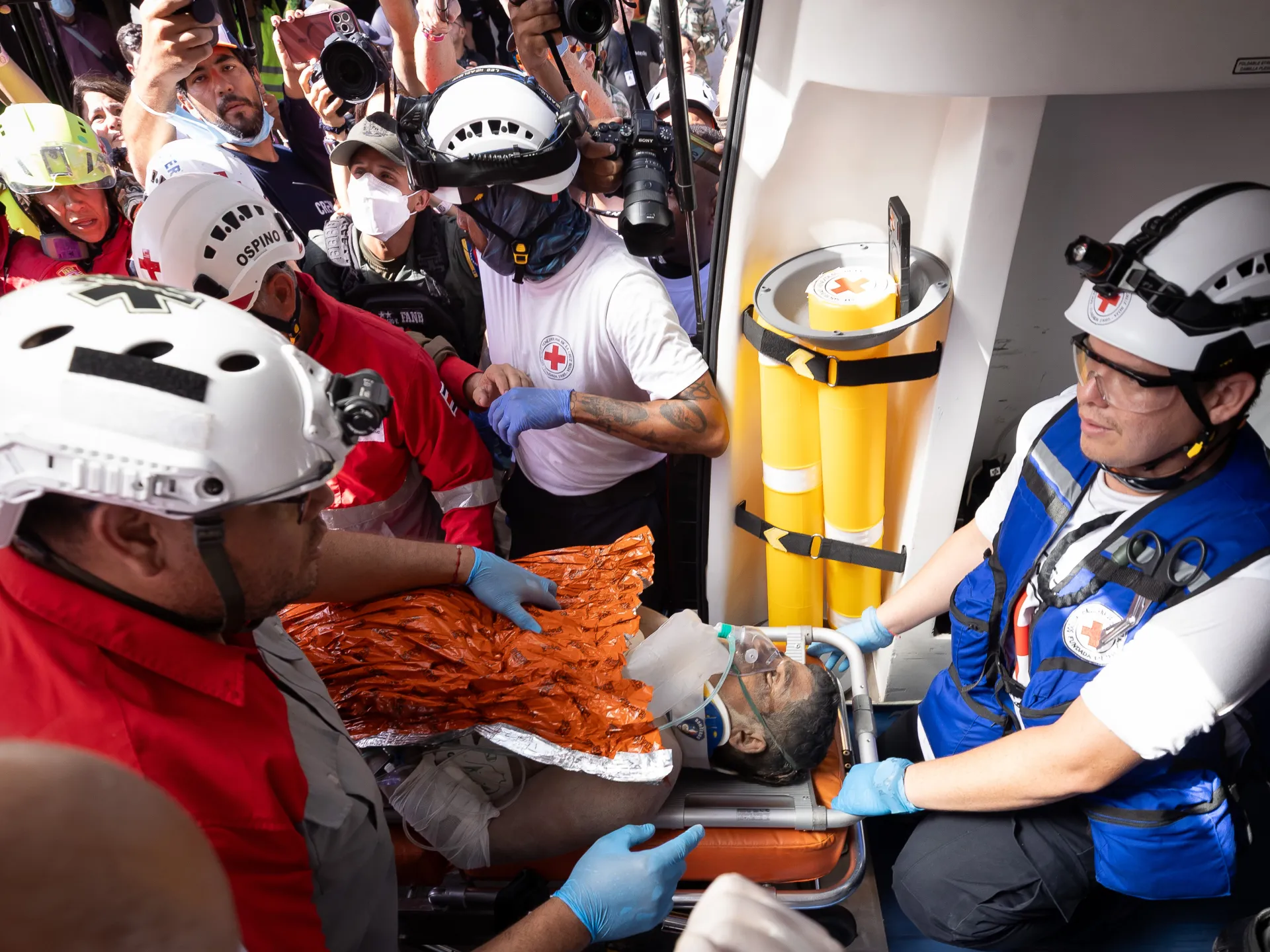
But in a rare ray of hope, rescue workers were able to reach 43-year-old security guard Hernan Gil on Thursday, after days of trying to retrieve him from a collapsed seven-storey building where he worked in the hard-hit coastal area of Catia La Mar.
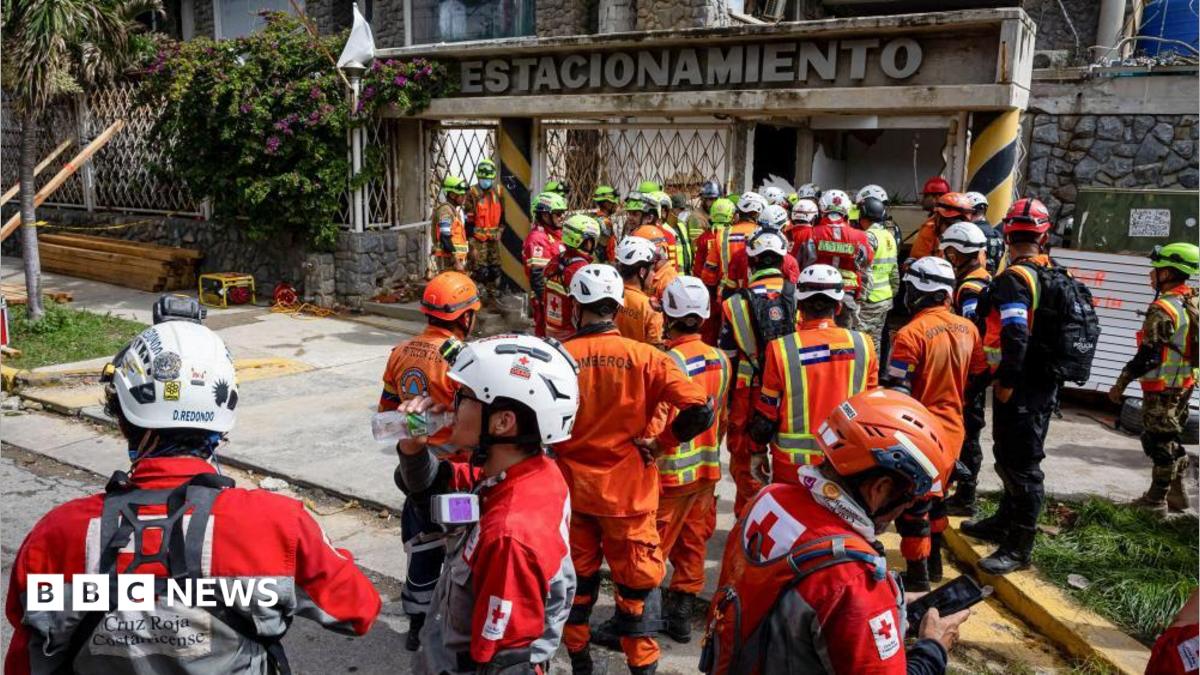
Gil had been located three days earlier. Rescue teams from seven countries, including Venezuela, Chile, the United States, Portugal, Costa Rica, El Salvador and Mexico, worked to free him.
“This is truly a miracle,” Gil’s wife, Gusbimar Gonzalez, told the news agency AFP.
Cristian Vera, the leader of the Chilean rescue team, told AFP that rescuers eventually were able to dig a three-metre (9.8-foot) tunnel to extract Gil. They had been able to provide him water via a hose and oxygen tube in recent days.
“It wasn’t easy to reach the exact spot where the victim was located,” he said.
Reporting from the state of La Guaira, Al Jazeera correspondent Zein Basravi said that, while Gil’s recovery has given some families hope, countless rescue attempts across the country have ended in tragedy.
Many of the collapsed buildings in La Guaira, located north of Caracas, have already been marked with the letter D for “deceased”, signalling no signs of life could be detected.
“One search-and-rescue expert we spoke to on the ground said the footprint of this disaster is so big, there are 58,000 buildings that have been destroyed or damaged, there’s so much area to search, and so many days into the aftermath of this earthquake, it is less and less likely that anyone can be found alive,” Basravi said.
He added that the emergency response is set to “move away from rescue and recovery into a very different phase of this disaster, which will see more relief work, more humanitarian work needed on the ground”.
Risks of health crisis
Humanitarian workers have warned that the aftermath of the earthquake could lead to a health crisis, as understaffed medical centres are likely to face cases of untreated injuries and infectious disease.
For years, the country’s health system has been strained by shortages of critical medical equipment, highly trained staff and electrical power.
The World Food Programme has appealed for $50m to feed some 500,000 people for three months. The United Nations Development Programme has put the estimated cost for the physical damage at $6.7bn, based on satellite imagery.
Several countries and regional blocs have pledged funding to help with relief efforts.
That has included $300m from the US, according to the Department of State. The administration of US President Donald Trump, who abducted Venezuelan leader Nicolas Maduro earlier this year, has continued to support the country’s interim President Delcy Rodriguez despite criticism over a lack of preparedness.
Reporting for Al Jazeera from Caracas, journalist Noris Soto said that international aid will be “more than necessary” in the months and weeks ahead.
“Venezuela has been struggling with economic hardships for the past two decades. So, if you add this disaster to that economic crisis that Venezuelans were already suffering, they will need help for years to come,” she said.
At least 6 people were killed and 22 injured after an explosive device detonated in a café in Damascus’ Al-Hijaz area. Emergency crews, civil defence teams and security forces rushed to the site, imposed a security cordon and began investigating the deadly blast.
Spain’s immigration scheme sees more than a million applications, with Latin Americans leading the numbers at 67 percent.
Published On 2 Jul 20262 Jul 2026
Almost 1.2 million undocumented migrants have sought legal status in Spain under a scheme that has defied a growing European crackdown on irregular immigration.
The government of Socialist Prime Minister Pedro Sanchez, a standard-bearer of more open immigration policies, launched the vast plan in April while European neighbours toughen measures in response to pressure from ascendant far-right parties.
Recommended Stories
list of 3 itemsend of list
A total of 1,174,978 applications were submitted between mid-April and June 30 when the window closed, with more than 600,000 already being processed, Secretary of State for Migration Pilar Cancela told a news conference in Madrid on Thursday.
Latin America accounted for 67 percent of the submissions, with Colombia alone representing 25.9 percent of the total. African nationalities followed with 22.9 percent.
After Colombia, the most represented countries were Morocco at 13.3 percent, Venezuela with 11.8 percent and Peru at 8.8 percent.
An overwhelming majority of applicants were young, with eight out of 10 younger than 45 years old, while 57 percent of the total were males against 43 percent for females.
The application total does not necessarily indicate how many people will normalise their situation. According to government projections in April, there are about 500,000 potential beneficiaries.
Applicants must prove they have a clean criminal record and spent at least five consecutive months in Spain before January 1.
The authorities have three months to process their paperwork and decide whether to issue a work and residence permit valid only in Spain.
Sanchez has touted the benefits of immigration and the vast regularisation scheme for sectors such as construction that need to boost their workforce.
“Without immigration, Spain would lose 19 percent of its GDP by 2050,” Sanchez said on Tuesday during a presentation on migration. “And what does that mean in business terms? It means, for example, that 90,000 bars would have to close, that 50,000 primary and secondary classrooms would find themselves without students, and that around 220,000 farms would disappear.”
Without immigration, he added, Spain would be “poorer, emptier, weaker and without the resources to fund its welfare state”.
“Spain has never moved forward by building walls,” the prime minister said. “The only decent thing to do is extend a hand, not turn our backs on immigration.”
Spanish business leaders have welcomed the move, but the conservative and far-right opposition are furious about a policy they say will encourage more irregular immigration. Santiago Abascal, the leader of the far-right Vox party, slammed the scheme, calling it an “invasion”.
“More than a million strangers now competing with Spaniards for jobs, housing, daycare places, hospital beds, and social assistance. It’s an invasion. And it’s a betrayal,” Abascal said on X.
Maritime monitoring service TankerTrackers.com said on Thursday that a ship which Iranian media reported had run aground in the Strait of Hormuz has in fact been stuck in the same spot since March and is part of an operation managed by the notorious Iranian oil magnate Mohammad Hossein Shamkhani.
Here is what we know about Shamkhani, whom the US and EU allege is a central figure in Iranian and Russian shadow fleet operations, generating billions of dollars of oil revenues for both, and what happened to his ship in the Hormuz strait.
What do we know about the stranded ship?
On Thursday, TankerTrackers.com reported that the ship that Iranian media said had run aground in the Strait of Hormuz after using a “US-suggested route” has actually been stuck in the same spot since March.
It identified the vessel as the Arista, and reported that while it is Comoros-flagged, it is in fact part of an operation managed by the sanctioned Iranian oil magnate Shamkhani.
Who is Mohammad Hossein Shamkhani and what are the allegations against him?
Shamkhani is an Iranian oil shipping magnate who has multiple Western sanctions imposed on him. He is the son of the late Ali Shamkhani, a senior political adviser to Iran’s former Supreme Leader Ayatollah Ali Khamenei.
Ali Shamkhani led the Supreme National Security Council (SNSC) for a decade until 2023, making him the second-longest-serving security chief since 1979 after former President Hassan Rouhani, who was SNSC secretary for nearly 16 years.
He was reportedly killed in the first Israeli-US strikes on Tehran on February 28 , which triggered the war with Iran and also killed Khamenei, whose funeral begins tomorrow.
In March, the Sarajevo-based Organised Crime and Corruption Reporting Project (OCCRP) reported that following an investigation, Mohammad Hossein Shamkhani and his brother had used aliases and Caribbean “golden passports” to amass a $29m million property portfolio in Dubai.
The US Treasury, which has sanctioned the Shamkhani shipping empire, says it is part of a massive Iranian and Russian oil smuggling ring and that the Comoros‑flagged Arista aground in Hormuz is part of that network.
How does Shamkhani’s oil shipping operation work?
According to the US Treasury, the Shamkhani network makes use of “front” companies to buy Iranian and Russian oil for which it falsifies shipping documents. It switches the oil between vessels frequently via its shipping operations and sells the oil on to buyers who pay for it via their own front companies to obscure the flow of money.
Additional profits are funnelled through hedge funds and other money-laundering operations, the US Treasury alleges.
It said Shamkhani relies on a mix of crude oil, oil product and liquefied petroleum gas (LPG) tankers to generate billions of dollars for the Iranian and Russian regimes.
According to the European Commission, Shamkhani “uses the company Milavous Group Ltd to blend crude oil with various petroleum products from Russia and to rebrand for exporting purposes, thereby concealing their origin”.
Shamkhani is not known to have responded publicly to these allegations.
What sanctions have been imposed on Shamkhani?
Shamkhani was first sanctioned by the US last July, amid a large number of Iran-related sanctions. In April, the US Treasury Department announced additional sanctions on Shamkhani’s network.
“Treasury is moving aggressively with Economic Fury by targeting regime elites like the Shamkhani family that attempt to profit at the expense of the Iranian people,” Treasury Secretary Scott Bessent said.
A statement from the US Treasury added that Shamkhani “heads a multi-billion dollar Iranian and Russian petroleum sales empire that enriches a family connected to the highest echelons of the Iranian regime at the expense of the Iranian people”.
The European Union sanctions tracker website says Shamkhani is also subject to EU sanctions, describing him as “a businessperson active in the Russian oil trade and a central player in Russia’s so-called ‘shadow fleet’.”
Russia’s shadow fleet is a network of hundreds of ageing, poorly regulated oil tankers that Russia uses to export crude and fuel while evading Western sanctions imposed after its invasion of Ukraine in 2022.
An August last year, the UK government also announced sanctions against Shamkhani including an asset freeze, director disqualification and travel ban. Minister for the Middle East Hamish Falconer said: “The UK is announcing sanctions against those who operate on behalf of Iran, fuelling its attempts to undermine stability in the Middle East and global security.
“Iran’s reliance on revenues from trading networks and connected organisations enables it to carry out its destabilising activities, including supporting proxies and partners across the region and facilitating state threats on UK soil.”
Rescue teams from seven countries are inching towards a man who survived the twin earthquakes that struck Venezuela eight days ago.
Emergency workers located security guard Hernán Gil on Saturday beneath the ruins of a multi-storey car park in Catia La Mar, but have only been able to make visual contact with him in the last hours.
Despite being buried under nine-metre-deep, highly unstable rubble, rescuers say that Gil, who is in his 40s, is “in good spirits” and cheering them on.
His wife has described his survival as “a miracle”. Almost 2,300 people are confirmed to have died in the quakes which hit Venezuela on 24 June, and tens of thousands are still missing.
Hundreds of rescuers have been working against the clock to free Gil since he was located more than 100 hours ago.
Teams from Venezuela, Chile, Costa Rica, El Salvador, Mexico, Portugal and the United States are on the ground trying to free him.
Chilean firefighter Exequiel Gallardo said that he was “hopeful that we can do the rescue within the next few more hours”.
He told the BBC at the scene that there were still technical challenges they needed to overcome, including breaking a concrete slab to allow them to extract Gil.
“I have been a rescue worker for 22 years, and this is without doubt the most complex and technically difficult which I’ve had to tackle,” he said.
Parts of the access ducts rescuers built to reach him have collapsed several times, highlighting the dangers the work poses to the rescuers as well as Gil.
Overnight, the search teams were finally able to establish visual contact with Gil.
In footage recorded by a small camera inserted into the rubble where Gil is trapped, a Chilean firefighter can be heard asking Gil to turn his head towards the camera.
One of his eyes is bloodshot and he is wearing a face mask, which rescuers had earlier passed to him through a small hole to protect him from the dust and debris created by their efforts to free him.
The firefighter also asks him to don goggles to protect his eyes as rescuers continue to carefully dig away at the rubble surrounding him.
Weekly insights and analysis on the latest developments in military technology, strategy, and foreign policy.
Here’s TWZ’s weekly carrier tracker monitoring America’s flattop fleet, including deployed Carrier Strike Groups (CSG) and Amphibious Ready Groups (ARG), using publicly available open-source information. Check out last week’s report here.
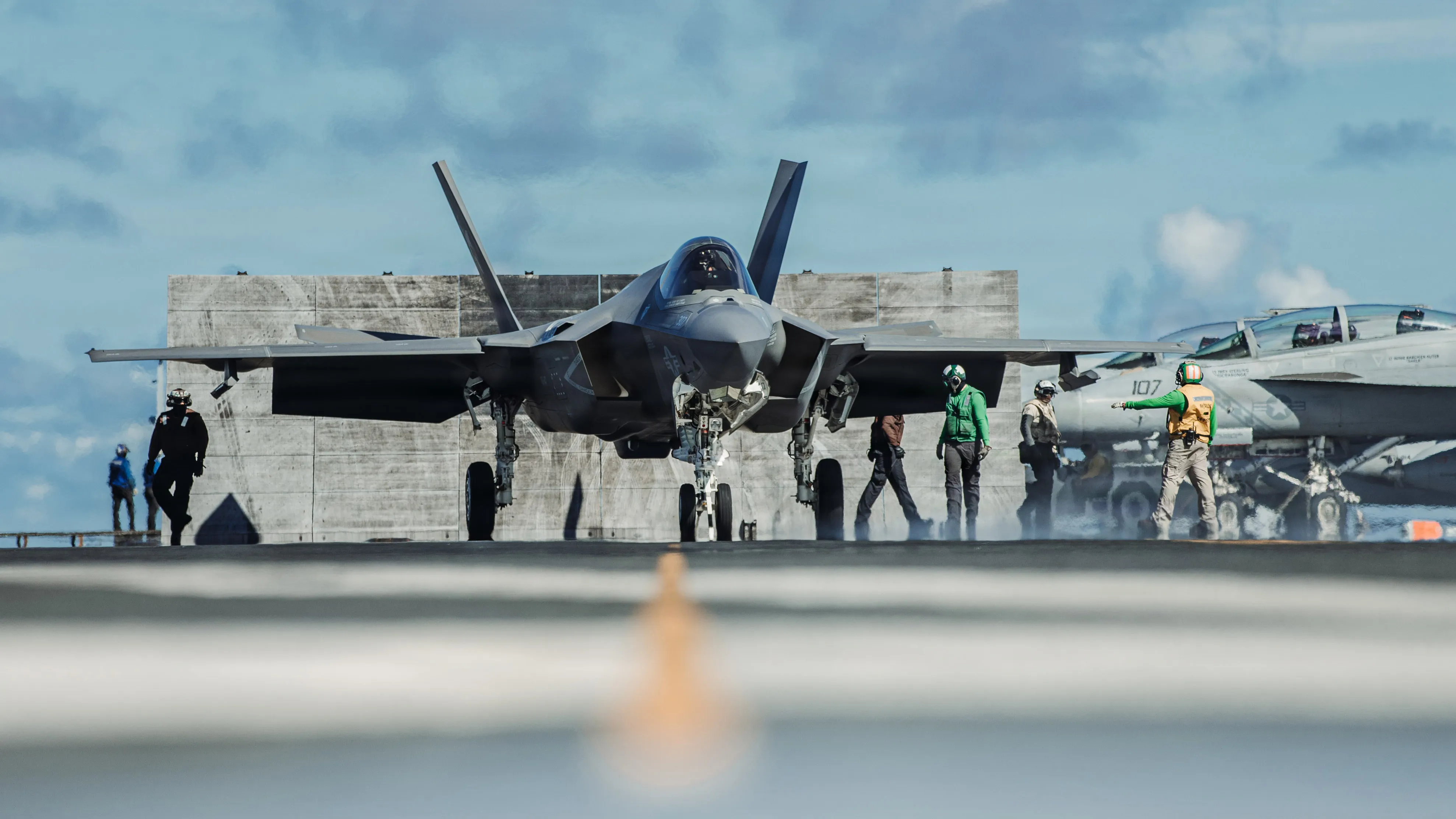
Aircraft from Carrier Air Wing (CVW) 5 embarked on USS George Washington, including F/A-18 Super Hornets, F-35C Lightning IIs, and an E-2D Hawkeye, participated in a live-fire sinking exercise (SINKEX) during exercise Valiant Shield in the Western Pacific over the weekend. The ex-USS Juneau, a decommissioned Austin-class amphibious transport dock ship that was involved in both the Vietnam War and Operation Desert Storm, was sent to the bottom by U.S. and partner forces approximately 40 nautical miles northeast of Guam.
George Washington conducts sinking exercise during Valiant Shield 2026. U.S. Navy photo by Petty Officer 3rd Class Nicolas Quezada
“The evolution brought together air, surface, and subsurface assets in coordinated strikes, allowing crews to sharpen critical skills in weapons employment and target engagement under realistic conditions that no simulator can fully replicate,” according to a press release from Task Force 70 Public Affairs. A torpedo fired by a Japanese Maritime Self-Defense Force diesel-electric submarine, JS Jingei, delivered the final blow.
Multilateral, Joint Forces execute sinking exercise during Valiant Shield 2026. U.S. Navy photo by Seaman Apprentice Anthony Vilardi
A few thousand miles to the east, USS Theodore Roosevelt, with a packed flight deck, arrived at Joint Base Pearl Harbor-Hickam, Hawaii, on June 23 ahead of the biennial exercise Rim of the Pacific (RIMPAC) 2026. The 30th iteration of RIMPAC is the largest ever and will feature 30 partner nations, 31 surface ships, five submarines, 15 national land forces, more than 200 aircraft, and 30,000 personnel in and around the Hawaiian Islands. Roosevelthosted service members from partner nations and the local community during an open ship tour event over the weekend.
USS Theodore Roosevelt (CVN 71) arrives at Pearl Harbor. U.S. Navy photo by Petty Officer 1st Class Erik Melgar
Back in the continental United States, USS Nimitz joined 25 other ships for a fleet formation photo exercise (PHOTOEX) in the Atlantic Ocean on June 25 as part of the inaugural Fleet Exercise (FLEETEX) 250. FLEETEX, a large-scale multinational maritime exercise, includes a series of “structured multilateral training events at-sea, aimed at building cohesiveness, validating tactical procedures, and strengthening the interoperability of participating units.” Warships, aircraft, and personnel from the U.S. and 13 allied countries were involved in the two-week exercise that wrapped up today.
USS Nimitz participates in FLEETEX 250. U.S. Navy photo by Seaman Johnathan McCune
Nimitz pulled into Mayport, Florida, the following day to disembark family and friends who were aboard for a Tiger Cruise. Nimitz and several other participating ships will sail to New York City this week to take part in the seventh International Naval Review 250 from July 3-8.
Notably, Boeing’s MQ-25A Stingray demonstrator drone was spotted on Nimitz’s flight deck, which you can read about in detail here, and the C-2A Greyhound made its last trap aboard the flattop, marking the end of an era in naval aviation as the CMV-22B Osprey takes the reins for the “no fail” carrier onboard delivery mission.
MQ-25 Stingray demonstrator drone, also known as T-1, spotted embarked on the USS Nimitz. U.S. Navy photo by Petty Officer 3rd Class Gina Gallia
USS Dwight D. Eisenhower continues working up off the east coast and was most recently underway in the Jacksonville Operating Area with her AIS transponder turned on. Eisenhower is conducting carrier qualifications and supporting East Coast Fleet Replacement Squadrons, according to DVIDS. On the west coast, USS Carl Vinson got underway for training on June 25.
IKE conducts carrier qualifications in the Atlantic Ocean. U.S. Navy photo by Petty Officer 2nd Class Miguel Santiago
Two aircraft carriers remain on station in the Middle East: USS Abraham Lincoln and USS George H.W. Bush. Both carriers were spotted conducting flight operations over the past week in the U.S. Central Command-5th Fleet area of responsibility (AOR). With the blockade lifted while negotiations are ongoing – and both sides still exchanging weekend tit-for-tat blows – neither appears to be leaving the AOR, for now.
Abraham Lincoln conducts flight deck operations. U.S. Central Command Public Affa
Note: Positions are general approximations.Non-deployed LHA/LHD amphibious warships are not shown.
Contact the author: ian.ellis-jones@teamrecurrent.io
In an unexpected move, Boston traded the All-Star guard to division rivals Philadelphia for Paul George and draft picks.
Published On 2 Jul 20262 Jul 2026
Jaylen Brown’s time in Boston has come to a surprising end with the Celtics deciding to trade him to one of their most storied rivals.
Brown – the 2024 NBA Finals MVP, a five-time All-Star and the league’s fourth-leading scorer this past season – is getting traded by the Celtics to the Philadelphia 76ers, a person with knowledge of the deal’s terms said on Wednesday night.
Recommended Stories
list of 4 itemsend of list
Boston is getting Paul George, along with a slew of draft capital that could become two first-round picks and two second-round picks, said the person who spoke to The Associated Press on condition of anonymity because the trade does not yet have the required league approvals.
ESPN first reported the trade agreement, and the terms were later confirmed by The Boston Globe.
Brown latest NBA star to be traded, joins Antetokounmpo, Leonard
Add this news to the list of blockbuster moves across the NBA so far this off season.
LeBron James is leaving the Los Angeles Lakers as a free agent. All-Star-calibre players Giannis Antetokounmpo, Kawhi Leonard and Brandon Ingram are also on the move.
Now, this.
“Welcome to Philly, JB!” Pennsylvania Governor Josh Shapiro posted on social media. “Sixers get way better and, as a bonus, the Celtics got worse!”
It’s a move that breaks up what has been one of the league’s most successful 1-2 punches in Brown and Jayson Tatum, who helped carry the Celtics to the 2024 NBA title.
Tatum missed most of this past season while recovering from an Achilles tear that happened during the 2025 playoffs, meaning Brown had to carry even more of the load for Boston – and he wound up with career-best averages of 28.7 points, 6.9 rebounds and 5.1 assists per game.
It seemed, though, that Brown had felt underappreciated, especially after it became known that Boston had included him in trade talks with Milwaukee when Antetokounmpo was on the market.
“Nobody has won more combined regular-season and playoff games since I entered the league 10 years ago,” Brown posted on social media over the weekend. He’s right: The Celtics have won 523 games with Brown in the lineup, including playoff contests, which is six more than Denver has won with Nikola Jokic over that span.
Brown now gets to be part of a squad in Philadelphia alongside guard Tyrese Maxey and centre Joel Embiid, someone who Brown recently called a flopper on a livestream.
“Joel Embiid is a great player. One of the best bigs in f****** basketball history flops,” Brown said. “He know it. This ain’t breaking news.”
Brown, Maxey (the league’s fifth top scorer this past season) and Embiid (a two-time NBA scoring champion) could become a positively frightening trio in Philadelphia, and the Celtics deciding to play a role in creating such a triumvirate only adds to the intrigue surrounding why they wanted to trade Brown in the first place.
The trade ends a tremendously disappointing two-year stint for George, who was traded with two years left on a four-year, $212m free-agent contract. The 36-year-old never approached his nine-time All-Star form in Philadelphia, and his tenure was marred by a 25-game suspension last season for flunking a drug test.
He averaged just 16.7 points in his two seasons in Philadelphia after topping the 20-point mark in nine straight seasons with Indiana, Oklahoma City and the Los Angeles Clippers.
Former All-Star forward Paul George endured two disappointing seasons at the Philadelphia 76ers [File: Matt Slocum/AP]
Weekly insights and analysis on the latest developments in military technology, strategy, and foreign policy.
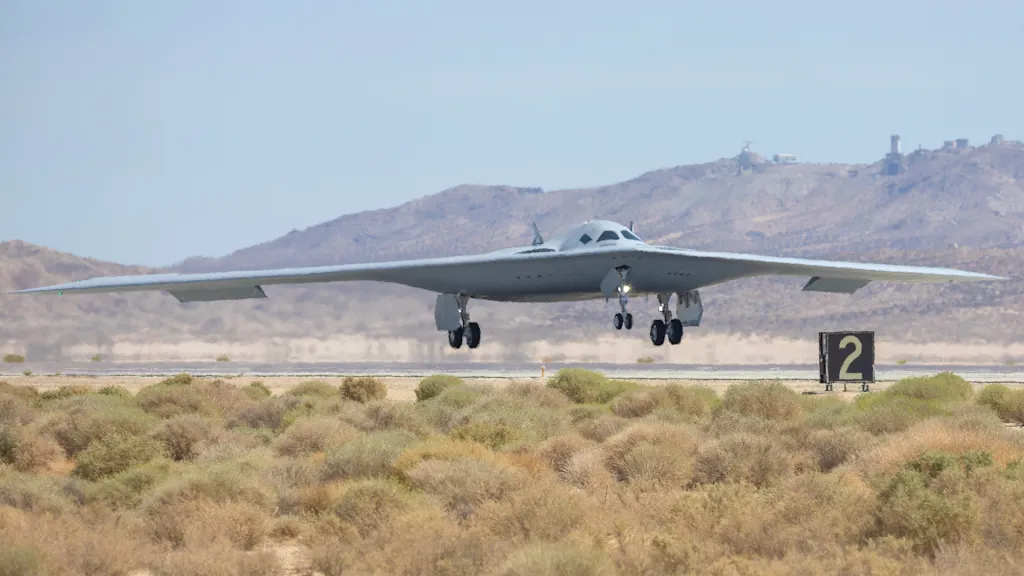
After what appeared to be cryptic indications that prompted online speculation and excitement, fans of the B-21 Raider won’t be seeing America’s newest bomber in any Fourth of July celebrations, the Air Force confirmed to TWZ Wednesday morning. The aircraft, two of which are now undergoing flight testing, will remain at Edwards Air Force Base in California.
Asked by TWZ to “confirm B-21 will not take part in any 250th celebration events in DC or anywhere else,” an Air Force official offered the following response: “The B-21 will not take part in any flyovers for this week’s celebration.”
The official further clarified that the aircraft won’t take part in any such events, even though the flyovers in Washington, D.C. continue through July 10.
B-21 Raider. (USAF)
The Air Force official’s statement about the B-21 not taking part in any Independence Day celebrations adds additional clarity to comments Air Force Secretary Troy Meink made to Air & Space Forces Magazine last week about the topic.
“No, no, the program is going really, really well, but the planes are out at Edwards, and we just started doing refueling,” Meink told the publication. “So to get a B-21 here [for the Fourth], not going to happen.”
The Air Force expects to procure 100 of these jets, and possibly significantly more. You can read more about the program in our story here.
B-21 Takeoff and Landing
Speculation about whether the B-21 would make an appearance over the nation’s capital was mainly fueled by a campaign of cryptic videos and an image posted on social media by the jet’s manufacturer, Northrop Grumman.
A 30-second video titled “Stealth Meets Spotlight: B‑21 Blows Out 250 Candles to Celebrate America’s Birthday” was posted on YouTube 11 days ago.
It opens with credits showing “Utah Salt Flats” and then shows the silhouette of a Raider followed by one flying low and blowing out 250 candles on pillars placed in a row before roaring off with the words “Happy Birthday, America” emblazoned on the screen.
Stealth Meets Spotlight: B‑21 Blows Out 250 Candles to Celebrate America’s Birthday
A seven-second version of that video, posted on X June 25 and titled: “Some things stay off the radar. America’s 250th isn’t one of them,” just shows the silhouette and the candles being blown out.
On June 30, Northrop Grumman added another teasing post to X, just showing a still from the longer video.
The company declined comment about the social media campaign. It deferred questions about whether the Raider would fly in any July 4 celebrations to the Air Force.
In a post on his social media outlet, President Donald Trump added further fodder for speculation about whether Raider would emerge for the festivities.
“Last night’s Rally was packed — 45,000 people. July 4th will be a step beyond anything you’ve ever seen,” Trump proclaimed on June 27. “The Military flyovers will be the best, EVER — The most planes, the newest planes, the fastest planes!…”
Even before these posts, the military aviation community of X had been speculating about whether the Raider would make an appearance at America’s birthday bash in the capital.
Though the B-21 won’t be the centerpiece of any flyovers, aviation buffs in the D.C. area already got a chance to see several iconic aircraft, including B-2A Spirit and B-52 Stratofortress bombers, as well as fighters and other aircraft. The new Air Force One bridge aircraft is also supposed to make an appearance.
An eight-aircraft formation led by the mighty B-52 Stratofortress just flew over Washington D.C. and the Great American State Fair. The B-52 was flanked by two F-15 Eagles, two F-35 C Lightning II’s, and two F/A-18 Super Hornets with a second B-52 tailing the formation. pic.twitter.com/FhVTeDwN15
More flyovers are expected over D.C. through July 10 as we noted at the top of our story.
So, unless there is a well coordinated conspiracy inside the USAF to surprise the public by denying the B-21’s attendance at America 250, the Raider will remain off the radar, which is what it was designed to do.
Weekly insights and analysis on the latest developments in military technology, strategy, and foreign policy.
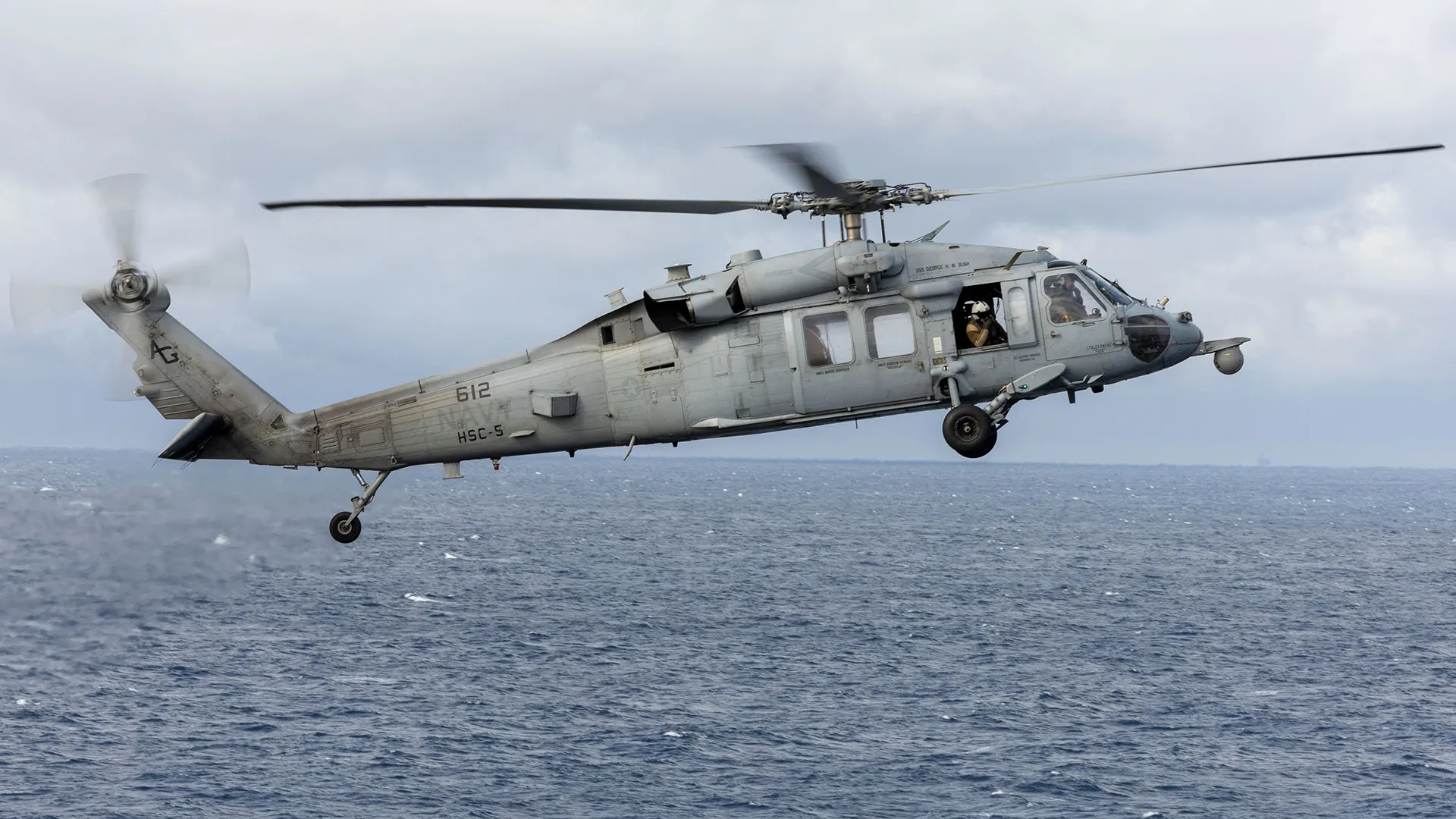
A search is underway for a missing aircrewmember after a U.S. Navy MH-60S Seahawk helicopter assigned to the aircraft carrier USS George H.W. Bush (CVN 77) “conducted an emergency water landing in the Arabian Sea,” the U.S. Navy’s 5th Fleet stated in a post on X. “There is no indication the emergency was caused by hostile action.”
“Three of the helicopter’s four crew members have been recovered and are in stable condition aboard George H. W. Bush,” 5th Fleet added. “U.S. Navy assets in the region are currently searching for other aircrewmen still missing. The cause of the incident is under investigation.”
The incident took place at 3:30 a.m. EDT, 5th Fleet stated.
On July 1 at 3:30 a.m. ET, the aircrew of an MH-60S Sea Hawk helicopter assigned to USS George H.W. Bush (CVN 77) conducted an emergency water landing in the Arabian Sea. There is no indication the emergency was caused by hostile action. Three of the helicopter’s four crew…
— U.S. Naval Forces Central Command/U.S. 5th Fleet (@US5thFleet) July 1, 2026
The mishap occurred amid tense ongoing negotiations between the U.S. and Iran to end the war. This marks the second time in the past few weeks that a U.S. military helicopter aircrew had to be rescued after a crash in the region.
The crew of a U.S. Army AH-64 Apache were rescued from the Gulf of Oman overnight June 9 by a Corsair drone boat. President Donald Trump said Iranian forces downed the attack helicopter.
Moscow, Russia – Russia faces a severe fuel deficit as Ukrainian drone strikes knock out a significant portion of its refining capacity.
With continuing war in Ukraine and agricultural harvesting under way, the government is scrambling to re-route supplies, maintain price caps and enforce export bans to prevent further domestic shortages.
Recommended Stories
list of 4 itemsend of list
Long lines at petrol stations are now a common sight throughout the country, including in the prosperous capital Moscow.
People wait for hours to fill up their cars. In some places, the pumps are completely dry.
There is a sense of patience but also mounting anxiety in the air.
“I’m deeply frightened by the uncertainty and the lack of understanding where the situation is heading,” a woman named Irina, waiting to fill up her car in Moscow, told Al Jazeera.
Igor, another Moscow resident, said: “I think things can get out of control if the crisis causes major industries to shut down.”
Both interviewees requested to withhold their surnames.
President Putin has dismissed concerns about the fuel shortages, saying the situation is not ‘critical’ [Al Jazeera]
Analysts predict that increased fuel prices will mean higher transportation costs followed by significant price hikes for goods and services.
Stanislav Mitrakhovich, an expert at the National Energy Security Fund at the Russian Financial University, said the crisis is “deep, yet for a long time, Russian authorities were unwilling to acknowledge it”.
He added that the Russian response has led to “greater public distrust” of authorities and, consequently, triggered panic buying.
“Indirect evidence indicates that Ukrainian drone attacks have disabled about a quarter of Russia’s oil refining capacity,” he told Al Jazeera. “Seasonal demand has also contributed to the problem. The crisis has led to rising fuel prices and local shortages, as some regions simply lack oil refineries.”
The situation is “even worse” in regions close to the combat zone, he said. “Measures to restrict and ration fuel sales have long been in place there.”
To tackle the problem, Russia has imposed fuel rationing. Sales are often limited to about 20-30 litres (about 5-8 US gallons) per vehicle, and drivers must pump fuel strictly into vehicle tanks. Filling jerry cans is largely prohibited.
Earlier, the government banned petrol and jet fuel exports. Officials are now weighing a ban on diesel exports, too.
Authorities have loosened fuel-quality regulations, temporarily allowing lower-grade fuel for the domestic market.
As the approaching agricultural harvesting season relies on a steady stream of diesel, authorities are prioritising farming allocations to prevent a hit to food security.
To offset the domestic shortfall, Moscow has sought fuel imports from neighbouring countries, such as Belarus, as well as Asian markets. Moscow has shipped in 60,000 to 80,000 tonnes of petrol from India, according to industry sources cited by the Reuters news agency. Russia reportedly plans to import 400,000 tonnes of petrol monthly from various countries.
‘I would say it is not critical’: Putin
While Russian President Vladimir Putin acknowledges the crisis, he appears reluctant to end the war in Ukraine and insists the situation is under control.
“These attacks on our facilities certainly create problems, that is obvious. We are currently seeing a certain shortage, though I would say it is not critical,” he said.
“First and foremost, we have to rapidly and significantly increase production of air defence systems that are most in demand. We must also continue to improve them … Repairs at refineries must be completed more quickly.”
Ukraine is seizing its opportunity. President Volodymyr Zelenskyy has authorised a 40-day military and intelligence campaign, aimed at pressuring Russia into ending the war.
Mitrakhovich said the way the crisis unfolds from here depends on what’s more effective: Ukraine’s drone strikes or Russia’s air defences.
Weekly insights and analysis on the latest developments in military technology, strategy, and foreign policy.
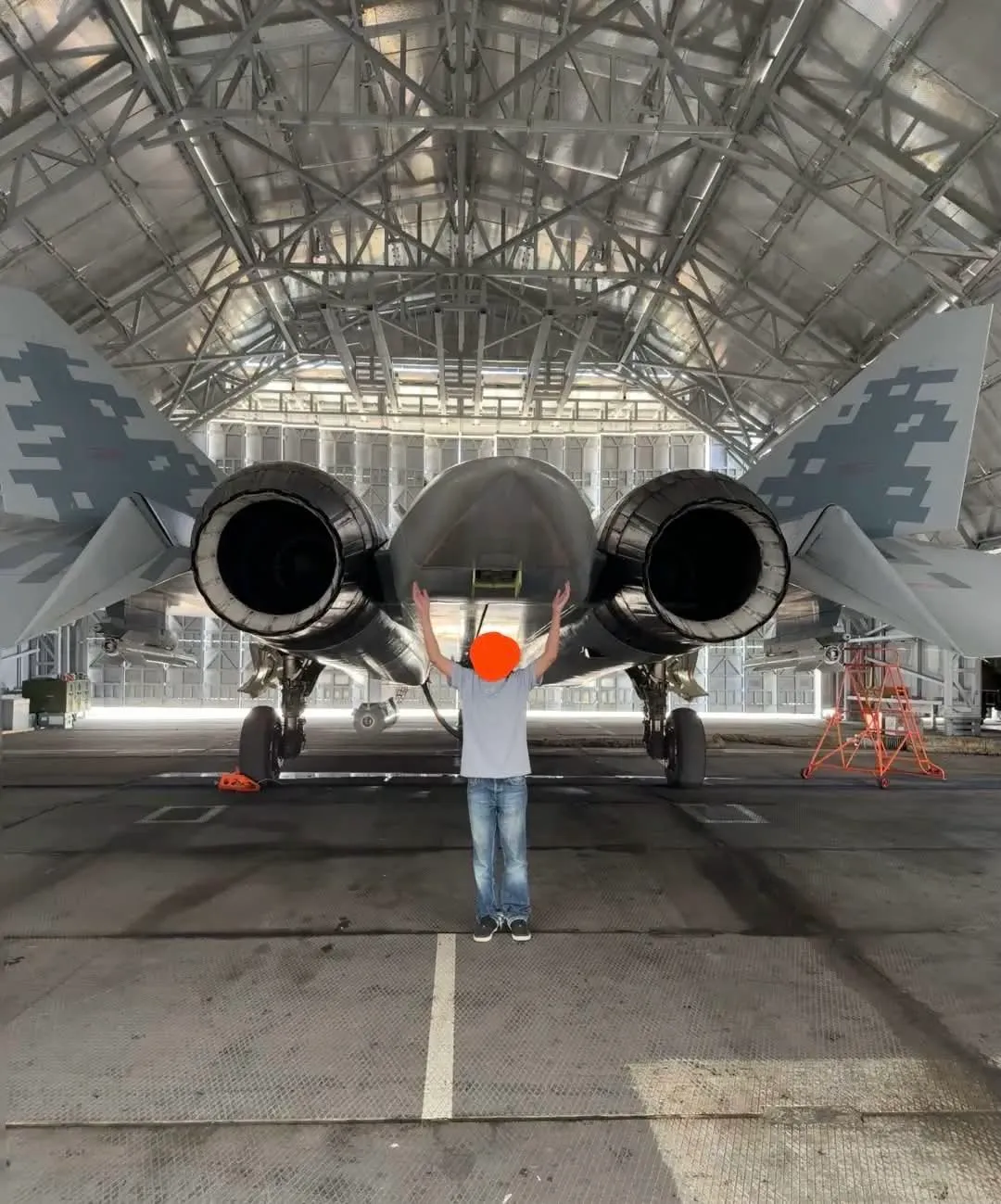
Imagery has recently appeared showing a Russian Sukhoi Su-57 Felon fighter with an unusual external weapons load of short-range air-to-air missiles, as well as what looks like a previously unseen type of targeting pod. While we cannot say for sure, we may just have gotten our first close look at a Su-57 equipped to counter the Ukrainian kamikaze drones and cruise missiles that are now a regular menace to air defenses increasingly deep inside Russia.
Two photos, the original source of which is unclear, show a Su-57 configured with a pair of R-73/R-74 (AA-11 Archer) series short-range air-to-air missiles on pylons under the wings. One of those photos further shows the mysterious targeting pod below the left engine nacelle.
This rear view of a Su-57 reveals the two missiles underwing as well as the targeting pod below the left engine nacelle. via X
Both show a Su-57 seen from the rear inside a large shelter. One photo apparently surfaced on the TikTok social media platform. Somewhat surprisingly, it is one of a pair that also show apparent teenagers posing alongside the Felon — one of them inside the fighter’s cockpit — suggesting some kind of unofficial tour of the base.
The photos have been reposted on Russian social media, with military bloggers identifying them as showing Su-57s configured to hunt and shoot down Ukrainian drones.
A civilian, apparently a teenager, sits in the cockpit of a Su-57. via X
While this certainly seems likely, we should not rule out some other possibilities, including a Felon involved in some kind of weapons trials. On the other hand, it is unusual to see Su-57s, in operational service or otherwise, carrying short-range air-to-air missiles externally. After all, the jet has internal bays specifically for this purpose, something we have described in detail in the past.
A pre-production Su-57. The triangular, canoe-like wing-root weapons bays are visible outboard of the aircraft’s engine intakes. Vitaly Kuzmin
At the very least, this would appear to be a load-out optimized for close-range engagements, of the kind that would be required for hunting Ukrainian long-range one-way attack drones and, increasingly, cruise missiles.
It is also worth noting the large shelter in which the Su-57 is parked. This looks to be of the same type that has been installed at the airfield at Akhtubinsk in the Astrakhan region of the Russian Federation, located more than 350 miles from the front line. In June of 2024, Akhtubinsk was itself hit by Ukrainian drones, which appear to have severely damaged, if not destroyed, a Felon parked in the open.
‼️ Вперше уражено Су-57
💥 8 червня 2024 року на території аеродрому «ахтубінск» в астраханській області рф, розташованому за 589 кілометрів від лінії бойового зіткнення, уражено багатоцільовий винищувач держави-агресора Су-57.
— Defence Intelligence of Ukraine (@DI_Ukraine) June 9, 2024
Russian military bloggers complained bitterly about the lack of protection from drone attacks at Akhtubinsk.
This reflected wider questions about the ability of Russia’s widely dispersed and heavily targeted air defenses to counter Ukrainian drone incursions and the ability to protect its own aircraft. Almost all of these assets, at the start of the conflict, sat in the open without any sort of shelters, let alone hardened ones. This is an area that Russia has since begun to address, even extending this to its long-range bomber fleet.
The Su-57 is very much a prized, ‘silver bullet’ asset of the Russian Aerospace Forces (VKS). But it is also notably well-equipped for countering drones and cruise missiles, as we will come onto later.
The scope of the Su-57’s contribution to Russia’s conflict in Ukraine is hard to quantify.
The U.K. Ministry of Defense has stated that Su-57s have been used in Ukraine since “at least June 2022.”
Prior to that statement, there had been on-and-off claims of the Felon being used to launch standoff strikes, mirroring tactics for other Russian jets involved in similar missions, in which they avoid the highly contested airspace over Ukraine itself.
For this purpose, the Felon can be armed with the Kh-69 stealthy cruise missile, intended to destroy small, hardened targets at distances of over 180 miles. It also carries the Kh-58UShK anti-radiation missile (including in its internal weapons bays) with a maximum range of around 150 miles, depending on launch parameters.
Meanwhile, the Su-57 has very impressive air-to-air capabilities.
Most impressively, it is armed with the 124-mile-range R-37M (AA-13 Axehead) air-to-air missile, complemented by the R-77-1 (AA-12 Adder) air-to-air missile, with a range of 68 miles, which are also capable of engaging Ukrainian aircraft ‘across the border’ in some scenarios.
Using high-end, fifth-generation, or equivalent fighter jets to tackle hostile drones and cruise missiles would not be unique to Russia. The U.S. military, as well as Israel and the United Kingdom, have called upon their F-35 fleets to deal with lower-end threats like these in the Middle East.
The Su-57 is the only operational Russian fighter available in any kind of meaningful numbers with an active electronically scanned array (AESA) radar.
The N036 radar, which has five separate AESA arrays, is part of a broader, integrated fire-control system that includes the 101KS electro-optical suite, the N036Sh identification friend or foe (IFF) system, and the L402 electronic countermeasures suite.
You can clearly see one of the supplemental side radar apertures below the ‘chine line’ under the aerial refueling probe. Russian Embassy
AESA radars are, in general, much better able to deal with drone and cruise missile threats.
Overall, any kind of AESA radar provides a significant boost to modern combat aircraft. In comparison with traditional mechanically scanned array technology, an AESA can find and track a target at a much greater range, more quickly, and with a greater degree of accuracy. This also applies to smaller threats, including those with limited radar signatures, or flying at very low levels, such as drones and cruise missiles.
The passive 101KS electro-optical suite should also be very useful against the same kinds of threats. It comprises an infrared search-and-track (IRST) sensor ahead of the cockpit, four ultraviolet missile-approach warning sensors, two directional infrared countermeasures turrets, and one imaging infrared sensor for low-level flying. Using the IRST, in particular, for counter-drone and cruise missile work, would reflect U.S. fighters’ employment of podded infrared sensors for the same. These sensors allow for long-range detection of low-radar-signature targets, including drones and cruise missiles. They can work collaboratively with the radar and other sensors to detect, classify, and engage these kinds of hard-to-spot targets at long distances.
The Su-57’s 101KS-V IRST is mounted where it is found traditionally on Russian fighters and is not the best spot for low observability. UAC Russia
Furthermore, unlike previous Russian tactical fighters, the Su-57 has a navigation and targeting pod, the 101KS-N, developed for it from the outset. Again, these kinds of stores have begun to be employed much more widely in efforts to counter drones and cruise missiles.
While targeting pods were first fielded for air-to-ground applications, they can also be used for air-to-air engagement, being highly important for visual ID at range. The laser designator can also be employed to illuminate, or ‘laze,’ a target, although that does not come into play with the Felon, since the aircraft has no laser-guided air-to-air weapons that we know of.
Most likely this is the 101KS-N Atoll from UOMZ. If that’s the case, that’s actually very good—UOMZ usually produces some pretty low-quality stuff. https://t.co/54laFDZ6gcpic.twitter.com/6cqMFyYIzw
— 𝔗𝔥𝔢 𝕯𝔢𝔞𝔡 𝕯𝔦𝔰𝔱𝔯𝔦𝔠𝔱△ 🇬🇪🇺🇦🇺🇲🇬🇷 (@TheDeadDistrict) May 18, 2026
Interestingly, the pod seen in the accompanying image has a different rear end from the standard 101KS-N. It is unclear if it represents a new version of the pod, or even one that is optimized for air-to-air engagements, but that is a possibility. We also should not rule out that this is another type of store entirely, although its position on the nacelle makes that less likely.
Meanwhile, despite claims that Russia is developing laser-guided rockets that can be used for air-to-air engagements, like the U.S. developments of the 70mm Advanced Precision Kill Weapon System II (APKWS II) rocket as a lower-cost way to down drones, there is no evidence that these have yet been fielded. This leaves the R-73/R-74 series short-range air-to-air missiles as the cheapest option for bringing down these kinds of threats.
When the R-73 first emerged in the early 1980s, it soon established itself as a very capable short-range air-to-air missile. Its combination of an all-aspect infrared seeker, high off-boresight capability, thrust-vectoring controls, and the fact it could be cued by the pilot’s helmet-mounted sight was unusual for the time, but is now much more commonplace. It has also been proven as a drone-killer, as seen in the video below, of a Russian MiG-29 Fulcrum shooting down one of Georgia’s Israeli-made Hermes 450 drones over Abkhazia in March 2008.
The successor to the R-73 is the R-74M, which looks almost identical but has a new two-band infrared seeker. This provides an increased seeker range and an expanded off-boresight capability, reducing the possibility of the enemy aircraft escaping it in a tight-turning dogfight.
RVV-MD is the export name used for the Vympel R-74M. The abbreviation denotes “short-range air-to-air missile” in Russian. Rosoboronexport
However, since critical parts of the R-74M were sourced from Ukraine, Russia then moved to the R-74M2, which is optimized for internal carriage by the Su-57. This uses a Russian-made seeker and a rocket motor with increased burn time, for longer range. The weapon can also be fired in lock-on-after-launch mode, which is typically required when launched from an internal bay, the missile beginning its flight under inertial control before achieving an in-flight lock-on.
This sequence may or may not show the launch of an R-74M2 from one of the Su-57’s two small wing-root weapons bays. Russian Ministry of Defense capture
It’s unclear which of these weapons are carried under the wings of the Su-57 in these images. However, with plentiful stocks of older R-73s still available, it would make good sense to carry these externally, since they cannot be accommodated in the internal weapons bays.
Another key counter-drone and cruise missile weapon could be the Su-57’s 30mm single-barrel cannon within the starboard wing root and provided with 150 rounds of ammunition. You can see it in action here. On the other hand, downing slow and low drones with the gun is very challenging from a fighter and can be outright dangerous. The 30mm gun on the Felon also has a notably limited magazine size.
All in all, there is some circumstantial evidence that Su-57s are now being used — whether routinely, or as part of combat trials — for air defense against Ukrainian drones and cruise missiles.
Clearly, this is a growing problem for Russia, underscored very publicly by the large-scale daylight raid on Moscow last month. In what was one of the biggest attacks on the Russian capital in the conflict, multiple Ukrainian drones and cruise missiles hit several locations across the city.
In response, Russia is calling upon a wide variety of assets to help defend against the drones and cruise missiles.
Although many key assets are deployed closer to the front lines in Ukraine, there is now an array of additional layered air defenses deployed in and around key potential targets. Defensive systems extend from S-400 long-range surface-to-air missile batteries to attack helicopters tasked with gunning down drones in midair. Most prominently, Pantsir short-range air defense batteries have been positioned on rooftops and elevated towers.
The ruSSians are using a Mi-26 heavy-lift helicopter to deliver a Pantsir-SMD-E air defense system onto the roof of the Nordstar Tower business center in downtown Moscow.
Well thanks, now everyone knows where the next Ukrainian drone is going to hit 🎯 👍 pic.twitter.com/hgeIPJUwSq
— 𝔗𝔥𝔢 𝕯𝔢𝔞𝔡 𝕯𝔦𝔰𝔱𝔯𝔦𝔠𝔱△ 🇬🇪🇺🇦🇺🇲🇬🇷 (@TheDeadDistrict) May 28, 2026
Ukraine has demonstrated it can now strike targets over vast expanses of Russian territory. With its ground-based air defenses already stretched extremely thin, robustly protecting a growing landmass from potential strikes with those systems alone just isn’t possible. With Ukraine increasingly using long-range cruise missiles capable of delivering very heavy warheads, the stakes are further increased. Even if fighter aircraft were just focused on defensing key targets from the heavy cruise missile threat, it would make sense as these missiles can do huge amounts of damage and are easier to spot using both infrared and radar sensors.
New, incredibly clear footage of a Ukrainian Flamingo cruise missile slamming into Russia’s Titan-Barrikady missile plant last week. pic.twitter.com/Su30R6qRXI
In addition, we know fighters are part of the overall response equation already. For instance, they have been forward-stationed on alert at the bomber base at Engels for some time now.
These kinds of fighter activities are less visible, and the Russian authorities are unlikely to publicize them much, since the fact they are doing this work paints a less-than-impressive picture of the state of Russian air defenses, and further underlines expanding Ukrainian capabilities. This is especially true of the prized Su-57s, which may well now be involved in these lower-end defensive efforts.
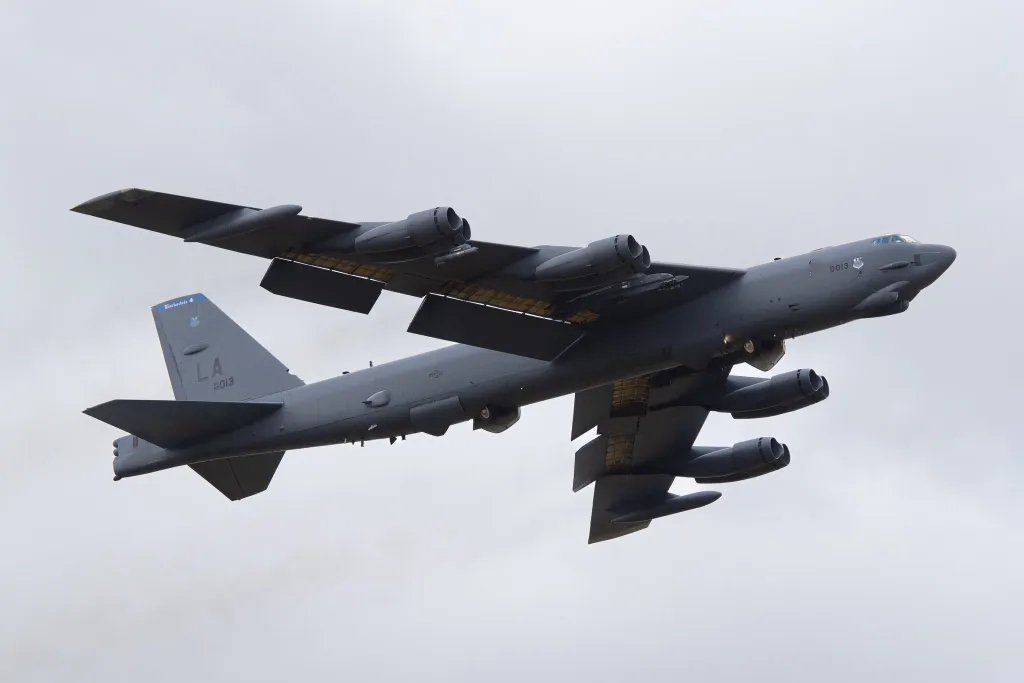
The departure was captured in video and still images by local aviation photographers, two of whom shared their work with us. Andy Riddle told us that six B-52s left RAF Fairford today in two waves of three. The first left at 10:15 a.m. local time and the second at about 2:20 p.m., noted Riddle, whose work can be found on his @Andyyyyrrrr X account.
(Andy Riddle) (Andy Riddle)
B-52s land in the UK for Iran Ops
As we noted at the time, at least three of the bombers arrived at Fairford on March 8. It’s unclear when the others arrived. Both U.S. Central Command (CENTCOM) and Air Force Global Strike Command (AFGSC) declined comment.
In our previous reporting, we pointed out that during their time at Fairford, the B-52s operated at a high tempo, striking targets inside Iran. All told, the U.S. claims it struck 13,000 targets, though there is no way for us to know how many involved B-52s from Fairford.
You can see one of those jets leaded with stealthy JASSM cruise missiles in a photo shared with us by another local aviation photographer, who uses the @Saint1Mil X account.
B-52H Stratofortress at RAF Fairford during Epic Fury. (@Saint1Mil photo)
Meanwhile, a dozen B-1 Lancer bombers remain at the base, according to @Saint1Mil.
Since the military won’t comment, we can’t say for sure why the BUFFs left Fairford, but the move comes after both the U.S. and Iran promised to hold off on further tit-for-tat strikes after the latest round that threatened the fragile ceasefire.
The flights also took place on a day when the U.S. and Iran concluded a round of indirect talks. However, there were no signs that the parties made headway toward a lasting peace. Instead, they focused “on issues that they had supposedly resolved two weeks ago,” Reuters reported.
“Sources said negotiators for the two countries spent two days in Doha discussing maritime traffic in the Strait of Hormuz and financial incentives for Iran, two pillars of the initial agreement they signed in June, rather than more difficult topics that framework was supposed to tee up.”
The most difficult of these are the future of Iran’s nuclear ambitions and its stockpile of enriched uranium.
US President Donald Trump says indirect talks with Iran in Qatar are making progress, offering a tentative sign that diplomacy is holding after recent exchanges of fire threatened efforts to end the Middle East war ➡️ https://t.co/z9d9KfHtE9pic.twitter.com/JQmtYqOYQ5
Despite the ongoing talks, President Donald Trump has repeatedly threatened to resume bombing Iran. He also has “weighed a return to all-out war with Iran, holding multiple conversations in recent days with Defense Secretary Pete Hegseth and Chairman of the Joint Chiefs of Staff Gen. Dan Caine on more strikes, but has decided to stick with diplomatic talks for now,” The Wall Street Journal reported, citing U.S. officials familiar with the discussion.
NEW: President Trump has weighed a return to all-out war with Iran, holding multiple conversations in recent days with Defense Secretary Pete Hegseth and Chairman of the Joint Chiefs of Staff Gen. Dan Caine on more strikes, but has decided to stick with diplomatic talks for now,…
The departure of the B-52s won’t preclude Trump from ordering a new round of strategic aviation attacks. Aside from the remaining B-1s, the Air Force can launch B-52s, as well as B-2 and B-1 bombers from the U.S. to strike Iran as it did during Epic Fury. However, having the B-52s stationed at a base like Fairford much closer to the action helps to cut down on flight times, wear and tear on the aircraft and crews, and increases the generation of sorties.
As we have frequently reported, given that the U.S. began building up forces in the region in January, many of the ships, aircraft and troops will have to ‘retrograde’ out of the CENTCOM area of responsibility in the coming weeks and months. We’ve already seen aircraft like A-10 Thunderbolt II close attack jets, F-22s, F-15Es and other assets return from the region. As a result, the future of the American footprint there remains a question mark even as negotiations continue. Reinstating a large force once it has been even partially drawn down, assuming there is the will to do so, would take time and would put extreme stress on a force structure that has seen constant surges of deployments over the last year.
Belgium fans celebrate a dramatic 3-2 victory over Senegal in extra time after the Red Devils fought back from two goals down. Supporters describe the match as an emotional rollercoaster from despair to elation.
US Secretary of State Marco Rubio says the gang had also been classified as a ‘Specially Designated Global Terrorist’.
Published On 2 Jul 20262 Jul 2026
The US State Department has designated the Ecuadorean gang Chone Killers as a foreign “terrorist organisation”, imposing sanctions on a crime group that Washington has accused of carrying out attacks on civilians and public officials.
US Secretary of State Marco Rubio said the gang has also been classified as a “Specially Designated Global Terrorist”.
Recommended Stories
list of 3 itemsend of list
“Chone Killers has committed numerous attacks targeting civilians, law enforcement officers and government officials, including high-profile assassinations of public officials,” Rubio said in a statement announcing the designations.
The move against the Ecuadorian street gang is part of a broader campaign by US President Donald Trump’s administration on organised crime and drug trafficking in Latin America.
The Trump administration has designated several other Latin American gangs and drug cartels as “terrorist” organisations, including Venezuela’s Tren de Aragua and the Mexican Sinaloa cartel.
“The Trump administration, in partnership with Ecuador and President Daniel Noboa, will continue to protect our hemisphere by keeping illicit drugs off our streets and disrupting the revenue streams funding violent narcoterrorists,” Rubio said.
Rubio also alleged that Ecuadorean gangs help Mexican cartels transport and export illegal drugs, which he said fund “terrorism” and other criminal activity.
Ecuador’s Ministry of Foreign Affairs welcomed the US decision, saying it reflected Washington’s strong support for Noboa’s campaign against criminal organisations.
“The Government of Ecuador thanks the firm support of the United States for the decision by President Daniel Noboa to maintain an all-out fight against criminal organisations,” the Foreign Ministry said in a statement posted on X.
Noboa, a staunch ally of Trump, has imposed curfews and deployed the military to several provinces in a US-backed crackdown aimed at stamping out gang activity.
Constitutional lawyer Bruce Fein says the US was founded on the principle that governments exist to protect inalienable rights. He argues expanded presidential powers and unchecked authority represents a step backwards for US democracy.