NEWS

Stay informed and up-to-date with the latest news from around the world. Our comprehensive news coverage brings you the most relevant and impactful stories in politics, business, technology, entertainment, and more.

Congolese Forces Accuse M23 of Frustrating Ongoing Peace Accords

The Democratic Republic of Congo (DRC)’s armed forces have accused the M23/AFC rebels of undermining recent peace efforts, warning that renewed clashes threaten to derail fragile negotiations underway in Doha, Qatar, claiming it has taken the necessary steps to respond to these provocations. 

The M23 movement, largely composed of Congolese Tutsis, re-emerged in 2021 after years of inactivity, arguing they defend their communities against ethnic persecution. Kinshasa, however, accuses them of being backed by Rwanda — an allegation Kigali denies.

The Doha process, led by Qatar, focuses on securing a lasting ceasefire and prisoner exchanges between the Congolese government and the M23/AFC.

Sylvain Ekenge, the spokesperson for the DRC army, condemned serious violations of commitments made during the ongoing peace processes.

“Several positions of the armed forces of the Democratic Republic of Congo were the targets of this coalition of terrorists in South Kivu. It is notably positioned in Bulambula and Kibanda Mangobo on the Walungu-Shabunda highway, the bridge over the Mudugwe River on the Walungu-Mwenga highway, as well as Tuwetuwe, which was attacked by the Twirwaneho militia on the Fizi-Minembwe highway,” Ekenge declared.

“In North Kivu, the attacks are concentrated in Kasopo and Kajinga within the Nyamaboko 1, Osso-Banyungu sector in Masisi territory, not forgetting the attempt to occupy Mount Irimwi towards Bunyatenge, in Lubero territory.”

Several media reports say that renewed clashes have displaced hundreds of civilians in Masisi and Walungu territories, with aid groups warning of worsening humanitarian conditions. More than seven million people have been displaced across eastern DRC due to persistent fighting, according to the UN Office for the Coordination of Humanitarian Affairs (OCHA). 

The army spokesperson stated that both the international community and American and Qatari negotiators have witnessed these events. 

While expressing its commitment to the peace process, the armed forces emphasised that they are fully prepared to combat the rebels, who are clearly unwilling to adhere to the terms of the peace accords they voluntarily signed.

The Congolese army made these claims in a statement released during the fourth meeting of the mixed committee responsible for monitoring the Washington Accord. The committee acknowledged the slow pace of progress so far and urged the parties involved to intensify their efforts to effectively implement the peace accord.

The M23/AFC has not yet responded to the latest accusations. However, the group has previously denied violating ceasefire terms, blaming government forces for renewed clashes.

During the recent deal, the participants agreed on several short-term actions, particularly the neutralisation of the Democratic Forces for the Liberation of Rwanda and its allies, the acceleration of the disengagement of forces, and the gradual lifting of defensive measures by Rwanda. They reviewed the preparations for joint operations in a specified area of interest and agreed on an implementation plan. 

They also acknowledged the efforts made by both parties to turn their commitments into concrete actions on the ground. The parties reiterated their commitment to refrain from any hostile actions or rhetoric, including in international forums, to maintain the peace dynamic established by the Washington Accord.

Qatar, acting as a mediator, provided an update on the status of negotiations currently underway in Doha between the DRC and the M23/AFC. The report showed significant progress in certain areas, particularly in the exchange of prisoners and the establishment of mechanisms to monitor the ceasefire, which was initially agreed upon on November 5, 2025.

The committee appreciated the progress made and reaffirmed its support for the Doha process, which is considered the essential pillar for implementing the Washington Accord and the progressive return of peace in the eastern DRC.

The Democratic Republic of Congo’s (DRC) army accuses the M23/AFC rebels of disrupting peace efforts, with clashes endangering ongoing negotiations in Doha, Qatar.

The M23, composed mainly of Congolese Tutsis, claims to protect their community, but faces allegations of receiving Rwandan support, which Rwanda denies. The Doha-led talks aim for a ceasefire and prisoner exchanges.

DRC army spokesperson Sylvain Ekenge highlighted violations by rebels, with attacks in regions like South Kivu and Masisi, displacing civilians and worsening humanitarian conditions. Despite progress in negotiations, the rebels are seen as unwilling to honor agreements, with the DRC army prepared for conflicts. Recent talks resulted in agreements on actions like neutralizing the Democratic Forces for the Liberation of Rwanda and disengaging forces, with efforts ongoing to maintain peace.

Qatar continues to mediate, indicating progress in prisoner exchanges and ceasefire monitoring, pivotal to the Doha process for peace in eastern DRC.

Source link

China’s Stealthy GJ-11 ‘Mysterious Dragon’ Soars Out Of The Shadows

A month after the emergence of satellite imagery that showed GJ-11 stealthy flying-wing uncrewed combat air vehicles (UCAV) in at least a semi-operational state, China has released the first air-to-air video of the drone — and, as far as we know, the first official imagery of any kind showing the real aircraft. China also revealed that the official People’s Liberation Army Air Force (PLAAF) name for the GJ-11 is Mysterious Dragon, alternatively translated as Fantasy Dragon. This appears to have superseded the Sharp Sword name that was previously applied, and which likely referred to prototype and pre-production aircraft.

New video out from the People’s Liberation Army Air Force (PLAAF) of China shows the new GJ-11 stealth drone (UCAV), and also the J-20 stealth fighter firing a live PL-15 air-to-air missile: pic.twitter.com/wraDqyMOht

— The STRATCOM Bureau (@OSPSF) November 11, 2025

The development comes a little over a year after TWZ reported in detail on growing evidence of the GJ-11 moving ever closer to operational status.

A GJ-11 emerges from a hangar in the PLAAF video. Chinese internet
An overhead view of the GJ-11 in the same video. Chinese internet
The GJ-11 takes off. Chinese internet

The GJ-11 entered development more than a decade ago and is widely assessed to be designed to perform both penetrating air-to-surface strike and intelligence, surveillance, and reconnaissance (ISR) missions. It may well also be expected to take on other roles, including air-to-air combat and electronic warfare. UCAVs of this size have long endurance, much longer than crewed tactical jet counterparts, while still carrying a relevant payload.

The air-to-air footage and other clips of the GJ-11 appear toward the end of a nearly 30-minute video released by the PLAAF to commemorate the 76th anniversary of the founding of the People’s Liberation Army. The video notably includes the GJ-11 flying in formation with a J-20 stealth fighter and a J-16D electronic attack aircraft. One sequence also shows, apparently for the first time, a J-20 launching a medium-range air-to-air missile, likely a PL-15, fired from its internal weapons bay.

Showing the drone aloft with these two crewed combat is notable and not just as they represent two of the most modern and capable designs in the PLAAF inventory. In particular, both the J-16 and (two-seat versions of) the J-20 have been considered as likely ‘airborne drone controllers’ for types like the GJ-11.

Screenshot

China certainly has a great interest in having drones work alongside crewed platforms, as well as to operate cooperatively, and potentially do so with a high degree of autonomy. As TWZ has highlighted for several years now, the two-seat variant of the J-20 would be an ideal candidate as an airborne drone controller.

Un passage dans un reportage de CCTV-7 montre la possible collaboration entre un J-20 biplace et des #drones GJ-11 à faible observabilité.

La représentativité est à confirmer. pic.twitter.com/9Xy8Q8KQOO

— East Pendulum (@HenriKenhmann) October 12, 2022

Some observers have taken the footage as confirmation that the GJ-11 is now in operational service with the PLAAF. While the video alone is not enough to determine that the drone is in operational use, especially not in any truly meaningful way, it’s another sign that this milestone is fast approaching, if it hasn’t already been attained.

Last month, we reported on satellite imagery showing three GJ-11s at Shigatse Air Base, in China’s Tibet Autonomous Region, where they were present from August 6 through September 5. The appearance of the UCAVs at this very active dual-use military-civilian airport was a strong indicator that they were now in operational test, at least, if not operational service. In particular, the base is in a strategic position along China’s southwestern flank with India, close to some of the border areas that have seen sometimes violent skirmishes between the two nations.

A trio of GJ-11s, as well as other drones, seen at Shigatse Air Base in a satellite image taken on August 6, 2025. PHOTO © 2025 PLANET LABS INC. ALL RIGHTS RESERVED. REPRINTED BY PERMISSION

A prototype of the GJ-11 was first flown in 2013, in a much less stealthy form. The design was then considerably refined, and a mockup of the new-look version appeared at a parade in Beijing in 2019. It now featured major improvements in terms of low observability, including a completely redesigned rear aspect with a stealthier exhaust.

Prior to being spotted at Shigatse, and now in the PLAAF video, the GJ-11 was primarily known through its appearances at various test facilities. Such locations have included the enormous and secretive base at Malan in Xinjiang province, where examples of the UCAV have been regularly seen flying for more than a year now. Mockups have also been included in parades and have been spotted at Chinese naval test and training facilities.

A GJ-11 mockup was included in the massive Chinese military parade in Beijing on September 3, 2025. Chinese internet

China clearly has aspirations to operate the drone, or a version of it, from aircraft carriers and big deck amphibious assault ships, and the continued work on a naval variant or derivative capable of doing this has led to a string of unofficial designations, including GJ-11H, GJ-11J, and GJ-21.

Via ACuriousPLAFan/SDF: 😮

Supposedly not a recent image, but still the carrier mock-up and test facility at Wuhan has gained some new aircraft: Visible now are clearly mock-ups of J-15, J-35, KJ-600 and a GJ-11H on the flight deck.

(Image via @伏尔戈星图 from Weibo) pic.twitter.com/UL6uk81zh4

— @Rupprecht_A (@RupprechtDeino) December 19, 2023

More recently, a navalized version of the drone appeared in flight, with its arrester hook lowered, as seen in the imagery below.

As it seems, for the first time clear images of a GJ-21 in flight are posted and this one – based on the still installed pitots – has its tail hook down. pic.twitter.com/5h1nVZHzIe

— @Rupprecht_A (@RupprechtDeino) November 1, 2025

Whatever way the PLA intends to employ it, the GJ-11 further underscores just how seriously China is taking the development of flying-wing uncrewed aircraft, an area that is currently the beneficiary of heavy investment. As we have repeatedly discussed in the past, this approach is very much at odds with the U.S. military’s eschewing of such designs, with very little evidence of parallel activities, at least publicly. The puzzling case of America’s ‘missing’ UCAVs is something you can read more about in this past TWZ feature.

A pair of GJ-11s seen at Malan on July 18, 2024. PHOTO © 2024 PLANET LABS INC. ALL RIGHTS RESERVED. REPRINTED BY PERMISSION

In the meantime, other countries are putting more resources into flying-wing UCAV programs, among them Russia, India, Turkey, and France.

Another Chinese stealthy flying-wing drone, the CH-7, has meanwhile been seen for the first time in the air, in unofficial footage captured from the ground. Compared to the drone when it was seen previously on the ground, the videos showing the drone in flight reveal that it has been fitted with additional outward-canted vertical tail surfaces. Attachment points for these tailfins appear to be present in previous imagery of the drone; likely, they are intended for testing purposes, as part of envelope expansion.

Besides the official unveiling of the GJ-11 also another flying wing UAV/UCAV – namely the CH-7 – was seen for the first time flying; however quite surprisingly with additional tails attached. pic.twitter.com/YCG04PCBdr

— @Rupprecht_A (@RupprechtDeino) November 11, 2025

While the CH-7 remains generally mysterious, it is notably large and is another pointer toward China’s accelerated efforts to develop low-observable, long-endurance drones. The CH-7 appears likely to be tailored for ISR, but there have been claims that it will also undertake strike missions as a UCAV. Similar in configuration to the CH-7, but significantly larger, are two other flying-wing drones, both of which were spotted at Malan. In both cases, TWZ was first to report on these larger drones

Combined, the new videos of the GJ-11 and the CH-7 reflect something that TWZ has long predicted, namely that China has invested very heavily in flying-wing drones, for both land-based and naval applications. In the case of the GJ-11, in particular, its path toward becoming a feature of regular PLAAF operations should come as no surprise, and it seems certain that other Chinese flying-wing drones and UCAVs will follow the same path.

Contact the author: [email protected]

Thomas is a defense writer and editor with over 20 years of experience covering military aerospace topics and conflicts. He’s written a number of books, edited many more, and has contributed to many of the world’s leading aviation publications. Before joining The War Zone in 2020, he was the editor of AirForces Monthly.


Source link

Labubu Brings a Shopping Frenzy to London for Singles’ Day

Labubu dolls were very popular during a shopping livestream in London on Tuesday, as Alibaba’s AliExpress brought China’s Singles’ Day shopping event to the UK. This event is part of a global trend for collectible Pop Mart toys, which include the Labubu, Crybaby, and SkullPanda dolls sold in sealed “blind boxes. ” These toys have greatly increased revenue for the Beijing-based Pop Mart, which aims for long-term growth inspired by Disney’s strategies.

To promote the sales, AliExpress enlisted British influencer Anna Williams, who has 1.3 million TikTok followers, to co-host livestreams with another influencer, Mary He. They plan to sell around 10,000 toys by Friday. Sales on AliExpress’s official Pop Mart store in the UK surged by 1,500% in October year-on-year, with overall collectible toy sales rising 300% in the first half of the year.

Livestream shopping, which began in China, is gaining popularity with Western brands, and there have been notable increases in live shopping since TikTok Shop launched in several European countries.

With information from Reuters

Source link

Pakistan says ‘India proxies’ behind Islamabad bombing: What we know so far | Armed Groups News

Islamabad, Pakistan – Prime Minister Shehbaz Sharif has blamed India for the “suicide attack” that struck outside the district and sessions court building in Islamabad on Tuesday afternoon.

Interior Minister Mohsin Naqvi said at least 12 people were killed and hospital authorities confirmed more than 30 wounded, including at least five in critical condition.

Recommended Stories

list of 4 itemsend of list

The blast occurred as Islamabad hosted several international conferences and while sports events were also under way nearby. The Sri Lankan cricket team, which was attacked in March 2009 by gunmen in Pakistan, was playing a one-day international match in Rawalpindi, about 10km (6 miles) from the court.

The suicide attack marked a dramatic escalation of violence at a time when the military was focused on rescuing hundreds of cadets held by fighters in a separate incident at Cadet College in South Waziristan, in Khyber Pakhtunkhwa province, near the Afghan border.

The assault on the college in Wana, the district capital, occurred a day earlier when an explosives-laden car rammed the campus entrance. Security forces say at least 300 cadets have been rescued so far and that operations to free the remainder are ongoing.

On Tuesday, another bomb in Dera Ismail Khan, Khyber Pakhtunkhwa, injured at least 14 security personnel.

Sharif blamed India for both the Islamabad and Wana incidents without offering evidence. “Both attacks are the worst examples of Indian state terrorism in the region. It is time for the world to condemn such nefarious conspiracies of India,” he said.

A day earlier, a car explosion in New Delhi killed at least 13 people. India’s Home Minister Amit Shah said on X that India would “hunt down each and every culprit behind this incident”.

Here is what we know so far about the Islamabad blast.

Where did the blast happen?

The suicide bomber struck after 12:30pm (07:30 GMT) at the entrance of the District Judicial Complex on Srinagar Highway, one of Islamabad’s main arteries.

Opened three years ago, the complex handles thousands of litigants and draws large numbers of lawyers daily. The complex has several gates, with a side entrance used primarily by judges and a main gate for litigants.

Key political and civic institutions – the Parliament, Supreme Court, and offices of the president and prime minister – are about 15km (9 miles) away.

Interactive_Islamabad_bomb_blast_Nov11_2025

Has anyone claimed responsibility?

The Jamaa-ul-Ahrar, a breakaway faction of the Tehreek-e-Taliban Pakistan (TTP) armed group, claimed responsibility for the attack.

The TTP, an ideological ally of the Afghan Taliban, itself denied any role in the Islamabad attack.

Pakistan has suffered a series of attacks from the TTP in recent years that have led to the deaths of hundreds of security officials and civilians. Pakistan has repeatedly accused the Afghan Taliban of sheltering the TTP, a charge Kabul denies. The TTP are at the centre of recent tensions between Pakistan and Afghanistan, including a series of deadly cross-border clashes.

Pakistan’s capital, however, has largely stayed peaceful in recent years. The last major attack in Islamabad was in December 2022, when a car rammed a police post and a police officer died. The TTP had claimed responsibility for that attack.

What did witnesses see?

As Islamabad’s main district court, the judicial complex sees thousands of litigants visiting the court premises for their various cases. Thousands of lawyers also come to the complex for their daily duties.

Raja Aleem Abbasi, a member of the Islamabad Bar Council, was taking a break in the main courtyard when the blast shook the compound.

“It was a deafening blast, and complete chaos and panic set in. As we regained composure, I saw the head of the suicide bomber, which had flown from outside, rolling just in front of me, merely a few feet away,” a shaken Abbasi told Al Jazeera.

Abbasi, 60, said hundreds tried to flee, but the main entrance was blocked. “Soon, the entrance used for the judges was open for the public, allowing us to escape,” he added.

He estimated about 2,000 people were on the premises when the device detonated.

Mushahid Dawar, another lawyer, said he had left the compound on his motorcycle minutes before the blast but returned when he heard it.

“I had left for the office from the court when I heard the blast, and instinctively I turned back. However, as I saw so many bodies strewn on the road, I just could not bear the sight and decided to leave,” Dawar told Al Jazeera.

What is the wider context?

The attacks coincide with a fraught period in Pakistan-Afghanistan ties. The two neighbours were locked in a week of clashes last month before Qatar and Türkiye mediated a ceasefire in Doha on October 19.

Interactive_Wana_CadetCollege_attack_Nov11_2025
(Al Jazeera)

Follow-up talks in Istanbul have, however, failed to resolve differences, and negotiations collapsed again over the weekend following the third round of talks.

Pakistan long enjoyed close ties with the Afghan Taliban and many Pakistanis welcomed the militants’ return to power in August 2021.

But relations have soured, largely over Pakistan’s accusations that Kabul has provided sanctuary to the TTP, an armed group that emerged in 2007 and has waged a sustained campaign against Islamabad.

Besides the TTP, Pakistan also accuses Afghanistan of sheltering the Balochistan Liberation Army (BLA) and the ISIL affiliate in Khorasan Province (ISKP). The Taliban government denies responsibility for Pakistan’s internal security concerns.

Regional powers including China, Iran and Russia have urged the Taliban to act against the TTP. That message was reiterated at the Moscow Format consultations in early October, attended by Amir Khan Muttaqi, the Taliban’s foreign minister.

Shortly after the blast, Pakistan’s Defence Minister Khawaja Asif wrote on X that the country was “in a state of war”.

“Anyone who thinks that the Pakistan Army is fighting this war in the Afghan-Pakistan border region and the remote areas of Balochistan should take today’s suicide attack at the Islamabad district courts as a wake-up call: this is a war for all of Pakistan, in which the Pakistan Army is giving daily sacrifices and making the people feel secure,” he wrote.

Why is India being blamed?

The year 2025 has seen shifting regional alignments. Relations between Pakistan and the Afghan Taliban, once close, now stand at a breaking point, despite the current year seeing several attempts to patch up the relationship.

Pakistan appointed an ambassador to Kabul and engaged in multiple diplomatic dialogues, but relations have deteriorated.

India, which long treated the Taliban as a Pakistani proxy and shunned contact, has, on the other hand, strengthened its diplomatic and strategic ties in recent years, as witnessed by a visit by Afghanistan’s foreign minister to India last year.

Islamabad has historically accused New Delhi of stoking unrest in Balochistan and has more recently alleged Indian support for the TTP, charges India rejects.

What do experts say?

Analysts warn that if tensions between Pakistan and Afghanistan remain unresolved, instability is likely to spill across borders and provoke further attacks inside Pakistan’s cities.

Ihsanullah Tipu Mehsud, a security analyst in Islamabad, said the TTP has the capability to strike major cities but has largely concentrated its operations in Khyber Pakhtunkhwa.

“The Pakistani Taliban believe that if they continue attacking security personnel in Khyber Pakhtunkhwa, they can weaken the control of administration and that will allow them opportunity to capture parts of the province, where they can make their bases,” Mehsud told Al Jazeera.

Referring to the recent Pakistan-Afghanistan clashes and the failed talks, Mehsud warned of a possible surge of violence in major cities. “If there is a war to take place against Afghanistan, Pakistan must be ready for the blowback, and to suffer losses,” he said. “There can be attacks against its key installations and symbols.”

Source link

Dame Jilly Cooper’s death caused by head injury, says coroner

Tess de la MareWest of England

Getty Images Jilly Cooper smiles at the camera. She has shoulder length grey hair and is wearing a light blue jacket and a dark blue top underneath, and a pearl necklace. She is also wearing a dark blue trilby-style hatGetty Images

The bestselling author was taken to hospital but died a day later

Dame Jilly Cooper suffered a fatal head injury during a fall at her Gloucestershire home, an inquest was told.

The writer – known for her steamy romantic novels such as Riders, Rivals and Polo – was found by family at her home in Bisley at about 17:00 BST on 4 October.

Gloucestershire Coroners’ Court was told Dame Jilly was initially alert and taken by paramedics to Gloucestershire Royal Hospital, but her condition deteriorated.

She died in hospital, with her family present, at 08.30 BST on 5 October.

Katy Skerrett, senior coroner for Gloucestershire, reached a conclusion of accidental death and said Dame Jilly, 88, died as a result of a traumatic subdural haematoma.

Ms Skerrett said Dame Jilly had been unable to give an account of what had happened, but it was believed she had fallen down a flight of stairs “as there was a trail of blood” in that area of her home.

An urgent CT scan revealed she had sustained a skull fracture.

“The medical opinion was that this head injury was unfortunately catastrophic and therefore likely a terminal event,” Ms Skerrett added.

“She was made comfortable, her condition sadly thereafter deteriorated and she passed away in the emergency department with family present.”

In a statement, South Western Ambulance Service confirmed it had been called at 5.35 BST on 4 October and arrived at Dame Jilly’s home about 20 minutes later.

Ms Skerrett said: “The patient was able to speak to crew on arrival.

“She had no direct recollection of events prior. She was unsure how she had fallen. She had a vague recollection of falling down.”

PA Media Queen Camilla and Dame Jilly Cooper at a reception at Clarence House. Dame Jilly wears a pale blue silk suit, while the Queen wears a dark blue velvet jacket. A grand room with lots of other people is visible in the background. PA Media

Dame Jilly was a close friend of Queen Camilla

Dr William Nattrass, Dame Jilly’s GP for around 14 years, said that she had sustained two falls previously, in 2018 and September 2024.

“Despite slowing mobility, she was managing well and remained as bright and engaging as ever,” he said in a statement read to the court.

The coroner said: “The circumstances surrounding her tragic death were she had suffered an unwitnessed fall at her home address on 4 October. She fell, perhaps down some stairs, sustaining a significant head injury.

“There were no suspicious circumstances surrounding her fall. She passed away later, on 5 October, with family present.

“This is a case of accidental death, the accident being the unwitnessed fall by Dame Cooper at Dame Cooper’s address, triggering the tragic events that thereafter followed.

“May this office extend their sincere condolences to Dame Cooper’s family.”

Dame Jilly’s novels often portrayed the scandals, sex lives and social circles of the wealthy horse-loving country set.

Rivals recently became a hugely successful TV series starring A-listers such as David Tennant and Danny Dyer.

When her death was announced by her children, Queen Camilla described the author as “a legend”.

Source link

From Soybeans to Semiconductors: 2025 U.S.-China Trade Turmoil

U.S. President Donald Trump has targeted China with a cascade of tariffs on imports worth billions of dollars in 2025, aiming to narrow the trade deficit, revive domestic manufacturing, and curb the fentanyl trade. The year has seen a mix of escalating tariffs, export controls, partial trade truces, and diplomatic talks as both sides navigate the high-stakes economic and geopolitical confrontation.

Timeline of Key Events:

November 11: China announces it will broaden access and investment opportunities for U.S. companies, especially in the services sector.

November 10: China pauses port fees on U.S.-linked vessels and suspends sanctions on affiliates of South Korean shipbuilder Hanwha Ocean. The FBI director visited China to discuss fentanyl and law enforcement issues.

November 9: China suspends its ban on gallium, germanium, and antimony exports to the U.S., though licences are still required under dual-use controls.

November 7: Export control measures imposed on October 9, including restrictions on rare earths, lithium battery materials, and super-hard materials, are suspended. China begins forming a new rare earth licensing regime to potentially speed up shipments. U.S. soybean and log import licences are restored.

November 6: China purchases U.S. farm products, including wheat and sorghum shipments. COFCO holds a soybean procurement signing ceremony.

November 5: Beijing suspends retaliatory tariffs on U.S. imports from November 10, including farm goods, while maintaining some duties in response to Trump’s “Liberation Day” tariffs.

October 30: Trump and Xi Jinping strike a new trade truce in South Korea, agreeing on tariff reductions, increased U.S. soybean purchases, and measures against illicit fentanyl trade.

October 25-26: Malaysia talks produce a trade deal framework to be finalized by leaders after U.S. and Chinese officials meet.

October 17: U.S. State Department condemns Chinese sanctions on Hanwha Ocean as coercive.

October 15-16: U.S. officials criticize China’s expanded rare earth export controls; Apple pledges investment in China.

October 14: Both nations impose additional port fees; China sanctions five U.S.-linked Hanwha Ocean units.

October 12-13: China calls new U.S. tariffs hypocritical; U.S. negotiators maintain Trump-Xi talks are on track.

October 10: Trump announces additional levies on imports and export controls on critical software, while threatening Boeing-related measures. China investigates Qualcomm over its purchase of Israeli Autotalks.

October 9: China widens rare earth export controls; U.S. plans to ban Chinese airlines from overflying Russia.

October 1-August 11: Both sides discuss soybean purchases, extend tariff truces, and negotiate rare earth and AI chip licences.

July-June: Framework deals reached for rare earths and magnets; trade truce discussions continue with limited breakthroughs.

May-April: U.S. and China escalate tariffs repeatedly, targeting key goods and tech sectors. Measures include punitive duties, export restrictions on dual-use items, and sanctions on companies.

March-February: Tariffs on Chinese imports rise sharply, with China retaliating on U.S. agricultural exports and key industrial sectors.

Why It Matters:
The trade war has disrupted global supply chains, affected technology access, and influenced agricultural markets. It also carries geopolitical consequences, particularly for U.S.-China relations and for allies in Asia relying on stable trade flows. Rare earths, semiconductors, and AI chips essential for defense and emerging technologies are central to the strategic stakes.

United States: Trump administration, Treasury Secretary Scott Bessent, Trade Representative Jamieson Greer.

China: President Xi Jinping, Vice Premier He Lifeng, negotiators Li Chenggang and industry regulators.

U.S. Companies: Apple, Nvidia, Boeing, Qualcomm, among others, affected by tariffs, export controls, and investment restrictions.

Global Markets: Critical minerals, rare earths, semiconductors, agricultural commodities, and shipping sectors.

What’s Next:
Despite temporary truce agreements, negotiations remain fluid. Both countries must finalize terms for rare earths, agricultural imports, tariffs, and enforcement mechanisms. Any failure to do so could trigger new rounds of tariffs, impact global supply chains, and increase diplomatic tensions. Private investment and corporate strategy will continue to pivot in response to policy changes.

With information from Reuters.

Source link

William and Catherine to mark Armistice Day

Catherine, Princess of Wales is set to be among those attending services to mark Armistice Day on Tuesday.

Catherine will be at a ceremony held at the National Memorial Arboretum in Staffordshire, with a two-minute silence at 11:00 GMT to commemorate the end of World War One and to remember those who have died in all wars since.

Her husband, the Prince of Wales, will also deliver a video message to young people, sharing his views on the importance of wearing a red poppy and to say that “remembrance is for everyone”.

William’s message to children across the UK is to be played out at the Royal British Legion’s Remembrance Assembly on Tuesday morning.

The virtual event brings together children aged between nine and 14 in schools, libraries, home education and other learning settings across the UK.

“Armistice Day is an important time for us to stop and reflect – it is a reminder that remembrance is for everyone,” the prince will say.

“When we remember, we connect with service in a personal way.

“We learn from the courage of others, and we carry their stories forward, so they are not forgotten.

“It’s not just about the past – it’s about shaping who we become in the future.

“Remembrance teaches us empathy, resilience and responsibility.

“And when we wear a red poppy or take a moment of silence, we are saying, ‘Thank you. We have not forgotten, and we will not forget’.”

Meanwhile, the service in Staffordshire will feature the reading of a specially commissioned poem by the arboretum’s poet in residence, Arji Manuelpillai.

“A Sonnet For Us All captures the stories etched into the hundreds of memorials within the National Memorial Arboretum, it invites people to listen, reflect and consider the emotion that was the inspiration for these sculptures,” Mr Manuelpillai said.

“These human connections, and the gentle responsibility to carry love forward, are themes that resonate not only with me, but also with HRH The Princess of Wales, for whom the importance of service and compassion lies especially close to the heart.”

Later on Tuesday, William will join the King and Queen at Windsor Castle where a reception will honour veterans who served in the Pacific during the Second World War.

The event, which the Duke of Edinburgh and the Duchess of Gloucester will also attend, continues the commemorations for the 80th anniversary of VJ Day – or Victory over Japan Day.

Source link

AH-64 Apaches Make Mysterious Return To U.S. On Their Delivery Flight To India

The planned delivery of three AH-64E Apache Guardian attack helicopters to the Indian Army has taken an unusual turn. The Antonov Airlines An-124 cargo aircraft carrying the rotorcraft to India returned to the United States with the Apaches still onboard, after a long stopover in the United Kingdom. A Boeing spokesperson told TWZ that the company was looking into “logistical issues” that they said had interrupted the transportation.

The unexpected movements were tracked by plane spotter @KiwaSpotter, who noted the heavy-lift An-124 serial UR-82008 arriving at Mesa Gateway Airport, also known as Phoenix–Mesa Airport, in Arizona, on October 30, after a flight from its operating base in Leipzig, Germany.

One of three Indian Army AH-64Es is readied for loading onto the An-124 at Mesa, Arizona, on October 30. @KiwaSpotter

After being moved from the nearby Boeing facility in Mesa, the Apaches were loaded aboard the An-124, which then departed the United States on November 1 and flew to East Midlands Airport in England. When loaded, the helicopters were already painted in their distinctive Indian Army desert camouflage scheme. At least one of the Apaches could be identified in the photos, as serial IA-7105.

The An-124 and its Apache cargo then remained on the ground at the British airport for eight days before the aircraft departed, not headed toward India but returning over the Atlantic to its original point of departure at Mesa Gateway Airport, where they touched down on November 8.

The Apaches were later seen after being unloaded, now under tow, with their rotors removed.

The Indian Army has already received its first three AH-64Es in July this year, part of a six-aircraft deal worth $796 million that was signed back in February 2020, during U.S. President Donald Trump’s visit to New Delhi.

The first trio of rotorcraft was flown by Antonov Airlines An-124 to Air Force Station Hindon.

“These … helicopters will enhance the Army Aviation wing’s operational effectiveness, especially in challenging terrains,” Indian Minister of Defense Rajnath Singh said at the time.

#WATCH | The first batch of Apache attack Helicopters for the Indian Army has reached India. The choppers will be deployed in Jodhpur by the Indian Army: Indian Army officials

(Source: Indian Army) pic.twitter.com/zvSC5pXvgZ

— ANI (@ANI) July 22, 2025

These AH-64s are currently being used to train crews at Nashik, in Maharashtra state, western India, home of the Indian Army Aviation Training School. Ultimately, the Indian Army Apaches are expected to be stationed at Nagtalao Army Aviation Base, north of Jodhpur, in northwestern India.

The latest batch of three helicopters would have completed the Indian Army deliveries… had they arrived.

TWZ approached Boeing for more information, and a company spokesperson provided the following statement:

We are currently addressing logistical issues caused by external factors to complete the delivery process for the remaining aircraft. We remain closely engaged with the U.S. government and Indian Army and continue working to execute our contract as expeditiously as possible to meet India’s needs and fleet requirements.”

The second batch of three Indian Army AH-64Es are loaded onto the An-124 at Mesa, Arizona, on October 30. @KiwaSpotter

It remains unclear what the exact nature of the problem was, and whether it was related to the Apaches, the An-124 carrying them, or some other factor in their long aerial transport to India. Potentially, “logistical issues” could involve something technical, relating to any of the aircraft involved, but they might also involve something more mundane, perhaps related to customs or other paperwork. There’s even the potential for some kind of diplomatic or political interference in the transport process, although it would be a little surprising if this wasn’t signaled in advance.

Unusually, New Delhi has ordered AH-64Es for two different armed services.

Previously, 22 Apaches were ordered by the Indian Air Force, and all have been successfully delivered.

The lead of this pair of AH-64E Apaches fires an AGM-114 Hellfire anti-tank missile during a live-fire demonstration. Angad Singh

The current delay in delivery comes amid New Delhi’s increasing willingness to buy new military aircraft from the United States. Other aircraft acquisitions in this category include the C-130J Hercules transport aircraft, the CH-47F Chinook heavy-lift helicopter, and the P-8I Neptune maritime patrol aircraft (as the Poseidon is locally known).

At the same time, there have been increasing strains in U.S.-India politics of late. Within India, there have been growing questions about the reliability of the United States as a strategic partner. Tensions worsened after the terrorist attack in India in April and the ensuing India-Pakistan military clashes, after which the Trump administration imposed a 50 percent tariff against India. These penalties also reflected U.S. displeasure about continued Indian purchases of Russian oil.

What is clear is the Indian Armed Forces’ urgent need to bolster its attack helicopter capabilities, especially as it seeks to better counter its increasingly high-tech adversaries — chiefly China and Pakistan.

The same Boeing spokesperson told TWZ that the company plans to complete the delivery of the remaining Apaches on order for the Indian Army as soon as possible. We will continue to track this story and the eventual fate of the three AH-64s that the service is still waiting for.

Contact the author: [email protected]

Thomas is a defense writer and editor with over 20 years of experience covering military aerospace topics and conflicts. He’s written a number of books, edited many more, and has contributed to many of the world’s leading aviation publications. Before joining The War Zone in 2020, he was the editor of AirForces Monthly.


Source link

Schumer Faces Party Revolt Over Government Funding Deal

Senate Minority Leader Chuck Schumer is once more in the crosshairs of his own party after a weekend deal to reopen the U.S. government angered progressives and exposed widening fractures within the Democratic ranks. The agreement ended the longest shutdown in U.S. history but failed to secure renewed healthcare subsidies for 24 million Americans a central Democratic demand.

Party Divisions Deepen:
Eight Democrats voted with Republicans to advance the measure, undermining Schumer’s position. Progressive lawmakers and advocacy groups like Our Revolution accused him of caving to President Donald Trump’s administration. California Governor Gavin Newsom called the compromise “pathetic,” while Rep. Ro Khanna urged Schumer to step aside as party leader.

Even moderates expressed frustration. New Jersey Governor-elect Mikie Sherrill labeled the deal “malpractice,” saying voters had asked for “leadership with a backbone.”

Generational and Leadership Pressures:
The backlash comes as Democrats face growing pressure for generational renewal. With Nancy Pelosi’s retirement and lingering concerns about President Biden’s age after the 2024 loss to Trump, many in the party see Schumer as a symbol of the old guard. Though he isn’t up for reelection until 2028, calls for new leadership are gaining traction ahead of the 2026 leadership vote.

The Stakes for Democrats:
Democrats had initially refused to approve a funding bill without an extension of Affordable Care Act subsidies. The reversal has left many grassroots supporters disillusioned, fearing the party is forfeiting its leverage on healthcare and economic issues. Analysts warn that visible divisions could weaken Democrats’ message heading into midterm campaigns.

Schumer’s Defense:
In a Senate speech, Schumer argued that Democrats had succeeded in keeping healthcare “at the forefront of people’s minds” and blamed Trump for the shutdown’s cruelty. Allies like Senator Jeff Merkley attempted to redirect anger toward Republicans, describing the compromise as “a brutal blow” but not a betrayal.

Analysis:
The episode illustrates the enduring tension between pragmatism and idealism within the Democratic Party. Schumer’s calculation to end the shutdown may reflect realism in a divided Congress, but it also exposes the limits of compromise in an era when the party’s base demands confrontation over conciliation. Unless Schumer can reassert authority and articulate a clearer vision, he risks becoming the latest casualty of the Democrats’ generational reset.

With information from Reuters.

Source link

Jannik Sinner dominates Felix Auger-Aliassime at ATP Finals in Turin | Tennis News

Jannik Sinner begins his ATP Finals title defence with victory against Felix Auger-Aliassime on home soil in Italy.

Italy’s Jannik Sinner began his bid to retain the ATP Finals title with a resounding 7-5, 6-1 win over injury-hit Canadian Felix Auger-Aliassime in their round-robin clash at a packed Inalpi Arena in Turin on Monday.

The pair were meeting for the fourth time since August, and eight days after their last clash, with the outcome the same as Sinner eased into the match before overpowering Auger-Aliassime, who needed medical attention during the second set.

Recommended Stories

list of 1 itemend of list

Sinner extended his incredible indoor hardcourt winning streak to 27 matches, his last defeat on the surface coming against Novak Djokovic in the 2023 ATP Finals decider.

The 24-year-old is also in a battle with Carlos Alcaraz to end the year as world number one. Sinner must retain his title in Turin to have any chance, while the Spaniard can secure the prize by winning two more matches after victory in his opener.

Sinner began with intent by winning the first game to love and went on to give up just three points on serve in the opening set while forcing five break points, displaying an impressive mixture of sharp backhand and forehand shots down the line.

Auger-Aliassime hung in, smashing eight aces to Sinner’s one during the first set, often at just the right time as he saved four break points, but the Italian came through when it mattered, breaking to win the set.

“It was a very tough match until 6-5. I had some chances to break,” Sinner said.

“He played some very aggressive tennis, so I’m happy to overcome a very tough test today. Obviously, winning the first match is very important in this competition and this format.”

Jannik Sinner in action.
Sinner returns the ball to Canada’s Felix Auger-Aliassime during their ATP World Tour Finals match in Turin, Italy, on November 10, 2025 [Antonio Calanni/AP Photo]

Sinner stormed into a 3-0 lead in the second, and his opponent took a medical timeout for a problem in his left calf.

“I hope it’s nothing too serious,” Sinner said.

“I wish him obviously a very speedy recovery, and hopefully he is back to 100 percent physically.”

Auger-Aliassime saved two break points to avoid losing touch completely before Sinner sank the Canadian with another break to leave the Italian serving for the match, which he did in style, hammering home an ace to clinch the win.

While the Canadian struggled in the second set, Sinner began to enjoy himself, playing some deft drop shots to the delight of his home crowd, who rose to their feet to acclaim the win.

On Sunday, German Alexander Zverev beat American Ben Shelton 6-3, 7-6(6) in the other Bjorn Borg Group match. All four players in the group will meet each other, with the top two qualifying for the semifinals.

Tuesday’s action features the Jimmy Connors Group, where Alcaraz takes on last year’s finalist Taylor Fritz, with both players on one win each, and Italian Lorenzo Musetti faces Australian Alex de Minaur.

Jannik Sinner and Felix Auger-Aliassime react.
Sinner shakes hands with Auger-Aliassime, right, after winning his group stage match [Guglielmo Mangiapane/Reuters]

Source link

African World Cup 2026 qualifiers playoffs: Squads, teams and start time | Football News

The Confederation of African Football (CAF) playoffs begin on Thursday with four teams – Cameroon, Gabon, Nigeria, and the Democratic Republic of the Congo – slugging it out to decide which nation will progress to the FIFA intercontinental playoff tournament in March, which is the final hurdle for qualification into the World Cup 2026 in North America.

The four teams were the best runners-up across the nine African qualifying groups – and the playoff winner will keep alive their nation’s hopes of becoming the continent’s 10th representative at next year’s finals.

Here is all to know about the CAF playoffs:

Where are the African playoffs being held?

Morocco’s capital Rabat will host the African World Cup playoffs, using three different stadiums for the three matches.

Al Barid Stadium and Moulay El Hassan Stadium will be used for the semifinals.

The newly built Prince Moulay Abdellah Stadium, which will host the upcoming Africa Cup of Nations (AFCON) final on January 18, will be the venue for the CAF playoff final.

What time do the African playoff matches start?

The two sudden-death semifinal playoffs will be played at the following times:

  • Nigeria vs Gabon: Thursday, November 13 at 5pm (16:00 GMT) at Moulay El Hassan Stadium
  • Cameroon vs Congo DR: Thursday, November 13 at 8pm (19:00 GMT) at Al Barid Stadium

The winner-take-all final will be played at the following time:

  • CAF final (Teams TBD): Sunday, November 16 at 8pm local (19:00 GMT) at Prince Moulay Abdellah Stadium

How was the draw made for the CAF playoff matches?

The draw was based on the current FIFA world rankings of the four teams as of October 17.

Nigeria was ranked highest (#41), followed by Cameroon (#54), Congo DR (#60) and Gabon (#77).

Based on the rankings, FIFA implemented a No.1 (Nigeria) vs No.4 seed (Gabon) matchup for the first semifinal and a No.2 (Cameroon) vs No.3 (Congo DR) second semi.

Nigeria's Victor Osimhen scores their first goal
Nigeria’s key forward Victor Osimhen is hoping to lead his nation to a seventh FIFA World Cup finals appearance in 2026 [File: Sodiq Adelakun/Reuters]

What does the African playoff winner still need to do for World Cup qualification?

The winner of Sunday’s CAF playoff must still overcome teams from other continents in a FIFA intercontinental playoff scheduled for March in Mexico to decide the final two qualifiers for the World Cup.

The intercontinental playoff will feature two teams from the Confederation of North, Central America and Caribbean Association Football (CONCACAF) and one team apiece from the Asian Football Confederation (AFC), South American Football Confederation (CONMEBOL) and the Oceania Football Confederation (OFC).

How many African nations have already qualified for the FIFA World Cup 2026?

Nine African countries have already qualified via direct entry from the CAF group stage: Algeria, Cape Verde, Egypt, Ghana, Ivory Coast, Morocco, Senegal, South Africa, and Tunisia.

When and where is the FIFA World Cup 2026?

The tournament is being staged across the United States, Canada and Mexico. The first match will be played in Mexico City on June 11, while the final will be staged in New Jersey, the US, on July 19.

Due to the expansion of the tournament – from 32 teams to 48 – the 39-day event is the longest in its history.

MetLife Stadium.
The MetLife Stadium in East Rutherford, New Jersey in the United States will stage the FIFA World Cup 2026 final on July 19 [File: Kena Betancur/VIEWpress via Getty Images]

What are the African squads for the CAF playoffs?

⚽ Cameroon:

Goalkeepers: 
Andre Onana (Trabzonspor, Turkiye), Devis Epassy (Dinamo Bucuresti, Romania), Simon Omossola (Saint-Eloi Lupopo, Congo)

Defenders: 
Michael Ngadeu-Ngadjui (Beijing Guoan, China), Nouhou Tolo (Seattle Sounders, US), Jean-Charles Castelletto (Al-Duhail, Qatar), Jackson Tchatchoua (Wolverhampton Wanderers, England), Darlin Yongwa (Lorient, France), Flavien Enzo Boyomo (Osasuna, Spain), Aboubakar Nagida (Rennes, France), Malcom Bokele (Goztepe, Turkiye)

Midfielders: 
Frank Anguissa (Napoli, Italy), Martin Hongla (Granada, Spain), Jean Onana (Genoa, Italy), Yvan Neyou (Getafe, Spain), Carlos Baleba (Brighton & Hove Albion, England), Arthur Avom (Lorient, France), Wilitty Younoussa (Rodez, France)
Forwards: 
Vincent Aboubakar (c) (Azerbaijan Neftci, Azerbaijan), Eric Maxim Choupo-Moting (New York Red Bulls, US), Moumi Ngamaleu (Dynamo Moscow, Russia), Christian Bassogog (Al-Okhdood, Saudi Arabia), Bryan Mbeumo (Manchester United, England), Georges-Kevin Nkoudou (Diriyah, Saudi Arabia), Frank Magri (Toulouse, France), Danny Namaso (Auxerre, France), Patrick Soko (Almeria, Spain), Karl Etta Eyong (Levante, Spain)

⚽ Congo DR:

Goalkeepers:
Matthieu Epolo (Standard Liege, Belgium), Timothy Fayulu (Noah, Armenia), Lionel Mpasi (Le Havre, France)

Defenders:
Rocky Bushiri (Hibernian, Scotland), Gedeon Kalulu (Aris Limassol, Cyprus), Steve Kapuadi (Legia Warsaw, Poland), Joris Kayembe (Racing Genk, Belgium), Arthur Masuaku (Sunderland, England), Chancel Mbemba (Olympique de Marseille, France), Axel Tuanzebe (Burnley, England), Aaron Wan-Bissaka (West Ham United, England)

Midfielders:
Theo Bongonda (Spartak Moscow, Russia), Michel-Ange Balikwisha (Glasgow Celtic, Scotland), Edo Kayembe (Watford, England), Nathanael Mbuku (Montpellier, France), Samuel Moutoussamy (Atromitos, Greece), Ngal’ayel Mukau (Lille, France), Charles Pickel (Espanyol, Spain), Noah Sadiki (Sunderland, England), Mario Stroeykens (Anderlecht, Belgium)

Forwards: 
Cedric Bakambu (Real Betis, Spain), Samuel Essende (Augsburg, Germany), Brian Cipenga (Castellon, Spain), Meshack Elia (Alanyaspor, Turkiye), Fiston Mayele (Pyramids, Egypt).

⚽ Gabon:

Goalkeepers: 
Francois Junior Bekale (Hafia, Guinea), Loyce Mbaba (Stella d’Adjame, Ivory Coast), Lukas Mounguenou (Paris Saint-Germain, France), Demba Anse Ngoubi (Mosta, Malta)

Defenders: 
Aaron Appindangoye (Sivasspor, Turkiye), Jonathan do Marcolino (Bourg-en-Bresse, France), Jacques Ekomie (Angers, France), Bruno Ecuele Manga (Paris 13 Atletico, France), Yannis Mbemba (FC Dordrecht, Netherlands), Johan Obiang (Orleans, France), Mike Kila Onfia (Hafia, Guinea), Anthony Oyono and Jeremy Oyono (both Frosinone, Italy)

Midfielders: 
Oumar Samake Nze Bagnama (Stade Abdijan, Ivory Coast), Eric Bocoum (Gol Gohar, Iran), Guelor Kanga (Esenler Erokspor, Turkiye), Mario Lemina (Galatasaray, Turkiye), Didier Ndong (Esteghlal, Iran), Andre Biyogho Poko (Amed, Turkiye)

Forwards: 
Pierre-Emerick Aubameyang (Olympique de Marseille, France), Teddy Averlant (Amiens, France), Denis Bouanga (Los Angeles FC, US), Alan do Marcolino (Lusitania Lourosa, Portugal), Randy Essang Matouti (Khenchela, Algeria), Noha Lemina (Yverdon Sport, Switzerland), Bryan Meyo (Oympique Lyonnais, France)

⚽ Nigeria:

Goalkeepers:
Stanley Nwabali (Chippa United, South Africa), Amas Obasogie (Singida Blackstars, Tanzania), Maduka Okoye (Udinese, Italy)

Defenders:
Chidozie Awaziem (Nantes, France), Semi Ajayi (Hull City, England), Calvin Bassey (Fulham, England), Benjamin Fredericks (Dender, Belgium), Bruno Onyemaechi (Olympiakos, Greece), Bright Osayi-Samuel (Birmingham City, England), Zaidu Sanusi (FC Porto, Portugal), William Troost-Ekong (Al-Kholood, Saudi Arabia)

Midfielders:
Alex Iwobi (Fulham, England), Wilfred Ndidi (Besiktas, Turkiye), Raphael Onyedika (Club Brugge, Belgium), Frank Onyeka (Brentford, England), Alhassan Yusuf (New England Revolution, US)

Forwards:
Akor Adams (Sevilla, Spain), Tolu Arokodare (Wolverhampton Wanderers, England), Samuel Chukwueze (Fulham, England), Chidera Ejuke (Sevilla, Spain), Ademola Lookman (Atalanta, Italy), Olakunle Olusegun (Nizhny Novgorod, Russia), Victor Osimhen (Galatasaray, Turkiye), Moses Simon (Paris FC, France)

Source link

Sam Fender gives £25,000 Mercury Prize winnings to small music venues

Mark SavageMusic correspondent

Getty Images Sam Fender is hugged by a bandmate as he wins the Mercury PrizeGetty Images

Sam Fender won the Mercury Prize in his hometown of Newcastle last month

Sam Fender has donated the entirety of his £25,000 Mercury Prize winnings to the Music Venues Trust (MVT), which works to preserve the UK’s grassroots music venues.

The star was presented with the cheque on 16 October as his third album People Watching was named the best record of the last 12 months.

He has decided to hand the money over to the MVT, in recognition of the vital role grassroots venues played in his early career.

“I wouldn’t be doing what I am doing today if it wasn’t for all the gigs I played around the North East, and beyond, when I was starting out,” said Fender. “These venues are legendary, but they are struggling.”

Since the start of 2023, more than 150 of these venues have permanently closed their doors – about 16% of the entire UK sector.

In the last year, major artists including Pulp, Coldplay, Katy Perry and Ed Sheeran have all supported the MVT in its attempts to keep the scene afloat, by adding a small levy to their ticket prices, which goes to help smaller concert halls.

Fender also took part, raising more than £100,000 on his 2024 arena tour to support 38 grassroots venues across England, Scotland, and Wales.

The money helped venues that were facing imminent closure due to challenges arising from floods, fires and bereavements, as well as licensing issues, legal disputes and noise complaints.

Other venues received financial assistance in upgrading facilities and technical equipment that directly benefitted artists and audiences.

“The idea that money from shows in big venues supports the smaller venues, where it all starts for musicians like me, is just common sense,” Fender has said.

Getty Images Pulp accept the 1996 Mercury PrizeGetty Images

Pulp are one of the many acts who donated their Mercury Prize winnings to charity

He is not the first artist to donate his Mercury Prize winnings to worthy causes.

When Pulp won the trophy in 1996 for their album Different Class, lead singer Jarvis Cocker announced that the band would donate their prize money to the charity War Child.

In 2002, rapper and singer Ms Dynamite split her bounty between several good causes, including the NSPCC and a Sickle Cell charity.

“And I donated a grand to Highgate Newtown, my local community centre, to their gymnastics class, because I did gymnastics when I was younger and they needed new equipment,” she told the Guardian in 2013.

Two years ago, Ezra Collective gave their winnings to the local youth club that nurtured their band, alongside other grassroots music organisations.

And 1994 winners M People donated their prize to a multiple sclerosis charity after a friend was diagnosed with the condition.

“Winning was quite enough,” said singer Heather Small. “The money was the cherry on top but we didn’t need the cherry, because we had the cake. So our winning touched somebody else’s life.”

Last week, the MVT announced it had saved two grassroots venues in south-east England, by bringing them into community ownership.

The Joiners in Southampton and The Croft in Bristol were purchased under the Own Our Venues initiative, which is supported by Arts Council England and music fans who buy “shares” in the properties.

Source link

Iran Ramping Up Missile Production As Another Potential War With Israel Looms

Iran states it has more missiles now than it had during the 12 Day War with Israel. While the accuracy of that claim is questionable, experts who follow Tehran’s missile program say that the country has ramped up production in an effort to have its arsenal ready to overwhelm Israeli missile defenses, which were degraded during the war. All this comes amid growing concerns about a new conflict over Iran’s nuclear program.

“Our missile power today far surpasses that of the 12-Day War,” Iran’s Foreign Minister Abbas Araghchi recently proclaimed. “The enemy in the recent 12-day war failed to achieve all its objectives and was defeated.”

“Iran’s defense production has improved both in quantity and quality compared to before the 12-day Israeli-imposed war in June,” Brig. Gen. Aziz Nasirzadeh, the country’s defense minister, said on Monday.

Members of the Israeli security forces check the apparent remains of an Iranian ballistic missile lying on the ground on the outskirts of Qatzrin, Golan Heights, Israel, on Monday, June 23, 2025. (Photo by Michael Giladi / Middle East Images via AFP) (Photo by MICHAEL GILADI/Middle East Images/AFP via Getty Images)
Members of the Israeli security forces check the apparent remains of an Iranian ballistic missile lying on the ground on the outskirts of Qatzrin, Golan Heights, Israel, on Monday, June 23, 2025. (Photo by Michael Giladi / Middle East Images via AFP) MICHAEL GILADI

Meanwhile, Iranian officials have told Ali Vaez, the Iran project director at the International Crisis Group, that “missile factories are working 24 hours a day,” The New York Times reported. Vaez added that if there is another war, “they hope to fire 2,000 at once to overwhelm Israeli defenses, not 500 over 12 days” as they did in June. “Israel feels the job is unfinished and sees no reason not to resume the conflict, so Iran is doubling down preparedness for the next round.”

While “it’s not clear exactly how many missiles in a larger volley the Islamic Republic may choose to fire, there is no doubt that they may still try to find a way to overwhelm either interceptors or dependent sites with a greater number of projectiles fired at once,” Vaez added.

RAMALLAH, WEST BANK - JUNE 19: Missiles fired from Iran are seen streaking across the skies over the city of Ramallah in the West Bank on June 19, 2025. (Photo by Issam Rimawi/Anadolu via Getty Images)
Missiles fired from Iran are seen streaking across the skies over the city of Ramallah in the West Bank on June 19, 2025. (Photo by Issam Rimawi/Anadolu via Getty Images) Anadolu

In addition to increasing the number of missiles it is producing, Iran is also applying lessons learned from the 12-Day War to improve their effectiveness, Behnam Ben Taleblu, a senior fellow at the Foundation for Defense of Democracies (FDD) think tank, told TWZ.

“The Islamic Republic also learned how to fire less and get more bang for your buck based on the targets and based on the location and based on the firing sequence, or the launch formula, that the regime employed when it fired for some bases that were further east in Iran during the 12-Day War,” he explained. “There is no doubt the regime wants to improve the lethality of its missile force. It certainly has learned a lot between Operation True Promise One, True Promise Two and True Promise Three.”

During the conflict, Iran claimed it used what it calls the Fattah-1 medium-range ballistic missile (MRBM). Authorities in Iran explicitly touted those, the Haj Qassem and Kheibar Shekan, as offering high terminal maneuverability and/or high speeds specifically intended to reduce their vulnerability to missile defense interceptors. You can see videos claiming to show Fattah-1 missiles hitting Israel.

#Iran / #Israel 🇮🇷🇮🇱: Iranian Forces have struck Israeli positions and Headquarters in the city #TelAviv with Missiles.

During the waves #IRGC launched various missiles including what seems to be possible “Fattah-1/2” Hypersonic Ballistic Missiles as well. pic.twitter.com/uVFWpk0b2w

— War Noir (@war_noir) June 13, 2025

#Iran / #Israel 🇮🇷🇮🇱: Iranian Armed Forces launched a new wave missiles and hit numerous locations including #TelAviv.

Hundreds of “Emad” , “Kheibar Shekan” and “Fattah-1/2” Hypersonic Ballistic Missiles were reportedly launched. pic.twitter.com/YvWrnEfVUI

— War Noir (@war_noir) June 15, 2025

🚨 BREAKING:

Iran’s IRGC confirms the first-ever use of the Fattah-1 hypersonic missile in a strike on Tel Aviv.

With Mach 13-15 speed and a 1,400 km range, it reached the target in under 5 minutes, maneuvering both inside and outside the atmosphere. pic.twitter.com/Oc3DyvdrUq

— Defence Index (@Defence_Index) June 18, 2025

While it is unclear exactly what mix of new missiles Iran is building, increasing the production of higher-speed, more survivable ones would be a problem for Israel, given their increased ability to pierce missile defenses.

Improving the overall effectiveness of their ballistic missile barrages is clearly a top priority for Tehran, just as defending against future attacks is for Israel. As we previously noted, Iran launched 631 missiles during the 12-Day War, of which 500 reached Israel, according to assertions made by the Israel Defense Forces (IDF). Of those missiles that did land on Israeli soil, 243 hit open areas, requiring no air defense response. A total of 36 missiles hit populated areas, while 221 missiles were intercepted. That represented an 86% success rate, the Israeli analysis claimed. We cannot independently verify the details provided by Israel.

TEL AVIV, ISRAEL - JUNE 23: Civilians retrieve personal belongings from the rubble of their house after a ballistic missile fired from Iran struck the city yesterday morning on June 23, 2025 in Tel Aviv, Israel. Iran and Israel have continued to exchange aerial attacks in the days after the United States bombed several Iranian nuclear sites. (Photo by Amir Levy/Getty Images)
Civilians retrieve personal belongings from the rubble of their house after a ballistic missile fired from Iran struck Tel Aviv on June 23, 2025. (Photo by Amir Levy/Getty Images) Amir Levy

Still, having to fire so many interceptors placed a huge strain on Israel’s vaunted integrated air and missile defense system (IADS), according to several published reports, which the IDF denied. The U.S. expended many advanced interceptors during the onslaught, as well.

“U.S. and Israeli defenses were stretched thin and vast numbers of interceptors were needed to defend against Iran’s ragged retaliation,” the Foreign Policy Research Institute concluded.

Beyond interceptions, Israel managed to destroy a significant number of Iran’s launchers during its aerial interdiction campaign over Iran, as well as temporarily blocking or destroying missile storage sites, and disrupting command and control of Iranian missile forces during the war, greatly reducing Tehran’s ability to get off shots. It is unknown how many missiles were destroyed on the ground during the war and how many were left untouched.

“Iran also has learned about its vulnerabilities, and it is seeking to build back better, as safely as possible,” Taleblu suggested. “But the rate and the speed at which it rebuilds, probably in the short term, may outpace the rate and the speed at which Israel is rearming to defend itself.”

We detailed the overall battle of attrition between Iranian standoff weapons and Israeli (and U.S.) air defenses during the war. What is happening after the conflict is part of a broader issue with missile defense — the enemy can, and usually does, seek to outproduce the defensive capacity of the missile shield, and usually can at a lower comparative cost.

You can read more about Israel’s IADS in our deep dive here.

TEL AVIV, ISRAEL - 2025/06/21: An Israeli Air defense system intercepts a ballistic missile barrage launched from Iran to central Israel during the missile attack. (Photo by Eli Basri/SOPA Images/LightRocket via Getty Images)
An Israeli Air defense system intercepts a ballistic missile barrage launched from Iran to central Israel during the missile attack. (Photo by Eli Basri/SOPA Images/LightRocket via Getty Images) SOPA Images

Iranian officials say concerns about their missiles, as well as their nuclear energy program, are being used as a pretext for possible future attacks.

“What does this issue have to do with the West that it feels entitled to comment on the range of Iran’s missiles?” Secretary of the Supreme National Security Council Ali Larijani rhetorically asked on Monday. “No country has the right to interfere in the independent defensive capabilities of another nation.”

As it works to rebuild its missile arsenal, Iran is getting help from China.

“European intelligence sources say several shipments of sodium perchlorate, the main precursor in the production of the solid propellant that powers Iran’s mid-range conventional missiles, have arrived from China to the Iranian port of Bandar Abbas,” CNN reported late last month

Bandar Abbas (Google Earth)

The shipments, containing some 2,000 tons of sodium perchlorate, began arriving on Sept. 29, the cable network explained. They were bought by Iran from Chinese suppliers in the wake of the war.

“The purchases are believed to be part of a determined effort to rebuild the Islamic Republic’s depleted missile stocks,” the news outlet added. “Several of the cargo ships and Chinese entities involved are under sanctions from the United States.”

“China is appearing to play a key role here by providing precursor chemicals that do go into solid propellant, rocket fuel, and oxidizer,” Taleblu observed.

Beyond assisting Iran’s offensive missile capabilities, China is reportedly considering a deal to give Tehran advanced HQ-9 air defense systems to help make up for those destroyed by Israel during the 12-Day War. While Iran’s long-range weapons arsenal are often the focus, rebuilding the country’s air defenses is also clearly a top priority after Israel quickly obtained air supremacy over the country.

BEIJING, CHINA - SEPTEMBER 03: Military vehicles transport HQ-9C anti-aircraft missiles past Tian'anmen Square during V-Day military parade to commemorate the 80th anniversary of the victory in the Chinese People's War of Resistance against Japanese Aggression and the World Anti-Fascist War on September 3, 2025 in Beijing, China. (Photo by Sheng Jiapeng/China News Service/VCG via Getty Images)
Military vehicles transport HQ-9C anti-aircraft missiles past Tiananmen Square during V-Day military parade to commemorate the 80th anniversary of the victory over Japan in WWII. (Photo by Sheng Jiapeng/China News Service/VCG via Getty Images) China News Service

The issue of new Iranian missile production comes against the backdrop of concerns that Tehran has developed a new facility to continue what U.S. officials claim is its nuclear weapons ambitions. The U.S. says it destroyed a great deal of Iran’s ability to develop nuclear weapons during June’s Operation Midnight Hammer, in which U.S. Air Force B-2 Spirit stealth bombers dropped 14 30,000-pound GBU-57/B Massive Ordnance Penetrator (MOP) bunker buster bombs on Iran’s Fordow and Natanz nuclear facilities. A U.S. nuclear-powered, guided missile (SSGN) submarine in the Central Command Area of Responsibility launched more than two dozen Tomahawk land attack cruise missiles against key surface infrastructure targets at Isfahan, officials added.

The U.S. Air Force has awarded a contract for the development and production of a new Next Generation Penetrator (NGP) bunker buster bomb.
A B-2 bomber drops a GBU-57/B Massive Ordnance Penetrator (MOP) bunker buster bomb during a test. (USAF) USAF

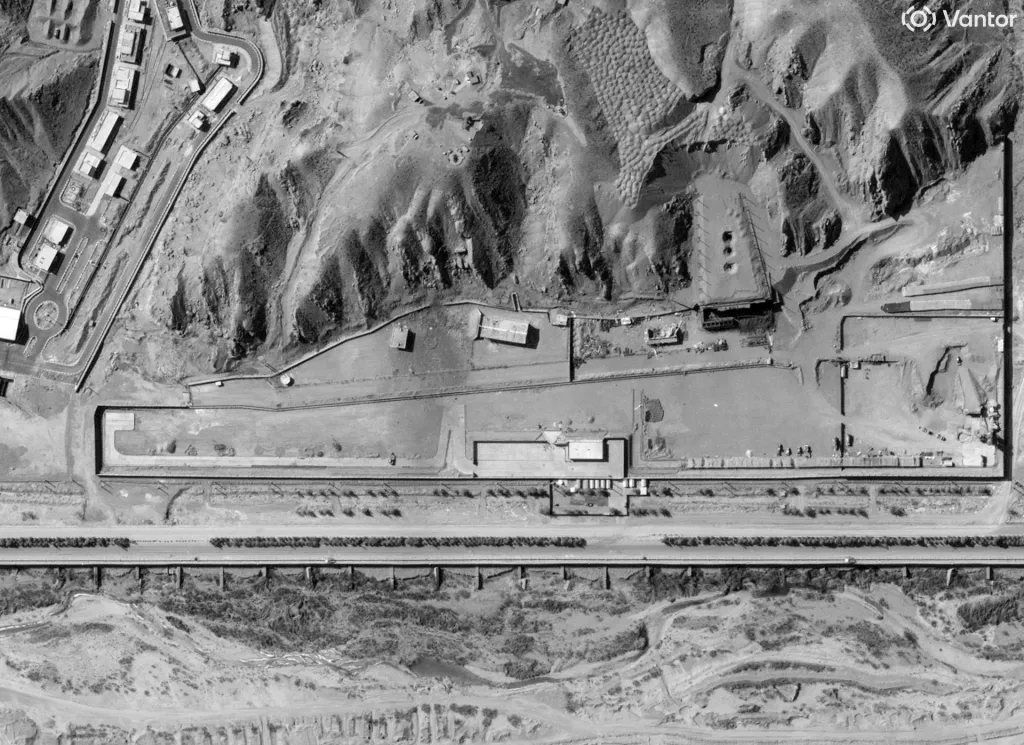
However, as The New York Times noted, Iran “appears to be continuing to work on a new enrichment site known as Pickaxe Mountain. It has refused to give international inspectors access to that site or any other suspected nuclear sites other than those already declared.”

The result “is a dangerous stalemate — with no negotiations, no certainty over Iran’s stockpile, no independent oversight,” the newspaper explained. “And many in the Gulf believe that makes another Israeli attack on Iran almost inevitable, given Israeli officials’ long-held view that Iran’s nuclear program is an existential threat.”

The pace of Iran’s missile development could be a large factor for the timing of any future conflict with Israel, Taleblu told us.

“There is a race to build back better. For Israel, it’s interceptors. For the Islamic Republic of Iran, it’s medium-range ballistic missiles,” Taleblu posited. “The fuzzy math between the two may determine the time when the next round between Israel and Iran takes place.”

Contact the author: [email protected]

Howard is a Senior Staff Writer for The War Zone, and a former Senior Managing Editor for Military Times. Prior to this, he covered military affairs for the Tampa Bay Times as a Senior Writer. Howard’s work has appeared in various publications including Yahoo News, RealClearDefense, and Air Force Times.


Source link

#MeToo’s Digital Blind Spot: The Women the Movement Left Behind

This article discusses the important issues underlying the #MeToo movement that has spread across the globe. On the one hand, the #MeToo movement has succeeded in gaining cross-border support for victims of sexual harassment, so that victims do not feel alone and have the courage to speak out. However, the #MeToo movement has not yet fully succeeded in reaching all groups. This article will explore why this massive online campaign has not truly reached those who need it most: victims without internet access, without digital devices, or who are technologically illiterate. As a result, they remain unable to voice their experiences of abuse and receive the support they need.

The #MeToo movement has indeed succeeded in changing the way we view, understand, and even produce new regulations in many countries.  This demonstrates the power of the internet.  However, the reality is that millions of victims living in villages, remote areas, or from poor families still feel alone. This is why this article will discuss the three main obstacles that have prevented #MeToo from being fully successful: limited digital access, inequality in technological capabilities and security, and weak direct activism in the field.

In my opinion, #MeToo is still far from successful. Success in changing laws has not been followed by success in helping those with proven limitations.  These three main reasons will be discussed in more detail in this article. #MeToo was initially successful because it spread quickly on the internet.  Platforms such as Twitter can connect people from all over the world. That’s amazing! However, this initial success mainly occurred in developed countries that have cheap and fast internet. This means that the movement reached more wealthy, educated people living in big cities. This shows that the movement was biased from the start because it only focused on issues faced by internet-savvy people. This was also evident when #MeToo, which had been around since 2006, only went viral and spread worldwide when Hollywood actresses started using #MeToo on social media in 2017.

Access barriers directly undermine the success of #MeToo. The movement fails to reach all those affected by abuse who live in villages, in conflict areas, and those who are technologically illiterate and lack financial resources. It is not only these disparities that set them apart, but also the lack of support and justice that is part of this difference.  Victims without a signal, without a cell phone, or without data do not have the tools to know their rights. This situation is a very common problem for many people.

This failure results in “solidarity poverty.” According to a study by Amalia, A. R., Raodah, P., & Wardani, N. K. (2024), “In low- and middle-income countries, 300 million fewer women than men use mobile internet.” This shows that the issue of access is not only a geographical problem but also an economic and gender issue.  Because they lack the ability to speak out, the #MeToo movement does not truly represent all victims, but only those who have the privilege of being connected.

In addition, there is also a gap in digital literacy and security that will become a second barrier preventing victims from successfully participating in the #MeToo movement. Victims who are technologically illiterate do not know how to use social media safely and anonymously. Furthermore, they lack knowledge about how to store digital evidence so that it is not lost. They do not understand privacy regulations, the dangers of doxing (spreading personal data), or cyber attacks. This ignorance causes them to fear speaking out even more than they fear the perpetrators.

In many countries, this issue is made more difficult by the threat of retaliation through legislation (e.g., defamation laws/cybercrime laws) that can be used against victims and lead to revictimization (ICJ, 2023). When victims speak without legal representation or digital literacy, they risk being perceived as lying. Victims in large cities have better digital safety nets than those in remote areas. This is why “Solidarity with Quotas” emerged. Only those who are digitally literate and financially secure can speak up, while others remain silent out of fear.

Due to these limitations, the #MeToo movement around the world has been dominated by issues occurring in large offices, elite campuses, or among public figures.  In line with the criticism expressed by PUSAD Paramadina, the #MeToo movement in Indonesia is considered to have not yet reached a wider audience, as the discussion is still limited to those who are literate in social media and come from the middle to upper classes (Kartika, 2019). This criticism is not only relevant in Indonesia, but also in many other countries.

However, the problems with the #MeToo movement are not limited to the internet.  The failure of activism to change offline behavior is also a weakness. Solidarity on the internet can indeed raise donations and spread information, but it often fails to translate this momentum into equitable direct assistance.  The digital resources and extraordinary public attention received by this movement have not been wisely allocated to the areas most in need. This shows that digital activism often focuses only on the most popular topics but has no real impact on the most vulnerable victims.

Despite the large number of new laws passed as a result of #MeToo, integrated service centers, shelters, and legal services are still concentrated in capital cities or large cities.  Victims who are not within reach of these services must face significant distances and costs to obtain justice. This situation shows that inequality in access to protection is still deeply rooted.  This is in line with research published by Jurnal Perempuan (2024), which states that Online Gender-Based Violence (KBGO) is not an anomaly, but a continuation of gender-based violence that has been entrenched for centuries in patriarchal systems. Therefore, gender inequality will only persist in the real world if the struggle is only carried out in the online realm and is not balanced with the provision of real services for victims.

Three major issues hindering the success of the #MeToo movement are limited access, limited digital capabilities, and a lack of direct participation in the field. This shows that a digital struggle without real interaction risks losing sight of its main goal: justice for all victims, not just those connected to the virtual world.

The world has been changed by the #MeToo movement. However, the world it has changed is one that is connected to the internet.  Millions of other women continue to struggle in silence, in places where there is no signal and no courage.  Meanwhile, some people still cannot access it. This movement has raised awareness around the world, but there are still people who are left behind, hindered by digital poverty and the gap between those who have access to technology and those who do not.  Digital justice should not be limited to viral hashtags or phone screens. In truth, solidarity is not just about thousands of posts or supportive comments. Rather, it comes from the courage to step into the real world, listen to those who are unheard, and ensure that protection is available for both those who can reach the network and those left behind. Because true justice does not require popularity to be seen, and true solidarity is measured by how far we collaborate with those who are most silent, not by how much we speak.

Source link

COP30 opens in Brazil with calls for unity to tackle climate crisis | Climate News

About 50,000 people are expected to attend the 12-day climate summit in the Brazilian city of Belem.

The 30th annual United Nations climate change conference (COP30) has started in the Brazilian city of Belem, with leaders calling for countries to take a united approach against global warming.

“In this arena of COP30, your job here is not to fight one another – your job here is to fight this climate crisis, together,” the UN’s climate chief, Simon Stiell, told delegates on Monday.

Recommended Stories

list of 3 itemsend of list

Some 50,000 people from more than 190 countries are expected to attend the 12-day event, which is being held at the edge of the Brazilian Amazon rainforest.

Addressing the conference, Stiell said that previous climate talks had helped, but that there was “much more work to do”.

The UN climate boss noted that countries would have to move “much, much faster” in driving down greenhouse gas emissions. “Lamenting is not a strategy. We need solutions,” he said.

His comments came as a new UN analysis of countries’ climate plans found that the pledged reductions fall far short of the drop needed by 2035 to limit temperatures to 1.5C (2.7F) above pre-industrial temperatures.

If this threshold is breached, the world will experience far more severe impacts than it has so far, experts say.

“Climate change is no longer a threat of the future. It is a tragedy of the present,” Brazilian President Luiz Inacio Lula da Silva stressed at the start of COP30.

Brazil’s leader condemned those seeking to undermine efforts to combat the climate crisis.

“They attack institutions, they attack science and universities,” he said. “It’s time to inflict a new defeat on the deniers.”

The United States is not sending any delegates to COP30 in keeping with President Donald Trump’s anti-climate change stance.

“It’s a good thing that they are not sending anyone. It wasn’t going to be constructive if they did,” the US’s former special envoy for climate, Todd Stern, said of the Trump administration’s decision.

COP30 President Andre Correa do Lago said the US’s absence “has opened some space for the world to see what developing countries are doing”.

Pablo Inuma Flores, an Indigenous leader from Peru, urged world leaders to do more than simply give pledges at this year’s conference.

“We want to make sure that they don’t keep promising, that they will start protecting, because we as Indigenous people are the ones who suffer from these impacts of climate change,” he said.

In a letter to COP30 that was published on Monday, dozens of scientists expressed their fears about the melting of glaciers, ice sheets and other frozen parts of the planet.

“The cryosphere is destabilising at an alarming pace,” they wrote. “Geopolitical tensions or short-term national interests must not overshadow COP30. Climate change is the defining security and stability challenge of our time.”

Source link