Stay informed and up-to-date with the latest news from around the world. Our comprehensive news coverage brings you the most relevant and impactful stories in politics, business, technology, entertainment, and more.
Air strikes come hours after pro-Iran armed group Kataib Hezbollah announces conditional suspension of US embassy attacks.
Published On 19 Mar 202619 Mar 2026
Air strikes have killed two fighters from the Popular Mobilisation Forces (PMF) in northern Iraq, the paramilitary group says from one of the fronts in the sprawling war engulfing the Middle East.
The two attacks targeted PMF positions early on Thursday in the Nineveh region, where Mosul city is located, and a military airport in Salah al-Din province, according to statements from the PMF, a predominantly Shia group that is part of Iraq’s security apparatus and includes several groups aligned with Iran.
Recommended Stories
list of 3 itemsend of list
The PMF blamed the attack on Israel and the United States. Iraq has been drawn into the US-Israeli war on Iran, now in its third week.
The PMF was formed in 2014 as a volunteer force supporting Iraqi security forces in the fight against ISIL (ISIS).
Strikes have targeted Iran-backed groups, which in turn have claimed near-daily attacks on US interests in Iraq and across the region.
Elsewhere, a fire broke out at a naval base in southern Iraq when it was hit by a drone overnight. An Iraqi security source told Al Jazeera that a drone crashed into a water treatment station at the Umm Qasr naval base near the border with Kuwait.
Footage from the scene circulating on social media and verified by Al Jazeera showed flames and smoke rising from the site.
US embassy attacks to be suspended
Hours before the attacks on PMF fighters, the pro-Iranian armed group Kataib Hezbollah said its secretary-general had “issued orders to suspend operations targeting the US embassy in Baghdad for a period of five days”.
Designated by Washington as a “terrorist organisation”, Iraq’s Kataib Hezbollah listed several conditions of the suspension, including Israel ceasing its bombardment of the southern suburbs of Beirut.
Kataib Hezbollah also demanded “a commitment to refrain from bombing residential areas in Baghdad and other provinces”.
Whenever “the enemy violates” the truce, “the response will be immediate”, the group said, warning of more strikes after the five-day period.
The US embassy has been targeted by drone and rocket attacks several times in recent days. Air defences have intercepted most of the projectiles.
The embassy is in the Green Zone, a heavily fortified district in central Baghdad that houses Iraqi government institutions and embassies.
A US diplomatic and logistics centre at Baghdad International Airport that houses military personnel has also been regularly targeted.
Venezuelans took to the streets to celebrate the WBC title. (AFP)
Caracas, March 18, 2026 (venezuelanalysis.com) – Venezuela won the World Baseball Classic after defeating the United States 3–2 on Tuesday at LoanDepot Park in Miami.
The Caribbean nation’s first major international baseball title was secured thanks to a decisive double by Eugenio Suárez that broke a tie in the top of the ninth inning.
“I have no words. Seeing Javier (Sanoja) score on my double in the ninth was the greatest moment of my life. We knew we could do it. Nobody believed in Venezuela, but now we are the champions. This is a celebration for the whole country,” Suárez told Fox Sports after the game.
The United States had tied the score at 2-2 in the eighth inning when Bryce Harper launched a two-run home run against Venezuelan reliever Andrés Machado.
Earlier in the game, a sacrifice fly from Maikel García in the third inning and a home run by Wilyer Abreu in the fifth—off rookie pitcher Nolan McLean—had given Venezuela a 2–0 lead before a crowd of 36,490 people that was heavily in favor of the South American team.
Sports journalist Jason Mackey said he had never witnessed such passionate fan support at a sporting event—not even at the Super Bowl. Venezuela’s victory also sparked spontaneous celebrations in several cities across the country, including the capital, with fireworks displays and caravans blaring horns along the main avenues.
Venezuela finished the tournament with six wins and one loss, the latter coming against the Dominican Republic during the group stage. Before reaching the championship, the Venezuelan squad defeated three-time tournament champion Japan 8–5 in the quarterfinals and Italy 4–2 in the semifinals.
The tournament’s Most Valuable Player, Maikel García, emphasized that the team’s motivation centered on representing the country. “We didn’t play the final to represent Dominicans or Latinos. We did it for Venezuela. Maybe some people didn’t like that, but the jersey said Venezuela, not Latin America,” he said.
Meanwhile, the US team fielded the most star-studded roster in its history but fell short in its second consecutive final to extend its winless draught to nine years. The Americans had previously lost the 2023 final 3–2 to Japan.
Following the victory, Venezuela’s Acting President Delcy Rodríguez declared Wednesday a National Day of Jubilation, encouraging people to celebrate in public squares, parks, and sports fields. She also invited the public to attend a large concert titled “Venezuela Triunfa Unida” (“Venezuela Triumphs United”).
For his part, US President Donald Trump used the moment to again suggest that Venezuela could become a US state. “Statehood,” he wrote on his Truth Social account.
In the run-up to the final, Trump had posted a similar message: “Good things have been happening to Venezuela lately. I wonder what this magic is… the 51st state?”
Tuesday’s final happened in the wake of the US’ January 3 military strikes against Caracas and nearby areas that also saw special forces kidnap Venezuelan President Nicolás Maduro. In the two months since, the two countries have fast-tracked a rapprochement and reestablished diplomatic ties. Despite the strong political overtones surrounding the matchup, players and coaches largely avoided commenting on the state of relations between the two nations.
Weekly insights and analysis on the latest developments in military technology, strategy, and foreign policy.
The U.S. Air Force is now reportedly dropping its newest bunker-buster bomb, the 5,000-pound class GBU-72/B, on targets in Iran. The bombs are said to have been used in strikes on hardened Iranian anti-ship cruise missile sites along the highly strategic Strait of Hormuz overnight.
There are also reports that this is the first time GBU-72/Bs have been used in combat, but it is not clear if this is the case.
“Hours ago, U.S. forces successfully employed multiple 5,000-pound deep penetrator munitions on hardened Iranian missile sites along Iran’s coastline near the Strait of Hormuz,” U.S. Central Command (CENTCOM) wrote in a post on X, which did not name the munitions in question, last night. “The Iranian anti-ship cruise missiles in these sites posed a risk to international shipping in the strait.”
Hours ago, U.S. forces successfully employed multiple 5,000-pound deep penetrator munitions on hardened Iranian missile sites along Iran’s coastline near the Strait of Hormuz. The Iranian anti-ship cruise missiles in these sites posed a risk to international shipping in the… pic.twitter.com/hgCSFH0cqO
“US official confirms this was the GBU-72 Advanced 5K Penetrator,” CNN‘s Haley Britzky subsequently wrote on X. Fox News has also now reported the use of GBU-72/Bs in last night’s strikes.
Israel kills Iran’s intelligence chief, U.S. jets drop new 5,000 lb. bunker buster bombs on anti-ship missile storage sites, Iran fires 13 more ballistic missiles and 27 drones here at UAE: pic.twitter.com/eAYu5JMN7A
Whether or not the GBU-72/B has been employed in combat previously is unclear. In 2024, CBS News reported that the Air Force had employed the bombs in strikes on an underground facility belonging to Iranian-backed Houthi militants in Yemen, citing unnamed officials. Fox News also reported again just today that the A5K’s first use had come during previous strikes on the Houthis.
There have also been reports in the past that Israel has at least sought to acquire GBU-72/B, but whether any have been delivered to that country is unknown. It is also still not known what munitions were used in strikes that left three very large and precise holes on the top of a site long linked to Iran’s nuclear program last week. The Israel Defense Forces (IDF) has said they struck that facility, but that does not automatically mean that U.S. forces did not do so, as well.
When reached by TWZ, CENTCOM declined to comment on the specific munitions used in last night’s strikes along the Strait of Hormuz.
The GBU-72/B was developed to replace the older GBU-28/B, which first entered service in 1991. The GBU-28/B is another 5,000-pound class bunker buster, and it is unclear to what degree it remains in U.S. inventory.
An F-15E Strike Eagle drops a GBU-28/B bunker-buster bomb. USAF
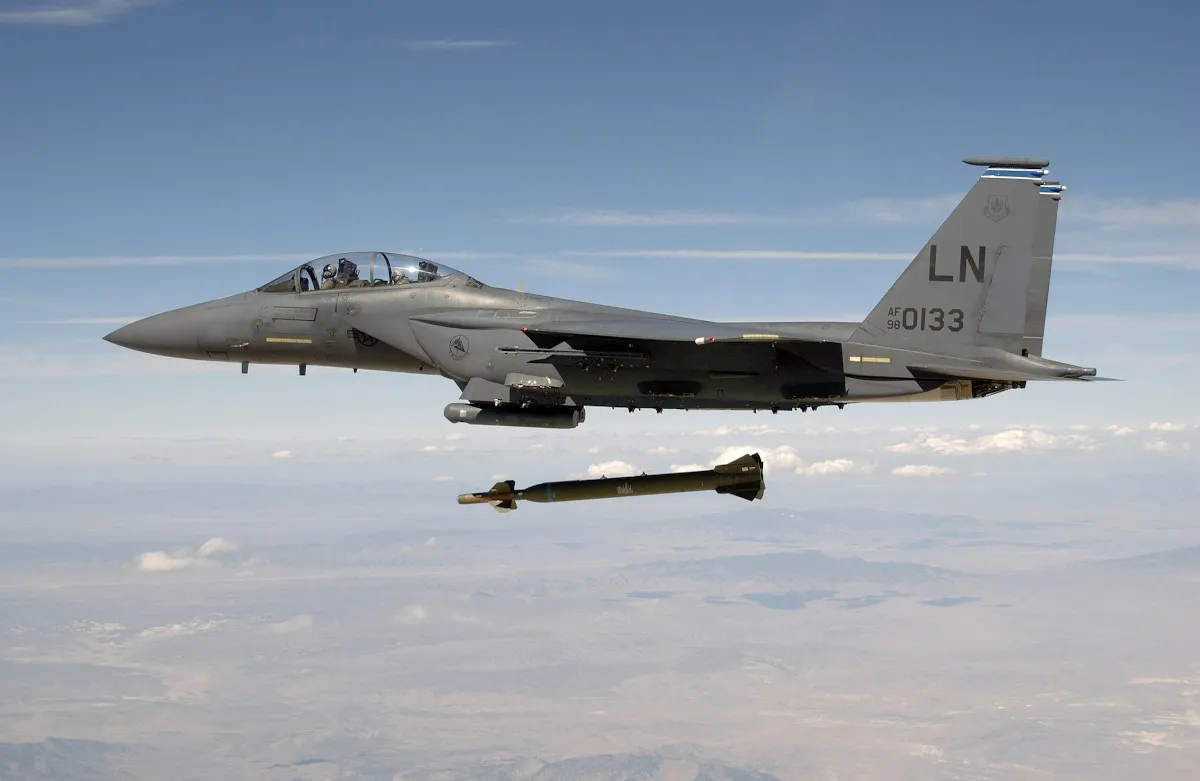
What aircraft are currently cleared to employ the GBU-72/B operationally is also not clear. In 2021, the Air Force announced the successful release of an A5K from an F-15E Strike Eagle in testing. In 2024, pictures emerged of a B-1 bomber carrying one of the bombs on an external pylon under the forward fuselage in another apparent test. The Air Force has also raised the possibility of integrating the GBU-72/B onto the B-2 bomber in the past. F-15Es, B-1s, and B-2s are among the aircraft the U.S. military has been using to carry out strikes on targets in Iran.
An F-15E drops a GBU-72/B in a test. USAF
In terms of the bomb itself, the A5K combines a BLU-138/B penetrating warhead with a tail kit containing a GPS-assisted inertial navigation system (INS) guidance system. The tail kit is a variant of the one used on 2,000-pound class Joint Direct Attack Munition (JDAM) precision guided bombs. Markings seen on live BLU-138/Bs in imagery the Air Force has previously released show that each warhead weighs around 4,422 pounds, with approximately 1,066.8 pounds of that being a combination of PBXN-109 and AFX-757 explosives. As an aside, those are the same two types of explosives used in the much larger 30,000-pound class BLU-127/B warhead for the GBU-57/B Massive Ordnance Penetrator (MOP) bunker buster bomb.
“With enhanced survivability, increased lethality, smart fuzing and utilization of fielded JDAM Navigation tailkits, the GBU-72 significantly improved performance reducing the number of weapons required to achieve a kill at lower AUR [all-up-round] cost,” according to Air Force budget documents. “A5K will replace the GBU-28.”
While the precise capabilities of the Air Force’s various bunker-busting munitions are a closely guarded secret, the original GBU-28/B bomb reportedly had the ability to penetrate through more than 150 feet of earth and at least 15 feet of reinforced concrete. In some cases, multiple bunker busters can also be dropped on the same aim point in succession to help burrow deeper down to the desired depth.
An old but still interesting graphic compares the capabilities of the BLU-109/B bunker-buster warheads found on certain variants of the GBU-31/B, as well as the GBU-28/B and the much larger GBU-57/B Massive Ordnance Penetrator. DOD via GlobalSecurity.org
No shortages of GBU-31 2,000lb JDAM bunker busters at RAF Fairford. Some more pictures from yesterday. Many appeared to be loaded on or around B-52s from what I saw – with the B1-bs positioned further away from my viewing point. No idea what the Bones were loaded up with. All… pic.twitter.com/AAxlXwUZWc
A stock picture of GBU-31/Bs with bunker-buster warheads. USAF
With all this in mind, the GBU-72/B does offer the U.S. military a way to get after deeply buried or otherwise hardened targets in Iran (and anywhere else) that are beyond the reach of the BLU-109/B without having to use GBU-57/Bs. The MOP inventory is understood to be relatively small and largely reserved for use against very high-priority targets. Using GBU-72/Bs could also help ensure the destruction of a target, and do so with a smaller number of total munitions, compared to a strike employing 2,000-pound-class bunker busters.
A picture of the arena test of the warhead for the 5,000-pound-class GBU-72 bunker-buster bomb. USAF
Regardless of the munitions used, U.S. strikes targeting Iranian anti-ship cruise missile sites on the edge of the Strait of Hormuz speak to efforts now to reopen that critical waterway to regular maritime traffic. So far, we have not seen any clear evidence of Iran using its arsenal of thousands of anti-ship cruise missiles, which could turn the Strait into a super weapons engagement zone. Many of these missiles can also be launched from the backs of trucks that are hard to distinguish from civilian types.
#Iran is permitting exit of the Gulf to select ships. But what is the rationale?
At least 5 vessels have transited outbound via the #StraitofHormuz in the past 48hrs but are taking an unusual route inside Iranian Territorial Waters.
89 ships got through Hormuz March 1st-15th. “More than one-fifth of the 89 vessels were believed to be Iran-affiliated, while Chinese and Greece affiliated ships are among the rest, it said.” https://t.co/c7DzauV8ya
“I wonder what would happen if we ‘finished off’ what’s left of the Iranian Terror State, and let the Countries that use it, we don’t, be responsible for the so called ‘Straight?’ [sic],” Trump wrote today in a post on his Truth Social site. “That would get some of our non-responsive ‘Allies’ in gear, and fast!!!”
Trump: “I wonder what would happen if we ‘finished off’ what’s left of the Iranian Terror State, and let the Countries that use it, we don’t, be responsible for the so called ‘Straight?’ That would get some of our non-responsive ‘Allies’ in gear, and fast!!! President DJT” pic.twitter.com/pwbF1lYELS
A further uptick in strikes on Iranian targets along the Strait of Hormuz, including deeply buried and hardened sites that could necessitate the use of GBU-72/Bs, may now be on the horizon.
Weekly insights and analysis on the latest developments in military technology, strategy, and foreign policy.
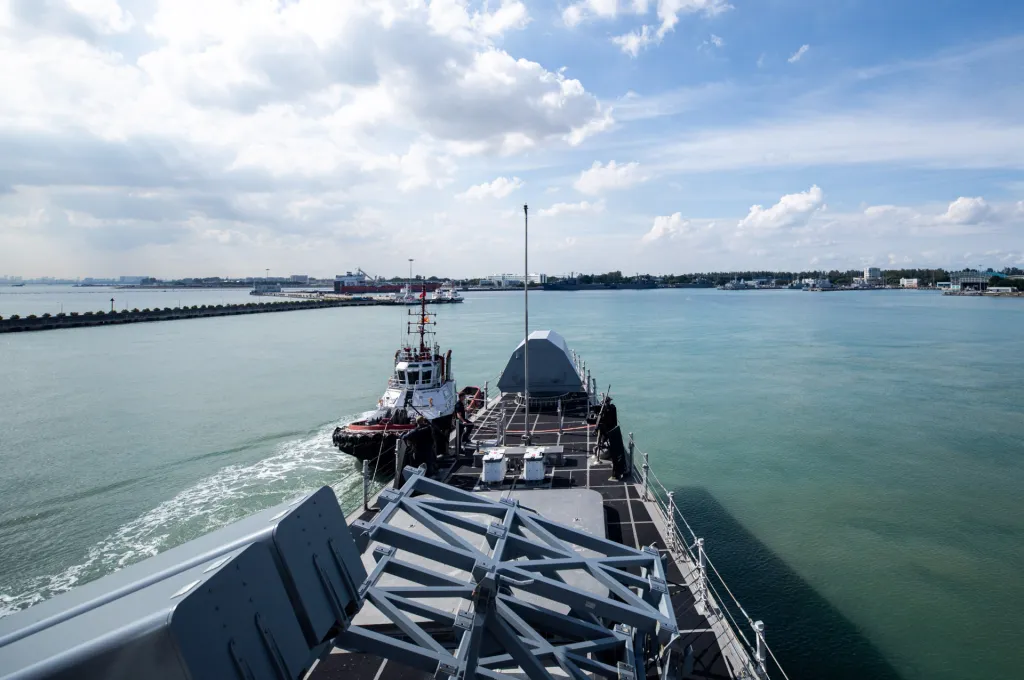
In a follow-up to our recent story about a pair of U.S. Navy Independence class Littoral Combat Ships (LCS) configured for minesweeping appearing in the Pacific, those vessels have now moved further east from Malaysia to Singapore. USS Tulsa and USS Santa Barbara remain thousands of miles away from their primary assigned operating area in the Middle East, where the conflict with Iran grinds on. The highly strategic Strait of Hormuz notably remains closed to normal maritime commerce due to Iranian attacks. Though the regime in Tehran does not yet appear to have employed naval mines to a large degree in the Strait, this remains a major threat that will factor into any plans to reopen the critical waterway.
As to why the Navy sent two of its three mine hunters in the Middle East not just out of the line of fire, but literally across the globe at a time when the U.S. and its allies could be facing the mining of one of the world’s most critical waterways remains a mystery.
U.S. Naval Forces Central Command (NAVCENT) has confirmed to TWZ that USS Tulsa and USS Santa Barbara are in Singapore. Last year, the Navy sent Tulsa and Santa Barbara, as well as a third Independence class LCS, the USS Canberra, to Manama in Bahrain in the Persian Gulf. Canberra‘s current location remains unclear. All three ships were explicitly sent to the Middle East to fill capability and capacity gaps left by the decommissioning of four Avenger class mine-hunters that had been deployed in the region for decades beforehand.
Local spotters had already caught the two LCSs arriving in Singapore earlier today. Authorities in Malaysia had previously confirmed that the LCSs had left the Port of Penang in that country on March 16. Singapore is a city-state that lies roughly 370 miles southeast of Penang.
USS Santa Barbara (LCS 32) and USS Tulsa (LCS 16) Independence-variant littoral combat ships coming into Singapore – March 18, 2026 SRC: INST- yplanesonly pic.twitter.com/SahGsKy6yW
USS Tulsa (LCS 16) Independence-variant littoral combat ship coming into Singapore – joining USS Santa Barbara there – March 18, 2026 SRC: FB- Military Aviation Photography Singapore pic.twitter.com/dElkABOeyD
“Tulsa and Santa Barbara are conducting scheduled maintenance and logistics stop in Singapore. The U.S. and Singapore navies have an excellent and longstanding defense relationship,” a NAVCENT spokesperson told TWZ. “A testament to this relationship is the agreement to allow littoral combat ships to operate primarily from Singapore as a logistics and maintenance hub, as well as supporting regular port visits and logistics stops for other U.S. ships.”
NAVCENT had given TWZ an almost identical statement when asked previously about the arrival of the LCSs in Malaysia:
“Tulsa and Santa Barbara are conducting brief logistical stops in Malaysia. U.S. forces routinely make port calls in Malaysia as part of our operations, reflecting the close and enduring military cooperation between the United States and Malaysia.”
“These stops allow for logistical arrangements such as replenishments,” Malaysian Defence Minister Datuk Seri Mohamed Khaled Nordin separately told the New Strait Times newspaper yesterday. “Any foreign naval vessel must submit a request through its country to the Royal Malaysian Navy, which forwards it to the Foreign Ministry for approval.”
15 Mar – Two US Navy Littoral Combat Ships (LCS) that were assigned to mine-countermeasure (MSM) missions in the Persian Gulf are currently docked at Butterworth in Malaysia.
When Tulsa and Santa Barbara left the Middle East, to begin with, is unclear. There is no evidence of any U.S. warships having been in port in Bahrain since at least February 23, five days before joint U.S. and Israeli strikes on Iran began. Manama was almost immediately subjected to retaliatory attacks, making clear that sending American vessels elsewhere was, broadly speaking, a prudent security measure.
How long Tulsa and Santa Barbara will remain in Singapore, and where they might head to next, remains to be seen. As NAVCENT’s statement noted, Singapore’s Changi Naval Base has been a hub for forward-deployed LCSs in the Indo-Pacific region. U.S. naval vessels, in general, regularly make port calls there, including for maintenance.
A view from the USS Tulsa as it arrived for a visit to Changi Naval Base back in 2021. USN
As an aside, online ship tracking data indicates that the America class amphibious assault ship USS Tripoli and the San Antonio class amphibious warfare ship USS New Orleans are also now sailing through the same general area. The Tripoli Amphibious Ready Group (ARG) is reportedly on its way to the Middle East, loaded with Marines, as you can read more about here.
⛴️🇺🇸|🇮🇩🇲🇾🇸🇬 USS Tripoli (LHA-7) and USS New Orleans (LPD-18) have been detected approaching the Singapore Strait.
Additionally, two Littoral Combat Ships USS Tulsa (LCS-16) and USS Santa Barbara (LCS-32), have been detected in the Strait of Malacca after departing Bahrain. pic.twitter.com/RSQlViD4qC
Regardless of where they might head next, Tulsa and Santa Barbara have now moved even further away from their assigned station in the Middle East. This, in turn, means that two of three mine countermeasures ships that are supposed to be forward-deployed in that region, at least, are currently in an entirely different part of the world. Whether any other LCS or other ships configured for the mine countermeasures mission have been deployed closer to the Middle East, or are now on their way, is unknown. There are only four other Avenger class ships still in Navy service, all of which are in Japan and have been slated for decommissioning in the coming years.
A stock picture of an Avenger class mine hunter seen here during an exercise. USN
Generally speaking, the Independence class LCS is a far more advanced ship, overall, than the Avenger class mine hunter. When suitably equipped, the LCSs also offer new standoff mine countermeasures capabilities, including uncrewed mine-sweeping drone boats and helicopter-borne systems. It should be noted that the Navy had originally planned for both Independence and Freedom class LCSs to be readily configured and reconfigured for different operational needs using an array of different mission packages, or ‘modules.’ The service now deploys LCSs in static configurations.
The USS Canberra, one of the three LCSs forward-deployed to the Middle East last year to take over mine-sweeping duties. Seen in the background is a heavy lift ship bringing the four decommissioned Avenger class mine hunters from Bahrain back to the United States. USN
Still, questions continue to be raised whether LCSs fitted out for the mine countermeasures role are adequate replacements for ships purpose-built for this mission set, as you can read about in much more detail in our past reporting. Mine-clearing operations are complex and slow-going affairs that carry significant risks even in optimal conditions in benign environments.
As noted, Iranian naval mines have yet to make a major appearance in the current conflict. U.S. officials have largely downplayed the mine threat, especially when compared to the active ongoing attacks Iran has been launching on commercial ships in and around the Strait of Hormuz using drones, missiles, and uncrewed boats.
That being said, “we defend all these countries and then, ‘do you have any minesweepers?’ And they say, ‘Well, would it be possible for us not to get involved?’” U.S. President Donald Trump said earlier this week in response to a question from a reporter about the current conflict with Iran. This suggested that American officials had at least asked allies and partners about the possibility of them providing additional naval mine countermeasures capabilities to the region. If so, this is somewhat puzzling, coming as the Navy had sent the two LCSs to another hemisphere.
Trump:
We have 45,000 troops in Japan, 45,000 in South Korea, and 50,000 in Germany.
We defend all these countries, and then: “Do you have any minesweepers?”
Trump had previously appealed publicly for assistance, in general, in reopening the Strait of Hormuz, but had been soundly rejected by a number of countries. The President then said yesterday that any help was no longer required.
“I wonder what would happen if we ‘finished off’ what’s left of the Iranian Terror State, and let the Countries that use it, we don’t, be responsible for the so called ‘Straight?’ [sic],” Trump then wrote just earlier today in a post on his Truth Social site. “That would get some of our non-responsive ‘Allies’ in gear, and fast!!!”
Trump: “I wonder what would happen if we ‘finished off’ what’s left of the Iranian Terror State, and let the Countries that use it, we don’t, be responsible for the so called ‘Straight?’ That would get some of our non-responsive ‘Allies’ in gear, and fast!!! President DJT” pic.twitter.com/pwbF1lYELS
In an interview last Thursday with CNBC, U.S. Energy Secretary Chris Wright had said the prospect of U.S. Navy warships escorting commercial vessels through the Strait of Hormuz was still weeks away, at best. TWZ previously explored how risky such an operation would be, given Iran’s ability to turn the waterway into a super weapons engagement zone where mines would be just one of many concerns.
The fact that USS Tulsa and USS Santa Barbara have moved even further from the Middle East only underscores questions about what the U.S. government’s line of thinking might be now about how to get maritime commerce flowing again in and out of the Persian Gulf.
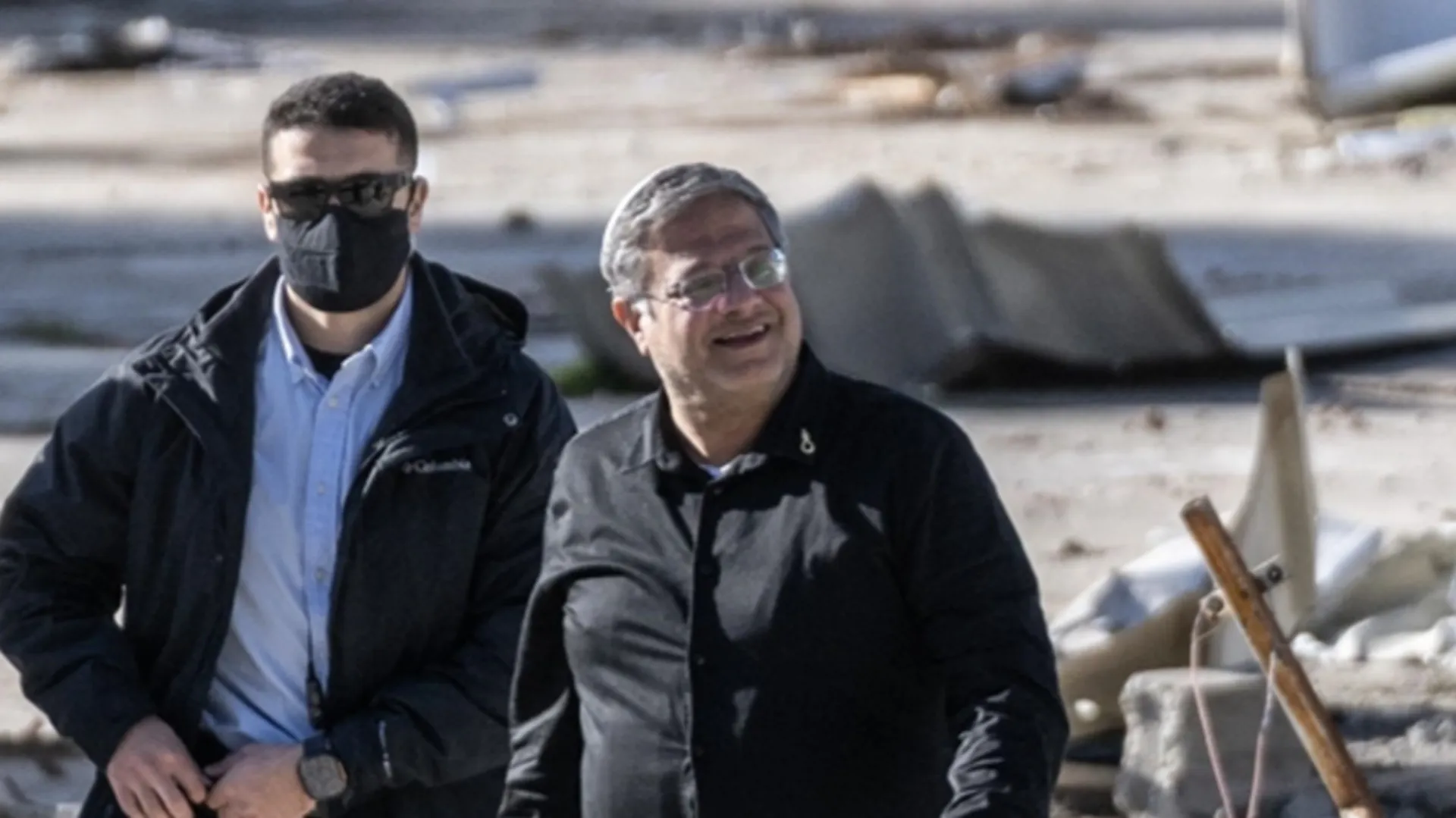
Israel’s National Security Minister has filmed himself in front of gallows at a Jerusalem museum, threatening the death penalty for “terrorists”. Itamar Ben-Gvir is leading a campaign to expand the grounds for execution, which human rights groups have slammed as discriminatory.
Three women in an occupied West Bank hair salon became the first Palestinian deaths of the US-Israeli war on Iran when they were hit by falling material.
The study said that as the cocker spaniel, for instance, was designed to flush out game from dense areas of woodland and grassland, the dogs were bred to have high energy, mental resilience and intelligence, which could be “more of a problem in pet homes”.
Weekly insights and analysis on the latest developments in military technology, strategy, and foreign policy.
Spotters in Greece have caught an especially good look at what very much appears to be a stealthy, long-range, high-altitude (HALE) intelligence, surveillance, and reconnaissance drone commonly referred to as the RQ-180, or an evolution of that design.
Pictures of the dark-colored, flying-wing type aircraft landing at Larissa National Airport, also known as Larissa Air Base, situated in the Greek city of the same name, were published earlier today by local news outlet onlarissa.gr.
This aircraft seen over Larissa, Greece is not a B-2 like the local Greek news reported or an RQ-170, but is in fact best imagery ever published of the RQ-180, an undisclosed low observable drone used by the USAF. Location suggests use in the Iran conflict https://t.co/Pa9whNlQSVpic.twitter.com/UsDxy9Tc4n
“Those who were in the area near the 110th Fighter Wing [technically the 110th Combat Wing] in Larissa at the end of last week were left speechless when they saw an impressive plane in the sky, completely different in shape and appearance from everything we see daily in politics and the military air force,” according to a machine translation of onlarissa.gr’s piece, which misidentifies the aircraft as a B-2 bomber. “According to more recent information from military sources, this [aircraft] … reportedly parked at the Larissa military airport due to a breakdown and will remain there until it is repaired.”
TWZ cannot immediately confirm any of these latter details, but we have reached out to U.S. Air Forces in Europe (USAFE) and the Pentagon for more information.
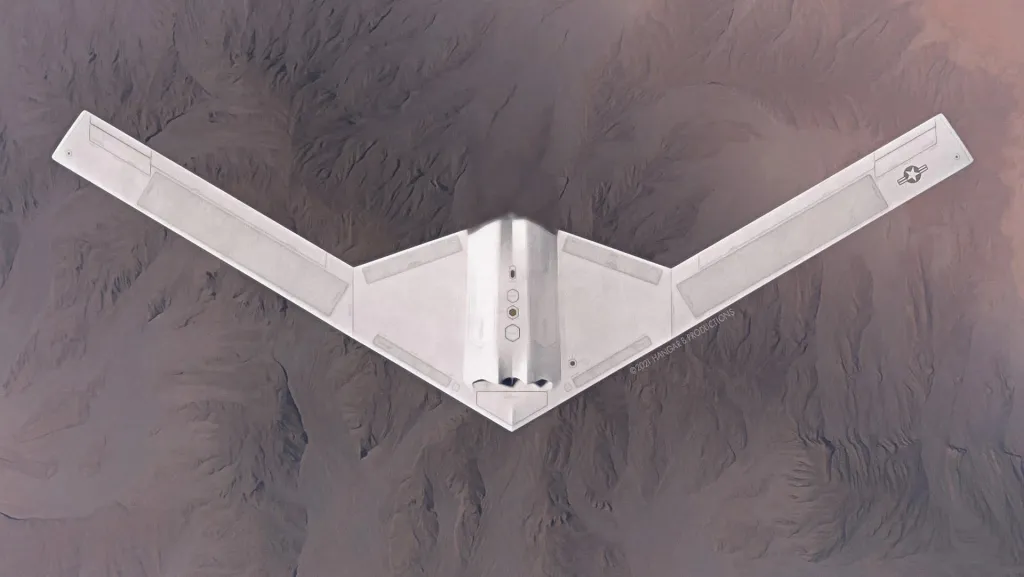
What is clear is that this is not a B-2, which has a very distinctive saw-tooth trailing edge that is not visible here, among other features. In fact, the overall planform is highly reminiscent of the new B-21 Raider stealth bomber from Northrop Grumman, as well as past sightings of aircraft believed to be RQ-180s or progenitors of that design. The RQ-180 is widely understood to be a Northrop Grumman product, as well, and very likely played a significant role in risk reduction efforts as part of the development of the B-21, as we have posited for years.
A notional rendering of what the Northrop Grumman drone, commonly referred to as the RQ-180, may look like based on previous sightings. Hangar B Productions
There are also some very rough similarities to sightings of what is believed to be an Israeli drone called the RA-01, but with some distinct differences. The RA-01 shares a similar planform, but is a more svelte design that would be significantly smaller than what we are seeing here. Furthermore, it makes very little sense that an Israeli drone would be flying that far west for any reason. The American aircraft in question is likely quite large, sitting below the size of a B-21, but maybe by 25 percent, as a guess. It would be designed for extremely long-endurance, high altitude strategic reconnaissance missions.
B-21 Takeoff and Landing
The pictures from Larissa also offer a good look at the aircraft’s landing gear, which is very widely positioned. A gear configuration of that kind allows for the maximization of volume in between and underscores the sheer wingspan of the aircraft.
Whether the aircraft in question has been operating from Larissa, or simply diverted there due to an issue, is unknown. It is possible that it has been forward-deployed to the base, but still had to return to base unexpectedly, leading to it being spotted during the day rather than coming in discreetly at night.
By what we can surmise about the RQ-180 program, aircraft that are part of its lineage have likely been flying for roughly over a decade and a half. Yet in recent years, just as this platform was thought to be coming online in a grander operational sense, we have not seen the infrastructure that would be indicative of that. It’s even possible its scale has been reduced as the Pentagon looks to push its surveillance capabilities to space, and especially some of the kinds an ‘RQ-180’ could do.
Still, given that this aircraft is now likely a component of the Long Range Strike (LRS) family of systems, and will work in concert with and even possibly have some commonality with the B-21, it could share that same infrastructure and come online fully alongside the Raider in the next couple of years. That is if the program is still intended to be scaled-up as opposed to diverting funds to on-orbit surveillance capabilities.
B-21 Raider. (USAF)
Regardless, the aircraft has been spotted flying over secretive locales in America’s Southwest for many years now, with sightings over Area 51, and reports of it flying out of Palmdale and Edwards Air Force Base. A conflict with Iran would be a relevant fit for what it was designed to do, so it should be of no surprise that it is flying missions over the country, even if it still remains in something of a late developmental state.
We will have more analysis on all this in the near future.
Already, if nothing else, there are very strong signs that we’ve now gotten our best look ever at the drone referred to as the RQ-180 or a directly related design.
Content note: This story contains details of sexual violence.
Civil rights icon Dolores Huerta is one of several women in the United States speaking out against the sexual violence they say they endured at the hands of labour leader Cesar Chavez.
Recommended Stories
list of 3 itemsend of list
In a statement on Wednesday, Huerta said she was motivated to speak out after being contacted for an investigation by The New York Times, which revealed that children as young as age 12 were abused by Chavez.
“I am nearly 96 years old, and for the last 60 years have kept a secret because I believed that exposing the truth would hurt the farmworker movement I have spent my entire life fighting for,” Huerta wrote.
“Following the New York Times’ multi-year investigation into sexual misconduct by Cesar Chavez, I can no longer stay silent and must share my own experiences.”
Chavez, who died in 1993, co-founded the National Farm Workers Association alongside Huerta and other advocates. They rose to fame during the US civil rights movement of the 1960s, practising nonviolent protest techniques similar to those of Mahatma Gandhi and Martin Luther King Jr.
Together, Chavez, Huerta and other advocates drew attention to the abuses facing vulnerable immigrant farmworkers, particularly in the Hispanic and Filipino American communities.
Some of the slogans from the movement continue to have resonance in the US political sphere.
The Spanish phrase “si, se puede” — or, in English, “yes, we can” — was adopted as the campaign slogan for President Barack Obama, while the Tagalog phrase “isang bagsak” continues to be a rallying cry for collective organising.
The fight for equality and fair labour practices that Huerta and Chavez led would be remembered as one of the defining moments of the 1960s.
But it was out of fear of denting the burgeoning civil rights movement that Huerta and other women say they stayed silent about Chavez’s abuse.
“I carried this secret for as long as I did because building the movement and securing farmworker rights was my life’s work,” Huerta said in her statement.
“I wasn’t going to let Cesar or anyone else get in the way. I channeled everything I had into advocating on behalf of millions of farmworkers and others who were suffering and deserved equal rights.”
Huerta explained that the first time she had sex with Chavez, she was “manipulated and pressured” into submitting to his advances while on a trip to San Juan Capistrano.
“I didn’t feel I could say no because he was someone that I admired, my boss and the leader of the movement I had already devoted years of my life to,” she said.
The second time, she said she was “forced, against my will”. The New York Times investigation includes a summary of what Huerta says happened: She was in a car that Chavez was driving when he parked in an isolated grape field and raped her.
Both instances resulted in pregnancies, which Huerta says she kept secret. The children were ultimately given to other families to raise.
“I had experienced abuse and sexual violence before, and I convinced myself these were incidents that I had to endure alone and in secret,” she said.
Her story was echoed by the accounts of other women featured in The New York Times investigation.
One of the interviewees, Ana Murguia, said she was 13 when a 45-year-old Chavez kissed her, took off her clothes and tried to have sex with her in his locked office.
He had known her since she was eight years old, and the abuse at his hands prompted her to attempt suicide.
Debra Rojas, meanwhile, was 12 years old when Chavez began groping her. She described being 15 when she was raped by him at a motel near Stockton, California.
A third woman, Esmeralda Lopez, said she was 19 when Chavez tried to pressure her to have sex with him while they were alone on a tour, offering to use his influence to get something named in her honour.
Lopez said she refused his advances, and her mother, a fellow activist, corroborated her account, based on conversations they had at the time.
The women explained that they grappled with whether to come forward and whether they would be believed, given Chavez’s rise to fame as a civil rights hero.
In response to the widening scandal on Wednesday, United Farm Workers — the group that emerged from the National Farm Workers Association — announced it would not participate in any events on Cesar Chavez Day, a federal commemoration that falls on the late leader’s birthday.
The group denied receiving any direct reports of abuse, but it pledged to create a pathway for reports to be submitted.
“Over the coming weeks, in partnership with experts in these kinds of processes, we are working to establish an external, confidential, independent channel for those who may have experienced harm caused by Cesar Chavez,” United Farm Workers wrote in a statement.
“These allegations have been profoundly shocking. We need some time to get this right, including to ensure robust, trauma-informed services are available to those who may need it.”
Lawmakers across the political spectrum, from Texas Governor Greg Abbott to New Mexico Representative Ben Ray Lujan, also called for Chavez’s name to be stripped from public buildings, roads and other places of honour.
Lujan called the revelations in Wednesday’s New York Times report “horrific” and a “betrayal of the values that Latino leaders have championed for generations”.
“His name should be removed from landmarks, institutions, and honors,” Lujan said of Chavez. “We cannot celebrate someone who carried out such disturbing harm.”
Huerta, meanwhile, said that, in the wake of the investigation, community advocacy was more important than ever.
“I have kept this secret long enough,” she wrote. “My silence ends here.”
Weekly insights and analysis on the latest developments in military technology, strategy, and foreign policy.
The energy war in the Middle East heated up on Wednesday with an Israeli attack on the South Pars gas field Iran shares with Qatar. The strike, which exacerbates the diminishing of oil exports already experienced during the war, was reportedly carried out in coordination with the United States.
“The Israeli Air Force struck a natural gas processing facility in southwestern Iran,” Axios reported, citing two senior Israeli officials. The attack “was coordinated with and approved by the Trump administration,” the outlet noted, adding that a U.S. defense official confirmed that.
Iran’s semi-official Tasnim News Agency reported that several facilities in the South Pars gas field near Bushehr were targeted. According to the report, emergency teams were on the scene and trying to extinguish the fire. The extent of the damage is not yet known.
Things are taking a darker turn.
Israeli airstrikes have hit Iran’s massive South Pars gas field, along with key infrastructure, including the Asaluyeh petrochemical complex.
In response, Tehran has issued an urgent warning, calling for the evacuation of petrochemical sites… pic.twitter.com/KGEjEIgKtl
There are suggestions that the attack on South Pars could interfere with Iran’s refinery capabilities for a long time to come.
I think these are Sulfur Recovery Units (CRUs) in the 6th refinery of the Iranian South Pars onshore fields. The targets are selected to be limited but effective enough to stop to the entire process of the refinery for a long time. https://t.co/XvYj5vC3L9
Qatari officials decried the attack, calling it “a dangerous & irresponsible step amid the current military escalation in the region.”
The Israeli targeting of facilities linked to Iran’s South Pars field, an extension of Qatar’s North Field, is a dangerous & irresponsible step amid the current military escalation in the region.
Targeting energy infrastructure constitutes a threat to global energy security, as…
— د. ماجد محمد الأنصاري Dr. Majed Al Ansari (@majedalansari) March 18, 2026
In the wake of the attack on South Pars, “Iran issued an evacuation warning for several oil facilities across Saudi Arabia, the UAE, and Qatar, saying they would be targeted by strikes ‘in the coming hours,’” Reuters reported, citing Iranian media.
“The warning was directed at Saudi Arabia’s Samref Refinery and Jubail Petrochemical Complex, the United Arab Emirates’ Al Hosn Gas Field, and Qatar’s Mesaieed Petrochemical Complex, Mesaieed Holding Company and Ras Laffan Refinery,” the outlet added.
“These centers have become direct and legitimate targets and will be targeted in the coming hours. Therefore, all citizens, residents, and employees are requested to immediately leave these areas and move to a safe distance without any delay,” the warning said.
Tehran Warns of Retaliation After Attacks on Key Oil and Gas Infrastructure
Iranian officials say U.S. and Israeli strikes damaged parts of the South Pars field one of the world’s largest gas reserves while the IRGC reportedly ordered personnel in regional petrochemical sites to… pic.twitter.com/e4dSYQcEDQ
This event marks a new and dangerous escalation after the U.S. said it would not attack Iran’s energy infrastructure, notes Bismarck Analysis senior analyst Marko Jukic.
Until yesterday, we were assured the U.S. was leaving Iran’s energy infrastructure untouched to prevent escalation or more global energy shocks. Iran pledged to wipe out the Gulf’s energy if its own was attacked.
Now that Israel has crossed the line into hitting Iranian energy infrastructure, Kharg Island could be added to the target list. The facility handles 90% of Iran’s oil exports. The U.S. already attacked the island’s military facilities on March 14, but spared hitting any energy-related targets. That could change and doing so would likely leave Iran with a years-long rebuilding process, crippling the government’s economic lifeline.
U.S. President Donald Trump on Wednesday hinted that America end its role protecting the Strait after Epic Fury ends. Meanwhile, Gulf nations are watching events unfold and have expressed fears that they will be left to defend the Strait on their own.
“I wonder what would happen if we ‘finished off’ what’s left of the Iranian Terror State, and let the Countries that use it, we don’t, be responsible for the so called ‘Straight?’” Trump postulated on his Truth Social site. “That would get some of our non-responsive ‘Allies’ in gear, and fast!!!”
Trump: “I wonder what would happen if we ‘finished off’ what’s left of the Iranian Terror State, and let the Countries that use it, we don’t, be responsible for the so called ‘Straight?’ That would get some of our non-responsive ‘Allies’ in gear, and fast!!! President DJT” pic.twitter.com/pwbF1lYELS
As we previously reported, the U.K., Germany, Luxembourg, Japan and Australia rejected Trump’s demand while other countries were on the fence. In a post on X, Axios reported that the U.K. has drafted a plan for a Strait of Hormuz coalition and shared it with the U.S. and several other countries.
After the allies pushed back, Trump on Tuesday said he no longer wanted their help.
BREAKING: Trump now says he doesn’t need any help for Iran & Strait of Hormuz:
The United States has been informed by most NATO “Allies” that they don’t want to get involved in our military operation against Iran, despite agreeing that Iran must not have a nuclear weapon.
Before Trump’s latest statement on the Strait, a key waterway through which 35% of global crude oil and 20% of global liquefied natural gas used to flow, Gulf Arab nations stated their desire that Iran be “neutered, if not dismantled, when the conflict ends—so the ordeal is never repeated,” The Wall Street Journal reported.
Iran’s decision to interrupt Strait traffic “represents an attack on the entire world rather than just the Gulf states, and will hit low-income nations especially hard,” Sultan al-Jaber, the U.A.E. minister of industry and advanced technology, told the newspaper.
“By taking Hormuz hostage, Iran is committing global economic warfare,” he said. “This is a global economic issue. It is not a regional problem. The disruption is going to increase inflation, it will slow economies, it will affect everyday lives. Families will end up paying more for food.”
Leaving Iran in control of the Strait of Hormuz after the U.S. ends Epic Fury would be a disaster for the Gulf states, said Muhanad Seloom, a professor at the Doha Institute for Graduate Studies in Qatar.
“The Iranian regime has crossed every red line,” he told the Journal. “Now it is in everyone’s interest, and this includes the Gulf countries, to have the U.S. finish the job. Imagine if the war stops now, and Iran declares victory saying that the U.S. has been defeated? Iran would hold the whole region hostage, and every time Iran would be under pressure, it would hit the Gulf countries—because that taboo has been broken, and hitting them worked.”
Leaving Iran in control of the Strait of Hormuz once the guns fall silent would be a disaster for the Gulf states, said Muhanad Seloom, a professor at the Doha Institute for Graduate Studies in Qatar. “The Iranian regime has crossed every red line,” he said. “Now it is in… https://t.co/aFlAql6vcL
A maritime industry official confirmed to us that the Egyptian-owned, Maltese-flagged container ship SAFEEN PRESTIGE was struck again overnight and is burning following an initial attack in the Strait on March 4. The last previous attack on shipping in the region took place on March 11, according to the United Kingdom Maritime Trade Operations (UKMTO) office. UKMTO has received 20 reports of incidents affecting vessels operating in and around the Arabian Gulf, Strait of Hormuz, and Gulf of Oman since Epic Fury began on Feb. 28. That includes 15 reported attacks and five reports of suspicious activities.
BREAKING: Although we can’t say for sure, it appears that the Egyptian-owned, Maltese-flagged container ship SAFEEN PRESTIGE (9593517) may have been struck again overnight as she is suddenly burning following the initial strike on 2026-03-04 in the Strait of Hormuz. pic.twitter.com/jwCYmRYhUe
— TankerTrackers.com, Inc. (@TankerTrackers) March 18, 2026
Though Iran has closed the Strait of Hormuz, some oil tankers are making a safe transit, The Associated Press reported.
About 90 ships, including oil tankers, have crossed the Strait since Epic Fury was launched and Iran “is still exporting millions of barrels of oil at a time when the waterway has been effectively closed,” the wire service reported, citing maritime and trade data platforms.
“Many of the vessels that passed through the strait were so-called ‘dark’ transits evading Western government sanctions and oversight that likely have ties to Iran, maritime data firm Lloyd’s List Intelligence said,” AP noted. “More recently, vessels with ties to India and Pakistan have also successfully crossed the strait as governments stepped up negotiations.”
89 ships got through Hormuz March 1st-15th. “More than one-fifth of the 89 vessels were believed to be Iran-affiliated, while Chinese and Greece affiliated ships are among the rest, it said.” https://t.co/c7DzauV8ya
The effective closure of the Strait of Hormuz following Iranian strikes and fears of Houthi attacks in the Red Sea “have prompted shipping lines to suspend bookings and reroute goods,” Financial Times reported.
There was a bit of positive news when it comes to Iranian attacks on Gulf energy infrastructure. Saudi Arabia’s biggest oil refinery “restarted operations after an attack forced its closure earlier this month,” Bloomberg News reported, citing a person familiar with the matter.
“State oil giant Saudi Aramco, which operates the 550,000-barrel-a-day Ras Tanura plant, shuttered production on March 2 as a precaution after a drone strike in the area,” the outlet added.
Saudi Arabia’s biggest oil refinery has restarted operations after being halted due to a drone attack earlier this month https://t.co/5955jHVM5q
The growing energy war is taking a hit on the global economy, with reduced exports adding to existing problems with limited global spare capacity, the Kpler global trade intelligence firm explained.
“The implications for oil markets are profound,” it stated.
Global oil markets under pressure: Inside the US–Iran supply shock
Day 19 of the US–Iran conflict and the impact on global energy markets is intensifying. From mounting disruptions in the Strait of Hormuz to significant supply shut-ins, we are witnessing one of the largest… pic.twitter.com/blH7pjA46r
In just one example of the war’s impact, Brent Crude, a leading indicator for the oil industry, was trading at nearly $110 per barrel as of Wednesday morning Eastern Standard Time, according to OilPrice.com. While the price has fluctuated wildly, dipping to about $95 per barrel on March 12, it still represents a major increase since the start of Epic Fury. All this has a cascading effect on trucking and shipping, meaning the costs of food and goods are rising as well.
UPDATES
Our coverage has ended for the day. Stay tuned for more.
UPDATE: 5:15 PM EST –
Oil prices shot over $110 per barrel as the energy war in the Middle East heats up.
The publication also reported that Trump doesn’t want any more attacks on Iranian energy infrastructure, saying it got the message. However, the president is not ruling out future attacks, depending on Iran’s actions in the Strait.
Trump knew of South Pars attack and approved of it. But now he’s against strikes on Iranian energy sites, believing Tehran received the message that it must reopen the Strait of Hormuz.
Trump open to future attacks on Iranian energy facilities depending on Iran’s SoH actions. pic.twitter.com/rHfOgtQf6d
Iran’s Masoud Pezeshkian is reportedly resigning over the IRGC freezing him out of all decision making and even access to the new Supreme Leader.
BREAKING 🔴
Channel 14 reports Pezeshkian is weighing resignation. He told aides: “The IRGC blocks me from all military and strategic decisions and won’t even let me speak to the Supreme Leader. I feel useless.” pic.twitter.com/ZmYKYGPxKO
Explosions from either missiles or interceptors were reported in the Saudi capital of Riyadh as the first meeting of Gulf foreign ministers convened since Epic Fury was launched, CNN reported.
“We witnessed the interceptors taking off and we could hear the explosions of the intercepts or the missiles coming down. It’s unusual Iran would make the targeting here when this first high level, face to face meeting is happening.”@NicRobertsonCNN reports from Riyadh pic.twitter.com/xDxGQDANGR
The bodies of five Iranians were found in a house hit by a U.S. airstrike in the Jadriyah section of Baghdad, according to local media. One of the Iranians reportedly supervised attacks on U.S. interests.
In Baghdad, 5 Iranian bodies found at a destroyed house at the site of yesterday’s airstrike on the Jadriyah area. 1 of the Iranians was the adviser to Iranian aligned Iraqi militias. His role was not just advising; he supervised attacks on US interests. https://t.co/lBGGp4RxmX
More footage emerged of Iranian cluster munitions attacking Israel.
UPDATE: 4:32 PM EST –
In addition to the attack on the Qatari refinery, Iran is also striking a liquified natural gas (LNG) refinery in Bahrain, according to the official Iranian FARS News Agency.
IRGC-affiliated Fars News Agency claims that a missile attack is ongoing against the LNG refinery in Bahrain
The FBI announced that it found “possible energetic material” in a suspicious package found outside the MacDill Air Force Base visitor center on March 16. That discovery, as we previously noted, caused the main gate of the base and the visitor center to be shut for several hours. Since then, security at the base was raised to Force Protection Condition Charlie, the second-highest level possible. On Wednesday, the base was on lockdown for several hours after “a threat was made,” according to the base.
MacDill, it should be noted, is the home of CENTCOM, which is running the war in Iran, as well as U.S. Special Operations Command, many other mission partners and two Air Force refueling wings that have been instrumental in supporting Epic Fury.
This is an #FBI Tampa investigative update to the suspicious package found on March 16 outside MacDill AFB Visitor Center: Field screening was conducted on the contents of the package and identified possible energetic materials. Final lab analysis is not yet complete. The… pic.twitter.com/IcMO4fvlME
A top Russian official today honored Larijani’s role in boosting Iran-Russia relations.
Meanwhile, the country’s new Supreme Leader, Mojtaba Khamenei, took to X to offer his condolences.
With deep sorrow, I received the grievous news of the martyrdom of Dr. Ali Larijani, Secretary of the Supreme National Security Council and the Leader’s Representative in that Council, along with the martyrdom of his worthy son and several of his colleagues.
— Ayatollah Mojtaba Khamenei (@MKhamenei_ir) March 18, 2026
The Islamic Resistance in Iraq, a group of Iranian proxies who have battled U.S. forces there for years, released a new video claiming to show a swarm of Murad-5 drones hitting American installations in that country.
Islamic Resistance in Iraq releases coordinated strike footage showing a swarm deployment of Murad-5 drones targeting U.S. installations, with mapped objectives including the Victoria base near Baghdad Airport and additional airbase infrastructure pic.twitter.com/U3qfnCfMcL
Kuwaiti police reportedly uncovered a second Hezbollah cell in the country planning terror attacks.
Kuwait’s Police uncovered a second Hezbollah cell planning terror attacks against vital facilities in the country. The Kuwaiti Interior Ministry said it apprehended 10 citizens belonging to Hezbollah, who sought to spy on its behalf to provide them with coordinates of critical… https://t.co/WgnBK4nbNFpic.twitter.com/Gq5gp4kvet
— Ariel Oseran أريئل أوسيران (@ariel_oseran) March 18, 2026
UPDATE: 3:17 PM EST –
ABC News was given rare access to one of Israel’s Arrow anti-ballistic missile defense batteries. You can read more about Arrow in our deep dive into Israel’s vaunted integrated air defense system here.
A proposal from the UN’s shipping agency on Wednesday calls for a safe maritime corridor to free some 20,000 seafarers stranded in the Gulf by the war, Reuters noted.
“The proposal submitted by Bahrain, Japan, Panama, Singapore and the United Arab Emirates and backed on Wednesday by the United States called for ‘a framework such as a safe maritime corridor,’” the outlet added.
It was submitted at a meeting of the UN’s International Maritime Organization (IMO) governing council in London.
“The purpose of this framework would be to facilitate the safe evacuation of merchant ships,” it said. “This measure aims to protect the lives of seafarers.”
Iranian President Masoud Pezeshkian “strongly” condemned the attack on South Pars.
I strongly condemn attacking Iran’s energy infrastructure. Such aggressive acts will yield nothing for the Zionist–American enemy & their supporters. This will complicate the situation & could have uncontrollable consequences, the scope of which could engulf the entire world. https://t.co/FGtTZZjA6Y
The South Pars attack was designed as a warning to Iran to open the Strait of Hormuz, the Times of Israel reported.
“Israel assisted operationally in order to send an American message,” a senior Israeli official tells Channel 12. “Either…Hormuz will be opened and the mines will be removed…or the entire [natural gas] facility will be destroyed, as will other[s]”https://t.co/hc6DtgfGDj
CENTCOM released more video of its attacks on Iranian targets.
Israel attacked Iranian missile boats in the Caspian Sea, Axios reporter Barak Ravid reported on X. It should be noted that the Caspian Sea is also an important shipping route between Iran and Russia.
🚨Israel conducted strikes against Iranian navy missile boats in the Caspian sea, Israeli official says. More than five vessels were targeted
Trump arrived at Dover Air Force Base in Delaware this afternoon for the dignified transfer of six airmen killed in the March 12 crash of a KC-135 Stratotanker aerial refueling jet in Iraq.
This is the second time the president attended this solemn ceremony. He was there for the dignified transfer of six U.S. service members who were killed by a drone strike at a command center in Kuwait.
FOX: We should point out that at the request of the families, the dignified transfer is going to remain private. There will not be any cameras. pic.twitter.com/y0ivcJuPp6
QatarEnergy confirmed that its Ras Laffan Industrial City was struck by Iranian missiles. As we noted earlier in this story, Iran threatened to hit energy infrastructure in the region after its South Pars gas field was attacked by Israel.
QatarEnergy Statement on Missile Attacks on Ras Laffan Industrial City
QatarEnergy confirms that Ras Laffan Industrial City this evening has been the subject of missile attacks.
Emergency response teams were deployed immediately to contain the resulting fires, as extensive…
The Qatari Foreign Affairs Ministry condemned the attack.
بيان | دولة قطر تدين وتستنكر الاستهداف الإيراني الغاشم لمدينة رأس لفان الصناعية
الدوحة | 18 مارس 2026
تعرب دولة قطر عن إدانتها واستنكارها الشديدين للاستهداف الإيراني الغاشم الذي استهدف مدينة رأس لفان الصناعية، وتسبب في حرائق نتجت عنها أضرار جسيمة في المنشأة، وتعدّ هذا الاعتداء… pic.twitter.com/IFFccWEsFt
The International Atomic Energy Agency (IAEA) confirmed that a structure 350 meters from Iran’s Bushehr Nuclear Power Plant reactor was hit and destroyed. There was no damage to the reactor or injuries to personnel.
Following information from Iran of a projectile incident on Tuesday evening, the IAEA can confirm that a structure 350 metres from the Bushehr NPP reactor was hit and destroyed.
“Although there was no damage to the reactor itself nor injuries to staff, any attack at or near… pic.twitter.com/HtNXQntEgU
— IAEA – International Atomic Energy Agency ⚛️ (@iaeaorg) March 18, 2026
However, the IAEA does not know the status of the new Iranian enrichment facility in Isfahan that is in an underground nuclear complex, agency chief Rafael Grossi said on Wednesday.
“Grossi said because the inspectors had to cancel their visit, the agency does not know ‘whether it is simply an empty hall’ or hosts concrete pads awaiting the installation of centrifuges – the machines that enriched uranium for power plants and nuclear weapons – or whether…
The U.K. Defense Ministry offered its latest war update.
Riyadh, Saudi Arabia was hit by Iranian missiles.
Researcher Tal Inbar shared dramatic video of an Iranian Khrramshahr missile with about 80 bomblets exploding near his home in Israel.
More images and videos are emerging of damage caused by Iranian attacks to U.S. facilities in the region.
A hangar on the apron area used by the U.S. Air Force at Prince Sultan Air Base in Saudi Arabia was hit.
The U.S. Navy Fifth Fleet headquarters in Bahrain appears to have been heavily damaged.
New images show heavy damage inside NSA Bahrain, headquarters of the U.S. Navy’s 5th Fleet, after weeks of pummeling by Iranian drone and missile attacks. pic.twitter.com/NUevp2lfvp
can be heard as it strafes Iranian-backed militias in Kirkuk, Iraq.
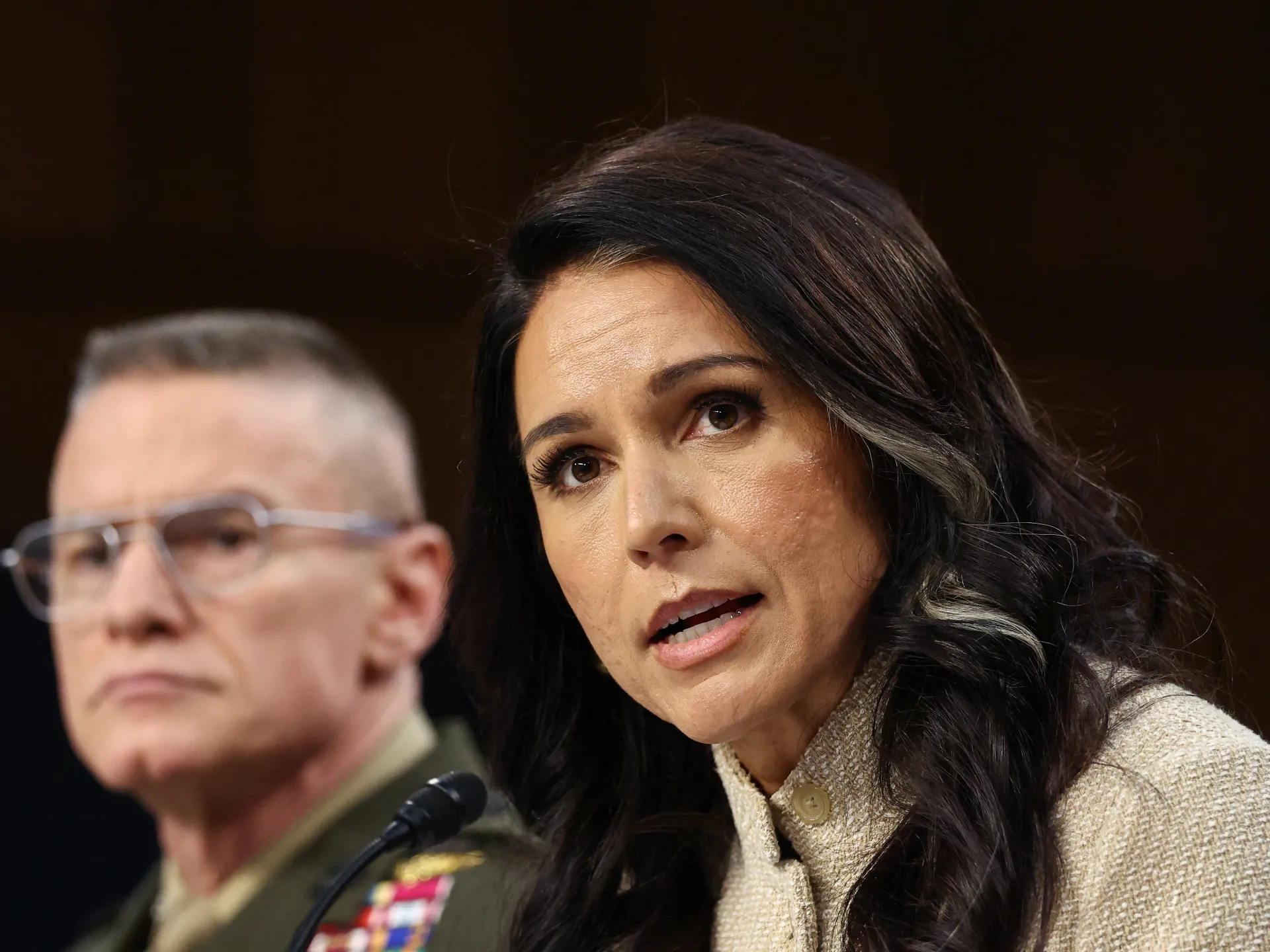
During her testimony to the Senate, Gabbard reminded that the U.S. intelligence community last year warned that Iran had the capacity to shut down the Strait.
Wyden to Gabbard: “Last year, your agencies testified that ‘Iran’s large conventional forces are capable of inflicting substantial damage to an attacker, executing region strikes and disrupting shipping, particularly energy supplies through the Strait of Hormuz.’ In other words,… pic.twitter.com/mjHZvpt3Ce
At the same hearing, CIA Director John Ratcliffe testified that Iran has been a constant threat and “posed an immediate threat at this time.”
In prepared written remarks for the U.S. Senate Intelligence Committee hearing into the war, Director of National Intelligence Tulsi Gabbard wrote that as “a result of Operation Midnight Hammer, Iran’s nuclear enrichment program was obliterated. There has been no efforts since then to try to rebuild their enrichment capability.”
She added that “the entrances to the underground facilities that were bombed have been buried and shuttered with cement. We continue to monitor for any early indicators on what position the current or any new leadership in Iran will take with regard to authorizing a nuclear weapons program.”
‼️ Tulsi Gabbard: Even if the regime remains intact, the IC is that internal tensions are likely Tom increase as #Iran’s economy worsens .. If a hostile regime survives, it will likely seek to begin a years long effort to rebuild its military, missiles and UAVs. pic.twitter.com/SdgCmh3GX7
“Overnight (Wednesday), the Israeli Air Force, acting on IDF intelligence, eliminated the Iranian terrorist regime Minister of Intelligence, Esmaeil Khatib, in a targeted strike in Tehran,” the IDF stated.
Khatib had been appointed Minister of Intelligence by Supreme Leader Ali Khamenei in 2021, the IDF explained. In his role, Khatib oversaw the Iranian Ministry of Intelligence, the regime’s primary intelligence organization.
There was no immediate response from Iran and The War Zone cannot independently verify this claim.
🔴ELIMINATED: Esmaeil Khatib, the Iranian terrorist regime Minister of Intelligence, in a targeted strike in Tehran.
Khatib played a significant role during the recent protests throughout Iran, including the arrest & killing of protestors and led terrorist activities against… pic.twitter.com/654lpYCZ1c
The killing of two top Iranian leaders in an Israeli airstrike on Tuesday. won’t affect the regime, say officials in Tehran who confirmed the deaths and vowed revenge.
“Iran’s response to the assassination of the secretary of the supreme national security council will be decisive and regrettable,” Iranian Army commander Amir Hatami said after Tehran confirmed Larjani’s death.
Iranian Foreign Minister Abbas Araghchi told Al Jazeera that the Islamic Republic is built to withstand shocks and no single figure can destabilise the system.
Iran’s FM Abbas Araghchi is pushing back after the killings of top officials Ali Larijani and Basij commander Gholamreza Soleimani, saying the Islamic Republic is built to withstand shocks and no single figure can destabilise the system.
Israel said it will ramp up attacks on Iranian leaders.
“We have authorized the IDF to eliminate any Iranian official once a “targeting circle” has been closed on them, without the need for additional approval,” said Israeli Defense Minister Israel Katz.
Israeli Defense Minister Katz:
Significant surprises are expected today across all fronts that will escalate the war to a new level.
We have authorized the IDF to eliminate any Iranian official once a “targeting circle” has been closed on them, without the need for additional… pic.twitter.com/MqyrTsHskS
Bloomberg News posited that Iran “is running on autopilot” in the wake of attacks on its leadership.
Larijani’s funeral drew huge crowds in Tehran.
Iran’s Basij paramilitary forces, whose leader was recently assassinated by Israel as we noted above, continues to hide under bridges, according to a video submitted to Iran International, the London-based, Persian language media outlet.
A Basij checkpoint on the Karaj-Tehran highway was operating under a bridge in western Tehran over fears of Israeli strikes, a citizen said in a video sent to Iran International. pic.twitter.com/J2TWO5d4Xd
— Iran International English (@IranIntl_En) March 18, 2026
Israel also said it killed a Hamas commander in Gaza.
The IDF says it killed a Hamas commander in the Gaza Strip yesterday who advanced the terror group’s “precision missile project.”
The strike killed Yahya Abu Labda, a commander in Hamas’s supply and logistics department.
— Emanuel (Mannie) Fabian (@manniefabian) March 18, 2026
With future Iranian threats in mind, NATO is deploying a second Patriot missile-defense system to Turkey’s Incirlik Air Base to bolster the alliance’s air defenses.
“In addition to the measures taken at the national level to ensure the security of our airspace and citizens, another Patriot system assigned by the Allied Air Command in Ramstein/Germany to the existing Spain Patriot system stationed in Adana is being deployed in Adana,” Turkey’s Defense Ministry announced. Adana is the home of Incirlik.
Since March 4, NATO air-defense systems in the eastern Mediterranean have intercepted three missiles launched from Iran toward Turkish airspace,Bloomberg News noted. “The attacks were likely designed to test the alliance’s capacity to respond,” people familiar with the matter told Bloomberg earlier.
“NATO can confirm that it has deployed another Patriot air defence system to Türkiye. It joins two others, including one Spain has deployed there for over a decade,” a NATO official told us. “While we cannot provide additional details about the deployment for operational security purposes, the system provides additional capability to further strengthen NATO’s defensive posture against any potential threat, as Iran continues its indiscriminate attacks across the region.”
Hava sahamızın ve vatandaşlarımızın güvenliğini sağlamak amacıyla millî düzeyde alınan tedbirlerin yanı sıra Adana’da konuşlu mevcut İspanya Patriot sistemine ilave olarak Ramstein/Almanya’daki Müttefik Hava Komutanlığı tarafından görevlendirilen bir Patriot sistemi daha Adana’da… pic.twitter.com/FmO8NuK0ti
— T.C. Millî Savunma Bakanlığı (@tcsavunma) March 18, 2026
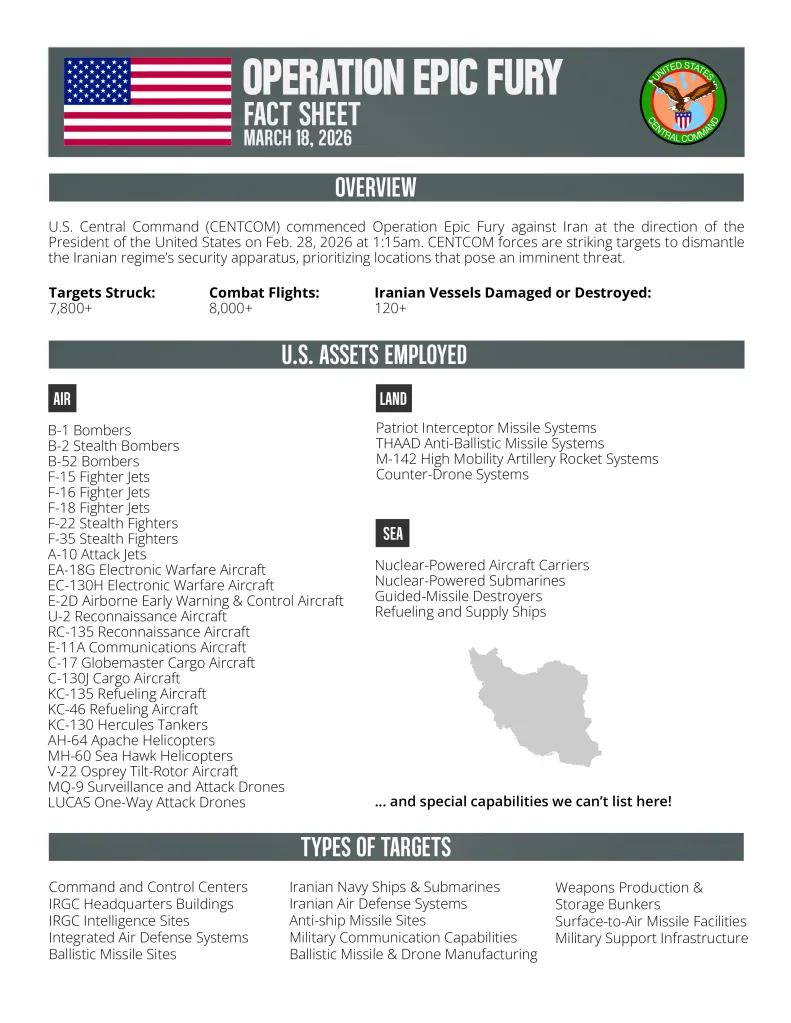
CENTCOM released its latest update on Epic Fury. The command said that so far, it has struck more than 7,800 targets, flown more than 8,000 combat sorties and destroyed or damaged more than 120 Iranian ships.
CENTCOM
CENTCOM released video showing targeting pod footage of a U.S. combat aircraft dropping bombs on the entrance of an Iranian missile base tunnel.
Targeting pod footage of an American fighter dropping a stack of bombs into the entrance of an Iranian missile base tunnel last Friday night. pic.twitter.com/c4MKweiRD1
The U.S. Navy’s America class amphibious assault ship USS Tripoli and San Antonio class amphibious warfare ship USS New Orleans were most recently spotted off the coast of Malaysia near Port Klang, according to open source investigator MT Anderson.
The ships were “pushing NW through the Strait of Malacca completely unescorted,” he noted.
As we previously reported, the Tripoli was ordered by the Pentagon to head toward the Middle East. The vessel is the centerpiece of an Amphibious Ready Group (ARG) that typically includes an assault ship, two transport docks, and a support vessel that carries an embarked Marine Expeditionary Unit (MEU) of at least 2,200 Marines.
THE NAKED SPRINT: Tripoli ARG Transits Malacca Unescorted
OSINT Update (MAR 17): The USS Tripoli (LHA-7) and USS New Orleans are currently off the coast of Malaysia near Port Klang, pushing NW through the Strait of Malacca completely unescorted.
Though the deployment of the Tripoli has sparked speculation that the U.S. could invade Iran’s Kharg Island or attempt to recover enriched uranium from Pickaxe Mountain, officials in Jerusalem are downplaying such possibilities.
“Despite numerous reports in recent days about a potential imminent and multi-sided US invasion of parts of Iran, including plans to retrieve 60% enriched uranium, The Jerusalem Post understands that these reports are exaggerated,” the publication reported. “It is still possible that the US could use ground forces in some fashion. But the images of a large-scale invasion and specifically the idea of an extended mission in Isfahan to retrieve the 60% enriched uranium, which is part of Iran’s nuclear program, do not appear to be in the cards, the Post has learned.”
EXCLUSIVE: Reports of large US invasion to seize Iran’s 60% enriched uranium buried under rubble at Isfahan which could be potentially used for nuclear weapons likely overblown: https://t.co/319qC42nn0
An Iranian strike “impacted an area at the Al Minhad Air Base in the United Arab Emirates, where the Australian Defense Force (ADF) has a long‑standing presence,” Australia’s Defense Ministry announced on X. “No ADF personnel were injured in the incident, and all ADF personnel deployed to the Middle East are safe and accounted for. The strike resulted in minor damage to an accommodation block and medical facility in the Australian section of the base.”
Statement on strikes on Al Minhad Air Base
On the morning of 18 March 2026 (AEDT), an Iranian strike impacted an area at the Al Minhad Air Base in the United Arab Emirates, where the Australian Defence Force (ADF) has a long‑standing presence.
With trade between the two countries at a record high, Charles is using the two-day visit to highlight the pair’s deep cultural and commercial links.
Published On 18 Mar 202618 Mar 2026
The UK’s King Charles III has welcomed Nigerian President Bola Tinubu at Windsor Castle in the first state visit by the leader of Africa’s most populous nation in nearly four decades.
More than 1,000 soldiers were out in force on Wednesday for the diplomatic show of soft power by the royal family.
Recommended Stories
list of 3 itemsend of list
With trade between the two countries at a record high, Charles is using the two-day visit to highlight the pair’s deep cultural and commercial links.
Tinubu has made less formal visits to the United Kingdom several times during his tenure, and the two countries remain major partners in trade, aid and defence. London is also home to a large Nigerian diaspora of about 300,000 people.
Nigeria’s presidency said the visit signalled a “renewed chapter” and reflected a shared commitment to “advancing trade and strengthening diplomatic ties”.
Calling the visit “historic”, London announced Nigerian companies, including banks, are expanding operations and creating hundreds of jobs in the UK, strengthening it as a global hub for African business.
Nigerian flags and Union Jacks
King Charles and Queen Camilla greeted the president and his wife in Windsor, west of London, as artillery fired salutes.
Both Nigerian flags and Union Jacks fluttered amid the procession.
The Nigerian president and his wife earlier chatted with heir-to-the-throne Prince William and his wife Catherine, at a hotel in the town.
The party then rode in carriages to the historic Windsor Castle.
Later, the king and queen showed the president and first lady items from the UK’s colonial rule of Nigeria, which existed until 1960.
Later on Wednesday evening, a lavish state banquet took place.
On Thursday, Tinubu is expected to meet British Prime Minister Keir Starmer, as well as members of the Nigerian community abroad, according to the official schedule.
Missing from the official schedule is the traditional meeting between the visiting head of state and the British opposition.
Conservative Party leader Kemi Badenoch, who is of Nigerian descent, has repeatedly publicly criticised the country she was raised in over corruption and violence.
The last Nigerian state visit to the UK took place in 1989, although Tinubu was received by Charles in September 2024.
Before the death of his mother, Queen Elizabeth II, in 2022, Charles also visited Nigeria four times as prince of Wales.
Tinubu’s visit went ahead, despite a deadly bombing in northeastern Nigeria’s Borno State on Monday, which killed 23 people and injured more than 100, with the president condemning the attacks and insisting “Nigeria will not succumb to fear.”
Washington, DC – Tulsi Gabbard, the director of US National Intelligence, said that the United States intelligence community had assessed that Iran was not rebuilding its nuclear enrichment capabilities following US and Israeli attacks last year.
The revelation on Wednesday appeared to undercut one of President Donald Trump’s key justifications for joining Israel in launching the latest war against Iran.
Recommended Stories
list of 3 itemsend of list
Trump and his top officials have repeatedly cited Iran’s nuclear ambitions as one of the main reasons for abandoning ongoing diplomatic talks in favour of military action.
“As a result of Operation Midnight Hammer,” Gabbard said in written testimony to the Senate intelligence committee, referencing the June 2025 US strikes on Iran’s nuclear facilities, “Iran’s nuclear enrichment program was obliterated”.
“There have been no efforts since then to try to rebuild their enrichment capability,” Gabbard said in the written testimony.
Notably, Gabbard did not read that portion of her testimony, which was provided to members of the committee, during her publicly televised oral testimony. When pressed on why she omitted the portion, Gabbard said simply that she did not have enough time. She did not deny the assessment.
“You chose to omit the parts that contradict Trump,” Senator Mark Warner, a Democrat, responded.
Trump has repeatedly said the June 2025 attacks, which came at the end of a 12-day war between Israel and Iran, had “obliterated” Iran’s nuclear capacity, even as he warned that Iran’s alleged nuclear ambitions presented an immediate threat to the US.
Tehran has for years denied it is seeking a nuclear weapon. Nuclear and arms monitors have maintained that even if Tehran were seeking a nuclear weapon, it did not represent a short- or medium-term threat.
The foreign minister of Oman, who had mediated the latest round of US-Iran indirect nuclear talks ahead of the war, has refuted Trump officials’ claims that the most recent negotiations were not yielding any progress.
The Guardian newspaper also reported this week that the United Kingdom’s national security adviser, Jonathan Powell, had attended the final session of talks and assessed that the Iranian position did not justify an immediate rush to war, citing sources familiar with the situation.
The administration has not settled on any single justification for launching the war, also pointing to Iran’s ballistic capabilities, its potential threat to Israel and US forces in the Middle East, and the totality of the Iranian government’s actions since the 1979 Islamic Revolution.
The concept of an “imminent threat” is significant in determining the legality of Trump’s decision to strike a sovereign country under international law.
It is also significant for US domestic law, under which presidents can commit the military only in instances of immediate self-defence. Only Congress can officially declare war or authorise extended military campaigns.
Iran’s government ‘intact but largely degraded’
The White House said earlier this week that Iran’s ballistic missile capacity was “functionally destroyed”, with the Iranian navy “effectively destroyed” and the US and Israel dominating the country’s airspace.
Experts have assessed that Iran still maintains the military capacity to inflict significant damage in the region, and it has continued to wield its military influence over the Strait of Hormuz.
Gabbard, meanwhile, offered a more sober assessment than the White House, saying that despite the killings of Iranian supreme leader Ayatollah Ali Khamenei, top military officials, and most recently the head of the Supreme National Security Council, Ali Larijani and the intelligence minister, Esmail Khatib, “the regime in Iran appears to be intact but largely degraded by Operation Epic Fury”.
“Even so, Iran and its proxies remain capable of and continue to attack US and allied interests in the Middle East. If a hostile regime survives, it will seek to begin a years-long effort to rebuild its missiles and UAV [drone] forces,” she said.
Gabbard also listed Iran, alongside Russia, China, North Korea and Pakistan, as among the countries “researching and developing an array of novel, advanced, or traditional missile delivery systems, with nuclear and conventional payloads, that put our homeland within range”.
The Washington, DC-based Arms Control Association has said that US intelligence as of 2025 had said it may take Iran until 2035 or longer to develop a missile capable of hitting the US, if it did indeed seek to do so.
High-profile resignation
Gabbard spoke a day after a top official in her agency, Joe Kent, the director of the US National Counterterrorism Center, resigned in opposition to Trump’s war with Iran.
In his resignation, Kent said that Iran “posed no imminent threat” to the US and that Trump’s decision to enter the war went against his “America First” pledges.
Kent is the first high-profile member of the Trump administration to step down in response to the war.
Gabbard herself had previously been a vocal opponent to indefinite military engagement in the Middle East and war with Iran. A former member of the US House of Representatives from Hawaii, she left the Democratic Party and supported Trump, in part, due to his anti-war vows.
However, in a post on X on Tuesday, Gabbard defended Trump’s decision to go to war.
“As our Commander in Chief, he is responsible for determining what is and is not an imminent threat, and whether or not to take action he deems necessary to protect the safety and security of our troops, the American people and our country,” she said.
She said her agency’s role was to funnel US intelligence to Trump.
“After carefully reviewing all the information before him, President Trump concluded that the terrorist Islamist regime in Iran posed an imminent threat and he took action based on that conclusion,” she said.
In its ruling to award Morocco the title, Caf also “partially upheld” an appeal against an incident involving ball boys in the final, and reduced the Moroccan FA’s fine for the incident.
In torrential rain, Senegal goalkeeper Edouard Mendy regularly dried his gloves, but the ball boys repeatedly tried to discard his towel.
At one point Senegal reserve goalkeeper Yehvann Diouf was tackled to the ground by three ball boys and dragged around on the floor when he tried to intervene.
A fine for fans shining lasers at players on the pitch was also reduced by Caf.
Caf’s former head of disciplinary, Raymond Hack, questioned the decisions made by African football’s governing body and suggested there is a perception of “political interference” as “the president of the Moroccan Football Association [Fouzi Lekjaa] is the first vice-president of Caf”.
“The circus continues,” Hack told BBC World Service.
“A lot will depend on the referee’s written report, but the fact that the referee allowed the game to continue and they went into extra time gives the impression that he was satisfied that the game will continue.
“He is the only person who can call an end to the game. Not the authorities, not the governing bodies, only the referee.
“Otherwise you’re going to have situation worldwide where every time someone disagrees with a decision, they’re going to go on appeal or take it to court or something ridiculous like that.
“The game should be won on the field of play not in a boardroom.”
Hack, a lawyer and a member of Fifa’s disciplinary committee, said the Morocco players should have informed the referee they were playing under protest if they intended to challenge the result.
He also said it could take six months for Cas to rule on Senegal’s appeal.
Moroccan journalist Jalal Bounar told Newsday that Caf’s decision had been welcomed “with great excitement and joy across the country”.
“Morocco appealed the decision to the confederation of African football because they believed that Senegal had broken the rules during the match, and that’s why Moroccans went out to celebrate,” he said.
“If they give it to Senegal, it won’t be the end of the world. We will accept because we are satisfied that we reached the final.”
However, north African journalist Maher Mezahi said such a sentiment is not matched across the continent.
“It does seem like the rest of Africa feels outraged by this because it seems like, once again, the Confederation of African Football has almost disgraced the sport,” he told BBC Radio 5 Live.
Mezahi cited Caf’s decision to ban Togo from two Africa Cup of Nations for quitting the 2010 competition following a gun attack on their team bus in Angola two days before the tournament.
Referring back to Caf’s decision on the 2025 final, he said: “They have, unfortunately, come up with a habit of releasing decisions like this – whether it’s the disciplinary committee or the appeals board – that eventually do get shot down at the Court of Arbitration for Sport, but it makes the entire thing look very amateurish.”
The war has reignited a debate within the Iranian diaspora about what role the US should play in Iran’s future.
This question is more than a distant geopolitical issue for Iranians in Los Angeles.
Many residents explained that their family histories had been shaped by US involvement in the region, whether it was through US support for Iran’s fallen monarchy or through the US decision to back Iraq’s invasion of Iran in 1980.
Aida Ashouri, a human rights lawyer who is running to be Los Angeles city attorney, was among those publicly condemning the latest US campaign in Iran at the city hall protest on February 28.
“This is a US imperialist war, and we have to make that clear,” she said. “Call a spade a spade. This war is not to liberate the women of Iran or the people of Iran.”
Ashouri was born during the Iran-Iraq war in the 1980s. Her hometown, Isfahan, was also bombed in June last year during the US and Israel’s 12-day war with Iran.
For Ashouri, it was telling that the US and Israel once again launched the first strike in the current conflict. For many legal experts, that made the conflict an unprovoked war of aggression, in violation of international law.
“A war implies two sides are actively engaged, but Iran has done nothing to be involved,” Ashouri said.
“This is a unilateral military invasion, an aggression of the United States and Israel. They are the ones with the power to end it by stopping the bombing.”
She and other protesters drew parallels between the current Iran war and the US-led wars in Iraq and Afghanistan, launched in 2003 and 2001, respectively.
“I lived through the shadow of the war on terror, all the propaganda talking points,” said Shany Ebadi, an Iranian American antiwar organiser with the ANSWER Coalition. “What the Trump administration is saying reminds me a lot of the Iraq war.”
As someone who follows the news closely, Ebadi remembers feeling alarm when the first strikes were launched in February.
“When I got the breaking news notification of the initial attack, my whole body felt paralysed. I felt anger and frustration,” she said.
She and Ashouri both said they fear the military operation in Iran could spark a regional war that might further destabilise not just Iran, but the entire Middle East.
“I fear that war will repeat the disasters seen in Palestine, Iraq, Libya, and Afghanistan,” Ashouri said, listing countries targeted in the US’s “war on terror” over the past two and a half decades.
The question of whether bombs can pave the way to freedom in Iran is a simple one for Ashouri and her fellow antiwar activists. The answer, they say, is simply no.
This time of year – close to the spring equinox – day length increases and the Sun moves higher in the sky. You might notice the Sun feeling stronger. With largely clear skies forecast, UV levels will rise to medium across England, Wales and eastern Scotland on Wednesday. Cloudier conditions will keep UV levels low elsewhere.
It is easy to get caught out in the spring months because, although temperatures aren’t as high as later in the summer, ultraviolet (UV) levels in late March are actually just as strong as they are in September.
Whilst exposure to small amounts of UV radiation is essential to produce vitamin D, the World Health Organization warns “overexposure may result in acute and chronic health effects on the skin, eye and immune system”.
Advice from the NHS, external is to “strike a balance between protecting yourself from the Sun and getting enough vitamin D from sunlight”. This includes spending time in the shade between 11am and 3pm, and covering up with suitable clothing and sunglasses.
Keep an eye on the UV forecast on the BBC Weather app or website.
Khan Younis, Gaza Strip – Historic landmarks often withstand centuries of volatile change, but when rockets and missiles fall, even the most enduring stones become fragile.
For generations of families in Gaza’s southern city of Khan Younis, the Grain Market was the first stop when they went shopping.
Recommended Stories
list of 3 itemsend of list
Reaching it meant walking past the historic Barquq Castle, a centuries-old structure dating back to 1387 and the very foundation of Khan Younis.
But for residents, the castle was more than an old monument; it was a familiar landmark marking the entrance to one of the city’s liveliest commercial spaces.
The aromatic scent of spices and dried herbs would accompany any walk towards the Grain Market.
But that was before Israel’s genocidal war on Gaza began. Israeli attacks inflicted heavy damage on the Grain Market and the Barquq Castle. The market has now been reduced to shattered alleys, with dust and heavy silence filling the air.
Sitting in his store along a row of damaged old shops, 60-year-old Nahed Barbakh, one of the city’s oldest and most well-known traders of staple food supplies, spent decades watching customers stream through the market. Now, only a handful pass by his shop.
“I’ve been in this spot for decades, day in and day out, watching people bring life to this place,” Nahed said. “Look at it now – it’s empty. These days, there shouldn’t even be space to walk because of the crowds preparing for Eid.”
He paused before gesturing towards the nearby castle.
“We always felt the weight of history here because we are so close to Barquq Castle. Now that history and life itself have been struck by the occupation.”
But Israeli fire did not take into account the market’s historic status. The Grain Market, long considered the economic heart of Khan Younis, was also among the first sites of destruction during the second month of Israel’s genocidal war on Gaza. More than two years of Israeli bombardment and repeated waves of displacement have left the market unrecognisable.
“The occupation killed many of our friends who worked here,” Nahed said quietly. “Those who survived have been financially broken. That’s why you see most of these shops are still closed.”
He pointed to some shelves behind him.
“My shop used to be fully stocked with goods at its high capacity. We even had extra warehouses to supply what people needed, especially during the busiest seasons.”
Before he could finish his sentence, a deafening blast interrupted him — the sound of an Israeli tank fire.
“And this is the biggest reason people are afraid to return,” Nahed said abruptly. “The yellow line is only a few hundred metres away from this street. At any moment, bullets can reach here.”
The yellow line is the name given to the demarcation line behind which Israeli forces withdrew as part of the first phase of October’s ceasefire agreement. It effectively divides Gaza into two, and Palestinians have repeatedly been shot for approaching it.
The yellow line has divided Khan Younis, dramatically reshaping the city’s geography. Israel has repeatedly shifted the line, moving it deeper into Gaza.
The Grain Market, once firmly at the centre of urban life, now sits close to the yellow line.
What used to be the city’s commercial heart has effectively turned into its edge, where people hesitate to walk, leaving the revival of daily commerce life a distant prospect.
Nahed Barbakh, a 60-year-old shop owner and trader, sits at a table in front of his store [Ahmed al-Najjar/Al Jazeera]
Centuries of endurance
The Grain Market traces its origins to the late 14th century, when the Mamluk ruler Younis al-Nawruzi established Khan Younis in 1387 as a strategic stop along the trade route linking Egypt and the Levant.
Built as an extension of the Barquq Castle, which functioned as a caravanserai for travelling merchants, the market became a central commercial hub where traders and travellers exchanged goods, moving between Africa, the Levant and beyond.
The Grain Market occupies roughly 2,400sq metres (25,830sq feet). Its single-floor shops line a central street running east to west, intersected by narrow alleys branching towards smaller courtyards. The buildings preserve elements of their original construction, including sandstone walls and traditional binding materials that have survived centuries of repairs and modifications.
Over time, the market evolved into the primary commercial centre of Khan Younis, adapting to modern commerce while retaining its historic character.
But today, many of its shops stand damaged or shuttered.
According to Gaza’s Ministry of Tourism and Antiquities, the market is now among more than 200 heritage sites damaged in attacks by Israeli forces across the Gaza Strip since October 2023.
At the southern end of the Grain Market, where rows of vegetable stalls once overflowed with fresh produce, only one makeshift stand has opened.
Om Saed al-Farra, a local, stepped cautiously towards the stall, inspecting the small piles of vegetables laid out on a wooden crate. The expression on her face reflected more than surprise; it was disbelief at what the market had become.
“The market is deplorable now,” she said. “There used to be many stalls here and many choices for people.”
She gestured towards the empty stretch of the market’s vegetable section, once one of its busiest corners.
“These days were once filled with extensive joyful preparations for Eid, when families crowded the market to shop for food and essentials,” al-Farra said. “Now the market feels unusually gloomy, its stalls largely empty and its familiar vibrance gone. Everything is limited. Even if you have money, there are hardly any places left here for us to buy from.”
Rows of damaged and closed shops in Khan Younis’s Grain Market [Ahmed al-Najjar/Al Jazeera]
Economic collapse under fire
Although parts of the market’s infrastructure remain physically standing, many traders have not returned.
According to Khan Younis Mayor Alaa el-Din al-Batta, the Grain Market was once one of the city’s most vital economic lifelines.
“Just as it once connected continents, even under blockade, it continued to connect people across Gaza,” al-Batta said. “It holds a deep place in the memory of our residents. But once again, the occupation has brought destruction, targeting both our history and a critical lifeline for the people.”
For nearly two decades, Israel has controlled Gaza’s land crossings, airspace and coastline under a strict blockade. Since the genocide began in October 2023, restrictions have tightened further, pushing businesses and trade to collapse.
In a narrow western alley where scattered stones cover the ground, two cloaks hung outside a small shop. Inside, 57-year-old tailor Mohammad Abdul Ghafour leaned over his sewing machine, carefully stitching a torn shirt.
His shop was the only one open in the grey alley.
“I’ve been here since childhood,” Abdul Ghafour said. “My father opened this shop in 1956, and I grew up learning the profession right here in the market.”
Israel’s bombardment not only destroyed the place where he worked; it also killed dozens of his family members.
“On December 7, 2023, Israel committed a horrific massacre against my family,” he said. “I lost my father, my brothers, and more than 30 relatives.”
Burying his family members was only the beginning of the long, painful separation from the market and his shop.
“We were forced into displacement more than 12 times. I had many chances to leave as two of my children live in Europe,” Abdul Ghafour said. “But all I could think about was returning to my shop.”
When Israeli forces withdrew to the yellow line, he came back alone.
“I cleaned the street by myself. And if I had to do it again, I would. Whoever loves his land never abandons it,” he said. “I charge my batteries for my machine and come every day. My return encouraged some residents to come back too. But people still need shelter, water, and basic services before more families return.”
Resident Mohammad Shahwan stood in Nahed’s shop checking a list of items he hoped to buy.
“We left the crowded al-Mawasi as soon as we could to return to our damaged home,” he said, referring to the stretch of coastal Khan Younis that thousands of Palestinians have been forcibly displaced to. “But the number of residents here is still very small because of the destruction and lack of services.”
Still, Mohammad Shahwan said he was relieved to find the shop open at all.
“For the first time in two years, we’ll make traditional Eid biscuits,” he said, holding the list of ingredients. “The last two Eids were dark for my family after we lost my 17-year-old son, Salama. He and his aunt were killed by an Israeli strike.”
He could have bought the now-expensive supplies elsewhere, he said, but returning to the Grain Market carried its own meaning. “I wanted to buy them from here, just like we always did.”
Mohammad Abdul Ghafour, 57, a Palestinian tailor in Khan Younis [Ahmed al-Najjar/Al Jazeera]
Waiting for restoration
According to Mayor al-Batta, restoring the historic market will require a major reconstruction effort.
“The Grain Market needs a comprehensive restoration process to function again,” he said. “So far, our work has only been limited to clearing rubble and delivering limited water supplies for returning residents.”
The rebuilding process will require specialised materials and expert restoration work to preserve what is left of the historic structure. Municipal workers have already collected leftover stones from the ruins in the hope that they can one day be used in rebuilding parts of the market.
But reconstruction remains impossible under current conditions.
“More than five months have passed since the ceasefire began, yet not a single bag of cement has entered Gaza,” al-Batta said.
“We want to restore our historic identity and revive life for our people. But neither can happen while Israeli restrictions and violations continue.”
Weekly insights and analysis on the latest developments in military technology, strategy, and foreign policy.
A group of at least five carrier-capable U.S. Navy E-2D Advanced Hawkeye airborne early warning and control planes arrived overnight in the Azores after crossing much of the Atlantic. The Azores is a common stopover point for U.S. military aircraft heading to the Middle East. The move is somewhat rare for the E-2 community, but it’s extremely logical, and likely highly urgent, considering what is going on in the Middle East.
In many respects, the E-2D is the most sensitive airborne ‘look-down’ radar platform in U.S. military service today. As far as we know, the only E-2Ds in the Middle East right now are supporting air wing operations of the USS Gerald R. Ford and USS Abraham Lincoln. Rushing more of them to the Persian Gulf for land-based operations to help spot low-flying Iranian kamikaze drones wreaking havoc on Arab Gulf States would make total sense.
We have seen a similar request accepted by the Royal Australian Air Force, which is sending one of its highly capable E-7 Wedgetail airborne early warning and control aircraft to the region for essentially the same purpose. Australia’s commitment is separate from current U.S.-Israeli operations. Both the E-2D and the E-7 aircraft can also spot low-flying cruise missiles, short-range ballistic missiles, and even maritime threats, making them ideal for the littoral operations against everything Iran is throwing at U.S. allies in the region. The Hawkeye and Wedgetail also offer additional battle management and networking capabilities, which U.S. forces engaged in operations against Iran are currently relying heavily on a strained fleet of aging E-3 Sentry jets to provide.
via @Azorean_Lion
Pictures above and below show E-2Ds at Lajes on the island of Terceira in the Azores, a Portuguese archipelago, last night. Online flight tracking data had also shown the Hawkeyes heading there. We can also see that the Hawkeyes are upgraded versions capable of being refueled in flight, via a probe prominently mounted above the cockpit. In line with this, a pair of U.S. Air Force KC-46 Pegasus tankers had been tracked accompanying the Navy aircraft to Lajes, as well.
via @Azorean_Lion
Previous tracking data shows the E-2Ds flew first from Norfolk, Virginia, to Bangor, Maine, last Friday. The Hawkeyes then departed Bangor yesterday, heading east across the Atlantic.
Markings visible in the pictures from Lajes show that at least some of the E-2Ds that touched down there are assigned to Carrier Airborne Early Warning Squadron 121 (VAW-121) based at Naval Air Station Norfolk (NAS Norfolk). There had been indications earlier that the contingent included Hawkeyes from VAW-126, also based at NAS Norfolk, but this appears to be unconfirmed at this time. VAW-121 and VAW-126 are assigned to Carrier Air Wing 17 (CVW-17) and CVW-1, respectively. CVW-17 was notably most recently attached to the supercarrier USS Nimitz, which had been scheduled to be put into mothballs in May, but is now slated to remain in service at least until March 2027.
VAW-121 and CVW-17 markings, at left and right, respectively, seen on some of the E-2Ds that arrived overnight at Lajes. via @Azorean_Lion
It remains to be seen where exactly the E-2Ds head to now, but, as noted, U.S. military aircraft regularly pass through the Azores while transiting to the Middle East. Lajes was heavily utilized during the massive build-up of American airpower ahead of the start of U.S.-Israeli strikes on February 28. The American component of this campaign has been dubbed Operation Epic Fury.
A deployment of E-2Ds could help provide much-needed additional eyes in the sky, as well as other capabilities, to help protect against Iranian retaliatory attacks, as well as support strikes on targets in and around Iran and/or any efforts to establish sea control in the region. In particular, the Hawkeyes are America’s best available tool for spotting low-flying, low-signature targets, such as kamikaze drones and cruise missiles, as well as small targets at sea like explosive-laden drone boats. The E-2D is also well-suited to performing these missions in littoral areas like the Persian Gulf, the Gulf of Oman, and the Strait of Hormuz in between. Hawkeyes performed similar missions in and around the Red Sea between late 2023 and early 2025.
A stock picture of an E-2D Hawkeye assigned to VAW-121. USN
As noted in the opening of this post, there is already an especially pronounced demand for additional assets, and more capable ones, to spot and track low-flying Iranian kamikaze drones and cruise missiles. This was already evidenced by the Australian government’s announcement last week that it was sending one of its E-7A Wedgetail airborne early warning and control aircraft to the region to help with defensive operations, something we will come back to later on.
In addition, from what is known now, U.S. forces taking part in operations over and around Iran are receiving airborne early and warning control support from U.S. Air Force E-3 Sentry AWACS (Airborne Warning and Control System) aircraft forward-deployed at Prince Sultan Air Base in Saudi Arabia. As noted, Navy Hawkeyes have also already been flying missions as part of Operation Epic Fury from the decks of carriers in the region.
A stock picture of E-3s at Prince Sultan Air Base in Saudi Arabia in 2022. USAFAn E-2D launches from the supercarrier USS Gerald R. Ford for a sortie in support of Operation Epic Fury. USN
Before the current conflict erupted, TWZ explored in detail the challenges and limitations that the aging E-3s face, including struggles just to keep the aircraft operational at all. On top of that, the total size of the Sentry fleet has dramatically shrunk in recent years, creating additional strain on the remaining jets, nearly 40 percent of which are now on the Arabian Peninsula. Based on available readiness data, this represents an even higher percentage of E-3s available for real-world mission tasking anywhere globally.
Just in terms of their radars, the E-2Ds with their active electronically scanned array (AESA) AN/APY-9s offer a major boost in capability over the older E-3s and their older passive electronically scanned array (PESA) types. In general, AESAs can scan faster, see farther, and produce more precise and otherwise higher fidelity tracks, even when it comes to smaller objects and/or stealthy ones with reduced radar signatures, than older types of arrays. The APY-9, specifically, also benefits from “space-time adaptive processing” functionality that “suppresses clutter, jamming, and other sources of electromagnetic interference, focusing on the target,” according to the manufacturer Lockheed Martin.
As such, with the added benefit of being able to look down from a high perch, the E-2D offers a particularly powerful tool for spotting and tracking smaller, lower, and slower-flying threats, such as Iranian kamikaze drones and cruise missiles. This capability was optimized for overwater and littoral operations to protect the carrier strike group. In addition, the APY-9 has a surface search mode that can be used for maritime surveillance, which, as already mentioned, is also very relevant in the context of the current conflict. Overall, these talents would fit in perfectly with what’s happening in the Persian Gulf and the Gulf of Oman.
Unlike older E-2s, Hawkeyes with aerial refueling capability can also fly out to operating areas further away from wherever they are based and stay on station much longer.
A view from inside the cockpit of an E-2D about to link up with a KC-46 tanker during an exercise in 2025. USN
In Navy service, the E-2D is far more than just its radar, too. The aircraft have an extensive communications and networking suite that is tied in directly to the service’s Cooperative Engagement Capability (CEC) and Naval Integrated Fire Control-Counter-Air (NIFC-CA) architectures.
CEC – Cooperative Engagement Capability
As part of these Navy-specific networks, the Hawkeyes are deeply integrated in ‘kill webs’ that include an array of air and sea assets in the service’s inventory. For many years now, the Navy has used the example of E-2s enabling ships to fire long-range SM-6 surface-to-air interceptors at targets beyond the reach of their organic radars and other sensors to explain the benefits of these networked capabilities. CEC and NIFC-CA also just allow commanders to have a more detailed and complete picture of the battlespace around them, including friendly assets and threats, and offer a valuable boost in general situational awareness.
An older but still relevant graphic showing how CEC and NIFC-CA can enable a surface-launched SM-6 to engage targets beyond the detection range of the ship it is fired from, using another platform’s sensor data (for example, an E-2D) to provide targeting information from a forward position. USN
It should also be noted that while Navy E-2s more often operate as part of carrier air wings, the service’s Hawkeyes flying from bases on land is not new. Between 1995 and 2017, the service even had an explicitly land-based E-2 unit, VAW-77, which supported counter-drug operations in the Caribbean from bases in the United States and in Latin America. The majority of non-U.S. E-2 operators, past and present, have also operated their Hawkeyes as land-based aircraft. At the same time, since it was primarily designed around carrier operations, the Hawkeye also has the ability to fly from shorter runways and with a smaller logistics footprint compared to many other airborne early warning and control platforms.
TWZ actually already covered much of this in detail back in 2024 after U.S. Central Command (CENTCOM) released the video below, showing a Navy E-2D refueling from a U.S. Air Force HC-130J combat search and rescue aircraft somewhere in the region. At that time, we also explored how Hawkeyes could bring similar benefits to expeditionary and distributed operations elsewhere in the world, especially an island-hopping campaign in the Pacific, as you can read more about here.
It is also interesting to consider all of this now in the context of the Pentagon’s attempt last year to cancel the U.S. Air Force’s acquisition of new E-7s to replace a portion of its E-3s, and to fill interim capability gaps with additional E-2Ds instead. Questions about the Wedgetail’s survivability in a future high-end fight, such as one against China, as well as delays and cost overruns, were cited as key factors. Congress has since compelled the Air Force to proceed with the E-7A program as planned. Last Thursday, Boeing received two contract modifications, together valued at just over $2.4 billion, for an unspecified number of developmental Wedgetails, as well as materials related to the MESA sensor system.
There do continue to be some lingering questions about the future of the Air Force’s E-7 program. The service had resisted seeking any kind of direct replacement for the E-3 for years. The Air Force’s stated long-term goal remains to push most, if not all, of its airborne target warning sensor layer tasks into space, but this is still years away, at least, from becoming a reality.
A rendering of an E-7 in US Air Force service. USAF
As TWZ has explained in the past, while the E-2D is in many respects the most capable airborne early warning and control aircraft currently in U.S. inventory, the Wedgetail is arguably the most capable such aircraft anywhere globally at present. The jet-powered, Boeing 737-based, aerial refueling-capable Wedgetail with its large AESA Multi-role Electronically Scanned Array (MESA) sensor, can fly higher, faster, and further than the turboprop Hawkeye.
Northrop Grumman MESA Radar – Boeing E-7 AEWC
The E-7 is also just bigger and can accommodate a larger crew, making it even more adaptable to expanded mission needs, such as battle management and acting as a networking node using its own expansive communications and data-sharing suite. Any survivability concerns that apply to the E-7 would apply just as much to the E-2, as well. As noted earlier, the benefits of the E-7, including in the current context of operations against Iran, are underscored by Australia’s decision to send one of its Wedgetails to the Middle East. That aircraft is explicitly being deployed to help defend the United Arab Emirates and other countries in the region that have been subjected to Iranian drone and missile attacks.
A Royal Australian Air Force E-7A Wedgetail. RAAF
The group of Navy E-2Ds now heading east across the Atlantic only further calls into question the Pentagon’s puzzling move to axe the E-7 program, as well as the Air Force’s previous dragging of its feet in settling on any plan to replace the aging E-3s. That additional Hawkeyes only appear to be headed to the Middle East now is also another sign that the scale and scope of Iranian retaliation on Gulf Arab States was somehow not expected, despite repeated threats from the regime in Tehran in the lead-up and supporting intelligence assessments to the current conflict. For many years, U.S. intelligence thought it was likely Iran would lash out at U.S. allies in the region, especially those housing U.S. military capabilities. It was a glaring likelihood we have discussed for years in our own reporting.
Regardless, additional Hawkeyes would provide a massive and very much-needed boost in aerial surveillance capability and capacity, as well as other benefits, to help defend against Iranian retaliatory attacks and otherwise support still-expanding U.S. operations against that country.
Special thanks to user @Azorean_Lion on X for sharing the pictures of the E-2D Hawkeyes at Lajes with us.
As United States President Donald Trump tries to build a coalition of navies willing to open the Strait of Hormuz, some countries are negotiating safe passage directly with Iran, underscoring a new de facto reality, analysts say: Regardless of military results, Tehran is calling the shots on who gets to use the world’s most important energy waterway.
After US-Israeli strikes on Iran began on February 28 and killed Supreme Leader Ali Khamenei, the Iranian military leadership responded by focusing on its most potent form of leverage – Iran’s geography. The country controls the northern shore of the Strait of Hormuz, through which 20 percent of global crude oil and natural gas supplies pass. It is 33km (20 miles) wide at its narrowest point, so any naval force that wants to cross it becomes easy prey for Iranian attacks coming from the mainland.
Recommended Stories
list of 3 itemsend of list
Considering insurance companies’ low appetite for risk, it took relatively few attacks on vessels in the strait – or just the threat of them – to undermine market confidence and send insurance premiums shooting up, causing a near paralysis in maritime traffic. About 20 vessels have been attacked since the start of the war.
“Iran has effectively proven that it dictates the terms of passage through the strait. They have now shown they are the gatekeeper of this important chokepoint. This will elevate the status of Iran in the geography of the Gulf,” said Andreas Krieg, an associate professor in Security Studies at King’s College London and a fellow at King’s Institute of Middle Eastern Studies. This will be the new reality for the foreseeable future, he added.
Meanwhile, crude prices have risen above $100 a barrel, more than 20 percent higher than pre-war prices, forcing countries to make the biggest releases of emergency reserves in history. Gas prices have risen by more than 40 percent since the war began.
Trump initially floated the idea of ordering the US Navy to escort vessels through the waterway. He then appealed to some countries to send warships and warned NATO members they would face “a very bad” future if these allies failed to help in opening the strait. But the appeal was either turned down or received noncommittal responses. Japan said it had no plans to deploy naval vessels. Australia ruled out sending ships. The United Kingdom said it would not be drawn into the wider war. Germany sent a clear message: “This is not our war”.
Others decided to take action – but not of the kind that Trump asked for. On Saturday, two India-flagged gas tankers passed through the strait after days of negotiations between New Delhi and Tehran, including a phone call between Indian Prime Minister Narendra Modi and Iranian President Masoud Pezeshkian. Ships from Pakistan, Turkiye and China also have transited through the Strait of Hormuz. The Financial Times has reported that Italy and France have also reached out to Iran for deals although Italian authorities have rejected making such an overture.
Meanwhile, Windward, a maritime intelligence tracking group, said that while traffic in the strait on Tuesday remained 97 percent below average, a growing number of ships have been passing through Iran’s territorial waters, suggesting that Tehran is allowing “permission-based transit”.
‘It is up to us to decide’
There is a precedent for US naval forces to escort convoys through the strait dating back to the Iran-Iraq War in the 1980s. But today’s scenario is different, experts said. Back then, the US, while it was backing Iraqi leader Saddam Hussein, was not a direct party to the conflict. Iran was still in a post-revolutionary process of consolidating power, and its Islamic Revolutionary Guard Corps was nowhere near as organised as it is today.
Today, Iran has drones that its factories are capable of producing on a large scale and has been using them. Iranian forces could also use small boats to assault tankers, deploy mines and engage in other guerrilla-style tactics. While there are conflicting reports on whether Iran has placed mines in the strait, experts said it would be a counterproductive move for Tehran because it would disrupt the passage for any ships – Iranian vessels included – and it would take away from Tehran the power to choose who may pass.
Iranian officials are aware of their geographic advantage. “This is up to our military to decide,” Iranian Foreign Minister Abbas Araghchi said on Sunday, referring to who will be allowed to use the strait.
Pro-government figures increasingly frame the Strait of Hormuz as a strategic bargaining tool beyond the war itself, suggesting the waterway could be used to extract compensation, sanctions relief or broader economic concessions after the war, Hamidreza Azizi, an expert on Iran and visiting fellow with the German Institute for International and Security Affairs, commented on X.
Recent attacks seem to suggest that Iran wants to increase its pressure on the energy market.
On Tuesday, a drone attack caused a fire at the port of Fujairah, the United Arab Emirates’s only crude export terminal. It is located outside the eastern entrance of the Strait of Hormuz, allowing its exports to circumvent it. The Iran-backed Houthis in Yemen could also further squeeze oil prices by disrupting the Bab al-Mandeb strait. That would force the US to operate across multiple maritime theatres. So far, the Houthis have not carried out such attacks, but this month, they said they were ready to strike at any moment.
Still, the US is focused on applying maximum pressure on Tehran and forcing it to open the Strait of Hormuz. The US Central Command, the US military’s combat command responsible for operations in the Middle East, said early on Wednesday that its forces had used 2,270kg (5,000lb) bunker-busting munitions against antiship missile sites along Iran’s coastline near the Strait of Hormuz.
Trump has also ordered amphibious ships carrying thousands of US Marines to move to the Middle East, and some experts believe the US might try to seize Kharg Island, a tiny piece of land in the northern Gulf where 90 percent of Iranian crude oil is exported from. The US has already bombed what it said were military sites on the island.
Such an operation, however, might do little to force Iran into opening the Strait of Hormuz, Krieg said. The island is 500km 310 miles) from the strait, and should the US take control of it, it would expose US Marines to Iranian fire. Should Iran see its key terminal being seized, it could also opt to mine the strait outright, having fewer reasons to allow some vessels to pass through.
“The issue with the Strait of Hormuz is really not a military one. … It’s a market issue, and confidence cannot be restored by the military. Confidence can be restored through diplomacy only,” Krieg said.