Stay informed and up-to-date with the latest news from around the world. Our comprehensive news coverage brings you the most relevant and impactful stories in politics, business, technology, entertainment, and more.
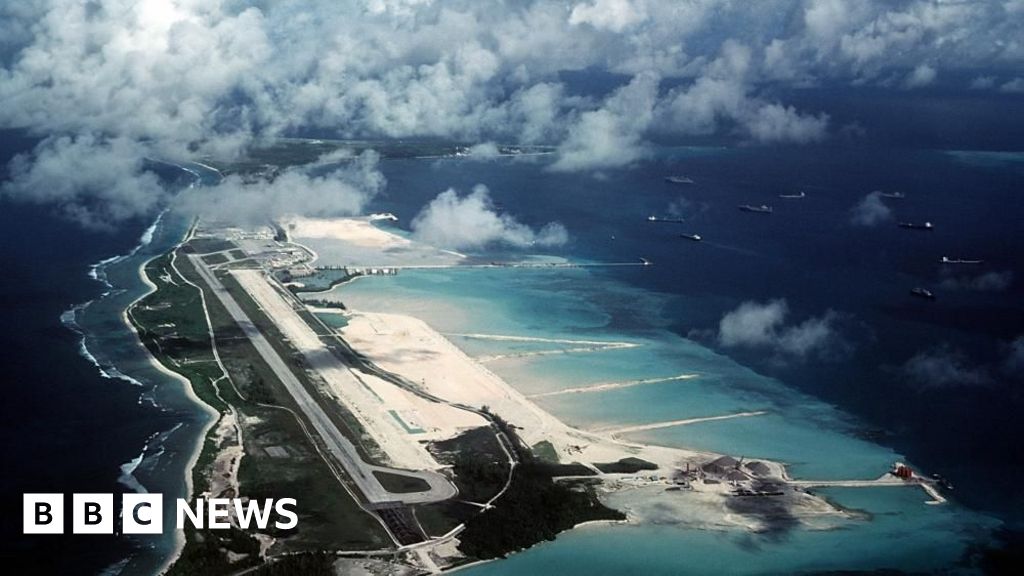
One of themissiles firedreportedly failed in flight, while the other was intercepted by a US warship. The BBC understands the reports are accurate. There are doubts whether Iran has missiles which are capable of reaching Diego Garcia, which is about 2,350 miles from Iran.
Tehran responds to Trump’s threat by saying all US energy infrastructure in the region will be targeted if Iran is attacked.
Published On 22 Mar 202622 Mar 2026
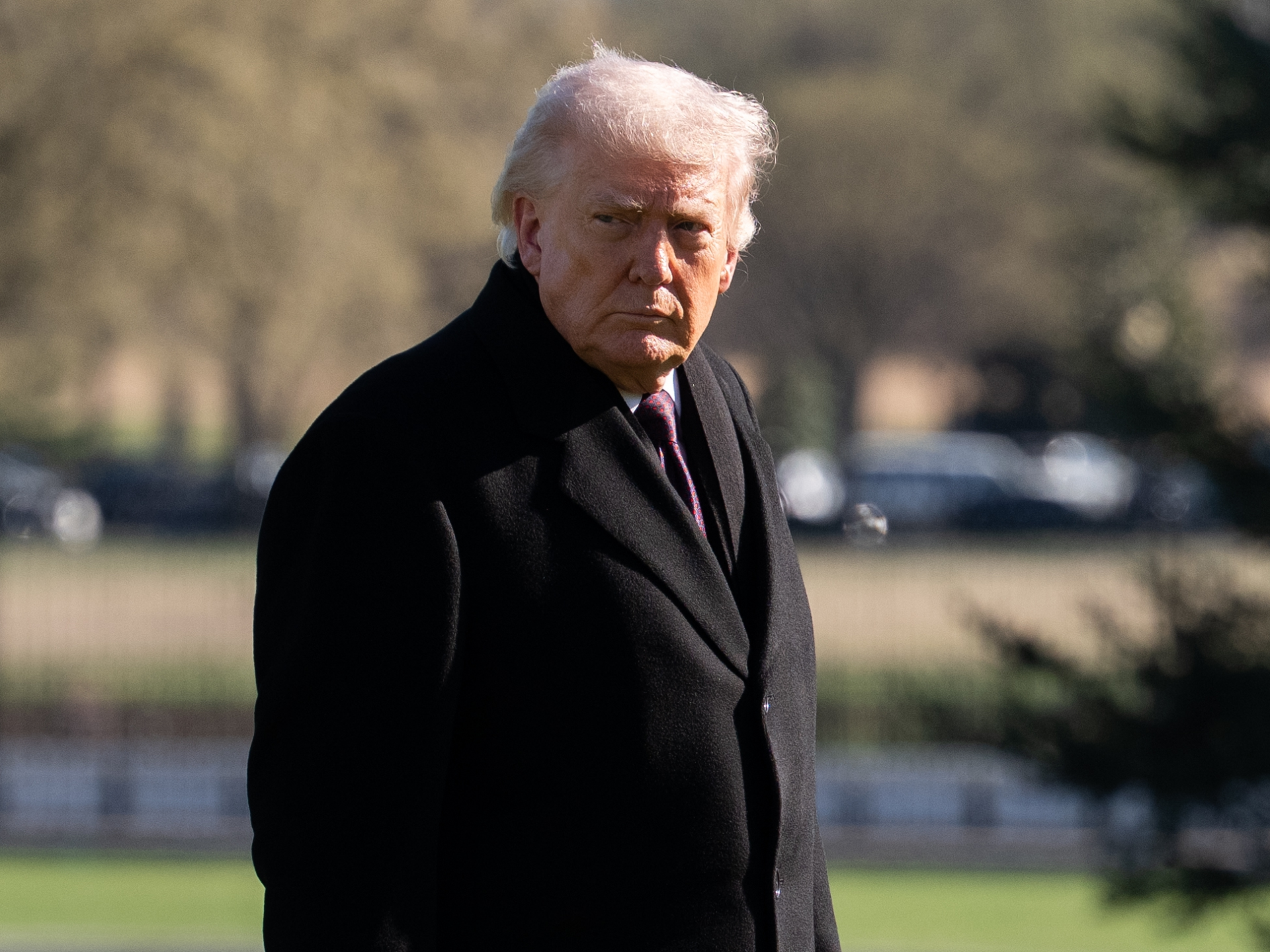
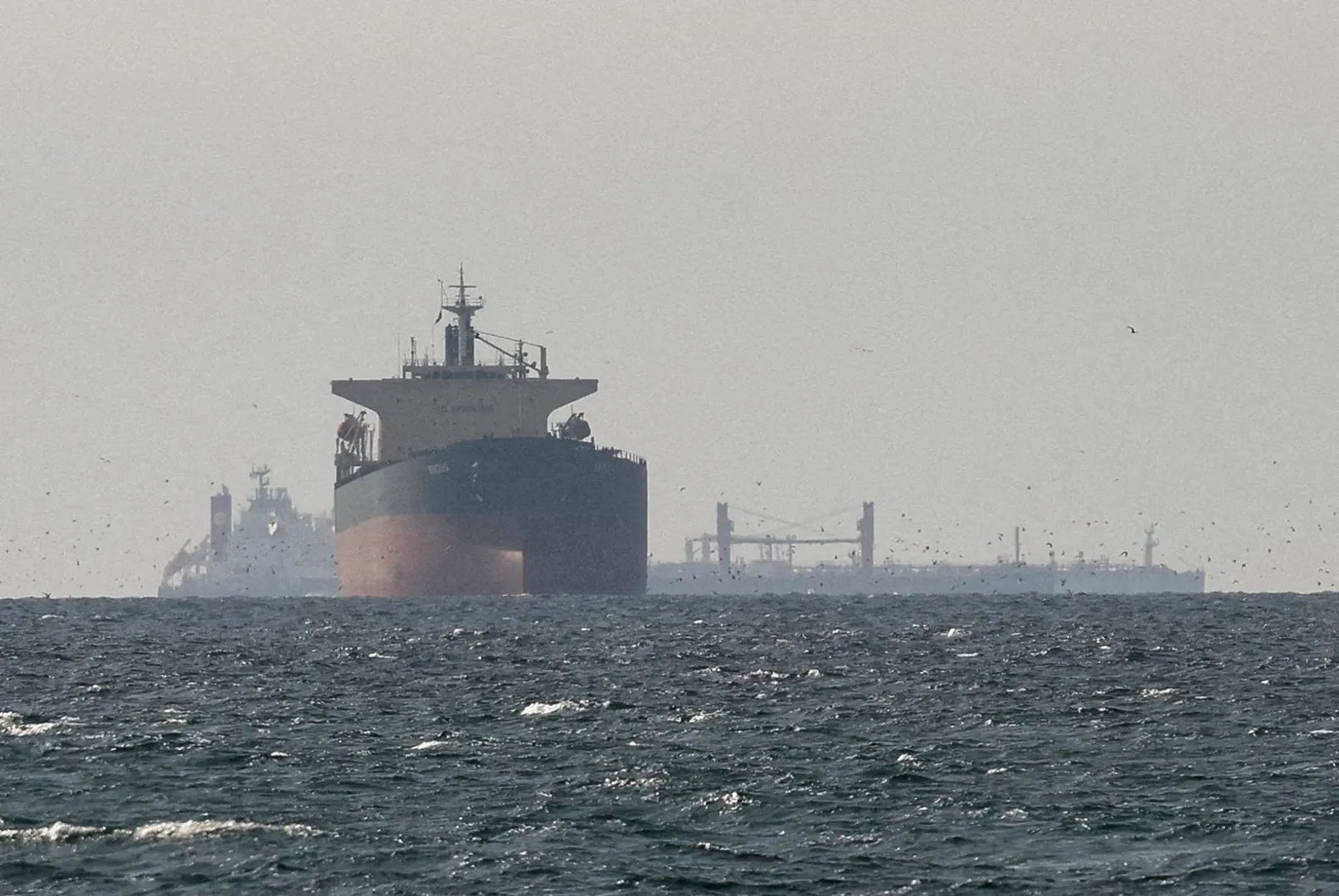
United States President Donald Trump has threatened to attack Iran’s power plants if freedom of navigation is not fully restored at the Strait of Hormuz within 48 hours, a dramatic escalation as the US-Israeli war on Iran continues for a fourth week.
The statement on Saturday came as Trump faces increasing pressure to secure the vital waterway that Iran has promised to keep closed to “enemy ships”, leading to soaring oil prices and plunging stock markets.
“If Iran doesn’t FULLY OPEN, WITHOUT THREAT, the Strait of Hormuz, within 48 HOURS from this exact point in time, the United States of America will hit and obliterate their various POWER PLANTS, STARTING WITH THE BIGGEST ONE FIRST,” Trump, who is in his Florida home for the weekend, wrote on Truth Social at 23:44 GMT.
He did not specify which plant he was referring to as the biggest.
Following Trump’s threat, the Iranian army said it would target all energy infrastructure belonging to the US in the region if Iran’s fuel and energy infrastructure were attacked.
Trump’s escalatory comments came barely a day after he talked about “winding down” the war that he launched alongside Israeli Prime Minister Benjamin Netanyahu on February 28, when the US and Iran were engaged in nuclear negotiations.
In a social media post on Friday, Trump said the US was “getting very close to meeting our objectives as we consider winding down our great Military efforts in the Middle East”.
Key waterway
Shipping traffic through the Strait of Hormuz, where a fifth of the world’s oil and gas passes through during peacetime, has virtually ground to a halt since the early days of the war.
Iran has said the Strait of Hormuz is open to all except the US and its allies, with Minister of Foreign Affairs Abbas Araghchi saying last week that he had been “approached by a number of countries” seeking safe passage for their vessels.
“This is up to our military to decide,” he told the US television network CBS, adding that a group of ships from “different countries” had been allowed to pass, without providing details.
The head of US Central Command, Admiral Brad Cooper, asserted on Saturday that Iran’s ability to attack vessels on the strait had been “degraded” after US fighter jets dropped 5,000-pound (about 2,300kg) bombs on an underground Iranian coastal facility storing antiship cruise missiles and mobile launchers earlier this week.
The strike also destroyed “intelligence support sites and missile radar relays” used to monitor ship movements, Cooper said.
Reporting from Washington, DC, Al Jazeera’s Manuel Rapalo said there seemed to be a “gap between what the White House appears to want in the Strait of Hormuz and what the US military says they have already accomplished”.
“It is interesting, to say at the very least, to hear Trump talking about a major escalation, given the fact that we’ve been hearing throughout the course of the day how much damage the US has done, supposedly, to Iran’s ability to target oil tankers and vessels navigating through the strait.”
Israel’s air defence system failed to stop at least two Iranian missile strikes on southern Israel, in retaliation for an attack on Iran’s Natanz nuclear site. More than 100 Israelis have been injured in Arad and Dimona, with dozens of buildings destroyed. This is what we know.
The attack on a teaching hospital in Al Deain, the capital of East Darfur state, has rendered the facility non-functional.
Published On 21 Mar 202621 Mar 2026
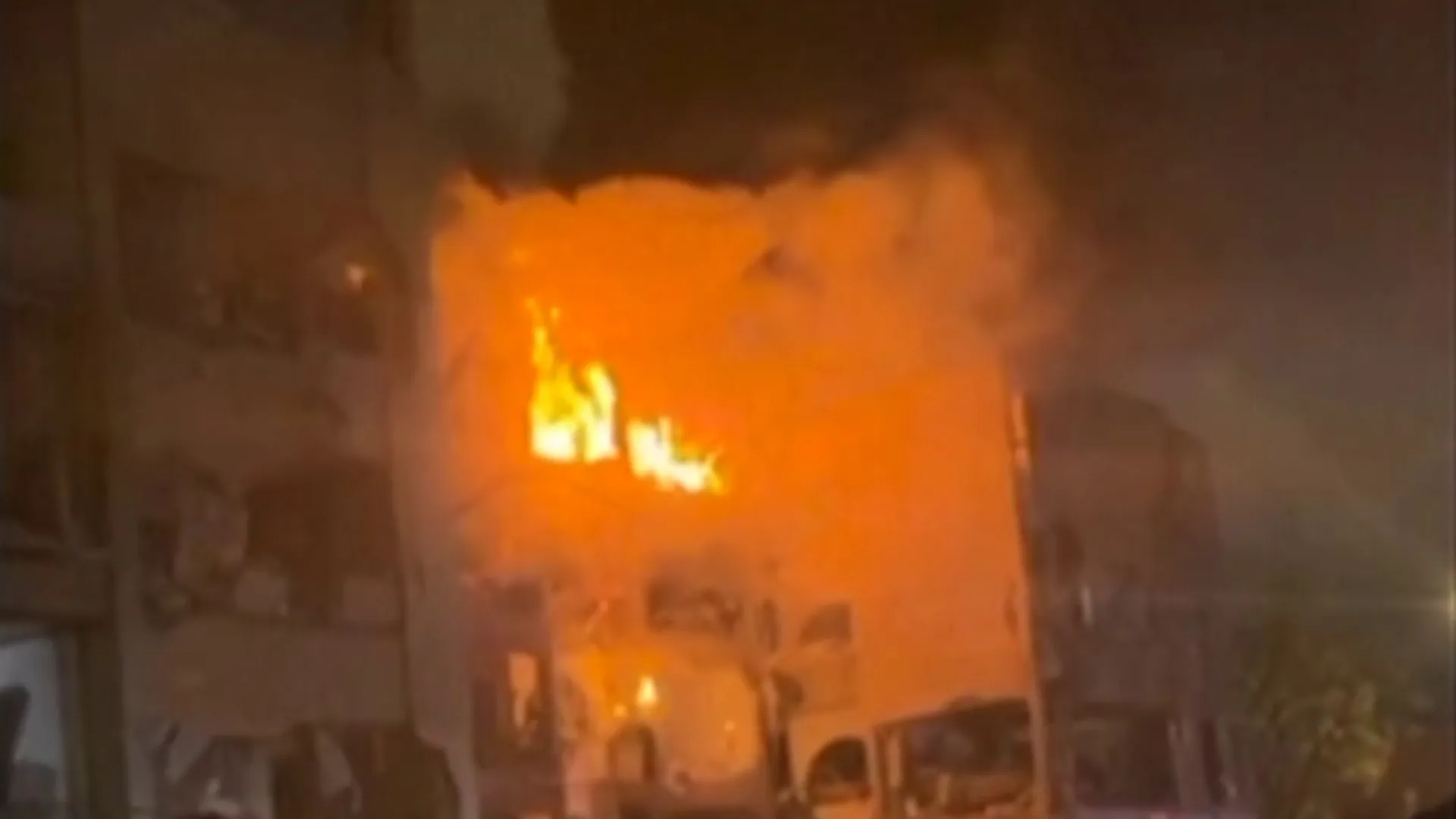
An attack on a hospital in Sudan’s Darfur region has killed at least 64 people, including 13 children, according to the head of the World Health Organization (WHO).
In a social media post, Tedros Adhanom Ghebreyesus said on Saturday that multiple patients, two female nurses and one male doctor were also among those killed in the attack on Al Deain Teaching Hospital in Al Deain, the capital of East Darfur state, on Friday night.
Another 89 people, including eight health staff, were wounded, he added.
The attack damaged the hospital’s paediatric, maternity, and emergency departments, rendering the facility non-functional and cutting off essential medical services in the city.
“As a result of this tragedy, the total number of fatalities linked to attacks on health facilities during Sudan’s war has now surpassed 2,000,” said Tedros, adding that over the nearly three-year conflict between Sudan’s army and the paramilitary Rapid Support Forces (RSF), the WHO had confirmed the killing of 2,036 people in 213 attacks on healthcare.
There was no immediate information about who was behind the attack.
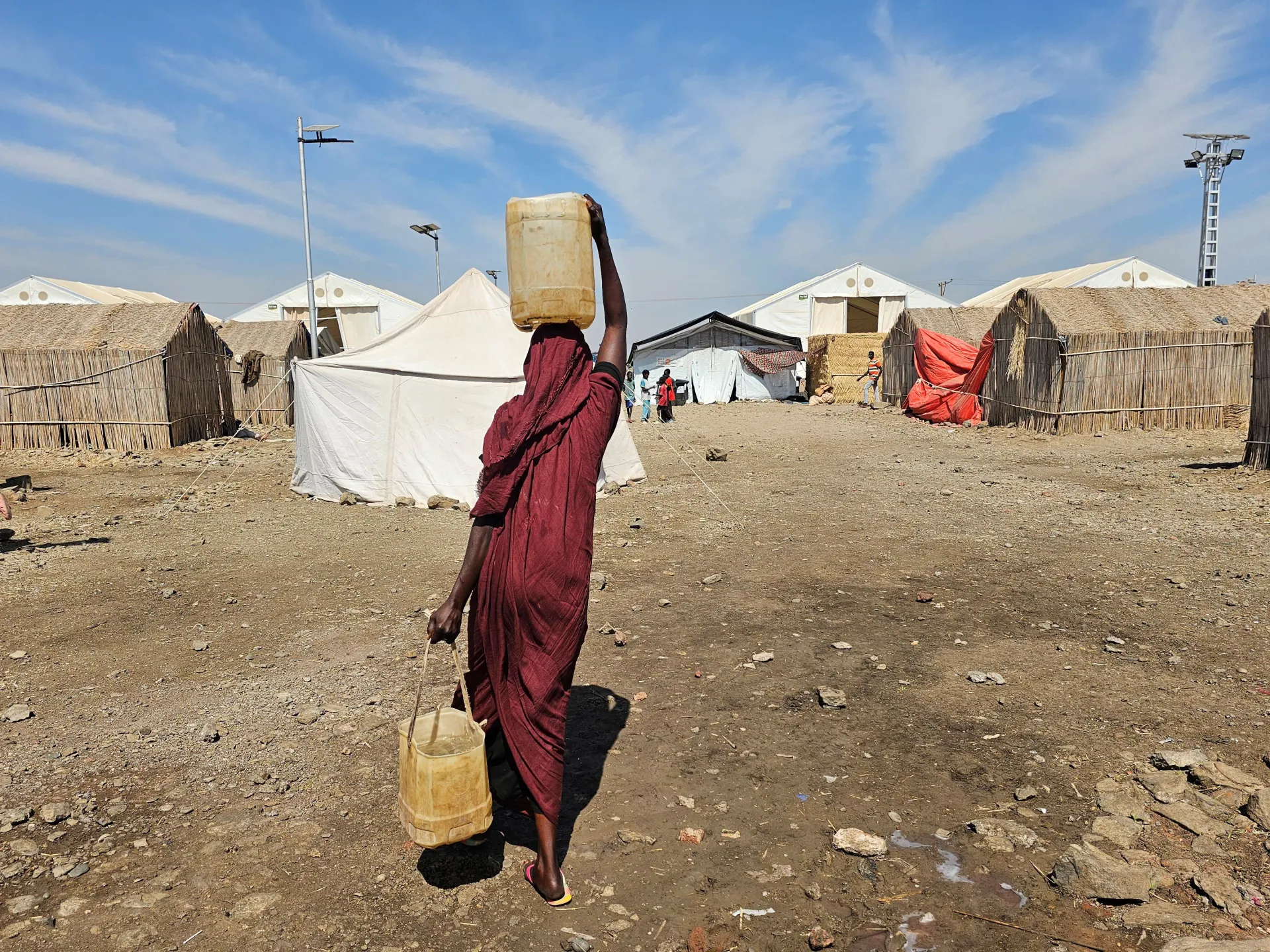
The war between the army and the RSF erupted in mid-April 2023, unleashing a wave of violence that has led to one of the world’s fastest-growing man-made humanitarian crises, with tens of thousands of people killed and more than 12 million forced from their homes.
Both sides have been accused of war crimes and crimes against humanity, while the RSF has been implicated in atrocities in Darfur that United Nations experts say bear the hallmarks of genocide.
“Enough blood has been spilled. Enough suffering has been inflicted,” Tedros said. “The time has come to de-escalate the conflict in Sudan and ensure the protection of civilians, health workers, and humanitarians.”
The move follows a drone strike on the Red Sea port of Yanbu, Saudi Arabia’s main oil export outlet, after Iran blocked the Strait of Hormuz.
Published On 21 Mar 202621 Mar 2026
Saudi Arabia has given Iran’s military attache and embassy staff 24 hours to leave the kingdom due to “repeated Iranian attacks” on its territory.
The Saudi Ministry of Foreign Affairs said in a statement on Saturday that it had declared personae non gratae the “military attache of the Embassy of the Islamic Republic of Iran to the Kingdom, the assistant military attache and three members of the mission staff”.
Recommended Stories
list of 3 itemsend of list
The move comes amid the US-Israeli war on Iran, which has seen Tehran target Saudi Arabia and its Gulf neighbours hosting US military assets with increasingly damaging retaliatory attacks on civilian hubs and energy facilities, unleashing chaos across the region and roiling global energy markets.
Saudi Arabia, which holds the world’s second-largest proven crude oil reserves, has come under attack by hundreds of Iranian missiles and drones since the start of the war, the vast majority of which have been intercepted, authorities have said.
Among the attacks, energy facilities in the east of Saudi Arabia have been repeatedly targeted, as well as the capital, Riyadh, where the US Embassy was hit by two drones earlier this month.
On Thursday, oil loadings at the Red Sea port of Yanbu were disrupted after a drone fell on the nearby Aramco-Exxon refinery, SAMREF.
The port is the only export outlet for Saudi Arabia after Iran effectively blocked tanker traffic leaving the Gulf via the Strait of Hormuz.
Saturday’s statement came after Saudi Foreign Minister Prince Faisal bin Farhan Al Saud said earlier in the week that trust in Iran had been “shattered”, asserting his country’s right to defend itself.
The foreign minister said that Saudi Arabia and other Gulf states had “very significant capacities and capabilities that they could bring to bear should they choose to do so”.
Saudi Arabia’s relations with Iran have historically been rocky, but the two countries embarked on a Beijing-brokered rapprochement three years ago.
On Saturday, the Foreign Ministry said that continued Iranian attacks would lead to further escalation and have “significant consequences” for current and future relations.
The statement followed Qatar’s decision on Wednesday to declare the Iranian Embassy’s military and security attaches in Doha as personae non gratae, along with their staff.
The head of US Central Command says forces have struck Iranian coastal missile sites and infrastructure, degrading Tehran’s ability to threaten shipping in the Strait of Hormuz, as Washington vows to continue targeting its regional military capabilities.
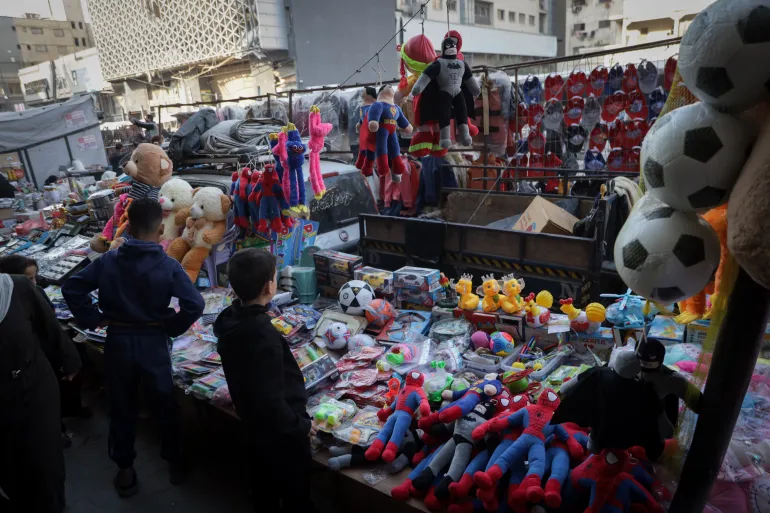
Gaza City – In front of a toy stall in Gaza City’s central al-Rimal market, Rania al-Saudi stands with her two young daughters, looking bewildered at the unusually high prices of toys.
Al-Saudi had promised her daughters she would buy them two dolls to celebrate Eid, but the exorbitant toy prices mean she simply can’t afford them.
Recommended Stories
list of 3 itemsend of list
Her elder daughter, six-year-old Razan, didn’t understand her mother’s worried expressions as Rania asked the vendor for the price of each toy. With every price, Rania gasped and said, “Oh my God, it’s so expensive… this used to be much cheaper.”
Faced with her daughter’s insistence, Rania pleaded with the vendor to lower the prices, but he apologised, saying he could not because getting hold of toys to sell was incredibly difficult, considering Israeli restrictions on importing items into Gaza.
Rania was not alone. Other parents and children repeatedly came to the vendor’s stall to ask about toys, but not one of them made a purchase. In Gaza’s current war-driven economic crisis, the prices are simply unaffordable.
Rania, 43, is originally from Shujayea in eastern Gaza, but has been displaced by the war to the west of the city. She told Al Jazeera that she came looking for toys in an attempt to put smiles on her daughters’ faces before the holiday, but her wish was not fulfilled.
“The prices are extremely high, and the vendors tell us that toys have not entered Gaza since the start of the war. But what did our children do to deserve this?”
Rania recalled the many toys her daughters had in their home before it was destroyed, and how she used to make sure they had toys for every occasion and every holiday.
“Eid holidays are for children’s joy, and children are happy with toys and entertainment. But our children are deprived of everything.”
While speaking to Al Jazeera, Rania tried to calm her daughter Lulwa, who had begun to cry after realising from her mother’s words that she would not get the doll she wanted.
“This doll used to cost no more than 15 shekels ($5) before the war; now it costs 60 shekels ($20),” she said to Al Jazeera, frustrated. “This is something I cannot afford. Everything is expensive and overpriced.”
Rania’s voice grew heavier as she explained that she was unable to even buy new Eid clothes for her daughters – a tradition across the Muslim world – due to the high prices.
“My daughters will not be happy this Eid. I wanted to compensate by getting them dolls, but even that is impossible.”
Toys have been in short supply during the war, which began in October 2023, with bombing and displacement meaning that most children either had their toys destroyed, lost, or left behind. Rania says that her children have been bored, and have had to develop their own ways of playing.
“All the children in the camp face the same situation, so they spend their time playing simple street games like hopscotch, hide-and-seek, or drawing in the sand,” she said.
“But my daughters always wished for a doll. I once tried to make one for them, but they didn’t like it.”
Israel restricts the entry of many non-essential goods into Gaza, including toys [Abdelhakim Abu Riash/Al Jazeera]
Rising prices and market impact
Toy sellers say they are not to blame for the high prices.
Anwar al-Huwaity has been in the business for 20 years. He told Al Jazeera that his stall is still operating despite Israel’s devastation of Gaza, but that business has become extremely difficult.
“Before the war, toys were widely available,” Anwar said. “Today, we go from one trader to another, searching. Sometimes we find toys with someone who had them stored, but they sell it at a very high price, up to three times its normal price.”
He added that most toys that now reach Gaza do not enter through official crossings, but in limited quantities via unofficial routes, making them very difficult to obtain.
The cost of bringing toys into Gaza has become extremely high. Anwar said some middlemen demand up to 12,000 shekels ($3,870) for a small shipment, and if it is confiscated or destroyed, the loss falls entirely on the trader.
“We buy merchandise at high prices, so we have to sell it at high prices as well,” Anwar said apologetically.
Anwar said that toys were now up to 300 percent more expensive compared to pre-war prices. The holiday season, the main income generator for toy sellers, used to bring in between $6,500 and $10,000, he explained. Now, he’d be lucky to sell $1,000 of stock – and most of that is bulk sales to other traders, rather than regular customers.
Anwar may be a businessman, but he shared that the hardest part of his job was seeing children ask for toys that their parents cannot afford.
“Many parents can’t buy toys due to the economic situation. People are barely able to secure food,” he said.
Anwar’s job has gone from providing children joy, to seeing them disappointed.
“I have started hating my workday because I know the prices are exorbitant, and when the children and families see the toys, they get upset, especially during the holidays.”
“People come to buy toys and beg me to lower the price,” he said. “They say, ‘This child is an orphan, that child is an orphan … his parents were killed in the war’. It feels like all children in Gaza have become orphans.”
Toy sellers say they are forced to pass on high prices to customers [Abdelhakim Abu Riash/Al Jazeera]
Restrictions on recreational goods during the Gaza war
Since the outbreak of the war on Gaza in October 2023, trade has been heavily restricted due to the closure of commercial crossings by Israel, especially Karem Abu Salem (Kerem Shalom), the main entry point for goods into Gaza from Israel.
Israel imposed a total blockade on Gaza in 2023, and again for several months in 2025, leading to the declaration of a famine in northern Gaza.
Conditions have improved since a “ceasefire” was declared in October, but Israel is continuing regular strikes – and continuing to heavily restrict the entry of non-essential commercial goods, including toys and recreational materials.
Although no official law or declaration explicitly bans toys from entering Gaza, administrative and security restrictions, combined with the prioritisation of humanitarian goods, have effectively made entry of these items almost impossible.
The United Nations has noted that restrictions on commercial goods, including toys, have affected the availability of both essential and non-essential goods in Gaza.
Near Anwar’s toy stall is another run by Ahmed Ziara. The 24-year-old has been selling toys for several years, but the war has forced him to periodically stop trading.
“Before the war, I worked in major toy exhibitions,” Ahmed explained. “Now toys rarely enter, and we often have to smuggle them, sometimes hidden inside clothes or other goods.”
Ahmed confirmed that most of the toys he acquires are old stock already in Gaza, sold at high prices due to scarcity.
He mentioned that popular Eid holiday toys, which were once inexpensive, now cost triple or even quadruple their previous prices: a small toy car that sold for 40 shekels ($13) last year now costs 150 shekels ($48), a small ball that once cost 3 shekels ($1) is now 30 shekels ($10), building blocks are nearly unavailable, and dolls cost more than 70 shekels ($22.50).
“Buying from traders is hard, and selling is hard due to the economic situation,” Ahmed told Al Jazeera.
“Sometimes I have to sell below the expected price just to clear stock, but most of the time we must raise prices due to high costs and difficulty obtaining toys.”
“If conditions improve and toys are allowed in normally, prices will return to normal, and children and families will be able to enjoy the holiday as before,” he said.
“This work is not easy,” he added, contemplating. “Sometimes I sit alone and tell myself what I am doing is unfair because prices are extremely high. But despite everything, we love to bring joy to children, even for a short time.”
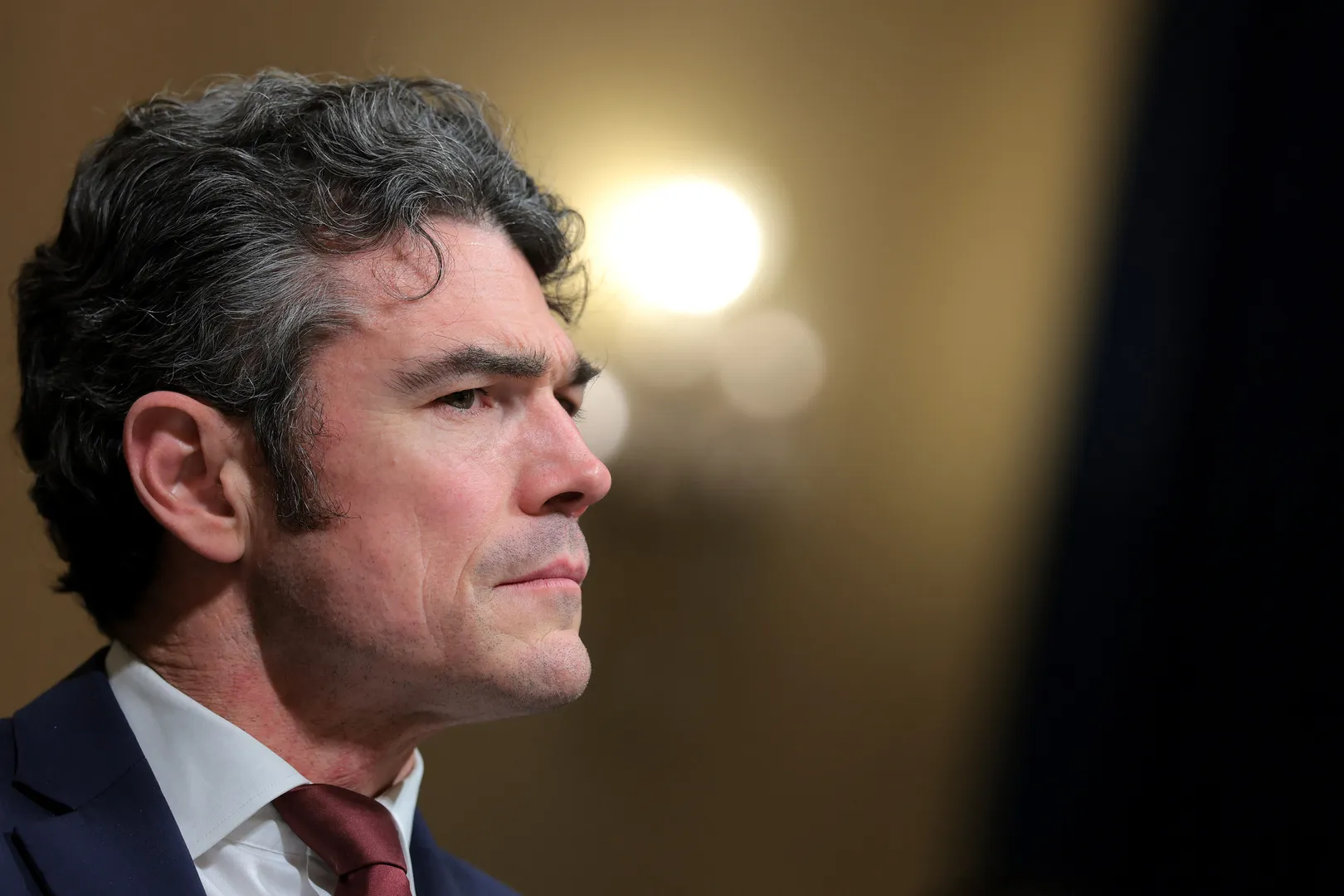
Joe Kent says he resigned as director of the US National Counterterrorism Center over opposition to the war in Iran, telling an audience at a Washington prayer event that he couldn’t “send young men and women off to die on foreign battlefields” in “good conscience.”
Weekly insights and analysis on the latest developments in military technology, strategy, and foreign policy.
The Pentagon has reportedly drawn up plans to send American troops into Iran, possibly to Kharg Island or far deeper into the country to seize enriched uranium. These moves would represent a huge escalation for Operation Epic Fury. Former CENTCOM commander Joseph Votel offers us exclusive insights into the challenges and dangers of having U.S. boots on the ground in the Islamic Republic, and what it would take to seize Kharg Island or attempt to snatch Iran’s stockpile of enriched uranium that could be very challenging to access.
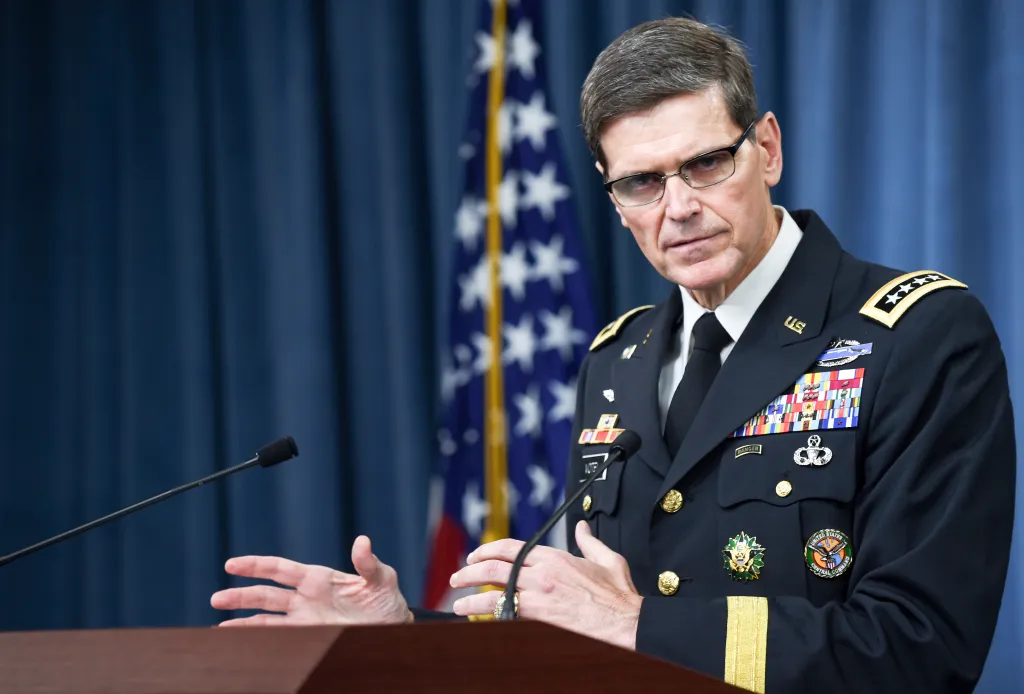
Gen. Joseph L. Votel, commander, U.S. Central Command, briefs the media in the Pentagon Briefing Room, April 29, 2016. (DoD photo by U.S. Army Sgt. First Class Clydell Kinchen)(Released) Sgt. 1st Class Clydell Kinchen
Some of the questions and answers have been lightly edited for clarity.
Q: Does a seizure of Kharg Island, or an insertion of SOF to recover enriched uranium from Pickaxe Mountain or elsewhere in Iran, seem feasible? What would either of those operations take, in terms of troops and assets?
A: Both of those things are feasible. Let me just start with Kharg Island. We can put troops on there. We can air mobile them in. We could land them by boat. I guess the comment I have about Kharg is, I’m not sure what the significance is of putting troops there. It’s only about 20 miles off the coast of Iran. So you’re definitely under the threat of their weapon systems. You’d be very, very vulnerable there. And I don’t know that it would give us any particular tactical advantage that we don’t already have or couldn’t get someplace else at an offset location where we have established bases and other things like that. So I’m not sure what the tactical advantage of it is.
I get that it has an informational and kind of messaging advantage against the Iranians that we are on their territory. And it may send a message to the broader energy community that we are safeguarding these vital Iranian infrastructures. That might give them some confidence [but] kind of an odd thing to do. But I just don’t really see the big advantage of going to Kharg. But we could certainly do it if we had to.
We would be vulnerable. When you start putting troops on the ground – I know there’s some mishmash and words on that – but that’s troops on the ground right there. It also implies that you are going to have to take care of them, you’re going to have to resupply them, you’re going to medevac them, you have to do all the things that keep them in place for whatever period of time. And that requires that you have a logistical tail, and at some point that tail has to be protected as well. So these are not insignificant considerations and they’re often bigger operations.
I would imagine on a little island like Kharg, you would need a battalion sized force of Marines or soldiers could probably do that. So you’re probably looking at 800 to 1,000 troops, kind of size, maybe a little bit smaller, probably not much larger than that.
The U.S. is reportedly planning to attack or blockade Iran’s Kharg Island. (Google Earth)
Going after the fissile material I think is a bigger operation. Again, I think we have the capabilities to do this. Within our Special Operations community, we have people that are trained to do this and have the right relationships and connections and other things to allow us to get in and do that. So you’d have to be able to project that force onto the ground. This would be going to a place like Natanz or Isfahan – probably one of those locations. Those are well inland – several hundred miles into Iran, a country of the same size as the state of Alaska. So it’s big and it’s diverse. It’s largely in an open plain, so you don’t have a lot of natural terrain protection there. That would have to be taken into consideration.
In addition to the kind of operators you put on the ground, you’d also have to bring in a security force, but probably a sizable security force – a brigade size or 1,000 to 3,000 or 4,000 troops to just secure while they did that work. You’d have to do that. You’d have to make sure you dedicated air power. You’d have to put CAPs [combat air patrols] up over, you’d have to have ISR [information, surveillance and reconnaissance] in place.
Again, you’d have the challenge of people on the ground, so you’d have to logistically sustain them and then be prepared to protect that tail. And then you have to have all of the lift, whether it’s rotary wing or fixed wing, to get them in and get them all back out. And then you have the added challenge of handling nuclear material. So about 450-some kilograms. That’s roughly 1,000 pounds of 60% highly enriched uranium. And that’s a lethal material. So ideally, that would be packaged already, but we’d have to make sure we packaged that and moved it and had someplace to actually take it back to.
A general view of Isfahan (UCF) nuclear power plant about 180 miles from Tehran (HENGHAMEH FAHIMI/AFP via Getty Images) HENGHAMEH FAHIMI
So, yeah, could we do a military operation? Sure. I think it would kind of look like I described there. It would be a big operation, and it wouldn’t be something that would be done in a single period of darkness. It probably takes some time. You’d have to have some special capabilities to go in and excavate these things and identify them.
There’s no real open-source discussion of what the conditions are at these things, you’d have to be prepared for the worst, and the worst would be having to dig down and find it. I’m hoping that our intelligence community understands this a little bit more, and I suspect that is the case. But this is a pretty big, pretty significant operation.
An alternative to this would be waiting until there is a cessation of hostilities and then trying to go in in a more semi-permissive environment with elements of the International Atomic Energy Agency (IAEA) who really have responsibility for this. They would bring expertise in to do this. We – or some other military force – would probably assist with some of that. But that may be another option as well. I’m sure they’re looking at all these.
Q: This is not a job for a Tier One unit like SEAL Team Six or Delta, to go in and grab it, right? There’s a lot of discussion about that.
A: Yeah. First of all, you’re not just going to go in and grab 1,000 pounds of nuclear material and then ferret it right out. That’s not the case. Those unique capabilities reside within the Special Operations community. I won’t identify organizations, but they reside within the tip top of our special operations capability. They’re trained and maintained and normally exercise and rehearse on a regular basis. So, yeah, we have the ability to do that. But it’s unlikely – in my view, my estimate, with what I know – that you just send a few folks in there, grab the stuff and get it out. I don’t think that’s the case. I think it’s going to take more. You might be able to do that in a permissive environment, but I don’t think you want to take the risk associated with that in the environment that we’re seeing right now, or perhaps even in a semi-permissive environment.
A: I have no reason to believe that it wasn’t. Is there pressure on our magazine depth? There sure is. We’ve talked about that for a while. CENTCOM planned – which has been developed and modified over the last 20, 25 years – to do this. Every commander had their fingers involved in it. I do not know the current plan. I’m sure that [CENTCOM commander] Adm. [Brad] Cooper has done that. It was a significant discussion, not only about the targets, but certainly about what was required to execute that and also to protect themselves. So my assessment is, yes, I think we have. And I don’t think we’ve seen an instance where we’ve not been able to defend ourselves because we didn’t have any missiles.
There’s no doubt we’ve expended a lot, and that’s put a lot of pressure on the magazines, but the Department of Defense and CENTCOM and Joint Staff, I think, have been able to make sure that they’ve been able to move enough materials into place so we can sustain this operation, now well into its third week.
A U.S. Army soldier, assigned to 1-43 Air Defense Artillery Regiment (ADAR), operates a forklift bearing MIM-104 Patriot Surface-to-Air Missile (SAM) canisters at an undisclosed location in the CENTCOM region. (U.S. Army photo by Capt. Nick Beavers) Capt. Nick Beavers
Q: How concerned are you about America’s magazine depth of these defensive weapons?
A: We should be concerned. I think the challenge may not necessarily be in CENTCOM. The challenge may be in other areas like the Pacific, Korea, you know, Europe, you know this. This could be impacting our ability to send things to the Ukrainians, or through our NATO partners, the Ukrainians. So I think that’s where the concerns are. And by the way, you know, all of our Gulf Arab partners and many of our partners around the world use THAAD [Terminal High Altitude Area Defense] and use Patriot missile systems, and so they require resupply as well, and stocks available to them.
I think we have long had an issue with making sure we had sufficient magazine depth. We went through this several years ago when North Korea was flexing its muscles and firing missiles towards Guam and over Japan. We had a serious discussion about this. We saw this with the response to Ukraine as well with artillery rounds. The Army’s ramped up production, three or four fold over the last couple of years. But it’s taken a little bit of time. That’s good. But we need to do that with all these other munitions. So a portion of our resources needs to be dedicated to making sure we have sufficient munitions in place for our contingencies and for our partners who have bought our systems they are relying on.
U.S. Army soldiers from the 1st Battalion, 7th Air Defense Artillery Regiment, 108th Air Defense Artillery Brigade, load equipment and trucks onto a C-17 Globemaster III with U.S. Air Force airmen assigned to the 21st Expeditionary Airlift Squadron at an undisclosed location in the CENTCOM Area of Operations. (U.S. Army photo by Sgt. Christopher Neu) Staff Sgt. Christopher Neu
Q: What’s your assessment of Iran’s magazine depth of missiles, operable launchers and drones? How long can they keep presenting a threat?
A: There’s been pretty serious damage done to their missile system and I say the system, because it’s not just the missiles. It’s the launchers, it’s the command and control sites, manufacturing sites, it’s the storage sites. I think we’ve done a lot of damage to that. And you’ve probably heard some of the numbers that have come out of CENTCOM – in the 70, 80% range of destruction. I think we’ve done a lot with the drones as well. I think the concern is the last 15 or 20%.
Don’t pay attention to the numbers. The fact of the matter is, they’re going to have a remnant portion of capabilities, and that’s a portion we’re focused on right now. Iran’s strategy has been to broaden the conflict by hitting a lot of different places, 12 or 13 different countries, and then to extend it by continuing to present this threat to us over a long period of time. They don’t have to shoot large volleys of missiles and drones. They just have to get some across. They just have to launch some every day. And that’s going to keep our focus, and it’s going to keep us occupied doing that. So that’s their strategy on this.
They’ve taken a significant hit in some of their capabilities, and I imagine some of the magazines, but there’s some left. I think at the start of the war, their missile strength was somewhere in the 2,000 to 3,000 range. Some of the numbers I’ve seen show there are probably over 1,000 that have been launched now, and so that leaves a considerable number. They don’t have the ability to launch these. And now that we have air superiority over those locations, we can go anywhere we want. We see something, we can take it out right away. So the missiles are very, very vulnerable, but the drones are much easier [for Iran to protect]. They don’t require all that much, and they probably got larger stores that it’s important to appreciate. They were manufacturing these things for Russia, so they probably have fairly sizable stores of drones left.
Prior to Operation Epic Fury, the Iranian regime used the Karaj Surface-to-Surface Missile Plant to assemble ballistic missiles that threatened Americans, neighboring countries, and commercial shipping. The photo dated March 1, 2026, shows the plant prior to U.S. strikes. The… pic.twitter.com/QEs5toZQpX
Q: How closely is China watching this? And what are they learning from it?
A: Well, I think they’re paying very close attention to this. They’re learning how we respond to counter fire. They’re very closely following our air tactics and how we are working with the Israelis on that. They’re looking at the targets we are going after, and trying to understand the scheme of fires associated with all of this.
They will be watching very closely how we deal with the Strait of Hormuz. We’ve got the straits down there – the Strait of Taiwan and all these other ones in Asia – they’ll be paying very, very close attention to this. They’ll be watching what our readiness rates are throughout all of this, and our ability to marshal forces and how quickly we can do this. So I think they’re absorbing a lot about how we are operating.
But they’re also seeing the use of drones. They’re probably trying to pay attention to how artificial intelligence may be being effectively used. And I would imagine that it is by the US and helping us parse a whole bunch of information and select targets and perform other functions. So, they’re paying a lot of attention. I think they’re also paying attention to what this is doing to our readiness in other areas, frankly. We continue to move resources out of the Asia Pacific, and they certainly are taking note of that.
Q: Do you think China will move on Taiwan given all that?
A: I don’t know. I’m not an expert in that particular area. But what I do know is they’ve had some ambitions of trying to be ready for that in the next year or so. I also know that there’s been a wholesale sacking of their military leadership by President Xi. So he’s putting new people into place, that has an impact. It certainly has an impact on the ability to command and control a major operation to [invade] Taiwan. I don’t think we’re going to see this in the near-term. I don’t know that that’s necessarily the lesson Xi’s taken away from us. I don’t know if they’re actually prepared to do that. But they’re certainly paying attention to how we are doing things here and how that could be used in their types of operations.
A view of China’s new ‘invasion barge,’ which involves a temporary pier that can be connected to other vessels via a barge, or series of barges, with jack-up supports. The development of jack-up barges is widely seen as part of preparations for a possible invasion of Taiwan. (PLAN). via X
Q: So far, the Houthis have been on the sidelines. Why do you think that is and at what point will they get involved?
A: The Houthis – one of the extensions of the Iranian network – have always been much more independent than Hamas or certainly Hezbollah or the Shia militia groups we normally see in Iraq and Syria that are loyal to the Iranian regime. [The Houthis] are much more independent in terms of this. They actually have a governing function, full-on governing function, and so they are trying to make decisions for themselves.
I have heard a couple of discussions on this one. One viewpoint would be that the Iranians have told them to hold on: ‘We want to extend again. We want to extend this conflict out. We want to buy some time. We’re going to be patient,’ and then we may look to do that.
Another theory might be that they’re just keeping their powder dry right now and waiting for an opportunity to launch into this. I think there’s probably a variety of reasons why they aren’t doing it. They have an agreement in place with us. They took a pretty serious beat down during our counter-Houthi operations some months ago. So that had an impact on them. They’re probably not anxious to revisit that immediately, because it was pretty devastating for them. So I imagine they’re just being patient.
A: I don’t view it as particularly likely at this point. There may be some further power shifts there. I think the military component – the IRGC component of the regime, those senior leaders – are having much more influence, and that’s influencing these very angry responses we’re seeing from the Iranians on this, lashing out at the Gulf Arab countries. So I think that the military is definitely ascending in this.
But yet, they have preserved the theocratic side of government by putting a new Ayatollah in place, admittedly, one that’s not well known, that appears to be pretty weak [Mojtaba Khamenei, chosen to replace his father, Ali Khamenei who was killed on the first day of the war]. He actually seems to be very aligned with the hard liners on the military side. There’s not much on him. He doesn’t have a huge amount of religious credibility or anything. So, he could be a figurehead, could be expendable for them, frankly, but their regime is very deep. It has great influence, and it’s pretty much wired everything in Iran, so they can remain in power. And so I suspect that they probably will. Whether a more pragmatic leader arises. I don’t know. I don’t know who that might be.
New Iranian Supreme Leader Ayatollah Mojtaba Khamenei. (Iranian media)
Q: What’s your biggest worry about how this all winds up?
A: That the regime remains in power. They’re going to continue to try to extend and keep this going for a long period of time, and we are going to have to undertake very expensive and deliberate activities to bring this under control. I mean, we’re already three weeks into what has been touted as a four or five week campaign. That’s pretty reasonable based on my experience and knowledge of what CENTCOM is trying to do, and what that plan basically looks like. It makes a lot of sense to me.
And then we have to undertake a very deliberate effort to open the Strait. And then we’ll have to stay committed to helping move ships through there, for some period of time, and Iran will continue to have the ability to interdict that.
My concern is that when we move to a new normal that hasn’t necessarily changed the dynamic all that much, we will have to stay committed to this for some time forward. I don’t know that that was necessarily what we had envisioned at the start of this, or had envisioned for the force long term.
Q: How long do you think this will go on, given what you’re seeing now?
A: I think we’ve got weeks more of operations.
Q: A month? More than that?
A: More than a month, I think probably double digit weeks and single digit months when you throw in a Strait of Hormuz operation, stuff like that. I can see us for a couple of months here.
The amphibious assault ship USS Tripoli is steaming toward the Middle East to boost a growing U.S. military presence there. (Staff Sgt. Samuel Ruiz)
Q: What kind of strain does it put on the U.S. in terms of readiness, in terms of the troops and equipment?
A: Well, most of these naval vessels were not necessarily anticipated or forecasted to be in the Middle East right now. For the most part, they have diverted from other things that they were doing, particularly the carriers. That defers maintenance. It defers normal training cycles, and other readiness cycles that are built into this.
Those ships are fantastic, but they have to go into very deliberate maintenance periods and capital ship maintenance has been an area of some concern for us for a while, because we have so many things going on and because we don’t have the infrastructure that we require to take care of these things. So I think there could be some readiness issues with our maritime vessels. It certainly puts a lot of stress on things like THAADs and Patriots, and again, we have a finite number of those. They’re not in Korea, they’re not other places, they’re not in Europe, they’re here. So that’s going to have an impact, and those organizations are going to have to be reset at some particular point on this.
This is putting more and more stress on our air fleet, our tankers, the C-17 movers, and, of course, all the wear and tear on all of our fighters. I think to our readiness, all of those things have to be taken care of at some particular point. And that’s going to have an impact as we try to rebuild readiness and respond to other contingencies around the world. And in addition to returning to our great power competition. So I think there’s definitely going to be some impacts in this.
An F-35A Lightning II takes off from an undisclosed location in support of Operation Epic Fury. (U.S. Air Force Photo) U.S. Central Command Public Affa
Q: How much of a difference to Epic Fury does it make that the aircraft carrier USS Gerald R. Ford has to leave the theater to undergo fire damage repairs in Souda Bay, Crete? That leaves just the USS Abraham Lincoln as the lone carrier during a major contingency operation.
A: We’ve got a lot of aircraft. We’ve got ground-based aircraft. My understanding is we may be moving another carrier in to replace that one. I don’t recall exactly which one it is, but I think I’ve read at least one or two sources that said it would happen. It takes 80 or 90 airplanes, theoretically, out of the cycle. Now those aircraft can be cross-decked, they can be moved to land. And we may be doing that. I don’t really know. But it takes away a big platform. We lose some flexibility here, and those aircraft carriers are basically floating air bases out in the middle of the ocean, and give us the ability to launch and recover things and project power where we need to. It takes away from some major command and control capability. So, yeah, it creates a void. It’s not impossible to backfill. I suspect we probably will be able to do that, but there’s definitely a diminishment there, and hopefully we’re replacing one with one here.
The USS Gerald R. Ford is heading to Crete to repair fire damage, taking the ship out of the Epic Fury campaign. (USN)
Q: Anything I didn’t ask that you want to talk about?
Former FBI chief Robert Mueller, who probed the alleged Russian interference in the 2016 United States election, has died at age 81.
“With deep sadness, we are sharing the news that Bob passed away” on Friday night, his family said in a statement Saturday.
“His family asks that their privacy be respected.”
Mueller was appointed as director of the FBI by then-President George Bush in September 2001, a week before the 9/11 attacks that would push him into the centre of a national crisis.
He became the key figure behind changing the FBI from combating crime to now countering national security risks following the attack on New York’s World Trade Centre.
In 2013, Mueller stepped down from the bureau and later by 2017 was appointed as special counsel to oversee the Justice Department’s probe into possible Russian interference in the election, which saw Donald Trump secure his first term over Democratic nominee, Hilary Clinton.
Following the announcement of his death, Trump took to his Truth Social platform to write: “Robert Mueller just died. Good, I’m glad he’s dead. He can no longer hurt innocent people!”
Weekly insights and analysis on the latest developments in military technology, strategy, and foreign policy.
Welcome to Bunker Talk. This is a weekend open discussion post for the best commenting crew on the net, in which we can chat about all the stuff that went on this week that we didn’t cover. We can also talk about the stuff we did or whatever else grabs your interest. In other words, it’s an off-topic thread.
This week’s second caption reads:
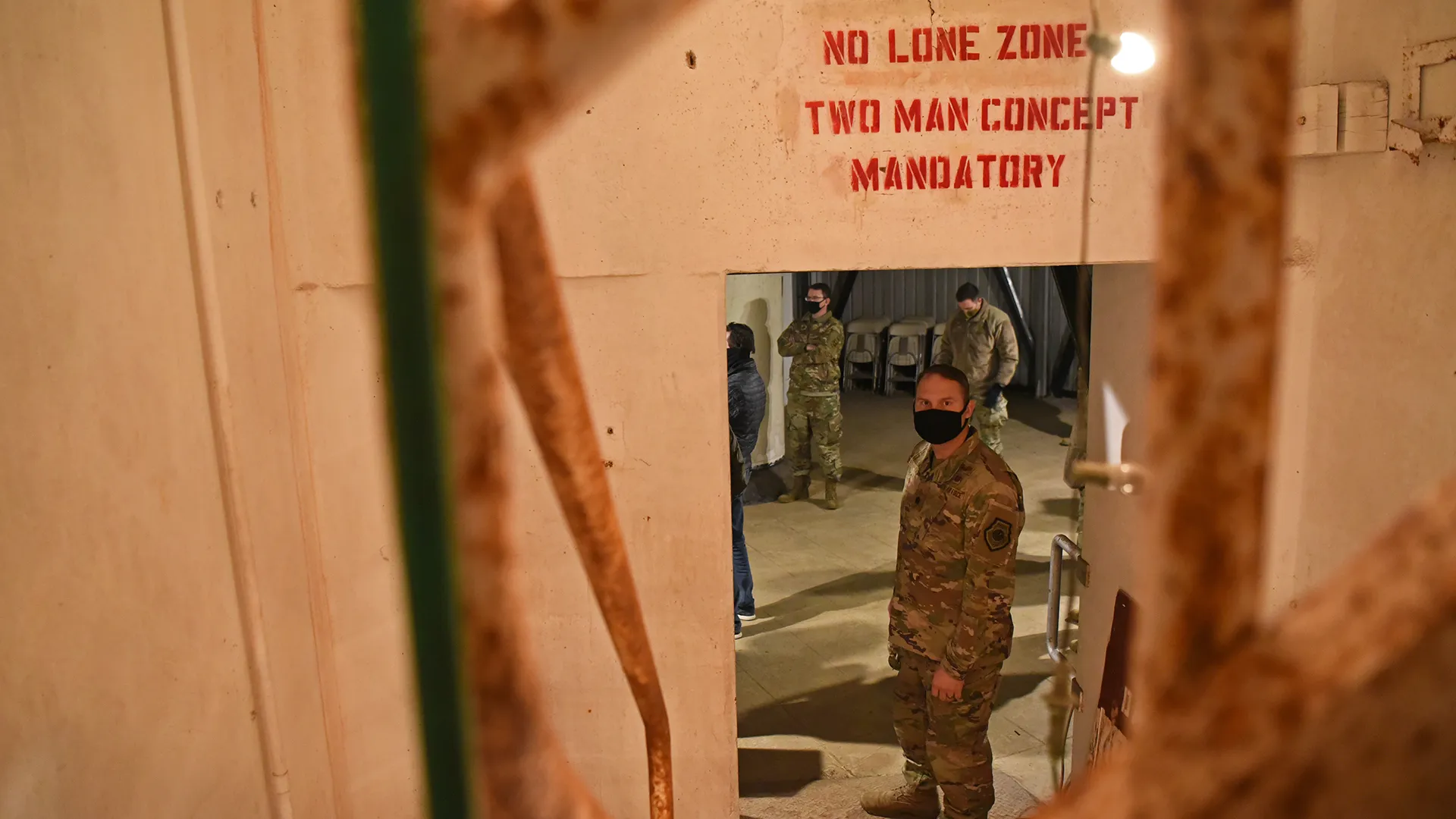
U.S. Air Force Lt Col. John Bergmans, 315th Training Squadron commander, enters the Lawn Atlas Missile Base’s missile silo while exploring the narratives of actual personnel deployed to the site during the Cuban Missile Crisis in Lawn, Texas, Dec. 3, 2020. Bergmans attended the Staff Ride to LAMB in support of the 17th Training Wing Heritage Campaign Plan that was founded on Air Force heritage and the Airmen Warrior Ethos among attending personnel.. (U.S. Air Force photo by Senior Airman Abbey Rieves)
Also, a reminder:
Prime Directives!
If you want to talk politics, do so respectfully and know that there’s always somebody that isn’t going to agree with you.
If you have political differences, hash it out respectfully, stick to the facts, and no childish name-calling or personal attacks of any kind. If you can’t handle yourself in that manner, then please, discuss virtually anything else.
No drive-by garbage political memes. No conspiracy theory rants. Links to crackpot sites will be axed, too. Trolling and shitposting will not be tolerated. No obsessive behavior about other users. Just don’t interact with folks you don’t like.
Do not be a sucker and feed trolls! That’s as much on you as on them. Use the mute button if you don’t like what you see.
So unless you have something of quality to say, know how to treat people with respect, understand that everyone isn’t going to subscribe to your exact same worldview, and have come to terms with the reality that there is no perfect solution when it comes to moderation of a community like this, it’s probably best to just move on.
Finally, as always, report offenders, please. This doesn’t mean reporting people who don’t share your political views, but we really need your help in this regard.
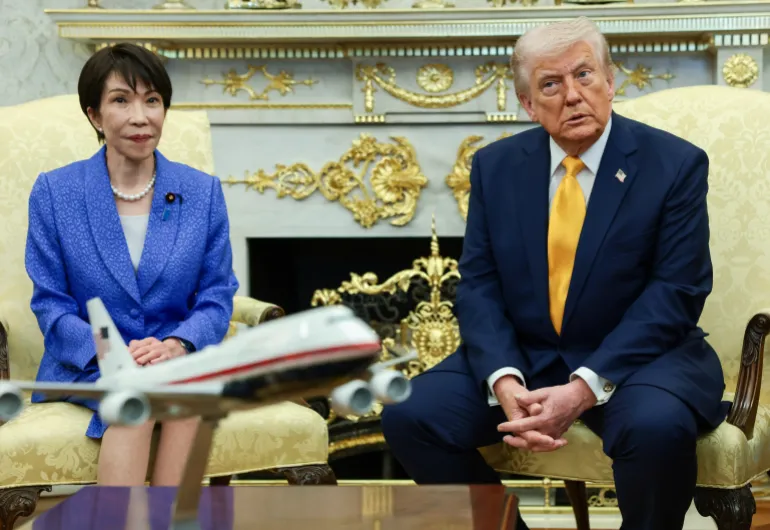
US president’s reference to Japan’s 1941 attack on naval base in Hawaii has shaken the Japanese public as PM Takaichi’s silence gets mixed reaction.
There has been embarrassment, confusion, and unease in Japan after US President Donald Trump used the Pearl Harbor attack during World War II to justify his secrecy before launching the war on Iran.
Trump was asked by a reporter why he did not tell allies in Europe and Asia in advance of the US-Israel attack on Iran during a news conference with Japanese Prime Minister Sanae Takaichi at the White House on Friday.
Recommended Stories
list of 4 itemsend of list
Trump cited Pearl Harbor to defend his decision saying, “Who knows better about surprise than Japan? Why didn’t you tell me about Pearl Harbor, OK?”
Following the remarks, social media reaction has ranged from accusations of ignorance and rudeness by the US president to claims that he does not see Japan as an equal partner. There were calls for Japan to protest Trump’s comments.
Tsuneo Watanabe, a senior fellow at the Sasakawa Peace Foundation, said in an opinion piece in the Nikkei newspaper on Saturday that the remarks signalled Trump is “not bound by existing American common sense”.
“I get the impression that the comment was intended to bring the Japanese reporter [who asked the question] or Ms Takaichi into complicity in order to justify his ‘sneak attack’ on Iran during diplomatic negotiations and without telling allied countries,” Watanabe wrote.
There is also a feeling that an unspoken understanding exists between United States and Japanese leaders to tread carefully on the subject.
Both sides need each other, with Washington relying on Japan to host 50,000 troops and an array of powerful hi-tech weapons, and Japan relying on the US nuclear umbrella to deter hostile, nuclear-armed neighbours.
Japan’s post-World War II constitution bans the use of force except for its self-defence, but Takaichi and other officials are now seeking to expand the military’s role.
Mixed reaction to Takaichi’s response
Takaichi, a hardline conservative, was praised by some for not reacting to Trump’s comments, letting them pass with a roll of her eyes and a glance at her ministers seated nearby.
The goal of her summit was to deepen ties with her most important ally, and she arrived shortly after Trump suggested Japan was among the nations that did not quickly join his call to help protect the Strait of Hormuz.
Some, however, criticised Takaichi for not speaking up.
Hitoshi Tanaka, a former diplomat and a special adviser at the Japan Research Institute think tank, wrote on X that he felt embarrassed to see Takaichi flattering Trump.
“As national leaders, they are equals … To make an equal relationship is not to flatter,” he said. “Just doing what pleases Trump and calling it a success if you are not hurt is too sad.”
Initially, social media placed some of the blame on the Japanese reporter who asked the question that prompted Trump’s Pearl Harbor comment.
The reporter, Morio Chijiiwa with TV Asahi, later said on a talk show he asked the question to represent the feelings of Japanese who are not happy about Trump’s one-sided attack on Iran, and because other countries, including Japan, are now being asked to help out after the US and Israel started the war.
“So that’s why I asked the question. I was meaning to say, ‘Why didn’t you tell us, why are you troubling us?’” he said.
“Then President Trump hit back with the Pearl Harbor attack … I found it extremely awkward for him to change the subject.”
Japanese Prime Minister Sanae Takaichi, left, meets President Donald Trump [Evelyn Hockstein/Reuters]
Jury finds that two tweets posted in May 2022 by Musk contained false statements responsible for a plunge in Twitter’s share price.
Published On 21 Mar 202621 Mar 2026
A federal jury in California has found that tech tycoon Elon Musk misled Twitter shareholders, driving down the company’s share price as he was poised to buy it in a $44bn deal.
The verdict delivered on Friday in the class action securities lawsuit means the world’s richest person could be ordered to pay billions of dollars, according to damages calculated by jurors.
Recommended Stories
list of 4 itemsend of list
After a three-week trial in a San Francisco federal court – which included in-person testimony from Musk – the jury found that two tweets posted in May 2022 by the Tesla and SpaceX CEO contained false statements responsible for a plunge in Twitter’s share price.
Investor Giuseppe Pampena had filed the suit on behalf of people who sold Twitter shares between mid-May and early October 2022.
Jurors agreed that Musk violated a securities rule that bars false and misleading statements that sink a stock price, in this case that of Twitter, the verdict form showed. A lawyer for the plaintiffs estimated the damages at about $2.6bn.
But the nine-person jury absolved Musk of some fraud allegations, finding that he did not “scheme” to mislead investors.
Minutes after the judgement was announced, lawyers for Musk, who acquired the social media platform in late October 2022 and later renamed it X, said their client will appeal the decision, characterising it as a “setback”.
Musk, who has a near-constant presence on X, did not immediately react to the verdict, which marks a rare legal defeat for the billionaire often dubbed “Teflon Elon” for his ability to emerge unscathed from lawsuits he is expected to lose.
In 2023, a jury in the same San Francisco federal court cleared him within hours of similar charges brought by Tesla shareholders, following his 2018 tweets claiming he had the funding to take the automaker private.
Musk abandoned his effort to get out of buying Twitter in late 2022 after the company took him to court to uphold the contract. He has since merged the social media platform with his artificial intelligence startup xAI and his private space exploration firm SpaceX.
Forbes magazine earlier this month estimated Elon Musk’s net worth at $839bn, a figure based primarily on his stakes in his portfolio of companies including Tesla and SpaceX.
Japan edges tournament hosts Australia 1-0 in the Women’s Asian Cup final to claim third title in four editions.
Published On 21 Mar 202621 Mar 2026
Maika Hamano scored the only goal as a formidable Japan battled past Australia to clinch a third Women’s Asian Cup title in front of a record-breaking 74,357 fans in Sydney.
The Tottenham star hit a stunning long-range strike in the 17th minute at Stadium Australia to break Australian hearts and add to their continental crowns from 2014 and 2018.
Recommended Stories
list of 4 itemsend of list
Those finals were also against Australia and ended 1-0.
The edge-of-the-seat decider culminated a landmark tournament with more than 350,000 fans through the turnstiles, reinforcing the growth in popularity of the women’s game.
This was about six times as many as the previous tournament record set in 2010 in China, with the final setting a new attendance record for a single game in tournament history.
The Asian Cup doubled as qualifying for the World Cup in Brazil next year, with Australia, Japan, South Korea, China, North Korea and the Philippines all punching their tickets.
The Japanese team, stacked with English-based players, was invincible in their run to the final, fluid across the park, and defending well, steamrolling everyone in front of them.
While Australia proved a much tougher test, nothing could stop them as they accumulated 29 goals and conceded just one through their six tournament games to reinforce their status as Asia’s number one team.
Japan named an unchanged lineup from their 4-1 semifinal thumping of South Korea.
Australia made one change to the team that beat defending champions China 2-1 in the last four with Wini Heatley preferred in central defence to Clare Hunt.
The hosts were composed at the start, looking to dictate the game, and Caitlin Foord should have scored on 11 minutes when Mary Fowler threaded a pass through inside the box.
But the unmarked Arsenal striker sent her shot straight into the arms of Japan keeper Ayaka Yamashita to miss a golden opportunity.
It proved costly with Japan breaking the deadlock six minutes later when Tottenham midfielder Hamano collected the ball outside the penalty area and unleashed a 25-yard rocket that found the top corner.
Foord had another chance when she pounced on a sloppy clearance from Yamashita, but failed to find the target from a tight angle, then scuffed another wide just before the break.
Japan were always a threat, and West Ham’s Riko Ueki went close twice in as many minutes soon after the restart.
With the game on a knife-edge, Australia threw everything they had at Japan in a desperate attempt to find an equaliser as the crowd noise reached fever pitch.
Alanna Kennedy almost pulled off a late equaliser in the 88th minute, but despite intense pressure, Japan were rock solid and absorbed the threat to cling on for the win.
Who: Real Madrid vs Atletico Madrid What: La Liga Where: Santiago Bernabeau, Madrid, Spain When: Sunday, March 22 at 9pm (20:00 GMT) How to follow: We’ll have all the build-up on Al Jazeera Sport from 17:00 GMT in advance of our live text commentary stream.
Madrid host rivals Atletico on Sunday at the Santiago Bernabeu, aiming to stay in touch with champions Barcelona, who currently hold a four-point lead.
Recommended Stories
list of 4 itemsend of list
Los Blancos will be seven points off the summit if Barcelona beat Rayo Vallecano earlier on Sunday.
Alvaro Arbeloa’s Madrid side dispatched Manchester City in the Champions League last 16 with two victories after entering the tie as underdogs, and it could be a turning point for a season hobbled by inconsistency.
Before the win over City, Madrid had faltered with back-to-back league defeats to Osasuna and Getafe.
Madrid will be seeking some vengeance for the 5-2 drubbing Atletico dealt them in their first league meeting at Metropolitano Stadium in September and will be hoping that Atletico’s main focus is on cup competitions – their main chances of silverware this season.
A top-four spot is virtually guaranteed for Atletico, who sit third in La Liga – 13 points clear of fifth place Real Betis.
Atletico – who will play Real Sociedad in the Copa del Rey final – are also into the last eight of the Champions League after overcoming Tottenham Hotspur.
Last up for Madrid
Real Madrid’s Vinicius Jr scored twice as the Spanish side eased into the Champions League quarterfinals, beating 10-man Manchester City 2-1 at Etihad Stadium to complete a 5-1 aggregate victory.
Vinicius put the visitors ahead from the penalty spot in the 22nd minute, after the VAR judged Bernardo Silva to have handled his shot on the line, a decision that also reduced City to 10 men and made an already daunting task seemingly impossible.
Pep Guardiola’s City were not waving the white flag, however, and Erling Haaland levelled in the 41st minute when he tapped in a pass from Jeremy Doku from close range.
City’s Doku and Rayan Ait-Nouri, and Real Madrid’s Federico Valverde and Vinicius had second-half goals chalked off before Vinicius completed his brace with the last kick of the game from the edge of the 6-yard box in the 93rd minute.
Vinicius’s goals were an answer to the Premier League team’s fans mocking him with a banner last season, referring to Rodri beating the Brazilian to the Ballon d’Or.
“Football is good for that, it always gives you another chance,” said Vinicius.
Vinicius Junior celebrates scoring the opening goal against City on Wednesday [Paul Ellis/AFP]
Arbeloa basks in ‘happiness and joy’ of win
Madrid march into the quarterfinals to face Barcelona after defeating City.
“It was a really tough tie against a team like this who have such talent,” Arbeloa after the game. “There’s happiness, there’s joy because of the performance and this continues.”
Asked about beating Guardiola, Arbeloa deflected praise to his players.
“I wouldn’t dare to say I can beat Pep Guardiola in terms of a tactical way, he’s an elite coach, he’s won thousands of trophies in his career, and what we’ve won is a tie,” he said. “I believe [the players] deserve the recognition for the work they put in.”
Last up for Atletico
Atletico Madrid held off Tottenham’s bid for an epic Champions League escape as they reached the quarterfinals despite a 3-2 defeat in the last-16 second leg on Wednesday.
Diego Simeone’s side trailed three times in north London but they did just enough to go through 7-5 on aggregate.
Randal Kolo Muani put Tottenham ahead in the first half before Julian Alvarez levelled immediately after the break.
Xavi Simons netted to give spirited Tottenham a glimmer of hope, but David Hancko’s equaliser extinguished any chance of an incredible comeback.
Simons’ stoppage-time penalty came too late for Tottenham to complete their mission impossible.
Alvarez scores against Spurs [David Klein/Reuters]
Numbers speak for themselves, says Simeone
Atletico Madrid coach Diego Simeone said the “numbers speak for themselves” after guiding his side into the Champions League quarterfinals for the eighth time in 13 seasons.
“Sometimes you don’t need to say anything, the numbers speak for themselves,” Simeone told reporters.
“It’s a moment to be happy as a club, as a team, with the joy of our fans, who will celebrate this step towards the quarterfinals.
“When you get here, the road will be tough, as in previous situations where we reached the final.”
Head-to-head
Real Madrid and Atletico have locked horns on 242 occasions, with Real Madrid winning 124 matches, Atletico winning 60, and 58 games ending as draws.
Atletico thrashed Madrid 5-2 when the clubs last met in La Liga in September 2025.
Indeed, Atletico are unbeaten in their last six league games against Madrid, with four of those games finishing in draws, and they have only lost one of their last eight games in La Liga against their rivals.
Their last encounter in any competition was a Spanish Super Cup semifinal in January, which Madrid won 2-1 courtesy of goals from Federico Valverde and Rodrygo.
Real Madrid’s team news
Kylian Mbappe made his return from a knee injury as a substitute in the second leg against City and is set to start up front alongside Vinicius Jr.
Madrid’s biggest absence may be goalkeeper Thibault Courtois, who will be out for about six weeks after picking up a muscle injury against City in midweek. Andriy Lunin is set to deputise for the big Belgian in goal.
Eder Militao, Dani Ceballos, and Rodrygo have also been ruled out with injuries. However, Alvaro Carreras, Ferland Mendy, David Alaba and Raul Asencio could all be available after recovering from their issues.
Jude Bellingham is back in full training after recovering from a hamstring injury and may make the bench.
Pablo Barrios and Rodrigo Mendoza are unavailable due to injuries, and goalkeeper Jan Oblak is a major doubt due to a hip problem, with Juan Musso likely to start between the sticks.
Defender Marc Pubill is also a doubt as rib pain caused him to miss out on the midweek game against Spurs, as well as a call-up to the Spanish national team for the upcoming international break.
Japan sources more than 90 percent of its crude oil imports from the Middle East and is heavily dependent on exports transiting the key waterway.
Published On 21 Mar 202621 Mar 2026
Iran says Japanese ships will be allowed to transit the Strait of Hormuz, in the latest sign that Tehran has started pursuing a selective blockade of the strategic waterway.
“We have not closed the strait. In our opinion, the strait is open. It is closed only to ships belonging to our enemies, countries that attack us. For other countries, ships can pass through the strait ,” Iranian Foreign Minister Abbas Araghchi told Japan’s Kyodo News late on Friday.
Recommended Stories
list of 4 itemsend of list
“We are talking to them to find a way to pass safely. We are ready to provide them with safe passage. All they need to do is contact us to discuss how this route will be,” Araghchi said, according to an English transcript of the interview shared on his Telegram account.
Japan sources more than 90 percent of its crude oil imports from the Middle East and is heavily dependent on exports transiting the strait, but the waterway has been de facto closed since the United States and Israel attacked Iran on February 28.
Iran’s Islamic Revolutionary Guard Corps (IRGC) warned in the early days of the war that its forces would set “ablaze” any ships trying to transit the waterway, bringing marine traffic to a near standstill.
Over the past week, however, Iran has toned down the rhetoric to say the strait is only closed to Tehran’s enemies.
Japan may soon join the small cohort of countries – mainly China, India, and Pakistan – whose vessels have been allowed to transit the waterway in recent days, with approval from Iranian authorities.
Lloyd’s List, a shipping and maritime information service, separately reported that 10 ships have transited the strait by sailing close to Iran’s coastline – a route that is emerging as a “safe corridor” for shipping.
The latest ship, a Greek bulk carrier, transited on Friday by passing close to Iran’s Larak island , Lloyd’s said, while broadcasting the message “Cargo Food for Iran”.
While ships have been transiting on a case-by-case basis, Lloyd’s List reported that the IRGC is developing a more coordinated vetting and registration system.
As the war on Iran hits three weeks, a handful of countries – among them US allies – have already started lobbying Tehran to reopen the strait or allow their ships safe passage.
Japan, France, Germany, Italy, the Netherlands, and the United Kingdom earlier this week issued a joint statement expressing their “readiness to contribute to appropriate efforts to ensure safe passage through the Strait”.
Iraq, Malaysia, China, India and Pakistan have all reportedly held direct talks with Tehran to discuss the matter, according to Lloyd’s.
Araghchi’s remarks to Kyodo follow a call with Japanese Foreign Minister Toshimitsu Motegi on Tuesday, during which Tokyo expressed concern about the large number of Japanese vessels currently stranded in the Gulf, according to a Japanese readout of the call.
BBC Sport contacted all WSL clubs about how they use these rules to shape their maternity provision.
Manchester United highlighted “a culture change” where players have all they need to “make an informed choice” about whether they wish to wait until their career is over before considering having children.
They said the measures they have established on top of the regulations, including personalised plans for areas such as nutrition, psycho-social and wellbeing, physiotherapy and sleep help “break down barriers” for expectant mothers.
For her part, Bizet Donnum praised United for their support, explaining she has also been given “so much freedom” to spend time with her husband, who plays and lives in Toulouse, France.
The pelvic floor physio however, did catch her by surprise.
“I didn’t have a clue about pelvic floor!” Bizet Donnum said. “But then when I got pregnant, the doctor at Manchester United introduced me and [the physio] has been game-changing for me.”
Arsenal and West Ham pointed out how they have built on the rules to offer bespoke support for pregnant players – including Sweden international Amanda Ilestedt at the former and Katrina Gorry among others at the latter – while Tottenham and Brighton spoke of how their maternity policy adheres to WSL, Fifa and FifPro guidance.
As for Bizet Donnum, alongside her joy at becoming a mother this year, she is also counting down the days until able to play football again.
“I am so excited to come back,” she said. “It’s hard when I’m watching the games and wishing I played.
“But then it’s one season I am missing. After my career, will I look back and think: ‘Damn, I didn’t play that season’ or will I just be happy that I’ve had a kid?”
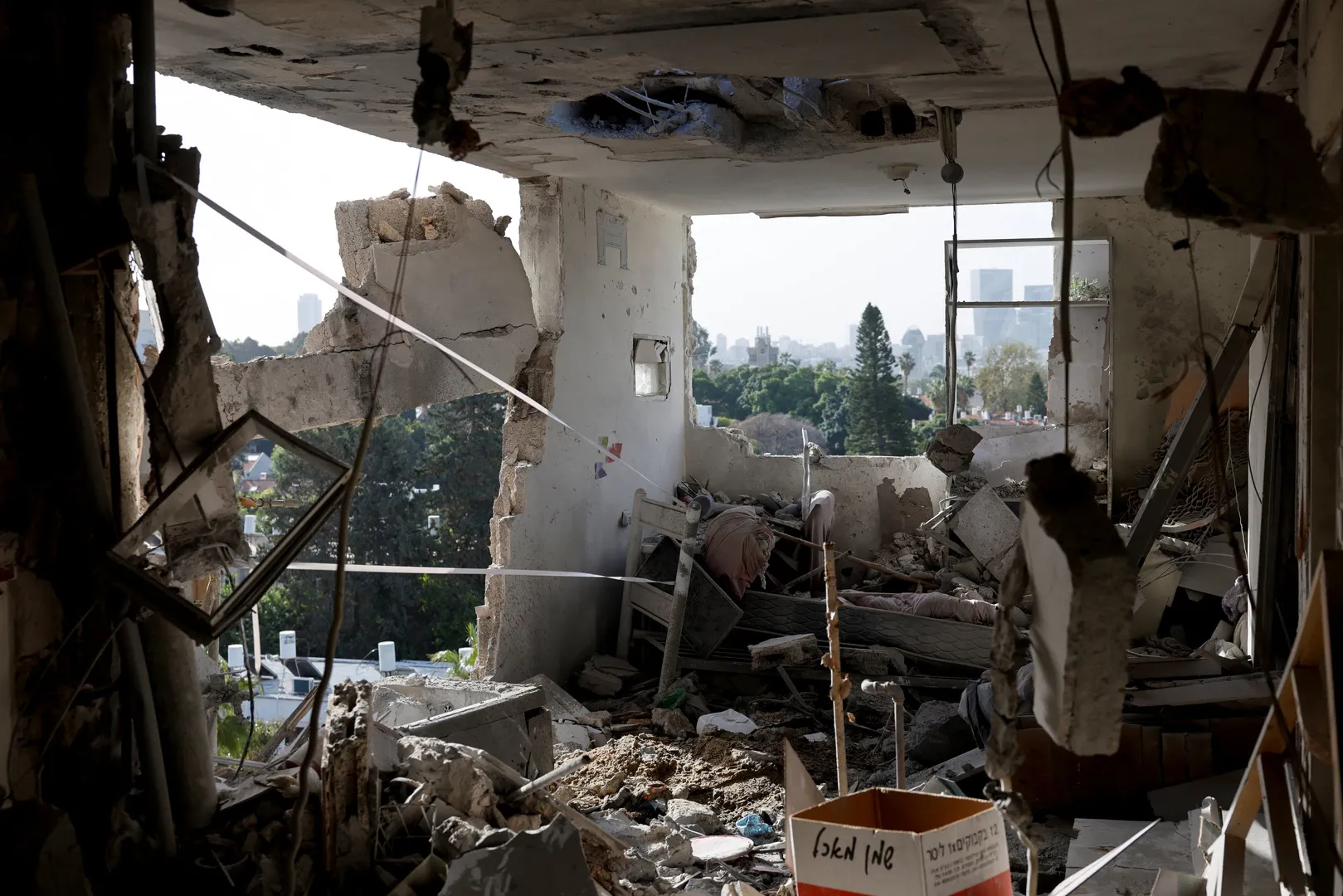
At least 15 people have been killed by attacks in Israel since the war on Iran started late last month. Israel operates a network of shelters to keep people safe, but not all Israeli citizens enjoy the same level of protection.
Chevron, Eni, Repsol, and Shell have struck energy agreements under the favorable conditions of the recent legislative reform. (Reuters)
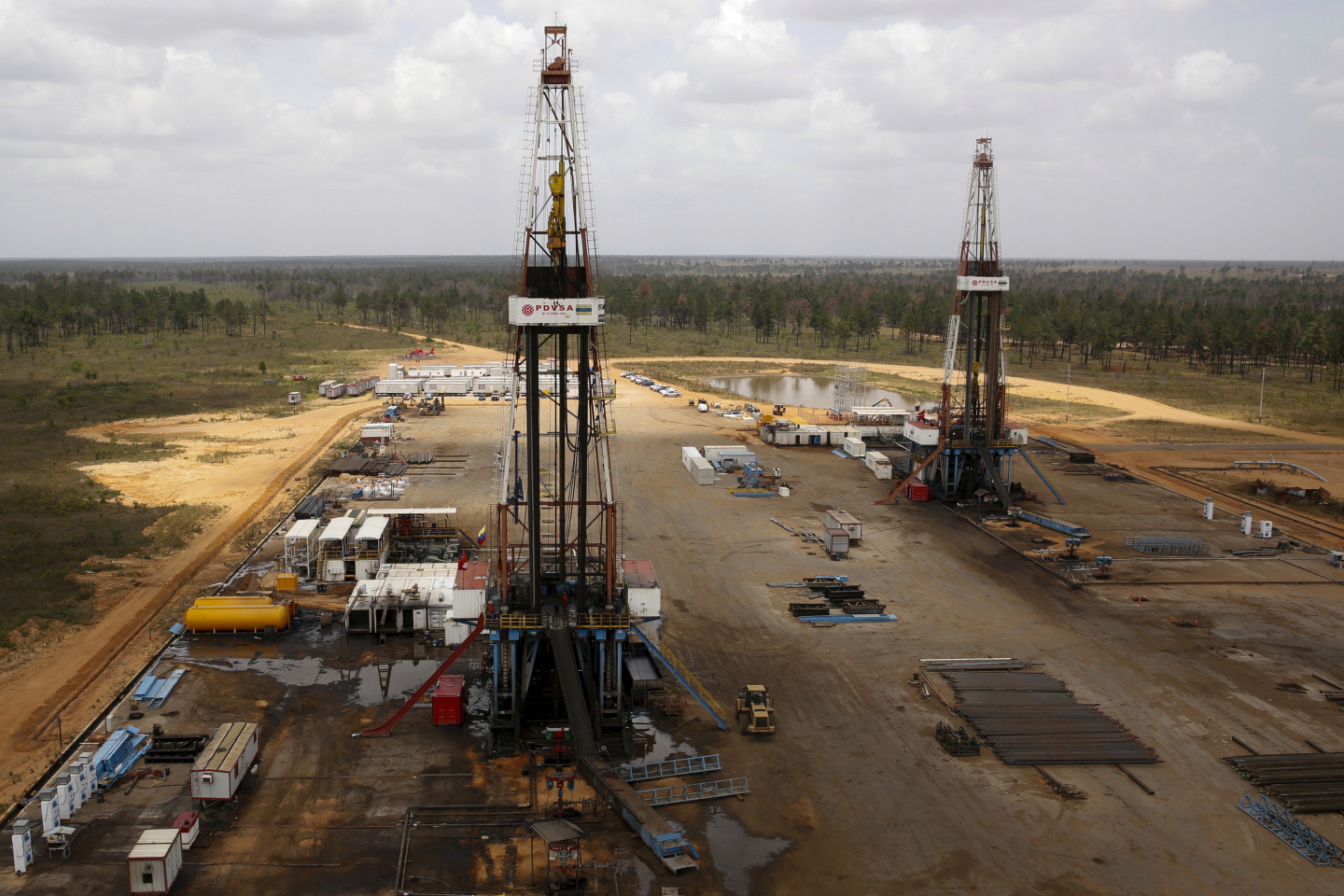
Caracas, March 20, 2026 (venezuelanalysis.com) – The US Treasury Department has issued a new sanctions waiver as the Trump administration seeks to deepen US control over Venezuela’s oil sector.
General License 52 (GL52), published on Wednesday, authorizes US entities to engage in transactions with Venezuelan state oil company PDVSA under conditions that limit Venezuelan sovereignty.
An updated FAQ from the Treasury’s Office of Foreign Assets Control clarified that the exemption allows US companies to engage in activities related to the exportation of Venezuelan-origin oil products, export diluents and inputs to Venezuela as well as enter into new contracts for oil and gas production.
However, in line with recent US licenses, GL52 mandates that all tax, royalty, and dividend payments be made into US Treasury-controlled accounts.
Following the January 3 US military strikes and kidnapping of Venezuelan President Nicolás Maduro, the Trump administration has taken control over Venezuelan crude exports while imposing conditions favorable to Western energy conglomerates.
Thus far, Washington has returned US $500 million out of an initial January deal worth $2 billion. US authorities have also confirmed Venezuelan imports of US-manufactured medicines and medical equipment. Trump officials had vowed that US energy revenues could only be used for purchases from US suppliers and that Caracas would need to submit a “budget request” to access its funds.
The White House issued GL52 amid soaring energy prices caused by the US and Israeli war against Iran. Tehran has responded to massive bombings by targeting US military assets in the region and closing the strategic Strait of Hormuz.
Last week, the US Treasury amended licenses to allow US imports of fertilizers from Venezuela, as well as repair works in the South American country’s electric grid. Venezuela’s electrical infrastructure remains in a precarious state after years of US sanctions, and expanded power capacity is a precondition for recovery of the oil industry.
Despite the broadened waivers for corporations hand-picked by the White House to engage with Venezuela, PDVSA and its subsidiaries remain under financial sanctions, while third-country firms risk secondary sanctions should they enter into agreements without a US Treasury special license.
In late January, Venezuelan authorities approved a pro-business overhaul of the country’s Hydrocarbon Law, granting private companies reduced fiscal responsibilities, increased control over production and exports, and the possibility of taking disputes to international arbitration bodies.
Chevron and Shell, with US Treasury approval, were the first companies to take advantage of the new incentives. Chevron’s Petropiar joint venture with PDVSA was granted a new 500 square-kilometer bloc to drill for extra-heavy crude in the Orinoco Oil Belt, while Shell is set to take over light and medium crude and natural gas operations in the eastern state of Monagas.
Last week, European energy giants Eni and Repsol, who were also given the inside track by the White House, announced an agreement with the Venezuelan government for the development of the Cardón IV offshore natural gas project.
Eni and Repsol each own 50 percent stakes in Cardón IV, which has been in operation since 2009. Neither firm nor Caracas offered details on the renewed agreement, though both enterprises had lobbied for improved conditions and mechanisms to recoup accumulated debt due to US sanctions.
According to Bloomberg, ONGC Videsh (India), Maha Capital AB (Sweden), and J&F Investimentos (Brazil) are among the companies likely to receive special licenses for involvement in Venezuela’s oil sector as Washington seeks to counter rising crude prices. Nevertheless, analysts stress that the Venezuelan oil industry does not have the capacity to significantly ramp up output in the near future.
On March 11, the Trump administration formally recognized Acting President Delcy Rodríguez as Venezuela’s “sole authority,” days after Venezuela and the US reestablished diplomatic ties following a seven-year hiatus.
On Monday, Rodríguez appointed new executive boards for PDVSA’s US-based affiliates, including refiner CITGO. Asdrúbal Chávez, who held multiple roles in both PDVSA and CITGO since the 2000s, was picked as president of CITGO and its parent company, PDV Holding. At the time of writing, US authorities have not commented on the proposed new leadership for the companies, which had been run by the US-backed opposition since 2019.
CITGO is currently in the closing stages of a court-mandated auction that will see Venezuela lose ownership of its most prized foreign asset to address creditor claims against the country. The sale to Amber Energy, a subsidiary of vulture fund Elliott Management, is pending authorization from the US Treasury Department.