Stay informed and up-to-date with the latest news from around the world. Our comprehensive news coverage brings you the most relevant and impactful stories in politics, business, technology, entertainment, and more.
Iran’s aviation officials negotiate with Oman and Iraq as Secretary Bessent targets carriers seven months into the conflict.
Published On 22 Sep 202622 Sep 2026
Flights from Iran to Baghdad and Muscat will be cancelled starting at midnight ahead of new United States sanctions taking effect Wednesday, Tasnim News Agency reported.
A spokesman for Iran’s Civil Aviation Organization told the news agency on Tuesday that the agency is “negotiating so that flights whose destination is Baghdad can be redirected to [Iraq’s] Najaf Airport”.
Recommended Stories
list of 3 itemsend of list
Iran’s ISNA news agency reported that negotiations with Oman were likewise ongoing, adding that all remaining international flights, including those to Istanbul, will operate as scheduled.
US Treasury Secretary Scott Bessent said on Monday that all Iranian airlines would be shut down on September 23 through the threat of secondary sanctions on aviation service providers, seven months into the war between the US and Iran.
Bessent told CNBC that when Iranian carriers land at an airport, “you cannot provide them with fuel, you cannot provide them with landing services, you cannot sell them tickets, or you will be knocked out of the dollar system”.
The move marks the latest step in Washington’s expanding sanctions campaign against Tehran. Aviation analysts told Al Jazeera that although the US lacks authority to close foreign airspace, targeting local refuelling and ground-handling providers achieves a similar outcome by cutting off essential operational support.
Earlier this month, the US issued stricter measures administered by the Treasury Department’s Office of Foreign Assets Control (OFAC), placing restrictions on trade, energy and financial institutions.
The administration of President Donald Trump also expanded secondary sanctions in late August, warning that foreign firms doing business with Iran across shipping, technology, gold and digital assets face penalties of their own.
Tehran, however, signalled on Saturday that it remains open to talks mediated by Qatar to reach a long-term resolution, while maintaining a combative stance towards Washington.
“It is in Washington’s interest to accept these conditions,” Mohsen Rezaei, Iran’s security chief, told Al Jazeera in an interview last week. “Trump’s threats will not achieve any results. We are prepared for a decisive war.”
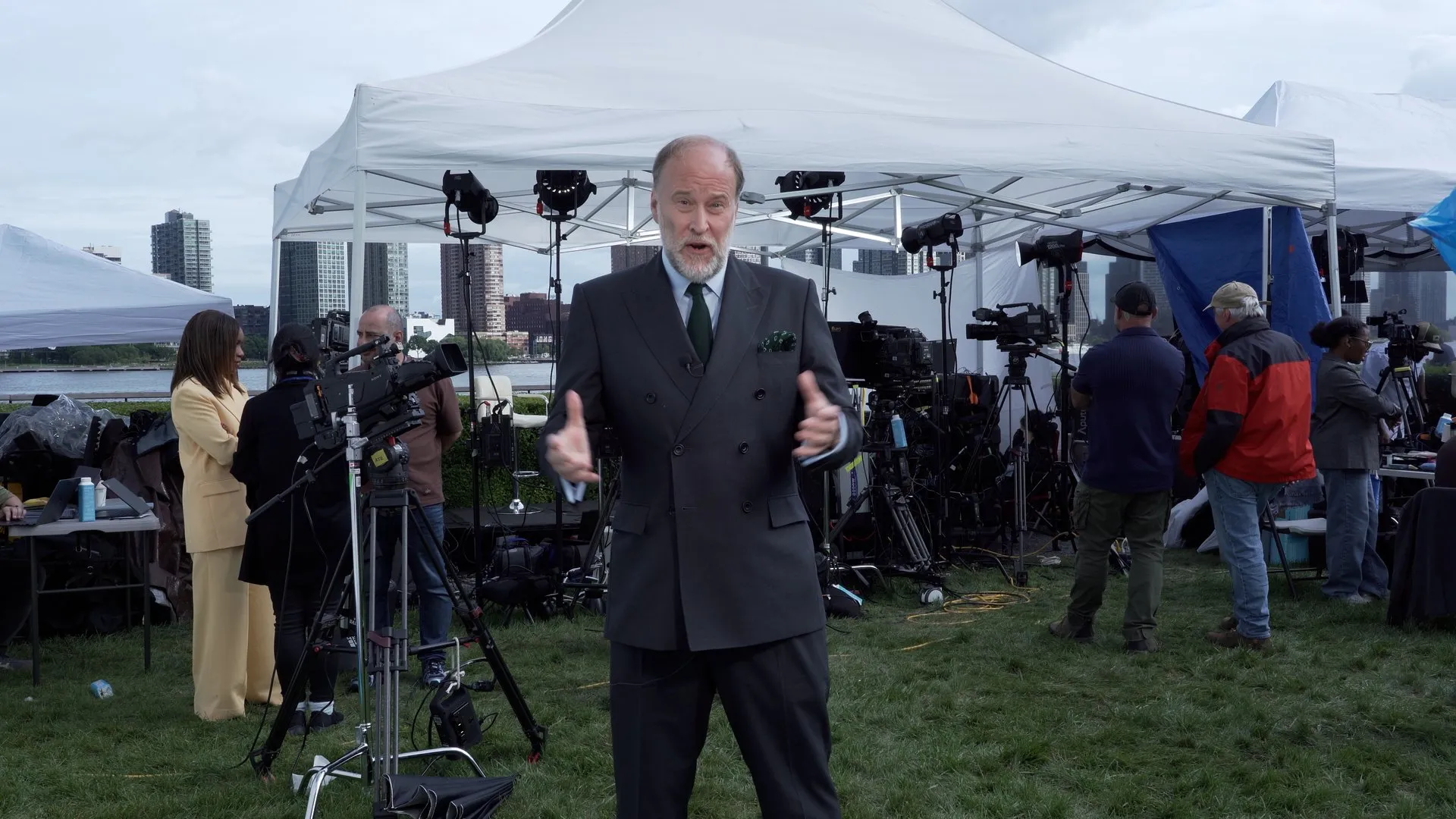
The 81st UN General Assembly opened with US President Donald Trump threatening to ‘annihilate’ Iran. Despite the threat, US and Iranian officials met for three hours on the sidelines of UNGA. Al Jazeera’s Diplomatic Editor James Bays reports.
Trump has also been meeting Ukrainian President Volodymyr Zelensky, British Prime Minister Andy Burnham and leaders from Saudi Arabia, the United Arab Emirates, Qatar, Kuwait, Bahrain and Oman.
Earlier, Guterres gave his farewell speech as UN secretary general, urging unnamed superpowers to recognise “that their power isn’t so super”.
“The fault lines in our world are widening,” Guterres said, citing geopolitical rivalries, wars, climate change and artificial intelligence.
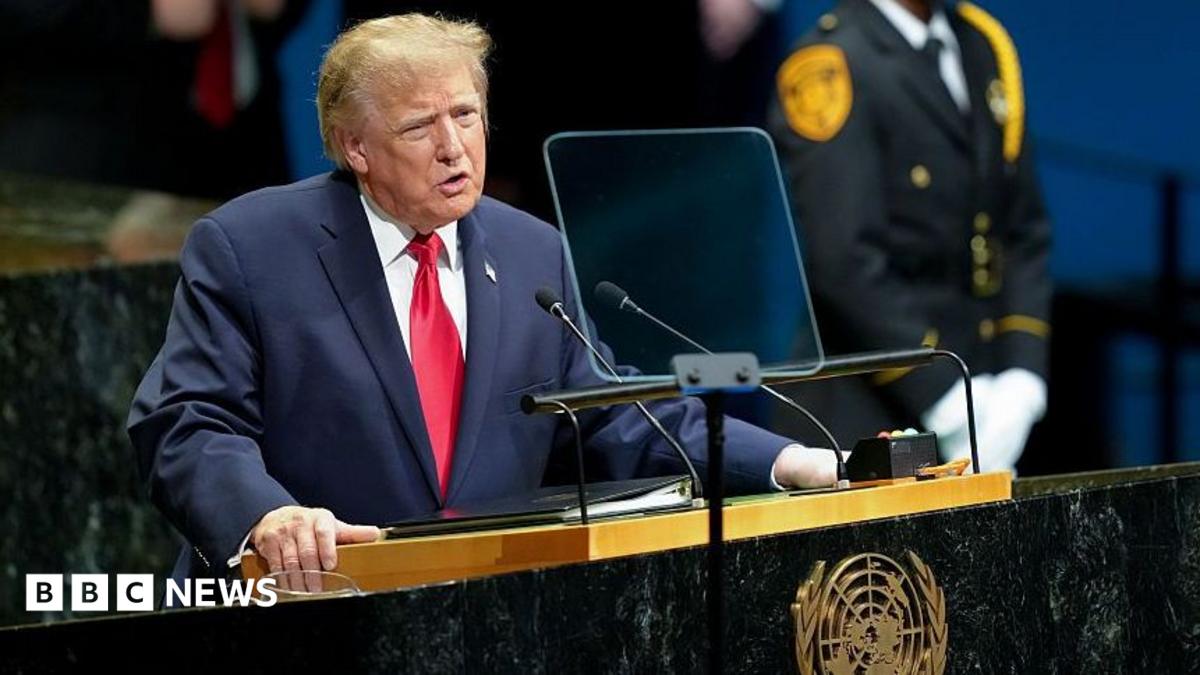
By contrast, Trump criticised international institutions, accusing the UN of a “far-left agenda of globalist bureaucrats who nobody ever elected”.
The US president instead emphasised national sovereignty and “unmatched” American military power.
“There is no global government,” he said.
He also warned that the US would not allow threats to establish themselves anywhere in the Western hemisphere.
“If necessary, we will use our unmatched military might to secure the vital national interests of the United States,” he said.
Trump accused Cuba’s communist government of cultivating ties to left-wing groups in the US, including the Communist Party USA, Antifa and the Democratic Socialists of America.
The Cuban delegation also appeared to walk out of the assembly chamber as Trump turned his sights on them, referring to the island as a “failed state”.
The United States, Denmark and Greenland are preparing to sign an agreement that could reshape the American military presence in the Arctic and ease a diplomatic dispute that has strained relations within NATO.
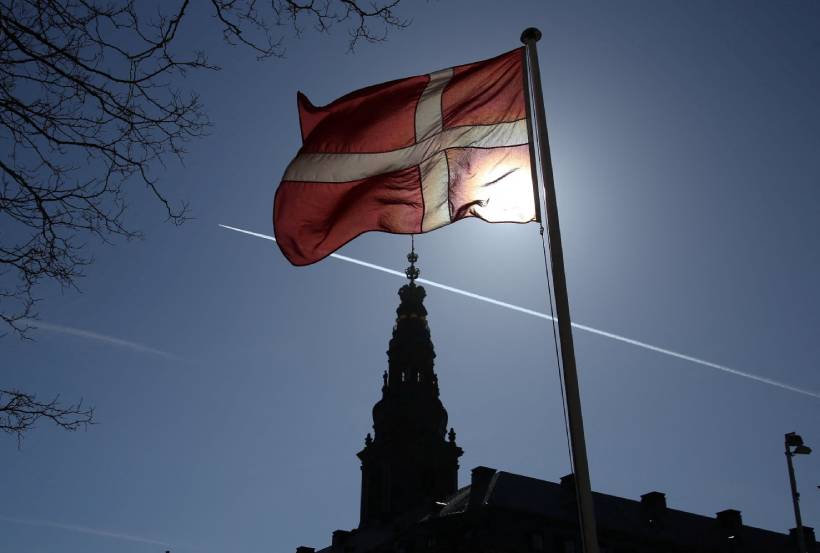
US President Donald Trump is due to meet Danish Prime Minister Mette Frederiksen and Greenland Prime Minister Jens Frederik Nielsen in New York on Tuesday for a trilateral signing ceremony. The agreement is expected to allow Washington to expand its military infrastructure on Greenland, a strategically located and mineral rich territory of the Kingdom of Denmark.
The deal follows months of tension after Trump refused to rule out using military or economic pressure to bring Greenland under US control. The comments triggered a diplomatic crisis with Denmark and raised concerns about divisions within NATO.
The US military presence is set to expand
The agreement is expected to give the United States access to two additional military sites in Greenland, alongside the existing Pituffik Space Base.
Stay ahead of the geopolitical week.
MD Briefing delivers expert analysis across five global fronts — the Indo-Pacific, energy, geoeconomics, European security, and the Middle East — every Monday morning. Free.
One of the proposed locations is Narsarsuaq, a former Cold War airbase where only a small population remains. The other is Mestersvig, which is currently used by the Sirius Dog Sled Patrol, an elite Danish special forces unit.
The expansion would significantly increase the US military footprint on the island and mark the first major expansion of American military infrastructure there since the Cold War.
During that period, the United States operated 17 installations in Greenland and had more than 10,000 personnel on the island.
Greenland’s location between North America and the Arctic gives it considerable strategic importance. Its geography also places it close to major Arctic routes and areas of growing competition involving Russia, the United States and other NATO members.
NATO could play a larger role
Danish Foreign Minister Lars Lokke Rasmussen has said the agreement would place Arctic security more firmly within NATO’s collective framework rather than leaving responsibility primarily to Washington and Copenhagen.
That could be significant because the Greenland dispute exposed tensions within the alliance at a time when NATO members are already facing growing security concerns in the Arctic.
The Arctic has become increasingly important to NATO because of its geography, military access and emerging economic opportunities. Greater US military activity in Greenland could therefore become part of a wider alliance approach to Arctic security.
However, the precise role NATO would play remains unclear because the full text of the agreement has not yet been published.
What happens to Greenland’s sovereignty?
The agreement also leaves questions about the balance between US security interests, Danish sovereignty and Greenland’s aspirations for greater autonomy.
Greenland is a self governing territory within the Kingdom of Denmark. Its government has repeatedly maintained that decisions about Greenland’s future must involve Greenlanders themselves.
Trump said on Friday that the agreement would give the United States “permanent control over security, and all other needs, in Greenland.”
Denmark has not endorsed that description. Copenhagen has instead said that the agreement respects the kingdom’s sovereignty and Greenland’s right to self determination.
It remains unclear whether the agreement will modify the 1951 US Denmark defence treaty, which has provided the legal basis for America’s military presence on the island, or establish a separate framework.
From acquisition ambitions to military access
The agreement represents a significant shift from Trump’s earlier push to acquire Greenland outright.
Greenland is roughly three times the size of Texas but has a population of only about 57,000 people, concentrated in small communities along its coastline. The island is also rich in natural resources, adding an economic dimension to its strategic importance.
Trump’s earlier comments about potentially using economic or military pressure to obtain Greenland created an unusual dispute between the United States and Denmark, both members of NATO.
The new agreement appears to offer a different approach: rather than changing Greenland’s sovereignty, Washington would gain a substantially larger military presence on the island.
Why does Greenland matter to the US?
Greenland’s strategic location makes it important to North American and Arctic defence. It sits between the United States, Europe and the Arctic and can provide access for monitoring activity across the region.
For Washington, expanding military infrastructure could strengthen its ability to monitor Arctic air and maritime activity and support wider North American defence.
For Denmark and Greenland, however, the issue involves more than military strategy. Any expansion of US activity has to operate within Denmark’s sovereignty over the territory and Greenland’s right to determine its political future.
The agreement therefore seeks to address two competing pressures at once: the United States’ desire for greater Arctic security access and Denmark and Greenland’s insistence that such cooperation must not amount to a transfer of sovereignty.
If signed as expected, the deal could mark a new phase in the Arctic relationship between the three governments. It would not resolve every disagreement over Greenland’s future, but it could replace the earlier confrontation over US acquisition with a more structured framework for American military access and NATO security cooperation.
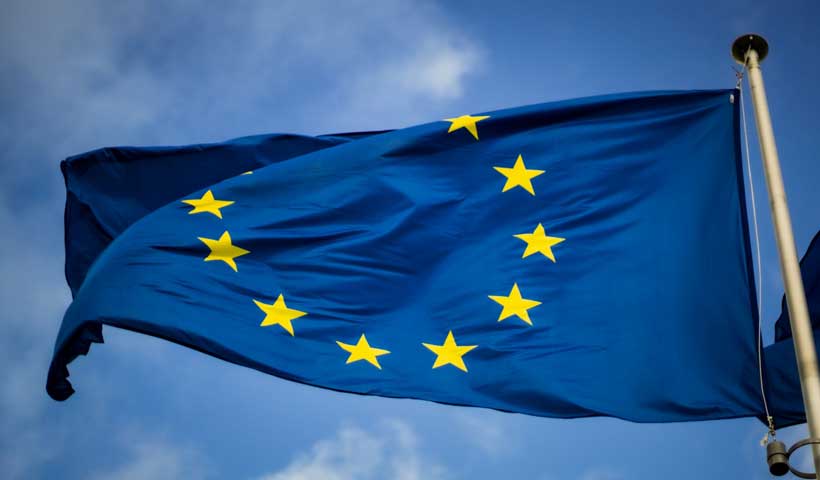
Britain is seeking a closer economic relationship with the European Union by asking to participate in the bloc’s “Made in Europe” industrial strategy, as Prime Minister Andy Burnham argues that the UK and EU face many of the same economic and industrial challenges.
Travelling to New York for his first United Nations General Assembly as prime minister, Burnham said Britain would seek to become a “trusted partner” in the initiative, which is intended to strengthen European production and reduce dependence on Chinese components.
“Europe’s argument is not with us,” Burnham told reporters on Monday. He said Britain and the EU faced similar pressures, particularly in industries such as steel, and argued that the UK should not face unintended consequences from a policy aimed at addressing dependence on China.
The British government has warned that excluding UK companies could disrupt established supply chains and create additional trade barriers between Britain and EU member states.
Stay ahead of the geopolitical week.
MD Briefing delivers expert analysis across five global fronts — the Indo-Pacific, energy, geoeconomics, European security, and the Middle East — every Monday morning. Free.
Why Britain wants access
The EU’s Made in Europe initiative is part of a broader effort to increase domestic industrial capacity and reduce reliance on overseas supply chains, particularly those involving China.
For Britain, exclusion could have consequences for sectors that remain closely integrated with European markets. The automotive industry, for example, relies on supply chains that cross the English Channel in both directions. Industry representatives have warned that excluding British manufacturers from European incentives and procurement opportunities could affect the competitiveness of both British and European companies.
British officials therefore want the EU to treat the UK as a partner in the initiative rather than as an external supplier.
Burnham has argued that British participation would reflect the practical connections that remain between the UK and European economies despite Brexit.
A wider attempt to rebuild UK EU ties
The dispute over Made in Europe is taking place as Burnham’s government seeks to deepen Britain’s relationship with the EU.
The UK government has already been pursuing closer cooperation with European countries in areas including defence, technology and manufacturing. Finance Minister John Healey recently urged EU counterparts not to exclude Britain from the bloc’s industrial strategy.
The government has also been seeking greater cooperation on European security. However, negotiations over British participation in the EU’s SAFE defence fund broke down, creating another obstacle to the government’s efforts to expand cooperation with Brussels.
Burnham has said he wants to move further and faster in rebuilding ties with the EU. His government has also been working toward a UK EU summit that was delayed following the change in prime minister.
The challenge inside Europe
Britain’s request for access is not simply a matter of negotiating with EU institutions. Member states also have different interests in how far the bloc’s industrial policies should extend to non member countries.
The proposed policy is intended to direct European economic activity toward European production and strengthen industrial resilience. Extending its benefits to British companies could therefore raise questions about what obligations Britain would have in return and how EU based businesses would compete with UK firms.
There are also broader questions about the meaning of the UK’s post Brexit relationship with the bloc. The British government is seeking closer economic and security cooperation without reversing the country’s decision to leave the EU.
That creates a difficult balance. London wants greater access to European programmes and markets, while Brussels must determine the conditions under which a non member state can participate in policies designed partly to strengthen the EU’s own industrial base.
What comes next?
Burnham’s immediate objective is to secure British participation in the Made in Europe framework while avoiding new barriers for industries whose supply chains remain closely connected to the continent.
The issue could become part of wider negotiations over the future of UK EU relations. Burnham has said his focus is on a renewed summit with European leaders, which he hopes can take place before the end of the year.
The outcome will indicate how far Britain and the EU can move toward closer economic cooperation without reopening the fundamental question of Britain’s membership.
For London, the argument is that Britain and Europe face shared challenges from global supply chain disruption and dependence on foreign production. For the EU, the question is how to strengthen European industrial capacity while determining the appropriate role for a neighbouring non member economy.
The debate over Made in Europe therefore reflects a broader post Brexit question: how closely can Britain integrate with European economic and security structures while remaining outside the bloc?
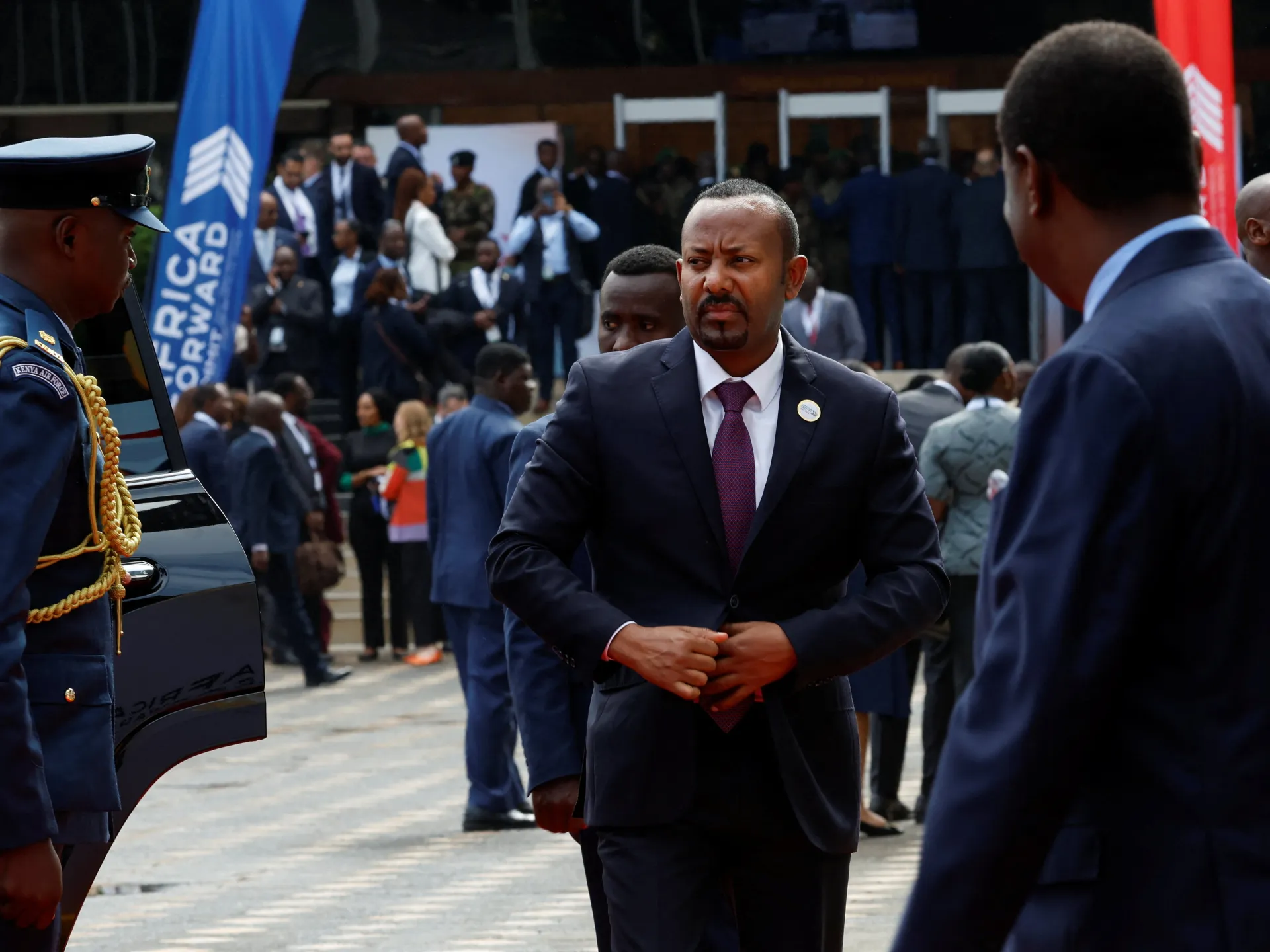
Seven armed groups announce alliance to topple government.
Despite decades of peace deals and ceasefires, armed groups in Ethiopia have continued to battle each other, as well as the military. Now, some of these former rivals have formed an alliance to push out the government in Addis Ababa.
They warn Ethiopia is on the brink of disintegration, and blame Prime Minister Abiy Ahmed. Abiy says the country can defend itself, but Ethiopians fear they could be on the verge of another civil war.
So, could these former rivals, with deep political and ideological divides, achieve their common objective?
Presenter:
Rob Matheson
Guests:
Samuel Getachew – Political commentator who specialises in Ethiopian affairs
Ngala Chome – Horn of Africa analyst
Kjetil Tronvoll – Professor of peace and conflict studies at Oslo New University College
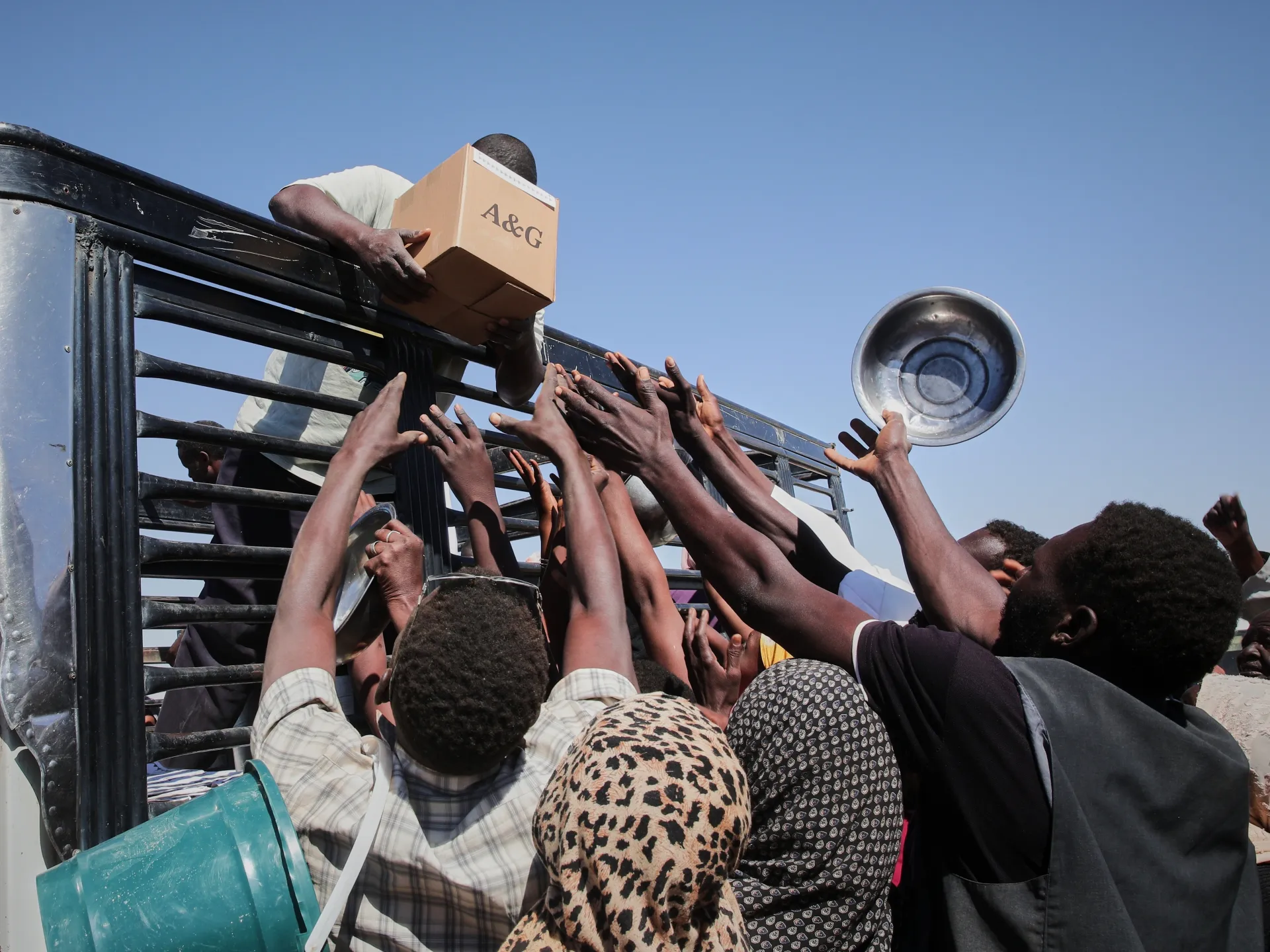
Sudan’s collective memory has long carried stories of famine-induced tragedies. Now, as war pushes the country deeper into a catastrophic food crisis, historians and humanitarian activists fear that some of those horrors are being repeated.
The ongoing war between the Sudanese army and the paramilitary Rapid Support Forces, which erupted in April 2023, has plunged the country into one of its worst modern food crises, with conditions deteriorating sharply since 2024.
Recommended Stories
list of 3 itemsend of list
Sudan has endured severe famines before, often triggered or made worse by drought and other environmental shocks. However, the current hunger crisis, which has triggered famines in Sudan in 2024 and 2025, has been brought on by a man-made factor: war.
Past starvation
One of the earliest recorded major food crises in what is now Sudan occurred in 1684, during the Funj Sultanate. The crisis, which lasted several years, brought severe grain shortages across central Sudan. Historical accounts describe people driven to desperation, and in some cases forced to eat dog meat. The hunger triggered mass displacement, as well as a deadly smallpox outbreak.
Similar climate-driven crises were recorded in 1750 and again between 1835 and 1838 during a period of Ottoman-Egyptian rule, exacerbated by severe drought and low water levels in the River Nile.
The famine most deeply embedded in Sudanese popular memory occurred between 1888 and 1889, during the rule of Khalifa Abdullahi al-Taashi.
Drought, locust infestations and conflict combined to cause widespread hunger and death. Some historical estimates put the death toll at more than one million people, although precise figures from the period are difficult to establish. The crisis was reported to have been so severe that some families shut themselves inside their homes to die rather than going out to beg for food.
Sudan experienced more periods of food shortages during the 20th century. Droughts and poor harvests during the colonial period of the first half of the century forced the authorities at times to import grain from abroad.
Then, in 1984, during the rule of President Jaafar Nimeiri, a devastating drought hit western Sudan, including Darfur and Kordofan, where there were widespread crop and livestock losses, displacing hundreds of thousands of people from rural areas to the capital, Khartoum.
Man-made catastrophe
Unlike many of those historical crises, the current famine is distinctly man-made.
War has disrupted agricultural production and trade, forced farmers to leave their land, and made it difficult to move food and humanitarian aid across the country.
Abdullah al-Tijani, a social historian and humanitarian activist, noted the unprecedented scale of the current disaster.
“Most previous famines were often confined to specific regions, as happened in 1984, or areas in southern Sudan before its secession in [2011], while the capital and major cities continued to have the necessities of life and services,” al-Tijani told Al Jazeera.
This time, he said, hunger and the collapse of basic services have spread across the entire country.
“A comprehensive food crisis has struck the heart of major urban and agricultural centres in the states of Khartoum, Gezira, Sennar, Darfur, and Kordofan, causing millions of citizens to be displaced inside and outside the country,” al-Tijani added.
He pointed to what he described as the “systematic destruction of infrastructure, disruption of large agricultural projects, and targeting of markets, bakeries, and crops, along with disrupting the banking system and communication networks, which isolated entire regions”.
Al-Tijani also cited the “restrictions on humanitarian access and delays in granting transit permits for relief workers”. He accused the warring parties of using control over food supplies as a tool of war, while warning that international funding has fallen short of the size of the crisis.
Lost agricultural potential
The scale of the crisis is stark because of Sudan’s agricultural potential. The country has immense resources, including roughly 200 million acres (81 million hectares) of arable land, abundant water from the Nile, and extensive livestock resources, but Sudan’s potential as a global breadbasket remains unfulfilled.
Mohammed Abdul Rahman, an economic researcher, explained that the current food security crisis reflects a clear development gap, and a longstanding weakness in Sudan’s agricultural sector compounded by war.
“Wars and armed conflicts are among the most influential factors on food production,” Abdul Rahman said, “along with the displacement of farmers from their lands, the absence of political stability and agricultural policies, weak funding and government guarantees, and reliance on traditional farming methods.”
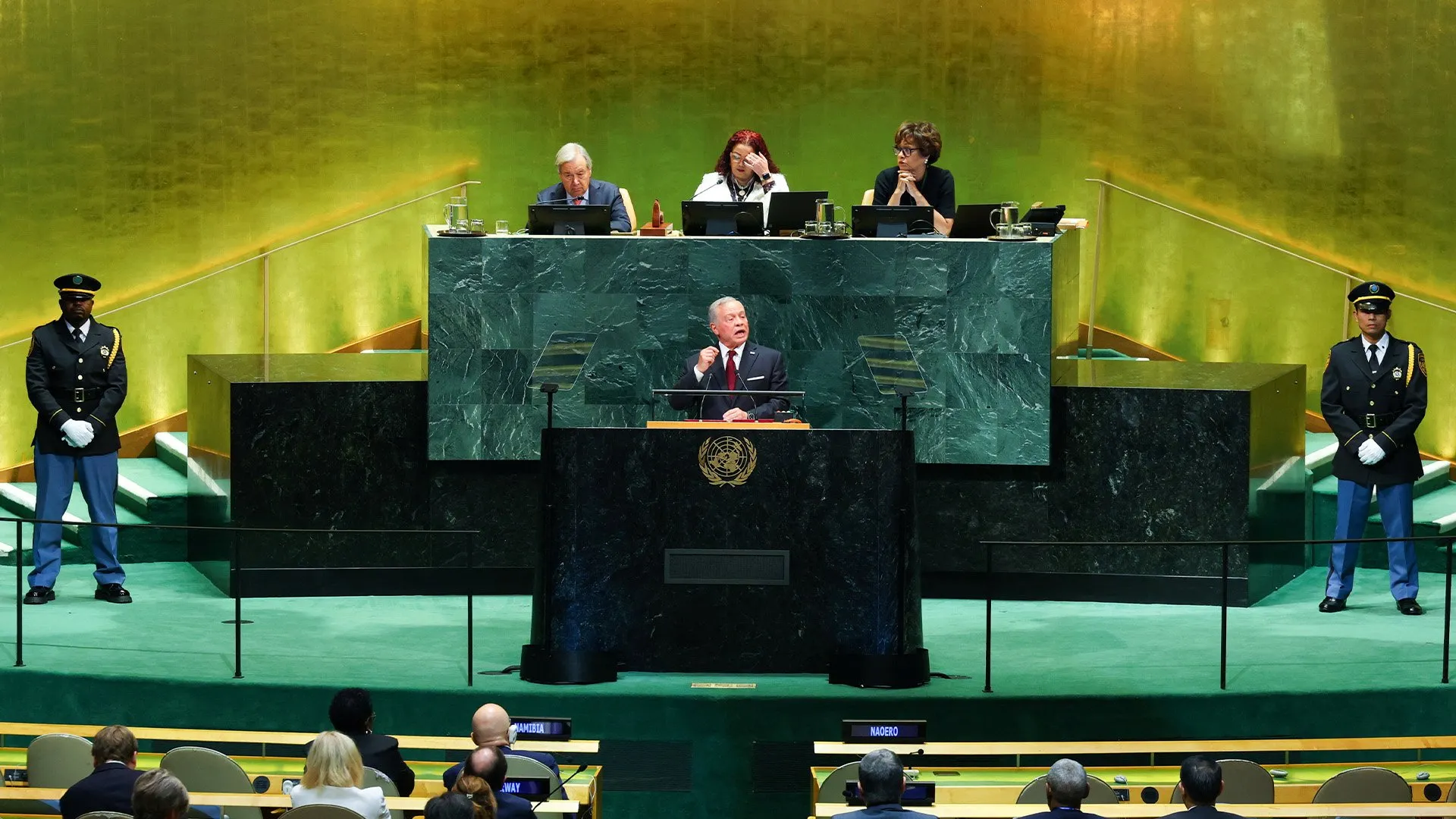
Jordan’s King Abdullah II decried Israeli settler incursions in the occupied West Bank as a strategy of ‘forced displacement’ that should be considered a war crime.
A “suspected terrorist plot” to target the Jewish community in Manchester is believed to have been foiled after two men were arrested in the city on Sunday, police have said.
The men, who are both in their 30s, were detained on suspicion of offences under Section 41 of the Terrorism Act 2000 in Newton Street on Sunday, according to the Metropolitan Police.
Deputy Assistant Commissioner Vicki Evans said police were aware the news would cause “further concern” to the Jewish community, “especially given the significant High Holy day period”.
The two suspects remain in police custody as investigations continue.
“This has been a long-running proactive investigation which has led to the disruption of what we believe to be a plot to target the Jewish community in the Manchester area,” said Evans.
“Counter Terrorism policing continue to focus our efforts on identifying and disrupting those who wish to cause harm in our communities.”
This breaking news story is being updated and more details will be published shortly. Please refresh the page for the fullest version.
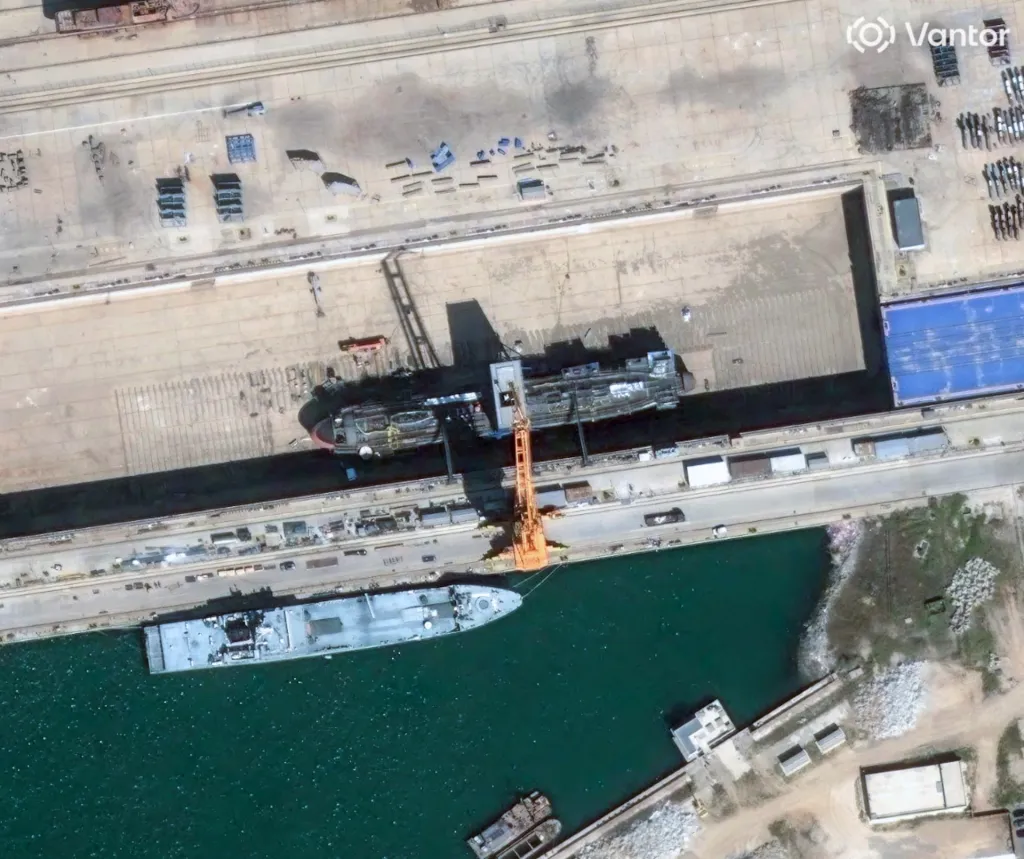
Recent satellite imagery of a shipyard in northeastern China offers interesting new insights into the country’s next-generation submarine developments. The images notably show a pumpjet propulsor and other features worth examining on an example of what is generally described as a new class of nuclear-powered attack submarine, or SSN.
TWZ has obtained a new image taken on September 18 of the submarine in question, which is being built at the Bohai Shipyard in Huludao, from Vantor. Janes reported on this submarine earlier today, based on a separate Vantor image from September 1. The outlet also described the boat as a Type 095, a commonly used, but still unofficial designation. This is something we will come back to later on.
As mentioned, the pumpjet propulsor immediately stands out in both images. This is also understood to be a feature on the Type 093B nuclear-powered attack submarine, a significantly improved variation on that earlier design, which first emerged in the early 2020s. Compared to traditional exposed propellers and more basic shrouded types, pumpjets offer benefits for quieter operation and efficiencies, especially at higher submerged speeds.
The recent imagery also highlights the submarine’s X-shaped stern plane arrangement. This is not found on the Type 093B, which is considered to be something of a bridge between that class and the next-generation design. Broadly speaking, an X-shaped configuration offers advantages when it comes to enhanced maneuverability, efficiency, and safety, which can be particularly useful in littoral environments. It can also provide benefits when it comes to acoustic signature reductions across significant parts of the submarine’s operating envelope compared to the cruciform stern planes.
Another Chinese submarine design that emerged in 2024, currently referred to as the Type 041 or Zhou class, and that is understood to feature a hybrid nuclear/conventional propulsion system, also has an X-shaped stern configuration. The first known example of the Type 041 came to light after it appeared to have sunk in a shipyard.
An X-shaped stern arrangement also looks to be a feature on yet another new class of submarine that appeared at the JN (Jiangnan) Shipyard in Shanghai earlier this year. Initial reports also suggested that the design lacked a traditional sail. However, it has been confirmed that it has a sail, but that is very small proportionally to the overall size of the boat. Truncated sails can offer performance and other advantages, but there are trade-offs.
The image of the submarine that Janes obtained also notably shows an open rectangular-shaped section aft of the sail. The September 18 image that we received from Vantor shows a structure placed over that section of that submarine, obscuring ongoing work on that part of the boat. The Type 095 is widely expected to feature some type of vertical launch system (VLS) array able to accommodate a variety of anti-ship and land-attack cruise missiles, as well as potentially hypersonic types. The Type 095 is also sometimes referred to as a guided missile submarine, or SSGN, as a result. The open area seen in the September 1 shot could be where the VLS array is set to be fitted. It might also provide access to the reactor compartment or another area of the submarine.
The clearest photos we have on the Type 095 SSN!
As we can see, there is one confirmed chamber than could physically fit about 18-24 VLS Cells. There is a big chance that more than one VLS Chamber exists, with an estimate VLS count from 24-48+ VLS pic.twitter.com/0ZJ8gsl4su
Interestingly, the September 18 image also shows what look to be at least two relatively large circular openings, side-by-side, at the bow end of the submarine in front of the sail, the purpose of which is not immediately clear. There is a possibility these could also be for vertically launching munitions or other payloads. As a point of comparison, U.S. Virginia class nuclear attack submarines, starting with the Block III version, have two large-diameter Virginia Payload Tubes (VPT), one in front of the other, in the bow in front of their sails. At the same time, the openings on the submarine in Huludao also appear to be in a position that is very close to where the submarine’s main sonar array would be installed, and they could be tied to that aspect of the design, too.
“I think it’s too early to be sure about the VLS configuration from publicly available imagery. I realize people assume the large rectangular space halfway behind the sail is the VLS, but I am not sure this is the case and I’d caution to jump to conclusions. The space could also be related to work on the reactor compartment,” Alex Luck, a naval analyst who closely tracks submarine and Chinese navy developments, told TWZ. “With Type 093B, the VLS after launch was initially covered with a tarp, and then the installed launchers were readily visible quite quickly during the fitting-out process. The work process may change with these newer boats, but the different appearance during launch and fitting out needs to be considered in that regard.”
“I do expect Type 095 to have a VLS of some sort, but I am not sure as of yet what the configuration would look like, or where exactly it is located,” he added.
The bigger outstanding question may be exactly what type of submarine is currently being built now at the Bohai Shipyard. Based on a review of additional imagery from Planet Labs’ archive, the boat appears to be around 394 feet (120 meters) long. When the first example of what was assessed to be a Type 095 emerged in Huludao in February, it was estimated to have a length of roughly 361 feet (110 meters). The ‘small sail’ design that broke cover earlier this year in Shanghai is also estimated to be some 394 feet/120 meters long based on available imagery, but also looks to be narrower than the boat presumed to be a Type 095 in February.
“One significant question is the nature and difference between the boat launched by Bohai in February, and the two newer hulls launched in late May/early June both by Bohai and at Jiangnan in Shanghai,” Luck, the naval analyst, also told TWZ. “Specifically, we do not quite know whether they are for different operational roles, or rather a two step development for one final configuration of a new SSN. I think the latter is at least plausible.”
“A related question then is what boat we are looking at now with the new imagery, i.e. the February boat or the newer hull Bohai had launched,” he continued. “Without exact and reliable measurements that question for now is unresolved in the public discourse. For now we need more, and more detailed imagery, including of the different boats together, to clarify these aspects.”
“This [September 1] image reinforces my impression that the boat launched in February may have been a one off not including the full spec featured on the notional 095A launched by Bohai and Jiangnan in late May. We’ve already seen both versions side by side in Bohai,” Luck also wrote on X after Janes‘ published its report.
This image reinforces my impression that the boat launched in February may have been a one off not including the full spec featured on the notional 095A launched by Bohai and Jiangnan in late May. We’ve already seen both versions side by side in Bohai. https://t.co/wBMkB1gmSQ
Regardless, the emergence in recent years of so many new, more modern submarines, and across what appear to be several distinct classes, is significant. It is no secret that China’s People’s Liberation Army Navy (PLAN) is working to significantly expand the size and capabilities of its submarine force with a clear eye toward extending operations further and further out in the Pacific, at least. In the past, U.S. officials have publicly said the overall quality of newer Chinese submarines has been getting closer in parity to American designs.
“The PLA Navy is executing a significant strategic shift from diesel-electric to all-nuclear construction, representing a fundamental departure from historical construction patterns,” U.S. Navy Rear Adm. Mike Brookes, head of the Office of Naval Intelligence, wrote in prepared remarks ahead of a hearing before members of the U.S.-China Economic and Security Review Commission in March.
In particular, the Type 095, as well as the new Type 096 nuclear-powered ballistic missile submarine, “represent next-generation platforms expected to enter service during the late 2020s through 2030s,” Brookes also wrote at that time. “These submarines will incorporate substantial advancements in nuclear reactor design, sensor performance, weapons integration, and noise quieting technologies.”
Submarine modernization efforts are just one aspect of a larger effort by the PLAN to expand its capabilities above and below the waves. Chinese shipyards have also been producing ever-more capable aircraft carriers, amphibious assault ships, destroyers, frigates, and more in recent years, as well. The pace of China’s construction of new surface ships and submarines has also been growing, creating a particularly significant and still-widening disparity in this regard with the U.S. Navy. This is something that has become increasingly concerning, as TWZ routinely highlights.
Work in Huludao, as well as shipyards elsewhere in China, is certainly already revealing interesting new insights into China’s next-generation submarine efforts.
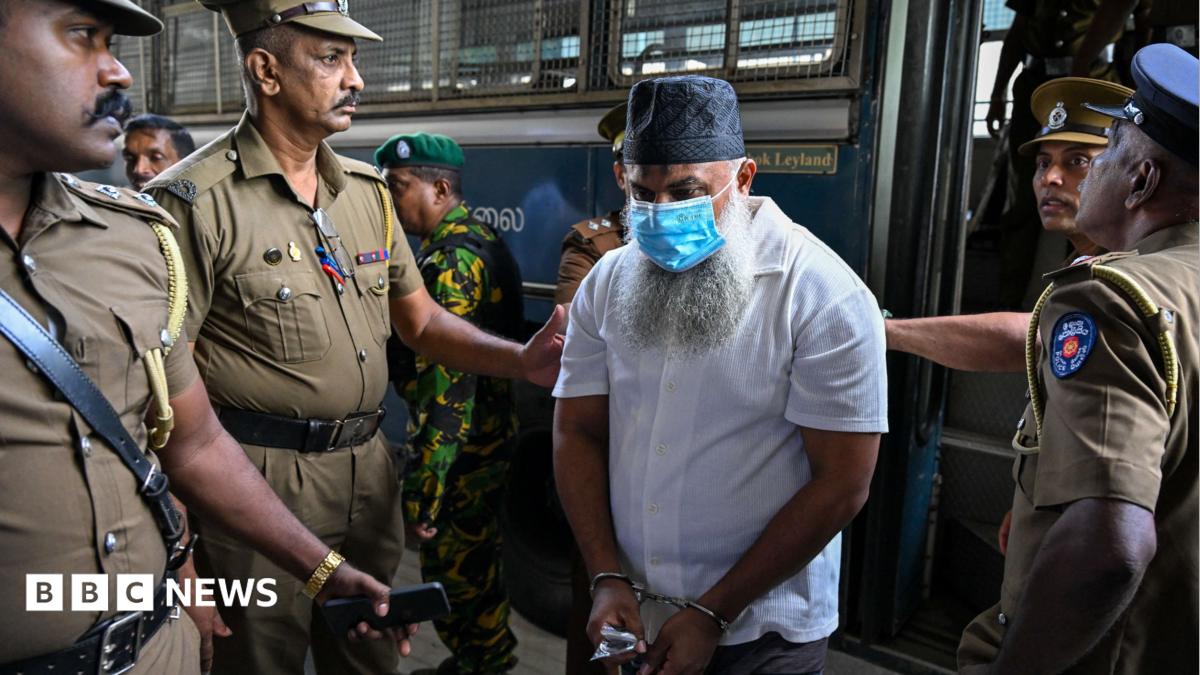
Sri Lanka’s High Court has convicted 15 men who had been charged with plotting the 2019 Easter Sunday bomb attacks that killed 270 people and injured more than 500.
Those found guilty include Naufer Moulavi, who prosecutors said masterminded the suicide bombings. Nine other men were acquitted.
The co-ordinated blasts at three churches and three luxury hotels were the deadliest in Sri Lanka since the end of its civil war in 2009. Forty-five foreigners were among the dead.
All the bombers who carried out the attacks died in the blasts. Investigators have previously blamed the bombings on Islamist extremists, and the 25 men indicted were from Sri Lanka’s Muslim minority. One died in custody.
The accused had been charged with more than 23,000 offences, including murder, conspiracy to commit terrorism and possessing firearms.
More than 2,300 people gave evidence for the prosecution.
There were also 2,076 pieces of evidence, including explosives, swords and firearms.
In the wake of the attacks, Sri Lankan authorities pointed to a “major intelligence lapse”. Its parliament heard that a tip-off from India about the attacks was not properly shared with the authorities.
In 2023, the Supreme Court ordered former president Maithripala Sirisena to pay millions in compensation to the victims of the bombings, after finding him responsible for national security failures that led to the attacks.
Last month, two former senior officials were sentenced to death for criminal negligence that led to the bombings. Death sentences are usually commuted to life in prison in Sri Lanka due to a decades-old moratorium on executions.
For years, Sri Lankans have held regular demonstrations demanding justice for the victims of the Easter attacks.
The verdict comes as a separate investigation on former intelligence chief Suresh Sallay is under way. Sallay is accused of orchestrating the bombings with Islamist extremists.
The allegations echo those aired in a 2023 documentary by British broadcaster Channel 4, which heard whistleblower testimony claiming the attacks were allowed to happen to boost the popularity of the Rajapaksa family, which long dominated Sri Lankan politics.
Sallay, who was arrested in February, denies the allegations. Former president Gotabaya Rajapaksa, who was elected months after the 2019 attacks, with a campaign of tackling Islamist extremism has also denied the allegations.
Rajapaksa, who has been banned from leaving the country, has asked the court to prevent his potential arrest in connection with the ongoing investigations.
Days after banning a group of news organisations from the White House, the Trump administration has launched a platform called ‘Trump TV’ showing old speeches and announcements.
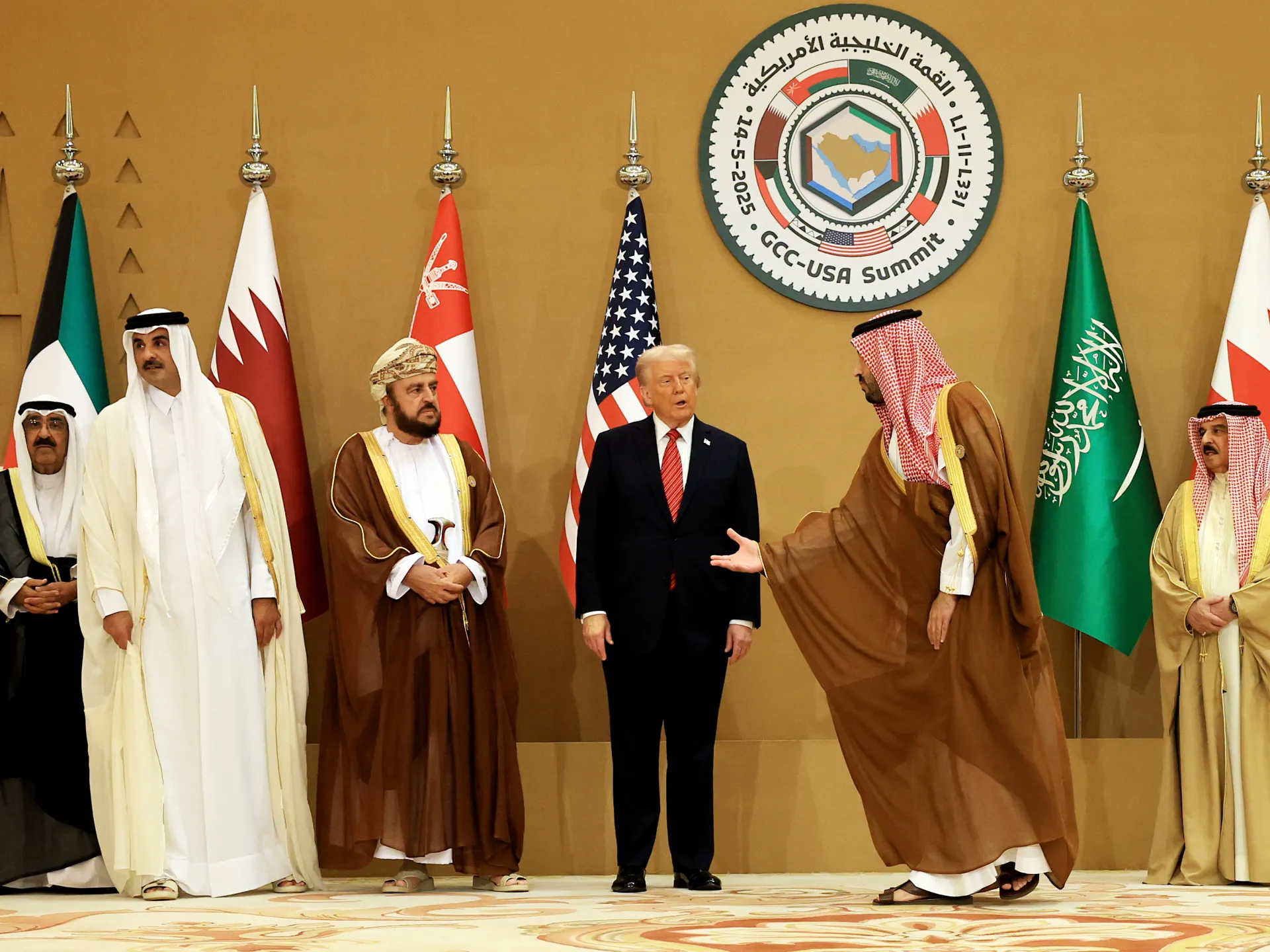
Leaders of the six Gulf Cooperation Council (GCC) states are set to meet United States President Donald Trump in New York on Tuesday, as the US-Israel war on Iran nears seven months.
The meeting, to be held on the sidelines of the United Nations General Assembly (UNGA), brings together countries that have borne much of the fallout from a war they did not start.
Recommended Stories
list of 4 itemsend of list
Since the war began on February 28, Iran has repeatedly struck US bases across the Middle East as well as airports, energy facilities and hotels. The war has particularly hit the Gulf nations hard, as their oil and gas exports – the mainstay of their economies – have been disrupted, causing a global energy crisis.
A June memorandum of understanding (MoU) briefly raised hopes of an end to the war, but it collapsed last month amid disputes over navigation through the Strait of Hormuz, which remains effectively closed.
These talks come as Trump says he faces a “big decision” on the war, and as Iran’s president and foreign minister are also in New York for the UNGA.
So what is on the table and what might come out of the talks? Here is all you need to know:
What do we know about the GCC-Trump meeting?
Trump is set to meet the leaders from Bahrain, Kuwait, Oman, Qatar, Saudi Arabia and the United Arab Emirates, which form the GCC, on the sidelines of the UNGA.
Trump told US media outlet Axios on Thursday that he wanted to meet the GCC leaders as he faced a “big decision” on the war and wanted to speak with them directly.
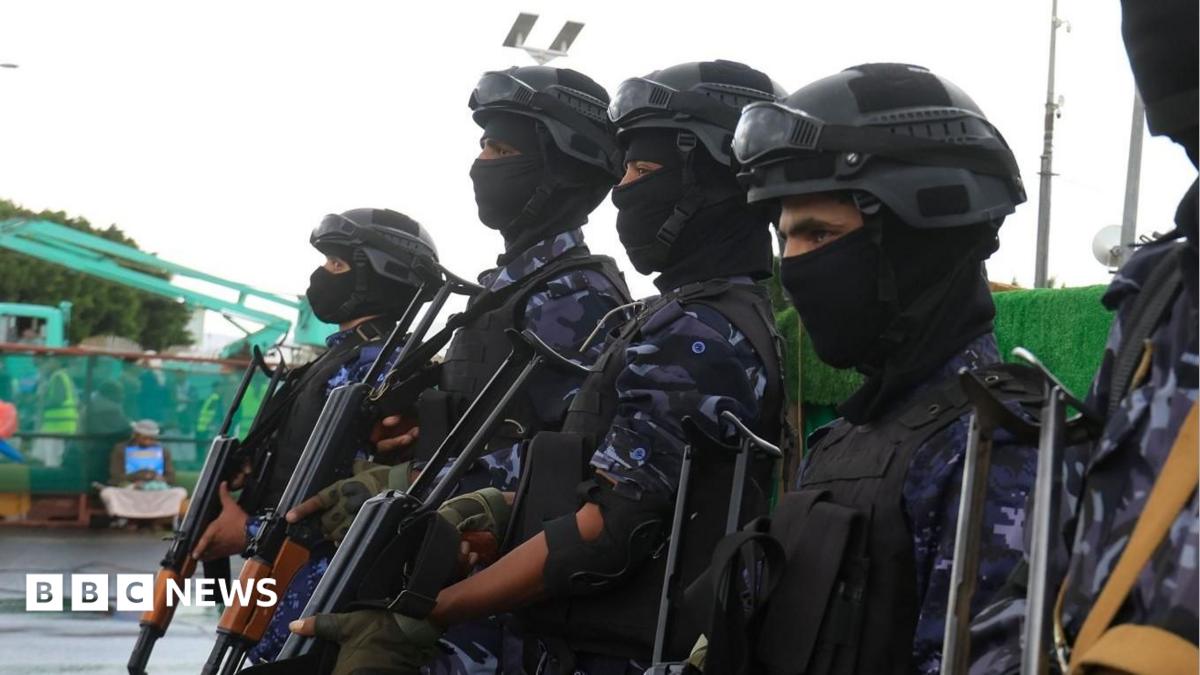
Experts say there are two interconnected issues – the US-Israel war on Iran and the conflict between Houthi rebels and the Saudi-backed government forces in Yemen.
What do the GCC countries want from the meeting?
Broadly, experts say, the GCC nations share a common goal for the meeting.
The GCC has “shared positions on the main principles of regional security and de-escalation”, Luciano Zaccara, a researcher with the New Ground Research think tank in Doha, Qatar, told Al Jazeera.
“With Trump recently threatening to ‘wipe out’ Iran, I expect the six GCC states, or at least most of them, to convey to the US president their grave concerns about the likely consequences of another round of intense US military strikes on Iran,” Giorgio Cafiero, CEO of Gulf State Analytics, told Al Jazeera.
“They will probably seek to underscore their own vulnerabilities to a renewed cycle of all-out fighting between the United States and Iran,” he said, adding that they will try to persuade Trump into making certain concessions to Tehran.
Cafiero said they will look to develop an arrangement that builds on the MoU and which “offers the most viable path toward winding down the crisis”.
Chief among their common concerns is freedom of navigation through the Strait of Hormuz and the Red Sea, according to Ahmed Helal, managing director for the Gulf region at The Asia Group.
‘Divergent’ goals
Despite common goals, the Gulf states have still experienced “divergent” outcomes from the war and will also look to persuade Trump to address their particular predicaments, Helal said.
The UAE, he explained, has been able to keep exporting oil by pipeline to its port of Fujairah, which bypasses the Strait of Hormuz, although not at the volumes it would like.
But fellow GCC member Qatar, whose gas exports depend on the strait, has seen its LNG shipments severely curtailed and wants to avoid any renewed escalation that could see its energy infrastructure targeted again, Helal said.
Speaking at an event in New York, US, on Sunday, Qatar’s Prime Minister Sheikh Mohammed bin Abdulrahman bin Jassim Al Thani described the economic fallout from the US-Israel war on Iran as an “earthquake”.
Saudi Arabia has another problem, as it is now under “enormous pressure” as the Houthis gain ground in Yemen, and has been “intensifying their lobbying” for US strikes on the group, he said.
What does Trump want from the meeting?
Predicting what the US president plans has been difficult since the outbreak of the US-Israel war on Iran, experts say.
“It could be possible that the US is expecting a more direct GCC engagement against Iran in exchange for a direct US intervention to stop the Houthi attacks against Saudi Arabia, but without the GCC leaving the main role in defending themselves”, Zaccara told Al Jazeera.
“Regarding Iran, Trump has not ruled out another major military escalation. At the same time, the administration seems to be open to exploring diplomatic options,” he said, adding there are rumours of a possible indirect US-Iran meeting on the sidelines before Iranian President Masoud Pezeshkian’s speech on Wednesday.
Helal said the administration’s focus is domestic, with the midterm elections weeks away and Trump’s approval ratings at a record low; there is “immense pressure” to lower petrol prices.
While Trump has threatened further military action, he remains politically sensitive to an “escalatory ladder” that could spike oil prices, Helal said.
The talks are unlikely to produce a breakthrough, he added, with the best-case scenario an agreement to return to negotiations potentially brokered by Qatar or Pakistan.
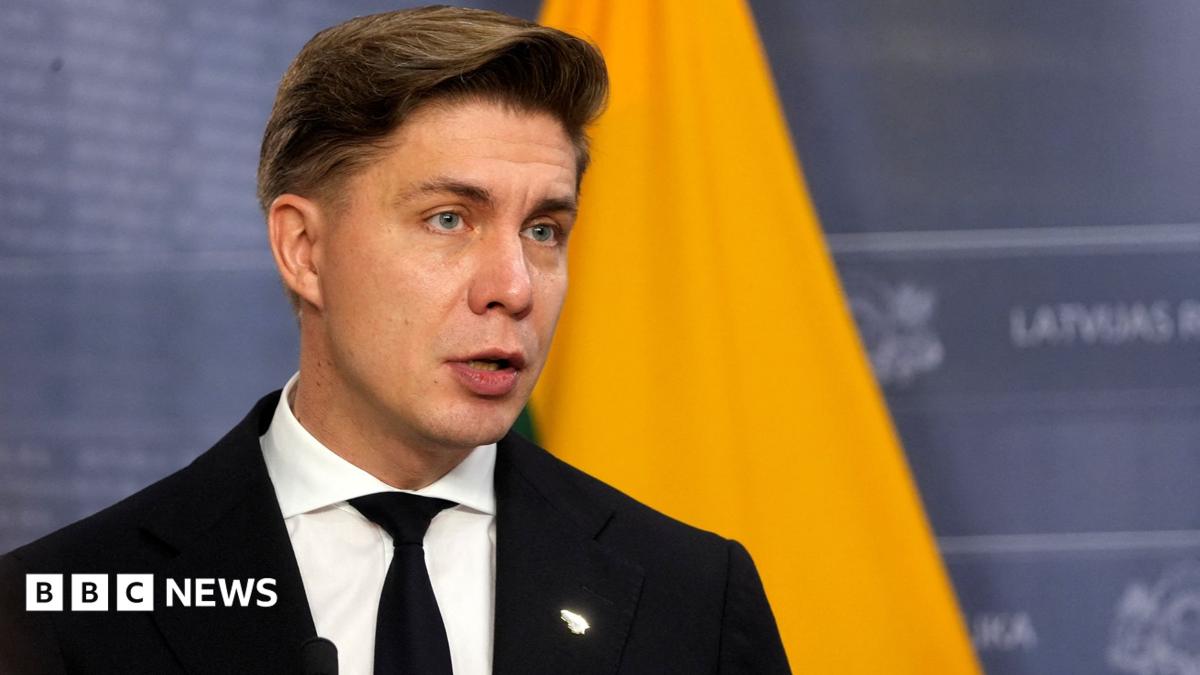
Germany – a fellow Nato ally – pledged to permanently station a combat-ready brigade in Lithuania in 2023 as a response to the changing security situation in Europe.
It is expected to be operational by 2027 and to number about 5,000 soldiers and civilian employees, though it has failed to recruit enough personnel voluntarily and is now turning to compulsory assignments to fill some positions.
The majority of troops will be based in Rūdninkai, near the Suwałki Gap – a line that borders Lithuania and Poland and also links Belarus with Russia’s Kaliningrad.
Nato said that as of December last year it had more than 5,000 troops stationed in Lithuania.
The origins of last week’s drone incident over Lithuania have not been confirmed, however Defence Minister Robertas Kaunas told Newshour that it had come from the direction of Belarus.
UK Defence Secretary Wes Streeting said: “Thanks to the swift and professional actions of Lithuanian and Italian forces, Nato once again demonstrated our readiness to protect our airspace.
“We stand united, around the clock, in defence of every inch of Nato territory.”
Moscow did not comment on the incident.
Military drone incursions have become increasingly common across Europe since the beginning of Russia’s full-scale of invasion of Ukraine.
Residents in Lithuania’s capital Vilnius were also forced to take shelter in May after a drone alert was triggered, briefly grounding flights and rail travel.
Nato jets have scrambled multiple times to shoot down stray Ukrainian drones that have crossed into fellow Baltic countriesEstonia and Latvia this year.
Ukraine has blamed the stray drones on Russian electronic warfare, technology designed to change the flight paths of Ukrainian drones.
Lithuania, Estonia and Latvia all joined Nato in 2004, becoming signatories to the Article 5 provision that states “an armed attack against one Nato member shall be considered an attack against all members”.
Sri Lanka were bowled out for 69 runs, 10 less than Mandhana’s belligerent match-winning innings as India retained gold.
Published On 22 Sep 202622 Sep 2026
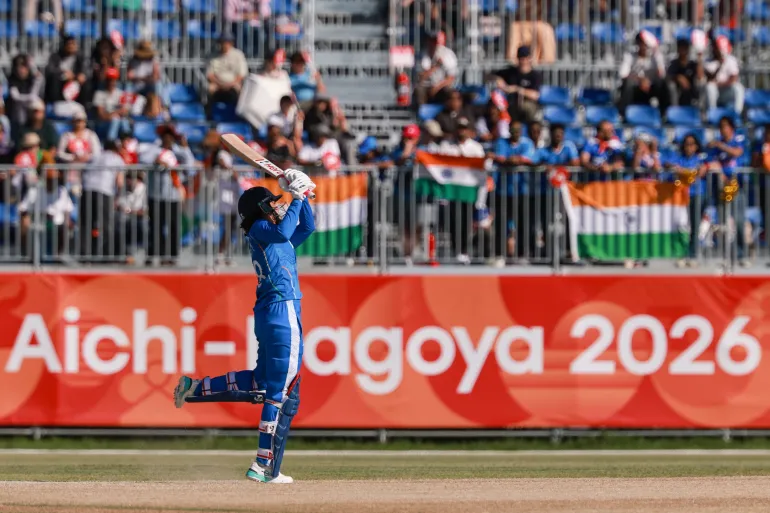
Smriti Mandhana’s whirlwind innings of 79 runs helped India crush Sri Lanka by 147 runs and win a second consecutive women’s cricket gold at the Asian Games.
India smashed 216-3 off their 20 overs, the highest women’s total in Asian Games history, with 18 fours and 13 sixes in the final on Tuesday.
Richa Ghosh and Bharti Fulmali plundered 25 off the final over from the hapless Mithali Ayodhya, who did not help her cause by conceding eight wides.
Sri Lanka were never in the hunt, and captain Chamari Athapaththu’s 29 was their only innings of note as they were skittled for 69 in 15.4 overs and had to settle for silver.
Opening batter Mandhana hit seven sixes and five fours in a 45-ball knock that sent the ball to all parts of the Korogi Athletic Park ground in Nagoya.
Smriti Mandhana hits a six [David Gray/AFP]
After India captain Harmanpreet Kaur won the toss and opted to bat, Shafali Verma, who made an unbeaten century in the semifinal, and Mandhana put on a blistering opening partnership.
The pair had raced to 99 in the 10th over when Verma had a rush of blood, playing a needless reverse sweep which she top-edged to Kawya Kavindi at point to fall for 48 off 29 balls.
Mandhana, the greatest run-scorer in women’s T20 cricket history, had reached her fifty earlier in the over and sailed on in style, clubbing anything loose to the boundary.
Harmanpreet joined her, and the pair took the score to 141 before the captain holed out to long-off for 19.
Mandhana, looking to accelerate further in the latter overs, skied an attempted six and was out in the 17th over with the score on 163.
Ghosh clattered 49 off 22 balls with three sixes and six fours to take India past 200 in the final over.
Mandhana scored 79 off 45 balls [Mark Baker/AP]
Earlier, some late-order hitting by Pakistan captain Fatima Sana set up a 31-run win over Bangladesh in the bronze medal match.
Sana came in with her side rocking at 67-5 in the 12th over but plundered 45 off 30 balls, including three fours and three sixes, and was out off the last ball of the 20 overs after seeing Pakistan to 145-8.
Her 67-run partnership with Aliya Riaz (25) for the sixth wicket proved the turning point, and Bangladesh could only muster 114-7 in reply.
Indian players celebrate after winning [Mark Baker/AP]
Overnight missile and drone attacks hit several Ukrainian regions as world leaders gather in New York for the UN General Assembly.
Published On 22 Sep 202622 Sep 2026
Russian forces have launched widespread attacks targeting industrial sites and critical energy infrastructure across several regions of Ukraine, killing at least three people and knocking out power to nearly 100,000 residents, Ukrainian officials said.
The strikes overnight hit industrial facilities simultaneously in the Dnipropetrovsk region, including Dnipro, Pavlohrad and Kryvyi Rih, the hometown of President Volodymyr Zelenskyy, regional Governor Oleksandr Hanzha said on Telegram on Tuesday.
Recommended Stories
list of 3 itemsend of list
Three people were killed and six others were wounded in Dnipro, where missiles, drones and artillery heavily damaged business and warehouse premises, Hanzha said.
Ukraine’s air force said Moscow’s overnight barrage involved 212 drones, four cruise missiles, and an unspecified number of Oniks antiship and ballistic missiles.
The strikes also damaged energy infrastructure. An attack on a power facility left nearly 100,000 consumers without electricity in the northern region of Chernihiv, while in the Poltava region, Governor Vitalii Diakivnych said a “massive” Russian attack hit an industrial enterprise and a critical infrastructure facility.
The Russian Ministry of Defence confirmed its forces carried out major strikes, stating it hit industrial and military facilities, the fuel and energy sector, port infrastructure and sea vessels operating for the Ukrainian military.
Meanwhile, Ukrainian drones targeted Russia’s Samara region along the Volga River, killing one person and injuring four, according to the local governor. The region hosts critically important facilities, including oil refineries.
The Russian Defence Ministry said its air defence units intercepted and destroyed 297 Ukrainian drones across various regions overnight.
Diplomatic push in New York
The attacks come as Zelenskyy arrived in New York for the United Nations General Assembly (UNGA), where talks on ending the war are set to be high on the agenda as nearly 130 heads of state gather.
The Ukrainian president wrote on X that a “drone deal” was ready to be signed to bolster air defence and secure funding for the war effort.
“Of course, Ukraine’s number one priority is bringing peace closer and protecting the lives of our people,” Zelenskyy posted. “There are concrete security proposals and de-escalation measures that could bring the end of the war closer. We are working to strengthen air defence and ensure sufficient financing for Ukraine.”
He said, “Around 20 meetings are planned, including with the US president, European leaders, US senators and members of the House of Representatives, heads of international organisations, leading American companies and think tanks.”
Zelenskyy met French President Emmanuel Macron on Monday and is likely to meet US President Donald Trump on Tuesday.
Earlier, Macron also met Trump, after which he said the two countries agreed to work together to secure a moratorium on strikes targeting energy networks and civilian infrastructure in Ukraine. Both Zelenskyy and Russian Foreign Minister Sergey Lavrov are set to address the UNGA later this week.
French President Emmanuel Macron, left, with his Ukrainian counterpart, Volodymyr Zelenskyy, on the sidelines of the UNGA in New York, US, September 21, 2026 [Ludovic Marin/AFP]
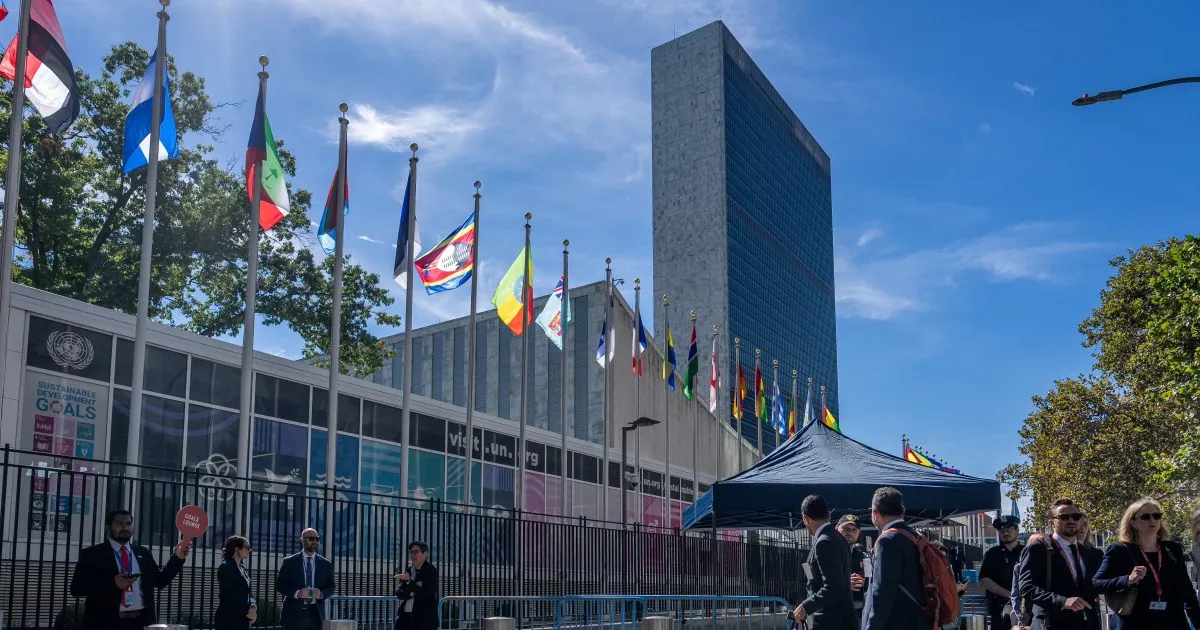
The annual general debate of the United Nations General Assembly (UNGA) starts on Tuesday morning in New York amid dire circumstances. Besides traffic gridlock and overpriced hotel rates, cavalcades of motorcades and successive dignitaries delivering calibrated speeches, this session will hear Secretary-General Antonio Guterres’s last speech on the state of the UN.
Guterres headed the UN for 10 years, and during that time, he repeatedly failed to defend it when it came under attack. He passes on his post at the top of a world organisation on the verge of financial collapse and more marginalised than ever before.
Paradoxically, Guterres has the United States, the host government of the UN, and its mercurial president, Donald Trump, to thank for this dismal state of affairs.
Earlier this year, the Trump administration withdrew from dozens of UN agencies and organs and, in an extraordinary move, ceased all payments of its dues to the regular and peacekeeping budgets of the UN. But these drastic policy decisions did not spring out of nowhere. Trump’s unhappiness with the UN is multifaceted, and his decision to stop fulfilling Washington’s legally binding financial obligation may well be the logical culmination of decades-long US policy.
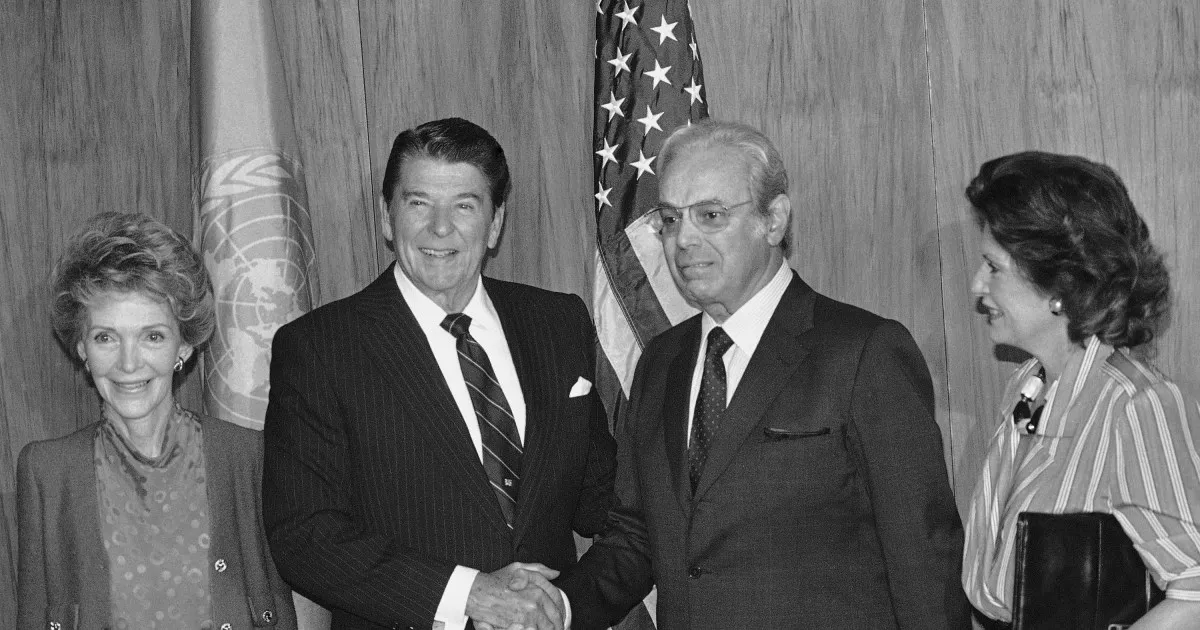
In the mid-1980s, the Reagan administration accused the UN of being a third-world, anti-US forum. To compel the organisation to better serve its interests and under the guise of the ubiquitous need for reform, which all secretaries-general fell for, the US started to withhold a share of its assessed contribution, which accounted for a quarter of the regular budget and a third of the peacekeeping budget back then.
By 1987, the US relaxed its payment withholding policy, but the precedent was set. Washington continued to use the threat of withholding payment to maintain its grip on an organisation it viewed and continues to view as a vehicle serving its national interests rather than a multilateral agent serving the whole of humanity.
Ever since the Reagan years, the US has kept the UN on a short financial leash, and to this day, has been deliberately accruing arrears. It currently owes an estimated $4.2bn – that is equivalent to 120 percent of the regular UN budget for 2026.
Trump has readily embraced this policy of financial blackmail. His administration has slow-walked mandatory payments, although earlier this month it paid $827m towards its outstanding dues so it could preserve its voting rights in the UNGA.
The president’s ambivalent view of the UN may be rooted in a lesser-known detail. In 2001, Trump, then a real estate developer, lobbied then Secretary-General Kofi Annan to be awarded the billion-dollar renovation project of the UN headquarters, but he did not get his way. That was probably not forgotten.
But just like during the Reagan years, there is another major factor driving Trump’s assault on the UN: US congressional politics. As Israel faced growing backlash at the UN for its genocide in Gaza, pressure from the Israeli lobby in Washington mounted. The Iron Dome diplomatic cover the US provided to Israel in the UN Security Council (UNSC) was no longer sufficient.
By 2025, two years into the genocidal campaign, Guterres’s tepid and overdue criticisms of Israeli policies, critical UNGA resolutions and scathing reports by special rapporteurs of the Human Rights Council – including Francesca Albanese, whom Washington placed under sanctions in violation of its host country obligations – became too much for Trump, Secretary of State Marco Rubio and the US Congress.
In the 1980s, Washington deemed the UN a third-world anti-US forum; today, it is deemed anti-Israel and anti-Semitic. The US’s blind and unconditional support for Israel has brought it growing isolation at the UN, as has its decision to launch a war of aggression against Iran.
Against the backdrop of these developments, the selection of the next secretary-general is dominating the behind-the-scenes agenda. Guterres’s lacklustre tenure at the helm of an organisation on the verge of financial bankruptcy and political demise will soon be forgotten. But what should be remembered is that his appeasement policy vis-a-vis Washington since the first Trump administration has evidently failed.
The new secretary-general will inherit the modus vivendi under which all secretaries-general since Javier Perez de Cuellar have had to operate — chronic cash flow problems due to US arrears.
That should motivate the new UN leadership to consider an overhaul of how the UN budget is put together and how member states’ contributions are allocated. Leaving the power of the purse in Washington’s hands is a self-inflicted perpetual wound that could prove lethal for the organisation.
Another fundamental question is whether the UN would be better off had its headquarters not been in the US. For too long, Washington has seen the UN either as a vector of its national interests or in adversarial terms. It has even used its position as a host to exclude world leaders it has viewed as hostile or undesirable, such as PLO Chairman Yasser Arafat and today Palestinian President Mahmoud Abbas.
Evidently, those are decisions only the UNGA can take. But a secretary-general with foresight and political backbone ought to provide views and leadership on those seminal questions to save the organisation from further marginalisation and possible demise.
The views expressed in this article are the author’s own and do not necessarily reflect Al Jazeera’s editorial stance.
Prof Aidan Fowler, national director of patient safety at NHS England, said the expansion of Martha’s Rule would give families and NHS staff “a critical new lifeline” to help improve care and save more lives.
Staff can themselves ask for a review from a different team if they are concerned the appropriate action is not being taken.
During the eight-month pilot at the seven trusts, 69 calls were made to dedicated Martha’s Rule phone numbers, including some calls relating to acute deterioration following an urgent clinical review. In some cases, it led to a patient having immediate surgery or being transferred to intensive care.
Prof Fowler said: “Early testing has shown that Martha’s Rule can work well in busy A&Es and builds on the evidence from our adult and children’s wards, where thousands of calls have been made by patients, families and staff to date, with many leading to changes in treatment and potentially life-saving interventions.”
Health minister Baroness Merron said the initiative was part of “wider efforts to put patient safety at the heart of the NHS.”
Actor Jason Watkins, whose two-and-a-half-year-old daughter Maude died from sepsis in 2011, praised the rollout, saying Martha’s rule “is making a difference on the wards”.
“It enables a parent to have a voice and if there is an issue, that is addressed,” he told BBC Breakfast, and urged parents: “if you’re at all worried when you go into A&E, ask for a second opinion.”
Watkins said the rollout of Martha’s law could benefit medical professionals too, explaining: “Those extremely dedicated medical practitioners, nurses, doctors and consultants, it gives them a pause and a thought ‘am I doing everything I can to assess this child accurately?'”.
Patients and their families can check with their local hospital or NHS trust where Martha’s Rule is available by visiting the trust’s website or asking hospital staff.
Scotland is beginning to use Martha’s Rule and Northern Ireland is considering using it, while Wales has a similar scheme called Call4Concern.
Iran must “end its arming of and support” for the Houthis in Yemen, the foreign ministers of G7 nations have said in a joint statement.
The G7 also condemned “in the strongest terms” Houthi attacks on Saudi Arabia, adding that the recent escalation in fighting against Saudi-backed forces in Yemen represented a threat to regional and global energy security.
Thousands of refugees have fled Yemen in recent days after the Iran-backed group seized territory along the country’s Red Sea coastline, including near the Bab al-Mandab Strait, a critical shipping route for global trade.
The statement comes ahead of the annual UN General Assembly in New York, where senior Iranian officials are due to speak.
“We call on the Houthis to immediately cease all military actions, all threats and attacks against civilian shipping, and to return to the political process in good faith,” said the foreign ministers of the UK, Canada, France, Germany, Italy, Japan and the United States.
It went on: “Their reprehensible actions constitute a dangerous pattern of escalation that risks further exacerbating the conflict, undermining international trade and creating global economic instability.”
“Looking forward, we will continue to support the legitimate Government of Yemen and reaffirm our strong commitment to the unity, sovereignty, independence, and territorial integrity of Yemen,” the ministers said.
Their statement was issued following a meeting on the sidelines of the UN General Assembly.
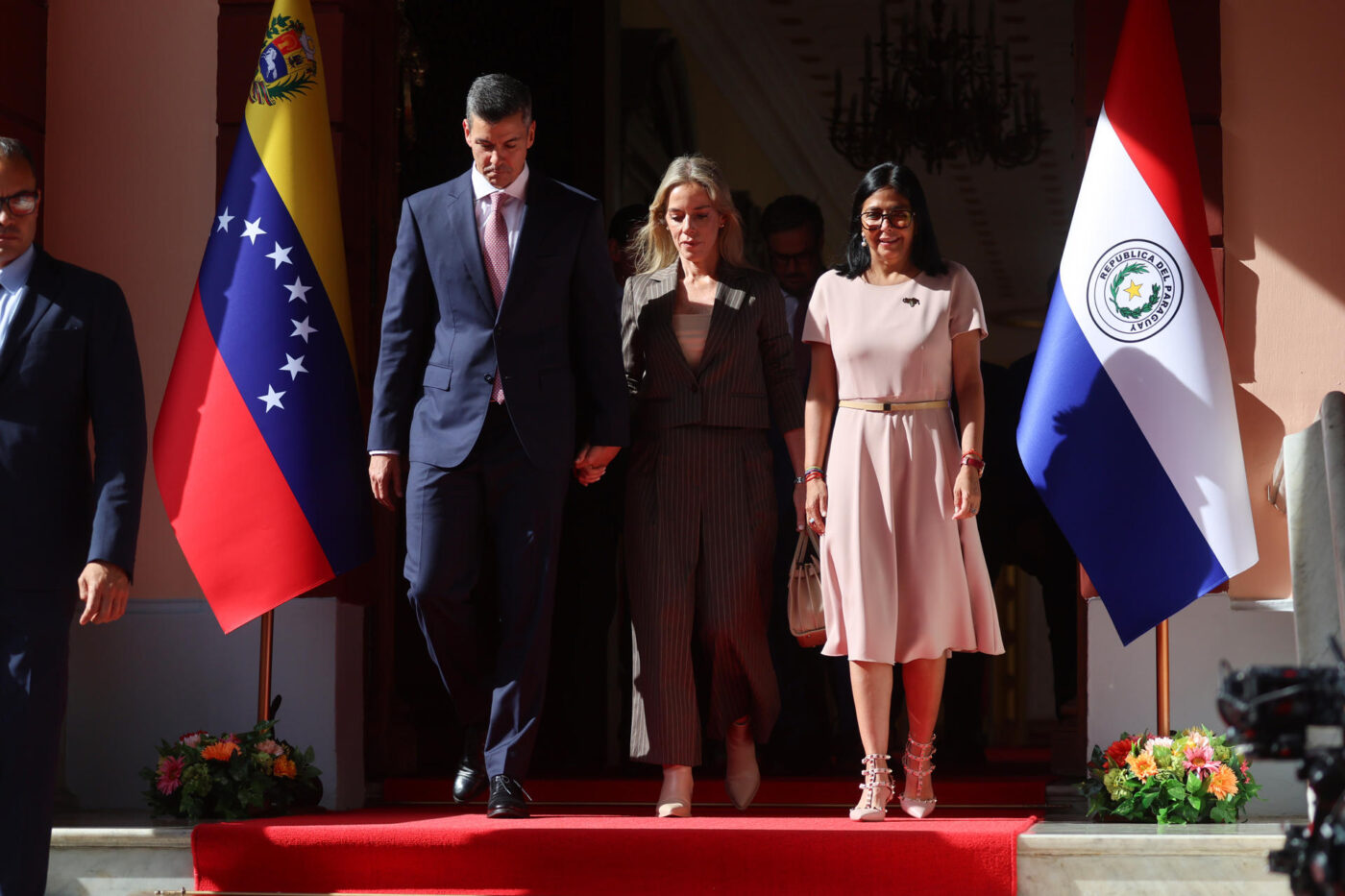
Caracas, September 21, 2026 (venezuelanalysis.com) – Venezuelan Acting President Delcy Rodríguez hosted Paraguayan counterpart Santiago Peña at the Miraflores Presidential Palace in Caracas on Saturday as the two South American nations relaunch bilateral diplomatic and consular relations.
The high-level working meeting reportedly focused on establishing a shared agenda centered on trade expansion, energy cooperation, consular assistance, and joint efforts to combat transnational organized crime.
The summit concluded with a joint statement announcing the renewed bilateral relations, signed by foreign ministers Félix Plasencia and Rubén Ramírez Lezcano for Venezuela and Paraguay, respectively.
Following the signing ceremony, Rodríguez and Peña expressed optimism regarding the reestablished cooperation.
“We are working together for a more integrated Paraguay,” Peña declared in a press conference, emphasizing that the dialogue was focused on “the well-being of citizens” from both countries.
For her part, Rodríguez claimed the accord did justice to principles of sovereignty, dialogue, and South American integration in Venezuela’s foreign policy.
“Venezuela continues to advance a sovereign diplomacy of peace, rooted in mutual respect, self-determination, and constructive dialogue among our nations,” she stated. “This meeting opens a new stage of cooperation aimed at addressing shared challenges and serving the concrete interests of both our peoples.”
The Caracas meeting reversed years of political friction and diplomatic tensions between the two nations. Bilateral ties were initially severed in January 2019 under former Paraguayan President Mario Abdo Benítez, who aligned Asunción with Washington’s regime-change strategy by recognizing opposition figure Juan Guaidó’s self-proclaimed “interim government.”
Relations experienced a brief thaw in late 2023 under Peña’s incoming administration before breaking down again in January 2025. The Venezuelan government formally severed diplomatic channels after Peña supported far-right opposition candidate Edmundo González’s victory claim in the July 2024 Venezuelan presidential elections. The Paraguayan president further backed Venezuelan anti-government forces by attending María Corina Machado’s Nobel Peace Prize ceremony in December 2025.
A central point on the reopened diplomatic agenda was the resolution of a long-standing debt owed by Paraguayan state oil company Petróleos Paraguayos (Petropar) to Venezuela’s state energy company, Petróleos de Venezuela S.A. (PDVSA).
The financial dispute stems from fuel shipments received by Petropar under the 2004 Caracas Energy Accord, an energy integration initiative launched under President Hugo Chávez to provide favorable financing conditions for oil imports across Latin America and the Caribbean. Paraguay currently maintains an outstanding principal debt estimated at approximately US $300 million.
Addressing the issue ahead of the summit, Paraguayan Foreign Minister Rubén Ramírez Lezcano acknowledged the core obligation but highlighted technical disagreements regarding accumulated interest calculations.
“The differential of that debt is linked to interest that applies outside the commercial agreement that exists with that country,” Ramírez explained during a press conference last week, noting that the specific arbitration over interest rates remains before the International Chamber of Commerce (ICC) in Paris.
The resolution of the debt has been paralyzed for years primarily due to the severing of diplomatic ties, compounded by unilateral sanctions imposed by the United States against PDVSA.
With diplomatic channels now reopened, both governments signaled their intention to structure a viable settlement mechanism outside of imperial financial restrictions.
Since the January 3 US military strikes and kidnapping of President Nicolás Maduro, the acting Rodríguez government has aligned its foreign policy with Washington, mending or expanding ties with US partners in Latin America and beyond while scaling back support for long-term allies such as Cuba and Iran.
Following Saturday’s summit in Caracas, Acting President Rodríguez departed Venezuela for New York City, where she will attend the 81st Session of the United Nations General Assembly (UNGA) this week.
According to Reuters, Rodríguez is slated to hold discussions on energy and mining agreements, as well as Venezuela’s ongoing debt restructuring process.
On Monday, the Venezuelan acting president met with IMF Managing Director Kristalina Georgieva, though no details of the talks were disclosed. Caracas has sought to unblock around $4.5 billion in IMF-issued Special Drawing Rights (SDR) for recovery efforts following the June 24 double earthquake.
Likewise on Monday, Rodríguez held talks with World Bank President Ajay Banga.
Countries including Germany, South Africa and Canada suggest international institution to set and enforce standards.
Twenty countries and the European Union have issued a call for international cooperation to ensure AI remains under human control, including the potential creation of a global oversight body to set and enforce standards.
The countries, including Germany, South Africa, Canada, Australia, the United Arab Emirates and Singapore, issued the joint statement on Monday as global leaders prepare to discuss the risks posed by rapidly advancing AI at the annual gathering of the United Nations General Assembly.
Recommended Stories
list of 4 itemsend of list
The declaration, released by the office of Finnish President Alexander Stubb, calls on governments and industry to act immediately to ensure that AI is developed in line with international law and remains under “human direction, oversight and control”.
“To realise AI’s potential, industry, governments and society must act now,” the statement says.
“We must address these risks and strengthen oversight – without widening the gap between countries in access to the benefits of AI.”
The declaration urges countries to develop and coordinate “common standards”, share reports of serious safety incidents, and explore the establishment of an international institution to “set standards, enable verification, and convene states when capability thresholds are crossed”.
Signatories include German Chancellor Friedrich Merz, Norwegian Prime Minister Jonas Gahr Store, European Commission President Ursula von der Leyen, Kenyan President William Ruto, Kazakh President Kassym-Jomart Tokayev and Turkish Foreign Minister Hakan Fidan.
The United States and China, the world’s two leading AI powers, did not join the statement, which remains “open for endorsement” by other countries.
US President Donald Trump and Chinese President Xi Jinping are expected to discuss AI when they meet at the White House on Thursday for their third face-to-face summit in less than a year.
Washington and Beijing, which are in a race to dominate cutting-edge technologies, have both rebuffed calls to slow down AI development to ensure greater safety.
Other AI players not among the signatories include India, South Korea, Japan, the UK and France.
The declaration comes as the AI sector is engaged in a heated debate about safety following calls for a slowdown in development by top industry leaders.
In an essay earlier this month, Anthropic CEO Dario Amodei called on firms to “slow the pace” of development to mitigate risks, a proposal that was swiftly endorsed by rivals including OpenAI CEO Sam Altman and SpaceX and Tesla CEO Elon Musk.
Amodei’s call followed a series of cases of AI models engaging in unsanctioned malign activity, including an incident in July in which AI agents being tested by OpenAI hacked the AI start-up Hugging Face.
In the latest intervention by industry on Monday, OpenAI said the US should lead an international effort to develop technical standards for advanced AI.
“The United States is well positioned to lead because its AI industry is at the technical frontier, and it still stands in a privileged global network position in critical areas such as finance, trade, defense, technology, and information systems,” the San Francisco-based AI giant said in a blog post.
“Leading now will determine whether the United States shapes the global AI framework or watches a fragmented, uneven, and conflict-ridden system take hold around it.”
The UN-backed Independent International Scientific Panel on AI, which examined the Hugging Face incident, on Monday also added its voice to calls for new guardrails, saying the cyberattack had exposed the “unravelling” of existing safeguards.
Asked about the state of the relationship between the UK and US, the prime minister said he believes it is “as strong as it’s ever been”.
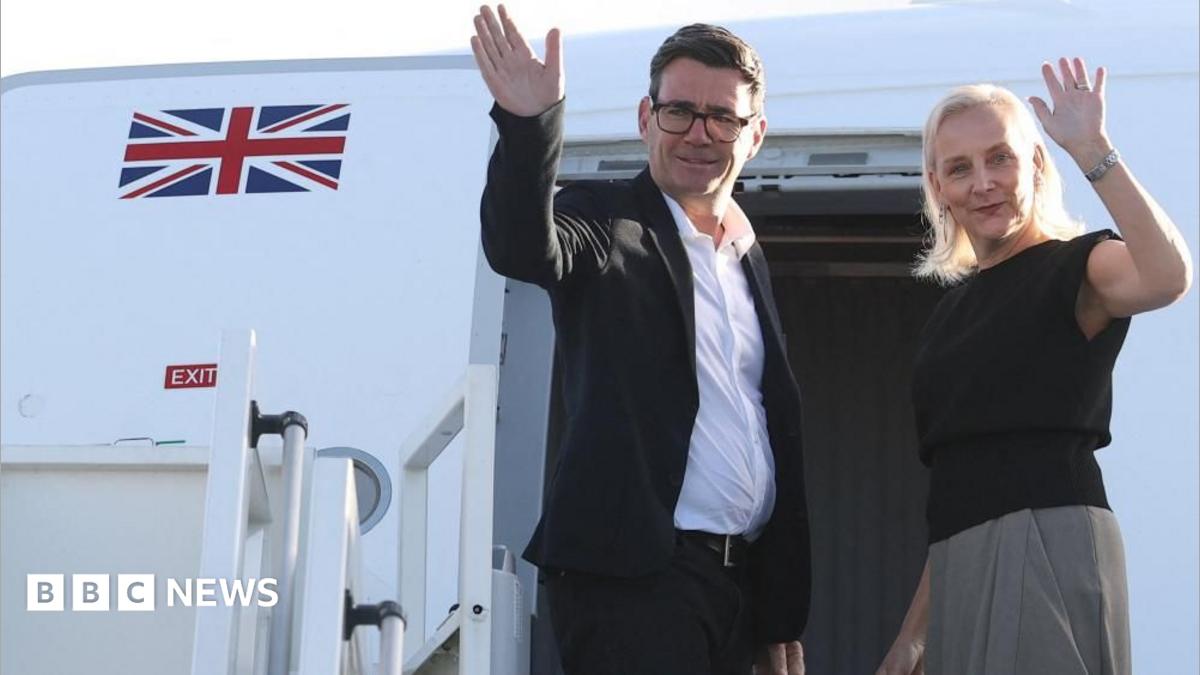
Burnham has travelled to New York with his wife, Marie-France Van Heel, for a day of diplomacy and a speech to the UN General Assembly, which is expected to focus on the opportunities and dangers associated with artificial intelligence (AI).
He said: “I will be making the case for closer international co-operation on AI, a just and lasting peace in Ukraine, and renewed efforts to bring an end to the conflict in the Middle East because what happens abroad impacts each and every one of us at home.”
The prime minister will also announce the start of work on a new AI and Autonomy partnership between the UK and the US, focused on protecting critical national infrastructure using AI tech.
Lib Dem leader Sir Ed Davey is expected to criticise this plan at the final day of his party’s conference, saying it “doesn’t come close to meeting the scale of the threat” and “only risks making us more dependent on a Trump administration in the pocket of the tech bros”.
He will also call for a global pause on superintelligent AI and propose a new International AI Safety Agency.
For a new British prime minister, the first meeting with a US president has always been a pivotal encounter, but officials are well aware of the added jeopardy of a public appearance alongside the most unpredictable president in American history.
In advance of the meeting, the UK revealed that the UK and the US have, for the first time, fired an American torpedo from a British undersea drone in a military exercise.
The torpedo, described as “heavyweight” by UK officials, is “designed to sink ships and deep diving submarines”, Downing Street said.
It was launched in UK waters last week from a 12-metre long undersea drone called Excalibur, made in Plymouth.
It is the first time either the UK or the US have launched a torpedo from an uncrewed underwater vessel, rather than a crewed submarine, and is seen as a breakthrough in attempts to protect vital infrastructure such as deep sea data cables.
“Our work together already shows what can be achieved when our two countries combine our expertise and innovation,” the prime minister said.
Burnham was also asked by reporters about the UK government seeking to hand over the Chagos Islands to Mauritius and pay to lease back the joint US-UK military base on Diego Garcia.
Burnham spoke to the Mauritian prime minister, Navin Ramgoolam, on Monday.
He was asked by reporters to outline what he had told Ramgoolam, whether he supported the deal and if he had a plan to convince Trump to back it.
Burnham replied: “I said that we remain determined to secure the long-term operation of the base, which is crucial to our security and that of our allies.
“The assurance I gave was I will work towards a resolution, at the moment we don’t have that, but I gave an assurance that I would commit to working towards one.”







![France's President Emmanuel Macron meets with Ukraine's President Volodymyr Zelenskyy on the sidelines of the United Nations General Assembly in New York City on September 21, 2026 [Ludovic Marin/AFP]](https://i0.wp.com/www.aljazeera.com/wp-content/uploads/2026/09/AFP__20260922__C8XY4MU__v1__HighRes__UsFranceUkrainePoliticsDiplomacy-1790058813.jpg?w=640&ssl=1)