MONEY

Get the latest updates on stock markets, economic trends, business insights, personal finance tips, and more

Mistral AI raises record €3 billion in Samsung-led funding round

Published on

Europe’s answer to OpenAI has just become considerably better funded.


ADVERTISEMENT


ADVERTISEMENT

The Paris-based company Mistral AI announced its Series D on Tuesday, three years after being seeded, with the memory chip giant Samsung leading alongside the EU-backed Scaleup Europe Fund, managed by EQT, and existing investor PSG Equity.

The step up is steep.

Mistral was valued at €11.7 billion in 2025 after a €1.7 billion Series C led by Dutch chipmaker ASML, meaning the company has almost doubled its valuation in a year.

Much of the money is going into concrete rather than code. CEO Arthur Mensch announced the funding would build out data centres and computing capacity that Mistral can rent to others but that will also ensure autonomy.

“Long term, the plan is to fully rely on capacity that we are building ourselves, and so that means that the amount of compute that we own is going to grow around 100% in the next five years,” Mensch said, adding that the company would train “bigger and faster models.”

Mistral is already spending €4 billion on data centres across France and Europe, with one facility running outside Paris and another under construction in Sweden.

It raised further debt financing in March for the same purpose, and Microsoft has agreed to fund capacity from its European network, built around thousands of Nvidia chips.

Both Microsoft and Nvidia are also investors in Mistral, with the latter also adding exposure in this funding round.

The company says more than 125 enterprises across 20 countries use its technology, and Mistral projects it will pass a billion in annual recurring revenue by the end of 2026.

Europe lags behind in the AI race

Despite the news, Europe continues to critically lag behind in the global AI race.

Mistral’s valuation sits far below OpenAI and Anthropic, and Europe’s wider AI sector remains a fraction of the American one, with enterprise adoption across the bloc running at around 13.5%.

Other European contenders exist but are smaller.

Germany’s Aleph Alpha focuses on government and regulated industries rather than competing at the frontier, while Helsing has grown quickly in defence applications, and Switzerland’s Apertus offers fully open models and training data.

Brussels is trying to close the gap.

The InvestAI initiative carries a €200 billion headline commitment, and in July the Commission opened tenders for up to seven AI gigafactories, aiming to unlock more than €30 billion in investment, though those sites are not expected to operate until next year or 2028.

Thirteen smaller AI factories are already being built across seven EU countries.

The AI Act became applicable in August, but its toughest obligations were pushed back by the digital omnibus agreed in May, with high-risk rules now landing in December 2027 and August 2028, a delay Brussels framed as making the policy more innovation-friendly.

Source link

Why the US Dollar Won’t Fix Venezuela’s Economy

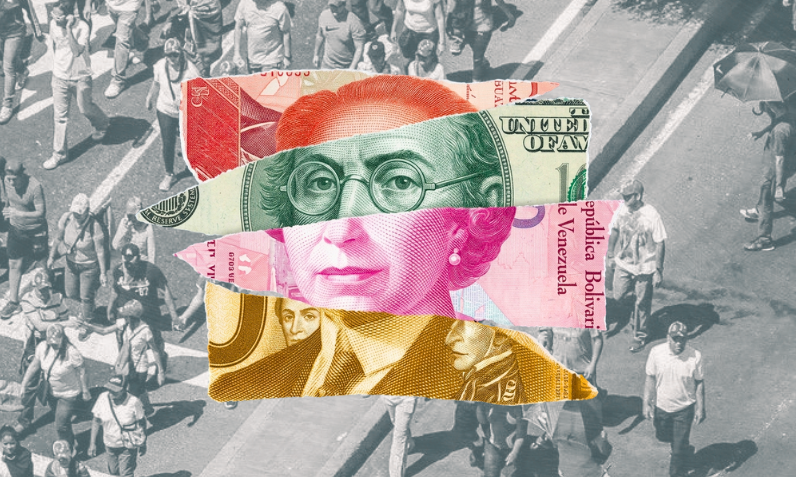
A few weeks ago, non-chavista politician Antonio Ecarri and American economist Steve Hanke managed to unearth one of Venezuela’s longstanding and unsettling debates: whether the country’s economy should be formally dollarized. After decades of economic hardship brought by repeated devaluations, hyperinflation and scarcity, the country’s monetary regime is heavily fragmented. 

De facto dollarization rules most of the transactions, while the bolívar, crypto stablecoins, euros and the currencies of neighboring countries split the rest of the monetary market share used to maneuver through Venezuela’s complex economy. With the US pushing for the country’s economic stabilization to increase trust in foreign investors, the fragmented monetary ecosystem can be detrimental to the process made so far.

Venezuela’s economic outlook has improved after Maduro’s capture and since the US took control over Delcy’s decisions. Mainly because of a sharp recovery of oil exports to the US recovered sharply; by April, these were up 192% from their 2025 average. The energy sector is spearheading the recovery while attempting to partially compensate for the devastation caused by the twin earthquakes. GDP growth projections for Venezuela are forecasted at 5.8%, almost four times the country’s 2025 growth (1.5%). Yet the threat of inflation and instability compounds investors’ worries about entering the country. After repeated announcements by the interim regime promising to close the exchange gap and tackle inflation, their actions show otherwise.

Delcy continues to erode the bolívar by stimulating the money printer needed to feed chavismo’s patronage system. Exchange rate controls, which have long incentivized corruption and inflation, are still there. On the dollar side, credit loans and transactions remain “officially” forbidden, creating an artificial tax on USD transactions and fear amongst businesses who can be punished for their use.

Eliminating inflation would require abolishing all existing exchange rates and creating a new one based on an agreed technocratic approach.

The result of this unaddressed monetary disaster has been a persistent rise in inflation, which increased by 6.1% in July, bringing year-on-year inflation to 576% and 2026 cumulative inflation to 175.5%.

This is not the first time the call for dollarization has been in the spotlight in Venezuela. Nonetheless, US control over the country’s economy may increase the possibility of it becoming a reality. While dollarizing might be an effective measure to rapidly generate trust and reduce inflation, it raises important questions about its implementation under the interim regime and the future of Venezuela’s monetary sovereignty. Similar to Trump’s oil deal or the post-earthquake reconstruction, all discussions and actions are taking place behind the scenes, sidelining the very population that will have to deal with its consequences. 

The US dollar is not the solution

Discussions regarding dollarization have primarily focused on three benefits: eliminating inflation, forcing fiscal discipline, and eradicating corruption. However, as long as those managing the dollarization process are the same ones who have guided Venezuela to the worst economic crisis in the region’s history, the result might be equally as bad but with a different set of consequences. 

Hanke asserts that no preexisting institutional, fiscal or political conditions are necessary for dollarization to be successful. However, this process requires the willingness of all three areas to move forward. Eliminating inflation would require abolishing all existing exchange rates and creating a new one based on an agreed technocratic approach. Currently, there is no incentive for anyone in the interim regime’s leadership to converge the exchange rates.

A struggling or failed dollarization plan could further erode trust while leaving the country even more vulnerable to external shocks.

The exchange rate differentials have not been an economic policy mistake overlooked by chavismo. These have been an integral part of chavismo’s strategy to undermine and replace old political elites with select, loyal ones. Long ago, they became crucial to maintain the status quo. There are no signs in favour of change in this area, as economist Juan Comella argued in May. Doing so would compromise the structure that keeps her in power.

A struggling or failed dollarization plan—which forces the government to take on further debt, experience severe cash shortages and fundamentally depend on its commodity exports—could further erode trust while leaving the country even more vulnerable to external shocks, such as a sudden plunge in oil prices. The neoliberal constraints posed by dollarization, like an extremely limited Central Bank to aid the government, will not fix decades of institutional erosion, but only try to avoid it while possibly unleashing a fresh round of obstacles that menace an already fragile economic recovery.

The bolívar is not the problem

Decades of monetary policy failures made the population skeptical of the bolívar. For long enough, the system and institutions have incentivised and even rewarded the wrong people to take advantage of its vulnerabilities at the expense of the population and evading any personal consequences.

It is certainly not the paper where the bolívar is printed the element that corrupts people or destroys the economy: it is the system behind it. It is not far-fetched to think of a plan that grants the Venezuelan Central Bank complete independence, empowering the correct people to safeguard the economy from the risks of inflation while maintaining government spending in line and preparing for external shocks.

Relinquishing our monetary sovereignty would be a mistake in a world where governments actively participate and spend to tackle modern challenges, including AI and natural disaster relief. China’s rise as a global power has been, in part, a consequence of decades of industrial policy under intense government intervention. The US and EU have started to catch up in recent years. The US has done so with the CHIPS and Inflation Reduction Act under Biden and, most recently, with the Trump administration imposing protectionist tariffs and taking equity stakes in major companies with the aim of safeguarding US interests in key sectors. The EU aims to increase competitiveness under the Clean Industrial Deal and the Industrial Accelerator Act. If Venezuelan leaders seek to move past the country’s commodity dependence, climb up in the global value chain, become competitive and diversify the economy, industrial policy will be crucial. Dollarization would compromise those goals.

Starting a dollarization process under chavista rule is similar to entrusting the reconstruction of Venezuela’s oil sector to a businessman who contributed to the destruction of the country’s electricity grid.

Foreign investment will be the driver of short- and medium-term recovery and growth for Venezuela. However, industrial policy will be crucial to guide the long-term objectives of the country. For this, Venezuela needs the bolívar, even if it’s in an open and competitive currency market where the people decide which currency earns their trust.

The Ecarri-Hanke duo surprised public opinion not only because of their proposal but also because of the odd pairing. Ecarri represents the efforts of Venezuelan politicians with limited legitimacy to enter the spheres of influence in Washington, and also chavismo’s ability to neutralize them. Hanke only views Venezuela as part of a larger plan to promote and deepen the use of the dollar internationally, in a global context that increasingly mistrusts the US currency and is hedging against it.

Ecarri is the result of a system that empowers the wrong people. Hanke represents the oversight of the reality on the ground and the impact Venezuelans will have to absorb. Both display the same shortcomings of Venezuela’s monetary institutions over the past decades. Their proposal simply tries to hide the sun with one finger instead of addressing the historical root causes of Venezuela’s monetary instability.

Starting a dollarization process under chavista rule is similar to entrusting the reconstruction of Venezuela’s oil sector to a businessman who contributed to the destruction of the country’s electricity grid. Policy should depart from both trauma-instilled calls for complete dollarization and a patriotic defense of the bolívar. Instead, it should focus on economic stability and our capacity to meet the challenges of tomorrow.

Source link

China injects over €45 billion into state banks and insurers as growth slows

Beijing has reached for its chequebook.


ADVERTISEMENT


ADVERTISEMENT

The Chinese finance ministry is advancing a 360 billion yuan (€46.1bn) package to businesses, announced on Sunday through statements from the companies involved and reported by state news agency Xinhua, making it one of the larger interventions in China’s financial system this year as growth slows.

The Chinese banks take the bulk of it, roughly 290 billion yuan (€37.2bn), intended to preserve their capacity to keep lending as Beijing presses them to increase support for economic activity.

Xinhua reported the injection would strengthen the institutions’ “sound operating capabilities, risk resistance capabilities and ability to serve the real economy.”

The Agricultural Bank of China is pursuing a private placement of A-shares worth up to 160 billion yuan (€20.5bn) and the Industrial and Commercial Bank of China up to 100 billion yuan (€12.8bn), with the finance ministry among the investors.

Unusually, so is the China National Tobacco Corporation, which operates the state tobacco monopoly and the Export-Import Bank of China which will receive 30 billion yuan (€3.85bn).

Insurers account for the remaining 70 billion yuan (€9bn).

China Life Insurance Group, the country’s largest life insurer, gets 35 billion yuan (€4.5bn) and China Taiping Insurance Group 7 billion yuan (€900mn).

The People’s Insurance Company of China plans to raise up to 15 billion yuan (€1.9bn) through a private placement to the ministry, China Export and Credit Insurance Corporation receives 10 billion yuan (€1.28bn), and China Reinsurance Group is raising 3 billion yuan (€385mn).

Insurers have been squeezed from two directions as years of low interest rates have eroded investment returns, while the government has directed them to put money into Chinese equities.

The currency has been moving in the same direction.

The Chinese yuan reached its strongest level against the US dollar since January 2023 on Monday, trading at around $0.149, a firmer exchange rate that also happens to blunt a long-standing American complaint about Chinese currency management, weeks before talks in Washington.

Beijing’s busy month

The capital injection is not the only move Beijing is making this month.

Chinese President Xi Jinping is reportedly preparing to bring a large delegation of business executives to his Washington visit on 24 September, according to sources cited by news agencies.

It would be a notable departure from customary practice.

Xi rarely travels with corporate leaders, many of whom lost standing after the regulatory crackdowns on technology, education and property that began in 2020, and the last comparable delegation accompanied him to the US more than a decade ago, in 2015.

Washington’s response has also been curious.

“The White House is not tracking a Chinese CEO delegation,” a US official said, without explaining what tracking meant in this context, leaving the statement short of either confirmation or denial.

The gesture would be reciprocal in any case.

When US President Donald Trump visited Beijing in May, he brought a roster of American CEOs including Elon Musk, Tim Cook and Jensen Huang. Bringing Chinese counterparts to Washington would signal a willingness to invest and trade with the US, while handing the White House potential economic wins before November’s midterm elections.

Expectations for the summit itself remain modest, with the two sides still divided over which products should count as non-sensitive under trade arrangements.

US Treasury Secretary Scott Bessent, US Trade Representative Jamieson Greer and Chinese Vice Premier He Lifeng are due to meet in early September to work on deliverables.

Source link

Hyperscalers, Nvidia reshape the long-duration bond supply (NVDA:NASDAQ)

Sep 07, 2026, 4:25 AM ETNVIDIA Corporation (NVDA) Stock, US10Y, US2Y, , , , , By: Sinchita Mitra, SA News Editor
Nvidia company building in China

Robert Way

Hyperscalers and Nvidia (NVDA) had become a much larger source of long-duration debt issuance relative to the U.S. Treasury in 2026, according to a chart posted by Global Macro.

The chart showed hyperscaler and Nvidia debt issuance, including special-purpose vehicles, had risen

Source link

Japan may have sold U.S. Treasuries to fund yen intervention

Sep 07, 2026, 3:28 AM ETiShares MSCI Japan ETF (EWJ), DXJ, FLJP, DFJ, EWJV, , , , , , By: Jessica Kuruthukulangara, SA News Editor
Dollar Yen

Nelson_A_Ishikawa

Japan likely sold a portion of its U.S. Treasury holdings to finance its currency intervention over the past month, as its foreign reserves posted their largest decline in August.

Tokyo’s reserve assets totaled ~$1.21T at the end of August, down 6.2% from a

Source link

Arab News | Mergers and acquisitions drive Saudi growth, competitiveness

Amid considerable uncertainty over global economic growth, the prospect of higher interest rates and long-term government bond yields, and volatile energy prices, business activity worldwide has come under pressure.

Trade disruptions resulting from higher customs duties, supply chain disruptions caused by geopolitical conflicts, and mounting challenges facing major international institutions have further compounded these pressures.

These conditions underscore the need for resilient businesses that are not only financially strong but also supported by robust supply chains and capable of navigating challenging market conditions.

Against this backdrop, mergers and acquisitions have emerged as powerful drivers of growth, competitiveness and economic transformation. Yet their success depends on far more than agreeing on valuations and commercial terms. Regulatory complexity, cultural integration, corporate governance, due diligence, and the alignment of people and strategy can ultimately determine whether a transaction creates lasting value or falls short of its objectives.

Global M&A activity strengthened significantly in 2025, with announced deal value reaching approximately SR17.3 trillion ($4.6 trillion), an increase of 49 percent from 2024 and the strongest annual performance since 2021.

Saudi Arabia also recorded substantial transaction activity. The General Authority for Competition, which originated as the Competition Council in 2004, received 427 economic concentration applications valued at approximately SR2 trillion in 2025. It issued a record 269 no-objection decisions, up 33 percent from 2024.

Several major transactions illustrate the growing role of M&A in Saudi Arabia’s economic transformation. In the financial sector, the 2021 merger of the National Commercial Bank and Samba Financial Group created Saudi National Bank, combining two leading institutions to achieve greater scale, operational efficiency and competitiveness.

In the industrial sector, Saudi Aramco completed its $69.1 billion acquisition of a 70 percent stake in SABIC from the Public Investment Fund. Together, these transactions demonstrate how M&A can help consolidate industries, achieve economies of scale, integrate supply chains, develop strategic capabilities and support the Kingdom’s economic diversification objectives.

Against this backdrop, the Riyadh Chamber organized the “Legal Aspects of Corporate Mergers and Acquisitions and Investment Opportunities Forum” on Aug. 31, bringing together representatives from public- and private-sector entities.

The forum provided a valuable platform for regulators, investors, business leaders, legal advisers, compliance officers, board members, governance professionals and SMEs to exchange perspectives, enhance regulatory awareness and explore ways to reduce transaction risks and support sustainable corporate growth in line with Saudi Vision 2030.

I had the privilege of moderating the forum’s third session, titled “The Regulatory and Supervisory Framework for Mergers and Acquisitions in the Kingdom.” The session examined the role of regulatory authorities in reviewing M&A transactions and promoting competition, the regulatory framework governing transactions involving listed companies, and the support provided by relevant authorities for investment deals. It also explored M&A as a strategic tool for driving the growth and long-term sustainability of small and medium-sized enterprises.

Ultimately, an M&A transaction should not be pursued simply to achieve expansion or increase market share. Companies should first establish a clear strategic rationale and determine whether the transaction can create sustainable economic value, improve operational efficiency, foster innovation, strengthen competitiveness and build more resilient supply chains.

Expected synergies should be realistic, measurable and supported by a credible post-transaction integration plan.

Thorough due diligence is equally important. It should extend beyond financial performance and valuation to cover legal obligations, regulatory approvals, tax exposure, operational risks, contractual commitments, governance arrangements, workforce implications, corporate culture, cybersecurity, data protection, intellectual property, and environmental and social responsibilities.

Companies should also assess whether they have the financial and managerial capacity to complete the transaction and integrate the businesses effectively without disrupting existing operations.

Particular attention must be paid to the transaction’s impact on market competition. A deal that creates economic value for the parties involved may nevertheless harm consumers or the broader market if it creates or reinforces a dominant position, restricts market access, raises barriers to entry, reduces consumer choice or weakens competitive pricing.

Early engagement with relevant regulatory authorities can help identify such concerns, clarify notification and approval requirements, and reduce the risk of delays or legal challenges.

Supply chain considerations should also form part of the assessment. While an M&A transaction may improve security of supply, increase access to essential inputs and reduce operational vulnerabilities, companies must ensure that it does not create excessive dependence on a single supplier, market, technology or distribution channel.

Ultimately, a successful M&A transaction requires more than regulatory approval and financial completion. It should deliver tangible and sustainable benefits to shareholders, employees, customers and the wider economy.

Clear governance, transparent decision-making, full compliance with the applicable legal and regulatory framework, and continuous monitoring of post-transaction outcomes are therefore essential to ensuring that a deal achieves its strategic objectives while supporting fair competition and long-term market development.

X: @TalatHafiz


Source link