MONEY

Get the latest updates on stock markets, economic trends, business insights, personal finance tips, and more

People on the Move: EIF, Barclays, Standard Chartered, and Julius Baer

Home Banking People on the Move: EIF, Barclays, Standard Chartered, and Julius Baer

This article appears in the September 2026 issue of Global Finance Magazine.

Jean-Christophe Laloux, EIF

The European Investment Fund (EIF) has appointed Jean-Christophe Laloux as its next CEO, effective Jan 1. He will succeed Marjut Falkstedt, who plans to retire. 

Laloux currently leads the European Investment Bank’s lending and advisory operations in the EU and has spent more than two decades at the EIB. He has helped develop financing tools for high-growth technology companies, infrastructure, climate projects, and private-sector investment, including venture debt, risk-sharing mechanisms, and project finance. 

EIF Chair Nadia Calviño praised Laloux’s track record in developing innovative financing tools to support Europe’s technological competitiveness. Before joining the EIB in 1999, Laloux worked at Boston Consulting Group and PricewaterhouseCoopers. —Anthony Noto


Mike Jool and Adeel Khan
Mike Jool and Adeel Khan, Barclays

Mike Jool and Adeel Khan will take the reins of Barclays’ investment bank business in February as co-CEOs, subject to regulatory approval. Jool will join the bank early next year from Bank of America, where he most recently co-headed global investment banking. Khan currently leads Barclays’ global markets.

Each will have a seat on the bank’s group executive committee. “Since 2023, our investment bank has delivered a strong performance, growing revenues and returns and driving a more integrated service for clients,” said C.S. Venkatakrishnan, Barclays Group chief executive.

“As we enter the next stage of our strategy, and reflecting the ambition we have for our investment bank, Adeel and Mike will form a strong partnership to deliver an even stronger, more integrated service to our clients.”—Rob Daly


Manus Costello
Manus Costello, Group CFO

Standard Chartered PLC confirmed the appointment of Manus Costello as Group CFO and executive director. Costello’s appointment, initially announced in May, formalizes his role atop the emerging markets-focused banking group. 

The 25-year industry veteran spent 14 years at AllianceBernstein, rising to global head of research, and earlier served as senior director of equity research at Merrill Lynch.  

Since joining Standard Chartered in 2024 as global head of Investor Relations, Costello has made “a significant contribution to the group’s strategic positioning and engagement of stakeholders, while also bringing strong rigor and an entrepreneurial mindset to the role,” CEO Bill Winters said in a press release. —Luca Ventura


Peter Burrill
Peter Burrill, Group CFO

Swiss private bank Julius Baer appointed Peter Burrill as CFO and member of the Executive Board, effective August 17, subject to regulatory approval. He joins from Standard Chartered, where he was interim group CFO for nine years. Before that, Burrill spent nearly four years at Deutsche Bank as group controller and co-head of group finance, He succeeds Evie Kostakis after a top management shake-up. 

“We are delighted to welcome Pete to Julius Baer,” Bollinger said in a press release. “He brings profound depth and breadth of financial expertise, having led the full range of finance and regulatory functions. With extensive international experience across our core markets and working at a bank strongly focused on wealth management, he will be an outstanding addition to our team.” —LV

Source link

Revolut Fast Tracks to Wall Street With Conditional US Charter

Revolut gets an OCC thumbs up to launch a US bank, but lending ambitions are another issue.

Technically, financial technology company Revolut is already a bank across several regions—it holds licenses in the U.K., France, Mexico and Australia.

Now, in the U.S. market, it is one step closer to bankhood.

The London-based startup announced Thursday that it has received conditional approval from the U.S. Office of the Comptroller of the Currency for a national bank charter. The move would help the company grow its customer base from 80 million to 100 million by mid-2027.

It also exemplifies Revolut’s agility as a fintech compared to traditional banks, which typically take years to pull off similar expansion efforts.

“Legacy banks are working with legacy systems,” David Tirado, Revolut’s VP of Profitability and Global Business, told Global Finance in an interview last year. “Revolut, on the other hand, built our proprietary technology from the ground up with a global mindset. While competitors struggle to scale across different markets and regulatory landscapes, our systems were designed for this from day one.”

What Else Does Revolut Need?

Revolut still needs a green light from the Federal Deposit Insurance Corp. and the Federal Reserve, as well as final sign-off from the OCC, before it can open the proposed bank.

Once fully approved, Revolut said it would offer U.S. customers loans, credit cards, FDIC-insured deposits, and access to stablecoins and cryptocurrencies.

In a prepared statement, Revolut founder and CEO Nik Storonsky said the conditional approval was “an important first step towards establishing the proposed Revolut Bank US,” adding that it gives the company “the foundation to build in the world’s largest financial market.”

The U.S. bid follows Revolut’s expansion across Latin America, where the company recently launched a bank in Mexico and is pursuing licenses in Brazil, Colombia, Peru and Argentina. This year, Revolut has also obtained banking licenses in France, Australia and the U.K., a payments license in the United Arab Emirates, and is seeking a banking license in South Africa.

The company claims to add roughly 1 million customers every 17 days.

What About Lending?

Whether Revolut can become a customer’s primary financial institution without being a major loan underwriter remains to be seen. Revolut’s consumer lending segment remains small relative to its tens of billions in customer deposits. Still, it’s worth noting that the so-called neobank’s loan book, as of March, is up 120% year over year at $2.9 billion.

Felipe Peñacoba Martinez, CEO of Getnet Platforms Payments Hub and former CIO at Revolut Bank (EU), told Global Finance in June: “Revolut is aware this takes time, and they’re going slower than in other areas.”

Ultimately, the central question facing the industry is whether fintechs like Revolut can scale core banking products faster than traditional incumbents can modernize their digital ecosystems.

Anthony Noto covers corporate finance and private credit. Contact him at anoto@gfmag.com

Source link

EU suspension of Brazilian meat comes into force, despite ongoing talks with Brasília

Published on

The European Commission suspended imports of meat from Brazil on Thursday over concerns about antibiotic use, after Brasília failed to convince the EU executive that its products comply with European standards.


ADVERTISEMENT


ADVERTISEMENT

The move comes as Brazilian meat imports lie at the heart of opposition to the free trade agreement signed in January 2026 by the Commission with Mercosur countries — Brazil, Argentina, Paraguay and Uruguay.

EU farmers accuse Latin American producers of failing to comply with the bloc’s phytosanitary and food safety standards, arguing that this gives Latin American products an unfair advantage on the EU market.

“We have rules that ban antimicrobials or using antimicrobials for growth,” Commission spokesperson Eva Hrncirova said. “On the 3rd of September, the list of countries that basically comply with our rules on antimicrobials comes into application.”

The spokesperson added that Brazil was not currently on the list, meaning its imports were suspended as of Thursday.

No guarantees for beef

The suspension, which resulted from a vote by national experts in May, covers beef, poultry, eggs and honey.

Imports of some products could resume following an audit of poultry and honey, launched on the basis of written guarantees of compliance provided by Brasília. The audit is expected to run until the end of the week, although the conclusions will take longer.

Hrncirova said no such guarantees had been provided for beef, adding that they must cover the animals’ entire life cycle, which is naturally longer for cattle.

Brazil’s ambassador to the EU, Pedro Miguel da Costa e Silva, told Euronews ahead of the summer that technical discussions with the Commission were ongoing. However, Brazil ultimately failed to prevent the suspension from taking effect.

Trade in agricultural products was the most contentious issue throughout the 25-year negotiations over the Mercosur agreement.

The deal was provisionally applied in May after the European Parliament suspended the ratification process with a legal referral to the European Court of Justice.

Source link

US-Canada Rift Echoes War of 1812

Responding to Trump’s tariff barrage, Canada pivots from continental nostalgia to global dealmaking.

This article appears in the September 2026 issue of Global Finance Magazine.

Following President Donald Trump’s reelection in 2024, something extraordinary occurred, not seen since the War of 1812. The president not only took aim at Canada as a potential annexation target, but also breached his own USMCA trade deal by imposing punitive tariffs on the country to the north (among many others). 

This prompted Canadians to turn away from their traditional focus on continental trade and pursue deals with other, friendlier markets (and, in protest, take liquor from the U.S. off their shelves). 

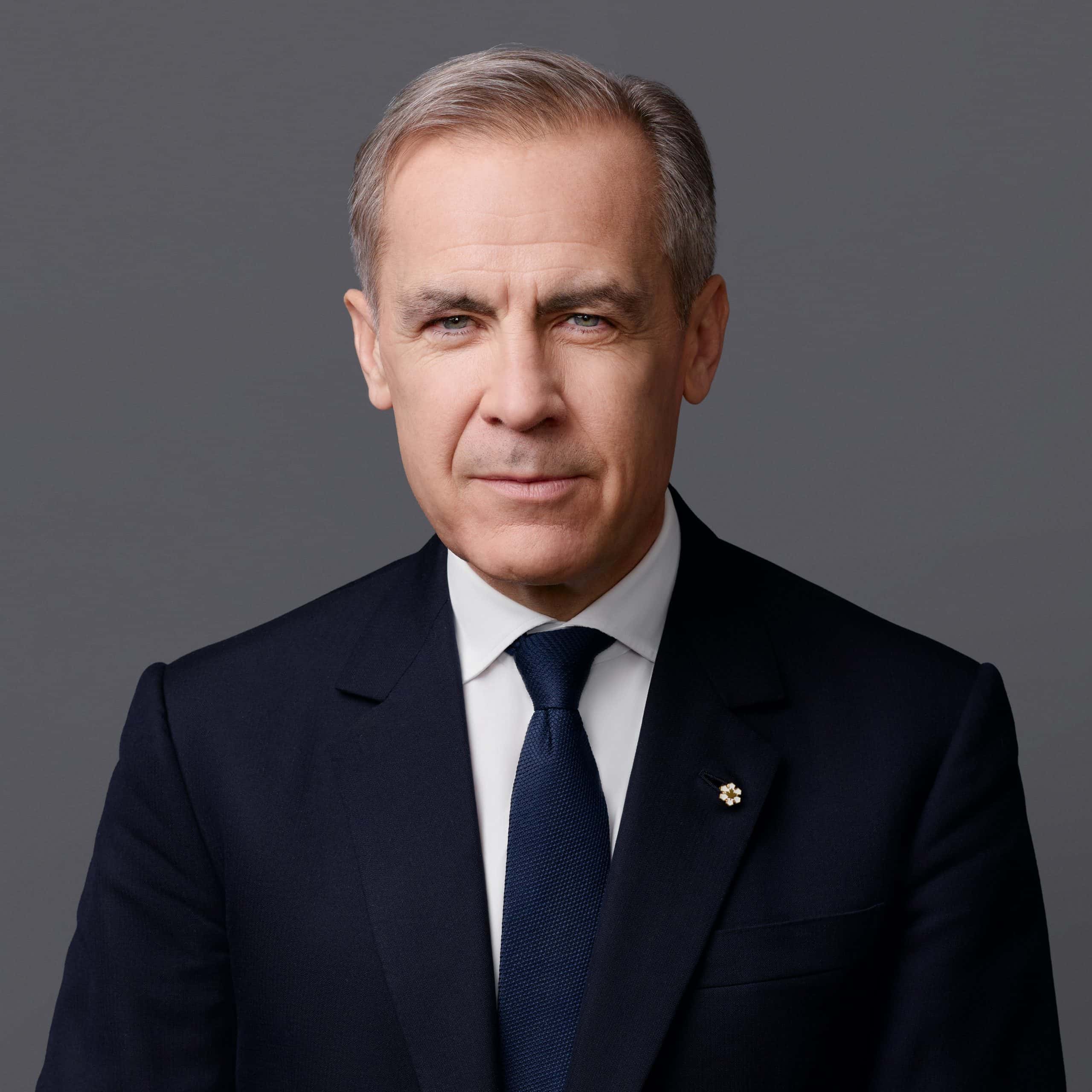
The Liberal Party’s electoral victory soon after, and Mark Carney’s ascension as prime minister, expedited the process. Responding to the newly hostile environment, the new PM pledged to double Canada’s exports by 2035, diversify foreign trade, and reduce reliance on what was, and still is, Canada’s largest trading partner. 

Mark Carney,
Canadian Prime Minister

“The old relationship we had with the United States, based on deepening integration of our economies and tight security and military cooperation is over,” he said. On another occasion, he was even more pointed: “Our relationship with the United States will never be the same as it was, even though, in the new protectionist world, we have the best trade deal of any country.”

That was then. Of course, now a war of words has become a full-blown trade war. With Canada backing away from what it considered a bad deal, the U.S. added tariffs to autos, auto parts, and aluminum, beginning January 2027, as a punishment for breaking off recent talks. Canada retaliated with tariffs of its own ranging from 15% to up to 50% on many American goods. As Carney stated at a news conference, “You’re at war when you are attacked. And we were attacked.”

A Strategic Reorientation

But a trade reorientation for Canada made sense on its own, some experts say. About four-fifths of the world’s economic activity occurs outside the U.S., much of it in Asia, according to the Fraser Institute, a nonpartisan Canadian think tank. “These facts suggest Canadian policymakers are right to emphasize the importance of expanding trade with non-U.S. markets,” it concluded.

Carney, accordingly, has been crisscrossing the globe, cutting deals with countries including India, China — where it reduced tariffs on electric vehicles, against U.S. wishes — and the United Arab Emirates, and has engaged with ASEAN members on a possible free trade agreement. All this is occurring, incidentally, as he continues to pursue tariff reduction with the U.S. and salvage as much of the free trade Canada has enjoyed with its neighbor to the south as possible.

This past summer, Maninder Sidhu, Minister of International Trade of Canada, established a new Strategic Exports Office and a Strategic Exports Advisory Council. The aim is to bring together diplomatic, commercial, and financial experts to help break down global trade barriers and open doors for Canadian businesses. 

The new bodies “mark a decisive step toward doubling our exports to non-U.S. markets,” he said, “and they give Canadian businesses the whole-of-government support they need to compete and win around the world.” Goods exports to non-U.S. markets are up about 17% from 2024 to 2025, an increase of C$33 billion (US$24 billion), Sidhu’s office said. To some observers, the pivot is not only something to navigate but also an opportunity for the world’s 11th-largest economy, according to the International Monetary Fund.

In the long term, Canada’s economy could expand its manufacturing base and raise its standard of living.

Joel Kranc is a contributing writer based in Canada.

Source link

China’s service sector activity rebounds to 51.4 in August, beating

Sep 03, 2026, 12:45 AM ETiShares China Large-Cap ETF (FXI), EWH, GXC, CAF, PGJ, TDF, KBA, KWEB, MCHI, CQQQ, YINN, ASHR, YANG, CHIQ, CWEB, CXSE, KURE, USD:CNY, CNY:USDBy: Meghavi Singh, SA News Editor
Data Concept

ronniechua

Source link

Private Credit Newsletter | Global Finance Magazine

We strive to provide essential intelligence to our international audience of senior financial executives. As part of this mission, we have launched the new Private Credit newsletter and have expanded our coverage of Private Credit sector in our print and digital editions.

PIK Payment in Kind concept.A type of financing arrangement where interest or dividends are paid in the form of additional securities or assets, instead of cash

The Hidden Risks of Payment-in-Kind

BlackRock office in San Francisco, California, USA - June 6, 2023. BlackRock, Inc. is an American multinational investment company.

BlackRock’s CEO Exit Signals Private Credit Shift

Frayed rope near to break on blue sea water background. Selective focus.

Private Credit Stress Test: What Breaks And What Holds

New Frontier In The Gulf

Subscribe for our monthly newsletter today.

Source link

Iranian rial in freefall as dollar breaks 2.1 million mark

By Euronews Persian

Published on Updated

The US dollar broke above 2.1 million Iranian rials on Tehran’s free market on Wednesday, setting a new record as the rial lost around 60% of its value against the dollar since the start of the Iranian calendar year in March — when the dollar traded at approximately 1.35 million rials.


ADVERTISEMENT


ADVERTISEMENT

The rial’s slide has accelerated since the US reimposed a naval blockade on Iranian ports in July, following the collapse of a short-lived ceasefire.

The euro hit an unprecedented 2.55 million rials, and the UK pound reached 2,976,000 rials.

The UAE dirham, which serves as the benchmark for pricing the rial on regional markets, reached 600,000 rials for the first time.

One gram of 18-carat gold climbed above 225.7 million rials, and the Imami gold coin — a standard unit of value in Iran — changed hands at 2.26 billion rials.

Iran operates a dual exchange rate system. The official rate, set by the Central Bank and used for state transactions and subsidised imports of essential goods, is significantly stronger than the free market rate available to ordinary Iranians and businesses.

The gap between the two has widened sharply since the war began, with the free market rate now more than double the official rate.

The rial has been in freefall since the US-Israeli strikes against Iran on 28 February launched the ongoing war, now in its seventh month, and has accelerated as Washington has tightened its economic pressure campaign.

The US Treasury has cut off Iran’s access to regional banks, severing one of the Islamic Republic’s main channels for accessing foreign currency and clearing import payments.

The naval blockade of Iranian ports has compounded the pressure by restricting trade routes and reducing Iran’s oil export revenues.

Abdolnaser Hemmati, governor of the Central Bank of Iran, said the bank was ready to inject $2 billion into the foreign exchange market to stabilise the rial. He attributed the latest slide primarily to psychological factors rather than fundamental economic ones.

“The dust created in the foreign exchange market will settle, and the recent increase in exchange rates is driven more by psychological factors than by real economic factors,” he said.

Hemmati acknowledged that inflation had placed heavy pressure on households.

“Although inflation and rising prices have placed heavy pressure on people’s livelihoods and daily lives, and these difficulties are tangible, the Central Bank has been able to control the accelerating pace of inflation by using monetary, supervisory and prudential tools,” he said.

He rejected US claims that Tehran lacked access to financial reserves.

“These claims are completely baseless. The reserves have not been frozen, and the Central Bank has access to stable resources as well as multiple oil and non-oil revenues,” he said, claiming that more than $18 billion in foreign currency had been provided for imports of essential goods, medicines, animal feed and raw materials since March.

He provided no further details to support the figure.

The rial’s collapse is feeding directly into consumer prices. Iran was already experiencing high inflation before the war, while the currency’s further depreciation has raised the cost of all imported goods, raw materials and energy inputs.

Iranians who hold savings in rials have seen their purchasing power roughly halved in less than six months. Gold and hard currency have become the primary store of value for those who can access them.

Iran’s official currency is the rial, although most Iranians conduct everyday transactions in tomans — a colloquial unit equal to 10 rials that is so deeply embedded in daily use that shops, restaurants and property listings quote prices almost exclusively in tomans.

At Wednesday’s free-market rate, the US dollar traded at about 220,000 tomans. The government announced plans in 2020 to formally replace the rial with the toman and remove four zeros from the currency, a redenomination that has not yet been fully implemented.

Source link

Brussels will not mediate between US and Canada, EU trade chief says

In an exclusive interview, European Union Trade Commissioner Maroš Šefčovič told Euronews that the EU is not in a position to mediate in the trade war between Canada and the United States following the collapse of their trade talks.


ADVERTISEMENT


ADVERTISEMENT

Ten days ago, Canadian Prime Minister Mark Carney walked away from the negotiations with the Trump administration, blaming them for pressuring Canada over the use of the French language.

In the following days, US President Donald Trump announced 50% US tariffs on Canadian cars and trucks, to which Ottawa retaliated with tariffs on more than 700 US imports, worth about $20 billion (€17.2 billion).

“I don’t think that we are in a position to mediate,” Šefčovič said. “At the same time I know that they [Canada and the US] have such a close economic relationship that, despite the current tension, sooner or later there will be attempts to resolve it.”

The Commissioner added that “tariffs are taxes which are paid in the end by the economic operators or by the citizens”, a message he has reiterated several times over the last year during the EU’s own trade dispute with Washington.

“We clearly support free and fair trade with the lower or no tariffs at all,” he told Euronews.

Ready to cooperate

Since the trade talks stopped, Carney has called for a closer relationship between Ottawa and Brussels and announced he will attend European Commission President Ursula von der Leyen’s State of the Union in Strasbourg in mid-September, one of the main events in Brussels’ political calendar.

An EU-Canada summit is also scheduled for later this autumn.

Šefčovič said the Commission is ready to explore “all possibilities” to increase cooperation with Canada, but he added that any new arrangements “would very much also depend on how comfortable the Canadian side would feel and what is its level of ambition”.

He pointed out that after Brussels clinched a trade deal with Ottawa in 2016, trade between the EU and Canada grew by 75% – but he also suggested that the deal could be pushed further.

“On both sides, we have certain elements which we can improve, still certain barriers, certain sensitivities for the products. I really think that we can explore much more that.”

Šefčovič said that a digital agreement might be signed with Canada before the end of the year, and he also cited coming cooperation in critical raw materials with potential joint investments.

Ottawa is seen by Brussels as a like-minded partner sharing its vision of the new global trade order, and Šefčovič hopes to have its backing to get closer to members of the Comprehensive and Progressive Agreement for Trans-Pacific Partnership (CPTPP), which has liberalised trade between 12 countries in the Asia-Pacific region and the Americas, including Canada – but not the US. The UK became the pact’s first and to date only European member in 2024, with Canada ratifying its full accession as of 1 September.

“Canadians are very important partners for forging a new level of cooperation with the CTPPP,” Šefčovič said, “which represents together 40 percent of global trade.”

Source link

Navigating the Future of International Trade

As Head of Group Transaction Banking at Raiffeisen Bank International (RBI), I have witnessed how European exporters navigate an increasingly complex global trade environment. With over 30 years of experience in cash management and transaction banking, I have come to view success in international business as a function of resilience, digital readiness, and the right network of partners.

Supporting Exporters Across Borders

At RBI, we support European exporters by combining robust transaction banking capabilities with deep local knowledge across Central and Eastern Europe (CEE) and other markets. Our international network connects clients with markets far beyond their home base. This global reach allows us to offer comprehensive solutions such as cash and liquidity management, letters of credit, guarantees, and other trade finance solutions through a single banking relationship. This integrated approach is vital for companies managing cross-border business in multiple currencies and jurisdictions.

Embracing Digital Innovation in Trade Finance and Cash Management

The landscape of trade finance and cash management is evolving rapidly, driven in part by the accelerating pace of trade finance digitalization. Centralization, real-time visibility, and digital connectivity are no longer optional, but essential. Exporters increasingly require treasury structures that operate seamlessly across countries and currencies, with direct ERP integration and enhanced reporting capabilities. Solutions such as CMIplus and multi-bank connectivity are designed to reduce manual work and increase efficiency. Investment in AI-supported digital documentary workflows and improved data handling is beginning to show results by accelerating trade processes, enhancing transparency, and strengthening risk control.

Navigating Market Challenges with Local Expertise

European exporters face significant challenges in today’s market environment. Geopolitical tensions, sanctions, foreign exchange volatility, and divergent legal and regulatory frameworks complicate international trade, particularly across the diverse CEE region. Some markets are part of the EU or the euro area, while others operate under different currencies and legal systems. This complexity demands careful local assessment and practical risk management, including stronger compliance checks, diversified market exposure, and closer monitoring of counterparties. In this context, a banking partner that combines local expertise with international reach is crucial.

Responding to Exporters’ Growing Demands

Client needs are evolving alongside these market dynamics. Exporters expect fast, secure, and transparent payment solutions, reliable financing, and support that operates effectively across multiple markets, currencies, and systems. They value banks that can efficiently connect headquarters and subsidiaries, balancing local presence with centralized control. At RBI, we tailor our services by integrating local account coverage, trade finance, supply chain finance, and treasury connectivity, enabling clients to manage liquidity and trade flows more efficiently across CEE and beyond.

The Future of Transaction Banking

Looking ahead, the outlook for international business and transaction banking remains constructive. Significant opportunities remain, but success will increasingly depend on digital readiness, resilience, and strong networks. Centralization and better visibility will shape the future of banking services, with partners such as RBI supporting growth across Austria, CEE, and global markets.

Ultimately, our mission at RBI is clear: Make international business happen.

Discover practical insights and solutions for navigating international trade with confidence here.

Source link

Chevron set to expand in Venezuela as US energy secretary lands in Caracas

America’s second-largest oil company is preparing to deepen its presence in a country most of its rivals abandoned two decades ago.


ADVERTISEMENT


ADVERTISEMENT

An unnamed US official briefed reporters and said Chevron executives would appear alongside US Energy Secretary Chris Wright in Venezuela to unveil fresh investment, which would be the first corporate move to follow the agreement that just cleared Venezuela’s National Assembly.

Wright landed in Caracas late on Tuesday after the Venezuelan vote, with the signing set for Wednesday.

Chevron is the only major American producer to have stayed in Venezuela since Hugo Chávez completed the nationalisation of the industry in 2007, a move that drove Exxon and ConocoPhillips out.

A vote and an argument about the fine print

Speaking in Spanish for an interview posted online on Tuesday, US Secretary of State Marco Rubio described the arrangement in blunt terms.

“Essentially, this is now an agreement with the US government, specifically involving the Defense Department, which holds a special account allowing it to take possession of a certain percentage of these assets,” Rubio said, adding that American backing would help the company attract the private investment needed to develop the fields.

The “vast majority” of the 17 fields had been in Chinese and Russian hands, Rubio pointed out as the White House has also cast the agreement as a reassertion of the Monroe Doctrine.

Those fields come with 100-year rights for North American Blue Energy Partners and hold 65 billion barrels. A new company will be created in which the US Department of War’s Office of Strategic Capital takes a 35% stake, with the US State Department entitled to buy 20% of output at production cost.

US citizens must form a majority of the board, and Washington holds a veto over appointments.

Venezuelan lawmakers approved the agreement by a show of hands, though some opposition members abstained, saying they had not seen the terms.

“We need and are obliged to know what is written in the fine print,” said opposition lawmaker Luis Emilio Rondón.

“Who benefits from this oil if it stays underground?” argued the National Assembly chief Jorge Rodríguez in return.

NABEP is owned by Alejandro Betancourt, who has faced investigations over alleged money laundering in Spain and Switzerland without charges being filed and has been accused of involvement in a corruption scheme at state producer PDVSA.

An unnamed US official called him a “proven operator” while conceding that geopolitics sometimes means dealing with imperfect figures.

“I’m not nominating anyone for sainthood here,” the official said. “What I am telling you is that this is a person that, in the past, has been helpful to the United States government.”

What the deal has not settled

Analysts remain sceptical that output can be revived quickly, with estimates ranging from one to ten years before new barrels reach the market. Washington is not investing money in the venture, officials say, arguing its backing alone will attract the capital needed.

US President Donald Trump suggested on Monday that others would follow Chevron.

“We have Exxon going in, we have Chevron going in. We have our big oil companies going in,” Trump stated.

However, Exxon’s position appears unchanged as a spokesman said on Tuesday that “nothing has changed” after CEO Darren Woods also called Venezuela “uninvestable” earlier this year.

For the US administration, the urgency is domestic.

US President Donald Trump just met oil executives at the White House on Tuesday as petrol prices climbed because of new US strikes on Iranian targets near the Strait of Hormuz, posting afterwards that “we are unleashing American Energy Dominance!”

Cheaper fuel is a priority before November’s midterm elections, in which Republicans could lose control of both the House and the Senate.

Additional sources • AP

Source link

China must deliver concrete results by October or face ‘harsher measures’, EU trade chief tells Euronews

Beijing must deliver “concrete results” by October or face “harsher measures”, EU Trade Commissioner Maroš Šefčovič has warned in an exclusive interview with Euronews, as Brussels sets an October deadline to rein in China’s record trade surplus with the bloc.


ADVERTISEMENT


ADVERTISEMENT

With talks already underway, Šefčovič said the stakes go well beyond trade, with the future of European industry at play. The next two weeks are set to be crucial, with a video call between the EU’s trade chief and his Chinese counterpart, Wang Wentao, planned for mid-September, as both sides work towards the October deadline.

“This is super political,” he told Euronews, stressing that European leaders want to see results by October. Earlier this week, Commission President Ursula von der Leyen told a business forum in France that dialogue only works if it brings results.

If dialogue does not deliver results, the EU could resort to defensive instruments.

While Šefčovič did not go into detail about what retaliatory measures could look like, he said Brussels is looking to finalise a “diversification instrument” designed with China in mind. He also said the EU is now far more united in its objectives for the negotiations.

“They [EU27] want to see the direction of travel. They want to even have a concept for the solution of this issue, a pilot scheme,” Šefčovič said.

“I’m trying to do it through these negotiations, but they have to bring us very concrete results. Otherwise, of course, there will be a strong political movement to push for, I would say, harsher measures.”

Šefčovič will travel to China in October, ahead of an EU leaders’ summit in Brussels where the issue is expected to be high on the agenda.

All EU countries now run a trade deficit with China.

On the verge of a trade war

Brussels and Beijing have been on the verge of a trade war in recent months following the Commission’s introduction of several measures restricting Chinese companies’ access to the EU market and threats of retaliation from China.

A group of EU officials were in Beijing in recent days, as first reported by Euronews, to push forward the talks. They are expected to return to Europe on Thursday for a debrief.

Despite the sensitive discussions with Beijing, the Commission has already launched several probes into Chinese products over the summer over alleged unfair trade practices. Von der Leyen said the investigations were being stepped up “significantly”.

As pressure mounts ahead of the October deadline, Šefčovič said securing better access for European companies in China would not happen overnight, but stressed that the outline of a deal would be needed to move into a second phase of implementation talks.

“It’s an issue which would require clearly more time than until October,” Šefčovič said. “But what I think it’s very important for us to have by October [is] some kind of proof of concept.”

He added that EU leaders expect the Commission to bring solutions to rebalance the trade relationship, particularly in areas considered “sensitive”, such as “cars, medical devices, agri-food products”.

“We have now unprecedented intensity of our negotiations. I think we never talked to our Chinese counterparts as frequently, as intensely than right now.”

Source link

Bank of America VP Killed in Times Square Stabbing

Erin Piacenti, 32, died following an unprovoked attack in Midtown Manhattan on Monday, police said.

NEW YORK—Erin Piacenti, a 32-year-old Bank of America vice president, was killed Monday in a Times Square stabbing that left another person injured.

“We are shocked and deeply saddened by the tragic loss of our colleague. ​She was a valued teammate who will be greatly ​missed. Our hearts go out to her family and ⁠all of her loved ones,” the Charlotte, North Carolina-based bank said ​in a statement to Global Finance on Tuesday.

The alleged perpetrator reportedly charged at NYPD officers and was fatally shot moments later. A second victim remains hospitalized but in stable condition.

Erin Piacenti,
Bank of America

Piacenti began her career as a legal intern with Major League Baseball before taking M&A roles at Morgan Stanley and law firm Davis Polk & Wardwell, respectively. She joined Bank of America’s business selection and conflicts unit in 2025, per her LinkedIn profile.

New York City Mayor Zohran Mamdani addressed the incident during a press briefing Monday: “I want to thank the NYPD officers who stepped in and prevented a horrific attack from becoming even worse. This is what the men and women of this department do every single day to keep our city safe.”

NYPD Commissioner Jessica Tisch stated that the unprovoked attack began near West 41st Street and 7th Avenue when a woman pulled two knives from a Target bag. Responding NYPD officers first deployed a Taser and fired their weapons at the alleged perpetrator, fatally wounding the alleged attacker.

Both victims and the suspect were transported to Bellevue Hospital.

Piacenti is reportedly from Chester, New Jersey.

Mamdani, NYPD News Conference

Though violent crime is at historically low levels in New York City, another fatal stabbing occurred around the same area back in May.

Monday’s attack is the latest high-profile attack involving financial executives and corporate leaders in Midtown Manhattan over the past two years.

In July 2025, Blackstone Inc. executive Wesley LePatner was among four people killed in a shooting at the firm’s office on Park Avenue.

Before that, in December 2024, UnitedHealth CEO Brian Thompson was shot and killed outside the New York Hilton Midtown.

Anthony Noto covers corporate finance and private credit. Contact him at anoto@gfmag.com

Source link

European government bond yields surge to 15-year highs as sell-off deepens

Borrowing costs across some of Europe’s biggest economies have surged to their highest levels in more than 15 years, as a renewed sell-off in global bond markets gathers pace.


ADVERTISEMENT


ADVERTISEMENT

The global bond rout pushed Germany’s benchmark borrowing costs to a 15-year high on Tuesday, with France, Italy and the Netherlands all seeing similarly steep rises.

Germany’s 10-year Bund climbed above 3.36% on Tuesday, according to Trading Economics. Later, the yield went down a bit and traded at around 3.34%.

Bond yields move inversely to prices. When investors sell bonds, prices fall, and because a bond’s fixed interest payment becomes worth more relative to that lower price, the effective yield rises.

In short — the more bonds get sold, the more it costs governments to borrow.

Sovereign debt came under renewed pressure as rising oil prices and increasingly hawkish signals from major central banks reinforced bets that interest rates will stay higher for longer.

The yield on Germany’s 30-year Bund surged above 3.84%, also its highest level since 2011. The French 10-year OAT yield rose to its highest level since November 2008, trading slightly above 4.215% at around 10.45 CEST on Tuesday. The equivalent Italian yield was trading slightly lower at 4.188 at the same time.

At the same time, the Dutch 10-year government bond yield increased to 3.43%, its highest level since May 2011. Spain’s 10-year yield climbed above 3.80%, its highest level since November 2023.

Investors are concerned that rising energy prices will fuel inflation around the world, potentially prompting interest-rate increases by central banks in the US, Japan and the eurozone, among others.

These concerns were reinforced in the eurozone on Tuesday morning, as the latest flash inflation data from Eurostat showed that energy prices were 14.3% higher than a year earlier. This helped push eurozone inflation to 3.3% in August, up from 2.9% in July. This is significantly above the ECB’s 2% target.

The central bank is due to hold its next monetary policy meeting next week, and most investors are betting on a 25-basis-point rate hike.

Leo Barincou, senior economist at Oxford Economics, said: “With inflation still accelerating, the ECB is all but certain to hike at next week’s meeting, in line with our expectations.”

Looking at the largest European economies, analysts say Germany’s Bund has moved largely in line with global benchmarks, while France faces an additional risk premium because of its political and fiscal outlook.

French 10-year borrowing costs have exceeded Italy’s for much of the summer, as France increasingly replaces Italy as the main focus of European debt concerns.

According to the IMF, France’s gross government debt is projected to reach 118.4% of GDP this year and 120.5% in 2027. France currently has the third-highest debt-to-GDP ratio in the EU, after Greece and Italy.

The Banque de France expects the budget deficit to reach 5.2% of GDP this year. Difficult budget negotiations ahead of the 2027 presidential election have raised doubts about the government’s ability to reverse this trend.

Robert Timper, BCA’s chief fixed-income strategist, previously told Euronews Business: “We have held the view for some time that France is the country in the euro area with the most unsustainable fiscal outlook, and its borrowing cost should reflect that.”

“To get back to a sustainable fiscal path, France needs to do substantial reforms, which will be unpopular as they will curtail welfare spending,” Timper said. “A large political majority is therefore necessary for such reforms, or a bond market riot will force reforms.”

Global bond sell-off

Expectations of persistently high inflation and rising borrowing costs also pushed the yield on 10-year US Treasuries to its highest level since January 2025. The yield on the 10-year Treasury was trading at around 4.78% on Tuesday.

In the US, higher energy prices have added to already stubborn inflation, which remains well above the Federal Reserve’s 2% target. Inflation has weighed on household spending and consumer confidence, complicating the Fed’s decisions on interest rates.

According to Bloomberg, traders raised the probability of a September US rate hike to about 70%, extending a repricing that began last week when Federal Reserve Chair Kevin Warsh doubled down on a pledge to tame inflation.

The sell-off also spread to Asia, where Japan’s benchmark 10-year government bond yield reached 3.00% for the first time since 1996.

Government bonds have traditionally been seen as safe-haven assets during periods of uncertainty.

That role is being tested as investors become increasingly concerned that global conflicts and higher energy prices could produce a prolonged period of stagflation — a combination of high inflation and weak or zero economic growth.
Source link