HOLIDAYS

Get the latest updates on public holidays and national celebrations to cultural festivals, our reliable public holiday news keeps you in the know

Friday 24 April Concord Day in Niger

The advent of the 1990s saw big political changes in Niger. The decade brought multi-party democracy for the first time, but also saw rebellions by the Tuareg and Toubou people, leading to conflict in the northern part of the country. The rebels formed two umbrella organisations called the Organisation of Armed Resistance (Organisation de Résistance Armée, ORA), and the Coordinated Armed resistance (Coordination de Résistance Armée, CRA). 

A truce was agreed in 1994, which led to talks between the government and rebels. This eventually led to the signing of the April 24th 1995 Peace Accord, negotiated in Ouagadougou, the capital of Burkina Faso.

While it wasn’t until 1998 that the last armed group signed up to the accord and sporadic fighting continued until 1999, the accord was seen as marking the end of the fighting and the end of the rebellion.

The final peace agreement was celebrated with a “Flame of Peace” in which weapons were burned in Agadez on September 25th 2000.

It has been a public holiday since 1995. Businesses and government offices will be closed.

Thursday 23 April First Day of Summer in Iceland

Given the climate in Iceland, it might seem strange that summer comes so early to Iceland. However, in Iceland, the old Norse calendar was in use by the first settlers to Iceland in the 9th century and it divided the year into only two seasons, vetur (winter) and (sumar) summer.

The first day of summer was traditionally celebrated on the first day of Harpa, the first of the six summer months. It may also be called ‘Girl Day’ or ‘Maiden Day’ as the month of Harpa was associated with Girls.

If it doesn’t feel like summer in Iceland in mid-April, don’t worry too much – a local tradition is that if the temperature on the night before the First Day of Summer falls below zero degrees centigrade, then it will be a long and warm summer.

While it is unclear whether the Norse considered the first day of Summer or the first day of Winter to be the start of the year, it is likely that the date in April was the start of the year. This would link with similar traditions of April being the start of the year in other parts of Europe. Ancient Icelanders calculated people’s age by the number of winters they had lived through, a practice that is still upheld in the countryside with horses and other domestic animals.

The first day of Harpa corresponded to April 14th in the modern calendar. The current date for the First Day of Summer was determined by the church as it is technically deemed to be the second Thursday after the Saint’s Day of Pope Leo I (April 11th).

Wednesday 22 April Independence Day in Israel

Yom Ha’atzma’ut, Israeli Independence Day, commemorates the declaration of independence of Israel in 1948 and is the official national holiday of the state and the only official non-working day in Israel.

The holiday is celebrated on the fifth day of the Hebrew month of Iyar. The holiday is transferred to the preceding Thursday if 5 Iyar falls on Friday or Saturday.

The Gregorian date for the day on which Israel’s independence was proclaimed is May 14th, 1948 when David ben Gurion publicly read the Proclamation of the Establishment of the State of Israel, and the end of the British Mandate in Israel.

Tuesday 21 April Commemoration Day in Belarus

It is also known as Radunitsa or Radonitsa and is a festival amongst many eastern Slavs, though Belarus is the only country where it is a state holiday.

Despite its date being dependent on Easter and it being observed as an Orthodox Christian holiday, the origins of Radunitsa are pagan rather than Christian with its roots based on an ancestor festival.

On Radonitsa, families go to church and then on to the cemetery. At the family tomb, a meal is eaten and any leftovers are offered to dead relatives. In pagan times, families would have left eggs on the graves of the dead, symbolising rebirth.

When Christianity arrived in the region, rather than suppress the older traditions, the church simply absorbed the rituals into Christian festivals. The egg was an easy one as the date of spring for the ancestor worship festival fell close to Easter and the use of the egg as a symbol of rebirth fitted well with the Easter message of resurrection.

Despite honouring and remembering the dead, Radonitsa is a day of celebration not one of mourning. Indeed, in Slavic languages, Radonitsa means ‘Joy Day’.

Monday 20 April Memorial Easter in Moldova

Despite its date being dependent on Easter and it being observed as an Orthodox Christian holiday, the origins of this festival are pagan rather than Christian with its roots based on an ancestor festival.

On Memorial Easter, families go to church and then on to the cemetery. There, the family graves are cleaned and a meal is eaten with some food intentionally let to fall on the ground as an offering to dead relatives. 

In pagan times, families would have left eggs on the graves of the dead, symbolising rebirth. When Christianity arrived in the region, rather than suppress the older traditions, the church simply absorbed the rituals into Christian festivals. The egg was an easy one as the date of spring for the ancestor worship festival fell close to Easter and the use of the egg as a symbol of rebirth fitted well with the Easter message of resurrection.

Sunday 19 April Independence Declaration Day in Venezuela

As one of the first countries to take steps along the long revolutionary road to the end of European rule of Latin America, Venezuela can be excused for effectively having two independence days. 

In 1806, there had been a failed attempt to start a revolution in Venezuela by Francsico de Miranda. Despite the failure, the attempt had sowed the seed of insurrection and a few years later, events in Europe would gave the independence movement further impetuous.

In 1808, Napoleon Bonaparte invaded Spain and put his brother Joseph on the throne. Many of the Spanish colonies in Latin America remained loyal to the deposed King Ferdinand. On 17 April 1810, news that Ferdinand had been finally defeated by Napoleon reached Caracas, where the people decided independence was better than French rule.

On 19 April 1810 (Maundy Thursday, the day before Good Friday) Vicente Emparan, the Captain General of Venezuela, was dismissed, giving way to the formation of the Supreme Junta of Caracas, one of the first to form an autonomous government in Latin America.

The Junta governed until 2 March 1811, when the First National Congress was installed, which appointed a triumvirate composed of Cristóbal Mendoza, Juan Escalona and Baltasar Padrón. 

Francsico de Miranda returned from exile, and pushed further for independence. A few months later, on 5 July 1811, the Declaration of Independence was finally signed, creating the First Republic of Venezuela. The Spanish resisted this movement for independence and the revolution and republic was quashed in 1812. 

However, this first declaration of independence meant that full independence was only a matter of time indeed nine years later Venezuela became independent under the leadership of Simon Bolivar in 1821.

Saturday 18 April Independence Day in Zimbabwe

Zimbabwe was first influenced by Europeans with the arrival of The British South Africa Company in the 1890s. The company had been founded by Cecil Rhodes in 1889 to colonise the region.

The area became known as Southern Rhodesia (in honour of Cecil Rhodes) in 1895 and was governed by the British South Africa Company until 1922 when the European settlers voted to become a British Colony.

In 1953, Britain created the Central African Federation, made up of Southern Rhodesia (Zimbabwe), Northern Rhodesia (Zambia) and Nyasaland (Malawi).

Following the breakup of the Federation in 1964, when Zambia and Malawi gained independence, Ian Smith became Prime Minister of the country (now called Rhodesia). Smith began a campaign for independence from Britain, with the government being run by the white minority. Independence was declared in 1965, but was not recognised internationally and led to sanctions against the country. This also led to an extensive campaign of guerilla warfare within Rhodesia and the rise of the Zanu and Zapu organisations.

Under this pressure, the white minority finally consented to multiracial elections in 1980. Robert Mugabe and his Zanu party won the independence elections, with Mugabe becoming Prime Minister and Zimbabwe’s independence being formally recognised on April 18th 1980.

Friday 17 April Women’s Day in Gabon

Rose Francine Rogombé was a Gabonese politician who became the Acting President of Gabon in June 2009 after President Omar Bongo Ondimba, who had led Gabon for 42 years, passed away after a heart attack. 

Rogombé was a lawyer by profession and a member of the Gabonese Democratic Party. She was elected as President of the Senate in February 2009 and as such constitutionally succeeded Bongo.

Rogombé’s interim presidency ended in October 2009 when Ali Bongo, the son of the late President, won the presidential elections. She then returned to her post as President of the Senate.

Rogombé died, aged 72, on April 10th 2015 at a hospital in Paris, where she had gone for medical treatment a few days prior.

Thursday 16 April Lao New Year in Lao

New Year celebrations in Lao last for four days, though the traditions and customs are similar to Songkran, Thai New Year. This is the most important festival of the year in Laos.

Day one

This is the last day of the old year. Statues of Buddha images are cleaned with water and people throw water at each other, to ‘wash away’ any bad will that related to the past year.

Day two

The second day is known as the ‘day of no day”, a day that falls in neither the old year or the new year. People parade to the local monasteries to hear services from the monks. A popular highlight of the day is the parade featuring the winner of the Miss New Year beauty pageant.

Day three

This is the first day of the New Year. Begins with an early morning procession of monks and almsgiving (‘tak bat’).

Many people in Lao believe in kwan (spirits that live inside humans, animals, plants and inanimate objects). On the first day of the new year, the tradition is that the kwan might leave the body and be exposed to bad omens for the coming year. To make sure the kwan return to the body, a ceremony called Baci is performed. Chants are made by a village elder to make the kwan return to the body, then white thread is tied around wrists to keep the kwan inside and wish the kwan good luck for the year ahead.

Day four

The most sacred images of Buddha images are put on temporary display and people will dress in their finest traditional clothes and make offerings to ask for good luck in the coming year.

Wednesday 15 April Public Holiday in Tarija Bolivia

Tarija in southern Bolivia is one of Bolivia’s oldest settlements. It was founded on July 4th 1574 by the conquistador Luis de Fuentes and was named in honour of Francisco de Tarija, who was the first Spaniard to visit the valley. At the forefront of nationalism in the region, Tarija declared independence from the Spanish rule in 1810.

While such declarations were ignored by the Spanish, this act of insurrection would lead to conflict, when on April 15th, 1817 at the Batalla de la Tablada, Tarija’s citizens won a major victory over the Spanish forces. The 1817 victory at Tarija is seen as an important milestone in the country’s history and is commemorated in the city with this public holiday.

After the War of Independence and despite interest from Argentina, Tarija opted to become part of Bolivia, which won its independence and formally established itself as a Republic in 1825. 

Interestingly for the first 100 years after the battle, the battle was commemorated on May 4th. It was only when a historian made the correction that it was moved to April 15th.

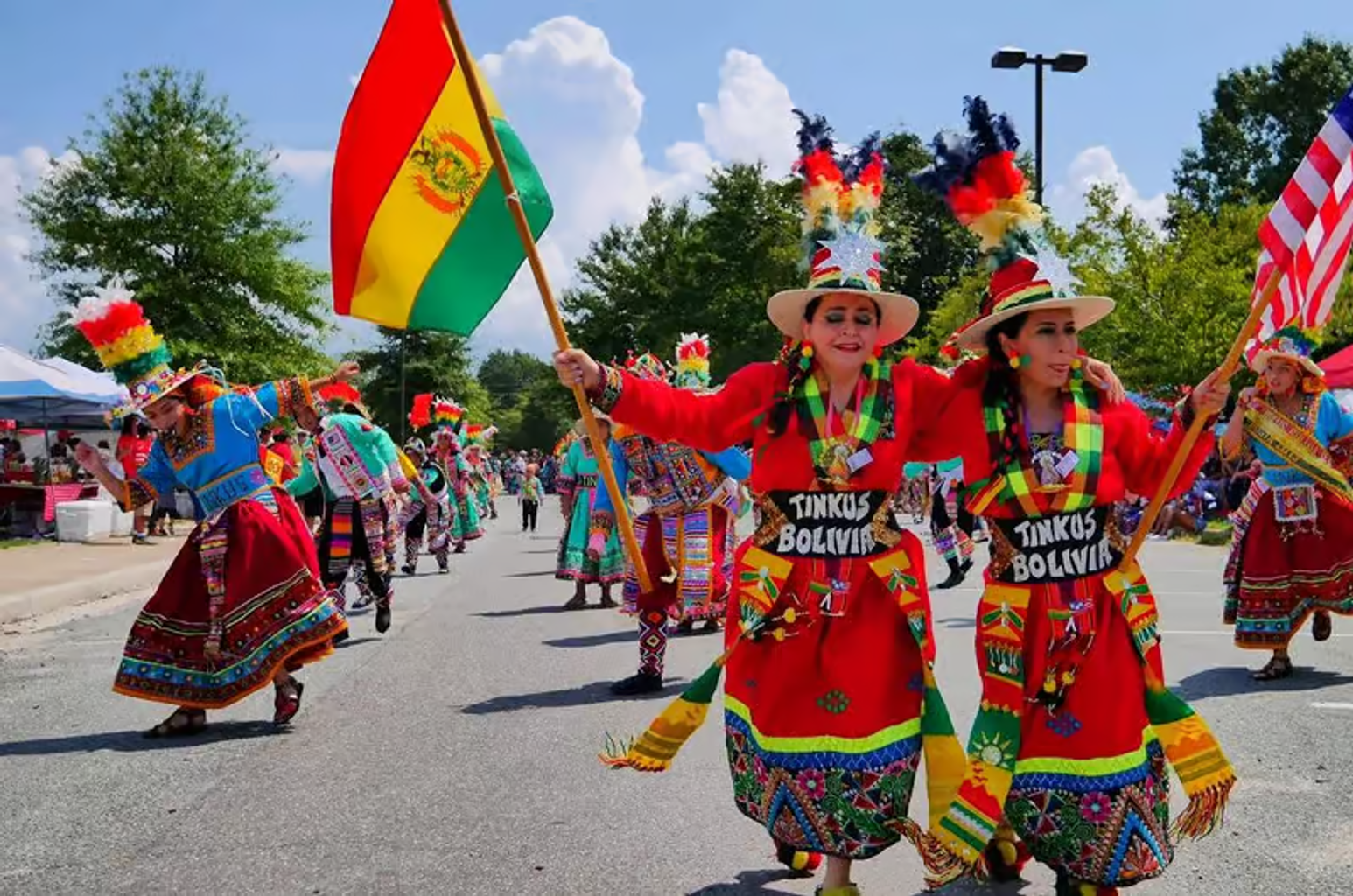
Cultural festivals take place in Tarija during the entire month of April in what has come to be called the April Days of Tarija (“Los Abriles de Tarija”). The festival revolves around the La Tablada anniversary celebrations and the central event is held on April 15th and 16th.

Cultural events include concerts, dance and theatre. Other events throughout the month also include fairs and handcrafts as well as the traditional Livestock Show and Rodeo Chapaco.