Politics Desk

Prosecutors sought access to Federal Reserve building as Trump threatens to fire Powell

Federal prosecutors made an unannounced visit this week to a construction site at Federal Reserve headquarters that is the focus of an investigation into a $2.5-billion renovation project, according to two people familiar with the visit.

Two prosecutors and an investigator from U.S. Atty. Jeanine Pirro’s office were turned away on Tuesday by a building contractor and referred to Fed attorneys, one of the people said. The two people familiar with the visit spoke on condition of anonymity because they weren’t authorized to publicly discuss an ongoing investigation.

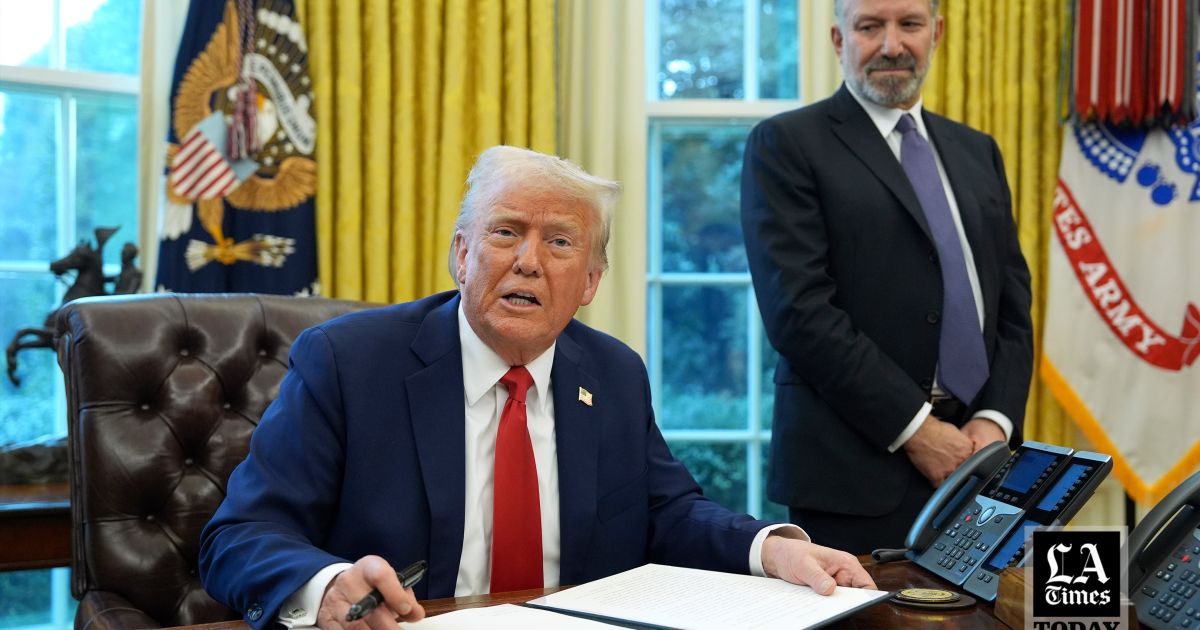
The visit underscores that the Trump administration is not backing down from its investigation of the Fed and its chair, Jerome Powell, even though the probe has delayed the confirmation of a new chair nominated by President Trump. The investigation is focused on cost overruns and brief testimony about the project last summer by Powell. Trump confirmed in an interview that aired Wednesday on Fox Business that he wants to continue the probe.

Last month, during a closed-door hearing before a federal judge, a top deputy from Pirro’s office conceded that they hadn’t found any evidence of a crime in their investigation of the headquarters project.

Robert Hur, an attorney for the Federal Reserve board of governors, sent an email to Pirro’s prosecutors about their visit and their request for a “tour” to “check on progress” at the construction site. Hur’s email, which the Associated Press has viewed, noted that U.S. District Judge James Boasberg concluded that their interest in the Federal Reserve’s renovation project was “pretextual.”

“Should you wish to challenge that finding, the courts provide an avenue for you; it is not appropriate for you to try to circumvent it,” Hur wrote.

Republican Tillis is key vote

Sen. Thom Tillis, a North Carolina Republican who is a key member of the Senate Banking Committee, has vowed to vote against Kevin Warsh, Trump’s nominee to replace Powell as Fed chair, until the investigation is dropped. With the committee closely divided on partisan lines, Tillis’ opposition is enough to block Warsh.

The Banking panel said Tuesday that it will hold a hearing on Warsh’s nomination April 21. Powell’s term as Fed chair ends May 15, but Powell said last month he would remain as chair until a replacement is named.

Powell is serving a separate term as a member of the Fed’s governing board that lasts until January 2028. Chairs typically leave their posts as governor when their terms as chair end, but they can remain on the board if they choose.

Last month, Powell said, “I have no intention of leaving the Board until the investigation is well and truly over, with transparency and finality.” If he remains in his seat, even after Warsh is confirmed, it would deny Trump the oppotunity to fill a seat on the seven-member board.

Late Tuesday, Tillis posted a link on social media to the Wall Street Journal’s article on the visit below an image of the Three Stooges and wrote, “The U.S. Attorney’s Office for D.C. at the crime scene.”

Investigation centers on building renovations

The investigation by Pirro’s office centers on an appearance by Powell before the Senate Banking Committee last June, when he was asked about cost overruns on the Fed’s extensive building renovations. The most recent estimates from the Fed suggest the current estimated cost of $2.5 billion is about $600 million higher than a 2022 estimate of $1.9 billion.

“It is probably corrupt, but what it really is, is incompetent,” Trump said on Fox Business. “Don’t you think we have to find out what happened there?”

The president’s support for the investigation threatens a time frame set out by Sen. Tim Scott, a South Carolina Republican who chairs the Banking Committee. Scott said Tuesday on Fox Business that he believed the investigation would be “wrapped up in the next few weeks,” allowing Warsh to be confirmed soon after.

Threat to fire Powell

News of the unannounced visit by prosecutors comes as Trump has again threatened to fire Powell, if the Federal Reserve chair decides to stay on the central bank’s governing board after his term as chair expires next month.

“Well then I’ll have to fire him, OK?” Trump said when reminded that Powell has said he won’t leave the Fed while the Justice Department investigates a $2.5-billion renovation project at the bank. Powell has also said he will remain as chair of the Fed’s rate-setting committee until a replacement is confirmed by the Senate, following the precedent of previous chairs.

Trump has for months wanted to remove Powell as chair of the Fed, saying he has been too slow in orchestrating interest rate cuts that would give the U.S. economy a quick boost. Powell has said the investigation is a pretext to undermine the Fed’s independence to set rates.

Supreme Court weighing another Trump removal

Trump’s threat to fire Powell comes as the Supreme Court is weighing the president’s effort to remove another central bank governor, Lisa Cook. Lower courts have so far allowed Cook to remain in her job while her legal challenge to the firing continues. The Supreme Court also seemed likely to keep her on the Fed when the court heard arguments in January. A decision could come any time.

The issue in Cook’s case is whether allegations of mortgage fraud, which she has denied, is a sufficient reason to fire her or a mere pretext masking Trump’s desire to exert more control over U.S. interest rate policy.

The Supreme Court has allowed the firings of the heads of other governmental agencies at the president’s discretion, with no claim that they did anything wrong, while also signaling that it is approaching the independence of the nation’s central bank more cautiously, calling the Fed “a uniquely structured, quasi-private entity.”

Kunzelman and Rugaber write for the Associated Press. AP Writer Mark Sherman contributed to this report.

Source link

Businessman Checchi Enters Governor’s Race

Mega-millionaire businessman Al Checchi launched the biggest takeover bid of his career Tuesday, declaring his candidacy for governor by promising a less political approach to political office.

Checchi, who built a vast personal fortune plying his financial wizardry in the corporate world, styled himself as a campaign insurgent removed from the ways of Washington and Sacramento.

“My experience outside politics is precisely why I’m running,” the 49-year-old former Northwest Airlines executive told members of a Sacramento civic group, who served as extras for his announcement. “You don’t have to be a politician to succeed in government. And the truth is that for too long, politicians leading our government have failed.”

Touting his “real-world experience,” the Democrat said, “I reject the conventional politics that evades hard choices, that obscures controversial issues and seeks to offend no one except the powerless and marginal.”

He pledged to “tell the people of this state exactly where I stand and, during the months ahead, to set forth real and specific proposals for change.”

To wit, Checchi said that as governor he would cut the state bureaucracy by 10% to raise $5 billion more for education, boost the state cigarette tax by 25 cents a pack to expand health care for the uninsured, and require statewide competency testing of both students and teachers.

Further, Checchi called for expansion of the death penalty to include serial rapists and repeat child molesters, offered a ringing endorsement of affirmative action, endorsed abortion rights and promised to outline a “major” gun control proposal in the months ahead.

“As you can see, my positions aren’t cut to fit any ideological pattern,” Checchi said in his 18-minute address to about 200 members and guests of the Comstock Club, who interrupted his speech with sporadic applause. “The test for me is simple: What will meet the needs of California and move it forward, not what will satisfy the political establishment or big campaign contributors.”

Checchi’s independence comes at no small personal expense. The former airline executive (whose name is pronounced CHECK-ee) has vowed to spend as much as $30 million of his own money to finance his campaign.

His long-expected decision to enter the contest follows a months-long period of study–a sort of California 101 crash course–in which he met with scores of experts, from civic leaders to special pleaders, to learn about everything from agriculture to the impact of welfare reform.

Venturing forth from his gated Spanish-style mansion in Beverly Hills, Checchi visited about 50 cities and met with about 350 individuals as part of his tutorial. A few of the everyday people he met–including a Central Valley farmer and a San Fernando Valley man, Blinky Rodriguez, who lost a son to gang violence–were among those who attended Tuesday’s speech and were cited in Checchi’s remarks.

Such Reagan-like theatrics aside, Checchi’s lack of political sophistication has shown through more than once.

Despite his ambitions, Checchi conceded earlier this year that he failed to vote in four of the last six statewide elections, including the last governor’s race. Tuesday, chastising himself, he said he was simply too busy.

Another time, at a spring gathering of major California water officials, Checchi acknowledged that he didn’t “know anything about water.”

“Before preparing for this meeting, I thought the delta was an airline,” the former Northwest co-chairman joked.

In his speech Tuesday, Checchi predicted that he would probably make more “rookie mistakes” like that between now and the June primary. But all such humility aside, Checchi is no political naif.

Over the years he has contributed hundreds of thousands of dollars to assorted candidates and political causes, occasionally tip-toeing into the gray area that shrouds the political-finance system.

He also demonstrated his ample skill moving legislative levers when he persuaded–bludgeoned, critics say–lawmakers in Minnesota to approve hundreds of millions of dollars in tax breaks and other concessions to help rescue Northwest from bankruptcy in the early 1990s.

Raised in suburban Washington, the son of a high-level bureaucrat for the Food and Drug Administration, Checchi went to work for the Marriott Corp. straight out of college, putting his Harvard MBA to work in a series of creative and highly lucrative ventures.

In 1982, he joined the Bass Brothers investment firm and played a major role in helping save the then-struggling Disney Corp. Checchi and his family moved to California in 1985.

Four years later, he made his biggest financial play–and a financial killing–with a $3.65-billion takeover of Minneapolis-based Northwest.

After narrowly averting bankruptcy, the company thrived as the airline industry came soaring back from recession. Checchi’s relatively small investment–the Dutch airline giant KLM put up most of the cash for the deal–helped him build a fortune today estimated in excess of $550 million.

Checchi continued to lead Northwest as the airline’s co-chairman until stepping down in April to focus full time on preparing for the governor’s race.

He enters the contest as a mere asterisk in the polls and a phantom to most California voters. A random sampling of audience members before Checchi spoke showed that most people knew he was involved in the airline industry, had a lot of money and was interested in high office.

Beyond that–what airline, what position he held, what office he sought, even which party he belonged to–were a mystery.

“He seems to be successful and seems to have his own stash,” said Maxine Milner-Krugman, who knew that much about Checchi but confessed that she couldn’t properly pronounce his name.

More than a few compared him to Republican Michael Huffington, the former Santa Barbara congressman who narrowly lost the 1994 Senate race to Democrat Dianne Feinstein after spending $29 million of his fortune.

Asked later if he was concerned that voters would perceive him as another wealthy dilettante trying to buy his way into office, Checchi professed not to worry. “Most people don’t object to someone spending their own money,” he told reporters.

With Tuesday’s announcement, Checchi became the second declared Democrat for governor, joining Lt. Gov. Gray Davis, who made clear his intention to run a few months after taking office in 1995. Last week, state Sen. John Vasconcellos (D-Santa Clara) launched an exploratory effort to determine whether to mount a full-blown campaign.

Feinstein, the front-runner in the polls, is still trying to make up her mind whether to run and has said a decision may be months away. Coincidentally, one of Checchi’s major co-investors in the 1989 Northwest deal was Feinstein’s husband, financier Richard Blum, who sank $100 million into the deal–five times Checchi’s personal investment.

On the Republican side, state Atty. Gen. Dan Lungren is running unopposed for his party’s nomination. Gov. Pete Wilson, who has served two terms, is ineligible for reelection.

(BEGIN TEXT OF INFOBOX / INFOGRAPHIC)

Profile: Alfred A. Checchi

Al Checchi seeks to parlay his success in business into a desk in the California governor’s office. Checchi, 49, is no newcomer to politics, having donated almost $325,000 to various political campaigns over the years. But the 1998 race for governor will mark the first bid for elective office for the Democrat.

* Born: 6/6/48, in Boston.

* Residence: Beverly Hills

* Education: Undergraduate degree in economics and American studies from Amherst. MBA from Harvard Graduate School of Business.

* Career highlights: He rose through the ranks at the Marriott Corp., directing one of the nation’s largest real estate development businesses, then became a principal with the Texas-based Bass Bros. Enterprises. There, he worked on the firm’s acquisition of a major stake in Disney. In 1989, he and his longtime associate Gary Wilson engineered the purchase of Northwest Airlines. Checchi resigned as co-chairman of the airline last April to pursue his bid for governor. He retains a 10% stake in Northwest.

* Interests: Reading, golf

* Family: Married to attorney Kathryn Checchi, three children.

* Quote: “I reject the conventional politics that evades hard choices, that obscures controversial issues and seeks to offend no one except the powerless and the marginal.”

Source link

Would Mitt Romney’s cap on itemized deductions work?

This post has been updated, as indicated below.

In this week’s presidential debate, Mitt Romney fleshed out an idea he had previously mentioned briefly as a way to pay for his proposed tax cuts – setting a cap on itemized deductions.

“I’m going to bring rates down across the board for everybody, but I’m going to limit deductions and exemptions and credits, particularly for people at the high end,” the Republican presidential nominee said.

“One way of doing that would be to say everybody gets – I’ll pick a number – $25,000 of deductions and credits. And you can decide which ones to use, your home mortgage interest deduction, charity, child tax credit and so forth. You can use those as part of filling that bucket, if you will, of deductions.”

The cap, Romney said Tuesday night, would ensure that the wealthy would not receive an outsized tax break. “I am not going to have people at the high end pay less than they’re paying now” as an overall share of U.S. taxes, he said.

Moreover, he insisted, the cap would allow him to pay for his proposed tax cuts without increasing the size of the deficit.

“Of course they add up,” he responded when Candy Crowley, the debate moderator, asked him about whether his numbers penciled out.

Politically, a cap on deductions provides an attractive solution to raising tax revenue because it avoids having to wage fights over individual deductions.

Unfortunately for Romney, however, the cap does not come close to covering the full cost of the tax plan he has proposed, according to a new analysis by the Tax Policy Center, a specialized Washington think tank. The Romney tax plan would reduce federal revenue by about $5 trillion over 10 years in addition to the cost of the Bush-era tax cuts that he would extend.

“These new estimates suggest that Romney will need to do much more than capping itemized deductions to pay for the roughly $5 trillion in rate cuts and other tax benefits he has proposed,” wrote Roberton Williams, an analyst at the nonpartisan center, which is a joint operation of the Urban Institute and the Brookings Institution.

The Tax Policy Center analysis suggested that Romney’s proposed cap would raise revenue in a “highly progressive” way because upper-income households benefit more from itemized deductions. The center found that the cap would provide considerable revenue to offset the cost of the tax cut, but would still leave a huge gap.

The center’s staff consists of former government tax experts from both Republican and Democratic administrations. Romney and his aides cited the center as an authoritative source during Republican primary debates but since then have objected to the center’s analyses of shortcomings in their tax plan.

According to the center’s analysis, a $25,000 cap would raise about $1.3 trillion over a 10-year period. That would cover roughly a quarter of the 10-year cost of Romney’s tax plan.

If Romney made the cap tighter – allowing just $17,000 in deductions and credits – he could raise $1.7 trillion. A $50,000 cap would bring in about $760 billion. At various times, Romney has cited each of those figures as a proposed cap.

The tighter cap would hit many more taxpayers. If the cap were $50,000, for example, almost all the revenue that it would raise, about 80%, would come from taxpayers with income above $500,000 a year, and less than 4% would come from taxpayers earning less than $100,000, according to the center’s analysis. That’s because very few taxpayers other than the very wealthy have deductions that total more than $50,000.

By contrast, a cap of $17,000 would get about 40% of its revenue from that top group, and about 17% from the taxpayers earning $100,000 or less.

Romney has said that he expects part of his tax cut would be paid for by additional revenue flowing into the treasury as the result of faster economic growth. Economists disagree about whether a tax cut such as the one Romney has proposed – a reduction of current tax rates by one-fifth – would significantly increase economic growth.

In response to the center’s report, the Romney campaign issued a statement that did not dispute the math, but reiterated Romney’s position that “the President and Congress working together can make the tax code simpler, more efficient, and more pro-growth.”

[For the Record, 9:51 a.m. PST Oct. 18: This post has been updated to include the Romney campaign’s response to the Tax Policy Center’s report.]

Follow Politics Now on Twitter and Facebook

david.lauter@latimes.com

lisa.mascaro@latimes.com

Twitter: @DavidLauter

@LisaMascaroinDC


Source link

As Vance rallies with Turning Point, some supporters bristle at Trump’s war, memes and feuds

Fresh from a marathon trip to Pakistan that failed to reach a deal for ending the war with Iran, Vice President JD Vance jetted to this Georgia college town for a campus tour organized by the conservative powerhouse Turning Point USA.

But instead of showcasing the youthful energy that the organization harnessed to return President Trump to the White House less than two years ago, there was a mostly empty arena, awkward questions and unusually sharp criticism.

The event affirmed Trump’s difficulty selling the war and how much he’s complicated his own political fortunes by assailing Pope Leo XIV and posting a social media meme that depicted himself as Jesus.

“I did vote for Trump. I am not a Trump supporter anymore,” said Joseph Bercher, a Catholic who said he was glad that Leo has expressed opposition to the war with Iran.

Bercher said the Jesus meme, which the president took down Monday after a rare conservative backlash, was a “red flag” indicating Trump’s true character.

“He sees himself as like a demagogue or someone to be worshipped,” Bercher said.

C.J. Santini, a recent graduate of Liberty University, an evangelical school in Virginia, said he didn’t have an opinion on whether Iran was truly close to manufacturing a nuclear weapon and thus needed to be attacked. But he laughed and shook his head when asked about Trump attacking Leo.

“It’s just stupid. Stupid,” he said, calling it a “distraction” from Trump’s agenda in Iran and at home.

Mostly empty arena contrasts with 2024 rallies

Many of the college-age attendees donned Turning Point attire, Trump hats and red-white-and-blue paraphernalia for the event. Yet they were outnumbered more than 2-to-1 by empty seats in what is not even the largest arena on this sprawling campus that sits about a 90-minute drive from downtown Atlanta.

A Marine veteran who served in Iraq, Vance acknowledged that not all young conservatives are enamored with another U.S. war in the Middle East.

“I’m not saying you have to agree with me on every issue,” Vance told the young crowd. “What I’m saying,” he added, “is don’t get disengaged.”

The vice president took questions from Turning Point executive Andrew Kolvet instead of Erika Kirk, who began leading the organization after the assassination of her husband Charlie Kirk. Kolvet said Erika Kirk canceled her plans to be on stage because of unspecified threats she had received.

Vance, whose presence ensured significant Secret Service and other law enforcement protection around the venue, said he’d been worried that the event would be canceled altogether.

Kolvet asked Vance directly about the war and Trump’s back-and-forth with Leo. Audience questions were more aggressive. Vance jousted with at least one heckler over the war in Gaza, and he was pressed by another person over the administration’s handling of the Jeffrey Epstein case files.

In the audience, even some of Vance’s sympathetic listeners offered caveats and critiques.

“The pope needs to stay out of politics,” said Jessie Williams, a Methodist. But he noted his mother is Catholic, and he said he understands why Catholics recoil at Trump calling the pope “weak” and suggesting that the first U.S.-born pontiff was chosen only as a counter to Trump.

Williams called Trump’s meme distasteful.

“I don’t like it, but it’s — what can we do?” Williams said. “He’s a grown man, he’s gonna do what he wants.”

Blake McCluggage, a Baptist, said he did not approve of the meme or Trump’s profane Easter Sunday message that threatened widespread destruction of Iran’s civilian infrastructure.

The threat, plus Trump’s follow up message that a “whole civilization” would die, prompted escalating criticism from Leo, with the pope calling the president’s comments “truly unacceptable.”

However, McCluggage said, “you can still be a Republican” despite disagreeing with Trump.

A day before coming to Georgia, Vance tried to laugh off the meme as a joke that “a lot of people weren’t understanding.” The vice president also seemed to echo Trump’s assertion that Leo should concentrate less on global affairs.

“It would be best for the Vatican to stick to matters of morality, to stick to matters of what’s going on in the Catholic church and let the president of the United States stick to dictating American public policy,” Vance said in a Fox News interview.

On stage in Athens, he shifted his arguments, saying he welcomes Leo’s comments even if he disagrees with them.

“At the very least, it invites conversation,” said Vance, who converted to Catholicism as an adult.

Still, Vance questioned Leo anew, pushing back specifically at the pope’s Palm Sunday assertion that God does not hear the prayers of those who make war. Leo was quoting scripture from the Old Testament book of Isaiah. Vance asked whether God was on the side of Allied forces in World War II as they liberated Jewish survivors of Nazi extermination camps.

“I certainly think the answer is yes,” Vance said. When Leo mixes global affairs and complex theology, Vance said, “it’s very important for the pope to be careful.”

Barrow and Megnien write for the Associated Press.

Source link

Trump’s ‘Praise be to Allah’ posts? They’re just plain weird

Praise be to Allah.

For the second time in two weeks, President Trump used that phrase in a post about the Israel-U.S. war against Iran.

Crowing about the alleged destruction of Iran’s planes, ships and bases in a Truth Social post Saturday, he emphasized his greatest victory in the monthlong campaign: “Most importantly, their longtime ‘Leaders’ are no longer with us, praise be to Allah!”

Making sense of anything Trump says in the heat of posting is a fool’s errand, but it’s also entirely necessary. Sane wash his words we must, because no matter how unhinged or infantile, the world’s safety, fortunes and future are inextricably tied to America’s next move, and therefore to his next move.

So what is Trump trying to communicate, or provoke, by using the Arabic word for God, as Muslims do? Let’s translate.

The first and most likely explanation: “Praise be to Allah” was meant to disparage his adversaries in the Islamic Republic of Iran. They are Muslim, they refer to God as “Allah,” therefore, he will turn their phrasing against them. Word bombs to accompany the deadly ones falling in Iran and Lebanon.

All leaders deploy tough talk in times of war, but Trump’s posts read more like the feverish ramblings of mad Col. Kurtz (Marlon Brando) in “Apocalypse Now” — “You’re an errand boy sent by grocery clerks to collect a bill” — than Winston Churchill’s galvanizing call to arms against the Nazis, “We shall fight on the beaches…”

Unlike the fictional Kurtz or the real Churchill, Trump has no military experience. He avoided the Vietnam War draft with four student deferments and one medical deferment for bone spurs. An area where he is experienced? Baiting foes. Antagonizing enemies, genuine or imagined, is a Trump specialty, be it from the Oval Office, on the campaign trail, or in the before times, as a reality TV personality.

Painting Muslims as the Other is nothing new for Trump, (unless they come bearing luxury airliners as gifts — then they’re friends). The same goes for others in his party. Since the U.S. and Israel attacked Iran on Feb. 28, Rep. Andy Ogles (R-Tenn.) posted that Muslims don’t belong in American society. Rep. Randy Fine (R-Fla.) wrote, “We need more Islamophobia, not less. Fear of Islam is rational.” And Sen. Tommy Tuberville (R-Ala.) reposted an image of the Twin Towers burning side by side with an image of New York City Mayor Zohran Mamdani, with his own caption: “The enemy is inside the gates.”

The president’s first usage of “Praise be to Allah” as a middle finger to Iran landed on a Christian holy day, Easter Sunday. He posted a demand that Iran open the Strait of Hormuz: “Open the F— Strait, you crazy b—, or you’ll be living in Hell – JUST WATCH! Praise be to Allah.” Hardly messaging that brings to mind Easter egg hunts on the White House lawn.

If the idea was to humiliate Iran into submission, it’s not working. Iran doesn’t appear to be backing down, even after Trump’s week-ago threat that a “whole civilization will die tonight” if it failed to meet his deadline to reopen the strait. The critical global shipping route is still closed. Trump didn’t appear all that interested in the art of the deal, either, even as Vice President JD Vance tried and failed to negotiate with Iranian leaders in Pakistan on Saturday. The president told reporters that he didn’t “care” what happens with Iran negotiations because “regardless what happens, we win.” He also said, “Whether we make a deal or not makes no difference to me.” He was seen later in Miami at an Ultimate Fighting Championship cage match with Secretary of State Marco Rubio.

Making the Allah references all the stranger were Trump’s other religious-themed posts this past weekend. One was a lengthy screed against Pope Leo XIV, whom Trump described as too liberal and “weak on crime.” It’s worth noting that more than half of American Catholics voted for Trump in the last election, and that his vice president is Catholic, as is the secretary of State and the first lady.

The other was a stand-alone, AI-generated image of himself as a Christ-like figure. It showed the 79-year-old clad in a white robe and papal-red cape, a divine light emanating from the palm of one hand while the other hand was placed on an ailing man. The post was deleted Monday morning after a sizable backlash.

“I did post it, and I thought it was me as a doctor, and had to do with Red Cross, as a Red Cross worker there, which we support,” Trump said, responding to a reporter Monday during a presser at the White House as DoorDash delivered an order from McDonald’s to promote the president’s “no tax on tips” policy.

There was no mention of Allah during that particular event.

Alhamdulillah.

Source link

The New Prosecutor General is a Professional Denialist of Chavista Atrocities

A day after the chavista-controlled National Assembly gave the cold shoulder to Magaly Vásquez, and confirmed Larry Devoe as Attorney General, I spent the day going through the latter’s public record as a “Venezuela agent” in multilateral spaces.

It was a shocking way to spend a Friday afternoon. What was I expecting? Back in 2014, Devoe was handed the so-called Human Rights Council just as Venezuela was about to spiral into a multi-dimensional crisis. Súper Bigote seemingly set three tasks in the international arena:

Find excuses and someone to blame for the disaster that was about to unfold, by casting the chavista government as the victim.

No matter how bad the humanitarian situation can get and the extent to which social indicators were reversed, insist that Chávez lifted millions out of poverty forever. 

Every time other diplomats, foreign officials or humanitarian personnel showed details and data that showed a dire country, answering that Venezuela was sovereign and democratic and no one needed to meddle with our own mess.

    Devoe was one of the three main bureaucrats that defined such diplomatic chavista wisdom in those days. These three had fancy degrees from European schools, and were clever enough to fabricate a good headline amidst pervasive criticism. Besides Devoe, there was a lady called Delcy Rodríguez, disgraced in the late-Chávez years but handed the Information Ministry soon after el comandante passed, with studies from London’s Birkbeck University and Paris Nanterre University. There was also Bernardo Álvarez, Maduro’s representative in the OAS who had been the man in Washington when Chavez’s beef with Bush reached peak levels.

    Soon after they started to defend Maduro in Venezuela and abroad, the international perception about his regime suffered a deep setback. In July 2016, dozens of Venezuelan NGOs addressed Ban Ki-moon complaining about the behavior of UN agencies in reaction to the country’s humanitarian situation. The letter was based on a report that covered plummeting indicators in the previous four years (measuring institutional quality, human rights and the conditions of vulnerable groups). On August 10, the South Korean secretary general said Venezuela was undergoing a humanitarian emergency, quoting that very report.

    In 2016, Devoe said an opposition-drafted amnesty law was a “serious threat” to human rights.

    Rodríguez, Álvarez and Devoe had work to do. Footage of Delcy denying the humanitarian crisis in June 2016 (did so again in 2018 before the UNHCR) has circulated in recent days, but it was actually Álvarez who first established the regime’s position. In an IACHR human rights hearing that featured the likes of Alfredo Romero, Carlos Correa, Rafael Uzcategui, Liliana Ortega and other prominent human rights defenders—many of which the newly minted prosecutor will have to deal with— , Álvarez said: “It’s not a humanitarian crisis, that has a political intentionality.”

    A 43-year-old UCAB lawyer, with human rights studies from the iconic Alcalá de Henares University, sat next to Álvarez and in front of Romero et al. He was Larry Devoe, and came with the goods in his turn to speak, praising the “23,146 health centers across the territory, a 333% in terms of infrastructure” that Maduro had inherited by 2015.

    He made another remark that day that now sounds like a prescient spell. Back then, the opposition-led parliament approved an amnesty bill aimed at 82 political prisoners held in Venezuela. Devoe said its contents were a “serious threat” to human rights with the allegation that the bill pardoned international crimes like the use of minors to commit crimes, drug trafficking, terrorism and corruption.

    Whataboutism at its best

    Devoe would use that technique several times after. In October 2018, he was invited as a conference speaker in the Autonomous University of Santo Domingo to discuss OAS’ record in defending human rights in the region. His lecture’s talking points: Venezuela became “the theater of operations of OAS and US actions” and the OAS whitewashed the pre-Chávez regime. Before that, he showed up in a local TV program, El Matinal, where interviewer Pablo McKinney tried to make him feel at ease by introducing the brotherly ties between Dominicans and Venezuelans. Devoe started speaking of Venezuela’s all-round, positive transformation since 1999 in terms of human rights. When McKinney raised his eyebrows, Devoe claimed Venezuela had one of the best social security programs in the Americas, but the nation was under MECANISMOS DE AGRESIÓN since 2013.

    Devoe kept going. Chavez had ended illiteracy and handed out two million homes, and so goes that famous song. Unconvinced by the explanation, McKinney said he couldn’t bear Venezuelans wandering the streets of his city. Es demasiado grave, to which Devoe replied that Maduro was getting the Allende treatment, and that Venezuelan migrants were returning home from Colombia and the DR because of the treatment they got in those countries.

    Is this surprising?

    Not really. That was the standard rhetoric wielded by chavista diplomats, or Cuban officials since the 1960s, which Devoe also liked to quote. That doesn’t exempt Devoe from being a cold liar that now heads one of Venezuela’s most important institutions. He’s still good for Delcy, as he was good for the three tasks that I listed several paragraphs ago. 

    Devoe could not acknowledge the humanitarian crisis in public. It was too embarrassing. It would give credibility to widespread reports about malnutrition, tropical diseases and growing maternal mortality rates.

    The videos show how Devoe reacts to well-documented accusations to “defend the country” and conceal responsibility. Take for instance this occasion in 2018, two years after Ban Ki Moon’s now-historic statement, where Devoe addressed Venezuelan experts in the Inter American Commission on Human Rights. He admits the scarcity of medical supplies, but attributes its cause to “sanctions and economic blockades” (sectoral sanctions then in place affected Venezuelan credit). When asked about Maduro’s public refusal to accept humanitarian assistance, Devoe said:

    “Commissioner, Venezuela has the capacity to buy and provide the resources to guarantee the rights of its population.”

    A kidney transplant patient, Francisco Valencia, interrupted Devoe to tell him he had not received medical treatment for six months. “I am dying.” Devoe replied: “Well Francisco, I ask you to leave this room and ask Euroclear to unfreeze the 1,650 million dollars that would let us buy your treatment.”

    The problem with that statement is not only Devoe’s audacity in talking back to a helpless patient. Venezuelan humanitarian organizations were, at that point, getting resources because of international cooperation. That cooperation was, to an extent, greenlighted by the Venezuelan State. ECHO, Caritas International, the Red Cross, the International Rescue Committee and others were already in the country, liaising with local groups.

    Like Maduro and Delcy, Devoe could not acknowledge it. It was too embarrassing. It would give credibility to reports that maternal mortality grew 90% between 2016 and 2017, of 11.4% of acute malnutrition among kids under 5 years old, and claims that the government was hiding data on spikes of tuberculosis, diphtheria and malaria.

    Hard Left roots?

    It recently emerged that Larry Devoe is the maternal grandson of Pompeyo Márquez, who had been a communist militant during Betancourt and Leoni’s war against Cuba-funded guerrillas. Márquez later joined the party system with Movimiento Al Socialismo (MAS) through Caldera’s pacification process. He broke with Chávez when MAS endorsed his 1998 candidacy, and spent his final years opposing chavismo from within the Left.

    On that shocking Friday afternoon, I also came upon a book about Venezuelan universities in the second half of the 20th century. One chapter speaks about the political climate in Caracas’ Universidad Central in the 1970s. It mentions a Larry Devoe in the youth ranks of MAS, which clashed with the Leftwing Revolutionary Movement (MIR)—where Jorge Antonio Rodríguez, father of Jorge and Delcy, was a student leader—on campus and in student council elections. (At this point, everyone knows the fate of Jorge Rodríguez padre, murdered in the custody of DISIP in 1976 after the kidnapping of William Niehous).

    Albeit rivals in the halls of UCV, it seems like the fathers of Larry Devoe and the Rodríguez siblings were part of the same political community 50 years ago. There’s a chance the new prosecutor general, born after the killing of Rodriguez padre, has known Delcy and Jorge for quite a while. Devoe Sr. was a MAS member along with Jorge Valero, a former Venezuelan ambassador to the UN and OAS this century, whom Devoe defended in his Santo Domingo speech.

    Delcy, Ernesto Villegas and Larry Devoe presented a 2017 report denying the State’s responsibility for the great majority of deaths during that year’s protests.

    Part of what people like Devoe and the Rodríguez siblings likely absorbed early on were accounts of the extrajudicial killings and torture Venezuelan communists endured in the 1960s. Then came the 1976 case of Rodríguez. And later, when Devoe was 11, the Caracazo—preceded by massacres like Cantaura and El Amparo, carried out by state officials, often with impunity.

    These events are not just real; they must be remembered as part of the bloodier side of our recent history, one that did not begin in 1999. What is striking is that Devoe, now prosecutor in this “new political moment”, has repeatedly covered up similar crimes, the very kind the Rodríguez siblings have long grieved over.

    In 2023, Devoe dismissed the ongoing investigation in the International Criminal Court as a political ploy, said Caracas proved crimes against humanity were never committed, and echoed Tarek William Saab’s claims that Venezuelan courts were doing their job in dealing with the bad apples. That now contradicts the discourse of the Rodríguez siblings, who got rid of Saab to appoint him. Six years before that, Delcy, Ernesto Villegas and Larry Devoe presented a report denying the State’s responsibility for the great majority of deaths during the 2017 protest cycle. This denialism has been a recurring pattern in his career as a Venezuelan State agent, and remains a part of chavismo’s rhetoric about “political violence since 1999.”

    Someone told me that Devoe was respectful and decent in one-on-one interactions, even after heated debates over the causes and scale of the Venezuelan crisis. That perhaps he was caged by his own surroundings. Let’s see if Devoe can somehow turn that record around.

    After all these years, we have reasonable doubts he’ll do so.

Source link

Alarcon Mailer’s Mystery Endorsement Is Finally Unmasked

“Scratchers” is the familiar California Lottery game in which players rub a silver coating off tickets to see if they have won.

A similar game is being played in the San Fernando Valley by voters who have received campaign material from state Senate candidate Richard Alarcon.

Alarcon, a city councilman, is in a tight primary race with former Assemblyman Richard Katz to replace state Sen. Herschel Rosenthal (D-Los Angeles) who is being forced out of office due to term limits.

Last month, Alarcon began distributing hundreds of campaign brochures that question Katz’s legislative record. On the back is a list of 13 former and current elected officials who endorse Alarcon.

But one of the names on the list has been blacked out with ink and covered with a piece of white tape, on which is printed the name of another Alarcon supporter, former Assembly Majority Leader Mike Roos.

At several recent campaign events, people have been seen scratching at the tape on the back of the brochure to try to reveal the name. One woman who tried complained that she couldn’t get past the ink and the white tape.

“Whose name did they hide under there?” she asked.

The hidden name is that of Assembly Speaker Antonio Villaraigosa (D-Los Angeles). Sources close to Villaraigosa say that Alarcon’s campaign printed Villaraigosa’s name on the brochure without the speaker’s consent. When Villaraigosa found out, he blew a fuse and demanded that his name be removed because he had decided not to make an endorsement in the race.

By then, sources say, hundreds of the brochures had been printed. The only way to remove Villaraigosa’s name was to cover it with another name.

When asked about the brochures, Alarcon would only say: “There was a misunderstanding.”

Greening

In the Broadway musical “The Music Man” traveling salesman Harold Hill sings about the evils of pool, which he notes starts with “P” and that rhymes with “T” and that stands for trouble, trouble, trouble.

Maria Armoudian, the Green Party candidate vying to unseat Rep. Howard Berman (D-Mission Hills) has no hang-ups about pool halls. For her, pool starts with “P” and that rhymes with “C” and that stands for cash, cash, cash.

Armoudian’s first fund-raiser will be June 11 at Fantasia Billiards. For $10, supporters can get their fill of food, pool and political speeches. “I’m committed to changing the world,” Armoudian said, “but I’m going to have fun while I’m doing it.”

Full Speed Ahead

The newest advocate of a separate San Fernando Valley transit zone agency is Los Angeles Mayor Richard Riordan.

Riordan gave his endorsement of the proposal in a letter submitted to the MTA board by Alarcon, a strong backer of the idea. Alarcon also submitted the city’s notice of intent to seek formation of the agency.

Alarcon has long argued such an agency could improve bus service. Riordan agreed.

However, the mayor wrote, not just cheaper service but more buses on the road should be the goal, and the Valley shouldn’t benefit at the expense of other areas of the city.

When Alarcon gave the mayor’s letter, together with the letter of intent, to the MTA board, some board members couldn’t hold back their enthusiasm.

Although the letter is supposed to kick off studies that are expected to take months, Los Angeles County Supervisor Mike Antonovich suggested bringing the proposal back in June for approval. Alarcon said he actually found himself urging restraint.

“I said, ‘I appreciate that greatly, but perhaps conceptual approval would be appropriate,” he said.

Exalted Company

Deputy Mayor Rocky Delgadillo, the mayor’s economic development czar, found himself elbow to elbow with United Nations Secretary General Kofi Annan and actress Lauren Bacall recently at a dinner he attended to receive Columbia University’s prestigious University Medal of Excellence this week.

Delgadillo, a graduate of Columbia’s law school, joins such notables as scientist Stephen Jay Gould, choreographer Twyla Tharpe, and political analyst George Stephanopoulos in receiving the medal.

Talk, Talk

Don’t expect the hotly contested proposal to build 24,300 homes at Newhall Ranch near Santa Clarita to come before the Board of Supervisors any time soon.

The proposal, which would plunk 70,000 people down on what is now grazing and farmland, is scheduled to be heard by the supervisors next Tuesday. However, Antonovich has requested that the discussion be postponed until June. And a key player in Antonovich’s office has said he does not expect a final vote until fall.

In part, the delay is due to the vast volume of material–including a four-volume environmental impact report–that has accompanied the application by the developer, the Newhall Land & Farming Co.

But there’s another reason. Antonovich’s aides are hoping that a compromise can be reached between neighbors–many of whom vehemently oppose the project, and Newhall Land–before the application comes before the supervisors.

Antonovich spokesman Cam Currier would not say whether progress had been made since the board held a public hearing on the project in March. But, he said, Antonovich’s office is attempting to facilitate discussions,.

“There is an ongoing dialogue between the developer and those who oppose the project,” Currier said.

Source link

Contributions race – Los Angeles Times

These contributions were reported by major candidates on the Oct. 7 ballot who have received at least $100,000 for their gubernatorial campaigns. Totals are for all contributions through Aug. 23 plus contributions of $1,000 or more through Thursday. Donations of $1,000 or more must be reported within 24 hours of receipt.

* The Operating Engineers Union Local 12 in Pasadena gave the maximum $21,200*. Robins, Kaplan, Miller & Ciresi, a major Minneapolis law firm with a large Century City office, donated $15,000. The Home Ownership Advancement Foundation, an arm of the California Building Industry Assn., provided $10,000. The San Francisco personal injury law firm of Harowitz & Tigerman gave $5,000. Marilyn Y. Isenberg of Sacramento and Vicki L. Nunez of South San Francisco each gave $5,000.

*–* Contributions Candidate or committee Total reported Reported in 24 hours ending Thursday Cruz Bustamante $3,571,934 $96,500 709 contributions 28 contributions

*–*

Bustamante controls three other committees:

Californians for Stability is an anti-recall fund that has raised $421,186. Another fund, the Cruz Bustamante Committee Against Prop. 54, raised $49,700 from the California State Employees’ Assn. Bustamante’s anti-Prop. 54 committee has collected more than $4.6 million, most of it transferred from a third committee, the Lt. Gov. Bustamante 2002 Committee. That is an old reelection campaign fund, which reported raising more than $911,800, excluding the transfers.

*–* Arianna Huffington $632,552 $2,000 2,334 contributions 2 contributions

*–*

* Edward F. Limato, a Los Angeles talent agent, and Russell Lungerich, an attorney in Rancho Palos Verdes, gave $1,000 apiece.

*–* Tom McClintock $1,006,402 $20,990 1,268 contributions 6 contributions

*–*

* Martha Bobbitt, president of JRBT Inc. of Rancho Santa Fe, gave $14,990. John Zsarnay of Sunnyvale contributed $3,000.

*–* Arnold $12,803,611 $499,500 Schwarzenegger 1,505 contributions 146 contributions

*–*

* The Cimarron Group, an advertising, marketing and design company in Hollywood, gave $21,200. So did venture capitalist Robert C. Kagle of Woodside, Palo Alto investor William L. Edwards and George Garrick of Atherton, CEO of Activcard Corp. Goldman Sachs investment banker Bradford C. Koenig, also of Atherton, gave $20,000. UC Regent Ward Connerly, author of Proposition 54, the Oct. 7 ballot measure that would outlaw the collection by government of certain data on race and ethnicity, gave $1,000.

Schwarzenegger also controls Arnold Schwarzenegger’s Total Recall Committee. The pro-recall group has raised more than $1.55 million.

* R. Hall Investment Properties of Tustin gave $57,600. The American Sterling Corp. in Irvine provided $50,000. The financial services firm has contributed $150,000 to the Total Recall committee. The New Majority PAC composed of moderate Orange County Republican businessmen contributed $25,000, bringing their total to $103,800.

Davis Fights the Recall

*–* Californians Against $9,114,078 $910,129 the Costly Recall 581 contributions 47 contributions of the Governor

*–*

Gov. Gray Davis controls this anti-recall committee.

* The Kings Arco Arena partnership in Sacramento provided $100,000. Casden Properties, a Beverly Hills-based real estate investment company, gave $50,000, bringing its total support to $150,000.

Davis also continues to raise money through his former reelection committee, the Gov. Gray Davis Committee, which has transferred more than $1.7 million to Californians Against the Costly Recall.

A third committee, Taxpayers Against the Governor’s Recall, has reported more than $2.7 million in contributions.

*Contributions to candidates from each outside source are limited to $21,200. There is no cap on the amount candidates can give their own campaigns, or on donations to noncandidacy committees.

Reported by Times staff writer Jeffrey L. Rabin and Times researcher Maloy Moore.

Source: Campaign reports filed with the California secretary of state.

Los Angeles Times

Source link

In 1960, fears over papal sway. In 2026, a president attacks a pope

It was hard to miss President Trump’s very public spat with Pope Leo XIV this week.

The split was the first time in modern memory that an American president has so openly badmouthed a sitting pontiff, or, for that matter, distributed an image depicting himself as Jesus Christ. Critics cried “blasphemy!” even as supporters continued to stand behind the man whose presidency, some argue, was God sent.

Students of American history will recall an earlier incident that pitted papal and presidential authority against each other. The concern: that a president would align himself too closely to the church, or even take orders from the pope.

That anxiety seeped into the 1960 presidential campaign of John F. Kennedy, whose eventual victory would make him the first Catholic president.

Back then, Kennedy was constantly fending off accusations from Protestant ecclesiastic types who were wary that his nomination meant the pontiff, John XXIII, was already packing his bags for a move into the White House.

A black-and-white photo of a man in dark suit and tie seated next to a man in ornate religious vestments and a white skullcap

President John F. Kennedy meets with Pope Paul VI at the Vatican in July 1963, one month after Paul succeeded John XXIII as pontiff.

(Bettmann Archive / Getty Images)

The issue was so pronounced that 150 clergymen and laypeople formed Citizens for Religious Freedom, which in a pamphlet warned, “It is inconceivable to us that a Roman Catholic President would not be under extreme pressure by the hierarchy of his church to accede to its policies and demands.”

One particularly loud voice among the ministers was the Rev. Norman Vincent Peale, a popular and influential pastor and author. Peale was especially disturbed by Kennedy’s prospects.

“Our American culture is at stake,” he said at a meeting of the ministers. “I don’t say it won’t survive, but it won’t be what it was.”

The group asked Kennedy to “drop by Houston” to make clear his views on faith and government. He agreed, making a televised speech at the Rice Hotel, where he famously spelled out his firm opinions on the separation of church and state.

“I am not the Catholic candidate for president,” Kennedy told the group. “I am the Democratic Party’s nominee for president who happens to be Catholic.”

Time magazine reflected on the address some years later, concluding that the speech had gone so well for Kennedy “that many felt the dramatic moment was an important part of his victory.”

Since then, modern presidents have occasionally found themselves at odds with the Vatican. Typically Republican presidents would hear from the pope about foreign wars, while Democratic presidents were derided over abortion policies.

But such disagreements tended to be handled with the decorous language of diplomacy.

A man in a dark suit presents a medal on a ribbon to a man in white skullcap and religious robes, seated in an armchair

President George W. Bush presents Pope John Paul II with the Presidential Medal of Freedom in Rome on June 4 , 2004. The pope reminded Bush of the Vatican’s opposition to the war in Iraq. Bush praised him as a “devoted servant of God.”

(Eric Vandeville/Gamma-Rapho via Getty Images)

Then came Trump, who is now being accused of openly mocking the Catholic faith and the 1st Amendment. He called Leo weak on crime and foreign policy, among other things. A self-described nondenominational Christian who says his favorite book is the Bible, Trump’s hasn’t shied from bashing the pontiff, nor has he hesitated to blur the line separating church and state.

Where Kennedy argued for an absolute separation, Trump has advanced a model of religious resurgence, promising “pews will be fuller, younger and more faithful than they have been in years.” Through initiatives including the “America Prays” program launched last year, the White House has sought to bring “bring back God” by inviting millions of Americans to prayer sessions. The webpage for the program focuses features only Christian Scripture.

“From the earliest days of the republic, faith in God has been the ultimate source of the nation’s strength,” Trump said at a National Prayer Breakfast in February.

A man in a dark suit, hands clasped on a desk, is surrounded by other people standing near windows with gold curtains

President Trump, then-Vice President Mike Pence and faith leaders say a prayer during the signing of a proclamation in the Oval Office on Sept. 1, 2017. .

(Alex Wong / Getty Images)

In the United States, the Catholic Church historically has “loved the 1st Amendment” and its guarantee of religious liberty and, as a result, largely kept some distance from government, according to Tom Reese, a Jesuit priest and religious commentator. After its failures attempting to influence monarchs and politicians in Europe, the Catholic Church “didn’t want the government interfering with them and knew that it wasn’t their right to interfere with the government,” Reese said.

Kennedy loved the 1st Amendment too. He put it above his own religious beliefs, and said as much on his way to the White House.

“I would not look with favor upon a president working to subvert the 1st Amendment’s guarantees of religious liberty,” he said. “Nor would our system of checks and balances permit him to do so.”

A man with glasses, in red vestments, holds out his hands in prayer in a room with ornate blue and yellow mosaic walls

Pope Leo XIV meets with members of the community in Algiers at the Basilica of Our Lady of Africa on April 13, 2026.

(Vatican Pool via Getty Images)

Source link

Businessman a Harsh, Blunt Political Force : Ventura: Thrift store magnate Ray Ellison is called by some a man of integrity. To others, he’s the godfather of mudslinging.

Thrift store millionaire Ray Ellison leaned back in his office chair and laughed.

He knows a liar when he sees one, he said. And he knows a liberal. He doesn’t like either.

“I called him a slimeball, scum-sucking liar,” said Ellison, 65, reciting a description of then-Ventura Mayor Dennis Orrock that he painted on a truck parked near a freeway in 1984.

Ellison took on the mayor’s ally the following year, dubbing Councilwoman Pati Longo “The Phony with The Toni” in full-page newspaper ads that declared her a liar, too.

In 1991, Ellison’s large ads depicted Councilman Donald Villeneuve astride a defecating bull, stating: “Screw the Marketplace.” Last fall, two councilmen and a challenger were featured as smiling fish in ads titled: “A Fish Stinks From The Head. Take A Sniff of These.”

Of the forces that have reshaped Ventura’s political landscape in recent years–pushing campaigns to increasingly personal attacks–none has been consistently harsher than Raymond W. Ellison.

Spending tens of thousands of dollars, including at least $14,000 last fall, Ellison has been described by critics as Ventura’s godfather of mudslinging.

“Based on the ads he ran, I would judge him to be venal and mean, coarse and crass,” said former Councilman Todd Collart, defeated Nov. 5 after he was caricatured as a smelly fish. “He continues to set lower and lower standards to be aimed for by others. And that works against good people seeking elective office.”

Councilman Gary Tuttle–also featured in the “fish ads”–said he considered not running for a second term last year because of Ellison.

“I knew he was going to come after me, and I had to think, ‘Do I want to put my family through this?’ ” he said. “My mom, my wife, my sisters, they got very upset. The Tuttle name has always been a positive in this community.”

Even some candidates backed by Ellison distanced themselves from his methods. Newly elected Councilwoman Rosa Lee Measures called a press conference before the election to say she was not associated with Ellison, and asked that he cancel future ads.

Councilman James Monahan, a recipient of Ellison political assistance for 16 years, said recently that he does not condone his friend’s advertisements, because they “can have a negative effect on everyone. You can turn people off.”

But to many of Ellison’s political allies and friends, the Ventura businessman is far more complicated and admirable than his crude public persona might suggest. And his opinions–though presented in a blunt style–air the frustrations of Ventura’s business community, they said.

Supporters say Ellison holds work, family and religion most dear–that he is generous in his donations to church and charity and in his employment of society’s least employable.

A high school dropout turned business whiz, Ellison says he started the nation’s first privately owned thrift store in 1948 with money he earned as a paratrooper in World War II. Now semi-retired, he claims about 1,300 employees in the 28 stores he and his two sons own or operate in seven states.

Officials at organizations for war veterans say Ellison’s thrift stores keep them in business by paying the charities millions of dollars a year for donated goods or by operating charity-owned stores at a healthy profit.

“The United States could use more Ray Ellisons,” said Jim Pechin, business manager for the Vietnam Veterans of America in Washington. “We probably wouldn’t be here today without Ray, because he developed our funding base.”

Locally, Ellison donates to charity golf tournaments and gives time and money to the First Baptist Church of Ventura. In recent days, he helped decorate the church for Christmas dinners–then washed dishes afterward.

“He’s just a very helpful, generous man,” said Nick Bailey, a church associate pastor. “He’s not afraid when he sees needs in the church community and in the ministry here to be a part of the solution.”

*

Ventura attorney William D. Fairfield, who has known Ellison for 20 years, said of his friend:

“I have tremendous respect for this man–for his integrity, for his business acumen, for him as a family man. And I think he’s done more for this community than any single individual by asking public officials to be accountable.”

Banker Bob Alviani, president-elect of the Ventura Chamber of Commerce, said the comments of Ellison–whose philosophy is pro-growth, pro-business and anti-government waste–reflect the sentiments of others.

“I don’t think Ray Ellison is alone in his feelings or alone in how he expresses his opinion,” Alviani said. “If he wants to pay the price to say what he’s saying, fine. If you take it to heart, fine. If you choose to ignore it, fine too.

“The wonderful thing about our politics in this country is that a person has a right to say whatever they want,” Alviani said.

Gruff, lean and balding, Ellison is skittish about public attention. He wants to have his say every so often in political advertisements and letters to the editor, and leave it at that.

But the nature of his business–and his family’s pioneer role in it–have prompted a series of television and newspaper reporters to knock at his door.

“I’ve had lots of stories,” Ellison said in a recent interview. “You name it–NBC, CBS, ’60 Minutes,’ ‘The Today Show.’ . . . It’s a big pain in the ass.”

The theme of those stories, including a 1987 investigation by The Times, has been that private thrift store operators such as Ellison use charities’ names to collect tax-deductible donations of clothes and household goods, then sell them for large profits, most of which go into the pockets of the operators and not the programs of charities.

*

The Times’ investigation found that private thrift store operators nationwide typically made $1.50 for each $1 the charities got. Ellison, his extended family and the Ellisons’ former employees dominate the private thrift store industry, The Times found.

But in Ray Ellison’s case, the charities generally have not complained about the revenue they receive from the stores he owns or manages for them. They say their share of profits is higher than industry standards. For instance, charity profits reach about $1.45 million a year–about two-thirds of the total profit–at five stores owned by the Disabled American Veterans organization of Colorado and operated by Ellison.

“Ray runs the Cadillac of the thrift store management,” said Fred Friedrich, president of the DAV’s Colorado thrift store committee. “The guy’s good. He’s got a lot of respect out here.”

Ellison’s Ventura-based M & M Management wrote checks totaling $7 million to veterans’ groups last year, including $4 million in profit from the 28 stores, he said. He won’t say how much his company earned, but he has prospered.

Ellison and his family valued M & M at $5 million in 1985, according to public records. His two sons, Matthew and Mark, and the husbands of his two daughters all work in the family business, Ellison said.

Ellison’s 142-acre ranch just north of Ventura is for sale for $3 million. He has a condominium in Colorado, where he spends summers and holidays. His family owns most of the 28 stores they operate. He’s a real estate developer in Texas, where he recently sold 40 acres to Wal-Mart, and in Washington state, where he’s building a 180-house subdivision and shopping center.

Ellison’s prosperity is surely greater than he could have imagined as a Depression-era son of a Salvation Army officer. As a boy, he said he struggled in school because of frequent family moves along the West Coast, and dropped out in ninth grade.

*

But he began to learn the skills that would make him rich. He remembers watching his parents directing teams of men sorting salvaged goods for the Salvation Army.

Family lore credits his mother, Stella, with coining the term “thrift shop” as the Ellisons helped the Salvation Army transform its bulk salvage operation into a retail one in the 1930s.

Eventually Ellison’s father, Orlo, and four uncles all entered the private thrift store business. But it was young Ray and one uncle who Ellison said started the first private thrift store 46 years ago in Santa Ana with $3,500.

By 1965, Ellison, who lived in Ventura briefly in 1947, had returned to the city with his wife, Sue, a Westmont College graduate, to raise his two sons and two daughters, Ellison said.

Since then, Ellison has left a legacy of hard work and hard feelings.

Even in semi-retirement, the Montana-born Ellison said it is not uncommon for him to arrive at M & M’s national accounting office on Main Street in Ventura by 4 a.m.

“Get your buns out of bed, get your work done before the traffic gets too heavy, then go home and enjoy your family,” Ellison once wrote.

In a recent written statement, Ellison described his children and their spouses, all Ventura residents, as loving and hard working. “Neither they, or my wife and I attend social functions, bridge parties, or have our names associated in any way with playing Santa Claus. Our lives focus around our families, church, friends and business,” he wrote.

Despite such tendencies, Ellison has become well known, first as the Ventura Keys homeowner who led a successful seven-year legal battle against the Ventura Port District to force dredging at the mouth of Ventura Harbor.

The 1968 case cost Ellison $50,000 in fees, but is now cited in law school textbooks as an example of a citizen forcing government to keep its word, he said. More recently, he lost two lawsuits that challenged Ventura County’s General Plan and rezoning policies because of changes he claimed lowered the value of his ranch.

“I have no use for people who lie or abuse their authority to rule over me,” he said in a written explanation of the lawsuits. “I give due respect to every type of authority until that body proves unworthy.”

*

Ellison’s dramatic public entry into Ventura politics came in 1984, when he warned the Ventura City Council not to appoint attorney Dennis Orrock mayor, then attacked Orrock so tenaciously that the new mayor asked the council to appoint an ethics committee to investigate the charges.

On one large sign he placed near a freeway on-ramp, Ellison wrote: “For sale cheap, slightly used mayor. Outstanding qualifications. Unethical. Deceitful. Lies Frequently.”

“I still have the sign,” Ellison said with a laugh.

Ellison claimed Orrock, who years before had represented Ellison and other investors in an ill-fated business deal, knew or should have known that the deal’s promoter had failed elsewhere with similar proposals.

Orrock denied the accusation. And after hours of testimony, all carried on local cable television at Ellison’s expense, the ethics committee cleared Orrock of any wrongdoing.

“That was the first time it got nasty,” remembered John McWherter, a councilman for 18 years ending in 1991. “That was the first time that a personal vendetta had come into City Council politics.”

Orrock said he has not seen or spoken with Ellison since. And despite the “hurtful memories,” he even jokes about the experience.

“In 1984, he elevated me to one of 10 movers and shakers in the area, because I was on the front page of the newspaper for 23 days,” Orrock said. “I don’t know what motivates Mr. Ellison. The guy is kind of an enigma.”

Ellison said his motive was that Orrock was not fit to be mayor. The hearings were a whitewash, Ellison said, but that was OK because Orrock did not seek another council term.

“It was my intention that he never run again for anything,” Ellison said. “I didn’t care about the (lost investment). The money didn’t mean squat. I cared about who would represent the city.”

In 1985, Ellison took on Pati Longo. The councilwoman–whose politics were conservative and pro-business like Orrock’s and Ellison’s–had defended Orrock in his squabble with Ellison.

*

Ellison bought a series of newspaper ads attacking her as a phony who had lied to the grand jury. He cited her admissions that she had been evasive when asked if she’d discussed the closed-door proceedings with others.

“I figured the public had a right to know, because she would have been mayor,” Ellison said.

Longo, who lost her bid for reelection, said she thinks Ellison’s reason for challenging both her and Orrock, and in opposing Villeneuve in 1991 and Collart last year, was to improve Monahan’s chances of being mayor.

“Ray Ellison’s motivation was that Jim Monahan had always been his resident politician,” Longo said. So when Monahan had a chance at the mayoralty, Ellison attacked the favorite, she said.

Villeneuve said he also sees a connection between Ellison’s attacks and Monahan’s political fortunes and agenda.

“His interest in politics is in the form of personal vendetta for somebody he disagrees with in ideology or most often in a very personal sense,” Villeneuve said. “He attempts to parallel his protege, Jim Monahan. I’ve had to sit and listen to Jim Monahan extolling the virtues of Ray Ellison. It’s almost hero worship.”

Both Monahan and Ellison said they are friends who generally see eye-to-eye politically. Ellison will occasionally check with Monahan on issues, they said. Ellison said he doesn’t follow politics closely and will ask Monahan about his reelection plans and the voting records of other council members. But he said he doesn’t ask Monahan’s advice.

“I know that Jim can fill me in if I’m wrong on how somebody has voted,” Ellison said. “I don’t even take the (local) newspaper. I don’t go to council meetings any more. I haven’t for many years. I can get behind on my facts. So I call Jim, or somebody else, but normally Jim.”

Monahan said he has never recommended who Ellison should oppose or support in an election.

“Believe me, he knows how to make up his own mind,” the councilman said. “Ray’s the kind of guy who’s a loner. He does everything on his own.”

*

Monahan said Ellison has helped Ventura politics by bringing information to voters, but he said he didn’t care for the recent fish ads, and thought the Orrock hearings were an unnecessary “dog-and-pony show. That was a sad day for everybody.”

If Ellison opposed Orrock and Longo for perceived ethical shortcomings, he said he opposed Villeneuve two years ago and Collart, Tuttle and environmentalist challenger Steve Bennett this year because he did not agree with their politics.

“They’re discouraging almost carte blanche what needs to be done to rejuvenate the city. What it amounts to is no growth,” he said. “They don’t allow anything that will generate money. They spend hundreds of thousands of dollars on stupid studies.”

That was as detailed as Ellison got in critiques of his political opponents during two recent interviews. He had trouble remembering what he had written about them in campaign ads. At one point, he read his Villeneuve ad to refresh his memory about the councilman’s principal flaws.

“Let’s see what I had to say here,” he said. “Well, yeah, I did look up his votes. I ought to keep this crap (advertisements). . . . I don’t remember them. I just make them up and forget about them.”

In the Villeneuve ads–as with his fish ads–Ellison stated his pro-business philosophy and lashed his “liberal” opponents. He said his colorful headlines were only a way to grab voters so they will read his full message.

“You have to get people’s attention,” he said.

He does that. For example, in a Villeneuve ad segment titled “To Wee or Not to Wee,” Ellison repeated a second-hand comment Villeneuve allegedly made at a City Hall urinal during a break in a hearing about dredging the Ventura Keys.

Villeneuve and former Mayor Richard Francis, who had battled Monahan before leaving the council in 1991, said they responded with their own negative campaign this fall.

*

Some of their “Anyone but Monahan” ads were more personal and biting than Ellison’s fish ads, especially a radio spot late in the campaign.

“I knew his ads were coming,” said Francis, a Ventura attorney. “I didn’t want to start slinging mud, but if mud is going to get slung and you’re going to get dirty anyway, you may as well get into the fray.”

Monahan doesn’t accept that explanation. “Richard Francis took a personal attack on me that was far worse than Ray’s comments about these other three,” he said.

Nor does Monahan think it’s fair that Ellison is seen as “the special interest in the black hat,” while Patagonia, an environmentalist clothing company that spent about $15,000 in the last campaign, “is seen as the special interest in the white hat.”

Patagonia owner Yvon Chouinard “doesn’t give a damn about anybody else’s business but his own,” Monahan said. “Ray Ellison cares about everybody’s business, and he’s willing to stick his neck out for it.”

Patagonia spokesman Paul Tebbel said the big difference between the two is that Patagonia endorses candidates positively, while Ellison attacks them personally.

“He’s strongly within his rights to do that,” Tebbel said, “I just hate to see Ventura politics reduced to who can put out the strongest negative ad.”

Ellison did also buy some endorsement ads last fall, backing Measures, Monahan and Clark Owens.

Whether Ellison has had much impact on election results is an open question. Longo, Villeneuve and Collart, who all lost their races after Ellison’s criticisms, think he has. Tuttle, who placed only fourth last fall, does too.

Others, including McWherter and Monahan, said that Longo, Villeneuve and Collart were vulnerable anyway.

As for himself, Ellison thinks his types of ads work. “I think it’s very effective,” he said.

Ellison said he recognizes the personal pain his ads may cause. Public criticism following news stories about his thrift stores has hurt his family too, he said.

“I feel sorry about that,” he said. “They all have kids. Just like our kids went to school and had to put up with having negative things said about their dad. It’s hard on them. But they become accustomed to it over a period of time. . . . It goes with the territory.”

Yet Ellison felt compelled to write a letter of explanation to Collart shortly after the councilman lost in November.

“I imagine you consider me a callous and insensitive disgrace to society,” Ellison wrote.

He said he respected Collart and considered him truthful. “I wish you well, apologize if you took personal offense to my methods, and thank you for your service,” he wrote.

But within the same letter may be an indication of things to come during the campaign of 1995.

While praising Collart for being true to campaign promises, Ellison chastised those “who forgot . . . what they were elected to do.” He pointedly mentioned Mayor Tom Buford and former Mayor Greg Carson as examples of two who have “breached their stated positions.”

*

Carson and Buford, both originally backed by the business community, have been criticized by some businessmen for votes over the last two years. And Ellison referred to Carson in his fish ads as a weak conservative enticed by liberals with the promise of the mayor’s job.

Nursery owner Carson, who describes himself as a moderate and insists he’s broken no promises, said he first felt Ellison’s sting after council members chose him mayor two years ago.

Ellison immediately telephoned Carson to tell him he had considered him “a nice young man,” but now believed he was a jerk, Carson said. “He was upset because Jim Monahan didn’t become mayor.”

Carson said he considers Ellison’s ads detrimental to Ventura politics, and he said the specter of Ellison would not deter him in 1995.

“Somebody like Ray Ellison doesn’t scare me,” Carson said. “If anything, people like Ray Ellison would be a reason I would run.”

Source link

Justice Department moves to toss seditious conspiracy convictions of Oath Keepers and Proud Boys

The Justice Department on Tuesday asked a federal appeals court to throw out the seditious conspiracy convictions of Proud Boys and Oath Keepers leaders who were sentenced to prison terms for leading members of the far-right extremist groups in attacking the U.S. Capitol to keep President Trump in the White House more than five years ago.

Trump commuted the prison sentences of several Proud Boys and Oath Keepers leaders in January 2025 in a sweeping act of clemency for all 1,500-plus defendants charged in the Jan. 6, 2021, attack.

The request by the Justice Department would go a step further and erase the convictions for the extremist group leaders, including Oath Keepers founder Stewart Rhodes.

In court filings, prosecutors asked the U.S. Court of Appeals for the District of Columbia Circuit to vacate the convictions so that the government can permanently dismiss the indictments.

“The government’s motion to vacate in this case is consistent with its practice of moving the Supreme Court to vacate convictions in cases where the government has decided in its prosecutorial discretion that dismissal of a criminal case is in the interests of justice — motions that the Supreme Court routinely grants,” prosecutors wrote in a court filing signed by U.S. Atty. Jeanine Pirro.

Juries in Washington convicted the Proud Boys and Oath Keepers leaders of orchestrating violent plots to stop the peaceful transfer of power after Trump’s 2020 election loss to Democratic President Biden.

Kunzelman and Richer write for the Associated Press.

Source link

Another woman accuses Swalwell of sexual assault; says she was drugged in Beverly Hills in 2018

Another woman came forward Tuesday to describe rape allegations against Rep. Eric Swalwell, who announced his resignation from Congress on Monday amid a torrent of sexual misconduct accusations.

Lonna Drewes said at a news conference called by her attorneys that she was drugged and raped by Swalwell (D-Dublin) in 2018 while she was working as a model in Beverly Hills.

Drewes said she met Swalwell three times as she was growing her fashion software company and toying with the idea of a political career.

On the third occasion, she said, she believed he drugged her glass of wine. She said they were supposed to go to a political event and they stopped by his hotel room to retrieve some paperwork.

She said she found herself incapacitated despite having had only one drink.

“He raped me and he choked me and while he was choking me I lost consciousness and I thought I died,” she said. “I did not consent to any sexual activity.”

Swalwell’s attorney Elias Dabaie did not immediately respond to a call or email requesting comment. Swalwell has previously denied allegations against him, while acknowledging undefined “mistakes.”

Swalwell and his team threatened legal action against several individuals over the claims, Dabaie previously confirmed to The Times.

Lonna Drewes and Eric Swalwell

Lonna Drewes, left, says she met Rep. Eric Swalwell (D-Dublin) on three occasions in Beverly Hills in 2018. She says he sexually assaulted her on the third occasion.

(Myung J Chun / Los Angeles Times)

Drewes said she didn’t undergo a rape kit test, but disclosed the assault to people close to her and described it in her calendar. She did not have contact with Swalwell again, one of her attorneys said.

Drewes said she had no interest in Swalwell romantically and was drawn to his friendship, she said, in part because he touted connections that she believed could help her grow her businesses. She was in a relationship at the time, and he had a pregnant wife, she said.

The alleged rape had a severe impact on her mental health, causing her to self-medicate, she said. She said she also went to therapy sessions at a sexual assault center.

“I did not want to live anymore,” she said. “I cried all the time for years.”

She said she’d been considering a run for Beverly Hills City Council at the time. After the incident, she said, she feared a political backlash and felt like she had no choice but to remain silent.

Lonna Drewes, walking behind her lawyer Arick Fudali

Lonna Drewes walks behind her lawyer Arick Fudali during a news briefing in Beverly Hills on Tuesday.

(Myung J. Chun / Los Angeles Times)

“My delay in taking action against Eric was driven by fear, not doubt,” she said. “I have never doubted what happened.”

The L.A. County Sheriffs Department said Tuesday that it is investigating the case.

“The investigation remains in its preliminary stages and is ongoing,” the department said. “Investigators are in the process of gathering information, reviewing available evidence and conducting follow-up inquiries as part of a comprehensive investigative process.“

A spokesperson for the L.A. County district attorney’s office said the Sex Crimes Division had been assigned to work with law enforcement partners in an unfolding investigation.

Arick Fudali, one of the attorneys representing Drewes, said he hoped his client’s account would encourage other women to come forward.

“This is not about Democrat versus Republican,” Fudali said. “This is about accountability versus silence.”

“Lonna deserves what all women deserve — autonomy over her own body,” said attorney Lisa Bloom.

Bloom is well-known for representing high-profile victims of sexual misconduct, including women in cases against actor Bill Cosby and commentator Bill O’Reilly. Bloom said they would be providing text messages, journal entries and photographs to the police. Those include a photo of Drewes and Swalwell at the opening of a restaurant called Avra that was displayed Tuesday for reporters.

Bloom said she wanted to assist with an investigation by the Manhattan district attorney, who has opened a case into allegations against Swalwell. She said three other women have reached out to her.

Swalwell, who has served in the House of Representatives since 2013, has said he plans to fight the “serious, false” allegations made against him.

“However, I must take responsibility and ownership of the mistakes I did make,” Swalwell wrote in a statement Monday.

Bloom called Swalwell’s recent statements about the accusations against him “blather and spin” and a “slap in the face” to victims.

“Stop it,” she said. “Own your behavior.”

Swalwell had been a Democratic front-runner in the hotly contested and crowded race to be California’s next governor. Then in two bombshell reports in the San Francisco Chronicle and CNN on Friday, women accused the congressman of sexual assault and misconduct.

Candidates in the California gubernatorial race reacted to the new allegations with horror.

“The level of my disgust and outrage just continues to grow,” former state Controller Betty Yee told The Times after a business forum in Sacramento. “The fact that this is still being uncovered, that it could be bigger than what we already know?”

Swalwell said he would resign from his congressional seat under intense pressure from lawmakers of both parties. The resignation came on the heels of the House Ethics Committee opening an investigation into the sexual misconduct allegations and bipartisan threats to expel him from the House if he did not resign as women continued to come forward.

One woman told CNN that after messaging with Swalwell about her interest in Democratic politics last year, she met him for drinks and tried to deflect his advances without jeopardizing potential job opportunities. She said she began to feel “really fuzzy” and intoxicated and later found herself in his hotel room with no memory of how she got there.

Another woman, a former staff member who accused Swalwell of rape, told CNN she met him for drinks in 2019, blacked out and awoke naked in his hotel bed and could tell she had had intercourse. She said that in a separate encounter years later, he forced himself on her while she was too intoxicated to consent and despite her protests.

Gov. Gavin Newsom on Tuesday called a special election for Swalwell’s Alameda County seat on June 16, two weeks after the state’s regularly scheduled primary. If no candidate receives 50% of the vote, a second special election will be held on Aug. 18.

The June 2 regular primary and Nov. 3 general election will decide who will represent the recently reconfigured district for the next term, starting in January 2027. The special election decides who will represent the district for the remaining months of Swalwell’s term.

Times staff writers James Queally, Dakota Smith and Seema Mehta contributed to this report.

Source link