A special type of indie film teaches you how to see it as you watch it — not as an instructor might a student, but as an ally would a new acquaintance. Shatara Michelle Ford’s sophomore feature, “Dreams in Nightmares,” about a road trip, a friendship and a Black queer landscape anchored by care, has that quietly confident appeal, like being invited into something intimate, then let free when your curiosity is at its zenith.
Ford made their name with the micro-indie, micro-focused “Test Pattern,” an act of upending as it dissected an interracial relationship’s fault lines in a moment of crisis. (It’s on the Criterion Channel now.) This time, with the drive of a born iconoclast, Ford sheds plot even further — save the loose construct of three besties in search of their absent fourth. What emerges, as the plot spans a North America whose inviting (or alienating) textures are attentively captured by cinematographer Ludovica Isidori, is an ode to the centering of chosen family when the realities of life, especially for people of color, always seem to demand soul-crushing acquiescence.
For creative writing professor Z (Denée Benton), recently let go from her Los Angeles-based university and uncertain about her future, a recurring dream featuring black-and-white imagery, a door and an enticing expanse of nature puts her in a journeying state of mind. Hopping to Brooklyn to connect with Tasha (Sasha Compère), a nervy consultant also recently shorn from her job, and Lauren (Dezi Bing), an emerging poet, this close-knit trio first decides to go dancing, then to seek out their celebrated artist pal Kel (Mars Storm Rucker), last heard from in the Midwest and who’s cut off all communication.
That framework, though, isn’t treated like some act-structured gauntlet in Ford’s telling. This is a road trip, after all, in that having a direction — to Pittsburgh, then Iowa City, Kansas City, Santa Fe and across the border — allows for some directionlessness, for different speeds, artful touches (conversations that become camera-facing interludes) and delicate epiphanies of feeling. The trio stops for a lively trans poetry reading. There’s a comically weird dinner with Kel’s ex, Sabrina (a scintillatingly eccentric Jasmin Savoy Brown). A stopover to see Kel’s parents (Regina Taylor and Robert Wisdom) illuminates, for better or worse, where some of these friends have come from and why moving forward matters.
In not adhering to the expected rules of conflict-based drama, “Dreams in Nightmares” can confound. But when you realize that this is exactly the point of Ford’s open-ended exploration, you begin to understand why Ford would rather create a roving, sensorial continuum that feeds intrigue (kudos to composer Ohyung) instead of cornering you. The performances bear that out, from Benton and Bing’s steady inner light to Compère’s coiled, watchful Tosha, a compelling portrait of skepticism inside this cocoon of warmth.
Yet of course, just when Tasha appears to be a fulcrum for narrative revelation, Ford re-balances everything, in waves of grace and gentleness, to remind us that sometimes the less we label, the more we’ll observe about the abiding importance of love and belonging. Ford has internalized the humanity of filmmakers like Mike Leigh, Hou Hsiao-Hsien and Jim Jarmusch. Even the most awkward parts of the film feel uniquely alive. But as “Dreams in Nightmares” wends its way to a close, it’s also easy to believe you’re witnessing a percolating virtuosity that’s all Ford’s own.
‘Dreams in Nightmares’
Not rated
Running time: 2 hours, 8 minutes
Playing: Opens Friday at AMC Burbank Town Center 8 and Laemmle Glendale
Truth commission to be established after two expert reports failed to agree whether scheme constituted genocide.
Published On 28 Aug 202628 Aug 2026
Greenland is establishing a truth and reconciliation commission surrounding a decades-long forced contraceptive scheme against Indigenous girls and women, after two expert reports failed to agree whether it constituted genocide.
From the 1960s to the 1990s, at least 4,000 Greenlandic Inuits – including girls as young as 12 – received intrauterine devices (IUDs) or contraceptive injections, often without their consent or knowledge, a joint Danish-Greenlandic inquiry found last year.
Recommended Stories
list of 4 itemsend of list
That inquiry found the practice was intended to reduce birth rates and family sizes, which Danish authorities at the time viewed as a way to improve living standards and social and health conditions in Greenland, an Arctic island and semi-sovereign territory of Denmark, with a population of 57,000.
Greenland’s government tasked a four-member commission in 2024 with investigating the campaign, which led some victims to suffer serious infections, scarring of the fallopian tubes or removal of the uterus. Some were later unable to have children.
But the experts could not reach a unanimous conclusion, Greenland’s Justice Minister Marianne Paviasen told reporters on Friday, with one report stating there was no genocide and the other saying the extent of the violations could not be established.
“We cannot say, on behalf of the government, whether there was genocide. This is something we can continue to debate,” Paviasen said.
Greenland’s Prime Minister Jens-Frederik Nielsen said the reconciliation commission would “not be about assigning blame, but about uncovering the truth with a view to genuine reconciliation”.
Danish Prime Minister Mette Frederiksen said Copenhagen would “handle the political process together with the government of Greenland”.
The Greenlandic Siumut Party, however, urged the genocide question to be settled by “a competent and independent international court”.
“Today we could have been far more Greenlanders,” the party added.
‘Treated like animals’
Victims have questioned why no Greenlandic Inuit were appointed as experts while recounting painful histories dug up by the panel.
“For me, this is not just about history or politics. It’s my body, my life, and my right to self-determination,” Henriette Berthelsen told the AFP news agency.
“And once again, I see that it is others who will investigate and define what was done to me and to other Inuit women,” she added.
Inger Platou, 70, told Reuters she had woken up from what she had been told was a minor operation only to discover an IUD had been inserted without her consent.
“It turns out we were treated like animals,” she said. “Without consent, they just wanted to stop women from giving birth or having children. It was a very inhumane act.”
Complications from the coil left her unable to become pregnant, she said.
Denmark apologised for the scheme last year, with Frederiksen describing “systematic discrimination” against Greenlanders.
On Thursday, the Danish parliament agreed that women affected by the forced contraception campaign can claim compensation of up to 300,000 Danish crowns ($46,758) each.
British right-wing political commentator Milo Yiannopoulos has apparently been detained by Immigration and Customs Enforcement (ICE), according to the agency’s records.
Yiannopoulos, 41, a former editor of Breitbart News and a onetime employee of rapper Kanye West, appears to be held in Louisiana, according to a search of ICE’s inmate registry.
The self-styled provocateur has called himself the “most fabulous supervillain on the internet”. His critics call him a purveyor of hate speech.
Neither ICE nor Yiannopoulos has responded to the BBC’s request for comment, but his name and British origins appear in a search of detainees nationwide.
The circumstances around his apparent detention were unclear. Yiannopoulos, who grew up in Kent in the south of England, has been residing in the US.
He was an early supporter of Donald Trump during the 2016 election, headlining an event that year called Gays for Trump during the Republican National Convention.
But he fell out with Trump’s movement. Yiannopoulos still voices support for the Republican president’s agenda. “Total legal immunity for ICE agents when they’re on duty,” he posted on X last year.
But he posted in March this year on X that Trump “has lost his way, bought off by foreign interests”.
Yiannopoulos has courted controversy with his comments on transgender people, Muslims, Black Lives Matter, feminists and gay people, even though he himself identified as gay. He now calls himself an “ex-gay”.
He has written columns titled “Birth Control Makes Women Unattractive and Crazy” and “Would You Rather Your Child Had Feminism or Cancer?”
In 2017, Yiannopoulos was uninvited from speaking at CPAC, a US conservative conference that also hosted Trump, after footage emerged of him appearing to condone paedophilia. He also later apologised and resigned from Breitbart.
He denied the allegations, and said he had been speaking about his own experiences as a child.
Yiannopoulos was once regularly linked with the alt-right, a disparate group that is outspoken against political correctness and feminism and which includes neo-Nazis and white supremacists.
He has said he does not consider himself part of the alt-right, although he has called it “energising and exciting”.
The back-to-back news this week of the deaths of Dolly Parton and Tim Curry — both at age 80 — felt like an unfair and twisted threat to our peace.
Both were extraordinary cultural forces whose screen and stage work lit up and shaped our lives, so its no wonder the emotional whirlpool led to one large group chat on social media, with fans posting favorite performance clips and interview soundbites. I took comfort in many, including Parton singing “Jolene” at the Grand Ole Opry in 1988 and eight minutes of Curry in the frantic “how it was done” climax in “Clue” (1985), which he reportedly performed so intensely he had to be taken to the hospital for high blood pressure.
Our writers captured the depth of the legacy each leaves behind.
Sign up to get recommendations for the TV shows and streaming movies you can’t miss, plus exclusive interviews with the talent behind your favorite titles, in your inbox every Friday.
By continuing, you agree to our Terms of Service, which include arbitration and a class action waiver. You agree that we and our third-party vendors may collect and use your information, including through cookies, pixels and similar technologies, for the purposes set forth in our Privacy Policy such as personalizing your experience and ads.
The country music superstar’s performance in 1982’s “The Best Little Whorehouse in Texas,” which earned her a Golden Globe nomination, is one of our streaming recommendations this week. (For those seeking community while celebrating the life of Parton, AMC Theatres announced screenings for the film, as well as “Steel Magnolias,” in select locations through Sept. 2.) Our other streaming suggestion, if you need a life vest to keep afloat through the tears, is a series featuring veteran fashion police partners reuniting again — this time, to dole out critiques of fictional characters.
Also in this week’s Screen Gab, we spoke with actor Kristen Johnston about the Season 2 return of “Leanne.” Best known for her role as Sally Solomon in the hit ’90s sitcom “3rd Rock From the Sun,” Johnston has built a career bringing laughs to comedies like TV Land’s “The Exes” and CBS’ “Mom.” Lately, she’s been bringing her seasoned comedy skills to Netflix’s multi-cam sitcom, which captures the messy (and funny) experiences of women navigating midlife — like dealing with menopause or the horrors of the modern dating scene. Stand-up comedian Leanne Morgan stars as the titular character, while Johnston plays her brutally honest sister, Carol.
“Not every show has to be, you know, medieval dragons,” Johnston says. “There’s room for a couple of silly women in their 50s trying to figure it out.” Read more from Johnston in Guest Spot. In the meantime, I’m off to mix and bake a cuppa flour, a cuppa sugar and a cuppa fruit cocktail with the juice at 350 till it’s gold and bubbly. See you next week. — Yvonne Villarreal
Turn on
Recommendations from the film and TV experts at The Times
Dolly Parton as Miss Mona in the 1982 movie “The Best Little Whorehouse in Texas.”
(Universal Pictures)
“The Best Little Whorehouse in Texas” (VOD)
Dolly Parton cemented her movie star status with her feature debut “9 to 5” alongside Jane Fonda and Lily Tomlin. But outside of the irresistible title song, Parton did not sing in the film. She makes up for it with her second film, 1982’s “The Best Little Whorehouse in Texas.” Adapted from the Broadway musical, the country superstar dazzles as Miss Mona Stangley, the proprietress of the popular “Chicken Ranch” brothel. With her characteristic down-home charm, she makes her place of business seem as wholesome as apple (“There’s lots of goodwill and maybe one small thrill, but there’s nothing dirty going on,” she sings in the opening number). Parton also contributed two extra songs to the soundtrack alongside the original Broadway score, including her hit “I Will Always Love You.” — Greg Braxton
Clinton Kelly, left, and Stacy London in “Why’d They Wear That?”
(Jordan Petsy / Simple Alien)
“Why’d They Wear That?” (YouTube)
Stacy London and Clinton Kelly are back with a third “Wear” show, after “What Not To Wear” and last year’s “Wear Whatever the F You Want.” This one’s for the Stacy and Clinton fans, as it removes the clients and makeover elements and sits the hosts on a bed together in front of a TV as they critique what characters wear in the movies, viewing film through the lens of clothing, hair and makeup. (It’s very smart.) The films and actors they highlight are meaningful to one or the other — they don’t always agree — which is to say they broadly represent the tastes of people born in 1969. The range of subjects encompasses “Meatballs,” “Poltergeist,” “Best in Show,” “Gentlemen Prefer Blondes” and “The Empire Strikes Back,” in which episode you will learn that London views Darth Vader as “the Karl Lagerfeld of outer space” (“monochromatic dressing … quiet luxury and he doesn’t change — he invests in his pieces”). One episode is a tribute to Catherine O’Hara. With no one’s feelings to dance around, they can be as critical as they like, but snark isn’t the point so much as celebration and the delight of old friends sharing their own, often self-deprecating stories. Come for the analysis, stay for the laughter, or vice versa. — Robert Lloyd
Guest spot
A weekly chat with actors, writers, directors and more about what they’re working on — and what they’re watching
Leanne Morgan, left, and Kristen Johnston in Season 2 of “Leanne.”
(Patrick Mcelhenney / Netflix)
In “Leanne,” Kristen Johnston plays the ultimate ride-or-die sister you want in your corner — she turns chaotic moments into fun, tells the hard truths and provides unwavering emotional support. The Netflix sitcom stars comedienne Leanne Morgan as a woman trying to rebuild her life after her husband of 33 years left her for someone else. Helping her navigate the emotional rubble is her family, including her fiercely loyal, unfiltered, twice-divorced sister, Carol (Johnston). As Leanne confronts more change in Season 2, like turning 60 and coming to terms with aging parents that require more care, Carol remains a blunt support system. Over the phone, Johnston discussed her connection to the themes explored in the comedy and the genre of TV that has her hooked these days. — Y.V.
Change continues to be a theme in Season 2. It opens with Leanne resisting the idea of turning 60 and still not ready to be alone with herself. Carol is there to remind her that she’s capable. Tell me about your 50s, Kristen. How are you feeling about this stage of your life and the prospect of turning 60?
Oh my God! Honestly, I never even thought I’d make it to my 50s. So, the fact that I’m still here is a pretty big miracle. My 50s has just continued to be about trying to figure out my place in the world and deepening my friendships with my friends, my family. That’s about it.
Are there things you used to worry about that now you’re like, “I can handle that”?
I used to worry about everything, and now I really couldn’t give a s—. I don’t live for other people’s opinions anymore, and that was probably something I lived for for a long time. When you get fame really early, you just condition yourself to not make anyone upset and not get found out by the tabloids or be stalked. I don’t know. I do enjoy really just trying to live. Other people’s opinions matter to me, but they’re not the reason I do or don’t do anything.
You and Leanne both get a chance to play with the idea of getting older early in the season with a daydream sequence about being in the retirement home. What was that like? It hits at such a big topic that many people come to grips with at some point, which is the idea of caring for aging parents.
That’s a huge topic this season, and it one it matters to me because my mom is still here — thank God. But it’s stuff that really comes up a lot. When it’s time to get them into a home, it’s so hard, and of course, they never want to go. Who would? But literally doing that scene was so great because I’m so into prosthetics and makeup. We had a lot of fun coming up with what each of us would be.
Kristen Johnston, left, and Leanne Morgan in “Leanne.”
(Patrick Mcelhenney / Netflix)
The bond between Leanne and Carol is such an important element of the show. What do you think this show really gets right about sisterhood?
It feels very real. You have one who’s a black sheep and always blamed for everything, then you’ve got one who’s the Goody Two-shoes and got married at the right time and had kids. Carol did none of that. But throughout that, and much more important than the rivalry and being mad at each other or whatever, is just this absolute unending love. And I feel very sisterly towards Leanne. I get really emotional about her because I feel like she’s my sister. They’re pretty easy scenes to act.
You’ve worked in multi-cam sitcoms across broadcast, cable and streaming. Do you feel a difference?
I don’t know if it’s as much that they’re different, but the times sure have been different. I’m from the era where we would have the head of the studio come to every taping and send us cards and thank you or call you to come over to his house for his 60th birthday or whatever. That doesn’t really happen anymore. I’m from this other era, which really felt more personal and felt more one-on-one. Now it really just feels like, “Don’t look at me. I just want thanks for the paycheck.”
And it seems hard to even gauge how well the shows are doing.
Exactly. Leanne was so nervous about all that at first, and I just said, “Look, all we can do is our our best. Let’s just be funny and have fun, and everything else is above our pay grade.” So she went with that. That’s how we kind of roll.
OK, tell me — how often are you asked about the “Splat!” episode of “Sex and the City”? How often do people come up to you about Lexi?
It’s crazy. It’s all anybody wants to talk about, any podcasters or anything. Really, I would say 80% of the conversations I’ve had in the last few weeks are focused mainly on that.
What does that tell you that a role that was a one-off could have that kind of lasting impact?
It’s the shock of what happens in that scene more than almost anything. There was kind of this angry “I’m gonna live no matter what” vibe to her. So to watch her fall to her death out of her own hubris, it’s just a perfect little encapsulation of a moment in New York City, and I think that’s why people love it. It’s also probably one of the bigger, bigger acting choices I’ve ever made. That was Michael Patrick King. I can’t believe it still matters to people, but obviously, I’m thrilled it does. I did like three takes [of the fall]. And it could have been the stunt woman [who made the cut]. I honestly don’t know who they cut to for what.
Because when people say, “Are you a Carrie? Are you a Charlotte?” A lot of people say, “I’m Lexi.”
They tell me that all the time. I just go, “Oh, babes.” I wouldn’t really want to cling to her as like an inspiration for your character, but I think what they mean is they’re probably bawdy. There are worse things to be in life.
What’s the most recent thing you watched that you’re obsessed with?
I’ve gone down the K-drama rabbit hole. And something I loved is this C-drama called “Pursuit of Jade” on Netflix. It’s so well-done, really good and very thrilling. A period show. Love it. I’ve been sucked into that. Oh, for K-drama — “Bon Appétit, Your Majesty.” That’s pretty much where I’ve been living.
What’s your go-to comfort watch?
I like spooky, weird stuff like “True Detective,” “Broadchurch.” I just did a rewatch. I can’t believe “Broadchurch” is my comfort show. Anything with really good character development, fantastic acting. I love it.
Bogota, Colombia – Opposition politicians and migrant communities in Colombia have decried President Abelardo de la Espriella’s plan to launch a deportation campaign against foreign nationals living irregularly in the country.
De la Espriella unveiled the crackdown during a security council meeting on Sunday, ordering police to begin operations as soon as this week.
Recommended Stories
list of 3 itemsend of list
The policy is expected to primarily affect Venezuelans, by far the largest migrant population in Colombia.
It marks a stark departure from measures under previous administrations, which largely sought to create legal immigration pathways for those fleeing hardship in neighbouring Venezuela.
“I will not accept any illegal immigrants, wherever they come from,” said de la Espriella in a video shared on the social media platform X on Sunday evening. “They will have to leave and be deported. It is a political decision I am taking responsibility for.”
The far-right president – who was inaugurated earlier this month – said his government will first target those “committing crimes” and then those whose “status has not been regularised”.
While de la Espriella did not address any specific nationalities, some 95 percent of Colombia’s migrant population are Venezuelan, according to the Organisation for Economic Co-operation and Development (OECD), an intergovernmental group.
Approximately 2.8 million Venezuelans reside in Colombia, making it home to the largest Venezuelan migrant community in the world.
While nearly 2 million have a Temporary Protection Permit (PPT) authorising them to live in the country, an estimated 500,000 lack permission to be in Colombia, according to migration authorities. Many of them were granted temporary permits that have since expired.
De la Espriella, a political outsider, pledged to tackle illegal immigration during his presidential campaign, his first bid for elected office.
The former lawyer has aligned himself with right-wing leaders such as US President Donald Trump, who initiated his own deportation campaign in the United States.
De la Espriella’s declaration on Sunday triggered uproar among opposition leaders, including leftist Senator Ivan Cepeda, who narrowly lost the presidency in a June run-off. He leads the Historic Pact, the largest party in Colombia’s Congress.
“Today, de la Espriella has added xenophobia to all the authoritarian, despotic and discriminatory traits of his policies,” Cepeda wrote on X.
Cepeda then accused de la Espriella of failing to protect Colombian deportees from the United States.
“De la Espriella is bold enough to target migrants from Latin American countries in Colombia, yet cowardly when it comes to protecting our fellow migrants in the United States,” he said.
Maria del Mar Pizarro, a Historic Pact congresswoman, also denounced de la Espriella’s plans in an interview with Al Jazeera. She questioned whether the deportation campaign was about security or discrimination.
“Foreign nationals who commit crimes must be prosecuted,” she said. “But persecuting and deporting someone — simply because their immigration status is not in order — is populism, not security.”
Given the porous nature of the roughly 2,200-kilometre (1,370-mile) land border between the two countries, Pizarro added that there is little to stop deported Venezuelans from returning to Colombia.
“Without border control, legalisation and intelligence efforts against criminal gangs, the government pays for the deportation, and the problem returns,” she said.
Senator Ivan Cepeda, who narrowly lost to Abelardo de la Espriella in June’s presidential race, has called his rival’s deportation policy xenophobic [Ivan Valencia/AP Photo]
Venezuelan diaspora fears policy implications
De la Espriella has announced that the deportation operation will begin with a pilot programme in the coastal city of Barranquilla, which is home to an estimated 182,000 Venezuelans.
Members of the Venezuelan diaspora in the city, however, fear that the crackdown will feed into stereotypes about their community.
“We must not confuse irregular immigration status with criminality. They are two completely different things,” said Juan Carlos Viloria Doria, the vice president of Venezuelans in Barranquilla, a migrant advocacy organisation.
While he backed the need to prosecute those who commit crimes, he said the law should apply to everyone “independent of nationality”.
Viloria also noted that many migrants could face political persecution if deported back to Venezuela.
Experts at the United Nations and other human rights watchdogs have accused the Venezuelan government of “repressive” activities, including the arbitrary detention and torture of political dissidents.
“We have people who left because they believed their lives, their freedom, or their safety were at risk,” Viloria explained. “Added to that are the economic, social and humanitarian conditions that Venezuela still faces.”
Despite being home to the world’s largest petroleum reserves, Venezuela has suffered from a plummeting gross domestic product (GDP) and rampant hyperinflation in the past decade.
Critics of the governing United Socialist Party of Venezuela (PSUV) say it has presided over chronic economic mismanagement, funnelling oil profits to a small elite while underfunding public services.
The Venezuelan government, however, argues it has been constrained by US sanctions, which have affected oil revenue, trade and foreign investment.
Faced with Venezuela’s economic crisis and threats of political persecution, some 7.6 million citizens have left the country since 2014, according to the UN.
Ronald Vergara moved to Colombia in 2016 and founded Fundacion Hermanos Caminantes, a nongovernmental organisation that supports recently arrived migrants. He fears how de la Espriella’s crackdown may harm an already struggling community.
“It would truly be inhumane to deport people who came here to survive and to work – decent people, who account for the majority of us,” he told Al Jazeera.
Despite living in Colombia for 10 years, Vergara was only granted a Temporary Protection Permit a few months ago, due to delays in the system. He said that residing in Colombia without papers limited his opportunities.
“I always felt excluded. I was never able to get a job that paid a decent wage,” he explained.
Vergara also said he has seen cases where those who had a Temporary Protection Permit lost their legal status because their identity card was lost or stolen. Thousands of others are still waiting to be granted their papers, including his son.
“He’s 17 and about to graduate from high school, but he can’t graduate without the PPT,” said Vergara.
Venezuelan migrant Naomi Diaz sits on a boat with her children as they travel to the Colombian border in February 2025 [AP Photo]
A departure from political tradition
De la Espriella’s announcement heralds a new era of anti-immigrant politics in Colombia, according to experts.
Since the Venezuelan migration crisis began, successive administrations in Bogota have responded by offering new arrivals assistance and opportunities for integration.
In 2017, for instance, then-President Juan Manuel Santos introduced a two-year temporary permit for Venezuelans called the Special Permit of Permanence and bolstered humanitarian assistance on the border.
His successor, right-wing leader Ivan Duque, severed relations with Caracas in 2019, closing the land border to vehicular traffic and suspending air travel. But he still offered migrants the chance to remain in Colombia by rolling out the PPT in 2021.
Most recently, Colombia’s first left-wing president, Gustavo Petro, presided over a thaw in bilateral relations with Venezuela and adopted a pro-migrant stance. His presidency ended this year, with de la Espriella’s victory.
Ronal Rodriguez, a spokesperson at the Venezuela Observatory, a research centre at Bogota’s Rosario University, said de la Espriella’s policies interrupt a years-long trend.
“Everyone had a favourable stance toward migration and, in particular, used language that promoted integration,” Rodriguez explained.
“Unfortunately, I believe that this ends – for the moment – with what President Abelardo de la Espriella is now saying.”
While the president has pledged a crackdown on irregular migrants, the full details of his deportation platform have yet to be revealed.
For Rodriguez, de la Espriella may yet back down from his bold declarations.
He hopes that the president will “reconsider and return to the Colombian government’s policy of integration”.
Kenyan police fired teargas at traders in the capital Nairobi on Friday, during a protest against higher taxes on imports introduced by the government. The new tax rules raise the minimum import fee for a shipping container by nearly 30 percent.
John Slattery is leading the cast in US legal thriller, The Rainmaker, which starts on ITV tonight
Mad Men legend John Slattery will be playing Leo Drummond(Image: 2025 Getty Images)
The Rainmaker starts on ITV tonight.
The ‘one of the best’ legal thriller, which first aired in the US back in 2025, will be airing on Friday, 28 August, at 9pm on the broadcaster. The star-studded show will also be broadcast weekly and also be accessible to stream on ITVX.
A synopsis reveals about the legal thriller: “Based on the best-selling novel by John Grisham, Rudy Baylor, who is fresh out of law school, goes head-to-head with courtroom lion Leo Drummond as well as his law school girlfriend, Sarah.
“Rudy, along with his boss, Bruiser, and her disheveled paralegal, Deck, uncover two connected conspiracies surrounding the mysterious death of their client’s son”.
Mad Men legend John Slattery will be playing Leo Drummond in the drama. John, 64, is also known for Sex and the City, Desperate Housewives, Spotlight, Avengers: Endgame, Captain America: Civil War and Ant-Man – to name just a few.
Away from his impressive acting career, John is married to actress Talia Balsam with the two tying the knot in 1998. They have a son together, Harry, 27.
Much like John, Talia is famous in the acting world too. The actress, 67, who was previously married to George Clooney from 1989 to 1993, has an impressive career with shows such as Happy Days, Dallas, Taxi, Hill Street Blues, Family Ties, The Larry Sanders Show, and Magnum, P.I.
Other roles include Without a Trace, Homeland and Divorce. In a funny life imitating art twist, John and Talia played husband and wife Roger and Mona Sterling in hit series Mad Men.
Elsewhere, John and Talia, as well as their son Harry, all appeared in the drama The Subject Was Roses.
John previously gushed about his wife in a sweet interview in 2019, telling Closer Weekly: “I just found the right person, you know, I lucked out.
“I guess marry someone you like. We get along well, we always have, and I guess being in show business, some people say it’s difficult.”
He added: “I don’t know. We understand the rhythms of this life, which aren’t easy sometimes and there’s insecurity. You’re not sure where you’re going to be. So I don’t know. I got lucky.”
The Rainmaker is available to watch on ITV and ITVX from Friday 28 August
Israel’s prime minister and defence minister praise the attack as Hamas calls for Israeli ‘crimes’ to stop.
Published On 28 Aug 202628 Aug 2026
The Israeli army has killed three Palestinians in Jenin in a rare air strike in the occupied West Bank, amid growing tensions in the territory.
In a statement, the Israeli military said it “eliminated” three people on Friday, one a Palestinian it described as a Hamas operative as well as two of his accomplices.
Recommended Stories
list of 3 itemsend of list
Hamas condemned the strike but did not claim the person targeted – whom the Israeli military identified as Qais Bitawi – as a member. Palestinian Islamic Jihad said in a statement Bitawi was a senior operative of its armed wing.
A spokesperson for the Israeli military said the strike targeted a car carrying the men.
The Palestine Red Crescent ambulance service said Israeli ground troops raided the site of the drone strike, briefly detained medics and prevented them from transporting those wounded or killed to hospital.
The Red Crescent said its personnel were also detained after arriving at the scene.
The Palestinian Wafa news agency reported that the Israeli drone strike had targeted a house under construction in the western area of Jenin City, and that three Palestinians were killed instantly.
Photos from the AFP news agency showed Israeli soldiers removing a body from a house under construction on the outskirts of Jenin.
People gather in a building, following an Israeli military air strike, in Jenin, on Friday [Mohammed Torokman/Reuters]
‘Stop these crimes and end impunity’
Israeli Prime Minister Benjamin Netanyahu celebrated the strike in a post on X, calling it a “successful thwarting” of the three targeted individuals.
After the attack, Israeli Defence Minister Israel Katz congratulated the military, police and Shin Bet for the strike and said the Jenin camp has been “evacuated of residents”. He added that the Israeli military is now “permanently stationed there, like other terrorist camps” in the West Bank.
Hamas condemned the strike in a statement mourning “the martyrs who fell in the occupation’s bombing of Jenin,” saying that Palestinians “will continue to cling to their land and rights”.
The group called on the international community “to take immediate action to stop these crimes and end impunity” and hold Israel “fully responsible for the repercussions”.
The occupied West Bank, home to the Palestinian Authority, has seen soaring violence by Israeli settlers and soldiers but has recently avoided Israeli military strikes that have devastated the Gaza Strip since the genocidal war began on October 7, 2023.
Military raids on Palestinian towns in the West Bank are common, but Israel last carried out a strike there in February 2025.
Friday’s strike in Jenin comes as separate Israeli strikes in Gaza killed at least five people, and as Nikolay Mladenov, the high representative for the United States-led Board of Peace, warned that the failure of both sides to adhere to the roadmap for peace “threatens a collapse of the ceasefire in Gaza”.
Weekly insights and analysis on the latest developments in military technology, strategy, and foreign policy.
The U.S. Air Force has stood up a new squadron at Andrews Air Force Base to manage the arrival of HH-60W Jolly Green II helicopters to replace aging UH-1N Twin Hueys. Originally designed for combat search and rescue (CSAR) missions, the HH-60Ws assigned to the 5th Helicopter Squadron will be in a specialized configuration to take on the tasks of ferrying VIPs around the nation’s capital and supporting continuity of government plans. Questions have been raised about using Jolly Green IIs in these roles, and how this may impact the ability of the overall fleet of these helicopters to meet CSAR demands.
The Air Force held a ceremony at Andrews yesterday to mark the formal activation of the 5th Helicopter Squadron, also sometimes abbreviated as 5 HS. The 1st Helicopter Squadron (1 HS), with its UH-1Ns, will continue to operate throughout the transition to the HH-60W, which is expected to be completed in 2030, to avoid any gaps in capacity to meet critical operational requirements. A total of 26 Jolly Green IIs are set to be based at the facility, which is situated just outside Washington, D.C., a one-for-one replacement for the Twin Hueys that are there now. The arrival of the new helicopters will also lead to a small increase in total personnel, 60 in total, at Andrews.
A view from yesterday’s ceremony marking the activation of the 5th Helicopter Squadron at Andrews. An HH-60W Jolly Green II is seen at top right. USAF
The Air Force originally planned to supplant all of its UH-1Ns worldwide with new MH-139 Grey Wolf helicopters, which is a more direct replacement in terms of size and capability. The service is still acquiring MH-139s to supplant UH-1Ns elsewhere, including ones assigned to Air Force Global Strike Command (AFGSC) units that help provide security around Minuteman III intercontinental ballistic missile (ICBM) silos. We will come back to this later on.
The first Air Force Global Strike Command (AFGSC) MH-139A at Malmstrom Air Force Base in Montana, with a UH-1N seen flying in the background. USAF The first AFGSC MH-139A at Malmstrom Air Force Base in Montana, with a UH-1N seen flying in the background. USAF
“The HH-60W’s increased speed, range and carrying capacity will better deliver safe operations for U.S. senior leaders, service members, and the communities around the region,” the Air Force said in a press release regarding the 5th Helicopter Squadron’s activation.
The Jolly Green II also has in-flight refueling capability, something that is not found on the UH-1N or MH-139, and could be very valuable for missions around Washington, D.C. The HH-60Ws heading to Andrews are set to receive additional modifications, including to the main cabin seating arrangement, communications suite, and defensive capabilities, as you can read more about here.
Combat Rescue Helicopter Successfully Executes Major Test Milestone: Aerial Refueling
Graphics depicting how the HH-60W’s cabin can be configured now for CSAR missions. Lockheed Martin
“In the next few years, the 5 HS will train aircrew and maintainers, establish operational and maintenance processes, and receive new aircraft as it prepares to execute the national security mission within the National Capital Region,” the release yesterday added.
National Capital Region (NCR) refers to a larger area that surrounds Washington, D.C., proper. Air Force operations in and around the NCR are primarily managed through a unit called the Air Force District of Washington (AFDW).
The HH-60Ws will be taking over an AFDW mission set from the UH-1Ns that currently includes daily airlift sorties transporting U.S. and foreign VIPs around the nation’s capital. The helicopters will also be in position to swing into action as part of continuity of government plans. In such a scenario, the Jolly Green IIs would be tasked to help rush senior officials and lawmakers to safety to ensure the continued functioning of federal authorities following an attack or a similarly serious contingency. 1st Helicopter Squadron’s role in responding to the terrorist attack on the Pentagon on 9/11 was highlighted during the activation ceremony at Andrews yesterday.
A stock picture of 1st Helicopter Squadron UH-1Ns. USAF
The NCR presents particular challenges for crisis response missions and routine day-to-day flight operations. The airspace around Washington, D.C., is most densely defended and heavily monitored anywhere in the United States, and packed full of military and civilian air traffic every day. Where and when military helicopters can operate over the nation’s capital has been a hot topic of debate since a fatal mid-air collision involving an Army UH-60 Black Hawk and a PSA Airlines Bombardier CRJ700 regional jet in January 2025. The Black Hawk was conducting a continuity of government training flight at the time. This has been more recently highlighted by an incident involving a Marine One helicopter carrying President Donald Trump earlier this month. A subsequent Federal Aviation Administration (FAA) investigation has highlighted communication issues and factors tied to the construction of a new helipad at the White House.
It is also worth noting here that Marine Helicopter Squadron One (HMX-1), the primary unit responsible for the Marine One presidential helicopter mission, would play a role in any continuity of government scenario in the NCR. Helicopters from the U.S. Park Police, as well as ones belonging to other law enforcement and civilian agencies, would be utilized, too.
Military and police helicopters land at the US Capitol this evening.
As mentioned, there are significant questions about the impacts of basing HH-60Ws at Andrews will have on the rest of the Air Force’s Jolly Green II fleet. This is something TWZ highlighted when the Air Force confirmed it was moving ahead with the AFDW HH-60W plan with the release of its 2027 Fiscal Year budget request earlier this year.
A particular issue is the Air Force’s decision years ago to scale back total purchases of HH-60Ws, from 113 helicopters down to 91. If the service does not order more Jolly Green IIs in the coming years, this will mean that roughly a third of the entire fleet will be assigned to the AFDW mission.
Up close with the HH-60W Combat Rescue Helicopter at Nellis AFB for The War Zone.
The Air Force previously confirmed the plan will involve taking HH-60Ws out of “back up inventory.” In the past, the service has defended this decision as being “more cost effective” than a move to “procure additional MH-139A aircraft” to meet AFDW requirements. Whether or not there were other specific operational considerations that factored into the decision to use Jolly Green IIs to meet these needs instead is unknown. The acquisition plan for the Grey Wolf has also been significantly truncated, with the Air Force now planning to buy just 56 of these helicopters instead of 80.
“The MH-139A Grey Wolf was competitively selected to replace the UH-1N for intercontinental ballistic missile security and National Capital Region missions, including continuity of government and transport of United States government officials and security forces,” members of the House Armed Services Committee wrote in a report accompanying a draft of the annual policy bill, or National Defense Authorization Act (NDAA), for the 2027 Fiscal Year, back in May. “The committee remains concerned regarding the justification for transitioning these missions to an alternate rotary-wing platform and seeks additional details on cost and operational implications.”
At that time, the House Armed Services Committee explicitly directed “the Secretary of the Air Force to submit a report to the congressional defense committees not later than December 1, 2026, assessing operational, cost, infrastructure, and readiness impacts of assigning any non-MH-139A rotary-wing aircraft to continuity of government and transport of United States government officials and security forces in the National Capital Region.” The lawmakers stressed that the report had to include “a comparison of procurement cost, cost per flight hour, infrastructure and aircraft modification requirements, and training and manpower impacts” and an assessment of the cost, schedule, and operational disruption associated with required upgrades to Joint Base Andrews facilities for each aircraft type.”
Separate questions have been raised in recent years about the utility of traditional CSAR helicopters in future operations, especially in the context of a high-end fight, such as one between the United States and China in the Pacific. Air Force officials openly talked about exploring alternatives for rescuing aircrew downed deep inside contested environments, but details about those plans remained limited.
At the same time, demand for traditional CSAR capabilities has certainly not gone away entirely. This was underscored by the operation to retrieve the crew of an F-15E Strike Eagle that went down inside Iran in April. HH-60Ws were part of the larger force package sent into Iranian airspace to help recover those aviators.
Wild footage from a USAF C-130 fueling two helicopters over Iran shared by telegram channels. The cars & the dialect are Iranian and from southwest. pic.twitter.com/K9cufOOY26
In the meantime, the Air Force’s UH-1Ns, a type the service first began operating in the early 1970s. are only getting older and harder to sustain, too. Three of the UH-1Ns currently assigned to 1st Helicopter Squadron saw combat during the Vietnam War. Just last week, one of the unit’s Twin Hueys made a precautionary landing in an open field in Maryland “after experiencing unusual mechanical noise” while on a training flight. This is hardly the first time such an incident has occurred.
There is a possibility that Congress could more directly intervene in the Air Force’s move to start flying HH-60Ws around Washington, D.C. With the expectation that UH-1Ns will remain in service at Andrews for another four years, there is time for the service’s own plans to evolve further.
With the activation of 5th Helicopter Squadron, the Air Force has now taken an important step toward an all-new helicopter force in the nation’s capital.
CARMEL Electra has gone topless under just pineapple slices as she enjoyed breakfast al fresco style.
The actress, 54, took to Instagram to share some racy snaps from her vacation in Berlin.
Carmen Electra has gone topless and covered her boobs with just pineapple slicesCredit: Instagram/carmenelectraShe tucked into a fruit platter for breakfast in BerlinCredit: Instagram/carmenelectra
In the pictures, she could be seen enjoying an outdoor breakfast, complete with a fruit platter, pastries and a Coca Cola.
In one snap, she pulled her bikini down as she covered her boobs with two pineapple slices.
Sign up for the Showbiz newsletter
Thank you!
She showed off her toned body in a blue and yellow underwear with tassels as she posed on a rooftop for the suggestive picture.
Carmen sported a heavy make-up look, complete with eyelashes, a dark eye shadow and a nude lip.
U.S. first lady Melania Trump and U.S. President Donald Trump attend a remembrance ceremony at the Pentagon on September 11 to mark 24 years since the September 11, 2001, terrorist attacks in Arlington, Va. File Photo by Annabelle Gordon/UPI | License Photo
Aug. 28 (UPI) — President Donald Trump plans to observe the 25th anniversary of the Sept. 11, 2001, terror attacks at the Pentagon in Washington, D.C., instead of at Ground Zero in New York City, those familiar with the details told media outlets Friday.
People briefed on the details told CNN, The New York Times and The Hill that Trump plans to give remarks at the Pentagon, one of the sites of the terror attacks.
Those familiar with the plans said the president chose the Pentagon because he wants to deliver remarks on the anniversary, and politicians aren’t allowed to give remarks at the New York City site. The National September 11 Memorial and Museum has blocked politicians from speaking at the location since 2012 in an effort to be nonpartisan.
Officials said Vice President JD Vance plans to attend the New York City anniversary event.
“As a proud New Yorker, President Trump has spoken about his own experiences watching the horrific events of September 11, 2001,” White House spokeswoman Anna Kelly said in a statement.
“On the 25th anniversary of this tragic day, the president will remember those who were killed at the hands of evil terrorists, honor their loved ones, and pay tribute to the brave first responders who put their lives on the line to rescue their fellow Americans.”
Trump also marked the anniversary of the terror attacks at the Pentagon last year. He visited Ground Zero in 2024 and previously gave remarks at the Flight 93 National Memorial in Shanksville, Pa.
Retired Deputy Police Chief Sam Pulia from Willow Springs, Ill., places American flags at the 9/11 memorial south pool before the start of the 9/11 Commemoration Ceremony at the National September 11 Memorial & Museum in New York City on September 11, 2025. Photo by Peter Foley/UPI | License Photo
Canada’s economy has rebounded sharply in the second quarter after six months of virtually no growth, aided by a strong jump in exports and solid domestic demand, though a new round of tariffs from the United States brings renewed uncertainty.
The economy grew at an annualised rate of 3.3 percent in the second quarter, the fastest rate since 2023, after a revised 0.3 percent increase in the first quarter, Statistics Canada said on Friday.
Recommended Stories
list of 4 itemsend of list
The upward revision to first-quarter growth means Canada was not in a technical recession, usually defined as two straight quarters of contraction.
Healthy domestic demand, led by consumer spending and business investment, signals the economy is slowly brushing off the impacts of more than 18 months of US import tariffs that upended North American supply chains and increased costs.
Renewed tariff dispute
A strong domestic consumption and expenditure pattern puts Canada on a firm footing to withstand a new 50 percent US import tariff that President Donald Trump imposed this week on $20bn of Canadian exports. Canada retaliated with its own countermeasures on US imports.
“It seems like households and businesses were beginning to find ways of navigating the trade-related uncertainty before the latest round of tariffs,” Royce Mendes, managing director and head of macro strategy at Desjardins, wrote in a note.
“While it helps that the economy was on stronger footing heading into August, the fresh wave of protectionism injects a significant amount of uncertainty into the outlook,” Mendes said.
Michael Davenport, senior Canada economist at Oxford Economics, said in a note to Al Jazeera that while the gross domestic product (GDP) growth was along expected lines, “the economy is set to slow in the coming quarters amid escalating US-Canada trade policy uncertainty, new bilateral tariffs, and a shrinking population”.
The Canadian dollar weakened slightly after the GDP data, with the loonie trading down 0.01 percent at 72.17 US cents.
On a quarterly basis, GDP grew 0.8 percent for the period ended June, from an upwardly revised 0.1 percent in the previous quarter.
Second-quarter annualised growth was higher than the Bank of Canada’s July forecast of 2.5 percent growth.
Higher exports were one of the main contributing factors for the second-quarter growth, with outbound shipments growing 3.6 percent, the biggest increase in over three years, Statistics Canada (StatsCan) said.
Stronger household spending
Final domestic demand, the sum of all consumption and capital spending and a crucial metric to assess domestic health, rebounded to 1 percent in the second quarter, from a minor contraction in the first quarter.
Domestic demand has been muted for several quarters as consumers and businesses remain cautious while Canada navigates its trade war with the US.
But household final consumption expenditure, the main indicator of consumer spending, rose 0.8 percent, its highest level in three quarters, highlighting stronger household spending. This was mainly driven by higher wages and government benefits, economists said.
Business investment, or business gross fixed capital formation, sprang to a solid 2.3 percent growth in the second quarter from a contraction of 1.3 percent, the first time in the last year and a half that business investment has expanded.
That growth was led by investment in both residential and non-residential structures, machinery and equipment, StatsCan said.
However, the general gross fixed capital formation, essentially government expenditure for creating assets, continued to decline with a second-quarter contraction of 2.9 percent, after shrinking 2.6 percent in the previous quarter.
On a month-to-month basis, GDP for June grew 0.3 percent against a forecast of 0.2 percent, and an advance indicator showed that the economy was largely flat in July, the statistics agency said.
When it comes to romantic comedies, it’s not where it’s going — that’s a foregone conclusion — but how it gets there. The way the central couple navigates the twists, turns, roadblocks and unforced errors that entangle their budding relationship is the beating heart of these films. It’s what sets each one apart and delivers its entertainment value. That’s the test: pass or fail.
Which brings us to “Finding Emily,” a sweet new entry from Working Title Films, the producer of such gold-standard rom-coms as “Four Weddings and a Funeral,” “Notting Hill” and “Love Actually.” It may not be destined for a place alongside those favorites, but “Emily” has a wonky charisma all its own that just might satisfy fans of those British charmers.
Or not.
That’s because the film’s journey, which follows Owen, a struggling musician (Spike Fearn) searching for his vanished dream girl with a hand from a cynical psychology student (Angourie Rice), may not feel quite captivating or propulsive enough to carry its pie-in-the-sky story to its inevitable finale. As someone behind me at the end of the film’s screening said, “Well, that plane took a while to land.” I can’t fully disagree.
Fortunately, the movie, inventively directed by first-time feature helmer Alicia MacDonald, is anchored by a pair of winning performances by Fearn (“Alien: Romulus,”“Ella McCay”) and Rice (2024’s “Mean Girls” musical). Their quirky, endearing moments and oddball chemistry often patch over — or at least divert us from — the contrivances and bits of filler in Rachel Hirons’ busy script.
Owen, who works as a sound engineer at the Manchester City University student union, falls headfirst for an enchanting redhead (wearing fairy wings, no less) named Emily (Sadie Soverall), whom he meets at a party. But when he tries to text her the next day, he realizes the number she gave him is missing a digit. Was that on purpose or an accident?
No matter, Owen is obsessed with finding her, even if he doesn’t know her last name and there are 318 Emilys in the campus directory. A false lead misdirects him to one of those women, Emily Raine (Rice), a psych major writing her thesis on the “self-sabotaging madness” of romance. It’s a theory clearly waiting to be blown to smithereens.
Their meet-cute develops into an offbeat friendship when the “wrong Emily” (is she really?) offers to help lovestruck Owen track down the “right Emily” (is she really?), secretly using him as a real-life case study to nail her dissertation. If she succeeds, the Iowa transplant will be able to secure the work visa she needs to stay in her adopted England.
It’s a device that adds to the character’s urgency, if not her likability. Though in true rom-com fashion, this Emily is appealing in other required ways — and is also adorable. The plot kicks into high gear when, again to fuel her thesis, she deviously provides Owen with a contact list of every Emily in the college database and suggests he mass-email them to locate the elusive, fairy-winged Emily.
This goes all kinds of wrong, setting off a viral brouhaha and turning the hapless Owen into an unwitting pariah. The loud-and-proud gang of Emilys brands him a stalker and a “toxic incel” (as well as the jauntier “Email Guy”). The mania is compounded by Owen’s stab at damage control when he appears on a campus podcast hosted by a savvy button-pusher (Nadia Parkes, pitch-perfect), unaware the show is going out live on video. Oh, and none of this results in a response from his desired Emily.
Amusing and brightly satirical as this turn of events is, it begins to feel more like a tempest in a teapot than the sustainable story engine Hirons was aiming for.
The film hits its predictable highs and lows as the mismatched Owen and Emily get closer and romantic complications mount. The search for “Fairy Emily” yields some anticlimactic results.
Still, there’s a kind of hip, comfort food aspect to the entire enterprise that keeps it an easy, if slightly cluttered and overlong watch. (See plane-landing comment.) MacDonald makes superb use of the story’s Manchester backdrop. The city’s vibrant neighborhoods and residents, along with its dynamic music scene, practically form their own character.
The vivid, at times overly kinetic supporting cast includes Prasanna Puwanarajah as Emily’s egotistical psych professor, Timothy Innes as her oblivious crush and Cora Kirk as her supportive, strong-willed flatmate; Jack Riddiford and Isabella Laughland as Owen’s brother and his better half; and Kat Ronney as a take-no-prisoners student body president — also named Emily. Minnie Driver is sadly underused as the school’s detached dean.
So does “Finding Emily” pass the aforementioned rom-com test? Flaws aside, it’s ultimately a pleasant enough way to beat the heat, grab a few laughs, take in a fine soundtrack and find yourself in some good company. But even if your name happens to be Emily, you won’t be fully swept away.
‘Finding Emily’
Rated: PG-13, for sexual references, language, some crude material and drug references
Peruvian President Keiko Fujimori’s government was to ask Congress on Friday for authority to legislate by decree for 120 days, seeking broader powers to advance its security and economic agenda. Photo by Paolo Aguilar/EPA
Aug. 28 (UPI) — Less than a month after taking office, Peruvian President Keiko Fujimori’s government was to formally ask Congress on Friday for authority to legislate by decree for 120 days, seeking broader powers to advance its security and economic agenda.
The Council of Ministers, led by Fujimori, approved a bill containing 66 legislative proposals Thursday night for congressional consideration and debate.
The initiatives focus on public safety, formal employment, economic development, the removal of bureaucratic barriers, structural reform of the state, taxes and customs, among other areas.
La presidenta de la república, Keiko Fujimori, lideró una nueva sesión del Consejo de Ministros, con la participación del premier Luis Galarreta, en la que se abordaron la solicitud de facultades legislativas al Congreso y el proyecto de presupuesto fiscal para el 2027. pic.twitter.com/B5aYk4xrlb— Presidencia del Consejo de Ministros (@pcmperu) August 27, 2026
The core of the government’s request centers on the so-called “Shield Plan,” a punitive security strategy designed to address the country’s public safety crisis and the expansion of transnational organized crime.
The bill seeks to establish the legal framework needed to institutionalize and expand joint patrols by the Armed Forces and National Police in urban areas with the highest rates of violent crime.
The proposal also includes measures to address prison overcrowding and organized crime by giving the military administrative control of prisons as well as responsibility for border security.
The legislative package also proposes changes to the Penal Code to increase penalties for common crimes and redefine police powers during preliminary investigations conducted in coordination with the Public Prosecutor’s Office.
On the economic front, Fujimori’s proposal seeks to reshape labor market conditions to attract investment and boost economic activity.
The government contends that reducing nonwage labor costs for businesses is necessary to address an informal employment rate that affects almost 70% of the economically active population.
The government also proposes greater flexibility in traditional employee benefits through individual agreements or collective bargaining between workers and employers.
In Peru’s new bicameral Congress, the government needs a simple majority in the Chamber of Deputies to secure the legislative package approval, requiring at least 66 votes from the chamber’s 130 members.
Because the governing bloc does not have enough votes on its own, Fujimori’s government must negotiate with moderate opposition lawmakers and secure at least 10 additional votes.
Weekly insights and analysis on the latest developments in military technology, strategy, and foreign policy.
Saab’s first Gripen F two-seat fighter has taken to the air, marking the beginning of the flight-test campaign for a variant being developed in close cooperation with Brazil.
The aircraft departed Saab’s airfield at Linköping, Sweden, at 9:40 a.m. local time today and remained airborne for approximately 40 minutes. Saab chief test pilot Jakob Högberg and Brazilian Air Force test pilot Lt. Col. Aviator Abdon de Rezende Vasconcelos were in the cockpit for the inaugural sortie.
Gripen F test pilots Jakob Högberg and Lt. Col. Aviator Abdon de Rezende Vasconcelos. Saab
According to Saab, the flight was intended primarily to verify the aircraft’s core systems and initial flying characteristics. The company says the aircraft will now enter a more extensive test program, including progressive expansion of its permitted flight envelope.
That work will eventually cover the aircraft’s speed, altitude, G-loading, and angle-of-attack limits, as well as the tactical capabilities and systems associated specifically with the rear cockpit.
“This first flight represents an important step forward for both Saab and the Brazilian Air Force,” said Lars Tossman, head of Saab business area Aeronautics. “Seeing Gripen F take to the skies is particularly significant for all the Swedish and Brazilian teams whose years of engineering work have helped turn this aircraft into a reality. It is designed to accelerate pilot training while and enhancing operational performance in advanced combat missions.”
First flight of the Gripen F, with landing gear extended. Saab
The Gripen F is the two-seat derivative of the Gripen E, but it is not simply a conventional trainer version of the single-seat fighter. Saab has designed the rear cockpit to be independently functional, allowing the aircraft to retain an operational combat role while carrying a second crew member.
The configuration is therfefore intended to support conversion training and mission preparation while also offering potential advantages during complex combat missions through the division of cockpit workload. This could also include as a ‘drone controller,’ a growing area of interest for many air forces and something that Saab is also working toward with its uncrewed aircraft plans.
The Gripen F before its first flight. Saab
Combining the Gripen F, in particular, with a high-end drone of the kind that Saab envisages, would make a good deal of sense.
Saab has already pitched its stealthy, supersonic Autonomous Collaborative Platform (ACP) ‘fighter drone’ as an adjunct for the single-seater, describing it as “a great asset to the Gripen E.” Saab envisages the Gripen E serving as a tactical mission commander for one or more ACPs, working in conjunction with the company’s GlobalEye airborne early warning and control (AEW&C) aircraft.
The Saab A3 concept for its future Autonomous Collaborative Platform (ACP) ‘fighter drone.’ Thomas Newdick Thomas Newdick
The dual-crew benefits of the Gripen F, combined with the ACP, could give Saab an even more compelling route into the CCA market. After all, a fourth-generation fighter like the Gripen (Saab, it should be noted, rigorosly avoids using this generational terminology), can remain highly relevant when teamed with CCAs, and a high-performance, stealthy drone like the ACP could make that combination even more potent. It could, at least possibly in some cases, allow air forces to skip the sixth-generation crewed combat air platforms altogether, or at least greatly reduce the need for them.
Brazil is central to the Gripen F program. The country was the launch customer for the two-seat variant and participated directly in its development as part of the broader technology-transfer arrangement underpinning its Gripen acquisition.
The first Gripen F was formally rolled out at Saab’s Linköping facility in June. Brazil’s original 2014 agreement with Saab covers 36 aircraft, in the form of 28 single-seat Gripen E fighters and eight Gripen F two-seaters. Deliveries of Brazilian Gripens began in 2020.
Rollout of the Gripen F. Saab
The F-model has also attracted interest beyond Brazil. Saab has subsequently received Gripen F orders from Thailand and Colombia. The South American nation will get two Gripen Fs, while the breakdown of Thailand’s Gripen E/F order has not been revealed. According to Saab, the 16 new-build Gripens ordered for Ukraine will all be single-seaters.
As for the Swedish Air Force, this plans to buy 60 single-seat Gripen Es, but bearing in mind the changing security situation in Europe, and the increasing focus on uncrewed aircraft, a future Gripen F order should not be ruled out. In particular, Saab has said it expects the Swedish government to acquire new Gripen E/Fs to backfill the 12 earlier Gripen C/D variants it has donated to Kyiv, and which are expected to arrive in Ukraine early next year.
Ukraine intends to purchase 20 Gripen E/F aircraft. In conjunction with the sale, Sweden will donate up to 16 Gripen C/D, including advanced ammunition. To replace the donated aircraft, new modern Gripen E/F will be procured for the Swedish Air Force. https://t.co/kPHjVDXnSbpic.twitter.com/IxEhsy2yvN
— Försvarsdepartementet (@ForsvarsdepSv) May 28, 2026
Saab also remains upbeat about the prospect of a Canadian order for the Gripen E/F.
Days after trade talks between Ottawa and Washington collapsed this month, further straining the Canada-United States relationship, Saab chief executive Micael Johansson told TWZ and other journalists that Gripen would be the “perfect” option if Canada moves ahead with a joint fighter purchase. The Swedish jet would add “combat mass” alongside the F-35, according to Johansson.
“I don’t think Canada will give up the F-35 completely; they will go forward with that to some extent,” Johansson said.
Johansson also pointed to the Gripen’s ability to operate from highway strips as well as conventional runways: “You get to use all kinds of airstrips that you cannot use with the F-35,” he added.
Gripen practicing landing and take off from a road base
Part of the Saab pitch to Canada is the establishment of a new domestic final assembly line for the Gripen E/F, which woud be the third such facility after Sweden and Brazil.
As for the Brazilian connection, this extends well beyond aircraft procurement. Saab says more than 350 Brazilian engineers, technicians, and pilots have participated in activities covering Gripen development, production, flight testing, and maintenance. Brazilian industry, including Embraer, has consequently become deeply involved in the program.
A Brazilian Air Force Gripen E. Saab
Meanwhile, Saab is continuing to expand what the fighter can actually do once it leaves the factory.
Recent work has included a test launch of the Taurus KEPD 350 cruise missile, as well as last year’s integration of Helsing’s Centaur AI agent, which was tested in a beyond-visual-range combat scenario.
🇸🇪 TAURUS LAUNCH Today a TAURUS KEPD 350 cruise missile was launched from a Swedish JAS 39 Gripen for the first time. The test was conducted at the Vidsel Test Range in Norrbotten. Today TAURUS is a long-range cruise missile that introduces a new deep-strike capability. 📷 FMV pic.twitter.com/vYcL75Lu4p
Speaking last week, Johan Segertoft, head of Saab’s Gripen business unit, points to the fighter’s digital architecture as a key enabler of the rapid integration of new capabilities. The company says the Centaur integration took just 10 weeks.
“We chose BVR because it’s one of the most complex things to prove that we could take third-party software and do it, but there’s a lot of things in an aircraft and outside an aircraft that benefit from the advancement of software,” Segertoft said.
Since the Gripen E first flew in 2017, Saab has implemented around 300 capability upgrades, according to Segertoft. He contrasts that with what he describes as a theoretical maximum of around five upgrades for competing aircraft.
The Gripen E used in the Centaur AI trials. Saab
That approach is summed up by Saab’s internal mantra, Segertoft says: “code in the evening, deploy in the morning, learn by lunch.”
The Gripen F test campaign will now move beyond basic systems checks toward progressively more demanding flight conditions. Saab’s Flight Test Center in Sweden will conduct the campaign before the aircraft undergoes the remaining acceptance procedures and is eventually handed over to the Brazilian Air Force.
The first flight therefore represents a milestone not only for Saab’s new two-seat fighter but also for the industrial partnership that produced it. Potentially, that model could be repeated in Canada in the future.
Yayoi Kusama, the Japanese artist known for her hypnotic, repetitive polka dot artworks, died earlier this week at the age of 97. Hers was the third in a string of deaths this week that left me feeling quite melancholy. First Dolly Parton, then Tim Curry and finally, Kusama.
The silver lining in the death of an artist, whether they be musician, actor, writer or visual artist, is that they leave a trail of comfort for fans through their work. I can (and did) sit in my breakfast nook weeping to the sound of Parton’s voice in songs including 1971’s “Coat of Many Colors.” When it comes to mourning Kusama, I am planning a trip to the Broad museum in downtown L.A., which houses two of her famous Infinity Mirror Rooms.
“Longing for Eternity” (2017) is on view on the third floor and can be accessed with a free general admission ticket. “Infinity Mirrored Room —The Souls of Millions of Light Years Away” (2013), however, requires a separate free reservation. A rep for the museum said reservations are currently available through September with many time slots already completely full. The museum is also accommodating as many walk-ups as capacity allows — and these walk-ups have increased in the wake of Kusama’s death.
In an email to The Times, Broad founding President and Director Joanne Heyler wrote that Kusama’s Infinity Mirror Rooms, “have been among the most beloved works at The Broad since we opened in 2015.”
Heyler noted that the Broad’s 2017 exhibition, “Yayoi Kusama: Infinity Mirrors,” “was an incredible moment in the museum’s early history. It was a beautiful show, and unprecedented operationally: the only time our ticketing system broke down due to demand, minutes after release. Her work is both wildly popular and conceptually rigorous; her journey as an artist is complex, full of resilience and a refusal to be limited. Visitors have found deep connection inside the Infinity Mirror Rooms at The Broad — smiles, tears, even marriage proposals. We’re grateful to be one of the places where people can go to spend time with her work and remember her, and we’ll keep working to ensure her art is experienced as she intended: by everyone, infinitely.”
This is welcome news, and the devoted interest makes sense. In many ways, these physically small but emotionally vast rooms encapsulate the essence of Kusama’s practice throughout her life. Built in a distinctively analog way, the rooms create the illusion of endless space through the use of light, mirrors and splashes of color. Kusama incorporated hand-sewn cloth, and later, multimedia video projections, but at their core the rooms remained largely technology-free.
It’s a pity because all the people who stepped into those rooms with their cellphone cameras at the ready missed a profound opportunity to inhabit a floating dreamscape of true peace and quiet — the kind we rarely grasp in our digital-notification suffocated world.
I can still remember the first time I had the opportunity to experience one of Kusama’s Infinity Mirror Rooms. It was dark and glittering with tiny pinpricks of colored light. I felt as if I were suspended in a deep, black pool of energy that extended beyond me in all directions. I could hear my blood rushing in my ears and briefly wondered if this could be what it felt like in the womb.
I got dizzy and recovered, and then — for what felt like a long time but was only a matter of seconds — I was free.
I’m Arts editor Jessica Gelt taking moments of solace where I can get them. This is your arts and culture news for the week.
You’re reading Essential Arts
Our critics and reporters guide you through events and happenings in the SoCal arts scene. In your inbox every Friday.
By continuing, you agree to our Terms of Service, which include arbitration and a class action waiver. You agree that we and our third-party vendors may collect and use your information, including through cookies, pixels and similar technologies, for the purposes set forth in our Privacy Policy such as personalizing your experience and ads.
The week ahead: A curated calendar
FRIDAY
Babatunde Akinboboye The baritone fuses classical opera with hip-hop on “Toreador,” “Funiculi, Funicula,” “O Sole Mio” and more. 8 p.m. Friday and Saturday. Sierra Madre Playhouse, 87 W. Sierra Madre Blvd. sierramadreplayhouse.org
Director Richard Linklater at the 2023 Toronto Film Festival.
(Jay L. Clendenin / Los Angeles Times)
Richard Linklater A three-movie American Cinematheque tribute featuring Q&As with the Texas filmmaker. In a recent interview, Times film writer Mark Olsen asked Linklater what it’s like to reflect on his work: “What resonates with me in my mind is the experience of making the movie more than the movie itself — all the people you worked with and the cast and all those good feelings.” “Boyhood,” 7:30 p.m. Friday; “Waking Life,” 4 p.m. Saturday. Aero Theatre, 1328 Montana Ave., Santa Monica; “Dazed & Confused,” 7:30 p.m. Saturday. Directors Village, 961 Broxton Ave. Westwood. americancinematheque.com
Pericles Boston Court, in partnership with Play On Shakespeare, presents the West Coast premiere of Ellen McLaughlin’s modern verse translation of Shakespeare’s rarely performed adventure tale. Directed by Margaret Shigeko Starbuck. Through Sept. 27. Boston Court Pasadena, 70 N. Mentor Ave. bostoncourtpasadena.org
Romeo & Juliet A site-specific, immersive, queer adaptation of Shakespeare’s tragedy. 7:30 p.m. Friday and Saturday; 1 p.m. Saturday and Sunday. Sassafras Saloon, 1233 Vine St. eventbrite.com
SATURDAY
Place Is the Space A four-hour immersive performance experience created by artist Edgar Arceneaux and co-creator Frank Lawson employs live jazz improvisation, theatrical storytelling and multimedia design inspired by Sun Ra’s philosophy and his film “Space Is the Place.” Presented by CAP UCLA, the event includes an audience procession to the Hammer Museum in conjunction with the current exhibition, “Space Is the Place,” for a final performance. 1 p.m. UCLA Nimoy Theater, 1262 Westwood Blvd. cap.ucla.edu
Joshua Smith Untitled (Yellow Heart), 2026 Acrylic on canvas 14 ¾ x 14 ½ in.
(839 Gallery)
Joshua Smith: Hearts and Triangles The artist’s first Los Angeles solo show includes brightly colored monochrome paintings on shaped canvases. Opening reception, 5-8 p.m. Saturday; exhibition continues through Oct. 17. 839, 839 N. Cherokee Ave. 839gallery.com
Winter’s Bench The world premiere of Mike Kenny’s play about a woman who returns to a park where she thinks a tree once spoke to her. Starring Anne Gee Byrd and Shih-wei Wu. Directed by Debbie Devine. All performances will feature Spanish supertitles. Previews, 8 p.m. Saturday; 2 p.m. Sunday; 7:30 p.m. Wednesday, Thursday and Sept. 4; 8 p.m. Saturdays, 2 p.m.; Sundays, 8 p.m.; Sept. 7 and 14; through Oct. 25. 24th Street Theatre, 1117 W. 24th St. 24thstreet.org
SUNDAY
Element Band Led by Ara Dabandjian, the ensemble features 12 musicians and vocalists, including Soseh Aramouni Keshishyan and Natalie Avunjian, in a celebration of Armenian heritage, creativity and live music. 7:30 p.m. The Ford, 2580 Cahuenga Blvd. East. theford.com
TUESDAY
Dvořák & Bruch Conductor Anja Bihlmaier and violinist Bomsori join the Los Angeles Philharmonic. 8 p.m. Hollywood Bowl, 2301 N Highland Ave. hollywoodbowl.com
THURSDAY
Amadeus in Concert The Los Angeles Philharmonic, led by conductor Norman Huynh, conductor, and the Pacific Chorale perform live to Milos Forman’s 1984 Oscar-winning best picture starring Tom Hulce and F. Murray Abraham. 8 p.m. Hollywood Bowl, 2301 N Highland Ave. hollywoodbowl.com
The Arsonists Max Frisch’s 1953 absurdist satire, translated by Alastair Beaton and directed by Luke Harlan. 8 p.m. Thursdays through Saturdays; 5 p.m. Saturdays; 2 p.m. Sunday; through Sept. 20. Skylight Theatre, 1816 1/2 N. Vermont Ave. skylighttheatre.org
Under the Oaks A weekly salon series featuring performance and music: “Currents: Composers in Concert” (Sept. 3); “Beer! A New Musical-in-Development” (Sept. 10); “Cabaret Theatricum Sings Marvin Gaye” (Sept. 17); and “The Voice of Dr. King” (Sept. 24. 7:30 p.m. Thursdays through Sept. 24. Will Geer Theatricum Botanicum, 1419 N. Topanga Canyon Blvd. Topanga. theatricum.com
Arts everywhere
Sarah Bareilles in the documentary “Sarah Bareilles: Good Grief.”
(A Group Effort Films / Naked Edge Films)
Sara Bareilles: Good Grief The Grammy-winning Broadway star and pop singer’s return to the recording studio for the first time in seven years is captured in this intimate documentary directed by Josh Alexander receiving a one-night-only theatrical release. The film looks at Bareilles’ experience of channeling her own pain to create art and the healing journey that accompanied it. Bareilles will perform at the Dolby Theatre, Oct. 12-14. 7 p.m. Wednesday. Laemmle and AMC theaters. sarabmusic.com
Culture news and the SoCal scene
Dolores Huerta photographed at Dolores Huerta “Help Wanted/Leave Now” exhibit at California Museum.
(Beth Baugher / California Museum)
Dolores Huerta has prioritized involving herself in projects relating to labor and women’s rights in the wake of going public with sexual abuse allegations against former labor leader Cesar Chavez. One of those projects can now be seen at the California Museum in Sacramento in an exhibition called “Help Wanted/Leave Now: ‘Operation Wetback’ and the Revolving Door of Mass Deportation,” which, according to a story by contributor Isa Farfan, “examines decades of the federal government’s deportation campaigns against Mexican immigrants even while it recruited millions of these farmworkers and rail workers to fill labor shortages during and after World War II.”
Contributor Leah Ollman reviews a new Eileen Cowin retrospective called “Between Panic and Paradise” at Los Angeles County Museum of Art. Labeling Cowin a “wry disruptor,” Ollman notes that over the artist’s nearly six-decade career, she has toyed with time in a novel way: “By deviating from straightforward chronology, the installation resonates smartly with one of Cowin’s key operating principles — that we don’t experience time as a continuous line moving in one direction, but as episodic, fragmented, interrupted, layered.”
Gustavo Dudamel at the end of the first half his show at the Hollywood Bowl on Aug. 20.
(Jason Armond / Los Angeles Times)
Gustavo Dudamel is really leaving — although it feels as if the city has been mourning the eventuality for years. Times classical music critic Mark Swed was, of course, on hand to bear witness to Dudamel’s final farewell: a four-night Hollywood Bowl extravaganza. “Dudamel addressed the audience, sounding very much like he had 17 years ago at the Bowl, extolling in our being a crowd of many types together for many musics. L.A., he said, made him an Angeleno,” Swed wrote.
Swed also attended a Tuesday night show at the Hollywood Bowl after the Dudamel farewell extravaganza and found it rather empty and a bit “forlorn,” a situation, he writes in a review, that “left Anna Handler, who becomes the Los Angeles Philharmonic’s conductor-in-residence this fall, with the trickiest conducting assignment of the summer anywhere.”
Theater Director Bart DeLorenzo on the set of “Enemy of the People” at the Odyssey Theatre on Friday, Aug. 21, 2026.
(Ariana Drehsler / For The Times)
Times theater critic Charles McNulty recently sat down for a lunchtime conversation with Bart DeLorenzo, “L.A.’s most playfully provocative theater auteur,” about his decision to direct (and adapt) Henrik Ibsen’s “Enemy of the People” at Odyssey Theatre. “If ever there was a moment to revive ‘An Enemy of the People,’ it’s now,” McNulty writes. “The demoralizing spectacle of the U.S. Senate’s inquisition of Dr. Anthony Fauci last month, led by Sen. Rand Paul (R-Ky.) in unapologetic witch-hunt mode, was yet another reminder that Ibsen’s drama about a public health crusader being targeted by politicians and business leaders when his medical advice goes counter to their interests hasn’t lost its punch.”
The drama never stops at the beleaguered Kennedy Center as it deals with the continued tumult resulting from President Trump’s takeover early last year. Most recently the Justice Department claimed in a recent court filing that Trump’s “efforts and prestige provide the sole hope for the Center’s financial survival, and structural renewal.” If the center isn’t shut down for the two-year renovation Trump demands, it may need to be demolished, the filing reads.
Enjoying this newsletter? Consider subscribing to the Los Angeles Times
Visitors line up outside the Japanese American National Museum for a 2022 event recalling World War II incarceration camps.
(Genaro Molina / Los Angeles Times)
After closing in early January, 2024, the Japanese American National Museum has announced it will reopen its newly renovated Pavilion on Jan. 23, 2027. Renovations include a new main entrance and new first-floor galleries for a brand new exhibition titled “In the Future We Call Now: Realities of Racism, Forging Democracy.” The special exhibition galleries on the second floor have also been updated and will feature the inaugural exhibition, “Pictures of Belonging: Miki Hayakawa, Hisako Hibi, and Miné Okubo.”
The Broad has announced its next fall exhibition, “Has the myth been shattered,” opening Nov. 21. The exhibition is set to include recent acquisitions by Guadalupe Rosales, Hank Willis Thomas and Mickalene Thomas. “Gathered together, works in the exhibition create unexpected connections across six decades, prompting an examination of how media has shaped history, memory, and collective experience,” a news release notes.
Israeli settlement expansion in the occupied West Bank isn’t just driven by ideology, but also by economic incentives. Al Jazeera’s Leila Warah explains the two main types of Israeli settlers and how they contribute to the expansion of illegal settlements.
At a Kathmandu hospital, families peer at lists of those who are critical, dead — or have been released.
Published On 28 Aug 202628 Aug 2026
Kathmandu/Nuwakot/Trishuli, Nepal – Loknath Chaulagain is looking for his 23-year-old nephew Sudarshan at Tribhuvan University Teaching Hospital in Kathmandu, Nepal’s capital.
A bus conductor, Sudarshan was waiting at the checkpoint in Timure, a town bordering Tibet, when the flash flood that devastated parts of Nepal and Tibet struck on Wednesday. His family says a phone call went through to his number at 9:54am local time – after the flash flood struck the border region – but Sudarshan did not pick up the call. Since then, his phone has been unreachable.
The family has been searching for him – near where the floods struck, and now in Kathmandu’s hospitals, where some survivors have been brought. But so far, they’ve had no luck.
They’re not alone. Thousands of families in Nepal are still stranded in the no-man’s land between hope and fear: hopes of an impossible miracle and worst fears of losing someone they love.
An army camp in Nuwakut, Nepal, where helicopters are being used for rescue efforts [Mohammad Meherban/Al Jazeera]
Two days after the flash flood swept away much of what lay in its path along the Bhotekoshi River in the northern Himalayan region bordering Tibet, the full scale of devastation is yet to be ascertained in Nepal. The death toll is on the rise, with nearly 500 bodies recovered. The missing toll is well over 1,000 and is expected to rise further.
The wall of water with ice and mud that surged downstream with fury on August 26 caused maximum damage to Timure, Rasuwagadhi and Syabrubesi in the higher Rasuwa region nearer to Tibetan border checkpoints.
Downstream, it washed away buildings, electric poles, bridges, markets, homes and vehicles that stood in its path in Trishuli and Nuwakot regions.
The usually buzzing Trishuli market is today covered in mud, sludge and debris. Locals, including many Indians who have made the area their home for many years, beg and plead with relief workers to take them to their destroyed homes in earthmovers to retrieve whatever may be left of their belongings.
Trishuli market, covered in sludge, in Trishuli, Nepal [Mohammad Meherban/Al Jazeera]
Helicopters whirred nonstop on Wednesday and Thursday in these areas, trying to rescue those trapped under the rubble or washed away and stranded in dangerous situations. Those rescued with lighter injuries are being treated at the army camp helipad medical unit, while those with grievous injuries are being airlifted to bigger facilities in Kathmandu.
At the Tribhuvan University Teaching Hospital, people come by and plaster posters on walls with photographs and contact details of missing friends and family. Other hospital pillars bear lists of those who have been admitted or are in critical condition – or those who have been killed: five-year-old Ishara Tamang in paediatric surgery; 30-year-old Tej Bhadur Tamang in the ICU; 25-year-old male Kusal Magar, listed as dead. Multiple pairs of concerned eyes gaze intensely at these lists, hoping to find their loved ones there.
Among them is Sohan, a young man who does not want to speak to journalists on camera. He is searching for his 42-year-old father, Gyan Bahadur Rana Magar. “Three days on, we are searching and still trying to find him,” he says. His father went with Indian tourists as a guide to Rasuwa, the border district with Tibet that is one of the worst affected.
When the lists on pillars offer no answers, people searching for their loved ones head to the mortuary where photographs of some of the recovered bodies have been glued to the gates. Many bodies were found dismembered; some were missing limbs. When someone finds a hint of familiarity, they inform security officials, who let them in after some identification check to take a look at the body.
Dressed in a red saree and blouse, and wearing a red pothe necklace – a traditional glass-bead necklace worn by married women in Nepal – Lal Kumari is desperately looking for her husband, Arjun Shreshtha. A tourist van driver in his late 40s, he was swept away by the flood in Rasuwa district. Kumari has three children, including a married daughter and a grandchild, and her only question is: Could her husband, miraculously, still be alive?
Lal Kumari, one of thousands still searching for loved ones, is looking for her husband, Arjun Shreshtha, a tourist van driver missing since the floods [Mohammad Meherban/Al Jazeera]
Fans of Beyond Paradise will love the BBC detective drama created by Robert Thorogood
16:09, 28 Aug 2026Updated 16:22, 28 Aug 2026
Fans of shows like Death in Paradise might enjoy the comedic crime drama(Image: BBC)
A BBC detective drama written by Death in Paradise creator Robert Thorogood is airing tonight.
The Marlow Murder Club returns tonight and will air at 9pm on BBC Two. Part one of two of the adaptation of Robert Thorogood’s novel will be shown, starring Samantha Bond, Cara Horgan, and Jo Martin.
The synopsis for the episode reads, “Retired archaeologist Judith Potts’s peaceful evening in Marlow is shattered when she witnesses the murder of her neighbour.
“With the local police, led by newly promoted DS Tanika Malik, reluctant to believe her story, Judith starts her own investigation, enlisting the help of the vicar’s wife, Becks Starling, and local dog walker Suzie Harris.”
Series four is set to return on free-streaming service U in 2027, and will feature an adaptation of Sunday Times Best Seller Robert Thorogood’s novel Murder on the Marlow Belle, alongside brand-new original mysteries.
Returning to solve more complex and intriguing murders in Marlow are meticulous crossword-setter Judith Potts (Samantha Bond), pillar of the community and vicar’s wife Becks Starling (Cara Horgan), and no-nonsense dog walker Suzie Harris (Jo Martin).
Working tirelessly alongside DI Tanika Malik (Natalie Dew) and her police team, the crime-solving trio put their unconventional methods into practice to catch the killers across three brand-new stories.
Series four begins with the discovery of a body in the river, soon linked to the Marlow Amateur Dramatics Society and a homegrown Hollywood star.
The team must also unravel the truth behind a man’s sudden death at his mother’s wake. He appears to have died from an allergic reaction, but is there more to it than that? And when the co-owner of a vineyard is found dead, drowned in his own wine, the women work to make sense of this seemingly unmotivated murder.
Masterpiece Head of Scripted Content and Executive Producer Susanne Simpson shared about the new series: “The Marlow Murder Club has quickly become one of our most popular Mystery! series.
“The strong female characters with unique skills and a special bond that resonates with our audience. And who doesn’t like to solve a good puzzle?! The fourth season is sure to deliver on everything the fans have come to love about the show.”
The Marlow Murder Club airs tonight at 9pm on BBC Two.
Immigration and Customs Enforcement officers stand by as they check the documentation of a construction worker during a random stop in Minneapolis on Jan. 9 ICE has awarded a $16.7 million no-bid contract to Compliant Technologies for 6,000 shock gloves to be used to detain people by force. File Photo by Craig Lassig/UPI | License Photo
Aug. 28 (UPI) — U.S. Immigration and Customs Enforcement has awarded a $16.7 million no-bid contract to Compliant Technologies for 6,000 shock gloves to be used to detain people by force.
The agency is ordering the product Generated Low Output Voltage Emitter, or GLOVE, a glove that delivers an electrical current when contacting a person’s skin. The gloves cost $2,495 each, the contract published on a federal database on Thursday reads.
ICE said it “requires a non-lethal, de-escalation device” to “diffuse situations or high-stress environments where physical altercations are likely.”
Along with the gloves, the contract also grants ICE support and equipment services from Compliant Technologies.
“This technology is vital to meeting mission demands, ensuring officer safety, and achieving the President’s public safety and immigration enforcement priorities,” the contract reads.
Compliant Technologies is a Kentucky-based company. Its instruction manual says that users should “always give the subject(s) a reasonable opportunity to comply before force is used.”
A group largely consisting of Democratic senators is opposing the use of the gloves, penning a letter to ICE’s acting Director David Venturella on Thursday.
“Over the past year, ICE personnel have been involved in numerous well-documented incidents of excessive force and civil rights violations,” the letter reads. “These incidents have shown the American people that ICE personnel are not adequately trained or accountable for their interactions with civilians.”
The incidents of excessive force referred to in the letter include the killings of U.S. citizens, including Renee Good and Alex Pretti within weeks of each other in the Minneapolis metropolitan area earlier this year.
“The American people have made it clear that ICE must de-escalate its immigration enforcement operations,” the letter reads.
President Donald Trump looks on as Secretary of Education Linda McMahon speaks during a back-to school event in the Rose Garden of the White House on Monday. The event focused on education and the Trump administration’s education policies. Photo by Will Oliver/UPI | License Photo
At least 17 companies linked to illegal Israeli settlements in the occupied West Bank hold United Kingdom public-sector contracts worth more than 2.1 billion pounds ($2.85bn), an Al Jazeera investigation reveals.
Our analysis of procurement records, company filings and corporate disclosures found that businesses named by the United Nations over their involvement in illegal Israeli settlements – and companies those businesses ultimately own or control as subsidiaries – have secured contracts across the British public sector, including in areas such as road maintenance, transport, emergency services and driving licensing.
“Evidence is growing that the UK may be in breach of its international obligations … by continuing to contract with entities identified by the UN as providing assistance of this sort,” Stephen Humphreys, professor of international law at the London School of Economics, told Al Jazeera.
Data compiled by public procurement analysts Tussell, and shared with Al Jazeera, shows the 17 companies and entities hold 125 public-sector contracts with a combined award value of 2.129 billion pounds ($2.89bn).
Companies owned by Motorola Solutions, the United States technology and communications giant, account for more than 1.7 billion pounds ($2.3bn) of the total – the vast majority through its British subsidiary Airwave Solutions. Other contracts we reviewed are held by firms within four other corporate groups including Heidelberg Materials, a German multinational building materials company; the French engineering group Egis; the Spanish train manufacturer CAF and Chinese conglomerate Fosun.
A report by the United Nations Human Rights Office identifies the five corporate groups as involved in business activities related to illegal Israeli settlements.
Heidelberg Materials’ Israeli subsidiary owns a quarry on Palestinian land in the occupied West Bank, while Motorola is embedded in the security infrastructure of illegal settlements. Egis and CAF are involved in Jerusalem’s expanding light-rail network – a project activists say entrenches Israel’s control by integrating settlements into the city while further fragmenting Palestinian neighbourhoods.
Fosun International, whose subsidiary Breas Medical receives UK public money, also owns the controversial Israeli cosmetics manufacturer Ahava, which operates in the Mitzpe Shalem illegal settlement in the occupied West Bank. Civil rights groups, including the Palestinian Solidarity Campaign in the UK, decry Ahava as a firm that is “complicit” in the theft of Palestinian land and livelihoods.
In July 2024, the International Court of Justice found Israel’s continued presence in the occupied Palestinian territory unlawful and said it must end “as rapidly as possible”. The court also placed obligations on other states “not to render aid or assistance in maintaining the situation created by Israel’s illegal presence in the Occupied Palestinian Territory”.
That raises questions over Britain’s continued commercial relationships with the companies identified in Al Jazeera’s investigation, observers said.
‘UK government is propping up apartheid’
Humphreys believes that Britain may also be failing to meet its legal obligations by “failing to launch its own investigation into their activities, with a view to preventing them if necessary”.
The UK has also warned businesses against bidding for construction tenders in illegal settlements.
“Businesses should not consider bidding for construction tenders,” a government statement issued this month said, warning of “legal and reputational consequences” and the risk of involvement in “serious breaches of international law”.
Former Labour leader Jeremy Corbyn said Al Jazeera’s findings expose a contradiction between the UK’s stated position and its economic ties.
“Quite simply, the UK government is propping up apartheid,” Corbyn told Al Jazeera. “Every day, the UK deepens its complicity in Israel’s economy of occupation and, in turn, Israel’s economy of genocide.”
The Cabinet Office told Al Jazeera that individual public authorities make decisions to exclude suppliers case-by-case for each contract. It said public procurement in the UK should not be used to boycott suppliers linked to other countries unless formal UK sanctions, embargoes or restrictions are in place.
Here’s what we found about some of the companies involved in settlement trade:
Motorola Solutions: Tech embedded in illegal settlements
The UN identifies Motorola in connection with two settlement-related activities: the “supply of security services, equipment and materials to enterprises operating in settlements” and the “provision of services and utilities supporting the maintenance and existence of settlements, including transport”.
Al Jazeera contacted the Motorola Solutions group for comment but received no response.
It is the largest beneficiary of UK public money that we investigated.
Motorola’s subsidiaries are entrusted with providing communications equipment to the emergency services in the UK. The largest contract identified by Al Jazeera is held by Airwave Solutions, a Motorola subsidiary. The Home Office awarded Airwave an extension worth 1.562 billion pounds ($2.13bn) to provide the secure communications network used by police, fire and ambulance services across England, Scotland and Wales. Motorola Solutions UK separately holds contracts worth 123.9 million pounds ($170m), including a 36.5-million-pound ($49.8m) Ministry of Defence contract for Airwave radios, accessories and airtime.
Five companies now ultimately controlled by Motorola Solutions Inc – Airwave Solutions Ltd, Motorola Solutions UK Ltd, CRFS Ltd, 3TC Software Ltd and Noggin IT Ltd – hold 91 active UK public-sector contracts worth 1.726 billion pounds ($2.3bn), according to the latest Tussell data.
Motorola Solutions Inc and its Israeli subsidiary, Motorola Solutions Israel Ltd, were included when the UN Human Rights Office first published its database of businesses involved in specified settlement-related activities in 2020. Both remain in its latest version.
Official records provide a glimpse of how the company’s technology has been embedded in settlements.
Tenders from Mateh Binyamin Regional Council and the municipal corporation of Ariel, both illegal settlements, show Motorola command-and-control technology being used in security and surveillance infrastructure.
Motorola equipment has also been bought by the Israeli Civil Administration, the military body through which Israel administers civilian affairs in the occupied West Bank.
In 2005, the UN reported that Motorola supplied surveillance systems to settlements including Hebron, Karmei Tzur and Bracha.
Motorola’s relationship with the Israeli authorities continues today. An Israeli government procurement document obtained by Al Jazeera shows Motorola Solutions Israel was awarded a 25.5-million-shekel ($8.7m) contract in May 2026 to maintain approximately 19,000 police radios and provide encryption licences until April 2028.
Heidelberg Materials: A controversial quarry on occupied land
The UN has listed Heidelberg Materials over the commercial use of natural resources in occupied Palestinian territory.
In Britain, five Heidelberg Materials companies hold 25 public-sector contracts worth 184.79 million pounds ($252m). Almost all of that – 179.03 million pounds ($244m) – is held by Hanson Quarry Products Europe Ltd. Its contracts include 60 million pounds ($81.9m) from Westmorland and Furness Council for road surfacing and highway works between 2024 and 2027, and a 50-million-pound ($68.3m) surfacing maintenance contract with Somerset Council.
Its Israeli subsidiary, Hanson Israel, owns the Nahal Raba quarry, south of Qalqilya in the West Bank. The quarry sits on land belonging to the Palestinian villages of az-Zawiya and Rafat, according to Who Profits.
An official Civil Administration planning notice reviewed by Al Jazeera shows a proposal was approved to expand the site.
Who Profits, a group that researches links between the private sector and the economy in the Israeli-occupied territories, said the approval was granted on May 28, 2025.
Heidelberg told Al Jazeera that in 2023, Hanson Israel “ceased all activities at the Nahal Raba quarry and the associated asphalt plant and ready-mix concrete plant”, adding that only security personnel are present on site.
Egis: Selling transport infrastructure that supports settlements
French engineering group Egis provides another type of connection via transport infrastructure linking illegal Israeli settlements in occupied East Jerusalem with the rest of the city.
The UN lists Egis in connection with the “provision of services and utilities supporting the maintenance and existence of settlements, including transport”.
Egis’s own material shows that its involvement in Jerusalem’s expanding light-rail network continues today, with the company website advertising a job for an engineering expert based in Jerusalem on its light-rail projects.
A general view shows Jerusalem’s light rail tram as it passes by the old city’s walls in Jerusalem November 13, 2014 [Ronen Zvulun/Reuters]
Jerusalem Transportation Master Plan procurement documents from 2017 also identify Egis Rail as its general consultant, responsible for supervising and coordinating planning and design work on the Blue and Green lines.
Jerusalem’s light rail crosses into occupied East Jerusalem and links illegal Israeli settlements there with West Jerusalem. UN reports have described the railway as “additional infrastructure serving the illegal settlement network” and said it further isolates occupied East Jerusalem from the rest of the occupied West Bank.
Egis told Al Jazeera it “formally expressed its disagreement with this inclusion” in the UN database.
In Britain, five companies and entities controlled by Egis hold six public-sector contracts worth 133.60 million pounds ($182.4m). Almost the entire amount comes from a single contract, with the Driver and Vehicle Licensing Agency awarding Egis Projects UK Ltd a 133.23-million-pound ($181.9m) contract for enforcement services across Britain. Egis businesses also hold UK public contracts, including Galson Sciences, Helios Technology, Egis Transport Solutions and architecture practice WestonWilliamson+Partners.
CAF: Constructing project to continue into 2027
Spanish train manufacturer CAF is also involved in Jerusalem’s light-rail network. The company has disclosed that the 1.8-billion-euro ($2.10bn) Jerusalem project was awarded in 2019 to TransJerusalem J-Net Ltd, a firm owned 50 percent by CAF and 50 percent by Israeli construction business Shapir.
CAF said the project includes construction of the Green Line and extension of the existing Red Line, “which partially run through East Jerusalem”. The construction phase is expected to continue until 2027.
The UN identifies CAF over the “supply of equipment and materials facilitating the construction and the expansion of settlements” and the “use of natural resources, in particular water and land, for business purposes”.
Al Jazeera contacted CAF for comment but received no response.
Meanwhile, CAF has an extensive relationship with Britain’s public sector, including supplying trams for one of the country’s major urban networks. The West Midlands Combined Authority awarded CAF an 83.5-million-pound ($114m) contract for a new generation of trams for the West Midlands Metro. The contract runs until December 2027, according to Tussell data.
Fosun: Owner of a cosmetics company accused of excavating Dead Sea mud in occupied territory
Chinese conglomerate Fosun International is identified by the UN under the category covering the commercial use of natural resources, particularly water and land.
Its connection to the occupied West Bank centres on Israeli cosmetics manufacturer Ahava Dead Sea Laboratories. Fosun itself announced in April 2016 that it had agreed to acquire Ahava for 290 million shekels ($76.8m).
Fosun’s subsequent statutory reporting recorded Ahava as 99.46-percent owned.
A European Commission statement in 2018 said Ahava “does have operations in the settlement Mitzpeh Shalem, located in Occupied Territories”.
According to the Quaker-founded organisation, American Friends Service Committee (AFSC), repeated site visits confirmed that Ahava’s former factory in the illegal Mitzpe Shalem settlement remained operational as of 2026.
The group said Dead Sea mud was excavated in the occupied Palestinian territory and initially processed at the site before being transferred to Ein Gedi for further production.
In Britain, Breas Medical, which is ultimately owned through Shanghai Fosun Pharmaceutical by Fosun International, holds two public-sector contracts worth 1.29 million pounds ($1.76m). Fosun International is the controlling shareholder of Shanghai Fosun Pharmaceutical.
Al Jazeera contacted Fosun for comment but received no response.
The ITV reality star was shown falling from a horse while riding in Meet the Owens.
Meet The Owens teased in trailer from Prime Video
Former Love Island star Gemma Owen’s horror horse riding accident has been aired in her new show Meet the Owens on Prime Video. The six-part programme follows former England footballer-turned-horse breeder Michael Owen and his family, including his feisty eldest daughter Gemma.
In a harrowing episode on the show, Gemma, 23 is shown falling from a horse and appearing to hit a railing while she is training to compete in the charity race the Magnolia Cup. Gemma, who represented Team GB in Dressage at youth and junior levels, is an experienced horse rider and the fall came as a shock to her family.
Luckily, Gemma escaped the fall without any broken bones, however she did get whiplash and sustained cuts to her face, as well as being covered in bruises. Gemma was riding her father’s horse He’s A Gentleman when she suffered the accident, after the horse appeared to bolt.
Audiences were shown images of Gemma’s huge bruises and she could be seen sporting a cut on the left side of her face, near her chin. The accident came six days before she was due to compete.
Speaking about the incident, her father Michael, 46, said Gemma was “tough as nails” and got back on a horse the day after. Meet the Owens then showed Gemma competing in the Magnolia Cup, despite being hardly able to move her neck.
Despite the accident, Gemma ended up coming fourth in the race after being initially stuck in 12th position when she was boxed in early on in the race. Michael later commented in a VT: “She came fourth but it’s just the start” as he knew Gemma would be gearing up to race another day in the future.
Reflecting on the fourth-place position, Gemma said she was “beyond gutted” and confirmed she would be doing it again, saying, “because I need to b****y win!” She also conceded that her father Michael had been right when he’d encouraged her to try horse racing.
She’s initially been skeptical about becoming a jockey, but over the course of training Gemma realised that this was what she wanted to do. Gemma was previously a contestant on season eight of Love Island back in 2022 and was a runner-up in the dating series.
Along with focusing on Gemma, Meet the Owens also delves into Michael and his wife Louise’s sweet marriage after the pair grew up together and attended the same primary school. They also touched on a tough point in their marriage during Michael’s move to Real Madrid, which had left new mother Louise isolated and without a support network.
Get Amazon’s Prime Video free for a month
This article contains affiliate links, we will receive a commission on any sales we generate from it. Learn more
TV lovers can get 30 days’ free access to tantalising TV like The Boys, Reacher and Clarkson’s Farm by signing up to Amazon Prime. Just remember to cancel at the end and you won’t be charged.
Michael’s only son, James, and his degenerative eye condition are also spotlighted in another episode. James was born with the genetic condition Stargardt disease, which means he is clinically blind.
Despite this, James showed his ambitions to become part of Michael’s family business, Manor House Stables and help to get potential investors on board. At one point, Michael and James even went to Bahrain together in the hopes of securing some more potential buyers and money for the stables.









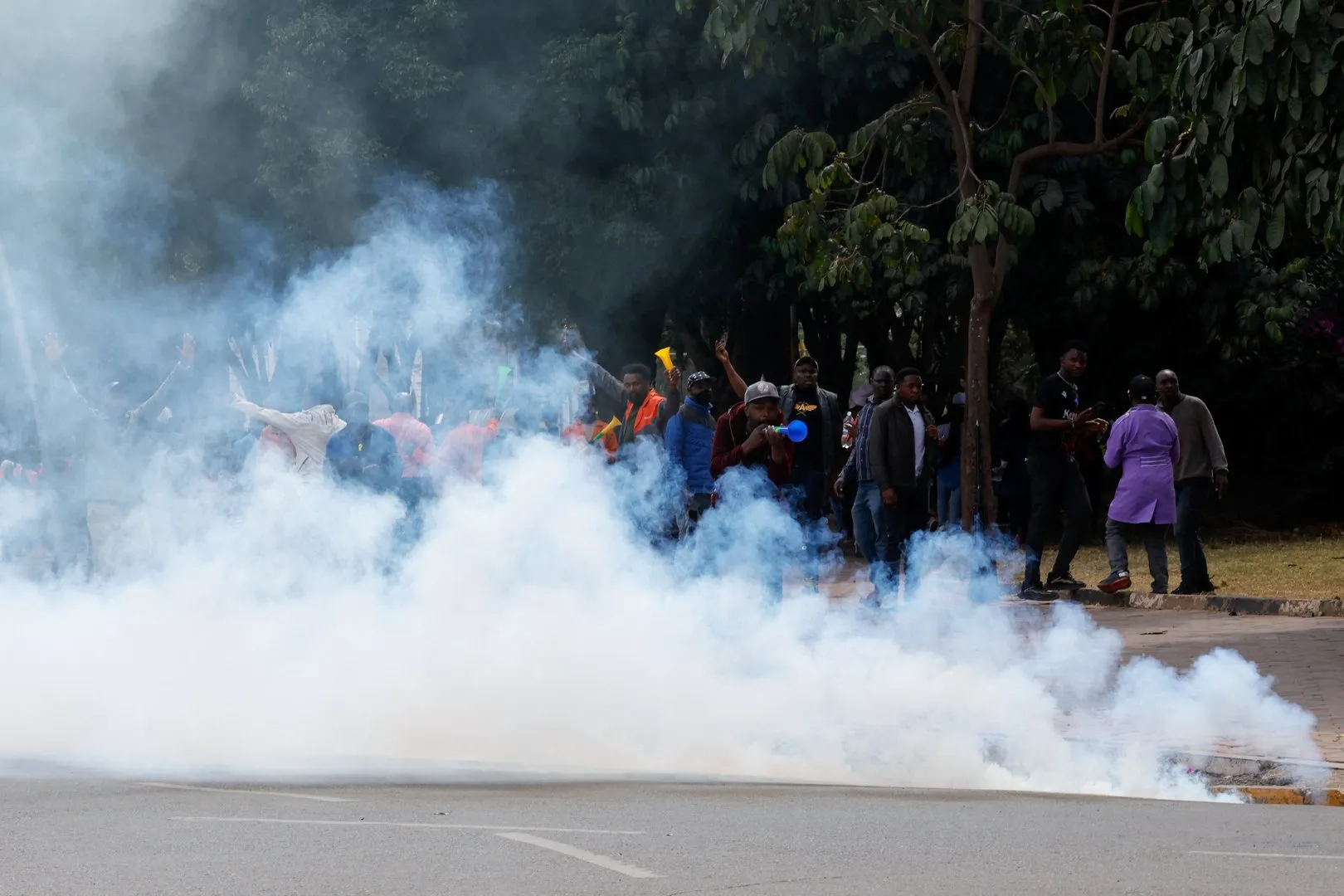
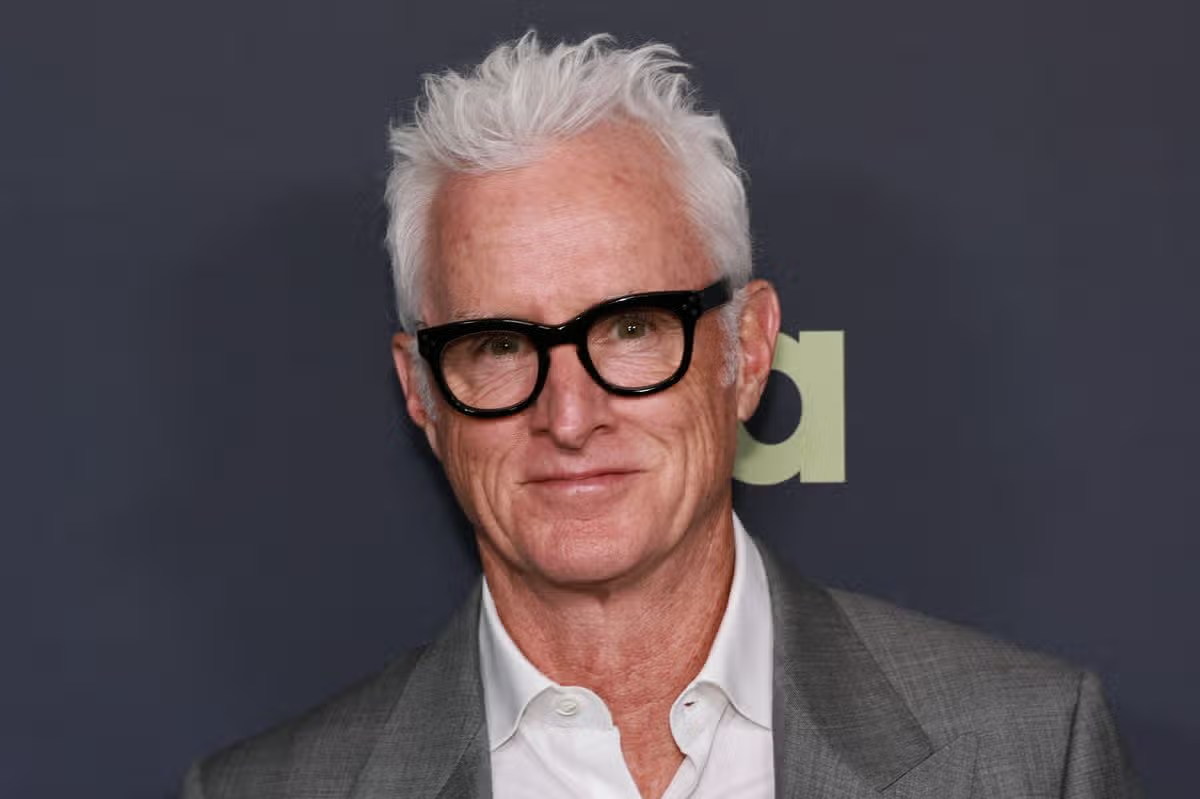























![Trishuli market, covered in sludge, in Trishuli, Nepal [Mohammad Meherban/Al Jazeera]](https://i0.wp.com/www.aljazeera.com/wp-content/uploads/2026/08/Trishuli-market-1787926143.jpeg?w=640&ssl=1)