Kim focuses on improving economic activity in opening speech at Ninth Congress of the Workers’ Party of Korea.
North Korea has kicked off a rare party congress of the ruling Workers’ Party, held once every five years, that will see the leadership in Pyongyang set major policy goals in defence, diplomacy and the economy, state media reports.
The Korean Central News Agency (KCNA) said on Friday that the Ninth Congress of the Workers’ Party of Korea (WPK) was under way, marking the start of the country’s most consequential political event since 2021.
Recommended Stories
list of 4 itemsend of list
“The Ninth Congress of the WPK opened with splendour in Pyongyang, the capital city of the revolution,” KCNA said, reporting that the high-level meeting started on Thursday and observers say it is expected to run for several days.
South Korea’s official Yonhap News Agency said the gathering will be closely followed for any signs regarding North Korea’s development of nuclear weapons or overtures towards the administrations in Seoul and the United States, which the North considers its chief foes.
Yonhap reports that North Korea’s leader, Kim Jong Un, made no mention of relations with either South Korea or the US in his opening speech to the congress on Thursday and, instead, focused on boosting the country’s economy.
“Ahead of our party are heavy and urgent tasks of advancing economic development and improving people’s livelihoods, and transforming all aspects of social life in the country as quickly as possible,” Kim said, according to KCNA.
While the true state of North Korea’s often struggling economy is hard to gauge, The Associated Press news agency reports that outside experts suggest the country has seen a gradual recovery in economic activity, helped by a post-COVID boost in trade with China and the export of weapons to help Russia in its war against Ukraine.
Several thousand North Korean troops have fought on Moscow’s side against Ukraine, and Pyongyang is believed to have exported large amounts of ammunition to help the Russian invasion of its neighbour.
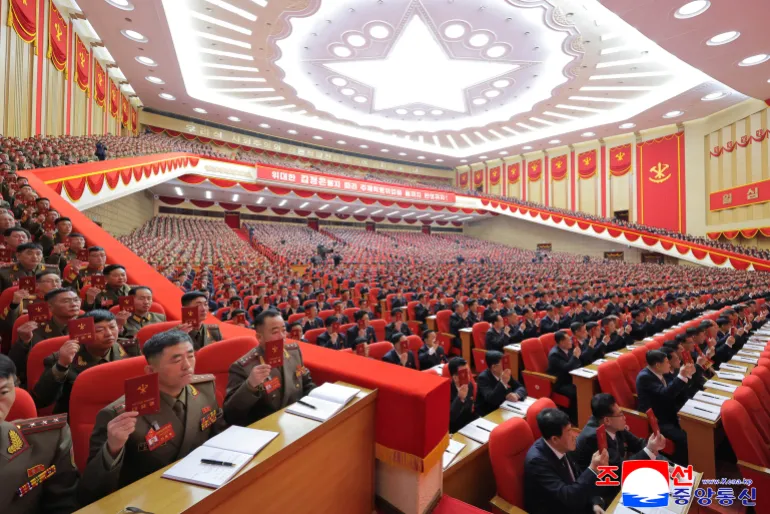
Delegates attend the Ninth Congress of the Workers’ Party of Korea in Pyongyang, North Korea, on Thursday [KCNA via Reuters]
North Korea’s ‘biggest enemy’
South Korea’s spy agency said last week it was monitoring the congress for any sign that Kim will officially designate his teenage daughter, Kim Ju Ae, as his potential successor, formalising her position as heir apparent in a fourth-generation succession of the Kim family as North Korea’s leaders.
At the previous party congress five years ago, Kim declared that the US was his nation’s “biggest enemy”, the AFP news agency reports, and there is deep interest in whether the North Korean leader will soften his rhetoric – or double down – at this year’s congress, particularly amid the US presidency of Donald Trump.
Trump – who met Kim in 2019 when he briefly stepped foot into North Korea to shake Kim’s hand and pose for photos – said during a tour of Asia late last year that he was “100 percent” open to meeting Kim again.
So far, Kim has demurred on Trump’s overtures to meet again.
Observers of North Korean politics are reported to be scouring satellite imagery for any signs of the vast military parades that have accompanied previous congress meetings in Pyongyang.
Such parades will be closely watched for signs of a shift in North Korea’s weapons capabilities, as the country has used previous processions to show off its newest and most advanced weapons.
Kim held a ceremony on Thursday to unveil the deployment of 50 new launch vehicles for nuclear-capable short-range missiles as the congress kicked off.
According to Yonhap, the congress brings together some 5,000 party representatives from across the country, including 200 senior officials from the WPK’s headquarters. More than 4,700 officials from regional and industrial sectors are also in attendance.
People view 600mm-calibre multiple rocket launchers during a presentation ceremony of the launchers to the Ninth Congress of the Workers’ Party of Korea by the workers of the munitions industry sector in Pyongyang, North Korea, on Wednesday [KCNA via Reuters]
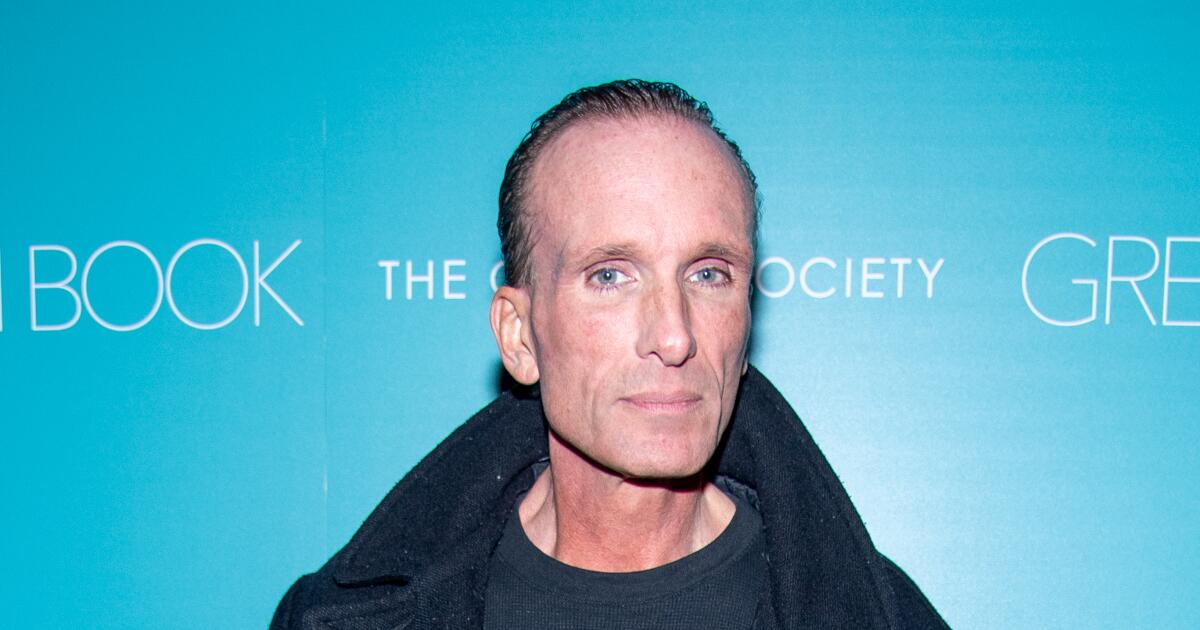
The cause of death for Peter Greene, a character actor known for playing villains in movies including “Pulp Fiction” and “The Mask,” has been revealed by New York City’s Office of Chief Medical Examiner.
Police found Greene, 60, dead in his apartment Dec. 12. They didn’t suspect foul play.
His death was ruled an accident, the M.E.’s office said via email. Greene died from a “gunshot wound of left axilla with injury of brachial artery,” the office said. In everyday English, that means he shot himself in his left underarm and injured a significant artery that starts in the shoulder and runs down to the elbow crease.
Police found the character actor in his Lower East Side apartment, Deadline reported, after neighbors heard Christmas music playing for days and one of them called authorities and the landlord for a wellness check.
Greene had a history of addiction, per the New York Post, and attempted suicide in the 1990s. He was scheduled to go in for a procedure to remove a benign tumor near his lung on the day he was found, the outlet said. His manager had talked to him two days before he was found.
“He sounded OK … It was just a totally normal conversation. He was a little nervous about the operation going in, but he said it wasn’t super serious,” manager Gregg Edwards told the Post in December. “He was talking about that and hoping that I was going to be OK and wishing me well as I was wishing him well. We’re good friends. I love the guy.”
Greene’s best-known role was the villain Zed, who was brought in to torture Bruce Willis and Ving Rhames’ characters in Quentin Tarantino’s 1994 classic “Pulp Fiction.” In “The Mask,” also released in 1994, he played mobster Dorian Tyrell, antagonist to Jim Carrey’s Stanley Ipkiss, a.k.a. the Mask.
Those roles came only a couple of years into Greene’s career, which per IMDb included nearly 100 TV and film credits from 1990 to 2026. His TV credits included episodes of “Chicago P.D.,” “Hawaii Five-0,” “Law & Order,” “Justified” and more.
He started out with parts in a couple of TV shows in the early 1990s before landing the lead role in “Laws of Gravity.” In 1995, Times movie critic Kenneth Turan called the 1992 film “independent American filmmaking at its best” and described Jimmy (Greene) as “a small-time street outlaw who, though horrified at the thought of actual work, is stable by local standards” in Brooklyn’s then crime-ridden Greenpoint neighborhood.
The New Jersey native, born Oct. 8, 1965, studied Method acting at the Lee Strasberg Theatre & Film Institute in New York City when he was in his 20s. He told Premiere magazine in 1996 that he ran away from home at age 15 and lived on the streets, using and dealing drugs and hiding from other dealers in theaters, where he got into acting. His drug use overlapped with his early success on screen.
After a 1996 suicide attempt, the actor said, he got treatment for addiction and sobered up.
Yoon Min-ho, spokesperson for South Korea’s Unification Ministry, speaks during a briefing at the Government Complex Seoul in Seoul on Feb. 2. Photo by Asia Today
Feb. 19 (Asia Today) — South Korea’s Unification Ministry said Thursday it is taking note of a swift statement by Kim Yo Jong, a senior North Korean ruling party official, after Seoul expressed regret over recent drone incidents and announced steps to prevent a recurrence.
A ministry official told reporters the government “takes note” that North Korea quickly responded to Seoul’s expression of regret and its preventive measures. The official said the steps announced by Unification Minister Chung Dong-young are intended to protect the safety and peace of both Koreas and that the government will “responsibly” implement them.
The remarks came after Kim said earlier Thursday that North Korea “highly appreciates” Chung’s comments acknowledging what Pyongyang called a South Korean drone provocation, expressing regret again and stating an intention to prevent further incidents.
On Wednesday, Chung said Seoul expressed “deep regret” to the North over drone infiltration incidents during the previous Yoon Suk Yeol administration and additional incidents carried out at the civilian level after President Lee Jae-myung took office. Chung also announced measures aimed at preventing a recurrence, including banning drone infiltration into North Korea and strengthening penalties.
An upcoming adaptation of a bestselling rom-com has landed a major Bridgerton star for the leading role
Bridgerton star lands role in ‘perfect’ rom-com fans have read ‘over and over’
Bridgerton sensation Phoebe Dynevor has secured the leading role in Beach Read, the forthcoming film adaptation of Emily Henry’s chart-topping romantic novel.
First released in 2020, the story centres on two authors and former university competitors who cross paths again unexpectedly, embarking on a literary duel whilst vowing to resist any romantic entanglement.
Dynevor, celebrated for her portrayal of Daphne Bridgerton in Netflix’s smash-hit Regency drama’s debut season, will take on the part of romance writer January Andrews.
Within the narrative, January faces off against and ultimately develops feelings for Gus Everett, whose casting remains unannounced.
Devotees of Henry’s work have grounds for enthusiasm regarding the upcoming adaptation, as Yulin Kuang is at the helm. Kuang co-authored Netflix’s recent take on People We Meet on Vacation, featuring Emily Bader and Tom Blyth, reports the Express.
Kuang is also crafting the screenplay, with 20th Century Studios backing the project, ensuring audiences can expect a cinema release.
The complete film synopsis from Deadline states: “Beach Read is a romantic comedy following January Andrews, a successful romance novelist who struggles with grief and writer’s block after her father’s death and the discovery of secrets he’s long kept hidden.”
“While spending the summer in his Michigan beach house to prepare it for sale, she unexpectedly reconnects with Gus Everett, an author who was once her rival in college.
“Both creatively stuck, they agree to a writing challenge over the summer, swapping literary genres while promising that there will be no romance between them. Of course, you know what they say about the best-laid plans.”
Get Netflix free with Sky for Bridgerton Season 4
This article contains affiliate links, we will receive a commission on any sales we generate from it. Learn more
‘Dearest gentle reader’, as the fourth season of Bridgerton follows second son Benedict love story, there’s a way to watch this fairytale-like season for less.
Sky is giving away a free Netflix subscription with its new Sky Stream TV bundles, including the £15 Essential TV plan. This lets customers watch live and on-demand TV content without a satellite dish or aerial and includes the new season of Bridgerton.
Fans will no doubt be thrilled to witness January and Gus’s swoon-worthy romance translated to screen, as Henry’s original novel has garnered glowing reviews from both critics and readers alike over the years.
One five-star Amazon review gushed: “I’ve read this book at least six times now, and somehow, I love it more with each reread.”
They continued: “Everything about this story is perfect. It’s heartwarming, smart, and emotionally rich, but still manages to have me giggling, kicking my feet, and fully rooting for these two. This is such a comforting read I keep the audiobook on standby for whenever I have the chance to replay it.”
For the latest showbiz, TV, movie and streaming news, go to the new **Everything Gossip** website.
Ensure our latest headlines always appear at the top of your Google Search by making us a Preferred Source.** Click here to activate**** or add us as your Preferred Source in your Google search settings.**
Another reader enthused: “Together Gus and January have managed to chip away a piece of my heart to call their own. No romance book has had me screaming, crying, smiling and laughing as much as Beach Read.”
A final admirer declared: “Oh my word, I loved this book so much. I can’t stop recommending it to people, even my guy friends. I’m not sure how anyone can consider this anything but a masterpiece.”
Eager to be captivated by another brilliant Emily Henry adaptation? Stay tuned for further updates.
Beach Read does not currently have a release date.
Several wildfires in the Texas and Oklahoma panhandles spurred evacuations while firefighters continued battling several on Thursday. Image courtesy of UPI
Feb. 19 (UPI) — Firefighters are battling several conflagrations in the Texas and Oklahoma panhandles, the largest of which burned more than 283,000 acres in Oklahoma’s Beaver County.
The Beaver County fire is located along Ranger Road and was 15% contained late Thursday afternoon, while a nearby Morning Fire started at 10:30 a.m. CST and is situated southeast of Boyd.
Officials for the Booker Volunteer Fire Department said the Morning Fire was under control shortly after noon, but two active fires in Oklahoma’s Texas County were still active.
The Stevens Fire was 50% contained after burning more than 12,000 acres, while the Side Road Fire was 60% contained and had burned 3,680 acres as of Thursday afternoon.
Firefighters in Texas’ Oldham and Potter counties had the 18,423-acre Lavender Fire 20% contained during the afternoon hours, and an evacuation order for Valley De Oro had been lifted.
In Donley County, Texas, the 8 Ball Fire was 50% contained after burning 13,00 acres, while the Canadian Bridge Fire in Hutchinson County was 100% contained after burning 428 acres.
Fire departments in Bartlesville, Ochelata, Oglesby, Oglesby, Tulsa, Barnsdall and Washington County in Oklahoma fought several fires on Thursday, and Ochelata and southern Bartlesville residents were told to evacuate.
Livestock also have been moved out of the fire zones, and many others fled on their own accord as smoke from the fires spread nearby.
No fatalities have been reported, and there are no reports yet regarding structural damage from the many fires.
After collecting forensic evidence they questioned two men in a nearby village and discovered three sacks of meat, 16 lion claws and four teeth. These body parts would later be tested against the database, with the DNA from all matching the profile of that missing lion.
The rapper reportedly sent five tickets for the men’s snowboard halfpipe final to the owners of a local restaurant who covered his dinner after there were some troubles with the credit card payment. Sofia Valmadre, whose parents own Cronox in Livigno, Italy, said Snoop had placed an order for a cheeseburger, chicken wings, chicken nuggets and French fries at her family’s eatery. Unfortunately, the credit card the mogul’s staffer tried to use was declined for an unknown reason.
“My mother told him it was OK [to take the food] without paying,” Valmadre told Reuters. “[The next day] he sent us five tickets to see the final.”
The “Gin and Juice” rapper has become a familiar presence at the Olympics, especially since NBC made his involvement official starting with the 2024 Paris Summer Games. In addition to cheering on American athletes including curlers Cory Thiesse and Korey Dropkin, snowboarder Chloe Kim and speedskater Erin Jackson at their events — usually in custom apparel celebrating the sports stars — Snoop has been spending his time in Italy hanging out with bestie Martha Stewart, learning how to ski from Picabo Street and getting chummy with Olympians like “Quad God” Ilia Malinin.
For those curious about Snoop’s dining habits, Stewart recently described him as a “very fussy eater.” She even surprised him with a bowl of spaghetti with meatballs topped with cheddar cheese during a recent fine-dining outing.
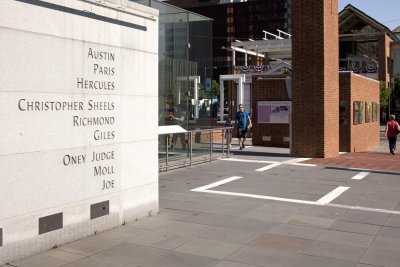
The names of nine former slaves owned by George Washington appear at the President’s House in Philadelphia, where workers continued restoring a slavery exhibit on Thursday. Photo by Joseph E.B. Elliott/National Park Service
Feb. 19 (UPI) — Workers are restoring a slavery exhibit at the site of the nation’s first presidential mansion in Philadelphia ahead of a Friday deadline to do so.
U.S. District Court of Eastern Pennsylvania Judge Cynthia Rufe on Monday ordered the Interior Department to restore the exhibit, which was removed in January amid the Trump administration’s anti-DEI policy.
Rufe likened the slavery exhibit’s removal to author George Orwell‘s novel “1984” and said the exhibit supports “historic truths,” The Hill reported.
The Trump administration on Wednesday filed a motion to stay Rufe’s order to reinstate the exhibit, but workers began reinstalling it on Tuesday.
Philadelphia Mayor Cherelle Parker welcomed the change and vowed to oppose efforts to remove the exhibit.
“Today, we celebrate the return of our history at this important site,” Parker said in a post on X. “We are thankful for all the supporters across the city to get us to this point.”
Parker said the legal challenges have not ended and said they will be handled with “rigor and gravity” as they arise.
The exhibit features panels depicting slavery in the United States from the time of the Revolutionary War through the Civil War and the eventual outlawing of slavery upon the ratification of the 13th Amendment.
The President’s House formerly was the official residence for Presidents George Washington and John Adams when Philadelphia was the nation’s capital and is located at the corner of 6th and Market streets.
Adams did not own slaves, which is why the panels focus on Washington’s ownership and use of slaves while living at the presidential home.
The house was demolished 32 years after the nation’s capital moved to Washington in 1800, but its foundation and footprint remain.
The site been converted into an outdoor exhibit that features the dichotomy of slavery in a nation that was founded on the principles of freedom and equality and is managed by the National Park Service.
SOUTHCOM has spearheaded the lethal strikes against small vessels in the Caribbean and Eastern Pacific. (SOUTHCOM)
Caracas, February 19, 2026 (venezuelanalysis.com) – Venezuelan Acting President Delcy Rodríguez met with US Southern Command (SOUTHCOM) chief General Francis Donovan in Miraflores Palace on Wednesday.
According to the presidential press, the previously unannounced high-level talks also included Venezuela’s interior and defense ministers, Diosdado Cabello and Vladimir Padrino López, respectively.
“During the meeting, both countries agreed to work on a bilateral cooperation agenda to fight against drug trafficking in our region, as well as on terrorism and migration,” a statement released on social media read.
The Venezuelan government argued that the meeting showed that “diplomacy” is the mechanism to address “differences and issues of regional interest.”
Donovan is the latest US high-ranking official to visit Caracas and meet with Rodríguez since the January 3 US military attacks that killed over 100 people and saw special operations forces kidnap Venezuelan President Nicolás Maduro and First Lady Cilia Flores.
The acting president held talks with CIA Director John Ratcliffe on January 15 and hosted Energy Secretary Chris Wright last week at the presidential palace. US Chargé d’Affaires Laura Dogu has been in the country since late January, and Rodríguez has recently reported regular “respectful and courteous” communication with Trump and Secretary of State Marco Rubio.
SOUTHCOM confirmed the visit in a press release, disclosing that Donovan was accompanied by Acting Assistant Secretary of War Joseph Humire and stating that the officials expressed the US’ “commitment to a free, safe and prosperous Venezuela.”
The US military command added that discussions focused on “shared security across the Western Hemisphere,” and the Trump administration’s stated “three-phase plan” for the Caribbean nation: “stabilization, economic recovery and reconciliation, and transition.” For her part, Dogu reported Donovan’s visit on social media, calling it a “historic day” to “advance in the objective of having Venezuela aligned with the United States.”
Donovan took over the SOUTHCOM leadership in February after the resignation of Admiral Alvin Holsey over reported disagreements with US Secretary of War Pete Hegseth on the legality of US lethal strikes against boats suspected of carrying drugs.
Since September, through “Operation Southern Spear,” SOUTHCOM has coordinated over 40 bombings of small vessels that have killed more than 130 civilians. The latest strikes, on February 16, targeted two boats in the Eastern Pacific and one in the Caribbean, killing 11 people in total. Neither Donovan nor Rodríguez mentioned the ongoing attacks in their public readouts following the meeting.
SOUTHCOM has also participated in the seizure of oil tankers accused of violating US sanctions by transporting Venezuelan crude. After seizing seven ships in the Caribbean between December and January, US forces have boarded two tankers in the Indian Ocean this month.
In the months leading up to the January 3 operation, Maduro and other Venezuelan officials consistently denounced the US’ military buildup in the Caribbean Sea and the subsequent naval blockade against oil exports.
Venezuelan authorities likewise blasted Washington’s “narcoterrorism” accusations against Caracas, pointing to specialized reports, including from the DEA, that placed Venezuela as a marginal country for global narcotics flows. Venezuelan officials also recalled the history of US agencies’ involvement in drug trafficking.
However, in the weeks after the January 3 strikes, Washington and Caracas have fast-tracked a diplomatic rapprochement with a view toward reopening embassies. President Donald Trump has publicly recognized the acting government but the official change in policy has yet to be confirmed.
The acting Rodríguez administration also prioritized economic reforms to attract foreign investment, including a pro-business overhaul of the country’s Hydrocarbon Law. National Assembly President Jorge Rodríguez said that the government is “adapting” legislation to attract US corporations and aiming for a “free market economy.”
THERE’S a line in Badlands, one of Mumford & Sons’ new songs, that feels like a mission statement for new record Prizefighter.
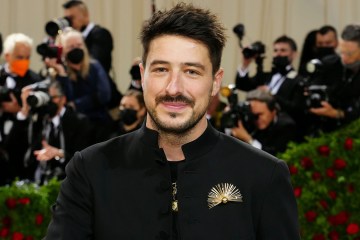
Singer Marcus Mumford says: “The lyric says, ‘Don’t look down now/I’m not done here yet’. I was listening to that song today and that’s the sentiment of Prizefighter.
Sign up for the Showbiz newsletter
Thank you!
Mumford & Sons are back with their sixth album PrizefighterThe band’s Lovett, Mumford and Dwane say they feel ‘very fortunate’ to be launching another album
“We try really f***ing hard, we want to be great. And I think we’ll keep trying.”
I’m chatting to Mumford and keyboardist Ben Lovett in Bath, a few hours before they are due on stage at The Forum to celebrate the release of their new album.
“We feel very fortunate to be launching our sixth album, it’s a big deal,” says Lovett.
“It’s a marker of beyond the creativity and how we feel about the music itself. “When we started this band, it was all about longevity for us.
“And it feels great to be coming up to 20 years as a band and feel like we want to do another 20.
“That’s a big statement of success for us.”
The pair are seated together on a sofa, comfortable and clearly energised by their new record.
It’s hard to believe it’s only 11 months since fifth album Rushmere signalled their return from a seven-year hiatus.
For Prizefighter, they worked with producer Aaron Dessner from US rock band The National.
They had worked with him on 2015’s Wilder Mind, and they crossed paths again while mixing Rushmere in Electric Lady Studios in New York City.
Mumford says: “Aaron showed us the beginning of an idea for Prizefighter, the song he’d written with Bon Iver’s Justin Vernon.
“And we instantly started writing on it.
“Aaron’s always writing music with his mates for fun. He then played us a snippet of what became new single The Banjo Song that he’d started with Jon Bellion as a sketch.
“This was the beginning of the record, a beginning of ideas, like we do with each other all the time. It was just for fun to see where it goes.”
Mumford & Sons have continued as a trio since founding member Winston Marshall departed in 2021 after publicly expressing support for a book by right-wing American journalist Andy Ngo.
Lovett explains: “We got together in January 2023 and started making music without any agenda and I felt very free.
“That was the right thing to do. That was the right start or restart after Marcus’s solo record [2022’s Self-Titled].
“And it was the first time we’d played together in a couple of years. It felt like riding an old bike.”
Their first new music came in the form of Good People — a surprising collaboration with Pharrell Williams in 2024.
“That record was a very different experience but showed us that we have range and versatility,” says Lovett.
“So, by the time we got to the studio with Aaron, we were confidence high. We loved it and wanted to be curious creatively, from a place of positivity.
“And that’s basically how the record got in to motion.”
Mumford says stepping back was crucial to finding their confidence again.
“I am less insecure about being an artist,” Mumford tells me. “I will go off to a coffee shop and read poetry and do it unapologetically.
“I’m also more playful with my lyrics. I love Clover in particular.
“I just didn’t have the confidence to be tongue-in-cheek, surreal or even slightly ridiculous.
“Those types of lyrics would never have got on any previous albums.
Aaron, like Pharrell and Dave Cobb, who produced Rushmere, sat us down and gave us quite a serious talking to about believing in ourselves and looking back at what we’ve done with pride while also looking ahead.
“Recognising our confidence and DNA at the same time is what led to us being able to write this record.
“There’s a lot of insecurity and confidence on the record and also nostalgia and ambition and so that’s why it’s called Prizefighter.”
Lovett adds: “We feel more comfortable in our own skin, with a stronger sense of identity than we’ve had as a band for a while.
“The success of Rushmere [their third No1 album] and touring last year gave us a big confidence boost and reminded us that people still care and we are having a good time.”
Prizefighter sees Mumford at their most collaborative. Gorgeous piano ballad Badlands features Gracie Abrams, while Chris Stapleton, Hozier and Gigi Perez are also guest singers.
Finneas, Dessner, Vernon, Bellion and Brandi Carlile are credited as co-writers on the record.
“We’ve always been a bit more protective in the studio,” says Mumford. “In the early days a band needs to set out their stall and show people who you are.
“We have always had this collaborative spirit where we’ve enjoyed playing with other bands but we’ve not really recognised that on record before.
“It felt the time to do it, so we’ve opened the doors and it’s been really fulfilling. It’s one big community.”
Gracie Abrams, a long-time friend of Mumford’s, was the first to hear the band’s new songs.
“I’ve known her right from the start,” says the singer. “Gracie was the first person to hear any of these demos, like before labels or managers or anyone else.
“And we found out recently that she came to one of our shows when she was 13.
“We’ve been friends for a long time. She’s amazing.
“With Badlands we asked her to pick any song to sing on and she said yes to that song which had been written to be her voice.”
Album opener Here was written with Grammy-winning country powerhouse Chris Stapleton in mind.
Mumford says: “I’m just a fan of his and I couldn’t get the idea out of my head that he should sing the second verse on Here.
“We hadn’t met, so I called him. We had a long conversation. We really connected. Then he heard the song and said, ‘Yeah, I’ll record it next week’. And he did. It was all pretty organic.
“We didn’t have a list. It was like, ‘Let’s send this to Andrew, aka Hozier, see if he wants to f*** with it’. And he said yes.”
Lovett adds: “It’s a simple environment up at Aaron’s Long Pond studio. We record then we sit around eating soup together.
“It’s not the glossy album where you’re stuck on the other side of the glass and the red light goes on and it’s your big moment.
“Making Prizefighter felt a much more human experience.”
Conversation With My Son (Gangsters & Angels) is another highlight on Prizefighter and a song that Dessner was a huge fan of.
“Yeah, Aaron was a huge advocate for that song,” says Lovett. “It felt like there was an opportunity to explore something musically and thematically that was a bit different to the rest of the record.”
Mumford, who has two daughters and a son with actress Carey Mulligan, adds: “It has a hymnal and intentionally repetitive, melodic thing like in a Trad Irish song.
“Ben is being modest but he had this clear vision for that song.
“Then we sat down and Ben made a little demo of his chord sequence, and I fell in love with it.
“I’d been writing some words that morning and it became an essential band moment.
“We sit quietly and play along until we have an idea. Ted Dwane was on the bass, Ben was on the piano, Aaron was playing a guitar, I was writing words.
“Aaron understands being in a band very well and when we play to our strengths. It fell together like that and is a good example of the alchemy of being in a band.”
Lovett, who has a young daughter with his partner, American fashion executive Molly Howard, says: “Having kids act as a mirror to your life makes you want to be a slightly better version of yourself.
“We all take fatherhood quite seriously and it means that when we’re together, it’s cherished in a very different way.
“There was a real fun and silliness to our 20s that was inefficient — like staying out until 5am just because, why not have one more?
“I think there’s something beautiful about treating this with more care. It’s a very precious thing.
“Being in Mumford & Sons is amazing and we’re lucky we get the opportunity to do this.
“And finding out we have people all over the place who appreciate that we continue to still do this, is a charger for Chapter Two.”
Mumford adds, smiling: “I would say we’re in the phase where we take our work more seriously but take ourselves less seriously.
“Making my solo album made me fall back in love with the band. I love these lads and the sense of belonging and home we get from being this band together.
“When we got back together it was like we renewed our vows.
“It’s very silly but a privilege so we’re really trying to be present and our audience has made us more grateful and appreciative. Seeing new and younger fans getting into the songs has been amazing.
“I think we’re about at the point of our career where Radiohead were when they released Hail To The Thief — that was my way into Radiohead. It’s my favourite record of all time. And through that record I discovered the rest of their catalogue.
“They’d always felt like my brother’s band, who is older than me, but then this album came out when I passed my driving test.
“I hope that Prizefighter is that first Mumford album for some people.”
Making an album so soon after another, has been inspiring and Mumford says: “We never want to turn the tap off. The tap still feels like it’s got something in it.
“We could have released Prizefighter a week after Rushmere, but we wanted to give people space and time, but now the idea is to be accelerating that process so that we can show people.
“I hope we can start writing songs and releasing them the next day, like Bruce f***ing Springsteen!
“Our Hyde Park show in July will be a celebration for us — the centrepiece of our year.
“We are inviting guests and friends and crafting the line-up at the moment.
“We’ve announced The War On Drugs, who are one of the best bands in the world and people know from working with Sam Fender.
“There’ll be more we can tell you about soon, which will be fun, we really put time and effort into those line-ups.
“Hyde Park is going to be wicked, with plenty of surprises on the day too.”
Lovett adds: “Prizefighter is important to us.
“As a band, we’ve had some fun getting here, but I think this album sets us up for a really bright future.”
Prizefighter is out today.
MUMFORD & SONS
Prizefighter
★★★★☆
Mumford & Sons’ new record Prizefighter is out nowCredit: Unknown
Qatar has pledged $1 billion to support the Board of Peace’s mission in Gaza, with Prime Minister Sheikh Mohammed bin Abdulrahman Al Thani backing Donald Trump’s 20-point plan and reaffirming support for Palestinian statehood and Israeli security.
The first hour of “EPiC: Elvis Presley in Concert” convinces you that the King is the greatest entertainer who ever lived. By the end of it, he’s a god. Director Baz Luhrmann claims he made this Imax documentary so that any poor souls who never got to see the King live can worship him in action. Really, I think Luhrmann is praying that in a thousand years, some alien civilization will discover this footage and build a whole religion around the thrall Elvis’ hip thrusts had over a crowd.
If that future comes to pass, then Luhrmann himself will be elevated as a key disciple. He’s so devoted to Elvis that this is his second tribute in four years, the other being, of course, his 2022 biopic “Elvis,” starring Austin Butler, who was good in the role if not quite iconic. That more traditional film hewed to the genre’s standard rise-and-fall narrative and was dinged mostly because the King’s life represents so many things to so many people — race, class, controlling relationships — that it’s impossible to please everyone or for any actor to fill his blue suede shoes.
“EPiC” sticks to the surer footing of documentary footage: the man himself performing over two dozen tunes — including “That’s All Right,” “Burning Love” and “In the Ghetto” — plus twice that number on the background soundtrack. (I’m not into his gospel hits, but they suit the mood.) A dream concert that’s longer and larger than what fans could have seen in reality, the movie is stitched together primarily from Elvis’ Las Vegas appearances in 1970 and 1972. You can tell which year it is by the amount of rhinestones on his costumes, which become increasingly maximalist.
When Elvis retook the stage in 1969, he hadn’t performed before a live audience in nine years and he’d gotten a little uncool. Beatlemania had dinged his appeal so perilously that editor Jonathan Redmond splices its arrival with images of car crashes and missile attacks. Reporters at that comeback show noted that most of his fans were now — horrors! — over 30, with the exception of a 25-year-old who said he attended out of nostalgia.
Luhrmann quickly sets up the essential framework, then Luhrmann picks up a year after Elvis proved he was still a smash. No longer constrained by moral panic, the Army draft or the decade he spent trapped within the Hollywood industrial complex, this is the King at arguably the high point of his career, right in that sweet spot before his 1973 divorce from Priscilla Presley, after which his mood and health started to flag.
This Elvis comes across confident, breezy, comfortable and funny. In one scene, he jokes about the difficulty of lunging to the ground in a tight jumpsuit (an outfit he adopted because he was nervous of ripping his pants). Later, he switches up the lyrics to “Are You Lonesome Tonight?” to croon, “Do you gaze at your forehead and wish you had hair?”
The camera often seems to be right under his chin, gazing as the sweat on his cheeks and lashes shimmers under the Vegas lights like diamonds. His spell over the crowd feels at once intimate and volcanic. You get the best look at his charisma when Elvis targets his energy at an unsuspecting back-up singer in the middle of “Suspicious Minds.” Slowly striding toward the girl, he hypnotizes her as skillfully as a snake charmer and then, as a punchline, lunges in her direction. She jumps and giggles.
While we become familiar with the faces of his band members, the film doesn’t bother to mention any of their names, not even in the credits. They deserve better, but the film is about how the concert felt, not how it came to fruition. Still, once you get over the contact high of Elvis’ psychedelic neon pink paisley shirt in the rehearsal studio, it’s delightful to see that he gives as much of himself when performing in a small setting as he does in a massive one. He loses himself in thrall to the beat, gyrating his pelvis so fast it resembles a machine gun.
Naturally, there’s a montage of the women in the audience overwhelmed by joy, from a sobbing little girl who won’t let go of his arm to a glamazon in a dangerously low-cut minidress who scoots under the curtain before it closes. The ladies tug on his scarves and toss bras at him, one of which he wears on his head. Surprisingly to modern eyes, when his female fans grab and kiss him, Elvis smooches them back, even after he wades into a sea of his admirers and emerges with the chains on his jumpsuit torn off. If you happen to spot your mother or grandmother in the crowd, well, good for her.
In lieu of mentioning Elvis’ off-stage reality, Luhrmann deepens a song’s effect by cutting to personal photographs that are a little out of context. As Elvis wails the line, “And I miss her,” from his cover ballad about a bad husband, we see a shot of Elvis’ dead mother, Gladys. “Always on My Mind” becomes a brisk yet moving acknowledgment of Priscilla and his infant daughter Lisa Marie. Otherwise, Lurhmann only wants to celebrate the good stuff. There’s no tragedy here. It’s ecstasy minus the agony.
If Elvis was ever cranky, that’s been stripped out. Though we hear him get hound-dogged by nosy questions from the press, the closest Elvis comes to snark is when he sits on a stool to play “Little Sister.” He sings the chorus, then cranks up the tempo a notch and suddenly starts belting the Beatles’ “Get Back,” before smoothly transitioning once more into his own song. Point made: Don’t give those Brits too much credit for revolutionizing rock ‘n’ roll.
Lurhmann’s got his own score to settle. In the Butler version of “Elvis,” he made the case that, as big an artist as Elvis was, he should have been bigger. Colonel Parker, Elvis’s manager, kept his cash cow on a leash, tethering him first to middling B-pictures, then to casinos. The Beatles invaded his country; he never played a single gig in theirs. We never got to find out who Elvis, with his magpie love for all music, might have become if he’d traveled the world and gotten to pick up an ashram sitar.
And while that argument got a little drowned out in the biopic by Tom Hanks’ double-phony put-on accent as Parker, this rapturous salute to the King’s majesty wants to make sure we don’t miss it now. Lurhmann even scores his footage of the Colonel to “The Devil in Disguise.” Hey, every religion needs a heel.
The second straight monthly deterioration in the United States’ trade deficit occurred as US firms boosted imports of computer chips and other tech goods.
Published On 19 Feb 202619 Feb 2026
Share
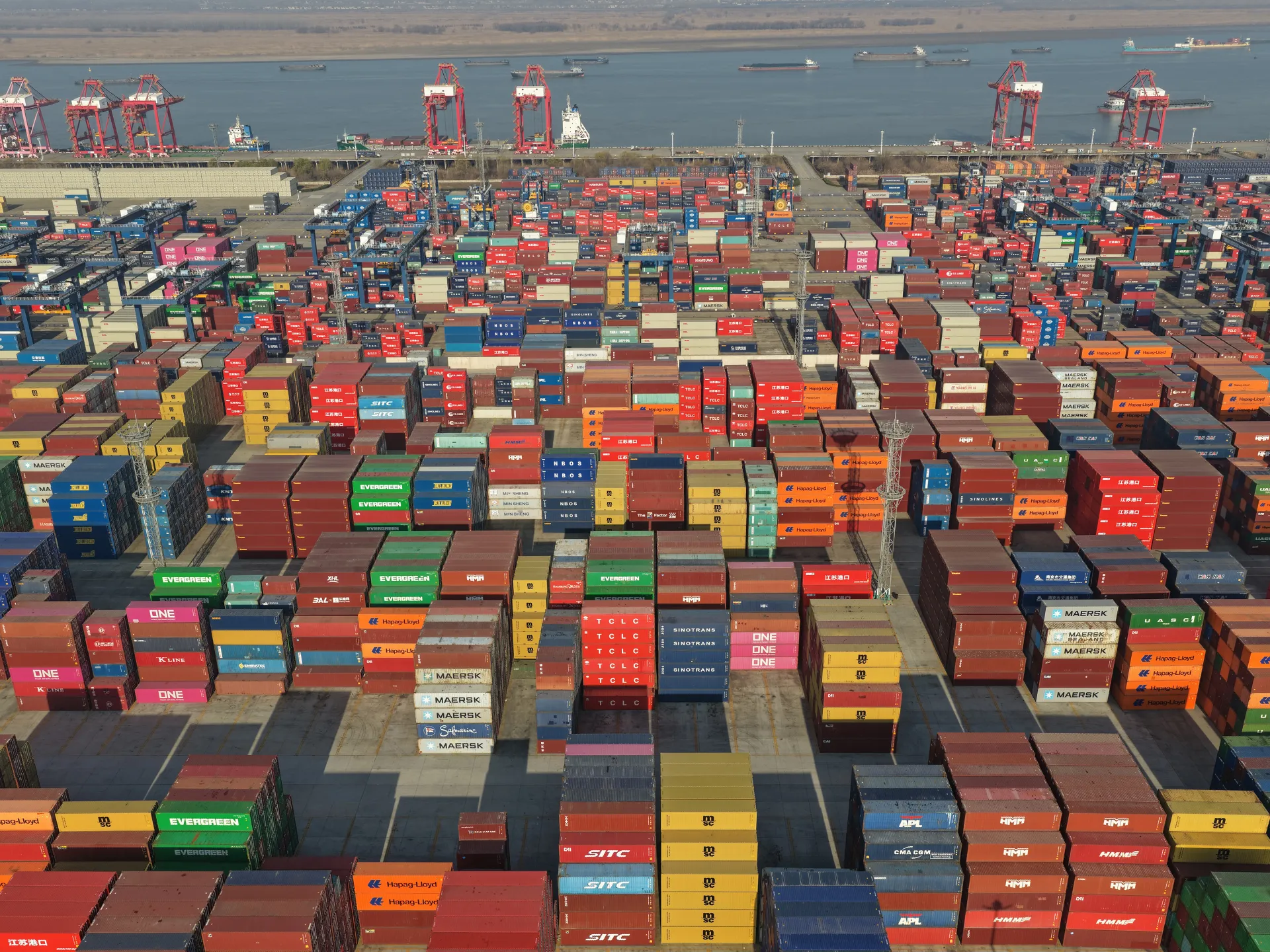
The United States trade deficit has widened sharply in December amid a surge in imports, and the goods shortfall in 2025 was the highest on record despite US President Donald Trump’s tariffs on foreign-manufactured merchandise.
The second straight monthly deterioration in the trade deficit reported by the US Commerce Department on Thursday suggested that trade made little or no contribution to gross domestic product (GDP) in the fourth quarter.
Recommended Stories
list of 4 itemsend of list
Exports rose 6 percent last year, and imports rose nearly 5 percent.
The US deficit in the trade of goods widened 2 percent to a record $1.24 trillion last year as American companies boosted imports of computer chips and other tech goods from Taiwan to support massive investments in artificial intelligence.
Amid continuing tensions with Beijing, the deficit in the goods trade with China plunged nearly 32 percent to $202bn in 2025 on a sharp drop in both exports to and imports from the world’s second-biggest economy. But trade was diverted away from China. The goods gap with Taiwan doubled to $147bn and shot up 44 percent, to $178bn, with Vietnam.
Trump last year unleashed a barrage of tariffs against trading partners with the aim, among other things, of addressing trade imbalances and protecting US industries. But the punitive duties have not yielded a manufacturing renaissance, with factory employment declining by 83,000 jobs from January 2025 through January 2026.
“There just isn’t any evidence out there in the economic research literature to suggest that tariffs have materially impacted trade deficits historically when countries have implemented them,” said Chad Bown, senior fellow at the Peterson Institute for International Economics.
The trade gap ballooned by 32.6 percent to a five-month high of $70.3bn, the Commerce Department’s Bureau of Economic Analysis and the US Census Bureau said. Economists polled by Reuters forecast the trade deficit would contract to $55.5bn.
The report was delayed because of last year’s government shutdown.
Imports increased 3.6 percent to $357.6bn in December. Goods imports surged 3.8 percent to $280.2bn, boosted by a $7bn increase in industrial supplies and materials, mostly non-monetary gold, copper and crude oil. Capital goods imports increased by $5.6bn, lifted by computer accessories and telecommunications equipment. That rise is likely related to the construction of data centres to support artificial intelligence.
But consumer goods imports fell, pulled down by pharmaceutical preparations. There have been large swings in imports of pharmaceutical preparations because of tariffs.
“But strong imports should also imply strength in details like inventories or business investment,” said Veronica Clark, an economist at Citigroup. “Surging computer imports in particular should correspond with stronger business equipment investment and could remain strong due to AI-related demand.”
Exports fell 1.7 percent to $287.3bn in December. But capital goods exports increased, boosted by semiconductors. There were increases in exports of consumer goods, including pharmaceutical preparations.
Hannatu Charles* carried her pregnancy to full term. She attended all antenatal sessions and was eager to meet her baby.
In January, when she was due, she went into labour around 7 p.m. Unfortunately, the primary healthcare centre in Kirchinga, a community in Madagali local government area of Adamawa state in northeastern Nigeria, closes around 6 p.m. Her family immediately called one of the traditional birth attendants in the community.
Hannatu laboured for hours, yet her baby did not emerge despite the efforts of the traditional birth attendant. By 10 p.m., warning bells began to ring in her mind, as by that time, all doors in Kirchinga had been shut and all access routes deserted.
“We decided to try to see if we could at least meet one person at the primary healthcare centre, so my husband and my neighbour took me there that night, but we didn’t meet any midwife or any healthcare staff,” she told HumAngle.
The centre was closed. All the healthcare staff had gone and would only return the next morning. Night shifts no longer hold. These changes were made due to the scale of insecurity.
Hannatu told HumAngle they returned home, where she continued to push, but despite her efforts, she was unable to deliver. The birth attendant noted that the baby was in breech position and, therefore, an experienced midwife or a gynaecologist was required. The only way they could access such care was by travelling to the Cottage Hospital in Gulak Local Government or the General Hospital in Michika Local Government, both many hours away.
Hannatu said they would have made the journey that night on a regular day, but now, it was too risky. Movement in Kirchinga was restricted after dark as Boko Haram terrorists roamed the area, especially at night. There was also no way to access vehicles or get a driver to take the,m as all routes were closed.
She said she was willing to persevere until dawn when the roads would reopen, but by midnight, the pain intensified, and the midwife doubled her efforts. A stillborn was delivered.
“I’m not the first to lose a child because of the security situation in this region,” Hannatu said as she talked about how insecurity destroys healthcare. “In fact, I’m lucky to be alive,” she added, stressing that several women and their babies had died.
According to Hannatu, the women who went into labour during the day in Kirchinga are considered lucky.
The healthcare crisis
Kyauta Ibrahim, a community health extension worker, spends her days at the primary school in Limankara, another community in the same Madagali that has, since the past decade, been repurposed as the community’s healthcare centre. Since residents began returning to Madagali in 2016 — two years after Boko Haram attacks displaced them — she and her colleagues have provided medical services from this makeshift facility.
“We are yet to move to the permanent site. We were asked to stay here to perform our duties,” she said. When the insurgents struck, they torched several structures, including the original primary healthcare centre where she worked.
For Limankara residents, this temporary facility remains the only nearby source of medical care. With few doctors remaining in the region, patients are often forced to travel long distances to better-equipped centres in Shuwa, Michika, or Gulak, particularly in emergencies.
Before the insurgency, the primary healthcare centre in Limankara served the local population and neighbouring communities such as Sakur and Lakundi, providing antenatal care, deliveries, and basic medical services. After peace was gradually restored in 2016, the state government converted one of the primary schools into a modest healthcare facility to meet the community’s needs.
A decade later, the school still functions as the healthcare centre. The situation worsened as medical doctors and other professionals began withdrawing, leaving indigenous community health extension workers to manage the facility. In 2016, most health centres in Madagali and Michika were closed because many professionals had either been killed or fled permanently.
As of 2019, the World Health Organisation’s Health Resources Availability Monitoring System (HeRAMS) highlighted that only 45 per cent of health centres in Adamawa were fully functional after 12 per cent had been destroyed and 34 per cent severely damaged by Boko Haram attacks.
Kyauta told HumAngle that, aside from staff shortages, inadequate healthcare equipment continues to affect healthcare delivery in the area. The temporary primary healthcare centre now closes by late evening due to recurring Boko Haram attacks, leaving pregnant women and children most vulnerable.
“When a woman starts labour at night, she can’t even go to the primary healthcare centre and has to give birth at home,” she said. Complicated cases are referred to Shuwa, and if necessary, to the General Hospital in Michika or the Gulak cottage hospital, all of which are some distance away.
Esther Markus, a mother of six from Wagga, another community in Madagali, travels six hours for a round trip to Gulak for medical care. Emergencies are further complicated by a 6 p.m. curfew. Traditional birth attendants handle routine deliveries, but high-risk cases, like breech births or sudden illness at night, go untreated until morning.
“Once it’s 6 p.m., we can’t take sick people to the hospital, so we leave them till the next day in the hands of God, and if the person dies, then we accept it,” said Hamidu Ahmadu, Limankara’s community leader.
Get our in-depth, creative coverage of conflict and development delivered to you every weekend.
Subscribe now to our newsletter!
Residents said security remains precarious. “A few days ago, the soldiers guarding us were attacked, so since then, they leave once it is 5 p.m. and head back to their headquarters in town. Our youths guard us all through the night,” Esther added.
Hamidu told HumAngle that the community has a population of about 3,000. He acknowledged the efforts of some humanitarian organisations that have visited the area in the past to treat malnourished children and provide basic healthcare services to residents, but the gap remains.
In 2024, the International Committee of the Red Cross (ICRC) resumed operations in Madagali after being unable to operate since 2018. The following year, the organisation provided basic healthcare and nutrition services to residents and also renovated the existing healthcare facility in Madagali town, which has become a haven for displaced persons in villages around the area. This has helped mitigate how insecurity affects healthcare in Madagali.
Despite these humanitarian efforts to restore healthcare access in conflict-prone communities in Madagali, however, factors like the curfew, abductions, and the absence of medical professionals continue to limit access to services.
Medical professionals are fleeing
Kirchinga, the community in Madagali where Halima had the stillbirth, faces a similar plight. Although it has a functional primary healthcare centre, the lack of medical professionals severely affects service delivery.
“Since the insecurity started, the doctors have stopped staying. They no longer live in the community but only show up from time to time,” said Bitrus Kwada, a Kirchinga resident.
Boko Haram terrorists have abducted, killed, or threatened several health and humanitarian workers in the northeastern region. In 2018, some medical workers were kidnapped and later killed in Borno. The following year, Boko Haram attacked Kirchinga and Shuwa communities, burning houses, shops, and clinics after killing three people.
Signpost of the Primary Health Care Centre in Wagga Lawan which was destroyed by Boko Haram in 2014 and recently rebuilt by the State government. Photo: Cyrus Ezra
By 2020, Bitrus explained, healthcare workers, including doctors, who once lived in Kirchinga had either been transferred or fled, leaving them only occasionally available and unable to respond to emergencies.
“We suffer when it comes to emergency treatment at night,” Bitrus stated.
Over the years, several women with complicated pregnancies have died during childbirth, along with their babies, due to the absence of doctors and surgeons.
Blessing Dingami, another resident of Kirchinga, told HumAngle that before the insurgency started in 2014, the primary healthcare centre in the community was staffed by a medical doctor, two nurses, and another healthcare provider who ran the facility round the clock, with support from community health extension workers.
Following the attacks, the centre collapsed, forcing the professionals to flee. Although the government has since renovated it, community health extension workers now manage the facility, and the quality of services has declined.
Even though movement in Kirchinga is unrestricted until 10 p.m., accessing medical care is increasingly difficult. “There was a time when people from our community were involved in a ghastly accident at night, and we rushed them to the centre, but there was no professional to handle their case,” Blessing recounted.
She noted that the healthcare centre no longer provides scanning, surgery, and other services it previously offered. Residents now have to travel for over half an hour to Shuwa and sometimes to Gulak, where there is a cottage hospital.
In Wagga Lawan, another community in Madagali, the primary healthcare centre was destroyed during Boko Haram attacks in 2014 but was recently rebuilt and commissioned by the state government.
Despite the renovation, many Madagali residents remain unable or afraid to use the facility. People from Wagga Mongoro, Thidakwa, and even Limankara travel there, yet fear of kidnapping, its remote location, and the surrounding bushes keep many away, particularly at night.
The recently renovated healthcare centre in Wagga Lawan. Photo: Cyrus Ezra
“The centre is located on the outskirts of the town, and bushes surround it, so people are afraid to go there for services, especially at night, due to fear of kidnapping,” said Cyril Ezra, a resident. Travel to the facility takes over an hour by bike.
In 2025, Boko Haram attacked Wagga Mongoro, killing four people, injuring many others, and razing property—underscoring why many remain hesitant to use even the newly rebuilt facility.
Uncertainty
Peace Ijanada Simon, a midwife at Shuwa’s primary healthcare centre, said the facility is overburdened with deliveries and emergencies from surrounding communities, as theirs lack night services. Although staff work night shifts, service is inconsistent due to recent kidnappings and a lack of reliable electricity.
“There is no power supply. We use torchlights for most deliveries. If we can’t handle it, we refer immediately to Gulak or Michika,” she said.
In Kirchinga, locals have lost hope for the return of professional healthcare workers. “From 2014 to today, we’ve been facing security challenges because Boko Haram can attack at any time and destroy our things. Some of our people have been killed. Two years back, the situation changed into kidnappings,” he said.
Bitrus explained that the terrorists mostly show up at night when locals are sleeping and carry out these abductions. “Ransoms have been paid, and some have been released. We have soldiers here, but I don’t think they are taking strong action,” he added.
Maradi, a community near Kirchinga, was attacked on Jan. 23. One resident who resisted capture was killed in his home, while a hunter who confronted the attackers that night was also killed, and another person was abducted that night.
“We don’t sleep. From midnight, we stay awake till 3 a.m. because that’s the time they normally come. We have to stay conscious,” he said.
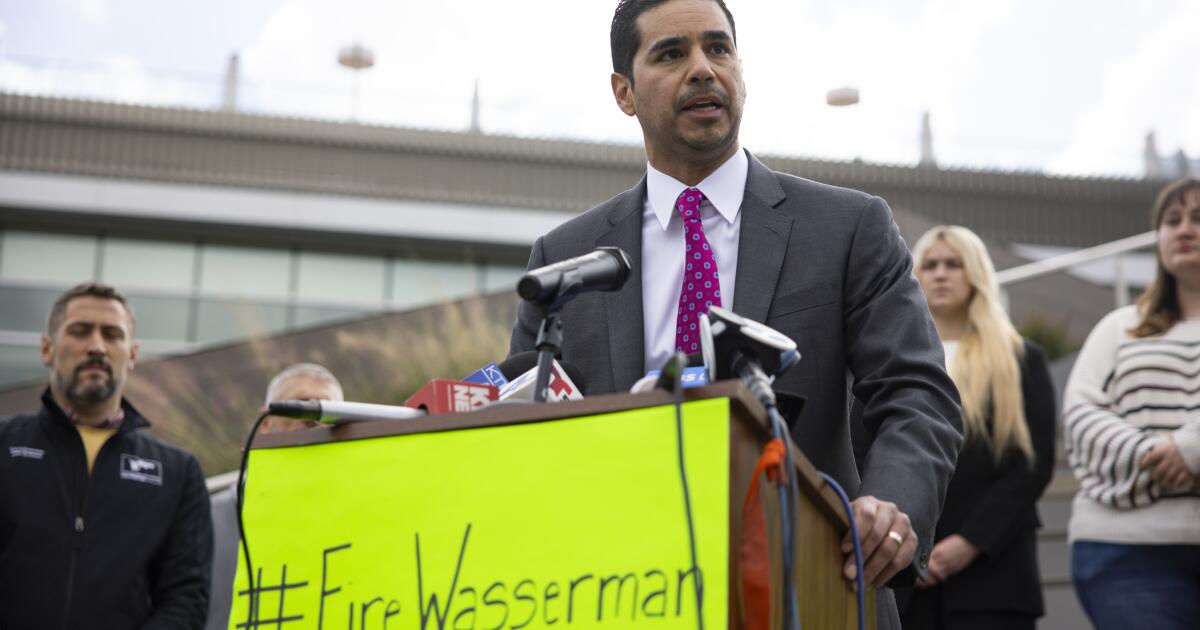
Pressure continues to mount for Casey Wasserman to resign as head of the 2028 Los Angeles Olympics organizing committee following the release of a salacious email exchange he had with Jeffrey Epstein’s co-conspirator, Ghislaine Maxwell.
Wasserman is hardly the highest-profile name mentioned in more than 3.5 million pages of documents released Jan. 30 by the Department of Justice in compliance with the Epstein Files Transparency Act. Nor is he the most frequently mentioned. President Trump outranks him in both categories. And there’s far more egregious behavior by other men alleged in the files (Bill Gates comes to mind).
But Wasserman is the rare case of a wealthy, renown American elite whose empire is crumbling under calls for accountability from the public, local lawmakers and Los Angeles Mayor Karen Bass.
Bass this week urged Wasserman to resign as head of the committee overseeing the 2028 Los Angeles Olympic Games because of his ties to Maxwell. “I cannot fire him,” Bass told CNN’s Dana Bash. “My opinion is that he should step down. That’s not the opinion of the board.”
The LA28 Olympics board of directors has stood by Wasserman, stating they reviewed the documents and support him remaining as chair.
There is no suggestion in the files of criminal wrongdoing by Wasserman, but he did show criminally bad judgment in flirting with Maxwell, who was renowned (along with Epstein) for connecting older men with young women and teens. She was found guilty of child sex trafficking and other offenses in connection with Epstein, and in 2022, she was sentenced to 20 years. Epstein was arrested on federal sex trafficking charges in 2019 but was found dead in his cell before his trial.
In a 2003 email exchange between Wasserman and Maxwell, he asked, “What do I have to do to see you in a tight leather outfit?” Then in a separate message, he asked, “Where are you, I miss you. I will be in nyc for 4 days starting april 22…can we book that massage now?”
Maxwell wrote back, “All that rubbing — are you sure you can take it?”
Stop reading here if you’re on the verge of vomiting.
Otherwise, continue: “There are a few spots that apparently drive a man wild — I suppose I could practise them on you.” Maxwell also mentioned being in Brazil, and when she asked Wasserman if he had ever been, he responded, “Never … take me!”
Revolting? Yes, but not quite as damning as other exchanges in the files between Epstein and men more powerful than Wasserman.
Tesla Chief Executive Elon Musk repeatedly sought invitations to Epstein’s private island in 2012 and 2013, four to five years after the disgraced financier was convicted by a Florida state court of soliciting a prostitute and procuring a child for prostitution. Epstein served 13 months. His criminal past, however, didn’t seem to bother Musk, who wrote to Epstein in 2012, “Do you have any parties planned? I’ve been working to the edge of sanity this year and so, once my kids head home after Christmas, I really want to hit the party scene in St Barts or elsewhere and let loose. The invitation is much appreciated, but a peaceful island experience is the opposite of what I’m looking for.”
Epstein responded, “Understood, I will see you on st Barth, the ratio on my island might make Talilah [Musk’s then-wife] uncomfortable.”
“Ratio is not a problem for Talulah,” Musk replied.
If only he’d caught half the heat as Wasserman, he might have retreated long enough to spare us from his juvenile X posts or his next monstrosity of a car design. (Let’s face it. The Tesla Cybertruck looks like a giant toenail clipper.)
Yet the American billionaires and influential cabal of men revealed to have had unsavory, immoral or potentially illegal dealings with Epstein and Maxwell have faced little to no consequences for their actions, unlike prominent figures in the U.K. and Europe who have suffered serious blowback.
Former Prince Andrew was stripped of his title and is now simply Andrew Mountbatten-Windsor. Booted out of his royal Windsor lodgings, was slumming it on the king’s private estate in Norfolk. He was arrested by British police Thursday on suspicion of misconduct in public office related to his links with Epstein.
Peter Mandelson, the former British ambassador to the U.S., was fired over his relationship with Epstein. And Norway’s former prime minister, Thorbjørn Jagland, now faces charges over his connections with Epstein.
Here in the United States? By the power of redaction or redemption, Trump still holds office, as does U.S. Secretary of Commerce Howard Lutnick, the highest-ranking official other than the president to be prominently named in the Epstein files. Lutnick was grilled last week in a Senate hearing about his ties to the late financier and the fact that he visited Epstein’s island in 2012 with his family, despite previously claiming that he’d cut off contact with Epstein in 2005. Trump has stood by Lutnick.
Their varying levels of bad judgment and stupid behavior (at best) have gone largely unpunished. And as we learned during Atty. Gen. Pam Bondi’s hearing, the Justice Department has held “exactly zero powerful men” accountable.
Wasserman is the exception. The grandson of Hollywood mogul Lew Wasserman, he has been a formidable Los Angeles sports and entertainment executive and founder of the Wasserman agency. Following the latest release of Epstein files, multiple artists and athletes including Chappell Roan, Abby Wambach and the Dropkick Murphys left the agency, citing ethical concerns. Wasserman announced last week that he is selling his agency, stating that he had “become a distraction” due to the public reveal of the Maxwell emails.
External pressure for him to step down from his lead role on the LA28 Olympic committee continues. Attorney Michael Carrillo, who has represented survivors of Epstein’s sex trafficking, called for the removal of Wasserman at a news conference in West Hollywood on Tuesday. Local elected officials, survivors and other activists also called on Bass, the LA28 board of directors and executive committee, and the L.A. County Board of Supervisors to remove Wasserman.
Wasserman, who was integral in the L.A. Olympics bid from its launch in 2015, maintains he had no contact with Maxwell or Epstein in the past 20 years. He said he deeply regrets his correspondence with Maxwell, “which took place over two decades ago, long before her horrific crimes came to light.”
It’s an apology with a “yeah, but …”
Perhaps Wasserman will resign and take the fall for cavorting over email with Maxwell. Meanwhile, the rest of America’s wealthy Epstein cabal continue to float above reproach, and reckoning.
Family and friends of Charles Waithaka Wangari, 31, light candles during a symbolic funeral service after failing to retrieve his body from Russia for burial at their rural Mukurwe-ini village, in Nyeri, Kenya, on February 5. Photo by Daniel Irungu/EPA
Feb. 19 (UPI) — More than 1,000 Kenyans and other Africans have been deployed by Russia to fight in Ukraine after being recruited by “rogue” agencies that some accuse of human trafficking, a Kenyan intelligence report indicates.
Kenya’s National Intelligence Service on Wednesday reported the number of Kenyans deployed by the Russian military rose from more than 200 in November to more than 1,000 now.
The report indicates at least 89 of those deployed in Russia were serving on the front lines. At least one has died and others have returned to Kenya with injuries or mental trauma.
Kimani Ichung’wah, majority leader of the Kenyan Parliament, blamed a network of corrupt state officials whom he accused of cooperating with human traffickers to provide the Russian military with Kenyans to fight in Ukraine.
Staff at the Russian Embassy in Nairobi and the Kenyan Embassy in Moscow also helped Russia to recruit Kenyans, the Kenyan lawmaker said.
The Russian Embassy denied the allegation and said it never has issued visas to Kenyans to travel to Russia to participate in military operations.
Ichung’wah said many of those fighting for Russia are civilians and former police officers and military personnel ranging in age from their mid-20s to 50 and seeking overseas job opportunities, The Guardian reported.
Russia allegedly is paying them a monthly salary of about $2,700 plus housing and offering bonuses and Russian citizenship for their service.
Kenya is not the only African nation that has citizens allegedly fighting for Russia.
Ukrainian Foreign Minister Andrii Sybiha in November alleged more than 1,400 Africans from 36 countries were deployed by the Russian military to fight in Ukraine.
Many of those soldiers are being held as prisoners of war in Ukraine, Sybiha said.
Russia invaded Ukraine on Feb. 24, 2022, and has resisted peace overtures despite participating in ongoing peace talks.
The Palestinian prisoners in Israel’s Shatta Prison are medically neglected and enduring unprecedented maltreatment, the Palestinian Commission of Detainees’ and Ex-Detainees’ Affairs said on Thursday.
The Commission described the conditions of the Palestinian prisoners in Shatta as “horrifying,” reported the Palestinian Information Centre. “They are exposed constantly to brutal beatings and pepper spray attacks, and served raw and unsalted food.”
According to the Commission’s lawyer who visited the prisoners in Shatta recently, they are medically neglected and not provided with any treatment. The lawyer specifically mentioned Waleed Musallam, who suffers from severe psoriasis, and Fadi Raddad, who has been suffering from sharp pains in his back and right shoulder since Israeli jailers assaulted him.
The detainees appealed to rights groups to intervene with the Israel Prison Service to allow them to practice their religious rituals during the holy month of Ramadan without restrictions, to improve the quality of food, and to provide them with copies of the Holy Qur’an and clocks.
Bright yellow T-shirts reading, in raspberry type, “¡Bienvenido Gustavo!” marked Gustavo Dudamel’s first concert as music director of the Los Angeles Philharmonic the first Saturday afternoon of October 2009 at the Hollywood Bowl. Eighteen thousand tickets were distributed free for a performance of Beethoven’s Ninth Symphony, an Angeleno “Ode to Joy” broadcast worldwide. The exultant young Venezuelan conductor’s message was: There is no North, South or Central America. We are one.
We are now in “Gracias Gustavo” season, and times, we are daily reminded, they are a-changin’. But what remains consistent is that Dudamel begins again, in the first month of his six-month homestretch as L.A. Phil music director, by dwelling on the composer he says has meant the most to him since his earliest days as a kid conductor in Caracas. His first major recording boasted startlingly propulsive performances of Beethoven’s Fifth and Seventh Symphonies, with the uproarious Simón Bolívar Youth Orchestra of Venezuela, recorded 20 years ago this month. In August, Dudamel will end his L.A. Phil tenure as he began it, with Beethoven’s Ninth at the Bowl.
Through these two decades, thick and COVID-lockdown thin, Beethoven has been Dudamel’s composer of uplift. This weekend he confronts, for the first time, Beethoven’s daunting mystical and mystifying “Missa Solemnis.” In following weeks, he will pair Beethoven symphonies with two of the most arresting and original of the dozens of new works he has premiered in Los Angeles — Gabriela Ortiz’ Glitter Revolution ballet score, “Revolución Diamantina,” and the first part of Thomas Adès “Dante” ballet.
To begin the Beethoven month at Walt Disney Concert Hall, however, Dudamel turned to another Beethoven work that has long obsessed him, the rarely heard complete incidental to Goethe’s tragedy, “Egmont,” which has the ever-relevant theme that matters most to Dudamel — the profound joy that arises from victory over injustice. For this, he had the assistance of actress Cate Blanchett and playwright Jeremy O. Harris.
Here, too, Beethoven serves as a musical, spiritual and political touchstone. “Egmont” comes in the middle of Beethoven’s career, his heroic period. The historic Egmont was a Flemish general, a hero to his people in the Netherlands who attempts to serve the 16th century Spanish emperor, Philip II, and rife for Goethe’s romanticizing. A remarkable polymath, Goethe himself served as an advisor to Weimar’s Grand Duke, brilliantly balancing political compromises with literature’s highest spiritual callings. He admired the spirit of liberty, for instance, yet opposed the French Revolution and supported Napoleon, believing that ensuing populist disorder would then, as it turned out, require autocracy.
Goethe’s Egmont must learn to love before he can act to defend his people against Philip. The hero goes to his death at the point of self-realization that only in sacrifice may he ascend to and become a symbol for glory.
In the play, which begins as historic epic and becomes, for Goethe, increasing personal and interior, Egmont gains perspective on the complexities of his place in politics by contemplating nature and being. Among Goethe’s many passions were scientific study. He immersed himself in the natural world and befriended the pioneering German environmentalist, Alexander von Humboldt.
It could, thus, have been hardly coincidence that Dudamel opened the program with the premiere of “Humboldt’s Nature” by Venezuelan composer Ricardo Lorenz. The five-part, 25-minute symphonic poem for a large orchestra rife with percussion follows Humboldt’s account of his journey to Venezuela in 1799.
Symphonic glitter sets the stage of New Andalusia. Guacharo birds shriek. Latin rhythms take us to coastal regions. Sandy percussion accompanies a journey up the Orinoco River. Throughout, Lorenz’s orchestra, imaginatively colored, reflects vast nature. But the score ends with the shock of humanity, as Humboldt encounters enslaved Cubans.
The one thing Goethe lacked was a sophisticated ear for music (and possibly sound). But Humbolt’s account could practically be the starting place for Beethoven’s “Egmont,” begun a decade after the Venezuelan encounter. In the popular overture, elicitation of tumult concludes, with startling exhilaration, in the kind of grand Beethovenian triumph that never fails to excite. The incidental music, though, offers needed theatrical context. That includes two songs for Egmont’s love, Klärchen, four entr’actes, a melodrama for Egmont as he approaches his execution and, powerfully as only Beethoven can, a battle cry.
Goethe has never lost relevance. Matthew Bell’s new biography, “Goethe’: A Life in Ideas,” has given Germany’s Shakespeare new attention. One of the greatest plays of our time, Tom Stoppard’s “Arcadia,” confronts Goethe’s “Elective Affinities” with our own elective affinities. One of the greatest operas of our time, John Adams’ “Doctor Atomic,” contemplates the creation of nuclear weapons as the functioning of a latter-day Faust, Goethe’s most lasting creation.
“Egmont,” too, readily speaks to us and it has been on Dudamel’s agenda for years. While performances of the complete play with the incidental music are rare, a half-hour concert version, also rare but less so, proves effective. Dudamel did it with the Berlin Philharmonic in June, a performance of which can be viewed on the orchestra’s Digital Concert Hall. The narrator is a young Austrian actor, Felix Kammerer, who is riveting (as he is in Guillermo del Toro’s “Frankenstein”). He adds a slight introduction revealing Egmont’s indecisiveness, but otherwise sticks to Goethe.
Cate Blanchett narrates Beethoven’s incidental music to “Egmont” with Gustavo Dudamel conducting the Los Angeles Philharmonic at Walt Disney Concert Hall.
(Elizabeth Asher / Los Angeles Philharmonic)
Harris, who is the author of “Slave Play,” has other elective affinities. He has created a new, effusively angry text for Blanchett. It begins as a dirge. Battalions are gathered on the banks of Portland, Ore.; Bethlehem; Charlotte, N.C.; Tehran; Minneapolis; Brussels. The Egmont Harris references is the historical one, not Goethe’s. The text become a bald call for action.
Much of it was lost to the audience, since reverberant amplification gave heroic heft to Blanchett’s voice at the cost of intelligibility. But her intensity, whether seated on the lip of the stage, where she begins, or standing in the organ loft where she winds up at the end, spoke for itself.
Beethoven’s music improves Goethe, extracting its humanity and frailty, and Dudamel’s performance probed its profound inevitability of good triumphing over evil. Soprano Elena Villalón added lithe touch to Klärchen’s songs, sung in their original German.
But Beethoven can do little for Harris’ and Blanchett‘s agitprop. Theirs is the necessity of the moment to act rather than indulge an Egmont who has to feel before he can respond. Although Blanchett was the joyless conductor in the film “Tár,” her curious little dance in the organ loft at the moment of musical triumph may have meant recovered joy or simply that the world, in which we are no longer one, has gone crazy.
Equally peculiar was a performance of Schumann’s Piano Concerto that served as transition from “Humboldt” to “Egmont.” One of the concerto highlights of Dudamel’s music directorship in L.A. is a performance, eight years ago, of the concerto’s mood-shifting eloquence, for which he and Mitsuko Uchida were in wondrous accord.
This time, the soloist was the stellar emerging pianist Yunchan Lim, who keeps to himself, either lost in dreamy reverie or, like a jumpy teenager, in ferocious attack mode. Having little choice, Dudamel let Lim be. Like Egmont, Lim’s glory may one day arrive when he can express purpose for his actions.
“Another gateway to the occupation of Palestine.” Many Palestinians in Gaza reacted to the inaugural meeting of Donald Trump’s so-called “Board of Peace” with deep scepticism, seeing it as a way to further Israel’s illegal occupation of the territory.