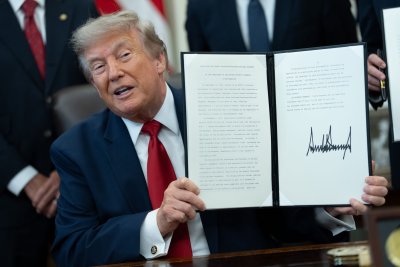
United States President Donald Trump has threatened more attacks on Iran, warning that Washington could hit Iran “anytime we want”, as the death toll from the latest US strikes climbed to 18, with at least 108 others wounded.
Trump’s threat on Wednesday came after the US and Iran exchanged their biggest barrage since July. The US military struck cities and areas along Iran’s southern coast, near the blockaded Strait of Hormuz, including a wedding party in the city of Kuhestak.
Recommended Stories
list of 4 itemsend of list
Iran retaliated with attacks on US bases across the Middle East, including Bahrain, Iraq and Jordan.
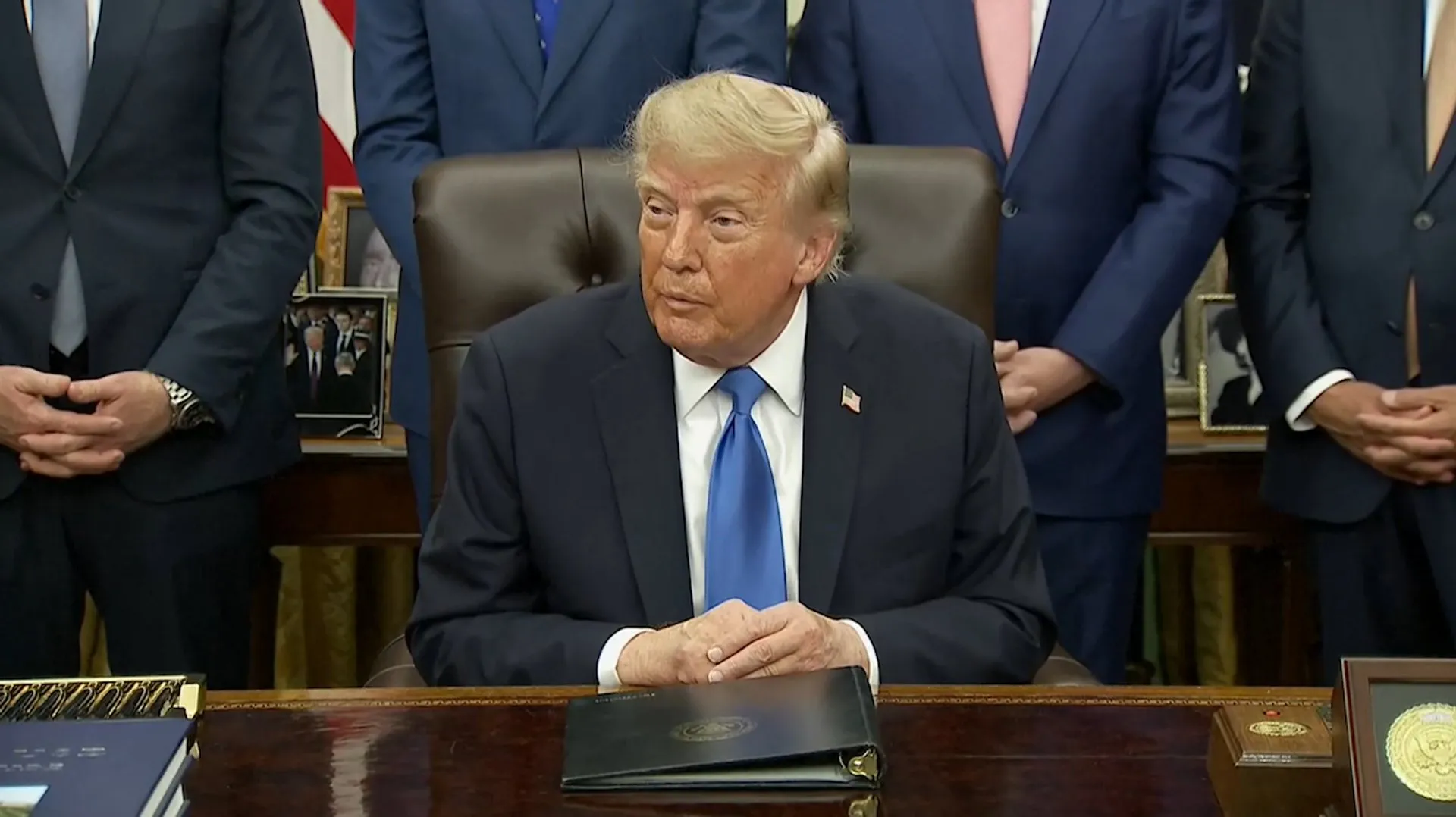
Speaking to reporters at the White House, Trump said, “We hit them very hard last night” and that the strikes “took out all of the new equipment that they tried to build along the Strait of Hormuz”.
“It was a very heavy attack last night. And we’re prepared to do another one. And anytime we want,” he said.
Iranian officials said at least 18 people were killed in the US strikes.
The victims included two children, according to Mohammad-Reza Zafarghandi, Iran’s health minister. One of them was a four-year-old who was killed in the strike on the wedding party in Kuhestak in Sirik county.
At least four people were killed in that strike.
Esmaeil Baghaei, the spokesman for Iran’s Ministry of Foreign Affairs, described the Kuhestak attack as a “war crime” and hit back at US claims that it does not target civilians.
“The reality is so horrifying that even American propaganda has never dared make the claim [the US military] is making today. Sirik is not a story. The civilians are real. The victims are real”, Baghaei wrote on X.
Iranian media said the funeral for the four Kuhestak victims will be held on Thursday.
‘Uncomfortable strategic position’
The six-month war has led to a spike in oil prices, roiled the global economy and posed increasing political problems for Trump’s Republican Party ahead of November midterm elections in the US.
Only 31 percent of Americans approve of the war, while some 63 percent disapprove, according to a poll by the Reuters news agency and the Ipsos polling firm in August. Voters are particularly unhappy about high gas prices. Since the fighting resumed this weekend, the price of Brent crude oil, the international standard, has climbed to about $95, up more than 30 percent from the start of the war.
Trump’s approval rating has also fallen from 40 percent to 33 percent since the conflict began, according to Reuters/Ipsos polling.
On Wednesday, Trump said he did not think the renewed military campaign would last long. He also reiterated his position that the upcoming elections were not a factor in his Iran strategy.
“Number one, I’m not running. My party is running, and I’m going to help my party,” he told reporters in the Oval Office. “But I think my party respects the fact that we’re not allowing Iran to have a nuclear weapon.”
Iran has denied seeking a nuclear weapon.
Tariq Khan, a retired Pakistani lieutenant-general and former commander of the Pakistan Army’s Frontier Corps, said the US “now finds itself in an increasingly uncomfortable strategic position in the Iran war”.
“The US has not succeeded in restoring the maritime environment that existed before the war, and is now expending military resources to deal with a problem the war itself helped create,” he told Al Jazeera, referring to Iran’s closure of the Strait of Hormuz.
The strait was a free-flowing international waterway carrying roughly one-fifth of the world’s traded oil before the war. Tehran shut the waterway in response to the US and Israeli strikes on February 18 that began the war. Despite repeated US claims that the strait remains open, only a handful of vessels now pass through each day, and Iran continues to target ships attempting the crossing.
On Wednesday, Iran’s Islamic Revolutionary Guard Corps (IRGC) said two oil tankers had struck mines and were disabled while attempting an unauthorised transit. Separately, Saudi shipping firm Bahri reported that two Filipino sailors were killed in an attack on their vessel earlier in the week.
Iran’s Persian Gulf Strait Authority (PGSA), which Tehran set up to police the Strait of Hormuz, added 11 more ships to its blacklist for alleged “noncompliance” this week, on top of the 45 blacklisted last week. The PGSA said the vessels will face fines, seizures or confiscation unless they submit required documentation to Iran before attempting to cross the strait.
Strait of Hormuz
At the same time, the US has intensified an economic isolation campaign against Iran, threatening to slap countries that trade with Tehran with massive sanctions, while also maintaining its own blockade in the Strait of Hormuz.
Trump on Wednesday continued to insist that Washington was in control of the strait, saying US forces were helping bring “lots of boats out every day with millions of barrels of oil”.
“We are, for the most part, doing it without trouble. Every once in a while they shoot a drone, and we knock it down. We have control, very strong control,” he said.
On Tuesday, he had claimed the US Navy was helping escort some 30 ships out of the strait every day. Before the war, some 130 ships transited the waterway daily.
Khan, the former Pakistani general, said Iran understands it cannot defeat the US conventionally and is seeking to make the war costly for Trump.
“If Trump escalates, Iran can portray America as being drawn deeper into another Middle Eastern war; if he restrains himself, Tehran can claim that American military superiority cannot compel Iran to surrender,” he said.
“Iran does not need a battlefield victory; it needs to remain standing, keep the economic disruption alive, and make the war politically costly for the US. Tehran has to make American victory increasingly unaffordable – militarily, economically and electorally.”
KATE Beckinsale has revealed her PTSD diagnosis and admitted she’s in a ‘lonely place’ in a heartbreaking Instagram video.
The actress said that there’s loads of information around military PTSD but not Civilian PTSD and that people find that harder to understand.
Kate Beckinsale revealed her PTSD diagnosis and admitted she’s in a ‘lonely place’ in heartbreaking Instagram videoCredit: Instagram/ @katebeckinsaleThe actress said that that there’s loads of information around military PTSD but not Civilian PTSD and that people find that harder to understandCredit: Instagram/ @katebeckinsale
Kate, 53, explained that people who “have seen or experienced levels of horror, terror or violence” see it every time they blink or any time they close their eyes for a second.
She said: “Those people aren’t recognised as heroes.”
Sign up for the Showbiz newsletter
Thank you!
She went on to explain that although people with PTSD go about their everyday lives that “they don’t sleep for more than an hour because when they do, it’s full of nightmares.”
She said: “Anything, smells, sounds, thoughts, feelings. Can trigger them into a place that is actually like hell.”
She shared that since battling PTSD is “invisible,” people should be “kinder and gentler” to others.Credit: instagramKate explained anything can trigger them into a place that is actually like hellCredit: instagram/katebeckinsaleShe said that PTSD victims “are the loneliest people because they are alone with a level of horror that’s incompatible with lifeCredit: InstagramKate lost her beloved mum Judy Loe, 73, in 2025 after a battle with cancerCredit: Reuters
She shared that since battling PTSD is “invisible,” people should be “kinder and gentler” to others.
She continued: “It really is true that if you haven’t walked a mile in someone’s shoes — however fancy you think the shoes are — you have absolutely no idea what they might be carrying, masking, dealing with day and night.
“And if in doubt, especially to a little child. And I am someone who had a little child who was treated extremely cruelly by grown adults, who forgave themselves immediately.
“So if in doubt be kind. Always be kind.”
The star ended her video by explaining that PTSD victims “are the loneliest people because they are alone with a level of horror that’s incompatible with life.
“Yet a lot of the time these people continue to try and put one foot in front of the other.”
Fans flocked to comment and one wrote: “Thank you for sharing this, I appreciate you being so open n giving some insight, I don’t know if it helps but I hope you know it’s appreciated.”
Kate replied: “I’m really glad that makes me happy. I just hope at least one person can feel seen and appreciated and understood. It can be such a lonely place.”
Another added: “Sending love and hugs.”
A third wrote: “The truest words I’ve heard all f***ing year! Hope you’re ok xx.”
While a fourth said: “You’re right… there’s not enough awareness of complex PTSD at all!”
The Supreme Court of the United States is seen in June in Washington, D.C., on the day the high court ruled against President Donald Trump’s 2025 executive order against birthright citizenship. On Wednesday, a federal judge ruled against Trump’s latest executive orders attempting to limit the law. Photo by Bonnie Cash/UPI | License Photo
Sept. 2 (UPI) — A federal judge on Wednesday blocked U.S. President Donald Trump‘s latest attempt at limiting birthright citizenship, saying Trump’s order “is almost certainly unconstitutional.”
Trump signed two executive orders related to the topic on Aug. 6, about a month after the U.S. Supreme Court struck down his earlier order banning birthright citizenship.
One of the August orders expanded the list of non-citizens whose children would not be granted citizenship automatically. These categories include children of whom either parent is “an alien enemy” or “a foreign government employee.”
The other would ban so-called birth tourism, which is when a traveler enters another country specifically to give birth there for citizenship reasons – a practice that is already illegal.
U.S. District Judge Deborah Boardman said in Wednesday’s ruling that the August executive orders are likely unconstitutional “for the simple reason that the Supreme Court … already decided that the children in the class are citizens at birth” in its June ruling.
“This Court must, once again, preliminarily enjoin enforcement of the President’s most recent attempt to strip the right to citizenship from them,” Boardman wrote.
Birthright citizenship stems from the 14th Amendment to the U.S. Constitution, which states that “All persons born or naturalized in the United States, and subject to the jurisdiction thereof, are citizens of the United States and of the State wherein they reside.”
Chief Justice John Roberts said there was “scant evidence” for Trump’s interpretation of the principles of the 14th Amendment, which was ratified in 1868 after the U.S. Civil War to protect the rights ofthe formerly enslaved.
“Citizenship then and now, was the right to have rights — to freely participate in our political community,” Roberts wrote. “… We keep that promise today.”
Trump said the Supreme Court ruling “was too bad for our Country” and called on Congress to pass legislation against birthright citizenship.
The ruling follows a 6-3 decision from the Supreme Court that found Trump’s effort to limit birthright citizenship was illegal.
Published On 3 Sep 20263 Sep 2026
A United States federal judge in Maryland has blocked President Donald Trump’s latest effort to roll back birthright citizenship, after the Supreme Court ruled that his last attempt violated the Constitution.
District Judge Deborah Boardman issued a preliminary injunction on Wednesday against Trump’s new executive order, which was issued on August 6.
Recommended Stories
list of 3 itemsend of list
The new order took aim at what Trump has called “birth tourism”, the practice of intentionally giving birth on foreign soil.
It sought to deny citizenship to children of foreign nationals in certain groups, including those accused of engaging in a commercial transaction to obtain citizenship or classified as an “alien enemy”.
Boardman, however, said the order was unconstitutional for the same reason Trump’s previous effort failed. She cited the Supreme Court’s June decision in the case Barbara v Trump.
The order “is almost certainly unconstitutional as applied to the certified class for the simple reason that the Supreme Court in Barbara already decided that the children in the class are citizens at birth”, she wrote.
“This Court must, once again, preliminarily enjoin enforcement of the President’s most recent attempt to strip the right to citizenship from them.”
In the Barbara case, the Supreme Court ruled six to three that birthright citizenship was protected under the Fourteenth Amendment of the Constitution.
Birthright citizenship confers automatic citizenship on anyone born in the US, outside of a handful of narrow exceptions, such as the children of diplomats or invading armies.
The constitutional basis for birthright citizenship has been upheld in several Supreme Court cases over the years, most notably in US v Wong Kim Ark, the case of an American man born to Chinese parents.
But Trump campaigned for a second term as president on the pledge to crack down on immigration into the country.
One of his promises was to reform the concept of birthright citizenship. Trump and his allies have argued that children of temporary or undocumented immigrants do not qualify for the right, as they are not under the “jurisdiction” of the US.
Since the Supreme Court defeat in June, Trump and his allies have continued to probe for ways to challenge the constitutional protections for birthright citizenship.
Wednesday’s legal challenge was brought by immigrant rights advocates and families, including groups like the Asylum Seeker Advocacy Project.
They had previously won an injunction from Boardman last year, blocking the Trump administration from enforcing his initial executive order about birthright citizenship.
Last week, Boardman instructed the plaintiffs to revise their complaint to specifically address the second executive order, rather than relying on the same material used for the first.
But she signalled scepticism at the time about the constitutionality of Trump’s latest attempt, calling it “unprecedented”.
“The Supreme Court has spoken: Children in the certified class are ‘citizens at birth’,” she wrote in Wednesday’s decision.
GRAMMY-WINNING 90s singer Cassandra Wilson has died aged 70.
The jazz singer died surrounded by family and friends on Wednesday.
Jazz singer Cassandra Wilson has died aged 70Credit: APThe two-time Grammy-winning jazz vocalist worked with the RootsCredit: AP
The award-winning jazz vocalist from Jackson, Mississippi, worked with the Roots and co-founded the M-Base Collective.
Her manager of 20 years Robert Torre told WBGO: “It is with profound sadness that we announce the passing of Cassandra Wilson, the Grammy Award-winning and legendary jazz artist.
Sign up for the Showbiz newsletter
Thank you!
“Cassandra Wilson transitioned peacefully at home, surrounded by family, close friends, and her manager.”
Cassandra blended blues, country and folk music into her work.
The singer was nominated for four Grammys, and won two in the Best Jazz Vocal Album.
Cassandra won for her 1997 album New Moon Daughter and for her 2007 album Loverly.
She was described by critic Gary Giddins as “a singer blessed with an unmistakable timbre and attack who has expanded the playing field”.
Cassandra was named as a Jazz Master in 2022 by the National Endowment of the Arts.
Most read in Entertainment
Cassandra blended blues, country and folk music into her workCredit: APShe worked with Elvis Costello, John Legend, Jon Batiste and Ravi ColtraneCredit: AP
Tributes flooded in for the star, with fellow NEA Jazz Master Dorthaan Kirk saying she is “devastated” by the loss.
She said they were like family and Cassandra called her “Mother Kirk”.
Dorthaan said: “I’m just devastated. Cassandra completely related to me because she looked up to me as an elder and somebody that was in the business.”
Cassandra took up piano at six, guitar at 12 and launched her career as a vocalist in the 70s, moving to the Big Apple the next decade where she became one of the founding members of the M-Base Collective.
She later signed with Blue Note Records in 1992 and released her seminal album titled Blue Light ‘Till Dawn.
The singer collaborated on albums with Coleman, Greg Osby, and Wynton Marsalis.
Cassandra sang as the character Leona in Marsalis’ recording of his Blood on the Fields oratorio, which became the first jazz composition to win a Pulitzer Prize.
She was a guest vocalist on the Roots’ Silent Treatment and One Shine.
And star collaborators on her own work included Elvis Costello, John Legend, Jon Batiste and Ravi Coltrane.
She told The New York Times in 1994: “I continue to choose the path I take musically,
“And it’s not motivated by becoming famous or having a lot money, or any other pop motivation.”
Spain faces unrest as residents protest, while migrants and asylum seekers search for shelter and resources in Ceuta.
Thousands of protesters have rallied across Spain against the ongoing migrant crisis in Ceuta, a small Spanish territory on the African coast.
Roughly 50,000 people gathered in Madrid alone on Wednesday. In Ceuta itself, residents draped Spanish and city flags over their shoulders.
Recommended Stories
list of 3 itemsend of list
“Expel the invaders” and “Ceuta is not for sale, Ceuta must be defended” were among the crowd’s chants.
The protests fell on Ceuta Day, a local holiday that marks the Portuguese takeover of the North African city in the 15th century.
They also come a little more than a month after more than 70,000 migrants and asylum seekers crossed en masse from Morocco into Ceuta on July 30 and 31. The deadly surge killed at least 80 people.
While many of the arrivals have returned to Africa, some remain. Estimates vary as to how many. The Spanish government places the figure at about 5,000 people, including 1,200 minors, but local statistics have a higher count.
Among those who remain stranded in the Spanish territory is Otman Ianaya, 40. He swam to Ceuta with his wife and two young daughters, searching for better prospects.
“There is no work in Morocco,” he told the news agency AFP. “I want to build a future in my life.”
Some migrants and asylum seekers sleep on Ceuta’s beaches. The Spanish government has worked to expand emergency housing and increase funds to social services, but critics have blasted the effort as inadequate to answer the needs of so many people.
Protesters march in support of Ceuta on September 2, a holiday in the North African enclave [Francis González/AP]
The strain has sparked isolated instances of violence, including fights, the stoning of a military patrol and reports of sexual assault.
Residents in Ceuta have also clashed with police and burned items belonging to migrants and asylum seekers, in protest of the influx of people.
“The situation has been chaotic, so much so that you can’t go out onto the street,” said Gema Guillen, a protester.
The July incident has also underscored political schisms.
Ceuta’s regional leader, Juan Jesus Vivas, represents Spain’s conservative Popular Party and has called the crisis a “violation of Spain’s territorial integrity”.
Meanwhile, Spain’s territorial policy minister, Angel Victor Torres, has accused the conservative and far-right opposition of exploiting the crisis “to attack the government of Spain” instead of helping the city.
Prime Minister Pedro Sanchez has blamed the surge on a misread court ruling and online disinformation that he said encouraged people to cross the border.
He also said negative coverage of the crisis has since been amplified by Russian and Israeli-linked accounts, though he did not offer proof, instead citing findings from Spain’s intelligence community.
Madrid has pledged 309 million euros ($357m) in aid for Ceuta.
Protesters march in support of Ceuta to mark the city’s anniversary on September 2 [Francis Gonzalez/AP Photo]
Amid the standoff, while some migrants are looking for economic opportunities, others are seeking asylum to escape alleged persecution back home.
“They are people in a vulnerable situation; we need to have a little bit of empathy,” said Halima Ahmed of Luna Blanca, a nongovernmental organisation that distributes food and aid to migrants and asylum seekers.
“People are tired, people are fed up… but that does not justify any type of violence,” she added.
After a gruelling five-week murder trial, Lindsay Clancy’s fate rests with 12 anonymous jurors. And they cannot make up their minds.
The jury of nine women and three men have told the judge, two days in a row, that they cannot reach a unanimous decision. Despite the judge’s continued urging that jurors keep at it, the struggle has raised the prospect of a mistrial in Clancy’s case.
“It is desired that the case be decided,” Judge William Sullivan told the panel on Wednesday afternoon, after members sent him a second note saying they are undecided after five days.
He read a mandatory, formal set of instructions and sent them back – some with frustrated expressions on their faces.
The 36-year-old former nurse does not dispute that she killed her two sons and daughter in 2023 in the basement of their family home in Massachusetts. But her lawyer argues she was suffering from postpartum psychosis at the time, and therefore could not distinguish right from wrong.
The prosecution claimed Clancy made a calculated, intentional decision to kill them and knew right from wrong in that moment. She is charged with three counts of first-degree murder.
Under US law, the jury must unanimously reach a conclusion “beyond a reasonable doubt”. If they cannot, the judge can call a mistrial, which ends the trial with no verdict.
This jury has several outcomes to choose from. Potential verdicts include not guilty, not guilty by reason of insanity, first-degree murder, second-degree murder, and manslaughter.
Jim Thornton, the longtime announcer for the popular game show “Wheel of Fortune,” has been suspended following unspecified allegations.
“We have recently been made aware of allegations concerning Jim Thornton,” a spokesperson for Sony Pictures Television Studios told The Times. “He has been suspended from ‘Wheel of Fortune’ and we are recasting while we conduct a thorough investigation.”
Sony Pictures did not specify the reason for the suspension.
The allegations could possibly stem from an incident that occurred in May aboard a commercial American Airlines flight to Los Angeles, TMZ reported, when a passenger complained about Thornton to a flight attendant.
American Airlines told TMZ that a passenger was met by law enforcement upon arrival at Los Angeles International Airport on May 14, although the airline did not identify the individual.
Thornton’s attorney told the outlet that the 61-year-old “did not engage in any illegal conduct, was not arrested and has not been charged with any crime.”
“When questioned about the complaint made by a fellow passenger on the flight, law enforcement spoke to him for five minutes or less, immediately determined that no wrongdoing had occurred and told my client he was free to go,” his attorney continued.
Thornton joined “Wheel of Fortune” in 2011 following the death of announcer Charlie O’Donnell.
Thornton’s credits include “The Price Is Right,” “The Soup,” “Jeopardy!” and “Celebrity Wheel of Fortune.” Thornton’s voice was also been featured in the 2001 animated hit “Monsters, Inc.,” and video games including “Wall-E” and “Mafia II.”
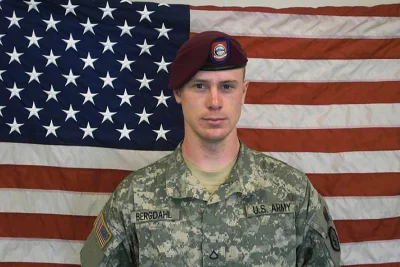
This photo shows Bowe Bergdahl, an U.S. Army soldier who was captured by the Taliban in 2009 after walking off his base in Afghanistan and held hostage of five years. A federal appeals court said Tuesday that a judge that vacated Bergdahl’s conviction in 2023 didn’t have jurisdiction over the case. File Photo courtesy of the U.S. Army.
Sept. 2 (UPI) — A judge who vacated the conviction of former U.S. Army Sgt. Bowe Bergdahl in 2023 lacked the jurisdiction to do so, a federal appeals court ruled.
The case of Bergdahl, who walked off an Army base in Afghanistan in 2009 and was captured by the Taliban, has stretched for years. The ruling by the U.S. Court of Appeals for the District of Columbia Circuit on Tuesday reinstates Bergdahl’s dishonorable discharge from the military and other punishment.
“Obviously, we are disappointed by the outcome,” said Eugene R. Fidell, Bergdahl’s lawyer, The New York Times reported. “This entire controversy has lasted a very long time. But it continues to be an important case, not only for Sergeant Bergdahl but for the integrity of the military justice system.”
Fidell said Bergdahl can request a rehearing before the same panel or seek a review by the entire appeals court or the U.S. Supreme Court.
In the ruling Tuesday, the judges said the case “presents nuanced questions regarding jurisdiction and the evolving relationship between [federal district] courts and military courts.”
“Jurisdiction here turns on whether the remedy sought falls within a district court’s power to grant,” the ruling said. “Because Article III district courts lack jurisdiction on collateral review to vacate court-martial judgments, the District Court lacked jurisdiction over Bergdahl’s claims. Therefore, we remand the case to the District Court to dismiss for lack of jurisdiction.”
That is the date Bergdahl pleaded guilty to desertion and misbehavior before the enemy for his actions in Afghanistan — and the date the military judge in that court martial, Jeffery Nance, applied to become an immigration judge during President Donald Trump‘s first term, Walton’s ruling said. The Justice Department later hired Nance.
During his first presidential campaign, Trump called Bergdahl “a dirty, rotten traitor” and called for him to be executed or returned to the Taliban.
Nance refused a defense request to dismiss the case against Bergdahl because of those remarks, saying he was “completely unaffected” by them and that Bergdahl would still have a fair sentencing hearing. That hearing took place at the end of October 2023.
Walton, in his 2023 ruling, said that based on Nance’s application as an immigration court judge, any reasonable person could conclude that Nance’s impartiality was jeopardized.
An Army investigation found in 2015 that Bergdahl intended to hike to another Army post and report issues in his unit when he left his base in Afghanistan in 2009. He was captured not long after leaving and held and tortured by the Taliban over five years. In 2014, President Barack Obama secured Bergdahl’s release in a prison exchange.
Multiple new cases have been filed against OpenAI, alleging ChatGPT played a role in the Tumbler Ridge mass shooting.
Published On 2 Sep 20262 Sep 2026
OpenAI is facing another wave of lawsuits in the wake of the February mass shooting in Tumbler Ridge in Canada’s province of British Columbia, which left eight people dead.
On Wednesday, 30 new complaints were reportedly filed in a United States federal court in California, including teachers and students who were witnesses and survivors at the school where most of the shooting took place, joining seven initial lawsuits filed in April.
Recommended Stories
list of 4 itemsend of list
The lawsuits accuse the San Francisco, California-based artificial intelligence giant and its CEO, Sam Altman, of negligence, as well as aiding and abetting a mass shooting.
The suits, brought by lawyer Jay Edelson, allege that the company knew about the intentions of the 18-year-old shooter who, in her interactions with OpenAI’s chatbot ChatGPT, had described scenarios involving gun violence, but that the leadership did not report their concerns to law enforcement, echoing earlier lawsuits on the matter.
In April, Altman penned a letter to the community apologising that the company did not alert law enforcement about the shooter, Jesse Van Rootselaar.
“While I know words can never be enough, I believe an apology is necessary to recognize the harm and irreversible loss your community has suffered,” Altman wrote in the letter.
Authorities say that Van Rootselaar killed her mother and half-brother before going to the Tumbler Ridge Secondary School and opening fire. Five children and one educator were killed at the school. More than 25 others were wounded before Van Rootselaar died from what police described as a self-inflicted gunshot wound.
One of the new cases filed was on behalf of a 13-year-old identified as A C, who played dead after watching the shooter kill their classmates and the teacher. Another new case was brought by a grade seven teacher named Deidre Rushlow, who hid under her desk with her students during the rampage.
“There isn’t a day that goes by that I don’t think about what happened at Tumbler Ridge, or the victims of this devastating tragedy and their families. It’s a constant and sobering reminder of the important and incredibly difficult work that many people in my team do each and every day,” Jason Kwon, OpenAI’s head of strategy, wrote in a post on X on Wednesday.
“We’ve been approaching this litigation with respect for both the legal process and the families and victims of this tragedy, and we’ll continue to engage in good faith with that process.”
Edelson did not respond to Al Jazeera’s request for comment.
Growing legal pressure
In July, British Columbia’s Attorney General Niki Sharma announced that the province would also pursue “all legal avenues to hold OpenAI and its decision-makers accountable” for the shooting.
The company has faced a growing slate of suits, apart from the ones from British Columbia, alleging that its product played a role in incidents that led to users harming others and themselves.
A recent lawsuit in Florida alleges that the company “actively assisted and encouraged the mass shooting” at Florida State University in April 2025.
There are other complaints filed on behalf of victims across the US and Canada alleging that the victims took their own lives after being pushed by ChatGPT to do so, including a case in Quebec earlier this year.
A brand new series of Channel 4’s The Jury started this week
Viewers pointed out a ‘ridiculous’ flaw in the new series(Image: C4)
The Jury viewers were left slamming the show after pointing out a major problem.
The Channel 4 programme returned for a new episode on Wednesday (September 2) following a group of ordinary people in a specially constructed jury room in a recreated murder trial.
This time, the jury is considering the case of two brothers who are accused of killing their stepfather. The brothers admit stabbing the man more than 69 times while he was asleep, with the jury having to decide whether the killing was an act of desperation or a calculated murder.
In the latest instalment, 14-year-old defendant Daniel took the stand and described the abusive home he grew up in. Meanwhile, CCTV and other evidence challenged key parts of the boys’ evidence, unsettling even the sympathetic jurors.
However, fans watching at home were left feeling disgruntled by one aspect of the show. They slammed how the jurors were able to break and talk about the case throughout the trial.
In real life though, jurors are not allowed to discuss the case this early in proceedings and can only share their thoughts once all the evidence has been presented from both prosecution and defence.
“I get that it’s a simulation but in my experience juries do not discuss the trial until the deliberation,” said one person on X. Someone else added: “This programme is utter rubbish!! It’s meant to be realistic, but you are not meant to discuss the case until the end.
“Certainly no talking while in court and the judge would have been right on to the juror talking.” A third chimed in: “Quite. It’s ridiculous and so annoying and I just can’t watch it.”
It comes after The Jury viewers were surprised to see such strong opinions emerging early on during the first episode this week. One viewer wrote on X: “Not seen any evidence yet and they already arguing #TheJuryC4.”
Another said: “Making up your mind before you’ve heard even a lick of evidence is insane but go off I guess.” A third questioned the make-up of the jury, asking: “Do they actually have level-headed people on the series this time? #TheJury.”
However, not everyone watching was critical of the programme. One viewer praised the return, writing: “I’m watching, it’s one of the best programmes on TV and with all the debate over jury trials, a fitting watch. #TheJury.”
Senator Thom Tillis accuses Pentagon chief of ‘inept mismanagement’ as US military is strained by war on Iran.
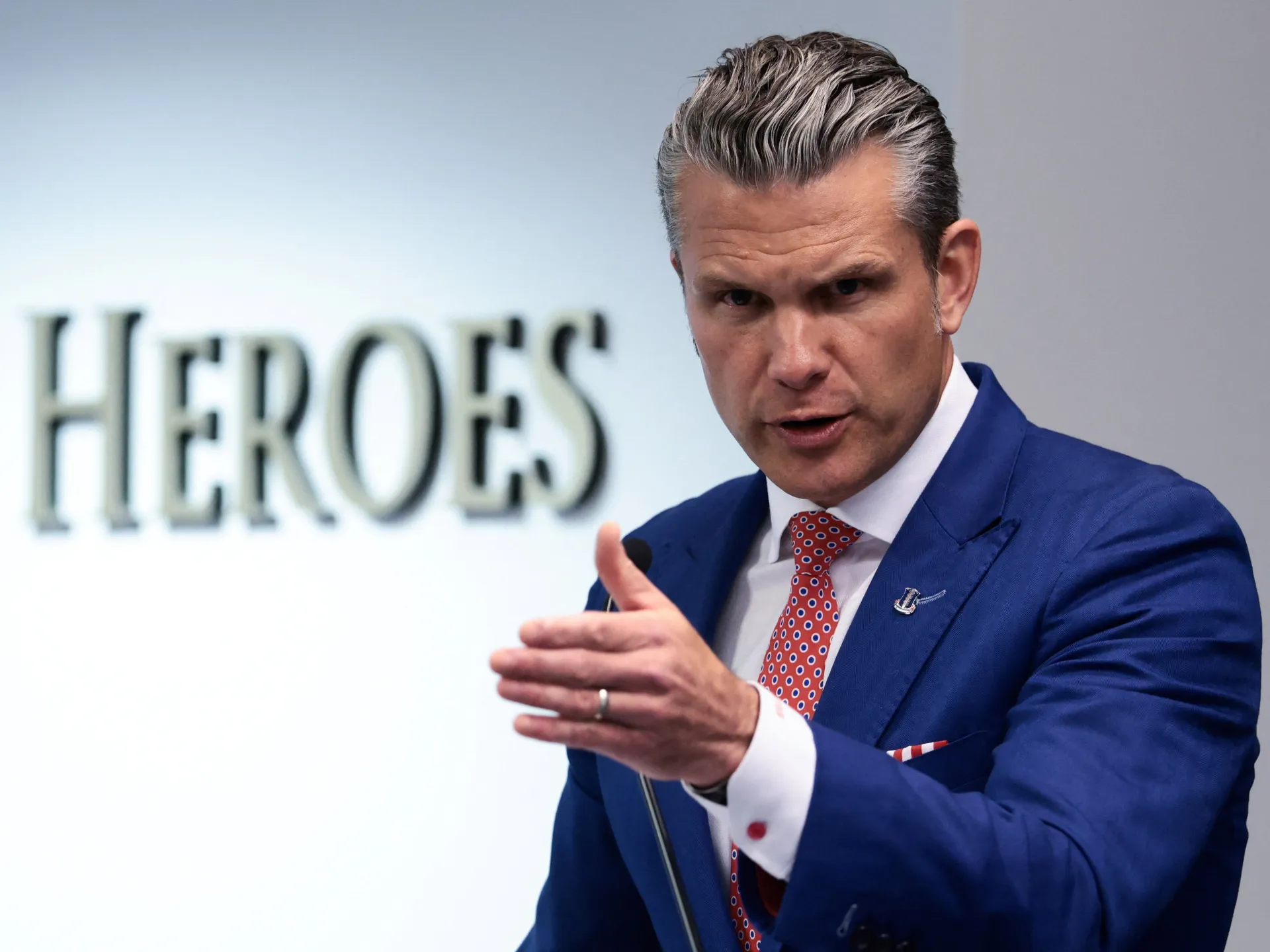
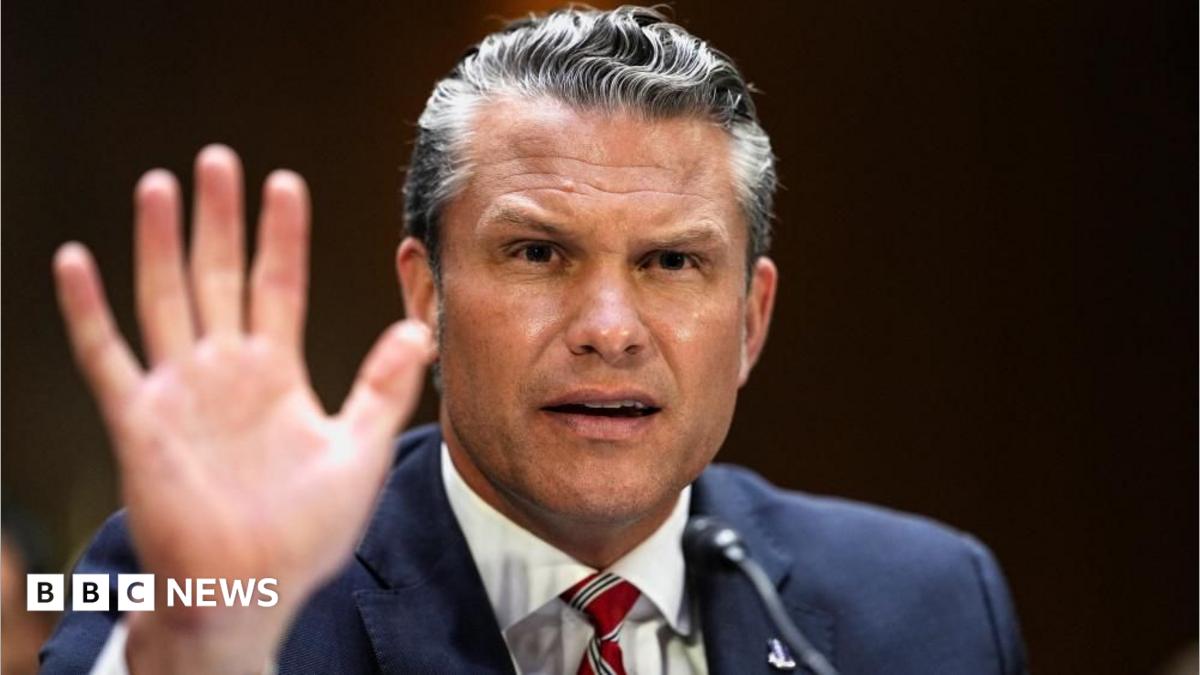
United States Senator Thom Tillis has called on President Donald Trump to fire Secretary of Defence Pete Hegseth for creating a “leadership void” within the military amid the ongoing war with Iran.
In a social media post on Wednesday, Tillis contrasted Hegseth unfavourably with former Army Secretary Dan Driscoll, who submitted his resignation on Monday amid reported disagreements with the Pentagon chief.
Recommended Stories
list of 3 itemsend of list
“I have never witnessed more inept management of the brave men and women who serve our country. He is intimidated by competence and retreats to ginning up culture wars instead of soberly attending to the vital work of our national defense and the health and well-being of our fighting force,” the North Carolina senator wrote.
“I urge the President to find a new leader at the Pentagon who will retain and empower our military talent rather than diminish it.”
Tillis is a member of Trump’s Republican Party. But in recent years, he has become an increasingly vocal critic from within the party over policies he fears harm democracy.
In June 2025, amid criticism from Trump, Tillis announced he would not be seeking re-election in November’s congressional midterm polls. His term ends in January.
Early in Trump’s second term as president, Tillis was among the senators who voted to confirm Hegseth, a military veteran and former TV host, despite criticisms of his conduct towards women and his past work.
Tillis only confirmed his vote in favour of Hegseth at the last minute, appearing to share some of the concerns being debated in the Senate.
Since taking office as defence secretary, Hegseth has pursued controversial changes to the Pentagon, including attempts to limit journalistic access to the Defence Department.
He has also undertaken a wide-ranging effort to root out what he calls “wokeness” from the military.
That effort has reportedly included firing top military leaders, blocking promotions, removing transgender service members and reviewing admissions standards for top military academies.
In Wednesday’s post, Tillis pointed to some of those efforts, questioning why Hegseth appeared fixated on culture war issues rather than modernising the military.
He pointed to evolving forms of warfare in Russia’s invasion of Ukraine, and in the US-Israeli war against Iran.
“Our understanding and assumptions of warfare are being challenged in places like Ukraine and Iran, and Dan [Driscoll] understands the old way of doing business no longer applies,” said Tillis.
The senator then proceeded to imply that Driscoll’s departure was a direct result of Hegseth’s mismanagement.
“If we had a Secretary of Defense who maintained the same priorities and forward-thinking, he would be fighting to retain talented leaders like Dan and the many flag officers he has forced into retirement. Instead, he is creating a leadership void at the top of our military ranks,” Tillis added.
Hegseth has faced growing scrutiny in recent months as the US struggles to achieve its goals in the war on Iran, launched on February 28. The war hit its six-month mark last week with no end in sight.
Media reports indicate that the war has left the Pentagon struggling with shrinking munitions stockpiles that could hinder the US military in future actions.
The war has also taken a toll on the popularity of the Trump administration, which has seen approval numbers sink ahead of the November congressional election.
Since the war began, fuel prices have skyrocketed, and the conflict has spread across the Middle East.
More than two-thirds of Americans disapprove of the administration’s handling of the war, according to a University of Massachusetts poll released on August 31.
The drizzle cleared up as stars arrived at the Guildhall, with Vinnie Jones, Kaya Scodelario, Joely Richardson and Ray Winstone all in attendance.
When asked about the reports regarding Meghan, Jones said he’s heard “only what you have”.
But he joked: “We’ve got a lot of pretty women in this. So I’m not sure there’s room for any more.”
“Way above my pay grade,” Scodelario said, while Bonneville commented he had “no idea” if there was any truth to the rumours.
Jama, meanwhile, said as a newcomer herself to the cast, she had no tips to share with Meghan.
“Oh my God, she’s a seasoned actor. I have no advice for her. She knows what she’s doing,” added Jama.
Ritchie, who also attended the premiere, did not speak to the press. But writer and executive producer Matthew Read told BBC News they were looking forward to “bringing up more energy and surprises in series two and further on in the series”.
Not a no then, I asked.
“I just don’t think it’s right to speculate at this stage, so I wouldn’t like to say yes or no,” he added.
TikTok star Max Balegde breaks down in tears as confirms split from boyfriendCredit: TikTok/ @max_balegdeThe influencer said it was his decision to end things with Andrew SpannCredit: Social media – Refer to source
And things appeared to have not ended amicably as they both unfollowed each other on Instagram.
Max has now broken his silence on the shock split and admitted he’s “losing the plot” and feels “devastated”.
Sign up for the Showbiz newsletter
Thank you!
An emotional Max took to social media with a new video as he explained his side of the story.
With tears in his eyes, the content creator started: “Hello everyone, I’m just making this video to let you know that sadly it is true that me and Andrew have broken up after five and a half years of being together.
The influencers said he’s ‘losing the plot’ and is ‘devastated’Credit: TikTok/ @max_balegdeMax shared his side of the story after being slammed by fansCredit: Instagram
“We broke up around two weeks ago and obviously it’s been a really sad and tough time.
“There’s been so much love between the two of us, between our family and friends over those years.
“When you’re with someone for that long, your life becomes so intrinsically bonded together and you can’t imagine not having them in your life to be honest with you. That’s kind of how it gets.
“So I’ve been struggling a lot. I am in Ibiza right now, I’ve been here for a week.
“But the narrative online that I’m just partying and don’t give one and he’s all sad, could not be further from the truth.”
Max explained that he had this holiday booked months ago and when the break-up happened, he decided to go to Ibiza with his friends instead of “sobbing alone in his room”.
He shared that he’s been looking after himself and going to the gym and has avoided going out and boozing much.
“I’ve just been spending time with lovely supportive friends who have just been a godsend,” he continued.
Max then addressed the reason behind the split and admitted it was him who decided to end it.
“I know everyone will want an explanation because we shared so much of our relationship with you lot,” he said.
“All I’ll say is I chose to end the relationship for personal reasons that I don’t really want to discuss on the internet and out of respect for Andrew.
“There is so much love there, it’s not hate. It’s just you can’t get everything you need from someone, you have to sometimes face reality and it’s sad and devastating.”
Max admitted he was “losing the plot” as he copes with the new adjustment.
“I’ve never had a break-up like this before, I’ve never experienced anything like this, I don’t know how to navigate it, all I know is I’ve spent a lot of time focusing and looking after a lot of people but now it’s time to focus and look after myself.
“As scary as this is, I’m excited for the future, even though I can’t feel that excitement right now.
“I just feel sad, scared, anxious and depressed.
“But I have a lot of exciting work stuff I want to delve into, time with my friends and family and value the time with myself. I’ve been around people for five and a half years non-stop, I’ve forgotten what it’s like to be by myself.
“That’s terrifying, I’m genuinely terrified.”
Max said he was going to focus on his career and himself going forward.
He added: “If it looks like I’m losing the plot, then it’s because I am, I f***ing am.
“I’m terrified to go home tomorrow but I have to face reality at some point.
“I’ve got to find out where I’m going to end up living, what’s going to happen to our dog.
He then hid his face and said: “I’m going to cry again.”
The media star then thanked his fans for their support and said he was heartbroken as he felt he had “failed” his fans, especially those in the LGBT community.
Max captioned the post: “Please respect both of us, I still have so much love for Andrew and this is a really hard time for us both. thank you for the love.”
His followers raced to show their support for the star.
One wrote: “Sending you so much love… the end of a relationship when you still care for the person is so hard however put all that love into yourself now and everything will fall into place.”
A second said: “This is a very mature way to handle it. You should hold your head up & remember you are so loved.”
Earlier this week, The Sun announced news of the split.
A source told The Sun: “Max and Andrew broke up a few weeks ago and it’s been incredibly tough for both given how long they were together.
“Max is enjoying some time in Ibiza and will be ploughing ahead with work as he navigates the situation.”
Max, who has been on Gogglebox alongside his podcast co-host George Clarke, has been sharing what he’s been up to in Ibiza on his Instagram.
He shared a video of him miming to Ingrid Michaelson’s song Be OK while standing out on his balcony with a huge bottle of water.
The star can be seen wearing a T-shirt with the words ‘Good girls go to heaven, bad girls go to Ibiza’.
The two started dating back in 2021 after they matched on dating appHinge.
Max and Andrew celebrated their five year anniversary back in April.
Andrew shared a selection of snaps from throughout their relationship with the caption: “Half a decade of us, no biggie.”
United States President Donald Trump’s face has officially found its way onto the country’s currency.
On Tuesday at 12pm Eastern Time (16:00 GMT), the US Mint began circulating – and selling – a “once-in-a-generation” $1 coin bearing Trump’s likeness to commemorate the nation’s 250th anniversary.
Recommended Stories
list of 3 itemsend of list
The gold-coloured coins feature Trump’s portrait on one side, alongside inscriptions of “LIBERTY” and “IN GOD WE TRUST”. On the reverse is an illustration of the US presidential seal with “250” inscribed on its shield.
The US Mint says the coins “capture the spirit, pride, and legacy of a nation approaching its landmark anniversary”.
It’s the first time in nearly 100 years that a living person has been featured on US currency, drawing a heavy dose of criticism, since such honours are largely reserved for long-dead dignitaries.
How did this $1 coin come to be? Here’s what you need to know:
Why is this being done?
Since Trump returned to the White House last year, the administration has taken steps to put his name or image on an array of buildings and items, including the Kennedy Center, the US Institute of Peace, National Parks passes, a limited-edition passport and a $1m “gold card” visa that was announced last year.
The Trump administration has tied some of those efforts to celebrations of the country’s semiquincentennial, the 250th anniversary of the signing of the Declaration of Independence.
On July 15, US Treasury Secretary Scott Bessent first announced the coin in a post on social media. Bessent said the coin “celebrates the strength of American values, and the promise of a nation dedicated to preserving freedom for all”.
The Trump administration has also pointed to another anniversary coin as a precedent for the Trump-branded $1 piece.
In 1926, for the 150th anniversary of the country, the US Mint struck a coin featuring side-by-side portraits of George Washington and Calvin Coolidge, a president who was in office at the time.
But critics have pointed out that the 1926 coin was commemorative and not intended for circulation as currency.
Are there other proposals for Trump-themed currency?
In May, Bessent also said preparations were under way to print a new $250 banknote featuring Trump’s face.
Bessent added that the Trump administration was seeking congressional approval for the new bill.
How much are the new coins?
Despite the coin being valued at $1, consumers can purchase a 25-coin roll for $61 or a 100-coin bag for $154.50 — a significant mark-up.
While the coins are being sold at a premium, the US Mint emphasises they are not solely decorative.
They are valid currency and can be used to make everyday purchases, just like a $1 bill.
Is it legal?
US federal law states: “Only the portrait of a deceased individual may appear on United States currency and securities.”
Congress passed that law in 1866 after a Department of the Treasury official, Spencer M Clark, put his own face on a note valued at five cents, angering lawmakers.
However, during his first term, Trump signed legislation known as the Circulating Collection Coin Redesign Act of 2020 (CCRA), which gave the Treasury the authority to mint $1 coins “with designs emblematic of the United States semiquincentennial”.
That law prohibits the portrait of “any person, living or dead” on the reverse side of those coins. However, Trump’s image on the new $1 coin appears on the obverse — the front of the coin — meaning it likely complies with the law.
What opposition does this face?
Late last year, Democratic Senators Catherine Cortez Masto of Nevada and Jeff Merkley of Oregon introduced legislation that would block Trump from placing his face on the coin.
“While monarchs put their faces on coins, America has never had and never will have a king,” Cortez Masto said. “Our legislation would codify this country’s long-standing tradition of not putting living Presidents on American coins. Congress must pass it without delay.” Their bill did not become law.
The Treasury Department and US Mint did not immediately respond to Al Jazeera’s request for comment.
Families in Nepal hold symbolic funerals as rescuers search for survivors and bodies. At least 1,100 people have died and more than 3,900 are missing, including hundreds of workers in hydropower tunnels. Aid is arriving as rebuilding costs could reach $5 billion.
Jeremy Clarkson has reunited with Richard Hammond and James May at the premiere of the latest series of The Grand Tour after qutting the long-running programme two years ago
Jeremy Clarkson has reunited with Richard Hammond and James May at the premiere of the latest series of The Grand Tour(Image: James Manning/PA Wire)
Jeremy Clarkson has reunited with Richard Hammond and James May at the premiere of the latest series of The Grand Tour. The TV star, 66, famously fronted the motoring series with Richard and James in the years after they found fame fronting Top Gear.
But Jeremy, James and Richard were still out in full force at the launch of the world premiere of the new series of The Grand Tour as it all took place in London on Wednesday night. The guys all looked in good spirits as they walked the red carpet and greeted their successors.
In the first series, the team will tackle some big motoring questions, such as what’s the most unbreakable car in history and can you travel across Colorado undetected in a trio of Japanese microcars.
F1 World Champion Jenson Button also makes a special appearance in the trailer, whilst it also shows the trio head to Malaysia to see all about the country’s rich car culture as well as how little someone can spend on a sports car without it immediately blowing up.
In the new series, they travel through Angola in track-cars, which are quite unsuited for the job. They even test out the greatest American cars including the the Ford Mustang GTD, Chevrolet Corvette ZR1, and $2.75m, 2000-horsepower Hennessey Venom F5 Revolution Evolution against a bunch of fighter jets.
Francis Bourgeois said of joining the show: “Since completing the filming of the series, I haven’t stopped replaying every moment in my head. It has made me laugh, made my heart race and my stomach turn…remembering the tent
“I shared with Thomas and James filled with sulphuric farts whilst Angolan jackals snooped around outside. It feels as though it was a dream but knowing we will get to share our adventures soon makes me so incredibly excited!”
James Engelsman added: “We took on the West African Desert. We contended with fighter pilots. We even decided to challenge an entire nation’s legal system by protesting from the mountain tops. In doing so, the three of us learned our true strength: How to accept defeat gracefully.”
Thomas Holland shared: “I figured someone would be there to hold our hand the whole time. Nope. We were on our own in some absolutely wild environments in very, VERY questionable cars. What did we learn from this experience? Only that we have very poor decision-making skills. When you watch in September, expect a good laugh. And maybe a few butt clenches…”
The Grand Tour will launch all six episodes exclusively on Prime Video on Friday 4th September.
Sept. 2 (UPI) — Patagonia, an outdoor apparel company, announced Wednesday it sued the Trump administration for cuts dramatically shrinking the size of Bears Ears National Monument in Utah.
This is the second time Patagonia has sued the administration, the company said. In 2017, during Trump’s first term, it became the first company to sue a sitting president over public land after the president issued orders shrinking Bears Ears by 85% and Grand Staircase-Escalante National Monument, also in Utah, by nearly half.
The case was not decided by the time of the 2020 election, and President Joe Biden restored both monuments to their original size in 2021.
On July 13, Trump issued orders to shrink them again — Bears Ears by about 91% this time and Grand Staircase-Escalante by about 90%. This amounts to nearly 3 million acres of land that will lose monument-related protections, the company said in a press release.
“Slashing Bears Ears and dismantling the Bears Ears commission is a betrayal of Tribal sovereignty and needlessly throws away years of effort to create the first Tribal co-management structure of a national monument in U.S. history,” Ryan Gellert, Patagonia CEO, said in a statement. “Patagonia worked with the Bears Ears Inter-Tribal Coalition, scientists, conservation groups, outdoor industry advocates and more to establish the monument in 2016, and we are committed to defending it today and into the future.”
President Barack Obama designated the Bears Ears monument in late 2016, following a proposal by five Tribal entities: the Navajo Nation, Hopi Tribe, Ute Mountain Ute Tribe, Ute Indian Tribe of the Uintah and Ouray Reservation and the Pueblo of Zuni. A coalition of these groups co-manages the monument with the U.S. Bureau of Land Management.
Patagonia says the U.S. Antiquities Act gives presidents the power to designate national monuments but not to undo them. However, the Trump administration, as well as others including Republican Utah Gov. Spencer Cox, say the monuments violate that act, which they say limits the designation to the smallest parcel of land necessary for the proper care and management of the objects to be protected.
The Trump administration argued that term “objects of historic or scientific interest” in the Antiquities Act has been stretched to include landscapes and biodiversity — and should not.
When signing the new orders in July, Trump criticized the size of the monuments, claiming that the public cannot hunt, fish or “virtually not even walk” on the land. However, the Utah Division of Wildlife Resources and the U.S. Bureau of Land Management explicitly say people canhike, hunt and fish in both monuments, as well as take part in other forms of outdoor recreation.
The Center for Western Priorities said in July that Trump’s orders could open the land for sale or lease oil, gas, mining or logging companies within 60 days.
In a statement, the Army Cadet League of Canada, a civilian organisation that supports the programme, said it strongly condemns “any online harassment, or mockery of cadets’ achievements”.
“Directing derogatory commentary toward youth who are actively working to better themselves and serve their communities is unacceptable,” the organisation said.
Speaking to broadcaster CBC, Canada’s top military commander, General Jennie Carignan, said they are in contact with the cadets involved and any response they may have.
“We are consulting with them on how they want to go about doing this,” she said.
Other officials weighed in, including Scott Anderson, a Conservative member of parliament for the Canadian city of Vernon and a former military reservist, who in a post directed at Hegseth accused him not living up to the “responsibility and decorum” that comes with his title.
“You have chosen to set both aside and insult two female Canadian non-combatants, and to intentionally shame them before millions. You should be ashamed,” he said.
“Our economies, our continental defence and our cultures are irretrievably intertwined and yet we are two distinct nations. Canadians and Americans should have no problem with each other, but I have a problem with you,” Anderson added.
A number of pundits and some Canadians accused the defence secretary of “body-shaming” with his post.
Trade talks broke down between Canada and the US last month, with both sides accusing the other of last-minute demands that torpedoed a tentative agreement.
The US immediately imposed 50% tariffs on some $20bn (C$28bn) of Canadian imports, and Canada plans to bring in matching countermeasures next week.
Both sides have traded insults, including Ontario Premier Doug Ford calling Trump a “loser”, the US president seeking to change the name of Lake Ontario to Lake America, and transportation secretary Sean Duffy accusing Canada of being a country that “doesn’t have a military”.
Still, the two counties have long been defence partners and allies, including when Canada backed the US in the war in Afghanistan.
Canada has also significantly ramped up defence spending in recent months after years of lagging behind Nato targets.
Hegseth, a veteran, is himself under pressure at home following a string of recent high-profile military leaders leaving the Pentagon and questions about the US handling of the Iran war.
He has also long focused on the appearance and physical fitness of US troops and on what he calls the “warrior ethos”.
SYDNEY Sweeney has flashed her underboob in a very short lace crop top as she arrived to the Venice Film Festival.
The American actress, 28, is attending the city’s annual film festival in her role as an ambassador for Armani Beauty.
Sydney Sweeney has flashed her underboob in a very short lace crop top as she arrived to the Venice Film FestivalCredit: SplashThe American actress is attending the city’s annual film festival in her role as an ambassador for Armani BeautyCredit: Getty
The Housemaid star looked stunning in a gold lace handkerchief top which she paired with a pair of cream bermuda shorts.
But the cheeky star, who turns 29 in a few days, couldn’t help flash a bit of underboob under her gorgeous short top.
Sydney looked sensational as she made her way to the film festivalCredit: SplashSydney was seen kneeling at a fridge in just her undiesCredit: SyrnSydney is seen pulling down her underwear with a look of surprise on her faceCredit: SyrnSydney Sweeney with her boyfriend Scooter BraunCredit: Getty
She is also seen pulling down her underwear with a look of surprise on her face.
In one particularly raunchy scene, she slapped flour onto her backside and left hand prints all over bottom.
Most read in Entertainment
Sydney captioned the post: “celebrate my birthday month with my newest @syrn collection. coming september 1st.”
The actress went Instagram official with her new boyfriend Scooter Braun in April – as he gushed he’s a “lucky b******”.
Sydney confirmed the romance in a loved-up post, sending fans into a frenzy.
Meanwhile, Venice Film Festival’s red carpet events began last week with the premiere of British director Danny Boyle’s film Ink which is about the rise of media magnate Rupert Murdoch.
It closes on September 12, with Italian costume drama Dio Ride (God Laughs), written and directed by Giovanni Veronesi.
Medical groups have released vaccine recommendations this fall in lieu of guidance from the CDC. File Photo by Javier Aparico/EPA
Sept. 2 (UPI) — A group of medical organizations has released guidance on fall vaccinations against respiratory illnesses.
The Centers for Disease Control and Prevention usually launches a fall campaign to recommend seasonal vaccines for diseases like RSV, influenza and COVID-19. This year, however, the agency has not issued its updated recommendations for the respiratory virus season.
In March, the American Academy of Pediatrics won a lawsuit against the federal government that blocked Health and Human Services Secretary Robert F. Kennedy Jr. from overhauling the childhood vaccine schedule.
Kennedy and President Donald Trump have said that children get too many vaccines and have reduced the number of vaccines routinely recommended. They have also linked vaccines to autism, which has been proven untrue by research.
In response, the American Academy of Pediatrics, the American College of Obstetricians and Gynecologists, the American Academy of Family Physicians, the Infectious Diseases Society of America each issued guidelines for fall immunizations. They based those guidelines on research from the American Medical Association and the University of Minnesota’s Vaccine Integrity Project
Last year, the CDC changed the COVID-19 recommendations to say that patients should talk to their own doctors.
On Tuesday, the agency said, “the CDC states the recommendations for seasonal influenza vaccination from the July 2025 immunization schedule remain in effect for the 2026-2027 influenza season.” It doesn’t mention the new mRNA flu vaccine, approved by the U.S. Food and Drug Administration last month.
“For more than 60 years, the United States has benefited from an established federal process for evaluating vaccine evidence and translating that science into recommendations for the American public. At the center of that process were the Centers for Disease Control and its Advisory Committee on Immunization Practices, the ACIP,” CNN reported Dr. Bruce Gellin, board chair of the Vaccine Integrity Project and professor of medicine at Georgetown University, said at a press briefing.
“Unfortunately today, the federal government is not fulfilling that responsibility in the way that it historically has. But the need for that work has not disappeared. Influenza, SARS-CoV-2 [COVID-19] and the RSV viruses will circulate again this fall and winter,” Gellin said.
“We cannot allow the breakdown of a federal process to create a vacuum in evidence-based vaccine guidance,” he added.
Dr. Sarah Nosal, president of the American Academy of Family Physicians, said in the news briefing that insurance companies have indicated they will cover the vaccines.
“Vaccines are one of medicine’s greatest success stories. They prevent serious illness, reduce hospitalizations and long-term complications and save lives,” Nosal said in a press release. “As federal guidance evolves, the science behind vaccines remains strong. These recommendations are grounded in the latest evidence, informed by public health experts and shaped by what family physicians are seeing every day in their patients.”
As spades went into the ground to signal the start of construction of the new Building 47 at Lockheed Martin’s Munitions Production Center in Troy, Alabama, it marked a significant development in accelerating production of the company’s Terminal High Altitude Area Defense interceptor, better known as THAAD. The expansion of factory space in Troy is a key element of the company’s $8-9-billion commitment to expand its munitions production footprint across the United States.
The Department of War’s Acquisition Transformation Strategy is part of a long-term plan that signals clear demand for critical munitions and it enables industry to confidently invest in facilities and workforce development, along with supply chain expansion and advanced manufacturing capabilities. In addition to enlarging the facility in Troy, Lockheed Martin is also growing its plant in Camden, Arkansas, which is another site that’s vital for building more munitions at a faster pace.
The THAAD production line in Troy, Alabama. Lockheed Martin
“My job is to interface and collaborate with the Department of War in achieving the call to action to produce these critical munitions, not only at speed but also at scale, multiplying the current production rates by two, three, or even four times the current rates,” Dan Nimblett, Lockheed Martin’s vice president for Munitions Acceleration Integration told TWZ on the ground in Troy during the groundbreaking event.
“Fundamentally what’s occurred changes how acquisition works [with] long term demand agreements. These long term procurement agreements enable Lockheed Martin and our supply base to make the necessary investments with confidence of the future demand. This allows us to make the investments not only in our people and our facilities, but in the technology necessary to build [these munitions] at a scale and a speed that’s relevant to the threat today,” explained Nimblett.
Lockheed Martin was the first company in the U.S. defense industry to announce a framework agreement with the DoW for munitions acceleration of high-demand missiles – initially tripling production capacity of the PAC-3 Missile Segment Enhancement (MSE) interceptor, followed by a second agreement to quadruple the production capacity of advanced THAAD interceptors. These two defensive missiles are cornerstones of a layered air and missile defense system, and both have been integrated together via Joint All-Domain Operations, including with the U.S. Army’s Integrated Air and Missile Defense Battle Command System (IBCS).
In response to the DoW’s call to action, the company has already invested more than $2 billion in its production facilities and in the related tooling, its key suppliers, and its workforce in order to accelerate production rates.
PAC-3 MSE in production in Camden, Arkansas. Lockheed Martin
Lockheed Martin plans to effectively double the factory footprint in Troy and dramatically increase the workforce. “We’re going to increase that [workforce] by drawing in college students, high school students, veterans, everybody’s welcome,” explains Jason Reynolds, vice president and general manager for integrated air and missile defense. “When they come to Lockheed Martin, they receive training, they get opportunity, and because these programs are on a ramp and in production in such high demand, this is where you come to start your career and you [can] work here for a long time.”
Lockheed Martin currently employs around 1,100 workers at its Camden site, but this is also growing. The Camden training center is seen as being critical in providing the swift increase in skilled operators needed to support this acceleration. “We work closely with the state of Arkansas as well on looking at what else we can do in the community and the infrastructure in that community to support people moving, hopefully into Camden as we ramp up,” says Reynolds.
“People here [in Troy] really know their work matters. It’s meaningful for both the community as well as for our national defense. So, we’re really proud of our employees and we’re on a growth trajectory. We’re hiring and we want as many qualified people to come join our team as possible.”
The Camden site is also accelerating its work on the long-range Precision Strike Missile (PrSM), which is also set to quadruple production over the next few years. Reynolds added that building missiles faster using automation and advanced manufacturing technologies, plus increasing the production line capacity, are some of the vital means for success.
Lockheed Martin is developing the new PAC-3 Adapted Capability Effector (ACE) to help build ammunition reserves faster. Lockheed Martin
“PAC-3 MSE and THAAD are the most capable air defense interceptors on the planet. They’re in extreme demand [and] we’re doing everything possible,” says Reynolds. “With PAC-3, we have been doubling that production over the last four years and now, like I said, we’re going to triple it. We’re working very carefully with our suppliers, with the U.S. government and with our partners and allies all around the world to get all the parts in and get them into factories like you see behind us today to assemble them and get them out to the warfighter as quickly as possible.”
Another way Lockheed Martin is accelerating the delivery of advanced air defense capabilities is the through the introduction this summer of the PAC-3 Adapted Capability Effector, or PAC-3 ACE. This new missile leverages the PAC-3 fire-control system and provides for full integration with the Patriot weapon suite.
The main differentiator of PAC-3 ACE is that it would be produced at less than half the unit cost of MSE and first flight could occur within 18 months. A core part of the rapid fielding strategy is an international, joint-development model. Lockheed Martin is partnering with both American and European industry, sharing production lines, supply chains and expertise.
Lockheed Martin says PAC-3 ACE provides a “cost-effective, multi-threat solution.” The interceptor is engineered to engage a broad spectrum of air-breathing threats, cruise missiles, and both short and medium-range ballistic missiles. By offering a low-cost “kill” per-engagement, it is designed to address the current climate that demands deeper ammunition reserves without compromising on performance.
Inside A Growing Lockheed Martin Site That Is Key To Its Munitions Production Ramp
The keys to munitions acceleration
This year, Lockheed Martin has made significant progress in a series of production acceleration projects for munitions programs under its Missiles and Fire Control division. “I was supposed to retire last year. I’m here because this is the most exciting time in the 30 years I’ve been in this industry,” says Dan Nimblett. “These long-term agreements provide us the certainty to enable us to make these investments.”
“What recent conflicts have demonstrated is that Lockheed Martin and the American defense industrial base never lost the technological edge. The technology and the capability has always been there – we have the best systems in the world. We’ve proven that through real world performance.”
Nimblett explained that Lockheed Martin’s supply chain is following suit, and that they are all now investing in similar ways to ensure they meet the demand signals. “We’re evaluating how we produce and increase additive manufacturing and robotics. We’re also looking at how we develop, which I think is a fundamental part of getting capability into the warfighters’ hands at a speed and scale that’s relevant to the threat.”
A PrSM test firing during the missile’s development. Lockheed Martin
Having received Milestone C approval from the U.S. Army in July 2025, PrSM manufacturing has relied on a high level of automation. PrSM was engineered from the start for automated, robot-driven production – automating tasks once done by hand – and that early-stage streamlining is paying dividends as Lockheed Martin seeks to accelerate output.
“We have a lot of robotics built into our munitions production,” explains Gaylia Campbell, vice president, Tactical Missiles. “A lot of times we use robotics to help increase the safety of the assembly, like an explosive charge that has to be integrated into a munition, and we have a robotic arm that places that and tests the placement. We also robotically paint and coat [PrSM]. So, we have a lot of robotics already in Camden and that’s really going to help us with this ramp-up in production – the fact that so much of it is [already] automated.”
Campbell emphasizes that PrSM entered production with a mindset of acceleration. “We got PrSM through preliminary and critical design reviews, and into first flight in times roughly half of what it would normally have taken us. We’ve been amazingly successful on all these flights. Those early [test] flights went off one after the other during the COVID-19 pandemic, at a time when there were a lot of challenges for all of us in our daily lives, and yet we were able to continue to fly and prove the operational performance.”
Lockheed Martin is reshaping the munitions supply chain with an unprecedented slate of manufacturing initiatives that pull together new facilities, strategic partnerships, and workforce development. The company is also expanding a number of its other production facilities, such as a $60-million investment in its complex in Archbald, Pennsylvania, that will add 700 jobs in support of high‑priority programs including PrSM, THAAD, PAC‑3, and Apache sensors. In Orlando, Florida, three legacy paint bays have been merged into a high‑performance shop that can retool a work cell in hours rather than weeks, while Ocala’s new Progressive Work Smart Assembly Line has cut seeker and mission control unit build times by roughly 50 percent.
Production capacity for THAAD is expanding in Troy, Alabama. Lockheed Martin
A partnership with General Motors will bring high‑rate commercial manufacturing expertise into Lockheed Martin’s production processes, and the new Rapid Fielding Center in Grand Prairie, Texas, is tasked to reduce traditional manufacturing development timelines. What once took years of design, testing and tooling is aimed to be prototyped, fabricated and validated in a matter of months.
Echoing endorsement of the DoW’s initiative, Campbell underscores that knowing what the demand signal will be is a critical differentiator when it comes to production ramp-up. “We can plan for some of those really critical rare earth minerals that we need, the batteries for example in our munitions, we need certain rare earth minerals for that. We need to know the total demand signal and that means we can negotiate with the suppliers and guarantee that we have access. That can really help us accelerate.”
To support the wider munitions efforts Lockheed Martin is also investing in solid rocket motor development and production, as well as lower-tier parts that go into solid rocket motors. “We’re working with different suppliers to develop new sources of supply for solid rocket motors,” says Campbell. “We’re investigating heavily right now in designing and prototyping several motors that we plan to test and take to production, and that really will develop a whole new supply chain and will really be critical for all munitions production.”
Having a five-year contract instead of annual contracts allows the manufacturer to have far more buying power to secure sub-components for a far better price point. “I can go and invest. Invest in more capacity, invest in my supplier’s capacity,” explains Campbell.
“Production is all about velocity. Keeping the line moving and not having to stop because we don’t have a part. Being able to order bigger quantities of things up front is really huge when it comes to acceleration.”