President Donald Trump has repeatedly touted the U.S. economy as “roaring” and declared inflation “defeated” since returning to office in January 2025. In his recent State of the Union address, he called it “the golden age of America,” claiming unprecedented economic prosperity.
However, a new Reuters/Ipsos poll suggests that most Americans across party lines do not share that view. The poll, conducted online with 4,638 adults and a two-point margin of error, finds that 68% of respondents disagree with the statement that “the U.S. economy is booming.” Even among Republicans, who form Trump’s political base, opinion is sharply divided: 56% agree the economy is booming, while 43% disagree.
Cost of Living Remains Top Concern
Americans interviewed cited rising costs as their primary worry. In Tennessee, manufacturing worker Marcus Tripp said: “Even as a two-income household, we are struggling… I am worried more about how much my rent and everything is going up than I am about whether the guy down the street has citizenship documents or not.”
Poll respondents overwhelmingly rejected Trump’s claim that inflation has been defeated. Only 16% agreed with the statement that “there is hardly any inflation in the U.S.,” while 82% of independents and 72% of Republicans disagreed. Democrats were even more skeptical, with a strong majority rejecting the notion of a booming economy.
Awareness of Trump’s Economic Policies
The poll also revealed limited public knowledge of Trump’s specific proposals:
44% had never heard of the plan to restrict large investors from buying single-family homes.
48% were unaware of the proposed cap on credit card interest rates at 10%.
By contrast, 78% were aware of tariff increases on imported goods, with many expecting the tariffs to raise the cost of living 54% overall, including 69% of Democrats and 42% of Republicans.
Some voters expressed frustration that policies emphasizing tariffs may not address the issues they feel most acutely. Independent voter Tiffany Ritchie of Corpus Christi said, “We’re not going to tariff our way out of this.”
Political Implications Ahead of Midterms
The poll’s results are a warning for Trump and the Republican Party as they head into the November 3 midterms, defending majorities in both the House and Senate. Cost-of-living concerns are emerging as a decisive factor for voters, potentially outweighing immigration and other campaign issues that Trump has emphasized.
Primaries are already underway in states such as Texas, North Carolina, and Arkansas, with both parties beginning to select candidates for the midterms. Economists predict modest growth this year, but few expect the kind of “booming” economy Trump describes.
Analysis
From my perspective, the poll highlights a growing disconnect between Trump’s rhetoric and the lived experience of many Americans. While the administration touts economic successes, households are still struggling with rising rents, groceries, and energy costs.
The division among Republicans is also notable. While Trump’s base remains partially supportive of his economic claims, nearly half of the party’s voters see little evidence of a boom. This split could weaken the Republican message in key battleground districts, especially where cost-of-living pressures are most acute.
Moreover, the limited public awareness of some Trump policies suggests that policy communication is lagging. Tariffs are well-known, but policies targeting housing and credit remain obscure, potentially limiting their political impact.
In short, while Trump frames the U.S. economy as a “golden age,” the reality for many voters is very different. Rising living costs, skepticism among independents, and division within his own party suggest that economic messaging alone may not be enough to secure midterm victories.
GORDON Ramsay has splashed out on a £9.65million home in Cornwall.
The celebrity chef, 59, has purchased the most expensive property in the coastal village of Rock, where he previously clashed with neighbours.
Sign up for the Showbiz newsletter
Thank you!
Gordon Ramsay has splashed out on another Cornwall propertyCredit: GettyThe celebrity chef purchased a £9.65million house in costal village RockCredit: Alamy
In fact, Gordon’s new four-bedroom home is on the same road, and just a few doors down, from the house he built in March 2021.
At the time, more than 20 neighbours objected to his plans and branded it a “monstrosity”.
This prompted Gordon to respond in an interview not long after, saying: “‘I absolutely love Cornwall. It’s just the Cornish I can’t stand.”
The Mail has now reported that Gordon and wife Tana Ramsay purchased the 19th century house via Rocky Bay Estates and that Land Registry documents show that bought it with a mortgage from bank Coutts.
At the time, that was the most expensive house ever sold in Cornwall.
Gordon was blasted by locals for spending time at the pad during the very first lockdown.
The superstar telly chef had previously been at the centre of a storm with his neighbours in Rock – after a series of huge renovation works.
He was accused of bringing “Legoland to Cornwall” after he called in builders to create a mega-home with incredible views of the sea.
Gordon’s plans included knocking down a 1920’s property to build a new, modern pad – complete with a second smaller property which was known as “The Garden House”.
Gordon previously clashed with neighbours over renovation works on his home in 2021Credit: Getty
One of his neighbours moaned at the time: “I urge you to insist that this house is not bulldozed and its façade be maintained or at least some of its character be retained rather than the short-sighted house which is currently proposed.
“The council will come to regret having allowed such traditional houses to be destroyed with impunity.”
Gordon, who has five children with his wife Tana, previously hit back at his Cornish critics and made light of their dislike of him.
Speaking about their claims he was endangering Cornish people after going there at the start of the pandemic, Gordon said: “God knows why we took so much s**t from the Cornish.
“We lived down there; we just hadn’t been down there for a long time. We didn’t sneak down there at all.
“We got there at an appropriate time and had an absolutely amazing time. And a time like that – we’ll never get back again.”
And earlier that year he told Vernon Kay on BBC Radio 2 that he could not abide the locals who live around him in Cornwall.
Laughing, Gordon said: “Trust me I absolutely love Cornwall, it’s just the Cornish I can’t stand.”
The TV star previously said ‘I absolutely love Cornwall. It’s just the Cornish I can’t stand’Credit: Getty
Elsewhere, Barcelona will face Newcastle, Tottenham will play Atletico Madrid, and Arsenal will take on Bayer Leverkusen.
Published On 27 Feb 202627 Feb 2026
Share
Real Madrid will play Manchester City while defending champions Paris Saint-Germain will face Chelsea in the pick of the 2025/26 Champions League last 16 games after the draw was made by UEFA in Nyon, Switzerland.
The draw for European football’s biggest club competition on Friday determined that City will face Madrid for the fourth consecutive season in a knockout Champions League clash.
Recommended Stories
list of 4 itemsend of list
Meanwhile, PSG and Chelsea will repeat their FIFA 2025 Club World Cup final, which the Premier League side won 3-0.
Elsewhere, Barcelona will face Newcastle United, Tottenham Hotspur will play Atletico Madrid, and Arsenal will take on Bayer Leverkusen.
Liverpool will renew hostilities with Galatasaray in a rematch of their league phase game, which the Turkish giants won 1-0 in Istanbul.
Norwegian minnows will face Portugal’s Sporting Lisbon, while the only Italian side left in the competition face a daunting encounter with German champions Bayern Munich.
The first legs will be played on March 10-11 and the second legs will be played on March 17-18.
The eight seeded teams – who finished in the top eight spots in the league phase – will be at home for the second legs against the eight teams who qualified through the playoff round.
The last 16 draw in full:
Paris Saint-Germain vs Chelsea
Galatasaray vs Liverpool
Real Madrid vs Manchester City
Atalanta vs Bayern Munich
Newcastle vs Barcelona
Atletico Madrid vs Tottenham Hotspur
Bodo/Glimt vs Sporting
Bayer Leverkusen vs Arsenal
Familiar foes
Real Madrid knocked City out in the last 16 last season, as they did in the 2024 quarterfinals and 2022 semifinals.
City beat Madrid in the 2023 semifinal en route to lifting the Champions League trophy for the first time.
The two clubs have played each other on 15 occasions, with each team winning five games and the rest ending as draws.
City and Madrid have already faced each other in the league stage this season, with City coming from behind to win 2-1 in December.
PSG will be eager to take revenge on Chelsea after the Blues stunned the French champions to win the inaugural the Club World Cup title in a bad-tempered game last year.
The clubs have previously faced each other in the Champions League, with Chelsea triumphing in a 2014 quarterfinal and PSG eliminating the Blues in the last 16 in 2015 and 2016.
Chelsea’s Cole Palmer celebrates scoring against PSG in the Club World Cup final with Joao Pedro [Hannah Mckay/Reuters]
The draw on Friday also mapped out the potential route to the final, to be held in Budapest on May 30, as every team now knows their possible quarterfinal and semifinal opponents.
In the quarterfinals, City or Madrid will face the winner of Bayern Munich vs Atalanta, while PSG or Chelsea will take on either Liverpool or Galatasaray.
Quarterfinal draw
Paris Saint-Germain or Chelsea vs Liverpool or Galatasaray
Real Madrid or Manchester City vs Bayern Munich of Atalanta
Newcastle or Barcelona vs Tottenham or Atletico Madrid
Sporting Lisbon or Bodo/Glimt vs Arsenal or Bayer Leverkusen
Semifinal draw
Paris Saint-Germain, Chelsea, Liverpool or Galatasaray vs Real Madrid, Manchester City, Bayern Munich of Atalanta
Newcastle,Barcelona, Tottenham or Atletico Madrid vs Sporting Lisbon, Bodo/Glimt, Arsenal or Bayer Leverkusen
Britain once ruled over the largest empire in history. For many Britons, it remains a source of pride. Others argue its power was built on a legacy of brutality, colonial conquest and the enslavement of millions.
Can Britain reckon with that past and make amends? Some say it shouldn’t have to.
Mehdi Hasan goes head-to-head with author and Oxford professor emeritus Nigel Biggar on Britain’s colonial history, its slavery and the question of reparations.
Joining the discussion: Kojo Koram – Professor of law and history at Loughborough University Lawrence Goldman – Fellow and tutor in modern history, St Peter’s College, Oxford Gurminder Bhambra – Professor of historical sociology at the Department of International Relations, University of Sussex
RUTH Langsford helped herself to a £585,000 pay day last year, new figures have revealed
The telly star runs a firm called Hey Ho Limited to take in cash from her TV work and endorsements from firms like Tesco.
Sign up for the Showbiz newsletter
Thank you!
Ruth has cashed in with a six-figure pay day – despite taking a £185,000 pay cutCredit: Ken McKay/ITV/REX/ShutterstockAnd she’s on course for another big payout because her new book is already a best-seller just hours after it was publishedCredit: PA WireThe popular presenter split from husband Eamonn Holmes in May 2024Credit: David M. Benett
Accounts for the 12 months to the end of May 2025 show Ruth, 65, paid herself a dividend of £585,000. In 2024, she took £770,000.
The figures show the firm retained £741,000 in cash.
The Sun has contacted Ruth’s representative for comment.
And she’s on course for another big payout because her new book is already a best-seller just hours after it was published.
The memoir – called Feeling Fabulous – shot to number 11 in the Amazon book charts and was number 1 in the Beauty and Fashion category.
Publishers said of the £11 work: “Up and down the country, people love Ruth Langsford’s zest for life and ability to find the humour in any situation. Every day through her work at Loose Women, she meets people who have been through the most astonishing highs and lows. Her warm and open interviewing style has made her one of the UK’s favourite broadcasters.
“Now, in her first-ever book, she’s opening up about her own ups and downs like never before.
“From her rebellious school days to starting out in telly, Strictly Come Dancing and her close bond with her family, she’s sharing the experiences that have shaped her and the lessons that she’s learned along the way.
“Throughout everything, Ruth has retained her trademark humour and sense of fun, and now she wants to share how she’s found her way back to feeling fabulous, no matter what.”
The popular presenter split from husband Eamonn Holmes in May 2024.
She said the breakup was “devastating”, admitting it felt “impossible to survive” in the initial period.
In her book, she revealed she would often cry in the shower before work following the separation.
She expressed a “deep loss” and found it “incredibly hard to come to terms with” the end of their 26-year relationship, having expected to be with Holmes “forever”.
Ruth stated she has accepted the end of her marriage, despite not being happy about it, finding that fighting against the inevitable was “exhausting and pointless”.
The Loose Women presenter, who is not ready for a new relationship, also acknowledged that the public nature of their divorce was the “hardest” aspect.
Feb. 27 (UPI) — The Justice Department has sued another five states, including three led by Republicans, for their unredacted voter registration lists, amid the Trump administration’s the information ahead of November’s midterms.
The Trump administration has now sued 29 states and the District of Columbia for voter information, heightening Democrats’ concerns that it is seeking to meddle in the elections.
The five states sued Thursday were Utah, Oklahoma, Kentucky, West Virginia and New Jersey. The litigation effort has so far disproportionately targeted Democratic-led states, with Utah, Oklahoma and West Virginia among the few GOP-led states sued for their voter registration lists.
Attorney General Pam Bondi argues she is charged by Congress with authority to request the sensitive election data under the Civil Rights Act of 1960, though courts have ruled against the government in the three cases that have reached decisions: California in mid-January and Michigan and Oregon earlier this month.
Courts that have so far rejected Bondi’s argument found either that she lacks the authority to compel disclosure of the unredacted voter lists, as in Oregon, or the laws she cites do not permit the government to obtain them, as in Michigan. The judge in the California case also ruled her demand “stands to have a chilling effect on American citizens like political minority groups and working-class immigrants” worried about how their information will be used.
“As several courts have already held, the Department of Justice’s request for voters’ personal information, including their driver’s license numbers and Social Security numbers, is baseless,” New Jersey Attorney General Jennifer Davenport said in a statement Thursday rejecting the Trump administration’s lawsuit.
“We are committed to protecting the privacy of our state’s residents, and we will defend against this lawsuit in court.”
Lt. Gov. Deidre Henderson of Utah said the Justice Department sued her state after federal prosecutors declined Utah’s previous offer to share publicly available lists with them. The Trump administration’s lawsuit was expected, she said.
“Neither state nor federal law entitles the Department of Justice to collect private information on law-abiding American citizens,” she said in a statement. “Utahns can be assured that my office will always follow the Constitution and the law, protect voters’ rights and administer free and fair elections.”
Attorney General Gentner Drummond of GOP-led Oklahoma even responded to the lawsuit by stating that they are willing to “fully cooperate with any lawful requests related to voter fraud.”
“Oklahomans should have confidence that their state remains firmly committed to both election integrity and the protection of personal information,” he said in a statement.
The Trump administration has argued it requires the lists for election integrity purposes, raising concerns from Democrats already concerned about Trump attempting to interfere in the midterm elections as he has repeatedly expressed worries that he will be impeached if his Republican Party loses control of Congress.
Democrats and civil rights organizations, including the American Civil Liberties Union, Common Cause and the NAACP, have each echoed warnings that the Trump administration wants to use voter registration lists to undermine the upcoming election.
Assistant Attorney General Harmeet Dhillon of the Justice Department’s Civil Rights Division acknowledged Thursday that many states are choosing to fight them in court, but they will not be dissuaded.
“We will not be deterred, regardless of party affiliation, from carrying out critical election integrity legal duties,” Dhillon said in a statement.
The latest tranche of documents released by the United States Department of Justice on the convicted sex offender and financier Jeffrey Epstein has caused an uproar and a slew of resignations by senior officials and businesspeople across the US and Europe.
In Africa, the more than three million emails, photos, and videos released on January 23 are also causing some aftershocks as they reveal the extent of Epstein’s connections with prominent African figures, though appearing in the Epstein files does not automatically indicate a crime or wrongdoing.
Recommended Stories
list of 3 itemsend of list
According to the documents, Epstein had ties with former South African President Jacob Zuma; Karim Wade, a politician and son of Senegal’s ex-president Abdoulaye Wade; and deceased Zimbabwean President Robert Mugabe.
The new files also shed more light on Epstein’s connections to a relative of Ivory Coast President Alassane Ouattara, who appeared to connect the two men. This connection reportedly opened the door for a friend of Epstein’s, Israeli Prime Minister Ehud Barak, to propose a mass surveillance system to Ouattara that would work in the West African country. It is unclear if such a system is in place now.
Epstein’s possible fixing role culminated in a formal 2014 security deal between the two countries, although the details of it are scant.
The revelations, in general, underscore the range of Epstein’s influence on powerful figures across continents.
Epstein, who was first convicted in 2008 on charges of sex trafficking, was found dead by suicide in his prison cell in 2019 while awaiting a trial on sex trafficking charges. His ex-girlfriend and co-conspirator, Ghislaine Maxwell, was convicted and sentenced in 2021.
Here’s what we know about the Ivory Coast deal and his ties to Africa’s political elite:
A balloon bearing the image of President Alassane Ouattara floats above supporters during a campaign rally in Koumassi, Abidjan, Ivory Coast, before the 2025 election [File: Misper Apawu/AP]
Israel and Ivory Coast: The context
Discussions between Ouattara and Barak appeared to start in mid-2012, after the Ivorian president travelled to Jerusalem for talks with Israeli leaders, presumably in hopes of striking a security agreement. Ouattara met Barak, who was then the Israeli defence minister, and Prime Minister Benjamin Netanyahu.
Five days before the trip, on June 12, 2012, exiled military officials linked to the Ivory Coast’s former president had attempted to overthrow Ouattara’s government.
Ouattara’s predecessor, Laurent Gbagbo, had refused to hand over power to Ouattara, and a civil war that killed at least 3,000 people ensued. The fighting had only ended about a year before when UN and French forces intervened and arrested Gbagbo.
Ouattara’s son, Dramane, and niece, Nina Keita, also met Epstein in New York on the same day, according to the Epstein files. It’s unclear what the parties discussed.
Keita, a former model, was friends with Epstein and travelled regularly on his private jet, according to the documents. She appeared to have connected Epstein with her uncle, as well as other highly placed Ivorian politicians, according to the documents.
The files showed that on September 12, three months after Epstein met Ouattara’s son, he again met Keita in New York.
He met Barak immediately after in a private meeting at the Regency Hotel in New York, according to a schedule published in the files. It’s not known what was discussed.
In November, Drop Site News reported that Epstein referred to a trip to the Ivory Coast, Angola and Senegal in a note to his assistant, but that there are no flight records to confirm the travels.
What did Israel propose to Ouattara?
A month after Ouattara’s travel to Jerusalem, an Israeli delegation visited Abidjan.
At the meetings, Ouattara reportedly asked about Israeli defence systems to overhaul security in his country, according to reporting by Calcalist, an Israeli publication that covered the exchanges at the time.
In late 2012, Ivorian Interior Minister Hamed Bakayoko travelled to Tel Aviv for a meeting with Barak, where they discussed a cybersecurity deal, Drop Site News found.
Then, in spring 2013, Barak, who had now left office as defence minister, travelled to Abidjan himself to converse with Ouattara in what would be their second meeting.
Barak presented an expensive security defence plan to the president, Calcalist reported. The $150m proposal encompassed border security, army training, and strategic military consulting, the publication said.
Drop Site News, in an investigation in November, added that the proposal included a mobile and internet surveillance centre, as well as a video monitoring centre.
The publication cited two sets of documents: an archive of leaked emails released by the Handala hacking group and hosted by nonprofit whistleblower site, Distributed Denial of Secrets, as well as earlier Epstein-linked documents released by the US House Oversight Committee in October 2025.
Barak’s surveillance centre was to be developed by the French-Israeli private security company, MF-Group, which specialises in surveillance systems, and was to be located in Abidjan, Drop Site News reported.
Email logs showed Epstein introduced Barak to Ouattara’s chief of staff later in September 2013, and planned a meeting in New York where the two men met.
Although Ouattara was pleased with the plan, he ultimately did not sign the deal because of the price tag, Calcalist reported.
Barak, in a response to Calcalist at the time, denied that he offered to build the Ivory Coast an intelligence apparatus. “The claims about establishing an intelligence apparatus and price offers are incorrect. These are private conversations, and the public has no interest in them,” he was quoted as saying.
Ivory Coast’s President Ouattara being sworn in for another term at the Presidential Palace in Abidjan on December 8, 2025 [File: Sia Kambou/ Reuters]
What was the final agreement?
Although the plan appeared to be rejected, both countries continued to forge friendly ties.
In June 2014, then-Israeli Foreign Minister Avigdor Liberman was welcomed in Abidjan on a state visit.
Liberman had travelled to the country along with 50 Israeli businesspeople who were interested in investing in the Ivory Coast.
In a news release at the time, the Ivorian government said two agreements were signed: “One concerning regular consultations between the two countries and the other on defence and internal security.”
No details were provided. It is not known if Abidjan is using Israeli surveillance security systems.
Nevertheless, the Israeli-Ivorian security relationship has continued, with the latter buying military vessels, aircraft, and armoured tanks from Israeli weapons companies.
In 2016, a United Nations report found that Israeli firm Troya Tech Defence had sold weapons and night vision goggles to Ivory Coast in 2015, violating a UN arms embargo that was in place at the time.
In 2018, an investigation into Israeli spyware Pegasus, developed by the NSO Group, revealed that the malware had targeted journalists’ phones in the Ivory Coast. Pegasus, believed to be used by governments, was found to be operating in 45 countries.
In March 2023, privately owned Israel Shipyards, which builds naval vessels, delivered two offshore patrol vessels (OPVs) to Abidjan.
Critics of President Ouattara say the Ivory Coast has slid further from democracy under his rule and point to incidents like the Pegasus scandal, among other issues.
Former Israeli Prime Minister Ehud Barak in 2019 [Corinna Kern/Reuters]
Did Epstein and Barak strategise about other African countries?
Barak also tried to leverage the Boko Haram crisis in Nigeria for a security deal, according to Drop Site News, citing the new documents.
Epstein was aware of Barak’s business deals and advised him on doing business in Nigeria between 2013 and 2020, according to email exchanges.
Both saw the escalating violence in the West African nation not as a humanitarian crisis, but as a business opportunity, the publication found.
In June 2013, Barak attended a cybersecurity conference in Abuja, which organisers said privately was a pretext to meet Nigeria’s then-President Goodluck Jonathan.
It came after Nigeria awarded Israeli firm, Elbit Systems, a controversial contract to surveil digital communications in the country. Public outrage caused Jonathan to consider cancelling the project, but the government never announced that it was withdrawn.
Barak continued leveraging his access in Nigeria to promote Israeli products and services. In 2015, he facilitated the sale of Israeli biometric surveillance equipment to a private Christian university in Nigeria, Drop Site News found. The university, in a statement, denied the sale.
In 2020, the World Bank selected Barak’s intelligence firm, Toka, and the Israeli National Cyber Directorate to advise Nigeria on designing its national cyber-infrastructure.
Epstein, meanwhile, also facilitated high-level access for Sultan Ahmed bin Sulayem, ex-chairman of the Emirati firm DP World. In 2018, Epstein connected bin Sulayem with Jide Zeitlin, then-chair of Nigeria’s sovereign investment fund, for discussions on securing port ownerships in Lagos and Badagry.
Bin Sulayem, last March, visited Nigeria and proposed that DP World establish industrial parks at Nigerian ports. The proposal has not been approved.
Former South African President Jacob Zuma in 2025 [File: Rogan Ward/Reuters]
Which other African leaders had links to Epstein?
Jacob Zuma
The new files revealed that Epstein had some relations with former South African President Jacob Zuma, who led the country from 2009 until 2018.
Epstein appeared to arrange a “small dinner” on behalf of Zuma in March 2010 at the Ritz Hotel in London.
It’s unclear what the purpose of the dinner was, but emails released as part of the Epstein files seemed to show that a Russian model was invited. The model was told her presence would “add some real glamour to the occasion”, according to emails sent by Epstein’s planner, whose name was redacted in the files.
In a different email, Epstein appeared to share that information with British politician Peter Mandelson, who is now under investigation for his links to Epstein. A host, whose name was redacted “is having dinner for zuma tomorrow night at the ritz„ i have invited a beautiful russina named (redacted) to attend,” he wrote.
It’s unclear if Mandelson responded.
After the dinner appeared to have taken place, one email sender whose name was redacted wrote to Epstein: “(Redacted name) was a delight last night and enchanted all those she met…By the way, Jacob Zuma was much more impressive and engaging than I thought he would be!”
Karim Wade
Politician and son of Senegal’s ex-President Abdoulaye Wade, Karim Wade’s name appeared 504 times in the released files.
Wade, under his father, was a minister with an open-ended portfolio, and was so powerful that he was nicknamed “minister of heaven and earth”.
His relationship with Epstein began in 2010, according to an investigation by the Organised Crime and Corruption Reporting Project (OCCRP), which cited the newly released files.
In an email to an unnamed contact in November of that year, Epstein wrote: “the President of Senegal is sending his son to see me in paris,” the publication noted. Over the years, they planned trips in Africa along with Emirati businessman, bin Sulayem. They also discussed business ideas, the files showed.
In 2015, after Wade was convicted on corruption charges by a new administration, records show Epstein approaching Norwegian leader of the Council of Europe, Thorborn Jagland, to ask about possibly filing an appeal at the European Court of Human Rights. Wade’s lawyers regularly updated Epstein on efforts to free him, according to OCCRP.
Senegal pardoned Wade in 2016, after which he went into exile in Qatar. Keita, niece to Ivory Coast’s President Ouattara, who appeared to play some role in the efforts to free Wade, texted Epstein: “Thank you for everything you have done for him!!!!”
Robert Mugabe
The Epstein documents revealed that the sex trafficker planned to meet then-President Mugabe to propose a new currency for Zimbabwe amid that country’s hyperinflation crisis.
In email exchanges back in 2015, Japanese financier Joi Ito recommended to Epstein that they both approach Mugabe to discuss the currency after the Zimbabwean dollar lost its value. It’s unclear if the meeting ever took place.
Released along with the emails were FBI documents from 2017, which appeared to show unverified testimony from a “confidential source” who said Epstein was a wealth manager for Russian President Vladimir Putin, as well as Mugabe.
Lorraine Kelly stopped her ITV daytime TV show to deliver some breaking news about this year’s Eurovision Song Contest
Lorraine Kelly abruptly halts ITV show with ‘breaking news’ announcement(Image: ITV)
The ITV show Lorraine was abruptly interrupted by its host, as Lorraine Kelly delivered a “breaking news” announcement. She interrupted her conversation abut spring dresses with Mark Heyes as she received breaking news through her ear piece.
While they spoke, the host’s hand flew to her ear. “Mark, they’ve just said ‘breaking news’,” she said. She spoke quickly to the person talking to her to say that she had stopped the show and then revealed the news to the audience.
“Boy George is not Italy,” Lorraine said. Earlier in the day, it had been revealed that Boy George was make a surprise bid with an Italian singer to compete for a European nation in the Eurovision Song Contest, but the country he was hoping to compete for was not known, until Lorraine’s announcement. “It’s not us either, it’s San Marino.”
Ensure our latest headlines always appear at the top of your Google Search by making us a Preferred Source.Click here to activateor add us as your Preferred Source in your Google search settings.
San Marino is a small nation in Europe that is landlocked by Italy. It is situated on Mount Titano and is one of the world’s oldest republics. As of 2024, it’s population was said to be only around 34,000. The nation has competed in Eurovision 15 times, debuting in 2008 and making its first appearance in the final in 2014. The nation has never won.
After revealing the news, Lorraine seemed nonplussed by it. Shrugging, she said to the camera: “He’ll win.” Mark then added that he was “glad” that Boy George would not be performing for the UK, as “we never win”. Lorraine added: “Yeah its a bit embarrassing.”
The UK is always in the final of the contest, as we are one of a few nations whose financial contribution guarantees them a place. However, the last time we won was over 20 years ago, in 1997 with Katrina and the Waves’ Love Shine A Light.
Ordinarily, the UK finish near the bottom of the leaderboard but in 2022, Sam Ryder’s Space Man got the UK to second place, finishing behind Ukraine. Due to the Russian invasion of Ukraine, the nation was unable to host the following year’s contest. As such, the UK was able to host for the first time since 1998.
This year, Youtuber Look Mum No Computer will compete for the UK at the contest in Vienna. This is the third time the city will host Eurovision and comes after Austria’s JJ won the competition last year.
There are several countries that will not compete this year. Five have decided to boycott the competition over the continued allowance of Israel to take part. These countries are Iceland, Spain, Ireland, Slovenia and the Netherlands, all of whom have said that they do not think it is appropriate to take part if Israel are.
Israel’s participation in Eurovision has been a source of tension due to the war in Gaza. The war has resulted in the deaths of at least 50,000 children and is widely considered a genocide of the Palestinian people, including by the International Association of Genocide Scholars.
Alzheimer’s disease researchers say they have developed a way to predict when a unimpaired person may develop dementia symptoms within three to four years through a single blood test. File Photo by EPA
ST. PAUL, Minin., Feb. 27 (UPI) — A team of U.S.-based scientists say they have developed a model using a “biological clock” to predict — with just a simple blood test — when someone is likely to develop symptoms of Alzheimer’s disease.
The results of a study published this month in the journal Nature Medicine demonstrate how, by measuring blood plasma levels of a protein in people who are not yet impaired by Alzheimer’s symptoms, researchers can predict when cognitive decline will begin within a margin of three to four years.
While there is no single, stand-alone test to diagnose Alzheimer’s today, the new method works by leveraging how levels of the protein “p-tau217” in the blood closely reflect how much amyloid plaque has built up in the brain over time. This provides doctors with a “clock” that points to when a patient may begin to experience symptoms.
Amyloid buildup in the brain may begin up to 20 years before a person starts to experience symptoms of memory and thinking issues. The plaques are a key pathological hallmark and contributing factor in Alzheimer’s disease, and, much like looking at the rings of a tree, p-tau217 levels can reveal the age of the buildup.
The authors, based at the Washington University School of Medicine in St. Louis, say their new blood test method will have immediate applications in ongoing clinical trials seeking answers to the vexing questions about what causes and what can prevent Alzheimer’s and dementia, which affect more than 7 million Americans at an estimated cost of nearly $400 billion in 2025.
Eventually, with further refinement, researchers hope the blood test could one day be used in clinical settings to easily and quickly provide predictions about the timeline of symptom onset for individual patients. The only feasible ways of doing so now are through costly brain imaging scans and invasive spinal fluid tests.
The study was part of a project headed by the Foundation for the National Institutes of Health Biomarkers Consortium, a public-private charitable partnership established by Congress in 1990 whose roster includes schools such as Washington University, life science companies including Johnson & Johnson and the Alzheimer’s Association.
Dr. Suzanne Schindler, senior author of the study and associate professor in the WashU Medicine Department of Neurology, said that while current blood tests for p-tau217 are already capable of identifying cognitively unimpaired people who might develop Alzheimer’s symptoms, they have no ability to estimate when.
Thus, they are used only for research studies and clinical trials due to legal and ethical considerations, such as the risk of causing undue stress from uncertain results.
“Our study, however, suggests it’s possible to predict when symptoms might develop using blood p-tau217,” she told UPI. “The prediction is very rough and so is still only useful in research or trials.
“We believe these predictions can be refined, but it’s unclear if they’ll become reliable enough for individual guidance without more invasive tests like spinal fluid analysis,” she cautioned.
Still, the potential of uses of the blood test are immediate when it comes to Alzheimer’s research. For instance, they could allow clinical trials of potentially preventive treatments to be performed within a shorter time period.
“Clinical trials are currently underway that are treating cognitively unimpaired individuals who test positive for blood p-tau217,” Schindler noted. “We must wait to see if these treatments delay or prevent symptom onset, but I’m hopeful based on our understanding of the disease’s biology.”
Beyond clinical trials, the blood test will aid broader Alzheimer’s research “by linking p-tau217 levels to specific brain changes, helping us disentangle whether those changes are driving cognitive impairment amid its overall complexity,” she added.
The new study “provides evidence that plasma p‑tau217 may be a reliable tool for estimating the future onset of Alzheimer’s disease symptoms,” agreed Rebecca Edelmayer, vice president of scientific engagement for the Alzheimer’s Association.
“This could transform how researchers design clinical trials and, eventually, how clinicians identify people at highest risk for cognitive decline associated with Alzheimer’s years before decline begins,” she told UPI.
While the blood test method represents a “very intriguing discovery,” it’s important to note it is not yet ready for everyday use by doctors or patients, Edelmayer cautioned, noting that its three- to four-year margin of error effectively rules out its utility for individual decision-making.
Broadly speaking, blood tests are not yet recommended for cognitively unimpaired individuals outside research settings, but even so, “this finding is an important research step because a blood test is generally much less expensive and easier to administer than a brain scan or spinal‑fluid test,” she said.
“In the future, it could help doctors and researchers identify people who may benefit from early treatments, and make clinical trials for new Alzheimer’s therapies run faster and more efficiently.”
The possibility of making a difference in the long-running battle against one of the most feared and intractable diseases in the world holds a special meaning for Schindler.
“As a memory specialist, I’ve diagnosed over 1,000 people with Alzheimer’s and witnessed firsthand its devastating effects on patients and families,” she said. “These results make me hopeful, and it’s rewarding to think this research could improve diagnosis and treatment of Alzheimer’s.”
Weekly insights and analysis on the latest developments in military technology, strategy, and foreign policy.
Though no deal was reached to end Iran’s nuclear arms ambitions, U.S. and Iranian officials both expressed cautious optimism after the third round of negotiations between the two nations concluded today. Even as the talks were underway in Geneva, more American military assets pushed toward the Middle East. On Thursday, the aircraft carrier USS Gerald R. Ford left Souda Bay on the Greek-owned island of Crete and will reportedly arrive off the Israeli coast as early as Friday. In addition, more F-35A Lighting II stealth fighters and F-15E Strike Eagle multirole fighters are on their way across the Atlantic for likely deployment to the region.
You can get a good sense of the state of play in this situation in our deep dive here.
The third round of indirect talks between the U.S. and Iran in Geneva ended inconclusively Thursday.
“We have finished the day after significant progress in the negotiation between the United States and Iran,” Omani Foreign Minister Badr Albusaidi, who is moderating the talks, stated on X. “We will resume soon after consultation in the respective capitals. Discussions on a technical level will take place next week in Vienna. I am grateful to all concerned for their efforts: the negotiators, the IAEA, and our hosts the Swiss government.”
We have finished the day after significant progress in the negotiation between the United States and Iran. We will resume soon after consultation in the respective capitals. Discussions on a technical level will take place next week in Vienna. I am grateful to all concerned for…
At issue is the future of Iran’s nuclear weapons program, but the negotiations do not involve Iran’s ballistic missile program, which the Trump administration is now saying could threaten the U.S. homeland in the near future. More about that later in this story. The U.S. is reportedly demanding that Iran destroy its Fordow, Natanz and Isfahan nuclear sites, deliver all enriched uranium to the U.S., agree to zero enrichment of its uranium, but can keep the Tehran reactor. In addition, the Trump administration is demanding that any deal be permanent and is offering Iran minimal sanctions relief, with more if the country is compliant with these demands.
Here the demands US brought to Iran in Geneva:
1) Destroy all 3 nuclear sites: Fordow, Natanz, Isfahan
2) Deliver all enriched uranium to US
3) No sunset clauses
4) Zero enrichment, but can keep Tehran reactor
5) Minimal sanctions relief up front; more if Iran compliant
For its part, Iran “is unwilling to transfer any enriched uranium outside the country,” the official Iranian Press TV news outlet reported on Thursday. While the U.S. delegation demands all existing stockpiles be handed over, Iran insists that the enriched uranium should remain safeguarded within its borders.
“Foreign Minister Abbas Araghchi has said Iran remained ‘crystal clear’ that it would ‘under no circumstances ever develop a nuclear weapon,’ while also recognising the right of Iran’s people to the benefits of ‘peaceful nuclear technology,’” Al Jazeera reported.
The negotiations are taking place in the wake of statements by Trump and Secretary of State Marco Rubio laying out the administration’s case against Iran. Both warned that Iran is developing weapons that can strike the U.S. and has the means and intent to strike its assets, and those of allies, in the Middle East.
PRESIDENT TRUMP on IRAN: My preference is to solve this problem through diplomacy, but one thing is certain: I will NEVER allow the world’s number one sponsor of terror to have a nuclear weapon.
SECRETARY RUBIO on IRAN: For a country facing sanctions, whose economy is in tatters, whose people are suffering, somehow they still find the money to invest in missiles of greater capacity every year. This is an unsustainable threat. pic.twitter.com/LGZJxPG33w
Meanwhile, the Trump administration reportedly would like to see Israel attack first to give the U.S. political cover.
“There’s thinking in and around the administration that the politics are a lot better if the Israelis go first and alone and the Iranians retaliate against us, and give us more reason to take action,” Politico stated.
“The argument in Israel is that this would be a terrible strategic mistake, as it creates a lose-lose situation: if the strike fails, Israel would be blamed for dragging the United States into the conflict,” a high-ranking IDF official told us. “Israel would be accused of being a warmonger, a source of destruction and regional war, rather than a country seeking to reach an agreement. Israel could find itself completely isolated. This reflects the general discourse on the issue.”
This issue should be taken with a degree of skepticism since much of the behind-the-scenes reporting has been highly inaccurate.
Report: White House insiders say a first strike by Israel on Iran might create the optics needed to justify US military action.https://t.co/EszY1krx5r
“Many actions are being carried out on the home front, among civilians, in order to protect them from missile strikes,” the IDF official added. “At the same time, there is very significant military readiness along the borders.”
While the Trump administration is pushing Iran to accept the deal or risk an attack, Democrats in the U.S. House of Representatives pledged Thursday “to force a vote next week on legislation to restrict President Donald Trump from attacking Iran without congressional approval,” Politico pointed out, adding that “the White House is already mobilizing to try and defeat it.”
The move by Minority Leader Hakeem Jeffries and his leadership team “will compel a tough and close vote for lawmakers as the Trump administration ramps up pressure on Tehran,” the outlet added.
JUST IN: House Dem leaders say the plan to force a vote on bipartisan Iran war powers legislation from Ro Khanna and Thomas Massie “as soon as Congress reconvenes next week.” pic.twitter.com/IxO7DSwQAT
The sabre rattling and internal political machinations come as the U.S. has built up a massive force that includes two aircraft carrier strike groups and several other warships.
There are reports that the Ford, on a twice-extended deployment that has seen it enter the Mediterranean for the second time since departing Norfolk on June 24, 2025, will dock in Haifa, Israel. However, that seems dubious given that placing an aircraft carrier at a fixed location like that would make it a very attractive and high-volume target for an Iranian attack. The carrier would not benefit from its own defenses, and to a lesser degree, that of its escorts, when in port, as well.
There have been suggestions that the Ford’sArleigh Burke class guided missile destroyer escorts will help provide protection for Israel against anticipated Iranian barrages. The Ford’s F/A-18E-F Super Hornets and E/A-18G Growler electronic warfare jets could also be used to attack Iran, but would have to fly across Israel or Lebanon, Syria or Jordan, and Iraq, to reach Iranian territory.
Haifa “suffered significant damage” during the 12-Day War in June, “with dozens injured from missile fire and structural damage to homes and municipality buildings,” the Jerusalem Post reported. “Haifa is home to the Israel Navy headquarters and the largest oil refinery in Israel, which was hit during the war, forcing a partial, temporary shutdown of some secondary facilities.”
The Pentagon’s first kamikaze drone unit is ready to participate if Trump decides to launch strikes on Iran, Bloomberg News reported, citing U.S. officials and analysts. The drone unit is known as Task Force Scorpion. It’s now ready for operations, U.S. Central Command spokesman Capt. Tim Hawkins told the news outlet in an emailed statement.
“We established the squadron last year to rapidly equip our warfighters with new combat drone capabilities that continue to evolve,” he said.
The U.S. military set up Task Force Scorpion late last year as the first operational unit armed with Low-Cost Uncrewed Combat Attack System (LUCAS) kamikaze drones, a design reverse-engineered from the Iranian-designed Shahed-136, in the Middle East. The establishment was seen as a major development, and offers a way “to flip the script on Iran,” according to a U.S. official. Last year, TWZ laid out a detailed case for why America’s armed forces should be investing heavily in rapidly-produced Shahed-136 clones as an adaptable capability that could be critical in future operations globally, as you can read here.
Just in: The Pentagon’s first kamikaze drone unit is ready to participate if President Donald Trump decides to launch strikes on Iran, according to US officials and analysts. https://t.co/DOPGwxi339
In addition to the ships, scores of tactical jets, refuelers, airborne control planes, and other aircraft have already surged to the Middle East and Europe, with more on the way. At least another 12 F-35As from Hill Air Force Base in Utah, and six F-15Es each from Mountain Home Air Force Base in Idaho and Seymour Johnson Air Force Base in North Carolina are heading to Europe. That’s ahead of a likely deployment to the Middle East.
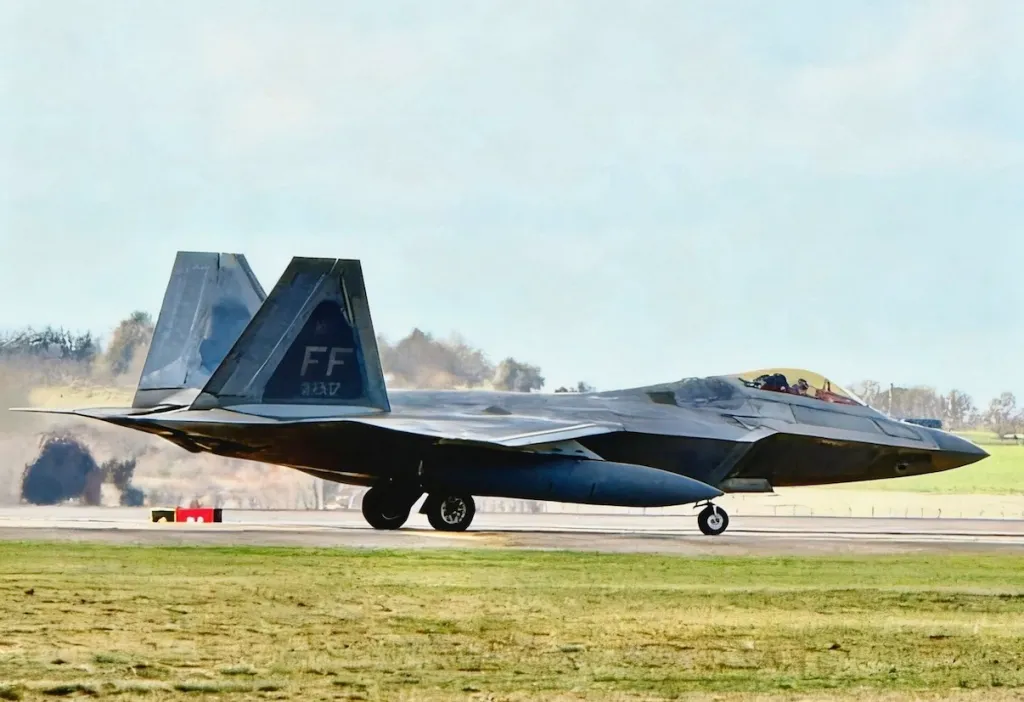
Aviation photographer Acr Explorer was kind enough to share images of F-35As and F-22s seen at Lakenheath Air Base in the U.K. on Thursday.
F-22 Raptor stealth fighters seen Thursday at Lakenheath Air Base in the U.K. (Acr Explorer) F-22 Raptor stealth fighters seen Thursday at Lakenheath Air Base in the U.K. (Acr Explorer) F-22 Raptor stealth fighters seen Thursday at Lakenheath Air Base in the U.K. (Acr Explorer)
The large influx of U.S. airpower has left U.S. bases in the region crowded and is one reason that F-22 Raptor stealth fighters have been deployed to Israel. Another is the likelihood that Israel will be fully integrated into any U.S. attack on Iran.
Beyond the Middle East and Europe, the U.S. is also building up forces at Diego Garcia, its Indian Ocean island outpost, which has been used as a bomber base in previous conflicts. As we noted yesterday, F-16CM fighters from the 35th Fighter Wing recently arrived on the island from Misawa Air Base in Japan. These would be key assets in defending the island from a possible Iranian attack. There is also indications that a bomber deployment to the base could be imminent. However, there are political questions to be solved before the base can be used for a strike on Iran. As we reported last week, the United Kingdom has apparently said it would not allow the use of the island for strikes on Iran, although Prime Minister Keir Starmer could still change his mind. You can read more about the force-protection mission at Diego Garcia — increasingly threatened by Iranian long-range attack drones and missiles — in our previous reporting.
While the talks between Washington and Tehran are scheduled to resume next week, remember that three days before the Operation Midnight Hammer strike on Iranian nuclear facilities last June, the White House said Trump would decide “within two weeks” about whether to strike or keep negotiating.
Though more negotiations are scheduled, Trump has acted militarily ahead of planned talks in the past. Regardless, with the Ford arriving very soon and other assets trickling into place, and fitting our own stated timeline, the window for strikes appears to be cracking open now, and will only get wider with each passing day.
A beloved BBC expert made a heartbreaking admission during Friday’s episode of Morning Live
BBC expert opens up ‘devastating’ trauma that left him with nothing(Image: BBC)
A BBC expert has revealed a “devastating” childhood trauma that left him with nothing.
During Friday’s (February 27) edition of Morning Live, hosts Louise Minchin and Greg Rutherford updated viewers on the latest news from across the UK.
At the start of the show, Louise and Greg introduced a segment on electric blankets, after many have failed basic standards with “serious consequences”.
In a pre-recorded segment, consumer expert Harry Kind, who regularly offers advice on the show, shared his own personal trauma, after a fire destroyed his childhood home.
“They’ve become a popular staple in British homes during the winter months, being both cheap and run and cosy to snuggle up into. But across the UK every year, dozens of domestic fires are caused by faulty, damaged, and incorrectly used electric blankets,” Harry began.
“I know from personal experience just how devastating a house fire can be. When I was 14, our family home completely burnt down, and we lost pretty much all of our possessions.
“In my case, the fire started in the chimney, but last year, house fires caused by electric blankets in England hit a five-year high.”
This is a breaking showbiz story and is being constantly updated. Please refresh the page regularly to get the latest news, pictures and videos.
You can also get email updates on the day’s biggest stories straight to your inbox by signing up for our newsletters
This photo taken on Friday shows the trading room of Hana Bank in central Seoul, with the benchmark Korea Composite Stock Price Index down 1 percent to close at 6,244.13. Photo by Yonhap
Seoul shares closed lower Friday, snapping a six-session winning streak as investors locked in profits in technology and other large-cap stocks following recent gains. The Korean won sharply fell against the U.S. dollar.
The benchmark Korea Composite Stock Price Index (KOSPI) fell 63.14 points, or 1 percent, to finish at 6,244.13. The index still enjoyed a weekly gain of 7.5 percent.
Trading volume was heavy at 1.14 billion shares worth 52.94 trillion won (US$36.8 billion), with decliners far outnumbering gainers 625 to 264.
The KOSPI has remained in a bullish phase since the start of the year, surpassing the 4,500-point level for the first time on Jan. 6 and crossing the 5,000-point mark on Jan. 27. It broke through the 6,000-point level Wednesday, less than a month later.
On Thursday, the index jumped 3.67 percent to finish at a record high of 6,307.27.
Institutional and retail investors purchased a net 491.99 billion won and 6.08 trillion won worth of shares, respectively, while foreign investors sold a net 6.83 trillion won.
Analysts said the decline mirrored overnight losses in U.S. technology stocks, where investors engaged in profit-taking despite strong earnings from Nvidia Corp.
The tech-heavy Nasdaq Composite fell 1.18 percent, while the Dow Jones Industrial Average edged up 0.03 percent.
“Some investors sold shares to lock in profits after the market had rallied sharply over the past six sessions,” Lee Seong-hoon, an analyst at Kiwoom Securities Co., said.
Technology stocks led the declines.
Market bellwether Samsung Electronics fell 0.69 percent to 216,500 won, and its chipmaking rival SK hynix declined 3.46 percent to 1,061,000 won.
Leading shipbuilder HD Hyundai dropped 1.02 percent to 292,500 won, and leading shipping firm HMM shed 4.26 percent to 21,350 won.
Among gainers, top carmaker Hyundai Motor jumped 10.67 percent to an all-time high of 674,000 won, and defense firm Hanwha Aerospace climbed 0.08 percent to 1,195,000 won.
Leading steelmaker POSCO Holdings jumped 1.35 percent to 413,000 won, and No. 2 steelmaker Hyundai Steel surged 19.85 percent to 46,500 won.
The Korean won was quoted at 1,439.70 won against the U.S. dollar at 3:30 p.m., down 13.9 won from the previous session.
Bond prices, which move inversely to yields, closed higher. The yield on three-year Treasurys fell 2.1 basis points to 3.041 percent, and the return on the benchmark five-year government bonds declined 3.6 basis points to 3.278 percent.
Copyright (c) Yonhap News Agency prohibits its content from being redistributed or reprinted without consent, and forbids the content from being learned and used by artificial intelligence systems.
Artificial intelligence could deliver the productivity surge policymakers have been hoping for since the global financial crisis. But even if it does, economists caution that faster growth will not be enough to solve the mounting debt burdens weighing on advanced economies.
Public debt already exceeds 100% of GDP across most rich nations and is projected to rise further as ageing populations strain pension and healthcare systems, interest bills climb and governments ramp up defence and climate spending. Against that backdrop, AI is increasingly being framed as a potential fiscal lifeline.
The reality is more complicated.
Productivity: The “Magic” Ingredient-With Limits
Economists broadly agree that sustained productivity growth can dramatically improve fiscal dynamics. Higher output boosts tax revenues without raising tax rates, makes existing debt easier to service and reassures bond investors worried about long-term solvency.
At the Organisation for Economic Co-operation and Development (OECD), modelling suggests that if AI meaningfully raises labour productivity and if employment also expands public debt across member countries could be about 10 percentage points lower by the mid-2030s than otherwise projected. Even then, debt would still climb to roughly 150% of GDP on current trajectories, up from around 110% today.
In the United States, best-case projections from several economists suggest debt could rise more gradually, to roughly 120% of GDP over the next decade rather than accelerating more sharply. But that still represents historically elevated levels.
As one economist put it, productivity is “like magic” for fiscal sustainability yet today’s debt challenges are too large for productivity gains alone to offset.
Demographics: The Structural Headwind
The fundamental constraint is demographic.
Ageing populations mean fewer workers supporting more retirees, pushing up pension and healthcare costs. In the United States, Social Security alone accounts for roughly one-fifth of federal spending, and benefits are indexed to wages. If AI lifts wages, it may simultaneously increase future benefit obligations.
Slowing immigration in some countries, particularly the U.S., compounds the issue by limiting labour force growth. If AI boosts output per worker but the total number of workers stagnates or declines, overall fiscal relief may be limited.
In short, AI may buy time but it does not reverse the demographic arithmetic driving long-term deficits.
Growth vs. Interest Rates: A Delicate Balance
For debt sustainability, what matters is not just growth, but the relationship between growth and borrowing costs.
If AI-driven productivity pushes economic growth above interest rates for a sustained period, governments can stabilise or even reduce debt ratios more easily. But if faster growth also lifts real interest rates for example, because higher productivity raises returns on capital then debt servicing costs could rise in parallel.
This debate is already unfolding among policymakers at the Federal Reserve, where officials are assessing whether AI could permanently raise the economy’s potential growth rate.
Bond markets will be decisive. Since the pandemic, investors have shown a willingness to punish governments perceived as fiscally profligate. Higher yields can quickly offset any growth dividend from technological gains.
Employment and Wages: The Distribution Question
Much depends on how AI reshapes labour markets.
If AI complements workers and creates new categories of employment, tax revenues may rise meaningfully. But if automation displaces workers faster than new jobs are created, or if profits accrue disproportionately to capital rather than labour, fiscal gains could disappoint.
Capital income is often taxed more lightly than wages. A productivity boom concentrated in corporate profits rather than payrolls may widen inequality without generating proportionate public revenue.
On the spending side, governments might benefit from efficiency gains in public administration. Yet history suggests higher growth can also lead to higher spending demands from infrastructure upgrades to social transfers.
No Substitute for Fiscal Reform
Even in optimistic scenarios where AI lifts U.S. growth closer to 3% annually for an extended period, debt ratios are projected to stabilise at elevated levels rather than return to pre-crisis norms.
In pessimistic scenarios where AI disappoints or a recession strikes before productivity gains materialise debt trajectories could worsen significantly, potentially reaching levels that trigger market instability.
The consensus among economists is clear: AI can ease fiscal pressure, but it cannot substitute for structural reforms. Addressing entitlement sustainability, improving tax efficiency and managing spending priorities remain central.
A Race Against Time
There is also a sequencing risk. If financial markets grow nervous about fiscal trajectories before AI-driven gains are realised, borrowing costs could spike. In that case, the productivity dividend may arrive too late to calm bond investors.
Technological revolutions historically take time to diffuse across economies. Infrastructure, regulation, workforce training and corporate adoption all shape how quickly productivity benefits materialise.
For debt-laden economies, the gamble is that AI’s boost will be large, broad-based and timely. That is possible but far from guaranteed.
AI may help governments breathe easier. It will not absolve them of the harder political choices required to put public finances on a sustainable path.
After almost two decades, a brand new season of Scrubs has finally been released to Disney Plus. Fans saw the return of familiar faces such as Zach Braff as John ‘J.D’ Dorian, Donald Faison as Christopher Turk and Sarah Chalke as Elliot Reid.
Despite only two episodes being released so far, the Scrubs reboot has delivered bombshell moments such as the revelation that JD and Elliot are now divorced with two kids, with Carla and Turk, who remain happily married, have four children.
However, it was the end of the first episode that left viewers stunned after Dr Cox’s unexpected revelation. After convincing JD to return to Sacred Heart, he revealed he would not be working with his mentor, but instead will be replacing him.
In emotional scenes Dr Cox said: “You’re not going to be working with me. You’re going to be me.”
He continued: “This particular world has passed me by. You are the only one I trust to do better and try harder.”
Fans were worried what this means for Dr Cox now as they took to social media to ask what will happen to the favourite character. One person wrote on X: “Wait Dr. Cox isn’t going to be regular, or Carla? Oh, no.”
Another said: “If Dr. Cox comes back to #Scrubs as a patient I will riot!!!”
A third penned: “I really enjoyed the revival #scrubs on Wednesday night. Was it perfect? Hardly. Did I feel jaded when Dr. Cox disappeared after episode 1? Yes. But watching the premiere felt nostalgic from a time where we could just watch a comedy and chuckle.”
A fourth worried: “They took Dr. Cox picture down. @scrubsabc DO NOT do us dirty and kill him off or something. He needs to be around.”
One person simply added: “I feel robbed of Dr Cox oh well.”
Over on Reddit, one worried user asked: “Is Cox going to retire, or is he going to get a new job in the show?” However, many agreed they would see Cox “retire” as they “demand answers”.
In an interview with Deadline, creator Bill Lawrence previously spoke about Cox’s retirement adding: “Dr. Cox is a huge character on the show. He comes back at the end of the year and will continue on next year.”
As the brand new series returned, many fans have been “in tears” as one person wrote: “I’m not ashamed to say I cried a few tears in the first episode.”
Another said: “I missed seeing JD day dream #Scrubs shedding tears as I’m watching.” A third replied: “Just watched the first episode. It was great. Got me right in the feels..”
Scrubs is available to stream on Disney Plus. For the latest showbiz, TV, movie and streaming news, go to the new **Everything Gossip** website.
Ensure our latest headlines always appear at the top of your Google Search by making us a Preferred Source.Click here to activate or add us as your Preferred Source in your Google search settings.
Cape Town, South Africa – Two ominous letters are spray-painted on a wall at the entrance to Tafelsig, a township in Mitchells Plain on the outskirts of Cape Town: HL – the insignia of the Hard Livings gang, which has threatened communities there for five decades.
It’s a February day soon after the president’s state of the nation address, in which Cyril Ramaphosa boldly announced he’d be deploying the army to communities across South Africa to tackle the growing crisis of crime, drugs and gangs. But in Tafelsig, which will likely be part of the new military operation, most people seem unbothered by the news.
Recommended Stories
list of 3 itemsend of list
Mitchells Plain is on the Cape Flats – a series of densely populated, impoverished townships about 30km (19 miles) southeast of the wealthy city centre where the president made his speech. While the city boasts hordes of tourists and some of the most expensive real estate on the continent, the Cape Flats accounts for the highest rate of gang-related killings in the country.
“When it was at its worst, [there was a shooting] almost every day,” said Michael Jacobs, the chairperson of a local community police forum.
“Whether it’s day or whether it’s night, they’re shooting somewhere on the Cape Flats,” he added on a drive through the settlement of run-down houses and corrugated iron shacks.
Around him, residents made their way to a home-grown tuck shop, known as a spaza, or sat on street corners while toddlers ran about.
“How is this conducive to raising children?” he asked, recounting the horrors of life in Mitchells Plain.
In the past week, four people, including a nine-month-old, had been shot and killed in a drug den in Athlone, about 17km (10 miles) away.
A beloved Muslim cleric who is rumoured to have angered a gang leader over a personal dispute was also shot dead on the first day of Ramadan as he was leaving the Salaamudien Mosque on a nearby street.
As Jacobs spoke, reports of other shootings filtered through on the many crime groups he is part of on WhatsApp. A few days later, he shared with Al Jazeera a video of two schoolgirls and a taxi driver shot outside a school in Atlantis, about 40km (25 miles) north of Cape Town. One of the girls died.
The Salaamudien Mosque, where a cleric was gunned down on the first day of Ramadan [Otha Fadana/Al Jazeera]
Tafelsig residents now await the probable arrival of uniformed soldiers and armed vehicles in their neighbourhood, but have little hope that it will make a difference.
Despite his weariness with the violence, Jacobs is far from enthusiastic about a decision to deploy the army.
Other critics of the government’s decision said it is window dressing more than a real solution while some question the wisdom of such a drastic step in a country where the military has a history of brutality and where recent explosive allegations about police corruption at the highest levels have surfaced.
‘Do our lives not matter?’
In his speech on February 12, Ramaphosa said he would deploy the army to the Western Cape, the province that includes the Cape Flats, and Gauteng, home to the country’s largest city, Johannesburg, to tackle gang violence and illegal mining. On February 17, Acting Police Minister Firoz Cachalia announced that the Eastern Cape would be added to the list and a deployment would take place in 10 days – although no soldiers have so far been deployed.
The president’s decision followed pressure from civil society groups and the Democratic Alliance (DA) party, which runs the Western Cape, to take drastic action to curb widespread gang-related violence in the three provinces.
A day before its province was added to the deployment schedule, the DA joined residents in Gqeberha, the largest city in the Eastern Cape, for a “Do Our Lives Not Matter?” protest to demand that Ramaphosa take urgent action.
In Gauteng, neighbourhoods surrounding the province’s once-lucrative abandoned mines have often been turned into battlegrounds, resulting in shootouts between police and illegal artisanal miners, known as zama zamas.
Gauteng and the Western Cape frequently appear at the top of the country’s organised crime lists while the Eastern Cape made headlines last year for a series of killings linked to extortion syndicates.
In the latest crime statistics, police announced the arrests of 15,846 suspects nationwide and the seizure of 173 firearms and 2,628 rounds of ammunition from February 16 to Sunday alone.
Gauteng took up the most space in the police’s crime highlights, which included a 16-year-old arrested in Roodepoort for possession and distribution of explosives and the seizure of counterfeit clothing and shoes worth 98 million rand ($6.1m).
Overall, South Africa has some of the world’s most violent crime with an average of 64 people killed every day, according to official statistics.
The three provinces selected for military deployments have a turbulent history with the armed forces, not least during the apartheid era when the regime used soldiers to unleash deadly crackdowns on antiapartheid activists.
“They were the enemy,” Jacobs said, recalling his own arrest in September 1987 during a student protest on the Cape Flats opposing the racist government, which was replaced in the country’s first democratic elections in 1994.
Michael Jacobs at his office in Cape Town [Otha Fadana/Al Jazeera]
Today after three decades of democracy, poverty, unemployment and violent crime remain a major challenge in the area.
But Jacobs, like other critics of the military police, believes the new move will do little to cure the ills that he said gangs exploit to increase their influence. Children as young as eight years old are recruited into their ranks.
The Town Centre, a shopping mall that was once a hub of economic activity, has been reduced to a ghost town where the drug trade thrives despite the fact that it is right next to a police station, according to Jacobs.
For him, there is a direct link between the country’s economic decline and the flourishing of gang activity over the past decade on the Cape Flats, where working-class people have seen their livelihoods stripped away as the manufacturing sector shrank.
On an average weekday when children should be at school, he said, you see children and even women in their 60s in Mitchells Plain digging through rubbish bins to find glass, plastic or other things they can recycle and turn into income. “At least it will put something on the table.”
Plugging a ‘haemorrhage’
Social issues and not simply military intervention should be put at the heart of government anticrime efforts, analysts say.
“There’s no other way to describe it other than plugging a hole that is haemorrhaging at the moment with regards to these forms of organised crime,” said Ryan Cummings, director of analysis at Signal Risk, an Africa-focused risk management firm.
Irvin Kinnes, an associate professor with the University of Cape Town’s Centre for Criminology, pointed out that constitutionally the army is limited in the duties its members may perform among the civilian population. Their role will be largely to support police, who will retain control of all operations.
He fears the government has not learned lessons from previous army deployments in South Africa’s democratic era.
The army was dispatched to the Western Cape in 2019 during a previous spike in gang violence and was again sent in to help with the enforcement of COVID-19 restrictions the following year.
“It’s a very dangerous thing to bring the army because there’s an impatience with the fact that the police are not doing their job. And so they come in with that mentality and want to beat up everybody and break people’s bones,” Kinnes said.
“We saw what happened in COVID. They killed people as the army. It’s not as if the police don’t kill people, but the point is, you don’t need the army to do that.”
To the government’s detractors, summoning the army is nothing more than an attempt at political heroics before local elections due to be held this year or in early 2027.
Kinnes pointed out that, according to police statistics, crime has been decreasing without the help of the army.
“It’s very much political. It’s to show that the political leaders have kind of heard the public. But the call for the army hasn’t come from the community. It’s come from politicians,” he said.
Police stand guard while South African President Cyril Ramaphosa visits crime-ridden Hanover Park in Cape Town in 2018 [File: Mike Hutchings/Reuters]
‘The military is ready’
Ramaphosa, who has yet to reveal details of the military deployment, has defended his decision. On Monday in his weekly newsletter, the president sought to separate the South African armed forces from their troubling past, listing several operations that benefitted communities, such as disaster relief efforts and law enforcement operations at the border.
He made it clear that the army’s role would merely be a supporting one “with clear rules of engagement and for specific time-limited objectives”.
Its presence may free up officers to focus on police work and would take place alongside other measures, such as strengthening antigang units and illegal mining teams, he said.
“Given our history, where the apartheid state sent the army into townships to violently suppress opposition, it is important that we do not deploy the [military] inside the country to deal with domestic threats without good reason,” Ramaphosa wrote.
Cummings said it was clear the president’s hand was forced amid an unrelenting wave of violence. “The rhetoric of the president up until now suggests that this was a directive that he was not necessarily too keen on implementing.”
On the ground, soldiers appear equally reluctant about their pending engagement.
Ntsiki Shongo is a soldier who was deployed in 2019 and during the COVID-19 pandemic. He told Al Jazeera, using a pseudonym, that any operation involving the police was almost certainly doomed.
“We [in the army] become so negative when we are working with them [the police] because always we don’t get what we need,” he said.
“We know how easy it is to get these gangsters, to get these drug lords, but unfortunately, the police, they are not cooperating with us because some of them are in cooperation with these criminals,” he charged. “Maybe they are scared for their lives because they are staying in the same areas with them.”
“So this operation, … is it going to be a success? I don’t know. It all depends on the police,” he said, adding that he and his fellow soldiers long for the day the government lets the military solve the problem on its own.
“Even when we are just sitting having lunch as soldiers, we talk about the police. We pray that one day the state can say, ‘Let’s take the military inside the country and clean out all these weapons, all these guns, all these gangsters,’” he said.
“The military is ready, and they want to prove a point because we’ve been hungry for these things.”
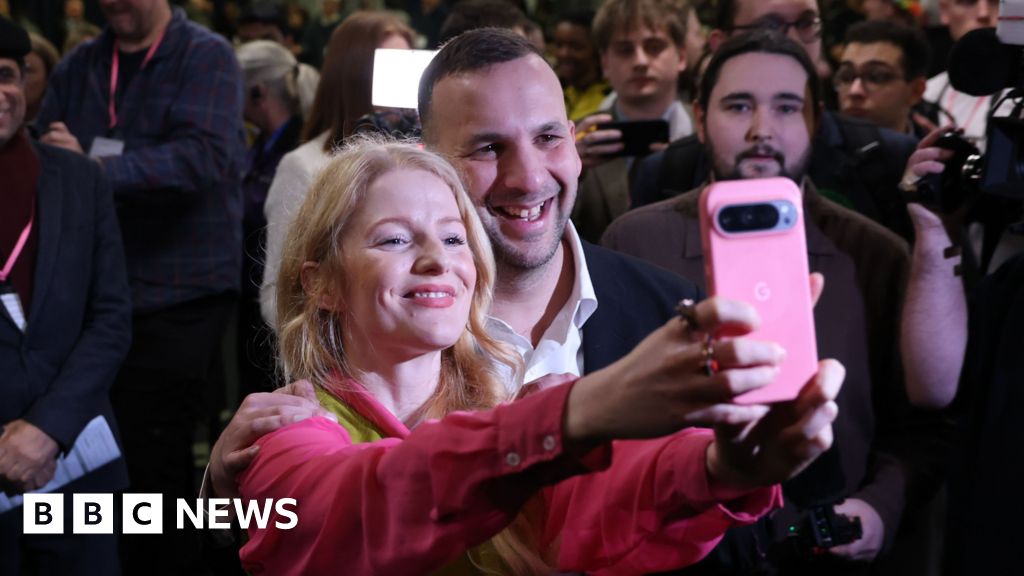
Reform UK’s Matt Goodwin came second with 10,578, while Labour’s Angeliki Stogia was third with 9,364. The Conservative’s Charlotte Cadden came fourth with 706 votes – the party’s worst ever by-election result – and the Liberal Democrats’ Jackie Pearcey had 653. No other parties got more than 200 votes.
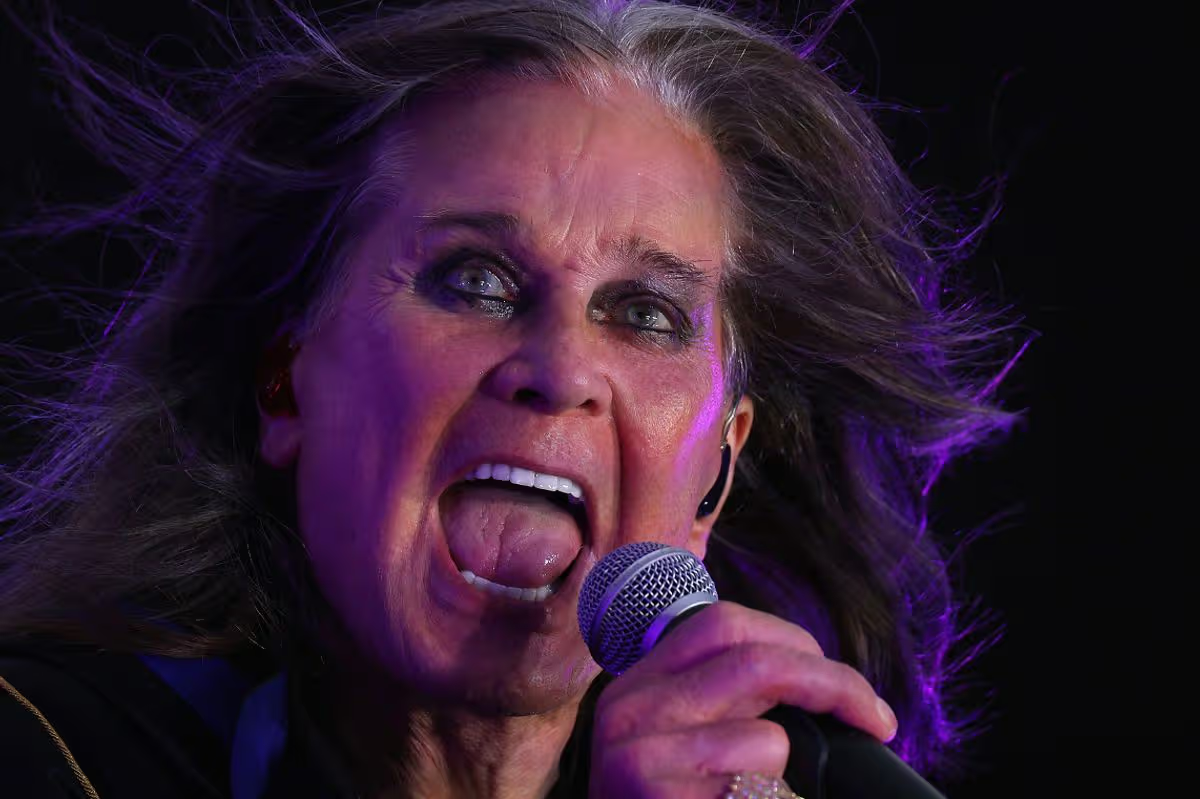
Robbie Williams is set to take to the stage at the Brit Awards to pay tribute to Ozzy Osbourne as the late singer has been honoured with the Lifetime Achievement award
Ozzy will be honoured at the Brit Awards(Image: Getty Images)
Ozzy Osbourne is set to be honoured at this year’s Brit Awards – with Robbie Williams fronting a super group paying tribute to the star. The ceremony, which is taking place in Manchester for the first time in its history, will see the Prince of Darkness receive the posthumous award for Lifetime Achievement.
It comes seven months after the Black Sabbath frontman died aged 76. Now, to commemorate his outstanding contribution to music, the rocker who is known as the “godfather” of British heavy metal will receive the honour at Saturday’s event.
An all-star rock tribute performance will pay homage to Ozzy as they close the show on the night at Co-Op Live. The performance will be a special arrangement of ‘No More Tears’ – the title track from Ozzy’s multi-million selling 1991 album of the same name.
Ensure our latest headlines always appear at the top of your Google Search by making us a Preferred Source. Click here to activate or add us as your Preferred Source in your Google search settings.
It has been curated by Ozzy’s wife, Sharon Osbourne, and will boast a phenomenal line up of British and international musical talent. It will feature musicians that played as part of Ozzy’s band over the years, including Adam Wakeman, Robert Trujillo , Tommy Clufetos and Zakk Wylde.
The makeshift group will be fronted by Robbie Williams, who was invited personally by Sharon to be part of this special moment. The invite comes as the former Take That man is a long-standing fan of the music, and is also a friend of the Osbourne family.
As well as being one of the most influential music figureheads and rock icons of all time, Ozzy hosted The BRIT Awards in 2008 along with his family Sharon, Kelly and Jack.
Speaking of the accolade, the Chair of the 2026 BRIT Awards Committee and Co-President of RCA Records at Sony Music UK, Stacey Tang, said: “Ozzy Osbourne has been a mighty force in modern music. Possessing an unmistakable voice and unique presence, he reshaped the sound and spirit of rock, inspiring generations of artists who followed.
“This Lifetime Achievement Award recognises a remarkable legacy built on originality and enduring influence, that continues to connect with fans worldwide.”
Among the accolades Ozzy won during his career that spanned over five decades included five Grammy awards, induction into both the UK Music Hall of Fame and the Rock and Roll Hall of Fame (both with Black Sabbath and as a solo artist, in separate years) and the Ivor Novello Award for Lifetime Achievement (with Black Sabbath).
Last year saw him take to the stage for the final time just weeks before his death. His Back To The Beginning concert at his beloved Villa Park saw celebrities from across the globe unite to give Ozzy the perfect send off.
At the end of the day, which saw the likes of Steven Tyler of Aerosmith, YungBlud and Guns N Roses take to the stage, Ozzy reunited with his old bandmates to bring the house down one last time. Despite concerns over whether he would make the show, a determined Ozzy gave fans a show to remember. Sadly, he died just weeks later.
Taliban security inspect a vehicle at a checkpoint in Kabul, Afghanistan, on Friday, February 26, 2026. Photo by Samiullah Popal/EPA
Feb. 26 (UPI) — Pakistan conducted airstrikes in areas of Kabul, Kandahar and Paktia overnight, officials from both countries said, as Islamabad’s defense minister early Friday declared Pakistan was in “open war” with Afghanistan.
Pakistani warplanes struck areas of the Afghan capital Kabul and its second-largest city, Kandahar, and Paktia province, Zabihullah Mujahid, spokesman for Afghanistan’s ruling Taliban, said in a statement, claiming there were no casualties — which Pakistan disputes.
Mosharraf Zaidi, spokesman for Pakistan’s prime minister, said Afghan military targets were hit, and claimed 133 Afghan Taliban fighters were killed and more than 200 wounded. The figures could not be independently verified.
Twenty-seven Afghan military posts were destroyed and nine captured in the assaults, he said.
“Our cup of patience has overflowed. Now it is open war between us,” Pakistan Defense Minister Khawaja Asif said in a statement.
“Pakistan’s army did not come from across the seas. We are your neighbors; we know your ins and outs.”
The airstrikes were carried out after Afghan forces attacked Pakistani border positions late Thursday, according to Afghanistan’s Ministry of National Defense, which said the assault was retaliatory for Pakistan’s fatal strike on seven militant camps and hideouts last week.
The latest explosion in violence follows months of escalating tensions between the two countries, with Pakistan repeatedly accusing Afghanistan of harboring terrorists, in particular the Tehreek-e-Taliban Pakistan, an Islamist group seeking to overthrow the Islamabad government.
Afghanistan has repeatedly denied the allegations Pakistan has leveled since the Taliban returned to power in August 2021.
Pakistan blames TTP and other Afghan-based terrorists for a series of brutal attacks over the years, and has carried out repeated airstrikes in Afghanistan in response, including in October.
Development agendas borrow a term common in the study of global governance that is shaped not only by policy, but also by the decision-making structures that determine who speaks, who is heard, and who ultimately adapts. In the contemporary multilateral landscape, the tendency of weaker actors to align their positions with dominant powers for the sake of security or accessibility has evolved beyond its classical definition in realist theory. It now operates as a subtle but consequential social mechanism, systematically reducing the diplomatic boldness of the Global South countries in international forums.
The bandwagon effect is not just a phenomenon of individual behavior, but a reflection of an institutionalized architecture of structural inequality. Under these conditions, the countries of the Global South often hide their authentic preferences. Not because of argumentative incompetence, but rather because of the incentives created by financial dependence, representation asymmetry, and limited diplomatic capacity. The consequence is a direct contradiction to Sustainable Development Goal 16, which mandates the building of strong, accountable, and inclusive institutions at all levels.
The Bandwagon Effect in the Context of Global Governance
From a realist perspective, countries that have identical votes in UNGA resolutions reflect similar preferences within the framework of the protection of sovereign norms. But empirical research shows a more complex reality. Khan’s (2020) study of Bangladesh’s voting patterns at the UNGA for the period 2001–2017 revealed that vote alignment does not always reflect the proximity of substantive preferences, but is often a product of geopolitical contexts and dependency relationships. Realists themselves recognize that this kind of voice alignment tends to collapse in crisis situations when countries are encouraged to self-help that makes it clear that a seemingly consensus-like may never really exist.
More direct evidence comes from a panel of 123 developing countries in a study of U.S. economic sanctions and UNGA voting patterns for the 1990–2014 period. The study, which limited its analysis to non-OECD countries because foreign aid was not considered to affect the voting behavior of rich countries, confirmed that external pressures, both in the form of incentives and sanctions, significantly shaped developing countries’ voting preferences on important issues. It further states that receive budget support and unconditional assistance from the US tend to vote in line with US interests. A correlation that is difficult to explain solely by the similarity of values.
This pattern was also identified structurally through the analysis of the UNGA voting network. Magu and Mateos (2017) found that the empirical distribution of voting similarity scores is right-skewed towards a value of 1, which means that clusters of countries with a high degree of alignment are much more common than can be explained by pure similarity of interest. This is consistent with the hypothesis that structurally weak states tend to move toward dominant power positions, not because of belief, but because of survival calculations.
The Inequality Architecture That Creates Bandwagon Incentives
Understanding why the bandwagon effect is so entrenched among the Global South requires a reading of the existing global governance architecture. At the International Monetary Fund, the United States holds 16.9 percent of the vote and has an effective veto since major decisions require an 85 percent majority. Meanwhile, Africa, which consists of 54 member states and accounts for most of the IMF’s 2026 active loan portfolio, only controls about 6.5 percent of the vote. On the UN Security Council, not a single African country holds a permanent seat, although more than 60 percent of the Council’s agenda is related to conflicts on the continent.
This representational inequality creates the conditions in which joining a majority position or with a certain power bloc becomes an administratively rational strategy, even when it is contrary to the long-term interests of a country.
The factor of dependence on military suppliers is also relevant. A study of the determinants of developing countries’ voting at the UNGA identified that the choice of military suppliers that placed countries in the orbit of Western, Russian, or Chinese influence also influenced voting tendencies. This provides important context for India’s abstaining position in the UNGA resolution condemning Russia’s invasion of Ukraine, which is an inseparable decision from the fact that about 70 percent of India’s military equipment comes from Russia. This is not a moral inconsistency but rather a rationality imposed by the architecture of dependence.
Contradictions with SDGs 16: Measuring What Is Not Measurable
Sustainable Development Goal 16 mandates the development of institutions that are ‘peaceful, equitable, and inclusive at all levels’ is a mandate that explicitly encompasses global, not just domestic, governance. The SDG 16 Global Progress Report (UNDP/UNODC/OHCHR, 2023) describes an alarming situation where progress towards SDG 16 is very slow and in some cases even moving in the wrong direction. Violence is on the rise, inequality is hampering inclusive decision-making, and corruption is undermining the social contract.
On a broader level, the Sustainable Development Report 2024 (SDSN), which covers all 193 UN member states, found that on average only 16 percent of the SDG targets are on track to be achieved by 2030. SDG 16 is specifically mentioned as one of the goals that are furthest from the target. More significantly, among the five SDG targets that showed the most regression since 2015, press freedom, which is an indicator under SDG 16, is also included.
The connection between the bandwagon effect and the setback of SDG 16 is not just correlative. It is mechanistic. When countries are unable to express their authentic preferences in the multilateral negotiation process due to structural pressures, the three key pillars of SDG 16 inclusivity, accountability, and effectiveness are degraded simultaneously. Inclusivity is degraded as voices that are supposed to represent the global majority are eroded into a consensus designed by and for minorities. Accountability is degraded because countries that choose to go against the interests of their people in order to maintain relations with donors or trading partners cannot be held coherently accountable by their constituents. Effectiveness is degraded because resolutions born of pseudo-consensus will never be implemented with sincere commitment.
The Bandwagon Effect as a Social Phenomenon, Not an Individual Failure
It is important to emphasize that the bandwagon effect in this context is not a failure of diplomatic character or moral inconsistency. It is a rational response to unequal structural incentives. A quantitative analysis of UNGA voting in the period 1946–2014 shows that the voting patterns of developing countries consistently shifted to the dominant power configuration in that period not because of the convergence of values, but because of changes in the distribution of power and dependency.
This makes the bandwagon effect a social phenomenon in the strictest sense. It is not behavior that is freely chosen by individuals or states, but behavior that is conditioned by the structure of the system. As the literature on public voting behavior and foreign policy shows, public opinion and domestic pressures do influence foreign policy but in countries with low state capacity, external factors such as aid dependence and pressure from international financial institutions are often more decisive.
The consequences of this framing are very important in policy. The solution is not moral persuasion, but in the transformation of structural incentives. The countries of the Global South do not need to be educated to be braver, they just need to be given conditions where diplomatic courage does not mean financial suicide or geopolitical isolation.
Implications and Directions of Reform
If the bandwagon effect is understood as a product of the architecture of inequality, then meaningful reform must target that architecture. First, reform of representation in the Bretton Woods institutions remains a prerequisite that cannot be postponed. As long as the quota formula remains biased towards advanced economies and as long as the U.S. retains its veto, the structural incentives for the bandwagon will continue to exist. The SDSN Sustainable Development Report 2024 itself identifies strengthening UN-based multilateralism as one of the urgent needs of a recommendation that presupposes a more equitable representation architecture reform.
Second, transparency in the multilateral negotiation process must be expanded. If negotiating positions could be monitored more openly by civil society and the media, the space between publicly stated positions and actual behavior at the negotiating table would become narrower. This is especially relevant for the negotiation process in international financial institutions that have been operating with a high level of secrecy.
Third, strengthening a substantive south-south coalition that should go beyond solidarity rhetoric can also provide a buffer against external pressure. But this requires that the countries of the Global South build real policy coordination mechanisms in multilateral forums, not just in bilateral meetings. Without this kind of mechanism, Global South solidarity will continue to be an aspiration that is defeated by the calculation of bilateral dependency in critical moments.
Conclusion
The bandwagon effect in global governance is a manifestation of institutionalized inequality. It works discreetly, through incentives and dependencies, to produce consensuses that look strong on the outside but fragile on the inside. SDG 16 which mandates inclusive, accountable, and effective institutions cannot be realized as long as the global decision-making mechanisms themselves continue to produce conditions that encourage countries to hide their true preferences.
As UNDP affirms in its latest SDG 16 progress report, peace and prosperity for all people and the planet is only possible with decisive and innovative action on SDG 16. Such actions cannot be limited to the domestic realm alone, they must include a fundamental transformation in the global governance architecture that currently systematically penalizes diplomatic courage and incentivizes compliance.
Effective global governance is not built on consensus imposed by dependencies. It is built on genuine participation and genuine participation requires conditions in which authentic choices are not punished by structures that are supposed to serve all.
ROBBIE Williams will pay tribute to late rocker Ozzy Osbourne at the Brit Awards.
The singer, 52, will perform a special arrangement of Ozzy’s 1991 track No More Tears alongside some of the Black Sabbath rocker’s former bandmates and musician pals.
Sign up for the Showbiz newsletter
Thank you!
Ozzy Osbourne will be honoured with a posthumous Lifetime Achievement award at the BritsCredit: GettyRobbie Williams will honour Ozzy Osbourne at the Brit Awards with a special performance of No More Tears, joined by some of the late rocker’s Black Sabbath bandmates and close musician palsCredit: AlamyA source said Sharon personally asked Robbie to perform the tribute, describing him as a longtime friend of the Osbourne family and a huge Ozzy fanCredit: Alamy
It will celebrate the posthumous Lifetime Achievement award being made to Ozzy, who died in July aged 76, at tomorrow night’s ceremony.
A source said: “Sharon personally asked Robbie to perform the tribute to Ozzy. He is a huge Ozzy fan and has been a friend of the family for decades.
“For Sharon, Robbie seemed the perfect person to perform this song for him. She has curated the special arrangement for No More Tears. It will be a performance that goes down in the Brits’ historybooks and will be a very special moment.”
A Brits insider added: “Robbie’s performance with some of Ozzy’s closest friends will celebrate his legacy as one of the most influential rock icons of all time.
“The Brits have a special relationship with Ozzy. He hosted the ceremony with Sharon and his children Jack and Kelly in 2008.
“This will be an incredibly emotional and fitting way to celebrate the impact he had on not only British music, but globally, too.”
Ozzy, who died just five days after after giving his final concert, joins music royalty John Lennon and Freddie Mercury in being posthumously honoured.
The awards will be hosted by Jack Whitehall and will air on ITV and ITVX from 8.15pm.
Staff members display Samsung’s Galaxy S26, S26 Plus and S26 Ultra smartphones at a KT retail store in Seoul on Wednesday. Photo by Asia Today
Feb. 26 (Asia Today) — Samsung Electronics President Roh Tae-moon said the company aims for the new Galaxy S26 to surpass its predecessor’s sales, highlighting upgraded artificial intelligence features despite higher retail prices.
Speaking Tuesday at a Galaxy Unpacked press briefing in San Francisco, Roh said the Galaxy S25 series exceeded the prior model’s sales, citing improved real-world user feedback over time.
Market researcher Counterpoint Research said Galaxy S25 sales from February through December rose 5% from the previous generation. Industry estimates place total sales in the high 30 million range.
Roh said the Galaxy S26 features more advanced “agentic AI” capabilities and strengthened practical tools such as Photo Assist. He added that tighter integration between software and hardware, including a privacy-focused display feature, has drawn positive responses from global partners.
Samsung has expanded its AI platform beyond Bixby and Google Gemini to include additional services, and introduced a new AI operating system developed in cooperation with Google to enable smoother AI-driven functions. Roh described the strategy as a “hybrid AI” approach allowing users to choose optimized AI tools for different tasks.
The company is also positioning AI as a differentiator across product tiers, from flagship to entry-level smartphones.
Samsung raised domestic launch prices for its latest Galaxy S series by as much as 300,000 won, about $225, after keeping prices unchanged for three years, citing rising component costs. Counterpoint has projected Samsung’s smartphone shipments could decline about 2% this year amid higher prices.
Roh acknowledged cost pressures but said Samsung’s long-established supply chain gives it flexibility. He said the company will pursue innovation that maintains performance even with fewer components, using AI to offset hardware constraints and limit the impact of cost increases.
“As AI evolves, the importance of devices will only grow,” Roh said, adding that smartphones remain the primary interface through which users generate data and interact with AI services.
Hamas says latest attacks show Israel’s ‘blatant disregard for the efforts of mediators, and its complete disregard for the Peace Council and its role’.
Published On 27 Feb 202627 Feb 2026
Share
At least five Palestinians have been killed in Israeli drone attacks targeting two police posts in the Bureij refugee camp in the central Gaza Strip and the al-Mawasi area in Khan Younis in the south, as Israel presses on with its more than two-year genocidal war on the devastated enclave.
The attacks overnight into Friday were condemned by Hamas as undermining mediator efforts during a “ceasefire” phase that Israel has violated almost daily since October 10.
Recommended Stories
list of 4 itemsend of list
Medical sources at Nasser Medical Complex in Khan Younis reported the arrival of three bodies and several wounded individuals following an Israeli military strike on a police checkpoint at the al-Maslakh intersection in al-Mawasi. The sources said that the strike occurred in an area outside the Israeli military’s control, and described the condition of some of the wounded as critical.
In the central Gaza Strip, two Palestinians were killed and others were injured in a similar Israeli drone strike that targeted a police post at the entrance to the Bureij refugee camp.
Hamas spokesperson Hazem Qassem said that the rising number of deaths as a result of the ongoing Israeli bombardment across the Gaza Strip reflects “the Zionist occupation’s blatant disregard for the efforts of mediators, and its complete disregard for the Peace Council and its role”.
Qassem added, in a statement, that Israel is continuing its war of extermination against the Palestinian people, despite some changes to form and method, indicating that “the talk of the guarantor states about stopping the war lacks any real substance on the ground”.










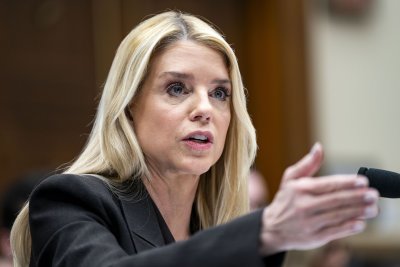

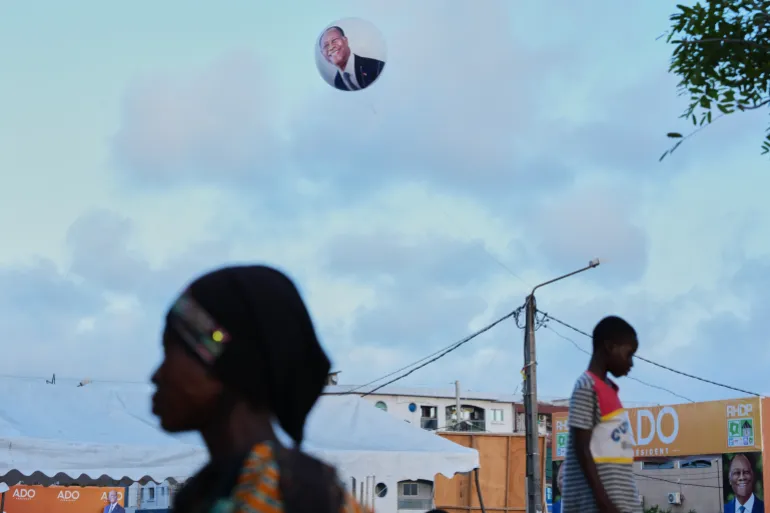


![Former Israeli Prime Minister Ehud Barak gestures after delivering a statement in Tel Aviv, Israel June 26, 2019. [Corinna Kern/Reuters]](https://i0.wp.com/www.aljazeera.com/wp-content/uploads/2026/02/2019-06-26T153913Z_1424687355_RC17C8B80DA0_RTRMADP_3_ISRAEL-POLITICS-BARAK_cropped-1770216915.jpg?w=640&ssl=1)