BBC Breakfast’s Roger Johnson and Rachel Burden returned to our TV screens on Sunday’s (March 1) morning to deliver the day’s headlines
07:38, 01 Mar 2026Updated 07:38, 01 Mar 2026
Roger Johnson and Rachel Burden (Image: BBC)
BBC Breakfast’s latest broadcast started with a distressing news update on the “most devastating offensive operation in history”.
During Sunday’s (March 1) episode of the BBC hit show, Roger Johnson and Rachel Burden returned to our screens as they delivered the day’s top headline stories from the UK and around the globe.
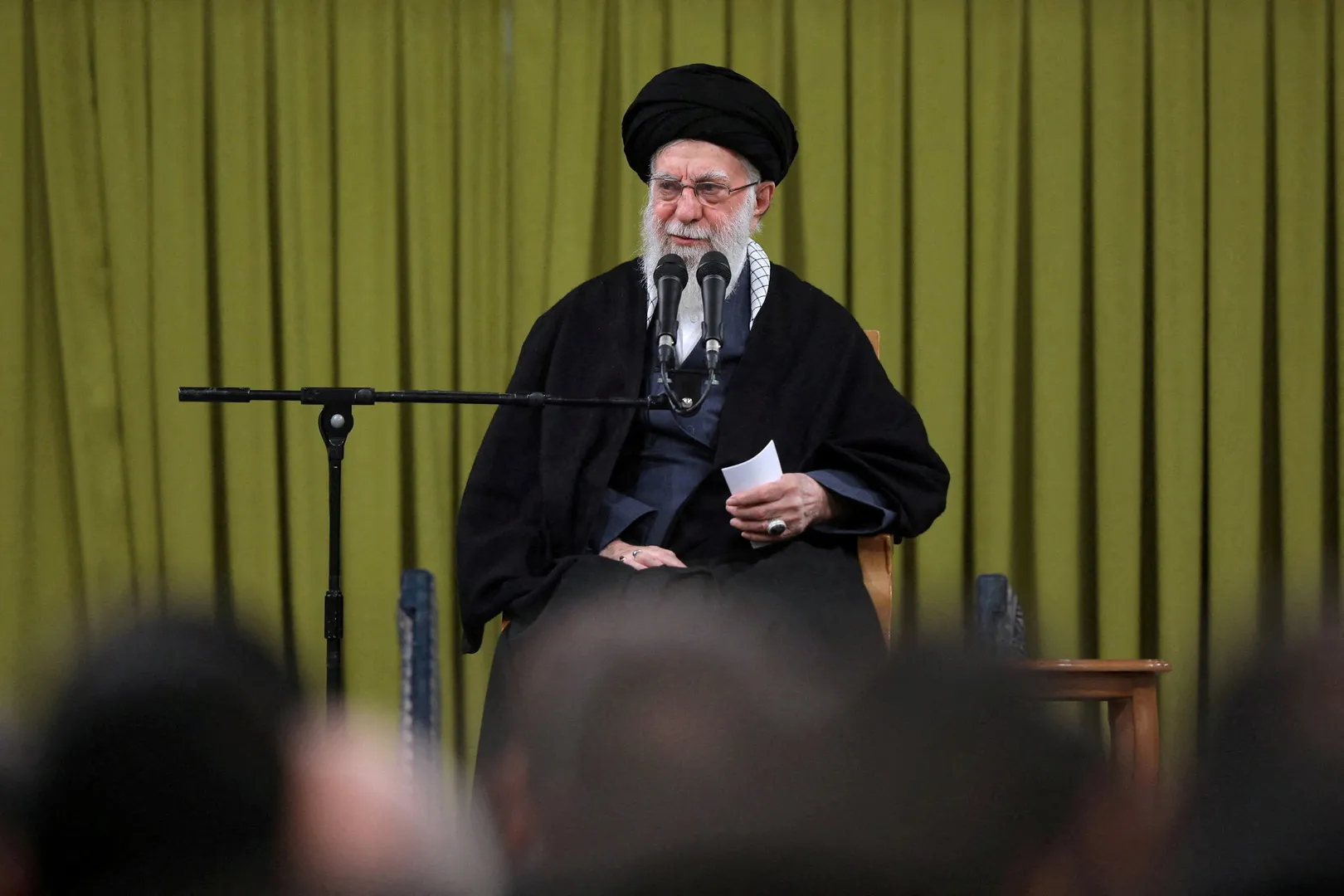
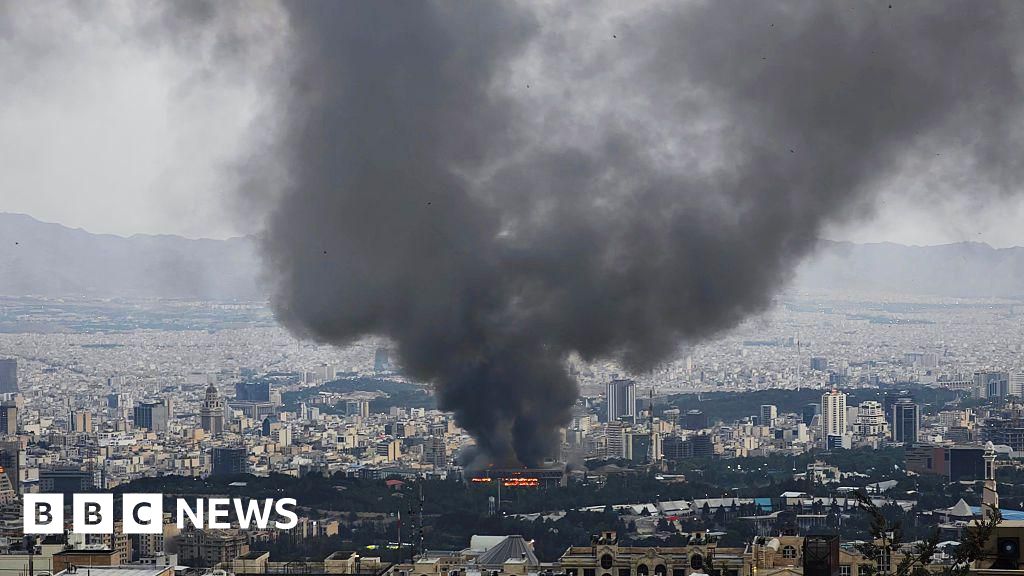
However, just moments into the live broadcast, Roger shared the news that Iran’s supreme leader Ayatollah Ali Khamenei has been killed following US-Israeli strikes on Tehran.
Rachel also revealed: “The Red Crescent says more than 200 people have been killed in the strikes with state media reporting at least 85 deaths following one air strike on a school in Iran.
“Overnight the Islamic Revolutionary Guard Corps warned it would attack US bases and Israel in retaliation for Khamenei’s death with what it called ‘the most devastating offensive operation in history of the Islamic Republic.”
This is a breaking showbiz story and is being constantly updated. Please refresh the page regularly to get the latest news, pictures and videos. You can also get email updates on the day’s biggest stories straight to your inbox by signing up for our newsletters.
US President Donald Trump says Iran’s Supreme Leader Ayatollah Ali Khamenei was killed in joint US-Israeli strikes. Israeli officials cite “growing signs” he’s dead. Iranian state media deny the claim, saying Khamenei remains in command. At least 201 reported killed as Iran retaliates.
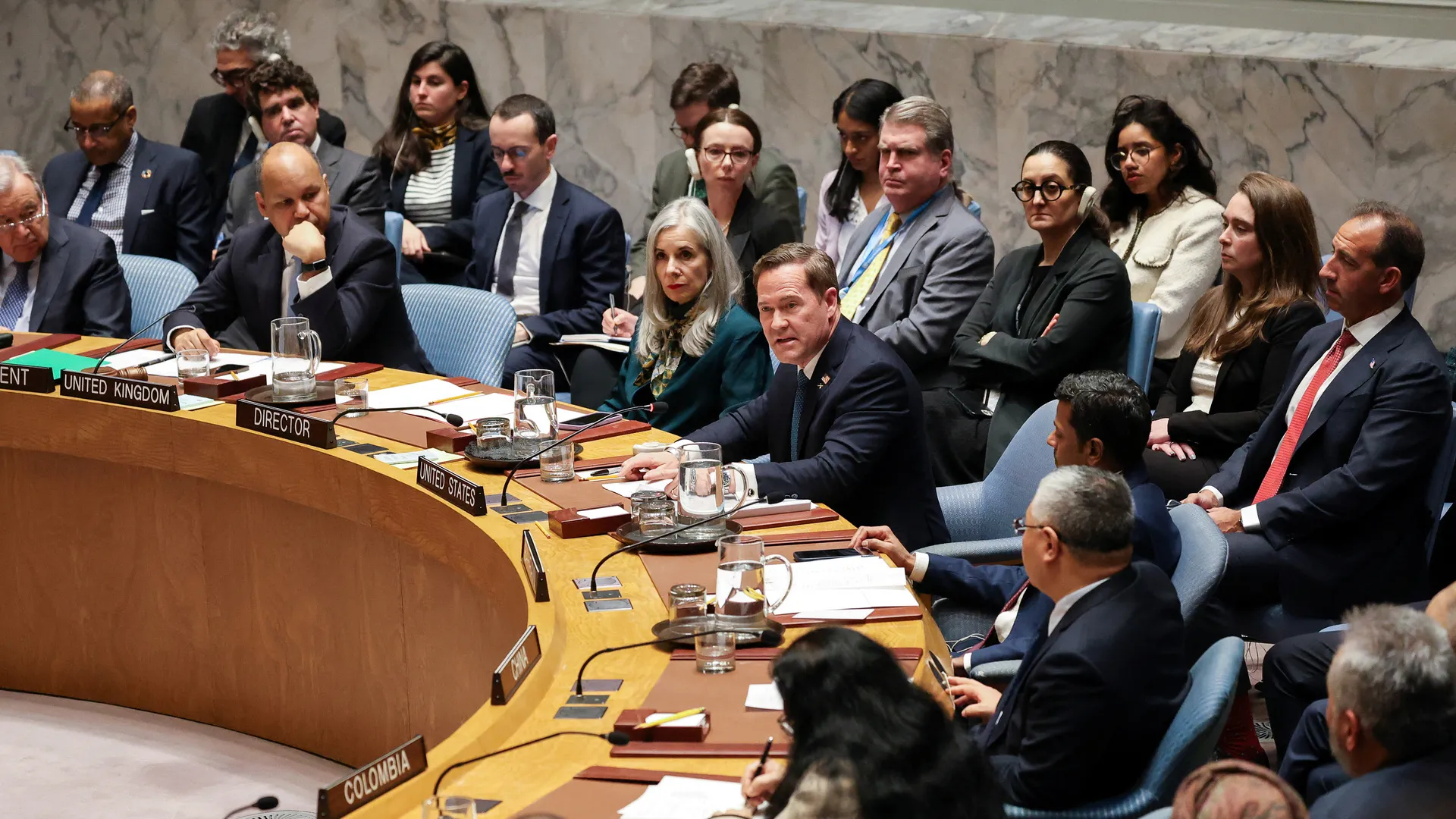
The US Ambassador to the United Nations Mike Waltz says striking Iran was necessary to protect American allies, prevent proxy militias, and to ensure that Tehran can never “threaten the world with a nuclear weapon.”
REALITY star Kylie Jenner shoulders the brunt of the promotional work for her beauty range.
The 28-year-old slipped a tube of hydrating-butter lip balm under the strap of her mini dress for a shoot.
Sign up for the Showbiz newsletter
Thank you!
Kylie Jenner shoulders the brunt of the promotional work for her beauty rangeJenner slipped a tube of hydrating-butter lip balm under the strap of her mini dress for a shootThe model said setting up her cosmetics firm was born of insecurity — especially about her lips
Kylie, who is dating Oscar-nominated Dune actor Timothée Chalamet, said setting up her cosmetics firm was born of insecurity — especially about her lips.
The reality star and her actor partner were in attendance at the Baftas which were held at London’s Royal Festival Hall.
While they did not walk the red carpet together, they were seen sitting side-by-side during the ceremony.
In the snaps, Kylie’s face appeared more natural than usual, with her lips looking thinner.
After the images from the event circulated online, one person on social media asked, “She dissolve that lip?”
“She looks like her old self,” penned a second.
A third added, “She looks sm younger.”
“Her lips actually look normal here,” penned a fourth.
“Honestly she looks so much better than she has done recently,” wrote a fifth.
Kylie appeared to dissolve her lip filler when she attended the Baftas in EnglandCredit: InstagramKylie is dating Oscar-nominated Dune actor Timothée ChalametCredit: Getty
The former defence minister and secretary of Iran’s Defence Council was involved in US-Iran nuclear negotiations.
Published On 28 Feb 202628 Feb 2026
Share
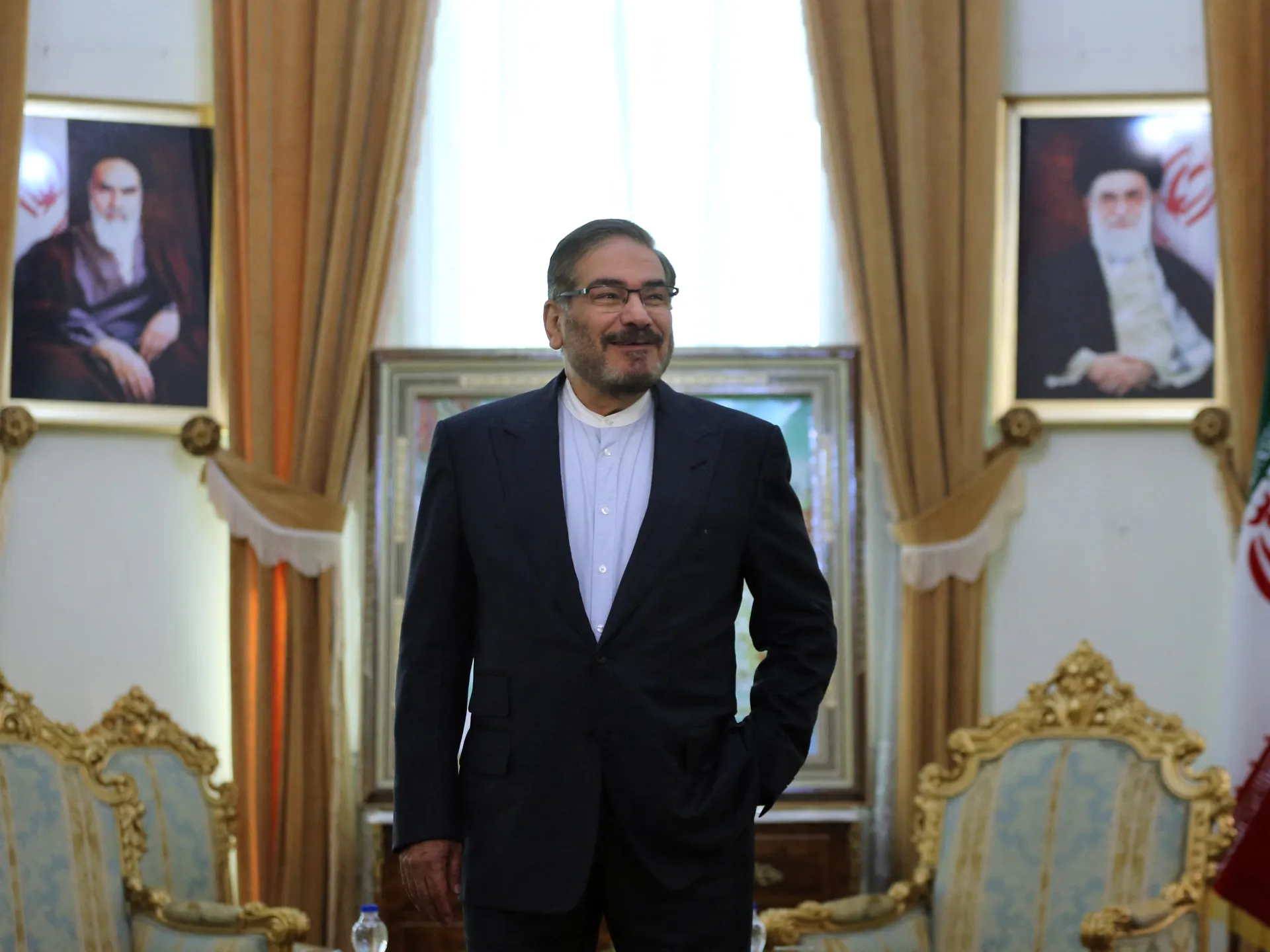
Ali Shamkhani, the secretary of Iran’s Defence Council and close adviser to Supreme Leader Ayatollah Ali Khamenei, has reportedly been killed in Israeli and US strikes on Iran.
An Israeli military spokesperson said he was among several top Iranian officials killed on Saturday.
Recommended Stories
list of 3 itemsend of list
There was no immediate comment from Tehran on his fate.
The 70-year-old was overseeing the negotiations between the US and Iran over the Iranian nuclear programme, the latest round of which concluded on Friday.
“If the main issue of the negotiations is not making nuclear weapons by Iran, this is in compliance with a religious decree issued by Iran’s leader and the country’s defence doctrine, and an immediate agreement is within reach,” Shamkhani said on Thursday.
Shamkhani had also been targeted in an Israeli strike in June 2025, during the 12-day war between Iran and Israel. There were reports that he had been killed in the attack, but he was later confirmed to have survived. He was pulled from the rubble of his home, and had sustained severe injuries.
He was recently appointed the secretary of Iran’s Defence Council, which was created after the war and coordinates Iran’s defence and national security policies, while mobilising resources to address threats.
In January, he warned that Iran’s response to any US military action would be “immediate, all out, and unprecedented, targeting the heart of Tel Aviv and all those supporting the aggressor”.
He led the Supreme National Security Council (SNSC) for a decade until 2023, making him the second-longest-serving security chief since 1979 after former President Hassan Rouhani, who was SNSC secretary for nearly 16 years.
Born in Ahvaz in Iran’s Khuzestan, Shamkhani and his family moved to Los Angeles in the United States when he finished school. He later returned to Iran, where he studied engineering.
During the Iran-Iraq war in the 1980s, Shamkhani was a commander in Iran’s Revolutionary Guard Corps (IRGC), and went on to be a commander of both of Iran’s navies, the IRGC Navy and the Iranian Navy.
He was the minister of defence between 1997 and 2005, and was the first Iranian defence official to visit Saudi Arabia since the revolution. He also came third in the 2001 presidential elections before returning to his role as defence minister.
Figures from across the United States political spectrum have reacted to President Donald Trump’s joint attack with Israel on Iran, with Republicans largely expressing support and Democrats failing to offer a robust and unified response.
The attacks have reportedly killed at least 201 people, including more than 80 in a school in southern Iran, many of them children.
Recommended Stories
list of 3 itemsend of list
Iran has launched retaliatory strikes on Israel as well as US bases across the region, located in countries such as Bahrain, Qatar, the United Arab Emirates, Saudi Arabia, Jordan, and Kuwait, prompting fears that the conflict could spiral out of control and plunge the region into violence.
An initial YouGov poll conducted on February 28, after the strikes, suggested that 33 percent of US adults approved of the US attacking Iran, while 45 percent disapproved. Among Democrats and Independents, approval was just 10 percent and 21 percent, respectively, while 68 percent of Republicans expressed support.
Here’s how some of the US’s most prominent elected representatives and political figures have reacted.
President Donald Trump: “A short time ago, the United States military started major combat operations in Iran. Our objective is to defend the American people by eliminating imminent threats from the Iranian regime, a vicious group of very hard, terrible people. Its menacing activities directly endanger the United States, our troops, our bases overseas, and our allies throughout the world.”
Republican House of Representatives Speaker Mike Johnson: “Today, Iran is facing the severe consequences of its evil actions. President Trump and the Administration have made every effort to pursue peaceful and diplomatic solutions in response to the Iranian regime’s sustained nuclear ambitions and development, terrorism, and the murder of Americans—and even their own people.”
Republican Senate Majority Leader John Thune: “For years, Iran’s relentless nuclear ambitions, its expanded ballistic missile inventory, and its unwavering support for terror groups in the region have posed a clear and unacceptable threat to U.S. servicemembers, citizens in the region, and many of our allies. Despite the dogged efforts of the president and his administration, the Iranian regime has refused the diplomatic off-ramps that would peacefully resolve these national security concerns. I commend President Trump for taking action to thwart these threats.”
Democratic House Minority Leader Hakeem Jeffries: “Donald Trump failed to seek Congressional authorization prior to striking Iran. Instead, the president’s decision to abandon diplomacy and launch a massive military attack has left American troops vulnerable to Iran’s retaliatory actions. We pray for the safety of the men and women of the US military as they have been put into harm’s way in a dangerous theatre of war.”
Democratic Senate Minority Leader Chuck Schumer: “The administration has not provided Congress and the American people with critical details about the scope and immediacy of the threat. Confronting Iran’s malign regional activities, nuclear ambitions, and harsh oppression of the Iranian people demands American strength, resolve, regional coordination, and strategic clarity. Unfortunately, President Trump’s fitful cycles of lashing out and risking wider conflict are not a viable strategy.”
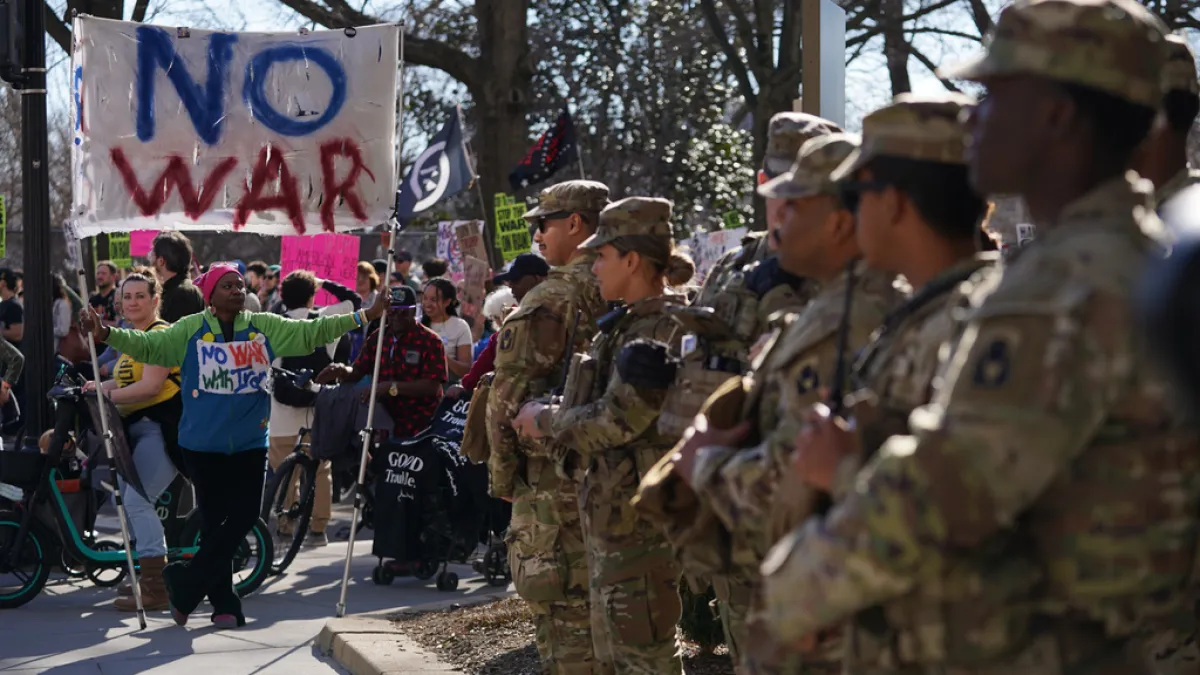
Democratic Representative Rashida Tlaib: “The American people do not want a war with Iran. Trump is acting on the violent fantasies of the American political elite and the Israeli apartheid government, ignoring the vast majority of Americans who say loud and clear: No More Wars.”
Democratic Representative Alexandria Ocasio-Cortez: “The American people are once again dragged into a war they did not want by a president who does not care about the long-term consequences of his actions. This war is unlawful. It is unnecessary. And it will be catastrophic. Just this week, Iran and the United States were negotiating key measures that could have staved off war. The president walked away from these discussions and chose war instead.”
New York City Mayor Zohran Mamdani: “Today’s military strikes on Iran — carried out by the United States and Israel — mark a catastrophic escalation in an illegal war of aggression. Bombing cities. Killing civilians. Opening a new theatre of war. Americans do not want this. They do not want another war in pursuit of regime change. They want relief from the affordability crisis. They want peace.”
Democratic Senator Bernie Sanders: “This Trump–Netanyahu war is unconstitutional and violates international law. It endangers the lives of U.S. troops and people across the region. We’ve lived through the lies of Vietnam and Iraq. No more endless wars. Congress must pass a War Powers Resolution immediately.”
Democratic Senator Chris Van Hollen: “Trump is lying to the American people as he launches an illegal, regime-change war against Iran. This is endangering American lives and has already resulted in mass civilian casualties. This is not making us safer & only damages the US and our interests. The Senate must immediately vote on the War Powers Resolution to stop it.”
Republican Senator Lindsey Graham: “I fervently pray that the long-suffering people of Iran will have their oppression ended soon. I also fervently pray that we’re on the verge of a new dawn in the Middle East, with historic opportunity for lasting peace and prosperity. As to our allies in Israel, President Trump and all under his command, your bravery has set in motion the end of evil and darkness, and the beginning of the light. Well done.”
Democratic Representative Ro Khanna: “Trump has launched an illegal regime change war in Iran with American lives at risk. Congress must convene on Monday to vote on Representative Thomas Massie and my WPR [War Powers Resolution] to stop this. Every member of Congress should go on record this weekend on how they will vote.”
Republican Representative Thomas Massie: “I am opposed to this War. This is not “America First.” When Congress reconvenes, I will work with Representative Ro Khanna to force a Congressional vote on war with Iran. The Constitution requires a vote, and your Representative needs to be on record as opposing or supporting this war.”
Republican Senator Tom Cotton: “Iran’s missile program poses an imminent threat to the United States and our allies. I’m thankful President Trump is taking necessary action to protect our homeland.”
Democratic Senator Adam Schiff: “Trump is drawing our country into yet another foreign war that Americans don’t want and Congress has not authorised. The Iranian regime is a brutal and murderous dictatorship. But that does not give Trump the authority to unilaterally initiate a war of choice.”
Democratic Senator John Fetterman: “Operation Epic Fury. President Trump has been willing to do what’s right and necessary to produce real peace in the region. God bless the United States, our great military, and Israel.”
Former Democratic Presidential Nominee Kamala Harris: “Donald Trump is dragging the United States into a war the American people do not want. Let me be clear: I am opposed to a regime-change war in Iran, and our troops are being put in harm’s way for the sake of Trump’s war of choice.”
Former Republican Representative Marjorie Taylor Greene: “We said “No More Foreign Wars, No More Regime Change!” We said it on rally stage after rally stage, speech after speech. Trump, Vance, basically the entire admin campaigned on it and promised to put America FIRST and Make America Great Again. My generation has been let down, abused, and used by our government our entire adult lives and our children’s generation is literally being abandoned.”
Suranne Jones returns in a beloved BBC psychological drama’s third and final series, nine years after the show gripped the nation in 2017.
Nail-biting BBC drama that ‘gripped the UK’ has confirmed a new season after 9 years
If you were amongst the millions of viewers who tuned into the finale of Doctor Foster’s second series back in 2017, you’d be forgiven for thinking that was the end. Yet, following an extended nine-year break, the much-loved BBC psychological drama that kept audiences gripped is returning with a thrilling third chapter.
The forthcoming five-part television series will see Suranne Jones reprising her role as Gemma Foster, alongside Bertie Carvel, who returns as Simon, and Tom Taylor portraying their son Tom. Penned by Mike Bartlett, the synopsis for the new season states: “10 years ago, on discovering her husband Simon was having an affair, Gemma Foster enacted a masterful revenge.
“But the fallout was devastating when her 15-year-old son Tom disappeared. Now, in series three, Gemma is still a GP, still in the same house, but on the brink of a fresh start: she has met someone new and is getting married. But as the wedding day draws closer, and friends and family gather, shadows from the past begin to re-emerge, threatening both her happiness and her reputation.
“As Gemma fights to protect those she loves and expose whoever’s intent on hurting her, will she be able to put the past to bed, dispense justice, and claim the future she deserves, before it is too late?”
Lindsay Salt, Director of BBC Drama, described it as “a privilege to welcome Doctor Foster back to the BBC after almost a decade away”.
She continued: “The extent to which the first two series gripped the nation is a credit to Mike’s writing, the talented team at Drama Republic and our magnificent cast – and now we’re ready do it one more time in this epic final chapter. Bring it on!”
Based on IMDb reviews, audiences of the programme have expressed their views on the opening two seasons. One viewer branded the show a “BBC winner” and a “treasure”.
They commented: “Have found myself watching the BBC less over the years, there are, though, a fair share of treasures like Doctor Foster. It is very well made visually, stylish and audaciously with a fluid way of how it’s shot.”
Ensure our latest lifestyle and travel headlines always appear at the top of your Google Search by making us a Preferred Source. Click here to activate or add us as Preferred Source in your Google search settings.
Another remarked: “One of the greatest BBC shows with strong Shakespearean drama elements of personas and duplicity, betrayal, obsession, jealousy, revenge, conniving and plotting, and distrust.
“An amazing and gripping show that makes an intense and horrific portrayal of something as domestic as marriage and its complications (an understatement). Carrying strong tones of paranoia, calculated revenge, depiction of ‘natural’ misogyny, and with undertones of misanthropy, this show will give you knots and chills and keep you hooked.”
Another viewer remarked: “I don’t normally write reviews, but if you like nail-biting drama, watch this. Block out five hours of your life and get comfy. You won’t want to leave the telly!”.
A third person observed: “This program is engrossing, well-written and well-acted. It walks a fine line between being utterly disgusting and completely relatable, making me hate it and love it all at once. You definitely have to be patient to watch all the incendiary acrimony!”.
Feb. 27 (UPI) — President Donald Trump announced he was directing all federal agencies to stop using Anthropic’s artificial intelligence solutions even as it’s the only one being used in the military’s classified systems.
Trump lashed out on his social media network Truth Social Friday.
“THE UNITED STATES OF AMERICA WILL NEVER ALLOW A RADICAL LEFT, WOKE COMPANY TO DICTATE HOW OUR GREAT MILITARY FIGHTS AND WINS WARS! That decision belongs to YOUR COMMANDER-IN-CHIEF, and the tremendous leaders I appoint to run our Military,” he posted.
“The Leftwing nut jobs at Anthropic have made a DISASTROUS MISTAKE trying to STRONG-ARM the Department of War, and force them to obey their Terms of Service instead of our Constitution. Their selfishness is putting AMERICAN LIVES at risk, our Troops in danger, and our National Security in JEOPARDY,” he wrote.
But an unnamed source told Axios that despite the president’s post, Anthropic and the Pentagon were still negotiating ahead of the 5:01 p.m. deadline that Defense Secretary Pete Hegseth set.
Undersecretary of Defense for Research and Engineering Emil Michael called Anthropic CEO Dario Amodei a liar on X. “It’s a shame that @DarioAmodei is a liar and has a God-complex. He wants nothing more than to try to personally control the U.S. Military and is OK putting our nation’s safety at risk,” he posted on X. “The @DeptofWar will ALWAYS adhere to the law but not bend to whims of any one for-profit tech company.”
Trump’s post continued: “Therefore, I am directing EVERY Federal Agency in the United States Government to IMMEDIATELY CEASE all use of Anthropic’s technology. We don’t need it, we don’t want it, and will not do business with them again! There will be a Six Month phase out period for Agencies like the Department of War who are using Anthropic’s products, at various levels. Anthropic better get their act together, and be helpful during this phase out period, or I will use the Full Power of the Presidency to make them comply, with major civil and criminal consequences to follow,” the president said.
“WE will decide the fate of our Country – NOT some out-of-control, Radical Left AI company run by people who have no idea what the real World is all about.”
Anthropic’s AI model Claude was used to capture Venezuelan presidentNicolas Maduro and could be used in Iran, if needed. Axios reported that defense officials praised Claude’s abilities and one admitted that it would be a “huge pain in the ass” to stop using it.
Anthropic faced a 5 p.m. EST deadline to comply with the Pentagon and allow it to use the company’s artificial intelligence system without restraint.
If Anthropic declines, Hegseth has said he will have the company labeled a “supply chain risk” or invoke the Defense Production Act to force it to agree.
In July, Anthropic signed a $200 million contract with the Pentagon, but Amodei insists that its AI model Claude not be used for mass surveillance in the United States or for autonomous weapons without human approval.
The Defense Department has said it doesn’t plan to use the tools in that manner, but that Anthropic doesn’t get to make those decisions. It says the U.S. government can use tools “for all lawful purposes.”
“Legality is the Pentagon’s responsibility as the end user,” a senior Pentagon official told NPR.
On Thursday, Amodei said the company wouldn’t agree to the Pentagon’s terms.
“I believe deeply in the existential importance of using AI to defend the United States and other democracies and to defeat our autocratic adversaries,” he wrote in a statement. “Anthropic understands that the Department of War, not private companies, makes military decisions. We have never raised objections to particular military operations nor attempted to limit use of our technology in an ad hoc manner.
“However, in a narrow set of cases, we believe AI can undermine, rather than defend, democratic values. Some uses are also simply outside the bounds of what today’s technology can safely and reliably do. Two such use cases [domestic surveillance and autonomous weapons] have never been included in our contracts with the Department of War, and we believe they should not be included now.”
Amodei acknowledged Hegseth’s threats to blacklist the company or force it to comply.
“These threats do not change our position: we cannot in good conscience accede to their request,” Amodei wrote. “But given the substantial value that Anthropic’s technology provides to our armed forces, we hope they reconsider.”
Pentagon spokesperson Sean Parnellsaid on X Thursday: “Here’s what we’re asking: Allow the Pentagon to use Anthropic’s model for all lawful purposes. This is a simple, common-sense request that will prevent Anthropic from jeopardizing critical military operations and potentially putting our warfighters at risk. We will not let ANY company dictate the terms regarding how we make operational decisions. They have until 5:01 p.m. ET on Friday to decide. Otherwise, we will terminate our partnership with Anthropic and deem them a supply chain risk for DOW [Department of Defense].”
Geoffrey Gertz, a senior fellow at the Center for a New American Security, told NPR that both measures the Pentagon threatened are unusual and contradictory.
“It’s this funny mix where they both are such a risk that they need to be kicked out of all systems, and so essential that they need to be compelled to be part of the system no matter what,” he said.
Lauren Kahn, a senior research analyst at Georgetown’s Center for Security and Emerging Technology, told CNBC: “There are no winners in this. It leaves a sour taste in everyone’s mouth.”
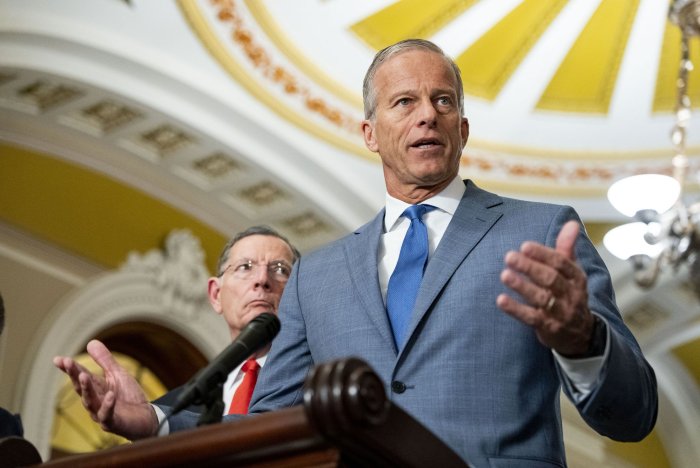
Senate Majority Leader John Thune, R-S.D., speaks during a press conference after the weekly Republican Senate caucus luncheon at the U.S. Capitol on Wednesday. Photo by Bonnie Cash/UPI | License Photo
At an emergency UN Security Council meeting in New York on Saturday afternoon, US Ambassador Mike Waltz said the strikes were “directed toward specific and strategic objectives: to dismantle missile capabilities that threaten allies, to degrade naval assets used to destabilise international waters, and to disrupt the machinery that arms proxy militias and to ensure the Iranian regime, never ever can threaten the world with a nuclear weapon”.
“Sinners,” the blockbuster film that has been a major contender during awards season, was the dominant winner at the 57th NAACP Image Awards.
The film scored trophies for outstanding motion picture and most of the acting awards, including breakthrough performance, awarded to Miles Caton. Michael B. Jordan, who won for actor in a motion picture, also won entertainer of the year.
Before the ceremony, Ryan Coogler won writing and directing honors, while Wunmi Mosaku and Delroy Lindo won the supporting actress and actor awards, respectively.
But the ceremony was not only about honoring Black excellence in entertainment. The event was also flavored by several remarks from celebrities addressing the divisive political climate and recent events that have targeted and affected Black entertainers.
Viola Davis received the chairman’s award during the 57th NAACP Image Awards on Saturday.
(Chris Pizzello / Chris Pizzello/invision/ap)
Host Deon Cole kicked off the ceremony by welcoming the audience to “the Trump Image Awards. Because you know he wants his name on everything.”
Asking permission to “buy a curse word,” he made a joke that was bleeped out during the live stream, but was apparently aimed at federal ICE agents. The comment sparked a standing ovation from the predominantly black-tie audience, many of whom wore anti-ICE pins.
“I don’t want to see no ICE ever again,” he said. “When I looked at the guest list, I took off Ice Cube, Ice-T, Ice Spice. I don’t want no ice cream, I don’t want no ice in my drink.”
Utilizing one of Jackson’s trademark slogans, Jackson said, “We will not be erased from this country’s history because I am somebody.”
And in accepting the award for actor in a drama series for “Paradise,” Sterling K. Brown added, “Like Sam said, they can’t erase us because there is no country without us.”
The event also continued to put a spotlight on the uproar surrounding the shouting of a racial slur during the BAFTA Awards last week.
Jordan and Lindo were presenters during the BAFTA Awards, which took place at London’s Royal Festival Hall. As they were introducing the visual effects category, a member of the audience shouted the N-word. The two actors paused momentarily before continuing.
Director Ryan Coogler, left, and actor Delroy Lindo presenting the award for actress in a motion picture. The pair addressed the incident at the BAFTAs in their remarks.
(Chris Pizzello / invision/AP)
Later, awards host Alan Cumming addressed the outburst, referencing the nominated film “I Swear,” which is about Scottish campaigner John Davidson, who has Tourette syndrome and shouted the racist slur from the audience. Cumming apologized, while Davidson, an executive producer for the BAFTA-nominated film, left his seat midway through the ceremony. BAFTA later issued an apology to the actors.
Cole delivered a comic prayer referencing the incident: “Lord, if there are any white men out there with Tourette’s, I advise you to tell them to read the room tonight, Lord. It might not go the way they think.”
Actor Rebecca Hall early in the awards show said she wanted to pay tribute to “two kings. Thank you for your grace.”
Lindo later in the ceremony said, “We appreciate all the support we’ve been shown in the aftermath of what happened last weekend. It is an honor to be here among our people this evening … It’s a classic case of something that could have been very negative becoming very positive.”
A hot air balloon crashed and became snagged on a cell phone tower Saturday morning in Longview, Texas. Photo courtesy the Longview Fire Department
Feb. 28 (UPI) — Firefighters in East Texas rescued two people after the hot air balloon they were traveling in struck a cell phone tower and left them stranded, local officials said.
In a Facebook post, the Longview Fire Department said the incident happened around 8:15 a.m. in north Gregg County. Neither of the occupants were injured.
After the balloon hit the cell tower, it became stuck about 920 feet in the air.
“Climbing operations began around 8:50 a.m. using multiple rope systems due to the extreme height and complexity of the incident,” the post said.
The rescuers reached the balloon occupants around 10 a.m. and both were brought to the ground.
Longview is about 130 miles east of Dallas and 65 mile west of Shreveport, La.
President Donald Trump stood in front of regional leaders during a visit to the Middle East in May and declared a new era of US foreign policy in the region, one that is not guided by trying to reshape it or change its governing systems.
“In the end, the so-called nation-builders wrecked far more nations than they built, and the interventionists were intervening in complex societies that they did not even understand themselves,” the US president said in rebuke of his hawkish predecessors.
Recommended Stories
list of 3 itemsend of list
Less than a year later, Trump ordered an all-out assault on Iran with the stated goal of bringing “freedom” to the country, borrowing language from the playbook of interventionist neoconservatives, like former President George W Bush, whom he spent his political career criticising.
Analysts say the war with Iran does not fit with Trump’s stated political ideology, policy goals or campaign promises.
Instead, several Iran experts told Al Jazeera that Trump is waging a war, together with Israel, that only benefits Israel and its prime minister, Benjamin Netanyahu.
“This is, once again, a war of choice launched by the US with [a] push from Israel,” said Negar Mortazavi, a senior fellow at the Center for International Policy in Washington, DC.
“This is another Israeli war that the US is launching. Israel has pushed the US to attack Iran for two decades, and they finally got it.”
Mortazavi highlighted Trump’s criticism of his predecessors, who had waged regime-change wars in the region.
“It is ironic, because this is a president who called himself the ‘president of peace‘,” she told Al Jazeera.
History of warnings of the Iranian ‘threat’
Netanyahu, who promoted the 2003 US invasion of Iraq, has been warning for more than two decades that Iran is on the cusp of acquiring nuclear weapons.
Iran denies seeking a nuclear bomb, and even Trump administration officials have acknowledged that Washington has no evidence that Tehran is weaponising its uranium enrichment programme.
After the US bombed Iran’s main enrichment facilities in the 12-day war in June last year – an attack that Trump says “obliterated” the country’s nuclear programme – Netanyahu pivoted to a new supposed Iranian threat: Tehran’s ballistic missiles.
“Iran can blackmail any American city,” Netanyahu told pro-Israel podcaster Ben Shapiro in October.
“People don’t believe it. Iran is developing intercontinental missiles with a range of 8,000km [5,000 miles], add another 3,000 [1,800 miles], and they can get to the East Coast of the US.”
Trump repeated that claim, which Tehran has vehemently denied and has not been backed by any public evidence or testing, in his State of the Union address earlier this week.
“They’ve already developed missiles that can threaten Europe and our bases overseas, and they’re working to build missiles that will soon reach the United States of America,” he said of the Iranians.
Trump has been building the case for a wider war with Iran since the June conflict, repeatedly threatening to bomb the country again.
But the US president’s own National Security Strategy last year called for de-prioritising the Middle East in Washington’s foreign policy and focusing on the Western Hemisphere.
Meanwhile, the US public, wary of global conflict after the wars in Iraq and Afghanistan, has also been largely opposed to new strikes against Iran, public opinion polls show.
Only 21 percent of respondents in a recent University of Maryland survey said they favoured a war with Iran.
The first day of the war saw Iran fire missiles against bases and cities that host US troops and assets across the Middle East in retaliation for the joint US-Israeli strikes, plunging the region into chaos.
Trump acknowledged that US troops may suffer casualties in the conflict. “That often happens in war,” he said on Saturday. “But we’re doing this not for now. We’re doing this for the future. And it is a noble mission.”
‘Ignoring the vast majority of Americans’
The Trump administration had appeared to step back from the brink of conflict earlier this month by engaging in diplomacy with Tehran.
US and Iranian negotiators held three rounds of talks over the past week, with Tehran stressing that it is willing to agree to rigorous inspections of its nuclear programme.
Omani mediators and Iranian officials had described the last round of negotiations, which took place on Thursday, as positive, saying that it yielded significant progress.
The June 2025 war, initiated by Israel without provocation, also came in the middle of US-Iran talks.
“Netanyahu’s agenda has always been to prevent a diplomatic solution, and he feared Trump was actually serious about getting a deal, so the start of this war in the middle of negotiations is a success for him, just like it was last June,” Jamal Abdi, the president of the National Iranian American Council (NIAC), told Al Jazeera.
“Trump’s embrace of regime change rhetoric is a further victory for Netanyahu, and loss for the American people, as it suggests the US may be committed to a long and unpredictable military boondoggle.”
While announcing the strikes on Saturday, Trump said his aim is to prevent Iran from “threatening America and our core national security interests”.
But US critics, including some proponents of Trump’s “America first” movement, have argued that Iran – more than 10,000km (6,000 miles) away – does not pose a threat to the US.
Earlier this month, US Ambassador to Israel Mike Huckabee told conservative commentator Tucker Carlson that “if it were not for Iran, there wouldn’t be Hezbollah; we wouldn’t have the problem on the border with Lebanon”.
Carlson said, “What problem on the border with Lebanon? I’m an American. I’m not having any problems on the border with Lebanon right now. I live in Maine.”
On Saturday, Congresswoman Rashida Tlaib stressed that the US public does not want war with Iran.
“Trump is acting on the violent fantasies of the American political elite and the Israeli apartheid government, ignoring the vast majority of Americans who say loud and clear: No More Wars,” Tlaib said in a statement.
BRIT Award viewers were left fuming after the show’s In Memoriam segment – blasting it as “a pathetic attempt”.
On Saturday night’s show, The Charlatans musician Tim Burgess was brought on stage to lead the In Memoriam tributes, leading on the loss of his close friend, Gary ‘Mani’ Mounfield of The Stone Roses and Primal Scream, who died in November.
Sign up for the Showbiz newsletter
Thank you!
The In Memoriam was led by Tim Burgess of The CharlatansCredit: ITVThe video tape was deemed ‘pathetic’ and ‘blink and you’ll miss it’ by fansCredit: ITV
However, the artist struggled to say his speech, simply referring to “Mani” which some viewers thought to mean Manchester, or not recognising who he was referring to.
A videotape then played, showing the name of dozens of stars who have passed across the past year, flashing on screen briefly as a select number of artists were played in the background.
But fans were left less-than-pleased at how quickly the segment ran, before the show cut to an ad break.
Complaining to X (formerly Twitter), one fan wrote: “What a pathetic memoriam to artists who had passed away last year.
“That tribute to all artists that have passed over this year was laughable,” wrote another.
“Wow! One of the worst ‘In Memoriam’ I have ever seen,” noted a third.
“What on earth was that all about #Brits2026 ?” complained a fourth. “I’m talking about those who lost their lives in the last year – that was disrespectful to many of those who passed.”
While a fifth wrote :”Putting the In Memorial names up quicker than anyone can read them. Poor show Brits, poor show #Brits2026″
“Whose idea was that In Memorial section? Blink and you’ve missed it – must get the adverts in….” wrote a sixth.
While on stage, Sturgess told the crowd at Manchester’s Co-Op Arena: “Hi everyone, I’m here tonight to pay tribute to my good friend. Mani changed music and inspired generations ahead of him. These songs he recorded will be his legacy.
“He was truly one of the phenomenal ones. I’d like you to think about Mani for a moment and we can cherish the thought that we got to experience our time and his time together.
“Let’s take a few moments to remember Mani.”
While the In Memoriam segment may have been lacking, the awards show was filled with tributes to artists loved and lost.
Most notably, Ozzy Osbourne was posthumously awarded the Lifetime Achievement Award, with wife Sharon and daughter Kelly collecting the award on his behalf.
Robbie Williams then led a performance of Black Sabbath track No More Tears, joined by Ozzy’s Black Sabbath bandmates.
Mark Ronson also dedicated his award of Outstanding Contribution to Music to the late Amy Winehouse, without whom “noone would know who he is.”
His performance medley of his tracks also included recordings of the singer, who died in July 2011 at the age of 27.
He also commented that March marks the 20th anniversary of he and Amy working together on her iconic album, Back to Black.
The Brit Awards are available to watch now on ITVX.
Tim paid tribute to his friend ‘Mani’, who died in NovemberCredit: ITVThe minute-long segment flashed dozens of names, singling out a handful to play their music in the backgroundCredit: ITVTim said that Mani’s legacy has been cemented by the music he made while aliveCredit: ITV
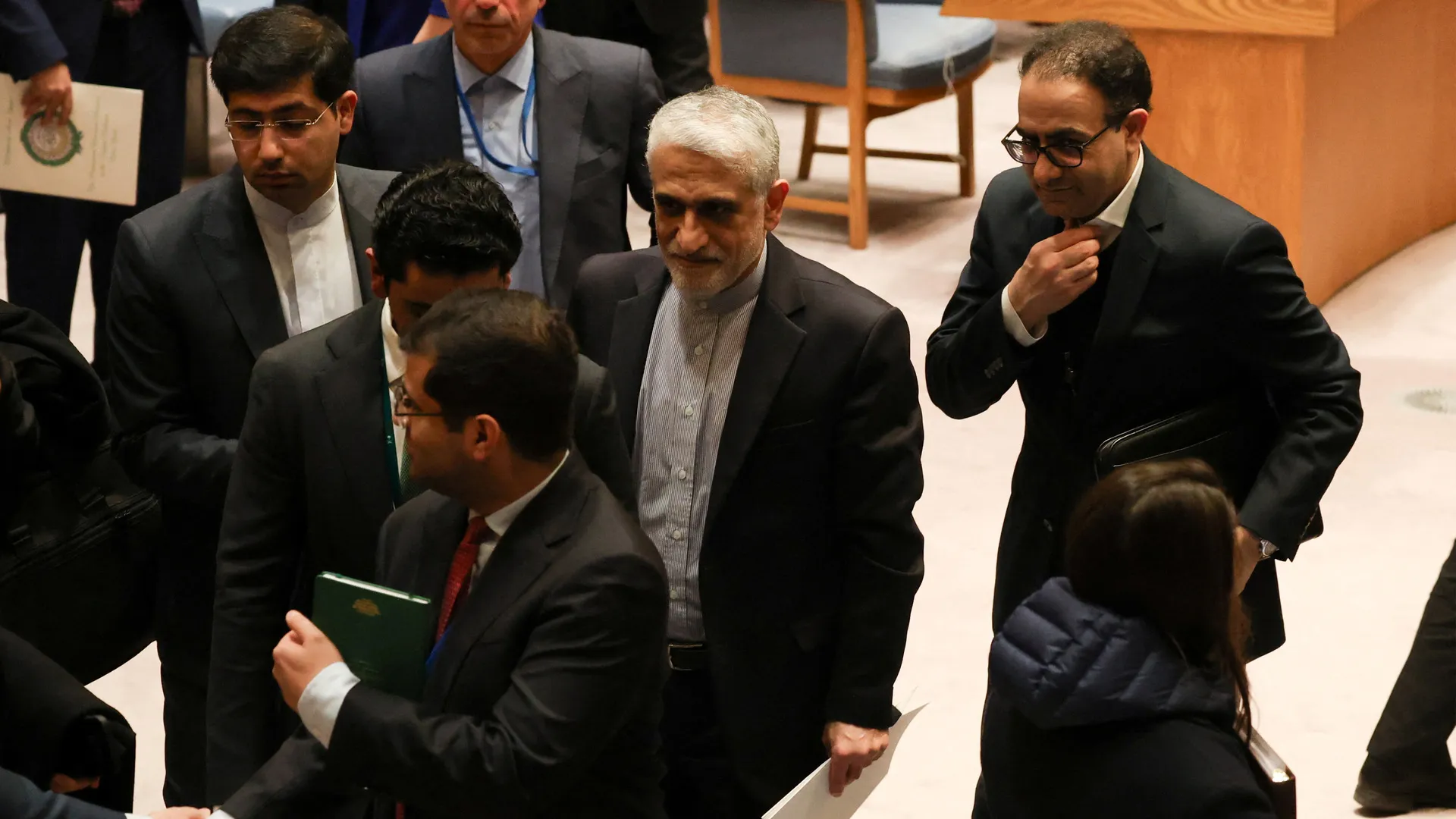
Iranian Ambassador to the United Nations, Amir-Saeid Iravani denounced US-Israeli military strikes across the country, decrying the deaths and injuries of hundreds of civilians as a war crime.
Democratic lawmakers have largely condemned the strikes on Iran, emphasizing the lack of congressional approval.
Published On 1 Mar 20261 Mar 2026
Share
Lawmakers from the Democratic Party have condemned the US attacks on Iran as a “dangerous” and “unnecessary” escalation, and called on the Senate to immediately vote on legislation that would block the president’s ability to take further military action without congressional approval.
Senator Tim Kaine, a member of the Senate Armed Services and Foreign Relations Committees and the primary author of the war powers resolution, called President Donald Trump’s order to attack Iran a “colossal mistake”.
Recommended Stories
list of 3 itemsend of list
“The Senate should immediately return to session and vote on my War Powers Resolution to block the use of US forces in hostilities against Iran,” Kaine said in a statement on Saturday. “Every single Senator needs to go on the record about this dangerous, unnecessary, and idiotic action.”
House of Representatives Minority Leader Hakeem Jeffries echoed Kaine, saying that House Democrats are committed to forcing a floor vote on a measure to restrict Trump’s war powers regarding Iran.
“Donald Trump failed to seek Congressional authorisation prior to striking Iran. Instead, the President’s decision to abandon diplomacy and launch a massive military attack has left American troops vulnerable to Iran’s retaliatory actions,” he said in a statement. “The Trump administration must explain itself to the American people and Congress immediately.”
The push for a legislative check on Trump’s executive power has gained significant bipartisan momentum in the Senate, of which the Republican Party maintains a slim majority.
Senate Minority Leader Chuck Schumer demanded on Saturday that Congress be briefed immediately about the Iran attacks, including an all-senators classified session and public testimony, criticising the administration for not providing details on the threat’s scope and immediacy.
“The administration has not provided Congress and the American people with critical details about the scope and immediacy of the threat,” he said in a statement.
Senator Mark Warner, vice chairman of the Senate Select Committee on Intelligence, described the strikes in a statement posted on X as “a deeply consequential decision that risks pulling the United States into another broad conflict in the Middle East”.
He questioned the urgency and intelligence behind the attack, warning of repeating “mistakes of the past”, like the Iraq war.
“The American people have seen this playbook before – claims of urgency, misrepresented intelligence, and military action that pulls the United States into regime change and prolonged, costly nation-building,” he said.
Not just Democrats
While the push to curb executive military authority is largely driven by the Democratic caucus, a growing contingent of Republican lawmakers has signalled a rare break from the White House to join the effort.
Republican representative Thomas Massie, one of the most outspoken critics, described the strikes as “acts of war unauthorised by Congress”.
“I am opposed to this War. This is not America First,” he wrote on X.
In the Senate, Republican Senator Rand Paul, who also co-sponsored the war powers resolution, said his opposition to the war is based on constitutional principles.
“My oath of office is to the Constitution, so with studied care, I must oppose another Presidential war,” he said on X.
It’s a Wednesday afternoon in West Hollywood, one day after the city was blanketed in a light coating of rain. The midday sun has only just begun to peek through the overcast sky.
Its beams are slightly more vivid through the large windows of the Edition, which sit at the edge of a secluded area of the hotel. Jamie Hewlett sits at a wooden table stirring a cappucino with a black straw.
“I mean, who drinks out of a straw when you get past the age of 10, right?” he says, jokingly. After 25 years of bouncing around the globe with Gorillaz, he’s still longing for a jet lag cure. Coffee can only do so much.
Leaning back in his chair, in a suave, all-beige outfit, he starts to grin while recounting his day in Los Angeles.
“We’ve been walking around the streets having a very rare morning off together. We bought some weed, which is always one of the most wonderful things about this state,” he recalls.
He also finds humor in L.A.’s obsession with driver-less food delivery.
“Every time we saw a post-bot driving down the road, we stopped and doffed our caps. … In the future, when robots take over and destroy us all, they’ll remember me for being nice to the post-bot!”
It’s been a long few weeks for Hewlett and bandmate Damon Albarn as they roll out the group’s latest endeavor, “The Mountain,” out Friday. Just one day prior, “House of Kong” opened at Rolling Greens in downtown L.A. The exhibition, initially intended as a Gorillaz 25th anniversary event, has landed on the West Coast.
“I think with this album, we were both quite happy with what we’ve done … and feeling like it was an honest, genuine adventure that was taken, and what we’ve given is something that we’re proud of,” Hewlett says.
He and Albarn are also artists at heart and in nature. It’s why Gorillaz continues to look and sound the way it does, and why the group is consistently pushing the agenda of how a nonexistent band can still resonate with a group of fans who are very much alive.
“The process, the research, the putting it together, the making of it is really fun, and the delivery of it is kind of like a mini death syndrome,” he says. “What you’re required to do is get straight on to the next thing, and you won’t have any time to waste thinking about the fact that the completion of that left you feeling numb, because then you’re excited about the next project.”
He adds that Albarn, similarly, is like a “kid in a sweet shop” when he’s making music: “The moment it’s finished, there’s no interest in discussing it.”
Even so, the album is undeniably their most intimate in recent history.
Perhaps it’s something to do with the experience of grief that the two lived through, losing their fathers only 10 days apart and just before a trip to India. Or maybe it’s a testament to the process behind “The Mountain,” which saw Hewlett and Albarn travel the country, spending more time together there than during previous album productions.
“It’s weird, because I’m born 10 days after Damon… the idea presented itself, and at that point we were going down that road, and there was no avoiding it… It wasn’t even necessarily going to be a Gorillaz project; ‘Let’s go together and see what happens.’ ”
“I completely fell in love with the place and got into their whole concept of death,” Hewlett says of India.
(Blair Brown)
Hewlett says the album was also inspired by his late mother-in-law, Amo, who was diagnosed with cancer in 2010 and opted for Eastern medicine instead of chemo.
“She said, ‘No, I’m going to India.’ … She was into Ayurveda medicine and knew this doctor, and she spent three months in India [being treated]. When she came back, her cancer had gone. In France, they call her in for a checkup, and they give her a scan. They say, ‘Where’s your cancer gone?’ She said, ‘I’ve been in India,’ and they say, ‘We don’t believe in that.’ ”
It wouldn’t be until 2022 when Jamie visited India himself, under unfortunate circumstances. He was in Belgrade with Albarn shooting the second video from “Cracker Island” when he received a call from his brother-in-law, who said that Amo had just had a stroke.
“They said they saved her, but she went into a coma. I was on a plane to India as quickly as I could get a visa, which wasn’t easy at the Indian Embassy in London,” he said. “I spent eight weeks with my wife, Emma, in Jaipur, dealing with that, in a public hospital during a pneumonia epidemic… having that experience that was traumatic; it should have been a reason for me to never go back to India ever again.”
But during his time there, it became clear that being in the country had the opposite effect on him.
“I completely fell in love with the place and got into their whole concept of death. … We met a lot of families who became friends of ours because we were at the hospital every day,” he continued.
“A loved one who was dying, who was in tears because they knew they were going to die, but also there was a celebration about the fact that they were coming back,” he said. “Their understanding of the cycle of life is a lot more appealing to me.”
Shortly after, Hewlett returned to Europe and went straight to Albarn with an idea: “I said, ‘We have to go to India, it’s so amazing,’ and of all the places he’d been around the world, that was the place he still hadn’t been. So we decided to go.”
Albarn first visited India in May 2024 alongside Hewlett.
(Blair Brown)
“The Mountain” is, as expected, heavily doused with notions on the concept of death. Inevitably, the question arose: “How can we make an album about death that would leave the listener feeling optimistic?”
But Gorillaz has always been a group entwined with different, equally heavy topics. On “Plastic Beach,” they tackle the climate crisis and human extinction. The enchanting and rhythmic “Dirty Harry” also examines war and soldiers, with its single cover even giving a nod to Stanley Kubrick’s “Full Metal Jacket.”
The tone Gorillaz achieved on “The Mountain” is an extension of that.
“The Happy Dictator,” released as the lead single in September, parodies megalomaniac Saparmurat Niyazov’s approach to governing in Turkmenistan. As Sparks produce stunning vocals, singing “I am the one to give you life again,” Gorillaz fictional frontman 2-D (voiced by Albarn) breaks in to pronounce, “No more bad news!”
Equally as enjoyable is “The God of Lying,” the third single released, featuring Idles. Joe Talbot hauntingly asks, “Do you love your blessed father? / Anoint by fear of death / Do you feel the lies creep on by? / As soft as baby’s breath.” It’s a bouncy song that could have been pulled straight out of the band’s self-titled debut, all the way back from 2001.
Even so, it feels criminal to compare it with the band’s earlier catalog, given that Hewlett and Albarn are artists in “perpetual motion.” This has resulted in some of their most sonically and visually impressive work — with styles and genres consistently shifting — but also asks the listener to be willing to evolve with them.
“I think art has to be an evolution,” Hewlett explains. “I know what David Hockney does at 88 years old, still smoking and drinking his red wine. He wakes up every day … and he does something new, and then the next day he does something new, and that promotes longevity. He’s never bored.”
Gorillaz’s exhibition in “House of Kong” seems to be contradictory in its existence, more or less serving as a retrospective from a band that not only doesn’t like to look in the rearview, but likely has it taped over altogether.
But it’s also an organic experience, teeming with originality, despite its familiar marketing as an “immersive experience.” It’s more comparable to something out of a Disney or Universal theme park than another gallery that merely projects video onto a wall.
“Down here at Kong, we are creating something that … only really existed in Jamie’s drawings and animations and in the minds of the fans of Gorillaz,” says Stephen Gallagher of Block9. He served as creative director on the project but has worked with the band since 2018 and previously collaborated with Banksy for his “The Walled Off Hotel” and “Dismaland.”
“I’d had this idea already: ‘What about if we built a film studio, and then you could do a backstage tour, and you’re seeing behind the scenes of the making of all of these music videos?’ ” he continued. “Then that evolved, and it became the ‘House of Kong.’ ”
As for why the exhibition landed in L.A. for its second showing, Hewlett compares the city to Shanghai when it was “still free and decadent and swinging.”
“I love L.A. … I love it. I’ve been coming here since I was 19 years old. … L.A. might be the last one [showing], to be honest,” he says. “All that stuff in the exhibition belongs to me; this is part of my lifelong collection of weird s—!”
“I’d love to get it back at some point,” he jokes.
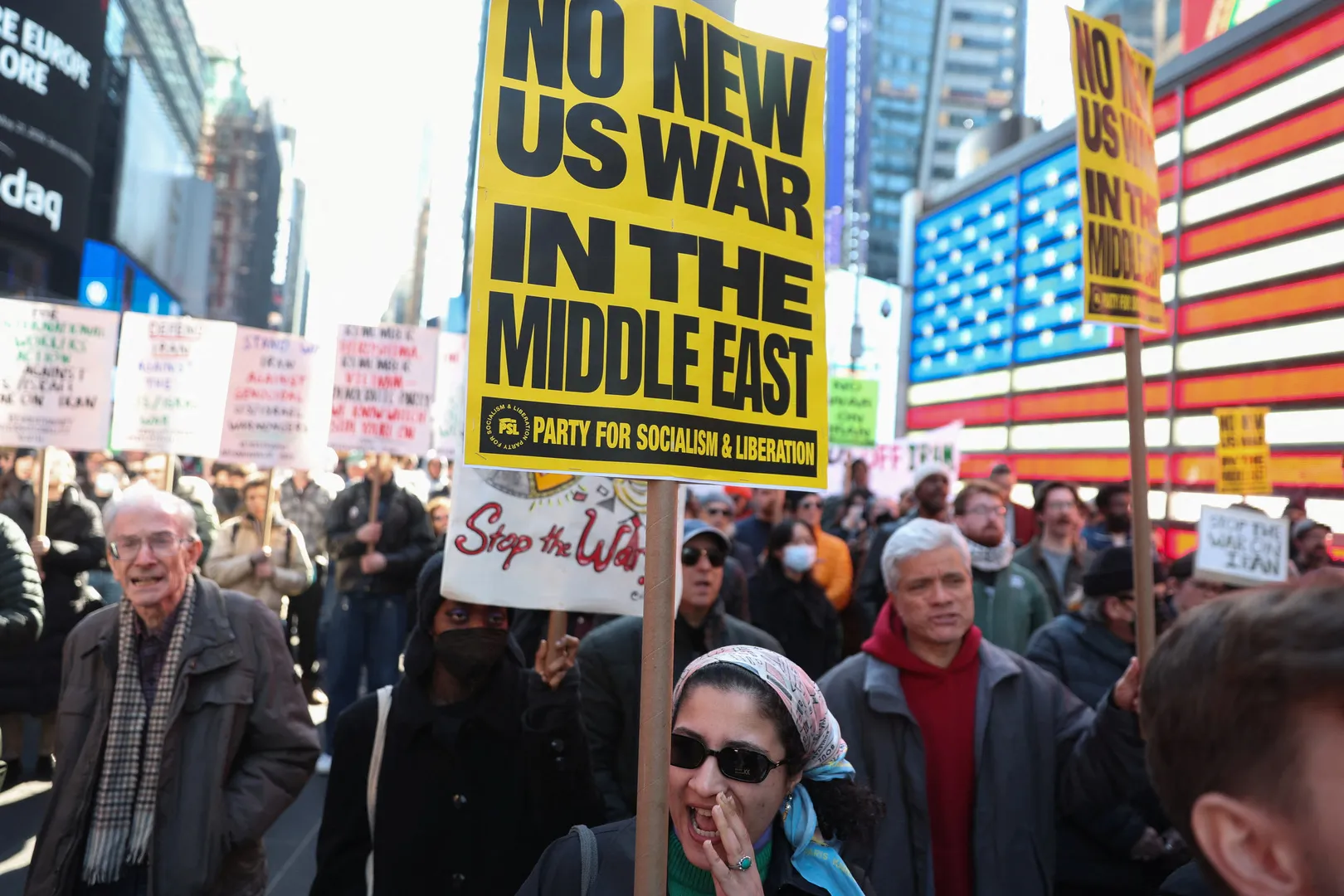
New York City residents converged on Times Square on Saturday hours after US President Donald Trump ordered a wave of deadly strikes on Iran. Mayor Zohran Mamdani called the strikes “a catastrophic escalation in an illegal war of aggression”.
Weekly insights and analysis on the latest developments in military technology, strategy, and foreign policy.
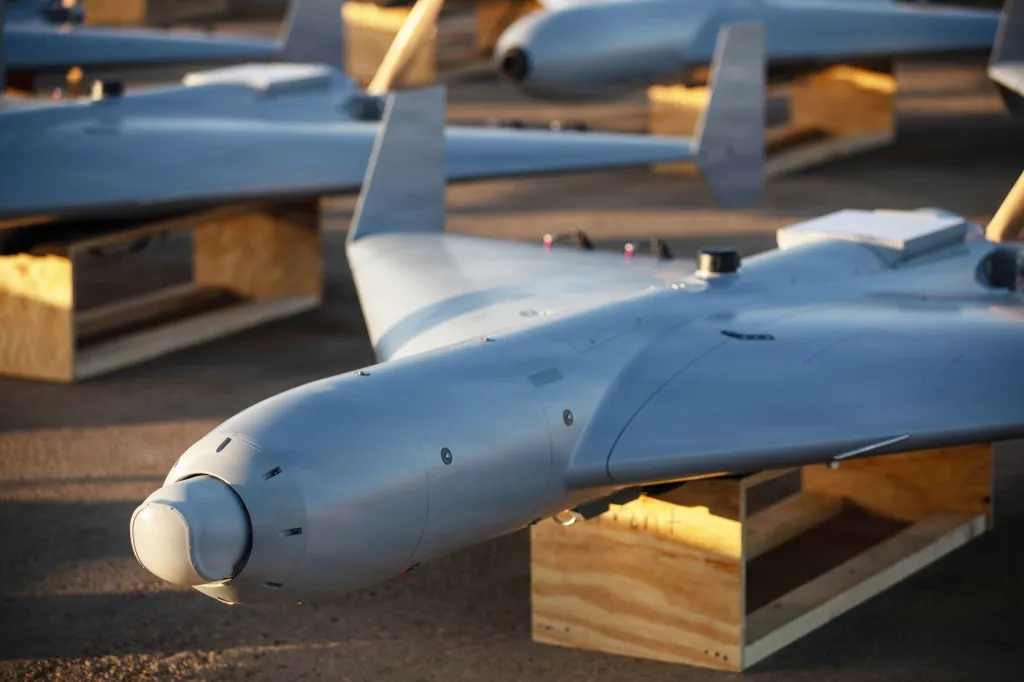
The U.S. has used LUCAS kamikaze drones for the first time in combat, U.S. Central Command acknowledged on Saturday. The drones, based on the Iranian Shahed-136, were launched from the ground by Task Force Scorpion Strike (TFSS). The task force was set up in December “to flip the script on Iran,” a U.S. official told us at the time. The launch of LUCAS drones marks a rare instance when the U.S. adopted Iran’s drone playbook and used it against them.
Today’s strikes were part of Operation Epic Fury, an attack the U.S. launched along with Israel on targets across Iran. You can read more about that in our initial story here.
CENTCOM’s Task Force Scorpion Strike – for the first time in history – is using one-way attack drones in combat during Operation Epic Fury. These low-cost drones, modeled after Iran’s Shahed drones, are now delivering American-made retribution. 🇺🇸 pic.twitter.com/VYdjiECKDT
The LUCAS drones are designed to be a far less expensive strike weapon than missiles, which not only cost more, but are far more difficult and time-consuming to produce.
“Costing approximately $35,000 per platform, LUCAS is a low-cost, scalable system that provides cutting-edge capabilities at a fraction of the cost of traditional long-range U.S. systems that can deliver similar effects,” Navy Capt. Tim Hawkins, a CENTCOM spokesperson, told TWZ back in December. “The drone system has an extensive range and the ability to operate beyond line of sight, providing significant capability across CENTCOM’s vast operating area.”
In addition, the LUCAS design includes features that allow for “autonomous coordination, making them suitable for swarm tactics and network-centric strikes,” a U.S. official told us. As we have explained in detail in the past, the swarming capabilities combined with some of the drones being equipped with Starlink terminals, means extremely advanced cooperative tactics and dynamic targeting are possible, all while keeping humans in the loop.
The LUCAS drones have “an extensive range and are designed to operate autonomously,” CENTCOM said in a press release announcing the creation of Task Force Scorpion Strike. “They can be launched with different mechanisms to include catapults, rocket-assisted takeoff, and mobile ground and vehicle systems.”
Low-cost Unmanned Combat Attack System (LUCAS) drones are positioned on the tarmac at a base in the U.S. Central Command operating area, Nov. 23. Costing approximately $35,000 per platform, LUCAS drones are providing U.S. forces in the Middle East low-cost, scalable capabilities to strengthen regional security and deterrence. (Courtesy Photo)
Though the LUCAS drones fired against Iran were ground-launched, U.S. Navy personnel in the Middle East test-fired one from the Independence class Littoral Combat Ship (LCS) USS Santa Barbara. This came two weeks after the U.S. military announced the formation of Task Force Scorpion Strike.
“Bravo Zulu. U.S. Navy forces in the Middle East are advancing warfighting capability in new ways, bringing more striking power from the sea and setting conditions for using innovation as a deterrent.” – Adm. Brad Cooper, CENTCOM Commander https://t.co/TgQ4WLbph3pic.twitter.com/WUiAVojTht
Overall, the LUCAS drone’s core design was based directly on the Shahed-136, a U.S. official told us.
“The U.S. military got hold of an Iranian Shahed,” according to the U.S. official in December. “We took a look and reverse-engineered it. We are working with a number of U.S. companies in the innovation space.”
“The LUCAS drone is the product of that [reverse-engineering] effort,” the official added. “It pretty much follows the Shahed design.”
An Iranian-made Shahed-136 ‘Kamikaze’ drone flies over the sky of Kermanshah, Iran on March 7, 2024. (Photo by Anonymous / Middle East Images via AFP) ANONYMOUS
The LUCAS was designed by SpektreWorks. Its website provides basic specifications for a related target drone design called the FLM 136, which has a stated maximum range of 444 miles and can stay aloft for up to six hours. Its total payload capacity, not counting fuel, is 40 pounds, and it cruises at a speed of around 74 knots (with a dash speed of up to 105 knots). Whether these details reflect the capabilities of the operationalized LUCAS design is unclear.
War Secretary Pete Hegseth inspecting a LUCAS drone. (US Army)
In contrast, the baseline Shahed-136, which is powered by a small 50-horsepower internal combustion engine, has a top speed of around 100 knots (185 kilometers per hour) and a maximum range of approximately 1,242 miles (2,000 kilometers) while carrying an 88-pound (40-kilogram) warhead, according to the U.S. Army’s Operational Environment Data Integration Network (ODIN) training portal. It was designed to strike static targets based on targeting data programmed in before launch.
Iran has shown additional versions over the years. The Shahed-238 has new guidance systems, with radar and electro-optical/infrared guidance and jet power. Earlier Shahed versions primarily employed a combination of inertial and GPS navigation to hit fixed targets.
از موشک کروز ابرفراصوت فتاح2 و پهباد شاهد 147 با حضور رهبر انقلاب رونمایی شد
The use of the LUCAS comes as Iran has launched its Shahed-136 drones against targets across the Middle East and highlights the limitations of air defenses. Even IDF’s multi-tier integrated air defense system, the most advanced one on Earth, and U.S. ground- and sea-based air defense systems around the Middle East do not offer complete protection against these and other weapons.
Iran used Shahed-136s to successfully strike the headquarters of the U.S. Fifth Fleet in Manama, Bahrain.
You can see a video of another Shahed attack in Bahrain below.
It is unclear how many of these drones the U.S. used, what targets they hit or the effect of any strikes. A U.S. official declined comment. Regardless, this is the first war where the U.S. is actively using long-range one-way attack drones and it just so happens to be against the same country that the design, and its modern operating concept, was lifted from.
Final Oscar voting began yesterday. How many of the nominated movies have you seen? Are you doing your due diligence in all the categories before the March 15 ceremony or, given the summer weather outside your window, might the mountains be calling?
I’m Glenn Whipp, columnist for the Los Angeles Times and host of The Envelope newsletter. It’s never too early for flip-flops, is it?
Sign up for The Envelope
Get exclusive awards season news, in-depth interviews and columnist Glenn Whipp’s must-read analysis straight to your inbox.
This may seem obvious. But until this year, the motion picture academy operated entirely on the honor system, strongly encouraging members to see everything before voting.
Now voters have to show their work — up to a point.
This year, academy members are required to certify through the group’s screening room portal that they have viewed all nominated films in each category to be eligible to vote in that category. Since nominations were announced in January, the academy has been emailing voters with updates on their progress, indicating where they’re cleared to vote and where they still have work to do.
One wrinkle, and it’s not a small one: Members can simply check a box indicating that they’ve watched a movie outside the academy’s platform. Perhaps they saw it at a festival, on a streaming platform other than the portal or the place God intended films to be seen — a movie theater.
Whether they actually did watch the movies is left to the honesty of the voter. It’s still an honor system, and members do not need to show movie stubs, tickets or receipts.
Talking with academy members, there seems to be a little wiggle room when it comes to having a clear conscience.
Take the voter who loved Ethan Hawke‘s lead turn as legendary lyricist Lorenz Hart in “Blue Moon,” but hated “Marty Supreme,” turning it off 20 minutes after starting it. Since the academy’s screening room counts a movie as watched only if it’s viewed in its entirety, this voter told me they planned on restarting “Marty Supreme” one night and running it on mute so he could vote in the lead actor category.
“I’d seen enough,” he said. “Watching [Timothée] Chalamet play another pingpong tournament wouldn’t make me change my mind.”
Other academy members told me they were OK marking the “watched” box next to a movie they hadn’t seen, provided they had viewed four of the category’s other nominees. By and large though, they were the outliers. Most voters said they were happy to abstain from voting in a category in which they hadn’t watched all the nominated work. (As academy members may not publicly state voting decisions or preferences, voters spoke on the condition of anonymity.)
“I don’t need to see another ‘Avatar’ movie,” a producers branch member said. “So I’m fine not voting for visual effects or costume design this year. Life is short.”
“I like the idea that I can abstain from categories without any guilt,” an Oscar-nominated writer noted, adding that she thought the new system has been “helpful, reminding me to watch things.”
To that effect, academy members have been receiving a flurry of emails and texts that would give off Big Brother vibes if it didn’t simply boil down to an admonition to watch “Frankenstein” so they could vote in the nine categories where Guillermo del Toro’s monster movie is nominated.
It really isn’t that big an ask, as in recent years the Oscars have become increasingly dominated by a smaller number of movies vacuuming up a greater share of the nominations. This year, the five movies earning the most recognition — “Sinners,”“One Battle After Another,” “Marty Supreme,” “Frankenstein” and “Hamnet” — hauled in 56 nominations.
If an Oscar voter viewed the 10 best picture nominees, they’d be eligible to mark their ballots in best picture and eight other categories — supporting actor, adapted screenplay, casting, cinematography, film editing, production design and original score. Add Hawke’s “Blue Moon” and that opens up lead actor. Make it a double feature with “It Was Just an Accident” and original screenplay becomes available.
“You don’t really need to be much more than a casual moviegoer to knock out most of your ballot,” an actors branch member told me, “except for things like animation and documentaries and the shorts. I don’t know how many people watch all of those.”
Nobody does, save for the PricewaterhouseCoopers accountants counting the ballots. The question vexing both voters and the awards consultants paid to persuade them is how this new, formalized voting will affect the results. As Oscar winners are sometimes the movies that are the most-watched, might requiring voters to see all the nominated work boost less-publicized efforts?
“If ‘Sirât’ wins sound over ‘F1,’ then I think it’s a new ballgame,” one veteran campaigner said. “Right now, though, nobody knows.”
We will soon. In the meantime, with Oscar voting running through Thursday, some academy members tell me their weekend is booked.
“Three nights, three movies,” one voter said. “And then I’m watching ‘Bridgerton.’”
Lebanese Prime Minister Nawaf Salam, pictured at Lebanon’s presidential palace in Baabda in 2025, said that his country will not be dragged into “adventures” that threaten it’s security and unity. File Photo by Wael Hamzeh/EPA-EFE
Feb. 28 (UPI) — BERUIT — Lebanese Prime Minister Nawaf Salam said on Saturday that he rejects any attempt to drag his country into “adventures” that threaten its security and unity, indirectly calling on Iran-backed Hezbollah to refrain from involving Lebanon in the ongoing U.S.-led war on Iran.
Salam’s warning coincided with a statement from the U.S. Embassy in Lebanon urging U.S. citizens still in the country to leave “now, while commercial options remain available.”
In a post on X, the prime minister appealed to all Lebanese “to act with wisdom and patriotism” in light of the “dangerous developments in the region,” urging them to place Lebanon’s interests “above any other consideration.”
“I reiterate that we will not accept anyone dragging the country into adventures that threaten its security and unity,” he said, referring to Hezbollah, which previously announced that it would not remain neutral if Iran were attacked and its leader, Ayatollah Ali Khamenei, were targeted.
Salam, who also held a meeting with several ministers and relief officials, urged sparing the country the “repercussions” of the war on Iran, which broke out Saturday morning with joint U.S.-Israel attacks and prompted Iranian retaliatory strikes on Israel and U.S. targets across the Gulf Arab states.
When asked whether Hezbollah had reassured the Lebanese state that it would not participate in the war, he reiterated his call to spare Lebanon another war that “would bring even more suffering upon the Lebanese people.”
He was referring to the war with Israel that broke out on October 8, 2023, when Hezbollah opened a front in support of Gaza, during which top Hezbollah leaders, military commanders, and Lebanese civilians were killed, and substantial damage was inflicted, with border villages in southern Lebanon completely destroyed.
Despite a cease-fire agreement reached on Nov. 27, 2024, Israel continued to operate with near-total freedom, striking suspected Hezbollah operatives and positions almost daily, causing further destruction and casualties, including among civilians.
Salam and President Joseph Aoun also conducted diplomatic contacts in an effort to keep Lebanon “neutral and spare it from the repercussions” of the ongoing war in the region.
Aoun, for his part, affirmed that sparing Lebanon from “the disasters and horrors of external conflicts” and preserving its sovereignty, security, and stability are “absolute priorities.” Later, he was informed by U.S. Ambassador to Lebanon Michel Issa that Israel has “no intention of escalating” against Lebanon, as long as there are no hostile actions from the Lebanese side, according to a presidential statement.
Hezbollah, for its part, announced the postponement of a Saturday event during which its Secretary-General, Sheikh Naim Qassem, was scheduled to speak. Instead, it released a statement condemning “the treacherous U.S.-Israeli aggression” that targeted Iran after months of threats aimed at forcing it to “surrender.”
Hezbollah also expressed “full solidarity” with Tehran and urged the countries of the region to “stand against this aggressive scheme and recognize its dangers,” warning that “its dire consequences will affect everyone without exception if left unchallenged.”
It refrained from hinting to the possibility of supporting Iran militarily.
The Prime Minister condemned Iran’s strikes targeting Qatar, Bahrain, Jordan, the United Arab Emirates, Kuwait, and Saudi Arabia, during calls with their top officials to reaffirm Lebanon’s solidarity against such “aggressions.”
Asked whether the U.S. Embassy in Lebanon and the Hamat military base, which hosts U.S. training teams, might be targeted by Iran, Salam said he could not rule it out but noted that all necessary security measures had been taken to prevent such attacks.
He also confirmed that his government was prepared for “any emergency,” having adopted “proactive measures” in anticipation of war, and assured that food, medicine, and fuel were available in quantities sufficient to meet citizens’ needs for at least two months.
He noted that Beirut’s Rafik Hariri International Airport remains open, with the country’s national carrier, Middle East Airlines, operating as usual — except for countries in the region that have closed their airspace. He added that some airlines have canceled their flights to Lebanon.
His comments came at a time U.S. citizens were urged by the U.S. State department not to travel to Lebanon and those who are already in the country to leave “now while commercial options remain available.”
Senate Majority Leader John Thune, R-S.D., speaks during a press conference after the weekly Republican Senate caucus luncheon at the U.S. Capitol on Wednesday. Photo by Bonnie Cash/UPI | License Photo
Interior Ministry official says 66 missiles were fired at Qatar, and there were 114 reports of falling shrapnel.
Published On 28 Feb 202628 Feb 2026
Share
Doha, Qatar – Eight people have been injured in Qatar after missile shrapnel landed in multiple locations across the country, authorities said, following a barrage of Iranian missiles that Qatar said were intercepted by its air defences.
Brigadier Abdullah Khalifa Al-Muftah, the head of public relations at Qatar’s Ministry of Interior, said in a televised address on Saturday that 66 missiles were fired at Qatar and that authorities received 114 reports of shrapnel falling nationwide. He said one of the injured people was in serious condition.
Recommended Stories
list of 3 itemsend of list
The Interior Ministry issued an emergency alert urging the public to stay away from military sites and remain indoors, warning people not to approach or handle any unidentified debris and to report any to authorities.
Qatar’s Ministry of Defence said it had “successfully intercepted” a second wave of attacks targeting several areas. It said all missiles were intercepted before reaching the country’s territory, and urged residents to remain calm and follow official instructions.
Qatar’s Ministry of Foreign Affairs condemned what it said was the targeting of Qatari territory with Iranian ballistic missiles, calling it “reckless and irresponsible”, as well as a “flagrant violation” of sovereignty and an escalation threatening regional stability.
Ibrahim Sultan Al-Hashemi, the head of public relations at the Foreign Ministry, said the attack was inconsistent with the principles of “good neighbourliness”, and that Qatar reserved the right to respond “in accordance with international law”.
The ministry also called for an immediate halt to escalation and a return to negotiations.
The missile barrage came as Iran launched strikes across the Gulf after the US-Israeli attacks on Iran, an escalation that prompted air-defence interceptions over several countries. The news agency Reuters reported that Kuwait, Qatar, the United Arab Emirates and Bahrain said they intercepted Iranian missiles, while Jordan also intercepted missiles.
This is not the first Iranian attack on Qatar. In June 2025, during the 12-day war between Iran and Israel, Iran launched missiles at the Al Udeid airbase, a key facility hosting US forces near Doha.
Saturday’s barrage came after the United States and Israel carried out strikes on Iran, raising fears of a wider conflict and increasing pressure on Gulf states that host US forces and critical energy infrastructure.
The developments heightened anxiety across the Gulf, where Ramadan routines were disrupted by air raid alerts, interceptions and warnings about unexploded fragments, as leaders urged restraint amid fears of a widening confrontation.