QatarEnergy has suspended liquefied natural gas (LNG) production following a drone attack, straining the global LNG market.
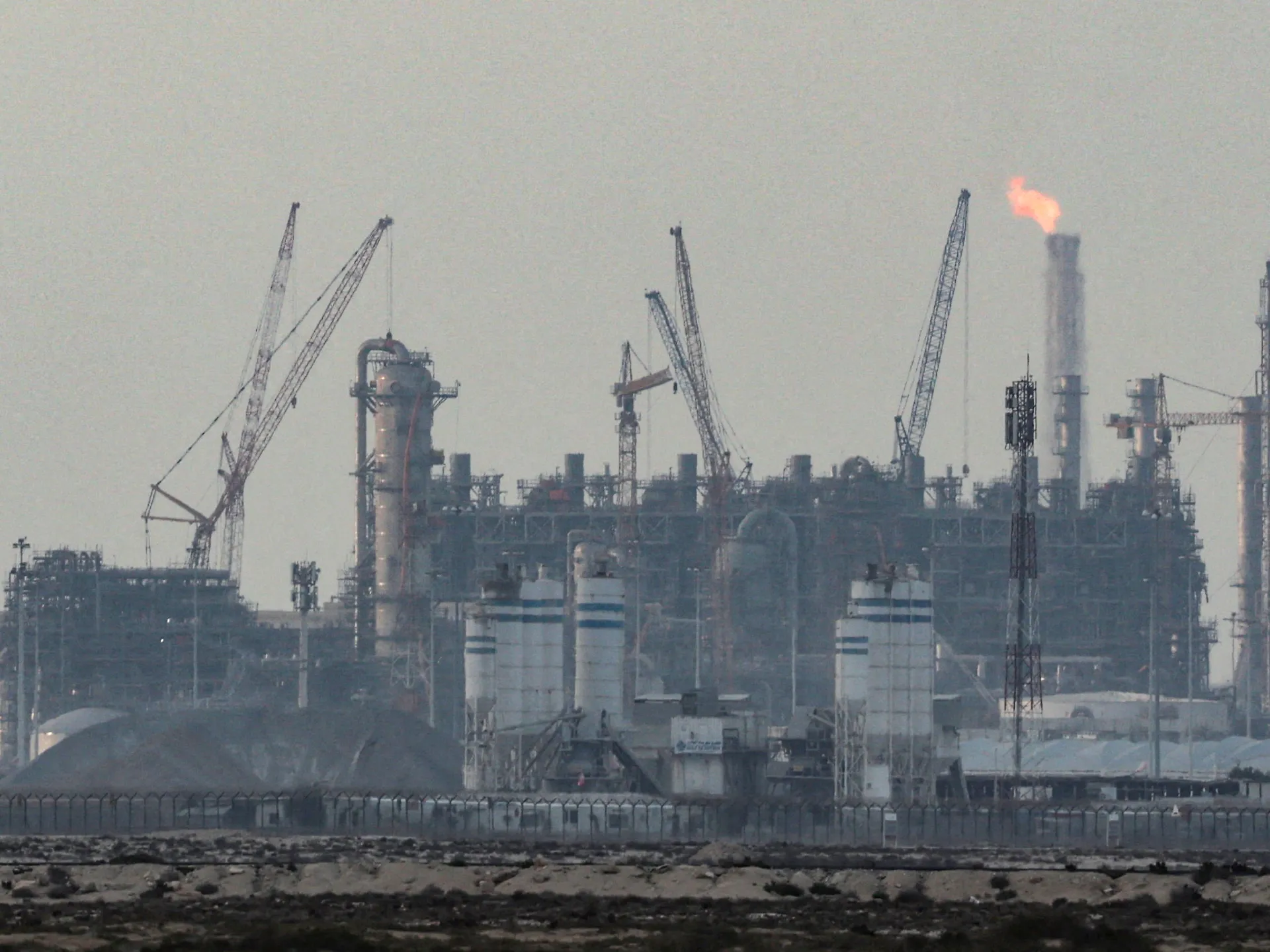
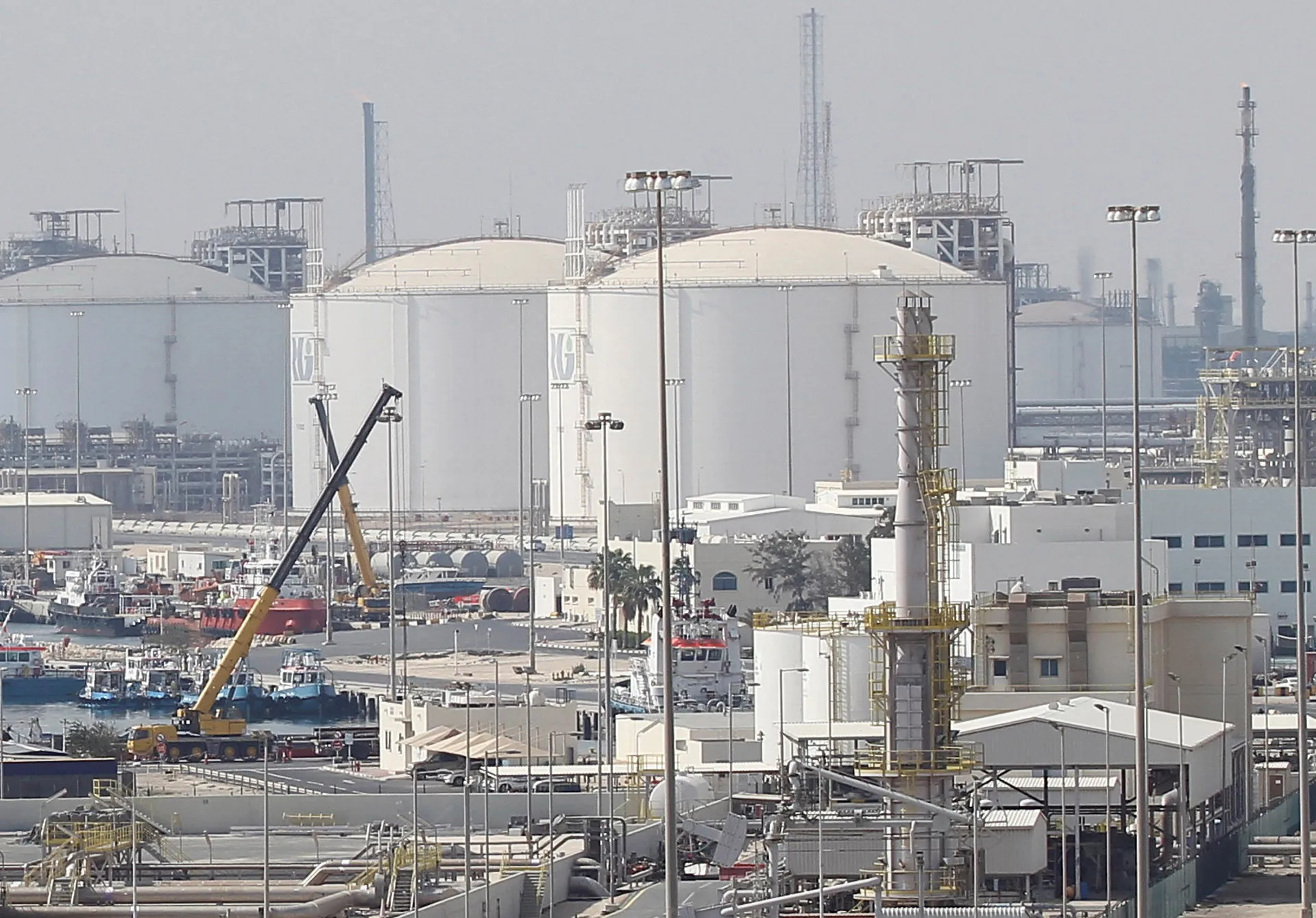
On Monday, Iranian drones struck two sites, according to Qatar’s Ministry of Defence: a water tank at a power plant in Mesaieed Industrial City and an energy facility in Ras Laffan belonging to QatarEnergy, the world’s largest LNG producer.
Recommended Stories
list of 4 itemsend of list
While no casualties were reported, QatarEnergy suspended the production of LNG and other products at the impacted sites for security reasons.
Why did QatarEnergy suspend operations?
The drone attacks hit the Ras Laffan complex, which is home to processing units for liquefied natural gas set to be exported.
The state-owned energy company was forced to declare what is known as force majeure, when a company is freed from contractual obligations in the event of extraordinary circumstances, such as a drone attack, according to Reuters and Bloomberg News, citing people familiar with the matter.
This comes at a time when intensifying sea battles between Iran and the United States, coupled with missiles flying over the region, have effectively choked the Strait of Hormuz, a strategic trade route. At least 150 vessels have dropped anchor, including those carrying LNG, in the strait and surrounding areas, according to Reuters.
Traffic in the strait for both LNG and oil has declined by 86 percent, with roughly 700 ships sitting idle on either side of the passage, according to the Anadolu news agency.
How will this impact the broader global LNG market?
Qatar’s LNG exports represent 20 percent of the global market. With fewer products reaching the market, LNG supply is down, causing prices to surge.
“Definitely an escalation overnight with pressure on energy infra in the Gulf,” said Rachel Ziemba, a senior fellow at the Center for a New American Security, a think tank.
The countries hit the most directly are Asian markets, particularly Bangladesh, India, and Pakistan.
China is the world’s largest importer of natural gas, but it gets the majority of its imports from Australia, accounting for 34 percent of its imports, according to the US Energy Information Administration.
Maksim Sonin, an energy expert at Stanford University’s Center for Fuels of the Future, however, said that while QatarEnergy’s decision would bring “volatility” to energy markets, he wouldn’t describe the situation as a “crisis” just yet.
“We will see near-term volatility in the LNG market, especially if infrastructure in Qatar and other hubs is damaged,” Sonin told Al Jazeera. However, he added, “I do not expect the 2022 gas crisis to repeat in Europe,” referring to the period following Russia’s full-fledged invasion of Ukraine, when many European nations tried to dramatically scale back their dependence on Russian oil and gas.
Which are the world’s largest LNG exporters?
Until 2022, Russia was the world’s biggest exporter of LNG, but its sales have plummeted since its war on Ukraine began.
Now, the US is the world’s largest exporter of LNG, followed by Qatar and Australia.
Will this add pressure on Europe?
While 82 percent of QatarEnergy’s sales are to Asian countries, the halt puts increased pressure on other markets across the globe, too, particularly in Europe.
In effect, a smaller supply of gas will need to meet the same global demand. As a result, gas prices have already started soaring: Benchmark Dutch and British wholesale gas prices soared by almost 50 percent, while benchmark Asian LNG prices jumped almost 39 percent, on Monday after the QatarEnergy announcement.
“Not good if Qatar stays offline for long, of course,” said Ziemba. The only silver lining for Europe: “At least the worst of the winter in Europe may be behind,” Ziemba pointed out.
The European Union’s gas coordination group will meet on Wednesday to assess the impact of the widening conflict in the Middle East, a European Commission spokesperson told Reuters on Monday. The group includes representatives from member state governments. It monitors gas storage and security of supply in the EU, and coordinates response measures during crises.
Weekly insights and analysis on the latest developments in military technology, strategy, and foreign policy.
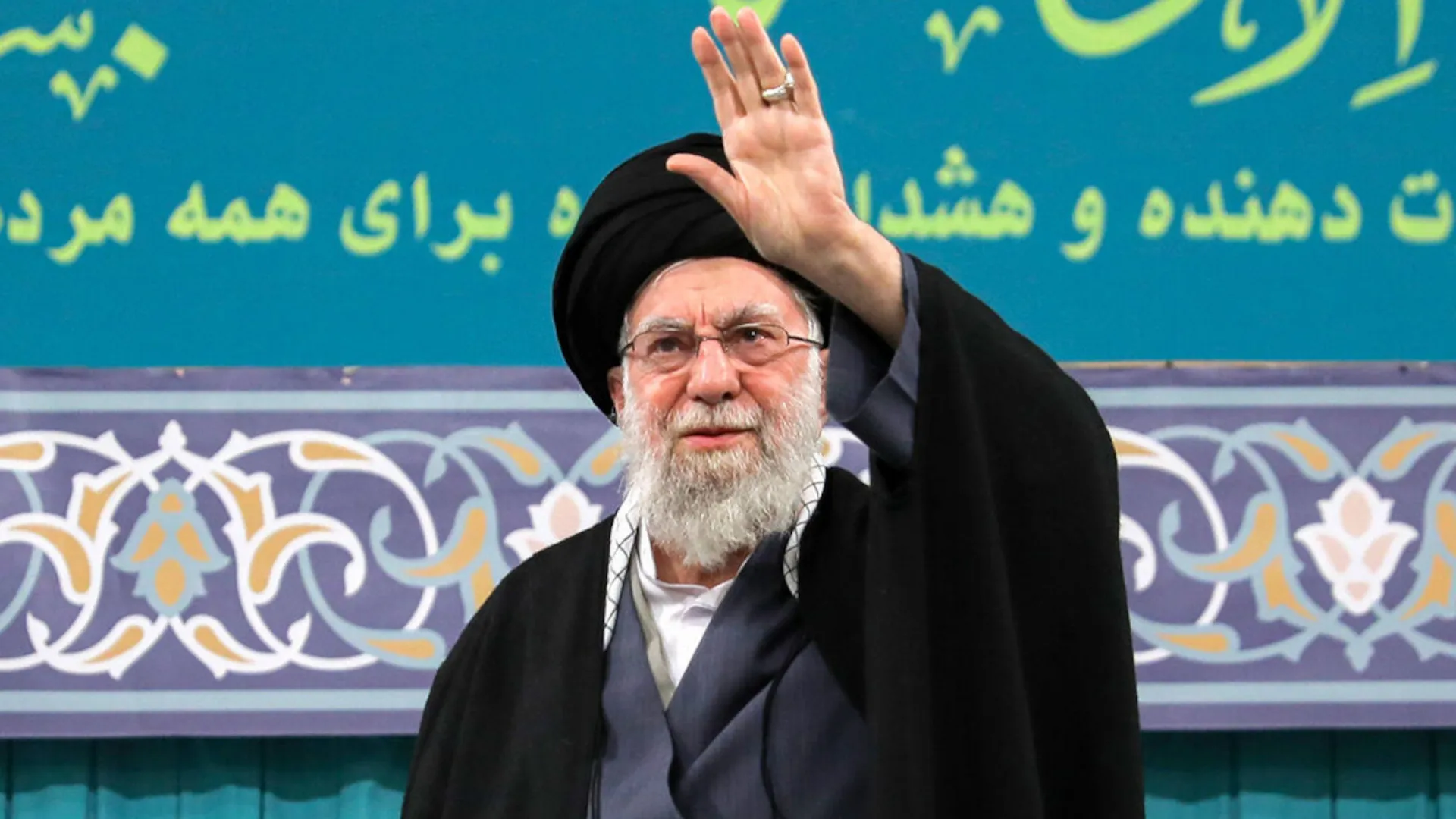
U.S. President Donald Trump says that Iran’s Supreme Leader Ayatollah Ali Khamenei has been killed. Khamenei was among a number of senior Iranian officials targeted in the initial wave of U.S.-Israeli strikes earlier today.
Readers can first get caught up on the ongoing conflict in our previous rolling coverage here.
“Khamenei, one of the most evil people in History, is dead. This is not only Justice for the people of Iran, but for all Great Americans, and those people from many Countries throughout the World, that have been killed or mutilated by Khamenei and his gang of bloodthirsty THUGS,” Trump wrote in a post on his Truth Social social media network. “He was unable to avoid our Intelligence and Highly Sophisticated Tracking Systems and, working closely with Israel, there was not a thing he, or the other leaders that have been killed along with him, could do.”
“This is the single greatest chance for the Iranian people to take back their Country. We are hearing that many of their IRGC, Military, and other Security and Police Forces, no longer want to fight, and are looking for Immunity from us,” Trump added. “As I said last night, ‘Now they can have Immunity, later they only get Death!’ Hopefully, the IRGC and Police will peacefully merge with the Iranian Patriots, and work together as a unit to bring back the Country to the Greatness it deserves.”
Israeli Prime Minister Benjamin Netanyahu had said earlier today that, “this morning, in a powerful surprise strike, the compound of the tyrant Ali Khamenei was destroyed in the heart of Tehran… and there are many signs that this tyrant is no longer alive.”
Trump’s comment that Khamenei was “unable to avoid our Intelligence and Highly Sophisticated Tracking Systems” is notable.
“Getting asked a lot why this kicked off mid day and not at night. I don’t know for certain, but everything points to moving up a timeline based on time sensitive intelligence,” our own Tyler Rogoway highlighted earlier in a post on X. “Limitations to doing this for a large bi-national operation, but yeah, that’s where I would place my bet.”
Use your imagination on what would be worth doing that…
Exactly how this will impact the course of the conflict and especially the future of Iran is unclear, but as it sits now there is likely a gaping power vacuum in Iran.
Introduced by host Jonathan Ross, the 18 Handcuffed: Last Pair Standing contestants will have to endure being chained to each other round-the-clock, doing everything in unison.
If the pressure becomes unbearable, they can choose to uncuff at any moment, but doing so means they’re out of the running, with the last pair standing claiming the entire pot.
The competitors are a diverse mix from all walks of life and are strangers to each other, reports the Daily Star.
As the cuffs are secured, with the duos separated by a special screen, they’ll only find out who they’ve been chained to once the partition is removed.
Discussing the biggest hurdle they encountered, Antony revealed: “Being a man of 60 years of age, I have to get up in the middle of the night to go to the loo so I was conscious of the fact that wouldn’t be something Tilly would be doing.
“I practised for weeks before we filmed with every contraption known to man on how to actually wee in the bed and I managed to get the right contraption so that was a really tough thing but I don’t think I ever woke her up when I was doing it.”
He continued: “She used to snuggle down sort of hip level and I got this contraption on the old man to pee and her head was six inches away from it and then, of course, once it’s finished, you’ve got to put the lid back on and put it by the side of the bed.
“So I had all that to deal with without waking her up and I was very proud of the fact that I mastered it. I carried this thing around with me everywhere but I found that difficult to begin with.”
Tilly, who has previously appeared on The Island with Bear Grylls, went on to share the biggest lessons she learned after taking part in the social experiment, saying: “I think to listen more, be patient and realise that everybody is different, everybody comes from a different background and that makes them who they are.
“Me and Antony had a chat quite early on, I think it was on the first day, and I said ‘listen, I’m not gonna quit’ and Antony was like ‘neither am I’. So we were like, okay, well, cool’.
“I wouldn’t have bothered entering the competition if I thought for a minute that I wouldn’t see it through on my part. I done it for the money.”
Fans will have to wait and see exactly how far Tilly and Antony progress in the competition, but the pair remain friends despite showering and using the toilet mere inches from one another.
Antony said: “I think I have changed a lot since the show and I’m not quite as private a person as I was. I was determined that the person I was gonna be handcuffed to I would get on with.
“When the screen went back, we had a connection and it’s as simple that. I thought to myself ‘thank God for that’. I consider she’ll always be a friend and there’s quite a lot planned for the future for us.”
Handcuffed: Last Pair Standing launches Monday, March 2 at 9pm. Watch or stream on Channel 4.
For the latest showbiz, TV, movie and streaming news, go to the new **Everything Gossip** website.
Ensure our latest headlines always appear at the top of your Google Search by making us a Preferred Source.** Click here to activate**** or add us as your Preferred Source in your Google search settings.**
Indian Prime Minister Narendra Modi (R) shakes hands with Canadian Prime Minister Mark Carney (L) in New Delhi, India, on Monday. Photo by Harish Tyagi/EPA
March 2 (UPI) — Canada and India agreed on several deals Monday including a 10-year nuclear energy deal and a goal to reach $50 billion in trade in the next five years.
The agreements were the result of Canadian Prime Minister Mark Carney’s visit with Indian Prime Minister Narendra Modi in Delhi, establishing what the two leaders called a “new partnership,” CBC reported.
“This is not merely the renewal of a relationship,” Carney said during a joint appearance with Modi. “It is the expansion of a valued partnership with new ambition, focus and foresight — a partnership between two confident countries charting our course for the future.”
Modi credited Carney for new cooperation between the two countries.
Diplomatic relations between Canada and India became strained in 2023 after former Canadian Prime Minister Justin Trudeau suggested India was linked to the assassination of Sikh separatist leader Hardeep Singh Nijjar near Vancouver, British Columbia. In the wake of the allegations, multiple Indian diplomats were expelled from Canada.
“This vision inspires us to move forward in every field. Unlocking the full potential of economic cooperation is our priority,” Modi said.
Carney said the two countries plan establish a free trade deal by the end of 2026 with the aim of taking the strain off U.S. tariffs, the BBC reported. The deal would ease tariffs between Canada and India.
Carney and Modi ultimately signed five memorandums of understanding, the CBC reported, including a $2.6 billion deal in which Canadian-based Cameco would supply about 22 million pounds of uranium to India for nuclear energy between 2027 and 2035.
Other deals focus on artificial intelligence, supercomputing, and semiconductors as well as plans to jointly host a renewable energy summit. Indian firm HCL Technologies plans to open two new AI centers in Canada and expand one in Vancouver, while OCT Therapies & Research plans to manufacture medicines in New Brunswick.
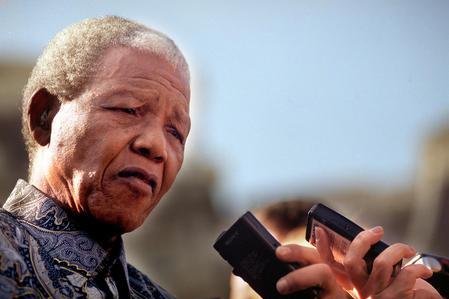
Former South African president Nelson Mandela speaks to reporters outside of the White House in Washington on October 21, 1999. Mandela was famously released from prison in South Africa on February 11, 1990. Photo by Joel Rennich/UPI | License Photo
A synopsis for the new Channel 4 series reads: “Could you survive being handcuffed to a total stranger? In a brand new social experiment, Jonathan Ross is challenging 18 brave Brits to do just that, as they compete to win a £100,000 prize.
“The nine pairs will have to cope with being chained to each other 24/7, doing everything – quite literally – just inches apart. If it gets too much, they can uncuff at any time, but if they do they’ll be out of the competition. The last pair standing takes all. Jonathan’s starting the competition as he knows best, in a TV studio with a live audience.
“The competitors represent a complete cross section of British society, and have never met each other before. As the cuffs are locked in position with the duos either side of a special screen, they’ll only discover who they’ve been chained to once the divide goes back.
“In a divided Britain, Jonathan’s hoping living in such close proximity will force these opposites to talk, listen, and maybe even learn from each other. As the pairs set off for each other’s houses, to walk a mile in their partner’s shoes, we focus in on three of the couples.”
Among the participants are Somerset contestants Sir Benjamin Slade, 79, the 7th Baronet of Maunsel, and bus driver Morag, 64. They’re joined by London-based model Bambi, 29, and Suffolk’s millionaire businessman Anthony, 60, reports Somerset Live.
Here’s the complete roster for Handcuffed: Last Pair Standing.
Jo, 39, Manchester
Jo, a plus-size fashion brand owner, describes herself as “loud, mindful and crazy.”
When asked about her biggest concern, Jo admitted: “I’m nervous about the proximity. I’m on the autistic spectrum and being in close proximity to a stranger is going to be quite a challenge for me.”
Reuben, 29, Portsmouth
Reuben, a property developer, characterises himself as “confident, cocky, and disciplined.”
Discussing the toughest part of the experience, Reuben revealed: “The hardest thing about the experience was definitely the speed of walking and the chafe of the cuff after several hours, having my partner slow and drag me down was tedious.”
Sir Benjamin Slade, 79, Somerset
Benjamin, the 7th Baronet of Maunsel, reflected on his experience: “I was surprised by having some challenging and honest conversations about class,” adding: “The hardest thing was having sleep apnoea which means I don’t get any sleep and having to pee 6 times a night.”
George, 60, London
Prison Officer George describes himself as “pragmatic, empathetic, and lively” and joined the show “purely for the spirit of adventure,” which has led him to experiences ranging from topless waitering to skydiving from 15,000ft, and even volunteering as the first Officer in Belmarsh for the High Secure Unit.
Claire, 48, Hampshire
Claire, an “eccentric, persistent, bubbly,” horse trainer from Hampshire, was surprised by her own patience. She admitted: “The level of patience I’ve got. I was surprised! I didn’t think I had it in me. Also, how much of a bubble I live in- I didn’t realise how different other people’s lives are to mine.”
Bambi, 29, London
Model and content creator Bambi described herself as “loud, chill…but also not chill- I’m a bit of a contradiction!” When asked about her biggest worry, Bambi confessed: “The actual intricacies of the day to day; showering, going to the toilet- the basics. Also, as much as I’m a social butterfly and love being around people I like my own space and I do take a lot of time to myself. I think my biggest concern is I’m not going to have that time to relax and unwind and I think that’s going to really get to me.”
Nina, 42, London
Hairdresser Nina characterises herself as “moody, loud and fun,” and found the most challenging aspect of being handcuffed was being paired with someone whose beliefs were “completely opposite” to her own.
Sara, 55, Northhamptonshire
Mum-of-seven Sara describes herself as being “bubbly, annoying and kind.”
Reflecting on the most challenging aspect of her experience, Sara said: “Being involved in something so intense then the sad feeling afterwards when life returns to normal. To be honest looking back it felt like an out-of-body experience.”
Lin, 38, London
Political commentator Lin characterises herself as “Charismatic, opinionated, and a leader.”
Regarding her biggest concern, Lin said: “Going to bed, I’m a really private person, the whole going to bed and showering, I’m apprehensive about how it’s going to work.”
Frank, 27, Derbyshire
Green Party Councillor Frank explained his motivation for joining the programme: “As a politician, I spend every day trying to get someone else to agree with me, but what most elected representatives forget is that genuine understanding comes from putting yourself into the shoes of another and taking the opportunity to truly question yourself. Participating in Handcuffed was the only way for me to grow personally and professionally.”
Bob, 70, Yorkshire
Retired soldier Bob, who describes himself as “well-travelled and a musician.”
spoke about the toughest element of the programme: “Not knowing what was coming next and the lack of privacy from always having a camera nearby meant it sometimes felt quite restrictive, and that I maybe wasn’t able to get to know my partner as well as I would have liked.”
Chris, 38, London
Youth worker Chris admits he’s most apprehensive about his “everyday life,” when it comes to taking part in the show. He confessed: “I’m quite particular and I like things a certain way. When I get home, I take off all my clothes put them in the wash basket and put on my house clothes because who just sits on their bed when you’ve just been on the tube? I’ve got a lot of insecurities that I’m still trying to work through: I suffer with lupus so there’s a part of me that’s not comfortable looking at my own self let alone being around another person- it’s very exposing.”
Charlie, 44, West Sussex
Practical Homemaker Charlie describes herself as “determined, kind and strong-minded.”
On what surprised her about her journey, Charlie revealed: “I think learning about my own levels of resilience, to always be open minded and not to judge a book by its cover.”
Rob, 32, Staffordshire
Rob is an adult content creator who characterises himself as “eccentric, straightforward, kind.”
On what surprised him the most about the experience, he shared: “That two people, living two completely different lives worlds apart can become great friends. We put our judgements aside and listened to our hearts.”
Morag, 64, Somerset
School bus driver Morag identifies herself as being “enthusiastic, vegan and hippie.”
On what surprised her the most, Morag admitted: “I was surprised to find myself so emotional, particularly in the first few days.”
Angie, 44, Stourport
Salon proprietor Angie describes herself as “direct, impulsive and wild.”
Reflecting on the most challenging aspect of the experience, Angie explained: “Not having control of what I was doing, where I was going, and that what was in store for us. I became very hyper vigilant, and I went through a process of unwrapping all these things that I didn’t know about myself. I don’t like being told what to do so this was an adjustment for me to hand over control. Being away from my husband was so hard, it’s the first time we have spent that much time apart with zero contact.”
Tilly, 37, North London
Barmaid Tilly is “loud, loving and kind”. She frankly revealed her motivation for joining Handcuffed: “I wanted to win the money… and for the experience, but mainly the money.”
Anthony, 60, Suffolk
Business proprietor Anthony, who characterises himself as “generous, genuine and happy,” shared that the toughest element of the experience was having to reveal so many “deep and repressed” aspects of himself to a complete stranger.
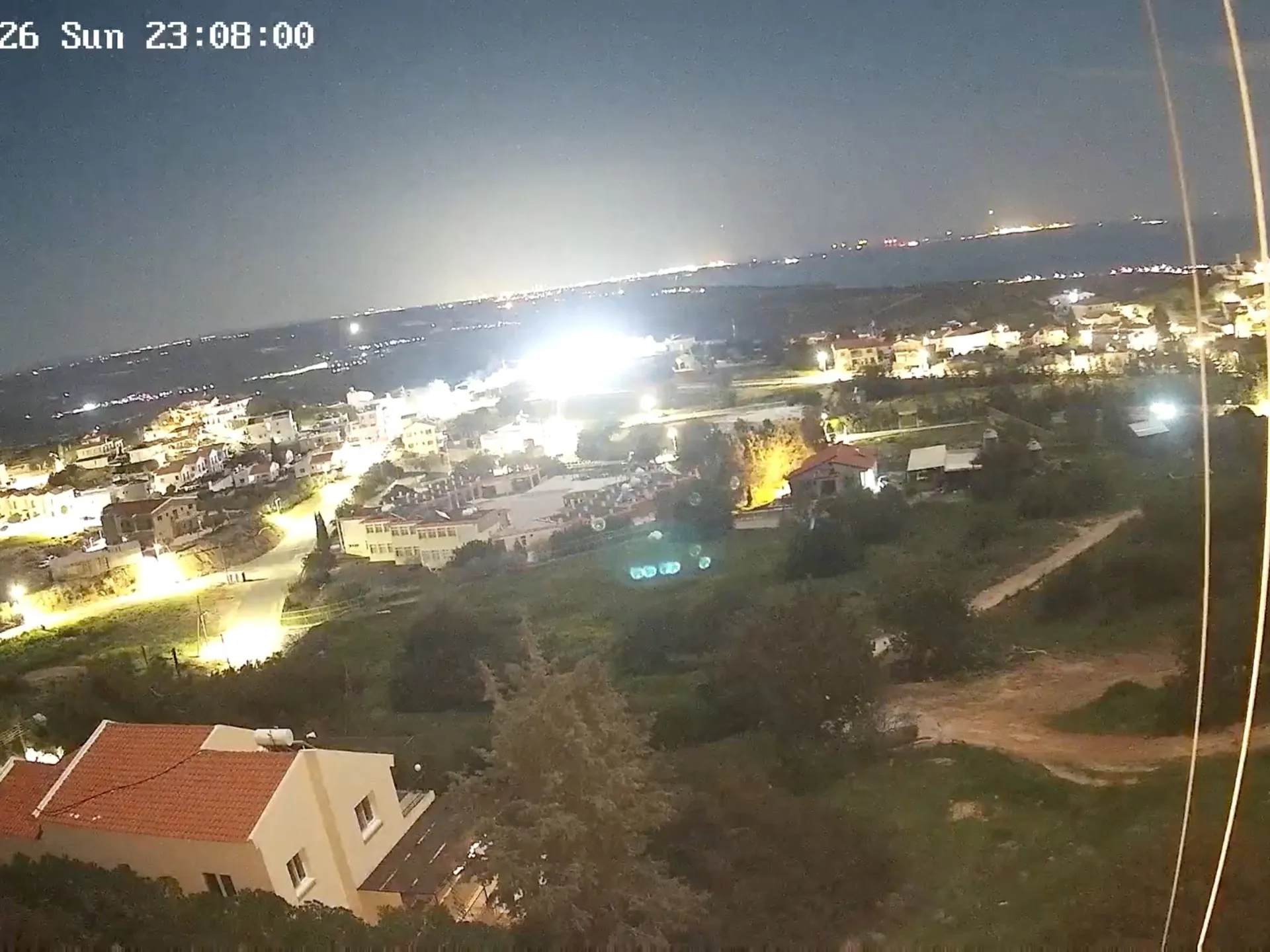
Early on Monday, a suspected Iranian drone crashed into the runway at the United Kingdom’s RAF Akrotiri base in southern Cyprus. British and Cypriot officials said the damage was limited. There were no casualties.
Hours later, two drones headed for the base were “dealt with in a timely manner”, according to the Cypriot government.
Recommended Stories
list of 4 itemsend of list
The incidents came as Prime Minister Keir Starmer signalled on Sunday that the UK was prepared to support the United States in its confrontation with Iran – raising the prospect that it could be drawn deeper into a war it did not choose by its closest ally.
In a joint statement with the leaders of France and Germany, Starmer said the European group was ready to take “proportionate defensive action” to destroy threats “at their source”.
Later, in a televised address, he confirmed that Westminster approved a US request to use British bases for the “defensive purpose” of destroying Iranian missiles “at source in their storage depots, or the launches which are used to fire the missiles”.
But his agreement did little to placate US President Donald Trump, who said the decision came too late.
UK-based military analyst Sean Bell cautioned against reading too much into the Akrotiri incident.
“I understand the projectile that hit Cyprus was not armed, it hit a hangar [with] no casualties, and appears to have been fired from Lebanon,” he said, citing sources.
Al Jazeera was not able to independently verify the claim.
The broader context, he argued, is more consequential.
The US has taken the action “and everybody else is having to deal with the fallout”, he said.
Iran’s military strength lies in its extensive ballistic missile programme, he said, adding that while some have the range to threaten the UK, they do not extend far enough to strike the US.
“I don’t think [US] President Trump has yet made the legal case for attacking Iran, and … international law makes no discrimination between a nation carrying out the act of war and a nation supporting that act of war, so you’re both equally complicit,” he said.
Bell said that Washington likely reframed the issue, communicating to London that, whatever triggered the escalation, US forces were now effectively defending British personnel in the region.
That shift, he suggested, provided a legal basis to “not to attack Iran, but to protect our people”, allowing the UK to approve US operations from its bases under a “very, very clear set of instructions” tied strictly to national interest and defence.
UK officials ‘tying themselves in knots’
However, concerns of complicity had reportedly shaped earlier decisions, according to Tim Ripley, editor of the Defence Eye news service, who said the British government initially concluded that US and Israeli strikes on Iran did not meet the legal definition of self-defence under the United Nations Charter.
When Washington requested the use of bases such as RAF Fairford in Gloucestershire, UK, and Diego Garcia in the Indian Ocean, Starmer is understood to have consulted government lawyers, who advised against participation.
Up until Starmer’s televised address, in which he approved the US request, the UK had not considered the campaign a war of self-defence, said Ripley. While Washington’s legal reasoning has not changed, the war’s trajectory has.
Iranian retaliatory strikes – which have seen drones and missiles targeting Gulf states – have placed British expatriates and treaty partners under direct threat.
“The basis of our decision is the collective self-defence of longstanding friends and allies, and protecting British lives. This is in line with international law,” Starmer said.
According to Ripley, several Gulf governments, which maintain defence relationships with the UK, sought protection, allowing London to focus on protecting British personnel and partners rather than endorsing a broader campaign. However, with memories of the Iraq War hanging over Westminster, British ministers have stopped short of explicitly backing the US bombing campaign.
British officials are “tying themselves in knots” trying to describe a position that is neither fully participatory nor detached, he said.
US-UK: A strained relationship
Starmer on Monday told Parliament that the UK does not believe in “regime change from the skies” but supports the idea of defensive action.
But Ripley warned that any arrangement allowing US warplanes to operate from British air bases carries significant risks.
Iran’s missile systems are mobile and launchers mounted on trucks, he said. From RAF Fairford or Diego Garcia, US aircraft face flight times of seven to nine hours to reach Iranian airspace, necessitating patrol-based missions.
Once airborne, pilots may have only minutes to act. The idea that a US crew would pause mid-mission to seek fresh British legal approval is unrealistic, he said.
London must rely on Washington’s assurance that only agreed categories of “defensive” targets will be struck. If an opportunity arose to eliminate a senior Iranian commander in the same operational zone, the temptation could be strong. Yet such a strike might fall outside Britain’s stated defensive mandate. The aircraft would have departed from British soil, and any escalation could implicate the UK, Ripley said.
Bell highlighted another weakness: Britain has no domestic ballistic missile defence system.
If a ballistic missile were fired at London, he said, “We would not be able to shoot it down.”
Intercepting such weapons after launch is notoriously difficult, reinforcing the argument that the only reliable defence is to strike before launch.
The UK, therefore, occupies a grey zone: legally cautious, operationally exposed and strategically dependent on US decisions, it does not fully control.
Beyond the legal and military dilemmas, Starmer must also contend with a sceptical public.
A YouGov poll conducted on February 20 found that 58 percent of Britons oppose allowing the US to launch air strikes on Iran from UK bases, including 38 percent who strongly oppose.
Just 21 percent support such a move, underscoring limited domestic backing for deeper involvement.
Authorities in Tehran have called for international action and solidarity after several hospitals and schools were impacted by United States and Israeli air strikes on the country as Iran continues to fire missiles and drones across the region.
Iranian Ministry of Foreign Affairs spokesman Esmaeil Baghaei said on Monday that the two countries “continue to indiscriminately strike residential areas, sparing neither hospitals, schools, Red Crescent facilities, nor cultural monuments”.
Recommended Stories
list of 3 itemsend of list
“These actions constitute the deliberate commission of the most heinous crimes of international concern. Indifference to this ongoing and extreme injustice will only further darken the future of humanity by jeopardising the shared values upon which our global community stands,” he wrote in a post on social media.
Pir Hossein Kolivand, the head of the Iranian Red Crescent Society, wrote a letter publicised late on Sunday to the president of the International Committee of the Red Cross (ICRC), demanding an explicit condemnation of attacks impacting children and educational and medical centres.
He also said monitoring and support mechanisms outlined in the Geneva Conventions must be invoked, adding that the ICRC must “adopt immediate measures” to stop similar incidents from taking place again as the war rages.
“The Red Crescent Society of the Islamic Republic of Iran, as a member of the global Red Cross and Red Crescent movement, declares its full commitment to the fundamentals of humanity, impartiality and independence, emphasising that damaged centres had no military applications,” Kolivand wrote.
ICRC President Mirjana Spoljaric said in a statement at the start of the war on Saturday that rules of war must be upheld as an obligation, not a choice.
“Civilian infrastructure such as hospitals, homes and schools must be spared from attack. Medical personnel and first responders must be allowed to carry out their work safely,” she said.
Hospitals sustain damage
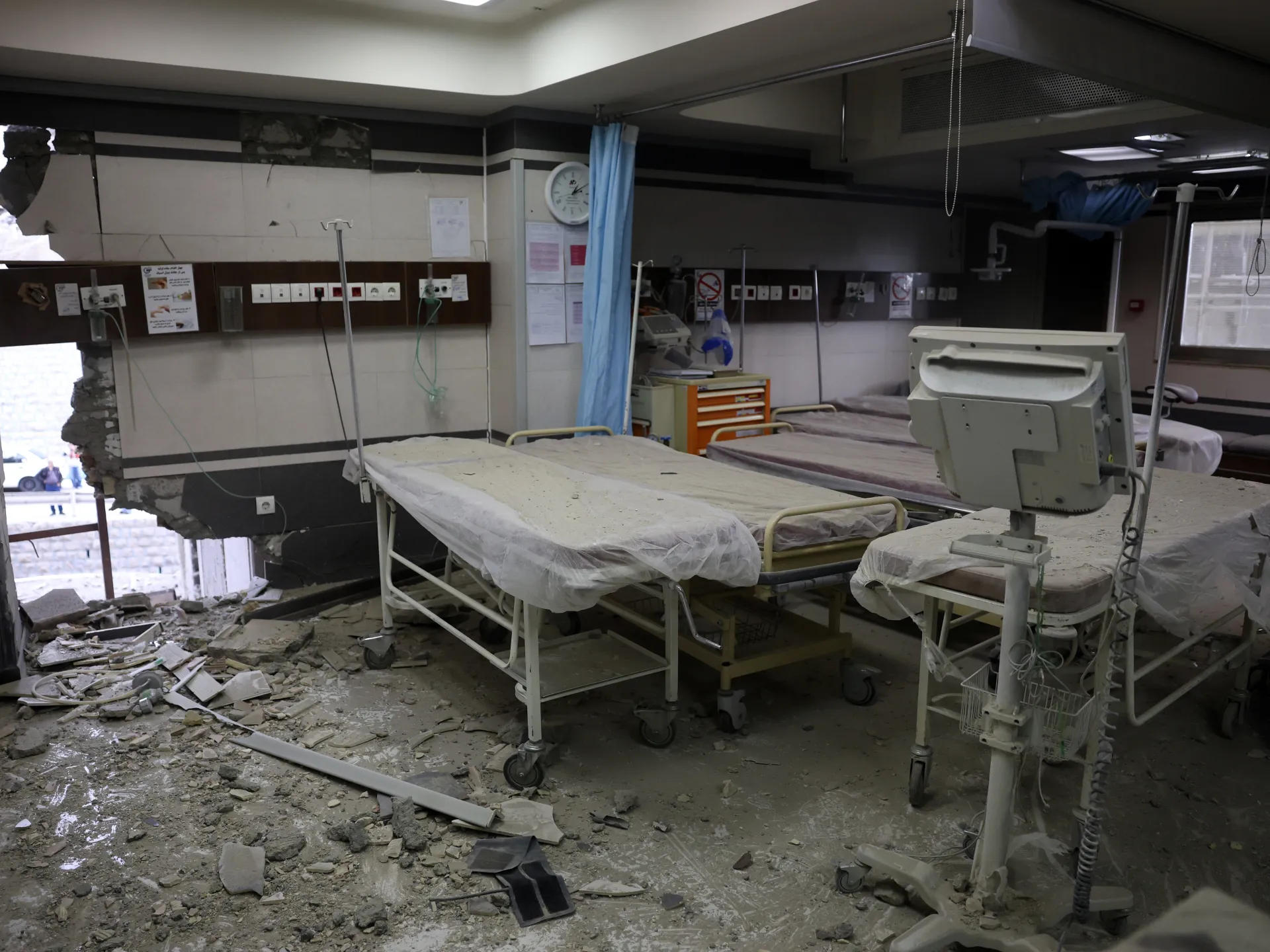
Multiple Iranian hospitals have been damaged as a result of air attacks and were evacuated by authorities, but there are not believed to have been any direct strikes on any hospitals yet.
In Tehran, major strikes on Sunday damaged multiple medical centres located in two areas, according to official accounts, footage circulating on social media and information geolocated by Al Jazeera.
Videos broadcast by state media from the entrance and surrounding area of Gandhi Hospital in northern Tehran showed significant damage after a projectile struck a nearby area.
Mohammad Raeiszadeh, the head of Iran’s Medical Council, told state media from the hospital on Monday that the in-vitro fertilisation department was destroyed along with its equipment, forcing staff to move cells and embryos. Footage also showed an infant being moved by nurses on Sunday night.
The hospital appears to have been damaged after the Israeli military struck buildings housing Iranian state television’s Channel 2 and a communications antenna nearby.
This led to state television programmes being disrupted for several minutes. The broadcaster confirmed that some of its departments were bombed on Sunday without divulging details.
World Health Organization Director General Tedros Adhanom Ghebreyesus said reports of damage to the hospital are “extremely worrying” and the United Nations agency is working to verify the incident.
After a separate attack on Sunday, the Iranian Red Crescent Society released a video showing the aftermath of strikes near one of its main buildings located near Khatam al-Anbiya Hospital.
[Translation: Right now. Direct attacks by the Zionist regime and America on the vicinity of the Red Crescent building, Khatam al-Anbiya Hospital, Welfare Organisation, and Motahari Hospital in Tehran]
Footage circulating online showed plumes of smoke rising and debris scattered after the strikes. According to the Red Crescent, the ICRC’s Spoljaric visited the site of the damaged medical treatment facility on Monday and condemned any strikes impacting humanitarian centres.
Khatam al-Anbiya Hospital, the Motahari Hospital specialising in helping burn victims and the Valiasr Hospital are all located nearby. They reported either sustaining some damage or having to hurriedly move patients out.
The main target hit by Israeli warplanes in the area appeared to have been the central headquarters of the Iranian police. Police Chief Ahmad-Reza Radan did not comment specifically on the targeting of the headquarters but confirmed that police buildings were receiving regular direct hits.
On Monday afternoon, fighter jets conducted bombing runs across Tehran once again. Attacks damaged the main building of the province’s medical emergency services, located in Iranshahr Street in the downtown area. Videos released by state-affiliated media showed staff evacuating, and the state-run Tasnim news agency said several staff members were injured.
According to Iranian authorities, the Aboozar Children’s Hospital in western Iran’s Ahvaz and three medical emergency centres in the provinces of East Azerbaijan, Sistan-Baluchistan and Hamedan were also damaged.
The Iranian Red Crescent said that by noon on Monday at least 555 people had been killed after 131 counties across the country were attacked.
During and after the killing of thousands of people during January’s nationwide protests, Iranian authorities have consistently rejected calls for transparency and condemnations by the UN and international human rights organisations for attacks on hospitals by state forces to detain protesters and medical staff helping the wounded. A number of doctors and medical personnel remain incarcerated and face national security and other charges.
Schools, sports centre take hits
In Tehran, an air strike targeting 72 Square in the eastern neighbourhood of Narmak damaged a high school with authorities reporting that at least two children were killed.
Local media said the target of the attack was Mahmoud Ahmadinejad, the former populist president who may potentially have a role in shaping Iran’s political future after the killing of 86-year-old Supreme Leader Ali Khamenei and other officials. It was unclear whether Ahmadinejad was present at the site of the attack or was harmed.
There were also multiple casualties after a sports centre was targeted in Lamerd in the southern province of Fars, local authorities said on Saturday.
But the single largest casualty incident announced by Iranian authorities was from a girls school in the southern city of Minab.
After two days of working through the debris, authorities said 165 people were killed and 95 wounded, most of them children. The governor on Monday afternoon released a handwritten list of 56 of the victims but did not provide further information.
The US said it was aware of civilian casualty reports from the school and was investigating. The Israeli army said it was not aware of any Israeli or US strikes in that area.
Education International, a global federation that brings together organisations of teachers and other education employees, condemned the school attack.
“Children, teachers, and schools must never be military targets. The killing and wounding of students and educators is an intolerable violation of human rights and a grave breach of international humanitarian law,” it said.
SCREAMING matches, tears and table mutiny is what you expect from Christmas Day with your in-laws – not at the Brit Awards.
But this year’s swanky ceremony in Manchester’s Co-op arena was a hotbed of misbehaving drunk stars, disgruntled execs who weren’t dished up their puddings and desperate agents who, on the night, were still begging organisers to get their A-listers into the label after-parties – with one Hollywood actor being repeatedly turned away because “they’re known for being a nightmare”.
The 2026 Brit Awards, hosted by Jack Whitehall, saw tears, tantrums and furious guests complaining about delays and meagre portion sizesCredit: GettyMaya Jama broke the ‘no vaping’ rule inside the venueCredit: Shutterstock EditorialThe Love Island host was seen holding a pink vape in the arenaCredit: The Sun
On Saturday night, over 1,000 of the biggest names in music and entertainment descended on Manchester’s Co-op Live Arena floor to enjoy a swanky three-course meal before Harry Styles opened the Brits.
The delay in proceedings ended up causing chaos before the show had even begun, and later, angry guests were overheard moaning about the meagre portion sizes and a Manchester tart pudding, which, for hundreds of guests, failed to materialise.
One top celebrity agent moaned to me: “A table costs £25,000, but four bits of celeriac, a tiny bit of venison and no pudding is outrageous.
“Everyone on my table wanted tequila shots, but when we went to order them, the staff said they couldn’t serve them straight.
“Then, because Robbie’s rehearsal messed with timings, there wasn’t time for the puddings to come out before the show started.
“Some tables got their tarts, others got absolutely nothing – and there was no apology. We were all starving.
“The service felt like we were at a badly organised wedding.”
On the floor, music and acting royalty, including Jeff Goldblum and Oasis legend Noel Gallagher, mingled amid discontent – before acts including Harry Styles, Olivia Dean and Mark Ronson put on epic performances.
As the ceremony got started, not everyone was having fun.
One well-respected publicist told me during the night: “It was like sitting next to the Flying Scotsman sitting near Lola Young.
“She was exhaling these huge plumes of vapour. It was ignorant and arrogant.
“And don’t get me started on Bez – he’d had so much to drink he looked like he was struggling to stand.
“He was dressed like a court jester, and he tried to introduce himself to Alex Warren, who looked totally baffled by the entire interaction.
“Alex was totally polite, but he didn’t have a clue who this seemingly mad man was who was trying to shake his hand.
“Eventually, someone he was with got Bez away from him so he could carry on watching the show.”
Guests, who paid £25,000 for a table and a swanky three-course meal, were hastily ushered out because Robbie Williams still needed time to rehearseCredit: GettyVIPs with tables on the arena floor had to wait longer than expected while Robbie rehearsed his awards speechA well-respected publicist said being near Lola Young was like ‘sitting next to the Flying Scotsman’ due to her vapingCredit: GettyToni Laites and Cach Mercer had a screaming match mid-way through the show – leaving them on the brink of a splitCredit: Getty
Censoring was a big point of contention on the night too, with Jack Whitehall’s funniest quips – including a gag about Peter Mandelson – and Geese drummer Max Bassin’s shout of: “I just want to say: free Palestine and f*** I.C.E,” all edited out by ITV.
“It was bizarre,” another publicist quipped to me the following day.
“Noel Gallagher shouted ‘Up the f***ing blues,’ and rather than just beeping out the swear word, they decided to lose the entire sentence – meaning anyone watching at home just suddenly heard him being booed by Manchester United fans in the arena.
“The BBC totally botched up the Baftas, so maybe ITV were scared of getting it wrong.
“But it meant that some of the editing didn’t make a whole lot of sense.
“Why are you letting one of the night’s biggest stars get loudly booed with zero context?”
It was like sitting next to the Flying Scotsman sitting near Lola Young.
As the clock ticked closer to 11pm, stars keen to get out of the arena and to after parties thrown by major labels including Warner and Sony, found themselves being blocked by security.
“People just wanted out towards the end,” one of the on-site crew explained.
“The floor usually is chaotic towards the end of the ceremony because people are drunk, but you can’t have half the tables suddenly going missing.
“Vernon Kay and Sharon Osbourne managed to evade capture, but security were trying to turn most people back to their tables.”
The rush to the after-parties made sense, given how tight the guest lists were.
Amber Gill was pictured in tears at Warner’s Brit Awards after-partyCredit: The SunNoel Gallagher shouted ‘Up the f***ing blues’ but ITV edited it out – so people watching at home only heard him being booed with zero contextCredit: Reuters‘Furious’ Selling Sunset star Breana Tiesi, pictured right, was left shivering on the pavement outside of Warner Music’s bash after not being allowed back inCredit: GettyThe Brits 2026 at Manchester’s Co-op Live ArenaCredit: Getty
I’m told one major Hollywood acting agent was ringing around organisers on the day to try and get their client, who is a household name and has been in massive films, into a bash.
“The guest list is full, that’s the party line,” one insider told me.
“But basically, if your client is a nuisance, they aren’t getting in.
“This actor is known to party hard and can be a nuisance. His agent was begging him to be allowed into the parties, but everyone kept saying no.
“In the end, he didn’t bother coming, which was a relief. But there was no way this agent would have let their Hollywood client slum it on the pavement outside.”
Out in the cold
As stars and execs jostled to get into the parties, Selling Sunset star Breana Tiesi was left shivering on the pavement outside of Warner Music’s bash after briefly stepping outside the event and being told she wasn’t allowed back in.
“Bre was furious,” one onlooker told me. “She was an invited guest and had been inside.
“But she stepped out and wasn’t allowed to get back inside again.
“They kicked up a massive stink, and it eventually got sorted. But it wasn’t a good look.
“This is the very lifeblood of the Qatari economy.” Qatar has announced it is halting liquid natural gas (LNG) production because of Iranian attacks on key facilities. Al Jazeera’s Zein Basravi explains the impact in Doha.
Weekly insights and analysis on the latest developments in military technology, strategy, and foreign policy.
The joint U.S.-Israeli operation against Iran has entered day three. The Pentagon has now shared some new details in its first formal press briefing on the conflict since it began over the weekend.
Readers can catch up on the events of the first day of the war with our initial rolling coverage here, and the important events from day two here.
What the United States has dubbed Operation Epic Fury “was highly classified, so that at H-Hour [the start of the operation], the enemy would see one thing, speed, surprise, and violence of action,” Chairman of the Joint Chiefs of Staff U.S. Air Force Gen. Dan “Razin” Caine said at this morning’s press conference at the Pentagon. “The first movers were CYBERCOM [U.S. Cyber Command] and USSPACECOM [U.S. Space Command], layering non-kinetic effects, disrupting and degrading and blinding Iran’s ability to see, communicate, and respond.”
“At H-Hour, the beginning of major combat operations [1:15 AM Eastern Daylight Time on Saturday, February 28], 9:45 AM local Tehran time, as dawn crept up across the Central Command AOR [Area of Responsibility], the sky surged to life. More than 100 aircraft launched from land and sea – fighters, tankers, airborne early warning, electronic attack, bombers from the states, and unmanned platforms forming a single synchronized wave.”
“This was a daylight strike based on a trigger event conducted by the Israeli Defense Forces enabled by the U.S. intelligence community,” Caine added. “The first shooters at sea were Tomahawks [land attack cruise missiles] unleashed by the United States Navy. Closed in on Iranian naval forces and began to conduct strikes across the southern flank in Iran. On the ground, forces fired precision standoff weapons – measured, deliberate, precise, and lethal. This was a massive, overwhelming attack across all domains of warfare, striking more than 1,000 targets in the first 24 hours.”
“We are now roughly 57 hours into the operation,” Caine further explained. “In the initial phase, CENTCOM’s [U.S. Central Command] focus was systematic targeting of Iranians [sic] command and control infrastructure, naval forces, ballistic missile sites, and intelligence infrastructure designed to daze and confuse them. Coordinated space and cyber operations effectively disrupted communications and sensor networks across the area of responsibility, leaving the adversary without the ability to see, coordinate, or respond effectively.”
“The combined impact of these strikes – swift, precise, and overwhelming – has resulted in the establishment of local air superiority. This air superiority will not only enhance the protection of our forces, but also allow them to continue the work over Iran. Over the course of the last two days, the Joint Force has launched hundreds of missions from land and sea and delivered tens of thousands of pieces of ordnance. The effort continues to scale,” the Chairman continued. “This included American B-2 bombers, which, again, similar to [Operation] Midnight Hammer [against Iran in 2025], flew a 37-hour round-trip sortie from the continental United States, dropping precision, penetrating munitions on Iranian underground facilities across the southern flank, slightly deeper. Additionally, Israel has separately executed hundreds of sorties against hundreds of targets.”
The U.S. and Israel launched major joint military operations “Epic Fury” and “Roaring Lion” against Iran and conducted targeted decapitation strikes, reportedly killing the Ayatollah.
Latest snapshot of American air and naval assets in the region (more info and sources below): pic.twitter.com/sub7xpdXXq
“While we’ve prosecuted a relentless offensive campaign, our defense has been equally important across the theater,” Caine also said. “Operations have remained [inaudible] and disciplined. Once again, our integrated air and missile defense network is performing exactly as it’s intended. U.S. Patriot and THAAD [Terminal High Altitude Area Defense] batteries, along with ballistic missile defense-capable Navy destroyers, continue to coordinate and execute intercepts with vision and consistency.”
“I wish that every American could hear the voice communications like I have as these joint operation centers remain calm, focused, cool, while executing under fire over and over again. Collectively, these systems have intercepted hundreds of ballistic missiles targeting U.S. forces, our partners, and regional stability,” Caine noted. “The threat from one-way attack UAVs [uncrewed aerial vehicles] has remained persistent. Our systems have proven effective in countering these platforms, engaging targets rapidly. Each intercept represents hundreds of hours of training, readiness, and technology, all coming together to work as designed. We will remain vigilant in the counter-UAV fight, and the defense of the region is not ours alone. As the threat grew, our partners surged in beside us. Air defense batteries in Qatar, the UAE [United Arab Emirates], Kuwait, Jordan, and Saudi Arabia joined the fight, proof positive that years of training, trust, and, hard-earned integration pay off.“
Caine also said he was aware of the loss of three U.S. Air Force F-15E Strike Eagles, to apparent friendly fire over Kuwait, but declined to provide more details. All six crew members are safe, and you can read more about the incident here.
At 11:03 p.m. ET, March 1, three U.S. F-15E Strike Eagles flying in support of Operation Epic Fury went down over Kuwait due to an apparent friendly fire incident.
In addition to the aforementioned friendly fire incident, U.S. Central Command (CENTCOM) has now confirmed the death of a fourth U.S. service member. The individual in question “was seriously wounded during Iran’s initial attacks, [and] eventually succumbed to their injuries,” according to an official statement. Yesterday, the Pentagon confirmed that the three previously known fatalities of U.S. service members occurred during Iranian strikes on Kuwait.
CENTCOM Update
TAMPA, Fla. – As of 7:30 am ET, March 2, four U.S. service members have been killed in action. The fourth service member, who was seriously wounded during Iran’s initial attacks, eventually succumbed to their injuries.
The rest of our new ongoing coverage continues below, with the most recent updates at the top.
UPDATE:9:36 AM EST-
The Israeli military may be mulling a possible ground invasion of Lebanon, after Hezbollah launched missiles and drones toward Israel overnight, which would open up a major new front in the war. Those attacks from the Lebanese militants were in retaliation for the killing of Iran’s supreme leader, Ali Khamenei, over the weekend.
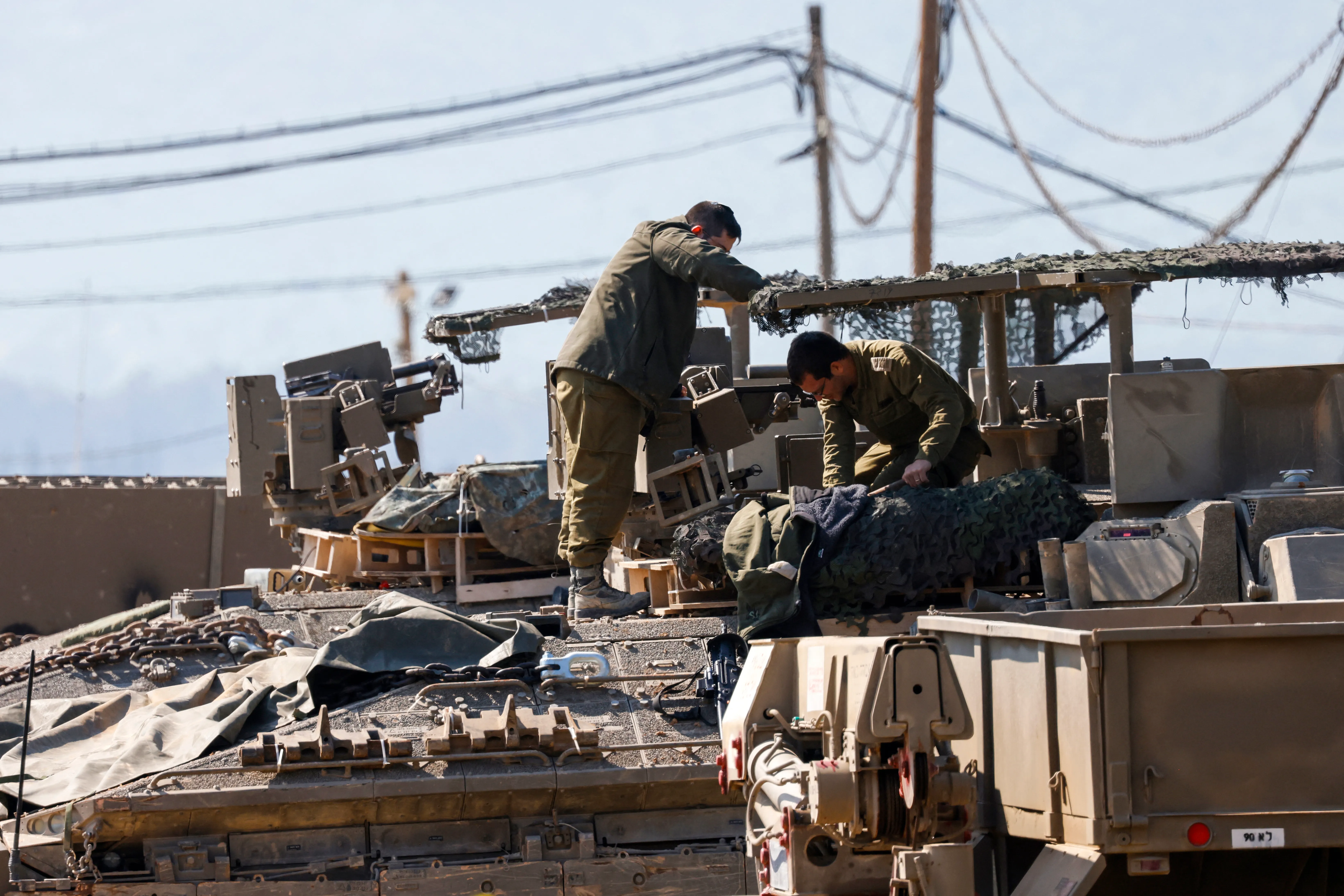
Israeli soldiers arrange their equipment on top of an armored vehicle in the Upper Galilee near the Lebanon border on March 2, 2026. Photo by Jalaa MAREY / AFP JALAA MAREY
In a briefing to reporters in Israel, a military spokesperson was asked if the Israel Defense Forces (IDF) were preparing for a possible ground invasion of Lebanon. The spokesperson said, “all options are on the table,” and then said Hezbollah “made a very bad mistake” by choosing to strike Israel overnight.
“The IDF will react very swiftly, and they will pay a heavy price,” the spokesperson added. “Hezbollah opened fire at us last night. It knew exactly what it was doing.”
⭕️ In response to the rockets fired from Lebanon to Israel, the IDF precisely struck senior Hezbollah terrorists in Beirut, dozens of Hezbollah & Iranian terrorist regime command centers, and a site that was used by Hezbollah to store weapons in the Tyre.
Subsequently, the Israeli military said it had killed Hezbollah’s intelligence chief, Hussein Makled, overnight. The IDF also claimed it killed Sayed Yahya Hamidi, who it described as Iran’s deputy minister of intelligence for ‘Israel affairs,’ and Jalal Pour Hossein, who it claimed was the head of the espionage division (at the ministry of intelligence).
Hezbollah’s intelligence chief was killed in an Israeli airstrike in Beirut overnight, the IDF announces.
The IDF says it can now confirm that its overnight strike in the Lebanese capital killed Hussein Makled, “who served as the head of Hezbollah’s intelligence headquarters.”
— Emanuel (Mannie) Fabian (@manniefabian) March 2, 2026
Israeli airstrikes on Beirut and southern Lebanon today killed at least 31 people and injured 149, according to Lebanon’s health ministry.
A video from the IDF shows Israeli strikes overnight in Dahiyeh in Beirut:
An Israeli Air Force UH-60 helicopter flies above the border with Southern Lebanon as seen from a position on the Israeli side of the border on March 2, 2026. Photo by Amir Levy/Getty Images Amir Levy
There are rumors of concern within the Pentagon, as well as other parts of the Trump administration, about the United States getting bogged down in a larger conflict. This comes now amid the prospect of Israel expanding operations against Lebanon.
“Inside the Pentagon, and among some members of the Trump administration, there was deepening concern Sunday that the Iran conflict could spiral out of control, said people familiar with the situation. “The mood here is intense and paranoid,” one person said. https://t.co/fWS7y5rSlY
Chief among the reported concerns of U.S. officials is the stockpile of suitable interceptors for air defense systems, especially as Iran continues to launch missiles and especially drones at targets across the region. The inventory of Iranian long-range one-way attack drones is something that the propaganda arm in Tehran is trying to capitalize on. This is something TWZ highlighted in an in-depth piece regarding questions hanging over any major new American air campaign against Iran shortly before the conflict erupted.
Video: New Iranian propaganda video showing an underground drone armory and various drone operations from the past several days. pic.twitter.com/zs6T47dJEJ
Another two Iranian drones heading toward the British airbase of RAF Akrotiri in Cyprus were “successfully intercepted,” according to a spokesperson for the Cypriot government. The incident comes after an Iranian drone reportedly struck the base last night. The incident is not thought to have caused any casualties and only limited damage.
Cypriot authorities have opened emergency shelters following the Iranian drone strike against RAF Akrotiri.
In a joint statement, the United States and six allied Gulf states — Bahrain, Jordan, Kuwait, Qatar, Saudi Arabia, and the United Arab Emirates — have condemned Iran’s “indiscriminate and reckless attacks” across the region. They blame Tehran for strikes that have “targeted sovereign territories, endangered civilians, and inflicted damage on civilian infrastructure.”
The statement continues: “Iran’s actions represent a dangerous escalation that violates the sovereignty of multiple states and threatens regional stability. Targeting civilians and non-combatant states is reckless behavior that undermines stability. We stand united in defense of our citizens, our sovereignty, and our territories, and we reaffirm our right to self-defense in the face of these attacks, while underscoring our commitment to regional security and commending the effective cooperation in air and missile defense that prevented greater loss of life and destruction.”
Kuwait’s Foreign Ministry on Monday shared a statement released jointly with Saudi Arabia, Bahrain, Qatar, the United Arab Emirates, Jordan and the United States.
In the statement, the countries strongly condemn Iran’s indiscriminate and reckless missile and drone attacks… pic.twitter.com/DesM2ZkYea
The statement confirms that, so far, attacks have occurred in Bahrain, Iraq, Jordan, Kuwait, Oman, Qatar, Saudi Arabia, and the United Arab Emirates. Cyprus can also be added to this list.
Of these, there have been notable reports in the last 12 hours of explosions in Dubai and Samha in the UAE, and in Doha, the capital of Qatar.
A cameraman films the moment of an Iranian strike in the city of Ras Al-Khaimah in the United Arab Emiarates. pic.twitter.com/fm1A8oUnQK
— Status-6 (War & Military News) (@Archer83Able) March 2, 2026
Among the high-profile targets to be hit is the Ras Tanura refinery in Saudi Arabia, one of the Middle East’s largest. Saudi Arabia’s energy ministry announced today that some operations at Ras Tanura have been halted, after an attack set fire to part of the complex. The ministry said that the refinery sustained “minor damage from falling debris” due to the interception of “two drones in the refinery’s vicinity.”
“Some operational units at the refinery were shut down as a precautionary measure, without any impact on the supply of petroleum products to local markets,” Saudi Arabia’s energy ministry said.
Iran carried out strikes on the ARAMCO oil refinery located in Ras Tanura, Saudi Arabia.
Huge amount of smoke is seen coming out from the facility following the attack. pic.twitter.com/GZdgKpc0xB
— Status-6 (War & Military News) (@Archer83Able) March 2, 2026
The International Atomic Energy Agency (IAEA), the United Nations nuclear watchdog, says there is no evidence that any of Iran’s nuclear facilities have sustained damage or have been hit in U.S.-Israeli strikes so far.
According to Iran’s ambassador to the United Nations nuclear watchdog, one of the targets of the strikes was the Natanz nuclear facility, the Reuters news agency reported. “Again they attacked Iran’s peaceful, safeguarded nuclear facilities yesterday,” Reza Najafi told reporters at a meeting of the IAEA board of governors.
The Natanz nuclear facility was among the sites struck in the U.S-Israeli airstrikes against Iran in June 2025.
The U.S.-flagged oil tanker Stena Imperative suffered at least two direct hits from a suspected Iranian projectile while in the Port of Bahrain, a maritime security official confirmed to TWZ.
It is unclear at the moment if the ship was struck by a missile or a drone, the official added.
Shortly before 5:30 a.m. Eastern, the United Kingdom Marine Trade Operations (UKMTO) organization, which is managed by the Royal Navy in the United Kingdom, stated that it “received a report of an incident in the Port of Bahrain. The Company Security Officer reported that the vessel had been struck by two unknown projectiles, causing a fire. The fire has been extinguished, and the vessel remains in port. All members of the ship’s crew are safe and have evacuated the vessel. Authorities are investigating.”
“Vessels are to remain cautious and report any suspicious activity to UKMTO,” the organization added.
It has been reported that the tanker is part of the U.S. Maritime Administration’s Tanker Security Program, which “exists to enhance U.S. supply chain resiliency for liquid fuel products.” The Tanker Security Program came into effect in 2021 and empowered the Department of Transportation to create an ad-hoc 10-ship expanded U.S.-flagged tanker fleet for use in a crisis.
The ship being the US-flagged Stena Imperative. The tanker is part of the US Maritime Administration’s Tanker Security Program and is fitted to refuel US warships.
Iran’s president, Masoud Pezeshkian, has appointed Revolutionary Guards general Majid Ebnelreza as acting defense minister after his predecessor was killed in an airstrike.
#Iran’s president has appointed Islamic Revolutionary Guard Corps general Majid Ebnelreza as acting defense minister after his predecessor was killed in Israeli-US strikes. pic.twitter.com/ClPVr8fCve
The new Yellowstone spin-off Marshals features a stellar cast of recognisable faces, so where might fans already know them from?
Full cast of Marshals: A Yellowstone Story(Image: CBS)
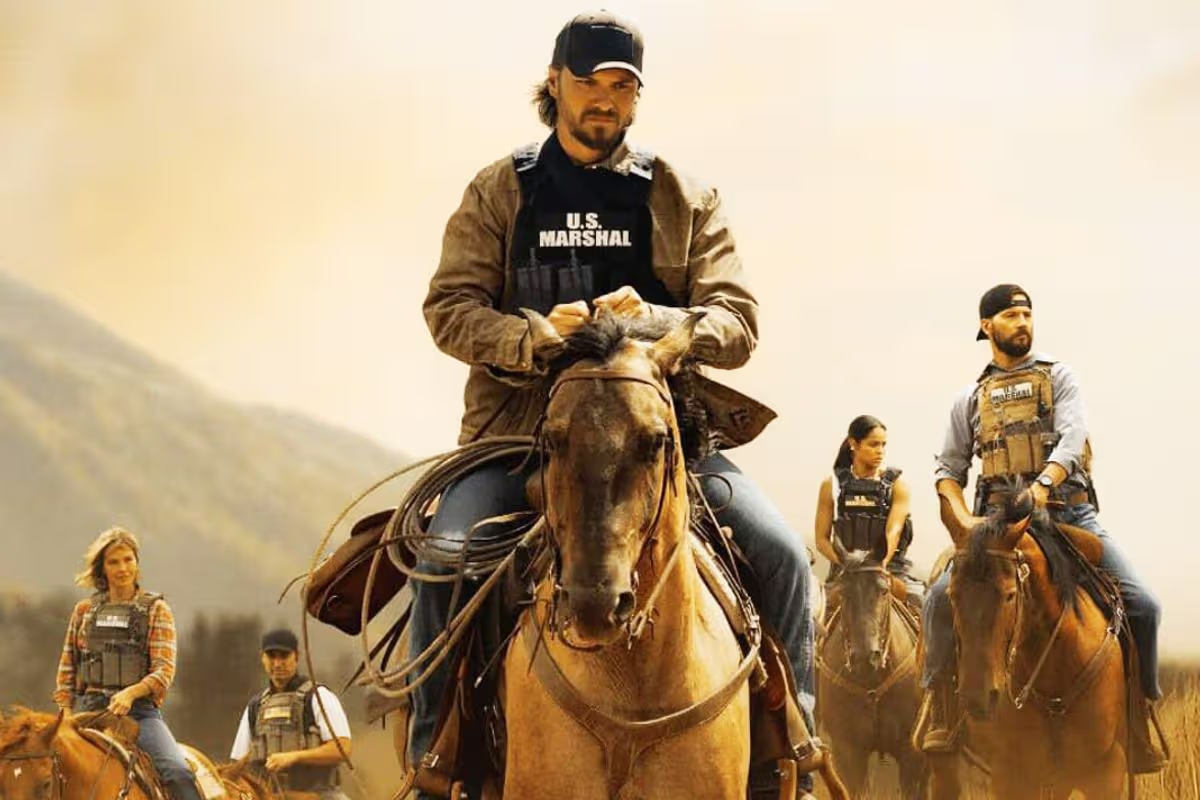
Marshals: A Yellowstone Story has just begun, with Kayce Dutton (played by Luke Grimes) returning to screens in an exhilarating series premiere.
The new spin-off began on CBS last Sunday night (1st March) in the US, with new episodes also dropping each Monday on Paramount+ across the globe.
Picking up from the fifth and final season of the flagship Western drama created by Taylor Sheridan, the series follows Kayce Dutton (played by Luke Grimes) as he joins a team of US Marshals who fight violent crime across Montana.
With countless Yellowstone fans expected to tune in, fans will no doubt be wondering where they recognise the show’s brilliant cast of newcomers and old favourites.
Let’s take a look at some of the biggest names gracing the screens in the latest epic chapter in the Dutton saga.
Who stars in Marshals: A Yellowstone Story?
Luke Grimes will be reprising his leading role as Kayce, with fellow Yellowstone star Brecken Merrill also returning as his on-screen son, Tate. Away from the hit Western franchise, Merrill has also appeared in the 2025 thriller film Lifeline.
Grimes has recently appeared in the film Eddington, starring Joaquin Phoenix and Pedro Pascal, and has also starred in the Fifty Shades of Grey trilogy as Elliot, the younger brother of Jamie Dornan’s Christian Grey.
Two additional stalwarts from the original series are confirmed to be returning: Gil Birmingham as Chief Thomas Rainwater, the Chairman of the Broken Rock Reservation, and Mo Brings Plenty as his trusted aide, Mo.
Birmingham is perhaps best known for his roles in the Taylor Sheridan-scripted films Wind River and Hell or High Water, as well as for playing Billy Black in the Twilight films. Mo has appeared in the films Jurassic World Dominion and Dead Man’s Hand, as well as TV shows The Good Lord Bird and Lawmen: Bass Reeves.
The main cast is rounded out by four newcomers portraying Kayce’s colleagues with the US Marshals. They are Arielle Kebbel (The Vampire Diaries) as Belle Skinner, Ash Santos (American Horror Story) as Andrea Cruz, Tatanka Means (Killers of the Flower Moon) as Miles Kittle, and Logan Marshall-Green (Upgrade) as Pete Calvin.
Kebbel has also appeared in hit shows such as Gilmore Girls and co-starred with Grimes in Fifty Shades Freed, while Marshal-Green is recognised for his roles in Spider-Man: Homecoming, Prometheus, and When They See Us.
Meanwhile, Santos has appeared in Lindsay Lohan’s Christmas rom-com Our Little Secret, Mayor of Kingstown, and Pulse, and Means is also known for Western drama series The Son, Reservation Dogs and Kevin Costner’s ambitious Horizon film series.
Brett Cullen (The West Wing) is also set for recurring appearances as Harry Gifford, the head of Montana’s US Marshals unit who distrusts Kayce and the rest of the Duttons.
Ellyn Jameson Barry also has a recurring role as Dolly Weaver, while the first season has so far featured guest appearances from Chad Michael Collins (Sniper) as Owen Kilborn, and Loren Anthony (The Lone Ranger) as Jim Kane
Paramount+ half price sale
This article contains affiliate links, we will receive a commission on any sales we generate from it. Learn more
Paramount+ is offering 50% off its Standard and Premium subscriptions until July 10.
Finally, main cast member Kebbel has hinted that several “recognisable” country music stars will be making guest appearances throughout the series.
This includes singer Riley Green making his acting debut, while others will be making cameo appearances performing some of their hit tracks. Keep your eyes peeled for some familiar faces.
Marshals: A Yellowstone Story continues Sundays on CBS and Mondays on Paramount+.
For the latest showbiz, TV, movie and streaming news, go to the new **Everything Gossip** website.
Ensure our latest headlines always appear at the top of your Google Search by making us a Preferred Source.** Click here to activate**** or add us as your Preferred Source in your Google search settings.**
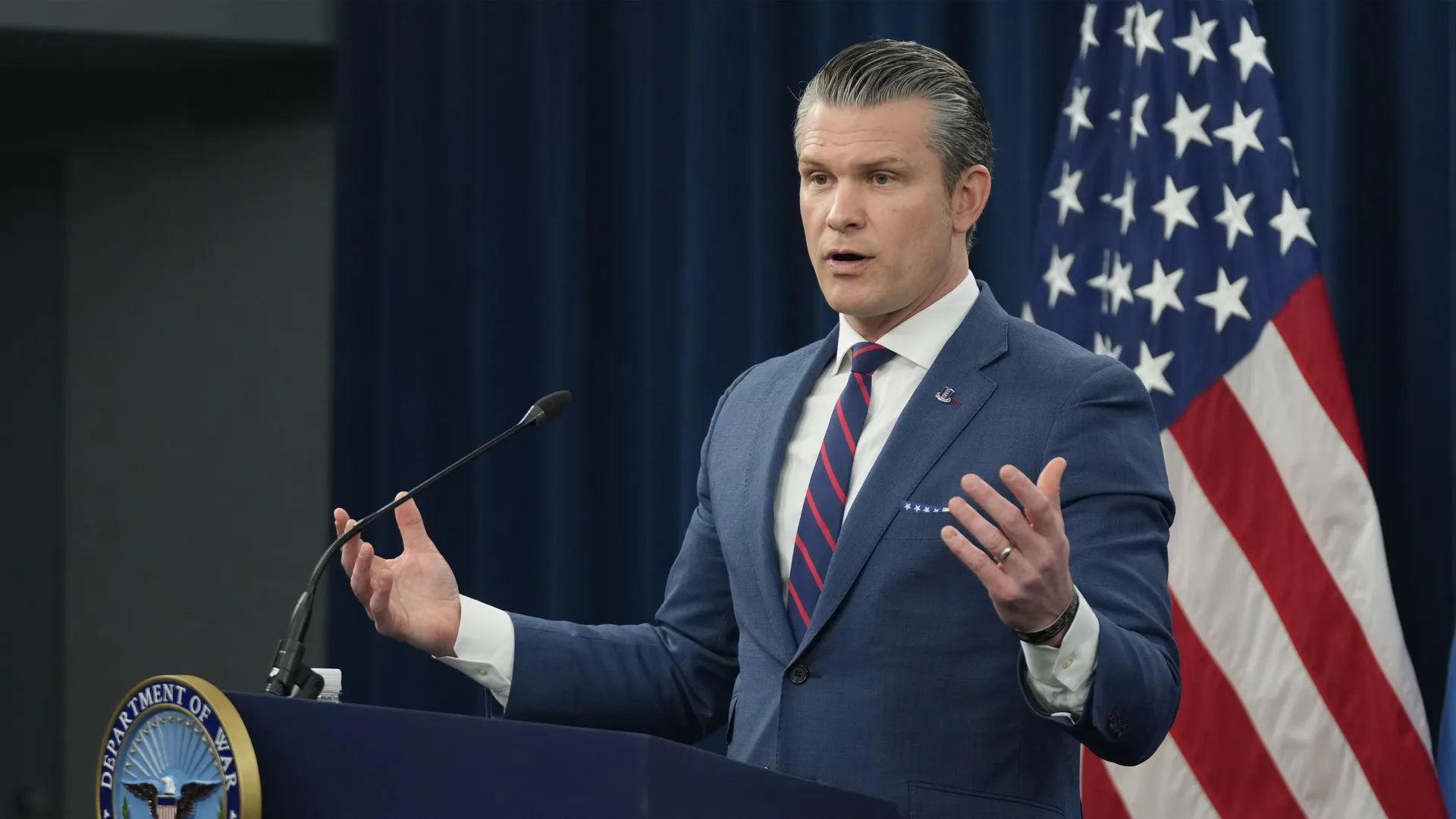
Blaming Iran for previous attacks on Americans in the region, US Secretary of Defense Pete Hegseth says Washington didn’t start the war, but under President Donald Trump, “we’re finishing it”.
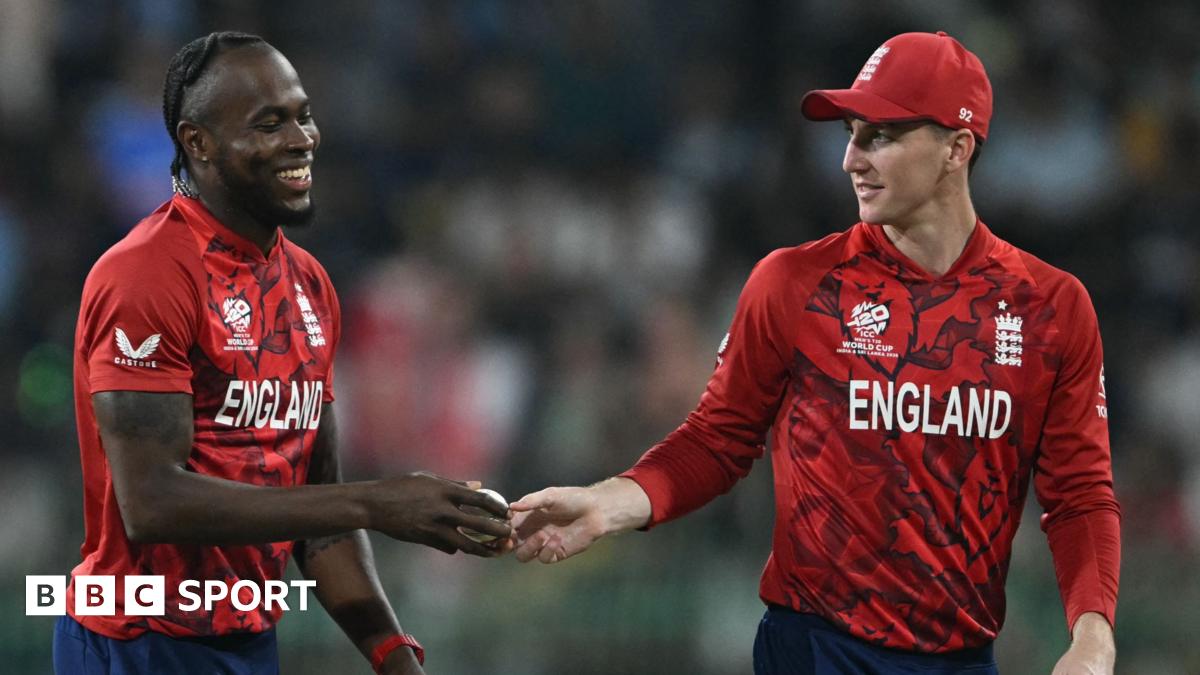
Despite any talk of top-order frailties, India remain a frightening T20 team.
Yes, they were well beaten by South Africa and given a scare by USA but there is a reason they came into this tournament as overwhelming favourites.
Between the end of the last T20 World Cup in 2024 and the start of this, India won 33 of their 41 matches making them the most consistent team cricket’s most inconsistent format has seen.
With the bat, they started slowly in this tournament but gained momentum by scoring 256-4 against Zimbabwe in the penultimate match of the Super 8s.
They scored 69 runs in the final four overs that day – something that is becoming a clear strength.
India are only the 10th fastest-scoring team in the middle phase of an innings but have hit more boundaries than anyone else at the death. They have hit 57 boundaries in the last four overs compared to England’s 44.
And while India have not lost a T20 at the Wankhede since 2017, it is a ground with bad memories for England.
It is where they lost to West Indies in the group stage, were beaten by a record 150 runs by India last year – Abhishek scored 135 from 54 balls that day – and lost to South Africa in their largest one-day international defeat in terms of runs at the 2023 World Cup.
That day, England wilted in the Mumbai heat and temperatures are forecast to hit 39 degrees during the daylight hours on Thursday.
It will not be much cooler when the match begins at 19:00 local time.
ICONIC 90s actress Ali Larter has left fans’ jaws on the floor, showing off her youthful look at the Actor Awards.
The actress, known for her roles in Legally Blonde, Varsity Blues, and Landman, was nominated for Outstanding Performance by an Ensemble in a Drama Series.
Sign up for The Sun newsletter
Thank you!
Ali Larter, pictured at the 32nd Annual Actor Awards Presented by SAG-AFTRA, looked ageless on the red carpetCredit: SplashThe actress, pictured at the Actor Awards Presented by SAG-AFTRA on March 1, 2026, was nominated for her role in LandmanCredit: Splash
One day after her 50th birthday, Ali stepped out on the red carpet at the Actor Awards, formerly known as the SAG Awards.
She posed for photos at the event in a strapless crimson gown by Zuhair Murah with a sweetheart neckline.
The gown, which accentuated her curves, reached all the way to the floor.
Ali looked absolutely ageless, completing the look with bouncy curls in her blonde hair, a bold dark red lip, and chunky jewelry.
On the red carpet, the actress opened up about her gratitude in an interview with E!.
“Life is beautiful. I’m on a show that has just caught on with people all over the world. My children are healthy. My parents are great. I’m just full of gratitude,” she said.
She also told the outlet that her outfit choice was intentional.
“I feel like this is a celebration of acting and actors… It’s kind of a throwback to the retro queens, the heroines. And I just think that his dresses express femininity – it accentuates the curves,” she said.
Most read in Entertainment
Ali is known for her many iconic roles throughout the 90s and early 2000sCredit: Getty
Big winner
Landman was nominated for Outstanding Performance by an Ensemble in a Drama Series against several other hit shows.
Nominees included The Diplomat, Severance, The Pitt, and The White Lotus.
Ali stars in Landman alongside Billy Bob Thornton, Michelle Randolph, Demi Moore, Sam Elliott, and Kayla Wallace.
Ultimately, the cast of HBO Max’s The Pitt walked away with the award.
The show’s star, Noah Wyle, delivered the acceptance speech with the rest of the cast beside him.
Ali, wore a curve-hugging crimson gown to the 32nd Annual Actor Awards on March 1, 2026Credit: SplashThe star attended the Actor Awards on March 1, 2026, one day after her 50th birthdayCredit: GettyLandman, which Ali stars in, did not win an Actor AwardCredit: �2024 Viacom International Inc Landman and all related titles, logos and characters are tr
Qatar’s state-run energy firm says it has halted liquefied natural gas production after Iranian attacks, sending gas prices soaring in Europe, as Saudi Arabia announced it was temporarily shutting down some units of the Ras Tanura oil refinery located near the country’s eastern region after a fire broke out following a drone attack.
“Due to military attacks on QatarEnergy’s operating facilities in Ras Laffan Industrial City and Mesaieed Industrial City in the State of Qatar, QatarEnergy has ceased production of liquefied natural gas (LNG) and associated products,” the world’s largest LNG producer said in a statement on Monday.
Recommended Stories
list of 3 itemsend of list
Shortly after the announcement, natural gas prices in Europe soared by almost 50 percent.
Earlier, Qatar’s Defence Ministry said the country was attacked by two drones launched from Iran. “One drone targeted a water tank belonging to a power plant in Mesaieed, and the other targeted an energy facility in Ras Laffan Industrial City, belonging to QatarEnergy, without reporting any human casualties,” it said in a statement.
“All damages and losses resulting from the attack will be assessed by the relevant authorities, and an official statement will be issued later,” it added.
The Saudi Ministry of Defence, in reports carried by the state-run Saudi Press Agency (SPA), said two drones had “attempted to attack” the Ras Tanura refinery on Monday morning, and that a “small” fire had broken out after they were intercepted.
Footage verified by Al Jazeera showed plumes of smoke rising from the oil facility, located on Saudi Arabia’s Gulf coast. The ministry said the refinery “sustained limited damage”, but there were no casualties.
Ras Tanura oil refinery, one of the world’s largest oil processing facilities located near the eastern city of Dammam, has a capacity of 550,000 barrels per day. The facility is home to one of the largest refineries in the Middle East and is considered a cornerstone of the kingdom’s energy sector.
The attacks come as oil tankers have been piling up on either side of the Strait of Hormuz, through which about a fifth of the world’s seaborne oil and the bulk of Qatari gas flows.
The maritime disruptions and fears of a prolonged conflict have led to a sharp rise in global oil prices, which will have a significant impact on the global economy.
Iran has been launching retaliatory strikes, mainly targeting Israel and military facilities of the United States across the Middle East, after the US and Israel launched massive air strikes on the country.
In a statement published by SPA, the Saudi Ministry of Energy said some operations had been halted as a “precautionary measure” and that it did not foresee “any impact on the supply of petroleum products to local markets”.
Saudi Arabia had earlier said it would “take all necessary measures to defend its security and protect its territory, citizens, and residents, including the option of responding to the aggression” after Iran targeted the capital Riyadh and the country’s eastern region with strikes over the weekend.
The US, Bahrain, Jordan, Kuwait, Qatar, Saudi Arabia and the United Arab Emirates issued a joint statement on Sunday condemning Iranian attacks across the region and affirming their right to self-defence.
Rob Geist Pinfold, lecturer in defence studies at King’s College London, told Al Jazeera that Iran “knows exactly what it’s doing” by attacking the Gulf countries.
“These countries have less of an appetite for a fight because, at the end of the day, this is not their war. So, Iran is banking that they will want a ceasefire as soon as possible, that they will be pressuring the Trump administration. But we have no signs of that whatsoever so far,” he said.
Pinfold added that there seems to be a “show of force” and “of unity” coming from the Gulf states, at least rhetorically.
“They’re trying to get the message across that they are one and that they are united and that they are resilient,” Pinfold said. “But under the surface, there are profound disagreements here about how to engage with Iran and whether to engage with Iran at all.”
Every March 2, HumAngle Media marks its anniversary. This year, the award-winning newsroom turns six, a milestone for a publication that has dedicated itself to covering conflict, humanitarian crises, and development challenges across Africa.
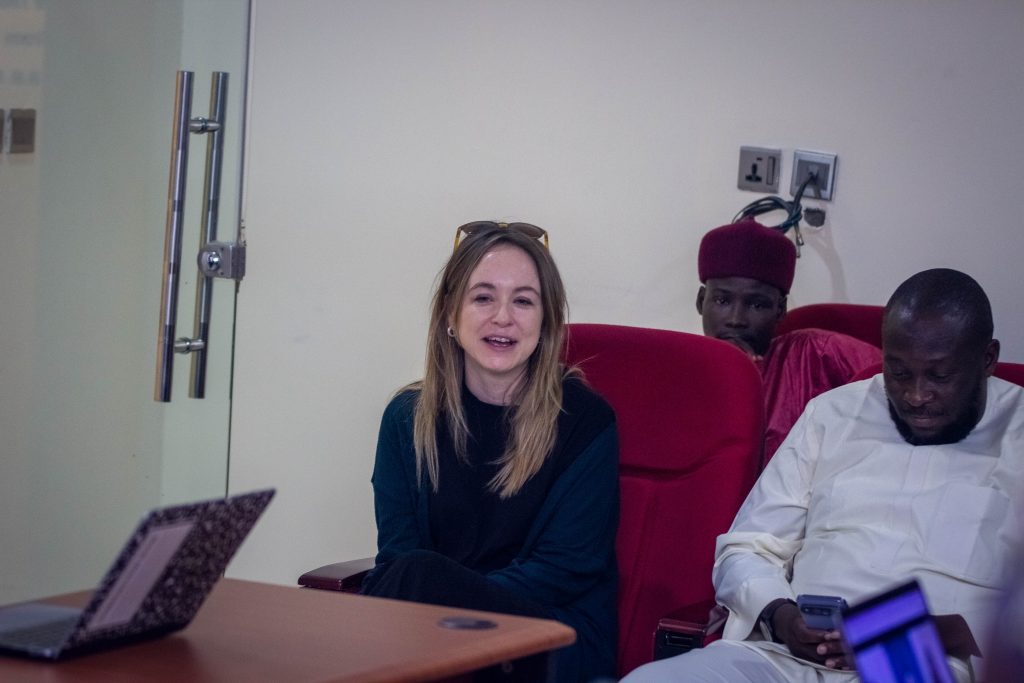
This year’s anniversary is marked by reflection and knowledge-sharing activities. On Monday, award-winning Irish investigative journalist Sally Hayden attended HumAngle’s editorial meeting, where she met the newsroom team. During the session, she described herself as “a big follower of the work” and added, “I’m star-struck,” expressing admiration for the organisation’s impact and growth over the years.
Founded in March 2020 by Ahmad Salkida, HumAngle was born out of a determination to report on conflict and terrorism with nuance, depth, and humanity. Over the years, Ahmad’s work – and that of the newsroom he built – has shaped both local and global understanding of crises across Nigeria and the wider Lake Chad region.
“HumAngle stands as one of the most consequential media institutions covering conflict, displacement, extremism, governance failures, and community resilience in Nigeria and the Lake Chad Basin,” he said.
Sally Hayden and Ahmad Salkida during HumAngle’s editorial meeting on Monday, March 2, in Abuja, Nigeria. Photo: Al’amin Umar/HumAngle.
From the outset, the newsroom set itself apart by centring people rather than power. Its investigations and analyses prioritise lived experiences, while holding authorities accountable. Through solutions journalism, HumAngle not only documents harm but also explores pathways to peacebuilding and conflict resolution across the continent.
A HumAngle investigation on the social media interactions fuelling the ethno-religious violence crisis in Plateau State, North Central Nigeria, was recently shortlisted in the Outstanding Contribution to Peace Category of the 2025 Festisov Journalism Awards.
For the editorial team, the past six years have been defined by innovation, resilience, impact, creativity, and challenge.
Mansir Muhammed, Senior Specialist in GIS, open-source intelligence, and emerging technology, describes the journey as deeply impactful. In 2023, he collaborated with HumAngle’s former investigations editor, Kunle Adebajo, on an investigation that uncovered mass graves in Nigeria’s North East.
“We had access to knowledgeable fixers who took our reporter close to these scenes. We then took pictures and collected supplementary information. We further probed the coordinates using open-source intelligence and geospatial tools, including satellite imagery and data, alongside contextual information,” Mansir wrote in a reporter’s diary.
The investigation went on to win the Sigma Award for Outstanding Data Journalism in 2024, a recognition of the newsroom’s growing strength in digital and data-driven reporting.
“The award showcases the kind of work we have been doing with digital journalism and geographic information systems,” he said. He urged the public to look out for more innovations and impressive output from the newsroom.
The Sigma Award is only one of several recognitions HumAngle investigations have received. Beyond accolades, however, the team points to something more important: measurable impact on communities whose stories might otherwise have gone unheard.
Most recently, an investigation by Hauwa Shaffii Nuhu, the Managing Editor, won the Konrad-Adenauer-Stiftung (KAS) Media Africa Award. The story explored the life of Modu Bakura, a 30-year-old resident of Bama, northeastern Nigeria, whose house was robbed in 2022, his wife killed, and his source of livelihood taken away.
In its citation, the jury reflected on the story’s lasting power:
“There are some stories, even great stories, that one reads and immediately forgets. And then there are the stories that stay with you, that you think about days, weeks or even months later. Hauwa Shaffii Nuhu’s fascinating and heartbreaking profile of Modu Baraka – a trader in northeastern Nigeria whose life was unravelled by a robbery – is in the latter category.”
Hauwa Shaffii Nuhu leading the weekly editorial meeting on March 2. Photo: Al’amin Umar/HumAngle.
For Ibrahim Adeyemi, Investigations Editor, HumAngle’s defining feature is its editorial culture.
“We don’t tell basic stories. We ask critical questions which make our work distinct,” he said, adding that the most interesting thing about working with HumAngle is that every reporter is encouraged to think like an investigative journalist: to dig deeper, question assumptions, and follow evidence wherever it leads.
That philosophy has culminated in the development of the HumAngle Investigations Handbook, a practical guide designed to support reporters in producing rigorous, groundbreaking work.
Innovation at HumAngle extends beyond investigations.
“I’m proud to say that HumAngle is six. It’s been really fun watching HumAngle grow,” said Damilola Lawal, Creative and Innovation Manager at HumAngle. Working across animation, multimedia, motion graphics, and virtual reality, she has helped shape the newsroom’s visual and immersive storytelling. She describes her work as exciting.
Get our in-depth, creative coverage of conflict and development delivered to you every weekend.
Subscribe now to our newsletter!
Looking ahead, she plans to push those boundaries even further. “I’m going to be diving into immersive storytelling and also look at creative and impressive ways that we can apply virtual reality,” she noted.
HumAngle’s sixth anniversary will be marked with a week-long programme of activities, including editorial sessions and workshops with Sally Hayden. The sessions are aimed at strengthening capacity, refining processes, and scaling impact.
In the years ahead, HumAngle plans to expand its investigative and storytelling capacity, strengthen digital security and newsroom resilience, and broaden its fellowships and capacity-building initiatives. Ahmad said that HumAngle remains committed to documenting Africa’s most complex conflicts, not only with rigour and courage, but with empathy, accountability, and an unwavering belief in journalism’s power to serve the public good.
HumAngle Media celebrated its sixth anniversary, marking its dedication to conflict, humanitarian, and developmental stories in Africa.
Founded in 2020 by Ahmad Salkida, the platform emphasizes people-centered reporting with solutions journalism, which holds authorities accountable while exploring peace pathways.
The newsroom, known for its investigative depth, was recently acknowledged with prestigious journalism awards. Notable works include investigations on ethno-religious violence and mass graves, showcasing their expertise in digital and data-driven reporting.
The anniversary aligns with reflection and innovation, with editorial meetings featuring Sally Hayden.
HumAngle plans to expand its investigative efforts, enhance digital security, and build on creative storytelling techniques like virtual reality, maintaining its mission to document Africa’s complex conflicts with empathy and rigor.
SUZI Quatro has revealed how her first husband, and the father of her children, has Alzheimer’s and that she’s now in charge of his finances.
The American rock star, 75, who is now married to her second husband Rainer Hass, revealed the sad news whilst speaking to Kaye Adams.
Sign up for the Showbiz newsletter
Thank you!
Suzi Quatro has opened up about her first husband’s Alzheimer’s diagnosisCredit: instagram/@kayeadamsfanpageSuzi revealed her ex-husband Len Tuckey is battling the devastating diseaseCredit: AlamySuzi revealed she is in charge of Len’s finaces now, following his diagnosisCredit: instagram/@kayeadamsfanpageSuzi shot to fame in the 70s and has enjoyed an incredible careerCredit: Rex Features
Michigan-born Suzi, who is credited with helping women break into the world of rock and roll music, opened up on the Loose Women star’s podcast, How To be 60.
In a candid interview, the singer talked about how her first husband Len Tuckey is battling Alzheimer’s Disease.
Suzi married Len, who was her long-time guitarist, in 1976, but they divorced in 1992.
During their relationship they had two children together, Laura, 44, and Richard, 42.
Speaking to Kaye’s podcast, Suzi, who is now married to her second husband Rainer who she wed in 1993, talked about the breakdown of her first marriage to Len.
She then talked about how despite their divorce they remained good friends, and how she became his “power of attorney” because of his Alzheimer’s diagnosis.
Suzi made the admission when she talked about when she decided to leave Len, and how she came about that decision.
“When I did leave, I was sure. I wasn’t doubting. I was sure that it’s time to go,” she revealed to Kaye.
“So I gave it the six years to turn it around. You know, that’s fair.
“You got two kids together, you know. Don’t break it up if you don’t need to. I really tried, but I can’t lie to myself. Nobody can lie to themselves.”
Suzi is now married to her second husband, Rainer HassCredit: Getty
Continuing Suzi said: “I remember saying to him one time during Andy Get Your Gun, actually when that had finished, so it would have been 87, I remember we were sitting in the room here talking. And I said to him, ‘Do you realise how far away you’ve let me go?’
“So I gave him hints along the way, many, many hints, but he didn’t take them.
“And I’m his executor and power of attorney, so we’re still close.
“And he lives in my son’s house because he’s got Alzheimer’s.”
Suzi and her first husband Len divorced in 1992Credit: Alamy
American singer-songwriter Suzi shot to fame in the 70s as the first female bass player to became a major rock star.
The star is known for singles like Can the Can and Your Mamma Won’t Like Me, and has sold more than 50 million albums.
She is credited with helping women become part of the rock and roll era.
Speaking about this, Suzi once told the Metro Times: “Before I did what I did, we didn’t have a place in rock ‘n’ roll.
What are the early signs of Alzheimer’s disease?
IN the early stages, the main symptom of Alzheimer’s disease is memory lapses.
For example, someone may:
forget about recent conversations or events
misplace items
forget the names of places and objects
have trouble thinking of the right word
ask questions repetitively
show poor judgement or find it harder to make decisions
become less flexible and more hesitant to try new things
There are often also signs of mood changes, such as increasing anxiety or agitation, or periods of confusion.
And trouble with language, thinking and reasoning difficulties, and a shift in how things are seen and heard are also common.
“Not really. You had your Grace Slick and all that, but that’s not what I did. I was the first to be taken seriously as a female rock ‘n’ roll musician and singer.
“That hadn’t been done before. I played the boys at their own game.
“For everybody that came afterward, it was a little bit easier, which is good.
“I’m proud of that. If I have a legacy, that’s what it is. It’s nothing I take lightly. It was gonna happen sooner or later.”
Over the years Suzi has also dabbled in acting, and was famously on Happy Days.
Suzi continues to perform to this dayCredit: Getty
March 2 (UPI) — Belgium has seized a Russian oil tanker believed to be part of a shadow fleet of vessels the Kremlin uses to sell its energy products blocked by sanctions, Belgium’s defense minister said.
The armed forces of the European nation, with the support of French navy helicopters, boarded the oil tanker in the North Sea over the weekend, Defense Minister Theo Francken said in a statement.
The vessel was being escorted to the Belgian port city of Zeebrugge where it would be seized by authorities, he said.
French President Emmanuel Macron, who announced that French helicopters were used in Operation Blue Intruder, published a 23-second video online of clips from the night siege edited together, showing soldiers rappelling down ropes from a helicopter to the vessel’s deck.
A major blow to the shadow fleet: in the North Sea, our French Navy helicopters helped last night in the boarding by Belgian forces of an oil tanker under international sanctions.
Europeans are determined to cut off the sources of funding for Russia’s war of aggression… pic.twitter.com/CnoxyND7BB— Emmanuel Macron (@EmmanuelMacron) March 1, 2026
Macron described the mission as having dealt “a major blow to the shadow fleet.”
“Europeans are determined to cut off the sources of funding for Russia’s war of aggression in Ukraine by enforcing sanctions,” he said.
The vessel was identified by Belgian federal prosecutors as the Guinean flag-flying Ethera. The federal prosecutor’s office said it has opened an investigation into potential violations of the Belgian Navigation Code.
The office said an on-board inspection confirmed evidence of a “false flag,” public broadcaster RTBF reported, which said the operation was conducted over Saturday night and into Sunday morning.
The vessel had departed the Moroccan west coast port city of Mohammedia on Feb. 21 and arrived in Zeebrugge on Sunday morning, according to Marinetraffic.com.
British, European and U.S. governments had all previously sanctioned the vessel.
Ukrainian President Volodymyr Zelensky said despite its repeated blacklisting, Ethera continued to illegally transport Russian oil with the use of a false flag and forged documents.
“We welcome this strong action against Moscow’s floating purse and thank France for supporting the operation,” he said in a social media statement.
“We must be resolute. Russia operates like a mafia organization, and the response must match that reality,” he continued, calling for modern European laws permitting tankers carrying Moscow oil to be seized and its oil repurposed for Europe’s security.
“If they reject the rules for the sake of war, the rules must foresee a clear and firm answer.”
The seizure comes as Europe has been targeting Russia’s shadow fleet of vessels to further increase the impact of sanctions.
Western allies have imposed thousands of sanctions on Russia over its four-year invasion of Ukraine. It is now the most blacklisted in the world.
Oil is a significant revenue source for the Kremlin, and Ukraine’s allies are trying to hinder is ability to pay for its war.
This shadow fleet consists of between 600 and 2,500 ships, according to an October 2025 document from the European Union. An S&P Global report from the month before estimated the fleet consisted of 978 tankers alone. Meanwhile, a Brookings report estimated the fleet comprised 343 tankers, though stating its true scope is likely far larger.
With the seizure, Belgium is the second European nation to detain a tanker of Russia’s shadow fleet. France became the first in January when its forces seized the Grinch oil tanker.
Members of Nigeria’s Shia Muslim community are mourning Iran’s Supreme Leader Ayatollah Ali Khamenei who was killed by a US-Israeli attack in Tehran. Demonstrators carried his portrait and waved Iranian flags while they dragged American and Israeli flags along the ground.
A Netflix drama that’s been deemed “the best show ever produced” is said to be so good, viewers keep rewatching it again and again. It seems fans are totally hooked
12:14, 02 Mar 2026Updated 12:14, 02 Mar 2026
The drama has been deemed one of the “best ever produced”(Image: Courtesy of Netflix)
Occasionally we’re all on the hunt for a compelling series to immerse ourselves in, and Netflix currently boasts an impressive selection. However, if you’re after something genuinely gripping that’ll leave you craving the next episode, you might want to consider a television drama that’s been hailed as the “best ever” on Netflix.
The programme recently surfaced in discussions on Reddit, when a viewer was eager to gauge people’s opinions on the drama. It rapidly sparked considerable debate, with many unable to contain their enthusiasm for how exceptional they believe the show to be, whilst others confessed to binge-watching it multiple times.
The Reddit user enquired: “Is Mindhunter worth a watch? I’m gearing up for the Fincher series and realised that I’ve completely overlooked this show.”
The query prompted substantial discussion, with respondents rushing to share their views. The consensus appears overwhelmingly positive.
One responded, stating: “Very good. Probably the best show Netflix ever produced.” Another contributed: “The most disturbing crime of the show is that it only got two seasons.”
A third commented: “It’s really good. I rewatched it recently and still think it was very well done.” In separate discussions, viewers also voiced their disappointment that only two seasons were produced.
One viewer expressed: “I’m still mad about this. On my third rewatch.” Another chimed in with: “This is the only show that’s been cancelled that makes me angry. I miss other shows, but this one burns me.”
One more fan noted: “I’m not a crime or true crime show fan at all. Mindhunter is amazing. Watch it for sure. Holt McCallany is so good in it.”
Many labelled it as “fantastic”, with several pleading for its return someday. It appears fans are holding onto the dream of their hope becoming reality at some point, but for now, they can only continue to rewatch previous episodes.
What’s it about?
For those unfamiliar, Mindhunter is an American psychological crime thriller television series created by Joe Penhall, inspired by the 1995 true-crime book Mindhunter: Inside the FBI’s Elite Serial Crime Unit by John E. Douglas and Mark Olshaker. The series first graced screens back in 2017, and ran for just two seasons.
It boasts a cast including Jonathan Groff, Holt McCallany and Anna Torv, and delves into the establishment of the Behavioural Science Unit in the Federal Bureau of Investigation (FBI) during the late 1970s and early 1980s. This era also marked the advent of criminal profiling.
The series revolves around FBI agents Holden Ford and Bill Tench, along with psychologist Wendy Carr. They operate the FBI’s Behavioural Science Unit within the Training Division at the FBI Academy in Quantico, Virginia.
In addition to this, they collaborate to initiate a research initiative interviewing incarcerated serial killers. Their aim is to gain insight into the criminals’ psychological makeup.
Essentially, they hope the information they gather will assist in cracking active investigations. It’s regarded as essential viewing for crime drama enthusiasts, although reports suggest no additional episodes are planned.
Ensure our latest headlines always appear at the top of your Google Search by making us a Preferred Source. Click here to activate or add us as your Preferred Source in your Google search settings.
March 2 (UPI) — A British airbase on Cyprus was struck by a drone, forcing the evacuation of the facility from where RAF Typhoon warplanes are flying sorties to defend Gulf countries under attack from Iran and as many as 300,000 British nationals visiting or living in the region.
Foreign Secretary Yvette Cooper told Sky News that the runway at RAF Akrotiri was hit in the strike late Sunday and that “all of the precautionary measures are being taken around the base,” which is near Limassol in the southwest of the island.
No casualties were reported and the Ministry of Defense said damage had been “minimal” and that the base remained operational, but that families of service personnel and all non-essential staff had been relocated to safe locations off-base.
“Our armed forces are responding to a suspected drone strike at RAF Akrotiri in Cyprus at midnight local time. Our force protection in the region is at the highest level, and the base has responded to defend our people. This is a live situation and further information will be provided in due course,” the MOD said.
The military was mounting an effort to reassure residents of villages near the base that the threat was to the base and that there was no risk to them or their property.
The attack came around one hour after British Prime Minister Keir Starmer issued a pre-recorded statement posted to social media saying he had given permission to the U.S. military to fly “defensive” missions out of Britain’s base on Diego Garcia in the Indian Ocean and RAF Fairford in England.
Earlier Sunday evening, the MOD said an RAF Typhoon fighter jet patrolling the Persian Gulf successfully deployed an air-to-air missile to downan Iranian drone headed toward Qatar. The aircraft was operating out of Qatar after the RAF’s 12 Squadron deployed to the emirate in January as part of a U.K.-Qatar defense pact.
On Saturday, Starmer said Britain was not and would not participate in the military offensive launched by Israel and the United States, having earlier declined to allow U.S. military aircraft involved in the operation to use British bases either.
In his message, Starmer insisted that it remained the case that the United Kingdom was not involved but that developments over the weekend had changed the situation with attacks on interests of Britain and its partners in the Gulf, who were explicitly asking for back up.
“Over the last two days Iran has launched sustained attacks across the region at countries who did not attack them. They’ve hit airports and hotels where British citizens are staying. This is clearly a dangerous situation. We have at least 200,000 British citizens in the region — residents, families on holiday, and those in transit.
“Our Armed Forces who are located across the region are also being put at risk by Iran’s actions. On Saturday, Iran hit a military base in Bahrain, narrowly missing British personnel,” said Starmer.
He said Britain had made it clear it was staying out of the strikes on Iran because it believed the best way forward for the region and for the world was a negotiated settlement but that Iran had still attacked British interests and put Britons in the region at “huge risk along with our allies.”
Gulf countries had asked Britain to do more to defend them and it was his duty to protect British lives, Stamer said.
He explained that he had decided to grant a U.S. request to use British bases for the “specific and limited defensive purpose” of destroying Iranian missiles in their storage depots and the launchers they are fired from on the basis of “collective self-defence of longstanding friends and allies, and protecting British lives.”
With airspace closed across the region, hundreds of thousands of British nationals in Israel, Bahrain, Kuwait, Qatar and the United Arab Emirates are unable to get out.
Foreign Office sources told the BBC no evacuation was imminent but the government was preparing for potential scenarios if commercial flights remained grounded.
Cooper said she still hoped to be able to work with commercial airlines to bring people home in previous similar situations.
The Liberal Democrats and Green Party vowed they would force Starmer’s Labour government to seek authorization from parliament for the decisions he was making.
“No matter how the Prime Minister tries to redefine offensive as defensive, this is a slippery slope. He must not let Trump drag Britain into another prolonged war in the Middle East. Starmer must come to Parliament on Monday, set out the legal case in full, and give MPs a vote,” the Liberal Democrats’ leader, Ed Davey, said in a post on X.
Israeli Prime Minister Benjamin Netanyahu (C) speaks adjacent to Indian Prime Minister Narendra Modi in the Knesset in Jerusalem on February 25, 2026. Photo by Debbie Hill/UPI | License Photo