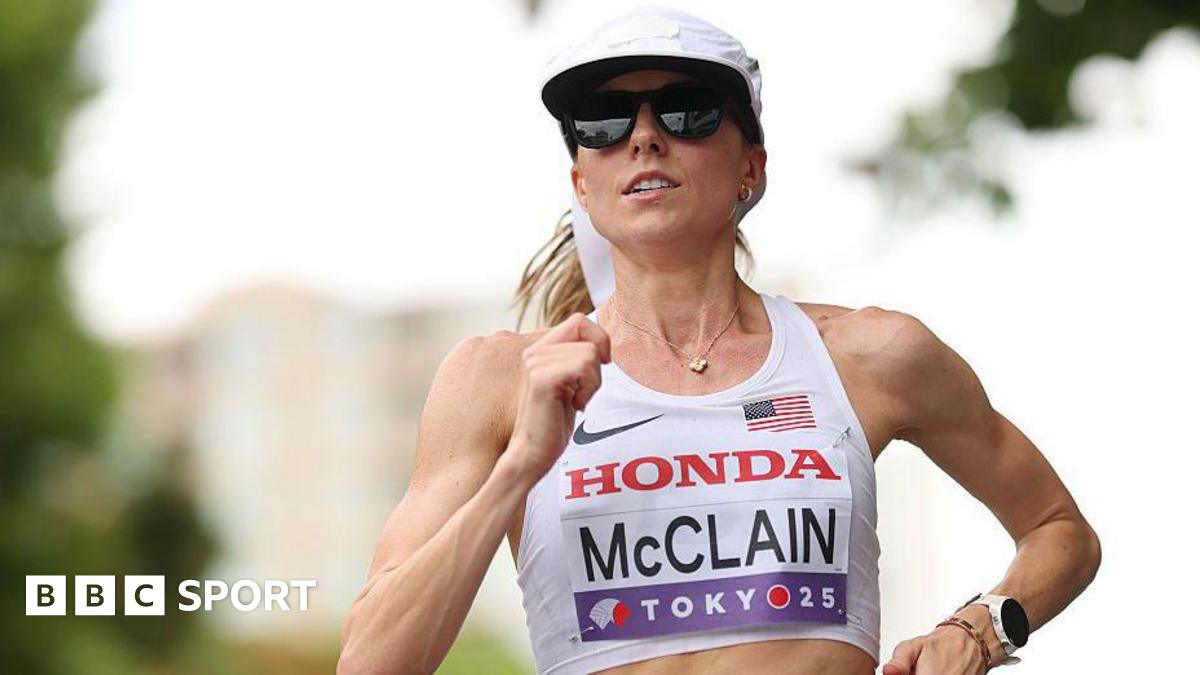
Finn Allen hits fastest century at a T20 World Cup as New Zealand crush South Africa by nine wickets to reach final.
Published On 4 Mar 20264 Mar 2026
Share
New Zealand stormed into the Twenty20 World Cup final with a nine-wicket demolition of South Africa in the first semifinal at the Eden Gardens.
Put into bat, South Africa recovered from a precarious 77-5 to post a competitive 169-8 after Marco Jansen led their recovery with a belligerent 55 not out.
Recommended Stories
list of 4 itemsend of list
Finn Allen smashed an unbeaten 100 off 33 balls, however, and shared a 117-run opening stand with Tim Seifert (58) as New Zealand romped to their target in only 12.5 overs.
Allen’s achievement was the fastest century scored at a T20 World Cup.
“We wanted to start well and put them on the back foot early,” Allen said. “It is easy for me when Tim [Seifert] is going like that. The way he batted got us off to an absolute flyer.
“It is easy in semifinals to stay up for the fight and with Tim [Seifert] we keep each other in it, and we enjoy it out there together.”
Earlier Jansen’s fifty came in response to Kiwis spinners Rachin Ravindra and Cole McConchie took two wickets each before Tristan Stubbs and Jansen put on 73 to rescue the innings at Kolkata’s Eden Gardens.
Stubbs (29) and Jansen, who hit two fours and five sixes in his 30-ball knock, helped set New Zealand a target of 170 to reach the final.
India successfully chased 196 against the West Indies on Sunday on the same ground.
South Africa were the only unbeaten team in the tournament, while New Zealand had edged into the semifinals on net run-rate.
McConchie struck first in the second over with his off-spin to send back Quinton De Kock for 10 and Ryan Rickelton next ball, but Dewald Brevis avoided the hat-trick.
Aiden Markram was reprieved on three when Ravindra dropped him at midwicket off pace bowler Lockie Ferguson.
Left-arm spinner Ravindra made amends when he had the South Africa captain caught in the deep by Daryl Mitchell for 18.
David Miller was dropped on three by Glenn Phillips but fell for six to Ravindra five balls later, with Mitchell again taking the catch at long-on.
South Africa had lost half their side in 10.2 overs when Jimmy Neesham cut short Brevis’s knock on 34.
Ferguson bowled Stubbs but Jansen hit him for six to reach his fifty.
Pace bowler Matt Henry, who arrived back only on Tuesday night after going home for the birth of his child, took 2-34.
The bowling figures for South Africa will be ones to quickly forget, as the figures to focus on – and the moment to remember – belonged to Allen.
“You take the positives from this game, celebrate little moments of success,” Allen added “Then we have a final to play on Sunday and we look forward to that.”
Defending champions India take on twice champions England in the second semi-final in Mumbai on Thursday, ahead of Sunday’s final.
The killing of prominent Iraqi women’s rights activist Yanar Mohammed has fuelled an outpouring of grief and calls for justice, with advocates from around the world remembering Mohammed as a “courageous” voice.
Mohammed, 66, was killed earlier this week after unidentified gunmen on a motorcycle opened fire outside her home in the north of Iraq’s capital, Baghdad.
Recommended Stories
list of 3 itemsend of list
“Despite being rushed to the hospital and attempts to save her life, she succumbed to her wounds,” the Organisation of Women’s Freedom in Iraq, a group that Mohammed co-founded, said in a statement shared on social media.
“We at the Organisation for Women’s Freedom in Iraq condemn in the strongest terms this cowardly terrorist crime, which we consider a direct attack on the feminist struggle and the values of freedom and equality.”
Several international rights groups also condemned Mohammed’s killing, with Amnesty International on Wednesday decrying the deadly attack as “brutal” and “a calculated assault to stifle human rights defenders, especially those defending women’s rights”.
The organisation, which said Iraq’s Prime Minister Mohammed Shia al‑Sudani ordered an investigation into the killing, also called on the Iraqi authorities to ensure the perpetrators are brought to justice.
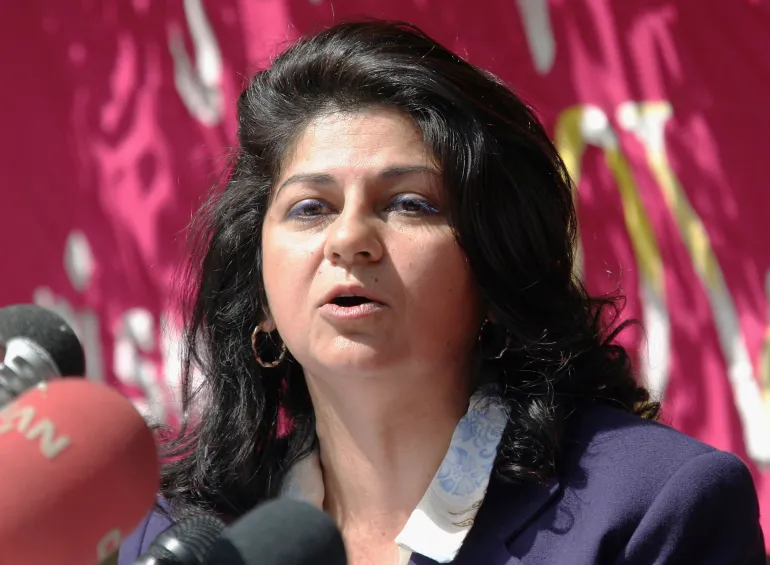
Yanar Mohammed speaks during a Women’s Day event in Baghdad, Iraq, in 2006 [Akram Saleh/Getty]
“Yanar Mohammed … dedicated her life to defending women’s rights,” Amnesty’s Iraq researcher, Razaw Salihy, said in a statement. “The Iraqi authorities must stop this pattern of targeted attacks in their tracks, and take seriously the sustained smear campaigns designed to discredit and endanger activists.”
Mohammed was one of Iraq’s most prominent women’s rights activists, working since the early 2000s “to protect women facing gender-based violence, including domestic abuse, trafficking, and so-called ‘honour killings’”, Front Line Defenders said.
Her work included the establishment of safe houses, which sheltered hundreds of women experiencing exploitation and abuse.
In a 2022 interview with Al Jazeera, Mohammed described her organisation’s efforts to support Iraqi women who survived violence at the hands of ISIS (ISIL), which had seized control of large swathes of the country.
“Muslim-Arab women who were enslaved by ISIL and have not found a place to go back to, they are still living in the shadows of the society,” she said at the time.
“Not less than 10,000 women were the victims of ISIL attack[s], and this femicide is not really acknowledged by the international community or dealt with in a way that keeps the dignity or the respect [of], or compensates, those who were the victims.”
Years of threats
Mohammed had been the target of death threats for decades, “aimed at dissuading her from defending women’s rights”, Front Line Defenders said. “Yet she remained defiant in the face of threats from ISIS and other armed groups.”
In 2016, she was awarded the Rafto Prize “for her tireless work for women’s rights in Iraq under extremely challenging conditions”.
The Rafto Foundation, the Norway-based nonprofit group that administers the award, said it was “deeply shaken” by her killing. “We are deeply shocked by this brutal attack on one of the most courageous human rights defenders of our time,” the foundation said in a statement.
“The assassination represents not only an attack on Yanar Mohammed as a person, but also on the fundamental values she dedicated her life to defending: women’s freedom, democracy, and universal human rights.”
Other activists and human rights groups also paid tribute to Mohammed this week, with Human Rights Watch describing her as “one of Iraq’s most courageous advocates for women’s rights” for more than two decades.
“Yanar was a dear colleague and friend to so many of us in the women’s rights and feminist community, one of our icons. She spent her life standing up for women’s rights in the most dangerous environment,” said Agnes Callamard, secretary-general of Amnesty International.
“She faced constant threats, but she never stopped. And today we cry and mourn her energy, her commitment, her profound humanity, her amazing courage.”
Mohammed speaks to reporters in Baghdad, Iraq, in 2005 [File: Wathiq Khuzaie/Getty]
Britain’s Got Talent viewers were ‘disgusted’ after Saturday night’s show when ‘marmite” performer, Baron, flew through the air – hooked up by his nipples
15:35, 04 Mar 2026Updated 15:35, 04 Mar 2026
Britain’s Got Talent has been hit with a number of Ofcom complaints(Image: DIGITAL/EROTEME.CO.UK)
Britain’s Got Talent has been hit with a number of Ofcom complaints after Saturday night’s show. Thousands of viewers had tuned in to see the latest instalment of the ITV talent programme, which is celebrating its 19th series. There was plenty to enjoy with a whole host of acts getting the judge’s approval, but when performing duo, Baron and Vesper, appeared on stage, things took a turn.
Flying through the air, hooked up by his nipples, earlobes and various other body parts, Baron’s performance needed to be seen to be believed. Off stage, co-host Declan Donnelly could be heard saying: “Obviously don’t try this at home, it’s very dangerous,” as a warning flashed up on-screen urging viewers not to copy what they were about to see.
However, despite the warning, some viewers complained they were physically sick after the stunt, with several phoning up Ofcom to make their feelings known.
The broadcasting regulator received a total of 89 complaints following the show after the performance was so extreme even the judges looked uncomfortable while some audience members shielded their eyes. Turning to YouTube star, KSI, fellow judge Alesha Dixon exclaimed: “Even you’re shocked” as Baron exposed a nipple.
As the performer, still with the hooks through him, started to approach the judges’ desk with his partner still airborne, judge, Amanda Holden, ran away, screaming: “Oh my God he’s coming, he’s coming,” barely able to watch the act unfold. “I don’t know what to look at,” KSI added.
Ensure our latest headlines always appear at the top of your Google Search by making us a Preferred Source. Click here to activate or add us as your Preferred Source in your Google search settings.
Viewers at home also struggled to watch the act, with many left divided by what they had just seen. One viewer fumed: “This needs to stop in the bedroom, not on TV.” Another wrote: “Don’t know whether to clap or cry or to gag or to do all three?” A third said simply: “I feel physically sick.”
Another said: “That’s not talent, that’s just stupidity.” before one other viewer chipped in: “Well I’ll not try that at home” and simply: “MAKE IT STOP!”
Despite the squeamish nature of the act, the duo won a standing ovation from the live audience. Co-host Ant McPartlin, watching from the side of the stage, commented: “That’s something we haven’t seen before and we’ve seen almost everything on this show.”
Offering her feedback on the act, Alesha said: “I found it difficult to watch, and weird and brilliant,” while Amanda said: “It looked awful in the best way,” saving herself from the crowd’s boos by swiftly adding: “It was horrifically brilliant.”
The pair won a yes from both Amanda and Alesha, while KSI said no. Meanwhile , head honcho, Simon Cowell had the deciding vote, throwing it to the audience, who cheered enthusiastically, earning the peculiar pair a place in the next round.
March 4 (UPI) — Venezuela state oil company Petróleos de Venezuela S.A. announced signing new contracts to supply crude oil and refined products for the U.S. market.
The agreements were signed with several international trading companies to ensure a stable flow of energy to refineries along the U.S. Gulf Coast, according to a statement from the company.
Although PDVSA did not disclose the names of the parties, the contracts add to existing operations involving major companies such as Chevron, which plans to increase exports to about 300,000 barrels per day this month.
PDVSA said the agreements maintain a “historic commercial relationship” with the United States and reaffirm the company’s “commitment to the stability of the international energy market.”.
The newly signed contracts mark the official return of Venezuelan crude to U.S. refineries after the United States captured former President Nicolás Maduro on Jan. 3.
The agreements were facilitated after the U.S. Treasury Department’s Office of Foreign Assets Control issued licenses, signaling significant changes in Washington’s licensing policy this year.
The authorizations allow U.S. entities to participate in lifting, transporting, storing and refining Venezuelan oil. The current regulatory framework favors companies from the United States and Western countries, while maintaining strict restrictions on entities from countries such as China, Russia and Iran.
In addition to Chevron, four other oil companies — BP, Eni, Shell and Repsol — have received authorization to resume operations and sign investment agreements in Venezuela.
In its statement, PDVSA reiterated the Venezuelan government’s call for the removal of sanctions on the country’s energy industry.
“The Venezuelan nation reiterates the need for a hydrocarbon industry free of sanctions in order to boost national production and strengthen international trade,” the company said.
Through these contracts, PDVSA aims to restore its position as a strategic supplier in a global market that continues to demand heavy crude, while Washington seeks to use Venezuelan oil to stabilize domestic fuel prices and reduce dependence on other suppliers.
During his State of the Union address, President Donald Trump highlighted the arrival of 80 million barrels of Venezuelan crude, describing Venezuela as a “new friend and partner” in energy cooperation.
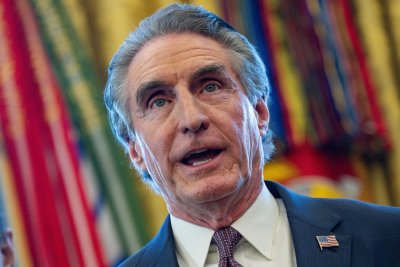
U.S. Interior Secretary Doug Burgum visited Venezuela on Wednesday, marking a new step in the energy and diplomatic agenda between Washington and Caracas.
Since January, Burgum has led discussions with executives from Chevron, ExxonMobil and ConocoPhillips aimed at granting general licenses that would allow private operations in the country, local outlet Efecto Cocuyo reported.
The plan aligns with Trump’s “Energy Dominance” policy, a central strategy of the administration designed to position the United States as a global energy superpower.
Under the approach, U.S. companies would provide private capital without federal subsidies, while the government would guarantee security and stability for investments.
The House of Pies, a Los Feliz institution, is bustling on a chilly January morning.
It wouldn’t be shocking if some of the patrons here for breakfast were casually chit-chatting about the cultural behemoth that “KPop Demon Hunters” has become. After all, the 2025 animated saga about three music stars fighting otherworldly foes is now the most-watched movie ever on Netflix; “Golden,” its showstopping track, has since become the first Korean pop song to ever win a Grammy.
But for Danya Jimenez, 29, who sits across from me sipping coffee, the reception to the movie she began writing on back in 2020 isn’t entirely surprising, but certainly delayed.
“When we first started working on it, I was like, ‘People are going to be obsessed with this. It’s going to be the best thing ever,’” she recalls. But as several years passed, and she and her writing partner and best friend Hannah McMechan, 30, moved on to other projects. They weren’t sure if “KPop” would ever see the light of day. Production for animation takes time.
It wasn’t until she learned that her Mexican parents were organically aware of the movie that Jimenez considered it could actually live up to the potential she initially had hoped for.
“Without me saying anything, my parents were like, ‘People are talking about this’ — like my dad’s co-workers or my aunt’s friends — that’s when I started to realize, ‘This might be something big,’” she says.
“But never in my life did I think it would be at this scale.”
“KPop Demon Hunters” is now nominated for two Academy Awards: animated feature and original song. And that’s on top of how ubiquitous the characters — Rumi, Mira and Zoey — already are.
“Everyone sends me photos of knockoff ‘KPop Demon Hunters’ dolls from across the border,” Jimenez says laughing. “My friend got me a shirt from Mexicali with the three girls, but they do not look anything like themselves. She even got my name on it, which was awesome.”
After graduating from Loyola Marymount University in 2018, Jimenez and McMechan quickly found their footing in the industry, as well as representation. But it was their still unproduced screenplay, “Luna Likes,” about a Mexican American teenage girl obsessed with the late chef and author Anthony Bourdain, that tangentially put them on the “KPop” path.
“Luna Likes” earned the pair a spot at the prestigious Sundance Screenwriters Lab, where Nicole Perlman, who co-wrote “Guardians of the Galaxy,” served as one of their advisors. Perlman, credited as a production consultant on “KPop,” thought they would be a good fit.
Jimenez didn’t see the connection between her R-rated comedy about a moody Mexican American teen and a PG animated feature set in the world of K-pop music, but the duo still pitched. Their idea more closely resembled an indie dramedy than an epic action flick.
“If [our version of ‘KPop’] were live-action, it would’ve been a million-dollar budget. It was the smallest movie ever. Our big finale was a pool party,” Jimenez says. “We had all of the girls and the boys with instruments, which obviously is not a thing in K-pop, and everyone was making out.”
Even though their original pitch wouldn’t work for the film, Maggie Kang, the co-director and also a co-writer, believed their voices as two young women who were best friends, roommates and creative collaborators could help the movie’s heroines feel more authentic.
“Maggie had already interviewed all of the more established writers, especially older men,” Jimenez says. “She knows the culture. She knew K-pop, she’s an animator. She just needed the girls’ voices to come through, so I think that’s why we got hired.”
Kang confirms this via email: “It’s always great to collaborate with writers who are the actual age of your characters! Hannah and Danya were exactly that,” she says. “They were very helpful in bringing a fresh, young voice to HUNTR/X.”
Neither Jimenez nor McMechan were K-pop fans at the time. As part of their research, they both started watching K-pop videos, but it was McMechan who got “sucked into the K-hole” first. Still, it didn’t take long until the video for BTS’ “Life Goes On” entranced Jimenez.
“K-pop is a river that you fall into, and it just takes you,” Jimenez says. BTS and Got7 are her favorite groups. For McMechan, the ensemble that captivates her most is Stray Kids.
In writing the trio of demon hunters, the co-writers modeled them after themselves. The characters’ propensity for ugly faces, silliness and a bit of grossness too, stems from the portrayals of girlhood and young womanhood that appeal to them. Jimenez, who says she was an angsty teen, most closely identifies with the rebellious Mira.
“I have a monotone vibe,” says Jimenez. “People always think that I’m a bitch just because I have a resting bitch face,” she says. “But as you can see in the movie, Mira cares so much about having everyone be really close. I feel like that’s how I’m with all my friends.”
Characters with strong personalities that are not simplistically likable feel the truest to Jimenez. In “Luna Likes,” the prickly protagonist is directly inspired by her experiences growing up, as well as the bond she shared with her dad over Bourdain’s “Parts Unknown” show.
“There’s a pressure to show that Mexicans are nice people and we’re hard workers. I was like, ‘Let’s make her kind of bitchy and very flawed,’” Jimenez says about Luna. “She’s a teenager in America and she should be given all the same opportunities — and also the forgiveness for being an ass— and [as] selfish at that age as anybody else.”
Hannah McMechan, left, and Danya Jimenez, co-writers of “KPop Demon Hunters,” met in college.
(Carlin Stiehl / For The Times)
Though their upbringings were markedly different, it was their shared comedic sensibilities that connected Jimenez and McMechan when they met in college. The two were close long before deciding to pen stories together. “Having a writing partner is the best. I feel bad for people who don’t have a writing partner, no offense to them,” says Jimenez.
McMechan explains that their writing partnership works because it’s grounded on true friendship. And she believes they would not have gotten this far without each other. While McMechan’s strong suit is looking at the bigger picture, Jimenez finds humor in the details.
“Danya is definitely funnier than me,” says McMechan. “It’s really hard to write comedy in dialogue versus comedy in a situation because if you’re putting the comedy in the dialogue, it can sound so forced and cringey. But she’s really good at making it sound natural but still really funny.”
Though she had been writing stories for herself as a teen, Jimenez didn’t consider it a career path until as a high schooler she watched the romantic comedy “No Strings Attached,” in which Ashton Kutcher plays a production assistant for a TV series.
“He is having a horrible time. But I was so obsessed with movies and TV, and I was like, ‘That looks incredible. I want to be doing what he’s doing,’” she recalls. “And my dad was like, ‘That’s a job.’”
Danya Jimenez grew up in Orange County.
(Carlin Stiehl / For The Times)
As an infant, Jimenez spent some time living in Tijuana, where her parents are from, until the family settled back in San Diego, where she was born. And when she was around 5 years old, Jimenez, an only child, and her parents relocated to Orange County. Until then, Jimenez mostly spoke Spanish, which made for a tricky transition when starting school.
“I knew English, but it just wasn’t a habit,” she recalls. “I would raise my hand and accidentally speak Spanish in class. My teachers would be like, ‘We’re worried about her vocabulary.’ That was always an issue, so it’s really funny that I turned out to be a writer.”
As she points out in her professional bio, it was movies and TV that helped with her English vocabulary, especially the Disney sitcom “Lizzie McGuire.”
Jimenez describes growing up in Orange County with few Latinos around outside of her family as an alienating experience. She admits to feeling great shame for some of her behaviors as a teenager afraid of being treated differently and desperate to fit in.
“I would speak Spanish to my mom like in a corner because I didn’t want everyone else to hear me speak Spanish,” Jimenez confesses. “If my mom pulled up to school to drop me off playing Spanish hits from the ‘80s or banda, I was like, ‘Can you turn it down please?’”
Like a lot of young Latinos, she’s now taking steps to connect with her heritage, and, in a way, atone for those moments where she let what others might think rob her of her pride.
“During the pandemic I cornered my grandma to make all of her recipes again so I could write them down,” she recalls. “Now I have them all written down on a website. Or if my mom corrects me for something that I’m saying in Spanish, I now listen.”
At the risk of angering her, Jimenez describes her mother as a “cool mom,” and compares her to Amy Poehler’s character in “Mean Girls.” Raised in a household without financial struggles, Jimenez doesn’t often relate to stories about Latinos in the U.S. that make it to film and TV. Her hope is to expand Latino storytelling beyond the tropes.
“That’s very important to me, to just tell Latino stories or Mexican stories in a way that’s just authentic to me and hopefully someone else is like, ‘Yes, that’s me,’” she says. “A lot of people have certain expectations for Latino stories that I’m not willing to compromise on.”
Though they still would like to make “Luna Likes” if given the chance, for now, Jimenez and McMechan will continue their rapid ascent.
They’re “goin’ up, up, up” because it is their “moment.” They recently wrapped the Apple TV show “Brothers” starring Matthew McConaughey and Woody Harrelson that filmed in Texas. They are also writing the feature “Attack of the Fifty Foot Woman” for Tim Burton to direct, with Margot Robbie in talks to star.
“I feel like I’ve just been operating in a state of shock for the past, I don’t know how many months since June,” says Jimenez in her signature deadpan affect. “But if I think about it too much, I’d be a nervous wreck.”
Reports are emerging that the US and Israel are supporting separatist groups in Iran to launch attacks. The reports claim its part of an evolving US strategy to weaking Iran’s defences and possibly collapse the Islamic Republic. Soraya Lennie breaks it down.
Global energy markets remain in a state of high alert after several Gulf states suspended oil and gas production following escalating tensions in the region.
Since Saturday’s attacks by the United States and Israel, Tehran has targeted various sites in Israel and across several Gulf countries.
Recommended Stories
list of 4 itemsend of list
Initially, these Iranian attacks focused primarily on US military assets, but Gulf states have reported that Iran has since broadened its scope to target civilian infrastructure, including hotels, airports and energy facilities. Iranian officials have publicly denied targeting Gulf energy facilities, however.
The Middle East remains the world’s dominant source of hydrocarbon reserves and a major driver of crude oil and natural gas output.
How much oil and gas does the Middle East have?
Nearly half of the world’s oil reserves and exports come from the Middle East, which contains five of the seven largest oil reserves in the world.
Once refined, crude oil is used to make various products, including petrol, diesel, jet fuel and a wide range of household items such as cleaning products, plastics and even lotions.
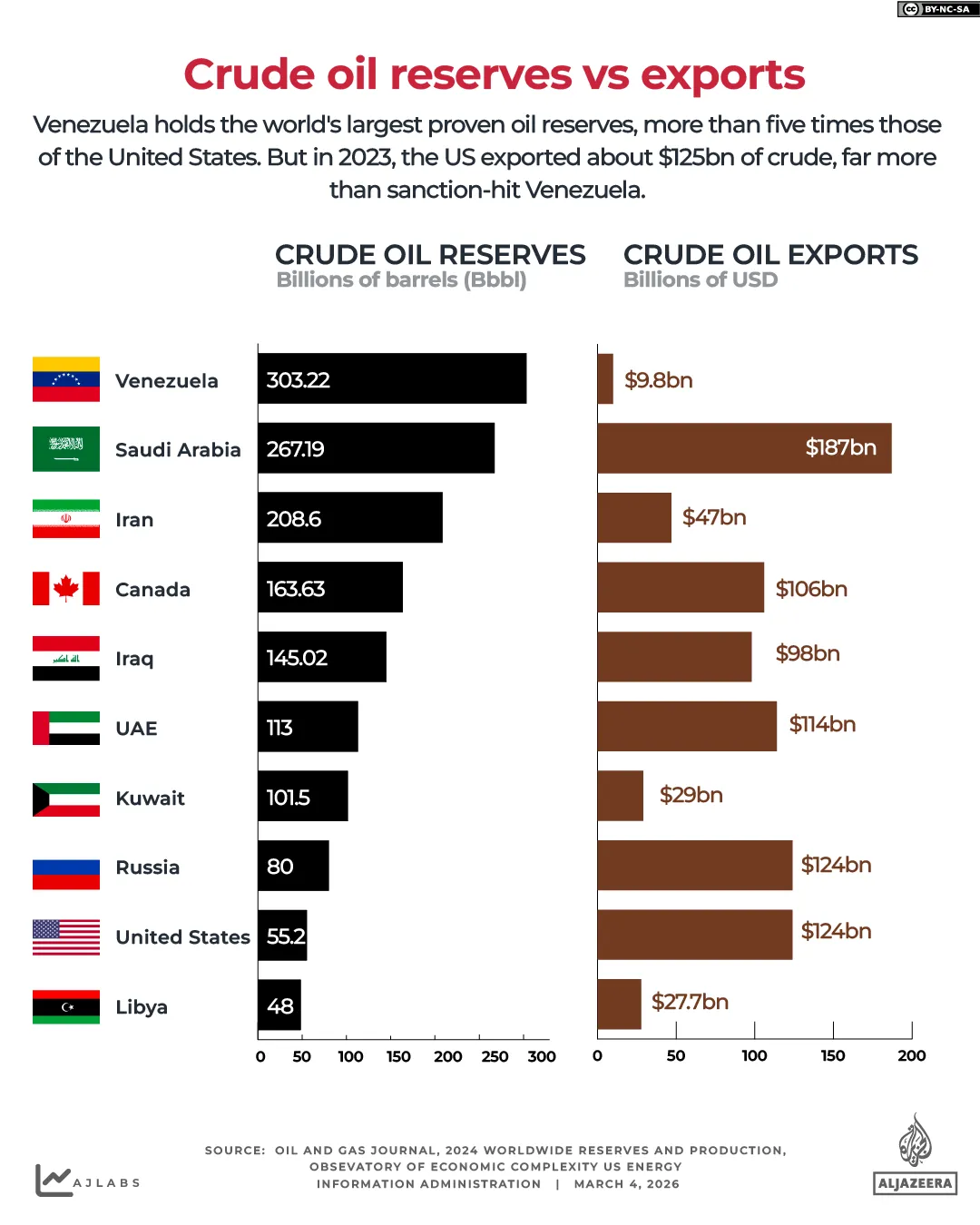
After Venezuela, which has 303 billion barrels, Saudi Arabia holds the world’s second-largest proven crude oil reserves, estimated at 267 billion barrels.
The Middle East’s largest oil reserves:
Saudi Arabia: 267 billion barrels
Iran: 209 billion barrels
Iraq: 145 billion barrels
UAE: 113 billion barrels
Kuwait: 102 billion barrels
Saudi Arabia is also the world’s top oil exporter with an estimated $187bn of crude in 2024, according to data from the Observatory of Economic Complexity (OEC).
The Middle East’s top oil exporters:
Saudi Arabia: $187bn
UAE: $114bn
Iraq: $98bn
Iran: $47bn – largely sold at a discount due to US sanctions
Kuwait: 29bn
Other Middle Eastern countries with sizeable oil exports include: Oman ($28.9bn), Kuwait ($28.8bn) and Qatar ($21bn).
(Al Jazeera)
In addition to crude oil, the Middle East is a global powerhouse for natural gas, accounting for nearly 18 percent of global production and approximately 40 percent of the world’s proven reserves.
Natural gas is primarily used for electricity generation, industrial heating, and in chemicals and fertilisers.
The heart of Middle Eastern gas is a single, massive underwater reservoir called the South Pars/North Dome field. It is the largest gasfield in the world, and it is shared directly between Qatar and Iran.
Gas is transported either through pipelines or by tankers. When using pipelines, the gas is pressurised and moved through steel networks. When pipelines are not feasible, such as across oceans, Liquefied Natural Gas (LNG) is used.
To create LNG, the gas is cooled to approximately -162C (-260F), shrinking its volume and allowing it to be safely loaded onto specialised tanker ships for global transport.
To transport oil and gas, tankers from various Gulf states must navigate the narrow waterway known as the Strait of Hormuz. Approximately one-fifth of global oil and gas passes through this strait, primarily heading to major markets in Asia, including China, Japan, South Korea and India, as well as to Europe.
(Al Jazeera)
Which energy facilities have been attacked?
Here are the facilities which have recorded damage as of Wednesday:
Saudi Arabia – Ras Tanura oil refinery
On Monday, one of the world’s largest oil refining complexes, the Ras Tanura oil refinery owned by Saudi Aramco, was forced to halt operations after debris from intercepted Iranian drones caused a small fire.
This handout satellite image, courtesy of Vantor, released on March 2, 2026, shows damage at Saudi Aramco’s Ras Tanura refinery [AFP]
Saudi Aramco is one of the world’s largest companies, with a market capitalisation exceeding $1.7 trillion and revenue of $480bn. Headquartered in Dhahran, in eastern Saudi Arabia, Aramco controls 12 percent of global oil production, with a capacity of more than 12 million barrels per day (bpd).
On Wednesday, Saudi defence officials reported a second drone attempt on the facility but this was successfully intercepted with no damage or disruption to operations reported.
Qatar – Ras Laffan Industrial City LNG facilities
On Monday, Qatar’s Ministry of Defence reported that Iranian drones had targeted an energy facility in Ras Laffan belonging to QatarEnergy, the world’s largest LNG producer.
While no casualties were reported, QatarEnergy suspended the production of LNG and other products at the impacted sites.
QatarEnergy’s operating facilities on March 3, 2026, in Ras Laffan Industrial City, Qatar [Getty Images]
QatarEnergy’s 81 million metric tonnes of LNG exports are mostly bound for Asian markets, including China, Japan, India, South Korea, Pakistan and other countries in the region. The halt in production hiked global gas prices to a three-year high this week.
Qatar – Mesaieed Industrial City
Qatar’s Defence Ministry said the country was attacked by a second drone launched from Iran on Monday, targeting a water tank belonging to a power plant in Mesaieed, without reporting any casualties.
On Tuesday, QatarEnergy also stopped production of some downstream products like urea, polymers, methanol, aluminium and others.
UAE – Fujairah and Mussafah oil terminals
On Monday, a fire broke out at Mussafah Fuel Terminal in southwest Abu Dhabi after it was struck by a drone.
On Tuesday, falling debris from a drone interception caused a fire at the Fujairah Oil Terminal along the eastern coast of the United Arab Emirates. No injuries were reported.
A large fire and plume of smoke are visible after debris from an intercepted Iranian drone hit the Fujairah oil facility, in Fujairah, United Arab Emirates, on Tuesday, March 3, 2026, according to authorities [Altaf Qadri/AP Photos]
Oman – ports of Duqm and Salalah
On Tuesday, multiple Iranian drones struck fuel tanks and a tanker at the port of Duqm, with at least one direct hit on a fuel storage tank, causing an explosion.
On the same day, a drone strike was recorded at the Port of Salalah, which handles fuel and industrial minerals.
Athe Nova – oil tanker
On Monday, the Athe Nova, a Honduran-flagged tanker positioned off the coast of Khor Fakkan, UAE, was struck by Iranian drones as it was transiting the Strait of Hormuz, setting it ablaze. Despite the fire, the vessel managed to exit the chokepoint into the Gulf of Oman, and no casualties were reported.
Iran’s Islamic Revolutionary Guard Corps (IRGC) claimed responsibility for the strike, identifying the Athe Nova as an “ally of the United States”.
On the same day as the attack, Iran declared the Strait of Hormuz closed, warning that any ship attempting to pass would be “set ablaze”.
Since then, several other tankers have been hit.
(Al Jazeera)
Other regional energy disruptions
Although not directly targeted, the following energy sites suspended operations in response to Iranian retaliatory attacks:
Israeli offshore gasfields – Major gas production fields such as Leviathan and Tamar were shut down as a precaution following regional drone and missile launches linked to Iran.
Oil fields in semiautonomous Iraqi Kurdistan – Producers including DNO, Gulf Keystone and Dana Gas halted output as a safety measure amid the escalation.
Rumaila oilfield – Operations at Iraq’s largest oilfield – operated by BP – in southern Iraq were halted on Tuesday as a security precaution due to its proximity to the escalation zone.
THE Brit Awards have always been known for controversial moments and risky jokes – especially when you have Jack Whitehall as host.
But it seems this year’s glitzy bash may have gone too far as horrified viewers slammed ITV with complaints to Ofcom following Saturday’s ceremony.
Sign up for the Showbiz newsletter
Thank you!
This year’s Brit Awards has had a slew of complaints from viewers – with host Jack Whitehall’s jokes called into questionCredit: AlamySome fans were also furious that parts of the Brits were edited out by a static noise – including Angry Ginge’s moment on stageCredit: AlamyParts of Max Bassin of Geese acceptance speech was edited out by ITV bossesCredit: Getty
At the weekend, the Brits was broadcast on ITV with a slight time delay from Manchester‘s Co-Op Arena.
Ofcom have confirmed to The Sun there were almost 150 complaints in total and the majority related to elements of the show being edited out, including acceptance speeches.
While other complaints related to jokes made by presenter Jack.
The comedian, who has hosted the Brits for five years now, is known for his close to the mark humour.
Salford native Ginge – real name Morgan Burtwistle – told the audience that he was glad that “people are realising that London is a s**thole”, which was also muted from the air.
Noel Gallagher’s acceptance speech was also censoredCredit: Reuters
After that, any insulting or risky language or jokes were taken out of the broadcast.
When Geese picked up their award for International Group, the New Yorker also suffered the static noise when the band’s drummer Max Bessin took to the stage, thanked the crowd before the award, before declaring: “Free Palestine, F**k ICE”.
Shaun Ryder and Bez also got in trouble when talking to Jack about their famously-hedonistic and drug-fuelled youth, some of which was also cut from broadcast.
Noel Gallagher also got muzzed towards the end of his appearance on stage as he was awarded Songwriter of the Year for his 35-year career with Oasis and the music that has influenced the generations since.
The comment clearly divided the audience, with cheers and boos alike, but we can confirm it was actually “Up The Blues” as a nod to football team, Manchester City.
Shaiel Ben-ephraim of Atlas Global Strategies explains how the US public is reacting to US-Israeli war on Iran and what shifting public opinion could mean for future US support for Israel and its position in the region.
As conflict in the Middle East enters its fifth day on Wednesday, American and Israeli officials are pushing rhetoric suggesting that the campaign against Iran is a religious war.
On Tuesday, Muslim civil rights organisation, the Council on American-Islamic Relations (CAIR), condemned the Pentagon’s use of this rhetoric, deeming it “dangerous” and “anti-Muslim”.
The United States and Israel began their attack on Iran on Saturday and have continued to carry out strikes on Iran since then. In retaliation, Iran has hit back at targets in Israel, and US military assets in Bahrain, Saudi Arabia, Qatar, the United Arab Emirates, Iraq and Cyprus.
A US watchdog has reported that US troops have been told the war is intended to “induce the biblical end of times”. US Secretary of State Marco Rubio also recently stated that Iran is run by “religious fanatic lunatics”.
What are American and Israeli leaders saying?
US watchdog Military Religious Freedom Foundation (MRFF) said it has received emailed complaints that US service members were told the war with Iran is meant to “cause Armageddon”, or the biblical “end times”.
An unnamed noncommissioned officer wrote in an email to MRFF that a commander had urged officers “to tell our troops that this was ‘all part of God’s divine plan’ and he specifically referenced numerous citations out of the Book of Revelation referring to Armageddon and the imminent return of Jesus Christ”.
The MRFF is a nonprofit organisation dedicated to upholding religious freedom for US service members.
The officer claimed the commander had told the unit that Trump “has been anointed by Jesus to light the signal fire in Iran to cause Armageddon and mark his return to Earth”.
Israeli and US leaders have also resorted to religious rhetoric in public.
Last month, Mike Huckabee, the US ambassador to Israel, told conservative US commentator Tucker Carlson during an interview that it would be “fine” if Israel took “essentially the entire Middle East” because it was promised the land in the Bible. However, Huckabee added that Israel was not seeking to do so.
Speaking to the media on Tuesday this week, Rubio said: “Iran is run by lunatics – religious fanatic lunatics. They have an ambition to have nuclear weapons.”
And, the previous day in a Pentagon news briefing, US Secretary of Defense Pete Hegseth said: “Crazy regimes like Iran, hell-bent on prophetic Islamic delusions, cannot have nuclear weapons.”
In its statement, CAIR claimed that Hegseth’s words are “an apparent reference to Shia beliefs about religious figures arising near the end times”.
On Sunday, Israeli Prime Minister Benjamin Netanyahu referenced the Torah, comparing Iran with an ancient biblical enemy, the Amalekites. The “Amalek” are known in Jewish tradition as representing “pure evil”.
“We read in this week’s Torah portion, ‘Remember what Amalek did to you.’ We remember – and we act.”
CAIR said: “We are not surprised to see Benjamin Netanyahu once again using the biblical story of Amalek – which claims that God commanded the Israelites to murder every man, woman, child and animal in a pagan nation that attacked them – to justify Israel’s mass murder of civilians in Iran, just as it did in Gaza.”
The statement added that every American should be “deeply disturbed by the ‘holy war’ rhetoric” being spread by the US military, Hegseth and Netanyahu to justify the war on Iran.
“Mr Hegseth’s derisive comment about ‘Islamist prophetic delusions’, an apparent reference to Shia beliefs about religious figures arising near the end times, was unacceptable. So is US military commanders telling troops that war with Iran is a biblical step towards Armageddon.”
Why are US and Israeli leaders framing the conflict with Iran as a religious war?
By attempting to frame the conflict as a holy war, leaders are using theological beliefs to “justify action, mobilise political opinion, and leverage support”, Jolyon Mitchell, a professor at Durham University in the UK, told Al Jazeera.
“Many on both sides of this conflict believe that they have God on their side. God is enlisted in this conflict, as with many others, to support acts of violence. The demonisation and dehumanisation of the enemy, the ‘other’, will inevitably make building peace after the conflict even harder,” Mitchell said.
“There are several overlapping reasons, and they operate at different levels: domestic mobilisation, civilisational framing, and strategic narrative construction,” Ibrahim Abusharif, an associate professor at Northwestern University in Qatar, told Al Jazeera.
Domestic mobilisation refers to rallying a country’s own people. Leaders can frame conflict as religious and hence morally clear and urgent, rallying public support, he said.
In a video circulating on social media this week, Christian Zionist pastor and televangelist John Hagee is seen delivering a sermon promoting the US assault on Iran. Hagee said that Russia, Turkiye, “what’s left of Iran” and “groups of Islamics” will march into Israel. He said that God will “crush” the “adversaries of Israel”.
“Religious language mobilises domestic constituencies,” Abusharif said, explaining that in the US, this connects deeply with many evangelicals and Christian Zionists, because they already see Middle East wars as part of a religious “end times” story.
“References to the ‘end times’, the Book of Revelation, or biblical enemies are not incidental; they activate a cultural script already present in American political theology.”
Civilisational framing refers to the creation of an “us vs them” dichotomy, casting the conflict as a clash between whole ways of life or faiths, not just a dispute over borders or policy, he added. Hence, statements such as Hegseth’s reference to “prophetic Islamic delusions” simplify the terms of the war in the minds of ordinary people.
“Wars are difficult to justify in technical strategic language,” Abusharif said.
“Casting the conflict as a struggle between ‘civilisation and fanaticism’, or between biblical ‘good and evil’, transforms a complicated regional confrontation into a moral drama that ordinary audiences can easily grasp.”
“Israeli leadership has long used biblical referents as political language. We all are familiar with it. The narratives have become globalised. In Israeli political discourse, this language situates contemporary conflict within a long historical narrative of Jewish survival, and it signals existential stakes,” Abusharif said.
Have US or Israeli leaders made religious references before?
Netanyahu and other Israeli officials have used the term “Amalek” before in reference to Palestinians in Gaza during Israel’s genocidal war in Gaza.
Historically, during wars or military confrontations, US presidents and senior officials have also invoked the Bible or used Christian language.
President George W Bush invoked similar language after the September 11, 2001 attacks.
On September 16, 2001, Bush said: “This crusade, this war on terrorism, is going to take a while.” The Crusades were a series of religiously framed wars, mainly between the 11th and 13th centuries, in which the papacy fought against Muslim rulers for territory.
The White House later tried to distance Bush from the word “crusade” to clarify that Bush was not waging a war against Muslims.
Abusharif said that the war on Iran is about power and politics, but using religious rhetoric energises supporters and “moralises” the conflict.
“The war itself is not theological. It is geopolitical. But the language surrounding it increasingly draws on sacred imagery and civilisational narratives. That rhetoric can mobilise supporters and frame the conflict in morally absolute terms,” Abusharif said.
“Yet it also carries risks: once a war is cast in sacred language, political compromise becomes harder, expectations become higher, and the global perception of the conflict can shift in ways that complicate diplomacy.”
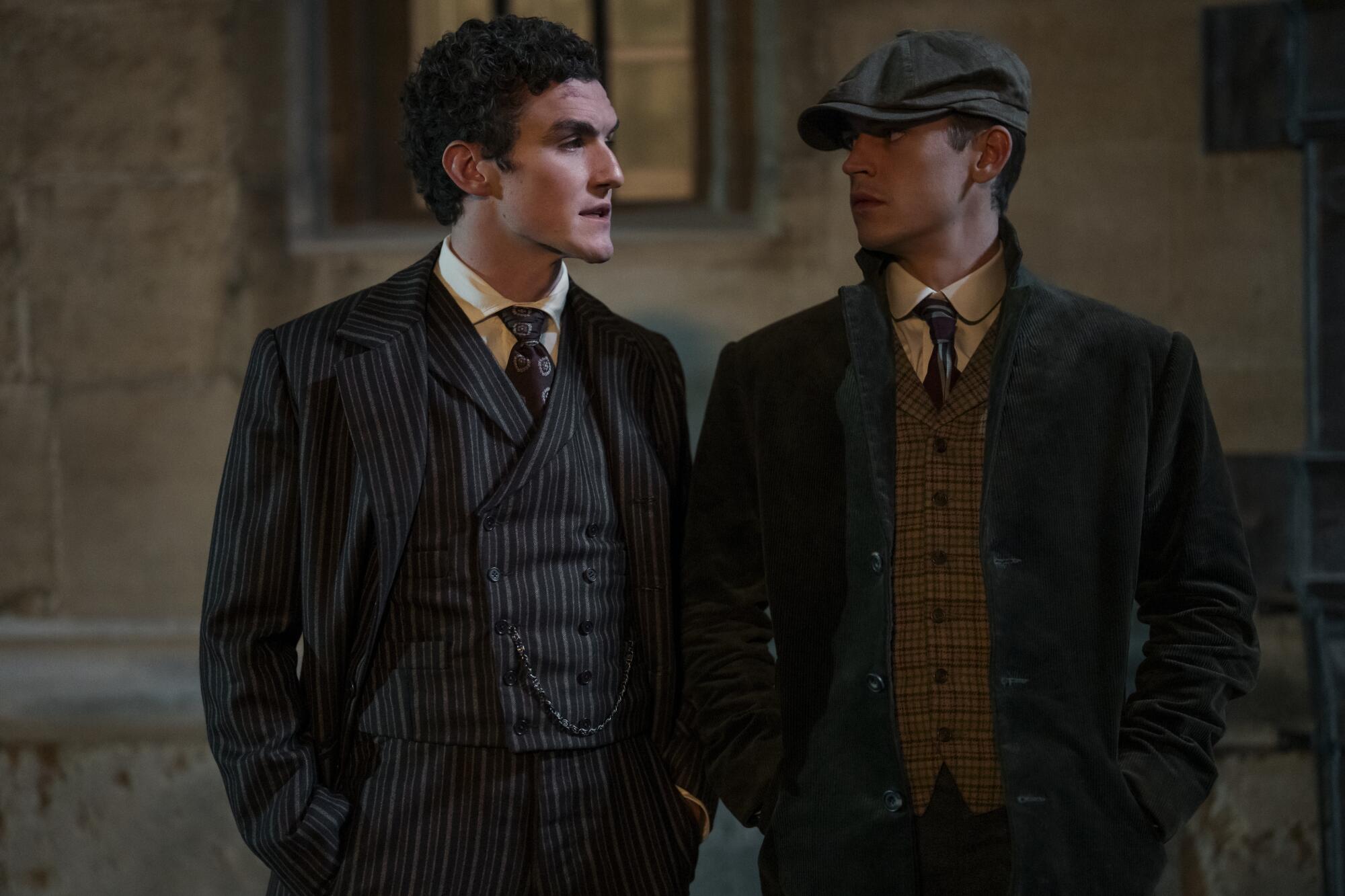
LONDON — Sherlock Holmes and James Moriarty are notorious literary foes, but in “Young Sherlock” the duo make the unlikeliest of friends. The Prime Video series premiering Wednesday reimagines the fictional detective’s early years as he investigates a murder case that originates at Oxford, where he first meets his eventual antagonist. Their relationship is the basis of the first season, and in the hands of actors Hero Fiennes Tiffin and Dónal Finn, it’s particularly electric.
“I was always interested in the Moriarty character because he’s a hugely iconic villain,” says showrunner Matthew Parkhill. Guy Ritchie, who directs and is an executive producer on the series, tapped him to expand on an idea for a show that revealed Sherlock’s evolution into the detective we know and love.
“He’s mentioned in four books, but he’s only ever in one,” Parkhill adds, speaking from London’s Rosewood Hotel during a press day in late February. “Why are these guys such great enemies? If a great friendship turns sour, it can become a great rivalry. But the story is basically going to be how this incredible friendship unravels.”
Tiffin, who previously worked with Ritchie in 2024’s “The Ministry of Ungentlemanly Warfare,” auditioned to play Sherlock while on vacation in Thailand. Parkhill responded to the “sense of innocence and wonder” Tiffin brought to the long-established character, who is 19 during the events of this season. After being cast, he did a series of chemistry reads with several actors up for Moriarty. Finn had been one of the last tapes Parkhill had watched, but the showrunner was immediately captivated by his “magnetism and intensity and charm.”
“Very quickly it became apparent that there was this energy and the chemistry they had together,” Parkhill says. “For me, they’re two sides of the same coin. What we’ll explore if we get to carry on even more is why one chooses one path and one chooses another. Dónal had a charm and these flashes of darkness.”
In “Young Sherlock,” Moriarty (Dónal Finn), left, and Sherlock (Hero Fiennes Tiffin) become friends at Oxford.
(Daniel Smith / Prime)
Both actors could feel it as well. “When Dónal came in within 2½ seconds I realized I need to bring my A-game because he was going to make me look bad otherwise,” says Tiffin, 28, speaking alongside Finn at the Rosewood later that day. “Once we started filming, we were on the same wavelength. We weren’t coming in and trying to go toe-to-toe and test each other, but we were collaborating and working towards the same goal.”
“The most dramatic version of this show was if an unstoppable force meets an immovable object and there’s an equality in what they do,” adds Finn, 30. “That required both of us to make each other look as good as we could.”
“Young Sherlock” is inspired by but not based on Andrew Lane’s “Young Sherlock Holmes” book series. Although it sees Ritchie returning to the world of Sir Arthur Conan Doyle, the show is not a prequel to the director’s 2009 film “Sherlock Holmes” nor its 2011 sequel, which starred Robert Downey Jr. as the titular character.
“This is a different universe,” Parkhill confirms. “They are cousins in terms of tone. But Guy’s not the same director he was when he made those. The things he was interested in exploring now were also different. But we wanted the show to have that same irreverence.”
He adds, “The most basic thing for me was: What makes him become this person? He’s on the cusp of trying to find his place in the world and his sense of self, which makes it an interesting period of his life to explore.”
“When Dónal came in within 2½ seconds I realized I need to bring my A-game because he was going to make me look bad otherwise,” says Tiffin, right, posing with Finn.
(Evelyn Freja / For The Times)
The eight-episode series opens with a flashback to Sherlock’s childhood, revealing the loss of his sister Beatrice. Her death has sent a ripple effect through his family — his mother, Cordelia (Natascha McElhone), is in an asylum and his father, Silas (Joseph Fiennes), has departed. Sherlock himself has been incarcerated, much to the dismay of his older brother Mycroft (Max Irons), a civil servant who pulls a few strings to get Sherlock out of prison. Sherlock accepts a job as a servant at Oxford, where he meets Moriarty. The pair investigate a murder at the university involving Princess Gulun Shou’an (Zine Tseng), which eventually is far more complex than they could have imagined.
“The plot has got to be clear enough that the audience can go on this journey with us, but difficult and mysterious enough that Sherlock doesn’t guess it straight away,” Finn says. “I have a great admiration for Matthew for managing that, and also giving each character a role to play in that journey.”
One of those characters is Silas, Sherlock’s adventuring father who doesn’t appear until the end of Episode 4. Parkhill approached Fiennes, Tiffin’s uncle, to play the role.
“When I sat down with Matthew, I thought, ‘Oh, God, is this a gimmicky thing of getting family members?’” says Fiennes in a separate interview. “But I quickly felt, ‘No, it’s not.’ It felt very natural and it’s a gift to play family members with family. Actors are always trying to research and unearth and unpack to get to that state, but we could walk on set and already have that.”
Tiffin and Fiennes hadn’t previously worked together, but they found a rhythm quickly when Fiennes arrived a few months into production in Wales. Episode 5, a chapter of the saga that pits Sherlock against his father and reckons with their history, felt like a real moment of collaboration.
Joseph Fiennes plays Sherlock Holmes’ father, Silas, in “Young Sherlock.” The actor is Tiffin’s uncle: “It felt very natural and it’s a gift to play family members with family.”
(Daniel Smith / Prime)
“We were four months into shooting, so I’d built this confidence up, and then Joe comes in and I shrunk back into the shell of myself,” Tiffin says. “I’d love to put it down to acting, but that’s definitely my relationship with Joe seeping through. It’s good because Silas has been absent in Sherlock’s life for a while, and Sherlock wants to please and impress him too.”
He describes an “unspoken, innate, really deep, almost inaccessible thing” between himself and his uncle. “When I opened the doors at the end of Episode 4 and see Joe, I’ve opened my front door at my parents’ house when he’s come over for dinner when I’m 6 years old,” Tiffin says.
Ritchie directed the first two episodes and then handed off the reins, but his signature style is infused through the series. It has a contemporary bent despite the 1870s setting, with modern music used as the soundtrack. It’s full of action and momentum, much like Ritchie’s “Sherlock Holmes” films, but here the character is still finding his footing. When we meet Sherlock, he’s not an established detective and he has no idea how to properly fight.
“I do have to admit from watching Robert Downey Jr. in Guy Ritchie’s movies, especially as a young boy, he was the epitome of cool,” Tiffin says. “So it was a complete surprise to me that my Sherlock was not just going to not be able to fight, but was terrible at defending himself. ”
Moriarty, however, is far better equipped, teaching Sherlock how to defend himself. Finn relished working with Ritchie, whose fight scenes are a signature of his work.
“They’re brilliant, but he knows that we see fight sequences every day and wants to make them special,” Finn says. “He knows how to sprinkle them with humor or to film them in a way you don’t expect.”
“I do have to admit from watching Robert Downey Jr. in Guy Ritchie’s movies, especially as a young boy, he was the epitome of cool,” says Tiffin about the “Sherlock Holmes” films.
(Evelyn Freja / For The Times)
“They’re also not one-dimensional,” Tiffin adds. “The fight always informs something. It’s never just two people fighting.”
Tiffin had a lot of previous iterations of Sherlock to draw from, as well as the novels themselves. He visited the Sherlock Holmes Museum in London ahead of shooting. He pulled from his longtime love of Downey’s portrayal, but he wanted to make the character his own.
“A big thing for us was making sure that our characters show signs of becoming the characters who are fully developed in Conan Doyle’s works,” he says. “They need to be close enough, but still have room to grow. Sherlock hasn’t been exposed to the hardships of the world yet, so he still has this youthful energy. If we get more seasons, we will see Sherlock lose that.”
There are fewer cinematic touchpoints for Moriarty, although Andrew Scott famously played him in the BBC’s adaptation alongside Benedict Cumberbatch. Finn had a photograph of Scott on his wall during drama school.
“It’s hard not to be inspired by what people have done before you, but you also have to draw the line somewhere,” Finn says. “And these aren’t iterations of the characters we’ve seen before. We have the opportunity to map out what events or what choices they make that shape the person we know.”
There are nods to the more established versions throughout the series, including Sherlock picking up his iconic hat in a shop and Moriarty rejecting it. Several of Sherlock’s famous lines from the novels are actually spoken first by Moriarty, who repeatedly emphasizes that he is not a sidekick but an equal.
“There are these great moments when these characters have left a mark on each other,” Finn says. “If you’re a fan of the Sherlock Holmes canon, you’ll notice them.”
“Its so fun and interesting planting those seeds,” Tiffin adds. “Not only is it fun to explore in our story, but it makes you understand Conan Doyle’s works in a different way and enriches that. Everything about the idea of Moriarty and Sherlock being enemies is enriched by the idea that they were once friends.”
“There are these great moments when these characters have left a mark on each other,” Finn says. “If you’re a fan of the Sherlock Holmes canon, you’ll notice them.”
(Evelyn Freja / For The Times)
There are a few glimmers of Moriarty’s future sensibility, although for the most part Sherlock and Moriarty remain steadfast pals. For Fiennes, this “bromance” is the heart of the story alongside the familial dynamic between Sherlock and Silas.
“You get these two incredibly intelligent misfits who are out of joint with the social world that they’re in,” Fiennes says. “Oxford, the mothership of intellect, is devoid of spirituality, and these two misfits have this spirit we love. We want to hang with them because of their mischievous nature. We know it will all come crashing down and feed into the characters we know later.”
“They are both looking for some sense of connection,” Finn adds. “And so it makes the friendship a really true friendship. It’s rare for both of these characters to feel that they find someone who is an intellectual match. It enriches the idea that when there is a rivalry it’s not just because of opposing moral views. What if it’s driven by revenge or heartbreak or betrayal?”
Parkhill has mapped out several potential future seasons of “Young Sherlock.” The finale concludes with a cliffhanger and a possible new mystery. The showrunner plans to take the show as far as 1887’s “A Study in Scarlet,” the first of Doyle’s novels, and then pass the baton back to literature.
“We will never go past that book, which psychologically gave me a freedom I needed to do this series,” Parkhill says. “We’re aware of the stories, but we used them as a playground in which to play instead of drawing from them directly.”
“We’ve shown signs of them eventually being able to become these more developed characters that Doyle established, but we need to document that journey,” Tiffin adds. “I will never feel complete until I can finish that journey and arrive at 221b Baker Street and meet John Watson and draw a line through the word ‘young.’”
Plumes of smoke rise above the skyline of Tehran, following explosions in Iran, on sunday on March 1, 2026. Iran’s Supreme Leader, Ali Khamenei, was confirmed dead after a joint U.S.–Israeli strike on February 28. In response, Iran launched waves of missiles and drones targeting Israel and U.S. allies across the region. File. Photo by Hossein Esmaeili/UPI | License Photo
March 3 (Asia Today) — The escalating conflict between the United States, Israel and Iran may not end quickly, and South Korea must prepare for the possibility of a prolonged crisis.
Iran’s Islamic Revolutionary Guard Corps has launched retaliatory strikes following U.S. and Israeli airstrikes. Tehran has moved to block the Strait of Hormuz, a chokepoint that handles roughly 20% of global seaborne crude oil shipments, and has fired missiles toward Gulf neighbors including the United Arab Emirates, Kuwait, Qatar and Bahrain.
Although U.S. and Israeli forces reportedly killed Iran’s supreme leader Ali Khamenei and senior military commanders in a surprise attack, it remains unclear whether the conflict will conclude swiftly as President Donald Trump has suggested.
Trump has framed the strikes as an effort to achieve regime change, urging the Iranian people to rise up against the country’s theocratic leadership. However, the situation differs markedly from past U.S. interventions. Achieving regime change solely through airstrikes on military and strategic targets is unlikely.
Richard Haass, president emeritus of the Council on Foreign Relations, has argued that history shows regime change is rarely accomplished without occupation. He also warned that with Khamenei dead, the most hardline elements within the current system could consolidate power.
David Ignatius of The Washington Post likewise cautioned that a U.S. attack on Iran would not be a “one and done” operation but could become a drawn-out conflict. He wrote that the president has a responsibility to explain the stakes and unpredictable risks to the American public.
Global financial markets have already reacted. Japan’s Nikkei index fell as much as 2.7% on Monday, while U.S. West Texas Intermediate crude futures briefly surged 13% to more than $75 per barrel. The Economist warned that oil prices could remain elevated even after the initial spike.
The magazine assessed that hardliners gaining influence in Tehran is more likely than a smooth regime transition. It cautioned that if Iranian forces target oil infrastructure in Gulf states such as Saudi Arabia, the United Arab Emirates or Kuwait, defending those facilities would prove difficult.
South Korea must assume the conflict could drag on. The economic shock would affect both financial markets and the real economy. When Russia invaded Ukraine in 2022, then-President Joe Biden released 4.4 million barrels per day from the U.S. strategic petroleum reserve, yet oil prices remained volatile. At the time, U.S. reserves stood at 570 million barrels; they now total about 415 million barrels.
The government should prepare for currency volatility and stock market declines. Surging oil prices and shipping costs, along with renewed supply chain disruptions, would pose significant medium- to long-term risks to production, investment and consumption in South Korea’s trade-dependent economy.
This crisis should not be viewed as a short-term event. Policymakers must respond with the understanding that the conflict could persist and plan accordingly.
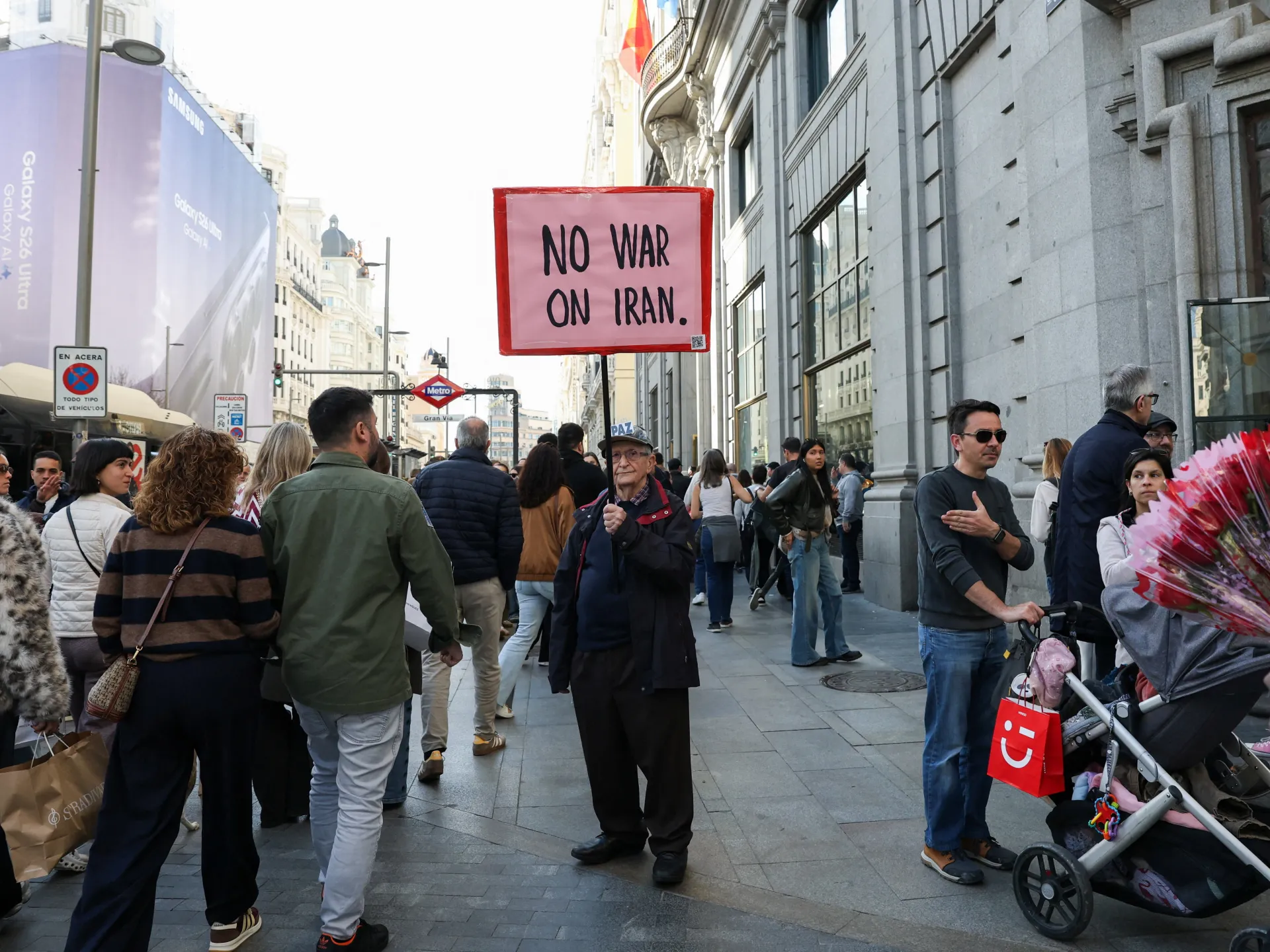
Madrid, Spain – Spain has pledged to keep opposing the war waged by the United States and Israel on Iran after President Donald Trump said Washington would cut off all commercial links with Madrid.
Trump’s rebuke on Tuesday came after Washington’s European ally refused to let the US military use its bases for missions linked to strikes on Iran.
Recommended Stories
list of 4 itemsend of list
“Spain has been terrible,” the president told reporters on Tuesday during a meeting with German Chancellor Friedrich Merz, adding, “We’re going to cut off all trade with Spain. We don’t want anything to do with Spain.”
Spanish Prime Minister Pedro Sanchez, one of the few left-wing leaders in Europe to condemn the US-Israel attack on Iran as “unjustifiable” and “dangerous”, said in a televised nationwide address on Wednesday that Spain’s position was “no to the war”.
“This is how humanity’s great disasters start … The world cannot solve its problems with conflicts and bombs.”
His position cements Spain’s status as an outlier in Europe; Madrid has been one of the few European nations to consistently condemn Israel’s genocidal war on Gaza.
At the Patron Bar in Malasana, Madrid, Gema Tamarit watched Sanchez’s address on the television in the restaurant, which turned up the volume.
“That Trump is mad. We are not afraid of him. Good for Sanchez for sticking up to him. Some more leaders in Europe should do the same,” said Tamarit, 53, a software engineer. “Of course, Iran is an awful regime, but is this the way to change things, by going to war like this?”
A series of opinion polls suggests that more than half of Spaniards oppose Trump’s foreign policy.
According to a poll published by Eurobazuka in February, 53 percent said they opposed the US president’s policies, the third highest group by nationality after the French and Belgians, with 57 percent and 62 percent, respectively.
In another poll published in January, nearly 60 percent of Spaniards said they disagreed with the US president’s operation to arrest the former Venezuelan President Nicolas Maduro, according to a survey published by GESOP for Prensa Iberica media group.
The Eurobazuka poll said 48 percent of Europeans considered Trump to be “an enemy of Europe”, compared with 10 percent who believed he was an ally.
Trump’s trade threat
Analysts said the US may not be able to inflict much commercial damage on Spain, as it is part of the European Union.
Last month, the US Supreme Court declared Trump’s threat to impose a range of tariffs worldwide as illegal.
Victor Burguete, an expert in trade and economics at the Barcelona Centre for International Affairs think tank, said the only way Trump could act against Spain would be to prove the US faced a situation of national emergency.
“It is not likely that he can prove acting against Spain is a national emergency,” he told Al Jazeera. “I think this is more a threat than a real possibility of ending trade with Spain.
The dispute erupted when the US relocated 15 aircraft, including refuelling tankers, from the Rota and Moron military bases in southern Spain on Monday after the country’s socialist government said it would not allow them to be used to attack Iran.
Trump has also referred to Spain’s refusal to raise spending on NATO from 2 to 5 percent of gross domestic product, saying “Spain has absolutely nothing that we need.”
Sanchez has provoked Trump’s anger with policies including refusing to let vessels transporting weapons to Israel dock in Spain and condemning Israel’s genocide in Gaza. Spain was among the first European nations to recognise a State of Palestine in 2024, along with Ireland, Slovenia and Norway.
“Trump is just angry because Spain has refused to raise NATO spending and condemned the technology companies connected with social media. And done this publicly,” said Burguete.
Spain last month announced it was considering banning children under 16 from accessing social media, and was studying legal action against Grok, Instagram and TikTok.
Bruguete said he believed Sanchez took this stance against the war because he opposed the “strongman politics” of Trump, but also because it played well domestically before the general elections next year.
“There is no doubt that the foreign policy of Trump is not popular in Spain,” he added.
Spain is the world’s top exporter of olive oil and sells auto parts, steel and chemicals to the US, but is less vulnerable to Trump’s threats of economic punishment than other European nations.
The US had a trade surplus with Spain for the fourth year in a row in 2025, at $4.8bn, according to US Census Bureau Data, with US exports of $26.1bn and imports of $21.3bn.
The EU said on Wednesday it expected the US to abide by a trade deal with the EU, was “ready to act” to safeguard its interests, and stood in “full solidarity” with member states, but did not name Spain.
Los Angeles has a secret magic to which you have to earn access, and the way you earn it is by making it, becoming a contributor to the city’s misapprehended culture of spectacle and soul, diversity and monolithic elitism. It’s a get-in-where-you-fit-in or get-edged-all-the-way-out kind of city, wherein a deceptively laissez-faire game of musical chairs can determine your fate. Kahlil Joseph has a private magic to which you have to earn access, and you earn it by resonating with the untapped nerve centers of Black culture that animate this city, and even then you might be denied.
Joseph is like the city (Los Angeles, not Hollywood), and the city enforces confidentiality, drive, wit, style and devotion often mistaken for diva-ism. The filmmaker and video artist moved to Los Angeles from Seattle for university, and was quickly followed by his brother, the painter Noah Davis, who would found the Underground Museum, a venue and near-speakeasy with West Coast casual gravitas and pan-African rigor and breadth, which became as important to the zeitgeist of Black Los Angeles as both brothers have.
Movie still from Kahlil Joseph’s film “Blknws: Terms & Conditions.” Funmilayo Akechukwu (Kaneza Schaal) channels a 93-year-old W.E.B Dubois, 200 years in the past.
In somewhat rapid succession, Joseph lost his father, Keven Davis, an accomplished attorney who represented the likes of the Williams sisters and Wynton Marsalis, in 2012, and his brother Noah in 2015. Joseph navigated those years in the wake with unadorned reverence, while starting a family of his own and directing some of the most transcendent music videos of the 2010s. As testament to his resilience and that of the community around him, grief sharpened Joseph’s purpose and became a kind of grace he transmuted into moving images so saturated with feeling, sans easy pathos, they offered new ways of seeing. The stakes were higher and layered with the existential absurdity of abrupt shifts, which he carried with an elegant, slightly seething temperament that has found its expression in the work. It’s relevant that he shares a birthday with Miles Davis — this is Los Angeles, where it’s customary for a person to request your cosmic DNA before asking your name — and it’s relevant that like Miles, Joseph’s vocal tone is whisper-pitched, toward the mode of retreat that begets echo; you lean in and hear him twice. His quiet tone is not shyness or false modesty but circumspection and a sense of boundaries that imply respect and love for real communication. You sense this in his work ethic and what it produces, an intimacy of form that implies an almost ritualistic attentiveness to the world around him on its own terms. In the 2012 Flying Lotus music video “Until the Quiet Comes,” directed by Joseph and set in Los Angeles, death and rebirth are addressed as a duet, companions in the expansion of collective consciousness instead of foils or adversaries, as a fallen child leaves his body and returns more alive than before he was bloodied on screen. And the violent scenes aren’t grotesque or didactic — think of Miles’ muted trumpet sound reconfigured as resurrection visuals, of his ability to play and stage ballads so well that their uptempo momentum moves into territories too macabre to mute. Like Miles, Joseph tests and stretches his range.
With the closure of the family-run Underground Museum, first in 2020 and then officially in 2022, the path uptempo was visited by more obstacles and disappointments, a shift, if temporary, in Joseph’s role in the local community, as he became more private and distant from public elegy. On the phone recently, Joseph and I discussed the trauma economy, how much of a trap it is for Black art and artists, especially in this post-BLM, post-Obama, post-neoliberal dominance, post-nonprofit industrial complex dominance territory we’re all in now, whether we face it or not. As antidote and balm to the market for repackaged abjection, Joseph adapted the sensibility that makes his music video landscapes so lush and transgressive for the art world with “Blknws,” which debuted in 2019 as an imagined syndication or television network, a nonlinear merger of digitized Black archival material pulled from the center to the margins and the radical academic avant-garde — an infinitely looping ensemble wherein Fred Moten enters into conversation with memes of ghetto-fabulous street gymnasts doing backflips into a fried chicken spot, for example, collapsing so-called high and low into an endless woodshed for an impossible concert.
The result was so compelling that the project was commissioned by A24 as a feature film sans script, then purchased from them by Rich Spirit and released last year as “Blknws: Terms & Conditions.” In this longer and more structured form, what began as an intentional scattering of ashes becomes an elegiac letter home mediated by shipwreck. Joseph weaves together an imaginary “Transatlantic Biennial” and W.E.B. Dubois’ “Encyclopedia Africana” — a project that Henry Louis Gates Jr. and Kwame Anthony Appiah transformed into a book, which Joseph’s father had given his brother before they passed. In this way, the film becomes a manifesto for alternate destinies within the Black experience, and a semi-formal goodbye letter to the delusional but politically expedient optimism of the 2010s, wherein the end of the neoliberal order becomes a gateway to renewed self-possession and agency. Since our grief is less of a ready-made commodity lately, we can reorient it around ourselves, a little safer and more sovereign from the gnawing public gaze. And we can be more honest about its paces and paths in that more autonomous landscape. “Blknws” arrives how a successful jazz album does, belligerently inconclusive about the next stylistic leaps the music might make but clearly in the process of launching in that unknown or unspeakable (perhaps secret) direction. The film is agitation made vivid and precise in the dialectic between theorized “Black Study” and practical applications of Black marronage, where we realize that big disembodied ideas are no more sophisticated than what can be danced and gestured at and spoken in our real and virtual conversations. Here, the multiverse becomes one transcendental, transatlantic consciousness where past and present, life and afterlife, blur the way they do in Joseph’s interpretation of “Until The Quiet Comes” to give us a film with a song-like hook and an album’s non-sequitur whimsy.
Movie still from Kahlil Joseph’s film “Blknws: Terms & Conditions.” The underwater study of Funmilayo Akechukwu (Kaneza Schaal) located in the hold of the ship.
Over the last several months, I’ve discussed with Joseph what might become of the momentum propelling “Blknws: Terms & Conditions,” after the film’s run, as speculators enclose searching for clues and stake in his next project. He’s considered its potential evolution into a media company, a real paper, a production house, a series of related films, or a hybrid of all of these endeavors. Alongside his experience on all sides of the art world, he has an acute awareness of the wayward state of print and digital culture, writing and production, the constant closure or downsizing of veteran media outlets, the aftermath of diversity fever in the form of shrinking major magazines often starting with those who cover culture explicitly, the mass turn toward brand-name digital platforms that become extractive monopolies and diminish what can be covered and produced as writers and artists are overworked, understaffed and undervalued. Galleries are also closing and downsizing, and films that don’t oblige the content farm aren’t solicited as readily as influencer-helmed or easily digestible projects that can be played as background noise for scrolling.
After a screening last December of “Blknws: Terms & Conditions” at 2220 Arts + Archives, a space I co-curate, the rapt audience of local cinephiles seemed eager for some magic-bullet insight into Joseph’s path to creative breakthrough and relative creative freedom. Rather than hacks and shortcuts, he shouted out collaborators and inspirations — Wales Bonner, who hand-stitched garments for the film’s Ghana-based scenes; British composer Klein, who helped score the film; Joseph’s time in Brazil, where his father was from and where he went to high school. Sensibility and natural eclecticism, rather than unchecked ambition, is what propels Joseph; he has an innate knack for assembling bands and ensembles, good taste and good timing.
Kahlil Joseph with friends at the screening of “Blknws: Terms & Conditions.”
“I found the encyclopedia at the Underground,” he explains, of the DuBois work that became central to “Blknws.” “It seemed no one had looked through it, as if my dad and brother left it for me in the future.” And instead of ruminating on the weight of that inheritance, he integrates it into his film, whose refrain-as-question is do you remember the future? As if his father and brother are awake in some scenes, asking him to remember. Another resurrection. “I just want to make films,” Joseph reaffirms as a personal coda when the questions get too meta or abstract, never conflating the material conditions of the craft with the magical thinking that can unfold in scripts and on screen. Most everyone in attendance at 2220 seemed to be there to meet or support one of their favorite artists, one of the devout purists of our time who manages to remain that without getting smug, lazy or feral, all common pitfalls.
Last October, I gave Joseph a copy of Hemingway’s “A Moveable Feast,” which I’d just finished reading myself for the first time. I was impressed to the point of restlessness with the authority of Hemingway’s memory, his recall; it’s one of those books you wanna throw at the wall and absorb word for word at the same time. Hemingway seemed to effortlessly savor and store every detail of his days, while remaining agile and present enough within them to focus on writing one true thing after another, in his daily sessions at the typewriter, as if possessing two coterminal minds and the capacity to access or silence both at will. A juggler too advanced for the circus, language’s great folk hero. Joseph is kind of like this, capable of intense simultaneous focus on both creative and mundane tasks without complaint, and he took to the book as I expected he might, sharing my sense of awe over the writer’s command of time and scene. They are both among the artists who have a polite way of making those around them feel like a team and want to work a little harder and little less aggressively (more communally) at the same time. Editors at his post-production studio have come from all over the country to work with him based on that leadership.
Joseph’s next feature, he suggests, will certainly be more narrative, more of a linear beginning-middle-end story, more Hemingway-esque in its commitments to the blunt daily reality that “Blknws” blurs with Black myth. He and his family have sacrificed unquantifiably in effort to defy stale archetypes and outdated patterns of art practice, and it might be his time or turn to be reciprocated for having endured those risks, time to give his family unequivocal and vivid afterlives on and off screen.
Han Byung-do, floor leader of the Democratic Party of Korea, speaks during a policy coordination meeting at the National Assembly in Seoul on Feb. 26. Photo by Asia Today
March 3 (Asia Today) — Han Byung-do, floor leader of the Democratic Party of Korea, said Monday that his party will maintain an emergency legislative posture in March and convene plenary sessions every Thursday to advance key bills.
Speaking at a party strategy meeting, Han said the March session of the National Assembly begins Wednesday and that the party will focus on livelihood- and reform-related legislation to support President Lee Jae-myung’s policy agenda.
“We will operate all standing committees and hold plenary sessions every Thursday to ensure there is no shortage of bills ready for passage,” he said.
Han also addressed delays in passing an administrative integration bill, which has stalled amid disagreements with the opposition People Power Party.
He accused the conservative party of blocking the bill’s submission to the plenary session while claiming that the Democratic Party opposes integration of Daegu and North Gyeongsang Province. Han argued that integration efforts involving Daegu and North Gyeongsang as well as Daejeon and South Chungcheong Province should move forward together, calling administrative consolidation a “century-long national plan.”
Han criticized the People Power Party for staging a public march to the presidential office in protest of three judicial reform laws passed by the Democratic Party majority, including measures creating a crime of judicial distortion, allowing constitutional complaints against court rulings and expanding the number of Supreme Court justices.
“The march is not about judicial justice but about appealing to far-right street forces,” Han said. “Public sentiment lies not on the asphalt but in people’s everyday lives.”
He added that the party would work with the government to respond to what he described as a “global complex crisis” stemming from escalating tensions in the Middle East, including developments involving Iran.
“Rising oil prices and broader instability could affect the real economy, financial markets and security,” Han said. “We will closely monitor the situation with the government and seek to prevent excessive anxiety from spreading.”
IT cheekily kept the home fires burning during the Blitz, and now Britain’s oldest strip club is set to reopen its doors once more.
The Windmill was one of the most iconic venues in Soho, where showgirls served up cocktails and stripteases while air raid sirens wailed outside.
Sign up for the Showbiz newsletter
Thank you!
Spearmint Rhino is re-opening at the historic location of The WindmillCredit: Olivia WestIn 1980, Peter Stringfellow opened ‘Stringfellows’ in Covent GardenCredit: News UK LtdRihanna allegedly got a telling off for touching strippers at The BoxCredit: AlamyThe Box is a cabaret nightclub in Soho
Its famous motto, “Never closed,” was reworked into “Never clothed” — as the Windmill Girls bared all to keep punters smiling as war waged on.
Now the venue is roaring back to life as the Rhino At The Windmill after being forced to close due to Covid restrictions.
It was the club that made strip clubs the beating heart of Soho – and paved the way for hundreds more around the country.
Beloved by celebs and ordinary punters alike, Britain’s strip clubs have sparked scenes of debauchery and excess, which have gone down in legend.
Here, we reveal the wildest tales from over the decades.
Rihanna’s head loss
At Stringfellows, pop superstar Rihanna is believed to have got a bit too close and personal with some of the club’s performers.
It was back in 2011 when the S&M songstress booked a private booth at the club – but ended up breaking the rules.
Rihanna – who is no stranger to getting pulses racing herself – is rumoured to have got a bit carried away with the show and ended up sticking her head between one of the women’s legs.
Her exuberance earned her a telling off from one of the burly bouncers who look after the club’s dancers.
It doesn’t seem to have deterred Rihanna though, who has been spotted back in the club on several occasions since.
Footie star’s eye-watering bill
Kieran Trippier received a mysterious bill of £9,663 from a strip club he didn’t attendCredit: GettyThe bill is believed to have been racked up by Trippier’s friends
Newcastle star Kieran Trippier was ‘stitched up’ by a group of friends who spent close to £10,000 on a strip club bill – before putting the defender’s name on the tab.
The Newcastle star was not believed to be present at the For Your Eyes Only club – however, his name still appeared on the bill, which included 76 £100 tokens for personal dances.
The bill was a staggering £9,663 and was believed to have been racked up by Trippier’s friends who play for National League side Gateshead.
A source told the The Sun: “Kieran has visited FYEO before but this bill was run up by some of the lads he knows at Gateshead. He wasn’t there.
“This seems to be their idea of a joke on Kieran. Who knows who footed the bill.”
Bieber’s revolting encounter
Justin Bieber allegedly had semen thrown at him The Box in LondonCredit: Getty
Notorious London nightclub The Box is infamous for its explicit late night cabaret shows, but Justin Bieber allegedly got more than he bargained for after a night of partying.
Drag queen A’Whora told GK Barry’s podcast Saving Grace that a few years ago, a revolting punter “threw semen at Justin”.
A shocked Grace then asked how he reacted, and A’Whora claimed Bieber joked: “Gotta keep an eye out for Selena!”.
The quip was a reference to lyrics from Justin’s hit song Beauty and Beat.
Whether or not A’Whora’s memory was entirely accurate has never been confirmed, but such an incident certainly wouldn’t be out of place given what else goes on at The Box.
Some of the celeb haunt’s most jaw-dropping shows have included simulated threesomes and a performer named “Laqueefa”, who played well-known tunes with her genitalia.
Corrie star’s dancer wedding
Chris Quinten and Robyn Dellabare – who worked at the strip club he managedCredit: The Mega AgencyThe couple celebrated their engagement party at the strip club in 2019Credit: @robyn.delabarre / Instagram
Corrie star Chris Quinten went into the lucrative strip club business after he left the cobbles.
But he faced a mass walk-out at his Secrets club after staff claimed their pay had been cut.
Back in 2019 the girls were said to have gone on a one day strike after he changed the rules on what percentage they got from punters.
At Secrets, a three-minute nude table dance cost £30. Half an hour with a stripper and champagne was £350.
The dancers claimed their earnings from the club in Hammersmith, West London, were halved. But after the strike the club agreed to make changes, with one stripper saying: “Our strike proved a success and we got what we wanted – fair rights and wages.”
Lee Ryan was reportedly banned from a strip club after bedding five of its dancersCredit: Getty
Blue star Lee Ryan has never been one to shy away from controversy.
But during his 2014 stint in the Celebrity Big Brother house he confessed to being banned from a strip club for bedding five of its dancers on five consecutive nights.
In a conversation in the house Lee confessed: “I walked into a club once right, I mean this is back in the day, I was a lot younger, I mean I would never do this these days.
“I walked in there right, this is probably one of the worst things I’ve ever done, I got five girls’ numbers when they were all dancing, I got the fittest girls’ numbers that were in there.”
Then he went on to say he slept with them all on consecutive days from Monday to Friday.
But when the girls compared notes and realised what he had done, they weren’t best pleased with him.
Lee then said he was subsequently banned from the club for some reason.
A-lister gets shirty
Back in 2010 Hollywood star Kiefer Sutherland’s night out at Stringfellows came to a rather abrupt end.
The actor was said to have been tossed out of the London club shirtless and drunk after an altercation with the bouncers.
The Emmy and Golden Globe award-winner, best known for his role as Jack Bauer in TV series 24, was described by onlookers as “absolutely screamingly paralytic” and was put in a headlock by security as he lashed out during a drinking bender.
But club owner Peter Stringfellow later played down the incident, writing on his blog: “(Sutherland) had a wonderful time, was incredibly charming to all the staff, very generous to all the girls and made friends with my security people.
“Around about 3.15am he decided it would be very funny to take his shirt off. When it was explained to him very gently that that was the job of the girls and not the customers he burst out laughing. His friend thought that this would be a good time for them to go home.”
Stripper’s undercover mission
Stringfellow was the undisputed king of the strip clubs – until a new rival club started to steal his girls and his crown.
Crowds were flocking to the new Spearmint Rhino club in Camden – leaving Peter and his scantily clad dancers in an empty club.
So he hatched a daring plan to foil the opposition.
Peter sent one of his longest-serving dancers as an undercover spy to get a job at Spearmint Rhino to find out what all the fuss was about and why the girls there were earning so much money.
But the cunning plot failed miserably. The dancer quickly realised she too could earn more money at Spearmint Rhino, where the girls were offered mega money for full nudity, and promptly never returned to Stringfellows.
Winner of May run-off between Republicans John Cornyn and Ken Paxton to face Democrat James Talarico.
Published On 4 Mar 20264 Mar 2026
Share
James Talarico has topped States Congresswoman Jasmine Crockett in an expensive and fiercely contested Senate Democratic primary in the United States state of Texas.
Who Talarico will face depends on a May run-off between longtime Republican Senator John Cornyn and MAGA favourite Ken Paxton – a race expected to get increasingly nasty over the coming months and that could hinge on whether or not President Donald Trump offers an endorsement.
Texas, along with North Carolina and Arkansas, on Tuesday kicked off midterm elections with control of Congress at stake and against the backdrop of the US-Israeli war with Iran.
A jubilant Talarico told supporters in Austin before the race was called: “We are not just trying to win an election. We are trying to fundamentally change our politics. And it’s working.
“This is proof that there is something happening in Texas,” he said, adding that the state “gave this country a little bit of hope”.
Crockett’s campaign said she planned to sue over voting issues in Dallas, and she spoke only briefly on Tuesday night to warn that “people have been disenfranchised.”
Republicans head to round 2
Cornyn, meanwhile, is seeking a fifth term but is facing a tough challenge from Paxton, the state attorney general. Cornyn hopes to avoid becoming the first Republican senator in Texas history to seek re-election and not be renominated.
The GOP contest also featured Representative Wesley Hunt, who finished a distant third and conceded. But his making it a three-way race made it tougher for any candidate to reach the 50 percent vote threshold needed to win the nomination outright and avoid the May 26 run-off.
All three campaigned on their ties to Trump, who did not make an endorsement in the race. Now both Cornyn and Paxton will again fiercely compete to curry the president’s favour.
Cornyn was facing a tough enough battle that he did not hold an election night party. Instead, in comments to reporters in Austin, he sought to make the case that a run-off win by Paxton would leave “a dead weight at the top of the ticket for Republicans”.
“I’ve worked for decades to build the Republican Party, both here in Texas and nationally,” Cornyn said. “I refuse to allow a flawed, self-centered and shameless candidate like Ken Paxton to risk everything we’ve worked so hard to build over these many years.”
Addressing supporters in Dallas, Paxton made a point of saying he felt like he had during a recent trip to Mar-a-Lago, Trump’s Florida estate.
He also proclaimed: “We proved something they’ll never understand in Washington.
Three athletes who were led off course when leading the US half marathon championship will receive compensation after ultimately finishing well outside the top three.
Organisers of the event in Atlanta said that police assigned to mark out the route had to respond to an emergency call, which led to confusion from the lead vehicle.
Jess McClain, who was comfortably leading the women’s race, was taken off the main course, along with her closest challengers Ednah Kurgat and Emma Hurley.
The race was won by Molly Born, who had been more than a minute behind, while McClain finished ninth, with Hurley coming 12th and Kurgat in 13th.
The Atlanta Track Club said on Tuesday it will award first-place prize money to McClain while Hurley and Kurgat will split the combined winnings for second and third place as they were shoulder-to-shoulder when they left the route.
“We are responsible for the integrity of these championships,” the club said in a statement.
“We regret that Jess McClain, Emma Grace Hurley and Ednah Kurgat were impacted by this incident and were unable to be recognised as the top three finishers reflective of their performance on the course.”
Organisers said race-assigned police personnel responded to an “officer down” call and replacement officers were unfamiliar with the race’s “unusual route” over a footbridge not normally used by cars.
The lead vehicle’s driver then followed a police motorcycle, believing that the race was being rerouted.