Kremlin calls UK’s support for Ukraine an endorsement of ‘terrorism’ after recent escalation of weapons supplies.
Published On 18 Sep 202618 Sep 2026
Russia has stepped up pressure on Ukraine’s allies, summoning Britain’s top diplomat in Moscow over arms shipments to Kyiv and seizing Russian assets of several Western firms.
The Russian Ministry of Foreign Affairs summoned Britain’s charge d’affairs, Danae Dholakia, on Friday, issuing a formal protest over the UK’s “further increase” in weapons to Ukraine.
Recommended Stories
list of 3 itemsend of list
“London is placing itself in the position of an accomplice to the bloody atrocities committed by the Kyiv regime, which can only be characterised as terrorism and war crimes,” the ministry said in a statement.
Britain has maintained its support for Ukraine and says it will stand “shoulder to shoulder” with Kyiv and will provide whatever military equipment it needs, saying just last month that it will share classified weapons information.
Moscow’s move comes the day after Polish Prime Minister Donald Tusk warned that Russia might be preparing to launch hybrid drone and missile strikes against countries that support Ukraine, including Poland. He said that such attacks would be framed as accidental, with the intention of weakening NATO states’ resolve to invoke collective defence provisions in the event of an attack on one of its countries.
French President Emmanuel Macron said on Friday that the threat posed by Russia’s shadow operations was growing across Europe and that Moscow had targeted France with hybrid attacks in the past few weeks.
“The Russian hybrid threat against Europeans and against France has intensified,” he said after a meeting with French political leaders.
France’s interior minister had met regional prefects to step up “vigilance in response to the Russian hybrid attacks”, Macron said, adding that he had ordered “the government to prepare a plan to protect our critical infrastructure” and the “most sensitive” defence industry and technology sites against drone and cyber-attacks.
Moscow seizes French, Swiss firms
As Russia steps up pressure on Ukraine’s political allies, it is also targeting Western companies.
Moscow has ordered the seizure of Russian businesses and assets of Swiss food giant Nestle and three French firms: retailer Auchan, DIY chain Lemana Pro (formerly Leroy Merlin) and logistics firm FM Logistics.
President Vladimir Putin signed a decree late on Thursday that changed the firms’ Russian operations to a new entity, LEV Management, which is managed by a Russian Ministry of Interior general, according to Novaya Gazeta Europe.
Nestle said it was still “assessing” the situation and its options but it remains “committed to taking all necessary steps to protect its rights”.
Kremlin spokesman Dmitry Peskov told reporters on Friday that one of the reasons behind the decision was because Nestle and Auchan are companies from “unfriendly” countries.
Their assets are only under “temporary administration” and that no decisions have been taken as of yet, Peskov added.
Overnight Russian strikes hit multiple regions in Ukraine, sparking several fires across the country, as President Volodymyr Zelenskyy is to host the inaugural Carpathian Eight summit of several European countries.
They include Romania, Poland, Slovakia, Czech Republic, Austria, Hungary and Serbia, with the European Union also set to discuss regional cooperation.
Hungary and Slovakia have refused to send Kyiv direct military assistance in the past, though Poland and Romania remain staunch allies.
Ex-Manchester United and Real Madrid forward Cristiano Ronaldo named in Portugal squad to face Norway and Denmark.
Published On 18 Sep 202618 Sep 2026
Cristiano Ronaldo has been included in new Portugal manager Jorge Jesus’s first 25-man squad for the defending champions’ upcoming four Nations League matches.
In August, Ronaldo fuelled speculation about his retirement plans after saying the coming year would probably be the last of his playing career.
Recommended Stories
list of 4 itemsend of list
The 41-year-old Portugal captain is one of the most decorated players in football history, having won major trophies with Manchester United, Real Madrid, Juventus and current club Al Nassr since making his senior debut for Sporting in 2002.
Ronaldo, a five-time Ballon d’Or winner, was unable to add a World Cup title to his list of honours after Portugal were knocked out in the last 16 by eventual champions Spain, leaving the sport’s biggest prize absent from his trophy cabinet.
Ronaldo confirmed in July that the 2026 edition of the FIFA World Cup would be his last in that competition, but he was unwilling to make a hasty call on his international future.
“His performance is what matters. The past doesn’t count,” Jesus told a news conference on Friday.
“In this squad, there are 13 players who have worked with me. I don’t have a set core, so within this group, there were several players who were important for this squad.
“Cris is a player like any other. If he performs, he plays; if not, he doesn’t. He has a different status – he has five Ballon d’Or awards – but does that factor into my decisions? No. However, the fact that he is different is.”
Jesus will make his debut as Portugal manager against Wales at home on September 24. Portugal then travel to face Norway and Denmark on September 27 and October 1 respectively, before hosting Norway on October 4.
Portugal appointed the 72-year-old former Al Nassr boss in July, days after Spaniard Roberto Martinez stepped down following the country’s World Cup exit.
Portugal’s Nations League squad
Goalkeepers: Diogo Costa (Porto), Rui Silva (Sporting), Samuel Soares (Benfica)
Defenders: Goncalo Inacio (Sporting), Joao Cancelo (Barcelona), Diogo Dalot (Manchester United), Nuno Tavares (Lazio), Nuno Mendes (Paris St Germain), Renato Veiga (Villarreal), Ruben Dias (Manchester City), Tomas Araujo (Benfica)
Midfielders: Bruno Fernandes (Manchester United), Joao Palhinha (Benfica), Joao Neves (Paris St Germain), Ruben Neves (Al-Hilal), Vitinha (Paris St Germain), Bernardo Silva (Real Madrid)
Forwards: Cristiano Ronaldo (Al-Nassr), Fabio Silva (Borussia Dortmund), Francisco Trincao (Al-Ahli), Francisco Conceicao (Juventus), Goncalo Ramos (AC Milan), Joao Felix (Al-Nassr), Pedro Neto (Chelsea), Rafael Leao (Galatasaray)
Coronation Street actress Sally Dynevor has been a Weatherfield icon for more than 40 years
Met Gala: Phoebe Dynevor stuns in custom Victoria Beckham gown
Coronation Street legend Sally Dynevor is not the only actress in her family, and Netflix fans are sure to recognise her eldest daughter.
In 1986, Sally, 63, burst onto screens as Sally Seddon on the long-running ITV soap. She was first seen waiting for a bus when Kevin Webster (played by Michael Le Vell) drove past in his van and accidentally splashed her with water.
Initially, Sally was only supposed to appear on Corrie for a short stint, but she soon became the mechanic’s girlfriend and grew into the funny busybody fans know and love today.
Sally and Kevin welcomed two daughters into the world, but their romance didn’t stand the test of time, and Sally eventually found love with Joe Metcalfe (Joe Duttine).
Away from the ITV soap, life is much simpler for the actress, as she has been married to her screenwriter husband, Tim Dynevor, since 1995.
Happy couple Sally and Tim share three children: daughters Phoebe, 31, and Hattie, 22, and son Sam, 29. Both of the girls have followed in their footsteps and are enjoying careers in television.
Hattie stars on the BBC drama Waterloo Road, playing Libby Guthrie, the daughter of history teacher Neil (Neil Fitzmaurice), and has so far appeared in series 13 – 17.
She also appeared in the recently released gripping Netflix series Legends as Arabella, which also stars Steve Coogan and Tom Burke.
Who is Phoebe Dynevor?
Phoebe launched an acting career on the BBC drama Waterloo Road, playing Siobhan Mailey between 2009 and 2020.
She went on to land the role on the Netflix series Bridgerton, playing Daphne, the wife of Simon Basset, the Duke of Hastings, played by Regé-Jean Page, between 2020 and 2022.
She has since starred in a long list of popular television shows, including The Musketeers, Dickensian, Snatch, and Ten Percent. Away from the small screen, Pheobe has starred in the movies The Colour Room, Inheritance, and Thrash.
Phoebe recently married actor and producer Cameron Fuller at a chateau located in Provence, France. Her husband is the son of producer Brad Fuller, who specialises in horror films, including The Purge franchise and A Nightmare on Elm Street.
On-screen, Cameron, 32, has appeared in shows such as The Last Ship, Insecure, Into the Dark, and The Goldbergs.
He has also worked as a producer on numerous films, including The Astronaut, Dead Sea, and The Girl in the Woods.
Taking to Instagram on Thursday (September 17), the new Mrs. Fuller shared two photographs from the big day, including a black-and-white picture of her and her new husband kissing under a floral-adorned wooden arch. “Married my best friend,” she sweetly captioned the post.
Proud mum Sally was quick to respond, as she gushed in the comments section of her daughter’s post: “Best weekend of our life. Beautiful Phoebe and Cameron. Love you both so much.” Sister Hattie also shared: “The best weekend ever.”
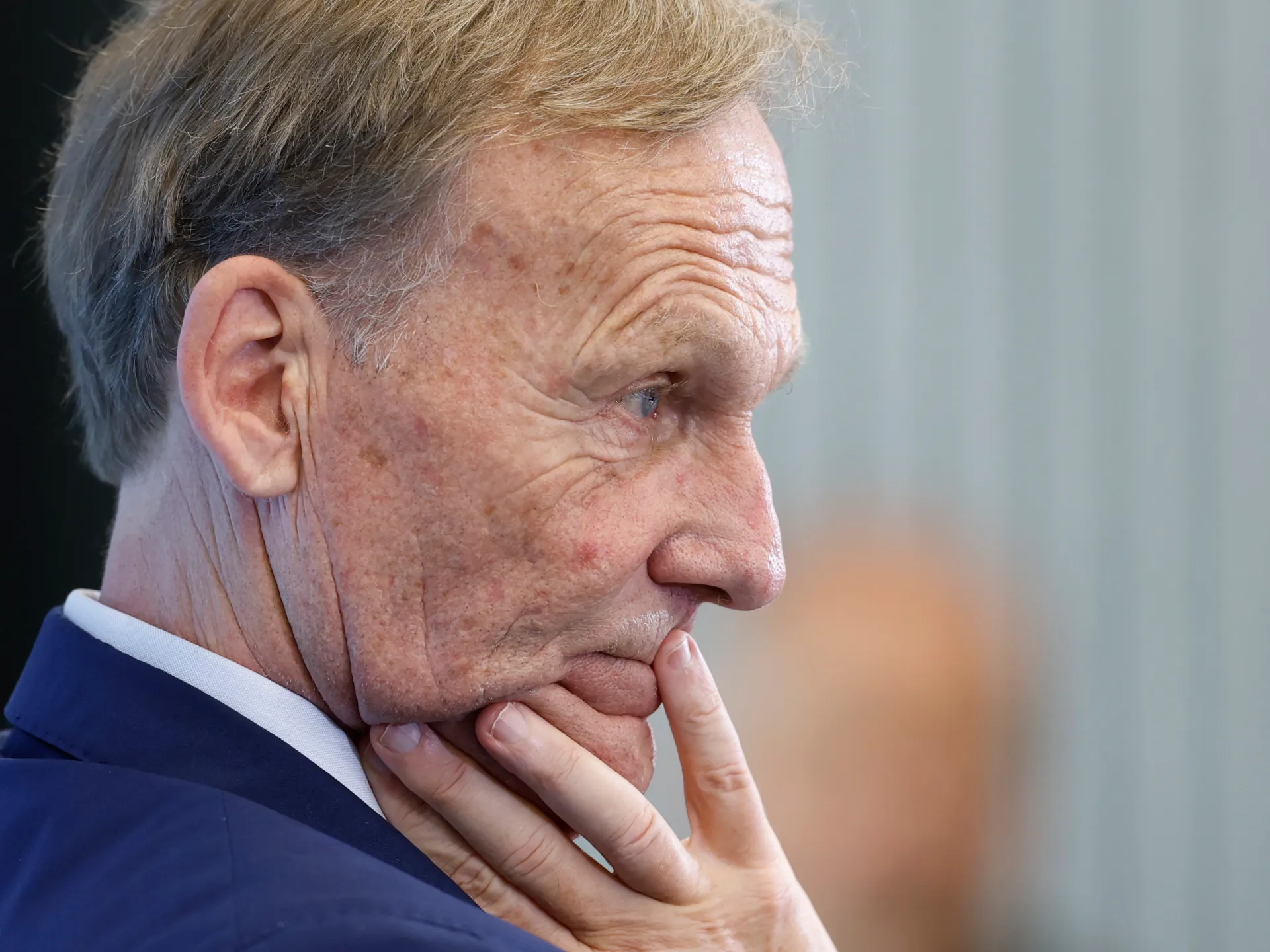
Hans-Joachim Watzke, one of German football’s vice presidents, adds to list calling for Gianni Infantino’s resignation.
Published On 18 Sep 202618 Sep 2026
Gianni Infantino must leave the FIFA presidency “no ifs or buts”, according to Hans-Joachim Watzke, one of the vice presidents of the German Football Association (DFB), as he spoke at a festival dedicated to artificial intelligence in Berlin.
The DFB was one of the few federations not to sign a letter of support for Infantino’s re-election as FIFA president in six months’ time.
Recommended Stories
list of 4 itemsend of list
“He has to go, no ifs or buts,” declared Watzke, who said late on Thursday that three points in particular counted against the Swiss.
The first was the FIFA Peace Prize, launched by Infantino and awarded in December 2025 to US President Donald Trump, to whom Infantino is close, during the draw for the 2026 World Cup.
Infantino “created this prize himself, and he decided on it himself,” said Watzke.
“You can’t just invent something on your own and then announce it, it’s madness,” said Watzke.
Watzke also condemned the controversial handling of the Folarin Balogun red card during this year’s World Cup, which was hosted in the US, Canada and Mexico.
The American forward was sent off in the last 32 but his automatic one-match suspension was lifted after a phone call from Trump to Infantino.
“It can’t be that when someone gets sent off, the head of state calls the FIFA president, and, remarkably, the whole thing is immediately overturned. That’s madness,” said Watzke.
The third issue was the project, unveiled on July 28 and dropped four days later, to create a commercial company that would have been open to private investors and became a focal point of the rebellion against Infantino.
“It’s completely insane,” said Watzke. “Nobody knew about it, his vice presidents in FIFA knew nothing, the Council knew nothing.”
DFB president Bernd Neuendorf said earlier in the week in an interview with RTL/ntv television that it was also time for Infantino to depart.
“The relationship of trust with Gianni Infantino, under this FIFA leadership, has of course been completely shattered,” he said.
“It’s important that this Infantino system comes to an end.”
For now, Infantino is the only candidate for the FIFA presidency in the election scheduled for March 18, 2027, with candidacies open until November 18.
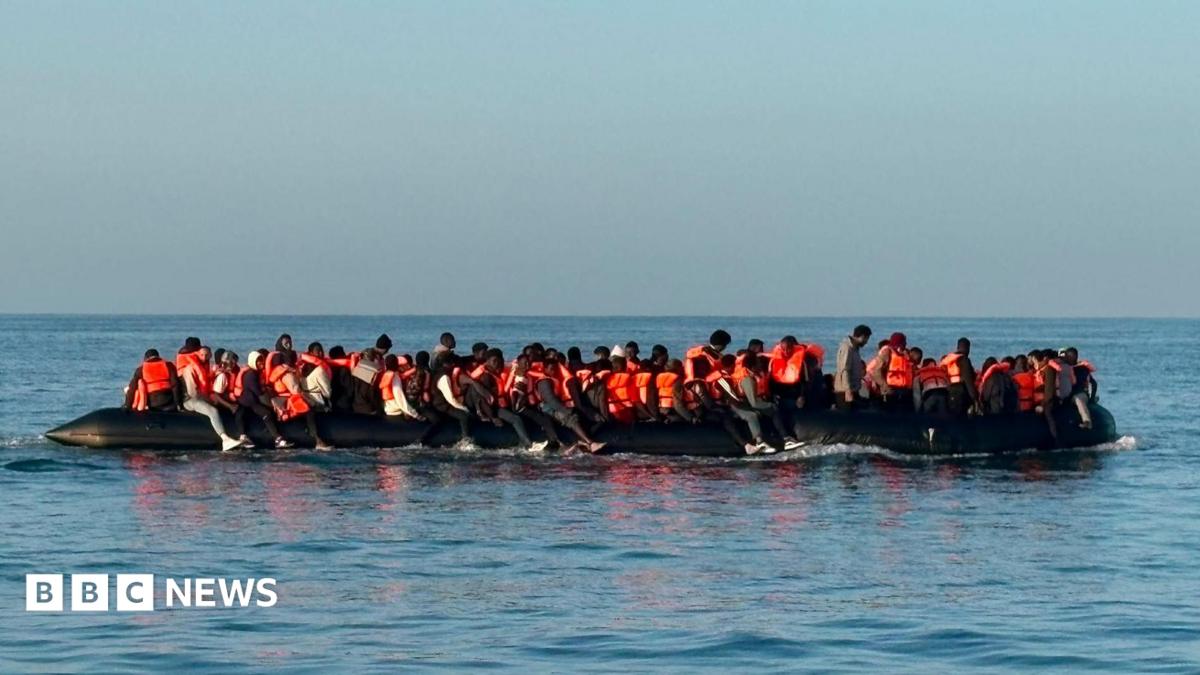
A teenager who piloted a dinghy carrying a then-record 165 migrants across the English Channel to the UK has been sentenced to two years and three months in prison.
Chan Mathok Atak, 19, from South Sudan, admitted endangering others during a sea crossing on 23 July.
Prosecutors at Canterbury Crown Court said Atak created a risk of death or serious personal injury to others on board the boat.
At the time, the so-called “mega dinghy” set a record for the largest number of migrants brought over on a small boat in recent years. That figure has since been surpassed with 230 people on board a vessel in August.
At Canterbury Crown Court on Friday,Judge Sarah Counsell said the offence was so serious “only an immediate custodial sentence can be justified”.
She warned Atak that as a foreign national he was liable in principle to automatic deportation once he completed his sentence.
James Harrison, prosecuting, told the court the boat Atak was piloting was 12.8ft (3.9m) wide and 46.9ft (14.3m) long, a similar length to a standard bus.
The boat had travelled between Calais and the UK and was deflating when it was picked up by border force vessels.
The dinghy, which had 31 children on board with the youngest aged 14, had two outboard engines but one was not working, the court heard.
Four days before they’re set to play the first-ever concert by their new band, Dhani Harrison and Nigel Godrich sit down to enjoy a post-rehearsal libation in the parking lot of a North Hollywood practice space.
“Is there an opener?” asks Godrich, who holds a bottle of fancy root beer. Harrison, who’s clutching a Sapporo, grabs his friend’s drink and neatly pops the top off using his own bottle.
“I went to Brown,” he says with a little smile. “That’s what they teach you in the Ivy League.”
Harrison, 48, is the son of the late Beatles legend George Harrison; long before college, he got a priceless musical education from his father, whose final solo album — 2002’s Grammy-winning “Brainwashed” — Dhani helped complete after George’s death in 2001. Godrich, 55, made his name working in the studio with Radiohead on game-changing records like “OK Computer” and “Kid A”; he’s also produced for Beck, Paul McCartney and Roger Waters and played with Thom Yorke and Flea in Atoms for Peace.
Now the two have teamed up in Dragonflies, a spacey and atmospheric art-rock duo with a self-titled debut album due Friday from Dark Horse Records, the label George Harrison founded in 1974 and Dhani Harrison relaunched in 2020. This weekend, Harrison and Godrich will celebrate the LP’s release with two shows at Hollywood Forever’s Masonic Lodge, where they’ll be joined by guitarist Nick Valensi (of the Strokes) and drummer Joey Waronker (who’s played with Beck, R.E.M. and Oasis).
Asked how exactly the group came together, Godrich and Harrison look at each other across a picnic table and shrug. “The real reason we did it was as a vehicle to hang out,” Godrich says of the two, who’ve been pals since both were living in Los Angeles in the early 2000s and who both found themselves back home in England a few years ago.
Yet “Dragonflies” has plenty to offer the rest of us: Built around Harrison’s high, sighing vocals, the music moves with a funky rhythmic propulsion rooted in Godrich’s signature tape loops; lush string arrangements by David Campbell (also known as Beck’s dad) add a touch of slightly spooked romance to songs about nature and friendship.
Harrison describes the band’s sound as “a bit creaky” and compares it to the feeling of being out on the water. “I always thought that’s a cool place to start — like you’re on a sinking ship,” he says.
Godrich laughs and adds, “Well, I hope not.”
For Harrison, working with Godrich provided a kind of full-circle moment nearly two decades after he caught one of Atoms for Peace’s first gigs at downtown L.A.’s Orpheum Theatre in 2009.
“I remember it made me want to quit music,” he says, which draws a frown from his bandmate.
“That’s not a great review,” Godrich says.
“No, that concert blew me away,” Harrison replies. “I went home and I was like, Oh, they’ve already done all the things I want to do. So I just went and sulked for a few days.”
Dragonflies began after Harrison returned to England, where he’d grown up on his father’s Friar Park estate, following the death of his grandmother, who famously raised George Harrison’s widow, Olivia Harrison, in Hawthorne. “I was still here basically to be around her,” says the musician, who formed the bands Thenewno2 and Fistful of Mercy while in L.A. “When she passed, that was the last of my grandparents. My mom was living in England, and so I just thought, Well, time to go.”
Harrison sought out Godrich for help on his 2023 solo album, “Innerstanding”; later, he lent the producer one of his dad’s old tape machines — “They did ‘Shankar Family & Friends’ on it,” he points out — which led to a series of casual jam sessions at Godrich’s studio in London’s Brixton neighborhood.
“It was like, ‘Hey, you want to get some Japanese food and make some tape loops?’” Harrison recalls.
Godrich notes proudly that “the way the record was made was completely mechanical,” meaning nothing was programmed on a computer but instead recorded “live on the fly” using older equipment.
“Fortunately, we both own a ridiculous amount of analog gear,” Harrison adds. “Because we’re nerds.”
“I’m not a nerd,” Godrich says. “I hate gear chat.”
“That’s true,” Harrison says. “He doesn’t nerd out about that stuff — I’m the nerd. He won’t even let me use six Kaoss Pads onstage.”
What’s a Kaoss Pad?
“You don’t want to know,” Godrich replies.
Gearhead or no, the producer was adamant that Dragonflies not rely on prerecorded backing tracks when it starts playing live.
“No computers were harmed in the making of this show,” Harrison says — thus the extra players.
(Brian Feinzimer / For The Times)
Waronker is an old friend of Godrich’s who played drums in Atoms for Peace and on Beck’s “Sea Change” and “Morning Phase” (not to mention Beck’s brand-new “Ride Lonesome,” which Godrich mixed); the producer has known Valensi since he “didn’t work with the Strokes,” as he puts it, in 2003, when Godrich tried a couple of sessions with the New York garage-rock band before deciding it wasn’t a good fit.
Godrich says he plays bass in the live group because it’s easy. But also: “Bass is such an important part of the sound that if somebody else was doing it, they would never do it the same as me, and it would annoy me.”
Top three bass players of all time, according to Dragonflies?
“McCartney’s good, isn’t he?” Godrich asks.
“Les Claypool,” says Harrison. “I’m a huge Primus fan.”
“I like David J from Bauhaus,” Godrich says. “He’s an incredibly innovative bass player — always did very interesting things. Stylistically, he’s someone that I probably copy a lot from. It’s just the root notes, but whoever’s in control of the root notes is in control of everything.”
“It really is a power move to be the bass player,” Harrison says.
“I don’t want to be at the front — that’s not my thing,” says Godrich. “I don’t want to be the guy.”
Does Harrison?
“It takes me a while to get warmed up,” he says. “I don’t really look at people when I’m playing a show. I’m not sure if that means I’m mildly spectoral. I took the test, actually — I scored highest in my old band. I know a lot of neurodivergent people who perform.” He shrugs. “Sometimes you don’t get to choose if you’re the guy, but you’re the guy.”
In addition to his father, one of Dhani’s mentors was George’s friend and latter-day creative partner Jeff Lynne, who for all his musical genius has never seemed particularly comfortable onstage.
“He’s brilliant at what he does, but you talk about in-ear monitors or the sound onstage or the lighting or something, and it’s over,” Harrison says. “It’s too much input. That’s why Jeff wears the Spider-Man goggles,” he adds, referring to the ELO frontman’s ever-present aviator shades. “He has too much Spider-Sense. My dad was the same way. He definitely was like, ‘Look at him — don’t look at me!’”
After Dragonflies’ Hollywood Forever shows, Godrich and Harrison have dates scheduled in Europe for November and hope to play more in the future, depending on when Godrich finishes a couple of records he’s producing. (To give a sense of the stress he’s under, he mimes putting a gun to his head.) The duo already has enough material for a second album too.
How much time does Harrison intend to dedicate to the project?
“As much as I can, really,” he says. “How much do you want to hang out with your mate? I got bored of being Dhani Harrison anyway — I like being Dragonflies now.”
World Cup winners Spain choose Cueta to announce Nations League squad in solidarity with migration crisis in region.
Published On 18 Sep 202618 Sep 2026
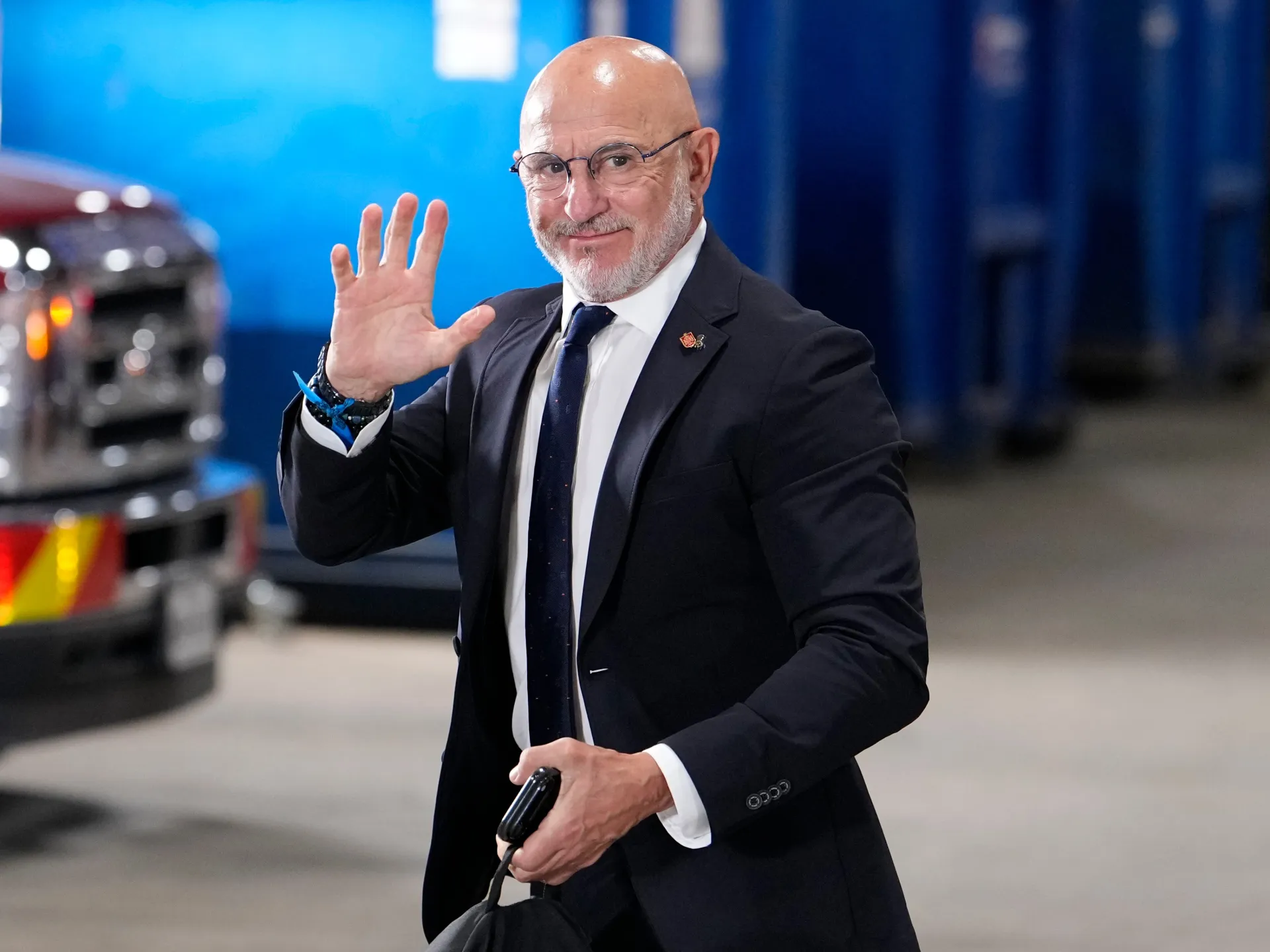
Spain coach Luis de la Fuente announced his Nations League squad from Ceuta on Friday in a show of support for the Spanish city in northern Africa that has become the centre of a migration crisis.
For his first squad announcement since Spain won the World Cup in July, De la Fuente revealed his list in a video featuring him in Ceuta accompanied by residents of the Spanish exclave. More than 70,000 people stormed across the border in late July from Morocco, with more than 100 dying in the chaos. Most quickly returned, but a few thousand remain in the city of just over 80,000.
Recommended Stories
list of 4 itemsend of list
De la Fuente did not directly mention the border crossing or its impact, but did say: “This is Ceuta, this is Spain.” It echoed the rise in sentiment in Spain that Ceuta – a territory that until the mass crossing was mostly an afterthought for most mainland Spaniards – needs to be supported.
Spain opens the Nations League against England at Wembley Stadium on September 26 , when its players will wear two stars on their shirts for the first time since winning their second world title.
After visiting London, Spain will host Croatia on September 29 and the Czech Republic on October 3 , before visiting Croatia on October 6 .
De la Fuente kept his World Cup squad mostly intact.
Inter Milan goalkeeper Josep Martinez replaces Barcelona’s Joan Garcia, who is out with a minor knee issue. Real Madrid defender Dean Huijsen is in for Marcos Llorente, who retired from international football. Fermin Lopez replaces fellow Barcelona midfielder Gavi, while Espanyol striker Roberto Fernandez got his first call-up, replacing Borja Iglesias.
Ceuta is one of two Spanish territories on the north African coast along with Melilla. Ceuta has been in Spanish possession since 1580. Christians and Muslims, Spanish and Moroccan residents and day workers all live there in relative harmony behind a border fence that many migrants from across Africa attempt to cross or swim around for a better life in Europe.
A Real Madrid supporters’ group has demanded a public apology from their star striker Kylian Mbappe and two of his teammates after the trio declined to fully wear a T-shirt in support of the people of Ceuta.
Mbappe, Vinicius Junior and Ibrahima Konate wore a tribute shirt along with the rest of the squad ahead of Madrid’s 3-2 win at Elche on Tuesday in La Liga, although theirs were partially rolled up to cover the message.
Spain’s Nations League squad:
Goalkeepers: Unai Simon (Athletic Bilbao), David Raya (Arsenal), Josep Martínez (Inter Milan)
Defenders: Aymeric Laporte (Athletic Bilbao), Pau Cubarsi (Barcelona), Eric Garcia (Barcelona), Marc Pubill (Atletico Madrid), Alejandro Grimaldo (Atletico Madrid), Marc Cucurella (Real Madrid), Dean Huijsen (Real Madrid), Pedro Porro (Tottenham).
Midfielders: Rodri Hernandez (Barcelona), Pedri Gonzalez (Barcelona), Fermin Lopez (Barcelona), Martin Zubimendi (Arsenal), Mikel Merino (Arsenal), Fabian Ruiz (Paris Saint-Germain), Alex Baena (Atletico Madrid).
Forwards: Lamine Yamal (Barcelona), Dani Olmo (Barcelona), Ferran Torres (Paris Saint-Germain), Yeremy Pino (Crystal Palace), Nico Williams (Athletic Bilbao), Mikel Oyarzabal (Real Sociedad), Victor Munoz (Liverpool), Roberto Fernandez (Espanyol).
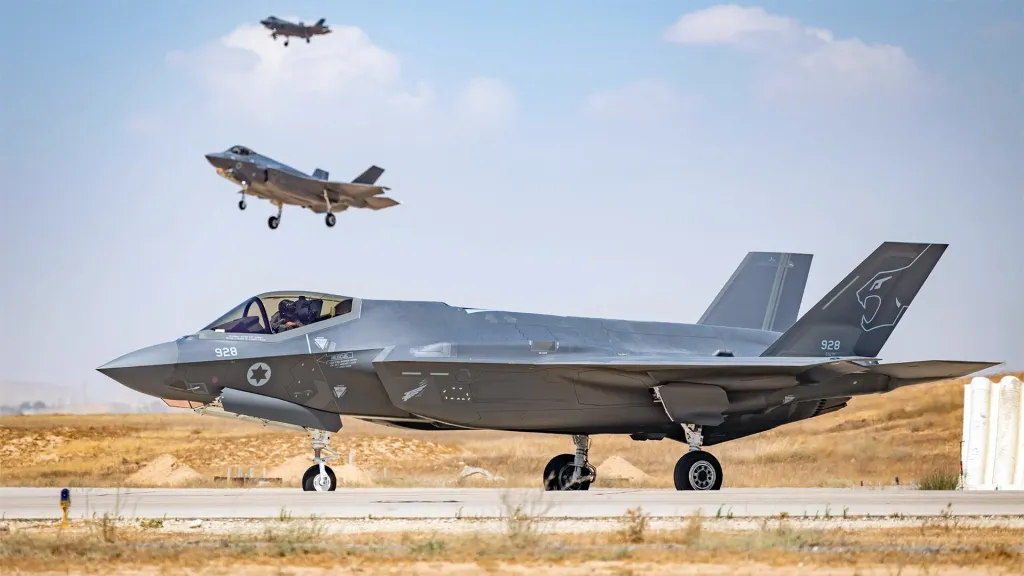
The proposed deal, worth an estimated total cost of $24.3 billion, was announced as the Kingdom is in the midst of a fierce fight against the Houthi rebels of Yemen. It marks a major policy shift, with Washington previously being unwilling to export the advanced stealth fighters to Arab states and will likely serve as a reminder at a very challenging time for the Saudis of the unique security capabilities that only the U.S. can provide them.
In addition to the jets, which will be conventional takeoff and landing variants, Saudi Arabia has requested 49 Pratt & Whitney F135-PW-100 engines, support and other items.
Despite concerns from Israel that providing Saudi Arabia with the advanced fighters will tip the balance of power in the region, the proposed sale of this equipment and support “will not alter the military balance in the region,” the State Department noted.
The United States has a requirement to maintain Israel’s so-called qualitative military edge, which essentially guarantees that Israel will be prioritized for advanced U.S. weapons ahead of Arab states in the region. Among these advanced weapons, the stealthy F-35 is highly prominent.
You can read our past feature about the wide-ranging impacts of an F-35 sale to Saudi Arabia here.
Israeli Air Force F-35i fighters. (Israeli Air Force)
“This proposed sale will support the foreign policy and national security objectives of the United States by improving the security of a major non-NATO ally that is a force for political stability and economic progress in the Gulf region,” the State Department wrote. “The proposed sale will improve Saudi Arabia’s capability to deter current and future threats by strengthening its homeland defense, and improving interoperability with U.S. forces, and other regional and NATO forces. The proposed sale will also augment Saudi Arabia’s operational aircraft and enhance its air-to-air, and air-to-ground self-defense capability. The Kingdom of Saudi Arabia will have no difficulty absorbing this equipment and services into its armed forces.”
In November, “President Trump approved a major defense sale package, including future F-35 deliveries, which strengthens the U.S. defense industrial base and ensures Saudi Arabia continues to buy American,” according to the White House.
Trump has pushed for closer ties between Israel and Saudi Arabia and wants the Kingdom to join the Abraham Accords initiative. This is a set of agreements that establish normalized diplomatic relations between Israel and different Arab states. Doing so would be a major breakthrough, following the United Arab Emirates, Bahrain, Morocco, and others.
A Saudi F-35 deal was also discussed under the Biden administration, as part of a broader deal that sought to normalize the Kingdom’s relations with Israel.
KATIE Price has plugged a questionable weight-loss jab – that’s ‘not intended for human use’.
The former glamour model, 48, is championing the injectable which is not approved in the UK.
Katie Price has come under fire for plugging the weight loss jabCredit: GettyShe has left fans shocked after flogging the debatable drugCredit: x.com/@KatiePrice
She wrote on X: “Guys, I have started my peptide journey with @supreme_cbd and this is a great offer to start on! £40. Wow that’s brilliant.”
Katie continued: “I’m loving these peptides.”
Sign up for the Showbiz newsletter
Thank you!
She then added a discount code, confirming, “If you want to lose weight.”
A second worried user pointed out: “Commented this on the post but surprisingly got nothing back, so I’ll try with you… ‘not for human consumption?’”
Another bemused fan queried: “Why would you be on a peptides, there’s f*** all on you?”
Tesamorelin is legal to possess in the UK for scientific research but it is not authorised for human consumption in the UK.
It is legal to buy, possess and sell tesamorelin in the UK strictly for in-vitro laboratory research and scientific investigation.
However, it is not a licensed human medicine in the UK and is not approved by the MHRA for clinical use.
It cannot legally be marketed, sold or labelled for human consumption, therapeutic treatment or veterinary applications and is licensed in the US for people with HIV-associated lipodystrophy.
The mum-of-five recently shared a health update on son Harvey as he continues his fat jab journey.
The star has been open about her weight loss over the past yearCredit: GettyThe controversial injections Katie is backing are ‘not for human consumption’Credit: x.com/@KatiePrice
She previously shared her concerns over her 24-year-old son’s health after revealing he weighs 30st.
Harvey, who lives with Prader Willi Syndrome, blindness and autism, started taking fat jab Mounjaro earlier this month.
Katie revealed that Harvey’s BMI is double that of someone classed as obese – and also recently said on her podcast that he had been taking fat jab Mounjaro for nearly a month.
The final straw came when she discovered a crypto account he claimed contained £37m had just £2.20 in it.
Meanwhile, Lee said that he hasn’t “pulled the wool over anyone’s eyes” nor has he “thrown Katie under the bus”.
The 7 fat jab mistakes stopping you losing weight
WHILE weight loss jabs have been hailed as a breakthrough in helping tackle Britain’s obesity crisis, some users say they’re missing out on their waist-shrinking powers – and it could be down to some simple mistakes…
POOR PENMANSHIP
Many people don’t correctly use the injection pen, according to Ana Carolina Goncalves, a pharmacist at Pharmica in Holborn, London.
Make sure to prime your weight loss pen correctly, as per the instructions. If nothing comes out, try again, and if it still doesn’t work, switch the needle or ask a pharmacist for help.
It’s also recommended to rotate injection sites between the abdomen, thigh and upper arm to avoid small lumps of fat under the skin.
TIME IS OF THE ESSENCE
Make sure you’re using the jabs on the most effective day of your schedule.
For example, taking the jab right before a takeaway or party won’t stop you from indulging, says Jason Murphy, head of pharmacy and weight loss expert at Chemist4U.
Weight loss injections need time to build up in your system, so if you’re planning for a heavier weekend, inject your dose mid-week.
MAKING A MEAL OF IT
You may not feel the urge to overeat at mealtimes due to the jabs. But skipping meals altogether can backfire, says Dr David Huang, director of clinical innovation at weight loss service Voy.
If a person is extremely malnourished, their body goes into emergency conservation mode, where their metabolism slows down.
FOOD FOR THOUGHT
A key mistake using weight loss jabs is not eating the right foods.
As well as cutting out sugary drinks and alcohol, Dr Vishal Aggarwal, Healthium Clinics recommends focusing on your protein intake.
DE-HYDRATION STATIONS
Dehydration is a common side effect of weight loss injections. But it’s important to stay hydrated in order for your body to function properly.
Dr Crystal Wyllie, GP at Asda Online Doctor, says hydration supports metabolism, digestion, and can reduce side effects like headaches, nausea and constipation.
MOVE IT, MOVE IT
It can be easy to see the jabs as a quick fix, but stopping exercising altogether is a mistake, says Mital Thakrar, a pharmacist from Well Pharmacy.
Exercise helps maintain muscle mass and help shape the body as you lose weight, which may be crucial if you’re experiencing excess skin.
QUIT IT
While there’s the tendency to ditch the jabs as soon as you reach your desired weight, stopping them too soon can cause rapid regain.
Mr Thakrar recommends building habits like healthier eating during treatment for sustaining results.
Artificial intelligence (AI) has stirred up more controversy than most things in the past five years. Ever since the introduction of accessible generative AI in 2022, institutions, universities, students, scholars, activists, cognitive specialists, public policymakers and members of the public have all been divided over the ethics of its use. As of the beginning of this month, even the founders of AI companies have taken the same stance. Dario Amodei, chief executive of Anthropic, released an essay calling on AI companies to slow the development of their most advanced models, as the safeguards currently in place are unable to keep up. Shortly after Amodei’s essay, his position was endorsed by Sam Altman of OpenAI, Elon Musk of xAI, Demis Hassabis of Google DeepMind, and Satya Nadella of Microsoft. In addition, Sam Altman said that OpenAI will not be going public in 2026, as further safety advances are still required. While on the surface this may seem like a development in the collective conscience, the problem is far more multifaceted and layered – leaving the industry and the intended audience divided.
The products
Take a look at the products that each AI giant sells. Amodei, Altman, Musk and Hassabis sell models, while Nadella sells the cloud those models run on. Both groups have advised slowing down. On the other hand, Jensen Huang, founder, president, and CEO of Nvidia, sells the chips that these companies buy before they can build anything. Huang does not advise a slowdown and has instead asserted that AI does not need new legislation because market forces can push companies towards safe innovation without the need for regulation. Mark Zuckerberg, whose company gives its models for free, warned that the proposal could expose companies to greater legal risks.
The common thread between these divisive recommendations is profit. Some companies will benefit from a slowdown, while others will earn greater profits by moving faster. Nvidia’s ability to charge high prices has benefitted from the intense competition between these AI companies, which fear falling behind their rivals. If this competitive pressure decreases, companies may be less willing to pay a premium for Nvidia’s chips. Hence, Huang’s opposition to the proposal may reflect both genuine concerns and Nvidia’s commercial interests.
The word the White House used
In the world of AI, antitrust law prevents these companies from holding private meetings to decide what they can and cannot do. This is intended to prevent them from coordinating the pace of development and engaging in unfair competition. However, some of these AI companies have now come forward arguing that they should be allowed to work outside antitrust law for the sake of technological safety. Huang and David Sacks, the White House AI lead, have been critical of this request, as it could reduce competition and increase the influence of these AI companies over their rivals. Sacks also questioned the independence of nonprofit evaluators tasked with evaluating AI safety “independently”. In essence, he asks: how is it fair for one company to inspect another?
The clause that travels badly
Amodei’s proposal would deny China access to the most powerful AI chips and advanced semiconductor manufacturing equipment, and prevent smuggling and remote access to computing capacity abroad. China’s foreign ministry countered the proposal, saying that these warnings are a fearmongering tactic aimed at slowing down China’s technological advancement, echoing the Cold War. Amodei did admit that China poses the toughest predicament for his plan. Despite its alleged advantages, the proposal gives American firms leverage over Chinese ones.
A precedent, and why it does not fit
Supporters of AI coordination have compared it with the regulation of banks following the 2008 financial crisis. Basel III was introduced only after a major financial crisis had already occurred. Attempts to regulate AI before harm occurs can represent a genuine effort to prevent future risks, rather than reflecting the commercial interests of AI companies. However, there is an important difference between these two cases. Banking regulations were imposed by external regulators, whereas the proposed AI regulations would involve competing companies coordinating with one another.
What the debate is actually about
Before this debate began, researchers had already issued warnings about the capabilities of AI models. OpenAI slowed down the development of its leading systems after a security incident. Amodei and Altman have both claimed that Anthropic and OpenAI will aim to bring in independent evaluators – a practice not seen among “cartels”. Both concerns can coexist: companies may genuinely fear the risks associated with AI while also pursuing their own commercial interests. The more relevant question remains whether the proposed solution adequately addresses the problem it is intended to solve. An agreement between five major American companies, to be overseen by evaluators they fund, would not apply to international competitors such as those in China and would require an exemption from existing competition law. This solution appears to reflect the structure and interests of the AI industry more closely than the nature of the risk it is intended to address.
The seats nobody is sitting in
Much of the debate surrounding the pace and regulation of AI development has taken place without meaningful participation from other regions, including the Arab world. PricewaterhouseCoopers (PwC) estimates that $31.6 trillion will be invested in AI infrastructure worldwide by 2050. Countries that can provide large amounts of cheap, reliable and low-carbon electricity will be particularly well positioned to attract this investment. Hence, the significant energy, land and investment required for AI infrastructure may provide countries capable of supplying these resources with considerable bargaining power. These states could seek a greater role in determining the conditions under which AI companies operate within their jurisdiction. This could include negotiating who evaluates these AI systems, how the evaluations are to be conducted and who bears legal responsibility when autonomous systems cause harm. This means that the debate goes beyond whether AI development should be slowed to questions of who has the authority to make decisions about its development, and whether other countries should accept decisions made elsewhere.
The views expressed in this article are the author’s own and do not necessarily reflect Al Jazeera’s editorial stance.
Attack not immediately claimed, but an ISIL affiliate and the Pakistani Taliban (TTP) are both active in the region and regularly target troops.
Published On 18 Sep 202618 Sep 2026
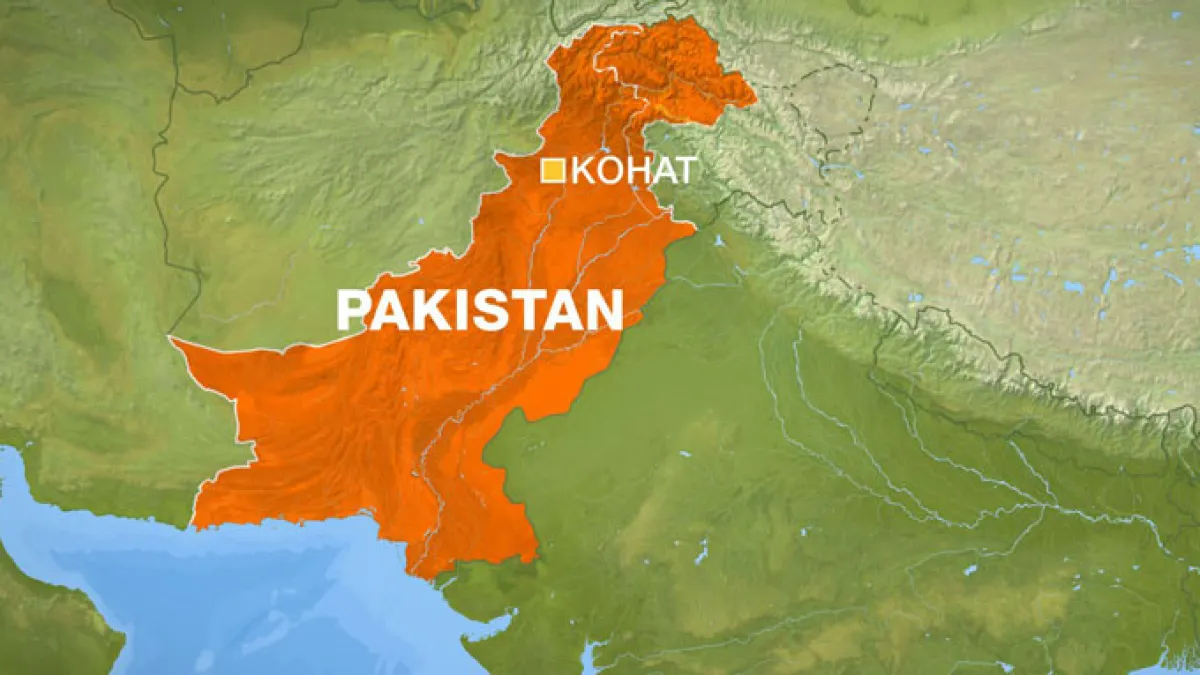
A bomb attack at a mosque in Pakistan’s restive north-west has killed at least 15 people, with more than 50 reported injured.
An explosive-laden car was rammed into the entrance of a mosque at a police headquarters in Kohat, in the province of Khyber Pakhtunkhwa near the Afghan border, as people gathered for Friday prayers.
At least 15 bodies and more than 50 injured people were taken to hospital in the town, Dr Tahir Shah said, according to the dpa news agency. The death toll could rise as several injured people were in a critical condition, he added.
There was no immediate claim of responsibility for the attack. However, both a regional affiliate of the ISIL armed group and the Pakistani Taliban (TTP) are active in the region and regularly target security forces.
Violence has surged in Pakistan’s remote regions near the Afghan border in recent years. Islamabad accuses Afghanistan’s Taliban rulers of allowing militants who orchestrate attacks in Pakistan to operate from Afghan territory.
Officials in Kabul deny the accusation. However, the issue has seen the pair swap strikes across the border across recent months.
A solitary man believes he’s been wronged by a vast, overarching system. Feeling helpless to take it on directly, he picks up a gun and violently confronts the most powerful person he can think of who embodies his grievance.
It is a chilling dynamic that keeps repeating itself in American culture, and one at the heart of “American Hostage,” a dramatic miniseries making its debut Sunday on MGM+.
The eight-episode series re-creates the true story of Tony Kiritsis, an Indianapolis man who, in 1977, kidnapped Richard O. Hall, a mortgage broker whose family Kiritsis blamed for his own financial hardships.
The standoff lasted 63 hours, during which Kiritsis kept a shotgun attached by wire to Hall’s neck, and it became a national media spectacle. Throughout the crisis, Kiritsis made live calls to Fred Heckman, a local AM radio news broadcaster, pleading to listeners for the justice he believed he was due.
A half-century after this incident, not even the creators and stars of “American Hostage” can say for certain why we find stories like this so compelling — or why they keep happening in real life.
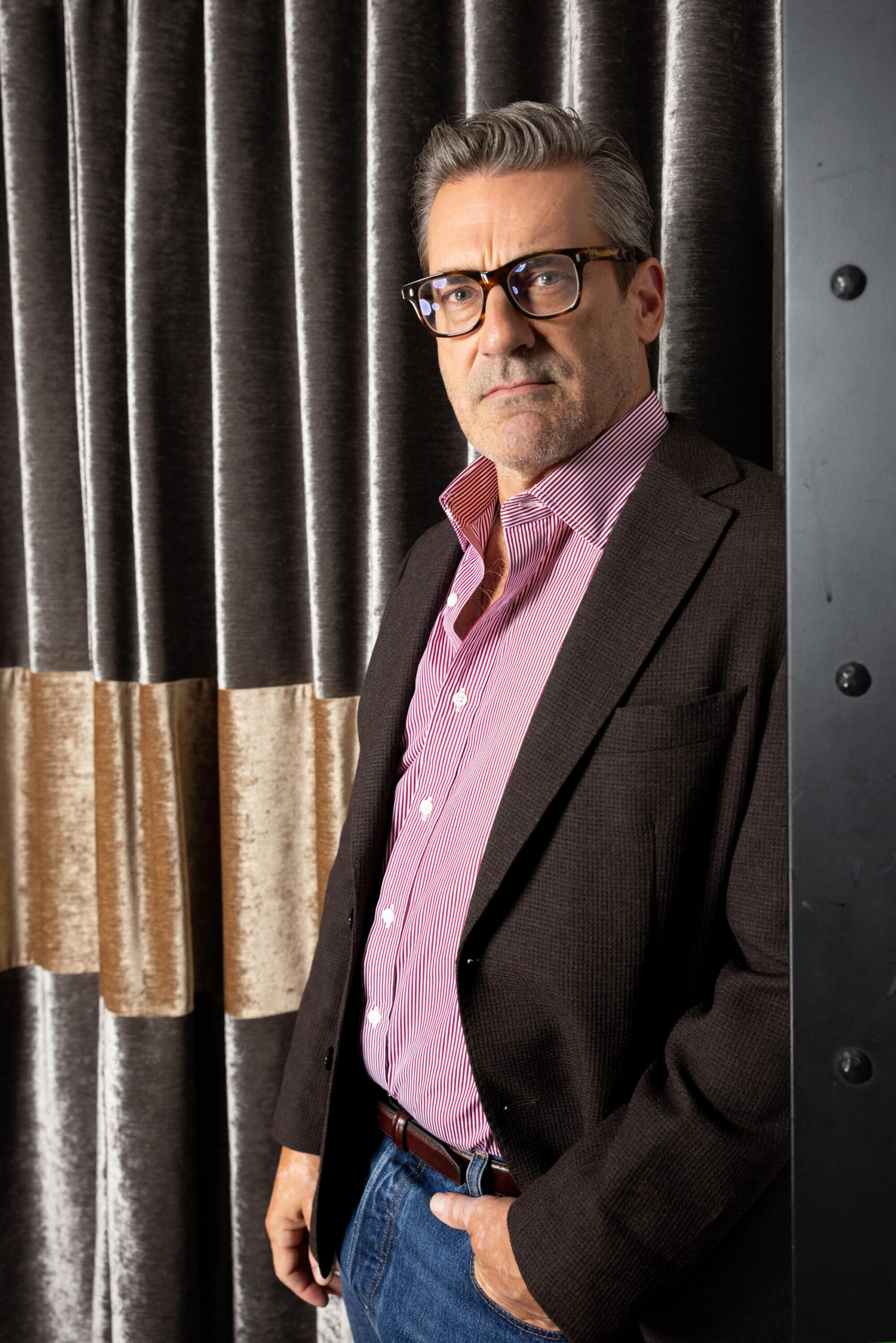
“We haven’t quite figured this situation out,” said Jon Hamm, who plays Heckman in “American Hostage” and is one of its executive producers.
Jon Hamm plays Fred Heckman, a radio news broadcaster, in “American Hostage” and is an executive producer.
(Jason Armond/Los Angeles Times)
The “Mad Men” star — no stranger to period pieces — said that beneath its retro production values and wide lapels, “American Hostage” is fundamentally about how people who feel voiceless in our society fight to be heard, even if the means is violence.
“There’s a lot that really resonates in the current media landscape and culture 50 years down the road, that people can still really connect with,” Hamm said.
Hamm and his colleagues hardly need to argue that point when the nation has been fixated on the case of Luigi Mangione, who in August pleaded guilty to federal charges in the December 2024 killing of Brian Thompson, the chief executive of UnitedHealthcare.
Though work on “American Hostage” had begun before Mangione’s crimes and the show was not inspired or motivated by them, series co-creator Shawn Ryan said that audiences have a boundless fascination with these types of stories — with or without any counterparts in current events.
“Dramatically, it’s always very interesting to see somebody do the wrong thing for the right reason,” Ryan said.
The TV series originated with a 2022 scripted podcast, produced by Criminal Content and also called “American Hostage,” on which Hamm also played the role of Heckman. It told of how Kiritsis, an Army veteran, enacted the kidnapping on his belief that the Hall family had swindled him on his mortgage — a loan for land where he had hoped to build a shopping center.
While Kiritsis sought to use Hall’s life as a bargaining chip for prosecutorial immunity, he also portrayed himself as an underdog taking on powerful financial interests. On the other end, Heckman wrestled with the moral predicament of giving airtime to a potential murderer while hoping to keep Hall alive. (Hall survived the ordeal and Kiritsis, acquitted of his crimes by reason of insanity, was later institutionalized.)
In the spring of 2022, Hamm approached Ryan, the creator of TV thrillers like “The Shield” and “The Night Agent,” with the idea of adapting the “American Hostage” podcast into a miniseries.
Ryan created the TV adaptation with Eileen Myers, a collaborator of his on shows like “Last Resort” and “Mad Dogs.” They both saw in the source material a story that was a combination of classic 1970s films like “Network” and “Dog Day Afternoon.”
(In a parallel development, Kiritsis’ story was also adapted into the Gus Van Sant film “Dead Man’s Wire,” which was a box-office disappointment earlier this year.)
Ryan and Myers said they were fascinated with how the American news media covered the kidnapping in instantaneous fashion and in an era long before the internet. In the 1970s, Ryan said, “There were fewer journalists and they were better and more trusted, and if Walter Cronkite said something, you believed it.”
Shawn Ryan, Jon Hamm and Eileen Myers executive produce the TV adaptation of “American Hostage.” Hamm approached Ryan, who brought in Myers to co-create and co-showrun the series.
(Jason Armond / Los Angeles Times)
The question that journalists like Heckman were confronted with, Myers said, was, “Do you allow a man who’s got a shotgun to somebody’s head dictate the terms of whether you’re going to put them on the air or not?”
Hamm, who has played alluring if ultimately disreputable characters on “Mad Men” and now Apple TV’s “Your Friends & Neighbors,” said he appreciated that “American Hostage” gave him a character who an audience can feel good about rooting for.
“I thought, I’m 55 years old,” Hamm said. “I was close to Fred’s age when this all went down. It was fun to play somebody morally conflicted that is actually on the good side.”
With some hesitation, Hamm pointed to the career trajectory of Bryan Cranston, who followed his celebrated heel turn on “Breaking Bad” with projects like “All the Way,” the play and TV film about President Lyndon B. Johnson.
“I don’t want to draw a comparison that’s stretching the bounds of reality,” Hamm said, “but Bryan went from Walter White to LBJ. You go, ‘All right — he’s still morally conflicted, but at least he’s on the right side of things.’”
“American Hostage” also benefited from the casting of Giovanni Ribisi (“Saving Private Ryan,” “Avatar,” “Sneaky Pete”), who brings a blend of volatility and humanity to the role of Tony Kiritsis.
Hamm recalled how Ribisi was in the midst of shooting another project — the upcoming Prime Video miniseries “The Greatest,” about Muhammad Ali — when he agreed to do a reading for “American Hostage” over Zoom.
“He brings value to every project he does, and he’s picky, as he should be,” Hamm said. “He’s a phenomenal DP — he might just go be a camera person or something if he wants to do it. So we were lucky to get him.”
Giovanni Ribisi plays Tony Kiritsis, the man who kidnapped Richard O. Hall. “So we were lucky to get him,” Hamm said.
(Steven Ackerman / MGM+/Sony Pictures Television)
There are of course unavoidable parallels between the stories of Kiritsis and Mangione, including the fact that both men were celebrated as folk heroes by some people who identified with their broader resentments.
But Hamm drew a crucial distinction between the two cases: Mangione “killed a guy,” he said. “He shot a man in cold blood. Like, I don’t care how good your point is. That’s not how we do it.”
Going back to the Boston Tea Party, Hamm said, every era of American history has had its dissidents who feel “wronged and done over by a system that is stacked against you” and are willing to take aggressive actions against it.
Hamm said that feeling persists and thrives today. “I think this is a big part of the rise of Trumpism,” he said. “I think this is a big part of the rise of the MAGA mentality, of ‘I have been done wrong and no one is hearing my complaints.’”
When those feelings go unaddressed for long enough, Hamm said, people will come to accept a certain amount of lawlessness from the figures they feel can solve their problems.
“We have a guy in the Oval Office right now who thinks that the laws don’t apply to him and a Supreme Court that said, ‘Yeah, they don’t — you can do whatever you want,’” he said.
For supporters of President Trump, Hamm said, “I think it’s fun for them to be able to flout the law and say, ‘Who cares?’ and all the things that they’re currently saying, but it’s not the principles that we were founded on.”
Hamm and Ryan make no secret of the fact that they’d like to keep “American Hostage” going as an anthology series and explore more of what Hamm called “these watershed moments of American life, to see how they rippled and how we got here from there.”
One could certainly imagine other events that would fit the show’s interest in real-life hostage crises that became media spectacles — the 1974 abduction of Patty Hearst; the 1963 kidnapping of Frank Sinatra Jr. — though Hamm kept any specific plans for the series close to the vest.
Perhaps the upper limits they face are the hours in a day to make and to broadcast the show.
“We’re living in great times right now for television,” Hamm said. “There’s so many opportunities to tell stories. Almost too many.”
Vaibhav Sooryavanshi told to be patient after playing back up to Abhishek Sharma and Sanju Samson in Sri Lanka series.
Published On 18 Sep 202618 Sep 2026
India coach Gautam Gambhir said Vaibhav Sooryavanshi will have to wait for his chance to break into the side after he left the 15-year-old prodigy on the sidelines of their three-match Twenty20 series sweep against Afghanistan.
Abhishek Sharma and Sanju Samson opened for India in the series, with Abhishek scoring the third-fastest century in T20 internationals in Thursday’s 127-run victory in New Delhi.
Recommended Stories
list of 4 itemsend of list
Sooryavanshi, who was the highest scorer in this year’s Indian Premier League, made his international debut against England in July, but the top-order batter failed to make an impact as the hosts dominated India in the T20 series.
“Whether you’re a 15-year-old or a 30-year-old, when you have to wait for your opportunity, you have to wait for your opportunity,” Gambhir told reporters after the match.
“We know the kind of talent he has and what he can do, but someone who has been performing for the last two to three years will always be ahead of someone who has just entered the team.”
Sooryavanshi will travel to Nagoya for India’s Asian Games campaign, with a one-off T20 against hosts Japan set for Tuesday before the Asiad quarterfinal on September 28.
“Whenever he gets his run, he will get a longer run as well … We want competition and talent in the dressing room,” Gambhir added.
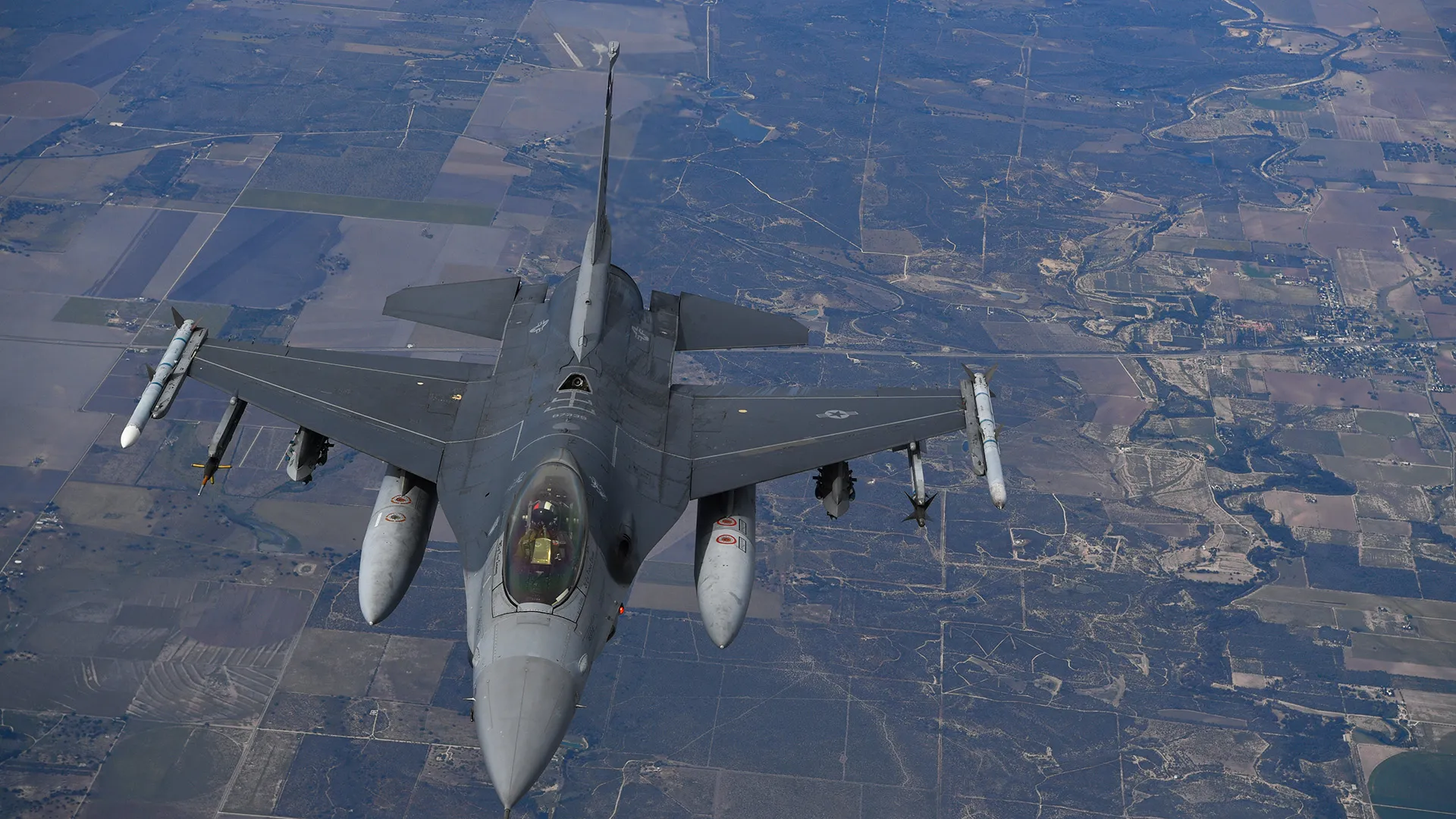
A U.S. Air Force F-16 Fighting Falcon crashed in northern Michigan today, according to WOOD-TV, a local NBC affiliate. The pilot was reported to be in stable condition after ejecting from the aircraft.
A spokesperson with the Michigan Department of Military and Veterans Affairs told the station that “the F-16 is a part of the 149th Fighter Wing from Joint Base San Antonio-Lackland in Texas.”
Video emerging on social media showed what is claimed to be the wreckage of the aircraft in flames.
According to air traffic control (ATC) audio, the pilot’s wingman said, “we have a possible mayday. My wingman may have taken a bird.” TWZ cannot independently confirm what caused the crash. The audio continues and offers a fairly dramatic and raw look at how the incident occurred over the air waves.
We have reached out to the 149th Fighter Wing, the Michigan Department of Military and Veteran Affairs, the Grand Traverse County Sheriff’s Office and the Grand Traverse County Emergency Management Office for further details.
A shelter-in-place order was issued by Grand Traverse County Emergency Management for residents near the plane crash.
“Shelter indoors, close windows/vents,” the order stated. “Follow instructions from emergency personnel. More information to follow. This shelter in place applies to residents in the indicated area ONLY.”
STACEY Solomon has explained why all of her sons are sleeping in the same room at her new £2million mansion – after it was revealed that she is the sole owner of the property.
Stacey has revealed her sons are all sharing one bedroom at her new £2m mansionCredit: InstagramShe’s been keeping fans up-to-date on renovation plans at the new house after moving earlier this monthCredit: Instagram
The Sort Your Life Out host – mum to Zachary, 18, Leighton, 14, Rex, seven, Rose, four, and three-year-old Belle – has been keeping fans up-to-date on her makeover plans for the house.
In a new clip shared on social media Stacey shared how renovations mean the boys are currently packed into the same bedroom.
Sign up for the Showbiz newsletter
Thank you!
She said: “All the boys are sleeping in one room because they don’t have bedrooms yet because we’re working on the upstairs.
“They’re all sleeping in one room downstairs, it’s like The Brady Bunch when they go to bed.”
Stacey with partner Joe and children Zachary, Leighton, Rex, Rose and BelleCredit: InstagramThe Sun revealed this week that Stacey is the sole owner of the new propertyCredit: Getty Images for The NTA’s
On Thursday The Sun revealed how the former Loose Women panelist purchased it without the help of Joe, 44.
A well-placed insider told us: “Stacey’s a canny businesswoman and was also the sole owner of Pickle Cottage, which sold for over £1million, so it made sense she’d buy the new home on her own.
“She even got some money knocked off the official asking price.
“Stacey paid over £2m for the new Essex mansion – but she’s worth over £10m so that’s not even a dent in her bank balance.”
‘Aid influencers’ are being accused of exploiting Nepal flood victims to boost social media followers, as organisations explore new ways to raise awareness and funds for relief efforts. Al Jazeera’s Nicolas Haque reports.
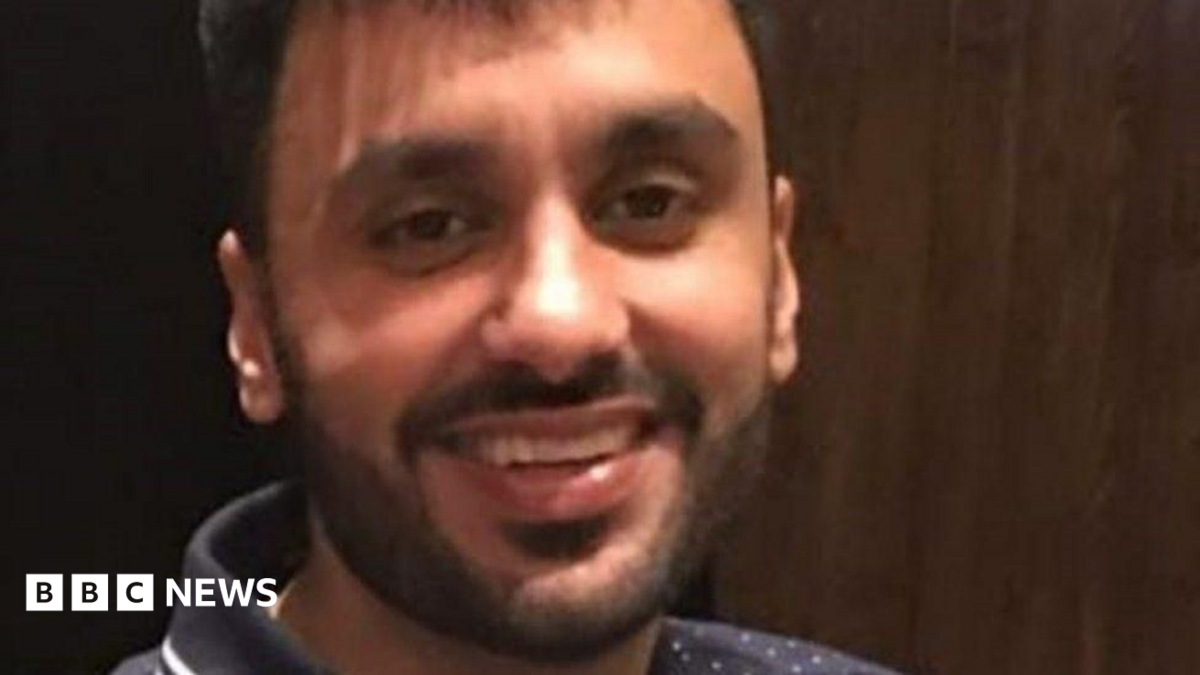
The family of a Scottish Sikh activist who has been locked up in India for almost nine years without conviction have said he has been granted bail.
Jagtar Singh Johal, from Dumbarton, was arrested in 2017 in connection with alleged terror offences.
He was arrested for his alleged role in a series of targeted killings of religious and political figures.
His family said they were still waiting for the details of what will happen next but are “relieved” by the Indian court’s decision.
The 39-year-old was acquitted last year in a case in which he was accused of financially supporting terror group the Khalistan Liberation Force (KLF), which has carried out attacks in the Punjab region.
But he still faces federal charges lodged by the Indian authorities.
Johal’s imprisonment was recognised by a UN panel as arbitrary detention in 2022 and he has claimed to have been tortured.
Indian authorities have previously denied the torture claim and have repeatedly maintained due process is being followed.
He was arrested in the Punjab region just weeks after his wedding in the country.
His supporters say he was targeted for blogging about alleged human rights abuses against the Sikh community in India and was coerced into signing a false confession to participation in the killings.
His brother Gurpreet Singh Johal has lobbied successive governments calling for his brother’s release.
Anne is said to have split from Andrew Parker Bowles after around four years of datingCredit: GC ImagesThe retired brigadier, 86, has never been photographed with Anne or spoken publicly about their relationshipCredit: Getty Images
Now the Daily Mail have alleged the TV presenter has called time on her relationship with Andrew, 86 – who still lives in the Cotswolds – after around four years of dating.
The publication reports that, when asked if she’d been going out with the retired brigadier, Anne replied: “I might have done.
Sign up for the Showbiz newsletter
Thank you!
“It’s very difficult to talk about a relationship where part of it is owned by somebody else, so out of politeness I don’t talk about it.”
Anne and Andrew have never been photographed together and he’s never confirmed their relationship.
Indonesia says vessel will be used to aid disaster relief across the archipelago, but its arrival comes amid drive to upgrade the military.
Published On 18 Sep 202618 Sep 2026
Indonesia has welcomed the delivery of its first-ever aircraft carrier with a military ceremony as the vessel arrived at a naval base.
The 41-year-old former Italian navy vessel Giuseppe Garibaldi docked in North Jakarta’s Tanjung Priok seaport on Friday, after sailing from Italy via Colombo and the Malacca strait, Indonesian Navy Chief of Staff Muhammad Ali told reporters.
Recommended Stories
list of 3 itemsend of list
Indonesia’s President Prabowo Subianto says the ship will be used to manage disasters across the archipelago. However, it arrives amid a drive to upgrade the military.
The 180-metre (590-foot) vessel can carry up to 18 helicopters and accommodate up to 830 personnel, a navy spokesperson said in a statement.
The carrier will be renamed KRI Sriwijaya, honouring the Srivijaya empire, a maritime kingdom based in Sumatra that became one of Southeast Asia’s dominant naval and trading powers between the seventh and 13th centuries.
“There are many disasters in this country. So we really need a vessel or platform that could carry many helicopters, because the helicopters can drop logistics quickly to remote areas,” Ali said.
However, he also noted that the ship could “be deployed for combat missions if necessary”.
Bolstering defence
The arrival of the vessel, which was commissioned by the Italian navy in 1985, comes as Prabowo has been pushing to upgrade Indonesia’s military assets and build closer defence cooperation with other countries.
Italy agreed to give Indonesia the carrier in March, after it was retired in 2014. The move was meant to bolster the two countries’ defence engagement.
Italy is seeking deals on submarines and aircraft, and gifting the carrier to Indonesia also saves it the cost of decommissioning the ship.
“Its condition is still very good and hopefully it can be used by the Indonesian navy for the next 15 to 20 years,” navy chief Ali said.
Indonesia’s Finance Ministry approved $450m in financing for the aircraft carrier programme in 2025. Opposition politicians worry the overall bill could be far higher.
However, Prabowo – formerly a general under the Suharto regime – has made building Indonesia’s defence assets and agreements a priority.
Jakarta signed an $8.1bn deal in 2022, when Prabowo was defence minister, to purchase 42 French-made Rafale fighter jets. India confirmed this year that it will supply the country with long-range missiles.
Indonesia has also agreed this year to a “Major Defence Cooperation Partnership” with the Trump administration in the United States, and a security treaty with Australia.
Israeli politicians reacted to sanctions by states including the United Kingdom, France, and Canada on the country’s illegal settlements in the occupied West Bank with self-righteous anger. But what is the latest example of Israel’s international isolation brought on by its treatment of the Palestinian people has not been influential in swaying the electorate in the run-up to October’s elections, analysts tell Al Jazeera.
Responding to the UK Foreign Minister Ed Miliband’s accusation that Israelis were ethnically cleansing the occupied West Bank, Israel’s Gideon Saar accused his counterpart of spreading “outrageous lies” and attempting to interfere in the election through foreign pressure.
Recommended Stories
list of 4 itemsend of list
Israeli President Isaac Herzog also condemned the measures, branding them a “gross interference in the democratic elections” of Israel.
But, in reality, the majority of Jewish Israelis have supported their country’s genocidal war in Gaza and the occupation of the West Bank.
A poll from August, published as the death toll for Palestinians killed in the West Bank had already reached 76 this year, showed that more than half of Jewish Israelis supported retaining the illegal settlements as part of any future agreement on a Palestinian state, while nearly 40 percent supported annexing the territory in defiance of international law.
“People just don’t care that settlements are illegal,” Israeli political analyst Ori Goldberg said.
”Ed Miliband expressed a number of laudable sentiments when announcing the measures,” Goldberg said, referencing the UK foreign secretary’s references to his own Jewish heritage when announcing the cessation of trade with Israel’s illegal outposts. “But we’re at the stage where Israelis aren’t even interested in the truth so much as they are the sentiment.”
Little political impact
Israeli Prime Minister Benjamin Netanyahu goes into the elections at serious risk of losing, with many polls predicting that a coalition of parties opposed to him could win the majority in Israel’s parliament.
But it will not be issues like the settlement-related sanctions that will lose him votes, analysts said.
Public backing for the “government and opposition blocs are pretty hardened, and nobody is going to switch from one side to the other over sanctions arising from [the settlements],” Michael Koplow, chief policy officer at the Israeli Policy Forum, said. He added that the sanctions were unlikely to weigh as heavily with the electorate as “this government’s record and the related feelings people have about Netanyahu”.
“When people were asked what would determine their vote, security came first,” Israeli sociologist Yehouda Shenhav-Shahrabani said.
“I think there are several mechanisms operating simultaneously,” he added.
First, he said, is the normalisation of the settlements. In Israeli public discourse, the occupied West Bank is increasingly referred to by the biblical name “Judea and Samaria” – a shift he said was becoming institutionalised.
“Second, external sanctions don’t necessarily translate into domestic political costs,” Shenhav-Shahrabani said. “And perhaps most importantly, politically foreign pressure can be absorbed into an existing Israeli narrative [of anti-Semitism] rather than [changing how the issue itself is understood].”
No criticism of the voters
None of Israel’s most prominent politicians has criticised the government for its support of the settlements in defiance of international condemnation. Yair Lapid, a former prime minister and one of Netanyahu’s leading opponents, has, instead, focused his ire on the countries condemning Israel. “Imposing boycotts and sanctions on Israel is a grave mistake,” he said. “This is a wrong and dangerous policy, at the wrong time and for the wrong reasons.”
Another of Netanyahu’s principal rivals, Gadi Eisenkot – whose Yashar Party manifesto does not mention either the West Bank or Gaza – has declined to speak on the sanctions directly. Netanyahu has also yet to comment on the sanctions publicly, despite his Likud party having championed settlement expansion for decades.
“The sanctions haven’t particularly hurt Netanyahu, at least not as far as we can see in terms of direct influence on … polling,” said Dahlia Scheindlin, a pollster and public opinion researcher based in Tel Aviv.
Instead, the focus has been on other elements of an eventful electoral cycle, including the emergence of new challengers to Netanyahu on the right.
“We aren’t seeing any real backlash from the sanctions,” Scheindlin said. “Instead, it’s just getting filtered through what people already think of him – his critics dislike him even more, and his supporters basically say, ‘Well, the world hates us no matter what.’”
Millie Bobby Brown and her husband Jake Bongiovi have shared the first picture of their new babyCredit: GettyFans went wild for the first look at their latest adopted babyCredit: milliebobbybrown/Instagram
Now, Millie Bobby Brown has thrilled fans by sharing the first picture of her son .
The TV star, who adopted her first child in August last year, shared a picture of her hands placed over her new baby’s.
Sign up for the Showbiz newsletter
Thank you!
Posting the snap on Instagram, the mum-of-two wrote: “Hi little guy!”
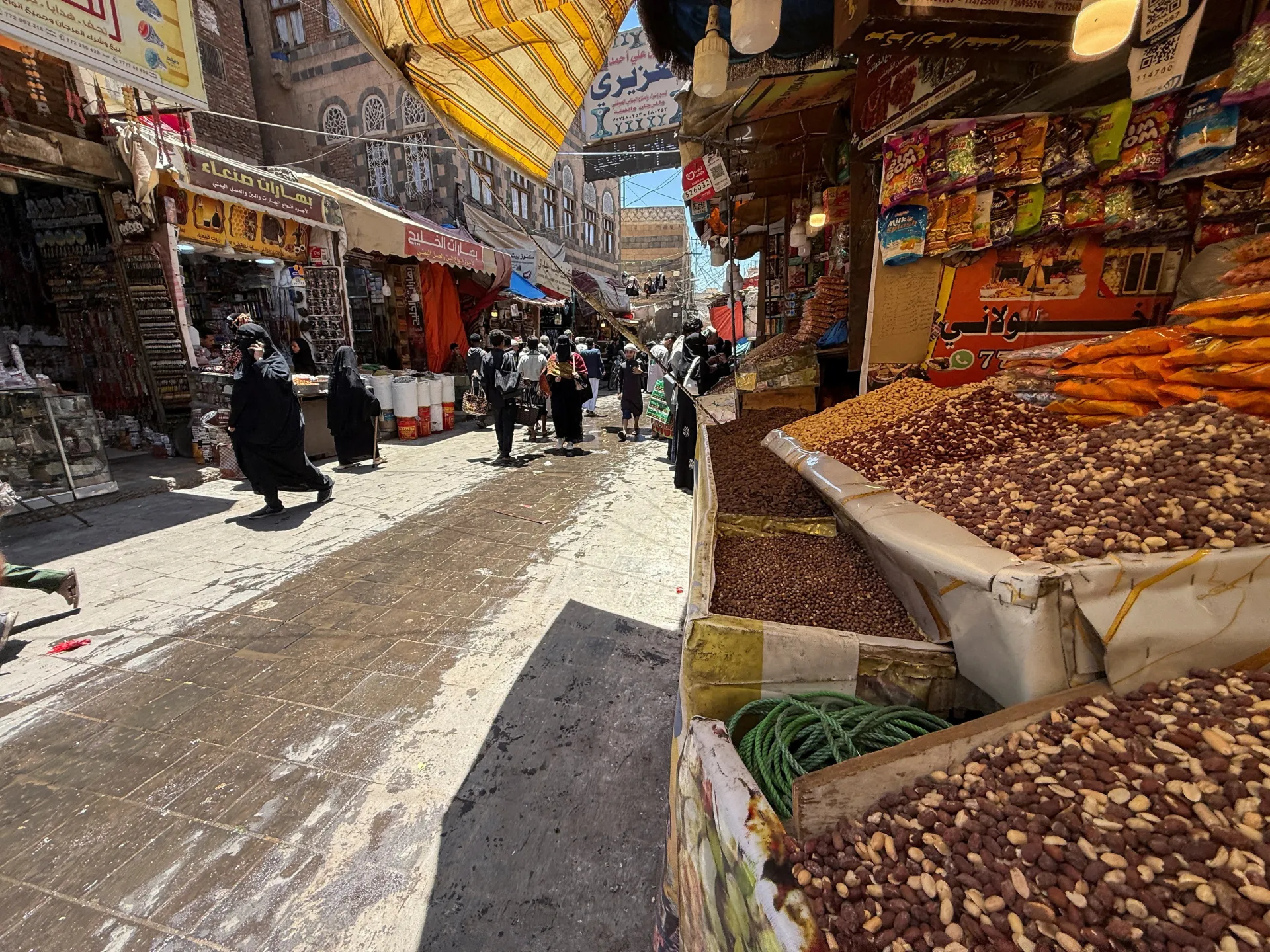
Sanaa, Yemen – Ahmed Yahya, 28, fills his taxi with 10 litres of petrol as he begins his workday early in the morning.
“I feed my taxi with fuel first so that it can help feed my family,” Yahya, a taxi driver, said as he wiped the dust from his front window at a petrol station on the outskirts of Sanaa.
Recommended Stories
list of 3 itemsend of list
Up until earlier this week, Yahya used to pay 4,750 Yemeni riyals, the equivalent of roughly $8.90 in Houthi-controlled areas of Yemen. The price had remained unchanged for about four years in territory under the rebel group’s control – including the capital Sanaa.
But then, on Monday, the Houthis announced a roughly 10 percent increase in the price of petrol, up to 5,250 Yemeni Riyals ($9.80). After years of economic misery, Yahya described the price hike as another “painful surprise to an already devastated people”.
The Houthi-run Yemen Petroleum Company said the diesel and petrol price increase was the result of a “global increase in fuel prices”, and promised that it would be temporary. The increase in global oil prices this year comes off the back of the impact of the United States-Israel war on Iran. But, more recently, the Houthis’ own capture of Yemen’s southern Red Sea coast from government forces last week, and attacks on Saudi Arabia, have played a major role in increasing prices.
“When I heard the announcement of the new fuel price, I was shocked and frustrated. We’re hardly surviving, and this price increase will make survival even harder,” said Yahya, as he lamented another burden in a country where 18 million already face acute food insecurity – a lack of reliable access to enough food.
‘Rent or food?’
Yahya, a father of three, has been working as a taxi driver for five years. Although the job helps make ends meet, he feels financially insecure, especially with the ongoing changes in food and fuel prices.
“My family spend about 75,000 Yemeni riyals [$140] a month on food expenses such as flour, rice and cooking oil. With the fuel price rise, we will need at least 85,000 Yemeni riyals [$159] a month for the same food items,” said Yahya.
The resumption of fighting in Yemen in the past few months, after a four-year period of relative calm in the country’s war, has contributed to the price rises. But for Yahya, relatively safe in Sanaa, it’s the increased expenses that are the more troubling development.
“When prices rise, they affect what we eat, drink, and how we live,” he said. “Let me give you an example: I pay 25,000 Yemeni riyals [$47] in rent every month. With the increase in food prices, putting money aside to pay the rent has become more challenging. What is the priority? Rent or food?”
An April report by the International Monetary Fund (IMF) said that Yemen’s internal conflict has led to significant macroeconomic vulnerabilities and a marked decrease in income per capita, leaving more than half of the population in urgent need of humanitarian assistance.
“It [the conflict] has caused widespread food insecurity, disease outbreaks, mass family displacement, and limited access to clean water,” the report said.
Risky and costly transportation
One of the links between the renewed fighting and the increase in prices is the longer distances needed to transport products across the country, as truckers avoid roads near the front lines.
“A truck carrying goods from the south to the north or vice versa now takes up to a week to reach its final destination. Before the renewed fighting, a similar journey would have taken three days or less,” explained Saleh Abdullah, a shopkeeper in Sanaa.
The increased transportation costs, including the higher fuel prices, are passed on to the consumer.
“This means no family is immune to this trouble,” Abdullah said. “Whether it is the flour, the baby milk, the fruits, the vegetables, or anything else, families will feel the pain of price increases.”
“Some customers become angry at us when we sell products at a higher price,” he added. “We didn’t impose prices. We just react and adapt to the changes in the country or the region.”
Ibrahim Abdu, an employee at the Nehm customs checkpoint in Sanaa governorate, said the number of trucks arriving in the capital has declined over the past few weeks.
“Fighting has cut off many roads, and merchants have avoided risking their products and drivers,” he told Al Jazeera.
‘A hunger multiplier’
Years of war have taken a heavy toll on Yemen’s economy, disrupted businesses, and pushed millions of people into poverty and food insecurity. Against this bleak backdrop, the country’s humanitarian tragedy has been worsening.
Ahmed Mohammed, a former humanitarian worker in Hodeidah, describes the fuel price rise as a “hunger multiplier” in war-torn Yemen.
“If a breadwinner struggles to buy a family three meals a day, he may be able to afford only two given the rising price of food commodities. This will deepen hunger among families,” said Mohammed.
He added: “War is ugly, and one of its ugliest aspects is seeing a family unable to afford a kilogramme of flour, sugar or rice.”
The UN Refugee Agency (UNHCR) warned this week that the violence threatens to trigger a humanitarian crisis as more people are displaced, pressuring communities with limited resources.
A multi-faceted impact
Wafiq Saleh, an economic researcher and executive director of the Taiz Centre for Yemeni-Gulf Studies, said the 10 percent hike in fuel prices in Houthi-controlled areas deals a blow to Yemeni consumers.
“Its impact will manifest as a major inflationary wave, placing a heavy burden on the most vulnerable and income-deprived segments of society,” Saleh told Al Jazeera.
While this price increase may appear modest in percentage terms, its effects extend far beyond the petrol station, rippling through various goods and services and creating new hardships, according to Saleh.
“Petroleum products serve as intermediate inputs for a wide range of goods and services. Consequently, a 10 percent rise in fuel prices does not merely increase people’s expenses by 10 percent; it triggers a cascading effect on prices,” he said.
“The most severely affected sectors include agriculture – which relies on diesel for crop irrigation – and the transport and services sectors, where rising costs immediately drive up passenger fares and food prices.”
He added that the increase would also affect water and electricity services, many of which rely on diesel-powered generators, further increasing the cost of basic services.
Small- and medium-sized enterprises are similarly affected.
“Small enterprises are operating on narrow profit margins, and they may be forced to either cease operations or pass the increased costs on to the final consumer,” Saleh said.