Bosnia and Herzegovina are on the verge of reaching the knockout stages of the World Cup for the first time after beating Qatar 3-1 in their final Group B match.
Bosnia move on to four points and are in a strong position to be one of the best eight third-placed teams to progress to the last 32.
Recommended Stories
list of 4 itemsend of list
Qatar, meanwhile, exit at the group stage, just as they did four years ago when they hosted the World Cup.
Goals from Bosnia’s youngest-ever World Cup player, 18-year-old Kerim Alajbegovic, and an own goal by Qatar goalkeeper Mahmoud Abunada looked to have put the European side in the box seat.
However, Qatar made a game of it when 35-year-old Hassan Alhaydos, their most capped player, pulled one back late in the first half.
Ermin Mahmic then put the game beyond the Qataris when he scored for the second successive match in the 80th minute.
Bosnia flew out of the blocks as soon as the whistle went, testing Abunada twice inside the first four minutes.
First, Abunada denied Ermedin Demirovic’s fierce drive, and then he tipped away Ivan Sunjic’s shot.
Bosnia’s dominance finally paid off, but it was not the 40-year-old talisman Edin Dzeko who broke the deadlock, but the sublimely talented teenage left-wing.
Edin Dzeko of Bosnia and Herzegovina and his teammates celebrate the second goal [Stephen Buddhist/EPA]
Abunada was unable to do anything about Alajbegovic’s screamer from outside the area, after he had beaten two players.
The youngster was mobbed by his teammates, and once they had trotted back to the halfway line, he stood and milked the moment, putting a finger to his lips.
Dzeko, winning his 150th cap, came more and more into the game, and not wishing to have his thunder stolen by the new kid on the block, he played an integral role in their second five minutes later.
His shot took a wicked deflection off Sultan Albrake and then Abunada on its way into the net.
Dzeko was well into his stride now, and he broke clear a few minutes later, his shot beating Abunada but rebounding off the post.
Bosnia’s earlier sprightliness dipped in the heat, and it was the doyen of Qatari football, Alhaydos, who repaid coach Julen Lopetegui’s faith by slotting home in the 42nd minute.
The Bosnian defence failed to learn from that, and in time added on, they had the far post to thank for keeping their noses in front as Pedro Miguel’s shot came back off it.
Alhaydos’s World Cup, and perhaps his distinguished international career, ended in tears as he trudged disconsolately off the pitch, injured in the 55th minute.
Chances were few and far between until Esmir Bajraktarevic stole in from the right wing and came close to emulating Alajbegovic’s effort, but Abunada turned it away for a corner.
Bosnian frustration gave way to ecstasy when Mahmic prodded the ball home – the scorer ripping his shirt off in celebration, and the 21-year-old paid little notice to being booked for it.
How has US imperialism targeted Venezuela and Iran? How have years of hybrid warfare shaped resistance? What role does China play in the emerging multipolar world?
In Episode 46 of the VA Podcast, Venezuelanalysis editor Ricardo Vaz is joined by VA co-editor Lucas Koerner and scholar Matteo Capasso to discuss sanctions, sovereignty, deterrence, and international anti-imperialist solidarity.
As 2026 reaches its halfway point, the editors of De Los are eager to talk about Latin artists to watch — and share their hottest music takes. Over the years, award-winning music journalist Suzy Exposito and Director of Latino Initiatives Fidel Martinez have documented the rise of genres like reggaeton and música Mexicana in mainstream culture.
In her work for Vogue, The Times and Rolling Stone, Exposito has interviewed influential artists like Shakira, Cardi B and Bad Bunny (the last of which made history as the first Rolling Stone cover story written by a Latina journalist).
Martinez has an impressive roster of his own, having interviewed many stars in the Mexican and Chicano music scenes, from Fuerza Regida to Natalia Lafourcade.
Reflecting on a landmark year for Latin music
On this week’s episode of “The De Los Podcast,” they weigh in on the explosive impact of 2025 on the genre: between Bad Bunny‘s Super Bowl halftime show and Karol G‘s Coachella headlining performance, last year was nothing short of a groundbreaking for Latin music.
“Being there, you could feel barriers coming down,” Martinez, who reported live from the Super Bowl in February, said. “It wasn’t Bad Bunny trying to validate us in front of others. It was him saying, ‘This is who we are, and we are proud of who we are.’”
According to the RIAA, 2025 was the first year that Latin music sales in the U.S. reached $1 billion, in its 10th consecutive year of growth. In 2016, American Latin music sales were at just below $150 million.
“It highlights how quickly and with what speed the genre has been taking off,” Martinez said.
However, as Exposito notes, at times, it came at the cost of originality.
A Latin music trend that De Los is leaving behind this year
“Our generation is too married to the past,” Exposito said. “How can we evolve musically if we keep trying to re-create our grandparents’ music?”
Nostalgia, De Los editors note, has driven the wide-ranging popularity of last year’s most successful Latin projects. As Exposito says, the artists “mine the past in their own ways.”
In Bad Bunny’s “DtMF” and Karol G’s “Tropicoqueta,” classic genres like salsa, plena and cumbia took center stage. “DtMF” samples El Gran Combo de Puerto Rico while in Fuerza Regida samples Mexican classics like Vicente Fernández.
While comforting and educational for younger generations, Martinez argues that artists relying on nostalgia could turn that effort into becoming more experimental with their sound.
Some artists, however, are resisting the nostalgia trend, making De Los’ best albums list of 2026 … so far.
De Los’ 2026 Latin albums you need to hear
Suzy’s picks:
Alvaro Díaz, “Omakase”
“He’s experimental … and taking bold swings, with producers like Tainy,” Exposito said.
“Omakase,” which the Puerto Rican star released in May, blends Latin trap elements with electronic, R&B and in one track, cumbia, for a diverse, thoughtful album that Diaz equates in his De Los story to the Japanese dish omakase, or a platter decided by the chef.
RaiNao, “Marcría”
With a worldplay title that blends the words “malcriada” (badly raised woman) and “cria por el mar” (born in the sea), RaiNao’s project promises earthly, intimate lyricism with experimental musicianship.
“The way she melds jazz with reggaeton and folkloric elements, I really enjoy,” Exposito said. “I really appreciate people (like RaiNao) who can remix but also introduce seemingly disparate elements, like saxophone and Caribbean music.”
Other picks include Ibeyi’s “Offering” and Diles Que No Me Maten’s “Escrito en Agua.”
Fidel’s picks:
Julieta Venegas, “Norteña”
Venegas, who De Los interviewed last month, wrote a memoir alongside this album, which delves into her Tijuana heritage with Mexican collaborators like Bronco, is what Martinez calls “a chef’s kiss.”
“She’s such a fascinating character because she started as an indie rocker,” Martinez said. “This album is a love letter to Tijuana. It’s just the perfect fusion of tradition and pop.”
Hermanos Espinoza, “Linaje”
Two brothers from the Rio Grande Valley, Hermanos Espinoza performed at De Los’ SXSW showcase and blew the audience away with their live energy and accordion work.
“Their project talks about lineage. This album certainly has a point of view,” Martinez said. “With this album, they said, música Mexicana can be like rock and roll.”
Also on the list are Tito Doble P’s “Acomodo” and Trio Asesino’s self-titled.
To hear more about 2026’s emerging artists and De Los’ music hot takes, check out “The De Los Podcast.”
Constitutional amendment will keep President Mnangagwa in office until 2030 and allow parliament to elect the president.
Published On 24 Jun 202624 Jun 2026
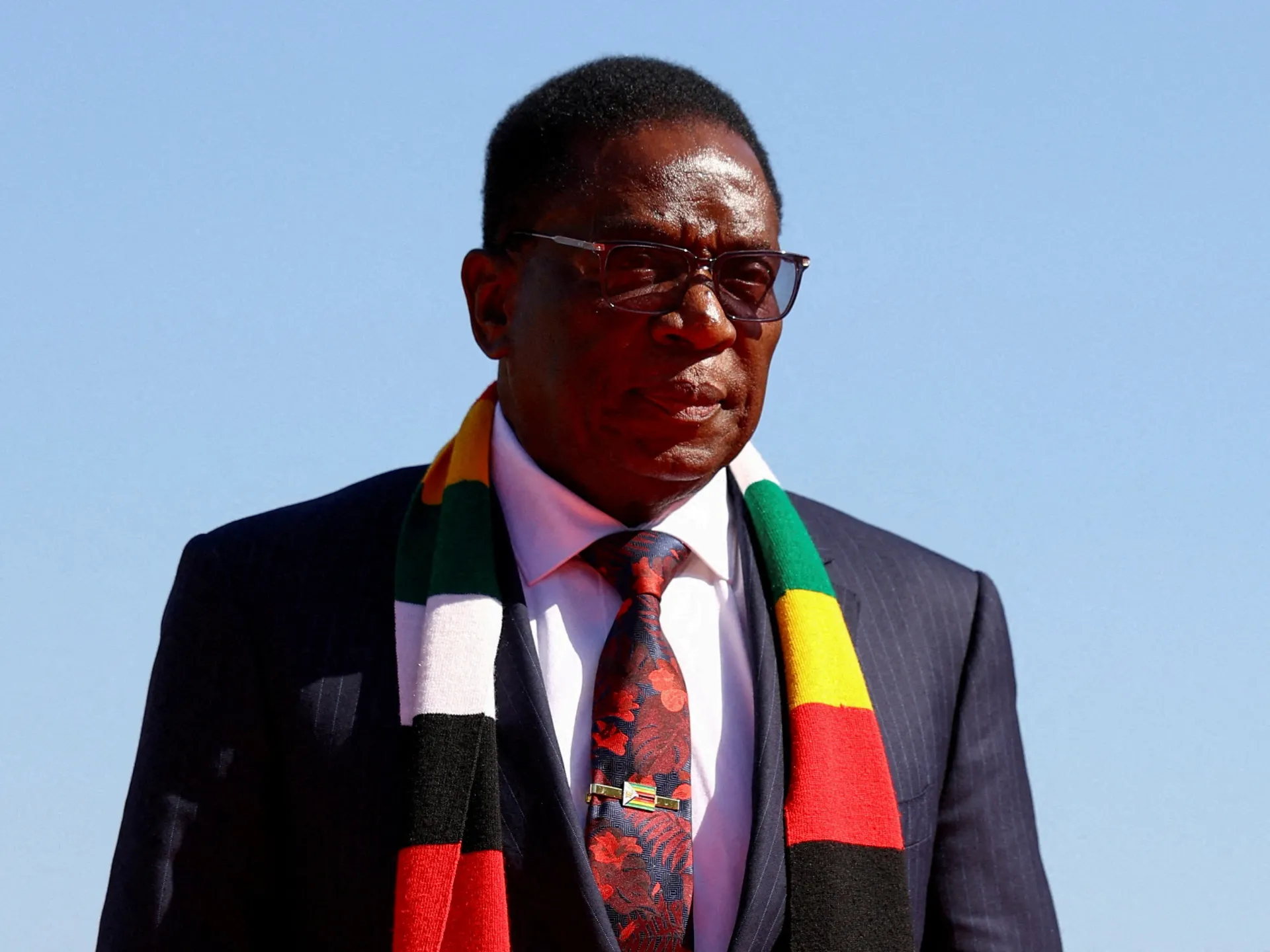
Zimbabwe’s Senate has overwhelmingly approved a constitutional amendment that will keep President Emmerson Mnangagwa in office until 2030.
According to Senate President Mabel Chinomona, the controversial amendments were passed on Wednesday after 75 senators voted in favour and four against extending the term for Mnangagwa, 83.
Recommended Stories
list of 3 itemsend of list
The raft of sweeping changes, which critics have called a “constitutional coup”, includes a provision that extends presidential and parliamentary terms from five to seven years.
The bill also includes a provision for the president to be elected by parliament rather than by direct popular vote.
With parliament’s backing, the bill now has to be signed by Mnangagwa to become law.
Mnangagwa’s Zimbabwe African National Union-Patriotic Front (ZANU-PF) party holds a strong majority in parliament and has ruled since independence in 1980.
Last year, the ruling party resolved to change the constitution to prolong presidential terms, and the plan received cabinet backing in February.
The bill then passed through the National Assembly last week, with 216 lawmakers voting in favour of the draft legislation and 42 against it.
Mnangagwa came to power after a 2017 military coup ousted longtime leader Robert Mugabe, who had been in power since independence in 1980.
Still, the country’s opposition, which has been weakened by years of repression, charges that the measures would entrench ZANU-PF’s control over the country.
Moreover, activists who have tried to mobilise in the country have reported intimidation and violence, including arrests or assault by suspected agents of the state.
Legal challenges have also failed to stop or invalidate the amendment process.
In March, Human Rights Watch said that Zimbabwe’s authorities were using violence and intimidation against those who were opposing the amendments.
“Over the last few months, the police and unidentified armed men have threatened, harassed, and beat up several people who are opposed to the proposed constitutional amendment,” it said in a statement.
Lawsuit claims Tesla’s Autopilot shortcomings led to fatal crash; family seeks $1m in damages and punitive measures.
Published On 24 Jun 202624 Jun 2026
The family of a Texas woman who was killed has filed a lawsuit against Tesla after a driver using a Model 3’s automated driving assistance system crashed into a suburban Houston home last week.
The complaint, filed on Tuesday, argues that Tesla should be held liable for the wrongful death of 76-year-old Martha Avila. The family alleges that the automaker, led by Elon Musk, failed to adequately warn drivers about alleged defects in its Autopilot and Full Self-Driving systems.
Recommended Stories
list of 4 itemsend of list
Avila’s daughter, Jennifer Barbour, and her husband, Justin Barbour, said the Model 3’s driver, Michael Butler, told law enforcement he engaged Autopilot before ploughing through the front wall of Avila’s home in Katy, Texas, the United States, on June 19, pinning her before she succumbed to her injuries at a nearby hospital, according to the complaint.
Video obtained by KHOU – Houston’s CBS affiliate — shows the car travelling at top speed over the front lawn of Avila’s home in the Houston suburb before slamming into the front room.
The driver told the Harris County Sheriff’s Office that he was using the technology at the time of the accident. The driver in the incident was not under the influence of alcohol and is cooperating with authorities.
Butler is also a defendant in the Barbours’ lawsuit. It is unclear whether he has a lawyer.
Musk, the world’s richest person, posted on X on Monday night: “FSD drives slowly through neighbourhood streets and this was a high-speed crash!”
Ashok Elluswamy, vice president of AI software at Tesla, posted on X in response, saying that “the driver manually overrode self-driving by pressing the accelerator all the way to 100% of the accel pedal in this residential area.”
The lawsuit filed in a Harris County, Texas, state court seeks more than $1m in damages, and punitive damages reflecting Tesla’s alleged “reckless disregard for a substantial risk of severe bodily injury”.
The National Highway Traffic Safety Administration (NHTSA) has been investigating the crash.
Since 2016, the NHTSA has opened nearly 50 special investigations of Tesla crashes believed to involve advanced driver assistance systems. About two dozen deaths were reported.
In March, the NHTSA escalated its probe into 3.2 million Teslas equipped with Full Self-Driving, on concern the system may fail to detect or warn drivers in poor visibility. In 2023, Tesla recalled about two million vehicles, nearly all of its electric vehicles on US roads, to better ensure that drivers pay attention when using Autopilot.
Tesla has said Autopilot enables vehicles to steer, accelerate and brake within their lanes, while Full Self-Driving lets vehicles obey traffic signals and change lanes.
The carmaker has also said both technologies require “fully attentive” drivers whose hands are on the wheel.
The incident comes as the Musk-owned company is rolling out robotaxis using automated software in several US cities this year and plans to invite Tesla owners across the country to put their cars into the fleet using the same system.
The Repair Shop expert Amanda Middleditch felt the pressure during the latest episode
Amanda Middleditch was nervous while restoring an item(Image: BBC)
A significant World Cup item was brought to The Repair Shop barn on Wednesday.
During the latest instalment (June 24) of the popular BBC programme, experts Julie Tatchell and Amanda Middleditch met Steph Taylor and her daughter Alison. The life-long football fans sought help in restoring a soft toy of the 1966 England World Cup mascot, World Cup Willie, who was in a “rather sorry state”.
Steph explained that she bought the toy at the first match she went to that year. After getting tickets to all the matches at Wembley Stadium, including the final, Steph brought Willie along in her pocket.
The guest explained that she also went to the matches with her future husband, Chris, with their romance blossoming during the tournament. The couple got married that same year, before welcoming their daughter eight months later.
Sadly, tragedy struck when Chris died of an asthma attack just nine months after Alison was born.
“That makes Willie much more significant,” Julie noted, before Alison said: “Because they weren’t together very long, he’s the only thing that I have that connects mum and dad. So, it’s quite special to me as well.”
Julie and Amanda quickly got to work to try and restore the “very important” toy to its former glory. However, Amanda was noticeably nervous.
“He looks extremely fragile, doesn’t he? I’m quite concerned about his face,” she said.
Amanda added: “This little guy’s face is absolutely terrifying. The damp has left him with these two ugly holes. I’ve got to make him look good again.”
The expert tried to feed a new piece of fabric underneath the toy’s damaged face, but she worked with caution. She said: “I’m holding my breath here because the worst thing that could happen is his face disintegrates on me, and then I would have to replace the whole face.
“Oh, it’s a scary one! I think this is actually scarier than taking a penalty in the World Cup final. [I’m] absolutely terrified. But we can do this.”
Julie and Amanda successfully managed to restore World Cup Willie, leaving both Steph and Alison speechless as they were reunited with their possession.
“Oh my goodness, that’s amazing!” said Alison, while her mum noted: “I don’t know if he’s ever looked that good!”
A visibly emotional Steph added: “[I’m] quite filled up about it all, really. Yeah.”
Alison continued: “He’s quite special because he’s a link to my mum and my dad. He’s the only thing that really connects them,” before Steph said: “He’s a very important lion.”
The Repair Shop is available to stream on BBC iPlayer
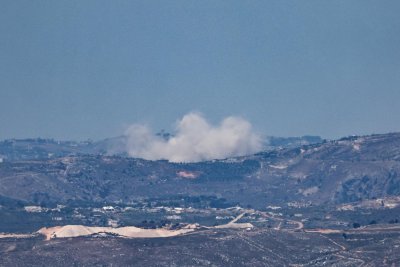
Smoke rises in late May as a result of an Israeli strike in the south of Lebanon as seen from the Israeli side of the border in the Upper Galilee, Israel. The Israeli military says it has trapped dozens of Hezbollah fighters in an underground complex in southern Lebanon. Photo by Atef Safadi/EPA
June 24 (UPI) — The Israeli military has surrounded an underground base in southern Lebanon in which dozens of Hezbollah militants are trapped, Israeli officials said.
The base is located under the village of Tebnit, in an area where fighting taken place despite an Israel-Hezbollah cease-fire, The New York Times reported. The standoff, if it escalates, could disrupt ongoing peace negotiations between the United States, which backs Israel, and Iran, which backs Hezbollah.
Israeli officials said the trapped militants were running out of supplies. On Tuesday, Israeli troops killed at least two people in the area. Israel said those targeted were Hezbollah operatives, while Hezbollah said they were civilians.
The underground base is beneath the Ali al-Taher ridge, not far from the border with Israel and a strategic point. Israeli officials said Hezbollah built the complex of tunnels over 20 years with Iran’s help.
“From this place, you can launch missiles and munitions at Israel,” Sarit Zehavi, president of the Alma Research and Education Center, said to The New York Times.
The Jerusalem Post reported that Israeli leaders are concerned that operatives in the area could carry out a kidnapping attack against Israel’s forces to help their negotiations for those trapped. Soldiers have been told to stay in pairs or groups at all times.
Israel once occupied the ridge after its 1982 invasion of Lebanon. It was once outside the “buffer zone” that Israel established in Lebanon near the border, but Israeli redrew the line last week to include the ridge, The New York Times reported. Israel considers any armed fighter south of the line a threat and a target.
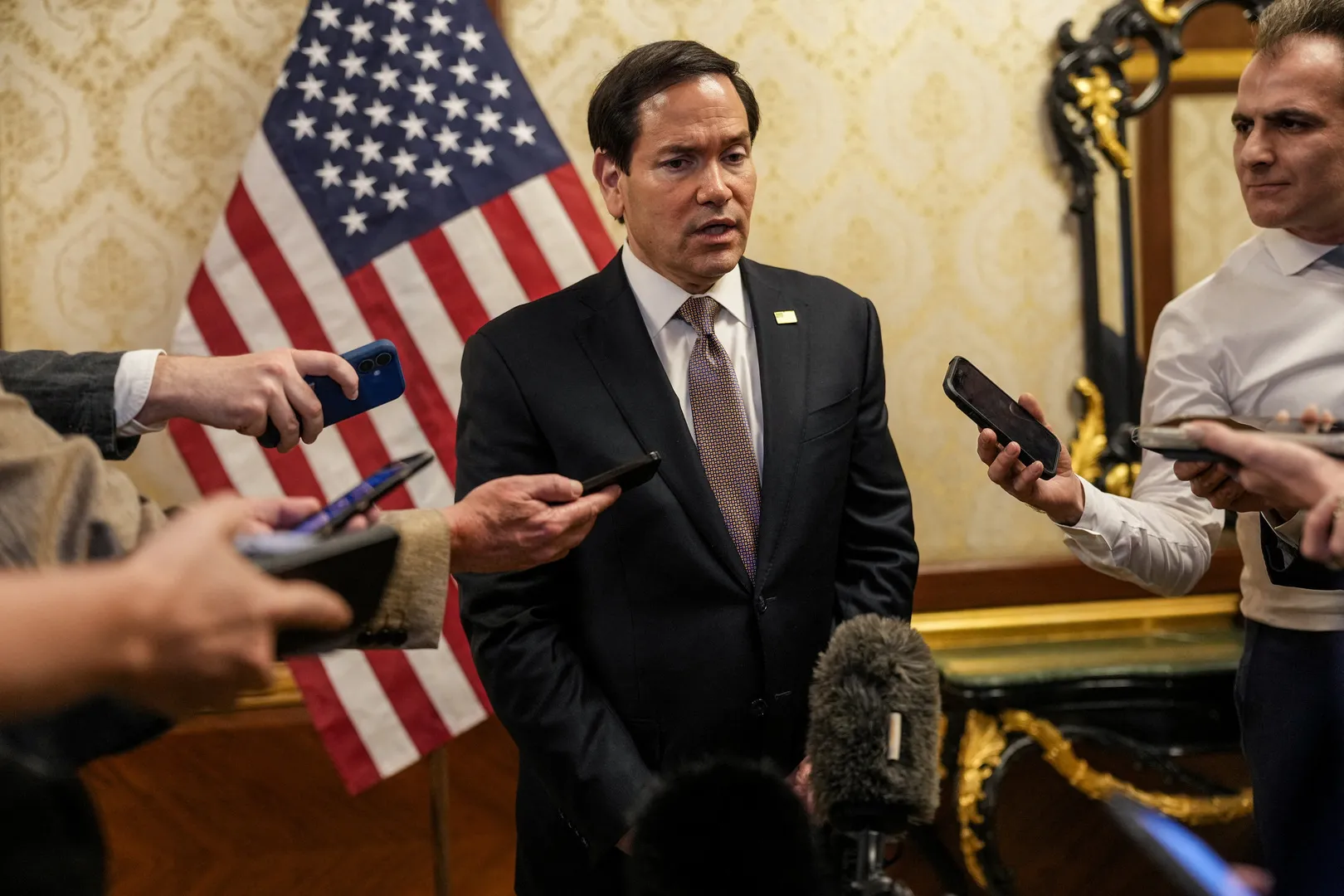
US Secretary of State Marco Rubio said Washington will be “completely aligned” with Gulf allies in Iran peace talks. Rubio met Kuwait’s Crown Prince Sheikh Sabah Al Khalid Al Sabah during a visit to the region after the US and Iran signed an MoU.
The 2004 drama balances comedy with timely social commentary
Danny Dyer leads the cast in the noughties film(Image: Handout)
Netflix fans are completely hooked on a gritty sports drama that came out over 22 years ago.
The streaming giant’s most-watched charts are currently dominated by recent releases, including hit romcom Voicemails for Isabelle and chilling documentary Maternal Instinct.
But UK viewers are also streaming 2004 sports drama The Football Factory, which is no surprise considering all eyes are on the FIFA World Cup.
Directed by Nick Love, the film is presently sitting at Number 9 on the trending list. It focuses on a devoted Chelsea football hooligan called Tommy Johnson (played by Danny Dyer).
Tommy and his friends spend their days drinking, womanising, using drugs and “occasionally kicking the f*** out of someone”.
But the sports fan is forced to reconsider his violent lifestyle when one of his football-fuelled fights leads to serious consequences.
Adapted from John King’s 1997 novel, the story touches on important themes such as young men’s search for belonging, as well as their frustration with unfair socio-economic systems. It also offers insight into escapism through drug and alcohol abuse.
While Dyer is the face of this film, he is joined by other recognisable stars. One of his most notable co-stars is Tamer Hassan, who Love Island fans will know as recent All Stars contestant Belle Hassan’s dad.
He plays Fred, a Milwall hooligan and arch enemy of the Chelsea club.
Fans have been raving about the noughties drama for years. “One of the best football films,” said one Rotten Tomatoes user.
Someone else praised: “10/10 – Brilliant film! Easily in my top 5 favourite movies. A must see for football fans.”
While another said: “One of the best English films you will ever see for sure, got everything in it! now this is funny and gripping!”
Yet another film fanatic shared their verdict on IMDb: “It’s top drawer entertainment and better than most of the garbage that fills your DVD store. I would highly recommend this to anyone who likes realistic and gritty films, and doesn’t mind occasional stomach turning violence.”
And a final moviegoer insisted: “I can honestly say this is by far the best British film I’ve ever seen.”
Tedros Adhanom Ghebreyesus, director general of the World Health Organization, speaks to the media about Ebola and global health issues during a press conference in Geneva, Switzerland, Wednesday. France reported its first ebola case Wednesday. Photo by Martial Trezzini/EPA
June 24 (UPI) — A doctor who traveled to the Democratic Republic of Congo was being treated for Ebola at a hospital in France, French officials said Wednesday.
The doctor was admitted to a special health facility and is in stable condition, the country’s health ministry said in a statement. Health workers are tracing anyone who may have come into contact with the doctor. Any contacts will be isolated for 21 days and closely monitored.
The DRC has had an outbreak of Ebola in recent months that has rocked the region. Fighting in the area, which has caused displacement, has made the outbreak worse, and the disease has spread into neighboring Uganda.
More than 1,000 cases have been confirmed and more than 260 people have died from the disease.
It’s the first confirmed European case, though an American doctor was treated at a German hospital in May. Dr. Peter Stafford has recovered and been released from the hospital.
The doctor in France works for the Alliance of International Medical Action, which has been working on the Ebola response in Congo, Dr. Tedros Adhanom Ghebreyesus, director general of the World Health Organization, said in a news conference.
“This case is a reminder of the risks faced by frontline responders,” Tedros said. He added that 82 health care workers have become ill during the outbreak.
Last week the WHO said 17 health workers who had caught Ebola in Congo had died.
ALIMA said the ill doctor is a man who had been working in an area where the virus is.
“Contamination prevention measures have been in place since the beginning of our intervention to protect our teams,” ALIMA said in a statement.
Bethlehem, occupied West Bank – In the narrow alleyways of the Dheisheh refugee camp, three children debate which of their encounters with the Israeli military is worth telling, and who gets to tell it.
Yanal, 14, wins the opening round on language skills alone. He speaks three languages: Arabic, English and Spanish, and insists on telling his story in English.
Recommended Stories
list of 3 itemsend of list
“Life in the camp is complex,” he says, because, as he explains, there is nowhere to run away to when the army comes.
Yanal keeps returning to one memory: a football match, soldiers entering the field, and there being no way out.
Mustafa Abu Aliyah, 13, counters with a raid that he ran into as he was on his way to his grandfather’s house. The Israeli army fired live rounds and tear gas, he says. “We were in the middle of the fire.”
He can’t remember his first encounter with soldiers, “but I definitely saw them when I was little, because they are always coming here”.
His sister Diyar, 12, was mid-piano lesson the last time the army came through.
“Whenever the army comes, there will be tear gas,” she says. “People will be beaten. There’s usually someone injured or killed.”
She compares it to life elsewhere. “I see children in other countries, in other worlds, living in safety, but we can’t even leave our front door without suffering.”
The raids happen so often that the children often can’t remember the dates of specific incidents. But what they do remember is the fear they experienced and the aggression displayed by the Israeli soldiers.
In the first nine months of 2025 alone, Israeli forces carried out nearly 7,500 raids across the occupied West Bank, or about 27 a day, and a 37 percent increase compared with the same period in 2024.
‘Essence of childhood destroyed’
The children in the Dheisheh refugee camp reflect a wider pattern of childhood experiences under Israeli occupation, set out in a report the UN’s Independent International Commission of Inquiry on the Occupied Palestinian Territory released on Tuesday.
It examines Israel’s treatment of Palestinian children in Gaza and the occupied West Bank since October 2023.
Titled, “The essence of childhood has been destroyed”, it found that Israeli forces have killed at least 20,179 Palestinian children and wounded more than 44,000 across the occupied territory, most of them in Gaza – where it said that the deliberate targeting of children constituted part of the genocide in the Palestinian territory.
The report also documents a pattern of killings, mass arrests, torture, sexual violence and attacks on schools and hospitals.
In the West Bank, it records a sharp rise in settler violence against children and killings by Israeli forces, among them a two-year-old girl shot dead in January 2025. Children, the report notes, are held in Israeli detention, with no lawyer and no word sent to their parents, a separation it says can amount to enforced disappearance. Schools, too, are targets: 85 across the West Bank are under demolition or stop-work orders, and others have been closed or attacked by soldiers and settlers.
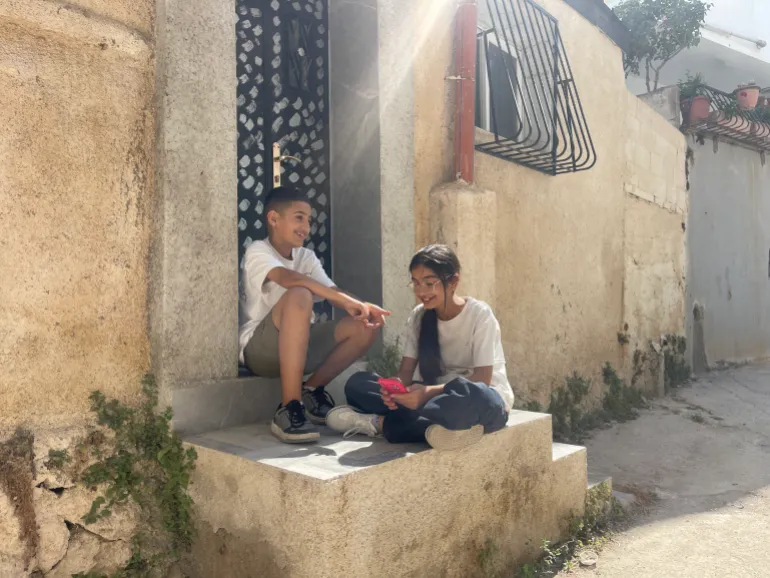
Mustafa Abu Aliyah, 13, and his sister Diyar, 12, sit in the alleyways of Dheisheh refugee camp in the occupied West Bank [Leila Warah/Al Jazeera].
Beyond the casualty count
The UN commission argues that Israel has created conditions in which Palestinians live in a constant state of “diffused, ambient terror, that does not require constant bombing to remain effective”.
“We are talking about repeated shocks, about continuous events that never end,” says Lemis Farraj, a psychologist and the project coordinator at Shorouq in Dheisheh, emphasising that a child’s physical and mental health cannot be separated from each other.
The report calls this continuous traumatic stress, distinct from Post-Traumatic Stress Disorder (PTSD), because there is no single event to recover from. The danger does not just come from experiencing one raid, but from the fear that comes with waiting for the expected raids that will likely come in the future.
Diyar explains that when the army enters her neighbourhood, she has to stay home and wait, no matter what her plans were. “Our life stops,” she says.
Her brother, Mustafa, says that the repetition has worn the fear flat.
“When I see the army, I [am] used to it and I stop being afraid.”
Farraj sees the same in the young children she treats: a startle at an ordinary sound, certainty that a raid has begun, and regression – skills already learned suddenly lost again.
Five-year-old Khour Hammad, who lives a few alleys away from the older children, has experienced the same raids.
She explains that both of her parents are in prison. Israeli forces arrested her father in July 2023 and her mother last March, according to the family.
Khour remembers the night the army came for her mother. Half-asleep, she heard a man’s voice and thought her father had finally come home. She climbed out of bed expecting him. Instead, she found soldiers inside the house.
The soldiers tried to question Khour. She says that she “felt like I was going to throw up”.
Handed an old family photo, she brightens at once, pointing out her mother, Islam Amarna, and her father, Osama Hammad, and rattling off memories in bursts.
Khour Hammad, 5, stands on a rooftop overlooking Dheisheh refugee camp in Bethlehem, in the occupied West Bank. Both of her parents have been arrested by Israeli forces [Leila Warah/Al Jazeera].
Generational trauma
While Palestinian children in Gaza and the West Bank face different lived experiences, the UN finds the same cause behind the harm: a military occupation described as a “long-term mechanism of domination, subjugation and oppression”.
Farraj adds that children are affected not only by their own experiences of trauma, but also by what is passed down from parents and grandparents.
“The first generation of the Nakba lived in shock and passed it on to their children,” she says, referring to the ethnic cleansing of at least 750,000 Palestinians following the formation of the state of Israel in 1948.
The report similarly notes that Palestinian refugees, now in their fifth generation, have internalised a sense of “dispossession from the Nakba” alongside present-day experiences of occupation.
In the West Bank, roughly one in four Palestinians are refugees; in Gaza, it is about 70 percent.
Israeli violence and forcible displacement have been carried through generations of Palestinians, compounding as the cycle repeats. Farraj says trauma recovery depends on stability: family support, schooling, safe spaces and a predictable routine, all of which remain precarious under Israel’s occupation.
For Khour, that stability begins with her parents.
“I want the whole world to listen and see my picture,” Khour says, “and get my mom and dad out of prison.”
MAYA Jama’s ex-boyfriend Ruben Dias appears to be moving on from their split as he sets his sight on a new romantic interest.
And the Manchester City footballer, 29, controversially seems to be pursuing a connection with a fellow star from within the Love Island family.
Sign up for the Showbiz newsletter
Thank you!
Ruben Dias appears to be putting his split from Maya Jama behind himCredit: InstagramThe Manchester City player made a bold online move this weekCredit: Getty
This week Ruben followed Joanna Chimondes on Instagram, the season 5 stunner who appeared on screens back in 2019 and returned for All Stars in 2024.
Tellingly, Joanna, 29, has followed the Premier League player back on the social media platform – so watch this space.
The Sun has reached out to representatives of Ruben and Joanna for comment.
Joanna is earned a spot in the Love Island historybooks when she stole the affection of scouser Michael Griffiths during Casa Amor – when he was coupled up with Amber Gill.
Ruben has followed Love Island season 5 star Joanna onlineCredit: InstagramAnd she’s reciprocated the move, following him back on InstagramCredit: Instagram
The fireman returned to the main villa with Jo, much to Amber’s disgust who branded her villa rival ‘a dead ting’ upon learning of the betrayal.
Joanna and Michael’s romance didn’t go the distance though, as she was booted from the villa separately with Michael controversially deciding to stay.
The pair first begandatingin December 2024 after meeting at theMTVEuropeMusic Awards in Manchester the month prior.
Their relationship is understood to have ended before Maya jetted off to Scotland to film Celebrity Traitors and ahead of all new Love Island.
Joanna Chimonides returned to Love Island in 2024 for the All Stars spin-offCredit: RexHost Maya and Joanna are both part of the Love Island familyCredit: Shutterstock Editorial
June 24 (UPI) — A U.S. airstrike launched last week in northwest Syria killed a senior Islamic State leader, U.S. military officials announced Wednesday.
U.S. Central Command said the Friday attack killed Ali Husayn al-Ulaywi as “part of ongoing U.S. efforts to disrupt and eliminate terrorists seeking to attack Americans abroad or the U.S. homeland.”
The announcement comes a little more than a month after U.S. and Nigerian forces killed Abu-Bilal al-Minuki, believed at the time to be second-in-command for USUS.
U.S. forces have been battling ISIS and its predecessors for more than a decade in Iraq, Syria, Nigeria and other locations throughout the Middle East and Northern Africa. This fight was entwined with both the Iraq war and the Syrian civil war.
“CENTCOM and our partners remain committed to rooting out remaining remnants of ISIS to ensure its enduring defeat,” said Adm. Brad Cooper, CENTCOM commander.
Presidential candidate Ivan Cepeda accepted the victory of his opponent Abelardo de la Espriella.
Published On 24 Jun 202624 Jun 2026
Bogota, Colombia – Colombian presidential candidate Ivan Cepeda officially conceded defeat to hard-right populist Abelardo de la Espriella this morning following a tight run-off race.
While Cepeda had recognised the legitimacy of the preliminary results on Sunday, which gave de la Espriella a less than 1 percent lead, he said he would wait for the final, legally binding vote count, known as the scrutiny, before accepting defeat.
Recommended Stories
list of 3 itemsend of list
“I have decided to accept the result of this process, which indicates that Abelardo de la Espriella is the new president of the Republic,” said Cepeda in a livestreamed address on Wednesday.
While the voting verification process has not been fully completed, the National Registry, which oversees the elections, said yesterday that Sunday’s preliminary vote count was “99.997 percent” accurate after revision by judges at the municipal level. The vote must now be verified at the departmental and national levels.
There had been doubts among the Cepeda camp about the legitimacy of the vote process, with President Gustavo Petro – who was closely involved in the leftist candidate’s campaign – openly alleging fraud and foreign interference before and after the election.
“Electoral manipulation has been proven; I cannot say for certain that what has been uncovered guarantees an electoral victory [for Cepeda], but it is a fact,” wrote Petro on Monday.
For months, the president has warned about vulnerabilities in vote-counting software and clashed with the National Registry.
The president’s mistrust is largely based on the 2022 legislative election, in which his Historic Pact coalition recouped roughly half a million votes following the scrutinised vote count.
The recent memory of that vote led Petro and many Cepedistas (supporters of Cepeda) to believe that the roughly 250,000-vote margin between Cepeda and de la Espriella on Sunday could be overturned.
But the National Registry recorded high accuracy in both the preliminary count for March’s legislative election and the first round of the presidential race on May 31.
Petro also said that Washington’s interference in the election undermined the final result because President Donald Trump had endorsed Abelardo, breaking with tradition.
“President Donald Trump’s direct intervention nullifies the elections in Colombia,” wrote Petro in an X post yesterday.
But Cepeda’s concession appears to put distance between him and the president, who founded the Historic Pact movement.
“This suggests some sort of schism between Petro and Cepeda. While Petro’s term is sunsetting, Cepeda will likely become the leader of the opposition,” said Sergio Guzman, director of political risk consultancy Colombia Risk Analysis.
Cepeda, who is now expected to lead the Historic Pact party in the Senate, struck a conciliatory tone in his speech this morning: “I am doing this as an act of democratic responsibility, to contribute to harmony, peace and dialogue among Colombians.”
“When Calls the Heart” co-stars Erin Krakow and Ben Rosenbaum celebrated one year of marriage by publicly introducing the latest member of their growing family.
Krakow, 41, and Rosenbaum, 39, revealed via People on Tuesday that they welcomed a baby girl — their first child together — in April. In a joint Instagram post with the outlet, the Hallmark co-stars shared tender photos from an intimate shoot of themselves cuddling their baby girl and posing with their dog, Willoughby. The couple did not dish additional details about their child’s birth.
“Our daughter has been the greatest gift, and we are loving getting to know her better with each passing day,” Krakow and Rosenbaum told People via email.
Krakow and Rosenbaum have starred in the hit Hallmark period drama since its premiere in 2014. “When Calls the Heart” is set in the early 20th century and follows Krakow’s schoolteacher Elizabeth Thatcher as she makes a life for herself in Hope Valley, a small town in western Canada. Rosenbaum stars as Hope Valley resident Mike Hickam.
The new parents first generated dating rumors in 2023 when Krakow revealed she and Rosenbaum had become dog parents. Months later, Rosenbaum confirmed their romance in a Valentine’s Day post. The pair tied the knot last June and revealed in November that they were expecting.
June 24 (UPI) — Global aquaculture production reached a record high, while Chile maintained its position as the leading supplier of salmon to the United States and one of the sector’s top exporting powers, according to a report by the Food and Agriculture Organization of the United Nations.
According to the report The State of World Fisheries and Aquaculture, global fisheries and aquaculture production reached 235 million tons in 2024. For the first time, aquaculture production surpassed 100 million tons of aquatic animals, 89% of which is destined for human consumption and provides at least one-fifth of the animal protein consumed by 3.1 billion people.
The Food and Agriculture Organization of the United Nations said Latin America and the Caribbean account for 15% of global aquatic product exports despite representing 9% of worldwide production, with a total of 13 million tons.
The region exported $27 billion worth of aquatic products, driven mainly by Chilean salmon, anchoveta from Peru and Chile, and Ecuadorian shrimp.
In this context, Chile ranks first in aquaculture production in Latin America, is the largest supplier of salmon to the United States and the world’s fifth-largest exporter of aquatic animal products.
Together with Norway, Chile accounts for nearly half of the value of global salmon and trout exports.
“The growth aquaculture has experienced in recent decades has not been accidental. Behind this progress lies significant work in research, innovation and technological development,” Valeska San Martín, an academic at the Coastal Research Center of the University of Atacama and a researcher at the Millennium Institute in Coastal Socio-Ecology, told UPI.
She said these advances have enabled the development of better feed for farmed species, more efficient genetic selection programs, increasingly precise environmental monitoring systems and automated tools that optimize feeding and health management.
“All of this has helped increase productivity and improve the efficient use of resources while at the same time reducing part of the costs associated with production,” she said.
San Martín added that Chile has been one of the most important players in global aquaculture development and is recognized by the Food and Agriculture Organization of the United Nations as one of the world’s 10 leading aquaculture producers.
“In 2024, it led global exports of frozen salmon and trout fillets, processed mussels, fishmeal and various algae-derived products, reaching more than 100 international markets, particularly the United States, Japan, Brazil, China and Europe,” she said.
Growth prospects remain positive, according to SalmonChile, the industry association representing salmon producers.
“Chilean salmon exports maintained a positive trend in 2026. During the first quarter, they reached $1.991 billion, representing growth of 8% in value and 19% in volume compared with the same period a year earlier,” the organization told UPI.
SalmonChile added that the record achieved by global aquaculture in 2024 confirms the growing prominence of aquaculture products in international trade and consolidates Chile’s position as one of the world’s leading salmon-producing powers.
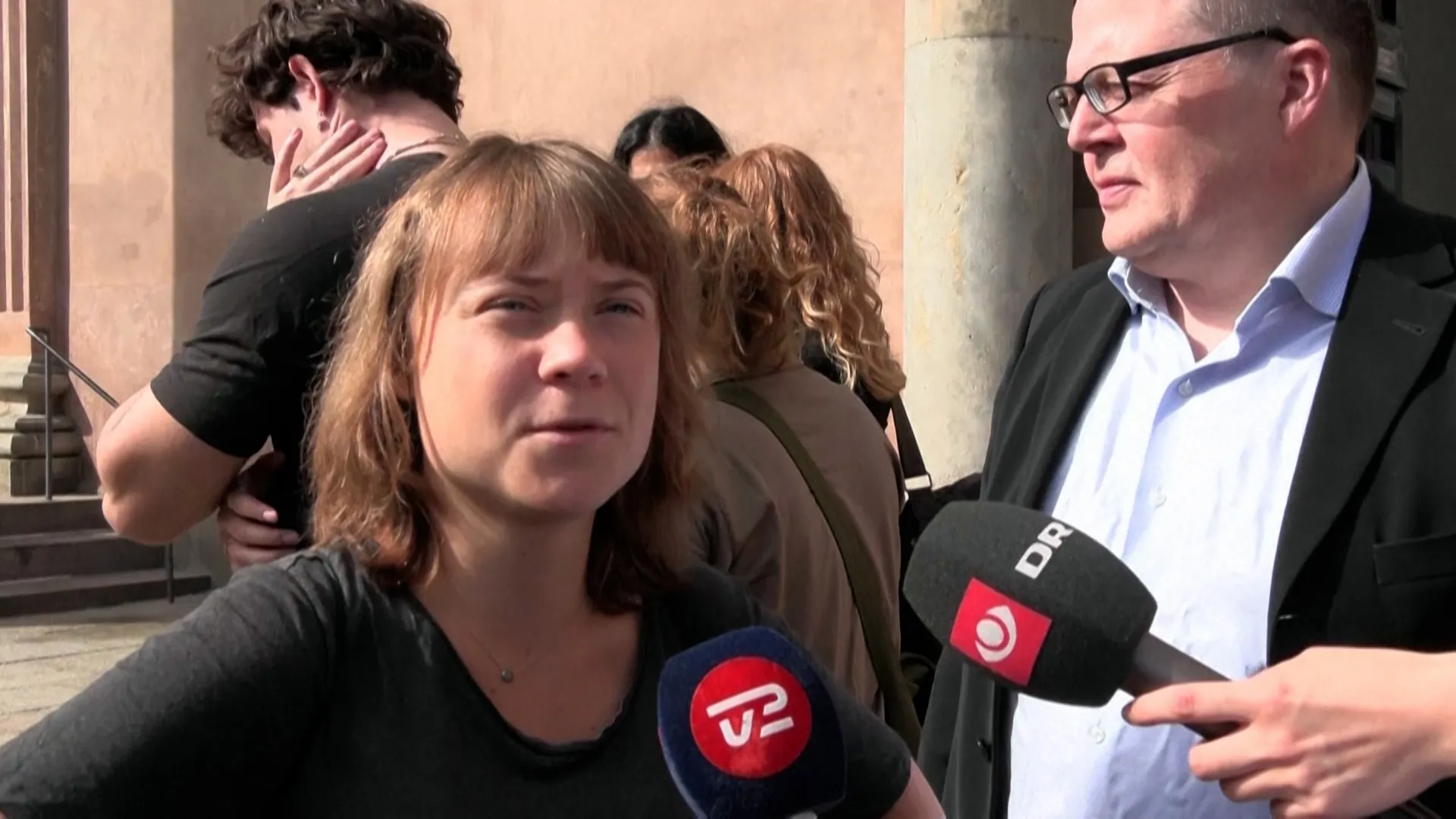
Activist Greta Thunberg appeared in a Copenhagen court on Wednesday to face trespassing charges stemming from a 2024 pro-Palestinian demonstration at Copenhagen University. Thunberg pleaded not guilty. A verdict is expected by Thursday.
A HUGE Brit pop star has revealed his partner has suffered a devastating miscarriage.
Chart-topping British dance artist James Hype and his music artist partner Tita Lau shared their devastation after revealing their unborn baby has died just months into the pregnancy.
Sign up for the Showbiz newsletter
Thank you!
Chart-topping British dance artist James Hype and his music partner Tita have suffered a devastating miscarriageCredit: instagram/@jameshypeJames first hit the UK music scene back in 2017 when his song More Than Friends became a smash hitCredit: AFP
Taking to Instagram on Wednesday afternoon, Tita shared a black and white snap of them hugging and wrote alongside it: “This week we thought we’d be sharing the happiest news of our lives. Sadly, life had a different plan for us.
“For the last two years, we’ve been trying for a baby. It hasn’t been easy, especially because James and I hardly see each other.
“We’d started planning our IVF journey & had meetings with multiple doctors. But just before we were due to begin, something felt different… I can’t really explain it, I bought a pregnancy test & called James literally 1000s of miles apart…Positive.”
She then shared how they went through a range of emotions before heading for their first scan and hearing the baby’s heartbeat.
Tita is also a DJ and praised James in her update on what had happenedCredit: instagram/@jameshypeThe couple have been together for six yearsCredit: instagram/@jameshype
Tita, who also tours the world as a DJ, added: “Keeping it a secret was so hard, especially while touring. The first trimester is literally no joke!”
But a few weeks later, Tita said she felt “something wasn’t right” and went to get checked at another scan and “That’s when our hearts broke.”
She continued: “We were told I’d had what’s called a missed miscarriage, most likely caused by chromosomal abnormalities. My body still believed it was pregnant, but our baby had stopped developing.
“I don’t think a day has gone by that I haven’t cried. I didn’t know what happened next. It’s not something I’d ever thought about, but the next day, I had surgery & just like that, everything we’d been dreaming about was over.”
She then paid tribute to her husband, saying: “I’m still recovering, both physically & emotionally & I know James is too. I honestly don’t know how I would have gone through this week without you. This has been the hardest thing we’ve experienced together.”
James then commented underneath the post: “Proud of you for sharing this. Believe that everything will work out the way it should.”
The couple recently celebrated their sixth anniversary together.
James first hit the UK music scene back in 2017 when his song More Than Friends became a smash hit.
He has since had hit songs with global artists such as Craig David, Kim Petras and Pia Mia.
June 24 (UPI) — Investment from the United States in Latin America and the Caribbean fell 11% in 2025, although the country remained the region’s leading source of foreign direct investment, the Economic Commission for Latin America and the Caribbean, or ECLAC, reported.
The organization presented its annual report, Foreign Direct Investment in Latin America and the Caribbean 2026: Navigating the New Global Context, in Santiago, Chile, on Tuesday. The report showed that the region received $194.233 billion in foreign direct investment in 2025, up 1.7% from the previous year.
ECLAC attributed the modest growth to an international environment marked by geopolitical tensions, technological rivalry among major powers and changes in U.S. trade policy.
The United States accounted for 35% of foreign investment with an identifiable origin entering the region, while Europe represented 32%.
ECLAC said the decline in U.S. investment flows and the increase in European investment significantly narrowed the gap between the two players.
The organization warned that recent changes in U.S. tariff policy could affect Latin American countries unevenly depending on their productive structures and their level of integration into regional value chains.
“In the current global context of weaponized interdependence, it is essential to understand the relationship between trade and foreign direct investment in order to design policies that allow us to advance toward more productive, inclusive and sustainable development,” ECLAC Executive Secretary José Manuel Salazar-Xirinachs said.
During the presentation of the report, Salazar-Xirinachs also said the world had moved from a period in which economic interdependence was viewed as a source of efficiency and even a guarantee of peace to one in which it is increasingly perceived as a source of vulnerability, according to statements reported by Xinhua.
Brazil remained the region’s leading destination for foreign investment, attracting $77.676 billion, equivalent to 40% of the regional total. Mexico received $43.221 billion, or 22% of the total, although it recorded a year-over-year decline. Together, the two countries accounted for 62% of all foreign investment received by Latin America and the Caribbean in 2025, according to ECLAC.
They were followed by Chile with 7% of regional flows, Peru and Colombia with 6% each, Guyana with 5%, and Costa Rica and Dominican Republic with 3%.
The sectoral composition also showed changes. Services attracted 53% of foreign investment received by the region and increased 19.5% from the previous year. Natural resources rose 7% and accounted for 16% of the total, while manufacturing declined 17.2% and represented 31% of investment flows.
The report also showed signs of caution among investors. During 2025, 1,326 new investment projects were announced with a combined value of $114.1 billion, a decline of 10.2% in the number of projects and 34.3% in value compared with 2024.
In response to this scenario, ECLAC recommended diversifying export markets and sources of investment, strengthening coordination between trade and investment policies, and expanding regional cooperation to reduce dependence on individual markets and increase economic resilience.
Weekly insights and analysis on the latest developments in military technology, strategy, and foreign policy.
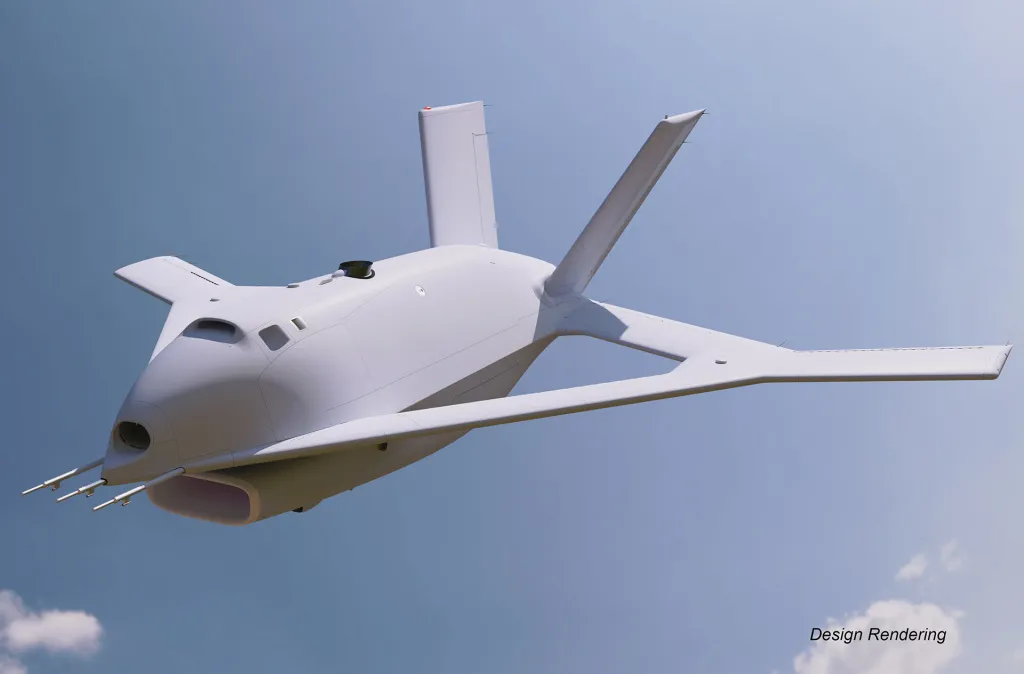
Aurora Flight Sciences is now putting the wings on the X-65 experimental drone. This is an important step forward for the X-65, which is designed to maneuver with bursts of air rather than traditional control surfaces. This is technology that could have significant implications for future military and civilian aircraft developments, especially when it comes to stealthy designs.
“The wings have arrived — the next big milestone for X‑65!” Aurora Flight Sciences wrote in a post on its official account on X today. “Built at our WV [West Virginia] facility, the triangular wings enable active flow control testing across multiple sweeps. Integration is underway in VA as we push toward first flight for the @DARPA CRANE program.”
A look at one of the wing sections for the X-65. Aurora Flight Sciences
The X-65 has a so-called Co-Planar Joined Wing (CJW) planform that includes two sets of wings attached that merge together at the tips, creating the triangular shape on either side. They also have small extensions that extend from those tips, giving the drone a 30-foot wingspan. The design also has a twin vertical tail arrangement.
There is a chin air intake under the forward fuselage, as well as a single exhaust. Renderings have shown that the design will have on t op of the forward end of the fuselage. At the time of writing, neither Aurora nor DAPRA appear to have disclosed details about the drone’s main propulsion arrangement. The X-65 is said to have a gross weight of approximately 7,000 pounds.
This wind tunnel model offers a good general sense of X-65’s planform. Aurora Flight Sciences
As noted, the most intrigueing aspect of the X-65 is the banks of active flow control (AFC) “effectors” that use bursts of highly pressurized air to roll, pitch, and yaw. Traditionally, fixed-wing aircraft use a mixture of flaps, rudders, and other surfaces that physically move to maneuver in flight.
“The AFC system supplies pressurized air to fourteen AFC effectors embedded across all flying surfaces,” according to a press release Aurora put out last year. “The triangular wing design enables testing across multiple wing sweeps and is modular with replaceable outboard wings and swappable AFC effectors to allow for future testing of additional AFC designs.”
“The X-65 will be built with two sets of control actuators – traditional flaps and rudders as well as AFC effectors embedded across all the lifting surfaces,” a 2024 press release from DARPA also notes. “This will both minimize risk and maximize the program’s insight into control effectiveness. The plane’s performance with traditional control surfaces will serve as a baseline; successive tests will selectively lock down moving surfaces, using AFC effectors instead.”
This rendering of the X-65 highlights the banks of AFCs, in light gray, along the edges of the wings. DARPA
“The X-65 conventional surfaces are like training wheels to help us understand how AFC can be used in place of traditional flaps and rudders,” Dr. Richard Wlezien, then the CRANE program manager at DARPA, also said at that time. “We’ll have sensors in place to monitor how the AFC effectors’ performance compares with traditional control mechanisms, and these data will help us better understand how AFC could revolutionize both military and commercial craft in the future.”
“We’re building the X-65 as a modular platform – wing sections and the AFC effectors can easily be swapped out – to allow it to live on as a test asset for DARPA and other agencies long after CRANE concludes,” Wlezien also noted.
A DARPA briefing slide showing how the designs of traditional control surfaces, at their core, have remained largely unchanged after more than a century of other aviation technology developments. DARPA
Being able to eliminate traditional moving control surfaces presents a host of potential benefits, as TWZ has detailed in past reporting on the CRANE program:
“Getting rid of traditional control surfaces inherently allows for a design to be more aerodynamic, and therefore fly in a more efficient manner, especially at higher altitudes. An aircraft with an AFC system doesn’t need the various actuators and other components to move things like ailerons and rudders, offering new ways to reduce weight and bulk.”
“A lighter and more streamlined aircraft design using an AFC system might be capable of greater maneuverability. This could be particularly true for uncrewed types that also do not have to worry about the physical limitations of a pilot.”
“The elimination of so many moving parts also means fewer things that can break, improving safety and reliability. This would do away with various maintenance and logistics requirements, too. It might make a military design more resilient to battle damage and easier to fix, as well.”
All of this could be especially valuable for stealthy aircraft designs, as we previously wrote:
“While all of this could be beneficial for many aircraft type, AFC technology could be especially significant when applied to stealth designs. Designers of stealthy aircraft have to be mindful of any joints or other gaps between exposed surfaces, and try to generally keep them to a minimum, to ensure the radar cross-section remains as low as possible.“
“As such, traditional control surfaces, which by definition cannot always be flush with the rest of the aircraft’s external shape, are a major and currently inescapable issue. Fly-by-wire designs also keep these surfaces fluttering at all times to keep the stealthy aircraft stable in forward flight. AFC technology holds the promise of being able to change this reality and make it easier to optimize the radar-evading qualities of a stealthy design. Other technologies, like the ability to dynamically warp wing structures to provide flight control, could also help in future stealthy aircraft radar signature control.”
A US Air Force B-2 bomber flies together with four Japanese F-35A Joint Strike Fighters. USAF
A design like the X-65 that has the option of using either traditional control surfaces or AFCs could offer further flexibility.
Deeper exploration of the potential of an AFC design is exactly the point of DARPA’s CRANE program, which is now aiming to kick off actual flight testing next year. As mentioned, there have been multiple delays in work on the X-65 over the years. The original goal was for the drone to fly for the first time in 2025.
“The costs to produce the prototype aircraft for test flights ended up being higher than expected” and “DARPA chose to ‘strategically pause’ the X-65’s development and reevaluate the program,” Defense News reported in November 2025. Aurora also “confirmed technical and supply chain challenges were a factor in the program delays, as well as the inherent riskiness involved in working on a DARPA project.”
It should be noted here that this is not the first time AFC technology has been experimented with. U.K.-headquartered BAE Systems, which also submitted a design for CRANE, tested a flying subscale AFC-equipped design called MAGMA in the 2010s, which you can learn more about here.
MAGMA first flight, September 2017
Pentagon budget documents show that DARPA has received nearly $63 million in funding for CRANE since Fiscal Year 2024, when the program entered its third phase. DARPA is not asking for any additional money for this effort in Fiscal Year 2027, which it says reflects the expectation that it will conclude by the end of next year. As DARPA has said in the past, future programs could further continued use of the X-65 drone, as well as the technology it demonstrates.
“We’re excited to continue our longstanding partnership with DARPA to complete the build of the X-65 aircraft and demonstrate the capabilities of active flow control in flight,” Larry Wirsing, Aurora’s Vice President VP of aircraft development, said in a statement last year. “The X-65 platform will be an enduring flight test asset, and we’re confident that future aircraft designs and research missions will be able to leverage the underlying technologies and flight test data.”
With its wings finally delivered, the X-65 continues to take shape as Aurora and DARPA push toward finally getting the drone and its novel control arrangement into the air.
ARIANA Grande has broken her silence after accidentally posting a photo of her bare boob on Instagram.
The We Can’t Be Friends hitmaker, 32, accidentally shared her entire bare breast with her 375 million Instagram followers earlier this week.
Sign up for the Showbiz newsletter
Thank you!
Ariana Grande accidentally shared a photo exposing her entire breastCredit: Instagram/arianagrandeThe hitmaker was quick to shake it off and instead responded in the most hilarious wayCredit: Instagram/arianagrande
She uploaded an otherwise innocent photo of herself crouching down to pet a dog in an airport parking lot, as part of a photo dump.
But fans were quick to spot something about the photo that Ariana clearly overlooked.
As Ariana leaned forward to pet the dog, she rocked a red check dress with a gaping neckline.
Leaning forward, Ariana risked a major wardrobe malfunction as she revealed far more of her body than she intended.
She teamed up with pal Elizabeth Gillies for a hilarious skitCredit: Instagram/arianagrandeElizabeth told Ari she had great boobs, and Ari thanked her in a coy wayCredit: Instagram/arianagrande
Fans noticed the upload blunder almost instantly, with one person writing: “Uh Ariana Grande do you know you posted your boob on your Instagram?”
While someone else said: “Not Ariana accidentally posting a nip slip on Instagram.”
But Ariana did not delete the snap, instead she styled it out like the pro she is.
Taking to her Instagram stories after the dust had settled slightly, she shared a hilarious video that left fans in hysterics.
Most read in Entertainment
The video featured her friend Elizabeth Gillies.
In the clip, the duo can be seen in a fake party scenario.
Elizabeth is sipping champagne before casually saying to Ari: “You have great tits, they’re really beautiful.”
Ariana then replied: “Thank you.”
Fans were quick to flock to X to react to Ariana’s response.
“She’s so f**king funny omg,” said one person.
“Funny woman oh my god,” added a second.
While a third wrote: “Ariana omg.”
And a fourth said: “She really don’t give a f**k.”
US Secretary of State Marco Rubio has said Iran will not be permitted to charge tolls or fees for vessels transiting the Strait of Hormuz under any final agreement with Washington, exposing one of the biggest points of friction in negotiations aimed at ending months of conflict across the Middle East.
The dispute comes after Iran announced it would waive planned transit fees through the strait that crosses through its territorial waters for 60 days while talks with the United States continue in Switzerland, suggesting charges could be introduced once the negotiating period expires.
Recommended Stories
list of 4 itemsend of list
Washington and Tehran signed a preliminary agreement in Switzerland this week to halt hostilities and launched a 60-day diplomatic process focused on sanctions relief, Iran’s nuclear programme and the future administration of the Strait of Hormuz.
Pakistan, which helped mediate the talks alongside Qatar, has said negotiations to end the four-month US-Israel war on Iran are expected to resume early next week, likely on Tuesday.
The future of Hormuz has already emerged as a key sticking point after Iran effectively closed the waterway during the war, severely disrupting maritime traffic through one of the world’s most important energy chokepoints and causing the price of oil to soar.
In peacetime, one-fifth of the world’s oil and natural gas supplies are shipped for export by Gulf producers through the waterway.
In April, the US imposed a corresponding naval blockade on Iranian naval ports in a bid to stem Iranian oil exports.
While a number of ships have crossed through the strait since the US-Iran agreement was signed last week, uncertainty remains over whether Tehran intends to impose permanent fees or service charges on shipping operators using the route. Here’s what we know – and what else is happening in the Strait of Hormuz this week.
(Al Jazeera)
What are the US and Iran saying?
On Friday, Iran’s Persian Gulf Strait Authority (PGSA) said planned fees for ships using the waterway would be suspended during the 60-day negotiation period established under the memorandum of understanding (MoU) signed with the US.
Earlier this week, Iran and Oman said in a joint statement that they would study the future administration of the trade route as well as possible charges for services provided there, while maintaining their sovereignty claims over territorial waters bordering the strait.
Speaking at the start of a regional tour in the United Arab Emirates, Rubio rejected the idea of transit fees. “It’s an international waterway. No country is allowed to charge tolls or fees on an international waterway,” he said, adding that he believed “all the countries in this region would agree”.
Iran’s chief negotiator, Mohammad Bagher Ghalibaf, has signalled that Tehran views the post-war arrangement as fundamentally different from the status quo that existed before the conflict, however. Experts also say that Iran will not give up control of the strait, which has proved to be its greatest point of leverage in the conflict with the US.
“Hormuz will never return” to its prewar status, Ghalibaf said, despite both sides agreeing on Monday to establish “communication mechanisms” aimed at keeping the waterway open.
What does international law say?
International law protects the right of transit through strategic waterways such as the Strait of Hormuz, preventing coastal states from imposing explicit tolls simply for passage through international shipping lanes, even when they are passing solely through territorial waters.
However, countries can charge for specific services, including inspections, navigation assistance, security measures and certain insurance-related requirements, insurance experts say.
Examples include fees associated with transit through the Suez Canal and Panama Canal, as well as some services provided in Turkiye’s Bosporus and Dardanelles straits.
Mohammad Reza Farzanegan, an economist at Germany’s Philipps-Universitat Marburg, told Al Jazeera last month that Iran, like Turkiye, could justify a negotiated mechanism for transit fees or service-based contributions through natural straits as payment for maintaining a safe passageway, reducing environmental risks and providing predictability in a waterway that supports global energy, food and technology supply chains.
A key difference, however, is that while those waterways pass through the territory of a single state in each case, the Strait of Hormuz passes through the territorial waters of both Iran and Oman, while also connecting to waters used by the United Arab Emirates and other Gulf states.
“This sort of arrangement is unprecedented, and there would not be such an outcome, unless there is a complete coordination between the GCC [Gulf Cooperation Council] countries and Iran, with the approval of major international powers, such as China and the United States,” Nader Habibi, an Iranian American economist, told Al Jazeera.
How many ships are getting through the strait now?
Ship movements through the Strait of Hormuz remain well below prewar levels, when between 120 and 140 ships transited the passage each day, including tankers carrying about 20 million barrels of oil from the Gulf.
As the strait begins to open up, Oman says it is working with the United Nations’ International Maritime Organization (IMO) on temporary arrangements to facilitate safe transit through the strait, launching an operation to evacuate more than 11,000 sailors stranded in the area after the conflict left hundreds of vessels trapped for months.
Traffic through the strait has also been held back by ongoing concerns about the possible presence of sea mines in the central shipping channels used by international vessels before the war.
The Joint Maritime Information Center (JMIC), which includes representatives from the US and other maritime partners, has warned ships to avoid the area “due to the existence of mines”.
Other countries, including Japan, are currently weighing up whether to send ships to help with efforts to remove mines from the strait.
While Iran has never confirmed the presence of mines in the strait, when it first issued a map of the waterway for vessels it had approved for transit while the conflict was ongoing, it ordered ships to pass close to its coast to avoid possible mines. Ships had previously passed much closer to the coast of Oman.
The graphic below illustrates how much shipping through the strait dropped off as a result of the US-Israel war on Iran.
Could the dispute over strait fees derail a peace deal?
Mostafa Khoshcheshm, a professor at the University of Applied Sciences in Tehran, told Al Jazeera that Iran is unlikely to abandon plans to introduce long-term service fees in the strait.
“According to the MoU, Iran is not going to charge service fees for 60 days, but afterwards, Iran is definitely going to do that,” Khoshcheshm told Al Jazeera.
He said many Iranians were already unhappy that Tehran had agreed to suspend fees for the duration of the negotiating period.
“The money is not the real core of the issue,” he said. “The point here is how to impose your new protocols in the region. This is highly important for the Iranians.”
Cyrus Schayegh, professor of international history and politics at the Geneva Graduate Institute, told Al Jazeera the success of any new administrative arrangement would depend heavily on regional support.
“I think this is a very big question, and the biggest question is whether they will be able to sell it to the Emirates,” Schayegh told Al Jazeera.
“I think the Emirates will need to be involved in a really substantive way for any sort of new authority to actually work.”
More broadly, he said, the future of Hormuz forms part of a wider debate over Gulf security architecture following the war.
“It is only one piece of a much larger puzzle,” Schayegh said, adding that several regional states now accept that Iran has strengthened its deterrence capabilities following the conflict.
What other issues remain unresolved?
Hormuz is far from the only serious obstacle to a peace deal.
Questions also remain over the future of Iran’s nuclear programme, with Kazem Gharibabadi, Iran’s deputy foreign minister for legal and international affairs, saying that access for international inspectors to nuclear facilities damaged during the war would only be addressed as part of a final agreement with Washington.
His comments came after US President Donald Trump claimed Iran had agreed to “the highest level” of nuclear inspections.
Iranian officials insist no commitments were made in Switzerland regarding Tehran’s nuclear programme and say they did not meet representatives of the International Atomic Energy Agency (IAEA), including Director-General Rafael Grossi.
Regional security remains another major source of disagreement, with Israeli Defence Minister Israel Katz insisting Israeli forces will not withdraw from southern Lebanon “even if there is an American demand” to do so.
Meanwhile, Ghalibaf has identified the withdrawal of foreign military forces from the Middle East as one of Tehran’s strategic objectives in the negotiations.
The future of Iran’s frozen assets also remains a sticking point, with Trump indicating Washington is reluctant to release large sums of Iranian funds directly, arguing that money could ultimately benefit the Islamic Revolutionary Guard Corps (IRGC).
Instead, he has suggested a mechanism under which some funds would be used to purchase US goods.
“Food is desperately needed in Iran, and we will be purchasing it for them exclusively from the United States,” Trump said. Iran has not confirmed plans to do this.