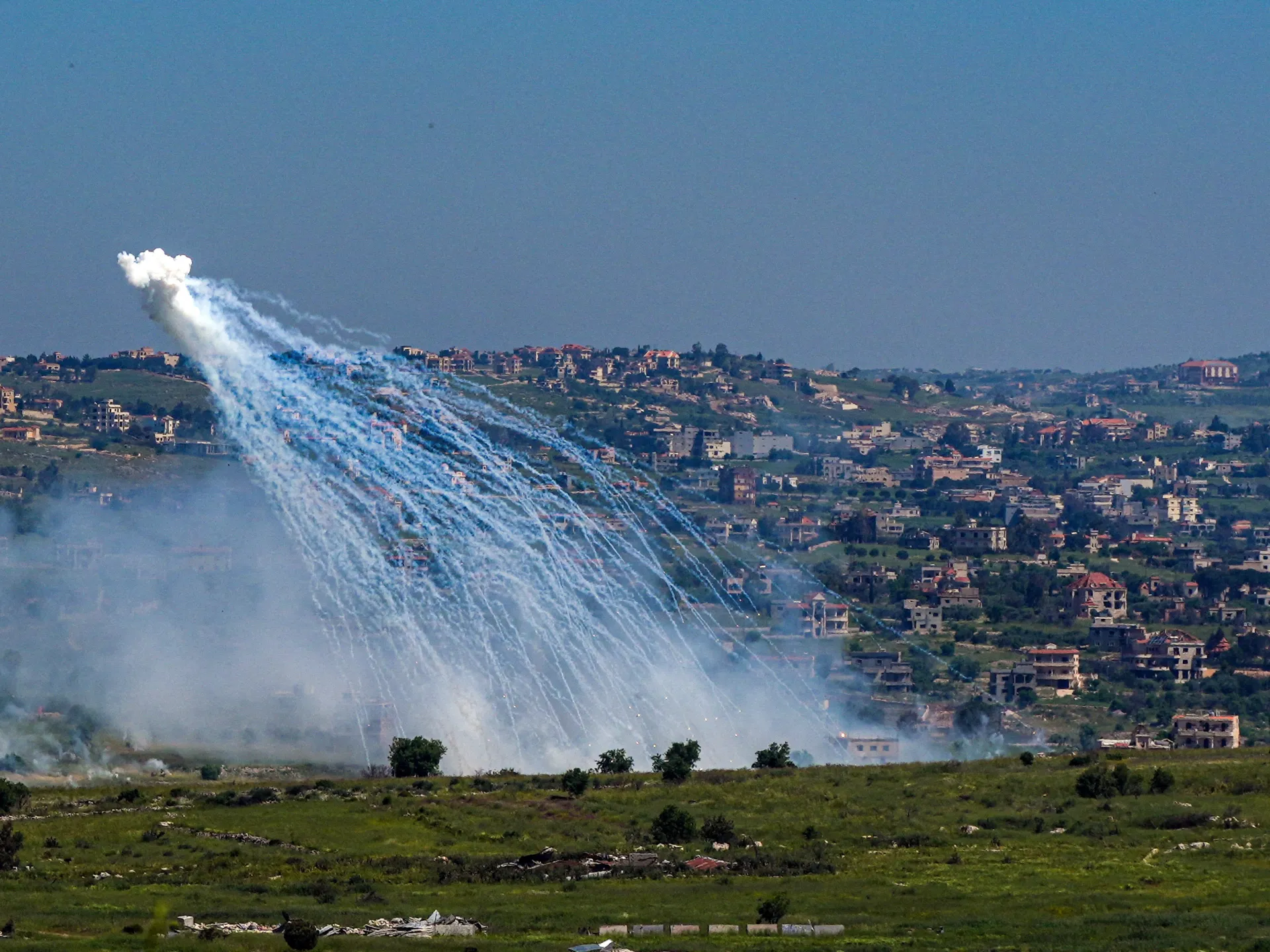
Iran’s president calls the US siege ‘intolerable’ as Donald Trump says war may resume.
Published On 1 May 20261 May 2026
Tensions remain high across the region, with Iran, the United States and Israel trading warnings as violence continues.
Iran’s President Masoud Pezeshkian has described the US naval siege of Iranian ports as an “extension of military operations” that is “intolerable”, while US President Donald Trump said Washington “might need” to restart the war, adding that only a handful of people know the details of ongoing talks.
Here is what we know:
In Iran
Air defences activated in Iran: Air defences were heard in the Iranian capital, Tehran, on Thursday night after being activated to counter small aircraft and drones, Iran’s Tasnim and Fars news agencies reported.
Iran accustomed to harsher sanctions: Analysts say Tehran entered the blockade prepared, with oil stockpiled at sea, high prices cushioning the impact, and a large domestic market, noting the country is used to “much harsher” conditions after years of pressure.
War diplomacy
Impasse likely despite pressure tactics: Retired US General Mark Kimmitt said Iran’s strategy of military pressure and economic pain is unlikely to force Washington into talks, warning “the compass needle doesn’t change” and a deadlock could persist, though mounting international pressure would likely push for negotiations and prevent Tehran from asserting control over the Strait of Hormuz.
US urges meeting of Israel, Lebanon: The US embassy in Lebanon called for a meeting between Lebanese and Israeli leaders as the Lebanese Ministry of Public Health said Israeli strikes on the country’s south killed at least 15 people despite an ongoing ceasefire.
Trump mulls US troop cuts in Italy, Spain: The US president said he may pull US troops from Italy and Spain due to their opposition to the Iran war, a day after proposing a similar reduction in Germany.
In the Gulf
UAE urges citizens to leave Iran, Lebanon and Iraq: The United Arab Emirates has banned its citizens from travelling to the three countries and called on those already there to leave immediately and return home, citing regional developments.
In the US
Trump signals Iran war still possible: The US president said he has not ruled out restarting the war, claiming Iranian leaders “want to make a deal badly”, while touting damage to Iran’s drone and missile capabilities and predicting falling petrol prices once the conflict ends.
Hegseth on civilian deaths: US Defense Secretary Pete Hegseth told senators the Pentagon has “every resource necessary” to limit harm to civilians, after lawmakers pressed him over a strike early in the war that killed about 170 people at a primary school in Iran.
He said human oversight remains in place when AI is used in military decisions. The US-based Human Rights Activists in Iran news agency says at least 1,701 civilians have been killed in the war, including 254 children.
Hostilities ‘terminated’: For War Powers Resolution purposes, US hostilities with Iran that began in February have now “terminated”, a senior official in the US administration said. “Both parties agreed to a two-week ceasefire on Tuesday, April 7, that has since been extended,” the official said. “There has been no exchange of fire between US Armed Forces and Iran since Tuesday, April 7.”
In Israel
Israel warns Iran: Israel’s defence minister Israel Katz said his country may soon have to “act again” against Iran, to ensure the Islamic republic “does not once again become a threat to Israel”.
In Lebanon
Deadly Lebanon strike: Israeli strikes on three south Lebanon villages killed nine people, among them two children and five women, according to Lebanon’s Health Ministry, nearly two weeks into a ceasefire between Israel and Hezbollah.
Two Israeli soldiers wounded in Lebanon: Two Israeli military personnel were injured after an explosive drone detonated in southern Lebanon, according to the army. An officer and a non-commissioned officer sustained moderate wounds and were taken to hospital for treatment, Israeli media reported.
Global economy
Oil at four-year high: Oil prices soared to four-year highs, with the US crude benchmark Brent for June delivery spiking more than 7 percent to $126.41, while West Texas Intermediate was up 3.4 percent to $110.31, before later paring gains.
The Minnesota Timberwolves eliminated Nikola Jokic’s Denver Nuggets while the New York Knicks put on one of the most dominant displays in NBA playoff history, destroying Atlanta to advance, and the surging Sixers beat the visiting Celtics again to force a decisive Game 7
Sixth-seeded Minnesota will play the San Antonio Spurs in the Western Conference semifinals after completing a 110-98 win on Thursday for a 4-2 series upset defeat of third-seeded Denver.
Recommended Stories
list of 4 itemsend of list
Three-time NBA Most Valuable Player Jokic top-scored for Denver with 28 but it was not enough to fend off the dogged Timberwolves, who were playing without star man Anthony Edwards due to injury.
The clash in Minneapolis was tight throughout, with no team gaining a double-digit lead until the game’s dying moments.
The Timberwolves edged the first half, leading 57-50 at the break.
Jokic roared to life. The Serbian superstar scored 14 points in the third quarter alone to ensure a nail-biting finish.
Having already been ejected for unsportsmanlike conduct from game four after a shoving match, Jokic enraged the home crowd by sparking another brawl, with Jaylen Clark.
With his Timberwolves leading by five with 90 seconds remaining, Jaden McDaniels sank a long jump-shot for two to rouse the home fans and force a Nuggets timeout.
When play resumed Denver could only turn over the ball again. McDaniels closed out the win with two free throws, ending his night with a career-high 32 points, to top-score overall.
“It’s a great night. It’s a great victory for us. Hopefully … we’ve got 12 more to go,” said Minnesota coach Chris Finch.
“We came into these playoffs not trying to beat Denver, but trying to win a championship.”
A visibly crestfallen Jokic, whose side last won the NBA championship just three years ago, said they “just didn’t do a good job”.
“I needed to play better. I must play better,” he added.
Edwards – out with a bone bruise and hyper-extended left knee – could return for the Timberwolves’ series with the high-flying Spurs.
Knicks crush Hawks in record-setting rout
Elsewhere on Thursday, the Knicks routed the Atlanta Hawks 140-89.
It was the most points scored and the biggest win by the Knicks in a playoff game, setting up an Eastern Conference semifinal with either the Celtics or the 76ers, who are tied 3-3 after a Philadelphia win.
The Knicks wrapped up their 4-2 series victory in emphatic style, leading the Hawks by as many as 61 points before benching their starters for the final quarter.
New York’s 47-point half-time lead, at 83-36, was the widest in NBA postseason history.
OG Anunoby top-scored with 29 points, including 26 in the first half, before he was rested. None of New York’s starters played more than 29 minutes.
“We can’t just meet the moment, we’ve got to exceed it, and I thought we did a great job of doing that tonight,” said Karl-Anthony Towns, who recorded a triple-double with 12 points, 11 rebounds and 10 assists.
Anunoby in action against the Atlanta Hawks at State Farm Arena [Brett Davis-Imagn Images via Reuters]
Having finished third in the Eastern Conference, the heavily favoured Knicks had been down 2-1 early in the playoff series, before roaring back.
They are the first team to advance to the East’s semifinals – their fourth straight year of reaching that stage.
The Hawks briefly led at the start of the game, going up 11-9 before the wheels dramatically came off. They trailed 40-15 at the end of the first quarter.
The final 51-point margin of defeat was not quite the largest in playoff history, which stands at 58 points.
“Obviously you hate to lose anything. And to lose the way we did, I think, particularly given the enthusiasm and support that we’ve had from the people in this building … disappointed on a lot of levels,” said Hawks coach Quin Snyder.
Sixers dump Celtics again to send series to Game 7
The Celtics-76ers playoff series is headed for a decisive game seven in Massachusetts after Philadelphia beat Boston 106-93.
The Celtics had held a 3-1 series lead, but the 76ers proved dominant on their home court to make it 3-3.
Tyrese Maxey top-scored with 30 points. Paul George added 23, and 2023 Most Valuable Player Joel Embiid poured in another 19, plus 10 rebounds and eight assists.
It is the 23rd playoff series between the two historic rivals – an NBA record.
Kylie Jenner is being sued by a second housekeeper who alleges she suffered cruel and unusual treatment while working for the beauty mogul.
Just a week after one woman on Jenner’s cleaning staff sued her, claiming her co-workers harassed and discriminated against her, another housekeeper has come out with allegations. The woman says the “Keeping Up With the Kardashians” star didn’t intervene while she suffered abuse from fellow staff, despite the housekeeper slipping the reality star a letter pleading for help.
Juana Delgado Soto filed a lawsuit against Kylie Jenner, Kylie Jenner Inc., staff supervisor Itzel Sibrian, Tri Star Services and La Maison Family Services on Wednesday alleging racial discrimination, harassment, failure to pay wages, failure to prevent or remedy harassment and discrimination, and more.
A representative for Jenner declined to comment Thursday, noting that the reality star had not yet seen the lawsuit.
According to the lawsuit, obtained by The Times, Soto began working for Jenner in May 2019. She alleges that meal and rest breaks were withheld from her for the first few years of her employment, but that the severity of the abuse and harassment ramped up in late 2023, when Sibrian became her direct supervisor. Soto says that, in 2024, she filed a complaint with Human Resources after Sibrian allegedly mocked and humiliated her for her accent, immigration status and race and called her stupid. Sibrian was temporarily removed because of the complaint and then reinstated, and according to the suit, she set out to retaliate against Soto for filing a complaint by reducing her hourly wage, assigning unreasonable workloads and changing her schedule.
In her lawsuit, Soto says that, as she prepared to leave work on her birthday, Sibrian threatened that she would be fired if she didn’t stay late and told her “no one cares about your birthday, Kylie is having a dinner.” Soto says she missed her own surprise party.
In late 2024, housekeeping supervisors Patsy and Elsy, who are referred to in the first lawsuit against Jenner as well, by their first names only, stepped into their leadership roles. Soto alleges that under Patsy and Elsy, she was denied adequate time off to grieve after the sudden death of her brother, and was told to “report to work immediately.” While she was working, she alleges, staff members “whispered that [Soto] was lying about her brother’s death and kept forcing her to pick up trash they purposely threw on the ground.” She further claims she was harassed when she requested time off to attend her brother’s funeral Mass.
In April 2025, the suit alleges that, after repeated failures by management to address Soto’s concerns, she wrote a long letter to Jenner detailing the harassment, discrimination and retaliation and placed it on Jenner’s massage bed immediately before her massage.
According to the suit, Soto wrote, “I need to express just how terribly I am mentally abused” and “I really apologize for letting you know about all these situations, I know you wouldn’t allow this to happen, if you were aware of it.”
Soto alleges that the following day she was threatened with termination and instructed never to contact Jenner again. “Defendants told her she was no longer allowed to look at Kylie, smile at Kylie and if she saw Kylie she would have to ‘disappear.’”
Soto further alleges that, after she left the letter for Jenner, her supervisors required her to leave the premises when Jenner was present, restricted her restroom access, forced her to clean the doghouse and prohibited her from drinking water at the residence, calling it “Kylie’s water.”
In August 2025, Soto sent a text message to her supervisors, writing, “I am sorry, I cannot do this anymore, every day you guys mistreat me, and I have bitten all my nails off, I cannot sleep at nights, and I always have anxiety because of the way you guys treat me. No matter what I did no one helped me.”
Soto is seeking an unspecified amount of punitive and compensatory damages.
“My client alleges multiple employment & labor law violations by Kylie Jenner and her affiliated companies, and I commend her for the courage to come forward and seek accountability, recognizing that taking the first step is often the most difficult,” Soto’s attorney Della Shaker told The Times. Shaker also represents Angelica Hernandez Vasquez, who filed a suit against Jenner on April 17.
Vasquez’s lawsuit says she was subjected to “severe and pervasive harassment” while employed by the makeup magnate from September 2024 to August 2025.
Vasquez, who states that she is a Salvadoran woman and practicing Catholic, alleges she was humiliated by fellow staff members and belittled because of her race, country of origin, religion and immigration status. Jenner was not personally accused of bullying behavior in the filing brought by Vasquez.
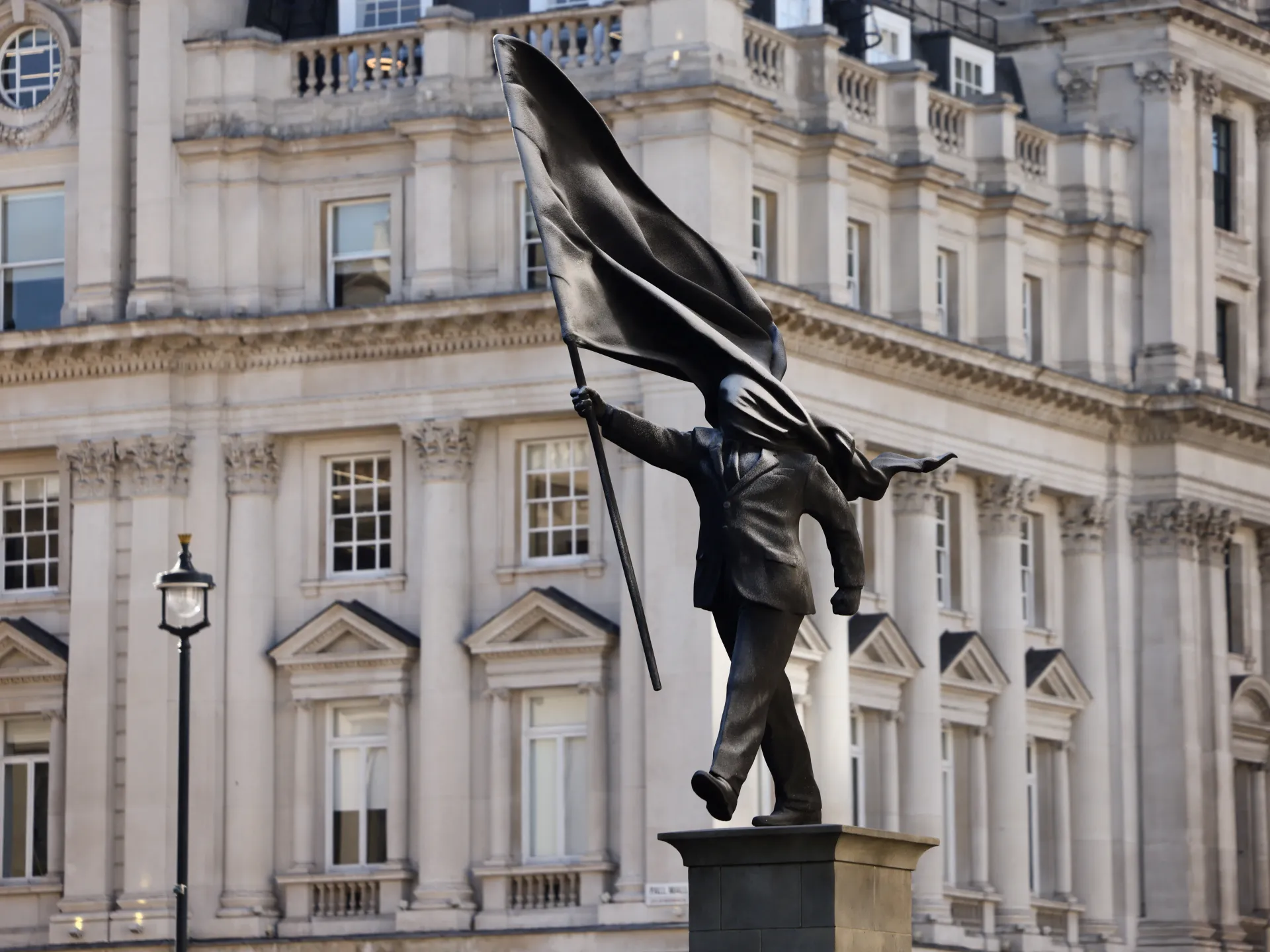
Banksy has unveiled a new sculpture of a man stepping off a stone base with his face obscured by a flag. The overnight installation in Waterloo Place, London, was revealed in a video shared by the artist, and has drawn fans of his politically charged works.
Weekly insights and analysis on the latest developments in military technology, strategy, and foreign policy.
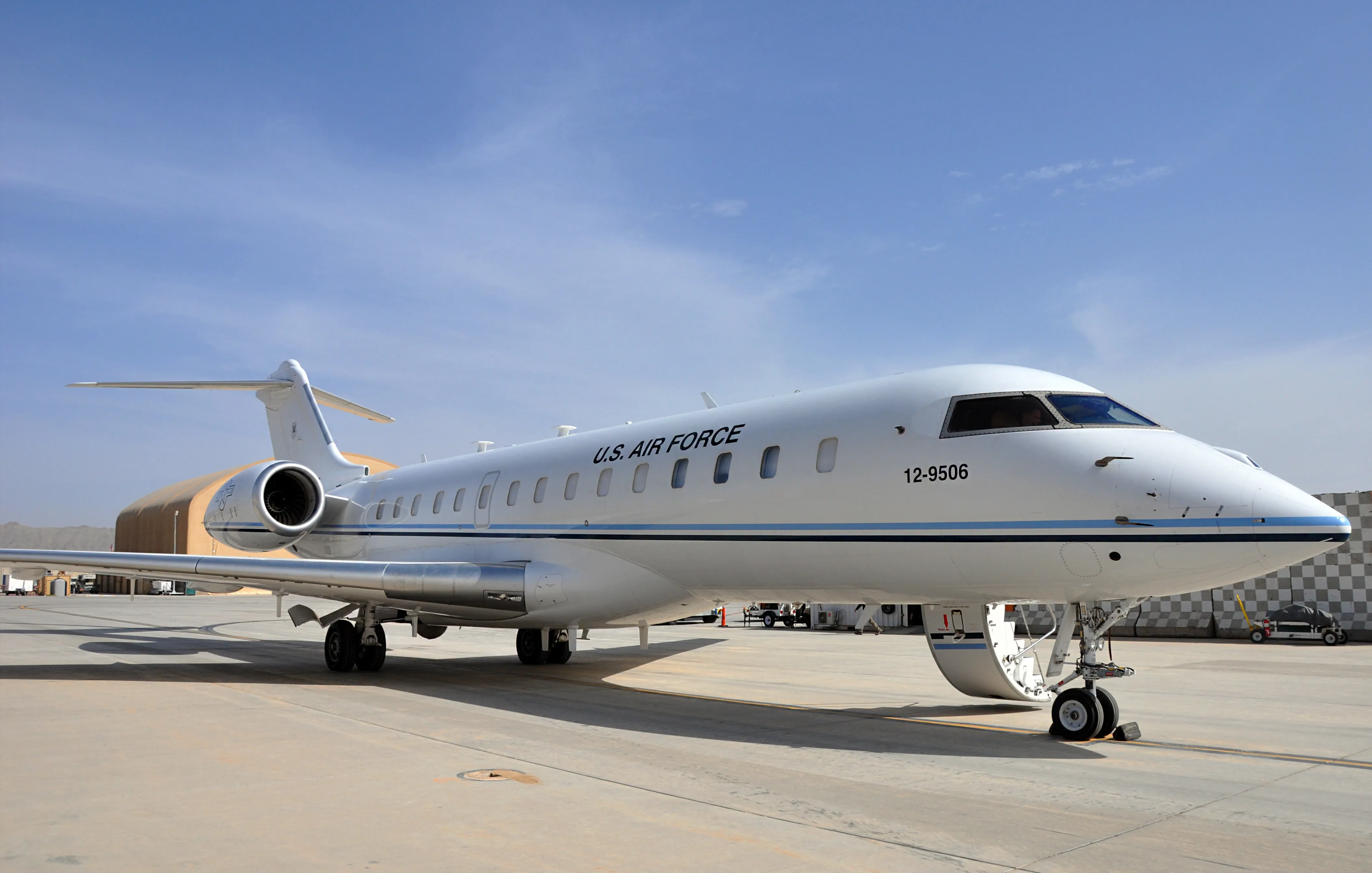
The U.S. Air Force plans to fully retire its fleet of E-11A Battlefield Airborne Communications Node (BACN) aircraft in Fiscal Year 2028. The BACN jets provide highly specialized communications capabilities that allow for the rapid transfer of data between various aerial platforms, as well as forces on land and at sea, which you can read more about here. The Air Force more than doubled its fleet size in recent years, but now wants the mission to be taken over by space-based systems.
In their Posture Statement for Fiscal Year 2027, the Secretary of the Air Force Troy Meink, Air Force Chief of Staff Gen. Kenneth S. Wilsbach, and Space Force Chief of Space Operations Gen. B. Chance Saltzman state that the E-11A “will be fully divested” in FY2028.
The BACN payload is an extremely robust communications gateway that can rapidly send and receive data transmitted through various waveforms to and from a wide array of aerial platforms, as well as forces on the ground. In addition to being able to “translate” between various communications and data sharing systems, these aircraft have been vital communications relay nodes in Afghanistan, where the country’s mountainous terrain limits the reach of line-of-sight links.
A 430th Expeditionary Electronic Combat Squadron E-11A aircraft outfitted with a Battlefield Airborne Communications Node sits on the runway at Kandahar Airfield, Afghanistan, April 4, 2019. U.S. Air Force photo by Capt. Anna-Marie Wyant Capt. Anna-Marie Wyant
In the short term, the capabilities provided by BACN will be bridged by the Hybrid SATCOM Terminal program. In a 2024 demonstration by Northrop Grumman, this type of satellite communications solution made use of commercial space Internet providers to establish a resilient multi-orbit, multi-constellation network.
A schematic artwork of Northrop Grumman’s hybrid SATCOM solutions. Northrop Grumman
This strategy includes “a generational shift away from legacy systems” like the E-11A and “towards next-generation capabilities in both air and space.” This also calls for continued investment in the DAF Battle Network, which is described as “a key capability to fuse sensor data and remain resilient against all adversaries.”
Lt. Col. Chris and Maj. Matt, 430th Expeditionary Electronic Combat Squadron, prepare to fly the Battlefield Airborne Communications Node’s 10,000th mission in the E-11A aircraft, Feb. 24, 2017. U.S. Air Force photo by Staff Sgt. Katherine Spessa Katherine Spessa
The Air Force has previously described the DAF Battle Network as an “integrated system-of-systems connecting sensor, effector, and logistics systems enabling better situational awareness, faster operational decisions, and decisive direction to the force.”
Another option could be BACN-like solutions provided in podded form to various aircraft. Examples of these include the Smart Node Pod from Northrop Grumman, which is already in production.
Until recently, the Air Force seemed very much committed to its BACN fleet.
Back in 2021, the service confirmed it planned to acquire six more E-11As over the next five years; this would provide a total of nine BACN jets. This reflected the high demand for the fleet, which meant all of the existing operational examples had historically been forward deployed in Afghanistan, where one of them crashed after suffering an engine failure in 2020.
The BACN fleet has also conducted extensive operations in the Persian Gulf region, Central and South America, and elsewhere.
The E-11A has remained active in combat operations up to this day, including being deployed in support of Operation Epic Fury against Iran. It was also involved in the operation to capture Venezuelan dictator Nicolas Maduro, an effort known as Absolute Resolve.
In 2022, the Air Force confirmed that the first of the additional six E-11As was now operating in the Middle East, having formally joined the 430th Expeditionary Electronic Combat Squadron at Prince Sultan Air Base in Saudi Arabia.
A U.S. Air Force E-11A BACN aircraft, assigned to the 430th Expeditionary Electronic Combat Squadron, takes off in support of a joint, multinational exercise at Al Dhafra Air Base, United Arab Emirates, June 30, 2021. U.S. Air Force photo by Master Sgt. Wolfram M. Stumpf Master Sgt. Wolfram Stumpf
It’s worth noting that the Air Force’s three oldest E-11As are based on older Bombardier BD-700 and Global 6000 business jets, while the newer airframes are based on the Global 6500 bizjet.
The aircraft has also taken on additional functions, such as in 2021, when at least one E-11A was involved in a combined U.S.-UAE exercise focused on employing “multiple platforms… together to execute and refine tactics, techniques and procedures to counter Unmanned Aerial System threats,” according to the Air Force.
A U.S. Air Force E-11A BACN takes off from Prince Sultan Air Base, Kingdom of Saudi Arabia, Jan. 4, 2022. U.S. Air Force photo by Senior Airman Jacob B. Wrightsman Senior Airman Jacob Wrightsman
In the past, we’ve also noted how the value of the BACN platform extends beyond Afghanistan and the Middle East.
Its capabilities would be equally useful for supporting operations over the vast expanses of the Pacific, where the U.S. military is increasingly focused on preparing for a potential future high-end conflict with China. It would also be suited to working on NATO’s eastern flank, where U.S. allies have been expanding their force posture in recent years to help deter Russian aggression.
More generally, as a fixed-wing bizjet platform, the E-11A lacks the low-observability characteristics to survive in highly contested airspace, so it would need to operate from considerable standoff distances when confronted by the kinds of peer- and near-peer adversaries that they are intended to help defeat. This is undoubtedly part of the reason for the Air Force deciding to discard the BACN fleet. In the same way, it also gave up its E-8C Joint STARS without any direct replacement, driven by the concern that platforms of this kind will simply be too vulnerable in the future.
A U.S. Air Force E-8C JSTARS. U.S. Air Force/Senior Airman Jared Lovett
After all, both China and Russia are developing very long-range anti-air missiles expected to be optimized for high-value targets such as BACN. In addition, airborne ISR platforms will increasingly face sophisticated anti-access/area-denial (A2/AD) networks before they even get to their operating areas.
Furthermore, pushing the E-11A further away from the warfighter is a fundamental problem for its mission, especially when it comes to connecting to forces on the ground. BACN works as a bridge between forces using disparate radios and even the same radios, and is particularly valuable since units on the ground that are trying to communicate with other units or aircraft can be blocked by line of sight, especially in terrain. Regardless, the farther the E-11A flies away from its target area, the less it is capable of providing meaningful connectivity to the forces operating there, just due to the horizon.
Ultimately, the E-11A’s high-demand, low-density status may also have counted against it. Even after the Air Force decided to increase the fleet numbers, it remains a highly niche capability and one that comes at a lot of cost, with an extensive training, maintenance, and logistics burden needed to support it.
A new U.S. Air Force E-11A BACN aircraft arrives at Prince Sultan Air Base, Kingdom of Saudi Arabia, Dec. 16, 2022. U.S. Air Force photo by Staff Sgt. Shannon Bowman Staff Sgt. Shannon Bowman
The Air Force’s ambition to migrate the BACN’s capabilities to space-based assets parallels, to some degree, its aim for its future airborne early warning and control (AEW&C) architecture. However, the service does at least still see a need for traditional crewed AEW&C aircraft, too. Partly this is due to the fact that the Air Force does not expect new space-based capabilities to be operational before, at best, the early 2030s. The service is seeing a similar shift with its ground moving-target indicator (GMTI) capabilities, which are being transferred from the now-retired E-8C JSTARS to a distributed network of space-based sensors to keep tabs on targets on land and at sea.
At this stage, it’s far from clear whether the terminals required for BACN’s successor have already been installed on aircraft, ships, and issued to ground units, and whether the system will be able to translate Link 16 and other waveforms.
Time will tell if space-based assets can take over the BACN’s role in what is a notably abbreviated timeframe.
IN The Devil Wears Prada, ambitions and egos are trampled over by stiletto-heeled rivals desperate to claw their way to the top of the fashion world.
But behind the scenes of the original 2006 film, British star Emily Blunt was playing matchmaker to the cast.
British star Emily Blunt reveals she has been playing matchmaker to the Devil Wears Prada castCredit: Gareth Cattermole/Getty ImagesThe actress reveals she was partly responsible for connecting co-star Anne Hathaway with her now-husband Adam ShulmanCredit: Getty
The actress reveals she was partly responsible for connecting co-star Anne Hathaway with her now- husband Adam Shulman.
Speaking ahead of the release of The Devil Wears Prada 2, which is in cinemas today, she also talks about her close ties with cast member Stanley Tucci, who went on to marry Emily’s sister Felicity.
Emily, who has two children with her actor husband John Krasinski, says: “Stanley is my brother-in- law now. I have a little nephew and niece from it.
“And Annie met her husband Adam through me and John. There are so many tendrils that run out from this experience 20 years ago. It’s amazing.”
She also opens up on her close ties with Stanley Tucci, who married her sister Felicity, above the cast at the New York Premiere of the sequelCredit: SplashEmily says that working with her brother-in-law on the sequel was great funCredit: APAnne Hathaway, Meryl Streep and Emily in the original filmCredit: AlamyBlunt got her big break when she got cast as Emily Charlton, the put-upon senior assistant to Miranda PriestlyCredit: Alamy
It certainly is remarkable how much has changed for the cast since the first film.
Before the hit movie was released, Londoner Emily was a relative unknown.
Being cast as Emily Charlton, the put-upon senior assistant to Meryl Streep’s nightmarish fashion magazine editor Miranda Priestly, was her big break.
‘So kind to me’
Emily recalls: “It really was my first big role. I mean, I had done some stuff in England that no one knew about. I felt very green but thrilled to be there.
“The first film — I have these lasting, very prominent memories of it. Such an informative time in my life. I really didn’t know anything.”
The actress hit it off straight away with Anne, who she affectionately refers to as Annie.
She continues: “Annie and Meryl and Stan. They were all so kind to me.”
The Devil Wears Prada was a worldwide success, making more than £250million at the box office — ten times its modest budget.
Anne, 43, who played naive aspiring journalist Andy Sachs, and Emily found their lives intertwined again two years later.
Emily met A Quiet Place actor John, 46, in a Los Angeles restaurant in 2008 and, later that year, he helped introduce Anne to his actor and jewellery designer friend Adam, 45.
This was a fortuitous event for Anne because that year her relationship with businessman Raffaello Follieri had ended after he was charged with fraud.
The Devil Wears Prada played an even bigger part in bringing Stanley and wife Felicity together.
We do love talking some s*** about family. It’s great. Bit of goss
Emily Blunt, on working with her brother-in-law Stanley Tucci
Oscar-nominated star Stanley, 65, first met Emily’s sister at the movie’s premiere. At that time, though, he was happily married to Kathryn Spath with whom he has three children.
Tragically, social worker Kathryn died from breast cancer in 2009, aged 47, leaving Stanley heartbroken.
A year later, he reconnected with literary agent Felicity at Emily and John’s star-studded wedding in Lake Como, Italy.
And the love links do not stop there.
In a strange twist, Anne and Adam held their California wedding on the same weekend in September 2012 as Stanley and Felicity celebrated their nuptials in London.
Meryl, 76, who had also remained good pals with Tucci, was one of his guests.
Working with her brother-in-law on the Devil Wears Prada sequel was fun for Emily.
She says: “We do love talking some s*** about family. It’s great. Bit of goss.”
Stanley, who plays Miranda’s right- hand man Nigel Kipling in the movies, has become a well-known foodie thanks to his BBC travel show Searching For Italy.
Emily has two children with her actor husband John KrasinskiCredit: AFPThe Devil Wears Prada also played a part in bringing Stanley and wife Felicity together, with the pair initially meeting at the movie’s premiereCredit: Getty
On their eating habits, Emily adds: “Stanley and I have never had a no-carbs rule. All we eat is beige. We eat only beige food. And John loves to eat.”
Emily’s daughters Hazel, 12, and Violet, nine, enjoyed playing with Stanley and Felicity’s children Matteo, 11, and eight-year-old Emilia when they stayed together in Italy to film scenes for The Devil Wears Prada 2.
Anne and Emily have also remained good friends since making the original, which meant the cast of the sequel were unusually close.
She says: “I do get nostalgic. I was very moved when we got back together and we did the table read 20 years later. Going into the second film, 20 years felt like a blink and also a lifetime. It’s a really wild thing.”
Going into the second film, 20 years felt like a blink and also a lifetime. It’s a really wild thing
Emily Blunt
Emily continues: “When we got back together, I loved working with Annie because she’s a great dance partner in scenes. You know, she’s very spontaneous. She’ll sort of go with whatever you want to do.”
Emily also lapped up the attention of three-time Oscar winner Meryl.
The actress wore a glamorous tulle and feathered Schiaparelli gown at the New York premiere, which Streep clearly appreciated.
Emily laughs: “Meryl said she almost grabbed my boob on the red carpet just to feel it . . . the furry feathers. I would have loved it — it’s Meryl Streep.”
While her Devil Wears Prada character is famously particular about what she wears, that isn’t the case for Emily in real life.
The actress is far more casual when she is at home in London and New York.
She comments: “I feel like I still dress like a teenage boy. I think most of my life is dressed for comfort, you know, with the kids and everything, and going to set.
“But what I love about a press tour or a red carpet is that it can be a spectacle.”
The cast’s cosy love-in couldn’t be more different to the plot of The Devil Wears Prada 2.
Catty in catwalk
In the sequel, Miranda is still the ruthless editor of Runway, but the magazine is in financial trouble.
Andy, who made it as a writer, suddenly loses her job and finds herself back at Runway.
Meanwhile, Emily’s namesake character — Miranda’s former mistreated assistant, whose witty quotes include “I’m just one stomach flu away from my goal weight” — is now in charge of global brand Dior, which gives her all the power she needs for revenge.
Emily has more money and power now, and access to the archives. So that was thrilling
Emily Blunt, on her character
Emily says: “It’s quite a switch-up in dynamics. She’s a major executive at Dior. And Miranda is ultimately rather beholden to her for the advertising space.
“Emily has more money and power now, and access to the archives. So that was thrilling.”
While Miranda has to tone down her harsh comments due to our woke work culture, Emily can still deliver a biting one-liner.
By keeping the catty in catwalk, it is Emily’s performance that has once again caught the eye of critics.
The Sun’s movie reviewer Dulcie Pearce commented yesterday that “it’s Blunt who steals every scene.”
That will come as no surprise to fans, who have followed the star’s glittering movie career over the past two decades. She has received Bafta nominations for The Devil Wears Prada, psychological thriller The Girl On The Train and biopic drama Oppenheimer in 2024.
The actress also enjoyed box office hits with Mary Poppins Returns in 2018 and, in the same year, post-apocalyptic horror film A Quiet Place, which was directed by her husband John.
The Devil Wears Prada 2 is expected to earn even more than the first film, with fans desperate to see the gang back together.
That is something Emily fully appreciates.
She concludes: “It feels like people really want to unite for something joyful. I love it.”
The Devil Wears Prada 2 (12A) is in cinemas tomorrow.
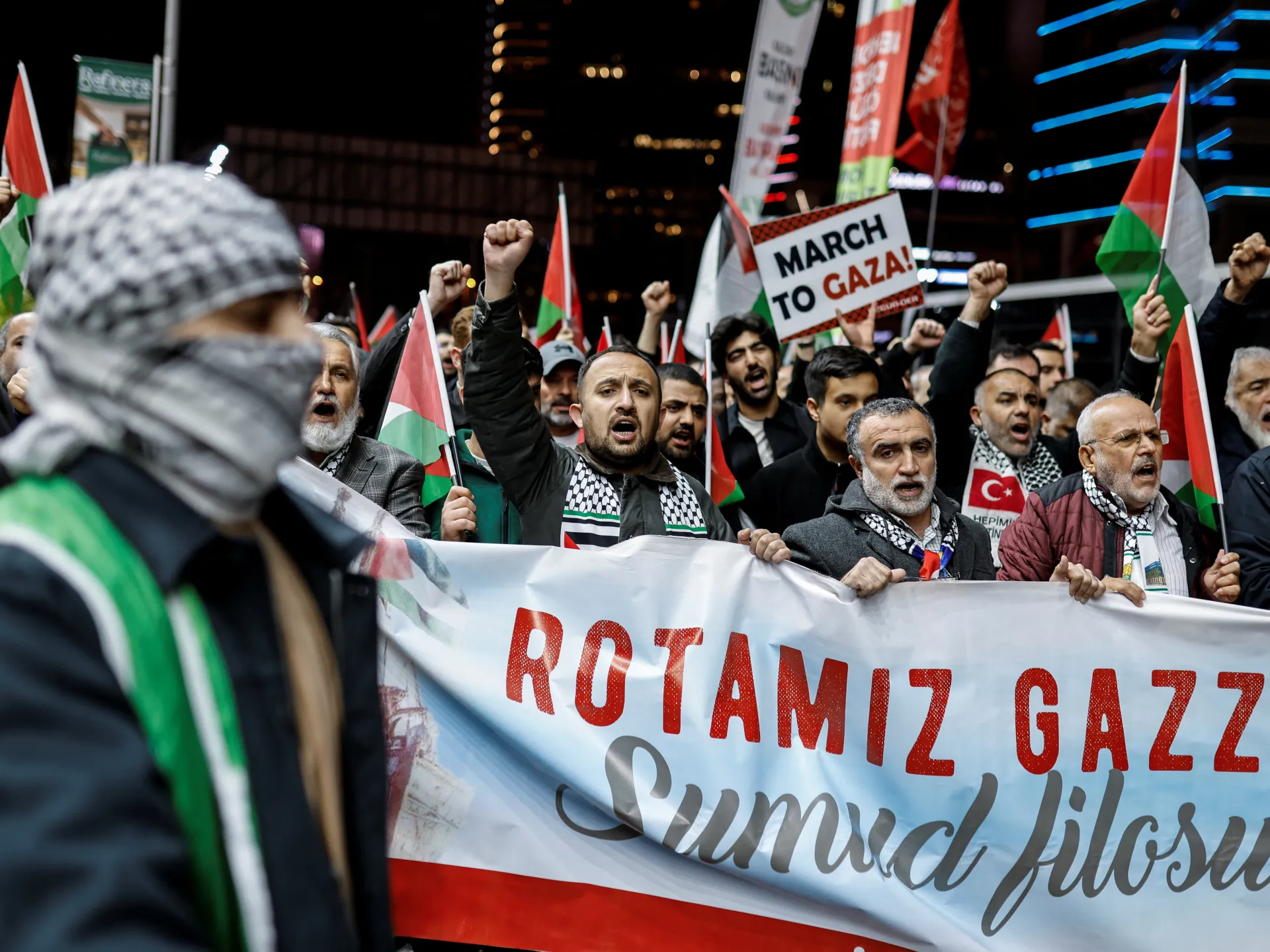
Some of the 20 ships hoisting the Palestinian flag dock in the port in Barcelona, Spain, on Sept. 1, 2025. The Global Sumud Flotilla was intercepted by Israeli forces on Thursday near the Greek island of Crete. File Photo by Quique Garcia/EPA
April 30 (UPI) — Israeli forces intercepted and boarded the Global Sumud Flotilla in international waters off Greece on Thursday, preventing it from delivering aid to Gaza and drawing international condemnation.
The Israeli military, using drones and armed personnel, blocked the fleet of ships in the Mediterranean Sea off the coast of the Greek island of Crete. Twenty-two of 58 vessels were seized, with passengers held at gunpoint.
“Our boats were approached by military speedboats, self-identified as ‘Israel’, pointing lasers and semi-automatic assault weapons, ordering participants to the front of the boats and to get on their hands and knees,” the Global Sumud Flotilla aid mission said in a statement.
The Israeli Foreign Ministry said in a social media statement on Thursday that it detained about 175 activists from the more than 20 boats of the flotilla.
“Well done to our Navy!” Prime Minister Benjamin Netanyahu said in a statement following the operation, stating he had directed the military to intercept the boats before they reached Gaza.
“No ship and no Hamas supporter reached our territory, and not even our territorial waters. They were turned back and will return to their countries of origin.”
The flotilla was sailing from Barcelona, Spain, to Gaza when its ships were intercepted. Crete is more than 700 miles from the Palestinian enclave.
The Global Sumud Flotilla social media page posted that Israeli forces smashed engines and destroyed navigation arrays on its ships before retreating.
“Intentionally leaving hundreds of civilians stranded on powerless, broken vessels directly in the path of a massive approaching storm,” the social media post reads. “Furthermore, communications with multiple vessels have been jammed, severing their ability to coordinate or signal for help.”
Israel has maintained a maritime blockade of Gaza since 2009. It has said the blockade is meant to block weapons smuggling to Gaza.
The Israeli Foreign Ministry called the aid flotilla a “PR stunt.”
“As international media have exposed, these are professional provocateurs on pleasure cruises, addicted to self-promotion,” the Israeli Foreign Ministry wrote on social media.
Numerous countries, politicians and human rights organizations voiced condemnation of the Israeli operation, with a dozen-country bloc, including Brazil, Pakistan, Spain, Malaysia and South Africa, describing the interception as an “Israeli assault” on a peaceful civilian humanitarian initiative.
“The Israeli attacks against the vessels and the unlawful detention of humanitarian activists in international waters constitute flagrant violations of international humanitarian law,” the bloc said in a statement.
Italian President Giorgia Meloni separately condemned the seizure, while Turkey’s Foreign Ministry called upon the international community “to adopt a unified stance against this unlawful act by Israel.”
The U.S. State Department, meanwhile, issued a statement condemning the flotilla.
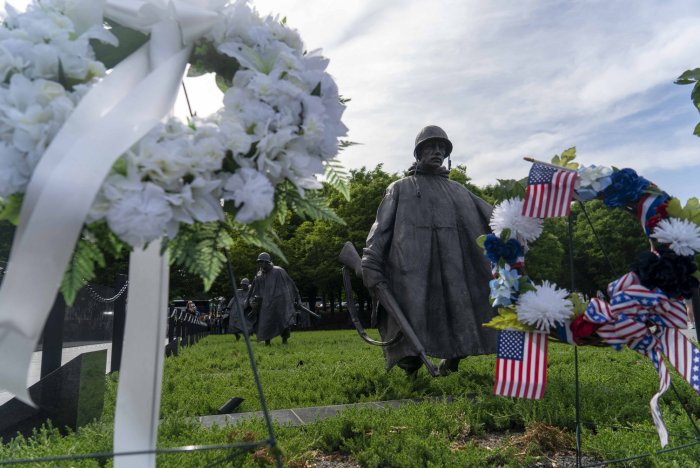
Wreathes are seen amongst the statues at the Korean War Veterans Memorial during Memorial Day weekend in Washington on May 27, 2023. Memorial Day, which honors U.S. military personnel who died while in service, is held on the last Monday of May. Photo by Bonnie Cash/UPI | License Photo
American Airlines has resumed flights as Donald Trump moves to rebuild ties following the abduction of Nicolas Maduro.
The first direct commercial flight between the United States and Venezuela has landed in Caracas, ending a seven-year suspension imposed by the US Department of Homeland Security over security concerns.
Flight AA3599, operated by Envoy Air, a regional subsidiary of American Airlines, departed Miami at 10:11am ET (14:11 GMT) on Thursday, five minutes ahead of schedule, according to airport data.
It arrived in the Venezuelan capital roughly three hours later and was due to return to Florida later in the day. Earlier, the airline said that a second daily flight between Miami and Caracas would start on May 21.
The return of nonstop flights comes months after a dramatic shift in US-Venezuela relations, following Washington’s January operation that led to the abduction of former President Nicolas Maduro, and marks the first direct air link between the two countries since diplomatic ties were severed in 2019. For years, travellers had used indirect routes through other Latin American hubs.
Translation: “For nearly seven years, there were no direct commercial flights between the United States and Venezuela. Under President Trump, we are changing that today. Flights between Miami and Caracas have resumed,” The US State Department posted on X.
Coffee and arepas in the aeroplane
At Miami International Airport, American Airlines marked the occasion with a small ceremony, decorating the departure gate with Venezuelan flags and balloon displays in the country’s yellow, blue and red colours.
Passengers were served coffee and arepas, a traditional Venezuelan dish, on board the flight.
Thursday’s service was operated by an Embraer E175 regional jet with a capacity for about 75 passengers.
US Transportation Secretary Sean P Duffy said the flight signalled more than the return of an air route.
“Today is about more than just another flight, it’s a critical milestone in strengthening the United States relationship with Venezuela and unleashing economic opportunity in both countries,” Duffy added.
He added that the resumption followed extensive work by the department and praised American Airlines for restoring a route he described as vital, saying more flights are expected in the coming months.
A passenger walks down the jet bridge to board American Airlines Flight AA3599, the first direct commercial flight between the United States and Venezuela in seven years [Rebecca Blackwell/AP]
High ticket prices
Despite the celebratory mood, high ticket prices remain a key barrier, alongside strict US visa requirements that have left many potential travellers without the documentation needed to fly.
Recent searches on the airline’s website show return fares for early May starting at more than $1,200, before dropping to just more than $1,000 later in the month, suggesting prices may ease as services expand.
By comparison, flights via Bogota typically range from $390 to $900 round-trip, with Avianca among the main carriers.
American Airlines was the last US carrier operating in Venezuela before suspending flights in 2019, while Delta and United had already withdrawn in 2017 amid a deepening political crisis that drove millions to leave the country.
“Parents will be able to reconnect with children, grandparents with grandchildren, and families with the place they once called home,” Miami-Dade County Mayor Daniella Levine Cava said before the departure. “Miami-Dade is home to the largest Venezuelan community in the United States.”
Passengers line up to check in for a US-bound commercial flight at Simon Bolivar International Airport in Maiquetia, Venezuela [Ariana Cubillos/AP]
Carol Kirkwood’s career away from the cameras took her BBC co-star by surprise, following her recent exit from the corporation after 28 years
Carol Kirkwood has expanded her talents into writing in recent years(Image: BBC)
Carol Kirkwood has left her BBC co-star stunned by her career away from television. The former BBC Breakfast weather presenter bid farewell to the programme in April after 28 years at the corporation.
In a lengthy on-air statement at the time, the 63-year-old said: “Thank you for trusting me, be it telling you about heatwaves or snow, to the everyday question of, ‘Do I need to take a brolly?’. To my colleagues past and present, both in front and behind the camera, I owe you all so much. You’ve been my team, my safety net, and, very often, my family.
“We’ve shared breaking news, long shifts, plenty of laughter, bad hair days, and the occasional moment of pure chaos. And do you know what? I wouldn’t change a second of it.”
While she is best known for presenting the weather, Carol has also turned her hand to writing in recent years – much to the surprise of Carol Klein.
The Gardeners’ World host appeared taken aback when learning about Carol’s other career during an appearance on the Pottering with Tom Allen podcast.
After discussing the changing weather during the recording, she said: “That Carol Kirkwood, she’s lovely isn’t she, she’s a keen gardener.”
“She’s a great writer as well,” Tom chimed in, to which she appeared stun and questioned: “Is she?”. Tom went on to say: “She’s got a lot of novels out.”
“I haven’t read anything, I’ll have to,” the BBC star replied. Praising the books, Tom insisted they are a good read and “always set in lovely places”.
Recently speaking about her future after leaving the show, the weather presenter said she is looking forward to more freedom with her husband Steve Randall, who she married in 2023.
“The freedom of being able to get in the car, drive and go anywhere we want for as long as we want is really appealing,” she told the BBC.
She also revealed there was a more personal reason behind her decision. “I’m not getting any younger, I’m newly married and we’ve had some losses in our lives recently,” Carol added.
She went on to say those experiences had helped her realise that she needed to “get on with my retirement and that’s what I’m going to do”.
However, retirement doesn’t mean she’s stopped working altogether. Her sixth romance novel is set to be published in October, and she has reportedly already committed to writing at least two more books afterwards.
The television star has also said she would love to learn the guitar and adopt a couple of cats.
BBC Breakfast airs daily from around 6am on BBC One and the BBC News channel.
Israel has provoked international condemnation for its interception of Gaza-bound aid boats in international waters and detention of hundreds onboard, including Al Jazeera journalists. World leaders, rights groups and media advocates are demanding Israel release the Global Sumud Flotilla detainees.
The US empire has opened multiple fronts in recent months. (Edgar Serrano)
Donald Trump’s rhetoric and actions against Iran, Venezuela and Cuba over the last year have few parallels in modern history. They have to be seen as marking a new stage. As such they call for a reevaluation of analysis and strategy on the part of the Left.
Trump’s repeated threat to bomb Iran “back to the Stone Ages where they belong” is unmatched by the rhetoric of even the most notorious and brutal heads of state over the recent past. Decapitating the entire leadership of a country to compel total submission, as Washington and Tel Aviv have done in Iran, is also a novelty in war strategy. The kidnapping of Venezuela’s president and First Lady as a first step in attempting to establish a colonial relationship by taking complete control of the country’s principal source of revenue, namely petroleum, represents a throwback to practices associated with centuries-old imperial rule
These are examples of “hyper-imperialism,” a concept theorized by Samir Amin to describe the United States “as the sole capitalist superpower.” More recently, the Tricontinental: Institute for Social Research has observed that U.S. hyper-imperialism persists despite a marked erosion of its economic and, though to a lesser extent, financial power. Its military supremacy is not only unrivaled, but is complemented by hybrid warfare, most notably “hyper-sanctions” and the use of lawfare.
What needs to be added to the concept of hyper-imperialism, particularly Trump’s version of it, is its sui generis nature. To find a parallel for the kind of hegemony the United States now exercises – highlighted by the continuous indiscriminate use of force and the threat of it – one would have to look back to the Roman empire or even earlier. One of Trump’s innovations is his deployment of the military to reinforce the system of economic sanctions, examples being the interdiction of oil tankers, the quarantine of Cuban oil, and full-scale war against Iran.
Trump II’s foreign policy hardly represents a complete break from the past. The groundwork was laid by past Democratic and Republican administrations. However, his actions force the Left not only to reformulate strategies, but to reconsider past evaluations and analyses of nations of the Global South subjected to extreme forms of imperialist aggression. The resistance to U.S. aggression must be given greater weight when evaluating governments. In addition, the popular desperation and exhaustion that erode revolutionary fervor and distance people from those same governments should be understood in light of the daily trauma people endure as a direct result of imperialist actions.
What Trump’s hyper-imperialism tells us
The starting point is to recognize that since Trump’s return to the White House, Iran, Venezuela and Cuba have been in a de facto state of war, which is an escalation of the multiple forms of hostility and aggression of past years. This is key to how all three nations should be judged. While the Left’s commitment to democracy needs to remain unquestionable and unwavering, in these cases primary responsibility for democracy’s somewhat uncertain prospects lies with the siege imposed by imperialist powers. No one other than James Madison said “Of all the enemies to public liberty, war is perhaps the most to be dreaded.”
The encirclement imposed by hyper-imperialism on Iran, Cuba, and Venezuela illuminates salient features of imperialism going back in time: first, Washington has honed the sanctions regime into a powerful tool, sometimes inflicting damage comparable to armed intervention; second, imperialism is the principal driver of the pressing economic problems facing the three nations; third, the justification for the actions taken against the three nations does not hold up under scrutiny; and fourth the brutality of the sanctions system underscores the need for its complete elimination. The discussion below looks at these points.
Tehran’s response to Operation Epic Fury underscores the crushing impact of sanctions. The nation’s leaders have made clear that the lifting of sanctions – as well as “international guarantees of U.S. non-interference” in the nation’s internal affairs – is a non-negotiable condition for ending the current conflict. That is to say, the Iranian leaders place the destruction caused by the sanctions on a similar footing as the bombs.
In the case of Venezuela, the events leading up to the abduction of Nicolás Maduro and Cilia Flores on January 3, 2026 reveal the far-reaching and highly coordinated machinery underpinning the sanctions regime. The second Trump administration’s tracking of the “ghost fleet” carrying Venezuela’s sanctioned oil—and its interdiction of several of those vessels— underscores how far Washington has gone in perfecting sanctions enforcement since the early years of the Cuban Revolution.
The first Trump administration pioneered in promoting “overcompliance” in which Washington’s well-publicized monitoring was designed to assure that companies and financial institutions world-wide would shun all transactions with Venezuela, even ones not specifically targeted by the sanctions. The aim was to impose a veritable blockade. Mike Pompeyo and Elliot Abrams spearheaded a campaign – drawing on the FBI, the Treasury, U.S. embassies, and the intelligence community – to scrutinize the dealings of companies worldwide with Venezuela, in what amounted to a warning shot to companies throughout the world. Even firms that engaged in oil-for-food swaps, which were not proscribed by the sanction regime, were warned that they ran risks. Companies under investigation were likewise told that penalties could be suspended if they halted all dealings with Venezuela.
A retrospective look at the first Trump administration’s sweeping enforcement measures and their devastating impact reinforces the argument that the sanctions have been so harmful that they need to be dismantled unconditionally and entirely. This position contrasts with that of liberals such as the Washington Office on Latin America (WOLA), which criticized the sanctions against Venezuela yet called for using “negotiations to flexibilize financial and oil sanctions” as leverage to secure concessions. Indeed, power brokers in Washington also favored sanctions relief as a bargaining tool to push the Maduro government to enact market-oriented reforms to the benefit of U.S. capital.
A full grasp of the scale and severity of Washington’s “war” on Venezuela undercuts the notion upheld by some on the left who argue that the sanctions were no more to blame for the nation’s pressing problems than government mismanagement. An even harsher position on the left affirms that the sanctions “do not explain the root causes of the societal collapse we have lived through.”
Likewise, the forcible removal of Maduro and Flores demonstrates that Washington was intent on dismantling a government whose example and policies ran counter to U.S. interests. Prior to the January 3 kidnapping, some on the left in Venezuela and elsewhere denied that Washington sought to remove Maduro from power because they were convinced that he had effectively sold out. But they were wrong insofar as Washington clearly wanted Maduro out. Pedro Eusse, a leading member of the Communist Party of Venezuela (PCV), which broke with the Maduro government in 2020, wrote in July 2025, “Everything indicates that the true intention of the US and its allies’ policy of aggression toward the Venezuelan government has not been its overthrow, but its subordination.”
In the case of Cuba, the extreme measures of the Trump II administration against the nation also shine light on the cruelty and effectiveness of the system of sanctions per se. Trump’s navy-enforced quarantine on oil shipments is a first for the nation since the October 1962 missile crisis. The result has been recurring 16-hour blackouts that have disrupted water delivery, hospital operations, food production, and garbage collection.
The quarantine spotlights Cuba’s near total dependence on oil, in contrast to nearby Jamaica and the Dominican Republic, which generate a significant share of their electricity from coal and natural gas. The dependence stems precisely from the sanctions, which impeded imports and pushed Cuba into relying almost entirely on Venezuelan oil—only for Trump to cut off that supply too.
Indeed, the quarantine underscores Cuba’s reliance on Venezuelan oil and the reciprocal solidarity that saw fuel exchanged for Cuban medical personnel. That’s a plus for Maduro. The program undercuts the claim of some on the left that Maduro’s foreign policy, in the words of the PCV, never moved beyond an “anti-imperialist rhetoric” without substance.
The Washington-crafted narrative on Cuba and the reaction to it by the mainstream media and the Left are curious. In contrast to the demonization directed at Venezuela and Iran, Washington’s condemnation of Cuba has been relatively hollow and has gained little traction in mainstream outlets or left-leaning circles. The anti-Cuba vilification—driven by hardline anti-Communism—remains largely confined to the far right, epicentered in Miami. The official rhetoric is a departure from the wording in 1982 when the State Department designated Cuba as a State Sponsor of Terrorism due to “its long history of providing advice, safe haven, communications, training, and financial support to guerrilla groups and individual terrorists.” Now the Trump administration’s justification for the same designation is that the Cuban government grants “safe harbor to terrorists” and refuses to extradite them.
As false as the narco-terrorism case against Maduro is, it nonetheless offered a rationale that undoubtedly resonated with at least a slice of public opinion. Compare that to Marco Rubio’s line on Cuba which flatly denies the catastrophic effects of the oil quarantine. Rubio claims “we’ve done nothing punitive against the Cuban regime” and adds, the blackouts “have nothing to do with us.” Instead Rubio faults the Cuban leadership on grounds that “they want to control everything.” A classic case of victim-blaming, but with few buying into it. A YouGov survey in March found that only 28 percent of U.S. adults support the U.S.’s blocking of oil shipments to Cuba, as opposed to 46 percent opposed.
In addition, Rubio’s assertion that the only novelty is that Cuba is “not getting free Venezuelan oil anymore” is blatantly fallacious. Rubio is well aware of Venezuela’s swap with Cuba involving the latter’s International Medical Brigades, which maintain a sizeable presence in Venezuela and elsewhere. This is precisely why Rubio has vigorously attempted to sabotage the program throughout the region, unfortunately with a degree of success.
If the oil quarantine demonstrates anything it’s that the hardships facing the Cuban people are rooted in Washington’s war on Cuba, now going on 65 years. Criticism of Cuban government policies, or of socialism itself, comes in a distant second place.
The Trump II disaster should be an eye opener
Trump’s bullying offensive abroad has fueled mounting opposition to interventionism and has even fostered anti-imperialist sentiment in the United States. Just one week into the 2026 Iranian bombings, 53 percent of the U.S. population opposed the strikes, in sharp contrast to U.S. military involvement in Vietnam, the Gulf War, Afghanistan, and Iraq, which enjoyed large majority support at the outset. That the former editor of TheNew Republic called the U.S. war on Iran imperialistic is telling. In a New York Times op-ed, Peter Beinart wrote “Donald Trump’s foreign policy vision is imperialism.”
One lesson of recent events is particularly relevant for the Left: the demonization of heads of state is a sine qua non for military intervention. In the case of Iran and Venezuela, the discrediting combines some fact with a large dosage of fake news. In the case of Maduro, the demonization which dates back to shortly after he assumed office in 2013, was taken to higher levels as a result of the controversial presidential election of July 28, 2024, which the opposition claimed was fraudulent. Subsequently the corporate media consistently tagged the word “autocrat” and “dictator” onto Maduro’s name. Six months later, Trump was in office and the vilification escalated to a new pitch. Indeed, the branding of Maduro as a narco-terrorist was an indispensable prelude to the bombing of boats in the Caribbean and the subsequent kidnappings – notwithstanding the doubts raised by some media outlets regarding the veracity of the claim.
The takeaway is that the Left needs to distinguish between criticism and demonization and take cognizance of the possible dire consequences of the latter.
The demonization of Supreme Leader Ali Khamenei and his inner circle also set the stage for imperialist actions, but, of course, his government could not be placed in the same category as those of Cuba and Venezuela.
Furthermore, as in Venezuela and Cuba, harsh sanctions have been conducive to shadow economies, clientelistic networks, and fraudulent dealings, patterns well documented in numerous studies on sanctions throughout the world.
Eskandar Sadeghi-Boroujerdi, a prolific scholar on Iran who is highly critical of the government, told Jacobin “While the Islamic Republic is paranoid, it is also very much under siege from all sides.” He also notes the intrinsic relationship between the sanctions and the nation’s pressing problems: “Sanctions and structural weaknesses of the Iranian economy feed off one another — there’s a symbiotic relationship between them.”
In short, any serious reading of Iran must foreground the role of sanctions—an approach that inevitably tempers the tendency to cast its leadership in purely demonizing terms.
The lessons of July 28, 2024
The issue of the accurateness of the July 28, 2024 election tallies in Venezuela needs to be reframed. Those elections could not have been democratic, regardless of the announced results, because Venezuelan voters had a gun pointed at their heads: reelect Maduro and the sanctions continue; elect an opposition candidate and the sanctions will be lifted.
The overwhelming majority of Venezuelans knew full well what was at stake. Luis Vicente León – the nation’s leading pollster, himself a member of the opposition – reported that 92 percent of the population believed that the sanctions negatively impacted the economy, and most characterized the effect as “very negative.” (The poll puts the lie to the State Department’s repeated claim that the sanctions only harm government officials.)
A similar scenario played out in the Nicaraguan presidential elections of 1990 when opposition candidate Violeta Chamorro upset the Sandinistas in the midst of a devastating, U.S.-promoted civil war. But there was a fundamental difference. Far from demonizing the Sandinistas, Chamorro accepted a power-sharing transition agreement with them. In contrast, for over a decade prior to the July 28 elections the opposition’s main leader, María Corina Machado, had ruled out negotiations with those who had allegedly violated human rights. She never tired of voicing the slogans “no immunity,” ”no to amnesty,” “no agreements with criminals,” often with specific reference to the Chavistas and to Maduro himself. Maduro and his followers had every reason to fear the type of repression that the opposition initiated during the two-day abortive coup it staged in April 2002 against the Chavista government. Even opposition pollster León admitted that the fear was well-founded.
Marta Harnecker, the renowned leftist theoretician, wrote that the Sandinistas erred in holding the 1990 elections amid U.S. promoted violence and sabotage. Harnecker labeled the decision to organize elections “on terrain shaped by the counterrevolution” a “strategic error.”
A reevaluation and reinterpretation of the July 28 elections is instructive. The hard-core Chavistas accept the official results which showed Maduro winning with nearly 52 percent of the vote. The opposition refutes that claim. A third position is defended by supporters of Maduro who nevertheless express skepticism and point out that because of a massive hacking attack from outside the country, it may be impossible to ever know the true count.
The debate about the accuracy of the official results of July 28 sidesteps the overriding issue of whether the elections should have been held in the first place. Indeed, the idea of conditioning elections on the lifting of sanctions was not far-fetched. A year before the elections, Maduro, in a reference to the United States, declared: “If they want free elections, we want elections free of sanctions.” Subsequently, Elvis Amoroso, the Chavista head of the nation’s electoral council, tied the participation of European Union electoral observers to its lifting of sanctions. At the same time, the Biden administration indicated its willingness to bargain with the Venezuelan government along those lines.
Carlos Ron, a former vice-minister and currently an analyst for Tricontinental, told me that the Chavista leadership ruled out delaying the elections in order to demonstrate its democratic credentials in the face of the international smear campaign. Ron said “At that moment, greater importance was placed on the need to defend the democratic character of the Bolivarian political process and its continuity, and abide by the Constitution, in the face of imperialist pressures.”
Maduro’s intentions may have been commendable. But the decision overlooked one compelling reason to suspend the electoral process. Tying the holding of elections to the removal of the sanctions would have placed the entire blame for setbacks to democracy where it belonged: U.S. intervention in Venezuela’s internal affairs.
In defense of democracy
As a rule, the Left has always championed the defense of democracy. In this sense, the Left’s vision compares favorably with U.S.-style “liberal democracy,” shaped by the influence of big money and other inherently undemocratic practices such as gerrymandering, the Electoral College and voter suppression.
Historically, however, the Left has faced formidable obstacles on this front. For instance, it has come to power in countries like Russia, China and Cuba that were lacking in democratic tradition. That, however, was the least of the problem. Its main problem has been, and continues to be, imperialist hostility which limits options.
Precisely for that reason, the Left needs to tread cautiously in the way it frames the issue of democracy in nations that are in the crosshairs of imperialism. In the three countries discussed in this article, the Left can’t deny that democracy has been infringed upon. The Maduro government, for instance, stripped the PCV – the country’s oldest political party, forged in a history of militant struggle including two periods of clandestine resistance armed struggle in the 1950s and 1960s – of its legal status, transferring recognition to a marginal breakaway faction that appropriated its name and symbols.
Nor can it deny that discontent is currently widespread in the three nations, which became most evident in the Iranian “Woman, Life, Freedom” protests and those of the first days of this year. In Cuba and Venezuela, protests reflect widespread disillusionment, even while the mobilizations have been manipulated and financed from abroad.
One troubling sign in Venezuela is that the disturbances have spread out from upper-middle class neighborhoods where they were confined during the 4-month protests (the “guarimba”) of 2014 and, albeit less so, during those of 2017. The two days following the July 28, 2024 elections, for instance, protests were registered in Caracas barrios such as Petare, the city’s largest. Reflecting on the protests, long-standing Caracas resident and international commentator Phil Gunson reported “Petare is a traditionally Chavista zone, but ever since a few years ago, people have been distancing themselves from the government.”
The Left can’t turn its back on this reality. But nor can it join mainstream voices that channel dissatisfaction into blanket vilification of governments under imperial siege. Rather its line has to be basically: “What do you expect!” In the face of hyper-imperialist aggression these countries are at war, figuratively and in some cases literally speaking. Criticism needs to be framed within this context.
Lenin’s concept of democratic centralism – the principle designed to guide the internal workings of his political party – is instructive. In his writing throughout his political career, party democracy remained a constant, but the degree of centralism depended on the political climate in the nation. Along similar lines, the Left’s adherence to democracy can never be minimized. However, valid criticism of undemocratic practices in countries like Venezuela and Cuba in which the Left is in power needs to consider those actions as overreactions to imperialist aggression.
In this era of intensified hyper-imperialism, the Left is compelled to stand behind nations like Cuba and Venezuela, and recognize that the real blame for backsliding including violation of democratic norms lies with imperialism. The barbaric actions of Trump II are making this imperative clearer than ever.
Steve Ellner is a retired professor of the Universidad de Oriente in Venezuela where he lived for over 40 years and is currently Associate Managing Editor of Latin American Perspectives. He is the author and editor of over a dozen books on Latin American politics and history. In 2018 he spoke in over twenty cities in the U.S. and Canada as part of a Venezuelan solidarity tour.
The views expressed in this article are the author’s own and do not necessarily reflect those of the Venezuelanalysis editorial staff.
This article was originally posted in CounterPunch.
“I WAS a bit of a Duracell bunny,” confesses Iron Maiden’s irrepressible Bruce Dickinson.
“To some extent, I still am — much to the dismay of people around me! They’re like, ‘Don’t you EVER stop?’”
Sign up for the Showbiz newsletter
Thank you!
Bruce on the No Prayer On The Road tour in 1990Credit: Ross HalfinWith mascot Eddie in JapanCredit: Ross Halfin
Dickinson is reflecting on the manic energy he brought to the heavy metal titans after replacing original singer Paul Di’Anno.
In 1981, he was a 22-year-old member of hard-rocking fellow travellers Samson when Maiden’s manager Rod Smallwood came calling.
Unlike many of his peers, including his predecessor, Dickinson didn’t have to rely on drugs and booze to fuel his high-octane performances.
He continues: “I discovered that having these amazing, ecstatic, endorphin-filled moments — being in front of people and singing with a group in total sync — was way more uplifting than any drugs on offer.”
Iron Maiden on tour in 1990Credit: Ross HalfinSteve Harris on stage during the World Piece Tour in 1983Credit: ROSS HALFIN
One of the great spectacles in rock is a sweat-soaked Dickinson running and jumping around on stage with audiences in the palms of his outstretched hands.
Match his physical presence to a rich operatic tenor and an iconic catchphrase, “Scream for me!”, and you have a powerful combination.
The songs that stretch his vocal cords aren’t too shabby either — many filled with intriguing historical references.
Run To The Hills deals with European colonisation of Native American territory, The Trooper visits the Crimean War’s Charge Of The Light Brigade and Aces High is a pilot’s eye-view of the Battle Of Britain — not your average metalhead subject matter.
Bruce and Steve backstage on their Fear Of The Dark tour in 1992Credit: ROSS HALFINBruce pictured in 2022Credit: John McMurtrie
What about the 14-minute Rime Of The Ancient Mariner, based on Samuel Taylor Coleridge’s poem and written by Maiden founder and leader Steve Harris?
“It’s just epic,” says Dickinson of the closing track on the band’s fifth album Powerslave, released in 1984.
“It’s one of my favourites to perform.
“I love the storytelling aspect and we’ve got huge screens now to tell the whole story.”
Let’s also not forget the enduring core band which today comprises bassist and chief lyricist Harris, three virtuoso guitarists in Dave Murray, Adrian Smith and Jannick Gers, mighty drummer Nicko McBrain (now retired from touring after a stroke in 2023) — and, of course, Dickinson.
The singer remembers Maiden’s gruelling, breathless climb to metal’s summit in the Eighties, when he was “run ragged but young enough to handle it”.
Now 67, he accepts that his unfettered antics have taken their toll on his body, but insists: “Damaging it and knackering it by doing things on stage is a relatively easy fix — drugs take away your soul.”
I’m speaking to Dickinson to mark the arrival in cinemas next Thursday of Iron Maiden: Burning Ambition, a riveting film documenting their 50-year rollercoaster ride with insightful interviews, live footage and unguarded offstage moments.
Through the prism of band members past and present, and superfans including Metallica’s Lars Ulrich, Public Enemy rapper Chuck D and actor Javier Bardem, it is 106 minutes of pedal to the metal.
The movie is the first milestone in a momentous year for the band formed in Leyton, East London, by Harris in 1975.
In late May, Maiden continue the Run For Your Lives world tour, including a monster outdoor event, Eddfest (named after their shape-shifting undead mascot Eddie), at Knebworth on July 10 and 11.
Then, in November, they join Oasis, Phil Collins and Billy Idol, among others, in being inducted into the Rock & Roll Hall Of Fame in the US.
Dickinson says: “We’re about to do the biggest tour of our lives, playing to 2.5million people in six months.
“People might say, ‘How the hell did that happen?’ to which I answer, ‘Have a look at the film — that is how’.
“We’ve had lots of tidal waves and earthquakes in our career.”
Crucial to the upward trajectory has been the sense of community around Maiden and their fans, which Dickinson believes is only rivalled by “a very different kind of band, the Grateful Dead and their Deadheads”.
He says: “We’ve never compromised and have grown on our own terms, creating our own universe.
ON CANCER: ‘A PROFOUND EFFECT ON ME’
IN 2014, Bruce Dickinson faced one of the biggest challenges – and it had a profound effect.
“I discovered I had a three-and-a-half centimetre tumour at the base of my tongue,” he says. “And another one in my lymph node.”
He recalls how he felt at the time of his devastating throat cancer diagnosis: “You’ve had scans, you’ve had biopsies and you’re sitting there at home, going, ‘I’m not dreaming, this is real’.
“You start wondering what it feels like to die and you have to own up to these thoughts.”
Dickinson adopted a positive approach. “I decided to take proactive measures and to make the assumption I could beat this.
“I fattened myself up, eating like a pig over Christmas. By the time I went into treatment, I was 75 kilos and just under 67 when I came out. Some people lose a lot more, so I got off lightly.
“I had 33 radiation sessions over five weeks and nine weeks of chemo, which knocks the hell out of you. But in May 2015, I got the all clear. All gone. No surgery. Nothing.”
Dickinson reserves huge praise for the medical professionals. “I had a great oncologist and a great team – and I wish that everybody was able to have that.”
And how does he look back on that time? “When I was asked afterwards what effect cancer had on me, I tried to make light of it.
“But recently I realised that it affected me quite profoundly. I’ve always been one to grab life by both hands – now, doing that is more important to me than ever.”
“You reach those millions one person at a time,” he adds. “Look them in the eyes — although that is a lot easier in a pub than in a 50,000-seat arena!”
Though the upcoming tour will send Maiden through Europe, then on to North, Central and South America, Australia and Japan, Dickinson spares a thought for the places they can’t visit “because of the chaos in the world”.
“There are huge pockets of fans in Iran,” he affirms.
“And in Israel, Ukraine and Russia — all these wonderful people who just want to love everybody else who loves Iron Maiden. It’s tragic.”
This is cue for him to trawl through the mists of time to the early days again and it’s clear that, above all, it is Steve Harris’s band.
Referred to as “the boss”, he formed Maiden just before punk upended the music scene.
Dickinson says: “Steve felt very strongly about punk because many in the media decided it was the ‘acceptable face of heavy metal’ — and that enraged him.
“Frankly, the first LP wasn’t that well produced so it actually sounded like a crap punk album.
“Steve has always said, ‘My God, I wish I could have remade it with Martin Birch [who produced their next eight records].”
In the Burning Ambition film, we see the struggles of original singer, the late Paul Di’Anno, who embraced rock and roll excesses to the full, prompting Harris and Smallwood to search for a replacement.
“Paul was very charismatic with a characterful voice,” says his successor. “He was a bit of a pirate . . . like Adam Ant or a member of band I loved, Johnny Kidd & The Pirates.
“His look was different to the rest of the metal world — and that was cool.”
With a rueful expression, Dickinson remembers being described as a “human air-raid siren” after his first gig with Maiden.
He says: “They were obviously big fans of Paul who came to see me at the [now defunct] Rainbow and one of them sent a letter to a music magazine, Melody Maker maybe.
“It said what a terrible disaster the show was, like ‘hearing my favourite songs being sung from inside a cement mixer by an air-raid siren’.
“Even though someone was trying to be insulting, Rod Smallwood took the attitude, ‘When life throws lemons, make lemonade’.
“He nicked the idea and turned the whole thing on its head, which actually made me laugh.”
ON EDDIE: ‘EASTWOOD OF ZOMBIES’
MENACING mascot Eddie is an Iron Maiden icon.
Illustrated in numerous guises by Derek Riggs, the shape-shifting creature has appeared on every album cover and in every outlandish stage set.
He inspired the name of the band’s outdoor shindig Eddfest at Knebworth in July and features in new animated sequences for the Burning Ambition movie.
Bruce Dickinson calls Eddie the “Clint Eastwood of zombies” and says: “He has a Dirty Harry type of morality about him.
“You think he’s evil but he’s ambivalent, so you don’t know exactly where you stand with him,” he explains.
“If you’re basically a good person, you’re probably going to be OK – but he’ll blow you away if you’re not!”
Dickinson believes Eddie has a future beyond Maiden. “One day, inevitably, we’ll stop playing live.
“The great thing about Eddie is that he’s eternal. He can have a whole career on his own. We could even write albums for him.
“In fact, there’s so much you could do with him, whether it’s movies, animation, or an Eddie avatar show. All these things are up for grabs.”
To Dickinson, sharing the stage with Eddie is a rite of passage.
“He’s an extension of our world but you just can’t pin him down.”
A fascinating aspect of Maiden has been Dickinson’s relationship with Harris, not always plain sailing but one that created undeniable chemistry.
And surely Harris accepts that the flamboyant singer helped propel his band to stadium-slaying proportions.
“When I was in Samson, people were calling Steve ‘the Ayatollah’,” says Dickinson. “He had a reputation for being uncompromising and rigid.
“But, as we’ve got older, he’s been much more amenable to ideas that might broaden the vision.”
However, Dickinson had to set one thing straight from the start.
“When I first did shows with Maiden, I was thinking, ‘Why am I standing on one side of the stage? I’m the singer’.
“The answer was because Steve would go running down front and centre playing the bass. Suddenly I would have this big old lump of wood thrust in my ear. I nearly lost a couple of teeth because of it!”
Dickinson insisted that, as lead singer, he was going to “stand at the front, in the middle — and I wasn’t going to back down”.
Iron Maiden’s third album, The Number Of The Beast (1982), was Dickinson’s first and its songs including the title track, Run To The Hills and Hallowed Be Thy Name took the band to the next level.
For the new recruit, making the album was the calm before the storm.
He says: “It was like 1939 when Britain was at war but everybody was still out sunbathing and reading the papers because nothing bad had happened.
“Then we hit the road and, wow, we had a No1 album, the single was going crazy and we were doing seven, eight, nine shows in a row. Even our day off was travelling.”
Despite the overwhelming demands, Maiden enjoyed a rocket-fuelled rise to the crest of the New Wave Of British Heavy Metal (NWOBHM), a movement that included Def Leppard, Saxon and Motörhead.
Dickinson says: “The albums we were producing in the Eighties were phenomenal. We created a style with The Number Of The Beast and it continued with Piece Of Mind and Powerslave. The trajectory was fantastic.”
As the Burning Ambition movie attests, the band began building a devoted following in all corners of the globe.
In August 1984, Iron Maiden ventured behind the Iron Curtain to play five shows in Poland, much to delight of fans starved of music from the West.
In January the following year, the band went nuclear in South America by playing Rock In Rio to a 300,000-plus crowd.
ON FLYING: ‘I HAD ROAD TO DAMASCUS MOMENT’
ANYONE who follows the life less ordinary of Bruce Dickinson will know there’s a lot more to him than just being the singer in Iron Maiden.
At school, he took up boxing but he “wasn’t very big” and people “would beat the crap out of me”.
So he took up fencing instead, inspired by a metalwork teacher who brought in a “full-on, two-handed sword like Excalibur”.
Not one to do things by halves, he became a champion – so good that he reached the UK top ten, trained with the Olympic squad and is still a member of fencing clubs in London, Paris and LA.
Dickinson harboured other dreams, too. “I was really into aviation and wanted to be an astronaut or a pilot,” he says.
This helps explain how he qualified as an airline pilot and ended up flying Iron Maiden on three world tours, firstly in a Boeing 757 dubbed Ed Force One and then, in 2016 for the Book Of Souls tour, a jumbo jet.
He says: “My love of flying came from my great uncle who was in No. 200 Squadron RAF in the Second World War. When I was five, he’d tell me all these stories.
“But I was rubbish at maths in school and you need to be a rocket scientist to be a pilot so I became a rock star instead.
“Then, in the Nineties, I took a trial flying lesson in Florida for 30 bucks, just to see. It was a road to Damascus moment.”
The next step for Dickinson was training with British Airways, flying a 757. Picking up the story, he says: “From 2000 to 2011, I was a pilot for UK company Astraeus, flying people around the world on holiday. I had to take unpaid leave to go on tour with Iron Maiden.
“You would probably have had no idea I was your captain because no one listens to captain’s announcements!”
During this time, Dickinson hatched the idea to extend his flying exploits to his other job as a member of Iron Maiden.
“I thought, ‘Wouldn’t it be cool if we put all the equipment, the band and the crew on one airplane?’ To my surprise, our manager Rod thought it was a great idea. Normally, I get told to p*** off!
“So we did three world tours. It was brilliant calling it Ed Force One – I think that was an invention by the fans.”
Dickinson remembers his initial horror when American secret servicemen boarded the plane in Chicago. “I went, ‘Oh s**t! What have we done wrong?’ Turned out Obama was coming in the next day on Air Force One and the men just wanted to have a look at Ed Force One.
“I’ve still got Air Force One-branded M&Ms, matches and a bottle opener somewhere.
“So, I’m thinking, ‘What’s going on in the President’s plane?’ They’re cracking open beer bottles, smoking themselves to death and taking all the red Smarties.”
As the Eighties progressed and the Nineties dawned, the pace rarely slackened and, as we witness in unvarnished detail in Burning Ambition, “the wheels eventually fell off”.
Guitarist Smith quit in 1990 over “creative differences” and an exhausted Dickinson dropped a second bombshell by leaving in 1993 to pursue his solo career, much to the consternation of his bandmates, notably McBrain.
“It was a sudden burst of artistic integrity of my own invention,” confesses Dickinson.
“I knew Maiden were great, but they didn’t allow me to do anything a bit out there.
“I was still in my thirties and the thought of leaving momentarily terrified me. But then I read Henry Miller’s quote, ‘All growth is a leap in the dark, a spontaneous unpremeditated act without the benefit of experience’.
“It hit me like a ton of bricks. I thought to myself, ‘If you don’t jump, you’ll never find out’.”
As for the reaction to his departure in the Maiden camp, Dickinson says: “The only person I told was the manager, Rod. I don’t know what got said between him and the guys but Nicko got upset about it. And fair enough.”
He sees what became a five-year absence as part of “a real story of real people”.
He adds: “We’re a bunch of bizarre brothers who got stuck together. In the end, we had to make it work.”
So it was in 1999, after Wolfsbane singer Blaze Bayley had gamely attempted to hold the fort, that guitarist Smith and singer Dickinson returned to the fold — for good.
“To use a football analogy, Blaze had been passed a ball which was a ticking timebomb,” says Dickinson, before recalling his bizarre meeting with Harris and Smallwood to discuss his return.
They convened in secret at a yacht club in Brighton, entered by a special code — an occasion Dickinson likens to a scene from a John Le Carré novel.
“Part of me was thinking, ‘This is ridiculous’. It felt like going through Checkpoint Charlie in The Spy Who Came In From The Cold,” he says.
“But I looked at Steve and realised he’d been through the ringer with all kinds of things. I decided that if he’s up for it, then we should get on with it.
“I told him, ‘I am the one guy on the planet you can trust. When I say we’ll make a great new album together, we will’. And we did [Brave New World].
“Steve and I are very different individuals — but that’s our strength.
“I’ve certainly grown to respect him. Has he grown to respect me? I don’t want to put words into his mouth.”
Dickinson signs off with a heartfelt statement: “The music is the thread that holds us in Maiden together. Whatever we started, we started well — and when eventually we finish, we will finish well.”
Burning Ambition is in cinemas from May 7. Iron Maiden’s Eddfest takes place at Knebworth on July 10 & 11
President Donald Trump dropped tariffs on whiskey coming out of the United Kingdom — scotch, in particular — after King Charles and Queen Camilla concluded their trip to the United States this week. File Photo by Billie Jean Shaw/UPI
April 30 (UPI) — President Donald Trump on Thursday lifted tariffs that he had levied but limited business between bourbon makers in Kentucky and Scotland.
Trump announced he was scrapping the tariffs after King Charles III and Queen Camilla were starting to wrap up their visit to the United States this week, which included the king addressing a joint session of Congress, a state dinner at the White House and a trip through Virginia before they head home.
King Charles and Queen Camilla have just wrapped up a four-day trip to the United States, which Trump scheduled and invited them for after a state dinner in the United Kingdom last year.
“In honor of the King and Queen of the United Kingdom … I will be removing the Tariffs and Restrictions on Whiskey having to do with Scotland’s ability to work with the Commonwealth of Kentucky on Whiskey and Bourbon, two very important Industries within Scotland and Kentucky,” Trump said in a post on Truth Social.
“People have wanted to do this for a long time, in that there had been great Inter-Country Trade, especially having to do with the Wooden Barrels used,” he said.
Trump reinstituted a tariff on whiskey and other spirits coming out of the European Union in March 2025 that he had instituted during his first term in the White House that had been discontinued by the Biden administration in 2021.
Some whiskey distilleries in Kentucky age their bourbon in barrels that have been used to age Scotch and the tariff had increased costs for U.S. whiskey manufacturers — and in the absence of a U.K. tariff on American spirits — had been a problem, USA Today reported.
In the reverse, bourbons that are sold as “Kentucky bourbon” — a specific product unique to Kentucky, and which includes brands such as Jim Beam, Woodford Reserve and Buffalo Trace, among many others — are required to be aged in new, charred oak barrels that are later sold to some scotch distillers who use them to age their spirits, Politico reported.
Artemis II pilot Victor Glover (L) and mission specialist Christina Koch meet with President Trump in the Oval Office of the White House on Wednesday. Photo by Graeme Sloan/UPI | License Photo
Palestine and Israel representatives had been lined up close together at the FIFA Congress in Canada.
Published On 30 Apr 202630 Apr 2026
Palestinian football federation president Jibril Rajoub refused to stand alongside Israel FA Vice-President Basim Sheikh Suliman in a heated moment at the 76th FIFA Congress.
Both men were called to the stand by FIFA President Gianni Infantino at the event on Thursday, but Rajoub declined to be brought closer to Suliman, a Palestinian citizen of Israel.
Recommended Stories
list of 4 itemsend of list
Infantino put his hand on Rajoub’s arm and invited him with a gesture to come closer to Suliman, but in vain.
Asked what Rajoub said when he refused, Palestinian FA Vice President Susan Shalabi, who was in the room, told Reuters: “I cannot shake the hand of someone the Israelis have brought to whitewash their fascism and genocide! We are suffering.”
Israel has denied committing genocide in Gaza.
Infantino then took the stand and said: “We will work together, President Rajoub, Vice President Suliman. Let’s work together to give hope to the children. These are complex matters.”
FIFA President Gianni Infantino with Jibril Rajoub, President of the Palestine Football association during the congress [Jennifer Gauthier/Reuters]
Speaking to the Reuters news agency after the congress ended, Shalabi said Infantino’s attempt to have Suliman and Rajoub shake hands showed little consideration for the Palestinian FA chief’s speech, in which he made yet another plea for Israeli clubs not to base teams in the West Bank settlements.
“To be put in a position where to have a handshake after everything that was said, this negates the whole purpose of the speech that the general [Rajoub] was giving,” she said.
“He spent like 15 minutes trying to explain to everyone how the rules matter, how this could easily become a precedent where the rights of member associations are violated with impudence, and then we’ll just wrap this under the carpet. It was absurd.”
Last week, the Palestinian Football Association (PFA) appealed to the Court of Arbitration for Sport against FIFA’s decision not to sanction Israel over clubs based in West Bank settlements.
The PFA has long argued that clubs based in settlements in the West Bank – territory Palestinians seek as part of a future state – should not compete in leagues run by the Israel Football Association (IFA).
FIFA said last month it would take no action against the IFA or Israeli clubs, citing the unresolved legal status of the West Bank under public international law.
The 19-year-old contestant and his best friend Jo, 19, from Liverpool are the youngest competitors taking on the challenge of racing against one another across more than 12,000km from Sicily to Mongolia.
In pursuit of the £20,000 prize, the pair embarked on another leg of their journey during tonight’s (April 30) episode, which marks the halfway point of the race.
Together with their fellow competitors, they tackled the longest leg of the race, travelling through the world’s largest landlocked country, Kazakhstan, and onwards into Uzbekistan.
Midway through their journey, they seized the opportunity to visit a local gym and try their hand at judo, as Kush is a keen Muay Thai practitioner back home, reports the Liverpool Echo.
However, the experience stirred up memories of his late father, who tragically took his own life during lockdown.
Speaking directly to camera, he began: “Coming to this gym, it means a lot to me. It’s more than just throwing and hitting fighting. There’s a lot of meaning behind it.”
In a deeply personal moment, he revealed: “I think back to memories with my dad. I found it sick to do what your dad does. Being in the gym, I wonder what he’s thinking. He would be standing on the side with a particular sort of smirk on his face, watching me do judo throws.”
Clearly emotional, Kush recalled: “I remember the day he passed. It was locked down and it was a real big shock. He had really poor mental health and he took his own life. You never forget that shock factor.
“I still think about him all the time. Being on this journey has brought back little moments and I wish I could sort of show who I am now because when you’re 14, I didn’t know who I was and I was still a child.
“I made a lot of mistakes when I was younger and I feel like, if I could sort of show him what I’ve learn’t…” The 19 year old was unable to finish his sentence as he dissolved into tears.
Viewers watching from home were left deeply moved by the heartbreaking moment, taking to social media to share their reactions. One fan wrote: “Poor Kush. He’s a lovely lad, they both are. #RaceAcrossTheWorld.”
Another said: “Kush opening up on the loss of his father at just 1 year old-oh man #RaceAcrossTheWorld.” A third wrote: “kush is breaking my heart omg #raceacrosstheworld.”
Yet another commented: “Damn! Kush lost 2 dads at such a young age. I’m sure they’re proud of him #RaceAcrossTheWorld.” While another added: “Such a heartbreaking leg for Kush and Joe – what humble lads they are #RaceAcrossTheWorld.”
Race Across the World is available to stream on BBC iPlayer
Who: Arsenal vs Fulham What: English Premier League Where: Emirates Stadium, London, United Kingdom When: Saturday, May 2, at 5:30pm (16:30 GMT) How to follow: We’ll have all the buildup on Al Jazeera Sport from 13:30 GMT in advance of our live text commentary stream.
For all the talk of Arsenal having blown their Premier League title hopes after being reeled in by Manchester City, the truth is that come Saturday, they could have re-established a six-point lead to pile the pressure on Pep Guardiola’s side.
Recommended Stories
list of 4 itemsend of list
City’s 2-1 victory over Arsenal at the Etihad Stadium on April 29 meant that, having trailed by 10 points a few weeks earlier, they were able to knock Mikel Arteta’s side off the summit for the first time since October.
Momentum appeared to have shifted completely, but the fixture schedule may have come to Arsenal’s rescue as they try to clinch a first English crown since 2004.
How can Arsenal re-establish their Premier League lead so quickly?
With City otherwise engaged in FA Cup semifinal action last weekend, Arsenal ground out a 1-0 home win over Newcastle United to end a four-match losing streak in domestic competitions.
On Saturday, they host London rivals Fulham while City do not play again in the league until Monday, when they face a tough-looking trip to European-chasing Everton.
While City would have two games in hand before they kick off at the Hill Dickinson Stadium, the prospect of again having to make up a six-point gap with absolutely no margin for error would be a serious test of their resolve.
How do Arsenal and Fulham shape up for Premier League clash?
According to data analysts Opta, Arsenal are still favourites to end the season on top – but that could all change if they stumble against Marco Silva’s Fulham.
Sitting in 10th place with four games, Fulham are still very much in the hunt for European qualification and will be looking to exploit any Arsenal fatigue after Arteta’s side’s 1-1 draw at Atletico Madrid in the Champions League semis on Wednesday.
“We will go there with no fear, and play for the badge,” Fulham midfielder Josh King said.
Stat attack – Fulham at Arsenal
History will be a considerable comfort, however, to Arsenal fans struggling to cope with the title-race tension.
Fulham have played 32 times away to Arsenal in all competitions and never won.
City’s record at Everton is equally impressive, though, losing none of their last 18 in all competitions and winning 15 of them and drawing three.
Whatever the outcome of Arsenal’s derby with Fulham, a City win at Everton would then give them the chance to crank up the pressure as their next league game at home to Brentford comes the day before Arsenal’s trip to West Ham United, a fixture being described as Arsenal’s toughest in the run-in.
What happened the last time Arsenal played Fulham?
Arsenal beat Fulham 1-0 in the reverse fixture between the sides earlier this season at Craven Cottage.
Leandro Trossard scored the only goal of the game on October 18, in the 58th minute.
The home side failed to register a shot on target, while Arsenal managed five and had a 63 percent share of possession.
When did Fulham last beat Arsenal?
The west London club secured a 2-1 home win in the Premier League two seasons ago.
Raul Jimenez and Bobby De Cordova-Reid scored the goals to turn the game around following Bukayo Saka’s fifth-minute opener.
Head-to-head
This will be the 67th meeting between the sides, with Arsenal winning 44 of the encounters and Fulham claiming the spoils nine times.
The first match between the sides came in 1904 in an FA Cup tie that Arsenal won 3-2.
The next game came 10 years later when the sides met in the league for the first time, with Fulham exacting revenge with a 6-1 home win in the old Division Two.
Arsenal team news
Both the German and fellow forward Eze were injured in the Premier League win against Newcastle last week, but the latter shrugged off his knock to appear as a substitute against Atletico.
Jurrien Timber and Mikel Merino are both definite absentees through injury, but Riccardo Calafiori returned to the bench for the Champions League game in midweek and could be in line for a start.
Former Tottenham winger Ryan Sessegnon could return from a knock sustained in Fulham’s last outing, but Alex Iwobi’s thigh problem means he will not face his former club.
A CLEANER accused of supplying Liam Payne with drugs before his death could be let off with community service and a rehab course after reportedly striking a plea deal.
Ezequiel David Pereyra, who worked at the Argentina hotel where the ex-One Direction star died, might not face trial and his sentence could be cut from a possible 15 years to a suspended term.
Sign up for the Showbiz newsletter
Thank you!
The man suspected of supplying Liam Payne drugs before his death could be let off with just community service – Liam pictured here with girlfriend Kate CassidyCredit: GettyEzequiel David Pereyra, who worked at the Argentina hotel where the ex-One Direction star died, might not face trialCredit: Jeff RaynerColeman-Rayner
Last night sources said Pereyra was “over the moon”.
The sources also claimed waiter Braian Nahuel Paiz, who is also accused of supplying cocaine to the star, has been offered the same deal. However it is understood that Paiz, 25, will not be accepting the deal.
It came as Liam’s girlfriend, Kate Cassidy, posted a heartbreaking video of her last day with the singer, showing them riding horses together.
A source said: “This will be terribly upsetting for Liam’s loved ones to hear — as there is now the possibility that there will never be a trial and they will never get answers as to what happened that night.
It came as Liam’s girlfriend Kate Cassidy posted a heartbreaking video of her last day with the singer, showing the couple riding horses togetherCredit: InastgaramLiam fell to his death from his hotel balcony in Buenos Aires in October 2024Credit: Getty
“No one will be held accountable for his death.”
Pereyra, 22, was awaiting trial for allegedly selling cocaine to Liam, 31, before he fell to his death from his hotel balcony in Buenos Aires in October 2024.
He was facing a hefty jail sentence if found guilty.
But his new lawyer, Augusto Maria Cassiau, is said to have struck a deal with prosecutors to lessen his charge if he admitted his role in the incident.
His new charge will be “facilitation for personal consumption, non-profit” — admitting he gave the drugs to Liam when he died but he was not a dealer.
Pereyra has been offered a two-year suspended sentence, with time already served in custody awaiting trial being taken into consideration.
He will have to perform community service and complete a drug awareness course.
Pereyra was released from jail and put under house arrest in December after an appeal court agreed he had family support, a fixed address and no criminal record.
Last month Paiz, who was also released from prison in December, had his house arrest conditions scrapped.
No new evidence has appeared in the case file and prosecutors have been unable to secure a trial date.
In October, on the first anniversary of Liam’s death, Pereyra exclusively spoke to The Sun, offering his condolences to Liam’s family.
He also claimed bosses at the CasaSur Palermo Hotel ignored Liam’s drug use.
In a TikTok video posted on Wednesday, the same day prosecutors offered a plea deal, Kate, 27, can be seen riding horses with Liam.
She wrote: “Enjoy each moment life brings you.
“Because I didn’t know this would be the last time I’d ever see my boyfriend again in this lifetime.”
Liam had flown to Argentina with Kate to see his former 1D bandmate Niall Horan in concert.
Liam extended the trip but Kate returned to the US.
An autopsy confirmed he died from multiple trauma and internal and external bleeding.
Tragic Liam with his former One Direction bandmates in 2011Credit: Getty
1 of 4 | Rep. Young Kim, chair of the House Foreign Affairs Subcommittee on East Asia and the Pacific, leads a roundtable with 11 North Korean defectors at the Rayburn House Office Building in Washington on Tuesday. Photo by Asia Today
April 30 (Asia Today) — U.S. Rep. Young Kim on Tuesday pledged to work for the swift reauthorization of the North Korea Human Rights Act, which has lapsed for more than six years, vowing to serve as a “voice” for North Korean defectors.
Kim made the remarks while chairing a roundtable at the Rayburn House Office Building in Washington attended by 11 North Korean defectors as part of North Korea Freedom Week.
“I will do my best to ensure the North Korea Human Rights Act is reauthorized as soon as possible in this Congress,” Kim said.
Kim stresses urgency of reauthorization, shifts from English to Korean
Kim opened the meeting in English, noting that she has been involved in North Korea human rights issues for more than 30 years, including 21 years as a congressional staffer and later as an elected lawmaker.
After listening to defectors’ testimony, she switched to Korean without an interpreter, appearing to emphasize her commitment more directly.
“The most important thing from what you said is that we must work together to reauthorize the North Korea Human Rights Act,” she said in Korean.
She highlighted that a key component of the legislation is funding for broadcasting into North Korea.
“Broadcast resources are essential,” Kim said, noting that transmissions into North Korea have weakened, including those from outlets such as Radio Free Asia and Voice of America.
“I will be your voice and speak with my colleagues to ensure the act is reauthorized,” she said.
Susan Scholte, head of the North Korea Freedom Coalition and the Defense Forum Foundation, said Sen. Tim Kaine is preparing to introduce a Senate version of the bill corresponding to the House legislation.
Kim says human rights conditions worsening despite greater information access
Kim said North Korea’s human rights situation has not improved over decades and has in some respects worsened.
“Even after decades, nothing has changed,” she said. “If anything has changed, it is that North Korean people now know more about the outside world than ever before, while crackdowns on external media have reached unprecedented levels.”
She argued that any meaningful change in North Korea must come from within, driven by the spread of information.
“If regime change happens, it must come from inside,” Kim said. “It should begin with people like those here who share information through broadcasting.”
Defectors recount hardships, escapes and role of outside information
Defectors at the roundtable shared personal accounts of life in North Korea and their paths to escape.
One defector said he came to understand the reality of the regime after listening to foreign radio broadcasts, which ultimately influenced his decision to flee.
Another described being detained in Russia after drifting into its waters while fishing and later seeking help from human rights groups after exposure to South Korean media via USB devices.
Others recounted losing family members to starvation, enduring forced labor and being trafficked into China before eventually reaching South Korea.
One defector said she had been forcibly repatriated to North Korea eight times and was separated from her young child, whose fate remains unknown.
Survey shows role of broadcasts, concerns over China surveillance
Kim Ji-young, head of Free North Korea Radio, presented survey results of 75 defectors who arrived in South Korea after 2022.
She said 66% reported accessing foreign broadcasts at least once a week, which inspired aspirations for freedom and motivated their escape.
All respondents said North Korea’s so-called “three major repressive laws” reflect fears of regime instability and efforts to maintain authoritarian control.
Kim also raised concerns about defectors in China, including cases in which children born to North Korean women and Chinese fathers are left stateless, as well as reports that Chinese authorities use artificial intelligence-based facial recognition to track and repatriate defectors.
One participant said she has avoided traveling to China due to fears of abduction or poisoning, adding that South Korean authorities have advised her against visiting.
U.S. lawmaker calls for stronger joint efforts
Rep. James Moylan said the United States and South Korea should strengthen cooperation to bring about meaningful change in North Korea without another decades-long delay.
In an interview with Voice of America, Moylan said radio broadcasting is an effective tool for change, adding that increased access to information, combined with support from advocacy groups and the United States, can help drive transformation.
BRIAN May has been banned from planting daffodils on his village green after the local council said they could pose a safety risk.
The former Queen rocker planned to donate bulbs for his village green in Elstead, Surrey, but the local council have blocked him.
Sign up for the Showbiz newsletter
Thank you!
Brian May frustrated as councillors block his plan to plant thousands of daffodilsCredit: Jam Press/Brian MayBrian May previously planted 3,000 bulbs at the church greenCredit: Jam Press/Brian May
Elstead parish council said the yellow flowers would obstruct the line of sight of nearby traffic.
The authority added that the daffodils would prevent locals crossing the green and disrupt accessibility.
The 78-year-old’s request was therefore rejected as the council said it had “a responsibility to balance community initiatives with safety”.
Speaking to the Farnham Herald, Sir Brian said: “We’re struggling to imagine how 18-inch stalks could [obstruct] anyone’s view, especially when the green is normally surrounded by parked vehicles including a 7ft-high ice cream van.”
The guitarist hoped the village green would be another success after he previously planted 3,000 bulbs on the green outside St James’s Church.
Jeremy Hunt, the Conservative MP for Godalming and Ash praised “Elstead’s most famous resident Sir Brian May and his brilliant team of planters for supplying and planting the stunning daffodils for Elstead green”.
The council countered that the village green and the church green were “two very different areas”.
It added that the church green was “more amenable to daffodil planting”.
Jenny Littledale, a local resident, said: “How sad that something so lovely has been turned down for such a ridiculous reason.”
Jenny Else, another Elstead resident and former Waverley borough councillor, said the locals wishes hadn’t been considered.
She continued: “Perhaps a vote should have been taken. There has been so much interest in the proposal.”
Ms Else said that when she had seen a sketch of the proposed area for the flowers, she didn’t think sight lines were under threat.
“There is a large area for any community gatherings during the daffodil season and good pedestrian access,” she added.
Sir Brian shared the news on a blog post, he wrote: “I’ve been quite thrilled to get so many happy comments from the village about this year’s display.
“Probably the best part of it all has been the friends I’ve made here in Elstead.
“And of course thanks to our parish council for giving me the permission to donate spring beauty to our community!
“We were all hoping to adorn the main village green for next spring… But sadly the parish council last night rejected my plan.”
A council spokesperson said: “Elstead parish council welcomes and proactively supports community planting and is extremely grateful to the volunteers who put time and care into projects like this.
“The parish council has a duty to balance the practical usage of our green along with the views of our residents.
“The main village green is used in several ways throughout the year. It hosts key community events, is crossed regularly on foot and is valued by some as an open space.
“As a council, we have said that we very much welcome further discussion about these options and thank everyone involved for their enthusiasm and ideas.”
The spokesman told The Telegraph that the issue had been “portrayed in one way when it’s not actually that at all”. The negative response to the ruling got “out of hand” they added.
Price of petrol in US jumps by nearly 30 cents in one week amid Strait of Hormuz blockade and Iran diplomatic deadlock.
The average price of one gallon (3.8 litres) of gasoline in the United States has reached $4.30, according to the American Automobile Association (AAA), up from less than $3 before the February 28 start of the US-Israel war on Iran.
Thursday’s prices come as US President Donald Trump insists that time is on his side in the standoff with Iran, even as he refuses Tehran’s offers of a preliminary deal to reopen the Strait of Hormuz.
Recommended Stories
list of 3 itemsend of list
According to AAA, prices for gas or petrol went up by 27 cents over the past week amid the deepening impasse, with Iran blocking the strait and the US imposing a naval siege on Iranian ports.
“The national average is $1.12 higher than it was this time last year, as oil prices surge above $100/barrel with no indication of when the Strait of Hormuz will reopen,” AAA said in a brief report on Thursday.
“Gas prices are the highest they’ve been in four years, since late July 2022.”
California, home to nearly 40 million people, saw petrol prices hit more than $6 per gallon on Thursday.
The spike in energy prices has been fuelling inflation and economic uncertainty, adding to Trump’s political woes.
The US president’s approval rating is hitting record lows amid growing discontent with the conflict with Iran, recent public opinion polls show.
Since the start of the war, Trump and his allies have been trying to frame the hike in petrol prices as a temporary price worth paying to achieve the aims of the military campaign.
The US president reiterated that argument on Thursday when asked about the latest price increase.
“And you know what? And we’re not going to have a nuclear weapon in the hands of Iran,” the US president told reporters.
“The gas will go down. As soon as the war is over, it’ll drop like a rock.”
However, oil prices do not drop automatically after hostilities stop. Despite the ceasefire reached on April 8, the cost of gas in the US has continued to climb.
Iran denies seeking a nuclear weapon.
Although the US is one of the largest oil producers and is not heavily reliant on energy products from the Middle East, global prices affect what Americans pay at the pump.
On Thursday, Trump stressed that Iran is all but vanquished militarily and economically – a claim he has been repeating since the early days of the conflict.
“Iran is dying to make a deal,” he said, calling the naval blockade against the country “incredible”.
Tehran has projected defiance, refusing to hold direct talks with the US until the siege is lifted, even after Trump announced last week that he was dispatching his top envoys to Pakistan to negotiate with Iranian officials.
Earlier on Thursday, Iranian President Masoud Pezeshkian suggested that Iran is running out of patience with the current situation of no war and no peace amid the US siege.
“The world has witnessed Iran’s tolerance and conciliation. What is being done under the guise of a naval blockade is an extension of military operations against a nation paying the price for its resistance and independence,” Pezeshkian said in a social media post.
“Continuation of this oppressive approach is intolerable.”