A small plane carrying five people crashed into a residential building in Belo Horizonte, Brazil, shortly after takeoff, killing three and leaving two others hospitalised. The aircraft went down minutes after departing Pampulha Airport, with no injuries reported among residents on the ground.
Kid Cudi has fired M.I.A. as an opening act on his Rebel Ragers tour following backlash over her onstage comments in Dallas, where she said she “can’t do illegal” and appeared to accuse audience members of being in the country illegally.
The controversy first gained steam on Reddit where concertgoers expressed their concerns about her comments at Saturday’s show, including that she reportedly claimed she was canceled for being a brown Republican voter, prompting boos from the audience. Although she is not a U.S. citizen, she endorsed Donald Trump’s 2024 presidential campaign.
In one video, she says she “can’t do illegal, though some of you could be in the audience,” drawing audible gasps.
In a statement Monday, Kid Cudi announced that M.I.A. was no longer with the tour and noted that he had previously had his management tell her team that he “didn’t want anything offensive” in his shows and that he was assured this message was understood.
“After the last couple shows, I’ve been flooded with messages from fans that were upset by her rants,” he wrote in a statement on Instagram. “This, to me, is very disappointing and I won’t have someone on my tour making offensive remarks that upsets my fanbase.”
The rant came as she introduced her song “ILLYGIRL,” which has lyrics that say “I’m illegal, f— your law.” In another video, she can be heard saying, “I’m illegal, half my team are not here because they didn’t get the visa,” before instructing the audience not to listen to “what the bots say on the internet.”
After Cudi’s announcement about her being removed from the tour, she responded in an all-caps message on X, writing, “I WROTE BORDERS AND ILLYGAL AND PAPER PLANES BEFORE YOU THOUGHT IMMIGRANT RIGHTS WERE COOL. I’VE HAD [THESE] BATTLES BY MYSELF WITHOUT THE HELP OF MILLIONS OF FANS BACKING ME.”
M.I.A., whose real name is Mathangi “Maya” Arulpragasam, is a British-born rapper with Sri Lankan parents. She spent her early childhood in Sri Lanka before her family returned to London as refugees during the country’s civil war.
She is best known for her 2008 smash hit “Paper Planes,” which includes the lyrics “If you catch me at the border I got visas in my name.” Several of her songs deal with themes of immigration, politics and war.
In 2022, she announced her conversion to born-again Christian, which inspired her recently released album M.I.7, featuring heavy Christian themes.
In her X statement on Monday, she accused people of gaslighting her song lyrics, noting that “IS THE WORK OF SATAN.” She also made comments about Jesus being an immigrant and a rebel and said he returned to lead the world to fight injustice. She ended the post with a call for everyone to listen to M.I.7.
Kudi’s 33-show Rebel Ragers tour kicked off March 28 with M.I.A. and Big Boi billed as the opening acts. On Monday, he also announced that his Tuesday show in Birmingham, Ala., was canceled due to low ticket sales. The tour is set to continue with Big Boi as an opener and A-Trak, Me N Ü and Dot Da Genius slated to open at certain shows.
Elon Musk, pictured in the Oval Office at the White House in May 2025, on Monday settled a lawsuit filed by the SEC over his purchase of Twitter in 2022, which will see him pay a $1.5 million fine while admitting no wrongdoing. File photo by Francis Chung/UPI | License Photo
May 4 (UPI) —Elon Musk on Monday settled a lawsuit filed against him by the Securities and Exchange Commission for $1.5 million after the agency accused him of breaking securities laws.
The SEC alleged in January 2025 that Musk cost Twitter shareholders $150 million because he delayed disclosing his purchase of more than 5% of shares in the company within the 10 days required by law.
Musk’s purchase of Twitter led to a series of lawsuits because of how he purchased the company, which has since been renamed to X, which saw him become its biggest shareholder before he launched a successful hostile takeover, The Washington Post reported.
In the settlement, which still needs to be approved by a judge, would see Musk pay a $1.5 million penalty while allowing him to admit no wrongdoing, CNBC reported.
“A trust vehicle has agreed to a small fine for being late on one filing,” Musk attorney Alex Spiro said of the agreement, which will see one of his client’s revocable trusts paying the fine.
Musk made a play to buy Twitter in 2022, first buy purchasing more than 5% of the company, which he did not disclose and was the reason the SEC filed suit, which allowed him to put other investors in a poor position before he launched his takeover.
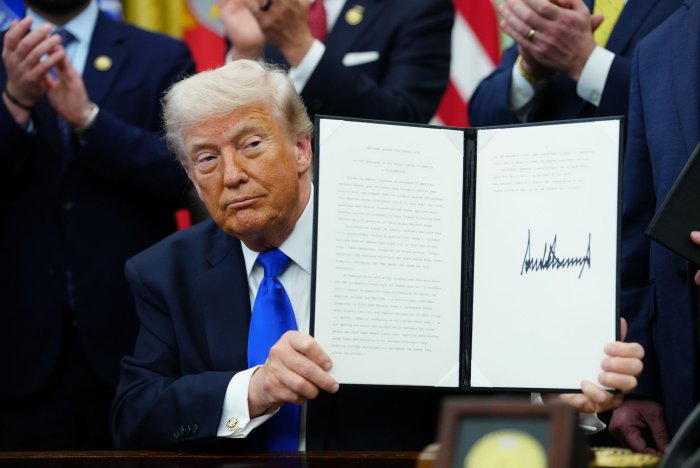
President Donald Trump signs a series of executive orders in the Oval Office of the White House on Thursday. Trump signed an order to expand workers’ access to retirement accounts. Trump also signed legislation ending a 75-day partial shutdown of the Department of Homeland Security after the House voted in favor of funding. Photo by Aaron Schwartz/UPI | License Photo
Weekly insights and analysis on the latest developments in military technology, strategy, and foreign policy.
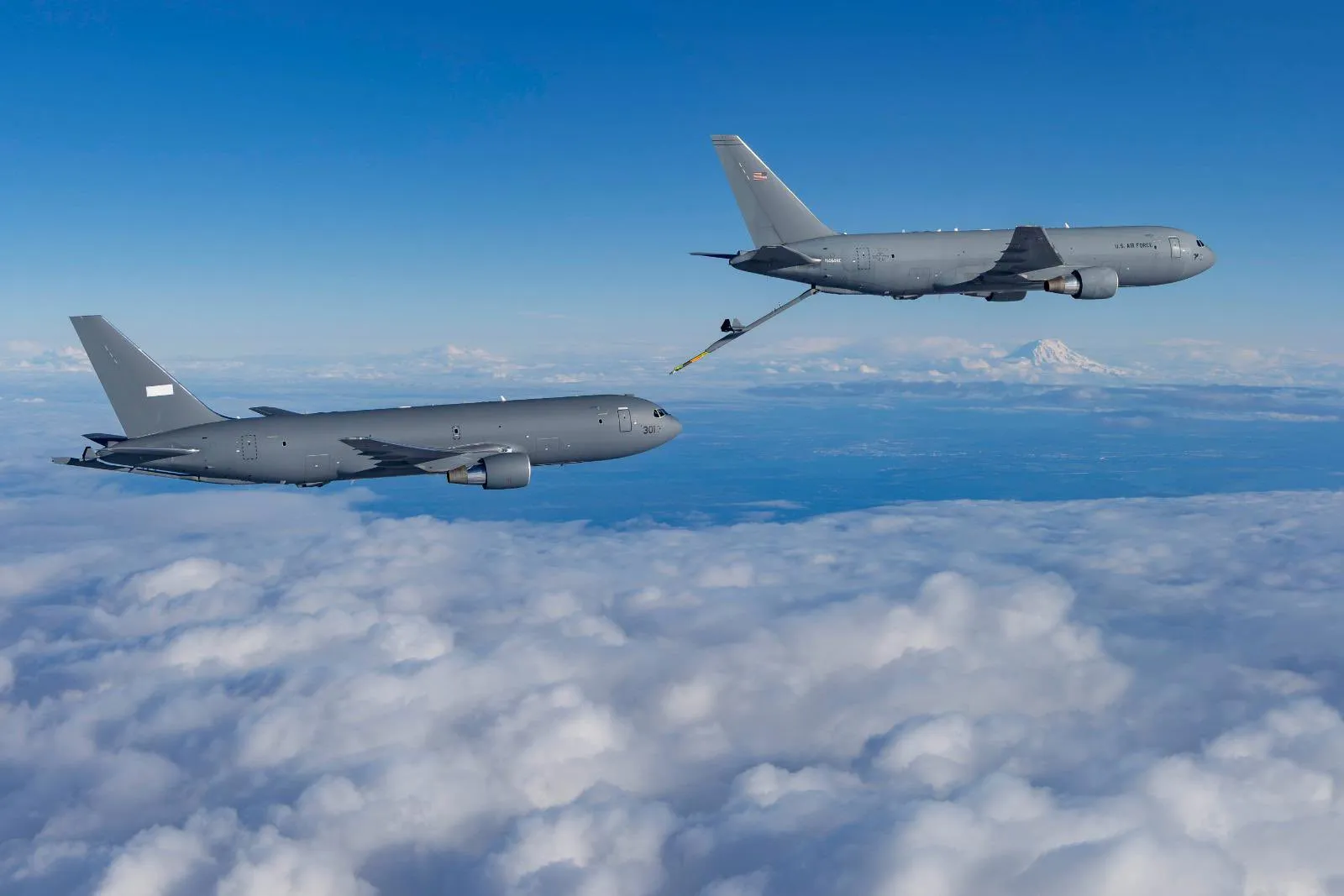
Israel’s first Boeing KC-46A Pegasus tanker — now given the Hebrew name Gideon, after a biblical judge and military leader — has completed its first flight in the United States, with delivery expected soon. As we have discussed in the past, new tankers that can provide additional refueling capacity to support its operations are much in demand with the Israeli Air Force.
The first Israeli KC-46 Gideon refuels from a U.S. Air Force KC-46. Israeli MoD
New imagery of the first flight of an Israeli KC-46 — with national markings yet to be applied — came just one day after Israeli Prime Minister Benjamin Netanyahu hinted at plans to develop “groundbreaking Israeli-made aircraft,” as well as referencing the approval for two additional fighter squadrons. As you can read about here, these will be made up of F-15IA and F-35I Adir jets, providing an eventual total of four squadrons of F-35Is and two of F-15IAs.
Announcing the first flight of an IAF KC-46, the Israeli Ministry of Defense said the tanker would be delivered to Israel in “approximately one month.” It is the first of six examples on order as part of what the ministry describes as a “wide-scale force buildup program.”
The first Israeli KC-46 Gideon with its refueling boom extended. Israeli MoD
Back in 2020, the U.S. State Department approved the potential sale of eight KC-46s to Israel, with the entire package having an estimated price tag of $2.4 billion.
In 2022, the U.S. Department of Defense awarded Boeing a $930-million contract for the first four KC-46s for Israel. At this time, it was said that deliveries were due before the end of 2026.
On the back of very heavy utilization of its aging Boeing 707 Re’em tanker fleet in operations against Iran, as well as for other long-range combat missions and domestic ones, Israel added two more KC-46s to its order last year.
One of the IAF’s KC-707s refueling an F-15. IAF
The Israeli Ministry of Defense says that the KC-46 will be equipped with Israeli systems and adapted to the operational requirements of the IAF. It is unclear what systems will be added, but Israel has a long history of adapting foreign-made aircraft with locally made equipment, and its tankers have been no exception.
One strong possibility is that the KC-46s will be equipped to serve as a command-and-control station and communications node. The current 707 Re’em tanker carries a satellite communications suite to provide critical, secure beyond-line-of-sight communications with appropriately equipped tactical aircraft like the F-15 and F-16, and command centers far away. This is especially important for long-range strike operations.
The Israeli KC-46 Gideon refuels from a U.S. Air Force KC-46. Israeli MoD
Were Israel to order more KC-46s, this would not be entirely surprising.
Currently, the IAF is assessed to field no more than seven 707 tankers.
The 12-day war against Iran in 2025 had already led to questions about the IAF’s aerial refueling capacity, and the U.S. government was forced to deny — despite claims to the contrary — that it had provided additional tanker support for the operation.
U.S. Air Force tankers also arrived at Ben Gurion International Airport in Israel in significant numbers earlier this year, when the United States and Israel launched combined strikes against targets across Iran.
U.S. Air Force KC-135 refueling tankers sit at Ben Gurion International Airport on March 8, 2026. Photo by Alexi J. Rosenfeld/Getty Images ALEXI ROSENFELN
At the same time, it’s not entirely clear how the KC-46s will be outfitted.
In the past, it was expected that they would be delivered with the next-generation version of the critical Remote Vision System (RVS) that has proven so challenging to perfect. Ironically, the Israeli 707s that the KC-46 will replace have long used a locally developed RVS that has apparently proven very effective, and which you can read more about here. We have reached out to Boeing for more details on that feature.
A rendering of an Israeli KC-46 refueling an F-15IA fighter. Boeing
With its existing tanker fleet (and with or without U.S. refueling support), the IAF has demonstrated that it can sustain a remarkably high tempo of operations, striking multiple targets across great distances, as well as supporting combat air patrols and multiple other requirements.
Now, with its first KC-46 Gideon set to arrive in the coming weeks, the Israeli Air Force will begin the start of a long-awaited modernization period for its aerial refueling capacity, ultimately allowing the withdrawal of the antiquated 707.
Coronation Street spoilers have hinted at guilty characters who could be Theo Silverton’s killer, while the fates of two other villains are also teased on the ITV soap
Spoilers for next week on Coronation Street have revealed huge twists(Image: ITV)
Spoilers for next week on Coronation Street have revealed huge twists, including clues about who killed Theo Silverton.
One villain faces her comeuppance finally, while another’s fate is revealed after murder week. One character is plotting an exit and some new evidence is teased as Theo’s murder suspects fall under the spotlight.
Sam Blakeman sparks concern, and Tim Metcalfe must face his past. Kicking things off, Will secretly meets Megan, having stolen £2,000 from the pub safe.
They plot to flee to France, while Will pretends he’s moving to Scotland with his mum. As he leaves in Tim’s taxi, Tim is suspicious about Will’s plans when he realises the Glasgow train is cancelled.
The Driscolls also realise something is up when Will’s passport is gone, and they can’t get through to him. Tim tells Will all about his relationship with Tricia, how much he enjoyed it at the time but how he’s come to realise that technically he was a victim of rape, but will he get through to Will?
Will returns to Weatherfield, and reports Megan to the police. Lisa interviews Megan but she denies everything. After his chat with Will, Tim confronts Trisha and spells out that like it or not, she abused him when he was 14 years old.
Back at the Rovers, Ben gets a call from Melanie, and Maggie’s thrown into panic, telling Ben they need to talk. David kicks Jodie out, leading to her sowing seeds of doubt in Shona’s mind about what happened between them.
Soon, Jodie comes across Daniel, who is still lying about being at the Lakes, and the pair share their secrets. As Jodie later collects her things from Shona’s, her face darkens.
Sam is left panicked when he’s threatened by Will at the Red Rec, causing him to break his telescope. Hope urges Sam to tell Leanne about Will, but Sam loses it.
As Sam prepares for his exam, he overhears Nick and Toyah talking, but doesn’t hear their true words. Soon, Roy finds an agitated and distressed Sam surveying a tracking device he found in his school bag.
Kit and Lisa don’t believe Gary’s alibi after the recent murder, but they soon suspect Todd is hiding something. As the police call at the builder’s yard and start gathering potential evidence, it includes some scaffolding poles.
After some evidence is deleted, Kit makes it clear that Gary is still his prime suspect. Finally, Summer reveals that she’s been offered a place at an American university – but is her possible exit her attempt at fleeing?
Security forces have intensified their presence across parts of Mexico’s Sinaloa, setting up checkpoints as rival factions of the Sinaloa Cartel battle for control. Despite the visible military deployment, more than 3,000 people have been killed in nearly two years. The conflict has deepened amid political instability following investigations and indictments linked to former officials.
Alabama lawmakers adjourned their special session after protesters entered the State House during demonstrations over redistricting. The unrest follows a US Supreme Court ruling that weakened protections of the Voting Rights Act, fuelling a battle over electoral maps as Republicans push to redraw districts ahead of upcoming midterm elections.
Emmerdale spoilers for next week have revealed danger for some characters, big scenes and Dr Todd is targeting a character again, while also romanticising another resident
Emmerdale spoilers for next week have revealed danger for some characters(Image: ITV)
There’s some big twists and turns on Emmerdale next week according to new spoilers.
It’s a big week for Cain Dingle as he prepares for his cancer surgery, but a bombshell leaves him reeling. Soon one favourite is attacked, but how far will it go?
Dr Todd is back up to her old tricks, still tormenting Jacob Gallagher while issuing a new threat to Charity Dingle too. When she turns her attentions towards Vanessa Woodfield, how will Charity react?
Then there’s the usual village drama too, with secrets under threat and Bea Wolf’s court fate appears to be confirmed too. Here’s all the big spoilers for next week’s epic episodes…
Cain undergoes his cancer surgery, and confronted with the reality of his catheter post-operation, he fakes pain to be kept in the hospital. When he does head home, with the operation going well, he picks up on tension with Aaron and Robert.
When Moira is forced to admit it was Robert who planted the identity documents that got her arrested, Cain wants revenge. Asking Sam for a favour, the pair attack Robert and tie him to a chair.
As Robert regains consciousness he sees Cain wielding a hammer, wanting Robert ‘to pay’, but what will he do to him? Elsewhere, Jacob fears his feud with Dr Todd has gone too far.
He feels guilty about how nasty things got, and in an attempt to move on he visits Todd. Offering her his condolences on the day of her father’s funeral, Todd accepts his apology.
Soon, Mary plays matchmaker and pushes Vanessa to ask out Dr. Todd, and the pair agree to a date. But Charity is left panicked that Todd will expose her baby lie, as Todd suggests to Jacob that she’s privy to a secret that could make his life hellish.
After some news about Todd’s father’s will, Vanessa decides they should just be friends. Todd needs money though, and a plan begins. Todd warns Charity she has definitive proof Charity and Ross are Leyla’s genetic parents and demands she pay her £10,000 to keep the secret.
Charity fears the worst, and panics further when she sees Todd and Vanessa kissing. Elsewhere, Bear and Mandy join the depot, but Jai’s words trigger Bear’s trauma from the farm.
Finally, Bob panics to discover he’s a player short for the men’s darts team. He’s soon relieved to hear Lewis has joined, claiming to have played a lot of darts in the past.
Video from Gaza City shows flames rising after an Israeli strike targeted a group of civilians near Al-Jalaa Roundabout in the Al-Oyoun area in northern Gaza City.
A parade of celebrities, including Naomi Osaka, Angela Bassett, Madonna, and Sabrina Carpenter posed for the cameras. Some famous faces – Bad Bunny, Heidi Klum, and Katy Perry – were nearly unrecognisable thanks to their commitment to the “costume” theme.
Paramount Skydance Chairman David Ellison defended his commitment to release 30 movies a year once his media company swallows Warner Bros. Discovery — a goal that some industry observers view as overly ambitious.
During a Monday call with analysts to discuss Paramount’s first-quarter earnings, the tech scion said the target was achievable because his management team would maintain current levels of production. Paramount has doubled its film release capacity to 15 films this year, matching the number of theatrical releases planned by competing Warner Bros.
“The two companies are actually making 30 films to date,” Ellison said. “We really view our pending acquisition of Warner Bros. Discovery as a powerful accelerant to our strategy.”
The company said it was on track to finalize its Warner takeover by the end of September. The $111-billion deal would transform the smaller Paramount into an industry titan with prestigious programming, including Harry Potter, “Game of Thrones,” “Euphoria,” as well as its current slate of Taylor Sheridan-produced franchises, including “Yellowstone” and “Landman.” The combined company also would own dozens of popular TV networks, including CBS, CNN, Comedy Central, Food Network and HGTV.
But the proposed merger would saddle the combined company with $79 billion in debt, stoking fears that Paramount would need to make steep cost cuts to balance such a large debt load. During the quarter, Paramount lined up banks and other institutional investors to provide bridge financing to help pull off the transaction, the company said.
“We’re pleased with the momentum and will continue to take the necessary steps to bring this deal to completion,” Ellison told analysts.
Late last month, Warner Bros. Discovery stockholders overwhelmingly voted in favor of the deal, which will pay $31 a share to Warner investors. The company now must secure regulatory approvals in the U.S. and abroad, and that process is well underway, Paramount said.
Paramount has asked the Federal Communications Commission for permission to exceed a cap on foreign ownership for U.S. media companies. Ellison’s company is expecting $24 billion from three Middle Eastern royal families, who would become part owners of the combined entity. Those total funds will represent about 49% of equity in that new company, exceeding the current foreign ownership cap of 25%.
More than 4,000 filmmakers, actors and industry workers, including Bryan Cranston, Connie Britton, Kristen Stewart, Jonathan Glazer and Jane Fonda, have signed an open letter asking California Atty. Gen. Rob Bonta and other regulators to block the deal, saying it “would reduce the number of major U.S. film studios to just four.”
Late last week, a small group of consumers sued to block Paramount Skydance’s acquisition of Warner Bros. Discovery and unwind Ellison’s Skydance Media’s takeover of Paramount, alleging that both deals reduce marketplace competition.
For the January-March quarter, Paramount’s earnings beat Wall Street’s expectations. Revenue grew 2% to $7.3 billion compared with the first quarter of 2025.
Adjusted earnings before interest, taxes, depreciation and amortization (EBITDA) reached $1.1 billion, helped in part by growth in its streaming services unit. Paramount+ increased its revenue by 17% to nearly $2 billion, compared with the year earlier period when it generated $1.7 billion. The service added 700,000 subscribers, bringing the total to nearly 80 million.
With Warner’s HBO Max streaming platform, the combined service would boast more than 200 million subscribers.
Paramount reported first-quarter net earnings of $168 million, or 15 cents per share, compared with $152 million in 2025, which occurred before Skydance acquired the media company in August.
Executives pointed to “Scream 7,” a late February release that has topped $200 million in global ticket sales, as a success story. Studio revenue grew 11% to $1.28 billion for the quarter.
Television networks revenue declined 6% to $3.7 billion as Paramount’s cable channels continue to contend with the loss of cable cord-cutters, which reduces the company’s collections from pay-TV providers. Nonetheless, Paramount pointed to the strength of Sheridan’s “Landman,” starring Billy Bob Thornton, Ali Larter, Sam Elliott and Demi Moore, and the strength of the CBS television network, which currently has 13 of the broadcast industry’s top 20 prime-time shows, including “60 Minutes,” “Marshals,” and “Tracker.”
The company told analysts it would achieve $30 billion in revenue for the full year and $3.8 billion in adjusted EBITDA. Paramount said it would also make $2.5 billion in cost-cuts by the end of this year and reduce expenses by $3 billion in 2027.
Paramount said it ended the quarter with $1.9 billion in cash and cash equivalents. It also was carrying $15.5 billion in debt. The company had to draw $2.15 billion from its revolving credit facility to pay Netflix a $2.8-billion termination fee that Warner Bros. Discovery had agreed to pay under a previous deal to sell the company to Netflix.
Paramount released its earnings after Monday’s trading day. Its shares closed at $11.13, basically unchanged.
May 4 (UPI) — The U.S. Secret Service shot a man near the Washington Monument on Monday after spotting a person with a gun nearby and called for backup.
An ensuing shootout with the man while he tried to run resulted in a child near the monument being injured before the suspect was also shot, and both have been hospitalized, NBC Washington, Fox 5 DC and Politico reported.
The incident comes just over a week since a man rushed security at the White House Correspondents Association Dinner in Washington, D.C., in an alleged attempt to assassinate President Donald Trump and other members of the administration that were in attendance.
The suspect had been under surveillance for some time before he was approached based on officers observing what they termed a “suspicious” person.
“Whether or not it was directed to the president or not, I don’t know, but we will find out,” said Matthew Quinn, deputy director of the secret service, adding that the agency is patrolling the area — the monument is about half-a-mile from the White House — “24/7, hard core” after recent events.
Law enforment officials were patrolling near the monument, down the street from the White House, when they observed the person and approached.
The suspect pulled out a gun and fired toward them, resulting in an exchange of gunfire, which resulted in both the suspect and a nearby child.
The child suffered a graze would to his lower body, was taken to an ambulance and was treated for non-life-threatening injuries, Quinn told reporters.
Streets were blocked off after the incident and members of the White House Press Pool were evacuated from the area during the incident, which occurred as Trump was holding a small business event inside the White House and reportedly was not aware of what happened.
President Donald Trump signs a series of executive orders in the Oval Office of the White House on Thursday. Trump signed an order to expand workers’ access to retirement accounts. Trump also signed legislation ending a 75-day partial shutdown of the Department of Homeland Security after the House voted in favor of funding. Photo by Aaron Schwartz/UPI | License Photo
The U.S. Secret Service and the Metropolitan Police Department both said that their investigations are ongoing.
Weekly insights and analysis on the latest developments in military technology, strategy, and foreign policy.
It’s hard for me to comprehend that it’s really been a decade. TWZ went live 10 years ago today. Nearly 11,000 articles later, we are still here and growing faster than ever.
While the site has evolved immensely over the years, our mission remains the exact same: to provide uniquely deep insights into the world of military technology and strategy, while tying those perceptions into the broader foreign policy context when applicable. It is our laser focus on this mission, along with our unique style of analysis, open source investigative abilities, and distinct voice that has differentiated us and will hopefully continue to do so for many years to come.
To say the least, it has been such a wild ride and it flew by way too fast. From covering multiple wars to spearheading the conversation on the threat posed by lower-end drones to being the first news outlet that has the ability to task an imaging satellite, it’s absolutely wild all the stuff we covered in those 11,000 articles. The truth is, producing this site every day has been the hardest thing I have ever done, and also the most rewarding. I have edited every single article ever posted here, aside from maybe a dozen. This has not been a job, it’s been something of a way of life. It’s not just my place of work, it’s my passion. And I never would have had such a rare opportunity to make this crazy dream a reality without the help of somanypeople. Even when it was just my byline on every article at the beginning, it took a village to make TWZ the truly special place it quickly became.
I want to thank…
First off, our readers. You guys keep me going.
I have never gloated publicly about the massive audience this site has, but after 10 years, I think context matters here. TWZ averages around eight million page views a month these days, but that number has been as high as 16 million, depending on what is going on in the world. For the topics we cover, we touch a lot of screens.
In fact, I do not know of a larger site in this category in terms of audience, not even close really, but that’s not what’s important. It’s where that traffic comes from that matters. With remarkable consistency over many years, roughly half of that readership at any given moment comes straight to the homepage. Yes, around 50% of TWZ’s traffic are people literally typing in the URL or hitting their bookmarks. We do not rely on Google or social media or other referrers to stay alive. This is not normal. This incredible loyalty and trust, over all these years, from readers all over the world, is quite possibly the thing I am most proud of.
My goal has always been to have our team available to our readers directly, via our email, posted at the bottom of every article, or on X, among other avenues. From this has come great leads, fascinating personal stories, and friendships with remarkable individuals, some of whom we have lost along the way.
Our commenting community is like a unicorn from another planet in how special and rare it is. Nothing like it exists on any news-like site that I know of. TWZ gets thousands upon thousands of comments a week. Our open discussion Bunker Talk weekend segments do on average well over 4,000 comments each. The vast majority of these people are the heart and soul of our audience. They have helped create an informative, hilarious, engaging, thoughtful and sometimes bizarre (mostly in a great way) online community in a world where that concept is rapidly evaporating outside of massive social media sites. Yes, this part of our site is an incredible feature, but it’s also a testament to how different TWZ is and how much passion exists amongst our readership.
Other sites like to talk about reader engagement. Most of that is smoke and mirrors. At TWZ, it’s anything but. All you have to do is look at the comments section to see just how strong it is for us. And not on some Reddit thread or Facebook group, but right here on our own website.
Amazing.
The bottom line here is that without all of you, everyone who clicked, shared, commented, emailed, tweeted and everything else, TWZ would never have lasted. And even on my worst day here, I pinch myself that I have the opportunity to do what I do and the freedom to do it with such a great team of people, both in terms of staff and readers. So thank you all from the bottom of my heart for giving me this incredible gift. To be able to immerse one’s self in a topic they care so much about and to get paid to produce the exact site I always wanted to read, it’s just so incredible.
Next, I want to thank my team. There is no site on earth that covers military technology and strategy across all domains — air, sea, land, and space, sprinkled with a little cyber — and that also ties it all together in a neat geopolitical bow. We do all this with a tiny but extremely dedicated editorial team of fivepeople.
I often get asked by colleagues from other outlets how big our team is. When I tell them, they cannot believe it. The reaction is always the same. They totally reject the idea. It’s always a shocked response. They have no idea how we do this, at this tempo, with this depth, across such a massive topic set, and do so with such authority. Well, I am going to tell you all the secret of how:
An unmatched work ethic and a true passion for the subject matter.
Nobody that works here is just hanging their shingle so they can leap on to the next best thing. Nobody here just fell into this topic by chance after graduating journalism school. This is a passion project. Everyone here has that passion. So, yes, we are huge nerds. It’s from this place, this love for what we do and deep curiosity for what we cover, that the articles you read here emanate daily.
Nearly every article, even those with a single byline, have been molded in some way by other members of the team. We work as a fully integrated unit at all times. There are no stove pipes. It’s all about how can we execute the story the best way possible for our readers. We all work together to do this moment to moment. It’s an extremely fast moving (crushingly at times), highly charged, and, well, intense (and exciting) environment. This crew has to recreate the wheel every single day and do it to TWZ standards of depth and accuracy. Not easy!
Our focus on open source intelligence means massive amounts of info has to be fuzed together in very short periods of time. It’s far harder than it looks, but we make it happen by pulling on the collective talents of the whole team. TWZ staff have sacrificed a lot at times to accomplish our mission and they have done it without complaint. I can’t thank them enough for all their hard work and for how seriously they take our mission in order to make this place what it is.
Next, I want to thank our ownership and management. We all read the horror stories near daily of what it’s like working in the modern media industry. The misery that my colleagues have experienced at so many outlets simply has not been the reality for us at TWZ.
No company is perfect, far from it, but Recurrent has supported TWZ consistently over the years, through thick and thin. They have always been there when they are needed and, most importantly, they have been absent when they are not. THIS is the magic sauce.
They don’t screw with our program. They stay out of the way so we can operate to the best of our potential, as defined by us. Much of TWZ’s success is thanks to them letting our staff live in a purely creative space nearly all the time and not meddling with our work. There is no corporate busy work. They allow us to keep laser focused on making the magic happen and use their abilities to make sure we can keep doing it without worry. I am so thankful for this. It is such a rare thing these days.
Our CEO Andrew Perlman and Recurrent Military’s General Manager Kathy Torres-Pummill are truly the best I have ever worked with. We are incredibly lucky to have such an amicable ownership and management situation where our goals are so well aligned.
Finally, I want to thank our advertisers and sponsors, large and small, and our sales team who is the nexus between them and TWZ.
Our sponsors have been incredibly understanding of our editorial standards and have been willing to work in unconventional ways at times to get their message across in the best way that is also really interesting for our readers. While editorial lives in a separate universe from our ad team, we have always had the ability to veto anything and have worked to make anything we put on the site to be as interesting to our great audience as possible. By and large our advertisers really get this and have gone the extra mile to work within that vision. We thank them for their continued support. We also thank our incredibly patient and creative sales team, led by Phil Hladky, for all their hard work, love, and respect for this brand. They are the unsung heroes of the TWZ team. We would not be here without them either.
Looking forward
Now, for what’s to come. This year is a big one for TWZ. And when I say TWZ, I mean it! The War Zone will be referred to exclusively by our staff and in branding as solely TWZ going forward — just like how it has long been referred to by our readers. That change has been ongoing for years, but since the site launched on its own URL two and half years ago under TWZ.com, it’s time we formalize it. So, you have probably noticed the logos on the homepage and our social media channels have already changed over the weekend. We figured everyone has called it TWZ in our community for nearly 10 years now, we should make it official!
We are also making a big push into video with the fantastic Jamie Hunter at the helm. This will include two major segments that have already been established on our channel. First off is our Special Access series, which puts TWZ in the field with the technologies we write about and with those who build and operate them. We see a huge opportunity with YouTube to bring TWZ’s unique voice and expertise to this concept, and Jamie has already begun with some fantastic installments — but just wait for what’s to come! We also have our Showtime segment, which provides great interviews and insights on leading-edge capabilities from major industry expos and conventions.
This is just the start, other segments are on the horizon.
Please hit subscribe on YouTube, if you haven’t already. You can check out a sampling of Special Access here:
Inside The Air Force’s Elite Ghost Tanker Unit
Private F-5 Adversaries Take The Fight To Navy Fighter Pilots
And of Showtime here:
Will The X-BAT Stealth Fighter Drone Change The Air Combat Game?
The H-60 Black Hawk Gunship Evolves With New Wings And Weapons
We will be launching a subscription service very soon, too. Wait, I know what you are thinking! ‘You are paywalling TWZ?!?!’ As many of you know, I have worked very hard to keep this site free to all and it will continue to be that way for the foreseeable future.
The initial subscription offering will be a supporter tier. I get asked every day, ‘how can I support your work? Where is your Patreon?!’ Well, now you can directly support us and get some features along with it, the biggest being a nearly ad free (ad light) experience. YES! After all these years, this most requested feature is coming to TWZ. This will limit advertising to one ad per article and those will only be from our direct sponsors. Oftentimes there will be none at all.
So, if you want to support us directly, and enjoy a nearly ad free experience, this will be the way you can do it. More tiers will come later on with added features, but there is no pressure to join. You can still enjoy TWZ just as you have been for all these years.
We will also be expanding the team. We are looking for a couple key individuals to really evolve certain areas of our coverage. We just hired Ian Ellis-Jones as our head of audience development, and he is also our guy for interpretive graphics and short-form open source intelligence posts. You will see a new section popping up in the near future featuring these posts, some of which you have already seen on the site. This lighter format will allow us to cover visual topics in new ways. Ian is also rapidly evolving our social media strategy, so TWZ will be showing up in more places than ever before.
These are just some of the new features that are in the works that we can talk about, but there will be others, including new ways I can interact with you more directly and more regularly. More to come on all that. While the future is remarkably bright for TWZ, everything has been built on the foundation you, the readers, have helped us lay.
Once again, from all of us, thank you so much for the last 10 wonderful years.
KYLIE Jenner has once again gotten fans talking with her daring looks as she rocked a curve-hugging “nipple dress” on the 2026 Met Gala red carpet.
The reality star wore the sexy look for a solo night out in New York City despite fans hoping that boyfriend Timothee Chalamet would be her date for the first Monday in May.
Sign up for the Showbiz newsletter
Thank you!
Kylie Jenner reveals her latest daring look from Schiaparelli at The 2026 Met Gala CelebratingCredit: GettyTimothee Chalamet, pictured courtside just to the right of 76ers player Paul George, skipped the Met Gala to attend the New York Knicks playoff game in New York CityCredit: Getty
Kylie, 28, stunned in a formfitting Schiaparelli strapless nude corset that pushed up her chest with cups that included nipples poking out.
The corset went down to her hips, where a long lace skirt draped down to her feet.
She completed her look with a diamond necklace and smokier glam makeup.
The mom-of-two rocked a side part with old Hollywood curls and a long piece of hair going over her forehead.
Timothee, 30, chose to skip the Met Gala red carpet but was just down the street at Madison Square Garden to support his beloved New York Knicks as the team competes in the NBA playoffs.
While his girlfriend was serving looks for the cameras, the Oscar-nominee was pictured court-side at tonight’s Knicks game against the Philadelphia 76ers for Game 1 of the conference semifinals.
Kylie, 28, has become one of the Met Gala’s most talked-about regulars however, it’s not always for the right reasons.
From her dazzling debut to viral backlash over a baseball cap on the red carpet, the beauty mogul has built a reputation for bold glam – and also for occasionally missing the theme entirely.
Most read in Entertainment
The Schiaparelli dress has added nipples and a belly buttonCredit: GettyThe nude corset was complete with a long lace white skirtCredit: GettyKylie is known for showing off her famous curves – and the first Monday in May was no exceptionCredit: Shutterstock EditorialThe reality star rocked sultrier, smokier makeupCredit: Shutterstock Editorial
She made her Met Gala debut in 2016 in a heavily embellished silver gown by Balmain.
The futuristic look, complete with a blunt bob wig, instantly put her on the fashion map.
Fans praised the bold entrance, though some questioned whether the edgy look felt too mature at the time.
In 2017, Kylie stepped out in a sheer, feathered gown by Versace for the avant-garde Comme des Garçons-inspired theme.
Kylie returned in 2018 just months after welcoming her daughter, Stormi, wearing a sleek black gown by Alexander Wang.
The moment grabbed headlines – but not everyone was impressed.
Fans applauded her confidence, while others slammed the outfit as “underwhelming” and off-theme for the religious-inspired night.
Her 2019 look remains one of her most iconic.
Kylie stunned in a lavender feathered gown by Versace, complete with a matching purple wig, fully embracing the “camp” theme.
Fans were overall obsessed, with many still ranking it as her best-ever Met Gala moment.
However, it was her backwards baseball cap that stole the spotlight.
The unexpected accessory sparked backlash online, with critics calling the look confusing and “disrespectful” to the theme – though others defended the sentimental tribute.
Kylie leaned into romance at the 2024 gala with a sculptural, corseted gown featuring floral accents.
The feminine look was well received, though some critics said it lacked the wow factor of her earlier appearances.
In 2025, Kylie returned in a sheer, corseted design that highlighted her signature hourglass shape.
Fans praised the fit – but others complained the style felt repetitive of her past red carpet choices.
Tina Fey, Timothée Chalamet, Kylie Jenner, and Ben Stiller attend Game Five of the Eastern Conference First Round NBA Playoffs between the Atlanta Hawks and the New York Knicks at Madison Square Garden on April 28, 2026Credit: GettyTimothee, who is a massive Knicks fan, has often brought Kylie to the NBA gamesCredit: Getty
International military delegates chat with exhibitors next to a FA-50 multirole fighter jet model developed by Korea Aerospace Industries (KAI) at the Defense and Security 2025 exhibition in Nonthaburi, on the outskirts of Bangkok, Thailand. File. Photo by RUNGROJ YONGRIT / EPA
May 4 (Asia Today) — Hanwha Aerospace will acquire additional shares in Korea Aerospace Industries to strengthen cooperation in aviation, space and defense.
Hanwha Aerospace said in a regulatory filing Monday it decided to purchase about 2.96 million additional KAI shares on the open market. The acquisition is valued at up to 500 billion won ($340 million), equivalent to about 2.98% of the company’s equity capital.
The transaction will expand Hanwha Aerospace’s existing stake. The company currently holds about 3.31 million KAI shares. After the additional purchase is completed, its total holdings will rise to about 6.27 million shares, increasing its stake to 6.43%.
The purchase will be made in cash through open-market transactions from this month through December. The final acquisition size may vary depending on market conditions, including share prices.
Hanwha Aerospace said the purpose of the acquisition is to strengthen business cooperation. Industry observers view the move as a strategic step to deepen ties between the two companies in the aerospace and defense sectors.
KAI is South Korea’s leading aerospace company, producing aircraft, satellites and aerospace equipment. It reported 3.7 trillion won ($2.51 billion) in revenue and 187.3 billion won ($127 million) in net income last year.
The investment is expected to help Hanwha Aerospace seek stronger synergies between its businesses in space launch vehicles, aircraft engines and defense systems and KAI’s aircraft and space platform capabilities.
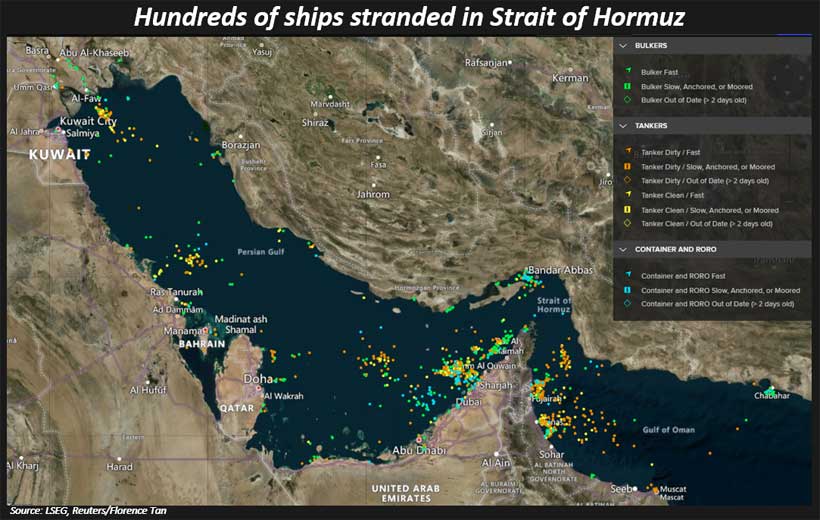
The U. S. military announced that two Navy guided-missile destroyers entered the Gulf to counter an Iranian blockade, while two U. S. ships passed through the Strait of Hormuz. This follows Iran’s claim of preventing a U. S. warship from entering the Gulf. U. S. Central Command (CENTCOM) stated that forces are supporting President Trump’s “Project Freedom,” aimed at helping commercial ships stranded due to the U. S.-Israeli conflict with Iran, and are enforcing a blockade on Iranian ports.
The U. S. intervention increases the possibility of direct confrontation with Iran in a crucial waterway that carries a significant portion of the world’s oil and gas, which has been blocked for two months because of the war. CENTCOM reported that two U. S.-flagged vessels successfully transited the strait while destroyers worked in the Gulf. Iran claimed it made a U. S. warship turn back, but CENTCOM denied reports of any missile strikes on the ship. An Iranian official mentioned a warning shot was fired, with uncertainty about any resulting damage to the warship.
Trump detailed a plan to assist ships running low on supplies in the Gulf, stating, “We will guide their Ships safely out of these restricted Waterways. ” In response, Iran warned oil tankers and commercial ships to coordinate movements with its military, asserting that it controls security in the Strait of Hormuz and would attack any foreign armed forces, particularly the U. S. military, attempting to enter. Since the war began, Iran has largely blocked shipping movements, causing oil prices to surge significantly.
CENTCOM plans to support “Project Freedom” with 15,000 troops, over 100 aircraft, warships, and drones, asserting that this mission is vital for regional security and the global economy.
EastEnders’ Ronni Ancona has warned that a “deeply malevolent” storyline will become “so much darker” for Honey and Billy as Bea “blacks out with anger” and “spirals”
Honey is in danger as Bea ‘blacks out’(Image: CREDIT LINE:BBC/Jack Barnes/Kieron McCarron)
EastEnders‘ Honey Mitchell is about to be put in danger, as creepy Bea Pollard finally snaps. According to star Ronni Ancona, Bea’s life in Walford is about to come crashing down, leading to a “deeply malevolent” atmosphere that will get “so much darker” for Honey.
Over the past few months, Bea has wormed her way into Honey’s (Emma Barton) life. She’s living in Honey’s house, buying the exact same clothes as her friend and has even taken out a credit card in her name.
As Honey and her husband Billy (Perry Fenwick) become more and more suspicious of Bea, Ronni says that her character is set to “spiral” – and it won’t be good for Honey.
“It’s going to get so much darker for Honey and Billy. I would say that Bea increasingly spirals, and she becomes more dangerous as a result,” Ronni says.
She adds: “I think Bea almost blacks out with anger. There is something in her that switches when she is triggered, and at that point her actions become deeply malevolent.
“I think there’s a really interesting point here that she is very desperate. She knows time is running out for her, and I think that fuels her. It’s like a warped sense of self-preservation. I think she is horribly lonely, and I think it’s catastrophically damaging for her. She sees in Honey a chance of something real, and she’s not ready to give it up.”
Honey is set to find out about the credit card Bea has gotten and the enormous debt it has put Honey in. Ronni explains that Bea will initially try to get herself off the hook, but ultimately has to admit that what she did was wrong. Honey is just about to give in when Billy arrives home and orders Bea to leave.
Bea hasn’t liked Billy for a while, and some wondered if she had nefarious plans to replace him in Honey’s life. But Ronni has insisted that while Bea “loves Honey too much”, it’s not romantic and Bea’s dislike of Billy actually comes from how he can “see through her”.
“She finds him coarse, and she doesn’t respect him,” Ronni says. “I think initially she did, because she didn’t want to replace Billy; she wanted to be part of that family unit, and that’s all she wanted. But, I think the tide changed towards Billy for Bea when she realised he was not going to let that happen.
“He’s now in Bea’s way and all of this had added to fuel to her situation with Billy. In addition, the biggest thing for Bea is she knows that Billy can see right through her. That’s why she can’t stand Billy. Billy is a perfectly nice, hard-working guy who just wants a simple life with his family, but he can see through her, and therefore he’s a problem. “
But what about Ian Beale (Adam Woodyatt)? For the past couple of weeks, Bea and Ian have been dating, and she has thrown herself into getting him elected as a councillor for Walford. She seems intent on being his Mrs, but Ian is not so invested in the relationship.
Ronni says: “I tragically think she is alarmingly ecstatic about the very small steps in her relationship. This is quite Bea. She is a comic, tragic character, but her strange, warped optimism knows no bounds. Bea has this element of being an excited child, and she’s a bit of a dreamer like a Blanche Dubois character, and I think she has always imagined herself in a position and situation like this. It suits her just perfectly. Even though she’s gone through such terrible times, and is constantly rejected, this is a little clink of light.”
So how will she react when the newly minted Councillor Beale breaks up with her? “Bea switches so quickly. She’s mercurial, and she can’t seem to regulate her emotions. Bea suddenly gets very angry very quickly instead of processing the situation.
“She suddenly becomes vengeful about the situation with Ian. I do think Ian is a little hasty in his rejection of Bea. Evidently, I’ve heard that Bea is the only person who has been rejected, soundly, by every person in Walford!”
May 4 (UPI) — Former New York City Mayor Rudy Giuliani is breathing on his own and recovering from pneumonia in Florida after he was hospitalized over the weekend.
Giuliani was hospitalized with the infection on Sunday where he was in critical but stable condition because of difficulty breathing but has improved over the last 24 hours, his spokesman said on Monday afternoon.
The mayor’s spokesman, Ted Goodman, said that he remains in critical but stable condition but he has improved markedly since his hospitalization, is now breathing on his own and has his family by his side.
On Sunday, Goodman had said that Giuliani was hospitalized but had not reported why he was in the hospital, nor did he offer any details.
“Mayor Rudy Giuliani is recovering from pneumonia,” Goodman said in a post on X.
Giuliani, he said, “is the ultimate fighter — as he has demonstrated throughout his life — and he is winning the battle. His family deeply appreciated the outpouring of love and support … Please keep the prayers coming.”
Goodman said that Giuliani was diagnosed with restrictive airway disease after the days he spent in lower Manhattan breathing dust-filled air after the destruction of the World Trade Center by terrorists on Sept. 11, 2001, which included asbestos that had been used in the construction of the buildings in the 1970s.
The condition, according to Johns Hopkins Medicine, is a decrease in the total volume of air the lungs can hold because of a decrease in the organs’ elasticity or issues linked to chest wall expansion when a person inhales.
Pneumonia can be caused by bacteria, viruses and other pathogens that can enter the lungs while breathing and, depending on the overall health of the person, can be deadly.
Pneumonia is a respiratory infection and, helped by the Sept. 11-linked condition, it overwhelmed his body and required mechanical ventilation in order to stabilize his overall condition.
“He is now breathing on his own, with his family and primary medical provider at his side,” Goodman said.
President Donald Trump signs a series of executive orders in the Oval Office of the White House on Thursday. Trump signed an order to expand workers’ access to retirement accounts. Trump also signed legislation ending a 75-day partial shutdown of the Department of Homeland Security after the House voted in favor of funding. Photo by Aaron Schwartz/UPI | License Photo
At first sight, last week’s unprovoked attack on a French nun walking along a street in occupied East Jerusalem came without warning. However, for the roughly 180,000 Christians living in Israel – and the 10,000 or so Christians living in East Jerusalem – the attack is the latest in a growing number of incidents of abuse, assault, and intimidation that the community says has increased in tandem with Israel’s turn towards far-right nationalism.
While incidents of violence and arson grab the attention, low-level incidents of spitting, insults, and disparaging graffiti have become a daily experience for many Christians in the area – the majority of them Palestinian – contributing to the desire on the part of nearly half of all the religious community under 30 to leave.
Recommended Stories
list of 4 itemsend of list
Israeli officials have been quick to condemn the attack on the nun, calling it “despicable” and with “no place” in Israeli society. A man has also been arrested, after the arrest of Israeli soldiers blamed for smashing a Christian statue in southern Lebanon last month.
But ultimately, trust in the Israeli state is thin on the ground, with many of the incidents going unreported, analysts say.
Christians in Israel and East Jerusalem have been present in the area for more than 2,000 years. But they now find themselves attacked by Israelis, just for practicing their faith.
According to the volunteer-run Religious Freedom Data Center (RFDC), in the first three months of this year, Christians reported 31 incidents of harassment, most involving spitting or defacing church property. Last year, analysts with the interreligious Rossing Center for Education and Dialogue tracked 113 known attacks on individuals and church property in Israel and occupied East Jerusalem, including 61 physical assaults mainly targeting visible members of the clergy, such as monks, nuns, friars, and priests.
‘It’s definitely increased in the last three years,” said Hana Bendcowsky, programme director at the Jerusalem Center for Jewish-Christian Relations. “Resentment toward Christianity existed in the past as well, but people did not dare express it openly.”
“Over the past three years, the political atmosphere in Israel – where there is less concern about how the world perceives us – has led people to feel more comfortable harassing Christians,” Bendcowsky added. “This broader sense of Israeli isolation, and the reduced concern about international reactions, is also reflected in the way the State of Israel has acted regarding what has taken place in Gaza and southern Lebanon.”
Rising nationalism
Israel’s shift towards ultranationalism, particularly when it comes to policies towards Palestinians, has intensified under the current government of Prime Minister Benjamin Netanyahu. Under his administration, far-right voices that were once at the fringes of Israeli society have become incorporated into its heart, and now play defining roles in government.
Fuelled by a not entirely unfounded sense of impunity, a survey by the Rossing Center for Education and Dialogue last year found it was largely ultra-Orthodox and ultra-nationalistic Israelis who were responsible for the majority of attacks on Christians.
“The hate and attempt to harass non-Jews by some of the elements, particularly settler elements, knows no bounds,” Rabbi Arik Ascherman, an Israeli peace activist, told Al Jazeera. “Therefore, anything from spitting, harassing, and desecrating, to government actions to prevent churches from bringing in staff and clergy from abroad… is simply part of the reality here.”
Bendcowsky noted that “the complexity of Jewish–Christian relations goes back to the early centuries.”
“While some churches have undergone processes of rethinking their attitudes towards Jews and Judaism and have begun a path of healing, this has not yet taken place within Israeli Jewish society,” she said. “In education, the focus is on Jewish victimhood, so the lack of familiarity with Christians, together with the historical memory of Christianity, tends to be negative. In the current political climate, there are those who exploit this as a chance to strike back.”
Incidents are rarely reported, researchers say, with concern over foreign visas, or not wanting to draw attention to the issue, mixing with a profound absence of confidence in the state to take action.
‘There’s an absolute lack of confidence in the police, and I think that’s leading to many of the attacks going unreported,” Bendcowsky said. “Unfortunately, that’s often borne out by the evidence. Unless an incident gains international attention, particularly in the US, it often goes uninvestigated, or investigations are closed without any official conclusion.”
Losing support
High-level international objections to attacks on Christians and Christianity, especially those coming from Israel’s principal backers in the United States, have typically elicited swift responses from the Israeli government.
After viral footage of Israeli soldiers destroying a Christian statue in southern Lebanon sparked international outrage, the Israeli prime minister’s office was swift to publish its own condemnation. And in March, following a backlash from many world leaders, including avowedly pro-Zionist US Ambassador to Israel Mike Huckabee, after Israeli police prevented Latin Patriarch of Jerusalem Pierbattista Pizzaballa from reaching the Church of the Holy Sepulchre, official apologies and “clarifications” were quick in coming. But Israeli military attacks on Christian churches in Gaza and Lebanon have only been acknowledged when international and specifically US sympathy for Israel risks being undermined.
In Israel, Christianity is often associated with the Palestinians – and it is therefore perhaps inevitable that as Israel becomes increasingly unrepentant in its killing of Palestinians and seizure of their land, Palestinian Christians and other Christians in the area will not find themselves spared.
Shaiel Ben-Ephraim, an Israeli analyst with Atlas Global Strategies, said that he has noticed intolerance towards Christians increasing. He noted that along with Israel’s violence in Gaza and the wider region, this is contributing towards Israel’s increasing unpopularity worldwide and in the US, and making it more difficult for Christian supporters of Israel to square their support for the country with its treatment of their co-religionists on the ground, a plight they have ignored for decades.
‘In the long term, these attacks on Christians are massive,’ Ben-Ephraim told Al Jazeera.
“Older evangelicals may be forgiving, but the young are already turning against Israel,” he said. “This erodes the little support [Israel has] left. So, while current-day leaders like [US President Donald] Trump and Huckabee will pretend this isn’t happening, this will shape an entire generation of religious Christians in a way that Israel does not even begin to imagine.”
Like most of his música mexicana contemporaries, Diego Millán, better known artistically as Calle 24, sang about the excesses of living the rock star life — the money, the cars, the booze and the women.
Since signing with Street Mob Records — the independent label founded by Fuerza Regida frontman Jesús “JOP” Ortiz Paz — in 2020, the singer-songwriter has been responsible for hits like “Que Onda, ” which featured labelmates Chino Pacas and Fuerza Regida. The trombone-laced earworm about a deboucherous tryst was a breakthrough for Millán, reaching No. 61 on the Billboard Hot 100 after it debuted in August 2023.
These days, the 23-year-old Chihuahua-born artist is dialing down the glitz, opting for songs that aren’t about living the luxurious life.
“Money brings more problems,” Millán tells me inside an Italian restaurant at the Americana at Brand, Glendale’s monument to opulent consumerism. “Because the more money you have, the more things you have to support.”
In April, Millán released “Eterno,” his fourth studio album. The 15-track LP largely forgoes the boisterous brass section that’s become a staple in the genre in favor of stripped-down tracks about being disillusioned with newfound wealth (“10 de mayo”), his mental health (the gritty “Si Me Ven”) and romantic heartbreak and anguish (“Solo”). He also touches on a topic that might be too taboo to discuss: Mexico’s widespread systemic relationship of organized crime (“El Sentrita”).
Millán says this is the most authentic he’s ever been in his music, something he attributes to moving back to Mexico, a country he believes is deeply misunderstood and has profoundlyshaped his personality.
“[Mexico] is filled with deep values, strong ethics and a profound sense of social understanding,” he said.
While música mexicana artists might feel compelled to move to the states in search of fame and fortune, Millán now finds freedom in his native country — and through “Eterno.”
“Now, I can be myself,” he said.
The follwing interview was conducted in Spanish, and has been condensed and edited for clarity.
In “Solo” you talk about romantic loneliness. Why was that vulnerability important to include in this album?
I prefer to approach those themes from a more grounded perspective. With that song, I wanted to really open myself up to that feeling and express regret, that sense of loneliness that comes with saying “I screwed things up.” I feel that’s how you establish a deeper connection with your audience. After all, so many people out there don’t have luxuries or material things like that so how do you get to them? With emotion. A feeling that expresses regret, including with the phrase: “I know I’m a piece of s—, but you know that I love you.”
It reminds me of Joan Sebastian’s “Un Idiota,” in which the singer admits he still loves the person he wronged, and that he knows he messed up.
That’s what I wanted to do too, talk about the human experience and what it is. I wanted people to listen to it as they’re drinking, and all of a sudden that wave of feelings just hits you like a slap to the face.
The song “Si Me Ven” talks about burnout and the idea that money isn’t as fulfilling as one might think. Did you base it out of your own personal experiences?
This song fits like a ring on my finger. They say that money won’t make you happy and it’s true. In my case, I spent five years without seeing my family and missed many things.
On Instagram, you told fans: “I feel like I am more human than artist, I hope you all can understand. Sometimes I wake up wanting to do nothing, or sometimes asking myself what am I doing? Where am I going?” Do you feel drained by this career?
Of course [being a successful musician] is my dream, but I didn’t know all that it would entail. To this day, it has been draining, and there’s some days where I don’t feel like doing anything because I’m more of a person than an artist. There are some colleagues that do live life as if it were a movie, but I’m more of a homebody.
How do you make sense of the industry where part of the allure is tied to wealth, fancy cars and material goods?
I obviously love cars. Any normal person would love those types of things. And when you work hard, of course you fill the gaps you had when you were younger. But I don’t like putting it in people’s faces.
You say this, but your “Eterno” album cover shows you with a stack of money.
[Laughs] But there’s something curious about that cover. I was feeling down that day, there was just a lot of sadness around that time. Yet there I am, surrounded by all that stuff and that’s where the clash lies, you know? That contrast is what gives my album cover its depth.
Let’s talk about “El Sentrita.” The song contextualizes organized crime as a systemic issue. What prompted you to write about this topic?
I wanted to frame it as social commentary, addressing what has been going on in Mexico for decades, as well as the obstacles we face as artists who aren’t allowed to express ourselves or certain themes through music. Just as we were discussing right now, rap used to be how artists delivered social commentary through the medium of music. I would like to do that as well.
I figured if the government tells me I can’t sing a corrido, then I’ll use a corrido to offer them some criticism instead. You have to pay close attention to follow the character’s storyline as it unfolds. At the end of the song, it hits you, none of this would have happened if someone would have given him a chance. The goal was to raise awareness, to show that there are so many dreams within [Mexico] but they need to be given the opportunity to pursue them so that they don’t end up on the wrong path.
The music video for “El Sentrita” shows how one young boy gets roped into organized crime. It feels less of a choice and more a result of the system. Tell me more about this decision to give dimension to the character.
That’s the question: Who is the victim in this system? The way I saw it was that he was a good person who fell in with bad people and ended up becoming a bad person himself. If we look at it from a different angle, one where you don’t judge whether a person is good or bad, he was simply someone operating in that world out of necessity.
That’s when you have to question yourself and ask: how can we call someone a bad person when society leaves them with no other choice. I also wanted to do this to show young people that life in that world isn’t easy. Society right now is deeply damaged. This new generation of youth needs a lot of attention.
There is a phrase at the end of the song where you say, “You don’t sing about what you do, you sing about what you see.” What did you mean by that?
Because it’s not like we’re out there doing those things, you know? We aren’t engaging in any kind of criminal activity whatsoever. We simply sing, literally, about what we see, about what goes down in [Mexico] every single day. Because it’s not just some isolated incident; it’s something that happens constantly — day in, day out, without fail.
A judge on Monday ordered that a former federal contractor who allegedly passed top secret information to a Washington Post reporter be released on home detention — with his location monitored and no access to internet-connected devices — ahead of his trial next February. File Photo by Sascha Steinbach/EPA
May 4 (UPI) — A man accused of leaking classified military information to a Washington Post reporter will be released on home detention ahead of his trial next year, a judge ruled Monday.
U.S. District Judge Michael Maddox ordered the Justice Department to release Aurelio Perez Lugones to be held on home detention until his trial in February.
Lugones, whose location would be monitored and blocked from using internet-connected devices, is charged with leaking classified information to Washington Post reporter Hannah Natanson, Politico and The New York Times reported.
Natanson’s home was raided in January by the FBI, with the agency seizing two laptop computers, a cell phone and a Garmin Watch as it investigated Lugones, who was a systems administrator at the Pentagon with a top-secret security clearance.
He allegedly had been taking classified reports home and keeping them before passing some to Natanson, which motivated prosecutors to suggest he could send more information to her if she was not held in jail until the trial.
“The government has no way of knowing what he has retained and what he is able to provide to others,” Assistant U.S. Attorney Patricia McLane said during the hearing.
“The person he was communicating with is still employed and has a willingness to accept classified and national defense information … The receptacle of additional national defense information is still available to the defendant,” she said.
The controversial search of a journalist’s home was triggered by stories Natanson wrote about various national security issues, including one that noted the more than 1,000 sources she had cultivated during the course of her reporting.
Magistrate Judge William Porter approved the search warrant, though he was not told about a federal law that restricts the government from raiding reporters and news organizations, and has said he would go through Natanson’s records for things related to the national security case.
Lugones attorney pushed back on the prosecutors’ assertion that he has “a historical Rolodex of classified information in his head,” and that he’d lost his job, top-secret clearance and access to classified information.
The prosecutors said, however, that the information Lugones retained and passed to Natanson “was not old information.”
“This was current information regarding military movement in the Caribbean, in the Gulf and specifically with Venezuela,” McLane said during Monday’s hearing.
“We have a man who has thrown everything away in an attempt to get back at the administration,” she said.
Calling the prosecution’s argument for holding Lugones in jail speculative, Maddox ordered his release and set a trial date of Feb. 22.
Weekly insights and analysis on the latest developments in military technology, strategy, and foreign policy.
Earlier today, U.S. Army AH-64 Apache and U.S. Navy MH-60 Seahawk helicopters destroyed six small Iranian boats that were threatening commercial ships in and around the Strait of Hormuz, according to the U.S. military’s top officer in the region. He also confirmed that Iran has launched new attacks aimed at American warships, as well as merchant vessels. All of this comes after the U.S. kicked off a new operation to safeguard commercial shipping through the Strait of Hormuz, dubbed Project Freedom, which you can read more about in our initial reporting here.
A US Navy MH-60S Seahawk armed with Hellfire missiles takes off from the Arleigh Burke class destroyer USS Pinckney somewhere in the Middle East on March 27, 2026. CENTCOM
“We have an enormous amount of capability and firepower concentrated in and around the strait, including AH-64 Apache and MH-60 Seahawk helicopters used just this morning to eliminate six Iranian small boats threatening commercial shipping. So we’re backing up commitment with action,” Navy Adm. Brad Cooper, head of U.S. Central Command (CENTCOM), told TWZ and other outlets during a press conference today. “We also have A-10s, F-15, F-16, F/A-18, F-35, EA-18 Growlers, RC-135s, KC-46s, and KC-135 fixed-wing aircraft, and numerous U.S. warships, including destroyers, two carrier strike groups, [an] amphibious readiness [sic] group, and [a] Marine Expeditionary Unit.”
“The cruise missiles were going after both U.S. Navy ships, but mostly after commercial shipping,” Cooper added when asked about attacks so far. “We defended both ourselves and, consistent with our commitment, we defended all those commercial ships.”
“We had drone launches against commercial ships, all of which were defended against, consistent with our commitment, and then the small boats were all going against commercial ships, and all were sunk by Apaches and Seahawk helicopters,” he continued.
UPDATE: More Details From Adm. Cooper’s Briefing
On the scope of Project Freedom:
“We are employing U.S. ballistic missile defense-capable destroyers, over 100 land and sea-based aircraft, multi-domain unmanned platforms – meaning under the sea, on the sea, and from the air – and then 15,000 service members to extend this defensive umbrella across the Strait of Hormuz to protect our forces and also, as committed, to defend commercial shipping.”
On international reaction
“Vessels currently in the Arabian Gulf represent 87 countries from around the world. As the president mentioned, they’re merely neutral and innocent bystanders. Over the last 12 hours, we’ve reached out to dozens of ships and shipping companies to encourage traffic flow through the Strait, consistent with the president’s intent, to help guide ships safely through the narrow trade corridor. This news has been quite enthusiastically received, and we’re already beginning to see movement.”
“The President has also said that if the process [Project Freedom] is interfered with, we will react forcefully. And over the last 12 hours, Iran has interfered. The IRGC [Islamic Revolutionary Guard Corps] has launched multiple cruise missiles, drones, [and] small boats at ships we are protecting. We have defeated each and every one of those threats through the clinical application of defensive munitions.”
On whether U.S. warships were hit:
“I can confirm there’s been no U.S. military ship hit, and there’s been no U.S. flagged-ship [sic] that have been hit.”
🚫 CLAIM: Iranian state media claims that Iran’s Islamic Revolutionary Guard Corps hit a U.S. warship with two missiles.
✅ TRUTH: No U.S. Navy ships have been struck. U.S. forces are supporting Project Freedom and enforcing the naval blockade on Iranian ports. pic.twitter.com/VFxovxLU6G
On whether these attacks mean the ceasefire is over:
“I wouldn’t go into detail of whether the ceasefire is over or not. I think the key thing for us is we’re merely there as a defensive force and a force to give a very thick layer of defense to commercial shipping to allow them to proceed out of the Arabian Gulf. That’s what we’re focused on. What we saw this morning was Iran initiating aggressive behavior. We are simply going to respond to that consistent with the president’s direction.”
On whether Project Freedom is protecting ships in port in the United Arab Emirates (UAE), which have also come under attack today:
“I don’t want to give the details of what we’re protecting and what we’re not. I wouldn’t want to tip our hand on that. But in the case of the Fujairah attack, I’d really refer to the UAE on that. That’s really a matter under their national jurisdiction and not part of our project operation.”
On how close the Iranian missiles and drones got to ships:
“I don’t want to get into the specific details of differences. All of the missiles and drones that were fired at both us and the commercial ships were effectively engaged. So that’s the good news. No personnel injuries in that regard, and also in terms of where specifically, the area in the strait was transited, probably not worth getting into details. What I will say is, over the past several weeks, we’ve used low-observable capability to clear that path, and we validated that in multiple ways. And then we took the risk by using U.S. flagships [sic] to go first, setting the example. Since then, we’ve had great communication with industry, as I mentioned, and ships, multiple ships, are already heading that way. So the summation of that is, we used our own military technology in a unique way to clear a free lane that’s not obstructed in any way, shape or form, through the Strait, executed by setting the example of U.S. ships. And over top of all that, we have a US military defensive umbrella.”
On whether U.S. destroyers transited the Strait today:
“Yes, we have gone through the Strait today. As we sit here right now, we have multiple U.S. Navy guided missile destroyers operating in the Arabian Gulf.”
U.S. Navy guided-missile destroyers are currently operating in the Arabian Gulf after transiting the Strait of Hormuz in support of Project Freedom. American forces are actively assisting efforts to restore transit for commercial shipping. As a first step, 2 U.S.-flagged merchant… pic.twitter.com/SVDxDhK72I
On whether U.S. warships are providing escort through the Strait:
“There’s no specific escort. If I just describe this overall, if you’re escorting a ship, you’re playing kind of one-on-one, I think we have a much better defensive arrangement in this process, where we have multiple layers that include ships, helicopters, aircraft, airborne early warning, electronic warfare – we have a much broader defensive package than you would have ever had if you were just escorting. I feel good about that, and it was proven just in the last couple of hours.”
“In terms of mines, I’m not going to talk about specific capabilities. You know, they all have varying degrees of influence. I think the key thing about mines is that we have cleared an effective pathway for ships to lead. At this point, for the first time, there seems to be great enthusiasm to do that, but we’re going to stay in contact with the commercial shipping and support them along the way.”
On our question about whether Project Freedom is just for getting ships out of the Strait, or whether it is also for getting them into it.
“It will ultimately be a two-way path. The most important thing is in the near-term getting ships out. And then over time, we’ll also, for sure, see ships go in.”
On our question about what munitions the Apaches and MH-60s used:
“We don’t want to get into the munitions or how we’re doing things tactically. I will just kind of put that off to the side. But the munitions that were used were very effective, and the tactics worked just as described.”
UPDATE: More on AH-64s and MH-60s in the counter-small boat role
Today’s use of AH-64s and MH-60s to engage Iranian small boats as part of a larger effort to ensure access to the Strait of Hormuz highlights a larger contingency plan that the U.S. military has been working to refine for decades now.
Small boat threats, and in the context of a Strait of Hormuz crisis, especially, became even more of a focus of U.S. military planning in the early 2000s. Al Qaeda’s attack on the Arleigh Burke class destroyer USS Cole while it was in port in Aden, Yemen, was one key driver. The fallout from the still-controversial Millennium Challenge war game in 2002 was another very important factor.
The USS Cole seen being transported aboard the heavy lift ship M/V Blue Marlin after suffering severe damage as a result of the Al Qaeda attack in 2000. USN
All of this impacted the addition of new close-in defense capabilities to existing and forthcoming warships. It also put additional emphasis on the role of armed helicopters, as well as fixed-wing aircraft, in responding to swarms of small boats. The Air Force’s A-10 Warthog ground attack planes have trained extensively to fly counter-small boat missions for the past two decades, for instance.
Army AH-64s and Air Force A-10s had already been conducting missions targeting Iranian naval assets in and around the Strait of Hormuz before the announcement of the ceasefire in April. Navy MH-60s are known to have been flying armed force protection missions as part of Operation Epic Fury against Iran, as well. As an aside, Seahawks also destroyed small boats belonging to Iranian-backed Houthi militants in Yemen as part of previous operations to safeguard commercial shipping in and around the Red Sea.
A flight of US Army AH-64 Apache attack helicopters, armed with rockets and Hellfire missiles, seen taxing out to conduct a recent scheduled flight in the CENTCOM area of responsibility. US Army
Armed helicopters remain key assets for defending against swarms of small boats. This is in part because of the added flexibility they offer in terms of their ability to launch from forward bases on land and ships at sea, either of which can also be situated closer to the threat area. This, in turn, can help reduce the time it takes to react and increase time on station. Helicopters’ ability to fly slow and low also allows them to spot, identify, and make rapid attacks on small moving targets. For naval vessels that carry helicopters, arming them with more advanced weaponry to go after small boats means they can provide an on-call outer highly flexible layer of force protection that would not exist otherwise. New munitions, including laser-guided Advanced Precision Kill Weapon System II (APKWS II) rockets, will only increase their capabilities to engage larger swarms of small boats
US Army Apaches operate from the US Navy Expeditionary Sea Base ship USS Lewis B. Puller during an exercise in the Middle East in 2020. USN
Small boats are, of course, not the only threat Iran is already bringing to bear in the Strait of Hormuz. As Adm. Cooper noted in his briefing, Iranian forces have been launching cruise missile and drone attacks on ships in and around this critical waterway. There is also the continued threat of Iranian naval mines, as well as explosive-laden uncrewed surface vessels. Iran has also launched a new round of missile and drone attacks on the United Arab Emirates.
All of this only reinforces the general risks that U.S. forces will face as Project Freedom gets further underway, especially if it grows to include more direct escort and/or convoy missions.
UPDATE: Reaction to the Iranian missile and drone barrage
In a phone conversation with ABC News Chief Washington Correspondent Jonathan Karl, Trump “”stopped short of saying Iran has violated the ceasefire,” Karl stated on X. “Regarding the Iranian drone and missile attacks on UAE today: ‘They were shot down for the most part,’” Trump told Karl. “‘One got through. Not huge damage.’ Regarding the Iranian attack on a South Korean ship: ‘We’re going to look into it. Shots were fired at a South Korean ship, and I think South Korea should take some action. … This was a South Korean ship riding by itself. It was not an escorted ship.’”
In a phone conversation a short while ago, President Trump stopped short of saying Iran has violated the ceasefire.
Regarding the Iranian drone and missile attacks on UAE today: “They were shot down for the most part,” Trump told me. “One got through. Not huge damage.”…
Trump said Iran will be “blown off the face of the Earth” if they attack U.S. vessels carrying out Project Freedom.
Trump made the comments during an interview with Fox News‘ Trey Yingst on Monday, adding that he believes Iran has become “much more malleable” in peace negotiations.
The president also emphasized that U.S. military buildup in the region is continuing.
“We have more weapons and ammunition at a much higher grade than we had before,” Trump said. “We have the best equipment. We have stuff all over the world. We have these bases all over the world. They’re all stocked up with equipment. We can use all of that stuff, and we will, if we need it.”
Trump again said that Iran has “no navy, they have no air force, they have no anti-aircraft equipment, they have no readar, they have no nothing, they have no leaders actually…the leaders happen to be gone also.”
President Trump on Iran: “They have no navy, they have no air force, they have no anti-aircraft equipment, they have no radar, they have no nothing, they have no leaders actually…the leaders happen to be gone also.” pic.twitter.com/JBkAV7OKwi
UAE air defense systems “engaged 12 ballistic missiles, 3 cruise missiles, and 4 UAV’s launched from Iran, resulting in 3 moderate injuries,” the UAE MoD stated on X. “Since the beginning of the blatant Iranian attacks on the United Arab Emirates, the air defences have engaged a total of 549 ballistic missiles, 29 cruise missiles, and 2,260 UAV’s.”
تتعامل حالياً الدفاعات الجوية الإماراتية مع اعتداءات صاروخية وطائرات مسيرة قادمة من ايران وتؤكد وزارة الدفاع أن الاصوات المسموعة في مناطق متفرقة من الدولة هي نتيجة تعامل منظومات الدفاعات الجوية الإماراتية للصواريخ الباليستية، والجوالة والطائرات المسيرة.
Qatar “strongly condemns the renewed Iranian attacks targeting civilian sites and facilities in the sisterly United Arab Emirates using missiles and drones, which resulted in injuries to three Indian nationals,” the country’s Foreign Ministry stated on X. “Qatar considers these attacks a blatant violation of the UAE’s sovereignty and a serious threat to the security and stability of the region.”
Qatar Strongly Condemns Renewed Iranian Missile, Drone Attacks on UAE
Doha | May 4, 2026
The State of Qatar strongly condemns the renewed Iranian attacks targeting civilian sites and facilities in the sisterly United Arab Emirates using missiles and drones, which resulted in… pic.twitter.com/UU0tV5w111
— Ministry of Foreign Affairs – Qatar (@MofaQatar_EN) May 4, 2026
The U.S. and Israel are “holding feverish consultations on how to respond and assist their loyal ally.” Israel’s Israel Hayom news outlet claimed, citing three sources familiar with the matter.
“The likely options include targeted attacks against launchers and military targets threatening the strait, or a parallel attack on an Iranian energy facility in response to the attack on Fujairah,” the outlet posited.
We cannot independently verify that claim.
Tehran had no prior plan to attack Emirati facilities in Fujairah port, an Iranian official told Iranian media.
“What happened is the result of the American army’s adventure to illegally open a passage for ships to cross from the prohibited passages in the Strait of Hormuz,” the official said.
BREAKING: Iranian Military source to Iranian TV:
Tehran had no prior plan to attack Emirati facilities in Fujairah port
What happened is the result of the American army’s adventure to illegally open a passage for ships to cross from the prohibited passages in the Strait of… pic.twitter.com/Pt3GKSUIDb
In the wake of today’s attacks from Iran, UAE has partially closed its airspace for one week, effective today through May 11. Commercial traffic is restricted to narrow corridors through specific waypoints only.
UAE has partially closed its airspace for one week, effective May 4 through May 11.
Vide NOTAM A1722/26, Emirates FIR partially closed. Commercial traffic restricted to narrow corridors through specific waypoints only.#airspacepic.twitter.com/dfmJFuOAlA
Meanwhile, Israel’s Ben Gurion Airport management has raised the alert level for an attack scenario, which includes a rapid “departure procedure” for international companies, according to Israel’s Channel 14 news outlet.
“Against the backdrop of increasing security tensions and reports of the closure of the airport in the United Arab Emirates today (Monday), Israel is on high alert for the possibility of a widespread escalation,” the outlet added. “As of this time, Ben Gurion Airport continues to operate as usual, but behind the scenes the alert level has been raised to the highest level with the understanding that the schedule could change within minutes.”
Ben Gurion Airport is on high alert in preparation for a possible closure of Israeli airspace and evacuation of aircraft -CH14