Kharkiv, Ukraine – Hushruzjon Salohidinov, 26, was working as a courier in Saint Petersburg, Russia’s second-largest city and President Vladimir Putin’s hometown.
But last year, the Tajik man and practising Muslim says he was arrested while picking up a parcel which police claimed contained money stolen from elderly women.
Salohidinov says he never interacted with the alleged criminals, but nevertheless spent nine months in the Kresty-2 pre-trial detention centre about 32km (20 miles) from the city, while a judge refused to start his trial because of the “weak evidence” against him.
But instead of releasing him after that, prison wardens threatened to place him in a cell with HIV-infected inmates who, they said, would gang-rape him – unless he “volunteered” to fight in Ukraine.
“They said, ‘Oh, you’ll put on a skirt now, you’ll be raped,’” Salohidinov, who has raven black hair and a messy full beard, told Al Jazeera at a centre for war prisoners in northeastern Ukraine, where he is now being held, having been captured in January this year by Ukrainian forces.
Using a carrot-and-stick tactic, the wardens also promised him a sign-up bonus of 2 million rubles ($26,200), a monthly salary of 200,000 rubles ($2,620) and an amnesty from all convictions.
So, in the autumn of 2025, Salohidinov signed up as he “saw no other way out”.
Officials in Kresty-2, St Petersburg’s prosecutors’ office and Russia’s Ministry of Defence did not respond to any of Al Jazeera’s requests for comment.
Hushruzjon Salohidinov, 26, a Tajik man forced to fight for Russia, at a prisoner of war facility [Mansur Mirovalev/ Al Jazeera]
‘Catching migrants’
Salohidinov is just one of tens of thousands of labour migrants from Central Asia coerced by Russia to become soldiers as part of the Kremlin’s nationwide campaign, according to human rights groups, media reports and Russian officials.
Hochu Jit, a Ukrainian group that helps Russian soldiers surrender, has published verified lists of thousands of Central Asian soldiers like Salohidinov.
“They are literally sent to be killed, no one considers them soldiers that need to be saved,” the group wrote in a 2025 post on Telegram. These soldiers’ life expectancy on the front line is about four months. “Losses among them are catastrophic,” the group reported.
With its low birthrate and large oil wealth, Russia has for years been a magnet for millions of labour migrants from ex-Soviet Central Asia, especially Tajikistan, Uzbekistan and Kyrgyzstan.
The campaign by the Kremlin to force Central Asians to fight in Ukraine dates back to 2023 – the year after Russia’s invasion of Ukraine – when police began rounding up anyone who didn’t look Slavic and charging them with real or imagined transgressions such as a lack of registration, expired or “fake” permits or blurred stamps on their documents. Sometimes, migrants are simply bused straight to conscription offices.
In 2025, Al Jazeera interviewed another Tajik man who said he had been detained with an expired work permit and was then tortured into “volunteering” while being subjected to countless xenophobic and Islamophobic slurs from his officers.
Migrants say they are abused, tortured and threatened with jail or having their entire families deported.
“The main way of recruiting as many migrants as possible is pressure on them with threats of deportation,” Alisher Ilkhamov, the Uzbekistan-born head of the London-based Central Asia Due Diligence think tank, told Al Jazeera.
Sometimes, migrants are simply duped.
Salohidinov said one serviceman in his squad was an Uzbek who “didn’t speak a word of Russian” and was fooled into “volunteering” while signing papers at a migration centre.
In their reports about “catching” migrants, officials frequently use derogatory terms about them, and also when they describe men who have obtained Russian passports but skipped registration at conscription offices. Since the Soviet era, such registration has been obligatory for all men and, since 2024, a newly naturalised Russian national can lose his citizenship if he fails to do it.
“We’ve caught 80,000 such Russian citizens, who don’t just want to go to the front line, they don’t even want to go to a conscription office,” chief prosecutor Alexander Bastrykin said in May 2025, referring to the migrants’ alleged patriotic sentiments.
He boasted that 20,000 Central Asians with Russian passports were herded to the front line in 2025.
The year before, he said 10,000 Central Asians had been sent to Ukraine.
Such remarks resonate with the Russian public that lives with “a high level of xenophobia in the stage of fear and helplessness,” Sergey Biziyukin, an exiled opposition activist from the western city of Ryazan, told Al Jazeera.
“For them, such phrases from Bastrykin are a form of sedative.”
What makes Central Asians easy targets is that they hail from police states, which depend on Moscow politically and economically, observers say.
“While the migrants are frightened into signing contracts, their motherland doesn’t really pay any attention,” Galiya Ibragimova, an Uzbekistan-born, Moldova-based regional expert, told Al Jazeera.
Despite hefty signup bonuses and relentless propaganda, the number of Russians who want to fight in Ukraine fell by at least one-fifth this year, and Moscow will strive to recruit more Central Asians, she said.
Russian conscripts called up for military service attend a ceremony marking their departure for garrisons from a recruitment centre in Saint Petersburg, Russia, on October 15, 2025 [Anton Vaganov/Reuters]
‘We’ll have our fingers broken’
After signing the contract and leaving his debit card with his sign-up bonus with his parents, Salohidinov was sent to the western city of Voronezh for three weeks of training that did little to prepare him for the war.
“We just kept running back and forth with guns,” he said.
Their drill sergeants, he says, told the conscripts that the standard-issue flak jackets, helmets, boots and flashlights were of subpar quality and urged them to pitch in a million rubles ($13,100) each for “better” gear.
The incident corroborates reports on dozens of similar cases in Russian military units.
Salohidinov was ordered to work in a kitchen – and was verbally abused and beaten for the slightest transgression.
Of 28 men in his unit, 21 were Muslims – but their ethnic Russian officers ignored their pleas not to have pork in meals, repeating a decades-old practice of ignoring religion-related dietary restrictions dating back to the Soviet army.
The commanders demonised Ukrainians, telling them “that if we surrender, we’d be tortured, have our fingers broken, maimed, get [construction] foam up our a**, have our teeth yanked out one by one, have our arms broken”, Salohidinov says.
In early January this year, the conscripts were bused to the Russia-occupied Ukrainian region of Luhansk.
Salohidinov says he was tired, frightened and disoriented – Ukrainian drones were “always” above them and a grenade explosion nearby damaged his left eardrum.
A woman waits for news about a missing loved one as some Ukrainian soldiers return during a prisoner of war (POW) swap, amid Russia’s attacks on Ukraine, in an undisclosed location in Ukraine, on April 11, 2026 [Thomas Peter/Reuters]
‘Glad I got captured’
On the fourth day of his service, Salohidinov was ordered to run beyond Ukrainian positions as part of Russia’s new tactic to send two or three servicemen to infiltrate the porous front line.
The mission was suicidal because the terrain was open, dotted with landmines and the bodies of dead Russian soldiers, while Ukrainians were firing machineguns and flew drones above them.
“I ran and ran and saw we were being shot at,” he said. “Me and my commander decided to surrender voluntarily instead of dying for nothing.”
They detached their assault rifles’ magazines, raised their hands and yelled they were surrendering.
What followed was “a calm feeling, beautiful”, he said. “They fed us, let us have a smoke, gave us food and water and even cake.”
Now, Salohidinov hopes to return to Tajikistan and panics at the thought of being made part of a prisoner swap – these have taken place several times each year – and returning to Russia because he would be sent back to the front line.
Tajikistan and other Central Asian nations have never endorsed Russia’s war in Ukraine, but nor have they openly criticised it.
In August 2025, Tajikistan’s Prosecutor General Habibullo Vohidzoda declared that no Tajik national would be charged for fighting in Ukraine.
So, what Salohidinov needs right now is an extradition request.
“I’m even glad that I got captured, because I’m not fighting anyone now, not risking anything,” he said. “I’ll even say thanks to Ukraine for taking me prisoner.”
The Tajik embassy in Kyiv did not respond to Al Jazeera’s request for comment.
Some of the reservists accused of sexually assaulting a detainee have already started combat roles, reports Israeli Army Radio.
Published On 16 Apr 202616 Apr 2026
Israeli military chief Eyal Zamir has authorised five soldiers accused of sexually assaulting a Palestinian inmate in the notorious Sde Teiman detention camp to return to reserve service after charges against them were dropped, according to Israeli media reports.
The soldiers, all from the Force 100 unit assigned to guard military prisons, are being reinstated despite an ongoing, internal military inquiry into their conduct.
Recommended Stories
list of 3 itemsend of list
Israeli Army Radio reported that some of the reservists have already returned to active duty, including deployment to combat roles.
An Israeli army statement, cited by Israel’s Haaretz newspaper, said: “The investigation does not prevent them from continuing to serve … the command-level investigation will be completed as soon as possible.”
The reinstatement comes after Israel’s top military lawyer dropped all charges against the soldiers last month, closing a case that had been among the most divisive in Israel’s recent history.
The soldiers had been charged with aggravated assault and causing severe injury, after footage broadcast by Israeli television showed them abusing a Palestinian man in Sde Teiman. The military’s own indictment described soldiers stabbing the detainee with a sharp object near his rectum, causing cracked ribs, a punctured lung and an internal tear.
A doctor at the facility, Yoel Donchin, told Haaretz he was so shocked by the Palestinian inmate’s condition that he initially assumed it was the work of a rival armed group.
Military Advocate General Itay Offir said the indictments were scrapped partly because of “complexities in the evidentiary structure” and “difficulties” arising from the detainee’s release to the Gaza Strip.
Rights groups condemned the decision as a legal injustice, with Amnesty International calling it “yet another unconscionable chapter in the Israeli legal system’s long-standing history of granting impunity to perpetrators of grave crimes against Palestinians”.
“Since the start of Israel’s genocide against Palestinians in the occupied Gaza Strip, and despite overwhelming evidence of widespread torture and abuse, including sexual violence, against Palestinians in Israeli detention centers, only one Israeli soldier has so far been sentenced over torturing a Palestinian detainee,” said the rights group in a statement.
A February report by the Committee to Protect Journalists also cited dozens of formerly detained Palestinian journalists describing “routine beatings, starvation and sexual assault” in Israeli custody.
JODIE Marsh has been charged with assault after allegedly confronting her neighbour in a row over her animals.
The ex-glamour model, 47, said she “lost it” and “put her hands on his neck” after he carried out what she called a “campaign of harassment”.
Sign up for the Showbiz newsletter
Thank you!
Jodie Marsh turned her back on fame to run an animal rescueCredit: Getty – ContributorFripps Farm is currently home to over 250 animals including alpacas, emus and reptiles, many of which have been saved from slaughterCredit: John McLellanThe ex-glamour model, 47, said she ‘lost it’ with her neighbourCredit: Alison Webster – The Sun
Marsh claims the neighbour filmed her animals and doctored clips to make them look “skeletal” after trespassing on her land.
Describing the clash, she said: “I put my hand on his neck because I leaned in to whisper to him.
“I can’t even remember what I said because I was so upset. It lasted around 30 seconds.
“I’m scared to sleep in my own house. I’m scared to go out.”
The former lads’ mag star turned her back on fame to run Fripps Farm rescue centre in Lindsell, Essex.
Marsh is due to appear at Chelmsford Magistrates’ Court tomorrow.
She is charged with common assault, specifically the use of “threatening / abusive / insulting words / behaviour with intent to cause fear or provoke unlawful violence”.
Common assault carries a maximum sentence of six months in prison.
But speaking to The Sun, Jodie insisted she did not hurt her neighbour, adding: “I didn’t actually injure him in any way.”
An Essex Police spokesman said: “At around 12.40pm on Friday 16 January officers were called to an address in Lindsell to reports of a woman behaving aggressively towards a man and assaulting him.
“It was further reported that verbal threats were made.
“As a result of further enquiries, charges of common assault and using threatening / abusive / insulting words or behaviour have since been authorised against Jodie Marsh, 47, of Lindsell.
“She is due to appear at Chelmsford Magistrates’ Court on Friday 17 April.”
Fripps Farm is currently home to over 250 animals including alpacas, emus and reptiles, many of which have been saved from slaughter.
The reality star’s website reads: “Jodie gives a loving home to animals that are either unwanted or in danger of being put to sleep or slaughtered.”
It comes after a fire on her farm killed two of her beloved marmosets.
Fripps Farm hasn’t been without its controversies amid neighbour rows and court battles.
Marsh was left in tears of joy after winning a court battle to keep lemurs at the sanctuary.
She had appealed against a council’s decision to refuse her application for a wild animal licence.
Concerns had been raised about her taking a meerkat to the pub.
She said trolls were behind much of the criticism.
At a previous hearing, clips of screeching zoo lemurs were played to Chelmsford Magistrates’ Court.
But Judge Christopher Williams dismissed the council’s argument about the animals’ noise.
The star hit headlines when she donned her infamous belt outfit at the height of her lads’ mag gloryCredit: RexThe reality TV star runs Fripps Farm rescue centre in Lindsell, EssexCredit: JOHN McLELLANMarsh is due to appear at Chelmsford Magistrates’ Court tomorrowCredit: John McLellan
The Iran war has deepened the damage to its sanctions-hit economy, but oil revenues have provided a crucial cushion.
The US has spent decades trying to squeeze Iran economically. Six weeks into the Middle East conflict, Tehran is still standing. US and Israeli attacks on infrastructure, industry and trade have damaged Iran’s sanctioned economy even further.
But oil revenues have kept flowing, giving the regime a financial cushion.
The Strait of Hormuz is now at the centre of this economic battle; whoever controls it controls the pressure.
At the negotiating table, sanctions relief, billions in frozen assets and war reparations are all at stake.
Meanwhile, millions of Iranians are bearing the brunt of inflation, shortages and a collapsing currency.
Weekly insights and analysis on the latest developments in military technology, strategy, and foreign policy.
With orders for the twin-rotor helicopter still rolling in, Boeing has provided details on its future plans for the venerable H-47 Chinook, including adding launched effects and creating a path toward a crewed version of the aircraft. The latter would offer an unprecedented vertical-lift capability, and one that could be of great interest to the U.S. Army and other operators.
At the Army Aviation Association of America’s Army Aviation Warfighting Summit in Nashville, Tennessee, today, Boeing released a computer-generated promotional video showing launched effects being delivered from the rear ramp of a Chinook.
Launched effects, previously referred to as air-launched effects (ALEs), describe a category of various uncrewed systems that you can read more about here. The new launched effects terminology reflects the fact that they might be launched from land or maritime platforms, as well as crewed and uncrewed aircraft. Launched effects drones include types that operate as scouts, electronic attackers, decoys, and suicide drones. They are typically highly autonomous, operating independently or in more complex networked swarms.
An older but nonetheless interesting graphic showing how various types of air-launched effects delivered from various platforms could be employed on a future battlefield. U.S. Army
When it comes to the Chinook, Boeing confirms that launched effects are yet to be tested from the helicopter, but the company is working toward that goal.
Kathleen Jolivette, the vice president and general manager for Boeing’s Vertical Lift division, said today that the company is investing its own funds in the initiative and is currently looking at how rapidly it might be able to move into the demonstration phase, based on expected U.S. Army and international interest.
It’s worth noting, meanwhile, that Boeing and the Army are already pushing ahead on launched effects demonstrations from the AH-64 Apache attack helicopter, including recently announced trials with Anduril’s ALTIUS-700 Unmanned Aircraft System (UAS) launched from an AH-64E. The Army says that this program progressed from a requirement to a live demonstration in less than six months.
An AH-64E Apache launches an ALTIUS-700 at Yuma Proving Ground. U.S. Army
With its capacious hold, the Chinook would be able to accommodate huge numbers of launched effects, allowing multiple missions to be fulfilled over an extended period, especially when compared with other helicopters that typically launch these drones from externally mounted tubes.
The Chinook would also be much better able to handle larger launched effects. In the past, the Army has issued descriptions of ‘large’ drones in this category. These are envisaged as having a combat range of up to 350 kilometers (217 miles) and a total flight time of 30 minutes. However, there has also been an aspiration to increase those performance specifications to up to 650 kilometers (404 miles) and an hour of total time in the air. These would weigh up to 225 pounds each, compared to around 25 pounds for an ALTIUS-600, for example.
A UH-60M Black Hawk launches an ALTIUS-600 during a test in 2020. U.S. Army
There is a possibility that Chinooks, specifically special operations MH-47Gs, are already using some kind of launched effects. As we discussed at the time, there is strong evidence that the U.S. military may have used kamikaze drones during the operation to capture Venezuelan dictator Nicolas Maduro earlier this year. Whatever the case, launched effects are increasingly key to the survival of rotary-wing aviation going forward.
As well as launched effects, Boeing is pushing ahead with work on what it calls an optimally crewed Chinook, reflecting U.S. Army terminology. As far as we understand it, the terms optimally crewed and optionally crewed appear to be interchangeable, although the former could also include reduced-crew flying with the help of an AI copilot. Boeing also pushed us toward an Army press release for the H-60Mx Black Hawk helicopter, described as an optimally piloted vehicle and extensively modified to fly with or without a pilot at the controls.
Heather McBryan, the vice president and H-47 program manager at Boeing, said the company is now “working very closely” with the Army in terms of what additional capability it wants to add to future Block II production lots.
According to McBryan, the Army “publicly stated their desire for what they’re calling an optimally crewed aircraft, where they can, in some instances, reduce the workload for pilots, but in other instances, eliminate it completely, and we’ve made a lot of great progress in those efforts.”
McBryan says that this work is also responding to demand from international customers.
As part of this effort, after years of development and post-production modifications, Boeing recently added its Active Parallel Actuator Subsystem (APAS) to the Chinook production line. A hardware and software system, McBryan describes APAS as working “like lane-assist in your vehicle.”
Tested on the special-missions MH-47G for some years now, APAS reduces pilot workload, but also provides additional situational awareness and enables safer maneuvering, especially at the edges of the aircraft’s envelope. For now, APAS is mainly for the MH-47G and for the United Kingdom’s new Chinooks, but McBryan confirms that Boeing is looking at how to bring additional elements of autonomy into the CH-47F as well.
A U.S. Army MH-47G from the 160th SOAR lands on the flight deck of the Expeditionary Sea Base USS Hershel “Woody” Williams in the Atlantic Ocean. U.S. Navy
In February, for example, a CH-47F successively completed its first fully automated approach and landing test flight, something that Boeing calls “approach to x.”
This used the company’s upgraded Digital Automatic Flight Control System (DAFCS), the software ensuring the Chinook touched down all four wheels on a runway without any pilot intervention. While DAFCS is currently deployed on the CH-47F fleet, the upgraded version further reduces pilot workload and brings autonomy to tactical approaches, boosting flexibility and operational capability.
A U.S. Army CH-47 during cling-load operations. U.S. Army
Right now, every Chinook coming off the production line has the basic DAFCS, while APAS essentially provides an enhancement, building on the same flight control system with a combination of hardware and software.
As Chris Speights, the chief engineer for Boeing Vertical Lift, explains, with APAS, “the parallel actuation system actually amplifies, provides a higher-bandwidth control mechanism for it that the software can then take advantage of. So we get more precise control and augmentation with APAS when you add it on top.”
Boeing CH-47F Block II Chinook Helicopter: Next-Level Heavy Lift
Speights added that Boeing is also looking at the future beyond APAS.
“APAS is the foundation, then there would be other capabilities, whether it’s algorithmic or whether it’s sensors or the integration of those that would give further autonomous capability in the future,” he said.
Potentially, this could lead to entirely autonomous Chinook flights, from takeoff to landing, for an optimally uncrewed or even a fully uncrewed Chinook.
Speights described the work on the upgraded DAFCS and APAS as “foundational,” should the company pursue an optimally crewed Chinook.
“That puts us on the path for the flight automation, not necessarily full autonomy, but flight automation, which starts today with pilot workload reduction, and approach to x,” Speights said. “But it enables further capabilities in the future, as the customer desires, based on their concept of how the aircraft would be used.”
It is worth noting that Sikorsky has been working on both optionally crewed and uncrewed versions of its H-60 Black Hawk series. Late last year, the company unveiled its U-Hawk demonstrator, a fully uncrewed version of the Black Hawk helicopter, intended to carry cargo and deliver launched effects. The U-Hawk leverages the company’s past work on a Pilot Optional Vehicle (OPV) version of the Black Hawk, which has been flying for years.
Introducing the S-70UAS™ U-Hawk™
For now, however, Jolivette said that Boeing is “gonna wait and see what happens” with the Army’s uncrewed/optimally crewed vision. “I think there’s more to come on that,” she added.
As well as APAS, Boeing is looking at how it can bring a digital backbone to the CH-47F. A digital backbone essentially provides a shared network of data and tools that connects both production design and sustainment. The result is that everyone who is working on the aircraft gets the same data points and the same information at the same time. In practice, this would mean adding multiple redundant networks and distributed interface units to ensure precise monitoring. With reliably collected data, the Chinook should be easier to upgrade, safer to operate, and quicker to fix.
The Chinook remains very much in demand, meanwhile.
The latest budget request includes funding for additional MH-47G aircraft. In terms of CH-47F Block II, Boeing is ramping up production to meet the Army’s rapid-fielding ambitions. Six Block IIs were delivered last year, and Boeing received a contract award for nine more in September 2025, with another six orders since then, for a total of 24 under contract. McBryan confirmed that, as of today, three aircraft are in production, with two of those in final assembly.
“We expect to deliver one of those aircraft towards the end of this year,” McBryan said. The total U.S. Army Block II requirement is still to be determined.
In terms of international orders, the first deliveries for new orders from Egypt, South Korea, and the United Kingdom are expected this year. Production of the first German CH-47F is also underway, with expected delivery in 2027.
Although it was first flown back in 1961, the Chinook appears to have a bright future ahead of it. With Boeing now focused on new capabilities, we may very well see Chinooks delivering launched effects and operating in uncrewed versions before too long.
SHAKIRA has been slammed by fans for her ice cold reaction after one of her cameramen fell over in front of her during a live performance.
A video of the awkward moment is currently circulating on X, with the Colombian pop star, 49, seen stepping around the fallen production member on the ground.
Sign up for the Showbiz newsletter
Thank you!
Shakira has been slammed by some fans for her ‘cold’ reaction to a cameraman falling over in front of her midway through a concertCredit: GettyThe pop star was walking through the crowd during a gig when one of the cameramen filming her toppled over some equipmentCredit: XShakira continued making her way to the stage and side-stepped around himCredit: X
In the clip, the cameraman is filming Shakira as she makes her way through a walkway between the crowd, but trips over equipment during the moment.
Shakira side steps around the cameraman, who is on the floor, to continue her journey to the stage and move on with her performance.
Sharing the clip to X, one user wrote: “The camera operator filming Shakira falls, and she doesn’t make the slightest attempt to help him.”
Another said: “Lack of empathy, period. Bet if it were her who trips, they’d pause the show for a few minutes, right? …
During a performance in San Salvador in February, Shakira was singing her hit song Si Te Vas when her right ankle suddenly twisted.
She then completely toppled to her side, falling onto her elbow as she brought her microphone stand down with her.
During the moment, Shakira stopped singing as gasps could be heard amongst the audience.
But ever the professional, she quickly got herself back up and managed to continue the song – with the star’s band continuing as her guitarist cheered her on.
Her next performance will take place on May 2, when Shakira will perform in Rio De Janeiro, before she heads to the USA.
Some fans declared that the singer should have paused her performance to help the injured production workerCredit: XBut others noted how Shakira needed to be on stage at a certain moment due to the strict show timingsCredit: X
Magistrate hands the opposition figure five-year term, that his lawyers say will be appealed.
Published On 16 Apr 202616 Apr 2026
South African opposition politician Julius Malema has been sentenced to prison time for firing a rifle in the air at a party rally.
Malema, the leader of the far-left opposition Economic Freedom Fighters (EFF), was handed a five-year sentence on Thursday by Magistrate Twanet Olivier.
Recommended Stories
list of 3 itemsend of list
Malema, who is one of South Africa’s most prominent politicians, was convicted last year of charges, including unlawful possession of a firearm and discharging a weapon in a public place over the 2018 incident at a stadium in the Eastern Cape province.
The 45-year-old leader of the fourth-biggest party in parliament had pleaded not guilty, arguing the gun was a toy.
“It wasn’t … an impulsive act,” the magistrate said. “It was the event of the evening.”
Malema’s defence said the shots were only intended to be celebratory.
His lawyers applied for leave to appeal the magistrate’s decision within minutes of it being read out in a court in KuGompo City, formerly East London, on Thursday.
Outside the court, hundreds of Malema’s red-clad EFF supporters gathered for the sentencing in the politically charged case.
The EFF – a small but vocal party – says the case is an attempt to silence its outspoken leader, who is known for fiery speeches.
Party supporters have threatened protests should their leader be jailed.
The magistrate stressed it “is not a political party who has been convicted here … it is a person, an individual.”
The maximum time was a 15-year prison sentence. If confirmed after all appeals, the five-year sentence would bar Malema from serving as a lawmaker.
That would be a major setback to the EFF, which has strong support among young South Africans frustrated by the racial inequality that has persisted since the end of white minority rule in 1994.
An Economic Freedom Fighters (EFF) supporter holds up a placard as supporters gather outside court ahead of South African opposition politician Julius Malema’s appearance for sentencing after being convicted of charges including unlawful possession of a firearm and discharging a weapon in public, in KuGompo City, South Africa, April 16, 2026. [Esa Alexander/Reuters]
Army Col. Roger Waleski, commander of the 160th, shared the rendering of the special operations-specific MV-75 during a presentation today at the Army Aviation Association of America’s (AAAA) 2026 Warfighting Summit, at which TWZ is in attendance. Earlier in the day, the Army had announced that Cheyenne II would be the tiltrotor’s official nickname. Service officials had also provided an update on the program to TWZ and other outlets ahead of the show, as you can read more about in our separate reporting here.
A rendering of a pair of MV-75As in the baseline configuration for the US Army. Bell
The baseline MV-75A is still in development, and it is unclear when it might fly for the first time. The Army has said in the past that it plans to replace roughly half of the 160th’s special operations MH-60M Black Hawk helicopters with MV-75s, but it is not clear if that is still the case.
From what is seen in the rendering that Col. Waleski showed at AAAA, the special operations variant of Cheyenne II will differ from the baseline type most in the configuration of its nose end. Like the 160th’s Black Hawks, its version of the MV-75A will feature a nose-mounted radar and sensor turret underneath, as well as an in-flight refueling probe that extends out from the right side.
A side-by-side comparison of the nose configurations seen in a recent rendering of a baseline version of the MV-75A, at left, and the special operations configuration, at right. Bell/Jamie Hunter
The radar is likely to be the AN/APQ-187 Silent Knight, or SKR, a terrain-following/terrain avoidance (TF/TA) type. SKR is increasingly the default for U.S. special operations aircraft, including Army MH-60M and MH-47G Chinook helicopters, as well as Air Force CV-22 Osprey tiltrotors and MC-130J Commando II special operations tanker/transports.
A past US Special Operations Command briefing slide showing AN/APQ-187 Silent Knight radar installations on the MH-47G and MH-60M. SOCOM A U.S. Special Operations Command (SOCOM) briefing slide showing Silent Knight Radars installed on Army MH-60M Black Hawk and MH-47G Chinook helicopters. SOCOM
The rendering of the special operations MV-75 also shows what looks to be a fixed, forward-facing aperture on the nose to the left of the radar. This most likely reflects the inclusion of a Degraded Visual Environment Pilotage System (DVEPS) or a similar capability, as is found on the 160th’s MH-60s and MH-47s today. DVEPS uses cameras and LIDAR, together with a terrain database, to help crew navigate through ‘degraded’ environments. full of dust, sand, snow, fog, and other obscurants.
Head-on views of 160th MH-60M (left) and MH-47G (right) helicopters with their DVEPSs, as well as other features, prominently visible. US Army/Jamie Hunter
The rendering shows the special operations version of the Cheyenne II is festooned with an array of other antennas, as well as additional ‘bits and bumps,’ just like the 160th’s helicopters are today. A similarly extensive suite of countermeasures and other defensive systems as is found on MH-60M is not visible in the rendering. It is very possible these features were deliberately omitted for operational security reasons. We can still expect the Night Stalker’s MV-75 to be crammed with special operation-specific self-protection systems, communications gear, and more.
Past Bell renderings have also given hints as to armament, sensors, countermeasures, and communication capabilities that will be found on the baseline variant, as can be seen below. It is possible that some non-special operations versions could be capable of refueling in flight, as well.
Beyond any special operations-specific capabilities, the MV-75 will also offer the 160th a major boost in range and speed compared to the MH-60M.
“I’ve said this before, I’m exceptionally excited about this platform,” Col. Waleski said today. “Yes, I’m excited about the speed. Yes, I’m excited about the payload, and I’m excited about the range.”
“But, really, the things that I find very interesting about this aircraft is [sic] the fact that we’ve gone to a completely modular open system architecture, maintaining the data rights on the aircraft,” he added. “For the warfighters in the room, what that means is your ability to adapt in the warfighting environment, it’s going to be cheaper, it’s going to be quicker.”
Modular open-architecture systems approaches focus heavily on the ability to more rapidly integrate new and improved capabilities and functionality down the line, often with minimal changes to existing hardware. As noted, the Army has taken steps already to ease the process of converting baseline MV-75As into the special operations configuration, which Waleski also highlighted today.
“There is a tremendous amount of growth potential for the warfighter as this aircraft becomes fielded here in the near future,” Waleski said.
Another rendering of baseline MV-75As. Bell
When the Army will begin fielding the baseline version of the MV-75A is now murky. In January, the service told TWZ that it was working to accelerate the program dramatically, with a goal of the first examples reaching operational units next year. The original timeline had expected to reach that milestone in 2031.
However, speaking to TWZ and other outlets last year, Army officials declined to commit to a firm timeline for a first flight for the MV-75A, let alone reaching the start of fielding.
“It’s going to happen when it’s going to happen. So we are moving as fast as we can,” Army Maj. Gen. Clair Gill, the Program Acquisition Executive for Maneuver Air, had said. “If I was king, and I had all the money in the world and all the engineers, and there were no limits, we probably would be able to do it in a matter of months.”
The Army does remain committed to the MV-75A, which the service sees as offering essential new capabilities, especially in the context of a future high-end fight against China across the sprawling expanses of the Pacific. Waleski’s comments today make clear that the Army special operations aviation community is still very eager to get its version of the Cheyenne II, as well.
In the meantime, we have now finally gotten a look at what is set to be the next major addition, at least publicly, to the Night Stalker’s fleets.
SEOUL, April 16 (UPI) — Two U.S. nationals were sentenced to federal prison for helping North Korean operatives obtain remote IT jobs with American companies in a scheme that generated millions of dollars for Pyongyang’s weapons programs, the Justice Department said Wednesday.
New Jersey residents Kejia “Tony” Wang, 42, and Zhenxing “Danny” Wang, 39, operated so-called “laptop farms” that made it appear as though overseas workers were based in the United States, allowing North Korean IT personnel to secure jobs using stolen American identities.
The scheme used identities from at least 80 individuals and generated more than $5 million in revenue for the North Korean government, the department said in a press release.
Kejia Wang was sentenced to nine years in prison by U.S. Senior District Judge Nathaniel M. Gorton in federal court in Boston, followed by three years of supervised release, after pleading guilty to conspiracy charges including wire fraud, money laundering and identity theft.
Zhenxing Wang was sentenced to seven years and eight months in prison by the same court, followed by three years of supervised release, after pleading guilty to conspiracy to commit fraud and money laundering. He was also ordered to pay $200,000 in restitution.
The two were additionally ordered to forfeit $600,000 in proceeds tied to the operation.
“This case exposes a sophisticated scheme that exploited stolen American identities and U.S. companies to generate millions of dollars for a hostile foreign regime,” U.S. Attorney for Massachusetts Leah B. Foley said. “By operating so-called ‘laptop farms,’ these defendants enabled overseas actors to infiltrate U.S. businesses, access sensitive data and undermine our economic and national security.”
Prosecutors said the scheme ran from about 2021 through October 2024, with the defendants and their co-conspirators using stolen identities to obtain remote jobs at more than 100 U.S. companies, including several Fortune 500 firms and a defense contractor.
Companies incurred at least $3 million in losses from legal fees, network remediation and other damages, the Justice Department said.
The operation also exposed sensitive data, including export-controlled information governed by International Traffic in Arms Regulations, after an overseas co-conspirator accessed systems belonging to a California-based defense contractor, according to court documents.
Kejia Wang acted as the U.S.-based manager for the operation, overseeing multiple facilitators who hosted hundreds of company-issued laptops at their residences. He also traveled to China in 2023 to meet overseas co-conspirators, including a North Korean national, according to court filings.
Zhenxing Wang was among the facilitators who hosted company laptops and enabled remote access by connecting them to specialized hardware devices.
The two were charged in June 2025 alongside eight foreign nationals who remain at large and are wanted by the FBI.
In a related move, the U.S. State Department on Wednesday offered a reward of up to $5 million for information on the eight co-conspirators, as well as one suspected North Korean IT worker, leading to the disruption of the scheme’s financial networks.
The case comes as North Korea, under heavy international sanctions, has increasingly turned to cybercrime and illicit IT work to generate revenue for its nuclear and ballistic missile programs.
An October report by the 11-country Multilateral Sanctions Monitoring Team described North Korea’s cyber operations as “a full-spectrum national program operating at a sophistication approaching the cyber programs of China and Russia.”
The report said nearly all of the country’s cyber activity, illicit IT work and financial operations are carried out under the direction of entities sanctioned by the United Nations over Pyongyang’s weapons programs.
The U.S. Treasury Department said in November that North Korea had stolen more than $3 billion over the previous three years through cyberattacks on financial institutions and cryptocurrency platforms.
A 2022 Treasury advisory estimated that North Korean IT workers generate hundreds of millions of dollars annually, with some individuals earning more than $300,000 a year.
The Justice Department has stepped up enforcement as part of an inter-agency effort in recent years, announcing multiple related prosecutions, including the sentencing of three Americans in March and a Ukrainian national in February.
A major fire at a key refinery in Australia refinery has disrupted fuel production, raising fears of shortages as supplies are already strained by the Iran war.
Over the years, there’s been tears, laughter and heartwarming stories as each family has a touching tale on why they need the team’s help.
This week (April 14), fans tuned in for the sixth episode of the BBC show with the Mann-Monro family.
However, the instalment marked the last episode in the series, with Dilly Carter issuing an update on Sort Your Life Out’s future. Taking to Instagram, she shared a photo of the team together, writing: “AND THAT’S A WRAP. Series 6 of @sortyourlifeout is over and out.
“A hugely emotional last episode going out with a bang. This series has been unbelievable and we are so grateful to every family who has taken part and opened up their homes to us and let us in.
“This show relies on YOU. And we are so beyond grateful we get to help transform such amazing families’ lives forever.”
Content cannot be displayed without consent
She then went on to praise the team on the show behind the scenes who work ‘tirelessly’ to ensure everything runs smoothly.
Wrapping up her caption, Dilly confirmed Sort Your Life Out will be back once again in the future. She continued: “But for now, it’s time to start getting ready for the next series. Will we be coming to your road? Keep an eye out.
“Thank you all from the bottom of our hearts, and to my gang, my TV family, I love you all and can’t wait to see you in 2 weeks.”
It wasn’t long before people commented on the post, with many praising the series so far. One person said: “Great show, can’t wait for the next series.”
Another added: “Miss you all until next time.” Someone else commented: “So sad it’s finished, best telly ever xxx”
One fan wrote: “Love the programme and love the team!! Please come back soon.” As another shared: “What an amazing series, absolutely loved it – emotional but so uplifting.”
Sort Your Life Out is available to watch on BBC iPlayer.
US–Iran talks gain pace as Pakistan mediates, with fresh optimism for a new round of talks in Islamabad.
Published On 16 Apr 202616 Apr 2026
Efforts to revive US-Iran negotiations are gathering pace, with Pakistan again having an important mediating role as its leaders hold high-level talks in Tehran and the Gulf.
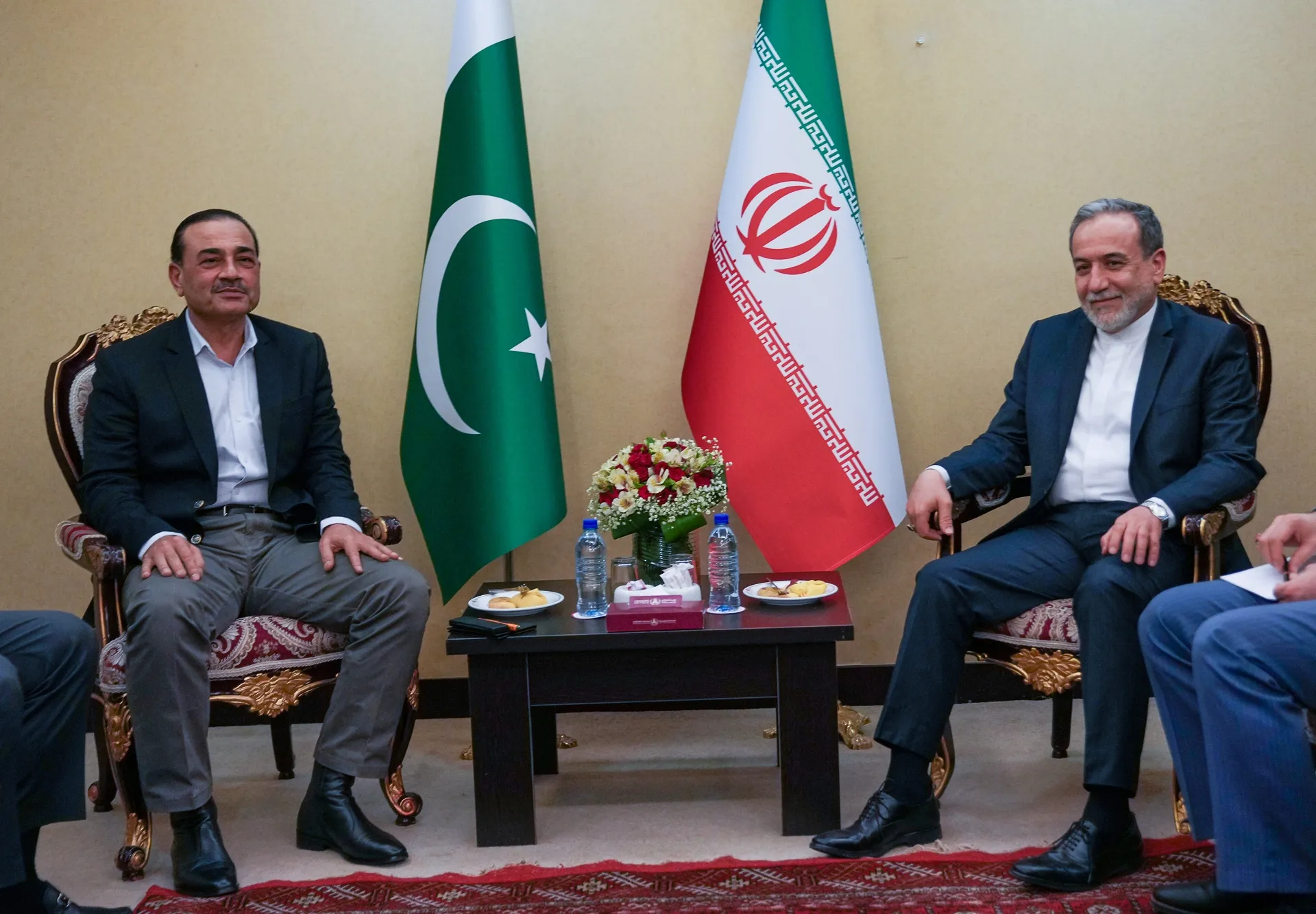
Amid a renewed push to end the war, a Pakistani delegation, led by army chief Field Marshal Asim Munir is in Tehran. He is expected to relay messages from the United States, while Pakistan’s Prime Minister, Shehbaz Sharif, arrived in Saudi Arabia as part of a regional tour that includes Qatar and Turkiye.
Recommended Stories
list of 4 itemsend of list
Iran’s Foreign Ministry spokesman, Esmael Baghaei, said Tehran and Washington have remained in contact since talks in Islamabad ended on Sunday. On Wednesday, Washington signalled optimism about a new round of talks in the Pakistani capital.
But the diplomatic push comes amid increasing tension, as Iran warns it could expand its response to the US naval blockade beyond its own waters.
Divisions in Washington persist, with the US Senate rejecting a measure to limit the war without congressional approval.
Here is what we know:
In Iran
Hormuz tensions remain high: Adviser Mohsen Rezaei warned that Iran could target US ships, if Washington continues to enforce its naval blockade in the Strait of Hormuz. The warning comes as the US tightens restrictions on vessels linked to Iranian ports, with ships already being turned back amid the standoff.
Nuclear issue shows potential breakthrough: Analyst Abas Aslani says Tehran is open to nuclear transparency if Washington is serious about a deal, but new US sanctions and the blockade of Iranian ports are fuelling distrust.
“There is a sense of distrust, and at the moment, Iran is ready for every possible scenario, either progress in the negotiations or returning to the military conflict,” he told Al Jazeera.
Iran’s Foreign Minister Abbas Araghchi warned of consequences over US “provocative actions” in the Gulf and the Strait of Hormuz during a call with his Chinese counterpart Wang Yi.
War diplomacy
Round two of talks: The US is discussing holding a second round of peace talks with Iran and is optimistic about reaching a deal, the White House said.
China supports ‘momentum’ of peace talks: China’s Foreign Minister, Wang Yi, told his Iranian counterpart that Beijing “supports maintaining the momentum of the ceasefire and peace talks”.
Saudi crown prince, Pakistan PM meet: Crown Prince Mohammed bin Salman and Shehbaz Sharif met in Jeddah to discuss regional issues, including US-Iran negotiations. Talks hosted by Pakistan were a key focus, said the Saudi Press Agency.
US and Qatar: US President Trump discussed regional developments and energy concerns, specifically regarding the oil market and gas prices, with Qatari Emir Sheikh Tamim bin Hamad Al Thani.
Saudi Crown Prince Mohammed bin Salman and Pakistan’s Prime Minister Shehbaz Sharif in Jeddah, Saudi Arabia [Saudi Press Agency/Reuters]
In the US
US President Donald Trump has announced that Israeli and Lebanese leaders will hold direct talks later today – their first such contact in 34 years.
New oil sanctions: US officials targeted more than two dozen individuals, along with companies and vessels linked to the oil transport network of Iranian shipping magnate Mohammad Hossein Shamkhani.
US says 10 vessels blocked from Iranian ports: The US military’s Middle East command (CENTCOM) said 10 ships were stopped or redirected within the first 48 hours of a naval blockade, with none leaving Iranian ports.
US Congress divisions: The Senate rejected efforts to limit US involvement in the war and blocked measures targeting arms sales to Israel, though growing opposition signals shifting political pressure.
In Israel
‘Identical’ goals: Israeli Prime Minister Benjamin Netanyahu said that Israel and the US are fully aligned in their objectives to contain Iran.
Ceasefire pressure, no halt in fighting: Despite pressure, Netanyahu said Israel would continue military operations.
End of Hezbollah: The Israeli prime minister said the country’s top priority in Lebanon was to secure the “dismantling” of Hezbollah, in its first direct talks with the country in decades.
“There are two central objectives: first, the dismantling of Hezbollah; second, a sustainable peace… achieved through strength,” he said.
In Lebanon
Relentless strikes continue: Air raids and shelling hit southern and eastern Lebanon, including Kafr Sir and Nabatieh, while a “triple-tap” strike in Mayfadoun killed four paramedics. Israeli vehicles and bulldozers remain active.
Lebanon’s Minister for Administrative Reform Fadi Makki said an Israeli attack that killed four paramedics in southern Lebanon was “a new war crime”.
Rising toll: Israeli strikes have killed at least 2,167 and injured more than 7,000 people, according to the Lebanese Health Ministry. About 1.2 million people have been displaced since March 2. Israel has been accused of destroying homes in southern Lebanon, as happened in Gaza.
‘Homes that no longer exist’: “Even if a ceasefire is reached, the reality on the ground is devastating.. entire communities along the border have been destroyed,” Al Jazeera’s Malcolm Webb reported from Beirut. He added that Israel has yet to secure its objective of controlling territory up to the Litani River.
Balakrishnan Rajagopal, the UN special rapporteur on the right to housing, has joined other UN human rights experts, calling for Israel to immediately stop its bombing of Lebanon. Rajagopal wrote on social media that the Israeli military is using the “same strategy” in southern Lebanon as in Gaza or the occupied West Bank.
Diplomatic tensions grow: Hezbollah has condemned US-hosted Israel-Lebanon talks as “shameful,” while a failed Senate vote to block bulldozer sales to Israel highlights increasing concern over civilian harm.
An armoured Israeli military vehicle near the Lebanon border [Florion Goga/Reuters]
Global economy
Growing hunger fears: The war could push millions more towards hunger as its economic fallout reverberates around the globe, the World Bank’s chief economist told AFP.
“You have about 300 million people who suffer from acute food insecurity already,” Indermit Gill said. “That’ll go up by about 20 percent very, very quickly,” as knock-on effects grow.
Wall Street records: Major Wall Street stock indices finished at record highs on Wednesday following optimism about an accord in the US-Iran conflict.
Srinagar, Indian-administered Kashmir — The gold earrings were a gift from her father on her birthday just months earlier. But on March 21, as South Asia marked Eid‑ul‑Fitr, Masrat Mukhtar handed them over to an aid collection effort to help civilians in Iran trying to survive the US-Israel war on the country.
She was one of many in Indian-administered Kashmir who paused their customary rituals and celebrations on the auspicious day to contribute cash, household items, and personal assets for a people more than 1,000 miles away.
Her cousins followed, each bringing items of personal value. Families offered copper utensils, livestock, bicycles, and portions of savings. Children broke their piggy banks, sharing savings they had carefully collected over several years. Shopkeepers and traders handed over parts of their earnings.
“We give what we love. This brings us closer to them,” said Mukhtar, a 55-year-old woman from Budgam in the central part of Indian-administered Kashmir, before referring to a name by which the region has historically also been known. “This is what Little Iran does for its namesake. The bond persists through time and conflict.”
That bond, rooted in more than six centuries of historical connections, has taken on a much more overt presence during the war – drawing recognition from Iranian authorities, and concerns over some fund collection methods from Indian officials.
Cash donated for Iran at a collection drive in Indian-administered Kashmir [Junaid Bhat/Al Jazeera]
One daughter’s wealth, to another daughter
In Zadibal, a Shia-majority area of Srinagar – the biggest city in Indian-administered Kashmir – 73-year-old Tahera Jan watched neighbours contribute copper pots.
“Kashmiris traditionally collect these utensils for their daughters’ weddings. We chose to give them instead to daughters who lost mothers and sisters in the attacks,” Jan said.
Sadakat Ali Mir, a 24-year-old mini-truck driver, contributed one of the two vehicles he drives for his livelihood. Other contributors offered bicycles, scooters, and other essential items. Children, including nine-year-old Zainab Jan, handed over piggy banks.
To be sure, that Shia constitute between 10 to 15 percent of Indian-administered Kashmir’s population is a factor in why the war in Iran resonates so deeply in the region. But donations for Iran have extended well beyond Shia. Several Sunni families observed simpler Eid meals, redirecting household resources towards Iranian relief. Some shopkeepers closed early, while families adjusted daily routines to contribute.
Political and religious figures also participated. Budgam lawmaker Aga Syed Muntazir Mehdi donated a month’s salary to the relief effort. Imran Reza Ansari, a Shia scholar and leader of the People’s Conference party, noted public participation across communities.
Similar donation campaigns in support of Iranians have also been reported from Pakistan, Iraq and other countries.
But at the heart of this outpouring of support for Iran in Indian-administered Kashmir – which also witnessed large rallies after the killing of Iranian Supreme Leader Ayatollah Ali Khamenei on February 28 – are rare cultural ties that Kashmir and what was then Persia have shared for centuries.
Women arrive carrying kitchenware to donate at a relief drive for Iran in Budgam, Indian-administered Kashmir, Monday, March 23, 2026 [Mukhtar Khan/ AP Photo]
‘Little Iran’
Sufi scholar Mir Sayyid Ali Hamadani arrived in Kashmir from Hamadan in Iran in the 14th century, introducing religious practices, art forms, and Persian literary traditions. Persian architectural influences appear in historical mosques, and the Persian language has shaped local literature.
Irshad Ahmad, a scholar of Central Asian studies, said donation drives drew on this historical reservoir, with prayers, rituals, and art forms reflecting longstanding ties. Kashmir has historically been referred to as Iran-e-Sagheer, or Little Iran.
The donations carry personal and cultural meaning beyond financial value, said experts. “People are not only parting with objects; they are sharing emotional continuity,” Sakina Hassan, a lecturer on humanitarian practices in New Delhi, said.
More than 2,000 people have been killed in Iran during the war, which is on pause at the moment amid a fragile ceasefire brokered by Pakistan. The first round of direct talks between the United States and Iran in Islamabad last week broke down without a deal, and mediators are working on pushing the two sides towards new talks. The ceasefire is set to expire next Wednesday.
A volunteer auctions a donated copper vessel to raise cash for a relief drive for Iran in Budgam, Indian-administered Kashmir, Monday, March 23, 2026 [Mukhtar Khan/AP Photo]
Millions in donations
The scope of donations from Kashmir is significant. Estimates from local authorities place the value of contributions at up to six billion rupees ($64m), including cash, gold, jewellery, household items, livestock, and vehicles.
Collection points in Srinagar, Budgam, Baramulla – another major city – and the region’s northern districts were staffed by volunteers documenting donations.
Small contributions, including coins, piggy banks, and utensils, make up a large portion of total aid in terms of volume. Syed Asifi, a volunteer managing central Srinagar collections, said even individuals with limited means brought what they could.
Medical kits were assembled by local doctors, and supply drives were organised by students and educational institutions based on assessed needs in Iran.
The Iranian embassy in New Delhi acknowledged contributions in a post on X: “We sincerely thank the kind people of Kashmir for standing with the people of Iran through their humanitarian support and heartfelt solidarity; this kindness endures.” A video shared by the embassy showed a widow donating gold she had kept as a memento of her husband, who died 28 years ago.
That post was subsequently pulled down by the embassy, though the mission later posted again, thanking the people of India and Kashmir.
The embassy added that Kashmir’s contributions constitute a substantial portion of donations from India, with local sources estimating the Valley’s share at more than 40 percent of the total.
Jewellery donated by women for an Iran aid drive in Indian-administered Kashmir [Junaid Bhat/Al Jazeera]
Security concerns
But while the majority of donations are directed towards humanitarian purposes, Indian authorities have raised concerns about potential misuse. Jammu and Kashmir Police and the State Investigative Agency (SIA) have said some funds collected through door-to-door drives by unverified individuals could be diverted to local networks of separatists and armed groups.
“People depositing money directly to the Iranian embassy should not be worried,” said a senior official, speaking on condition of anonymity. “Collections by middlemen without transparent monitoring may not reach the intended recipients.”
Authorities have also asked volunteers to maintain records to ensure compliance with fundraising regulations.
There’s a reason for this concern, say Indian authorities.
They point to the example of 2023, where funds collected in southern Kashmir – ostensibly for humanitarian purposes – were allegedly instead funnelled towards rebel groups. Organisers of the Kashmir drives for Iran maintain that all efforts are humanitarian.
NEW YORK — Beverly Hills-based Live Nation and its Ticketmaster subsidiary faced a bruising courtroom loss Wednesday after a federal jury found that the company operated a monopoly over concert venues.
The verdict by a Manhattan, N.Y., jury came after a five-week trial and caps a closely watched case that could have far reaching effects across the music industry, potentially leading to the breakup of the companies.
Ticketmaster is the world’s largest ticket seller for live events, while Live Nation is a dominant force in the concert business.
The civil case began when the federal government alleged that Live Nation used its clout to engage in a variety of anticompetitive practices, including preventing venues from using multiple ticket sellers.
“It is time to hold them accountable,” Jeffrey Kessler, an attorney for the states, said in a closing argument. He called Live Nation a “monopolistic bully” that drove up prices for ticket buyers.
Jurors agreed. They found that Ticketmaster had overcharged consumers by $1.72 for each ticket. The judge will assess damages later.
Live Nation, which owns and operates hundreds of venues, countered that it did not violate U.S. antitrust laws, arguing that artists, sports teams and venues decide prices and ticketing practices.
“Success is not against the antitrust laws in the United States,” Live Nation attorney David Marriott said in his summation.
Live Nation said in a statement that the “jury’s verdict is not the last word on this matter,” noting the court had yet to rule on a motion it had filed to challenge its liability in the case.
The trial revealed some embarrassing internal communications, including emails from a Live Nation executive who called customers “so stupid” and said the company was “robbing them blind, baby.” The executive, Benjamin Baker, testified that the messages were “very immature and unacceptable.”
The original lawsuit, led by a cadre of interested parties including the federal government, 39 states and the District of Columbia, dates to 2024. It alleged that Live Nation and Ticketmaster monopolized various aspects of the live music industry, such as concert promotion, venue operations, artist management and ticketing services.
Live Nation manages more than 400 artists and controls more than 265 venues in North America, while Ticketmaster simultaneously controls around 80% of the primary ticket marketplace and also is increasing its involvement in the resale market, according to the lawsuit.
Last month, Live Nation secured an unexpected tentative settlement with the Department of Justice in which the company agreed to several structural changes to its business, including adjustments to ticketing deals with venues, capping service fees and paying a $280-million fine.
However, more than 30 states, including California, decided to proceed with the trial. California Atty. Gen. Rob Bonta praised these state-led efforts to protect consumers, even amid dwindling antitrust enforcement from the Trump administration, he said in a statement.
“This is a historic and resounding victory for artists, fans, and the venues that support them,” Bonta said. “We are incredibly proud of today’s outcome … this verdict shows just how far states can go to protect our residents from big corporations that are using their power to illegally raise prices and rip-off Americans.”
Though a verdict has been reached, remedies for how Live Nation will be held accountable for its actions are still being decided by the judge.
One possibility is that the companies could be split up, an outcome favored by critics.
National Independent Venue Assn. Executive Director Stephen Parker said Ticketmaster and Live Nation need to be separate for the industry to see change.
“Live Nation and Ticketmaster must be broken up now. Ticketmaster should not be permitted to participate in the ticket resale market. Live Nation should not be able to promote more than 50% of artists’ tours,” Parker said in a statement. “And the damages paid to the states should be remitted to the independent venues, promoters, festivals, and fans that have suffered under Live Nation’s monopolistic reign over the last 15 years.”
Serona Elton, attorney and interim vice dean at the University of Miami’s Frost School of Music, said that the separation of Live Nation and Ticket master seems to be “on the table,” but she said it’s too early to assess the verdict’s fallout on the music industry.
Elton said fans might notice small changes in pricing, but there are factors other than Live Nation that are contributing to high ticket prices, such as the secondary ticket market as well as supply and demand challenges.
The verdict, Elton said, “sends a message of support to music companies and professionals working in the live space who have felt like they have suffered financial consequences because of Live Nation’s behavior.”
The ruling is a small but necessary step toward achieving a balanced and competitive ticketing industry, said Hal Singer, a managing director of economic consulting firm Econ One, who specializes in antitrust and consumer protection issues.
Forcing a Ticketmaster sale probably is the only remedy that will bring real change, Singer said.
“We’re not out of the woods quite yet,” Singer said. “We’ve kind of tilted the probability.… It could change the competitive balance. But that requires that a meaningful remedy follows the liability. You need both.”
Fans and some artists have long groused about Ticketmaster, which was founded in 1976 and merged with Live Nation in 2010.
Dustin Brighton, director of government relations for the Coalition for Ticket Fairness, agreed that although the verdict is a landmark moment for fans, “it’s not the end of the road.”
“As the court considers remedies, the focus must be on restoring competition, increasing transparency, and ensuring fans have real choice,” Brighton said in a statement.
Times staff writer August Brown and the Associated Press contributed to this report.
Rafael Grossi, director general of the International Atomic Energy Agency, speaks at a press briefing at the Four Seasons Hotel in Seoul on April 15. Photo by Asia Today
April 15 (Asia Today) — Rafael Grossi said Tuesday that North Korea has built a new uranium enrichment facility in the Yongbyon area, signaling a significant expansion of its nuclear capabilities.
Speaking at a press briefing in Seoul, Grossi said assessments by the International Atomic Energy Agency show North Korea’s nuclear activities have expanded across multiple facilities, including a 5-megawatt reactor, reprocessing plants and a light-water reactor.
He said the newly identified building appears similar in scale and infrastructure to the Kangson enrichment facility, indicating a substantial increase in uranium enrichment capacity.
“While it is difficult to calculate exact production levels without on-site access, the external features suggest a significant expansion,” Grossi said. “This points to a serious increase in the ability to produce dozens of nuclear warheads.”
The agency had previously monitored the construction of the facility, noting similarities in cooling and supply systems to existing enrichment sites.
Grossi also warned that nuclear weapons development fuels proliferation and accelerates arms competition, adding that such capabilities do not necessarily improve national security.
On South Korea’s potential pursuit of nuclear-powered submarines, Grossi stressed the need for strict safeguards under the Nuclear Non-Proliferation Treaty.
He raised concerns that nuclear material used in submarines could fall outside routine inspection regimes due to extended underwater operations, particularly if highly enriched uranium is used.
Grossi said South Korea would need to establish special procedures and coordination mechanisms with the agency to ensure transparency and prevent diversion of nuclear material.
He added that discussions with the government, navy and industry would follow if the project proceeds, noting that the development process would take years and involve multiple stages.
AFTER becoming the first Love Island star to make Forbes’ 30 Under 30 list, savvy Molly-Mae Hague has a nifty plan to ‘Fury-proof’ her finances.
With a staggering £22million in the bank and a second baby with boxer fiancé Tommy on the way, there are whispers that a watertight pre-nup featuring a “loyalty clause” is in the works.
Molly-Mae took Tommy Fury back a year ago after their shock split in 2024… but she’s determined to make sure he’s 100% dedicated to herCredit: GettyTommy surprised Molly with a romantic Ibiza proposal in 2023Credit: Instagram
Now sources close to the business-minded beauty say she is determined to make sure Tommy, 26, is 100 per cent dedicated to her before tying the knot.
An insider explained: “Molly has more than proved she knows a thing or two about making money and she knows full well what marriage could mean for her wealth.
“There’s been talk that she would want him to sign a contract before they commit any further, which would have a cheating clause and allow her the access to her money she feels she might need to move on.”
Molly was already a popular influencer when she appeared on Love Island in 2019 and met Tommy but her rise to super stardom and extreme wealth after the show is unprecedented.
Molly would not be the first woman to demand a cheating clause.
Catherine Zeta Jones is said to have included a similar one in the pre-nup prior to her 2000 wedding to fellow actor Michael Douglas.
It was reported that if he ever cheated he would have to pay Catherine £1million for every year they were married.
Justin Timberlake and Jessica Biel also allegedly have a clause in their prenup that would entitle Jess to £400,000 if he cheated.
It was late in the summer of 2024 that Molly dumped Tommy, telling her followers: “Never in a million years did I think I’d ever have to write this.
“After five years of being together I never imagined our story would end, especially not this way.”
The couple had been planning to move into a £5million mansion but after Tommy was accused of kissing a blonde beauty on a lads’ holiday to Macedonia, Molly stayed put in her £4million Cheshire home and booted Tommy out.
There’s been talk that she would want him to sign a contract before they commit any further, which would have a cheating clause
And while they now live in their new family home, we can reveal Molly has kept hold of her first mansion, which is solely in her use.
Molly was already a popular influencer when she appeared on Love Island in 2019 and met TommyCredit: RexMolly has started wearing her huge engagement ring againCredit: mollymae/Instagram..
Our insider said: “Molly has been very reluctant to sell the Cheshire home and knows it’s probably wise to keep hold of it as a back up.”
At the start of the year fans were shocked when Molly quietly announced she was expecting another baby with Tommy, and was already six months pregnant.
Pals say the star opted to have another child with Tommy because she was keen that her children all have the same father.
Another source adds: “Molly is very traditional in lots of ways and Tommy is, of course, also very old school, so they wanted to have more children together.”
A blended family was not an option for Molly, the source said.
Molly’s dream
“She wants her kids to have consistency like she had growing up. It’s one of the main reasons she got back with him.”
Casting doubt over their relationship, Tommy’s dad John Fury said in the family’s Netflix show, At Home With The Furys: “Molly is a lovely person, but she can’t help the life she’s been brought up in, it’s contrasting to ours.
“But she’s put up with some s*** hasn’t she, so fair play to her – she’s not a bad girl.
“I’m also going to be there to support them. Let’s see what happens.”
Tommy’s half brother and former world heavyweight boxing champion Tyson has also been critical of Molly’s career.
She wants her kids to have consistency like she had growing up. It’s one of the main reasons she got back with him.
Source
In the new series of his show he appears mocking of influencers, warning his daughter Venezuela: “If you are an influencer your private life is non-existent. Look at Tommy and Molly. If you want to make money out of doing nothing, basically privacy doesn’t exist.
“I’ve done a million-thousand achievements. I can write a table full of them. We’re just in an era where you can get famous for what? Getting our tits out on telly.”
But Molly, a dropout from the London College of Fashion, has come a long way since Love Island.
Forbes might have put Tyson at No3 in its ranking of the highest-paid athletes in the world, with his earnings being estimated at £120 million, but Molly is hot on his heels (wearing her sold-out Adidas shoe collection).
Pals say Molly opted to have another child with Tommy because she was keen her children all have the same fatherCredit: InstagramMolly has been very reluctant to sell the Cheshire home to keep it as a back up, revealed our insiderCredit: Refer to source
A chart shows the number of pet insurance policies in South Korea rising sharply from 51,727 in 2021 to 251,961 in 2025. Graphic by Asia Today and translated by UPI
April 15 (Asia Today) — South Korea’s pet insurance market has expanded more than threefold in the past three years, but low enrollment rates continue to limit its growth, prompting insurers to step up marketing efforts.
According to industry data, the number of pet insurance policies in force reached 251,961 last year, up 55.4% from a year earlier. The figure has increased about 3.5 times from 71,896 in 2022.
New policy subscriptions have also risen steadily, while total premiums surpassed 100 billion won (about $75 million) for the first time, jumping from 28.8 billion won (about $21 million) in 2022 to 129.1 billion won (about $97 million) last year.
Despite the rapid growth, the market penetration rate remains low. Data from the KB Financial Research Institute show that only about 2-3% of pets are insured.
As of late 2024, about 15.46 million people in South Korea owned pets, with an estimated 7.63 million dogs and cats nationwide.
The low adoption rate contrasts with more mature markets such as Japan, where the pet insurance sector is valued at around 1 trillion won (about $750 million).
Industry officials say the market still has strong growth potential, driven by rising pet ownership and increasing veterinary costs. Government data show the average monthly veterinary expense per pet is about 37,000 won (about $28), though costs vary widely by clinic.
To raise awareness, insurers are expanding promotional efforts. Companies are launching supporter programs, hosting offline events and collaborating with influencers and pet trainers to reach potential customers.
For example, a pet-focused insurer recently launched a supporter program in which participants share their experiences using insurance products. Other companies have held in-person promotional events and partnered with well-known dog trainers to produce online content.
Analysts say high premiums and limited coverage remain key barriers. Calls are also growing for standardized veterinary pricing to reduce uncertainty in medical costs.
“As pets are increasingly seen as family members, interest in their health care is rising,” an industry official said. “Insurers are working to tap into latent demand by expanding coverage and improving price competitiveness.”
Rodríguez hosted US Energy Assistant Secretary Kyle Haustveit at Miraflores Palace. (Presidential Press)
Caracas, April 15, 2026 (venezuelanalysis.com) – The US Treasury Department’s Office of Foreign Assets Control (OFAC) issued two new general licenses on Tuesday facilitating transactions with Venezuelan state institutions.
for Venezuela on Tuesday: a commercial license (No. 56) and a financial license (No. 57), signaling a partial easing of restrictions while maintaining key controls.
General License 56 (GL56) authorizes US entities to negotiate and sign “contingent contracts” for future commercial operations in Venezuela. This allows firms to move forward with agreements, investments, or projects, though their final execution remains subject to separate OFAC approval.
The waiver maintains important restrictions, including a ban on payments in gold or cryptocurrencies, as well as prohibitions on transactions involving China, Russia, Iran, North Korea, and Cuba. It likewise forbids transactions involving Venezuelan debt and does not unblock currently frozen Venezuelan assets.
For its part, General License 57 (GL57) permits a broad range of financial operations with the Venezuelan Central Bank (BCV), as well as Venezuela’s public banks: Banco de Venezuela, Banco Digital de los Trabajadores, Banco del Tesoro, and entities in which these institutions hold a 50 percent or greater stake.
The allowed transactions include opening and managing accounts, conducting US dollar transfers, issuing loans, and providing banking services. The BCV was sanctioned in April 2019, effectively isolating Venezuela from international financial circuits and increasing costs for basic transactions.
The latest sanctions waivers are expected to facilitate financial flows to the Venezuelan economy, including the transfer of Venezuelan oil revenues that are currently controlled by the Trump administration. US authorities have returned a confirmed US $500 million out of an initial deal estimated at $2 billion, while US and Venezuelan officials have confirmed the purchase of US-manufactured medicines and hospital equipment using Venezuelan funds.
Analyst Hermes Pérez warned that reincorporation into the SWIFT system and establishment of US-based accounts could take several months due to security and technological requirements. Other economists argued that GL57 could allow the Central Bank to stabilize the Venezuelan foreign exchange system.
For several years, a parallel exchange rate between the US dollar and the Venezuelan bolívar has coexisted with the official one set by the Central Bank, often with a gap above 50 percent that fueled distortions in retail activities and currency speculation.
Since the January 3 military strikes and kidnapping of Venezuelan President Nicolás Maduro, the Trump administration has issued several licenses to expand US influence in the Caribbean nation, particularly in key economic sectors such as hydrocarbons and mining.
In parallel, Venezuelan authorities have promoted several pro-business reforms, while multiple Trump officials and corporate executives have come the South American country and held meetings with the acting government led by Delcy Rodríguez.
The latest waivers coincided with the visit to Caracas of a US Department of Energy delegation led by Assistant Secretary Kyle Haustveit. Rodríguez hosted the official on Wednesday in a work meeting at the presidential palace.
During a short, televised intervention, Rodríguez argued that OFAC licenses do not provide sufficient “legal certainty” and reiterated calls for Trump to lift unilateral coercive measures against the country.
“An investor requires greater legal certainty. A license does not provide long-term legal guarantees because it is subject to temporality,” she argued. Rodríguez claimed Washington and Caracas have “enough maturity” to establish “long-term” energy cooperation ties.
“We are working very hard on changes that can attract investment, and which can build an energy cooperation agenda with the United States,” she said.
Rodríguez additionally disclosed recent meetings with representatives from ExxonMobil and ConocoPhillips, stating that authorities have “taken into account recommendations” from oil majors in recent legislative overhauls. Both ExxonMobil and ConocoPhillips refused to accept hydrocarbon reforms under former President Hugo Chávez in the 2000s, later securing multi-billion-dollar arbitration awards against the Caracas as compensation for the nationalization of their assets.
Haustveit and the Energy Department delegation were also present on Monday during the signing of agreements with Chevron that granted the Texas-based conglomerate an increased stake in the Petroindependencia joint venture and awarded an additional extra-heavy crude bloc for exploration to the Petropiar mixed company. Chevron owns minority stakes in both joint enterprises with Venezuelan state oil company PDVSA.
Shell, Eni and Repsol are among the other energy giants to have recently advanced in deals with the Venezuelan government under the improved conditions of the new Hydrocarbon Law.
US Chargé d’Affaires in Venezuela Laura Dogu was also present at the Chevron deal-signing ceremony and the meeting with Haustveit’s delegation. However, the White House announced Wednesday that her post will be taken over by veteran diplomat John Barrett.
Barrett, who previously served as chargé d’affaires at the US Embassy in Guatemala since January 21, 2026, was recently accused by Guatemalan President Bernardo Arévalo of interference during judicial elections for the Constitutional Court held in March.
BRIDGERTON star Simone Ashley has stunned in a tiny Burberry bikini poolside as she revealed she’s back in the dating game after splitting from her lawyer ex.
The actress began dating high-powered entrepreneur Tim Sykes in the summer last year after they were spotted locking lips at the US Open in New York.
Sign up for the Showbiz newsletter
Thank you!
Simone Ashley looked incredible as she starred in the new Burberry High Summer campaignCredit: BurberryThe actress looked incredible as she stripped down to a tiny black bikiniCredit: BurberrySimone Ashley, who stared in Netflix hit Bridgerton, was also seen sizzling in a pink ensembleCredit: Burberry
Just a few months later, in December it was revealed they had parted ways reportedly “wanting different things.”
She was wearing the famous Burberry print triangle bikini as she laid at the edge of the pool.
Simone sizzled as she was spotted with water droplets rolling off her body.
Simone put on a leggy display as she was snapped poolsideCredit: BurberrySimone Ashley plays Kate Sharma in the hit Netflix series BridgertonCredit: LIAM DANIEL/NETFLIX
Elsewhere, Netflix star Simone put on a very leggy display as she posed on a bench wearing a black bikini cover-up.
She was also seen oiled up donning a pink bikini paired with a little gingham sarong.
Following her sad split Tino, Simone picked up her life and moved to New York.
Speaking on The Louis Theroux podcast, Simone said: “I moved to New York last year. I’m having the time of my life. I love it. It’s changed my life.”
But, it seems that is not all that has changed in the stars life as she made a candid admission.
She added: “At the moment, I’m dating. The plan is always to find love and have another great year in New York.
“I feel very ready for a relationship but I think it’s about finding the right person. I don’t get into situationships because it’s just a way to keep things vague. It’s not my style and I haven’t got time for that.”
Before her brief romance with Tim, Simone dated lawyer Constantin “Tino” Klein in the summer of 2022.
They called it quits back in January 2025.
After moving to New York, Simone confessed she is dating and ‘looking for love’Credit: GettySimone was snapped with her lawyer ex Tino Klein at Netflix’s annual BAFTA Awards afterparty at Chiltern Firehouse in LondonCredit: Getty
Pakistani officials are expecting a “major breakthrough” in talks between Iran and the United States on Tehran’s nuclear programme, sources have told Al Jazeera, as Islamabad steps up diplomatic efforts to end a war that has killed thousands of people.
The optimism on Wednesday came as a high-level Pakistani delegation, headed by Army Chief Asim Munir, arrived in Tehran to deliver a message from the US to the Iranian leadership, according to Iran’s Press TV broadcaster.
Recommended Stories
list of 4 itemsend of list
He was received by Iran’s Foreign Minister Abbas Araghchi, who expressed gratitude for Pakistan’s “gracious hosting of dialogue”. According to Press TV, Munir is also seeking to lay the groundwork for a second round of talks between the US and Iran.
Al Jazeera’s Osama Bin Javaid, who has been covering the US-Iran talks, said Pakistani officials were expecting “a major breakthrough on the nuclear front” and that the delegates were continuing to relay messages back and forth between Washington and Tehran.
The central sticking point remains the duration of any enrichment freeze by Iran and the country’s stockpile of 440 kilogrammes of highly enriched uranium.
“We know that both sides are essentially stuck on between five years of no enrichment to 20 years of no enrichment. And there is a solution in the middle,” Bin Javaid said.
“There’s also talk about what Iran will do with the 440kg of nuclear-enriched material that it has in the country. There are multiple options – whether sending it abroad to a third party or bringing it down to either uranium in its natural form or up to 3 percent,” he said.
“According to these sources, there’s major headway that has been made, and they’re expecting that the Pakistanis are going to be able to convince Tehran,” he added.
Shuttle diplomacy
The shuttle diplomacy by Pakistan came after talks between the US and Iran in Islamabad ended over the weekend without an agreement to end the war. Mediators are pressing for a compromise on three main issues: Iran’s nuclear programme, control of the Strait of Hormuz – which Tehran has effectively closed, causing a surge in global oil prices – and compensation for wartime damages.
The conflict, launched by the US and Israel on February 28, has killed more than 3,000 people in Iran and triggered retaliatory attacks by Tehran on Gulf countries. It has also reignited a conflict between Israel and Hezbollah in Lebanon, where Israeli forces have killed more than 2,000 people since March 2.
A ceasefire between Tehran and Washington on April 8 has halted attacks in Iran and the Gulf, but strikes by Israeli forces on Lebanon have continued.
Separately on Wednesday, Pakistan’s Prime Minister Shehbaz Sharif also travelled to Saudi Arabia as part of a regional tour that also includes stops in Qatar and Turkiye. Al Jazeera’s Bin Javaid said Sharif’s tour was part of a “double-pronged strategy”.
“While the Iranians are speaking to the Pakistani military chief, the Pakistani prime minister and foreign minister are talking to the Saudis and the Qataris. The day after, they go to Turkiye,” he said, with the aim of neutralising any detractors to a deal
Bin Javaid said the detractors include elements in Tehran, in Washington, DC, and most of all, Israel, “which does not want a peace deal and wants a perpetual war in the region”.
‘Very close to over’
The diplomatic push appears bolstered by optimistic comments from US President Donald Trump, who said late on Tuesday that the world should brace for an “amazing two days” and the war on Iran is “very close to over”.
White House Press Secretary Karoline Leavitt later said that further negotiations would likely be held in Islamabad, calling Pakistan-mediated discussions “productive and ongoing”.
“We feel good about the prospects of a deal,” she said on Wednesday.
In Tehran, Iran’s Ministry of Foreign Affairs confirmed that exchanges with the US have continued since the end of the talks in Islamabad. Spokesman Esmaeil Baghaei said “several messages have been exchanged through Pakistan” and that Iranian “positions have been expressed in those exchanges”.
Tensions remain, however.
A US Navy blockade on Iranian ports – which began following the end of the talks – remains in effect in the Strait of Hormuz. The US Central Command claimed it has turned back nine vessels as of Wednesday.
Iran’s military has denounced the blockade as a violation of the April 8 ceasefire. Iran’s Fars News Agency separately reported that a sanctioned Iranian supertanker had crossed the Strait of Hormuz despite the blockade, though it gave no further details.
Ali Abdollahi, the commander of Iran’s joint military command, has also threatened to halt trade in the region if the US does not lift its blockade. He warned that Iran would retaliate by blocking trade through the Red Sea, along with the Gulf and the Sea of Oman.








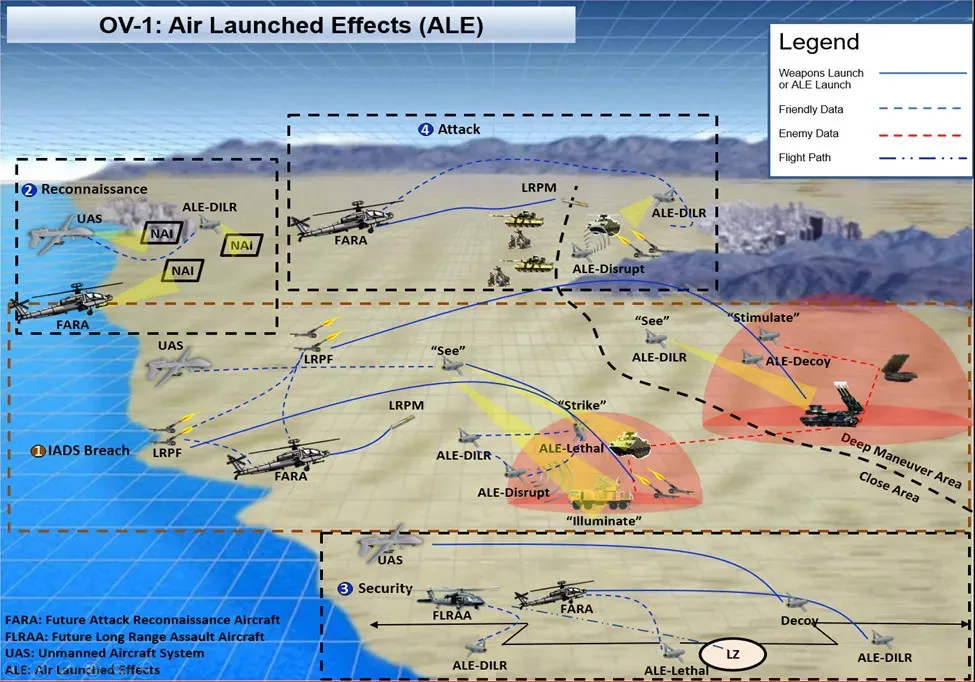















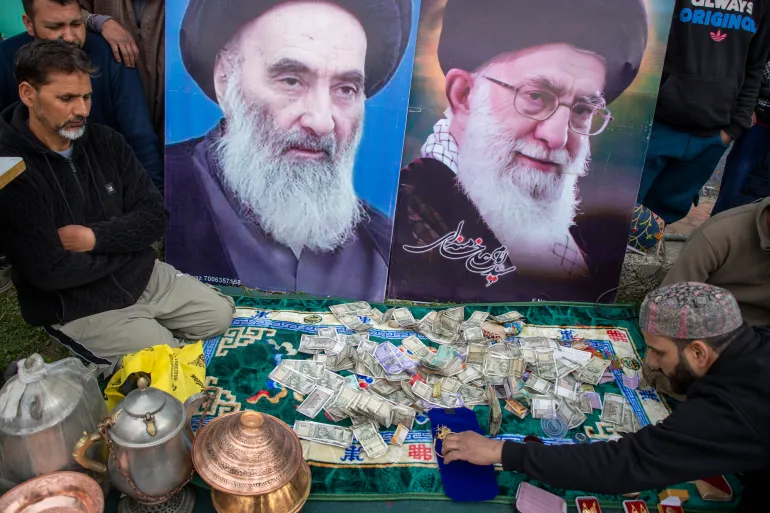
![Cash donated for Iran at a collection drive in Indian-administered Kashmir [Junaid Bhat/ Al Jazeera]](https://i0.wp.com/www.aljazeera.com/wp-content/uploads/2026/04/IMG_9741-1-1776318418.jpg?w=640&ssl=1)


![Jewelry donated by women for an Iran aid drive in Indian-administered Kashmir [Junaid Bhat/ Al Jazeera]](https://i0.wp.com/www.aljazeera.com/wp-content/uploads/2026/04/IMG_9748-1776318679.jpg?w=640&ssl=1)