BBC Breakfast host Sally Nugent was left baffled as her co-star disappeared live on air while presenting
BBC Breakfast host Sally Nugent was left baffled as her co-star disappeared live on air while presenting (Image: BBC)
BBC Breakfast suffered a live on-air blunder during Monday’s show.
The latest installment saw hosts Sally Nugent and Jon Kay on the red sofa, where they delivered the latest news, including the death of show regular and Normandy veteran Ken Hay, who survived capture just weeks after D-Day and spent years educating children about the war. He died aged 101.
As usual with BBC Breakfast, the hosts heard from weather presenter, Matt Taylor, who gave a forecast update to viewers at home.
However, on Monday’s broadcast, Matt’s feed suddenly cut out, as he disappeared live on air and it left a blank screen on air, reading: “Weather presenter editing playlist…”
Host, Sally, 55, said: “Oh, where’s he gone? Just in time. We kept a hold of him there” to which Jon, 56, added: “He’s gone, finished for shift!”
Poking fun at the technical blunder, Sally quipped: “Need another 50p in the metre!” while Jon added: “Let’s get the news, travel and weather where you are. Hopefully they’re there!”
It comes as veteran weather presenter, Carol Kirkwood, left the BBC show earlier this year after more than 25 years presenting. The BBC favourite announced her decision to step down earlier this year on the programme, revealing she wishes to dedicate more time to her husband Steve.
When Carol announced her departure at the time, she became emotional whilst discussing the difficult choice with Jon and Sally. At the time, she expressed: “It’s really hard for me to say this because I love my job.
“I love all of you guys, my weather colleagues, every department I’ve worked with, and of course, all the viewers I’ve been so engaged with for many years.
“But it’s great! I don’t want to be coming in on my zimmer frame, going, ‘I can’t reach the Northern Isles anymore!'”.
Discussing her future plans post-departure, Carol disclosed she’ll be dedicating more time to her husband Steve.
She continued: “We only got married a couple of years ago and we’re like ships that pass in the night, so I’m so looking forward to doing that.
“I’ve still got my books, I’ve got a few other bits and pieces. I want to travel as well.”
BBC Breakfast continues at 6am on BBC One and BBC iPlayer.
Michael Carrick has struck a defiant tone after Manchester United equalled their worst start to a Premier League season, but a woeful 1-1 draw at Fulham left the beleaguered boss under mounting pressure.
Trailing to Lisandro Martinez’s farcical own goal, United were just moments away from a third successive defeat on another dispiriting afternoon for Carrick on Sunday.
Recommended Stories
list of 4 itemsend of list
Matheus Cunha’s deflected 89th-minute equaliser spared United from new humiliation.
But escaping with a barely deserved point against a winless side placed second-from-bottom of the Premier League was hardly cause for celebration.
With only one win so far this season, United have matched their lowest points total after five matches in the Premier League era.
Sitting in 12th place with five points, Carrick’s men equalled the mark set by Louis van Gaal’s United in 2014-15, when they went on to finish fourth.
The statistics are damning enough in their own right, but the eye test during their moribund performance at Craven Cottage provided an even more insightful look at what ails United.
Lacking a cutting edge in attack, bereft of defensive organisation and, in the words of Cunha, short of energy and drive until they fell behind, this was the kind of flawed display that has scarred so many United seasons since their last title in 2013.
Carrick was expected to build on last season’s climb to a third-place finish during his spell as interim boss.
But having hauled United from the wreckage of Ruben Amorim’s self-destructive reign, Carrick is in danger of losing his way in his first season as permanent boss.
A wretched 2-0 defeat at promoted Hull on the opening weekend set alarm bells ringing among the United faithful.
Beaten in the Manchester derby by an Erling Haaland goal that should have been disallowed last weekend, United then blew a two-goal lead at home for the first time in 50 years in a League Cup meltdown against Brighton.
‘Fine margins’
Already 10 points behind leaders City, Carrick’s team were so underwhelming against Fulham that even one of the manager’s former teammates took a swipe at United.
Commenting on the match for Sky Sports, ex-United defender Gary Neville was scathing in his assessment of their performance at the start of the second half.
“I’ve watched Man United since the age of five and that’s the worst 15 minutes I’ve ever seen. Absolutely pathetic,” Neville said.
The 51-year-old added: “I’ve never seen such a lack of effort. What must Carrick be thinking?”
Carrick does not have the confrontational personality of some of his United predecessors, but he tried his best to quiet the noise as he searched for reasons for optimism.
“It’s not been ideal. It was always going to come at some point, and it’s come at the start of the season,” he said.
“On the other side of it, at Everton, a 25-yard shot, top corner for their equaliser. The City goal that’s not a goal. Today, own goal, that’s one of them things.
“It’s pretty fine margins that have flipped it. I know we can do better; we need to do better at certain things.
“But I’m not despondent because I think we’ve shown some good signs as well.”
Carrick has three weeks to stew on United’s miserable start during an extended international break.
Questions about United’s transfer policy and fitness regime are growing louder.
Calvin Bassey celebrates Fulham’s first goal, an own goal scored by Manchester United’s Lisandro Martinez [Peter Cziborra/Action Images via Reuters]
‘We’ll get back to winning’
The 45-year-old must come up with answers before they return to action with a crucial clash against bottom-of-the-table Tottenham on October 10.
Losing to Roberto De Zerbi’s side would be a huge blow to Carrick’s hopes of turning the tide, especially with tricky trips to Atletico Madrid and Leeds looming after Tottenham visit Old Trafford.
But Carrick is putting his faith in United’s players absorbing the lessons from their painful start.
“You learn about each other, they learn about me, I learn about the individual and as a team, how we respond, what our reaction is,” he said.
“That’s part of growing as a group. You have to go through certain things to get to the end of it.”
Carrick said he had “mixed” reactions to the match but was focusing on the positives and bouncing back after this “first chapter”.
“There are parts we can do better. The way we responded to going down was really pleasing, the boys were really positive and played with good purpose,” Carrick said in a post-match interview.
“I’m convinced we’ll have a good season. We’re having a spell that feels bigger than it actually is to the outside. We’ll get back to winning football matches and we’ll be all right.”
Denmark, Greenland and the United States are set to sign a security agreement that Copenhagen says will give NATO a larger role in protecting the Arctic, potentially shifting responsibility beyond the United States and Denmark alone.
The agreement is expected to be signed at the United Nations General Assembly in New York on Tuesday. Its full contents have not been made public, although US President Donald Trump has described it as giving Washington “permanent control” over Greenland’s security.
Denmark and Greenland have not endorsed Trump’s description. Both have said the agreement will benefit Greenland while respecting the island’s sovereignty.
The deal follows months of pressure from Trump, who has repeatedly argued that the United States should control Greenland and at times declined to rule out military or economic measures to acquire the semi autonomous Danish territory.
Stay ahead of the geopolitical week.
MD Briefing delivers expert analysis across five global fronts — the Indo-Pacific, energy, geoeconomics, European security, and the Middle East — every Monday morning. Free.
His demands triggered a diplomatic crisis within NATO and pushed Copenhagen and Nuuk into negotiations with Washington to address US security concerns while maintaining Greenland’s status within the Kingdom of Denmark.
A broader NATO role
Danish Foreign Minister Lars Lokke Rasmussen said the agreement would change the way Arctic security is handled.
“It will be in a form where responsibility for security in the Arctic is not only Danish or American,” Rasmussen told Danish broadcaster TV2 on Sunday. He added that NATO would play a major role in protecting the region.
A NATO spokesperson said the alliance welcomed the agreement, describing it as a step that could advance security, stability and cooperation in the Arctic.
Rasmussen travelled to New York for the signing but has declined to disclose the agreement’s details.
He said Denmark had been open from the beginning to addressing what he described as legitimate US security interests.
The negotiations therefore appear to have focused on finding a framework that can accommodate Washington’s strategic concerns without formally transferring Greenland’s sovereignty to the United States.
Trump’s claim raises questions
Trump has offered a different description of what the agreement means.
In a post on Truth Social on Friday, he said the deal gives the United States “permanent control over security, and all other needs” in Greenland. He also said no US adversary would be able to establish a base or military presence on the island without Washington’s written approval.
Copenhagen has not publicly responded to that characterization.
The difference between Washington’s description and Denmark and Greenland’s public statements leaves important questions about the agreement unresolved.
Among the most significant is whether it changes the 1951 US Denmark defence agreement, which provides the legal basis for the American military presence in Greenland.
The document’s provisions on US access, military infrastructure and the role of NATO have not been made public.
Greenland at the centre
The agreement comes as Denmark acknowledges that it underinvested in Greenland’s defence for decades.
Copenhagen has since pledged to increase its military presence on the island and strengthen Arctic surveillance, including through greater NATO involvement.
Greenland’s government has sought to reassure residents that the negotiations do not compromise the island’s sovereignty.
Erik Jensen, an opposition lawmaker in Greenland, said on Facebook that he had read the draft agreement and felt reassured by its contents. He also praised Greenland’s foreign minister for handling the negotiations.
For Greenland, the issue is particularly sensitive because the island has extensive autonomy within the Kingdom of Denmark and has long maintained a political debate over eventual independence.
What the agreement could mean for the Arctic
The deal could mark a significant change in the security architecture of the Arctic.
Greenland occupies a strategically important position between North America and Europe, making it valuable to the United States and NATO as competition over the Arctic increases.
A larger NATO role could provide a multilateral framework for responding to concerns about military activity and strategic infrastructure in the region. At the same time, the agreement’s precise legal and operational arrangements will determine how far that shift actually goes.
Until the text is released, it remains unclear whether the agreement represents a substantial restructuring of Greenland’s defence arrangements or primarily a political framework for closer cooperation.
What is clear is that the negotiations have moved Arctic security from a dispute centred on US ambitions for Greenland toward a broader discussion about NATO’s collective role in one of the world’s increasingly contested strategic regions.
The In Memoriam segment at the 78th Emmy Awards opened with a tribute to Catherine O’Hara from her movie and TV kids — Macaulay Culkin, Annie Murphy and Dan Levy.
“There are all kinds of words I could use to describe Catherine,” Culkin said as he took the stage with the “Schitt’s Creek” stars. “She was encouraging, she was warm, she was funny, but the word that I think of is ‘mama.’”
O’Hara, of course, played Culkin’s mother in “Home Alone” and “Home Alone 2.”
“She wasn’t just a wife and mother to [husband] Bo and [sons] Matthew and Luke. She was my mom. She was our mama,” Culkin said, looking toward Murphy and Levy. “And by extension, she’s all of our mama…. She may have forgotten me twice, but we will always remember her.”
Murphy and Levy also shared personal anecdotes about their TV mom. Murphy spoke about O’Hara’s laugh, and the many interactions she’s had with fans “that remind [her] how profoundly Catherine has impacted the world … because she brought us joy.” Levy shared what it was like to work with O’Hara and how she taught him to “always say yes.”
Singer-songwriter Noah Kahan performed a cover of Simon & Garfunkel’s “Bridge Over Troubled Water” as images of actors, writers, directors and other industry figures who died this year were projected onto the stage.
“For over 1,000 episodes of television, the great James Burrows set a standard of comedy directing that will be cherished and studied for generations to come,” Curtis said. “And sadly, last year, we lost another cherished legend. Our beloved Meathead, Rob Reiner.”
Reiner won a posthumous Emmy for guest actor in a comedy series for his work on “The Bear” earlier this month. Curtis said Reiner broke the record set by his father, Carl Reiner, for the longest gap between acting Emmys.
“He was generous and kind and funny as hell and a friend to all,” Curtis said. “We all miss Rob and Michele [Singer] and all those we lost this year.”
The ceremony also featured a tribute to Dolly Parton earlier in the evening with Sally Field and Reba McEntire.
South Korean officers injured in DMZ explosion, possibly caused by a landmine, according to local media reports.
By Reuters and The Associated Press
Published On 21 Sep 202621 Sep 2026
Three South Korean military officers have been wounded in an explosion in the western sector of the Demilitarized Zone (DMZ) that separates North and South Korea, Seoul’s Joint Chiefs of Staff (JCS) said.
The cause of Monday’s explosion was not immediately clear, the Ministry of Defence said.
Recommended Stories
list of 3 itemsend of list
Two of the officers were evacuated from the site by helicopter, while the third was transported by land before being airlifted, according to the ministry. The officers are being treated at a military hospital near the capital Seoul, it said.
Mine explosions and other blasts are a recurring hazard in and around the DMZ, where legacy devices and suspected stray mines have periodically wounded military personnel on both sides.
The DMZ, which is 248km (154 miles) long and 4km (2.5 miles) wide, is one of the world’s most heavily armed borders. An estimated 2 million mines are peppered inside and near the border, which is also guarded by barbed wire fences, tank traps and combat troops on both sides. The zone is a legacy of the Korean War from 1950 to 1953, which ended with an armistice but not a peace treaty.
There have been growing concerns in South Korea about increased activity by North Korean soldiers near the military demarcation line as the North strengthens its border defences during prolonged tensions.
New imagery shared with TWZ by Anduril shows its YFQ-44A Fury Collaborative Combat Aircraft (CCA) configured with air-to-ground weapons, underscoring the fact that the CCA could take on an air-to-ground role in the future in addition to its current air-to-air focus. Yesterday, Anduril executives revealed that the company had begun integration and fit checks for a range of air-to-ground weapons, although they confirmed to us that those weapons had not yet been flight-tested aboard Fury.
The YFQ-44A is one of two aircraft selected by the Air Force for its CCA Increment 1 program, alongside General Atomics’ YFQ-42A Vengeance. The service’s stated priority for the initial aircraft is air dominance, and Anduril says the production FQ-44 will have four external hardpoints capable of carrying four AIM-120 AMRAAM air-to-air missiles. The YFQ-44A, which currently has two underwing pylons for two AMRAAMs, has already conducted a live AIM-120 firing as part of testing with the Air Force’s Experimental Operations Unit.
A YFQ-44A fires an AIM-120 weapon in secluded airspace over the Mojave Desert. U.S. Air Force photo by Jennifer Healy Tech. Sgt. Jennifer Healy
The new imagery, however, points toward a substantially broader weapons envelope, with the aircraft shown carrying different air-to-ground stores on its two external stations. The weapons are shown fitted to the aircraft during a ground-based fit check, an important step in the integration process before captive-carry and, ultimately, live-release testing, if Anduril and the USAF choose to go down that route.
During a recent roundtable with reporters yesterday at the Air & Space Forces Air, Space and Cyber Symposium that TWZ is attending, Anduril’s Jason Levin, senior vice president for Air Dominance and Strike, and Erin Simpson, vice president for Strategy for Air Dominance and Strike, said the company had already begun integration and fit checks of 500-pound Joint Direct Attack Munitions (JDAM), 250-pound Small Diameter Bombs (SDB), and low-cost cruise missiles. Pods for 2.75-inch guided or unguided rockets are also seen fitted to the aircraft. In each case, the stores are mounted on a twin adaptor rack.
Furthermore, Anduril’s plans extend to testing the Fury with other air-to-air weapons and targeting pods.
Importantly, the diversity of weapons will give Fury a range of potential missions beyond high-end air-to-air combat, including counter-UAS, counter-cruise-missile, and air-to-ground or air-to-surface strike missions.
“We’ve begun integration and fit checks of a lot of other munitions,” an Anduril executive said. “We’ve done 500-pound guided bombs. We’ve done Small Diameter Bombs.”
Introducing: Barracuda-M Family of Cruise Missiles
It should be noted that giving the YFQ-44— or YFQ-42A — the ability to deliver a JDAM or SDB against a predetermined fixed target is not particularly complex. This type of austere air-to-ground capability should be relatively straightforward to add, providing a useful secondary strike function without requiring the aircraft to take on the far more demanding requirements associated with dynamic targeting or more sophisticated air-to-ground missions. This could also allow for these increment one CCAs to be used independently as air-to-ground ‘weapons trucks’ if their air-to-air assistance isn’t needed.
When the production FQ-44 arrives, it will have four hardpoints, compared with the two currently fitted to the YFQ-44A. Anduril says loading all four stations with AIM-120s for the Air Force’s air-dominance mission would reduce the range of the aircraft but would not require a larger engine or otherwise push the aircraft outside its basic takeoff, landing, climb, and flight-envelope requirements.
Anduril
While the Air Force’s initial CCA requirement is heavily focused on air dominance, the same aircraft could potentially be configured for different missions by changing its external stores and sensors. Anduril is already positioning Fury as something more than a single-purpose “missile truck.”
That flexibility could become increasingly important as the Air Force considers how CCAs will be employed alongside crewed fighters. During a July Experimental Operations Unit (EOU) exercise at Creech Air Force Base, Fury flew in the same airspace as crewed fighters and other CCAs while Air Force personnel operated its Mission Autonomy system. Anduril says the aircraft has also flown in formation alongside F-35s, although the fighters were not yet controlling Fury.
The company is now working toward what it calls “quarterback integration,” in which a crewed aircraft will direct autonomous aircraft as part of a larger combat formation. Anduril says that work has already progressed through hardware- and software-in-the-loop environments and onto the aircraft itself, with live testing expected in the near term.
Another view of the twin rack loaded with two GBU-39/B Small Diameter Bombs (SDB) under the wing of the YFQ-44A. Anduril
A Fury operating under the direction of an F-35 could potentially carry air-to-air missiles for counter-air missions, while other aircraft in the formation could be configured for strike or other effects. Alternatively, the same autonomous aircraft could be reconfigured for a different mission before being dispersed to another operating location. Having four pylons would also give the production Fury greater scope to undertake “swing-role” missions, flexing between prosecuting air and surface targets as required.
The July EOU exercise also demonstrated a rapid “hot reload” capability, with two Air Force personnel replacing an AIM-120 on a running Fury and reducing the turnaround between sorties to single-digit minutes. The demonstration was intended to show how CCAs could be rearmed and returned to the fight without the large maintenance and ground-support footprint associated with traditional combat aircraft. This will be vital as the Air Force integrates CCAs into its Agile Combat Employment concept, in which the drones can be dispersed across multiple operating locations rather than relying on a single large ground footprint.
Carrying inert AMRAAMs, a YFQ-44A flies together with an F-35A from an Air Force test unit. via Anduril
Also speaking yesterday at the Air & Space Forces’ Air, Space and Cyber Symposium was Air Force Chief of Staff Kenneth Wilsbach, who confirmed that the service hasn’t necessarily made any decisions on Increment 2 of the CCA program yet, but it could include air-to-ground capabilities.
“We’re going through some thought processes about what Increment 2 should be able to do. Increment 1 is air-to-air, so do we want air-to-ground? Maybe, maybe not. Do we want it to have more sensors? Do we want it to be a lot cheaper? Do we want it to be more attritable or expendable, or do we want it to be more exquisite? Do we want shorter range or longer range? Do we want something that can be dropped from another platform, or does it take off and land by itself?”
“These are all considerations,” Wilsbach continued. “It’s still a bit early to make any definitive decisions on that, especially before we really get our hands on the current Increment 1 aircraft and learn from them.”
It’s also important to note that export customers for Fury may demand an air-to-ground capability set, especially if they will only be buying a limited number of CCA types. Having this option ready to go is relevant to prospects beyond the U.S., which are certainly growing.
Fury’s air-to-ground weapons work is part of a broader effort to make the aircraft a flexible combat system rather than simply an uncrewed air-defense adjunct for crewed fighters. The Air Force’s immediate priority may be air dominance, but the weapons integration underway suggests that the same four hardpoints could eventually support a much wider range of missions. This weapons flexibility could ultimately be central to the broader CCA concept, especially as the Air Force works out what it wants Increment 2 to deliver.
Every so often, an aspiring screenwriter wanders into the dim red glow of Jumbo’s Clown Room hoping to interview one of the dancers. “They’re like: ‘I’m writing a screenplay. Can I interview you?” says Cecilia Fairchild, one of the longtime dancers at the renowned East Hollywood bikini bar.
Her response is usually some version of this: “I’m like, ‘Why are you writing about that? Don’t you know we are all writing that too? Leave us alone,’” Fairchild says with a mischievous laugh. What bothers Fairchild is the assumption behind it — that the dancers are voiceless and helpless. Worst of all, they’re presumed to have stories worth mining but not the ability to produce literature themselves.
Jumbo’s has a longstanding reputation of being part of L.A.’s literary lore.
In the 1970s and 1980s, Charles Bukowski — L.A. nightlife’s debaucherous poet laureate — was rumored to haunt the bikini bar in its early days. David Lynch wrote his classic screenplay “Blue Velvet” at the bar. (According to local legends, the iconic opening shot of “Blue Velvet” came to Lynch when he spotted a dancer with only one ear.) Writer and director Quentin Tarantino reputedly wrote at the bar. But while Jumbo’s has garnered a mythology as a magnet for filmmakers, writers and musicians who collect impressions, the dive’s dancers have shifted from being the subject to the artists.
Many of Jumbo’s dancers write fiction and memoir, host literary salons across Los Angeles and find ways to tell their own stories rather than serve as muses. “It’s funny because I wish that male auteurs would tell the story of customers. I want a sniffer’s memoir. I think that’s a real point of view,” Fairchild says. (Speaking of alienation and horniness, the dancer has been meaning to crack the Marcel Proust canon.)
Honey Ryder (Claudia Musikul) types on the bar inside Jumbo’s Clown Room.(Carlin Stiehl / For The Times)
Fairchild is a playwright, poet and memoirist. Her recently completed memoir, “The Poison + The Spit,” traces a life of tumultuous love affairs and a stint dancing in New Orleans, rendered in prose that is whimsical, surreal and deeply emotional. The dancer also hosts the Downpour, a popular monthly literary salon at Bar Covell, and recently directed “Fool in the Pool,” a play that premiered at El Condor in Silver Lake this summer.
Her writing style mirrors her dancing: kinetic, wild and unpredictable. She sometimes takes the stage in roller skates, dancing to David Bowie. Her memoir achieves that same sense of hypnotic motion. “The memoir is so heavy,” she says. “Everything was so sad that I needed some lens to look at it that was fun, zippy and crazy.”
For Fairchild, dancing and writing possess the same need to expose oneself. “Vulnerability is one of the most interesting things about dancing,” she says. “There really is the potential to look into people, and they look into you, and you wordlessly share something with them that is half sexual and half this other thing.”
Meanwhile, Danielle Henderson — another dancer and aspiring novelist at Jumbo’s who writes under the pen name D.M. Faulk — has been working on a science-fiction novel titled “Meridian.” The book imagines a dystopian American wasteland where pregnant women are surveilled and controlled. She has been a longtime science-fiction fan since she and her father watched “Jurassic Park” and “Planet of the Apes” when she was a child.
Long treated as passive muses by visiting writers, Jumbo’s dancers — from left, Caroline Blaike (Caroline Moyer), Honey Ryder (Claudia Musikul), and Cecilia Fairchild — are reclaiming the narrative as active poets, memoirists and screenwriters.
(Carlin Stiehl / For The Times)
Unexpectedly, the Jumbo’s comically tiny dressing room became the inspiration for her novel. In 2022, when Roe v. Wade was overturned, conversations between dancers about reproductive rights ignited in the dressing room, which in turn informed her novel.
“A lot of those conversations happen in the dressing room. I’m incredibly inspired by the women I’m with who are incredibly sex positive and strong.” That ethos informed Henderson’s protagonist, Zayla.
In recent years, the bar has become a local author hangout. Allie Rowbottom, the author of the recent buzzy adult film novel “Lovers XXX,” discovered the bar in 2011 on the occasion of writer Elizabeth Hall’s birthday party. “I recall sitting front row on novelist Jon Lindsey’s lap, raining dollar bills on dancers performing intricate, beautiful athletic feats,” Rowbottom says. “I spent more than I could afford that night and have been back often since.”
Increasingly, Jumbo’s has cemented itself as a watering hole to the local writing scene. “Two years ago, I rented out a few tables for Jon Lindsey’s birthday, attended by Los Angeles literati like Tea Hacic-Vlahovic, Sammy Loren, Morgan Krantz, Tex Gresham and Nada Alic,” she adds.
According to Rowbottom, Jumbo’s is rife for literary inspiration. “To me, Jumbo’s feels uniquely dedicated, as a venue, to intersecting sex and art, despite the obvious dissonance of selling either,” she says. “I suspect such is what has historically made it a rich spot for writers, dissonance and tension being of utmost importance to good literary work.”
From left, Caroline Blaike (Caroline Moyer), Honey Ryder (Claudia Musikul), Cecilia Fairchild and Stephen (Aaron Laughton) inside Jumbo’s Clown Room.
(Carlin Stiehl / For The Times)
A charged scene in L.A. writer Aiden Arata’s critically-acclaimed 2025 essay collection, “You Have a New Memory,” features a night out at Jumbo’s Clown Room. “The dancers are starlets, athletes, artists; the theme is clown, and also longing — longing is a high form of physical comedy,” says Arata. “It possesses that heady mix of scuzz and glamour that can trick you into thinking your life is about to change.”
Jumbo’s burgeoning literary interest revives a hotly debated question: Who gets to tell the stories of sex work? For decades, the club has inspired celebrated writers and filmmakers, but Claudia Musikul — a dancer at Jumbo’s and a screenwriter herself — hopes its literary legacy will increasingly belong to the people at its core: the dancers.
“I hope that everybody can actually get their work out there because I feel it’s much deserved,” says Musikul. “You’ve probably heard about Bukowski, David Lynch doing ‘Blue Velvet’, or Anthony Bourdain. That’s all really cool, but in a way, it’s the actual dancers’ turn to have that kind of recognition.”
Musikul primarily writes screenplays about strippers, a subject she believes is seldom represented authentically. She has been in writing partnerships and workshops while developing scripts centered on dancers. In a sea of films depicting sex work, she cites Paul Verhoeven’s “Showgirls” as a film that resonates with her experience.
“‘Showgirls’ is my very favorite movie,” she says. “It’s my very special place in my heart movie.”
For Caroline Blaike, a poet and dancer at Jumbo’s, the connection between dancing and writing lies in observation. Years of performing have made her acutely attentive to the people who pass through the club, a voyeuristic habit that carries over into her poetry.
“When you’re a dancer, you’re very observant. You watch every person that walks in,” she says. “I feel like the way dancing makes you observe people helps you write from a perspective that other people can then relate to.”
Blaike has been working on a poetry collection that explores love, queerness, desire and personhood. “It’s gotten a little sexier over time, which is kind of fun,” she says. “I also just write about love, being gay, just existing. It can be a little aggressive, but people seem to like it, so that’s good.” She writes these poems from her prized typewriter — a “1951 Olympia typewriter that is my child.”
Among Blaike’s earliest literary touchstones was Maya Angelou. She still remembers encountering Angelou’s line in her poem “Still I Rise,” “I dance like I have diamonds at the meeting of my thighs,” and being stunned by it.
“I was like, ‘Oh, you can write that? That’s amazing,’” she says.
The literary ambitions at Jumbo’s extend well beyond the stage. Stephen Laughton, one of the club’s security guards, jokes that he leads a double life. By night, he keeps watch at the door; by day, he is an award-winning playwright. He’s recently been named the new associate artistic director of the Echo Theater in Atwater Village, and Laughton’s served as the writer-in-residence in the astrophysics department at the Natural History Museum in New York. Last November, his latest play became the first in the world to be staged in a planetarium.
“It’s this crazy, beautiful science play about two guys who meet in a club that explores mental health in the LGBT community, human interaction, time and astrophysics,” Laughton says.
Like many of his co-workers, Laughton has found himself turning Jumbo’s into copy. The club, he suggests, has a way of compelling everyone who works there to write about it.
“I think that probably what we’re all going to realize is that we’re all writing a version of the exact same story,” Laughton jokes.
Blaike argues that the dancers’ diverse talents are a key reason why Jumbo’s Clown Room has become such a beloved institution in the city. “It attracts confident, creative women who work there,” says Blaike. “Our community of women is supportive of each other and each other’s endeavors. … It really does facilitate that.”
The UN was created to help save the world from war. More than 80 years later, conflicts and atrocities continue. So what has the UN actually achieved, and what are the limits of its power? Al Jazeera’s Noor Wazwaz explains.
High pressure is building across the UK and this means the weather will become more settled with brighter conditions.
After a chilly start on Monday morning, with sunshine and light winds across much of England and Wales, temperatures will climb into the low 20s.
Even with more cloud in Scotland and Northern Ireland, it will turn warmer with highs also reaching 18 to 22C.
It will also start to feel more humid again.
That more humid air combined with light winds across England and Wales into Tuesday means it will start off rather misty and foggy with areas of low cloud for some.
Once the sun has broken through though, it will feel warmer still.
Temperatures could peak at around 24 or 25C in south-east England, but reach the low 20s Celsius in many other parts of England, Wales, Northern Ireland and Eastern Scotland.
The highest temperature though will be determined by how much the cloud breaks allowing the strong September sunshine through.
2026 has already been a record-breaking year for the number of days above 25C, with last week exceeding the record of 89 days set in 1959.
Is President Trump holding the Kennedy Center hostage? The allegation has been made at least twice, most recently by John F. Kennedy’s niece Kerry Kennedy, and earlier by Rep. Joyce Beatty (D-Ohio), an ex-officio member of the board, who has sued to keep Trump’s name off the building.
The Merriam-Webster dictionary defines “hostage” as, “a person taken by force to secure the taker’s demands.” Swap, “person” for the “Kennedy Center” and “taker” for “Trump,” and you have a pretty straightforward “yes.”
The ongoing Kennedy Center dumpster fire points to an unusual presidential obsession with the nation’s premier performing arts venue that dates back to Trump’s first term when he became the first sitting president in history to twice miss the annual Kennedy Center Honors.
In his second term, Trump turned that snub upside down by firing the board and strong-arming his way into being named chairman. If he expected to be welcomed into the arts community with open arms, he was gravely mistaken. His takeover resulted in a wave of high-profile cancellations that ultimately led to a massive dip in ticket sales. The exodus became even worse when the Trump-appointed board voted to add Trump’s name to the building late last year. The reaction, it seems, injured the president’s fragile ego and incurred his wrath.
By early February the president announced he would close the center for a two-year, $257-million renovation. Calling the historic venue “dilapidated,” Trump said he would be the one to restore it to glory. Behind the scenes another story was unfolding, and six months later the Washington Post reported that “ticket sales and fundraising collapsed” after Trump’s name was added to the building, “even as the center’s leaders publicly touted a financial turnaround.”
This week saw chaos at the venue that even the most seasoned journalists struggled to keep up with as the board voted to close the building on the same day that a federal judge upheld an order that Trump’s name could not be restored to its facade after he ordered it removed in late May.
Trump took to social media to decry the decision, threatening to withhold his support for the renovation and noting that the center could be “ripped down” if he wasn’t formally honored with his name on the building. Despite a preliminary injunction barring the venue from closing, people were kicked out of the building and barricades erected in the name of public safety that same day.
Those prone to hyperbole might be tempted to call this presidential tantrum disguised in procedural clothes a constitutional crisis. Or you could just say that Trump has taken the Kennedy Center hostage. The taker wants his name on the building, and the center will not be released for renovation or reopening if that doesn’t happen.
In the meantime an image of Trump on Air Force One was captured that shows him holding a large placard that reads, “Kennedy Center DEMO[LISHED],” leaving concerned parties to wonder just what exactly the chairman of the board has in mind. Is he using a Sharpie at this very moment to slash a line through the image at the center on that board, or is it just a prop to be trotted out in a cruel bit of future social media hazing?
Getting lost in all the drama: a beloved arts venue has gone pointlessly dark, and the people who loved it are heartbroken. If no one is inside to hear the wind whistle, does it make a sound?
I’m Arts editor Jessica Gelt, willing to rustle up a ransom. This is your arts and culture news for the week.
You’re reading Essential Arts
Our critics and reporters guide you through events and happenings in the SoCal arts scene. In your inbox every Friday.
By continuing, you agree to our Terms of Service, which include arbitration and a class action waiver. You agree that we and our third-party vendors may collect and use your information, including through cookies, pixels and similar technologies, for the purposes set forth in our Privacy Policy such as personalizing your experience and ads.
The week ahead: A curated calendar
FRIDAY
Oliver Lee Jackson: Form Follows Feeling The Bay Area painter, sculptor, and printmaker’s work, created over decades, is inspired by the human figure in its composition and structure. Opening reception, 6-8 p.m. Friday; 10 a.m.-6 p.m. Tuesday-Saturday. Lisson, 1037 N. Sycamore Ave. lissongallery.com
“Vitruvian Figure (Los Angeles Memorial Coliseum),” 2026, 3D model by Paul Pfeiffer.
(Paul Pfeiffer/Perrotin)
Paul Pfeiffer: Olympia In new work focused on Los Angeles, the artist explores the intersection between media, spectacle, architecture and the body ahead of the city hosting the 2028 Olympic Games. Opening reception, 6-8 p.m. Friday; Pfeiffer in conversation with Britt Salvesen, 3 p.m. Saturday; exhibition, 10 a.m.-6 p.m. Tuesday-Saturday, through Nov. 7. Perrotin, 5036 W Pico Blvd. perrotin.com
SATURDAY
“Couple walking, Park Avenue,” 1960.
(Estate of Roy DeCarava)
Roy DeCarava: the sound i saw The exhibition presents more than 130 images created between the late 1940s and 1960s, depicting the photographer’s intense interest in the relationship between the visual and the aural. Accompanying the exhibition, in the gallery next door, will be “SIDE B: the sounds,” a listening room featuring DeCarava’s personal playlists and favorite jazz album. Opening reception, 6-8 p.m.; exhibition runs through Oct. 31. David Zwirner Gallery, 606 and 6166, N. Western Ave. davidzwirner.com
Sutton Foster The two-time Tony winner and TV star performs Broadway hits and standards with Pacific Jazz Orchestra, featuring new arrangements by conductor Chris Walden. 8 p.m. The Soraya, 18111 Nordhoff St., Northridge. thesoraya.org
Mia Middleton: Summoning Cleo New work by the artist explores interpreting familiar forms through a surreal lens. Opening reception, 5-7 p.m. Saturday; exhibition runs through Oct. 24. Roberts Projects, 442 S. La Brea Ave. robertsprojectsla.com
Mrs. Warren’s Profession Real-life mother and daughter Cyndy Fujikawa and Nell Murphy star in this production of George Bernard Shaw’s 1893 play about a Victorian woman coming to terms with how she built a business empire. Directed by Michael Rothaar. Opening night, 8 p.m. Saturday; 8 p.m. Thursdays, Fridays and Saturdays; 3 p.m. Saturdays and Sundays (check website for exceptions), through October 25. Pacific Resident Theatre, 707 Venice Blvd, Venice. pacificresidenttheatre.org
Grammy Award-winning composer and bandleader Arturo O’Farrill and Afro Latin Jazz Orchestra open the Segerstrom Center for the Arts’ Jazz series.
(John Abbott)
Arturo O’Farrill & Afro Latin Jazz Orchestra The pianist and composer, a six-time Grammy winner, and his ensemble kick off the Segerstrom Center for the Arts’ 2026-27 Jazz series with Afro-Cuban rhythm, modern jazz harmony and big-band sounds. 8 p.m. Segerstrom Center for the Arts, 600 Town Center Drive, Costa Mesa. scfta.org
Other Places An alternative art fair devoted to contemporary art spaces and projects, plus workshops, readings, talks and performances. Noon-7 p.m. Angels Gate Cultural Center, 3601 S. Gaffey St., San Pedro. opaf.info
Karma The gallery presents solo exhibitions by painters Randy Wray (“Hothouse”) and Felipe Suzuki, one featuring vivid abstractions, and the other, work created through the lens of memory . Opening reception 6-8 p.m. Saturday; 10 a.m.-6 p.m. Tuesday-Saturday, through Oct. 24. Karma, 7351 Santa Monica Blvd. karmakarma.org
SUNDAY
Alexander Apóstol “Regime: Dramatis Personae” (2017), a series of black-and-white portraits of archetypal figures in both populist and authoritarian governments, uses photography to analyze the intertwining of art and political power in Latin America. 11 a.m.-5 p.m. Tuesday, Wednesday and Friday; 11 a.m.-8 p.m. Thursday; 11 a.m.-6 p.m. Saturday-Sunday; through Jan 3, 2027. Museum of Contemporary Art, 250 S. Grand Ave., downtown L.A. moca.org
Textile Alchemy: The Art of Reiko Sudō and NUNO More than 100 limited-edition textiles, along with numerous objects, including drawings, sketches, raw materials, tools, mock-ups, and prototypes, are part of the largest retrospective ever of the Japanese designer’s work created with her textile collective and other collaborators from throughout Japan, Through March 7, Los Angeles County Museum of Art, Resnick Pavilion, 5905 Wilshire Blvd. lacma.org
TUESDAY
The entrance of the Lucas Museum of Narrative Art in Los Angeles in Exposition Park.
(Ron De Angelis/For The Times)
Lucas Museum Of Narrative Art Where else will you see Luke Skywalker, Vincent Van Gogh, Norman Rockwell, Gordon Parks and Charles Schulz under one roof? The new museum officially opens Tuesday, featuring 100,000 square feet of space spread across more than 30 galleries, exhibiting a mind-bending range of visual storytelling. Check out our full coverage. Public opening, 10 a.m.-5 p.m. Tuesday; regular hours, 10 a.m.-5 p.m. Mondays, Wednesdays and Thursdays; 10 a.m.-5 p.m. Fridays; 9 a.m.-9 p.m. Saturdays; 9 a.m.-5 p.m. Sundays. Lucas Museum of Narrative Art, Exposition Park, 3800 S. Vermont Ave. lucasmuseum.org
THURSDAY
Bilal The Grammy Award-winning singer-songwriter delivers a blend of soul, funk, and jazz. Queens-born R&B musician Yaya Bey is the opening act. 8 p.m. Carpenter Center, 6200 E. Atherton St., Long Beach. carpenterarts.org
Each Other’s Hands: Trans Mutual Aid, 1966—1996 Oxy Arts, Occidental College’s community-based arts hub, presents an exhibition featuring the work of six L.A. artists. curated by Umi Hsu. The opening reception marks the launch of the 2026 CIRCA Queer Histories Festival hosted by One Institute. Opening reception, 7 p.m. Thursday; 11 a.m.-4 p.m. Monday-Saturday. Oxy Arts, 4757 York Blvd. oxyarts.oxy.edu
Arts Anywhere
Robert Wilson and the Civil Wars The newly remastered 4K version of Howard Brookner’s 1987 documentary, the essential yet long elusive film about the 1984 L.A. Olympics Arts Festival, can finally be streamed courtesy of Criterion Channel. It is everything LA28 doesn’t want you know. criterionchannel.com
— Mark Swed
Culture news and the SoCal scene
Christian Barillas, Melinda Page Hamilton and John Lavelle in “The Visit” at Pasadena Playhouse.
(Jeff Lorch)
Pasadena Playhouse opened a new production of Swiss dramatist Friedrich Dürrenmatt’s revenge tragicomedy “The Visit,” and The Times got in on the action. Contributor Jenelle Riley wrote a preview about how the new show features more than a dozen creatives behind the Playhouse’s production of Peter Shaffer’s “Amadeus” earlier this year, including director Darko Tresnjak and actor Jefferson Mays. “Amadeus” was a major hit, so Artistic Director Danny Feldman welcomed the team back with open arms.
Meanwhile, Times theater critic Charles McNulty attended opening night and declared the play a refreshing success (with a few caveats), and expressed “gratitude for the high-level production, gratitude for making the case for why the play still matters, and gratitude for the opportunity of allowing us to make up our own minds about whether the work earns its designation as a modern classic.”
Castulo Guerra as Tlahtoani Klion in a dress rehearsal ahead of its premiere of “Antigone: In the Language of the Kings” by the Latino Theater Company at the Getty Villa.
(Ariana Drehsler/For The Times)
McNulty also headed to the Getty Villa for its annual outdoor theater production. This year, the Villa’s outdoor stage marks its 20th anniversary with a co-production with Latino Theater Company of Sophocles’ “Antigone,” reimagined to take place in pre-conquest Tenochtitlan and performed in English, Spanish and Nahuatl. “If the drama is oversimplified, it nonetheless makes for a gripping spectacle,” McNulty writes.
Finally, a very busy McNulty checked out out a revival of José Rivera’s “Marisol” in an Open Fist Theater Company production at Atwater Village Theatre. The play originally opened in the early 1990s around the same time as Tony Kushner’s “Angels in America,” and McNulty says this new staging is gratifying because it allows a new generation to “embrace the play’s kinetic freedom.”
There are as many acrobats as actors in “Water for Elephants,” which is running at the Hollywood Pantages Theatre through Sept. 27 before heading to Segerstrom Center for the Arts (Nov. 10-22, with stops in Portland, Seattle, Reno, Sacramento, Tempe, Fresno and Eugene in between). Contributor Jenelle Riley headed backstage before opening night to watch the high-stakes performers warm up with poles, hoops, ropes and more. When the curtain raises, there’s a real circus onstage.
Enjoying this newsletter? Consider subscribing to the Los Angeles Times
Long Beach Opera will perform its 2026-27 season aboard the Queen Mary.
(Allen J. Schaben / Los Angeles Times)
Long Beach Opera announced its 2026-27 season, which is slated to be performed aboard the historic Queen Mary. First up: three works by composer Georges Aperghis, with vocal performances from coloratura soprano Habin Kim. Next: soprano Amanda Forsythe and Opera Prima in a performance of “Tormento Seicento.” Four additional productions include: an Anna Schubert recital, Peter Brook’s “Impressions of Pelleas,” Handel’s “Tolomeo” and Ana Sokolović’s “Svadba.”
The Jewish Federation of Greater Los Angeles and Daniel Gryczman, the federation’s board chair, sued Pasadena’s Norton Simon Museum for the return of the diptych “Adam and Eve,” a pair of 16th century masterpieces by Lucas Cranach the Elder. The suit was one of two filed in the state “since California and Congress passed a pair of laws bolstering U.S.-based claims to Nazi-looted artwork around the world,” reports the Times’ Kevin Rector.
Fuming Real Madrid manager waves printouts of what he believes were clear red-card tackles by Atletico Madrid players following his team’s loss.
Published On 21 Sep 202621 Sep 2026
Jose Mourinho needed only a sheet of paper to deliver his verdict on La Liga’s Madrid derby, waving images of two first-half tackles as he accused the officials of losing control in Real Madrid’s 2-1 defeat by Atletico Madrid.
Real were furious that Atletico defender Cristian Romero was not sent off for a stamp on Jude Bellingham and also complained about a challenge by Lee Kang-in on Federico Valverde, before the visitors were themselves reduced to 10 men five minutes after half-time in the heated capital derby on Sunday.
Valverde finished the match but was later diagnosed with “severe trauma to his left ankle”, the club said in a statement. The midfielder will undergo further tests, it added.
“We could skip the press conference because the story of the match is right here,” Mourinho said, holding up the images in what was the start of a near five-minute rant.
“Those were two clear red cards. The difficulties we’ve faced since the sending-off: 11 against 10. Well, we can imagine what 50 minutes of 11 against nine would have been like if justice had been done.”
Jude Bellingham reacts after being fouled [Ana Beltran/Reuters]
Real defender Dean Huijsen was dismissed for bringing down Giuliano Simeone inside the area as the last defender, allowing Alejandro Grimaldo to score with a low spot kick. Jonathan David doubled Atletico’s lead six minutes later, with Antonio Ruediger heading in a free kick late to reduce the deficit.
Mourinho said he could only “hug” his players after what he described as a first half “full of class and great character”, but he aimed sharp criticism at referee Miguel Angel Ortiz Arias and those who appointed him.
“They’ve put a referee, aged 41, with no international experience – it’s certainly not because he’s a great referee,” Mourinho said.
“Then the poor chap has come here and hasn’t been able to cope with the pressure – and it really is intense pressure. I call it ’80s-style pressure’ here in this stadium, which you hardly ever see these days.”
Asked about being six points behind Barcelona, Mourinho offered a pointed reply.
“If they just leave us in peace and let us compete on a level playing field with everyone else, we’ve still got a long way to go,” he said.
“I don’t want to go so far as to say this was set up … I want to believe that they simply made a mistake.”
Referee Miguel Angel Ortiz Arias speaks to Mourinho during the match [Oscar Del Pozo/AFP]
Asked about Mourinho’s comments, Atletico manager Diego Simeone urged restraint.
“Whoever is speaking – be it me, Mourinho, Hansi Flick or Manuel Pellegrini, anyone – we have to be careful what we say,” Simeone said. “When you step outside the bounds of respect, whoever you are, it’s not on. You can’t cross that line.”
Simeone preferred to focus on Atletico’s performance.
“Today we saw a great match; we defended very well against a team that plays very well,” he said.
“We controlled the match when it was 11 against 11. We continued to control it when it became 10 against 11. But this isn’t just another step towards continuing to grow and improve.”
Atletico climbed above Real to second in the standings on 16 points, five behind leaders Barcelona and one ahead of Real and Real Betis.
Atletico Madrid coach Diego Simeone was all smiles at full time [Juan Barbosa/Reuters]
Italian Prime Minister Giorgia Meloni is planning to ban the burqa and niqab in schools and cap the number of foreign students per class. The move comes as Meloni seeks to boost her popularity ahead of Italy’s election next year.
Presley Gerber, the son of supermodel Cindy Crawford and her husband, businessman Rande Gerber, died Sunday at a rehab facility at age 27, according to the Los Angeles County medical examiner.
Few details were available late Sunday.
Gerber worked as a model, including in 2018, at age 18, as the face of Calvin Klein Jeans’ global advertising campaign, along with his sister, Kaia Gerber.
A year later, he was arrested and charged with driving under the influence, according to USA Today. He was sentenced to three years’ probation and ordered to complete a DUI program, TMZ reported.
Kaia, left, and Presley Gerber in Paris in 2017.
(Kamil Zihnioglu / Associated Press)
The death was confirmed to the Associated Press by Allie Jenkins, a representative for Crawford and Rande Gerber, who were married in 1998.
“The family is asking for privacy during this very difficult and painful time,” Jenkins said.
In an Aug. 11 interview with Vogue, sister Kaia, a model and actor, spoke of her older brother struggling with drug addiction, which he described in a since-deleted Instagram video in December.
She told the magazine that she was proud of him.
“My parents … were very, very private,” she said. “Now we have this absolute teacher, my brother, who said, ‘I’m gonna be very human for everyone.’”
Tehran threatens retaliation as Trump weighs military action while Qatar pushes to revive talks.
Published On 21 Sep 202621 Sep 2026
Iran’s central military command says it has received information that the United States is preparing to resume strikes on the country.
The warning, issued on Sunday by the Khatam al-Anbiya Central Headquarters, which oversees Iran’s armed forces, raises the prospect of a new round of fighting after months of reduced direct attacks.
Recommended Stories
list of 2 itemsend of list
Tehran said any renewed US assault would bring retaliation against American bases and interests in the Middle East and warned regional countries against helping Washington.
The military command said states that allowed their territory or facilities to support US attacks would be “considered complicit” and could face an Iranian response.
US President Donald Trump told Fox News on Sunday that he was in a “deciding mode” over Iran and said his options included further military action, economic pressure or a deal.
He also said he would be open to meeting Iranian President Masoud Pezeshkian on the sidelines of the United Nations General Assembly in New York this week.
Iran’s Foreign Minister Abbas Araghchi left Tehran on Sunday evening for the UN General Assembly in New York, state media announced, adding that he is making a brief stopover in Qatar.
Parliament Speaker Mohammad Bagher Ghalibaf told lawmakers on Sunday that Tehran should use military force to push back its opponents before turning to diplomacy to secure any gains.
Tehran has told Qatari and Pakistani mediators that conditions for renewed talks include an end to the war and US attacks, the release of frozen Iranian funds and the lifting of the US naval blockade on Iranian ports.
Ghalibaf said the Strait of Hormuz would remain closed until Washington met what Iran says are its commitments under an earlier agreement.
Al Jazeera correspondent Tohid Asadi, reporting from Tehran, said Iranian officials were sending a deliberate two-track message, signalling that they remained open to diplomacy while preparing for renewed fighting.
Qatar, a Gulf state mediating between the two sides, says its officials are travelling between capitals and exchanging proposals aimed at restarting negotiations.
Qatari Foreign Ministry spokesperson Majed al-Ansari said Doha had heard assurances from US officials that Washington wanted an agreement.
The confrontation is already disrupting the Strait of Hormuz, a narrow waterway linking the Gulf to the Arabian Sea and a key route for global energy shipments.
Shipping data showed 12 commodity vessels crossed the strait over the weekend, down from 35 the previous weekend. The war began in late February after joint US-Israeli strikes on Iran.
A 60-day memorandum reached in June reduced full-scale fighting but expired last month, with attacks around Hormuz increasing since then.
Mark Pfeifle, a Republican strategist and former White House national security official, told Al Jazeera that both countries were “locked in this frozen conflict” and trying to increase pressure before possible diplomacy around the UN gathering.
The NATO Response Force (NRF) and EU Battlegroups have demonstrated that placing multinational forces on standby does not automatically make them immediately operational. German-Dutch military integration, in contrast, has generated a different outcome since cooperation was internalized within permanent command structures, units, training, and capability planning before a crisis occurred.
Such a comparison is becoming increasingly relevant to Northeast Asia. A Taiwan contingency could absorb American military assets at the very moment when North Korea embarks upon a serious provocation towards South Korea. Continued US commitments in Europe and the Middle East could further complicate the allocation of finite resources.
Why Standby Forces Encountered Problems
The NRF was established after the 2002 Prague Summit as a rapidly deployable multinational joint force of roughly 25,000 troops. Yet the NRF was heavily dependent on the member countries assigning their respective forces to particular rotations, while these governments had the final say over whether the forces could ultimately be employed. During the Afghanistan and Iraq wars—when operational demand was high—each government had strong disincentives in introducing scarce high-readiness units and specialized enablers to NRF rotational deployment.
Stay ahead of the geopolitical week.
MD Briefing delivers expert analysis across five global fronts — the Indo-Pacific, energy, geoeconomics, European security, and the Middle East — every Monday morning. Free.
This created a gap between designated readiness and actual availability. Strategic transportation, logistics, specialized support units, and communication capacity could still be subject to competing national demands. Eventually, in 2024, NATO replaced the NRF with the NATO Force Model, which emphasized a substantially larger pool of high-readiness forces that is closely aligned with specific defense plans.
Meanwhile, the EU Battlegroup was faced with an even clearer problem. Although the multinational battlegroups had been maintained on rotational standby since 2007, they had never been deployed. While acknowledging that the battlegroups enhanced interoperability and military transformation, the European Parliament attributed the shortcoming largely to insufficient political will, difficulties in decision-making, implementation problems, and the financing arrangements.
What Germany and the Netherlands Did Differently
German-Dutch cooperation developed according to a different institutional logic. Although the 1st German-Netherlands Corps was created in Münster in 1995, the integration later expanded deep into both militaries’ force structures. The Dutch 11th Airmobile Brigade was incorporated into the German Division Schnelle Kräfte (DSK) in 2014, while the Dutch 43rd Mechanized Brigade was integrated into Germany’s 1st Panzer Division in 2016, and the Dutch 13th Light Armoured Brigade joined Germany’s 10th Panzer Division in 2023.
The relationship was extended below the brigade level. Germany’s Panzerbataillon 414 is operated under the Dutch 43rd Mechanized Brigade, and Dutch personnel operate Germany’s Leopard 2A6MA2 tanks while serving within the battalion. Moreover, German officers serve in Dutch command headquarters and vice versa, turning multinational command into a routine organizational reality instead of a stopgap measure that is only activated during major exercises.
Needless to say, such an arrangement does not eliminate national sovereignty. Both Germany and the Netherlands preserve the political prerogative over whether and where their forces are deployed. Meanwhile, the benefits of integration would become observable once a crisis necessitates the deployment. Staff are already well-versed in each other’s procedures, and units have repeatedly conducted joint exercises, while command and logistics relations do not need to be newly constructed during mobilization.
The distinctions were visibly observable during training. For example, approximately 7,000 German and Dutch personnel participated in the 2026 Fighter Lion—the largest military exercise conducted by the Netherlands in two decades—ten years after the Dutch 43rd Mechanized Brigade was integrated into Germany’s 1st Panzer Division. These types of exercises strengthen existing command relations rather than creating temporary interoperability for a single event.
What Japan and South Korea Can Apply
It is quite obvious that Japan and South Korea cannot replicate the German-Dutch model. Neither country has a formal mutual defense pact nor a NATO-style integrated command structure. Therefore, the directly applicable lessons are more limited. Nonetheless, selected operational relationships can and should be institutionalized before multiple simultaneous contingencies make such coordination necessary.
The practical first step could be a standing bilateral adjustment mechanism that links Japan’s Joint Operations Command (JJOC) with relevant South Korean joint headquarters. Instead of exercising command authority, the mechanism could maintain procedures for intelligence exchange, deconfliction in the air and at sea, movement of US reinforcements, logistics coordination, and the use of Japanese facilities that support a Korean contingency. This would be especially crucial when Japan has to assist US operations related to Taiwan while installations across Japan—including Yokota, Yokosuka, Sasebo, Iwakuni, and other United Nations Command (UNC)-Rear facilities—play a pivotal role in US reinforcement to the Korean Peninsula in accordance with Operational Plan (OPLAN) 5055.
Under this mechanism, small-scale functional cells could concentrate on specific missions. Missile warning would be the most obvious starting point since the United States, Japan, and South Korea have conducted North Korean missile-warning data-sharing since December 2023. Additional cells could treat maritime domain awareness (MDA), anti-submarine warfare (ASW), cyber defense, transportation, medical evacuation, and logistics.
The exchange of officers should accompany the aforementioned measures. Japanese officers could participate in South Korean command posts, while South Korean officers could join Japanese operational staff who deal with naval operations, air defense, logistics, or reinforcement coordination. The goal is to get familiar with each country’s procedures, communications, command relations, and other miscellaneous constraints before wartime pressure markedly shortens the timeframe for decision-making.
Exercise Scarcity Rather Than Ideal Conditions
The most notable changes should be related to exercise design. Trilateral exercises should not be premised on the assumption that the full inventory of United States support capabilities will always be available. A more pessimistic scenario would begin with a Taiwan scenario that is already consuming a substantial amount of US assets—including its ISR capacity, strategic transportation, and precision-guided munitions—when North Korea embarks upon a serious horizontal or vertical military escalation on the Korean Peninsula.
In this particular situation, elaborated by the Atlantic Council report, South Korean military planners should determine which missions could be conducted independently and which can be addressed bilaterally. South Korea may assume greater responsibility for ISR, missile defense, logistics, and conventional firepower on the Korean Peninsula—yet this would be affected by the tempo of wartime operational control (OPCON) transition—while Japan could take on additional maritime surveillance, ASW, sea lines of communication (SLOC) protection, base defense, and logistics. The primary aim is not to divide the Taiwan and Korean Peninsula theaters between Seoul and Tokyo but to identify how both countries could most effectively conduct missions that complement US military operations across the two regions.
Logistics should be placed at the center of these exercises. A dual contingency could impose on the Japanese government the need to support both US operations on Taiwan and USFJ reinforcement to the Korean Peninsula, which inevitably involves Japanese ports and airfields. It could cause competition for fuel, maintenance, transportation, ammunition depots, runways, and port capacity. Thus, Tokyo and Seoul should develop procedures concerning reciprocal servicing, immediate repair, medical support, transportation, and selected supplies before the bottleneck transmogrifies into wartime problems.
Functional Integration Without a Bilateral Alliance
The German-Dutch case illustrates that political authority is not necessarily the same thing as operational preparedness. A government can maintain full authority over whether its forces enter conflicts and can also prepare in advance to cooperate effectively if that decision is made. These distinctions are highly relevant to Japan and South Korea since they enable a considerable level of operational preparedness without a formal defense pact. For instance, South Korea could discuss target allocations for North Korean TELs with its Japanese counterparts in order to effectively use the finite weapons available to Japan’s enemy base strike capability and South Korea’s Kill Chain and Korea Massive Punishment and Retaliation (KMPR).
Naturally, the primary objective should be functional integration in fields where both governments already have overlapping interests. A large set of measures—spanning from ISR coordination to cyber defense—can be institutionalized without creating either an integrated force or an Asian version of NATO.
Both the NRF and EU Battlegroups revealed the limits of formations that remained dependent on political and operational arrangements being assembled only when crises occur. German-Dutch cooperation worked better since many of those arrangements already existed.
Given the historical baggage that Japan and South Korea carry, it would undoubtedly be a Herculean task for them to take novel steps. Nonetheless, the emerging regional security environment is rapidly narrowing down the available options.
Duncan Sheik, who earned a Grammy nomination for his ubiquitous 1990s hit “Barely Breathing” and won a Tony Award for composing the music for “Spring Awakening,” died Thursday. He was 56.
“It is with profound sadness that we confirm the passing of Duncan Sheik,” a statement posted Friday on Sheik’s Instagram account read. “The world has a lost a singular talent, and deeply influential voice in music and theater…. Duncan’s artistry touched many and leaves an indelible mark on the cultural landscape.
“Duncan was a father, husband, son, brother, and friend. He will be remembered for his sensitivity, wit, inteligence, and depth of spirit he brought to those who knew and loved him.”
The statement added that “Duncan passed away last night surrounded by love.”
His mother, Suzanne Sheik, told the New York Times that her son died of organ failure. A statement posted to his Instagram account Thursday said that Sheik was “receiving medical care and remains in critical but stable condition.”
Sheik, a New Jersey native, went to Brown University, where he played in an early band with singer-songwriter Lisa Loeb. His 1996 self-titled debut LP was a hit on the strength of “Barely Breathing,” an exemplar of the upbeat coffeeshop rock that emerged in the wake of grunge on the pop charts. The single stayed on the Hot 100 for over a year, and the album went gold, earning earned him a Grammy nomination for male pop vocal performance.
Sheik’s followup, 1998’s “Humming,” featured rich orchestration, but he already had an eye on Broadway (his sister Kacie Sheik is a stage actor who has appeared in “Hair,” “American Idiot” and “Because of Winn-Dixie,” for which Duncan wrote the score).
He wrote his 2001 album “Phantom Moon” with poet and playwright Steven Sater, whom he’d again collaborate with on the score for the musical “Spring Awakening” — based on the play by German Expressionist Frank Wedekind, which won him a Tony Award — and “Alice by Heart.” His 2009 album “Whisper House” yielded a companion musical of the same name. He also composed the score for the 2004 film “A Home at the End of the World.”
While Sheik sought treatment for alcohol addiction after canceling a tour in 2011, his stage and studio career never slowed. Other major stage credits include hit productions of “American Psycho,” “Bob & Carol & Ted & Alice,” the thriller “Noir” and “The Secret Life of Bees,” along with Shakespeare’s “Twelfth Night” and “The Taming of the Shrew.” His last album, “Claptrap,” came out in 2022.
Al Jazeera’s Obaida Hitto reports on explosions that rocked a Syrian army ammunition depot south of Aleppo, injuring at least four people. Exploding missiles and ammunition hampered rescue efforts, while authorities closed nearby roads.
Former adversaries say they will settle differences as fears grow of expanding war in Ethiopia.
Published On 21 Sep 202621 Sep 2026
Seven Ethiopian armed groups have formed an alliance aimed at overthrowing the government of Prime Minister Abiy Ahmed.
The groups announced the alliance on Sunday, saying that they would work together to set up an inclusive transitional government.
Recommended Stories
list of 2 itemsend of list
“We have established a joint alliance called the Ethiopian Peoples’ Forces Alliance for Survival, known in short as the Alliance for Survival,” the groups said in a joint statement.
The alliance includes the Amhara Fano National Movement, a coalition of Fano factions that has fought federal forces in the Amhara region since 2023; the Tigray People’s Liberation Front (TPLF), which dominated Ethiopian politics for nearly three decades before Abiy took office; and the Oromo Liberation Army (OLA), which has fought federal forces in Oromia since 2018.
Four smaller groups – the Ogaden National Liberation Front (ONLF), the Afar Revolutionary Democratic Unity Front (Ugugumo), the Benishangul Peoples’ Liberation Movement and the Gumuz Peoples’ Democratic Movement – make up the rest.
Abiy Ahmed has served as Ethiopia’s prime minister since 2018, when he came to power promising sweeping reforms. [File: Reuters]
The groups’ leaders had been talking to form the alliance for about a year, a source close to Fano told Al Jazeera on Sunday.
The announcement comes weeks after clashes in the northern region of Tigray, one of the most serious breaches yet of a 2022 peace deal, deepened fears of a return to full-scale war.
Fighting has gripped parts of Oromia since 2018 and Amhara since 2023.
Abiy came to power in 2018 promising sweeping reforms. He freed journalists, activists and other political prisoners and revoked bans on many political parties after taking power.
But his opponents and human rights activists accuse his government of reversing those gains in recent years.
In the statement, the alliance accuses the government of imposing “dictatorial rule” that has pushed the country towards break-up.
It also says a transitional government guided by a charter would work to end the wars, protect rights and open a national dialogue.
Jaal Marroo, the OLA’s military leader, told a local broadcaster earlier this month that they had met several times before settling on the final announcement.
Zemene Kassie, the Fano leader, first publicly indicated that deals had been reached in an interview with the Swiss newspaper Le Temps, published on August 16.
The government has not publicly commented on Sunday’s announcement.
Fano fought alongside federal forces against Tigray’s fighters in the Tigray war of 2020 to 2022, which killed hundreds of thousands.
Amhara and Tigray also both claim Western Tigray, which Amhara nationalists have administered since the war ended.
Ethiopian academic Eyob Tilahun told Al Jazeera on Sunday that the competing groups had agreed to have a dialogue and form an alliance “in the best interests of the public”.
“Those allied forces believe that they all face a survival threat from the government,” Eyob said.
The 2022 peace agreement, signed in Pretoria, South Africa, ended the war between the federal government and Tigray’s forces but left disputes over disarmament and the TPLF’s legal status unresolved.
In mid-July, the TPLF declared the 2022 Pretoria peace deal “effectively dead”.
Sway Dasafo, a pioneering British Ghanaian rapper known for his lyric storytelling and championing of British music, has died. He was 44.
The rapper and producer’s death was announced Thursday on social media by the Mobo Awards, which celebrates music of Black origin. Dasafo’s friend Kash Ahmad confirmed to the BBC that he died at his home in Ghana. No cause of death was provided, but the outlet reported that Dasafo had been diagnosed with Hodgkin lymphoma in 2010 before going into remission later that year.
“We’re deeply saddened to hear of the passing of Sway,” Mobo wrote on Instagram. “Sway will always hold a special place in MOBO history.”
In 2005, Dasafo became the first unsigned artist to win the Mobo award for hip-hop act before he released an official album. He won over other established artists including 50 Cent and the Game off the strength of his mixtapes, “This Is My Promo” volumes one and two.
“Mixtapes effectively provide a diary of my life,” Dasafo told the Guardian in 2005. “They feature skits and interviews of me on radio. When people follow your story, they feel closer to you — it’s like a soap opera. People want to know what’s going to happen next.”
“It was a huge moment,” Mobo’s Instagram statement said of Dasafo’s win. “Not just for Sway, but for UK Hip Hop. At a time when British rappers were still fighting to be recognised alongside their US counterparts, his win made a real statement about the talent, creativity and potential coming out of the UK. … [W]e will always be proud that he was part of the MOBO story and of the history we shared together.”
Born Derek Andrews Safo on Sept. 5, 1982, in Hornsey, north London, to Ghanaian parents, Dasafo grew up primarily in England where he developed a love for literature and music. He started rapping as a hobby when he was 10 and was making beats on his computer at 13.
The versatile rapper got his start in groups such as Phynix Crew and One before going solo and releasing his series of mixtapes. Among his early hits were “Up Your Speed” and “Little Derek,” from his debut alum, “This Is My Demo,” which he released from his own label, Dcypha Productions.
“I’m a positive person and this positivity comes out in my music,” Dasafo said in his 2005 Guardian interview. “I don’t go round holding guns to people’s heads, so I won’t rap about holding guns to people’s heads. Trouble attracts trouble. If you rap about trouble, it will come to you.”
From early in his rap career, he expressed his desire to become a producer so he could sign and nurture other talent. Dasafo has collaborated with artists including Riz Ahmed, Ed Sheeran, Lupe Fiasco and Chamillionaire.
BBC Radio 1Xtra broadcaster Remi Burgz called Dasafo a “UK Rap pioneer” and “one of north London’s finest” during her program, according to the BBC.
“He was mine and many others’ first experience of U.K. rap [and] hip-hop in mainstream media,” she said. “He was a literal example of paving the way and showing that U.K. rap can take up space in music.”
Dasafo is survived by his two sons, Jalil and Ammar-Joseph, and twin daughters, Queen-Inaya and Queen-Imara.
For a decade, the United Nations’s most visible role in the Sahel was its peacekeeping mission in Mali.
The United Nations Multidimensional Integrated Stabilization Mission in Mali (MINUSMA) was established by the Security Council in 2013. Its mandate was terminated in June 2023 at the request of Mali’s transitional government, and the mission completed its withdrawal by the end of that year.
But the end of MINUSMA did not end the UN’s engagement with the region.
Its political work continues through the UN Office for West Africa and the Sahel (UNOWAS), while the wider UN system remains involved in humanitarian and development work.
What has changed is the space in which that engagement takes place.
Burkina Faso, Mali and Niger formally left the Economic Community of West African States (ECOWAS) on January 29, 2025. The three countries have also deepened cooperation through the Alliance of Sahel States (AES), putting sovereignty and strategic autonomy at the centre of their political message.
The humanitarian pressures, meanwhile, have not eased.
Displacement, insecurity, food insecurity and other pressures continue to cross borders, even as governments increasingly insist on handling their security and political affairs on their own terms.
The question is what influence the UN can exercise after the departure of the peacekeeping force that once represented its most substantial presence in the region.
What does the UN’s presence look like now?
The UN’s role today is less about troops and more about diplomacy, mediation, humanitarian assistance and development.
UNOWAS is a special political mission rather than a peacekeeping operation. Its work includes preventive diplomacy, good offices, political mediation, conflict prevention and support for political dialogue.
“The influence the UN can actually exercise is narrow. The AES states have stripped away the mechanisms that once gave outside institutions leverage, leaving ECOWAS and the Rome Statute, and building their own confederation and joint force instead,” said Mubarak Aliyu, a political and security analyst in Nigeria.
In February 2026, the Security Council extended UNOWAS’s mandate until January 31, 2029, while requesting an independent strategic review of its mandate and activities, to be finalised by September 30, 2026.
The review comes as West Africa’s political landscape is being reshaped by military governments, new regional alliances and a stronger emphasis on sovereignty.
Russia has also become an important part of that changing security picture.
“What has actually shaped events this year is Russia’s Africa Corps, which helped Mali’s and Niger’s military governments survive shocks the UN was never positioned to influence, functioning mainly as regime protection rather than counterinsurgency,” Aliyu said.
UN continues its engagement in a Sahel where governments are placing greater emphasis on sovereignty and strategic autonomy [File: Timothy A Clary/AFP]
“Moscow’s leverage extends into the Security Council chamber too, since its veto shapes what collective action the Council can attempt on Mali in the first place.”
Kabir Adamu, founder and managing director of Beacon Security and Innovations Limited, an Abuja-based firm that provides security solutions in Nigeria, the Lake Chad Basin and the Sahel, said the UN should shift its approach away from large deployments of UN troops to diplomatic and towards diplomatic and development solutions.
“Looking ahead, the UN’s priorities in the Sahel should promote effective security sector governance and security sector reform. This will mean pivoting from traditional, large-scale peacekeeping to deep-rooted and core preventive strategies and diplomacy that addresses the root causes of fragility, conflict and violence, as well as instability,” Adamu said.
For the United Nations, diplomacy has become more important as governments turn to other security partnerships and regional arrangements.
How has sovereignty changed the political space?
Burkina Faso, Mali and Niger have made sovereignty and strategic autonomy central to their political outlook and built the AES as a framework for closer cooperation.
Their departure from ECOWAS has changed the regional architecture through which West African governments have traditionally dealt with political and security crises.
The UN still works with regional organisations, including ECOWAS and the African Union, but governments no longer share one political framework or the same approach to external engagement.
Consequently, for the UN, maintaining vital political channels has become potentially more difficult.
Adamu said the fragmented security architecture means the UN should seek to work with and through regional organisations and groups, rather than establishing its own large-scale forces.
“As national security structures remain weak and extractive, and regional security architecture fragments, marked by the rise of the Alliance of Sahel States and shifting ECOWAS dynamics, the UN should prioritise pragmatic, inclusive mediation to bridge divides between Sahelian and coastal states, while actively bolstering alternative, functioning frameworks like MNJTF [Multinational Joint Task] and the Accra Initiative,” he said.
Have the problems in the Sahel gone away?
The retreat of peacekeepers has not removed the pressures that brought international organisations into the region in the first place.
Displacement, armed violence, organised crime, food insecurity and climate pressures continue to overlap across the Sahel.
Climate change is perhaps not the root cause of the instability, but environmental and economic pressures can add to existing vulnerabilities, particularly where state institutions are weak and communities are already dealing with conflict and displacement.
For the UN, humanitarian work remains one of the areas where engagement can continue, even when governments reject large-scale military intervention.
Humanitarian work also places greater emphasis on local and regional capacity.
“Crucially, the UN must double down on the core UNISS pillars of governance, resilience, and security by integrating climate-peace initiatives and empowering local capacities, ensuring that international engagement remains flexible, locally owned, and focused on sustainable, multidimensional stability rather than solely militarised responses,” Adamu said.
While the UN cannot determine the security partnerships of sovereign governments or force political processes on authorities that reject them, it can still facilitate dialogue, support humanitarian operations and raise regional crises before the wider international community.
What does UNGA 81 mean for the Sahel?
The 81st session of the United Nations General Assembly opened on September 8, 2026, with its General Debate due to begin on September 22.
The UNGA meets with no UN peacekeeping mission in Mali and with Burkina Faso, Mali and Niger outside ECOWAS, while the AES has become a separate framework for their political and security cooperation.
“That leaves the UN closer to an advocate and service provider than a shaper of outcomes,” Aliyu said. “It can report, brief, fund aid operations and press for access, but it cannot compel it or offer the regime security that has made Russia indispensable to the military governments.”
Yet for the Sahel, insecurity, displacement, humanitarian needs and economic and climate pressures remain.
In the changed regional environment, the UN’s influence is more likely to come through diplomacy than force, through access rather than authority, and through regional relationships rather than a large international security presence.
Officials urge civilians to stay away from site in Al-Eis near Aleppo after series of explosions.
Published On 21 Sep 202621 Sep 2026
Powerful explosions at a weapons depot in northern Syria have injured at least four people, according to state media, with officials urging the public to stay away from the site.
The explosions occurred early on Monday at a Syrian army site in the vicinity of the town of al-Eis, south of the city of Aleppo, the state-run SANA news agency reported.
The cause of the explosions was not immediately clear.
Faisal Mohammad Ali, the head of civil defence operations in Aleppo, told SANA that rescuers have evacuated four injured people from the site.
Al Jazeera’s Obaida Hitto, reporting from Aleppo, said a series of blasts has followed the initial explosion.
“The explosions are audible from a few kilometres away from the site. We have now seen a series of ambulances and fire trucks enter towards the position,” he reported.
Aleppo Governor Azzam al-Gharib urged residents not to leave their homes for the time being, adding that “hospitals, ambulance and emergency teams are on full alert”.
Roads leading to the site of the explosions were closed “to ensure the safety of civilians”, Aleppo’s Internal Security Command said.
A resident of Aleppo’s Hamdaniyeh neighbourhood told the AFP news agency that they heard a “huge explosion” and when they went up to the roof could see “large flames in the distance”.
Several such blasts have previously occurred in Syria, which is emerging from more than a decade of civil war following the toppling of longtime ruler Bashar al-Assad in late 2024.
An explosion of unknown origin killed 11 people at a military site in the eastern province of Deir Az Zor on Friday.
Earlier this month, an explosion at a weapons depot belonging to the Ministry of Defence killed 14 people and injured 11 in Syria’s northwest Idlib province.
Five people were killed just over a week earlier in the same area when a vehicle carrying munitions exploded.
The staging is simple. A circle of nine stately wood chairs on a bare stage. Four actors, affixed with in-ear monitors, occupy different seats as testimony is elicited, provided and undermined.
The Senate Judiciary Committee is back in session in “The Ford/Hill Project,” now at REDCAT through Saturday. What follows is some of the most riveting and distressing testimony ever delivered in such a setting.
Anita Hill and Christine Blasey Ford are called back to testify under oath about the Supreme Court nominations of Clarence Thomas and Brett Kavanaugh, respectively. This documentary drama, created by Elizabeth Marvel and director Lee Sunday Evans, is composed from the verbatim transcripts of these painful proceedings.
In 1991, Hill testified that Thomas had repeatedly sexually harassed her when he was her supervisor at the U.S. Equal Employment Opportunity Commission and the Department of Education. In 2018, Ford testified that she had been sexually assaulted in 1982 by a 17-year-old Kavanaugh when she was 15.
Marvel and Evans create a double helix from excerpts of these two hearings, which are separated by nearly 30 years yet reveal highly entrenched patriarchal patterns. Two women, summoning the courage to tell what they know about two men who are about to be entrusted with the most consequential governmental power, are put through the wringer as the political machine shifts into gear.
The actors wear in-ear monitors that feed them edited clips from the real audio of the hearings.
(Angel Origgi / REDCAT)
Marvel, one of the treasures of New York theater, takes on the role of Ford at the Brooklyn Academy of Music in a run that ends Sunday. (The piece premiered at Woolly Mammoth Theatre Company in 2024.) At REDCAT, the superb Rosemarie DeWitt assumes Marvel’s place, standing in for Ford but never attempting anything as crass as an impersonation.
The production, under Evans’ precise direction, manages to find a tone that might be paradoxically described as emotionally resonant neutrality. Those in-ear monitors that the actors are wearing feed them edited clips from the real audio of the hearings.
Ford, a psychology professor with an expertise in biostatistics, answers prosecutorial questions about a life-altering trauma in a manner that leans on her scientific training for security. Hill, a Yale-educated lawyer asked to elaborate on the prurient conduct she was chronically subjected to at work, never loses her professional composure.
“Indelible in the hippocampus is the laughter,” Ford tells Sen. Patrick Leahy when asked about the strongest memory she has of the incident. (Ford’s voice, resounding at the start of the production, keeps the brutality of the assault at the forefront of our minds.)
Hill, played by Betty Gabriel, describes the threatening nature of the unwanted advances that created such a toxic work environment. Aware of the damage that Thomas could inflict on her young career, Hill was determined to do what she could to salvage an extraordinary legal opportunity.
At times during Thursday’s performance, Gabriel appeared to stumble on her lines, but it was hard to tell because Hill is speaking extempore in the most difficult of public forums and she doubles back on her sentences, carefully parsing out her words. What both DeWitt and Gabriel honor exquisitely in their performances is the quiet integrity of these women as they willingly expose themselves to political attacks for the sake of causes greater than themselves — the truth, first and foremost, but also gender equality and the Senate’s advisory role as a cornerstone of American democracy.
The actors change not only their seats but also their roles.
(Angel Origgi / REDCAT)
Dulé Hill channels the presence of Thomas, who eventually theatrically hijacks the hearing by referring to the experience as a “high-tech lynching for uppity Blacks.” Rich Sommer gives us the voice of Kavanaugh extolling the pleasures of beer and barking at senators who pointedly ask about the extent of his drinking.
The actors change not only their seats but also their roles. The interrogated become the interrogators in a way that gets a little blurry when the focus initially shifts from Hill and Ford to Thomas and Kavanaugh. But the murkiness doesn’t last long in a production that achieves an admirable balance between objectivity and emotion, abstraction and representation.
The restraint imposed by the production adds to its power. There’s no need to editorialize. The proceedings skewer themselves.
When Sen. Alan Simpson quotes from “Othello” in defense of Thomas, he uses Shakespeare’s lyrical authority but fails to realize that he is in fact invoking the false words of the tragedy’s villain, Iago. Not that the easily impressed senators, eager to exculpate a favored man, took note of the irony.
The patriarchy cares mostly about shoring up its own power. Thomas and Kavanaugh were part of the Supreme Court majority that voted to overturn Roe vs. Wade.
The ending, the only time when Evans’ direction loses its poise, blares “make it right,” performed by the Tune-Yards, as Thomas and Kavanaugh, adorning themselves in black robes, find their seated place according to seniority among the nine chairs. The theatrical flourish seems jarring, but so too is the historic moment.
“The Ford/Hill Project” filled me with sadness but not despair. The bravery of Hill, who educated a nation on sexual harassment, and the emotional strength of Ford, who bared her trauma for public enlightenment, live on in the American consciousness as it progresses, in fits and starts, toward justice.
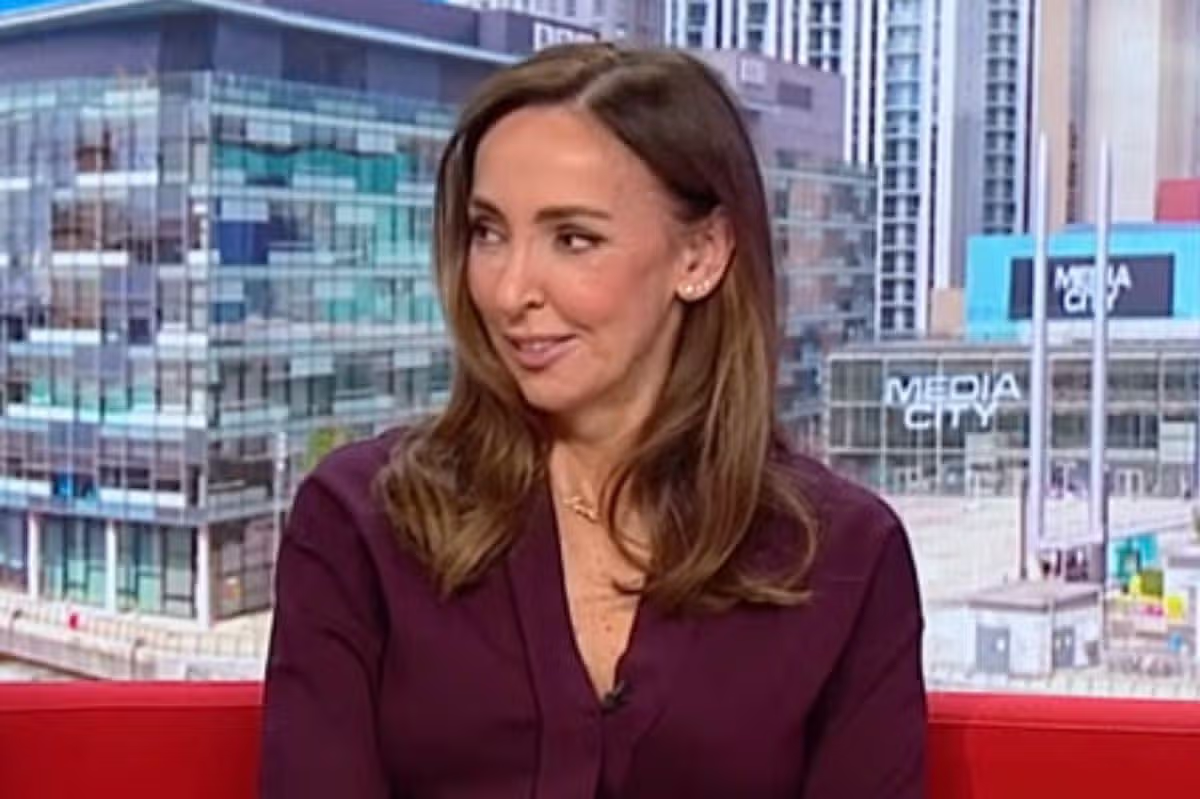



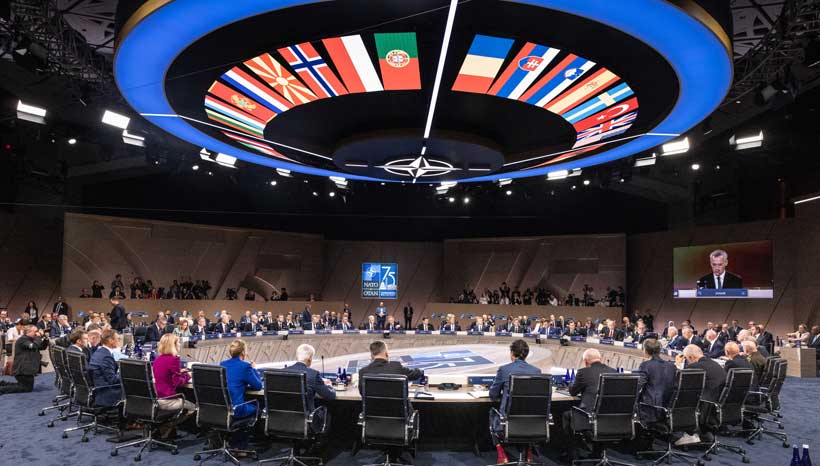

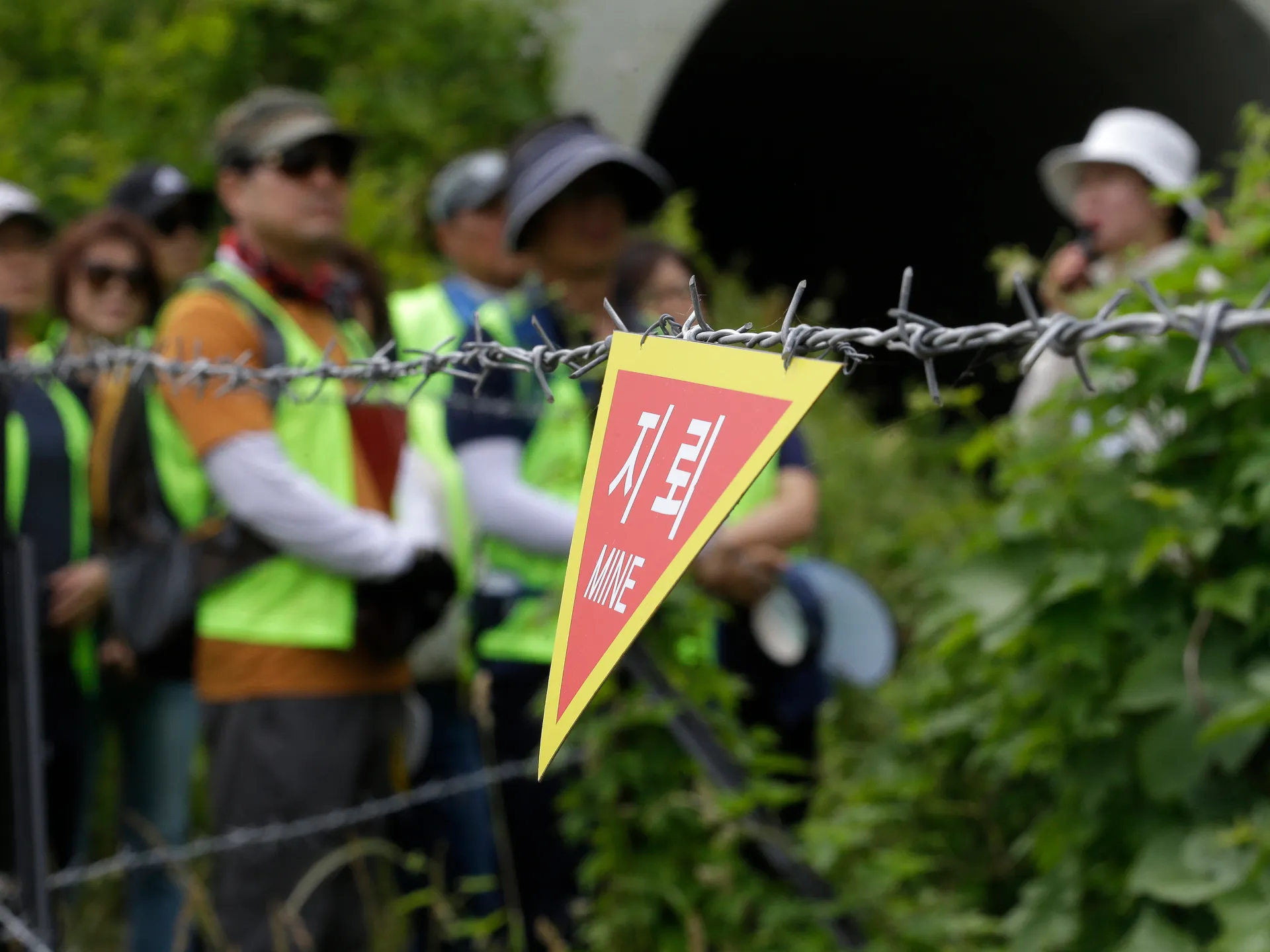
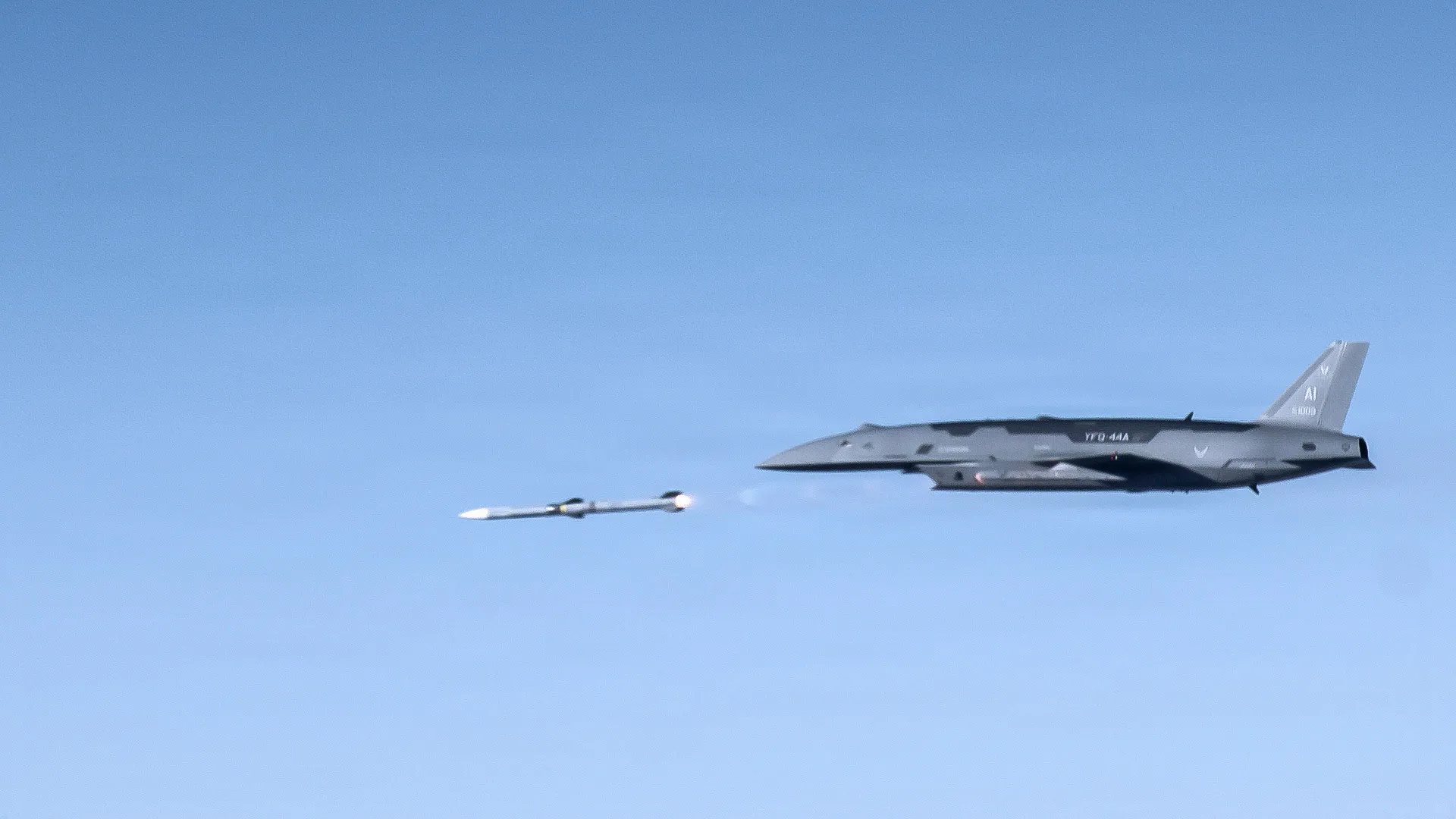


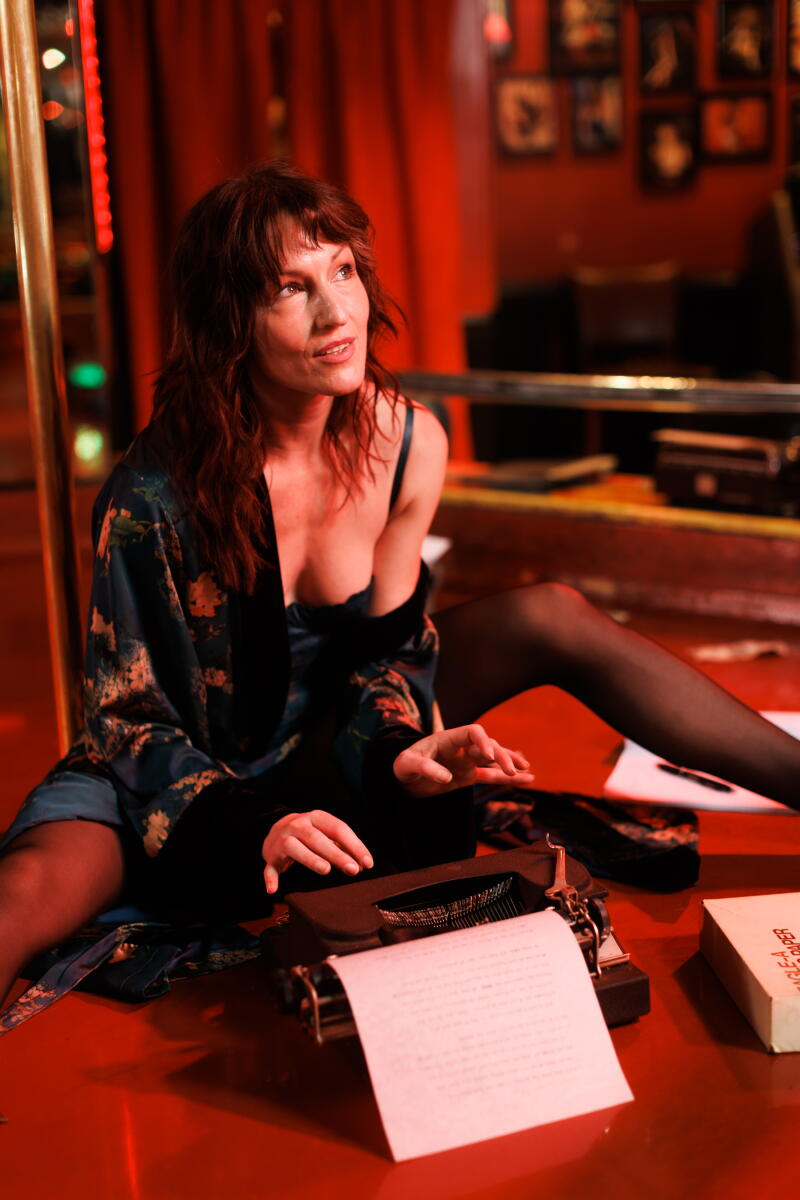



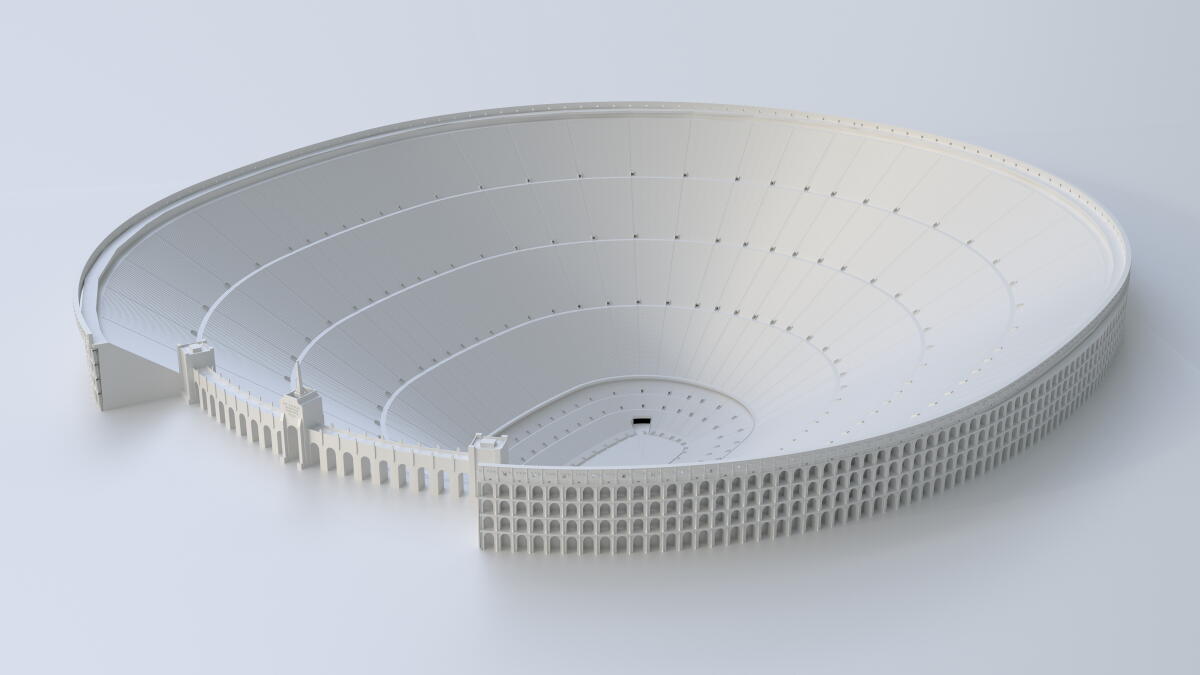





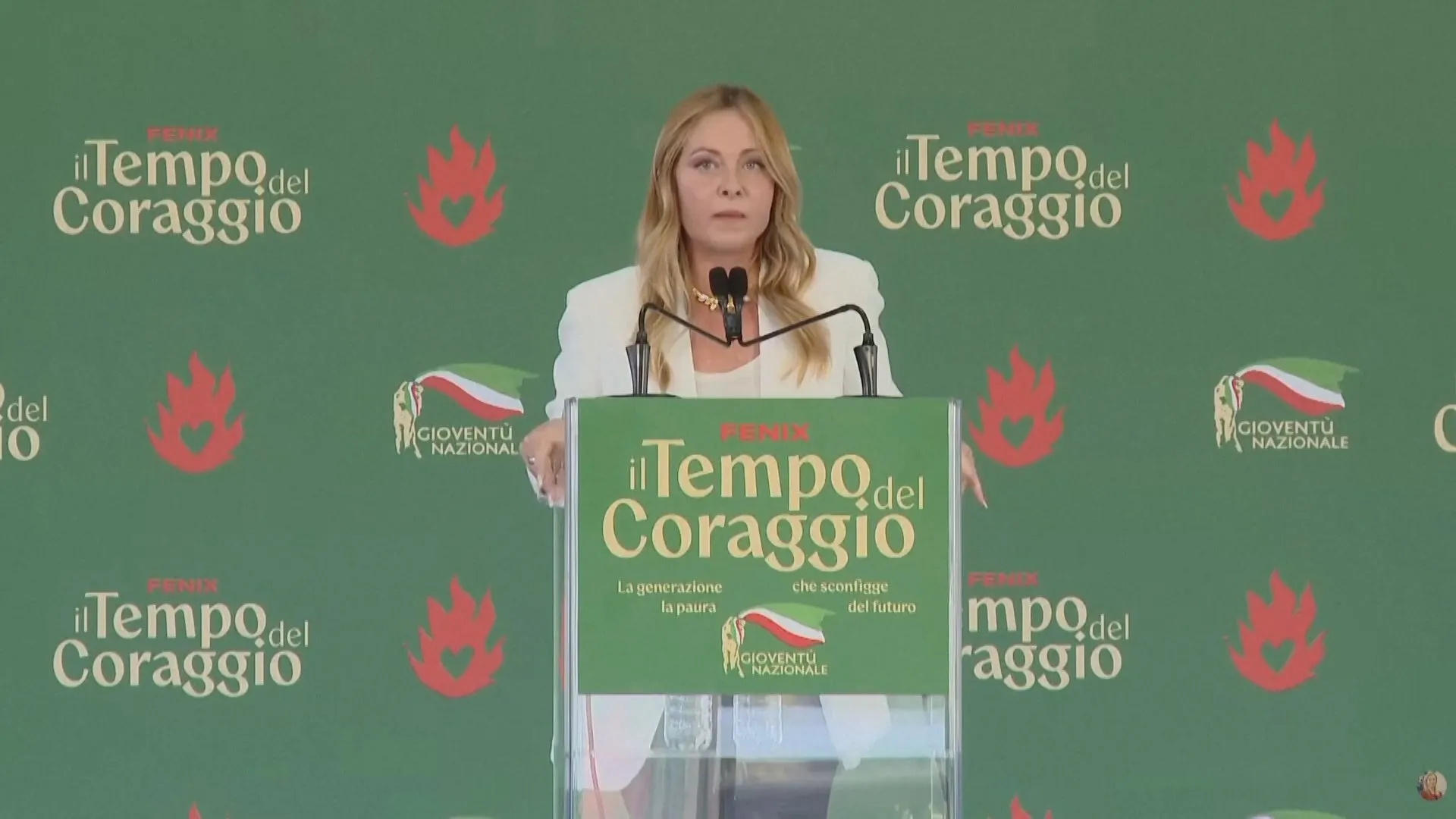



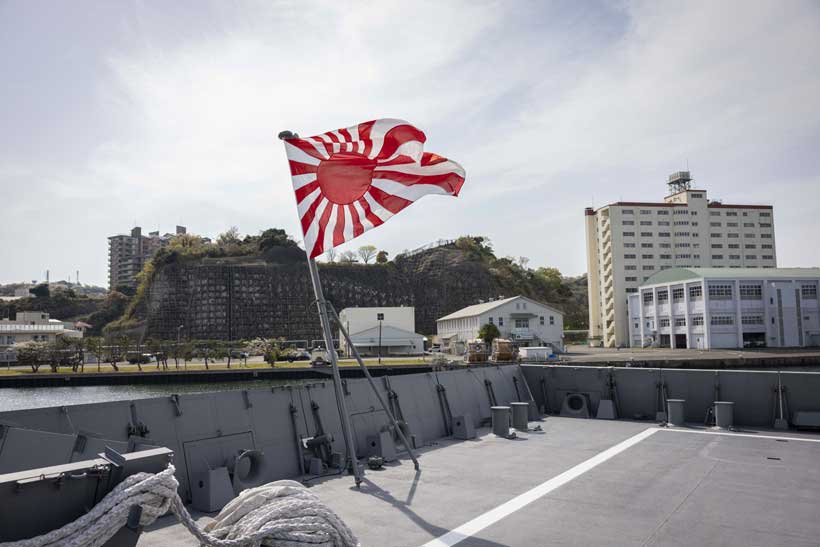




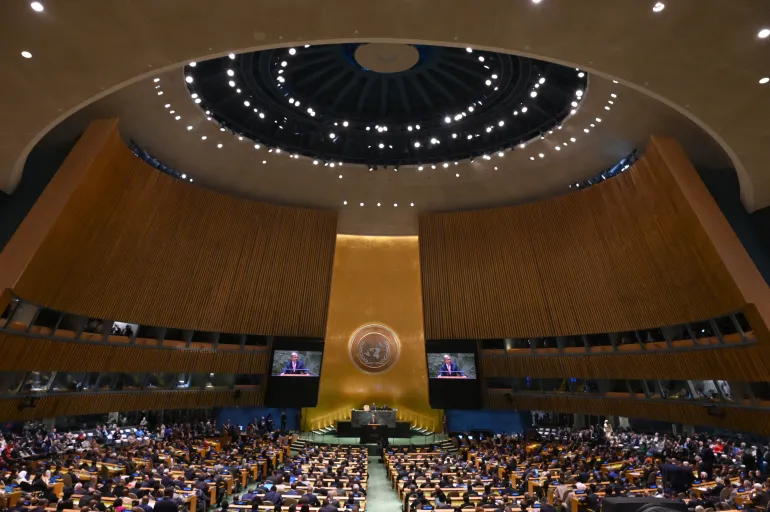
![UN continues its engagement in a Sahel where governments are placing greater emphasis on sovereignty and strategic autonomy [File photo: Timothy A. Clary / AFP]](https://i0.wp.com/occasionaldigest.com/wp-content/uploads/2026/09/33VL2ZN-highres-1695130635.jpg?w=640&ssl=1)