KATIE Price’s new husband Lee Andrews has shown his devotion to her by appearing to get her son Harvey’s name tattooed on his hand, despite having not met him in person yet.
Katie Price’s new husband Lee Andrews has appeared to have got her son Harvey’s name tattooed on his handCredit: Paul EdwardsIn exclusive pictures, the businessman shows off the tributeCredit: BackGridHe appears to have Harvey’s name on his hand as well an image of a frogCredit: BackGridLee has also shown off another new tribute to his wifeCredit: BackGrid
He’s yet to fly to the UK and meet her children in person but no doubt he’s spoken to Harvey via FaceTime.
The Sun can reveal the first-look of the apparent tattoo in exclusive pictures, with Lee showing off the new inking on the side of his left hand.
Harvey’s name can be seen in a fancy font alongside an image of a frog, the 23-year-old’s favourite animal.
As well as that, Lee also showed off another new “Katie” tattoo as a tribute to his new wife.
One picture appeared to show Kim at one of Lee’s events in Dubai and included her wearing a baseball cap featuring his Aura brand’s logo as well her fashion brand Skims.
Just yesterday, the self-proclaimed businessman claimed he was heading to the UK in the coming days and rubbished claims of his “travel ban”.
The UAE has had ongoing flight chaos after their airspace was shut down after missile strikes.
“As far as travel bans, there is no travel ban.
“Now, obviously people can’t get out. Again, I’m not going to tell you all my plans, I will be in the UK after the weekend,” he said.
Just days before the missile strikes began, Katie returned to the UK alone after several weeks with Lee in Dubai, despite the latter claiming he would be returning with her.
Lee has claimed to be heading to England several times since his January wedding to Katie but is yet to actually make the trip – amid reports of a ‘travel ban’ preventing him from leaving the country.
He previously got her name inked on his handCredit: mistraesthetics/Instagram
He allegedly applied for a mortgage in personal trainer Dina Taji’s name last year without her knowledge. When she received a call from the bank about the application, she took legal action.
He spent three weeks inside the notorious Al-Awir central prison shortly before meeting Katie. It is unclear at what stage the investigation is at.
The city’s law prevents people involved in active criminal and civil cases from leaving the country, though Lee told the Mail it was “complete b******s” that he couldn’t leave.
Katie insists that she believes her husband and even showed The Sun his passport last week before our exclusive interview.
She said that he had to show his documents to the court when the two got married last month and refuted any claims made against him.
The two met online before getting engaged a week later and married two days after.
The secret ceremony left her loved ones in shock as they were unaware of who he was let alone her marrying him.
He recently claimed he’s all set to fly to the UK and rubbished claims of a travel banCredit: Instagram/ @wesleeeandrews
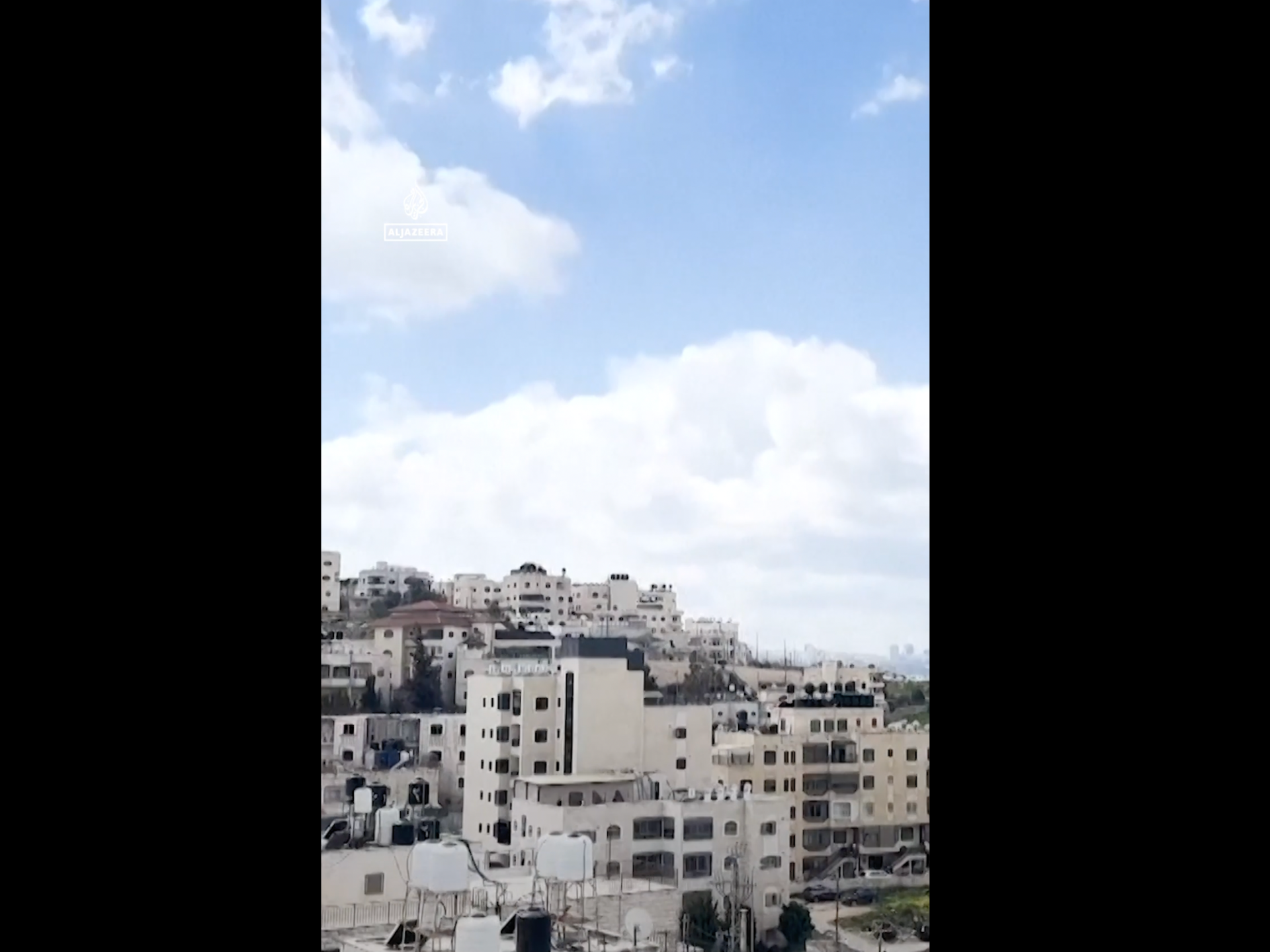
Air raid sirens blared across occupied East Jerusalem on Saturday after missiles were reportedly fired by Iran, with explosions heard and interception trails visible in the sky.
MOLLY-MAE Hague has faced backlash over her Maebe fashion event as an influencer called out a “disturbing” detail.
The former Love Island star, 26, has brought her premium womenswear brand to a one-day pop up in Bayswater, London, giving her fans a chance to check out the clothing in person while immersing themselves in the experience.
Sign up for the Showbiz newsletter
Thank you!
Molly-Mae Hague is facing backlash over her Maebe pop-up eventCredit: GettyInfluencer Nas Ganev has claimed there was a lack of diversity at the pop-up eventCredit: @itsnasg/TikTokHe took to TikTok to share his claims in a videoCredit: @itsnasg/TikTok
However, after visiting the pop up during an influencer event prior to it being open to the public today, TikTok star Nas Ganev has claimed there was a lack of diversity in the room when he was there.
He posted a video of himself at the event and alleged: “You should avoid maybe village and here’s why. I went today and although it’s so pretty inside,
“I saw something very disturbing. There were only white women in the room. There was no diversity at all.
“And in a city like London that immediately stood out to me. Walking to a place that’s meant to celebrate women and seeing a room that looks like that felt really uncomfortable.
“If you booked your tickets because of me, I’d recommend cancelling them. Follow for more London pop-ups.”
The experience is available from 9am to 7pm today and is a ticketed event, with tickets having gone on sale on Thursday 26 February.
Contrary to the claims, the Maebe Instagram account have been posting attendees on their stories and they appear to be from all diverse walks of life.
The Sun contacted Molly-Mae’s representative but they declined to comment.
The mum-of-one and her team previously teased of the experience: “An immersive experience of shopping, coffee, food and wine, celebrating the women who shape Maebe in honour of International Women’s Day.
“It takes a village to create something meaningful, and we’re proud to give back to the women who make it all happen.”
She launched the clothing brand back in September 2024, with the first drop selling out in 24 minutes after being in the works for two to three years.
This isn’t the first time she’s faced backlash with Maebe as fans have previously hit out the high price point as well as the struggles to actually purchase the items due to the high demand.
One potential buyer wrote: “It’s very over-priced for what it is, but I genuinely just liked the set!
“It’s a rubbish experience, it’s just a game of whoever can type the fastest or who has their details saved, most shops allow you a bit of time to check out.”
The one-day experience is happening in London todayCredit: InstagramContrary to the claims, the brand’s Instagram account has been posting women from diverse backgroundsCredit: Instagram/maebestoreThey’ve been reposting stories from attendeesCredit: Instagram/maebestore
Molly-Mae directly responded to the comment on YouTube as she candidly expressed: “couldn’t agree with you more on the stock front, it’s really frustrating.
“Unfortunately I just didn’t back myself enough when we planned these quantities a very long time ago.
“I promise you this is something I am in total agreement with you on and it’s something that in the New Year we will improve upon now that we have an understanding of the demand.
“I’m really sorry you feel let down – I’m learning as I go and will make this a better buying experience for you as soon as we can.”
Despite some backlash, new accounts for her firm MMH International Ltd stated that Maebe made around £300,000 in profit for the 12 months to the end of March last year.
As of December 2025, cash deposits in the firm stood at £231,155, having risen from £65,071 the previous year.
Molly-Mae launched her premium womenswear brand back in 2024Credit: Getty
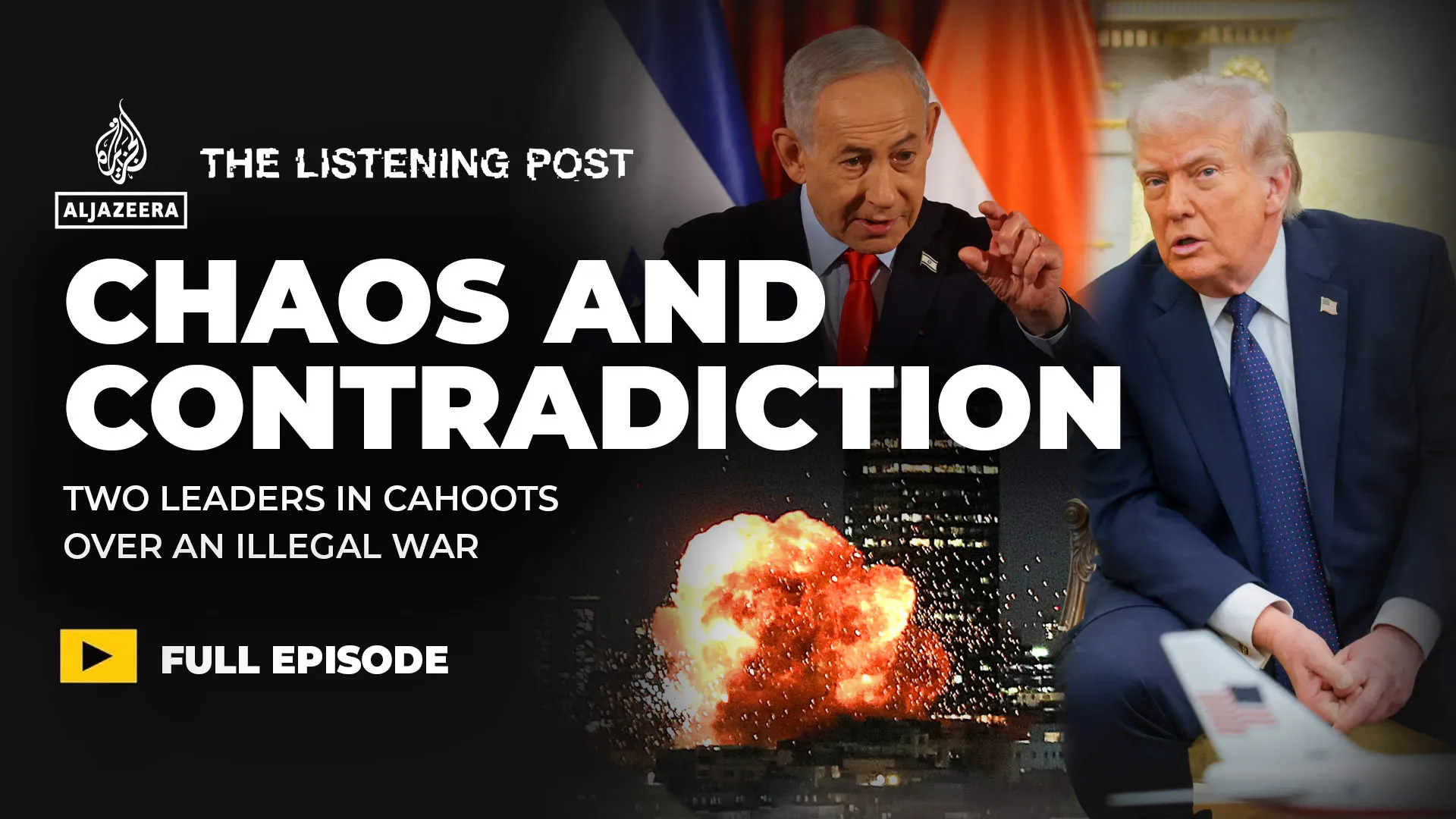
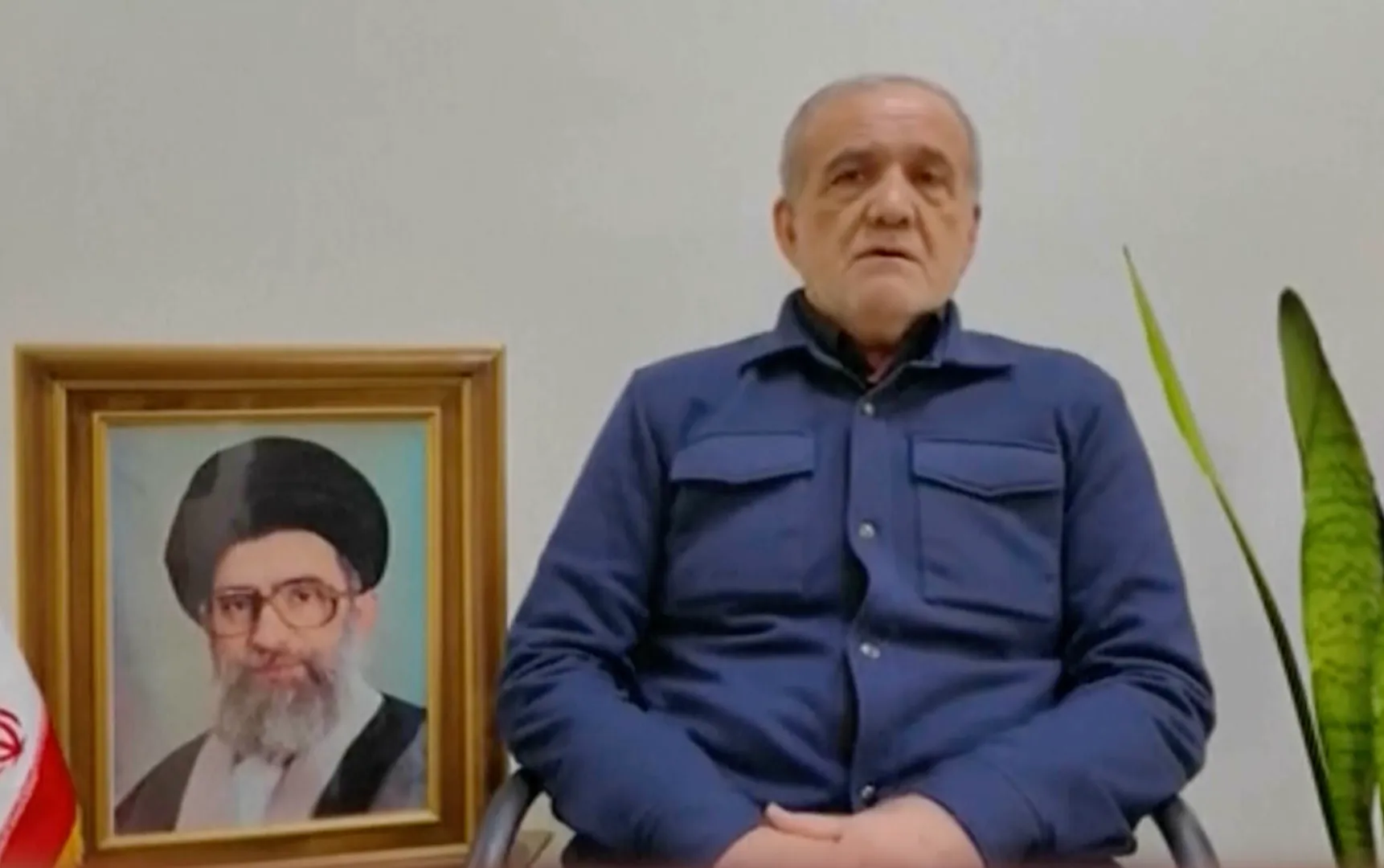
Iran’s President Masoud Pezeshkian has apologised for attacking neighbouring countries, in a pre-recorded address released on state television. Within minutes of the statement’s release, an explosion was heard over Doha, as attacks on Gulf nations continue.
Pentagon asserts US forces are tracking Russian-Iranian operations amid escalating conflict in the region.
Published On 7 Mar 20267 Mar 2026
Share
Washington has downplayed reports that Russia is sharing intelligence with Iran about United States targets across the Middle East amid the burgeoning US-Israel war on Iran, first reported by The Washington Post.
Defense Secretary Pete Hegseth, in a CBS 60 Minutes interview on Friday, said the US is “tracking everything” and factoring it into battle plans when asked about the reports Moscow was aiding Tehran.
Recommended Stories
list of 4 itemsend of list
Since the war began on February 28, Russia has passed Iran the locations of US military assets, including warships and aircraft, three officials, who spoke on the condition of anonymity, told The Washington Post.
“It does seem like it’s a pretty comprehensive effort,” one of the sources told the newspaper.
Meanwhile, anonymous officials told The Associated Press news agency that US intelligence has not uncovered that Russia is directing Iran on what to do with the information, as the US and Israel continue their bombardment and Iran fires retaliatory salvoes at US assets and allies in the Gulf.
Hegseth said the United States is “not concerned” about the reports, also downplaying the possibility that Russia’s assistance could be putting US citizens in harm’s way.
“The American people can rest assured their commander-in-chief is well aware of who’s talking to who,” Hegseth said.
“And anything that shouldn’t be happening, whether it’s in public or back-channelled, is being confronted and confronted strongly.”
He continued: “We’re putting the other guys in danger, and that’s our job. So we’re not concerned about that. But the only ones that need to be worried right now are Iranians that think they’re gonna live.”
White House Press Secretary Karoline Leavitt on Friday also claimed to reporters that “[the report] clearly is not making any difference with respect to the military operations in Iran because we are completely decimating them.”
Leavitt declined to say if Trump had spoken to Russian President Vladimir Putin about the reported intelligence sharing or whether he believed Russia should face repercussions, saying she would let the president speak to that himself.
First signs of Moscow’s involvement
Trump, for his part, on Friday evening berated a reporter for raising the matter of the report when he opened the floor to questions from the media at the end of a White House meeting about how paying student-athletes has recalibrated college sports.
“I have a lot of respect for you, you’ve always been very nice to me,” the US president said to Peter Doocy, the Fox News reporter.
“What a stupid question that is to be asking at this time. We’re talking about something else.”
The intelligence is the first indication that Moscow has sought to get involved in the war that the US and Israel launched on Iran a week ago.
Asked whether Russia would go beyond political support and offer military assistance to Iran, Kremlin spokesman Dmitry Peskov said there has been no such request from Tehran.
“We are in dialogue with the Iranian side, with representatives of the Iranian leadership, and will certainly continue this dialogue,” he said on Friday.
Pushed on whether Moscow has provided any military or intelligence assistance to Tehran since the Iran war’s start, he refrained from comment.
Russia has tightened its relationship with Iran as it looked for badly needed missiles and drones to use in its four-year war against Ukraine. But the pair have long maintained friendly relations, even while Tehran has faced years of isolation from the West over its nuclear programme and its support of proxy groups in the Middle East.
Many fans have been following the story of Punch the monkey after he was rejected by his mother at a zoo in Japan
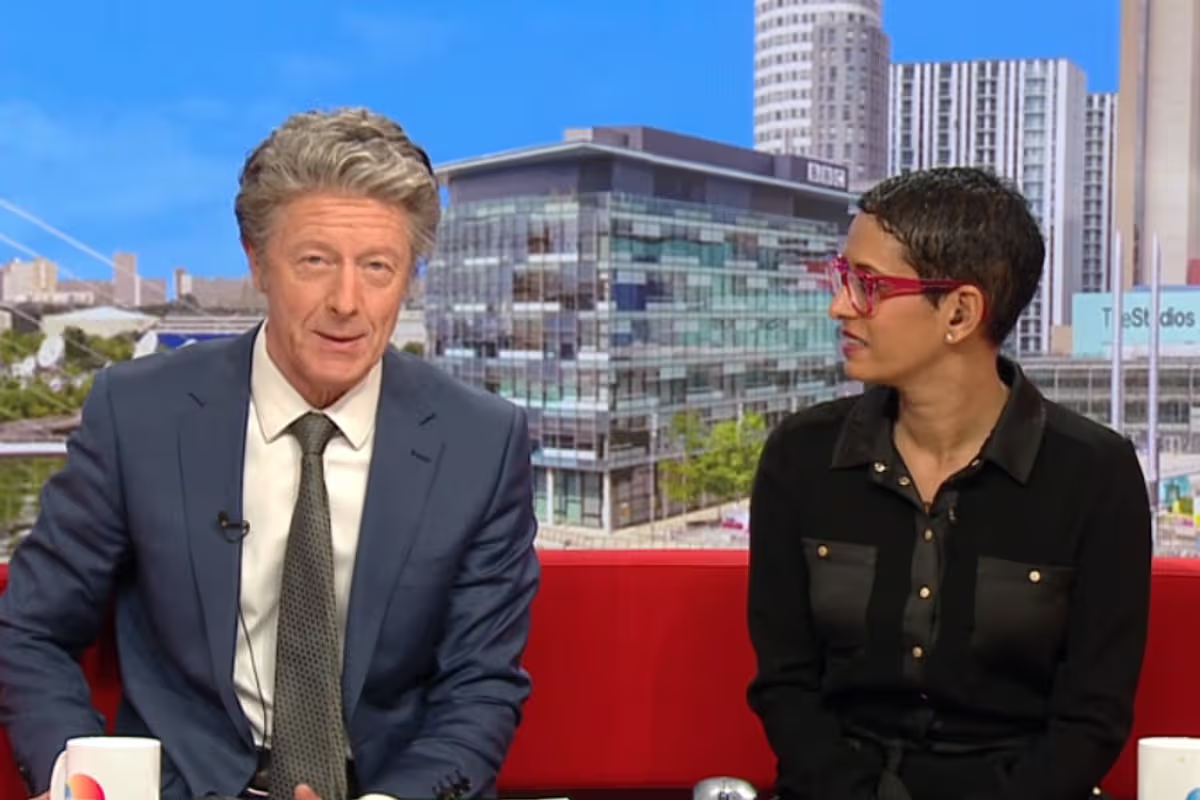
Charlie and Naga delivered the positive update on BBC Breakfast(Image: BBC)
Naga Munchetty delivered a heartwarming update about Punch the monkey after he was rejected by his mother and bullied by the other monkeys at a zoo in Japan.
On Saturday’s BBC Breakfast, Naga and Charlie Stayt provided a “positive” update about the beloved monkey, who has gone viral on social media.
Charlie began, “Now, you may be familiar with the story of Punch. That’s the baby monkey that was given a cuddly toy.”
As images of Punch appeared on screen, the host continued, “There he is, after he was rejected by his family at the zoo in Japan. A bit worried about him.”
Naga went on, “We have an update there, a positive update. Keepers have gradually been reintroducing Punch to the macaque troop, and it seems he’s parted ways with his stuffed orangutan as one of the adult females has taken him under her wing.
“She grooms him, she holds him. Punch has even been spotted playing with some of the younger members of the troop as well.”
As a video of Punch was shown hanging from a branch, Naga added, “I think it kind of comes a bit more naturally to Punch. He’s doing well.”
“And that’s good to see,” Charlie chimed in.
Viewers also took to social media to share their thoughts on the sweet update, with one writing, “That’s great news – however, can we petition the zoo to change and include some greenery and trees in the enclosure for them? It’s a concrete jungle, and no natural foliage for them.”
Another suggested, “Can the BBC Verify team investigate?”
“Even at three, four o’clock in the morning, it could be that somebody has inadvertently seen something and not realised the significance, even after all this time,” Jack’s mum, Catherine, shared.
“But he hasn’t been abducted by an alien, you know, and he’s vanished into thin air. So I genuinely myself, feel that somebody does know more than what we do.”
BBC Breakfast airs daily at 6am on BBC One.
For the latest showbiz, TV, movie and streaming news, go to the new **Everything Gossip** website.
In 1876, Alexander Graham Bell was granted a patent for the telephone.
In 1918, Finland signed a peace treaty with Germany shortly after declaring independence from Russia.
In 1936, Adolf Hitler ordered Nazi troops into the Rhineland, violating the Treaty of Versailles.
In 1945, the U.S. 1st Army crossed the Rhine at Remagen, Germany after capturing the strategically important Ludendorff Bridge (also known as the Bridge at Remagen). World War II in Europe ended two months later.
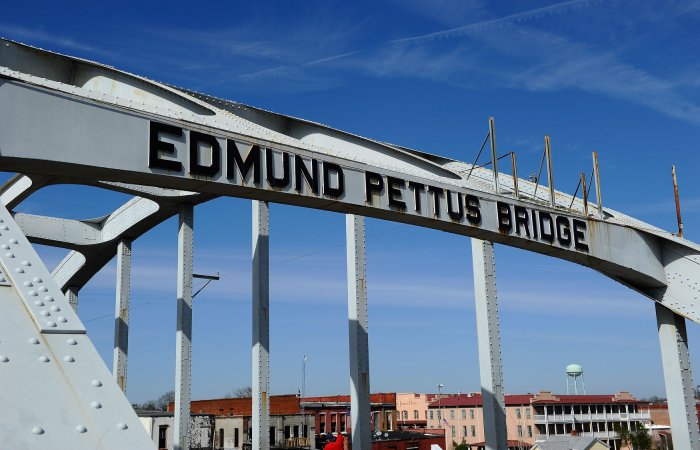
In 1965, hundreds of civil rights marchers trying to cross the Edmund Pettus Bridge in Selma, Ala., were turned back by state troopers and sheriff’s deputies. Dozens of people were beaten and injured in what became known as “Bloody Sunday.” Marchers voluntarily turned around on a ceremonial walk to the bridge two days later and, on March 21, with protection by federal and National Guard troops, the main Selma-to-Montgomery march began.
In 1985, “We Are the World,” a song composed by Michael Jackson and Lionel Richie and recorded by a series of high-profile music stars was released worldwide with the goal of generating funds for the USA for Africa charity. The song and related promotions eventually raised about $63 million.
In 2010, Kathryn Bigelow became the first woman to win an Academy Award for Best Director for her film The Hurt Locker.
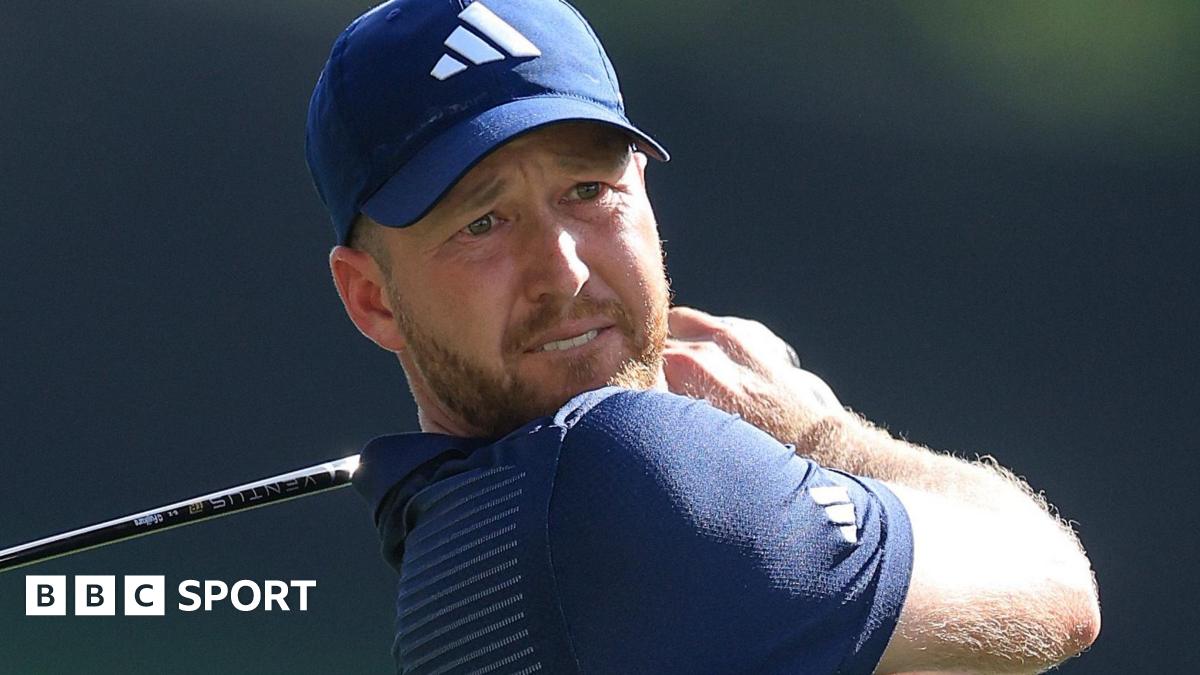
Berger, who has not won on the PGA Tour since 2021, put himself on course for the £3m top prize thanks to a clean run on the back nine which included three birdies.
“I actually feel like I played better [today] – the course was a little tougher,” he said.
“I’m looking forward to the next couple of days and seeing the challenge they bring.”
Americans Sahith Theegala and Collin Morikawa and Sweden’s Ludvig Aberg are tied for third on seven under, with American Ricky Fowler one shot further back.
McIlroy, who birdied four of the first seven holes on the back nine, said: “I played the last 10 holes really, really well.
“Overall I am really pleased. I played a very sort of controlled, patient round of golf, which you need to do around here.”
American world number one Scottie Scheffler bogeyed the 18th in a round of 71 that left him three under.
England’s Tommy Fleetwood, who was four over after the first round, shot three birdies on the back nine in a second-round 69 to make the cut on one over.
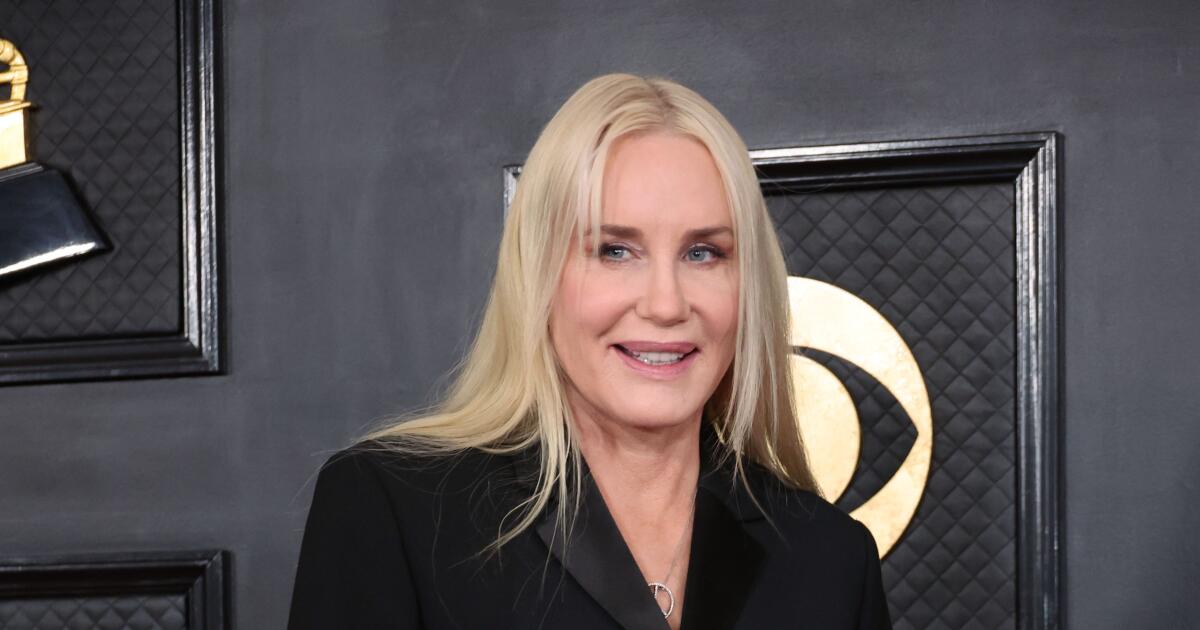
Daryl Hannah is no fan of FX’s “Love Story: John F. Kennedy Jr. & Carolyn Bessette.” She made that abundantly clear in an op-ed for the New York Times that also criticized the series for what she claims is a misogynistic portrayal of her younger self.
“It’s appalling to me that I even have to defend myself against a television show,” Hannah, 65, wrote in the op-ed published Friday. “These are not creative embellishments of personality. They are assertions about conduct — and they are false.”
A representative for FX did not immediately respond to a request for comment Friday.
“Splash” and “Kill Bill” star Hannah, whose romance with Kennedy in the 1990s made for tabloid fodder before his marriage to Bessette, wrote that the Ryan Murphy-produced project depicted her as “irritating, self-absorbed, whiny and inappropriate.” She wrote that the show also depicted her as a cocaine-loving, selfish obstacle in the way of the series’ late lovers. Kennedy and Bessette Kennedy died in a plane crash in 1999.
These creative choices, she claimed, were “no accident.”
Hannah decried her story being used as a “narrative device” to drive tension in the series and as a result, the series fell into “textbook misogyny” by pitting two women — in this case, actor Dree Hemingway’s Daryl Hannah and Sarah Pidgeon’s Carolyn Bessette — against each other.
The actor, also a filmmaker and advocate for environmental and senior health causes, also distanced herself from the series’ “untrue” depictions of her life, behavior, actions and relationship with Kennedy.
“I have never desecrated any family heirloom or intruded upon anyone’s private memorial,” she wrote. “I have never planted any story in the press. I never compared Jacqueline Onassis’ death to a dog’s.”
“Love Story,” created by Connor Hines, premiered in February with Paul Anthony Kelly starring as Kennedy. Hannah wrote that since the show’s debut, she received many “hostile and even threatening” messages from viewers who believe the series’ depictions.
Before Hannah’s op-ed, Murphy received criticism from Jack Schlossberg, the grandson of John F. Kennedy and nephew of John F. Kennedy Jr. In an interview with “CBS News Sunday Morning,” the 33-year-old political commentator said Murphy “knows nothing” about his family and that the prolific TV creator is making a “ton of money on a grotesque display of someone else’s life.”
While she has often chosen not to address “outrageous lies, crappy stories and unflattering characterizations,” Hannah wrote her “silence should not be mistaken for agreement with lies.” She said she felt compelled to speak out against the series’ depiction of her because continuing her “good work,” including her philanthropic efforts, “requires an intact reputation.”
Hannah said she has respected the Kennedy family’s privacy and, like Schlossberg, condemned “self-serving sensationalists trading in gossip, innuendo and speculation.”
“In a digital era, entertainment often becomes collective memory,” she wrote. “Real names are not fictional tools. They belong to real lives.”
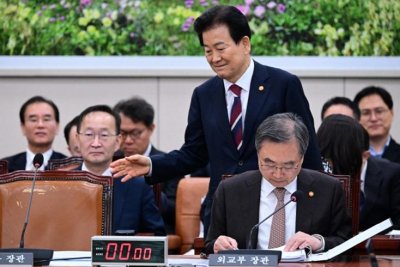
South Korean Unification Minister Chung Dong-young attends a National Assembly Foreign Affairs and Unification Committee meeting in Seoul on Thursday. Photo by Asia Today
March 6 (Asia Today) — South Korean Unification Minister Chung Dong-young said Thursday that North Korea is operating uranium enrichment facilities in Yongbyon, Kangson and Kusong, marking the first time a senior South Korean official has publicly identified Kusong as a third such site.
Chung made the remarks during a plenary session of the National Assembly’s Foreign Affairs and Unification Committee. Until now, South Korea’s government and the International Atomic Energy Agency had publicly identified Yongbyon and Kangson as North Korea’s main uranium enrichment locations.
Chung said halting North Korea’s advancing nuclear capabilities should be the priority. He cited recent remarks by Rafael Grossi, head of the U.N. nuclear watchdog, and said North Korea’s enrichment facilities were producing 90% highly enriched uranium, a weapons-grade level. He also said Grossi had reported that another enrichment-related facility was being added at Yongbyon.
Kusong, a city in North Pyongan Province, has at times been mentioned by researchers and outside analysts as a possible nuclear-related site, but Chung’s statement was unusual because it came in an official public setting.
Chung also estimated that North Korea may have extracted about 100 kilograms of plutonium over six processing cycles during the past 30 years, including 16 kilograms last year, which he said would be enough to build roughly 20 plutonium-based nuclear weapons.
Asked about the effect of the recent U.S. strike on Iran on prospects for a new summit between North Korea and the United States, Chung said uncertainty had increased and that the development was “not a positive influence.”
Explosions shake Tehran as US-Israel attacks intensify, marking eight days of conflict and retaliation from Iran.
Published On 7 Mar 20267 Mar 2026
Share
Huge explosions have hit several locations across Iran, including the capital, Tehran, as the war that has ignited the Middle East entered its eighth day.
The United States-Israeli attacks sent up clouds of dark smoke in the Iranian capital early on Saturday, and Tehran retaliated by firing missiles at Israel.
Recommended Stories
list of 4 itemsend of list
The US has warned of a forthcoming bombing campaign that officials said would be the most intense yet in the weeklong conflict, which has already killed at least 1,230 people and is set to cause further casualties daily.
Israel’s military said early on Saturday it had started a “broad-scale wave of strikes” on targets in Tehran.
“Iranians are now waking to day eight since the initiation of the US-Israeli air strikes targeting different facilities and places across the Iranian capital and elsewhere in the country,” said Al Jazeera’s Tohid Asadi, reporting from Tehran.
Continuous attacks have been occurring since midnight, he said.
“According to the latest reports, Mehrabad, which is one of the two main airports in the Iranian capital, was targeted. The nearby area was said to be affected, as well,” said Asadi.
Meanwhile, attacks have been taking place in other cities across the country – targeting not just military areas or political centres, but also residential areas, schools and hospitals, he added.
Amir-Saeid Iravani, Iran’s ambassador to the United Nations, told the UN Security Council on Friday that the US and Israel are bombing civilian areas in his country, stating: “These acts constitute clear war crimes and crimes against humanity.”
The continued fighting comes as US President Donald Trump’s administration approved a new $151m arms sale to Israel after Trump said he would not negotiate with Iran without its “unconditional surrender”.
Iran’s UN ambassador said the country would “take all necessary measures” to defend itself.
Iran’s strategy to ‘keep Israelis in shelters’
Meanwhile, Iran has continued to strike back at Israel.
The Israeli military said early on Saturday that it had detected another round of Iranian missile fire headed towards Israel, and a series of explosions were heard in Tel Aviv following the launches from Iran.
Missiles were also detected heading towards other parts of the country, including southern Israel.
“Since midnight, the Israelis have detected at least five ballistic missile launches coming into Israel from Iran,” said Al Jazeera’s Nida Ibrahim, reporting from Ramallah in the occupied West Bank.
“They have led millions of Israelis into shelters throughout the night, which is something that Israeli analysts say the Iranians are intending to do to put more pressure on the Israeli government – by keeping Israelis in shelters and by keeping these missiles launching coming at different times.”
HARRY Styles recently dropped his new album, Kiss All The Time, Disco Occasionally, and fans have been in detective mode attempting to decode who his songs are about.
And they feel they’re worked some of the inspiration behind songs out, after decoding lyrics they describe as “heartbreaking”.
Sign up for the Showbiz newsletter
Thank you!
Fans of Harry are convinced some of his new songs are about exes Kendall and OliviaCredit: GettyKendall and Harry had an on-and-off relationship for yearsCredit: SplashHarry and Olivia shared a ten-year age gap when they datedCredit: Shutterstock Editorial
Harry’s new track Paint By Numbers sees him sing vulnerably, acknowledging a failed past relationship as well as the status of his own celebrity.
Among the difficulties of stardom and heartbreak, he’s reaching out for a glimpse of humanity.
He croons lyrics including: “It’s a little bit complicated when they put an image in your head, and now you’re stuck with it.”
But fans are convinced a later part of the song is directly reflecting on his relationship with former flame Olivia Wilde.
The part goes: “Holding the weight of the American children whose hearts you break.
“Was it a tragedy when you told her, ‘I’m not even 33’?”
The couple shared a ten year age gap, which the reference to not even being in his 30s could be pointing towards.
Fans also took to X to decode whether another track on the album called Season 2 Weight Loss is about his past relationship with Kendall Jenner.
Harry dated the model on and off for years in a messy situationship.
So hearing lyrics like: “Do you love me now?” instantly sent fans typing.
One fan gushed in response to the possible link: “HARRY STYLES OH MY GOD,” followed by some sobbing face emojis.
Though later in the song Harry sings about “coming back as a stronger version” of himself, possibly referencing the end of the cycle of on-and-off dating.
The deciphering comes after Harry’s tour ticket sales encountered frustrating mishaps for fans.
In addition to being set to perform 12 shows inWembleyStadium, Harry had one gig booked atManchester‘sCo-opLive in due to play this month.
Though many fans woke up to find their tickets to the event cancelled and refunded.
Ticketmasterreleased a statement on the decision to axe the tickets, explaining that some customers managed to purchase tickets they shouldn’t have been able to buy in the first place.
These include many of the£20 ticketswhich were later resold on other ticket selling sites, and therefore were no longer eligible for use at the venue.
Ticketmaster explained: “We’re working with the Harry Styles ‘One Night Only’ team to cancel and refund any orders that have violated the rules of sale.
“As all tickets are non-transferable, any tickets listed on unauthorised resale sites are void and will not get fans into the show – so we’re cancelling and refunding these.
“There is also a ticket limit of 2 tickets per person, so any orders above that are being cancelled and refunded.”
The majority of the voided tickets appear to have been sold on Viagogo.
Harry and Olivia split up in 2022Credit: SplashHarry and Kendall broke up for the final time in 2016Credit: Getty – Contributor
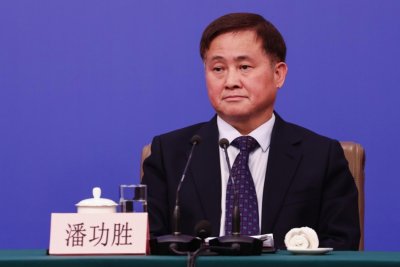
People’s Bank of China (PBC) Pan Gongsheng attends a press conference on the economy during the Fourth Session of the National People’s Congress (NPC) in Beijing, China, 06 March 2026. China holds two major annual political meetings, the National People’s Congress (NPC) and the Chinese People’s Political Consultative Conference (CPPCC), which run alongside each other and together are known as the ‘Lianghui’ or ‘Two Sessions’. Photo by WU HAO / EPA
March 6 (Asia Today) — China’s central bank governor said Thursday that Beijing has no intention of weakening the yuan to improve trade competitiveness, emphasizing confidence in the stability of the country’s currency.
Pan Gongsheng, governor of the People’s Bank of China, made the remarks during an economic press conference at the annual session of China’s National People’s Congress in Beijing.
Pan said recent movements in the yuan against the U.S. dollar were influenced by several factors, including China’s economic recovery, fluctuations in the U.S. dollar index and seasonal increases in corporate foreign exchange settlements.
“The current exchange rate of the yuan against the dollar remains within the mid-range seen in recent years,” Pan said. “China neither needs nor intends to gain trade competitiveness through currency depreciation.”
He added that the central bank plans to maintain an “appropriately accommodative” monetary policy in 2026, including the flexible use of tools such as reserve requirement ratio reductions and interest rate adjustments.
Demand for yuan-denominated financial instruments has continued to grow. The issuance of yuan-denominated bonds over the past 14 months reached about 1.365 trillion yuan ($200 billion), the highest level on record, according to financial market data.
Analysts say the increase reflects relatively low interest rates in China and the gradual expansion of yuan settlement in international transactions.
Offshore yuan bonds known as dim sum bonds have grown particularly quickly. About 103 billion yuan ($15 billion) worth have been issued so far this year, roughly double the amount recorded during the same period last year.
So-called panda bonds, which are yuan-denominated bonds issued in China by foreign companies, have also expanded, with 51.4 billion yuan ($7.5 billion) issued this year.
Overseas yuan lending reached 425 billion yuan ($62 billion) in 2025, the highest level on record.
Despite the growing use of the currency, analysts say the yuan still faces obstacles before it can rival the U.S. dollar as a major global reserve currency.
China’s leadership, including President Xi Jinping, has promoted the internationalization of the yuan as part of a broader effort to strengthen its role in global finance.
Weekly insights and analysis on the latest developments in military technology, strategy, and foreign policy.
Welcome to Bunker Talk. This is a weekend open discussion post for the best commenting crew on the net, in which we can chat about all the stuff that went on this week that we didn’t cover. We can also talk about the stuff we did or whatever else grabs your interest. In other words, it’s an off-topic thread.
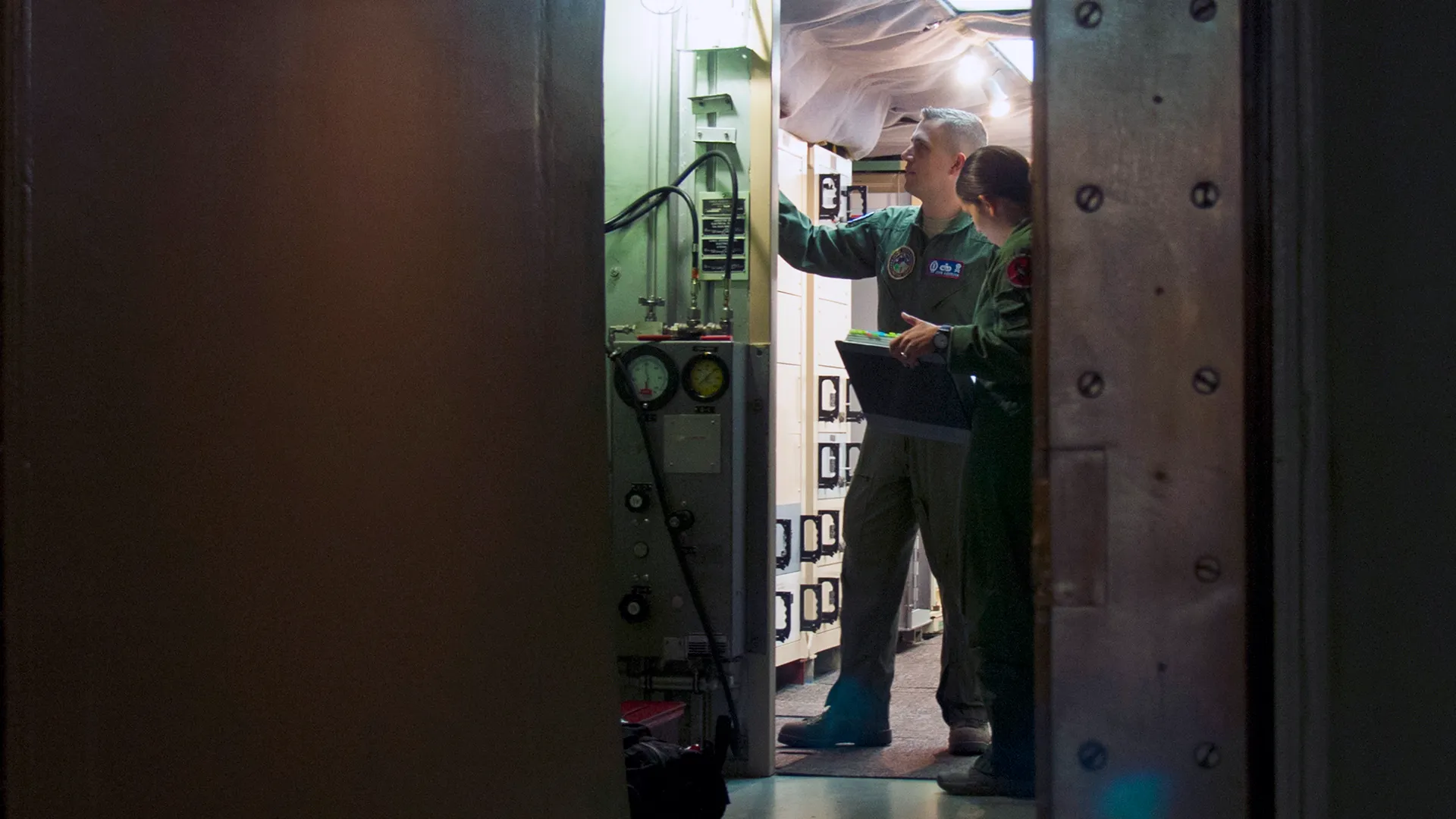
This week’s second caption reads:
First Lt. Pamela Blanco-Coca, 319th Missile Squadron missile combat crew commander, and 2nd Lt. John Anderson, 319th MS deputy missile combat crew commander, conduct pre-operational checks at a launch control center in the F.E. Warren Air Force Base, Wyo., missile complex Feb. 9, 2016. The missileers worked heavily in conjunction with missile maintainers to conduct a test of Minuteman III weapon system components in a test known as the Simulated Electronic Launch-Minuteman. (U.S. Air Force photo by Senior Airman Jason Wiese)
Also, a reminder:
Prime Directives!
If you want to talk politics, do so respectfully and know that there’s always somebody that isn’t going to agree with you.
If you have political differences, hash it out respectfully, stick to the facts, and no childish name-calling or personal attacks of any kind. If you can’t handle yourself in that manner, then please, discuss virtually anything else.
No drive-by garbage political memes. No conspiracy theory rants. Links to crackpot sites will be axed, too. Trolling and shitposting will not be tolerated. No obsessive behavior about other users. Just don’t interact with folks you don’t like.
Do not be a sucker and feed trolls! That’s as much on you as on them. Use the mute button if you don’t like what you see.
So unless you have something of quality to say, know how to treat people with respect, understand that everyone isn’t going to subscribe to your exact same worldview, and have come to terms with the reality that there is no perfect solution when it comes to moderation of a community like this, it’s probably best to just move on.
Finally, as always, report offenders, please. This doesn’t mean reporting people who don’t share your political views, but we really need your help in this regard.
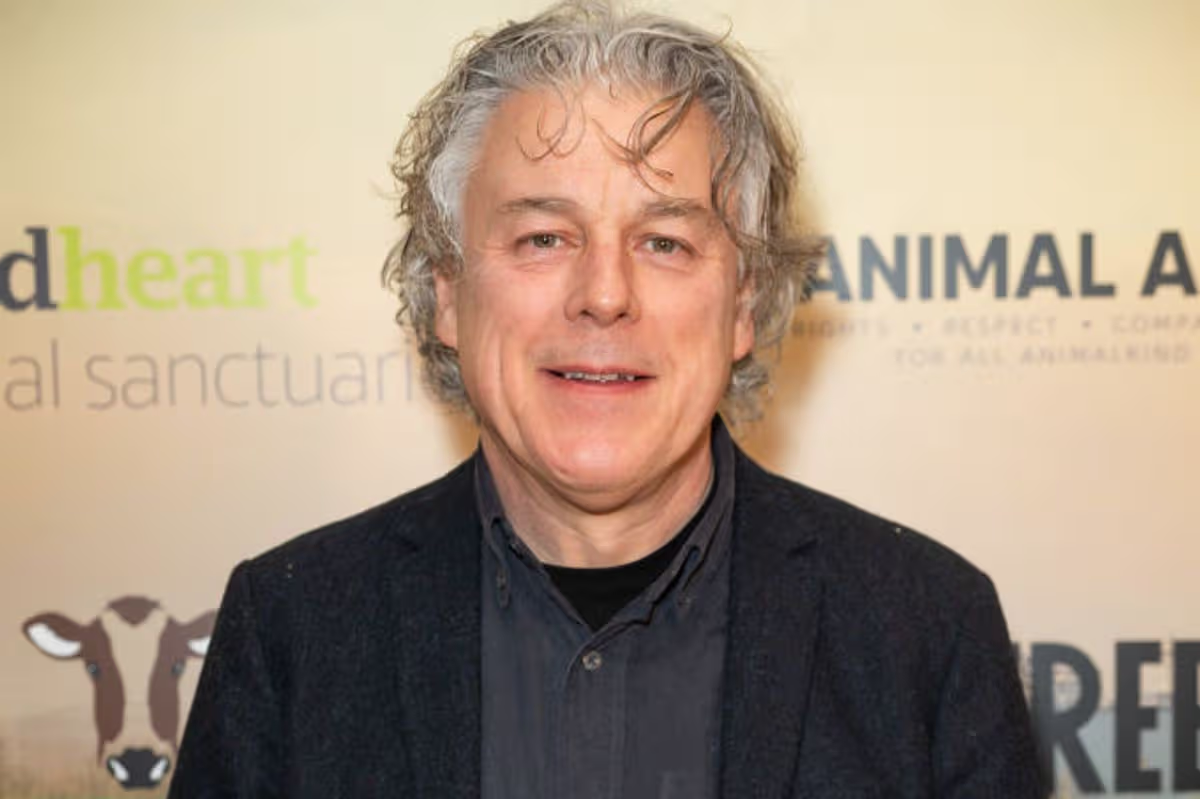
The 60-year-old star is perhaps most recognised for playing the lead character in the BBC mystery drama series Jonathan Creek, which aired from 1997 through to 2016. He’s also been the only regular panellist on the BBC quiz show QI since it launched in 2003, remaining longer than its initial presenter, Stephen Fry.
Alan launched his career in stand-up comedy, and has embarked on numerous live tours, with his latest taking place last year. The entertainer has also penned three well-received memoirs: My Favourite People and Me (2009), Just Ignore Him (2020), and White Male Stand-Up (2025).
Alan is scheduled to feature on James Martin’s Saturday Morning later today (March 7). Today’s instalment will also showcase chef Sami Tamimi and horticulturist David Domoney, alongside James preparing dishes in his Hampshire kitchen, reports the Express.
Ahead of his appearance on James Martin’s ITV programme, fans might be intrigued to discover that Alan has a famous wife.
The comic is married to writer and former literary agent Katie Maskell. Katie studied English and Drama at Warwick University, before finishing a one-year postgraduate qualification at London drama school, East 15.
She notably won Waterstones’ £5,000 Children’s Book Prize in 2010 for her novel, The Great Hamster Massacre. Alan and Katie’s paths crossed backstage during a QI recording in 2005, with the couple getting engaged six months later.
Their wedding took place in 2007, with comedian and Strictly Come Dancing champion Bill Bailey serving as Alan’s best man. The pair share three children. Their eldest daughter, Susie, arrived in 2009, their son, Robert, in 2011, and their youngest, Francis, was born in 2016.
Alan previously revealed how he first met his wife during an appearance on The One Show last year. In the episode, presenter Alex Jones remarked: “Everybody loves, of course, QI. And we heard the story that that’s where you actually met your wife.”
“Yeah, it’s true. 20 years ago,” Alan confirmed. An image of the couple then flashed up on screen, prompting Alex to joke: “She’s beautiful. [You’re] punching, Alan… She’s stunning.”
Alan then elaborated: “I saw her in the audience at QI and just as I saw her, this is what happened right, we had a stunt set up with a sugar glass, which is a glass that can smash, right? And then Arthur Smith, a brilliant comedian, was on the other team and he had a glass, and he thought that was a sugar glass. It wasn’t a sugar glass.
“He threw it in our direction, I forget who was on my team. And as it came towards me, I thought, ‘I’ve just spotted someone in the audience I wanna talk to afterwards and this could end my career. This could finish me.'”
The star concluded: “I nearly died, but in fact, it hit the desk and broke. It was very funny, and I met her in the green room afterwards. Luckily for me, she wasn’t wearing her glasses, so she couldn’t see what I looked like.”
James Martin’s Saturday Morning will air at 9.30am on ITV1 today (Saturday, March 7), whilst QI is available to stream on BBC iPlayer
For the latest showbiz, TV, movie and streaming news, go to the new Everything Gossip website
Islamabad, Pakistan – The reverberations of a war in which US-Israel attacks have killed more than a thousand people in Iran, including the country’s supreme leader Ali Khamenei, and Iranian missiles and drones have fallen on Israel in retaliation, are being felt deeply in Pakistan.
Six Gulf countries have also come under Iranian missile and drone attacks, putting Pakistan in a tough position.
Recommended Stories
list of 4 itemsend of list
The country shares a 900-kilometre (559 miles) border with Iran in its southwest, and millions of its workers are residents in Saudi Arabia and other Gulf nations.
Since September last year, Islamabad has also reinforced its decades-long ties with Riyadh by signing a formal mutual defence agreement that commits each side to treat aggression against the other as aggression against both.
As Iranian drones and ballistic missiles continue to target Gulf states, the question being asked with increasing urgency in Pakistan is what Islamabad will do next if it finds itself pulled into the war.
Islamabad’s answer so far has been to work the phones furiously, engaging regional leaders, including Iran and Saudi Arabia.
When US-Israeli strikes killed Supreme Leader Ayatollah Ali Khamenei on February 28, Pakistan condemned the attacks as “unwarranted”. Within hours, it also condemned Iran’s retaliatory strikes on Gulf states as “blatant violations of sovereignty”.
Deputy Prime Minister and Foreign Minister Ishaq Dar, who was attending an Organisation of Islamic Cooperation meeting in Riyadh when the conflict began last week, launched what he later described as “shuttle communication” between Tehran and Riyadh.
Speaking in the Senate on March 3, and at a news conference later the same day, Dar disclosed that he had personally reminded Iranian Foreign Minister Abbas Araghchi of Pakistan’s defence obligations to Saudi Arabia.
“We have a defence pact with Saudi Arabia, and the whole world knows about it,” Dar said. “I told the Iranian leadership to take care of our pact with Saudi Arabia.”
Araghchi, he said, asked for guarantees that Saudi soil would not be used to attack Iran. Dar said he obtained those assurances from Riyadh and credited the back-channel exchange with limiting the scale of Iranian strikes on the kingdom.
On March 5, Iran’s ambassador to Saudi Arabia, Alireza Enayati, said his country welcomed Saudi Arabia’s pledge not to allow its airspace or territory to be used during the ongoing war with the US and Israel.
“We appreciate what we have repeatedly heard from Saudi Arabia – that it does not allow its airspace, waters, or territory to be used against the Islamic Republic of Iran,” he said in an interview.
But only a day later, during early hours of March 6, Saudi Arabia’s defence ministry confirmed it intercepted three ballistic missiles targeting the kingdom’s Prince Sultan Air Base. And hours later, Pakistan’s Field Marshal Asim Munir was in Riyadh, meeting Saudi Defence Minister Prince Khalid bin Salman, where they “discussed Iranian attacks on the Kingdom and the measures needed to halt them within the framework” of their mutual defence pact, the Saudi minister said in a post on X.
As the war escalates, analysts say that Pakistan’s tightrope walk between two close partners could become harder and harder.
A defence pact under pressure
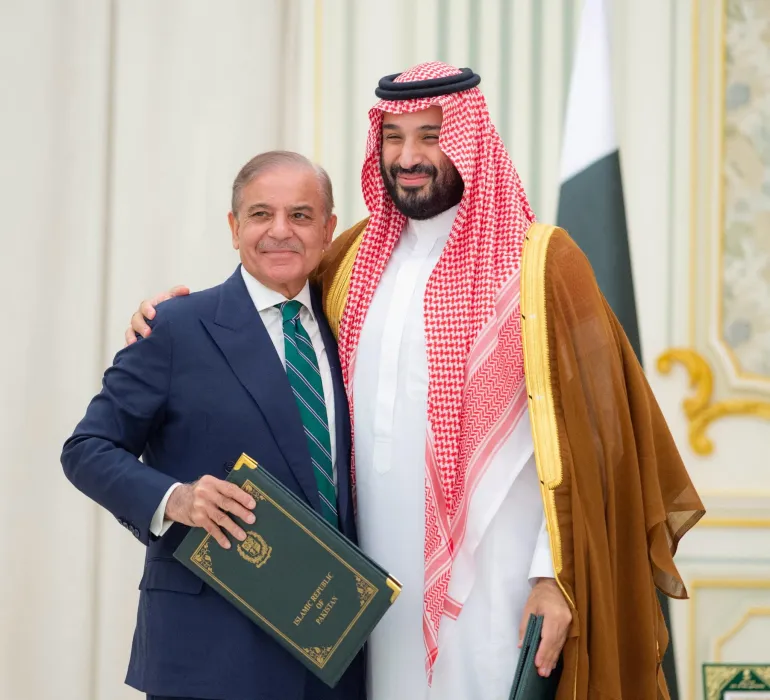
A month after Iranian president’s visit to Islamabad, Pakistani Prime Minister Shehbaz Sharif met Saudi Crown Prince Mohammed bin Salman in Riyadh in September 2025 to sign a defence agreement [File: Handout/Saudi Press Agency via Reuters]
The Strategic Mutual Defence Agreement, signed on September 17, 2025, in Riyadh by Crown Prince Mohammed bin Salman and Prime Minister Shehbaz Sharif alongside army chief Asim Munir, was the most significant formal defence commitment Pakistan had entered into in decades.
Its central clause states that any aggression against either country shall be considered aggression against both. The wording was modelled on collective defence principles similar to NATO’s Article 5, though analysts have cautioned against interpreting it as an automatic trigger for military intervention.
The agreement followed Israel’s September 2025 strikes on Hamas officials in Doha, an event that shook confidence in US security guarantees across the six Gulf Cooperation Council states: Bahrain, Kuwait, Oman, Qatar, Saudi Arabia and the United Arab Emirates.
Nuclear-armed Pakistan has maintained a military relationship with Saudi Arabia for decades, according to which an estimated 1,500 to 2,000 Pakistani troops remain stationed in the kingdom.
Now the pact is being tested under conditions neither side anticipated.
Umer Karim, an associate fellow at the Riyadh-based King Faisal Center for Research and Islamic Studies, called Pakistan’s current predicament the outcome of a miscalculation.
Islamabad, he argued, likely never expected to find itself caught between Tehran and Riyadh, particularly after the China-brokered rapprochement between Saudi Arabia and Iran in 2023.
“Pakistani leaders were always careful not to take an official plunge vis-a-vis Saudi defence. It was done for the first time by the current army chief, and though the potential dividends are big, so are the costs,” Karim told Al Jazeera.
“Perhaps this is the last time the Saudis will test Pakistan, and if Pakistan doesn’t fulfil its commitments now, the relationship will be irreversibly damaged,” he added.
In 2015, it declined a direct Saudi request to join the military coalition fighting in Yemen, following a parliamentary resolution that the country must remain neutral.
Aziz Alghashian, senior non-resident fellow at the Gulf International Forum in Riyadh, pointed to that episode. “The limitation of the Saudi-Pakistan treaty is clear. Treaties are only as strong as the political calculations and political will behind them,” Alghashian told Al Jazeera.
But Ilhan Niaz, a professor of history at Islamabad’s Quaid-e-Azam University, said that if Saudi Arabia feels sufficiently threatened by Iran to formally request Pakistani military assistance, “Pakistan will come to Saudi Arabia’s aid.”
“To do otherwise would undermine Pakistan’s credibility,” he told Al Jazeera.
The Iran constraint
The complicating factor for Pakistan is that it cannot afford to treat Iran simply as an adversary if Riyadh calls for military assistance.
The two countries share a long and porous border, maintain significant trade ties, and have recently stepped up diplomatic engagement. Iranian President Masoud Pezeshkian visited Islamabad in August 2025, and the two governments maintain a range of formal and backchannel contacts.
Niaz acknowledged that Tehran has also been “a difficult neighbour”, pointing to the January 2024 exchange of cross-border strikes initiated by Iran as evidence of the relationship’s unpredictability.
Even so, he said Pakistan had “vital national interests” in ensuring Iran’s stability and territorial integrity.
“The collapse of Iran into civil war, its fragmentation into warring states, and the extension of Israeli influence to Pakistan’s western borders are all developments that greatly, and rightly, worry Islamabad,” he said.
The domestic fallout from the US-Israel strikes and Iran’s response has already been immediate.
The army was deployed and a three-day curfew imposed in Gilgit-Baltistan after at least 23 people were killed in protests across Pakistan following Khamenei’s assassination. The protests were driven largely by Pakistan’s Shia community, estimated to make up between 15 and 20 percent of the 250 million population, which has historically mobilised around developments involving Iran.
Pakistan’s violent sectarian history adds another layer of risk.
The Zainabiyoun Brigade, a Pakistan-origin Shia militia trained, funded and commanded by Iran’s Islamic Revolutionary Guard Corps, has recruited thousands of fighters from Pakistan over the past decade. While many fought in Syria against ISIL (ISIS), many Syrians activists accuse them of committing sectarian violence.
Two years ago, Pakistan’s northwestern Kurram district, the Zainabiyoun’s primary recruitment ground, saw more than 130 people killed in sectarian clashes in the final weeks of 2024 alone.
Pakistan formally banned the group in 2024, but many believe the designation has done little to dismantle its networks.
Analysts warn that fighters hardened in Syria’s civil war could, if Iran’s conflict with Pakistan’s Gulf partners deepens, shift from a defensive to an offensive posture on Pakistani soil.
“Iran has significant influence over Shia organisations in Pakistan,” Islamabad-based security analyst Amir Rana, executive director of the Pak Institute of Peace Studies, told Al Jazeera. “And then you have Balochistan, which is already a highly volatile area. If there is any confrontation, the fallout for Pakistan would be severe.”
Pakistan’s Balochistan province borders Iran, and has been ground-zero for a decades-long separatist movement. “That reality cannot be ignored,” Muhammad Khatibi, a political analyst based in Tehran, said, pointing out that geography itself constrains Islamabad’s choices.
“Any perception that Islamabad is siding militarily against Tehran could inflame domestic sectarian divisions in ways that a full-scale regional war would make very difficult to contain,” Khatibi told Al Jazeera.
Violence erupted in Pakistan following news of US and Israeli strikes on Iran that killed Iran’s Supreme Leader Ayatollah Ali Khamenei on February 28. At least 23 people were killed in violence across the country, with at least 10 people killed in Karachi during a protest outside the US Consulate General [Akhtar Soomro/Reuters]
What are Pakistan’s options?
Analysts say direct offensive military action against Iran, such as deploying combat aircraft or conducting strikes on Iranian territory, is not a realistic option for Pakistan, given its domestic constraints.
Rana describes Islamabad’s current posture as an attempt to placate both sides.
“Iran’s primary threat is through air strikes using drones and missiles, and that is an area where Pakistan can help and provide assistance to Saudi Arabia. But that would mean Pakistan becoming a party to the war, and that is a major question mark,” he said.
He added that the most viable option for Pakistan could be to provide covert operational support to Saudi Arabia while maintaining diplomatic engagement with Iran.
Alghashian also agreed; he identified air defence cooperation as the most concrete role Pakistan could play — it would be both “militarily meaningful and politically defensible”
“They could help create more air defence capacity,” he said. “This is tangible, it is defensive, and it is in Pakistan’s interest that Saudi Arabia becomes more stable and prosperous.”
Karim, however, warned that the window for Pakistan’s balancing act may be closing faster than Islamabad realises.
“As the situation reaches a tipping point and as Saudi energy installations and infrastructure are hit, it is only a matter of time that Saudi Arabia will ask Pakistan to contribute towards its defence,” he said.
He added that if Pakistan deploys air defence assets to Saudi Arabia, doing so could leave its own air defences dangerously exposed, while deeper involvement could carry political costs at home.
For now, Islamabad’s strongest card remains diplomacy, using its access to both Riyadh and Tehran and the trust it has accumulated. Khatibi said Pakistan should protect that position “at all costs”.
“Pakistan’s most realistic positioning is as a mediator and leveraging its relationships with both sides. It is highly unlikely that Pakistan deploys forces into an anti-Iran coalition. The risks would outweigh the benefits,” he said.
The stakes for Pakistan
The scenario least favourable to Islamabad would be a collective Gulf Cooperation Council decision to enter the war directly, and the warning signs are mounting.
Saudi Arabia and the United Arab Emirates have both declared that Iranian attacks “crossed a red line”.
A joint statement issued on March 1 by the United States, Bahrain, Jordan, Kuwait, Qatar, Saudi Arabia and the UAE said they “reaffirm the right to self-defense in the face of these attacks.”
For Pakistan, such an escalation could carry serious consequences.
Economically, with millions of Pakistani workers living and earning their wages in Gulf states, remittances from the region provide crucial foreign exchange for an economy still recovering from a balance of payments crisis.
Khatibi said any prolonged regional war that disrupts Gulf economies would directly affect Pakistan’s financial position.
“Energy prices could also spike, adding further strain,” he said, noting Pakistan’s heavy dependence on Gulf states for its energy needs.
Pakistan is also simultaneously managing its own military confrontation with the Afghan Taliban which began two days before the US-Israel strikes.
Karim warned that deeper involvement in the regional conflict could trigger internal instability.
“Sectarian conflict,” he said, “can reignite, taking the country back to the bloody 1990s. The government already has lean political legitimacy, and such an occurrence will make it even more unpopular.”
Alghashian also highlighted Pakistan’s reluctance to be drawn into the conflict.
“Saudi Arabia does not want to be in this war and is getting dragged into it. Pakistan will also certainly not want to be dragged into somebody else’s war that they didn’t want to be dragged into. It just wouldn’t make any sense,” he says.
But Niaz said that if the crisis eventually forces Islamabad to choose, the calculus may become unavoidable.
“If Tehran forces Pakistan to choose between Iran and Saudi Arabia, the choice would unquestionably be in favour of the Saudis.”
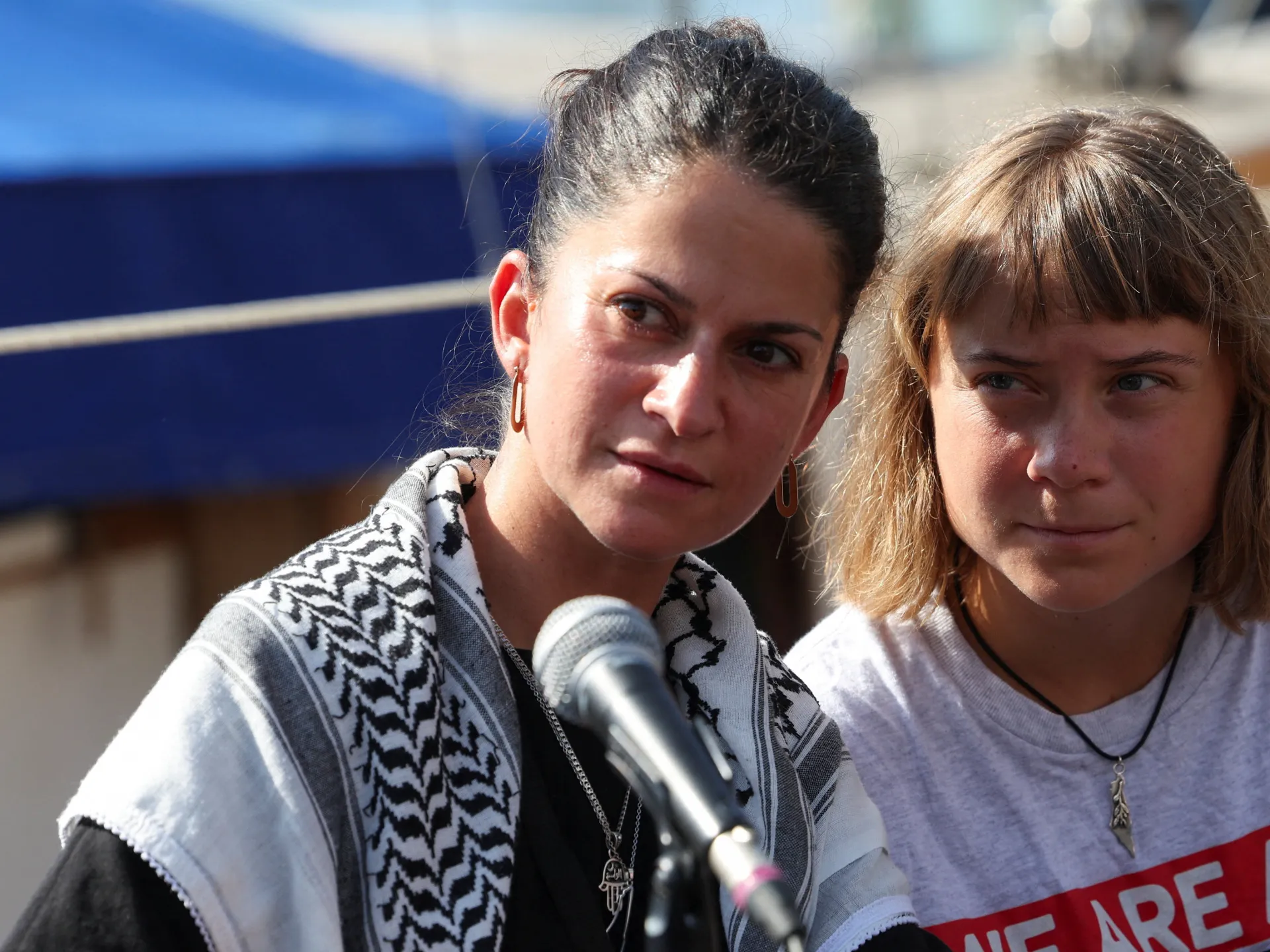
Pro-Palestinian German activist Yasemin Acar told Al Jazeera about what she says was harassment at a Berlin airport where she recorded a border guard asking about her destination because of concerns over “hostility towards Israel”.
The movie is called “Heel” and its frenetic opening — a flash-cut glimpse of young, handsome, swaggeringly cruel Tommy (Anson Boon) in drug-fueled party mode — seems enough to explain the title. The next time we see him, though, he’s neck-shackled in the basement of a remote English estate. What follows in Polish filmmaker Jan Komasa’s blackly comic, unnerving thriller is clearly meant to evoke “Heel’s” more obedience-minded reading.
And who would be harshing this hooligan’s buzz with a case of reform-minded abduction? An eerily isolated, rules-driven nuclear family: mild-mannered, soft-spoken Chris (Stephen Graham), haunted Catherine (Andrea Riseborough) and polite son Jonathan (Kit Rakusen). They all may as well have sprung from the combined neo-gothic conjurings of Edward Gorey and Harold Pinter. Under Komasa’s direction, the mix of fractured fable and terroristic morality play in Bartek Bartosik’s screenplay is absurd but potent, giving “Heel” enough psychologically twisted juju to nearly always feel like more than the sum of its parts.
Our first glimpse of Tommy chained up, pleading to be let go, is through the eyes of a young Macedonian refugee, Katrina (Monika Frajczyk), being given a tour of the large countryside manor where she’s just been hired by Chris for twice-a-week housework. Katrina, like us, is rightly horrified but she’s in her own bind: undocumented, saved by Chris from the streets, with her signature on a confidentiality agreement and a deportation threat hanging over her. She’s hardly in a position to do much more than accept what’s going on as a grimmer version of her own dead-end predicament.
And yet what’s readily apparent is that this weird, fragile, insular family is genuinely keen on folding Tommy into their lives. They’re also convinced of their unorthodox methods, which hinge on reinforcement and reward. Tommy seems receptive, too, with each invitation to participate in his abductors’ togetherness (meals, movie nights, a picnic). This is when “Heel” is at its most alluringly queasy, a dark commentary on all families as institutions inherently built on confinement and emotional blackmail. (It’s no coincidence one of the movie’s executive producers is Jerzy Skolimowski, who made his own pointed kidnapping allegory with “Moonlighting.”)
Everyone’s broken, so the collective strength of the cast in keeping us on our toes about where this is all headed is a huge plus. The wiry Boon doles out his brash character’s reserves of vulnerability to stunning effect — Tommy is a difficult part and Boon knows how to make it revealing and suspenseful. Graham’s tweaked, sensitive patriarch is tantalizingly far from the heartbreaking dad of “Adolescence” and the gloriously oddball Riseborough makes the most of her faint-voiced mom’s severity. Frajczyk and Rakusen are also pitch-perfect.
Last year Komasa had another family-centered thriller with “Anniversary,” a movie about politics corrupting a happy home. But we know that equation already. “Heel” is Tolstoy’s happy-family maxim cooked in a mad scientist’s lab. While it sometimes shows its seams as an idea movie, its elegant disturbia has a boldness, recalling that great mind-game ’60s era that gave us “TheServant,” “The Collector,” and the early psychological freak-outs of Komasa’s countryman, Roman Polanski.
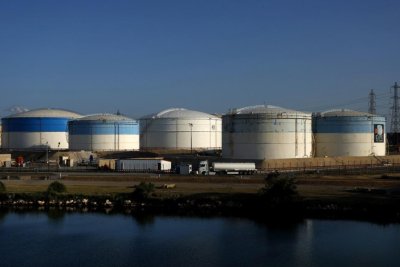
Brent Crude oil was trading at about $93 Friday as prices continue to rise largely because of oil tanker disruption in the Strait of Hormuz. File Photo by Guillaume Horcajuelo/EPA
March 6 (UPI) — The military escalation in the Middle East has shaken global energy markets and put Latin America on alert. The rise in oil prices opens an uncertain scenario if the conflict drags on, but it also generates expectations among the region’s exporting countries.
In that context, Argentina is following the crisis with caution, but also with interest. A more expensive barrel of oil can translate into higher export revenues, which is important for an economy that seeks to increase foreign currency inflows and strengthen its fiscal accounts.
Attention is focused on Vaca Muerta, one of the world’s largest reserves of unconventional oil and gas. The field is in the Neuquén Basin in Argentine Patagonia, and has become the country’s main energy bet.
From there, companies and analysts are closely watching every signal coming from the Middle East. In the sector, a cautious attitude prevails, summed up in the logic of wait and see.
According to data from consulting firm Gas Energy Latin America, the price of a barrel rose from about $64 to nearly $76 after the escalation of the conflict. The jump of around $12 benefits countries that sell crude abroad. Brent Crude was trading at about $93 on Friday as prices continue to rise largely because of oil tanker disruption in the Strait of Hormuz.
Álvaro Ríos Roca, former hydrocarbons minister of Bolivia and director and founder of the firm, told UPI that many Latin American countries depend on selling raw materials such as oil, minerals or agricultural products.
He said these countries earn money mainly from those resources because they do not produce or export much science or technology.
For that reason, when the price of oil rises, countries that produce it earn more money and the state also receives more taxes. That money helps them maintain their public finances, which are often weak.
In this scenario, the analyst identified three clear beneficiaries: Brazil, Guyana and Argentina. All three export more oil than they import, so the price increase is directly reflected in their revenues.
Even so, Ríos Roca believes Argentina has an advantage within the region.
“Argentina has the best prospects in oil and gas. Its exports will continue growing because the international market is demanding more energy,” he said.
Part of that expectation is explained by energy projects already underway. One of them is a mid-scale liquefied natural gas initiative led by Pan American Energy that aims to begin exports in the second half of 2027.
In parallel, another larger project promoted by YPF plans to start large-scale sales between 2030 and 2031. Both projects aim to turn Argentina into a significant exporter of natural gas in the global market.
The situation is different in Brazil. The country exports large volumes of oil, but does not have the same capacity to export gas. Much of the gas it produces is reinjected into oil fields to maintain the pressure that allows crude extraction to continue. Another portion is used in the domestic market.
Argentina, by contrast, bases its production on a technique known as hydraulic fracturing, or fracking. This involves injecting water, sand and chemicals at high pressure to fracture deep rock and release oil and gas trapped underground. It is the same system that fueled the U.S. energy boom over the past decade.
For now, the analyst believes oil prices will continue to be shaped by developments in the Middle East conflict.
“I don’t think it will reach $100. On the other hand, if the crisis eases in the coming weeks, the price could stabilize near $70 per barrel,” Ríos Roca estimated.
Daniel Dreizzen, former secretary of energy planning of Argentina, agrees that rising prices benefit all producing countries.
“Export revenues could increase by about 20%, in line with the rise in oil,” he told UPI.
Deizzen also pointed to a key factor in Argentina’s case: The country’s refining capacity is practically at its limit. That means any additional oil produced will be destined for international markets.
“Argentina cannot refine much more. So the extra crude is exported,” he said.
That scenario also benefits oil companies, which sell the same product at a higher price. If the domestic market follows the so-called “export parity,” internal prices tend to align with international ones. That improves profitability and may encourage new investments in the energy sector.
While some countries gain from the new scenario, others face a more complex outlook. That is the case of Mexico.
According to Ríos Roca, Mexican production will continue declining due to a lack of investment. State-owned Petróleos Mexicanos, or Pemex, carries heavy debt with contractors and has little room to finance new exploration projects.
“Mexico had very strong production for decades, but it has been in decline for years. Even Venezuela now has better prospects,” he said. In Venezuela’s case, some analysts see a possible return of international investment, which could reactivate part of its energy industry.
In contrast, several Latin American countries would be on the losing side if high prices persist. Net energy importers such as Central American countries, as well as Bolivia, Paraguay, Uruguay and Chile, will have to pay more for the fuel they consume. The same applies to many Caribbean economies, where energy costs have a direct impact on inflation and growth.
Beyond the current situation, analysts agree on a global trend: demand for natural gas will continue growing.
“There is no decarbonization of the planet without natural gas,” Ríos Roca said. In that context, liquefied natural gas trade is expanding rapidly and opening opportunities for new exporters.
Argentina seeks to position itself in that market through LNG projects being developed around Vaca Muerta. The same trend could also emerge in Venezuela, where initiatives to export gas in the coming years are under evaluation.
However, the immediate direction of the energy market largely depends on what happens in the Middle East. Both analysts concurred that the key factor is not only the duration of the conflict, but also the damage that oil and transport facilities may suffer.
“Productive infrastructure is being destroyed amid the attacks,” Ríos Roca said. If those facilities are seriously damaged, the effects on the market could last much longer than the conflict itself. In that case, the impact on oil prices would be deeper and more prolonged.
Christie Garba is a 38-year-old mother of seven who lives in Billiri, Gombe State, in Nigeria’s North East. She lived in Yobe State with her family before the Boko Haram insurgency hit the region. At that time, attacks had happened in nearby places, and they had not reached her community directly.
Christie and her family had stayed about four months after the attacks started, but as the violence escalated, the soldiers warned residents that the situation had become too dangerous to remain. The curfews that followed made everyday life almost impossible.
In this episode of VOV, we tell the story of how Christie and her family moved to Gombe State and how she survived starting a new business.
Reported and scripted by Sabiqah Bello
Voice acting by Rukayya Saeed
Multimedia editor is Anthony Asemota
Executive producer is Ahmad Salkida
Christie Garba, a 38-year-old mother of seven, relocated from Yobe State to Billiri, Gombe State in Nigeria due to the Boko Haram insurgency. Initially, her community was indirectly impacted, but the increasing violence and subsequent military curfews forced her family to move to ensure their safety.
Despite the challenges, Christie successfully established a new business in Gombe State, showing resilience and adaptability in the face of adversity.
Her story highlights the impact of regional conflict and the determination required to rebuild and sustain a livelihood in new environments.
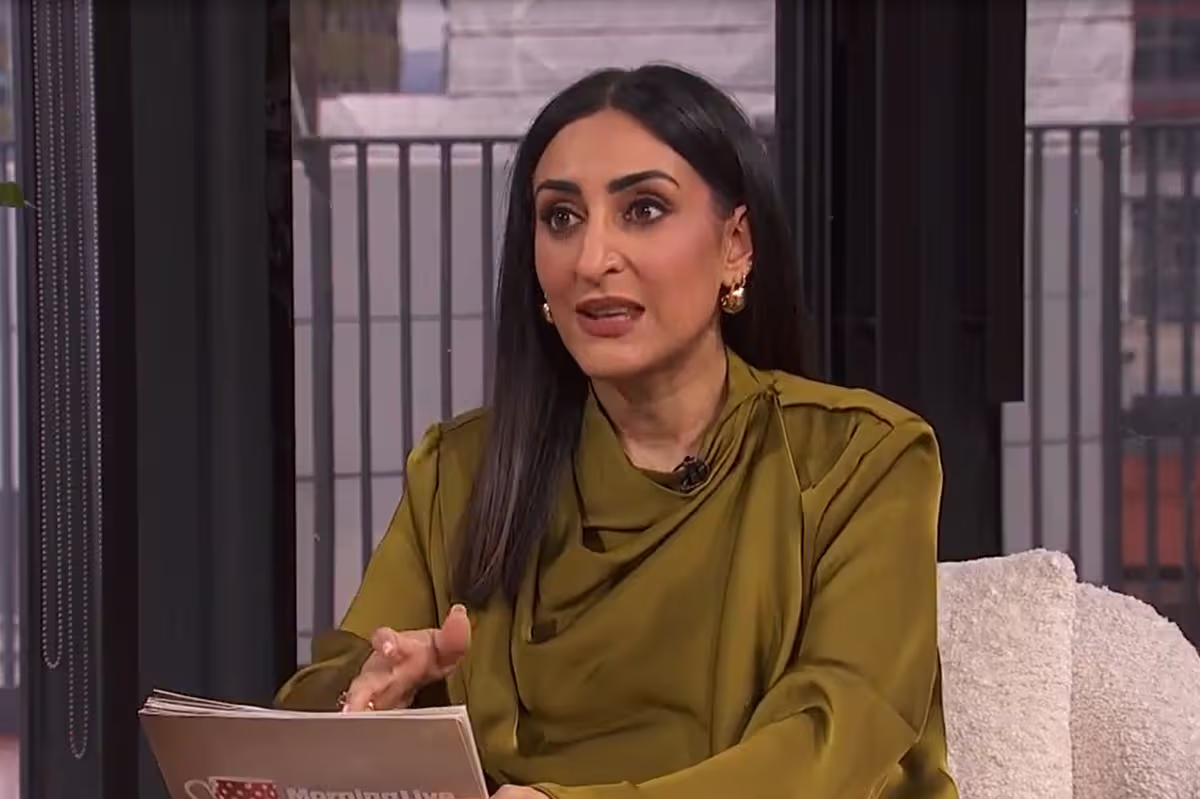
Appearing on BBC Morning Live, Dr Punam Krishan gave exact time people should have cough for before getting it checked
BBC Morning Live’s, Dr Punam Krishan said people often put COPD symptoms down to just ageing(Image: BBC)
A BBC doctor has said that this week, two patients came to her with a cough, and it turned out to be a disease with no cure. Appearing on BBC Morning Live, Dr Punam Krishan was speaking out about a chronic condition which 1.7 million suffer from – but hundreds of thousands more have without knowing.
And she explained exactly how long people should have a cough for before they get it checked out properly. Host Nick Knowles raised how a viewer had asked about COPD and cures he’d seen online, which claim it can be sorted out in 7-14 days. Because the weather has changed, people are also experiencing hayfever, and symptoms like a lingering cough or wheezing can be easy to dismiss.
Dr Punam said: “Over the last few years, I’ve been seeing more and more patients coming through to me and saying, ‘Look, I’ve seen this on social media or I’ve tried this’ and it has the potential to cause harm as well and there is a lot of misinformation and it can be really hard and you can see why adverts like this can be so appealing if you are somebody who’s living with COPD.
“So, for anyone who doesn’t know what that stands for, it stands for chronic obstructive pulmonary disease. It’s a term that we use to describe lung conditions that really make your breathing difficult. Now, the thing is if you do come across anything online, you’re not sure about it, always go to a trusted medical source.
“So, the NHS website’s a great place to start. Medical experts, speak to your doctor or your pharmacist before trying anything. Unfortunately, when it comes to COPD, it is a progressive lung condition, which means it can worsen over time. So, sadly, there isn’t a cure. Certainly, nothing over 7 to 14 days that’s going to make a difference.”
Dr Punam said the illness is often missed or just put down to ageing. She said: “Around 1.7 million people in the UK are currently living with COPD, but we believe that number is actually a lot higher. And that’s because the symptoms can develop over a long period of time and they tend to develop slowly . So, people tend to dismiss them or put it off to maybe it’s because I’m getting older. Maybe it’s because I’m unfit. COPD tends to be diagnosed when you’re like middle-aged or older adults, but it can affect anybody earlier as well.”
Content cannot be displayed without consent
She said smoking is one of the most common causes. The two main problems within COPD are emphysema and chronic bronchitis. She added: “And what’s really happening in the lungs during that is that it causes inflammation. It causes narrowing of the airways. It causes scarring. It affects the tiny air sacs in our lungs whose job it is to transfer oxygen into the bloodstream so that we can breathe properly. So of course, if those are damaged, it really does impact you long term.”
She said people should not ignore coughs – and gave an exact time people should get it checked out. Dr Punam said: “A lot of people do just sit on it and dismiss it. The earlier you get it diagnosed, the better it is because there are lots of things that we can do to support the symptoms.
“So, if you have a new cough that is persisting, I would say the rule of thumb is four to six weeks. If something is persisting beyond that time, it’s not going away. You don’t know why you’ve got it, so have a chat with your doctor because we can investigate that to look at the root cause, but don’t just dismiss it. Anything more than four weeks, a cough that you just don’t know why it’s there, get it looked at.”
Nick asked: “We’ve had hay fever as we’ve been hearing this week already this year. Is that a complication?” Dr Punam said: “Well, it is. Just this week, actually, I had two patients who have COPD who came in because they felt that their hay fever had started affecting them.
“The thing is a quarter of people that have got COPD will be sensitive to pollen. We’re loving spring – it’s around the corner. But with that, of course, pollen counts rise and if you’re sensitive to that, it can affect your breathing. So often I find people with COPD can get misdiagnosed, or maybe it’s just a flare-up of the condition or a chest infection, but actually, if you’re coughing a lot more, if you’re producing a lot more phlegm, you’re congested, now is the time.”

















![A month after Iranian president's visit to Islamabad, Pakistani PM Shehbaz Sharif met Saudi Crown Prince Mohammed bin Salman in Riyadh in September 2025 to sign a defence agreement. [File: Handout/Saudi Press Agency via Reuters]](https://i0.wp.com/occasionaldigest.com/wp-content/uploads/2026/03/2025-09-17T193003Z_2033872192_RC2VTGAIIE3P_RTRMADP_3_SAUDI-PAKISTAN-DEFENCE-1772753571.jpg?w=640&ssl=1)
![Violence erupted in Pakistan following news of US and Israeli strikes on Iran that killed Iran's Supreme Leader Ayatollah Ali Khamenei on February 28. At least 23 people were killed in violence across country, with at least 10 people killed in Karachi during a protest outside the US Consulate General. [Akhtar Soomro/Reuters]](https://i0.wp.com/occasionaldigest.com/wp-content/uploads/2026/03/2026-03-01T152518Z_797272407_RC2NVJALJ3YW_RTRMADP_3_IRAN-CRISIS-PAKISTAN-PROTESTS-1772753695.jpg?w=640&ssl=1)