Kevin Gower

Built to stand out not to fit in

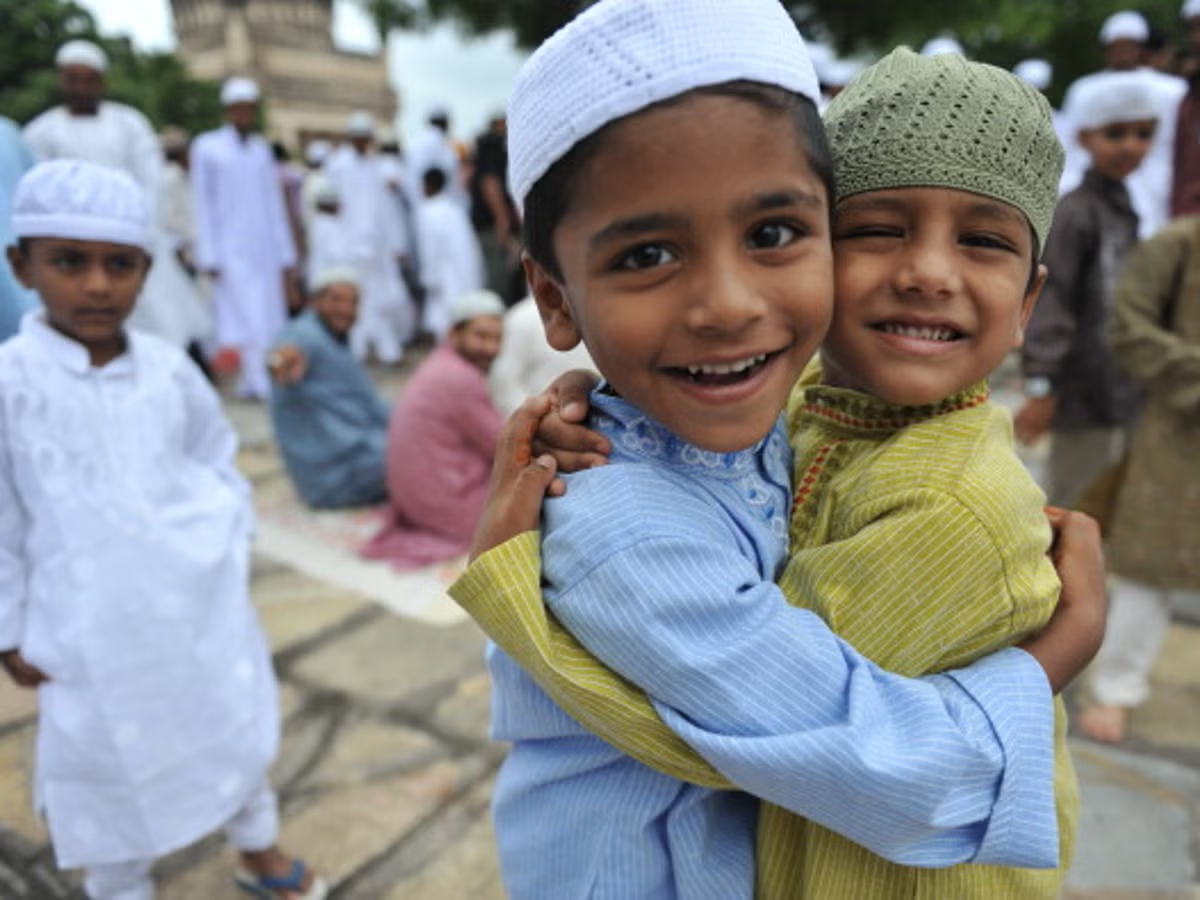
Saturday 17 January Israa & Miaraj Night around the world

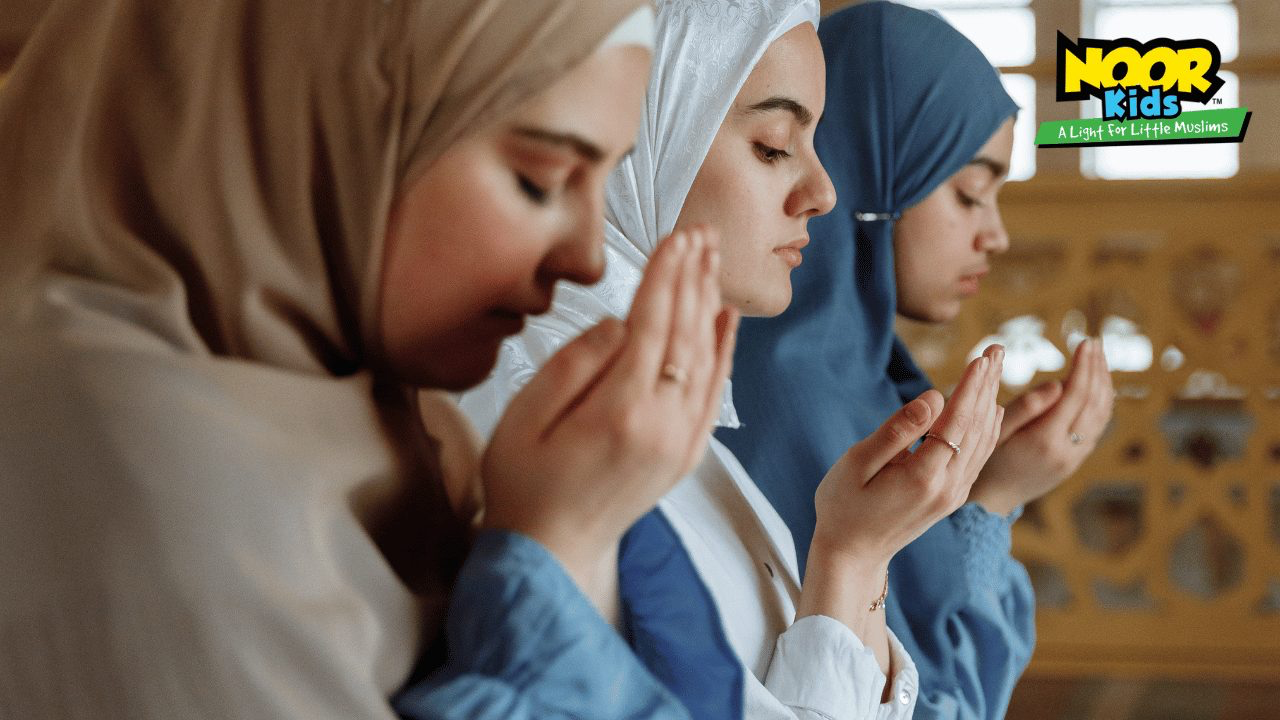
Isra and Mi’raj Night marks the Prophet Muhammad’s (PBUH) journey from Mecca to Jerusalem and ascent into heaven, sometime around the year 621, according to Islamic belief.

The details come from the Quran and other teachings from the Prophet Muhammad (PBUH).

The Night Journey starts with the appearance of the angel Gabriel who takes the Prophet Muhammad (PBUH) to Jerusalem on a winged horse.

In Jerusalem, the Prophet Muhammad (PBUH) met and prayed with many prophets including Moses, Abraham and Jesus. This part of the journey is known as ‘Isra’.

The Prophet Muhammad (PBUH) was then carried by Gabriel to heaven, ascending through the seven heavenly realms until he reached paradise where he spoke to god.

God told the Prophet Muhammad (PBUH) about the importance of prayers. On the return journey to Mecca, Moses asked Muhammad (PBUH) how many prayers God had commanded to be said daily. Muhammad (PBUH) said fifty. Moses said this was a very high obligation and told him to go back and ask for the number to be reduced. Initially, this was reduced to forty. 

Muhammad (PBUH) went back to God several times, with the number of daily prayers eventually settling at five, which remains the duty of a Muslim today.

This second part of the journey is known as the Mi’raj, which means ladder in Arabic.

I have cut 22 years off my biological age by doing this, except I haven’t

By Hannah, deluded

WANT to rewind an incredible 22 years off your biological age with small lifestyle changes? That’s completely impossible, but I have, but I haven’t, by doing this:

Give up all alcohol

Alcohol is aging! You never knew this because you’ve never entered a pub during a weekday afternoon and not recognised an old schoolfriend who looks 30 years older than you, but I have. So I gave up alcohol and instead began claiming that had knocked actual years off my actual age!

Age: 42. Biological age: still 42

Eat some form of exotic seeds

Seeds are nature’s time machine. Think about it; have you ever seen a sparrow in a mobility scooter? And exotic ones like chia and flax are even better because they cost a lot from health food shops. Swallowing a handful of these a day and the age of your gut will reverse in a process that will spread though your body, as Einstein said.

Age: 42. Age on passport: remarkably, still 42

Bathe in special light

UV light ages the skin, which is why Greek women in their 80s look so wizened. However I believe in other forms of light – call them expensive light – which can bend time around the face and cause it to travel back to the early 00s. I apply it with a special mask, and now my skin could be protesting the Iraq war.

Age: 42. Objective age: technically 42

Give up something else

My personal quest to create a closed Gödel curve around my body despite their invalidation by Professor Stephen Hawking is not yet complete. Further personal sacrifice is necessary to revoke the laws of physics, so I no longer masturbate. This allows chakras to build up in the spirit, sand to run up hourglasses and pages to return to calendars.

Age: 42. Empirical age: stubbornly 42

Biotwatting

Finally following the new science of biotwatting, as developed by several Silicon Valley men who are too rich and have read too much sci-fi, I sleep in a fridge hanging upside down while having my blood infused with osmium, tantalum and strontium-90. The environment is also highly magnetically charged and ultrasound-rich.

Age: 42. Actual age: nothing but a number.

Friday 16 January Eid al-Mab’ath in Iran

Muhammad (PBUH) often retreated to the Hira cave outside the holy city of Mecca, Saudi Arabia, to pray to God, and to reflect on life.

The momentous event took place in 610 CE when Prophet Muhammad, at the age of 40, had a deep spiritual encounter. Angel Gabriel, the divine messenger, conveyed God’s command, initiating his mission to spread the message of peace and reaffirm monotheism, as taught by previous prophets.

Gabriel descended and asked him three times to read the holy Quran revealed to him. Muhammad, who did not know how to read and write, could then read in full and began to teach others the holy words of God.

Thursday 15 January John Chilembwe Day in Malawi

John Chilembwe was born sometime between 1860 and 1871 in the African nation of Nyasaland, now known as Malawi. There is no record of his exact date and place of birth.

What is known is that he was trained as a church minister in the United States returning home after becoming a Baptist minister.

While in America he learned about the abolitionist movement there. Back in Malawi, he developed a growing disgust with the wanton cruelty of white rule, especially on white estates that had African tenants and wage earners.

At the start of the first world war, Britain decided to use Nyasa soldiers against the Germans in east Africa. To use locals without their agreement in such a conflict proved to be a tipping point for Chilembwe’s anger against the British.

On Saturday January 23rd 1915, Chilembwe led an uprising and attacked a notoriously brutal estate, killing several managers along with several African workers. One of those killed was  Jervis Livingstone and it is said Chilembwe displayed Livingstone’s severed head in his church. Lacking support from other districts, the revolt quickly collapsed. Chilembwe tried to flee to neighbouring Mozambique. He and a group of his followers were caught and killed on February 3rd 1915.

Over the years though, Chilembwe has become a symbol of the country’s liberation struggle against the white colonialists. He was also the first to give a voice to the idea of a Nyasa identity, in this country that was more tribal-based. His enduring popularity was aided by a popular play about his uprising being aired on the radio every year on Martyrs’ Day (March 3rd) in the 1980s and 1990s.

Women bewildered as two men end friendship without drama

WOMEN worldwide are struggling to comprehend how two men have amicably agreed to no longer be friends with no emotional fallout whatsoever.

Tom and Tom, not their real names, known in their local pub as ‘the Toms’, agreed their acquaintance is over now the former is moving to Portsmouth without recriminations, insults, or any lingering doubts over whether they deserved friendship at all.

Mutual friend Ryan said: “So it’s over? Without weaponising any group chats? Without hatred or remorse? Where’s the fun in that?

“No screenshots were exchanged. No third parties were briefed with carefully edited accounts designed to secure unconditional loyalty. Neither has demanded a friend agree they’re ‘a queen who deserves better than that skank’. That can’t be healthy.

“How come their pals haven’t all taken sides? If nobody’s uninvited to a wedding or stag party because of this, was it even a friendship? Where’s the slow-burning collapse of their social group?

“The real way to end a friendship is continuing to meet up out of obligation while deploying pre-prepared, passive-aggressive remarks that technically sound supportive but are designed to sting if you’re listening properly. That’s the kind option.

“If they’d hatefully stayed mates they’d each build an arsenal of resentments to bitch about to other women, and that’s the basis of real friendship. Until you go off them.”

Logan said: “I told him ‘maybe see you around?’ He grunted noncommittally.”

Wednesday 14 January Day of Defenders of the Motherland in Uzbekistan

This holiday is celebrated in honour of the establishment of the Armed Forces of Uzbekistan. On January 14th 1992, shortly after independence from the Soviet Union, the Uzbek parliament transferred all the military units deployed on the country under the jurisdiction of the Republic of Uzbekistan.

The Armed Forces of Uzbekistan are considered to be the largest and strongest military in Central Asia.

On December 29th 1993 “January 14th” was declared as the Day of Defenders of the Native Land.

Though not a public holiday, this is still a popular event and is widely marked across the country. On this day ranks of servicemen are paraded in full uniform in the capital Tashkent to receive congratulations and awards from the country’s leadership.

Tuesday 13 January Democracy Day in Cape Verde

Nowadays Cape Verde is one of the most democratic nations in Africa and ranks 26th in the world Democracy Index. That wasn’t always the case.

Following the 1974 revolution in Portugal, Cape Verde gained its independence in July 1975. The African Party for the Independence of Cape Verde (PAICV) came to power and established a one-party system.

It wasn’t until 1990 when a growing call for democracy saw the PAICV discuss constitutional changes and the creation of a credible opposition political party, the Movement for Democracy (MPD).

The one-party state was abolished on September 28th 1990, and the first multi-party elections were held on January 13th 1991.

In the elections, the MPD won the most seats and MPD presidential candidate António Mascarenhas Monteiro defeated the PAICV’s candidate.

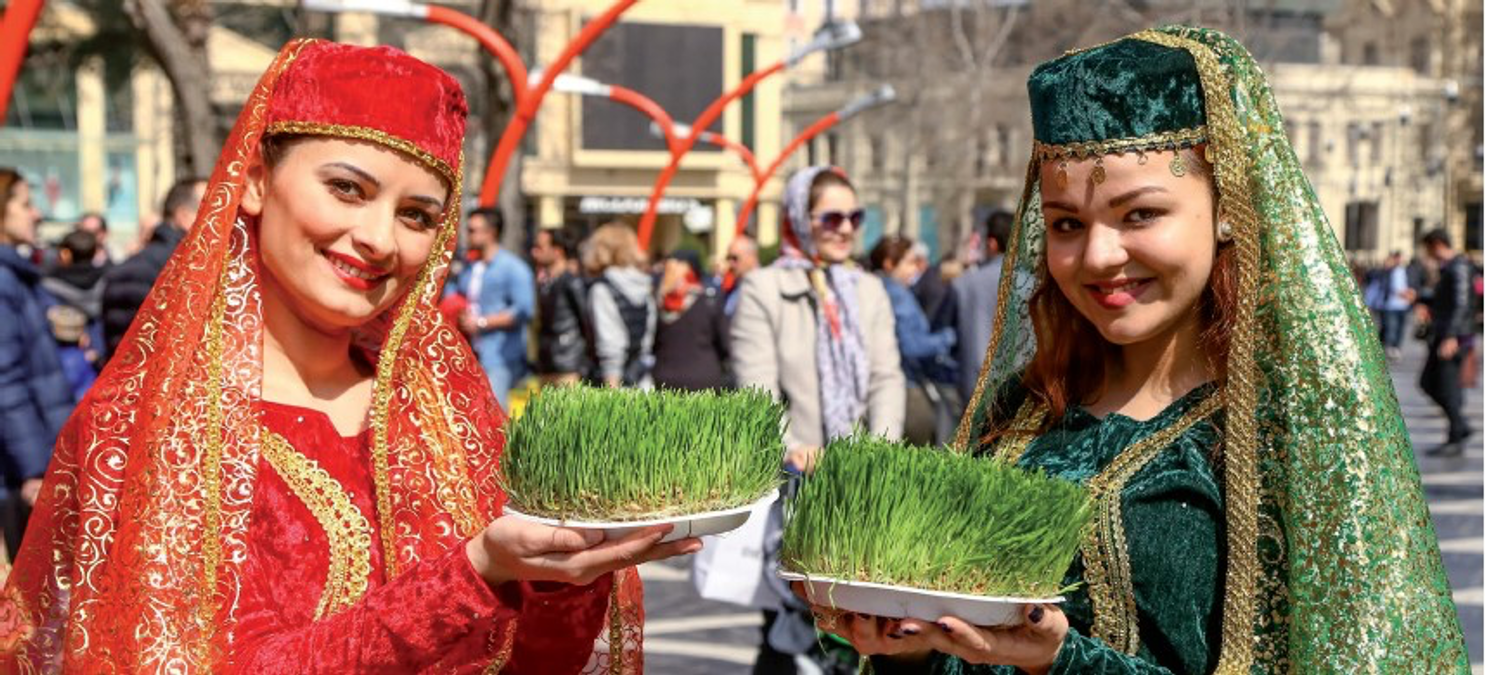
Monday 12 January Yennayer in Algeria

Amazigh New Year is filled with dance and songs of love, fertility, and prosperity welcoming the new agrarian year.

The Berber calendar has been in use for many centuries. Its origin is as an agrarian calendar, based around the seasons and agricultural tasks, inspired by the Julian solar calendar.

Yennayer is the Berber word for January. Under the change from Julian to the Gregorian calendar, 12 days were lost, which is why the Berber New Year begins on January 12th.

Some historians say that the calendar dates from the day that King Chachnaq defeated the Egyptian pharaoh Ramses III in 950 BC and established a monarchy that ruled from Libya to Egypt.

Yennayer is a day for the Berber community to showcase their rich cultural and artistic heritage. The New Year will be celebrated with communal feasts consisting of traditional meals of couscous and chicken, dancing, playing traditional games, and horse parades.

The Berbers, who refer to themselves as the Amazigh (‘free man’), are descendants of North Africa’s pre-Arab inhabitants. About a quarter of the population of Algeria are Berber.

The Amazigh language and culture and the celebration of Yennayer are not unique to Algeria as there are also significant Berber communities in Morocco, Tunisia, Libya, Mali and Niger. You will even find Berbers in the Canary Islands, in the Egyptian desert and in northern Burkina Faso.

The recognition of the Amazigh New Year with a public holiday is part of an ongoing process to recognise the Amazigh population in Algeria and has been a major claim of the civil rights movement in Algeria since the 1980s.

Home to North Africa’s biggest Amazigh population, Morocco long marginalised its language and culture in favour of Arabic and French, giving rise to an Amazigh identity movement which has steadily gained influence.

Too posh to push? Fewer men than ever passing kidney stones naturally

FOR the first time, more men are electing for a procedure to dissolve kidney stones rather than naturally pushing the large, misshapen crystals out through their urethra.

Annual figures collected by the Institute for Studies have uncovered that weak, pathetic men are opting for medical intervention rather than the time-honoured methods preferred by older, less cowardly generations.

Professor Emmerson, not his real name, said: “We’re seeing a worrying increase in the number of males who would prefer to take the easy route.

“Men seem to want to avoid pain and inconvenience for what should be a life-changing event, with all the NHS shaming around taking medication and the promotion of passing kidney stones as a mystical, spiritual occasion ignored.”

Hannah, not her real name, who has never had a kidney stone, nonetheless shared her strong opinion: “Men just aren’t as brave as they used to be. And selfishly, when they’re considering options for their medical care they aren’t thinking about the NHS’s costs.

“I’ve heard it doesn’t even hurt that much, so long as you’re not obese or morally corrupt. The fact is nature would never give you a kidney stone that you can’t pass.

“My granddad pushed out six kidney stones at home with with no pain relief whatsoever so I don’t see why modern men can’t do the same.”

Sunday 11 January Proclamation of Independence in Morocco

Since the mid-seventeenth century, Morocco has been ruled by the Alaouite dynasty. In the late nineteenth century, the influence of European powers such as France, Germany and Spain grew larger.

In 1859, Morocco hade gone to war with Spain, and in theory, had guaranteed its independence through the 1880 Conference of Madrid. Despite this, the French gained an increasing influence in Morocco. Following attempts to seize power in the region by other European powers, on 3 December 1912, Morocco was made to accept a treaty that made it part of a French Protectorate, with part of Northern Morocco coming under Spanish control.

Even from the start of the protectorate, a national struggle against the French occupation had begun. In 1930, the French issued a decree called the ‘Berber dahir’ which sought to adapt the local laws of the Berber tribes. This was seen by the nationalists as an attempt to take Berber lands and a threat to Arab laws. This incident was seen as the catalyst for the emergence of a political nationalist awareness in Morocco.

On 11 January 1944, the Istiqlal (Independence) Party presented a manifesto demanding full independence, national reunification, and a democratic constitution for Morocco. The manifesto had been reviewed and approved by the Sultan before its submission to the French resident general, who then dismissed its recommendations.

While Morocco did not achieve full independence until 1957, the proclamation of Independence in the manifesto is seen as a key date in Morocco’s struggle for independence.

Legitimate reasons why I keep you off my social media, by a boyfriend definitely not keeping his options open

By Ron aged 27 and with nothing to hide

BABE, I know you’re concerned about why you never appear on my Insta. So I want to address this transparently to reassure you while continuing to seem unattached.

First, I’m a very private person. Why I even have social media in that case? To keep up with all your news, hun! Yeah, I guess my desire for privacy doesn’t extend to my gym selfies, travelogue or shirtless shots. Because I’m complex.

Second, my ex still follows me. It would hurt her to see me with someone as hot as you and I know that you wouldn’t want to cause pain to another woman. That’s why I’ve concealed your existence from her; because I’m a committed feminist.

Besides, social media is used by big tech to track us and I want to protect you from that. Your algorithms should remain clean and untouched by my digital presence which is why I assiduously untag myself from all your photos.

The posts I’ve liked were all hot girl selfies? I hadn’t noticed. I guess I was trying, in my clumsy, fat-fingered way, to shore up their flagging self-esteem. Large-breasted women can get insecure and I wanted to be a good ally.

The comments I posted on their photos? An attempt to make friends. I have you and I resent any suggestion that I view women in purely sexual terms. It cheapens our relationship.

Our love should be about what’s real, not what’s online. Which is why our relationship will remain entirely offline, undocumented and deniable should I run into a former fuckbuddy on a night out.

Saturday 10 January Traditional Day in Benin

Vodoun (also spelled Vodon, Vodun, Vodou, Voudou, Voodoo) is an ancient religion that originated in the West African kingdoms of Fon and Kongo. The Fon kingdom was located in what is now southern Benin and the coastal city of Ouidah in Benin is regarded as the birthplace of Vodoun and remains a focal point for celebrations on Traditional Day.

According to the Voodoo tradition, there is one supreme god, but followers can only communicate with god through spirits. They also emphasize ancestor worship and believe that the spirits of the dead live side by side with the world of the living.

During Vodoun ceremonies, followers can ask the spirits for advice or help; in return, the followers have to perform rituals including animal sacrifice.

Each year, on Traditional Day, thousands of followers from Benin and beyond will descend on the beach in Ouidah for the annual festival.

Attendees stay in tents with colourful flags representing different sects of the religion. Beginning with the slaughter of a goat in honour of the spirits, the festival is filled with prayers, libations, singing and dancing.

Vodoun is the source of the Voodoo religions practiced in Haiti and other parts of the Western hemisphere; its traditions travelled to the new world when many West Africans were displaced during the slave trade.

Vodoun was officially declared a religion in Benin in 1996. About 17% of the population of Benin, some 1.6 million people, follow Vodoun.

Woman joyously proclaiming ‘This is MY year’ wrong again

A WOMAN proudly telling everyone 2026 will be when everything in her life slots into place is as wrong as she was a year ago.

Donna, not her real name, 32, is convinced that a purely numerical change in her circumstances will lead to all her personal ambitions and desires being fulfilled. Sadly there is no evidence to support this.

She said: “This will be the year my life becomes complete. I can just feel it, based on f**k all.

“I’ll meet the man of my dreams and move into his huge house, I’ll get that promotion I’ve been overlooked for for the past five years, and I wouldn’t mind betting on a substantial win on the Lottery now that I’m on a roll in the future.

“I know I said this last year, but 2025 was all about getting bad shit out of the way so that untrammelled good things can happen in 2026. Pretty sure that’s how life works.”

Astrologer Mary said: “I’ve consulted the stars and I can confirm that Donna’s life will remain mostly unchanged, and fairly shit. We call that destiny, or being a lazy, unfocused cow.

“If anything things will get worse for Donna in 2026 due to an incredibly freak accident in June involving a large plastic statue of Gandalf. You gotta laugh.”

Friday 9 January Martyr’s Day in Panama

Panama came under Spanish control with the arrival of settlers in the 16th century. In 1821, Panama effectively became independent from Spain as the region was a department within the Republic of Greater Colombia.

In 1903, Colombia and Panama disagreed on whether the U.S. should be allowed to build a canal across Panama. With the support of the U.S., Panama broke away from Colombia on November 3rd 1903. The canal was completed in 1914.

Despite the support of the US in helping Panama achieve independence, there was some resentment that sovereign land (the Canal Zone) was controlled by another country in return for annual payments.

To placate the protestors, in 1964, U.S. President John F. Kennedy agreed that the Panamanian flag would be allowed to be flown beside the U.S. flag on all non-military locations in the Canal Zone. Kennedy was assassinated before his orders became law and subsequent changes meant that instead of flying both flags, all flags would be removed. This angered the inhabitants of the Canal Zone, known as Zonians, who saw this as a sign that the U.S. might leave the area. The Zonians started flying the U.S. Flag in defiance of the rules.

The U.S. flag was raised at Balboa High School in the Canal Zone. This led to about 200 Panamanian students marching to the High School with a treasured Panama flag that they planned to fly alongside the U.S. Flag. The police agreed that a small group of students would be allowed to hoist the flag. However, scuffles broke out and the flag was torn.

News of the desecration of the Panamanian flag spread quickly and angry crowds gathered on the border between Panama City and the Canal Zone. Fuelled by wild rumours on both sides, the situation escalated into violence with shots being fired. The shooting led to the deaths of 21 Panamanians and four Americans.

Thursday 8 January Orthodox Christmas in Russia

The Julian calendar had been established by Julius Caesar in 46 B.C.

Because it was the Catholic pope who ruled on the adoption of the new calendar, many churches not aligned to the papacy ignored it, such as Protestants and the Eastern Orthodox church. Protestants accepted the new calendar in the early 1700s.

In 1922, the patriarch of Constantinople decided that the Gregorian calendar should be followed for the observance of Christmas, but not for Easter, and this edict was followed by many of the other Orthodox churches.

The majority of Orthodox believers, including the Russian Orthodox Church, Egyptian Coptics, Ukrainian churches, Serbs, Macedonia, and the Mount Athos monks in Greece, celebrate Christmas on January 7th. The churches in Romania, Bulgaria, Cyprus, and Greece mark it on December 25th along with other Christian denominations.

The Armenian Orthodox Church observes Christmas Day on January 6th. This was the original date for Christmas until the 4th century, rather than some Julian/Gregorian adjusted date.

Five subtle signs your wife fancies you

NOT sure if the woman who agreed to be with you for the rest of your life fancies you? Look out for these telltale signs.

She’s married you

Weddings are costly affairs, which means your wife must at least have a tolerance that borders on affection for you. Unless of course she recently turned 35, was feeling societal pressure and wanted some nice photos of her in a fancy dress she could splash over social media. If that’s the case you’re more like a really useful addition to her life, such as a water heater. That’s pretty flattering!

You sometimes have sex

Having intercourse once could be chalked up as an experiment on your wife’s part or a mistake. However you’ve been shagging at least a couple of times a month ever since your wife wearily decided to settle for you. That must mean she is either attracted to you at some level or the toy she keeps in her bedside drawer has run out of batteries. For the sake of your self-esteem, assume the former.

You’re always bumping into her

Whether you’re getting in her way in the kitchen or she’s impatiently waiting for you to finish using the bathroom, your wife always seems to be running into you. This could be because you have poor spatial awareness and live in a tiny house, but the more likely answer is that the woman you’ve been with for years secretly has the hots for you and is engineering ‘chance’ meetings. Or she needs the loo.

She remembers little things

Keeping track of small details, like how much money you’ve been frittering on online gambling, isn’t a sign that your wife is petty and has trouble letting go. This Rain Man-like memory, which can recall every time you failed to meet her emotional and physical needs, is actually an indicator that she has feelings for you. Feelings of disappointment and resentment, admittedly, but she’s not totally disinterested so you can build on that and eventually she might think you’re a fairly okay guy to know.

She compliments you on an annual basis

Women never flatter a man in case he gets the wrong idea and tries to make a move. If your wife utters a glowing compliment like ‘You don’t look like shit’ under her breath then it’s a good sign that romance is in the air. Don’t fish for praise though by saying ‘Pardon?’ or asking for more than one compliment per year. That sort of desperation turns a spouse off.

Wednesday 7 January Coptic Christmas around the world

The difference in the timing of the Christmas celebrations stretches back to 1582, when Pope Gregory XIII, ruled that the Catholic Church should follow a new calendar – called the Gregorian calendar, as it was closer to the solar calendar than the Julian calendar.

The Julian calendar had been established by Julius Caesar in 46 B.C.

Because it was the catholic pope who ruled on the adoption of the new calendar, many churches not aligned to the papacy ignored it, such as Protestants and the Coptic and Eastern Orthodox churches. Protestants accepted the new calendar in the early 1700s.

In 1922, the patriarch of Constantinople decided that the Gregorian calendar should be followed for the observance of Christmas, but not for Easter, and this edict was followed by many of the other Orthodox churches.

Coptic Orthodox Christians comprise 90% of Egypt’s 20 million Christians. The Coptic Orthodox Church has been a distinct Christian body since the schism that took place at the Council of Chalcedon in 451 AD when the Coptic Church broke from the rest of the Christian Church.

The Coptic Orthodox Church traces its origins to the 1st century AD when the Apostle Mark is said to have visited Egypt. Mark is regarded by Egypt’s Christians as the first Pope of Alexandria, the original seat of the church.

Egypt was almost entirely Christian on the eve of the Muslim Arab conquest around 640AD. It remained majority Christian until around the 13th century. The genesis of the word “Coptic” is the Greek word for Egypt, Aeygyptus.

Coptic Christmas was declared a national holiday in Egypt in 2005 by the government of Hosni Mubarak.

Tuesday 6 January Armenian Orthodox Christmas Day

Armenian Christmas is a culmination of celebrations of events related to the birth and baptism of Christ.

The reason for the different date is that until the fourth century, Christ’s birth was celebrated by all Christian churches celebrated Christ’s birth on January 6th. Two of the Gospels in the Bible mention the birth of Christ but neither give any details as to the date. This lack of detail also combined with the celebration of birthdays not being a big Christian tradition and Easter being seen as the more important date.

As Christianity expanded into Western Europe, the people there had been celebrating a Roman holiday (‘Solis Invicti’) on December 25th. Rather than compete with an already popular holiday, the church simply decided to move Christmas Day to December 25th and celebrate January 6th as the Feast of the Epiphany. Undoubtedly, Solis Invicti itself was a holiday created to overwrite previous Pagan winter solstice celebrations.

In Armenia however, there was no such solstice tradition and Armenian Christians didn’t feel bound to move their Christmas from January 6th.

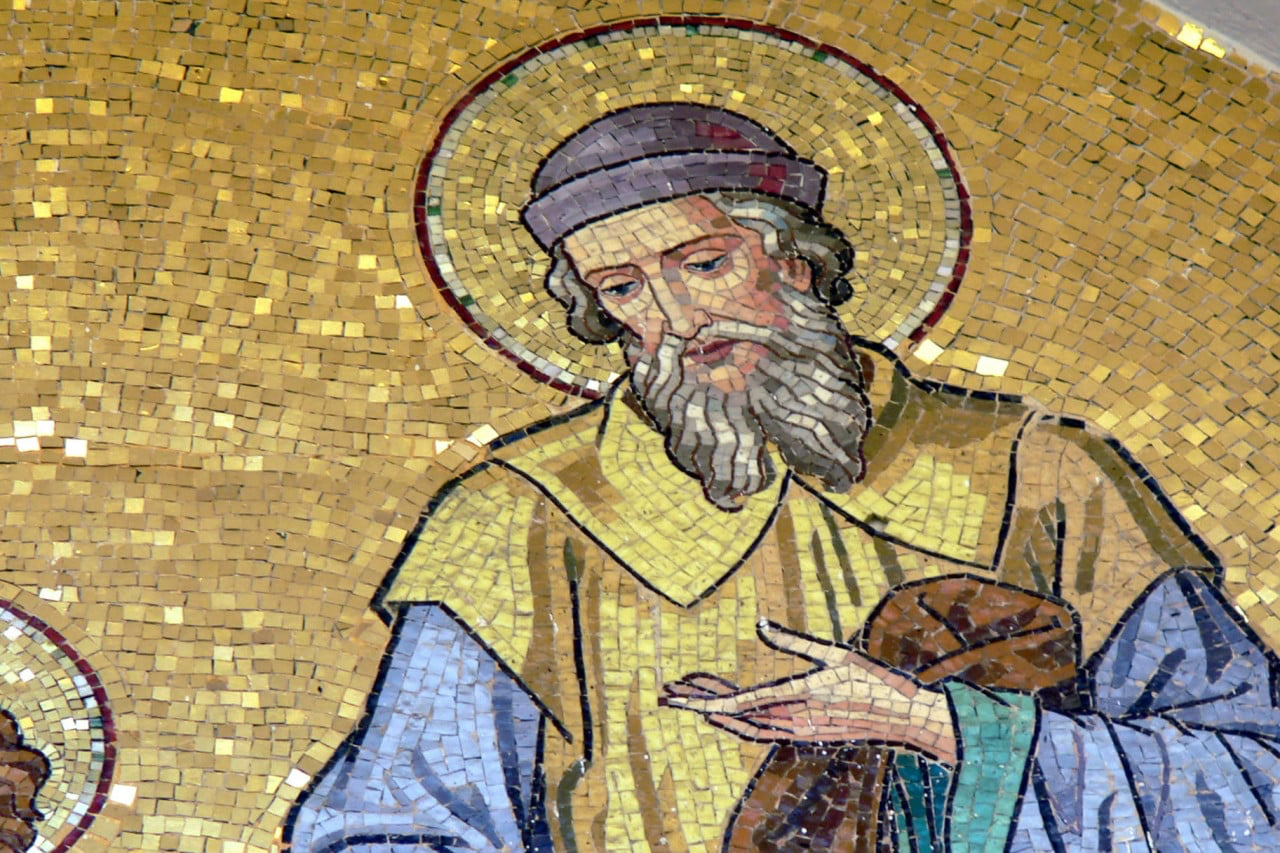
Two Apostles of Jesus, Bartholomew and St. Thaddeus (Jude) brought Christianity to Armenia in the first century. Because of these two founding apostles, the official name of the Armenian Church is the Armenian Apostolic Church.  Christianity was declared as the state religion of Armenia in 301, making Armenia the first nation in the world to do so.

Things got more complicated with the adoption of the Gregorian calendar, as some regions in the Middle East stayed with the Julian Calendar and therefore Armenian Christmas there is still celebrated on 18th January.

Monday 5 January Epiphany in Dominican Republic

Interestingly, the bible doesn’t mention how many wise men there were – just that three gifts were given and that they came from the east.

The common consensus is that there were between two and twenty wise men. They were likely to have been Zoroastrian Priests. It wasn’t until about 500AD that three was accepted to be the standard number of wise men – the reasoning simply due to the number of gifts.

To further complicate matters, the wise men may not even have been men or wise. In 2004, a report by the general synod of the church of England concluded that ‘magi’ gives no indication as to number, or gender, or even to the level of wisdom.

Epiphany is derived from the Greek word ‘epiphaneia’ and means manifestation. In religious use, the term means the appearance of an invisible divine being in a visible form.

The celebration of the Epiphany began in the Eastern Church and included a celebration of Christ’s birth. However, by the 4th century AD, the various calendar reforms had moved the birth of Christ to 25 December and the church in Rome began celebrating 6 January as Epiphany. Armenian Christians still celebrate the birth of Christ on 6 January.

The period between Christmas Day and Epiphany is known as the Twelve Days of Christmas as celebrated in the popular Christmas carol of the same name.

Man ‘wins argument’ by pointing out tiny mispronunciation in girlfriend’s sentence

A MAN has thoroughly proved his point by abandoning his argument and highlighting a small error in his girlfriend’s pronunciation.

Chris, not his real name, was jubilant after his girlfriend, Lilly, not her real name,  stumbled over a word in the middle of her entirely reasonable point.

He said:
“I realised midway through that what she was being really sensible and was probably right about the whole thing. It was looking bleak.

“But then when she said ‘perogative’ instead of ‘prerogative’. It was like God had smiled upon me the clouds parted, and her incredibly minor mispronunciation in an other wise logical sentence gave me a burst of strength.

“When you get an opportunity like that you just can’t let it slip away. I waited until she finished her sentence and then, right when she thought she’d gotten away with it, I said ‘sorry? did you mean to say ‘perogative’? And then, when she tried to go back on herself, I completely changed the subject.

“I won.”

Sunday 4 January Independence Day in Myanmar

In 1886, Myanmar (then called Burma) came under British control, with Rangoon (the capital. now called Yangon) being an important port situated between India and Singapore.

From the earliest days of colonisation, there was a strong feeling of resentment against the rule of the British, with Buddhist monks playing a key role in the independence movement.

Just before the outbreak of World War II, there had been some moves towards autonomy in 1937, when Burma became a separately administered colony of Britain, with Ba Maw appointed as the first Prime Minister and Premier of Burma.

Some Burmese saw the rise of Japan as an opportunity to gain independence from Britain, and when the conflict started, Ba Maw formed the Burma Independence Army in Japan.

The Japanese took Burma by March 1942 and though many Burmese fought initially on the side of the Japanese in World War II, many others fought with the British. The Burmese army even switched allegiance from Japan to the allied forces in 1945.

Following the end of the war and the defeat of Japan, the Panglong Agreement was reached on February 12th 1947 which led to the unification of Burma as an independent state.

On January 4th 1948, the Union of Burma gained its independence from Britain. Notably, it declined to join the British Commonwealth. Shan National Sao Shwe Taik became the new country’s first President and U Nu its first Prime Minister.

Burma was renamed Myanmar in 1989 by its military government.

Confident bastard loves dancing

A CONFIDENT prick actually enjoys spontaneously jerking his body around to music while other people watch, it has emerged.

Martin, not his real name, actively seeks out environments in which he can show off what he refers to as his ‘moves’.

Martin’s friend, 31-year-old Cad, not his real name, said: “He’s always dragging us out clubbing, a phase of our lives which should, by all objective standards, be reaching its natural conclusion by now.

“He doesn’t even have the decency to awkwardly shuffle about, out of time to the music, with his eyes glued to the floor like the rest of us. He’s really enjoying it, the freak.

“Has he no shame? I don’t just mean feeling ashamed of his lame dance moves, but also the general sense of all-pervasive shame that all normal men should feel.

“Last week at a festival he flailed his arms about so much that he hit a girl on the ear. I thought her boyfriend might kill him, but she didn’t have one and now she’s going out with Nathan.

“Happy, confident people really are the worst bastards.”