Finance Desk

Arab News | Jeddah hackathon winners develop tech solutions for religious services

RIYADH: The Hedayathon event — a hackathon organized by the Presidency of Religious Affairs in partnership with the University of Jeddah — recently concluded. Participants were asked to come up with ways to enhance services for visitors to the Grand Mosque and the Prophet’s Mosque.

The Hedayathon aimed to foster innovation and harness scientific and technological capabilities to develop solutions that enhance religious services and enrich visitors’ experiences, according to a report by the Saudi Press Agency.

The event brought together innovators, developers, students, academics, startups, entrepreneurs, and people interested in outreach (da’wah) and religious guidance.

There were three winning projects. First place went to the Madaar team for their Maqam Platform project, which won SR30,000 ($8,000). Second place — and SR20,000 — went to the Tala team for Every Signal is a Recited Verse, an idea aimed at serving people with special needs. Echo Tech’s Sanctuary Translator — a project designed to develop legal translation — took third place, winning SR10,000.

Sheikh Abdulrahman Al-Sudais, president of Religious Affairs at the Grand Mosque and the Prophet’s Mosque, stressed the importance of leveraging technology and innovation to develop religious services and make them accessible to visitors.

In remarks shared on the presidency’s X account, Al-Sudais said: “Serving pilgrims of the Grand Mosque and the Prophet’s Mosque is a tremendous responsibility. It requires intensified efforts and mobilized capabilities to facilitate their access to religious services, enabling them to perform their worship with ease and tranquility.”

Obaid Al-Mudhaff, the university’s president, said the partnership with the presidency represents a model of integration between field expertise, scientific research, and innovation, helping develop quality solutions to serve the Two Holy Mosques and their visitors.

Salem Areej, general supervisor of the Hedayathon event, said the initiative was launched not only as a tech competition, but also to use technology to better serve pilgrims.

The hackathon’s objectives included enriching visitors’ religious experience, developing religious translation solutions, maximizing communications and media impact, developing religious guidance tools, building platforms for teaching the Holy Qur’an and delivering scholarly lessons, answering worshippers’ questions, and facilitating access to religious services for people with disabilities.

Activities included panel discussions, an exhibition, workshops, and consultations.

The presidency also signed a memorandum of understanding with the Saudi Translation Association to enhance cooperation and develop multilingual religious content.


Source link

Arab News | Explosions, fire at Bulgarian ammunition storage site

SOFIA: An explosion and fire have hit an ammunition storage site in Bulgaria, police said Saturday, weeks after a blaze at another munitions facility in the country.

The latest incident happened late Friday at a warehouse operated by Bulgarian arms maker EMCO, whose munitions are used in Ukraine, near the central village of Gorni Varpishta.

No casualties were reported and workers were evacuated from the site.

Interior Minister Ivan Demerdzhiev said the blaze broke out at one warehouse at the facility, triggering explosions.

There was no danger of the fire spreading to other warehouses or beyond the storage complex, he told a press conference.

“All hypotheses are on the table and we are examining them carefully,” he said, adding the storage facilities had some shortcomings, including poor security.

The warehouse contained explosive materials, including around 100 munition rounds, the armaments company said.

The incident came about a month after a fire at an ammunition depot at another nearby EMCO plant in Bulgaria, a NATO member and supporter of Ukraine.

EMCO ruled out human error in that case, and prosecutors are investigating.

President Iliana Iotova said Saturday she was considering convening Bulgaria’s national security council, a presidential advisory body that brings together senior political, security and defense officials.

“Cases of explosions at ammunition depots have become more frequent,” she said.

EMCO is owned by Bulgarian defense executive Emilian Gebrev, who survived a poisoning attempt in 2015 together with his son and another company executive.

Bulgarian prosecutors have charged three Russian nationals over the poisoning.

Separately, six Russians have also been charged with terrorism over four explosions at arms facilities in the country between 2011 and 2020.

Prosecutors said the four blasts were remotely triggered and suspected the incidents were linked to efforts to disrupt arms supplies to Georgia and Ukraine.

Bulgaria has supported Ukraine since Russia’s full-scale invasion in 2022.

There have been a string of incidents at defense companies in European countries that support Ukraine in recent weeks.

Firebombs were thrown near defense company offices in the German city of Munich earlier this month and an ammunition factory near Rome operated by arms maker KNDS was hit by a blast in August.

No injuries were reported in either case.


Source link

Arab News | Jeddah expo links Syrian industry with Saudi market

JEDDAH: The first Syrian Industries Exhibition recently concluded in Jeddah, bringing together more than 160 Syrian companies and factories, and attracting business figures, importers and distributors seeking commercial and investment opportunities in the Saudi market.

Held over four days at the Jeddah Center for Exhibitions and Events under the patronage of the Jeddah Chamber, the expo focused on business-to-business opportunities in supply, distribution, investment and partnerships.

The event facilitated meetings between Syrian manufacturers and Saudi businesses to establish partnerships, sign supply and distribution contracts, and conclude memoranda of understanding to support the entry of Syrian products into the Saudi market.

Agreements covered four main sectors: food, textile, chemical and engineering industries. The expo also highlighted investment incentives, facilities and regulatory procedures for establishing joint ventures between the two countries.

A knowledge program featured seminars and panel discussions on legal procedures, trade incentives, partnership mechanisms, and the shift from traditional trade to industrial investment and joint production.

Pavilions showcased food, textile, engineering and chemical industries, along with agriculture, tourism, culture and labor, highlighting opportunities for economic cooperation between Saudi and Syrian businesses.

The expo provided a platform to strengthen economic and trade ties, explore investment opportunities and build partnerships supporting economic development and shared interests.


Source link

Arab News | Pink breaks silence over Macklemore row

DUBAI: American singer Pink used a long Instagram statement this week to explain why she shared a message attacking rapper Macklemore over his support for Palestinians at an Ed Sheeran concert, after a week of criticism online.

Macklemore opened for Sheeran at MetLife Stadium in New Jersey on Sept. 4 and 5. He appeared in a keffiyeh, said Gaza and the West Bank were not forgotten, and performed “Hind’s Hall,” his 2024 song about the war, while footage from Gaza ran across the stadium screens.

Addressing Jewish members of the audience, he said criticism of Israel “in no way is a criticism of you.”

The message Pink shared, from the group StopAntisemitism, called the set “anti-Israel propaganda” and said ticket holders were owed apologies and refunds. She posted a run of sarcastic memes as the criticism built, and was accused of prejudice.

“A repost isn’t a statement, and a meme isn’t a spine,” Pink wrote, adding that the post she shared used language she would not have picked herself. She said she was born Jewish, does not speak for Israel or any government, and repeated a position she took in October 2023 that Hamas is a terrorist organization.

Her objection, she wrote, was to Macklemore deciding on Jewish fans’ behalf that his remarks were not aimed at them. She described the week as a lonely one.


Source link

Arab News | French police suspect train derailment was sabotage: police source

PARIS: Investigators suspect that a train derailment in northwest France which injured 44, one gravely, was the result of sabotage, a police source told AFP on Saturday.

A fragment of rail was found on the track, with the possibility of a malicious act being treated as the main line of inquiry as a result, the source said.

Carrying 186 passengers, the train was running between the Normandy cities of Rouen and Caen when it derailed around 7:45 pm (1745 GMT) Friday.

Authorities activated a mass-casualty response plan, with 130 firefighters, five medical teams and 80 vehicles drafted in.

Rouen prosecutor Sebastien Gallois said 44 people were injured including an 18-year-old woman evacuated “in a critical condition”, while tests for drugs and alcohol on the train driver had come back negative.

SNCF Reseau, which controls the French rail network, told AFP that traffic on the line has been suspended and power to the tracks cut to allow emergency services to operate.


Source link

Arab News | Saudi Arabia’s consumer spending holds steady at $4.2bn

RIYADH: Saudi Arabia’s consumer spending held steady at SR15.8 billion ($4.2 billion) in the week ending Sept. 5, even as education-related transactions pulled back following the previous week’s back-to-school surge, official data showed. 

The Kingdom’s point-of-sale transactions edged up 0.2 percent from the previous week, while the number of transactions rose 4.8 percent to 267.75 million, according to figures from the Saudi Central Bank, also known as SAMA.

The largely flat overall spending masked a sharp correction in education-related transactions, which fell 31 percent week on week to SR755.97 million, after climbing well above SR1 billion as the new academic year got underway. 

Talking to Arab News, economist Talat Hafiz said the pattern suggests that Saudi consumer demand is becoming broader, more normalized, and more resilient, rather than being driven mainly by seasonal spikes such as back-to-school spending. 

“The rise in transactions even as education spending normalizes indicates that households are continuing to spend across a wider range of goods and services,” he added.  

“Overall, this points to solid underlying household spending capacity heading into the last quarter of the year, particularly as inflation remains contained and employment and income conditions continue to support consumption,” said Hafiz. 

Sectoral spending 

According to SAMA, spending on food and beverages amounted to SR2.69 billion, representing a weekly increase of 3.9 percent. 

Transactions in restaurants and cafes stood at SR1.81 billion, up 1.9 percent, while spending on apparel, clothing and accessories totaled SR1.28 billion, down 9.6 percent. 

The transportation sector witnessed POS transactions worth SR1.15 billion, followed by spending at gas stations at SR1.1 billion. 

Across healthcare, the value of transactions stood at SR964.71 million, up 7.9 percent, while spending on professional businesses and services amounted to SR906.1 million, up 3.8 percent. 

Jewelry stood out as the week’s biggest gainer, with transactions surging 25.4 percent week on week to SR345.61 million, while books and stationery reversed course, falling 8.6 percent to SR182.49 million after the previous week’s back-to-school jump. 

Geographic breakdown 

Riyadh dominated POS transactions, with spending in the capital reaching SR5.53 billion, marking a 0.6 percent increase compared with the previous week, as the number of transactions climbed 5.6 percent to 88.2 million. 

Jeddah witnessed transactions amounting to SR2.14 billion, up 1.4 percent, while the total number of transactions stood at 29.68 million. 

In Dammam, consumer spending totaled SR762.42 million, roughly flat from the week before, followed by Makkah at SR614.20 million, down 1.9 percent, and Madinah at SR592.46 million, down 4.1 percent. 

Alkhobar recorded SR427.12 million in transactions, down 2.3 percent, while spending in Buraidah rose 2.9 percent to SR403.31 million.

Abha posted the sharpest citywide decline at 7.5 percent, with transactions falling to SR199.18 million. 


Source link

Arab News | Corruption probe targets Brazil presidential candidate Flavio Bolsonaro

BRASILIA: Revelations that Brazilian presidential candidate Flavio Bolsonaro is under investigation for alleged corruption and money laundering rocked his right-wing campaign Friday, weeks before elections.

Bolsonaro, the son of former leader Jair Bolsonaro, is vying for the presidency against leftist incumbent Luiz Inacio Lula da Silva in the October ballot.

A newly released court document revealed that police have been investigating Flavio Bolsonaro since July regarding possible crimes “in the context of financing the production” of a forthcoming film about his father.

Police conducted dozens of raids Thursday over the alleged embezzlement of public funds by the company that produced the flattering biopic.

“Dark Horse” — starring US actor Jim Caviezel as Jair Bolsonaro — has been under scrutiny as part of a widening corruption scandal that has loomed over the election.

“I have nothing to hide. The film is completely legal,” Flavio Bolsonaro said at a campaign event on Friday.

An investigation of this kind does not prevent someone from running for office in Brazil.

Voters in Latin America’s largest economy head to the polls on October 4, deeply polarized and with a weary sense of deja vu as Lula takes on Bolsonaro.

The 45-year-old senator Flavio Bolsonaro was thrust into the electoral race after his father was jailed for attempting a coup in 2022.

He has styled himself as a “more moderate” version of his firebrand father.

Neck and neck

The right-wing candidate has vowed to “rescue” Brazil from corruption, crime, high food prices and soaring public debt. His speeches are woven through with references to “God, country, family and freedom.”

He has also pledged a heavy hand on crime, which polls show is voters’ main concern.

While Lula has promised to prioritize the fight against organized crime, his challenger blames him for not taking violence seriously enough.

Bolsonaro’s campaign has been hit by disclosures that he approached notorious fraud-accused banker Daniel Vorcaro — head of the collapsed private bank Banco Master — for money, which Bolsonaro said was to finance “Dark Horse.”

According to court documents obtained by AFP, investigators believe Flavio Bolsonaro personally met with Vorcaro and discussed the film’s financing with him on several occasions.

The documents also point to the transfer of $12.3 million from a company indirectly linked to Vorcaro to another tied to an attorney for Eduardo Bolsonaro, Flavio’s younger brother.

A police source told AFP that the targets of Thursday’s raids included Karina Gama, head of the company that produced “Dark Horse,” and Mario Frias, a pro-Bolsonaro congressman listed as the film’s executive producer.

Both have been banned from leaving Brazil pending the investigation’s outcome. Frias has said he is innocent, denouncing the “smoke screen” probe.

Police officials said the money came from parliamentary funds available to lawmakers to finance special projects, usually in their electoral strongholds.

Vorcaro’s alleged interactions with Supreme Court Judge Alexandre de Moraes, whom he apparently asked for legal help days before his arrest, have meanwhile triggered a crisis in Brazil’s top court.

“The impact of corruption scandals is much greater for Lula’s campaign than for Flavio’s,” said political scientist Mayra Goulart from the Federal University of Rio de Janeiro.

However, new evidence against Bolsonaro closer to the election could influence “voters whose choice is less clearly defined,” she told AFP.

Lula was imprisoned for 580 days on corruption charges in 2018 and 2019, but his conviction was later overturned.

He and Flavio Bolsonaro are neck-and-neck in voting intentions ahead of the first round.

If, as expected, no one wins an outright majority, a runoff will be held on October 25.


Source link

Arab News | Lebanese President Aoun makes surprise visit to Nabatieh

BEIRUT: Lebanese President Joseph Aoun made a surprise visit to Nabatieh on Saturday, with videos showing his convoy entering the southern city.

The visit comes amid heightened tensions in southern Lebanon following renewed Israeli strikes and increased security deployments in the area.

Aoun said that Israel’s withdrawal, the return of displaced residents and the reconstruction of affected areas were non-negotiable priorities that Lebanon was committed to achieving.


Source link

Arab News | US forces 99 vessels to alter course amid Iran blockade

The US military has forced 99 commercial vessels to change course in the Gulf region as it enforces its blockade of Iranian ports, the US Central Command (CENTCOM) said Friday in a social media post.

Earlier the day, Iranian Foreign Ministry spokesman Esmaeil Baghaei said that foreign ministers from Gulf littoral states are scheduled to meet in Oman on Monday to exchange views on regional issues, including talks between Iran and Oman on designating safe routes in the Strait of Hormuz.

He said the meeting will be attended by Iran, Iraq and other Gulf littoral states, adding that he hoped it would prepare the ground for improving understanding among regional countries and contributing to joint regional security.

A day earlier, the US-led Joint Maritime Information Center (JMIC) said in a notice that maritime security conditions in the Middle East remained tense, with the maritime security threat level in the Strait of Hormuz still rated as “severe.”

The notice also warned of a high likelihood of attacks on vessels amid the current security situation.


Source link

French blockade looms over Commission’s plan to fast-track trade deals in English

Published on •Updated

France will push back against a European Commission plan to fast-track ratification of trade agreements by circulating only English-language versions during talks with EU governments and lawmakers, skipping translation into the bloc’s 24 official languages, according to several sources.


ADVERTISEMENT


ADVERTISEMENT

The slow ratification of the contentious EU–Mercosur trade deal has frustrated the Commission, which wants to accelerate negotiations and bring deals into force more quickly as it seeks new markets amid rising geopolitical tensions.

Translating the agreements into every official EU language can take months due to the legal scrubbing required before the ratification process begins.

The EU executive has confirmed to Euronews that trade chief Maroš Šefčovič told EU trade ministers in February that the trade deal with India concluded on 27 January could serve as a test case for using English as the main language during ratification.

“We lost almost €300 billion by not having the Mercosur agreement in place since 2021, if it comes to the GDP, and more than €200 billion in export opportunities,” Šefčovič told journalists after meeting ministers on 20 February, adding that once negotiations end it can take up to 2.5 years before businesses can operate in partner countries.

“In today’s world, we cannot simply lose the time,” he said.

Šefčovič said the Commission would ensure the agreements are translated into all 24 official EU languages once published in the Official Journal, i.e. after ratification. He added the proposal was backed by at least seven member states at the meeting, though not all countries had time to speak.

French sources who spoke to Euronews were insistent that Paris would vigorously oppose the move to English-only agreements if necessary.

“As a matter of principle, we defend the use of all the languages of the Union, and in particular French, which is one of the EU’s working languages,” one official told Euronews.

‘Transparency, precision and understanding’

Language policy in the bloc’s institutions remains politically sensitive for countries such as France, whose language has declined sharply over the past decades as English massively dominates daily work in the European Union institutions – despite French, German and English being the three official working languages.

“Switching entirely to English raises a legal and democratic issue, and the Commission is well aware of it,” another French official told Euronews.

On its website, the European Commission says linguistic diversity is essential and that the EU promotes multilingualism in its institutional work.

The bloc once even had a commissioner dedicated to multilingualism, though the portfolio was gradually merged with others and eventually disappeared.

“I have the impression that in some cases the Commission seizes the opportunity to push the idea that English has a superior status, and that the other official languages are translation languages that can come later,” Michele Gazzola, expert in language policy, said.

He added that relying only on English during ratification could pose problems for members of the European Parliament, and even more so if national parliaments are involved.

“It’s a matter of transparency, precision and understanding.”

Source link

Arab News | Iraq orders closure of Shalamcheh border crossing with Iran, two sources say

BAGHDAD: Iraq ordered the closure of ​the Shalamcheh border crossing between Iraq and Iran as a precautionary measure ‌after ‌the ​latest ‌drone ⁠attacks ​on Saudi Arabia, two ⁠security sources told Reuters on Saturday.

The sources said ⁠a wide-scale ‌operation ‌was ​underway ‌to pursue perpetrators ‌of the attack on Saudi Arabia.

Riyadh said ‌on Friday its vital East-West pipeline ⁠was attacked ⁠by drones that were launched from Iraq.


Source link

Arab News | Afghan woman removed from US on orders of ‘terror court’

WASHINGTON: An Afghan woman accused of supporting a plot to carry out a mass shooting in the United States has been sent back to Afghanistan in the first case heard by a special US terror court, the Department of Justice said Friday.

Nazira Hajji Zada, 47, a Texas resident, was removed from the United States on August 25 on the orders of the Alien Terrorist Removal Court (ATRC) in Washington, the department said in a statement.

The ATRC was established by Congress 30 years ago but had never previously been used.

The Department of Justice said that Zada, who came to the United States in 2018, “conceded that she is an alien terrorist and waived appeal of the removal order.”

“This landmark case, resulting in the prompt removal of this alien terrorist to her country of origin, is a win for national security and the rule of law,” Attorney General Todd Blanche said in a statement.

“This first-ever case before the ATRC shows how the Department will use every tool at its disposal to protect our country.”

Zada’s son, Abdullah Hajji Zada pleaded guilty — alongside a co-conspirator, Nasir Ahmad Tawhedi — to plotting an attack on US election day in 2024 on behalf of the Islamic State.

Abdullah Hajji Zada, who was 17 at the time of his arrest, was sentenced to 15 years in prison in 2025. Tawhedi is awaiting sentencing.

According to court documents, the pair purchased two AK-47 rifles and 500 rounds of ammunition from an undercover FBI employee to carry out a “mass-casualty attack.”


Source link

Arab News | A Papas gamble rescues a point for Al-Qadsiah against Al-Ettifaq in Eastern Derby thriller

RIYADH: The final matchday in the opening stretch of the Saudi Pro League season before the international break kicked off in dramatic fashion with Al-Qadsiah and visiting Al-Ettifaq meeting in what is expected to be the last Eastern Derby at the Prince Mohammed bin Fahad Stadium in Dammam, as Al-Qadsiah’s new Aramco Stadium is set to open in the near future.

It turned out to be a fitting farewell derby for the stadium to host, with three goals in each half as the teams shared the spoils in a 3-3 draw.

Yet, when Al-Qadsiah took a 2-0 lead inside the first 15 minutes, few would have expected anything other than a comfortable home victory was in the cards. Recent Ballon d’Or nominee Julian Quinones returned to scoring form in the 12th minute, after latching onto a pass from right wing-back Mohammed Abu Al-Shamat, who now has six goal contributions in seven games.

Left wing-back Christopher Bonsu Baah also claimed an assist, three minutes later, after getting on the end of a line-breaking Quinones diagonal run. Mateo Retegui positioned himself inside the box to receive Baah’s pass and launched a powerful finish into the top corner to double the lead.

Al-Ettifaq responded 11 minutes later, immediately after the hydration break, when Abdoulaye Kante won possession in Al-Qadsiah’s midfield and threaded a pass through the gap behind the pressing Nacho to release Bersant Celina, who finished calmly past Koen Casteels to pull one back.

That vulnerability in behind was an ongoing problem for Al-Qadsiah, who were without the rested Julian Weigl in the defensive midfield. He was replaced by the returning Nahitan Nandez, who operated in a higher midfield role while Tijjani Reijnders, who scored a brace from that position against Al-Ahli last week, was shifted to the deepest role.

That gamble did not pay off for head coach Brendan Rodgers, whose side paid the price when opposite number Arthur Papas made a few bold calls of his own. The trio of Moussa Dembele, Alvaro Medran and Jordan Larsson started on the bench for Al-Ettifaq and were introduced at staggered intervals in the second half as their team’s grip on the game gradually tightened.

Just over an hour in, with the fans perhaps wondering why Medran had not been selected to start, Papas’ decision-making was vindicated when the Spaniard received the ball ahead of Al-Qadsiah’s midfield, turned and unleashed a wonderful curler from range that Casteels had no chance of keeping out, making it 2-2.

Al-Qadsiah’s own substitutions yielded their third goal in the 81st minute when Turki Al-Ammar slipped the ball to Mohammed Al-Qahtani in behind the Al-Ettifaq defense for his first goal of the season.

But that trio who began the match on the bench had the last laugh when, in the 85th minute, Dembele won possession in Al-Qadsiah’s half, his pass found Medran, who played a first-time through ball to the oncoming Larsson, who composed himself before slotting the ball past Casteels for the equalizer.

The draw moved Al-Qadsiah into second place in the table, at least temporarily, on 16 points, one ahead of Al-Nassr and Al-Hilal, both of whom play on Saturday. Al-Ettifaq are in eighth place on 11 points.

Al-Ittihad cruised to a 3-1 away victory against Al-Faisaly, with Steven Bergwijn opening the scoring in the 28th minute, before a brace from Youssef En-Nesyri either side of halftime confirmed the victory. The in-form George Ilenikhena did not score but provided two assists for his strike partner as Al-Ittihad moved top of the table on 17 points from seven games. Theo Bongonda grabbed the late consolation for Al-Faisaly, who remain stuck second-bottom of the table on three points and yet to record a win this season.

In Jeddah, Al-Ahli came from behind after conceding the fastest goal in their SPL history when Ahmed Al-Nakhli struck for visiting Al-Hazem after just 74 seconds. But Francisco Trincao grabbed the equalizer in the 21st minute and then Ivan Toney added a first-half brace to take his tally to 10 goals in seven league games and give the home side a 3-1 victory. Al-Ahli moved into fifth place on 12 points, while Al-Hazem are in 10th on eight points.

On Saturday, Al-Hilal look to bounce back from their 2-0 home defeat by Neom on Monday when they visit Al-Taawoun; Al-Khaleej host Al-Nassr; and Al-Shabab are at home to Al-Fayha.


Source link

Arab News | Saudi Arabia temporarily shuts East-West Pipeline after attacks

RIYADH: Saudi Arabia temporarily shut down its East-West Pipeline after it was targeted in several attacks in the Riyadh and Madinah regions, the Ministry of Energy said on Friday.

Several people were injured in the attacks, which took place on Thursday morning, and medical treatment, the ministry said in a statement.

Emergency and specialized technical teams were deployed immediately following the attacks to secure the pipeline and assess its safety in coordination with the relevant authorities, the ministry added.

The shutdown was carried out as a precaution and any further developments would be announced as they arise, according to the statement.

The Iran-backed Houthis earlier this week targeted civilian and energy infrastructure targets in Saudi Arabia’s Abha, Khamis Mushait, Jazan and Najran. The attacks caused several fires at oil facilities in the southern region that led to a temporary halt in some operations, the Energy Ministry said.

The Coalition to Support Legitimacy in Yemen condemned the attacks on Saudi Arabia, which wounded 73 civilians, including women and children, vowing to take measures to neutralize the threat.


Source link

MENA Sustainable Bonds Face Regional Turbulence

Lately a hotspot for sustainable finance, MENA states could face lower demand in the wake of the Gulf conflict.

This article appears in the September 2026 issue of Global Finance Magazine.

Investors abhor uncertainty but are not afraid of risks. That dictum is being tested in the Middle East and North Africa (MENA), which has emerged as a hotspot for sustainable finance in recent years, driven by economies transitioning toward renewable energy, low-carbon infrastructure, and water efficiency, among other goals. 

Sustainable bond issuance in the region has expanded sevenfold since 2020 and reached $35.1 billion in 2025, according to Bloomberg Intelligence.

Last year, MENA issuance rose despite global markets recording a 21% decline. 

But the buzz is cooling. The Gulf conflict that has dragged on since the U.S. and Israel attacked Iran in February, accompanied by higher energy prices, rising bond yields, weaker growth, and tighter financial conditions, saw sustainable bond offerings decline by 24% in the first half of this year, according to S&P Global.

Sustainable issues started the year on a high, with deals worth $5 billion in the first quarter and $4 billion logged in January alone. The effect of the U.S.-Iran war has been flat growth in volumes, however, while values plunged to $7 billion in the first half of 2026 compared to $10 billion in the same period last year.

That reality has prompted S&P Global to cut its 2026 forecast, projecting issuances of $15 billion to $20 billion, down from its earlier projection of $20 billion to $25 billion. Also cooling is sustainable sukuk issuance, which totaled $2.1 billion in the first half, down from $5.1 billion in the same period last year.

Critically, a large chunk of MENA sustainable bond issuance is denominated in local currencies, an indication of both the competitiveness of the region’s capital markets and its rising status as a haven for value-driven dealmaking.

Patrice Cochelin, S&P Global
Patrice Cochelin,
S&P Global

Despite the decline, investor confidence has not been dampened, said Patrice Cochelin, managing director, Sustainability Methodology and Research at S&P Global: “Medium-term demand-drivers remain positive and are fueled by energy-transition strategies and a significant pipeline of upcoming maturities.”

That investors are hanging on is evident. Early last month, the International Finance Corp. said it was among the principal investors in Jordan Kuwait Bank’s (JKB) second green bond issuance with a $100 million investment.

Notably, banks are spearheading the expansion of sustainable finance in the Middle East. In 2025, they were involved in some of the largest regional issuances and accounted for 80% of total value; in the first half of this year, they accounted for 87% by volume. Saudi Arabia and the United Arab Emirates remain the epicenter, accounting for 98% by value and 73% by volume.  

John Njiraini is a contributing writer based in Kenya.

Source link

Arab News | Israel army rejects testimonies in film about AI-powered killing in Gaza

JERUSALEM: The Israeli military on Friday said it “categorically rejects” allegations made in a new documentary about Israel’s AI-powered mass killing of civilians in Gaza, which received a 25-minute ovation at its premiere in Venice the day before.

The Israeli-made film “NAZA” uses conversations with 24 different Israeli military or intelligence whistleblowers who spoke on condition that their identities be protected, with interviewees describing how they felt like they worked in a killing “factory” or a lethal video game.

The Israeli military criticized the use of anonymous testimonies in the film which it said “cannot be verified”, saying in a statement that it “makes unprecedented efforts to minimize harm to civilians” during its offensive in Gaza.


Source link

US inflation holds at 3.4% as monthly price rises hit fastest pace since May

Published on

The last major data point before the Fed meets has arrived, and it arrived while Americans were paying record prices at the pump.


ADVERTISEMENT


ADVERTISEMENT

The US Bureau of Labor Statistics reported on Friday afternoon that the annual rate held steady, with core inflation, which strips out food and energy, easing to 2.4% from 2.5%.

Every figure matched the consensus of economists and the monthly number is where the pressure shows.

Prices rose 0.4% in August against 0.1% in July, a fourfold acceleration and the fastest pace in three months. The annual rate stayed flat only because it is measured against the strong summer of 2025.

What it means for the Fed meeting

Markets had largely made up their minds before the figures landed.

CME’s FedWatch tool put the probability of a quarter-point increase at the 16 September meeting at 67.4%, up sharply from around 40% before Chairman Warsh’s Jackson Hole address in late August.

Following the inflation data release, those odds moved to 91.6%.

Warsh’s first keynote as chair was the turning point as he argued the American economy had strengthened rather than weakened, that the labour market was consistent with full employment, and that he “would be hard pressed to describe broad financial conditions as restrictive.”

On inflation Warsh was blunt by stating that “we must be confident that underlying inflation is moving to our objective, clearly and at sufficient speed. Otherwise, we have work to do.”

By that test, Friday’s numbers are ambiguous.

Core inflation has now fallen for a second month and sits within half a point of the 2% target, which is underlying inflation moving in the right direction. The monthly acceleration points the other way.

Warsh also refused to say what would trigger a move, rejecting forward guidance as a practice that “has overstayed its welcome”. The Fed has held its benchmark rate at 3.50% to 3.75% since December, though three regional presidents dissented in July in favour of an increase, the most in one direction since 2016.

A fuel shock with no obvious end

The pressure is coming from energy, and it is intensifying.

US crude futures topped $100 a barrel this week as fighting between American and Iranian forces escalated around the Strait of Hormuz, with Washington striking five Iranian tankers after attempted missile attacks on a US Navy warship.

Diesel is where it bites hardest.

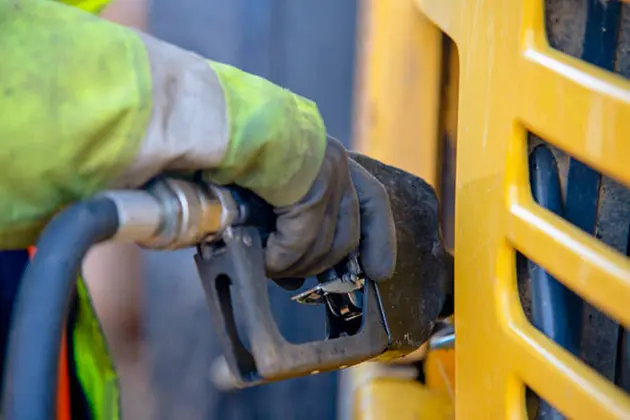
The US national average crossed $6 a gallon on Friday for the first time in the country’s history, at least in nominal terms, according to the American Automobile Association, and leaving truckers and farmers paying around 63% more than a year ago.

In California the average is close to $8. As for petrol, it is averaging $4.22 nationwide, against $2.98 before the war began.

Ukraine’s strikes on Russian refineries prompted Moscow to ban diesel exports, removing roughly 800,000 barrels a day, while disruption around Hormuz has cost another 1.2 million.

Refineries representing about 5 million barrels a day of capacity have been shut by the two wars, and close to 8% of global diesel supply is currently disrupted.

Some retailers have already added delivery surcharges, and the effect on grocery prices tends to arrive with a lag, which means the energy shock in Friday’s numbers may not yet be the whole of it.

Source link

Arab News | Have both sides in Ukraine war run out of cards?

Russian President Vladimir Putin met with US envoys Steve Witkoff and Jared Kushner at the Kremlin on Saturday, before they headed to Kyiv for talks with Ukrainian President Volodymyr Velensky. Both sides agreed to pause all strikes on the other’s capital while the Americans were in town. Why now? Have we finally reached the point in the conflict where all parties are left without cards to play?

In August 2025, Donald Trump met Putin at a US military base in Anchorage. No Ukraine ceasefire occurred in the aftermath. After discussing the two states’ long history and their efforts in the Second World War, Putin mentioned there was an “agreement” but failed to offer more details. He stressed that the situation in Ukraine was associated with “fundamental threats to our national security.”

Declassified documents from the US National Security Archive noted discussions on NATO expansion during the administration of President Bill Clinton. They show that, in 1993, American officials led Russian President Boris Yeltsin to believe that the Partnership for Peace offered an alternative to NATO expansion, rather than being a precursor to it. By the fall of 1993, discussions between supporters of the expansion of the alliance and those who proposed a more cautious approach and cooperation with Russia and Ukraine led to the formation of a “double track” approach in Washington.

Kyiv has recently been striking more deeply inside Russian territory, bringing the conflict home to ordinary citizens

Dr. Diana Galeeva

On June 22, 1994, Russia joined the program. But on Dec. 1, NATO announced that it would begin considering the admission of new members. Yeltsin later accused the US and NATO of provoking a post-Cold War “cold peace.” Clinton met Putin in the summer of 2000 at the Kremlin. Putin said that Clinton called the idea of Russia joining NATO “interesting.” However, after a conversation with his team, the US leader apparently said that “it’s not possible now.”

Since 2022, the Russian president has repeatedly criticized the expansion of NATO, calling it a threat to his country’s security. In 2024, Putin announced Moscow’s conditions for a ceasefire, including the withdrawal of Ukrainian troops from the Donbas, Zaporizhzhia and Kherson regions and the recognition of these regions as being part of Russia, along with Crimea.

Zelensky appears open to returning to negotiations after CIA Director John Ratcliffe last month “secretly” visited Moscow and proposed a trilateral Trump-Putin-Zelensky meeting. Zelensky said any ceasefire is set to involve the US proposal for a free economic zone in Ukraine’s eastern Donbas region — to be administered by a third party. Earlier, Zelensky was pressured by Trump, who told him “you don’t have the cards.” But is it only Ukraine and Zelensky that ended up with no cards to play, or is it all sides involved?

Kyiv has recently been striking more deeply inside Russian territory, bringing the conflict home to ordinary citizens. It has been using Starlink-guided drones and hastily developed missiles, hitting bombers, oil refineries, air defenses and even retail warehouses.

The Ukraine war, just like the Second World War, has revealed that no party to conflict receives any benefits

Dr. Diana Galeeva

Europe was the first side to lose the Ukraine war. The war revealed a critical weakness at the heart of Europe’s energy system. Reuters reported that the energy shock Europe suffered in the early weeks of the war “revealed a hard truth,” with the crisis reaching the heart of all European capitals. The Iran war and the closure of the Strait of Hormuz contributed further to this dynamic, with prices climbing 13 percent at the start of July.

Putin suggested in November 2025 that Russia was ready to fight “until the last Ukrainian dies” if Zelensky does not surrender. But the Iran war has changed the game, with the Kiel Institute publishing a report in June titled “Endgame” that highlighted how Russia’s war economy had “hit its limits.” Russia last week downgraded its oil output forecast for this year to a 17-year low. In June, Putin announced that Russia was ready to discuss a settlement with Ukraine based on the agreements reached in Anchorage and in Istanbul in 2022.

Meanwhile, the US, which committed about $68.2 billion in defense support of Ukraine between February 2022 and June 2026, is unlikely to continue such spending as a result of the Iran war. Washington and Iran have been exchanging strikes since Feb. 28 and, as of June, Iranian attacks had damaged 20 US military sites in the region.

Domestic factors are also pressuring the White House to prioritize peace, as Trump’s approval rate was last month stuck at 33 percent, while some 71 percent of poll respondents disapproved of Trump’s handling of the cost of living.

Is all this surprising? No. The end of the conflict is inevitable, as all sides have ended up with no cards to play. The Ukraine war, just like the Second World War, has revealed that no party to conflict receives any benefits, only military and economic damage. Most importantly, nearly 2 million casualties have occurred since 2022. This war has again demonstrated that a wise government’s approach is always about prioritizing the success of its own nation. A peaceful future for Europe would be a win-win approach for all.

Dr. Diana Galeeva, a former visiting scholar to the Centre of Islamic Studies at the University of Cambridge, is the author of four books, most recently “Islam in Russia: Formations of Tolerance” (Routledge, 2024).


Source link

Arab News | 100 games, 80 goals is the scale of Ivan Toney’s impact at Al-Ahli

RIYADH: “Ivan Toney is an exceptional striker, in every sense of the word,” said Faisal Zaid, director of the Al-Ahli media center. “He is a player that loves to win, is not fazed by challenges, and has a strong personality on the pitch.”

Zaid’s words came after Al-Ahli’s 3-2 defeat to Al-Qadsiah this week, which saw Toney reach a new milestone at the club: 80 goals in his first 100 games.

After Al-Ahli fell 3-0 behind in the first half, Toney rallied his teammates and scored a brace to bring them within a whisker of completing a remarkable comeback in Dammam — but Brendan Rodgers’ side ultimately held on.

Toney’s impact at Al-Ahli has been unmatched since his arrival in the summer of 2024.

In his first season, he finished among the top scorers in the Saudi Pro League, netting 23 in 30 league fixtures, in addition to a goal in the King Cup and six more on the way to Al-Ahli’s first-ever AFC Champions League Elite triumph.

He followed that with an even better campaign in 2025/26.

He scored 32 in 32 league fixtures to finish just one goal behind top scorer Julian Quinones — with 10 more across all competitions, bringing his season tally to 42 — as another AFC Champions League Elite title was added to his trophy cabinet.

He has shown no signs of slowing down in the current season, sitting at the top of the scoring charts six weeks in with eight goals already. That takes his overall tally to 80 goals in 100 games for Al-Ahli, with 17 assists taking his total contributions to almost one per game.

Perhaps the most striking statistic is just how much Toney has contributed to Al-Ahli’s attacking output since his arrival in 2024. Al-Ahli have scored 229 goals in that time, with Toney’s 80 accounting for 35 percent of that total.

“I remember when he signed in 2024 — his transfer was a huge shock for the English media,” Zaid told Arab News. “There were many questions surrounding whether he would return to the England squad.”

Initially, that seemed likely. Toney played just two minutes of international football between his move to Al-Ahli and the summer of 2026, with no indication he would be called up to Thomas Tuchel’s side.

The battle for a starting striker berth was fierce between Toney and recent Al-Hilal signing Ollie Watkins in the presence of Harry Kane — but Toney ultimately made his way back into the England squad after his stellar campaign at Al-Ahli.

“Toney proved that playing in the Saudi Pro League would not derail his path back to the England squad,” Zaid said.

The former Brentford striker is more than just a prolific goalscorer. He has consistently been a voice for Al-Ahli in the media, supporting his teammates and connecting with the fans at a level few other foreign players in Saudi Arabia enjoy.

“His value is not just in his goals,” Zaid explained. “He has a powerful presence in the dressing room, and he commands the love and respect of his teammates — foreign and Saudi alike.”

Toney’s character and leadership face their biggest test this season — his first at the club without Matthias Jaissle, now head coach at Newcastle.

Al-Ahli have had a rocky start, with their dreams of winning the Saudi Pro League title for the first time since 2016 dented by three defeats in their first six games. Life under Marino Pusic may have fans anxious, but if there is any player to rely on in difficult times, it is Toney.

He has already shown that this season.

In Al-Ahli’s 5-0 victory over Al-Riyadh, new signing Artem Bondarenko was booed by fans at halftime. Toney — alongside Roger Ibanez — stepped forward to shield the new signing from the crowd’s hostility.

Toney may have been a central figure in Al-Ahli’s stellar back-to-back campaigns, but the biggest challenge lies ahead.

Can he help drive Al-Ahli’s resurgence in a season where they look to compete for the FIFA Intercontinental Cup, the King Cup, the Saudi Pro League and the AFC Champions League Elite?


Source link

GameStop CEO Ryan Cohen buys $20.3M in company stock (GME:NYSE)

Stock Of Video Game Retailer Gamestop Skyrocketing, Due To Reddit Message Board Traders

Michael M. Santiago/Getty Images News

  • GameStop (GME) president, CEO, and chairman Ryan Cohen acquired 1M shares of Class A common stock on the open market for around $20.38M, boosting his direct ownership to 39.3M shares.
  • These shares were purchased in multiple transactions at prices ranging from $20.0199 to $20.4699. The weighted average price was $20.3759.
  • GME shares rose 3.5% premarket.

Source link

Arab News | IMF says global growth on track to reach 3% in 2026, but risks remain high

WASHINGTON: The IMF said the global economy had weathered the energy shock caused by the war in the Middle East better than feared and global economic output was still expected to expand by about 3 percent in 2026, but it cautioned that risks remained high.

Julie Kozack, spokesperson for the International Monetary Fund, said oil and gas prices remained elevated and the energy shock from the war was not over.

Global debt pressures were also mounting and the disinflation process over the 2022 cost-of-living crisis had stalled.

Global inflationary expectations have risen but remain well-anchored ‌over the longer ‌run, Kozack told a regular IMF briefing.

“So far, despite six months of ‌war in the Middle East, the global economy has been resilient,” Kozack said, adding that the use of oil and gas reserves had allowed some countries to cope with energy shocks caused by the war, while others had shifted to new energy sources or acted to curb demand.

“We remain on track for world growth of around 3 percent but uncertainty, as we’ve been saying for quite some time, continues to remain high,” she said.

The IMF in July forecast 2026 global growth at a sluggish 3 percent, compared with an average of 3.5 percent seen in 2024 and 2025, and its April forecast of 3.1 percent.

At the time, it said that forecast assumed ‌the war would wind down in mid-July, but Iran and ‌the US have both escalated their attacks and the war has widened with increased military activity in Yemen.

The ‌global lender will release an updated forecast during the annual meetings of the IMF and the ‌World Bank in Bangkok from Oct. 12 to 18.

Pulled in opposite directions

Kozack said the global economy was being pulled in opposite directions by the negative energy supply shock that was driving prices of energy, fertilizers, food and other commodities sharply higher, while the AI-led technology cycle was providing a positive demand shock.

Risks remain high, with many countries needing to ‌restock their oil and gas reserves, and energy demands set to rise as winter approaches in the Northern Hemisphere, she said.

Pressures are also mounting on global public debt, which is already at nearly 100 percent of gross domestic product — the highest level since World War Two — and is set to rise further, Kozack said. Many advanced economies have particularly high public-debt-to-GDP ratios.

Liquidity problems are also building in developing countries, including in Africa, partly due to a reduction in bilateral assistance, Kozack said.

The IMF is urging central bankers to stick to their price stability mandates, while encouraging fiscal policymakers to develop medium-term consolidation plans, she said.

“We’re not in a situation where fiscal consolidation needs to take place overnight, but having a clear, laid-out plan and strategy for how deficits and debt are going to come down is very important for fiscal authorities,” Kozack said.

The IMF was also urging authorities to focus on lifting growth prospects through structural reforms and removing “self-inflicted” barriers to growth, she said.

Kozack said the IMF would look closely at the impact of new US sanctions against Iran, including secondary sanctions aimed at firms in third countries that support Tehran.

A fuller report was expected in the upcoming global outlook, she said.


Source link