California and other Democratic-led states and localities filed a pair of lawsuits Monday challenging new Trump administration rules giving immigration officials more power to deny green cards to applicants whose families have relied on public assistance programs in the past.
California Atty. Gen. Rob Bonta, whose office is helping lead the states’ challenge, said the rule changes seek to “rewrite more than 100 years of law” by making even brief use of public benefits in years past grounds for the federal government to deny a person’s application for legal permanent residency in the future — which he said was clearly illegal and would push tremendous costs onto states, counties and cities.
“No family should have to choose between accessing healthcare and nutrition assistance today — or protecting their pathway to a green card tomorrow,” Bonta said. “We’re going to court on behalf of the millions of immigrants who call this state home — and we will fight to get this unlawful rule undone.”
San Francisco City Atty. David Chiu, whose office is helping lead a separate challenge from Democratic-led cities and counties, said in a statement that the new Trump administration policies are “a blatant attempt to sow fear and confusion in our immigrant communities and coerce people into withdrawing from critical government services” — which he also said would shift millions in costs to local governments.
A spokesperson for the Department of Homeland Security, which promulgated the new rules, said the lawsuits were proof that immigrants are unlawfully tapping into benefits programs intended for U.S. citizens.
“Sanctuary states are terrified they will lose federal funds because hundreds of thousands of illegals and noncitizens might remove themselves from American welfare programs,” the spokesperson said. “This is the ideological contortion required by left-wing leaders to justify their defrauding of the American taxpayer at the hands of illegal criminals.”
The White House did not respond to a request for comment.
President Trump won office on a promise to rein in illegal immigration. Since taking office, his administration has launched a mass crackdown that has targeted both undocumented and documented immigrants. It has done so in part by targeting federal and state programs that offer immigrant assistance — which Trump has derided as diverting resources away from U.S. citizens.
In their lawsuit, the states acknowledge that federal law enacted by Congress in 1882 allows the U.S. to deny noncitizens entry to the country if they would be a “public charge,” or someone who is unable to support themselves and must rely on the government for assistance.
However, the states argue that Congress, the courts and federal government agencies have for “over 140 years” understood the term “public charge” to mean a person “who has become, or is likely to become, primarily dependent on the government for long-term subsistence” — not someone who has ever taken public assistance of any kind in the past, even in the short term.
And yet, the new policy promulgated by Homeland Security and U.S. Citizenship and Immigration Services gives immigration officers “unprecedented, sweeping new discretion to deny admission” to families that have tapped any number of public assistance programs for which both Congress and individual states have chosen to make them eligible, the states wrote.
The lawsuit, joined by Bonta, the attorneys general of 19 other states and the District of Columbia, and the governor of Pennsylvania, was filed in federal court in New York.
A separate lawsuit was filed in the same court by San Francisco and Santa Clara County in California, as well as New York City, Chicago, and Seattle and surrounding King County, Wash.
In a morning news conference, Bonta said the Trump administration’s new rules target families in unprecedented ways.
As one example, he said the new rules would potentially allow immigration officials to deny permanent residency to immigrant parents based on their U.S. citizen children accessing public benefits that they are clearly entitled to under the law.
As another, he said the new rules could penalize immigrant families for accessing basic, preventative healthcare that actually helps control the broader public cost of illness to localities and states.
Chiu said federal limits on residency for those who would be a “public charge” have in the past been applied in a “narrow and consistent way,” focusing on certain cash assistance and long-term medical needs. The new rules, he said, make “almost any” kind of government assistance grounds for residency denial.
The states’ lawsuit — California’s 92nd against the current Trump administration — revises a policy battle that began during Trump’s first administration, when it attempted in 2019 to implement similar policies, was sued by California, San Francisco and Santa Clara County, and lost.
The Biden administration later dropped the plans to change the rules.
Tony LoPresti, county counsel for Santa Clara County — which has per capita one of the largest foreign-born populations in the country — said that it was “déjà vu all over again.” and that the Trump administration will lose again because the new “public charge” policy is “outright illegal.”
It “bullies our community members into dropping health insurance, bypassing food assistance and turning their back on critical services out of fear” and constitutes “a wealth test for residents who are lawfully seeking status,” LoPresti said.
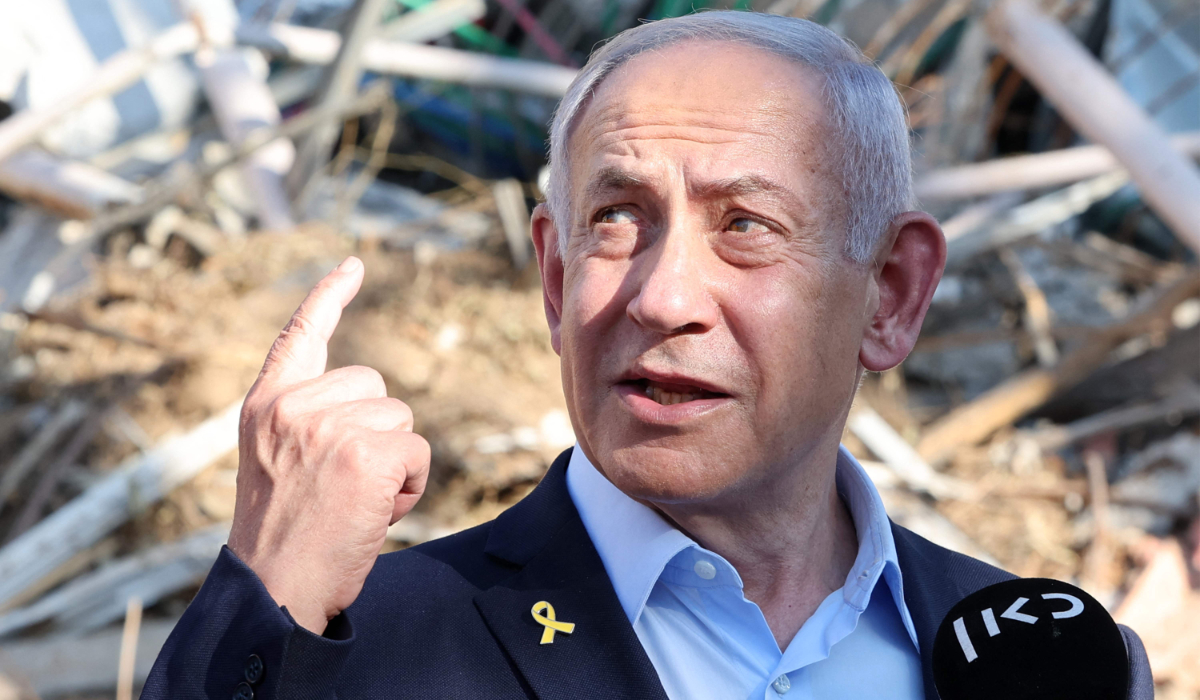
JERUSALEM: Prime Minister Benjamin Netanyahu warned on Monday of heavy reprisals on Israel’s enemies if they attacked, as he lauded the recent demolition of a Hezbollah tunnel network in southern Lebanon.
Netanyahu said Israel’s destruction of Hezbollah positions at the Beaufort and Ali Al-Taher ridges was a “massive victory” and vowed to “continue to destroy terrorist infrastructure.”
“I say to our enemies: If you haven’t learned the lesson by now, and you choose to attack us again, you will suffer even heavier blows. There is still work to complete,” Netanyahu added, according to a video published by his office.
On Thursday, Israel blew up what it described as a vast network of tunnels under the Ali Al-Taher ridge where Hezbollah kept a command center, living quarters and stocks of weapons with which to strike northern Israel and invading Israeli troops.
A huge fireball was seen in the area, with the US Geological Survey recording a tremor equivalent to a 4.1 magnitude earthquake.
The blast came a week after Israeli troops said they had seized the strategic highlands as they solidified control of a “security zone” in southern Lebanon.
Israel said the tunnel network was built over two decades with the help of Hezbollah’s patron Iran, whose clerical government has also backed Hamas in the Gaza Strip.
Israel and the United States attacked Iran in late February, sparking the Middle East war.
Hezbollah dragged Lebanon into the wider conflict when it fired rockets at Israel in solidarity with Iran.
Israel has struck south Lebanon during the war and its forces continue to occupy what it calls a “security zone” there.
The Ali Al-Taher ridge lies on the edge of Israel’s security zone just a few kilometers from the UNESCO-listed Beaufort castle, another strategic site that Israel captured in recent months.
Israel and Lebanon signed a US-sponsored framework agreement in late June that involves the disarmament of Hezbollah, a gradual withdrawal of Israeli forces from Lebanon’s south and the deployment of the Lebanese army to the region, starting in test areas known as “pilot zones.”
NEW YORK: Family was at the heart of Alexander Zverev’s US Open triumph on Sunday as the German saluted the members of his inner circle and paid a heartfelt tribute to his mother for refusing to let diabetes define his future.
The top seed beat American Ben Shelton 6-3 7-6(2) 5-7 6-2 at Flushing Meadows to finish a spectacular year at the Grand Slams in which he proved his doubters wrong by going from perennial nearly man to two-time major champion.
Shortly after his victory, Zverev reserved special praise for his mother Irina, a former professional tennis player, and credited her with ensuring type 1 diabetes never limited his ambitions in life.
“When your 4-year-old son is diagnosed with diabetes and doctors in the office tell you that life and sports will be very limited for that child, it takes a very strong mother to say ‘my son will be whatever he wants to be’,” Zverev said.
“’If he wants to be a tennis player, he’ll be a tennis player. If he wants to do something else, he’ll do something else, but this illness will not define us’.
“I’m happy that we worked through it and we’re doing the things that we’re doing now. My mother is the most important and strongest person I know because it takes an unbelievably strong woman to do what she did.”
The 29-year-old thanked his team, which includes his father Alexander Zverev Sr and his brother Mischa, for their hard work that had delivered him another Grand Slam trophy to add to his Olympic gold medal from the Tokyo Games five years ago.
“We went almost 30 years without winning a Grand Slam title and now we’ve won two in a span of three months,” Zverev said.
“I think God has seen how hard we’ve worked, how much we’ve suffered, how much pain we went through and I think that 2026 is the outcome of all the years that happened before.”
SCARS OF 2020
Zverev had come agonizingly close to capturing his maiden Grand Slam title in New York in 2020, leading Dominic Thiem by two sets to none and later serving for the match in the fifth set before losing.
He finally won his first major crown at this year’s French Open after defeating Flavio Cobolli in five sets, and the German doubled his tally in New York despite making a shaky start to the fortnight.
He also reached the Wimbledon final this year, falling to Jannik Sinner in four sets.
“The scars of the 2020 (US Open) final, they disappeared after I won in Paris. I said at Wimbledon, though I lost in the final, I enjoyed the match … enjoyed playing on Center Court in front of an amazing crowd,” Zverev said.
“Before winning in Paris, I felt a lot of stress all the time, because there was always a question mark. ‘Will I ever win one?’ Now it’s more of a joy to play those kinds of finals.”
With Sinner sidelined by a knee injury and Carlos Alcaraz having just returned from a wrist problem, Zverev reluctantly accepted that he was the man to beat in men’s tennis after a strong finish to the Grand Slam season.
“Four or five months ago, when both of them were healthy, I wasn’t. I was losing to Jannik all the time,” he added.
“So if everyone is healthy, Jannik is still ahead. It’s as simple as that.”
“Since becoming the chief, I’ve had the privilege of spending time with airmen throughout CENTCOM [U.S. Central Command],” said Wilsbach, who assumed the position in November. “I have walked flight lines, visited maintenance hangars, and stood inside operations centers where young Americans were managing missions overhead. Let me tell you about a few courageous airmen I met on my recent trip to the Middle East. They told me about their experience on the flight line during an attack.”
Burning Hangar
“As missiles were inbound, airmen sprinted toward bunkers,” the service chief said, without providing details about which base. “Moments later, a missile struck nearby in a hangar, and the aircraft inside burst into flames. The bunker withstood the blast, but the force of the impact damaged the door so badly it wouldn’t open, trapping the airmen inside.”
“Picture the scene,” Wilsbach explained. “Fire was spreading, an aircraft was burning only feet away, their teammates were trapped inside, and they had no way out. Despite the danger, airmen ran toward the flames.”
“A security forces NCO grabbed a pry bar and forced the door open,” he continued. “Calmly communicated with the airmen trapped inside. Seconds later, the ejection seat on the burning aircraft ignited, sending glass and metal fragments through the air. Finally, the door gave way, and the airmen escaped and ran for cover.”
“Wherever I went, I saw airmen with that steely-eyed look of warriors, determined to get the mission done and protect their fellow airmen,” the chief noted. “More than 30,000 airmen deployed in support of Epic Fury to a dozen locations. They served alongside soldiers, sailors, Marines, Guardians, and Coalition partners.”
Launching F-15Es Under Fire
“Operation Epic Fury will be studied for its scale, precision, and speed,” said Wilsbach. “Over 38 days of combat operations, the Joint Force struck more than 13,000 military objectives. Five hundred aircraft executed 10,000 sorties, an average of more than 250 sorties every day. Our airmen accomplished this through 1,200 alarm reds while executing 48 airfield repairs and completing more than 420 reportable explosive ordnance disposal, long lonely walks.”
“That walk is exactly what the name suggests,” Wilsbach proffered. “EOD technician leaving a place of relative safety and approaching a suspected bomb or unexploded munition to render it safe for everyone else.”
“Behind those numbers were thousands of decisions made by airmen who had to keep the mission moving while the enemy was actively trying to stop them,” Wilsbach stated. “One was Garrett, a staff sergeant F-15E crew chief from East Texas. He joined the Air Force to travel and see the world. We sure allowed him to achieve that goal, but I’m not sure the Middle East was exactly what he had in mind. On the second day of Epic Fury, Garrett was on the flight line launching four Strike Eagles when alarm red sounded. Airmen around him started running for shelter. Garrett’s adrenaline spiked. He knew exactly what that alarm meant. Danger was inbound, but his launch was not complete.”
A U.S. Air Force F-15E Strike Eagle in the CENTCOM region. (U.S. Air Force photo by Staff Sgt. Gerald R. Willis) Tech. Sgt. Gerald Willis
“A young airman was working with him, and Garrett sent him to the bunker,” the service chief continued. “Garrett stayed. The rest of the team was separated, so he armed the weapons and cleared the jet. Proceed… While everyone else ran for cover, he decided to stay. Garrett understood why those Strike Eagles were in theater. He knew they were one of their best lines of defense, so he stayed until the job was done. Only after the last fighter taxied out, Garrett finally took cover. Later, when someone asked why, his answer was simple: his fellow airmen needed those airplanes in the air.”
Swatting Down Drones Under Fire
“Hundreds of miles away, two senior airmen, Shanae and Nolan, tracked a swarm of enemy drones headed toward their base,” Wilsbach pointed out. “Shanae joined the Air Force to provide for her family. During the opening days of Epic Fury, she found herself protecting another family – the hundreds of airmen depending on her.”
“People sprinted for shelter as alarm red announced an incoming attack, but Shanae and Nolan stayed focused on the screens in front of them because every inbound track could be a weapon aimed at their teammates,” the general said. “Shanae is 27 years old, and Nolan is 21. Think about the responsibility we placed on these two airmen. Hundreds of lives depended on them to identify the threats and employ countermeasures. Every second mattered. The stakes were life and death. Together, Shanae and Nolan achieved more than 10 surface-to-air kills that night, defeating threat after threat before it could reach the airmen they were protecting. There were moments when they were afraid, and most people would be, but courage is not the absence of fear. Courage is overcoming it. They stayed locked on, trusted their training, and did the job everyone around them was counting on.”
Picking Up The Pieces After An Attack
“Peter is a senior airman from New York who spent nine months in the Middle East as an air transportation airman,” Wilsbach said. “With his team, he moved heavy ordnance, prepared missile systems, and downloaded Patriot equipment, while ballistic missiles and attack drones repeatedly target their airfield.”
“One of those attacks became very personal,” the service chief noted. “Enemy fire destroyed Peter’s living quarters and nearly everything he had brought from home. Imagine coming back after a 12-hour shift to find the wreckage of your hooch. The few pieces of home he carried halfway around the world were gone. Peter’s response told me everything I needed to know about him. He said that his possessions could be replaced, but the mission could not.”
Keeping The Reapers Flying
“More than 4,000 dynamic targets had to be found, identified, validated, and engaged,” Wilsbach said. “Remotely piloted aircraft, airborne ISR platforms, cyber operators, space professionals, and countless others turn enormous amounts of data into intelligence commanders could use.”
“Suit is a first lieutenant with a family tradition of excellence,” Wilsbach said of one MQ-9 Reaper pilot. “Both of his grandfathers served in the Army. I’m sure they wanted a better life for their kids, which is why his parents chose the Air Force. Today, Suit flies the MQ-9 and carries his family tradition forward. He also scored a perfect 100 on its physical assessment this year, so apparently excellence runs in the family.”
MQ-9 Reaper (USAF)
“MQ-9s flown by pilots like Suit supplied critical ISR and kinetic strike capabilities, launching them from bases within range of enemy fires,” said Wilsbach. “Suit planned and launched an MQ-9 combat sortie during an active attack. While missiles hit the airfield, Suit taxied out and got his Reaper airborne. He handed off control to another crew, then switched to the ground control station to recover a different MQ-9. His crew destroyed a priority target and then turned their sensors back toward their own airfield to inspect the runway for damage and determine whether operations could continue.”
“The MQ-9 was a workhorse for combatant commanders during Epic Fury. It provided real-time intelligence, struck 860 targets, and gave our forces the edge while denying the enemy freedom of movement. Airmen-like Suit made sure this asset stayed in the fight and maximized its impact. The MQ-9 success demonstrates the need for a capable follow-on aircraft that achieves the same effects with greater survivability, adaptability, and at a lower cost.”
Rescuing An F-15E Crew Shot Down Over Iran
“Peaches is an air battle manager from Texas,” the chief stated. “During Epic Fury, she found herself in the middle of a story of her own her family will be telling for generations. Peaches led 134 joint and coalition operators responsible for command and control across a complex battle space. Her team supported operations involving more than 1,000 one-way attack drones and 1,200 enemy ballistic missile threats. Those numbers are difficult to comprehend, but for Peaches, command and control was not a collection of symbols moving across the screen.”
“Every symbol represented something real: an aircraft, a threat, a crew, an airman,” he explained. “It was during this time two of those airmen became isolated inside of Iran. What followed became one of the defining moments of the operation. Over 50 hours, Peaches was one of the many who coordinated the combat search and rescue effort, leading her team to integrate 176 aircraft, fighters, bombers, tankers, intelligence platforms, and Air Force Special Operations Command forces that converged on one objective: bringing those Americans home.”
“Think about the complexity of that problem,” Wilsbach noted. “Aircraft operating at different speeds, altitudes, fuel states, with different sensors, weapons, and responsibilities, while an adversary was actively trying to stop them. Maintenance teams generated additional fighters. Tanker crews extended the range and endurance of the force, intelligence professionals track the threats. AFSOC [Air Force Special Operations Command] airmen brought specialized capabilities need[ed] to reach out to our isolated teammates and get them out. Every one of those airmen was doing something different, yet all were contributing to the same mission.”
“The Dude 44 rescue demonstrates why integration matters,” Wilsbach added. “To someone outside of our profession, committing that much combat power to recover two people might appear extraordinary. To an airman, the reason is simple: we make a promise to one another in our Airman’s Creed. I will never leave an airman behind. If you are isolated, injured, or trapped behind enemy lines, we are coming to get you. The courage and performance displayed during that mission was so impressive that 10 airmen received battlefield promotions. I had the distinct honor of promoting six of those heroes, ranging from staff sergeant to chief master sergeant during a recent trip. Everyone understood that their success depended on someone else doing their job. That is how our air and space forces fight.”
Monty Python star Eric Idle appeared on Monday’s The One Show to talk about his new book Idle in Provence: A Brief History of Thyme
21:38, 14 Sep 2026Updated 21:38, 14 Sep 2026
Monty Python star Eric Idle appeared on Monday’s The One Show to talk about his new book Idle in Provence: A Brief History of Thyme(Image: BBC)
Monty Python star Eric Idle was left confused over a The One Show detail.
The actor, comedian, musician and writer, 83, appeared on Monday’s episode of the BBC programme to talk about his new book Idle in Provence: A Brief History of Thyme. It comes as a Monty Python ‘row’ has erupted between John Cleese and Eric in recent days.
As Eric was introduced to The One Show, the comedy star grilled hosts Alex Jones and Roman Kemp, asking: “Can I ask you a question? I mean, this is called The One Show, right?”
To which the duo confirmed this fact, a confused Eric then pointed out: “There’s two of you!” with Alex, 49, responding: “I know!” and Roman, 33, replying: “Fair, that’s fair!”
Alex then quipped: “I know, they need us both!” with Eric joking: “A spare? Is that what you said?” Alex then continued: “If one of us passes out, you know, there’s somebody else there.” Roman then joked: “I’m just a passenger, Eric, that’s all!”
Also on Monday’s show were Jack Whitehall and Daisy Edgar-Jones. Jack, 38, said of being on the sofa alongside Eric: “He’s an absolute icon! One of my comedy heroes and this is a privilege to be here with the great Eric Idle!”
During his time on the show, Eric spoke about his new book and his property in the south of France, which he purchased in 1971 and has spent 50 years renovating.
Over the years, Eric has hosted some very famous guests at his French home, including the late Robin Williams and David Bowie, as he recalled stories that included the duo on Monday’s show.
Host Roman said: “You mentioned so many other famous friends in the book as well and it’s your way, you say, of keeping their memory alive.”
To which Eric replied: “Well you know people say: ‘Oh, you’re name dropping!’ and I say: ‘Well, you’re not name dropping when they’re dead, it’s history’ and actually very interesting people both of them.
“Extraordinarily interesting people and David an extraordinary man. I mean polymath, he knew everything about music, art, literature, the whole lot!”
The One Show airs on weeknights at 7pm on BBC One and BBC iPlayer.
LONDON: Jordan’s Crown Prince Hussein bin Abdullah Al-Hashimi on Monday visited the baptismal site of Jesus, also known as Bethany Beyond the Jordan, to review preparations for the 2,000th anniversary of the historical event, which will take place in 2030.
He issued directives to enhance the site for the Christian pilgrims and other visitors who will visit the UNESCO World Heritage site to mark the bimillennial celebrations, the Jordan News Agency reported.
He said the upcoming occasion reaffirmed Jordan’s status as a premier destination for Christian pilgrimage. He emphasized the importance of efforts to promote the site of Jesus’ baptism, in coordination with the Ministry of Tourism and Antiquities and the Jordan Tourism Board.
During the visit, the crown prince met Prince Ghazi bin Mohammed, chairperson of the board of trustees for the Baptism Site Commission, and his wife, Princess Miriam.
Jordanian Ministry of Tourism officials recently met Palestinian counterparts to discuss collaboration in the field of religious tourism ahead of the 2030 bimillennial celebrations.
Both Jordan and Palestine are home to important Christian holy sites, including Mount Nebo in Jordan’s Madaba governorate, where the Bible says Moses saw the Promised Land before he died, and, in the West Bank, the Church of the Nativity in Bethlehem, and the Church of the Holy Sepulcher in East Jerusalem, which includes the traditional sites of Jesus’ crucifixion and resurrection tomb.
The crown prince was also joined on his tour of the baptismal site by the minister of tourism and antiquities, Imad Hijazin, the director of the Office of the Crown Prince, Zaid Baqain, and the director general of the Baptism Site Commission, Abdullah Bawareed.
Byron Sher, a Stanford law professor-turned California legislator who wrote some of the state’s most far-reaching environmental laws, died Saturday. He was 98.
Cerebral and soft-spoken, Sher was the antithesis of politicians nowadays. He rarely issued press releases, didn’t convene news conferences, and disliked raising campaign money.
But he left an indelible mark on the environment, authoring legislation offering incentives to recycle, limiting advertisers’ inflated claims about products’ environmental benefits and combating water and air pollution.
He helped lead the effort to preserve ancient redwoods in Headwaters Forest in Humboldt County in 1999, pushing the state and federal government to buy it from Texas financier Charles Hurwitz, who owned Pacific Lumber Co. and was preparing to log it.
A decade earlier, in 1988, Sher authored legislation requiring that California take stock of the sources of greenhouse gases. It was the first time the legislature in California — or any other state — embedded the term “global warming” into a state law, and became the foundation for bills in later decades to combat climate change.
“The heat is on,’’ Sher said presciently, as quoted by the Sacramento Bee on May 5, 1989. “The state can either ignore what science is telling us, or we can respond to this challenge in a responsible way.’’
Because of his legislation, manufacturers today sell more products in spray bottles rather than aerosol cans, people can more easily dispose of televisions and other electronic waste, and underground gasoline storage tanks rarely leak and foul groundwater.
“Byron Sher built the legal and research foundation for California’s climate change regime and by extension helped shape how the world has tried to handle climate change,” said Joe Mathews, a Berggruen Institute fellow who is working on a book about the state’s legislative efforts to confront global warming.
Today, Sher’s 1989 legislation creating state wild and scenic rivers is a barrier to President Trump’s proposal to raise Shasta Dam north of Redding to increase water storage, an idea backed by Central Valley farming interests. His legislation protects the McCloud River, which feeds Shasta Reservoir. Raising the dam would inundate habitat along the McCloud.
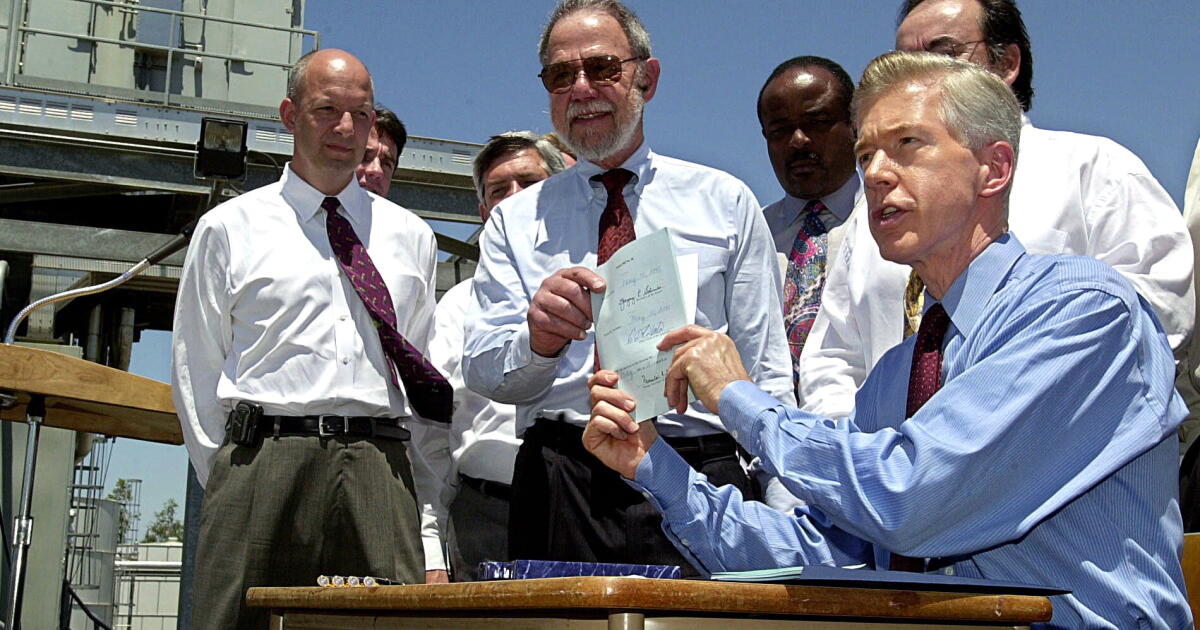
That Sher placed such ideas into law reflected his ability to persuade and compromise. Gov. George Deukmejian, a Republican, signed the wild rivers legislation, and Sher’s Clean Air Act, which helped shape federal clean air legislation signed in 1990 by President George H.W. Bush.
Their partisan differences aside, Deukmejian viewed Sher as having “great personal integrity,” said Steve Merksamer, who was Deukmejian’s chief of staff.
“When Byron Sher wanted to come into the office and had the bill, would he get in? Absolutely. Would the governor listen to him? Yes,” Merksamer said.
Sher did fall short of convincing Deukmejian to sign one of his bills — a whimsical measure inspired by a Camp Fire girls and boys troop to proclaim the banana slug to be the official state mollusk. Deukmejian vetoed the bill, though Gov. Gavin Newsom signed legislation in 2024 designating the slimy yellow creature as the official state slug.
Sher was born in St. Louis in 1928, graduated from Harvard Law School in 1952, and joined the Stanford Law School faculty in 1957. He served on the Palo Alto City Council in the 1960s, got recalled in 1967 over his opposition to development and won back his seat in the 1970s. Sher was Palo Alto mayor in 1980 when he won an Assembly seat. He remained in the Assembly until 1996 when he was elected to the state Senate, serving until 2004 when term limits forced him to step aside.
Among the students who passed through his Stanford classrooms was Newsom’s father, William Newsom, who became a state court of appeals justice.
Sher and his aide and friend Kip Lipper attended a 2010 banquet in San Francisco at which the California League of Conservation Voters honored Justice Newsom with the Byron Sher Lifetime Achievement Award. In his acceptance speech, Newsom recalled that Sher was the only Sanford professor who gave him a C. When Lipper asked whether the story was true, Sher deadpanned, “He deserved it.”
“There aren’t a lot of tales to tell about Byron Sher,” said Bill Lockyer, who was Senate leader when Sher won a state seat in 1996. “He went home at night and tended not to get into the Capitol gossip.”
In 1996, Lockyer entrusted Sher to serve on a joint Assembly-Senate conference committee that produced landmark legislation that sought to deregulate California’s electricity system.
Sher added provisions expanding requirements that the state use renewable sources of electricity and called the legislation “an extraordinary result” given the issue’s complexity. Lockyer said Sher’s additions, while important, were “the cherry on top of the toxic sundae.”
The legislation was blamed for California’s electricity crisis in 2000 and 2001 when swashbuckling energy traders manipulated the markets, causing prices to spike, resulting in rolling blackouts, and fueling the 2003 recall of Gov. Gray Davis.
Sher was notable for measures he refused to support. With a few other liberal Democrats, nicknamed the Grizzlies, Sher would pick through turgid language of legislation looking for provisions that reflected the undue influence of special interests.
Sher voted against 1986 legislation that purported to open the way for a shrimp processing facility in West Sacramento. The bill turned out to be part of an elaborate FBI sting that resulted in 14 legislators, lobbyists and others being sent to prison.
“He wasn’t a comfortable politician,” said San Mateo County Supervisor Jackie Speier, a former Democratic congresswoman who served in the Legislature with Sher. “He didn’t speak up a lot. So, when he did, people listened.”
He displayed partisan side in 1994 when Republicans took a 41-seat majority in the 80-seat Assembly, and Republican Assemblyman Jim Brulte was in line to be elected speaker. But Democratic Speaker Willie Brown had a Republican supporter, Paul Horcher, who voted to retain Brown as speaker, plunging the two parties into a yearlong fight for control.
To wrest control from Republicans, Brown asked the professorial Sher to challenge one Republican’s right to remain in the Assembly. That Republican, Richard Mountjoy of the San Gabriel Valley, won two elections that November — one to the Assembly and the other in a special state Senate election to fill the seat vacated when the incumbent, Frank Hill, was sentenced to prison in the corruption scandal.
Sher reasoned that Mountjoy had to make up his mind — stay in the Assembly or move to the Senate. Facing term limits in the Assembly, Mountjoy joined the Senate in January 1995. The partisan battle went on all that year.
Brulte, who never did become speaker, was elected to the Senate in 1996, as was Sher. On Sunday, he called Sher “a wonderful man.”
“Everything in politics today is personal. It wasn’t personal,” Brulte said of Sher’s role in the speakership battle. “Somebody may have taken it personally, but I certainly didn’t.”
Sher retired to a pear orchard in the Sierra Nevada foothills and served on Tahoe Regional Planning Agency and Sierra Nevada Conservancy.
His wife of 62 years, Linda Bowser Sher, died in 2014. He is survived by three children, five grandchildren and a great-granddaughter.
GAA President Jarlath Burns insists the process of integration between Gaelic games’ three bodies is not over but the key is to ensure the outcome is “sustainable and robust”.
Dr McAleese said she was “dubious” whether there was real desire from the GAA to make it happen but the current GAA president – speaking at the Hurling Development Committee’s starter pack launch for 2026 in Belcoo – denies the issue is dead in the water.
“There was an idea going around last week that integration had stopped – it hasn’t,” Burns told BBC Sport NI’s Mark Sidebottom.
“Integration is happening every day. We see examples here where boys and girls are playing hurling and camogie together. That’s going on in every club every day and every decision we make at the moment, we’re making it from an integrated perspective.
“The three organisations are still very committed to integration, but we want to achieve an integration that is sustainable and robust, and something we can be very proud of.”
Last week, GAA director general Tom Ryan said the initial timescale had proven to be “a little bit too ambitious” and Burns says the missed deadline is “disappointing”, it “doesn’t end the process”.
“We will get back up and running and we have already been in talks with Camogie [Association] and LGFA last week,” he confirmed.
“We will continue to do so until we get the integration where every boy and every girl has the equality of opportunity and can enjoy Gaelic games in the future.”
A distinguished psychiatrist from Martinique who took part in the Algerian Nationalist Movement, Frantz Fanon was one of the most important theorists of revolutionary struggle, colonialism, and racial difference in history.
Fanon’s masterwork is a classic alongside Edward Said’s “Orientalism” or “The Autobiography of Malcolm X,” and it is now available in a new translation that updates its language for a new generation of readers.
“The Wretched of the Earth” is a brilliant analysis of the psychology of the colonized and their path to liberation.
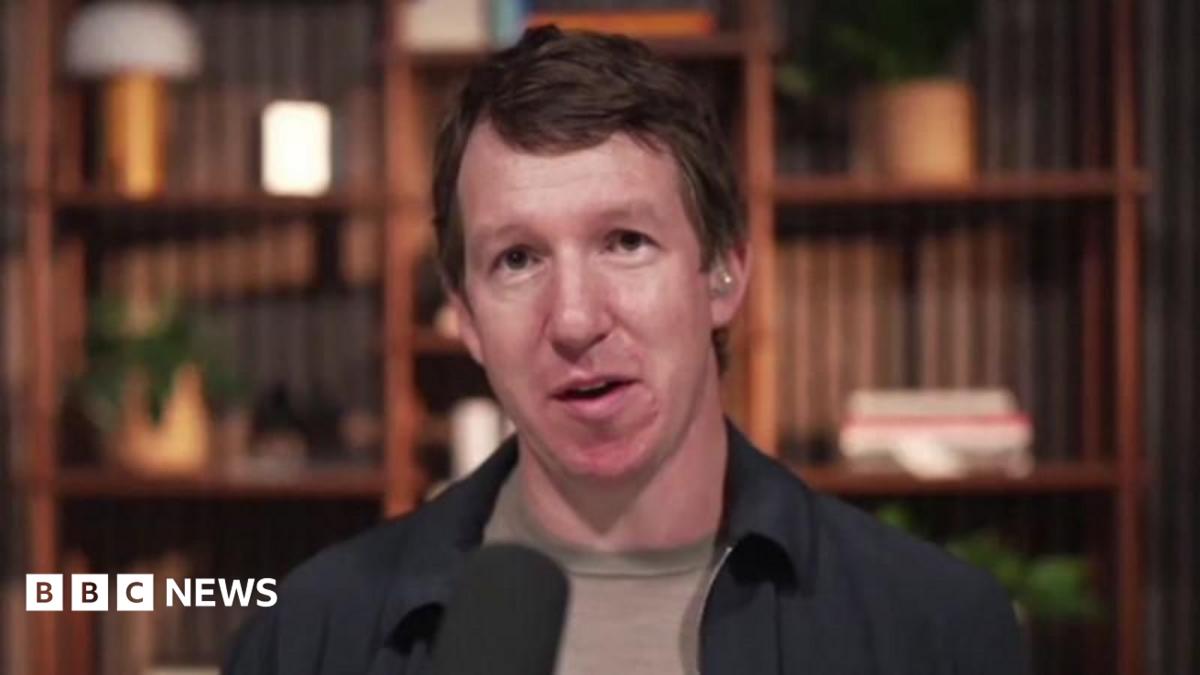
An artificial intelligence “kill switch” which can be checked by a third-party may need to be mandatory for companies, a co-founder of one of the world’s largest AI firms has said.
Jack Clark, one of seven founders of Anthropic, said a way of shutting off AI software completely if it gets too dangerous was the kind of thing society “might want to eventually pass rules around”.
Clark said “most labs have different ways of being able to pull the plug”, including Anthropic, but said policymakers may need to enforce having one.
The rapid development of AI and fears over the risks that the technology poses to humanity have been thrust into the spotlight by a series of warnings from executives and staff at AI firms.
Some have said publicly there is a chance that the technology could, if unchecked, kill all humans.
Anthropic head Dario Amodei over the weekend called for the pace of AI development to slow and be more closely monitored, as the company has done before, though some have questioned the motivations behind this.
Amodei did not say how exactly how AI development could be slowed down and said any action to reign in AI development should be done “without sacrificing commercial advantage”.
Clark told the BBC that specifics around “kill switch” requirements and verification should be part of “the larger policy conversation” taking place around AI.
“Should you mandate for companies to definitely have a kill switch? Is that kill switch verifiable by a third party?” he asked.
“I think that’s the kind of thing society is going to want to know and might want to eventually pass rules around.”
Anthropic, which was formed in 2021 by a group of former employees of its rival OpenAI, is currently at the centre of a debate around AI safety.
Last week, a post from an artificial intelligence researcher who quit Anthropic over concerns AI could wipe out humanity went viral.
In response, Anthropic scientist Evan Hubinger said he personally thought the possibility of human extinction from AI was “>10% within the next decade”.
Asked what percentage he would put on all humans being killed by AI, Clark said: “I don’t think these statistics are that useful”, but added that allowing AI to continue as a “totally unregulated industry” was a bad idea.
“We are rolling dice with immense risks,” Clark said. “And the point is, we have to change the course of this industry.”
Fans were left stunned by the penultimate episode when DC Neil Brenton (played by Tom Glenister) was fatally shot as he tried to track down DS Helen Morgan (Natalie Simpson) on his own.
Now, Expo Lana Washington (Vicky McClure) “must fight against the ticking clock to save thousands – perhaps even hundreds of thousands – of lives.”
But as the explosive final airs this evening, ITV has already confirmed what will be taking its place next week.
ITV thriller The Blame will be making its debut on Sunday, September 20, at 9pm, with its second episode airing the following night, Monday, September 21.
The official synopsis for the upcoming drama reads: “While investigating a murder, detectives Emma Crane and Tom Radley find evidence of serious misconduct within Wakestead police, uncovering a web of lies, institutional cover-ups and moral compromise.”
Based on the novel of the same name by author Charlotte Langley, The Blame stars Coronation Street and Our Girl star Michelle Keegan as Detective Emma Crane.
She is joined by The Sandman’s DI Tom Radley, Shetland star Ian Hart as DCI Kenneth Walker and House of the Dragon’s Gavin Spokes as DC Joel Stevens.
The Blame will consist of six episodes with two episodes airing every week on Sundays and Mondays.
Once the series premieres, the entire boxset will be ready to binge-watch on ITV’s streaming service ITVX.
But before The Blame can begin, there is Trigger Point’s grand finale to get excited about.
Its description continues: “Entering a space filled with enemies and the potential for devastating collateral damage, Lana is pushed beyond her limits to stop the bombers’ final plan from reaching a shocking conclusion.”
Trigger Point is available to watch on ITV and ITVX.
The Blame debuts on Sunday, September 20, at 9pm, on ITV.
CAIRO/NEW YORK: The UN secretary-general’s personal envoy for Sudan, Pekka Haavisto, held talks in Cairo on Sunday and Monday with the Arab League’s secretary-general, Nabil Fahmy, and the Egyptian foreign minister, Badr Abdelatty, as preparations continued for UN meetings in New York this month.
The diplomatic efforts came as drone strikes and other hostilities continued to endanger civilians and drive displacement across Sudan’s Darfur and Kordofan regions, and Blue Nile State.
During his meeting with Haavisto on Sunday, Fahmy stressed the importance of launching a comprehensive, Sudanese-led political process that involves all sections of Sudanese society.
He also reaffirmed the Arab League’s support for Sudan’s sovereignty and territorial integrity, and called for the prevention of external interference in the country’s affairs.
In a separate meeting on Monday, Abdelatty stressed the need to support stability, end the conflict and reach a comprehensive political settlement that preserves Sudan’s sovereignty and meets the aspirations of its people. His talks with Haavisto encompassed the latest developments in the conflict, as well as regional and international efforts to halt the escalation and advance de-escalation measures.
Abdelatty reiterated Egypt’s support for Sudan’s unity, sovereignty, territorial integrity and national institutions. He also emphasized the need to respect Sudanese ownership of any political solution.
Both sides stressed, in an official statement, the important need to respect Sudan’s sovereignty, support de-escalation efforts, facilitate the delivery of humanitarian aid and alleviate the suffering of the Sudanese people.
Meanwhile, UN spokesperson Farhan Haq said drone strikes and other hostilities in Sudan continued to threaten civilians and force people from their homes.
In Blue Nile State, several drone strikes hit fuel stations and other critical infrastructure in the state capital on Sunday, with civilian casualties reported. The UN estimates that nearly 100,000 people were displaced by insecurity across the state between January and August, about 66 percent more than the figure since the start of the year that was reported in late May.
In North Darfur, drone strikes hit several locations in Tina, near the border with Chad.
The UN said nearly 1,200 people were displaced from two villages in El-Fasher between Sept. 10 and 13. More than 1,200 others fled villages in Um Baru over the past week, with most of them crossing into Chad.
Drone attacks were also reported at several locations in West Darfur on Saturday, including a fuel market west of the state capital. Casualties were reported.
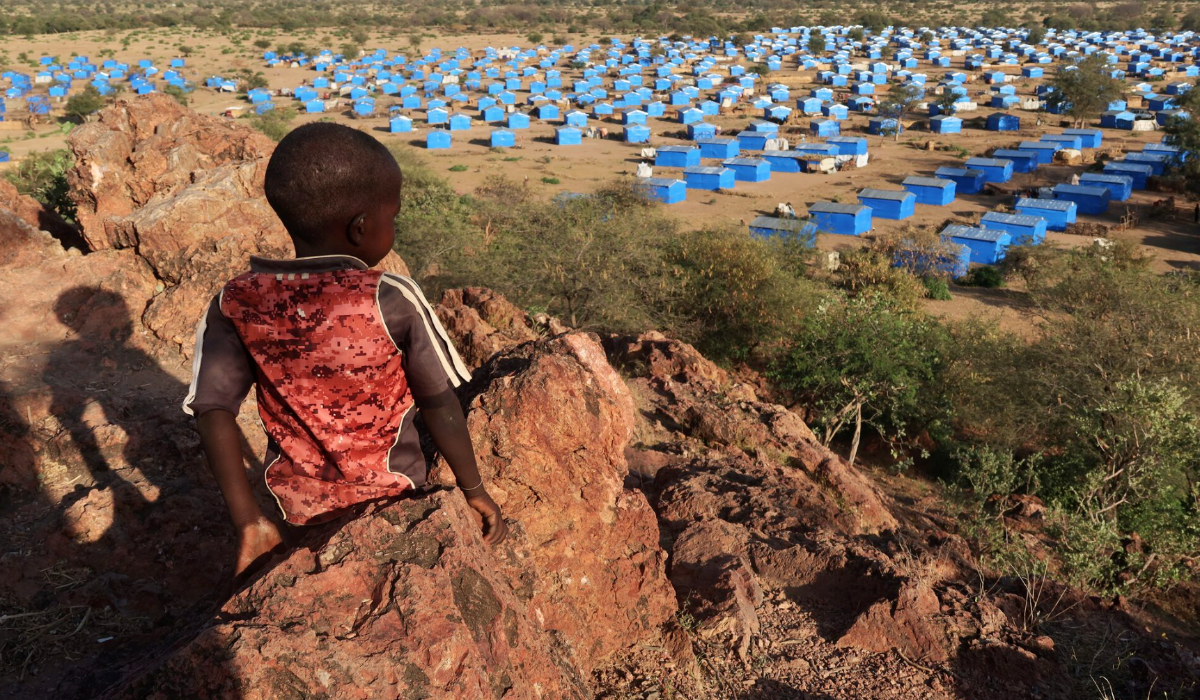
Insecurity in Kordofan continues to drive displacement and disrupt humanitarian operations. More than 7,000 people have reportedly arrived in Abassiya, South Kordofan, in recent weeks. In North Kordofan, Al-Mina Al-Bari camp in the state capital, El-Obeid, is hosting about 9,000 families, placing further strain on overcrowded sites and basic services.
Haq reiterated the UN’s call for all parties involved in the conflict to protect civilians and civilian infrastructure, and ensure rapid, safe, unhindered and sustained humanitarian access to those in need.
Sudan descended into civil war in April 2023 after tensions between the Sudanese Armed Forces and the rival paramilitary Rapid Support Forces erupted into fighting. The conflict has killed tens of thousands of people and driven a severe hunger crisis.
A report published in May said nearly 19.5 million people, about 41 percent of Sudan’s population, faced high levels of acute food insecurity.
The UN Food and Agriculture Organization, the World Food Programme and UNICEF called for an immediate cessation of hostilities. They also urged the international community to increase funding for food assistance, emergency food production, efforts to rebuild livelihoods, and nutrition, health, water and sanitation services.
Amani El-Taweel, a researcher at Al-Ahram Center, told Arab News that the meetings in Cairo reflected continuing diplomatic efforts to find a solution to the Sudanese crisis.
She said the situation remained extremely complex, particularly amid the wider escalation in the Middle East, and that the emergence of new fronts had further complicated conditions in eastern Sudan.
Ezzat Saad, director of the Egyptian Council for Foreign Affairs, told Arab News the only path out of the crisis was to unify Sudanese institutions and secure a ceasefire.
He said any solution must come from within Sudan, without interference from external parties. Haavisto’s meetings in Cairo were part of the preparations for upcoming UN General Assembly sessions in New York at which heads of state would have an opportunity to discuss regional crises, Saad added. Sudanese institutions themselves must also demonstrate a commitment to preserving the country’s unity, he said.
On Saturday, the Egyptian president, Abdel Fattah El-Sisi, met the UN secretary-general, Antonio Guterres, on the sidelines of the BRICS summit in India. El-Sisi said any threat to Sudan’s security, unity or sovereignty constituted a “red line,” according to a statement from the Egyptian presidency.
In January, Egypt hosted the fifth meeting of the Consultative Mechanism to Enhance Coordination of Peace Efforts in Sudan, which was chaired by Abdelatty.
The foreign minister said Egypt remained committed to achieving peace and stability in Sudan. He highlighted the launch of the Sudan Neighboring Countries Initiative in July 2023, which emphasized the need for a ceasefire, inclusive political consultations and the guaranteed delivery of humanitarian aid.
WASHINGTON — The Kennedy Center Board of Trustees is planning to propose adding President Trump’s name to the facility’s exterior in recognition of his saving the building from its “precarious fiscal position,” according to a new court filing in a suit aimed at blocking the move.
It’s the latest development in the case revolving around adding the president’s name to the exterior of the cultural and arts facility that sits along the Potomac River in Washington and reflects the Trump-aligned board’s efforts to honor the president.
The new information came out of a court filing made by Democratic Rep. Joyce Beatty of Ohio, an ex-officio member of the board. Beatty, who has led an effort to block Trump from putting his name on the building, said in a filing she was alerting the court to the proposal because it could implicate a pending decision before the court.
Both the court and the Kennedy Center board are expected to hold meetings Tuesday.
Beatty’s filing includes two exhibits. One is a draft vote to shut the center down, asserting the building is unsafe for occupancy. That assertion incorrectly cites a consulting group’s finding, “which expressly disclaimed providing any such opinion,” according to Beatty.
The other document asserts the center faces dire financial straits. It specifically calls for Trump’s name to be placed in marble beneath the name of the center on the building’s exterior. It offers 10 options for a possible inscription, including “Renovation and endowment overseen by President Donald J. Trump and the Trump Kennedy Center Fund.” Another proposes: “With Gratitude for Support from President Donald J. Trump and the Trump Kennedy Center Fund.”
“The Board understands that without such appropriate recognition it is unlikely that President Trump will provide the fundamental oversight of the renovation of the main building and lead the fiscal rescue of the Center,” the board wrote in the proposed resolution.
Trump has spent much of his second term reshaping Washington, demolishing the East Wing of the White House to make way for a ballroom and planning a triumphal arch near Arlington National Cemetery as well as a renovated golf course along the Potomac River.
The Kennedy Center has been a stumbling block in that effort after a judge ruled in May that Trump’s name was added to the building illegally, ordering it to be removed.
Trump and his allies, however, have continued to fight the ruling.
The board voted last month to inscribe his name on the venue’s facade to read “The John F. Kennedy Center for the Performing Arts Restored and Renovated By President Donald J. Trump.”
If the Trump Kennedy Center Fund reached $100 million, another inscription would be added reading: “Endowed by the Trump Kennedy Center Fund.”
DAKAR: Health officials battling the Ebola outbreak in eastern Democratic Republic of Congo are using anonymised mobile-phone data to map population movements and identify areas where the virus could spread next, according to the World Health Organization and researchers working with it.
The approach, which has not been used before in an Ebola response, comes as authorities struggle to contain what the WHO has described as the fastest-growing Ebola outbreak on record. Cases have been confirmed in six provinces, with more than 6,250 people infected and 3,039 killed since the outbreak was declared on May 15, according to the latest government data.
The outbreak, Congo’s 17th, is caused by the Bundibugyo species of Ebola, for which there are no approved vaccines or treatments.
As the virus spreads, health officials are looking for ways to anticipate where cases could emerge next and direct limited surveillance and response resources.
“Population movements have always been a factor in outbreaks, but they are particularly important in the current epidemic,” said Olivier Le Polain, head of epidemiology and analytics for response at the WHO Health Emergencies Programme.
Traditional risk assessments focus on outbreak hotspots and assume the virus is most likely to spread to surrounding areas.Analizing mobility data allows responders to identify risks in places that may be geographically distant but closely connectedthrough travel patterns.
“It gives us a more nuanced understanding of risk,” Le Polainsaid, citing the example of Ituri province, in the northeast, where the virus is believed to have started circulating.
“There are very significant population movements in Ituri linked to mining activities and trade. Understanding those movements is crucial to understanding how the outbreak spreads.”
The analysis is produced by Swedish non-profit Flowminder, using anonymised records generated when mobile phone users connect to telecommunications networks. As people move around the country, their phones connect to different antennas on the network, generating records that show where those connections took place. Researchers use those records to estimate how people travel between different areas.
The data is provided free of charge by Vodacom, Congo’s largest operator. Vodacom did not respond to a request for comment.
Flowminder says it receives aggregated and anonymised records and does not have access to information identifying individual subscribers.
“We seek to provide estimates of how people move, which in turn is a predictor of how infectious people move,” Flowminderfounder Linus Bengtsson said.
Flowminder’s first analysis, published in early June, focused on the three areas where the outbreak is believed to have started: Bunia, Mongbwalu and Rwampara. Researchers tracked where people who had spent time in those areas between April 3 and April 23 later traveled.
The largest flows were to nearby areas in Ituri province and North Kivu province. By the end of June, all 10 of the destinations receiving the largest flows of travelers from the original outbreak areas had reported confirmed Ebola cases.
PARIS: France and Iraq on Monday called for a “diversification of export routes” for oil and gas in the Middle East in response to the instability generated by the conflict between the United States and Iran, following talks in Paris.
French President Emmanuel Macron and Iraq’s Prime Minister Ali Al-Zaidi stressed the importance of “regional interconnections” and export route diversification to “ensure regional energy security”, in a joint statement.
Zaidi visited the Elysee Paris on his first trip to Europe since taking office in May and is also expected in Berlin on Tuesday.
The visit comes as the situation in the Middle East continues to deteriorate, with the Iran-backed Houthi rebels cementing their hold on the Bab Al-Mandab strait on Friday, adding to the crisis of Iran’s effective closure of the Strait of Hormuz, and driving oil prices up.
On Monday, French energy giant TotalEnergies signed a memorandum of understanding with Iraq on liquefied natural gas supplies and agreed to discuss further energy projects.
TotalEnergies chief Patrick Pouyanne “affirmed the company’s readiness to cooperate with Iraq in the oil and energy sectors”, noting the company planned to increase its investments in Iraq to $16 billion from $12 billion, during a meeting with Zaidi.
The two countries, which in recent years have been involved in the fight against the Islamic State (IS) jihadist group, also agreed to deepen defence cooperation.
They signed a strategic roadmap on the acquisition of French military equipment as Iraq seeks to modernise its armed forces and strengthen its sovereignty capabilities.
French drone company Harmattan AI separately signed a letter of intent with Iraq’s defence ministry concerning autonomous air-defence systems.
Several other agreements were signed in areas including development assistance, education, civil aviation and electricity infrastructure.
KHARTOUM: The World Food Programme’s funding for Sudan — the world’s largest hunger crisis — has fallen by about half this year, its acting head told Reuters, as war drives more people into hunger while the regional crisis raises prices and aid budgets plummet.
Speaking from the Darfur region after a trip across the country, acting Executive Director Carl Skau said that while access had represented humanitarians’ largest obstacle in the past, now “we have (a) presence that we are not fully utilising because of the lack of funding.”
The gap to sustain current operations was just short of $300 million, he said.
This year, we’re about half what we were in terms of funding last year, says Carl Skau, Acting executive director of The World Food Programme
“This year, we’re about half what we were in terms of funding last year,” Skau said. Last year, the agency received $645 million, but almost three-quarters into this year funding is only at $206 million.
The war between Sudan’s army and the paramilitary Rapid Support Forces has devastated wide swathes of the country, displacing up to 14 million people, ruining harvests and decimating the economy.
Almost 20 million people face hunger in Sudan, but budget cuts have forced the agency to focus efforts on the 5 million most in need, of whom it has recently scaled up to reach 4 million people.
Even then, the organization, the UN’s largest by budget, is forced to make difficult decisions.
In Tawila, North Darfur, the makeshift home to about 1 million people, the agency is able to reach everyone monthly but with only a half ration that covers two weeks’ food, Skau said.
“It’s not clear how they really are surviving the other two weeks,” he said.
In El-Obeid, the central Sudanese city where about 1 million and counting have sought refuge since the start of the war in April 2023, the agency is only able to provide help to those who arrived in the past several months.
“We are providing, but less and less. A year ago it was better because of resources,” Skau said.
agency recently began providing aid in the city of Al-Fashir, once home to 1 million people, where an RSF attack last year, “bore the hallmarks of genocide,” according to investigators. Skau said, “there is little sign of life having returned.”
His organization is not the only one struggling as major donors reduce aid. The International Organization for Migration said on Monday that emergency relief supplies for hundreds of thousands of people displaced by the war could run out within weeks unless donors step in with urgent funding.
The UN agency said supplies of shelter materials, sanitation items and emergency household goods are expected to run out by the end of September. The aid system itself can only keep functioning until December without more money.
Aid groups like IOM are struggling with funding shortfalls after the Trump administration — the US was previously the world’s biggest aid donor — cut billions of dollars in foreign assistanceto UN agencies and charities over the past year. Other major donor countries have also cut aid budgets, citing tight finances and higher defense spending.
“We simply can’t turn our back on the people of Sudan,” IOM Director General Amy Pope said in a statement, adding: “The entire humanitarian system could collapse within weeks if we don’t act now.”
IOM says 8.6 million people remain displaced within Sudan, while another 4.9 million have returned to their homes. The agency says it needs $15 million to keep the aid pipeline running for the rest of the year, supporting about 305,000 people. Without it, more than 100 humanitarian organizations would struggle to quickly deliver lifesaving aid.
GUY RITCHIE is casting the net wide for the third series of The Gentlemen – in the hope of Baggin’ two huge Hollywood superstars.
Insiders have told me the hotshot director is trying to sign up Lord Of The Rings actors Elijah Wood and Orlando Bloom for the hit Netflix show.
The Lord of the Rings legend is set to join the Netflix series, The GentlemenCredit: AlamyThe Frodo Baggins actor is set to reunite with the actor who played Legolas in the trilogyCredit: New Line
If he pulls off the move, it would reunite Orlando, who played Legolas, and Elijah, who starred as Frodo Baggins, two decades on from Peter Jackson’s hit film trilogy.
A source said: “The Gentlemen is the hottest TV show in town and Guy has big plans for the third series.
Sign up for the Showbiz newsletter
Thank you!
“Elijah is being courted to appear as a villain, while Orlando is also one of their key casting targets.
“For Lord Of The Rings fans working on the production, the idea of having Frodo and Legolas back together would be amazing. No deals are signed yet, but discussions are ongoing.”
Frodo Baggins actor Elijah Wood could be set to appear as a villain in The GentlemenCredit: GettyOrlando Bloom, who played Legolas, is also a key casting target for Guy RitchieCredit: Anadolu via Getty Images
And those aren’t the only actors that Guy is lining up for a part.
And it seems Guy’s show needs a bit of a Hollywood rocket to give it a boost.
Streaming figures for The Gentlemen’s opening weekend of the second series were 50 per cent down on the initial run of shows, with 6.7million views in the first four days it was available to watch.
The Gentlemen director, Guy RitchieCredit: SplashPrince Harry’s wife Meghan’s name is being bandied about as a potential star of the third instalmentCredit: Getty
Season two saw Theo James reprising his role as aristocrat-turned-drug kingpin Eddie Horniman alongside Kaya Scodelario, who plays ice-cold crime boss Susie Glass.
Love Island host Maya Jama made her acting debut in the second series after being cast as mob wife Aisha.
And she is definitely back for the next run, admitting she loved working with Guy on set. Maya said: “He’s very personable and he would be like, ‘Yeah, you’re doing well’, and reassure me, which was really nice.
“He’s just really involved and kind of a genius to watch, because everyone’s practising their lines and then he says something that’s way better than the original.”
AutoZone (AZO) will report its fiscal fourth quarter results before the market opens next Tuesday, and all eyes will be on the do-it-yourself (DIY) segment which has been undermined by cash-strapped consumers.
The first edition of “60 Minutes” since CBS News editor in chief Bari Weiss initiated drastic changes to the venerable program made it to air Sunday. But the changes weren’t all that apparent on screen.
The 59th season premiere was highly anticipated following months of turbulence behind the scenes. Weiss fired “60 Minutes” correspondents Sharyn Alfonsi and Cecilia Vega, both of whom complained the executive pushed them to add right-wing talking points to their stories. Longtime correspondent Scott Pelley was ousted after he angrily questioned the firings at a staff meeting.
Weiss — who took over editorial control of CBS News after parent company Paramount acquired her heterodox digital news site the Free Press — also dismissed “60 Minutes” executive producer Tanya Simon and replaced her with screenwriter and documentary filmmaker Nick Bilton, who has no previous experience in TV news.
Weiss restocked the program’s correspondent corps with one new full-timer — Ross Douthat, the longtime conservative opinion writer for the New York Times — and several new contributors, none of whom showed up in the premiere.
Douthat is the only newcomer added to the opening credits where the correspondents introduce themselves on camera. He also did the closing segment called “The Last Minute,” talking about the dangers of AI and the need for “journalism you can trust.”
But the look and tone of “60 Minutes” remained intact, with only a few minor tweaks to the graphics.
The episode was heavily promoted, with one on-air spot drawing on clips with from the program’s storied past. Correspondents throughout CBS News touted the premiere on their social media accounts.
The program opened with Norah O’Donnell’s exclusive interview with the Air Force officer who was shot down over Iran and rescued by special forces. The U.S. fighter jet was the first to be lost over enemy territory in more than 20 years.
The interview gave a detailed account of the rescue mission and steered clear of any political discussion about the Iran war, which O’Donnell described as “costly and unpopular.” Secretary of Defense Pete Hegseth sat for an interview, focusing solely on the rescue mission.
The second segment was a hidden-camera investigation showing how self-styled lobbyists are shopping access to President Trump to felons looking for a pardon. Video captured pardon brokers Jack Burkman and Jacob Wohl, who were seen asking for $300,000 for their help, saying they worked with influencers close to Trump who would advocate for their cases. (The White House told “60 Minutes”: “Anyone spending money to lobby for pardons is foolishly wasting their money … President Trump performs his constitutional duties in an ethically sound manner, and to suggest so otherwise is either ill-informed or malicious.”)
Some on social media expressed surprise that “60 Minutes” would do a tough story on the Trump administration under Weiss after repeated reports that she is attempting to make the program more amenable to conservatives. “So I guess Bari Weiss didn’t totally destroy “60 Minutes” after all?” political analyst Chris Cillizza wrote on X.
The Los Angeles Rams made up the third segment in the program, which typically includes sports stories when CBS has a late afternoon football game leading into prime time. The package mostly focused on Rams head coach Sean McVay.
The ratings for “60 Minutes” will be issued by Nielsen later this week. Last year the program averaged 9.1 million weekly viewers, making it the most watched non-sports program in prime time.
LONDON: The leaders of Wales, Scotland and Northern Ireland signed a pact Monday that threatens to lead to the breakup of the United Kingdom.
The first ministers of the three semiautonomous regions of the U.K. told Prime Minister Andy Burnham and his government to prepare for constitutional change and that their future lies with the European Union.
“For people watching across these islands — for people watching around the world — there could be no clearer sign that Westminster’s time is coming to an end,” they said in a memorandum of understanding, referring to Parliament.
The announcement came about 48 hours after U.S. President Donald Trump waded into the waters of the politically contentious issue when he said he would “ love to see ” a reunified Ireland during a trip to visit his golf course hosting the Irish Open.
It’s the first time the leaders of all three countries are either from pro-independence parties, or pro-unification in the case of Northern Ireland, which was partitioned and remained part of the U.K. when Ireland won independence from Britain over a century ago.
Tensions remain despite devolution of power
Burnham’s spokesperson brushed aside the threat and said the prime minister strongly believes in the union and was more focused on lowering the cost of living than dealing with constitutional debates.
“The United Kingdom is at its best when people come together around our shared values and problem-solving, rather than division,” Tom Wells said.
Nicola McEwen, director of the University of Glasgow Center for Public Policy, said the summit was symbolically important but has no legal significance.
“I don’t see the threat to the union being bigger today than it was yesterday,” McEwen said.
In the late 1990s, the U.K. passed legislative acts that decentralized government through the process of devolution, giving each country except England some level of policy independence and self-governance through their own parliaments. But tensions have remained with the U.K.-wide government in London, which retained control over national issues and those concerning England.
Scotland’s John Swinney and Northern Ireland’s Michelle O’Neill called for independence referendums in their countries, while Rhun ap Iorwerth did not provide a timetable for one in Wales.
The three leaders appeared in their political capacity, rather than their official one, possibly because O’Neill is in a power-sharing government with the Democratic Unionist Party.
Northern Ireland’s Deputy First Minister Emma Little-Pengelly, of the DUP, accused O’Neill, of the Sinn Fein party, of “weaponizing” the role of first minister by signing the agreement.
“I am first minister in the north of Ireland,” O’Neill replied. “This is about historic change happening all around us.”
Scottish nationalists believe support for independence is rising
Scotland tried unsuccessfully to break away in 2014, with voters rejecting a referendum 55% to 45%. But McEwen said support for Scottish independence has grown since Brexit, in which the U.K. formally left the European Union in January 2020, following a referendum in June 2016.
Swinney, leader of the Scottish National Party, said he believed voters would now vote for independence if the U.K. government approved a referendum.
Burnham told Parliament last week he would allow such a vote to be held if there was a “clear consensus” in Scotland, but later sent Swinney a letter saying a vote was “off limits.”
The 1998 Good Friday peace accord that ended three decades of sectarian violence in Northern Ireland known as “The Troubles,” requires a vote on unification if polls there indicate it would likely pass, a threshold the U.K. government says has not been met. Ireland would also have to approve the change in a referendum.
Burnham has made devolution a major theme since taking office less than two months ago, but his focus has been on regional governments across England, a reflection of his years as mayor of Greater Manchester.
Swinney tried to turn Burnham’s ideology to his advantage, saying his frequent talk of devolution “leads you to the logic of recognizing the right of the people of Scotland, in my case, to decide their own future.”
Beyond any threat of departing the union, McEwen said the greatest impact of the three joining forces could be that they agreed to cooperate with each other routinely and that could help to exert more influence on the U.K. government.
“It does keep on the agenda that question about, well, if the United Kingdom is a union based on consent, what is the pathway where it looks like that consent may no longer be there?” McEwen said. “Any U.K. government has been very reluctant to engage in that discussion.”
RIYADH: The President of Somalia Hassan Sheikh Mohamud received the Secretary-General of the Muslim World League Sheikh Dr. Mohammed Al-Issa on Monday.
During the meeting at the presidential palace in Mogadishu, the two officials discussed various topics regarding MWL contributions to Somalia across religious, intellectual, and humanitarian spheres.
The president commended the efforts of the league in supporting the Somali people.
Earlier during his visit to the country, Al-Issa met with leading Somali scholars for an intellectual gathering and attended a forum where participants discussed efforts to confront extremist ideologies.
Central banks’ record, price-insensitive gold buying is a more credible signal of the dollar’s structural trajectory than this year’s currency markets, because FX markets are structurally bad at pricing the discontinuous, wartime-style tail risk central banks are actually hedging — so this autumn’s calmer dollar should not reassure anyone that de-dollarization has stalled.
In June, the European Central Bank made an announcement most people missed: gold has overtaken US Treasuries as the world’s single largest reserve asset. Central banks bought 289 tonnes of it in the second quarter alone — a record for that quarter and five times Q1’s pace — with Poland’s central bank openly telling investors it was “buying the dip.” Here is the part that should stop you: gold’s price fell 22% between January and September. Central banks were never more convinced buyers of an asset than while it was crashing. Either the reserve managers are wrong, or currency markets — which show none of this urgency — are the ones asleep at the wheel.
Gold peaked at $5,589 an ounce on 28 January, the same month the dollar index hit a four-year low of 95.5 and the dollar’s share of global reserves fell toward its lowest level since 1995. Both moves reflected the same story: Fed rate cuts through 2025, a US debt load past $37 trillion, and BRICS states settling more trade outside the dollar. Then the picture split. Kevin Warsh, confirmed as Fed chair in May, signalled a hawkish pivot in August; the Iran war pushed oil and inflation higher through September, and markets began pricing a rate hike rather than a cut. The dollar index clawed back to 99.46. Gold fell to $4,330. Central-bank buying did not follow the price down — Poland alone added 82 tonnes this year toward a 700-tonne target, and a World Gold Council survey found a record 45% of central banks plan to buy more within twelve months.
State the gap plainly. Two signals, same underlying question — is the dollar-centred monetary order changing — and they disagree by a wide margin. The buying signal says yes, decisively: record quarterly purchases, gold displacing Treasuries at the ECB’s own reckoning, 74% of surveyed reserve managers expecting the dollar’s reserve share to keep falling over five years, and buyers adding tonnage through a 22% drawdown rather than fleeing it. The price signal says not yet: the dollar just posted one of its sharper rallies of the year, gold is down sharply from its high, and nothing in currency markets shows the kind of stress a genuine regime shift would produce.
Stay ahead of the geopolitical week.
MD Briefing delivers expert analysis across five global fronts — the Indo-Pacific, energy, geoeconomics, European security, and the Middle East — every Monday morning. Free.
The strongest objection to trusting the buying signal is a good one, and it needs to be taken seriously rather than waved away: foreign exchange is the deepest, most liquid market in the world, turning over more than $7 trillion a day. A few hundred tonnes of central-bank gold buying — perhaps $30–40 billion a quarter — is a rounding error against that. If professional currency traders, sitting on far more capital and far better short-term information than a handful of reserve managers, saw a serious de-dollarization story unfolding, it would already be in the price. Instead the dollar just rallied. On this view, central banks are not seeing something markets are missing; they are pattern-matching off 2022, when Russia’s $300 billion in reserves was frozen overnight, and over-hedging a tail risk that has not recurred and mostly will not.
That objection assumes FX markets and central-bank reserve committees are pricing the same kind of risk, on the same time horizon, and they are not. Currency markets are exceptionally good at pricing continuous, high-frequency variables — rate differentials, growth surprises, this week’s inflation print — because that is what moves flows daily. They are structurally poor at pricing discontinuous, low-probability events until those events occur: equity volatility did not price 2008 in 2007; sovereign spreads did not price the Russia reserve freeze in the weeks before it happened. A reserve freeze, a secondary-sanctions campaign, or exclusion from SWIFT-style settlement infrastructure is exactly that kind of event — binary, rare, and catastrophic for whoever it hits — which is precisely why Poland’s central bank governor, Adam Glapiński, described his buying not as a trade but as insurance: reserves that keep the state secure “under all circumstances, including wartime, which of course we’re not expecting.” That is not the language of someone chasing momentum. It is the language of someone who manages the one asset class that keeps its value if their country is ever cut off from the dollar system, and who would rather hold it and be wrong for a decade than not hold it and be wrong once.
The buying pattern itself supports that reading. Momentum money sells into a 22% drawdown; insurance money adds to it. Central banks did the latter through the first half of this year, which is the behavioural signature of a structural reallocation program with a fixed multi-year target — Poland’s is explicit, 700 tonnes — not speculative flow riding gold’s rally. Meanwhile the dollar’s autumn recovery has an identifiable, largely cyclical cause: a new, more hawkish Fed chair and a war-driven oil shock forcing a rate-hike repricing. Neither event reverses the debt trajectory, the BRICS settlement trend, or the reserve-freeze precedent that pushed the dollar to a four-year low in January. A rally built on this year’s Fed chair and this year’s war is not proof that last year’s structural story is over; it is evidence that a cyclical force is currently strong enough to mask it.
The Scenarios
Base case (55%): The gap persists rather than resolves. The dollar holds most of its autumn gains through the current rate-hike cycle, gold range-trades below its January peak, and central banks keep buying at a steadier, slower pace toward stated targets like Poland’s 700 tonnes. Nobody is “proven right” on any particular Tuesday, because reserve diversification is a decade-scale hedge, not a trade with a catalyst date. This is the least satisfying outcome for anyone wanting a verdict, and the most likely one.
Downside case (for dollar holders): A discrete trigger — a fresh reserve-freeze or secondary-sanctions episode, plausibly connected to the still-live US-Iran war spilling into action against a third country’s assets, or a shock to Fed independence under a more political Warsh chairmanship — crystallizes the exact tail risk central banks have been hedging. Gold spikes back through its January high, the dollar index breaks below its 95.5 low, and the gap closes in weeks rather than years, vindicating the reserve managers all at once and catching FX markets flat-footed exactly as the theory predicts.
Upside case (for the dollar): The Iran war resolves, Warsh’s rate hikes cool inflation without a recession, US fiscal metrics stabilize, and BRICS local-currency settlement growth stalls on friction between its own members. Central-bank gold buying does not reverse but plateaus as reserve managers hit conventional diversification ceilings — most target 15–20% of reserves in gold, not open-ended accumulation. The gap closes gradually as price drifts up toward the buying signal over several years, with no crisis required to force the reconciliation.
The Takeaway
The dollar’s calmer autumn is not evidence the de-dollarization hedge was a mistake; it is evidence that currency markets and central-bank reserve committees are pricing two different things on two different clocks, and only one of those clocks rings in a crisis. Central banks bought through a 22% drawdown because the point of the position was never this quarter’s return.
Watch for: the World Gold Council’s Q3 2026 Gold Demand Trends report, expected in early November. A third consecutive quarter of buying that ignores price direction will confirm this is policy, not opportunism — and the moment currency markets have to agree with that policy will not be a quiet one.