ATOMIC Kitten are being eyed up to star in a Boyzone-style documentary which will chart their rise to fame and the drama among members over the years, The Sun can exclusively reveal.
Atomic Kitten are in talks to appear in a tell-all documentary about their rise to fameCredit: WireImageTelly bosses are keen for former member Kerry to appear in the filmCredit: Getty Images
Kerry, 45, left a year after the release of their debut album and was replaced by Jenny Frost, with the line-up changing several times throughout the last 26 years.
But The Sun understands that telly bosses have started to reach out to the girls to feature in a tell-all documentary – inspired by the success of Boyzone’s three-part Sky film last year – and are keen for all four members to take part.
Sign up for the Showbiz newsletter
Thank you!
An insider said: “Atomic Kitten were one of the most successful girl groups of the noughties and it feels like the right time for their story to be told.
“A production company has started reaching out to all four members to appear in a documentary to celebrate their success and of course chart the lows, including the highly publicised fall-outs among the girls.
Liz, Kerry and Natasha were founding members of Atomic Kitten and release their debut album in 2000Credit: Getty ImagesNatasha recently ruled out ever working with Kerry again but insisted she ‘wishes her all the best’Credit: Getty Images
“Like a lot of their all-female counterparts, line-up changes and public spats are a huge part of their history and this would be their chance to set the record straight once and for all.
“None of the girls have signed on officially yet but Kerry is top of the wish list as she’s known for not holding back.”
The Sun has reached out to representatives for Atomic Kitten and Kerry Katona for comment.
Atomic Kitten last performed as a trio in 2021 but a year later Natasha, 44, and Liz, 45, were gigging as a two-piece.
Then in 2024 Natasha confirmed on social media that she would be stepping down as a member of the group to focus on her solo music career.
She told the Mirror: “I wish Kerry all the best. That girl has been out there. She’s a hustler. She looks after those kids so well. Fair play to the girl.
“There’s no big thing, but when it comes to work, that isn’t going to happen.”
Appearing on Unfiltered with Lucy Kennedy, she said: “No [we’re not in touch]. I’m gutted because I love the girls to bits. Tash, Liz, if you’re watching, give us a call.”
Passengers are being urged to check with their airline before travelling to the airport
18:11, 20 Aug 2026Updated 18:16, 20 Aug 2026
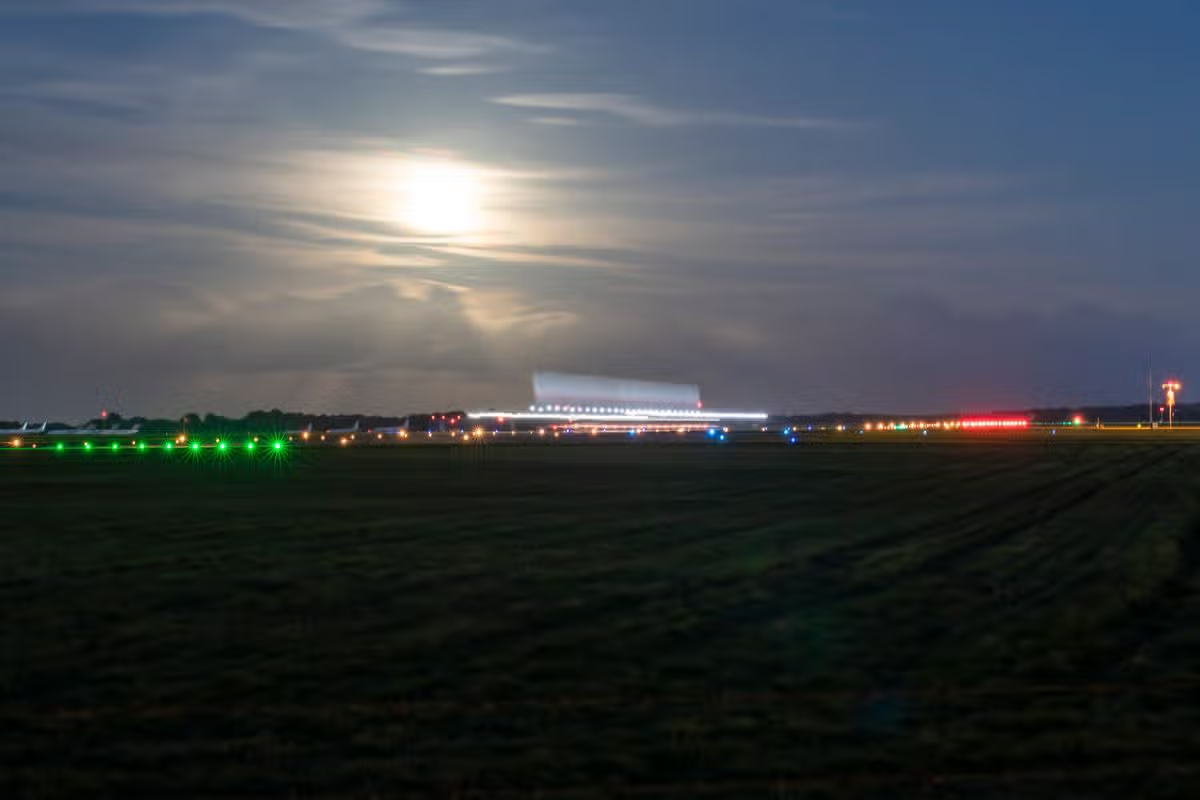
The airport apologised for any disruption caused(Image: Getty)
An international airport in the UK has confirmed that it will be temporarily closed. Norwich Airport announced on social media that it would be closed between 8am and 1pm tomorrow (Friday, August 21).
This is apparently due to ‘ongoing industrial action’ involving certain members of air traffic control. The airport apologised for any disruption caused.
Passengers are being urged to check with their airline before travelling to the airport to catch their flight. In a post entitled ‘Industrial Action – Important passenger update – Friday 21 August, a statement on the airport’s social media account said: “Due to the ongoing industrial action, short of a strike, involving Prospect union members in Air Traffic Control, Norwich Airport will be closed to air traffic between 08:00 and 13:00 tomorrow, Friday 21 August.
“Airlines have been informed of the closure. Passengers should check with their airline for the latest information about their flight before travelling to the airport. We apologise to passengers for the inconvenience this may cause.
“Discussions with Prospect are continuing and we remain committed to resolving the dispute through constructive dialogue.”
Content cannot be displayed without consent
A further statement on the website added: “The Prospect union has informed us that its Air Traffic Control members at Norwich Airport have voted in favour of industrial action, short of a strike, from 17th August in relation to pay and conditions.
“Discussions are continuing and we are firmly committed to resolving this dispute through constructive dialogue that avoids disruption to airport operations.”
‘Extremely disappointing’
Prospect members are reportedly demanding a 10 per cent pay rise, having only been offered 3 per cent so far.
David Avery, the union’s national secretary for aviation, said: “It is extremely disappointing that we have still not received an acceptable offer from Norwich Airport, which has left us with little choice but to push ahead with this industrial action
“Our members in air traffic control are not making unreasonable demands. They are simply asking for pay levels and terms and conditions that are normal for their colleagues across the country.”
A spokesperson for Norwich Airport said: “It is disappointing that Prospect has chosen to announce further industrial action while negotiations to resolve the dispute are ongoing.
“We remain firmly committed to resolving this dispute through constructive dialogue and will continue to engage with Prospect with the aim of reaching agreement.”
JEFFERSON CITY, Mo. — A Missouri judge has allowed new U.S. House districts backed by President Trump to be used in the November elections, rejecting a bid by to put the Republican-friendly districts to a statewide vote of the people.
The ruling Wednesday by Cole County Circuit Judge Daniel Green is a victory for Republicans seeking to hold onto their slim majority in the U.S. House. But the case is likely to end up in the state Supreme Court.
Missouri’s new districts already were used in the August primaries. On that same day, Republican Secretary of State Denny Hoskins rejected a petition with thousands of signatures seeking to force a November referendum on the map. Hoskins asserted that Missouri’s Constitution doesn’t allow a referendum on congressional redistricting.
The judge agreed with Hoskins and other Republicans, who joined in defense of the new map.
“The Missouri Constitution does not supply any statement — let alone a clear one — reallocating authority over congressional redistricting away from the General Assembly to a referendum process,” Green wrote in the ruling.
Opponents of the redistricting plan quickly announced an appeal.
“Everyone knows that Cole County is not the final decision here,” said Richard von Glahn, executive director of People Not Politicians, who sued to try to place the new map on the ballot. “After months of delay, we are pleased to be moving forward to the Missouri Supreme Court to enforce our constitutional rights.”
Missouri’s current U.S. House delegation is made up of six Republicans and two Democrats who were elected from districts with boundaries drawn after the 2020 census.
But Republican Gov. Mike Kehoe called the Legislature into a special session on redistricting last year after Trump urged Republican-led states to redraw congressional boundaries to their advantage ahead of the midterms.
Missouri’s revised map is designed to help Republicans defeat Democratic U.S. Rep. Emanuel Cleaver of Kansas City. It reassigns portions of Kansas City to two neighboring districts represented by Republicans and stretches the remainder of Cleaver’s 5th Congressional District far eastward into Republican-heavy rural areas. About 59% of its voters are new to the 5th District, according to an Associated Press estimate.
State Sen. Rick Brattin won a Republican primary in the reshaped district in early August. Cleaver was unopposed for the Democratic nomination.
Republicans had argued that the new districts should be used in the November elections even if a voter referendum on the map was allowed to occur at the same time.
Lawsuit highlights dispute about referendum rights
The Missouri Constitution does not specifically say that a referendum can be used to decide congressional redistricting, nor does it forbid it, which is why the issue ended up in court.
Republican Attorney General Catherine Hanaway’s office, which represented the secretary of state in court, argued that congressional redistricting is a legislative duty not subject to referendum without specific constitutional permission.
The attorney general and the Republican Party also argued it was too late to switch district boundaries before the November election. Changing districts after the primary would cause “widespread voter confusion” and an “erosion in confidence in the integrity of the state’s elections,” said John Gore, an attorney for national, congressional and state Republican committees.
The judge agreed, ruling that a district swap after the primary would violate federal law.
It’s been more than 100 years since a Missouri redistricting plan faced a referendum. In 1922, voters rejected a new congressional map passed by the Republican-led Legislature. The legitimacy of that referendum petition was not challenged in court.
Redistricting battle spread to numerous states
Missouri’s mid-decade redistricting effort has been among the most litigated nationally, triggering about a dozen lawsuits over the past year.
The Republican-led state was the second, after Texas, to respond to Trump’s call to redraw congressional districts. Several other states followed. All told, Republicans hope to win as many as 16 additional seats from new House maps enacted in eight states: Texas, Missouri, North Carolina, Ohio, Florida, Tennessee, Louisiana and Alabama. Democrats, whose counterattack faced several setbacks, think they could win up to six additional seats from new districts in California and Utah.
It remains to be seen whether the redistricting works as intended for Republicans. The president’s party historically has lost congressional seats in the midterms, and Trump’s poor approval ratings could provide an extra hurdle for Republican candidates.
Lieb writes for the Associated Press. AP journalist Hannah Recht contributed to this report from Washington.
England women’s hopes of success at the FIH Hockey World Cup ended at the group stage after a 0-0 draw with India.
David Ralph’s side finish third in Pool D on four points, with two teams moving forward to the next round, and will now play in a classification phase that sees teams placed from 9th to 16th.
England won their opening match 4-0 against South Africa on Sunday but lost to China two days later, conceding four before Tess Howard and Sophie Hamilton reduced the deficit.
The national side have not challenged in tournaments since winning Commonwealth gold in 2022, finishing fourth in the 2023 EuroHockey Nations Championship, and fifth last year.
Teams from England and Great Britain have finished no higher than sixth in the FIH Pro League since a third place in 2020-21, while Great Britain also finished eighth at the 2024 Paris Olympics.
Meanwhile England’s men are through to the second stage of the men’s World Cup, topping Pool D with three wins out of three.
They defeated Pakistan 4-1 and India 4-2 prior to beating Wales 8-2 in their final group stage match on Wednesday.
They move in a second stage pool with India, with their 4-2 win carried forward, and will face two qualifiers from Pool A on Saturday and Monday as they attempt to reach the semi-finals.
England women play Chile on Friday and Japan on Sunday in their classification pool, with both World Cups being held in Wavre in Belgium and Amstelveen in the Netherlands.
The Red Sea does not recognise political borders as maps draw them. Instead, it binds every country on its shores to a shared fate with its neighbours across the water. When the western shore of this sea is shaken, the eastern shore does not remain untouched. This is a hard geopolitical reality that Saudi Arabia has understood well through decades of dealing with crises in the Horn of Africa and Yemen as a direct extension of its own domestic security.
It is through this deep understanding of geography as a shared destiny that the agreement establishing the Saudi-Sudanese Coordination Council, signed in Riyadh on August 17, 2026, should be read. It is the institutional expression of a firmly held Saudi conviction: that the stability of a unified Sudan is indispensable to the stability of the kingdom itself, and that Sudan’s collapse or fragmentation would inevitably become a Saudi national security crisis.
Historical ties and cultural common ground
Long before strategic considerations and geopolitical crises came to the fore, Saudis viewed Sudanese people with great respect and as among those to whom they felt closest. Since the earliest times, Hijazis have shared cultural and linguistic traits with people on the other side of the Red Sea, particularly Sudanese people.
Throughout modern history, relations between the two countries have not been marked by serious crises. Indeed, they have been distinguished by a unique historical fact: the relationship has never witnessed a political crisis between the two states or their peoples, and there has always been mutual appreciation between them. This exceptional relationship, rooted in religious, cultural and social ties, has made the two countries a rare model of intra-Arab relations that has withstood all regional storms.
Saudi Arabia has stood by Sudanese people through every ordeal, including Nile floods and natural disasters, as well as the country’s crises and civil wars. This has created a fabric of human ties that goes beyond narrow political interests. It was this unique historical legacy that made Saudi mediation welcome to both sides when the war broke out, with the Jeddah platform working to ease the conflict and address the humanitarian crisis.
Saudi Arabia’s current position towards Sudan, then, is not merely the product of cold strategic or political calculations. It is the natural extension of a relationship that lived in people’s hearts before it was translated into institutions and agreements.
A framework for strategic partnership
This relationship culminated in the Saudi-Sudanese Coordination Council, whose founding agreement was signed in Riyadh on August 17, 2026, by the two countries’ foreign ministers, Prince Faisal bin Farhan Al Saud and Mohieddin Salem. Sources say it is not merely a conventional diplomatic framework, but a comprehensive institutional platform intended to oversee 10 major strategic areas. These reflect the depth of the partnership between the two countries and their desire to move from political and humanitarian support towards a long-term strategic, economic and investment partnership.
The 10 areas covered by the council include Sudan’s reconstruction; agriculture and food security; livestock; gold and mining; the Red Sea and ports; energy and electricity; finance and banking; industry and food processing; communications and digital transformation; and tourism, real estate and services.
Taken together, these areas constitute an integrated roadmap for turning bilateral relations into a genuine development partnership, drawing on Saudi Arabia’s investment and technological capabilities and Sudan’s enormous natural and human resources.
According to the Sudanese foreign minister, the council’s priorities centre on security, defence and the economy, with the Red Sea added as an area of strategic cooperation because of its importance to both countries. This is why Sudan joined the maritime defence alliance established by Saudi Arabia on July 30, 2026. This reflects a shared understanding that security and stability are the essential preconditions for any economic development, and that Red Sea security is a shared responsibility that cannot be separated from the stability of the states along its shores.
Sudan and the wider Arab project
For more than a decade and a half, the Arab region has witnessed a wave of systematic projects of fragmentation targeting pivotal states such as Iraq, Syria, Libya, Yemen and Somalia. Countries that once played an active role in the regional order have been turned into open arenas of conflict managed by regional and international actors through local proxies. With its enormous resources and vital location connecting the Arab world with the African interior, Sudan has always been an ideal target for such a project of division.
When Saudi Arabia acts to support a path that preserves the unity of the Sudanese state and its national institutions, it objectively contributes to thwarting one link in this scheme targeting the Arab world as a whole. Every Arab state protected from fragmentation represents another defeat for this project, while every state that succumbs to it represents a victory that encourages its repetition. From this perspective, Sudanese stability is a collective Arab battle, and Saudi Arabia finds itself in the position of a state capable of leading that battle in defence of a collective Arab project that cannot afford to lose another link.
Sudan in the regional equation
Sudan occupies a unique position that makes it one of the region’s most important strategic keys: it is an Arab state that borders both the Red Sea and the Nile, connects the Horn of Africa with the Sahara, the Sahel and the Arab hinterland, and borders seven African and Arab countries.
This location makes Sudan a natural bridge between the Arab world and Africa, a vital maritime gateway on the Red Sea and a strategic water nexus on the Nile.
If a state in such a position fragments, it opens a geopolitical rupture whose effects extend from the Nile Basin to the Bab al-Mandeb Strait, and from the African Sahel to the Arabian Peninsula. The recent experience of Yemen has clearly demonstrated how the collapse of a state on the Red Sea can transform a vital maritime chokepoint such as Bab al-Mandeb from a safe commercial passage into an arena of direct threats to global shipping.
Saudi Arabia, which has paid a heavy price in both security and economic terms as a result of the war in Yemen, has realised that the security of waterways cannot be safeguarded merely by guarding the passages themselves, but by ensuring the stability of the states whose coastlines surround them.
Security beyond borders
In classical and contemporary strategic thought, the security of any major state is measured not only at its immediate borders, but also through its “strategic depth”: the wider geographical sphere that absorbs shocks before they reach the core. This idea, whose roots can be traced to strategic thinkers such as Nicholas Spykman and Walter Lippmann, holds that a state exists within a geopolitical environment that either acts as a buffer and absorbs crises, or transmits and amplifies them.
Given Saudi Arabia’s position as a pivotal regional power, it cannot content itself with securing its immediate borders while crises rage throughout its strategic surroundings. From this perspective, Sudan is not merely a neighbour across the sea, but one of the most important components of Saudi strategic depth. Its stability means stability along the kingdom’s western maritime frontier, control over flows of irregular migration and smuggling, and keeping at bay the spectre of a security vacuum that could be exploited by armed groups and extremist organisations.
When Riyadh invests in Sudan’s reconstruction and development through permanent institutional frameworks such as the Coordination Council, it is building a wall of stability around its strategic depth. It has understood that genuine security cannot be bought with walls alone, but is built through the prosperity of its neighbours.
A new Saudi approach to Red Sea security
The security of major waterways is not simply the product of military protection of the passage itself, but of the strength and stability of the states along its shores. A Red Sea bordered or surrounded by fragile or collapsed states, or states penetrated by irregular forces, is an insecure Red Sea regardless of the military capabilities of the major powers along its shores.
From this lesson, a more mature Saudi vision has emerged: it is not enough for the kingdom to be strong on the eastern shore. The states along the western shore and the Red Sea’s southern approaches, including Sudan, Eritrea, Djibouti and Somalia, must also be strong, cohesive and capable of exercising full sovereignty over their coastlines. By placing the “Red Sea” alongside security and defence among its areas of focus, the Saudi-Sudanese Coordination Council puts this philosophy into practice: strengthening Sudan’s ability to control its coastline is a direct Saudi investment in the security of the Red Sea as a whole.
The responsibility of regional power
The Saudi-Sudanese Coordination Council is an expression of a broader political philosophy embraced by Riyadh: genuine regional power does not grow stronger by isolating itself behind borders, but by assuming responsibility for the stability of its surroundings. At a time when projects of fragmentation are proliferating, supporting Sudan’s unity, strengthening Saudi strategic depth and safeguarding Red Sea security are three sides of the same coin.
When Saudi Arabia safeguards the unity of its neighbour, it safeguards the integrity of its own strategic project. When it protects the stability of the Sudanese coast, it protects the stability of its own. This is the dialectic of shared geography: neither neighbour can be secure without the other, and neither shore can be stable without the one opposite it.
The views expressed in this article are the author’s own and do not necessarily reflect Al Jazeera’s editorial stance.
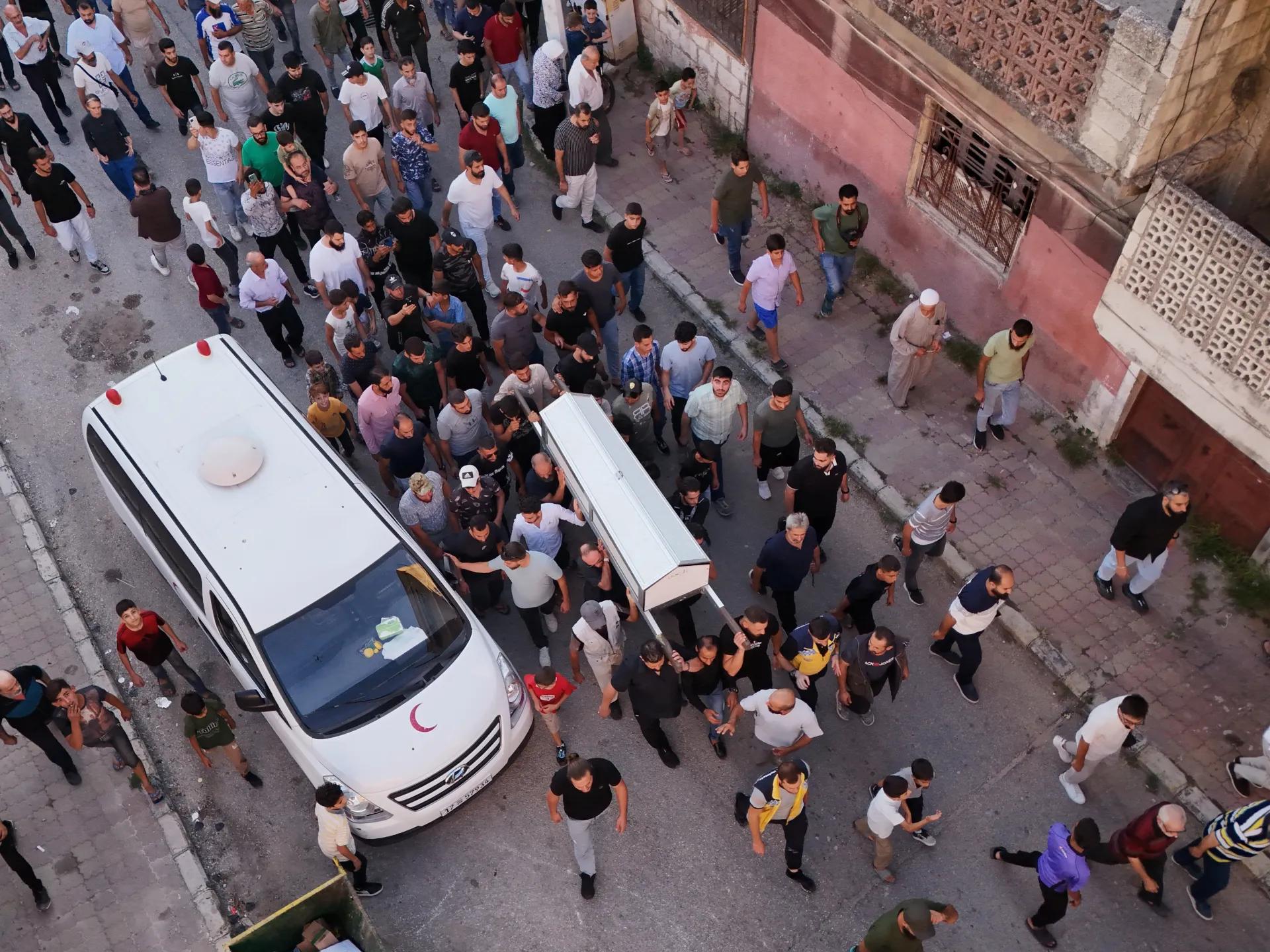
Authorities were warned about dangers of hitting Mohammad Ghamira, who suffered from the rare medical condition haemophilia.
A Syrian police officer has been arrested and may be criminally prosecuted after an investigation found that he hit a detainee with a medical condition who died shortly after being released from custody.
Syria’s Interior Ministry said on Thursday that Mohammad Ghamira, 29, died after being slapped by police investigator Ahmad Jawad, who has since been detained and referred to the public prosecutor.
Recommended Stories
list of 3 itemsend of list
Ghamira, who died on Sunday, suffered from haemophilia, a rare condition that prevents blood from clotting properly, making sufferers bleed more easily and for longer periods.
The father of two was a member of the White Helmets, the civil defence organisation made up of volunteers that operated in rebel-held areas in Syria. They went on search and rescue operations and provided medical care following government attacks.
The investigation found that Ghamira had told internal security personnel about his condition, while his wife twice informed authorities about the potential danger.
Ahmad Latouf, head of the investigation committee and assistant interior minister for police affairs, confirmed that Ghamira died after suffering a brain haemorrhage believed to have been caused by the slap.
Two other police officers are also being investigated but are not currently due to be prosecuted.
Ghamira’s death has provoked widespread anger among Syrians, reminding many of the gross human rights abuses that were systematic under former President Bashar al-Assad, who was overthrown by rebels in December 2024.
New leader, Ahmed al-Sharaa, has promised to usher in a new era, prioritising human rights and overseeing an inclusive government. However, human rights organisations have documented widespread abuses by government forces, particularly against minority groups.
Commenting on Ghamira’s death on Thursday, the Interior Ministry accused Jawad of violating ministerial instructions and the code of conduct, which strictly prohibit any form of humiliating or abusive treatment of detainees.
Syrian Interior Minister Anas Khattab said in a statement that the investigation results showed the ministry’s “commitment to reaching the truth and holding accountable those proven to have overstepped”.
“We rose up against the former tyrant’s regime in rejection of injustice and impunity, and therefore, building a state of law begins with our ability to hold the wrongdoer accountable, to give restitution to the victim, and not to do injustice to anyone who has not been proven responsible” for wrongdoing, he said.
Reporting from Syria’s northwestern port city of Latakia, Al Jazeera’s Heidi Pett said the Syrian government has vowed to take further action.
“There will be surveillance put into police stations and better training provided to officers but they say all of this will take time,” Pett said.
“Part of the reason it has resonated so widely is because of who Mohammad was. He was a young man, 29 years old, and he had two children and was a volunteer with the White Helmets. They were basically seen as heroes. His father joined the revolution and so he’s a figure who many people here in his community and nationally respected,” she added.
“That’s part of why there’s been so much sadness and anger and it’s also [because of] the fact that Mohammad is not the first to be mistreated in detention by the new authorities. Syrian rights organisations have documented other cases of deaths in detention.”
Ghamira was arrested last week accused of theft. He was later released and died at a hospital in Latakia on Sunday.
During a forensic examination, medical experts found no visible signs of violence or severe force, as well as no skull fractures or traumatic wounds.
HE gave up a promising career to become part of one of Britain’s biggest boybands – now JJ Hamblett is heading back to where it all started at 16.
The Union J star, 38, exclusively tells The Sun how he’s making a remarkable return to his first love, 15 years after he made it in the pop business – and reveals he will soon be back on stage with his former bandmates too in a hugely anticipated reunion.
Union J shot to fame on The X Factor in 2012, with JJ Hamblett, Jaymi Hensley, Josh Cuthbert and George Shelley going on to become one of the UK’s biggest boybandsCredit: AlamyJJ was a serious apprentice jockey before finding fame with Union J, clocking up more than 250 competitive rides before swapping the saddle for the stageCredit: Instagram
JJ, who shot to fame with Union J after appearing on The X Factor in 2012, is returning to his roots as a champion jockey and has signed up for the Legends Race at Doncaster next month, where he’s set to go head-to-head with racing royalty, including Frankie Dettori.
And in the same breath, he’s revealed Union J are planning to mark their 15th anniversary next year with either a one-off show or a full tour – teasing a previously unreleased song that could finally see the group back in the studio.
Union J – completed by Jaymi HensleyJosh Cuthbert and George Shelley – went on to become one of the best-known bands to emerge from The X Factor, scoring hits including Carry You and Beautiful Life before eventually going their separate ways. JJ insists the four remain close.
He said: “We’re all kind of doing our separate things at the moment, but we always keep in touch.
“They’re going to be brothers for life, and I know that sounds really corny, but without each other, and the success of Union J, we might not have had the opportunities we’ve had outside of the band.”
And fans may not have to wait much longer to see the boys back together. JJ revealed the group are already discussing plans for their 15th anniversary, with a tour his preferred option.
He said: “We did the London Palladium on the 10-year anniversary, which was such a pinch-me moment.
“Next year we’re planning to do a tour or a one-off show. We haven’t decided yet, but I’m hoping it’s a tour, so it gives fans around the country the opportunity to get there. And hopefully festivals next year as well.”
And there’s even more exciting news for Union J fans – JJ teased that the group already have the perfect comeback song sitting in the vault, coming perilously close to giving away the title before catching himself.
He revealed: “There is one song. I can’t say what it is, but we were thinking about releasing it on the second album, and we didn’t. It fits lyrically so perfectly for us wanting to still do the band and missing being on stage together.”
He then began, “Will we [the band] ever…” before stopping himself and saying, “I can’t say the next two words, because if I say the next two words, sh**, it tells you the song. But it’s just a song that really fits us as a band, and us getting back together. I’m hoping we’re going to release that single.”
Before becoming a household name, JJ was a serious apprentice jockey in Newmarket, riding more than 250 times and even counting the late Queen among the famous names he rode for. Now, after around 15 years away from competitive riding, he’s caught the bug all over again.
He explained: “About seven or eight years ago, they asked me to do it, and obviously with the band, we were quite busy, and I just knew it wasn’t the right time.
“But then recently, in January, I moved back to Newmarket, which is the centre of racing. I thought about it, and I was like, ‘You know what? I’d love to give it another go, just race one final time.’”
His body, however, is not quite as enthusiastic about the comeback as he is. JJ has been riding out for top trainers John and Thady Gosden, and admits his first few days back in the saddle left him feeling every one of the years since his last race.
He said: “The first day, I thought they’ll put me on a trotter. And then they were like, ‘You’re going to canter up Warren Hill,’ which is a steep hill. And the next day, I was like an OAP. I couldn’t move.”
His partner, former champion jockey Hayley Turner, has been helping him prepare, while he’s been riding several days a week and hitting the gym.
He admitted: “I was put through a fitness test with Billy Loughnane, who’s had an incredible season so far. And I was sick. I literally couldn’t do it. I was really, really struggling.”
JJ will find out whether the training has paid off at Doncaster on September 11, for the charity showpiece of the St Leger Festival, riding in aid of the Injured Jockeys Fund alongside his friend Frankie Dettori.
He said: “It’ll just be phenomenal. All the jockeys riding in it are great. And just to be able to be beside them and racing against them is something I never thought I’d be able to do again.”
The significance isn’t lost on JJ either – Doncaster is where his racing story began, when he was just 16.
He recalled: “Doncaster was the very first racecourse I rode at as a jockey. That was 23 years ago. I remember going up there with my dad, listening to Enigma blasting out, trying to get myself motivated for the ride. I felt fit, I was young, and I couldn’t feel my legs after. I literally fell off the horse. Now I’m 38, and they’re gonna be a lot worse.”
JJ never regretted leaving racing behind, though. He’d been struggling with the demands of keeping his weight down as a jockey and had always dreamed of singing and acting.
In an exclusive chat JJ has revealed Union J are planning to mark their 15th anniversary next year with either a reunion tour or one-off showCredit: Getty Images – GettyThe singer is now back in the racing world as he prepares for his sensational return to competitive riding after more than 15 years away from the sportCredit: Instagram
He explained: “I got to the point where I was struggling with my weight, and it became quite difficult for me. I’ve always loved singing and acting, and then just before the X Factor, I was riding out there in the mornings and I thought to myself, right, I want to give that a go. And we were very fortunate to have the success we did.”
Returning to racing has also reminded JJ how closely his two worlds have always been connected. Newmarket is a small community, and he remembers the Gosden yard watching Union J on The X Factor while he was still part of their world.
He added: “It’s so lovely that people are still asking me about the band, bringing up memories of watching us and following our journey.”
And JJ believes one thing links his two careers perfectly – the adrenaline.
He explained: “When jockeys stop race riding, they search for adrenaline. I was very fortunate to have that, you know – when we had a single out, or getting on stage at Wembley Stadium, it was just that adrenaline feel.”
His choice of pre-race music, though, has moved on rather a lot from his boyband days.
He said: “I’m really loving Sam Fender. And Fleetwood Mac, my favourite band – I’ll be listening to probably a Fleetwood Mac album on the way up there. And I’ll be, in the final furlong, singing Union J, going past the winning post first.”
And JJ is under no illusion he’ll be there simply to make up the numbers – the competitive instinct, he says, never really leaves a jockey.
He said: “Everyone in it is competitive – that’s the reason jockeys do what they do. The outcome you want is to be able to win it.”
But the race is ultimately about far more than JJ’s own comeback. The Legends meeting raises money for the Injured Jockeys Fund, a cause close to his heart after training at its facilities.
He said: “The main reason I’m taking part is to really push what they do out there. It’s an incredible charity for jockeys, retired and current, and I’ve looked at the setup they have and it’s amazing.”
With his racing comeback and Union J reunion both now on the horizon, JJ says he feels lucky to get a second shot at both passions that shaped his life.
The former jockey will return to the saddle at Doncaster on September 11, where he’ll race alongside his friend and racing legend Frankie Dettori in aid of the Injured Jockeys FundCredit: SuppliedJJ found fame as part of Union J after appearing on The X Factor, but now he’s swapping the stage for the racecourse as he prepares for his competitive comebackCredit: Alamy
He said: “I’ve always missed horse racing, and I’m just very, very happy and fortunate and lucky to have that chance again, to do it one final time.
“Thank you to the Union J fans – we wouldn’t be able to even think about doing the 15th anniversary without that continuous support over 15 years, and we’re gonna be putting on the biggest, best show or tour for you next year. So watch out.”
The Leger Legends Race will be available to stream on ITV on September 11th.
LOS ANGELES — U.S. immigration officials worked with Iran to deport Iranians in 2025, newly released emails show, revealing a working relationship between the U.S. and Iranian governments despite tensions mounting between the countries.
Hundreds of emails exchanged between U.S. immigration officials, which were obtained by the National Iranian American Council and made public Tuesday, offer the most transparent play by play yet of how the two countries worked together to arrange for more than 100 Iranians to be flown back to Iran on three separate immigration flights in September and December 2025 and January 2026.
The emails show that Iranian officials had some influence over which Iranian immigrants in the U.S. were sent back to their home country, and U.S. Immigration and Customs Enforcement officials apparently heeded some last-minute changes to deportation lists at the request of Iran.
“Per request from the Iran Embassy I added a few cases,” one unnamed ICE official wrote in late August, a month before the first deportation flight in September. Just over a week later, someone with the same job title moved to make another, unspecified change to the deportation list after they said they met with the “Director at the Iranian Embassy.”
“Iran has requested that I amend the previous manifest and expedite the removal process,” the official wrote.
In a Sept. 26 email, just three days before the deportation flight left U.S. soil, an ICE official said in an email that the Iranian Embassy was still making requests for three additional Iranians on the flight. It’s not clear who ended up on the flight, which ended up being much smaller than initially planned. Iranian officials were still making requests the day the flight departed, although one official wrote that those requests were denied.
Coordination of the flights remained a high priority even as ICE officials acknowledged internally that Iranians were fleeing Iran amid the deadly 12-day war with the U.S. and Israel in June 2025, emails show. The flights departed just months after the U.S. and Israel agreed to a ceasefire with Iran.
The new emails highlight a clear departure from a decades-long practice by the U.S. of welcoming Iranian dissidents, exiles and others since the 1979 Islamic Revolution forced a large number of Iranians to flee.
The deportation of Iranians to a country whose government has a pattern of violent persecution against women, religious minorities and political dissidents has drawn significant criticism from human rights activists.
The Department of Homeland Security did not offer comment in response to an emailed request sent Tuesday afternoon.
Some deportees were handpicked by Iranian officials, emails show
Iranian officials acknowledged in September 2025 that as many as 400 Iranians could be returned under an agreement with the Trump administration. They said most of the Iranians had crossed into the U.S. from Mexico illegally, while some faced other immigration issues.
It is not clear from the emails how frequently U.S. immigration officials had direct contact with the Iranian government. Sometimes messages were conveyed through Qatari officials, who helped charter the deportation flights through Doha, but other times officials reference regular meetings with the “Iranian delegation,” the “Director at the Iranian Embassy” and other unnamed Iranian officials.
It is not clear whether the people Iran put on the list had volunteered to repatriate or if they were forced. Previous reporting from The New York Times revealed that asylum-seekers were among those deported to Iran, while others said they were deported against their will.
At least one person was deported who wasn’t supposed to be, emails showed.
“An Iranian not included on the final manifest we sent to the Qatari MOI was boarded on the flight,” an unnamed U.S. official wrote.
In response, another unnamed U.S. official wrote, “I have no idea how the case/person got through on the plane.”
U.S. prioritized deportation efforts during war
Emails suggest that pressure to carry out the Iranian deportations came from the highest levels of the Trump administration, even when U.S. and Israel were exchanging strikes with Iran in a 12-day conflict between June 13 and June 24, 2025.
Just days after Trump’s June 16 warning on social media that “Everyone should immediately evacuate Tehran!” the former acting director of ICE, Todd Lyons, called the repatriation of Iranian immigrants a “priority” in an email sent to the agency’s head of removal operations Marcos Charles and a number of unnamed staff.
Shortly after Lyon’s email, Charles forwarded the message to a group of officials whose names are redacted. An unnamed ICE official responded, warning that “removal will prove difficult” amid the ongoing conflict because Iran wasn’t issuing the travel documents for Iranians eligible for deportation. On top of that, the Iranian airspace was closed to all flights during the bombings and Iranians were fleeing the country.
Charles was unfazed, telling staff in a subsequent email to make a plan to deport 58 Iranians with final removal orders in ICE custody at the time.
“We need a plan forward ASAP,” Charles wrote. Another official, who name was redacted, urged colleagues to “identify a solution for this White House priority.”
Jamal Abdi, the president of the National Iranian American Council, said the emails undermine Trump’s assertions that the U.S. is at war with Iran to save ordinary Iranians from a repressive regime.
“It demonstrates that the top priority here was to kick out as many people as possible by whatever means necessary,” Abdi said.
Iranian officials had access to immigration detainees
On several occasions, the emails show ICE officials arranging for Iranian officials to meet for unspecified reasons with people detained in the U.S., echoing testimony from Iranian asylum-seekers in an unrelated lawsuit filed by an unaffiliated Iranian interest group in July.
Eleven Iranians in immigration detention said they were forced to meet with Iranian government officials while in ICE detention. Those Iranian authorities knew intimate details about their asylum claims, according to the sworn declarations filed in a Washington, D.C., court in July.
The lawsuit alleges that U.S. immigration agencies have been illegally sharing confidential information about Iranian asylum-seekers with the Iranian government.
The U.S. government is allowed to work with government officials of foreign countries to coordinate deportation logistics. However, federal regulations passed in the late 1990s prohibit the government from sharing information that could reveal that the person getting deported applied for asylum.
DHS vehemently disputed the lawsuit’s allegations.
“These allegations that ICE shared asylum application records with the Iranian government are FALSE,” DHS said in a statement in July.
The sunset of his NFL playing career came almost 30 years ago.
So what is Bucky Brooks doing before sunrise, unlocking the gate outside the Granada Hills High football field?
He’s getting in touch with his roots the way dozens of former NFL players are from coast to coast, teaching the game he loves to the latest generation.
Share via
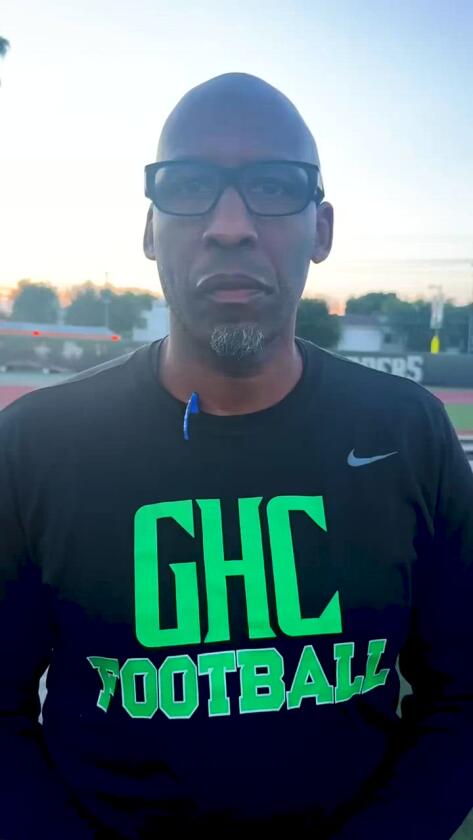
Granada Hills football coach Bucky Brooks, a former NFL player, talks about why he coaches high school football and why it attracts many former NFL players. (Sam Farmer / Los Angeles Times)
“There’s nothing like it,” said Brooks, 55, of coaching high school football. “The athletic part of you dies when we retire. There’s nothing that gives you that same feel of being the gladiator in the ring. But this is the closest thing. Even though you’re not playing, you live vicariously through their experiences.”
“I’m where I need to be,” said Palmer, whose son, Fletch, is a quarterback and junior on this season’s team. “I missed so much when I was playing because I was so involved in so much.”
After retiring in 2018, he contemplated going the route of a lot of former players and working NFL games as a color analyst.
“I almost signed a contract doing TV stuff,” said Palmer, whose daughter, Bries, is a freshman at the school. “I wouldn’t be around when my kids come by my office at lunchtime, or when somebody has a stomachache and needs to take a class period to take a nap on my couch. I love that.”
Santa Margarita will open the season Friday by playing host to Jones High of Orlando, Fla. — a team coached by former Atlanta Falcons defensive back Elijah Williams.
“The standard’s been set, the culture’s been built, and now you’ve just got to carry it on,” Palmer said.
“This class that we have right now has done a phenomenal job. We’re running more stuff than we were last year, just because it’s these kids’ second year in the program.” He added the receivers, in particular, are playing with confidence because of their detailed route work — precise depths, footwork, releases that are “NFL routes” as opposed to “seven-on-seven stuff.”
If you’re an up-and-coming quarterback, there has to be an extra layer of pressure and expectation if your father played the position at an elite level. Philip Rivers understands that. His son, Gunner, a four-star quarterback in the class of 2027 who plays for his dad at St. Michael Catholic High in Fairhope, Ala. The younger Rivers will be headed to North Carolina State, following in the sizable footsteps of his father.
Likewise, Philip Rivers followed his own dad, Steve, a legendary Alabama high school coach.
Granada Hills coach Bucky Brooks watches his players run drills during a recent practice.
(Kayla Bartkowski / Los Angeles Times)
“I grew up wanting to be my dad’s quarterback, and now I’m getting to coach my son and relive it all again 30 years later,” said Philip Rivers, who also has a younger son, Pete, on the team. “Everything goes too dang fast. There’s some long days throughout the years, but it all goes too fast. You wish you could slow it all down.”
All of this gives Philip a better understanding of his own father.
“My dad’s in the state Hall of Fame,” he said, “but he never won a state championship. His championship trophies were in his desk drawer, the letters players had written him over the years. We want them to be better men for having been in our football program. That’s the mission.”
Almost three years ago, former NFL quarterback Tim Hasselbeck was hired as varsity football coach at Ensworth High in Nashville. He gave up his job as primary game analyst for “ACC Primetime Football” in part to coach his son, Taylor, now a quarterback at Wyoming.
Granada Hills coach Bucky Brooks huddles with defensive players during a recent practice in preparation for the 2026 high school football season.
(Kayla Bartkowski / Los Angeles Times)
Coaching high school football became a family affair, with parents Don and Mary Beth selling their Boston house of 50 years and moving to Tennessee, and Don — the former NFL tight end who died last year — joining his son’s staff. Matt Hasselbeck, Tim’s brother and a former Super Bowl quarterback, came on board as well as Ensworth’s offensive coordinator.
“We all had coaches who made an incredible impact on our lives,” Matt said. “And we probably had coaches who had a negative impact as well. … I didn’t seek out coaching. I said I’d do a three-day clinic. I just don’t remember stopping.”
By Archie Manning’s count, about 30,000 high school players have been enrolled in the 30 years of the Manning Passing Academy in Thibodeaux, La. The weeklong camp focuses on quarterbacks and receivers, and college players from around the country serve as counselors, as do brothers Peyton, Eli and Cooper Manning.
“I tell Peyton and Eli, ‘Listen, when these kids get home, their granddaddy is going to ask them, ‘Did you meet Peyton and Eli?’” said Archie of his two NFL quarterback sons. “And I want them to say, ‘Yes.’ OK, so get your butt around to everyone. They try to get in front of every kid.
“The kids we deal with are just so eager and excited, and that’s what makes it so fun.”
Back at Granada Hills, where he has coached since 2019, Brooks is looking to instill in his players some of the lessons he learned from the all-star cast of NFL coaches he played for as a defensive back — among them Marv Levy, Mike Holmgren, Tony Dungy, Marty Schottenheimer and Jon Gruden.
“We all feel an obligation to give back,” Brooks said. “Your Pop Warner coach, your high school coach, your college coach. … I want to take those same lessons people gave me and give it to the next people.”
Granada Hills coach Bucky Brooks talks to his players before practice.
(Kayla Bartkowski / Los Angeles Times)
That requires sacrifice. Brooks has worked as a sportswriter for Sports Illustrated and analyst for NFL Network. Now, he’s a commentator for the Jacksonville Jaguars’ TV Network, meaning he finishes a high school game and flies to where the Jaguars are playing.
Sometimes, that means hopping on a plane to London after coaching a Friday night game. His assistant coaches, mostly a group of his former Granada Hills players, have to pick up the slack sometimes with the subsequent practices early in the following week.
“It’s been a great leadership lesson for me,” Brooks said. “I’ve learned to delegate and let other people take over.”
At the Cape Canaveral Air Force Station on Nov 20, 2004, a NASA Boeing Delta II rocket lifts off with the Swift Gamma Ray Observatory on board from launch complex 17A. The payload has been used to observe and monitor gamma ray bursts and relay the information to scientists for 21 years. File Photo by Marino/Cantrell/UPI | License Photo
Aug. 20 (UPI) — NASA and Katalyst Space have announced that the mission to boost the altitude of a Swift Observatory space telescope has failed.
The announcement came down on Wednesday after an attempt to use the LINK spacecraft ran into altitude control issues, NASA and Katalyst Space said in a press release. The spacecraft was meant to raise NASA’s Neil Gehrels Swift Observatory to a higher altitude.
LINK is still set to attempt rendezvous and proximity operations with the Swift Observatory.
“NASA should be willing to move quickly and take smart risks when the potential return is worth it, and that is exactly what we did with this mission,” Jared Isaacman, NASA administrator, said in a statement. “This is not the outcome we were working toward, but it does not change why this mission was worth attempting.”
If the mission was successful, LINK would have allowed the Swift Observatory to extend its mission, the press release says. NASA expects Swift to re-enter Earth’s atmosphere this year.
The Swift mission launched in 2004. The observatory has been used to study gamma-ray bursts. While planned originally as a two-year prime mission, it has remained in operation in low Earth orbit for 21 years.
Increased solar activity has caused what NASA describes as a rapid “decay” of Swift’s low Earth Orbit.
The LINK spacecraft was launched on a Northrop Grumman Pegasus XL rocket from Kawjalein Atoll, Republic of the Marshall Islands, in the South Pacific Ocean, on July 3.
Katalyst designed and manufactured LINK in less than a year after being awarded a $30 million Swift Boost contract from NASA in 2025.
“We knew this was a high-risk, high-reward mission — a first-of-its kind attempt, developed on an unprecedented timeline driven by the Sun’s activity,” Shawn Domagal-Goldman, director of NASA’s Astrophysics Division, said in a statement. “We were all hoping for more science from Swift. But we knew the takeaways from this mission would be worthwhile either way, and we have gained so much through the series of accomplishments up to this point.”
President Donald Trump speaks during a meeting with technology leaders in the Roosevelt Room of the White House on Wednesday. Photo by Al Drago/UPI | License Photo
CENTER Parcs is introducing new rules when it comes to bookings at their resorts.
The policy change means all guests will now have to pay £5 per person to reserve restaurant bookings, in a bid to to prevent no-shows.
Center Parcs has introduced new booking rules for restaurantsCredit: Center ParcsGuests now have to pay £5 per head to reserve restaurantsCredit: Alamy
The new rules are being introduced on all holidays from November 16.
The rule change has been praised by families who say they hope it opens up more bookings.
Sign up for the Travel newsletter
Thank you!
One customer said: “I’m glad they are bringing this back as it stops people making unnecessary reservations.
“I’ve really struggled to book what I wanted this year whereas previous years with the deposit there has been plenty of choice.”
Another added: “Too many people not showing up and leaving restaurants empty. This ties you in unless you can afford to lose it.”
A third former guest pointed out the policy had previously been in place at Center Parcs in recent years, and he had appreciated the chance to spread the cost of the meal.
He said: “Great news, I loved paying the deposit, once the bill came it had £25 off… felt like I was winning.”
If a guest cancels 48 hours before the time of the booking they can get their deposit back, although some people felt the notice period should be less than two days.
Center Parcs has a broad range of restaurants across its five UK villages, including Huck’s American Bar & Grill (all sites), Rajinda Pradesh (all sites), The Pancake House (all sites) and Foresters’ Inn, at Longleat and Elveden.
It is also possible to just turn up and hope a table is available, although there are no guarantees.
Most people have praised it although some are slamming the lack of menu pricesCredit: centerparcs
Some have raised issues with the new charge, in that not all of the restaurant menus shown online have prices displayed on them.
Many are arguing they should know the cost of a meal if they were partly paying in advance.
A commenter said: “Surely you can’t take a deposit which is non-refundable on the day/day before if you don’t publish the prices of the meals?”
Center Parcs announced on its website: “To help us provide the best possible experience for our guests and make sure our restaurants are available for as many guests as possible, all restaurant bookings now require a deposit at the time of booking.
“This will come into effect for all breaks starting from 16th November 2026 onwards.
“If your plans change, you can cancel more than 48 hours before your reservation, and we’ll refund your deposit in full. If you cancel within 48 hours of your reservation, the deposit is non-refundable.
“Please note that restaurant bookings have their own cancellation terms, which are different from those for activity bookings.”
Sun Travel has contacted Center Parcs for additional comment.
Fifteen years since the uprising against Muammar Gaddafi in Libya began, and with civil strife leading to the downfall of what was once one of Africa’s wealthiest countries, several actors are seeking to end the civil war and reunite the country.
Among them are the US, which has commercial interests in Libya’s oil fields. Qatar, Egypt and Turkiye are also pushing for a return to “One Libya”, after more than a decade of fighting between two rival authorities for control of the country.
Recommended Stories
list of 4 itemsend of list
Here’s what we know:
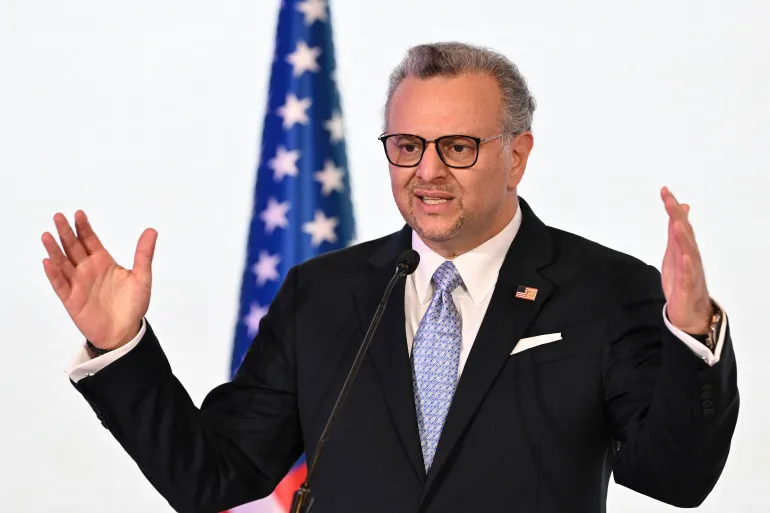
US Department of State’s senior adviser to the president for Arab and African Affairs, Massad Fares Boulos, speaks in Doha, November 15, 2025 [AFP]
What happened 15 years ago?
The Libyan uprising erupted during the Arab Spring, when thousands of people in the port city of Benghazi took to the streets to protest against Gaddafi’s more than four decades of absolute power.
Violence against the demonstrations pushed the protesters into an armed rebellion against Gaddafi’s rule, with a civil war starting between the two sides.
A United Nations Security Council resolution authorised an international military intervention force – led by NATO members, the United States, United Kingdom and France – to enforce a no-fly zone and ensure the protection of civilians in Libya. This bombing campaign pushed back Gaddafi’s forces from Benghazi and aided the rebels in seizing territory.
Gaddafi was eventually captured and killed in October 2011, 42 years after he first seized power in a military coup that overthrew King Idris.
How is Libya divided?
Following Gaddafi’s death, a power vacuum emerged, with multiple groups – and their allied militias – competing for power.
Control of the country is now split between two rival administrations: the UN-recognised Government of National Unity (GNU) in Tripoli, led by Prime Minister Abdul Hamid Dheibah, and the eastern, Tobruk-based administration backed by Khalifa Haftar and his self-styled Libyan National Army (LNA).
The GNU is recognised by the UN and other countries, and officially has authority in the capital and western Libya.
Under Gaddafi, Haftar was exiled in the US for two decades where he holds citizenship.
His forces control vast resource-rich lands in the east, including the strategic port city of Benghazi, reportedly with the backing of Russia.
The UN began formal mediation efforts in 2020 under the UN Support Mission in Libya (UNSMIL). This roadmap advocates for a three-track strategy that includes unifying the two rival administrations, presidential and parliamentary elections, and hosting national dialogue meetings.
The US was a key mediator behind the scenes, and in May 2021, appointed Ambassador Richard Norlan as Special Envoy to Libya, to lead high-level talks between the two sides.
What is the US’s new plan?
Under Massad Boulous, US President Donald Trump’s African and Middle Eastern affairs adviser, and father-in-law to Tiffany Trump, Washington is intensifying efforts to reunite the country. But this can only be achieved if both sides agree to form a single government.
According to leaked details, Trump’s initiative centres on the promise that if the rival governments cooperate, the US would encourage American investment in Libya’s sizable oil fields. This comes as the Libyan Central Bank, which is attempting to finance both authorities, sounds the alarm over the dire economic situation.
While Tripoli has international legitimacy, Haftar’s forces control the oilfields and terminals.
The US is also proposing a power-sharing deal that would see Dheibah continue to lead the government while Haftar’s son and LNA army chief, 35-year-old Saddam Haftar, serves as president.
There are obvious opportunities for US energy companies and economic and political incentives for European countries in a unified and stable Libya.
They include stopping irregular migration from Libya and other North African countries to the EU.
Some criticise the US-led plan as lacking input from the Libyan people. The deal, some say, could entrench the power of political dynasties, which might be best for long-term stability in Libya.
Protesters in Tripoli against prolonged power cuts aimed at Libya’s National Oil Corporation, July 28, 2026, [Hamza Al Ahmar/Anadolu Agency]
What have the results been?
There are signs that Haftar’s camp, at least, is on board with the US plan. Saddam Haftar, whose father, Khalifa, was based in Virginia until 2011, reportedly met with US Secretary of State Marco Rubio in DC in July.
Experts attribute the ongoing mediation efforts to the unified national budget of 2026, signed in April – the first in more than a decade.
However, there are still no talks or signs of a unified government forming.
What is Turkiye’s role?
Turkiye, which earlier deployed troops to support the GNU, has also made efforts to mediate between the two sides and is pushing a ‘One Libya’ policy.
Last month, Foreign Affairs Minister, Hakan Fidan, met with Saddam Haftar in Ankara. Earlier this month, Fidan travelled to both Tripoli and Benghazi for high-level talks with Dheibah and Khalifa Haftar.
What has Egypt done?
The Egyptian government has traditionally cooperated with Haftar’s Tobruk government, which is just across the border.
On Wednesday, President Abdel Fattah el-Sisi met with Khalifa Haftar in Cairo and discussed unification talks.
Earlier this month, Dheibah visited Cairo, while Egyptian intelligence chief Hassan Rashad travelled to Tripoli.
What is Qatar’s stance?
Qatar has largely backed the UN mediation channels in Libya: the UNSMIL and the UN roadmap for peace.
While it has good relations with the GNU, Qatar seeks stabilisation efforts led by Libyan parties and elections.
In April, Qatar and other states welcomed the unified budget for 2026. A statement issued by Qatar, Egypt, France, Germany and several others called for all parties in Libya to follow the UN roadmap to “advance a Libyan-led political process leading to unified governance and national elections.”
The first time that artist and filmmaker James Spooner heard Patti Smith’s song “Rock n Roll N—,” he cringed and reflected on the years of racism, microaggressions and abuse he dealt with as a young Black punk rocker in California’s high desert and later, New York.
According to Spooner’s new book, “It Starts With Anger,” this moment of reflection is a catalyst that prompts him to pursue a closer examination of the experiences and challenges Black people face in punk rock and alternative music scenes that are predominantly white.
“If there was such a thing as a ‘Rock n Roll N—’ Patti Smith wasn’t going to be the one to define it. Right then, I decided I was going to make a movie,” Spooner writes in his book.
In 2003, Spooner started working on a documentary called “Afro-Punk,” which took him across the country as he interviewed Black artists, musicians and fans to talk about their experiences in punk rock. “Afro-Punk” starts by calling out Smith’s controversial song before diving into what it means to be Black in a music scene intended to welcome outsiders, but which nonetheless alienates and projects harmful values toward people who are not white.
“I don’t think she’s a bad person, I think she’s a white person who was trying to be edgy and then just like doubled down her whole career,” Spooner told The Times. “I’m all for and have always been understanding of people who make mistakes, people should have an opportunity to correct themselves.”
The punk rock documentary is being rereleased this month after Spooner launched a successful Kickstarter campaign to remaster the film. The rerelease coincides with the publication of Spooner’s new book, “It Starts With Anger,” which covers the author’s personal history, the creation of the documentary, the larger Afropunk brand (it does not use a hyphen like the film), and the eventual demise of his brainchild at the hands of corporate ventures. “Afro-Punk” will premiere in Los Angeles and New York, with a special screening and book talk on Sunday at the Skirball Cultural Center with former S.O.A. and Black Flag vocalist Henry Rollins.
“Young people at the time needed it,” Spooner says about his documentary “Afropunk.” They needed that connection to see that there were other young Black punk rockers, they needed to hear from them and know that they had common experiences.”
(Lisa Nola )
“Before there was anything negative attached to it and before there was any corporate interest attached to it, people saw the movie and were like, ‘Oh, that’s my story, I guess I’m an Afropunk and didn’t even know it,’ and then they started calling themselves that,” Spooner said. “I helped define an experience for a group of people in the underground, I inadvertently helped to define an experience for a lot of people who feel othered and ostracized.”
Spooner, who upheld punk’s DIY ethos by shooting, producing, directing and editing the entire project himself, recently regained the rights to his film after a contentious years-long legal battle against his former business partner, Matthew Morgan, and Essence Ventures, the current owners of the Afropunk brand.
“The way that it all turned out in the end, it’s like, not everybody gets to see the long arc of justice in their lifetime, but to be so hurt and slighted and then watch karma do its thing is like, why waste time with being pissed off anymore? There are still things that I wished wouldn’t have happened, but I’m lucky in the end,” the Afropunk founder said.
After Spooner made his documentary, he realized how much the film resonated with Black punks who yearned for community and acceptance. Damon Locks, a visual artist and musician who was featured in the documentary and later worked as a publicist for the Afropunk festival, said he was “really impressed” with the film when it first came out, and that “James’ instincts were correct” when it came to the vision and execution.
“Young people at the time needed it, they needed that connection to see that there were other young Black punk rockers, they needed to hear from them and know that they had common experiences,” he said.
Eager to extend the reach of “Afro-Punk” beyond the documentary, Spooner began organizing a series of DIY underground punk shows known as “The Liberation Sessions,” with the goal of developing this concept into a major festival. He also decided to enter a business relationship with Morgan, who offered to manage Spooner’s creative affairs and help him take “Afro-Punk” to the next level.
According to Spooner, Morgan wanted to bring in corporate sponsors and feature music genres outside of punk to generate more interest and maximize profits. Spooner said he reluctantly compromised, yet after several years of working with Morgan, Spooner grew disillusioned with what Afropunk the festival became.
Maurice “Moe” Mitchell, vocalist for hardcore band Cipher and national director of the Working Families Party, was featured in the documentary and performed at several Afropunk shows and festivals. He said what happened with Afropunk is “a tale as old as time” and Morgan being outside of the movement led to “moneyed interests” altering what Spooner had created.
“At some point, those interests figure out how to co-opt, how to monetize, how to profit, how to take over this thing and it becomes a shell of itself, no longer owned or operated by the original originators, just a product or a marketing scheme for some company,” Mitchell said. “And that is rinse and repeat what happens to really good art and really good movements, and it’s what happened with Afropunk.”
By 2008, Spooner decided he wanted to walk away. He moved to Los Angeles and signed over the Afropunk rights and trademark to Morgan.
“My priority was to the kids … and I didn’t want for them to not have Afropunk just because I was over it, just because I moved on to the other side of the country, I could have just been like, ‘F— you, everything’s in my name, if you want it, sue me,’ I could have done that and I probably would have won because everything is in my name,” the punk filmmaker said. “I also was incredibly broke, I was not only broke when I moved to L.A., I was like $20,000 in debt on credit cards, so it was not like I was in a good place to continue this thing.”
As “Afro-Punk” returns to screens in Los Angeles and New York, Spooner leans into punk’s rebellious ethos, reclaiming his work and spotlighting Black liberation in loud, uncompromising ways.
(Lisa Nola )
In 2020, Spooner sued Morgan for failing to make contractual annual payments and failing to observe a clause in their 2010 agreement that mandated that if more than 50% of the company was sold, Spooner was entitled to a share of the profit. In 2020, Essence Ventures acquired the Afropunk LLC, but Spooner was not made aware of the sale. After a complicated legal battle against both Morgan and Essence Ventures, Spooner settled, successfully recovering the rights to the film in 2025, which he says was more important to him than financial compensation.
Representatives for Essence Ventures did not immediately return requests for comment.
“I didn’t start ‘Afro-Punk’ with money in mind, I wanted people to see my film,” Spooner said. “I wanted people to see my film, and then people saw the film, and then I wanted those people to stay in the room together and become friends, and all of that happened.”
Mitchell, who ended up becoming friends with Spooner after participating in the documentary, said he is “very happy” that Spooner “came out vindicated” in the legal struggle. The Cipher frontman believes “Afro-Punk” is an important documentary that shows “what it means to be a person of color in America,” and which makes visible the identity issues Black people experience beyond the punk rock community.
“That’s also the story of Black people when we lean into our liberation, right?” Mitchell said. “Like we are expressing ourselves in very loud and uncompromising ways that challenge the status quo and so I’m really happy that this film is coming out because this is a moment where we need as many people, as many Black people, to lean into who we are in loud and uncompromising ways, because we have a whole political structure that is demanding our compromise.”
As Spooner celebrates the release of his new book and the premiere of his remastered film — which he says still needs distribution — he hopes that he can continue shedding light on the Black experience and sharing the legacy of what he created as a young Black punk rocker.
“It’s wild to me that I made something when I was 25 that people still care about, and I hope that it keeps reaching another generation and proves itself to be valuable in some kind of way,” he said.
A spokesperson for the airport said: “The longer queues at passport control on Tuesday afternoon were caused by an extraordinary operational issue and were not related to the EES system.
“On Tuesday afternoon, an unfortunate water leak occurred in a server room connected to the passport control area in Pier E, one of the airport’s two passport control facilities.
“As a result, all passengers had to pass through passport control in Pier C for the remainder of the day.
“When half of the available passport control capacity is taken out of operation, longer waiting times are unfortunately unavoidable.
It followed a water leak at the airportCredit: Alamy
“We sincerely apologise for the inconvenience this caused our passengers.”
Sun Travel has contacted Ryanair for comment.
This is the latest in a number of incidents of passengers missing their flights in Europe recently.
However, other cases have been caused by long queues at airports due to EES.
For example, back in April, about 100 passengers were left stranded at Milan Linate Airport after their easyJet flight to Manchester left without them.
The best part of a Happy Meal is the toy that comes with your food. But now that you’re all grown up, you might be looking for a different type of treat.
In an effort to fill seats during off hours and typically slow nights, L.A.’s restaurants and bars are tempting patrons with discounted burger combos that replace toys with cocktails. It’s an adult take on a kid’s Happy Meal. These deals also address a growing concern among restaurant-goers regarding the price of dining out, a cost that has risen in recent years due to factors such as increased minimum wage, rising rents and inflated food costs.
And because it’s L.A., you can expect global interpretations of the classic comfort dish, including a Mexico City-inspired hamburguesa that’s turned a Monday industry night into a citywide destination, a New York-founded Korean restaurant serving a short-rib burger with gochujang aioli and a French-hued take with cognac sauce and optional fondue.
Treats — er, drinks — run the gamut from classic martinis and house wine to margaritas, ice-cold beer and makgeolli. Often overlapping with happy hour, be sure to take note of the specific days and hours each deal is offered.
Here are 16 burger-and-drink combos for those times your inner kid needs an adult happy meal.
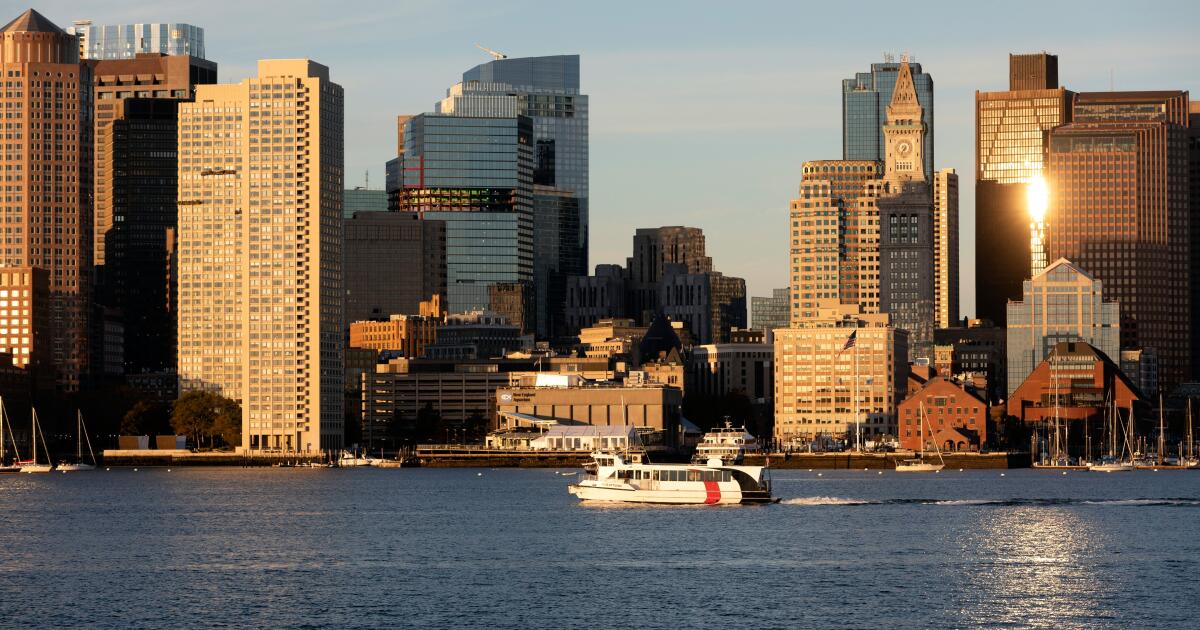
Democrats on Thursday narrowed the list of potential host cities for their 2028 presidential convention to Boston, Denver and Philadelphia as their party looks ahead to a wide-open primary to succeed President Trump.
Democratic National Committee Chairman Ken Martin said in a statement the cities put forward “incredibly strong bids,” and he promised the convention would be an “inspiring celebration of our party’s future nominee.”
A final decision is expected to be made later this year by party leaders. Republicans have already chosen Houston for the site of their 2028 convention.
The Democratic convention, scheduled for Aug. 7-10, 2028, traditionally gives the party a chance to formally introduce its nominee to the country, rally the base and kick-start the most intense period of campaigning ahead of the general election.
The party didn’t specify why Atlanta and Chicago, which was the site of the 2024 convention, were eliminated. Officials visited all five cities in April and May, considering logistical and fundraising capacity among other factors.
The three finalists are liberal strongholds surrounded by the type of suburban areas that have become increasingly important to the party in recent elections. They also provide access to fundraising and key demographic and interest groups, like labor unions.
While Colorado and Massachusetts have gone Democratic in recent presidential elections, Pennsylvania has been among the biggest battlegrounds. Trump, a Republican, won Pennsylvania in 2024.
Philadelphia last hosted the convention in 2016, Denver in 2008 and Boston in 2004.
Before the presidential primary gets into gear, Democrats are looking at this year’s midterm elections as an opportunity to flip the narrowly divided Republican-led House and maybe take back control of the Senate.
Democrats face fundraising disadvantages compared with Republicans, along with financial debt, and Martin has confronted criticism over his stewardship of the party.
During a recent DNC meeting in Texas, Martin downplayed the critics and called for the party to unite as it tries to win the midterms and look ahead to 2028 and the end of Trump’s second term.
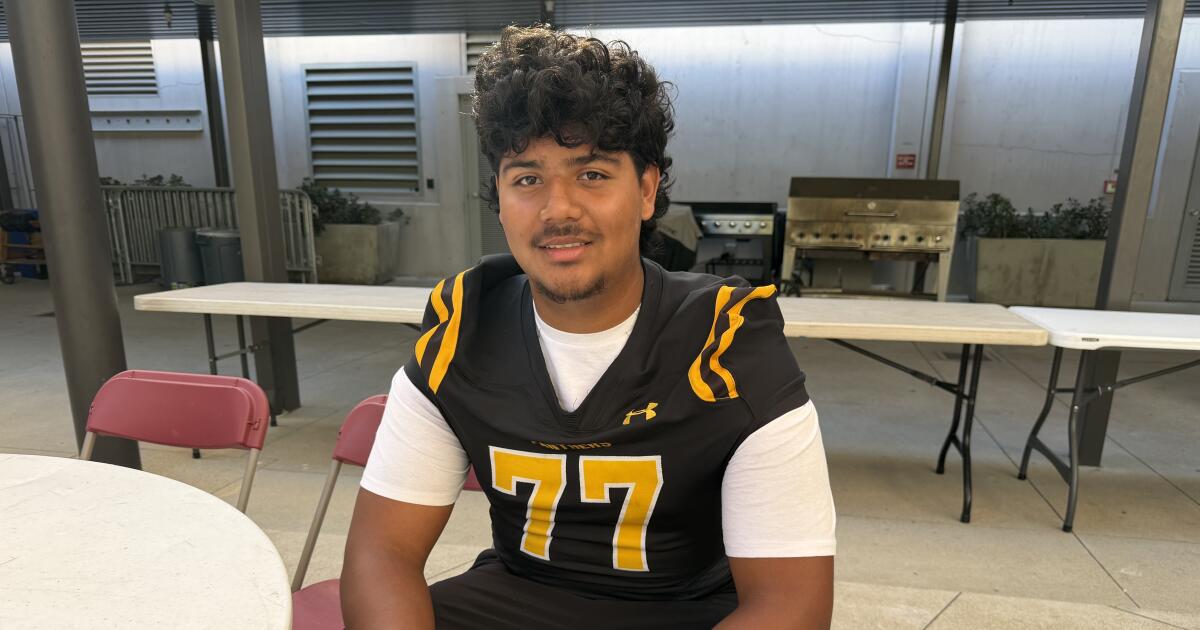
When Junior Dominguez enrolled as a high school freshman at Newbury Park two years ago, he joined the junior varsity football team.
“I had never played a snap of football,” he said. “Not at all.”
Learning how to put on a helmet and how to fasten shoulder pads became his biggest challenge. He’s apparently a quick learner. By season’s end, he was promoted to varsity for the playoffs. Last year, he started at right offensive tackle. Now, Newbury Park is moving the 6-foot-4, 270-pound junior to left tackle.
His coach, Joe Smigiel, is a former offensive lineman who played at Arizona and believes Dominguez is well on his way to earning a college scholarship.
He’s another example of what high school is supposed to be about — trying new things and discovering something you like and are good at.
“I just like the intensity of the game,” Dominguez said. “I’ve noticed I’ve been more aggressive and learning how to succeed.”
Growing up with a mom and dad who work for McDonald’s in management, a young Dominguez got to eat whatever he wanted. He remembers Quarter Pounders being his favorite. If teammates get hungry, he might be lobbied for a trip to McDonald’s.
After games, watch out for the players craving french fries at Newbury Park and knowing someone to seek out who can help.
This is a daily look at the positive happenings in high school sports. To submit any news, please email eric.sondheimer@latimes.com.
A train approaches a Tokyo station in 2014. On Thursday, four workers pulling weeds were killed by a train in Japan. File photo by Franck Robichon/EPA
Aug. 20 (UPI) — Four men working on railroad tracks were killed when they were hit by a train at a station in Tochigi Prefecture, Japan, Thursday.
The men were in their 50s and 60s, and were removing weeds when the collision happened at about 10:45 a.m. at Shin-Kanuma Station on the Tobu Nikko Line, police and the Tobu Railway Co. said. No one on the train was injured.
There were seven people weeding. Three of them were uninjured.
The Spacia X2, a six-car limited-express train, which was heading to Asakusa in Tokyo, was planning to stop at Shin-Kanuma Station. It was approaching the platform when it hit the men, Tobu Railway said. There were about 50 passengers on the train, and the Tobu Nikko line was partially suspended after the event.
Kyodo News said that when people work on train tracks, there is supposed to be a designated lookout to alert workers of oncoming trains, the company said. Once the lookout has confirmed that the workers are clear, they are supposed to alert the train with a flag, and the driver must acknowledge them by sounding the horn.
The driver sounded the horn after seeing the flag signal, but the rail company can’t yet confirm if the lookout properly alerted the workers, company officials said at a press conference.
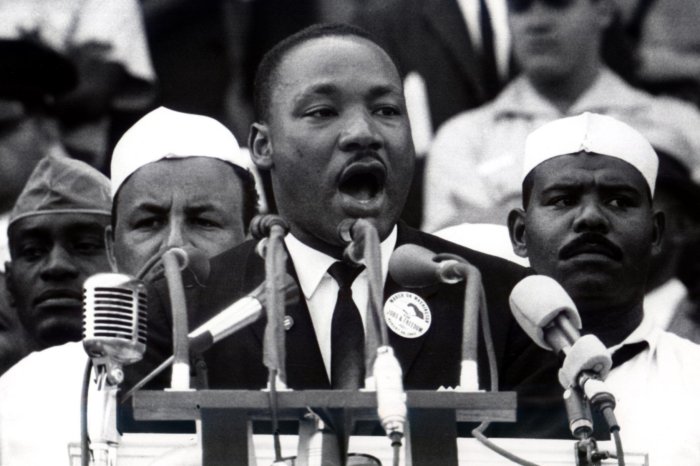
Martin Luther King Jr. delivers his famed “I Have a Dream” speech from the steps of the Lincoln Memorial in Washington on August 28, 1963. The speech galvanized the nation’s civil rights movements and led to the passage of the 1964 Civil Rights Act, the 1965 Voting Rights Act and the 1968 Fair Housing Act. File photo by UPI | License Photo
Mérida, August 19, 2026 (venezuelanalysis.com) – The Venezuelan government led by Acting President Delcy Rodríguez announced the creation of the National Training Program for Construction Workers.
According to official sources, the initiative seeks to professionalize workers in key trades, including plumbers, masons, electricians, blacksmiths, and carpenters, to integrate them into housing and infrastructure projects amid the country’s post-earthquake recovery efforts.
The project is being coordinated by several institutions, including the Education and Labor Ministries, the INCES vocational training institute, and the “Venezuela Rises” program created by the government in the wake of the June 24 double earthquake. The training initiative will begin in Caracas and nearby areas.
Rodríguez, in a meeting with the government team, said that the people interested in this program “can register through the Homeland system. Registration will begin on August 24.” She also said that the persons “can be nominated by municipal administrations or at INCES offices throughout the country.”
She added that the program is “open to individuals with prior experience, training, or knowledge in this area, as well as those who wish to learn the trade.”
In parallel, the Venezuelan executive delivered 48 new apartments on Monday in the Ciudad Tiuna housing complex in Caracas to families who lost their homes in the recent earthquake.
According to official figures, the government has assigned 335 homes to affected families so far, with authorities estimating that around 25,000 new homes will be needed for those displaced by the natural disaster.
“By December we will have completed some 4,000 homes to hand over to those who are in the temporary camps,” the acting president pledged during Monday’s event in Ciudad Tiuna, one of the largest housing complexes of Venezuela’s Great Housing Mission (GMVV).
Furthermore, in Ciudad Caribia, another major GMVV development, authorities are advancing in the construction of 1,000 new transitional homes where displaced families will relocate to while permanent housing projects are finalized.
Alongside the housing initiatives, the Rodríguez administration is also boosting credit programs for reconstruction projects. On Saturday, the acting president announced loans to 157 condominium boards in several parts of Caracas.
The subsidized credit line, part of the “Venezuela Rises” Plan, is intended for structural repairs, common area maintenance, and public utility fixes. The Venezuelan government has likewise launched loan programs for housing purchases.
According to the latest official figures released, the total death toll from the June 24 earthquake currently stands at 6,438 people. Authorities are presently focused on rubble removal operations, as well as controlled demolitions of buildings with heavily compromised structures in La Guaira State, the hardest-hit area.
Venezuela’s seismology institute FUNVISIS has registered over 1,400 aftershocks since the June tremors. The latest one, on Tuesday, had a magnitude of 4.0 with an epicenter located 10 kilometers northwest of La Guaira. There were no reports of damage.
New popular consultation scheduled
Alongside the post-earthquake recovery initiatives, Acting President Rodríguez also announced a new National Popular Consultation scheduled for October 18, 2026. It had originally been slated for October 11.
A prior consultation set for July was postponed following the double earthquake.
The National Popular Consultation sees communities organized in communal circuits vote directly on local infrastructure and social projects to be funded by the national government. In prior editions, each winning project received US $10,000 of funding. According to Venezuelan officials, the upcoming vote will also extend to condominium boards and neighborhood associations.
In a conference call with government officials and grassroots spokespeople, Rodríguez emphasized that the consultations reinforce “the path of participatory and protagonistic democracy.”
BRITS heading to Europe now have to go through the new Entry/Exit System (EES), but some parents have been unclear on whether kids have to use it too.
Some families hadn’t realised that children under 12-years-old need certain biometrics taken at the border.
Some parents were unaware their children are required to have their face scanned for EESCredit: AlamyIt has resulted in longer delays at the borderCredit: Alamy
On ABTA, the confirmed advice reads: “People of all ages will need to go through the EES checks.
“Children under 12 will not need to provide fingerprints, but they will need to have a facial scan taken.”
Sign up for the Travel newsletter
Thank you!
This is where the confusion lay as some parents believed their younger children were exempt from checks altogether.
Any Brit over the age of 12 is required to have both their fingerprints taken and their face scanned for registering.
There are certain spots that people will want to reserve – and some they should try to avoid
There are more ‘perks’ to seat selection than just a bit of extra leg room (stock image)(Image: Getty)
People might only just be jetting off for a bit of sunshine before the schools go back in September, but others may already be planning their next getaway. Knowing a few tips when picking your seat can improve your experience on carriers like Ryanair, EasyJet, Jet2, and TUI if you book accordingly.
It’s no secret that not all seats are made the same – with some specifically having perks like extra legroom. But most do not realise that the position of the seats can make a bigger difference than a few extra inches of wiggle room.
Depending on how you plan to spend the flight, selecting a ‘cheaper’ seat in certain spots could make your flight more enjoyable – and bring perks that money can not often buy. For example, some seats are prime spots for getting on and off the plane more quickly, while others offer great views and first call on snacks.
However, with these seat perks come some seats that customers may wish to avoid if given the option. Some may say that these can make even a short flight feel uncomfortable.
Below, we’ve had a look at some popular seat perks you can expect on Ryanair, EasyJet, Jet2, and TUI planes. For the most part, these money-can’t-buy upgrades are often much more sought after.
Best seats for pictures
If you’re keen to document your trip from start to finish, or simply enjoy an unrivalled view above the clouds, then certain seats will be the best for you. Opting for certain sections in the front or back can give those Instagram-worthy snaps that aren’t just a shot of the metal plane wing.
When booking, pick any of the window seats in rows one to five across all of the named airlines above. These sit well forward of the engines, meaning clear glass and no heat haze will distort the look of your photos.
Best seats for getting on and off the plane
Some of these same rows will benefit from another perk of getting off the plane and starting their holiday not long after the seatbelt sign goes off. Most people caught in the middle of the cabin end up trapped until they can find an opening to leave, whereas these seat holders can usually slip straight out if they have their hand luggage ready and waiting.
There are options for the front and rear of the plane – just check before choosing that your plane has exits that it uses from the rear as some airlines may only open one. These are the rough seat areas to pick if you want to be first in line:
easyJet: Rows 1–3 (front exit) or Rows 29–31 (Airbus A320) / Rows 38–40 (Airbus A321neo) for the back doors.
Ryanair: Rows 1–3 (front exit) or Rows 31–33 (Boeing 737-800) / Rows 33–35 (Boeing 737 MAX 8-200) for the rear stairs.
Jet2:Rows 1–2 (front) or Rows 31–33 (Boeing 737-800).
TUI (Short-haul 737): Rows 1–2 (front) or Rows 31–33 (rear).
Being near the front also puts passengers as some of the first in line for meals, snacks and drinks when cabin crew make their rounds. On very short flights, sitting to close to the middle means passengers may risk missing out on refreshments entirely.
Seats you may want to avoid
Picking some of these front seats appears to offer a few perks, along with the extra legroom that often comes at a premium in the front row. But, they aren’t all perfect – and it may pay more to sit a few rows back.
Toilets are often located near the front and back of the plane, so anyone sitting in the first and last rows may face a steady queue and unavoidable smells. Some seats might also end up being windowless.
Due to the configuration of some budget planes, seats are pushed closer together than in the original layout to boost passenger capacity per flight. There are a handful of left-hand seats that are often so misaligned that people end up with a solid wall instead of a view outside.
If you have a slightly longer journey, or just want to recline and unwind as your holiday starts, be aware that some seats don’t offer this option. Aside from every Ryanair seat being locked in place, certain back-row or emergency-exit seats cannot recline either.
easyJet A320: Avoid reclining in Rows 11 and 12 (ahead of exit Rows 12 and 13).
Jet2 / TUI / Ryanair 737s: Avoid Rows 15 and 16 (ahead of emergency exit Rows 16 and 17).
Outer Banks officially came to an end with a heartwarming final scene, but one thing was missing.
Outer Banks season 5 was an emotional rollercoaster for fans(Image: NETFLIX)
Outer Banks fans struggled to make it through the final season following a devastating death.
Outer Banks is back with a fifth and final season on Netflix and fans have already binged their way through all 10 episodes.
The final outing saw the Pogues cope with a tragic loss and seek revenge, while racing around the world to claim back the Blue Crown. Fans were quick to point out the notable absence of JJ Maybank (played by Rudy Pankow), a beloved Pogue who died in the season four finale.
*Warning: this story contains spoilers for Outer Banks*
He was fatally stabbed by his biological father, Chandler Groff (J. Anthony Crane), and fans were devastated at the tragic loss. While watching the season five episodes, they admitted the series “didn’t feel the same” without JJ.
They flocked to X to share their thoughts, with one saying: “I hoped so much that JJ would come back to life thanks to the Blue Crown, but it was no use. I mean, why is it always my favourite characters?”
Another shared: “It’s really hard watching this show with JJ gone, it just doesn’t feel the same, he should be there with them [crying emojis].”
The finale included a group shot of the gang, but JJ was missing, and one fan pointed out: “The last frame being just the Pogues. But JJ should be there, man.”
Another viewer commented: “JJ was genuinely one of the best characters in Outer Banks. Season 5 didn’t hit the same without him…” Someone else shared: “20mins into Episode 1 of @obxnetflix and it already feels weird without JJ.”
Fans were also emotional over a heartbreaking flashback scene, which depicted the first time JJ and his best friend-turned-love interest, Kiara Carrera (Madison Bailey), met as young children.
“That JJ & Kiara flashback of when they were young and they first met [crying emoji],” one fan said, while a second echoed: “The first time Kiara and JJ met. Aww, my babies [crying and heartbreak emojis].”
Just before the final season dropped, it was announced that a prequel series had been given the green light and would detail the origin story of the feud between the Pogues and the Kooks.
Set 20 years before the events of Outer Banks, creator Josh Pate explained the premise to Deadline: “It really is the story of how the island split — and it’s particularly relevant in our country right now — how it split into the haves and have-nots, how the Kooks and the Pogues started. How did this rift start?”
Creator Shannon Burke added: “And seen through the stories of some of the characters you know and some new characters. But they’re 20 years before, so it’s the parents’ generation.”
Outer Banks featured John B (Chase Stokes) and JJ’s dads, as well as Sarah (Madelyn Cline) and Rafe Cameron’s (Drew Starkey) dad, Pope’s (Jonathan Daviss) and Kiara’s parents and Topper’s (Austin North) mother and grandfather.