The rules are simple. Each day, there’s a new footballer and the challenge is to guess who they are in as few attempts as possible.
After each wrong guess, you unlock a new clue. The fewer clues you need to get the right answer, the more points you score.
Three is a good score, four or five points is exceptional.
So take part and return for more tomorrow.
Today’s player and clues set by BBC Sport’s Joe Rindl.
After more quizzes? Go to our dedicated Football Quizzes and Sports Quizzes pages and sign up for notifications to get the latest quizzes sent straight to your device.
WITH the summer holidays in full swing, many Brits are swapping their passports for a classic road trip.
Rising travel costs and endless airport queues have seen more and more Brits opt for a staycation this year.
The classic road trip is becoming even more popular, as Brits opt for a staycation over a holiday abroadCredit: SWNS
The UK’s best road trip routes have officially been ranked, as a record number of Brits ditch trips abroad for the UK’s best scenery.
From beautiful coastlines, to tranquil national parks, these 10 scenic routes showcase the highlights of the British countryside.
Sign up for the Travel newsletter
Thank you!
Lake District Scenic Loop, England
The Lake District’s Scenic Loop shows off the very best of the glacial lakes and landscapesCredit: Alamy
The Lake District’s Scenic Loop, catching the very best of the region’s mountaineous terrain and glacial lakes, ranks as Britain’s favourite road trip.
Driving routes such as the Keswick-Borrowdale-Buttermere loop, or the larger Ambleside-Keswick-Ullswater circuit, are road trip favourites, letting you enjoy the very best of the landscape.
The North Coast 500 boasts historic castles, stunning beaches, and beautiful sceneryCredit: PA
Scotland’s famous 516-mile-long North Coast 500 ranks second, praised for its dramatic scenery.
Boasting historic castles and stunning beaches, this sprawling route offers a phenomenal snapshot of the Northern Highlands.
Atlantic Highway, South West England
Stretching 70 miles from Devon to Cornwall, the Atlantic Highway is the third most popular routeCredit: Getty
The Atlantic Highway, the scenic 70-mile stretch from Barnstaple in North Devon, to Newquay in Cornwall, takes third place.
Travellers taking this coastal route can take in the beautiful beaches, spectacular cliffs, and enjoy delicious seafood on the way.
Snowdonia’s Coast Way, Wales
Drivers along Snowdonia’s Coast Way see regular sightings of dolphins, porpoises and sealsCredit: Alamy
Spanning roughly 49 to 80 miles along the region’s western coastal mountains, Snowdonia’s Coast Way boasts views of sandy beaches and historic mountains.
With frequent sightings of dolphins, porpoises and seals, along with seaside towns to enjoy, this scenic route places fourth.
Yorkshire Dales Scenic Drive, England
Visitors of the Yorkshire Dales can enjoy the valleys of Wensleydale, Swaledale, and Wharfedale on their journeyCredit: Alamy
A drive through the Yorkshire Dales takes you through an area renowned for its pretty villages and windswept moors.
Placing fifth, the route’s combination of greenery and the inviting valleys of Wensleydale, Swaledale, and Wharfedale, keep Brits coming back year after year.
Jurassic Coast Trip, South Coast of England
Devon’s Jurassic Coast is England’s first natural UNESCO World Heritage SiteCredit: Alamy
Achieving sixth place, the 95-mile-long Jurassic Coast route takes holidaymakers straight through England’s first natural UNESCO World Heritage Site.
This road trip shows off England’s best geological features, stretching between Old Harry Rocks in Dorset and Exmouth in East Devon.
Causeway Coastal Route, Northern Ireland
The Causeway Coastal Route shows off almost all of Northern Ireland’s coastlineCredit: Getty
The Causeway Coastal Route shows off Northern Ireland’s rocky terrain between the cities of Belfast and Derry.
Considered one of the most scenic drives in the world, and full of opportunities to explore castles, beaches and historic towns, Ireland’s coastal journey ranks seventh.
Dartmoor Explorer Route, Devon
The ancient woodlands of Dartmoor National Park is a great place to explore on a road tripCredit: Getty
The open moorland and historic villages of Devon’s Dartmoor National Park is a great way to enjoy the south of England’s gorgeous scenery.
Placed at eighth, a drive through the ancient woodlands takes you to the heart of Devon.
Pembrokeshire Coastal Drive, Wales
West Wales’s best scenery can be seen through the rugged cliffs of the Pembrokeshire CoastCredit: Getty
Spanning as far as 180 miles, a road trip through Pembrokeshire Coast National Park places ninth.
This route guides you through the best west Wales scenery from rugged sea cliffs, medieval castles, and harbour towns.
Hadrian’s Wall Route, Northumberland
Hadrian’s Wall is one of the best kept Roman structures in the countryCredit: Getty
The 73 mile coast-to-coast route, stretching from Newcastle-upon-Tyne to Cumbria, is a beautiful way to enjoy this artefact of the Roman Empire.
Ranking tenth on the list, this road trip offers stunning viewpoint hikes and historic market towns.
A front-view rendering of the KDDX next-generation destroyer. Photo courtesy of Hanwha Ocean
July 31 (Asia Today) — South Korea’s arms procurement agency signed a contract with Hanwha Ocean on Friday for the detailed design and construction of the first KDDX next-generation destroyer.
The agreement moves the long-delayed naval program into its full design and construction stage after nearly three years of disputes over the selection of a shipbuilder.
The lead ship is scheduled to be delivered to the South Korean Navy by the end of 2032.
The Defense Acquisition Program Administration said KDDX will be South Korea’s first large destroyer built with a domestically developed hull, combat management system, multifunction radar and other core weapons systems.
Although the vessel is sometimes described in South Korea as a Korean-style Aegis destroyer or a mini-Aegis ship, it is not expected to use the U.S.-developed Aegis Combat System.
Instead, the destroyer will combine a South Korean integrated combat system with an indigenous phased-array radar to detect, track and engage aircraft, missiles, ships and other threats.
The contract for the detailed design and lead ship is valued at about 882.1 billion won, or about $617 million.
The entire program, including five additional destroyers, is expected to cost about 7.8 trillion won, or $5.46 billion.
The government has not determined which companies will build the five follow-on ships or how those contracts will be awarded.
Contract ends prolonged shipbuilder dispute
Hanwha Ocean, formerly Daewoo Shipbuilding and Marine Engineering, completed the KDDX conceptual design.
HD Hyundai Heavy Industries later conducted the basic design, leading to expectations that it would receive a negotiated contract for the detailed design and lead ship.
Hanwha Ocean instead called for a competitive bidding process, citing a military-secrets case involving HD Hyundai Heavy Industries employees.
The acquisition agency accepted that request and held a competition.
Hanwha Ocean and HD Hyundai Heavy Industries were reportedly separated by less than 0.6 point in the final evaluation.
A 1.2-point security penalty imposed on HD Hyundai Heavy Industries was considered decisive.
Employees of the company had been convicted of photographing or improperly handling military secrets related to the KDDX program.
Hanwha Ocean was selected as the preferred bidder June 11. The company’s selection had previously been reported as part of a six-ship program valued at approximately 7.8 trillion won or $5.46 billion.
HD Hyundai Heavy Industries challenged the evaluation but its objection was rejected in early July. Negotiations between the acquisition agency and Hanwha Ocean then led to Friday’s final agreement.
The contract was signed before all cost data were finalized. The final value may therefore be adjusted to reflect verified construction expenses.
South Korean systems to replace foreign equipment
The KDDX is expected to displace about 7,000 tons when lightly loaded and will be larger than South Korea’s Chungmugong Yi Sun-sin-class destroyers.
It will be smaller than the Navy’s Sejong the Great and Jeongjo the Great-class destroyers equipped with the American Aegis system.
The ship will feature a low-observable design and an integrated mast intended to reduce its radar signature.
Planned armament includes a 5-inch naval gun and South Korean vertical launch systems capable of carrying surface-to-air, anti-ship, land-attack and anti-submarine weapons.
The exact number of vertical launch cells has not been officially confirmed.
The acquisition agency said major systems, including the combat management system, sonar, multifunction phased-array radar and ship-launched surface-to-air missiles, will be developed domestically.
South Korea plans to apply technologies developed since the basic design was completed, including digital-twin construction, layered counter-drone defenses and a communications environment using 5G and integrated wired and wireless networks.
A digital twin is a computerized replica of the ship that can be used to test design changes, construction procedures and equipment performance before work is carried out on the physical vessel.
The Navy is also considering integrated electric propulsion to reduce noise and improve anti-submarine survivability.
Automation is expected to reduce the number of sailors required to operate the ship compared with older destroyer classes.
Schedule remains a challenge
The KDDX basic design was completed in December 2023 and the detailed design and lead ship construction were originally expected to begin soon afterward.
Disputes between Hanwha Ocean and HD Hyundai Heavy Industries delayed the program by about two years.
The acquisition agency and Hanwha Ocean will now need to shorten portions of the development and construction schedule to meet the 2032 delivery target.
Jung Jae-jun, head of the acquisition agency’s force resources division, described KDDX as a national project bringing together South Korea’s shipbuilding and defense capabilities.
Jung said the government would examine several options for the construction of the follow-on vessels while seeking to deploy the new destroyers on schedule.
He said the program could also strengthen the international competitiveness of South Korean naval vessels.
Hanwha Ocean previously said it felt a significant responsibility after being selected as the preferred bidder and would work with the government to normalize the delayed program.
Competition between Hanwha Ocean and HD Hyundai Heavy Industries is expected to continue as the government determines how to award contracts for the five remaining destroyers.
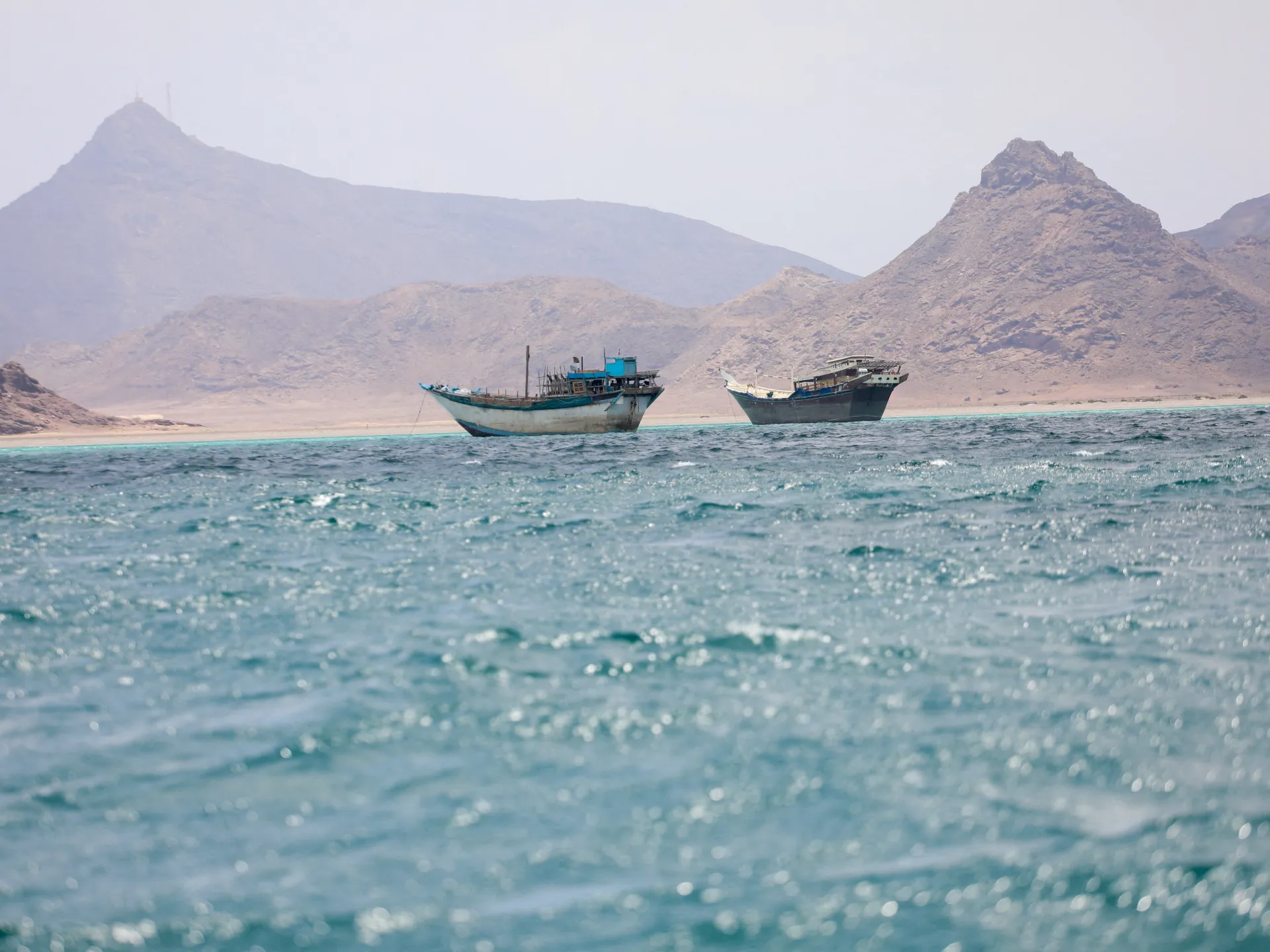
Houthis say Red Sea route remains free to use, pushing back on report of new shipping fees.
Published On 1 Aug 20261 Aug 2026
Yemen’s Houthi rebels have denied planning to charge ships for passing through the Red Sea, saying passage through the waterway remains free.
The denial came in a statement issued Saturday by the Houthi-run Humanitarian Operations Coordination Center (HOCC), which oversees vessel movement through the Bab al-Mandeb Strait. It said its “safe transit service” was voluntary and free of charge, adding that anyone demanding payment for passage did not represent Yemen or the HOCC. It urged shipping companies not to make payments or share information with unauthorised parties.
Recommended Stories
list of 3 itemsend of list
The statement follows a Reuters news agency report on Wednesday, citing regional sources, that the Iran-aligned Houthis were considering imposing fees on ships transiting the strait – a week after the group declared a maritime blockade on Saudi Arabia. Those sources said the idea was raised with Iranian officials during a Houthi visit to Tehran earlier in July, with Iranian advisers reportedly helping set up an authority to regulate the fees.
The Bab al-Mandeb Strait is a vital chokepoint linking the Red Sea to the Gulf of Aden, used by ships carrying oil and other cargo between Asia, Europe and the Middle East. Any fee on passage would echo Iran’s own efforts to charge ships transiting the Strait of Hormuz, which has been largely shut since the US-Israel war on Iran began earlier this year.
Yemen’s foreign minister-designate, Afrah al-Zouba, said on Tuesday that the Houthis were seeking to “copy the Iranian model”.
A toll on Bab al-Mandeb would hit Saudi Arabia especially hard, since the kingdom has increasingly relied on the strait as an alternative export route while Hormuz remains disrupted.
The Houthis have waged a long campaign against Red Sea shipping, beginning in 2023 after the start of Israel’s genocidal war on Gaza, and only pausing attacks after a ceasefire last October. A United Nations expert report found that the group may have collected significant informal fees from shipping agents in 2024, though this was never independently verified. Traffic through the strait has still not recovered to pre-2023 levels.
In response to the renewed threat, Saudi Arabia this week announced a 14-nation maritime coalition aimed at protecting freedom of navigation through the Bab al-Mandeb Strait, the Red Sea and the Gulf of Aden.
This adaptation fans are calling ‘absurd’ is incomparable to any other period drama, as a peculiar version of real life events in the medieval times – packed with dark humour and explicit content
The show has ruffled some feathers (Image: (Image: NETFLIX))
Fans of period dramas are not quite prepared for this mini series take on the genre, turning it on its head completely.
What many viewers are unaware of, however, is that its entertaining storyline is drawn from a collection of 100 tales penned by an Italian author, dating back to that very same period.
Instead, Netflix subscribers can see back and watch pieces of the story play out on screen in this dark comedy series set in 14th-century Italy.
The Decameron is a show inspired by the classic work of the same name, unfolding against the backdrop of the devastating Black Death pandemic. It follows a wealthy family as they desperately attempt to survive the outbreak, all played out with an abundance of humour.
The Decameron pulls no punches when it comes to sexual content, strong language, violence, and grisly details within its darkly comedic narrative. It is precisely these elements that set it apart from the rest and see it racking up a string of five-star reviews.
One viewer wrote on Rotten Tomatoes: “I was entertained throughout the entire series. Definitely worth watching! I was cheering for all the characters as they were developing throughout the season.”
Another shared their feelings towards the show, writing: “It’s completely silly yet the characters inexplicably grow on you and become like a bunch of very stupid but very dear friends. Never seen something like this.”
Audiences are transported on an adventure, commencing in 1348 in a fictionalised retelling of events, as the Black Death grips Florence. In reaction, a collection of aristocrats and their servants take refuge in a rural villa in Tuscany, weathering further outbreaks surrounded by their riches and extravagant way of life.
Before long, the pestilence reaches the peaceful hillsides and they find themselves with little alternative but to battle for their very existence. While the setting is of course based on a real life health crisis, its events are entirely fictionalised.
Playing these characters are Tanya Reynolds from Sex Education, together with Zosia Mamet, recognised for her part in Girls. Also appearing alongside them on screen are Lou Gala, Leila Farzard, Jessica Plummer and Amar Chadha-Patel.
The cast have garnered considerable praise with one reviewing saying that they delivered “enjoyable performances”.
Others said it was “well acted”, while one viewer said the script and actors had them “laughing out loud” throughout.
One review reads: “While not really an adaptation of The Decameron (more like “inspired by”), this tv show manages to be horny, dumb, deep, nihilist and sweet at the same time.
“It has great moments, great lines, really dumb jokes, some smart ones, some good and profound takes and overall an awesome cast and soundtrack.”
The period drama packs a great deal into its compact eight episodes and was sadly never commissioned for a second series following its 2024 release, making it perfect for a binge-watch.
To experience a period drama like never before, The Decameron is available now to stream on Netflix.
The first book I read willingly was Bridget Jones’s Diary. I was 19. Up to that point, I hadn’t been much of a reader. I’d been more into football, or Baywatch, or Robin Budd in the year above – anything really. Given the choice between reading a book and staring at a wall, I would have plumped for the latter.
After finishing my A-levels, I worked in a barbecue restaurant in Portsmouth – which is where I found Bridget Jones. The book was lying around in the staffroom. I picked it up and read a few pages, and then a few more, and then a few more. It felt exciting. Like I’d met someone. Like I was suddenly in a relationship. Over the next few days, I remember cancelling nights out so I could go to bed and read. My mum thought I was depressed.
Illustration: Guardian Graphics
It hardly matters what book gets you going. For Jeanette Winterson, it was the Book of Deuteronomy. For David Nicholls, it was Tales from Moominvalley. What matters is that a book gets you going. Throughout my 20s, I worked as a carer, but I was always reading and scribbling on the side. I became a published author seven years ago. It’s not an overstatement to say that Bridget Jones changed my life. That books did.
So when I learned that 2026 was National Year of Reading (a UK-wide campaign intended to promote the importance and joy of reading) and that Rabat was to be this year’s Unesco World Book Capital (a rotating designation intended to promote the importance and joy of reading), I packed a few volumes and set off for Morocco’s capital. I was hoping for a cultural adventure, and perhaps a tagine, in this ancient seaside city perched scenically between Casablanca and Tangier.
Ben Aitken in Rabat, Morocco.
Rabat was made the capital of Morocco in 1912, at the beginning of the turbulent 44-year period when the country found itself under the thumb of the French. The first thing I saw of the city was the New Town, or Ville Nouvelle, which was laid out in the 1920s à la française, meaning it looks nothing like the huge medieval medina that’s just up the road.
From the central train station, I proceeded to the solar-powered Mohammed VI Museum of Modern and Contemporary Art, where the permanent exhibition – Shifting Horizon(s) – does exactly what it says on the tin. Highlights include the abstract paintings of Mohamed Melehi and a provocative photograph by Lalla Essaydi. Part of a series called Bullet Revisited, the latter shows a woman covered head to toe in gold bullets, and is a powerful indictment of the violence women suffer.
I walked north to the medina, an irregular network of narrow streets lined with small shops flogging mint, slippers, strawberries and sabon beldi, a black soap made from the flesh and oil of olives. The medina was busy but calm. Not once was I asked to consider a carpet or sample a sardine. Indeed, I felt rather invisible. In this respect, the customer service was uncannily French.
I followed my nose to the Kasbah of the Oudayas, an enchanting district of low whitewashed houses. Built on high ground in view of the ocean, this former royal citadel was ideally placed to spot visitors on the horizon, and greet them appropriately.
After checking into a riad on Rue Bazou, I descended a flight of stone steps to the beach, a modest curve of sand where scores of people were playing football and volleyball. I crossed the cooling sand and climbed on to the breakwater to better observe a neon sun sink slowly seaward, as a lone surfer, way out in the offing, sought inch-perfect swell.
Enticing streets in the Kasbah of the Oudayas. Photograph: Adam Smigielski/Getty Images/iStockphoto
I took a pew at the beachside Relais Marin restaurant. I didn’t deliberate over the menu. Like casserole and paella, tagine is a dish in two senses; both the cooking vessel and the meal, on this occasion a confusion of lamb, almonds and prunes in a delicious gravy that, with time, had reduced to a bold, flavourful pesto, which I mopped up with chunks of khobz (Moroccan flatbread). I could have eaten another.
The next morning I went to the Cafe des Oudayas. Situated next to the Andalusian Gardens – a wonderful place full of orange and pomegranate trees – this alfresco cafe offers three things: mint tea, biscuits and an excellent vantage point.
As I eked out the tea, I watched a boy poised on the edge of a towering rock, 30 metres above the Bou Regreg river. Goaded by his friends, he meant to jump, but he hesitated for minutes in the intensifying sun. His dive, when it finally came, was a thing of beauty – a wide and graceful arc, shapely, immaculate, somewhat divine, almost unreal. The gallery held its breath until he re-emerged – to be met with disingenuous disdain. “La poule a attendu une éternité!” (The chicken waited for ever!) Lads, eh?
A bookseller presides over his stock. Photograph: Nur Photo/Getty Images
On a whim, I boarded an electric tuk-tuk, one of 60 in the city. I asked the driver to take me directly to the Chellah, a medieval necropolis that also houses what’s left of the Roman city of Sala Colonia, but, knowing best, the driver instead went out of his way to show off his home town, swinging by St Peter’s cathedral and a nightclub called Amnesia, where Morocco’s king is said to have boogied back when merely a prince.
The Chellah – when I finally got there – did not disappoint. After doing a round of the picturesque ruins, I climbed to a gorgeous onsite cafe and ordered the couscous. Befitting tradition, the dish comprised a pyramid of seven vegetables, a moat of couscous, a jug of broth and some meaty treasure hidden within the veg. It was unmistakably bon.
If one requires beer in Rabat, one heads to Le Dhow, a bar and restaurant on a boat moored in the shadow of the kasbah. Sitting on the upper deck, I savoured an ice-cold pint while chatting with a British undergraduate studying at the Université Internationale de Rabat. I asked if she felt comfortable in the city. “It’s been fine,” she said. “Some men have said hello. One asked for a photo. To be honest, I’ve experienced a lot worse in Worcester.”
I’m just going to come out and say this – don’t go to Rabat because it’s this year’s World Book Capital. Despite my best efforts, the exact nature of the 300-plus events the city is purportedly going to run during its year as WBC remain a mystery to me. Instead, go to Rabat because it’s an excellent city. C’est simple.
On my final evening, I chanced on a humble bookshop in the medina – Bouquiniste El Azizi. Of the hundreds of preloved books assembled in the diminutive space, a dozen or so were in English. Among them was Bridget Jones’s Diary. I picked it up and read a few pages – and then left it for someone else to stumble on, and perhaps break their duck with.
On leaving the shop, I noticed a sign: Les livres prennent soin de nous. Books take care of us. The sentiment strikes me as the right note to finish on.
Ben Aitken is the author of Shitty Breaks: A Celebration of Unsung Cities, £9.99. To support the Guardian, order your copy at guardianbookshop.com. Delivery charges may apply
Morris had heard her victories played out for GB with a different anthem but she looked to be overcome when celebrating this one with the Welsh national song.
No time to immediately reflect on what she had just achieved though.
There was a quick chance for a picture with the Welsh flag and then off it was to the next task.
The scratch race started just 10 minutes later where Morris lined up with Welsh team-mates Megan Barker and Carys Lloyd.
It looked like they had concocted an almost perfect plan, with Barker going off a few laps out and Morris driving through to finish second behind Australian winner Georgia Baker.
A gold and a silver all in one day. Or so we thought.
Morris had already done some interviews celebrating this fact before she was given the message in the media mixed zone about her demotion.
Morris had been relegated for entering the sprinter’s lane when her New Zealand opponent was already there, and Scottish cyclist Erin Boothman was promoted to bronze.
Morris returned to do a couple more interviews, ironically, while the scratch closing ceremony was going on.
Morris reflected on her golden moment.
“It was just a dream,” said Morris. “We get that opportunity once every four years, so for it to come together tonight was amazing.
“I have my family and friends in the crowd and the support team from Welsh Cycling were also there.
“I’m going to carry that with me forever, it’s amazing.”
Morris seemed unaware of her dominance in the race.
“It was only when I crossed the line I knew I’d won the race,” said Morris.
“I focused on my ride and tried to execute it well and really leave it all out on the track.”
It had been a day of mixed emotions and, when asked to sum up her feelings about the scratch race, Morris was whisked off so we will have to wait for that verdict.
So, disappointment to finish the day but that should not take away from her pursuit domination and golden moment.
Morris is a world champion for a reason and she proved why.
Wales cycling have two special world-class talents in Finucane and Morris.
South Korean Finance Minister Koo Yun-cheol, who serves concurrently as the deputy prime minister for economic affairs, attends a task force meeting of economy-related ministers over price controls related to people’s livelihoods at the government complex in Seoul, South Korea, 31 July 2026. Photo by YONHAP / EPA
July 31 (Asia Today) — South Korea will launch a strategic investment fund worth more than 20 trillion won, or about $13.6 billion, next year to provide long-term capital to artificial intelligence, semiconductor and other industries considered vital to national security and economic growth.
The government said Friday that it would establish a separate strategic investment account within the Korea Investment Corporation rather than create an independent sovereign wealth fund.
Deputy Prime Minister and Finance and Economy Minister Koo Yun-cheol announced the plan during an emergency economic meeting and a meeting of economic ministers at the Government Complex Seoul.
The new account will use KIC’s international investment network and asset-management expertise while expanding the corporation’s mandate beyond its traditional role of investing public foreign-exchange assets overseas.
The government plans to submit a revision to the Korea Investment Corporation Act to the National Assembly in August and complete the legislation before the end of the year.
The fund is expected to begin operating in 2027.
Government shares to provide initial capital
The fund will begin with more than 20 trillion won in assets.
The government plans to contribute more than 16 trillion won, or about $10.9 billion, in shares it holds in public financial institutions, including the Korea Development Bank and the Export-Import Bank of Korea.
It will also contribute about 4 trillion won, or $2.7 billion, in private-company shares received as payment for inheritance and gift taxes.
The government is considering accepting private donations intended to increase national wealth as another source of capital.
The fund will target artificial intelligence, semiconductors and other advanced strategic industries as well as data centers, critical infrastructure and overseas companies important to South Korea’s supply chains.
Unlike conventional policy financing, which often relies on loans, guarantees or subsidized credit, the fund will primarily make direct equity investments.
The government said the approach would allow it to remain invested in promising companies for longer periods and share in their growth.
The fund will also be able to exercise shareholder voting rights to promote corporate value, protect critical technologies and help companies defend themselves against hostile takeovers.
Fund to serve as an anchor investor
The government wants the strategic account to serve as an anchor investor capable of attracting global institutional investors to South Korean projects.
By committing public capital first, the fund could reduce perceived risk and encourage foreign sovereign funds, pension funds and private investors to participate.
The government also plans to connect the new account with existing policy funds.
Venture and growth funds usually must sell their holdings and return capital to investors within four to eight years.
Under a proposed relay-investment system, the strategic fund could purchase stakes in promising companies when those shorter-term policy funds reach maturity or begin liquidation.
The arrangement is intended to prevent companies with long development cycles from losing financial support before they become commercially established.
The model could be particularly important for semiconductor fabrication, artificial intelligence infrastructure, biotechnology and other sectors requiring large investments over many years.
Separate governance structure planned
The government said it would create governance safeguards intended to protect the fund’s investment independence.
KIC’s board structure would be divided between its existing foreign-reserve investment account and the new strategic account.
A dedicated investment committee and advisory committee would be established for strategic investments.
An operating committee would set broad policy and investment priorities but would not intervene in individual investment decisions, the government said.
The separation is intended to prevent short-term political considerations from determining which companies receive investments.
The plan also represents a change from an earlier proposal to establish a completely separate sovereign wealth fund.
The government instead decided to expand KIC’s mandate and use its existing personnel, investment systems and global relationships.
Long-term capital for industrial strategy
South Korea has introduced several public financing programs to support advanced industries, including funds targeting chips, artificial intelligence, batteries and biotechnology.
The new strategic account differs because it is designed to hold equity investments for extended periods rather than provide loans or exit investments according to fixed fund schedules.
The government expects the fund to support major national projects involving semiconductors, physical artificial intelligence and data centers while helping South Korean companies secure critical overseas supply chains.
It also hopes investment returns will gradually expand the fund’s assets and reduce its dependence on additional government contributions.
The success of the plan will depend on whether the government can maintain commercial investment discipline while pursuing broader industrial and national-security objectives.
It will also require clear rules governing voting rights, corporate intervention, investment losses and potential conflicts between financial returns and government policy.
The US Department of Justice has moved to dismiss its case against Olympian David Hearn over damage to the Reflecting Pool in Washington DC. The DOJ says new evidence points to flawed installation by the contractor, not vandalism.
EXCLUSIVE Emmerdale’s Joe Tate actor Ned Porteous has told The Mirror all about whether his character is capable of trying to kill someone after Billy Fletcher’s attack
19:59, 31 Jul 2026Updated 20:01, 31 Jul 2026
Who attacked Billy in Emmerdale might have been revealed(Image: ITV)
Who attacked Billy in Emmerdale might have been revealed, or at least someone may have been ruled out.
Amid theories from viewers about who was to blame, Billy’s fate remains unknown. He’s in a coma, fighting for his life after being brutally attacked and left with a serious head injury.
Billy sustained a bleed on the brain, after Kerry Wyatt found her colleague lifeless on the floor of the depot where they work. He was lying with his head in a pool of blood, with his loved ones warned he’s in a bad way.
Kerry and boss Caleb Miligan were quick to point out to the police that Joe Tate may have attacked Billy. After all he had threatened Billy to Caleb, after Caleb told Joe about Billy and Dawn’s apparent kiss.
Of course it’s not the first time Joe has caused someone to be injured or killed, while it’s not like him to get his hands dirty. But has he taken a brutal revenge on Billy, or is he being framed?
Fans have mixed ideas on the truth, and now speaking exclusively to the Mirror, Joe actor Ned Porteous has had his say. He addressed whether Joe is capable of hurting Billy in this way, while he also teased whether his character is the real attacker.
With some fans saying it’s too obvious to be Joe, Ned discussed this and pointed out Joe did have it in him to commit the crime. That said, something he told us could hint that Joe is not to blame.
Asked if Joe could be at fault, he replied: “I think Joe has it in him to do a whole bunch of things. Yeah. I think the beauty of this character, and the fun I’ve been having with the character, is the duality between his capabilities for great good and great evil.
“I think as a thematic tool, Joe, and characters like Joe, are extremely useful for the screenwriters, because we can see that he is a good dude, but he has no practice at it. He’s volatile, he has a complete lack of control of his emotions.
“So, if you were to get to him, he’ll get you back sevenfold.” We then questioned whether if Joe was innocent, will he struggle to prove that innocence given Joe’s dark ways in the past.
He told us: “Absolutely. I think everything that Joe does in this village is guilty until proven innocent, because why on earth wouldn’t it be? We’ve only ever seen Joe do bad things to people, apart from the one or two people that he’s let close to himself and his heart that know that he’s not completely evil.”
So does this comment about not being completely evil and being “guilty until proven innocent” suggest Joe isn’t the one to blame? After all, some fans are suspecting Joe’s nemesis Caleb Miligan may have attacked Billy, not Joe.
This building was so loathed that it inspired a construction ban.
The tower is one of the most hated in Europe(Image: Getty)
Bursting skyward from one of the most iconic skylines in the world is a building that was so hated after its construction, a law was passed to stop any more like it being built.
Tour Montparnasse is a towering, 210 metre high office skyscraper which juts up above the Montparnasse area of Paris. It was built in 1969, and is the fourth tallest building in all of France still to this day.
The tower does have an observation deck which offers views across Paris. However, there is a common joke amongst Parisians that it is the most beautiful view in the city purely because it is the only place from which you cannot see the tower itself.
Designed by architects Eugène Beaudouin Urbain Cassan and Louis de Hoÿm de Marien, the tower is a simple monolithic office block that is at odds with the rest of the surrounding buildings.
It was so strongly disliked that two years after its construction was finished, a law was passed banning the construction of any building over seven storeys in Paris.
This law stayed in place up until 2015 and was reinstated in 2023 after the construction of the Tour Triangle, the 180 metre tall pyramid-shaped glass skyscraper at Porte de Versailles.
The construction of the building was delayed by 12 years due to the backlash and multiple legal and planning battles.
In 2017, Paris approved a £680 million renovation project to revitalize Tour Montparnasse by stripping it back to its frame and replacing the dark facade with transparent glazing.
There were plans for sky gardens to soften the outline, and openings to allow natural ventilation to the building.
There was even a plan to transform the upper floors into a luxury hotel, but the entire project was scrapped earlier this week.
According to sotiraparis, this is because the asset manager of the building told the co-owners that it no longer wished to pay for the transformation and instead wants to opt for a more modest renovation which isn’t so expensive.
The future of the building now looks uncertain. A new team of architects will need to make a new plan for the renovation, but the building permit expires in November of this year, which makes things even more challenging.
There has been no timeline announced for the new project as of yet.
Los Angeles Mayor Karen Bass ordered city agencies on Friday to delay the processing of rebuilding permits for the Lineage burned-out cold storage warehouse in Boyle Heights until regulators have found ways to subject the project to strict environmental review.
In an executive order, Bass said the city’s planning and building and safety departments must also determine whether the application to rebuild the Lineage facility — which was destroyed in June, leaving behind an estimated 85 million tons of smelly, rotting food — should be subjected to a lengthy “discretionary review” process.
The mayor also asked the council to approve a moratorium on large cold storage facilities in proximity to residential neighborhoods and sensitive uses, such as parks and schools.
The moratorium, depending on the actions of the City Council, can be kept in place for up to two years, according to the mayor’s team.
Clean-up continues at the Lineage cold storage warehouse on Friday in Boyle Heights.
(Allen J. Schaben/Los Angeles Times)
“They shouldn’t even think about rebuilding until they’ve cleaned up the mess they’ve created,” Bass said at a Friday news conference. “This is why I am directing city departments to put their plans up on a shelf while a thorough investigation of the property and any future use is conducted.”
Bass stood in front of a display that accused Lineage of refusing to provide sufficient support to help nearby residents relocate to other parts of the city. The display also said the company had refused to address unsanitary conditions, including odors and the spread of flies and rodents into nearby properties.
Bass’ team said 3,800 complaints about Lineage have been lodged with the South Coast Air Quality Management District, which has issued 19 violation notices to the company.
The city and county secured $1.6 million for emergency housing relocation through Airbnb and housing nonprofits, sheltering more than 1,300 residents and hundreds of pets. Bass said Lineage provided only $100,000 for those efforts.
“That’s less than 7% of what we’ve provided,” she said Friday.
Silvia Corona joins Boyle Heights residents to voice her frustration during a rally Friday demanding Lineage permanently shut down the facility and leave Boyle Heights.
(Allen J. Schaben/Los Angeles Times)
In a series of statements posted to Lineage’s website Thursday and Friday, the company said it disagrees with the characterization of its cleanup efforts, and company officials said they submit daily reports to authorities and regulators and post frequent updates online.
“Since gaining full access to the site on the evening of July 6, Lineage has removed more than 60% of food waste and continues to execute the fastest and safest possible cleanup,” the company said. “Lineage has been going door-to-door to the nearly 800 households closest to the warehouse — those designated by the city and county as closest to the site.”
In doing so, the company maintains that it has provided hundreds of air purifiers, air conditioning units, N95 masks, drinking water, grocery vouchers, cash assistance and relocation support to 85% of those households.
Amid this week’s recovery efforts, Lineage representatives filed permits with the city to rebuild the warehouse to its “pre-fire condition” Monday. The move drew swift condemnation from locals and Bass, who decried the application as “a slap in the face” to Boyle Heights families.
Bass said the Friday directive will not be her last executive order mobilizing resources for Boyle Heights following the fire.
Los Angeles County Supervisor Hilda Solis said she felt like she “was in a war zone,” after visiting the warehouse site.
Solis said that she was planning to present a motion at a Tuesday Board of Supervisors meeting aimed at increasing consequences for businesses that commit public health violations, and expanding support for affected residents.
The county is also taking steps to expand access to landfills beyond normal operating hours to allow Lineage to remove noxious debris around the clock.
“We know that the money is going to run out in terms of Airbnb and providing assistance,” Solis said. “That has to come in right away.”
A day earlier, city officials announced that cleanup efforts at the Lineage cold-storage warehouse in Boyle Heights were nearing the halfway mark, six weeks after a fire at the depot left millions of pounds of rotting food to pollute the Los Angeles neighborhood.
The city’s focus is shifting from providing immediate relief to removing noxious debris, reducing foul odors and tainted air, and putting affected residents into interim housing, said Jon Brown, assistant general manager of the Los Angeles Emergency Management Department.
Lineage states the fire started during rooftop solar testing by subcontractor Altus Power. Altus has denied responsibility, stating that the cause is undetermined and accusing Lineage of finger-pointing instead of focusing on community relief.
Residents served Lineage a lawsuit seeking medical damages, noting a similar rooftop solar fire occurred at the facility in 2024.
Bass clarified that the investigation into who is responsible for the fire is still underway, but said Lineage needs to answer for what followed. She accused the company of failing to properly disclose that meat products were stored at the site to begin with, and said the company has been too slow to remove the waste.
She remains skeptical that she’ll ever allow the company to operate in Los Angeles in the future.
“It would be very hard for me to imagine the day that we would welcome Lineage back,” Bass told a Times reporter Friday.
Solis and Los Angeles City Councilmember Ysabel Jurado concurred with the mayor’s assessment, with Jurado going as far as to say she definitely” [wants] to stop any rebuilding permit” for Lineage.
As the mayor’s news conference came to an end, Boyle Heights residents rallied outside the Lineage warehouse facility, briefly shutting down a stretch of Olympic Boulevard just north of the disaster site.
Protesters demanded Lineage’s unconditional removal from the community and said that aid from the city, county and local nonprofit organizations has dried up.
“We’re asking for Lineage to leave our community now and forever,” Estuardo Mazariegos, a candidate for City Council District 9, said at the rally.
At the protests, dozens chanted slogans, including “afuera Lineage! (Lineage out)” and toted signs reading “clean water over profits” and “you’re poisoning us.”
Many at the rally called for Lineage to pay every bill that comes out of the crisis, including waste remediation, interim housing costs and lofty medical bills. Emergency room visits for smoke inhalation and throat pain spiked following the first days of the fire, and residents want the company held financially responsible.
Antonia Montes, an area resident, said she was relieved that Bass was stepping up, but more needs to be done.
“I’m glad she’s now saying that she doesn’t want them here, but we’re saying, ‘what’s the plan to make sure they’re not here?’ ” Montes said. “The next step is to stop it right there and not let them renew their permit and make sure they’re gone.”
Leigh head coach Adrian Lam told BBC Radio Merseyside:
“There were three tries from poor skill and a fourth one where we fell asleep at the wheel. It’s not a whole team issue, it’s just three or four moments that really hurt us.
“It was individuals that didn’t nail skill at really big moments for us.
“I’m not going to get angry at the team. For 40 minutes I thought we were unbelievably good. I think we’re very close to being very, very good and I’ll hold onto that fact.
“I thought we dominated in most areas in that first half; we just have to put an 80-minute performance together.”
Wigan head coach Matt Peet told BBC Radio Merseyside:
“I’m very proud. It is a tough place to come against a team that’s flying. We had to overcome a bit of adversity. Leigh were excellent in the first half and we had to get a lot right to get the result.
“It had a play-off feel about it from minute one against a quality team who throw a lot at you.
“It will stand us in good stead. There are things that we can improve but the character of the team is very strong and defensively we looked very strong as well.”
On Jai Field’s try:
“It was a game-changing moment. He’s got that capability and instinct and obviously his pace. He’s a pleasure to watch.”
Police detained several protesters in Lahore, Pakistan as they rallied in solidarity with Pakistan-administered Kashmir. A banned Kashmiri activist group says that at least 30 people have been killed in clashes during regional elections this past week.
The former president and his wife were sentenced to 15 years last year after being convicted of money laundering.
Published On 1 Aug 20261 Aug 2026
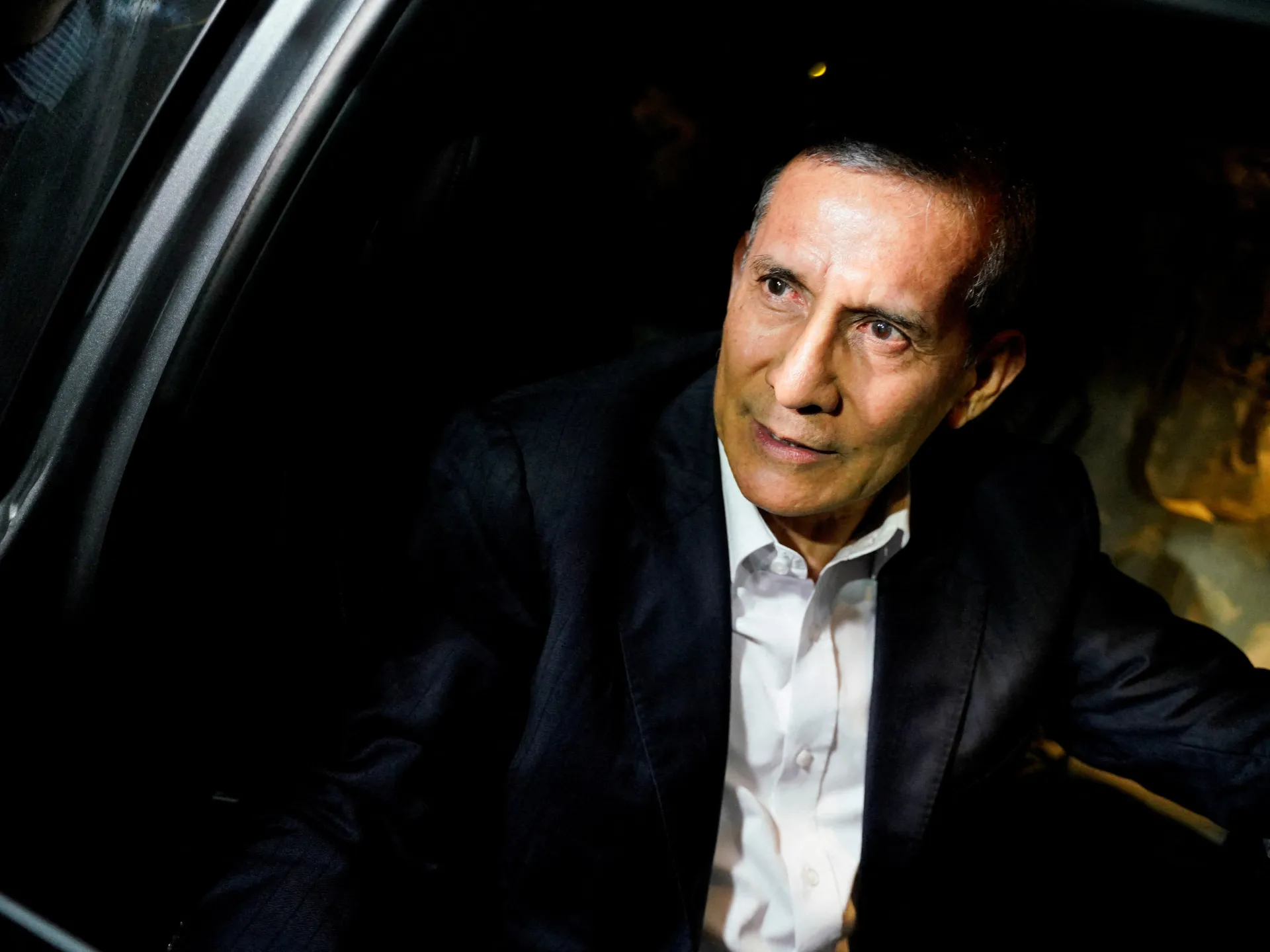
Former Peruvian President Ollanta Humala has been released from prison after the country’s Constitutional Court overturned his 15-year prison sentence for a case linked to a globe-spanning corruption scandal involving Brazilian construction giant Odebrecht.
Humala was serving his sentence at a special detention facility in eastern Lima that houses several of Peru’s jailed former leaders. The 64-year-old and his wife, Nadine Heredia, were found guilty last year of money laundering for receiving illegal contributions from Odebrecht, now known as Novonor, and the Venezuelan government in two presidential campaigns.
Recommended Stories
list of 3 itemsend of list
Heredia subsequently received asylum in Brazil.
“It has been decided to declare the entire criminal proceedings against Ollanta Moises Humala Tasso null and void,” read the Constitutional Court ruling dated July 15 and published on Thursday.
Humala, a former army officer who led the country from 2011 to 2016, was the first Peruvian ex-leader to face trial in the Odebrecht corruption scandal, which has also tainted three other former presidents.
He had filed a habeas corpus petition – a legal request asking the court to examine whether he had been unlawfully imprisoned – which the Constitutional Court declared to be “well-founded” because it found that he had been convicted for conduct that was not legally defined as money laundering when the campaign contributions were received.
The former president’s lawyer, Wilfredo Pedraza, said that his side has received the judgement “with considerable satisfaction”.
In 2016, Odebrecht agreed to pay $3.5bn in penalties after having spent $788m in bribes to foreign leaders and government officials in order to win infrastructure projects across Latin America.
Odebrecht admitted to having paid at least $29m in bribes to Peruvian officials between 2005 and 2014.
Cassie Plummer could be about to face a “really dark” exit from Coronation Street after worrying scenes aired on Friday night’s episode of the long-running soap
20:41, 31 Jul 2026Updated 20:41, 31 Jul 2026
Coronation Street’s Cassie could be about to face a ‘really dark’ exit from the cobbles (Image: ITV/Coronation Street)
Cassie Plummer could be about to face a “really dark” exit from Coronation Street. The former drug addict, played by Claire Sweeney, was introduced when bosses of the long-running soap decided to completely rewrite history and install her as the long-lost biological mum of Tyrone Dobbs, and initially came to blows with Tracy Barlow when she set about poisoning Ken for financial gain.
With all that seemingly swept under the carpet, now Tracy has sparked a romance with Ross, who is Tyrone’s long-lost biological dad. Cassie was underage when Tyrone was conceived, and it emerged earlier this week that Ross had paid her for the sex they had all those years ago.
When it looked as though Ross was sticking around having got a job at the local prison, Cassie tried to get him out of their lives once and for all by crushing painkillers up into his flask that he was about to take to his new place of employment, hoping that he would fail the drugs test and then clear off out of Weatherfield. It backfired when Ross figured out what Cassie had done so, in a cruel twist, he poisoned Tracy with the drink and now she is in hospital. But because Cassie has got form, Tracy has now got completely the wrong end of the stick.
Sitting up in her hospital bed on Friday night’s episode of the ITV soap, she raged: “If I have been spiked, I know who I’m pointing my finger at. How else have I got this much codeine in my system if it’s not from the local poisoner, who also happens to hate my guts?”
Steve told his ex-wife to calm down, but she shot back: “Well, I’m trying to do that, Steve, but it’s quite difficult when your girlfriend tried to kill me. She’s jealous of me because I’ve got Ross and she’s stuck with a useless lump like you!”
The taxi driver, who has been played by Simon Gregson since 1989, was convinced that Tracy (Kate Ford) was wrong, but then decided to do some investigating, and found the painkillers in Cassie’s cardigan pocket.
When he confronted her, she explained: “It wasn’t meant for Tracy. It was meant for Ross. And it was just a couple of tablets so he’d fail his pee test at his prison job and he wouldn’t be hanging around here any more.” Tyrone then knocked at the door, having been informed of the situation by Steve, and Cassie tried once again to explain but they were having none of it.
Steve said: ” I don’t get it. First of all Ken, now Tracy. I mean, are you not gonna be happy till you’ve killed the lot of us?” Tyrone then yelled that it was “a lot more” than the couple of tablets Cassie claimed she had tried to spike Ross with as Cassie cried: ” I put it in his travel cup, which I got out of his bag, so how did Tracy end up with it, eh?
“Ty, I know it was a stupid idea, but I was desperate. You’ve no idea what he’s like!” Ross then turned up at the house, having been playing the dutiful long-lost granddad and took Ruby and Hope for a game of football. Cassie warned them that he was taking them all for a fool but no one would listen and Tyrone told her to get out of the house.
Tracy headed across the road to number one, where Steve answered the door and told her as he struggled to hold back the tears: ” Believe me. If you only knew how much I wanted this to work after all the disappointment I’ve had over the last few years.”
Cassie tried to plead with Steve, but he decided to split up with her there and then. He shut the door in Cassie’s face, and she burst into tears as she wept: “But Steve, I love you!”
Reacting to the emotional scenes, one viewer wrote on X: “Tyrone shut the f**k up you mug, Cassie is better than Ross. Honestly hope Tyrone finds out the hard way his dad is a creep,” whilst another said: “Cassie shouldn’t have done it, I get why she did though. The reality was, Ross knew and deliberately spiked Tracey to frame her, just another form of manipulation.”
A third wrote: “I don’t know how Cassie is gonna get out of this one,” and a fourth simply said: “Oh, Cassie!” and added a face-palm emoji. Another wrote: “Cassie thinks she is smart, however, Ross seems to always be one step ahead. This storyline is going to get really dark #Corrie.”
In real life, actress Claire Sweeney, who found fame when she starred on Brookside, chose to leave so she could take on the role of Miss Hannigan in the current UK tour of the musical Annie, and replaced former Strictly Come Dancing star La Voix in the show in early July.
Claire has starred previously starred in other musicals like 9 to 5, Tell Me On A Sunday and Chicago. But she recently recently explained that she loved her time at Corrie but always wanted to take on the part of the villainous orphanage proprietress, who has previously been played on stage by the likes of her soap co-star Jodie Prenger, as well as Hi-de-Hi icon Su Pollard, the late Paul O’Grady and British acting legend Sheila Hancock.
She told The Mirror: “You’re part of a family at Coronation Street, you feel safe and protected and leaving is like stepping out into the big, wide world again. It feels like I’ve broken up with a boyfriend I’m still in love with. I’ve loved Corrie and leaving bears no reflection on the job, the people and the work.
“It was just that my phone pinged and it was the producer of Annie saying ‘right, do you want to do Miss Hannigan.’ I’d been hounding him for years for this part and I just thought – ‘if I don’t do it now, it might never come again.’ But I think it’s the hardest job I’ve ever had to leave and my exit is very sad; I had a little weep over my leaving scenes. I got quite emotional.”
McALLEN, Texas — A Texas mother deported to Mexico despite having legal permission to stay in the U.S. has filed a lawsuit against the federal government after it notified her it would be terminating her permission because of “unauthorized travel” stemming from her deportation.
Jessica Treviño, 34, filed a lawsuit through her attorney this week asking a federal judge to intervene.
Treviño and her husband were arrested in December after federal agents followed them and two of their daughters into a Home Depot parking lot in South Texas. Both were deported and are living in Matamoros, Mexico, just south of Brownsville, Texas. Their three children, all U.S. citizens, are living with family on the U.S. side near the border.
After being brought to the country as a child at the age of 7, Treviño subsequently received legal permission at 20 to remain in the U.S. under the Deferred Action for Childhood Arrivals program, or DACA. Introduced in 2012, DACA does not confer legal status but has allowed hundreds of thousands of people who had come to the U.S. as children to temporarily remain and obtain work permits.
As a DACA recipient, she must maintain a clean criminal record and is not allowed to travel outside the United States.
Her attorney, David Rozas, filed the lawsuit. He noted her status and work permit were most recently authorized until April 2027.
Notice to terminate DACA cites ‘unauthorized travel’
Last week, U.S. Citizenship and Immigration Services sent her a notice of intent to terminate her status for “unauthorized travel outside of the United States on or about March 25, 2026,” the same day she was deported from the country by the Department of Homeland Security.
In a statement, DHS said Treviño’s husband was in the country without permission and driving at the time of the arrest. After a collision between the couple’s vehicle and an unmarked Homeland Security Investigations vehicle, the couple was arrested. DHS claimed she “knowingly accepted voluntary departure and waived appeal. She left the U.S. on March 25, 2026, and will NOT return.”
In a recent interview with the Associated Press, Treviño said she did not sign any forms at the U.S. Immigration and Customs Enforcement detention facility and did not want to be deported.
Lawsuit seeks restitution of status
Rozas filed a petition asking a federal judge in Brownsville to declare the woman’s expulsion was unlawful, order the government to facilitate Treviño’s return to the U.S. and allow her DACA status to remain valid.
“The government had no lawful basis to remove her, and we filed this petition to demand she be brought back home,” her attorney added.
An immigration judge under the Justice Department had issued a voluntary departure order for Treviño in February while she was in ICE custody, but a valid DACA status prevents the Department of Homeland Security from deporting her.
“I would be so blessed to be able to go back home, because that’s what I long for most right now. I’m really desperate. It’s been seven months since I’ve been home,” Treviño said Thursday. Her three children are set to start school next month and Treviño said she would like to be there.
The current Trump administration has deported 86 DACA recipients and arrested 241 others, according to a DHS letter sent in February to Democratic Sen. Richard J. Durbin of Illinois.
Advocates for DACA recipients say Treviño’s deportation is part of a pattern.
“This is what a deliberate, systematic effort to destroy DACA looks like in practice: target recipients one by one, manufacture justifications after the fact and leave their children to grow up without them,” said Todd Schulte, president of FWD.us, a policy organization defending immigration rights.
Leeds Rhinos head coach Brad Arthur told BBC Radio Leeds:
“It’s the closest we’ve got to 80 minutes. I was pretty pleased with that performance. I thought we showed good resilience, good fight, the attitude was really good, too.
“I asked the boys for a bit extra tonight in their effort and physicality and they delivered.
“I thought the opposition were really good early, they made us fight and we were probably fortunate to go in [at half-time] at 18-0, but that’s exactly what we needed.
“Our resilience before half-time and then even at the end of the game on the try line, just to keep turning up for each other, and that’s an attitude thing, so I was really pleased with that.”
Earth is displaced during an explosion on the first day of dismantling at North Korea’s Punggye-ri nuclear test site in Punggye-ri, North Korea, 24 May 2018. On 24 May North Korea started to demolish its Punggye-ri nuclear test facility, in the country’s northeast. Photo by NEWS 1 KOREA / EPA
July 31 (Asia Today) — Nearly half of the North Korean defectors tested last year after living near the Punggye-ri nuclear test site showed chromosomal changes above a minimum detection threshold, South Korea’s Unification Ministry said Friday.
The ministry cautioned, however, that the findings did not establish a connection between the individuals’ radiation exposure and North Korea’s nuclear tests.
The Korea Institute of Radiological and Medical Sciences conducted biological radiation tests on 59 defectors from eight cities and counties near Punggye-ri in North Hamgyong Province.
The group included former residents of Kilju, Hwadae, Kimchaek, Myonggan, Myongchon, Orang, Tanchon and Paekam.
Tests found stable chromosomal abnormalities above the minimum detection level in 26 people, or 44.1% of those examined.
Stable chromosomal abnormalities can reflect radiation accumulated from birth until the date of testing. The measurement can include exposure from natural sources, medical procedures and work environments.
The institute said the test cannot determine when the exposure occurred or identify its source.
Age, smoking, alcohol use, heavy metals and other factors can also affect the results, it said.
Researchers conducted an additional test for unstable chromosomal abnormalities among the 26 people whose initial readings exceeded the detection threshold.
That second test, which is more useful for identifying relatively recent radiation exposure, produced above-threshold results in six people.
Older age complicates findings
The average age of the 26 people with elevated results was 52.8, or 13.2 years older than the average age of the 33 participants whose results remained within the normal range.
The group with elevated readings had also spent less time near Punggye-ri than the group with normal results.
Researchers found differences in drinking-water sources as well. Piped water was more common among participants with elevated readings, while a greater share of the normal group reported using water from mountain streams.
The findings did not demonstrate that the 26 participants were exposed to radiation from underground nuclear explosions, the institute said.
“There are limitations to interpreting the stable chromosome-aberration test results as exposure caused by past nuclear tests,” the institute said.
It said the participants with elevated readings were older on average and had several possible contributing factors, including medical radiation exposure.
The institute recommended continued health examinations and long-term monitoring for participants whose biological dose assessments exceeded the minimum detection level.
It said the results should be interpreted carefully because of possible confounding variables.
More environmental information would be needed to conduct a reliable assessment, including radiation measurements around former residential areas, drinking-water tests and radioactivity measurements from local food, the institute said.
No cancer cases identified
The Unification Ministry also provided detailed medical examinations to five defectors whose radiation tests conducted from 2017 through 2024 had produced readings above the detection threshold.
The ministry said no confirmed or suspected cancer cases were identified among the people examined during the latest program.
South Korea conducted similar examinations of defectors from areas near Punggye-ri in 2017, 2018, 2023 and 2024 after concerns were raised about possible radiation leakage from the test site.
Across tests conducted since 2017, researchers have identified chromosomal abnormalities in some former residents of the region, but they have not established that North Korea’s nuclear tests caused them.
North Korea carried out six underground nuclear tests at Punggye-ri between 2006 and 2017.
The country has not allowed international nuclear inspectors to conduct an independent environmental assessment at the site.
North Korea has maintained that its nuclear tests were conducted safely and did not release radioactive material into surrounding communities.
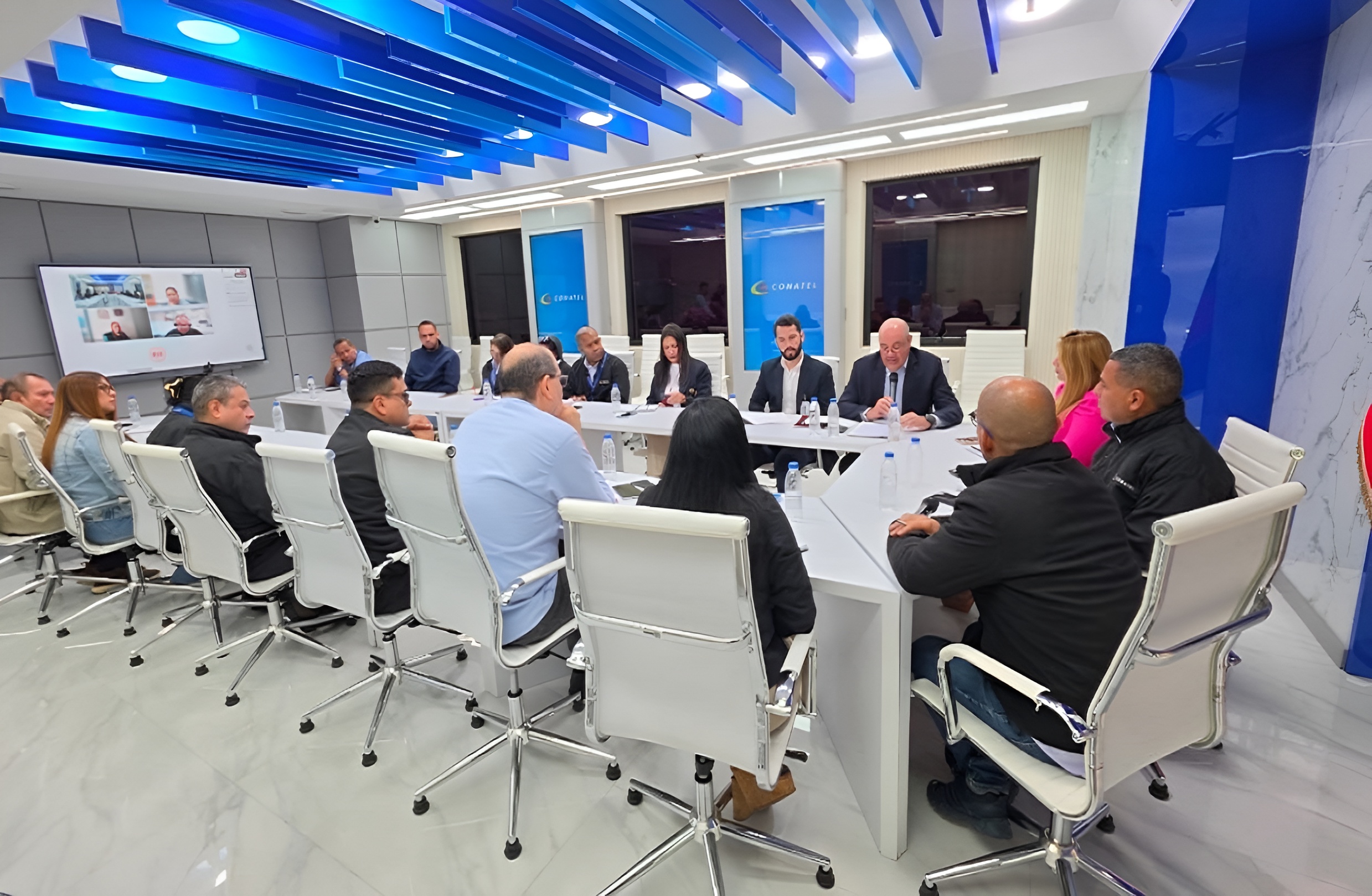
SpaceX executives vowed to comply with Venezuelan regulations. (CONATEL)
Mérida, July 31, 2026 (venezuelanalysis.com) – Venezuela’s National Telecommunications Commission (CONATEL) held a formal working session with SpaceX executives to establish the legal, technical, and financial parameters for the regularized rollout of Starlink’s satellite internet services nationwide.
CONATEL Director General Enrique Quintana led the bilateral meeting with representatives from the Elon Musk-owned company: Emmanuel Cárdenas, SpaceX’s Director of Legal and Regulatory Affairs for Latin America; Catalina Castellanos, regional telecom legal advisor; and Rebecca Hunter, Director of Market Access.
During the sessions, the regulatory body requested that SpaceX initiate the formal homologation process for its satellite hardware via CONATEL’s digital platform. This step assures that user terminals and ground equipment comply with national standards for data security, spectrum allocation, and operational quality. The talks also focused on data transport infrastructure and the formal authorization for radio frequency bands required under Venezuela’s Organic Telecommunications Law.
SpaceX’s delegation reportedly expressed full willingness to align the company’s legal and corporate status with Venezuela’s regulatory requirements. Quintana, on behalf of Acting President Delcy Rodríguez, highlighted the importance of the working group to promote telecommunications throughout the country.
While imported Starlink receiver dishes have already been circulating among private buyers for years, the satellite service officially made its signal available across Venezuelan territory following the January 3 US strikes on Venezuela and the kidnapping of President Nicolás Maduro. At the time, SpaceX offered a free promotional connectivity window for both newly registered local users and existing international roaming hardware.
CONATEL’s engagement accelerated following the June 24 double earthquake, which damaged communications infrastructure in central coastal regions. To assist with emergency management and humanitarian relief, CONATEL granted SpaceX a temporary pilot authorization.
This operational exemption allowed civil protection and disaster relief teams to deploy Starlink terminals in hard-hit areas, notably across La Guaira state, where damaged fiber-optic networks had disrupted local communications.
Acting President Rodríguez thanked Musk and his team via social media.
“Thank you, Elon Musk and the Starlink team, for helping those affected by the earthquakes in Venezuela with free internet access. Every connection counts in times like these,” she wrote at the time.
In addition, CONATEL highlighted that expanding satellite internet options complements existing state-owned and private telecommunications providers, offering critical redundancy during natural disasters or power disruptions.
The institutional dialogue between state regulators and SpaceX unfolds a political history, following clashes between President Nicolás Maduro and company CEO Elon Musk.
Tensions peaked in August 2024 following Venezuela’s presidential election, when Musk used his social media platform X to launch verbal attacks against the Venezuelan government, accusing Maduro of electoral fraud and calling for foreign intervention.
In response, Maduro denounced the tech billionaire for using his digital platform to incite hatred, destabilization, and political violence inside Venezuela. “Out of Venezuela, Elon Musk!” he said in a public rally.
CONATEL initially enacted a 10-day suspension of X in the Caribbean nation which was later extended. In recent weeks, Venezuelan telecom and mobile service providers have unblocked access, though CONATEL has not formally announced the reinstatement of the social media platform.
Musk has drawn scrutiny across Latin America and internationally for his open alignment with far-right political figures and reactionary causes.
The outspoken billionaire has frequently used his global platform to endorse far-right politicians, express support for neoliberal deregulation, and launch hostile commentary directed at progressive and leftist governments.
Starlink has also been embroiled in controversy as a result of Musk’s direct control and political views. The company introduced a “whitelist” to ban access to Russian users in an effort to disrupt communications amid the war in Ukraine. In Gaza, Starlink has operated in integration with Israeli occupation forces, raising concerns of complicity in war crimes.
JOHANNESBURG — Oprah Winfrey says she will close the school for underprivileged girls she set up in South Africa two decades ago at the end of next year.
Winfrey opened the Oprah Winfrey Leadership Academy for Girls in 2007 after being inspired by conversations with former South African President Nelson Mandela about the transformative power of educating girls. He was among the guests at the school’s opening ceremony.
Winfrey’s charitable foundation ran and funded the school, but it was always part of the agreement that the academy campus near Johannesburg be ultimately handed over to the provincial education department, the academy said.
“The dream was never simply to build a school,” Winfrey said in a statement issued by the academy on Wednesday. “It was to invest in the limitless potential of young women. That mission doesn’t end with one campus. It continues in every girl whose future can be transformed through education.”
The academy said Winfrey’s commitment to educating South African girls would continue through an expanded national scholarship program supporting academically talented girls at leading schools across the country.
More than 500 girls have graduated from the academy and some have attended top universities in South Africa, the United States and Europe, according to the Oprah Winfrey Charitable Foundation.
The Gauteng provincial government will take over the 52-acre academy campus, which has 21 classrooms, six science and computer laboratories, a 10,000-volume library and a 600-seat theater. It did not immediately say what the plans for the property were.
Gauteng Provincial Minister for Education Lebogang Maile said those currently enrolled in the school will be able to complete their education with uninterrupted financial support.
The academy drew international attention shortly after opening in 2007 when several students accused a dormitory matron of physically and sexually abusing them.
Winfrey traveled to South Africa to meet with students and parents, publicly apologized, and commissioned an independent investigation.
The matron was acquitted of criminal charges in 2010.
Heading into the final weekend of this summer’s World Cup, The Guardian reported that support for FIFA president Gianni Infantino had climbed to record levels. More than 200 of FIFA’s 211 member associations formally endorsed Infantino’s bid for a fourth term as head of world soccer’s governing body, the paper reported, making next March’s vote more of a coronation than an election.
Two weeks later, that support disappeared. Not only is Infantino’s reelection campaign in tatters, but there’s a chance he won’t survive until the spring, with British Prime Minister Andy Burnham and Javier Tebas, president of Spain’s soccer association, calling for his resignation and close confidants such as Carlos Cordeiro, the former president of U.S. Soccer, and Kevin Lamour, FIFA’s chief operating officer, publicly breaking with their boss.
At the center of that reversal was a closely guarded scheme to raise $4.2 billion by selling a 20% stake in the World Cup to private investors, who would be given influence in planning and executing future events, including broadcasting and commercial deals tied to the tournament.
In short, Infantino was planning, in secret, to sell shares in the World Cup. And once details began leaking in the media, he was forced Friday to scrap the whole thing, an embarrassing retreat that has left him vulnerable just two weeks after he had seemingly reached the heights of his third term as FIFA president.
Infantino’s idea, called the FIFA Forward Enterprise, was intended to turn the World Cup, FIFA’s milk cow, into a golden calf. But to do so, he needed the approval of at least 106 of FIFA’s 211 member countries, so he promised countries that backed him that they would receive $20 million each by mid-September. Those who declined would get just a fraction of that.
Infantino was certain the piles of cash would buy the acquiescence — or at least the silence — of enough members for the plan to go through. Instead, the bribe blew up in his face and FIFA issued a statement late Friday, under Infantino’s name, that basically said “never mind.”
“Having listened carefully to all the views, it has become clear that the project has created divisions of a nature that, regardless of the level of support, are no longer in the interest of the objective set out in the first place,” the statement read.
The question now becomes whether Infantino’s presidency will proceed.
He wouldn’t be the first FIFA president to be grievously wounded by unbridled ambition, but the speed and depth of his fall is staggering. The 2026 World Cup was, by nearly every measure, wildly successful. The largest and most complex sporting event in history the tournament, hosted by the U.S., Mexico and Canada, exceeded expectations, drawing more than 6.8 million live fans and a global TV audience of more than six billion. The four-year World Cup cycle brought FIFA revenues of about $15 billion, making it the first sporting event in history to earn more than $10 billion.
Infantino has never been shy about pushing boundaries despite heading a Swiss-based organization that, its wealth notwithstanding, is officially a nonprofit. Nor was this the first time he tried to bring private equity into the World Cup: In 2018, two years into his first term as FIFA president, he considered a plan to raise $25 billion to fund tournaments, only to cave in the face of massive opposition.
He didn’t give up the idea of squeezing more money out of the World Cup, though.
This summer, he introduced three-minute hydration breaks in the middle of each half — ostentatiously a nod to the heat and humidity, but in reality a ruse that allowed broadcasters to generate millions in additional revenue through TV commercials. FIFA also staged a halftime show for the first time ever during the final, sold VIP tickets priced at more than $1 million each and introduced dynamic pricing for the tournament’s 104 games, driving prices for some seats to four times what fans paid four years ago in Qatar.
That pushed the tournament beyond the reach of many of the sport’s most loyal supporters — and soccer, more than any other sport, belongs to the fans. It’s why teams are called clubs and fans are called supporters.
The World Cup, then, wasn’t Infantino’s to sell. So the pushback to his latest idea was immediate and unsparing.
“Football does not belong to investors,” Burnham said in an Instagram post. “Once you have sold a piece, you have sold out. Football belongs to the fans. It always has, and it always will.”
What really angered stakeholders, however, was Infantino’s brazen move to develop the FFE in secret, only to have its details leak out.
Bernd Neuendorf, president of the German soccer association and a member of the FIFA Council, the group’s most influential body, said he first learned of the FFE by reading about it.
“I was very surprised, and also annoyed, that we had to find out about something like this from the press,” he told a German news outlet last week.
Another self-inflicted wound was Infantino’s decision to launch the project with Thrive Eternal, a venture capital firm founded by Joshua Kushner, the 41-year-old brother of Jared Kushner, President Trump’s son-in-law and a kind of all-purpose White House advisor and negotiator. Thrive Eternal focuses on long-term investments in scarce cultural institutions that technology cannot replace, but it has little relevant experience in managing something as large and complicated as a World Cup.
FIFA president Gianni Infantino, left, and President Trump wave during an award ceremony following Spain’s win over Argentina in the World Cup final July 19.
(David Ramos / Getty Images)
Moreover, the partnership would draw Infantino further into the orbit of Trump, whom the FIFA president has openly courted for years. Infantino, who has been a frequent visitor to the Oval Office and Trump’s Mar-a-Lago estate in Florida, attended the president’s inauguration and accompanied him on visits around the world.
Trump’s relationship to Infantino was questioned when Infantino presented him with the first FIFA Peace Prize last December, then became even more controversial when Trump phoned Infantino three times to lobby to have the red-card suspension of U.S. forward Folarin Balogun overturned ahead of a World Cup elimination game last month.
FIFA eventually cleared Balogun to play, marking just the second time in tournament history a red card ban has been lifted. For some, Infantino’s decision to partner with someone close to Trump on his latest venture was a bridge too far.
“It’s a really bad look for Infantino given the concerns about political interference that were already there after Balogun,” said Steven A. Bank, a professor of business law at UCLA who has written and lectured extensively on the economics of soccer. “Especially with the fund led by Jared Kushner’s brother.”
Once details of Infantino’s secret plan began to leak, UEFA, the confederation that governs European soccer, held an emergency meeting during which all 55 members — including Spain, the reigning men’s and women’s World Cup champion — voted to boycott all FIFA competitions.
“Some things are simply too important to sell. The FIFA World Cup belongs to football. It always will,” UEFA, the largest and most powerful of FIFA’s six continental confederations, said in a statement.
CONCACAF, which oversees soccer in North America, Central America and the Caribbean, said its 41 countries also rejected the plan, an opinion the U.S. Soccer Federation backed in a sparse post on X.
“U.S. Soccer stands with CONCACAF and its members,” it wrote.
The Asian Football Confederation joined in, saying in a statement its 47 members stand “in solidarity with UEFA and CONCACAF in expressing serious concerns over FIFA’s proposal to introduce private investment into FIFA’s flagship competitions.”
When it became obvious Infantino would not get the votes he needed to go forward, he pulled the plug on his plan. But it may not have been so much that the idea was bad as it was the execution.
Soccer is awash with private investors. The biggest clubs are owned by billionaires or sovereign wealth funds and many leagues — including Spain’s La Liga, which Tebas oversees — have sold commercial stakes to private equity firms in much the same way FIFA proposed.
Alan Rothenberg, a former U.S. Soccer president and the driving force behind the 1994 men’s World Cup and 1999 women’s World Cup, among the most successful tournaments in history, said the idea of selling a private equity stake in the World Cup isn’t a bad idea. But the way Infantino tried to implement his plan led it to failure.
“What is proposed is not that revolutionary,” Rothenberg said. “There have been private equity investors in MLS, in one of the subsidiaries of the NFL, in F1.
“But I think the combination of everything has doomed it. It does raise the possibility that Infantino, he’s finally become Icarus and gotten too close to the sun. It actually may doom him politically.”
Others including Cordeiro, a former vice chairman at Goldman Sachs, questioned the need to bring in outside investors.
“FIFA already has access to extraordinary financial resources. The organization sits on billions of dollars in reserves and no debt,” Cordeiro pointed out in his resignation letter. “If member associations believe additional investment is needed to develop the game, FIFA already has the financial capacity to provide that support from its existing resources.”
Infantino has flaunted consensus before without significant consequence, cozying up to autocrats while overseeing the 2018 World Cup in Vladimir Putin’s Russia and the 2022 tournament in Qatar before being accused of awarding the 2034 tournament to Saudi Arabia in a rigged vote.
This time, however, the stakeholders within FIFA were pushed too far by Infantino’s penchant for wielding unilateral power, so they pushed back and the president blinked. Hours before he backed down, an ally of Infantino’s told the Financial Times that he would not bend, seeing the standoff as “a fight to the death.”
Infantino’s presidency might not be dead, but it is surely in critical condition.