Even before the first naira changes hands or the first customer calls, Musa Lekki reaches for his phone. It is 5:32 a.m. on a Tuesday, and like many smartphone users, he begins his day with a glance at his phone screen. The 42-year-old provisions trader lives in Yola, northeastern Nigeria, and runs a small wholesale business supplying neighbouring shops and customers with rice, beverages, and household goods.
As he unlocks his phone, there is already work waiting for him. A supplier has sent a voice note. A customer wants to confirm a payment. Another customer has placed an order. Before he has even left his bed, Musa is responding to messages and preparing for the business day ahead.
What appears to be a routine start to the morning is also a series of digital interactions. Within minutes of waking up, Musa has engaged with systems that recognise his phone number, device information, account credentials, and network location.
Each interaction leaves a data trail. A phone call generates telecommunications records. A bank transfer creates transaction logs. A utility payment produces another digital entry. Individually, these fragments may seem insignificant. Together, they form an increasingly detailed portrait of everyday life, which is increasingly mediated and supported by Digital Public Infrastructure (DPI) rails, a set of foundational digital systems that form the backbone of modern societies, enabling secure and seamless interactions between people, businesses, and governments.
Musa does not think about any of this. Most mobile phone and internet users do not.
“During the day, I use my phone for transfers, calls, and ordering goods, and by night I check my account balance before closing for the day,” he said.
As Nigeria expands its digital identity and payment systems, everyday activities such as making calls, sending money, paying bills, and accessing services are becoming increasingly dependent on interconnected digital infrastructure. Musa’s daily routine shows how Digital Public Infrastructure is reshaping daily life, expanding access to services while also raising questions about privacy, transparency and accountability.
What Musa sees is a phone. What he does not see is an invisible infrastructure that increasingly determines who can communicate, who can make payments, who can access services, and who can participate fully in modern economic life. By the time he goes to bed, several institutions will have processed fragments of his personal information. Many of those interactions will happen without him ever knowing.
This is how millions of Nigerian residents increasingly navigate life as data points within systems they rarely see.
The identity that travels ahead
At 6:45 a.m., Musa calls a supplier in Kano. The conversation lasts less than three minutes. It is a routine business call, yet that call depends on a national identity system. In 2020, the Nigerian Communications Commission (NCC) directed all mobile network operators to link users’ Subscriber Identification Module (SIM) cards to their National Identification Number (NINs) and to bar those who did not comply. Musa’s line was among those affected.
“There was a time my SIM was restricted because of an issue with my NIN linkage,” he recalled. “I couldn’t make calls for some days and also lost customers, until I sorted it out.”
The experience taught him something many Nigerians have learned: The ability to make a phone call increasingly depends on proving who you are. Identity is one of the key layers of a DPI. In Nigeria, the NIN is the foundational identity document, managed by the National Identity Management Commission (NIMC).
As of December 2025, the NIMC reported more than 127 million NIN enrolments nationwide, making it one of Africa’s largest digital identity databases, while over 172.67 million SIM cards had been linked to NINs.
Nunaya David, a senior enrolment officer at the NIMC, Yola, said, “NIN is increasingly required for banking, telecommunications, social programmes, and several government services.” Identity is no longer simply something Nigerians carry in a wallet; it is increasingly verified continuously in the background.
The money moves, the data moves too
Shortly after 7 a.m., Musa pays ₦45,000 to a supplier. The transfer takes less than a minute. Money leaves one account and appears in another. With a few taps, Musa has interacted with another stack of the DPI: the payment layer. Behind that transaction, the payment infrastructure operated by banks, fintechs, and the Nigeria Interbank Settlement System (NIBSS) performs multiple checks.
“Once a transfer is initiated, the request passes through several systems before reaching the recipient,” Hakeem Abdulkareem, a tech specialist with NIBSS, explained. “These systems communicate with one another to confirm and complete the transaction.”
Identity verification, fraud screening, account authentication and transaction routing all happen in the background. Most of it occurs within seconds. The customer sees only a debit alert while the infrastructure works in the background.
According to the Central Bank of Nigeria, electronic payment channels now account for the majority of retail payment activity, with internet transfers, mobile payments and point-of-sale transactions becoming increasingly dominant. Data from NIBSS show that Nigeria recorded ₦284.99 trillion in electronic payment transactions in the first quarter of 2025, representing a 17.7 per cent year-on-year increase compared with ₦234.49 trillion recorded in the same period in 2024. This reflects how deeply electronic payments have become embedded in everyday economic activity. Each transfer generates records that move across banks, payment switches, and settlement systems, creating the digital trail that allows modern commerce to function.
A market built on digital trust
For Musa, these systems are largely invisible. What he sees are payment alerts arriving on his phone and customers walking through his door. By mid-morning, those customers have started to arrive. One of them is Aisha Bello, a 21-year-old student at Modibbo Adama University, preparing for a new academic session. Like Musa, she relies on digital systems she rarely thinks about.
Her school registration requires identity verification. Her bank account relies on Bank Verification Number (BVN). Her mobile line and BVN are all linked to her NIN.
Get our in-depth, creative coverage of conflict and development delivered to you every weekend.
Subscribe now to our newsletter!
As she pays Musa electronically, two very different lives intersect through the same digital infrastructure. Neither sees the systems operating behind the scenes, yet both depend on them.
The same is true for Grace Ezra, a nurse at Modibbo Adama University Teaching Hospital in Yola. Like Musa and Aisha, she increasingly relies on digital systems to manage her salary payments, telecommunications services, tax records, and pension contributions.
Frank Akabueze, a digital identity expert, describes Nigeria’s journey as a gradual shift from fragmented systems to interconnected ones. “We have moved from having several disconnected identity systems toward greater integration.”
Increasingly, a person’s ability to study, work, save, communicate, and transact begins with a digital identity record. This speaks to the third layer of DPI, interoperability, the ability of different digital systems to speak to each other securely.
Musa operates his POS terminal. Photo: Obidah Habila Albert/HumAngle
The invisible checks
Around noon, Musa buys airtime through a mobile app. Moments later, he pays an electricity bill. The transactions feel routine, but each leaves a digital footprint. Each creates records, generates data and triggers some form of verification.
Airtime purchases, utility payments, transfers and merchant payments may appear unrelated, but increasingly they travel through interconnected platforms that rely on identity verification, payment infrastructure and data exchange mechanisms working together in the background. The power of DPI lies in the ability of these systems to communicate with one another. This interoperability allows a verified identity, a payment instruction and a service request to move across different platforms within seconds.
Esther Kolo, a staff member at Opay, a leading digital financial services provider in Nigeria, explains that many customers only notice verification during registration. “Most people notice identity verification during account registration, but checks can also happen when account details are updated or when unusual transactions are detected. In many cases, these checks happen in the background.”
The reality is that verification does not end after account creation. It becomes part of daily life. The systems simply become invisible. Every interaction leaves behind another record. Those records may sit in various databases, often connected in ways users never see. By midday, Musa has become far more than a trader buying and selling goods. He is part of a growing collection of records moving across this ecosystem.
When identity becomes the gatekeeper
Later in the afternoon, Musa receives a call from his younger brother. He is trying to resolve a problem involving identity records required to open a bank account.
Across Nigeria, mismatched records, incorrect dates of birth, missing details, and verification failures have become common sources of frustration. As systems become more interconnected, a discrepancy in one database can sometimes affect access to services that depend on another.
Such complaints have become familiar in identity management centres and online forums, where citizens report problems ranging from incorrect personal details and outdated biometric records to difficulties validating identity information across different systems. According to Nunaya of NIMC, “The person may experience delays in accessing certain services until the issue is resolved.”
As more services become interconnected, identity functions as a gatekeeper. When systems work properly, access becomes easier. When records fail, opportunities can disappear, sometimes without warning. The same infrastructure designed to enable inclusion can also create new barriers.
For instance, in August 2025, Catherine Bello, a beneficiary of a humanitarian cash assistance programme in Adamawa, was unable to receive support because a minor discrepancy between her name on the beneficiary list and her National Identification Number (NIN) record caused the verification process to fail. Similarly, others have recounted losing access to mobile services and facing banking restrictions because their NIN, BVN, and SIM records did not match across government databases.
Who is watching the data trail?
As evening approaches, conversations throughout the day prompt Musa to reflect on something he rarely considers: who actually has access to all this information? His answer is uncertain. “I know my bank, telecom company, and government agencies have my details. Honestly, I don’t really know who else can access the information or how it is being used.”
Digital rights advocates say Musa’s uncertainty underpins the challenges facing millions of Nigerians. As more services become digital and become interconnected through digital identity and payment systems, citizens often have little visibility into how their information is shared, stored, or processed across institutions.
Gbenga Sesan, Executive Director of Paradigm Initiative, a digital rights advocacy organisation, said the challenge is not only the collection of personal information but the lack of transparency surrounding its use.
“Many people provide information to access essential services without fully understanding where that data goes, who can access it, or how long it may be retained,” he said, adding that public trust in digital systems depends not only on efficiency and convenience but also on clear safeguards, transparency and accountability.
As identity systems, payment systems, and service delivery platforms become more interconnected, questions about transparency become increasingly important.
According to Vincent Olatunji, the Nigeria Data Protection Commission (NDPC), for identity management to be effective, there is a need for harmonised policies, secure technologies and inclusive systems. “The more systems are connected, the greater the impact if information is mishandled or exposed,” he noted.
Reports have shown how vulnerable these systems can be when safeguards fail. In 2025, the Foundation for Investigative Journalism uncovered websites that offered access to Nigerians’ sensitive personal information, including NINs, BVNs, photographs, and other identity records, for small fees. One platform reportedly sold access to personal records for ₦70-₦150, while another provided unauthorised identity-related services despite not being licensed by the NIMC.
Illustration: Akila Jibrin/HumAngle
These incidents illustrate the risks that emerge when large volumes of personal data are concentrated within interconnected digital systems without proper safeguards.
Olatunji of NDPC noted that the Nigeria Data Protection Act has established rules governing how personal information should be collected, processed, stored, and shared. Citizens have rights and organisations have obligations, but awareness is limited. “Organisations are generally expected to explain why information is being collected and how it will be used,” he explained.
Under the Act, citizens have several rights over their personal information. These include the right to know why their data is being collected, the right to request access to personal information held about them, the right to seek correction of inaccurate records, the right to withdraw consent for certain forms of data processing, and the right to seek redress when their information is misused. The law also requires organisations to explain how personal data will be used and gives individuals the right to lodge complaints with the NDPC when they believe their rights have been violated.
In practical terms, these rights mean that citizens are not merely sources of data, but they are entitled to ask questions about how their information is used, request access to records held about them, and challenge organisations that fail to protect their information. Yet awareness of these protections remains low among ordinary users.
Musa says he has heard of data protection laws but does not know what rights they give him. Like many Nigerians, he uses digital services every day without fully understanding who controls the information he generates.
Before bedtime, by 9:45 p.m., Musa checks his account balance for the final time. The day is over. He has made phone calls, received payments, sent transfers, paid utility bills, purchased airtime and verified identities. Each action took only seconds. Each left a record somewhere. Some records sit inside telecom databases. Others exist in banking systems, payment switches, identity registries and government platforms. Together they form a digital version of Musa’s day, one that is often more detailed than he realises.
“Many people do not realise how often their identity is being checked behind the scenes,” Frank noted.
This report is produced under the DPI Africa Journalism Fellowship Programme of the Media Foundation for West Africa and Co-Develop.
THIS summer’s celebrity trend isn’t a snatched waistline or even a peachy backside.
It’s the ‘11-line abs’ – a pair of razor sharp lines running down the stomach.
Myleene Klass tries to show off razor sharp lines running down her stomachCredit: Instagram/FreemansJodie Comer flaunting her honed stomachCredit: Getty
A host of stars, including Jodie Comer, Zendaya and Maura Higgins, have been proudly proving the magic number is 11 by flaunting their honed stomachs.
It’s an enviable look that screams gruelling hours at the gym and super-low body fat.
Until now, the number 11 was something women dreaded as it referred to the pair of lines that form between the eyebrows through frowning.
Now, however, 11 has become the ultimate badge of fitness — 11-line abs are created by the natural gap between the six-pack muscles (rectus abdominis) and the abdomen’s side muscles (obliques).
Towie’s Amber Turner shows off her figureCredit: Raw Image LtdMaura Higgins attends Sports Illustrated Swimsuit DinnerCredit: Getty
While it may have once been tacky to show off your naked waist, this year people are exhibiting their defined midriffs everywhere — not just at the beach or the gym but on the red carpet, too.
Earlier this month, actress Jodie Comer looked sensational at a star-studded bash as she flashed her sculpted midriff in a black dress.
But if you think achieving this physique is as simple as jumping on fat jabs, you need to think again — it’s down to exercise and good nutrition, according to women’s fitness expert Shakira Akabusi.
“There isn’t a single magic exercise to achieve visible abs,” says mum-of-four Shakira.
Zendaya showed off her washboard in this black two-pieceCredit: SplashRosie Huntington-Whiteley posted this pic of her midriffCredit: rosiehw/Instagram
“But a great set of core exercises are planks, dead bugs, hanging knee raises and bicycles. Compound exercises like squats and deadlifts are also great.”
Although Shakira recommends a well-rounded diet, she says “a modest calorie deficit” is necessary to reduce body fat.
She adds: “Your abdominal muscles sit beneath a fat layer, so visible definition relies on overall body composition as well as building muscle.”
The expert emphasised that aesthetics and health shouldn’t be confused.
Olivia Wilde shows off her abdomenCredit: Shutterstock EditorialJennifer Lopez posted this gym selfie on InstaCredit: Instagram
“Visible ab definition is not a marker of health, and is down to many factors including genetics, hormones, body fat distribution, nutrition and even lighting.
NEW YORK — President Trump said he is nominating Lance Schroyer, a former Oklahoma state trooper, as the next director of Immigration and Customs and Enforcement.
On his social media platform Saturday, Trump described Schroyer, a former Marine, as “a proven leader” with “real operational experience.”
Schroyer hails from the same state as the new Department of Homeland Security Secretary Markwayne Mullin, a former congressman. Earlier this month, Mullin brought Schroyer on stage at a National Sheriffs’ Assn. event, calling him a “good friend of mine” and noting the department had recently hired him.
Mullin quickly praised Schroyer in a statement highlighting the former trooper’s 29-year career and his work with federal and state partners on a U.S. immigration enforcement program.
“President Trump made a great pick, and I’m confident Lance’s strong leadership and firsthand experience will empower the men and women of ICE to deport criminal illegal aliens, secure the homeland, and protect the American people,” Mullin said Saturday.
If confirmed, Schroyer will lead ICE at a time when the public mood has soured on Trump’s immigration crackdown, which sent surges of federal immigration officers into many U.S. cities. Those raids sent tensions soaring and prompted clashes between protesters and federal agents, including the fatal shootings of two U.S. citizens in Minneapolis this year.
Trump returned to the White House on a promise of mass deportations, and ICE has been a central executor of that vision. The agency is undergoing massive growth from a onetime injection of $75 billion last year, which has allowed for the hiring of 12,000 officers and increased detention capacity.
Mullin, who started in his role in March, has promised to keep his department out of the headlines and has indicated a softer tone on immigration, although he aligns with the president’s priorities on mass deportations.
Claire Trickler-McNulty, a former senior ICE official, said prior confirmed ICE directors have often been attorneys, though some state and local law enforcement officials have also been nominated. She said his background in Oklahoma suggests Mullin probably influenced the pick.
“I think probably given the attention on ICE, he wants to feel like he has somebody he can trust in there,” she said in an interview.
John Torres, another senior ICE official, said Schroyer faces an uphill climb toward Senate confirmation, but his experience being at the state and local level instead of the federal level might help.
“He won’t have any of that baggage, where they’re going to turn around and say, ‘Oh, well, he worked for this administration or that,’” Torres said.
Schroyer’s nomination comes after former ICE Director Todd Lyons resigned at the end of May. David Venturella, a former executive at a private prison operator, has been serving as the acting head of the agency. Venturella is expected to stay on as the acting director until Schroyer is confirmed, according to a Homeland Security official speaking on condition of anonymity.
ICE has not had a Senate-confirmed director since the Obama administration, a result of polarizing politics around the agency and immigration policy.
Swenson writes for the Associated Press. AP writers Elliot Spagat and Rebecca Santana contributed to this report.
A tidy race to lead Audi home and finish just outside the points.
Nico Hulkenberg – 5.5/10
Solid enough but finishing behind Bortoleto takes the shine off it. He gained places from his lowly starting position, however.
Pierre Gasly – 5/10
Slipped down the order so a disappointing Sunday for Alpine who just looked short on pace.
Ollie Bearman – 4.5/10
A clean but anonymous afternoon for Bearman. Haas didn’t have much to fight with.
Franco Colapinto – 4.5/10
Not spectacular but a steady finish for Colapinto, who kept his Alpine out of trouble.
Esteban Ocon – 4/10
Finished behind team-mate Ollie Bearman again, which made for a poor return. Lost ground at the start and never looked like a points contender.
Alex Albon – 4/10
Williams had a tough race and Alex Albon finished two laps down. Unlike this team-mate Carlos Sainz, he at least got to the flag.
Fernando Alonso – 4.5/10
The final classified finisher. He gained places largely through others retiring, however his five-second penalty for speeding in the pit lane made this another race for Aston Martin to forget.
Lance Stroll – 3.5/10
Aston Martin driver retired after 45 laps, ending a difficult race from the back row.
Carlos Sainz – 4/10
Out after 23 laps when his car stopped on the pit straight. Led Williams once again in qualifying which is all that can be said.
Sergio Perez – 4/10
Only lasted a few laps for Cadillac. Out-qualified team-mate Valtteri Bottas but barely turned a wheel this weekend with several car issues in practice plaguing him during the race, too.
Valtteri Bottas – 3.5/10
The first retirement, after just two laps. There was almost no race to judge. Started behind his team-mate but Cadillac’s Sunday was over before it had begun.
June 28 (UPI) — The Israeli government on Sunday voted unanimously to recognize the mass killings of Armenians in the early 20th century as a genocide.
Minister of Foreign Affairs Gideon Sa’ar proposed the vote during a cabinet meeting.
“Despite the extensive and unambiguous historical documentation, the Armenian genocide remains to this day the subject of an institutionalized campaign of denial and minimization, including manipulative rewriting of history, mainly by the Turkish government,” Sa’ar said during the meeting.
“It is widely believed that the Ottoman Empire committed crimes amounting to genocide in a systematic manner, with the aim of destroying the Armenian people.”
The fact that the Armenian genocide happened beginning in 1915 is well-accepted within academic circles. However, the Turkish government has continued to deny the culpability of its predecessor — the Ottoman Empire. More than 1.5 million Armenians were killed between 1915 and 1923.
Ahead of the vote, Turkish Vice President Cevdet Yılmaz described the Israeli resolution as “an attempt to cover up their own crimes.”
In 2024, the Armenian government officially recognized an independent Palestinian state, months after the Oct. 7, 2023, attack by Hamas on Israel that sparked the Gaza war. Armenia said a two-state solution, which is backed by other nations including the United States, is the best option to bring peace to the region.
In response, Israel summoned the Armenian ambassador for a “harsh reprimand conversation.”
Israel joins more than 30 countries across the globe that have acknowledged the Armenian massacres, using the term “genocide,” Politico reported. Among them are France, Germany, Lebanon, Syria and the United States.
President Donald Trump, however, has repeatedly declined to use the term and rejected a 2016 congressional vote to formally and symbolically recognize the genocide.
The last U.S. president to publicly acknowledge the massacres as a genocide was Joe Biden, who, in 2021, marked the 106th anniversary of the atrocities on April 24, Armenian Remembrance Day.
“Each year on this day, we remember the lives of all those who died in the Ottoman-era Armenian genocide and recommit ourselves to preventing such an atrocity from ever again occurring,” Biden said.
“We honor the victims of the Meds Yeghern so that the horrors of what happened are never lost to history,” he said, using the Armenian term for the genocide. “And we remember so that we remain ever-vigilant against the corrosive influence of hate in all its forms.”
An Armenian woman prays during a memorial mass marking the 100th anniversary of the Armenian massacre by Ottoman Turks in 1915, in St. James Cathedral in the Old City of Jerusalem, Israel, April 24, 2015. An estimated 1.5 million Armenians were massacred by the Ottoman Empire in the first genocide of the 20th century. Photo by Debbie Hill/UPI | License Photo
Rats are invading displacement camps across Gaza, where piles of garbage, overflowing sewage and overcrowded shelters are worsening a public health crisis. Doctors report more severe skin diseases as families struggle without proper sanitation or adequate medical care.
Hollyoaks star Haiesha Mistry, who played Yasmine Maalik on the Channel 4 show from 2017 until 2024, has landed a completely different kind of job two years after quitting the soap
20:31, 28 Jun 2026Updated 20:31, 28 Jun 2026
Hollyoaks star Haiesha Mistry has landed a new job away from the TV industry(Image: Lime Pictures)
Hollyoaks star Haiesha Mistry has landed a “normal job” two years after quitting the soap. The actress, 32, played Yasmine Maalik on the Channel 4 show from 2017 until 2024 and was part of several major storylines, even winning the British Soap Award for Best Single Episode in 2018 when her character was involved in a group self-harm plot.
But now, Haiesha has taken to social media to reveal that she has now found employment in a secondary school, although she did not go into too much detail about her new role.
Alongside a mirror selfie taken during the heatwave, she wrote on Instagram: “Spent the last 2 days working in a high school during the hottest days of the year.”
As part of her departure storyline, Yasmine decided to accept a new job in Canada, leaving the village and her husband Tom Cunningham behind after months of drama. Yazz had been talking to someone online unaware it was Tom pretending to be ‘Gordon’. He was gutted when he realised she had no idea it was him, and the pair clashed.
Tom then cheated on Yazz with his ex and her best pal Peri Lomax, while Yazz also kissed another character. But the biggest betrayal came when she was offered a huge job in Canada and Tom sabotaged it, or at least tried to.
Not wanting to lose her, Tom emailed the potential employer and pretended to be Yazz. He declined the job opportunity and did not tell his wife what he had done.
Yazz found out via the employer though, and confronted Tom during the vow renewal where she announced she wanted a divorce. She then confirmed to her loved ones that she planned to take the job and leave for Canada.
In sad scenes, the character said her goodbyes to her mother Misbah and her friends and family. She then had a final goodbye with Tom as they made amends, with Yazz getting into a taxi and starting her new life away from the village.
Hollyoaks marked Haiesha’s on-screen acting debut and whilst she took a break from the soap in 2021 to shoot the short film Mug, she has not appeared in any other television projects since she left completely.
When her exit scenes aired, Haiesha reflected on her time on the programme with an emotional Instagram post.
She said: “That’s a wrap. 2017-2024 7 years of Yazz Maalik/Yazz Cunningham complete! Yazz you have been my pride and joy for the last 7 years. You’ve taught me so, so much. I will never forget your sass! Especially in the last 2 episodes!
“Unmatched at every level! To the iconic beehive, all the creative hairstyles or the outfits that screamed sass, especially that ‘big bird’ yellow fluffy jacket! “Our make-up and costume ladies will know, the way I would go, ‘OH HERE SHE IS, YAZZ IS HERE’, you brought so much life and served looks every damn time!
“I’ve had so many incredible storylines over the years. Whether it’s the car crash stunt, school explosion, the tunnel of terror, the self-harm storyline, Yazz’s deafness, the historical rape or the ectopic pregnancy storyline to name a few. “Being on the show has taught me how important it is to tell stories and represent, especially that BROWN GIRL REPRESENTATION!
“To the Hollyoaks fans, the best there is. Thank you for loving and hating on Yazz. When I got those reactions, I knew I was doing my job right. It’s been a pleasure to keep you entertained. “Being part of the Hollyoaks family is something I will cherish forever but as the saying goes, all good things have to come to an end. Peace out Yazz.”
The 250th anniversary of America’s liberation from a king kicked off with a campaign-style rally on the National Mall by President Trump, whose face already stares down from banners fluttering from federal buildings across the nation’s capital.
The images illustrate how the president has dominated daily life since returning to power, evoking more the style of a monarch than the leader of the world’s oldest democracy. But more than anything, it is how he has wielded that power that has led to comparisons of an imperial reign.
Since returning to office in January 2025, Trump has nominated one of his personal lawyers to serve as attorney general, ordered the Department of Justice to pursue his political enemies, deployed the U.S. Marines to the nation’s second largest city and leveraged the presidency to enrich himself and his family.
He has demanded that comedians who mock him be fired, has slapped his name on the Kennedy Center, has pushed to seize control of elections, has filed lawsuits against news organizations whose coverage he disliked and has sued his own government seeking $10 billion in taxpayer money.
Trump also is the only convicted felon to hold the presidency, and a separate felony indictment over his attempts to keep himself in power after losing the 2020 election was dismissed only after he was reelected four years later despite those facts.
With the 250th anniversary of the nation’s founding approaching, Trump’s own celebrations have overshadowed the bipartisan, congressionally authorized commission that was supposed to coordinate events commemorating the moment. He plans to return to the National Mall on July Fourth for what he calls a “Trump rally.”
The president’s actions have led to comparisons with King George III, the British monarch whose rule inspired the American Revolution. It is a parallel Trump rejects.
“I’m not a king,” he told CBS’ “60 Minutes” earlier this year. “If I was a king, I wouldn’t be dealing with you.”
A different view of the presidency
There is a long American political traditional of opponents reviling presidents as kings. But Julian Zelizer, a Princeton University historian, said the label fits differently on Trump.
“It’s more about how he imagines who is he and what the presidency is,” Zelizer said. “We’re celebrating founding principles, and that was a driving issue — fears of how a centralized power can be corrupted. And here we are again.”
When King Charles III visited Trump this year, the official White House X account posted an image of the two men with the caption “Two Kings.” At the start of his second term, Trump declared he had ended a New York City transportation program and posted: “LONG LIVE THE KING.” The posts also seemed to indicate a willingness to leverage the label and the reaction it provokes in his critics.
The main resistance movement in Trump’s second term has adopted the slogan “No Kings.” Ezra Levin of the group Indivisible said activists were thinking ahead to 2026 and the America 250 celebration when they chose the label.
“It looks like the same kind of tyranny we were rebelling against 250 years ago, the type of domination of Americans by a secret police force that’s murdering people in the streets like in Minneapolis this year and in Boston in 1770,” Levin said, referring to demonstrations against the administration’s immigration crackdown that led to the fatal shootings of two protesters this year by federal officers.
When asked for comment, the White House referred to Trump’s statements about his use of executive power. The president has weighed in multiple times defending his maximalist approach.
During his first term, he referred to Article II of the Constitution when he told participants in a youth summit, “I have the right to do whatever I want as president,” while declaring that it “gives me all of these rights at a level nobody has ever seen before.” He told the New York Times in an interview this year that the only check on his global power was “my own morality. My own mind. It’s the only thing that can stop me.”
Yet he also has said that portrayals of his approach as authoritarian were wrong: “I’m not a dictator,” he told reporters last year. In response to a question about whether he was concentrating power in the presidency, Trump told Time in an interview last year, “I don’t think so. I think I’m using it properly, and I’m also using it as per my election.”
Supreme Court has sided with him
With a deferential, Republican-controlled Congress, courts have become the last check on Trump. The president has harshly criticized judges who have ruled against him, and his administration has sometimes defied their orders.
Yet his quest to expand presidential power has been aided by the conservative majority — including three of his appointees — on the U.S. Supreme Court, which has sided with Trump numerous times after lower court rulings hampered him.
In the middle of his 2024 campaign, the high court ruled that presidents have broad immunity from prosecution. The decision derailed multiple investigations stemming from Trump’s first term, including the one focused on his attempts to overturn his loss to Joe Biden in the 2020 election.
Trump has argued the courts cannot constrain the president on key issues, including his claims that he has the ability to fire members of independent agencies. The most notorious example was in 2024, when a judge asked during the immunity case whether a president could be prosecuted for ordering the assassination of a political rival. Trump’s lawyer, D. John Sauer, answered with a “qualified yes.”
Sauer is now solicitor general, the administration official who oversees arguments before the high court. He has continued to insist that courts cannot review presidential acts.
“Once the president has made a determination … at that point, there’s no work for the reviewing court to do,” Sauer said during Supreme Court arguments in a case over whether Trump could fire Lisa Cook, a Federal Reserve governor.
But the Supreme Court has allowed Cook to remain on the board while it considers the case. The majority also slapped down his global tariffs, finding that only Congress had the authority to impose them.
Such rulings demonstrate that presidential power does have its limits, according to John Yoo, a conservative law professor at UC Berkeley who served in the George W. Bush administration.
“The presidency today, even when colored by President Trump’s worst excesses, is not a monarchy,” he said.
Direct financial enrichment
Trump was the richest man to ever become president. During his first term, he was criticized for owning properties where foreign dignitaries and others hoping to curry his favor spent lavishly. The conflicts of interest have escalated in his second term.
Trump launched cryptocurrencies before and after returning to office. By conservative estimates, one has pulled in $320 million this year alone, while another sold $550 million worth of tokens. A third received a $2-billion investment from a foreign wealth fund.
Trump took a new step earlier this year, filing a private $10-billion lawsuit against the IRS for the leak of his tax returns during his first term. His Department of Justice directed the IRS to settle the litigation to create a $1.776-billion fund to pay damages to people who claimed the federal government unfairly prosecuted them.
The administration pulled back the settlement amid an outcry from congressional Democrats and some Republicans. But Todd Blanche, a former personal lawyer for Trump who is now acting attorney general, said at least one provision remains — a ban on the IRS auditing Trump.
Zelizer said Trump’s financial entanglements might be the most monarchical part of his administration.
“We have not seen a person who has a business operation of this scale and scope benefiting directly from the decisions he makes,” Zelizer said.
Targeting political rivals
The Justice Department’s role in the IRS lawsuit is one example of how Trump has decreed that executive branch employees should act as agents of his will.
In breaching what is supposed to be a firewall between the White House and Justice Department, Trump has demanded that federal prosecutors target his foes. In one social media post last year, he called out by name Pam Bondi, who was attorney general at the time, in pushing her to prosecute several of his political opponents: “JUSTICE MUST BE SERVED, NOW!!!” Trump wrote.
Indictments followed shortly after, including against former FBI Director James B. Comey and New York Atty. Gen. Letitia James. The charges against both eventually were dismissed, but the department under Blanche filed new charges against Comey.
The pursuit is not limited to Trump enemies of the past.
For his 80th birthday this month, the president hosted a fight held by UFC — a company he invested in — on the White House lawn. The event was broadcast on a network owned by the son of one of the president’s major donors. The spectacle drew a rebuke from California Gov. Gavin Newsom, a persistent critic and potential 2028 Democratic presidential contender.
“The White House was built to serve the American people. Tonight it was used to promote a company the President owns stock in, sell subscriptions, promote corporate sponsors, push Trump crypto, and enrich the President and his family,” Newsom wrote on X. “The founders warned us about kings enriching themselves from public office.”
Days later, Newsom disclosed that Trump’s Department of Justice was investigating him and his wife.
Riccardi writes for the Associated Press. AP writers Lindsay Whitehurst and Fatima Hussein contributed to this report.
Sixteen of the 48 teams are heading home, but which of the sides left standing will survive all the way to the World Cup final at MetLife Stadium near New York City on 19 July?
The hopes of another 16 nations will bite the dust after the first knockout round, which includes England against DR Congo and holders Argentina against surprise package Cape Verde.
It was a different team who caused the biggest shock in the final set of group games, however.
While BBC Sport’s football expert Chris Sutton and AI still went for Cape Verde to lose against Saudi Arabia – from more than 50,000 users playing the BBC’s new predictor game – 39% of you correctly went for a draw and 43% even backed the African side to win.
Instead, it was Ecuador who caught almost everyone out this time.
From more than 56,000 users predictions for that game, only 597 of you correctly backed them to beat Germany.
Chris and AI were also wrong about that one but, overall, they both got 15/24 predictions right from that set of matches.
Again, the users did better, with 17/24, and they still lead the way with 72 of this World Cup’s 104 matches now completed.
Chris has been right 41 times (57%), AI has a score of 43 (60%), but you lot are doing even better with 48 (67%).
Before the tournament, Chris also picked the order he thought each of the 12 groups would finish in. He was right about seven of the winners, but only got all four teams in the correct order in three of the groups.
AI’s predictions have been generated using Microsoft Copilot Chat. We simply asked the tool to ‘predict the results of the World Cup last-32 ties’.
The new BBC predictor game allows readers to pick a winner from each knockout tie.
Keir Starmer is out after a short tenure as prime minister during which he failed to connect with voters and much of Britain’s media. As Andy Burnham prepares to become the UK’s seventh prime minister in a decade, can he navigate a media landscape transformed by Brexit and the rise of Reform UK?
Contributors: Chris Painter – Professor, Birmingham City University Peter Oborne – Journalist and broadcaster Shehab Khan – Political editor, Zeteo UK Polly Toynbee – Columnist, The Guardian
On our radar
A controversial luxury resort backed by Donald Trump’s family has sparked weeks of protests in Albania. With much of the country’s media looking the other way, Ryan Kohls examines how demonstrators are using independent journalism and social media to shape their own narrative.
Argentina’s Far-Right Rewrite of the Past
As right-wing populists take power across Latin America, they have waged a ‘cultural battle’ to reclaim the past. In Argentina, President Javier Milei – and a legion of supportive influencers and YouTubers – are revising how the country’s history of military dictatorship is remembered and debated.
Featuring: Agustín Laje – President, Fundación Faro; YouTuber Sol Montero – Professor, National University of San Martín
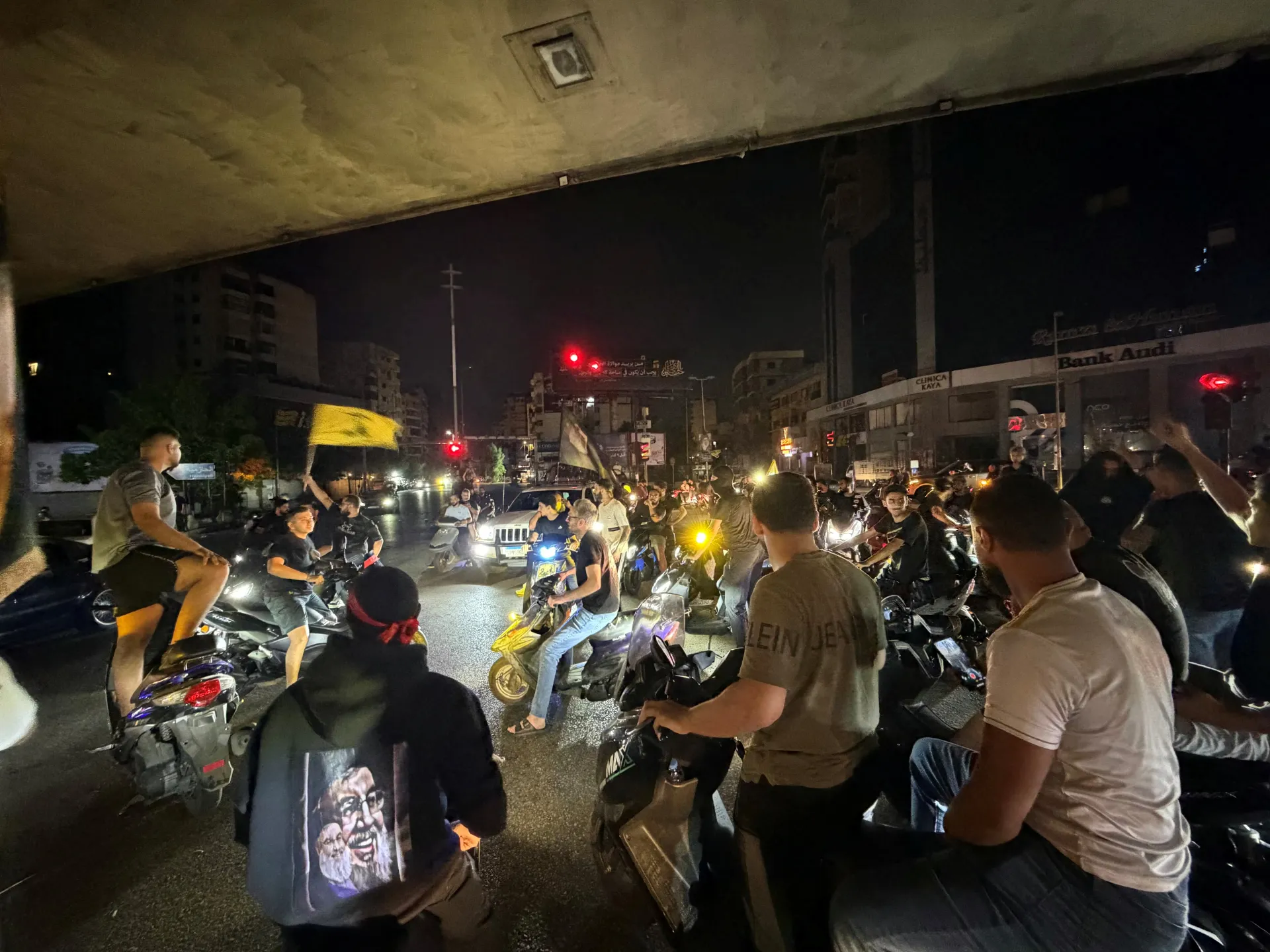
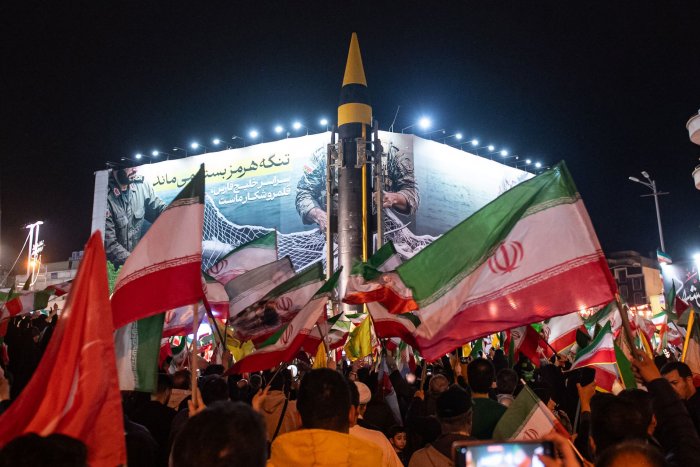
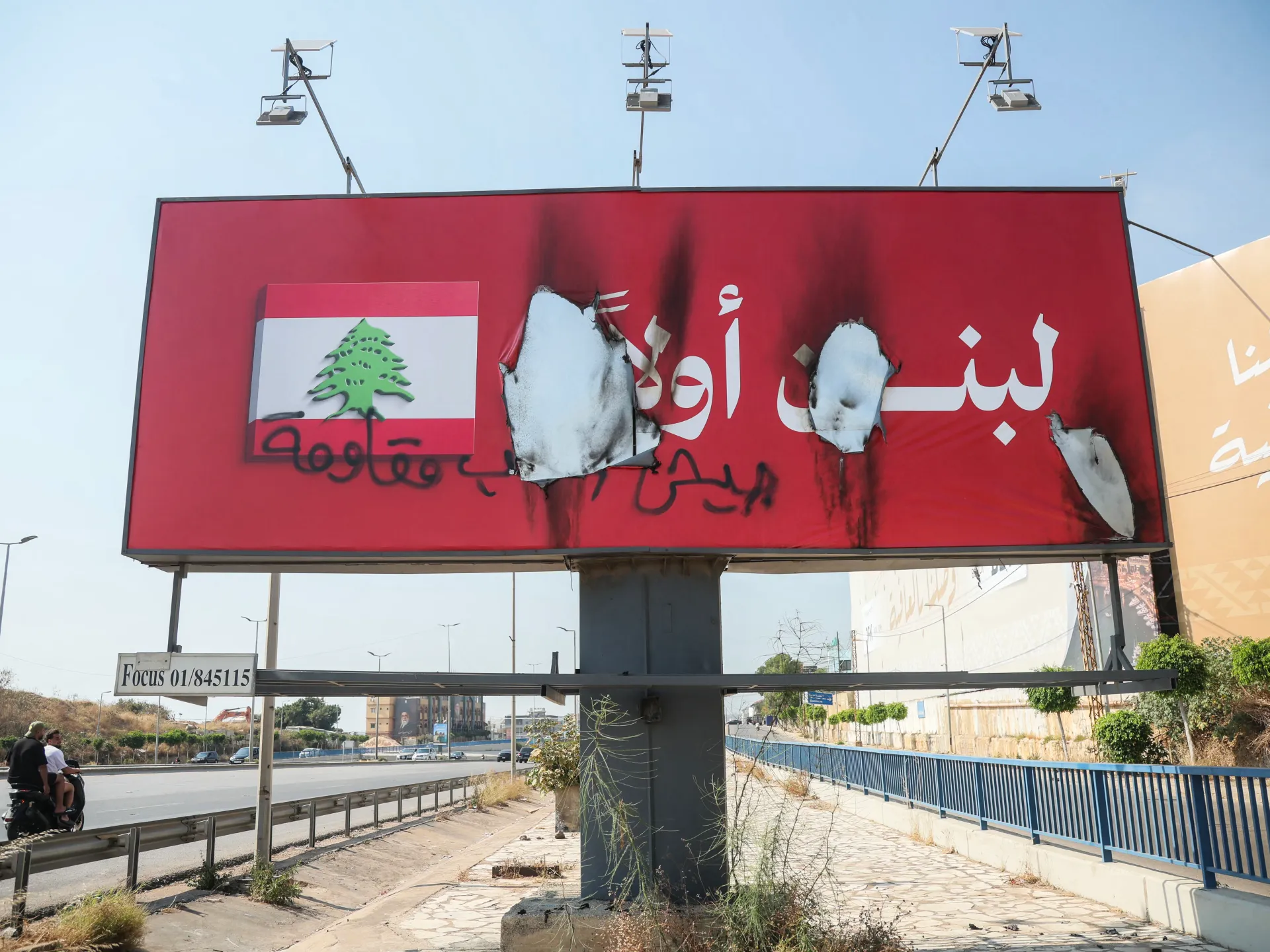
Beirut, Lebanon – After the governments of Lebanon and Israel on Friday signed a United States-brokered framework agreement following months of direct negotiations, protesters took to the streets of the Lebanese capital to express their anger at the deal.
Many of the demonstrators waved flags of the Iran-backed group Hezbollah, which has been militarily confronting Israel’s ongoing invasion and occupation of large swaths of southern Lebanon.
Israel and Hezbollah have been fighting since October 2023, with varying levels of intensity, but the former has twice escalated the conflict – first in September 2024 and then nearly four months ago.
Some of the harshest critics of the framework, which does not force the Israeli army to withdraw from the areas it occupies, have been those most deeply impacted by Israel’s war, which has killed more than 4,200 people and forced hundreds of thousands from their homes since early March.
“After everything my family, my village, the south, and Dahiyeh have endured – the destruction, the displacement, the grief and the loss – it is incredibly difficult for me to accept an agreement with the same state that carried out the military actions that devastated our communities,” said Ali Zaytoun, a resident of Beirut’s southern suburbs, known as Dahiyeh.
Zaytoun, who runs a popular Instagram account called History of Dahieh, said he had been displaced multiple times due to Israeli attacks.
“Imagine someone destroys your home and your life, and then you’re expected to simply move on as if nothing happened,” said Zaytoun. “My protest is about remembering those who suffered, standing up for my community, and expressing that this agreement does not reflect the justice or respect that people who lived through this war deserve.”
A new Oslo?
The Israeli intensification on March 2 came after Hezbollah fired on Israel for the first time in more than a year following the killing of Iranian Supreme Leader Ali Khamenei in a joint US-Israeli air attack on Tehran two days earlier, and as a response to more than 10,000 Israeli violations of a ceasefire reached in November 2024.
On the same day, the Lebanese government declared Hezbollah’s military activities illegal and later tried – unsuccessfully – to expel the Iranian ambassador.
Its position was that Hezbollah’s actions invited Israel’s wrath in a war fought on behalf of Iran and not the people of Lebanon.
Hezbollah, however, continued fighting Israel in southern Lebanon, where the Israeli army has established what it calls a “security zone” that goes as deep as 10km (6.2 miles) into the country.
As attacks continued, Lebanon’s government entered the United States-brokered negotiations with Israel, despite Hezbollah’s objections.
The final text of the 14-point Washington agreement states Israel has no claim to Lebanese territory and that the Lebanese Armed Forces (LAF) will eventually be the authority in southern Lebanon, “pending the verified disarmament of” non-state armed groups such as Hezbollah.
Proponents point to Israel recognising Lebanon’s authority over its own territory, though critics say the framework relies too heavily on the US – Israel’s main military and diplomatic backer and a signatory to the deal – to enforce it.
“The United States is unlikely to act as a neutral mediator and will almost certainly align with Israeli positions whenever disputes arise over the interpretation or implementation of the agreement,” said Karim Emile Bitar, a professor of international relations at the Saint Joseph University of Beirut.
“This creates a fundamentally asymmetric negotiating environment in which Lebanon has little leverage and few effective guarantees.”
Hezbollah chief Naim Qassem declared the agreement “null and void”, calling it “humiliating, shameful, and a surrender of sovereignty”, while Hassan Fadlallah, a Hezbollah lawmaker, warned of “internal conflict” in Lebanon.
Parliament Speaker Nabih Berri called for calm but also declared that the deal was an attempt to incite strife.
Those who backed the government said it had originally little choice but to enter direct negotiations, given its limited leverage in a war where Israel has technological superiority and unwavering US support.
Lebanese Prime Minister Nawaf Salam wrote on social media after the agreement’s signing that it “aims to achieve Israel’s withdrawal from all Lebanese territories”, while President Joseph Aoun called it “a first step” towards restoring Lebanon’s sovereignty.
Still, the final terms of the deal were criticised by many analysts.
“This framework agreement essentially mirrors the reality of the military and political balance on the ground, which is decisively tilted in Israel’s favour,” said Bitar.
Bitar said the agreement was reminiscent of the Oslo Accords, a series of US-brokered agreements signed by the Palestine Liberation Organization (PLO) and Israel in the 1990s.
“We see a similar pattern here: Israeli negotiators seek recognition and get the other side to relinquish leverage while offering no binding timetable or reciprocal obligations,” he added.
On Saturday, Israeli Defence Minister Israel Katz insisted soldiers will remain in Lebanon until Hezbollah is disarmed.
US reliance
Days before the signing of the Washington framework, Iran and the US agreed on a memorandum of understanding (MoU) that aims to end the war launched by the US and Israel against Iran in late February.
The MoU declared, among other things, “the immediate and permanent termination of military operations on all fronts, including Lebanon”, between the two countries and their allies.
Lebanon’s inclusion in the MoU was reportedly an Iranian priority, while a “deconfliction cell” was formed to bolster the supposed ceasefire in the country.
Throughout the war and the period of negotiations, Lebanon’s government has tried to separate itself from Iran – but some said it may have gone too far in the other direction.
“We are seeing the confirmation of what Hezbollah has been warning all along. Not because Hezbollah got it right, but because the Lebanese state got it so wrong,” said Lebanese writer Elia Ayoub.
“I understand the need to not depend on Iran, but what we’ve instead done is become even more dependent on the US than we’ve previously been,” added Ayoub, the founder of the podcast The Fire These Times.
“And it’s the US that has been bankrolling Israel’s genocide in Palestine and war crimes in Lebanon,” Ayoub added.
Analysts also questioned whether the government would be able to implement the deal.
“It appears that the Lebanese side has come under significant US pressure to sign an agreement that is very likely to remain little more than ink on paper, and very unlikely to be implemented in any meaningful way,” said Bitar.
Karim Safieddine, a nonresident fellow with the Tahrir Institute for Middle East Policy, said the framework left the Lebanese government with “very little agency”.
“It’s Israel imposing a deal,” he added. “It’s very clear what this deal is. It’s just a surrender agreement.”
At the same time, some pointed to similarities to the 2024 ceasefire agreement, expressing doubt whether Israel will be incentivised to respect the framework.
“It’s one thing to sign a declaration of intent; it’s another thing to have it implemented, and I can see all kinds of problems emerging from this,” said Nicholas Blanford, a nonresident fellow at the Atlantic Council and author of a book on Hezbollah.
Last year, Israel repeatedly complained that LAF’s efforts to disarm Hezbollah were either too slow or ineffective. The US often sided with Israel despite diplomatic attempts from European and other officials encouraging it to support LAF.
In a call with his US counterpart, President Donald Trump, on Saturday, Aoun said Lebanon “would assume its responsibilities” in implementing the framework and expressed hope Washington would help ensure that commitments are fulfilled, particularly by pressing Israel to pull out from the areas it occupies.
Point 9 of the agreement states Lebanon’s government commits to a “rigorous, performance-based program to enable the capacity of the LAF to assert full military and security control within Lebanon … to implement the disarmament of all non-state armed groups”.
This provision has some in Lebanon worried about potential confrontations between LAF and Hezbollah, but Blanford said the possibility of a large escalation is currently not likely.
“The Lebanese army and the government are unwilling to use force against Hezbollah,” he said. “Forcibly trying to disarm a group that is refusing to disarm is an act of war. And I think the Lebanese army and the Lebanese government would be extremely wary of that.”
SHE’s a singer, songwriter and actress – but Charli XCX is yet to achieve her original life goal.
The Rock Music singer, whose new song Wink Wink is out now, said: “When I was younger, I thought it would be fun if my job was being a fairy or something.
Sign up for the Showbiz newsletter
Thank you!
Charli XCX is yet to achieve her original life goalCredit: GettyCharli said: ‘I think I’ve said this to Lorde before, I was so jealous when I heard Royals for the first time’Credit: Getty
“I had a pink princess dress, a puffed out sparkly kid’s dress that I just absolutely loved.
“It was probably some sort of Toys R Us situation, the peak of fashion, you know. And it came with these little lacy white gloves.
“I remember being really, really into that when I was younger and always wanting to wear it.”
That’s a far cry from the grungy aesthetic of her new album Music, Fashion, Film – which is out next month.
In an interview with Bella Freud on her Fashion Neurosis podcast, Charli also opened up about the envy she has for other artists including Lorde, who she collaborated with on the 2024 song Girl, So Confusing.
Quizzed on whether she gets attacks of “competitive jealousy,” she said: “Of course. I think I’ve said this to Lorde before, I was so jealous when I heard Royals for the first time.
“I was like, ‘I’m so jealous. I wish that I could have written that song.’
“I thought it was so spectacular…it really defined a time, that song.”
SIR ROD’S BACK AT FULL GAS
Sir Rod Stewart headlined the Rock In Rio festival in Portugal – just days after he was seen needing oxygen during a US gigCredit: EPA
For 100 minutes he barely paused for breath, belting out hit after hit while strutting across the stage – which marked his first Rock in Rio appearance in 18 years.
Sir Rod also used his set to make a political point, shouting “F**k Putin,” as he dedicated Rhythm Of My Heart to the people of Ukraine and their president Volodymyr Zelenskyy, much to the appreciation of the crowd.
Rod also had the Portuguese fans eating out of the palm of his hand as he asked: “Are Portugal going to win the World Cup?
“Fingers crossed, guys, fingers crossed.”
Sadly they’ve got a far better chance than his beloved Scotland, who are already heading home.
MILLIE BOBBY BROWN admits married life didn’t get off to the best start – she was stung by a bee as her husband said his vows.
An analyst’s missed remarks and U.S. intelligence systems that weren’t connected to one another are among the missteps that investigators have surfaced while probing the cause of a missile strike on an Iranian school that killed an estimated 120 children, people familiar with the matter said.
Years before the U.S. attacked Iran at the end of February, an intelligence analyst examining information about potential future strike targets in Iran noticed changes at a site the U.S. had previously characterized as a naval facility belonging to the elite wing of the Iranian military in Minab city in the southeast of the country. It was, in fact, now an elementary school.
The analyst remarked on changes at the site in a digital intelligence tool, but that tool wasn’t linked up to the official intelligence database that the U.S. uses to develop strike targets and the information was never conveyed to military commanders, according to people familiar with the matter who declined to be named discussing sensitive topics.
On Feb. 28, when President Trump announced the start of major combat operations against Iran, a missile struck the school. The attack killed an estimated 120 children, and nearly 200 people in all, representing the worst incident of civilian harm resulting from U.S. operations in decades.
The analyst’s remarks, which one of the people familiar with the matter said were submitted in 2019, were never heeded, and the same building was reviewed several more times over the following years without anyone updating the targeting database. These discoveries are among the issues explored in a Pentagon investigation into the school strike, the people said. The results of the probe have not been publicly released.
A Pentagon official said the incident remains under investigation and that the agency has no updates to provide. On Wednesday, Trump said it may not ever be possible to determine fault and that he doesn’t think the U.S. was to blame.
The details unearthed as part of the Pentagon investigation underscore long-standing weaknesses in the U.S. military’s targeting system, one that was supposed to be improved years ago. Upgrades have instead been beset by delays, and yet they’ve grown all the more urgent with the spread of AI. Some tout the technology as a possible solution to targeting woes while others worry it could scale and accelerate the harms of war.
The investigation into the school strike was submitted in April but remains under review at U.S. Central Command, the military theater and combatant command known as Centcom that is responsible for carrying out combat operations against Iran, according to one of the people familiar with the matter.
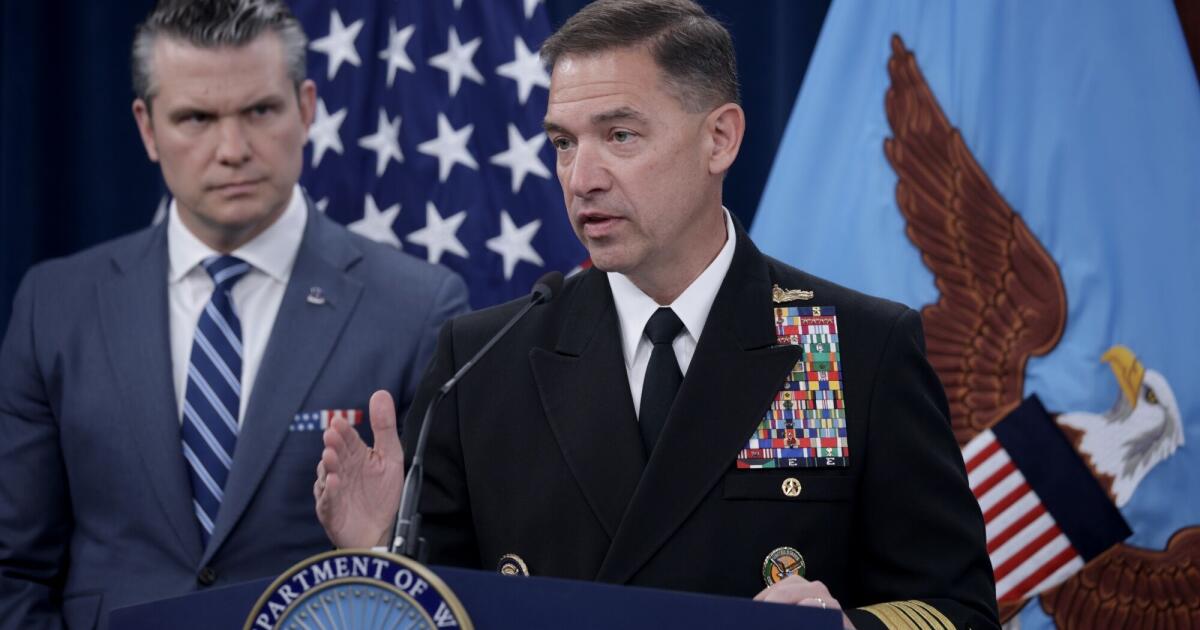
Centcom commander Brad Cooper, a four-star Navy admiral, ordered the investigation and appointed an Air Force general from outside the command with the intention of ensuring a thorough, independent review, the person said.
The analyst’s written remarks about the school, the fact that they were entered into a digital system in 2019 that wasn’t connected to the official intelligence database and the current status of the investigation into the strike have not been previously reported. The New York Times had previously reported that an analyst noticed the building appeared to be a school several years ago and informed one other person. Targeting officials were using imagery that hadn’t been updated in seven years, according to the Times.
There are significant and long-standing gaps in how the Pentagon analyzes potential strike targets, according to former senior intelligence officials and others familiar with the matter. They declined to be named to discuss sensitive matters.
At least two intelligence database systems used for inputting remarks based on imagery, for example, have historically not been connected to the official and authoritative targeting database, people familiar with the platforms said, creating a coordination challenge that continues today.
In some cases during the mid-2010s, targeting data for historically low-priority locations where the U.S. had little historical battle experience, such as Syria, proved to be 10 or 20 years old, according to one of the former senior intelligence officials. Some intelligence staff worked double shifts and weekends at that time to manually update the system.
Starting in 2017, the intelligence enterprise undertook a similar effort to update several thousands of outdated targets in North Korea after relations between Washington and Pyongyang rapidly deteriorated, people familiar with the matter said, calling in satellites and other efforts to capture new, clear imagery as well as other types of intelligence. It took more than a year to update critical targeting information.
A legacy database known as MIDB was created in the 1980s and often relies on manual input. The Pentagon plans to replace MIDB with a machine-assisted version known as MARS that will introduce more automation.
A recently revised Pentagon doctrine outlined the challenges of integrating the many systems used to identify military targets: “The process of targeting occurs on many levels and in many locations simultaneously, yet no single interoperable solution has emerged or been established,” according to the non-public targeting document revised in April and reviewed by Bloomberg. “The entire joint targeting enterprise should seamlessly share well-understood, standardized representations of target intelligence and data and not rely on local databases.”
The MIDB and MARS systems are now both in use, but the effort to shift entirely to MARS is years behind schedule, and authoritative targeting data still relies on MIDB, according to the targeting doctrine.
The U.S. Government Accountability Office in 2020, during Trump’s first term, described MIDB as having “long-standing deficiencies” and said it’s “unable to meet current needs.” And yet six years later, the Pentagon’s targeting doctrine still describes the system as the authoritative, all-source repository of worldwide general military and target intelligence, serving as the national database for all target lists and no-strike lists and a baseline source of intelligence on installations, facilities, military forces and population concentrations.
The characterizations of MIDB in the Pentagon’s latest targeting doctrine haven’t been previously reported.
The hope of some targeting experts is that linking digital systems and more AI will bring down targeting errors in future. An automated check against public sites such as Google Maps, for example, may help flag an anomaly for human review. The Pentagon introduced an agentic AI effort along these lines Thursday.
The Defense Intelligence Agency, an agency responsible for both MIDB and MARS didn’t directly address a request from Bloomberg for comment on MIDB’s deficiencies, delays in the MARS transition or the mislabeled school site. An agency spokesperson said its foundational military intelligence analysts conduct comprehensive analysis of infrastructure and the operational environment, drawing on all intelligence sources to produce expert intelligence analysis and produce and maintain foundational military intelligence.
Such sources can span not only satellite pictures and other imagery analysis, but also signals intelligence, human intelligence and more, the spokesperson said. Combatant commands rely on expert analytic support from these all-source analysts for operational planning and execution, including intelligence for targeting, the spokesperson said.
“DIA works in close coordination with combatant commands and Intelligence Community partners to ensure decisionmakers have the best available intelligence for our national security,” the spokesperson said in a written comment.
Under the latest U.S. targeting doctrine, military commanders are responsible for the decision to prioritize and strike a target. Along with planners, commanders are also required to distinguish between military objectives and civilian ones that are not lawful military objectives for lethal targeting.
A combatant command should establish guidance to mitigate civilian injuries and consider criteria for positive identification of a target, according to an updated section of the Pentagon’s targeting doctrine. A spokesperson for the Joint Staff, the Pentagon’s senior military staff, described that section as a “key update.”
Once a combatant command such as Centcom has assembled a target list, the joint-force commander may also initiate an additional “optional process” called target vetting to assess the accuracy of the intelligence behind the targeting, according to joint targeting doctrine reviewed by Bloomberg. As part of this process, officials would review any potential disagreements about the characterization of a target and any new imagery, the former senior intelligence officials familiar with the process said.
It would be “unthinkable” for a commander not to undertake this target vetting process for attacks planned on the opening day of a new military campaign, one of the former senior intelligence officials said. Centcom vetted targets leading up to the operations against Iran, according to the person familiar with the matter. It wasn’t clear, however, whether Centcom initiated the optional vetting process that would’ve required coordination across intelligence community agencies and a recheck of the underlying information and possibly any new imagery.
Centcom didn’t respond to Bloomberg’s request for comment on the target vetting. A spokesperson for the Joint Staff declined to comment, citing the ongoing investigation.
Jack Shanahan, a former Pentagon director for defense intelligence and retired three-star Air Force general, said there is no excuse for a combatant command to not review and validate the accuracy of information provided for every targeting package. Combatant commanders have the ultimate responsibility for validating the accuracy of targets, he said.
Shanahan described targeting in an interview as a “moribund career field” that had atrophied over two decades while the U.S. military focused on counterterrorism and counterinsurgency in the wake of the Sept. 11, 2001, attacks instead of traditional combat operations. In 2017, he said, he struggled to recruit and fill targeting roles. “We knew there was a dangerous shortage in the number of trained and experienced targeting personnel and weapons effects experts,” he said. “We also knew this would become a major problem in future conventional operations.”
In the days following the Iran school strike, Trump accused Iran of conducting the attack, though he has offered no evidence. Last week, Trump said “mistakes are made and war is nasty” when asked about the strike, committed to releasing the findings of the investigation and added that he’ll accept the results.
Defense Secretary Pete Hegseth said in mid-March that the investigation “will take as long as necessary to address all the matters surrounding the incident” and that his department would “share it when we have it, absolutely.”
Dozens of members of Congress have since demanded answers about what happened. The group Human Rights Activists in Iran said it’s documented the killings of more than 1,700 civilians in the first month of the war.
Emily Tripp, director of the nonprofit group Airwars, a watchdog that logs civilian harm in conflict zones, said that her group had tracked 300 incidents of civilian harm in Iran but that it was difficult to untangle whether the U.S. or Israel was responsible for them. Trump’s own claims on social media about the U.S. being behind some attacks has made it easier for Airwars to pursue accountability, she said.
Tripp said her group refers each incident to Centcom for review. The Defense Department is behind on “every single one of their commitments when it comes to civilian protection,” she said. The Pentagon did not respond to a request for comment on this specific allegation.
Bob Ashley, former director of the Defense Intelligence Agency during the first Trump administration, is among those calling on the Pentagon to publish the results of the investigation.
“Americans know that over 100 children were killed in this strike. We need to talk to them about what happened, because their trust and confidence in us, as the Department of Defense, and as an intelligence community, matters,” Ashley said in an interview.
In a military career spanning 36 years, Ashley helped train generals, was a former commander and senior intelligence officer at the Joint Special Operations Command and Central Command and currently sits on several advisory boards for companies focused on national security.
“We have an obligation to explain the targeting process, how we apply the criteria of the laws of armed conflict and review targets to be transparent to sustain that level of trust and understanding with the American people,” Ashley said.
He said the intelligence community needs to look at what happened, scrutinize their process and ask itself: “What can we do better? What did we miss?”
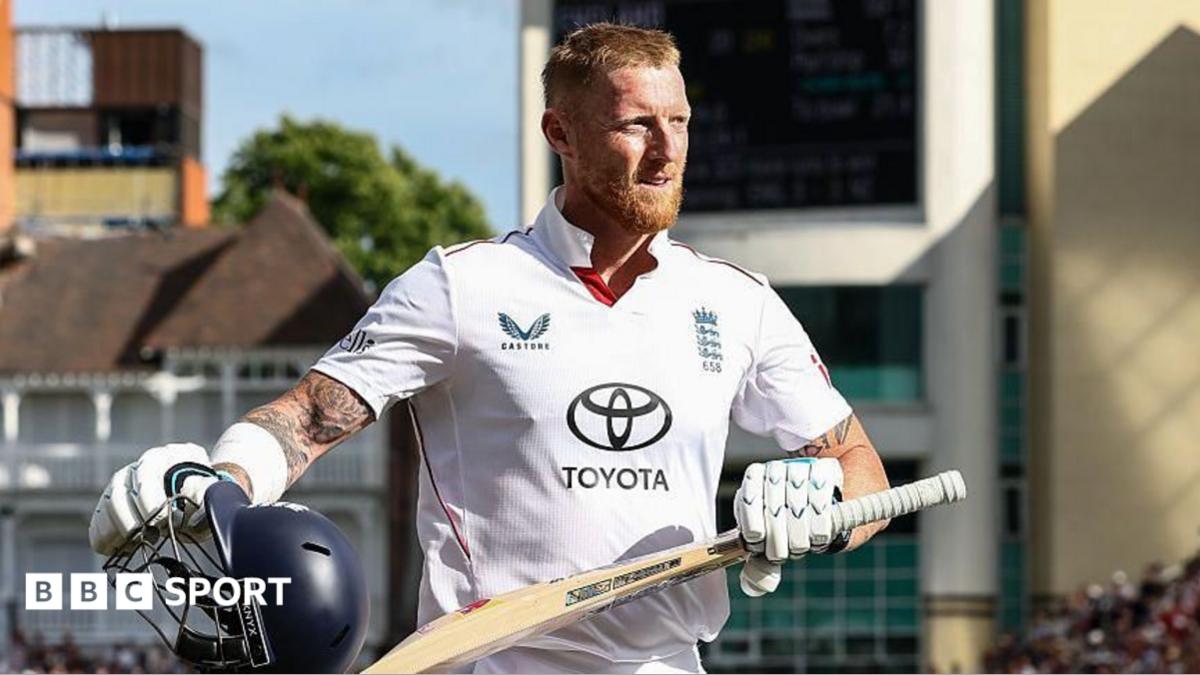
When Stokes was away from the England team for the second Test, he played for Durham and said returning to his county rekindled a love for the game. He confirmed he will continue to play domestic cricket.
“Being back at Durham, when I wasn’t playing in the second Test, I found a new lease of life for the game, but unfortunately I just couldn’t get that feeling back this week,” said Stokes.
“I’m very excited about the next part of what I get to do. Going back to playing for my boyhood club Durham, I’m comparing this week to that week – right now I am buzzing, but there have been moments this week that have been really tough and it just adds to everything and it makes it clear that I’ve made the right decision.”
Stokes said he made the retirement decision when he was putting on his pads to prepare to bat in England’s first innings at Trent Bridge on Saturday.
He told former captain Joe Root and vice-captain Harry Brook on Saturday evening, then revealed the news to the rest of the team on Sunday morning.
“It’s been an interesting four or five weeks, maybe six months in general,” added Stokes. “There are all kinds of emotions when this day comes – relief, happiness, excitement, sadness. Everything that you go through.
“It’s the best thing that I’ve ever been asked to do, captaining England. It is the greatest honour to have on your shoulders but there is also another side to it that people don’t see, only those closest to you see it.
“My family, my wife, they see the bits where it does drain you and it does affect you negatively.”
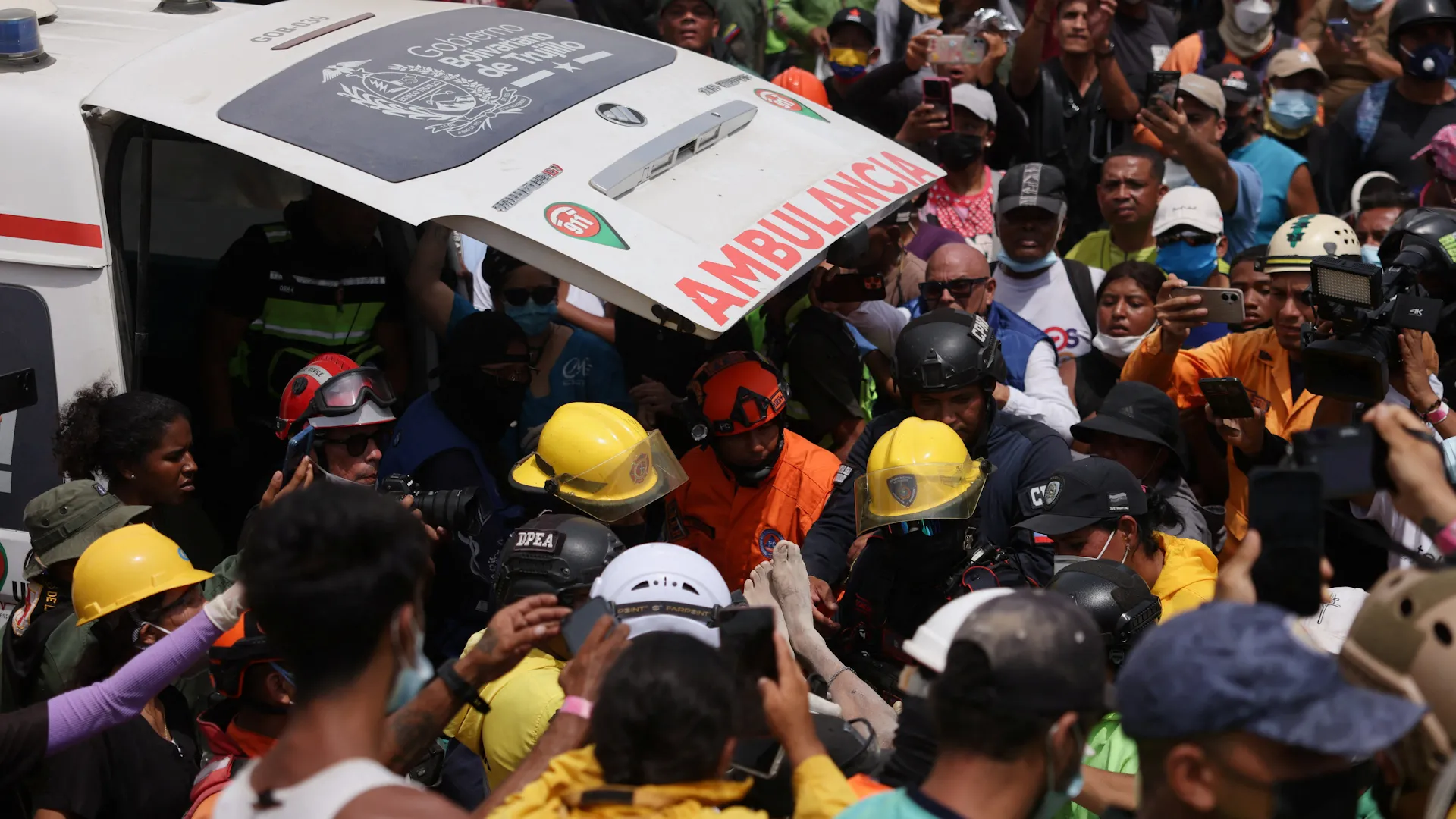
The search for survivors continues in Venezuela after a powerful earthquake left hundreds dead and thousands missing. Al Jazeera’s Teresa Bo reports from one of the country’s worst-hit areas where many residents have lost their homes and are now sleeping outdoors.
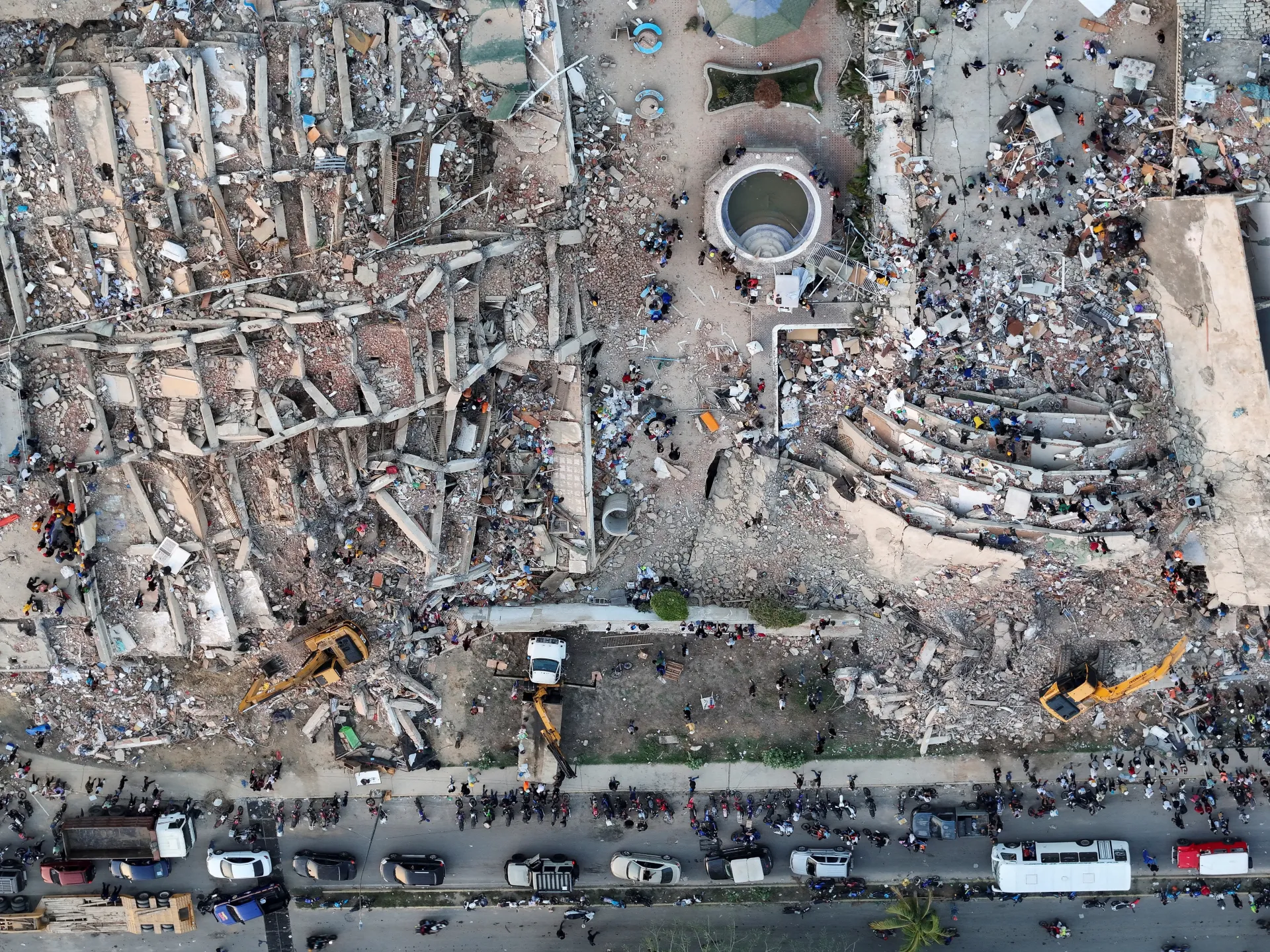
Drone footage from Catia La Mar in Venezuela’s La Guaira shows widespread destruction after twin 7.2 and 7.5 magnitude earthquakes devastated the region. Authorities say at least 1,430 people have been killed, more than 3,200 injured and over 50,000 remain unaccounted for as rescue teams continue searching collapsed buildings for survivors.
As one of the biggest techno DJs in the world, Charlotte de Witte never has her feet on the ground for long. But she comes back to L.A. as much as she can.
In Sunday Funday, L.A. people give us a play-by-play of their ideal Sunday around town. Find ideas and inspiration on where to go, what to eat and how to enjoy life on the weekends.
“Since I started, L.A. has been one of those very important cities. You really want to hit it as a beginning artist. It’s where everything is centered and everything is happening,” De Witte said during an interview at the Grammy Museum in November. She was here celebrating the release of her self-titled album debut. “L.A. made a difference for me.”
Throughout her years partying and performing in L.A., she’s played clubs such as Sound and Exchange LA. Then she grew to larger spaces like the Shrine and City Market, where she played open-to-close sets.
In the past, when things haven’t been as hectic, De Witte has enjoyed many of L.A.’s unique cultural offerings. Here are a few of her favorite things to do on a Sunday in the city.
9 a.m.: Coffee at Maru downtown
When I’m staying around downtown, I like to go to the Arts District and stop by Maru for a coffee. They also make great matcha and pastries. Whether it’s to-go or you’re just hanging around for a bit, great coffee is the best way to start the day!
11 a.m. Roller skate from Venice to Santa Monica
If we have a little bit more time to enjoy L.A. on tour, we always go to Venice. It’s such a unique place to be, but it’s also a very chill place. You’re in L.A., which is a huge city, but because you’re also next to the ocean it’s more calming for the mind and soul. When I’m on tour, I’m always in big cities, in the middle and the heart of where everything’s happening, and I could miss some peace and quiet, because I live in the countryside at home in Lisbon. Venice is that bright, sweet spot in the middle, where you have the more relaxing presence of the water and the beach, but still connected to Los Angeles.
Noon: Lunch at Gjusta
My manager is a big fan of Gjusta. He goes there all the time, wherever he is staying, so I think it kind of rubbed off on me.
2 p.m.: Facial treatment at Formula Fig in Culver City
A facial treatment is one of my favorite self-care moments when I’m on the road. It helps me relax and keeps me feeling fresh. The area around the Culver City location is also really nice for a walk or to grab a drink or a bite.
4 p.m.: Cruise around L.A. with an old-school Manx Beach Buggy
Manx Beach Buggies are an amazing buzz! I recently had the chance to take one for a spin around the city with my wonderful friends at Race Service, the car culture hub on Venice Boulevard in Mid-City. They had an event at Living Room. People from all over the U.S. drove there with their cars. It was incredibly fun, and it felt very, very L.A.!
6 p.m.: Dinner at Dudley Market
I am kind of into wine, especially natural wines. In Portugal, we are doing a lot with wines. Actually, we are building our own vineyard, so it’s important to us to learn more about natural winemaking. Dudley has amazing food and a great wine selection, and it’s also in Venice, so it’s perfect.
11 p.m.: Night out in a rough and sweaty warehouse like Aurora
As a DJ, I obviously have to end my night on the dance floor. It’s such a primal feeling to go clubbing, to all come together and dance to a beat. To feel this in your chest, it’s an experience that human beings have been doing throughout history. Because of the time that I spent on the dance floor, but also the time that I spent on the other side as a DJ, I would really argue that clubbing is essential in everyone’s life. It’s also self-care. During my last stay in L.A. — the week I released my debut album — I played five shows during a three-day period. I enjoyed all the sets, but to end the day with a deep dive into the night, Aurora Warehouse is a great venue.
Group play is over and it’s knockout time at the 2026 FIFA World Cup.
The round of 32 is set, with tournament co-host Canada kicking things off Sunday when it faces South Africa at SoFi Stadium.
Here’s everything you need to know about World Cup knockout stage matches being played Sunday, Monday and Tuesday across the U.S., Mexico and Canada (all times Pacific).
Sunday’s round of 32 match
Canada vs. South Africa
Canada’s Alphonso Davies warms up before a World Cup match against Qatar on June 18.
The buzz: Both teams are making their first appearances in a World Cup knockout round, Canada (1-1-1) after losing its group-play final to Switzerland and South Africa (1-1-1) after upsetting South Korea. Canada, the first World Cup host to play a game outside its borders, could get a boost if Alphonso Davies, its best player, can play after missing the team’s first three games. South Africa scored just one goal of its own in the group stage; Canada got six in one game alone.
Monday’s round of 32 matches
Brazil vs. Japan
Brazil’s Matheus Cunha celebrates after scoring against Haiti at the World Cup on June 19.
The buzz: Brazil won Group C, posting consecutive 3-0 wins over Haiti and Scotland to close out the first round and run goalkeeper Alisson Becker’s shutout streak to 249 minutes. Vinícius Júnior, with four goals, and Matheus Cunha, with three, have accounted for all of Brazil’s scoring. Brazil hasn’t been eliminated in the first knockout stage of a World Cup since 1990. Japan has received goals from five players in an unbeaten run through Group F, where it finished second to the Netherlands. Japan has not won a World Cup knockout-round game in four tries.
Germany vs. Paraguay
Germany’s Kai Havertz reacts during a match against Curaçao at the World Cup on June 14.
The buzz: Germany scored 10 goals in the group stage, but the four-time tournament champions lost to Ecuador and had to rely on a tiebreaker to win the group over the Ivory Coast. Deniz Undav, with three goals, and Kai Havertz, with two, are the only Germans who have scored more than once. Paraguay gutted out a scoreless draw with Australia in its final game to finish third in Group D and squeeze into the round of 32. It has just two goals in the tournament, but it is coming off back-to-back shutouts.
Netherlands vs. Morocco
Brian Brobbey celebrates after scoring for the Netherlands in a win over Sweden at the World Cup on June 20.
The buzz: Morocco, a semifinalist four years ago, did not lose in the group stage but finished second to Brazil on goal differential, setting up this challenging matchup with the Netherlands. Morocco is ranked sixth in the world by FIFA, one spot ahead of the Dutch, who matched Germany with a tournament-high 10 goals in the first round. The Netherlands haven’t lost a first-round knockout game since 2006. Brian Brobbey has three goals for the Dutch while Cody Gakpo and Crysencio Summerville have two apiece. Ismael Saibari has scored in each of Morocco’s three games.
Tuesday’s round of 32 matches
Ivory Coast vs. Norway
Norway’s Erling Haaland celebrates after scoring against Senegal at the World Cup on June 22.
The buzz: Norway rested many of its regulars in its group-play finale, a 4-1 loss to France, to settle for second in Group I. Erling Haaland, playing in his first World Cup, had braces in Norway’s first two games. Ivory Coast finished second to Germany on a tiebreaker but advanced to the knockout stages for the first time. Villarreal’s Nicolas Pépé has two of the team’s four goals.
France vs. Sweden
France’s Kylian Mbappé points during a win over Norway at the World Cup on June 26.
The buzz: Unbeaten France, which has played in the last two World Cup finals, has designs on returning after dominating its group, winning two of its three games by three goals. Kylian Mbappé had braces in the first two games and is tied with Ousmane Dembélé for the team scoring lead for four goals. Sweden finished third in Group F, winning its first game by four goals and losing its second by the same margin. Sweden’s seven goals allowed matches Norway and Algeria for most by a round-of-32 qualifier.
Mexico vs. Ecuador
Mexico’s Luis Romo gestures during a win over Czechia at the World Cup on June 24.
The buzz: Mexico hasn’t won a knockout-stage match since 1986, the last time the tournament was played in Mexico. El Tri didn’t allow a goal in winning its group easily. Colombian-born Julián Quiñones leads the team with two goals. Ecuador beat Germany 2-1 in its final group-play match to squeeze into the knockout stages for just the second time, advancing as a third-place team. It was shut out in its first two matches.
Iranian Foreign Minister Abbas Araghchi (L) and Iraqi Foreign Minister Fuad Hussein hold a joint press conference following their meeting at the Ministry of Foreign Affairs in Baghdad, Iraq, on Sunday. Photo by Ceerwan Azeez/EPA
June 28 (UPI) — The Iranian military launched fresh attacks at U.S. sites in Bahrain and Kuwait on Sunday morning amid an escalation of violence that threatens a fragile peace agreement.
Bahraini and Kuwaiti government sources said each intercepted attacks from Iran, including two ballistic missiles in Kuwait’s airspace. Bahrain said one of the strikes damaged a residential building near an international airport, The Guardian reported.
The renewed violence came after an Iranian drone struck a Singapore-flagged cargo ship while transiting the Strait of Hormuz on Thursday. The U.S. military accused Iran of also striking a Panama-flagged tanker carrying oil on Saturday.
The United States responded Saturday with its own attacks targeting Iranian drone sites. U.S. Central Command said the strikes were “in direct response to continued Iranian aggression against commercial shipping.”
President Donald Trump announced the U.S. strikes in a post on Truth Social that also threatened further violence against Iran. He accused the country of violating a memorandum of understanding that both he and Iranian President Masoud Pezeshkian signed earlier this month.
“It is very possible that they will never learn!” Trump wrote of Iran.
“There may come a point when we are no longer able to be reasonable, and will be forced to militarily complete the job that we very successfully started. If that happens, the Islamic Republic of Iran will no longer exist!”
Shipping via the Strait of Hormuz largely came to a halt in March after the United States and Israel launched attacks on Iran beginning Feb. 28. Iranian Foreign Minister Abbas Araghchi said Sunday that under the MOU signed June 17, Iran is the sole country responsible for managing the strait.
He warned the United States against interfering in shipping through the waterway, the Times reported. He said that further interference could delay the full reopening of the strait.
“Under the memorandum of understanding, no other entity or country has any responsibility in this regard,” he said at a news conference in Baghdad.
A missile identified as “Khorramshahr-4” was on display during a public rally in Tehran’s Enghelab Square on April 21, 2026. Photo by Behnam Tofighi/UPI | License Photo
Hezbollah calls the deal a surrender as Israeli forces stay put and continue striking the south.
Israel has resumed air strikes on southern Lebanon, only days after signing a US-brokered agreement meant to end its war with the country.
The strikes came on Sunday, two days after the framework was signed in Washington following five rounds of talks.
Recommended Stories
list of 3 itemsend of list
Each side is presenting the same document as a victory on its own terms, and the deal has been rejected by Hezbollah and by far-right Israelis, raising immediate doubts over whether it can hold.
Lebanon’s state-run National News Agency (NNA) reported a series of attacks in the south on Sunday, a day after the Lebanese Ministry of Health said one person was killed in an Israeli attack there, the first death since the deal was signed.
Israeli aircraft were also active, with NNA reporting drones flying over the northeastern city of Baalbek and warplanes staging what residents described as a mock raid over nearby highlands.
Israel said its forces were targeting members of Hezbollah, the Lebanese armed group, near the buffer zone its troops occupy inside the country.
The Israeli military also announced that one of its soldiers had been killed in combat in the south. It named him as Captain David Hazutt, 21, a platoon commander in the Golani Brigade, an elite infantry unit, and said a second soldier was lightly wounded.
Israel’s military chief approved continued operations in the zone, saying they were in line with the ceasefire.
Israeli Prime Minister Benjamin Netanyahu on Sunday called the agreement “historic” and “a massive blow to Iran and Hezbollah”.
An agreement was struck between Lebanon and Israel on Friday in Washington, which was described cautiously by United States Secretary of State Marco Rubio as “the beginning of the beginning”.
At the time, Lebanese Prime Minister Nawaf Salam said that the agreement “aims to achieve Israel’s withdrawal from all Lebanese territories”.
Defence Minister Israel Katz said on Saturday that Israeli forces were preparing for an extended stay in the buffer zone, and would remain as long as the group held on to its weapons.
Hezbollah leader Naim Qassem rejected the deal in a statement on Saturday, calling it “humiliating” and “a surrender of sovereignty” and saying his fighters would not leave the battlefield.
Hassan Fadlallah, a Hezbollah member of parliament, said on Sunday that any move by the Lebanese army to enforce the agreement would push the country towards internal conflict, as supporters of the group protested across the capital against the deal.
Itamar Ben-Gvir, Israel’s far-right national security minister, said the deal handed Hezbollah a “lifeline” and dismissed the idea that Lebanon’s army could disarm the group. He said he had opposed the agreement in cabinet for weeks and would continue to do so.
The war began on March 2, when Hezbollah fired rockets at Israel in response to the killing of Iran’s supreme leader in US-Israeli strikes.
Israel answered with heavy air raids and a ground invasion. More than 4,200 people have been killed in Lebanon since then, according to the country’s Health Ministry.
Iranian Foreign Minister Abbas Araghchi said on Sunday that Washington should force Israel to stop its strikes and pull out of the areas it occupies in Lebanon, citing a separate understanding he said was binding on both Israel and the United States.