WASHINGTON — The White House is warning Congress that funding to pay Department of Homeland Security personnel will “soon run out,” sparking new threats of airport disruptions and national security concerns as the House slow-walks legislation to end what has been the longest-ever lapse in agency funding.
In a memo late Tuesday to lawmakers, the Office of Management and Budget said money that President Trump tapped to pay Transportation Security Administration and other workers through executive actions will be exhausted by May. It called on the House to quickly approve the budget resolution senators approved in an all-night session last week that would pave the way for full funding for the department.
“DHS will soon run out of critical operating funds, placing essential personnel and operations at risk,” the memo said.
The pressure from the Trump administration could help House Speaker Mike Johnson, whose narrow Republican majority has been stalled out, tangled in internal party disputes on a range of pending issues, including the Homeland Security funding. They have left the chamber at a virtual standstill.
The House was expected to vote as soon as Wednesday on the Senate budget resolution that is designed to unlock a multistep process to eventually fund the department. But by midday, House action again screeched to a halt. The administration has warned GOP lawmakers off making changes that could prolong passage.
“Restoring funding for the Department of Homeland Security has never been more urgent, as demonstrated by recent events,” the memo said, a nod to the situation over the weekend when a man armed with guns and knives tried to storm the annual White House correspondents’ dinner that Trump, the vice president and top Cabinet officials were attending.
Homeland Security shutdown is longest ever
Homeland Security has been operating without regular funds for more than two months after Democrats refused to fund Immigration and Customs Enforcement and Border Patrol without changes to those operations after the deaths of Americans protesting Trump’s deportation agenda.
While immigration enforcement workers have largely been paid through the flush of new cash — some $170 billion — that Congress approved as part of Trump’s tax cuts bill last year, others, including TSA, have had to rely on Trump’s intervention through executive action to ensure their paychecks.
But with salaries topping $1.6 billion every two weeks, Homeland Security Secretary Markwayne Mullin said recently, those funds are drying up.
More than 1,000 TSA officers have quit since the shutdown began, according to Airlines for America, the U.S. airlines trade group that called Wednesday on Congress to fully fund the agency.
“The urgency to provide predictable and stable funding for TSA is growing stronger by the day,” the group said in a statement. “Time and time again, our nation’s aviation workers and customers have been the victim of Congress’ failure to do their jobs.”
Complicated budget strategy ahead
House and Senate Republicans have embarked on a go-it-alone strategy, attempting to approve funds for Immigration and Customs Enforcement and Border Patrol without Democrats. They want to provide $70 billion for those immigration operations for the remainder of Trump’s term to ensure no further interruptions.
It’s a cumbersome process, the same that was used last year to approve Trump’s tax cuts bill, that will play out over several weeks.
The Senate launched the process last week, and is now waiting on the House to act. Once that budget resolution is approved, both the House and Senate are expected to draft the actual funding bill, a process that can take weeks.
In the meantime, Johnson is next expected to quickly turn this week to legislation that would fund the other parts of Homeland Security, including TSA, the Coast Guard and other agencies.
That bipartisan bill has support from Democrats and already passed the Senate a month ago, when Republicans reluctantly agreed to carve out the immigration-related funds that Democrats had opposed. But it has been stalled out in the House, as Republicans in that chamber disagreed with the Senate’s approach.
Mascaro writes for the Associated Press. AP writer Rio Yamat in Las Vegas contributed to this report.
Ever-growing power conferences are the driving force behind an impending expansion of the NCAA men’s and women’s basketball tournaments, which ESPN reported could be formalized within weeks and begin next season.
The field would grow from 68 teams to 76 that would include eight additional at-large teams in each tournament. The current First Four — eight teams playing four games — would expand to 12 games played by 24 teams at two sites on the first Tuesday and Wednesday of the tournament. The traditional 64-team bracket would begin Thursday as usual.
Mid-majors likely are tempering any celebration. The change might not mean more invitations to the Big Dance for underdogs because the NCAA and its media partners favor large, established schools with large, established fan bases for viewership and revenue.
The Power Four — the Big Ten, SEC, Big 12 and ACC — plus the Big East comprise 79 schools and continue to add rather than subtract. Even teams with conference records under .500 are usually considered more desirable additions to March Madness than mid-major potential Cinderellas.
Power conference teams play more highly regarded opponents than do mid-majors, who often struggle to schedule top opponents. That’s called strength of schedule, and advanced metrics such as KenPom, NET and Wins Above Bubble usually favor power conference schools.
It’s a bit too soon to start listing schools that likely would make the cut next March after missing out in recent years. The NCAA cautioned that the expansion is not official — yet.
“Expanding the basketball tournaments would require approval from multiple NCAA committees, including the men’s and women’s basketball committees, and no final recommendation or decisions have been made at this time,” the NCAA said in a statement.
Those final steps have been initiated, and one anonymous source told ESPN that approval by those committees “are just formalities.”
The women’s tournament would include the same expansion — and likely also favor the addition of teams from the power conferences.
April 29 (UPI) — The U.S. Supreme Court ruled against Louisiana’s newly drawn congressional map Wednesday, saying it relied too heavily on race.
The 6-3 decision eliminates one of the two predominantly Black congressional districts established by redistricting from the 2020 census.
Supporters of the redrawn map said it abided by Section 2 of the Voting Rights Act, which prevents lawmakers from packing racial minorities in a limited number of districts or spreading them across too many to diminish their voting power.
“When §2 of the Act is properly interpreted, it imposes liability only when circumstances give rise to a strong inference that intentional discrimination occurred,” he wrote.
The ruling weakens the landmark Voting Rights Act passed in 1965 to limit racial discrimination in voting. The Supreme Court dealt the act a blow in 2013 when it struck a core provision providing oversight to states with a history of voting discrimination.
With the new ruling by the high court, Republican lawmakers will have an easier time redrawing state maps to more closely align with their party.
Justice Elena Kagan, one of the three dissenters, said such intentional discrimination is hard to prove and that Wednesday’s decision serves to “eviscerate the law.”
“Under the Court’s new view of Section 2, a State can, without legal consequence, systematically dilute minority citizens’ voting power,” she wrote.
It’s unlikely the Supreme Court’s ruling will have an impact on midterm elections later this year as early voting in congressional primaries begin May 16.
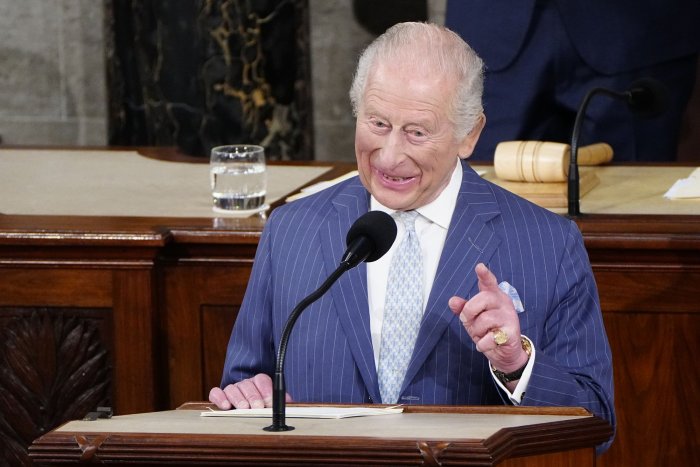
Britain’s King Charles III delivers an address to a joint meeting of Congress at the U.S. Capitol on Tuesday. The king and Queen Camilla are on a four-day state visit to the U.S. with stops in Washington and New York. Photo by Bonnie Cash/UPI | License Photo
Eni is advancing several oil and gas projects in Venezuela. (Deposit Photos)
Caracas, April 29, 2026 (venezuelanalysis.com) – The Venezuelan government signed new energy agreements with Italian conglomerate Eni in a ceremony at Miraflores Presidential Palace on Tuesday.
Acting President Delcy Rodríguez extended a “special welcome” to Eni CEO Claudio Descalzi and other executives, who were joined by Oil Minister Paula Henao and state oil company PDVSA President Héctor Obregón.
“We are witnessing a very important moment, a milestone in the relations between Eni and Venezuela,” Rodríguez affirmed, adding that Eni is planning “one of the largest investments” in the Venezuelan oil sector.
The contract establishes conditions to relaunch the exploration of the 425 square-kilometer Junín-5 block of Venezuela’s Orinoco Oil Belt. The Junín-5 is estimated to contain 35 billion barrels of extra-heavy oil in place, though only a fraction will be recoverable.
For his part, Descalzi described the top-level ceremony as a “great honor.” He indicated that the signed deal created conditions to “accelerate development” of Junín-5 activities and that the company would finalize its investment plan by the end of the year.
The Junín-5 block was assigned in the late 2000s to Petrojunín, a joint venture where PDVSA and Eni held 60 and 40 percent of shares, respectively. Crude extraction began in 2013 but did not hit the established targets, hovering around 10,000 barrels per day (bpd) by the end of the 2010s.
The revamped agreement was crafted under Venezuela’s recently overhauled Hydrocarbon Law, which introduces a series of pro-business incentives while curtailing state control over the energy sector.
Under the new law, minority partners can directly manage oilfield operations and sales, whereas in the prior framework that was PDVSA’s exclusive prerogative. Additionally, private companies can have royalties, income tax, and other fiscal contributions slashed at the government’s discretion as well as bring eventual disputes to international arbitration bodies.
In March, Eni, alongside Spain’s Repsol, inked a contract to further development of the Cardón IV offshore natural gas project. The European companies each own 50 percent stakes in the venture and recently announced plans to increase output by roughly 10 percent in the short term.
Eni, which has around 30 percent of its shares owned by the Italian state, is also a minority stakeholder in Petrosucre, a joint venture that operates the Corocoro offshore oilfield. In 2025, the ventures with Eni participation produced an average of 64,000 barrels of oil equivalent per day.
Alongside Eni and Repsol, Chevron and Shell have likewise struck new deals in recent weeks under the favorable conditions of the hydrocarbon reform. Chevron increased its stake in the Petroindependencia joint venture, while its Petropiar project with PDVSA was assigned a new drilling block in the Orinoco Belt. For its part, Shell will take over light and medium crude projects in Eastern Venezuela and several offshore natural gas initiatives.
The acting Rodríguez administration has actively courted foreign investment into the South American country’s energy and mining sectors, with leaders openly acknowledging the incorporation of “suggestions” and “recommendations” from Western conglomerates into the recent reform.
Alongside multiple delegations of corporate executives, Rodríguez has also hosted Trump officials, including Energy Secretary Chris Wright and Interior Secretary Doug Burgum, ahead of the recent hydrocarbon and mining reforms.
Last week, newly appointed US Chargé d’Affaires John Barrett stated that Washington’s goal is to “place the private sector at the center of Venezuela’s transformation” during a meeting with the Venezuelan-American Chamber of Commerce and Industry (VENAMCHAM).
On Monday, Barrett was a keynote speaker at a Venezuelan Oil Chamber (CPV) event and hailed US “innovative investment” as the key to “turn Venezuela into a global energy hub.”
Since the January 3 military strikes and kidnapping of Venezuelan President Nicolás Maduro, the Trump administration has issued multiple licenses to facilitate the return of Western conglomerates to the Venezuelan energy and mining sectors.
The licenses mandate that all royalty, tax, and dividend payments be made into accounts run by the US Treasury. Caracas and Washington recently announced the hiring of external auditors to oversee the flow of the US-controlled Venezuelan resources.
TURN back the clock 12 months, and Wynne Evans’ life was falling apart.
Being axed by the BBC from his radio show last May appeared to be the final nail in the Welsh tenor’s career coffin after he was sacked from the Strictly Live Tour over accusations of an inappropriate sexual comment.
Wynne Evans was axed from the Strictly Come Dancing live tour following his crude remark to Janette ManraraCredit: PAWynne was then dropped by the BBC following a four-month investigationCredit: Facebook
Devastated, Wynne, 54, told this newspaper of his anguish and despair at being made a “scapegoat” for yet another BBC scandal – confirming what was pushed as a “vile sexual remark” was actually a joke amongst his one-time friend Jamie Borthwick.
The apology issued at the time for the comment was, Wynne explained, written by the BBC and ultimately ended up being the metaphorical sword he would die on.
Friends furiously rushed to defend Wynne to The Sun, and today still pour scorn on soap actor Jamie for failing to defend Wynne when he knew the truth behind the comment.
Jamie, 31, was later sacked by EastEnders four months after Wynne was given the boot.
Wynne spoke to The Sun after the Strictly chaosCredit: Dan Charity / Newsgroup Newspapers LtdWynne Evans’s latest company accounts show reserves of more than £670,000Credit: PAWynne and Jamie, back left, before the chaos of the Strictly TourCredit: RexFriends say Wynne Evans is focusing on work, family and a fresh startCredit: Instagram
“It felt like karma,” one friend tells The Sun.
“Wynne was hung out to dry, and Jamie, who was at the centre of it all, said absolutely nothing. They both ended up losing everything.”
Broken but not beaten, friends explain Wynne has quietly rebuilt his life – and is slowly carving out a life away from the constrictions of his old BBC paymasters.
His property business, Wildvine Properties, friends say, is starting to take off – allowing Wynne to return to what he loves: performing.
“Wynne is made for radio, and his daily show, broadcast from a studio he built in his home, is doing really well.
“He started working on Radio Dragon last month, too, and his Sunday morning show has been really successful.
“His devoted following, who loved his BBC Radio Wales show, have all followed him there, and the audience research has shown Wynne is beyond loved.
“Last month, he was invited to sing at Wrexham FC too, and the reception was so warm, it was a massive boost for him.
“Quietly, Wynne has built up a property business, which includes a three-bed house in Llansteffan, which is hugely popular on Airbnb.
Wynne could have allowed the BBC to cancel him, but he refused to be cowed.
Insider
“It’s given him a quiet income so he can focus on rebuilding and moving on with his life.
“Wynne was virtually destroyed by the BBC and hung out to dry. But he is proof that once the chips are down, you can turn things around.”
But there is no question that his actions were nothing more than ill-judged.
Wynne said: I realise now you cannot make jokes like that in the workplace – it’s deeply unprofessional.
“I’d be happy to go on any language and behavioural course that the BBC wants to send me on. I’d be thrilled to go on a course that could save me from situations like this.
“Society’s changing so quickly, and I’d be the first to say perhaps I’ve got it wrong on occasion. Unfortunately, I wasn’t offered a course like that.
“All I want now is to focus on performing and get back to my radio show – I can’t quite believe I’ve ended up here, and I just hope everyone can read this and know I’m not a bad guy.”
‘Wynne is a good man’
As he started to move forward with his life, friends explained that the support from his loyal fans, affectionately known as “Wynners”, is the people Wynne feels most grateful for.
“Wynne is a good man who has been through hell,” a pal says.
“The fans who have always supported him stood by him, and that means the world to him.”
Wynne’s personal company finances certainly show things are not as dark as they were this time last year.
The latest report for the firm shows Wynne is sitting on reserves of just over £670,000.
He has taken his time and slowly rebuilt his life. He was totally broken this time last year.His whole world had imploded, and at times he felt like he had nothing to live for.
Insider
And pals explain Wynne is keen to continue carving out a new position for himself in the public domain – starting next with a series of four live shows.
The performances are billed as a mix of stand-up comedy and opera, and Wynne is looking forward to taking another step back into the limelight.
“Wynne could have allowed the BBC to cancel him, but he refused to be cowed,” a friend explains.
“He has taken his time and slowly rebuilt his life. He was totally broken this time last year.
“His whole world had imploded, and at times he felt like he had nothing to live for.
“Wynne took baby steps and got himself back on his feet. Now things are really moving in a positive direction, and the future is looking bright again.
“What happened last year is something that Wynne will never be able to forget, and really, he is still processing that.
“But he wants to show people that no matter how bad things get, no matter how many times your name is dragged through the mud, no matter how many people you thought were friends turn on you, with the love of your family and your friends, you can make it through.
“Wynne’s story is one of salvation, and he will be telling it with brutal honesty and humour.”
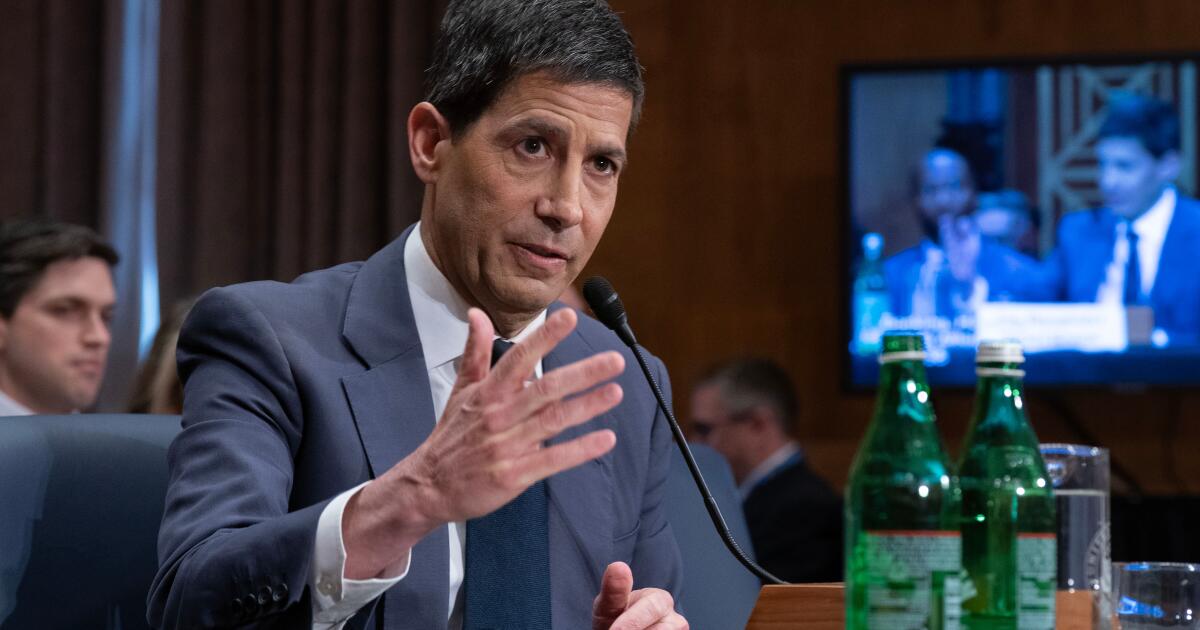
WASHINGTON — The Senate Banking Committee voted on party lines Wednesday to approve Kevin Warsh as the next chair of the Federal Reserve to replace Jerome Powell, a longtime target of President Trump’s insults for not cutting borrowing costs as far as the president wanted.
The vote was 13-11, with all Republican senators voting in favor and Democrats opposed.
Warsh is a former top Fed official but has also been a sharp critic of the institution and Powell’s leadership. He has called the inflation spike to 9.1% in 2022 the central bank’s biggest policy mistake in four decades. A vote on his nomination probably won’t take place until next month, but he could be confirmed by the time Powell’s term as chair ends May 15.
The Senate Banking vote is the first of two key events surrounding the future of the Fed’s leadership. Also Wednesday, Powell is presiding over what will probably be his last meeting of the Fed’s interest rate-setting committee. At a news conference Wednesday afternoon, Powell may indicate whether he will remain as a member of the central bank’s board of governors after his term as chair ends.
It would be unusual for Powell to stay, but doing so would deprive the Trump administration of an opportunity to appoint a new member to the board. Powell may choose to stay if he sees it as necessary to protect the Fed’s independence, which has become part of his legacy as its leader.
Sen. Tim Scott, a South Carolina Republican and chair of the committee, said Warsh is “battle tested” and added that, “It is incredibly important that we break the bind of Bidenomics on households across this nation.”
Sen. Elizabeth Warren, a Democrat from Massachusetts, criticized the banking panel for voting on Warsh’s nomination. Doing so “will bring the president one step closer to completing his illegal attempt to seize control of the Fed and artificially juice the economy,” she said, citing Trump’s effort to fire Fed governor Lisa Cook and investigate Powell.
The Fed on Wednesday is widely expected to leave its key rate unchanged at about 3.6% for its third straight meeting, defying Trump’s calls for lower rates.
Warsh has called for “regime change” at the Fed and could alter many of its practices, including the economics models it focuses on, how it communicates with the public, and how large its bondholdings will be in the long run.
Those changes could affect financial markets, but otherwise won’t necessarily be visible to the general public. But Warsh has also advocated for additional interest rate cuts, which could potentially lower borrowing costs for mortgages, auto loans, and business loans. He will face barriers to implementing those cuts anytime soon, however, largely because the Iran war has caused a spike in gas prices, pushing inflation to a two-year high of 3.3%.
The Fed typically keeps rates elevated, or even raises them, to combat worsening inflation.
Most of the other 11 members of the Fed’s rate-setting committee have indicated they would prefer to wait and evaluate where inflation and the economy are headed before making any changes to rates. It could take time for Warsh to build up enough influence to push for rapid rate cuts. He will also replace Stephen Miran, a member of the Fed’s rate-setting committee who was appointed by Trump last September and is the most consistent advocate for rate reductions at the central bank.
Warsh also faces questions about his independence from the White House, a key issue that dogged him during a Senate Banking hearing last week. On Wednesday, Warren said, “Mr. Warsh is a Trump sock puppet who is so cowed by the president that he could not even say that Trump lost the 2020 election.”
Last December, Trump called for much lower interest rates in a social media post, and added that “anyone who does not agree with me will never be Fed chair!” And just last week he told Fox Business that he expects rates to head lower, “when Kevin gets in.”
Warsh denied at his hearing, however, that Trump had ever pressured him directly to cut rates.
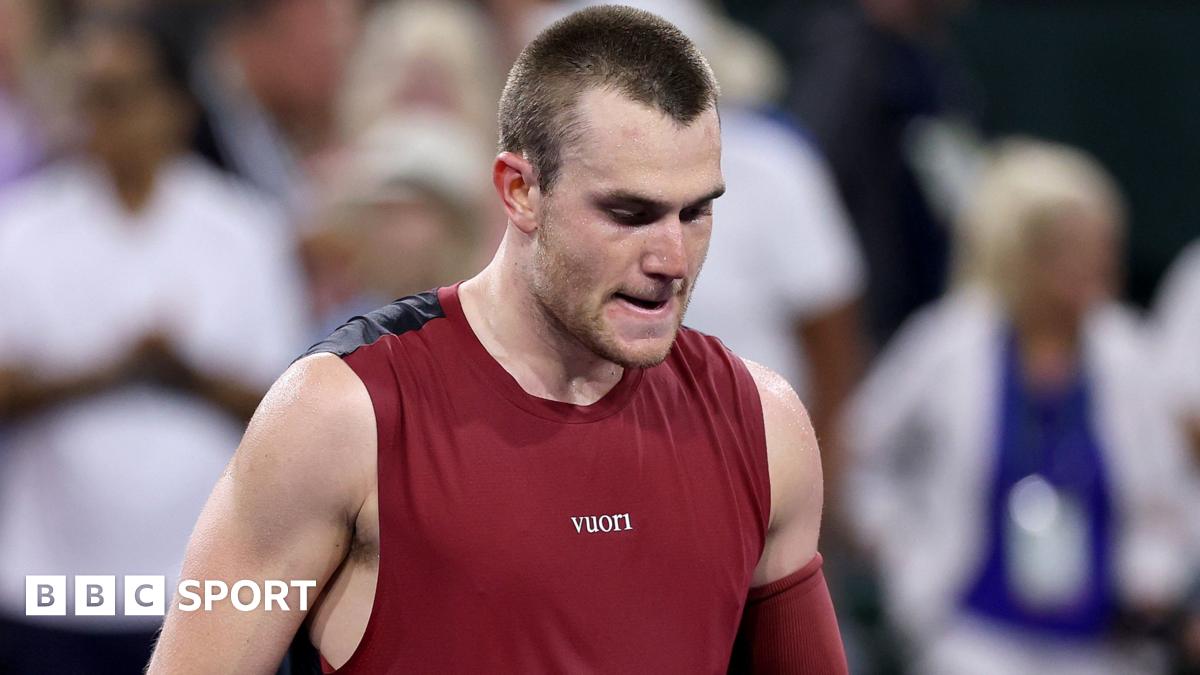
Britain’s Jack Draper will miss the rest of the clay court season – including next month’s French Open – because of an ongoing knee injury.
The 24-year-old hopes to return for June’s grass court season but by then will almost certainly have fallen outside the world’s top 100.
Draper retired from his one and only clay court match of the season in Barcelona earlier this month because of the tendon issue in his right knee.
He then pulled out of back-to-back ATP 1000 tournaments in Madrid and Rome, but expressed optimism that he would be fit for the French Open.
“My knee is on the mend and I’ve started back hitting balls but unfortunately I have been advised not to play Roland Garros,” Draper posted on Instagram.
“As gutting as it is to miss another Slam, the advice is not to rush straight back into playing five set tennis on clay.”
The tournament in Barcelona was just the fourth event of Draper’s comeback from bone bruising in his serving arm, which – bar one match at the US Open – had kept him off the tour since Wimbledon last year.
“Off the back of the arm injury, I’ve been restricted with my training and by giving myself the time to heal and build, I can be the player I want to be out there once again,” Draper added.
The decades-old football book craze will comprise 980 unique stickers, including 68 ‘special’ ones in a 112-page album.
Published On 29 Apr 202629 Apr 2026
For generations of football fans, no World Cup would be complete without the thrill of opening a packet of Panini stickers and discovering Zico, Franz Beckenbauer, Diego Maradona or Lionel Messi staring back.
Since Italian company Panini’s first sticker collection at the 1970 World Cup in Mexico, trying, and usually failing, to complete the set has been an obsession for young fans around the globe, with playground swapping mandatory.
This year’s World Cup in the United States, Canada and Mexico will present the biggest challenge yet, though, and will require a considerable amount of pocket money.
With 48 nations heading for the tournament in June and July – the largest edition ever – 980 unique stickers, including 68 “special” ones, will be required to fill the 112-page album that will be available from Thursday.
Individual packets of seven stickers retail at 1.25 pounds ($1.69) in the United Kingdom, meaning that even with impossibly perfect luck and no duplicates, 140 packets would be required, costing 175 pounds.
Statistically, however, more than 1,000 packets may be required to acquire every player in the album, meaning an outlay in the region of 1,000 pounds ($1,351).
Panini’s biggest-ever collection was launched at a special event at Wembley Stadium on Tuesday, with former England players David James, John Barnes and Gary Cahill reliving their sticker-hunting days.
“As someone who grew up collecting Panini stickers, swapping with friends in the playground and trying to complete the album every tournament, the album has always marked the real start of a World Cup for me!” former Chelsea defender Cahill said.
“Seeing myself in the collection during my playing days was a surreal and proud moment, and a reminder of how these stickers become part of the story of every World Cup.”
Panini say they will be hosting a live “swap shop” in May around the UK, giving collectors the chance to find their must-have players while a “Sticker Box” will travel up and down the country, giving away sticker packets and albums.
When the dust has settled on the World Cup, it might also be prudent to store duplicates in the loft as there is a burgeoning market in vintage stickers.
In 2021, a 1979 Panini sticker of Maradona, then aged 19, sold for 470,000 pounds (about $556,000 at the time) at auction.
Weekly insights and analysis on the latest developments in military technology, strategy, and foreign policy.
The United States Marine Corps on Tuesday gave us our first glimpse of its evolving plan for its ground forces to succeed in the battlefield of the future. Dubbed Ground Combat Element 2040 (GCE 2040), it calls for ensuring that Marines are not just equipped with the latest technology, but that they know how to use it, all while maintaining readiness as they integrate these new systems into their formations. While all the final details remain in flux, we are getting a general idea of some of the elements the plan will include.
A working concept of the plan was presented for the first time today during a panel at the Modern Day Marine Expo held in Washington, D.C. It builds on the vision of former Marine Commandant Gen. David Berger’s Marine Force Design 2030 initiative, according to one of the current Corps leaders working to implement GCE 2040.
“This is really an opportunity for us to describe the future of the ground combat element in the United States Marine Corps,” explained Maj. Gen. Jason Morris, the Corps’ Director of Operations, Compliance, Policies and Operations. We want to “make sure that we have a clear vision of the capabilities required to field the most lethal, survivable ground combat element in the world, and make sure that we’ve got a pathway over the next three fiscal year defense programs that we are keeping our eye on the horizon, staying adaptable and incorporating new technologies into our Marine divisions and those subordinate elements that are a part of it.”
U.S. Marine Corps Lance Cpl. Corey Ashby, a small unmanned aircraft system operator with 3rd Light Armored Reconnaissance Battalion, 1st Marine Division, pilots a first-person view sUAS during a live fire demonstration rehearsal at Marine Corps Base Camp Pendleton, California, Jan. 28, 2026. (U.S. Marine Corps photo by Cpl. Joshua Bustamante) Cpl. Joshua Bustamante
In addition, the Marines are “also continuing to refine the force design vision, to make sure that we are ready to go for any crisis, contingency or conflict in the future,” Morris added.
To better explain the GCE 2040 concept, Morris played a video laying out some of what it entails. The video, which has not been yet been shared online, and a document that will be published in coming weeks, focuses on how the Marine Corps approaches human-centric warfare of the future.
“GCE 2040 is about equipping the Marine, not the machine,” the video stated. “While looking ahead to integrate robotic and autonomous systems into our formations and operationalizing AI at the tactical edge through concepts like Project Dynamis [an integrated battle management system being developed by the Marines], the Marine Corps will enable combat formations to sense, make sense and act with greater speed and precision than any adversary.”
Under GCE 2040, Marines will “integrate advanced sensors and intelligence networks to find and fix the enemy across all domains” while “conducting expeditionary maneuver in contested spaces and sustaining a resilient force through all phases of the operation,” the video stated. In addition, Marines will employ “joint forceful fires and achieve the effects of mass while mitigating vulnerabilities striking adversary targets from land, air and sea,” and establish “persistent, survivable [command and control] networks that enable decision making at machine speed from the strategic level down to the squad.”
The objective “is to generate the tempo of decision and action that allows us to shape, seize and hold key maritime terrain, deter aggression and prevail decisively in any future conflict,” the video explained.
This broadly fits with the U.S. military’s push to create ever larger and faster kill webs, in order to break the enemy’s decision cycle.
A screen cap from the video the Marines used to unveil their new Ground Combat Element 2040 plan. It illustrates a distributed command and control system. (USMC)
When we asked for more details, the Marines told us that the plan includes addressing the need for ground-based air defense down to the squad level.
“The proliferation of inexpensive one-way attack drones is the most significant tactical threat we face,” the Marines told us. “While systems like the Marine Air Defense Integrated System (MADIS) and Medium-Range Intercept Capability [MRIC] are critical for a layered defense at echelon we must continue to thicken the protective layer that cover Marines at all echelons.”
U.S. Marines with Marine Corps Systems Command, fire a Stinger Missile from a Marine Air Defense Integrated System (MADIS) at Yuma Proving Ground, Arizona, December 13, 2023. (U.S. Marine Corps photo by Virginia Guffey)
You can read more about the Marines’ emerging doctrine for devolving air defense down to the individual Marine in our story here.
In a broader context, including air defense and offensive capabilities, the Marines told us “We must increase investment in multi-domain lethality and targeting systems that enable the right weapon to engage the right target at the right time to maximize the efficient use of lethal means against the enemy… The modern battlefield demands that we develop and field dispersed, AI-enabled targeting systems to create a network of sensors across the entire GCE.”
The plan also involves evolving how Marines view technology. Autonomous systems and AI are a central focus of the new plan. The Marines state that these are not just tools, but are members of the team and the Marines are being trained to consciously accept risk with hardware rather than troops.
Both AI and large quantities of autonomous systems will be critical to enabling future kill webs as discussed above. The USMC also says interoperability, both with other U.S. military branches and allies will be more critical than ever to achieving its aims going forward.
Integrating AI into the force will be a big part of GCE 2040. (USMC)
“The fact is that the Marine Corps is focused on the human being, individual, sailor, how we recruit and develop them, and how we build them into lethal combat teams,” proffered Maj Gen. Farrell J Sullivan, Commanding General of the Second Marine Division. “That has always been the case, and that will always be the case in the Marine Corps going forward, but modernization matters, and although we’re doing well, we have a long way to go, and as long as I’m in command of Second Marine Division, I will not be satisfied with where we are”
The GCE 2040 concept, he added, draws on lessons learned from modern combat that has evolved over the past decade into one where unmanned systems – like large drones such as Shahed-136s and smaller, first-person view (FPV) types – have become a major threat in Ukraine, the Middle East and many other places around the world.
The following image shows a U.S. Air Force E-3 Sentry AWACS destroyed in a combined Iranian missile and drone barrage during the now-paused war.
New image reportedly showing the USAF E-3 Sentry destroyed in an Iranian attack at Prince Sultan Airbase on Friday.
The following video shows an Iranian-backed militia using FPV drones to strike a Black Hawk helicopter and a critical air defense radar at an American base in Iraq.
An Iranian-backed militia carried out a successful FPV drone strike on Camp Victory in Iraq yesterday, successfully hitting multiple targets.
The new plan envisions future combat particularly in the Pacific, where Marines would likely have to fight inside the Chinese weapons engagement zone and across wide swaths of ocean. In such a battle, they would face standoff weapons and non-kinetic effects like advanced electronic warfare far more damaging and disrupting than what U.S. forces have faced in the fight against Iran. A Pacific conflict would also strain logistics as like never before.
“When you envision the type of fight we’re preparing for, where we face a peer or near peer adversary in a high-end fight, where all domains are contested, and in some the adversary will have an advantage, that’s not the battlefield we have fought on, at least not since I’ve been in the Marine Corps,” Sullivan stated. “And we see, if you look back over the last 10 or so years, how that manifests itself in places like Ukraine. Again, I don’t want to have a bias towards that conflict and say that all the future will look exactly like that, because it won’t, but we would be criminal not to be paying attention to that.”
Clearly the USMC is painting in very broad strokes at this time as there is still a lot more work to do to hammer out the details of GCE 2040. The Marines say they will provide more details in the next few weeks and we continue to cover this issue as they become available.
Netflix is set to bring this “unsettling” best-selling novel to life sooner than you think.
Hayley Anderson Screen Time TV Reporter
17:35, 29 Apr 2026Updated 17:36, 29 Apr 2026
This Morning: Severance’s Ben Stiller quizzed on season 3 release date
Severance and The Godfather legends are teaming up for a Netflix thriller that will leave your “flesh crawling”.
Based on Alex North’s New York Times best-selling novel of the same name, The Whisper Man is making its way to Netflix on Friday, August 28.
The official synopsis for the upcoming “disturbing” film reads: “When his eight-year-old son is abducted, a widowed crime writer looks to his estranged father, a retired former police detective, for help, only to discover a connection with the decades-old case of a convicted serial killer known as ‘The Whisper Man.’”
What’s even more exciting about The Whisper Man’s pending arrival is its star-studded cast.
While subscribers wait to see how the movie will play out, The Whisper Man already has a loyal fanbase of book lovers ready to watch the adaptation.
Taking to Amazon Prime to sing the book’s praises, a fan shared: “This is one of the most gripping and mind-blowing books I have read this year, and it takes suspense and terror to a whole new thrilling level.”
A second described it as “gripping and flawless”, with another posting: “This book genuinely makes your heart pound.”
Someone else remarked: “Creepy and chilling? Yes! Addictive and clever? Totally!
“It made my skin crawl, it’s sometimes heartbreaking, it’s dark and twisty and just mind-blowingly fabulous!”
“The Whisper Man is one of the best thrillers I have read in years. It is in equal parts gripping and truly terrifying”, a reader commented.
While another added: “I will undoubtedly be keeping my window shut for a little while, and will be obsessively checking on my sleeping children!”
Working behind the scenes as producers are brothers Joe and Anthony Russo, famed for directing Marvel films Avengers: Infinity War and Avengers: Endgame.
The Whisper Man premieres on Friday, August 28, on Netflix
The provided text details the history and significance of Showa Day, a Japanese national holiday observed on April 29th. This date originally celebrated the birthday of Emperor Hirohito, who presided over the country’s most extended and transformative era until his death in 1989. After several legislative changes, the holiday was renamed to honor the Showa period, moving the previous designation of Greenery Day to a different date in May. The primary objective of this celebration is to encourage citizens to contemplate Japan’s recovery from wartime turbulence while looking toward a prosperous future. This overview from the Occasional Digest situates the holiday within the context of Golde …
My colleagues Gustavo Arellano and Mark Z. Barabak joined me to decide who the winner was, or if there was a winner at all.
Arellano: The real MVP in this debate? State Supt. Tony Thurmond.
He brought up his family story — child of a Panamanian immigrant who lost his parents young, someone familiar with “government cheese” as sustenance growing up — in a way that didn’t sound forced or pedantic.
He usually stayed within the time limits that were barely enforced by moderators. And he kept knocking down Chad Bianco again and again, drawing applause when he brought up the Riverside County sheriff’s takeover of hundreds of thousands of ballots.
Thurmond is the only gubernatorial candidate currently holding a statewide position, a former Richmond City Council member and Assembly member. “Elect someone with a lived experience,” he told the audience in his closing statement.
So why has Thurmond polled so low again and again to the point that he keeps not getting invited to debates and therefore not getting in front of California voters?
California has never elected a Black governor — in fact, the state is notorious for not voting in Tom Bradley in 1982 even though polls showed him leading George Deukmejian all the way to Election Day (the phenomenon of voters telling pollsters what they think they want to hear instead of what they actually feel is now known as the Bradley Effect).
As California’s Black population keeps shrinking, it would’ve been wonderful to see Thurmond do better than he has.
Chabria: Gustavo is spot on with his take on Thurmond. He came across as polished, capable and knowledgeable. But also, he’s just too far down in the polls for any kind of comeback.
In my mind, though, Xavier Becerra was the clear winner. No, he didn’t blow the other candidates away.
But he landed more than one punch that will almost certainly be on social media feeds for weeks to come, especially when he went at Republican Steve Hilton. Early on, he called President Trump “Hilton’s daddy.” Later, he quipped at Hilton, “We don’t need a talking head for Fox News to tell us how the government works.”
The debate was chaotic in more than one moment, but Becerra managed to get more than his share of airtime and use it wisely. Tom Steyer, the other Democratic front-runner, mired himself in wonk-talk. He wanted to get deep into policy, and got lost in complicated issues such as oil refineries.
Steyer didn’t have a single memorable line, though his closing statement did redeem him somewhat. He called himself the “change maker,” and promised, “if you want change, there is only one person on this stage they are afraid of” — they being tech titans, oil companies and other gods of industry.
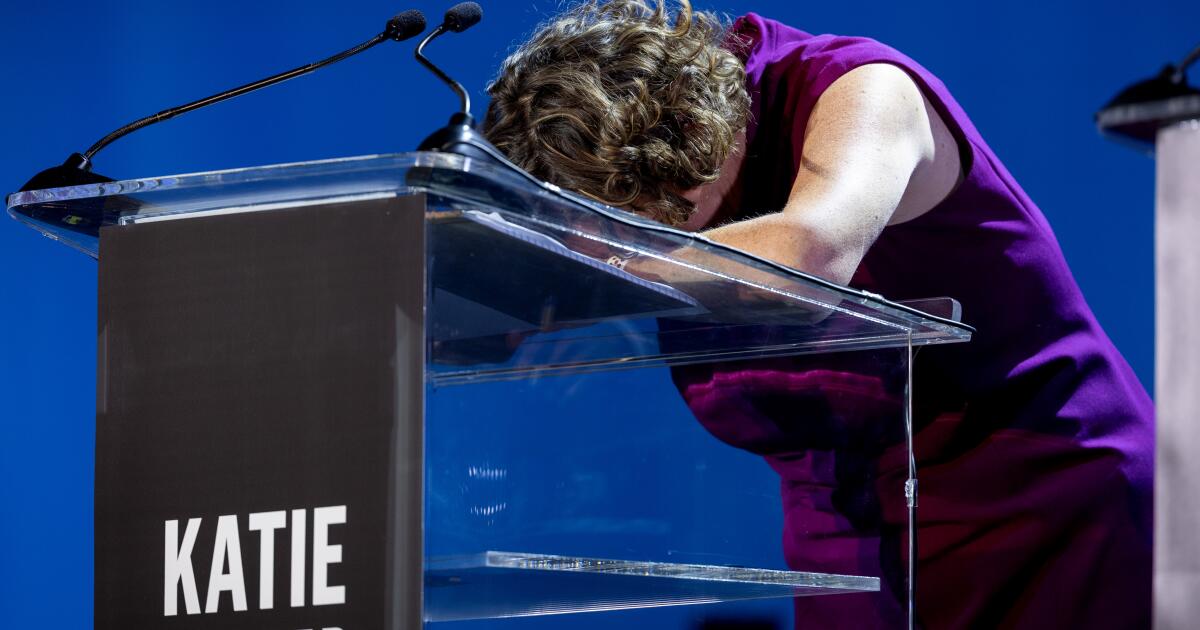
It was the same for Katie Porter and Matt Mahan, who didn’t do anything wrong, but also, didn’t break out.
But those back-and-forths of Becerra and Hilton are priceless because they’re quick and shareable. I won’t be surprised to see voters drift Becerra’s way, even if only a bit.
Barabak: No runs, no hits, no errors. Seven men — and one woman — left standing.
I didn’t see, or hear, anything that seems very likely to drastically shake up or dramatically reorder the governor’s race. No breakout performance that will launch any of the candidates into clear-cut front-runner status. No major gaffes to leave any of the contestants sprawled on the killing floor.
So to that extent, I would score Becerra as the evening’s (modest) winner. He’s clearly having a moment, surging from political near-death to the top tier in polls. (Though, let’s be clear, it’s still a muddle, with several candidates bunched in the 15%-20% support range.)
There have been suggestions Becerra needs to show a bit more fight and he did so Tuesday, in particular taking on Hilton. Some of his jabs seemed a bit forced and stagy. (That line about Trump as “Hilton’s daddy.”)
Better, as Anita noted, was the jab from the former congressman, state attorney general and Biden cabinet secretary about a Fox “talking head” explaining how government works.
I found Porter to be crisp and authoritative on policy; Steyer to be repetitive (I’m the only change agent on this stage, look how much money is being spent to stop me — though it’s a small fraction of the sum he’s sunk into his vanity-cruise campaign); Mahan and Antonio Villaraigosa to be largely afterthoughts, and Bianco to have all the warmth and appeal of the grouchy old man telling kids in the neighborhood to get off his damn lawn!
The Riverside County sheriff seemed not to be running for governor of California, but rather mayor of MAGA-ville, a strategy apparently intended to nab one of two spots in the June primary, allowing him to go on to crushing defeat in November.
I agree that perhaps the night’s most surprising performance came from Thurmond. The state schools superintendent is mired in bare single digits in polls and only just made the debate stage after being left out of last week’s meetup in San Francisco.
His chances of being California’s next governor are somewhere between zero and nil, which is why he escaped serious scrutiny. That said, he made the most of the 90 minutes on stage, laying out his compelling up-from-poverty life story and seeming to relish taking on Bianco in particular.
Too little, too late. But Thurmond certainly acquitted himself well.
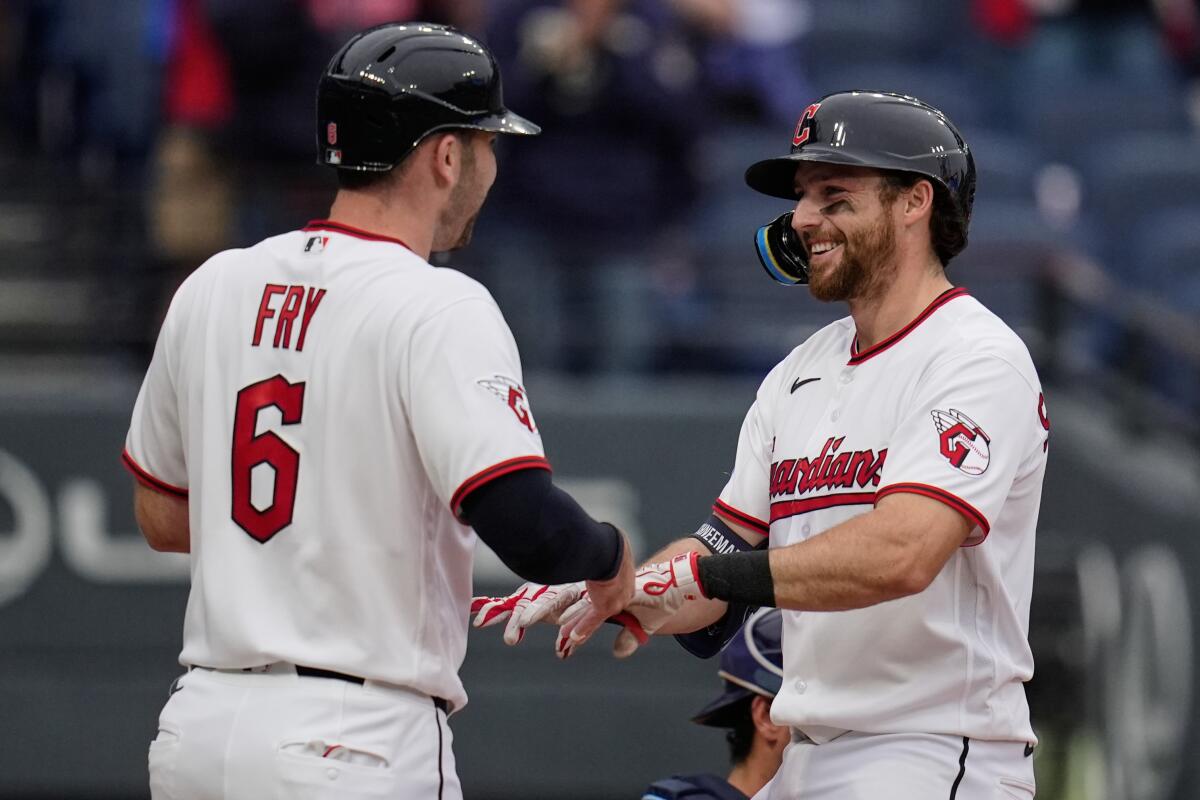
Guardians fan Evelyn Moore got a pretty cool souvenir from Monday’s game against the Tampa Bay Rays — a two-run home run ball hit by Cleveland second baseman Daniel Schneemann.
The 11-year-old softball player from New Philadelphia, Ohio, almost got the ball right after Schneemann hit it in the bottom of the fifth inning.
But, as seen in video footage that quickly went viral on social media, a man appeared to snatch it away as Evelyn was trying to pick it up near the rail in the left-center field stands at Progressive Field.
He eventually gave it to her, however, and now the girl’s mother wants folks on social media to leave him alone.
“This man’s life shouldn’t be ruined over this,” Nikki Moore-DeVore said. “Jokes and memes are one thing, but it’s getting excessive. It’s too much.”
Moore-DeVore said her family — which also includes her husband, Jon DeVore, and her son, Theo Moore, 9 — attend several Guardians games a year. They sit in the outfield stands, where Evelyn — an avid baseball fan and baseball card collector — likes to take her glove down to the rail and try to persuade Cleveland outfielders to toss her a ball.
Video of Schneemann’s home run shows the ball flying over the left-center field wall, where a bearded man wearing a throwback Cleveland Indians hat and T-shirt tried to catch it in the air. Instead, it bounced off his hands toward the rail to his left.
Cleveland Guardians’ Daniel Schneemann, right, is greeted at the plate by teammate David Fry after hitting a two-run home run in the fifth inning of a game against the Tampa Bay Rays on Monday in Cleveland.
(Sue Ogrocki / Associated Press)
Evelyn ran down from her seat two rows up, dropped to the ground and attempted to secure the ball in front of her. The man ran over and also dropped to the ground next to her, starting a brief struggle for control of the ball.
The man eventually emerged triumphantly.
“I did not really see how the ball came over to us. I just saw it bounce in our direction and my daughter go down to get it,” Moore-DeVore said. “And I saw the scuffle kind of from behind, but I couldn’t see much of the hands or anything like that. I just saw the shoulders shifting around.
“And then she got up empty-handed, and people started booing. The guys sitting in front of me were like, ‘That was her ball!’ My husband was booing. He was not happy, but we didn’t want to ruin the game.”
Evelyn also was upset by the turn of events, her mother said, “but she didn’t cry.”
“She actually took it like a champ,” Moore-DeVore said. “Every inning, she still went up to the rail to try to get one of the players to throw a ball to her. She didn’t give up.”
Meanwhile, Theo approached the man to request he return the ball to his sister. Moore-DeVore said her son told her the man politely refused.
“I was just proud of him for going over there and taking it upon himself to try to help his sister,” Moore-DeVore said.
The Rays broadcast of the game showed the incident involving Evelyn and the man, with the announcers taking the girl’s side. On social media, fans shared the video and shamed the man for his behavior, with some looking to make his identity public.
Later in the game, Rays sideline reporter Ryan Bass visited the family at their seats and presented both kids with baseballs.
That’s when Evelyn became emotional.
“She cried happy tears,” her mother said. “I think she just felt seen. The incident made her feel small, and Ryan made her feel seen.”
“We had to make it right,” Bass wrote, adding in a separate post: “We got the chance to make a sweet little girl’s night. There’s nothing better. Kindness is free. Always remember that.”
Before the bottom of the eighth inning, Evelyn went down to her usual post at the rail to try to persuade an outfielder to toss her a ball. She returned with the home run ball from three innings earlier.
“She came back with the biggest smile on her face: ‘Mom, he gave it back to me!’” Moore-DeVore said. “The guys in front of me were like, ‘yeah, he’s, like, getting a lot of social media flack.’ … I’m sure he realized eventually that it was probably the wrong action to take, just not good etiquette.”
In return, Moore-DeVore said, Theo offered the man — whose name has not been revealed despite the internet’s attempts — one of the balls that Bass had given him and his sister.
“He respectfully declined,” she said, “so my son gave it to another kid.”
Moore-DeVore said both of her kids are “on cloud nine” over how everything turned out — and she wants everyone else to get over it as well.
“I don’t want this one moment to ruin this guy,” she said. “And my kids, they wouldn’t want that. They’re sweet kids. I feel like, if kids their age can forgive and offer him a peace offering, grown adults and other fans can, too.”
The African island nation also expels French embassy personnel over acts linked to the destabilisation investigation.
Published On 29 Apr 202629 Apr 2026
Madagascar has detained a French serviceman over an alleged plot to destabilise the island and also declared an agent at the French embassy persona non grata over acts linked to the destabilisation investigation.
Deputy Prosecutor Nomenarinera Mihamintsoa Ramanantsoa said in a video statement released late on Tuesday that the former French national serviceman, Guy Baret, had been placed in pretrial detention at Tsiafahy maximum-security prison.
Recommended Stories
list of 3 itemsend of list
A Malagasy army officer, Colonel Patrick Rakotomamonjy, and other alleged accomplices were also implicated, he said.
According to Ramanantsoa, prosecutors have charged the suspects with spreading false information to disturb public order, plotting to sabotage infrastructure including power lines and thermal plants operated by state utility Jirama, harbouring wanted individuals, and criminal conspiracy. Authorities said the group had planned actions initially set for April 18.
Rakotomamonjy is awaiting presentation before an investigating judge. Two other suspects were placed under judicial supervision, with prosecutors saying they did not appear to be the masterminds of the conspiracy
Madagascar is a former French colony that retains close political links to France and has had a history of instability in recent decades.
The country’s military ruler, President Michael Randrianirina, seized power in October last year, after a wave of youth-led protests against his predecessor, Andry Rajoelina.
France helped Rajoelina flee in October as protests over lack of water and energy escalated and ultimately forced him from power.
France said Wednesday that it had summoned the charge d’affaires of the Madagascan embassy in Paris “to vigorously protest” the expulsion of the diplomatic official.
“He was informed that France categorically rejected any accusation of destabilising the Refoundation regime of the Republic of Madagascar,” French Foreign Ministry spokesman Pascal Confavreux said, adding that the official had been summoned on Tuesday.
“Such accusations are not only unfounded, but also incomprehensible.”
The Madagascar Foreign Ministry said French Ambassador Arnaud Guillois had been summoned and informed of the decision over the embassy agent. It did not identify the agent or specify the acts in question.
Tehran, Iran – Iran’s national currency has plunged to new lows as authorities mobilise to dampen the impact of the naval blockade enforced by the United States.
The Iranian rial shot above 1.81 million to the US dollar on the open market by early afternoon on Wednesday before partially recovering. The embattled currency changed hands for about 1.54 million earlier this week, and its rate was about 811,000 per US dollar a year ago.
Recommended Stories
list of 3 itemsend of list
The rial had remained relatively stable over the past two months after experiencing an earlier drop as US forces amassed in the lead-up to the US-Israeli war on Iran, which began at the end of February.
The latest freefall follows on from unchecked inflation, which has been increasingly plaguing the Iranian economy as a result of mismanagement and sanctions, and continues to ravage households. Washington now has three aircraft carriers in the region and is bringing in more troops and equipment as Israel expresses readiness to restart fighting, three weeks after a ceasefire began.
Iran’s authorities this week projected a hardened stance on negotiations with Washington, and pledged to fight the naval blockade of Iran’s southern waters, which the US Central Command insisted on Tuesday had “cut off economic trade going into and coming out of” the country.
Amid threats by US President Donald Trump, the Iranian government has also tried to empower its own border provinces to import essential goods by reducing red tape. It has also allocated $1bn from the sovereign wealth fund to buy food, and made a partial policy U-turn to restart offering a preferential subsidised exchange rate with the goal of reducing prices, despite concerns about corruption.
Non-oil trade takes hit
According to customs data released by state media, Iran’s non-oil trade has been negatively affected after commercial ties were disrupted or cut off as a result of the war, and critical infrastructure was bombed.
Iran’s customs authority put the total value of non-oil trade in the Iranian calendar year that ended on March 20 at close to $110bn, with $58bn going to imports. The figure was about 16 percent lower than the year before.
The volume of non-oil trade was valued at approximately $9bn for the 11th month of the calendar year ending on February 19, and $6.46bn in the final month, indicating a drop of about 29 percent in connection with the war, which started on February 28. The final month was also about 50 percent lower than the more than $13bn estimated value for last year’s corresponding month.
Part of the drop is linked with the fact that shipping has been significantly disrupted through the Strait of Hormuz as Iran and the US spar over control of the strategic waterway. The US and Israel also directed some of their thousands of strikes against ports, naval facilities, airports, and railway networks across the country.
Iran’s top steel and petrochemical producers were also extensively bombed, as were oil and gas facilities, power stations, and major industrial zones. The US and Israel have threatened to take Iran “back to the Stone Age” through systematic bombing of civilian infrastructure like power plants.
To manage the impact and preserve domestic supply, Iranian authorities have imposed temporary restrictions on exports of steel, petrochemicals, polymers and other chemicals.
Oil exports in the crosshairs
The US is using its military capabilities and economic chokeholds to drive down Iran’s oil exports, a goal that it has also pursued over recent years through sanctions.
Since mid-April, the US military has been deploying its soldiers to take over or inspect ships transiting through waterways near Iran, in addition to targeting what is known as a shadow fleet of tankers used by Iran to circumvent sanctions and ship its oil.
Warships and thousands of troops could still launch a ground invasion or destructive aerial attacks against Iran’s Kharg and other critical islands, and the Trump administration expects increased pressure on Iran’s oil sector due to hampered access to export routes and supertankers keeping the oil stored on the water.
The US Treasury has been blacklisting refineries in China, the biggest buyers of Iranian crude oil, and going after the banking and cryptocurrency channels alleged to be facilitating Tehran’s oil trade, and having links to the IRGC – which Washington considers a “terrorist” organisation.
“We will follow the money that Tehran is desperately attempting to move outside of the country and target all financial lifelines tied to the regime,” said US Treasury Secretary Scott Bessent on social media.
Chinese refineries buy roughly 90 percent of Iran’s oil shipments, and imported a record 1.8 million barrels per day in March, according to Vortexa Analytics data cited by the Reuters news agency, which also said purchases were expected to slow due to worsening domestic refining and processing margins.
According to figures released by the General Administration of Customs of China, the volume of the country’s bilateral trade with Iran during the first quarter of 2026 stood at $1.55bn, down 50 percent year-on-year.
In March, the first month of the war, trade stood at $184m, which was nearly 80 percent lower than the year before and 64 percent lower than the month before. China’s imports from Iran and exports to the country were both considerably reduced as a result of the war.
The removal of the United Arab Emirates as a major trade partner and import market for Iran has also significantly affected the country’s economy, increasing its reliance on land neighbours like Turkiye and Iraq to the west and Pakistan to the east.
The UAE, a big part of the Trump-led Abraham Accords that saw multiple countries normalise relations with Israel, was heavily targeted by ballistic missiles and drones launched by Iran.
The UAE has closed down numerous Iranian institutions on its soil over the past two months, including financial facilitators, instructed Iranian citizens to leave, and has said it will take years to restore bilateral relations to previous levels.
BBC fans are urging everyone to watch Half Man with Richard Gadd’s next drama hailed as “phenomenal”.
Hayley Anderson Screen Time TV Reporter
16:26, 29 Apr 2026Updated 16:28, 29 Apr 2026
Half Man: Richard Gadd and Jamie Bell star in trailer
“Gruesomely compelling” Half Man has arrived and it’s already been labelled “incredible” by Baby Reindeer fans.
Richard Gadd ’s new six-part drama Half Man may have made its BBCiPlayer debut last week but many viewers have only just watched the first episode which aired on BBC One last night, Tuesday, April 28.
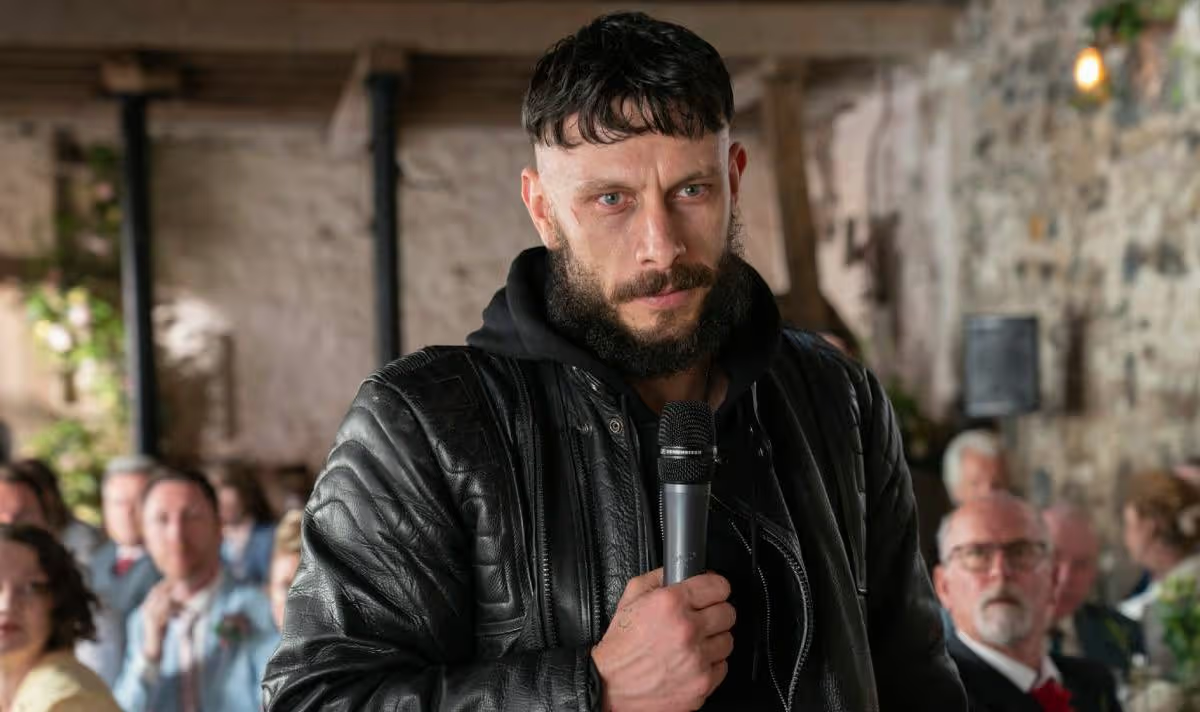
The gritty series follows the lives of mild-mannered Niall (played by Jamie Bell) and fierce Ruben (Richard Gadd), exploring their complicated 30-year friendship.
Described as an “explosion of violence”, Half Man kicks off with an intense moment between the men at Niall’s wedding before taking fans back to when they were teenagers.
Baby Reindeer creator Gadd not only stars in the drama but is the mastermind behind Half Man with fans loving his latest dysfunctional hit.
“If Baby Reindeer” left us in shock, I think #HalfMan even more so…the first episode was incredible!”, a fan posted on X.
A second echoed: “I’m shocked. If this is just the first episode, I don’t dare to think about what will happen in the others.”
“Gave me a heady mix of revulsion and discomfort… but in a good way?”, a third remarked.
Someone else labelled it “phenomenal”, before writing: “Can’t fault this. The writing, acting and filming are all excellent.
“I’ve only seen one episode so far but I’m totally hooked.”
A user said they were “obsessed” with Half Man and Euphoria season three, another commented, “Can’t wait to go mentally insane over this”, while a fan simply ordered: “Everyone go watch Half Man.”
Scoring 76% on Rotten Tomatoes, the six-part drama will continue to air episodes first on BBC iPlayer every Friday, followed by a BBC One release every Tuesday night.
The official synopsis for episode two reads: “1989. Niall is struggling at university when he invites Ruben to join him and his flatmates for freshers’ week
“ What begins with excitement ends in devastating consequences.”
Half Man is available to watch on BBC One and BBC iPlayer
ROBOT baggage handlers will replace humans during an experimental project as a major airline trials a humanoid crew.
The pilot programme was announced by Japan Airlines, where Chinese-made robots will be integrated into ground operations at Haneda Airport in Tokyo.
Sign up for the Travel newsletter
Thank you!
A new program at Haneda Airport in Japan could see human baggage handlers replaced with robotsCredit: ReutersThe robots are programmed to raise an arm when task is completeCredit: Reuters
The country’s biggest airport will host the three-year experiment, where the machines will be tasked with cleaning planes, as well as loading and transporting baggage.
Looking further into the future, the androids could also be operating ground support equipment including baggage tractors, catering trucks and power units.
The airline said bipedal robots were the best suited to working in airport environments, as opposed to other types of robotic machines.
This is because they are quicker and are able to move within and adapt to cramped spaces.
The airline said bipedal robots were the best suited to working in airport environments because they are quicker and can adapt to smaller spacesCredit: EPAThe robots will be integrated with human staff throughout the program to carry out tasks including cleaning planesCredit: ReutersIf the project goes well, the androids could be given further tasks in the futureCredit: ReutersThe project is being rolled out just in time for summer in JapanCredit: Reuters
“Being human-shaped allows their introduction without significant modifications to existing airport facilities or aircraft structures,” a Japan Airlines spokesperson said.
“By combining cutting-edge AI technology with the unique flexibility of humanoid forms, the project aims to realise a sustainable operational structure through labour savings and workload reduction.”
“Currently, the aviation industry faces a serious challenge in ground handling labour shortages,” they continued.
The airline said this was because of increased tourism and a declining working-age population in Japan.
“Ground handling operations require highly skilled personnel to maintain safety, such as aircraft marshalling and baggage/cargo handling, while also imposing significant physical burdens,” they said.
Baggage handlers do one of the least glamorous and thankless jobs in the modern world.
Many workers suffer with back injuries and are often faced with complaints about lost and damaged belongings.
The robots were trialled in Haneda this week, with a demonstration showing a skinny 51-inch robot tapping and pushing large storage containers on rollers.
To demonstrate that a task had been completed, the robots raise a hand.
The machine is made by Unitree Robotics of China and has 43 separate moving parts.
“While airports appear highly automated and standardised, their back-end operations still rely heavily on human labour and face serious labour shortages,” said Tomohiro Uchida of GMO AI & Robotics, the airline’s partner on the project.
Wildfire and insurance — issues amped by climate change — along with the price of gas, took center stage at the California governor’s debate on Tuesday night.
Here are some of the candidates’ defining statements, starting left of the stage:
Tony Thurmond
The Democratic State Superintendent of Public Instruction addressed the state’s wildfire insurance crisis, where private insurers have been dropping policies as climate changes fuels more frequent catastrophic fire. The state has allowed insurers to raise rates in return for writing more policies, but so far its backup FAIR Plan, meant to provide coverage when other companies will not, continues to grow.
Thurmond said he would withhold tax credits, subsidies and benefits from non-cooperative insurers, although moderators and other candidates raised questions about the legality of this strategy.
“The governor can certainly work with the Insurance Commissioner to say there should be no rate increase unless the insurance industry is actually writing policies. They have failed California in our greatest need. They’ve taken the money for premiums and then when people needed to have support to rebuild their homes, they said, ‘whoops, we’re not going to help you.’ Then they got a rate increase. I’m sorry, where I come from, when you do a bad job, you don’t get a raise.”
Chad Bianco
The Republican Riverside County Sheriff said insurers aren’t leaving California because of climate change, but because the state has failed to pass and enforce vegetation management and defensible space policies that would reduce wildfire risk.
“It wasn’t global warming, stop believing that. It was a failed environmental policy that doesn’t allow fire departments to prevent defensible space around our homes or clear out the brush for 30 years that are building in our mountains and in our hills that took out a city. [Insurers] specifically said we were going to lose a city, and our governor said ‘we don’t care.’ And so the insurance companies left.”
Inadequate brush clearance has contributed to other fires in the state, although it’s not a factor experts cite in the Los Angeles fires specifically.
Tom Steyer
The Democratic billionaire hedge fund founder who is positioning himself as the climate candidate in the race, touted his drive to make oil companies pay for damages from climate change, including rising insurance rates and homes lost to wildfires.
“In environmentalism, I have three real rules. Number one is polluter pays. It’s absolutely critical that if people are going to pollute and damage the environment and cause harm to their neighbors, they pay. Two, we have to include environmental justice in every single environmental rule. And third is we need to start to deploy all of the clean energy stuff that’s cheaper now and get us back to the front of the world in leading it.
“There is one person that the corporations are going after, including Big Oil, who is spending millions of dollars to stop me. The electric monopolies, PG&E, millions of dollars to stop me, because I’m the person on this stage who’s the change agent.”
Steve Hilton
The former Republican Fox News commentator said insurers should be allowed to raise rates consistent with actual wildfire risk. He also advocated for “modern forest management,” removing fuel from forests, as a way to protect against wildfires, reduce carbon emissions from fire, and revive the state’s timber industry.
“We can create jobs and opportunity in rural California and reduce carbon emissions in the process, because we won’t have the mega wildfires.”
Asked if he supports the transition to electrification, he promoted natural gas: “Yes, but let’s be sensible about electric. Right now, we have a fleet of gas fired power stations generating electricity that are running at 10 to 15% of their capacity, even though we have abundant natural gas in California that we could be using to generate affordable, reliable electricity that would lower the cost of electric bills for consumers and businesses.”
The former Health and Human Services Secretary said he would call a state of emergency as governor to require wildfire insurers to freeze rates and come to the table.
“This affordability crisis is hitting every family, and we have to act as if this were a break glass moment … Rate payers have to understand what their risk is, so they understand why they are going to pay for what they’re going to pay for their home insurance. But an insurance company has to be open and transparent about how its pricing its policies so people can afford it.”
Moderator Julie Watts noted that California home insurance rates are below the national average and questioned the legality of a freeze.
Katie Porter
The former Democratic Orange County Congresswoman was asked whether California should keep its refineries. Two of them closed in the past year, reducing the state’s refining capacity by 20 percent and causing California to lean more heavily on imports.
She said the state should keep the remaining refineries open, but also rapidly scale up green energy to meet the state’s growing electricity demand: “Right now we need to keep all of our energy sources online. That’s just the reality that we’re in. … Right now those refineries, they’re up, they’re running, they’re creating good jobs. Let’s keep them there. But I want to be really clear … The people who work at those refineries, and the people who live in Kern County also face some of the worst pollution and lower life expectancies. Green energy gets us out of that.”
She also backed an idea to have state dollars cover insurance for insurers, known as reinsurance.
Matt Mahan
Democratic San Jose Mayor called to suspend the state’s 61 cent-per-gallon gas tax, used to fund road repairs, bridges, and public transport. The state is looking at a $216.4 billion revenue shortfall over the next decade due to increasing fuel economy and electric vehicles. The other Democratic candidates support keeping the tax; Mahan has instead proposed a flat fee on all vehicles.
He said: “I’m the only candidate on this stage who has pledged to suspend and then reform the gas tax. It is the most regressive tax in California. Working people, rural people, are spending three times as much maintaining our roads as wealthier EV owners.”
On the wildfire insurance crisis he said: “The government in Sacramento created so many restrictions, including taking over a year to approve any rate changes, prohibiting insurance companies from using climate data to project future costs, that they stopped writing new policies. The answer is bring them back, force them to compete, allow them to appropriately price risk, and then hold government accountable for maintaining our wildland, reducing all that vegetation and wildfire risk so that we don’t have these catastrophic fires.”
Antonio Villaraigosa
The former Democratic L.A. mayor expressed his concerns with the readiness of the state’s infrastructure to support a transition to electric vehicles.
“We need an all of the above strategy that understands we’ve got to transition from oil and gas to renewables. But here’s an example: the 2035 mandate [to ban gas-powered car sales]. We built 167,000 charging stations in the last 10 years. We need 2 million more to get to that mandate, and if we build them, we don’t have a grid. So we ought to build the grid instead of arguing about whether or not we need an all-of-the-above policy.”
Chelsea winger Mykhailo Mudryk has lodged an appeal with the Court of Arbitration for Sport against a four‑year drugs ban imposed by the Football Association.
The Ukraine international, 25, has been sidelined for nearly 18 months after an “adverse finding in a routine urine test” led to a provisional suspension in December 2024.
Charged in June 2025, Mudryk was subsequently handed the maximum four‑year ban by the FA, according to a spokesperson for the Court of Arbitration for Sport, the highest legal authority in sport.
The FA has never disclosed details of the case.
In such cases, bans are typically backdated to the start of the provisional suspension, meaning his current return date would be around December 2028.
However, an appeal has now been lodged with the Court of Arbitration for Sport (Cas) in Switzerland, with sources close to the player hopeful he could return to action as early as next season.
In a statement to BBC Sport, Cas said: “Cas confirms it has received an appeal by Mykhailo Mudryk against the FA, filed on 25 February 2026. The Parties are currently exchanging written submissions, and a hearing is yet to be scheduled.”
The BBC understands Mudryk came into contact with the cardiovascular medication meldonium, which can increase respiratory capacity and stamina, while on duty with the Ukraine national team in October 2024.
In his only public statement when his provisional suspension began, Mudryk described his “complete shock” and said he had “never knowingly used any banned substances or broken any rules”.
Mudryk is being defended by Morgan Sports Law, the firm who worked with former Manchester United midfielder Paul Pogba during his doping case while playing for Juventus, as well as boxer Tyson Fury and cyclist Chris Froome during their respective investigations.
He is understood to want to return to playing football this year and is keeping fit by training at non-league Uxbridge FC with a private coach and having hired goalkeepers to work with.
Chelsea declined to comment as they wait for the process to take its full course and the FA said it is unable to comment on an ongoing case. Mudryk’s legal team has also been contacted for comment.
FAO, WFP and Lebanon’s government say 1.24 million people are ‘expected to face food insecurity’ at crisis levels or worse.
Published On 29 Apr 202629 Apr 2026
More than 1.2 million people in Lebanon are expected to face acute hunger this year due to “conflict, displacement and economic pressures” amid the latest war between Israel and Hezbollah, according to a United Nations-backed report.
The UN Food and Agriculture Organization (FAO), the World Food Programme (WFP) and Lebanon’s Ministry of Agriculture issued a joint statement on Wednesday, saying that 1.24 million people were “expected to face food insecurity” at crisis levels or worse between April and August.
Recommended Stories
list of 3 itemsend of list
The figure, contained in a report conducted by the Integrated Food Security Phase Classification (IPC), a UN-backed group that monitors hunger and malnutrition, marks a “significant deterioration” compared with the outlook before the war erupted on March 2, said the statement.
Prior to March, “an estimated 874,000 people, roughly 17 percent of the population, were experiencing acute food insecurity“, it said. But a “sharp escalation in violence” had “reversed recent food security gains in Lebanon and pushed the country back into crisis”.
“Families who were just managing to cope are now being pushed back into crisis as conflict, displacement and rising costs collide, making food increasingly unaffordable,” said Allison Oman Lawi, the WFP’s country director in Lebanon.
Nora Ourabah Haddad, the FAO representative in Lebanon, said, “Compounded shocks are undermining agricultural livelihoods and impacting food security, highlighting the urgent need for emergency agricultural assistance to support farmers and prevent further deterioration.”
A ceasefire that took effect on April 17 has reduced the intensity of the fighting between Israel and the armed group Hezbollah that has killed more than 2,500 people in Lebanon and displaced more than one million, according to Lebanese authorities.
Israeli forces are operating in south Lebanon near the border, where residents have been warned not to return, and both sides have been trading fire despite the truce.
“Acute food insecurity is likely to deepen without sustained and timely humanitarian and livelihood support,” the statement said.
Works are starting on reopening Southport Pier for 2027Credit: GettySouthport Pier was forced to close back in 2022 due to safety concernsCredit: Alamy
However it was announced last year that £20million was being put into its reopening, and works have now started.
Local website Stand Up for Southport confirmed that contractors are now doing pre-construction work, with the full restoration expected to take up to 16 months.
This includes replacing the decking, as well as adding new gates and CCTV, while fixing the steelworks as well.
Sefton Council said: “The first task contractors will have is to assess the current condition of the existing paintwork on the structure’s columns. We want to ascertain if there has been any deterioration since previous assessments were undertaken.
“If the condition is good it can be left as is, however if not we will also need to repaint the whole structure as part of the repair works.
“This pre-construction work will take at least five days to complete. Following this we’ll shortly be moving onto the ground investigation stage within the coming weeks, which checks the stability of the ground underneath and around the Pier for materials like scaffolding.”
Southport Pier is the oldest iron pier in the UK, dating back to 1860, and is the second longest (only behind Southend Pier).
However, the original pavilion was destroyed in 1897 by a fire, with another fire in 1959 damaging the decking.
It was later given Grade II listing in 1975. with a new £7million tram in 2002.
Councillor Marion Atkinson, leader of Sefton Council, previously said: “The Pier is a symbol of Southport’s identity, history, and now, thanks to the Council and Central Government, secured for the town’s future too.”
One airline is reducing its service that day by 60 per cent
Robert Rowlands Deputy editor, money and lifestyle, content hub and Maria Ortega
16:43, 29 Apr 2026Updated 16:49, 29 Apr 2026
Passengers in the airport’s terminal(Image: blazekg via Getty Images)
UK holidaymakers are preparing for fresh travel disruption after the announcement of strike action. Media reports today confirm that Brussels Airlines is reducing its service by 60% on May 12. A spokesperson for the carrier confirmed the news on Tuesday.
Disruption that day is a possibility for Brits and others heading there, given that the airline flies regularly to and from London Heathrow, although details of flight cancellations have not yet been disclosed. It also has services to and from Manchester Airport and Edinburgh Airport.
The move follows Brussels Airport’s warning of expected disruption on that date due to nationwide industrial action. Numerous security workers and service providers will be downing tools.
Airlines have been requested to cap the number of departing passenger flights on the day in order to maintain safety and prevent excessive waiting times. The news site 7sur7 reports that the FGTB, CSC, and CGSLB unions are organising another major mobilisation in the streets of Brussels.
It marks the latest wave of strike action to hit the country. No passenger flights took off from Brussels Airport during the previous national demonstration, although commentators say disruptions are expected to be less severe on May 12, according to local media reports. “Just under half of the scheduled departures will be able to operate,” Zaventem Airport estimated.
In addition, strike action is also planned separately in the aviation sector. The Mirror reported on Tuesday that notice was lodged this week that could see strikes involving pilots.
The joint union front (CNE/ACV Puls, CSC Transcom, CGSLB/ACLVB, and Setca/BBTK) has filed a national strike notice for the entire Belgian aviation sector. Approximately 1.3 million Brits visit Belgium annually – suggesting hundreds if not thousands of UK travellers could be impacted on that single day alone. Brussels Airlines is cancelling roughly 60% of its flights that day, Le Soir reported.
Bosses say the long-haul network will bear the brunt, as these flights carry many connecting passengers. For shorter routes, the airline is giving priority to flights with the greatest number of direct passengers. “Further cancellations cannot be ruled out. Passengers whose flights are cancelled can either rebook or request a refund. We continue to monitor the situation closely; further cancellations cannot be ruled out,” says Brussels Airlines.
“Brussels Airlines is not involved in the labour dispute between the unions and the Belgian federal Government. Yet, the consequences always fall on our passengers, our colleagues, and our company. In the current geopolitical context (particularly with high fuel prices, editor’s note), such actions are irresponsible.”
“In collaboration with all relevant partners, Brussels Airport is working to ensure that as many flights as possible can depart that day,” the national airport said in a statement.
The airport, however, anticipates only minimal disruption to incoming flights. Passengers due to land at Brussels Airport that day are still urged to check the latest status of their flight directly with their airline.
The unions announced the fresh mass action at the start of the month. The demonstration forms part of a series of union actions they have been carrying out for over a year in opposition to the federal government’s reforms to policies including pensions.
The most recent national demonstration took place on 12 March. Between 80,000 people (according to the police) and more than 100,000 (according to the unions) took to the streets of Brussels. Not a single passenger flight departed from Zaventem Airport on that occasion.
Your rights as an airline passenger
According to the government’s gov.uk website, your airline, travel agent or tour operator is obliged to give you “clear and easy-to-understand information on the conditions of your travel at the point of booking.” Travellers are urged to check these carefully.
The website says: “Airlines and travel agents selling flight tickets must make clear the full price for all mandatory charges, such as taxes, at the time of booking. They should make clear any additional costs for optional extras. For example, for luggage allowance or seat selection.
“If you have booked a package that includes a flight (such as flight and accommodation or flight and car hire) you may also have both package and ATOL protection. Take your ATOL Certificate with you.”