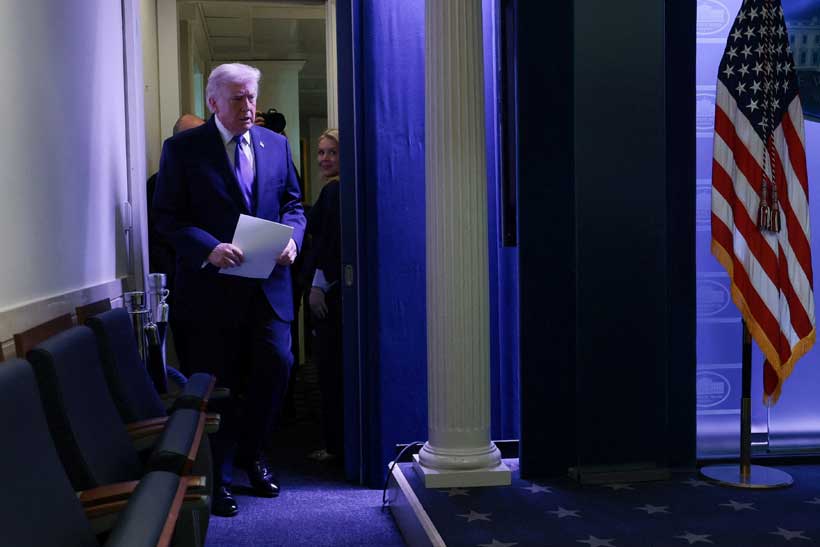
United States President Donald Trump has said a nuclear agreement currently being negotiated with Iran will be “far better” than the 2015 Joint Comprehensive Plan of Action (JCPOA), which he withdrew from in 2018 during his first term in office.
The original 2015 accord took roughly two years of negotiations to reach and involved hundreds of specialists across technical and legal fields, including multiple US experts. Under it, Iran agreed to restrict the enrichment of uranium and to subject itself to inspections in exchange for the relaxation of sanctions.
Recommended Stories
list of 3 itemsend of list
But Trump took the US out of that pact, calling it the “worst deal ever”. Before the initial US-Israeli strikes on Iran at the end of February, the US had made new demands – including additional restrictions on Tehran’s nuclear programme, the restriction of its ballistic missiles programme and an end to its support for regional armed groups, primarily in Lebanon, Yemen and Iraq.
Trump’s latest remarks come amid growing uncertainty about whether a second round of talks will proceed in the Pakistani capital Islamabad, as a two-week ceasefire between the US-Israel and Iran approaches the end in just a day.
So, what was the JCPOA, and how did it compare to Trump’s new demands?
What was the JCPOA?
On July 14, 2015, Iran reached an agreement with the European Union and six major powers – China, France, Russia, the United Kingdom, the US, and Germany – under which these states would roll back international economic sanctions and allow Iran greater participation in the global economy.
In return, Tehran committed to limiting activities that could be used to produce a nuclear weapon.
These included reducing its stockpile of enriched uranium by about 98 percent, to less than 300kg (660lb), and capping uranium enrichment at 3.67 percent – far below weapons-grade of 90 percent, but high enough for civilian purposes such as power generation.
Before the JCPOA, Iran operated roughly 20,000 uranium-enriching centrifuges. Under the deal, that number was cut to a maximum of 6,104, and only older-generation machines confined to two facilities, which were subject to international monitoring.
Centrifuges are machines which spin to increase the concentration of the uranium-235 isotope – enrichment – in uranium, a key step towards potential bomb-making.
The deal also redesigned Iran’s Arak heavy water reactor to prevent plutonium production and introduced one of the most intrusive inspection regimes ever implemented by the global nuclear watchdog, the International Atomic Energy Agency (IAEA).
In exchange, Iran received relief from international sanctions which had severely damaged its economy. Billions of dollars in frozen assets were released, and restrictions on oil exports and banking were eased.
The deal came to halt when Trump formally withdrew Washington from the nuclear deal in 2018, a move widely criticised domestically and by foreign allies, and despite the IAEA saying Iran had complied with the agreement up to that point.
“The Iranian regime supports terrorism and exports violence, bloodshed and chaos across the Middle East. That is why we must put an end to Iran’s continued aggression and nuclear ambitions. They have not lived up to the spirit of their agreement,” he said in October 2017.
He reimposed crippling economic sanctions on Tehran as part of his “maximum pressure” tactic. These targeted Iran’s oil exports, as well as its shipping sector, banking system and other key industries.
The goal was to force Iran back to the negotiating table to agree to a new deal, which also included a discussion about Tehran’s missile capabilities, further curbs on enrichment and more scrutiny of its nuclear programme.
What has happened to Iran’s nuclear programme since the JCPOA?
During the JCPOA period, Iran’s nuclear programme was tightly constrained and heavily monitored. The IAEA repeatedly verified that Iran was complying with the deal’s terms, including one year after Trump announced the US’s withdrawal from the agreement.
Starting in mid-2019, however, Iran began incrementally breaching the deal’s limits, exceeding caps on uranium stockpiles and enrichment levels.
In November 2024, Iran said it would activate “new and advanced” centrifuges. The IAEA confirmed that Tehran had informed the nuclear watchdog that it planned to install more than 6,000 new centrifuges to enrich uranium.
In December 2024, the IAEA said Iran was rapidly enriching uranium to 60 percent purity, moving closer to the 90 percent threshold needed for weapons-grade material. Most recently, in 2025, the IAEA estimated that Iran had 440kg (970lb) of 60-percent enriched uranium.
What are Trump’s latest demands for Iran’s nuclear programme?
The US and its ally, Israel, are pushing Iran to agree to zero uranium enrichment and have accused Iran of working towards building a nuclear weapon, while providing no evidence for their claims.
They also want Iran’s estimated 440kg stock of 60pc enriched uranium to be removed from Iran. While that is below weapons-grade, it is the point at which it becomes much faster to achieve the 90 percent enrichment needed for atomic weapons production.
In March 2025, Tulsi Gabbard, the US director of national intelligence, testified to Congress that the US “continues to assess that Iran is not building a nuclear weapon”.
On Sunday, Iranian President Masoud Pezeshkian, in a strongly worded statement, said Trump had no right to ”deprive” Iran of its nuclear rights.
(Al Jazeera)
What else is Trump asking for?
Restrictions on ballistic missiles
Before the US-Israel war on Iran began, Tehran had always insisted negotiations should be exclusively focused on Iran’s nuclear programme.
US and Israeli demands, however, extended beyond that. Just before the war began, Washington and Israel demanded severe restrictions on Iran’s ballistic missile programme.
Analysts say this demand was at least partly triggered by the fact that several Iranian missiles had breached Israel’s much-vaunted “Iron Dome” defence system during the 12-day war between the two countries in June last year. While Israel suffered only a handful of casualties, it is understood to have been alarmed.
For his part, Trump has repeatedly warned, without evidence, about the dangers of Iran’s long-range missiles, claiming Iran is producing them “in very high numbers” and they could “overwhelm the Iron Dome”.
Iran has said its right to maintain missile capabilities is non-negotiable. The JCPOA did not put any limits on the development of ballistic missiles.
However, a United Nations resolution made when adopting the nuclear agreement in July 2015 did stipulate that Iran could not “undertake any activity related to ballistic missiles designed to be capable of delivering nuclear weapons”.
Ending support for proxy groups
The US and Israel have also demanded that Iran stop supporting its non-state allies across the Middle East, including Hezbollah in Lebanon, the Houthis in Yemen and a number of groups in Iraq. Together, these groups are referred to as Iran’s “axis of resistance”.
In May last year, Trump said Tehran “must stop sponsoring terror, halt its bloody proxy wars, and permanently and verifiably cease pursuit of nuclear weapons”, during a GCC meeting in Riyadh.
Three days before the war on Iran began in February, during his State of the Union address to Congress, Trump accused Iran and “its murderous proxies” of spreading “nothing but terrorism and death and hate”.
Iran has refused to enter a dialogue about limiting its support for these armed groups.
Can Trump really get a new deal that is ‘much better’ than the JCPOA?
According to Andreas Kreig, associate professor of Security Studies at King’s College, London, Trump is more likely to secure a new deal that closely resembles the JCPOA, with “some form of restrictions on enrichment, possibly with a sunset clause, and international supervision”.
“Iran might get access to frozen assets and lifted sanctions much quicker than under the JCPOA, as it will not agree to a long drawn-out, gradual lifting of sanctions,” Krieg pointed out.
However, he warned that the political landscape in Tehran has hardened. “Iran now is a far more hardline and less pragmatic player that will play hardball at every junction. Trump cannot count on any goodwill in Tehran,” he said.
“The IRGC is now firmly in charge… with likely new powerful and tested levers such as the Strait of Hormuz,” he said, referring to the Islamic Revolutionary Guard Corps, which operates as a parallel elite military force to the army and has a great deal of political and economic power in Iran. It is a constitutionally recognised part of the Iranian military and answers directly to the supreme leader.
Overall, Krieg stressed, the US-Israel war on Iran “leaves the world worse off than had Trump stuck to the JCPOA”, even if a new compromise is eventually reached.
Moreover, since the revocation of the JCPOA, the US and Israel have waged two wars on Iran, including the current one. The 12-day war in June last year included attacks on Iran’s nuclear sites and killed more than 1,000 people.
Attacks on Iran’s nuclear infrastructure have continued since the latest war began on February 28, including on the Natanz enrichment facility, Isfahan nuclear complex, Arak heavy water reactor, and the Bushehr nuclear power plant.
Nevertheless, King’s College’s Krieg said there is still room for a negotiated outcome if Tehran and Washington scale back their demands.
“Both sides can compromise on enrichment thresholds, and on temporary moratoriums on enrichments. But Iran will not surrender its sovereignty to enrich altogether, and the Trump administration will have to meet them halfway,” he said.
“While the Iranians will commit on paper not to develop a nuclear weapon, they will want to keep R&D [research and development] in this space alive.”
Economic incentives will be central, he added. “Equally, Iran would want to get immediate access to capital and liquidity. Here, the Trump administration is already willing to compromise.”
THE Cotswolds are a sought out holiday spot for lots of celebrities – with even the likes of Kourtney Kardashian visiting.
One of the most beautiful is Bourton-on-the-Water, considered the ‘Venice of the Cotswolds’ thanks to its riverside restaurants and little stone bridges across the water.
Sign up for the Travel newsletter
Thank you!
This cottage in Bourton-on-the-Water has had a £50k makeoverCredit: AlamyKourtney Kardashian visited the Cotswolds in July last yearCredit: Instagram
Follow The Sun’s award-winning travel team on Instagram and Tiktok for top holiday tips and inspiration @thesuntravel.
With it being one of the prettiest villages in the UK, it’s no wonder that celebs like Kourtney Kardashian are drawn to it.
The TV personality known for Keeping Up With the Kardashians revealed her stay on social media.
Posting pictures of a three-bedroom cottage, she said: “Dreamy storybook fairytale enchantment.”
Called Stepping Stones, the cottage has now undergone a £50,000 makeover – as part of a £100,000 refurbishment project of properties owned by Cotswold Cottages.
Stepping Stones sits right next to the River Windrush which flows through the village.
The three bedrooms sleep five with a private patio where guests can enjoy dinners outside.
Inside, there’s a modern kitchen, cosy lounge area with a fireplace, and bedrooms with new furnishings.
Cotswold Cottages announced that work on Stepping Stones was completed this week.
It was part of a wider project, of which the first stage focused on the four neighbouring one-bedroom cottages; Kestrel, Robin, Swallow and Skylark Cottage.
These were completely overhauled with new kitchens and bathrooms along with new furniture as well.
The three-bedroom Stepping Stones cottage has been refurbishedCredit: Boundless
For more hotels to stay in around the UK – here are some of our favourites…
*If you click on a link in this box, we will earn affiliate revenue.
Margate House, Kent
This stylish boutique hotel is in a seaside townhouse, a short walk from Margate’s coolest bars and restaurants. Decked out with plush velvet sofas, candles flickering and striking independent art, inside feels like a warm welcome home. Rooms are stunning, especially the ones that give you a glimpse of the sea.
The Alan looks extremely grand, being built into a beautiful Grade II listed building. Spread across six floors, with 137 rooms, each one looks like a fancy design magazine. From the concrete coffee tables to the pink plastered walls, the industrial-inspired designs perfectly replicate the history of the city.
This historic hotel has welcomed the likes of Charles Dickens and Lillie Langtry through its doors. Rooms have richly-patterned carpets with super soft bed linen and premium toiletries in the bathroom. Go for a superior room for extra goodies including bathrobes and snack boxes.
This Cambridge hotel is in the ideal spot, within walking distance to bars, shops and hotspots like the university colleges and Parker’s Piece. The inside couldn’t be prettier, with huge stained glass windows, grand chandeliers, and rooms with enormous clawfoot bath tubs.
Bourton-on-the-Water has lots of spots that draws in celebrity visitors, like its perfumery which was established in 1966.
It’s set inside a 300-year-old building and is known for creating bespoke scents – even the late Queen Elizabeth II was a former client.
It also operates a one-day perfume-making course which starts from £325.
The village has a Model Village too which is the only one of its kind in the country.
The Grade-II listed model village was built in the 1930s by the former owner of The New Inn pub.
When it comes to eating and drinking, the village is home to several riverside pubs and restaurants, including the Kingsbridge, which overlooks the River Windrush.
Other spots that make most of the riverside locations are the Green & Pleasant Tearooms and the Bourton Riverside Cafe.
“For Want of a Horse,” a play by Olivia Dufault receiving its world premiere in an Echo Theater Company production at Atwater Village Theatre, wants to have a rational conversation about a taboo topic that can provoke instant outrage.
The subject is zoophilia, not to be confused with bestiality, though for many of us it will be a distinction without much of a difference.
Calvin (Joey Stromberg), a good-looking, mild-mannered married accountant, has harbored a secret for much of his life. He has a thing for horses. His erotic interest began at an early age, and all his efforts to lead a normal life have left him depressed and contemplating suicide.
His wife, Bonnie (Jenny Soo), is a permissive kindergarten teacher who’s having difficulty restraining a girl in her class who has discovered the joys of masturbation. Worried about her husband, she discovers through his browsing history that he’s once again visiting strange animal sites.
She suggests he keep a horse, explaining that she doesn’t want to end up a widow or divorcée. Calvin is taken aback by her generosity but has come to recognize that his preference is more than a kink. It’s part of his identity — and maybe the only part that makes his life seem worth living.
Joey Stromberg and Jenny Soo in “For Want of a Horse” at the Echo Theater Company.
(Cooper Bates)
A horse named Q-Tip (Griffin Kelly) enters the couple’s lives. A stable is secured, and the mare, who senses that something strange is going on, is indulged with apples and caresses.
Kelly, a statuesque presence in a dress, harness and boots, brings the horse to life with wild, unpredictable movements. The sheer size of the animal poses a threat to humans. One kick, as Q-Tip herself explains in one of her thought-bubble monologues, is capable of penetrating a steel wall. But controlling an animal’s food supply is an effective way of winning over its trust.
Calvin has found support in the online zoophilia community. PJ (Steven Culp), a man whose current inamorata is a bichon frise, is considering moving to a country where zoophilia isn’t illegal. He’s tired of the shame and the secrecy. He’s proud of his attachment to pooch, even if his thing for dogs has cost him contact with his daughter and ex-wife.
Dufault doesn’t shy away from sexual details. For PJ, intimacy depends on peanut butter. Calvin describes the physical signals that reveal Q-Tip’s erotic satisfaction. The play occasionally descends into sitcom humor. (PJ says he’s considering creating a human-dog dating app called Rin Tin Tinder.) But mostly the subdued tone steers clear of sensationalism.
The production, directed by Elana Luo, is scrupulously well-acted by the four-person cast. Stromberg makes Calvin seem not only reasonable but surprisingly sensitive. Soo’s Bonnie sweetly embodies the excesses of a kind of progressive piety. As PJ, Culp gruffly embraces his role as the play’s polemical fire-starter. And Kelly’s Q-Tip, in the production’s most physically demanding performance, straddles the human-animal divide with theatrical aplomb.
Steven Culp, left, and Joey Stromberg in “For Want of a Horse” at the Echo Theater Company.
(Cooper Bates)
The open-mindedness that Dufault, a trans playwright, brings to the play creates some dramatic slack. Possibly the same fear of making value judgments that has inhibited Bonnie from imposing common-sense discipline in her classroom has robbed “For Want of a Horse” of a propulsive point of view.
The play moves monotonously between Calvin and Bonnie’s bedroom and the stable. Scenic designer Alex Mollo has worked out an efficient way of shifting between these realms by employing the same set of wooden trunks. But the argument of the play doesn’t so much build as elapse.
Time takes its toll, and Calvin eventually has to make a decision. But the character who interested me most was Bonnie, whose reality is only glimpsed. The play tacitly uses her husband’s threat of suicide as a trump card. Zoophilia isn’t merely a fetish for Calvin but a nonnegotiable part of his identity.
This questionable assumption can be psychologically scrutinized not only from Calvin’s point of view but also from his wife’s. The play wants to have an intelligent debate, but it doesn’t want to interrogate certain political positions too skeptically.
At one point, Bonnie objects when Calvin compares his situation to that of homosexuality, but the conversation ends there. The reality is that the right wing has been making a similar claim, arguing that same-sex marriage opens the door to bestiality, polygamy and incest. “For Want of a Horse” inadvertently lends legitimacy to this line of reasoning.
Griffin Kelly in “For Want of a Horse” at the Echo Theater Company.
(Cooper Bates)
Not that extremist positions should be off limits, but they ought to be more rigorously addressed. Similarly, Bonnie’s concern about the issue of consent — how can a horse say yes to intercourse with a human — is introduced only to be dismissed in a shrug of mild-mannered bothsidesism.
While watching “For Want of a Horse,” I recalled a program on PBS called “My Wild Affair” that wasn’t about zoophilia but about the problematic nature of human bonds with untamed animals. Relationships with a seal, an elephant and a rhino, for example — obsessive, protective, loving friendships — all seemed to end if not in outright tragedy, then in shattering heartbreak.
Q-Tip is rightfully given the play’s last word, and Kelly, an actor (HBO’s “The Book of Queer”), writer and comedian, is the production’s driving force. We can never know what’s inside this mare’s mind because Q-Tip’s brain has evolved so differently from our own. Kelly plays the anthropomorphic game while retaining some of the inscrutability of a four-legged creature.
It is through language that we, as humans, traverse the chasm separating us from one another. That’s not possible with animals, even with our closest domestic companions. (Try explaining a necessary medical procedure to a cat.)
“For Want of a Horse” sets out to speak about the unspeakable, but its construction may be too tame for such a wild subject.
Martin Dugard is a prolific author and writer. He’s also an assistant cross-country coach at Santa Margarita after being head coach at JSerra for 15 years.
His newest book is “The Long Run,” which discusses the 1970s running boom and is a narrative history of four who sparked the marathon boom: Steve Prefontaine, Frank Shorter, Joan Benoit Samuelson and Grete Waitz.
He’s going to have a book signing on Saturday at 1 p.m. at Barnes & Noble, 26751 Aliso Creek Rd., Aliso Viejo.
Don’t be surprised if he tries to run from Rancho Santa Margarita to his book signing.
This is a daily look at the positive happenings in high school sports. To submit any news, please email eric.sondheimer@latimes.com.
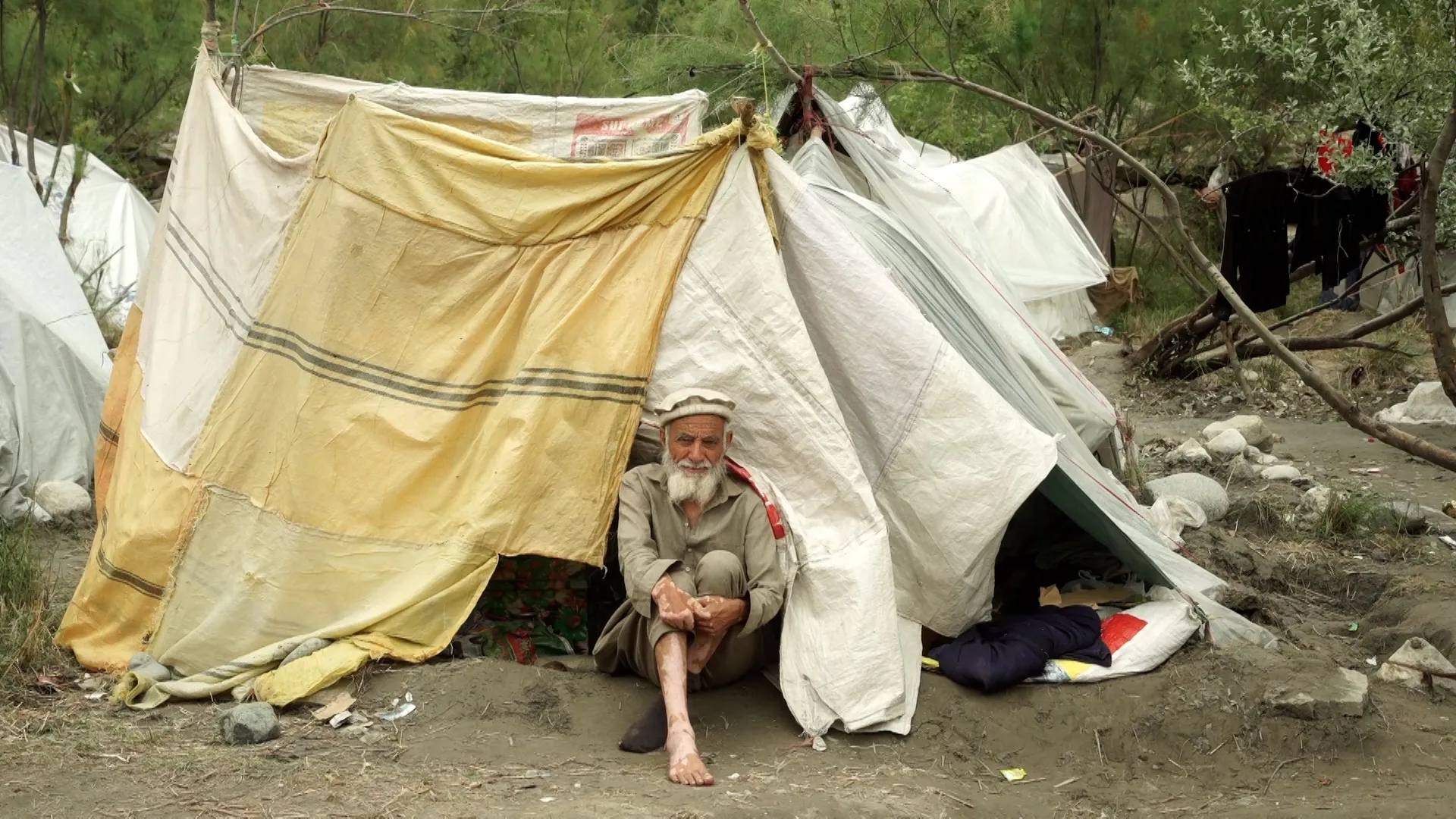
Tens of thousands of Afghans have been displaced by recent fighting along the Pakistan border, forced into tents with little access to food, healthcare, or education. Pakistan says its strikes target armed groups attacking its territory, but displaced families now fear for their safety and are uncertain if they will ever return home.
The Jamieson Greer has told Mexican industry leaders that tariffs imposed by Donald Trump will remain in place, even as negotiations to revise the United States-Mexico-Canada Agreement intensify ahead of a July review deadline.
The remarks, delivered during meetings in Mexico City, signal a major shift from decades of tariff free trade under USMCA and its predecessor NAFTA.
End of Zero Tariff Era
According to multiple sources, Greer made it clear that the United States does not intend to return to a zero tariff framework.
This marks a fundamental change in North American trade policy, where free trade in autos and parts had been the norm for over 30 years. The introduction of tariffs, including a 25 percent duty on automotive imports, has disrupted deeply integrated supply chains across the region.
Impact on Key Industries
The implications for Mexico are significant:
More than half of Mexico’s auto and steel exports go to the United States
Vehicle exports have already declined, with job losses in the auto sector
Steel and aluminum industries face steep duties, some as high as 50 percent
These pressures have weakened Mexico’s competitive position, especially as the United States has negotiated lower tariffs with other partners.
Shifting Trade Rules
U.S. negotiators are also pushing for stricter rules of origin.
Proposals include requiring 100 percent North American sourcing for key components such as engines and electronics, up from current thresholds of around 75 percent. This would force manufacturers to further regionalize supply chains, potentially increasing costs but aligning with Washington’s goal of boosting domestic production.
Mexico’s Position
The Mexican government, led by Claudia Sheinbaum, is seeking relief from tariffs as part of the USMCA review. Officials aim to secure at least partial reductions, particularly in the auto and steel sectors, before finalizing broader trade revisions.
However, the latest signals from Washington suggest that while some easing may be possible, a full rollback is unlikely.
Why It Matters
This development underscores a broader shift in global trade policy away from pure free trade toward managed trade and economic security.
For Mexico, the stakes are high due to its deep economic integration with the United States. Persistent tariffs could reshape manufacturing patterns, investment decisions, and employment across North America.
What’s Next
Formal negotiations are set to begin in late May, with both sides aiming to resolve key disputes before the July deadline.
Key areas of focus will include:
Tariff levels on autos and metals
Rules of origin requirements
Broader economic security cooperation
The outcome will determine the future structure of North American trade.
Analysis
The U.S. position reflects a strategic recalibration rather than a temporary policy shift. By normalizing tariffs, Washington is prioritizing domestic industry and supply chain control over traditional free trade principles.
For Mexico, this creates a structural challenge. Its export driven model, built on open access to the U.S. market, now faces persistent barriers. While some adjustments may preserve competitiveness, the era of frictionless trade appears to be over.
Ultimately, the negotiations will test whether North America can adapt to a new trade paradigm or whether tensions will deepen within one of the world’s most integrated economic regions.
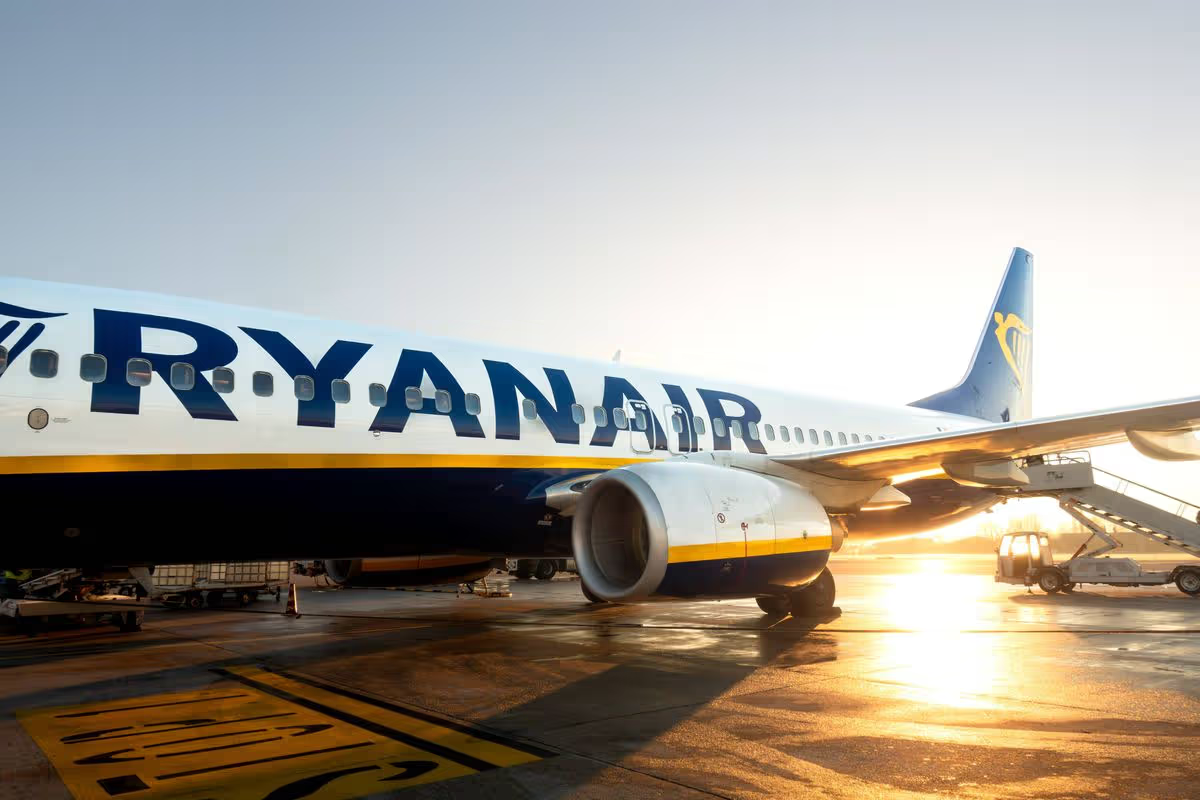
Ryanair has threatened to cancel flights to a popular EU country if border control delays do not improve, as the EU’s new Entry Exit System (EES) causes waits of up to 40 minutes at its airport
The Ryanair subsidiary has threatened to reduce flights to Malta(Image: Nicholas Ahonen via Getty Images)
Ryanair has threatened to cancel flights to a beloved European hotspot unless lengthy queue delays are brought under control.
David O’Brien, CEO of Ryanair’s Malta subsidiary Malta Air, has put the government on notice that the airline could divert capacity away from Malta to rival Mediterranean destinations if border check hold-ups at the airport fail to improve.
“If we find ourselves with significant congestion and delay, we’d have to redirect capacity away from Malta to other destinations and that’s not something we’d like to do,” he told the Times of Malta.
The EU’s new entry/exit system (EES) has triggered significant delays at a string of busy airports, with passengers in Malta facing waits of up to 40 minutes.
Have you been caught up in EES delays? Email webtravel@reachplc.com
The problem affects all non-EU travellers, with passengers from the UK – Malta’s biggest market – bearing the brunt of the disruption.
“Europe is utterly unprepared in a general sense. We hope Malta is prepared. We haven’t reached summer peak yet,” Mr O’Brien warned.
David Curmi, executive chairman of national carrier KM Malta, also voiced his concerns to the Times of Malta over mounting delays.
“We are unable to wait for passengers to board our aircraft. Passenger compensation regulations state that we have to compensate all passengers, including those who arrive late because of this system,” he said.
Both aviation chiefs have called for the system to be suspended to prevent delays and passengers missing their flights during the peak summer period.
It was announced yesterday that Greece has suspended EU fingerprint and facial scans for British holidaymakers. The country has chosen to abandon the new biometric security measures amid fears about queue chaos spreading across the continent. Queues have been hitting the country, with four-hour waits reported in many destinations, including Greece.
Eleni Skarveli, director of the Greek National Tourism Organisation in the UK, emphasised that the decision would “ensure a smoother and more efficient arrival experience in Greece” and would “significantly reduce waiting times” while easing congestion at airports.
A total of 122 passengers were reportedly prevented from boarding the flight from Milan Linate to Manchester on Sunday due to delays at passport desks triggered by the roll-out of the EU’s Entry Exit System (EES). The 11am departure was delayed for 59 minutes before taking off with the bulk of seats vacant.
Under the EES, travellers are required to register their biometric information, which involves having their fingerprints scanned and photograph captured.
They must also respond to questions about their visit, such as whether they have accommodation arranged, sufficient funds for their trip and a return ticket.
All children must register, though under-12s are exempt from fingerprinting. EES is free for travellers.
Prior to its launch earlier this year, the Home Office warned travellers to anticipate “longer wait times at border control”, while Advantage Travel Partnership advised visitors to southern Europe to “allocate four hours for navigating the new system”.
The system is designed to strengthen border security by reducing illegal migration and identifying visitors who overstay. Once registered, travellers won’t need to repeat the process for three years. Any future border crossing during that timeframe will require verification of an individual’s fingerprints and photograph, which is anticipated to be faster than the initial registration.
After she comes across an escaped convict called Sam (Fra Fee), he offers her a taste of life outside the religious cult, while her husband Adam (Asa Butterfield) continues to chastise her.
The thriller opens with Rosie, Adam and their daughter Grace (Olivia Pickering) enjoying a party outside with the other members of their extended cult family.
A storm suddenly closes in on them, forcing them all inside, and Grace looks particularly concerned as she calls it “the Rapture” – but what does this mean?
What does the Rapture mean in Unchosen?
At the start of the series, viewers learn that the Christian cult is part of the church of The Fellowship of the Divine.
Their beliefs quickly become apparent when Mrs Phillips (Siobhan Finneran) curses Grace for reading a children’s magazine – a forbidden item.
During their street party, a storm appears overhead and Grace looks particularly terrified, believing the black clouds and thunder are the signs of the Rapture.
In Christianity, the Rapture is the concept of an event when all dead Christian believers will be resurrected and reunited with Christians who are still alive.
Together, they will will rise “in the clouds, to meet the Lord in the air”.
The storm clouds in the series represent the concept, which suggests live Christians will leave the earth to meet Jesus Christ.
Grace may have been scared at the thought of being ‘taken’ in order to meet Jesus Christ at the Second Coming.
The actual term ‘Rapture’ is not mentioned anywhere in the Bible, it is instead a concept that has developed over time.
In his First Letter to the Thessalonians, Paul – one of the Apostles – wrote that Jesus would return one day, and “we who are alive, who are left, will be caught up”.
Some believe the Rapture is when Christ’s followers will be taken up to Heaven, while those who do not follow him will be left behind on Earth.
Oil prices edged slightly higher, European indices traded flat, while Asian markets surged on Tuesday morning as investors monitored potential US-Iran negotiations and the final 48 hours of the current ceasefire.
ADVERTISEMENT
ADVERTISEMENT
At the time of writing, US benchmark crude was up 8.5% from last Friday’s low to around $86.3 a barrel, while Brent crude, the international standard, was around 9.5% higher at roughly $94.5 a barrel.
As for European markets, the Euro Stoxx 50 and the broader pan-European Stoxx 600 were trading within a 0.2% range.
The UK’s FTSE 100, Germany’s DAX 30, France’s CAC 40 and Italy’s FTSE MIB were all similarly trading within a 0.3% range.
On Wall Street, US futures were also all trading within a 0.3% range with the tech-heavy Nasdaq leading. The S&P 500 closed marginally lower by 0.2% on Monday at 7109 points.
Despite US representatives, including special envoy Steve Witkoff and senior adviser Jared Kushner, travelling to Islamabad as part of renewed efforts to secure an agreement, no concrete progress on US-Iran negotiations has been announced.
The Strait of Hormuz remains closed and the current ceasefire ends on Wednesday keeping markets in a state of uncertainty.
US President Donald Trump has asserted that the deal currently being negotiated will be better than the Joint Comprehensive Plan of Action (JCPOA), which was signed by US President Barack Obama in 2015 and from which Trump withdrew in 2018.
Latest on US-Iran negotiations
Following the arrival of US representatives to Islamabad there has been no developments on the negotiations with Iran.
Even though US President Donald Trump confidently declared that there is a historic deal in the works, public statements from major Iranian figures seem to indicate otherwise.
Mohammad Ghalibaf, the speaker of Iran’s parliament and the person previously heading the talks with the US, made sweeping declarations via X on Monday stating that the country will “not accept negotiations under the shadow of threats” and “has prepared to reveal new cards on the battlefield”.
Previously, other Iranian representatives have also described US demands as “excessive”.
For the time being, markets eagerly await developments and are highly sensitive to any headlines about the situation.
Associated British Foods and Primark demerger
Although European markets are trading flat, major news in the retail consumer sector has come out of the UK.
Associated British Foods (ABF) is poised to announce the outcome this week of a strategic review into demerging its fast-fashion retail arm Primark, from its diversified food business.
The conglomerate, controlled by the billionaire Weston family, has been working with advisers from Rothschild & Co to assess whether the split would maximise long-term shareholder value.
Analysts argue the move makes sense because of the limited operational synergies between the two divisions: the food arm generates steady cash flows from brands such as Twinings, Patak’s, Jordans cereals and Allied Bakeries, while Primark has pursued aggressive international expansion in a fiercely competitive retail sector.
The decision comes as ABF faces tough trading conditions, with the group warning in January of flat annual sales and declining profits, further pressured by rising costs and the fallout from the Iran conflict, including potential increases in petrochemical prices.
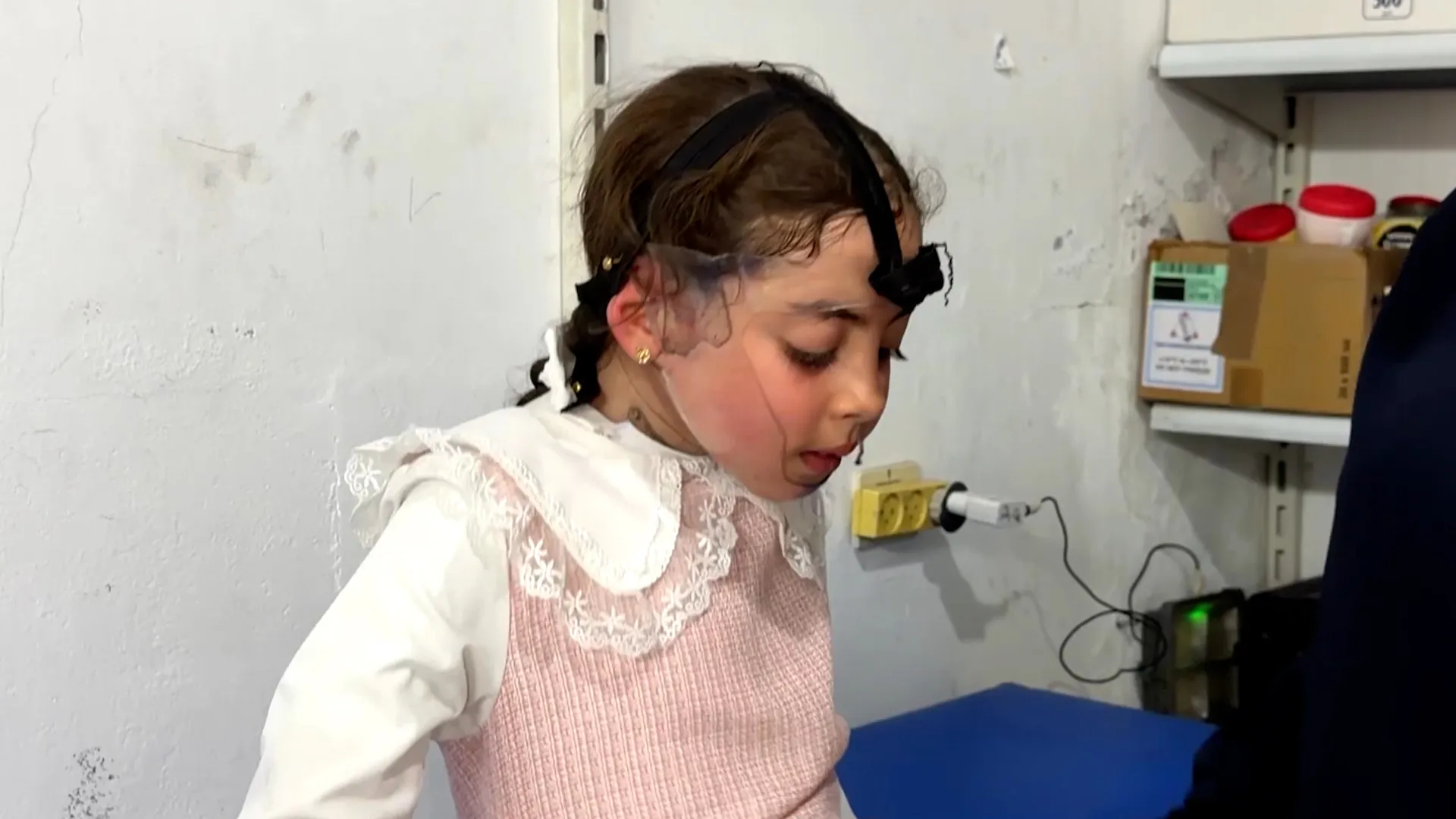
3D-printed technology is being used to help Palestinian children who were injured in Israeli attacks on Gaza but their treatment is at risk due to Israeli restrictions on supplies and aid organisations.
In a letter to EU foreign policy chief Kaja Kallas, the three governments say Israel is violating ‘human rights’.
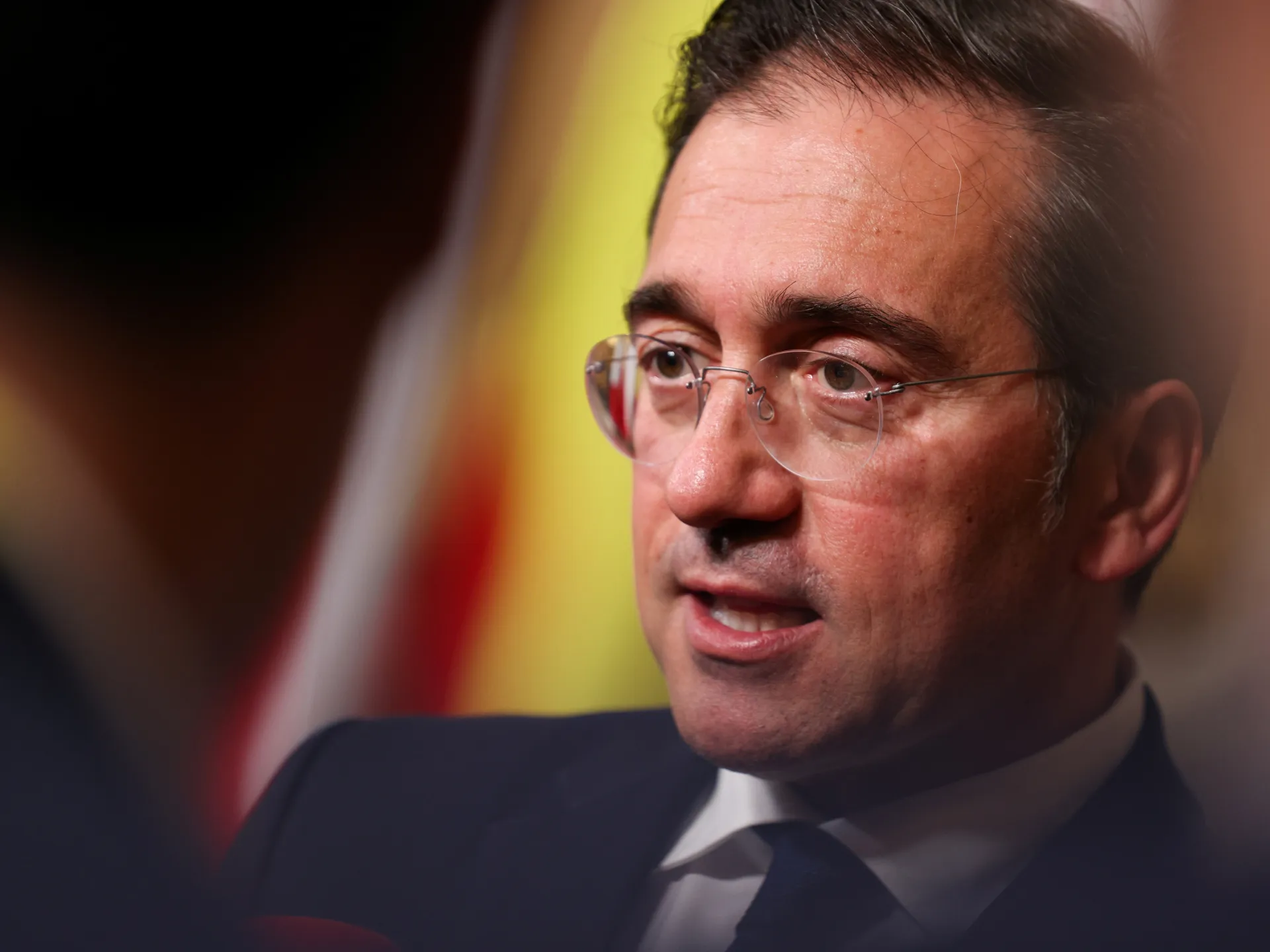
Spain, Slovenia and Ireland have urged the European Union to debate suspending its association agreement with Israel, saying the bloc can no longer remain “on the sidelines” as conditions worsen in Gaza, the occupied West Bank and Lebanon.
Speaking before a meeting of EU foreign ministers in Luxembourg on Tuesday, Spanish Foreign Minister Jose Manuel Albares said the three countries had formally requested that the issue be placed on the agenda.
Recommended Stories
list of 4 itemsend of list
“Spain, along with Slovenia and Ireland, has requested that the suspension of the Association Agreement between the European Union and Israel be discussed and debated today,” Albares said.
“I expect every European country to uphold what the International Court of Justice and the UN say on human rights and the defence of international law. Anything different would be a defeat for the European Union,” he added.
In a joint letter sent last week to EU foreign policy chief Kaja Kallas, the three governments said Israel had taken a series of measures that “contravene human rights and violate international law and international humanitarian law”, adding that it breached the 1995 agreement that outlines political, economic and trade relations between the EU and Israel.
They said repeated appeals to Israel to reverse course had been ignored. The ministers pointed to a proposed Israeli law that would impose the death penalty by hanging on Palestinians convicted in military courts, describing it as “a grave violation of fundamental human rights” and a further step in the “systematic persecution, oppression, violence and discrimination” faced by Palestinians.
They also cited the humanitarian crisis in Gaza, saying conditions there were “unbearable”, with continuing violations of the ceasefire agreement and insufficient aid entering the territory.
The letter warned that violence in the occupied West Bank was also intensifying, with settlers acting “with absolute impunity” alongside ongoing Israeli military operations, causing civilian deaths.
“The European Union can no longer remain on the sidelines,” the ministers wrote, calling for “bold and immediate action” and saying all options should remain on the table.
The three countries argued Israel was in breach of Article 2 of the EU-Israel Association Agreement, which ties relations to respect for human rights. An earlier EU review had already found Israel was failing to meet those obligations, they said, adding that the situation had deteriorated further since then.
During a donor conference in Brussels, Kallas said the estimated cost of rebuilding Gaza had risen to $71bn.
Ireland and Spain first pushed for a review of the agreement in 2024, but the effort failed to win enough backing from member states supportive of Israel. A later Dutch-led initiative succeeded in triggering an EU assessment, which concluded Israel had “likely” breached its obligations under the pact.
Possible trade measures, including suspending parts of the relationship, were later discussed but not implemented after Israel pledged to significantly increase humanitarian aid entering Gaza.
Occupied Territories Bill
Ireland is also seeking to revive its Occupied Territories Bill, first introduced in 2018, which would ban trade in goods and services from illegal settlements in the occupied Palestinian territory, including the West Bank. Progress has stalled despite unanimous backing in the lower house of parliament, the Dail.
Meanwhile, Spain and Slovenia have moved to curb trade with illegal Israeli settlements in the occupied West Bank following sustained public protests and growing political pressure. In August last year, Slovenia banned imports of goods produced in Israeli-occupied territories, becoming one of the first European states to take such a step.
Spain followed later that year with a decree banning imports from illegal Israeli settlements, with the measure coming into force at the start of 2026.
All three countries formally recognised the State of Palestine in May 2024, in what was widely seen as a coordinated diplomatic move aimed at increasing pressure for a two-state solution.
JACK Whitehall’s countryside wedding to Roxy Horner over the weekend may have appeared to be oozing class, but the comedian says he actually had a wardrobe disaster during the ceremony.
In fact, the dad-of-one, 37, says he was left with his “a** hanging out” at the end of the aisle.
Sign up for the Showbiz newsletter
Thank you!
Jack Whitehall has revealed he suffered a wardrobe malfunction during his wedding to Roxy Horner, with his suit trousers splitting mid-ceremonyCredit: GettyThe groom began the day in a luxe Tom Ford suit but had to change later on due to the malfunctionCredit: Jon RowleyJack explained how he was bending down to pick up daughter Elsie when his suit split during the ceremony
Jack ripped his luxe Tom Ford suit when picking up their two-year-old daughter during the ceremony.
“I squatted down to pick up Elsie and my trousers split, my whole a** was hanging out,” he told Vogue.
Luckily, the comedian had a back-up suit and later changed into one by menswear brand Dunhill.
Meanwhile, his bride also donned two outfits during the day, but hers were both by choice.
The Georgian-style property is owned by Kate Middleton’s former boss, Jigsaw tycoon John Robinson.
Jack and Roxy shared the details of their big day with Vogue, explaining how Elsie was one of the model’s three flower girls.
They also had a whopping eight bridesmaids, with Jack’s brother, Barnaby, serving as Best Man.
After Jack predicted a “brutal” best man speech from his brother during a chat with The Sun earlier this year, due to his own ‘below the belt’ speech at his sibling’s nuptials, Barnaby didn’t hold back.
“He threw me under the bus, because that’s what I’d done to him,” confirmed Jack in his post-wedding chat.
Guests were asked to turn off their phones during the ceremony and were put on a social media blackout.
The newlywed pair are now headed to Venice for a stunning Italian honeymoon.
The couple tied the knot last weekend in a stunning countryside ceremonyCredit: anna_longford / InstagramThey were surrounded by friends, family and several famous faces for the lavish weekend of celebrationsCredit: Instagram/Roxyhorner
THE closure of the Strait of Hormuz has resulted in the soaring price of jet fuel, which had led to fears of shortages across Europe.
Now, easyJet has issued an update for its passengers with growing fears that holidays could be affected from mid-May.
Sign up for the Travel newsletter
Thank you!
easyJet has issued a warning for its passengers due to fuel shortagesCredit: Getty TUI has also issued an update saying it will monitor flights from May 1Credit: Alamy
Javier Gándara, easyJetCEO for Spain and Portugal, has said that while the airline is continuing to operate as planned now, beyond three or four weeks and it’s “difficult to see” what will happen.
The three-week warning means easyJet passengers could face disruption from as soon as May 12.
However, Mr Gándara then added: “In Spain, we are in a comparatively better situation than neighbouring countries for two reasons.
“Firstly, because of all the crude oil that is imported and then refined here, only 11 per cent comes from the Middle East, which is the percentage affected by the closure of the Strait of Hormuz; the remaining 89 per cent comes from elsewhere.”
The travel giant said it is “monitoring” jet fuel shortages as a result of the Iran war, for all passengers flying from May 1.
On social media, one worried traveller asked the airline: “With the reported jet fuel shortages are you expecting holidays from May 1 to be affected?”
TUI responded: “We’re closely monitoring the developing situation in the Middle East and its potential impact on global aviation fuel supplies.
“At present, we’re not anticipating any immediate disruption to our flight schedules or holiday programmes from fuel shortages.“
The holiday chaos is caused from the ongoing Iran-US conflict with warnings that Europe could face jet fuel shortages due to the Strait of Hormuz remaining closed.
Getaways should not be seriously impacted immediately as airlines bought fuel far in advance at a fixed rate.
But if the crisis continues into June, operators may start adding a surcharge to holiday prices.
A limited number of flights may be cancelled, but mostly on well-served routes with alternatives.
If supplies start to dry up, cancellations would increase.
2. Am I entitled to a refund?
IF some or all of your holiday is cancelled by the provider, your refund depends on whether you booked your trip as a package holiday, or individually.
Your money tends to be much better protected with a package deal.
3. Is now a bad time to book?
There are some great deals, but book with caution.
You must take out travel insurance as, if your flight is cancelled, you may have protection against the cost of other elements of your holiday, such as accommodation.
A POPULAR holiday destination could soon lose all of its Ryanair flights – due to huge queues at the airport.
Malta is just one of the destinations in Europe that recently implemented the EU’s new Entry/Exit System (EES) at its airport, which requires new biometric checks.
Sign up for the Travel newsletter
Thank you!
Ryanair is threatening to axe flights to Malta due to border control queuesCredit: Getty
However, recent reports found that passengers were left stranded on the tarmac for 20 minutes because the queues were so long at security inside the airport building.
David O’Brien, one of Ryanair’s executive officers and the CEO of Malta Air, said: “If we find ourselves with significant congestion and delay, we’d have to redirect capacity away from Malta to other destinations and that’s not something we’d like to do.”
He has since written to Malta’s Home Affairs Minister Byron Camilleri to ensure border controls are fully staffed for this summer, according to The Times of Malta.
O’Brien added that “Europe is utterly unprepared in a general sense” and that while the airline has not yet experienced significant delays at Malta Airport, it is concerned about the upcoming summertime period.
Last year, Ryanair carried more than half of total passengers to Malta and of those travelling to the country – with the UK being the biggest market.
To try and reduce the delays, Malta Airport has introduced new measures such as a specific Schengen corridor, as well as increasing the amount of immigration desks.
The airport has also transferred more airport staff to be working on the new system.
Alan Borg, CEO of Malta International Airport told The Times of Malta: “We are working hand in hand with the Malta Police Force to make sure we can do everything possible to support them in this important initiative.
“It is what it is. We need to find ways to improve the processing time over the summer period.”
EES is a new system used across 29 European countries to register non-EU nationals, which includes Brits, for short stays of up to 90 days in any 180-day period.
And Malta isn’t the only airport suffering delays due to the newly implemented EES.
Last month, Travel Reporter Alice Penwill experienced three-hour queues at Lanzarote Airport.
She said: “The queues stretched along the corridor and zigzagged all the way through the arrivals hall that took passengers to EES registration.”
“I’d already signed up to EES, having visited Lithuania a few months ago – but that was no use at all.
The airport is experiencing queues of around 40 minutes for people arriving and leaving MaltaCredit: Alamy
“There was no separate queue for – or any staff for that matter – advising those who have registered to head straight to the passport e-gates.
“While this was frustrating, what was even more so was that only half of the EES machines were actually working.
“When I finally made it to my bus transfer, even the Jet2Holidays rep said she’d ‘never seen delays this bad’.”
Delays have also been reported at Brussels, Lisbon and Prague airports.
Greece has even decided to halt the system completely.
On April 18, a statement from the Greek Embassy announced that Brits are “exempt” from biometrics at all Greek border crossing points.
Eleni Skarveli, the director of the Greek National Tourism Organisation in the UK, said: “The exemption of British passport holders from biometric registration at Greek border crossing points, effective from 10 April 2026, is expected to significantly reduce waiting times and ease congestion at airports.
“UK travellers will no longer need to undergo additional EES biometric procedures, ensuring a smoother and more efficient arrival experience in Greece.“
Sun Travel has contacted Malta Airport and Ryanair for comment.
It comes after the introduction of Europe’s new Entry/Exit SystemCredit: AlamyThe new system applies to all non-EU nationals including BritsCredit: Alamy
With 13 medals between them, Alex ‘Tattie’ Marshall and Paul Foster lead the Scotland bowls team for the Commonwealth Games in Glasgow this summer.
The vastly experienced duo will link up in the men’s pairs event, which they won at Glasgow 2014.
Marshall, who has seven Commonwealth Games medals in his collection, said of his eighth selection: “It is always such an honour and privilege to be selected to represent Team Scotland at the Commonwealth Games.
“To have another opportunity to be a part of a home Games is also not lost on me, and I know that Paul and I will give it our very best to try and win a medal for the team.”
Marshall’s niece Beth Riva, who won 2025 World Championship mixed pairs gold with Jason Banks last year, joins Caroline Brown in the women’s pairs.
Banks will make his Team Scotland debut in the singles event.
Bowls Scotland announced the host nation’s squad on Tuesday, with the Commonwealth Games bowls events running from 24 July to 2 August.
For the first time in Commonwealth Games history, all of the bowls and para bowls events will be played indoors, taking place at the SEC Centre.
In the para team, Pauline Wilson, Garry Brown, Robert Barr and his director Sarah Jane Ewing are all aiming for repeat golds after topping the podium at Birmingham 2022.
The container vessel Touska, seen here off Hong Kong’s Ap Lei Chau islet in November 2017, was seized by the U.S. military on Sunday. Iran’s Foreign Ministry demanded Tuesday that the United States release the vessel. Photo by Jerome Favre/EPA
April 21 (UPI) — Iran on Tuesday demanded the United States release the Iranian-flagged container ship the U.S. military seized over the weekend, threatening to use “all its capacities” to defend itself as the cease-fire neared its end.
The U.S. military seized Touska on Sunday as it enforced a military blockade of Iranian ports and ships, raising already high tensions during a two-week cease-fire rapidly nearing its end that negotiators from both countries are to use to secure an end to the war.
U.S. warships intercepted Touska transiting the north Arabian Sea en route to Iran’s Bandar Abbas port city for allegedly violating the blockade.
Iran responded with accusations of violating the cease-fire and drone strikes targeting U.S. military vessels, according to state-run media, though U.S. Central Command has yet to comment.
Iran’s Foreign Ministry on Tuesday condemned the seizure of Touska as an “unlawful and savage act of the terrorist U.S. army,” saying the “act of maritime banditry and terrorism” terrified the ship’s passengers and crew, some of whose family members were onboard.
“The Islamic Republic of Iran, while warning of the very dangerous consequences of this unlawful and criminal act by the United States, emphasizes the immediate release of the Iranian vessel, its passengers, its crew and its families,” the ministry said in a statement.
The ministry said the seizure is a violation of international and the fundamental principles and rules of the U.N. Charter, and that it had informed the U.N. secretary general, the Security Council and maritime organizations.
“There is no doubt that the Islamic Republic of Iran will use all its capacities to defend Iran’s national interests and security and to safeguard the rights and dignity of its citizens,” the ministry statement said.
“It is obvious that full responsibility for the further complication of the situation in the region lies with the United States.”
The cease-fire is to end at midnight Tuesday.
Iran has accused Trump of ducking real negotiations on ending the war in favor of trying to exert the United States’ economic and military might to force it to capitulate.
“Trump, by imposing a blockade and violating the cease-fire, wants — in his view — to turn the negotiating table into a table of surrender, or else justify starting the war again,” Iranian Parliament Speaker Mohammad Bagher Ghalibaf said late Monday in a statement.
“We do not accept negotiations under the shadow of threats, and over thee past two weeks we have prepared to reveal new cards on the battlefield.”
Trump has continued to boast online that he was “winning” the war while defending himself from criticism and vowing the deal his administration is working on with Iran will be “FAR BETTER” than the landmark multinational Joint Comprehensive Plan of Action the United States, Iran and several other countries signed during the Obama administration.
“If a deal happens under ‘TRUMP,’ it will guarantee Peace, Security and Safety, not only for Israel and the Middle East, but for Europe, America and Everywhere else,” he said on his Truth Social media platform.
“It will be something that the entire World will be proud of, instead of the years of Embarrassment and Humiliation that we have been forced to suffer due to incompetent and cowardly leadership!”
Turkey, Iran’s neighbor and U.S. ally, has been among nations working to de-escalate tensions in the Gulf and seek an extension to the cease-fire as negotiations appear to be at a stalemate over Iran’s nuclear program.
Though public rhetoric is fiery, negotiations behind closed doors are progressing, Ankara’s foreign affairs minister, Hakan Fidan, said Sunday during a forum in southeastern Turkey’s Antalya.
“The good thing is this: both sides continue to negotiate with a very serious intention, sincerely, they have the will to continue,” Fidan said.
“Now, no one wants a new war to start again with the end of the cease-fire next week.”
Turkey hopes that under international pressure, the United States, Israel and Iran will extend the cease-fire to solve outstanding issues, he said.
“A two-week period is good for a cease-fire, but the file in front of them is so comprehensive that it will not be possible to solve all these issues in two weeks,” he said.
“Therefore, a new extension will be needed. I hope this extension will come. I am optimistic about that.”
Sina* is a 28-year-old video editing assistant who fought hard to build a life in Tehran. After completing mandatory military service, he refused to return to his hometown of Neyshabur in eastern Iran, knowing opportunities for a young man with a background in film editing and independent student theatre were bleak there. Through a college friend, he found his footing at a video content creation studio in the capital, climbing from camera assistant to assistant video editor within six months, before losing his job as a result of the US-Israel war on Iran. As told to Arya Farahand.
It has been a few days since the guns fell silent, and the sliver of hope I felt when the ceasefire was announced is already fading. Out of all the resumes I sent in desperation, only one company called me for an interview. The salary they offered would not cover the bare minimum to survive. My family keeps calling from Neyshabur, repeating the same line: “Come back, there’s work for you here.” What they intend as a lifeline feels like salt in the wound.
Recommended Stories
list of 3 itemsend of list
I had stopped taking money from my father, my salary grew, and I was buying gifts for my two sisters. I was, for the first time in my life, truly independent. Now, I am sitting in my grandmother’s empty apartment in Tehran, staring at a phone with almost no internet, waiting for a job offer that’s not coming.
This is what the war has done to me. Not a scratch on my body, but everything else – gone.
Croissants on the roof
The morning the war started, we were in a briefing meeting, drinking tea. A colleague had brought fresh croissants. Then we heard the roar of a fighter jet, a whistle, and seconds later, an explosion.
Our initial instinct wasn’t terror, but naive curiosity. Against every survival guide we had read from the previous war, we piled into the elevator and went up to the roof, mugs still in hand. Pillars of smoke were rising across the city. Then, another explosion hit, deafeningly close. We sprinted for the stairs.
Our manager sent us home. The city had seized up. My driver called to say he couldn’t get through the gridlock, so we started walking – 40 minutes under the glaring sun, past stranded people and stalled cars. At one point, a middle-aged driver lost his nerve, swerving into the bus lane against traffic. A bus appeared head-on and deadlocked the lane. Trapped, he looked ready to explode. I didn’t stick around. I just kept walking.
I went to my grandmother’s house. Hard of hearing, she hadn’t heard a single blast and was simply overjoyed to see me. I drank tea, sat in front of the television, tried to process what was happening, then ate lunch and slept.
The city hollowing out
When I woke up, I reached for my phone, only to be reminded that the internet was dead. I am someone who fills every spare moment with online gaming or Instagram. Without either, the boredom was stifling. I couldn’t smoke in front of my grandmother, and the forced abstinence only added to my agitation.
In the days that followed, the city hollowed out. Whenever I stepped into the alley – using a quick errand as a pretext to sneak a cigarette – I saw fewer and fewer people. In our building, only five of the 12 units remained occupied. I could tell by the empty spaces in the parking garage.
When my cigarette supply ran out, the corner shop didn’t have my brand and the supermarket was charging double. With no certainty that my March salary would be paid, I settled for a cheaper, unknown brand. It was like inhaling truck exhaust.
The days blurred: the unemployment anxiety, the stifling boredom, the desperate secret cigarettes. I tried buying VPNs twice. The first worked for a single day. The second – the seller blocked me the moment I transferred the money.
The closest I have come to death
The true nightmare came on the night of March 5. A mild explosion jolted me awake around 4m. I walked to the kitchen for water. Then a blast ripped through the air – a sound seared into my brain for life. I froze. My grandmother stumbled out of her bedroom in terror. I pulled her into the kitchen.
Then came the barrage. More than 10 consecutive explosions, each less than 10 seconds apart. My grandmother sat on the floor beside me, arms wrapped tightly around my leg, head buried. It was the closest I have ever felt to death.
When it finally stopped, the windows held. My grandmother, shaken, recalled how during the Iran-Iraq war, sirens had warned them in time to reach shelters. What she found most painful about this war was the absolute lack of warning – no sirens, no shelters. Just sitting, waiting for the next blast. With tired legs, she climbed back into bed. I did not sleep until morning.
Ten voices in my head
Through all of it, I kept telling myself, “Hold on”. Our manager had hoped this war, like the previous conflict, would end in under two weeks. Whenever my parents called, begging me to return to Neyshabur, I said no.
On March 17, we had our final online meeting. The studio’s debts were mounting, invoices unpaid, and our manager saw no end in sight – for the war or the internet blackout. For the new Iranian year, starting on March 21, only 200 resources staff would remain. The rest of us were laid off, without pay.
As the call ended, it felt like 10 different voices were screaming in my head. I couldn’t rely on my grandmother’s meagre pension. My father was already supporting a family of four. The calculation was merciless: move back to Neyshabur and work at my uncle’s supermarket. Instead of planning how to improve my life, I was plotting survival.
I packed up and left. It was a gruelling 10-hour bus ride through eerily quiet roads. What haunted me most were the final moments in Tehran. The city felt hollow, silent, swallowed by a darkness I had never seen before.
The void
From Neyshabur, I called my manager, hoping against hope. He laid out the brutal math. During the previous war and the December protests, waiting out the shutdowns had been viable. But a relentless year of economic bleeding, capped by this blackout, had driven revenue to zero. Even if the internet were restored tomorrow and we worked nonstop for months, it wouldn’t be enough. The studio hadn’t paused. It had collapsed.
I updated my resume, bought a return bus ticket, and went back to my grandmother’s apartment. There was nothing to go back to. I just needed to feel like I was doing something.
When the ceasefire was announced, I felt a sliver of hope. It lasted about a day.
My life used to be a blur of motion: the studio, independent theatres, cafes with friends, early mornings and late nights. Now, my entire existence has shrunk to four walls. The war has ended, at least for now. The internet remains largely throttled, the economy is in ruins, and the job market that existed before February 28 has not returned with the ceasefire.
Outside, people are beginning to move through the streets again. For them, perhaps, something is resuming. For me, there is nothing to resume.
Dishing about what you’re reading is one of life’s greatest pleasures. Even better if your audience has read the same book. Reading with others also provides space to deepen community, ignite conversations and share moments of joy. Los Angeles needs that more than ever right now as we continue to shoulder a heavy 2025 marked by fires and ICE raids. But how to choose a book to get started? The best books to read in groups inspire a dialogue. They have sparkling prose and unshakable narratives. These were the guiding factors for compiling our recommendations for all kinds of readers.
We surveyed 200-plus luminaries in the book and journalism worlds to make this in-depth list. The voters included prizewinning authors, indie bookstore owners, a Man Booker Prize judge, Ivy League professors, literary agents, lauded journalists and several zealous book club members. To ensure an especially varied selection, the editors gave a final curatorial pass.
The list includes 10 categories for every type of reader, whether you reach for literary fiction or romance. We also crowned an “Ultimate Book Club Pick,” which is the title that received the most votes out of all the books by a landslide, and happens to be eerily prophetic (find it among the “Make-Believers” selections). Of course, we couldn’t include every worthy book. Let us know your picks and pull up a chair next to us. Why not read together? — Sophia Kercher
If you buy books linked on our site, The Times may earn a commission from Bookshop.org, whose fees support independent bookstores.
The IPL’s influence has also led to the rise of multiple state-run T20 leagues across India, further widening the talent pool.
“Right now, there are 18 state leagues going on, with a minimum of six teams per league. Six teams, 15 players, just imagine the pool,” George says.
“In most of the state associations, sadly, the selections are not that transparent. So you see players who have not been in the state team coming up and doing very well for their respective franchises. That is why the state franchise tournaments are very important and help us identify talent.”
As a result, more players are now emerging from non-traditional centres.
“Talent in India is concentrated in places like UP, Rajasthan and Delhi,” said George. “That’s why franchises focus a lot on these leagues. UP, in particular, has a very strong league, and many players who have done well there, like Prashant Veer and Kartik Sharma.
“Kashmir is another region we focus on because a lot of good fast bowlers and hard-hitters are coming from there.”
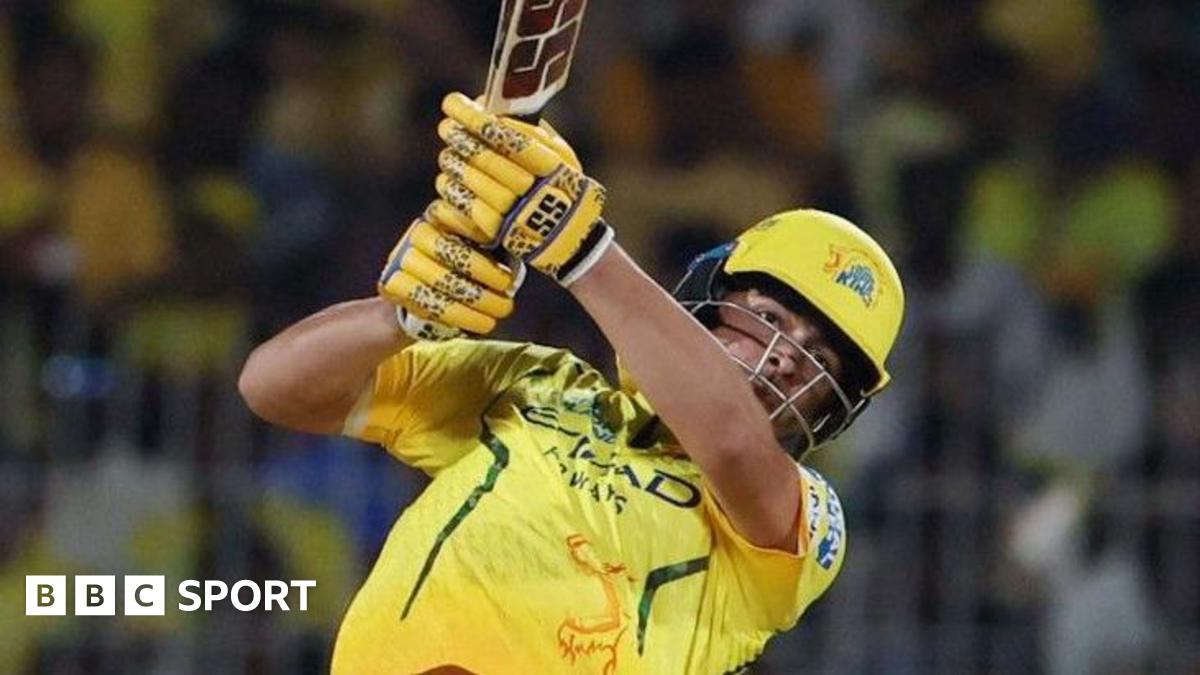
The data also reflects how the talent pool has spread across India. In the inaugural IPL in 2008, most players came from traditional centres such as Maharashtra (21), Delhi (14), Tamil Nadu (11) and Karnataka (10).
By 2026, the landscape has broadened significantly. Uttar Pradesh now matches Maharashtra with 21 players, while Rajasthan (13) and Madhya Pradesh (10) have also emerged as key contributors.
Talent from far-off regions is coming through as well. Jammu and Kashmir, which has just seen its first-class team win the Ranji Trophy for the first time in its history, has gone from zero representation in 2008 to six players in 2026, while Bihar has grown from two to six.
This expanding base of talent is reflected in India’s recent success in T20 cricket, including back-to-back World Cup titles.
“India’s talent pool is so big that you could field two strong teams, India A and India B, and both would reach the latter stages of a world tournament,” George says.
“In the last decade, almost all new Indian players have come through the IPL ecosystem. IPL is like a blessing for Indian cricket.”
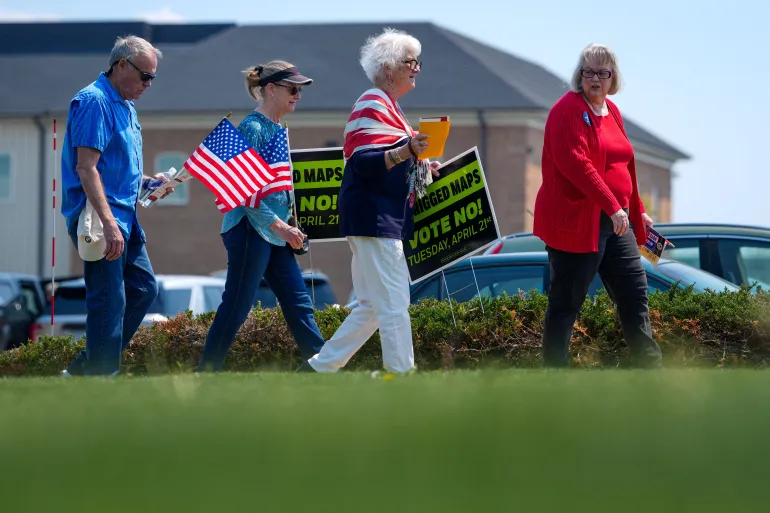
Voters in Virginia head to the polls on Tuesday to decide on a measure that could redraw the state’s congressional map and potentially shift the balance of power in Washington.
Major political figures, including former President Barack Obama and House of Representatives Speaker Mike Johnson, have weighed in on the high-stakes vote, with nearly $100m spent on campaigning around it.
Part of a broader redistricting battle that began in Texas and spread nationwide, the vote may be the Democrats’ last chance this year to gain seats by changing district maps. The vote comes about six months before the 2026 midterm elections.
Here is what we know:
What is Virginia voting on?
Virginia currently sends 11 members to the House. At the moment, six of them are Democrats, and five are Republicans, reflecting the state’s balance.
Democrats now want to redraw the map to favour them in a way that could help them win up to 10 of the 11 seats. Under the proposal, most districts would be safely Democratic or lean towards the party, with only one strongly Republican.
A breakdown would be:
Eight districts would be safely Democratic
Two would be competitive but lean Democratic
Only one would be safely Republican
If approved, this could give the Democrats several extra seats in Congress, helping them win back or strengthen control of the House in Washington, where majorities are often decided by just a few seats.
That would be a big political shift for the state, which was once closely contested but has become more Democratic-leaning in recent years.
Supporters depart a campaign rally against Virginia Democrats’ proposed state redistricting constitutional amendment [FILE: Ken Cedeno/Reuters]
How would the vote work?
Voters in Virginia can cast their ballots either early or on Election Day.
Polling stations will be open across the state on Tuesday:
Polls open at 10:00 GMT
Polls close at 23:00 GMT
Votes will be counted after polls close, with early results expected later that evening and fuller results overnight or the next day.
What are voters being asked to decide?
The proposed constitutional amendment is the only statewide contest on the ballot.
It reads:
“Should the Constitution of Virginia be amended to allow the General Assembly to temporarily adopt new congressional districts to restore fairness in the upcoming elections, while ensuring Virginia’s standard redistricting process resumes for all future redistricting after the 2030 census?”
A “yes” vote would support allowing the General Assembly to redraw congressional districts before the midterms.
A “no” vote would leave current boundaries unchanged until the next round of regularly scheduled redistricting after the 2030 census.
What do the latest polls suggest?
The result is expected to be close.
A recent poll by State Navigate, a nonpartisan research group, suggests a small lead for supporters, with about 53 percent in favour and 47 percent against.
Why do district lines matter so much?
District lines decide how voters are grouped, which can shape who wins elections.
Moving the lines can make a district more favourable to a Democratic or Republican win, by adding or removing neighbourhoods and communities that lean one way or the other.
It can turn a close race into a safe seat, or the other way around. It affects which communities are kept together and who represents them.
This process, often called gerrymandering, allows parties to draw maps that benefit them.
In a closely divided state like Virginia, even small changes to the map can shift several seats and influence who holds power in Congress.
A 2023 study by Harvard University researchers found that gerrymandering often creates “safe” seats for politicians, meaning their races are less competitive.
In turn, those politicians become less responsive to the needs of their constituents, who become discouraged about voting as a result.
Supporters pray during a campaign rally against Virginia Democrats’ proposed state redistricting constitutional amendment [Ken Cedeno/Reuters]
When could new maps take effect?
If approved, the new map could be used as early as the next election cycle, including the upcoming midterms, depending on legal approval.
However, the plan could face legal challenges. Critics have questioned the ballot wording and the process used by lawmakers.
The Virginia Supreme Court has allowed the vote to go ahead while reviewing those concerns.
If it later finds that rules were broken, the results could be overturned, and the current maps would remain.
Why this vote could shape power in Washington?
A handful of seats could decide control of the US House.
Republicans currently hold a narrow 218–213 majority, but Democrats are seen as competitive heading into the midterms.
Political leaders have underscored the stakes.
Hakeem Jeffries, the Democratic Party’s leader in the House, has pointed to Virginia as a crucial battleground, while Mike Johnson has said the result will be closely watched across the country.
US House Speaker Mike Johnson (R-LA) speaks during a campaign rally [Reuters]
What it means to control the US House
The party with the majority (more seats) in Congress can:
Set the agenda, deciding which bills are brought up for debate
Control committees, including investigations and hearings
Pass legislation more easily (if they stay united)
Block bills from the minority party.
The majority party also chooses the speaker of the House, who has major influence over what reaches the floor.
Where else has this happened?
Virginia’s redistricting vote is part of a larger political battle playing out in the US. Republicans in Texas, encouraged by Donald Trump, have redrawn district maps to strengthen their advantage, prompting similar efforts in other states.
In rare cases, voters have been asked to decide directly, including in California last year and now in Virginia.
In California, voters backed the changes despite concerns about fairness. Now it’s Virginia’s turn to decide.
What Democrats are saying, and why?
Democrats argue the plan is a response to Republican actions in other states, not just a power grab.
Leaders like Obama had long opposed gerrymandering in principle, but have now backed the Virginia move, even releasing a video asking voters to go out and vote for the constitutional amendment.