BBC Breakfast’s weather presenter promised it wasn’t all bad news for this holiday weekend
BBC Breakfast: Naga Munchetty apologises to Carol Kirkwood
One of the hosts of BBC Breakfast shared their own warning to viewers who might be planning an Easter egg hunt this weekend.
The morning show returned to screens on Saturday (April 4) for another regular instalment despite it being an extended bank holiday weekend. As usual, it delivered the day’s top stories from the UK and across the world, including the latest from Iran and updates over the Artemis II launch.
Today’s show was presented by Naga Munchetty and Charlie Stayt as they provided the latest on the headlines and more. One of the biggest stories of the latest edition of the show was weather updates ahead of the expected arrival of Storm Dave hitting the country.
Ahead of the latest update Naga had her own message for viewers at home. She told the audience: “It is Easter weekend. If you’re out on an Easter egg hunt, perhaps you may need to time it. I think Louise is going to tell us more about that.”
It seems that Naga was advising those at home they may have only a limited time to mark Easter Sunday before the effects of Storm Dave are felt. However, BBC Breakfast’s weather presenter Louise Lear began her report by saying: “I don’t want you all to think the weather is going to be hideous because of Storm Dave.”
She emphasised that it is later today that the storm is due to hit, addressing those who might be wondering when the worst of the weather is due to begin. She added: “There is some tricky weather out there, particularly overnight.”
Multiple weather warnings are currently in place across the UK over the weekend with gusts between 70 – 90mph from later today until tomorrow morning.
This could threaten many people’s plans for this Easter holiday weekend and, as Naga hinted, present limited time if you often take part in Easter egg hunts outside.
Storm Dave is due to hit parts of the UK over the weekend and could cause disruption to travel plans. It is expected to hit hardest on Saturday evening, before beginning to weaken on Sunday as it moves into the North Sea. Louise did end her report by predicting that Easter Monday will be the ‘better’ day of the three this weekend.
The Met Office’s forecast said: “A rapidly deepening area of low pressure, Storm Dave, will cross Scotland on Saturday night before clearing into the North Sea on Sunday.”
Those travelling during the warning period have been told there could be disruption on the roads as well as on rail, air and ferry services. There could also be dangerous conditions from large waves along the coastline as well as gusts of up to 90mph in exposed areas.
The Met Office also warned some areas could experience power cuts, while warning “injuries and danger to life from flying debris are possible”. Earlier, the RAC predicted it would be the busiest Easter on the roads since 2022.
BBC Breakfast airs daily from 6am on BBC One and streams on iPlayer.
Scotland’s Robert MacIntyre maintained his strong form with a round of 64 for a four-shot halfway lead at the Texas Open in San Antonio.
MacIntyre had four birdies in his last five holes with his playing partner and Ryder Cup team-mate Ludwig Aberg of Sweden his nearest challenger.
Starting on the back nine, the world number 11 put down a marker with an eight-foot eagle putt at the par-five 14th and followed that up with birdies at his next two holes.
The only blemish for the 29-year-old was a bogey at the 17th before he regrouped to finish with a flourish for a confidence boost ahead of the Masters which begins in Augusta on Thursday.
“I’ve been driving the ball nice,” said the Scot. “I’ve got a new driver in the bag. Iron play today was exceptional I would say.
“I hit a pure wedge shot on 17, I thought it was absolutely dynamite there. Approach play, hitting the number, hitting the targets. Got to finish off with good putting. Overall, just really solid.
“I didn’t play here last year, just went straight into Augusta. This was an adjustment for that reason. I wanted to be sharp – or sharper – going into Augusta.”
Aberg had four birdies over his first 14 holes before an eagle at the sixth, but he finished with a bogey.
“For me, golf is about putting yourself in situations where you can win tournaments,” he said.
“I feel like I haven’t really done that very well the last 12 months or so, but starting to see it now, which has been really nice. Starting to get back into that level, which is really nice for me to see. So I’m looking forward to one more shot at it this week.”
Among those one shot back are six-time PGA Tour winner Tony Finau who is chasing a first win since April 2023 and who needs a win to be invited to the Masters.
The 36-year-old American finished his round strongly with an eagle putt at the 18th.
“It was nice to make an eagle on the last,” he said. “I hit a really good drive, pushed my second shot a little, got lucky, covered the water and was able to roll that one in. Sometimes those are the small little breaks that you need to be towards the top of the leaderboard.”
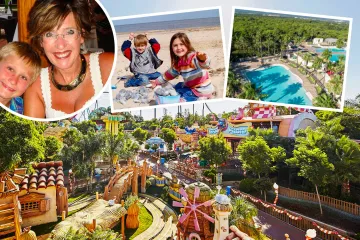
A SMALL Spanish coastal city has been named one of the up-and-coming destinations to visit in 2026.
Airbnb has recently announced its 2026 Dupe-It List, with alternative holiday destinations to visit instead of the better known, busier hotspots.
Sign up for the Travel newsletter
Thank you!
Airbnb has named Denia in Spain as one of the must-see destinations in 2026Credit: Alamy
And included on the list is swapping Marbella for Denia, Spain.
Airbnb said: “Situated on the Mediterranean coast of Spain’s Costa Blanca – Denia is a charming port city that might just be the country’s best sun-soaked secret.
“Offering vibrant marina life, tapas-fuelled evenings and Instagram-worthy sea views, travellers can meander through the old town’s cobbled streets, pop into local boutiques, or unwind on nearby beaches for a relaxed, authentic escape that’s every bit as picturesque as its flashier cousin, Marbella.”
The holiday accommodation platform also recommends that visitors stay in Casa Sol, which is an entire townhouse and that the best time to visit is between June and September.
Denia sits on the Costa Blanca and often dubbed the pearl of the region by locals, according to WTG Spain.
Not only that, but in 1982, the World Health Organisation dubbed the climate as one of the best in the world.
This is because the mountains that back the city stop the cold air from cooling temperatures in the city.
As a result, the microclimate means the seasons don’t change harshly in the city and leads to around 320 days of sunshine a year.
High temperatures tends to sit around 32C during the summer and lows sit around 11C during the winter, though the average annual temperature is a comfortable 19C.
When it comes to making the most of the weather in the city, like many other Spanish coastal cities, Denia has a number of beaches to choose from – including six Blue Flag spots.
For example, Punta del Raset Beach has both soft golden sand and calm waters making perfect for families.
If you fancy heading somewhere a bit more spacious, then opt for Deveses, which is the longest beach in Denia.
One recent visitor said: “A quiet beach, ideal for going with children.
“You can spend all day there, and enjoy the Los Baños bar, both for an aperitif, lunch and even a cocktail in the middle of the afternoon – very clean beach.”
Overlooking the beach, up 60 metres high on a hill, is the famous Denia Castle and Archaeological – an ancient fortress and ruins with panoramic views of the sea.
Otherwise the marina, is where tourists can find some of the city’s waterfront restaurants.
For watersports fans, the marina is where you can head off jet skiing, paddle boarding, kayaking or even sailing.
In the summer months, it can reach up to 32CCredit: GettyThe Spanish coastal city is known for its golden beaches and charming Old TownCredit: Getty
You can hop even hop on a ferry to another destination such as Ibiza, just two hours away, which costs around €25 (£21.78) per passenger.
And of course, Denia has an Old Town known as El Barrio – here you will find narrow streets, the Assumption Church and lots of traditional Spanish homes.
Travel writer Amalia Maloney even called the charming destination a ‘goldilocks town’ because it is neither too big or too small.
Fancy leaving the city for some green space? You can also head to Montgó Natural Park.
The park is the ideal spot for keen hikers and wildlife lovers, as it’s home to over 600 plant species and 150 animal species including the Bonelli’s eagle and Peregrine falcon.
The peak of the park sits at a staggering 753 metres – so it isn’t a hike for the faint hearted.
Montgo Natural Park is home to over 600 plant species and 150 animal speciesCredit: GettyYou can fly either to Valencia or Alicante and then drive to DeniaCredit: Alamy
One recent visitor said it was the “most impressive on the Costa Blanca”.
When looking for a bite to eat, visitors won’t spend too much with a mid-range three-course meal for two people likely to set you back €40 (£34.93).
And if you fancy a tipple, such as a beer, it will cost you around €2.20 (£1.92).
In fact, the city has been a UNESCO Creative City of Gastronomy since 2015 due to culinary traditions being kept up across the city’s 300 plus restaurants, with key dishes including rice-based meals and crimson shrimp.
You can get to Denia by flying to either Valencia or Alicante, where flights are around £14.
From Valencia to Denia it takes around 1hr19 by car, or just over an hour from Alicante.
For more top places to travel to in 2026, Europe’s ‘top trending city break’ destination has been revealed with flights for £15 and beers for £2.17.
DAUBED on an ancient wall, the curt sentence “All tourists are bastards” isn’t exactly welcoming – but it sums up a growing problem with tourists in one of the world’s most beautiful cities.
In summer, it can be hard to move on Venice’s most popular streets, but visit in low season and discover quiet backwaters where life is much slower — and cheaper — and overall a much more pleasant experience.
Sign up for the Travel newsletter
Thank you!
Venice has long been one of Italy’s most visited and famous citiesCredit: GettyVenice’s business today is tourism — whether the locals like it or notCredit: GettyBreathtaking St Mark’s Square is one of the must-sees for tourists in VeniceCredit: Getty
My tour guide, Guiliano from Devour Tours, tells me: “Even the fish market, where I shopped with my mother as a child, is only open for traditional reasons these days and, of course, for tourists.”
Venice, some 1,605 years old, has long been one of Italy’s most visited and famous cities. Once known as the home of merchants, its business today is tourism — whether the locals like it or not.
It’s fair to say many of them don’t. Locals are particularly against short-term rentals, saying they have hollowed out neighbourhoods, pushing residents out.
Authorities have listened, responding with cruise ship bans, crowd controls and, most infamously, entry fees.
The €5 fee — which rises to €10 for tourists who book fewer than four days in advance — typically only applies to weekends from April to July, so you won’t be charged on most weekdays.
But other residents understand that Venice needs tourism to survive.
Valentina, the manager at the historic Hilton Molino Stucky hotel’s rooftop Skyline Bar, is among that number.
As I sip on my Rising Tempest cocktail — a Venetian take on a Long Island Ice Tea — and nibble on focaccia, Valentina explains that while tourists can be “a little irritating in high season”, she appreciates they are now part of the city’s make-up.
At the bar — located in a former flour mill on pretty Giudecca island and with stunning views of the main city — she tells me: “Overall we love tourists and we do need them.”
The welcome at my hotel, the beautiful Maison Venezia, is warm and as impressive as its location.
The Sun’s Saskia O’Donoghue dines in style in VeniceCredit: SuppliedFeast on cicchetti, the Venetian alternative to tapasCredit: Getty
In the Cannaregio district, the four-star resort has Murano glass chandeliers and decor featuring traditional Venetian decorative motifs. Just a short stroll to the iconic Rialto Bridge, it is incredibly peaceful.
My room was so quiet, with a balcony overlooking a small canal, it was almost impossible to believe I was in a city, let alone one of the most touristy in Europe.
Even out of season, it’s easy to see Venice’s draw.
It has no roads, just canals, gondolas and crumbling palaces rising straight out of the water. There’s hundreds of years of history, maze-like alleys and sunsets that light the whole lagoon — home to more than 100 islands — on fire.
People have been coming here for years for the romance, the cicchetti — the Venetian alternative to tapas — and a unique feeling of drifting through a city that has not really changed for centuries. Even in low season, tourist must-sees like St Mark’s Square, the Doge’s Palace and the Grand Canal are busy.
However, head just a few streets back and Venice is a totally different experience, even in high summer.
During my tour, we stop off in Campo Santi Giovanni e Paolo, one of the city’s most beautiful squares.
Surprisingly, it’s very quiet, with just a few tour groups and locals milling about.
When I ask Guiliano for the reason, he says the square is a contradiction unique to Venice.
“It’s in the city centre, but off the beaten track — and it’s pretty much hidden even in the summer,” he says.
“In London, tourists go back and forth exclusively between Piccadilly and Leicester Square for their entire trip, and avoid places like Shoreditch. It’s the same here.”
While cafes in St Mark’s Square are notoriously pricey — think £12 for a cappuccino — more rustic spots off the main drag sell glasses of delicious Italian wine for about £3.50, cicchetti for £1.30 and pizzas from £7.
Venice in high season might lose a little of its magic, but overtourism is easier to dodge if you pick your moment.
Visit off-season and you’ll find a calmer, more authentic side. Crowds or not, though, there’s nowhere quite like it — and that’s why people keep coming back.
GO: VENICE
GETTING THERE: easyJet has flights to Venice from Gatwick, Manchester and Bristol with fares from £26.99 one way in April. See easyjet.com.
STAYING THERE: Maison Venezia has rooms from £156 per night including breakfast. See unaitalianhospitality.com.
OUT & ABOUT: Devour Tours “Venice in a Day” tour includes entry to St Mark’s Basilica, the Doge’s Palace and a gondola ride, and costs from £103 per person. See devourtours.com.
European Parliament member Rima Hassan says she’s facing “genuine judicial and political harassment” for her political opinions. She was detained in France on suspicion of “apology for terrorism”.
Two American crewmembers were rescued and one airman remains missing after a F-15E Strike Eagle went down over the Kohgiluyeh and Boyer-Ahmad provinces and an A-10 Warthog crashed into the Gulf, according to US media reports.
Recommended Stories
list of 1 itemend of list
Iranians took to the streets in Tehran to celebrate what authorities described as a major military success.
Iranian officials said the downing of the aircraft demonstrates that Tehran still has the capability to confront US and Israeli forces, despite the Trump administration’s claims that the country’s military infrastructure has been severely damaged.
The incidents mark a significant escalation in the conflict, with search and rescue operations under way for the missing US crewmember.
Here is what we know about the latest developments:
In Iran
Major escalation: US forces are conducting search and rescue operations for a missing crewmember after Iran downed two American warplanes. A US Black Hawk helicopter involved in the search was also hit by Iranian fire but managed to remain airborne, according to US media reports.
Defence system: Iran said a “new advanced defence system” downed the aircraft, contradicting earlier US claims that its air defences had been destroyed.
Casualties and damage: The human toll continues to rise with at least 2,076 people killed and 26,500 wounded in Iran since the start of the war on February 28, according to Iranian authorities.
War diplomacy
Diplomacy stalls: Iran’s semi-official news agency Fars on Friday reported that Tehran had rejected a US proposal for a 48-hour ceasefire. The US did not confirm or comment on the report, which cited an unnamed source.
War of words: Iranian President Masoud Pezeshkian questioned whether the US is sincere about diplomacy, accusing Washington of hypocrisy and asking the world to judge “which side engages in dialogue and negotiation, and which in terrorism” after a recent attack that killed the wife of a senior Iranian official.
Appeal to world: Pezeshkian said he consulted Finland’s president over US President Donald Trump’s threat to bomb Iran “back to the Stone Ages”, calling the remark a clear admission of intent to commit a “massive war crime” and warning the international community against remaining neutral.
In the Gulf
One killed at UAE gas site: An Egyptian national was killed and four others wounded after a fire at a gas complex in Abu Dhabi, caused by falling debris from an intercepted attack, the Government Media Office said.
Kuwait reports strikes: Authorities said Iranian strikes hit an oil refinery and a desalination plant, though Tehran denied targeting the water facility.
Drone interception in Bahrain: In Bahrain, the Ministry of Interior reported that four people were injured and several homes were damaged in the Sitra area after shrapnel fell from an intercepted Iranian drone.
In the US
Trump briefed on downed plane, Iran hunts for pilot: Trump has been briefed about the downing of a military jet in Iran that has triggered a major search and rescue operation for a missing crewmember, the White House said. US media reported that another crewmember was rescued.
Propaganda impact: Geopolitical analyst Phyllis Bennis said the downing of a US fighter jet and search for the missing airman could make it harder for the White House to maintain public support for the war, particularly among Trump’s MAGA base. The incident “changes the propaganda equation”, even if it does not change the military balance, she told Al Jazeera.
Trump seeks $1.5 trillion defence budget: Trump asked lawmakers to approve a massive $1.5 trillion defence budget for 2027, as the US faces rising costs from its war with Iran and mounting global security commitments.
In Israel
Strikes on Israel: Iran launched missile attacks on southern Israel, sparking a fire at an industrial site in the Negev region.
Economic and societal toll: Simultaneous conflicts in Iran, Gaza and Lebanon have cost Israel an estimated $112bn, leading to significant cracks in the nation’s economy. Daily civilian life remains heavily disrupted, with schools across the country keeping their doors closed.
Political shifts and public opinion: Despite the disruption, 78 percent of Jewish Israelis still support the war against Iran, though pollsters warn this backing could eventually erode. Amidst the ongoing conflict, the Israeli government has lurched further to the right, recently passing a record $271bn budget as well as a highly controversial death penalty law targeting Palestinians.
In Lebanon and Syria
Man killed in Syria: State media in Syria said Israeli fire killed a man in the Quneitra province in the country’s south near the Israeli-occupied Golan Heights.
Lebanon Front: Israel destroyed two critical bridges in Lebanon’s Bekaa Valley, while Hezbollah claimed responsibility for multiple missile strikes against Israeli soldiers and artillery in southern Lebanon.
Oil, energy and food
Australia faces petrol shortages: Australia’s government urged motorists to fill their cars at city petrol stations ahead of any long road trips over the Easter holiday. Energy Minister Chris Bowen said hundreds of service stations in rural towns had run out of diesel nationally.
Food prices rise: The UN’s Food and Agriculture Organization (FAO) said its Food Price Index, which measures the monthly changes in international prices of a basket of food commodities, rose 2.4 percent in March.
Free bus rides in Pakistan: State-run public transport in Pakistan’s capital and most populous province will be free for the coming month, officials said Friday.
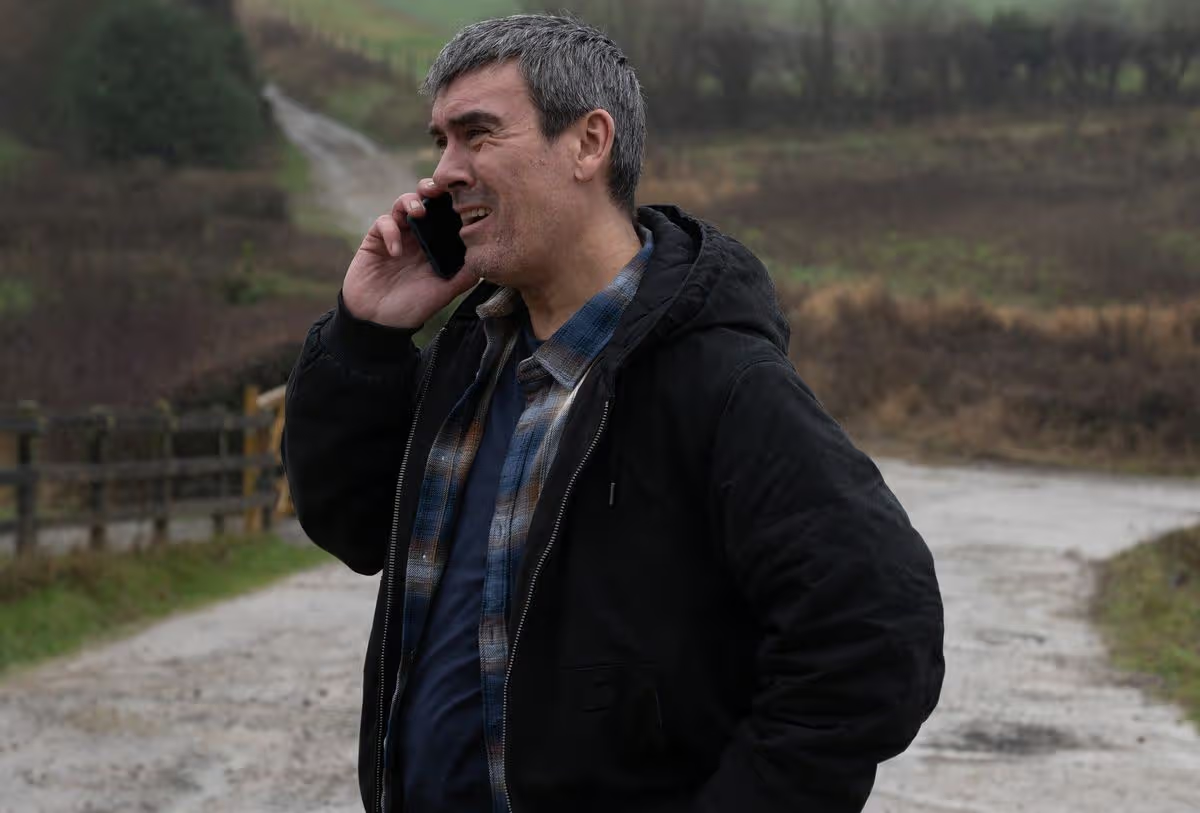
Emmerdale favourite Cain Dingle is hit by a car in deadly scenes next week with three possible culprits teased, but will he survive and does the driver leave him for dead?
Emmerdale: Cain left bloodied and unconscious after being hit by car
A horrifying new clip for Emmerdale shows the moment Cain Dingle is left lifeless after being hit by a car.
Next week on the ITV soap, Jeff Hordley’s character is on the phone to his wife Moira Dingle when he is struck at speed. A clip appears to tease the identity of the mystery driver, with one of three characters behind the wheel.
Kerry Wyatt, Jacob Gallagher and Graham Foster are all seen emotional or distracted before they speed off in their own cars. Jacob has just faced more drama with his bullying boss Dr Todd, and we see him breaking down in his car.
Graham has a run-in with Paddy and Marlon Dingle it seems, after his near-kiss with Marlon’s wife Rhona Goskirk. Kerry is crying over something – but is it linked to Dr Todd, or Eric Pollard?
As all three of them drive off, suddenly someone speeds towards Cain who is in the middle of a road. Slamming into him, Cain is left bleeding and unconscious as he hits the floor.
He’s not in a good way, but the clip ends there. So will Cain die and who runs him over? Whoever it is seems to leave Cain there as in another clip, it’s Cain’s young son Carl calling desperately for an ambulance.
Kyle confirms his dad isn’t waking up and is badly injured, as he tells the emergency services what has happened. The fact that Kyle is alone and making the call could suggest no one else is there, and it’s a hit and run.
All will be revealed soon in terms of who the driver is, but the clips certainly hint it will either be Graham, Kerry or Jacob. As for Cain’s fate, the spoilers do not reveal if he lives or dies.
It isn’t thought he will die given his huge cancer storyline that is ongoing. Cain has been diagnosed with aggressive prostate cancer, with him deciding whether or not to have treatment, and only recently did he tell his family including his wife Moira.
So surely they wouldn’t kill Cain off in such a brutal way when there’s still a way to go with the cancer storyline. So it’s safe to assume Cain will survive being hit by the car, but it’s not certain.
It’s also not clear if he will be badly injured and if there will be any consequences. Fans will have to stay tuned to find out what happens to Cain and who is to blame.
Doncic is the NBA’s leading scorer this season with 2143 points for an unequalled average of 33.5 points per game.
However, having been sidelined for four games with a left hamstring strain earlier in the season, and missing two games to return to Slovenia for the birth of his daughter in December, Doncic is set to fall short of the minimum games threshold required to qualify for the NBA’s major end-of-season awards.
Doncic, who is one appearance short of the 65 required, will apply for an “Extraordinary Circumstances Challenge”, according to his agent Bill Duffy.
“This season, Luka Doncic has performed at a historic level, leading the league in scoring, carrying the Lakers to third place in the Western Conference and placing himself in the middle of one of the most tightly contested MVP races in memory,” Duffy told ESPN.
“To ensure Luka’s incredible accomplishments this season are rightly honoured and he can be considered for the league’s end-of-season awards, we intend to apply for an ‘Extraordinary Circumstances Challenge’ to the 65-game rule.”
Doncic was named March’s player of the month following 13 consecutive 30-point performances which helped the Lakers to 13 wins in 14 games prior to the defeat by Thunder.
NASA has unveiled the first images of Earth taken by Artemis II astronauts as they head towards the moon. The mission is expected to take humans farther from Earth than ever before, marking a major step in humanity’s return to lunar exploration.
Todd Bridges has taken steps to make his split from Bettijo Hirschi official after announcing in January that he and his spouse had separated.
The former “Diff’rent Strokes” actor, 60, filed paperwork asking to end his marriage Tuesday in Arizona, Us Weekly reported Thursday. This will be the second divorce for both parties.
A representative for Bridges didn’t respond immediately to The Times’ request for confirmation and comment.
“This was not an easy choice, and it comes with a heavy heart, but also with love and gratitude for the life we shared,” he said in a statement to The Times. “I thank God for the time we’ve had together, the lessons we’ve learned, and the family we’ve built. Even in this season of change, I trust He is guiding us both toward healing, peace, and new beginnings.”
Bridges said at the time that he would “continue to lift my former partner up in prayer, wishing them joy and fulfillment in the chapters ahead.”
The two met in January 2022; they married nine months later, after a brief engagement. Hirschi told Tamron Hall last year that a friend who wrote a new dating profile for her showed it to Bridges as “market research.” The friend then told Hirschi that Bridges wanted to get in touch.
“She’s a lot like my mom,” Bridges told Hall.
During a contentious spousal support dispute in 2025, Hirschi described the “Everybody Hates Chris” veteran as “semi-retired,” Us Weekly reported in February. The documents came as part of a battle Hirschi fought with first husband Heath Hirschi after marrying Bridges. At the time, Us said that Bettijo was claiming monthly expenses of around $16,550 and said Bridges made only “about $700” a month in 2024 unless he obtained “contract work.”
The Hirschis, who divorced in 2020, share four children, two of them minors, the outlet said. Heath Hirschi wanted out of paying $2,700 a month in spousal support payments after his ex married someone his legal team called a “well-known Hollywood actor.” Us said that in December 2025, the court revised the former couple’s agreement to $1,206 per month in child support, with $43,401.96 due for unpaid past support.
Bridges, meanwhile, has about a dozen acting credits since 2020, according to IMDb, which also says he worked on several new projects in various stages of production.
He also has two adult offspring: Daughter Bo is from a previous relationship with Amanda Rushing; he shares son Spencir, 27, with his first wife. Spencir Bridges was, like his dad, a child actor, with roles in the 2007 movie “Daddy Day Camp” and, in 2005, the TV series “ER.” Spencir’s most recent acting credits were in 2009 when he appeared in the series “iCarly” and in the TV movie “The Three Gifts.”
Todd Bridges is the last surviving original cast member of the hit sitcom “Diff’rent Strokes,” which ran from 1978 to 1986. Conrad Bain played Phillip Drummond, a wealthy Park Avenue businessman and father of Kimberly (Dana Plato). Drummond adopted sons Arnold (Gary Coleman) and Willis (Bridges), who were from Harlem. The character of housekeeper Edna Garrett, played by Charlotte Rae, was spun off in 1979 into a second hit series, “Facts of Life,” which ran until 1988.
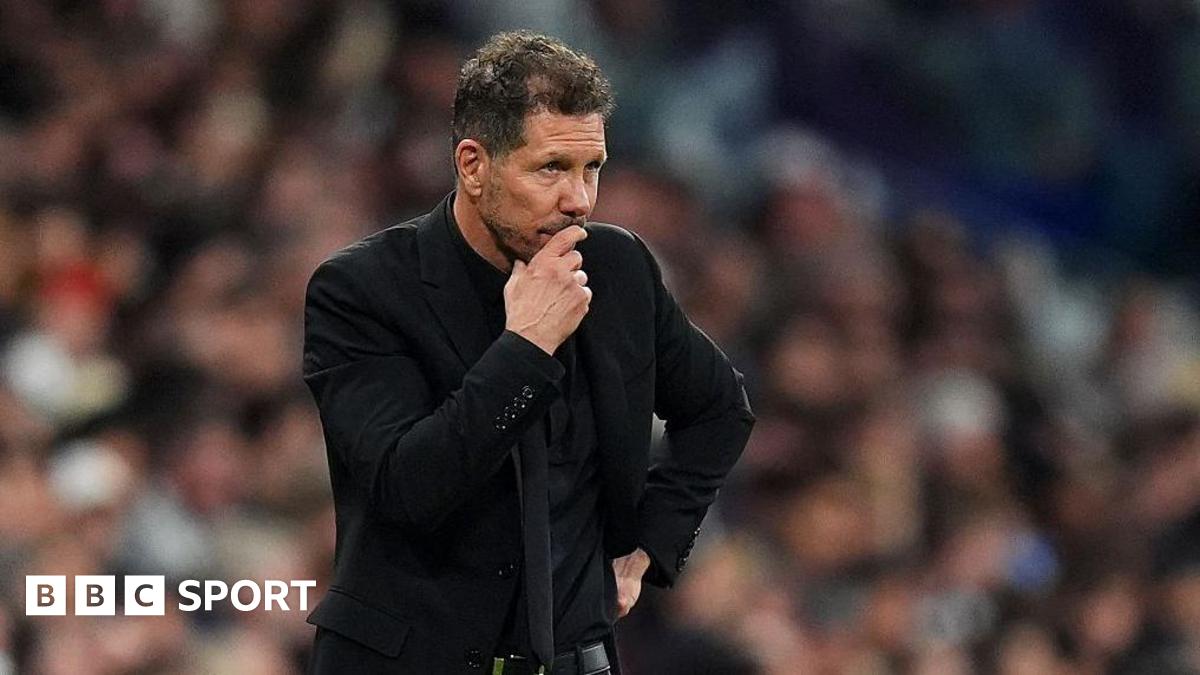
One thing that is indisputable is Simeone’s managerial record at Atletico.
He has taken charge of Atletico Madrid on 786 occasions, recording 465 wins, 170 draws and 151 defeats across more than 14 and a half seasons at the helm. It makes him one of the longest-serving managers in world football.
Atletico offered Simeone his first big managerial job in European football when he was appointed in December 2011, his previous role on the continent having been to save Italian side Catania from Serie A relegation, following success in Argentina with River Plate and Estudiantes.
In that time, the club has been transformed. When Simeone first arrived, Atletico had just been eliminated from the Copa del Rey by third-tier Albacete and were 10th in La Liga, 21 points adrift of the leaders.
Yet under the Argentine coach, Atletico went on to win the Europa League in Simeone’s first season, before adding the Uefa Super Cup and the Copa del Rey in 2012–13.
From 2013-14 onwards, after winning their first title under Simeone, Atletico have qualified for the Champions League every season, twice falling to agonising final defeats at the hands of rivals Real in the space of three years between 2014 and 2016.
Competing on Europe’s biggest stage was no longer an achievement, it was considered the standard.
As Atletico supporter Guillermo Myela describes, Simeone changed the mentality of fans.
“We went from being ‘El Pupas – the jinxed ones’, to a club that can compete against Barcelona and Real Madrid without fear,” Myela says.
“The connection that he has with the club and the fans is something that you rarely see in modern football. He lives for Atletico Madrid.”
He is the most decorated manager of all time at the club and supporter Javier del Amo describes him as “one of the biggest icons in our history”.
“One of his biggest achievements is getting the fans identified again with the team,” del Amo says.
Lifelong supporter Dani Ruiz agrees: “He is the epitome of Atletico and what modern football has become.”
Summer Robert, 28, claims to have the biggest boobs in the UK. Even though she loves her body, she said her breasts prevent her from being able to fit on planes
Summer Robert can no longer fit on planes(Image: scotchdolly97/Instagram)
While some may wish they had a bigger bust, one woman said her breasts can be problematic as they can draw unwanted attention. Summer Robert, 28, has previously admitted she’s proud to have what she claims are the “biggest boobs in the UK” but, even though she loves her body, her boobs can post significant challenges.
Recently, she admitted she struggles to fit on planes to travel as her breasts have grown so large. While there’s little she can do about it, it’s proved to be a costly problem for her, as she’s had to cough up thousands of pounds for business class seats simply because they offer her more room.
The content creator, who boasts over 200,000 followers on Instagram, measures a size 30R and her breasts weigh over 25kg. Over the past two years, Summer estimates she has spent more than £20,000 on business class upgrades simply to accommodate her physical needs.
She explained: “The lack of space in economy means I cannot do it. Even something so simple like putting the tray table down to eat my dinner is so difficult. It doesn’t go down all the way.
“I always end up with the person next to me touching my boobs, and it makes both of us uncomfortable. I need to get business or I won’t be able to eat my dinners on a plane or I’ll be touched by another passenger.”
The former restaurant manager has always had big boobs and they are only going to get bigger. She has a condition called Macromastia, which is the medical term for having abnormally large breasts, and it can lead to various complications like chronic back, neck and shoulder pain, headaches, bra strap grooving and difficulty carrying out daily activities.
According to Summer, when it comes to travel, the cost of basic accessibility is “staggering”. And, as she can’t stop her boobs from growing, it’s a problem that’s not going to go away.
Her boobs impact her life daily, as finding clothes that fit is tough and even cleaning the house is a “hard task” due to the weight of her chest. Summer said she also has to endure catcalls wherever she goes.
“Flying has become a huge struggle for me, even little things like getting into the bathroom,” Summer continued. “The door is so tiny, my boobs always push up against it, the tray table won’t fold down because my boobs are too big.
“Trying to get my bag up into the baggage compartment is a struggle because, if someone is sitting on the chair below, I will 100% touch them with my boobs on accident. I can’t fly economy because of all of these reasons and more.
“I think it’s just hurtful having to fork out so much money that could go to better just because airlines refuse to accommodate for people with different bodies.”
It took years for Summer to learn to love her body and, even though she celebrates herself more now, she admits there are many cons to her situation. She has to experience unwanted comments from people often, she finds it difficult to get her hands on bras that fit and she also has to grapple with many hidden expenses, but there are some pros too.
Summer said: “I love my body and I love my boobs – everything about them. They have given me a beautiful and blessed life with my career, and gave me a platform to show girls that all body types are beautiful. I love my body and the cons will never stop that.”
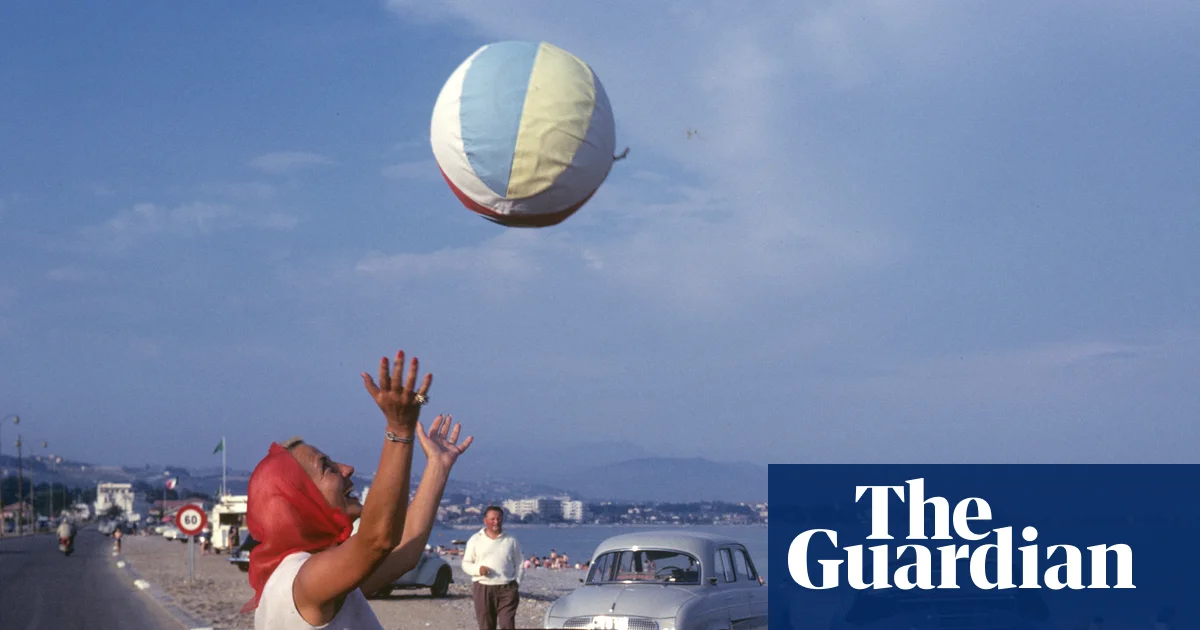
‘We were five people in my parents’ 2CV; we would set out at 3am and by 10am, around about Lyon, my father would need a break. My mother would set up a deckchair for him under a tree by the side of the road and he would sleep before driving the rest of the way to Toulon.”
On a recent road trip through France, I met up with Thierry Doillon, a vintage car fanatic who helped restore a 1950s petrol station on the Route Nationale 7. I wanted to talk about the heyday of this iconic road (so famous that singer-songwriter Charles Trenet released a song about it in 1955) and why it’s enjoying a renaissance with holidaymakers.
Illustration: Guardian Graphics
The RN7 stretches 996km (619 miles) from Paris to Menton on the Côte d’Azur, passing through Châteauneuf-du-Pape, Avignon, Lyon, Aix-en Provence, Fréjus and Nice. In summer 1936, the French government passed a law that mandated paid holiday, a move that kickstarted the exodus of northerners to the Med every August, and it became a true emblem of the French vacances. In the 50s and 60s, the route was awash with petrol stations, traffic jams, picnickers and roadside cafes.
Although the RN7 fell quieter when the Autoroute du Soleil (Motorway of the Sun) was completed in the early 1970s (the new toll road knocked a third off the journey time), it is now experiencing a resurgence thanks to the trend for slow tourism and discovering the road less travelled.
One of the bornes that mark the RN7 route. Photograph: Ricochet64/Shutterstock
My road trip started on Paris’s Place d’Italie on a chilly September morning after an overnight stay at Hôtel Rosalie. Although my hired Citroën was capacious in comparison with Thierry’s 2CV of yesteryear, I could imagine the thrill he must have felt as a kid, embarking on an adventure that would take him to a land unrecognisable from the cold and grey of northern France, with the promise of warm sea, palm trees and glowing sunsets at its end.
Only a few kilometres from the centre of Paris, the roads started to widen and troops of Napoleonic plane trees lined up to guide this adventurer south. Historic highway it may be, but there’s a subtlety to the RN7 compared with the likes of America’s Route 66: instead of the shield-shaped “Historic Route” markers with “66” in large numbers, there are simple red-and-white bornes – round-topped concrete distance markers that dot every kilometre. There are faded ghost signs instead of screaming billboards, a mere whisper of the promise of parasols and pastis to come; Relais Routiers restaurants instead of roadkill cafes; and the soundtrack is Trenet’s 1955 whimsical hit (“L’amour joyeux est là qui fait risette, On est heureux Nationale 7”) rather than Chuck Berry or the Rolling Stones getting their kicks.
I imagine Thierry’s father despairing at my sluggishness, but nonetheless I made my first stop just 50km from Paris, in the village of Barbizon in the Fontainebleau forest. I stretched my legs in the shady wooded paths in the footsteps of the mid-18th-century artists who decamped here from the city to be inspired by nature.
Back on the road, I counted numerous art deco frontages of now-derelict mechanics along the route. “There were sometimes as many as 12 garages in a 6km stretch,” Thierry had told me. “Not just because the petrol tanks were so tiny back then, but because the cars broke down all the time!”
The Ozo petrol station restored to its former glory. Photograph: Rachel Ifans
I drove through pretty riverside towns such as Charité-sur-Loire and Nevers and parked up at the Hôtel de Paris in Moulins, a charming town that’s intersected by the RN7. The historic hotel has played host to many French stars over the decades, from Coco Chanel to Edith Piaf, and was such a popular stopping point in the 50s that it used to have two daily lunch sittings – the first for those heading south from Paris, the second for those driving north from Lyon and the Riviera.
The next morning, I journeyed further back in time in La Pacaudière, a tiny village that bore witness to the importance of this north-to-south route centuries before it thronged with holidaymakers. Le Petit Louvre is a coaching inn in the village with a gargantuan, gleaming Burgundian roof that since the early 1500s has served variously as trading point, post office, prison and school, as well as hosting many passing bigwigs.
While residents in La Pacaudière are now free of traffic jams thanks to a bypass that avoids the village, those in the next village of Lapalisse hold a biennial traffic jam party called Embouteillage to celebrate the nostalgic bottlenecks of the 60s.
My next stop was Roanne, one of those French towns most Britons have never heard of that turns out to be a gastronomic gem, in this instance partly due to it being home to Michelin-starred chef Michel Troisgros. While he has a three-star gastronomic restaurant in the nearby village of Ouches, I stopped at little-sister restaurant Le Central, which is bang on the RN7 as it cuts through town in front of la gare.
The route’s history is intertwined with that of the Michelin Guide, which provided essential information and maps for millions of holidaymakers. Many legendary chefs and eateries are synonymous with the route – from Eugénie Brazier, the first woman to earn six Michelin stars, to Fernand Point with La Pyramide in Vienne, who achieved three Michelin stars in the 30s.
An artisan pâtissier in St Symphorien-de-Lay has created a cake that celebrates Route Nationale 7
My lunch at Le Central started with a fish broth amuse bouche, continued with a hunk of white fish and confit peppers, and ended with a volcanic île flottante called Mont Fuji, all of which really kickstarted the gastronomic second half of my slow journey through France.
Not far after Roanne came the visual highlight of my trip: the Ozo petrol station which Thierry and his friends have restored to its former glory. He’d told me how the first guardian of the station had been a woman – AKA the godmother – who had lived in the tiny kiosk and been on hand 24/7 to help drivers at the pump.
Fully fuelled, my drive then took me to the Vallée de la Gastronomie, a stretch of central France that pulses with the heartbeat of artisans, chefs, producers and winemakers.
I met Pierre-Yves at Maison Mure in St Symphorien-de-Lay, an artisan boulanger, pâtissier and chocolatier who has created a cake that celebrates the Nationale 7, a light sponge sandwich in the shape of its road sign. I spent the night in a cottage at Domaine de Clairefontaine, a small hotel and bistronomic restaurant.
The vineyards of Tain-l’Hermitage. Photograph: Pernelle Voyage/Alamy
The next morning, I continued to Tain-l’Hermitage, visiting its Citè du Chocolat museum and hiking through the Hermitage vineyards that border the town. I stopped over at Maison Chabran in Pont-de-l’Isère, another good example of the many superlative family-run hotel-restaurants that dot the length of the RN7.
The culinary treats came one after the other as I made my way south, from roadside nougat in Montélimar to the historic rolling vineyards of Châteauneuf-du-Pape, France’s first wine appellation. My journey reached its gastronomic zenith with an overnighter at the Michelin-starred La Mère Germaine, perched in the heart of the wine village, before I trundled to the coast, the greenery of la vraie France now behind me and the dusty roads, rocky outcrops of the Luberon and big hitters such as Orange’s Théâtre Ancien, Avignon’s papal palace and Aix-en-Provence’s Cézanne celebration ahead.
From plane trees to palm trees, from big rivers to the Mediterranean, the route was now edged by melon vendors and seafood stalls, with seemingly infinite blue sea in front. I spent the last night of my road trip in Fréjus, a town that combines ancient history with modern-day Med sparkle, staying in l’Aréna hotel. In 1799, Napoleon slept here en route from Egypt to his coup d’état in Paris.
I like to take the road less travelled when I can in France, but this time I had taken the road much travelled, then barely travelled, and now more travelled again. My out-of-season journey down the Route des Vacances was a memorable mix of quiet roads, nostalgia, superlative food and wine, and a variety of landscapes.
A launch vehicle of the Terminal High Altitude Area Defense (THAAD) system is seen at a U.S. military base in Seongju, North Gyeongsang Province, South Korea, 05 March 2026. File. Photo by YONHAP / EPA
April 3 (Asia Today) — South Korea will accelerate deployment of its long-range artillery interception system, known as the Korean Air and Missile Defense system, aiming to bring it into service by 2029, two years ahead of schedule.
The Defense Acquisition Program Administration said Thursday it approved a revised development and deployment plan during a Defense Acquisition Program Committee meeting.
Under the plan, the military will use prototypes to speed up deployment, advancing the timeline from the original target of 2031. The project was accelerated in response to North Korea’s expansion of long-range artillery capabilities.
The government plans to invest 842 billion won (about $630 million) in research and development for the system through 2030.
The system, under development by the Agency for Defense Development, is designed to intercept North Korea’s long-range artillery fired in large volumes at low altitudes and short ranges. Officials have said the system is intended to outperform Israel’s Iron Dome by engaging a greater number of incoming targets simultaneously.
Separately, the committee also approved plans to procure SM-3 ballistic missile interceptors from the United States by 2031 at a cost of 753 billion won (about $565 million). The missiles will be deployed on the King Jeongjo-class Aegis destroyers.
Additional measures approved include improvements to tactical information-sharing systems for joint South Korea-U.S. maritime operations, as well as a broader 2026-2030 defense industry development plan.
Heavyweights Derek Chisora and Deontay Wilder will reach a combined 100 professional fights when they meet at London’s O2 Arena on Saturday.
British veteran Chisora, 42, made his professional debut in 2007 and has recorded 36 wins and 13 defeats.
Former world heavyweight champion Wilder, 40, was once considered the most feared puncher in boxing. However, he has lost four of his last six bouts, leaving his record at 44-4-1.
Chisora says this will be his final fight. If he is to be believed, can he bow out on a high? And with Wilder no longer at his peak, could a win on the road reignite his career?
BBC Sport asks figures from across the boxing world for their predictions.
James Gadson, a prolific drummer who worked closely with Bill Withers and as a member of the widely sampled Watts 103rd Street Rhythm Band — and whose playing motored hits like Diana Ross’ “Love Hangover,” Marvin Gaye’s “I Want You” and Gloria Gaynor’s “I Will Survive” — died Thursday, according to Rolling Stone. He was 86.
Rolling Stone didn’t say where Gadson died or specify a cause but said the drummer’s wife, Barbara, had confirmed the news; she told the magazine that Gadson had experienced a fall recently and undergone surgery.
Described by the Roots’ Questlove as “breakbeats defined,” Gadson was known for a funky, laid-back style best exemplified perhaps by his playing in Withers’ 1972 “Use Me,” in which he seems somehow to keep finding space for an extra beat. Forty years later, Kendrick Lamar borrowed Gadson’s intricate rhythm pattern for “Sing About Me, I’m Dying of Thirst,” from the rapper’s 2012 breakthrough album, “Good Kid, M.A.A.D City.”
In “Love Hangover,” which topped Billboard’s Hot 100 in 1976, Gadson’s drumming anchors a production that moves from lush soul balladry to a frisky disco groove; Gaye and his producer Leon Ware got a similar thump out of the drummer for “I Want You,” which reached No. 1 on the R&B chart in 1976 and was later interpolated by Lamar for his Grammy-winning “The Heart Part 5.”
Among the many other songs from the ‘70s featuring Gadson’s playing are the Jackson 5’s “Dancing Machine,” Cheryl Lynn’s “Got to Be Real,” Smokey Robinson’s “Cruisin,’” Yvonne Elliman’s “If I Can’t Have You,” Tavares’ “Heaven Must Be Missing an Angel,” Peaches & Herb’s “Shake Your Groove Thing” and Thelma Houston’s “Don’t Leave Me This Way.” In later years he worked with the likes of Beck, D’Angelo, Paul McCartney, Justin Timberlake, Harry Styles and Sturgill Simpson.
Gadson was born June 17, 1939, and grew up in Kansas City. His father was a drummer, and when Gadson and his brother were teenagers they played in a doo-wop group called the Carpets. Gadson moved to Los Angeles in the mid-’60s following a stint in the Air Force and joined the Watts 103rd Street Rhythm Band, led by the singer and guitarist Charles Wright; the group scored hits such as “Do Your Thing” and “Express Yourself,” the latter of which N.W.A would eventually sample for its song of the same name from 1989’s “Straight Outta Compton.”
In the early ’70s, Gadson and several other Watts band members left the group and took up with Withers (who’d already broken out with “Ain’t No Sunshine”) to make his album “Still Bill.” In addition to “Use Me,” the LP spun off the hit single “Lean on Me,” which went to No. 1 and was later inducted into the Grammy Hall of Fame. Gadson backed Withers in 1972 for a concert at Carnegie Hall that was recorded for a classic live album; the record opens with a version of “Use Me” that stretches past the eight-minute mark.
Though Gadson’s crack at a solo career around the same time didn’t pan out, he quickly became an in-demand session drummer, particularly for acts signed to the Motown label, which had just moved to L.A. from its original home of Detroit. He played on Motown records by the Temptations, the Miracles, the 5th Dimension and the Supremes’ Mary Wilson; over the decades that followed, he also worked with Philip Bailey, Anita Baker, Ray Charles, Leonard Cohen, Norah Jones and Lana Del Rey.
On Friday, the jazz guitarist Jeff Parker wrote on Instagram about his experiences playing with Gadson.
“The last time we convened, he noticed me glaring at his drum kit in wonder — I knew that there had to be a LOT of history there,” Parker recalled. “He looked at me and said, ‘Jeff, that’s my disco kit.’ I said, ‘Are those the drums on “Love Hangover”?’ He nodded and said, ‘They’re the drums on a whooooole lot of records.’”
World boxing champion Lauren Price says the structure in her life is what gives her the “confidence” to win.
Price splits her time between her home in Wales and her training camp in Sheffield, living away from her family and partner in the build-up to a fight.
On Saturday she will fight in front of a home crowd in Cardiff to defend her titles against Stephanie Pineiro.
1 of 2 | A long line of visitors waits outside the “Cocoon’s Private Studio” event venue near Ttukseom Station in Seoul on Thursday. Photo by Asia Today
April 3 (Asia Today) — A once-quiet café district near Seoul Forest is rapidly transforming into a retail hotspot, drawing long lines of visitors as fashion platform Musinsa expands its presence in the area.
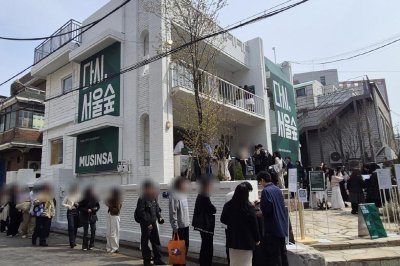
By late morning Thursday, more than 200 people were lined up along Atelier-gil in Seongdong District, even on a weekday. The crowd gathered for a pop-up event tied to Musinsa’s “Back to Seoul Forest” campaign, where musician Code Kunst drew attention by serving coffee in person.
“Seoul Forest is really popular these days,” one visitor in her 20s said. “I’ve been to Yeonmujang-gil many times, so now I’m coming here instead.”
The campaign invites visitors to explore 24 stores in the area, scanning QR codes to collect stamps. Participants who collect four stamps receive promotional items and can enter prize drawings, encouraging foot traffic throughout the neighborhood.
The initiative is part of Musinsa’s broader “Seoul Forest Project,” launched earlier this year to expand consumer activity beyond the already saturated Yeonmujang-gil in nearby Seongsu. The company aims to connect the two areas into a single retail corridor.
Local businesses say the change is already noticeable. A staff member at a nearby lifestyle store said customer traffic surged so quickly during the event that QR code stations had to be moved outside to manage demand, adding that the area attracts a particularly young customer base compared to other locations.
Until recently, the Seoul Forest area was dominated by cafes and restaurants, with relatively short visitor stays. The district has about 35 beverage shops and 91 dining establishments, and its closure rate last year exceeded the city average.
Musinsa saw this as an opportunity. While Yeonmujang-gil faces high rents and heavy foot traffic, Seoul Forest had lower visitor numbers – about 3,000 people daily, roughly one-quarter of nearby Seongsu’s café street – despite being within a 15- to 20-minute walk.
To reshape the district, Musinsa leased about 20 vacant storefronts last year and subleased them to emerging brands, lowering entry barriers for companies seeking offline expansion.
As a result, designer brands that were previously difficult to find in physical stores are beginning to cluster in the area. Several labels, including General Idea, Lookcast and Have a Whale, have opened locations within the past two months, filling previously empty spaces with new retail content.
Kim Young-min, a director at a women’s fashion brand operating in the area, said high rents in neighborhoods such as Seongsu and Hannam had delayed offline expansion plans. “Musinsa offered space here, which made it easier to open a store,” Kim said.
The layout of Atelier-gil has also contributed to the shift. Unlike the large industrial-style buildings in Seongsu, the area consists mainly of smaller structures, reducing initial investment costs and making it more accessible for emerging designers.
While some vacancies remain, Musinsa plans to attract about 20 brands to the area this year. Upcoming openings include specialty retail concepts focused on hats, footwear, children’s products and beauty.
The company said it aims to strengthen its identity within the broader Seongsu district while redefining Seoul Forest as a destination where visitors can explore, shop and experience a variety of content.
The effort is already reshaping the neighborhood, turning previously quiet streets into a growing hub of fashion and lifestyle activity.
Weekly insights and analysis on the latest developments in military technology, strategy, and foreign policy.
Welcome to Bunker Talk. This is a weekend open discussion post for the best commenting crew on the net, in which we can chat about all the stuff that went on this week that we didn’t cover. We can also talk about the stuff we did or whatever else grabs your interest. In other words, it’s an off-topic thread.
This week’s second caption reads:
Col. William C. Hannan, Jr., U.S. Army Corps of Engineers Transatlantic Division commander, examines innovative design feature updates on the U.S. Army Central’s Bunker Retrofit project, designed to increase protection for service members throughout the U.S. Central Command’s area of operations, prior to the U.S. Army Engineer Research and Development Center’s Phase II Live-fire Experiment at Fort Polk, La., Mar. 10.
Also, a reminder:
Prime Directives!
If you want to talk politics, do so respectfully and know that there’s always somebody that isn’t going to agree with you.
If you have political differences, hash it out respectfully, stick to the facts, and no childish name-calling or personal attacks of any kind. If you can’t handle yourself in that manner, then please, discuss virtually anything else.
No drive-by garbage political memes. No conspiracy theory rants. Links to crackpot sites will be axed, too. Trolling and shitposting will not be tolerated. No obsessive behavior about other users. Just don’t interact with folks you don’t like.
Do not be a sucker and feed trolls! That’s as much on you as on them. Use the mute button if you don’t like what you see.
So unless you have something of quality to say, know how to treat people with respect, understand that everyone isn’t going to subscribe to your exact same worldview, and have come to terms with the reality that there is no perfect solution when it comes to moderation of a community like this, it’s probably best to just move on.
Finally, as always, report offenders, please. This doesn’t mean reporting people who don’t share your political views, but we really need your help in this regard.
Hello! I’m Mark Olsen. Welcome to another edition of your regular field guide to a world of Only Good Movies.
This is another strong week for new releases. By now you have likely heard something about “The Drama,” which has become inescapable thanks to the tireless promotion of its two stars, Zendaya and Robert Pattinson.
In a movie written and directed by Norwegian provocateur Kristoffer Borgli (“Dream Scenario”), the pair play Emma and Charlie, an engaged couple who find their wedding week thrown into disarray by the revelation of a deep secret from the bride-to-be.
Robert Pattinson and Zendaya in the movie “The Drama.”
(A24)
As Amy Nicholson put it in her review, “To another screenwriter, ‘The Drama’ would be an intimate study and a more emotionally wrenching film. But Borgli forces us to parse the mushy stuff from the mess and analyze the pending nuptials as an impersonal problem: What comes after a public shaming for the guilty and the inquisitors? That’s one of the most important (and unresolved) questions of the modern era, so I’ll forgive the filmmaker for being no more interested in writing Emma and Charlie as complex human beings than if they were character names in a math quiz about two people on two trains speeding toward a crash.”
Meanwhile, Tim Grierson spoke to Shira Small, the folk artist whose sole 1974 album features a song heard in an early scene of “The Drama.” Small, a delightful interview, goes into the music career she left behind a long time ago — one which may be reigniting now thanks to the movie.
Also opening in Los Angeles this week is Israeli filmmaker Nadav Lapid’s “Yes,” a guaranteed conversation-starter. Ariel Bronz stars as a musician who, in the aftermath of the Oct. 7 attacks, decides to say yes to composing a vicious new political anthem..
Reviewing the film, Joshua Rothkopf said, “It’s a movie about a citizenry at war with itself, hoping to keep the plates spinning for one more night. You watch it and think how easy it would be to envision an American remake — and wonder, too, if a filmmaker like Lapid even exists here.”
One of my favorite films from SXSW 2025, “Fantasy Life,” is finally coming to theaters. Written and directed Matthew Shear, the movie is an affectionate nod to the chatty dramedies of Noah Baumbach (some of which Shear has acted in). Here he plays Sam, a troubled law school dropout who takes a job looking after the children of a Brooklyn couple (Amanda Peet and Alessandro Nivola) and finds himself in an emotional affair with the wife.
“Fantasy Life” actor-writer-director Matthew Shear and star Amanda Peet bond in New York.
(Justin Jun Lee / For The Times)
I recently spoke to Shear and Peet about their collaboration on the film. Peet’s character in the film is also an actor and, though much of the film’s anxieties felt familiar to her, one scene in particular is drawn from Peet’s own experience: She is often mistaken in public for Lake Bell, including once on a red carpet.
“It’s a weird thing because you’re like, what do I do here?” said Peet with a laugh. “What’s the least douchey way to get out of this?”
The Black Pack’s resistance humor
Robert Townsend in the 1987 movie “Hollywood Shuffle.”
(Samuel Goldwyn Company / Photofest)
Curated around a new book by Artel Great, the UCLA Film and Television Archive is launching the series “The Black Pack: Rewriting American Comedy,” to spotlight a moment in the 1980s and ’90s when a small group of Black creators reached the very heights of Hollywood.
Eddie Murphy, Paul Mooney, Robert Townsend, Keenan Ivory Wayans and Arsenio Hall were friends and collaborators who, from 1987 to 1994, created the work showcased in the series. The Black Pack is a name they gave to themselves, partly in response to the John Hughes-affiliated Brat Pack.
Things begin tonight with a 35mm screening of Townsend’s essential 1987 satire “Hollywood Shuffle.” Great will be there for an introduction and a Q&A with cast member Anne-Marie Johnson and Spring Mooney, daughter of late actor Paul Mooney, who also appeared in the movie.
The cast of “In Living Color,” to be celebrated as part of the UCLA screening series “The Black Pack.”
(Fox / Photofest)
Other events include an evening of episodes of Wayans’ sketch comedy series “In Living Color,” 1988’s “Coming to America,” starring Murphy and Hall, a 35mm screening of Townsend’s 1991 “The Five Heartbeats” and a 35mm screening of 1989’s “Harlem Nights,” the only movie starring, directed, written and produced by Murphy, then at the height of his cultural capital.
This series is a terrific example of why smart programming matters. Here is a group of films (and a TV show) that might seem only related in a vague way, but when put together under a specific theme or idea, they are suddenly transformed into something revelatory.
Each evening of the series is designed to make the case for a different aspect of the Black Pack’s work and influence. The series as a whole puts forward a larger concept Great has coined a term for.
“I’m arguing through the series that the Black Pack’s cultural material is connected to a longstanding tradition that I call Black resistance humor,” says Great, now an associate professor at San Francisco State University, in an interview this week. “This idea of Black resistance humor is really a cultural practice where Black cultural workers are using political wit, irony, satire, parody, absurdity to challenge corrupt authority, to give voice to racial trauma and also attach themselves to re-imagining what freedom can really look like.”
From left, Arsenio Hall, Eddie Murphy, James Earl Jones and Madge Sinclair in the movie “Coming to America.”
(Paramount / Photofest)
There are plans for Black Pack programs in other cities, including Atlanta, San Francisco and Chicago, bringing this fresh look at their specific moment to venues around the country.
“I’m hopeful that the series will allow communities and audiences to see the Black Pack as cultural strategists who are using this idea of Black resistance humor to address very serious issues of power, identity and race,” says Great. “But also as a way of thinking, as a way of seeing and as a way of building alternative systems. Because that’s what they were able to do.”
Points of interest
‘The Birthday Party’ in 35mm
Actor Robert Shaw, left, with director William Friedkin on the set of “The Birthday Party” in 1968.
(Larry Ellis / Getty Images)
As part of its series celebrating the legacy of actor Robert Shaw, the Academy Museum will screen 1968’s “The Birthday Party” in 35mm on Sunday. One of the earliest features directed by William Friedkin (who would go on to such classics as “The Exorcist” and “To Live and Die in L.A.”), the film’s screenplay was written by Harold Pinter, adapting his own play. Shaw, Friedkin and Pinter make for a combustible intensity.
Shaw plays Stanley, the lone boarder at a seaside inn. When two mysterious men (Dandy Nichols and Sydney Tafler) arrive, they engineer a party for Stanley that becomes increasingly ominous.
In his original review, Charles Champlin lauded Shaw, saying he gives “one of the total and totally engrossing movie performances,” adding that Friedkin “as a director is everything a dramatist, and an audience, could want. The sense of loving care and artistic sureness which characterizes every aspect of the movie is extremely tonic. Pinter may be an acquired taste, but it is easy to acquire.”
‘He Got Game’ in 35mm
Denzel Washington in 1998’s “He Got Game.”
(David Lee / Touchstone Pictures)
Spike Lee’s prolific career is now studded with movies that maybe didn’t quite get their due in their day but deserve renewed attention. Screening in 35mm on Sunday at Brain Dead Studios is Lee’s 1998 “He Got Game,” which is just that kind of movie: stuffed with ideas and ambitions even if it doesn’t totally all come together for everyone. I particularly like his use of composer Aaron Copland’s music, which gives many of the images an epic quality they might not otherwise fully achieve, challenging preconceived notions of what can be thought of as Americana.
The movie stars a particularly electric Denzel Washington as Jake Shuttlesworth, a once-promising basketball player whose life took a turn. Now he’s in prison. His son, Jesus (played by NBA star Ray Allen), is a promising prospect and Jake is given an offer of a reduced sentence if he can convince his son to attend a certain college. The mixture of two of Lee’s own personal preoccupations, basketball and family, makes for a potent combination.
Reviewing the movie when it was released, Kenneth Turan wrote, “Given that writer-director Lee is one of the most visible of the New York Knicks’ celebrity fans, what’s surprising is not that he made a film about the sport he cares so much about but that he waited so long. … Though ‘He Got Game’ is periodically awkward and unruly, it benefits, as many of Lee’s films do, from the director’s determination to connect with the troublesome issues of the real world. Too few American directors work with Lee’s kind of social immediacy, and that makes his films, flawed and didactic though they sometimes are, essential viewing.”
Harmony Korine’s ‘Gummo’
Jacob Reynold, left, and Nick Sutton in Harmony Korine’s ‘Gummo’
(Criterion Collection)
Harmony Korine’s first feature as director, 1997’s “Gummo,” will screen at Vidiots on Monday. The event is co-presented by the Cinegogue, a group perhaps best known for their limited-edition movie-themed clothing drops, but who describe their mission thusly: “Our goal: make movies cool again through concert-like experiences and fanfare. … Because even though a movie might end, cinema is forever.” (And that’s a sentiment we here can get behind.)
The film finds Korine attempting to bring elements of experimental film and video to a nominally more mainstream context. It’s both confrontational and playful. Using a collage-like structure, the film follows a few kids as they make their way around their small town in Ohio after a tornado. Mostly featuring non-actors, the cast also includes Linda Manz and Chloë Sevigny, who is also credited as the film’s costume designer.
Writing about “Gummo” and Korine’s subsequent “julien donkey-boy,” Kevin Thomas made special note of “the intensity of Korine’s compassion for individuals who have so little going for them and so much going against them, yet at times are capable of experiencing an exhilarating freedom of spirit.”